A Bazillion to One!!

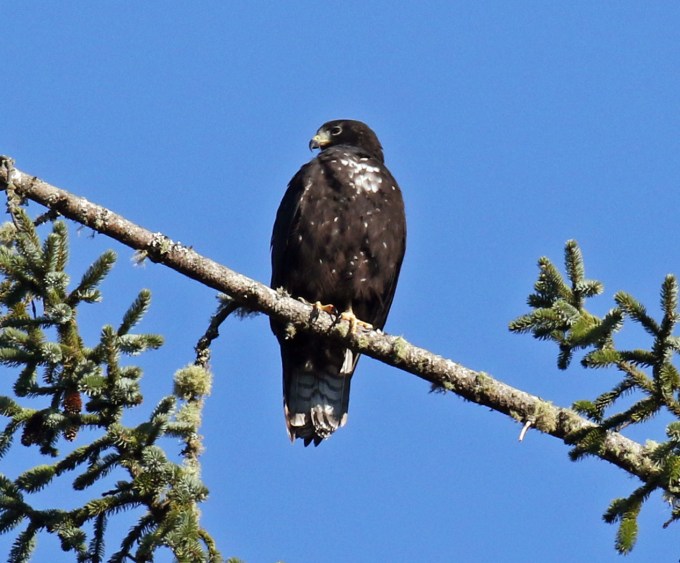
Yesterday, Sunday November 5th, I was supposed to go to Neah Bay but something came up and I was not able to go.  A few hours after abandoning the trip I saw a post on Tweeters by Matt Dufort that a Zone Tailed Hawk had been seen at Neah Bay.  It was the first state record for this bird that belongs in Arizona or Mexico.  Are you serious?!?  Had my change of plans caused me to miss this incredible find?

It is 135 miles from my house to Neah Bay – a three hour trip considering the ferry ride and the winding roads.  Not a trip to take on a whim, but it is one I have taken many times in the last few years – chasing some of the incredible birds found there or hoping to find some of my own.  Just last week, Steve Pink and I had made the journey hoping for a Blue Grosbeak, another new state bird for us and another bird that belongs in Arizona.  We missed it (see   ).

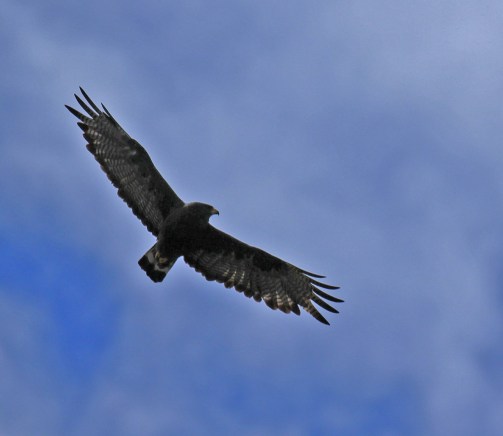
Should I make the trek to Neah Bay on Monday and hope that unlike the Blue Grosbeak, the Zone Tailed Hawk would stay around?  What were the odds it would stick another day?  Birding friend Brian Pendleton was in Neah Bay and when I saw an Ebird report that he too had seen the Hawk yesterday, I got in touch and was at least encouraged. If found, it would be such a prize.  So unexpected that when Brian and Andy Stepniewski (both extraordinary birders) saw it Sunday they had thought it was a Turkey Vulture – which although a bit late for it to still be around – was very understandable and which in flight from below looks very much like the Zone Tailed Hawk.  I had recently seen a Zone Tailed Hawk (and also a Blue Grosbeak) in Arizona.  Yes I had missed the Blue Grosbeak in Neah Bay.  Missing the Zone Tail would be far more painful.

Zone Tailed Hawk (Arizona – Mt. Lemmon August 1, 2017)

Zone Tailed Hawk3

Blue Grosbeak (Arizona Green Valley August 2, 2017)

Blue Grosbeak1

The weather was projected to be fantastic and although a couple of others could not make the trip, Carol Riddell was up for the journey so we determined to make the 6:20 Ferry from Edmonds to Kingston and give it a try.   About 30 miles out of Neah Bay, I got word from Brian that he and Andy had seen the Zone Tailed Hawk again this morning – near the High School. YES!!!!  About 45 minutes later Carol and I were at the High School, but the Hawk was not.  But we did find Chuck Jensen and combined efforts exchanging phone numbers and going to different areas.

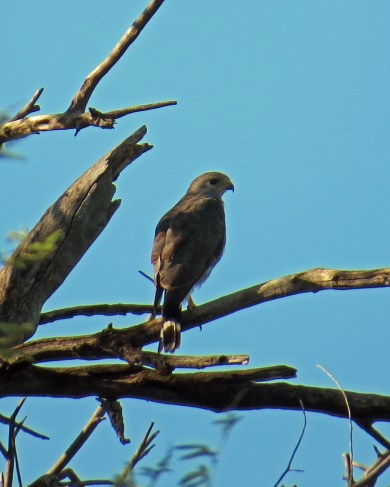
Not too much later Chuck called – he had found it, but it had flown,  We all continued the search. Finally about 11:00 as we retraced steps again, we saw three birders with scopes and bins looking at something up in a tree along Backtrack Road – an area Carol and I had just gone through 10 minutes ago. It was Chuck and Adrian Hinkle and Mary Lynn (Em) Scattaregia, the latter two who had first found the bird Sunday.  And the bird they were looking at was the Zone Tailed Hawk – perched in the open.  We got great looks and good photos.  A new State bird for Chuck, Carol and me.

Zone Tailed Hawk – Neah Bay November 6, 2017

Zone Tailed Hawk


Zone Tailed Hawk1

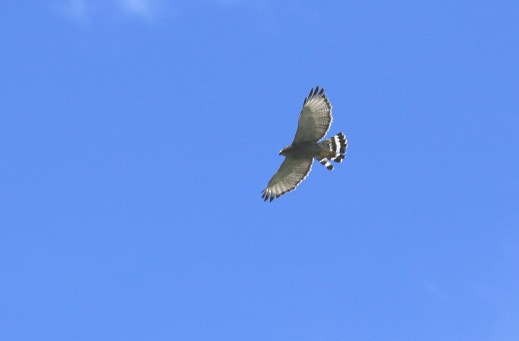
We watched it for maybe 15 minutes and then it flew off.  I got a crummy flight photo which at least showed the trailing white on the primaries.

Flight Shot

Zone Tailed Hawk Flight

It was great to meet Adrian and Em and even greater that Carol and I – and Chuck – all got the bird.  WOW!!

Riding our high, Chuck, Carol and I headed over to Hobuck Beach where we understood that White Winged Crossbills had been seen.  We stopped at the picnic area and slithered through the rail fence.  We saw lots of trees with heavy cone crops and searched with our bins.  A few minutes later I thought I heard one calling and raced over to the area and sure enough one was atop a spruce.  Then we found three or four more and all got good photos.  A life bird for Chuck and new year birds for Carol and me.  Had we missed the Zone Tailed Hawk this would have been a great consolation prize but now it was more like a wonderful topping on an astounding dessert.

White Winged Crossbill

WWCrossbill5

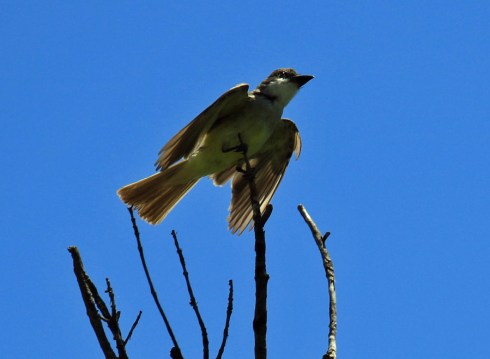
Carol and I checked some more spots in Neah Bay and found nice birds but nothing unusual and nothing new for us for the year.  We were surprised not to see a Tropical Kingbird since last year on November 7th, I had 4 in Neah Bay.  We decided to head for home – very happy indeed.

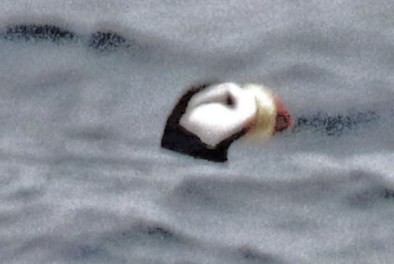
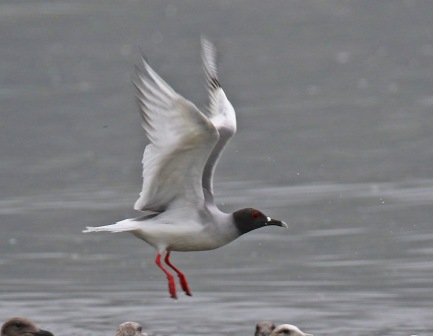
It is impossible to say what the odds would have been to see a Zone Tailed Hawk in Washington – remember this was the first ever State record.  But whatever those odds would be, the odds would be far far far greater to see the last 5 birds I have added to my Washington State list – three of which have been in Neah Bay.  Those birds are:  Dusky Capped Flycatcher (Neah Bay –  November 21, 2016) – First State Record;  Falcated Duck (Padilla Bay – January 16, 2017) – Third State Record; Horned Puffin – (Neah Bay July 20, 2017) – approximately 10 State Records; Swallow Tailed Gull – Carkeek Park – August 31, 2017) – First State Record and only the 2nd North American Record; and now the Zone Tailed Hawk (Neah Bay – November 6, 2017) – First Record north of California.

Dusky Capped Flycatcher

Dusky Capped Flycatcher

Falcated Duck

falcated-duck2

Horned Puffin

Picture1

Swallow Tailed Gull

Swallow Tailed Gull Wings4

Zone Tailed Hawk

Zone Tailed Hawk1

It would be impossible to determine the odds for seeing any one of those five birds in Washington, but it is pretty clear that the odds of seeing all Five must be something along the order of  A BAZILLION TO ONE!!!!

Halloween Birding with Pilchuck Audubon

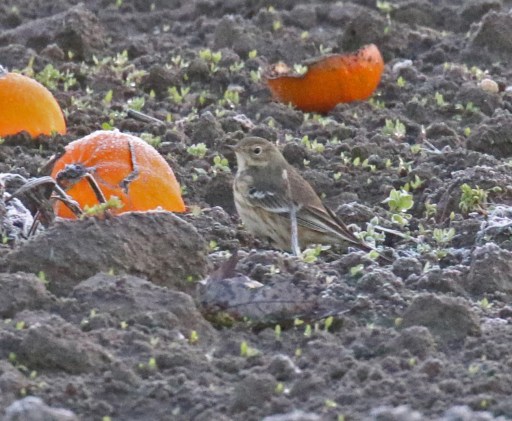
It was fitting that the first bird we saw was a black American Crow.  It was also fitting that the first “special” birds we saw were American Pipits in a field of orange squash.  After all it was Halloween and Pilchuck Audubon was out on another of its Tuesday birding adventures led by Virginia Clark.  (It was also fitting that delicious squash bread joined the yummy cookies in the “treats” that Virginia always brings – reason enough to join the group.)

American Pipit

Pipit and Squah

The day started cold and crisp but it got warmer and warmer and nicer and nicer – a brilliant day of birding in the Fir Island area in Skagit County.  Pilchuck Audubon has a trip every Tuesday mostly fairly local in Snohomish or Skagit County but sometimes ranging further afield even into British Columbia.  There are perhaps 20 “regulars” and you can always count on at least half of them being on any trip – great friendship shared with the also great birding – and the cookies!!

I have not been able to join the group as often as I would like – somehow other matters conflict with Tuesday too often, but it is always fun when I do.  And it is also always instructive as Virginia knows every back road and birding spot and has years of encyclopedic recall about what was seen where and when.  I go to places that are in my backyard so to speak but are still new to me.

I won’t try to catalog every stop and instead will concentrate on two special stops at Wylie Slough and Hayton Reserve but there were many birds on the back roads and our caravan enjoyed a diverse collection of raptors, passerines, waterfowl and shorebirds.  All told we found close to 70 species.  Not every bird was seen by every birder but the special ones were.

Raptors included Bald Eagles, American Kestrels, Red Tailed Hawks, Peregrine Falcons, a Merlin, Sharp Tailed and Cooper’s Hawks, Northern Harriers and a Rough Legged Hawk.  Unfortunately no owls (including a no show of the Barn Owl on Moore Road) and we also did not see the Prairie Falcon that had been reported at Hayton earlier this week.

Cooper’s Hawk

Cooper's Hawk Flight1

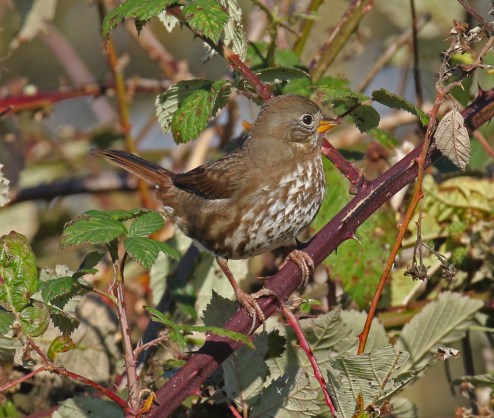
We also found a good variety of sparrow like birds: White and Golden Crowned, Lincoln’s, Song, and Fox Sparrow’s plus Spotted Towhee and Dark Eyed Junco.

Fox Sparrow

Fox Sparrow

Unfortunately no White Throated Sparrow which would have been a FOY for me but I heard from several in the group that they had had this species visit their yards earlier in the year.  Maybe I can visit next year if they return.

It is still a little early in the winter but all through the day we had groups of Trumpeter Swans and Snow Geese – with a large flock of the latter at Hayton numbering over 1000.  There was also a single flock of Cackling Geese and a few Canada Geese.

Cackling Geese

Cackling Geese

I must admit that I too often take the geese and swans for granted.  The excitement of many of the birders in the group as they saw these beautiful birds for the first time this season reminded me just how fortunate we are to live so near to an area where they return in the thousands each fall.  Always a spectacular show.

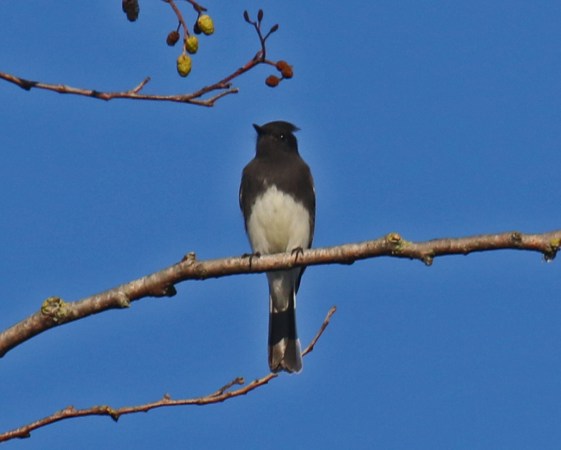
We arrived at Wylie Slough in the Skagit Management Area just before 11:00.  A Black Phoebe had been reported from the area earlier.  One of the group had already seen it – or maybe not.  When he got home and looked more closely at his photos, the white undertail and conical light colored bill proved it instead to be a Slate Colored Dark Eyed Junco – actually even more uncommon than the Phoebe.  At first we saw no shorebirds in the mud or shallow water so we walked the trail and looked for passerines and then went to the blind to see what ducks we might find.  The Fox Sparrow photo above was from this area and we also had a small flock of Pine Siskins and another small group of Bushtits and two wren species – Bewick’s and Marsh Wrens plus more Sparrows and Towhees.

From the blind, we could see a small group of Ring Necked Ducks (please, please change the species name to Ring Billed Ducks), a pair of Hooded Mergansers, Green Winged Teal and Northern Shovelers.  In the fields behind the blind or in the distant trees in the slough we found Bald Eagles, Peregrine Falcons, Northern Harriers and a Sharp Shinned Hawk.

Then it got real exciting.  Just past the blind across from the dike we arrived at the area where the Black Phoebe had been reported (and where the Slate Colored Junco had also been found).  We looked and listened – nothing.  Another Peregrine was found and a Belted Kingfisher’s rattle announced its appearance.  I tried the “phee-bee” call of the Black Phoebe hoping it might bring a response – but there was none.  Whoa – maybe three minutes later, the Black Phoebe was spotted in a tree very near.  It did its flycatching thing and all got good looks and photos.

Black Phoebe (Note the small insects flying around the bird)

Black Phoebe

Black Phoebe2

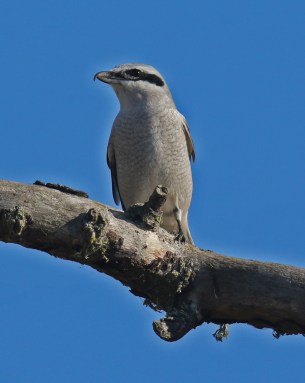
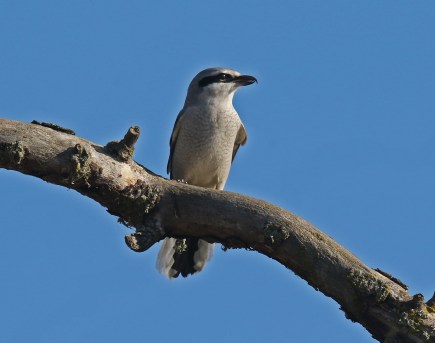
And then a juvenile Northern Shrike was spotted.  The Phoebe flew into brush near the slough and there was an almost immediate series of shrieks and rattles and chortles that turned out to be an adult Northern Shrike.  We thought that it was interacting with the Phoebe and – oh no maybe it was preying on it.  The juvenile Shrike had also flown into the area and we think that was the interaction.  It was also possible that there was a second adult Northern Shrike – as there were many visuals in different areas.  But there was so much activity and flying about that it was not clear if there were two or three Shrikes.

Northern Shrike

Northern Shrike3

Northern Shrike

Some of us had gotten out to the area by the dike quite a bit ahead of the others.  The Shrikes and Phoebe were very obliging though and everyone got good looks and enjoyed the activity.  I also learned that while our earlier group had been out past the blind and before I used the Phoebe playback, one of the other birders had thought she heard what sounded like a Willow Flycatcher at least 150 yards further down the path – closer to the parking area.  Most likely she had heard the Phoebe with its “phee -bee” call not so different from the “fitz-bew” or “fitz-bee” call of a Willow Flycatcher.  So apparently my playback had drawn the Phoebe out to us from at least 150 yards away.  And the proof of the pudding so to speak was that as we returned to the parking area, we heard the Phoebe calling and relocated the bird there.  So it does cover quite a distance.  Phil Dickinson had seen the Black Phoebe that was first reported by Josh Adams on Fobes Road and this was his experience there as well – as he and David Poortinga found the Phoebe at least that distance from where Josh had it before.

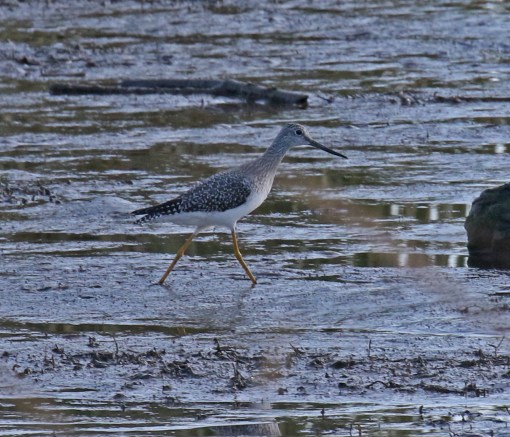
Also on the way in, we got good looks at a small flock of Greater Yellowlegs that had flown in and we heard a Virginia Rail that responded to my “grunt” playback.

Greater Yellowlegs

Greater Yellowlegs

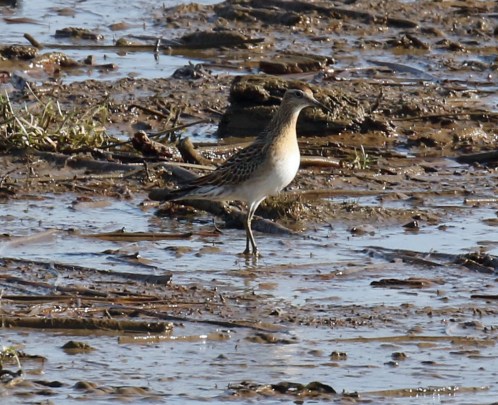
Jon and Kathleen Houghton had come to Wylie just in time to get on the Black Phoebe our group had found.  They were soon to return the favor.  They headed off to Hayton Reserve while our group had our picnic at Wylie.  I asked Jon to call if he found the Sharp Tailed Sandpiper that had been hanging at Hayton for the past two weeks.  Maybe 15 minutes later I got the call – but Jon said the tide was out and there were no shorebirds.  After lunch (and more of Virginia’s cookies) we headed over to Hayton Reserve.  Just as we arrived I got another call from Jon – they had the Sharp Tailed Sandpiper.  I announced the find and a group of us charged up to path where I could see Jon and Kathleen.  Turned out that the Sharp Tailed was not quite that far out though and I stopped just in time to see it fairly close in on the mud just east of the bank.  It remained for several minutes affording good views and some photos for some of us before flying over the path and into the shallows on the other side  giving some more birders a view.  This was a life bird for most of the group.  Unfortunately it then disappeared and remained so as the tide came in much quicker than expected.

Sharp Tailed Sandpiper

Sharp Tailed Sandpiper2

Sharp Tailed Sandpiper

Although the Sharp Tailed Sandpiper was definitely the star, there were lots of birds at Hayton:  hundreds of Dunlin, dozens of Greater Yellowlegs, Long Billed Dowitchers, Mallards, American Wigeon,  some Bufflehead and Pintails, and 1000+ Snow Geese.  We also had a single American Coot – our only one of the trip.

Dunlin

Dunlins

Long Billed Dowitcher

Long Billed Dowitchers

Two more stops.  We missed the Barn Owl at Moore Road (the same spot Steve Pink had shown me the previous week – when we in turn missed the Sharp Tailed Sandpiper at Hayton).  Then we went to the North Fork area where we did find the sought after American Bittern – only a distant flyby – but it was Virginia’s goal to get one for the trip so a fitting ending indeed.

It had been a really good day – good weather, very good birds and even better company.  Everyone departed happy – no tricks – only treats.  Happy Halloween.


Recent Misses – Remembering Rules #1 and #2

How nice if I could write an excited blog about successful chases recently – finding the Little Gull at Point No Point, the Blue Grosbeak at Neah Bay, the Red Shouldered Hawk at Three Crabs or even the Golden Plovers at the West 90.  But alas, no can do.  I was batting zero – having failed at all of these recent pursuits.  If the Joy of Birding was measured as specific birds pursued and found, it would be an unhappy time indeed.  And while I am not going to pretend that there was no disappointment and unhappiness in each of those “misses”, fortunately there have been nice returns on the efforts in the field looking for those special birds.

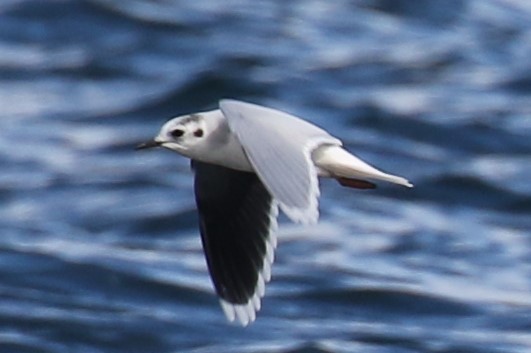
Little Gull

The Little Gull was first found at the Point No Point area by Kelly Beach and others participating in a bird survey by boat on the morning of Friday October 13th.  Brad Waggoner was able to search for the bird later that morning and after several hours of diligence he was rewarded first with distant scope views and then with a close fly by giving him a chance to get some fabulous photos which I include below – taken from his Ebird report.

Little Gull – Point No Point – October 13, 2017 (Photos by Brad Waggoner)

Brad's Little Gull

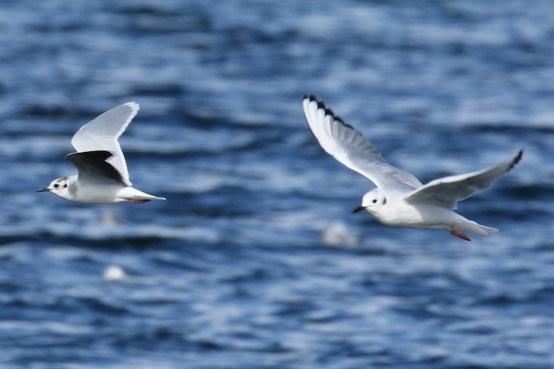
With Bonaparte’s Gull – a Super Size Comparison

Brad's Little Gull with Bonaparte

News of the sighting hit Tweeters on the afternoon of the 13th – too late to chase it that day but definitely something for the next day.  I had seen a Little Gull in Washington twice before.  The first was at the Everett Sewage Ponds on September 23, 1984 and the second was at the Point No Point location on October 7, 2013.  The gull was far from shore in 2013 and with the help of the Olivers, I was able to get a very poor distant photo.  That gull was first found by Matt Bartells the previous day and I was hoping this gull would also remain another day.

I got to Point No Point early on the 14th at 8:30 a.m.  I had alerted Carol Riddell to the Little Gull but she had received the message too late to join me at first.  She arrived maybe an hour later.  Ken Brown, a terrific birder from Tacoma was already there when I arrived.  It was a beautiful day and there were lots of gulls, but despite our thorough searching over many hours (almost 8), no Little Gull was to be found.  It would have been a new bird for the year – both in Washington and in the ABA for me – but at least I had seen and photographed it before, so the disappointment was somewhat tempered.  Brad’s photos were so terrific, I was mostly hoping to have a chance for one as well.

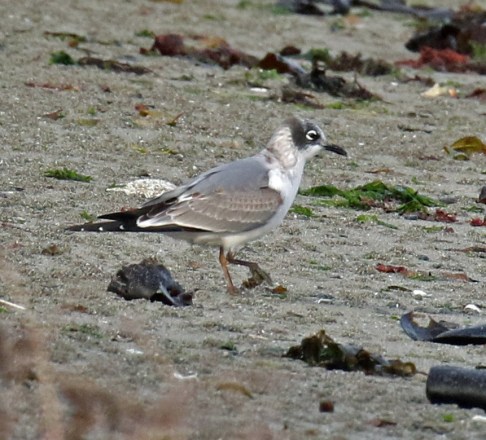
But as I have written before, there were consolations. There was the chance to visit with Ken and with Carol – enjoyable and educational.  And there were other good birds.  Sarah Peden and Jordan Gunn, both Master Birder Classmates, had also come to look for the Little Gull.  It was Jordan who first saw a Franklin’s Gull as we searched west of Norwegian Point.  Not nearly as rare as the Little Gull but definitely uncommon, it was the first one I have seen in Kitsap County.

Franklin’s Gull

Franklin's Gull

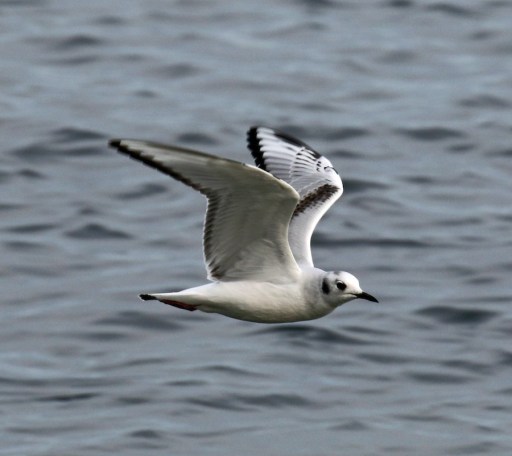
And there were hundreds of Bonaparte’s Gulls as is usually the case here in the fall.  A treat among the Bonies was a good number of Parasitic Jaegers – chasing the gulls often working in pairs and making them disgorge their food – standard Jaeger behavior.

Bonaparte’s Gull

Bonaparte's Gull

Parasitic Jaeger

Parasitic Jaeger

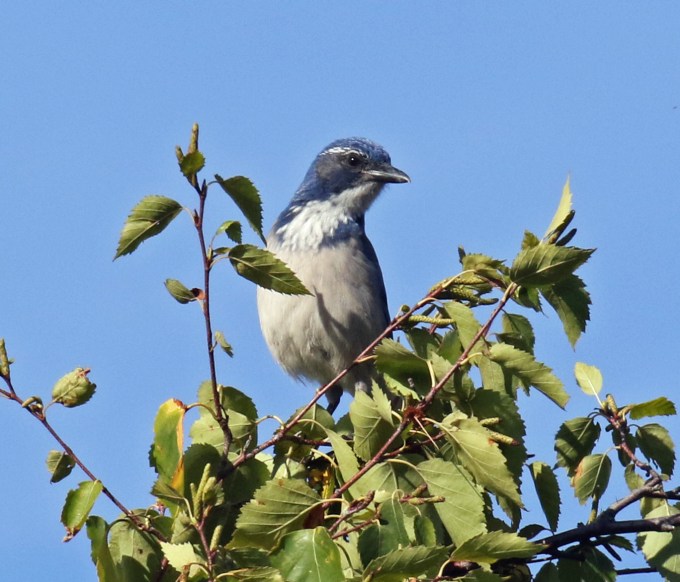
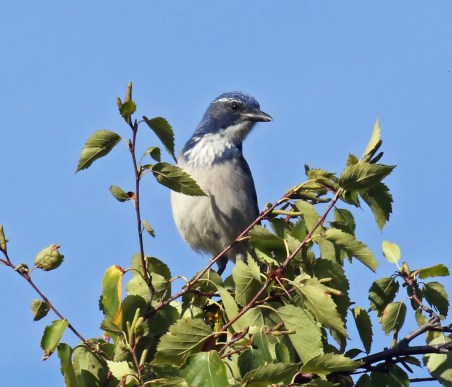
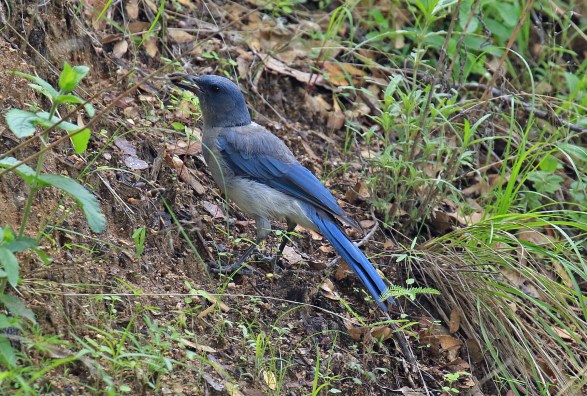
I was also able to show Carol a California Scrub Jay I had found before she arrived – a new county bird for her.  It was in the same spot I had seen one two years ago.  So no Little Gull but a good day of birding – and there would be other chases on another day.

California Scrub Jay

California Scrub Jay

Golden Plovers and Sharp Tailed Sandpiper

Over the next week plus as I wrote in my most recent blog post (See Dream Birds https://wordpress.com/post/blairbirding.wordpress.com/18761) I dreamed of birds instead of going to look for some.  I saw reports of a Sharp Tailed Sandpiper that was being seen at Hayton Reserve and of Golden Plovers seen at the West 90 among other places, but maybe the energy was low or I was just not motivated since I had seen these species earlier this year and had photos.  Eventually the good weather and inactivity weighed too heavily and I decided to look for these birds and who knows maybe something else like a Lapland Longspur or Snow Bunting in Skagit County.  Late morning on Monday October 23, I set off and called Steve Pink to see if he was interested in going.  It turned out that he was already out at the Tulalip Spit, another area I had considered, so we arranged to meet at Hayton Reserve.

At Hayton we saw hundreds of shorebirds – but there were no Golden Plovers or Sharp Tailed Sandpipers among the Dunlin and Dowitchers.  We left a car in town and then headed to other spots including a barn with a Barn Owl in a nesting box along Moore Road.  The Owl was tucked way in the back but we could at least identify it as such.   When we arrived at the East 90, we quickly identified the plowed field where the Golden Plovers had been reported for many days but there were no birds present at all.  The only consolation was a fly by of a Red Tailed Hawk that turned out to be of the dark Harlan’s form.

Red Tailed Hawk – Harlan’s

Harlan's

It was more of a disappointment for Steve since he had not seen Golden Plovers this year, but we were both a bit bummed.  And this disappointment was to be compounded.

Blue Grosbeak

Prior to setting out for Skagit County, I read a post on Tweeters from Ryan Shaw.  He was in Neah Bay with a big group of top birders and was looking at a Blue Grosbeak in brambles near the Minit-Mart.  I had seen and photographed the bird earlier in the year in Arizona and Florida but I had never seen one in Washington.  In fact this was only the second state record.  Randy Hill had found one in Neah Bay previously.  When I saw the post it was past 10:20 a.m.  If I hustled I might be able to catch the 11:10 ferry and possibly get to Neah Bay by 3:00 p.m.  I decided to wait and see if others reported the bird later and if so then to try for it the following day.

I told Steve of the report when we were out and it would be a new State bird for him as well but he had other plans for the following day and probably could not go.  It turned out that David Poortinga was then in Sequim and when he learned of the Grosbeak, he continued on to Neah Bay and he relocated the bird that afternoon.  This was all I needed to commit to a chase the next day.  After some family negotiations, Steve arranged to go as well.

The bird apparently had first been discovered by Bill Tweit.  The Washington Bird Records Committee had been meeting in Neah Bay and they all got a chance to see the bird.  Later David Poortinga and Alex Patia saw the bird and the photo below is from David’s report.

Blue Grosbeak (Hatch Year Bird) – Photo by David Poortinga

Blue Grosbeak

Steve and I caught the 6:10 a.m. Edmonds Ferry and were in Neah Bay before 10:00 a.m.  We went directly to the spot where the bird had been seen and searched hard for the next hour.  We were surprised that no other birders were already there.  Ken Lane showed up and he joined the search.  We had no success.  Sigh…

Steve and I continued to bird in Neah Bay for the next several hours returning often to the Minit Mart area but nothing changed.  The Blue Grosbeak had been a one day wonder.  Such is often the case – but it sure was a downer.  Steve and I had 50+ species in Neah Bay but nothing unusual.  We gave up and headed home planning a stop to see if we might find the Red Shouldered Hawk that had been reported at Three Crabs in Sequim.  It was getting late when we got to Helen’s Pond and in a car heading in the opposite direction was Brad Waggoner.  I enviously complimented him on his Little Gull photo and asked if he had seen the Red Shouldered Hawk – “Not today”.  Yikes – another miss?

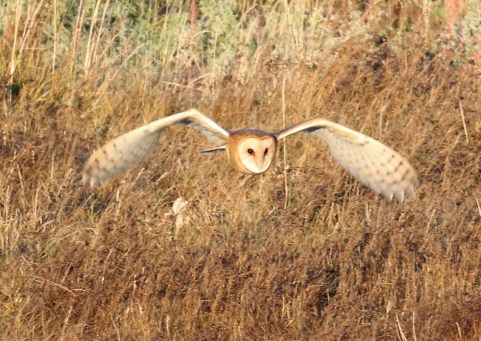
We saw some birds with the best probably being two Eurasian Wigeon hard to pick out from the thousands of American Wigeon in the Bay.  We had seen a Sharp Tailed Hawk but otherwise no raptors at all.  As we started to leave I noted what might be a raptor in a tree behind Helen’s Pond – the area where the Red Shouldered Hawk had been seen.  As we got out of the car for a look, we both saw what we believed to be a Short Eared Owl fly out of a ditch and then continue hunting in the fields.  The bird in the tree turned out to be only a Red Tailed Hawk.  That was disappointing but the owl now had our attention and great interest.  Over the next 20 minutes we watched it hunt making several dives and flying both away and towards us in beautiful light.  Now we could see that it was a Barn Owl and we were enthralled by the show.  It was a County first for both of us and the experience made us forget about the earlier misses.  Like a hail Mary pass that snatches victory from the jaws of defeat in a football game, this was a great way to end our day.

Barn Owl – Three Crabs

Barn Owl 6

Barn Owl7

Barn Owl4

So the owl was a treat – not really close to what the Blue Grosbeak would have been by some measures but it was great to share the experience with Steve.  Nobody else has reported the Grosbeak so at least we do not have to feel bad about that – but we did learn that the Golden Plovers we had missed at the West 90 had been seen two hours before we got there.  If we had started there and then went to Hayton – well who knows.

Hopefully my accounting of the missed Blue Grosbeak has not been taken as whining.  Maybe if I had followed my own Rule #1 the story would have been different.  Rule #1 for any “chase” is “Go now!” with Rule #2 being “If you fail to follow Rule #1, there can be no whining.”  What if I had taken the chance and gone to Neah Bay as soon as I read Ryan’s first post?  Odds are fairly good that I would have been successful (and very tired).  But if I had made that trip alone and failed to find the bird, it would have been a major downer – and there would have been no Barn Owl show.  Next time I will…

Dream Birds

It happens every year about this time.  The rains return to the Northwest.  Migration is mostly over.   I have chased birds, traveled all over the state and especially this year all over the country.  I have seen lots of really, really good birds.  It is October 19th and most of the show is over as I have seen most of the birds in Washington that I am going to see for the year.  Of course I would like to see more.  But what? Where?

In the previous five years I have averaged almost 355 species in Washington each year.  With different priorities and goals, there will be far fewer this year.    In those past five years, after this date, I have averaged about 15 new species for the remainder of the year.  Maybe that will be the experience this year as well and with some luck, maybe some surprises and a trip or two to the always fantastic Neah Bay and maybe a visit to the Okanogan, at most I might see 325 species this year – and that will be terrific.  It has been a good year in Washington and especially elsewhere.  Now what?

As I sit here today on October 19th, there is nothing specific to go chase – just some spots that might be productive with some luck – no certainties to add to the list.  I have some time in the next week to go birding.  What to do?  Thinking about that got me to dreaming.  What if I could somehow will some very special birds to show up – what would they be, what would I most want to see?  And since this has been a year with goals beyond the borders of Washington, what if my dreaming could include all of the ABA area?  That exercise led to the following bucket list of my top 10 Birds to round out the year.  My Dream List (all photos are from others or by me not in Washington).

 1. Smew (Internet Photo)

Smew

I have mentioned this before.  A male Smew is at the very top of my bucket list.  Sure I would love it to be in Washington and there have been a couple of observations in Washington in the early 1990’s.  I have never seen one.  Maybe next year.  It has to be a male and I want a photo. (See https://wordpress.com/post/blairbirding.wordpress.com/7931)

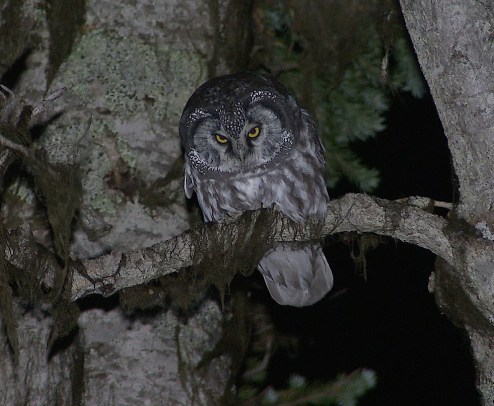
2. Boreal Owl

Boreal Owl1

This one does have to be in Washington.  It is my most wanted photo for the State.  I have heard many and had a very fleeting look at one.  This photo is by Dan Reiff and was at Sunrise at Mount Rainier where I had my only visual.  I tried again this year – unsuccessfully.  There is an outside chance to try once more.

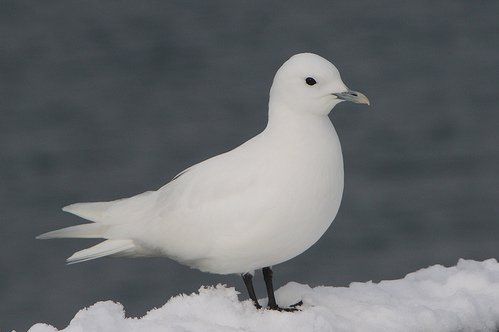
3. Ivory Gull (internet Photo)

IvoryGullPlymouthMA01232009

Maybe this year’s Swallow Tailed Gull means anything is possible, and an Ivory Gull was seen at Point Roberts in December 2001, but this is a tough bird to get anywhere – with Barrow Alaska being the most likely spot.  This photo is of one seen at Plymouth on Cape Cod (I was just there) in January 2009.  A real beauty.  It would be fantastic.

4. Red Legged Kittiwake

Red Legged Kittiwake

Continuing the gull theme, I would love to see and photograph a Red Legged Kittiwake in Washington.  There was one seen at Neah Bay in September 2015.  I chased it the next day unsuccessfully with Jon Houghton and Nathaniel Peters (See https://wordpress.com/post/blairbirding.wordpress.com/1900).  The photo is of the one I saw on my Adak pelagic trip last year . (See https://wordpress.com/post/blairbirding.wordpress.com/4254)

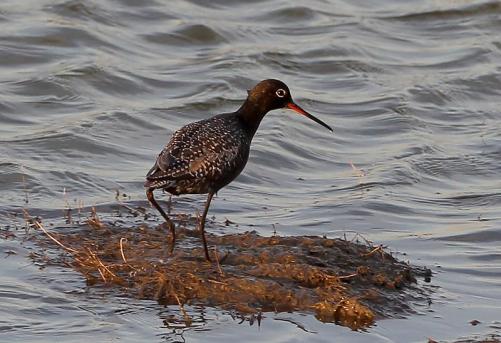
5. Spotted Redshank (Internet Photo)

SpottedRedshank

I first saw this bird at the Mai Po Nature Reserve outside Hong Kong in December 1979 where it is common.  Just over a year later I saw another one in Oregon in February 1981.  It is extremely rare in the U.S.  One was seen by a few observers at the Jensen Access in Skagit County in late November/early December a couple of years ago.  Maybe it will return this year.  I would love to add it to my photo list and to my Washington State life list.

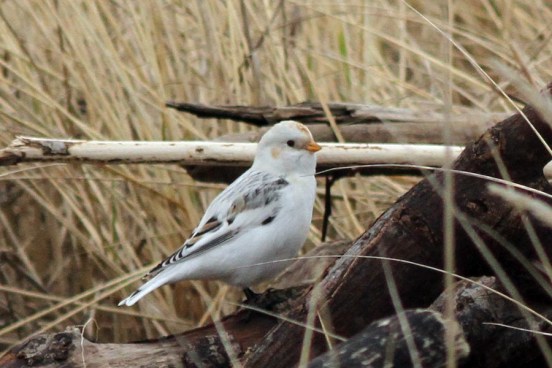
6. McKay’s Bunting

McKay's Bunting

This photo was taken by Knut Hansen of the McKay’s Bunting found at Ocean Shores in February 2012.  With several other birders, I tried (and failed) to relocate the bird the following day.  I had previously seen one there 33 years earlier in February 1979.  So not a lifer or even a new state bird, but I would love to check it off of the birds seen but not photographed in the State. (See https://wordpress.com/post/blairbirding.wordpress.com/7931)

7.  Little Bunting

Little Bunting

I will not go into details, but this bird holds the title of Bird I am Angriest to Have Missed in Washington.  It was seen on October 10, 2015.  The photo is by Ryan Merrill.  NOT a happy story.  Maybe someday.

The preceding birds are all ones I would like to see and/or photograph in Washington.  Three would be ABA Life birds and two more would be new State Birds.  The other two would be new State photos.  The next three are birds that would have to be seen elsewhere – two lifers and a life photo.

8. Whooping Crane (Internet Photo)

Whooping Crane

This would be an ABA Life bird.  We failed to find one in Florida this year and I have missed them on two trips to Texas.  I hope to return to Texas and see one next year.

9. California Condor (Internet Photo)

California Condor

This too would be an ABA Life bird.  I am considering a trip to Southern California this year and if so will try to include Big Sur and hope to see one there if I do.  If not – then maybe the Grand Canyon next year.

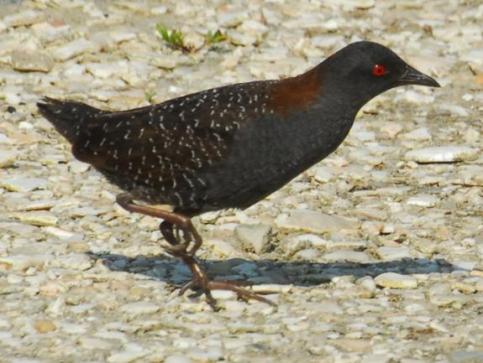
10. Black Rail (Internet Photo)

Black Rail

This may be the most surprising bird on the list as it is not a super rarity and is not a reintroduction success story like the Whooping Crane and the California Condor.  But it holds a special place for me as it may be the bird that really got me hooked as a birder (See  https://wordpress.com/post/blairbirding.wordpress.com/2627).  The only one I have ever seen was at Baylands Park near Palo Alto in May 1973.  It is elusive and very small – hard to get a photo and that is what I want – to add to my ABA photos list.  Need a lot of luck – and a very high tide.

I imagine that most readers would love to see these birds as well but likely not all are in their Top 10.  As I made the list I also got to thinking about the Top 10 birds I have seen – and it is just too hard to make that selection – even if reduced to just those in Washington  or even just in any one year.  But going back to the start of the post and what put me in the mood, I wondered about the Top 10 birds I have seen “after October 19th”.  I came up with the following – a pretty good list certainly for the State of Washington – and many for almost anywhere.  I would be thrilled to see any of them again this year.

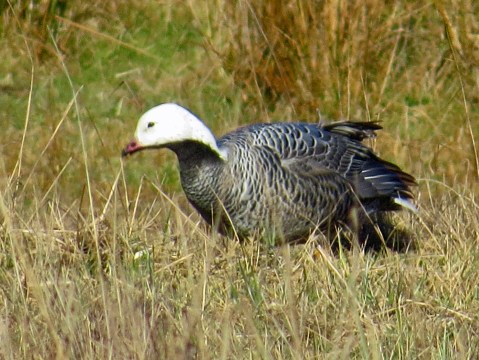
Emperor Goose – Sequim, WA – December 19, 2013

emperor-goose

Northern Hawk Owl – Highway 28 – December 22, 2012

Northern Hawk Owl 1

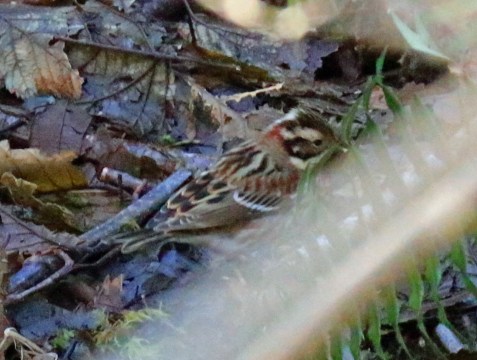
Rustic Bunting – Neah Bay – December 7, 2016

rustic-bunting

Eurasian Hobby – Neah Bay – October 30, 2014

Hobby

King Eider – Ruston Way, Tacoma – November 4, 2015

59673-king2beider3

Brambling – Neah Bay – October 30, 2014

brambling2

Dusky Capped Flycatcher – Neah Bay – November 21, 2016

dusky-capped-flycatcher3

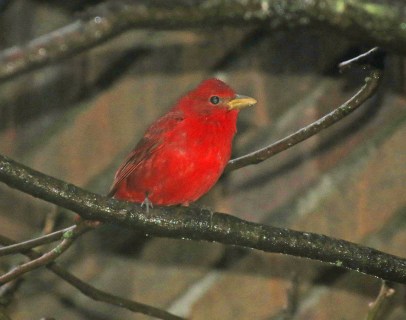
Summer Tanager – University District – December 9, 2012

summer-tanager

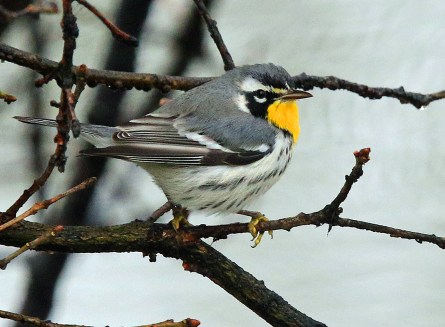
Yellow Throated Warbler – Longview – December 16, 2015

yellow-throated-warbler2

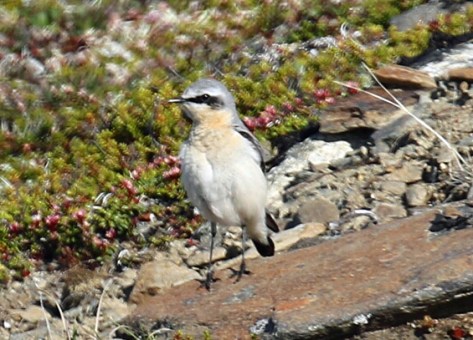
Northern Wheatear – Westport – October 28, 2012

Northern Wheatear

Dream List  


After October 19 List

Smew   Emperor Goose
Boreal Owl   Northern Hawk Owl
Ivory Gull   Rustic Bunting
Red Legged Kittiwake   Eurasian Hobby
Spotted Redshank   King Eider
McKay’s Bunting   Brambling
Little Bunting   Dusky Capped Flycatcher
Whooping Crane   Summer Tanager
California Condor   Yellow Throated Warbler
Black Rail   Northern Wheatear


Looking Back – No Birds until the End

This post will have some birding content, but my trip was not about birds.  It was about going to the East Coast revisiting my past – looking back at places where I lived and went to school and spent my youth.  It was also about seeing my two children who live on that Coast – far from me in Edmonds, WA.  On the third day of the trip I turned 70 – how is that possible?  Really? – old people are 70 – so how can I have reached that age?  Guess I will have to reassess and think that people are not “old” until they are 80.  Hope I make it to that time to see for myself.

I grew up in Langley Park, Maryland from the time I was 4 until I left for college in 1965.  It was a post-war development in Prince Georges County not far from the District of Columbia .  My parents remained in that same house until the birth of their granddaughter prompted their relocation to Seattle in 1985.  So it was in 1985 that I last revisited Langley Park.  Now 32 years have passed and I wanted to see what had changed and to feel what this simple place that had seemed so idyllic to me back then felt like now.   I was part of the beginning of the post-war baby boom.  Our neighborhood of hundreds of simple brick ramblers and some apartments was full of families with kids.  None of the families made much money, but America was so wealthy after the War that standards of living were pretty good even for middle class (lower) families like mine.  We had simple wants that were met and frankly we did not know about or want much else.

My home was across the street from my elementary school with play fields and summer programs.  Just around the corner and down the street was “the Woods” with endless interactions with nature and our imaginations.  There were snakes and frogs and turtles and birds (although I had no sense of their appeal then).  Walking or riding our bikes with absolutely no worries of safety or foul play, we would spend hours reliving the “Civil War” from hills we called Confederate and Yankee lookouts, wading in “the Creek”, looking for arrowheads, or going to the Old Mill.  Our bikes or feet also took us to “the shopping center” – at first just a single strip mall and eventually many stores on all corners of the major intersection about a mile from my home.

I was not aware of it at the time, but the weather was miserable – temperatures and humidity in the 90’s in the summer and snow and moderately cold in the winter.  Kids don’t process weather – it was what it was and all we knew.  We played all day.  Repeating myself, there were kids everywhere.  An example was that on Halloween, hundreds of us would fill the streets receiving candy from every house – two shopping bags full as I remember – sometimes even whole candy bars – not the bite size we use today.   Little League was a half mile away.  There was a bowling alley not too far and we were only a short bus ride from Washington, D.C. where my father worked (a small optical store in a not so good area) and on my own even at a very young age, I could ride that bus, with a transfer at the “District Line” to get to Griffith Stadium to see the abysmal Washington Senators (bleacher seats were less than $1.00) or for a real treat go to “the Mall” to see the monuments for Washington, Lincoln and Jefferson, the National Gallery of Art and especially the fabulous Smithsonian.  All were free.  Dwight Eisenhower was President and in those much simpler times, we actually had picnics on the grounds of the White House.

Later I would go by bus (with all those other kids) to a Junior High School less than 3 miles from home and then later to a large high school about 5 miles away.  Enrollment in the High School tells the baby boom story.  In just grades 10 through 12 in three shifts, we had almost 3500 students – the place was bulging at the seams.  But I got a good education in the “Academic Track” and went on to college in Cambridge, MA – wonderful and confusing and challenging and at times bewildering years at Harvard as the 60’s ended with enormous change, rebellion, protests and no longer a naivete and innocence about a simple life where everyone had been in the same boat – relatively at least.

Life really was good – at least I thought so at the time and cannot remember it differently now.  My revisit did not change that memory but the place had certainly changed.  It was impossible not to notice the completely different racial/ethnic makeups.  My neighborhood had been 99% Caucasian and now was seemingly all Hispanic.  All of the familiar stores from the “shopping center” were gone and were replaced by smaller stores of unfamiliar brands with signs either bilingual or in Spanish only,  My high school had similarly been almost exclusively Caucasian.  Now almost entirely black.  The school itself seemed familiar with maybe a new auditorium but definitely not a shining new beacon of education.

My elementary school still had portables that may have been built in the last years I was there.  Then there were two separate buildings/schools: Langley Park and McCormick.  They are now combined into the separate and newer (meaning probably 1956) two story McCormick building.  The older Langley Park building seems to have been partially razed leaving an administrative building function only.  Neither place looked very appealing.

Not surprisingly, the Woods were the same – although they did seem smaller to my grown up eye.  The Creek ran clear, the trees had not yet donned their Autumn cloaks and while I doubt that young kids still play there without adults nearby, it was a pleasant and inviting area.  My guess is that there are (and were) birds there although my attempt to find and finally get a photo of a Tufted Titmouse was unsuccessful.

The Old Family Home

Langley Park1

The High School

HPHS

Continuing into D.C. I remembered the route first to my fathers old work place and then to the Mall.  Dad’s shop had been in the heart of one of the areas burned during the Martin Luther King riots in 1968.  It had escaped the flames although windows were damaged, but the area changed and went even further downhill – at least for awhile.  Not the case today as it is very upscale with expensive shops and clean streets.  Not recognizable at all.  Jeni’s Ice Cream has replaced 975 Optical Co.

Dad’s Corner

975 Optical

The Mall was the same but different.  I used to walk the length of it going from place to place.  We did a lot of walking this day, but it seemed so big.  And now there were additions: The Vietnam Memorial, the Korean War Memorial, the Martin Luther King Memorial.  A short visit to the Smithsonian Natural History Museum which was the same on the outside but with different and terrific exhibits on the inside although the giant African Elephant still occupies center stage.  I have wanted to see the Vietnam Memorial for a long while – very simple and very powerful.  A memory of a ghastly inexcusable war – a very bad time in my life.  I was alive during the Korean War but was just a toddler.  That Memorial is also very powerful as is the one to Martin Luther King.

Vietnam Memorial

IMG_0022

Korean War Memorial

IMG_0011

Martin Luther King Memorial

IMG_0026

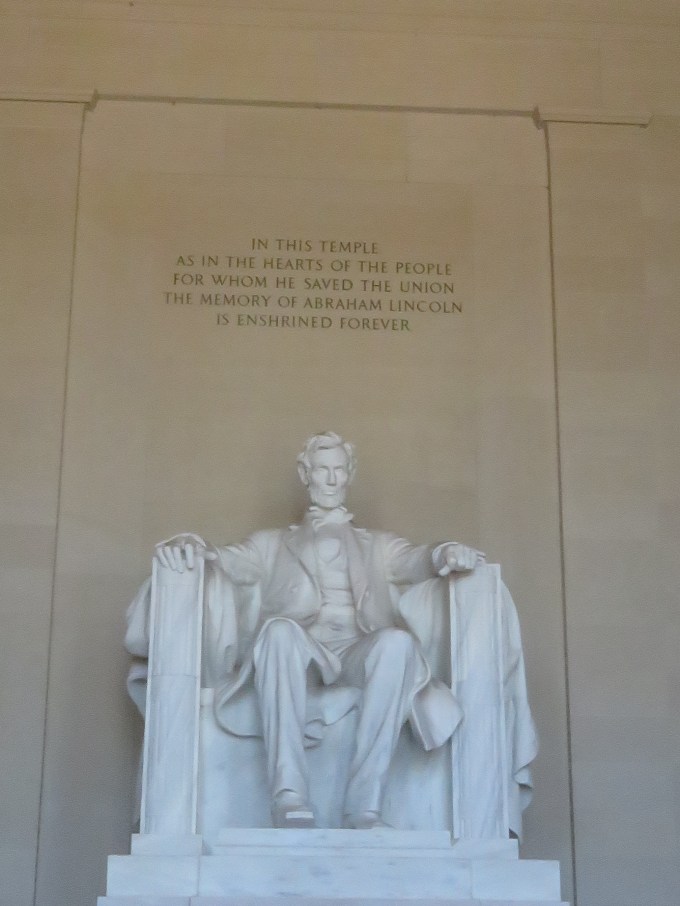
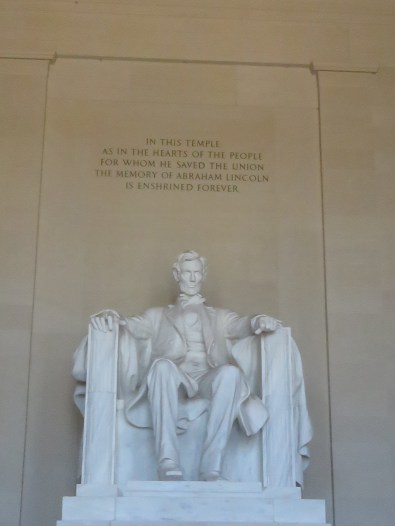
The Lincoln Memorial has always been my favorite.  It ranks with the Taj Mahal as the most emotionally moving buildings I have experienced.  Memories of climbing on Lincoln’s lap after my High School Prom add to its magic.

Lincoln Memorial

IMG_0009

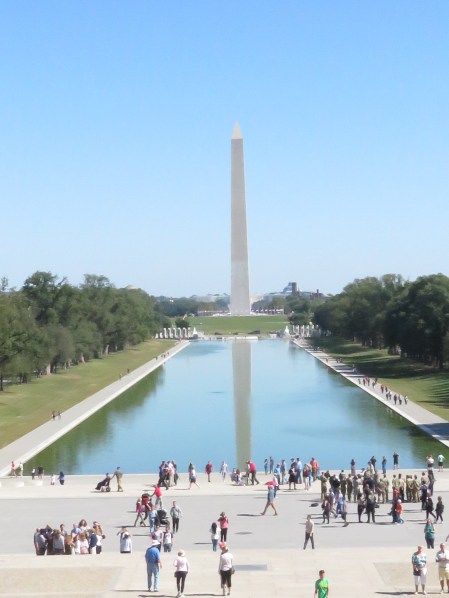
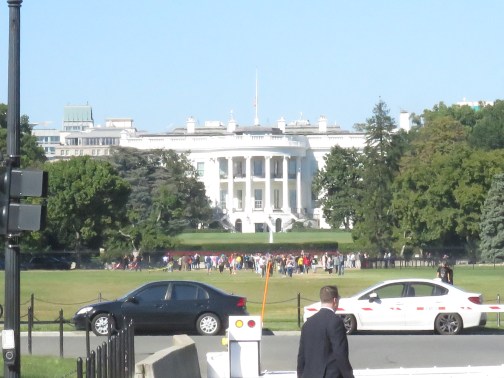
I cannot resist adding two more photos – the Washington Monument across the Reflecting Pool and the White House.  The former memorializes one of the true American greats and the latter currently houses one of America’s greatest disappointments.  Enough said.  Yes much has changed.

Washington Monument

IMG_0008

The White House

IMG_0034

After D.C. it was on to New York City – primarily to visit my son Alex.  I admit to not caring for New York – just too many people, too busy, crowded, impersonal etc.  It was great to see Alex and try to catch up on his world.  He has a difficult job with difficult people.  His standards and performance are so high I wonder if he can ever really find a comfortable place.  I wish it was easier.  He is buried preparing for a major event in Seoul, South Korea next month.  I just hope the nut job in the White House does nothing that will make Seoul disappear.  We also visited the new World Trade Center and 9-11 memorial, museum and the observation tower.  Not going to go into details or include pictures – incredible place – a horrible event that will never be forgotten and that has changed our world forever.

It was then on to Boston to visit my daughter and her husband and to revisit some of my college haunts.  Miya and Lester have just purchased a home in Newton and it was so exciting to see them in their own place – the spare bedroom was nice also!!  It was here that I had the highlight of the trip as I learned that after a very tough ordeal, Miya is pregnant and with continued good fortune, I can expect a first grand child in March.  There are no words that can express my joy and my happiness for them.  They are an incredible couple who are both engaged in academic medicine and have worked so hard to get where they are.

Before revisiting Harvard and seeing an off the wall street parade in Cambridge, we journeyed to Children’s Hospital in Boston, where Miya is now on the faculty and she got to show off her very new office – with a window and a door that locks – quite the treasure in her world.  Harvard seemed little changed since my graduation in 1969 and my last visit for her graduation in 2006.  At least on the outside.  I expect that the content of what is taught inside the walls is very different, as is the student body.  I would never get admitted today and doubt I would understand much of what is taught there as well.  Yet that continuity – strangely like “the Woods” at my childhood home and the Lincoln Memorial in Washington, D.C.  was comforting.  Sound foundations are irreplaceable.

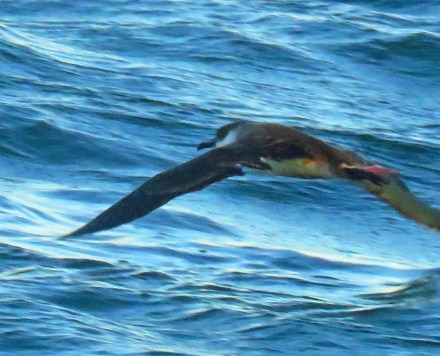
There was one more leg of the journey – this time not looking back and finally looking – even if briefly – at some birds.  We had time for a jaunt to the Cape – all the way out to Provincetown with the possibility of some new life birds if the shearwaters were around Race Point Beach as they often are at this time of year.  The weather on arrival was not great – but only a light rain and light wind.  Just before hitting Provincetown, there had been a pair of Mute Swans visible from Highway 6.  Not officially “countable” in Washington they are established and do count in Massachusetts.  They were ABA Area species number 500 for the year – so at last another of my goals was met.  A Greater Black Backed Gull greeted us at Race Point Beach for #501.  Also at Race Point were hundreds of shearwaters.  Without my scope or good camera, it was a bit frustrating but several Great Shearwaters flew close enough for a photo.  The Cory’s Shearwaters were further out but I had a good enough view to pick out the determining field marks.  Both were ABA life birds – numbers 692 and 693.

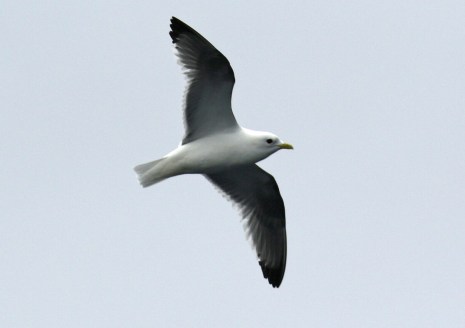
The next morning I returned early in great light and saw many thousands of birds – again both shearwaters plus hundreds of Northern Gannets, Common Eiders, and Common Terns.  Many Parasitic Jaegers harassed the terns and there were a few Manx Shearwaters in the mix.  A single Black Legged Kittiwake was the only other new bird for the year bringing me to 505.

Greater Black Backed Gull

Greater Black Backed Gull

Great Shearwater

Great Shearwater2

So goals that I set out earlier this year as 1 through 6 have now been accomplished.  I wish there was a way to get to goal 7 – my 700th ABA species this year but I just don’t see it happening.  Some misses in Florida and again in Arizona might have changed the story.  I am considering one more out of state trip this year, but even four new ABA birds would require a lot of luck.  Guess I will have to wait (unless Neah Bay has even more surprises than usual.)

But I would not trade my visits to my kids and especially my daughter’s great news for any number of lifer’s.  There can be no greater goals than to see your children doing well – healthy and happy.   Makes me happy as well…

Birding Both Sides of the Border

One of the many challenges when birding for shorebirds is timing the tides and choosing which spots to bird to best allow for their effects.  When I bird the Washington Coast that first and foremost means choosing between the Ocean Shores area or the Westport area.  Except in the very longest days of summer, there is only one birdable high tide and it is generally best to be in an area on an incoming tide often, such as at Bottle Beach, two or three hours in advance of the high tide itself.  A similar choice had to be made on Friday this week as I was planning a trip North.  Do I try to catch the high tide at Semiahmoo or at the various great shorebird spots in Canada?

Actually the choice was easy albeit somewhat complicated by other factors.  High tide (essentially the same for both areas as with the Washington Coast) was scheduled for 3:40 p.m.  The target for Semiahmoo would be the Hudsonian Godwit (often called a “Hudwit“) that had been seen there fairly regularly over the past two weeks.  I had missed it earlier but it was seemingly more consistent.  In Canada the real target would be spending time with birding pal Melissa Hafting, but there had been several really good birds as well including both American and Pacific Golden Plovers, Hudsonian Godwit, and a Sharp Tailed Sandpiper.  So the choice was seemingly easy … except that the day prior to my visit, none of the Canadian birds had been seen and the Semiahmoo Hudwit had been seen and photographed.

My quick calculation determined that the odds were decent that with Mel’s help and further assistance from her good bud Ilya Polyaev, at least one of the Canadian birds would be found and there would still be the visit with her in any event.  So Canada was the choice stopping first at Semiahmoo on the off chance that somehow the Hudwit would show there early – long before high tide.  Dream on…

I left early and was at Semiahmoo at 7:30 a.m.  It was low tide – very low – and it was cold – only 42 degrees – proof that summer will soon be over.  No shorebirds were to be seen anywhere but the light was good and I had a few hours to kill, so I decided to just enjoy some leisurely non-focused birding, see what was around and take some photos.  The first bird I saw was a beautiful Lincoln’s Sparrow at the south end of the spit.  No photo, but in the same area I quickly added several species including Song, Fox, White and Golden Crowned Sparrows, Spotted Towhee, Anna’s Hummingbird, Pileated Woodpecker, House Finch and Yellow Warbler.

Anna’s Hummingbird

Anna's Hummingbird1

Yellow Warbler

Yellow Warbler

Spotted Towhee

Spotted Towhee

I walked through the bushes to get a view of the shore and hoping for some shorebirds and was greeted by Mew and Ring Billed Gulls.  Far out I could see Scoters and Grebes and many Cormorants and Canada Geese.  No shorebirds in sight anywhere.

Mew Gull

Mew Gull

Ring Billed Gull

Ring Billed Gull

These were all “common” birds but especially in the bright morning light and the solitude of this beautiful place I was reminded of the simple pleasure of just birding – just enjoying what is so easily found and always appreciated – just being out in nature and away from “real world” cares.

Over the next couple of hours, this simple “take what is offered” approach continued and the species list grew – again mostly commonplace birds.  Mallards and both Surf and White Winged Scoters, Common Loons, American Goldfinches, Rock Pigeons, House and Savannah Sparrows, Barn Swallows and Collared Doves.  Hundreds of Cormorants – presumably mostly Double Crested although I did not search carefully for Pelagic or Brandt’s which may well have been in the mix.

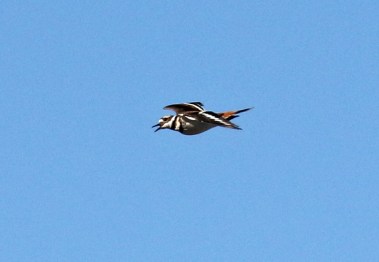
Finally a shorebird – a Killdeer of course – first heard in flight and then found posing in front of the condominiums that are rising from expensive lots – planned many years ago but only now being economically viable I guess.

Killdeer

Killdeer FlightKilldeer

Suddenly a Merlin flew overhead chasing what I believe was a House Finch which somehow avoided capture.  Too fast for a photo but somehow the camera in my brain picked out the black and gray tail bands more clearly than I had ever noted them before.  One of those small but delightful moments while birding.

I would have to leave for Canada soon, but as the tide was at least now coming in I wanted to give the Hudwit another chance and headed over to the west side of the spit where the Black Bellied Plover flock that it accompanied chose to forage.  They were there – Black Bellied Plovers!!!  But alas only two instead of the thousand or more that had been seen at high tides on previous days.  I hoped they were the early scouting party and the plenitude would soon join them, but such was not the case and these two just flew off and no others arrived as the tide remained quite low.

Black Bellied Plover

Black Bellied Plover1

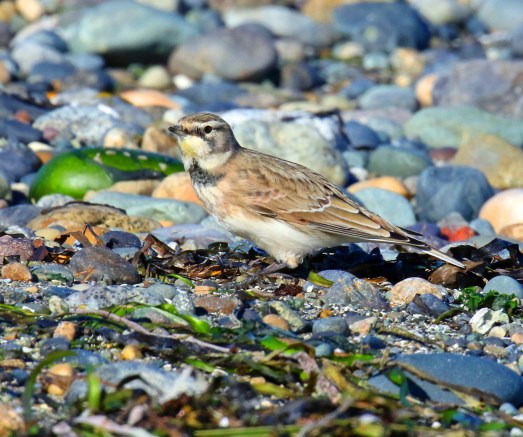
My disappointment (but not surprise) was somewhat assuaged by the arrival of first one and then two more Horned Larks – rare for the time and place and very confiding as they posed for photos for me and another birder I met at the spot who was also hoping for a Hudwit.  The light was perfect and the three birds completely ignored our presence as they fed voraciously.

Horned Lark

Horned Lark1

It was now just past 11:00 and I was scheduled to meet Melissa at Reifel Refuge at noon so it was time to go.  A last stop along the road heading out gave me a look at the first Black Oystercatchers of the day and resting Caspian Terns but no more Plovers and definitely no Godwits.  I would just have to find one in Canada I thought.  It had been a fun morning though.  Forty species already and there was a whole other country to bird.  The line at the border crossing was relatively short – ten minutes to clear – and no wall to keep me out.  (Sorry could not resist.)

Welcome to Canada

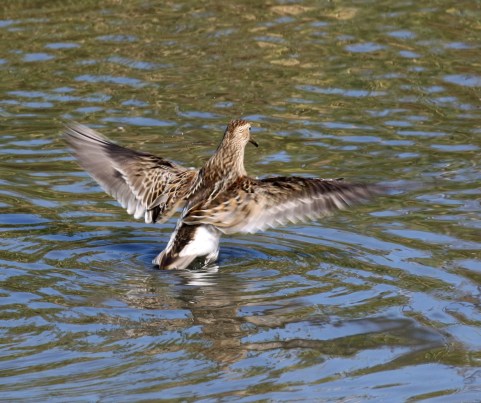
My last visit to Reifel Refuge had been with Pilchuck Audubon in 2015 when we had fabulous views of a Great Gray Owl that had been there for several weeks.  The quest this time was a Sharp Tailed Sandpiper.  Melissa and I explored all of the ponds.  There were a number of shorebirds including Stilt and Pectoral Sandpipers, many Greater and Lesser Yellowlegs and lots of Dowitchers – but no Sharp Tailed.  It had proven to be a one day wonder and this was not the right day.  One photo of the Pec as it was about to take off gave a really good view of the dark feathers extending from its back down through its tail.

Stilt Sandpiper

Stilt Sandpiper1

Pectoral Sandpiper

Pectoral Sandpiper

Pectoral Takeoff

It was now a couple of hours before high tide – time to hit the spots where the Golden Plovers and the Hudsonian Godwit had been seen.  As was the case at Semiahmoo a Marbled Godwit and a Willet had recently been seen with the large flock of Black Bellied Plovers that also had the Hudwit.  Melissa was keenly interested in the Willet (it would be her first this year and is rare in B.C). so we were looking for the flock of Plovers.  But it was not to be.  No Plovers at all at Boundary Bay and none at Roberts Banks.  Blackie’s Spit was now our last hope.

Blackie’s Spit is a cool spot, beautiful with views of distant mountains and the residential towers of Burnaby and good habitat for shorebirds.  We finally found a (“the?”) flock of Black Bellied Plovers – hundreds of them.  That was the good news.  The bad news was that they were so distant that it was very difficult to scan for something different.  We tried for 30 minutes.  At one point I was 95% certain that when one bird lifted its head I could see a long bill and a grayish brown body that was somewhat larger than the adjoining plovers making it most likely the Hudsonian Godwit.  But it dropped its head again and could not be relocated.  But 95% is not 100% and 100% was needed to support the observation.  Sigh…   And then a surprise.

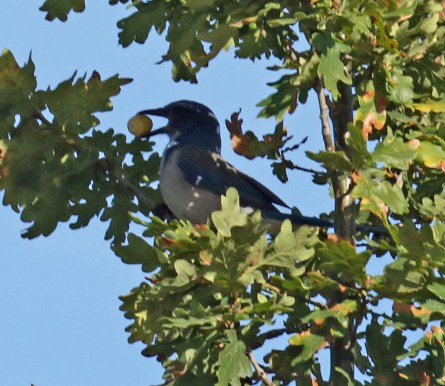
As author/keeper of the BC Rare Bird Alert (www.bcbirdalert.blogspot.com), Melissa learns of rare bird sightings almost as soon as they occur.  She had just received word that a California Scrubjay had been seen 15 minutes earlier at – yes you guessed it – Blackie’s Spit – not far from where we were scoping the Black Bellied Plover throng. When we got to the spot, we found another birder who had been looking for the Scrubjay but had not found it.  We joined the search and for maybe 10 minutes we had no luck.  This is a very rare bird this far north and while I do not worry about a provincial or even Canada list, I certainly hoped Melissa would see it and I wouldn’t mind either.  I suggested using playback and got approval.  No immediate response but maybe five minutes later, we saw what could have been the bird flying behind some trees.  More playback.  No response.  Maybe it had been our imagination.  I headed down a path while they remained above and was lucky to see the Scrubjay with a large nut in its beak.  It flew and Melissa and the other birder got quick views.  Then I spotted a second Scrubjay – only one had been reported before – and this one proved more accommodating as it perched in the open in the sunlight – a great photo op.

California Scrubjay – First Record Shot with Nut and then a Lovely Pose

California Scrub Jay with nutCalifornia Scrub Jay

While this made the day for Melissa, for me it was “nice” but not what I had hoped for when I ventured north.  We went back to the distant flock of Black Bellied Plovers and tried again.  The light was now better but we could not relocate the bird I had seen previously. Ilya Povalyaev had joined us and joined the search.  Nothing and then the flock flew off to the west and north and that was that.  Or was it?  Stay tuned.

With the flock gone, we turned our attention to the Scrubjay again and took Ilya to the spot. When we had departed before, both Scrubjays had flown West.  Would we find it again.  I played the call and quickly first one and then the second bird appeared.  No poses this time, and again they flew off to the west just as they had before.  Happy for Ilya but I had really wanted one of the special shorebirds and now time was running out.  As I said, Melissa learns of good sightings almost as soon as they occur.  She received word that the Hudsonian Godwit had been seen at Boundary Bay – exactly where we had been two hours previously.  It was now 5:45 and the light would soon be gone.  Time to follow Rule 1 – “Go Now” – back to Boundary Bay – 14 miles away.  Several birders arrived at the “Scrubjay spot” just we were leaving – all friends of Melissa and Ilya – looking for the rarity there.  I couldn’t wait to visit and raced off.  Fortunately Melissa and Ilya cut their visit short and left shortly after I did to join me – thankfully so.

I had had the foresight to put the Boundary Bay (Mansion) location on my GPS so was able to get there.  I made good (great?) time and was there just after six.  There was still light but already beginning to fade – as I said earlier, summer is leaving us.  Melissa and Ilya arrived shortly after I did and we first set up scopes at the 96th Avenue terminus.  The number of Black Bellied Plovers was astonishing – easily 1000 plus.  This was the same flock that had been seen at Semiahmoo across the bay.  It almost definitely included the flock we had seen at Blackie’s Spit – plus many more.  Would the Hudwit be with them? The Willet? Ilya spotted the Willet.  We got looks in his scope and then found it in our own.  Melissa was a very happy camper but that was not my quest.  I thought I found the Hudwit – larger bird with long bill.  But I had not realized that the Willet had flown and that is what I refound.  Our search continued and the light continued to fade.

We found a Godwit – but it was the more common Marbled Godwit.  Aaargh!  But, again the sharp-eyed Ilya came through.  Further to the East, he found the Hudsonian Godwit.  I got it in my scope as well and now there was no doubt.  Long bi-colored slightly upturned bill.  Plain brownish gray and that definite white supercilium.  Yay!!!  We sped down to the end of the road in front of the Mansion (what was THAT doing there?!) and searched for the American Golden Plover that had also been noted in the message received by Melissa.  It was probably there in the 1000+ Black Bellied Plovers but they were all too far out and the light was now pretty bad.  But I had seen the Hudsonian Godwit – ABA bird 495 for the year – and I too was a happy camper.

To complete the story, we learned that about 90 minutes or so after I had left Semiahmoo earlier that day, the large flock of Black Bellied Plovers had arrived and that the flock included a Willet, a Marbled Godwit and a Hudsonian Godwit.  It was almost 5 hours later that I saw this same flock at Boundary Bay – confirmation that, as suspected, all of the sightings in both places over the past several days had been of the same birds – availing themselves of feeding and resting places within just a few miles as the crow (or the Plover, Willet or Godwit) flies but many more miles as traveled by the birders.  Our Boundary Bay birds had been too distant for photos so I include a photo of a Hudsonian Godwit from Semiahmoo that I took there in late September 2015 – a LOT closer in.  It may even be the same bird.

Hudsonian Godwit (Semiahmoo September 29, 2015)

Hudsonian Godwit (2)

Melissa, Ilya and I had a nice dinner at “The Cabin” in Crescent Beach and I headed home.  It was a very long day.  It was a very good day.  Great places, great birds and especially great people!!


A Swallow Tailed Gull – Way Beyond WOW!!


At 6:45 a.m. on the morning of August 31st, the following post appeared on “Tweeters” – the main birder communication site in Washington: “There’s a Swallow Tailed Gull at Carkeek Park now w(ith) California Gulls!!!”  I was in my pajamas in Bellevue figuring out details for the remainder of the day that was going to include some dog sitting, checking out the mail at my condo in Edmonds and more steps to get rid of way too much stuff filling a storage unit.  The post was from Ryan Merrill.  Had it been from anyone else, I would have dismissed it as a joke, a mistake, a very late April Fools prank, but this was from Ryan – as good as there is and as caring and sharing as there is.  Follow Rule 1 —  GO NOW!!!!!!!

I was dressed and out the door within 5 minutes – out into the drizzle and hoping that the traffic would not be too bad and of course that the gull would remain.  Oddly I had just read something about Swallow Tailed Gulls a few days earlier when I was online looking up info about Swallow Tailed Kites and Google had pulled up the Gull before I finished entering the full inquiry.  Wait – had I misread the post – was it a Swallow Tailed Kite – still extraordinary and cause for a mad dash – but at least more plausible than a Swallow Tailed Gull which belongs in the Galapagos?

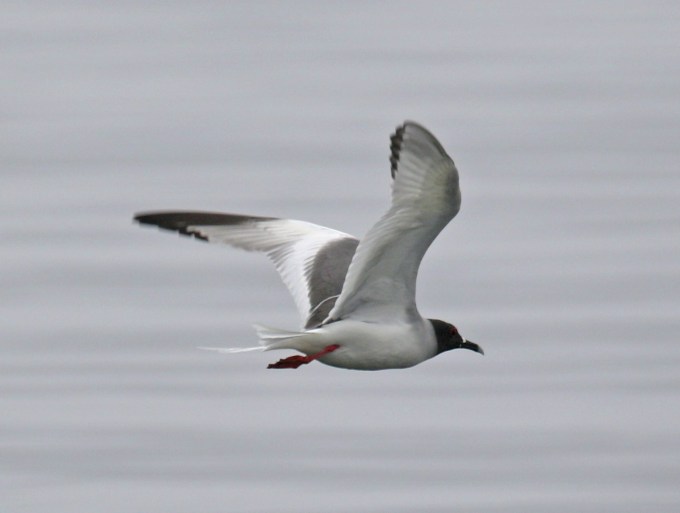
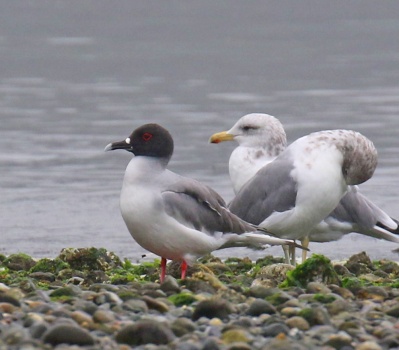
Clearly this was going to be an incredible day – there was NO TRAFFIC – almost as rare in Seattle as – well as a Swallow Tailed Gull.  I called Edmonds birding friends Steve Pink, Ann Marie Wood and Jon Houghton and broke the news to them.  None of them had seen Ryan’s post.  All would join later.  I was at Carkeek Park by 7:30 and down on the beach across the railroad track I could see 4 birders looking at a flock of gulls gathered on the beach.  They were not disinterestedly just looking about.  They were looking at the gulls and I was then sure they were also looking at THE GULL.  And one of them was Ryan Merrill.  I joined them as fast as I could and as I approached they smiled and invited me to look into the scope and at – yes the Swallow Tailed Gull. WOW!!  And that was a word that would be repeated many times over the next two hours as others would join the group.  There it was – a beautiful unbelievable Swallow Tailed Gull in a group of 100+ other gulls.  It was in adult plumage – dark head, white tipped dark bill, red around the eye – black and white patterned wings, white spot at the base of the bill, and of course – a swallow tail.  Way beyond WOW!!!

And unlike many other such finds where the quarry is hidden in a tree or brush or a moving throng of birds, this guy in addition to being the rarest of rare birds and gorgeous was also cooperative beyond belief.  With all those other gulls, this one remained in front with almost continuously unobstructed views and even though in respect to others that would follow us, we remained back some distance not to disturb the flock and cause it to leave, we were close enough for photos and this was going to be a big one for me.  Snap – and with that singular movement I had a photo of my 400th species in Washington – and what a bird for such an honor.

There have been only two records of this species in North America – ever – before today.   Both in California – one in the 1980’s and one in the 1990’s.  Probably at that moment I was one of fewer than ten people who had ever seen this bird in the ABA area.   That number would change over and over throughout the day, but it was a joyous moment.  I actually gave Ryan a big hug – grateful and thankful and ecstatic.

Swallow Tailed Gull – Carkeek Park – 7:35 A.M. – Thursday August 31, 2017 – Photographed Species #400 in Washington

Swallow Tailed Gull 3

Ok – I had seen the bird.  I had gotten the picture.  The adrenalin was flowing but maybe now I could relax and try to comprehend this extraordinary occurrence.  The Swallow Tailed Gull is an equatorial seabird endemic to the Galapagos Islands. When it is not breeding it is totally pelagic, migrating eastward to the coasts of Ecuador and Peru.  The Galapagos are 3,850 miles from Seattle.  What was this bird doing here?  Another amazing fact.  This gull is nocturnal – with eyes that enable it to see squid and such on the ocean and to hunt and feed at night.  It is the only gull in the world that does so.

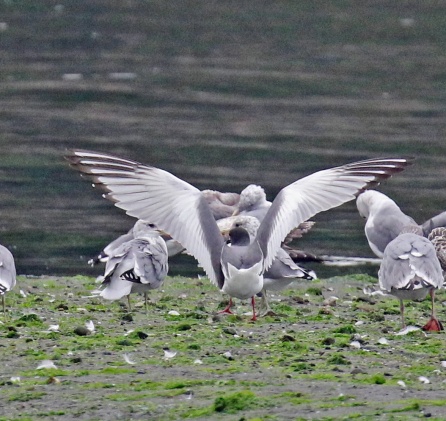
The gull remained in plain sight – I took more photos and more and more birders arrived.  I hoped the gull might fly a bit and reveal its striking wing pattern and that swallow tail – not fly away – but enough for a peek.  Others were hoping for the same as now many scopes, binoculars and cameras were trained on the bird.  It continued to drizzle and the light was terrible but any photos of this mega-rarity were treasures.  Then it lifted its wings just for a moment and I was lucky to have my camera on it.  Snap, snap – I had the wing pattern.

Swallow Tailed Gull – Wing Pattern

Swallow Tailed Gull Wings2.jpg

The wing pattern was reminiscent of those of a Sabine’s Gull, another pelagic gull with a dark head.  Very striking and immediately identifiable when seen even at a distance.

Sabine’s Gull Wing Pattern

Sabine's Gull1

My friend Steve Pink had made it and immediately got on the bird – a life bird – as it was for everyone who saw it.  Where was Ann Marie?  Steve told me she had a fall yesterday and was not able to walk out to the beach but she had made it to the walkway over the train tracks and had a distant view from there – she had a lifer too!!  Jon Houghton came.  He had seen this species in the Galapagos but was thrilled to have it closer to home.  More and more people came – people I knew and people I had never seen before.  Older birders, younger birders, experts and beginners.  This was an event – everyone was happy.  Very happy.

By 10:00 more than 60 people had come and seen this bird.  Birders had come by ferry and from the north and east and south and west.  Many more would come.  Over and over again, I heard WOW!! The tide was coming in and the birds were huddling together a bit closer to us.  Trains had come by and we wondered if they would flush the flock.  They did not. An Osprey flew overhead – no effect.  Maybe an Eagle or a Peregrine would have been different.  A Green Heron flew over – an uncommon species but not rare.  Hopes continued for a flight – to see the wings and the swallow tail.  Around 10:30 it happened, the tide had come in sufficiently to cause the flock to take off.  Fortunately I was ready – snap, snap, snap and I had the gull in flight – what a beauty.

Swallow Tailed Gull in Flight

Swallow Tailed Gull Flight1Swallow Tailed Gull WingsSwallow Tailed Gull Wings4

The gulls flew out into Puget Sound – still visible but not good views.  I think more than 75 birders had already come and seen this bird – testimony to the rarity of this sighting and to the enormity of the birding community.  I left but tracked the reports that have continued throughout the day as the gull remained in the area and even returned to the shore.  My friend Melissa Hafting came down from Vancouver B.C.  Russ Koppendreyer had come from Longview.  Birders came from Yakima.  More and more reports came in.  I bet that more than 150 people have seen this bird today… maybe 200.  I expect that there will be birders from all over the country that will visit in the next days as long as the bird remains in the area – and that is a good possibility.  It is that rare – that extraordinary.  We are all indebted to Ryan for finding and identifying the Swallow Tailed Gull and getting the word out so quickly.  It is not the first time he has played this role and assuredly will not be the last – but this will be a very hard act to follow.  WOW!!!

And thus another of my “arbitrary” goals for the year has been met.  Earlier there had been the first goal – 100 species seen in one day.  Then the second – my 200th species in Kittitas County.  And then the third – my 300th species in Washington for the year and now my fourth – my 400th photographed species in Washington.  In Arizona I had already reached my 6th goal with the picture of my 600th species in the ABA area.  And this bird – totally unexpected – gets me within striking distance of my 5th goal – 500 species in the ABA area for the year – 7 more to go and that should be doable.  It also gets me closer to goal #7 – my 700th ABA Life bird.  Closer but probably not close enough.  Although who knows – maybe Ryan will turn up some more mega-rarities.  If so – I will go for them as soon as I can.

Postscript:  The gull was seen almost continuously on the water and then back on shore for the remainder of August 31 until dark.  Being nocturnal, did it head off then for some feeding activity?  Early the next morning, Ryan was back at Carkeek Park – joined by others and the gull was not seen.  It is now 4:00 PM and I have not seen any reports of its presence.  Did it disappear as mysteriously as it arrived?  After feeding at night did it join up with another flock of roosting gulls elsewhere in Puget Sound?  Will it be found again?

Post-Postscript:  It was found again.  After hours of searching by many at Carkeek Park and elsewhere, the Swallow Tailed Gull was relocated north at a hard to access spot near Richmond Beach.  Getting there involved some work and some challenges with “private” property, but many got to see this continuing rarity.  Included in the long list of viewers were Mike and MerryLynn Denny who had made the long trip from their beloved Walla Walla valley (proof positive of how special this bird was) spent four hours at Carkeek Park and then got it when it was relocated later.  I am sure others will travel and not see this bird – part of the deal with rare bird chases, but I was especially happy they saw it as they have contributed so much to my birding enjoyment – and to the enjoyment of others.

Post-Post-Postscript:  This amazing visitor remained in the area until at least September 8th.  It was seen as far north as Everett and also at my my hometown of Edmonds.  There is no way to know the exact number of people who observed this beauty but more than 400 reports were filed on EBird and there very well could have been 1000 observations.  All of the Big Year birders made the trip as did many who had done Big Years in 2016.  Truly an extraordinary event.

August in Arizona – Part II: Mountains, Canyons and Birds

The loaned camera from John Harris really was a life saver, but it was hard to put the loss of my own camera out of mind.  I could not stop blaming myself for failing to pack the back up.  I worried about the repair cost and time but moreso photos and particularly good photos had been such an important reason for this trip and my good camera was a big part of those hopes.  It had already become clear that the approach of this tour was not going to make getting good photos easy, and now it was going to get harder.

Now there was another problem.  The original plan had been to visit California Gulch that night to search for Buff Collared Nightjar.  We had heard horror stories about vehicles getting stuck in flooded roads on the way there, so travelling that challenging road in the dark was out.  This was a big disappointment as the Nightjar is found nowhere else and would have been an ABA Life bird.  It was also a potential problem for another important bird for the trip, Five Striped Sparrow.  I had seen one 40 years ago, but it would be an important life bird for Frank Caruso (and most of the others on the trip) and definitely a new ABA Life Photo for me (now also complicated by the camera issue).  Losing both the Nightjar and this sparrow would have been a big loss.  Our leader came up with another way to get to California Gulch – at least in the daytime.

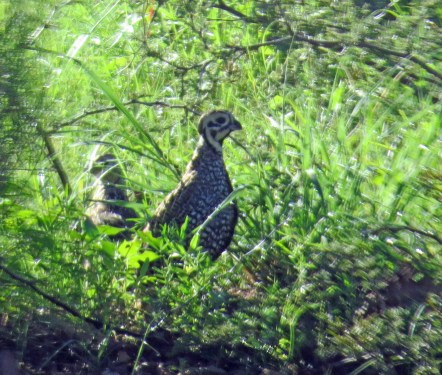
Early the next morning we headed for California Gulch via Arivaca and Warsaw Canyon. Along the way we had Botteri’s and Cassin’s Sparrows and then our first and only views of the much sought after Montezuma Quail.  A tough photo through the van’s windshield (especially as I was four rows back), but still a welcomed addition to my ABA Photo (and year but not Life) lists. (Note that all pictures going forward are with the much appreciated loaned SX50).

Botteri’s Sparrow

Botteri's Sparrow

Montezuma Quail

Montezuma's Quail1

There is simply no way to be sure to find these quail.  We were in good habitat many times during our travels and they just did not cooperate (the same would be true later for Scaled Quail).  I have several friends who have spent many hours looking for/hoping for this bird in Arizona and were unsuccessful. So these were a good find.

We continued on via Ruby Road and reached the beginning of California Gulch and could go no further as there was a torrent raging down a usually dry wash.  In keeping with those aforementioned horror stories, there was a Chevy Suburban stuck in what was now a stream.  We heard of one group that spent a whole night trapped before being rescued.

Abandoned Stuck Chevy Suburban
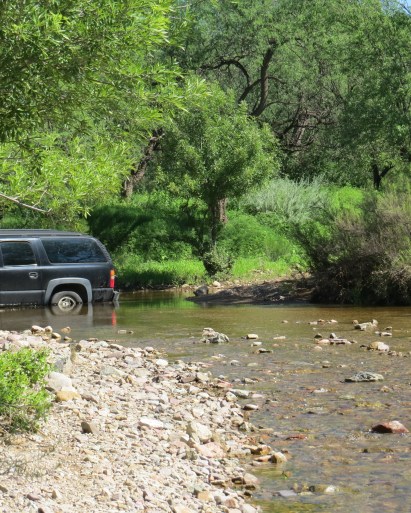
Stuck Suburban

The road in had been terrible – a big jolt every few feet magnified by the van’s poor suspension and springs – but at least we had made it this far.  Was it going to be far enough?  Would we find the Five Striped Sparrow?  There was a bit of confusion at the start and we were told we would wade across the stream to search for the Sparrow.  One other person from the group and I did so only to learn that plans were changed and the try for the Five Striped Sparrow would be done downstream first.  Wet shoes are not my first choice, but I had had enough foresight to remove socks so not a big deal as we waded back across and went downstream.  I think it was Frank and his great birding ears that first heard the call of what turned out to be a Five Striped Sparrow – a much wanted new Life bird for him.  We got fairly good looks at it across the stream.  Were I on my own, I would have worked closer for a good photo, but that was not in the cards with the group.  (And yes, I know I am whining, but it is my blog and I am also being honest.  Especially after the long ride in the back of the uncomfortable van and the unnecessary wade across the stream, the initial good feeling of at least finding the bird (not hard in the Gulch) was moderated by wanting a better photo – and yes with MY camera setup. )

Five Striped Sparrow
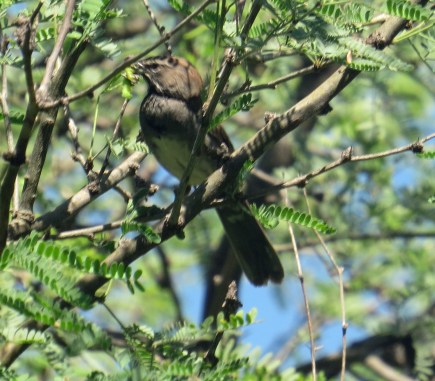
Five Striped Sparrow


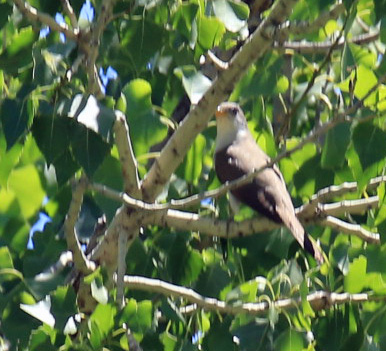
On our return towards Nogales, we saw some Pronghorns in the Grasslands and added Rufous Crowned and Grasshopper Sparrows to our sparrow list for the day.  We also had some Rock Wrens, another Yellow Billed Cuckoo and more Black Tailed Gnatcatchers. 

Rufous Crowned Sparrow
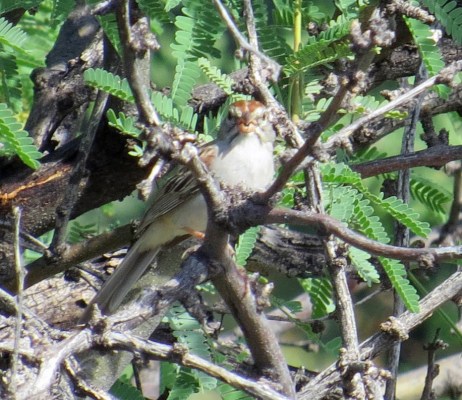
Rufous Sparrow

Complaining aside, any day that includes both Five Striped Sparrow and Montezuma Quail should be considered a good birding day.  But it just did not feel like it.  The poor photos of the Sparrow and Quail only reinforced the feeling of loss of my own camera.  They also reminded me how the approach of this tour was not what I would have preferred or how I would have (should have?) approached things and gone on my own – and that was surely brought home with the long and hard ride at the back of the van.  And truth in blogging, a big challenge in my relationship had developed a few days before I departed home and was almost constantly on my mind.   All of this continued to weigh heavily on me.  If John had not been so kind in lending me his camera, it really would have been very tough to continue the trip.  I may well have chosen not to.

But then a really good thing happened.  It was our arrival at the Casa de San Pedro Bed and Breakfast.  The Casa de San Pedro is in Hereford, Arizona not far from Sierra Vista (sometimes called “Sorry Vista”) and pretty close to the Mexican Border.  It is a perfect home base for exploration of the many bird filled canyons of the Huachuca Mountains.  It is a place that I would love to visit – even without the birds.  Owners Karl Schmitt and Patrick Dome bought the property in 2002, relocating from the Northwest.  Their love for the place and for its guests is evident in every detail and in every word and action.  It is also evident in their extraordinary breakfasts – reason enough to stay with them.  Do not go if you are on a diet – as the quantity is second only to the quality.  We were going to be there three nights and it could not have come at a better time.  The only problem would be not having enough time to actually enjoy the place itself as we would be off to those Huachuca Canyons and environs every day.

Casa de San Pedro (the photo does not do it justice)

Casa de San Pedro

Breakfast at the Casa de San Pedro (this photo does do the food justice!)

Breakfast

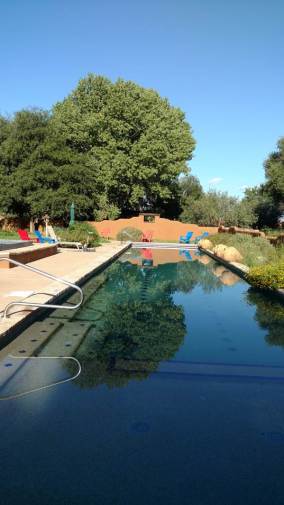
Pool at Casa de San Pedro

Pool

Yes I would have enjoyed just being at this beautiful serene place, but there were birds to see.  Indeed some were seen right there at the Casa.  Great Horned Owls greeted us each morning and beautiful Vermillion Flycatchers were readily found.


Great Horned Owl
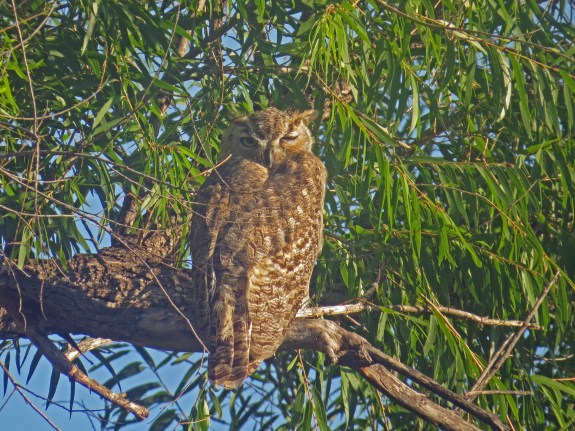
Great Horned Owl

Vermillion Flycatcher

Vermillion FC2

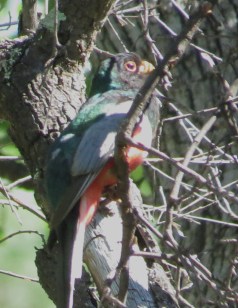
After a lovely night at the Casa and a superb breakfast, we left the next morning to go to Fort Huachuca to get security clearance so that we could look for Elegant Trogons in Huachuca Canyon.  The processing was not too bad and we readily found the trogons in the Canyon – hearing their almost bark like call first.  We found a pair at a nest and then two more.  We also had Dusky Capped Flycatchers and more Sulphur Bellied Flycatchers.

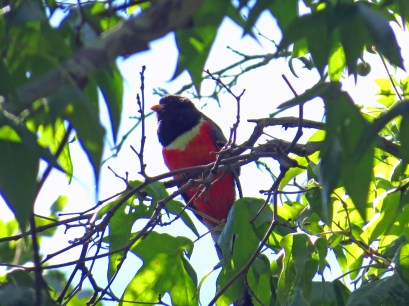
Elegant Trogon
Elegant Trogon1  Elegant Trogon 2

Elegant Trogon at Nest

Elegant Trogon2

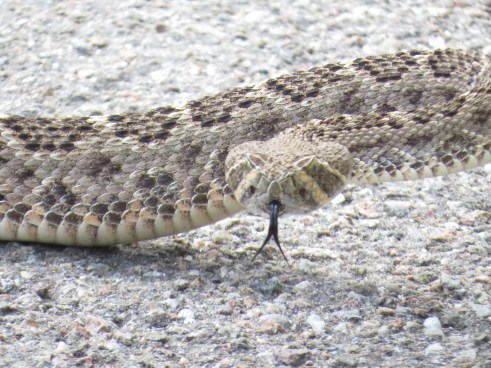
Trogons may well be the most sought after and representative bird of Southeast Arizona – great to find them so readily.  Afterwards we moved on to Garden Canyon still on the Fort property.  A large Western Diamond Backed Rattlesnake was a highlight along the way.

Western Diamond Backed Rattlesnake

Rattlesnake  Rattlesnake Tail

Rattlesnake Head (2)

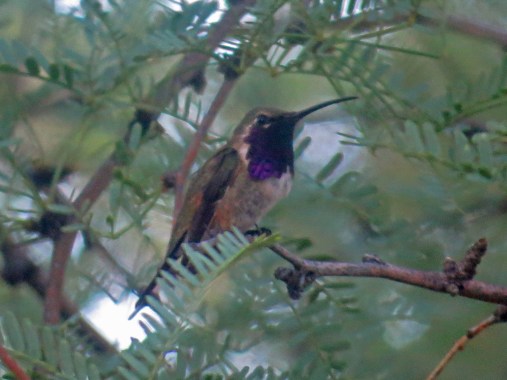
In Garden Canyon our best birds were several Buff Breasted Flycatchers.  I had seen them before 40 years ago and frankly had forgotten about them when thinking about this trip.  Plain but beautiful.  After a too-short respite back at Casa de San Pedro, we visited Mary Jo Ballator’s Ash Canyon B & B with its many hummingbird feeders and the delightful Mary Jo.  There were many Anna’s Hummingbirds but the great treat was a male Lucifer’s Hummingbird.  This had been high up on my want list for the trip – a new ABA Life Bird.  I could not get the perfect photo but was thrilled with the ones I did. Mary Jo was a wonderful and knowledgeable hostess.

Lucifer Hummingbird
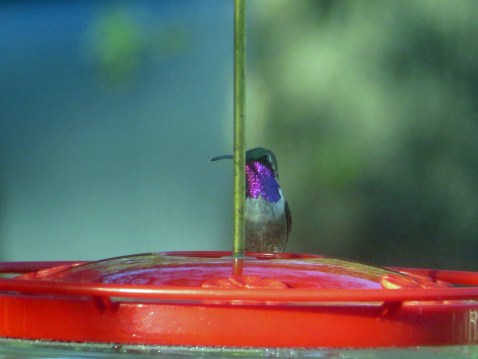
Lucifer Hummingbird3

Lucifer Hummingbird2

On the way to and from Mary Jo’s there seemed to be Lark Sparrows everywhere – but not easy to get good photos of this species that I see regularly in Washington.

Great Horned Owls greeted us again the next morning at the Casa where breakfast included the best pancakes I have ever had.  Following breakfast I got a good photo of a Gila Woodpecker (seen frequently during our trip and a new ABA Life photo for me.)

Gila Woodpecker (This photo is earlier in the trip and I forgot to use it in the first part of this post.  I may go back and edit later.)
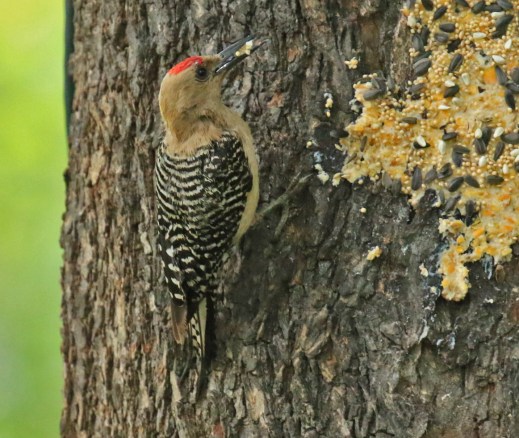
Gila Woodpecker2

We were now off to Reef Campground near the top of Carr Canyon.  A Tufted Flycatcher had been seen there regularly and was a prized bird.  On the way up we had our first Scott’s Oriole of the trip.  It was frustrating not to be able to get this ABA Life photo from the van and I probably committed a faux pas by opening the side door to at least try for a shot and it flew off.  Later a second one was seen elsewhere on the trip – but again I was blocked by the van and never even got a look.  It is just the nature of things traveling in a van and why I do not think I will go on this kind of trip again.  EVERYONE was cooperative and we rotated seats but there are just too many severe visibility (and photography) limitations.

The search for the Tufted Flycatcher was frustrating.  We got to the campground about 5 minutes after one had been seen well by the many birders already there.  We remained for at least 60 minutes and relocated it only to have it fly off – before many in the group got any look at all.  Seemingly it would go quiet and then go on a feeding frenzy with quick movements from place to place – covering far more territory than I would have expected.  The group split up and kept looking.  Catherine Bland and I were further afield than the others and we had very good looks in the open in a couple of spots as it kept moving.  I grabbed a quick photo (the best I would get) and then went to tell the others.  [If I had focused only on a photo for me, I probably would have done better, but that is not the etiquette for the group – and everyone really was good about helping everyone get on birds and I had certainly benefited from others earlier and would again.]  Of course it flew off.  Eventually after persistence everyone got to see this very rare bird.

Tufted Flycatcher (If only I could magically remove the branch…)\
Tufted Flycatcher 2

Tufted Flycatcher-r

There were also some Buff Breasted Flycatchers in the area and this time there was no interfering branch and there was excellent light – bingo a very nice photo.  The two birds are similar but also very different.  Note the two very different bills for example.  Also in some views the tuft of the Tufted Flycatcher was very noticeable.

Buff Breasted Flycatcher
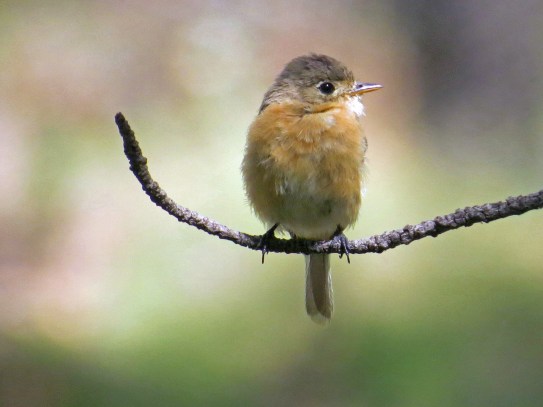
Buff Breasted Flycatcher (2)

Some of us also found a couple of Brown Creepers of the distinctive Mexican albescens subspecies.  These may be split off as a separate species someday.  We saw others later in the tour.

Brown Creeper (definitely not my best work…)
Brown Creeper

We bounced our way back down yet another challenging road and then visited the Beatty’s feeders in Miller Canyon.  A number of great hummingbirds have been seen here in the past including my much sought after White Eared Hummingbird (last seen here in June).  We had a single male Broad Tailed Hummer and I missed a Costa’s but otherwise nothing different.

Broad Tailed Hummingbird

Broad Tailed Hummingbird

We got back in time for me to do some laundry at the Casa in their top line machines (everything about this place was really superb).  Then the following morning after yet another wonderful breakfast, we met Ron Beck and Dorian Anderson for the steep hike up Hunter Canyon to look for Rufous Capped Warblers.  This was Ron’s home turf and he was terrific.  Some other birders staying at the Casa had tried for and missed the warblers the preceding day.  Ron made sure that we didn’t.  We heard their very quiet calls and got a look not quite at the top.  A few of us continued up with Ron and got even better if fleeting looks and then came back down again for a last look.  This was an ABA Life bird for everyone and was one I had not counted on (but hoped for).  It is a Mexican specialty that is found primarily in this canyon.

Rufous Capped Warbler

Rufous Capped Warbler

We never got a real look but this was the only place on the tour where we had Woodhouse’s Scrubjay – their calls distinctive upslope and just barely seen as they flew away.  I had added this recently split species to my life list on my Colorado trip last year and got a photo then (shown here).

Woodhouse’s Scrubjay (from Colorado trip in 2016)
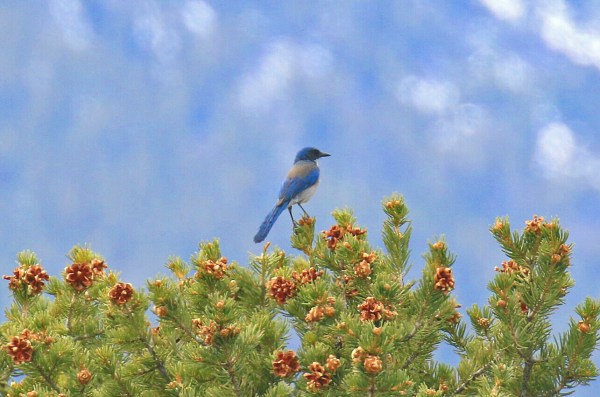
52-Western Scrubjay Woodhouse Form

We headed back to the Casa de San Pedro sadly to check out.  It gave us another gift as John Harris spotted our only Bronzed Cowbird of the trip on a feeder.  We said our goodbyes and headed off towards the Chricahuas.

Bronzed Cowbird (ABA Life Photo)
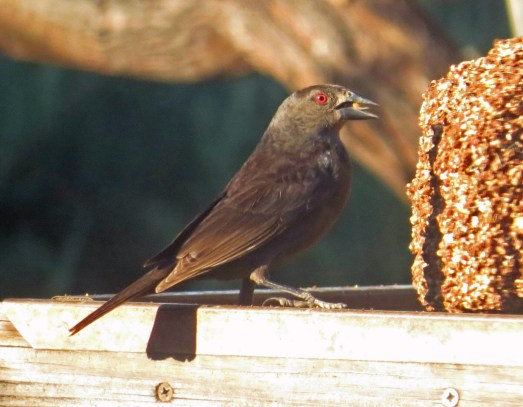
Bronzed Cowbird

Leaving for the Chiricahuas we passed through a wetland that added a number of species to our trip list.  In the grasslands we also found an adult Lark Bunting and I was able to get a photo from the back.  Not a particularly charismatic bird, but it was important to me as the only ones I had ever seen were in Presho, S.D. in 1970 on my drive out to California – before I had become a birder but it was distinctly remembered.

Lark Bunting
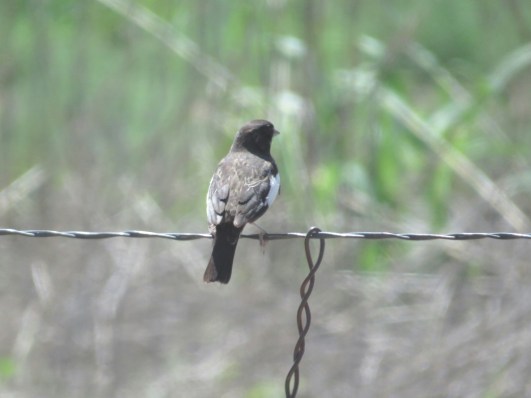
Lark Bunting .jpg

We also had a pair of Chihuahan Ravens.  They were once called White Necked Ravens and as the wind blew some of their feathers, my photo captured some of that white – something I had never seen before.

Chihuahan Ravens
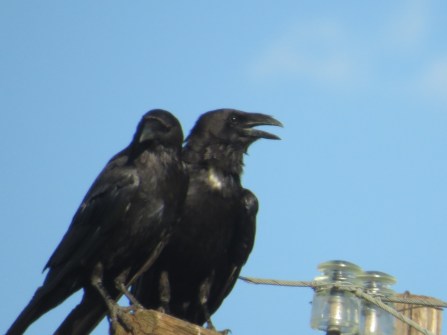
Chihuahan Raven

Our new “home” was the Portal Lodge – a far cry from the Casa de San Pedro.  Barely a two star motel, but safe and well located and probably the only place available for us to stay.  Food was available at the Cafe next door, so convenience ruled the day.  The next morning, before breakfast we visited grasslands in both New Mexico and Arizona and found Curve Billed, Crissal, and Bendire’s Thrashers.  The latter two were ABA Life Photos.

Portal Lodge

Portal Peak Lodge

Curve Billed Thrasher

Curve Billed Thrasher2

Crissal Thrasher

Crissal Thrasher

Bendire’s Thrasher
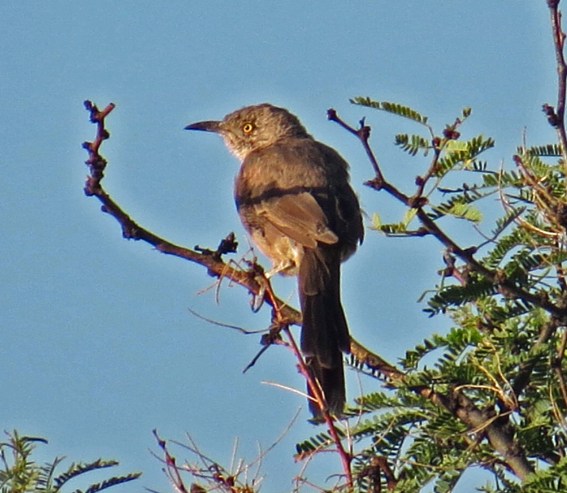
Bendire's THrasher2

We also heard some Scaled Quail – our only ones of the trip – but diligent searching (repeated the next day) failed to produce a visual.  Fortunately I had good looks and photos of them from my 2016 Colorado trip.

After breakfast and seeing the only Javelina of the trip, we headed up into the Chiricahuas with our main target being Mexican Chickadees – another Life bird for Frank.

Into the Chiricahuas – A Beautiful Place

Portal into the Chiricahuas

Javelina

Javelina

There had been some question as to whether we could get to the right habitat because the main road had washed out at Turkey Creek.  Just as we arrived at the trouble spot we saw a road grader – which conveniently had just finished regrading the road and we passed through without any trouble. Just above Onion Saddle we found some Mexican Chickadees – not great views or photo ops (at least compared to the usual experience with the very similar Black Capped Chickadees back home) – but very welcomed.

Mexican Chickadee
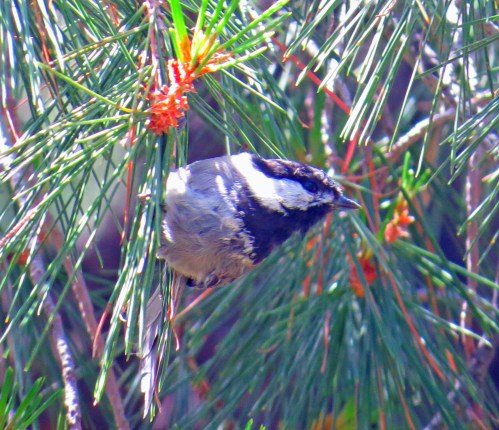
Mexican Chickadee

Returning to Portal we visited Maya’s feeders and had our first Blue Throated Hummingbirds of the trip including a female on a nest.  This picture is from the next day at the Southwest Research Station which was a bit of a disappointing experience for me.  Throughout the trip we were told we would find the Blue Throated Hummingbird at the station’s feeders.  I expected a lengthy stay.  Instead the group focused on butterflies (nothing against them but not really interested).  I had finally gone on ahead and grabbed a quick photo of a hummer on a feeder thinking there would be a chance to improve on it, but instead we were going to move on without any visit to the feeders.  Hmmmm?  Glad I took the one shot.

Blue Throated Hummingbird
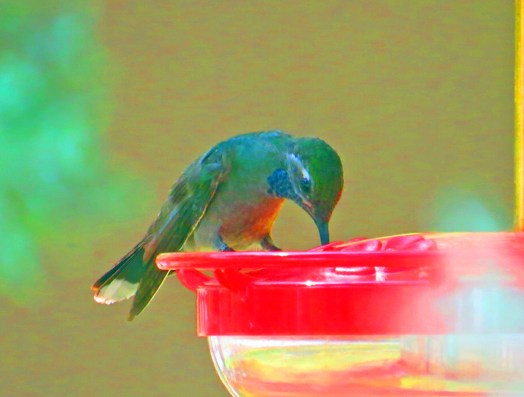
Blue Throated Hummingbird 3

It was time to move on – heading back to Tucson for a final dinner and then a departure the following day.  On the way we stopped at Twin Lakes in Wilcox where we had a number of shorebirds including my first Baird’s Sandpipers for the year.  A real treat followed with a stop at St. David’s where our leader knew it might be possible to find a Mississippi Kite.  Frank was the first to see it on a fly by.  I missed that one.  We then did a U-turn and we got out of the van just in time to see the Kite disappear.  No photo and I debated whether I could even count it.  We waited hoping it would fly by again.  It did not.  I walked down the road a couple hundred yards and found one perched in the open.  Everyone got great looks as it flew out and then returned to the perch several times.  This time there was a photo – another ABA Life photo for me.

Mississippi Kite
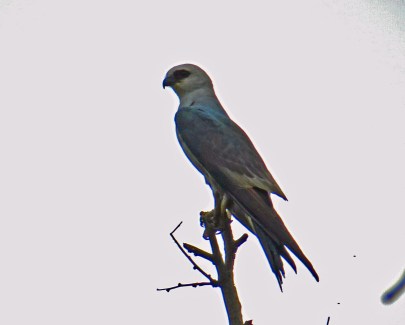
Mississippi Kite1r

This would be the last new bird for the trip, the year and for my Life Photo List – a wonderful way to end.  We had a fine dinner at the Four Points Restaurant at the Sheraton across from the Hampton Inn next to the Tucson Airport.

Despite some disappointments and some mismatches for me in terms of how I most like to bird, it had been a very successful trip in most ways.  All told we had seen 180 species.  Of these 6 were new ABA Life Birds, 52 were ABA Life Photos and 72 were new ABA birds for the year.  The Life Birds were Black Capped Gnatcatcher, Lucifer Hummingbird, Rose Throated Becard, Tufted Flycatcher, Rufous Capped Warbler and Mexican Whippoorwill.  They brought me to 690 ABA life birds.  I probably cannot reach the magical 700 mark this year.  But the Arizona photos did put me over 620 ABA Life Photos getting me well past my goal of 600.  I had expected (hoped for?) more new year birds and now stand at 488 ABA birds for the year.  500 should be reachable for the year but with more work than I thought would be necessary after the trip.  I may have to take another trip I guess.

When I got home I took my camera in to see what was wrong.  I got the bad news a couple of days later.  The contacts were corroded and I was told it would cost more to repair it than to get a new one.  Ouch!!  I have ordered one from Amazon.  Maybe I won’t take another trip after all.  Sigh…

Some Scenery Shots

Moon over the Chiricahuas

Chiricahuas

Chiricahua Scene2

Picture1

August in Arizona – Part I: The Up before the Down

Similar to my trip to South Florida earlier this year, Southeast Arizona was a repeat of visits long ago – forty years ago in fact.  The two earlier visits, one in December 1976 and one in June 1977 had been early in my birding life (and life in general I guess) and were full of great birds and excitement as visits to one of the great North American birding Meccas should be.  With friends and with some locals but without guides, I had been fortunate to find most of the Arizona specialties.  In those days, however, photography was not even a dream and I had no pictures of any of the great birds.  This trip was intended to hopefully add some new ABA Life birds, lots of new ABA photos and even more new ABA birds for 2017.
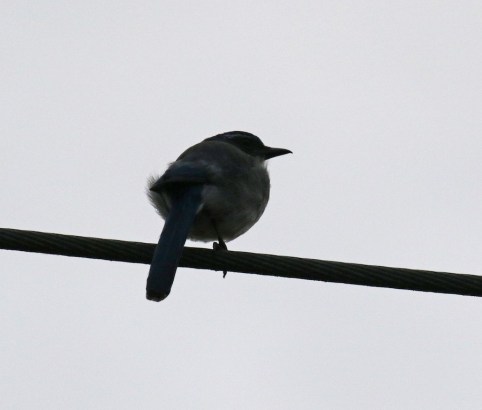
Although the vast majority of my birding has been on my own or with friends, I have been fortunate to have been on several tours with well known birding tour companies, and this was the case on this trip joining friend Frank Caruso as I had done in South Florida and participating in the “Second Spring” tour offered by WINGS Birding Tours.  The timing seemed right – August 1 through August 10 – as did the itinerary visiting such iconic places as Mount Lemmon, Madera Canyon, the Huachucas and the Chiricahuas.  The bird lists from previous trips were impressive and suggested that I would find many birds needed to add to all of those aforementioned lists.  Even though most of those birds were seen, it was probably not the best trip for me to take given my specific wants, needs, approaches and quirks – not the best fit for the tour realities and approach – especially as related to photography.  That does not take away from the success of the tour and its quality in most ways at least on the surface and from the perspective of other’s and there were many great moments.  The rest of this post will  be about those good moments without time spent on the mismatching elements.

I have talked about or hinted at some goals for 2017 in earlier posts. Major progress towards three important ones was hoped for on this trip.  Based on Ebird reports and reports of this WINGS trip in previous years, my early analysis for the trip suggested that there was the possibility of adding up to 13 ABA Life birds (some pretty remote), as many as 62 ABA Life photos and as many as 92 new ABA Birds for 2017.  Some species simply did not cooperate this year, as Sinaloa Wren, Plain Capped Starthroat and Aztec Thrush did not reappear in 2017 and the last White Eared Hummingbird sighting was 6 weeks before we arrived.  Road conditions precluded us trying for Buff Collared Nightjar. So that really left only seven new “Lifers” and we were able to find six of them: Mexican Whippoorwill, Tufted Flycatcher, Rufous Capped Warbler, Rose Throated Becard, Black Capped Gnatcatcher and Lucifer Hummingbird – missing the Berylline Hummingbird and Flame Colored Tanager which were both seen by others while we were in the area.  As it turned out another lifer – a Yellow Green Vireo – was also seen while we were in Arizona – the day after we had been in the same spot finding (with great difficulty) the Rose Throated Becards. The looks or photo ops for some of these birds were not terrific, at least in this group setting, but life birds are getting hard to come by and I was happy for those that we had, especially the Rufous Capped Warbler which was expertly found by a local excellent birder, Ron Beck, who joined us specifically to find this rarity in Hunter Canyon.  I had not expected to get the Warbler although I had expected seeing the Tanager, and not doing so was a major disappointment offset by finding the warbler – so it goes.

Rufous Capped Warbler – Hunter Canyon – August 7

Rufous Capped Warbler

Mount Lemmon in the Santa Catalina Mountains was a wonderful way to start our trip as the species changed as we climbed in elevation and the habitats and birdlife changed as we did.  Included in the more than 50 species we saw on our visit were Arizona specialties like Grace’s, Red Faced, Olive and Virginia’s Warblers, Yellow Eyed Junco, Painted Redstart, Mexican Jay, Greater Pewee, Bell’s and Plumbeous Vireo and Zone Tailed Hawk. We also saw Canyon Towhee’s and both Broad Tailed and Broad Billed Hummingbirds in the lowland area.  All were new for the year and new ABA photos – although in a theme to be repeated often during the trip, views were often too fleeting or distant for much quality.  I had seen all of these species here on my earlier visit.

Grace’s Warbler (ABA Life Photo)

Grace's Warbler

Olive Warbler (ABA Life Photo)

Olive Warbler2

Yellow Eyed Junco (ABA Life Photo)

Yellow Eyed Junco4

Red Faced Warbler (ABA Life Photo)

Red Faced Warbler3

Virginia’s Warbler (ABA Life Photo)

Virginia's Warbler4

Zone Tailed Hawk (ABA Life Photo)

Zone Tailed Hawk3

Painted Redstarts (ABA Life Photo)

Painted Redstarts1

Painted Redstart 3

It was cool in the mountains and no rain fell on us.  One of the oddities of the trip was that while I was gone, the Seattle area experienced a real hot spell and there were days in Arizona where temperatures were actually lower than back home.  In August yet – go figure.

After Mount Lemmon we returned to the Hampton Inn in Tucson (comfortable, convenient and very nice folks) and went on to Madera Canyon after dinner for some early night birding.  At dusk we heard and then called in a Mexican Whippoorwill – my first life bird of the trip.  Quick visuals as it flew very close to us but no chance for a photo.  A bit later we had a response from a pair of Whiskered Screech Owls which obliged us by flying to an overhanging branch right over us.  A third was heard and briefly seen.  We also had at least one Common Poorwill calling in the distance (apparently a surprise).

Whiskered Screech Owls (ABA Life Photo)

Whiskered Screech Owl (2)

Whiskered Screech Owls (3)

Whiskered Screech Owls 1 (2)

The following morning started with a visit to see a pair of Burrowing Owls we had not located the day before and then continued in the lowlands and Green Valley before returning to Madera Canyon.  Along the way we found a female Costa’s Hummingbird, Black Throated and Rufous Winged Sparrows, and an Antelope Jackrabbit.  I had been frustrated the previous day hearing but not finding any Bell’s Vireos.  Today was better as I found a Bell’s Vireo on a nest.  We had great looks at some Black Tailed Gnatcatchers and a less than great look at a female or juvenile Black Capped Gnatcatcher – but good enough to see the tail pattern that allowed the identification of Life bird #2.

Costa’s Hummingbird

Costa ' s Hummingbird Female 1

Black Throated Sparrow

Black Throated Sparrow3

Antelope Jackrabbit

Antelope Jackrabbit

Bell’s Vireo on Nest (ABA Life Photo)

Bell's Vireo at Nest (2)

Black Tailed Gnatcatcher (ABA Life Photo)

Black Tailed Gnatcatcher 1 (2)

Black Capped Gnatcatcher (ABA Life Photo)

Black Capped Gnatcatcher

We found some Cassin’s Sparrows and also at Florida Canyon we had a pair of Northern Beardless Tyrannulets – cooperating for photos and a Varied Bunting, a brief look at Yellow Billed Cuckoo and our first Lucy’s Warblers.

Northern Beardless Tyrannulet (ABA Life Photo)

Northern Beardless Tyrannulet 2

Varied Bunting (ABA Life Photo)

Varied Bunting

Yellow Billed Cuckoo

Yellow Billed Cuckoo2

Lucy’s Warbler (ABA Life Photo)

Lucy's Warbler1 (2)

Then we were back in Madera Canyon watching the many hummingbird feeders.  Nothing super exotic – lots of Black Chinned and Broad Billed Hummers and a couple of Anna’s and then we had our first Rivoli’s (formerly Magnificent) Hummingbirds.  We also had our only Arizona Woodpecker for the trip.
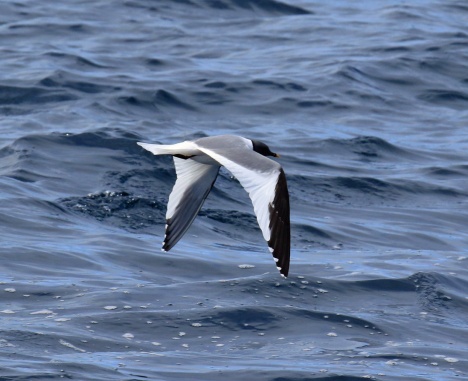
Black Chinned Hummingbird

Black Chinned Hummingbird

Broad Billed Hummingbird (ABA Life Photo)

Broad Billed Hummingbird4

Rivoli’s Hummingbird (ABA Life Photo)

Rivoli's Hummingbird

Arizona Woodpecker (ABA Life Photo)

Arizona Woodpecker

Full disclosure has to include that I bird better and enjoy it more when I am birding alone or in a very small group.  But the many added eyes and ears with a bigger group is often helpful and all of the participants in this group contributed in that and other ways throughout the tour.  I was especially grateful for the good eyes and ears of many in finding some tough birds – in addition to good spirits.  But the resources in this birding paradise are not limited to members of one’s own tour group.  Especially in places like Madera Canyon, there are many others around – drawn by its great birds.  I followed one of these folks across the street from the Madera feeders and we quickly found some Sulphur Bellied Flycatchers, another SE Arizona specialty and this time I was able to alert the rest of our group and they joined in.
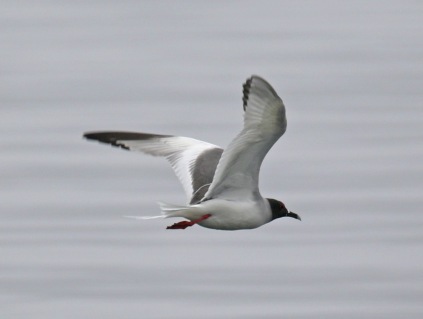
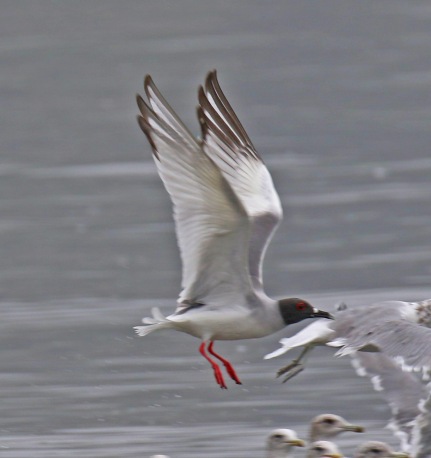
Sulphur Bellied Flycatcher (ABA Life Photo)

Sulphur Bellied Flycatcher

Especially since our Comfort Inn accommodations in Green Valley were just “okay”, it would have been nice to have stayed at the Santa Rita Lodge in Madera Canyon (where I had stayed on that trip so many years ago).  While there we had really good looks at a number of Mexican Jays and also learned that the Elf Owls that had nested in the area were still being seen – a fact that would prove valuable that evening.

Mexican Jay (ABA Life Photo)

Mexican Jay

After another good dinner, we headed back to Madera Canyon finding several Lesser Nighthawks enroute.  At Santa Rita Lodge, our guide played the Elf Owl call and perhaps because I wanted the photo so bad, this was a rare time when I first spied a bird – as the owl came into the open just ahead of us.  Not a great photo but no mistaking this little guy.  It was a new ABA photo for me and made up for a major disappointment in my South Texas trip in 2013.  Our guide had saved a visit to a known Elf Owl nest in a cactus for the end of the day – but it was a no-show.  I think the guide had felt almost worse than we did.

Lesser Nighthawks (ABA Life Photo)

Elf Owl (ABA Life Photo)

Elf Owl

The next morning took us to Tumacacori National Historic Park where we met Will Russell and Matt Brooks from the WINGS office in Tucson.  We were also joined by Dorian Anderson , a very interesting guy who in 2015 had done a “Bicycle Big Year”.  Dorian was critical in finding Rose Throated Becards along the Santa Cruz River.  Our views were distant and fleeting and it took a couple of hours, but we did see this species – Lifer #3 for me.  I got a terrible photo but was happy for anything.  (I later learned that a group that came the next day found the Becard’s nest and not only got good photos but also found a Yellow Green Vireo which would have been a lifer as well.

Rose Throated Becard

[Nope – too poor to really include my photo.  🙂 ]

Afterwards we headed towards Nogales and Patagonia.  We found our first Gray Hawk and at the famous Roadside Rest near Patagonia, we found a family of three Thick Billed Kingbirds which we viewed after one of our picnic lunches.

Gray Hawk (ABA Life Photo)

Gray Hawk Perched

Gray Hawk Flight

Thick Billed Kingbirds (Adult and Juvenile) (ABA Life Photo)

Thick Billed Kingbird1

Thick Billed Kingbird Juvenile

Before arriving at our fabulous next place to stay, the Casa de San Pedro B and B, we stopped at the Paton’s Hummingbird feeders and among others had our only Violet Crowned Hummingbirds.  We also had our only Inca Dove in the Paton’s yard.

Violet Crowned Hummingbird (ABA Life Photo)

Violet Crowned Hummingbird 2

Inca Dove (ABA Life Photo)

Inca Dove-r

Just as it had been cooler in Arizona than at home in Seattle, it had also been wetter as Seattle was continuing a record dry spell.  There had been rain a couple of times during our trip and at the Paton’s yard there was more.  Maybe it was because of this or maybe it was already in the works, but disaster struck for me as my camera went – DEAD!!!  The Canon 7D is supposed to be essentially almost waterproof – certainly highly resistant.  The last thing I had decided not to take as I packed for this trip was a back up camera.  Given the broken binoculars experience on the Florida trip I had packed a spare pair of bins but I already had too much stuff and just decided that there was no way the camera would fail.  Not so.  95% of the reason for the trip was to get photos, so this was a very very low moment.  We were only 3 birding days into the trip and I had no camera.  Depression was an understatement.

Deep Breath – Pause – Consider Alternate Plans A, B, C and D.  Maybe a few tears.  Definitely a few swear words.

Alternate Plan A was to order a new camera from Amazon and have it expressed to me.  At best this would take three days and it would be yet another spare camera at home.

Alternate Plan B was to ask Lynette to go to my condo and get the camera that was sitting out – the one I had decided not to take – and have her express mail it to me.  That would probably take two days and I was not real sure where the battery charger was etc.  (Besides the condo was not exactly spiffy clean…)

Alternate Plan C was to see if I might at least take a few photos with another trip members camera – fall far short of my trip goals but get some photos (I already had 33 ABA Life Photos – but was hoping for almost that many more ahead.)  At best this would be awkward.

Alternate Plan D grew out of Alternate Plan C and was one of those beautiful life moments/happenings.  All of the tour participants were really good folks – varying priorities and skill levels and backgrounds and experiences.  Many in the group took some photos, but nobody was really into the photography and three of the others were in fact using the same camera that I would have brought as my backup – the Canon SX50.  John Harris, a now retired professor from Mills College was one of the three.  He was great at finding birds (and mammals and reptiles and plants) and definitely was taking photos, but he came to my rescue and allowed me to use his camera – taking pictures for both of us.  Not what I had planned or expected but very much a saving act of kindness.

John Harris – later at the Portal Lodge

John Harris at Portal Store1

There are lots of good folks in the world – and I would bet a higher than usual percentage in the birding community.

There was now light in the tunnel and we were off to the wonderful Casa de San Pedro Bed and Breakfast for three nights – our base of operations for forays into the Huachuca Mountains.  We had seen 100 species on the trip – 3 ABA Life Birds and the 33 ABA Life Photos and 40 new ABA Year Birds.  This is a good place to close Part I and the Casa de San Pedro will be a good place to start Part II.

Ooh…A Quickie…300 Feels So Good…

At 6:40 P.M. tonight, Rick Tyler posted that he was looking at the Solitary Sandpiper that Houston Flores had reported earlier this afternoon at the retention ponds north of Perrigo Park in Redmond.  I had never even heard of Perrigo Park and was completely unfamiliar with the area (as soon became obvious).  What the heck, it was a beautiful night and Solitary Sandpiper was on my want list for the state this year.

By 7:25  p.m. I had pulled into the Park’s parking area and started looking for ponds.  I met some nice folks who had never seen any ponds.  I saw no ponds – not even any water.  Some really nice play fields though.  So I emailed Rick and asked him to call as I needed help.  If I had paid attention to Houston’s Tweeters post, I would have saved myself some trouble and looked north of the park as opposed to all through it and then to the south (the other north?).

Rick called and clarified the situation – the ponds are actually just north of 95th before you make the turn onto 196th to get to the Park itself.  I was now almost a mile away.  I jogged back to the car and drove to the right spot.  I quickly found the ponds and in the smaller pond, I quickly found the Solitary Sandpiper exactly where Rick had found it about two hours earlier.  The light was already dimming (what happened to that longest day on June 21st with sunlight past 10:00??!!) and I only had my point and shoot camera – but I got a fun photo.  No mistaking this identity.

Solitary Sandpiper

Solitary Sandpiper

This was a new species in Washington state this year.  This meets another goal (admittedly arbitrary) for the year.  Goal 1 was 100 species in one day.  Goal 2 was my 200th County bird in Kittitas County.  Goal 3 was 300 species in the State of Washington for the year.  This Solitary Sandpiper is it.

I am one away from goal number 4 (hopefully to be written up later this year) and in 5 days I leave for Arizona where I hope to meet goals 5 and 6 and just possibly get within striking distance of goal 7.  Stay tuned.

Solitary Sandpiper – Another Photo

Solitary Sandpiper