Amsterdam 57 Years Later – Lots of Art and Food, and Some Birds as Well

I spent the summer of 1967 in Europe – a track meet in England, 2 months working for a newspaper in Glasgow, Scotland, and a week or two “on the continent” – Paris, Belgium, Luxembourg, Switzerland and Amsterdam. Those were days before any interest in birds and no camera. Lots of good memories – some of which may actually have happened – but despite I am sure having seen many birds in Scotland – not a single one is on my current World Life List as I had no interest back then. And although there have been a few return visits to Europe in the intervening almost 50 years including a return to England and Scotland, a trip to Spain and single visits to Italy, Austria, Hungary and the Czech Republic all at times when birding mattered to me, there was little to no birding on those trips and my Continental Europe life list was a barely pathetic 87 species. It mostly reflected 55 species seen on a single day in Hungary where I hired a guide and then another 32 species incidentally on a Walk About Italy Tour in October 2023.

In September this year (2025), Cindy and I visited Amsterdam for a week before then visiting family in Massachusetts. I arranged for a single day of birding with a local guide, Wouter Rohde, but otherwise this was going to be a vacation to experience the city life of Amsterdam, visit museums, eat good food – and walk many miles. Brief Ebird research indicated that there were some opportunities for new life birds and/or new life photos. I decided to not take my good camera with its big heavy lens and instead only took an old Canon SX70 zoom point and shoot which I had used when picture taking was not all that important to me. That experience quickly reminded me why I abandoned that camera years ago and improved my photographic resources. Still I was able to see some nice birds, get some photos and add some “ticks” to life and life photo lists. This blog covers only the birding from the trip.

Netherlands Birding

My Ebird research indicated that there were possibly 35 species seen in “North Holland” during the approximate time I would be visiting that would be world lifers for me. But “approximate time” is key as some were much more likely to be seen either a couple of weeks earlier or later as they were migrating through or to the area. Also to see some would require going to more remote areas, so a much more realistic target number was probably closer to a dozen lifers and especially since I was not taking the better camera, perhaps the same total new life photos. As it turned out I saw a total of 67 species in the Netherlands and as we missed a few of the more likely targets, I ended up with 10 new lifers and 10 new life photos.

The first species added to my list was a recent split with the American Herring Gull, an European Herring Gull which I found swimming in the Singel Canal in front of our hotel. I am terrible at gull identification and maybe there is a notable distinction between the two species, but not discernible by me. I was just happy that the gull was easily identified compared to other local gulls due to its size and that very evident pale eye.
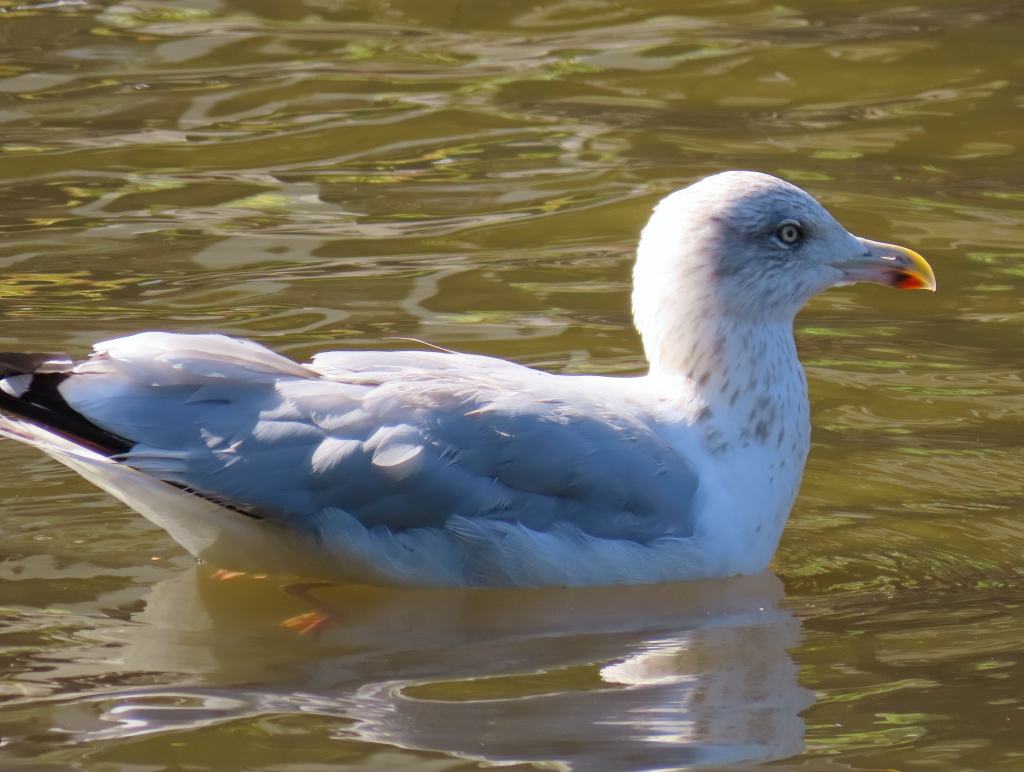
European Herring Gull – Lifer

I saw a number of birds in our walks around the city including a couple of hours that I spent in Vondelpark on my own. In addition to the numerous Rock Pigeons and many more European Herring Gulls, there were numerous Eurasian Jackdaws, Carrion Crows, Eurasian Coots (common in the canals), Eurasian Moorhens (seen in the park), European Starlings and Black Headed Gulls. Another fairly common species, a surprise to me, was Rose Ringed Parakeet often heard first and then seen flying quickly overhead. I had seen it 14 years earlier in India.
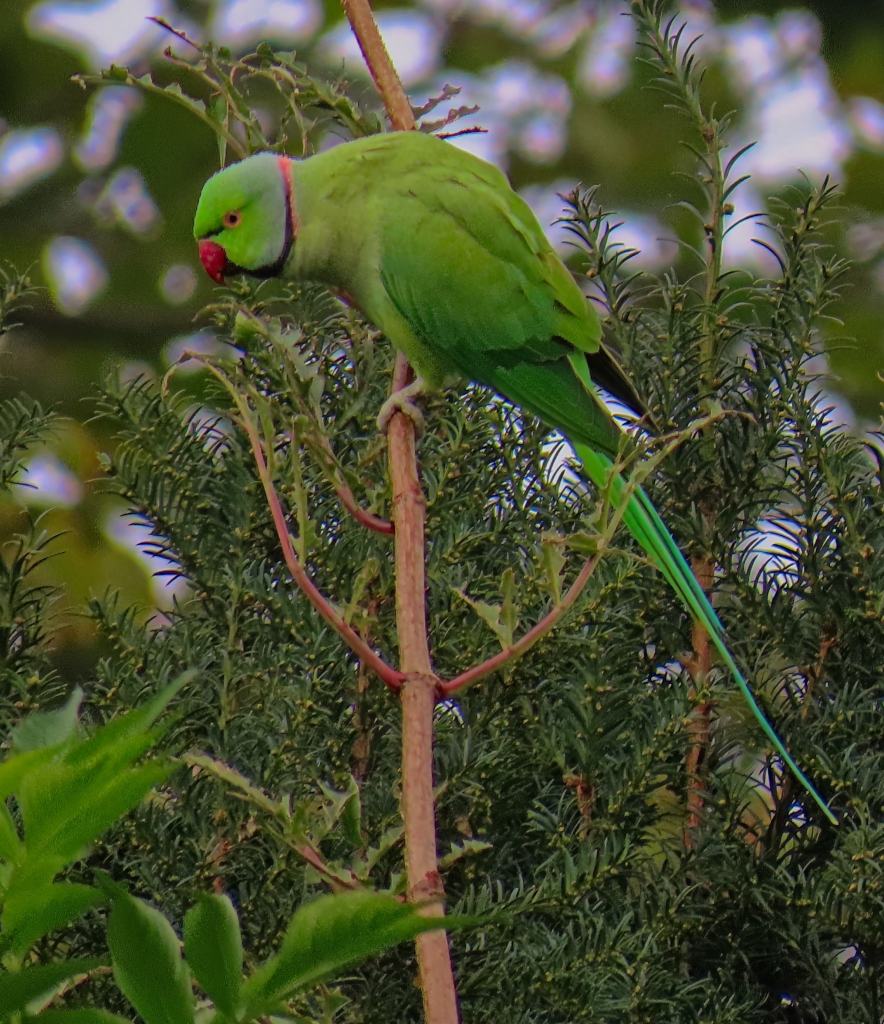
Rose Ringed Parakeet

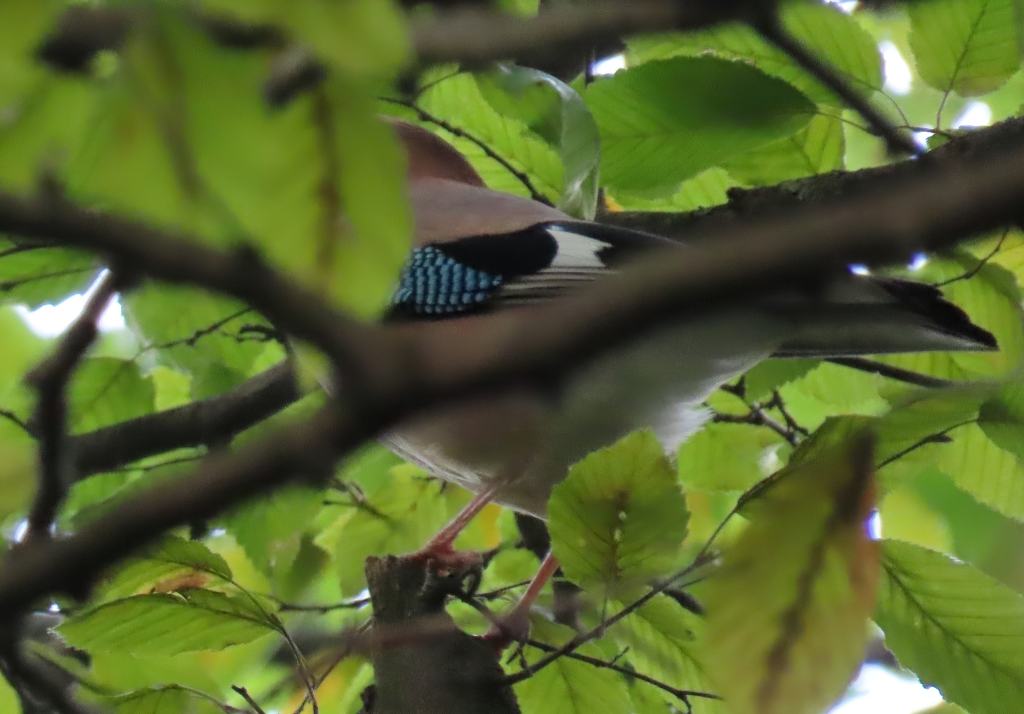
Vondelpark is one of a number of large parks in Amsterdam. It was less than a mile from our hotel and with wonderful weather, I went there for a couple of hours while Cindy caught up on some lost sleep from the long flight from Seattle. It is a beautiful and busy park with hundreds of walkers, joggers, bike riders (like everywhere else in Amsterdam) and on this day, only a single birdwatcher – me. I had hoped to see other birders there who would lead me to special spots and targeted species but it was not to be. I only had 14 species there, most seen elsewhere earlier or later but I was able to find a lifer Eurasian Wren in thick brush after first hearing it. The only other lifer was a life photo of a Eurasian Jay – perfect focus – but only of small part of its body as it remained buried in leaves. I had missed a photo of this species in Italy and would again later in the Netherlands as it is much shyer than expected. At least I captured some wing detail confirming the ID.
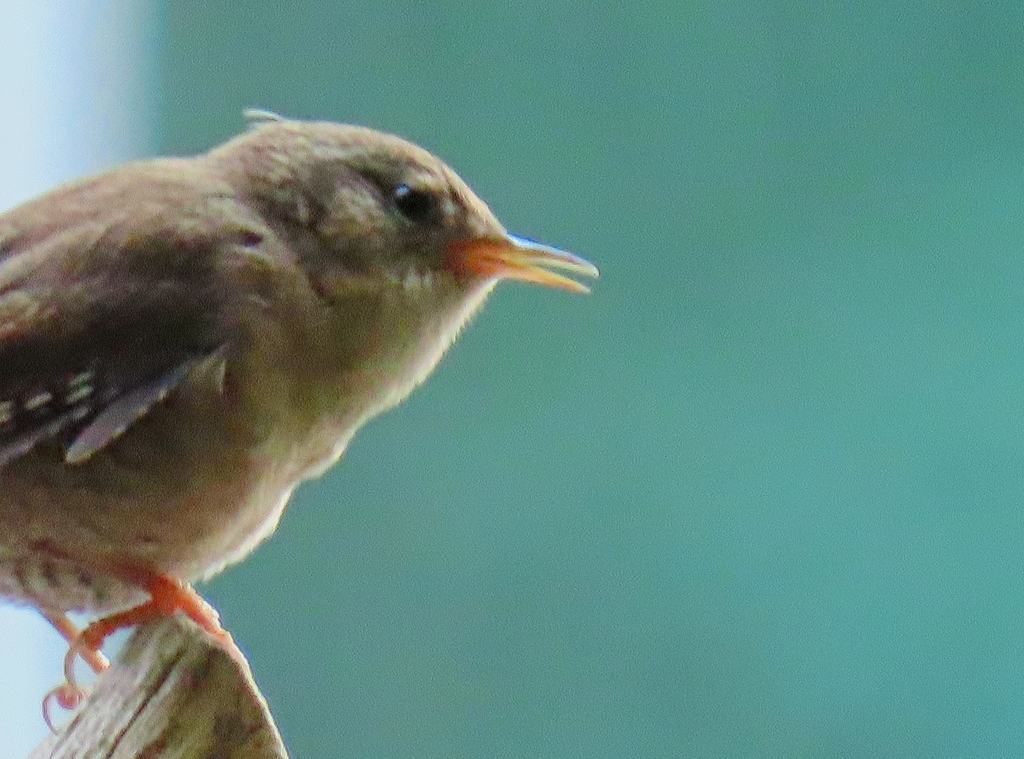
Eurasian Wren – Lifer
Eurasian Jay – Life Photo (Use your imagination)

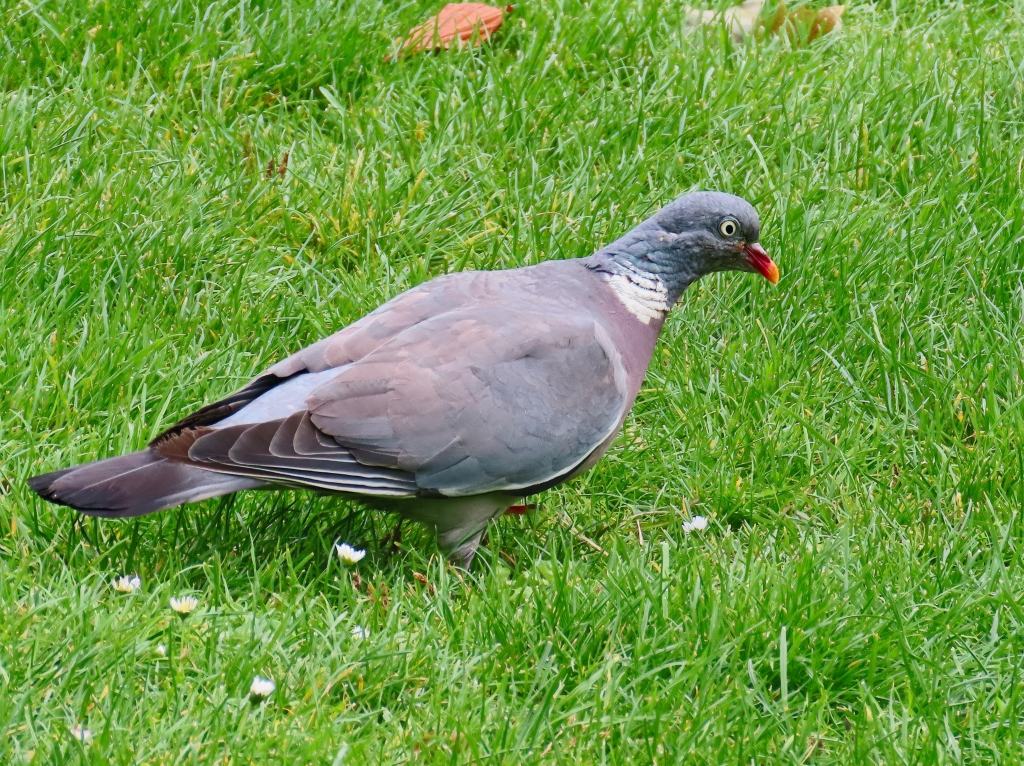
Other species at the Park included Eurasian Jackdaw, Carrion Crow, Eurasian Moorhen, Common Wood Pigeon and Gray Heron – all of which I had seen in Italy. I heard Eurasian Nuthatch and European Robin but never saw them. I used the Sound ID part of the Merlin App hoping to be led to small forest birds. It heard Goldcrest, which could have been a life photo, but I never found it. A big disappointment was that it did not hear any other forest species.
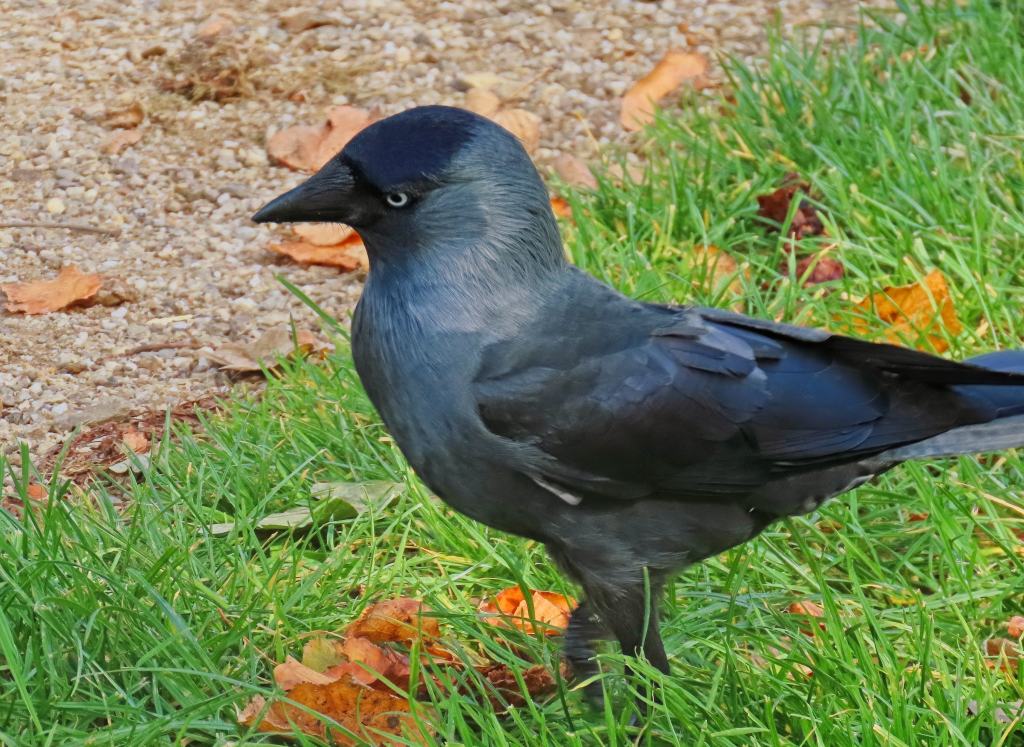
Eurasian Jackdaw – Noisy and Abundant
Common Wood Pigeon – Also Abundant
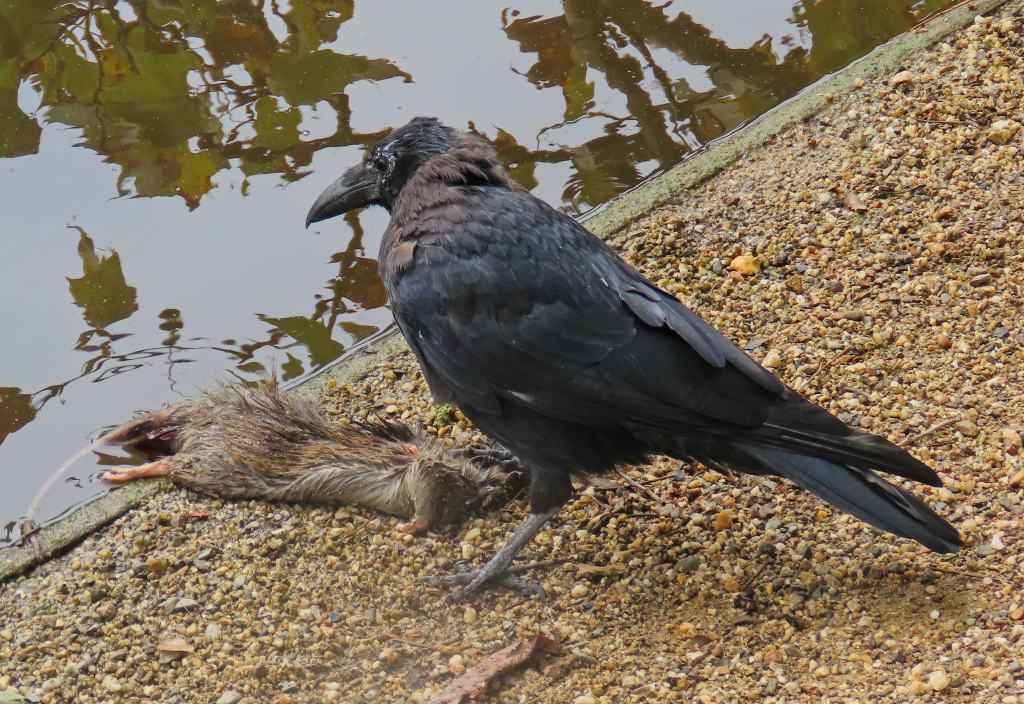
Carrion Crow – with Carrion
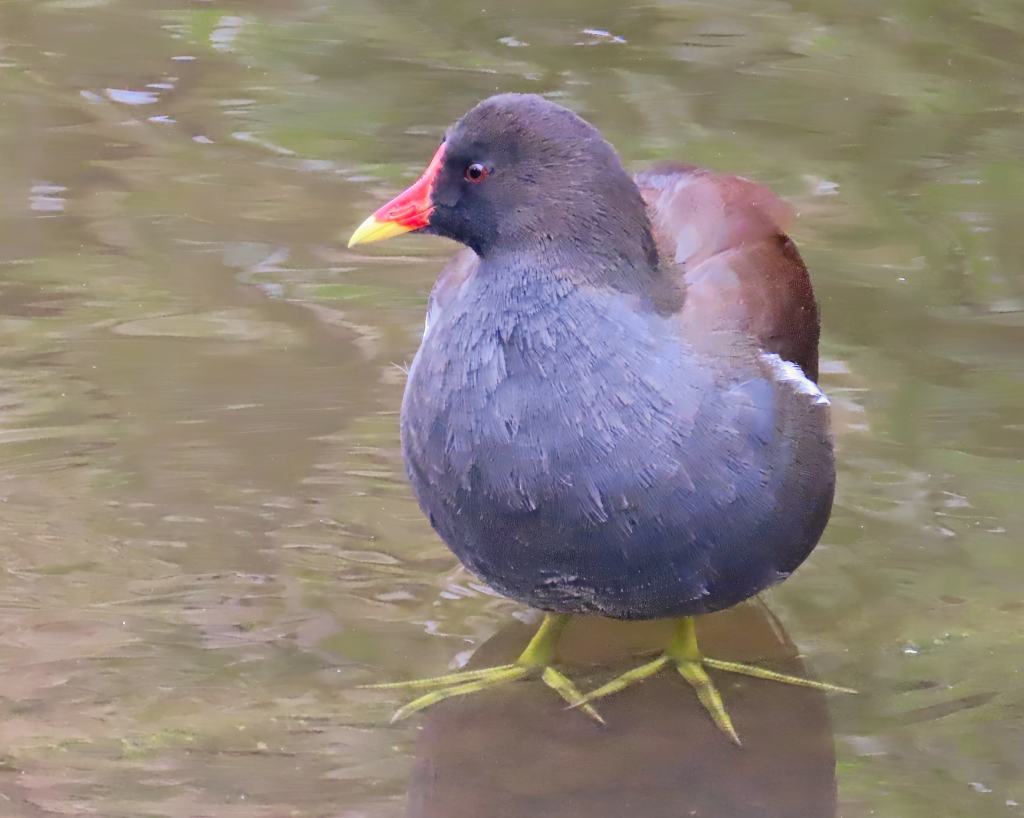
Eurasian Moorhen
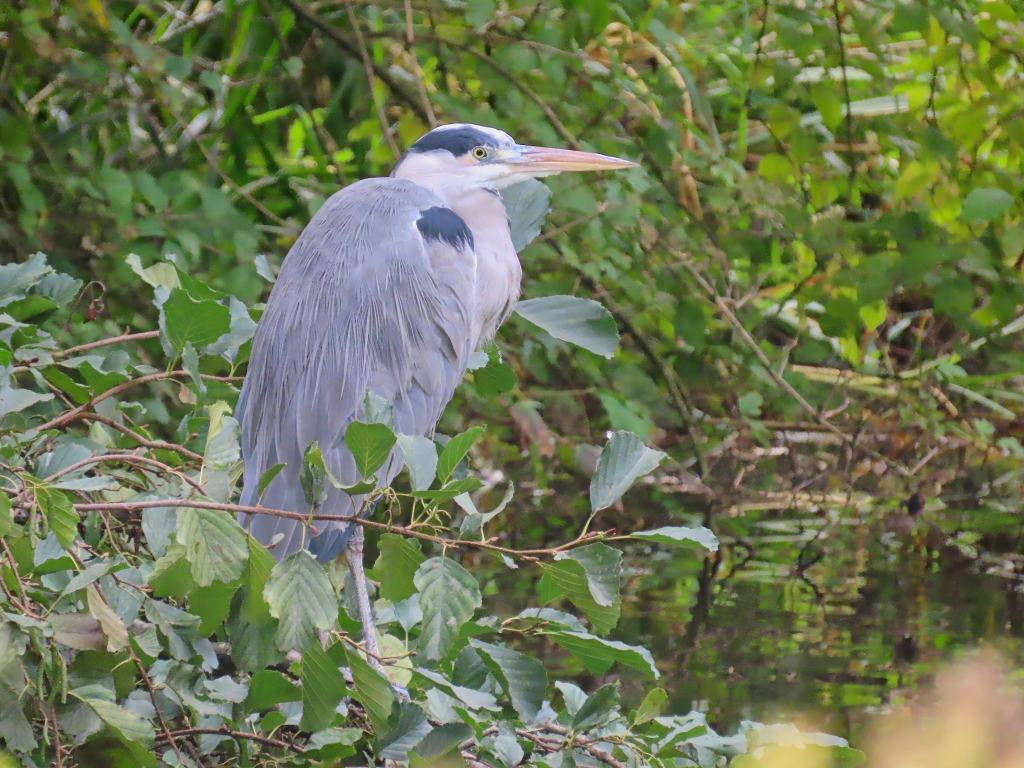
Gray Heron

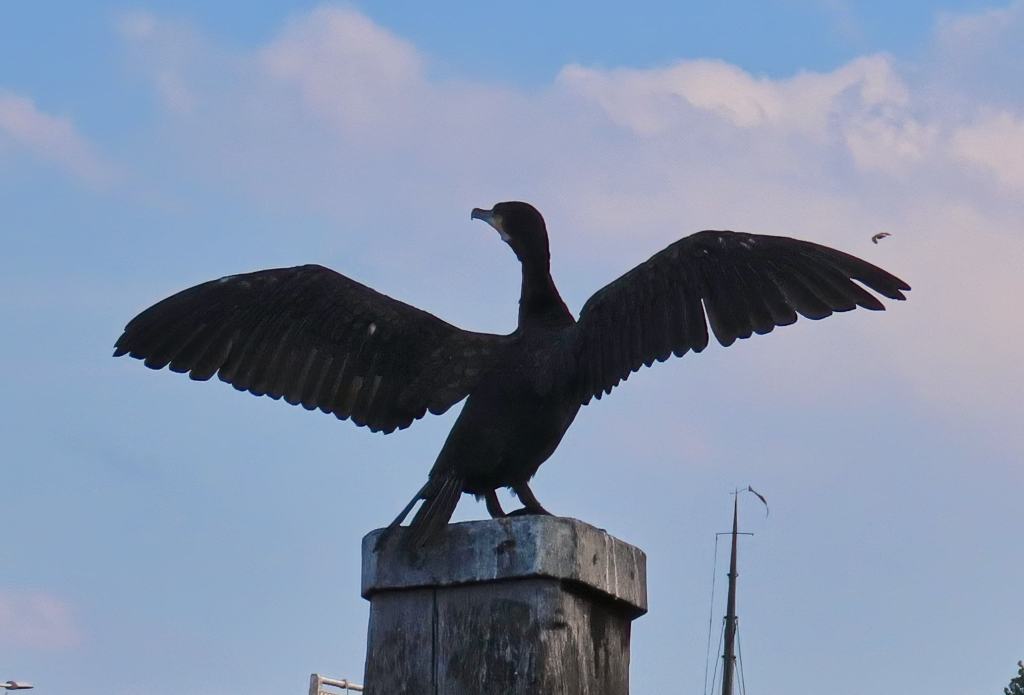
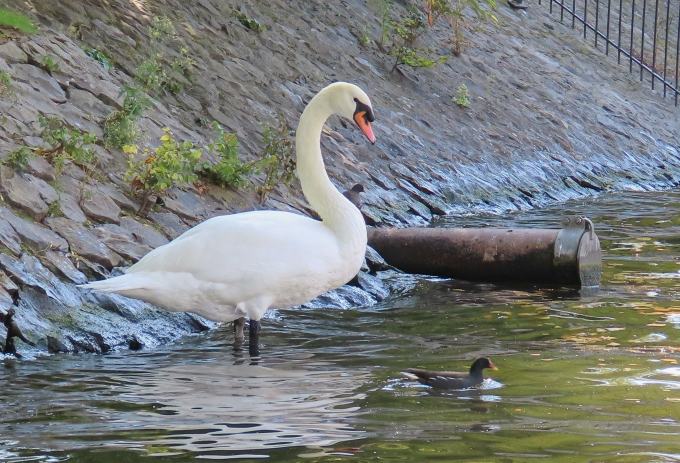
Amsterdam of course is famous for its many canals. Our hotel, Hotel Estherea was located on the Singel Canal and as indicated above, gave me my first lifer, the European Herring Gull. High on our list of activities during the visit was a canal cruise. These are very popular tourist activities and there are dozens of operators offering cruises of varying lengths and added attractions like beer, wine, cheese and other goodies. Cindy found what we felt was the perfect option for us – a small open boat cruise lasting 90 minutes. Our “captain” was a very interesting and entertaining young man who had lived in New York City and Berlin among other places and was now enjoying Amsterdam and sharing his enthusiasm and knowledge as we motored through several canals. Possibly more on that later but for this “birding section” I include two species seen on the cruise – a Great Cormorant and a Mute Swan. I had seen both and photographed both in the United States, but the Mute Swans in the U.S. are not native, so this Amsterdam version turned out to be a lifer at least under the Ebird rules.
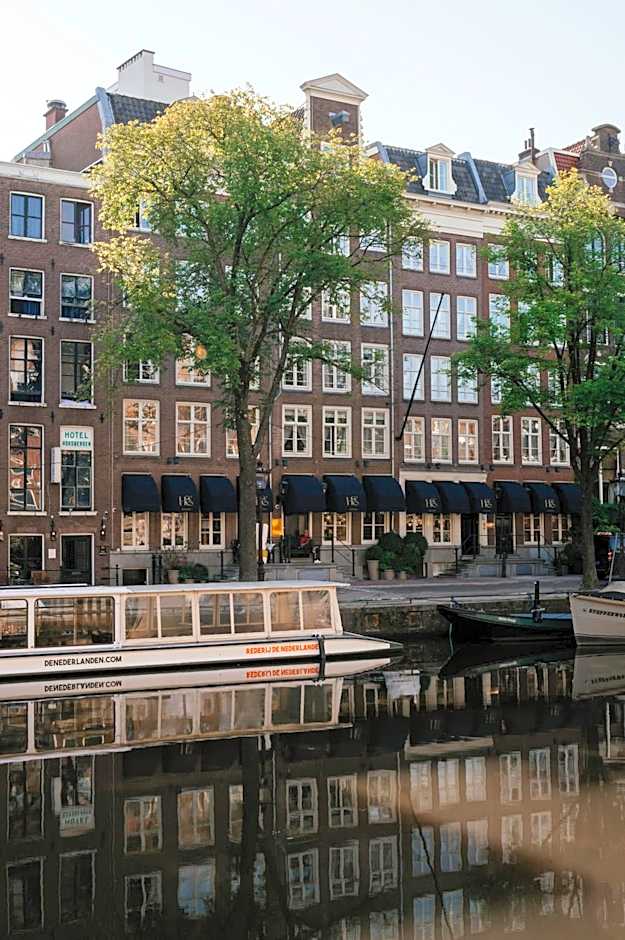
Our Hotel Estherea on the Singel Canal
Mute Swan – Native and thus a Lifer
Great Cormorant

When I knew that Cindy and I would be visiting Amsterdam, I tried to find a local guide to take me or us out birding. Some of the leads I had took me to people or companies that were no longer in business and others took me to people or companies who were not interested in a single day of guiding. Finally I found birdingnetherlands.com a local company that thought one of its guides might be available. After some spotty communication, I arranged a full day of guided birding with Wouther Rohde who would pick Cindy and me up at our hotel and visit a few good spots within an hour or so from the hotel. It worked out well and both Cindy and I enjoyed the day with Wouter. As is always the case, sure it would have been nice to find more species, but it simply was not possible to visit enough diverse areas to add much to our list for the day. We had 63 species including 7 lifers with photos of 6 of them. We also saw two of the lifers I had seen previously and had photos of many other species.

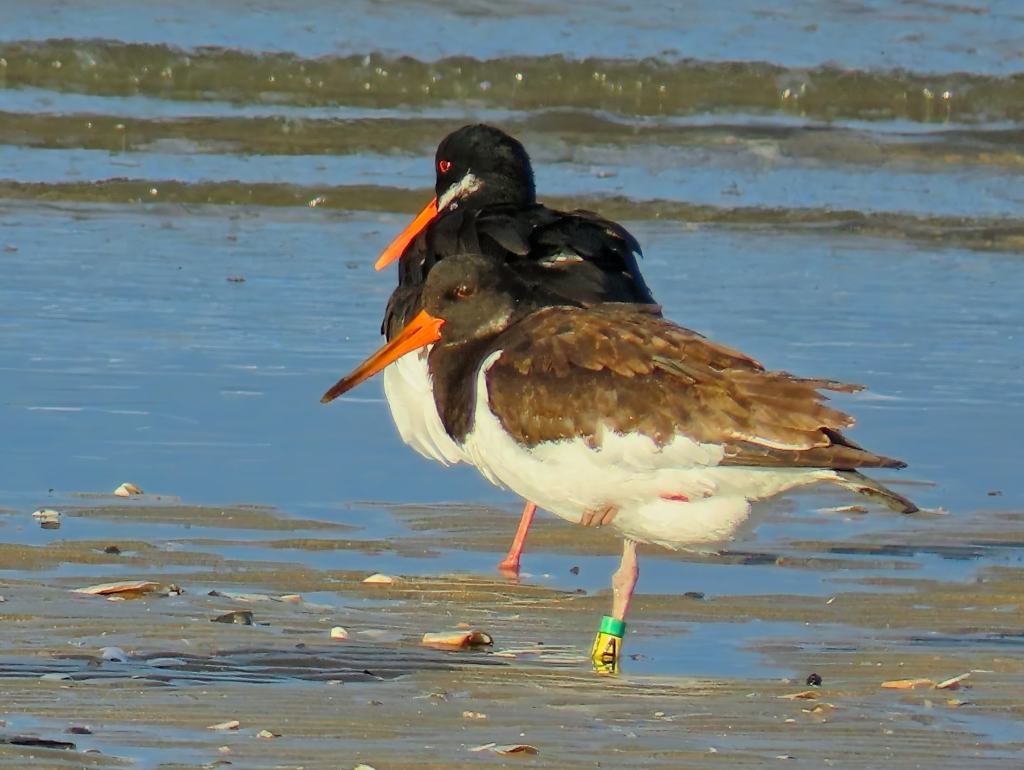
The first place we visited was a coastal area where in addition to some other species, Wouter hoped we would see a Rock Pipit. It may have been a bit early for that pipit but we immediately found a lifer Meadow Pipit, followed quickly by mu lifer Eurasian Oystercatcher. The pipit was one of those “little brown jobs” that was not of interest to Cindy, but she was happy to see the many Eurasian Oystercatchers as the Black Oystercatcher we saw at Semiahmoo early on in our relationship was her “spark bird”.
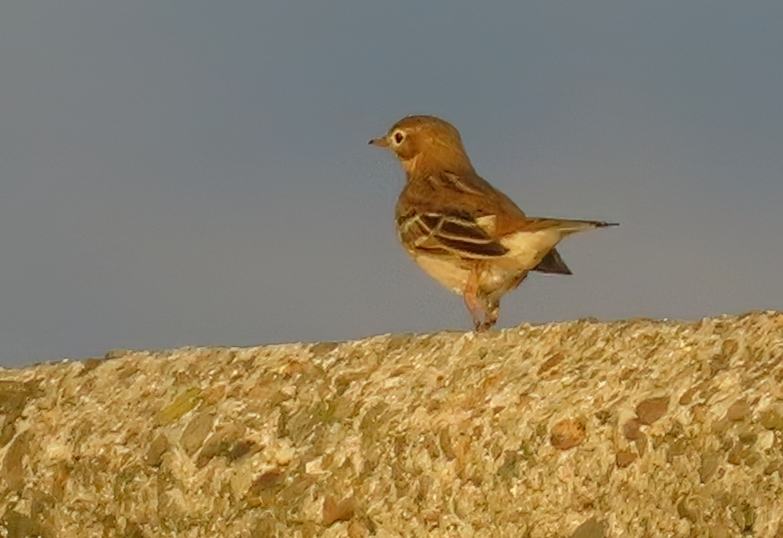
Meadow Pipit – Lifer
Eurasian Oystercatchers – Lifer

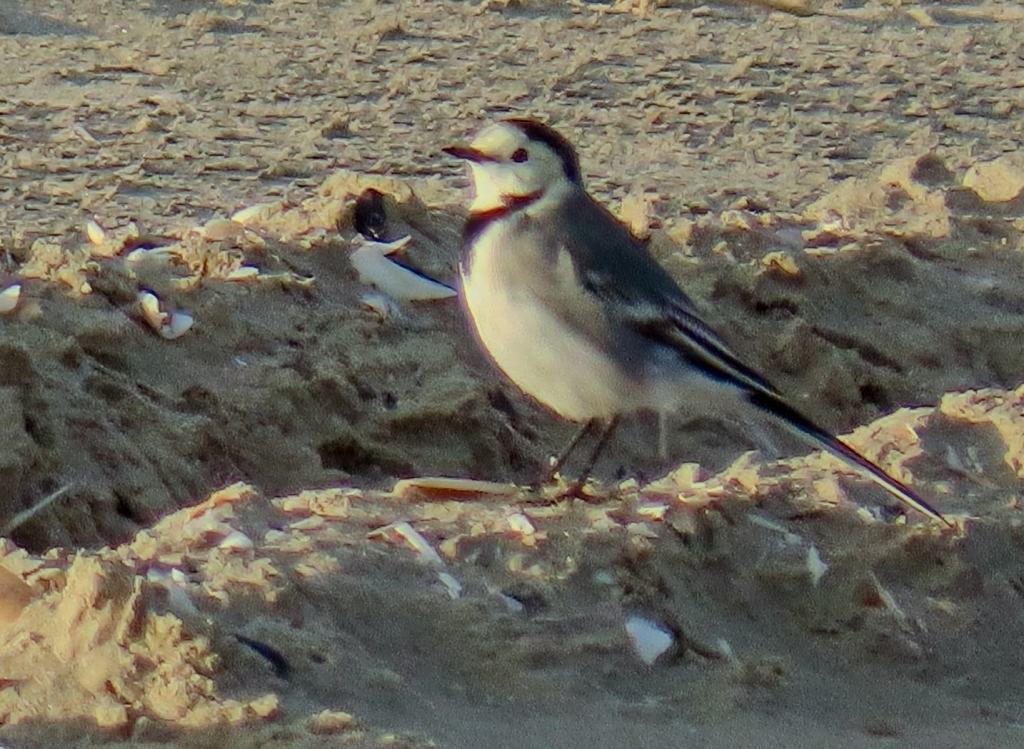
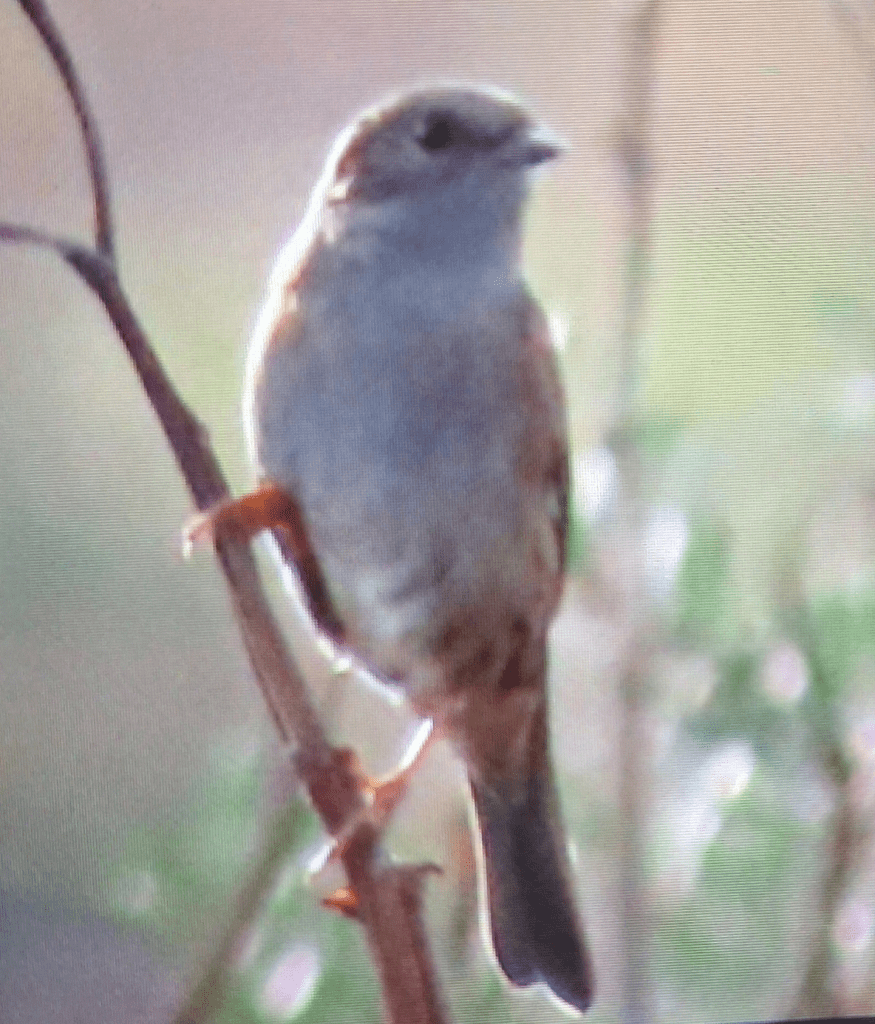
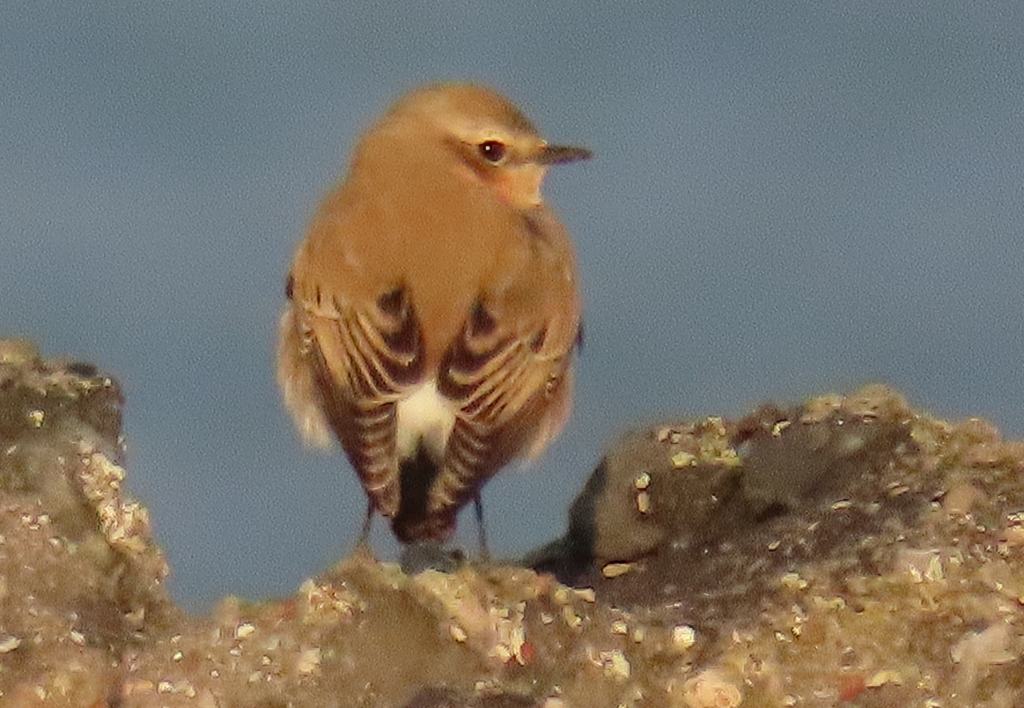
Although the first location was by the water, we did not have views of the ocean itself and Wouter had indicated that it was not likely that we would see several species on my targets list: European Shag, Common Scoter and Velvet Scoter – just too far to chase. So we settled for some other shorebirds and some smaller “land” birds including Northern Wheatear, a lifer Dunnock and a White Wagtail. A comment about my photos. Although all photos were seen well and clearly “in my camera”, it turned out that the SD card had some problems and I could not download them onto my computer for processing. I had to use a special recovery program to try to be able to work with the photos – it worked for many of the photos but almost half could not be recovered so some of my photos are back of the camera photos – much lower quality – such as this Dunnock photo.
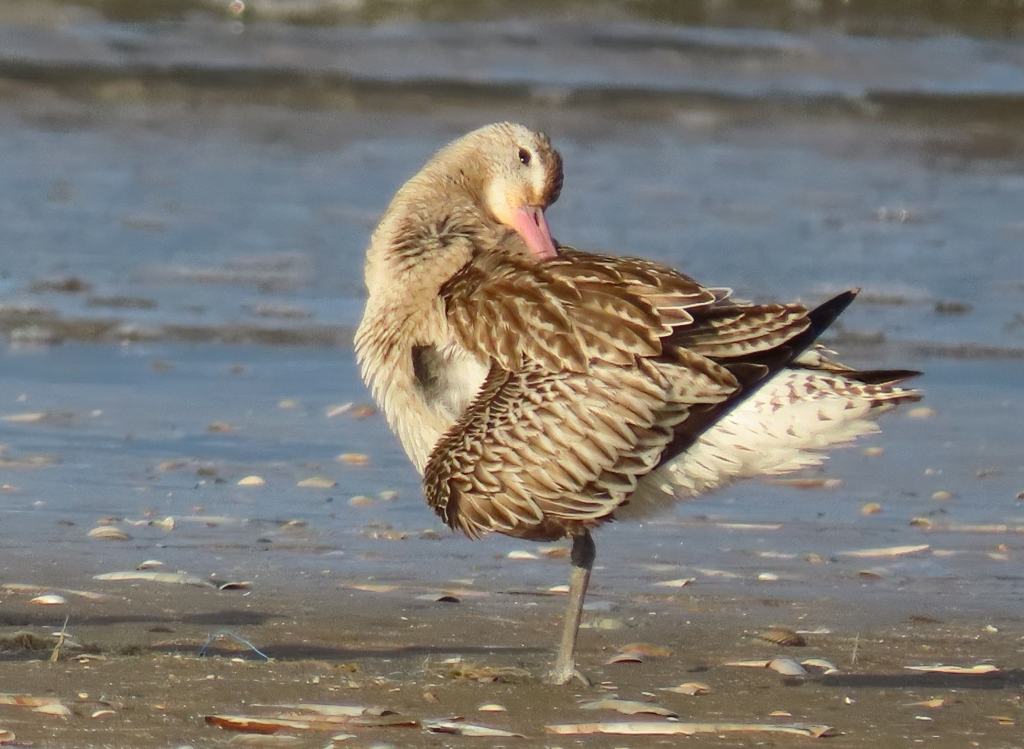
Bar Tailed Godwit
Northern Wheatear
White Wagtail
Dunnock – Lifer

Wouter kept track of the birds we saw and entered them on Ebird, but I learned later that he had consolidated all of the lists into one, so looking back I am not able to identify each place that we visited and the birds seen. Thus I am forced to just combine all of the sightings and photos without a specific area. There were mixed habitats including some forest areas and some shoreline areas along a dyke and a couple of freshwater ponds/lakes. Here are the best birds and photos from the rest of the day.
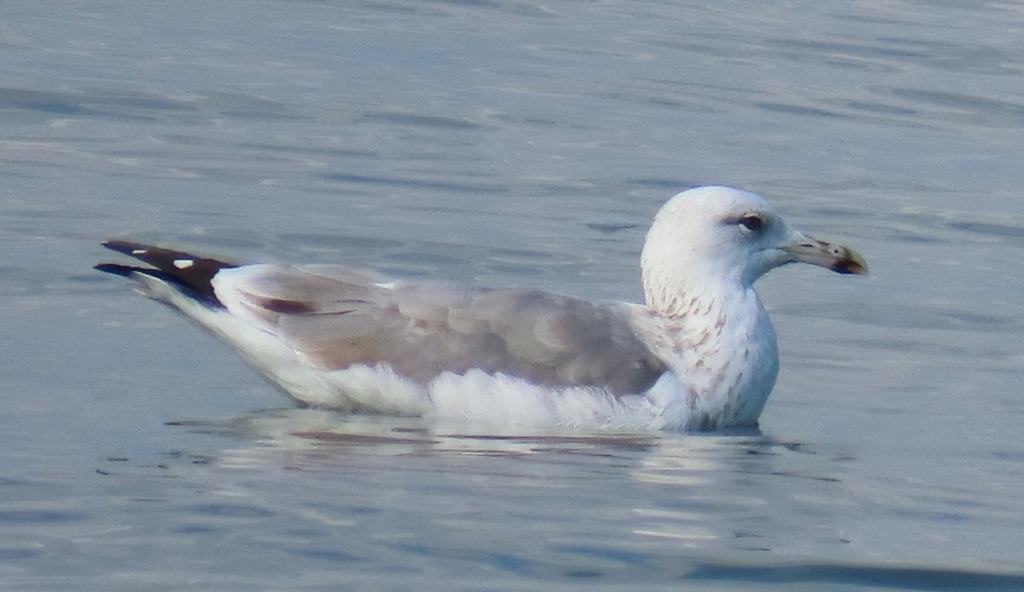
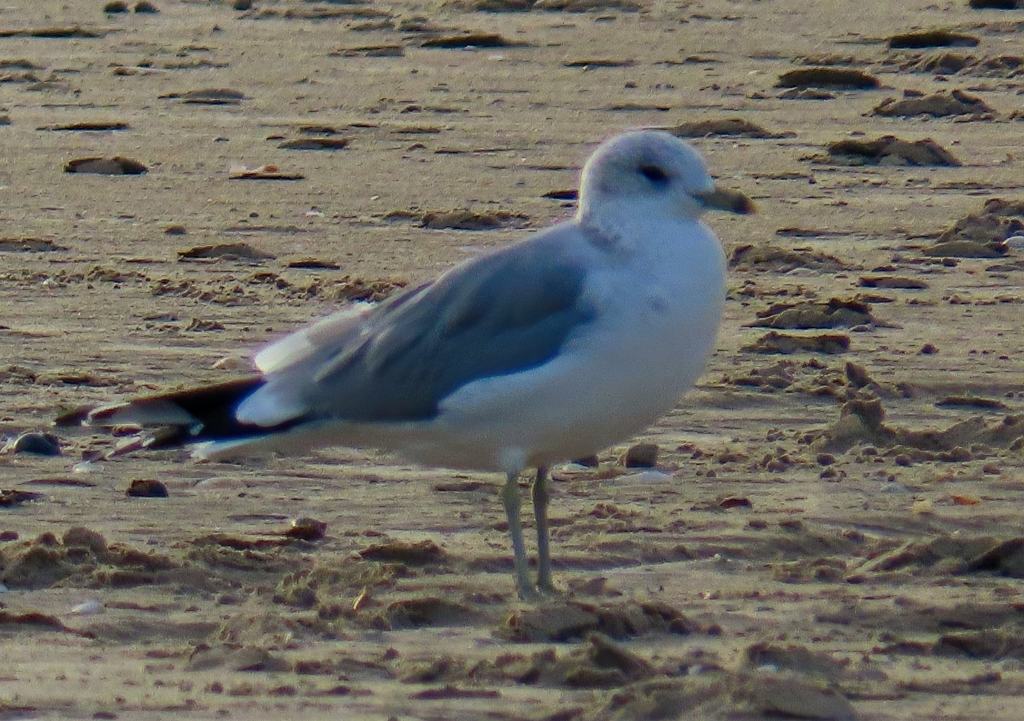
Caspian Gull – Lifer
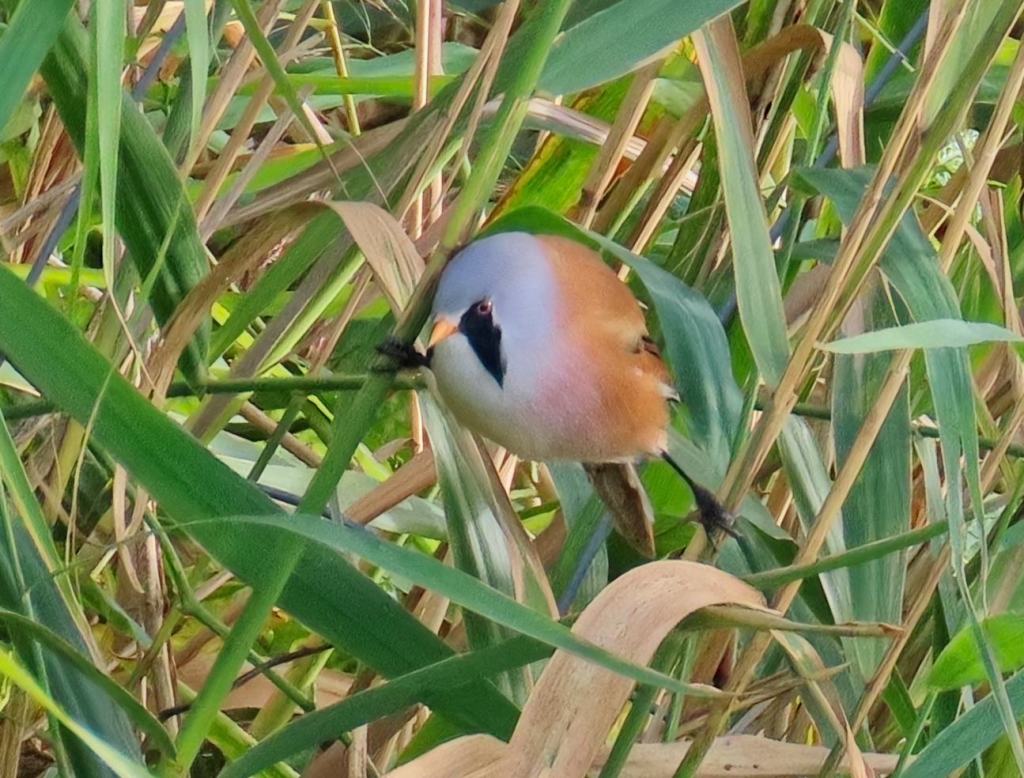
Bearded Reedling – Lifer
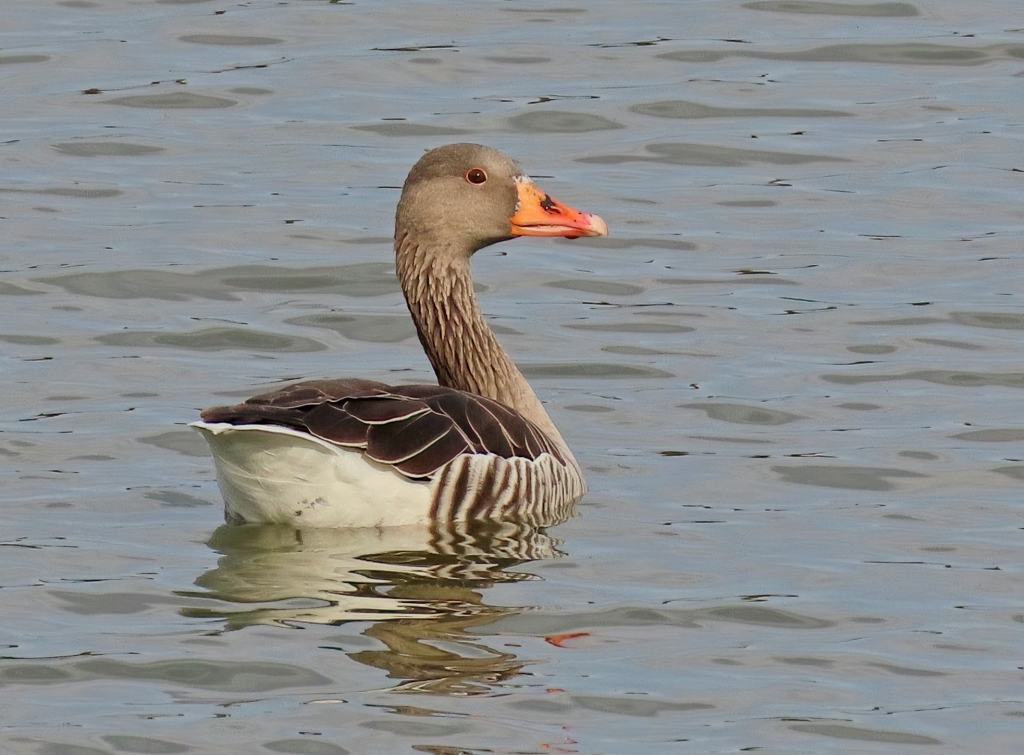
Graylag Goose – Hundreds Seen
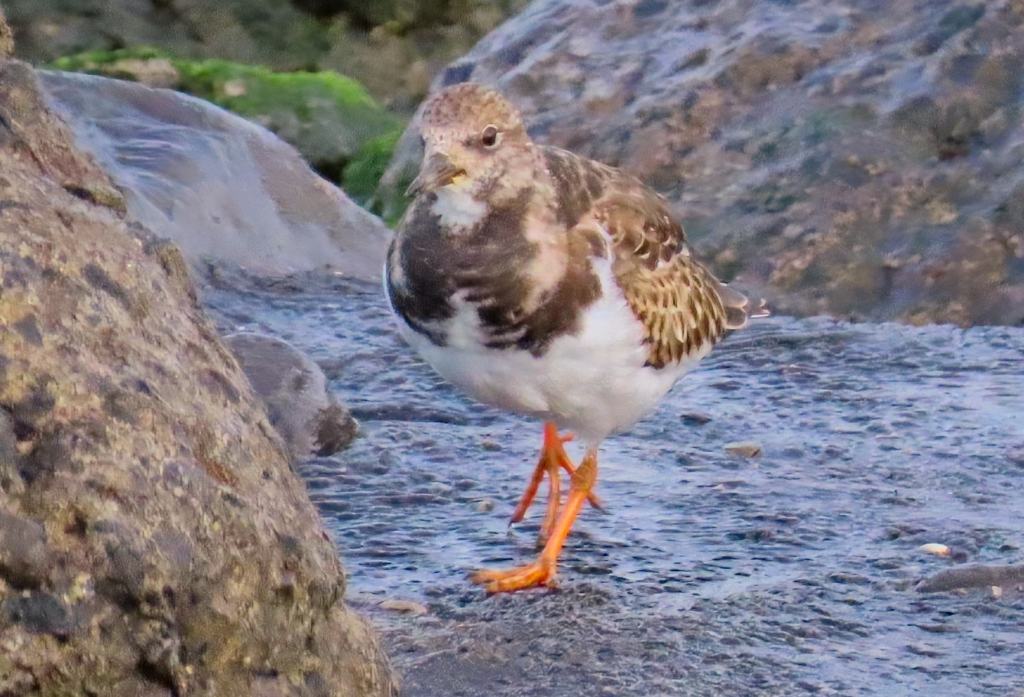
Ruddy Turnstone
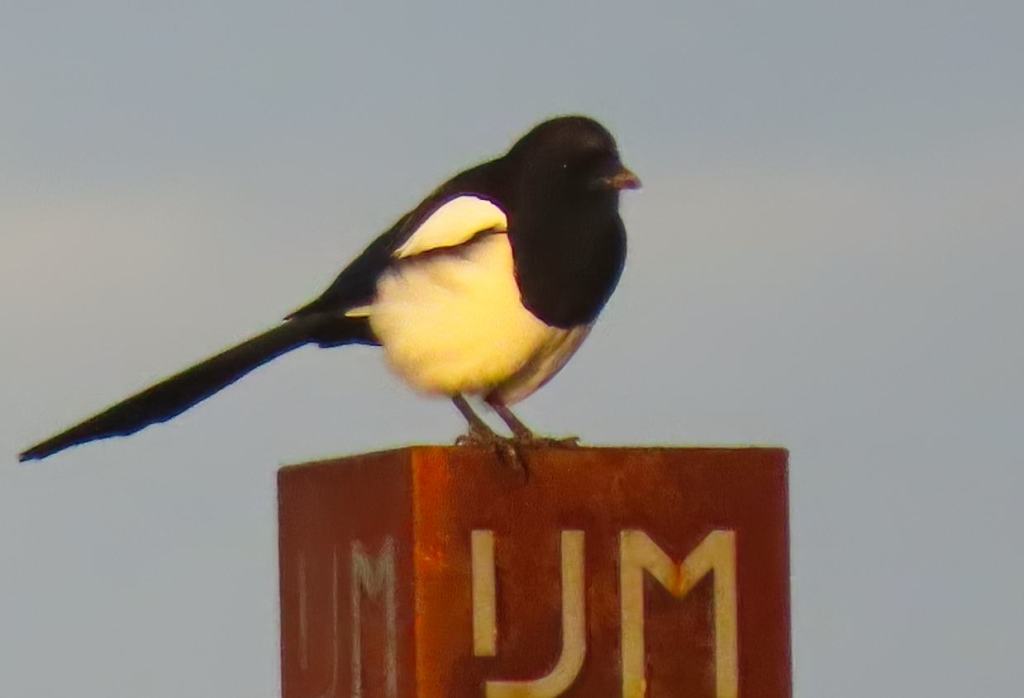
Eurasian Magpie
Common Gull
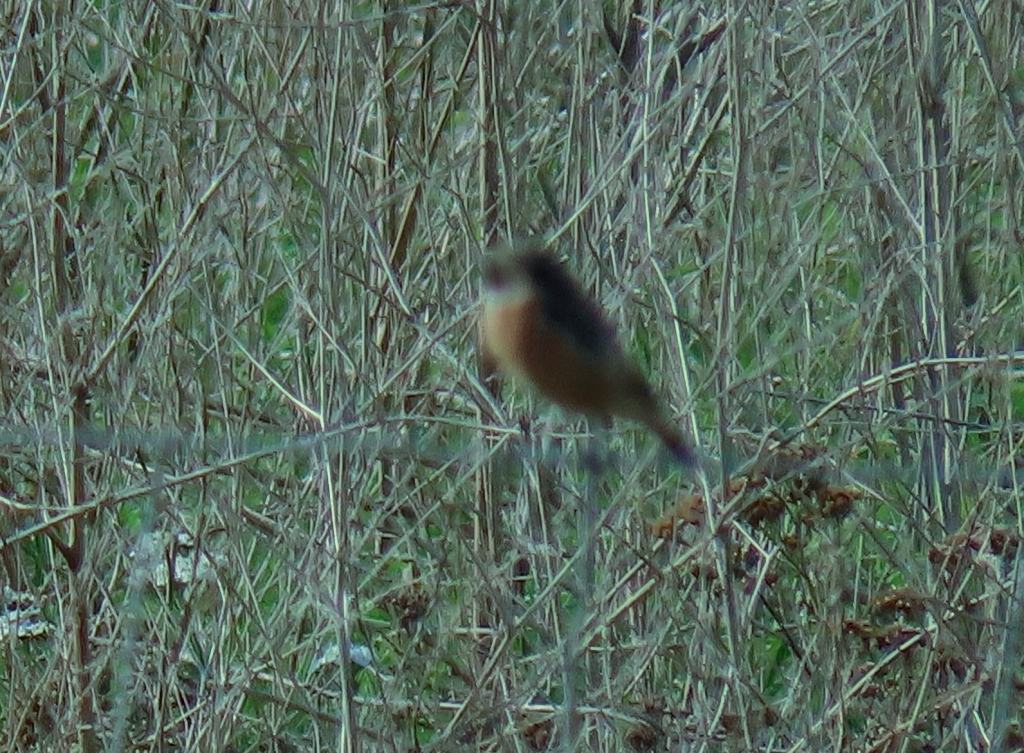
Terrible Photo of Eurasian Stonechat – Lifer
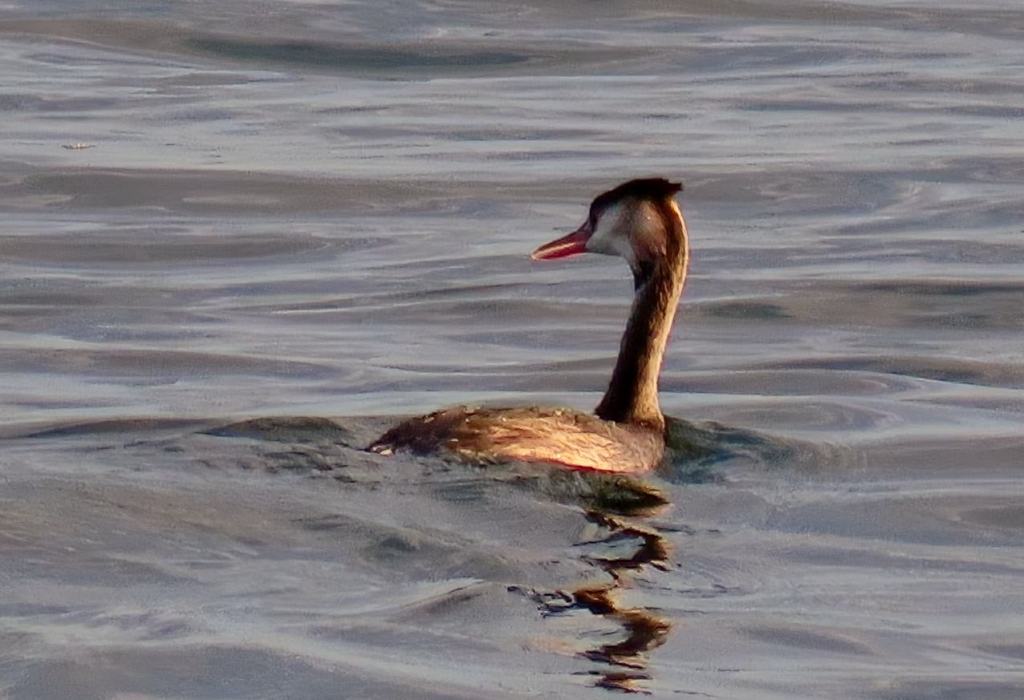
Great Crested Grebe
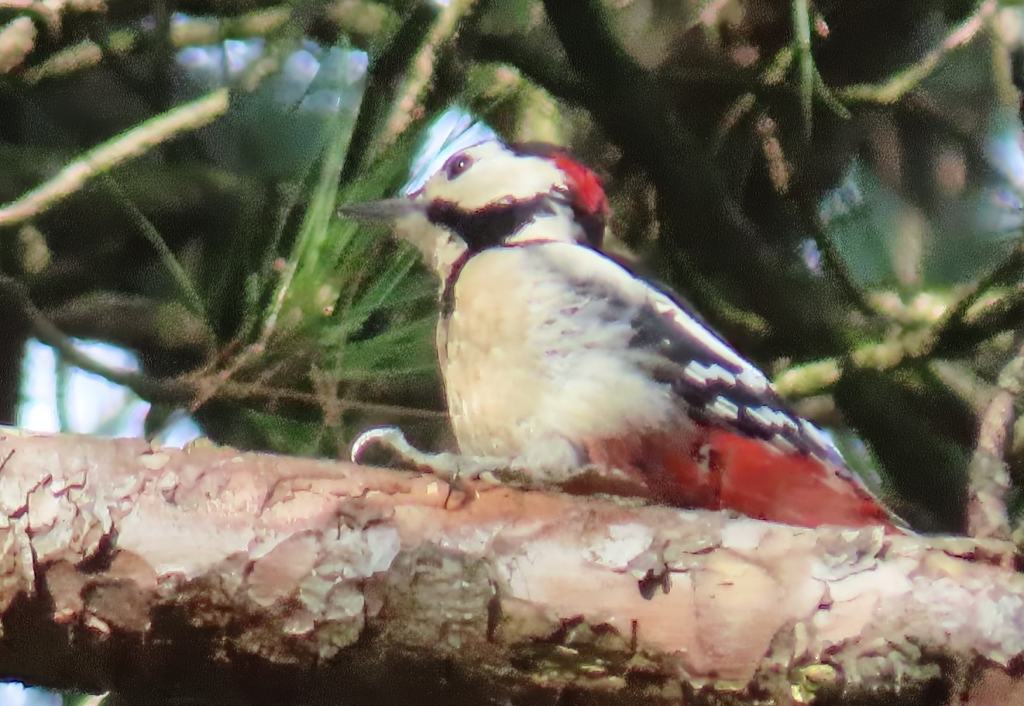
Great Spotted Woodpecker
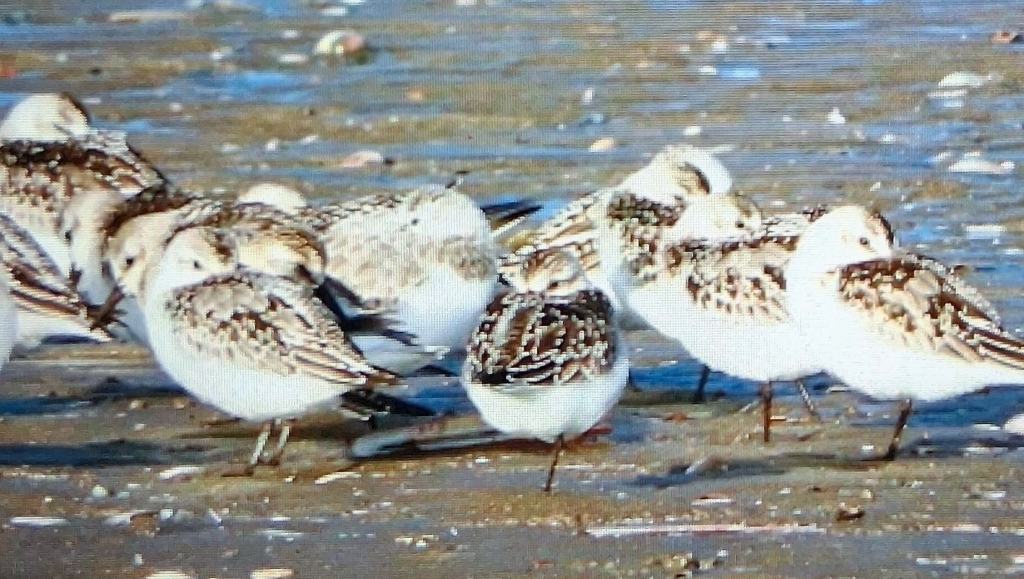
Sanderlings

Although I got pictures of all of them, they unfortunately did not make it through recovery: Ruff (many), Pied Avocet (many), Common Ringed Plover, Northern Lapwing (many), Common Snipe, and Common Sandpiper. There was one lifer heard – clearly and at least three times – a Water Rail which is very similar to our Virginia Rail. And three species heard only and never seen but could have been life photos were Cetti’s Warbler (heard often) and both Common Chaffinch and Common Chiffchaff.

Although I “only” added ten lifers and ten life photos, those additions move me closer to my current “goals” for each and possibly within reach with an upcoming trip leaving next week for Brazil and then another trip to Costa Rica with Cindy and guide Greg Homel in December. The life list is now at 3845 and my goal is 4000. My Brazil lifer target list from this same trip last year is 198 so if I get 90% of the targets (178 species), I will get there. I usually expect to see 90 to 95 percent of my targets from an actual triplist of past tours. Getting to my life photo target list of 3000 will be much harder. After the Netherlands trip that photo list is now 2592 so I need another 408. In addition to the lifer targets in Brazil, there are another 37 potential life photos. Each new lifer is also a potential life photo so together there are 236 potential photos in Brazil but if I see 90% of them and get photos of 65% of them, that is only 138 or so which would only get me to 2730. But it is possible to add another 150 life photos in Costa Rica which would get me to 2880 and I have an ace in the hole, as I am going to species rich Thailand in January. There is a reasonable expectation to add 240+ lifers on that trip with the potential for another 80+ life photos of non-lifer species. Altogether then, that could get me another 200+ life photos – and should clearly get me at least 150 which then gets me over 3000. Of course it is much easier to add species speculating or even calculating for a blog and the experience in the field could be very different. If so – find another trip. Don’t have one planned yet but I am sure there will be more in 2026..
A Post about C Post (Road that Is)

I am blaming it on being busy traveling and definitely not on being lazy, but I am very behind on new posts. I should be writing the second post for the Brazil trip (see Brazil Part I at https://blairbirding.com/2026/02/14/back-to-brazil-week-i/) and I haven’t even started one for my trip to Vietnam in April/May this year, but I am in the mood to write and a really fun day yesterday provides the perfect content for doing so.

With recent non-birding trips to Arizona and then Colorado and then Massachusetts in addition to that so far undocumented trip to Vietnam that was for birding, I have not done nearly as much birding in Washington this year as normal. For example my county list for Grays Harbor, Pacific and Clallam Counties which covers the entire Pacific Ocean Coast in Washington stands at ZERO!! In fact I have not even crossed Puget Sound to the Olympic Peninsula and have also not been south of King County. To begin remedying this, I planned a trip yesterday (Thursday June 4th) to the Coast expecting to add at least 10 species for the year, and then I would go to several counties in Eastern Washington later to add maybe 20 or 25 more. That was the plan as of 8 o’clock on June 3rd.

Then there were loud repeated knocks on our door. A frantic condo neighbor needed some help. His wife had fallen, and he was not strong enough to get her up. Cindy and I went down the hall to help. Skipping many details, it was more than a fall. She seemed to have had a stroke and was immoveable on the floor. I got another neighbor who called 911. Three EMT’s arrived on a large fire truck. They confirmed it was a stroke and called for an aid car. They got her on a stretcher, and took her to a nearby hospital. She had a negative reaction to medication that was intended to clear the clot so they moved her to a hospital in Seattle where surgery cleared the clot and she is now facing a challenging recovery. Wanting to be available in case her husband needed help, I canceled the trip to the coast. He was going to be at the hospital with her so there was nothing to do immediately. The suddenness of the stroke reminded me that there were no guarantees for what any tomorrow would bring, so I decided to still do some birding but much closer to home, available to respond to any calls for assistance.

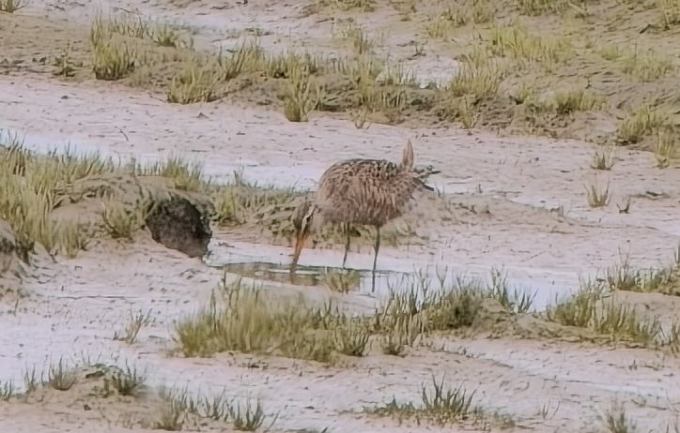
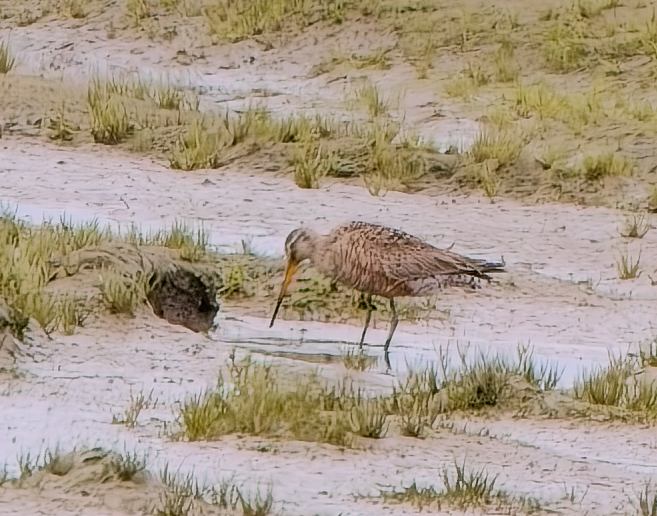
I had birded along C-Post Road off Highway 530 in my home County – Snohomish County – once in each of the past 4 years and found it a great place for two species that are uncommon in Washington – Red Eyed Vireo and American Redstart, neither of which I had seen in 2026. It was also a potentially good spot for several other species I “needed” for the year including especially Red Breasted Sapsucker. The exit off I-5 for Highway 530 is about 38 miles from my home and it’s another 10 miles or so to C-Post Road. As I was nearing the Highway 530 exit, I checked recent updates on a WhatsApp site that reports rarities in Snohomish County. A Hudsonian Godwit was being reported at Eide Road about 10 miles from the exit. Not only would it be my first of the year (a FOY) for this species, it was exceedingly rare for Washington and more so for Snohomish County. I had seen it in the state but not in Snohomish County, the one with my largest “county life list”. Instant change of plans and I headed for Eide Road.

Hudsonian Godwit – FOY and Snohomish County Lifer, Eide Road

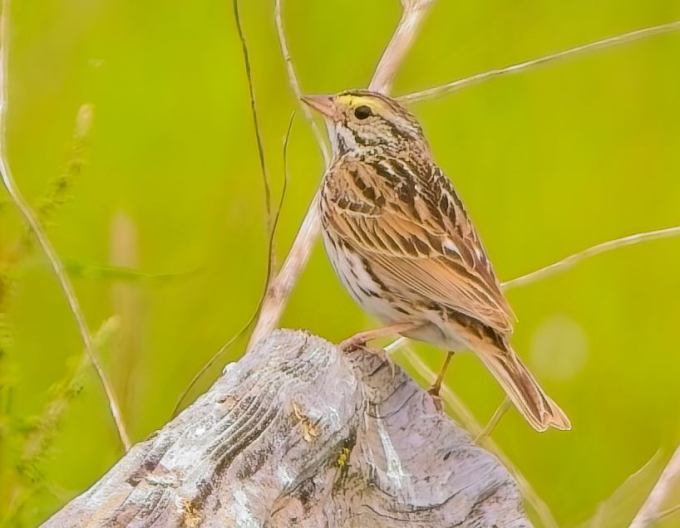
I had birded Eide Road many times over the past 15+ years. It was significantly changed a few years ago to provide “better” salmon habitat. Before the change it was especially good for shorebirds and among the 24 shorebird species I had seen there were two great rarities for Washington and the County – Ruff and Sharp Tailed Sandpiper. After the change at this location, I got an ABA lifer Little Stint, so it wasn’t all bad, but every birder I know misses the old days. A Hudsonian Godwit would be a great addition to that shorebird list. When I arrived, I was surprised to see no other birders there and also to see very few birds. I hiked out along the dike road and maybe 200 yards down, decided to scope the area. I found a total of three birds: a Gadwall, a Killdeer and … unbelievably a very distant Hudsonian Godwit. The latter was several hundred yards away, barely discernible in the scope and definitely not a candidate for even a poor ID photo. A few minutes later several other birders arrived – people I knew. I showed them the bird through the scope and got a concurrence that it was the target bird. Wanting a photo and knowing I had to get closer, I continued out on the dike, followed its turn to the right and walked out to the end. It still wasn’t close, but I got a photo that at least was ok for confirmation of the identification. It was about an hour after I had passed the Highway 530 exit, but still not yet noon. I returned to my original plan to go to C-Post Road, buoyed by the new county bird (County Life List #277). On the way back to the parking area, I heard the familiar buzz of a Savannah Sparrow, a common species that I had not yet seen for the year. I grabbed a photo as the bird perched briefly. Several Barn Swallows were soaring around the area. I did not bother with a photo, but unbelievably it too was a FOY, so three at this stop.

Savannah Sparrow – FOY Eide Road

I made the turnoff from Highway 530 onto C-Post Road at about 1 p.m. and immediately began hearing bird song as I drove slowly down the dirt road. I flushed several Turkey Vultures, crossed the bridge over the North Fork of the Stillaguamish River, and parked. I began an E-Bird list and opened the Merlin App to listen for bird songs and calls. I was surrounded by bird songs and species names began flashing on the App including both top targets, Red Eyed Vireo and American Redstart both of which I was hearing to my left and also to my right. Other species were heard immediately as well, American Robin, Black Headed Grosbeak, Cedar Waxwing and Song Sparrow. The Waxwing and Grosbeak would also be FOY’s.

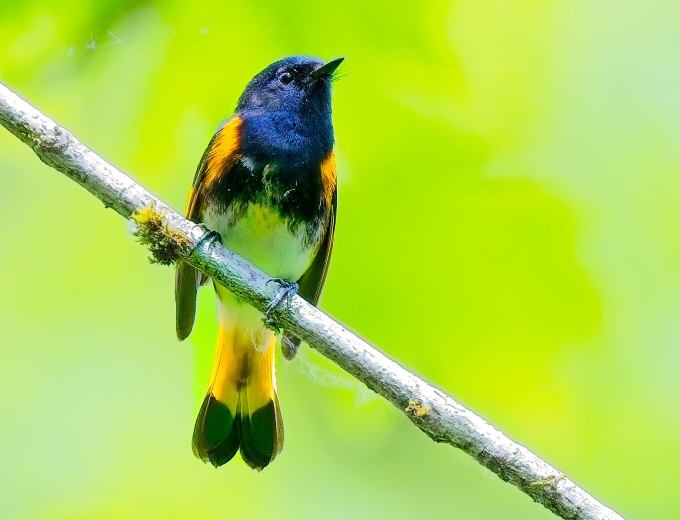
I spent the next hour plus walking back and forth along the road, picking up new bird songs, getting visuals and also getting some photos. The Red Eyed Vireos and American Redstarts seemed to be everywhere. I entered “4” on my Ebird Report for the Redstarts and that got a challenge as being an unusual number for the area. I had actually been conservative as I heard at least that many singing in different locations, almost certainly heard two more in different spots and never saw a female which must have been there as the males were staking out territories and singing constantly. I saw my first American Redstarts in Snohomish County on June 28, 2017 on Oso Loop Road – not far from C-Post Road and saw my first ones at C-Post Road in 2024. I had never seen more than 2 at any location. This expansion is encouraging.

American Redstart – FOY

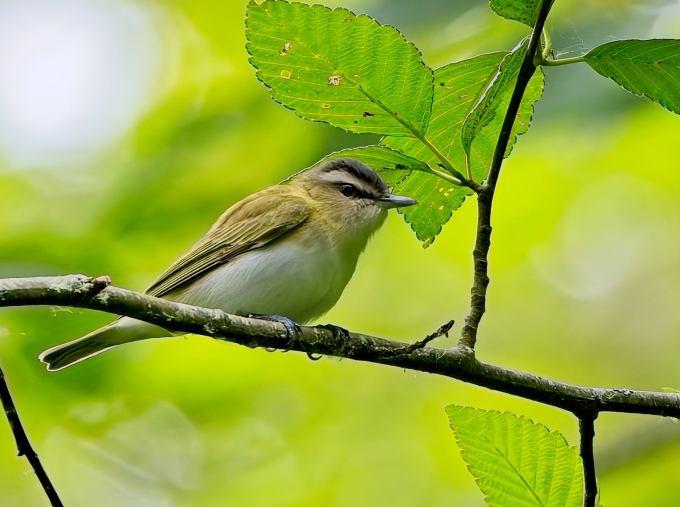
It was a similar situation with the Red Eyed Vireos. My first Snohomish County records for them was also from 2017 on the Whitehorse Trail not too far from C-Post Road but most of my observations were from Pend Oreille County in far Eastern Washington. On my Ebird list Thursday I put down 5 as the number for this species – again there were probably more. It is one of the most common species in forest in the Eastern U.S. and in fact I had recently heard/seen several in Massachusetts on Monday this week just on a causal walk.

Red Eyed Vireo – FOY

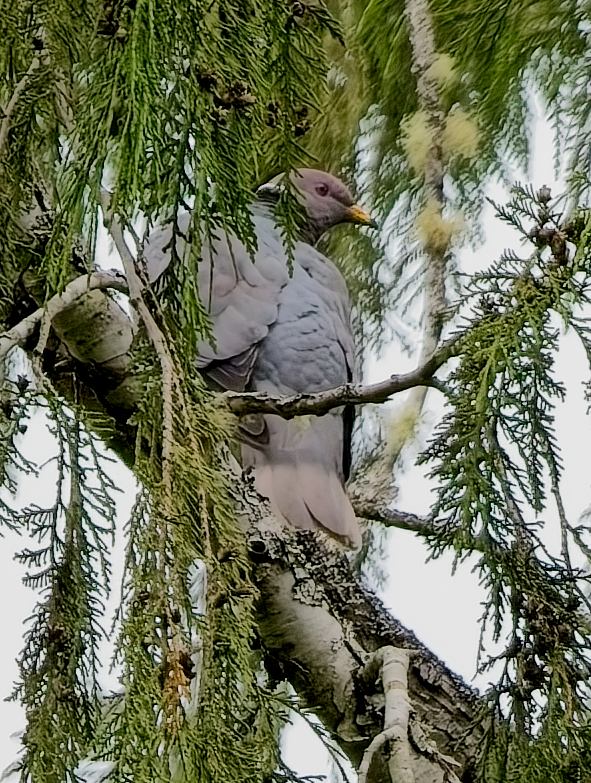
One of the first birds that I had heard when I got out of the car was a Band Tailed Pigeon. It seemed far away and I did not expect to see it, but a few minutes later I saw some movement of a medium sized bird at the top of a distant tree and thought it might be the pigeon. It was mostly hidden in the foliage, but one photo shows the neck band and black tipped yellow bill confirming the ID.

Band Tailed Pigeon – FOY

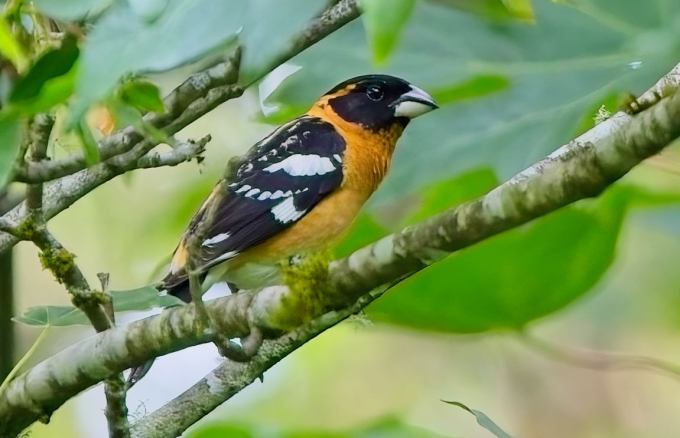
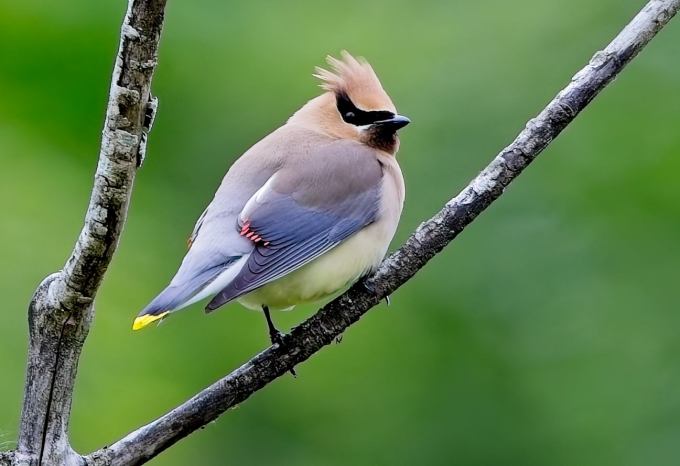
Another species that was heard very quickly and then almost constantly was the Black Headed Grosbeak. They are common migratory arrivals in Washington, but evidence again that I had not been out birding for a long time, this, too, would be my first of the year. It took awhile to see one in the open and get a photo, but I was pleased with the result. The same was true for my FOY Cedar Waxwing although the first photo I took was pretty awful. The one below does much better justice to this very handsome bird.

Black Headed Grosbeak – FOY
Cedar Waxwing – FOY

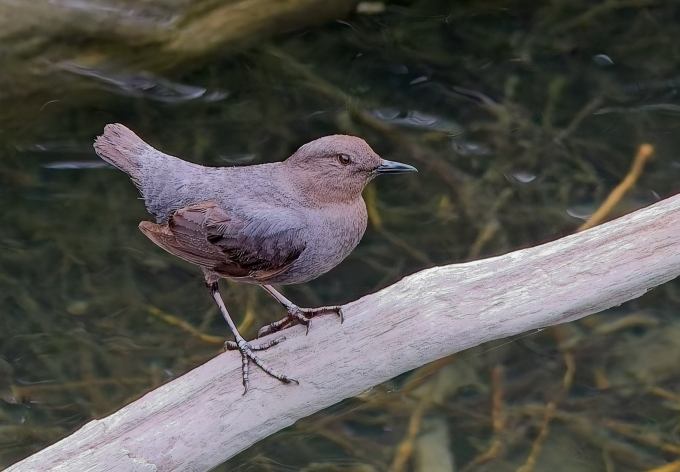
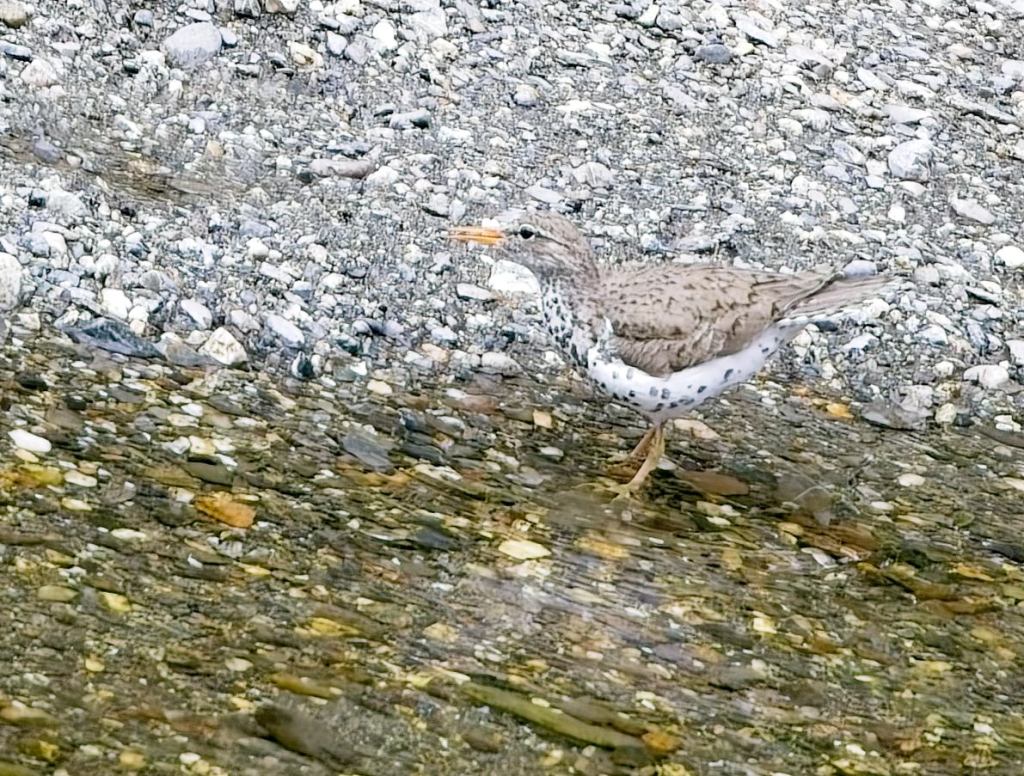
I went back and forth across the bridge more than once. I often heard Spotted Sandpipers, but since I had seen them earlier in the year, I did not try to find one for a photo. But some movement along the bank did catch my eye. It was dark, not a Spotted Sandpiper. It disappeared as it went under the bridge. I guessed and hoped that it would be an American Dipper. I had not seen one this year and actually had planned to go a little further east on Highway 530 to Fortson Mill Road, a place I had found Dippers on many occasions. After a few moments without the bird reappearing, I used playback for the Dipper’s song and it came out from under the bridge immediately and perched on a branch that was partially buried in the water. Photo time. Dippers commonly nest under bridges, so I expect it may be nesting here, although I never saw a second one.

American Dipper – FOY

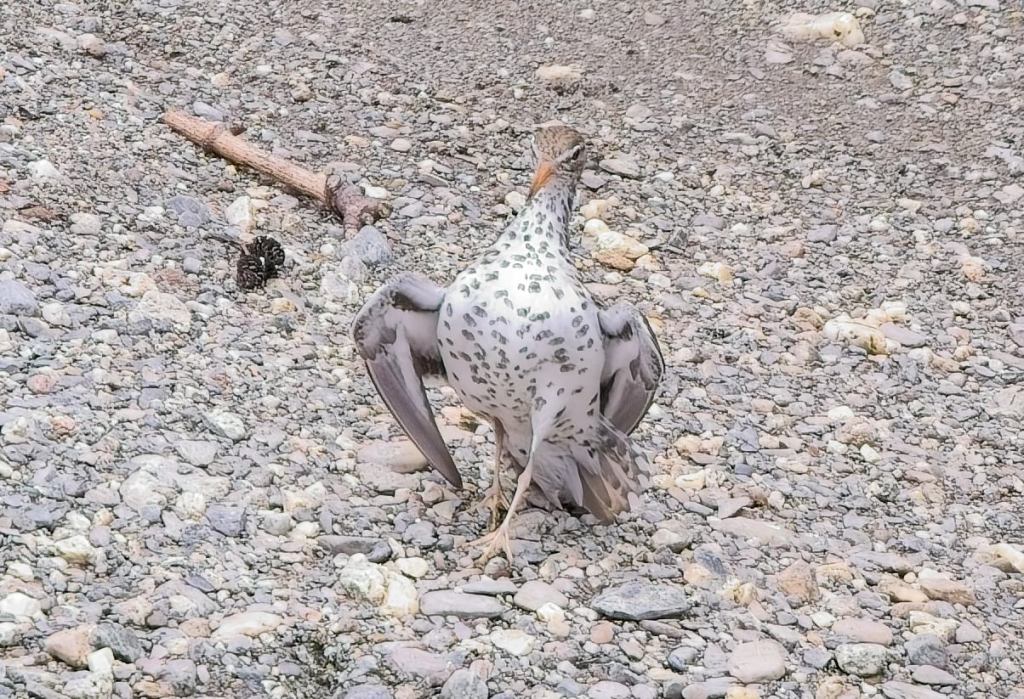
Again I caught some movement along the riverbank and again heard the call of the Spotted Sandpiper, but this time there were several movements and several calls. Three Spotted Sandpipers landed one after another on a little bit of pebbly shore. One began displaying either as courtship behavior or to establish dominance. I had never seen this before.

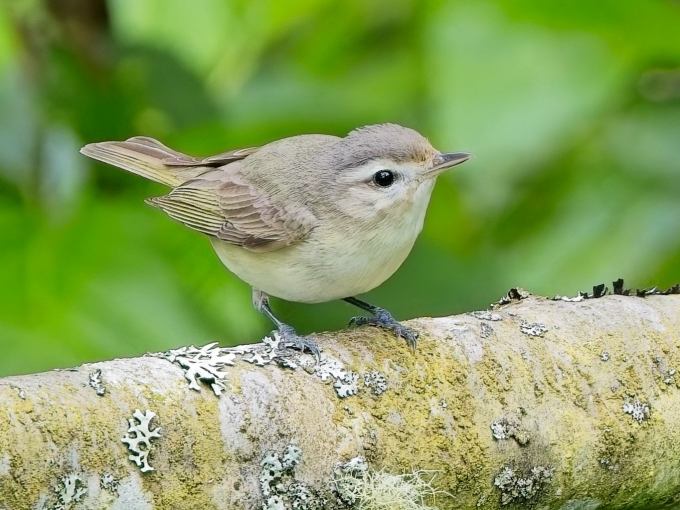
I found at least 3 and possibly 4 flycatchers during my time on C-Post. A Western Pewee called repeatedly from atop a dead branch. The distant photo is not worth posting. A flycatcher never seen but distinctly heard several times was a FOY Willow Flycatcher – its familiar “fitz bew” call resonating on Merlin and quickly picked up by me. I did not try to lure it in for a photo even though they often come in to playback. Merlin and I also heard the calls/song of a Hammond’s Flycatcher. No visual and no photo. So I am sure of those three but Merlin also picked up the call of a Least Flycatcher. I did not hear its familiar “che bek” call and I did use playback without a response. There is a Least Flycatcher report on Ebird from this site this year, but there is no photo – maybe it was there but I did not report it. Somewhat similarly I had at least two vireos and maybe a third. In addition to the Red Eyed Vireos, there were several Western Warbling Vireos. Merlin “heard” a Hutton’s Vireo and I thought I heard it, too, but only once and I never got a look.

Western Warbling Vireo

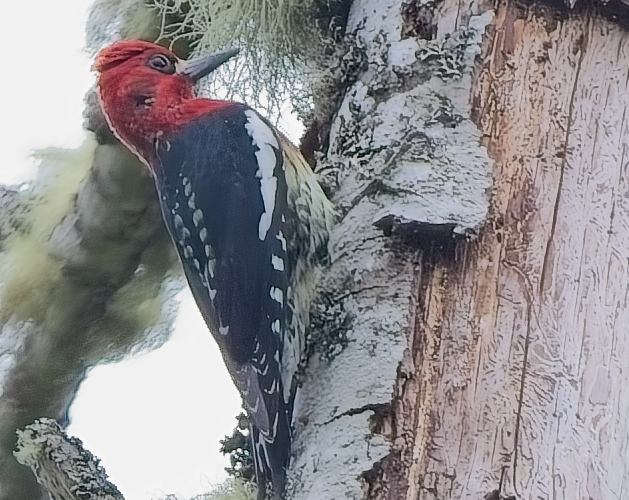
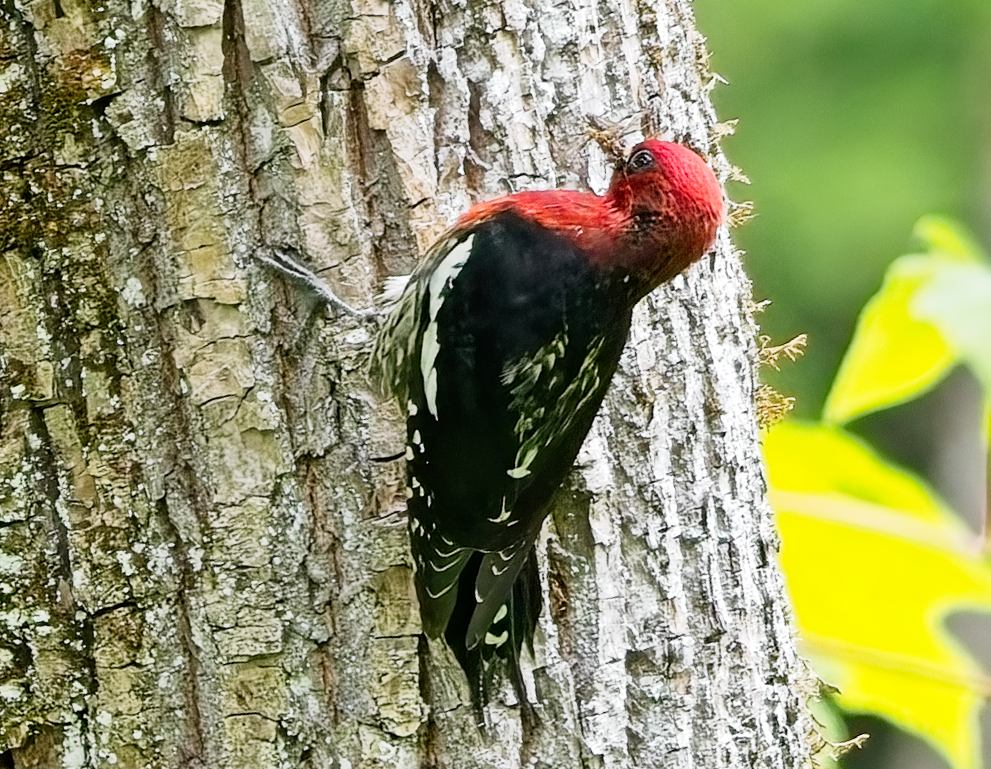
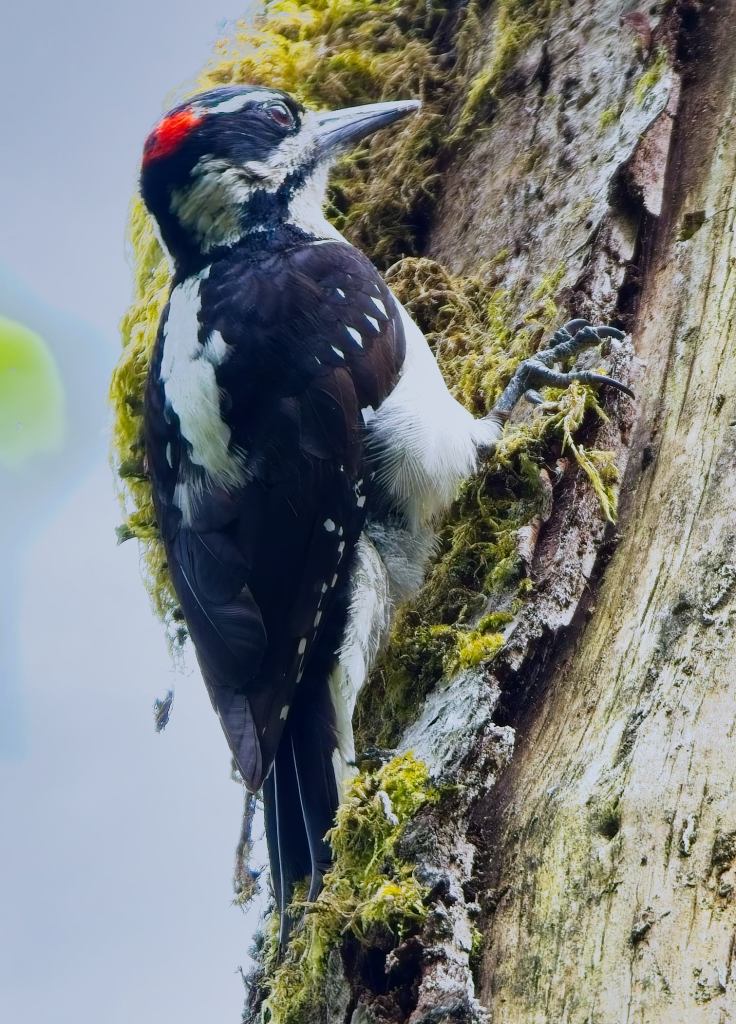
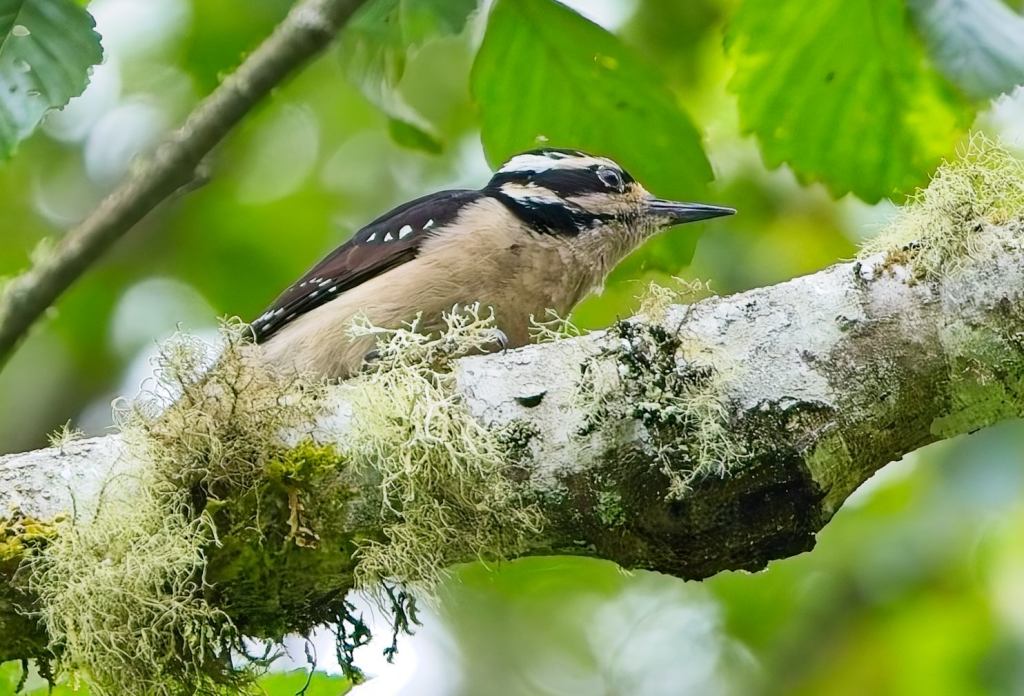
C-Post Road has been a good location for Red Breasted Sapsuckers. I heard the distinct drumming pattern of one in the distance early on the visit but there was no response to playback. Maybe 30 minutes later one flew right over my head and disappeared. This time there was a response when I used playback of one drumming and a male allowed a photo. It was then joined by a female and they flew back and forth together perching for a second, taking off together and repeating that behavior. Later I heard more tapping/drumming and found another sapsucker quite a distance from the first pair. Just as I readied the camera it flew off and a male Hairy Woodpecker landed where it had just been. And then a female landed on the tree trunk just above it and they flew off together and it looked like a repeat of the sapsucker behavior.

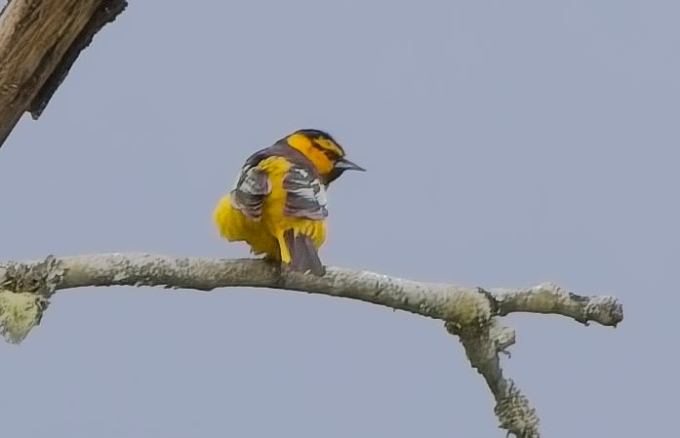
I was able to get a photo of one more new species for the year – a Bullock’s Oriole. I see them more often in Eastern Washington but they are common on both sides of the Cascades. I had missed it on my Eastern Washington visit last month – maybe just a little early. This one was perched in the open on a dead branch and I was not sure what it was. Processing and enlarging the photo yielded the good news that it was another FOY easy to ID even if not a great photo.

Bullock’s Oriole – FOY

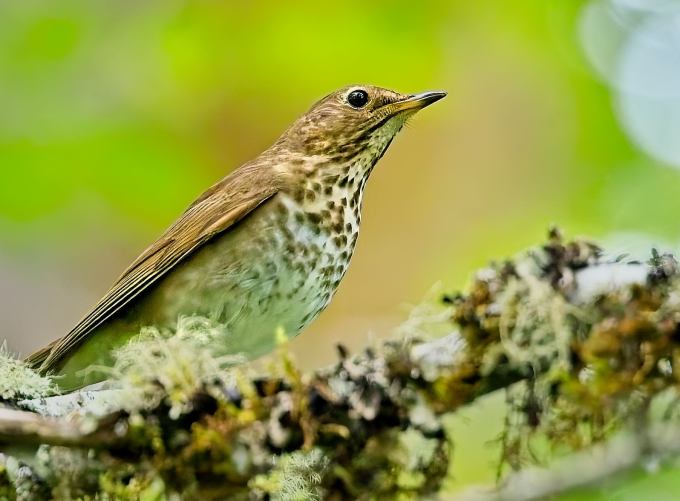
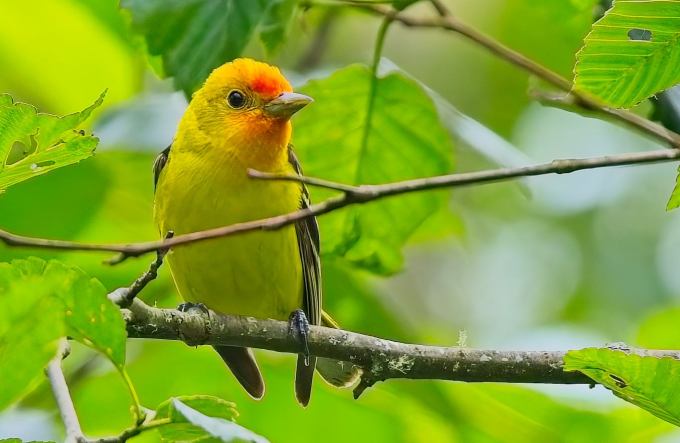
Neither of the last two photos were new species for the year but both are my first photos of the year for two species heard only or seen briefly in Eastern Washington in early may. I don’t know how many Swainson’s Thrushes I heard during my visit, but their ethereal songs were a constant companion. Not as plentiful as the Swainson’s Thrushes but definitely at least a few were the Western Tanagers, a colorful addition to any birding trip.

Swainson’s Thrush
Western Tanager

I was back on the road just after 3 o’clock. I made a quick trip down the Oso Loop Road hoping for a Townsend’s Solitaire – no luck. Merlin picked up the call of and Eastern Kingbird, a species that I thought I might find at C-Post Road. I never heard its distinctive call so chalked it up to Merlin’s ears being better than mine.

Before heading north I had made a quick stop at the Edmonds waterfront and in light drizzle had seen my first Purple Martins of the year. For the whole day, I had 45 species including 14 that were new for the year and of course that included the Hudsonian Godwit that I added to my Snohomish County life list. It was a great day of birding but as I returned home I got an update about my neighbor’s wife. She was stable and there had been no further complications and I had received no calls for assistance, but this would be a tough recovery and again there was the reminder to “do it now” – whatever that is – birding, loving family and friends, traveling or just laughing about little moments. I hope to have many more days like the one I just had – and I hope to always remember to cherish those times! There are no guarantees.