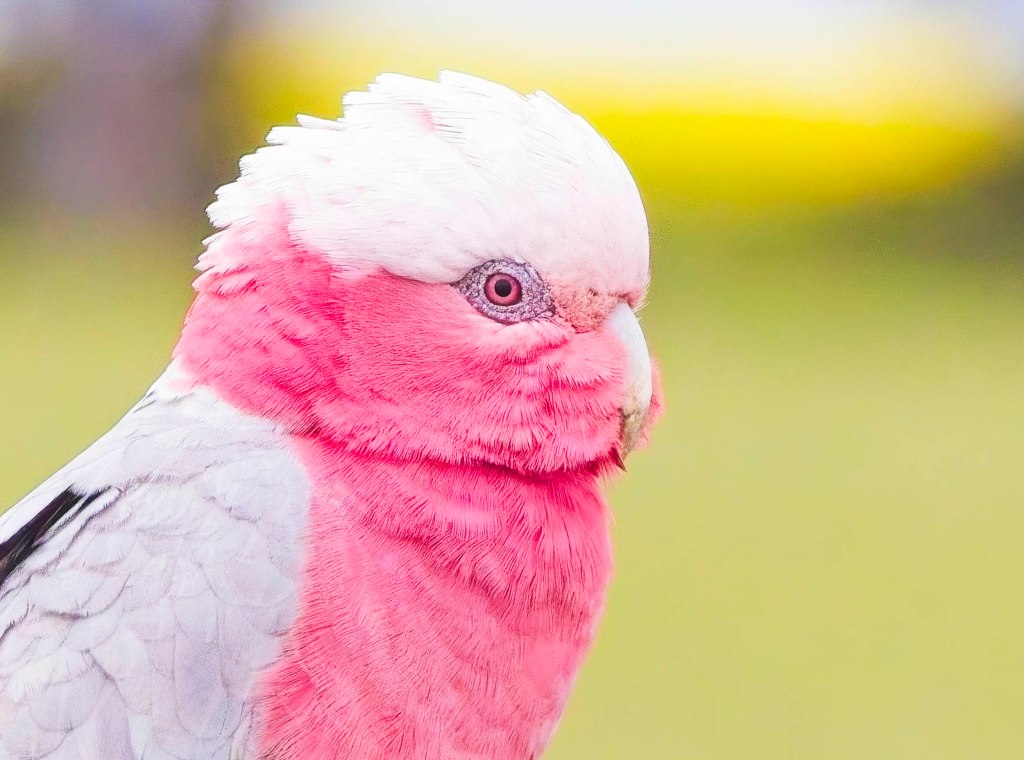
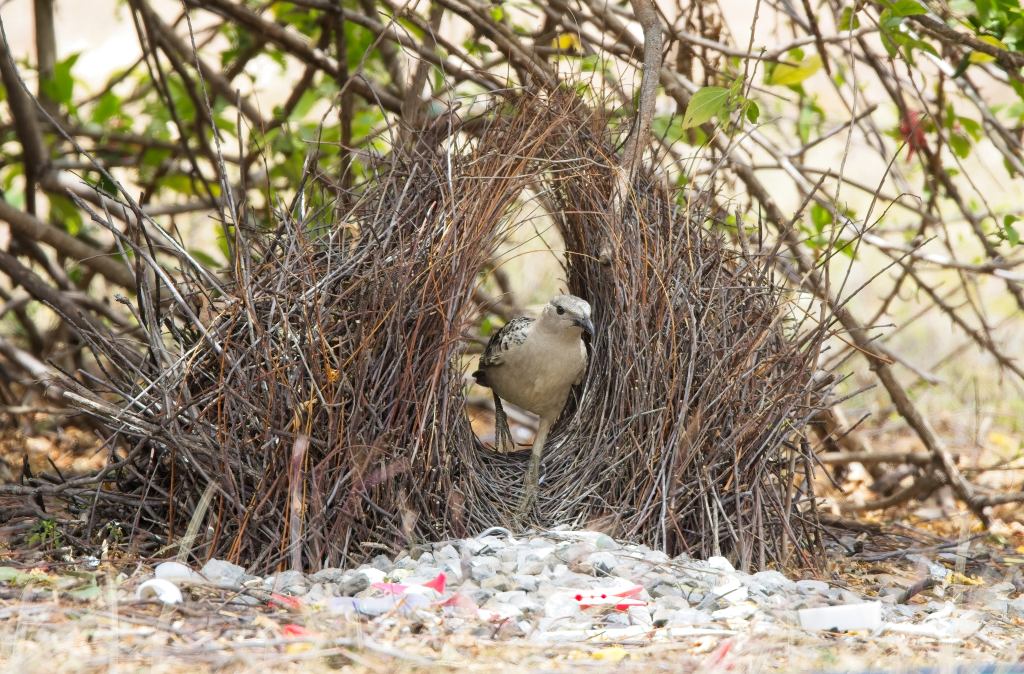
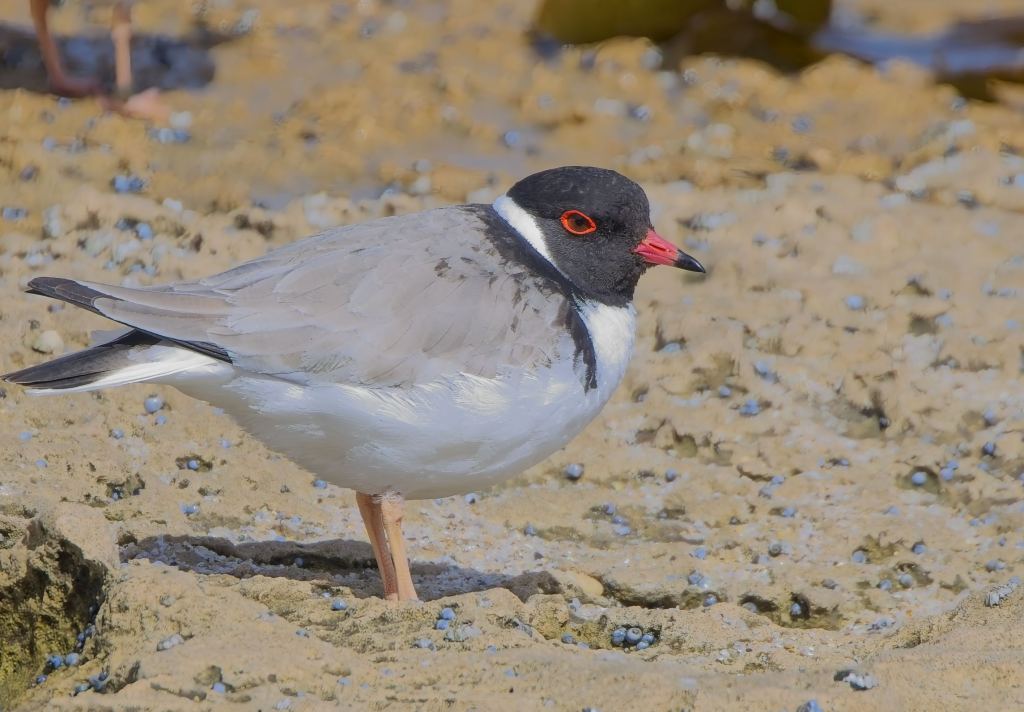
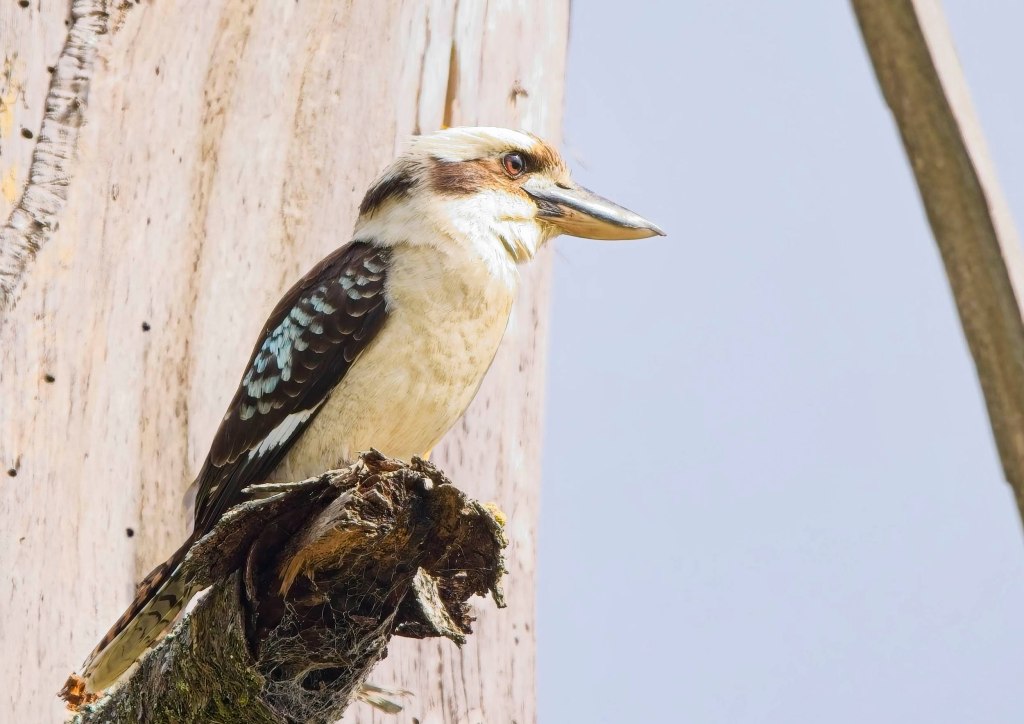
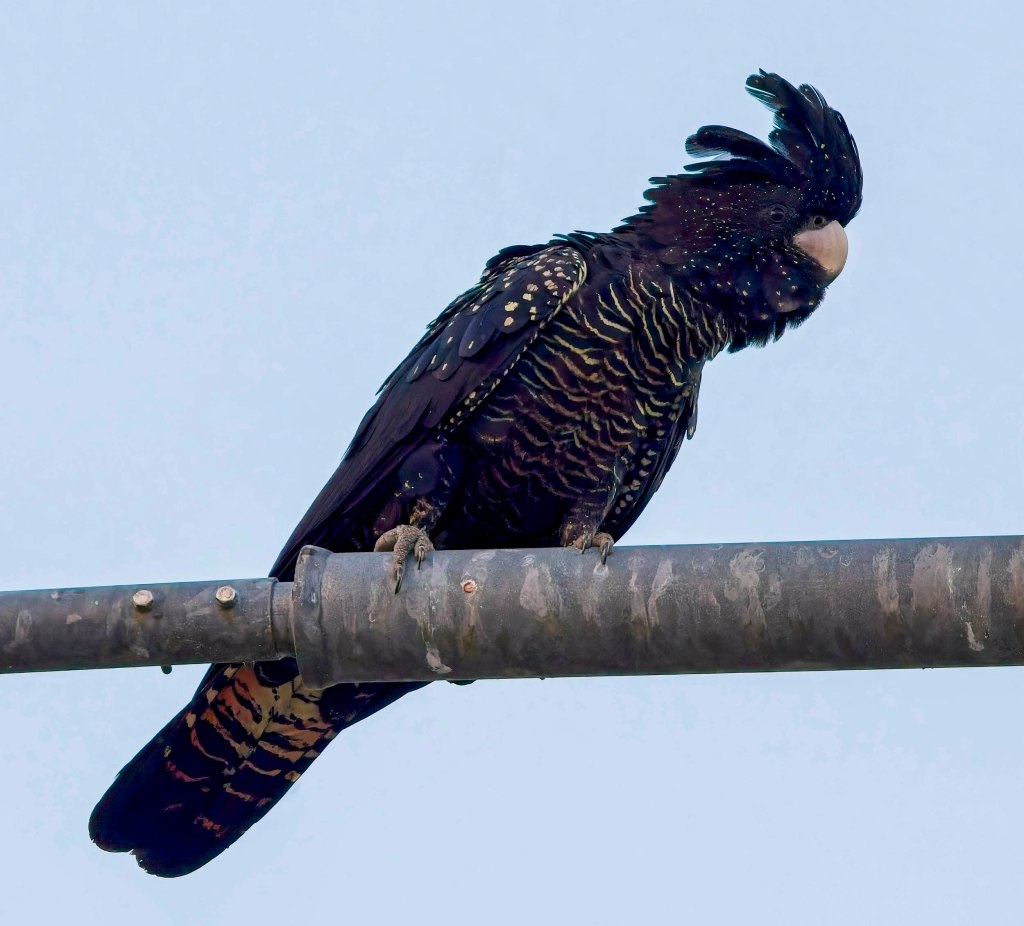
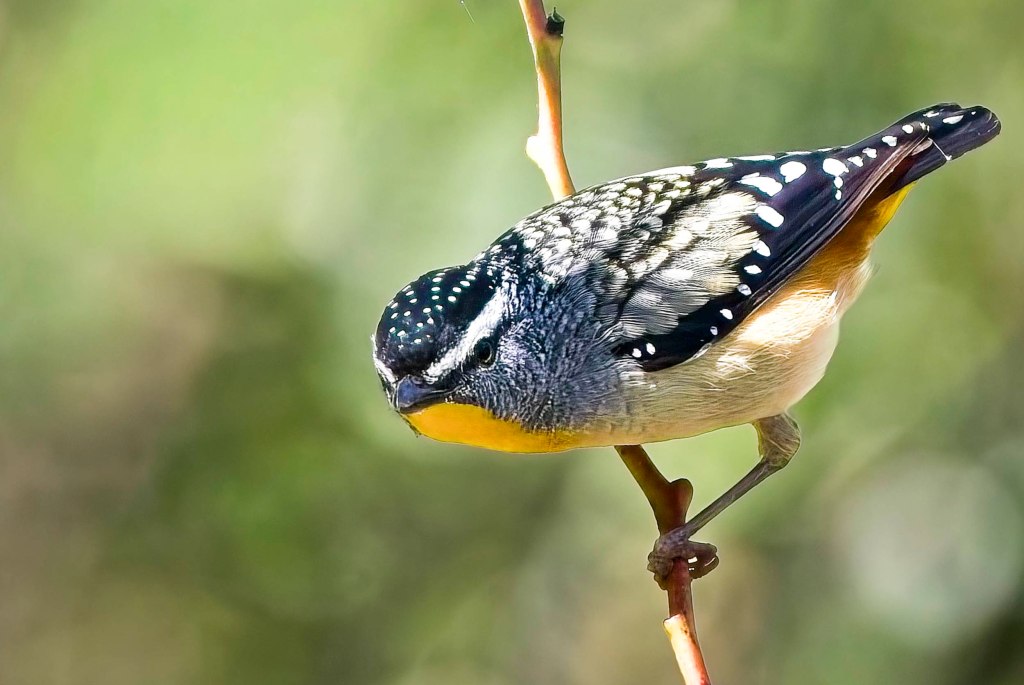
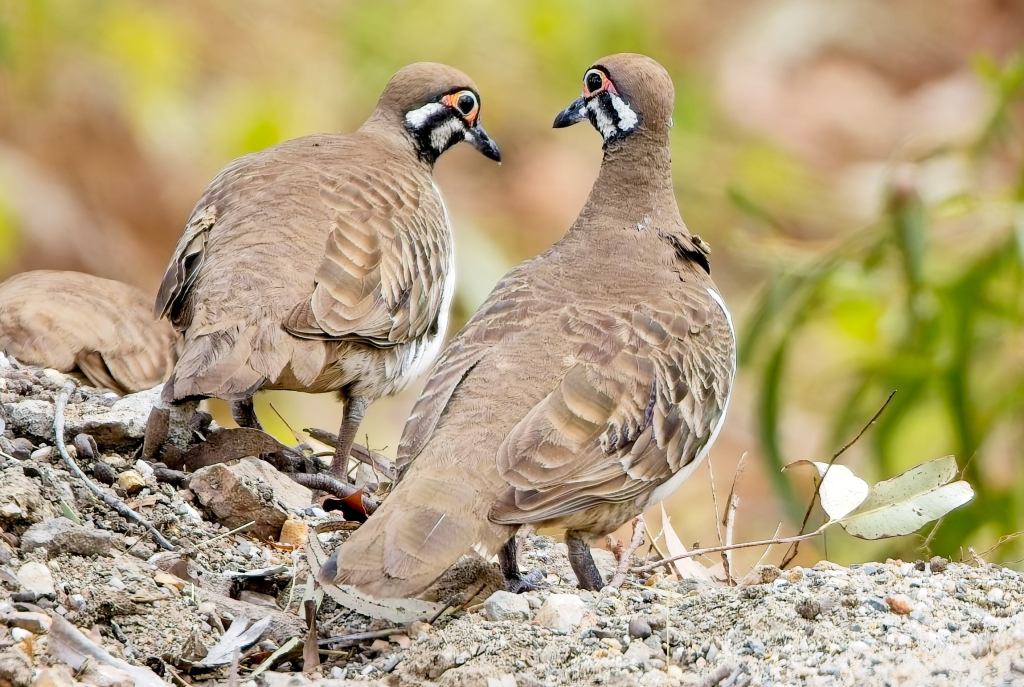
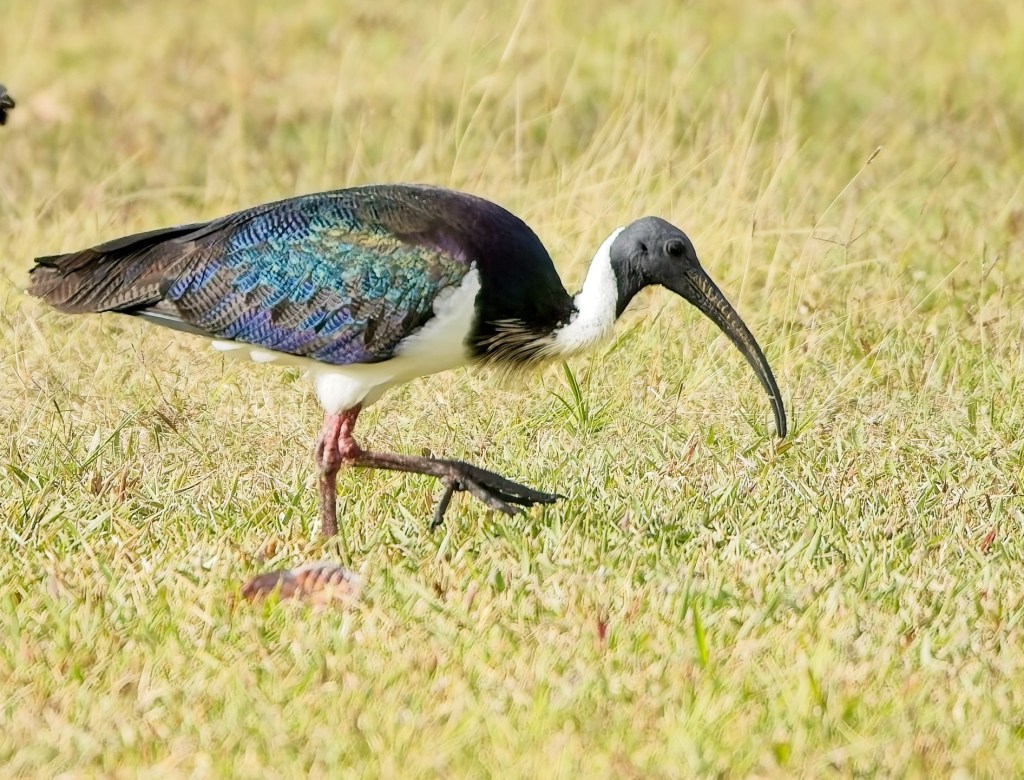
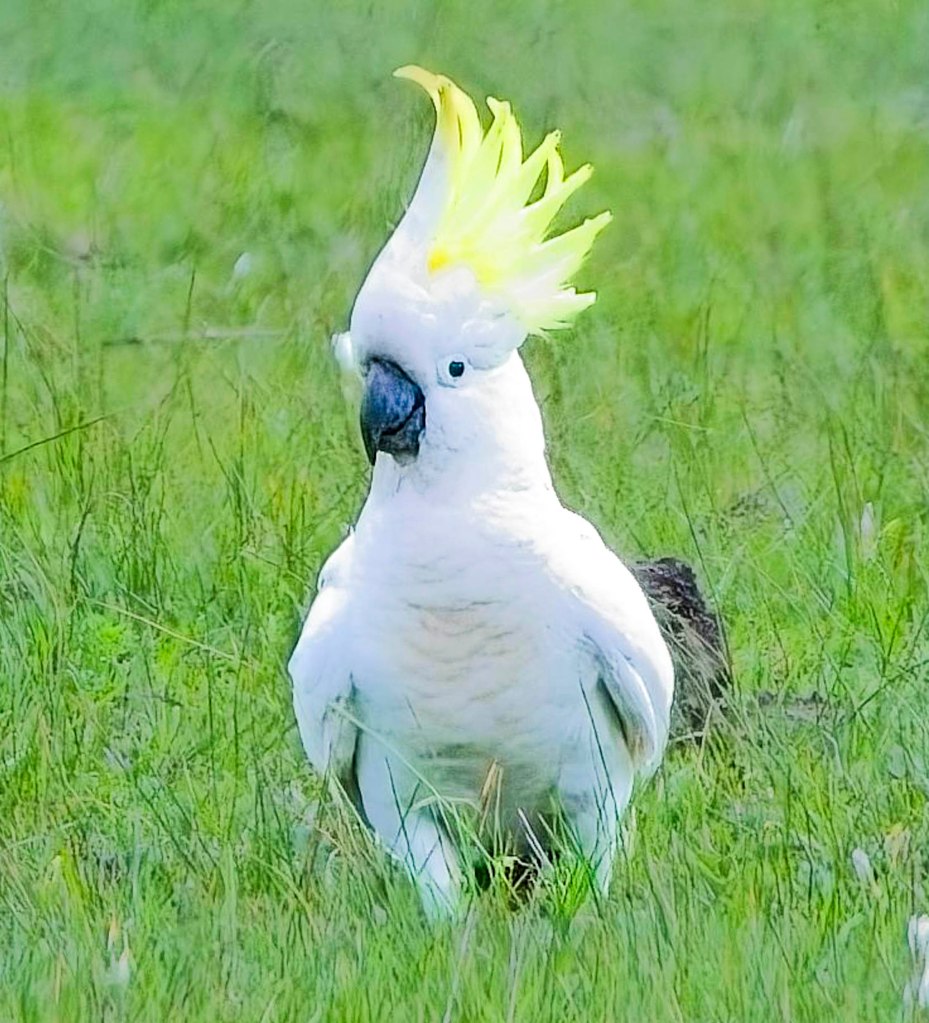
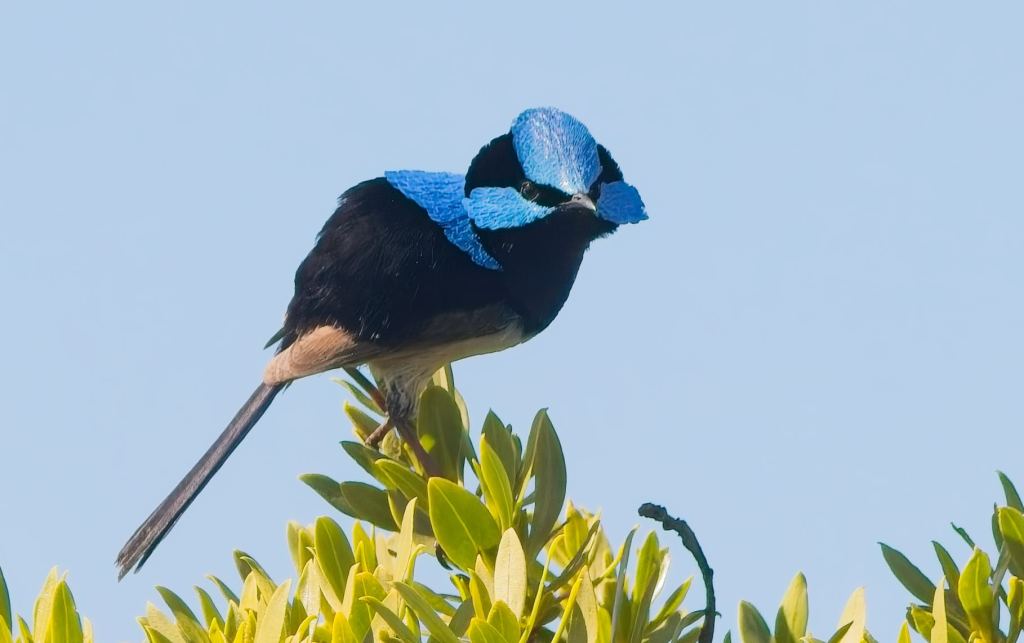
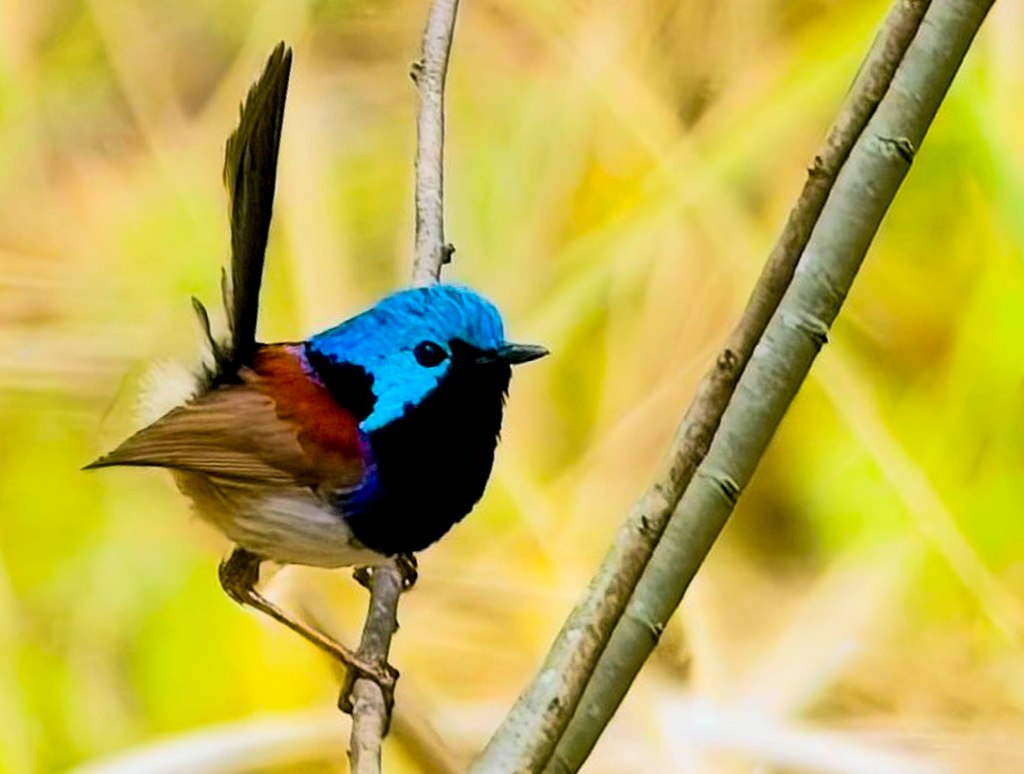
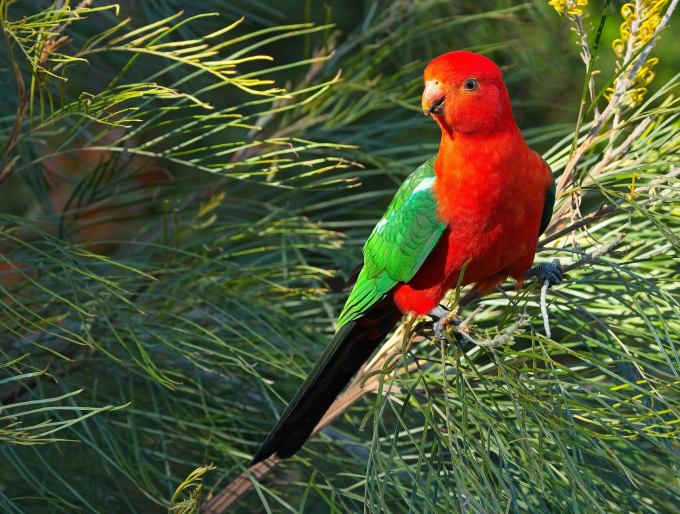
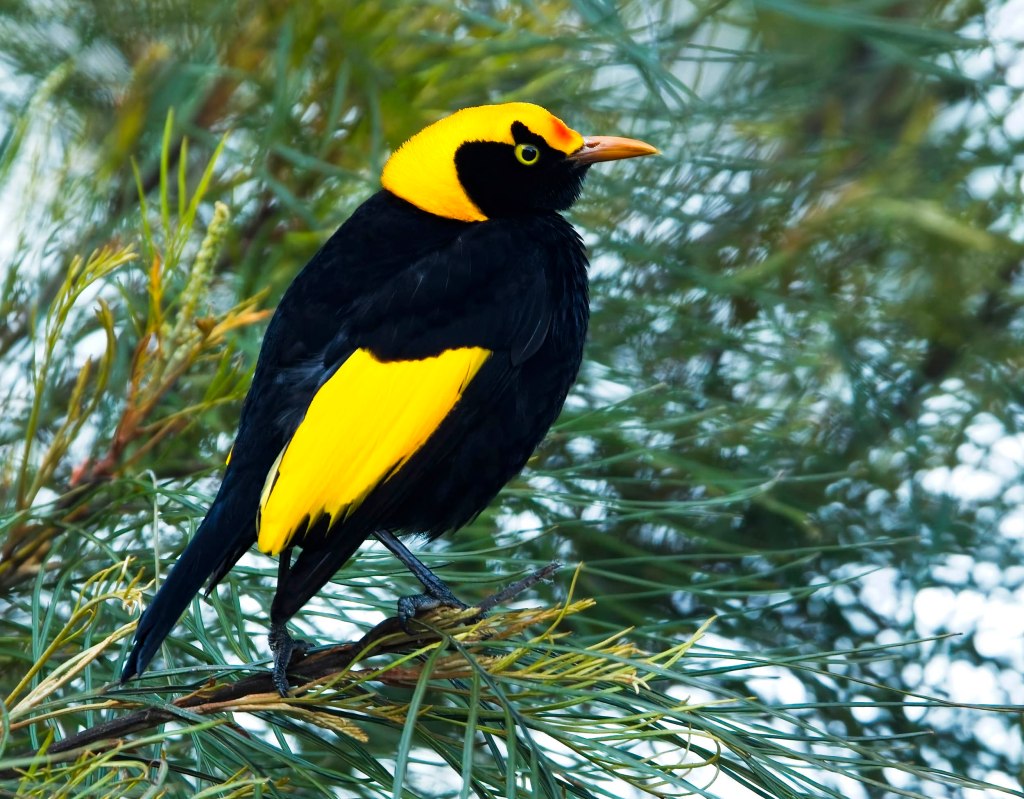
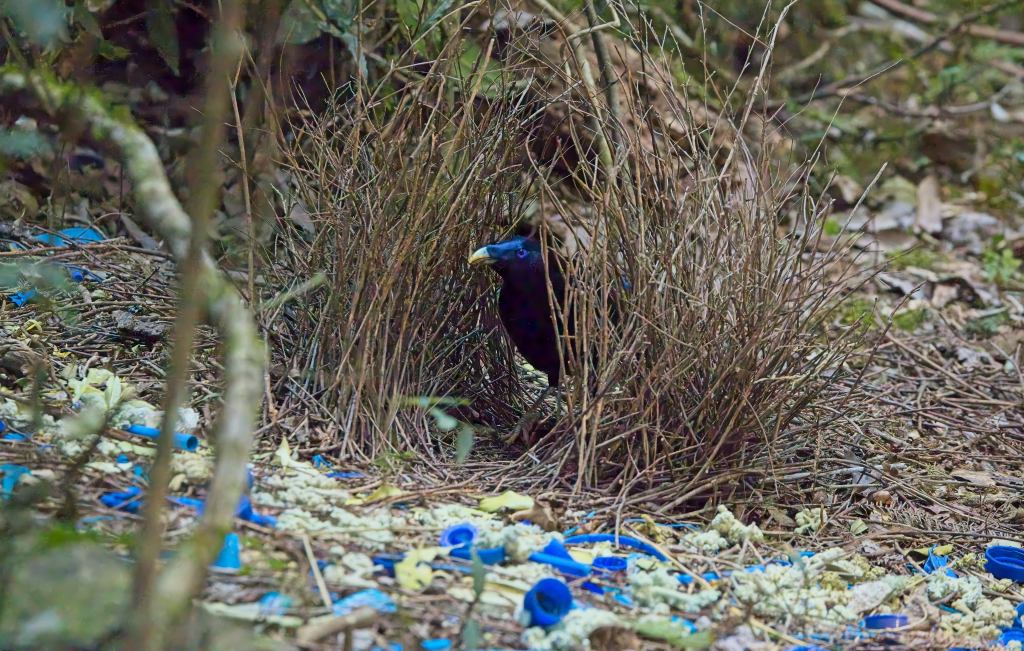
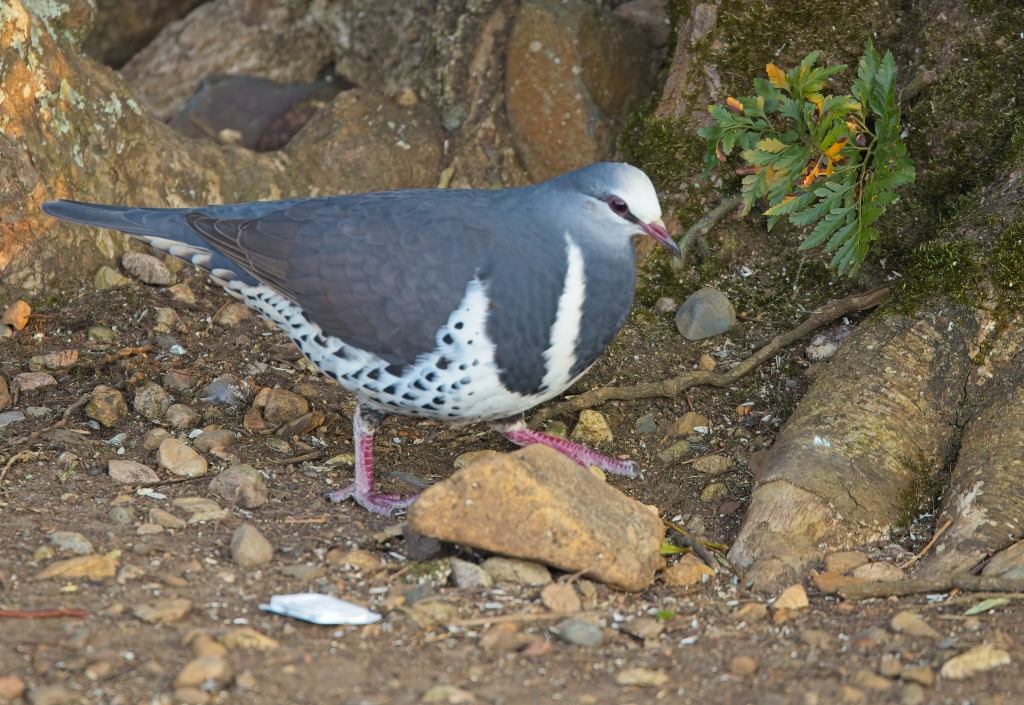
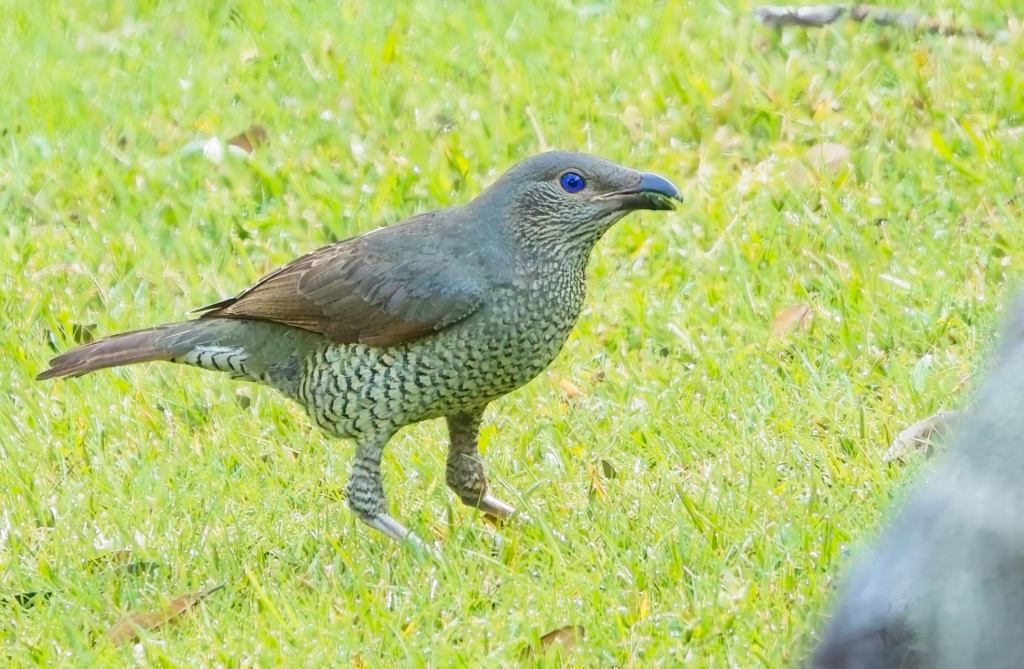
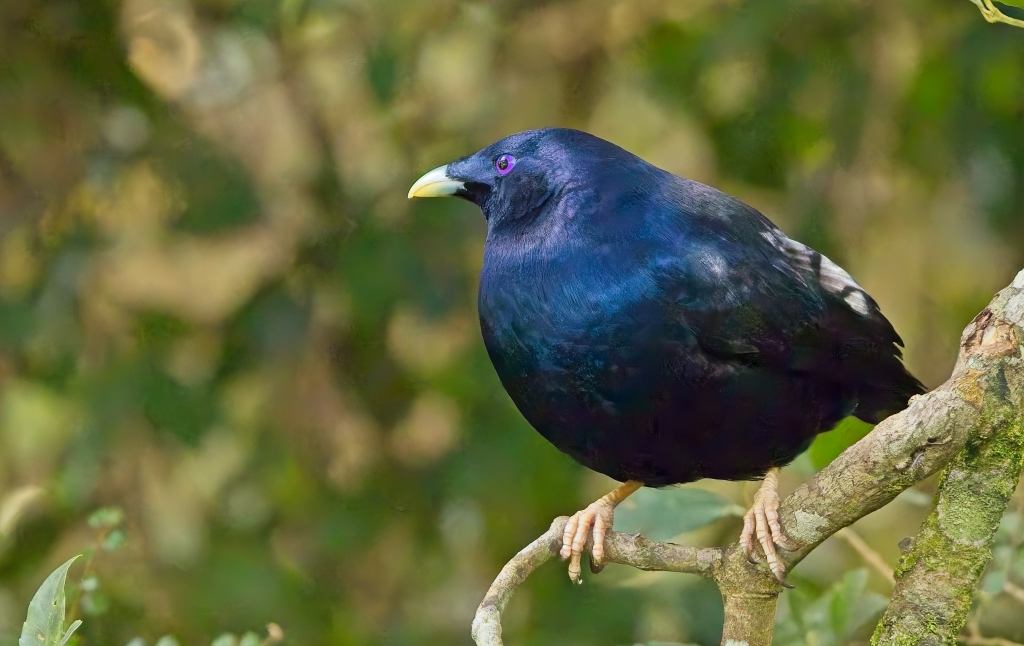
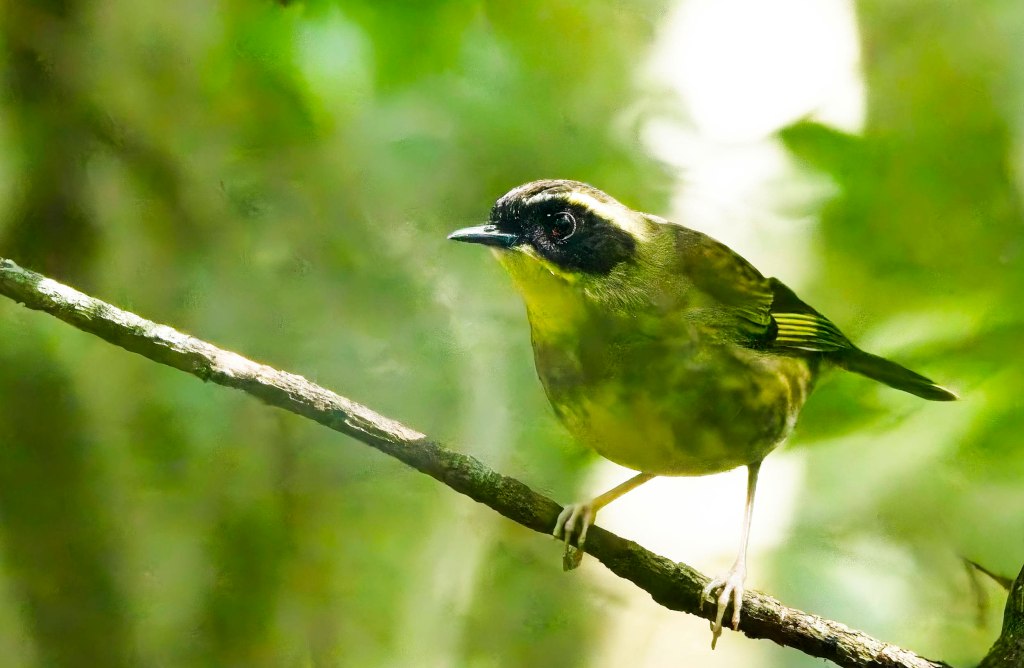
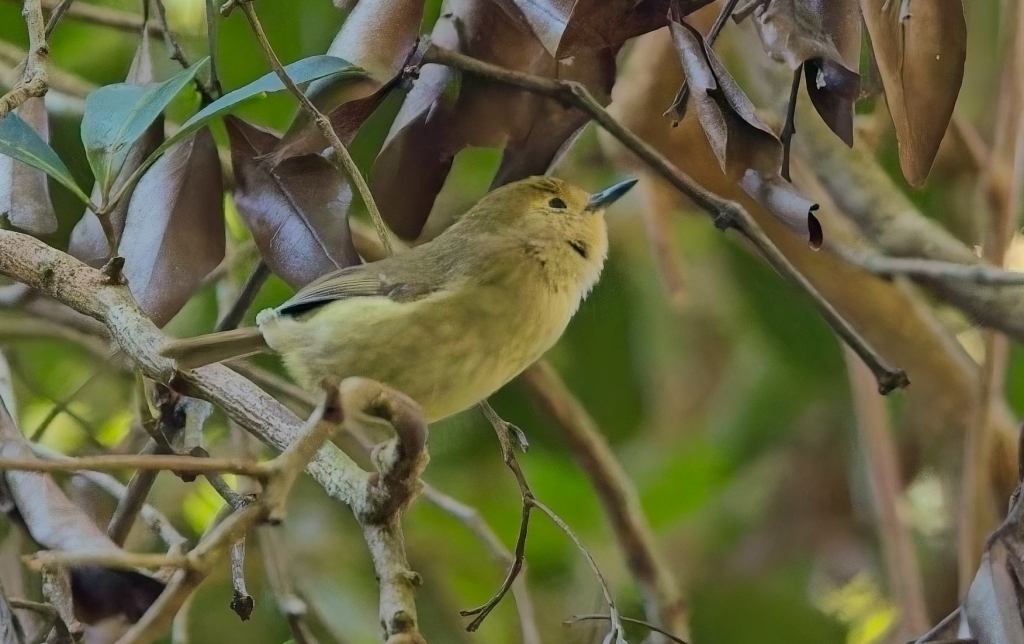
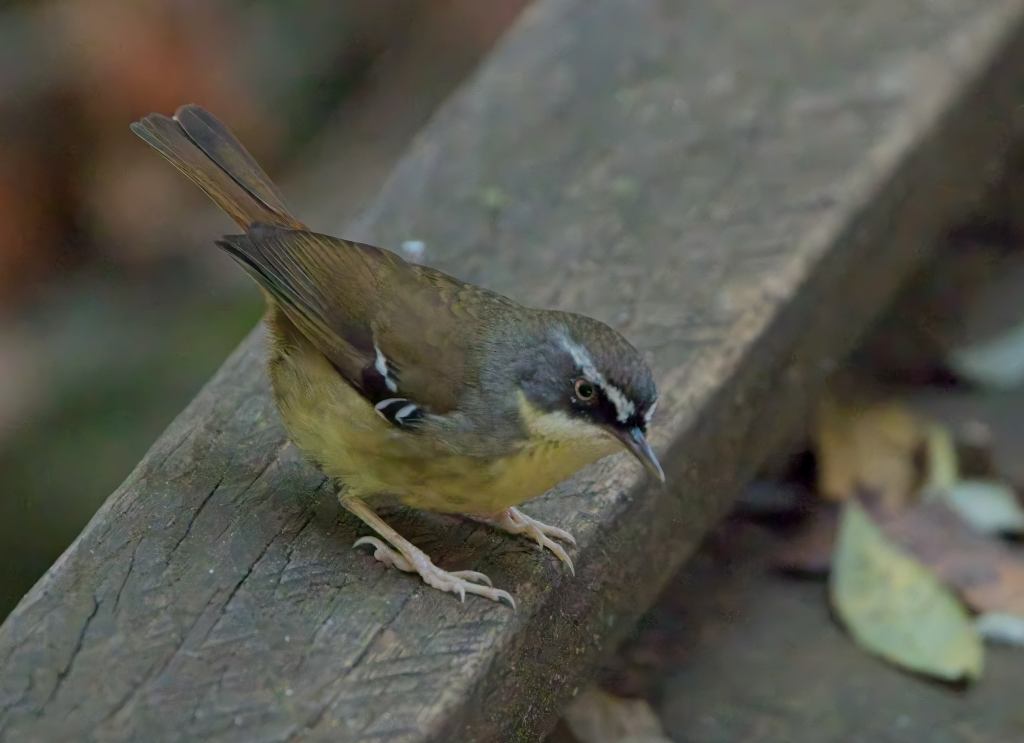
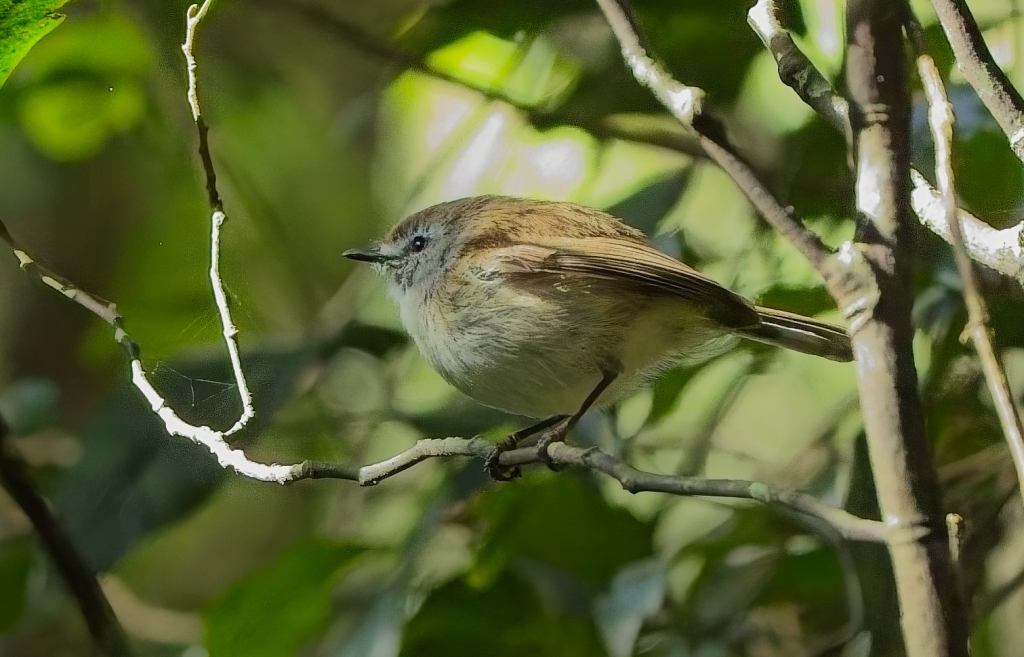
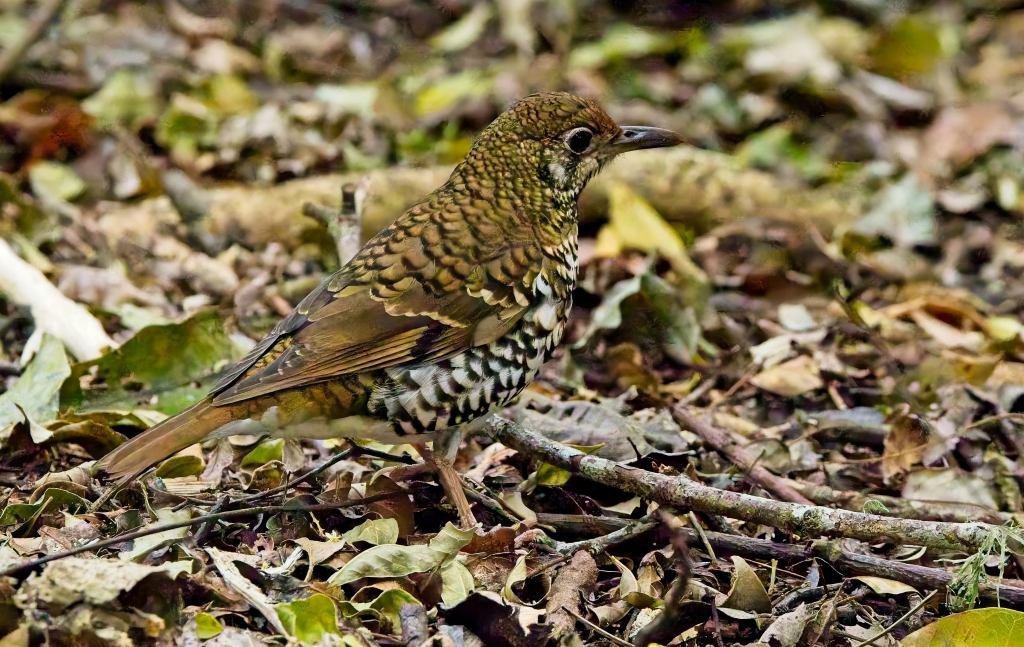
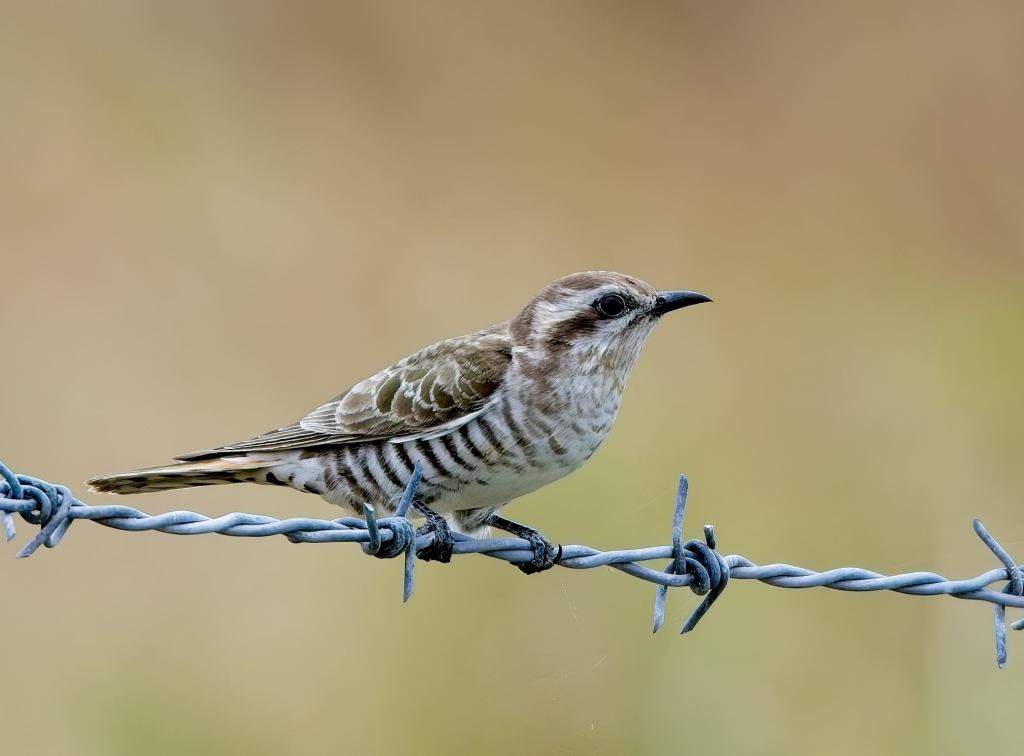
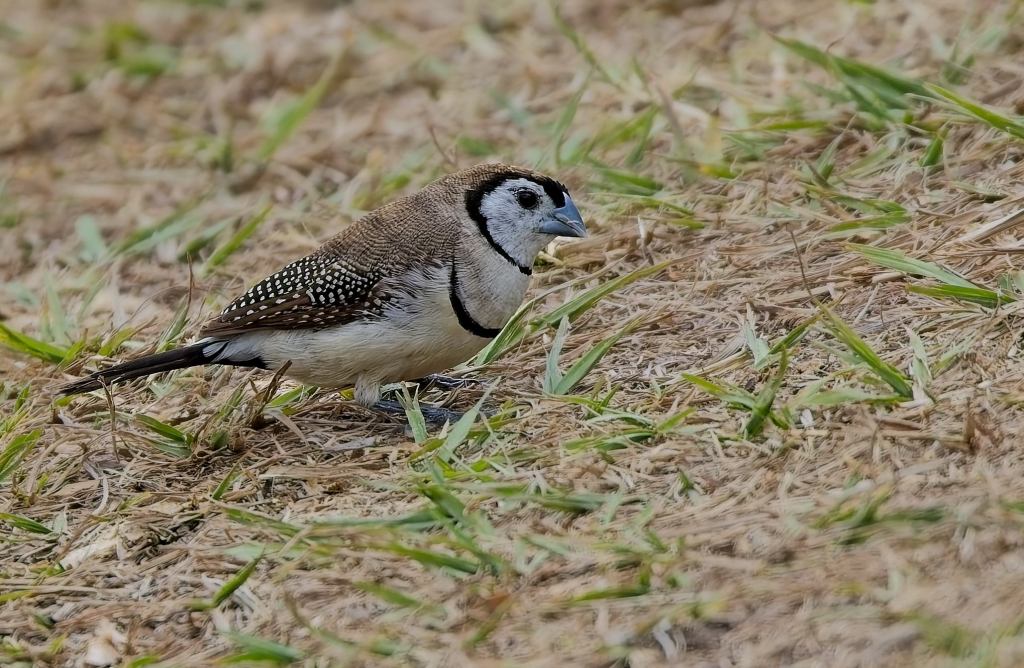
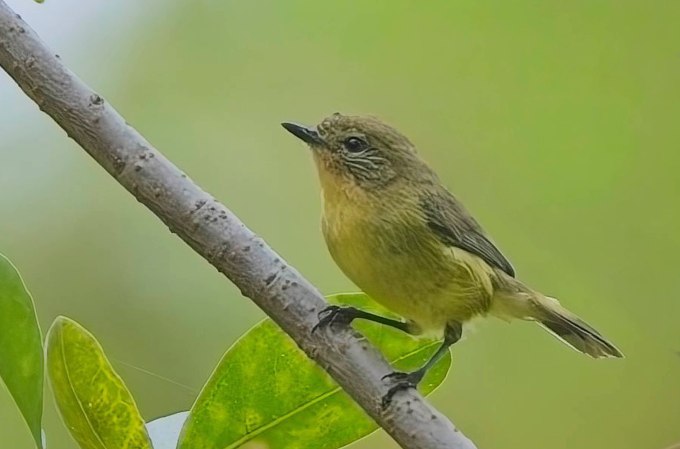
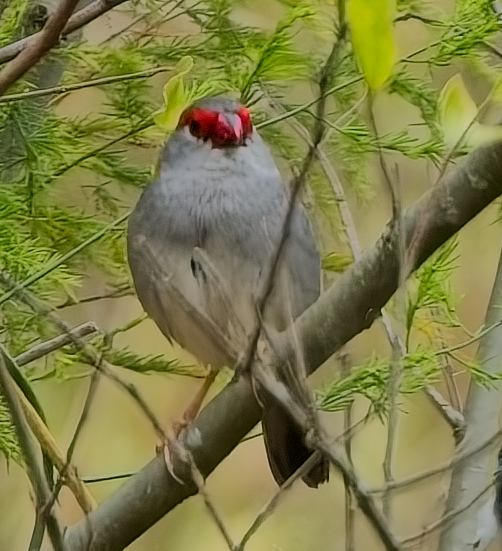
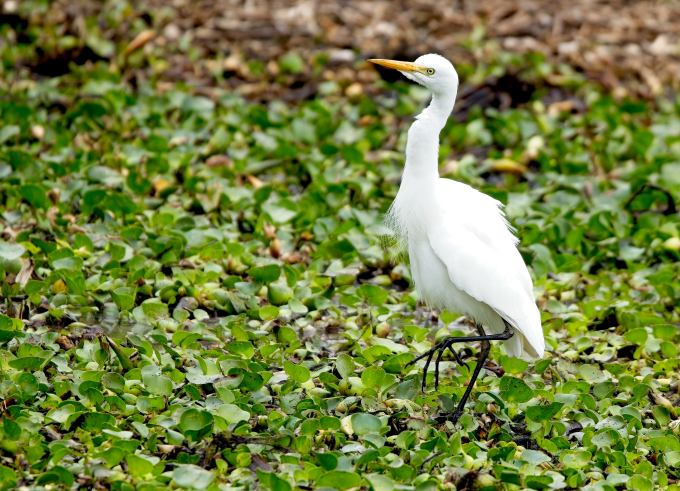
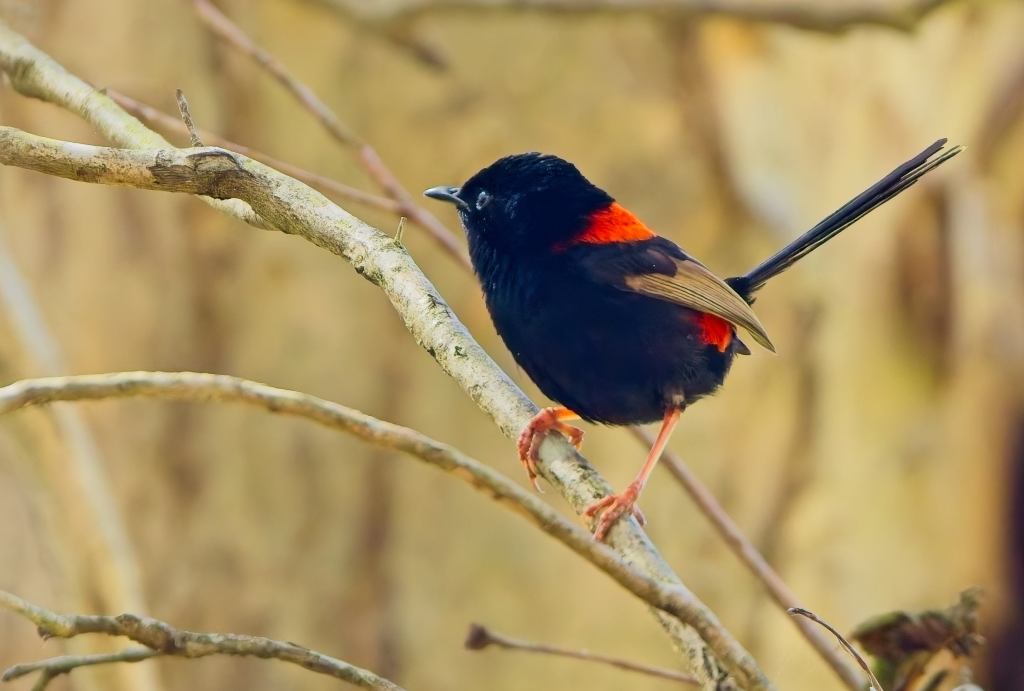
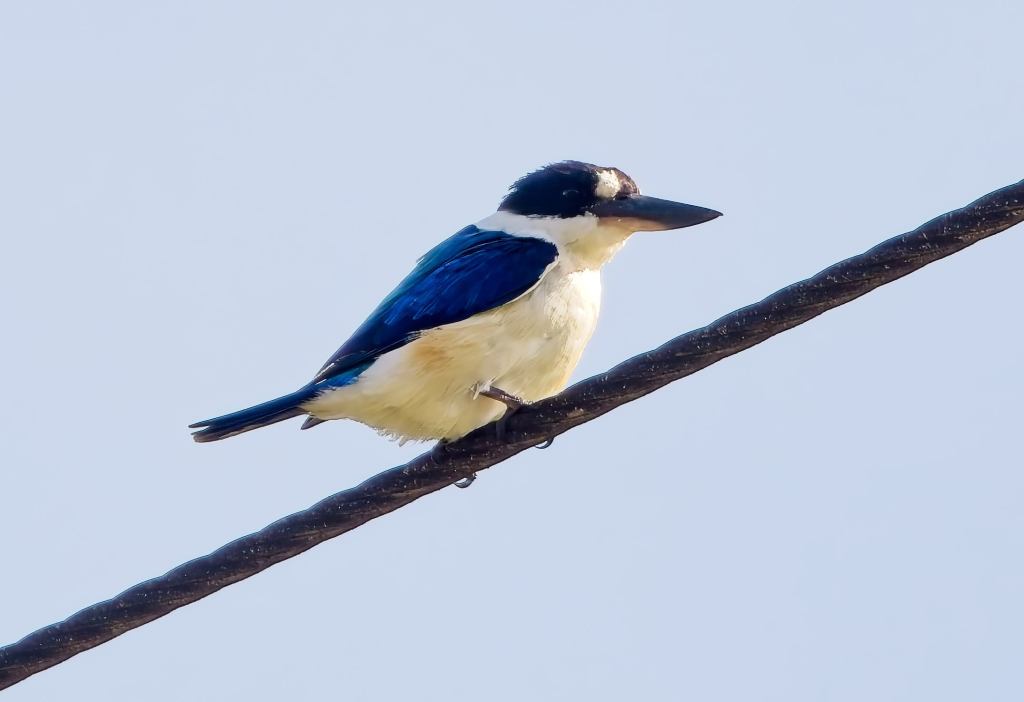
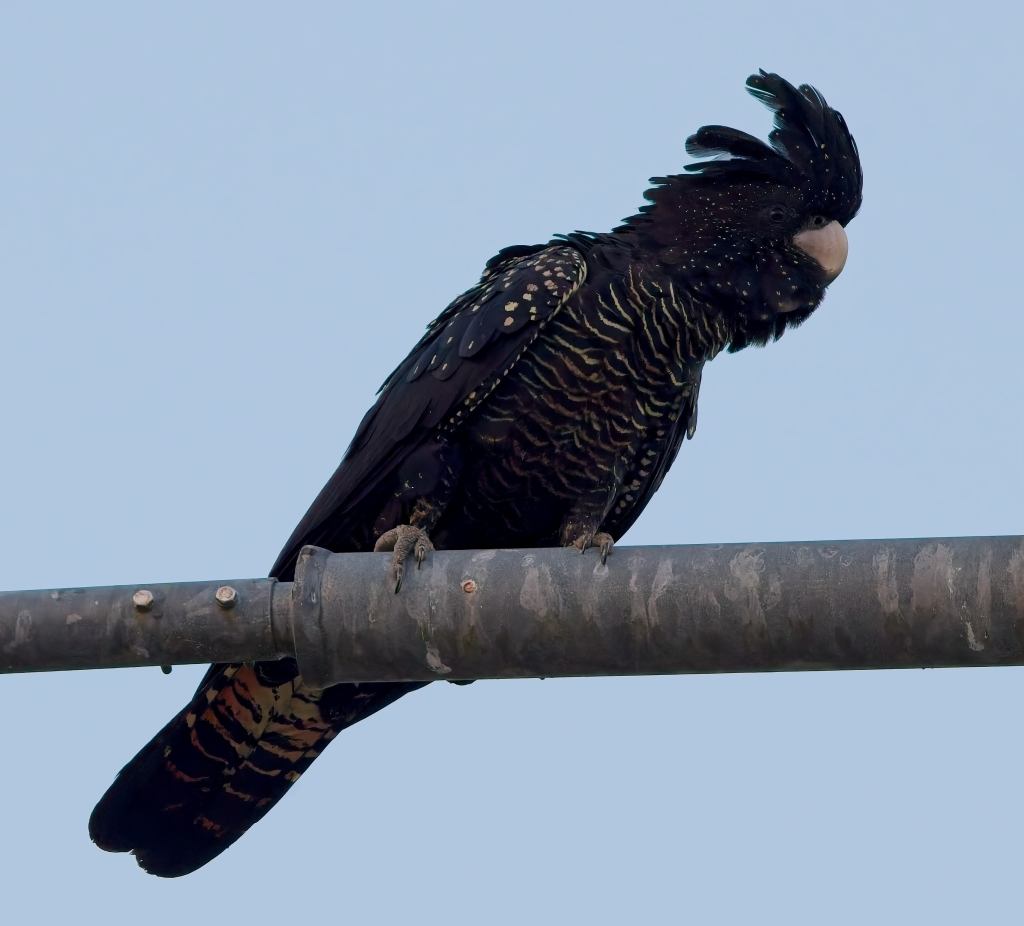
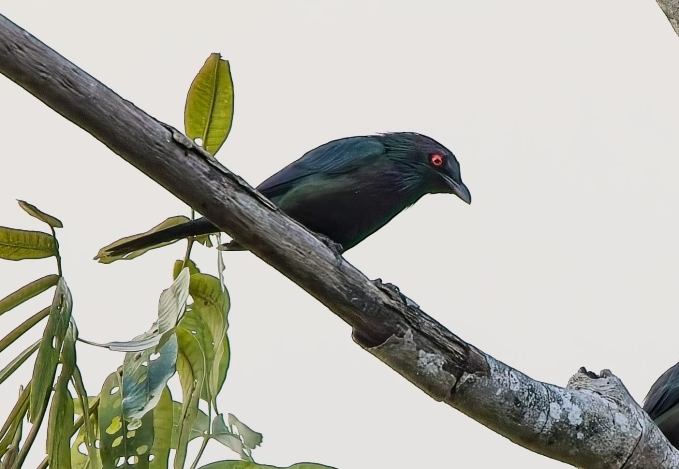
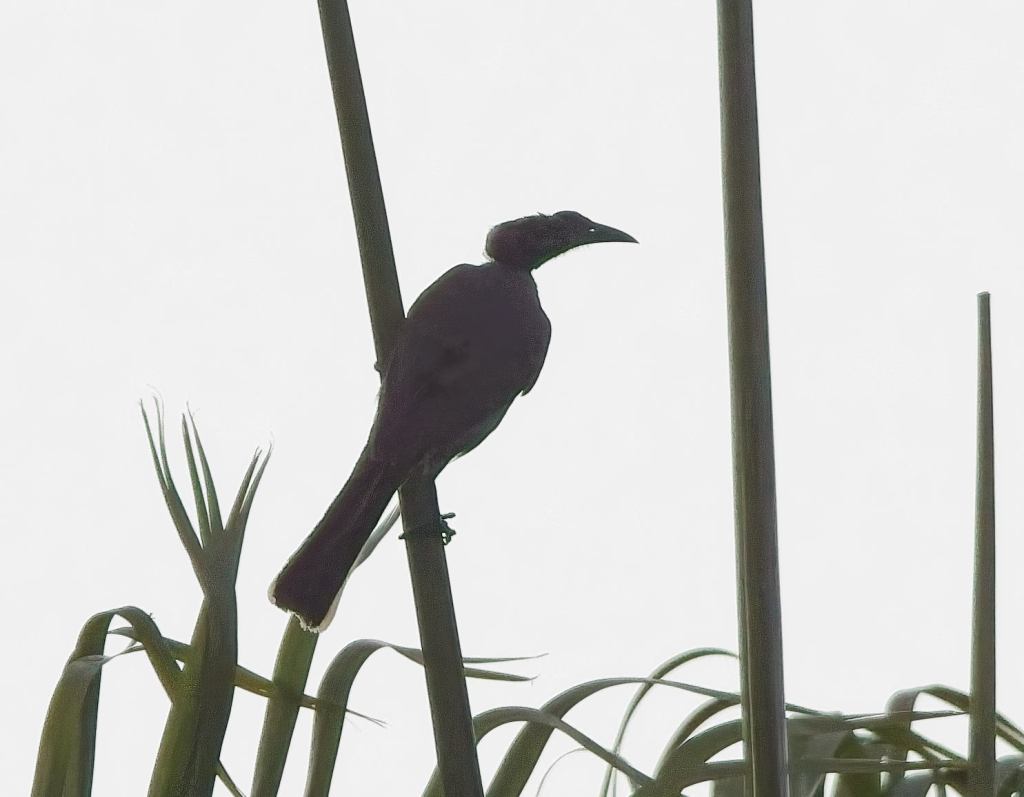
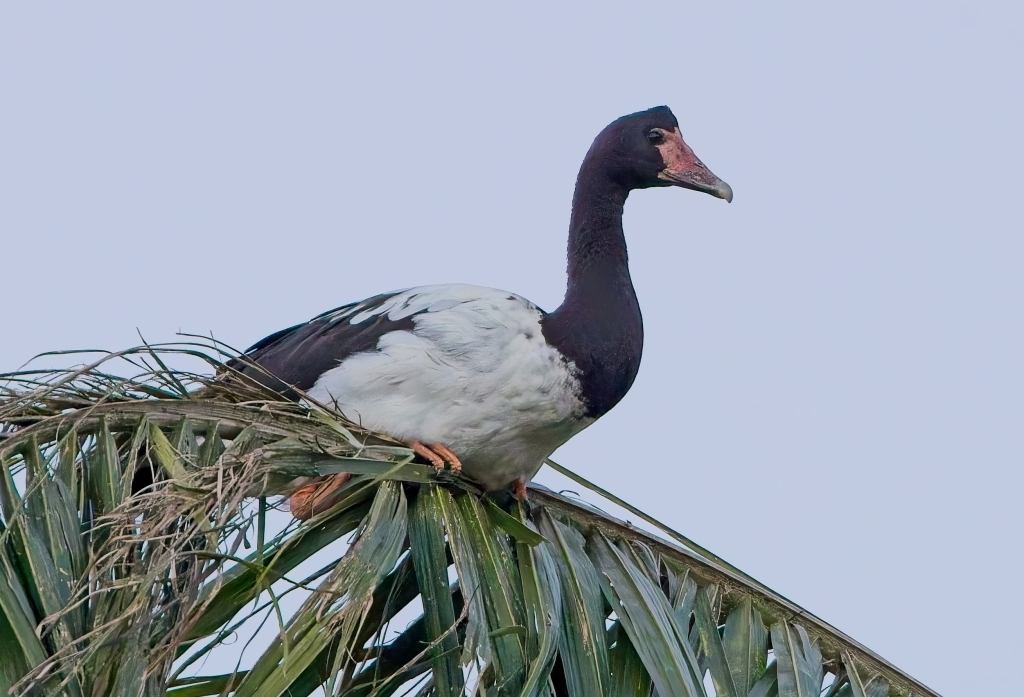
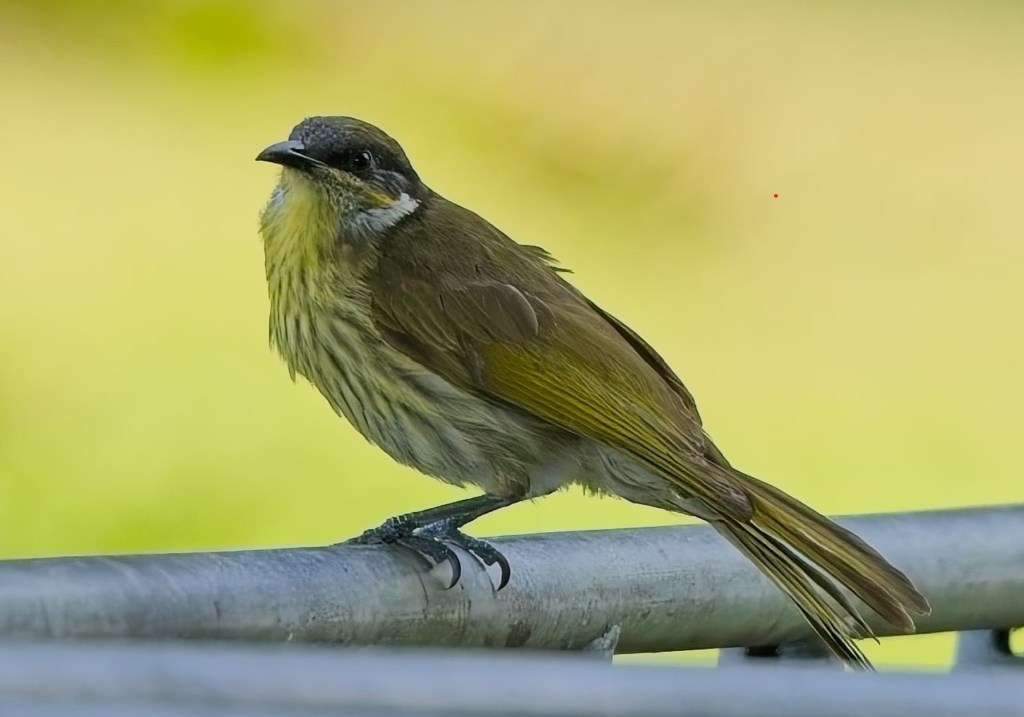
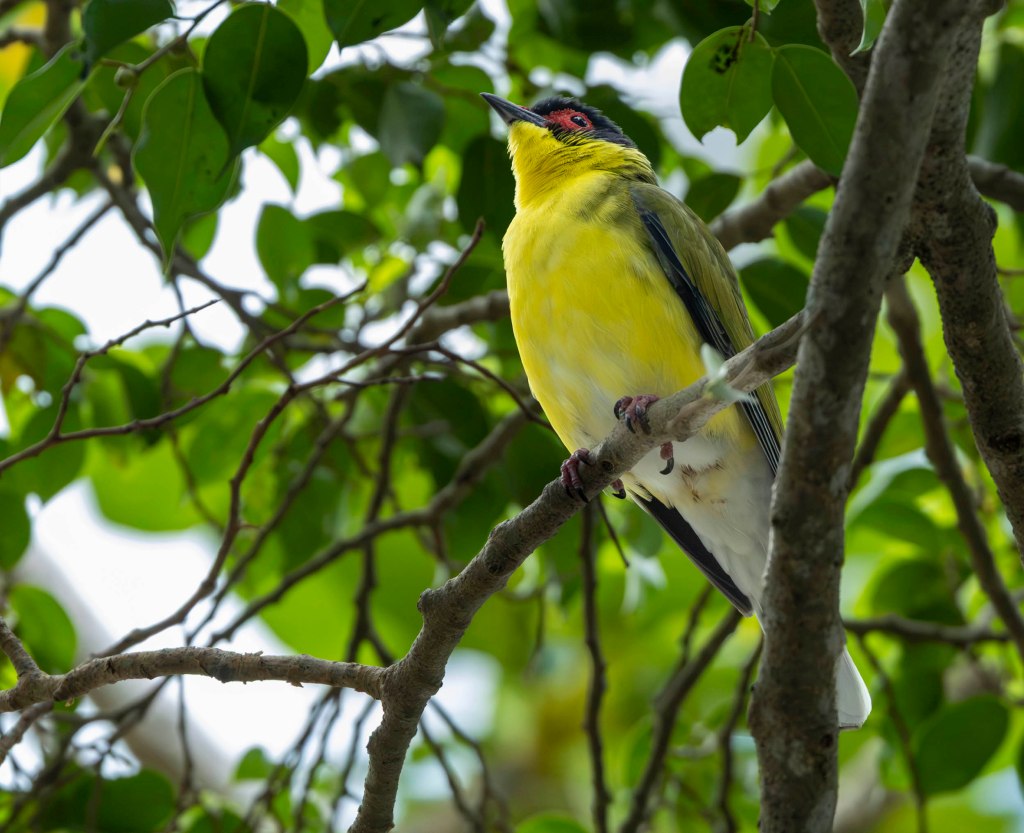
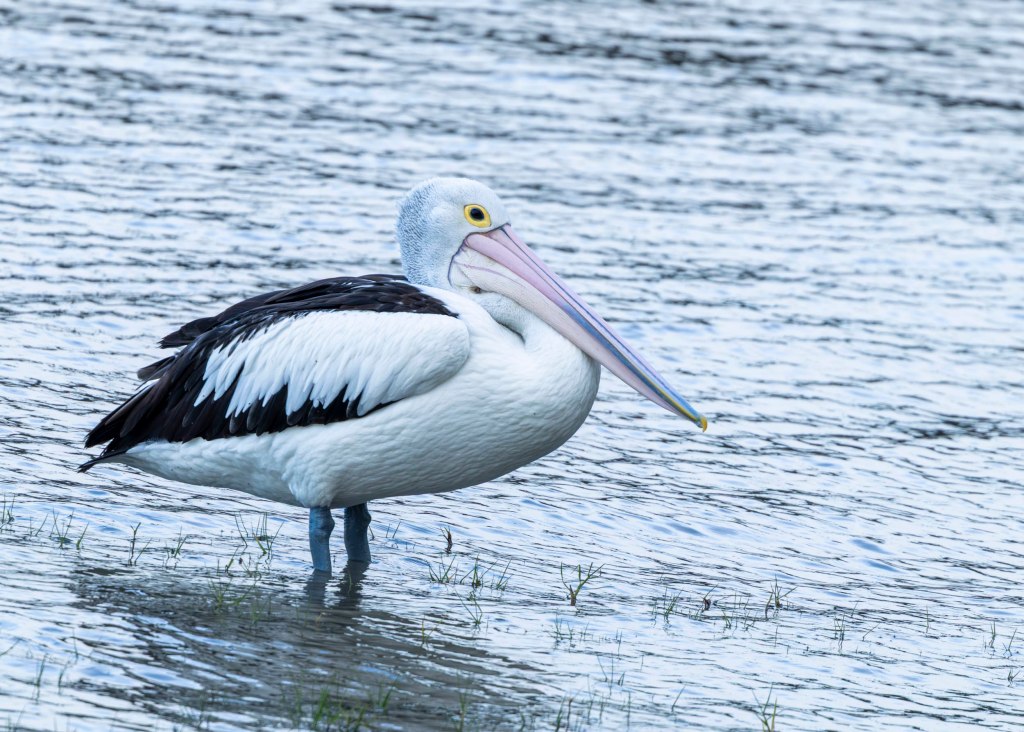
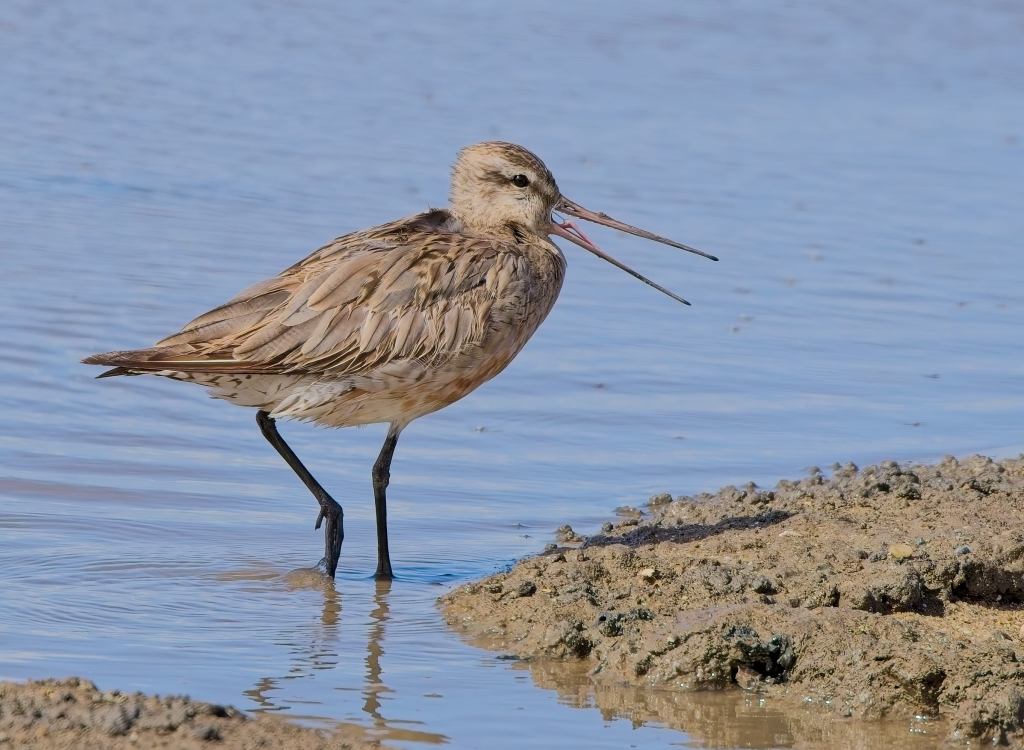
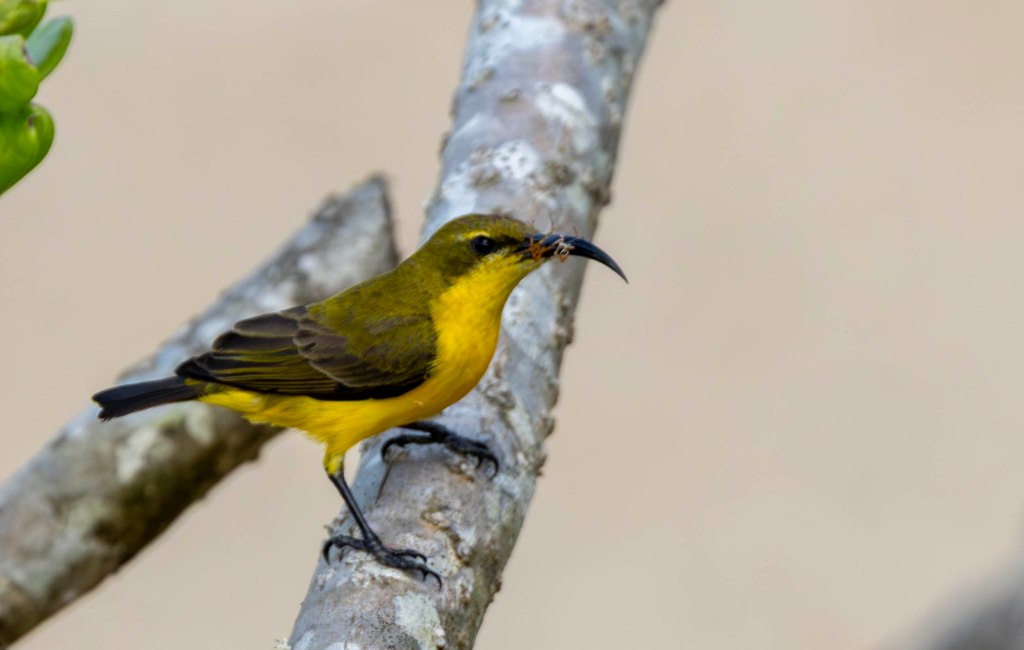
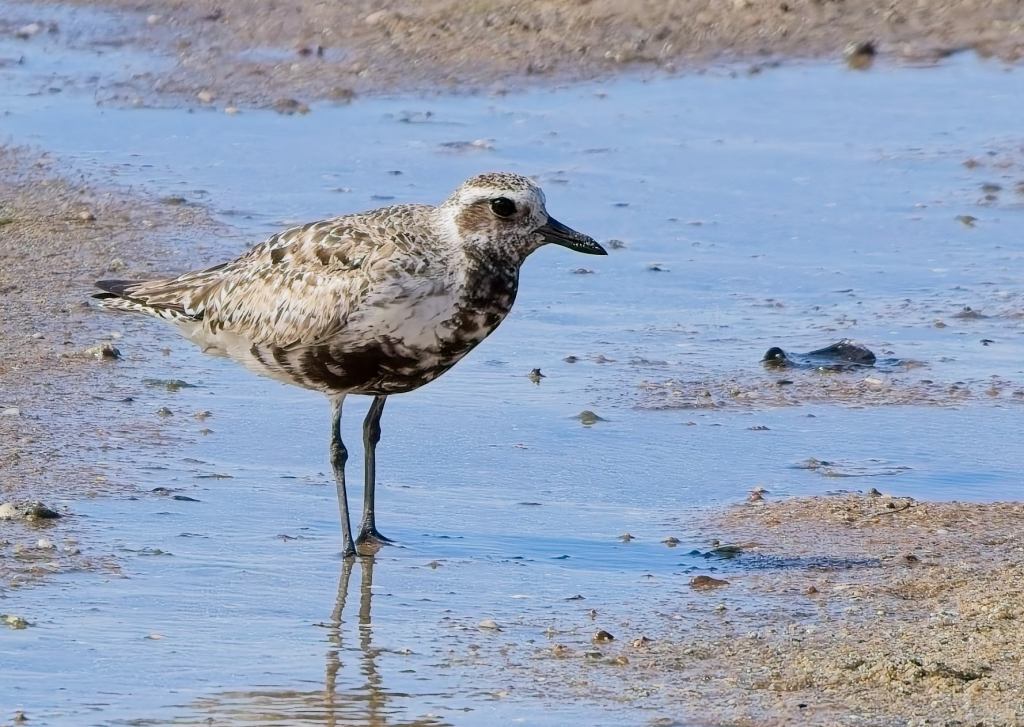
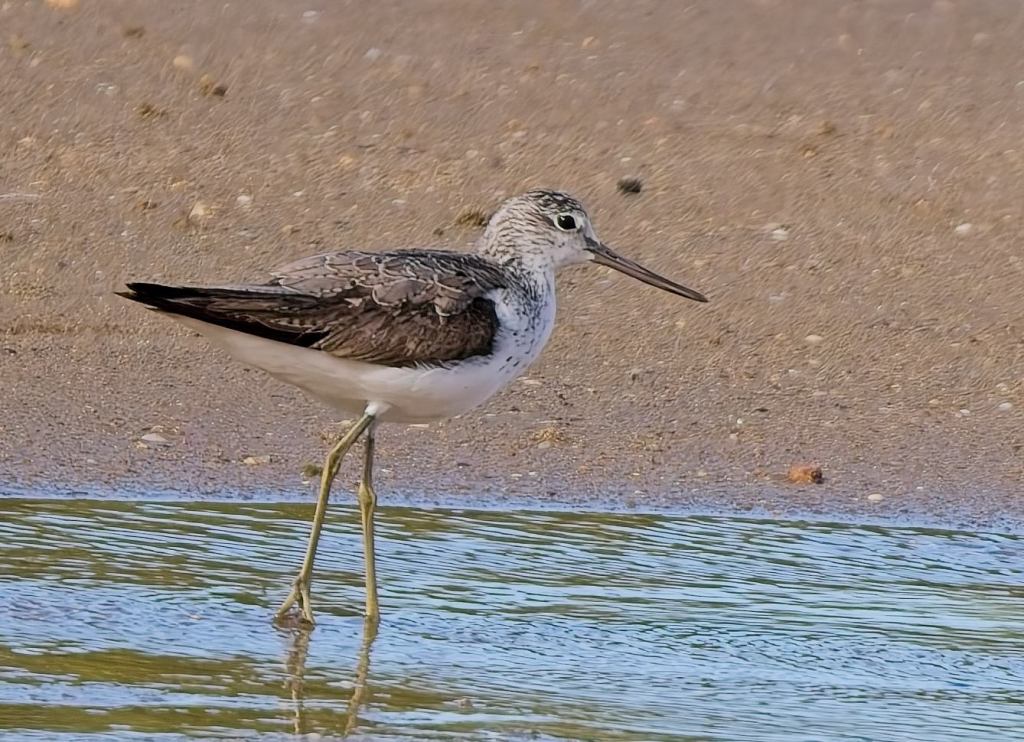
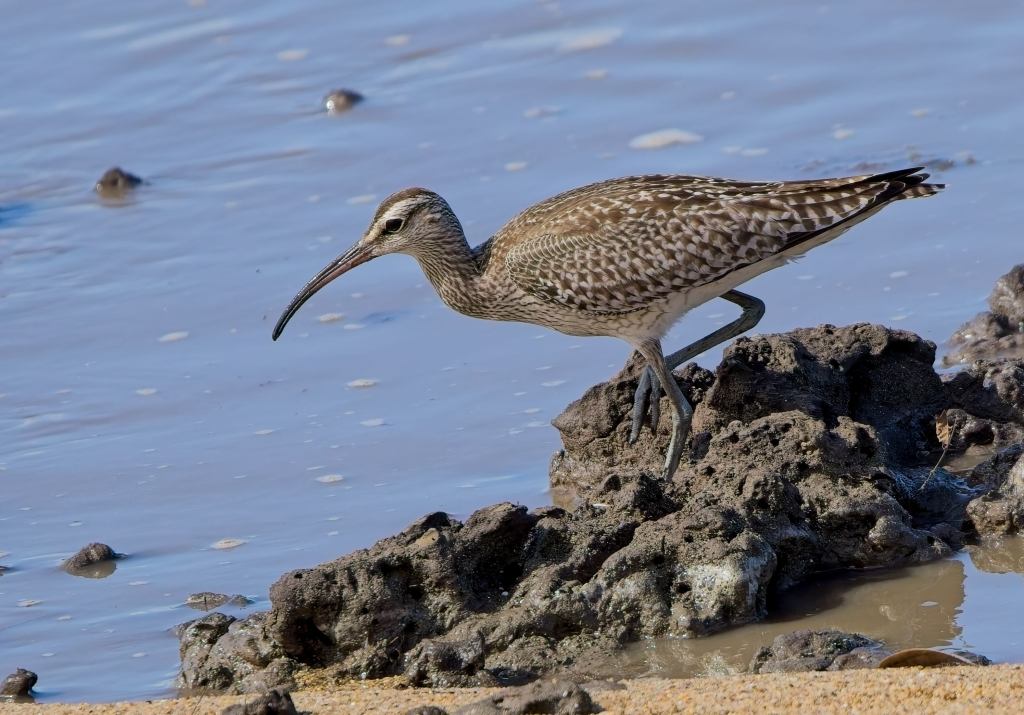
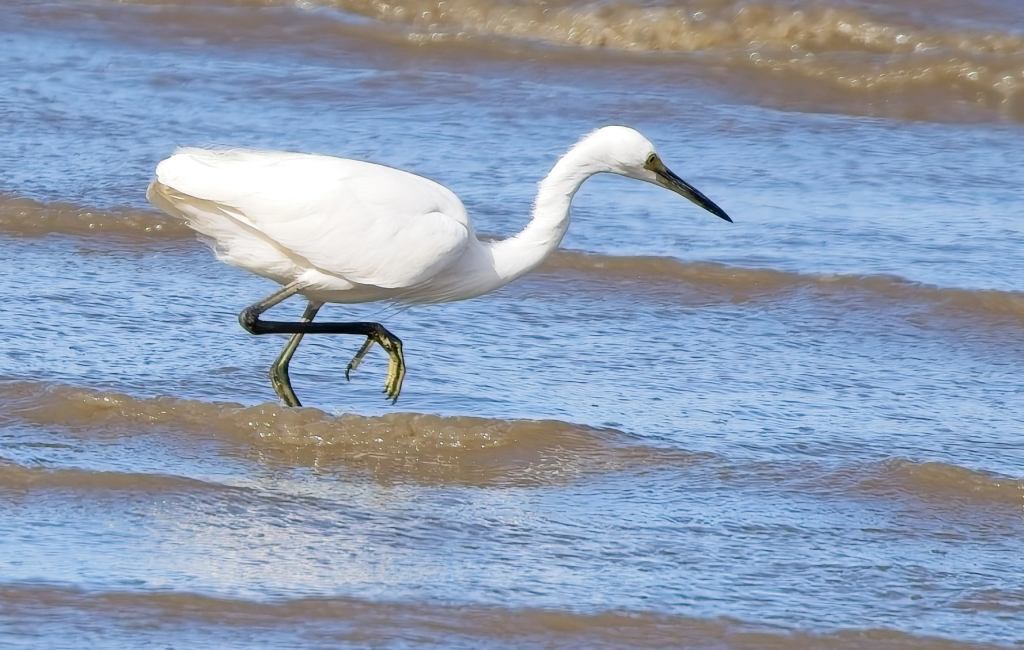
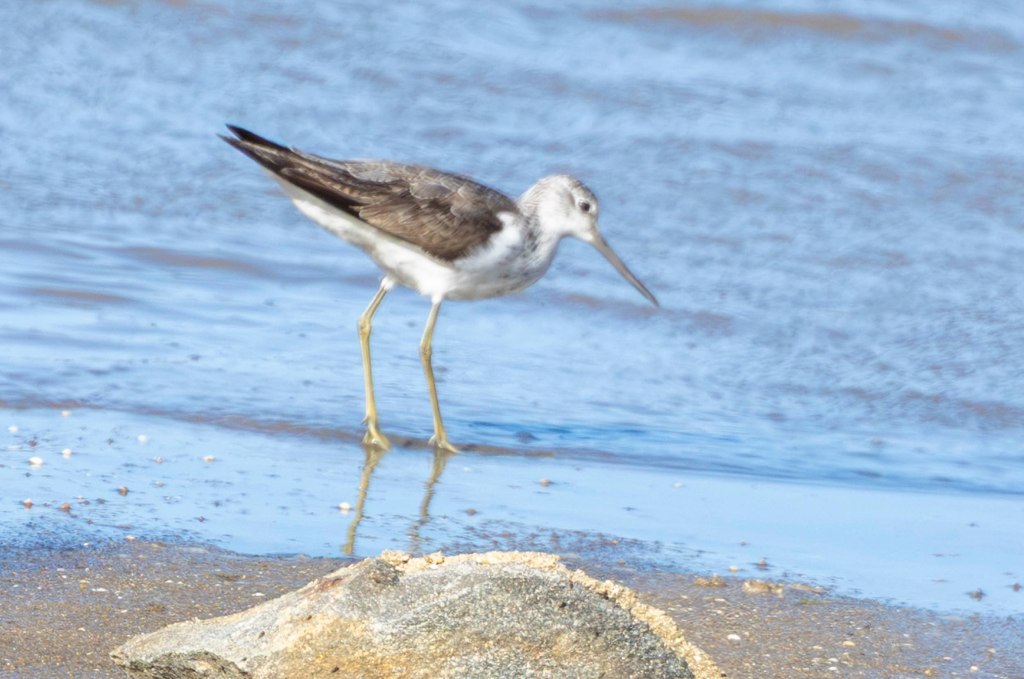
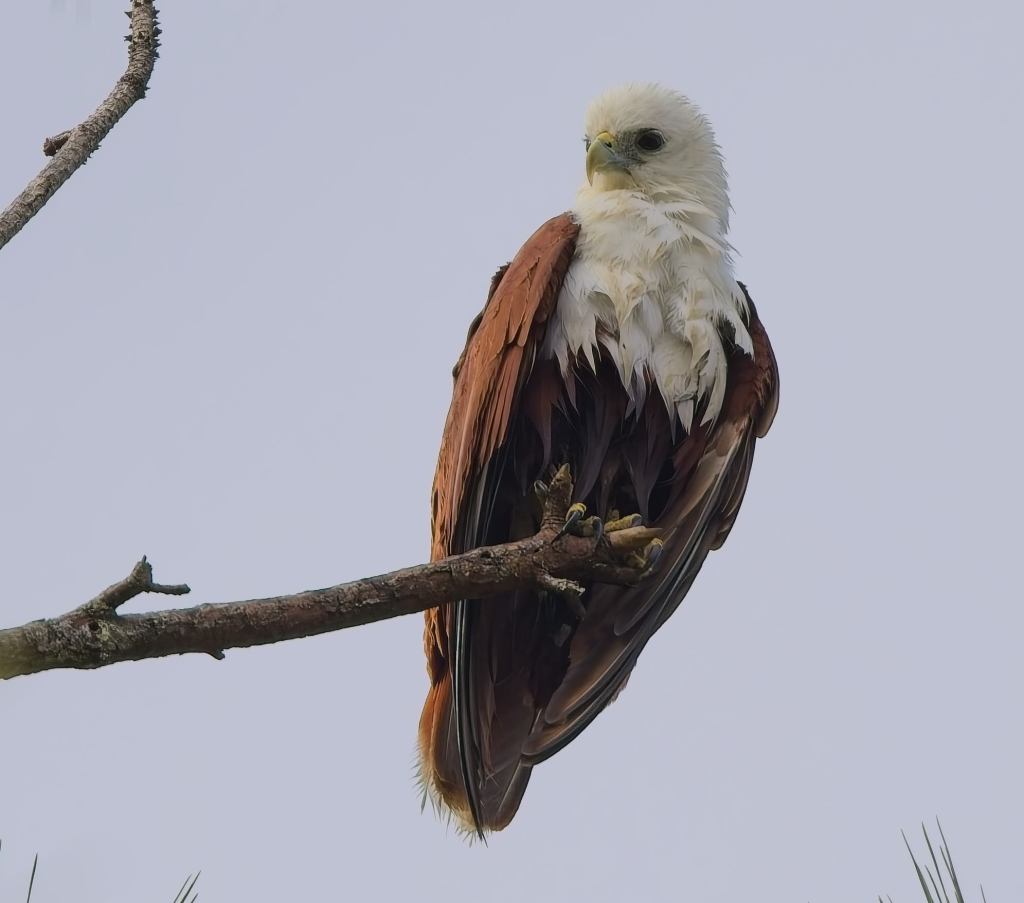
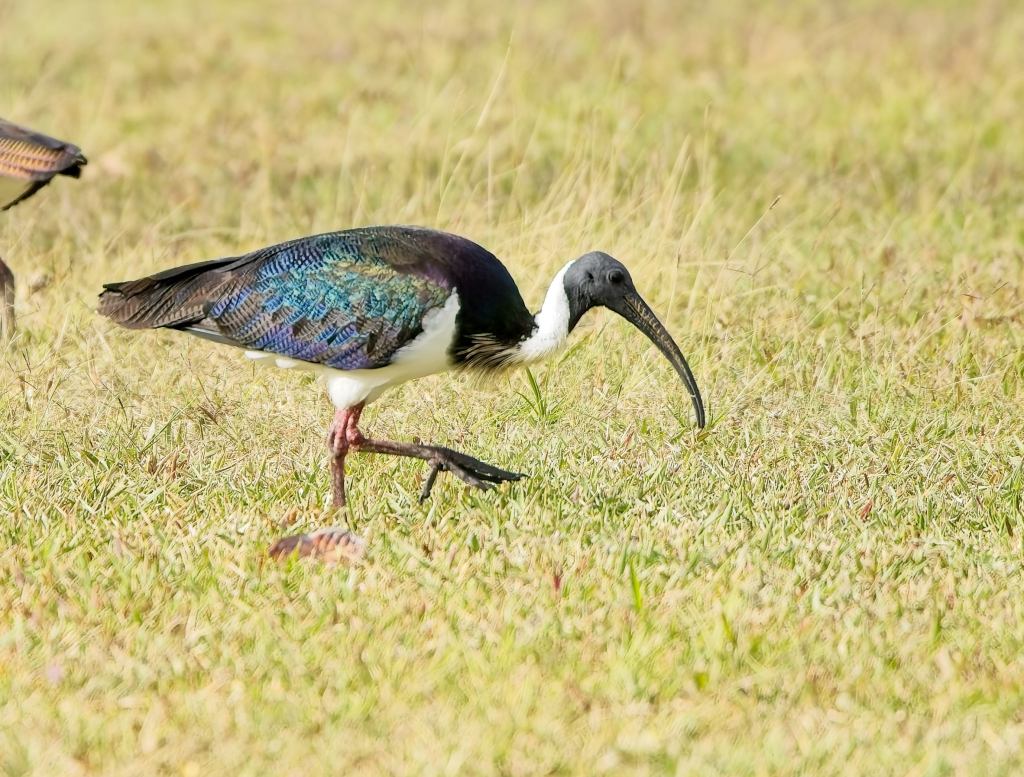
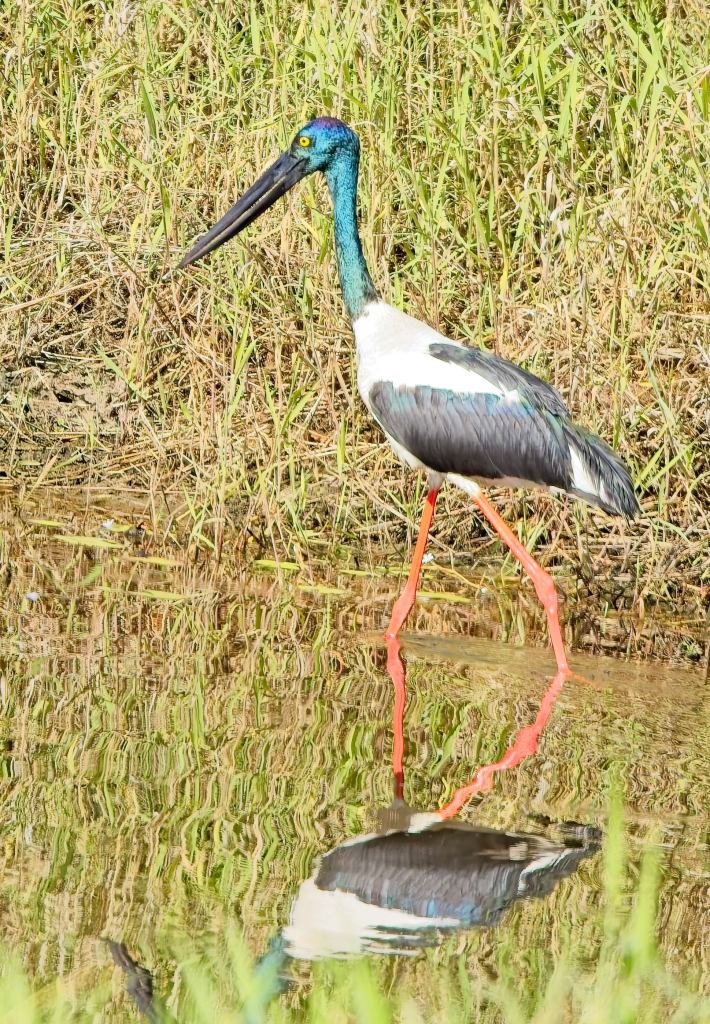
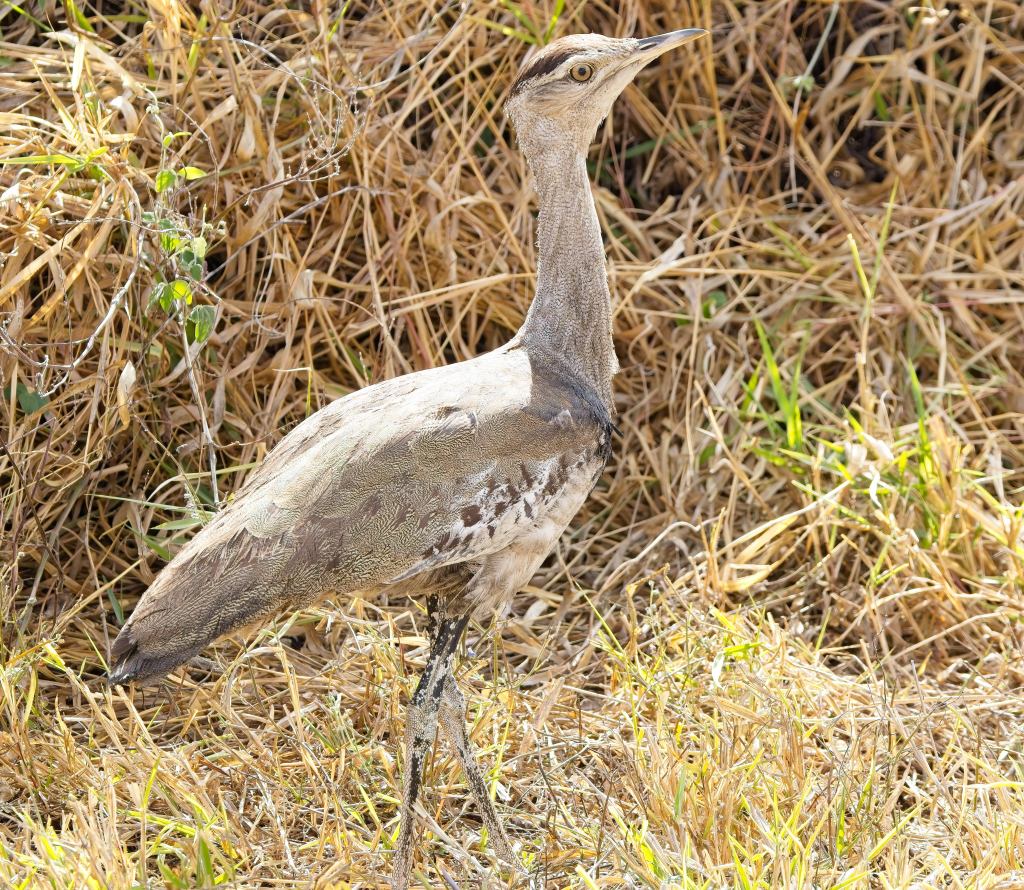
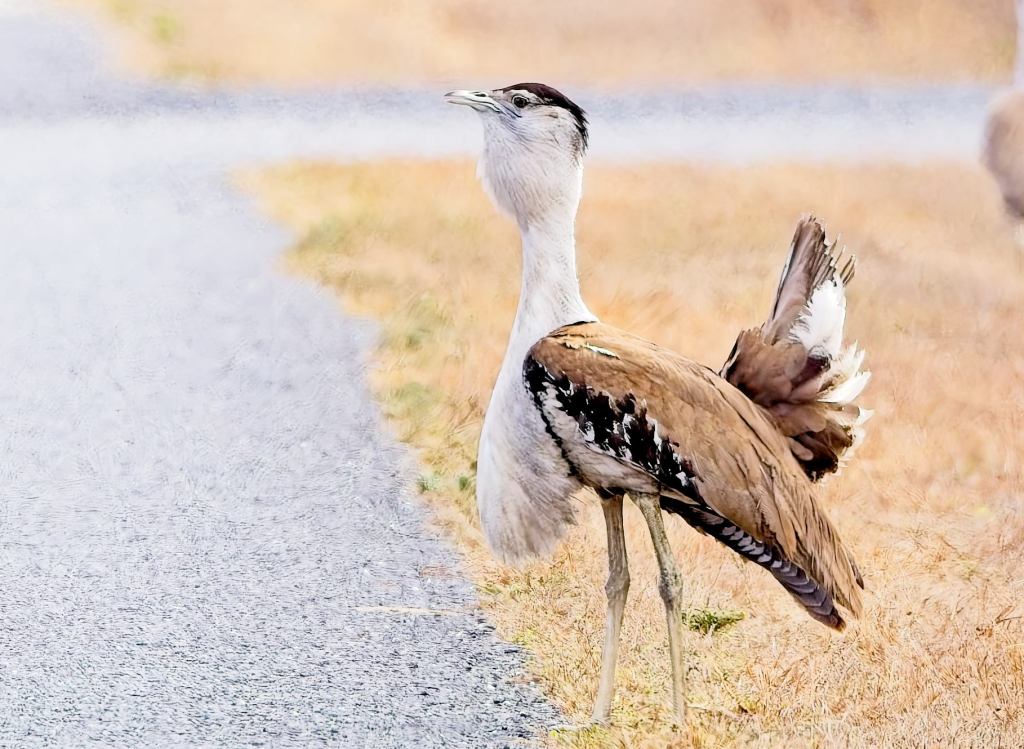
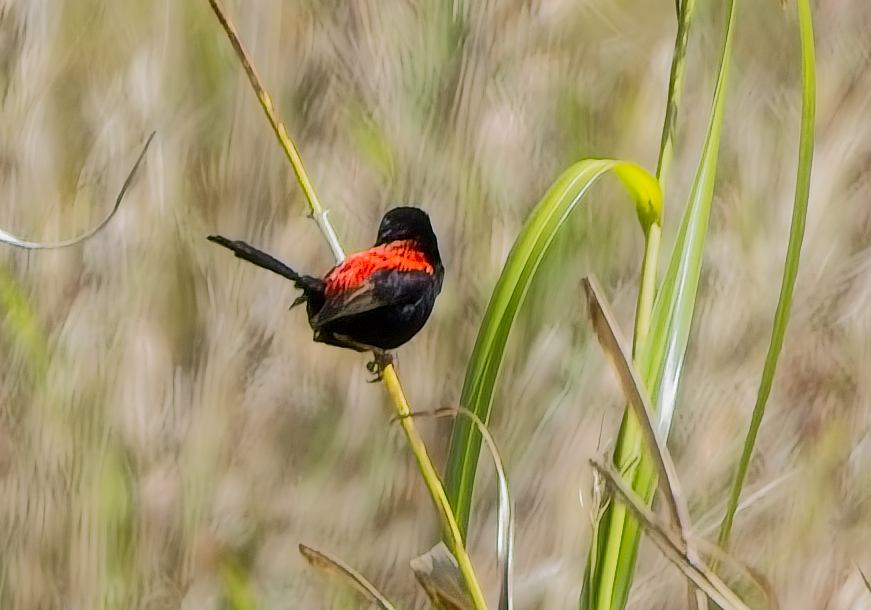
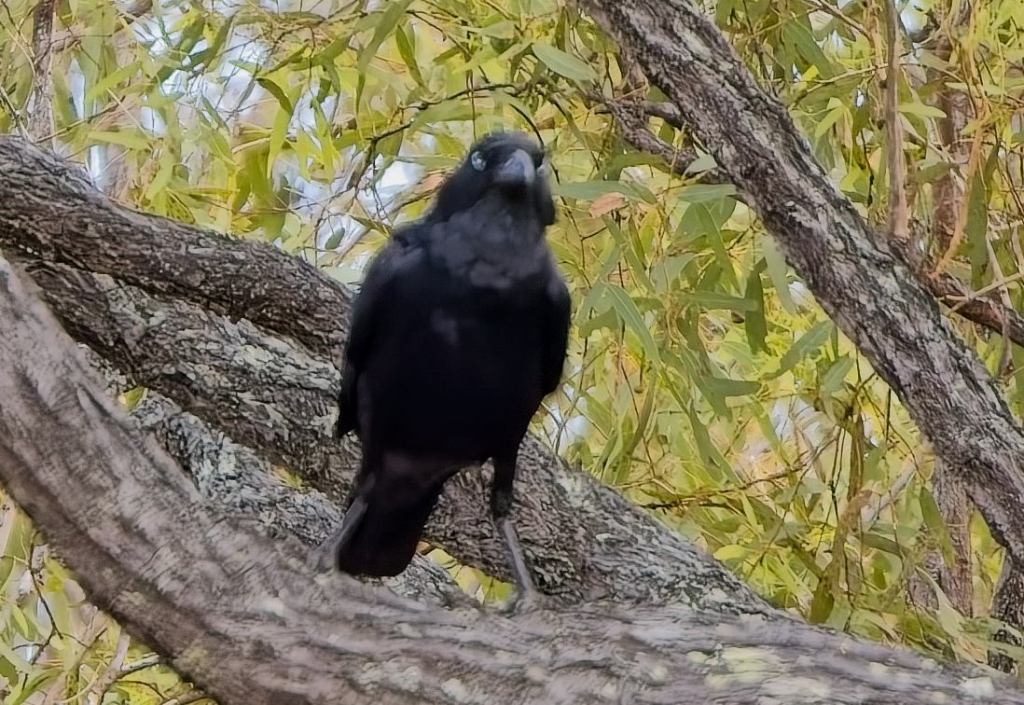
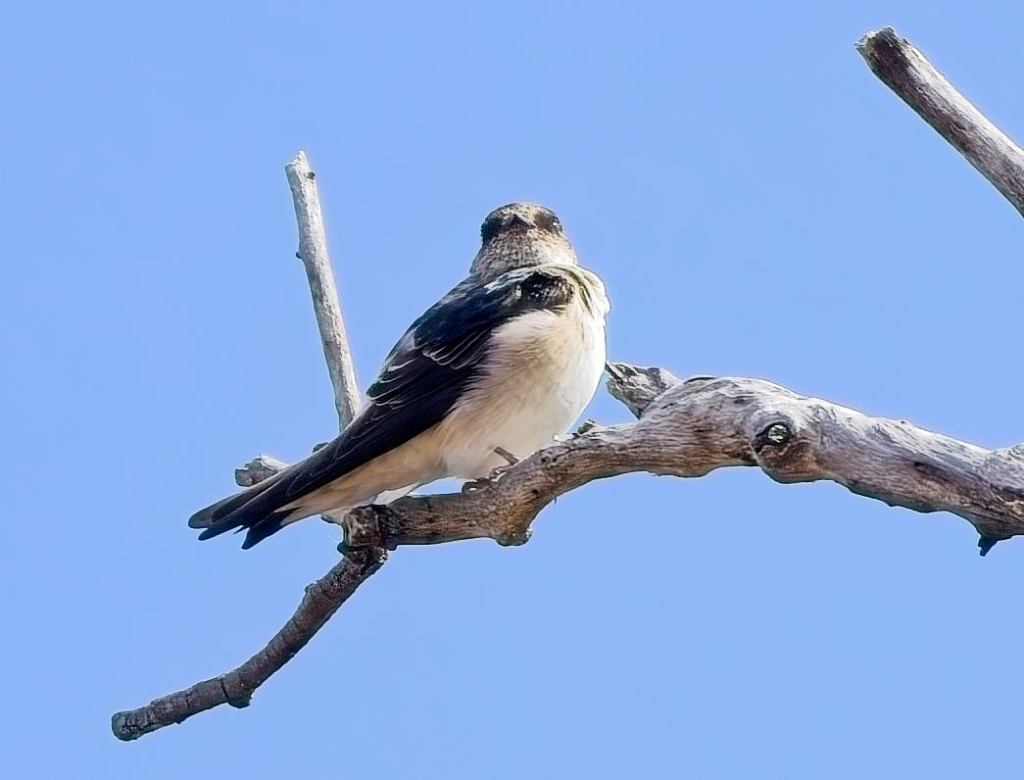
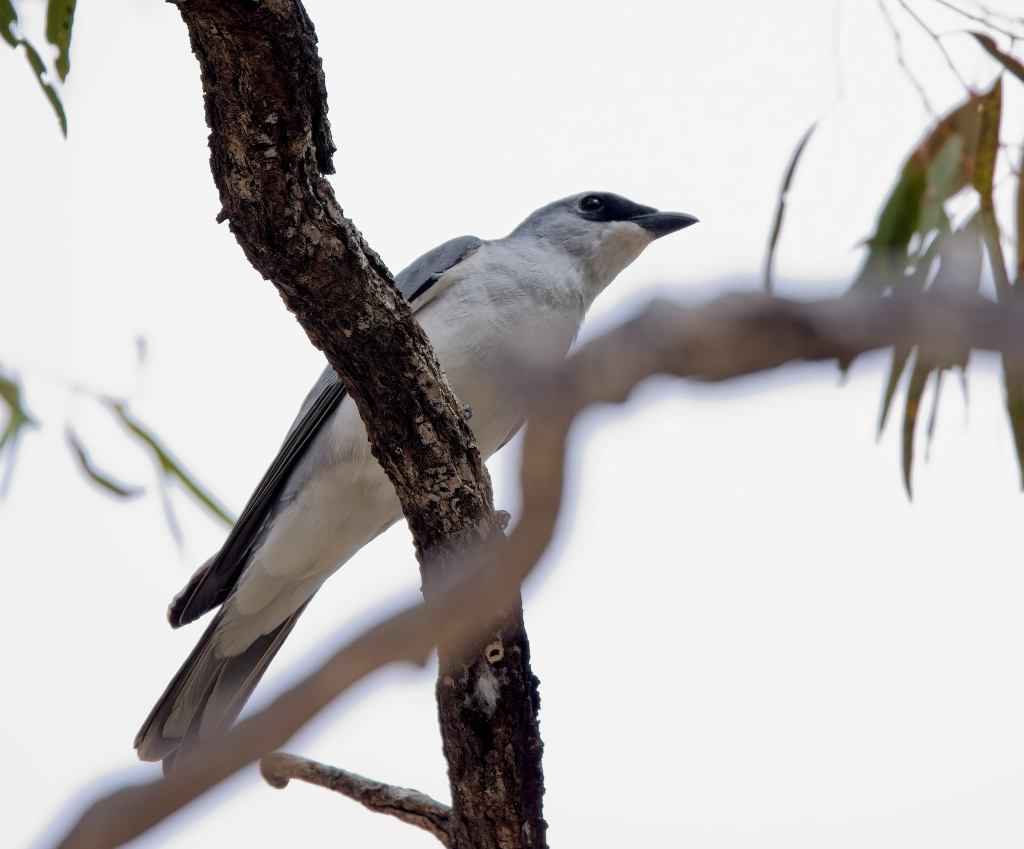
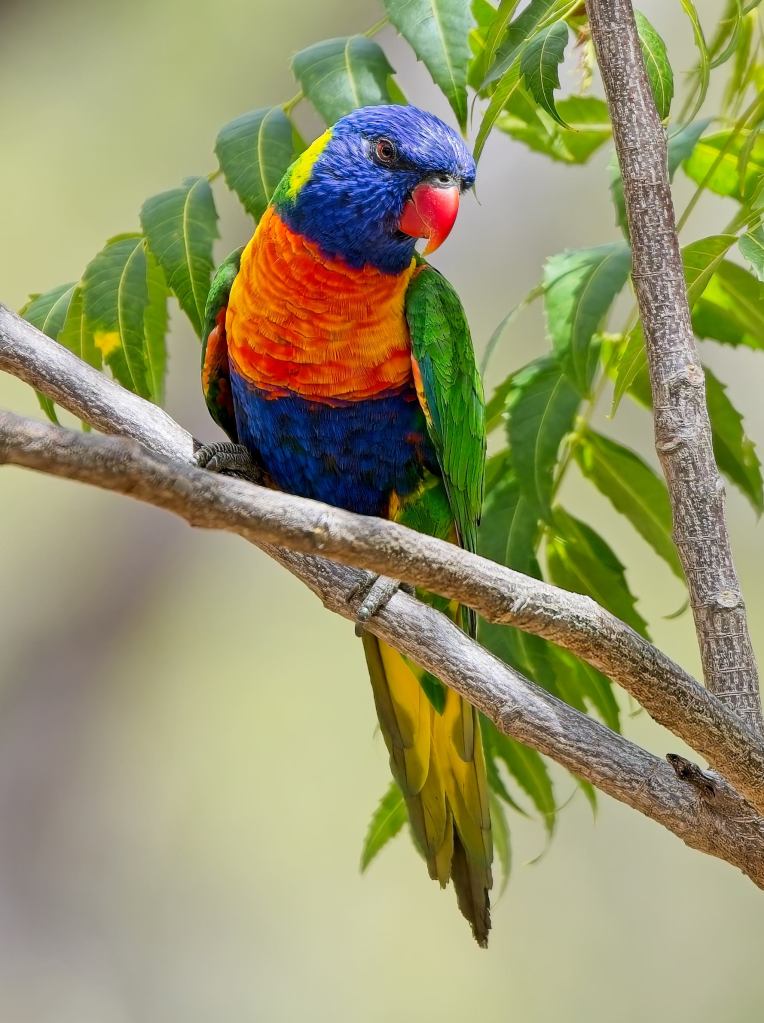
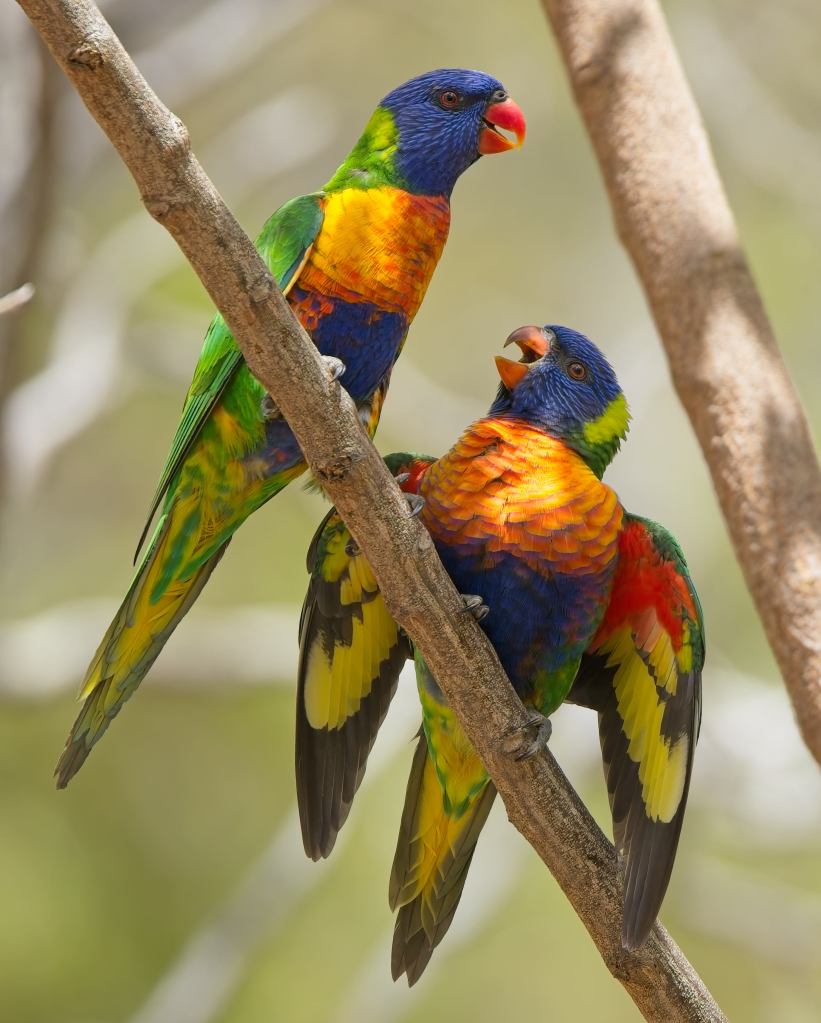
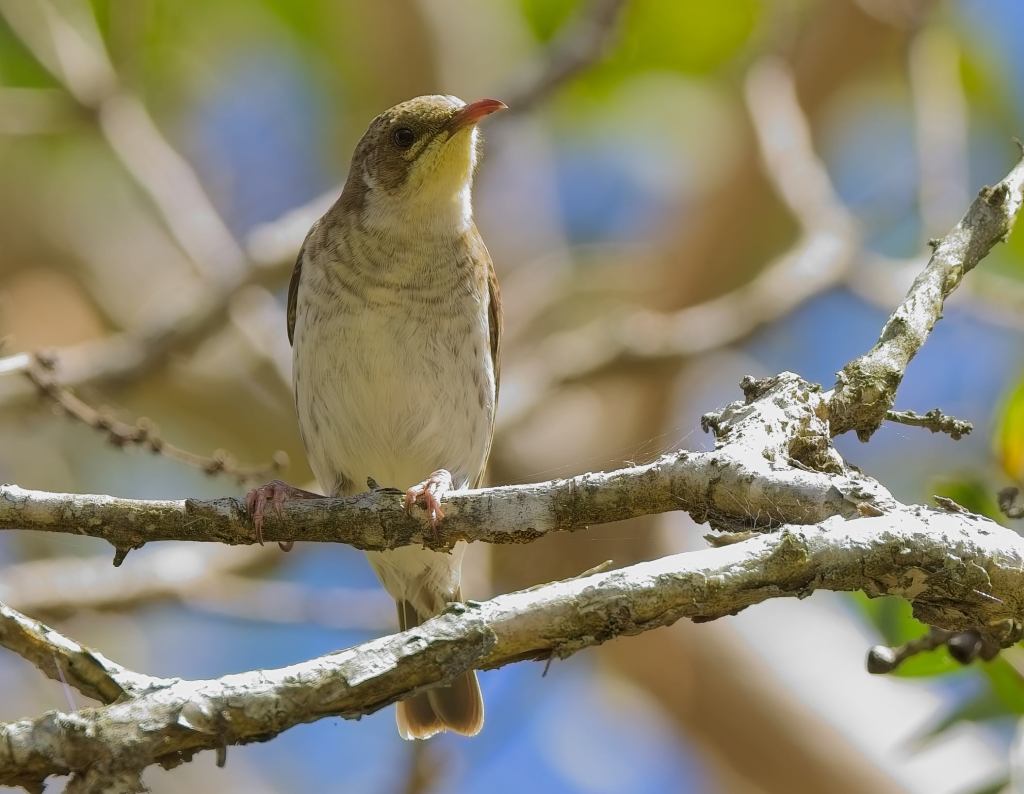
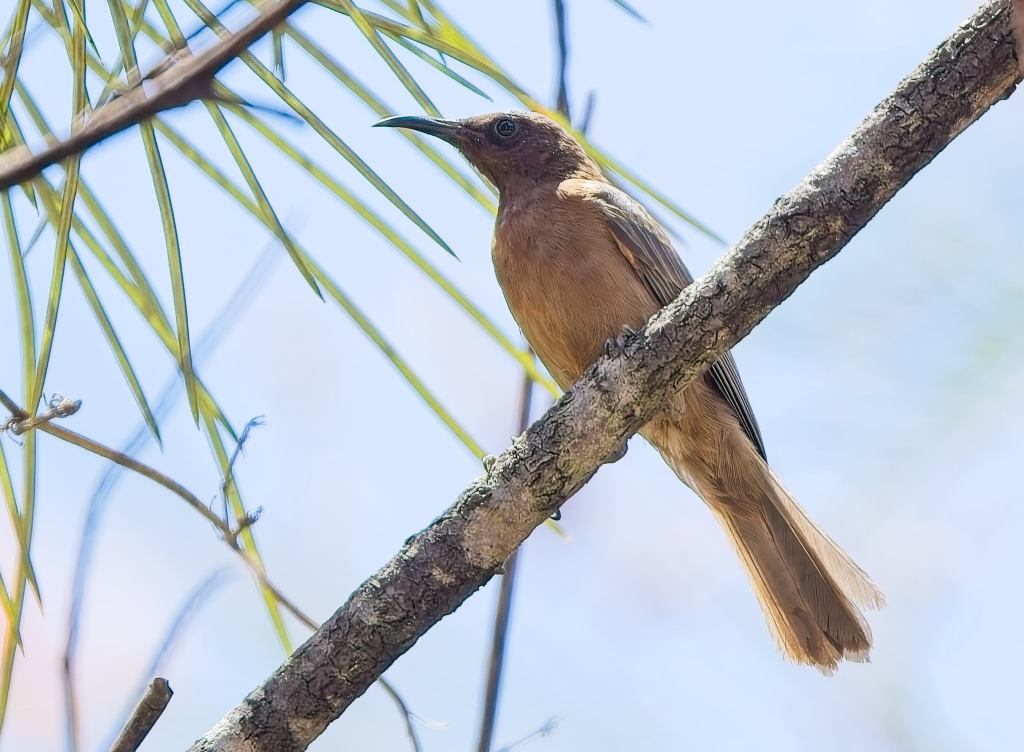
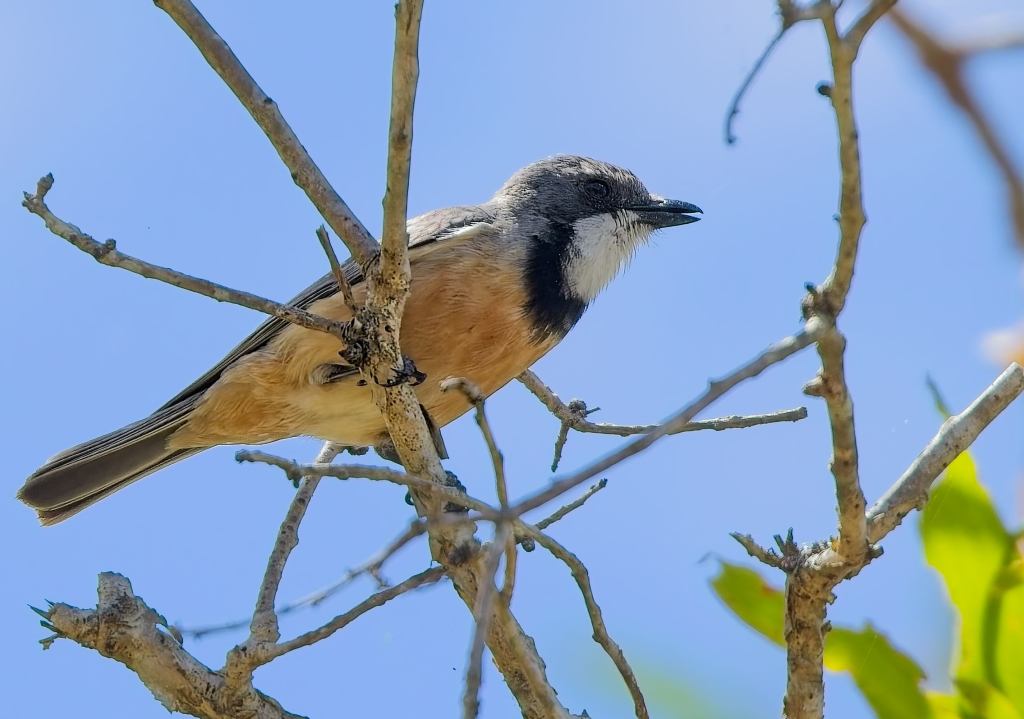
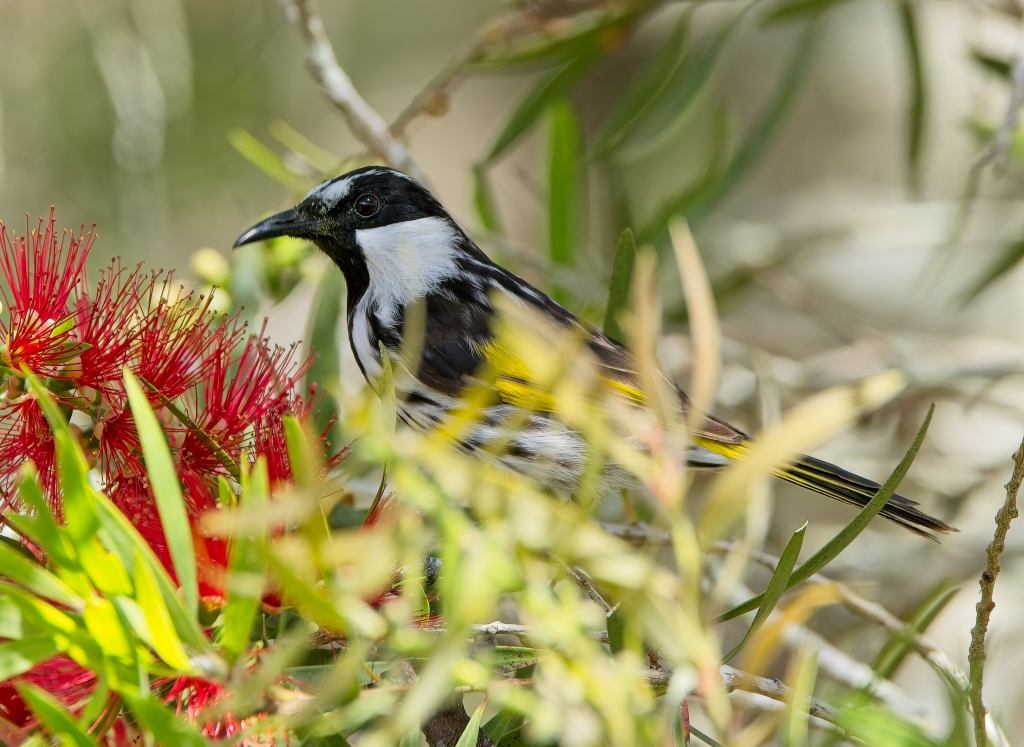
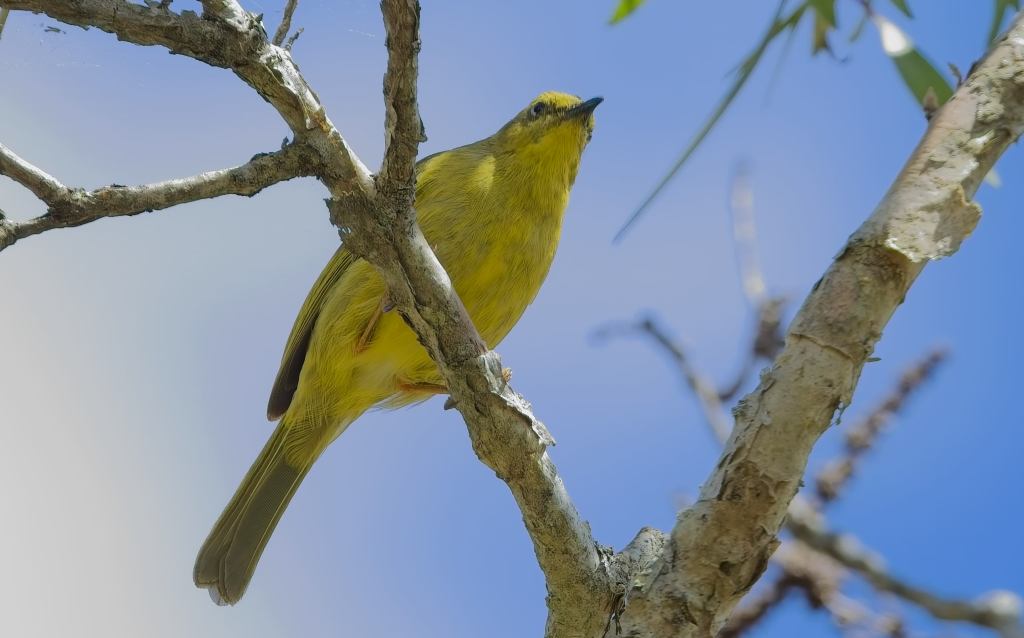
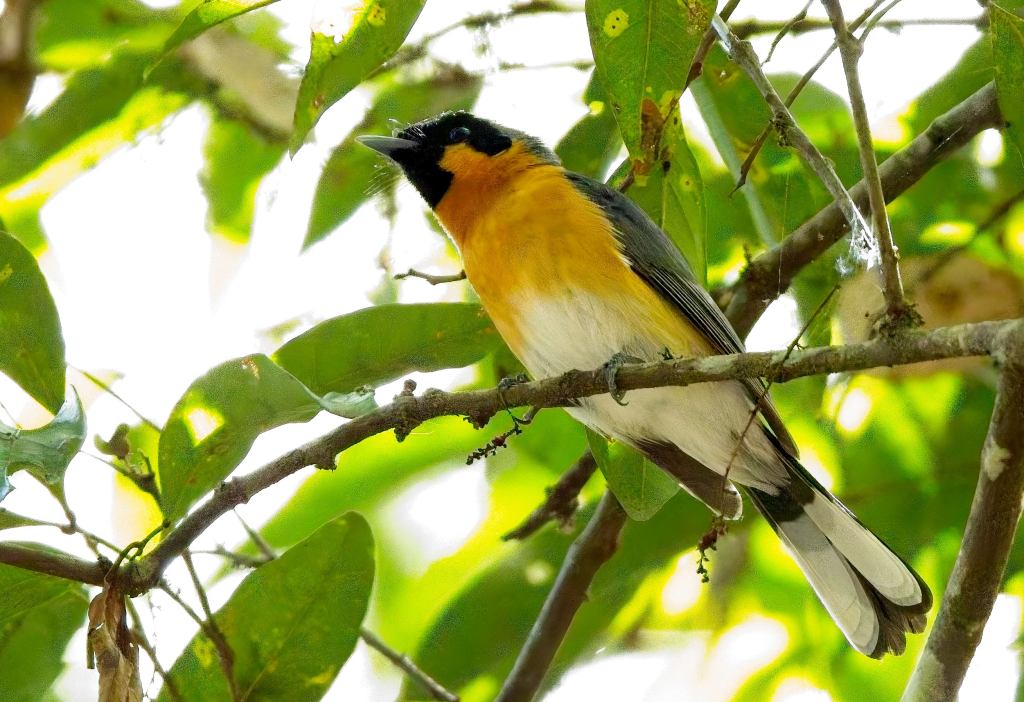
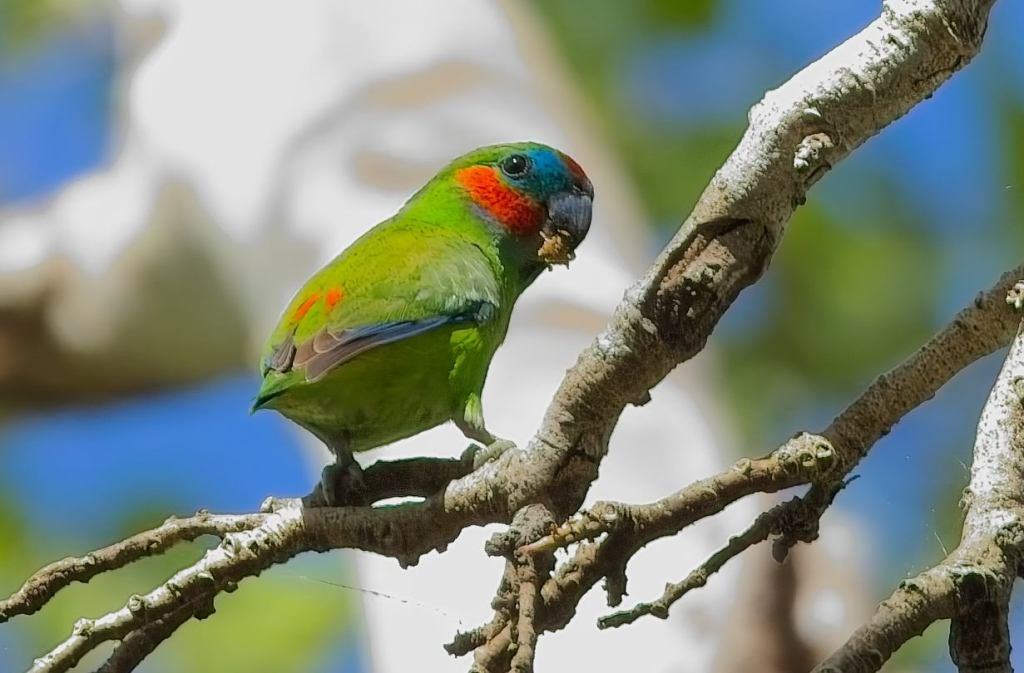
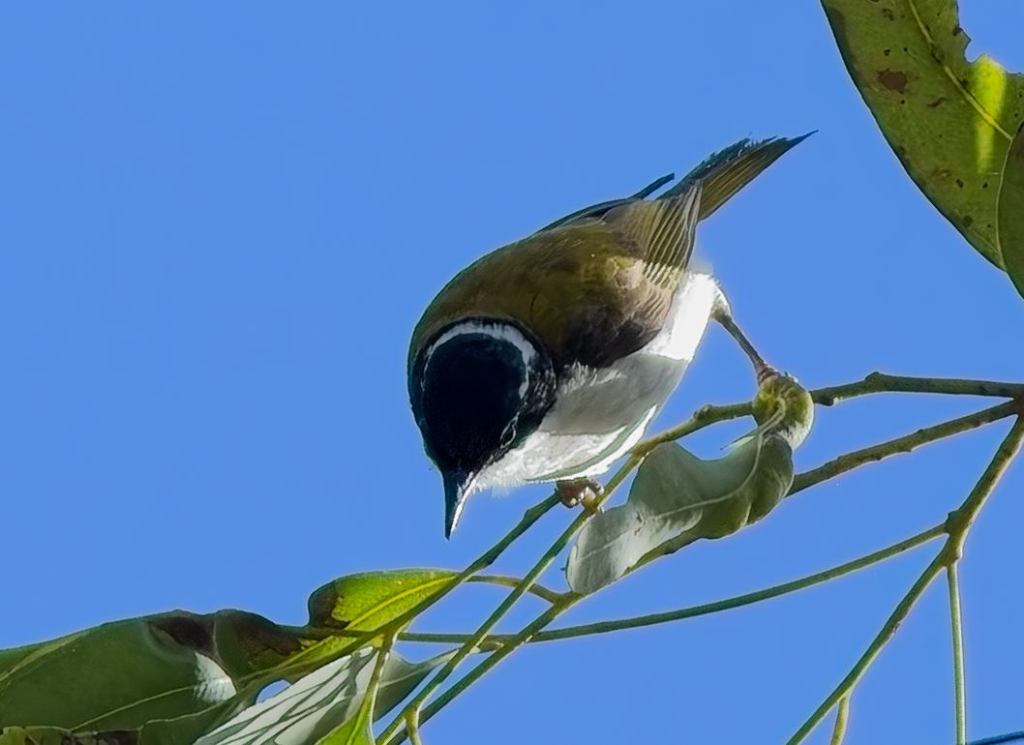
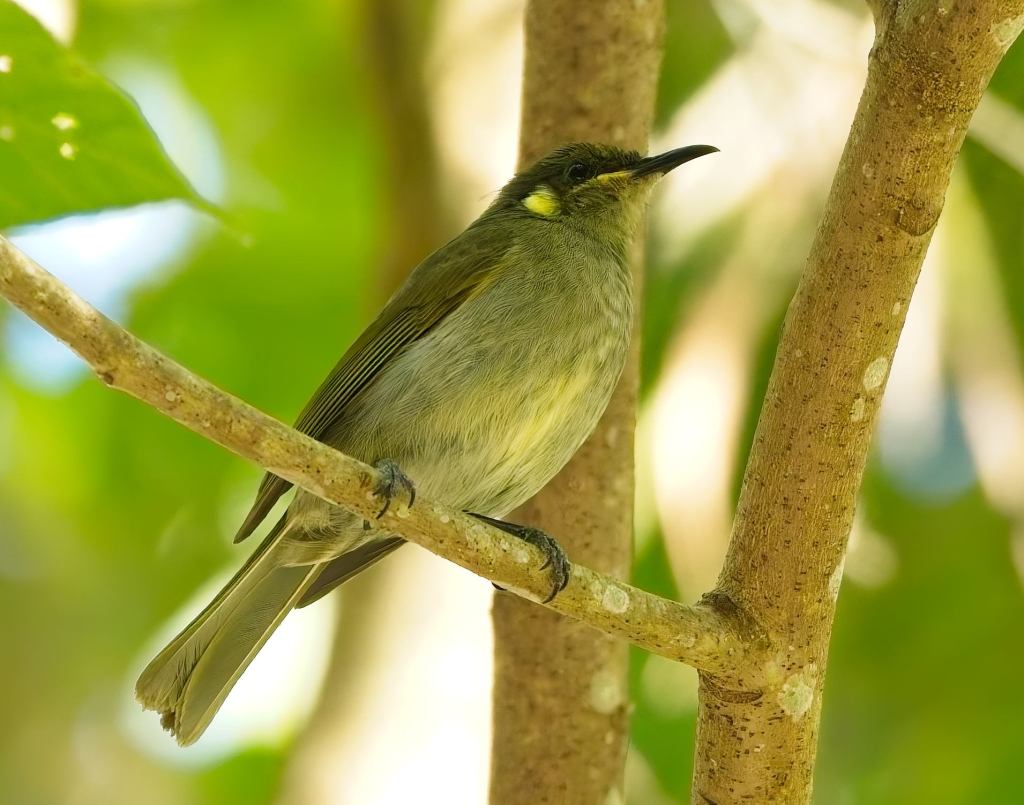
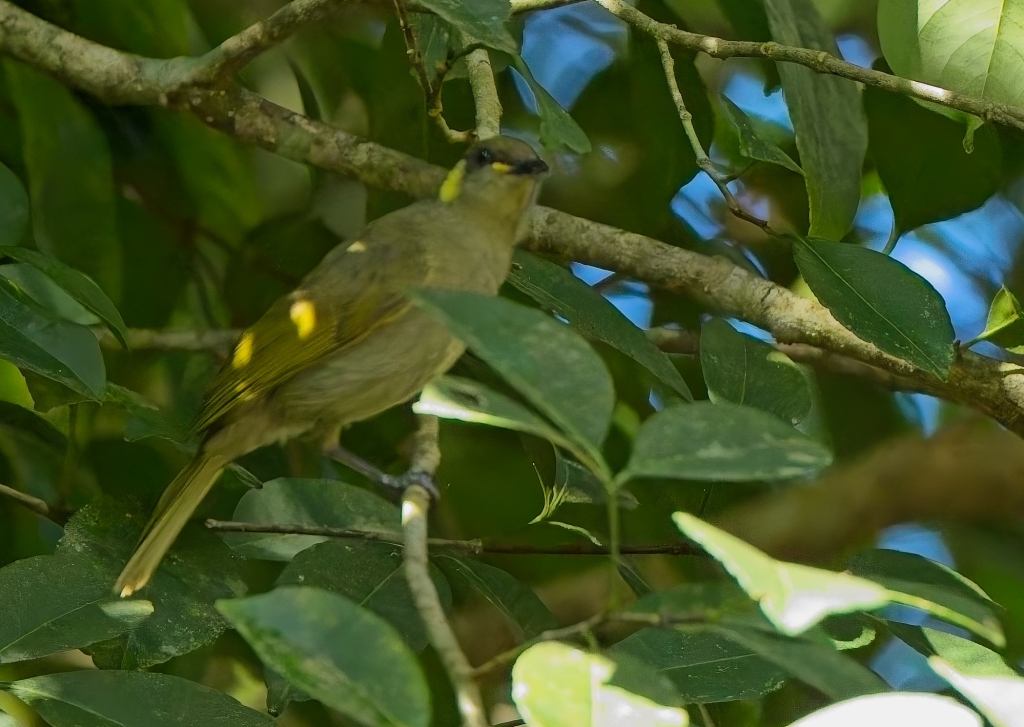
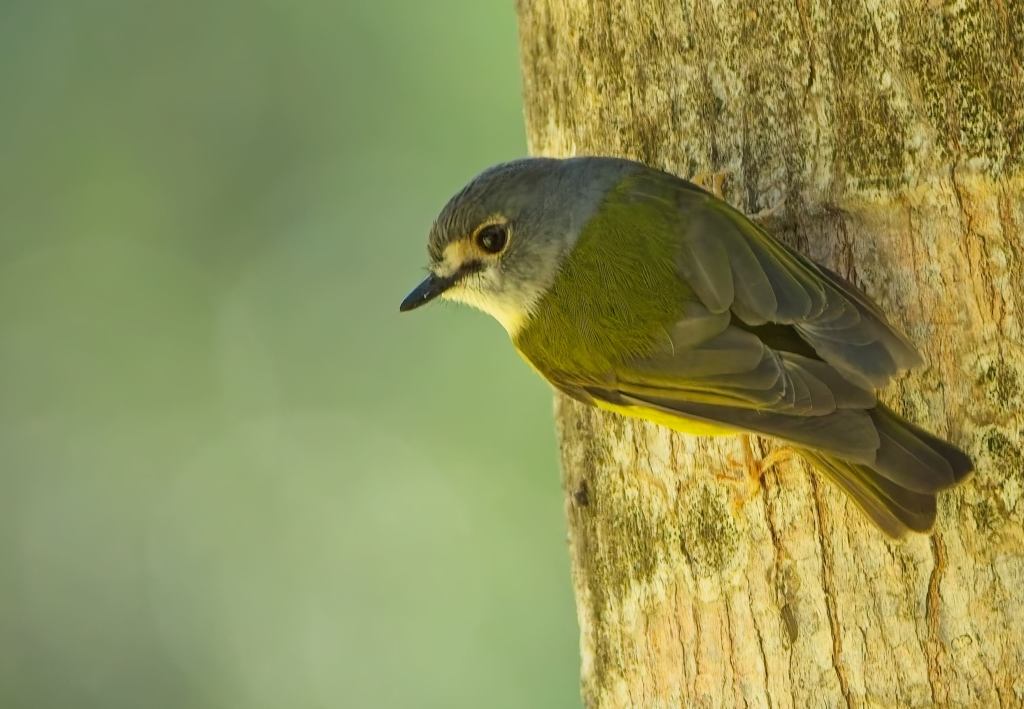
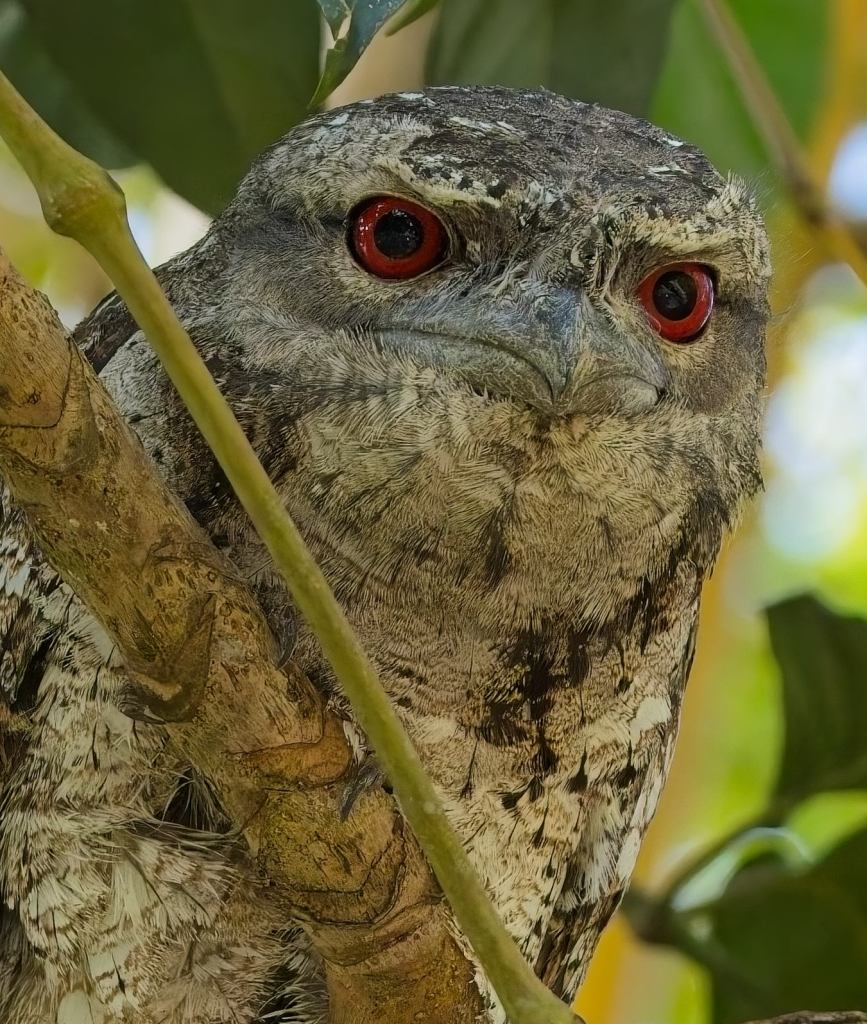
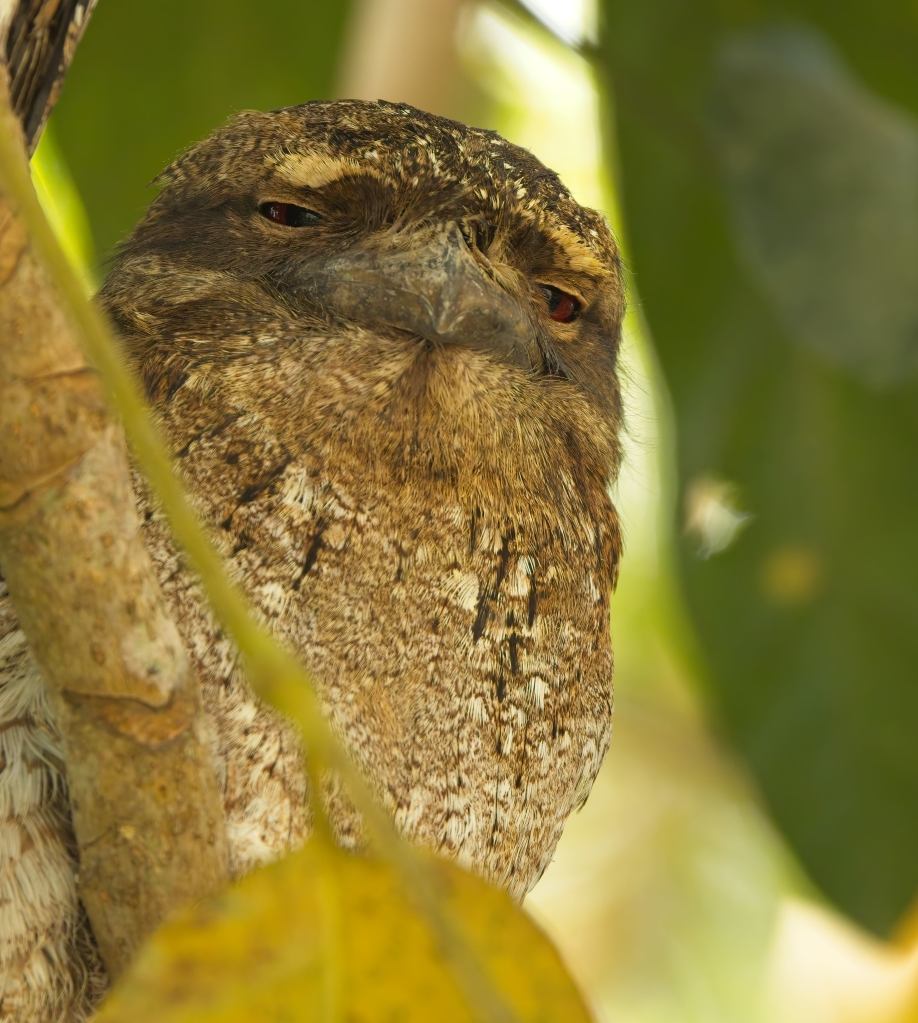
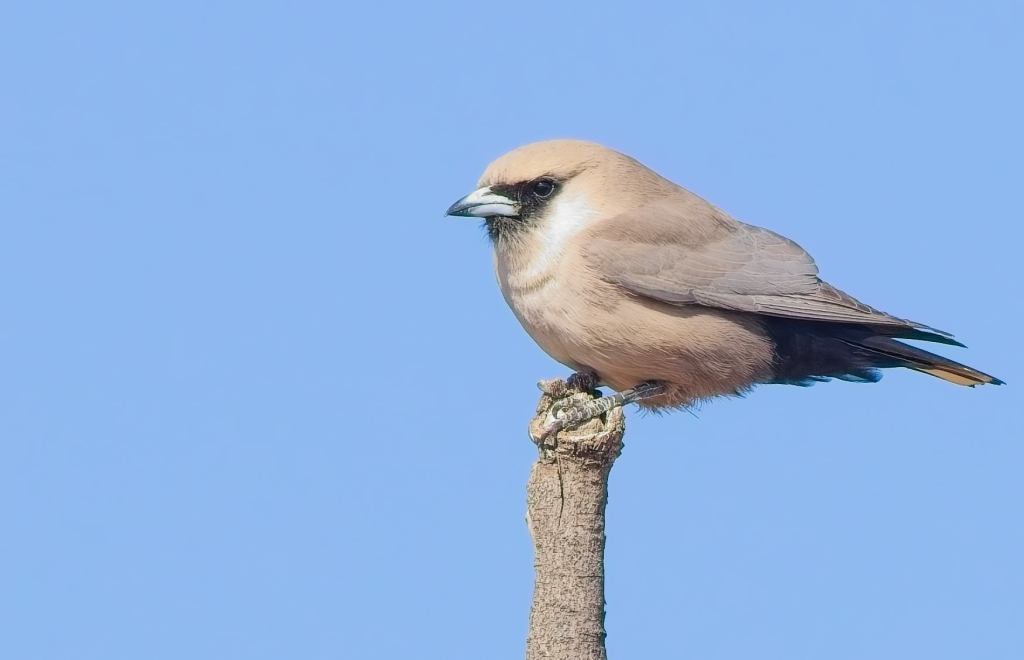
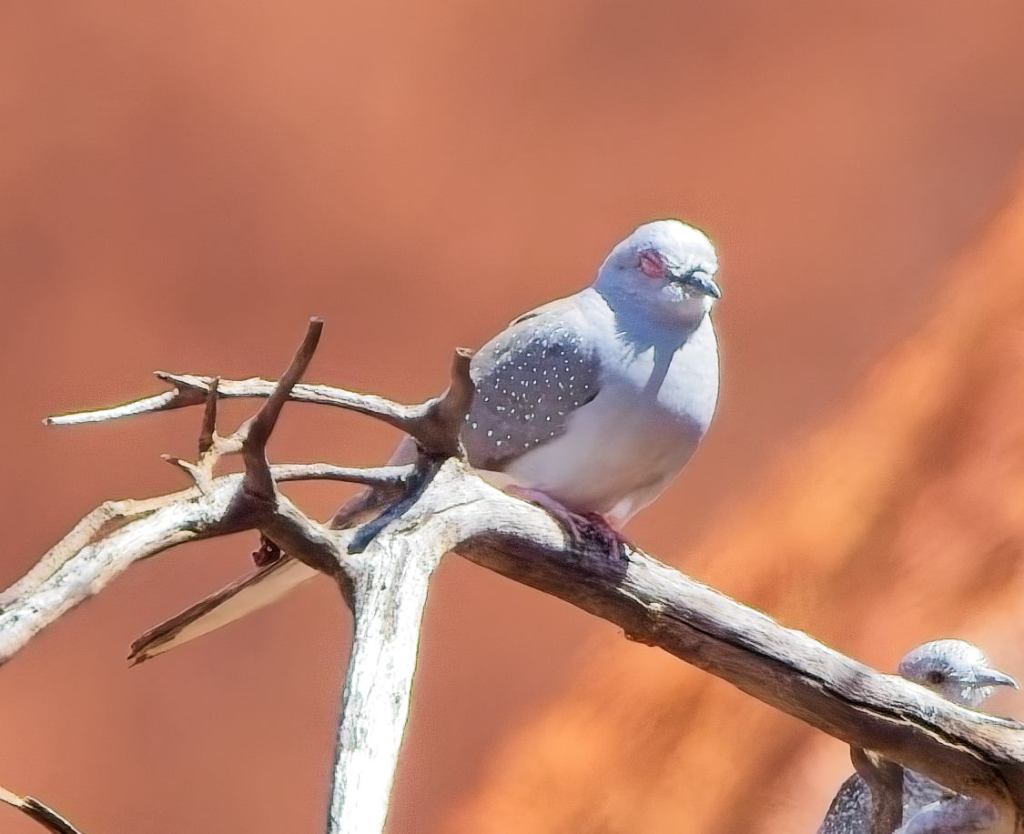
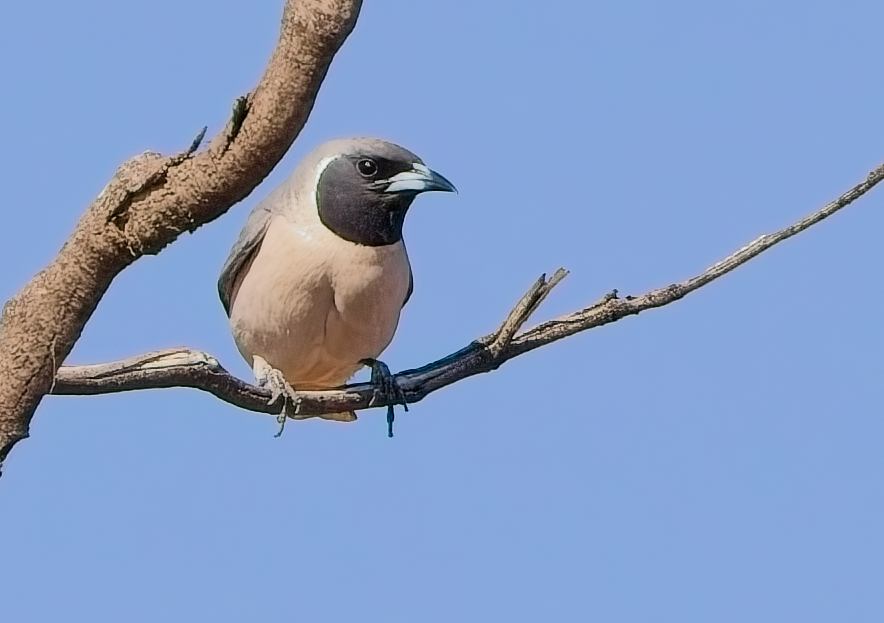
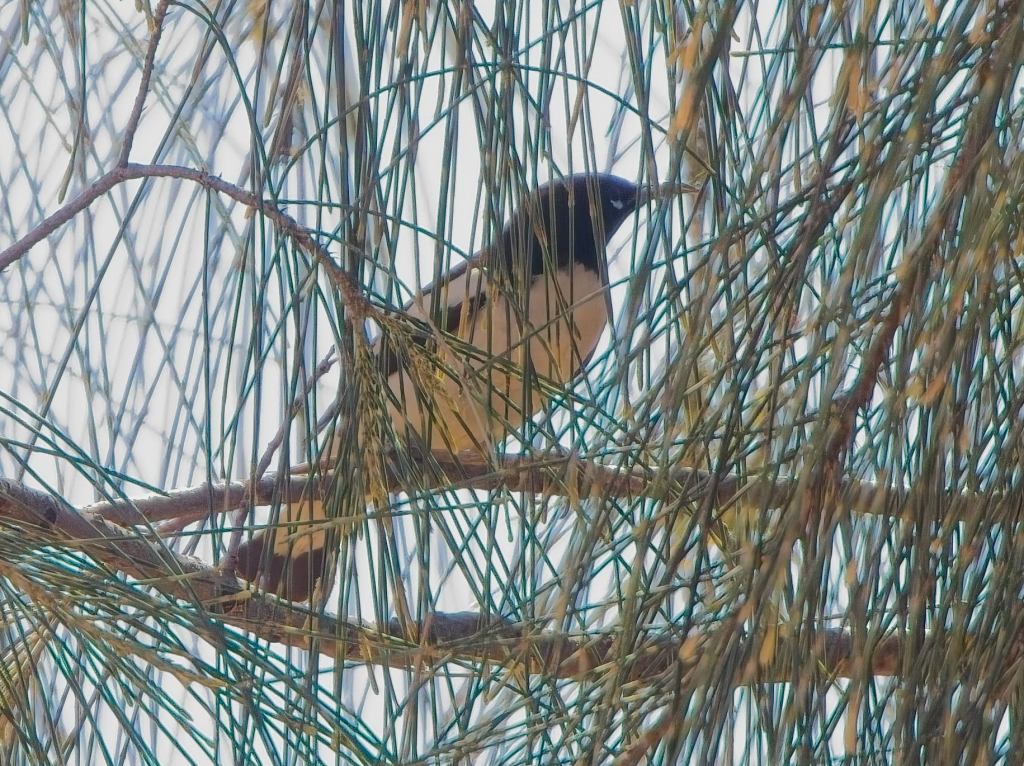
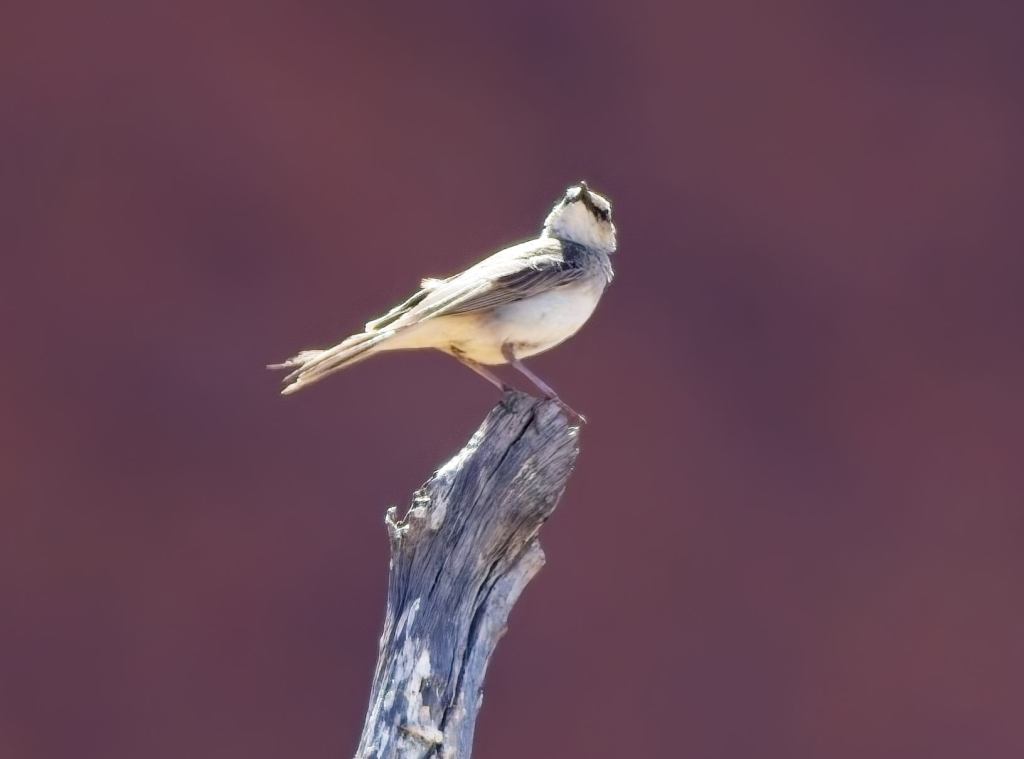
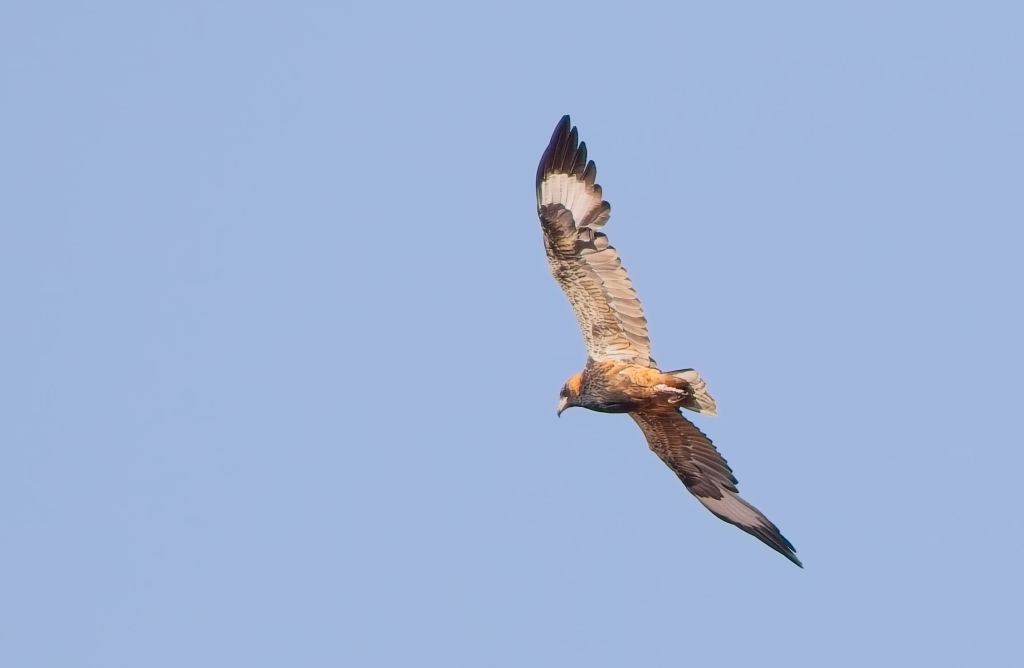
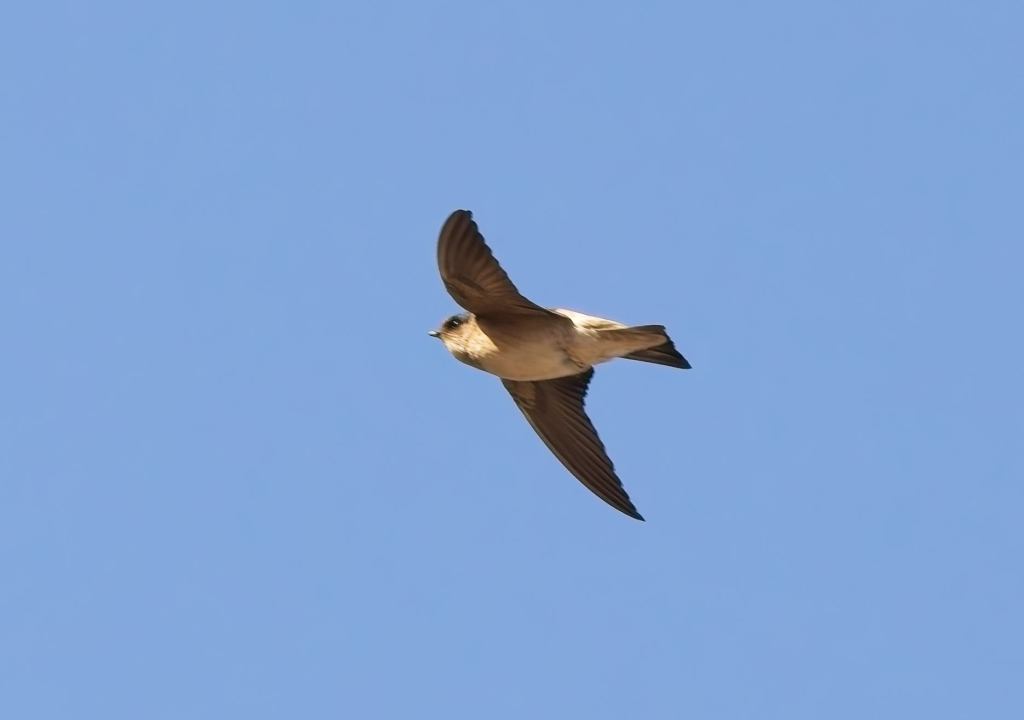
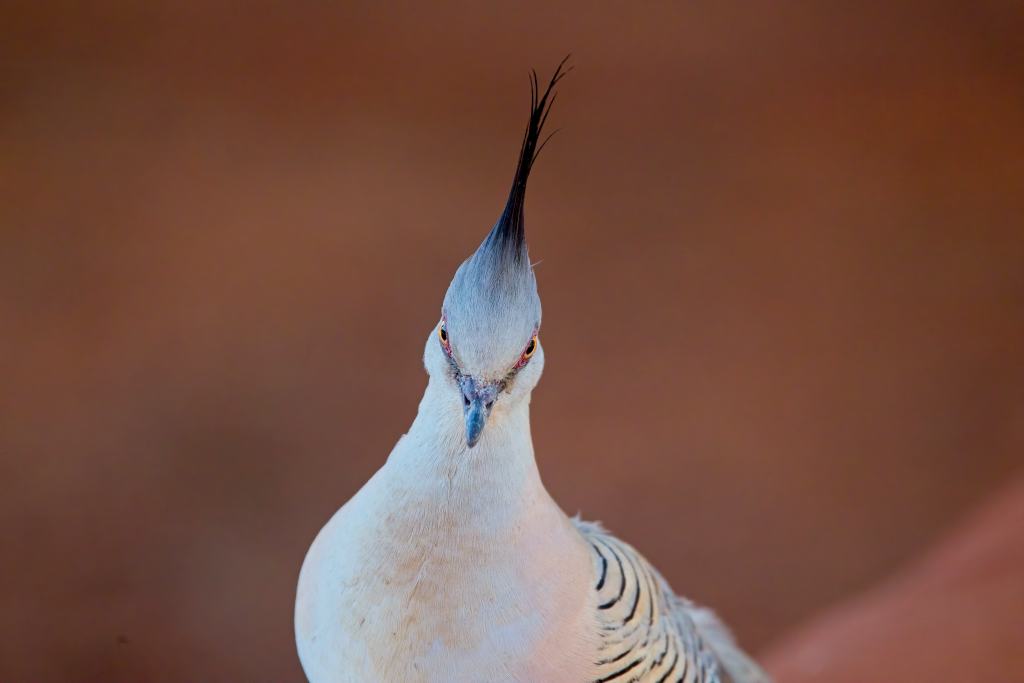
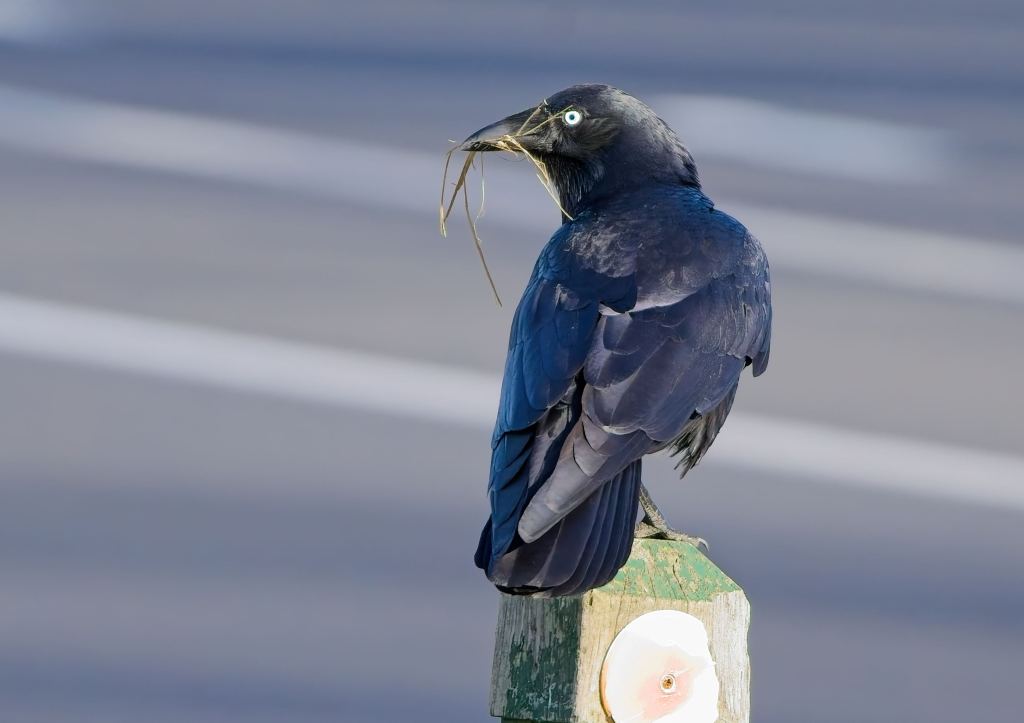
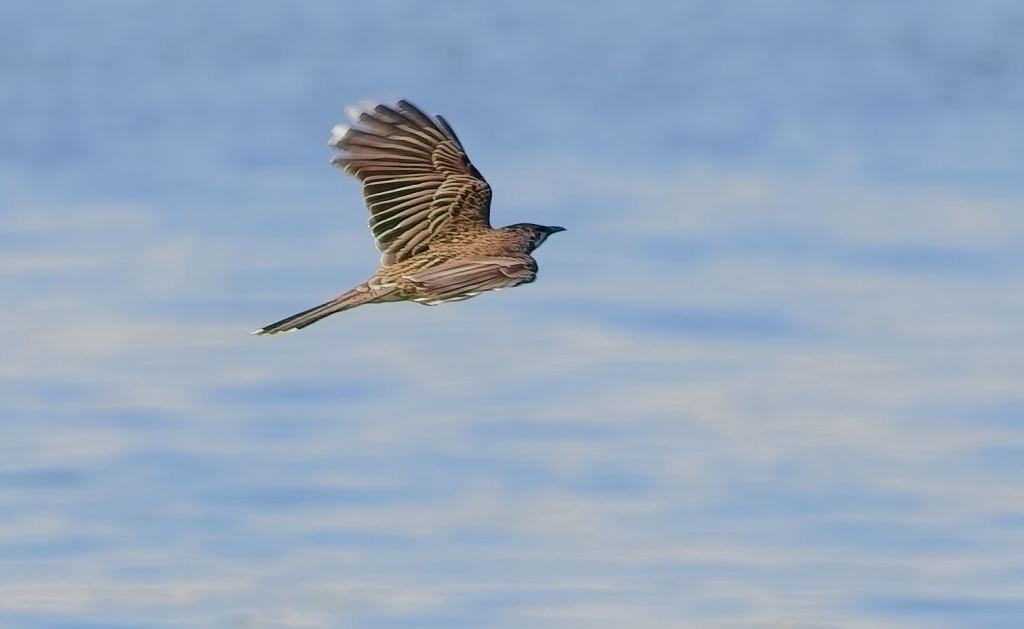
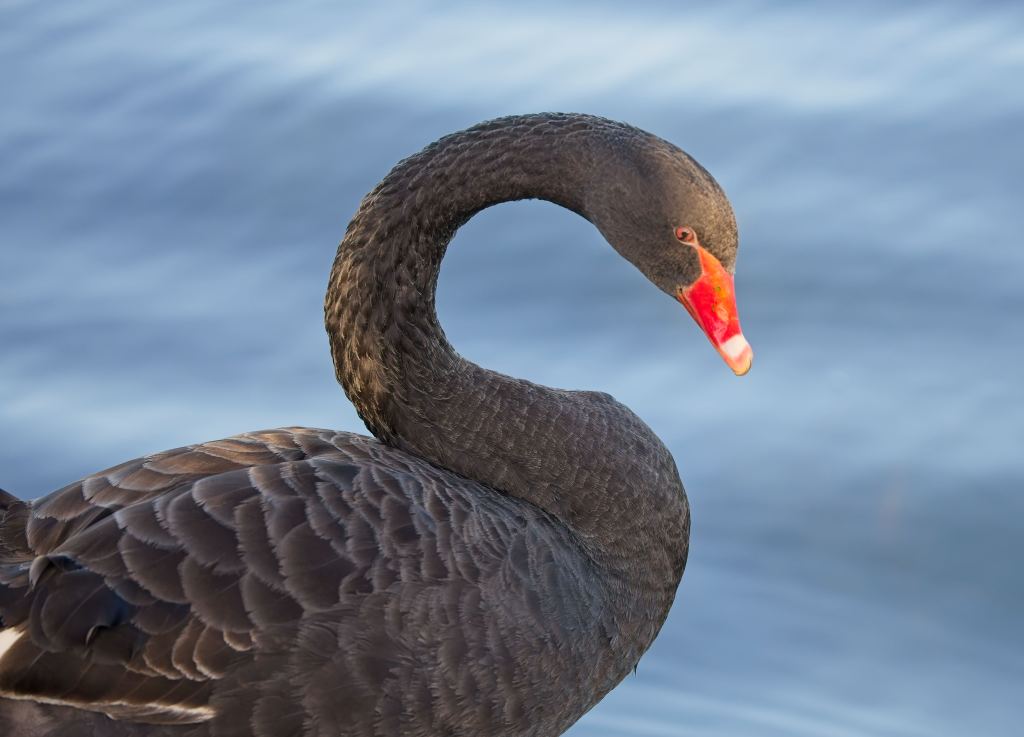
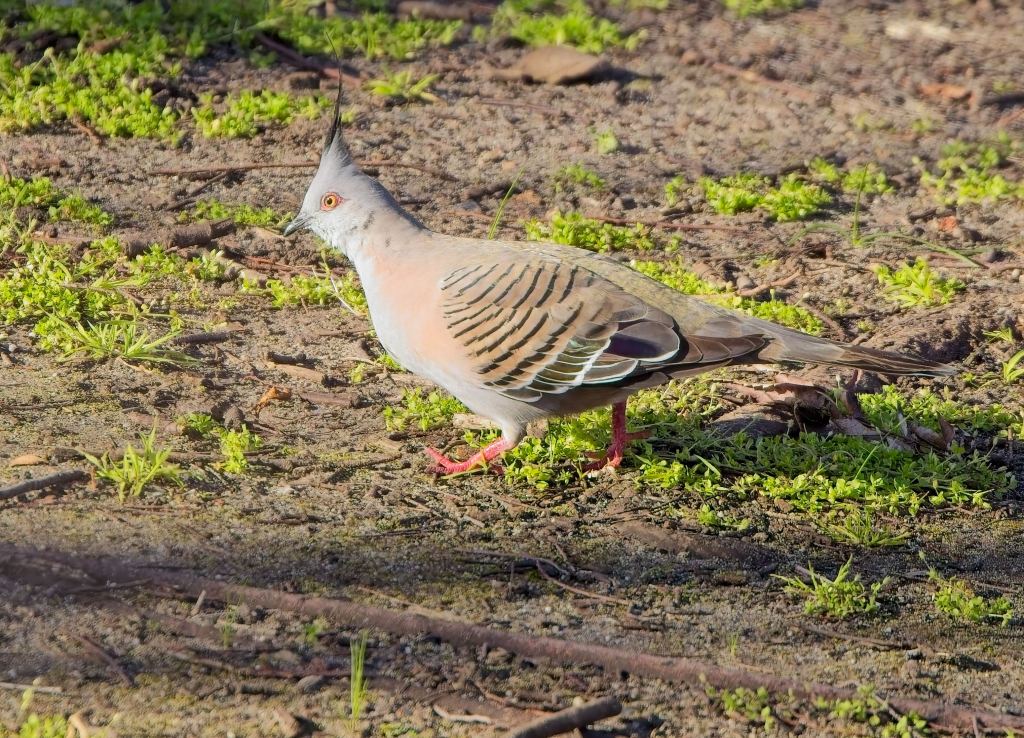
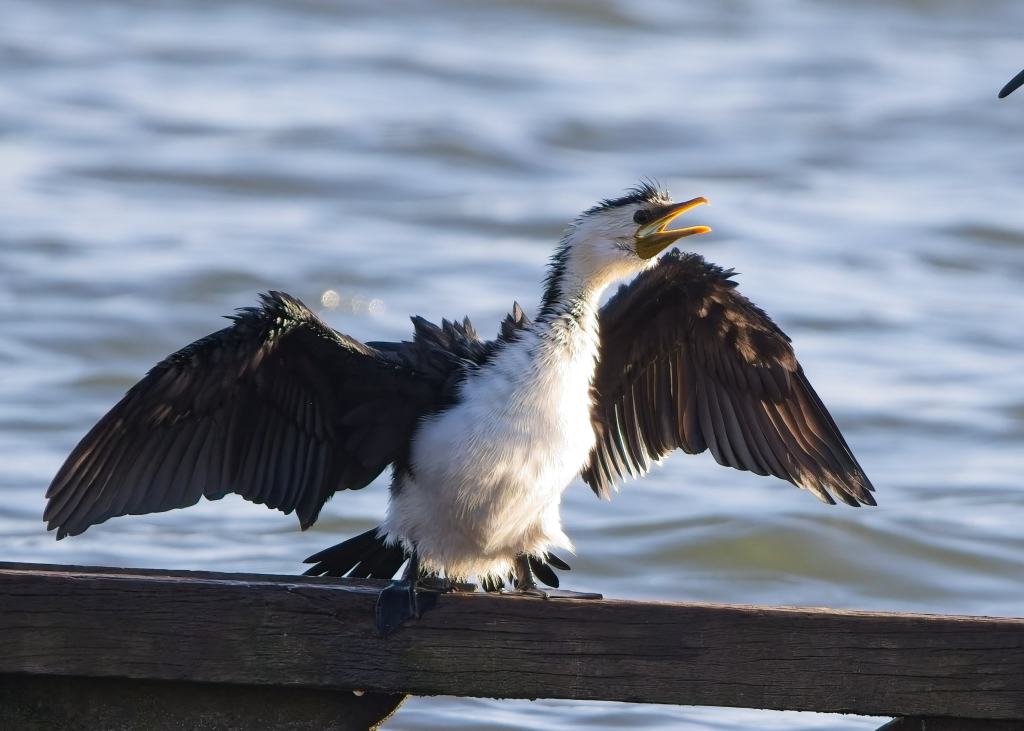
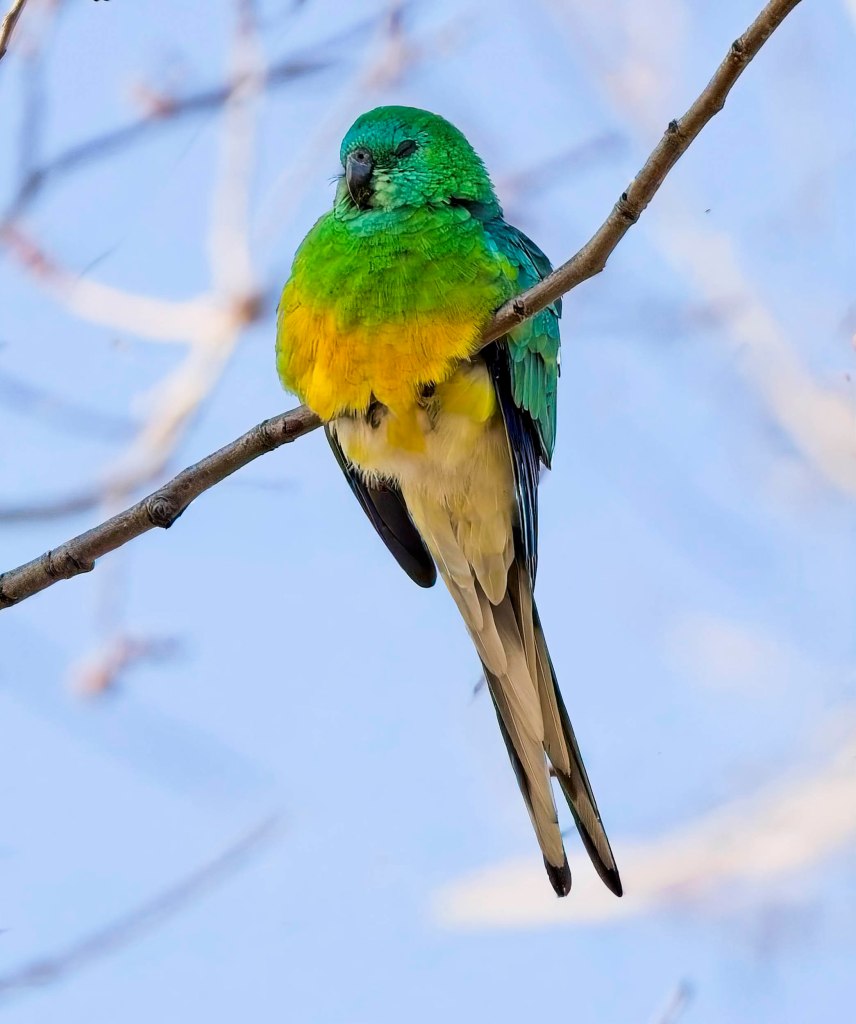
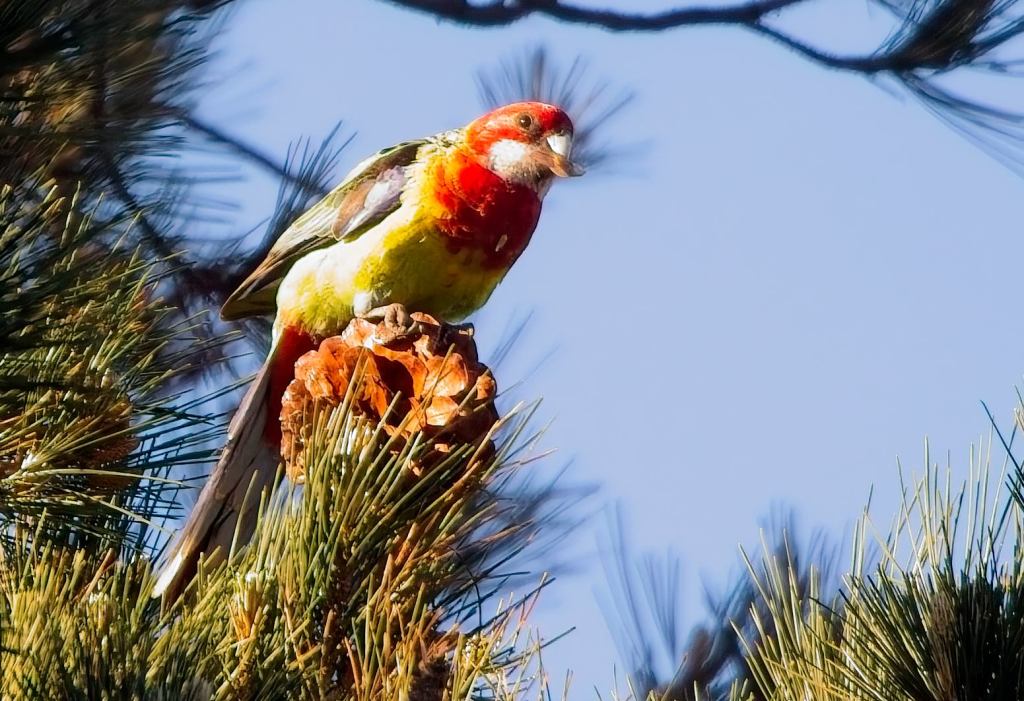
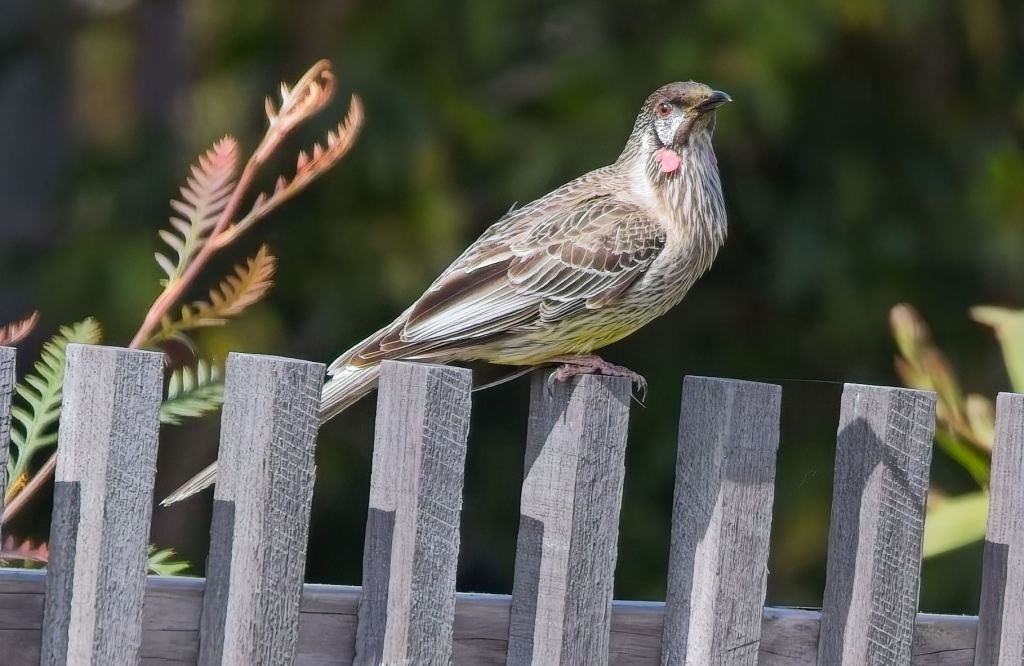
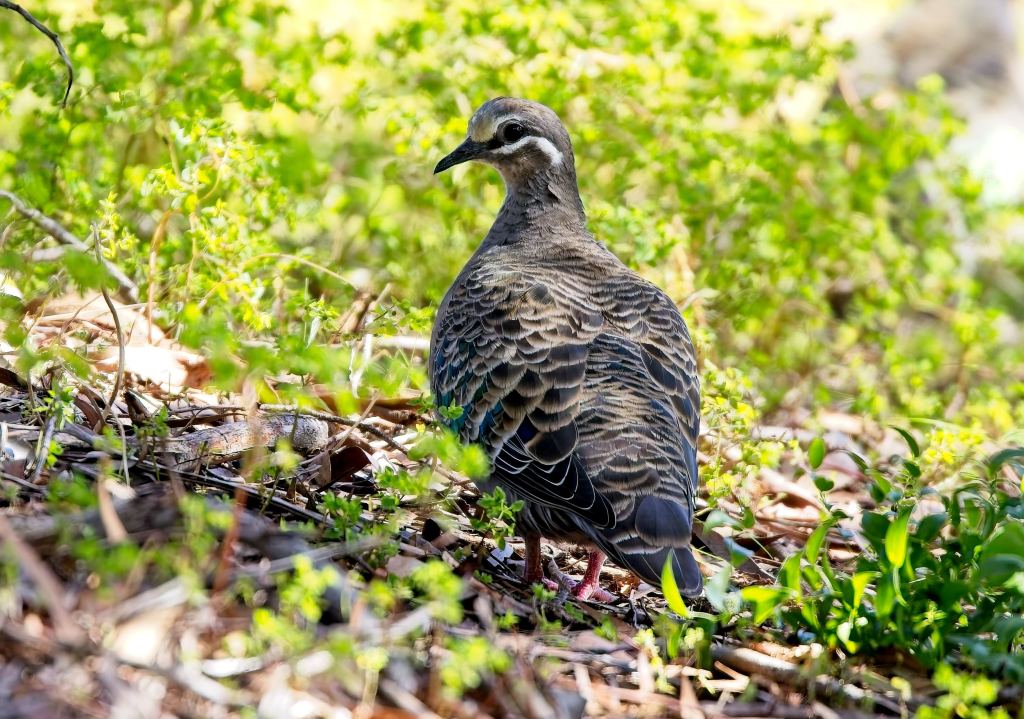
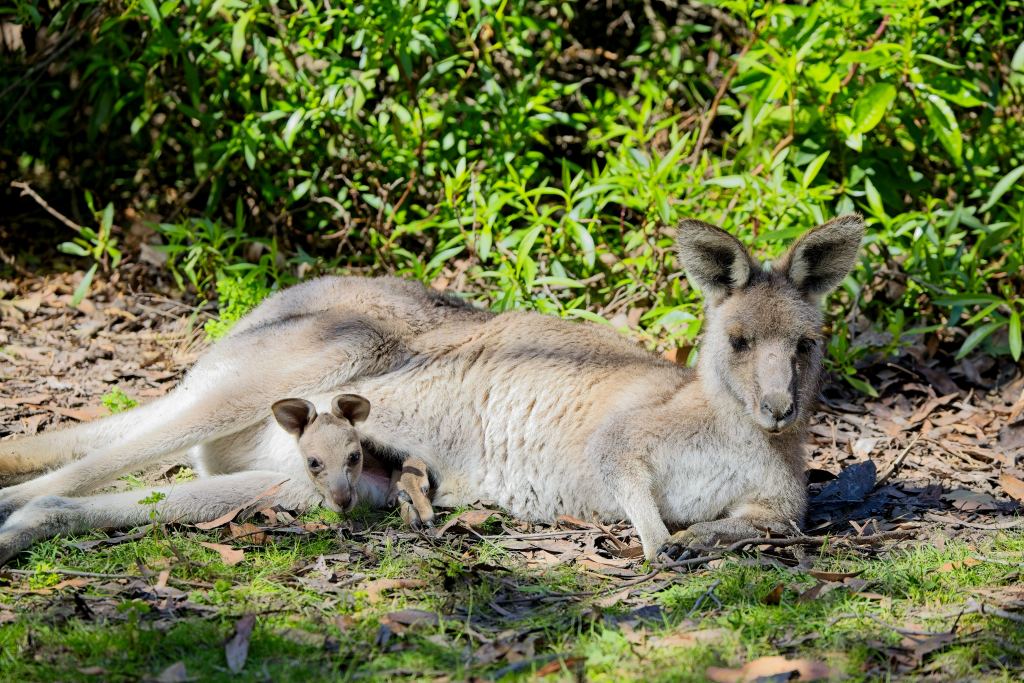
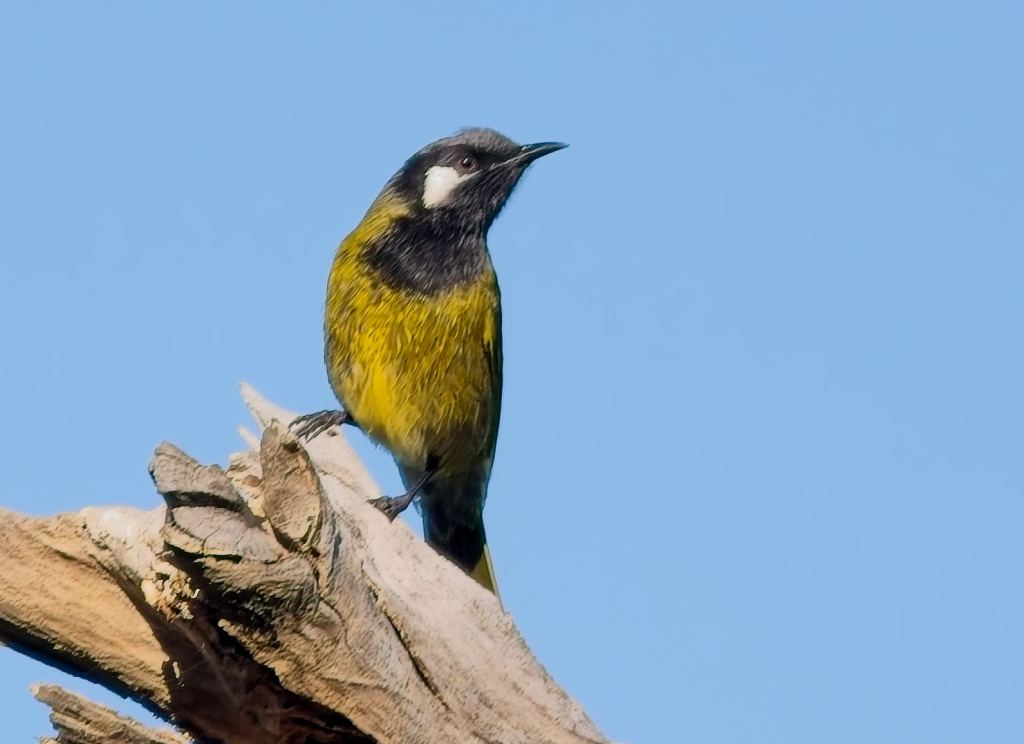
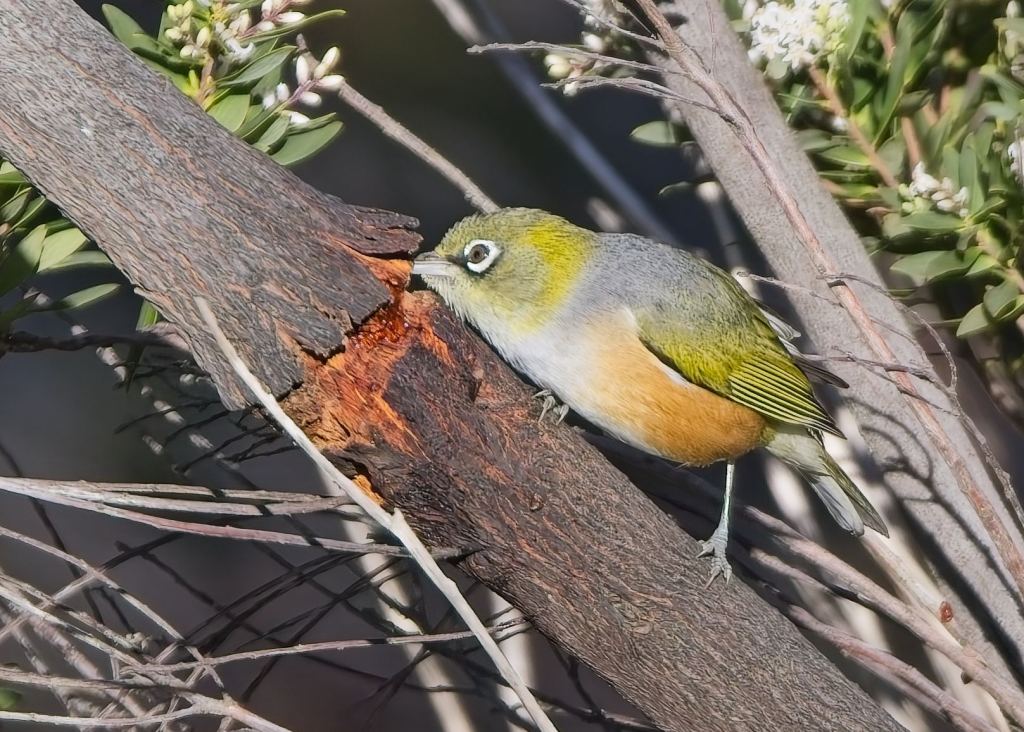
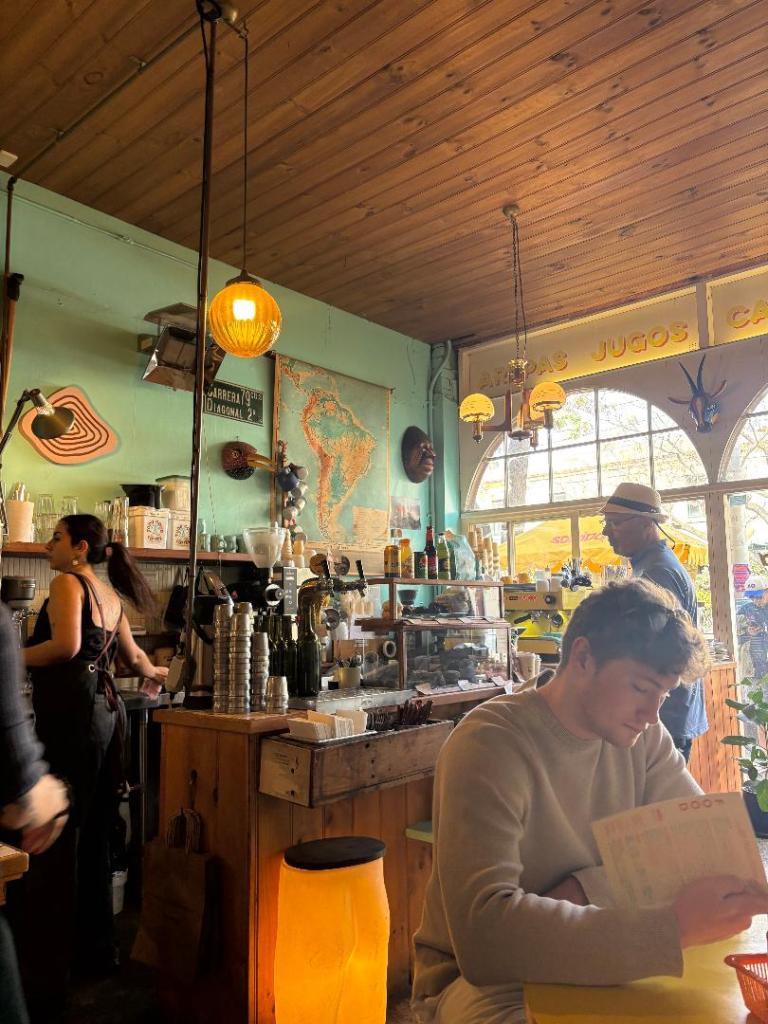
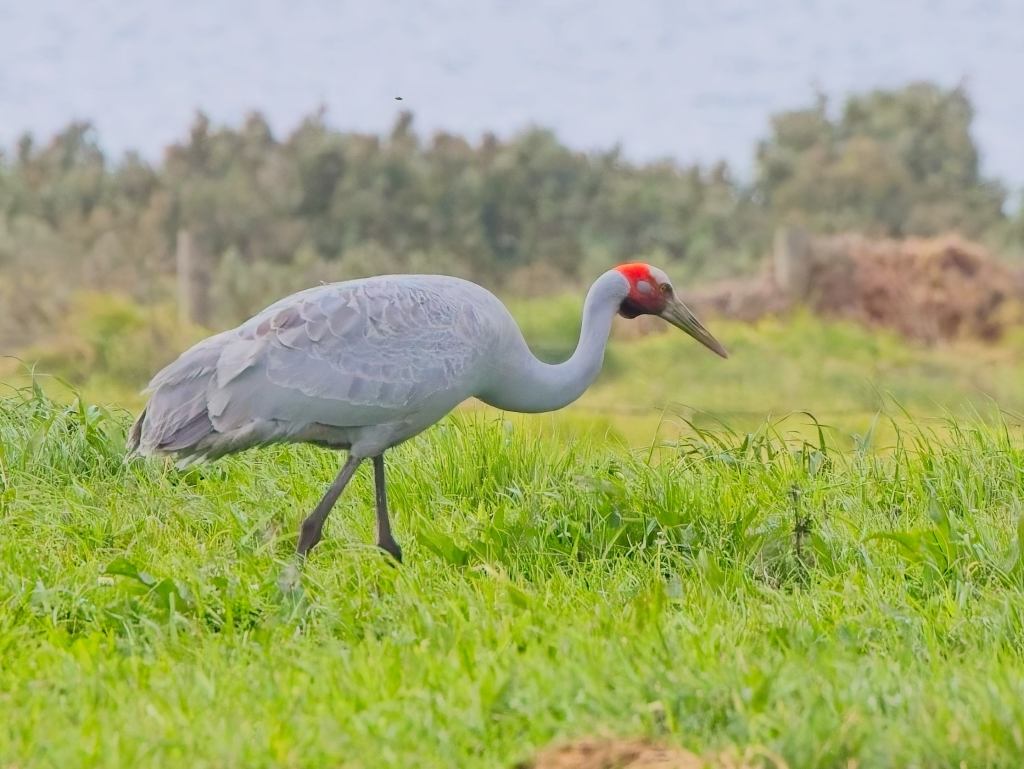
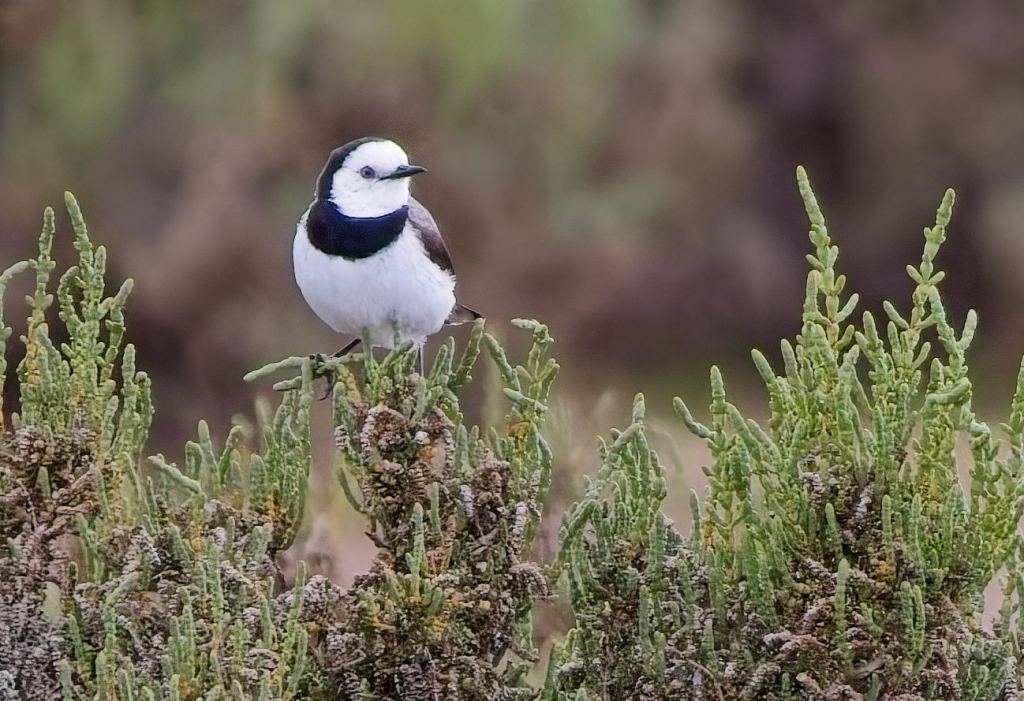
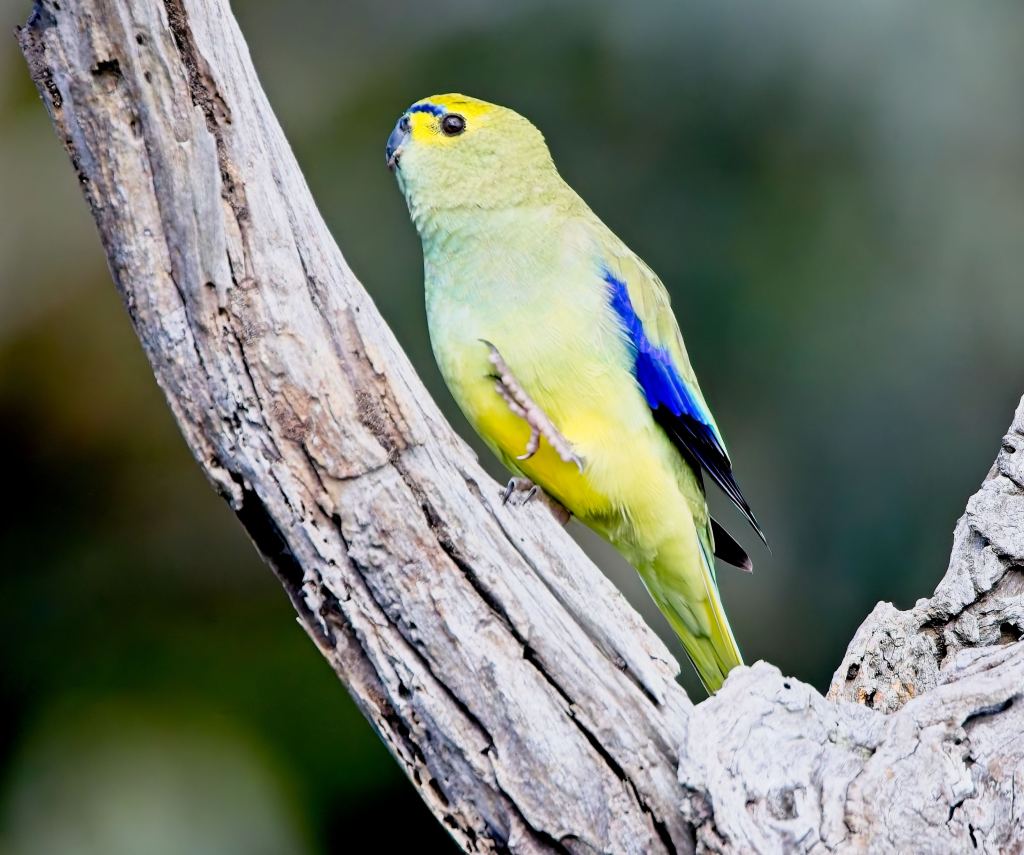
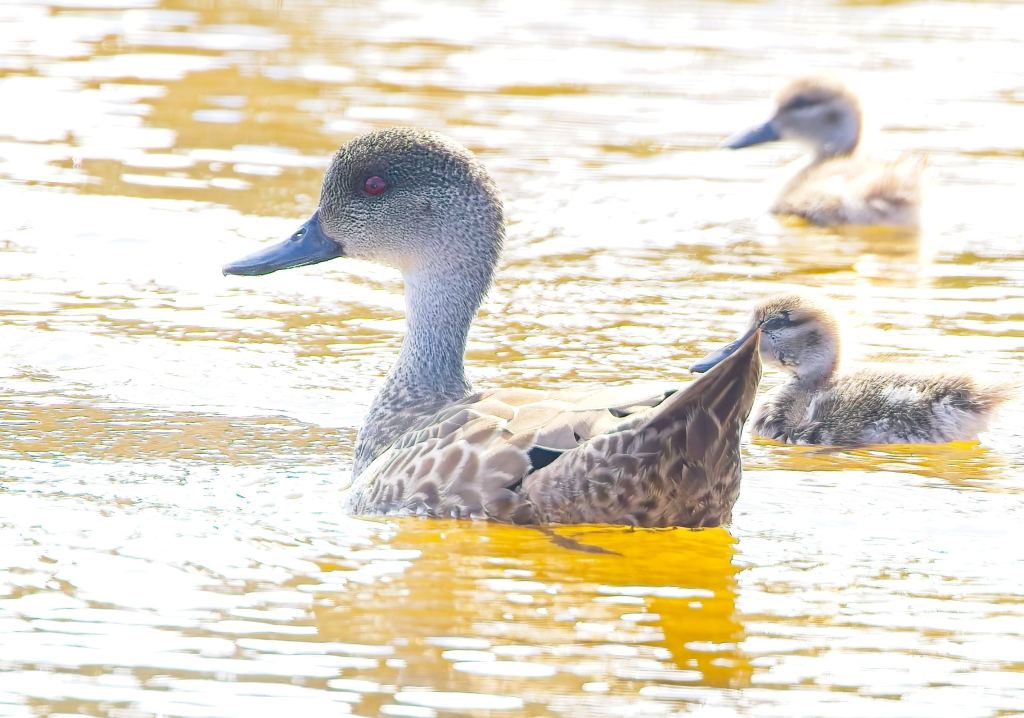
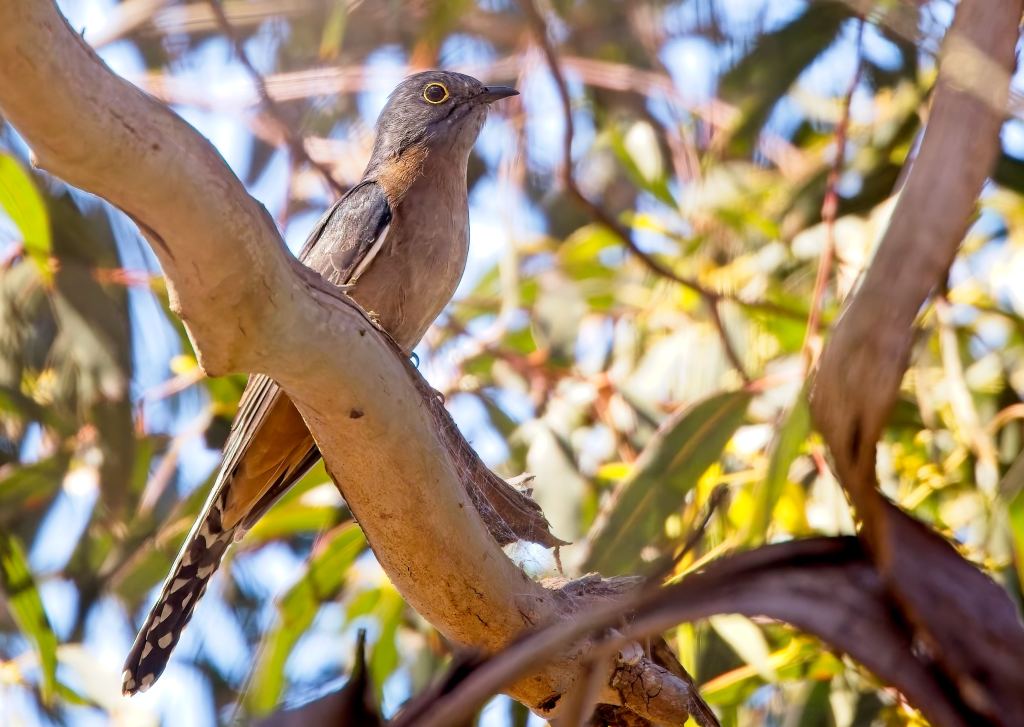
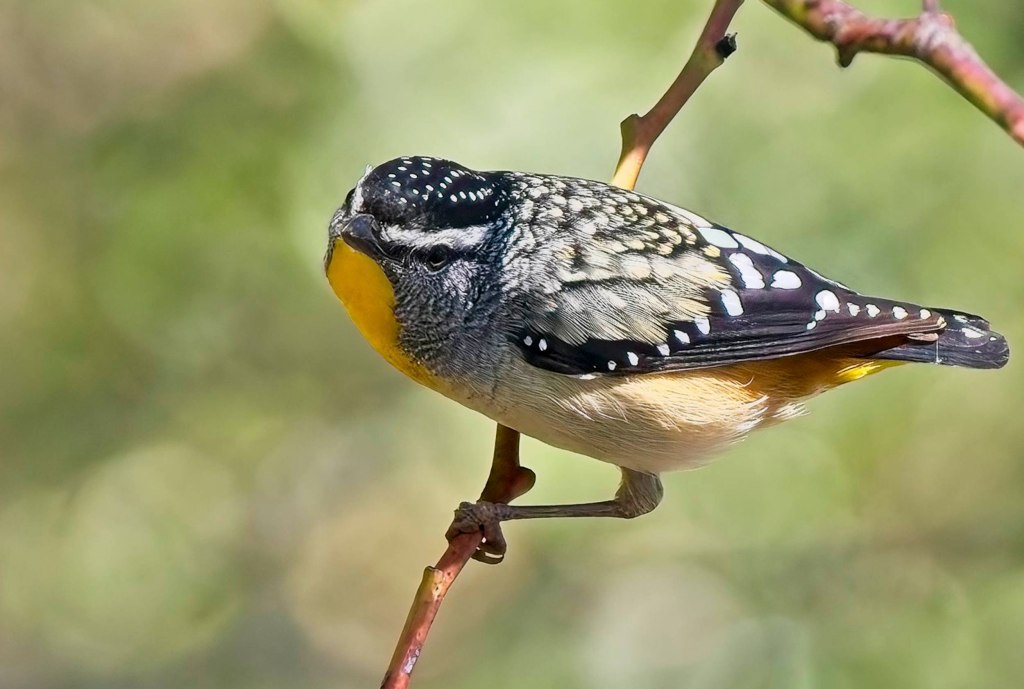
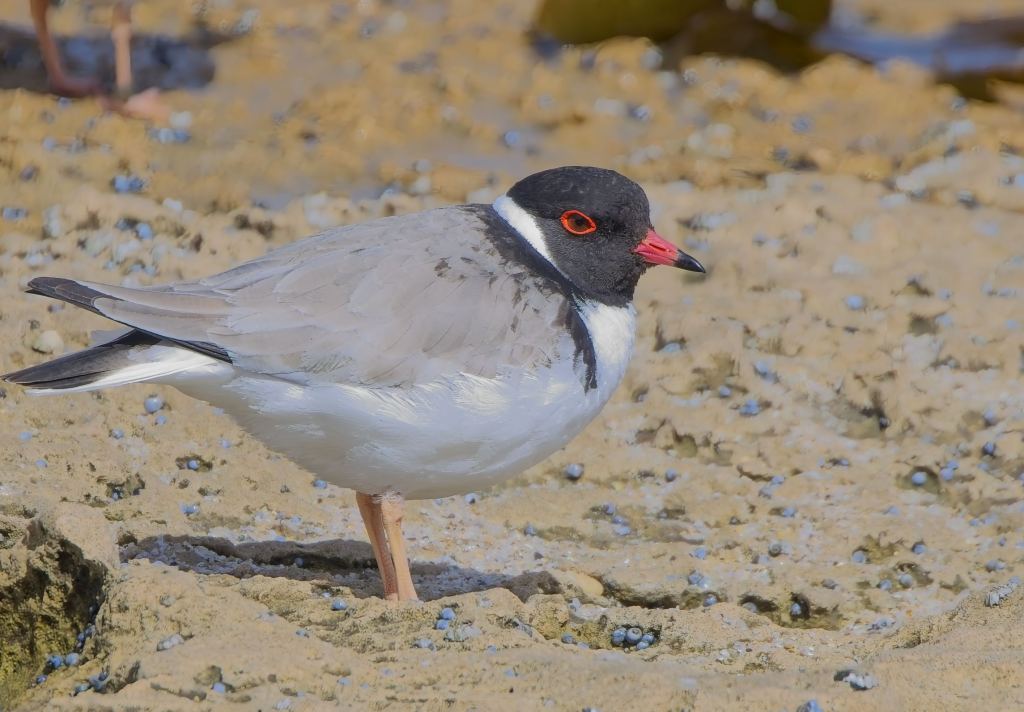
It is now October 8th, home not quite two weeks. All photos have been processed and added to Ebird reports. Five blog posts have been written and published. Writing the blogs and going over photos and Ebird reports has been a great way to “keep the trip alive” and also to get a distanced perspective on the trip. From that perspective my most important take is that it was a great trip in almost every way. Now looking back here is a summary of how I see the trip and I have included a gallery of my top 2 dozen bird photographs – roughly 12% of the species photographed.
PEOPLE: Without question the best part of our trip was the people. In every location and in every situation, our intersections with people were terrific, not a single negative. Check in and even security at airports was great and people were friendly and helpful. At airports in Australia there were volunteers. mostly senior citizens, who were in the concourses helping travelers find their way. Hotel staffs were the same – friendly, helpful and competent. Waiters at restaurants were mostly young people who were in Australia on work visas – mostly from Europe or Asia or occasionally South America but not North America or Africa – and were again competent, helpful and engaging. Our bird guides Christian Doerig and Doug Herrington were excellent as were Birding Pals Ross and Thea Monks competent, friendly and engaging. Casual intersections – either the professor at the first restaurant, dog walkers in parks, other birders, the crowds who came to Melbourne for the NFL game, people on the trams, in the shops – everyone – warm and friendly.
Christian Doerig and Blair
PLACES: Each place we visited was great. Melbourne was probably our favorite – somewhat influenced by that coffee and those pastries and it was where we had the most diverse experiences. We loved the Great Ocean Road. We loved the Royal Botanic Garden in Sydney. Uluru/Ayers Rock was a unique and beautiful experience. Even without a Southern Cassowary, Tropical Queensland from Cairns north with the beautiful water, crocodiles, the tropical forest and the party vibe of Port Douglas was a great add to the itinerary. Food aside, O’Reilly’s really is similar to some of the cherished lodges in South America and the birds are so accessible and charismatic adding a different dimension to the experience of a beautiful forest immersion. Finally our Brisbane time was maybe too limited with one full day for me with the Monks, a great time, but not shared by Cindy. The riverfront was great as was our hotel and the restaurants were fun and like Melbourne and Sydney, many architecturally cool buildings. Another day would have broadened our experience there.
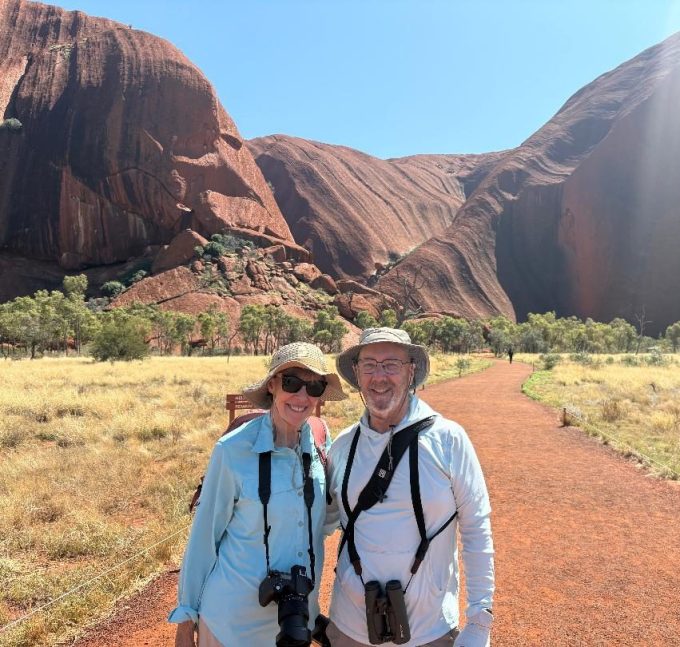
Cindy and Blair at Uluru
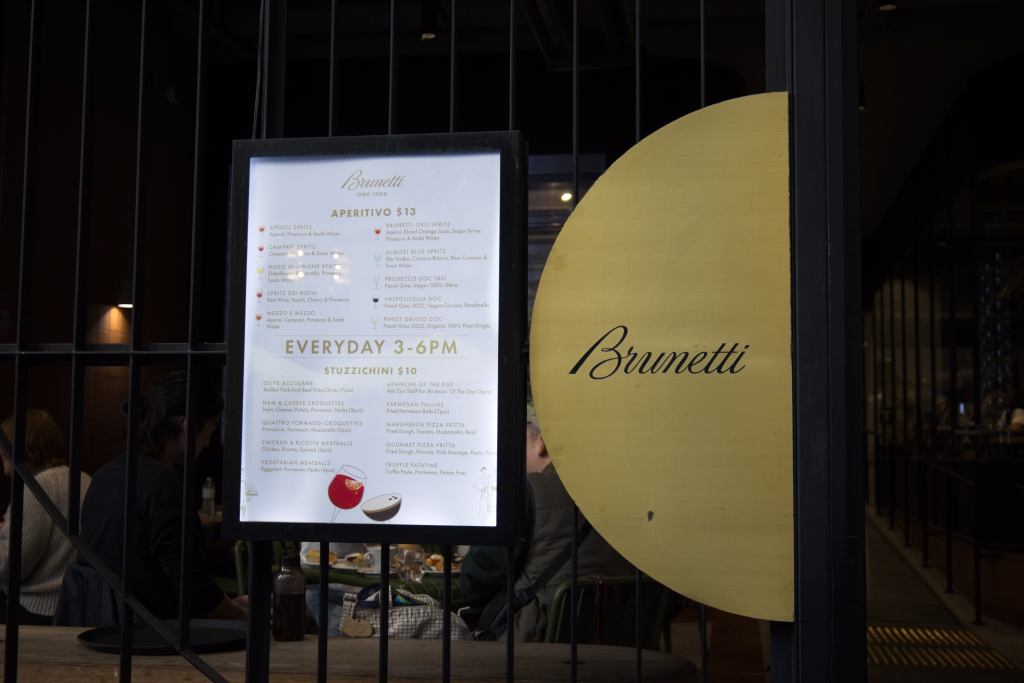
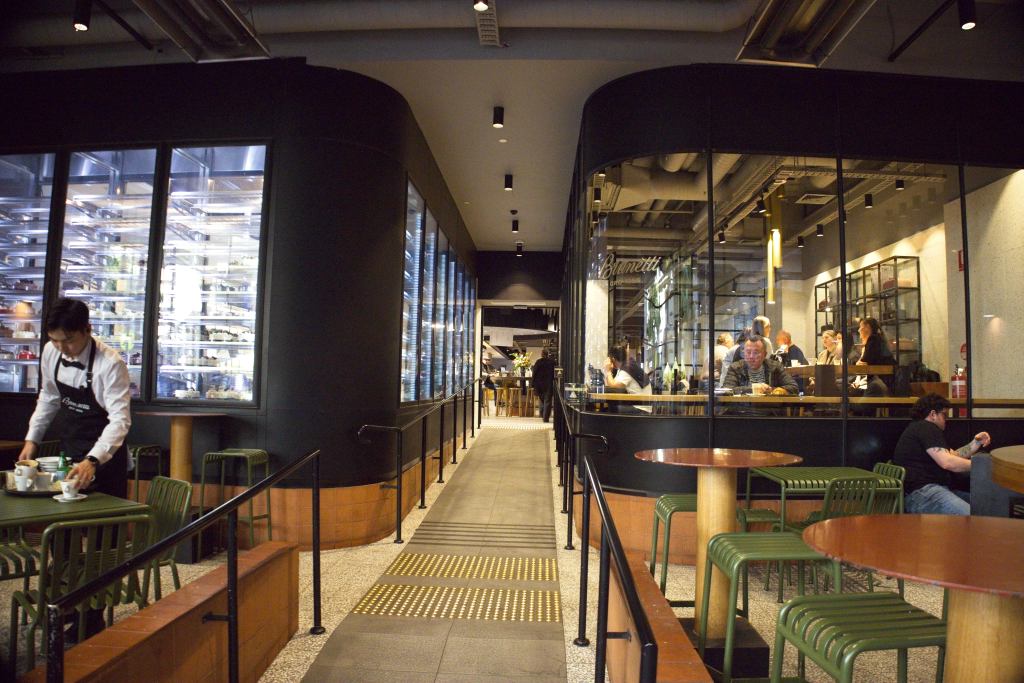
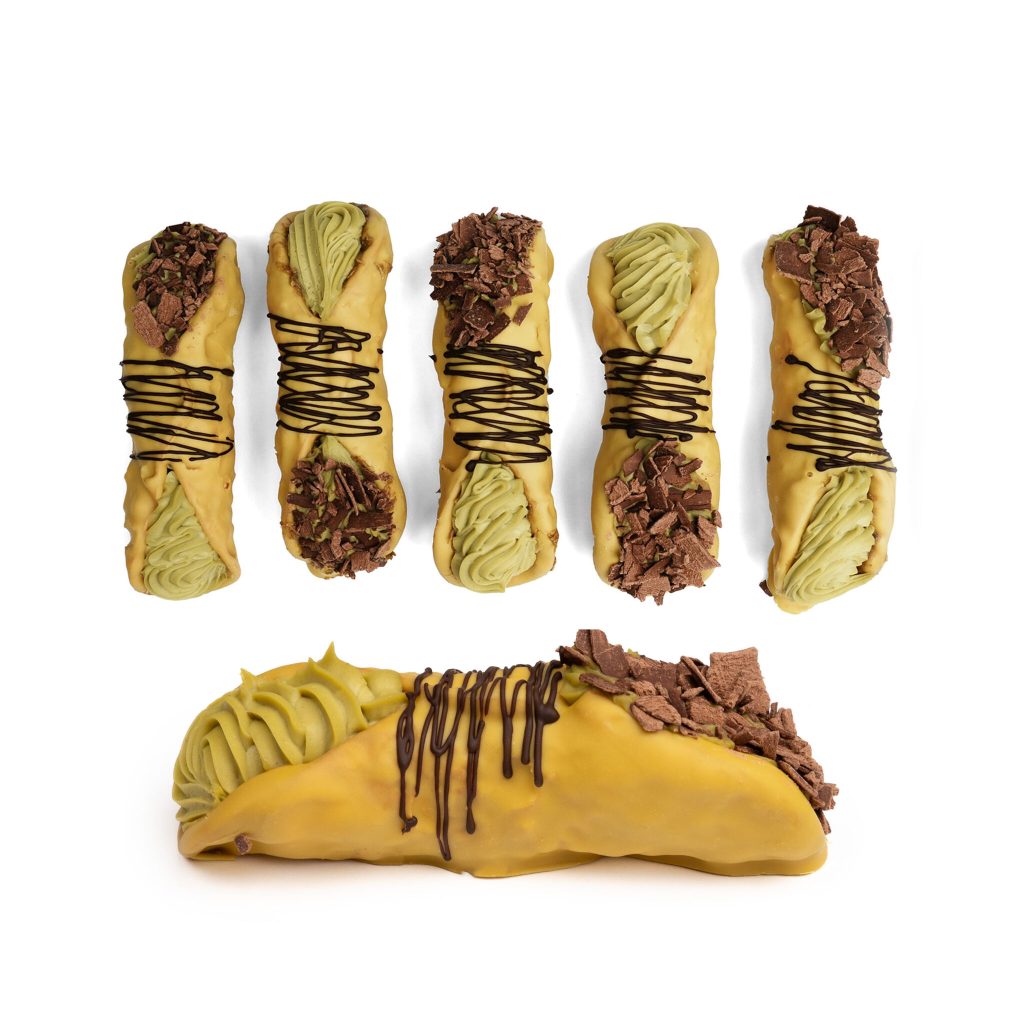
FOOD: There were limitations at O’Reilly’s and Uluru and prices were higher than expected, but this was a great culinary trip with exceptional coffee, especially in Melbourne, varied menus with food from every country you could want and with great preparation and presentation and both familiar and new tastes. I am probably missing some, but I can recall meals that were Italian, Mexican, Colombian, Korean, Greek, “American”, Thai, Indian, Spanish, Argentinian and “Australian”. If Barramundi and Coral Trout were available here in Edmonds, we would be happy to add them to our diet here. And repeating a comment from an earlier blog, if Brunetti Oro from Melbourne was in Edmonds, weight control would be a real problem.
Brunetti Oro Latte
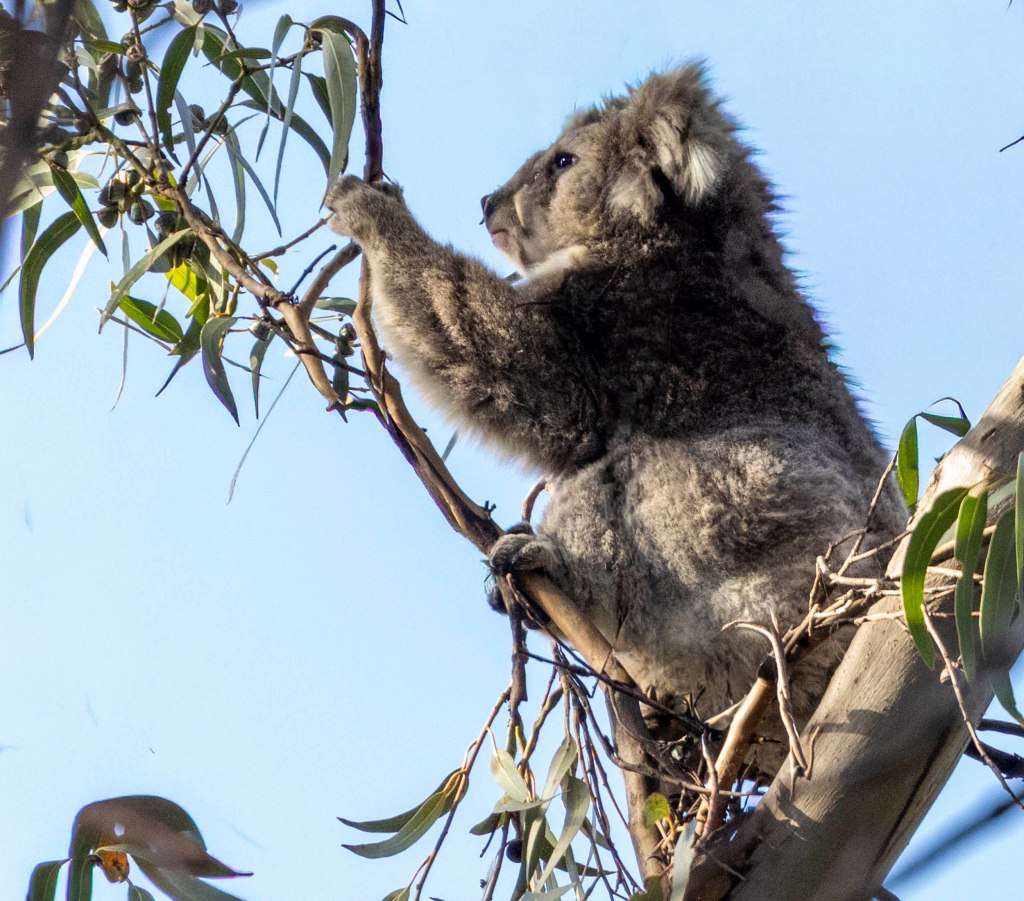
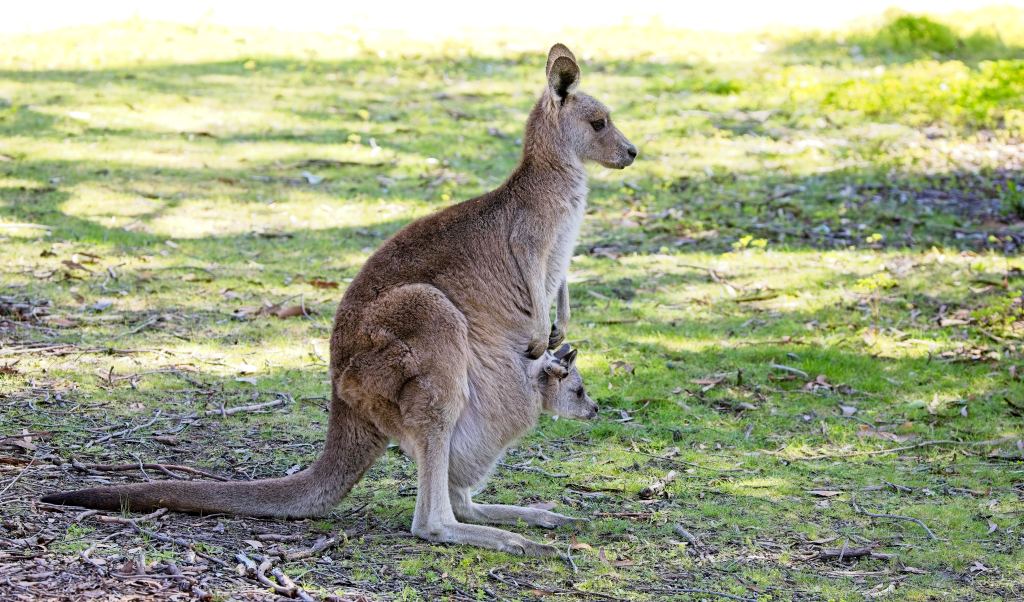
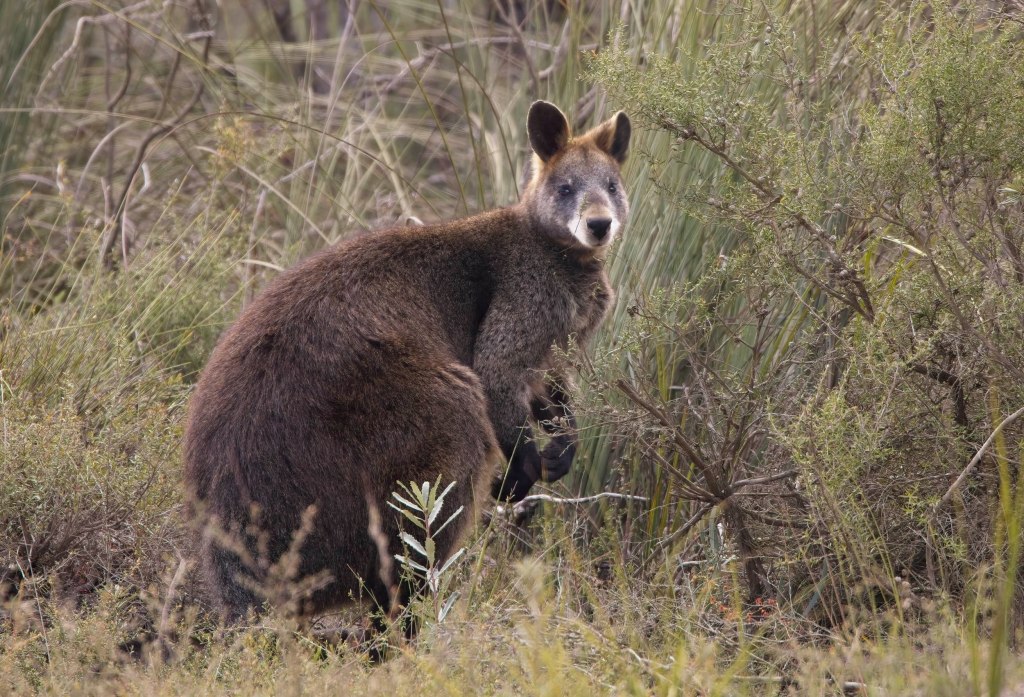
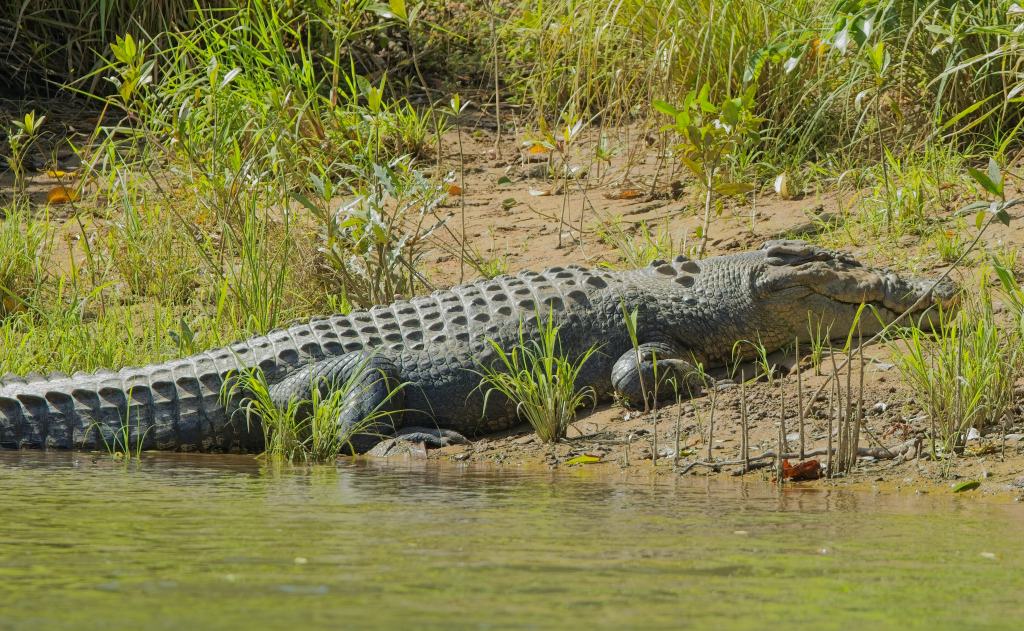
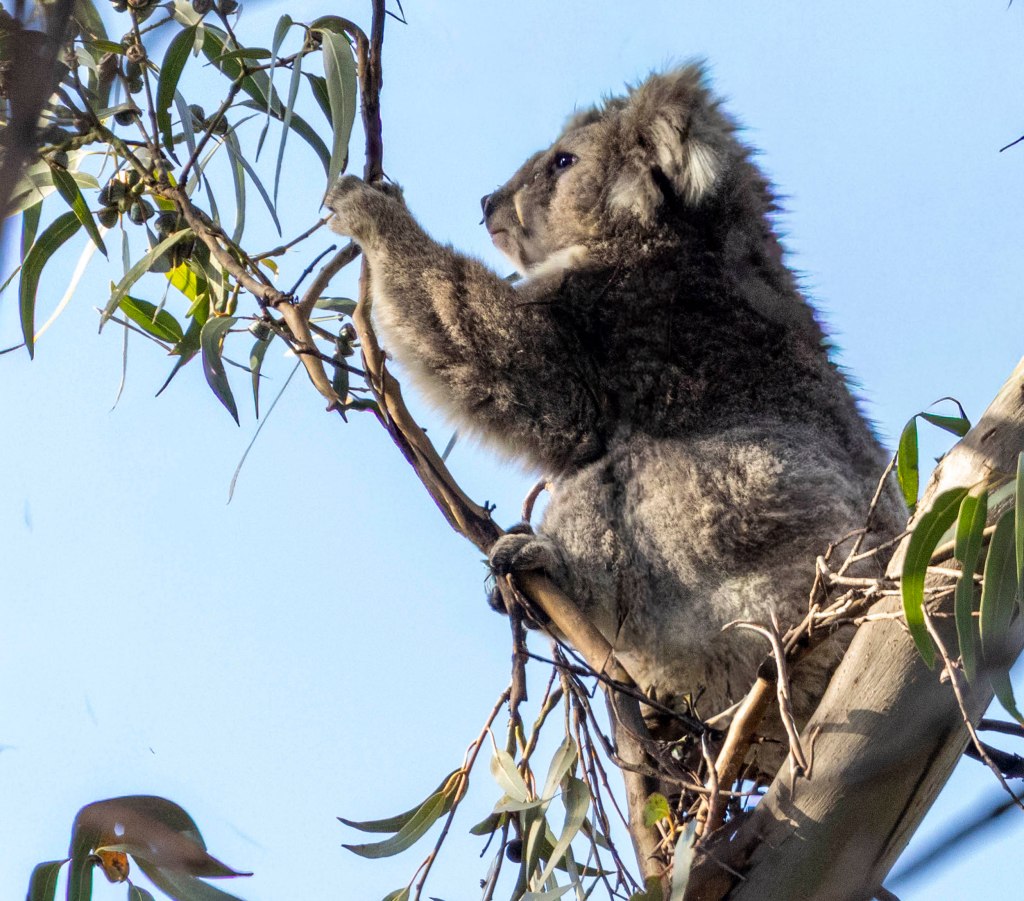
WILDLIFE (NOT BIRDS): Australia is famous for having more dangerous animals than anywhere else with the possible exception of Africa. It is also famous for the unique world of marsupials. The Great Barrier Reef is a treasure. We could have and maybe should have spent more time searching out some of it unique wildlife. We did not see them in great numbers, but we had great intersections with kangaroos and did see a koala in the wild and also in a preserve and had a couple of wallabies. There were Saltwater Crocodiles on the Daintree River – enough to check the box. Half of the 200 plus snakes in Australia are venomous and a dozen of them are considered dangerous. We saw only a single non-venomous snake. No dingoes, no platypus, no wombats, no echidnas, no sharks, no box jellyfish. On our Africa trips, our main focus has been on birds but the mammals have been as much a part of the visits as the birds. Australia was more like our trips to South America – dominated by birds with a mammal or reptile or two as icing on the bird cake. If we return, I will not give up on the birds (or coffee) but would spend more time looking for non-avian animals.
KoalaGray Kangaroo with JoeyWallabySaltwater Crocodile
BIRDS: With the exception of two shorter trips to the Netherlands and Italy, this trip had less birding, intensity and percentage wise, than any of the other international trips for Cindy and me and was completely different from my solo trips which are essentially birding only. We were “in-country” for 18 days in Australia. Cindy sat out my days with the Monks and Doug Herrington which with the day with Christian Doerig were essentially birding only days. So from my perspective I would say there were 3 days of birding only and another 3 days lost to our many internal flights and getting to our hotels. Otherwise, on average, maybe 40% of the time on the other days, were birding. Putting that together, something less than half of the trip – maybe the equivalent of 7 full on days can be seen as birding days for me. So from that perspective, how was the birding? My answer is EXCELLENT! Repeating numbers written elsewhere, the totals for the trip were: 218 total species, 37 lifers, photos of 203 species including 161 life photos and photos of all but one of the new lifers!! The biggest disappointment was missing a photo of the Southern Cassowary. Before this trip, my Australia list was 271 species and I had photos of 33 of them (only a handful in Australia itself). Presented another way, I got life photos of about half of the species I had seen previously but not photographed – mostly because I did not see the same species as before – mostly because I did not bird some of the same areas and also did not spend nearly as much time birding. If we had spent the same number of days birding on this trip as I did in 2003, the percentages (and all other numbers) would have been much higher. So … EXCELLENT!
BIRDS +1 – FAIRYWRENS: There are 10 fairywren species in Australia. I have seen 6 of them but only have photos of 4 of those. I missed a photo of a Lovely Fairywren seen on this trip and did not see and thus did not get a photo of the White-winged Fairywren seen in 2003 but not this time, so not even a photo op. Wish I had them all.
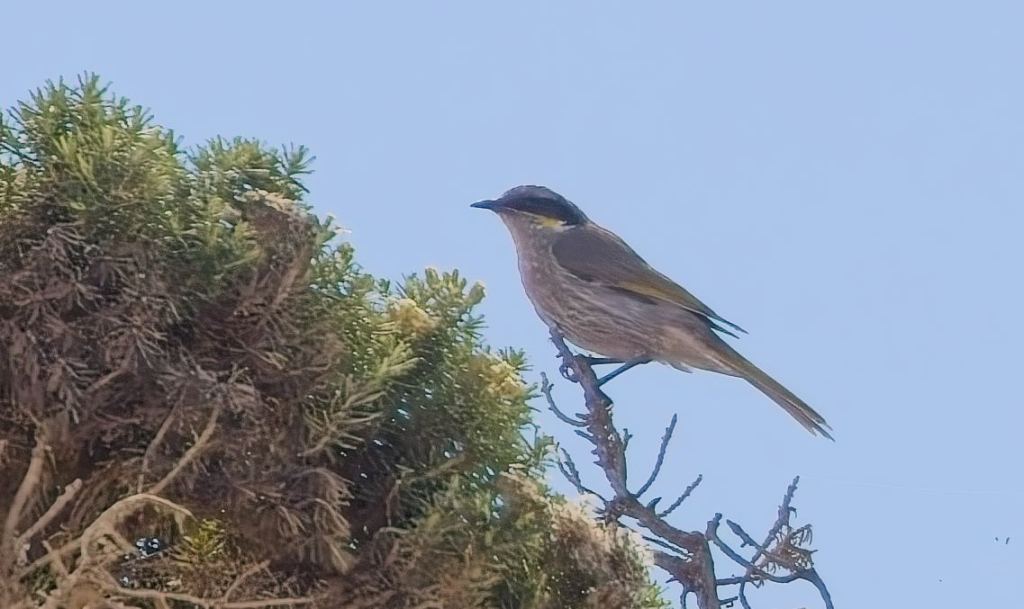
BIRDS +2 HONEYEATERS: Amazingly there are 78 species of honeyeaters in Australia. Many have “honeyeater” in their names, but the group also includes wattlebirds, friarbirds, myzomelas, miners, spinebills, chats and one gibberbird. I have seen 41 of these species, 27 on this latest trip. I have photos of the ones seen this year but none before – lots of opportunity.
The following photos have been chosen as favorites without necessarily being of the “best” birds as that is hard to define and is unfair to those not chosen all of which have their special place.
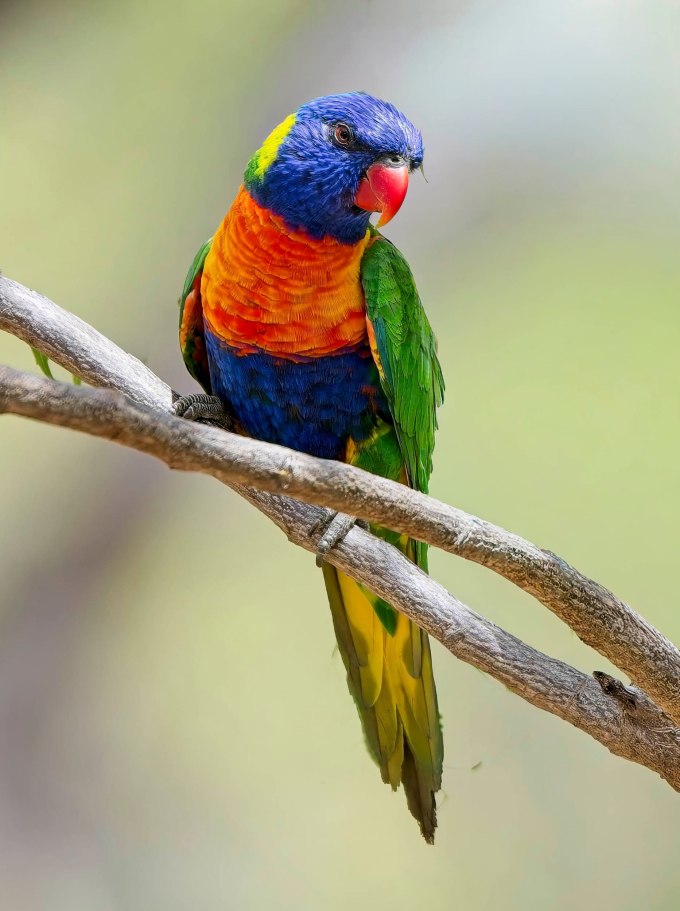
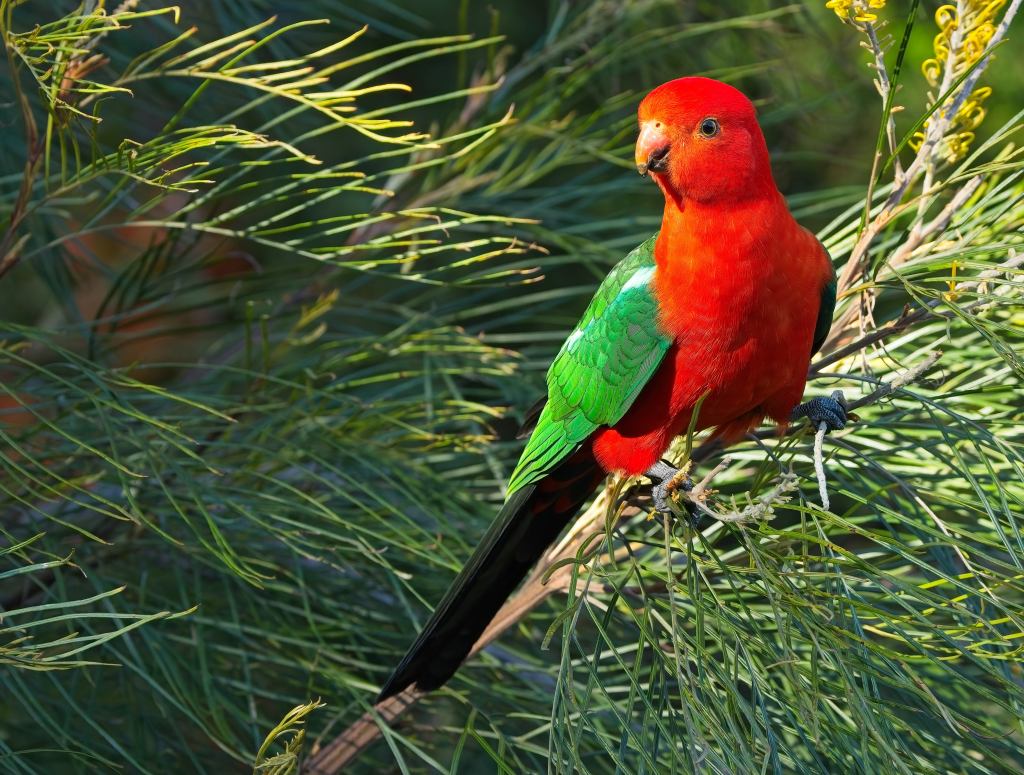
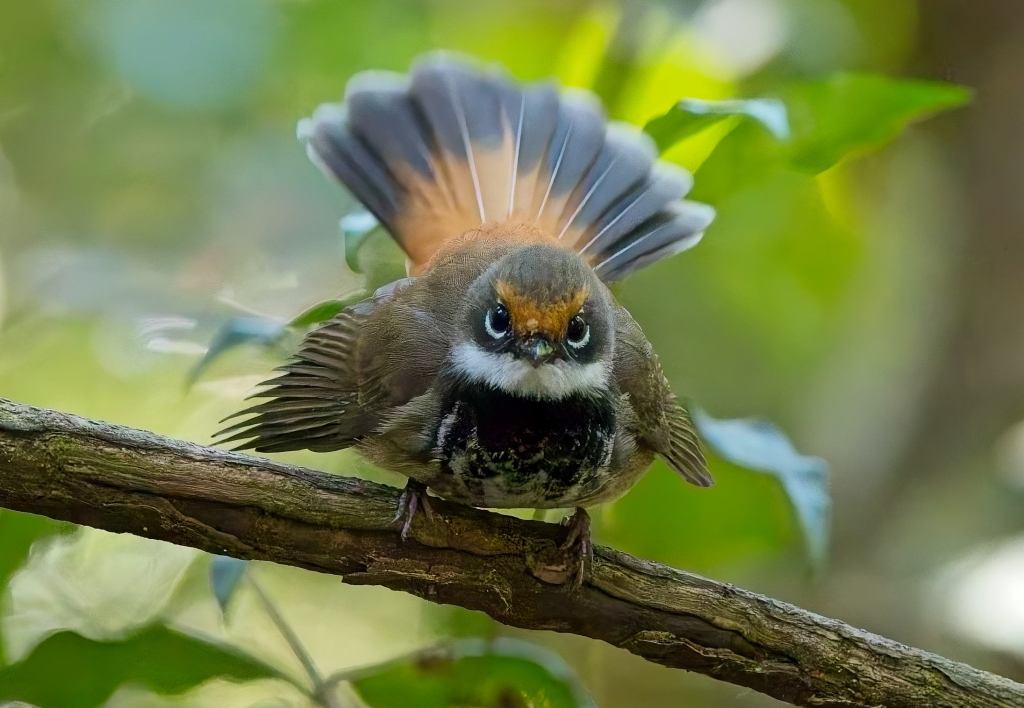
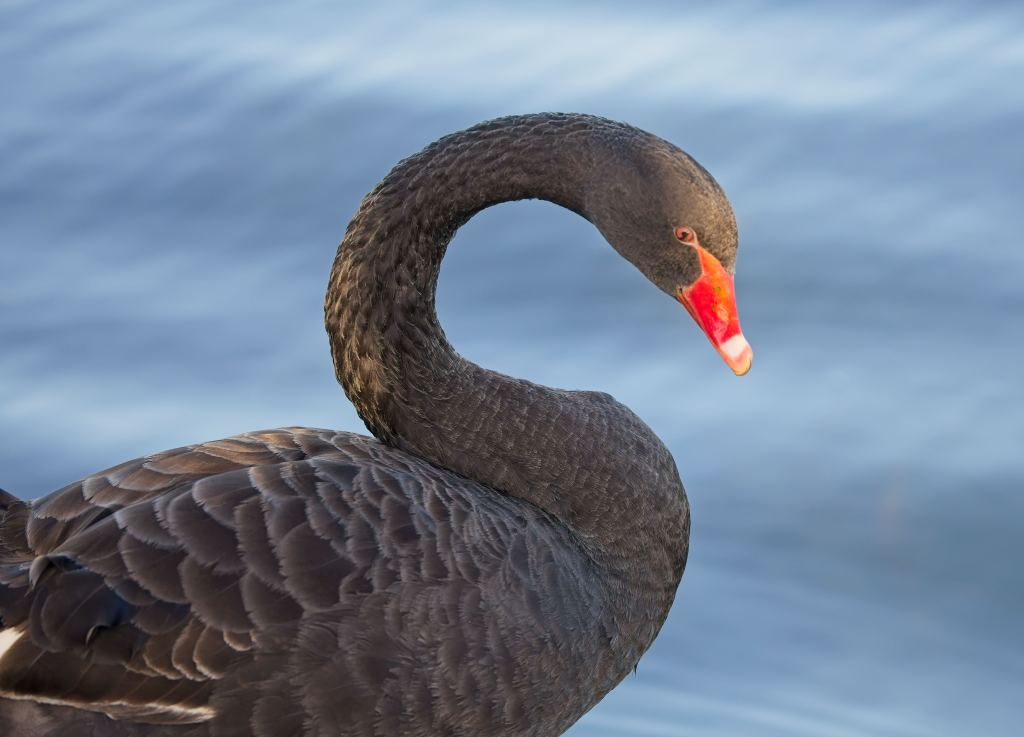
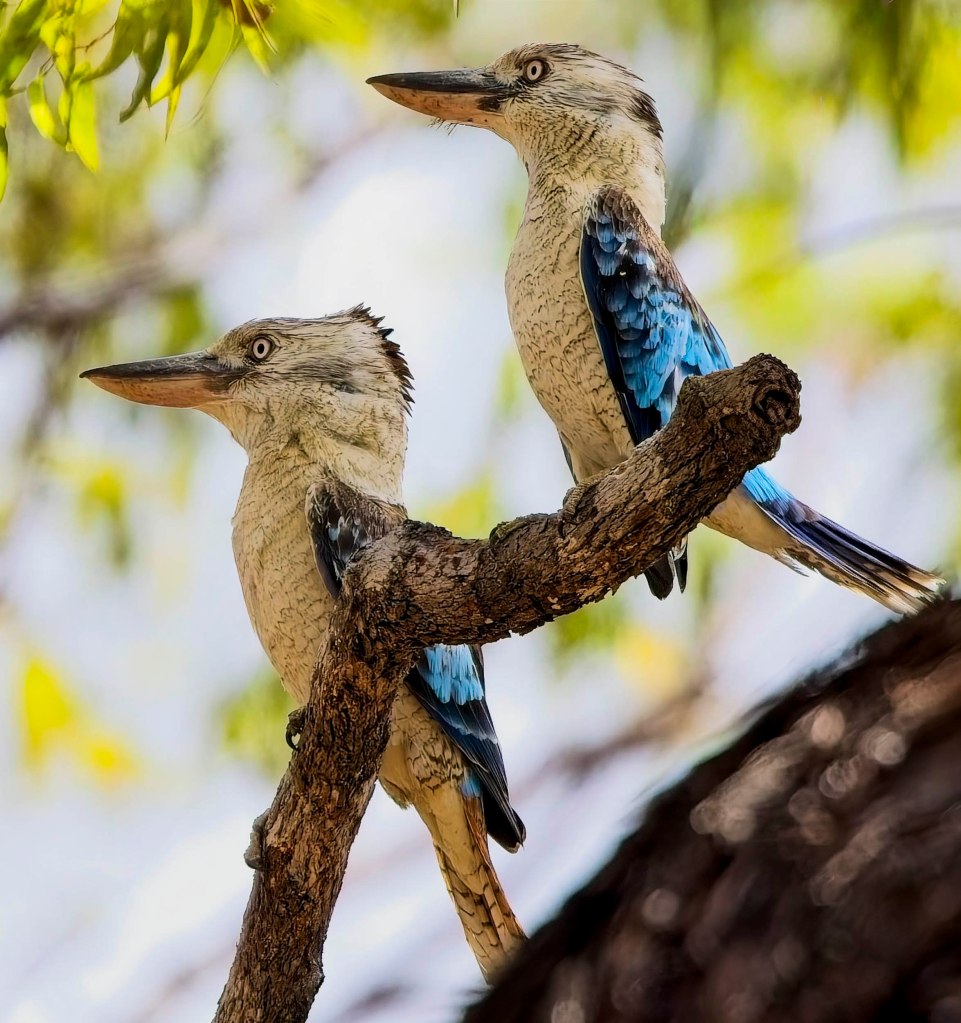
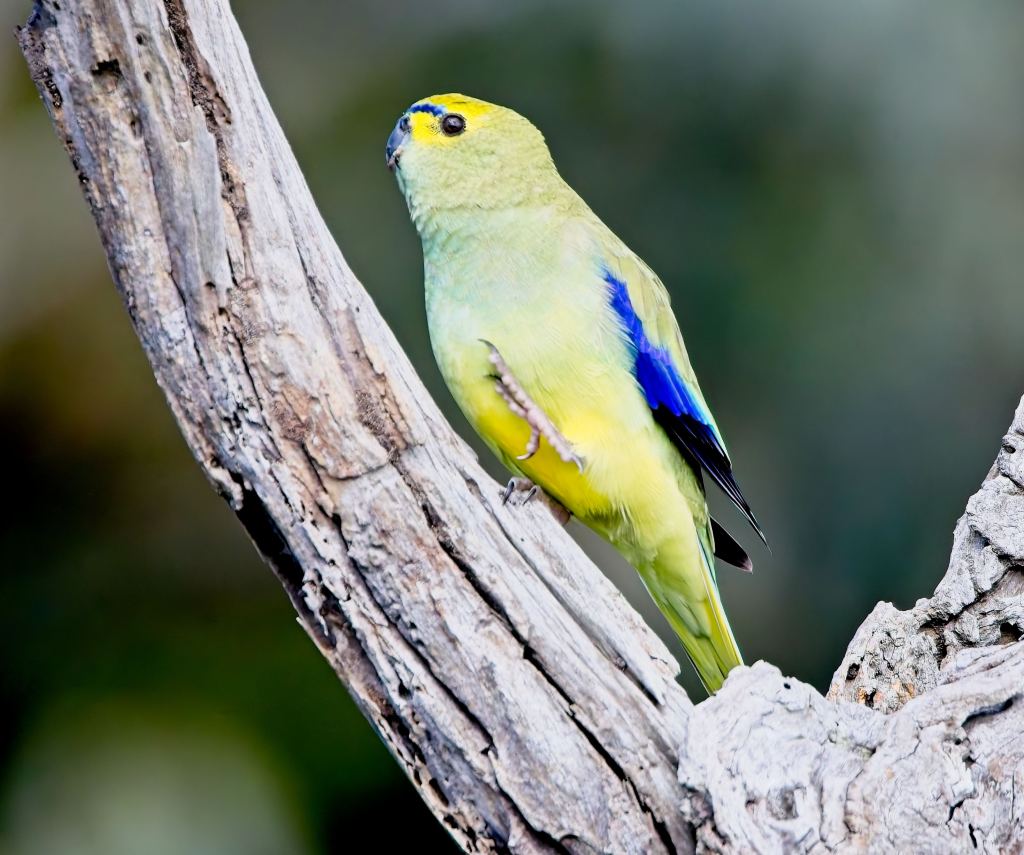
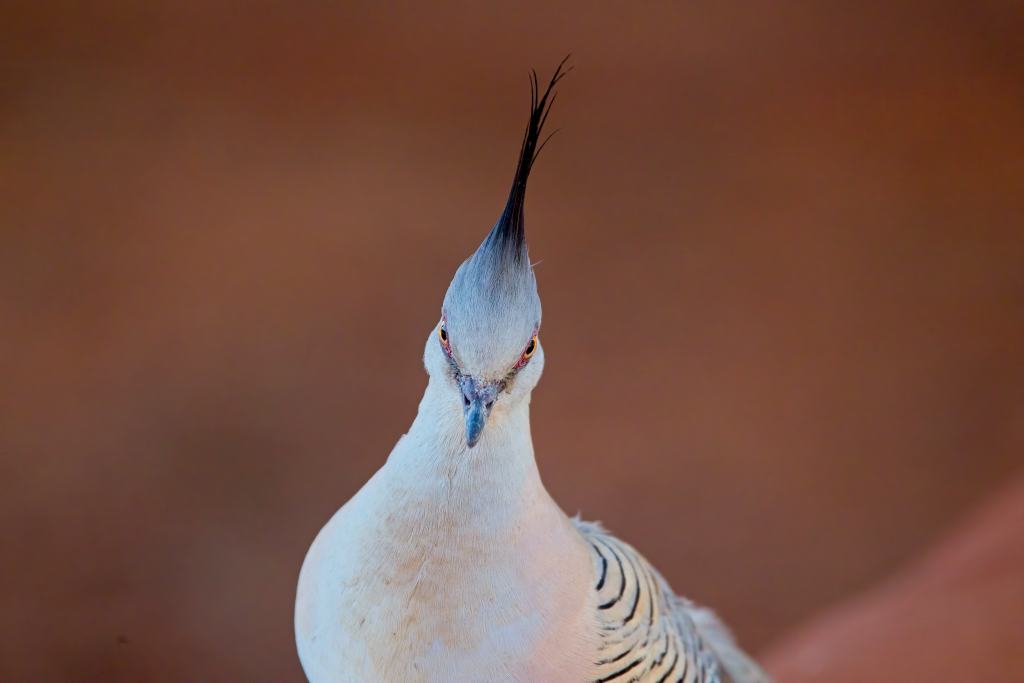
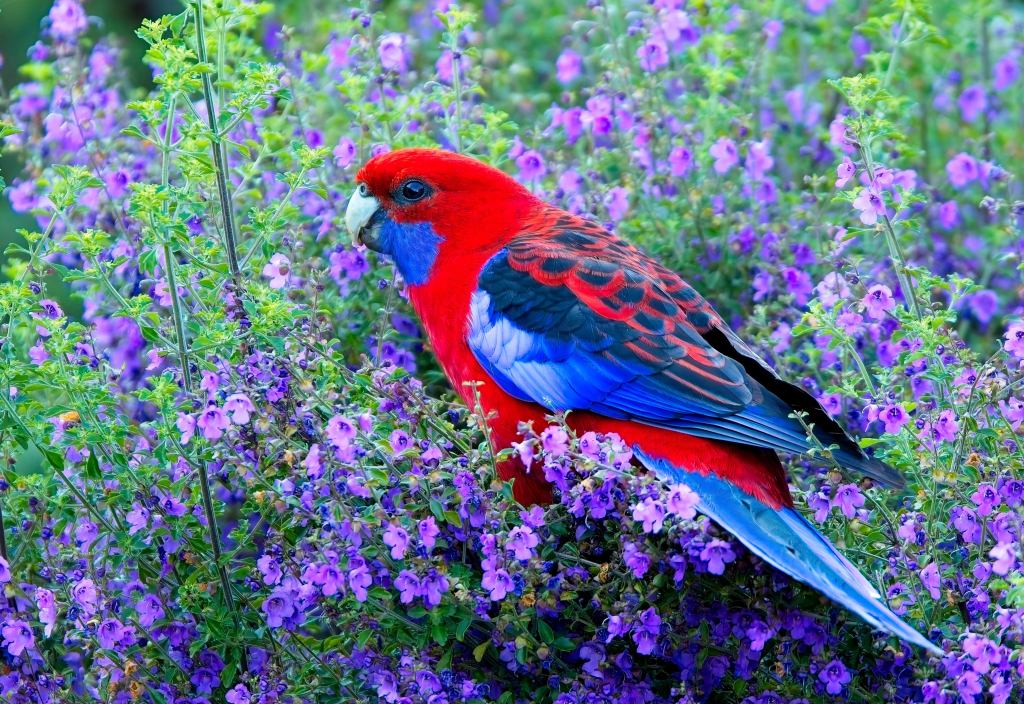
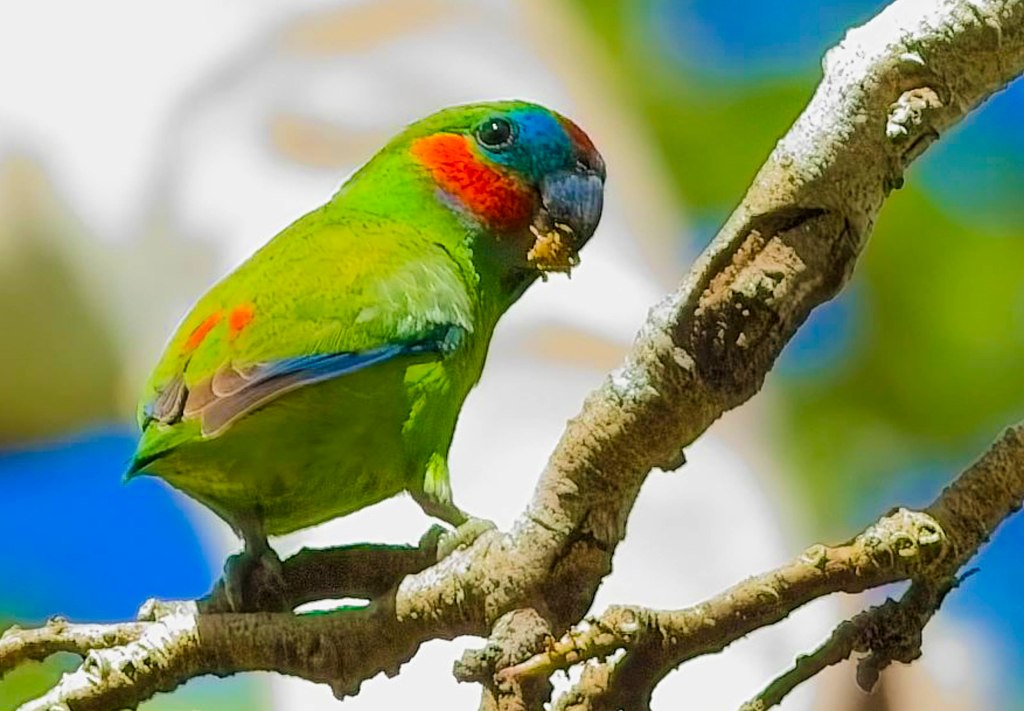
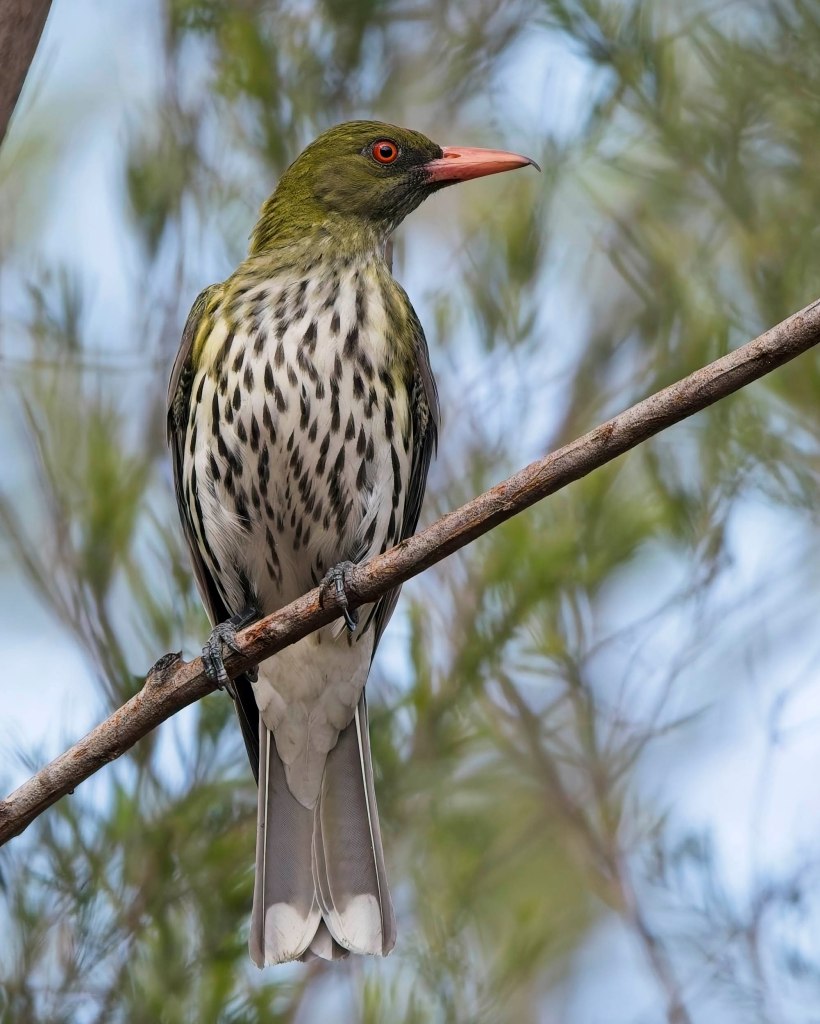
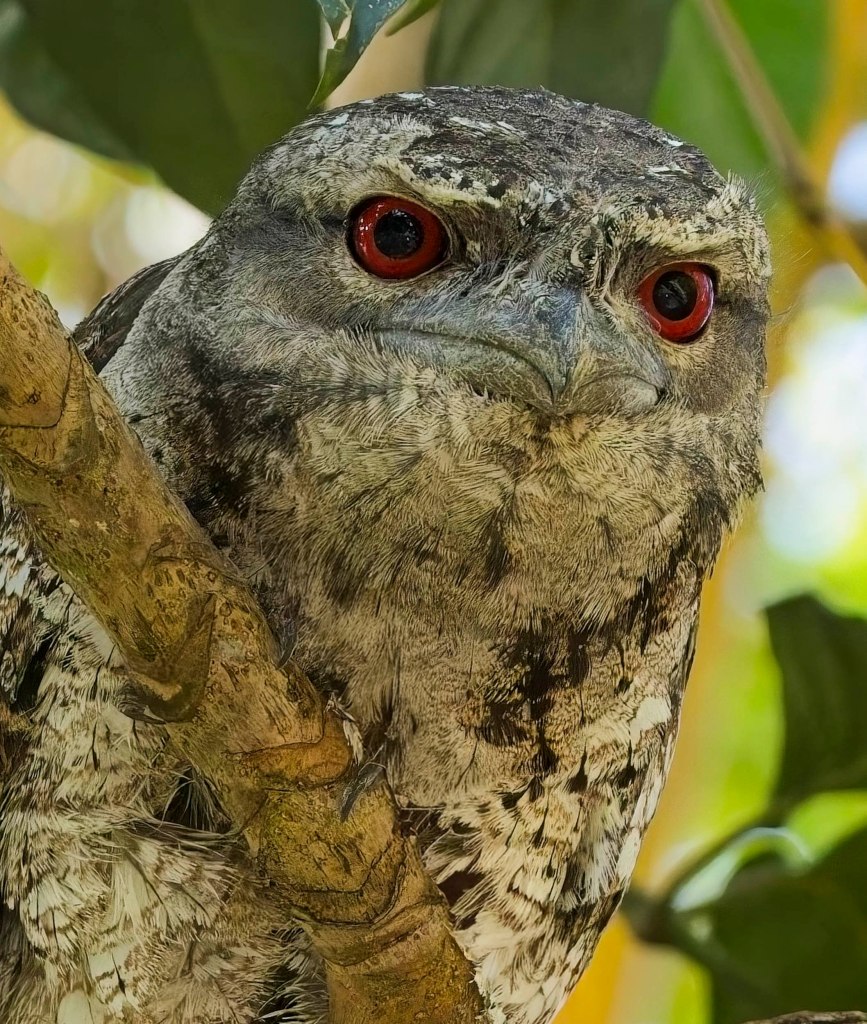
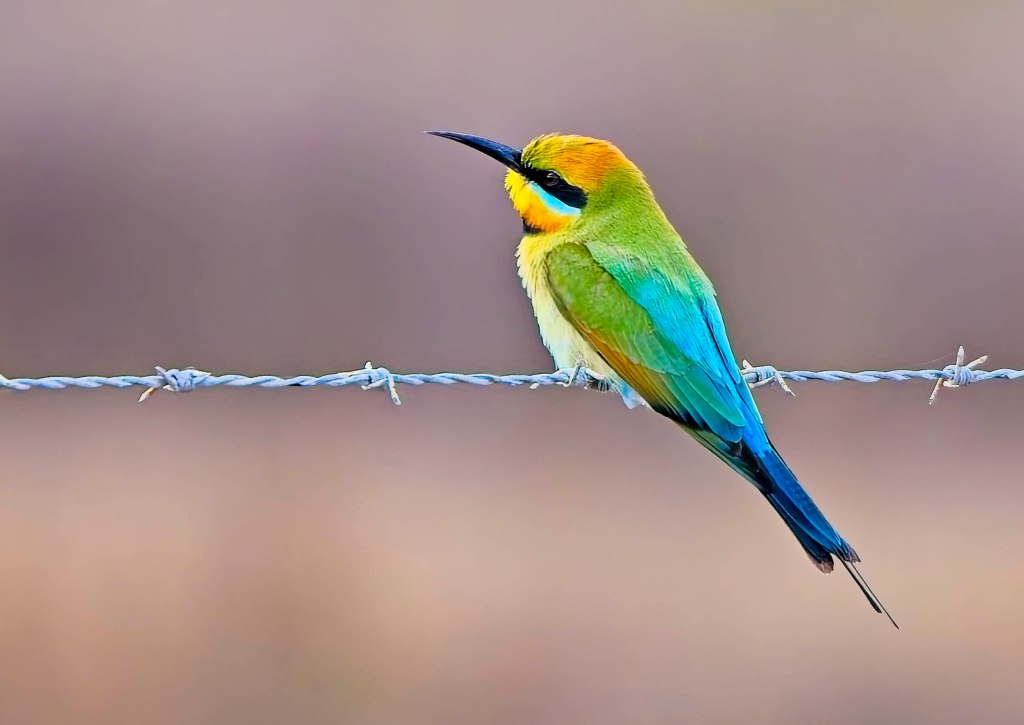
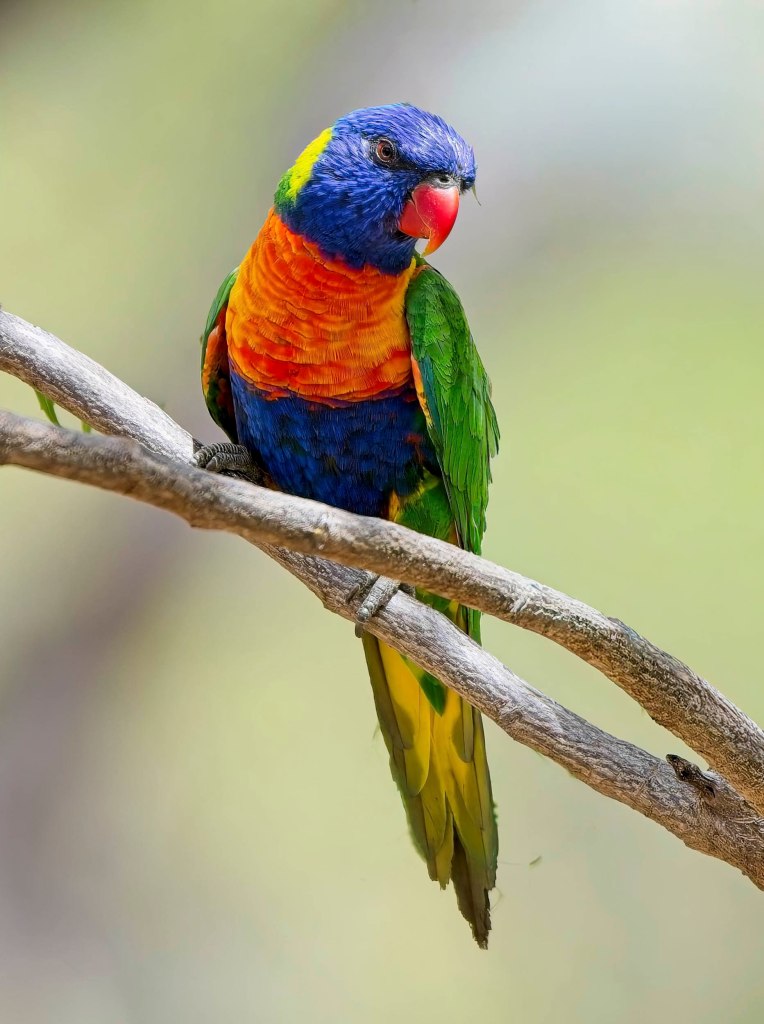
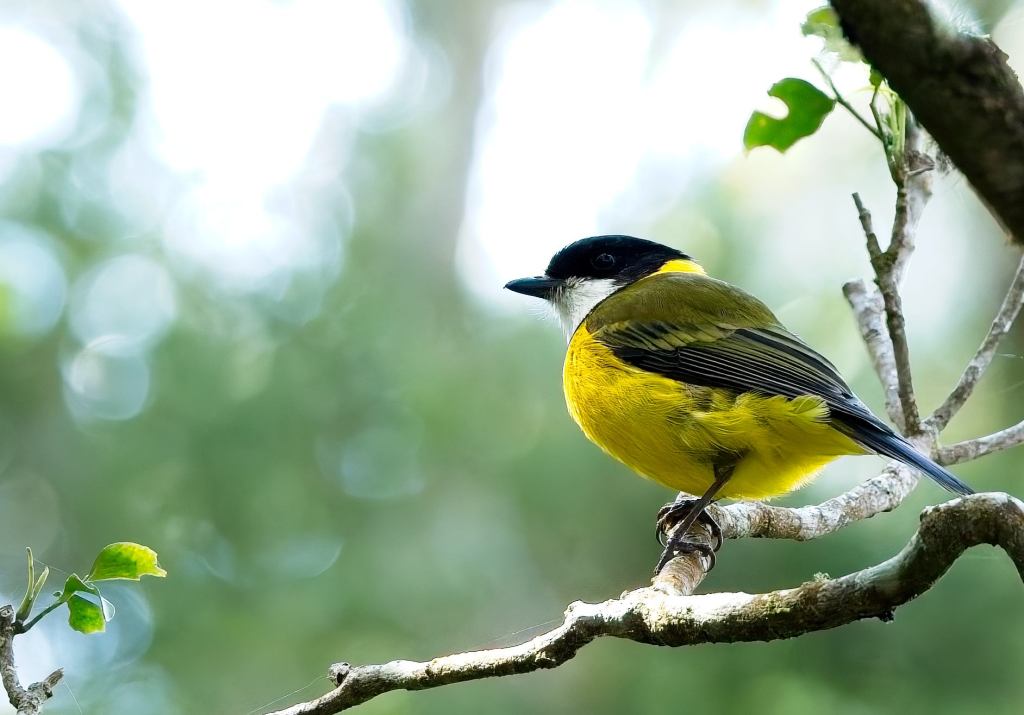
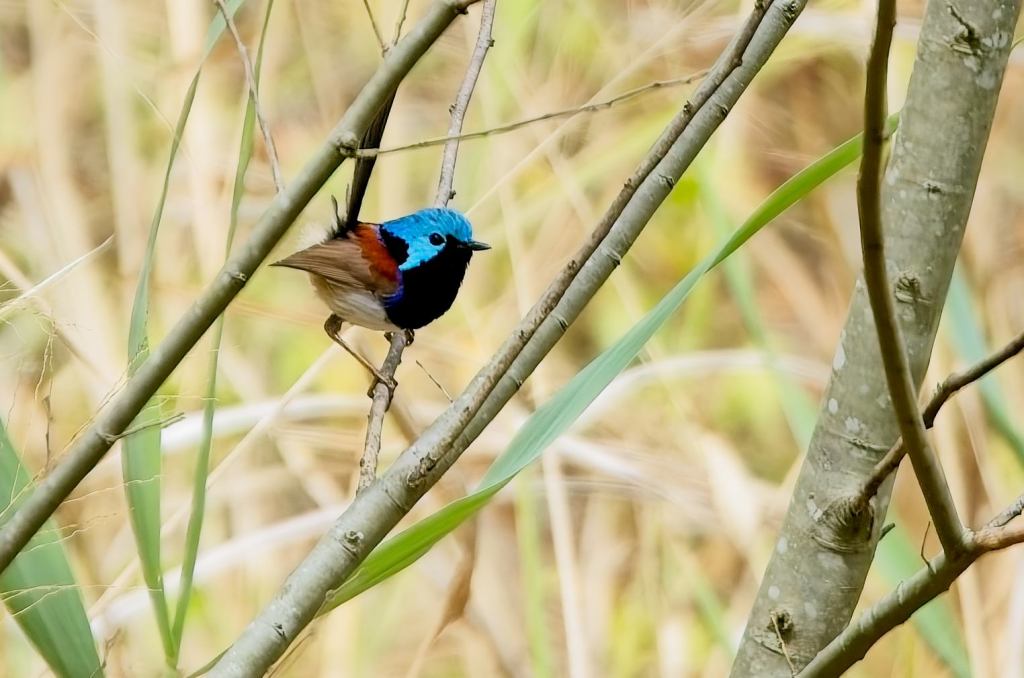
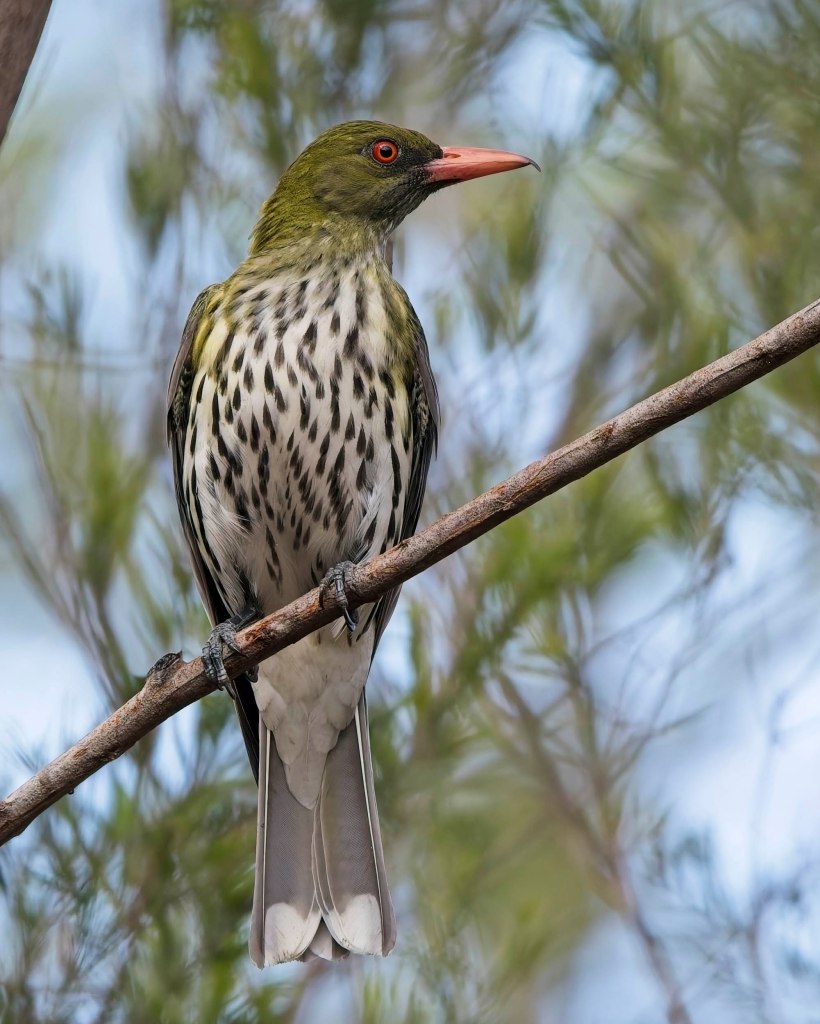
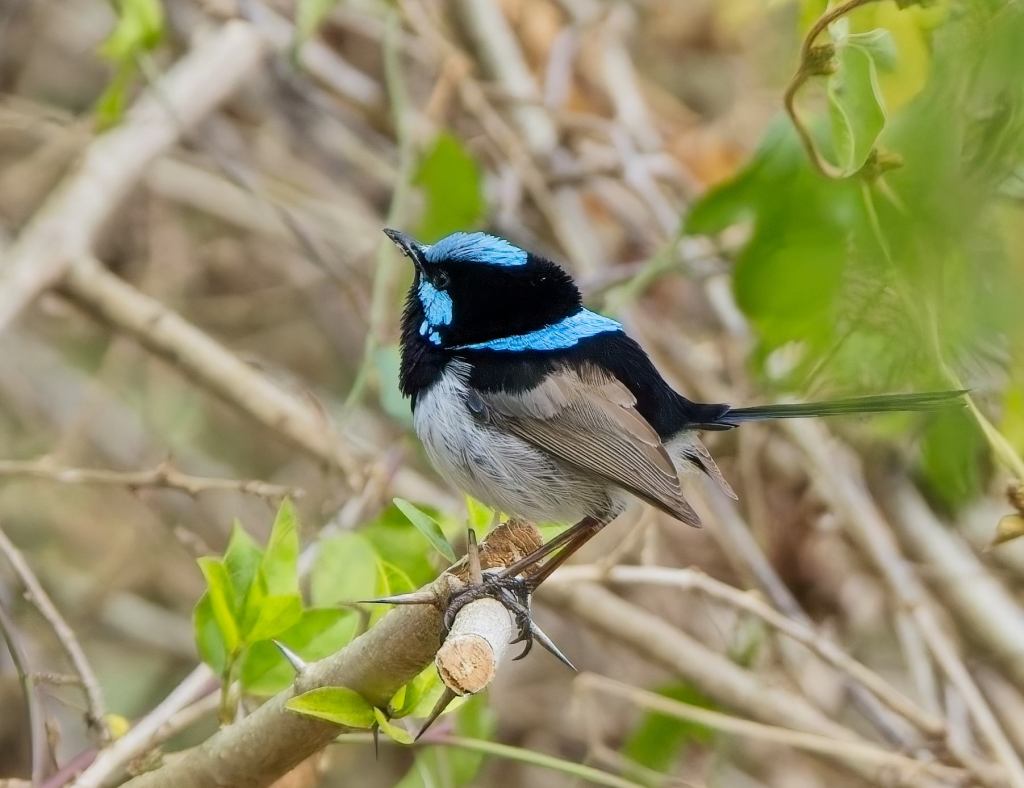
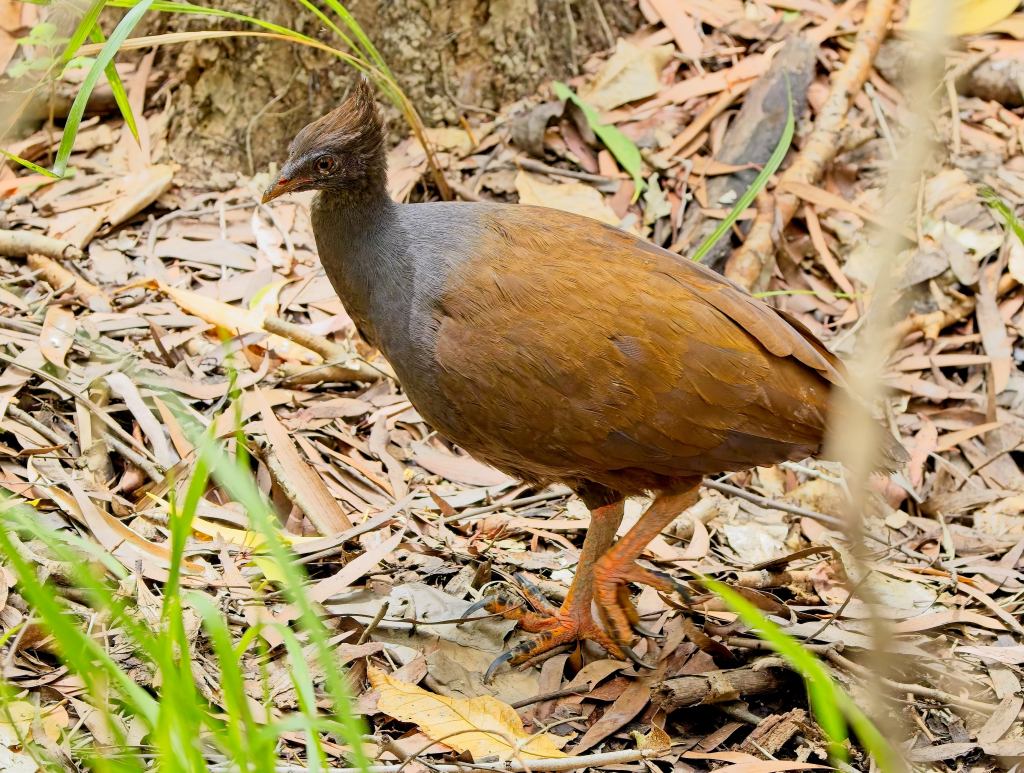
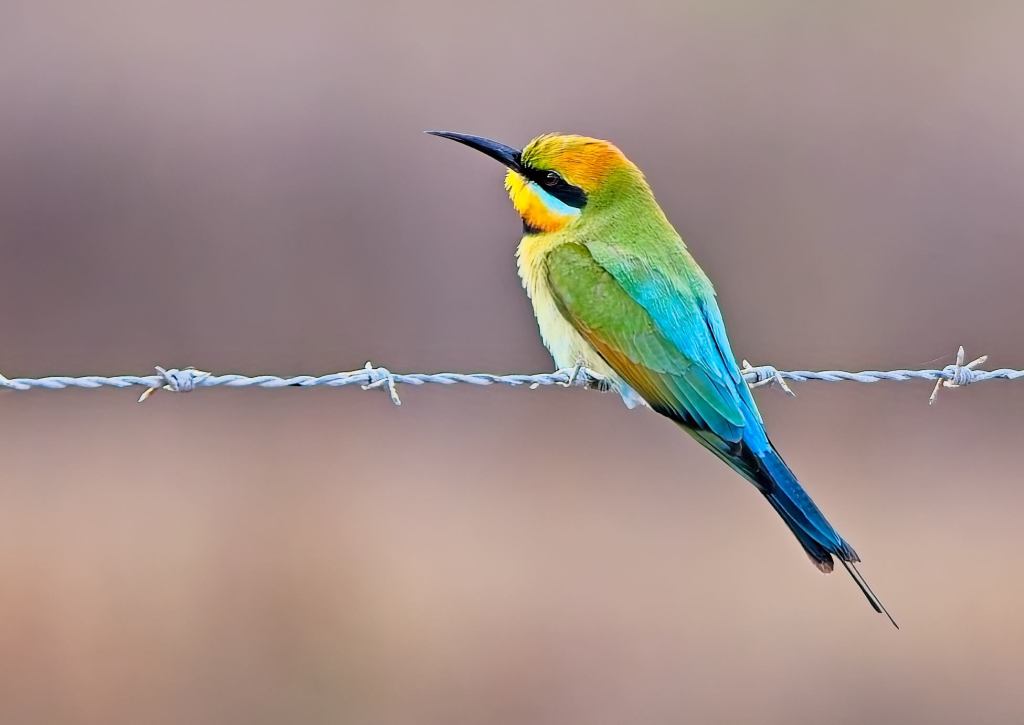
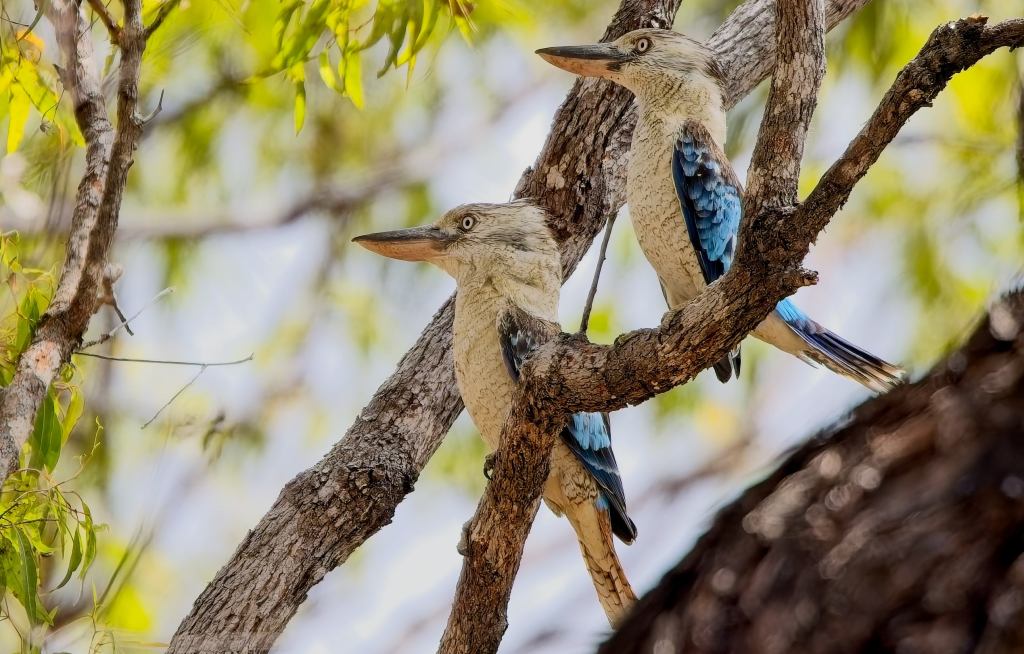
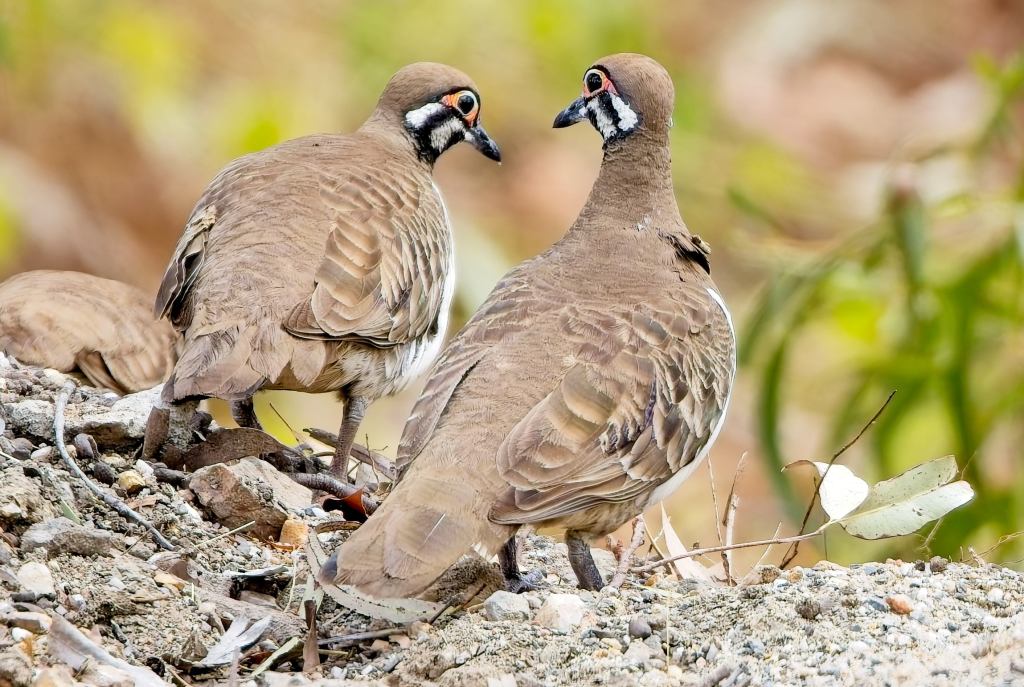
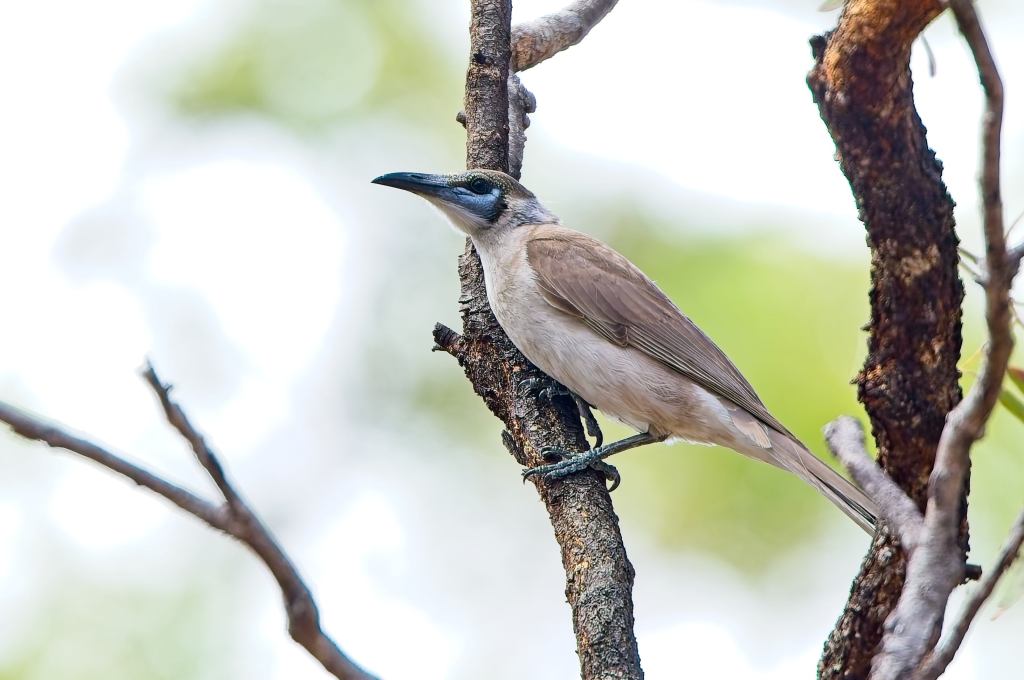
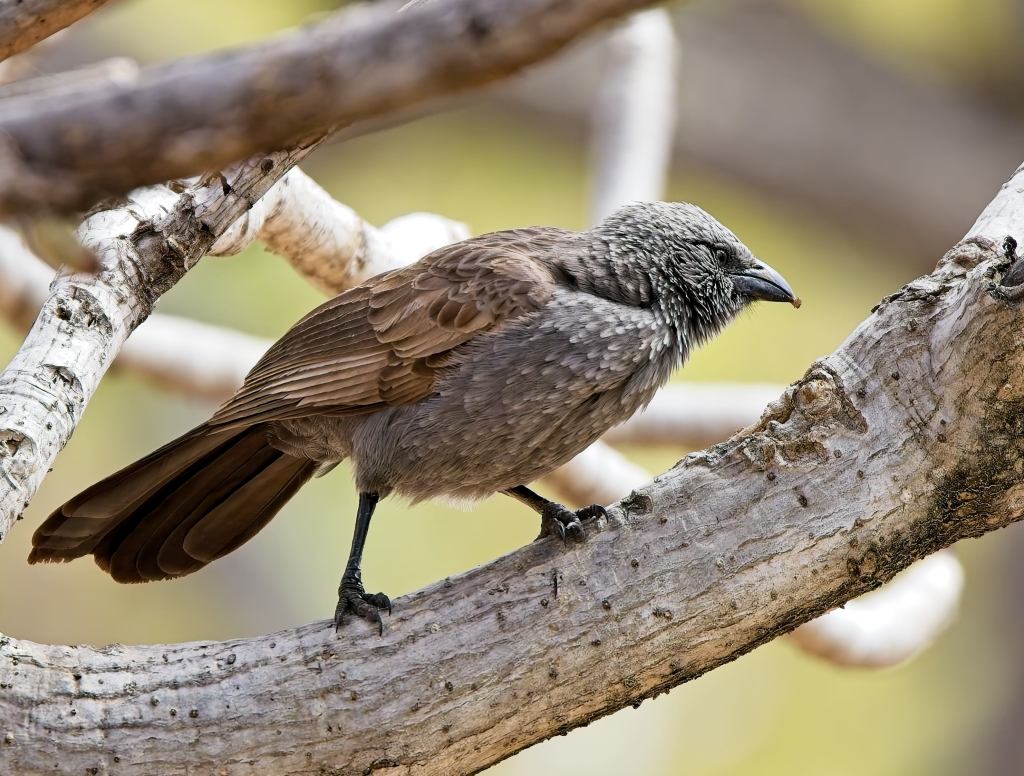
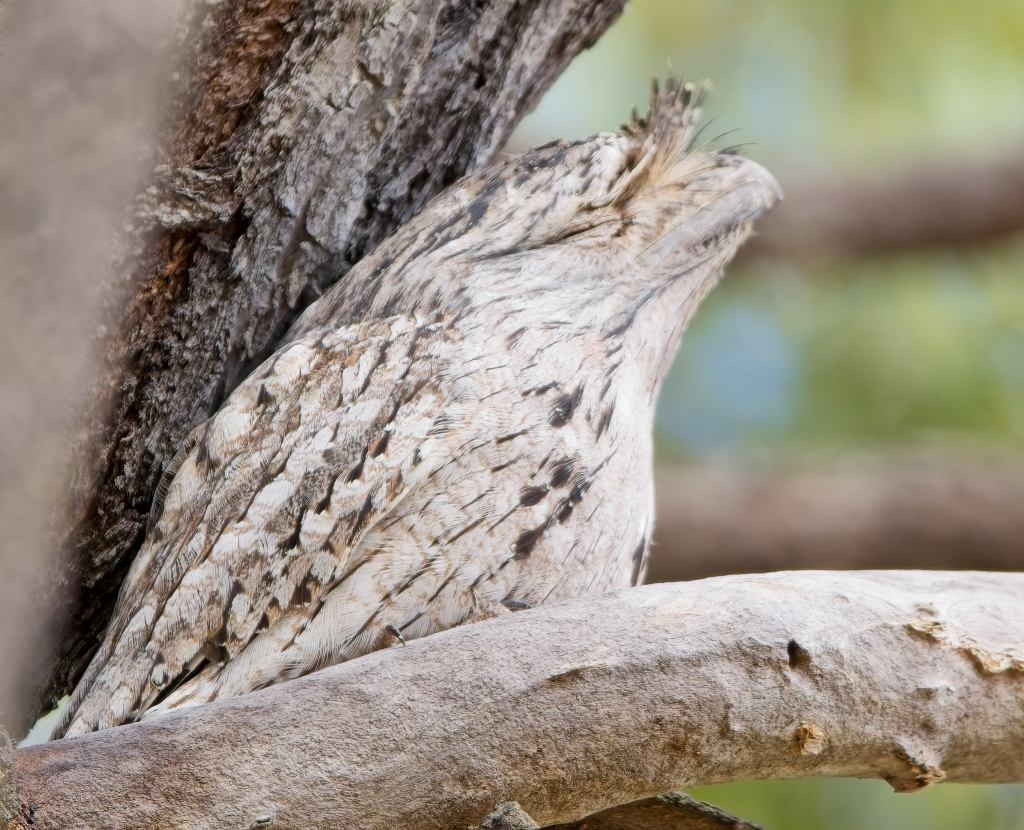
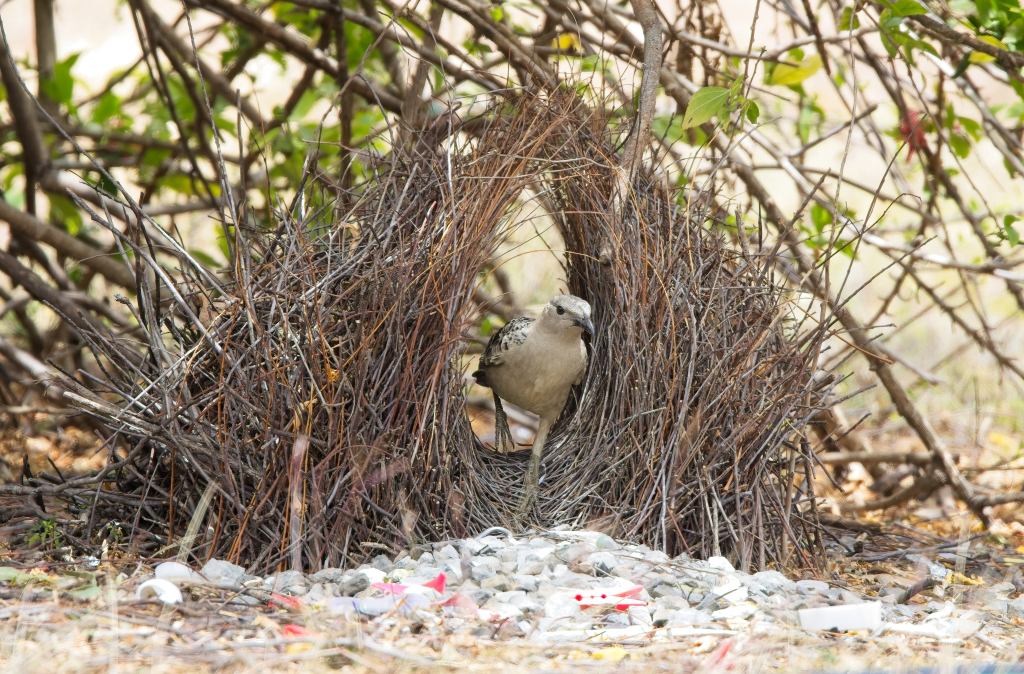
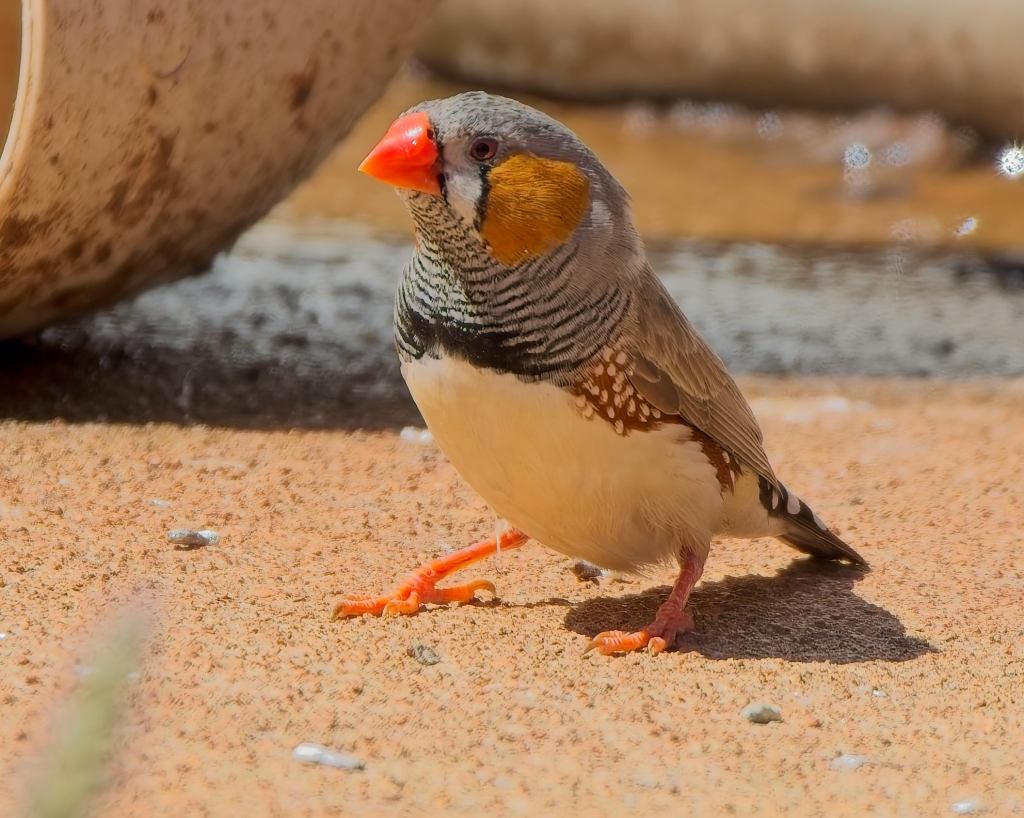
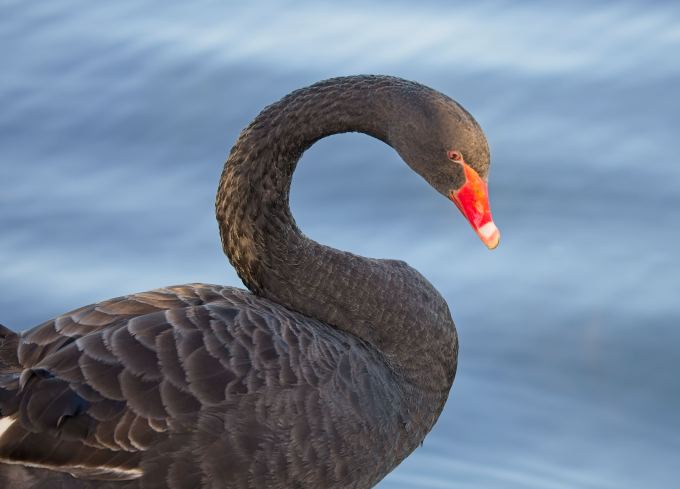
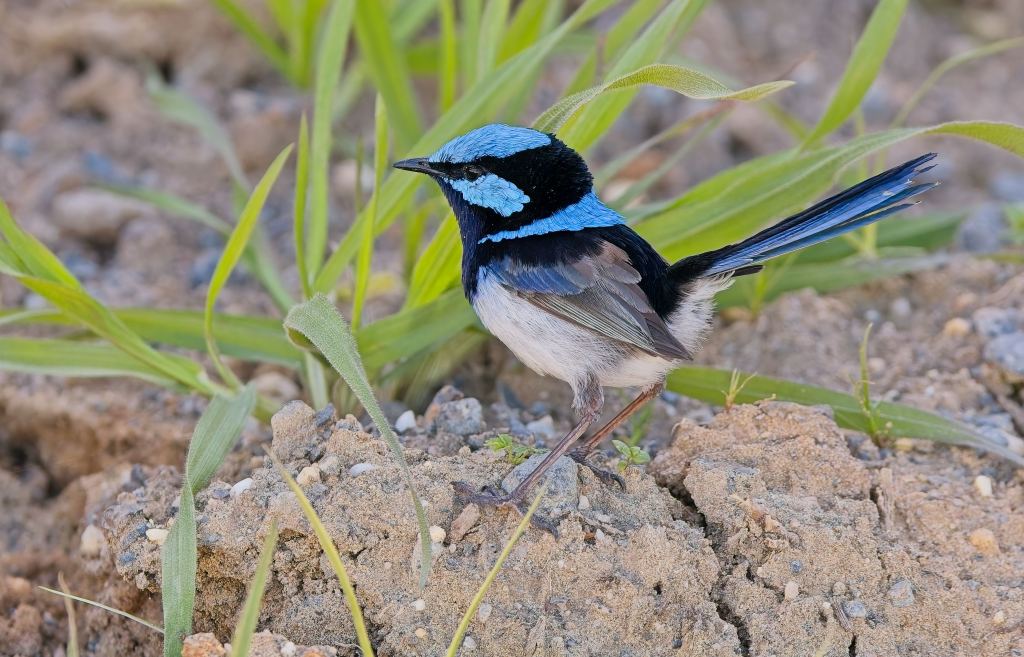
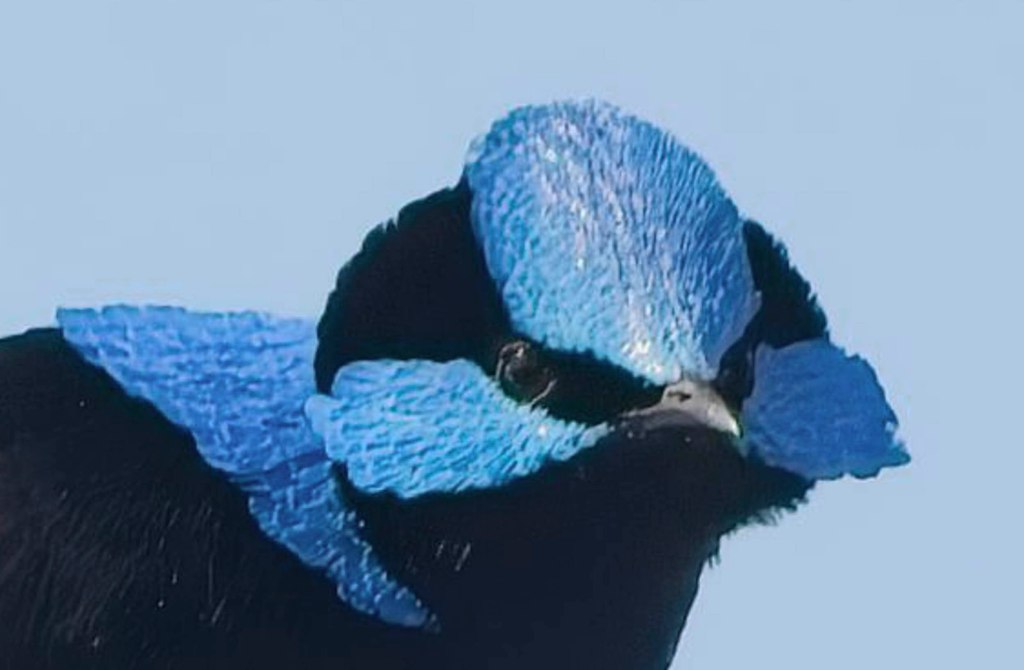
Australian BustardAustralian King ParrotAustralian Rufous FantailBlack SwanBlue-Winged KookaburrasBlue-winged ParrotCrested PigeonCrimson RosellaDouble-eyed Fig ParrotGalahGreat Bowerbird in BowerHooded PloverLaughing KookaburraOlive-backed OriolePapuan FrogmouthRainbow Bee-eaterRainbow LorikeetRed-tailed Black CockatooSpotted PardaloteSquatter PigeonsStraw-necked IbisSulphur-crested CockatooSuperb FairywrenVariegated Fairywren
AUSTRALIA IN THE FUTURE: Given our ages, other places on our “to visit” list and the distance involved, it is probably unlikely that we will visit Australia again. HOWEVER, we really enjoyed this trip; many previously seen but not photographed species remain and are tempting and … we have never visited either Northern or Western Australia…so maybe…
On my Australia trip in 2003, Brisbane was the first stop after spending a few days in Sydney. At Roma Park, I met Bill Jolley who would be my guide for the next 5 days centered in Bill’s Abberton Bird Lodge and working the area that I noted only as Toowoomba in my Ebird posts all of which were done years after the fact since I was not using Ebird in 2003. In fact all of my Ebird lists for September 7, 2003 through September 10, 2003 all simply say Toowoomba. I know we covered a broad ranging area and sure wish I had those specifics now. It had been great birding with 134 species of which 123 were lifers. I did not care about photos then so I only took a handful. Bill took many and I wish I could count them. After the time with Bill, I drove down to O’Reilly’s and spent 3 days there – my lists only included the 25 lifers found there, but I am sure there were more species and probably in an area broader than O’Reilly’s itself – no photos. When Cindy and I planned this trip, I described O’Reilly’s to her as analogous to some of the lodges we had visited in Ecuador, and she was game, so we planned two nights there and another 3 in Brisbane before flying home. Doing it again I would have added another day at O’Reilly’s since the winding drive to the Lodge takes so long.
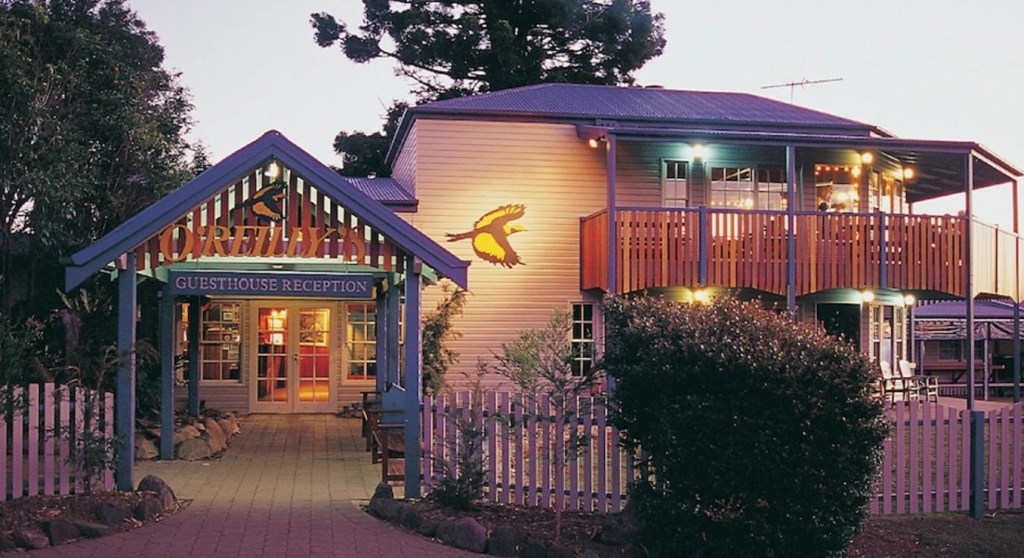
O’Reilly’s
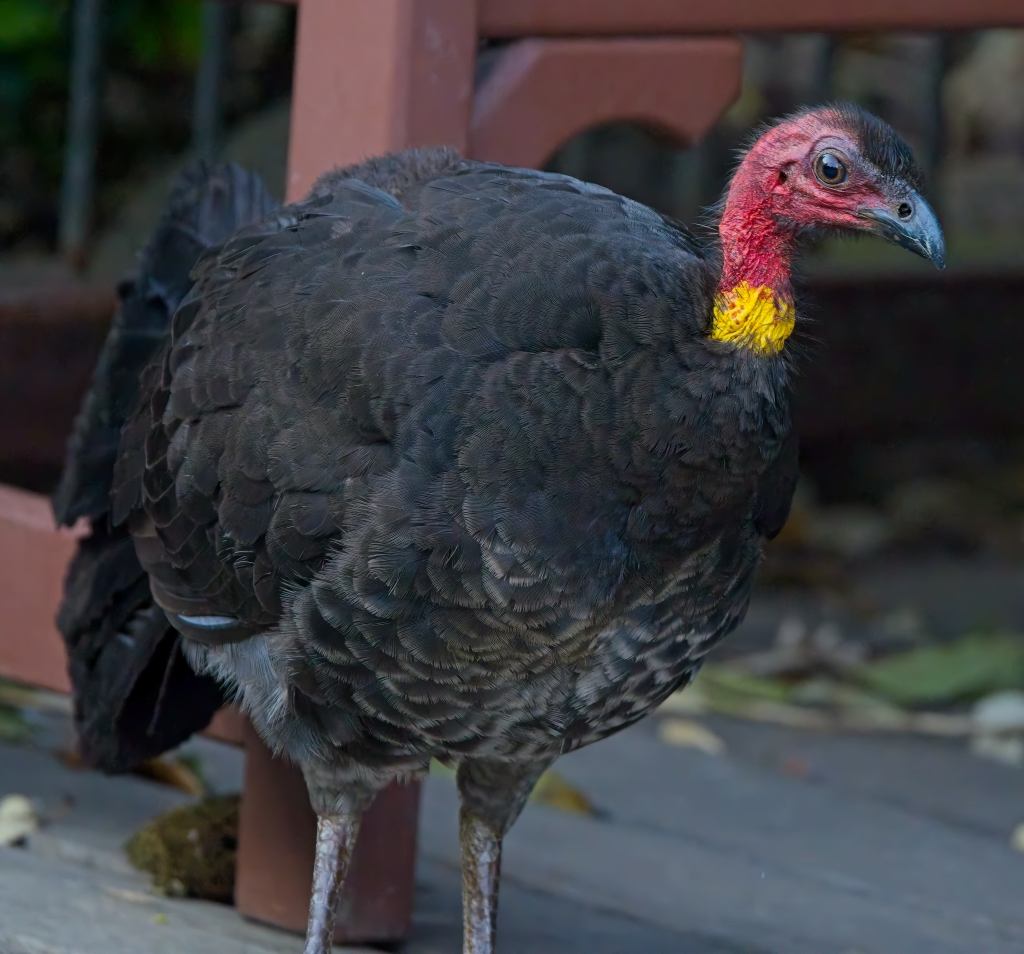
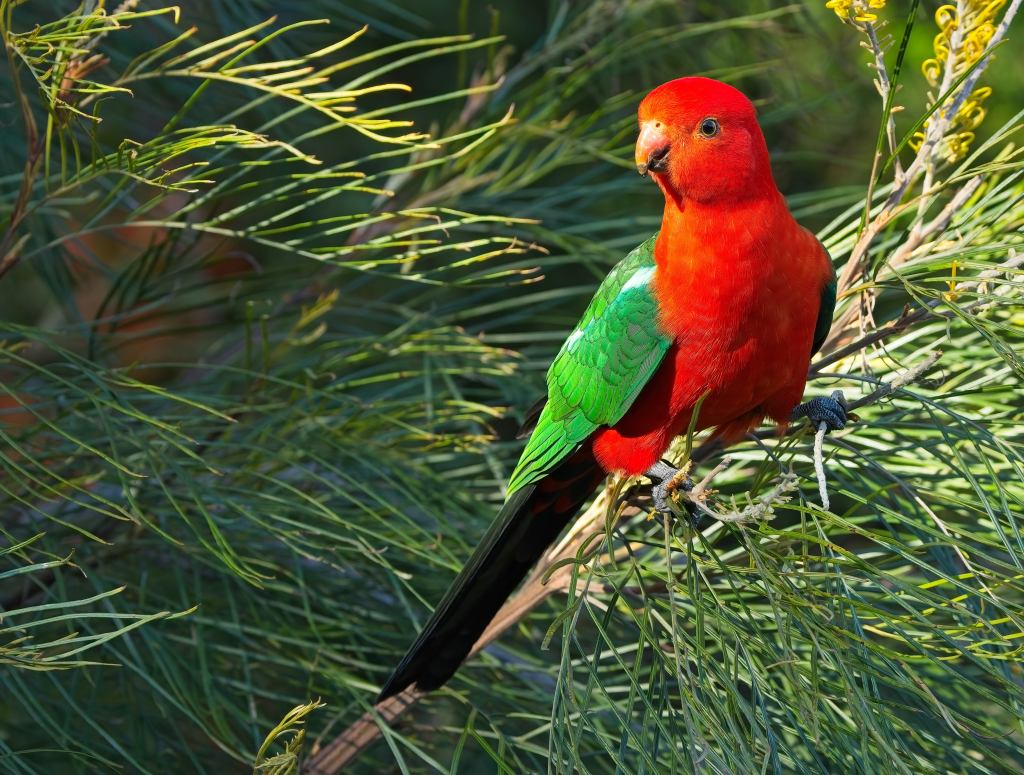
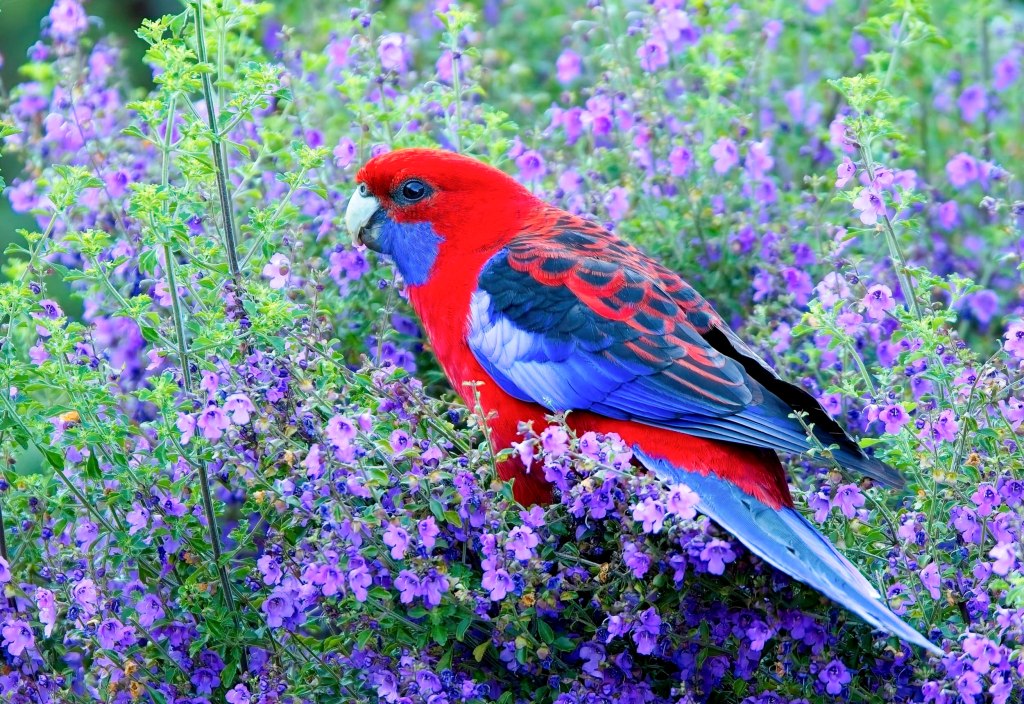
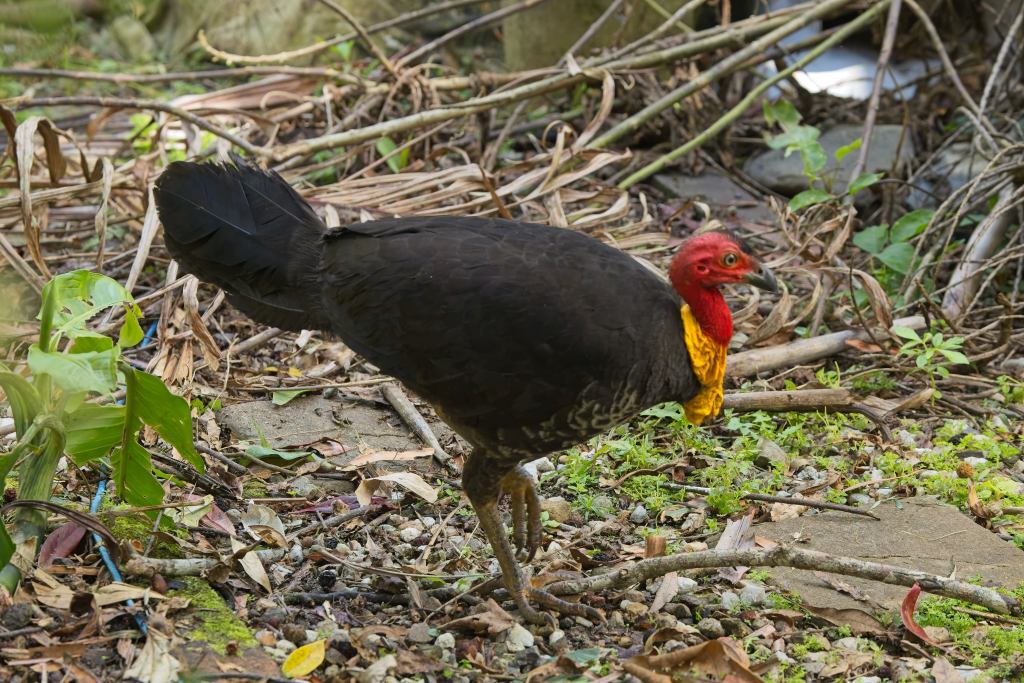
The flight from Cairns to Brisbane was a relatively short 2 hours and 15 minutes and got us in just after 2 pm on September 21st. By the time we got the car and drove that winding road which had many stops due to road work following a severe cyclone two years ago, it was already dark. We checked into our very nice room and had an ok dinner, not at the main restaurant which offered only a very expensive buffet. This will (maybe) be the only mention of it, but the food options at O’Reilly’s were limited, expensive and not appealing. If we were in charge, we would make major changes. Everything else was great. With our late arrival and long drive there was no birding on the 21st, just enjoyed the drive until we got to those curves in the narrow road. O’Reilly’s has a not-to-be-missed free guided “bird walk” at 6:15 am each morning. The guide brings treats for the birds, and the birds know what is coming and gather with the guests at the main building. Many photo ops with Satin and Regent Bowerbirds joined by CrimsonRosella’s and Australian King Parrots often landing on heads, shoulders and hands of the guests to get their treats. Australian Brushturkeys join the frenzy at the feet of the guests. The group then moves on to some of the close by trails for more birds which also respond to the food in hand.
Australian Brushturkey
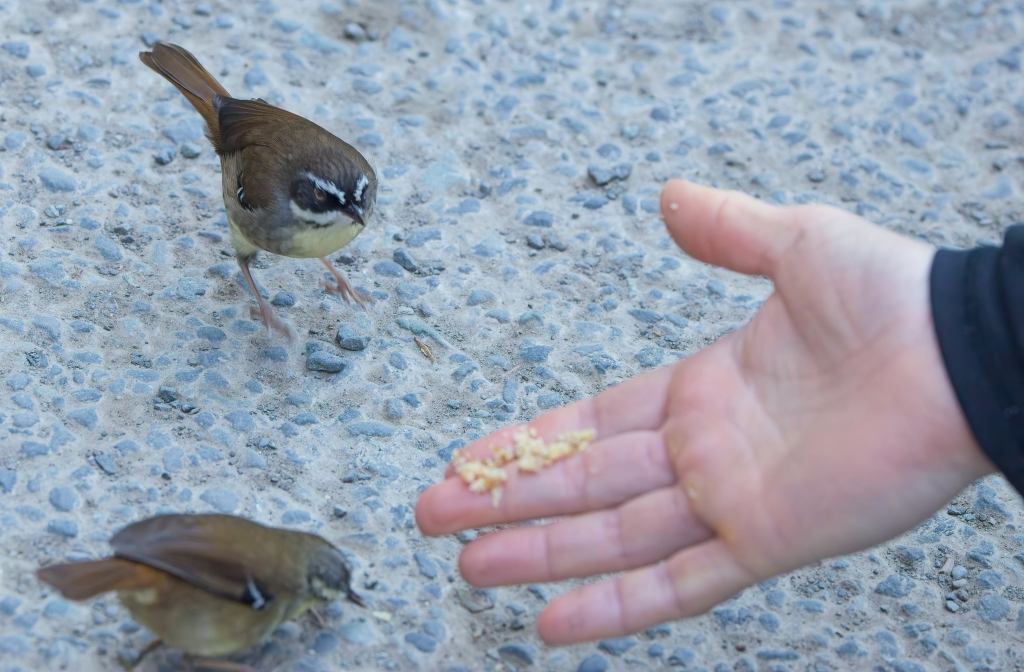
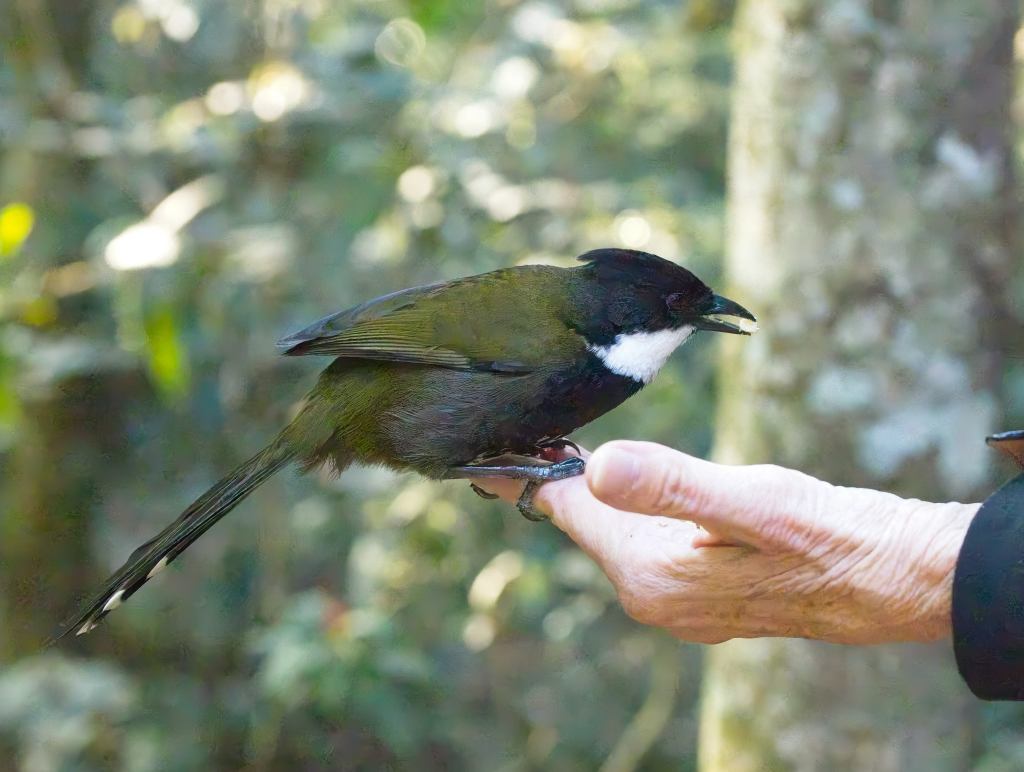
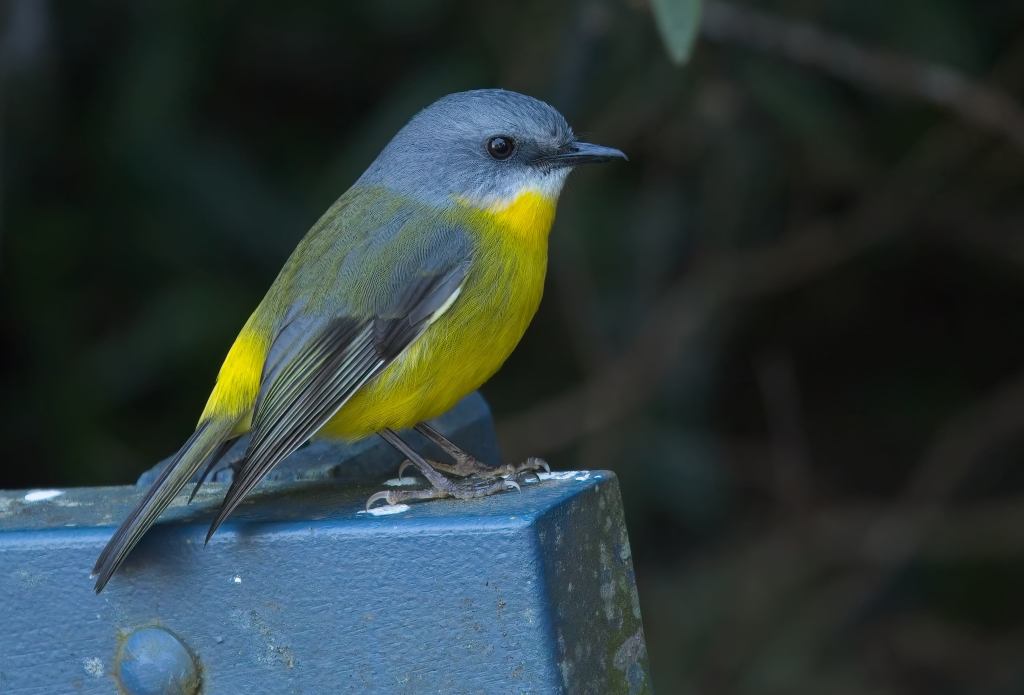
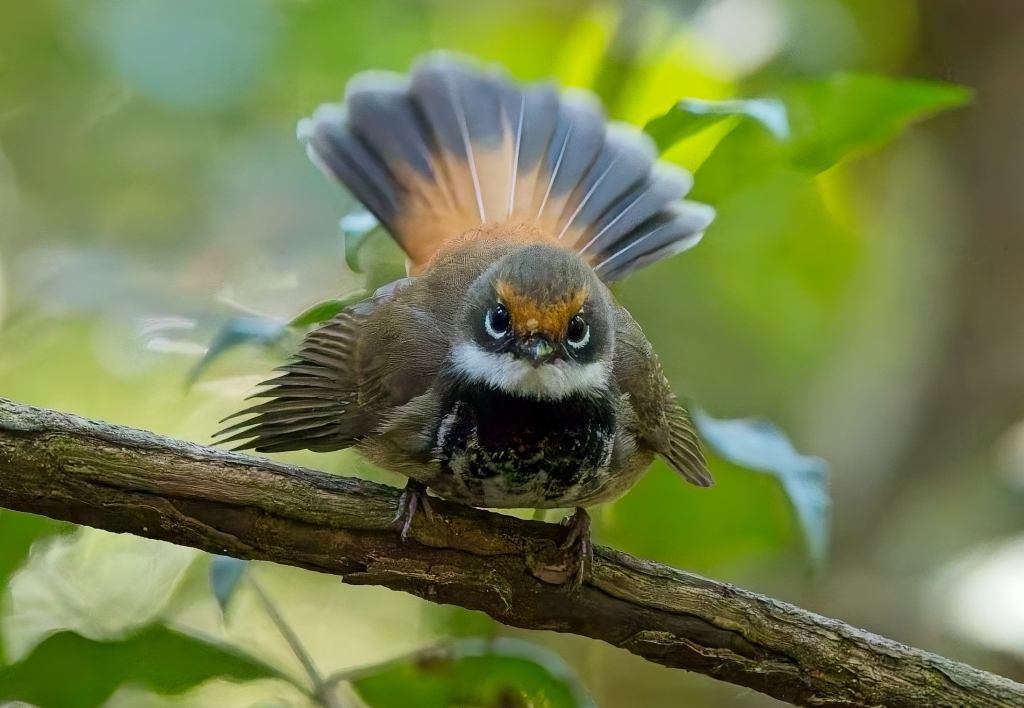
Altogether that morning with the group, Cindy and I had 17 species, maybe 4 or 5 of which either landed on Cindy or were fed by her. Many large charismatic beauties like the parrots and bowerbirds and smaller gems like two scrubwrens, robins and a logrunner plus a Wonga Pigeon before the show started. Heard throughout the walk and seen often was the Eastern Whipbird, whose cracking whip call that gives its name is hard to forget. Life photos that morning were Satin and Regent Bowerbirds, Eastern Whipbird, Lewin’s Honeyeater, Yellow-throated and White-browed Scrubwrens and Australian Logrunner. After breakfast (making no more comments on food there), Cindy and I returned to the trails and had a very peaceful enjoyable long morning, seeing some of the same birds and adding others with the highlight being the male Satin Bowerbird at its bower strewn with bright blue pieces of this and that critical to attracting a partner. Additional life photos included a Large-billed Scrubwren, Golden Whistler and a very fun photo of an Australian Rufous Fantail. Frustrating misses were of Wompoo Fruit Dove and Brown Cuckoo Dove both heard in the distance only and a Brown Gerygone which was heard almost constantly but every photo either missed the hyperactive little brown bird or turned out to be yet another Large-billed Scrubwren. The last life photo was of a Eastern Yellow Robin. Lots of photos below.
Australian King Parrot
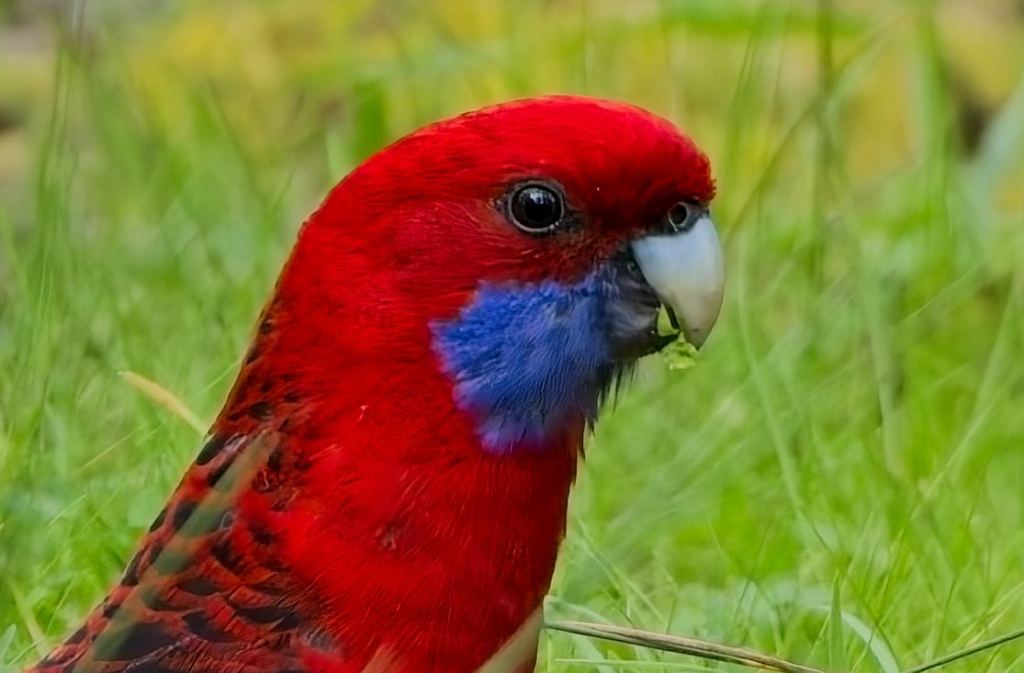
Crimson Rosella
Regent Bowerbird– Life Photo
Male Satin Bowerbird at Bower
Wonga Pigeon – Life Photo
Satin Bowerbird FemaleSatin Bowerbird Male– Life PhotoYellow-throated Scrubwren– Life PhotoLarge-billed Scrubwren– Life PhotoWhite-browed Scrubwren– Life Photo
Cindy Feeding Scrubwrens
Eastern Whipbird on Cindy’s Hand– Life PhotoLewin’s Honeyeater– Life PhotoGolden Whistler – Life PhotoAustralian Logrunner – Life Photo
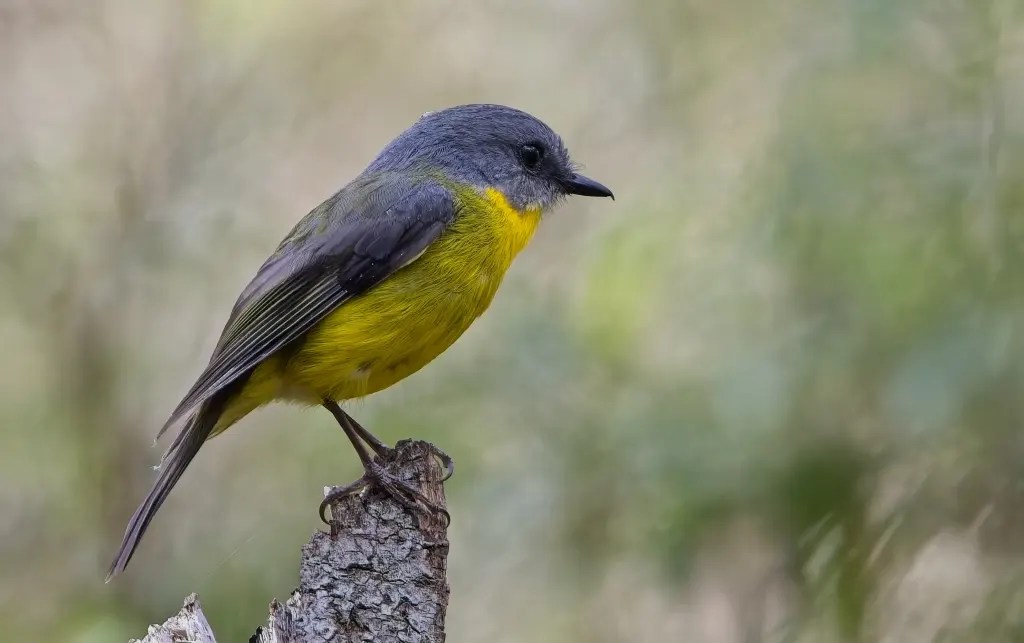
Eastern Yellow Robin – Life Photo
Australian Rufous Fantail
I had been going nonstop for awhile and after lunch at a limited option cafe, I spent time working on some of the backlogged photos and resting. Cindy found a program that interested her with a film but when she got to the place where it was to be shown, it was locked and nobody was there even though she was on time. She found someone who let her in and she could run the film herself – strange. We gave up and had dinner that night at the restaurant, wishing there were other options.
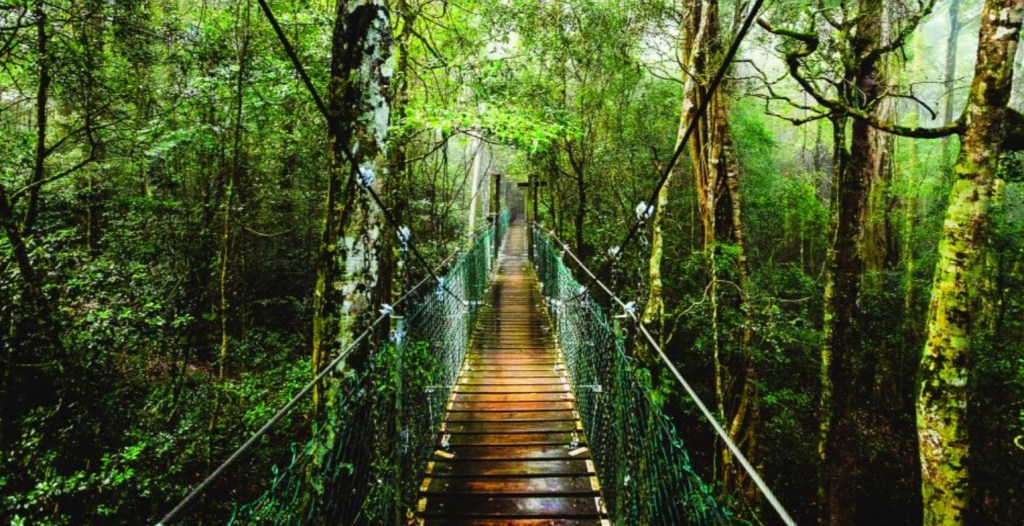
The next morning we skipped the group walk and hit the trails ourselves including the Tree Top Walk which gave views into the canopy 15 meters above ground. Not as birdy as we would have liked but just being in that forest was really special. I did finally get a life photo of a Brown Gerygone and then thought I had a nice photo of the Australian Logrunner seen the previous day but it turned out to be a life photo of a Russet-tailed Thrush, another one of the species I had seen at O’Reilly’s 23 years earlier. There were two disappointments. A Noisy Pitta was being seen off and on along one of the trails we traveled. We heard it maybe 20 yards away several times but it would not return to the trail where it had been seen 20 minutes earlier – maybe just too many people. Then we heard what was clearly a Green Catbird with its very cat-like calls. We engaged in a fairly long conversation back and forth but we clearly did not know how to say “Please show yourself” in Catbird. Both were heard-only ticks as was a Shining Bronze Cuckoo.
Part of the Tree Top Walk
Brown Gerygone – Finally – Life Photo
Russet-tailed Thrush – Life Photo
We had the same long winding road to drive to get to Brisbane so we left late morning. The O’Reilly’s total was 31 species with 20 photos, no lifers but 10 life photos – some definite misses but really nice birds and a beautiful place. With another day maybe some of the misses would have been photographed. Food aside (had to say it again), it was a very nice stay and somehow on the way down, the road seemed easier – maybe sunlight makes a difference! On the way to our hotel in Brisbane, the very nice Stamford Plaza, we made a couple of stops including the Wynnum Mangrove Boardwalk. Before the trip I had looked unsuccessfully for a guide for a day in Brisbane. On the Australian Birds Facebook page someone suggested Birding Pals. I had tried that site unsuccessfully elsewhere some years ago so was not optimistic. I tried out one of the AI sites, ChatGpt and was very pleased with recommendations and an itinerary it suggested for birding on my own in Brisbane. I later had a great response from Ross Monks on Birding Pal (stay tuned) and he said two of the sites ChatGpt recommended would be on his itinerary for us, but Wynnum Board walk was fair game.
Tides were wrong so the possible shorebirding did not materialize, but I found a lifer Mangrove Gerygone and got a life photo of an Australian Tern. The big surprise was the little blob on the sand that I could barely photograph turned out to be a life photo, albeit a poor one, of a Torresian Kingfisher. Brisbane is the third largest city in Australia with a population of almost 3 million. With sunny weather and located near The Gold Coast and on the Brisbane River, it is a modern city with many high rise towers and an active port and active waterfront. Our hotel was located just off the river and our room had terrific views of the river and two attractive bridges. Its feature restaurant, was the La Boca Bar and Grill, an Argentinian wood-fired dining and asado grill which is also where we had a pre-paid buffet breakfast each morning. The food was pretty good but they definitely would benefit from some new design input. We had dinner there the first night choosing small plates including some empanadas and some Wagyu beef sliders – nice. The room was not large but the view was great, the beds were great, it was quiet and comfortable.
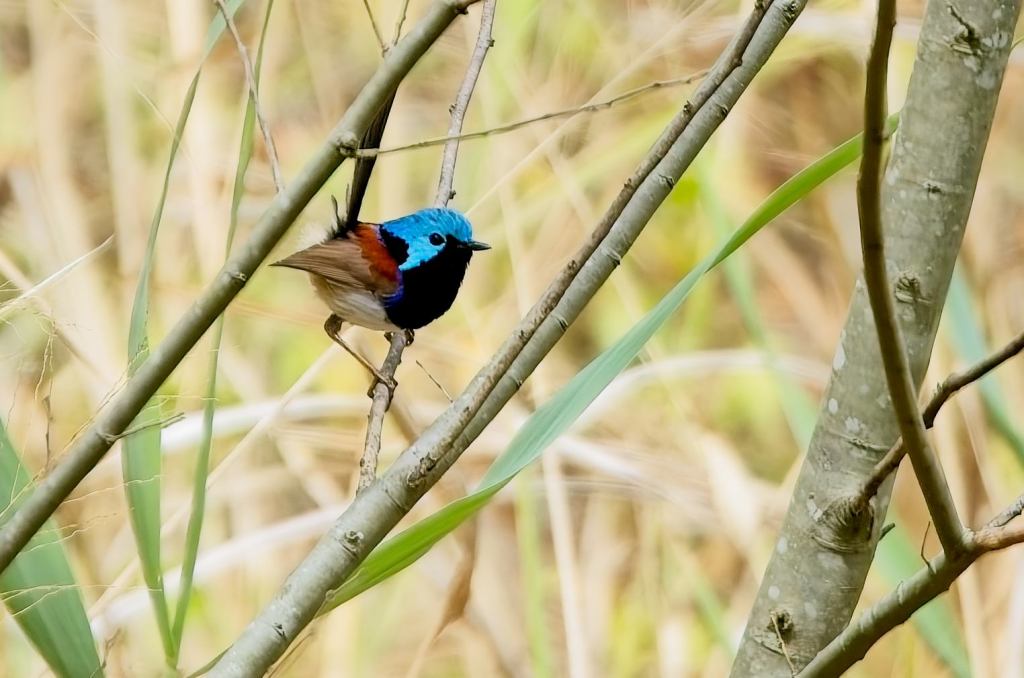
September 24th was the day I was going out with Ross Monks. Thinking there might be too many little brown birds. Cindy chose to explore the city instead. She would have enjoyed most of the day especially since Ross’s spouse Thea joined us. He was the more ardent and better birder, but she was much better than she claimed and they were both excellent company and we had a great day starting at the Oxley Creek Common which was interestingly the top place to visit according to my new friend ChatGpt. I met them at Oxley at 7:30 am and in the 3+ hours there, we covered a lot of ground, meaning walked, 5+ miles. The count was 50 species, 24 photos 3 lifers and 9 life photos. Lifers were Double Barred Finch, Horsfield’s Bronze Cuckoo and Variegated Fairy-wren. . Lots of good photos but my favorite photo there was probably a life photo of an Olive Backed Oriole – a cool bird that is hard to get into the open.
Horsfield’s Bronze Cuckoo – Lifer
Double-barred Finch
Variegated Fairy-wren – Lifer
Olive-backed Oriole – Hard to Get Life Photo
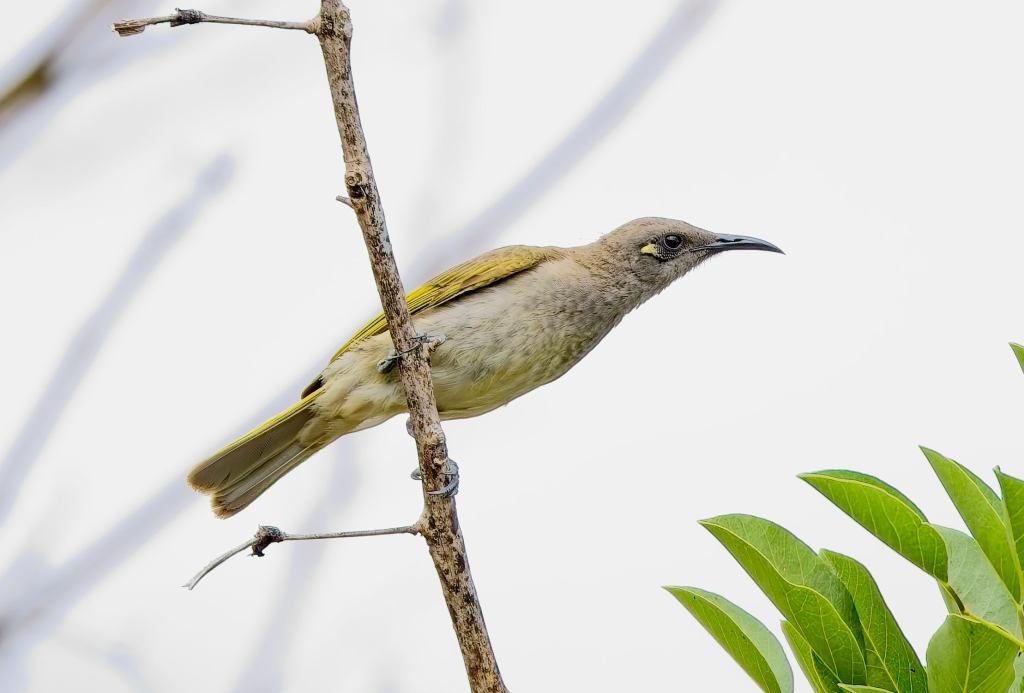
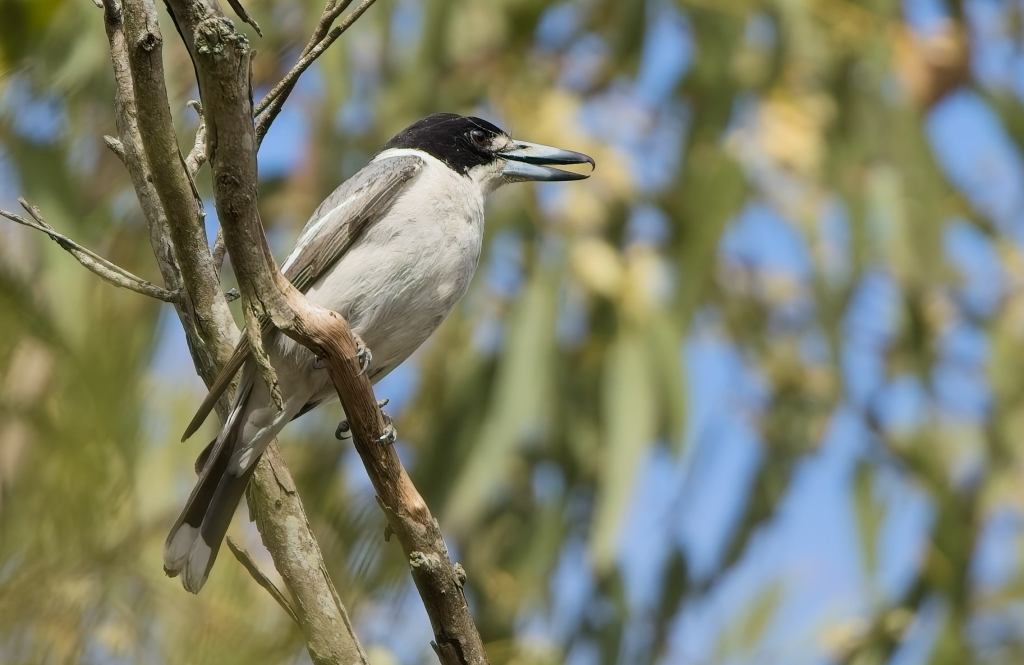
Other life photos were Plumed Egret, Brown Honeyeater, Yellow Thornbill, Gray Butcherbird and Red-browed Firetail. It was a very good morning for Fairywrens as we saw and photographed three species and had at least a dozen individuals.
Brown Honeyeater – Life PhotoGray Butcherbird – Life PhotoYellow Thorntail – Life PhotoRed-browed Firetail – Life PhotoPlumed Egret – Life PhotoRed-backed FairywrenSuperb FairywrenVariegated Fairywren
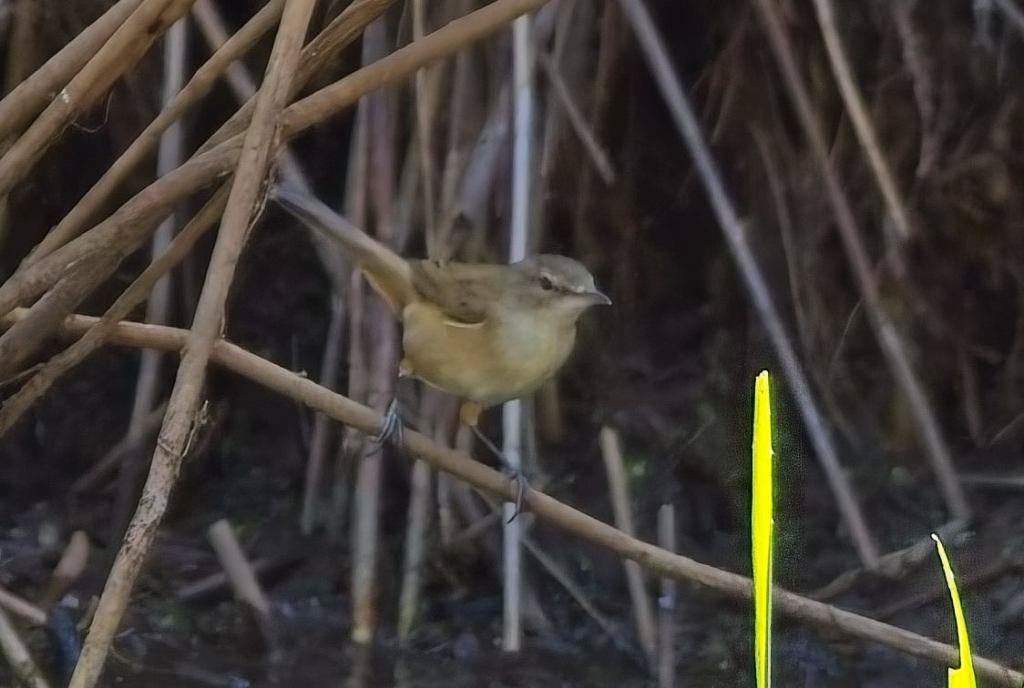
After the long morning at Oxley Creek we had lunch at a preserve that unfortunately I cannot recall right now and maybe will add the name later. Forgot the name but do remember the steak sandwich and fries (chips). Interestingly Ross is a big steak sandwich fan and all three of us had one – very good by my standards and I think Ross approved but I learned that he keeps track of such meals and has a rating system. One more stop for the day – the Sandy Camp Road Wetlands, another spot recommended by ChatGpt. Twenty-six species with 10 photos. There were no lifers and only a single new life photo but some good birds seen again and some nice photos to end the day. The life photo was an Australian Reed Warbler – new for my 2026 Australia trip and a better than expected photo since it was pretty far away.
Australian Reed Warbler – Life Photo
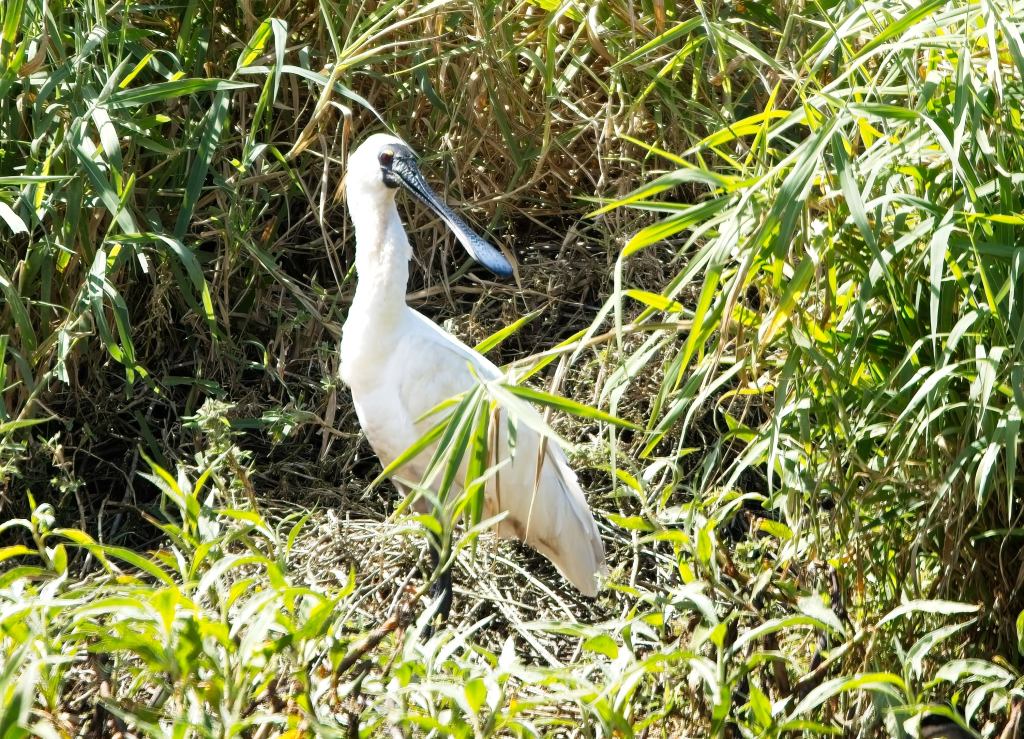
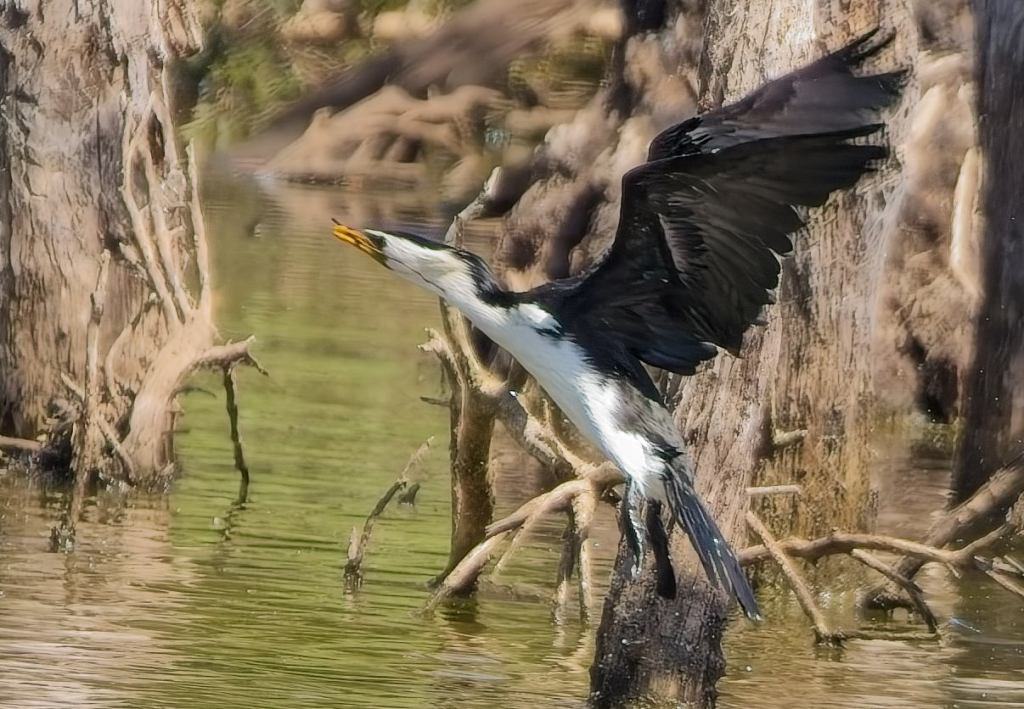
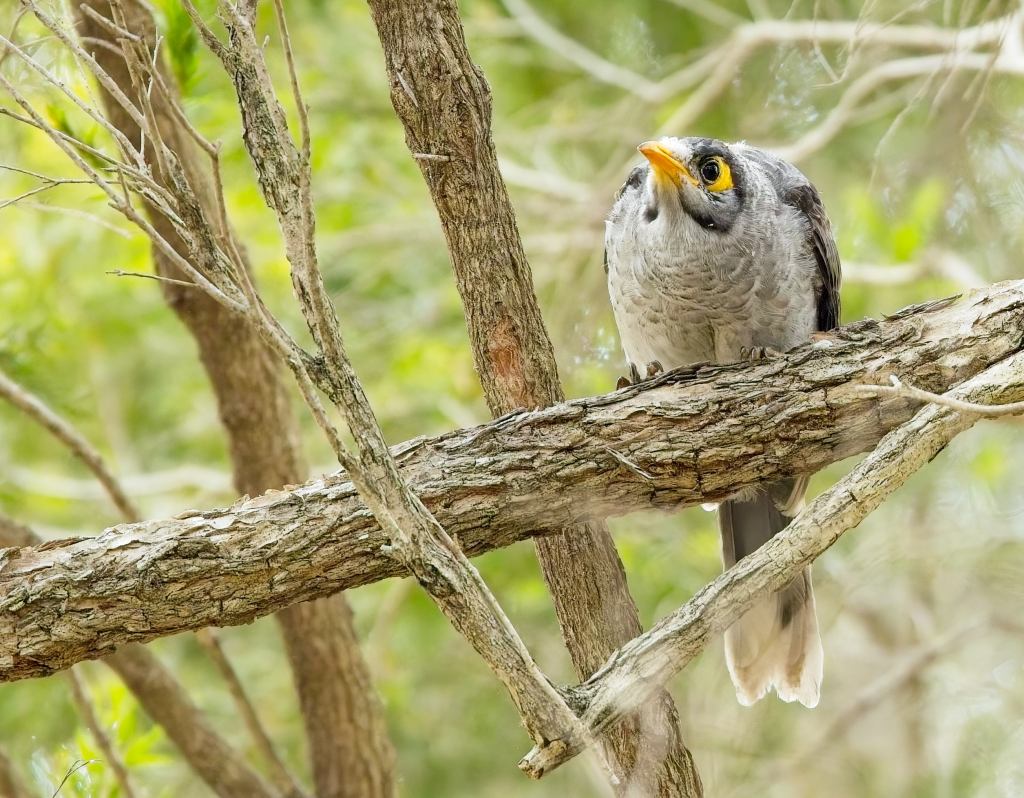
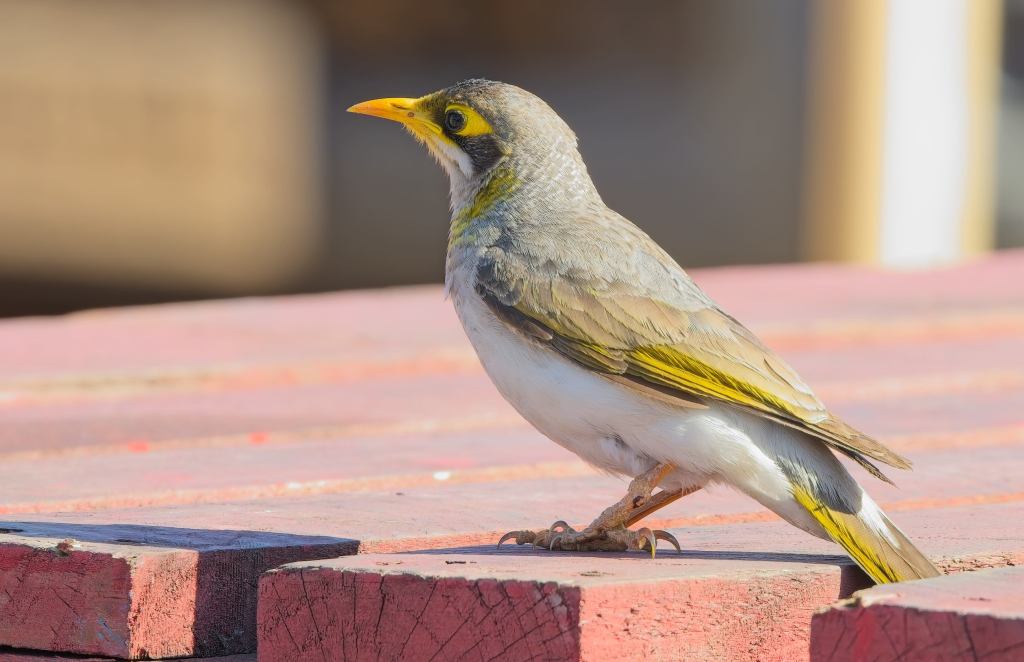
Here are a few more photos that I like and concluding the day with a photo of a pretty ho-hum species – the Noisy Miner, but for much of the trip, together with the Australian Ibis, this was the species that was not only everywhere but also easily seen and always heard. Maybe a “junk bird” and a pest but if you birding in Australia, you will see it.
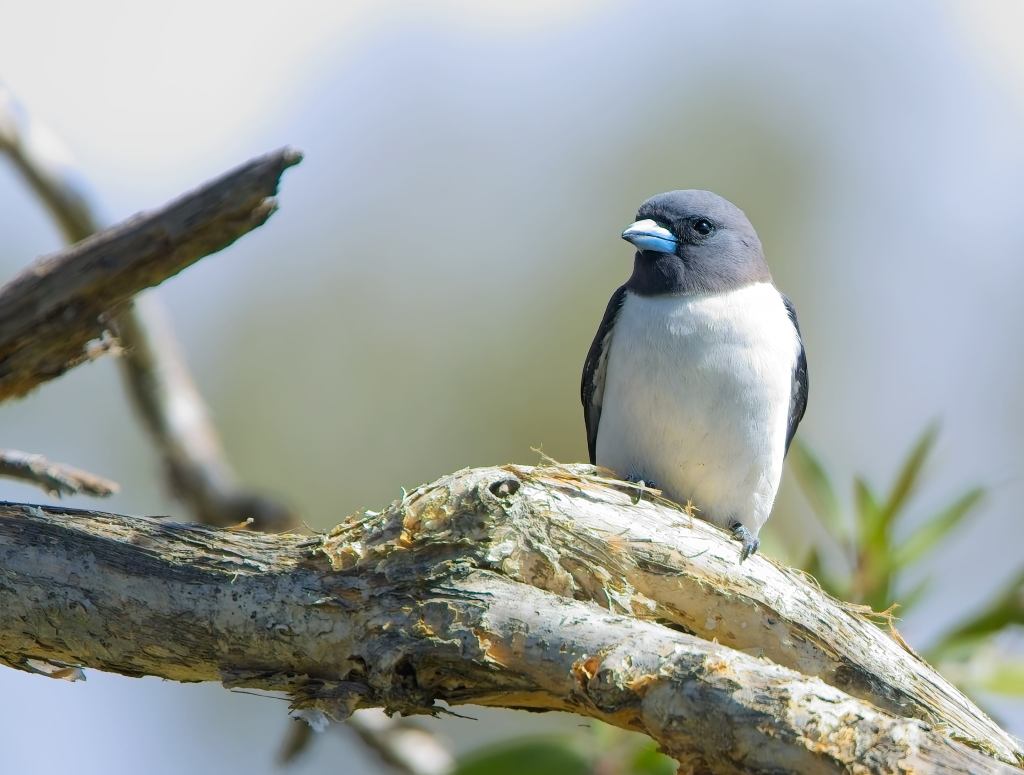
White-breasted Woodswallow – Like the Composition
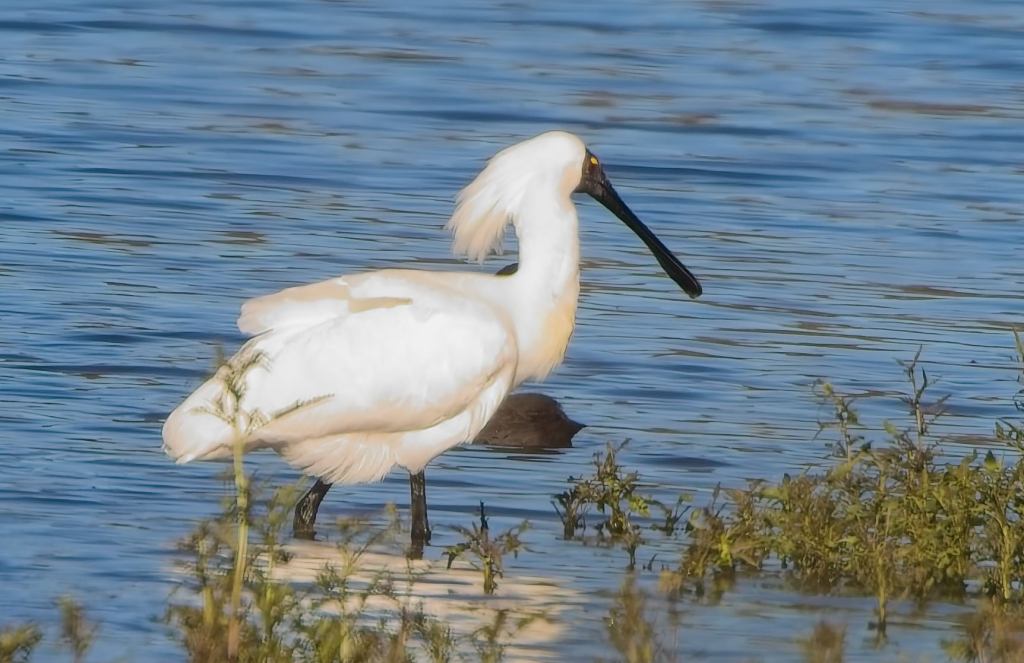
Royal Spoonbill – Hidden in the Grass
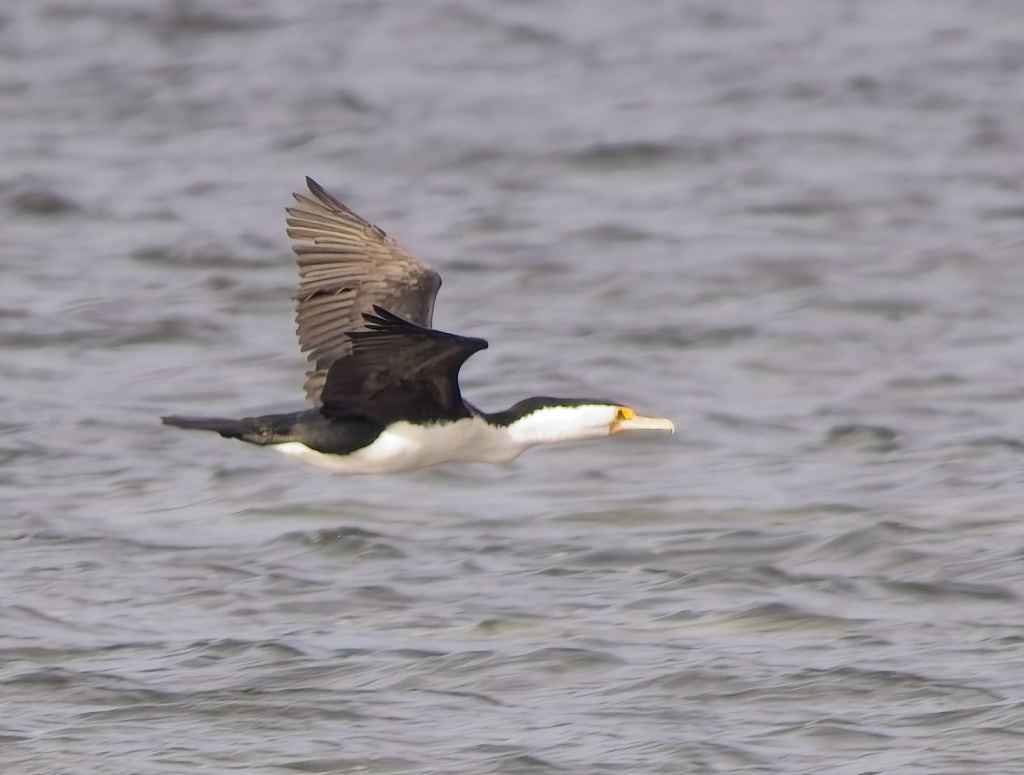
Pied Cormorant Takeoff
Noisy Miner
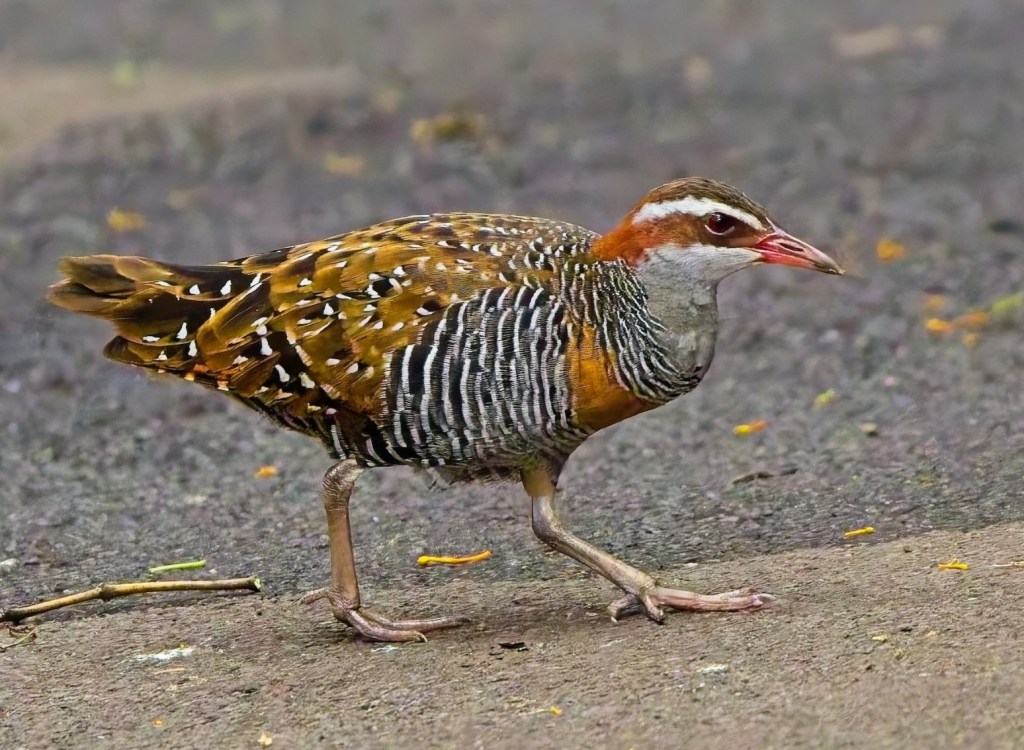
Birding with Thea and Ross on their home turf was a great way to end the birding part of my trip. Good birds, new birds, new photos, good habitats, good company with good stories, great attitudes, knowledgeable, comfortable – the kind of folks you would want to bird with all the time as friends. It turned out it was not quite the end of my birding in Australia. After another good dinner along the riverfront in Brisbane, Cindy and I spent the next day in urban Brisbane including a morning at the City Botanic Gardens which was quite different from that first day birding at the Royal Botanic Gardens in Sydney, although Australian Ibises were commonplace at both places as were those Noisy Miners. The Brisbane gardens were not as open, more dense and tropical vegetation, shaded trails and a surprise new and last bird for my Australian list – a Buff Banded Rail – seen and photographed previously in Indonesia but new for Australia, species #218 for this visit and #320 for my Australia life list and #773 for 2026 worldwide. Usually not an easy bird to see as it can be secretive and hidden in the grasses and reeds. It popped out of a dense thicket and stayed in the open for long enough for the photo. Thank you.
Buff-banded Rail – Last Species in Australia
Our departing flight was from Brisbane on Air Canada, departing a little after 10:00 am on September 26th. It was a long flight to Vancouver, B.C. but thanks to the time “gained” by crossing the International Dateline going east, we arrived in Canada around 6:30 am also on September 26th – thus more than 3 hours “before” we had departed. A fairly brief layover and then a very short flight on a plane that looked like it was left over from the 20th Century, we were back home in Seattle just before 10:00 am, so still “before” we departed. A very long day but arriving in daylight and midday made the transition easier and we returned to somewhat normal eating and sleeping schedules fairly well. I am fortunate to usually avoid major jet lag. Cindy is less fortunate but did pretty well. Usually when I return from a trip I get on the scale with trepidation knowing I had put on some weight from the quantity if not the quality of food. This trip had more food than usual, and better quality than usual as well, including more desserts and pastries than usual and more drinks with dinner than usual – but we had done a lot of walking – certainly several miles a day on average. I had only gained a couple of pounds and got rid of them over the next few days.
Rather than add a summary here I have decided to add a “Bonus Post” – look back after being home commenting on people, places, birds and some favorite birds. It will be posted soon.
In the dictionary, “cairns” are human made piles of stones used to mark a trail or a burial site. It is pronounced as the word “care” with a distinct “n” at the end made plural and pronounced as such with the “s”. In Australia Cairns somehow ignores “ai” and is pronounced as it would be without those letters as in “cans” of tomato soup. We found ourselves often catching ourselves mispronouncing the word, only rarely in front of Australians, fortunately. Even more fortunately, mispronouncing it did not keep us off the flight from Uluru to Cairns – 4 hours over mostly mostly uninhabited land of which Australia has a lot. Cairns is on the tropical northeast coast of the country, heavy vegetation and wet and dry seasons and home to the Great Barrier Reef, one of the natural wonders of the world. In 2003, I spent 4+ days birding in the Cairns area in Eastern Australia – including north up to Cape Tribulation. My memories are nonspecific but very positive – blue skies, blue waters and lots of birds. Why not – I had 82 species and all but two of them, Osprey and Caspian Tern, were lifers. Well, maybe. At the time I was not using Ebird and I probably saw some other species that I had seen previously on that 2003 trip that never made it onto the lists I posted on Ebird many years later. Nonetheless, 80 lifers was really fun. However, I was not taking photos back then so the 80 lifers resulted in zero life photos.
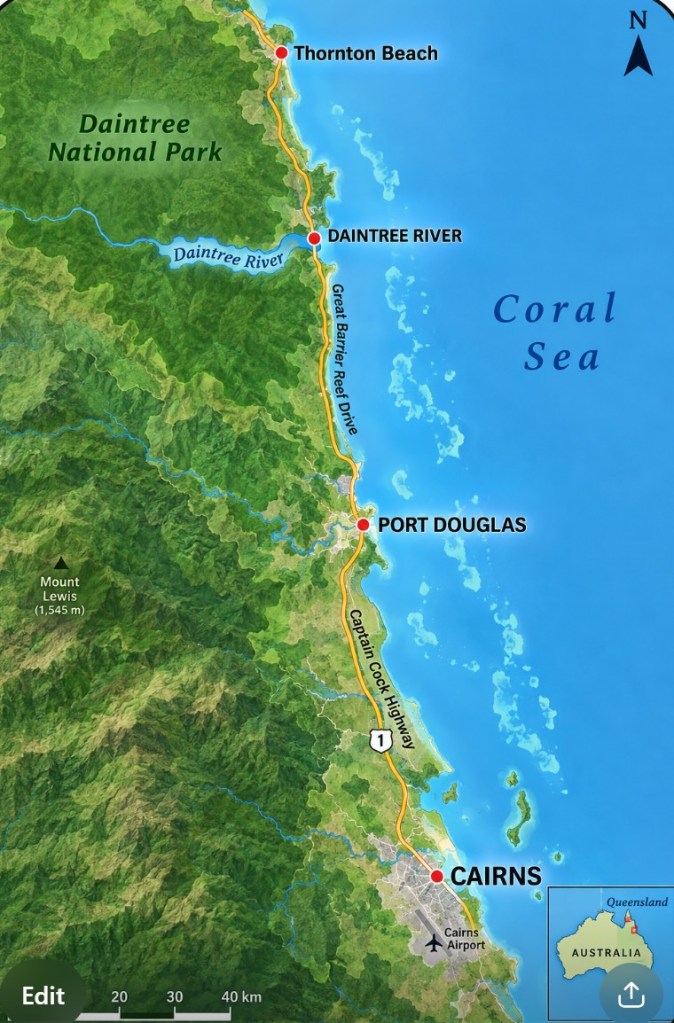
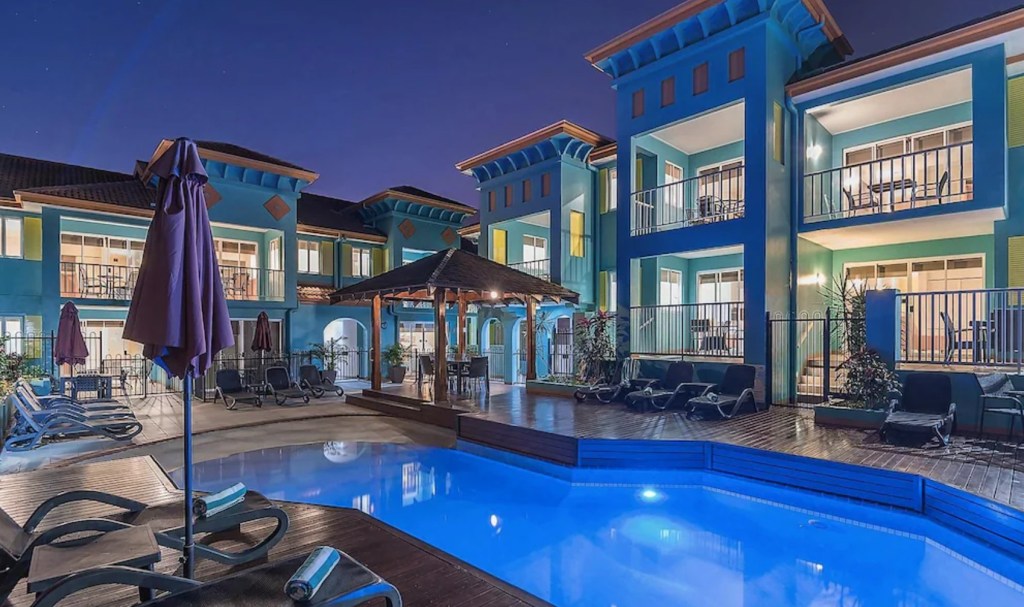
When Cindy visited Australia in 2018, she, too, visited Cairns but her interests were not birds so she was occupied with the Great Barrier Reef with some snorkeling and a trip on a submersible. In 2003 I had stayed at Kingfisher Lodge, Cassowary House and Red Mill. Not sure it would have been a good idea to repeat any of those places with Cindy, but they were unavailable anyhow. We chose what looked like a fun place to stay in Port Douglas, about an hour north of Cairns. The plan was to rent a car and combine some birding with some croc spotting and maybe a visit to the Reef. Our “home” in Port Douglas was to be “Le Cher du Monde”. Online it looked – well, better than in real life. In fairness, the location was great in the heart of the very touristy Port Douglas’s “downtown” and it was “ok” and our room was quiet, but it was not what was expected – lots of stairs and no elevator, no food service of any kind, no maid service, no atmosphere, a loss of electricity one day and a mix up about beds – but we weren’t planning to spend much time in the room anyhow, so – well, ok.
Le Cher Du Monde – Not Exactly What We Saw
I had arranged one day of guided birding with Doug Herrington, an excellent birder/guide in the area and I hoped that would cover some of what I had seen in 2003, but the 2003 list was very strong, so mostly I wanted to get as many life photos as possible and did not expect many new lifers. At the top of the list for both Cindy and me was to see and photograph a Southern Cassowary. I had seen an adult and chick briefly in 2003, but no photo. We covered a lot of areas where they were found and often saw “Cassowary Crossing” signs and even “Cassowary in Area Recently” signs but not keeping you in suspense, we never saw one. No Cassowary but before going out with Doug, we managed 59 species – one lifer, an Australian Swiftlet, and 19 life photos. After my trip with Doug Herrington the numbers would be 107 species, 4 lifers and a total of 50 life photos. Amazingly 50 of the 82 species seen in 2003 were not seen on this trip – reflecting the different habitats I visited in 2003 with much more time off the coastal area and up into the forests. The close of this post will be the full day with Doug Herrington but until then here is what we did each day – birds mixed with being tourists.
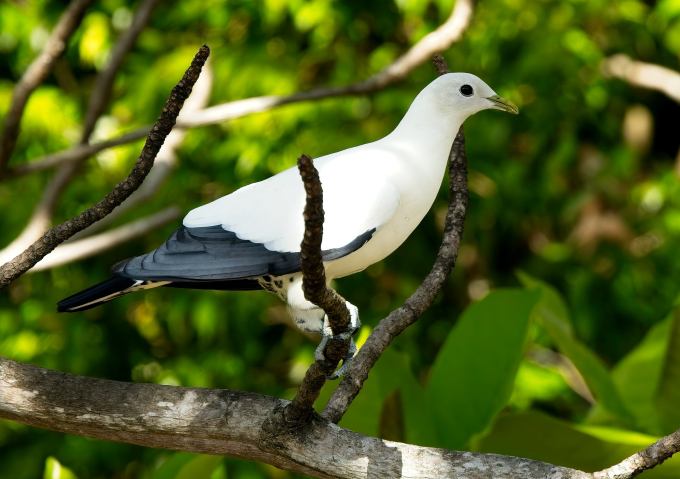
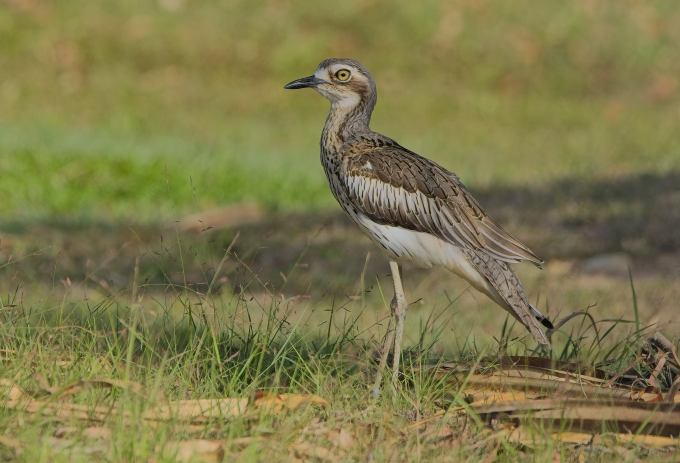
It was almost 5:00 pm when we got into Port Douglas after the flight from Uluru. On the way in I saw an interesting bird at the side of the road, a Bush Thick-knee, like a cross between a shorebird and a wader and a species I had seen only once, in Brisbane in 2003. This time I also got a photo. Another species seen before checking in was the beautiful Torresian Imperial Pigeon. Apparently these birds was just moving into the area as the Australian Autumn was approaching – equivalent to our Spring when migrants returned. We would see them in great numbers throughout our stay in the area and then again in Brisbane – another life photo.
Torresian Imperial Pigeon – Life PhotoBush Thick-knee – Life Photo
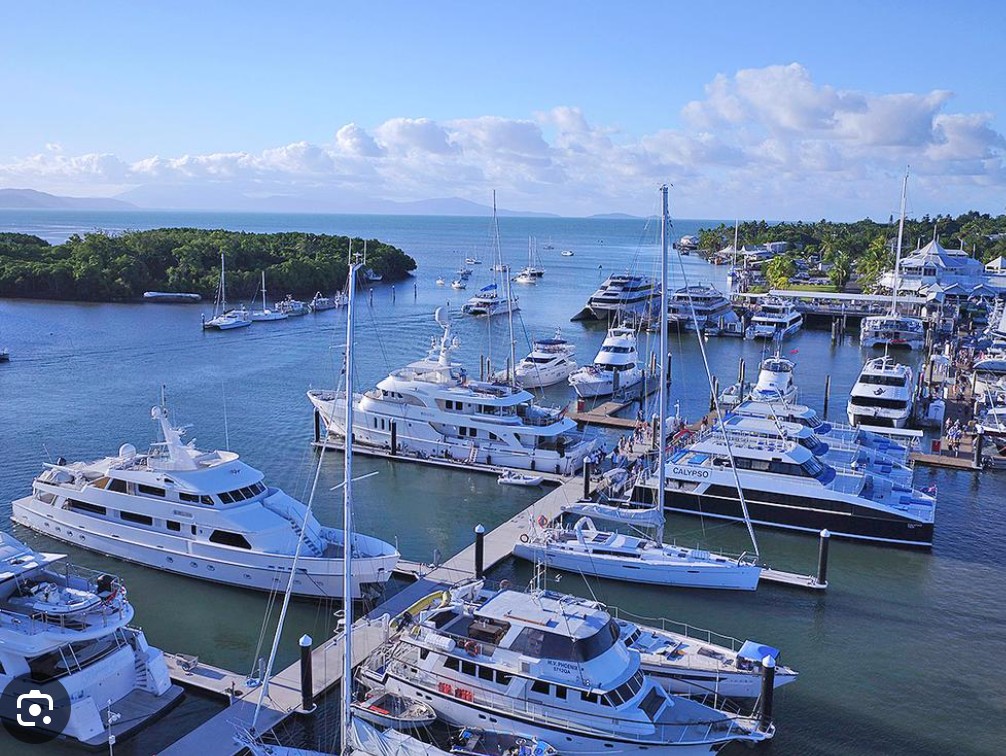
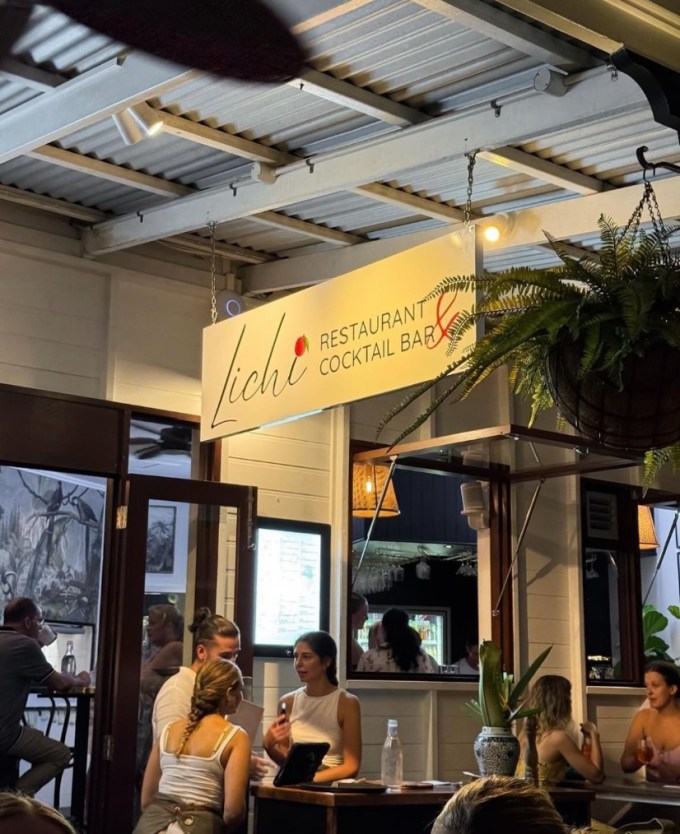
Port Douglas has lots of nightlife and many restaurants including many on a street by the Marina which had many very impressive yachts moored there. That first night we ate at one of the restaurants, the Lichi Restaurant and Cocktail Bar described as “sophisticated with a fusion menu”. The food very good and Cindy and I both tried new seafood dishes: Barramundi for me and coral trout for her – both were very nice and would show up on our dinners again.
Port Douglas Marina
Lichi Restaurant and Cocktail Bar
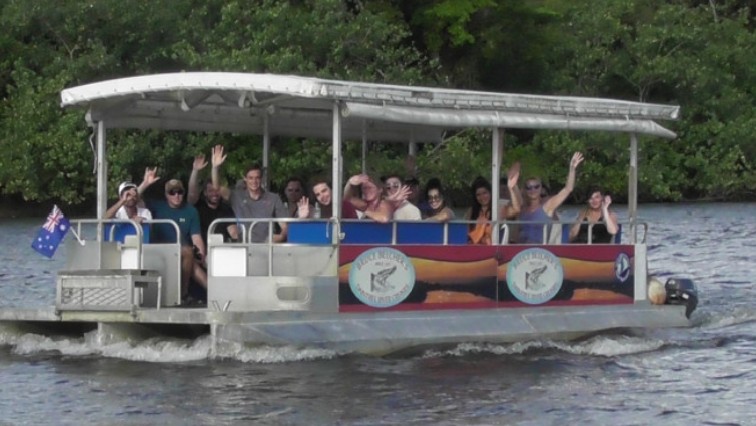
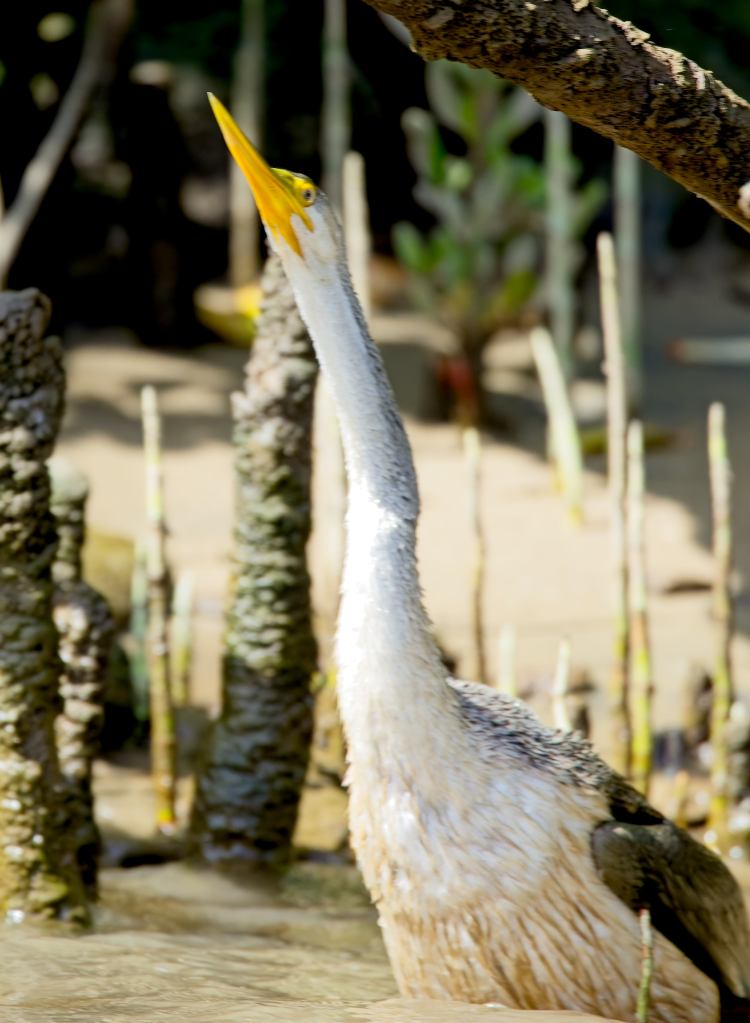
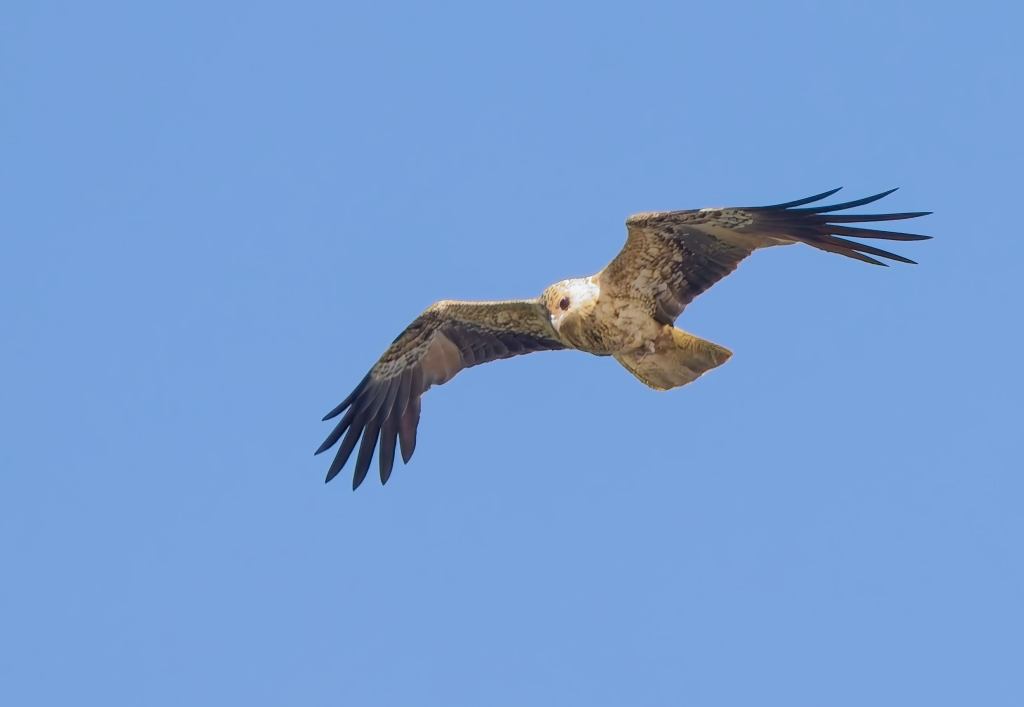
Cindy has this fascination with BIG reptiles. In Costa Rica it was to see crocodiles or caiman and in Africa it was again to see crocodiles and she is always hoping for an Anaconda so of course we had to go look for some big “salties” – Australian Saltwater Crocodiles. After dinner on September 17th as we planned the next day it was imperative to do a river cruise on the Daintree River to see big crocs. She found Bruce Belcher’s Daintree River Cruise and reserved two spots for 9:30 am the next morning. We got a message back that there had to be at least 4 people to make it a go, so we imagined a small boat and not too many passengers and since it was reasonably priced decided to “buy” two more spots if needed to make it a go. We shouldn’t have worried. Bruce has a big operation with several boats and there were at least 8 other people there for the 9:30 trip when we arrived. Their promotional material said they were “keen bird watchers with a good eye for crocodiles and tree snakes”. Crocodiles? Yes. Birds? Not so much. But we did see several crocodiles and they did take us to see a roosting Papuan Frogmouth but I was the one who pointed out an Australasian Darter, Forest Kingfisher and Sacred Kingfisher. The Frogmouth, Darter and Forest Kingfisher were all life photos. I had seen and photographed the Sacred Kingfisher in Sulawesi. Leaving the river, I also got a life photograph of a Whistling Kite. The crocodiles were all resting on the riverbank which was fine by us and we got close up excellent looks.
Our Comfortable but Not-So-Private Cruise Boat
One of the Big Saltwater Crocodiles
Forest Kingfisher – Life Photo
Australasian Darter – Life PhotoPapuan Frogmouth – Life Photo
Whistling Kite – Life Photo
After our crocodile adventure we continued north up to Daintree National Park and Cape Tribulation including crossing the Daintree River on the small ferry. We were constantly on the lookout for a Southern Cassowary and were constantly disappointed. But the scenery was beautiful, either the tropical forest or the beautiful Coral Sea eventually reaching Thornton Beach which I had visited in 2003. A couple of new birds for the trip, no lifers and a single and very pleasing life photo of a Macleay’s Honeyeater.
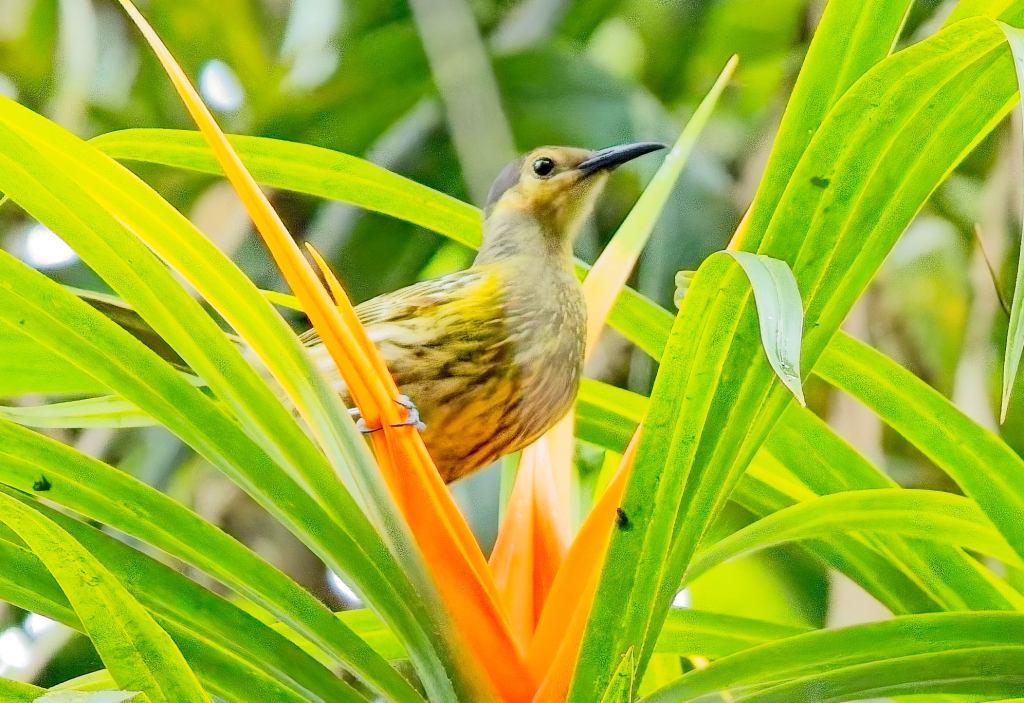
Macleay’s Honeyeater – Life Photo
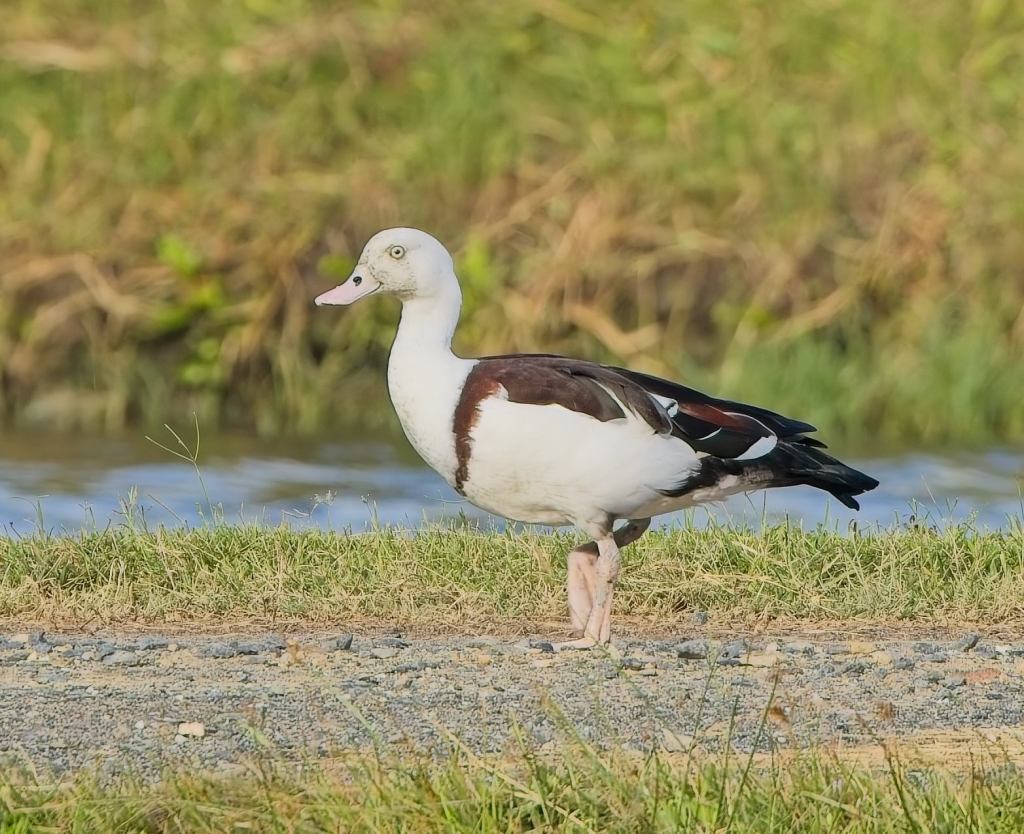
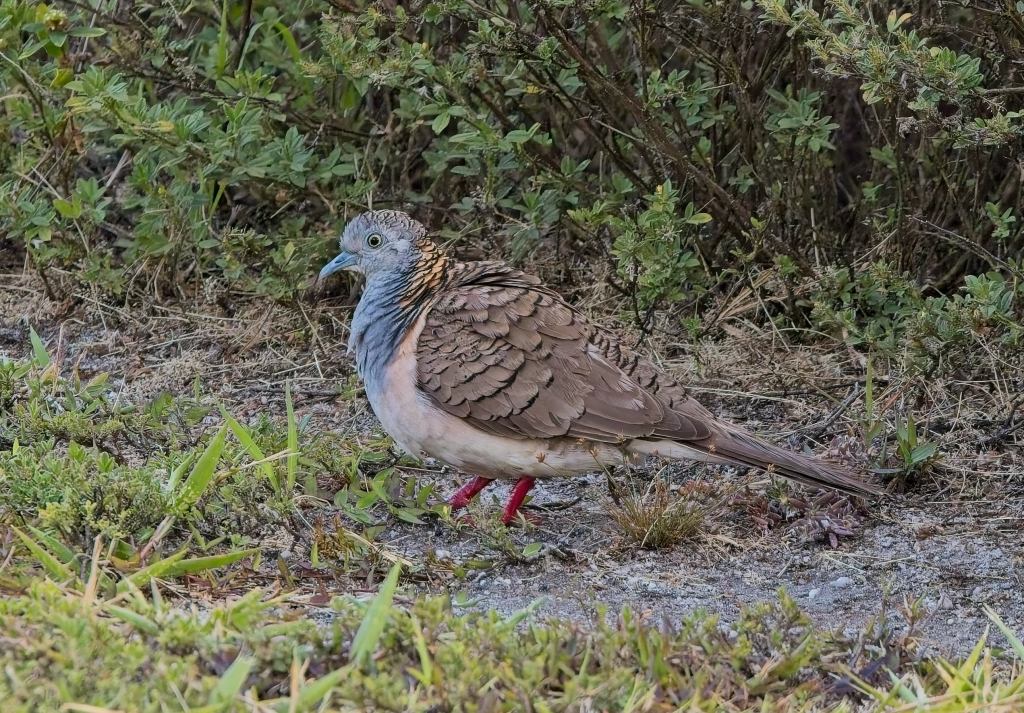
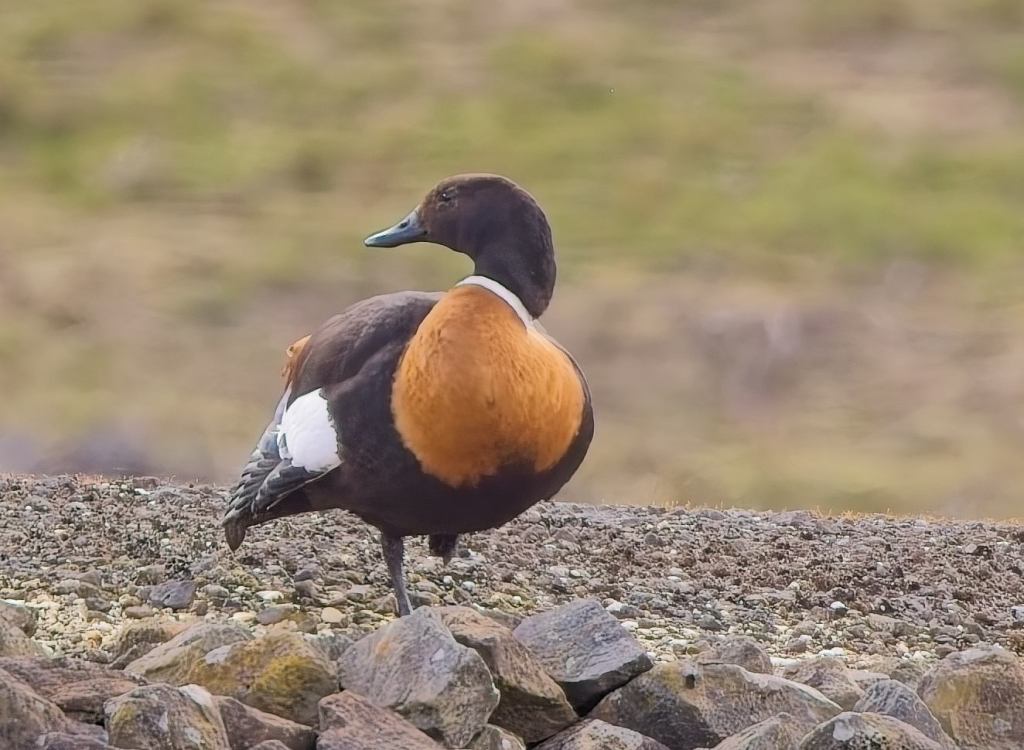
Time to head back so we turned south and I caught site of what looked like a wetland near Wonga Beach. It turned out to be the Wonga Beach Barra Farm – a manmade series of ponds where Barramundi (the same fish I had eaten the night before) are farmed and and then available (at a price) to be caught by the public to be taken home and eaten. Barramundi are also known as Asian Sea Bass. They can get to be as large as 6 feet and 180 pounds but average 2 to 4 feet and the farm raised ones are much smaller. We pulled into the parking lot just as everyone seemed to be leaving and indeed they were closing operations for the day. I had hoped to be able to get a quick non-paying walk into the facility and if not then to walk along the fenced in area from a side road. Here is another prime case where we kept meeting wonderful Australians. Despite their closing, they invited us in to not only get a couple of photo ops of birds there, but to walk around with them as they were feeding the fish to get a look at the Baramundis and hear about the operation. Fun and interesting – and – there were some birds including several Radjah Shelducks which were the ones I had seen from the road and got my attention in the first place. That was a life photo and I also got a life photo of a Bar-shouldered Pigeon. Other birds there were three species of egrets (Eastern Cattle, Little and Plumed), Pied Stilts, a Laughing Kookaburra and a fly-over Osprey.
Radjah Shelduck – Life Photo
Bar Shouldered Pigeon – Life Photo
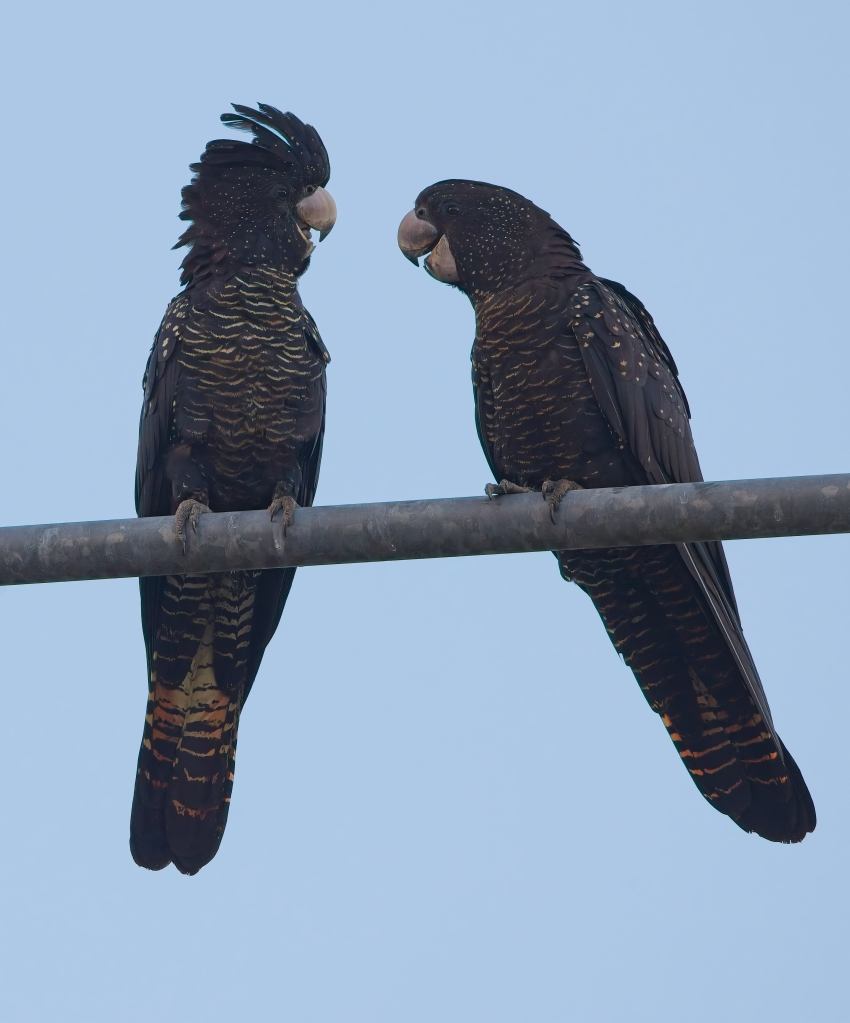
We continued south and in the town of Mossman, I saw some birds perched on a wire that I assumed were doves or pigeons but you have to check out every bird you can. Thankfully I did as they were all Red-tailed Black-Cockatoos and then a few hundred yards further down the street there was a large flock of Metallic Starlings, two more life photos.
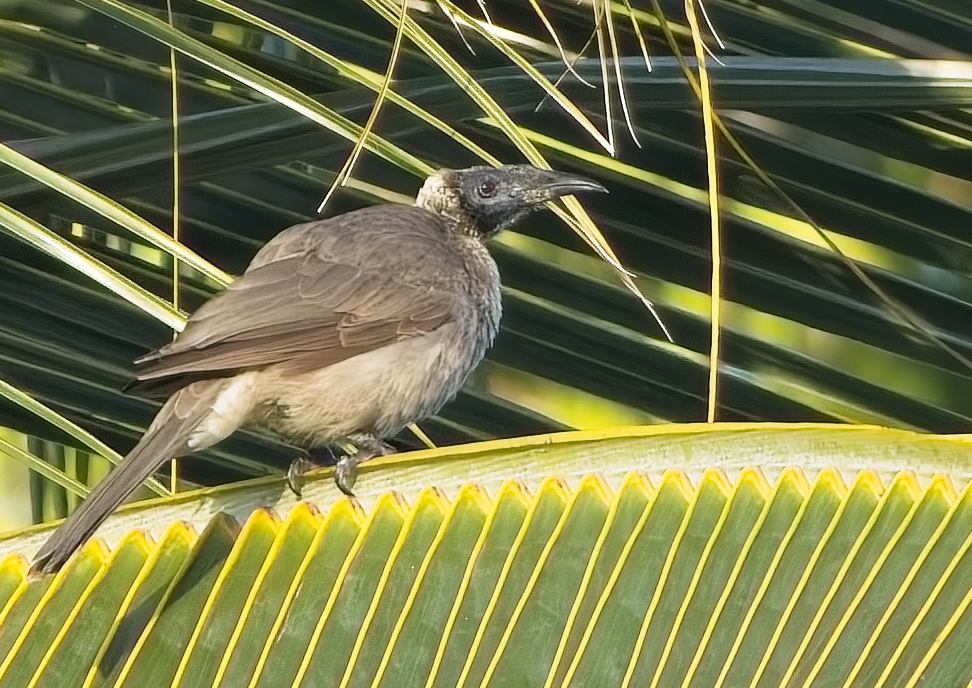
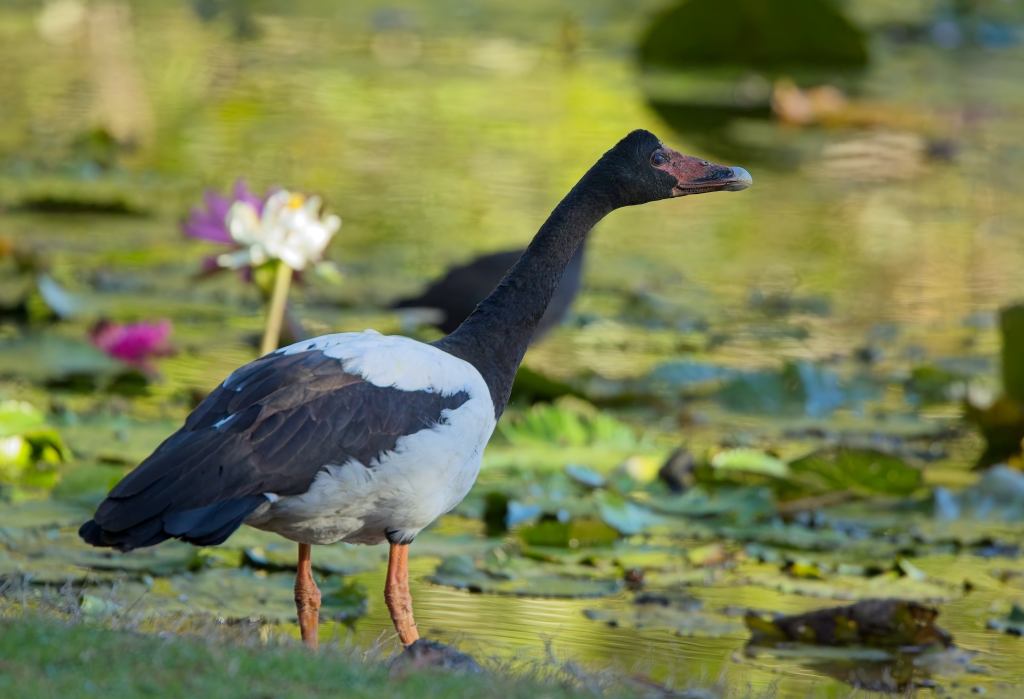
A last stop was at the Wildlife Habitat facility at the turn-ff into Port Douglas. After a u-turn, we found that what I had thought were Australian Ibis in the palm trees were actually Magpie Geese, and more flew in to roost in the trees as we watched, and across the street, now in diminishing light was a Helmeted Friarbird. I would get better photos of each later, but these were both life photos – a great way to close out the Cassowary-less but none-the-less excellent day with 11 life photos!! We closed the night with another good dinner at one of the marina area restaurants.
Helmeted Friarbird – Life PhotoMagpie Goose – Life Photo
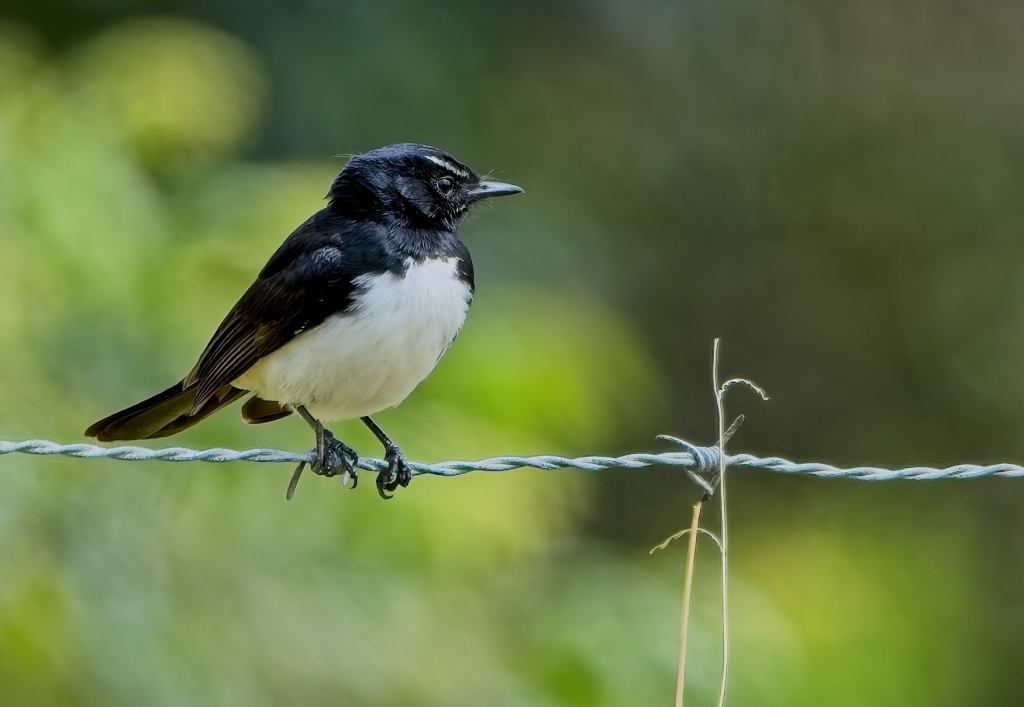
There was a small kitchenette in our hotel in Port Douglas and we had bought milk, granola, orange juice and some fruit which we had for our breakfasts – as there was no food service of any kind at the hotel. There was, however, a small cafe next to the hotel and each morning we had coffee and a pastry there before heading out. The coffee was not as good as in Melbourne but better than at Uluru and a welcome start for the day. On September 19th we would be heading a bit west into the area bordering the Tablelands, one of the areas where I had stayed back in 2003. Specifically we went looking for Kingfisher Park, one of those 2003 places where I had great birds – 35 species of which 27 would have been new for this trip. We made a first stop at the Cattana Wetlands, an Ebird Hotspot. It was pretty quiet. We ran into two local birders who said the same thing and we found no waterbirds at all.. The biggest disappointment was the Green Oriole that was singing right over our heads somewhere but could not be found even with coaxing with some playback. I did get life photos of an Orange Footed Megapode and of Willie-Wagtail, a common black and white flycatcher that did indeed constantly wag its tail.
Orange Footed Megapode – Life Photo
Willie Wagtail – Life Photo
Then we began our search for Kingfisher Park Birder’s Lodge. We had excellent GPS directions and followed them precisely leading us to – a spot on the road in the forest in an area that had a few residences – no sign of any lodge. We drove around and tried a different GPS source with the same result. We stopped a woman walking in the neighborhood and she had heard of Kingfisher Lodge and gave us some directions that took us close to the same place we had stopped before but no Lodge. However, persevering, not far away we found a worn track into the forest with an old beat up sign that said “kingfisher”. It was barely the width of our vehicle, but we followed it to a garage/workshop with a car parked alongside and got out. A bit further in there was what looked like a residence. We approached and could hear a television inside and called out “hello”. No response for 5 minutes and then a woman came out who told us that it was no longer a lodge but had occasional guests. I have no specific memory of my visit in 2003, but find it hard to believe that I could have been there. The lady told us that cassowaries did come by and were found all through the area, but the regular one had been through a couple of hours earlier and probably would not return for hours. An Australian Brushturkey walked down the road and gave me my life photo, but that was it. So much for reliving old memories – at least that one. In 2003 I had also birded the Cairns Esplanade and we decided to head on into the City and maybe have better luck.
Australian Brushturkey Male – Life Photo
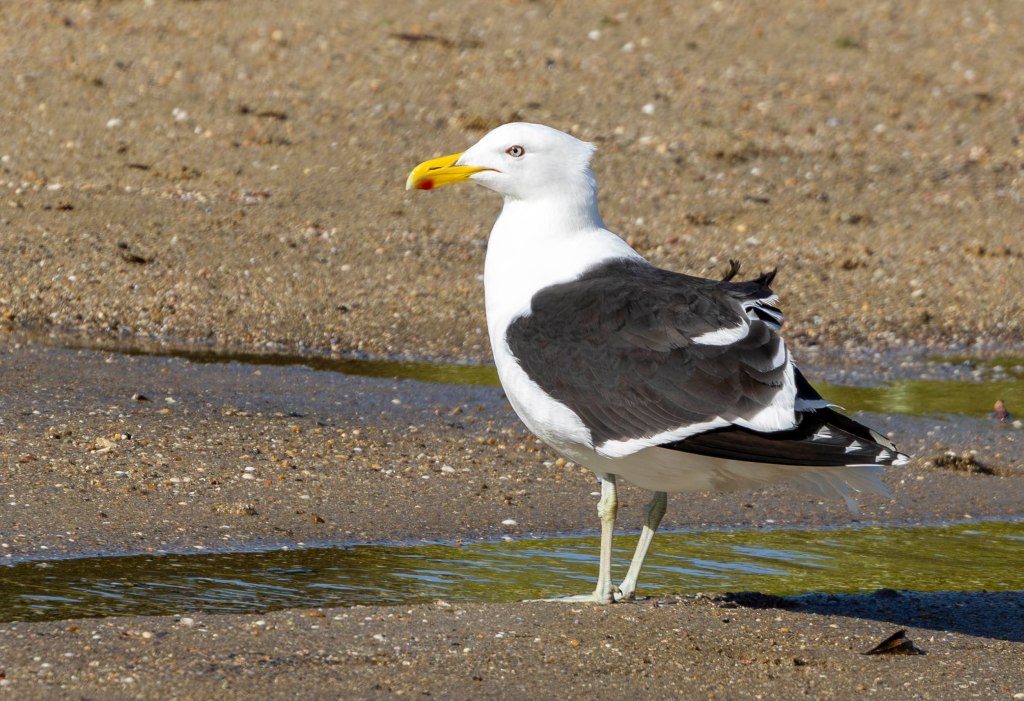
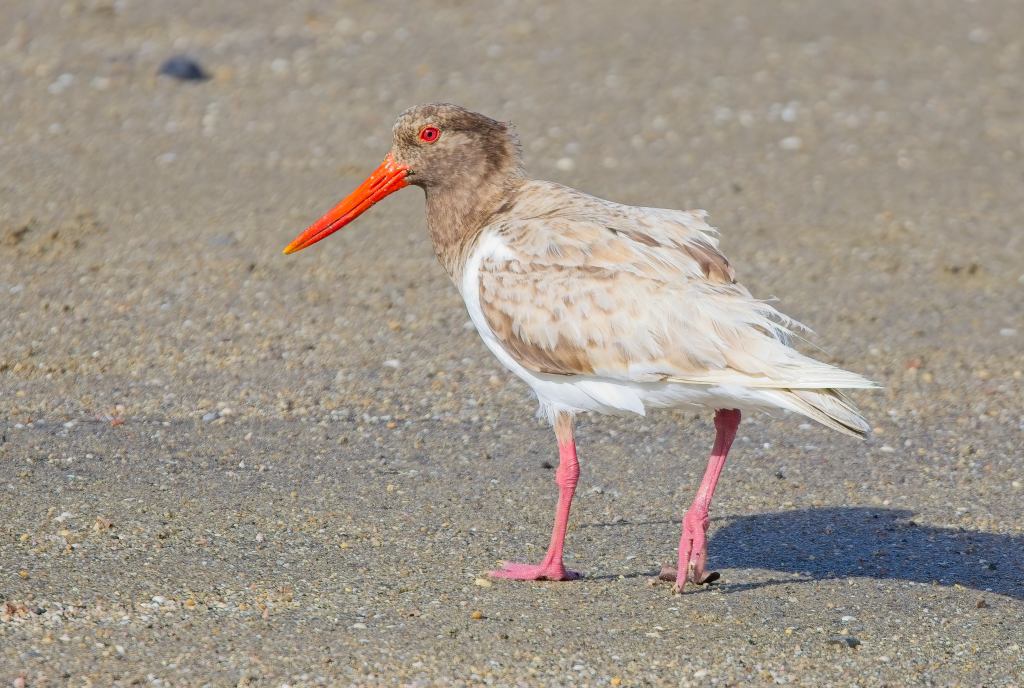
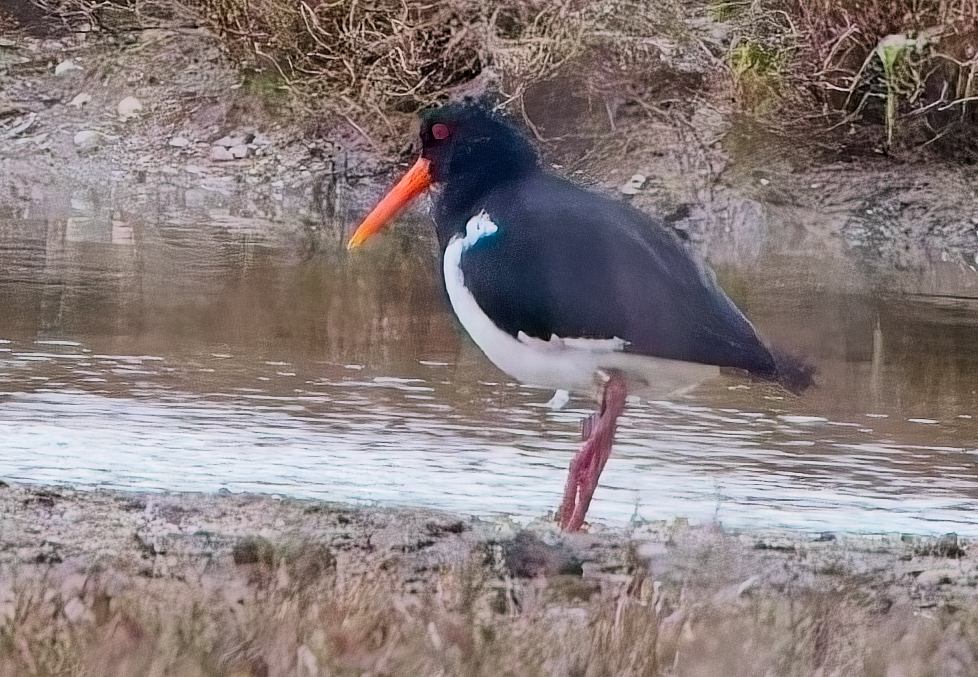
Among other reasons to visit the Esplanade, it can be a great place for shorebirds. In 2003, my Ebird list for the Esplanade had only 11 species, 8 of which were shorebirds, and half of those were ones for which I still did not have photos: Gray Tattler, Greater Sand-Plover, Little Curlew and Broad-billed Sandpiper. Hopes were high to see them again and get pictures. This time we saw 29 species, and again 8 were shorebirds, none of the targets. A Kelp Gull was a continuing rarity but I had seen and photographed one elsewhere earlier and a very odd leucistic Pied Oystercatcher was a challenge tio ID . A Nordmann’s Greenshank had been seen at the Esplanade the previous year and a local birder I met thought one of the shorebirds we saw might be it again but unfortunately it was only a Common Greenshank – not the would be lifer.
Rare for Area Kelp GullVery Odd Leucistic Pied Oystercatcher
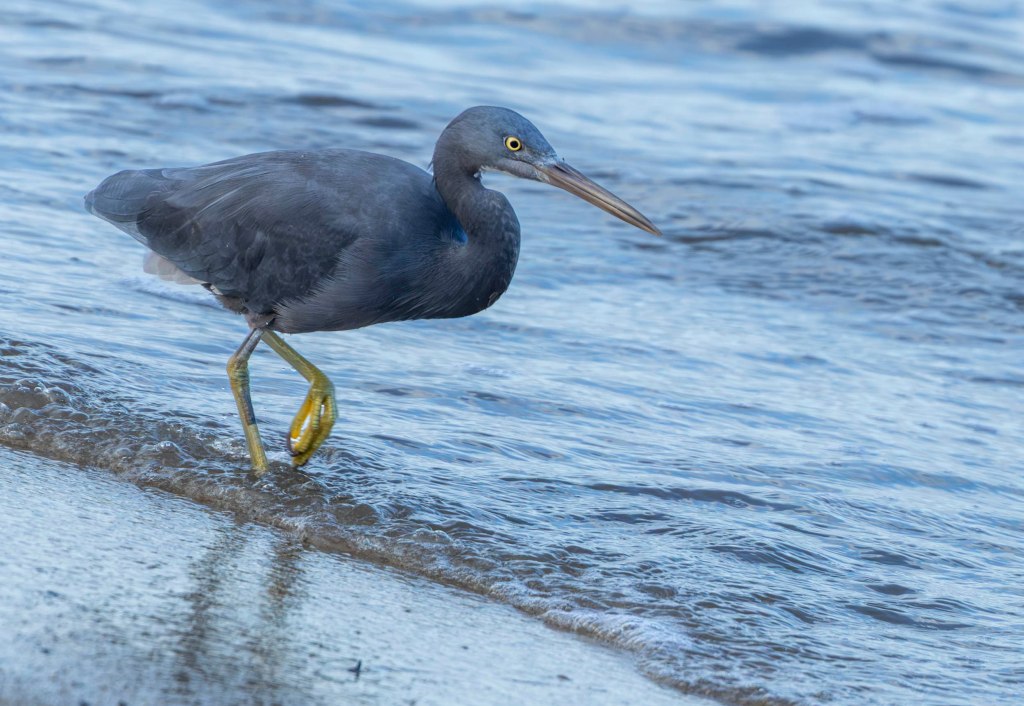
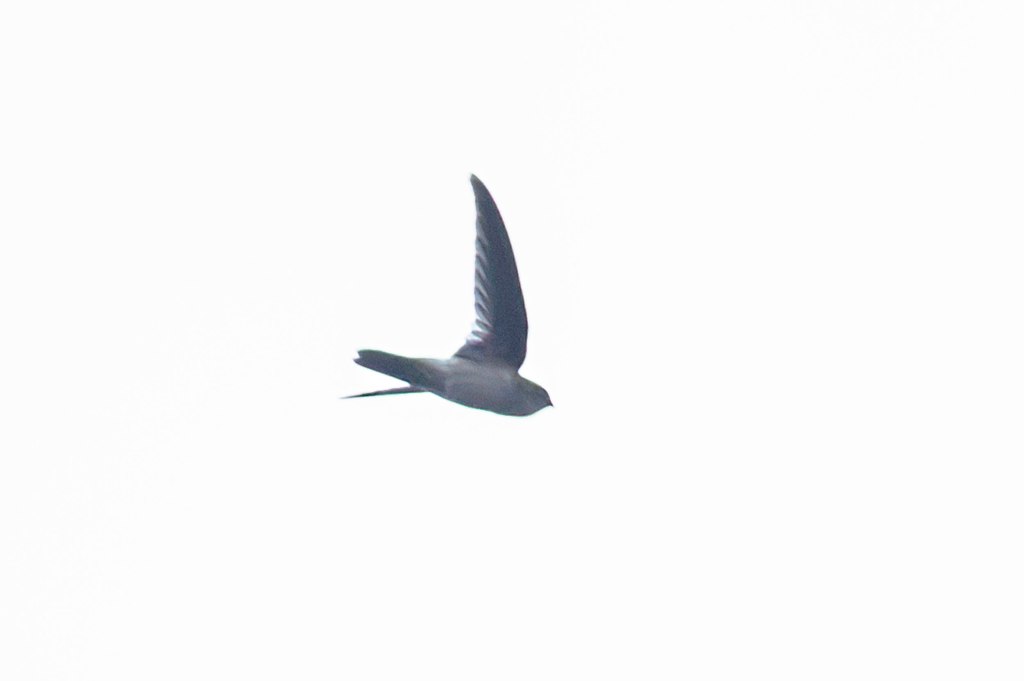
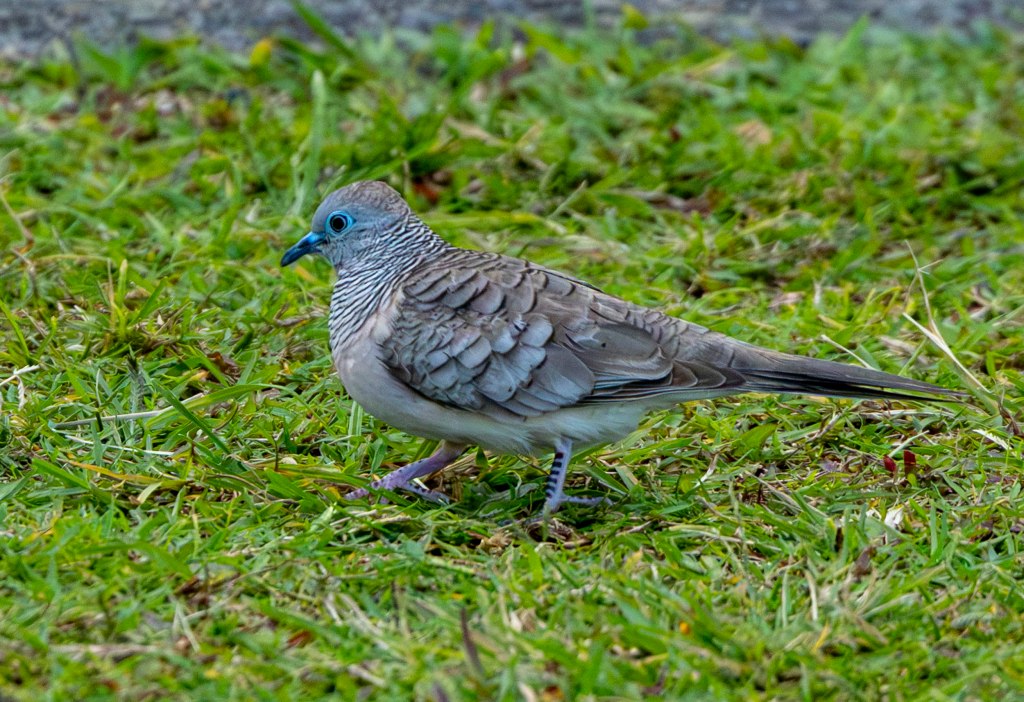
But there were a few treats – life photos of a Pacific Reef Heron, a Varied Honeyeater and an Australian Swiftlet, with many of the latter seen. This would be one of those odd stories that happens in birding. As mentioned, I had met another birder/photographer there – a very nice fellow originally from South Africa. He knew the local birds and at first we started looking for a Rose Crowned Fruit-Dove which he said could be found in some large trees near the northern end of the Esplanade where we were biding. I don’t know how the goal changed but he had received a photo of a nest with a Double-eyed Fig Parrot in it located further south on the Esplanade. Cindy was game so off we went. It was a very long walk as the tree was much further south than expected and when we got there we found the parrot-less nest hole and then it was a very long walk back with no time now to look for the Fruit Dove. As it turned out, I got the Fig Parrot later in the trip and never did see the Fruit Dove – but it was fun visiting with the fellow and we did get a lot of exercise at a very pretty place. But I got a life photo of a Peaceful Dove on our walk. I am also including a portfolio of other nice photos from the visit.
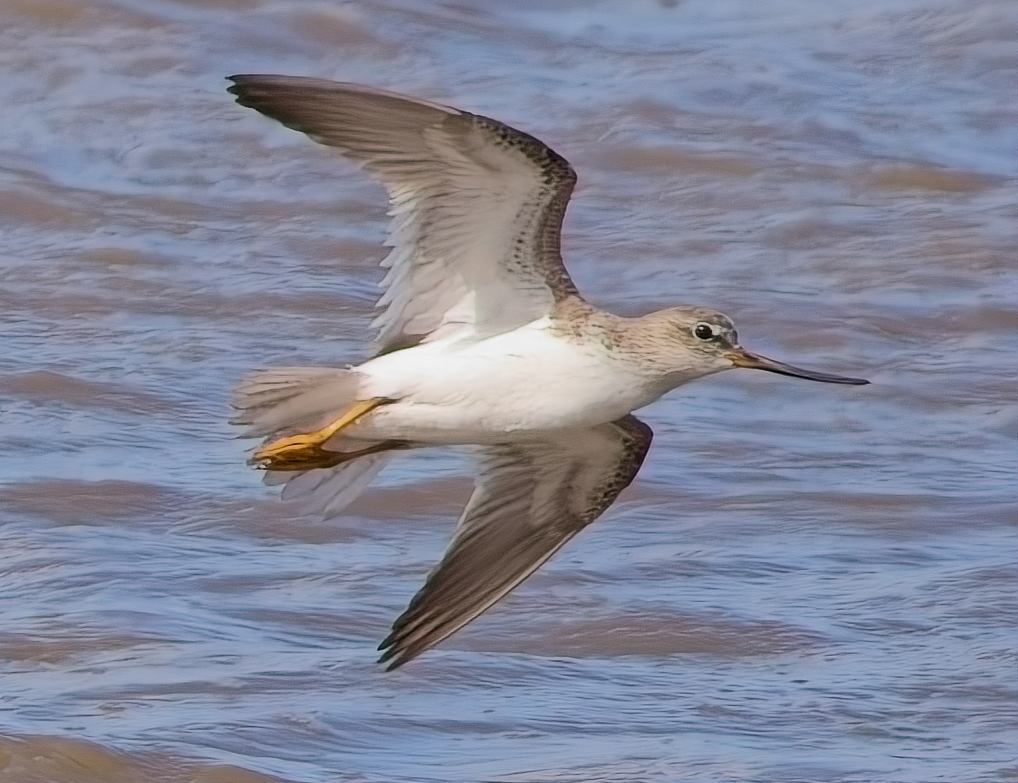
Catching the Terek Sandpiper in flight was a treat. I first saw this species in Wajima, Japan in 1983 without a photo. In July this year, one made a surprise visit to a Sewage Treatment Plant in Snohomish County, Washington, about 30 miles from my home. It became my life photo. This one is much better. It was about an hour to get back to Port Douglas. A comment is in order here. Originally we had planned to spend this day going out to the Great Barrier Reef on one of the many excursion boats leaving from either Cairns or Port Douglas. I am not a water person, poor swimmer and snorkeling is a challenge. Cindy had done this on her earlier visit and we looked at trips using glass bottomed boats. On close look none of the trips were that appealing and Cindy said she was ok to skip the activity. I wish I was able to snorkel as I am sure it would have been amazing. Another time where Cindy probably sacrificed for me.
Cindy and I were both scheduled to go out with Doug Herrington on September 24th. I got a surprise message from him that another birder would be joining us. This would be a “hard core” birding day which would inevitably include some of those LBJ’s (“Little Brown Jobs”) that are the part of birding Cindy does not like so she decided to sit it out and explore Port Douglas. Although there were some awesome birds that day, it was probably a good decision on her part as there were definitely some tedious moments including a visit to a trailer park that was very birdy but admittedly not that scenic. Doug was going to pick me up at the hotel around 7:00 am. I got a much better Helmeted Friarbird photo as I waited. The other birder was a Britisher about my age and more into photography than birding. We took turns being in the front and back passenger seats and all worked well.
Helmeted Friarbird – Much Better Photo of this Very Odd Looking Bird
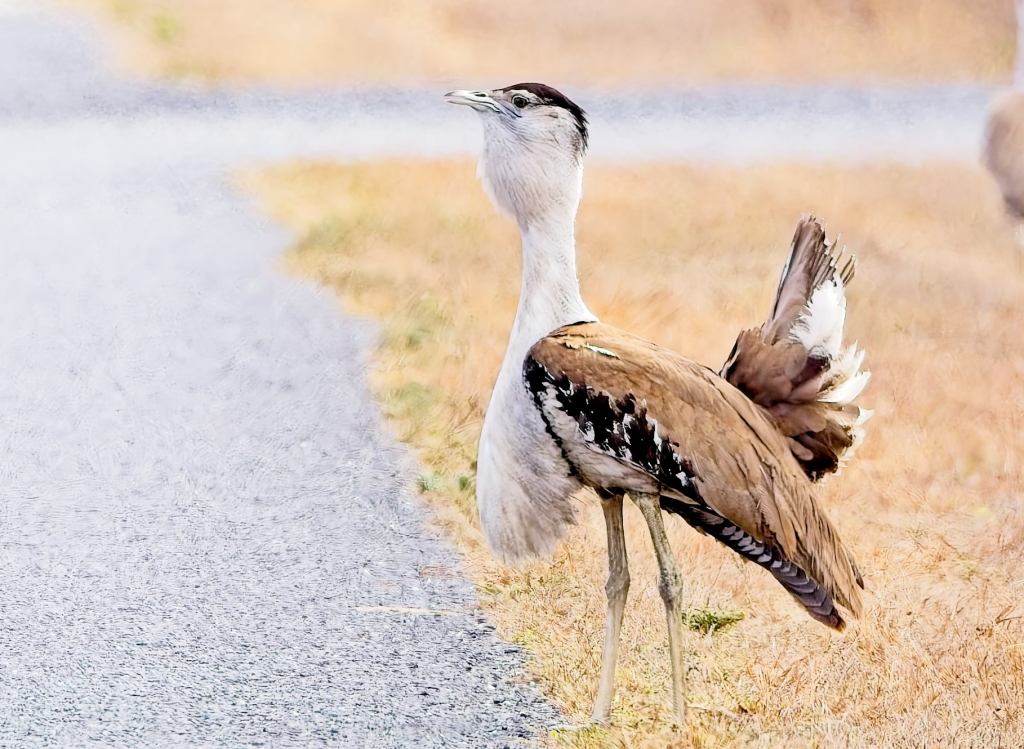
We would make 11 stops during the day and since Doug did not use Ebird, I did my best to enter species as we found them. When we were done, our species list was 76 species and I had added 3 lifers and 31 life photos. I am pretty sure I missed some heard only species but think I got all of the ones seen. The lifers were Black Faced Monarch, Australian Bustard and Pheasant Coucal. I got photos of the first two but the latter was heard more than once and clearly but never seen so not photographed. Doug was an excellent guide and knew the birds and their special locations well. I never would have found many if not most of the species without his special knowledge. The trailer park – they are called caravan parks in Australia – was not scenic but it was very birdy with 21 species including 12 life photos.
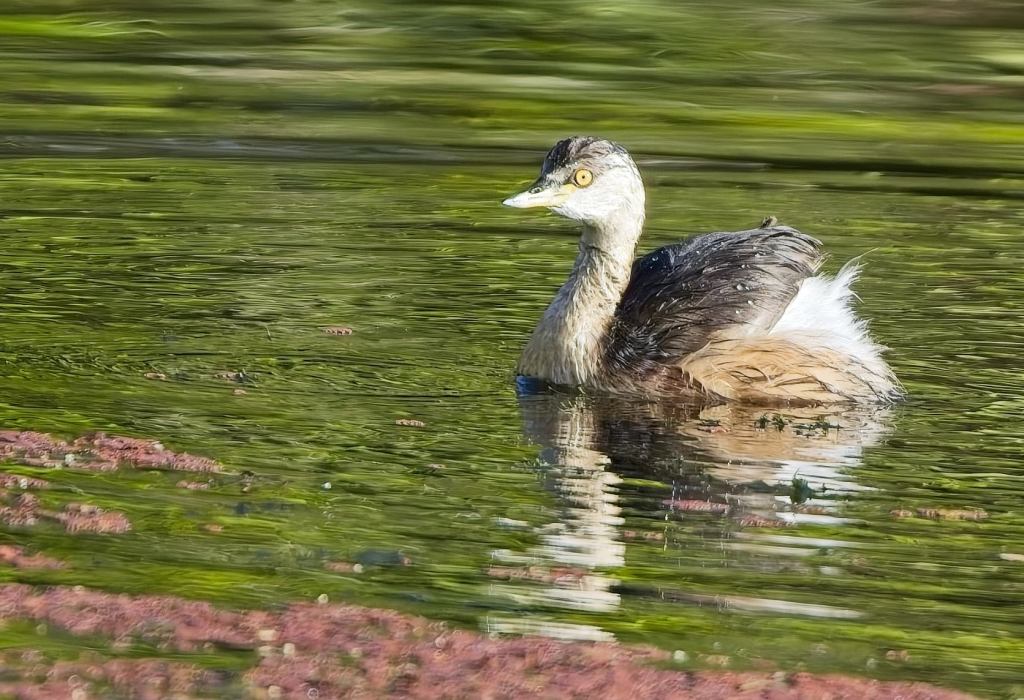
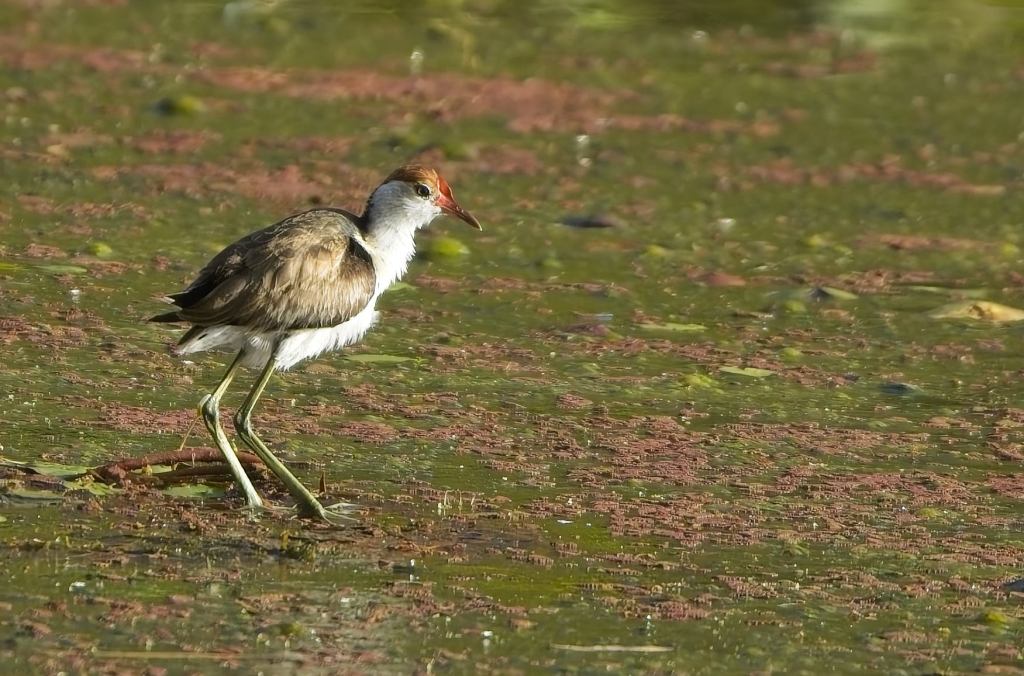
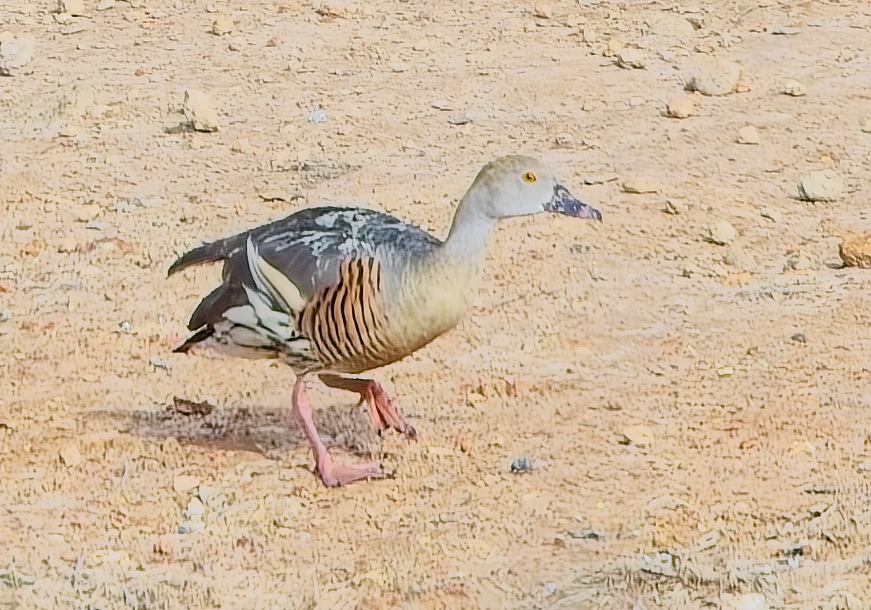
It took less than 15 minutes to get to the Warri Park Wetland in Port Douglas and my first life photo – an Australasian Grebe with a second life photo, Comb-crested Jacana a minute later. This was quickly followed with a stop at the Ferrero Road Wetland also in Port Douglas where we had more than 100 Magpie Geese and35 Plumed Whistling Ducks (a life photo) and 3 Green Pygmy Geese (another life photo). I also had another really good photo of a Straw Necked Ibis – photographed previously when in Melbourne. The pace slowed down as Doug made our way to a stakeout roosting spot for a cooperative Brahminy Kite. I had previously photographed one in Sulawesi in 2023. Next up was a beautiful Black Necked Stork, a species I had last seen, and photographed, in India in 2011.
Australasian Grebe – Life PhotoComb-crested Jacana – Life PhotoMagpie GoosePlumed Whistling Duck– Life PhotoBrahminy KIteStraw Necked IbisBlack Necked Stork
So it was a good and fast paced start, and we slowed a bit until we reached a special treat at Mary Farms Road in the Tablelands and which delighted us with a lifer displaying male Australian Bustard plus more males and a number of females. I got life photos of Tree Martin, Torresian Crow and Red-backed Fairy-Wren and nice shots of the beautiful Rainbow Bee-Eater.
Australian Bustard FemaleAustralian Bustard Male Displaying – LiferRed-Backed Fairy-Wren – Life PhotoTorresian Crow – Life PhotoTree Martin – Life Photo
Rainbow Bee-eater
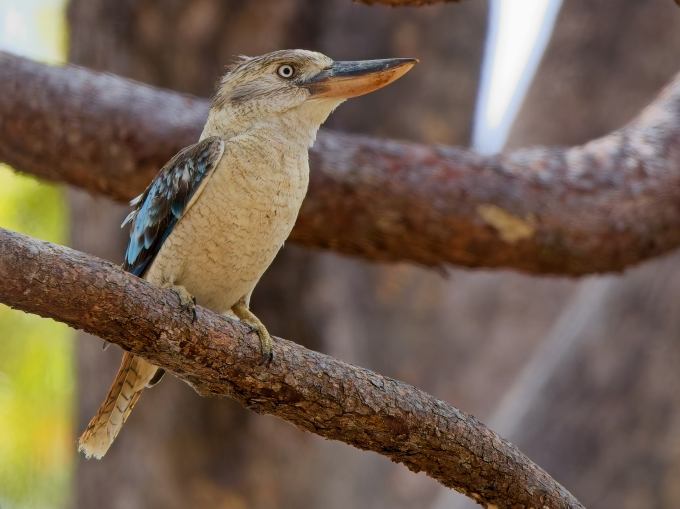
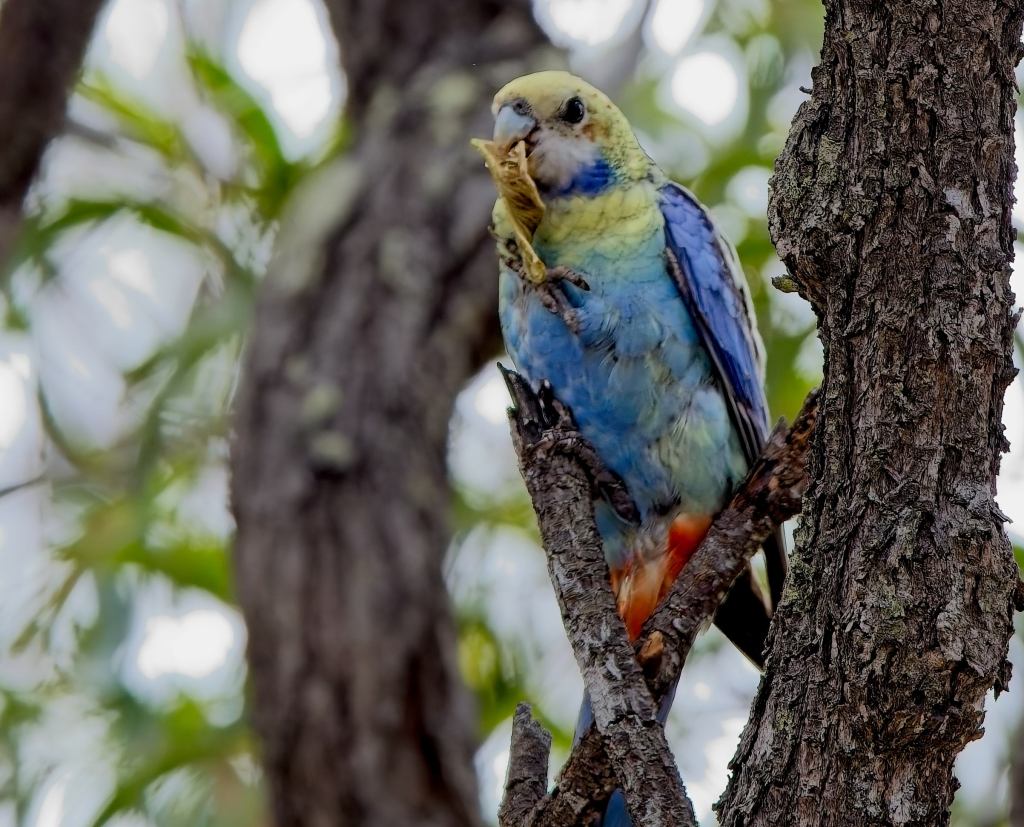
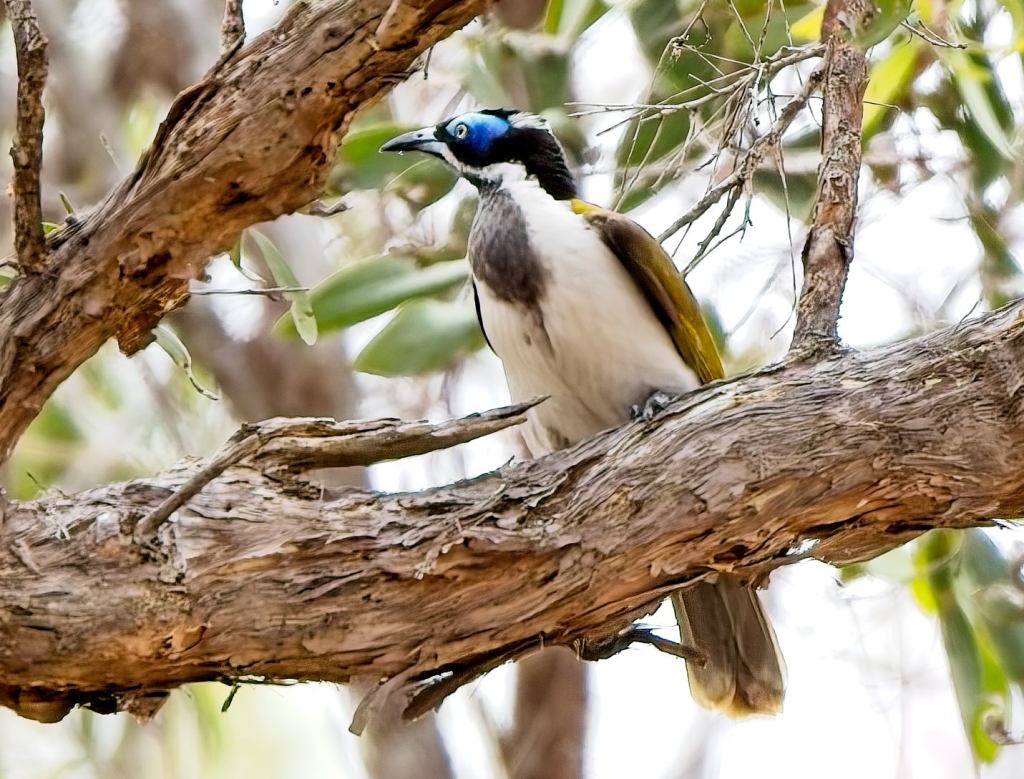
Around 10:30 am we arrived at the Mt. Carbine Caravan Park. We would spend an hour and a half there – a place often birded by Doug and with some terrific birds, Doug knew many of the people at the park and many of them knew the birds. We had 21 species with photos of 17 of them of which 12 were life photos, and this is where I had my lifer Black Faced Monarch. The really special birds were Blue-winged Kookaburra, Squatter Pigeon, an Apostlebird, a Little Friarbird, a Tawny Frogmouth, Pale-headed Rosella, and a dozen Great Bowerbirds, including one in its bower. That list leaves out life photos of Pied Butcherbird, Blue-faced Honeyeater, Spangled Drongo and White Bellied Cuckooshrike. Lots of photos.
Black-faced Monarch – Lifer Found on My Own
Blue-winged Kookaburras – Life Photos
Squatter Pigeons – Life Photo
Little Friarbird – Life Photo
Apostlebird – Life Photo
Pale-headed Rosella – Life Photo
Blue-faced Honeyeater – Life Photo
Tawny Frogmouth – Always a Treat
Great Bowerbird in Bower – Life Photo
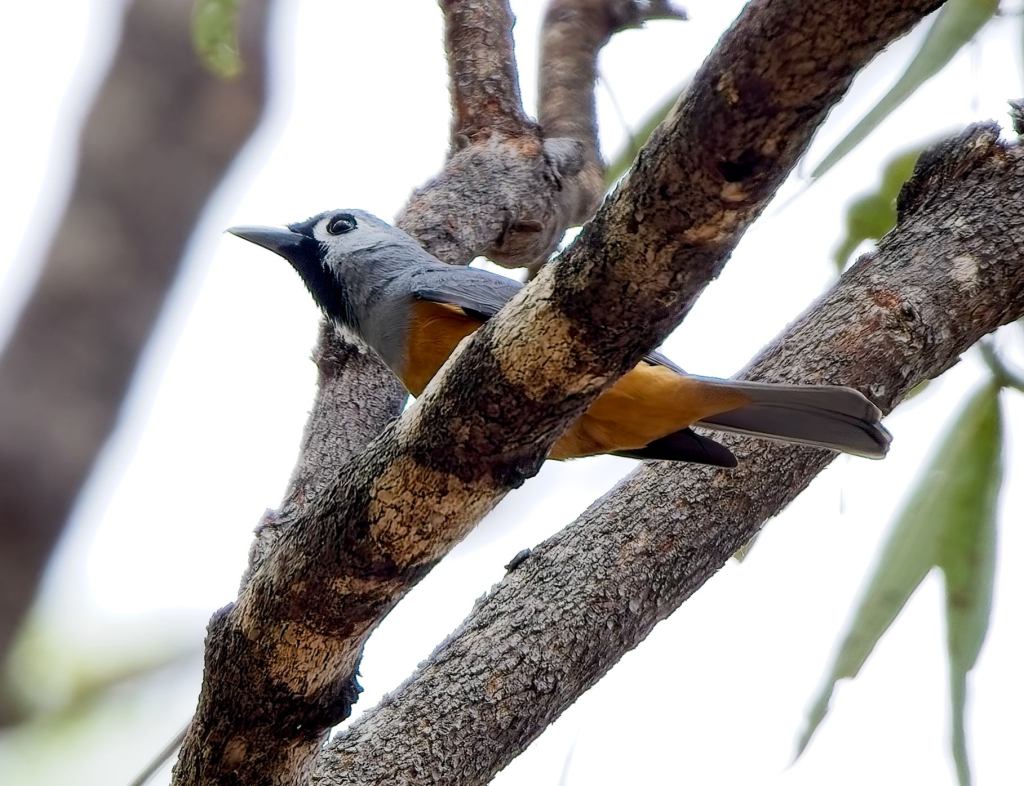
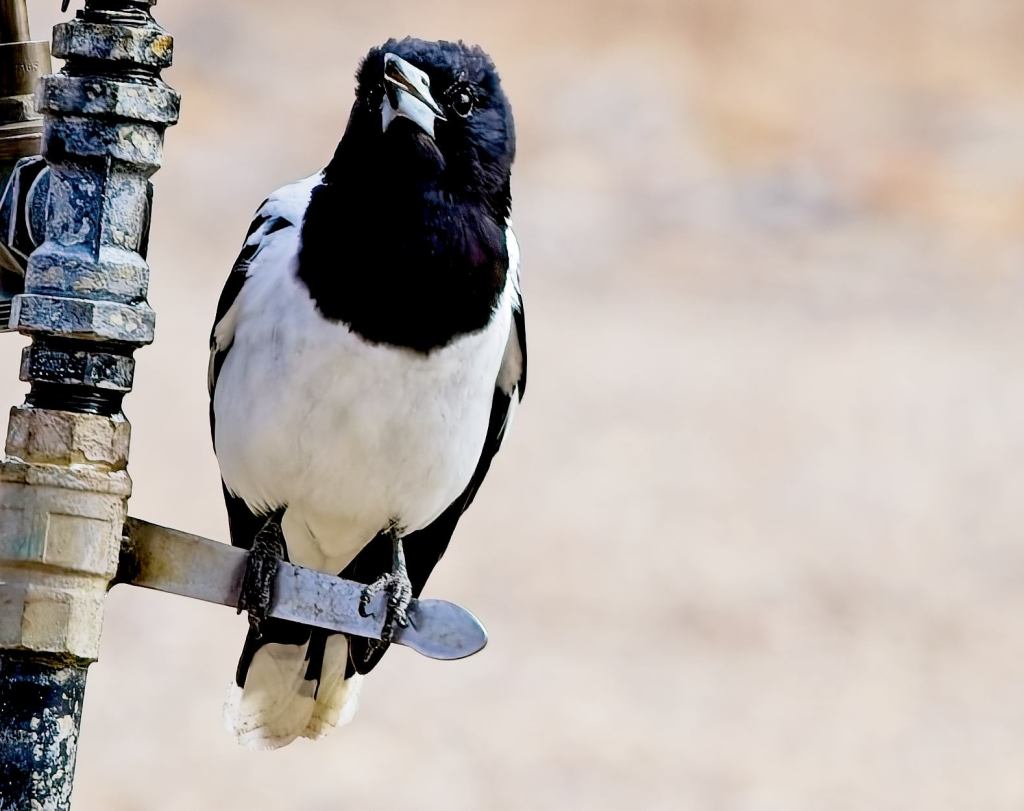
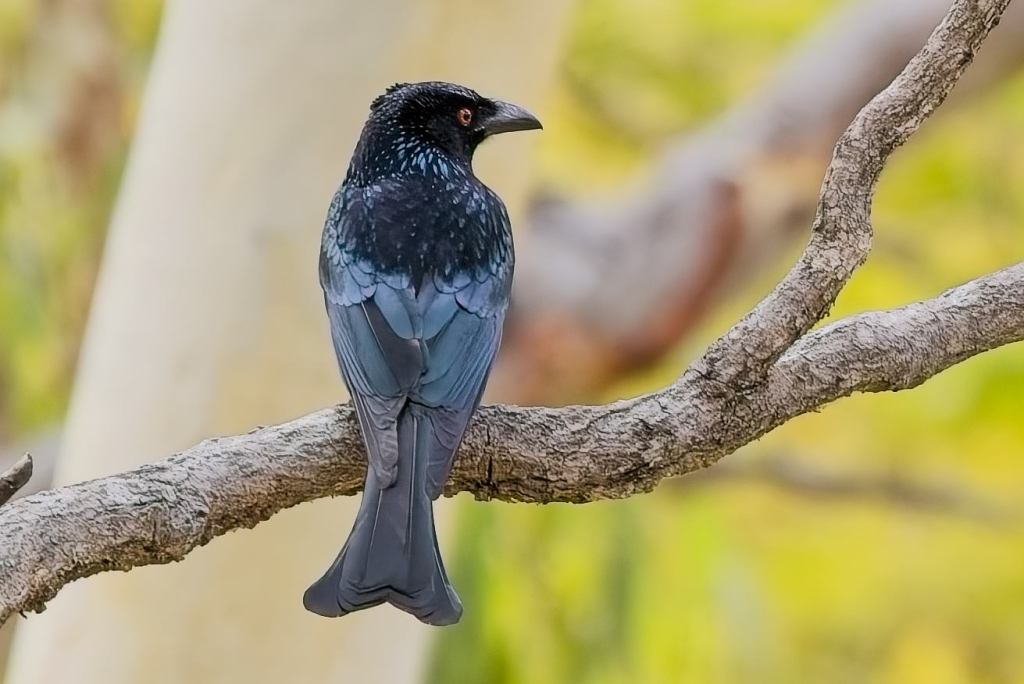
Pied Butcherbird – Life PhotoSpangled Drongo – Life PhotoWhite-bellied Cuckooshrike – Life Photo
It was particularly fun to see the bowerbird in its bower. Note the various items strewn on the ground in front. The bower is not a nest. It is a stage built and decorated with those items to display the prowess of the male to nearby females. If they are impressed and approve, they will mate with the male. Later in the trip we will see the bower of the Satin Bowerbird. It is decorated only with blue items, probably connected to to the satiny feathers of the male with a bluish sheen. Bird mating rituals are amazing. Although they were seen and photographed many times during our trip, perhaps my best photos of the omnipresent Rainbow Lorikeets were at this caravan park.
Rainbow LorikeetRainbow Lorikeets
After lunch we visited the Abattoir Swamp in Julatten. It produced six new life photos and two near misses. The near misses were the lifer Pheasant Coucal which was heard only and the Lovely Fairy-Wren which buried itself in foliage and darted constantly just barely in view and I was never able to get a photo – opportunities lost and probably never to be repeated, but six life photos was great.
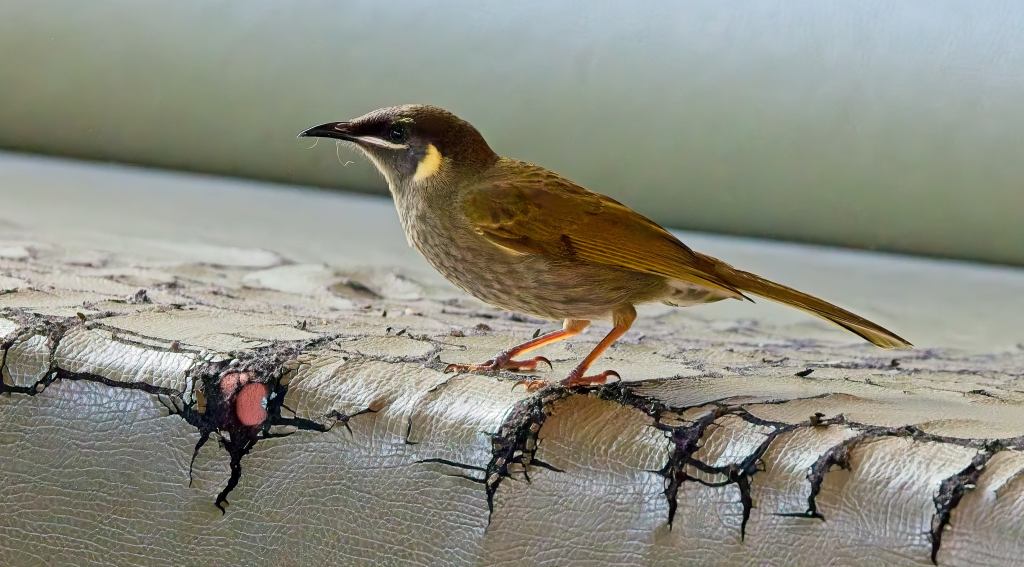
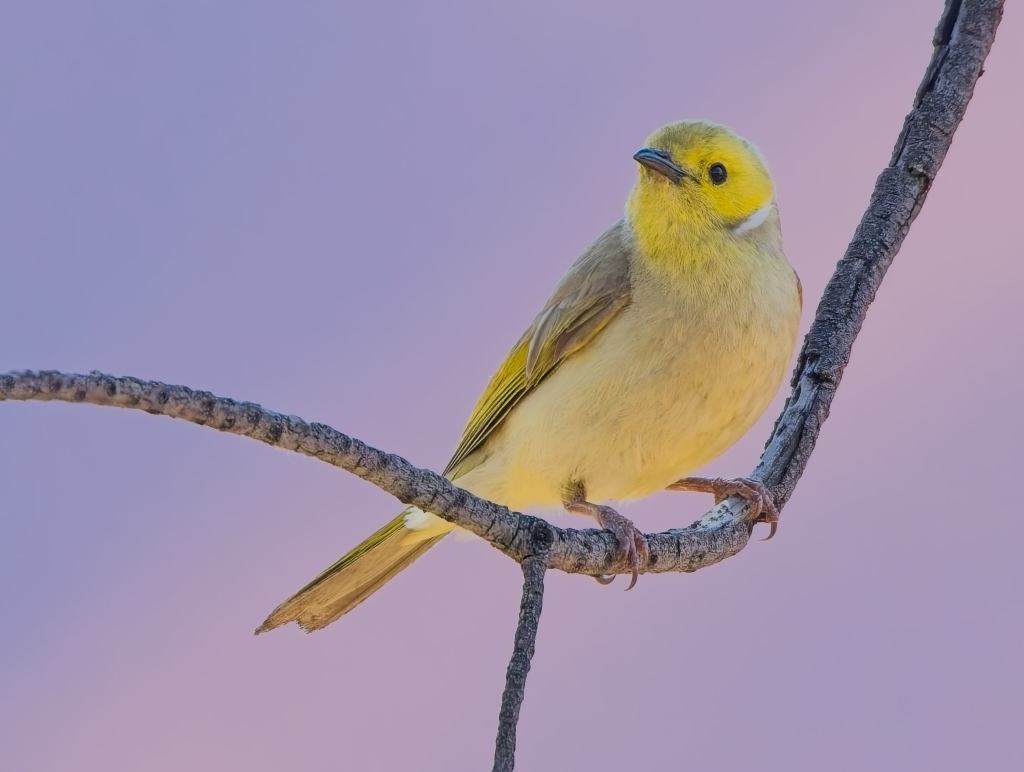
Brown-backed Honeyeater – Life PhotoDusky Mysomela – Life PhotoRufous Whistler – Life PhotoWhite Cheeked Honeyeater – Life PhotoYellow Honeyeater – Life PhotoAustralian Spectacled Monarch – Life Photo
At the end of McDougall Road also in Julatten, we kept adding species including finding a Double-eyed Fig-Parrot, the species we had unsuccessfully chased at the Cairns Esplanade. It is a tiny colorful parrot that Doug kept hearing. Eventually we found one in the open, a treat for the yes and it felt good to find one that had been missed. Altogether it was another 5 life photos.
Double-eyed Fig Parrot – Life Photo
Varied Triller – Life PhotoYellow Spotted Honeyeater – Life PhotoCryptic Honeyeater – Life PhotoPale Yellow Robin – Life Photo
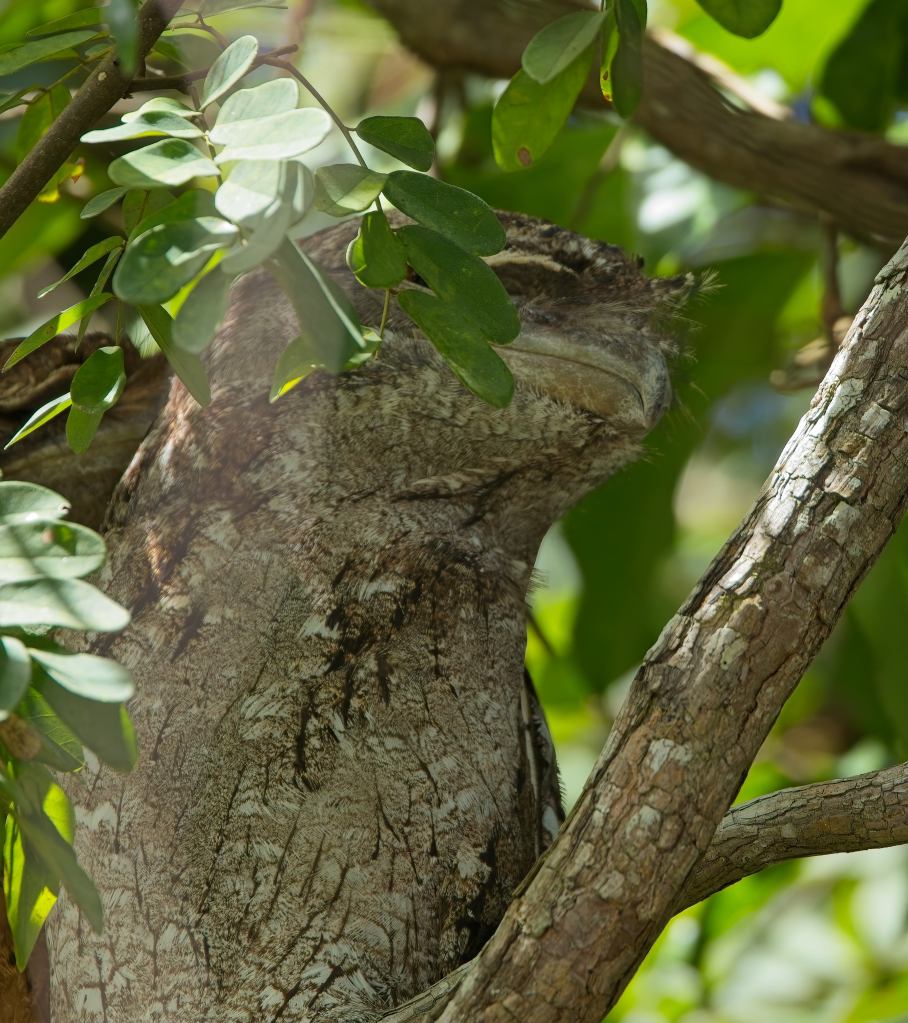
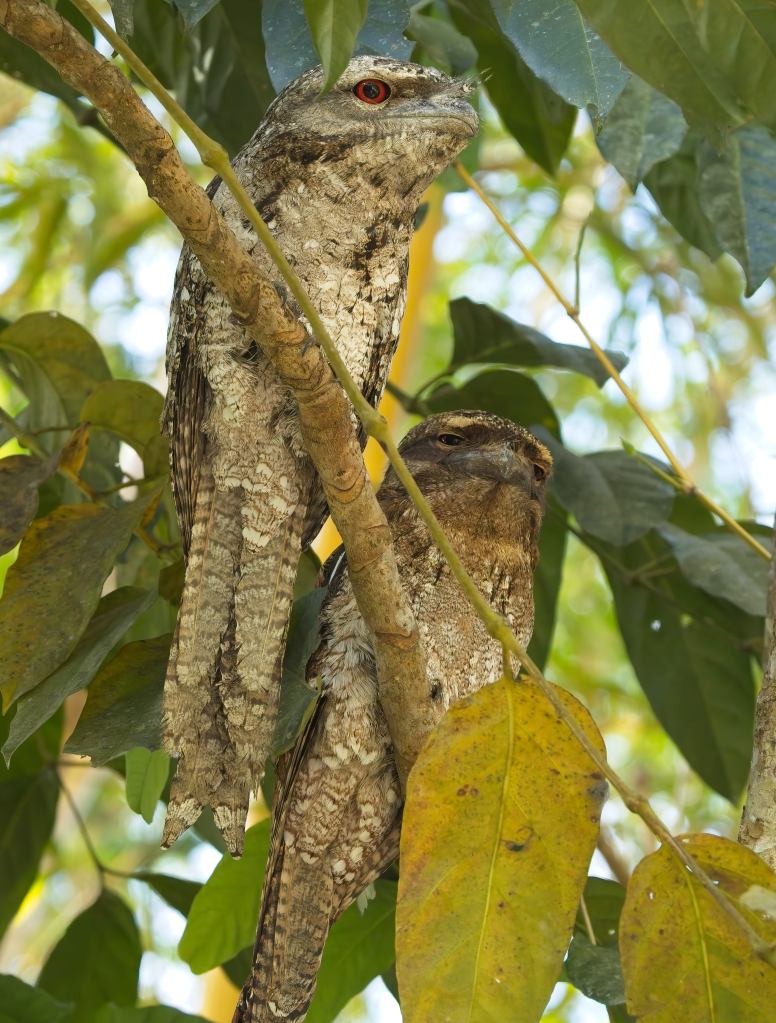
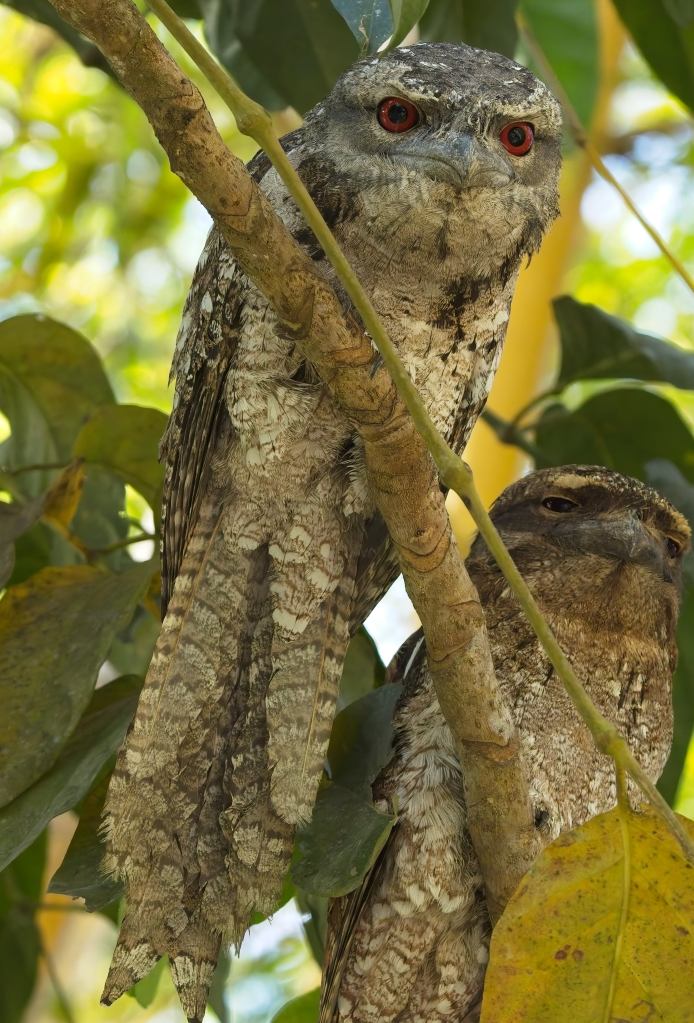
Doug had saved a very special stop until the end. Off Mount Kooyong Road in Julatten, Doug took us to a day roost for a pair of Papuan Frogmouths – a mother and juvenile. Fabulous photo ops of these bizarre birds. Since this is the final find of the day and it is such a cool species, I am attaching several photos.
Papuan Frogmouth JuvenileMale
Papuan Frogmouth Adult Female
Papuan Frogmouth Pair
Papuan Frogmouths
Back to Port Douglas and another good dinner. Cindy had roamed around the city and got some rest. She was ready for our next adventure – flying to Brisbane the next morning. The species list for the trip was now 190 with 33 lifers and 138 life photos – so far so good.
Virgin Airlines flight 1681 departed Melbourne at 12:50 p.m. on September 15th and arrived at Uluru at 3:40 p.m. We picked up our rental car and drove the short distance to our hotel, Sails in the Desert. Cindy had stayed there before on her Australia trip with her cousin in 2017 and really enjoyed the visit to this isolated place in Central Australia in the Australian Outback. I had not been there when I visited in 2003, remaining only on the East Coast. We would be there for only two nights, driving around Ayers Rock the next day and then going to a Sunset and Light Show that night and then flying to Cairns the next day. What a difference from Melbourne about as un-urban as you could get. I will complain here just this once and then let it go. Everything was very expensive – the flight, the hotel, the car, the food and the Sunset package. We would probably not include Uluru again, but it was an important memory for Cindy and I am glad I saw it, but just too expensive and maybe even if it would have been even more expensive, we should have stayed at least another day and explored more of the countryside.
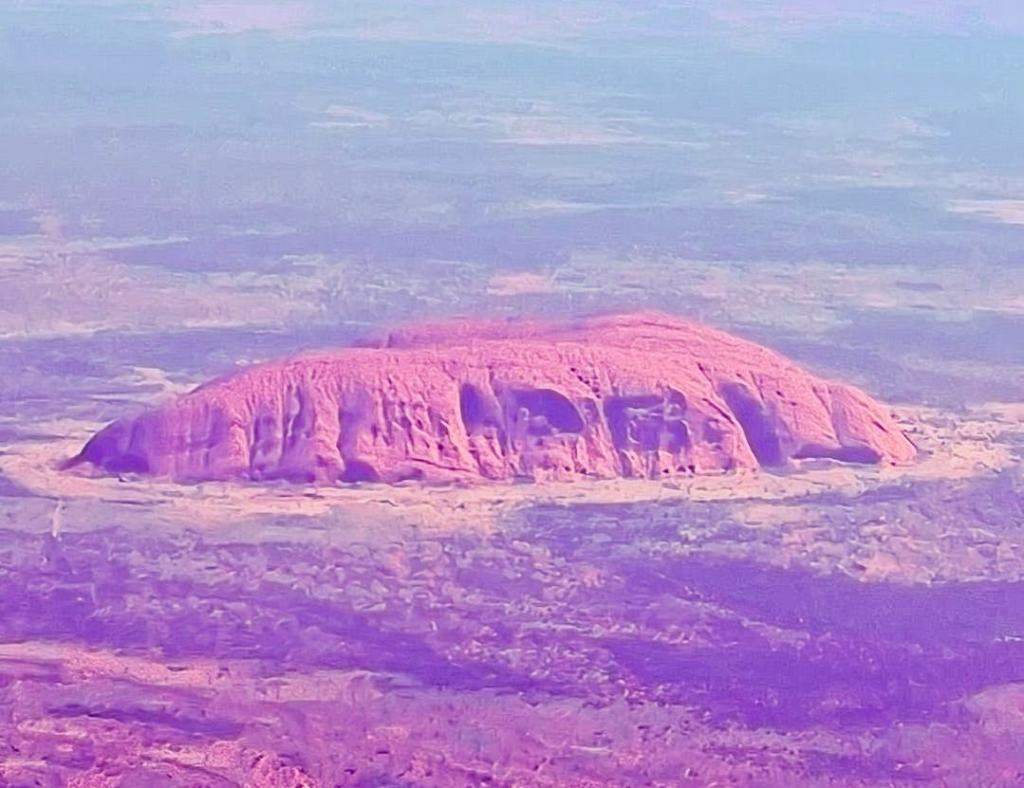
Ayers Rock/Uluru is a 500 million year old sandstone monolith standing 1142 feet high and is one of the world’s largest monoliths. It is sacred to the Anangu aboriginal people in the area and is a UNESCO World Heritage site. It has many springs, caves and ancient paintings. Before the COVID pandemic about 400,000 people visited the site each year. The number has dropped significantly since then but is rebounding. It is a semi-arid climate with occasional frost and highs that can reach well into the 90’s Fahrenheit with little humidity. During our visit, the days were comfortably in the low 70’s and at night it cooled into the low 50’s. We had 1 minute of rainfall!
Ayers Rock from the Plane
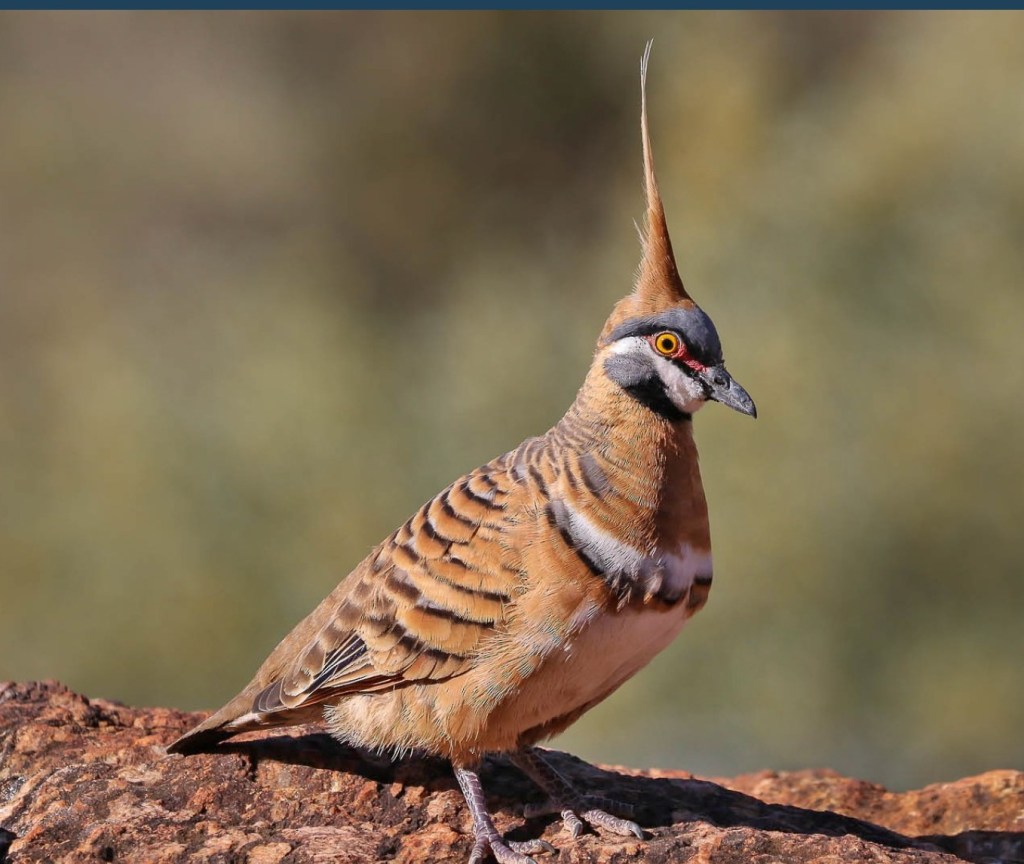
Despite there being much more grass and more trees than I expected, birdlife was much scarcer than expected and I missed one species that I wanted as much as any on the trip and was supposed to be readily found in the area. This is a Spinifex Pigeon – a gorgeous pigeon with a very prominent crest. I picked up a lifer Yellow Throated Miner at our hotel as soon as I arrived and the following day added 6 more lifers with photos of all and another life photo as Cindy and I drove around the rock and “hiked” some short trails.
So all in all I was pleased with the birding at Uluru – especially since it was not our focus, but I really had expected to find that Spinifex Pigeon, definitely a striking bird. The photos below show its similar looking cousin a Crested Pigeon, seen everywhere on our trip including at Uluru – cool, but check out that SpinifexPigeon not my photo, one from Ebird. Also a few photos of species seen before on the trip but maybe better here.
But as I said, birding was not our focus. Being near Ayers Rock was, and we had a beautiful morning to do so. We only had the one day and were also constrained by needing to return the rental car to the airport by 3:30 pm. It was ridiculously expensive to rent the car for an additional day and since we would be flying out the next morning and had a group event that evening, we would not get much benefit out of the additional time. There was a free shuttle between our hotel and the airport – timed to match the flight schedules, so we had to have the car back in time to catch the shuttle.
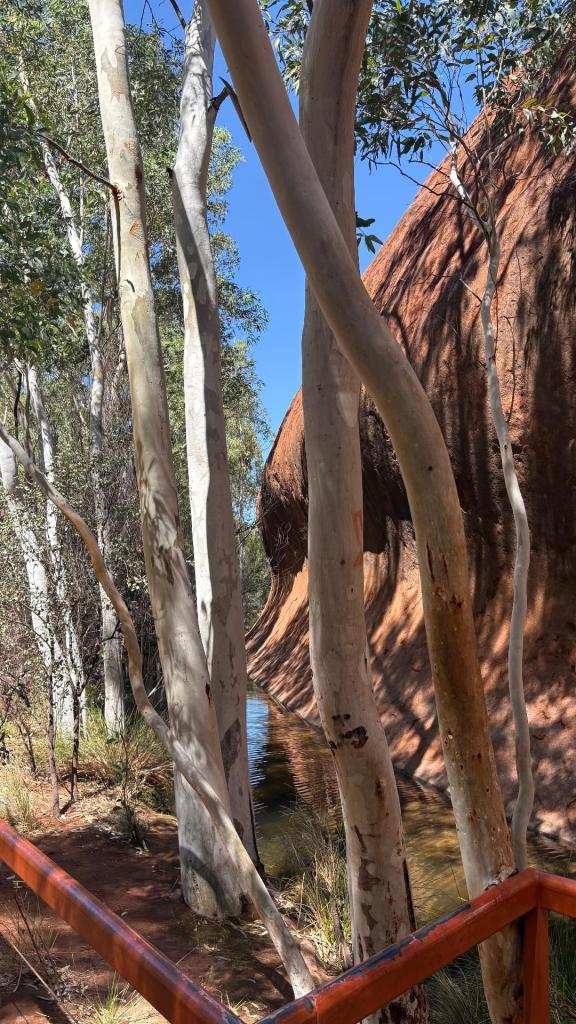
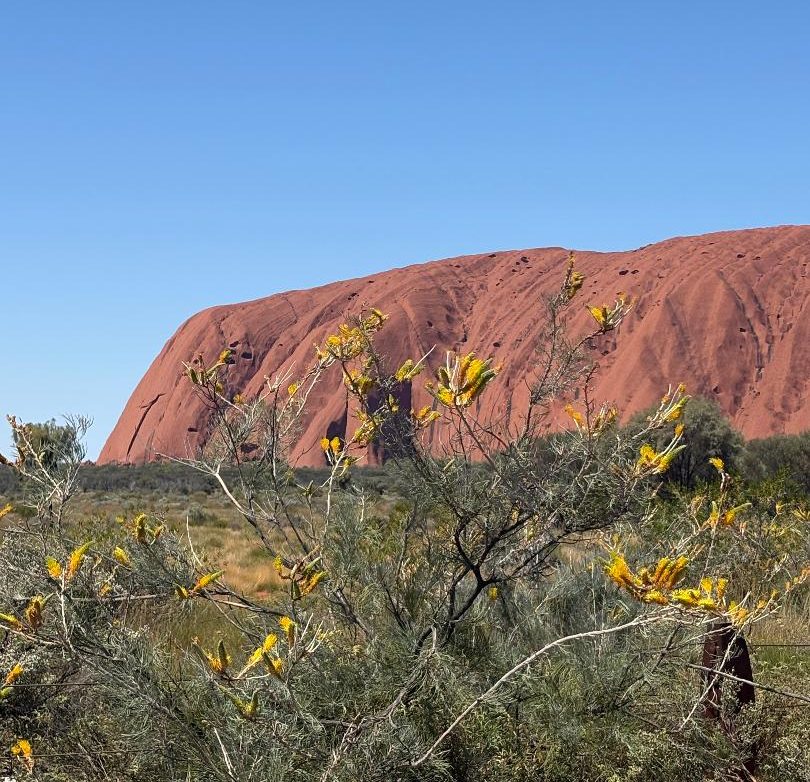
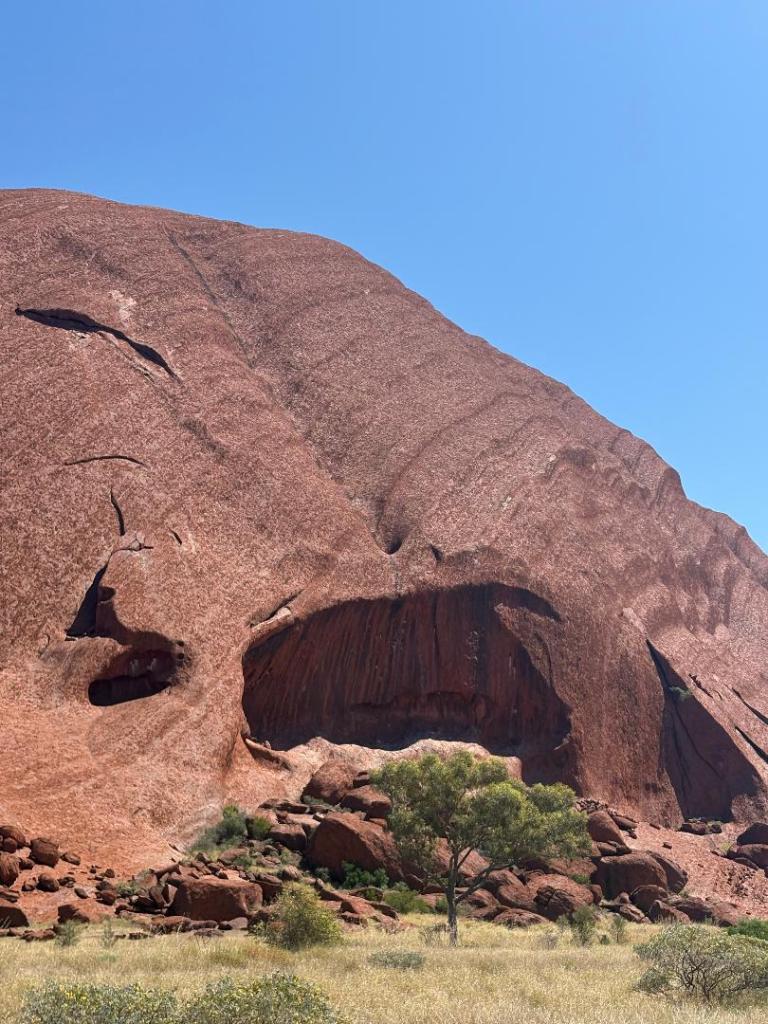
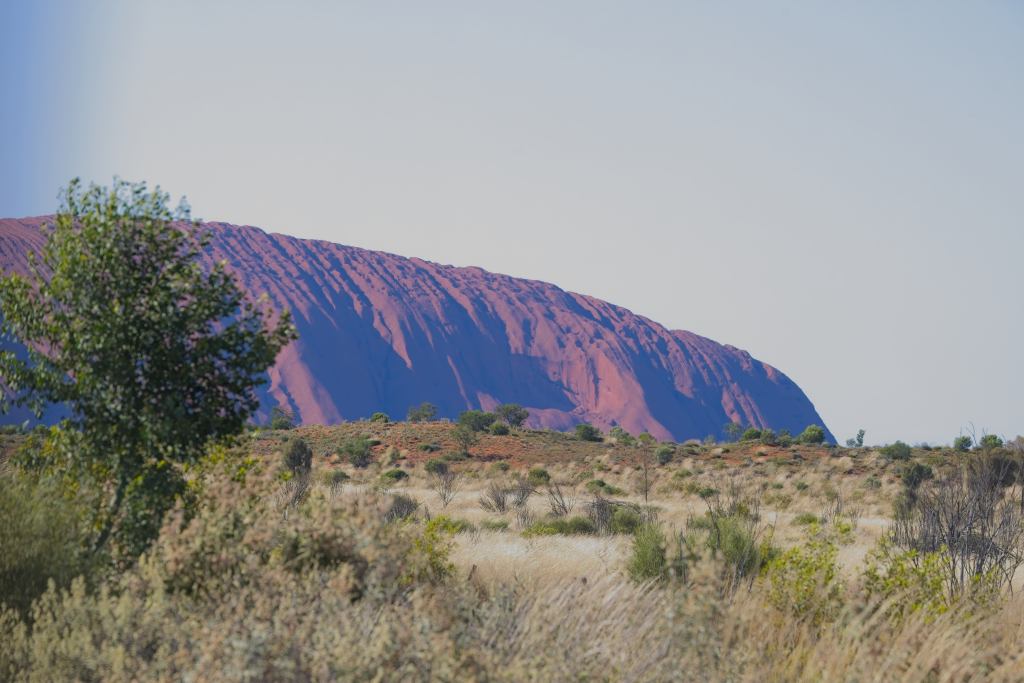
Ayers Rock is about a 20 minute drive from Sails in the Desert and to drive the entire way around the rock without stopping is about the same, but it is worth making many stops as there are many features that can only be appreciated up close. There are caves and waterholes that have been in use for centuries. You are no longer allowed to access the caves or climb the rock but there are a number of places to park and get different perspectives of the rock. These photos give a sense of this.
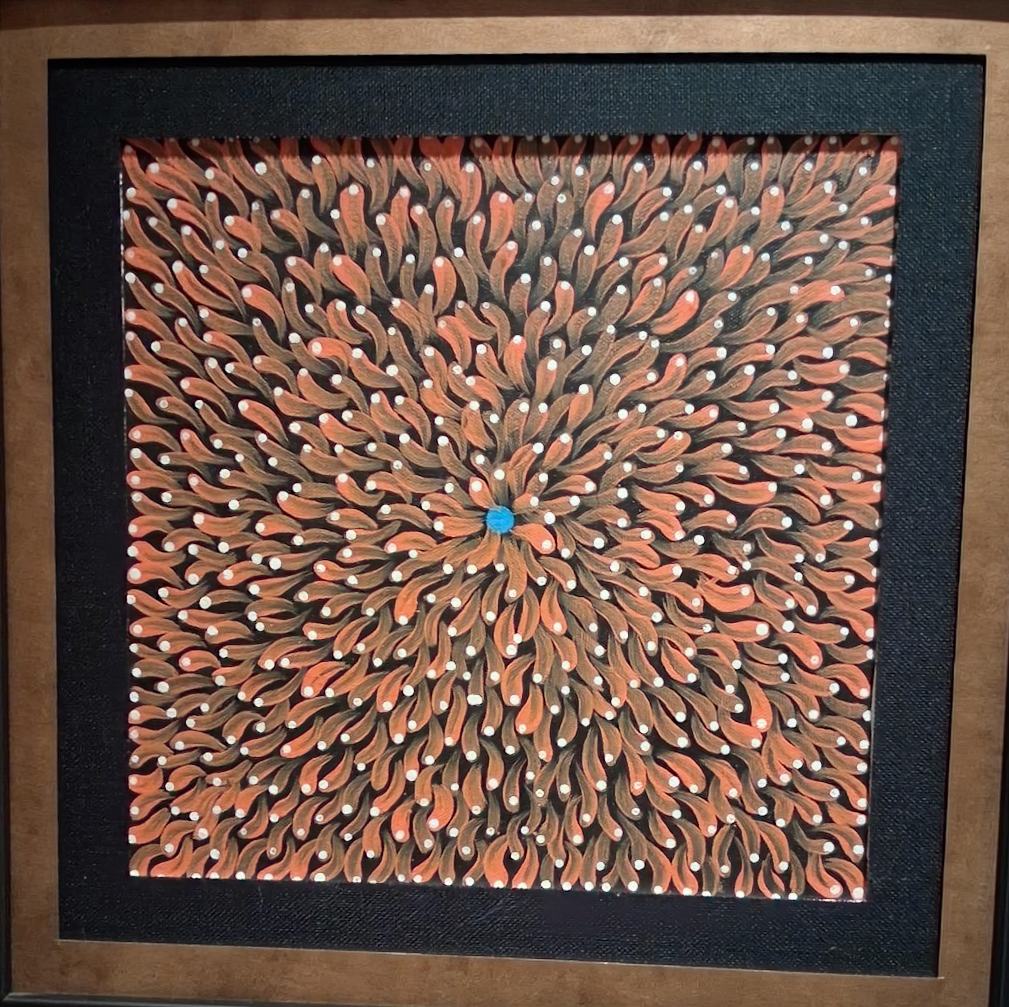
On earlier trips to Australia – me in 2003 and Cindy in 2018 we had each purchased art pieces directly from aboriginal artists. They are together in our foyer. Now we hoped to find another piece that we could acquire together. There were several artists sitting on the grass at a lawn gallery at the Ayers Rock resort but none of their pieces were just right. Original art was also for sale at two galleries there. The art was much more expensive than when Cindy and I had bought our pieces but still reasonable. We finally found a piece we liked and bought it. We don’t have a photo of it (shame on us) and it is out being framed right now so I will come back and add it to this blog post later.
One of Cindy’s Aboriginal Art Purchases
Ayers Rock, like many other places in Australia has many commercial tourism enterprises. Here they are often related to seeing sunrises or sunsets on/at the rock. In other places these opportunities focus on crocodiles, river cruises, kangaroos, koalas or reefs. We had signed up for a sunset viewing – and a field of lights. Big mistake as the sunset was behind us, not shining on the rock or highlighting it from behind. There were lights, a gigantic field of lights that were something akin to fields of flowers, but especially at this natural and sacred spot, it seemed like an intrusion of modern technology. We most likely won’t be going back to Uluru even if we return to Australia someday, but if we do, we will pass on this program. You should, too.
Time to go – back to the airport on the shuttle and then onto another Qantas flight headed for Cairns (pronounced “cans”) in Northeastern Australia. The flight was almost 4 hours – Australia is a BIG country! We would rent a car at the airport and drive north to Port Douglas and that adventure will be shared in my next blog post.
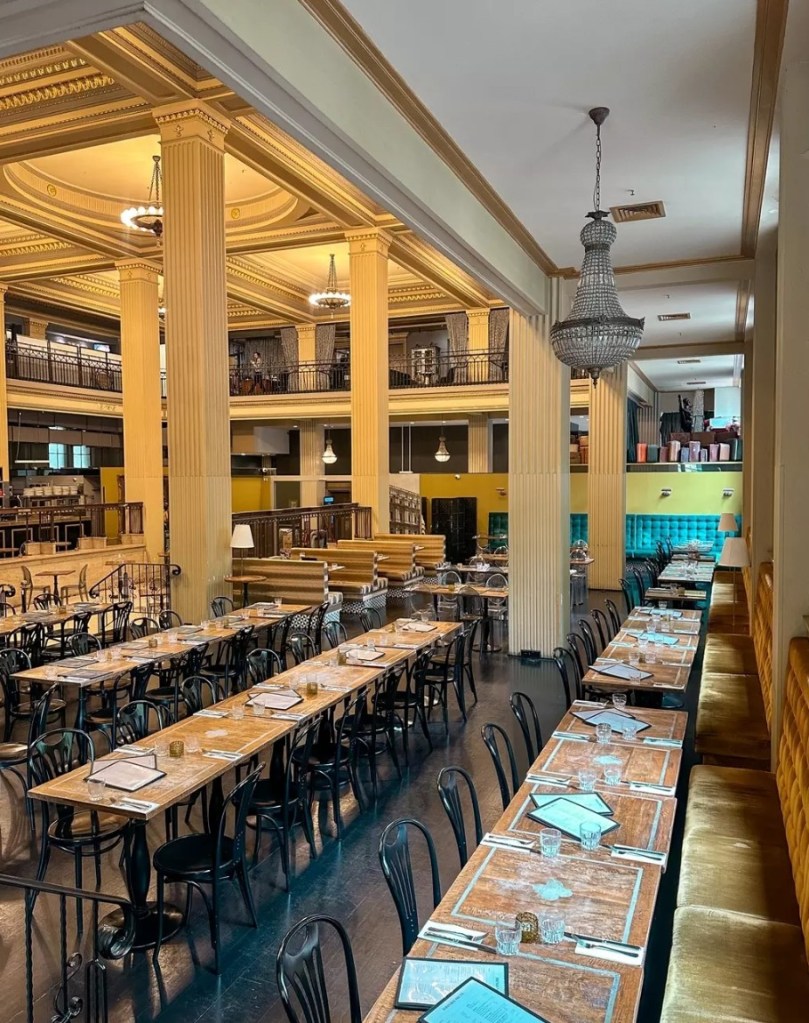
It was a short flight from Sydney to Melbourne on Qantas Airlines – about 90 minutes. We had originally planned to rent a car but changed that plan when we decided to spend much of our time in a city which everyone had raved about. So again it was an Uber from the airport to our hotel – but unfortunately we confused the Holiday Inn and the Holiday Inn Express Little Collins, an error we learned about when we arrived at the former and found that they had no reservation for us. Fortunately they did at the latter, and while it meant some lost time and yet another Uber ride, it turned out to be a great location within walking distance of several places we wanted to see and also convenient to Melbourne’s excellent tram system. Not fancy but comfortable and quiet with a “free” breakfast that was adequate, if basic. We had dinner that first night at “The Bank on Collins” – cavernous, convenient and ok food.
The Bank on Collins
There was a giant surprise awaiting us in Melbourne. When we planned our trip the NFL had not yet finalized its 2026 schedule. Surprise – the day after our arrival the hated Rams and hated 49ers (we are solid Seahawks fans) were going to play in Melbourne and the city was full of fans in NFL jerseys and hats – more SF than LA but with many fans of other NFL teams as well including Seattle. Many fans had come over from the US but many were Australians who were fans of “American footie” as well. We were almost constantly among some of the fans – restaurants, parks, trams, everywhere. Everyone asked if we were there for the game and we always responded that we were not, that we had not even known about it when we made our plans, that we were Seahawks fans and that we wanted both teams to lose (which would mean a tie) but if we had to choose, we wanted the Rams to lose more. It was a very fun environment. We later watched a few moments of the game on a screen at a restaurant that was visible from outside. Rams were losing – good!
There were three things that were definitely on our Melbourne agenda. One was that we were going to rent a car for one day and drive at least part of the famous Great Ocean Road. Another was that I had arranged a day of birding with a local bird guide, Christian Doerig, originally concentrating on the Werribee Water Treatment Plant, but unfortunately access was closed due to an Avian flu scare, so it would be elsewhere. The third key item on our to-do list was to drink coffee. As said before, everyone who had been there told us that Melbourne was a fantastic city, one of if not the best they had visited. And they almost always put coffee at the top of their list of its assets.
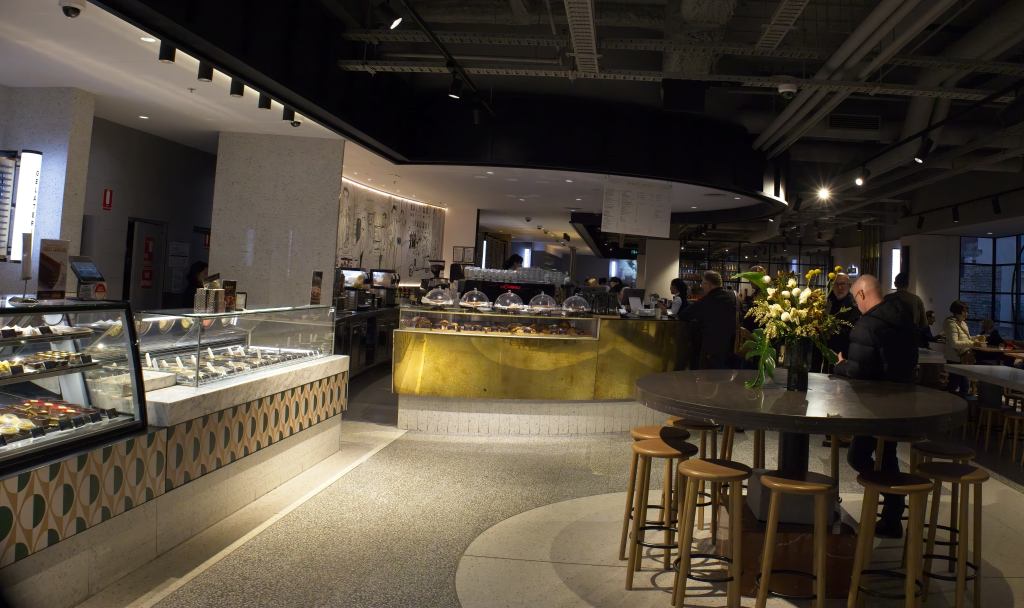
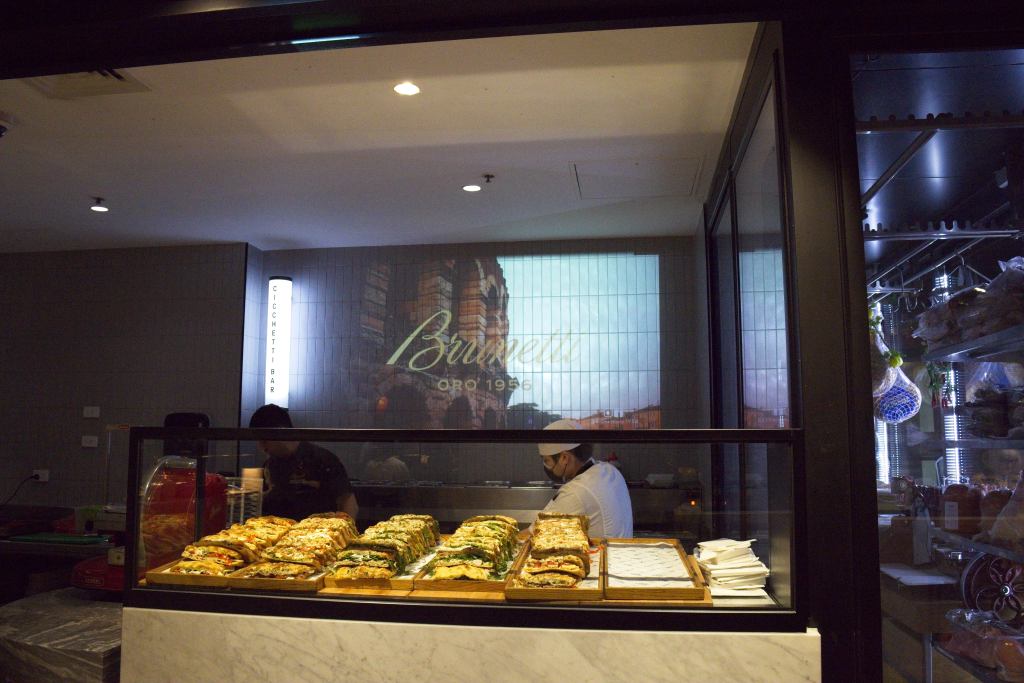
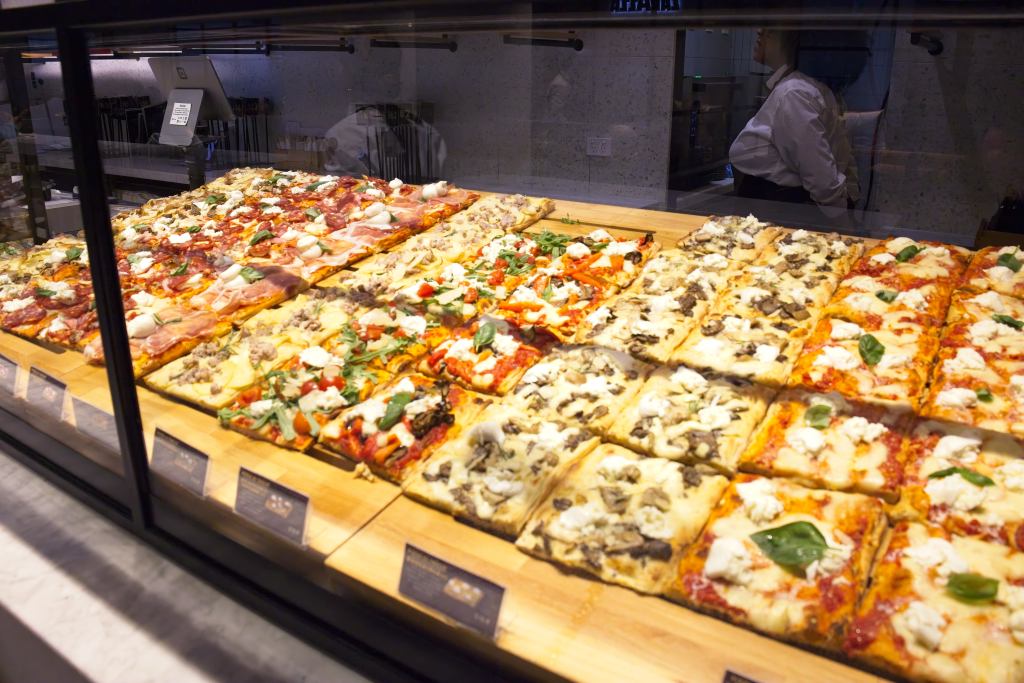
After those three “gottas”, we wanted to be part of the city, taking in a museum or two, a park or two and some of Melbourne’s funky/arty/cool neighborhoods. On our first morning in Melbourne after breakfast at the hotel, we visited a cafe/restaurant that several people told us had the best coffee in Melbourne – Brunetti’s – officially Brunetti Oro – an Italian Pasticceria founded by Giorgio Angele in 1991. It surpassed our very high expectations and may rank as our favorite food experience anywhere, anytime. Not only was the coffee totally exceptional, so too were the desserts, the pastries, the pizzas, the cakes, the cheeses, the cornetti, the wine, the cannoli’s, the everything!!! And it is beautiful!! Their coffee is a special Brunetti/Lavazza blend and their espresso drinks – we favored the lattes – were different than anything we had ever tasted – although many of the coffee drinks in Melbourne and Sydney were similar and extraordinary – rich, thick, frothy, blended, strong, smooth and many other adjectives. I admit being a great fan of pastries and particularly almond filled croissants. The problem here was that while the croissants looked amazing, so did a multitude of other pastries and cakes. If I lived in Melbourne I would visit every day and gain many many pounds.
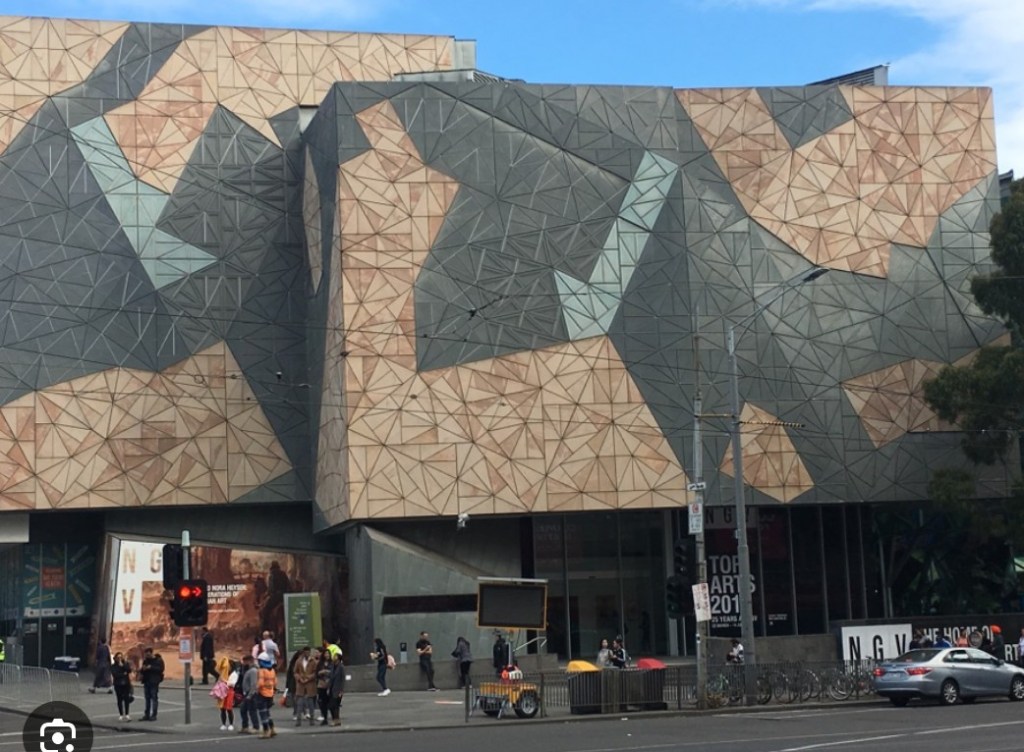
Our next stop was close by – Federation Square which is described as a major cultural and civic center. Among other things it is home to the ACMI, Australian Center for Moving Image and the Ian Potter Centre: NGV Australia. We visited the latter, the world’s firs museum dedicated exclusively to Australian Art. It has a wonderful collection including some wonderful aboriginal art.
Federation Square
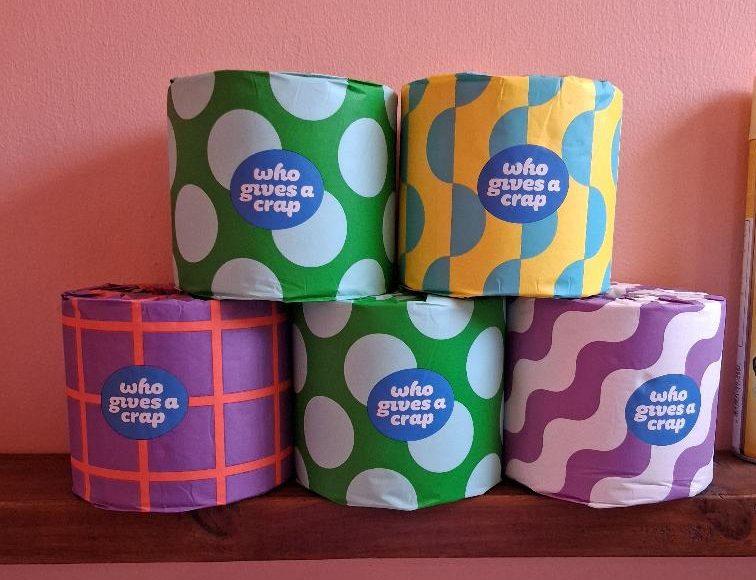
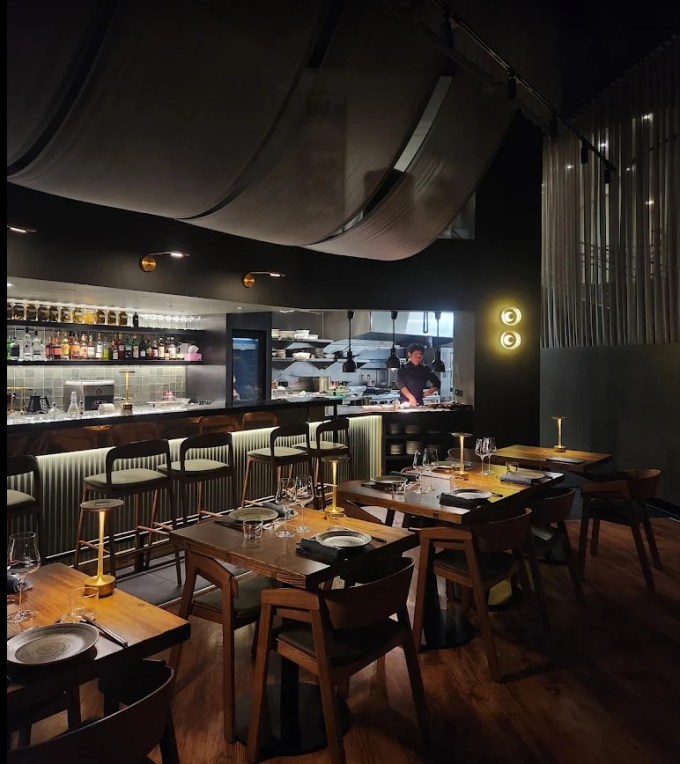
Time again for food and we found a cool restaurant offering “American Food” which fortunately included tacos which we ordered and enjoyed. Melbourne is a very foodie place and we saw restaurants offering food from – well, anywhere and everywhere. Fancy and not – fast food and formal. The architecture was also wonderful with super modern buildings, solid edifices from the “colonial or Victorian period” and artsy touches that made our visit much fun. This was enhanced on this day by the enormous number of football fans that seemed to be everywhere, often 49er and Ram fans in the same crowd – no fights. As was often the case, little details made parts of our visit memorable – including some pretty cool toilet paper (I have never included that in any blog post but as is befitting if you look at the photo – Who gives a crap!!).
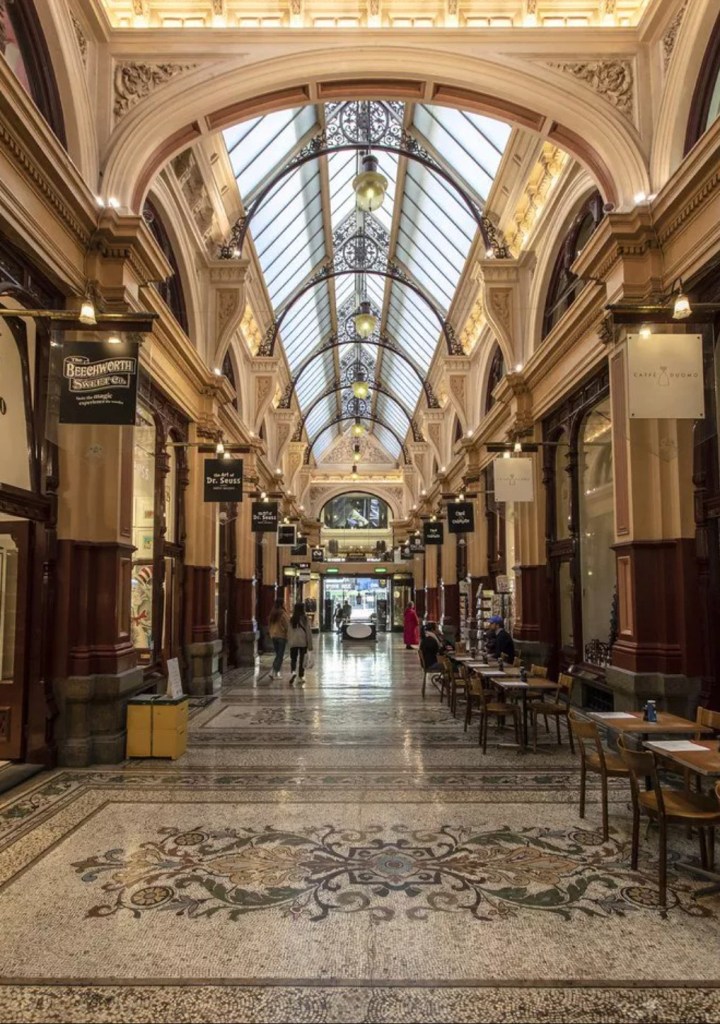
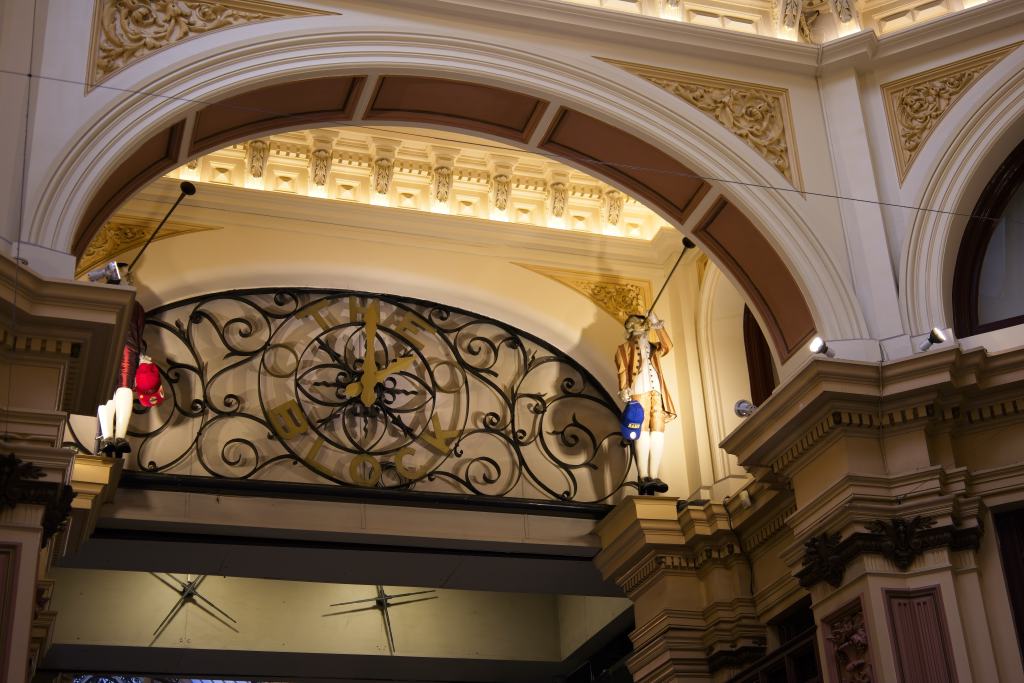
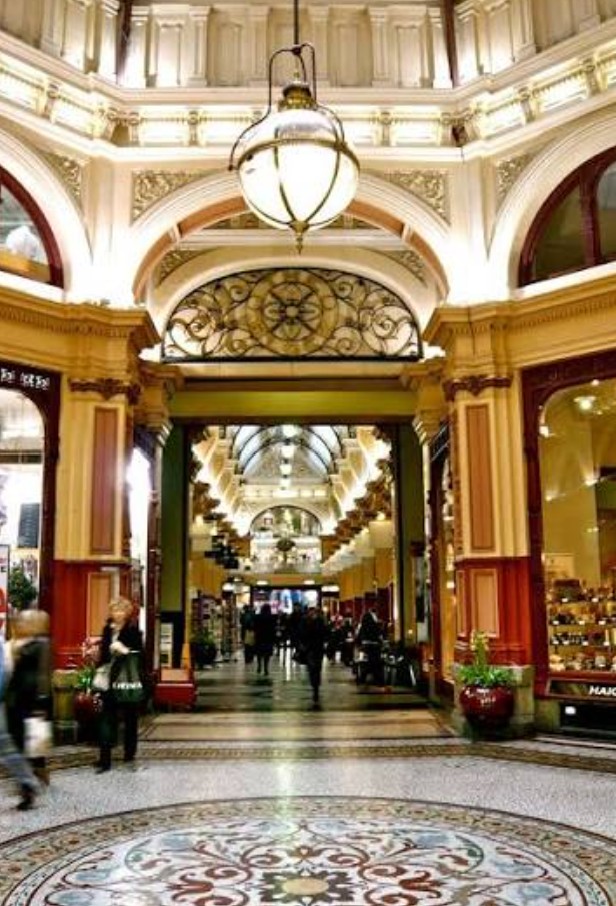
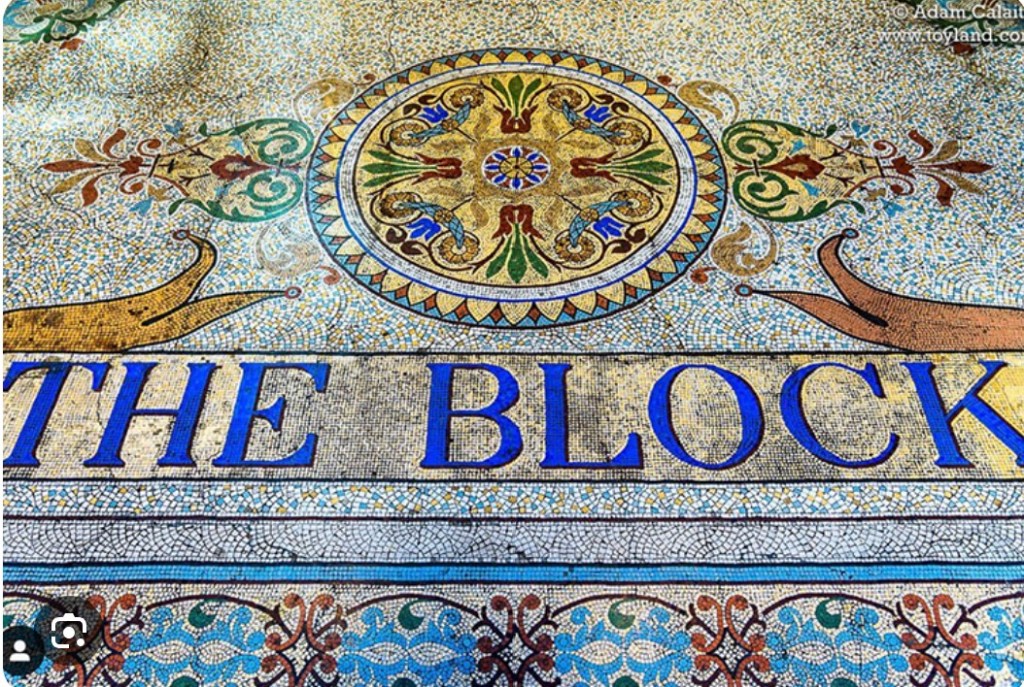
After lunch we visited two beautiful shopping arcades with splendid mostly high-end stores and architectural touches that were feasts for the eyes. The Royal Arcade, dating back to 1870, was the first shopping arcade/mall in the City. The Royal Arcade was grand, but The Block Arcade was grander – with marvelous detailing including fabulous floors. Interesting that the website for the Royal Arcade has a listing of “our stores” while The Block Arcade website lists “our boutiques”. Both had lovely retail shops with mostly expensive options interestingly including a men’s shop with an onsite barber and “shaving products” (Royal) and Truefitt & Hill – advertised as the world’s oldest barbershop (The Block) among many jewelers, food options, chocolates and spices.
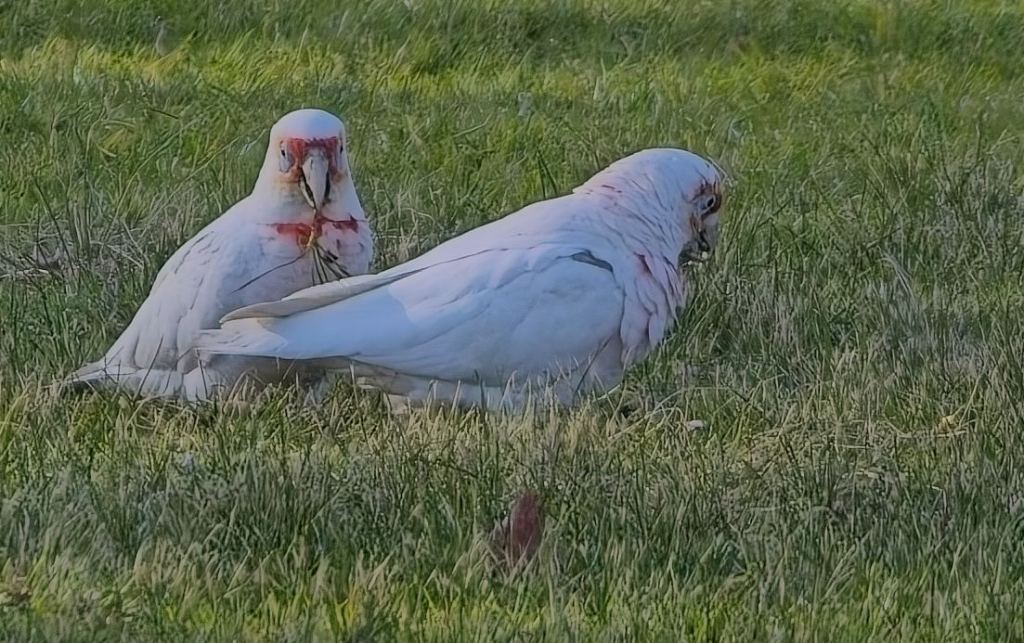
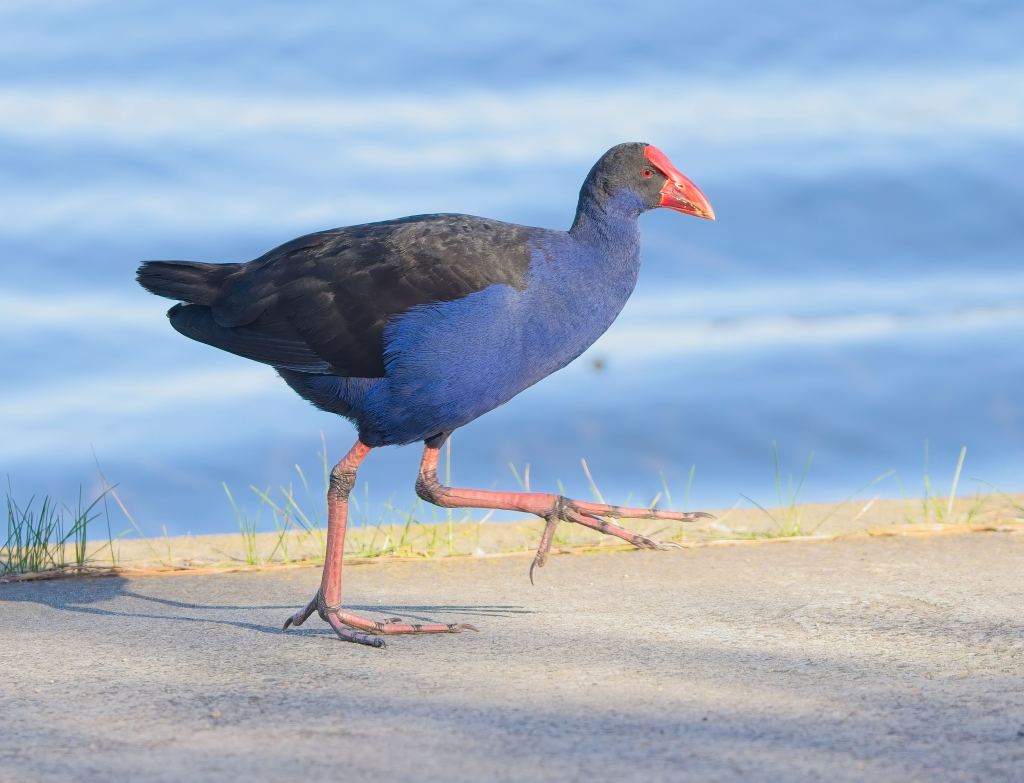
Our day had provided a great mélange of urban delights but it was time for some birds. Ebird research suggested that a visit to Albert Park with a large lake might be good. Uber time again, and again a bit of a mix-up. Just as we had the wrong Holiday Inn to start our visit, we also had Uber go to the wrong Albert Lake location – a neighborhood rather than the intended park. Our driver added a new route and we finally arrived around 3:30 p.m. I only added three new birds for the trip: Little Raven, Long Billed Corella, and Red Wattlebird, but all were both lifers and life photos. I also got life photos of Black Swan, Crested Pigeon, Australasian Swamphen, Little Pied Cormorant, and Red Rumped Parrot. We misjudged some distances and ended up walking several miles – but worth it for the birds and good exercise to work off our caloric intake. Dinner was at the Doju Restaurant in Melbourne – nice atmosphere, good Korean-style food – pricey.
Little Raven – LiferLong Billed Corella – LiferRed Wattlebird – LiferAustralasian Swamphen – Life PhotoBlack Swan – Life PhotoCrested Pigeon – Life PhotoLittle Pied Cormorant – Life PhotoRed Rumped Parrot – Life Photo
Doju Restaurant
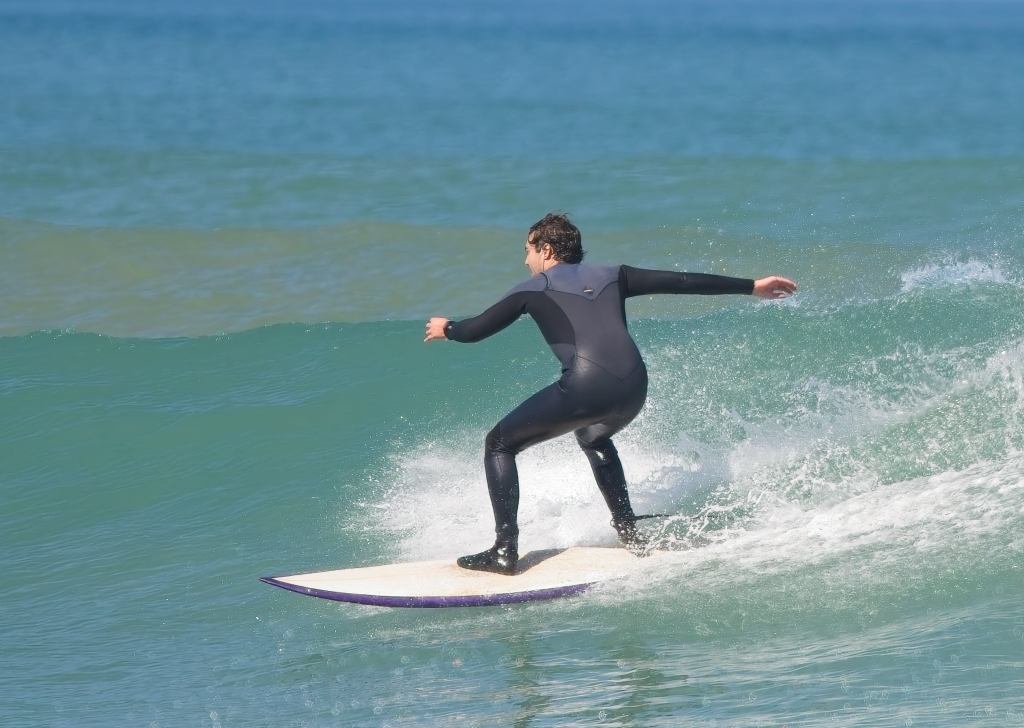
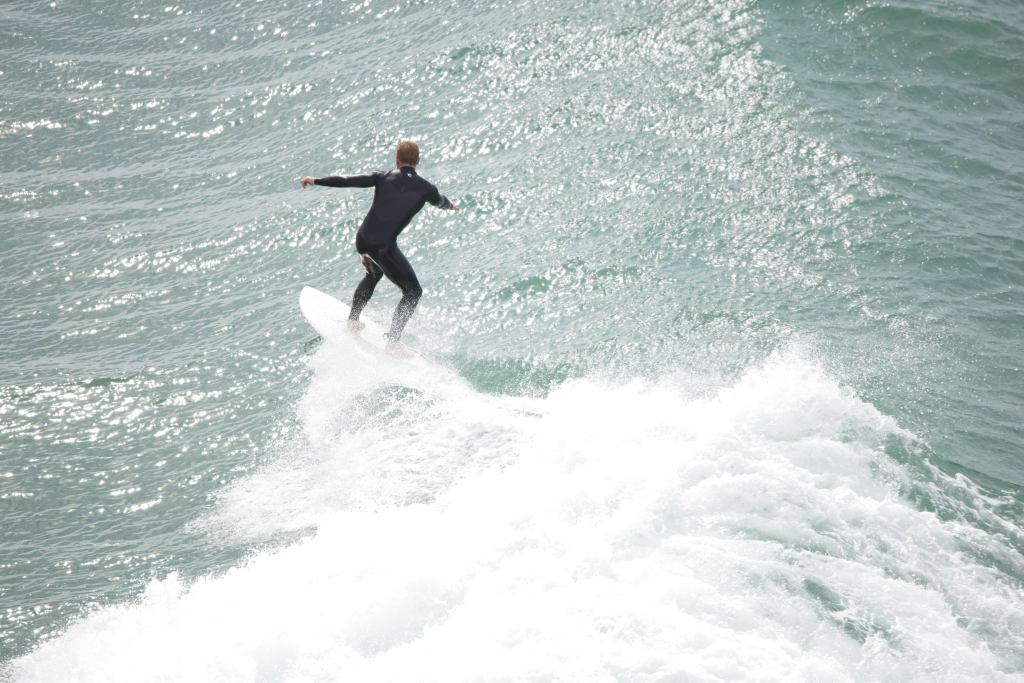
Our second full day in Melbourne was our day to travel the Great Ocean Road, an Australian National Heritage-listed 240-kilometre (150 mi) stretch of road along the south-eastern coast of Australia, between the Victorian towns of Torquay and Allansford. Torquay is more than an hour from downtown Melbourne. Built by returned soldiers between 1919 and 1932, and dedicated to soldiers killed during World War I, the road is the world’s largest war memorial. It provides incredible ocean views, swimming and surfing beaches, and some curvy two lane roads. To do it justice from start to end requires at least a full day (not including return) to cover it all. We knew we would only be able to experience maybe half the road, but with yet more good weather, it was a can’t miss opportunity that would provide beautiful scenery, birding opportunities, good food and some off-road attractions that might provide opportunities to see wildlife like kangaroos, wallabies, and koalas. We found a car rental not far from our hotel and after breakfast were on the road – my first driving experience on the left side of the road since my last visit to Australia in 2003, when I was admittedly somewhat younger. It took some serious concentration and it was particularly hard on Cindy as passenger as we were on very narrow roads with no aprons and some challenging spots. But we persevered and had a great trip – despite some GPS challenges.
In addition to the many scenic spots, surfer views, nice restaurants and great weather, there were also super birds and without really trying too hard, we had 38 species including 4 lifers and 21 life photos. Cindy found a “kangaroo tour” at the Anglesea Golf Club. We took a chance and arrived before the next scheduled group tour and got a private tour for just the two of us. Kangaroos were plentiful and not the least bit bothered by tourists which enabled us to get up very close even to females with joeys in their pouches.
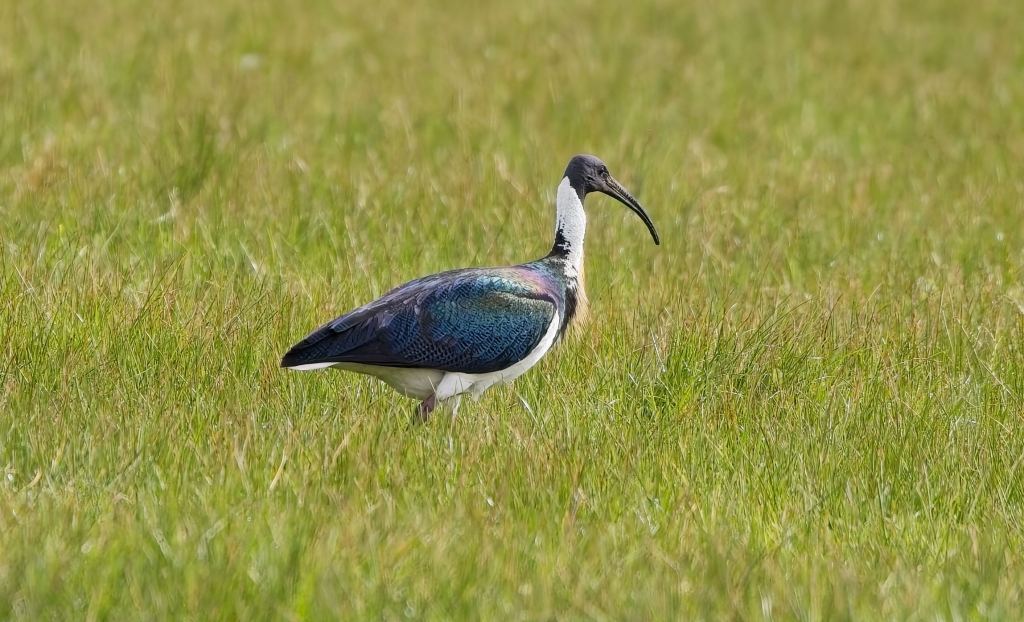
Straw-necked Ibis – Life Photo
Surf’s UpSurf’s Up
Eastern Rosella– Life Photo
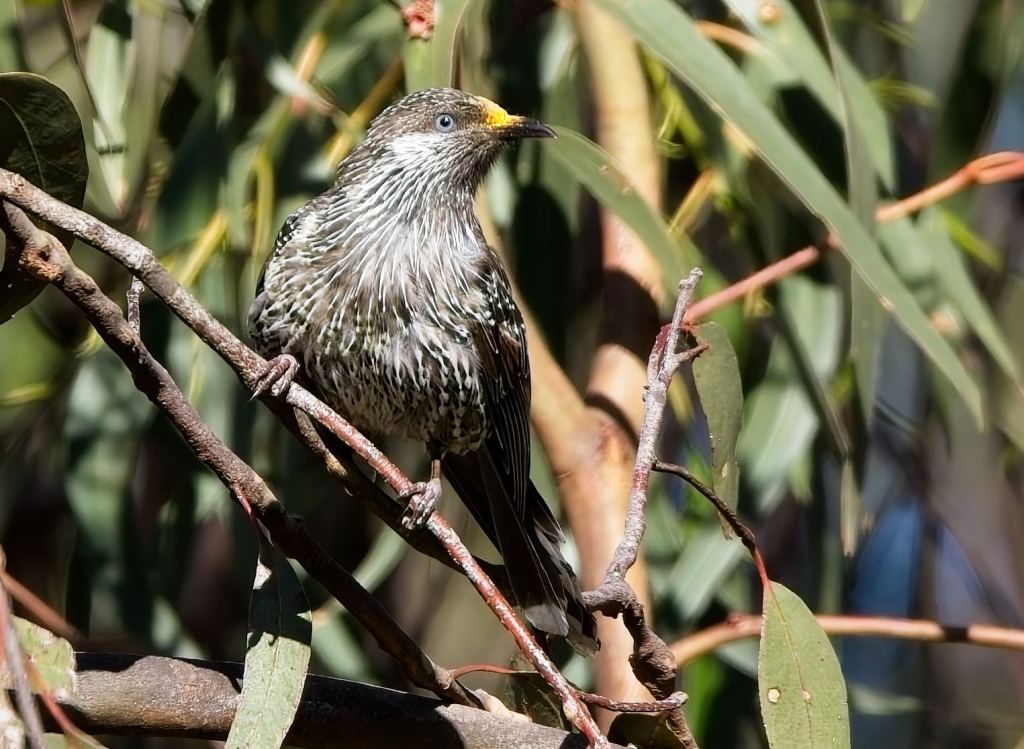
Red Wattlebird
Common Bronzewing– Life Photo
Female Gray Kangaroo with Joey in Pouch
Second Female Gray Kangaroo with Joey in Pouch
Koala High Up in Eucalyptus Tree
Little Wattlebird – Lifer
Superb Fairywren – Life Photo
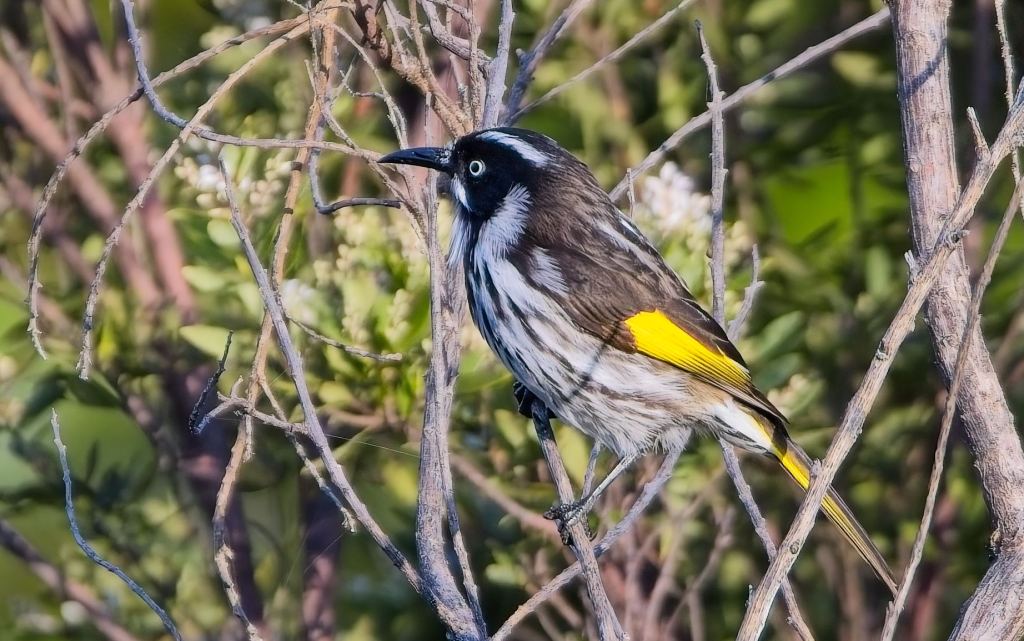
New Holland Honeyeater – Lifer
White Eared Honeyeater– Lifer
Silvereye – Life Photo
Day 3 in Melbourne was again an urban day with just a little bit of birding at one city park – Carlton Gardens. On that day we braved travel in the City on the tram system. It is free within a central area and then pretty inexpensive for further travel. We learned from Melbourne riders that it was common practice to add a couple of stops onto the “free area” without payment. We happily obliged and travel was easy. Our main objective was to visit the Fitzroy neighborhood – actually a bohemian inner-city suburb of Melbourne full of artsy shops, many restaurants, tattoo clad denizens and a very chic trendy vibe. Melbourne is a big city (population over 5 million) and in the CBD and downtown retails areas, it certainly felt that way with crowds on every street. Fitzroy was less hectic but exciting and we were not even there at night. We had a good lunch at a Colombian restaurant and also visited Carlton Gardens which was fairly close by and contains the imposing and stately Royal Exhibition Building. I added a life photo of a Chestnut Teal at one of the ponds, but replaced it with a much better photo the next day.
Colombian Restaurant in Fitzroy
When I knew I was going to visit Melbourne, I was excited for many reasons. I had heard over and over how it was just a great urban place and I also knew that it was new habitat for me – for new birds and new photos. A birding friend, Bruce Berman, said that I had to visit the Werribee Western Treatment Plant – a can’t miss place. Birders are often attracted to STP’s (sewage treatment plants) mostly for water related birds – waders, ducks, shorebirds etc. But my research showed that this location offered more than water birds and it quickly got to the top of my list. Our initial plan was to rent a car for the entire time there so that we could drive the Great Ocean Road and also bird places like Werribee among others. But as much as I enjoy birding on my own, I have learned that it is not as productive as birding with a guide who knows the area and the local birds and where to find them – specifically not generally, so I reached out to find a guide. I had success contacting Simon Starr at Firetail Birdwatching Tours https://www.birdingvictoria.com.au/melboure-birdwatching-tours who hooked me up with Christian Doerig for September 14th, the last day we would be in Melbourne. Christian was a great communicator and turned out to be not just a great guide but also great company. As our trip approached, Christian told us that unfortunately access to Werribee was closed but assured us that we would have good birding near the plant and elsewhere along a route that would include some repetition of our own Ocean Road travels.
Our day with Christian was great in every way even though there were gray skies around Werribee in the early morning. He picked us up at our hotel at 6:15 a.m. and we were at the Werribee WTP around 7 a.m. and started seeing birds – not as close as if we had full access and the gray skies hindered some photo ops, but we were getting new birds. I could not tell the areas apart but we were also at Avalon Beach and I am combining those two areas here. In about an hour and a half, we had 59 species – 5 lifers and 20 life photos. The temptation is to include photos of them all but I am going to restrain myself and just include faves or special ones – still alot.
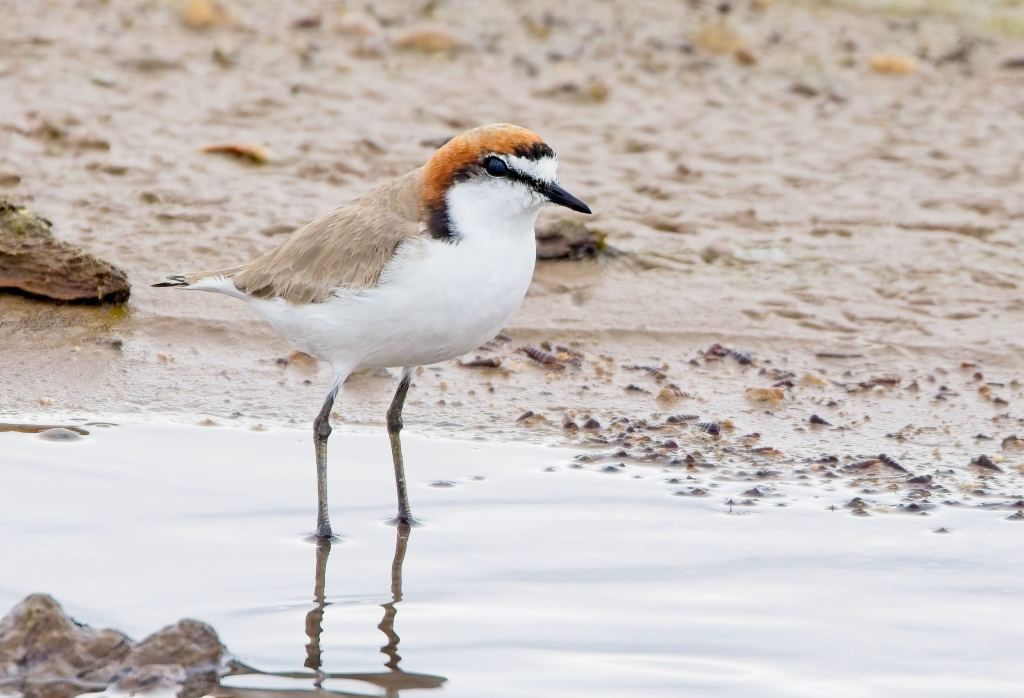
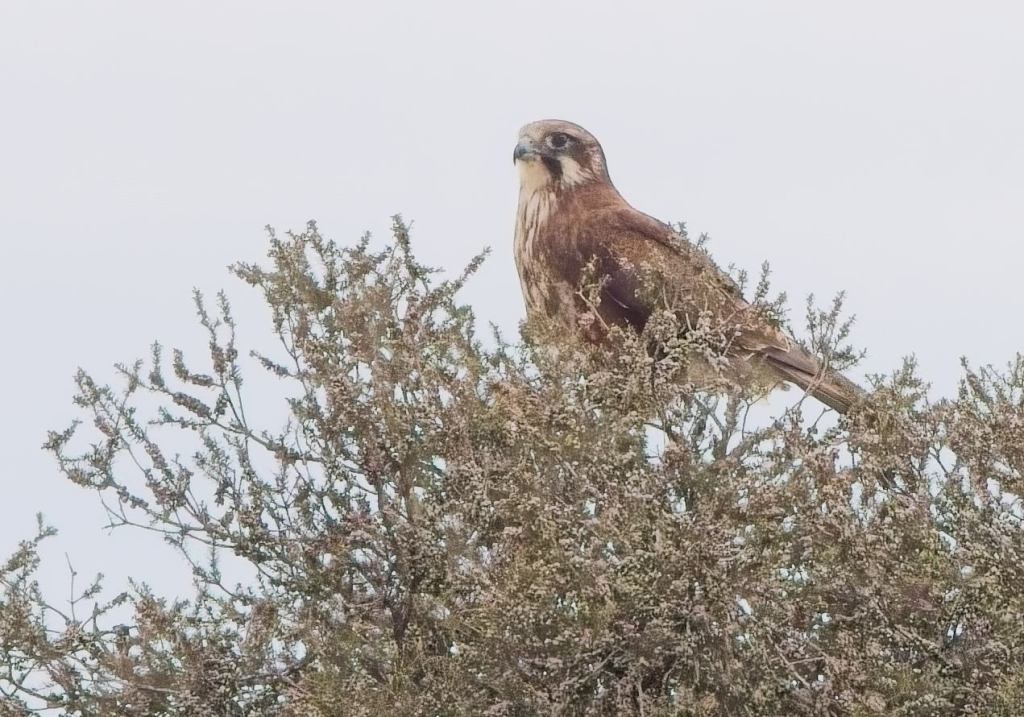
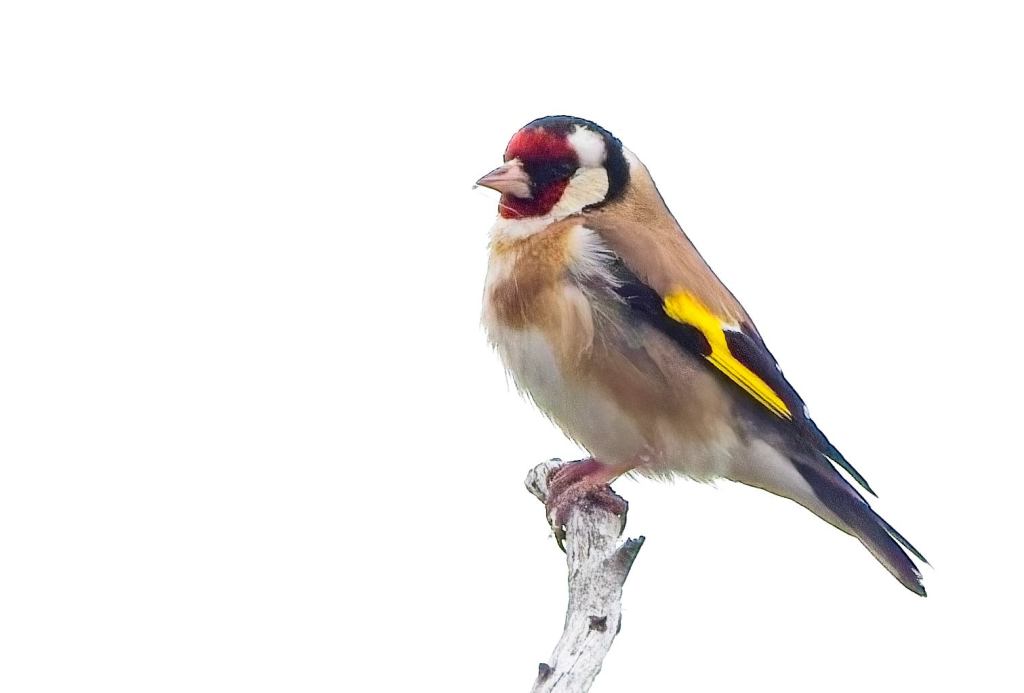
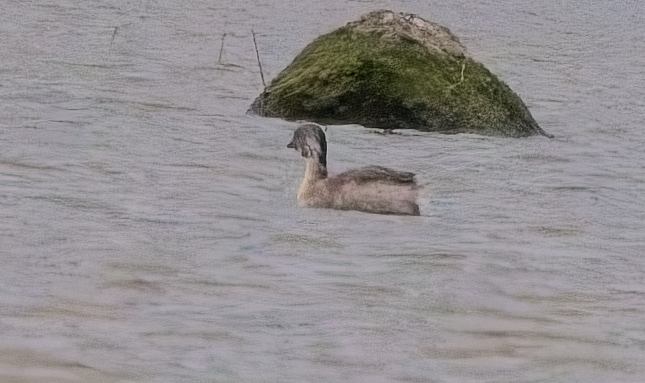
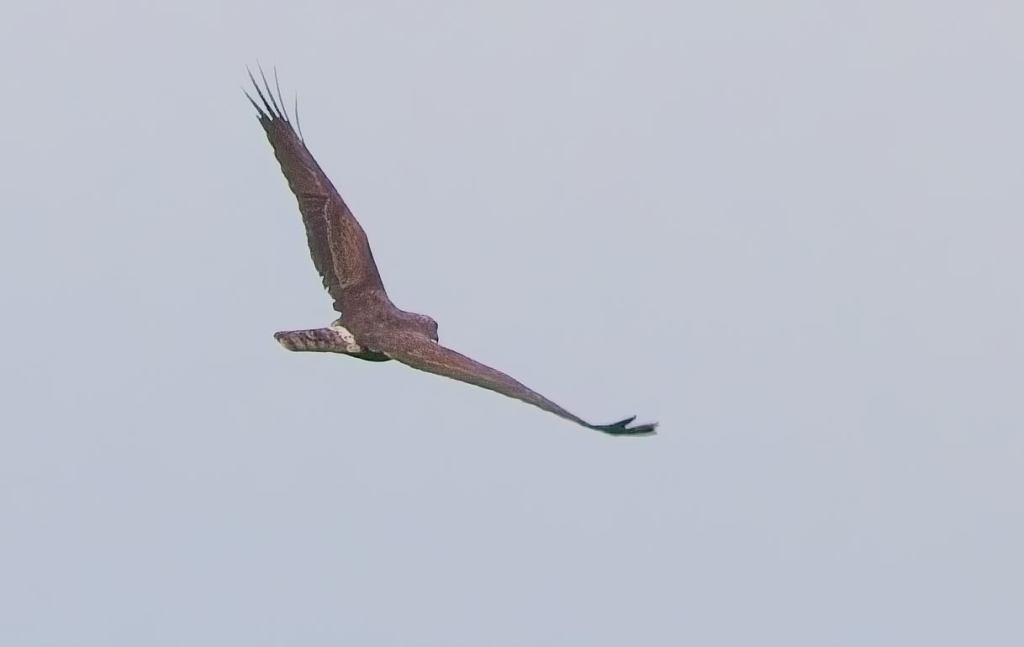
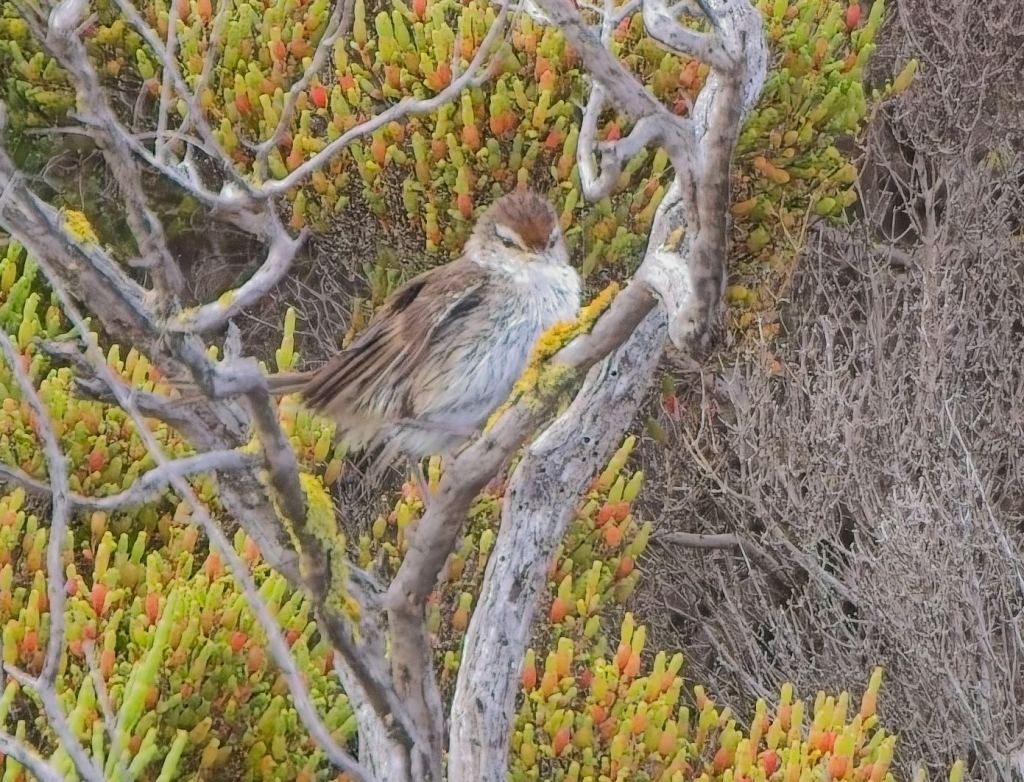
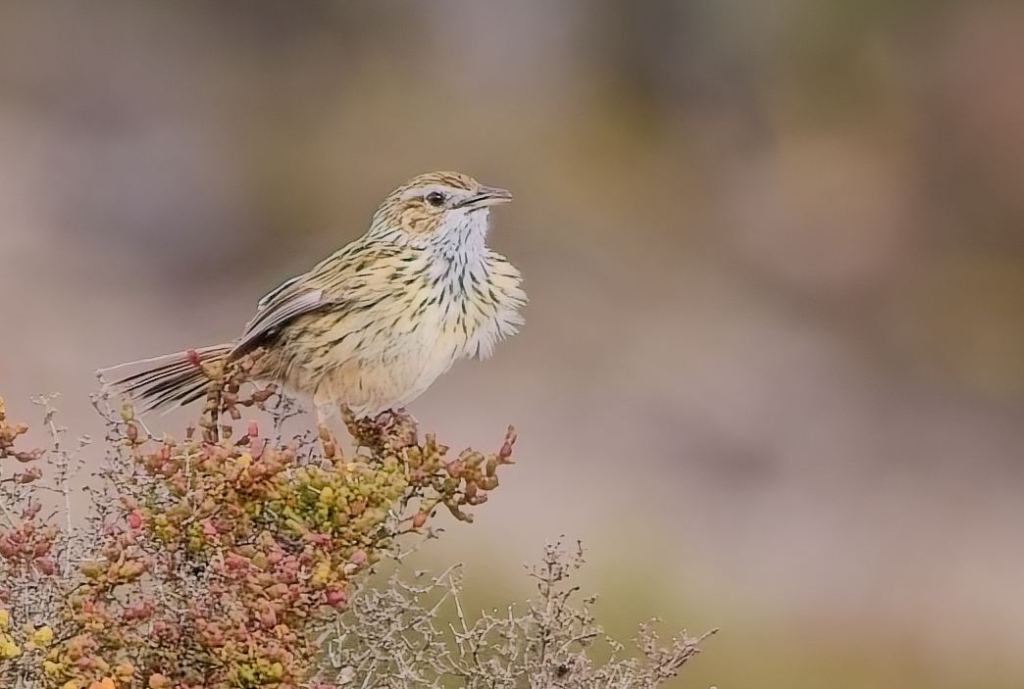
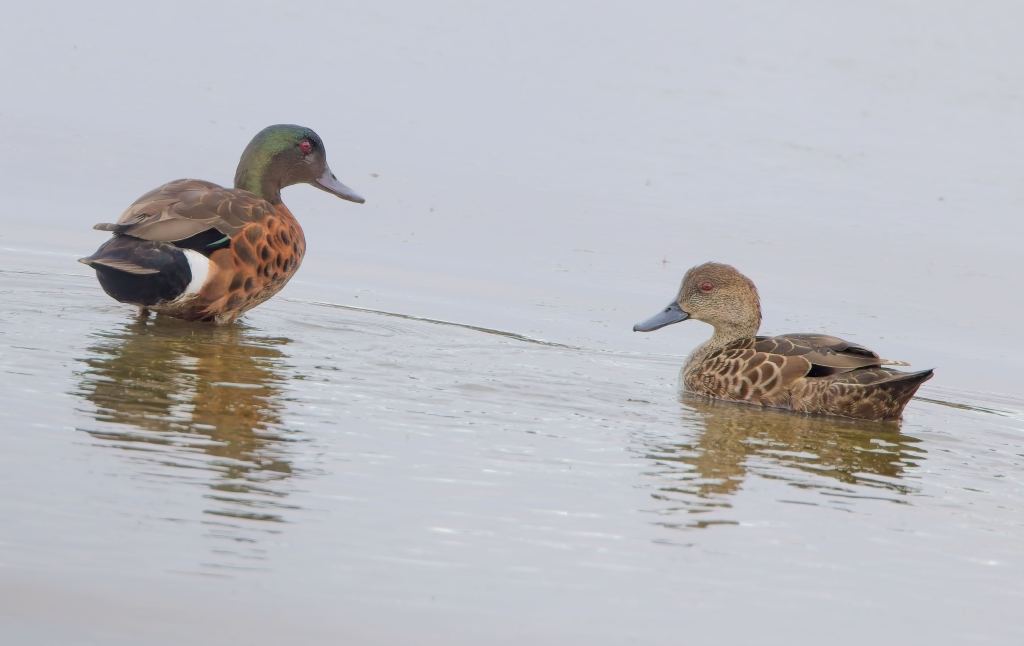
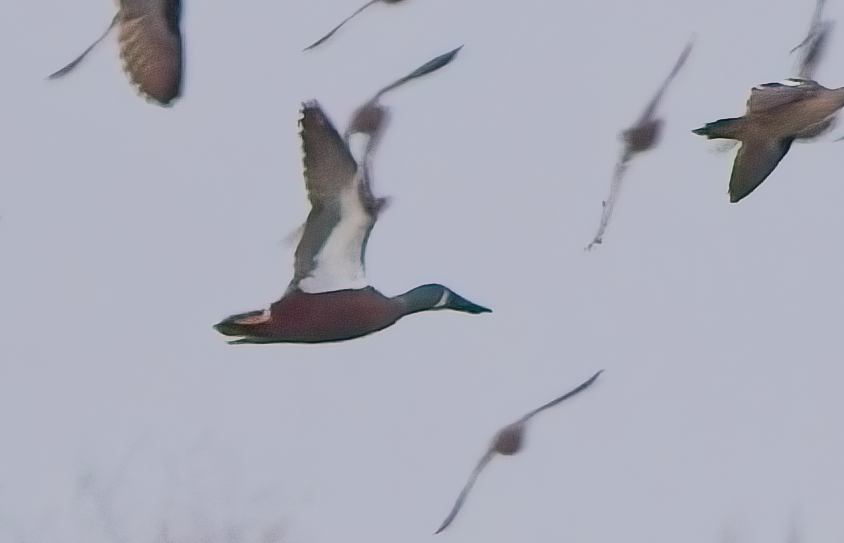
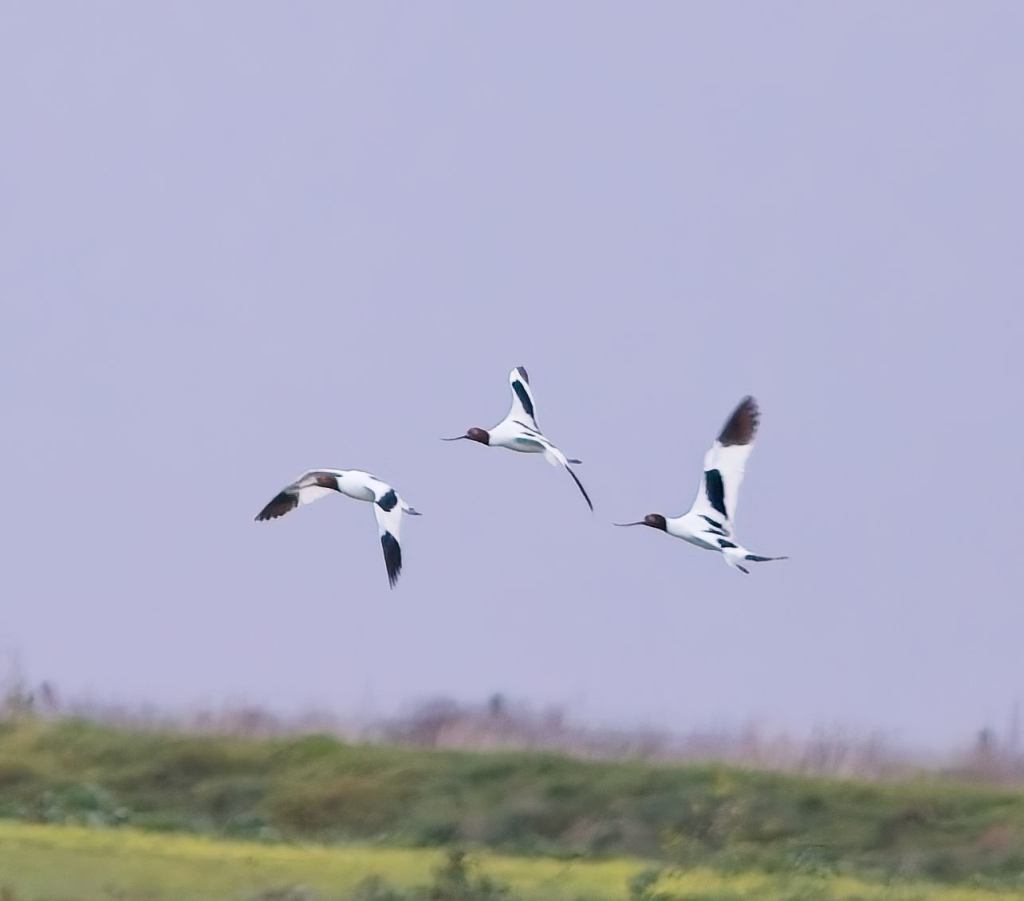
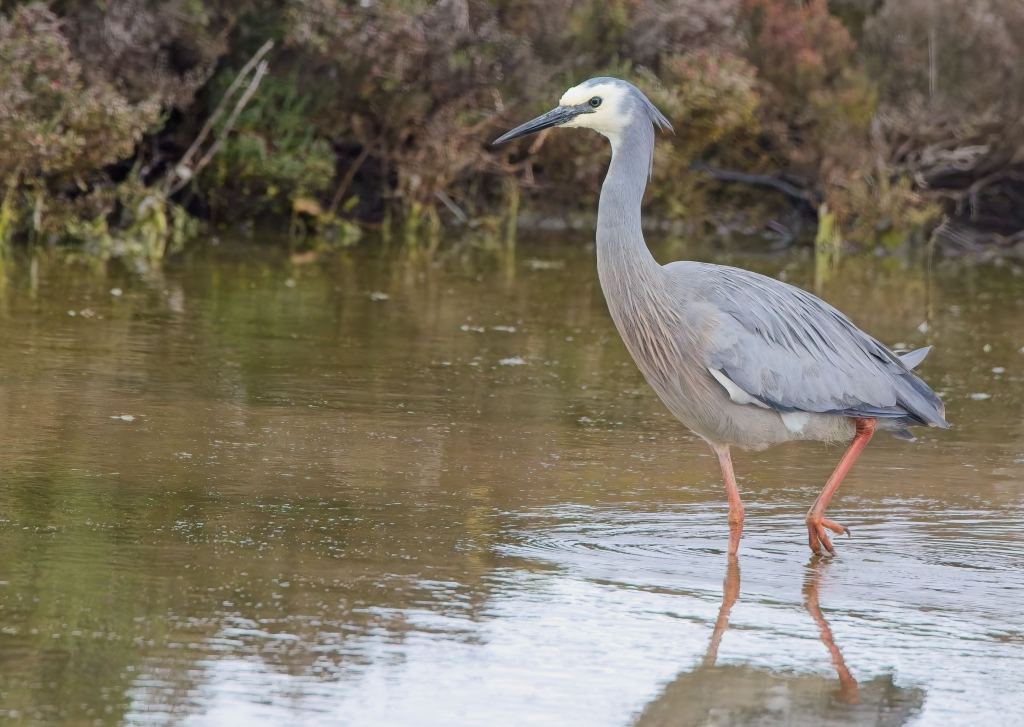
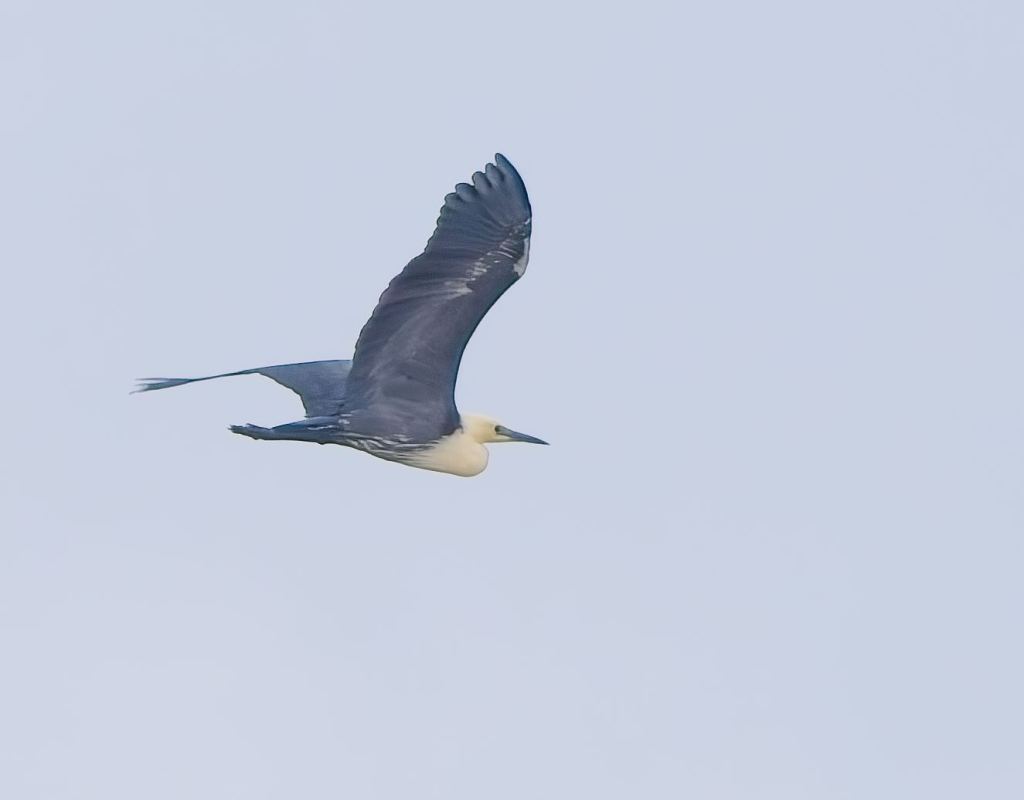
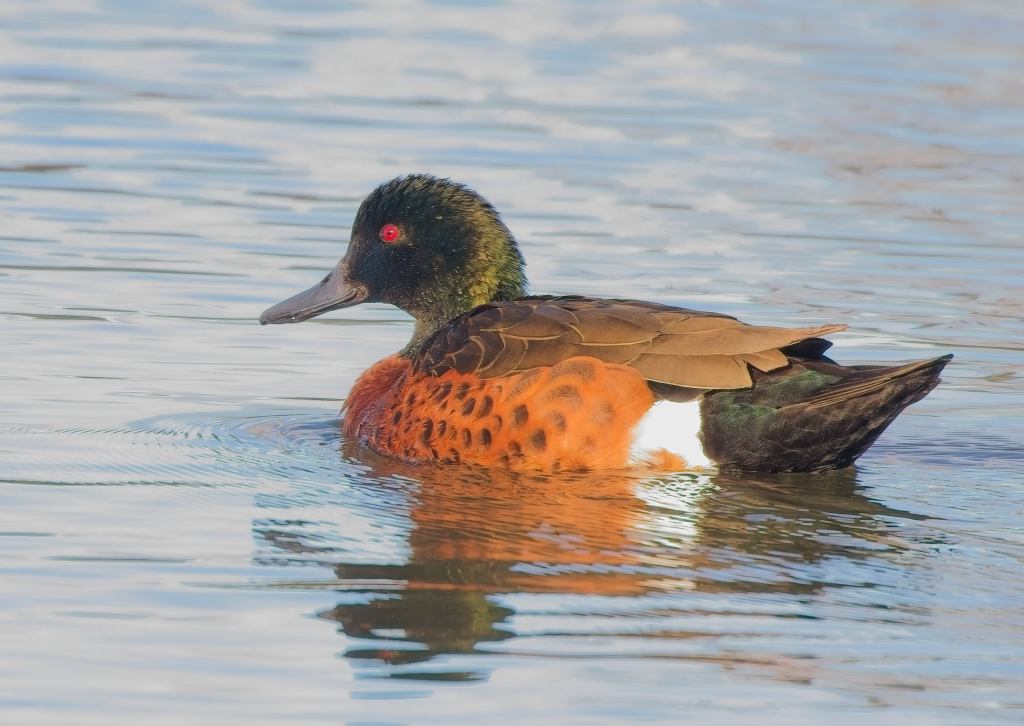
Brolga – Life PhotoRed Capped Plover – Much Desired Life PhotoBrown Falcon – Life PhotoEuropean GoldfinchHoary Headed Grebe – LiferSwamp Harrier – LiferLittle Grassbird – LiferStriated Fieldwren – LiferChestnut Teal Pair – Improved Life PhotoPied Oystercatcher – Life PhotoAustralasian Shoveler – Life PhotoRed Necked Avocets – Life PhotoWhite Faced Heron – Life PhotoWhite Fronted Chat – LiferPied Cormorant – LiferPacific Heron – Life Photo
Our next stop was at Coogoorah Park near the Anglesea Golf Course that we had visited two days earlier on our Great Ocean Road sojourn. In addition to some species we had seen on our earlier visit, we added a super new lifer Blue Winged Parrot – which came in to a very specific nesting location known by Christian and we also got life photos of Fan-tailed Cuckoo, Gray Teal and the lovely little Spotted Pardalote.
Blue Winged Parrot – LiferGray Teal – Life PhotoFan Tailed Cuckoo – Life PhotoSpotted Pardalote – Life Photo
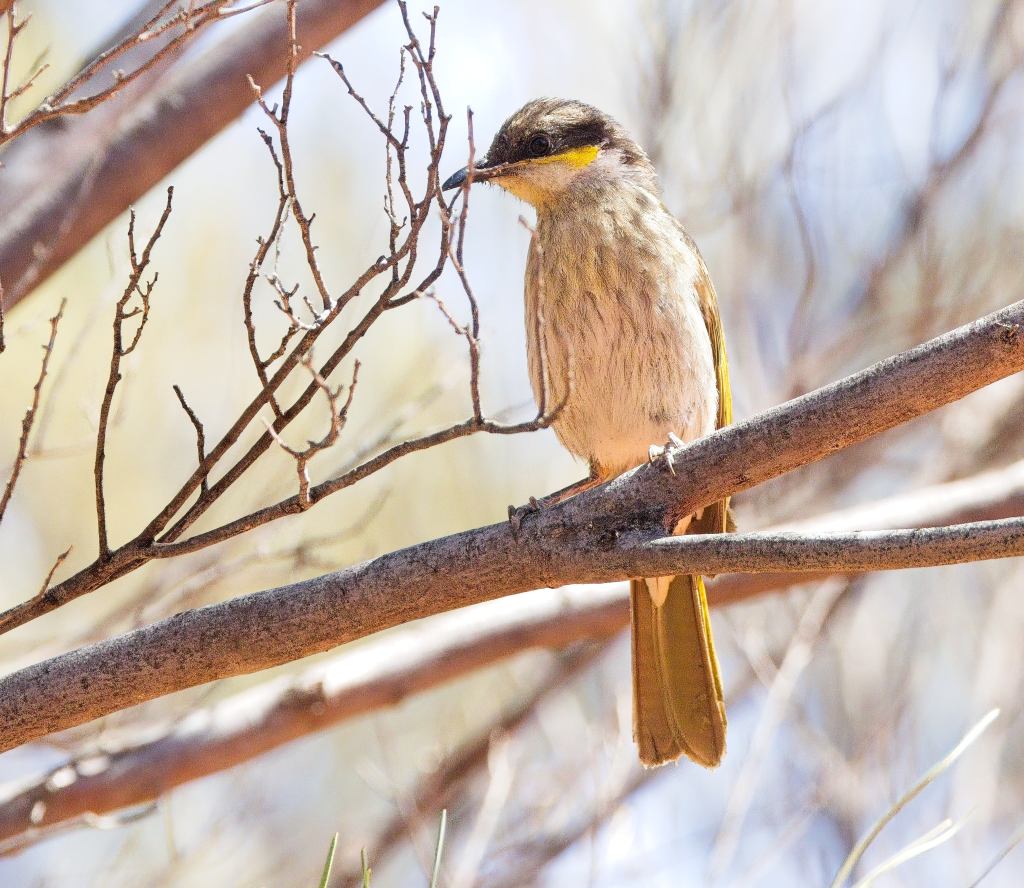
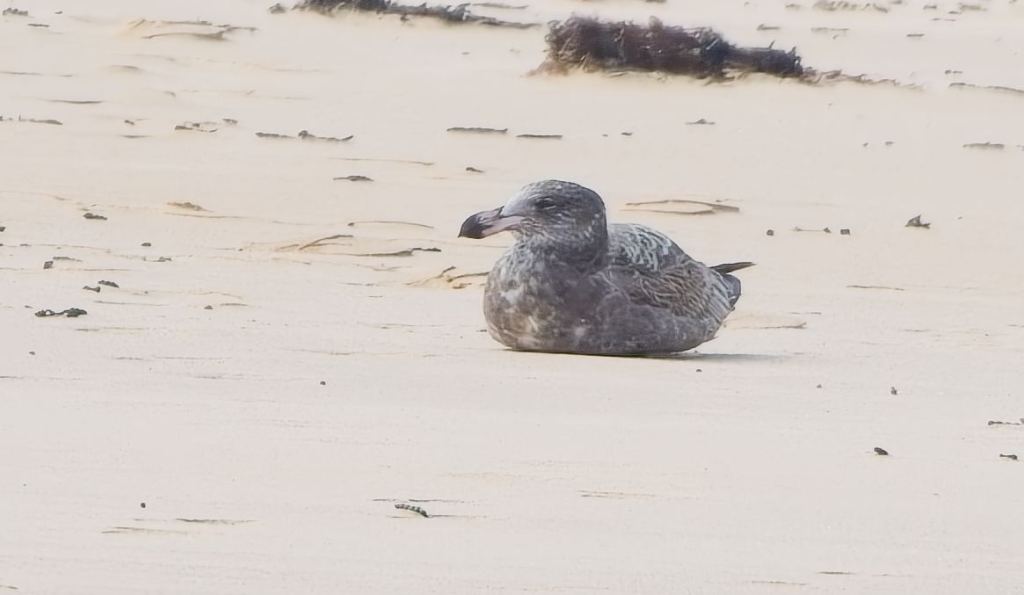
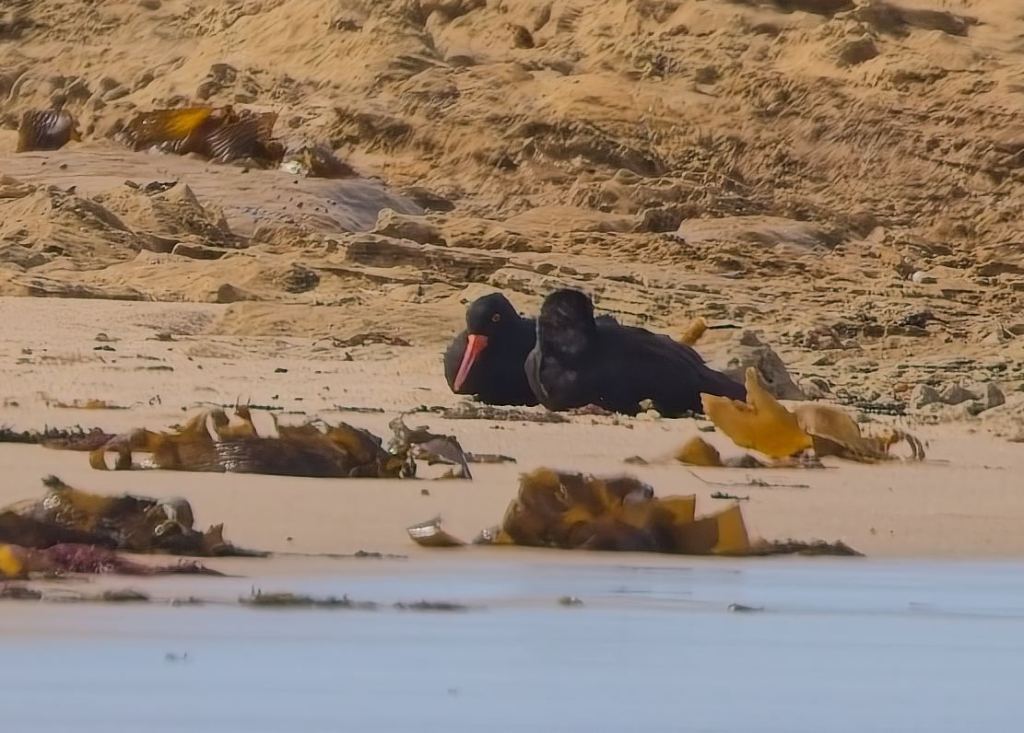
Our next stop was very special as we went onto the beach at Point Roadknight, a beautiful spot, and by the time we had reached the coast, the gray skies had been replaced by blue skies and with the surf coming in, it was glorious. And so were the birds which were found only due to Christian’s knowledge and diligence. Christian thought there was a chance to find the quite uncommon Hooded Plover, a South Australian endemic. At first we found nothing on the beach but did see a very distant white spot on the ocean that turned out to be a White-Capped Albatross, a bird I had seen and photographed on a Capetown pelagic trip in 2014. Undaunted we crossed some rocks on the beach and moved to a different spot where Christian pointed out three more dots – this time on the beach and they were the Hooded Plovers, gorgeous little black, white, and brown plovers about the size of our Semipalmated Plovers and with a red eye ring and a mostly red bill. We were able to get quite close and got great photos. Further along the beach we had distant views of two more lifers, Pacific Gull and Sooty Oystercatchers and in shrubs near the beach, we found a lifer Singing Honeyeater. What a collection!
Hooded Plover – Lifer
Singing Honeyeater – Lifer
Pacific Gull – LiferSooty Oystercatchers – Lifers
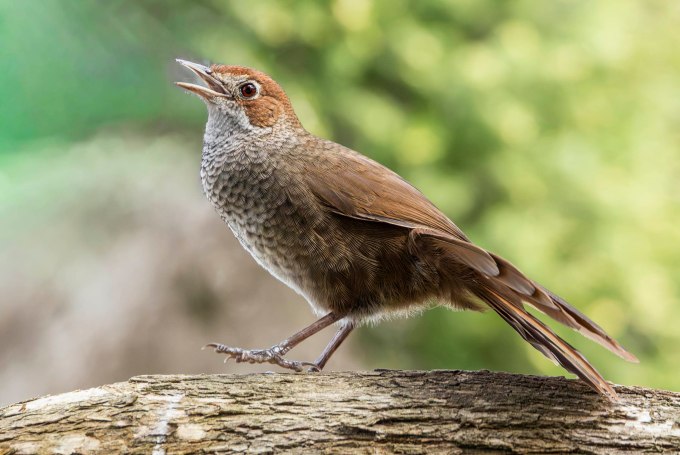
One more great bird before lunch – at Split Point, where there is a famous lighthouse, Christian knew that a Rufous Bristlebird was a good possibility. We heard it and then coaxing in with some brief playback – Bingo! We had struck up a conversation and the Bristlebird ran along a driveway with a gate. It went back and forth several times giving a chance for a crappy photo and then it finally perched on a branch in the open and serenaded us – a much better photo op for this uncommon skulking endemic lifer.
Rufous Bristlebird – Lifer
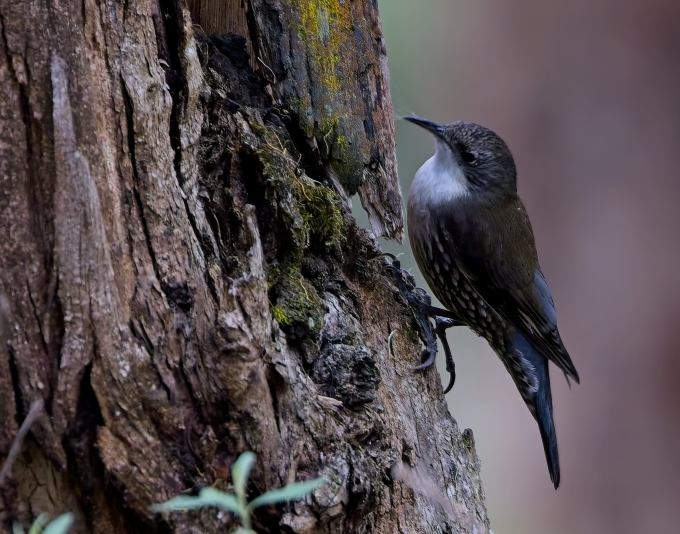
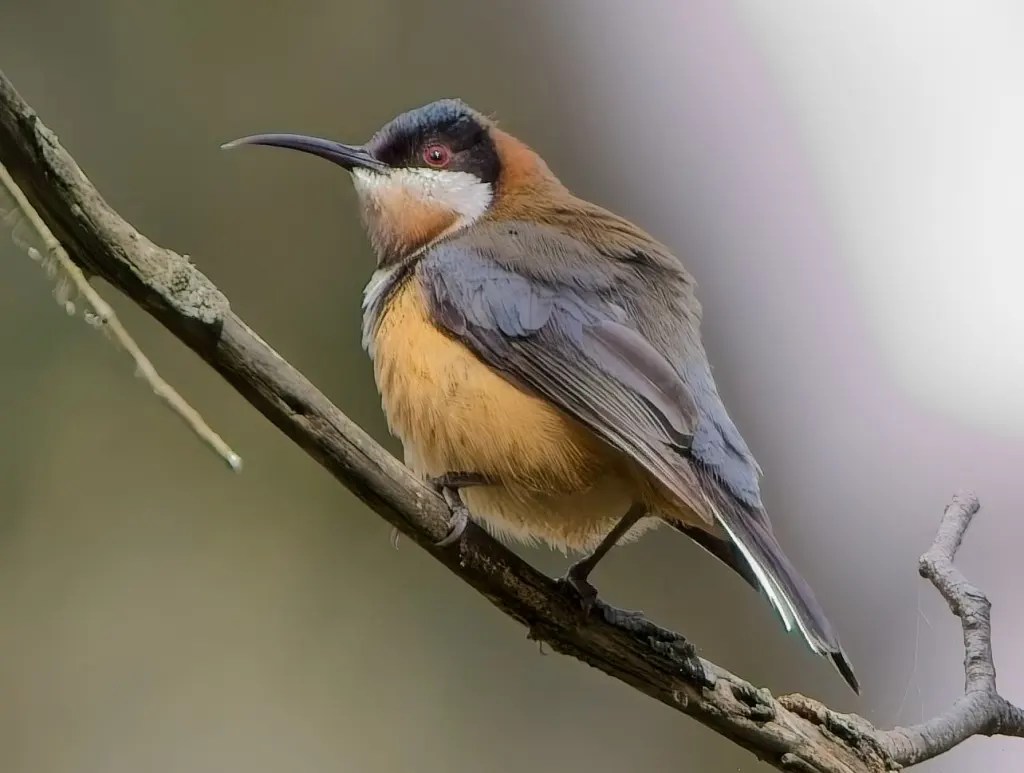
Continuing on just off the Great Ocean Road we ventured onto the Iron Bark Drive Nature Trail in the Great Otway National Park where we ate the sandwiches we had picked up for lunch and I added three life photos – White Throated Treecreeper, Eastern Yellow Robin and one of my favorites, an Eastern Spinebill. I also got a much better photo of the beautiful Crimson Rosella.
Crimson RosellaEastern Yellow Robin – Life PhotoWhite-throated TreecreeperEastern Spinebill
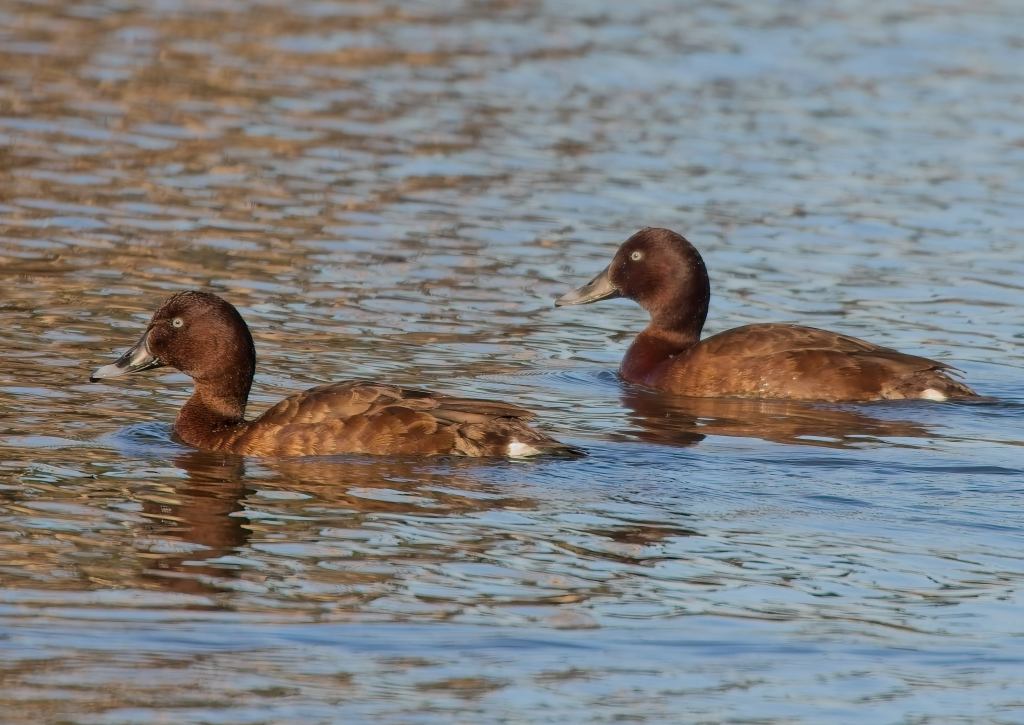
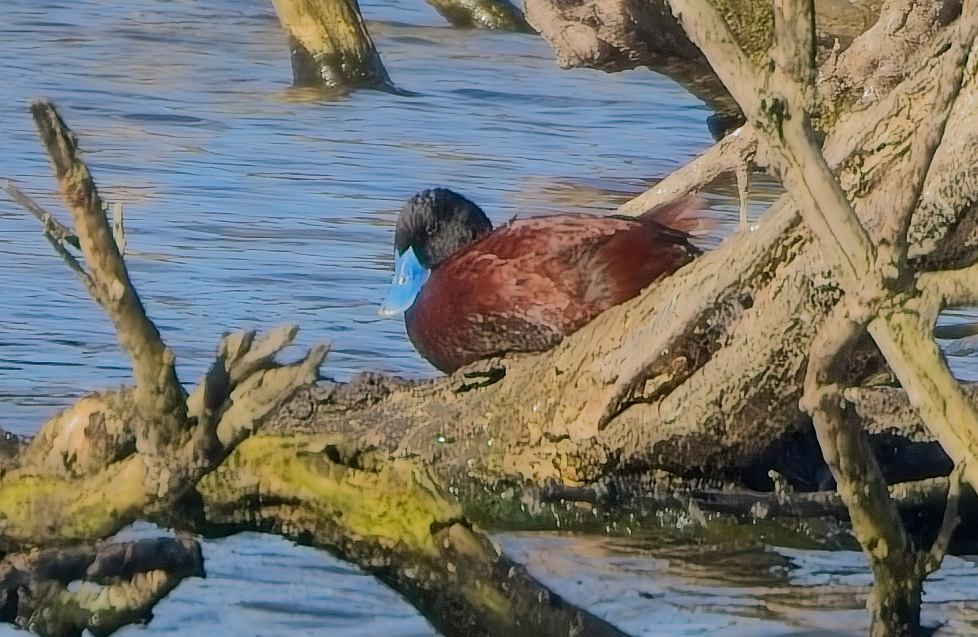
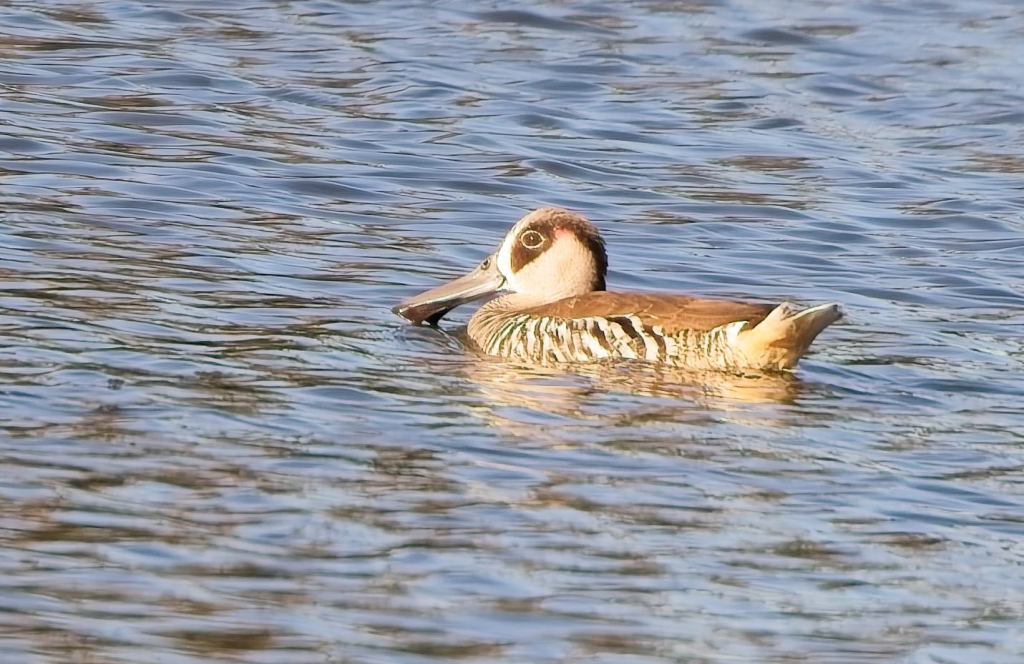
There would be two more stops – each with a water feature. At the Aireys Inlet Water Reclamation Facility. I had a lifer Australian Shelduck and at Lake Lorne, I got a lifer Blue Billed Duck, really good photos of two other ducks, Hardhead and Chestnut Teal and the Royal Spoonbill, and a lifer photo of the strange looking Pink Eared Duck.
Australian Shelduck – Life Photo
Chestnut TealHardheads
Royal Spoonbill
Blue Billed Duck – Lifer
Pink Eared Duck
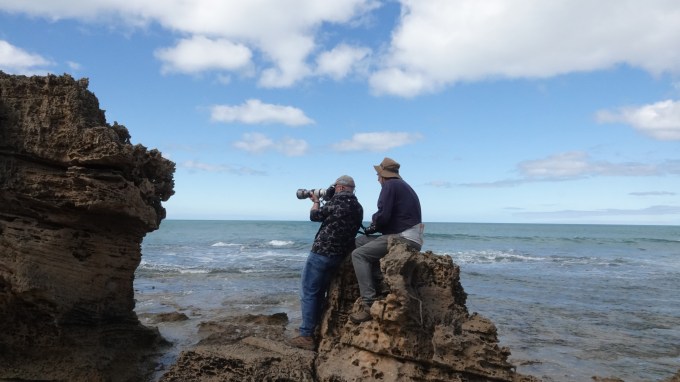
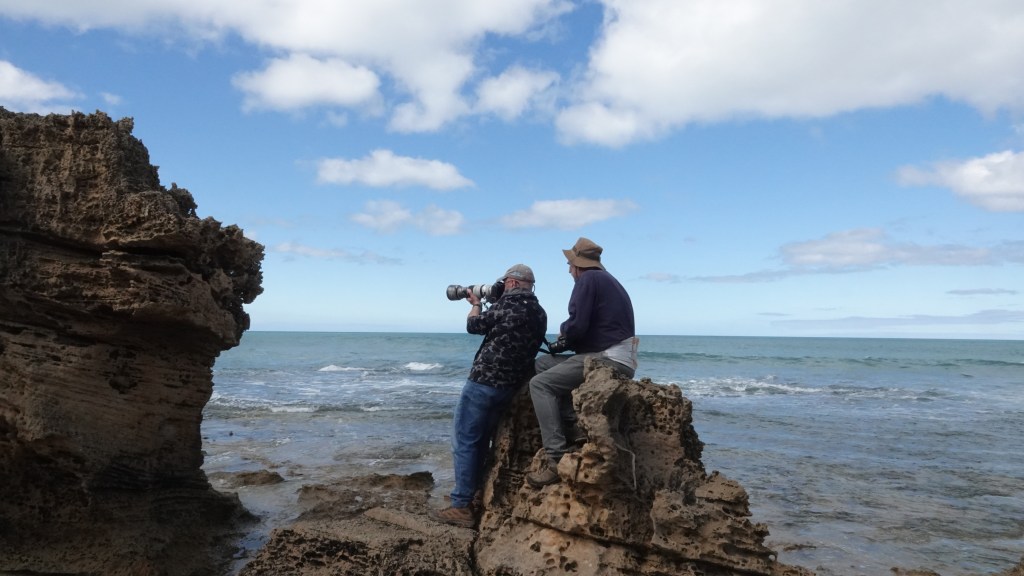
That was it for the day, and quite a day it was: 11 hours with 9 stops, 97 species, 14 lifers and 37 life photos. Christian had a good time and we could not have asked for more. Below is a picture Cindy took of Christian and me perched precariously on some rocks watching the Pacific Gull and Sooty Oystercatchers. And I know I have posted a photo of the Superb Fairywren from two days earlier but I want to include a fun photo of one for this wonderful day, too.
Me with Christian Doerig
Superb Fairywren
The next morning we would be flying off to Uluru in the Australian Outback. We truly loved Melbourne and environs for food, people, birds, and its fun vibe. Being there for the first NFL game in Australia was a weird but fun bonus – especially since the L.A. Rams were throttled. We highly recommend Melbourne to all Australia visitors and would definitely include a visit on any return trip. We met many young people from other countries during our visits – mostly wait staff at restaurants there on short term work visas as there is a shortage of workers in many areas and many fields. Many liked Melbourne but we often heard that it was just too cold there – it is in the South (equivalent to our North), but we had great weather (sweaters a couple of days/nights) and think its weather is most like San Francisco which is similar in many other ways as well. Birding was fun and excellent: 108 species, 22 lifers and 67 life photos. The trip list was at 110 species and we were barely a third into it…many more birds, and much else to come.