More South Texas: Day 6 Was Good and Day 7 Was Off the Charts

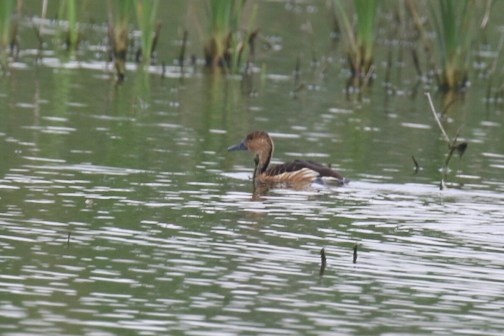
We started the morning of April 7th with more Parrots in Weslaco and then visited Estero Llano Grande State Park.  We had 48 species at the latter with several great birds.  We had seen MANY Black Bellied Whistling Ducks in each of the previous days – very nice looking birds.  At the State Park we had our only Fulvous Whistling Ducks for the trip.

Black Bellied Whistling Duck

Black Bellied Whistling Duck B

Fulvous Whistling Duck

Fulvous Whistling Dusk

There were a number of other ducks and most of the waders we saw earlier then we also found another of the South Texas specialties – a Least Grebe.  We had seen several earlier and would see more later, but this was also a good place for another specialty – the Plain Chachalaca.

Least Grebe

Least Grebe

Plain Chachalaca

Plain Chachalaca

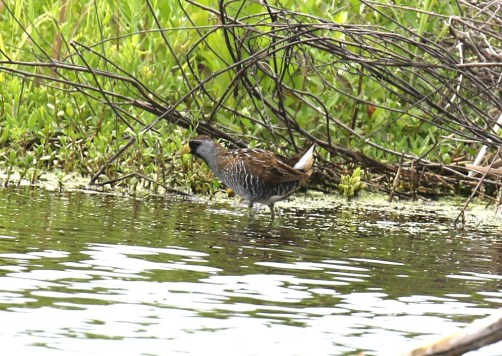
This was also the place where we had our highest count – 5 – of Soras and we saw several in the open.  During the course of our trip we saw more than a dozen of these often skulky  and reclusive birds and heard more.  Probably more Soras on this trip than I have had in the rest of my birding life.

Sora

Sora2

Barry knew of a possible special treat – a roosting Common Pauraque.  Another of the goatsuckers/nightjars, Common Pauraques are active insect eaters at dawn and dusk and throughout the night.  They roost in the daytime on the ground in leaf litter – usually in thickets.  We searched the target area for quite a while and then Jeff Poulin spied it in thick cover.  This was a hoped for new photo for me and I felt the odds were low to get one.  But get one I did – one of my favorite birds of the trip.  It is well camouflaged so look hard.

Common Pauraque

Common Pauraque

Another great find and highlight was an Eastern Screech Owl in a nest cavity,  With the help of Barry’s scope, I was able to get a fairly good digiscoped photo – actually better than expected given a very narrow viewing window.  This was also the first place where we found White Tipped Doves – another South Texas specialty – and also Curve Billed Thrashers after seeing several Long Billed Thrashers earlier.

Eastern Screech Owl

Eastern Screech Owl

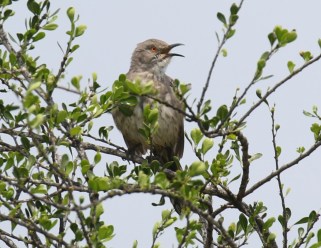
Curve Billed Thrasher Compared to Long Billed Thrasher (Seen Earlier)

Curve Billed Thrasher 4 long-billed-thrasher-1.jpg

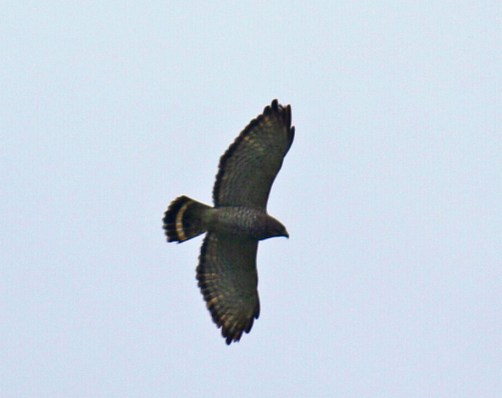
Before lunch we headed over to the Frontera Audubon Center where we added three great new birds: Gray Hawk, Broad Winged Hawk and Green Kingfisher.  I know I took a picture of the briefly seen Gray Hawk but I cannot find it so I include just the other two.

Broad Winged Hawk

Broad Winged Hawk4

Green Kingfisher

Green Kingfisher Phone

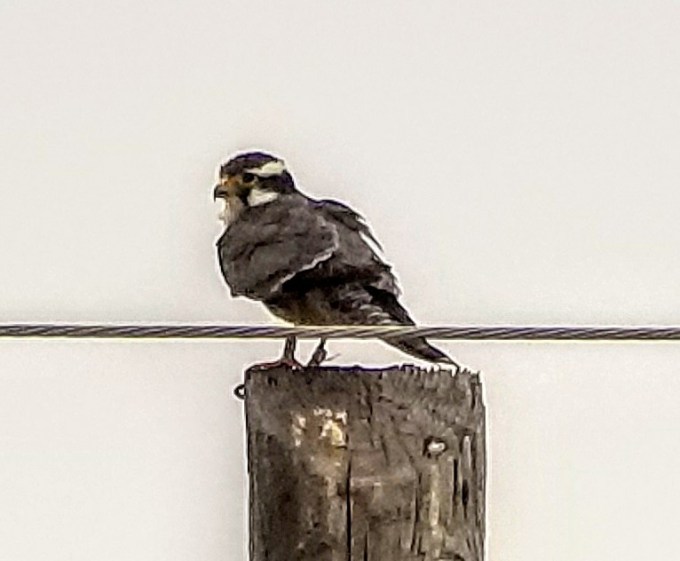
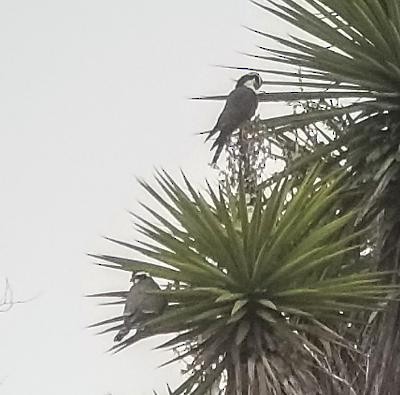
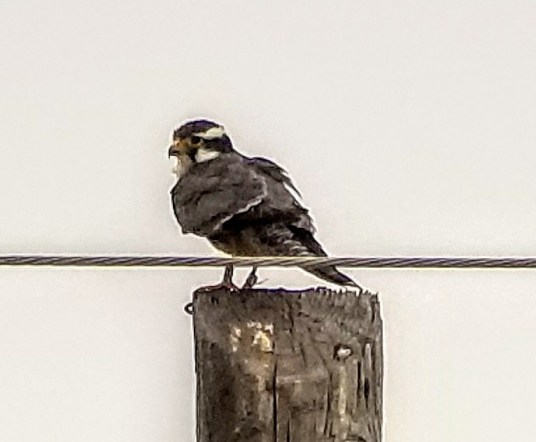
After a late lunch we drove around searching for Chihuahan Raven and more importantly hoping for an Aplomado Falcon.  We checked every power pole without success.  We did find a Raven and then went to a nesting platform that had been placed for the falcons.  No luck on the first one but at another one we found first one and then a second Aplomado Falcon.  Quite distant but unmistakable.  I got some photos (ABA firsts) but the best ones were digiscoped through Barry’s scope.  These falcons almost disappeared from Texas due primarily to habitat loss, but an active breeding and restoration program have brought them back to the area.  They are a treasured bird for birders.

Aplomado Falcons

Aplomado Falcons

The really cool part of this observation was that it came at exactly 4:00 pm and was my 400th ABA species for the year.  I certainly like this kind of congruity/synchronicity!!  It was getting harder of course to add new birds because we had seen so many, but we added 14 and now were at 183 for the tour.  The Falcon was the only new ABA Photo for me – but what a great way to end the day.  As you will soon see, the next day was even better.

The weather on the 7th had fairly heavy winds coming from the North.  Barry said this could be great for a “fallout” of migrating birds the next morning and we would head to South Padre Island to find out.  When winds are from the north, the birds are fighting that in their flights and often take refuge in the first land area they find after crossing the Gulf.  Indeed many don’t make and fall to their deaths in the sea. On the way to South Padre we drove one of the Aplomado Falcon roads again and got an even better look as we saw one in flight and then land on a power pole closer than the afternoon before.  Another photo.  What a way to start the day.  It was a good omen.

Aplomado Falcon

Aplomado Falcon Cropped

As we approached the Valley Fund Lands Site, (Also known as “Sheepshead”) we saw a field with a couple dozen Scissor Tailed Flycatchers sitting on the ground – this was exciting and foretold the spectacular day that would follow.  We were not the only birders who had figured it out and many were already there with cameras and binoculars on birds in the small copse of trees.  There is no way I can detail the visit chronologically as there was fluid movement from spot to spot as new birds were found – many in the open affording great views. We spent an hour there and then went to the adjoining Convention Center Property and then returned in the afternoon after lunch.  Birding was great on each visit.  I am not going to try to separate the species seen chronologically or by place.  We had an an amazing combined list of 88 species.

The South Padre Island Birding and Nature Center

2P5A6881

Here is what we saw in alphabetical order.  I got photos of most of them and my favorites are included after the list.

South Padre List

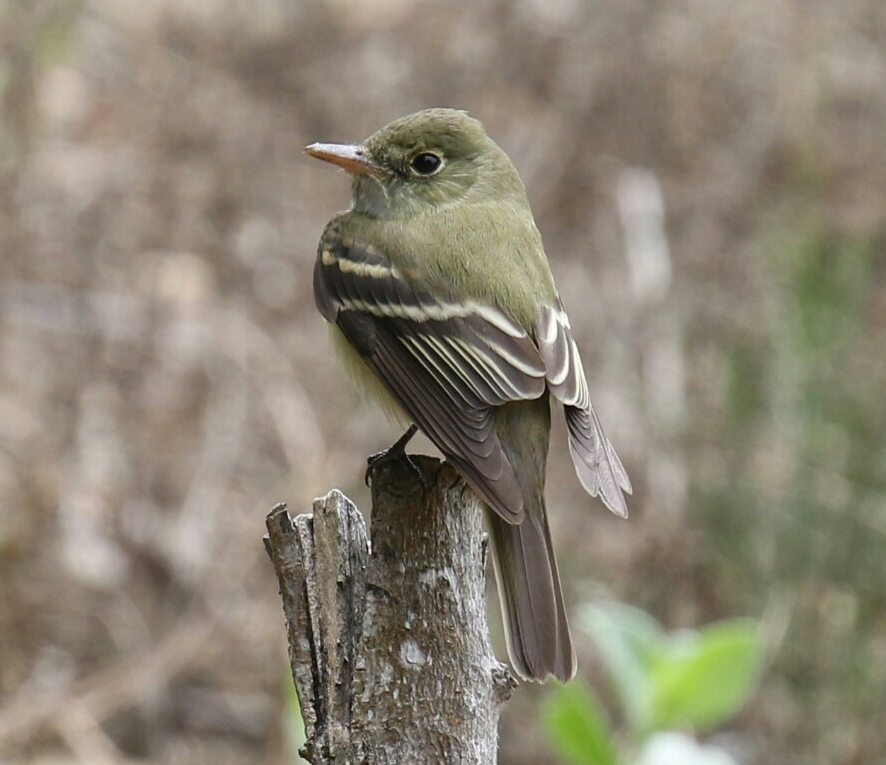
Acadian Flycatcher

Acadian Flycatcher

Baltimore Oriole
Baltimore Oriole 7

Black and White Warbler

black-and-white-warbler-deck.jpg

Black Throated Green Warbler

Black Throated Green Warbler 1

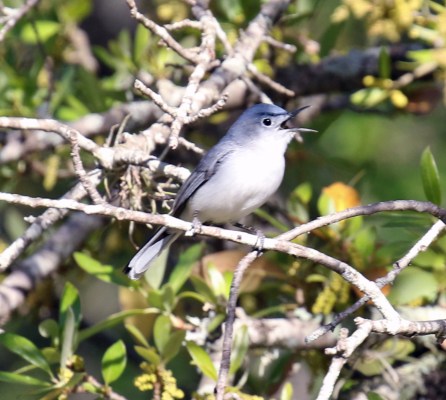
Blue Gray Gnatcatcher

Blue Gray Gnatcatcher Singing

Blue-Winged Warbler (New ABA Photo)

Blue Winged Warbler

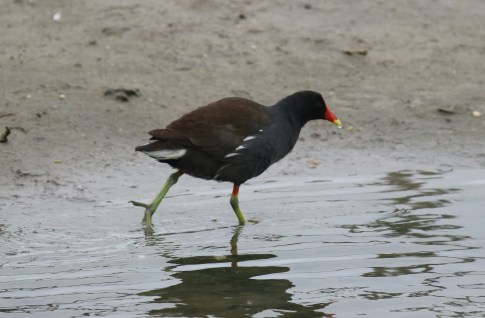
Common Gallinule

Common Gallinule 7 - Copy

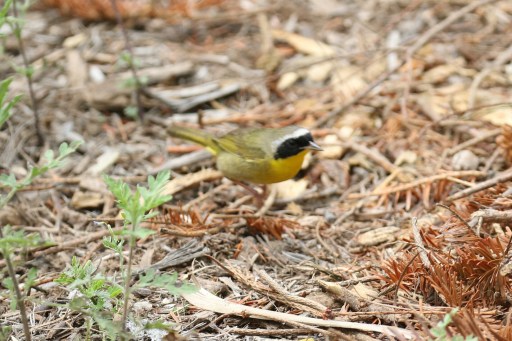
Common Yellowthroat

Common Yellowthroat2 - Copy

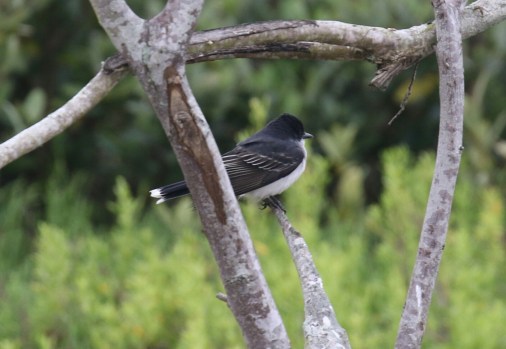
Eastern Kingbird

Eastern Kingbird

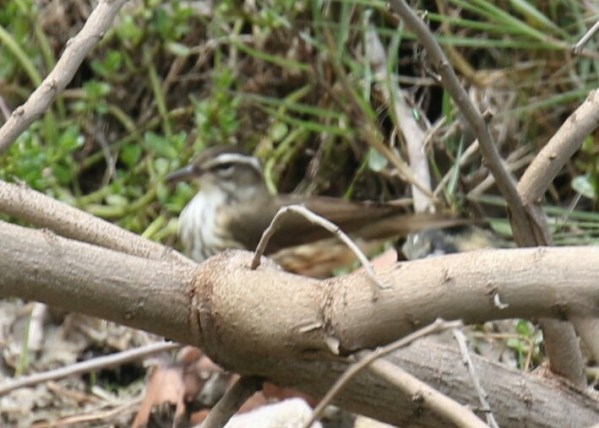
Louisiana Waterthrush

Louisiana Waterthrush 2

Eastern Wood Pewee

Eastern Wood Pewee

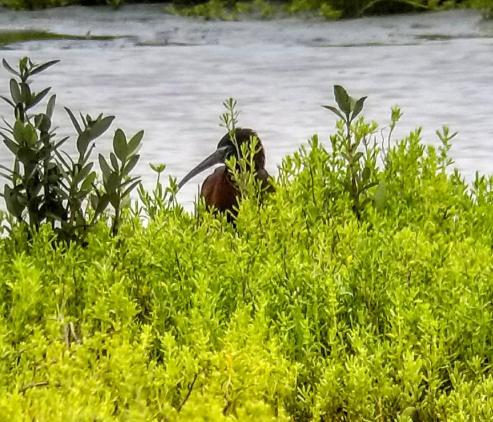
Glossy Ibis (Rare at this time and place)

Glossy Ibis Phone

Golden Fronted Woodpecker

golden-fronted-woodpecker-male-copy.jpg

Gray Catbird

Gray Catbird

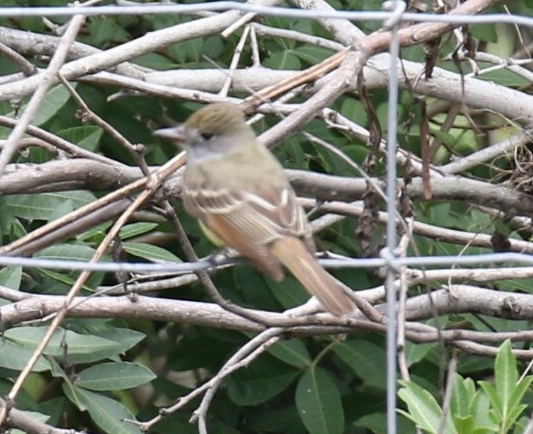
Great Crested Flycatcher

Great Crested Flycatcher 2

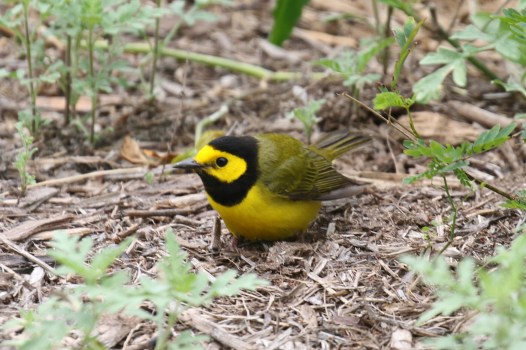
Hooded Warbler

Hooded Warbler 3 - Copy

Indigo Bunting

Indigo Bunting - Copy

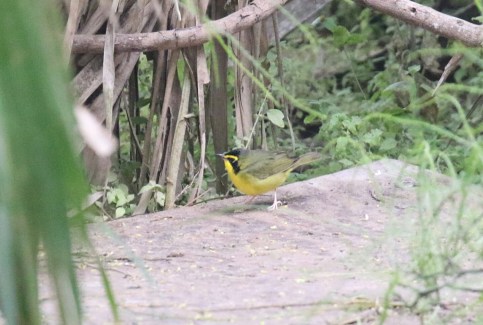
Kentucky Warbler

Kentucky Warbler 7

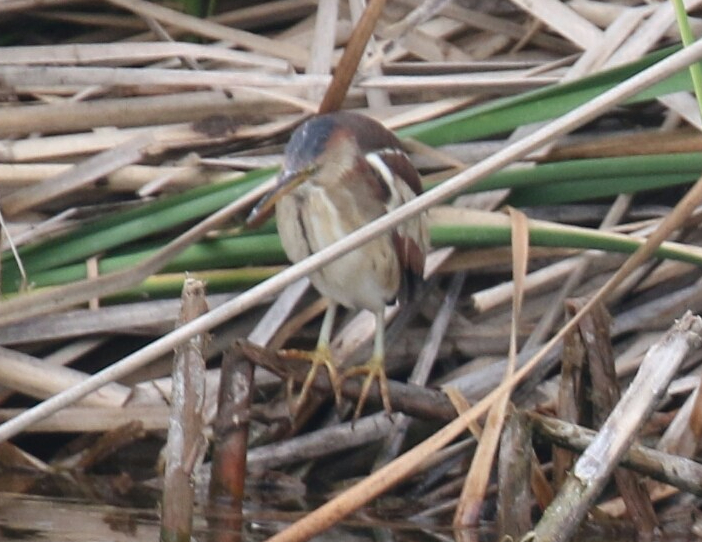
Least Bittern

Least Bittern - Copy

Lesser Nighthawk

Lesser Nighthawk 2

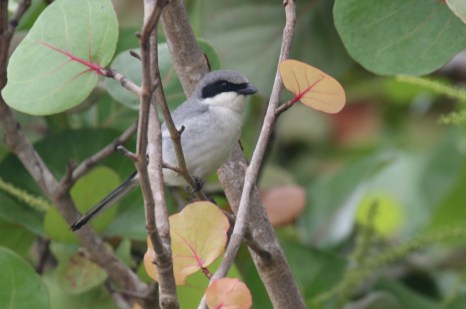
Loggerhead Shrike

Loggerhead Shrike 5

Nashville Warbler

Nashville Warbler 2 - Copy

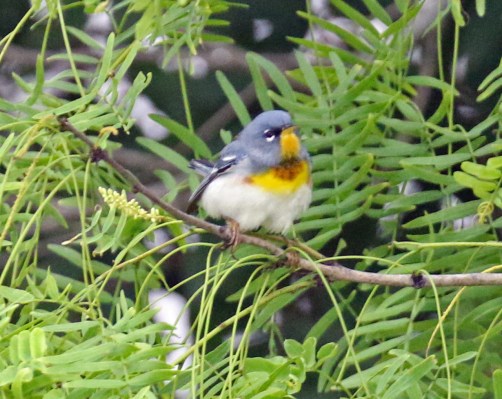
Northern Parula

Northern Parula Warbler

Orchard Oriole

Orchard Oriole Male - Copy

Painted Bunting

Painted Bunting - Copy

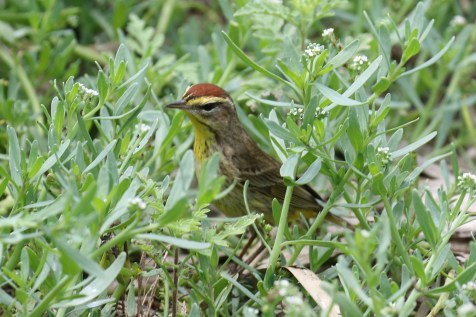
Palm Warbler

Palm Warbler 2 - Copy

Summer Tanager

Summer Tanagerx - Copy


Swainson’s Thrush

Swainson's Thrush 3

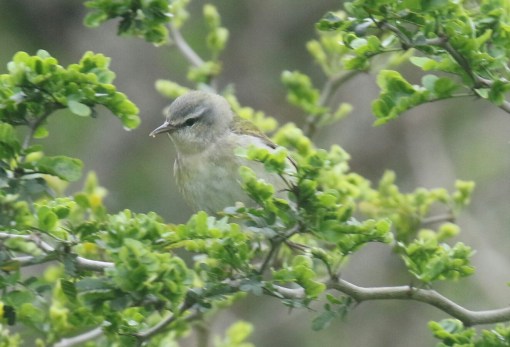
Tennessee Warbler

Tennessee Warbler

White Eyed Vireo

White Eyed Vireo1r

Worm Eating Warbler

Worm Eating Warbler 2

Yellow Rumped Warbler

Audubon's Yellow Rumped Warbler

Yellow Throated Warbler

Yellow Throated Warbler1

Spending almost all of my time birding in the west, I don’t see major migrations and especially do not see the myriad warblers that are so much a part of birding in the East.  This show in a relatively small and very concentrated area where the trees were relatively low was very exciting to me. I didn’t count but believe there were maybe 100 birders enjoying the show at the two locations.  Maybe more.  All were very engaged and helpful to others sharing this wonderful experience.  The pictures mostly speak for themselves, but I will comment on a few.

The Blue Winged Warbler was an especially appreciated species.  Not only was it on my target list because I had no previous photo, it is really beautiful as a simple splash of yellow with those blue (bluish?) wings.  It popped out against the green of the foliage as it fed to regain its strength to continue its migration.  I was particularly happy to find it “on my own” among the many other birds.  The Acadian Flycatcher was another very pleasing find.  I heard another birder, not from our group, call out “Acadian Flycatcher” and raced over to the area to see it in the open.  It had not been present (or at least noticed) in the morning but was one of the first birds seen after lunch.  It too had been on my target list for new ABA photos – one that I felt had a relatively low probability to be seen let alone be photographed so easily.

Perhaps my favorite bird here was the Worm Eating Warbler.  Also high on my new ABA Photo target list.  It is a very striking bird but it was its behavior that was of such appeal.  It foraged endlessly on the ground in the leaf litter without any regard to the birders.  Granted we were separated by a railing fence, but at times it was so close I could not get my camera to focus.  I had expected at most a distant bird buried in dense cover.

One of the birds was great to see but was a disappointment for what it was not.  Barry called out “Swainson’s Thrush” and had it centered in his scope.   Nancy and Ed Lawler, a delightful couple from Staunton, VA were among our group participants.  They had birded together across the U.S. and in many foreign countries.  For Nancy, her primary “Life List” was birds of the world.  For this trip she really, really hoped for a Swainson’s Warbler.  It had been a nemesis bird for her.  It was unlikely on this trip but possible – especially with our wonderful group of birds this day.  I, too, hoped for a Swainson’s Warbler, a bird I had seen only once over 40 years ago in Maryland.  When I heard Barry’s call out, all I heard was “Swainson’s” and got immediately excited – more for Nancy than for me.  She was nearby and I rushed her to the scope and followed with a look myself and then a quick photo. Uh oh – it was a thrush and not a warbler.  It was my first Swainson’s Thrush for the year and the only one we saw on the trip – a great bird – but how much greater had it been a Swainson’s Warbler.  Sometimes our minds are so preset, we hear and maybe even see only what we want.

Some very quick comments on some of the others seen.  Any photo of a Nighthawk roosting in the open in the day time is special.  I had previous photos of juvenile or female Orchard Orioles, but this brick red male was super.  Louisiana Waterthrush had been on my original hoped for photos list for the trip, but I got one earlier in Arizona so not “as” special.  It was nice to get the Northern Parula so soon after the Tropical Parula from the King Ranch enabling the comparison.  Not a great photo of the Glossy Ibis.  It was discovered by a young birder who was not sure if it was really the very rare Glossy Ibis or the common White Faced Ibis.  Barry got it in his scope and excitedly confirmed it was the former, the only one we would see on the trip and quite uncommon in South Texas.  Finally I really liked the photo of the Golden Fronted Woodpecker.  We probably saw or heard many dozens on the trip, but this was the best look at the name giving “golden front” below the red cap.

All told, we spent almost six hours at South Padre.  It ranked right up there with the best six hours of birding I had ever had.  But it was time to move on.  We found some Baird’s Sandpipers and American Golden Plovers far off in a field at the Superior Turf Farm and then headed to an early dinner as this was the night we were going owling.  Part of the group passed and the rest of us headed to Bentsen-Rio Grande Valley SP.   I had been there almost exactly 40 years ago in April 1978 and then again 5 years ago in April 2013.  On that first visit I had my Lifer Groove Billed Ani – a bird I have not seen since and in 2013, it was the last stop on a day of guided birding with the hopes of finding an Elf Owl. It was this, the smallest of the North American Owls that was our primary target for the evening.

Groove Billed Ani – Hoping for a Photo Someday – This One is from Cornell

Groove Billed Ani from Cornell

We parked and headed into the park at dusk.  A group of birders was already in wait at the “owl pole” not far from the parking lot – a known nesting spot. We hiked right past them and went to an area that Barry knew was good for our owl.  I think it was the keen ears of Carlos Sanchez that first heard the owl’s call.  Then I heard that call and a second one from a different spot.  Barry figured out the probable location and used playback to bring the owl in to us.  Now the call of one was really close.  It had to be in a tree in front of us but where.  Barry and Carlos searched with their spotlights.  Then Ed Lawler said he was on it.  I don’t know how, but he had located the owl mostly in the dark.  Barry and Carlos got spotlights on the tiny owl and I had a great view and then a fine photo.  An adult Elf Owl is barely 6 inches tall.  By comparison the familiar American Robin is about 8.5 inches, and a Great Gray Owl, the largest (by length) of the owls seen in North America is approximately 24 inches.

Elf Owl 

Elf Owl 2

Elf Owl 3

During our visit we heard at least two more Elf Owls and a Great Horned Owl.  We also had wonderful views of a Common Pauraque flying around us and there were Lesser Nighthawks.  It was a superb night bird experience.

Only in Texas could a day start with an Aplomado Falcon and end with an Elf Owl.  Any birder would consider that a fantastic day.  But in between we had that incredible visit to South Padre Island and for me that topped both the Falcon and the Owl.  We had added a remarkable 27 species for the tour list and now stood at 210.  Only in Texas!!

South Texas Continued – The King Ranch and Beyond

I first visited the King Ranch in October 1977.  I have no specific memories and my bird list is incomplete but Ebird tells me that is where I first saw an Audubon’s Oriole, a White Tailed Hawk and a Buff Bellied Hummingbird.  The King Ranch is an enormous holding of 825,000 acres founded in 1853.  Just for perspective, the King Ranch is bigger than the entire State of Rhode Island.  In 1977, I visited the Santa Gertrudis Unit and this time we were visiting the Norias Unit with local guide Jim Sinclair.  There were three special birds we hoped for:  Ferruginous Pygmy Owl, Audubon’s Oriole and Tropical Parula.  I had seen the first two but had no photos and the latter would be a Life Bird.  This was an important visit.

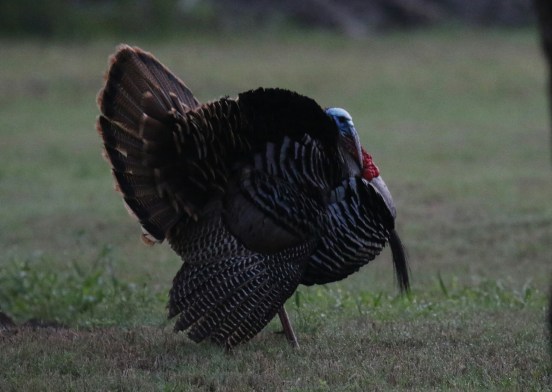
Barely onto the ranch we saw our first Wild Turkeys of the trip – including several displaying Toms – quite a show.

Wild Turkey

Wild Turkey .jpg

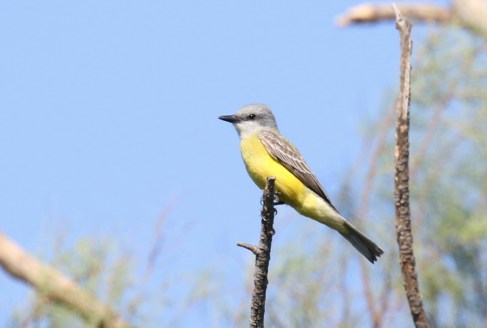
And at the buildings, our leader Barry Zimmer pointed out the Tropical Kingbirds that he had predicted we would see there.  These birds are almost indistinguishable from Couch’s Kingbirds which we had already seen and were common throughout our travels.  These birds could be identified as Tropical only by their song – very different from Couch’s.

Tropical Kingbird

Tropical Kingbird

Couch’s Kingbird

Couch's Kingbird 5

Normally a visit to the Ranch first concentrates on the specialty birds before for example driving the fields looking for a Sprague’s Pipit or Northern Bobwhites or other still excellent birds.  This is what Barry expected, but Big Jim (he had to be 6 foot 6 inches) took us out into those fields.  Some of us got looks at the Bobwhites as they ran on the ground in the tire tracks just ahead of us.  I had seen and photographed some in Florida last year with Frank Caruso and Paul Bithorn, but those were the only ones I have seen.  Unfortunately we could not find the Sprague’s Pipits which had been there the past week and would have been a life photo op for me.  Second miss this year as earlier I had missed them in the San Rafael Grasslands in Arizona with Richard Fray.

Northern Bobwhite

Northern Bobwhite 1

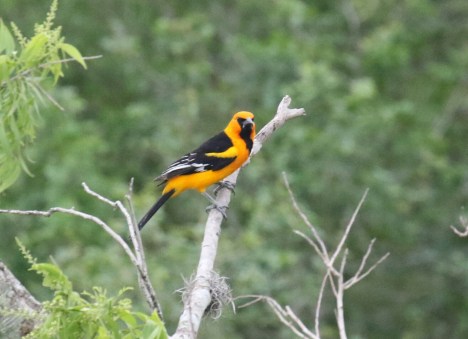
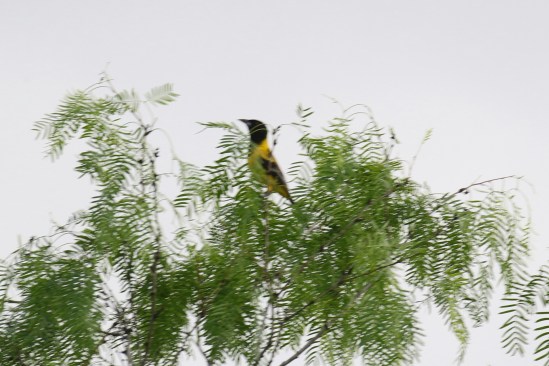
It was now off into the trees to special spots known to Jim (and to Barry) where we were likely to find our targets.  I may have this out of order because it really seemed like a one-two-three whirlwind, but we were successful on all counts.  The Audubon’s Oriole was the hardest to photograph but was a very striking bird.  It is very similar to Scott’s Oriole which I hoped to see and photograph later.  Both have black heads and yellow bodies, but the Audubon’s Oriole has a yellow green back whereas the Scott’s has a black back.

Audubon’s Oriole

Audubon's Oriole

Next up was the Ferruginous Pygmy Owl.  The King Ranch is the go to spot for this extremely rare species.  We got to the right spot, gave a few toots and there it was posing for photos.  A treasured life photo.

Ferruginous Pygmy Owl

Ferruginous Pygmy Owl 1

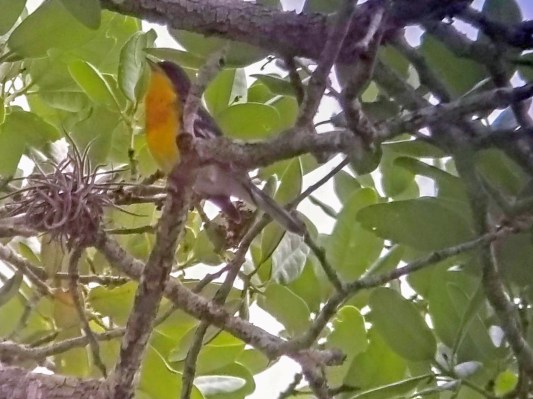
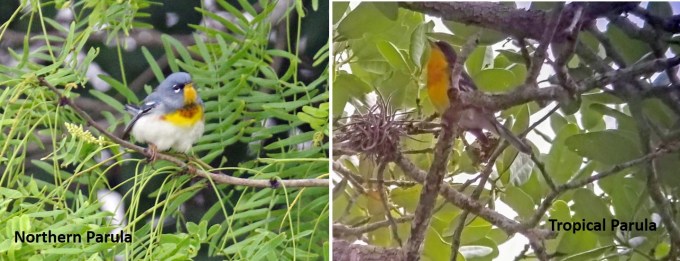
Two down and one to go and it did not take long.  Again at the go to spot, we quickly had a Tropical Parula.  This was a Life Bird, number 2 for the trip.  It was not an easy photo but with Barry’s help I got one that was passable and acceptable.  It is very similar to the very common Northern Parula, a species I had even seen as a super rarity in my home state of Washington.  The Tropical Parula has a black mask and has only a faint rusty band and no black breast band of the Northern Parula.

Tropical Parula and Parula Comparison

Tropical Parula 1

Parula Comparison

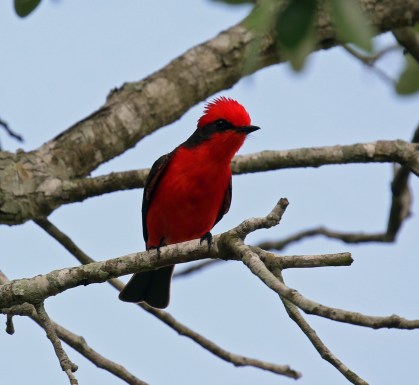
Had the day ended then, it would have been a fantastic day but the Ranch gave us two more really good birds – a Green Jay and a very photogenic Vermilion Flycatcher.  Pretty hard to beat a male Vermilion especially when it is doing its flutter display flight.  Wish I had gotten that on video.

Green Jay

Green Jay1

Vermilion Flycatcher

Vermillion Flycatcher King Ranch

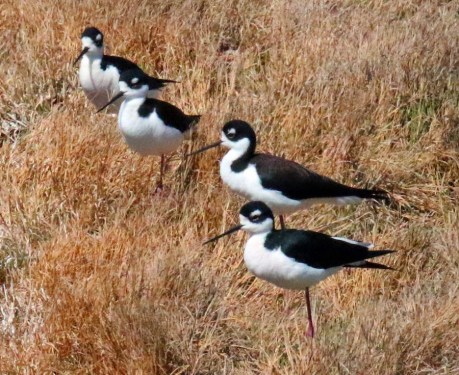
After lunch and a little more birding on the Ranch we were off again.  We found an amazing collection of birds at one field that was a bit wetter than the others.  Included were 37 Black Necked Stilts, 3 American Golden Plovers, a Stilt Sandpiper, 48 Pectoral Sandpipers, a dozen Long Billed Dowitchers and an awesome 238 Lesser Yellowlegs (Barry counted each one).  We continued on to McAllen where we would spend the next few nights.  At a roost in town we found numerous Green Parakeets.  I had seen them in Florida but somehow had failed to get a photo – so that oversight was corrected.  We also had both Black Crowned and Yellow Crowned Night Herons and then at a second roost spot had Red Crowned Parrots – a species I had seen in Pasadena California in December last year at a roost site with hundreds of birds.

Green Parakeets

Green Parakeets 1

Yellow Crowned Night Heron

Yellow Crowned Night Heron

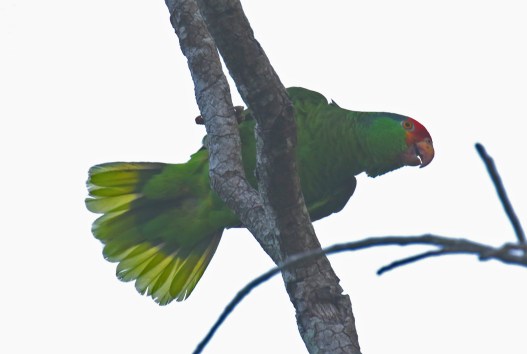
Red Crowned Parrot

Red Crowned Parrot Tail

It had been a great day and again we had both quantity and quality.  The species count for the day was 85 but there were 29 new birds for the trip and we were now up to 169 species seen by the group.


Birding Mecca Three – South Texas

There are many great places to bird in the ABA Area but for the sheer number of birds and certainly for specialty birds it is hard to beat South Florida, Southeast Arizona and South Texas.  When I first started serious birding in the 1970’s, I was fortunate to be able to visit each of those locations and had great luck in finding many of the specialty species (and many others) that make each place so inviting.  For the most part, I had not been back to any of those places in the subsequent 35 to 40 years.  I did not keep detailed lists back then and I definitely did not take any photographs.  With the advent of digital photography, taking pictures of birds I have seen has become particularly enjoyable and important to me.  I have  tried to add new species of course, but special attention has been given to getting photos of species seen those many years ago.  How I wish I had done so back then.

Last spring was a great trip to one of those places – South Florida.  As reported in numerous posts on this blog last year (See    ) Frank Caruso and I spent 9 days there birding mostly with Paul Bithorn and taking a trip to the Keys and the Dry Tortugas with the Tropical Audubon Society.  On that trip I had 173 species of which maybe 30 would be considered Florida specialties.  Since many exotics had been added to the ABA list since I last visited in the 1970’s, many were new ABA Life birds (16) and almost all of them plus some others were new ABA Photos (40 altogether).

Swallow Tailed Kite – Favorite Bird of that 2017 Florida Trip

2017-04-27 18.31.28

In August last year and then again in February this year (See   ), I birded in Southeastern Arizona – the first visits in almost 40 years.  As with Florida, I had seen many of the Arizona specialties in earlier visits, but there were new birds as well, and as with Florida, almost all provided new photo opportunities.  All told on the two Arizona trips, I had seen just shy of 200 species of which maybe 50 could be considered specialties although some are seen elsewhere in the ABA area but many winter for example in Arizona.  Only 9 were new ABA Life birds but again over 40 were new ABA photos.

Whiskered Screech Owls – A Favorite Sighting in Arizona in 2017

Whiskered Screech Owls (3)

So that gets us to Texas.  I had been there twice in the 1970’s and then again on a week long trip in 2013.  The 2013 trip produced 150 species including 5 lifers and maybe 25 new photos, so the opportunities for the visit which will be the subject of the remainder of this blog post and probably at least two more were much more limited than the Florida and Arizona visits.  But Texas is an amazing place and as you will see, there were lots of birds – including many really good ones.

[Note:  It would not be for several more months before I conceived of my 50/50/50 Birding Adventure.  Its objective was to see 50 or more species on single days in each of the 50 states – in the company of local birders or local experts.  More than 50 species were seen on single days in Texas at least twice on this trip – April 4th and April 5th – both are described in this blog.  Looking back on this trip was a major factor in my undertaking the project.]

My trip started negatively with a missed flight from Dallas to Corpus Christi where I was to meet a tour with Victor Emanuel Nature Tours (VENT) the next day.  There really was not a good way to get to a hotel and return for the next early morning flight so I spent an essentially sleepless night in the Dallas Airport.  It was fascinating , however, to watch an airport get ready for the next day.  A large crew (also getting no sleep at least at night) attended to each detail of cleaning, restocking, maintenance, etc.  There were dozens of busy (and noisy) people at work.  We take so much for granted – but we should all step back every once and a while and take stock of the details necessary to make our world workable.

Although there were not many good chances for new ABA Life birds on this trip, I had especially high hopes for a very special one – the Whooping Crane.  I had just missed this legendary conservation success story both in the 1970’s and again in 2013.  It was the primary reason to make the trip.  A potential problem though was that South Texas is also legendary for great migration birding and this would not really hit until two weeks after our tour.  This had been the reason I had missed the cranes earlier – they leave just as the migration is getting into full swing.  You can’t have it all.  I was looking forward to the tour and especially to seeing the Cranes.  There also were a dozen or so photo possibilities and when I met our tour leader, Barry Zimmer, and saw him in action, I was confident that if the birds were around, we would see them.  Barry was extraordinary!!

A special treat was that for the first few days, a second “guide” for our group would be Victor Emanuel himself.  Although his focus and primary responsibility had been the business side of the large VENT operation, Victor had been everywhere and seen almost everything.  An incredible resource.  Barry and Victor took us on our first birding trip before dinner on Easter Sunday – a visit to Tule Lake in Corpus Christi.  Nothing extraordinary but we saw 34 species in less than an hour including several Scissor Tailed Flycatchers – real beauties that would be with us almost every day.

Scissor Tailed Flycatcher

Scissor Tailed Flycatcher

The next morning we were off to Blucher Park,  It was very windy and not real birdy.  Nothing noteworthy although we had killer looks at a beautiful Long Billed Thrasher.  I did not process it at the time, but upon my return I learned from my friend Melissa Hafting that this is a go to spot for roosting Chuck Will’s Widows and Eastern Whippoorwills, crepuscular or nocturnal insect eaters that are very hard to photograph except at their day roosts.  Both were on my “want” list but we never went looking.

For the remainder of the morning we drove various beaches and waterways and picked up quite a few shorebirds including Piping and Wilson’s Plover plus many waders and terns and some American Pipits.  After lunch we looked hard for Snowy Plovers without success but I got my first new ABA Life Picture bird when we found a pair of Gull Billed Terns.  We also had a very large flock of American Avocets and many Long Billed Dowitchers among the many shorebirds.

Gull Billed Terns (ABA Life Photo)

Gull Billed Terns Calling

It was a very good day for terns as at various times in addition to the Gull Billed Terns, we also had Black, Least, Royal, Caspian, Sandwich, Common and Forster’s Terns – basically all of the ones of South Texas.

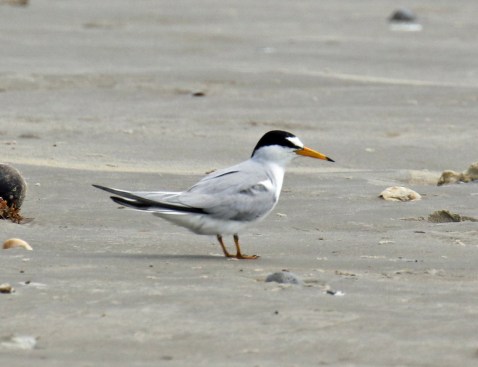
Least Tern

Least Tern B

We ended the afternoon at Rockport Beach. There and along the way we continued to find many waders, shorebirds and terns.  There were large numbers of Snowy, Cattle and Great Egrets.  More impressive were the numbers of Tricolored Herons and Reddish Egrets including ones of both the white and dark Morphs.

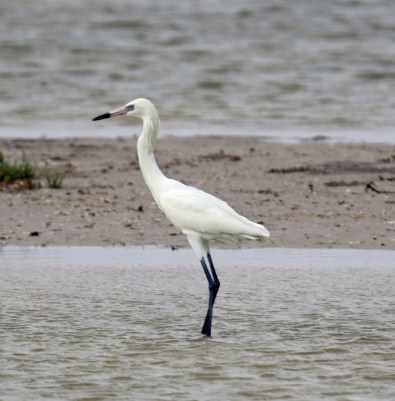
Reddish Egret – White Morph

Reddish Egret White Morph


Although I was very happy to get the Gull Billed Tern photos, it had seemed just like a “regular” day with nothing extraordinary, yet by the end of the day we had seen 105 species for the trip – and barely any passerines and not very many ducks.  Texas is a very birdy place!  The next day was supposed to be our boat trip to see the Whooping Cranes, but the trip was canceled because of high winds.  Each passed day decreased the odds of seeing the Cranes as some had already left for their breeding grounds at Wood Buffalo National Park in Canada.  I had been down this “late” road before.  No panic but a bit of concern.

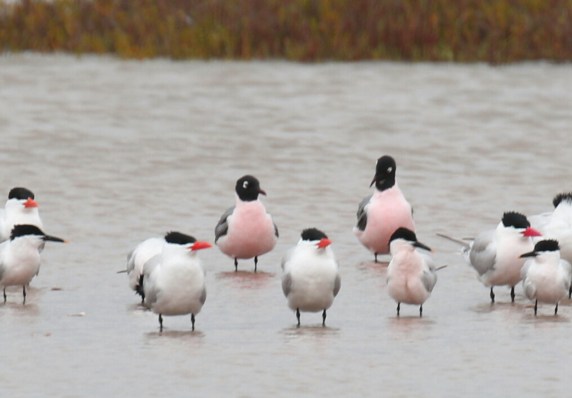
Plan B the next morning took us first back to Rockport and then to Goose Island and Aransas National Wildlife Reserve.  After lunch we returned to Goose Island and then to Cavassos Creek in Aransas County.  It indeed was very windy and it was clear that a boat trip would have been miserable if even possible.  Many of the birds were a repeat of the day before but we picked up several passerines, lots of Franklin’s Gulls and due to Barry’s keen eyes a Wilson’s Phalarope among many shore birds in a grassy field.  It was particularly cool to see the pink tinge on the bellies of the Franklin’s Gulls – something I had never noted before.

Pink Bellied Franklin’s Gulls

Pink Franklin's Gull

There was some bad news and some good news.  The bad news was that perhaps due to high water levels and heavy winds we could not find any Seaside Sparrows at a “go to spot”.  This was a much wanted ABA Photo species.  The good news was that although the views were at quite a distance, we found two groups of three Whooping Cranes at Aransas.  It would qualify as a new ABA Life bird and I had a poor “record photo”.  But at least we knew there were cranes around and the weather looked very good for the rescheduled boat ride the next day.   It took several tries and again the birds were far off, but Barry finally found a Boat Tailed Grackle to end the day.  We probably saw many thousand Great Tailed Grackles during the tour, but this was the only Boat Tailed seen.  Our tour list was now at 126 species.

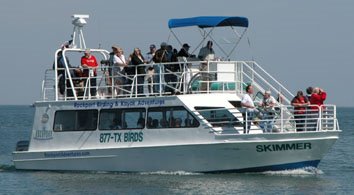
The weather was indeed good the following morning and we were first in line to board the MV Skimmer at the Rockport Harbor for our trip to see Whooping Cranes.  Aransas Bay is amazingly shallow – very different from the Pelagic Boat trips to very deep water out of Westport that I am accustomed to.  We had great views of nesting Purple Martins before we arrived at the dock and of course the omnipresent Great Tailed Grackles and Laughing Gulls surrounded us before the departure.

The Sunrise Greeting Us at the Dock

Sunrise

The MV Skimmer

MV Skimmer

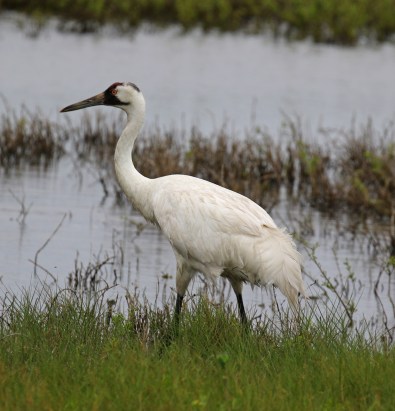
The boat trip was a great success.  Most importantly we saw 22 Whooping Cranes often relatively quite close for decent photos.  Added to the 6 we had seen the day before, our total of 28 represented about 7% of the world’s wild population.  Mostly they were feeding in small groups looking for their favorite meal – Blue Crabs.  The prized photos are of a Crane with crab in bill.  I settled – happily – for them hunting in the shallow water.  Now I had finally seen and photographed the two iconic conservation success stories in American Birding adding the Whooping Cranes to the California Condors I watched at Big Sur last year.

Whooping Cranes

Whooping Crane4

Whooping Crane5

Whooping Crane Head

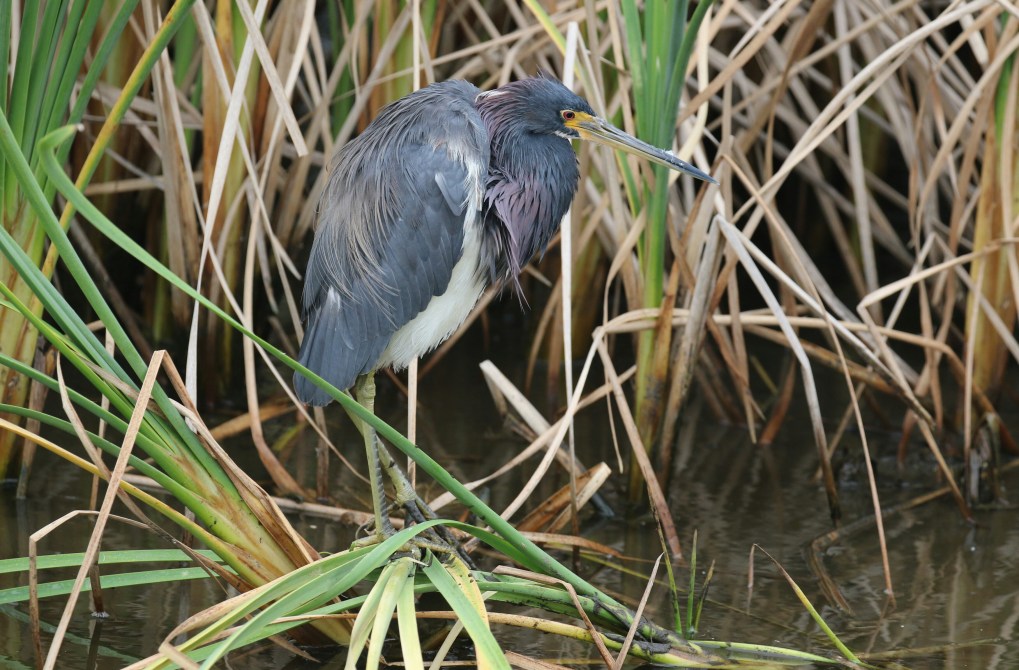
There were other great birds as well especially the waders as we saw many Great, Cattle and Snowy Egrets, White and White Faced Ibis, Roseate Spoonbills, Little Blue, Great Blue, Tricolored and Black Crowned Night Herons and my favorite – displaying Reddish Egrets.  Hard to choose photos to include.  Here is a sampler.

Reddish Egret Display

Reddish Egret

Tricolored Heron

Tricolored Heron 7.jpg

Roseate Spoonbill

Roseate Spoonbillb

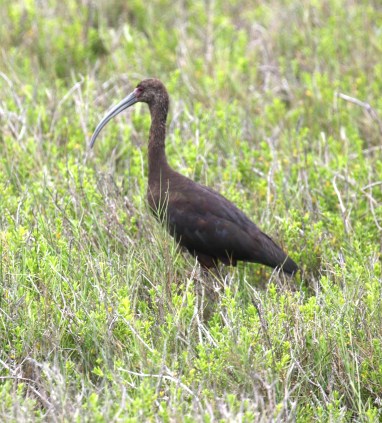
White Faced Ibis (Juvenile)

White Faced Ibis

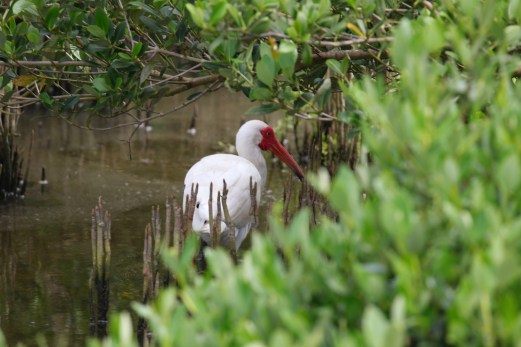
White Ibis


White Ibis

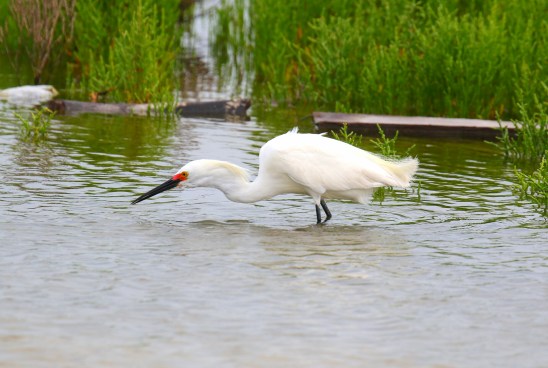
Snowy Egret

Snowy Egret

There were 14 shorebird species (including our only American Oystercatcher of the trip), 5 duck species (including our only Redhead), both Neotropic and Double Crested Cormorants and a few others.  Fifty-two species in all.  After this trip our tour had 132 species.  I was very pleased to have seen all of the birds but of course especially the majestic Whooping Cranes.

There was a major disappointment though.  The keen eyes (and sixth sense?) of our leader Barry Zimmer found a single Seaside Sparrow in some grass next to the water.  Despite yeoman efforts by him and Jeff Poulin, one of the tour members who was a great spotter with very sharp eyes, I just could not get on the bird.  I was very down about this – not just missing a bird I much wanted to see and of which I “needed” a photograph – but moreso the recognition yet again at just how poor I am at finding birds in challenging backgrounds.  My eyesight even after surgery is not sharp.  When I bird on my own, it may take a long time, but I generally can dig out the birds – eventually – but it is hard.  Often especially in a group with directions that are unclear or not workable with my eyesight, it just doesn’t work out.  And Barry was as good as there is at helping me and everyone get on birds – a great quality in a leader – and one that all do not have.  The Seaside Sparrow may not have been an easy spot, but I felt bad missing it…a feeling that was overcome with the overall wonderful quality of this boat trip.

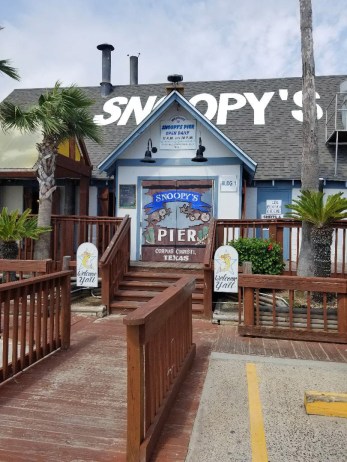
After another great and too large seafood lunch at a very fun spot named Snoopy’s,  we visited several spots in the area including another try for a Seaside Sparrow.  No luck yet again, but there was a great consolation prize – a Nelson’s Sparrow – very rare at this time and place.  My photo was good enough to support the ID and Ebird report but embarrassing to include here so I am substituting a photo of one seen at the Tijuana Estuary in California in December – a great find there as well.  I have a trip to North Carolina in June – maybe I will finally photograph the Seaside Sparrow then.  Certainly going to give it my best.

Snoopy’s – This Is a Good Area for Seafood

Snoopy's

Nelson’s Sparrow (from California – not the one seen in Texas)

Nelson's Sparrow 2

We moved on to our next birding area – more inland – and fit in some pre-dinner birding in Sarita, Texas.  Along the way we had two treats – a vacant lot filled with spectacular wildflowers and my first photo opportunity for a photo of a White Tailed Hawk – not a great photo and there would be many more sightings later, but it was an ABA First and I was very pleased to get it.  I will include the better photo in a later blog post.

Wildflowers

Wildflowers

On County Road 12 we came across a field with more than two dozen Upland Sandpipers.  These birds really appeal to me.  I saw my first one at the Dallas Airport in April 2013 and then a super lucky view of a flyover one at Ocean Shores in Washington in September later that year – an extreme rarity there – one of only a few state records.  In 2016 I got my first photo of one in Maine.  I was able to get a decent photo of one this time as well.

Upland Sandpiper

Upland Sandpiper

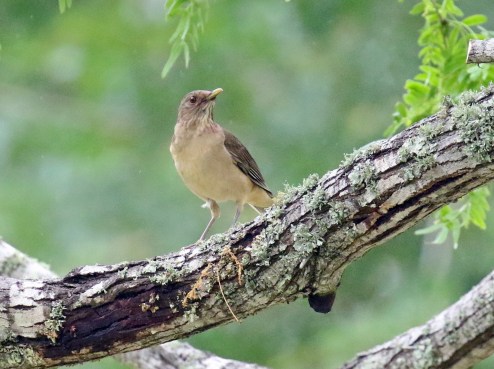
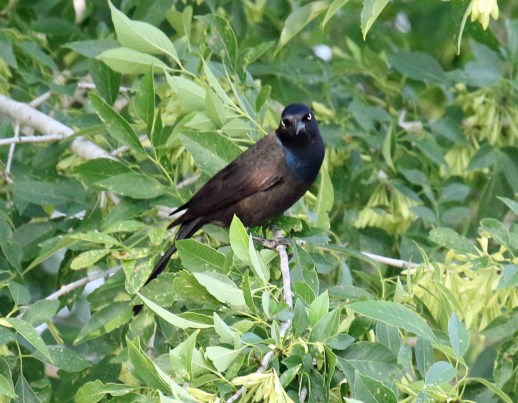
A much “rarer” bird was found on La Parra Avenue.  Eagle eyed Barry spied what appeared to be a Common Grackle which flew into a tree.  I got a great photo and then we found a second one in a ditch a few hundred yards away.  This is one of those disjointed experiences in birding.  One would think that a bird named “Common” Grackle would be just that – common.  And it is – elsewhere.  In fact in many places, it could be called the “Abundant Grackle”.  But this was only the second record of Common Grackle in Kenedy County.  Guess who had the first – Barry Zimmer on the King Ranch last year.  In this same area, we also had the tour’s first Clay Colored Thrush a bird that was quite rare until fairly recently.  It now is showing up regularly in a number of locations.

Clay Colored Thrush

Clay Colored Thrush1.

Common Grackle – Second Kenedy County Record 

Common Grackle1

A day birding can be judged in many ways – the beauty of the place, the quality of the people we are with or run into, the number of birds seen and/or their quality.  This had been an excellent day on all accounts.  Victor Emmanuel had returned to other responsibilities and we had been joined by Carlos Sanchez as our “other” guide.  Carlos was a great spotter and despite his young age has an immense knowledge of birds from all over the world – and many stories to go with them.  He was a terrific addition to the tour.  I personally do not count the scenery of South Texas as being very appealing, but being on the water is always special and the birds sure love it.  It was the birds that made this day so good.  Just under 100 species were seen this day, bringing the tour count so far to 140 so yes mostly repetition – but oh the quality – great looks at many seen previously – but the earlier looks at the Whooping Cranes became completely irrelevant with our wonderful experience from the boat and then the new ones including White Tailed Hawk, Clay Colored Thrush, Nelson’s Sparrow, Common Grackle, Hooded Oriole and Harris’s Hawk.

A wonderful day in South Texas and the next day we would be visiting the famous King Ranch with a chance at some very special birds.  But that is another story – one that will start my next blog post.

Really Deep Into the Sagebrush

Three weeks earlier Ann Marie Wood, Frank Caruso and I had joined Deb Essman in Ellensburg for our first Sagebrush birding of the (See year. https://wordpress.com/post/ blairbirding.wordpress.com/20309) ,  That had resulted in our first Mountain Bluebirds, Say’s Phoebes and Sagebrush Sparrows of the year.  Deb invited us back later in the month to load up on her seriously off road capable jeep to go deep into the sage in one of her favorite places – relatively unvisited areas of Gingko State Park and into the Whiskey Dick Wildlife area.  Thursday March 28th was the day.

Before meeting up with Deb, we stopped at a marshy area on Parke Creek road where we heard but could see a Yellow Headed Blackbird.  What we did see very well was a very noisy, showy and photo-friendly Wilson’s Snipe.

Wilson’s Snipe

Wilson's Snipe

We got to Deb’s, loaded into the jeep and said goodbye to husband Bill.  We headed for Sagebrush Country.  Along Vantage Highway, we found some more Mountain Bluebirds and our first Sage Thrasher of the year – a target bird as they had just recently arrived to their breeding ground.  We also had a fleeting look of another FOY – a Vesper Sparrow.  Seen in flight off some sagebrush, it could be identified by its blandness, white on the outer edges of its tail from the top and the eye ring which Deb glimpsed.  Still a little early for them, it was the only one on the trip.  Should be easy in another week or two.

Sage Thrasher

Sage Thrasher

Our target area was accessed through a locked gate at the first road just off Recreation Drive – an area where Black Throated Sparrows had been seen for a few years until 2014.  It may well be my favorite sparrow and I sure hope they return.  We were now in new territory for all of us except Deb who knows every road within miles – including many that sure do not look much like roads and which your car and mine would not be able to handle.  We eventually did meet another group – researchers from Western Washington University, but otherwise we were completely alone.  It was beautiful and it was glorious.

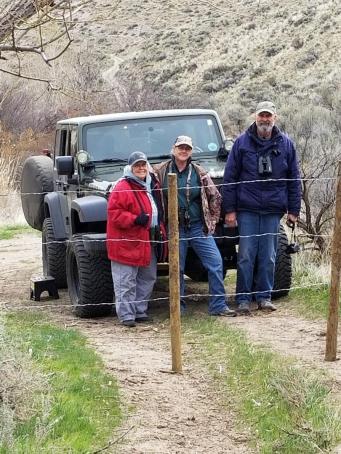
Ann Marie, Deb and Frank and Our Birdmobile

The Gang

This is habitat that is not crawling with birds at any time and it was generally not real birdy for us.  In another two or three weeks there will be more, but one of the fun parts was not knowing just when something might show up.  In the first few miles, the only species we had were Horned Lark, Western Meadowlark, American Raven, American Robin and Sagebrush Sparrow.  We had seen the latter on our first trip out with Deb.  They are always great to see, but Deb promised us many more ahead.

Horned Lark

Horned Lark

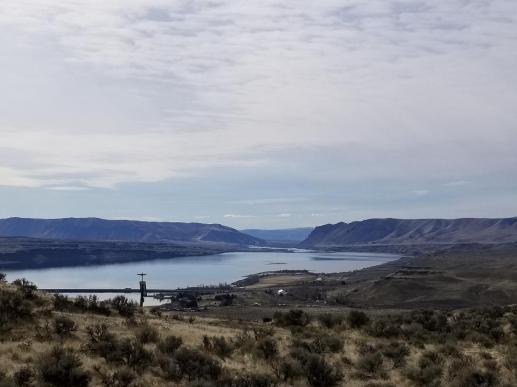
We gained altitude and at many points in our twisting and turning travel, we could see either south or east across the Columbia to familiar places but only from ground level when there.  The new perspective was great.  One great view was down the Columbia to Wanapum State Park and Wanapum Dam.

Looking South Down the Columbia

View of Wanapum

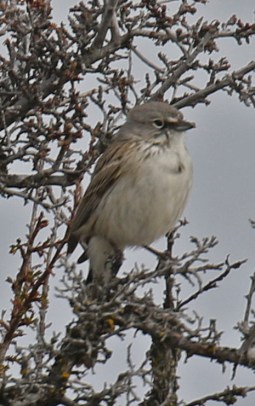
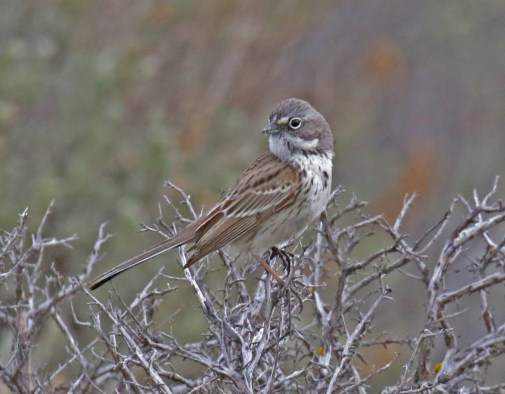
As we continued along as Deb had promised we found lots of Sagebrush Sparrows.  Some were calling and some were singing.  Pictures were easy.  All told we probably saw a dozen of these guys – almost as many as I had seen in Washington in all my birding in years past.

Sagebrush Sparrows

Sagebrush Sparrow3

Sagebrush SparrowV


It was barely visible sitting on its nest and buried in thick brush, but a highlight was a Long Eared Owl.  Deb had discovered the nest and really wanted to share it with us.  She was relieved when we could at least make out its “ear” tufts.  Our trip ended (before we turned around an d retraced our way back to he gate) maybe 8 miles in where Whiskey Dick Creek runs into a wet area at a cove on the Columbia.  We (not Deb) were surprised to hear at least 5 and maybe as many as 7 Virginia Rails here,  We also had a Rock Wren and a Say’s Phoebe.  Our best bird was a FOY Loggerhead Shrike.  Deb had seen it the previous week but we heard it only several times and could not coax it in.

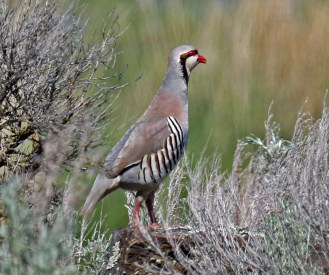
Frank and Ann Marie had another FOY bird that was old hat for Deb and that I had seen in larger than ever before numbers in the Okanogan in January.  We were treated to two different observations of Chukars,  The first two flew off – actually exploded off and disappeared.  The third came later and after a short flight we could just make it out on the ground.  This is perfect habitat for them.  Deb had promised – well sort of – so again she delivered  – and was relieved.

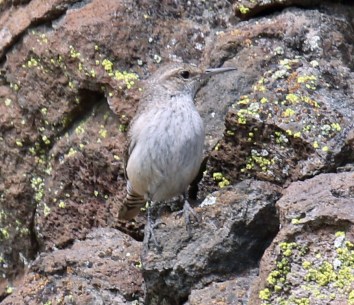
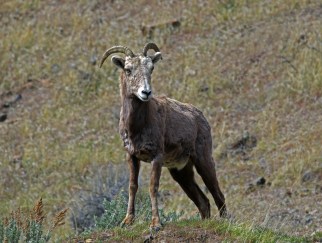
When we returned to Recreation Drive we headed down to the boat launch.  As in our previous visit we had a Say’s Phoebe and a very photogenic Rock Wren.  We ran into Lonie Somers and his friend who was up from Alabama.  It was interesting to compare notes as we had birded some of the same areas (with the exception of the heavy duty 4WD places.  They had seen Brewer’s Sparrows – one of our targets that we failed to find but not a Sage Thrasher.  We met another interesting group here – a group of Bighorn Sheep – up close and not concerned by our presence.

Rock Wren

Rock Wren1

Bighorn Sheep

Bighorn1  Bighorn

We birded our way back to Deb’s.  The wind had picked up and I think that probably kept the birds out of view hunkered down in the stage.  Deb had to prepare for a class, so it was hugs all around and goodbye.  It had been about as fun as a day could be – familiar territory in a very different way.  Deb knows so much about that area – plants, animals and despite what she says – birds.  In Whiskey Dick we had seen a small group of Mule Deer.  Deb gave some lessons from Deer 101 and we learned that Black Tail Deer and Mule Deer are the same species – different subspecies – while White Tailed Deer is a different species altogether.  Now the trick is to remember this.

Frank, Ann Marie and I continued birding as we made our way west.  We picked up a FOY Osprey for Frank on Canyon Road and then looked for Bluebirds and Sage birds on Umptanum and Durr Roads.  As I said, the wind really blew and we did not find any sage birds but we had lots of both Mountain and Western Bluebirds on Umtanum Road.  I had seen Westerns in January but this was a FOY for Frank and Ann Marie.

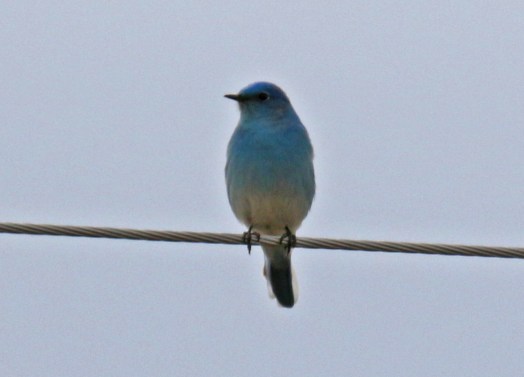
Mountain Bluebird

Mountain Bluebird

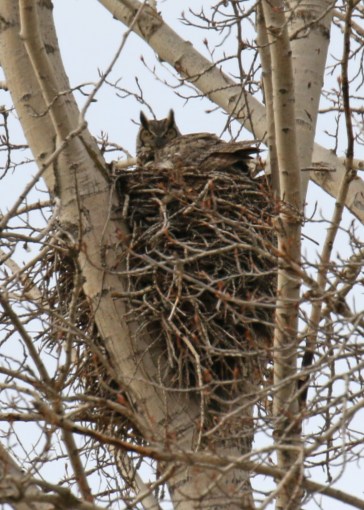
We also saw the Great Horned Owl on its nest on Umtanum Road.  Earlier we had seen another Great Horned Owl in its nest near Deb’s house and later we saw a third one maybe 10 miles west.

Great Horned Owls on Nests

Great Horned Owl on Nest

Great Horned Owl2

We completely struck out at the Railroad Ponds in South Cle Elum – where we at least hoped to add some species for the day trip.  But even though we probably saw maybe seventy species for the day, this was not a day to be measured with numbers.  Yes we all had new birds for the year which was great, but the success of this day was much more in the great times with great people in great places.  Great birds were a bonus.

Tweener March

Ah March – what kind of month are you?  An old saying is that it comes in like a lion and goes out like a lamb.  March 21st is officially the first day of Spring.  For birds, March is the month that birds are beginning to be on the move – well sort of.  At least up here in the Pacific Northwest, there are not a lot of birds that have reached us yet, but there are some early migrants that have made it even by early March and more and more arrive as the month progresses.  I think of it as a Tweener Month.  It is between February when there is definitely not much going on and April when things will speed up dramatically.  And for me it was also between my trips to Arizona and Southern California in February and the first week in March focused on targeted ABA birds and my upcoming trip to South Texas in April when that focus returns.

There were some chases in Washington in March 2018.  After my blitz in January, I had added only a few new Washington birds in February.  I would be gone in April, so after my return from Southern California, that was somewhat of a goal, but mostly it was a good time for the social aspects of birding – out in the field with friends and looking for new and or favorite birds in the state.  I have already written about the first trip into the Sagebrush in early March with Deb Essman, Frank Caruso and Ann Marie Wood which gave us our first Say’s Phoebe, Mountain Bluebird and Sagebrush Sparrows of the year.  These are among the earliest of our returning migrants.

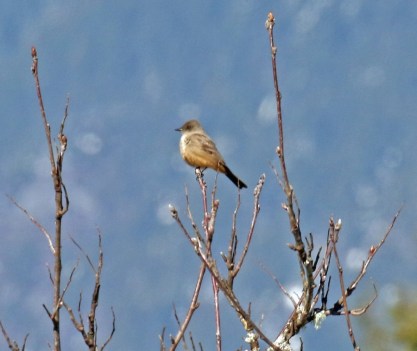
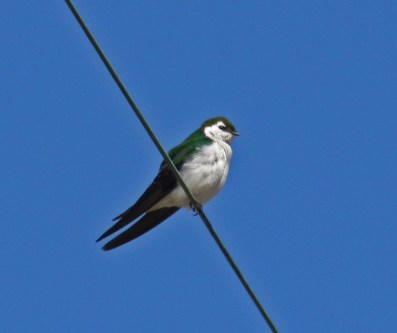
The following week, a report of two of those birds, Mountain Bluebirds and a Say’s Phoebe in our home Snohomish County spurred a visit to Darrington with Ann Marie.  We quickly found the Phoebe.  The Bluebirds took a bit longer but were found, photographed and enjoyed.  We also had stellar views of Violet Green Swallows – just returned to our area.

Say’s Phoebe in Darrington

Say's Darrington

Mountain Bluebird in Darrington

Mountain Bluebird Darrington

Violet Green Swallow

VG Swallow Darrington

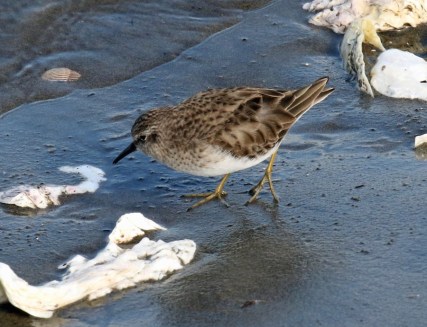
The first pelagic trip of the year had been in early February – just a couple of days too late to be included in my January blitz – unfortunate because it would have added a half dozen or more species to that “Big Month”.  Another trip was set for March 17 with a decent chance to see Parakeet Auklets – very rare in Washington waters.  I had seen them only once, so I decided to go.  On the way to the coast, I saw my first Rufous Hummingbird for 2018 at a feeder in Olympia.  There was nothing exciting at my usual pre-pelagic stops at Brady Loop, the Hoquiam STP, the beach south of Westport and Tokeland.  Some very active Least Sandpipers at the latter provided my favorite photos of the day.  No trouble seeing the yellow leg field mark.

Least Sandpiper – Tokeland – March 16

Least Sandpiper Tokeland

The pelagic trip the next day did not produce the hoped for Parakeet Auklet but was fun and productive with a couple of very nice species as well as many “old favorites’.  I knew many of the fellow birders and that is always a bonus.  I had taken the wrong SD Card for my camera and it was filled almost immediately.  The rest of the day was a battle between taking new pictures and deleting old one.  On several occasions, I missed the best photo ops because I got behind in that race.

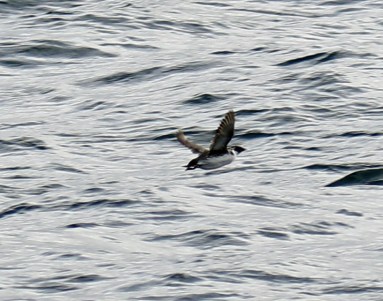
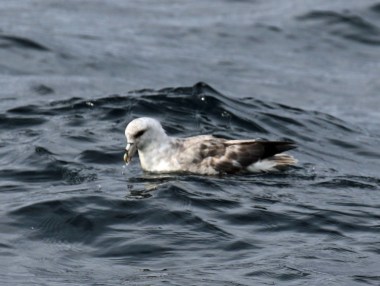
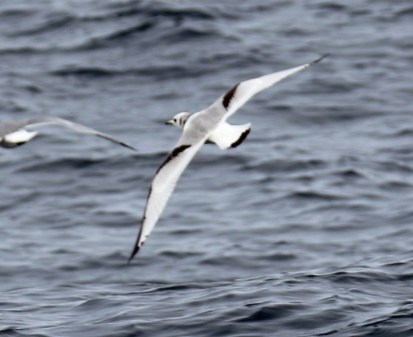
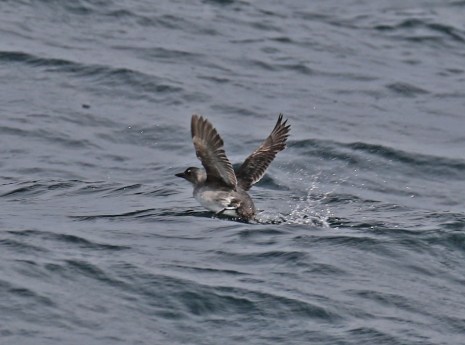
Our two best birds were a Manx Shearwater and a Laysan Albatross.  The former was distant and impossible to get a photo and the latter came in close and was one of the victims of my full card problem.  My photos were good enough for ID purposes but little else.  Fortunately I have good photos of both in Washington from other trips.  So the ones I choose to include here are of other species seen – Black Legged Kittiwake, Ancient Murrelet, Northern Fulmar (light phase) and Cassin’s Auklet.  Other new year birds were Sooty Shearwater, Black Footed Albatross, Short Tailed Shearwater (a poor quick look only) and a Pomarine Jaeger.  Altogether there were 9 new year birds.  Would have been nice in January.

Ancient Murrelet

Ancient Murrelet

Northern Fulmar (light phase)

Northern Fulmar Light Phase

Black Legged Kittiwake

BLKICassin’s Auklet

Cassin's Auklet

A few days later I made my first real chase of the month.  Bruce Paige had relocated the Eurasian Skylark that had been seen at Hobuck Beach Neah Bay last year.  It was first found by Ryan Merrill and the Waggoners in May 2017 – the first Washington record in almost 20 years.   It was found there again on November 7, 2017 the day after I had been there to see the mega-rarity Zone Tailed Hawk.  I wish I had stayed over as the Skylark is one of my non-photographed but previously seen Washington species.  A tiny introduced but viable population of Skylarks existed on San Juan Island into the 1990’s but then died out.  I had seen them in the 1970’s before I was taking photographs.  I had not been able to chase it in 2017 but decided to give it my best this time.  No luck (and others that day had none either although it was found again several days later.)

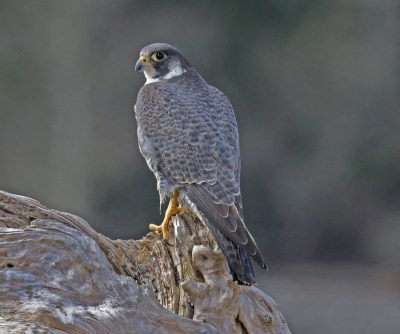
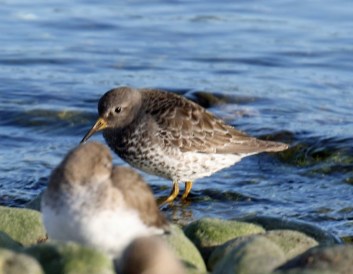
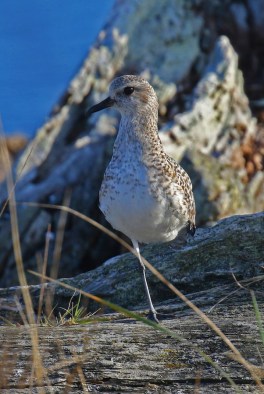
My consolation prize at Neah Bay was a close up of a lovely (is there any other kind?) Peregrine Falcon.  Then on the way home I stopped at Fort Flagler and found the Red Knot that I had missed on two occasions earlier in the year.  I had first found an unexpected Rock Sandpiper.  I got a photo of it and a picture I really like of a Black Bellied Plover still in full basic plumage.  The Knot was buried in a large group of Sanderlings, Plovers and Dunlin.  Just as I was about to take what would have been a poor but ID quality photo, two young kids charged the mass of birds on the spit and the birds were gone.  No adults were visible, so I decided to forego the lecture which most likely would have come out as a rant.

Peregrine Falcon – Hobuck Beach

Peregrine Hobuck

Rock Sandpiper – Fort Flagler

Rock Sandpiper Fort Flagler

Black Bellied Plover – Fort Flagler

BBPL Fort Flagler

I hope the Skylark stays or returns and I can give it another go after I return from Texas.  Frustrating…

The next week, I joined Steve Pink and David Poortinga visiting Sultan Basin Road in Snohomish County.  The main quest was a Northern Pygmy Owl.  I had a crappy brief view of one in Walla Walla County in January.  Steve had not seen one yet this year.  We were lucky as we heard it calling as soon as we got out of the car at our first exploratory stop.  It took a while to actually locate the bird high atop one of the conifers.  Poor light and distance together with a surprisingly small bird do not make for good photos.  I took one for the record but omit it here as hardly worth viewing and I have MANY really nice Pygmy Owl photos some of which have shown up in earlier blog posts.

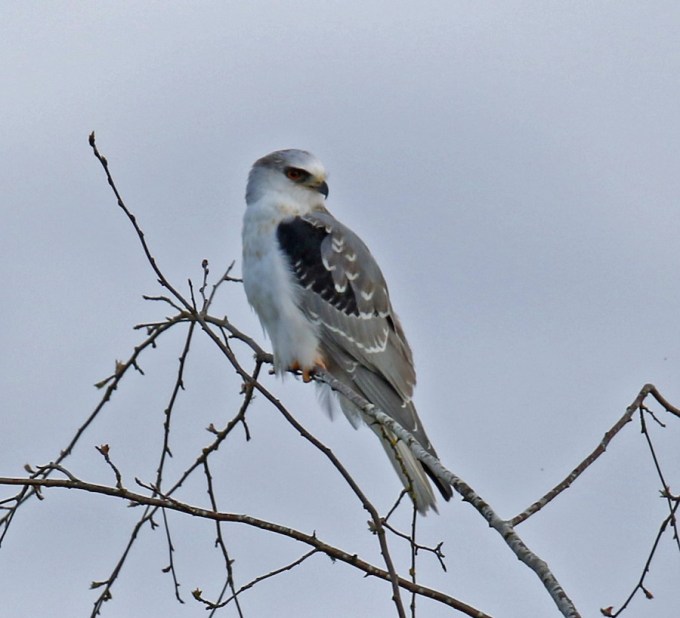
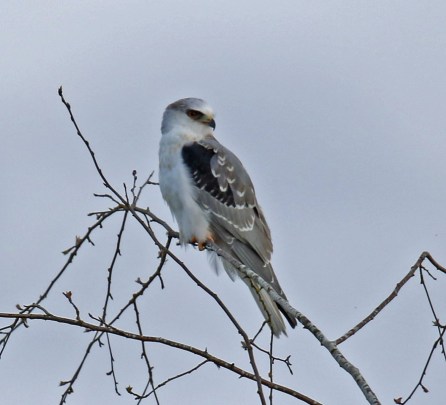
The next day two quite rare birds were found in Washington:  A White Tailed Kite at the Toledo Airport and a female Tufted Duck in the Woodland Bottoms.  I assembled the troops for a double chase the next morning.  Ann Marie, Steve, Jon Houghton and I took off Sunday morning heading for Toledo about 2 hours south.  As I have often said, when chasing a rarity the best approach often is to get there after someone else has already found the target and has it in view when you arrive.  This was the case with the Kite as there were five people in a field looking at it when we arrived.  They were from the much closer Olympia area and had gotten there early.  We had a good but distant view.  They showed us photos of it much closer when it had captured some prey quite close to where they stood.

The picture I include here is from our second visit which was later when we returned hoping for a better look after we concluded the second part of our chase further south.

White Tailed Kite – Toledo Airport

White Tailed KIte

The second leg of our journey played out the same way.  Several birders were “on” the Tufted Duck when we arrived.  It was in the middle of the river (big Columbia River) and views were just OK and photos less than OK.  But it was an easy ID as even the relatively drab female has a tiny eponymous tuft.  I took an ID photo but will spare the reader especially as again I have included really good photos of other Tufted Ducks of both sexes in other blog posts.

Steve and Ann Marie had not seen the Snowy Egret that had taken up residence in a pond on Lower River Road in Clark County – about 35 minutes from the Tufted Duck stop, so we headed further south.  This was a good day for chases.  We had seen the Kite and the Tufted Duck within minutes of our arrival on the scene.  The “Egret” pond is not immediately visible from the parking spot at the end of River Road.  You have to walk about 50 yards.  As soon as we did, we could see the Snowy Egret (with a Great Egret).  It took maybe two minutes.

Snowy Egret

Snowy Egret

We stopped at Ridgefield Refuge on our return but failed to find the hoped for Red Shouldered Hawk.  I had seen it in January and Jon had seen it earlier this month.  Ann Marie will have to wait until next time.

My next post will be about my last Tweener trip – a return to the Sagebrush – this time the deep sagebrush as Frank, Ann Marie and I cashed in our rain check with Deb Essman for a serious jeep trek into the area north of Recreation Road in Gingko State Park and into the Whiskey Dick Wildlife Area.  Then silence for a while hoping to return in mid April with big tales from Texas.

Into the Sagebrush

While I was in Southern California chasing Boobies, Pipits and Bell’s Sparrows, I read reports from back in Washington that some of the species found in our sagebrush habitat were returning and being reported.  Foremost among them was the Sagebrush Sparrow, the species that was split along with the Bell’s Sparrow from what had been known as the Sage Sparrow.  With the Bell’s Sparrow identification fresh in mind, I wanted to see some Sagebrush Sparrows for comparison.

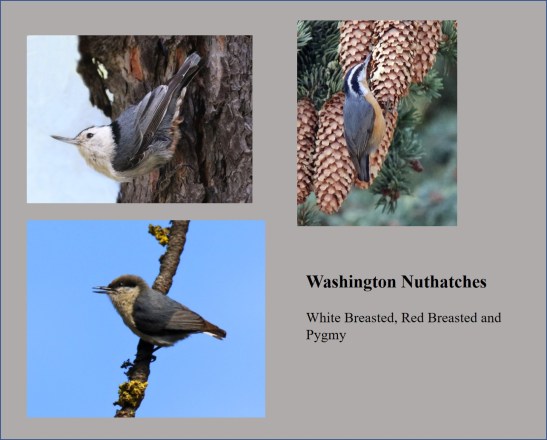
Time for a field trip.  Frank Caruso, Ann Marie and I set off to meet Deb Essman in Ellensburg after a stop in Cle Elum along the way.  It was not real birdy at some of our stops but we had a cool highlight of seeing a Pygmy Nuthatch, a White Breasted Nuthatch and a Red Breasted Nuthatch all in the same tree.  Would have preferred a White Headed Woodpecker – but not bad as a consolation.

Washington Nuthatches

Washington Nuthatches

Before heading to the Sage Steppe area, we checked out some birdy spots near Deb’s home, starting with a shed across the street where we found a rather intense Great Horned Owl.

Great Horned Owl

Great Horned Owl

About a mile away Deb showed us a pond where two almost pure white Canada Geese were hanging with regular Canada Geese and a number of ducks.  They were very close to being wholly albino with pink eyes, pink feet and pink bills.  The only coloring was a hint of of beige on their necks.  So I guess they are leucistic and not albino but something we had not seen before.  I also found another Great Horned Owl roosting just before the pond.

Highly Leucistic/Albino Canada Geese

Albino Geese

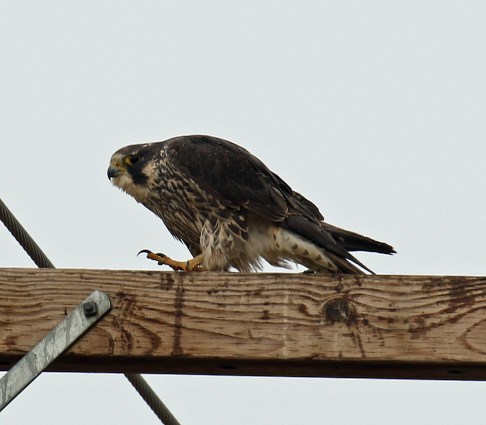
We failed to find a Blue Jay that had been reported in the area but Deb had promised us a Peregrine Falcon and she kept her word as we found a young Peregrine near a feedlot that had lots of doves, sparrows and blackbirds to keep it well fed.

Peregrine Falcon

Peregrine Falcon

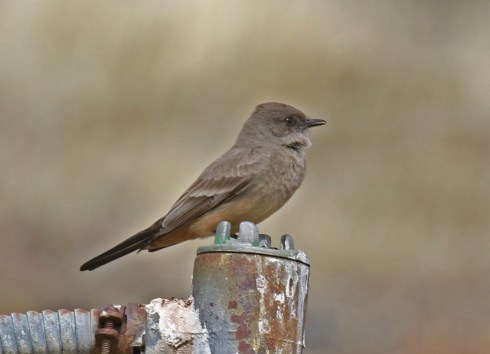
Now we were off to the Sage Steppe area along the Vantage Highway and into Gingko State Park with our first stop at the boat ramp at the end of Recreation Road.  One of our target birds was a Say’s Phoebe.  A few had been reported over the last two months elsewhere in Eastern Washington and this month some had shown up at Gingko.  We found our first one coming into the visitor center parking area and then right on cue, another one responded to our calls and came in and perched on its favorite spot – the tank just above the boat launch.

Say’s Phoebe

Say's Phoebe

This is also a great spot for Rock Wren.  Frank’s great ears picked up a partial call and Deb spotted it.  With some encouragement, it came in for great views and photo ops.

Rock Wren

Rock Wren

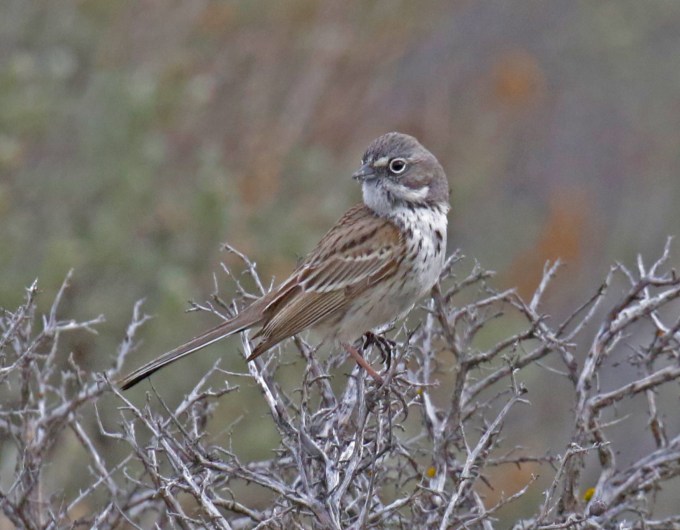
We then worked our way west onto the Vantage Highway searching for our main quarry the Sagebrush Sparrow.  A couple of miles up the road, I saw a sparrow fly across the road and pulled over.  Frank picked up a faint call and I used play back to bring the bird to us.  It was a Sagebrush Sparrow and it was very protective of its territory giving us many good looks and a full repertory of calls.  We heard one or two more in the area.  Later we found several more at other stops further west.

Sagebrush Sparrow

Sagebrush Sparrow6

Sagebrush Sparrow

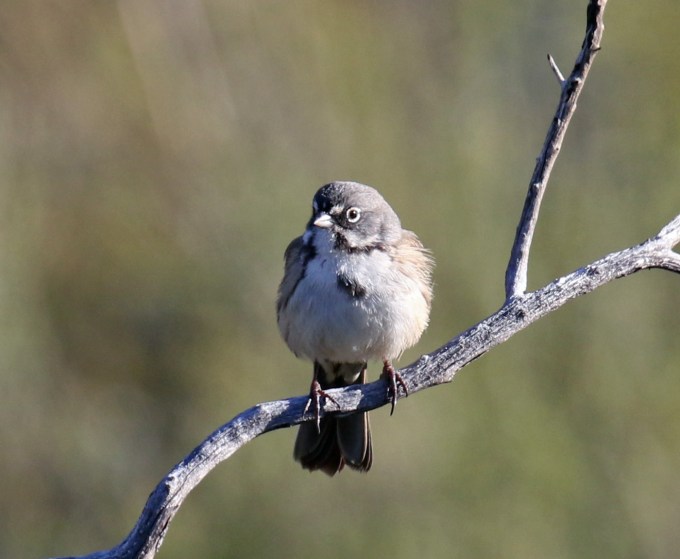
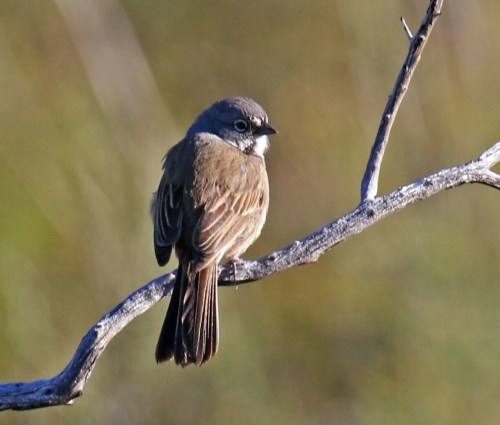
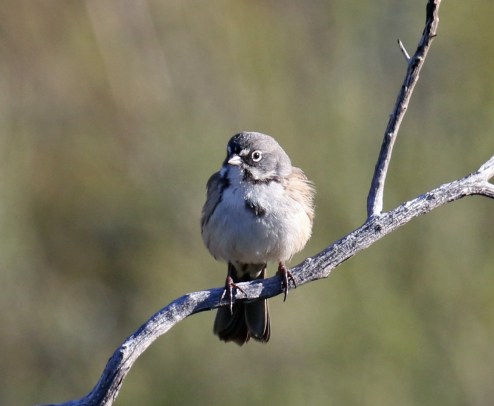
I was very pleased to be able to get great looks and photos that made it very easy to note the differences between the Sagebrush Sparrow and the Bell’s Sparrow.  The former has clear streaking on its back and a relatively light black malar stripe while there are no streaks on the back of a Bell’s Sparrow and the stripe is darker.

Bell’s Sparrow (from the previous blog – found in San Diego County)

Bell's Sparrow6

Bell's Sparrow

Note the differences in this compilation/comparison.

Bell's vs Sagebrush Sparrows

A bit further west we found two Mountain Bluebirds perched on a wire thus completing a successful search for all of the species we were seeking.  We tried a favorite spot in the sage hoping for some early Sage Thrashers or Vesper Sparrows but still too early.  Guess we will have to return.

Mountain Bluebird

Mountain Bluebird1

There were two more treats as we continued back to Ellensburg – a beautiful Prairie Falcon – first posed on a power pole and then flying off at great speed and interacting with a Northern Harrier and then our first and only Shrike of the trip.  We hoped it might be an early Loggerhead Shrike but just a Northern – a very noisy one which made it extra fun to watch.

We had “only” fifty species for the day, which was not bad but the quality was great and more importantly we had a lot of fun together.

Finally a Bell’s Sparrow Photo

In 2013, the American Ornithological Union (AOU) split “Sage Sparrow” into two distinct species – the Sagebrush Sparrow and Bell’s Sparrow.  Then the headaches began as it can be a challenge trying to tell the two species apart in the field.  It does not help that especially the Bell’s Sparrow can be difficult to get into the open in its sage/chaparral habitat where it tends to remain on the ground.  Thus for photos, birds singing on open perches are helpful and almost essential.  Per my previous blog, Black Canyon Road just east and north of Ramona seemed the place to go.  I had excellent directions from someone who had found singing Bell’s Sparrows there a week earlier.  However, on my first visit, I found no birds singing, none in the open and maybe one buried in deep foliage.  So – no photos.

That first visit had been for two hours starting at 10:00 a.m.  I searched diligently and tried playback.  Just no results.  This time I hit the first designated target zone around 7:30 a.m.  What a difference.  I almost immediately heard a Bell’s Sparrow calling uphill.  It took a while to find it but there it was in a tall Century Plant.  I got my first photo which I include here but there were to be much better ones to come.

Bell’s Sparrow (First Photo)

First Bell's Sparrow

On my earlier visit there had been a few birds around including an unexpected Rufous Crowned Sparrow, but today there were many more and I had Bell’s Sparrows in the open and/or singing and responding to play back at several stops.  At least 7 and maybe as many as 9 as I am not sure if some of the “singers” were then seen later.  And interestingly this did not include a stop where the previous reporter had seen 4.  I had worked so hard before (twice) without success.  This time it was easy.  A reminder that you just have to put in the time to get rewarded.

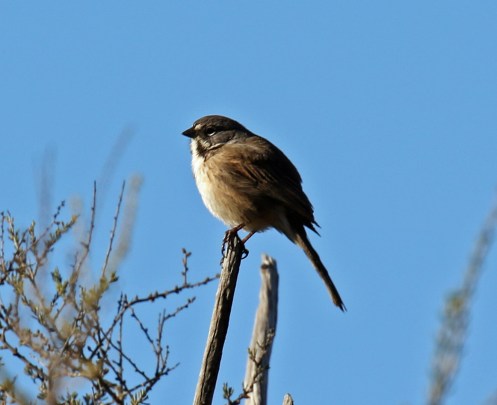
Bell’s Sparrows

Bell's Sparrow4

Bell's Sparrow6

Bell's Sparrow5

Before these observations, I was not sure that I could be 100% positive about the ID of a Bell’s vs. Sagebrush Sparrow in the field but only the former is found in this habitat and the song is distinctly different. Additionally I now was keyed in to how the back of the Sagebrush Sparrow is streaked and the Bell’s is plain (kind of the opposite of the ID Challenge yesterday between American and Red Throated Pipits) and was confident with this distinguishing field mark.  Also the malar stripe is darker in Bell’s but that is a hard comparison without seeing both.

I continued birding in the area for about two hours.  There is a wonderful riparian area another mile or so past the sparrow spots and it was great.  It probably would have been even greater if I knew the local bird songs and calls as many went unidentified.  Including the sage chaparral I had Wrentits, California Thrashers, California Scrubjays, California Quail and California Towhees.  Three woodpecker species: Nuttall’s and Acorn and also Northern Flickers.  Bewick’s, Canyon and Rock Wrens.  Also Western Bluebirds, Spotted Towhee, Hutton’s Vireo, Common Ravens, House Finches and Lesser Goldfinches.  And of course plentiful Yellow Rumped WarblersLawrence’s Goldfinches have been there in the past but not today so that target remains unhit.

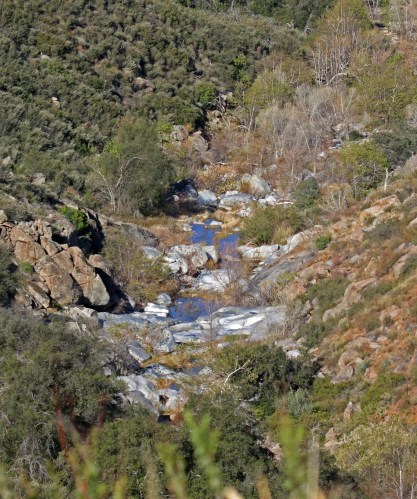
Black Canyon Road Creek

Black Canyon Road Creek

Heading back west almost back at the pavement, a White Winged Dove flew by.  Unmistakable wing pattern.  I did not know that it was rare in the area.  When I saw that it was I drove back to try for a photo but could not find it.  There were lots of Eurasian Collared and Mourning Doves around as well.  I was really pleased with the morning with the highlight of course being the Bell’s Sparrow.

In my earlier research I had noted two areas nearby that looked very interesting.  My first stop was at Dos Picos County Park and then I went to the Ramona Grasslands area around Rangeland Road.  There was nothing terribly exciting at Dos Picos, but I added Oak Titmouse for the year and White Breasted Nuthatch and Dark Eyed Junco for the trip.  There was also a pair of copulating Red Shouldered Hawks and good views of both Acorn and Nuttall’s Woodpeckers.  By the way, Red Shouldered Hawks are often quite noisy.  I can personally testify that this applies to their sex life as well.

Acorn Woodpecker

Acorn Woodpecker3

Nuttall’s Woodpecker

Nuttall's Woodpecker 2

This was yet another place where a Black Phoebe was hyper active.  At least by now I was used to the call and movement and did not turn my head asking “what was that” each time I saw or heard something.

Black Phoebe

Black Phoebe11

The Grasslands were entirely different – with many different birds – some new for the trip.  I met a young biologist who was doing a survey for a conservation group.  He pointed out a Burrowing Owl that I would never have seen without his help.  This was a new year bird.  Lots of Savannah Sparrows and lots of Mountain Bluebirds, another new year bird.  I also had Cassin’s Kingbirds, Loggerhead Shrikes, lots of Meadowlarks, a Say’s Phoebe and a pair of Ferruginous Hawks.  I did not find the Vermilion Flycatcher that had been reported there.

Mountain Bluebird

Mountain Bluebird on Post

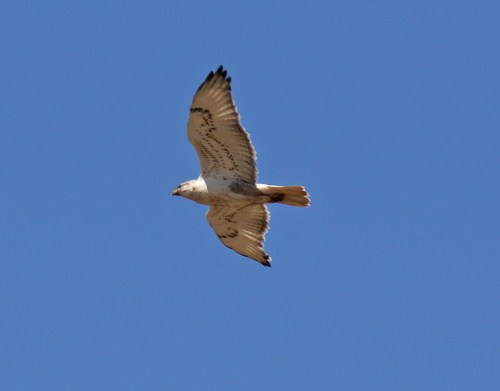
Ferruginous Hawk

Ferruginous Hawk Flight

It was only 1:00 p.m. and my flight home was not until 9:30.  Lots of time to bird but I had found all of my targets (YAY!!) and was really dragging.  If there was a chance for Lawrence’s Goldfinch I would have somehow found the energy, but that was not an option.  I considered just pulling over somewhere and taking a snooze but then opted to head to the airport and see if an earlier flight was possible without too much cost.

Ever since finding the Greater Pewee the previous morning, things had gone even better than I could have hoped for.  My good fortune continued at the airport.  A very helpful lady at the Alaska Airlines counter found me a flight that left four and a half hours earlier than my flight, got me a good seat (the last one on a full flight) and made the change for $25.00.  This was a bargain and instead of being home after 1:00 a.m. the next morning, I was home by 9:00 p.m. that night.  Best $25 I have ever spent.

So after a bad start, this had been a wonderful trip.   I had two new ABA Life Birds – the Red Throated Pipit and the Nazca Booby – with photos.  I also added ABA photos of the Greater Pewee and the Bell’s Sparrow.  All told I had 109 species for the trip and had added 26 new species for the year.  I have no goal for year totals this year, but since Ebird tracks such stuff I do pay attention.

I started my birding while I was in California way back in 1971.  It is second to my home state of Washington for number of species seen.  Not an impressive list given the number of birds seen there, but I had added 10 species to that state list as well.  By any measure this was an excellent visit.

The Booby in the Bay

The Nazca Booby is a species that until mid-November last year had been found only in the Eastern Pacific Ocean – primarily in the Galapagos Islands.  Then one showed up offshore in Southern California.  It was on my “maybe list” on my California trip in late November and early December in 2017 but it had departed a day before I got to the area.  Oh well.

But then the week after I left San Diego two of these mega rarities showed up in San Diego Bay – possibly having hitched a ride on a banana boat.  As tempting as it was, I just could not justify a return trip to where I had just been.  But the Boobies kept being seen – every day.  After my Big Month in Washington in January, I thought about a trip but only if there was a chance for some other “target birds”.  A Red Throated Pipit had been seen just south of San Diego in January and that definitely qualified as a second Lifer – justification for a trip.  BUT…then it seemed to have disappeared.  So I went to Arizona for 4 days instead.  No complaints but no Boobies either.

Then three things occurred that made it impossible for me to resist going after all.  First, seemingly out of the blue, Edmonds birding friend Ann Marie Wood made a one day trip south and got the Booby.  Second, B.C. birding friend Melissa Hafting made the same trip (coincidentally on the same day) and also got the Booby (as well as a photo of a Greater Pewee – one I needed for my ABA Photo list) and third – the Pipit was refound and being seen sporadically.  I cashed in some miles on Alaska Airlines and headed south very early on February 28.  It turned out that another birding friend, Doug Schurman from Seattle, was going to be in San Diego the same time and we coordinated renting a boat to get out close to the Booby in the Bay, the same approach used by Ann Marie and Melissa.

Since Doug could not go for the Booby until March 1st, I first headed to Black Canyon Road just east of Ramona, California – less than 30 miles east of San Diego.  The goal was to finally get an ABA first photo of a Bell’s Sparrow.  Nancy Christenson, a star birder in the area, had given superb directions on the San Diego birding listserv to three spots along that road where the sparrows were regular and she had had many with photos the previous week.  Her instructions should be the template for directions for all to use – precise down to road signs and distances within tenths of a mile.  I found all of the spots easily but alas found maybe a single Bell’s Sparrow, and as had been my experience on the only other occasion where I searched for one, I could not get it out in the open.  It was a beautiful area – very birdy but no Bell’s Sparrow photo.  Not a great start.

I birded without specific focus on the way back towards San Diego and stopped at Santee Lakes where I had finally gotten a photo of Scaly Breasted Munias last year.  A decent smattering of birds including some hide and seek Munias.  The “best” birds were a White Throated Swift and a Vaux’s Swift, both First of Year for me and the latter pretty early there.  The best photos were of a Snowy Egret and a female Wood Duck not as showy as her mate but a very striking bird.

Snowy Egret

Snowy Egret

Female Wood Duck

Wood Duck Female

My hotel for the night was in Chula Vista – not too far from the Tijuana Slough NWR so I headed there next going the long route through Coronado to check out where we would get our boat the next day – definitely a high rent district.  It was very slow at the NWR and starting to lose light.  It had not been a great day and I needed a boost.  One came in the form of a pair of Ridgway’s Rails that came out into the open in one of the channels.  I got my first ABA photo of one here last December.  These photos were MUCH better!!

Ridgway’s Rail

ridgways-rail.jpg

Ridgway's Rail7

Maybe this is what was needed to turn things around – just in time for chasing the Booby in the Bay the next day.

The Greater Pewee was being seen fairly regularly in Balboa Park.  Mel Senac, who I met last year at the Rufous Backed Robin stakeout had advised that the best time to try for it was before (;30 a.m. or in the late afternoon.  Doug could not try for the Nazca Booby until noon so I fought the morning traffic and got to Balboa Park a little after 8:00.  I had very specific instructions from Melissa – necessary as it is a very big park.  It took a while to find parking but I made it to the target area near the restrooms at the intersection of Juniper and Balboa being met by a Western Bluebird – one of many – hopefully that was an omen.

Balboa Park Bluebird

I searched every tree and tried all of the calls and songs I could find.  The place was overrun by Yellow Rumped Warblers, hyperactive Anna’s Hummingbirds and numerous California Towhees in addition to two very vocal Black Phoebes but I could not find the Pewee.  I was getting down.  Then I remembered that in addition to her description of trees and landmarks, Melissa had included very precise GPS coordinates.  What the heck.  I entered them in my phone and went to the exact spot – literally only 100 feet from where I had been.  I played the Greater Pewee’s call note and had a response.  I played again and it flew into a tree right next to me.   I had mistakenly thought I got a photo of this species in Arizona last year (where it belongs) so this was a welcome new ABA photo and just maybe my luck had turned after all.

Greater Pewee

Greater Pewee1

There was plenty of time before our boat ride and I was now batting .500 with a Pewee but not a Bell’s Sparrow.  I figured I would likely keep that average with a failed try for the Red Throated Pipit and success with the Booby.  Time to see.  I headed over to Berry Park .  The Park itself has a big grassy field and is immediately next to a school also with a big grassy play field.  The Red Throated Pipit had been reported on both but almost always only if the “flock of American Pipits” was there.  The advice was to not even bother if the flock was not present.

When I arrived it was immediately clear that there were no Pipits on the grass at the park.  Again lots of Yellow Rumped Warblers and some Western Bluebirds.  There also were some White Crowned Sparrows on the grass but nothing else.  I turned my attention to the play field (which was behind a chain link fence without any access).  Nothing at first, but then I saw one and then another and another bird in the grass.  They were Pipits.  The field was big – larger than a football field and the birds were scattered over the entire area. Would one of them be the prize?

I kept finding more and more birds – at least 24 and probably more.  The trouble was that many were quite distant and the grass was relatively thick and pipit-colored.  There were a couple of sandy areas, but the Pipits stayed in the grass.  I did not have a scope so I relied on my binoculars and relatively good light.  I was looking for a bird with streaking on the back, relatively bold streaking on the chest and pinkish legs.  One after another of the birds had plain brown, unstreaked backs.  Then one bird looked different.  It was facing me and looked somehow paler and with a more distinct facial pattern.  It was in the grass – not on the dirt so I struggled to make out its leg color.  Then it briefly turned and came a bit more in the open.  The back was STREAKED and the legs were PINKISH.  This was the Red Throated Pipit (a new ABA Bird)!!  No more than two minutes afterwards, a bell rang and kids started pouring onto the play field, one by one and then altogether, the birds left.  I had been there no more than 12 minutes before finding the target and fortunately grabbing a photo.

Red Throated Pipit

RTPI

I wish there had been more time, but I could not believe my luck.  First that it was there, second that I found it and lastly that at least the kids did not arrive until after I did.  There were also some fun moments ahead.  One of the teachers came over and we talked about the Pipit.  I was so excited I kept calling it a Sprague’s Pipit (which I had missed in Arizona) but fortunately caught the mistake.  She was only vaguely aware of its presence after having seen dozens of birders with big cameras and scopes in the Park over the past couple of months.  I showed her some photos.  Shortly thereafter a large dark falcon swept over the field.  Three boys had seen it and noting me with a camera and binoculars came over to inquire what they had seen.  It was a Peregrine Falcon.  The kids were great – really interested as I described the difference between hawks and falcons – bombers versus fighter jets.  Each then told me a favorite bird story.  Very cool!!

I then spent a few minutes birding the small park itself.  A Red Shouldered Hawk posted briefly an a light standard.  A few minutes later I saw a bird on another standard seemingly fly catching but looking as if it was throwing the bug up and catching it again and again.  It turned out to be a Cassin’s Kingbird and instead of a bug, it was a large berry (after all it was Berry Park!).  Maybe it was trying to position the berry to swallow it, but it was still working on it when I left.

Red Shouldered Hawk

Red Shouldered Hawk1

Cassin’s Kingbird with Berry

Cassin's Kingbird Tossing Berry  Cassin's Kingbird with Berry1

Planning the trip, I had figured the odds were 90% for the Bell’s Sparrow, 80% for the Greater Pewee, 95% for the Nazca Booby and 10% for the Red Throated Pipit.  I was way off on two of them and hoping I was right for the biggest prize of all.  It was close to the time to see.

First I headed to the South End of Seacoast drive where a Reddish Egret had been seen and where odds were good to find a Little Blue Heron.  I found the latter but could not locate the former.  I also swung by a roost tree near the Tijuana Slough NWR where I had seen some night herons the night before.  I had been told they were Yellow Crowned but in the poor light it was impossible to tell.  The good news was that they were now quite visible and the bad news was that they were Black Crowned Night Herons which we have in Washington and not Yellow Crowned Night Herons which we do not.

Little Blue Heron

Little Blue Heron

Black Crowned Night Heron

Black Crowned Night Heron

Now it was time to head onto Coronado and go Booby watching.  But along the way there was a surprise – an American Flamingo was foraging in the South end of the Bay.  I had heard about an American Flamingo in Imperial Beach last month.  It was originally thought to be an escapee from one of the hotels or the zoo but such was found not to be the case.  It just flew in and has stayed to the delight of many.  See the local news story. http://www.sandiegouniontribune.com/communities/south-county/sd-se-flamingo-folo-20180221-story.html.  I doubt that it is “for real” and countable.  But just in case it is, I took a photo.

American Flamingo

American Flamingo 1

I met Doug at the Marina at Loew’s Coronado Bay Resort – a very posh place.  Another birder was out with “our boat” so we waited.  When he was running quite late, we were upgraded to a larger boat, given safety and operation instructions and then headed out with one of the marina guys who would turn it over to us once he was confident we knew what we were doing.  The other birder was coming in as we rounded the marina so we waited and got word from him.  The good news is that he had seen both Boobies.  The bad news is that one had flown off and the other had left its perch on Buoy 34 – its regular hangout spot.  From the sounds of his story, we believed he may have flushed the birds.  We were a bit concerned.

Leaving the Marina

Leaving the Marina

Our fears were at least partially for naught.  There was no Booby on Buoy 34,  But thankfully there was one Nazca Booby on Buoy 36.  We don’t know where the other one went and believe me we looked everywhere.  More than 600 birders have come from all over the U.S. to see the Boobies.  They can be seen from land but only with a scope and even then at quite a distance.  The boat is definitely the way to go and this bird was seemingly unconcerned with our presence.  We circled many times and drifted within maybe 100 feet without any reaction.  Doug is a phenomenal photographer.  I take pictures.  But with this cooperative bird and great light even with a rocking boat some of my more than 250 plus photos came out ok.  A Nazca Booby – ABA Life Bird and photo. Wow!!

The Booby in the Bay – Nazca Booby

Nazca Booby7

Nazca Booby Vertical

Nasca Booby Best

Nazca Booby Headr

This had been quite a day –  three targets and three hits plus that crazy Flamingo.  It was only 1:30 – now what?  I checked out some shorebirds right in front of where I had parked at the Resort and added a pair of Short Billed Dowitchers to my trip and year list.  This is probably my biggest regret for the trip.  I had forgotten about a Thick Billed Kingbird and Scissor Tailed Flycatcher that had been reported from Poggi Creek – literally a stones throw from the hotel I had stayed in the previous night.  I should have headed there to try for these two very nice birds.  But as I said – I forgot.  Maybe it was the sleep deprivation from the very early trip down.  Instead I decided I would try again for the Bell’s Sparrows the next day.  I made a hotel reservation in Ramona and then headed to La Jolla – a beautiful and favorite spot.  I thought there might be a chance to see some Black Vented Shearwaters and Heerman’s Gulls.  I found neither but enjoyed the beautiful place and as always the close up look at nesting Brandt’s Cormorants on the cliffs just below the path.

Brandt’s Cormorant

Brandt's Cormorant2

I headed East to Ramona before traffic got too bad.  I celebrated the day’s success breaking my diet with some barbecued ribs and tried for some sleep.  For such a small town, there sure is a lot of noisy traffic heading through.  So by the next morning I was still feeling pretty tired.  I needed some good birds for an adrenaline rush.  And that story is for my next Blog Post.

After A Big Month and Arizona, Now What

Whether in my birding or in other pursuits, I seem to do best with a project tied to a target – a goal.  After the very intense full month of birding in Washington in January and then my Arizona blitz, I had no projects or goals in mind for February – or at least none related to birds.  This was to be a month of catching up and most importantly of significantly increasing efforts to lose some weight and get into better shape.

So far so good and my crazy concoctions of various fruits, power greens, yogurt, coconut milk and cottage cheese and or yogurt continue to taste good and are satisfying.  No sweets, no fats; seafood and lean turkey or chicken only – high fiber cereal and that’s about it.  The goal is to get back to my college era weight and much less body fat and more muscle tone.  Trying this at 70 is a whole lot different than doing so at 20 or even 40 or 60, but I think it will work – even if it takes longer than I would like.

And birding continues.  Looking for some of the species missed in January, being out with friends, just getting out.  On February 11th, I finally found a species that had eluded me on multiple tries in January when I found a flock of 40 American Pipits on Boe Road.  I spent more time looking for them and the Fir Island Gyrfalcon than for any other species in January.  Just finally was in the right place at the right time.  Wish even one had been found earlier.

American Pipit

American Pipit 1

A few days later Ann Marie Wood, Steve Pink  and I successfully chased the Ruddy Turnstone that Maxine Reid had found at Tulalip Bay.  They are uncommon in the winter and are most likely to be found at the Coast or perhaps on Ediz Hook in Port Angeles – very rare in Snohomish County.  I had not specifically looked for one in January although I had considered a trip to Ediz Hook.

Ruddy Turnstone

Ruddy Turnstone

A bird I had missed in January was a Ruffed Grouse.  Others had seen some in the Okanogan but I had not.  David Poortinga told me of a good spot where he had had some in January – The Beaver Lake Trailhead off the Mountain Loop Highway southeast of Darrington.  I decided to go on the spur of the moment one morning.  I should have done a better job looking at the weather.  There was quite a bit of snow on the roads and even more on the trail and it was cold.  The trail ran along the Sauk River and with snow on the ground and dusting the trees and the river running clear, it was beautiful.  Didn’t need any birds, it was great to be out.  Nobody else around – very peaceful.  Unfortunately there had been a lot of damage to and along the trail since David had been there (without any snow).  There were a number of downed trees and in several spots the bank was eroding and the trail was actually falling into the river.  I had to turn back before reaching the end of the trail – impassable and dangerous.

I found exactly three birds on the two mile hike – a Steller’s Jay, an American Dipper and a single Ruffed Grouse.  The Grouse flushed (as expected) so no photo.  As I was hiking and noting the free flowing Sauk River running clear and strong, I had thought there must be a Dipper somewhere.  Not long after seeing the Grouse and just before coming to a seriously eroded spot, I heard a bird singing seemingly from across the river.  At first I thought it might be a Pacific Wren and then I remembered that Dippers sing.  Sure enough, there it was on a rock in the middle of the stream.  I had seen one in Sequim in January but had not gotten a photo.  This one was fairly distant and it was very gray (with some snow still falling) but it was nice to get a photo – even if mediocre at best.

American Dipper – Singing

American Dipper

On the way back, I drove through the town of Darrington, hoping for some Crossbills or Redpolls or better yet for Bohemian Waxwings or a Pine Grosbeak.  I settled for a small flock of Evening Grosbeaks.  I had seen this species earlier in Walla Walla, but they are such striking birds – especially on a gray day.

One bird I had simply forgotten to look for in January was a Red Knot.  One had been seen fairly regularly at the spit at Fort Flagler.  Hoping that it was still, there David Poortinga and I went off to look for it on February 20th.  We stopped first to look for the Spotted Sandpiper that was being reported at the Shine Tidelands.  This was probably a mistake.  Not only did we not find the Spotted Sandpiper but it also meant losing 20 minutes before getting to Fort Flagler.  The problem was that the tide was going out and the chances of finding the Knot would be best at a high tide.  When we got to the spit we found lots of shorebirds – Dunlin, Black Turnstones, Sanderlings, and Black Bellied Plovers but no Knot.  But the birds began flying off just as we arrived and continued to do so while we were there.  It was as if there was some magic signal that said – time to leave as the tide hit a certain level.  We believed that we would have found the Knot if we had been there earlier.  Mixed in with the other shorebirds, we did find a couple of Western Sandpipers – first of the year for David.

Black Turnstone and Sanderling

Black Turnstone

Western Sandpiper

Western Sandpiper (2)

We had gotten a fairly late start and decided to return home early but with another stop at the Shine Tidelands hoping for better luck with the Spotted Sandpiper.  Although not an uncommon bird in the State, they are more often found in the spring and summer and most commonly near rivers and freshwater ponds.  They are quite uncommon in Jefferson County.  We searched the pebbly shore and were again unsuccessful – until just as we were heading out David said he saw a shorebird near the boat launch – an area where the Spotted Sandpiper had been reported.  He said it was a Killdeer but when I looked for it I could not see it – but did see – yep the Spotted Sandpiper.  This was the first one either of us had seen in Jefferson County.  Then the Killdeer appeared as well.

Spotted Sandpiper

Spotted Sandpiper

And just in case you are wondering after looking at the photo, in breeding plumage, the Spotted Sandpiper has very distinct spots on it breast – but none at all in non-breeding plumage like now.

Before getting back to the Kingston/Edmonds Ferry, David and I stopped at Point No Point.  Nothing rare had been reported there recently but it is always an interesting place to bird and has produced rarities over the years.  It is a particularly good place to find Bonaparte’s Gulls and sometimes there are rarer gulls like Little Gull and Franklin’s Gull as well.  Nothing rare today but it was very cool to see several hundred Bonaparte’s Gulls flying high over the water in a murmuration like Starlings.  We finally found a distant Peregrine Falcon whose presence was probably the cause of their mass movement together.

Bonaparte’s Gulls (Just a Small Portion)

Bonaparte's Gulls

We also found two pairs of Marbled Murrelets – still in their black and white winter plumage – always a nice find.  We left contemplating a return to look for the Red Knot with a better tide.

Marbled Murrelets

Marbled Murrelets

On February 22, David and I joined Ann Marie Woods and Steve Pink to again search for the Red Knot and also to look for other birds.  The projected tide was more favorable, but it had snowed the night before and we wondered about the roads and the birds.  Informed by the last visit by David and me, we first stopped again at Shine Tidelands and easily found the Spotted Sandpiper, a new county bird for both Steve and Ann Marie.  We made it down and up the hill leading to that spot in light snow – so far so good.  Off to Fort Flagler.

The tide was now more favorable – just past the actual high tide and the shorebirds were numerous and clustered on high ground on the spit which was covered with snow.  As before there were many Brant and other sea birds in the adjacent waters and many gulls and some Harlequin Ducks on the spit.  Light was great in the brilliant sunshine but it was quite cold.  We scoped the shorebirds from a distance and then methodically worked our way up the spit.

Brant

Brant

As on our previous visit, there were many Dunlin, Sanderlings and Black Bellied Plovers and we found a couple of Western Sandpipers.  This time, however, there were no Black Turnstones and instead we had a single Black Oystercatcher.

Black Bellied Plover on the Snowy Spit

Black Bellied Plover

Black Oystercatcher

Black Oystercatcher1


Black Oystercatcher Wings

We checked every shorebird and were not able to find the Red Knot – a major disappointment as it is rare in Jefferson County and would have been a new County and year bird for all.  We did find both Herring and Iceland Gulls – less uncommon than the Knot but still new birds for some.  Consolation prizes of a sort.  Moreover though, it was just fun birding with the clear skies, bright sun, snow on the ground and good birds.

We were now off to the Sequim area in Clallam County to look for some of the birds I had seen there in January but which would be new for the others.  Along the way on Highway 101 Steve spotted a Turkey Vulture soaring with its tell-tale dihedral wing position.  This was a hoped for but still surprising new year bird for me (and the others).  They usually do not come back into the Northwest until at least March, but there have been several early sightings this year.  We saw another one later in the day.

Turkey Vulture

Turkey Vulture

We headed straight to Dungeness Landing Park (The Old Oyster House) where the target was the Willet that had been seen regularly there since last year – usually in the company of Marbled Godwits – as it had been when I saw it in January.  Tide was low and there were birds spread out in all directions.  Steve spotted some Marbled Godwits in the distance and then David found the Willet.  We never saw it in flight with its distinctive black and white wing pattern but it was an easy ID as a larger plain gray shorebird with a long straight bill.

Willet (A Long Way Off)

Willet

The Bay had many ducks of several species.  There was about to be one fewer.  An adult Bald Eagle appeared on the scene – scattering the ducks from the water.  It focused on a single one in the chaos chasing it as it tried to avoid being caught.  It was a female Northern Pintail.  Then a second adult Eagle joined the hunt and after a moment or so, one of the Eagles struck the Pintail knocking it to the water.  The chase had been exciting to watch and it now got more exciting and dramatic.  Pintails are dabbling ducks, not diving ducks.  They can submerge but do so only briefly.  They feed by tilting down and grabbing food below the surface with their long necks. I expect the Eagles knew this behavior both in selecting the target initially and also in the strategy they then employed for the kill.

In the water the Pintail would submerge briefly as the Eagles took turns diving at it from above.  Each time the Pintail resurfaced, an eagle would dive at it again.  This continued at least a dozen times.  Finally the Pintail tired and remained on the surface just a bit longer.  This time one of the Eagles grabbed it with its talons and flew off.

Eagle Taking Pintail

Bald Eagle taking Pintail4

Bald eagle taking Pintail2

But the show was far from over as the second Eagle chased the first – contesting its prize.  We don’t know if this was a mated pair, siblings or two generations (even though two full adults evidenced by complete white heads and tails).

The Second Eagle in Pursuit of the First

Bald Eagles with Pintail

After a few seconds as the Eagles swerved and cartwheeled together, the capturing Eagle dropped its prize and, still alive, the Pintail fell to the water.  But it was not going to escape.  Exhausted and probably in shock and injured, it was picked up quickly by one of the Eagles (we didn’t note if it was the original captor) and again carried away.

The Second Capture

Bald Eagles with Pintail2

This time the second Eagle flew off on its own while the victor flew to a nearby piling in the water.  It called – perhaps proclaiming its conquest – and then began its meal.

Duck for Lunch

Bald Eagle Eating Pintail

We were spellbound by the episode which took place maybe 100-150 yards away.  For awhile it had appeared that the Pintail might escape – first the chase and then the capture.  The Eagles were more adept fliers than I had expected and the tactics used to tire the non-diving duck were impressive. Predator and prey – one of nature’s basic laws.  Eagles are often and rightfully seen as scavengers.  This Eagle was a supreme hunter.

Heading next to the Three Crabs area, we first made a stop at Denny Van Horn’s eclectic shop/residence.  Denny knows as much about what’s going on bird-wise in the area as anyone and is always a fun and informative visit.  He gave us good leads and directions for some of our targets and we were off.  No owls in the fields around Three Crabs but we found a photo friendly Cooper’s Hawk on a roadside fence.  Definitely the eye of a predator.

Cooper’s Hawk

Cooper's Hawk   Cooper's Hawk1

Our next target was a female Redhead (the bird kind) that had been reported in a small pond on Simdars Road.  Following Denny’s instructions we easily found the pond and sifted through the numerous ducks to add the Redhead to our day list and and a County first for everyone.

Redhead Female

Redhead Female

The last stop was at Diamond Point where some Ruddy Ducks were seen as soon as we drove by – our final species for the day.  We had done very little birding not tied to ponds or the ocean and still had 65 species.  My only new bird for the year was the Turkey Vulture which I was very pleased to see.  The Eagle vs. Pintail drama was certainly the highlight.  It was truly a beautiful day with good friends showcasing the best of the Northwest with all the water and mountains – and sunshine – in February!!

Second Efforts – Streak Backed Oriole and Sinaloa Wren


It is 113 miles from from Exit 12 – East Ruby Road and Interstate 19 to Douglas, AZ  most of it good highway.  It is another 20 miles from Douglas to the walk-in trail at the San Bernadino National Wildlife Refuge – most of it a dusty dirt road.  Google said it would take almost three hours to get there.  The Refuge is only a few miles from the Mexican Border.  We are talking remote.  We are talking desolate and in an early Arizona Birding book, it was talking – possibly dangerous.  Who in their right mind would go there?

I guess that depends on two things: How one defines “right mind”; and how badly someone wanted to have a chance to see a Streak Backed Oriole.  All of this would have been irrelevant if the Streak Backed Oriole had continued coming to the feeder in Tucson.  It hadn’t and might not again.  I wanted to see one.  I understood that after getting to the walk-in gate it was another 45 minute walk in the desert to get to the oasis where the Oriole had been seen.  There would not be time to make the drive and do the hike while there was still sunshine that day.  I decided to make the drive and at least get familiar with the entrance to the trail planning to return the next morning early for the hike itself.

The last 15 miles or so were on a very dusty road.  The only other vehicles I saw were from the Border Patrol.  Apparently this is a high activity zone for illegal immigrants and illegal activity.  It was not a physically inviting spot and the thought of a long hike – very much alone except for maybe people with whom I wanted no intersections – had me questioning my decision.  Maybe I should simply return to Tucson the next morning and hope that other Streak Backed Oriole would return.

San Bernadino NWR – The Mountains are in Mexico

San_Bernardino NWR

Douglas, Arizona is not a prosperous place.  I felt good about the birding earlier that day and thought about a celebratory steak dinner.  I found only one restaurant that was listed as a steak house.  It looked more like a saloon when I got there.  The steaks may indeed have been good, but I was already feeling quite out of my element so settled for simple Mexican fare.

I overcame my apprehensions and headed out early hoping to catch bird activity before it got hot.  Hot it wasn’t – not even 40 degrees.  On the test drive the day before, it had been about half way on the dirt drive in I saw a Border Patrol car coming towards me.  I had signaled him to stop and asked him point blank:  “Am I safe out here?”  Not fitting the stereotype in my head, he was a very nice guy and said there were birders (his word) out here often and that I was safe.  He said the last thing anyone out here for other reasons wanted was to see anybody.  They patrolled the road frequently but there would not be anyone on the trail or in the Refuge unless more birders showed up.  It was reassuring and he wished me luck.  I felt bolstered by that input this morning.  But I saw no vehicles this time.

At least the hike in was flat and on a good trail/road.  The first bird I saw was a Phainopepla.  I would see several more.  A little further in some sparrows flew into a small shrub.  They were Black Throated Sparrows – my first of this trip and one of my favorites.  They were seen for several summers on Recreation Road in Gingko State Park in Kittitas County, Washington but have been gone for a few years no.  I hope they return.

Phainopepla

Phainopepla-1

Black Throated Sparrow

Black Throated Sparrow - Copy

The description of where the Streak Backed Oriole had been found was probably helpful if you were familiar with the Refuge.  I was not and the Refuge map was almost useless and the signage minimal and also not helpful.  Except a sign at one fork in the trail indicated there was a bathroom ahead.  I was ready to go “au naturel” if needed but it was actually a well maintained restroom – much appreciated.  I continued along that trail as it led to an oasis of trees and a pond that I could see in the distance.

A Greater Roadrunner crossed the path ahead of me.  This was the third I had seen on this trip and again it just kept running along – no photo.  A little further I saw two mammals on the dirt road – the only Jackrabbits I had seen so far.  One posed nicely before running off.

Jackrabbit

Jackrabbit-1

When I made it to the trees and the water, there was bird activity.  Ring Necked Ducks, Cinnamon Teal, American Coots and a Pied Billed Grebe were on the pond.  Black Phoebes were flycatching from the reeds.  Northern Flickers, Gila and Ladderbacked Woodpeckers were in the treesMore Black Throated Sparrows were joined by a Song Sparrow, Dark Eyed Juncoes, White Crowned Sparrows and Canyon Towhees.  There were very active Ruby Crowned Kinglets, a small group of Lesser Goldfinches and some House Finches.  Would there be an Oriole?

I found a way across a small stream that took me to some grassy areas bordered by mesquite and the Cottonwoods.  I was greeted by a small herd of Javelina or Collared Peccaries.  At least 14. Two days earlier on a dirt road going to the trailhead where I got my Gilded Flicker photos, a young Javelina had come out of brush immediately next to the road and I had no time to avoid it.  It was hit but when I retraced the route, it was not on the road.  Never a good feeling.

Javelina

Javelina-1

There were few birds so I returned to the area near the pond.  I remembered some report of Sora at the pond and I got a response to some playback – Sora but no Virginia Rail.  I also found both Bewick’s and Marsh Wrens.  Then a flash of color from the trees to the brush – but it was red not yellowish-orange – a male Northern Cardinal.  I was able to get a good photo but even though it was close and I knew where it was, shortly it buried itself in the thick brush and was almost invisible – a reminder that in thickets, even the brightly colored birds can be very difficult to find.  Was the Oriole here and yet invisible?

Northern Cardinal

Northern Cardinal-1 (2)

It was barely 8:30 but already it had warmed significantly and the bird activity seemed to be dropping.  Several Yellow Rumped Warblers were flycatching and flitting between the trees, the Cinnamon Teal flew off – a few Verdin were seen.  Then another flash of color – this time yellowish-orange and not reddish.  The Oriole was up in one of the trees.  I tried to bring it in with playback but my options were limited.  Sibley does not have calls or songs for this species.  I Bird Pro does but only a single one and when I got a new phone before leaving for this trip I had forgotten to download the entire database (a multi-hour exercise).  With no internet in this area, I could only try a Bullock’s Oriole call on Sibley – hoping it was “close enough” .  It moved the Oriole closer and briefly into the open.  Good light always helps.  I had a new ABA Life Bird!!!

Streak Backed Oriole

Streak Backed Oriole1

The long dusty drive and the long hike in were worth the effort.  Part of me wished that there had been someone else there to share it with.  Another part of me preferred it this way.  Even including the Border Patrol, there was probably not another human being within 5 or even 10 miles of me.  This is often the case when I am out.  There are times in Eastern Washington when I do not see anyone for many hours and I am many miles from any towns.  Not a good thing if something bad were to happen, and I really do like birding company or even visiting with non-birders when I am out. But there are times like this one that being alone brings me closer to the birds and the natural world we share with them.  It was a very sublime moment.

The day was a success and the day was still young.  Although it would be hours before I could get back to my car and retrace steps back to civilization and other birding spots, I now had time and no agenda.  I began the hike back.  Along the way I found a bird that I had been looking for but had not yet seen –  a Black Tailed Gnatcatcher.  I had seen and photographed one in Arizona on my August trip and was surprised I had not seen one in this seemingly perfect habitat.  It was a nice way to end this visit.

Black Tailed Gnatcatcher

Black Tailed Gnatcatcher1-1 - Copy

I really had no specific plans.  My flight would leave around noon the next day.  I figured I would just head back to Tucson and figure something out on the way.  But I was feeling good and words from my friend Melissa Hafting ran through my head.  I had shared some of the trip details with her – including the unsuccessful try for the Sinaloa Wren – a real prize.  She had come back almost immediately with – it’s still there – try again.  I could take a route that would take me to the De Anza Trail again – why not?

Along the way I noticed a sign for the San Pedro House.  If I had not seen the Louisiana Waterthrush at Pena Blanca Lake, that would have been one of my stops as two had been seen there.  So too had a Green Kingfisher.  There was time, so I made the stop.  There are numerous feeders at the house and then a path to the river.  Feeders can produce great birds anywhere – but especially in Arizona.  Unfortunately here they had been taken over by dozens of White Crowned Sparrows.  I ignored the feeders and headed for the San Pedro River trail.  Along the way I had more Black Throated Sparrows and many of the other birds I had already seen on the trip.  New birds were a Sharp Shinned Hawk, a House Wren and a Gray Flycatcher.  Near the river I got a photo of a Brewer’s Sparrow – seen but not photographed at Pena Blanca and then maybe my best photo ever of a Green Tailed Towhee, my first for this trip.

Brewer’s Sparrow

Brewer's Sparrow

Green Tailed Towhee

Green Tailed Towhee-1

On the trail I met the San Pedro House morning walk group.  They were completing their walk and told me that they had just seen one of the Louisiana Waterthrushes upriver from marker 6 – good news – but also the bad news that the Green Kingfisher had not been seen that day.  I got a fleeting look at the Waterthrush and did not even look in the area where the Kingfisher had been seen earlier in the week.  It was now almost 1:30 and I still had a long ways to go.

About two hours later, I pulled once again into the parking area on Santa Gertrudis lane.  Just as before another car of birders pulled in just as I did.  They were hoping to see the Rufous Backed Robins and I am not sure they even knew of the Sinaloa Wren.  I told them I had been there two days before with a guide and that we had not found the Robins.  I told them the general area where Richard said they had been seen and that they seemed to favor the Hackberry trees.  Hopeful but not optimistic but with Melissa’s encouraging words, I headed off to look for the Wren.  The other two walked in with me for a bit and then took another trail that was more likely to produce the Robins.  As I started my search I tallied up the wrens that I seen on the trip so far.  Earlier I had seen Cactus, Rock, Canyon and Bewick’s Wrens.  This morning I had added Marsh and House Wrens.  Would seven be my lucky number – adding the best of all – a lifer Sinaloa Wren?  

By the river I met a local birder who was also looking for the Sinaloa Wren.  Even older than I am, he had brought a little folding seat and his strategy was to sit at a likely spot and hope the Wren would come to him.  We had a brief but nice visit, wished each other luck and promised to advise each other of any success.  I headed back towards the area where we had looked two days earlier and where it had last been seen.  Frankly the entire area looked good for it habitat-wise – but mostly that meant there was a lot of leaf litter and it could be buried anywhere.

All sources had said that the Sinaloa Wren had not been singing – maybe a couple of call notes – at most once or twice in the week plus that it had been seen.  Also that it had not responded to playback – or at least nobody had admitted to that.  Just as on my earlier visit, there were lots of Gila Woodpeckers, some Bridled Titmice, Verdin, Kinglets and Yellow Rumped Warblers.  But no Wrens  of any kind and except for the Woodpeckers and some Black Phoebes, it was pretty quiet.  I figured it couldn’t hurt to try some playback and went to my I Bird Pro app.  I had downloaded the Sinaloa Wren when I was here earlier so I had access to three calls/songs.  I played the chatter and “churr” notes.  No sounds but about 30 seconds later, a small brown bird came from somewhere behind me and dove into some brush a few feet ahead.  I actually felt an adrenaline hit as it was definitely a Wren and by location, behavior, response and first quick glance it was most likely the Sinaloa Wren.  I yelled “WREN” to give notice to anyone within earshot but stayed focused on it hoping for another look and a photo.

The two birders looking for the Rufous Backed Robins were close enough to hear my shout and joined me within a minute.  The local birder was too far away.  I pointed to where I had seen it fly in.  A moment later, without our seeing any movement at all, it materialized about six feet from that spot – still in the same brushy area.  We all saw it in the open for maybe 3 seconds.  It was enough time to see the supercilium, brown back and mostly brown undersides and most importantly we could clearly see the streaking on the neck that confirmed the identification.  It flew across the trail and landed in some leaf littered brush.  It buried itself again and at least this time I was able to get my camera on the spot where it had disappeared.  I clicked away hoping that one shot would capture – something.  In another 10 seconds it flew off and disappeared.

The whole area was dark and the brush was even darker.  If I had been ready for the first 3 second view completely in the open, I might have gotten a good photo, but there had simply been no time and no warning.  You have to look really hard and use some imagination, but in one of the photos I was able to take at it’s second location, you can make out the head of the Wren, the eye stripe and barely some markings on part of the throat/neck.  Even Photoshop did not help much.  At least the arrow points you to the bird – which was hard enough to find in the photo.

Sinaloa Wren (Winner of the Worst Photo Ever Award)

Sinaloa Wren

We could not relocate it again.  The whole intersection had lasted at most a couple of minutes with it being invisible most of that time.  I went back down the path maybe 150 yards and told the local birder about our experience.  He moved his seat to the area and set up shop.  I don’t know if he was successful.  My success was almost pure luck.  Yes, I made the effort and went to the right area.  Maybe the Wren had responded to playback but mostly I was in the right spot at the right time and just as easily could have missed it entirely.  Definitely one of the skulkiest birds I have seen – and also one of the most rewarding.

When I had planned this trip, there were 4 potential life birds.  I had figured the Rosy Faced Lovebird was a gimme.  I thought the Ruddy Ground Doves were likely, that the Streak Backed Oriole was a maybe and that the Sinaloa Wren was highly doubtful.  Until this morning my only success was the Lovebird and I had dipped on the Ground Doves twice and both the Oriole and the Wren once.  I was still pleased because I got those ABA first photos of the LeConte’s ThrasherLouisiana Waterthrush, Gilded Flicker and both Black Chinned and Baird’s Sparrows.  But now second efforts had produced great rewards this day and I added the Streak Backed Oriole and Sinaloa Wren to my ABA Life list.  It does not always work that way – but when it does – it keeps us trying and gives us hope fore the next time too.

I got back to Tucson fairly late and abandoned plans to bird again the next morning.  Back home – a happy birder!!