Midwest Wrap Up

Travel Route


Itinerary

Day 1 Fly to St. Louis
Day 2 Bird Missouri
Day 3 Bird Illinois; Travel to Kentucky
Day 4 Travel to Tennessee; Bird Tennessee
Day 5 Travel to Kentucky
Day 6 Bird Kentucky
Day 7 Travel to Indiana
Day 8 Bird Indiana
Day 9 Fly to Seattle


Birding

Missouri 65 species
Illinois 58 species
Tennessee 57 species
Kentucky 57 species
Indiana 68 species
Cumulative for Trip 124 species
ABA Lifers Philadelphia Vireo and Eurasian Tree Sparrow
ABA Life Photos Same
Cumulative for 50/50/50 602 species
ABA Life Total 727 Species
ABA Photo Total 692 species
Seen in all 5 states 23 species
Seen in 4 states 15 species
Waterfowl 7 species
Gallinaceous 3 species
Shorebirds 8 species
Gulls and Terns 6 species
Raptors (incl, Vultures) 12 species
Woodpeckers 7 species
Flycatchers 3 species
Vireos 5 species
Wrens 3 species
Sparrows 6 species
Icterids 5 species
Warblers 16 species

Commentary and Reflection:

  • Great companions – Pat Lueders, Carol Besse, James Wheat, Amy Hodson and Mark Welter
  • 1100 miles traveled by car
  • Special places – Forest Park, Cave Hill Cemetery (Graves of Muhammad Ali, Col. Harland Sanders and grandson of Jim Beam) Mammoth Cave, Jim Beam Distillery, Indianapolis Motor Speedway, Confluence of the Mississippi and Missouri Rivers, St. Louis Gateway Arch
  • Monarch Butterfly Migration
  • Very different geography/topography – rolling hills and flat, big rivers, more deciduous than coniferous forests
  • Very modern and seemingly strong downtowns – St. Louis, Nashville, Louisville and Indianapolis – lots of old and beautiful residential areas with architecture different than Northwest – but evident poverty as well in some areas.
  • Ethnic mix compared to Seattle/Northwest seemed less Hispanic and Asian and more African American
  • Corn and soybeans were dominant crops
  • Definitely hotter and more humid than October in Seattle – but birding was blessed with no rain and very little wind
  • Very different politics – radio talk shows were very “red”
  • Very nice, helpful and engaging people everywhere
  • 17 States completed with 50 species in a single day.


Racing through Indiana – The Power of Community – and a Stop Off at the Indianapolis Speedway

First a Word from Our Sponsors – The Indy 500 and the Indianapolis Motor Speedway

indy-500.jpg

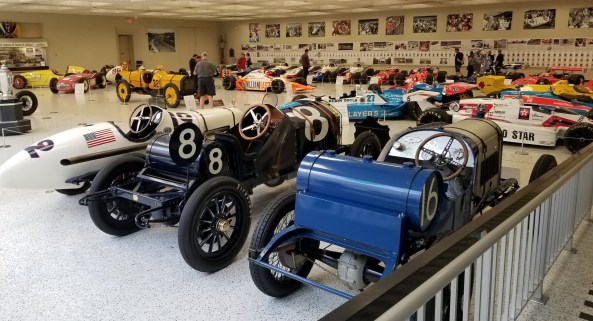
Indiana was to be the last stop on this whirlwind trip to the Midwest.  The birding was preceded by a stop at the Indianapolis Motor Speedway.  Unfortunately the bus tours were not offered that day as there was a hold over from some air races the previous day, but I wanted to visit what may be the most famous place in Indianapolis so I settled for a visit to the Museum.  Motorsports are not my thing but I certainly remember watching the Indy 500 in my youth when there were far fewer offerings on TV.  The 500 mile race means 200 laps of the 2.5 mile track at speeds over 200 mph with the record speed being 238 mph.  Yikes!!

It was very cool to see the cars in the museum – especially how they have evolved over time.  The first Indy 500 was in 1911.  There were 40 entrants then and only a dozen cars completed the race.  The average speed then was just under 75 mph and the interest in the race was at least as much in the major accidents as the finish itself.

First Indy 500 – 1911

1911 Indy

The Indy 500 – 2018 – Things Have Changed Just a Bit

Indy 2018

Some Cars in the Museum

indy-cars.jpg

And now back to the birds — well not quite yet.  One of the best stories of this trip was how I was able to hook up with some terrific birding companions – a story of networking and community – a really wonderful part of the birding world.  I had no contacts or connections with Indiana  at all let alone with birders there.  It was important to get help both for bird finding and identifying but also to get that local flavor that was a critical part of my 50/50/50 adventure.  I proceeded along two different routes to find help and they ended up intersecting – and definitely succeeding.  I am going to detail this because I think it is such an important part of being birders – our connections to each other.

Route 1 involved a suggestion from John Puschock to connect with Laura Keene who he thought might have recommendations for contacts in Indiana and Kentucky.  John own Zugunruhe Bird Tours and lives in north Seattle.  He was my guide on a fabulous visit first to Adak and then Nome, Alaska in 2016, the latter being my 50/50/50 experience in Alaska.  (We also just had an abortive chase of the Pine Bunting that was reported – or misreported – from Victoria, B.C. this week, but let’s not go there.)  Laura was one of the Big Year birders in 2016 who smashed the previous ABA Big Year record.  She saw 763 species – breaking the old record held by Neil Hayward of 749 – only to end up in third place that year behind John Weigel with 783 and Olaf Danielson with 778.  Laura was able to photograph an astounding 741 of her 763 species.

Laura recommended contacting Amy Hodson in Indiana.  I friended Amy on Facebook and shot her a message.  Route 2 – Meanwhile after showing a number of my 2018 photos to the ABC Bird group in Tacoma, I asked if anyone in the audience had any birding friends in Indiana that I might contact.  Joe Tieger said he would check with a friend.  That friend was Lee Sterrenburg. Lee is an English professor at the University of Indiana and is a much honored conservationist and birder in Indiana who has made an enormous impact protecting wildlife habitat especially at the Goose Pond Fish and Wildlife Area.  Lee and I had a great talk and if he did not have a conflict for the time I was visiting, we would have gone out together.  To help he sent an email explaining and supporting my project to a number of Indiana’s top birders and guess what…that included Amy Hodson and she and I then connected and arranged a day together starting at Eagle Creek Park.  So Route 1 met Route 2 and I was all set.  There’s more…
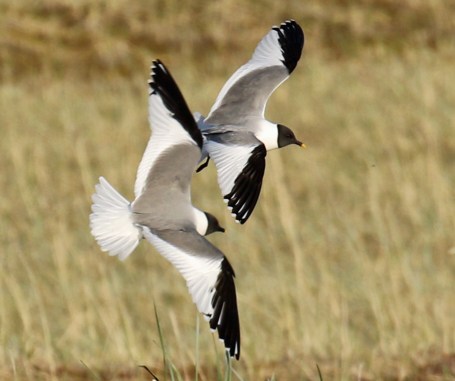
I got to Indianapolis and made a stop at Eagle Creek because I had seen that a Sabine’s Gull was reported there.  A beautiful gull that breeds in the far north (including Nome, AK) and is seen regularly on pelagic trips in the Pacific, it was very, very rare for Indiana.  Not surprisingly when I got to the Eagle Creek Marina, others were there looking for the bird.  One of the birders was Don Gorney.  Don is a top Indiana birder and holds the record for a Big Year in the state.  When I introduced myself, he knew “of me” from the message he had received from Lee Sterrenburg.  With Don was Aidan Rominger, a student at Purdue, another top birder with a big Indiana list.  He, too, knew my story.

Sabine’s Gulls (from Nome, AK)

Sabine's Gulls

A few minutes later, Ryan Sanderson, another of Indiana’s top birders either tied with Don or maybe a species behind for most species in an Indiana Big Year, showed up – and he too had been on Lee’s list.  It was Ryan who had first found the Sabine’s Gull (and had a “fun” kayak experience, lol).  We did not see the Sabine’s Gull then but I had great visits and was made to feel very welcome in Indiana.  I spent the night at a Best Western not far from Eagle Creek and began the next morning birding a tiny marshy area next to the hotel.  I had 12 species including a Common Yellowthroat – a great start before meeting my guide for the day and getting serious.  At Eagle Creek I was met by Amy Hodson and her good friend Mark Welter.  I was in great hands as both are superb birders and know the area in minute detail.  They were also a lot of fun.  Amy is known as the “Bubbly Birder” – a perfect description as she had a smile on her face the entire day.

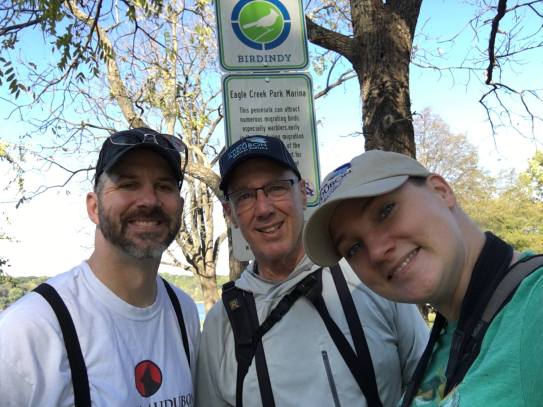
With Mark Welter and Amy Hodson at Eagle Creek Park

Amy and Mark

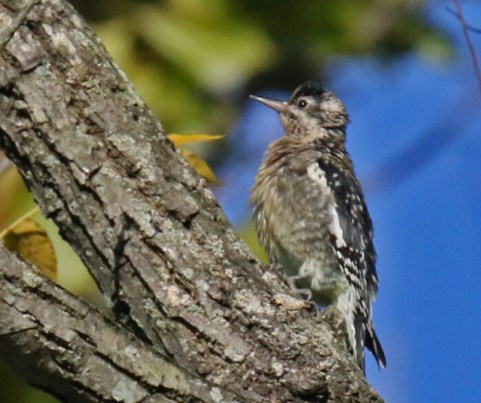
In the photo I am in the center wearing an Indiana Audubon hat – a gift from my new best friends.  Eagle Creek Park was a great place to start our day even though again, we did not see the Sabine’s Gull.  We did find 43 species not including 5 of the species (all common) that I had seen earlier in the morning so there was no question that I would have my 50 species.  We had several good birds including yet another Philadelphia Vireo, Bonaparte’s Gull, Forster’s Tern, Northern Parula Warbler, Yellow Bellied Sapsucker and a very late White Eyed Vireo.

Yellow Bellied Sapsucker (Juvenile)

Yellow Bellied Sapsucker 1

We would return to this area later to try again for the Sabine’s Gull, but Mark and Amy had plotted out several more stops not just to get and surpass 50 species and to try for two unlikely but possible Life Birds for me – a Henslow’s Sparrow and a Sedge Wren (which I have seen but have no photo).  Henslow’s Sparrow breeds throughout the area I had visited this week but they have generally departed by the first of October.  We were not successful with either of these in good habitat but we added 9 more new birds for the day including Bobolink, Horned Lark and several sparrow species.  I hope to be able to see both Henslow’s Sparrow and Sedge Wren on my next trip to Louisiana where they live in the winter.  The Bobolinks are among my favorite birds and were great to see.  They are limited to a very few locations in Eastern Washington and I have only seen them in breeding plumage.  These were in non-breeding plumage – still beautiful but not nearly as striking.

Bobolink – Breeding Plumage in Washington

Bobolink

Bobolink – Non-Breeding Plumage in Indiana

Bobolink3

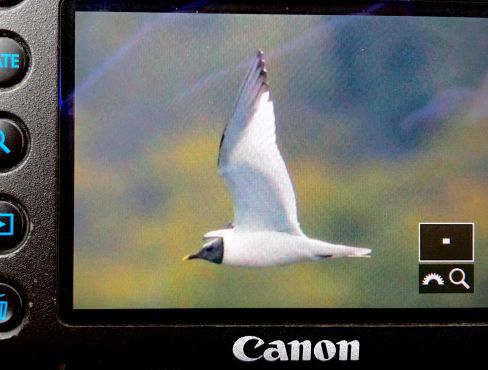
Amy learned that the Sabine’s Gull had been refound and we headed to Rick’s Boatyard – not far from the Eagle Creek Marina.  There is a restaurant there that is supposed to be excellent.  It was now about 11:00 a.m. and not many cars were parked near it.  Note:  when we drove by later, the parking lot was full.  When we arrived Don and Aidan that I had met the previous day were already on the bird and we were able to get good scope views and distant photos.  We did not stick around to try for closer ones.  Later Aidan did get great pictures.  The one below is only showing the image on the back of his camera as he has not had time to process his pictures yet.  Still a beauty. Not including some of the species I had seen at the hotel earlier, the Sabine’s Gull now brought us to 50 species for the day.  We were not done.

Aidan’s Sabine’s Gull Photo

Aidan's Sabine

There were more sparrows on this trip than in all of my other birding in the four previous states combined.  We had Eastern Towhee and Song, Chipping, Vesper, Field and Swamp Sparrows.  We tried hard for some of Amy’s favorite “Orange Sparrows” – sparrows with an orange cast in their faces at the Lebanon Business Park Marsh where we were joined by Roger Hedge.  No orangish Nelson’s or LeConte’s Sparrows but that’s where we had numerous Swamp Sparrows and my only Eastern Meadowlark of the entire trip.  It’s also where we had our first American Crow for the day – hardly rare but somehow missed during the day and they all count.  What I also got was very wet boots, socks and feet.  My boots were waterproof but in water that was several inches deeper than they were tall, that hardly mattered.  Once you are wet however, more wet doesn’t matter.  Fortunately I had a plastic bag to wrap them in for the trip home in my baggage the next day.

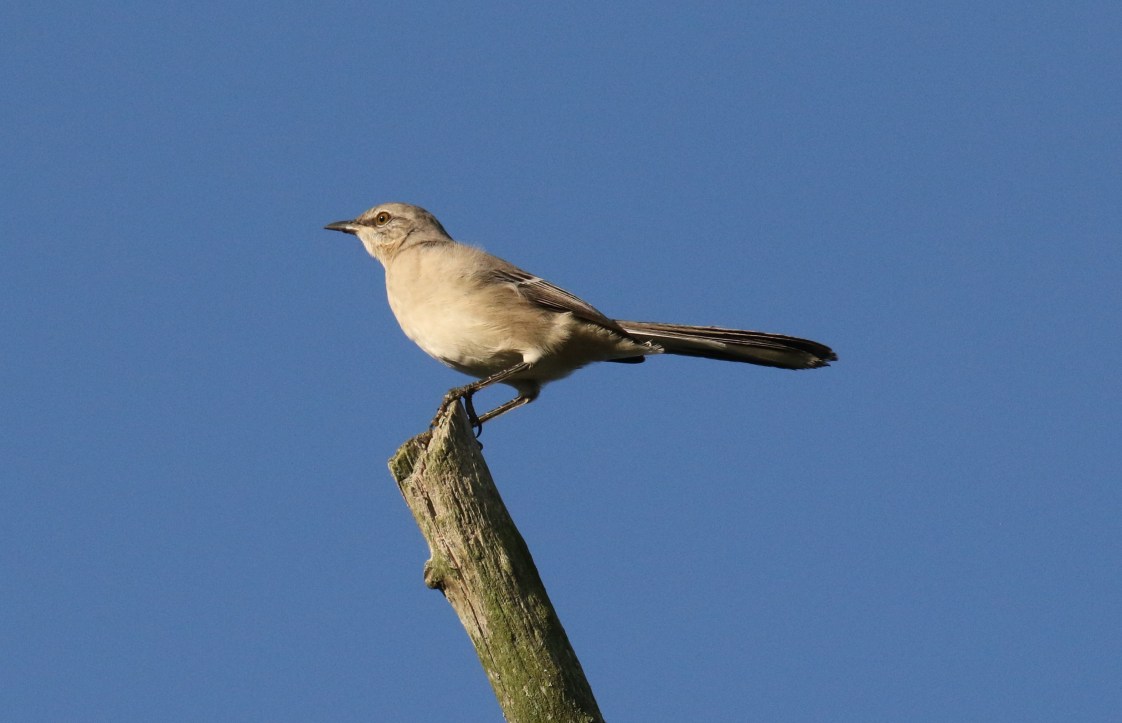
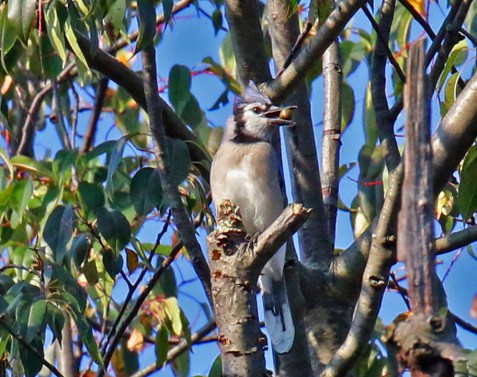
These were not special species, but I realized that I had not included photos of them in any other of my posts and since they were seen almost everywhere including with Amy and Mark, I want to include photos of Northern Mockingbird and Blue Jay here.

Northern Mockingbird

northern-mockingbird.jpg

Blue Jay

Blue Jay with Acorn

The species count for the day was now about 60 but Amy and Mark as a minimum wanted Indiana to be state where I had my high count.  They also wanted to find me a Red Headed Woodpecker.  We returned to Eagle Creek Park and had a woodpecker bonanza and adding Red Headed and Pileated Woodpeckers and our only Northern Flicker for the day.  We had other new species as well ending the day with 68 species – and yes, Indiana finished first.

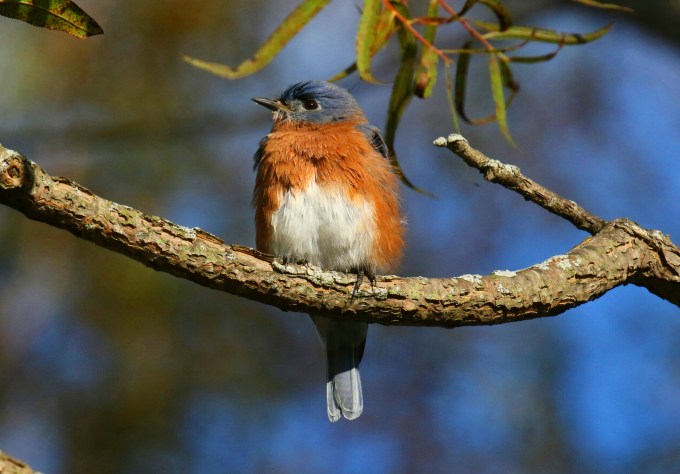
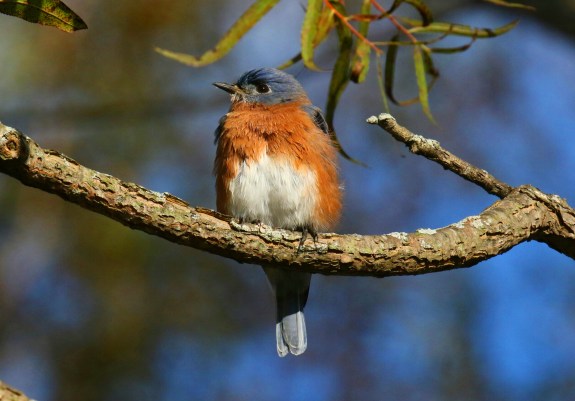
This last stop probably also had the best photo of the day.  An Eastern Bluebird was sitting completely in the open in brilliant light.  Mark had left his camera in the car.  We watched the bird for at least 5 minutes, Amy and I taking MANY photos.  Mark finally could stand it no longer and went back to the car for the camera.  Yep…the Bluebird flew off just as he returned.  The lesson there is pretty evident…

Eastern Bluebird

Eastern Bluebird 4

As I have mentioned in my earlier blog posts for the trip, I was struck by just how enormously different the birding was here compared to my native Northwest.  And each state was different – something I will probably quantify in a wrap up post.  We had only 4 Warbler species in Indiana but did have 6 Sparrow species.  Mallard and Wood Duck were our only ducks and we only had three shorebirds.  Similarly there were only 3 gull species including the very rare Sabine’s.  And there were very few individuals (often just one) of many of these species.  We had no Red Tailed Hawks and no Falcons and only a single Bald Eagle and 2 or 3 Red Shouldered Hawks.  If I had been birding here in May or even a couple of weeks earlier or a couple of weeks later, the story would have been very different.  I don’t know if I will get back, but if I do I could not have better companions that Amy and Mark.  I hope they make it to Washington, I would love to show them my state and our great birds.

The goodbyes were sad because it ended such a great day but also happy because it had been a truly great day!!


Birds and Bourbon – Graves and Caves – Welcome to Kentucky

The objective of my so called 50/50/50 Project is to have my passion for birding take me to each of the 50 States, find 50 bird species but far more importantly to experience new places and meet wonderful people.  My visits to many states earlier had confirmed the value of this adventure, but there is no better example of how all these things come together than my trip to Kentucky.  It was originally to follow immediately after birding in Missouri and Illinois, but as explained in previous posts, successes in those two states came more quickly than planned which enabled me to drive through Kentucky and visit Tennessee as an additional state.  With that successfully completed, I was back in Kentucky – with a whole day to explore before meeting my companions the next day for the birding part of the trip.

Heading north on Interstate 65, I stopped to refuel in Bowling Green, KY and did a double take at the gas pump.  Since there have been a couple of times when I almost used the green diesel hose, I now pay attention.  No diesel at this pump, but I was glad I watched as there was a clear reminder that I was not on home turf.  I would not have liked the $8.00/gallon price tag but wonder if my rental car would have turned into a rocket ship.  As an aside, the speed limits seemed to be suggestions only on many of the highways as the majority of cars were traveling 5 to 10 miles over the limits – my kind of place.

Hi Test – Racing Fuel

hi-test-e1539732769253.jpg

As I continued further on my way to Louisville I saw a sign for Mammoth Cave National Park.  It was not part of the previous plan, but in part the plan was to have time to react to opportunities as they arose.  This seemed like a good one so off I went through lovely forest to the Visitor Center.  It was already very crowded when I arrived around 8:15 a.m. and the early tours were already sold out.  A guy came to us in line and said he had inadvertently bought an extra ticket for a 10:00 a.m. tour.  I bought it figuring I would kill an hour birding the area.  Otherwise I would have had to wait until 11:00 and that was just too long.

In spring migration, this is apparently a great area, although not so much so this morning, I did find a couple of Wild Turkeys.  Somehow they seemed perfect in this area – conjuring up images of pioneers like Daniel Boone hunting them for the table more than 200 years ago.

Wild Turkey

Wild Turkey

Mammoth Cave is exactly that – mammoth!  Actually a connected cave system more than 400 miles in length it is the longest explored such system in the world.  I may not have been on the best of the tours and I found it interesting but also disappointing.  Groups are taken by bus to a narrow entrance and via a combination of stairways and paths you descent into the cave.  Lighting is fairly minimal but essential as otherwise of course it would be totally black.  At one point they do turn out the lights and it is the darkest dark possible.  Except at the end of this tour, there were no formations, the stalagmites and stalactites that I expect in caves and remember (probably with some distortion) from the only other major cave I have visited – Luray Caverns in Virginia when I was a boy.  There were some passageways that were so tight that I was surprised that some of the “larger” members of our party could make it.  Other areas were large and open.

There are no longer bats in Mammoth Cave having been wiped out by a disease called “White Nose Syndrome”.  Steps are being taken to be able to restore the population.  I am not sure how their presence would have affected the experience.  The only life we saw were large and somewhat diaphanous Cave Crickets.  The best part of the tour was visiting with a family from Mississippi.  The kids were oohing and aahing throughout.

A Mammoth Cave Chamber

Mammoth Cave

I was glad I visited for the experience but it was not the highlight of the trip and would not highly recommend it unless someone really wanted a cave experience.  The area is beautiful though.

After checking in at my Louisville hotel, I stopped at a couple of nearby birding spots.  One was Caperton Swamp where a Blackburnian Warbler had been seen the previous week.  I am missing that photo and although it was unlikely, I figured I would give it a try.  No go of course but I did get my first Yellow Bellied Sapsucker of the year which I knew was likely there.  My last visit was to Anchorage Trail, a great area with mixed habitat.  (I understand the land was donated by the founder of Papa John’s Pizza).  A Winter Wren had been reported there earlier that day and that is another photo “need”.  It is a big area and I had no idea where the Wren had been seen.  I just started birding along a creek and decided to play the Winter Wren calls to be familiar with them.  I instantly got a response and saw a little Wren darting about in brush along the creek.  I had not anticipated that and my camera was not ready.  It darted about but never came into the open again.  This may have been the biggest frustration of my trip so far.  Hopefully I will have better luck in Massachusetts next month.

My best find at Anchorage Trail was not a bird but another birder.  I had wandered along finding a few birds but since the “countable” ones would be the next day, I decided to turn back.  About halfway back a Coopers Hawk raced out of a group of trees and disappeared into some others.  A birder was coming my way from the other direction and we both asked each other – “Did you see that?”  We made introductions and the birder was James Wheat from Louisville.  What made it interesting was that he knew my name and of my project.  My companion for the next day was to be Carol Besse.  I had connected with Carol through a fellow named Rob Lane.  I had found his name on a Kentucky listserv and although he was not free to meet me, he circulated my name and the background on my project to others and Carol volunteered.  Well, small world.  James Wheat had also been contacted and now that we had met in person, he wanted to join us.  It worked out great.  He is a fun guy and a terrific birder.  We said our goodbyes and planned to meet the next morning.

There was a minor disappointment at dinner.  Being in Kentucky and knowing that I would be visiting the grave of Col. Harland Sanders the next day (read on below), I went to a Kentucky Fried Chicken “restaurant” for dinner.  This was a favorite of my family when I was growing up but for healthy eating reasons, it has not been an indulgence in recent years.  This seemed like an appropriate time to make an exception.  I ordered a two piece dinner – “original recipe” of course.  Nowadays all fast food restaurants seem to get much of their business from drive through customers.  Just before placing my order, one had ordered 48 pieces of “original recipe” and completely depleted their supply.  My choices were crispy (no way), a single “original recipe” wing or getting my money back.  I opted for the latter and got a salad elsewhere instead.  Well, I tried…

Carol Besse and James Wheat

Carol Besse and James Wheat

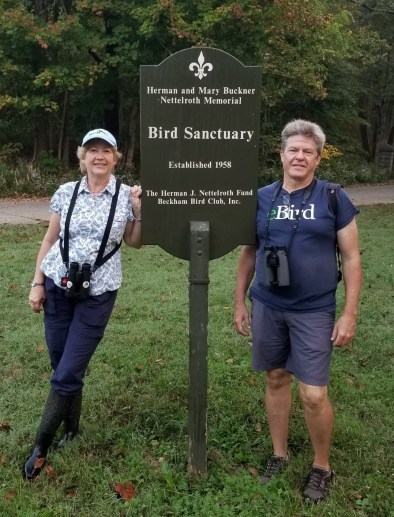
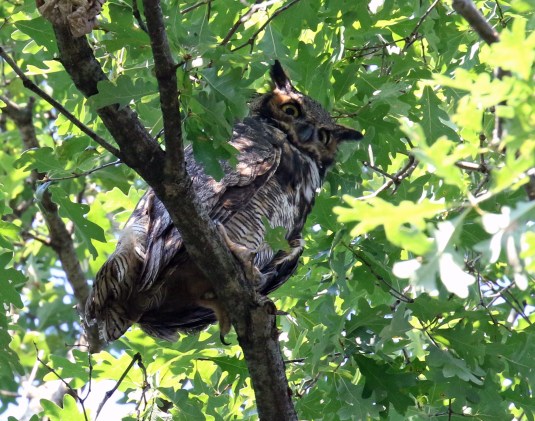
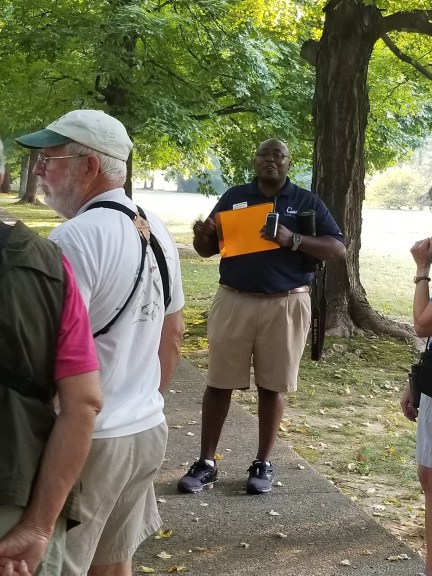
I met Carol and James the next morning and we started the day at Cherokee Park where on a “slow day” according to them we picked up about 20 species in just over an hour.  We had a pair of heard only Great Horned Owls – my first owls of the trip.  The major birding though was to be at Cave Hill Cemetery.  When Carol and I had planned the itinerary for the day, Cave Hill worked out perfectly for many reasons.  First the Beckham Bird Club had a walk there that morning.  The Club was founded in 1935 and is very active with field trips and other bird related activities.  Second, the large cemetery has an impressive bird list and was likely to get us a long way to our 50 species goal.  Most importantly to me, among the many thousands of graves were those of three famous folks from Louisville:  Jim Beam of Bourbon fame (more on that later), Col. Harland Sanders, and one of my all-time heroes – Muhammad Ali – nee Cassius Marcellus Clay, Jr. and aka “the Louisville Lip” and “The Greatest”.  Now that is local color at its best!!

There were maybe a dozen birders from the Club and we were guided by Pastor Lee Payne.  Pastor Payne was highly enthusiastic and knew the favorite hangouts of many birds in the cemetery.  A somewhat sad commentary is that he was the only person of color who I met as a birder in the entire trip.  It was particularly important to Pastor Payne that we see some of “his” Great Horned Owls.  He delivered big time as we found at least three and possibly four.

Great Horned Owl

Great Horned Owl

It was another hot day and this may have slowed some of the birding but we had a number of good birds – 38 species in all.  Still not even a good photo but I finally got a barely acceptable one of a Philadelphia Vireo.  It had been ABA Life Bird #727 and was ABA Life Photo #692.  We also had Cape May and Bay Breasted Warblers – the latter a new ABA species for my 2018 year list.

Pastor Lee Payne Leading the Group

Lee Payne

Philadelphia Vireo

philly-vireo5.jpg

Cape May Warbler

Cape May Warbler

One more good bird before we get to the grave sites.  Almost in unison several of us yelled out “Peregrine Falcon” as a large falcon flew above us.  It was being attacked repeatedly by several of the many Chimney Swifts that were also zooming around.  My photo caught one as it took its shot at the Falcon.

Peregrine Falcon and Chimney Swift

Peregrine and Chimney Swift

A Break from Birding – the Grave Sites

Col. Harland Sanders and Kentucky Fried Chicken

Colonel Harland Sanders died in 1980 at the age of 90.  In 1930 Sanders was running a service station in Kentucky, where he would also feed hungry travelers. He moved his operation to a restaurant across the street, and featured a fried chicken so notable that he was named a Kentucky colonel in 1935 by Governor Ruby Laffoon.  After closing the restaurant in 1952, Sanders devoted himself to franchising his chicken business. He traveled across the country, cooking batches of chicken from restaurant to restaurant, striking deals that paid him a nickel for every chicken the restaurant sold. His first franchise sale went to Pete Harman of Salt Lake City. In 1964, with more than 600 franchised outlets, he sold his interest in the company for $2 million to a group of investors.

Kentucky Fried Chicken went public in 1966 and was listed on the New York Stock Exchange in 1969. More than 3,500 franchised and company-owned restaurants were in worldwide operation when Heublein Inc. acquired KFC Corporation in 1971 for $285 million. KFC became a subsidiary of R.J. Reynolds Industries, Inc. (now RJR Nabisco, Inc.), when Heublein Inc. was acquired by Reynolds in 1982. KFC was acquired in October 1986 from RJR Nabisco, Inc. by PepsiCo, Inc., for approximately $840 million.

Colonel Sanders

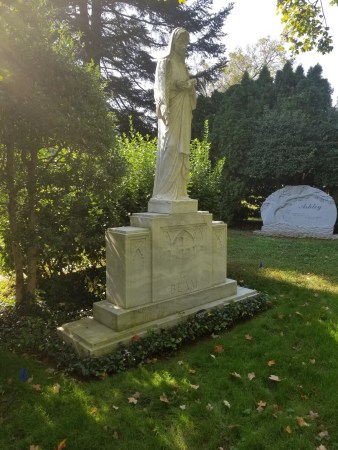
There will be more on this later as I visited the Jim Beam Distillery in Clermont, KY the next day.  The predecessor of the Jim Beam Company was founded by Jacob Beam in 1795 and has remained in the family for 8 generations.  It was officially branded as Jim Beam Bourbon post Prohibition in 1934 by Colonel James B. Beam.  It is the grave of his son, T. Jeremiah Beam who died in 1977 that is pictured below.  It is immediately adjacent to that of Col. Sanders.

Jim Beam Grave

For me the real treasure in Cave Hill Cemetery is the relatively simple grave of Muhammad Ali.  The history of this great man is long and complex.  He was an Olympic Champion, Heavyweight Boxing Champion of the World (3 times and 19 title defenses), poet, activist, philanthropist and civil rights leader.  He converted to Islam, resisted the Vietnam War Draft, and spoke courageously and openly about race, freedom, war and peace.  In his later years he suffered from many conditions of Parkinson Syndrome but he never lost his mental acuity.  He lit the Olympic Flame in Atlanta in 1966 and was awarded the Presidential Medal of Honor in 2005.  Ali died in 2016.  He was one of the most beloved and controversial figures of the late 20th Century.  Being a participant as a teenager and in college in the turbulent 1960’s and 1970’s, Ali was my hero.  I am emotional and tears run down my face as I write this and recall those challenging and difficult times and his meaningful and courageous life.  Standing at his grave site was important to me – very important and very moving.

Ali’s Funeral at Cave Hill Cemetery

Ali Funeral

Standing At Muhammad Ali’s Grave

At Ali's Grave

Back to the birds…

We had 38 species at the cemetery putting us at 43 for the day.  We had one more stop – the Melco Flood Retention Basin, a restricted access area.  Carol and James both had keys to the locked gate so we were able to visit this completely different habitat.  We finally got some shorebirds and some other good species.  Altogether we only had 23 species at this location but 16 were new for the day bringing us to 59 all told.

The best birds were probably the shorebirds.  We had Killdeer, Wilson’s Snipe, Greater Yellowlegs, Stilt Sandpipers and Dunlin. We also had 4 new raptors: Red Tailed and Red Shouldered Hawks, American Kestrel and Bald Eagle.

Stilt Sandpipers and Dunlin

Stilt Sandpipers and Dunlin

What I liked most about my Kentucky experience were the mixes – mix of birds, mix of people, mix of places.  The birds have been detailed a bit.  Here is some more about the people.

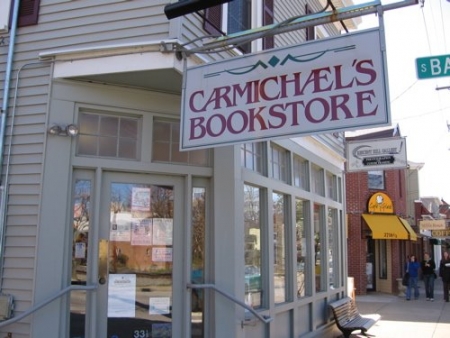
Carol Besse is one of those people that I think anyone would value as an interesting friend.  She and her husband (I hope I have that right) Michael Boggs, started Carmichael’s Bookstore in the funky, cool, hip and friendly Bardstown neighborhood in Louisville in 1978.  It is Louisville’s oldest independent bookstore and has survived and thrived even post Amazon.  In 2014 it was joined by Carmichael’s Kids – a children’s bookstore down the street from the main store.  In the words of Carol and Michael, the stores “although small…offer a hand-picked selection of titles reflecting both the taste of the owners and that of the neighborhoods they are a part of. From the very beginning Carmichael’s has been committed to being a neighborhood gathering place by being open seven days a week and every evening. Both stores are on corners that hum with activity – walkers, joggers, dogs and children, families and couples – lively streetscapes never darkened by the shadow of a big box store.”  I did not have a chance to visit the stores but could easily feel their vibe as I drove by and watched folks coming and going.  I also love that the bookstore gets its name not from a last name but from the combination of the first names CARol and MICHAEL.  Who knew?!

Carmichael’s Bookstore

Carmichaels bookstore

James Wheat is a transplant from Florida and when not birding is in the IT field.  He has the enormously challenging responsibility of organizing the Christmas Bird Counts for the Louisville circle.  He is also active in other Louisville area birding organizations.  He was great company and was super in the field with a terrific ear and a quick eye and it was also clear to me that he was well organized and a “get it done” guy.  He would be a wonderful aide in organizing the logistics of a big year or a 50 state kind of project.  It was also great that the mosquitoes seemed to prefer him to me.

Kentucky Bourbon

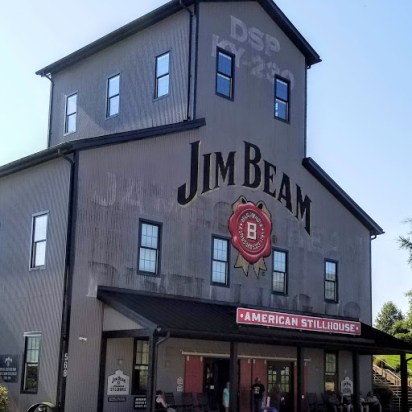
I had an open day after the great birding with Carol and James and before meeting up with by birding companions in Indiana.  When I first thought about some special local aspects for a Kentucky trip, two iconic events came to mind:  “The Kentucky Derby” and a University of Kentucky vs. Louisville basketball game.  Timing was not right for either but I traveled through some thoroughbred horse country and was taken by its gentle beauty.  I also thought about Kentucky as the “Bourbon Capital” of the world and found that tours were available at the Jim Beam Distillery in Clermont, KY and thought that would be fun – another new experience that came to me because my passion for birding had taken me to Kentucky.

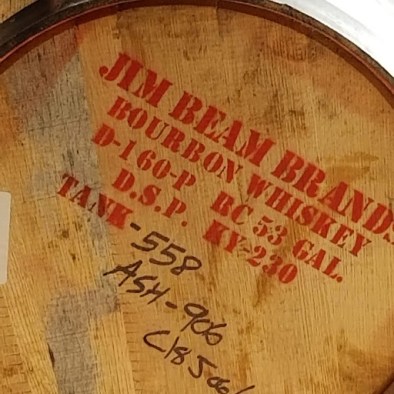
My visit to the distillery was very interesting including a tour that took us step by step through the entire process of manufacture, aging, bottling and distribution.  Jim Beam is the largest selling bourbon in the world and has many products under the Beam umbrella.  At the end of the tour we had an opportunity to taste many.  I am definitely not a connoisseur but even I could discern the differences of the differently aged and proofed forms.  I am going to let some pictures speak for themselves and may write up details another time.

Jim Beam – Clermont, KY

Jim Beam

Jim Beam Poster

Jim Beam Barrel

The pour

Beam Tasting

I continued north to Indiana with a first stop at the Indianapolis Motor Speedway – but that is a story for my next blog post…


A Bonus State – Tennessee

Being able to get my 50 species in both Missouri and Illinois in consecutive days gave me a chance to add another state to the trip before meeting with birding companions in Kentucky on October 7th.  In anticipation of this the night before I researched possibilities and decided to head south from Illinois, spend the night in Kentucky and carry on to Tennessee early the next morning.  The good news was that it looked to be possible to find the 50 species by hitting a few different Ebird Hotspots.  The bad news was that I would have to be doing it on my own.  My plan for the 50/50/50 project was for birding in each state to be with local birders.  This would improve the odds of reaching the 50 species goal and certainly increase the efficiency.  Equally importantly it would provide local color and perspective that was an important part of the adventure.

There simply was not time to line up local birders so I made the executive decision to go anyhow but to be sure to intersect with others – hopefully including some birders – that I expected to find at the locations I chose.  This worked very well and I had great intersections with a number of “locals” in Tennessee, although since I was primarily in the Nashville area, I quickly learned that many of the “locals” had not been local very long and had moved to Nashville for job or lifestyle opportunities.  This was a good perspective to add to my experiences along the way.

I would be returning to Kentucky in two days but when I crossed the state line from Illinois into Kentucky on Highway 24, I was in a new “Life State”.  That now left only North Dakota and Kansas as states I had never visited – using the term “visited” very loosely as at least a couple were airports only.  I stayed the night in Paducah, KY because it was about as far as I could go while still being able to drive safely with my sleep deprivation and also I just liked the name.  I would still need to travel another 120 miles the next morning but since I am an early riser even when I have traveled two time zones east, that would not be a problem.

Ebird reports suggested that Shelby Bottoms Park a little northeast of Nashville would be a great place to start.  Nashville was just across the Cumberland River from Kentucky.  I had gotten a very early start and was birding by 8:00 a.m.  The heat and humidity continued, but that first hour was not too bad.  Shelby Bottoms has a variety of habitats including a small lake or pond that I hoped would produce some waterfowl – species that had been few and far between in the two previous states.  Unfortunately the only ducks were Mallards but there were some Double Crested Cormorants, a Great Blue Heron and a Belted Kingfisher.  I was already worrying about getting to 50 species.  There was one great experience there though.  Seemingly out of nowhere a flock of at least 45 Chimney Swifts appeared and swooped over the pond – acting like more like swallows.  They circled and dove and were very close to the water – a behavior I had never seen before.  This lasted for maybe 15 minutes and then they were gone.  I had seen numerous Swifts in Missouri and Illinois but they had always been fairly high or even extremely high overhead – their presence often first revealed by their chattering.

I birded in the park for almost three hours.  I am sure I missed some species as I did not recognize some calls and chips but ended up with 38 species including four warblers the most numerous of which were Magnolia Warblers found in small groups in several areas.  I found another Philadelphia Vireo but again was able to get only a very poor photo.  If not the best, at least my favorite find was some Brown Thrashers.  In the past I have only seen them in open areas.  These were in the trees, buried at first and then into the open feasting on berries.

Brown Thrasher

Brown Thrasher

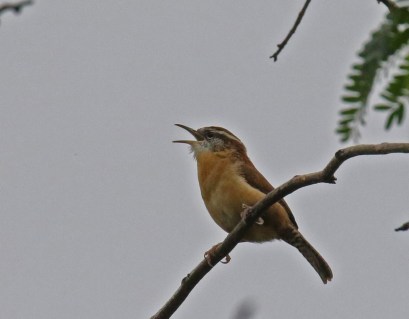
As in Missouri and Illinois there were Carolina Chickadees and Carolina Wrens.  The latter seemed to be everywhere in this park.  And like the Bewick’s Wrens that are abundant in Western Washington, the Carolina Wrens have numerous calls, chips, songs and … well, noises.  There were few moments in the Park when I was not hearing these Wrens, Northern Cardinals, Blue Jays or Mockingbirds.  I was not able to get a photo but I had a quick look at a beautiful Wood Thrush.  It reminded me of the experience with Frank Caruso in North Carolina where we saw many Wood Thrushes that would fly in front of us and then disappear into the trees and brush.  Finally I got a good photo there.

Carolina Wren

Carolina Wren

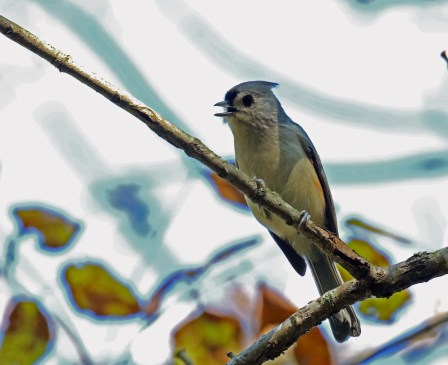
I was able to get a decent photo of a Tufted Titmouse, another common (and noisy) species that had eluded my camera until finally getting one earlier this year in Massachusetts.

Tufted Titmouse

Tufted Titmouse

I was surprised not to find any other birders in the Park but I really wanted some local color so I struck up a conversation with two young kayakers.  When I asked how long they had lived in the area, they both laughed.  One had only been here 3 months and the other barely over a year.  They said that nobody they knew was actually “from Nashville”.  The city’s economy was good and jobs were available, but the big attraction for young people (they were late 20’s I would guess) was the music and club scene – a vibrant urban life with accessible and beautiful countryside all around.  The cost of living was also much lower than in the east coast cities they had departed.  It turned out that one of the young women was from my original home state of Maryland and had grown up not more than 15 miles from where I lived.  Although Nashville was somewhat of an exception, she did note that Tennessee was far more “red” than Maryland which was much more “blue”.  Again Nashville was somewhat different, but she also said the pace of life was significantly more at ease.

So no local birding lore but a good intersection and just the type of perspective I was looking for – getting out of my birding and Pacific Northwest silos so to speak.

Still hoping for some more waterfowl to bring up my species count, I headed off to Radnor Lake State Park about 10 miles south of Nashville by a route that took me just east of the downtown core.  Not nearly as many high rise office buildings as Seattle and I did not notice any cranes which are still so prominent in the Seattle skyline, but it looked like a bustling city and it was hard to miss Nissan Stadium home of the Tennessee Titans of the NFL.  I imagine that someone driving into Seattle from the South would have the same impression of my city with Century Link Field for the Seahawks but we also have “the Safe” – Safeco Field for the Mariners and Nashville is not Major League at least in that sense.

Once again I was disappointed with the only waterfowl being a distant view of a single Wood Duck. In fact I only added four new species for the day and I was getting concerned.  One new species was a Yellow Billed Cuckoo – another species I had photographed earlier in the year in North Carolina.  What this location lacked in new birds, it more than made up for with interesting people.  One was a birder who said that the day seemed less birdy than expected and thought it might be the heat.  We first heard and then got quick looks at both White Breasted and Red Breasted Nuthatches together.  The latter are far less common although I had seen them in the morning and also in Illinois.

White Breasted Nuthatch

White Breasted Nuthatch1

Another interesting intersection was with a woman who was walking her Schnauzers – at a very brisk pace.  She noted my camera and asked if I had taken any good photos.  I often get asked that by non-birders when they see my camera – a good conversation starter.  I told her that I had not “yet”.  I also told her that she did not sound like she was “from here”.  In her New York accent, she said definitely not.  She was another transplant – from one of the New York City suburbs – relocated to be with grandchildren.  She missed the East Coast but remarked how friendly people were in her new home.  That was my sense as well.  Everyone I met throughout my trip was engaging and friendly – a different vibe than some other places.

My last connection there was with a young couple from Arkansas who were vacationing in Nashville and had wanted to get out for a walk.  They were not birders but were bird aware and had a lot of questions when I told them what I was up to.  I showed them a number of photos I had taken as well as some from phone apps.  It would not surprise me if they develop a further interest.  They told me they had seen a “giant woodpecker” in the park maybe 30 minutes earlier.  I guessed it was a Pileated Woodpecker and just as I was about to show them a photo, they said they had a video.  And of course that is what it was.  They were thrilled to have seen it and now moreso to know what they had seen.  I have had dozens of connections like this in the field and always take time to share experiences, ask and answer questions and find these times to be among the most rewarding that are part of my birding life.  This is particularly the case when there is a chance to show some young kids something about birds.  Maybe a spark will light a fire.

Back to the birds – there were not enough of them and the momentum from the morning felt like it had disappeared.  I needed a new kind of habitat and some different birds.  I did a quick check of Ebird reports and identified a couple of good spots.  The first had the very appealing name “Old Hickory Lake–Snow Bunting Peninsula”.  I wasn’t expecting a Snow Bunting but some new water related species seemed likely.  I don’t think I have ever been so pleased to see American Coots, Pied Billed Grebes, Ringed Billed Gulls and Canada Geese.  I also noticed that some of the vultures did not have red heads, so I added Black Vulture for the day.  A small flock of American Redstarts flew into some trees and I also found what turned out to be a Summer Tanager.  Now my day list stood at 49 species.  I needed one more but I  wanted a few more species “to be sure”.

Black Vulture

Black Vulture

My research had suggested another good spot that was very appealing with different habitat.  Bells Bend Park is a rural preserve of 808 acres located in Davidson County west of Nashville along the Cumberland River.  Its description as “pastoral” seemed very fitting – an easy going place with open fields with high grass, some big trees and the river.  I spent more than an hour there and probably enjoyed it as much as anywhere I had been.

A Cut Grass Trail at Bell’s Bend Park

Bell's Bend

I found only 20 species but 8 were new for the day – including a Summer Tanager that I clearly identified and counted.  The most surprising were the 5 Northern Bobwhites that flushed from right in front of me and almost gave me a heart attack.  Finally I found some real sparrows and some swallows: 2 Field Sparrows, an Eastern Towhee and 2 Tree Swallows.  Other new species for the day were Orange Crowned and Black Throated Green Warblers, and a Sharp Shinned Hawk.

Eastern Towhee

Eastern Towhee 1

Summer Tanager

Summer Tanager

With these new species I was at 57 for the day – goal met.  Repeating myself, I am sure there would have been many more if I had local expertise (and eyes and ears) with me.  There had been a lot of walking at the locations today and I figured I had hiked at least 5 miles.  And now it was just after 6:00 p.m.  The temperature had dropped a bit but it had been in the high 80’s or more all day and I was tired.  The plan had been to hit the music scene that night – some of that Nashville country music.  Unfortunately for all of the places that appealed to me the music did not start until 8:00 or even 9:00 p.m..  There was no way I was going to be able to be sufficiently lively at that time to enjoy it.  I retired to my hotel room very pleased to have snuck in a new state.  Tennessee was the 15th state where I had my 50 species in a day.  Kentucky and Indiana were ahead and I was looking forward to meeting some excellent birders that would be helping me.

Birding Illinois and The Life Cycle of the Monarch Butterfly

When I started thinking of a trip to add more states in my 50/50/50 project, a major criterion was being able to cover at least three states on a single trip.  With Illinois being immediately across the river from St. Louis and Missouri, it was an obvious choice as a second state.  Kentucky was not far away for a third state and I figured I could add Indiana as well – making a four state swing in 8 days available for four days of birding and having some extra time for including places of interest which was also an objective of my “project”.  So the initial plan was two days in Missouri, then two days to follow in each of those other states.

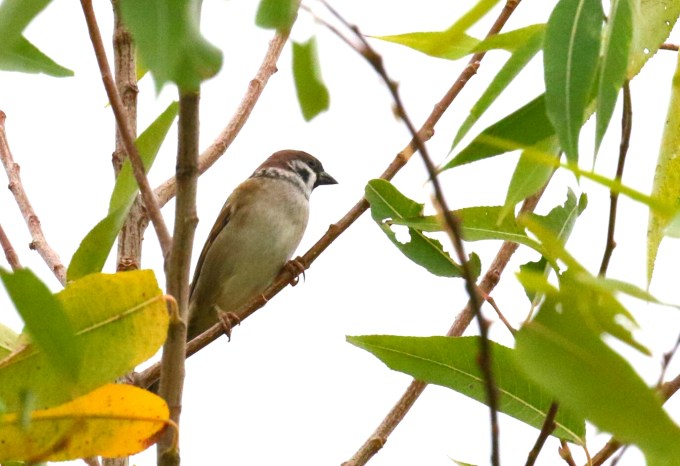
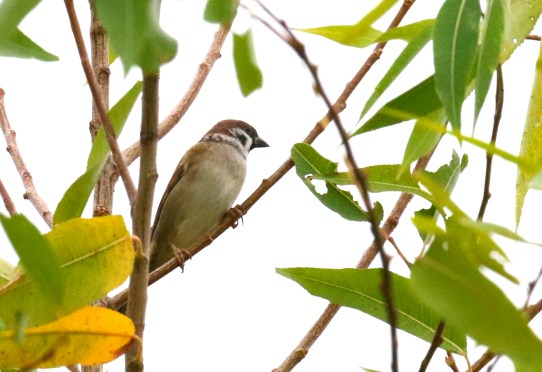
When Pat Lueders offered to provide assistance in both Missouri and Illinois in successive days, it confirmed my trip choice and provided some extra flexibility.  It worked perfectly.  Day two started with a visit to Pat’s home and a chance to see the Eurasian Tree Sparrows that nested there in those wren houses with 1 1/8″ entrance holes that keep the House Sparrows out.  We found the Tree Sparrows quickly – a great start to the day.

Eurasian Tree Sparrows

ets2.jpg

Our first stop in Illinois was to be Horseshoe Lake State Park less than 10 miles into this new state.  Our first species though was a Peregrine Falcon I spied as we sped along the highway – a good omen.  We also had more Eurasian Tree Sparrows just outside the park, now only a new “state bird”.  The park is almost 3000 acres – more than 5 times the size of Discovery Park in Seattle.  Eighty percent of the area is Horseshoe Lake itself but that still leaves plenty of forest and mixed habitats.  Almost 300 species have been seen at the park.  Just in the month of May this year, 138 species were reported including 19 species of shorebirds and 14 warbler species.  In September this year, the comparable numbers were only 93 species including only 3 shorebird species and only 7 warblers.  So this clearly was not the prime time to visit, but we did very well finding 49 species with only a single shorebird – one Spotted Sandpiper – and an excellent 7 Warblers including two that were not seen the previous month.  My favorite was one of them, the Chestnut Sided Warbler.  It is a nemesis bird for me in Washington as I have chased several – always unsuccessfully.

Chestnut Sided Warbler

Chestnut Sided Warbler 1a

We also had a nice Tennessee Warbler – also a rarity in Washington but I have seen them at Neah Bay – not as well as here, though.

Tennessee Warbler

Tennessee Warbler

This area was not that different from some of the area we had birded the previous day, but the experience was certainly completely different when it came to migration.  The day before we had not seen a single Yellow Rumped Warbler.  Today they were everywhere.  We conservatively listed only 40 on our Ebird reports, but there may well have been more than twice that many.  Yellow Rumped Warblers are our most common Warbler species in Washington and I will never forget one incredible day at the Railroad Ponds in South Cle Elum when there were hundreds of them along the ponds – as many as 25 in a single tree.  We also birded one area near the Borrows Pits (actually adjacent to Horseshoe Lake) where we had at least 15 Palm Warblers – clearly a flock in migration.  In Washington, we have Palm Warblers in migration but they are not common and even 3 at a time is very rare.   The 15 in Illinois were about the same as the top number seen on two days of peak migration in Florida in April 2017.  We searched for different warbler species among them, but found only a couple of Yellow Rumps.

Yellow Rumped Warbler

Yellow Rumped Warbler 1

Palm Warbler

Palm Warbler

We ended the day with 59 species – amazing to me since we had no sparrows, only the single shorebird species and only a single duck species – of course a Mallard.  This was definitely a day where I doubt I would have had 50 species without expert local help.  Pat’s ability to identify the species by their chip calls was very impressive.  A case in point was a Northern Waterthrush, the other warbler not reported in September.  This is seen regularly but uncommonly in Washington.  It breeds in a small area around Calispell Lake in far eastern Washington and is found in a few other spots.  It does have a fairly distinctive “chink” call, but in Illinois there are many other chips and chinks that to my ears were either too similar to identify or were even lost in the other calls and noises around.   Pat had heard a distant call note  and it told her a Waterthrush was around.  Sure enough, we found great habitat and heard it several times – eventually getting a good look through thick brush.

The pursuit of this Northern Waterthrush is emblematic of what impressed me most about Pat Lueders.  Of course it started with the identification based on fairly minimal input.  But it was her determination to find the bird for me, yes, but also for her own satisfaction that made the difference.  She was both confident that the ID was correct and that it was findable in a tough environment.  She was being a birder, a guide and also a co-participant with me in my quest.  Let’s segue to Pat as professional guide with Naturalist Journeys.  I have birded with many excellent (and a couple not excellent) professional guides.  Most are extremely good at identifying birds and finding them.  The best also are very good at making sure that their birder clients also see the birds and learn about them – whether it is their field marks, calls, songs, behaviors or natural histories.  And the very best can put themselves in the shoes of their clients, understand what is most important to them and as often as possible make sure that is what they experience.  It was important to Pat that I see this Northern Waterthrush and she made that possible.

Naturalist Journeys is headquartered in Portal, Arizona and offers tours, safaris and cruises worldwide.  Its stated mission is to  provide exceptional quality experiences that foster a deep respect for nature, inspire wildlife conservation, and enrich and renew lives through shared exploration.  Their tours definitely have an avian focus but many have a broader reach and strike me as perfect for those of us either ourselves or with partners who wish to experience the culture and natural history of an area beyond a lengthy species list.  My 50/50/50 project proceeds on this premise – that my passion for birding gains me entrance into a wider world with wonderful experiences everywhere.  Birding is the catalyst that gets me going.  There are great people, places and all of nature waiting to be experienced.

Naturalist Journeys

Following our birding together, Pat was heading off to lead her “Southern Charm” tour.  How’s this for an appealing vacation:  “Discover the history, nature, and culture of the charming and beautiful South Carolina coast. Explore Savannah and Charleston, and make stops at historic forts and Morris Island Lighthouse. Relax on horse-drawn carriage rides over cobblestone streets, bird the beautiful Magnolia Plantation, tour antebellum museums and mansions, and indulge at famous local restaurants.”  Oh yeah – lots of birds too in a massive National Wildlife Refuge area of over 1 million acres.  I wish my schedule would have permitted me to take this tour as both Savannah and Charleston are places I very much want to visit.  I will get there later and will have those 50 species days in both Georgia and South Carolina, but I am definitely going to take time for those non-avian pleasures as well.

I am happy to put in a good word for this company not just because of my great time with Pat, but also because I have had great experiences with other of their guides as well.  In 2013, I birded with Michael Marsden in South Texas and Carlos Sanchez joined our Victor Emanuel Nature Tours trip in South Texas this year after Victor had to leave because of a schedule conflict.  They were both excellent.  I have also met Woody Wheeler in my home state of Washington where he is highly regarded.

This was not a day with cultural and historic content.  No major attractions, no tourist appeal.  One non-birding thing did make a major impression, though.  Unlike many birders, I am not a butterfly guy.  Sometimes I note them but except for example maybe the Blue Morphos of Costa Rica, I generally quickly move on and look for more birds.  Moreso in Illinois than the previous day in Missouri, we saw many, all told well over a hundred, Monarch Butterflies.

The Life and Times of a Monarch Butterfly

Like the warblers, they, too, were migrating – heading south to warmer climes.  Monarchs go through four stages during one life cycle, and through four generations in one year.  The first three generations all include the four stages of egg (laid on milkweed plants) , larvae (caterpillar), pupa (chrysalis), and adult butterfly.  The adults of the first three generations move on north and east dying off after laying the eggs for the next generation.  They live only 2 to 6 weeks.  The fourth generation lives longer – making the entire return journey south and surviving until they begin the migration begins again in the following February and March the next year starting their complex life cycle anew.  It was this fourth generation of southward bound Monarchs that we were seeing.

Milkweed

Milkweed

Monarch Caterpillar Becoming a Chrysalis

caterpillar-emerging

Monarch Emerging from a Chrysalis

monarch-emerging

Adult Monarch Butterflies

Monarch Butterfly1a

2p5a4625.jpg

It had been two great days – the unseasonably high heat and humidity the only negatives.  It was mission accomplished with more than 50 species in Missouri and Illinois and a great visit with Pat.  And I was two days ahead of schedule.  As will be evident from my next post, I found a good way to make use of this bonus time and added a fifth state to the itinerary.  I said goodbye to Pat and thanked her for two super days and treated myself with a prime rib dinner.  If only calories didn’t count on these trips.

Pat Lueders

pat-lueders

Pat Lueders has been leading birding trips in the St. Louis area and Midwest for over 10 years. A love of traveling has taken her to many countries of the world and most of the US, often with Naturalist Journeys’ trips. When not out birding, she is the coordinator of volunteers for a number of Citizen Science projects partnering with many agencies including U.S. Fish & Wildlife, U.S. Army Corps of Engineers, National Audubon, National Trumpeter Swan Society, and Missouri Department of Conservation. Pat serves on the boards of St. Louis Audubon & Audubon Society of Missouri and is on a bird banding team.


Show Me Some Birds in the Show Me State — Plus a History of the Eurasian Tree Sparrow

“Show me some birds in the Show Me State“.  That was my request to Pat Lueders as I was heading to Missouri.  I am not going to go into the full details yet as there will be a full on Blog Post about it later, but this was the first stop on an 8 day swing through the Midwest working on what I have tentatively been calling my “50/50/50 Project”.  As I said there will be much more on this later, but in essence it is a journey/adventure where my objective is to see 50 species on one single day in each of the 50 states in the company of local folks and also to visit new interesting places.  My passion for birding has greatly enriched my life with exciting birds, people and places.  50/50/50 is furthering that enrichment adding great birds, people and places in every state.

I will add much more about Pat Lueders in my next post which will be about birding with her in Illinois the next day as well.  She was terrific – definitely as a birding guide – finding and identifying – but moreso as great company with a wealth of knowledge about her area.  She is also a professional guide with Naturalist Journeys and that too will be covered in more depth in my next post.  I had a great time and learned a ton.  I am going to try to avoid these 50/50/50 posts becoming a recitation of “then we did/saw this and then we did/saw that” – so not as chronological or linear as some of my other posts have been.  We will see how it goes.

I arrived in St. Louis on the evening of October 2nd. It was kind of a “tweener” time – between the peak migration of passerines and the arrival of waterfowl – but Pat was confident we would be able to find fifty species with some residents and later migrating passerines.  Although the only absolute was finding those fifty species, a close second was to finally see a Eurasian Tree Sparrow – found in only a limited geographical area in and around St. Louis.  There was also the hope of adding Philadelphia Vireo to my ABA Life List and a few possible new ABA photos – mostly warblers that could still be around but far less likely than even a week or two earlier.

St. Louis reminded me a lot of Washington, D.C. in the 1960’s.  I grew up in Maryland outside of D.C. but spent a lot of time there.  Lots of row houses with big deciduous trees and many parks.  The 90+ degrees and the 90%+ humidity also reminded me of D.C. weather – not my best memory.  Much of our birding was at Tower Grove Park near the Center of the City but Pat also showed me Forest Park – over 1370 acres with every use you could imagine.  One of the largest urban parks in the U.S. (bigger than Central Park) it is an incredible resource for the City.

One View at Forest Park

Pavilion at Forest Park

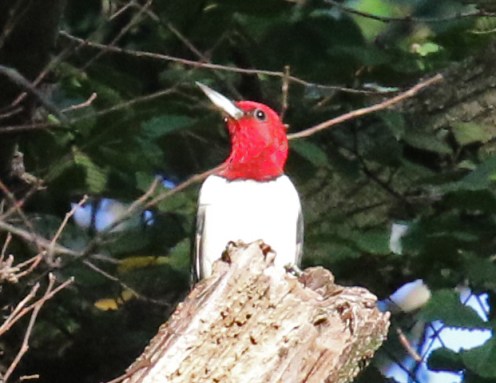
At Tower Grove Park we had 39 species including that hoped for Lifer Philadelphia Vireo – a barely recognizable photo only so not included (there will be one of another “Philly Vireo” in a later blog post).  I had finally gotten a photo of a Red Headed Headed Woodpecker earlier this year in North Carolina and I told Pat I hoped for a better one.  We only found one – much better than the North Carolina photo.  It has an amazingly big bill and there is no doubt about how it got its name.

Red Headed Woodpecker

Red Headed WP1

The species list for Tower Grove Park includes an incredible 35 warbler species.  Two weeks ago we might have had as many as 15.  Only a half dozen this day including a very lovely Black Throated Green Warbler.  I hope to get back for Spring migration some day.

Black Throated Green Warbler

Black Throated Green Warbler2

The topography in Missouri is very different from my home area of Puget Sound.  Of course, no saltwater – and no tides.  But two BIG rivers – the Missouri and the Mississippi and their confluence is at Confluence Park near the Riverlands Migratory Bird Sanctuary – another area we birded.  I have to admit that I prefer the more dramatic topography of my Seattle, but the history of these rivers and the role they play in the Central U.S. is incredible.  Pat was an encyclopedia of knowledge with many references to the Lewis and Clark Expedition which followed the Missouri River into the Northwest more than 200 years ago.  Our Northwest is so young compared to the rest of the country.  The feeling of a presence of “history” was a big part of my visit.

At Riverlands we had 26 species, but they included our only shorebirds of the trip –  single Least, Baird’s and Spotted Sandpipers and a Killdeer.  Again very different from my recent birding in Washington – but important where we were trying to reach 50 species – especially when the day had no sparrows, no crows and no falcons.  It was at our last stop that we finally got my most important species, an ETS – the Eurasian Tree Sparrow.  We played hide and seek with them at feeders at the Columbia Bottom Conservation Area – along the Missouri River.  Later I finally got great looks and photos at Pat’s home.

Eurasian Tree Sparrow

ETS1

We ended the day with 66 species including the two Lifers and two Life photos (now at 692).  We had talked about possibly visiting the famous St. Louis Gateway Arch.  Pat was game but in part because of sleep loss from travels the previous day and the oppressive heat, I lost energy.  We had many views of the Gateway Arch during the day – made easier by the flatness of the landscape.  It definitely stands out.  Something else that stood out were the many beautiful homes in some of the residential areas – very different architecture and many larger lots than in Seattle.  I asked Pat for a round figure of what a particularly nice (and large) home would sell for.  I won’t reveal the price but, if you could even find a similar home in Seattle, I am sure it would cost 3 or 4 times as much.

The Gateway Arch

Gateway Arch

A Brief History of the Eurasian Tree Sparrow

Pat gave me a copy of the list of “Migratory and Permanent Resident Birds” published by the St. Louis Bird Club – 1947 Revision.  Of particular interest was a lengthy article about what was then called the European Tree Sparrow and its comparison to what was then called the English Sparrow – and was referred to as a “chippy”.  The former, now the Eurasian Tree Sparrow was originally brought to St. Louis, released there, thrived there but unlike the English Sparrow – now the House Sparrow – it never moved away and spread.  Here is some of the history:

20 European Tree Sparrows were released in Lafayette Park along with some Linnets, European Goldfinches, Chaffinches and Bullfinches in 1870 by a bird dealer, a Mr. Kleinschmidt and Carl Daenzer, a prominent citizen.  The other species quickly disappeared, but bolstered by ample grain food supplies provided by the numerous local breweries, the Tree Sparrows thrived primarily in the suburban residential and parkland areas.

The larger and more aggressive House Sparrows had been released in Brooklyn in 1851 but did not appear in the St. Louis area until 1877.  The House Sparrows began to take over and the population of Tree Sparrows may have disappeared but for the community efforts in providing bird houses with entrance holes sufficiently small to prevent use by the former – wren boxes with holes of 1 1/8″.   The Tree Sparrows held on in an area of about a 50 mile radius of St. Louis.  The House Sparrows thrived in urban, suburban and rural areas but the Tree Sparrows remained in the rural and suburban areas only.  Post breeding they would gather in flocks in these areas – often in the company of the more robust House Sparrows, but when together, the Tree Sparrows yield to their larger cousins.

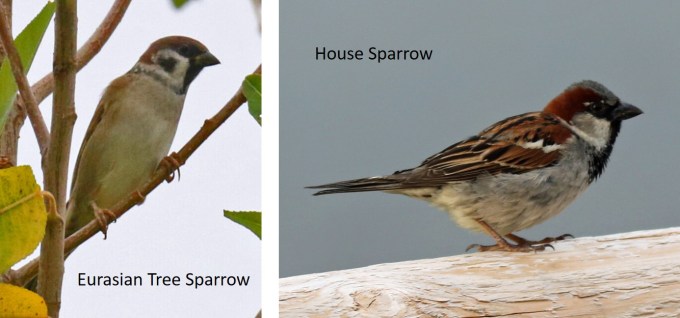
Both species are Old World Weaver Finches – not true sparrows.  The House Sparrow is dimorphic with males and females having different plumage, while both sexes of the Eurasian Tree Sparrow have the same plumage.  Identification was summarized by the Bird Club as follows.

  • European Tree Sparrow – Crown chocolate brown; Black spot in white cheek; Two wing-bars; Narrow white collar; Black patch on throat; Female looks like male.
  • English Sparrow – Crown slate colored, brown edge; Solid white cheek; One wing-bar; no collar; Black throat and breast; Female not like male.

Comparison Photo

Comparison

Shorebirds of 2018 (and Before)

Fall migration is in full swing and the last few weeks have been great for shorebirds in Western Washington – the impetus for writing this post.

Washington is an excellent state for shorebirds – some breeders, lots of migrants and occasionally a rare vagrant.  Altogether, sixty-one species have been seen in the state of which 16 are rare to exceedingly rare vagrants – some seen only a single time.  Migrating shorebirds come through in both in the spring (roughly March through May) and again in the Fall (roughly July through September although there is some carryover into October).  Because of the tidal mudflats and seashore habitats, far more species and individuals of  shorebirds are seen in Western Washington than Eastern Washington but a couple – Black Necked Stilt and American Avocet are common East and rare West and Wilson’s Phalaropes and Long Billed Curlews are somewhat more common in the East.

Of the 61 species ever reported in Washington, I have been fortunate to have seen 48 with the remaining 13 quite rare indeed.  I may someday see a few of them but I would be surprised if it will be more than a few, at least in the State itself.  In fact in all of my birding elsewhere in the ABA area, I have seen only three of those missing 13 species.  So far in 2018, I have seen 41 shorebird species in Washington.  The seven seen previously but not this year are:  Hudsonian Godwit, Wood Sandpiper,  Lesser Sand Plover, Red Necked Stint, White Rumped Sandpiper, Upland Sandpiper and Wilson’s Plover.  I have seen the latter three elsewhere this year.  All of the others save the Hudsonian Godwit (regular in the Central Flyway) are extremely rare anywhere in the U.S. except in Alaska where only the Red Necked Stint is seen regularly.

Washington has good migration in both the Spring and the Fall but more species are seen in the Fall.  As I said, my shorebirding has been very good the past week or two.  Among the best species seen were Buff Breasted. Pectoral, Baird’s, Semipalmated and Sharp Tailed Sandpipers, American and Pacific Golden Plovers, Ruff, and Red Necked Phalarope.  Here are photos of the shorebirds seen this year, in Washington, others out of State in 2018, others out of State prior to 2018 and then lists of birds not seen.

Washington Shorebirds – 2018

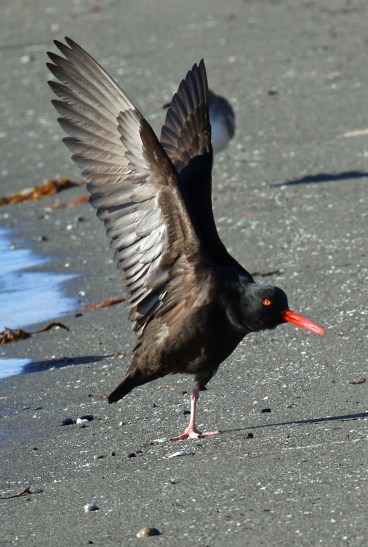
Black Oystercatcher – Fort Flagler SP – February 22, 2018

Black Oystercatcher Wings

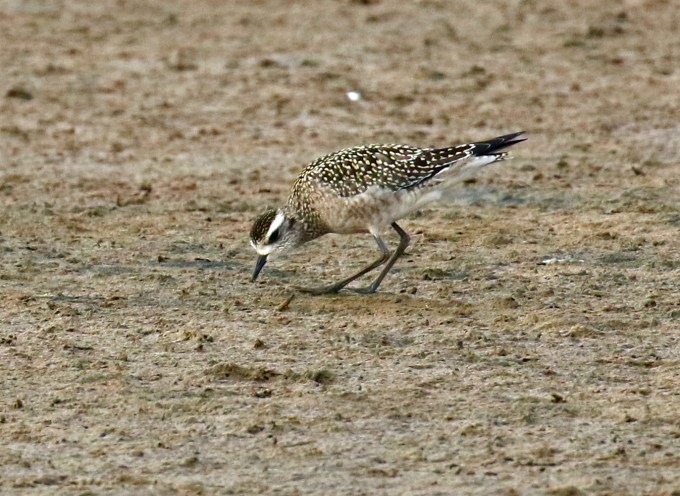
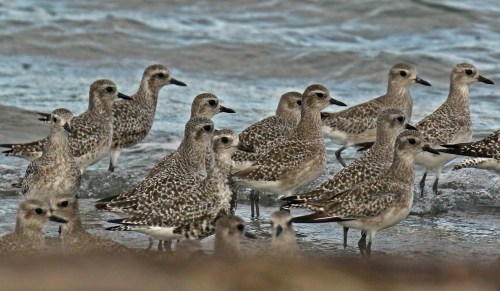
Black Bellied Plover – Tulalip Spit – September 11, 2018

Black Bellied Plovers1

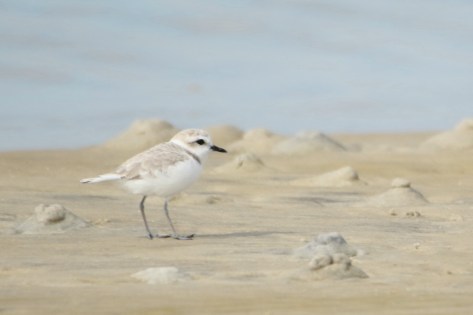
Snowy Plover – Grayland Beach – January 28, 2018

Snowy Plove 1

Killdeer – Hoquiam STP – May 3, 2018

Killdeer

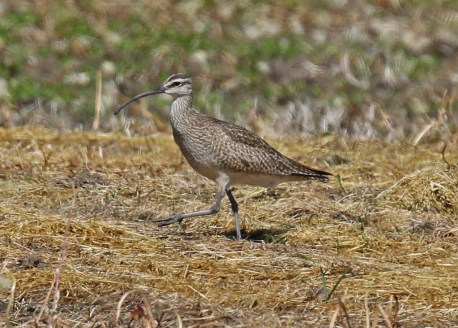
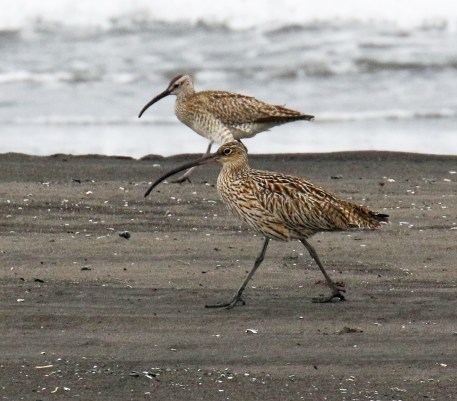
Whimbrel – Camano Island Rekdal Road – May 13, 2018

Whimbrel2

Long Billed Curlew – Nisqually NWR – July 5, 2018 (No photo this is from Bottle Beach – September 2015)

Long Billed Curlew 2 Bottle Beach

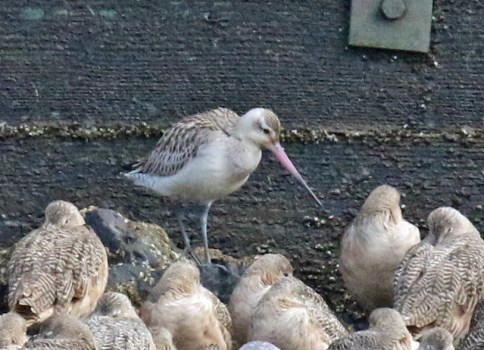
Bar Tailed Godwit – Hayton Preserve – June 26, 2018 (No photo then – this photo is from Westport Marina – August 2018)

Bar Tailed Godwit2

Marbled Godwit – Bottle Beach – August 11, 2018

Marbled Godwit 2 Bottle Beach

Buff Breasted Sandpiper – Ocean Shores Game Range – September 23, 2018 – (No photo then – this photo is from Midway Beach 2012)

Buff Breasted SP2

Pectoral Sandpiper – Ocean Shores Game Range – September 23, 2018

Pectoral Sandpiper1

Semipalmated Sandpiper – Eide Road – May 13, 2018 (Photo from same spot – September 2014)

Semipalmated Sandpiper

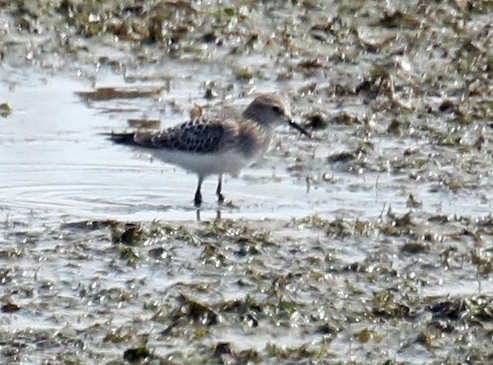
Baird’s Sandpiper – Wiley Slough – August 24, 2018 

Baird's Sandpipers

Semipalmated Plover – Open Beach South of Westport – August 11, 2018

Semipalmated Plover1 Open Beach

Red Knot – Bottle Beach – May 18, 2018

Red Knot

Sharp Tailed Sandpiper – Wylie Slough – September 20, 2018

Sharp Tailed SP2

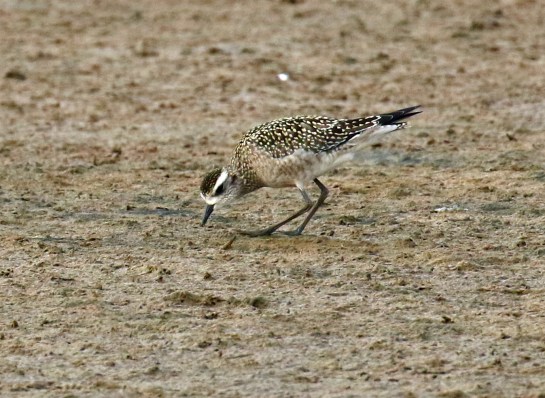
American Golden Plover – Ocean Shores Game Range – September 23, 2018

American Golden Plover1

Pacific Golden Plover – Ocean Shores Game Range – September 23, 2018

Pacific Golden Plover2

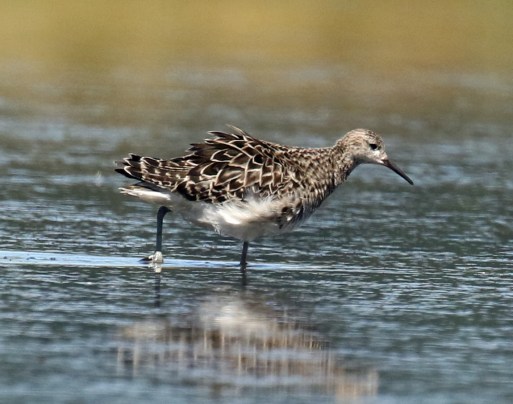
Ruff – Jakle’s Lagoon – San Juan Island – July 16, 2018

Ruff6

American Avocet – Redmond, WA – May 5, 2018

American Avocet

Ruddy Turnstone – Bottle Beach – May 3, 2018

Ruddy Turnstone1

Dunlin – Ocean Shores Game Range – September 23, 2018

Dunlin1

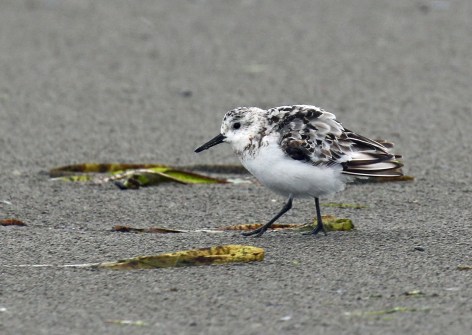
Sanderling – Open Beach South of Westport – August 11, 2018

SAnderling Open Beach

Solitary Sandpiper – Puyallup – July 24, 2018

Solitary Sandpiper

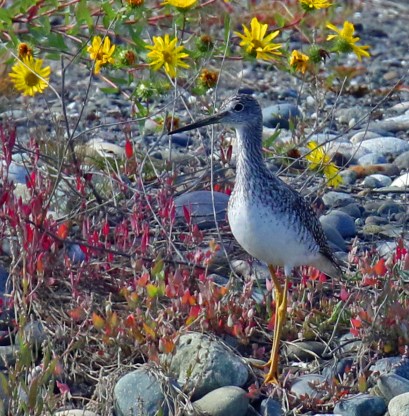
Greater Yellowlegs – Three Crabs – September 19, 2018

Yellowlegs and Yellow Flowers1

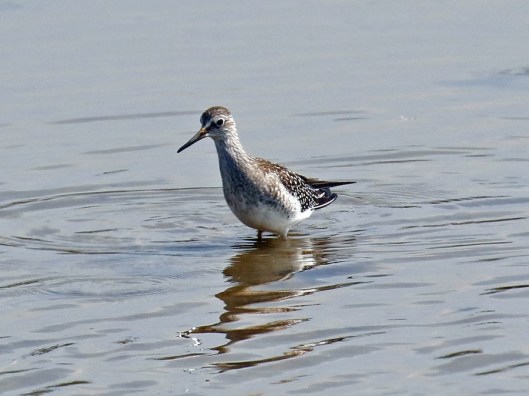
Lesser Yellowlegs – Wylie Slough – August 24, 2018

Lesser Yellowlegs

Willet – Tokeland Marina – August 11, 2018

Willet Tokeland

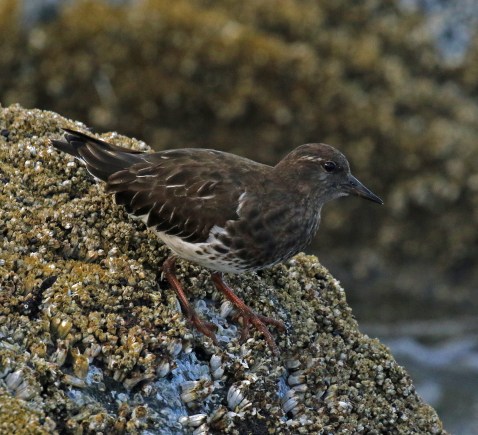
Black Turnstone – Ocean Shores Pt. Brown Jetty – September 23, 2018

Black Turnstone

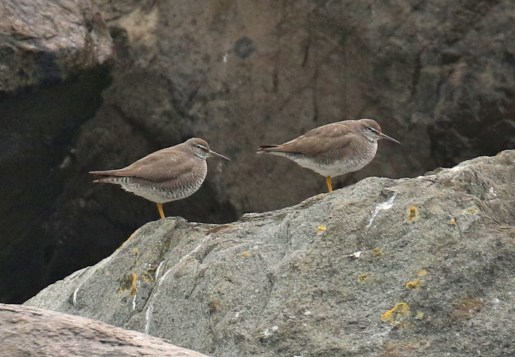
Wandering Tattlers – Westport Jetty – August 1, 2018

Wandering Tattlers on Jetty2 Pelagic

Rock Sandpiper – Ocean Shores Pt. Brown Jetty – January 3, 2018

Rock Sandpiper Fort Flagler

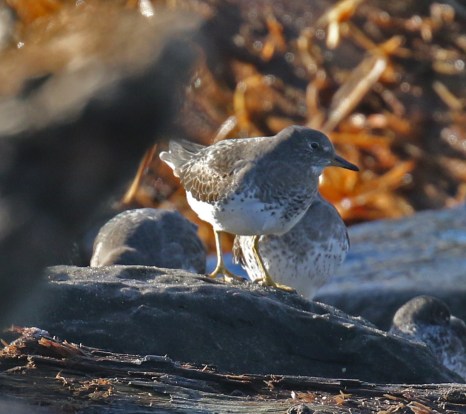
Surfbird – Ocean Shores Pt. Brown Jetty – January 3, 2018

Surfbird

Western Sandpiper – Jakle’s Lagoon – San Juan Island – July 16, 2018

Western Sandpiper4

Short Billed Dowitcher – Bottle Beach – May 18, 2018

Short Billed Dowitcher

Long Billed Dowitchers – Wylie Slough – August 24, 2018

Long Billed Dowitchers

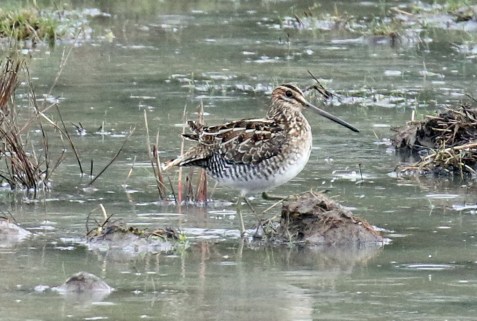
Wilson’s Snipe – Ridgefield NWR – January 7, 2018

Wilson's Snipe2

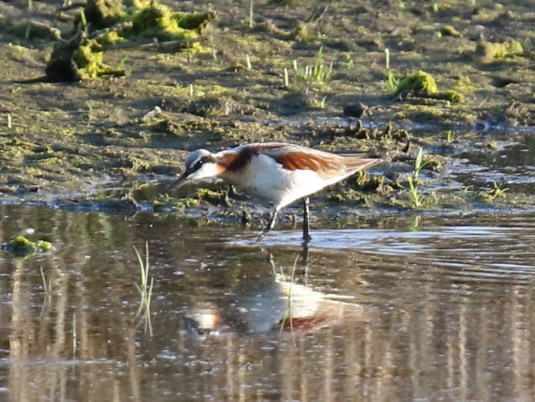
Wilson’s Phalarope – County Line Ponds – May 19, 2018

Wilson's Phalarope1

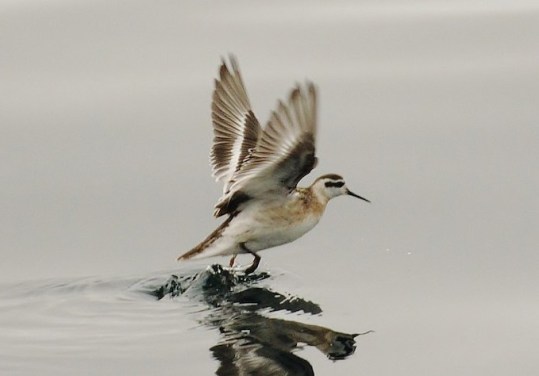
Red Necked Phalarope – Westport Pelagic – August 12, 2018

Red Necked Phalarope

Red Phalarope – Westport Pelagic – August 12, 2018

Red Phalarope

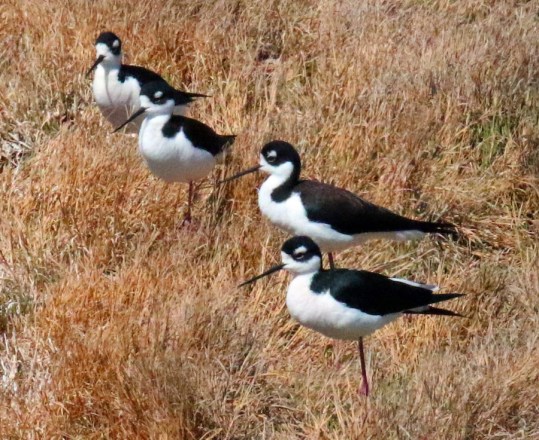
Black Necked Stilt – County Line Ponds – April 19, 2018

Black Necked Stilts

Spotted Sandpiper – Oso Loop Road – July 10, 2018

Spotted Sandpiper Breeding

Stilt Sandpiper – Wylie Slough – August 24, 2018

Stilt Sandpiper

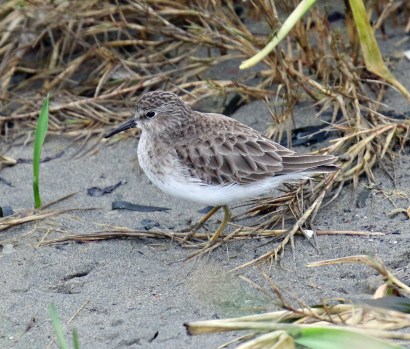
Least Sandpiper – Tokeland Marina – January 27, 2018

Least Sandpiper (2)

Outside of Washington in 2018

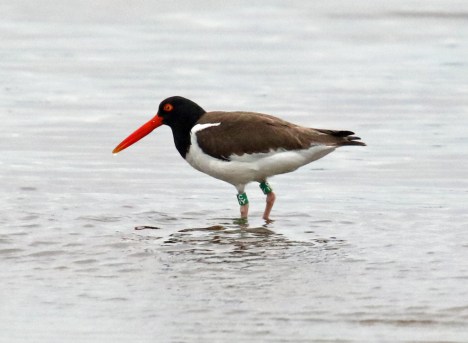
American Oystercatcher – Salt Pond, North Carolina – May 31, 2018

American Oystercatcher

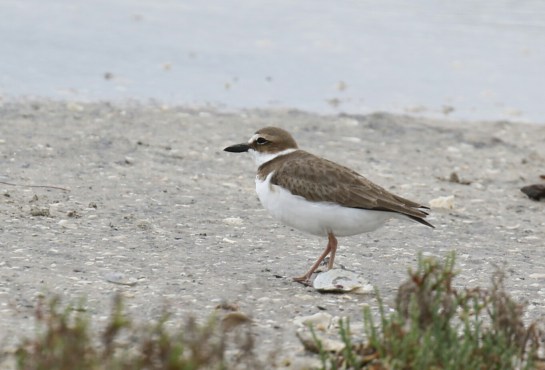
Wilson’s Plover – Corpus Christi, TX – April 3, 2018 (In WA in October 2012)

Wilson's Plover 1

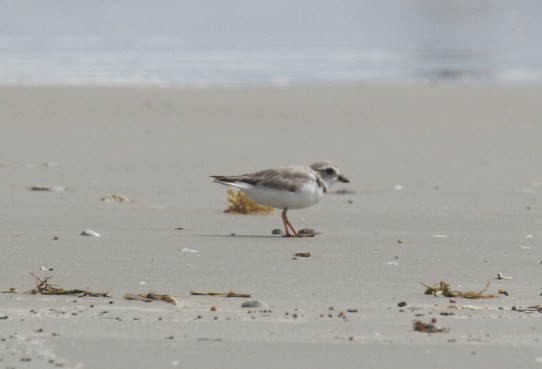
Piping Plover – Corpus Christi, TX – April 3, 2018

Piping Plover 1

Upland Sandpiper – King Ranch, TX – April 6, 2018 (In WA – September 2013)

Upland Sandpiper

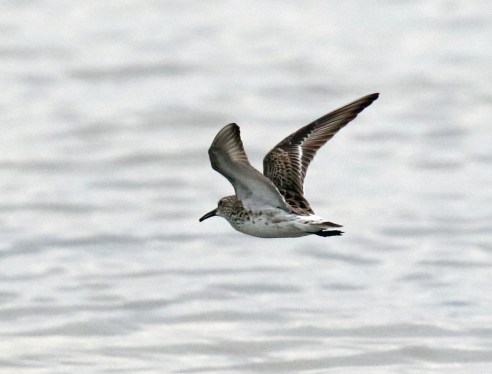
White Rumped Sandpiper – Rodanthe, North Carolina – May 30, 2018

White Rumped Sandpiper Flight

Shorebirds Seen Earlier than 2018 but Not This Year (Washington and Elsewhere)

Lesser Sand Plover – Open Beach above Ocean Shores – August 16, 2015

Lesser Sand Plover 5

Red Necked Stint – Crockett Lake, Whidbey Island, WA – July 8, 2017

Red Necked Stint 3

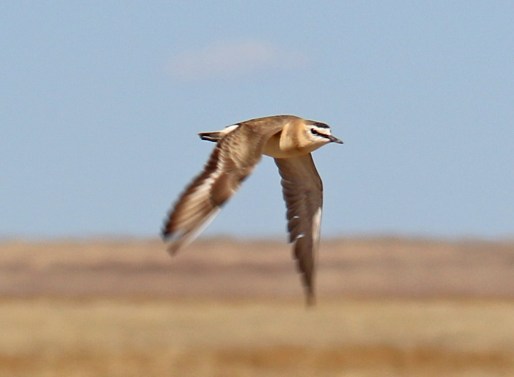
Mountain Plover – Colorado – April 7, 2016

5a-Mountain Plover in Flight

Far Eastern Curlew – Adak, Alaska – May 29, 2016

Far Eastern Curlew and Whimbrel

Hudsonian Godwit – Semiahmoo Spit – September 29, 2015

Hudsonian Godwit (2)

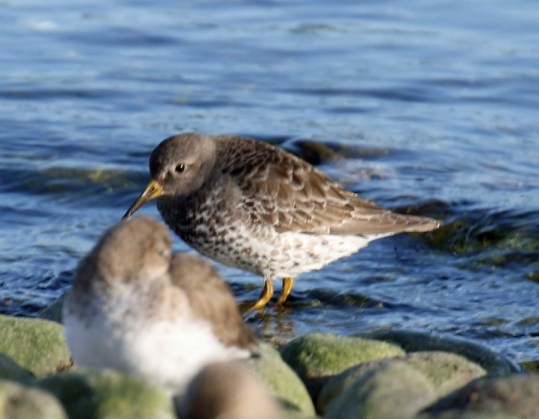
Purple Sandpiper – Kitty Islet, Victoria, B.C. – January 12, 2017

Purple Sandpiper1

Common Snipe – Adak, Alaska – May 30, 2016

Common Snipe2


Shorebirds in ABA Area Seen but No Photographs 

American Woodcock Assateague Island National Seashore -MD 11-May-75
Bristle-thighed Curlew Nome River (Nome-Kougarok Rd) – AK 4-Jun-16
Northern Jacana Manor Lake, TX 25-Apr-78
Spotted Redshank Fort Stevens SP–South Jetty/Parking Area – OR
26-Feb-81
Wood Sandpiper Samish Flats–West 90 – WA 11-Aug-11

Washington Shorebirds Not Seen in State

Common Ringed Plover Great Knot
Curlew Sandpiper Jack Snipe
Eurasian Dotterel Gray Tailed Tattler
Little Stint Bristle Thighed Curlew 
Spotted Redshank Piping Plover
Temminck’s Stint Mountain Plover
Little Curlew
Italics – seen out of State


Following Rule #1 – Not Needing Rule #2

Many times I have written that in chasing a bird, Rule #1 is to “Go Now!” and then I add that Rule #2 is that if you do not follow Rule #1, you cannot whine or cry about it.  Yesterday I was birding with Bruce LaBar at the incredibly beautiful Point Defiance Park in Tacoma, WA and we talked about these rules and hoped there would be an occasion to apply them soon.  Wow talk about “soon”.

This morning I was home in Edmonds working on some trip planning.  I had not showered or even dressed for the day. At about 11:45 an alert came from Ebird saying that a Phainopepla was being reported by Bob Boekelheide near Sequim.  This species has only been reported in the state of Washington once before – a sight record only – no photos.  It is a desert bird that is found in Southern California and Arizona.  It is a mega-rarity for Washington.

I called Bob immediately and he confirmed the sighting but said that it had disappeared – then as we were talking it had reappeared and he was looking at it.  Time for Rule #1.  The bird was 56 miles from my house — BUT I also had to take the ferry across Puget Sound from Edmonds to Kingston.  I did not check the schedule – it would be what it would be.  I threw on clothes and left immediately.  Fortunately the ferry terminal is less than two miles from my home.

It turned out that the next ferry was leaving at 12:05 p.m.  And it turned out that I arrived at the ticket booth at 12:03 p.m. and was the last car on the ferry.  I took this as a very good sign.  I called Bob again and got excellent directions and made it to Railroad Bridge Park a little after 1:40 pm.  Birders were there looking at the bird through a scope.  I took a few quick photos and then caught my breath and enjoyed great views, visited with the birders and called or sent emails to some of the people I had notified of the observation before I left.  I also had some excellent prunes that were growing wild in the thick vegetation where the bird was located – my lunch since there had been no time for any before I left and I sure was not going to stop.

Phainopepla – Railroad Bridge Park – Near Sequim Washington

Phainopepla

After the other birders left, John Gatchet and I continued to watch the bird from a couple of different viewpoints.  At one point it flew out from the Elderberry tree it favored and caught a crane fly right over our heads and then returned to its perch.  We also watched it being attacked by an Anna’s Hummingbird.

Phainopepla with Crane Fly

Phainopepla and Crane Fly

This execution of Rule #1 ranks right at or near the top of my successful chases applying the rule.  The other one that shares that ranking was the chase for the Swallow Tailed Gull that Ryan Merrill reported from Carkeek Park on August 31st last year.  I read Ryan’s post at approximately 7:10 am while again in my pajamas in Bellevue.  I got dressed and dashed out and despite it being  20 miles away, I was looking at the bird by 7:45 a.m.  No ferry but it was rush hour.  As it turned out the Gull stayed for a week so the rush was unnecessary, but you just don’t know.  I have missed other birds because I waited and I whined about them.  Now I follow Rule #1 whenever I can and if I miss – I live with Rule #2 because I know better.

A last Phainopepla story – repeated from an earlier blog post.  My first photo of one was at Julian, CA last January on my way from San Diego to Anza Borrego.  I was with a non-birder and had some very specific Ebird information about a good place to find one.  We stopped at a big field with some brush in the back and barbed wire near the road.  I played the Phainopepla’s call and one immediately appeared on one of the short bushes.  This amazed my friend who was even more amazed when I climbed through the barbed wire and got the photo below.

Phainopepla – First ABA Photo – January 31, 2017 – Julian California

phainopepla

I hung around the Phainopepla today and was very pleased that Steve Pink, Ann Marie Wood and David Poortinga all got there to see it.  Hopefully it will remain and continue the show.  If it doesn’t – those who miss will have to live with Rule #2.

My Very Non-Local Birding – International Favorites

Not much birding this week as I prepare for some trips in October and November and have been doing a lot of reading.  Some of that reading was of birds in foreign lands and I got an urge to write.Nothing elaborate – a favorite bird in each of the places I have birded outside the U.S.  Apologies in advance as many of these experiences were before I was taking photos so I have “borrowed” from the endless supply of online photos – most far better than I ever would have taken.  They are in chronological order from my trips.

Trinidad – May 1978

This was my first international birding trip – part of the incredible two week adventure that 3 birding buddies and I did in the Spring of 1974 that took us to Texas and Florida in addition to Trinidad utilizing an Eastern Airlines Fly Anywhere fare of $299 round trip with all of those stops and a return to Seattle.

In Trinidad we stayed at the Asa Wright Nature in the Arima Valley.  Our accommodation was the “Bungalow”.  When I opened my bedroll there was a scorpion inside.  Welcome to the tropics.  Fortunately that was the only one seen and the only poisonous snakes were seen at a distance.  Lots of wonderful birds – almost 100 species found without a guide.  All but a handful were life birds for all of us – just a few that we had seen in the U.S.  Almost impossible to pick a favorite, but I have chosen the Common Potoo – a “frogmouth”.  The picture is not mine but depicts this incredibly well camouflaged bird as we first found it roosting on a stump.  Seventeen years later I would see another in Brazil and two years prior to that I saw its close relatives, a Tawny and Papuan Frogmouths in Australia.  Cool birds!!

Common Potoo – Arima, Trinidad – May 4, 1978 – Online Photo

potoo bird

Hong Kong/New Territories – December 1979

This was my first trip to Asia – two weeks of good shopping, incredible food and some far better than expected birding.  Although most of the time was spent in Hong Kong itself, we also visited Kowloon, the New Territories and a brief sojourn into what westerners then called “Red China”.  The border had just been opened and small tour groups were let in – and watched very carefully. We also visited Macau.

The birding was a little bit of general observation wherever we were, but was primarily with a guide hired for the day with time at two reserves, Tai Po Kau and the Mai Po Marshes, both in the new territories and both fantastic.  Our guide was James (definitely not “Jim”) a classic Britisher who was an excellent birder and great company.  He provided lunch as well which included tea and crust-less sandwiches.   Not as good as the wonderful meals we had in Hong Kong each day – but quite good and appropriate in the field and the cloth napkins were a fine extra touch.

The birds were awesome and Mai Po Marsh was as impressive for waders and shorebirds as any place I had been.  All told in the two places we had over 80 species for the day including many waders that I failed to keep track of.  For purposes of this post I am omitting details and just choosing a favorite bird.  For this visit it is the Spotted Redshank, not just because it is a striking shorebird but also because I saw one just over a year later at Fort Stevens State Park in Oregon.  Sure wish one will visit us in Washington.

Spotted Redshank – Mai Po Marsh – New Territories – December 25, 1979

Spotted Redshank

Jamaica March 1980

This was another non-birding trip – a return to Jamaica.  See its predecessor in an earlier Blog Post (https://wordpress.com/post/blairbirding.wordpress.com/851) .  The trip in 1980 was just for island fun but I had to return to Dun’s River Fall to see the Streamertail Hummingbird that I had first seen there on a Spring Training lark while on the Harvard Track team in 1967.  Even for non-birders it was impossible to not notice this bird – the National Bird of Jamaica.  My Jamaica list includes 13 other species, so I must have paid some attention but I think the focus was more on the beaches.  I only wish that the photo was mine.

Red Billed Streamertail – Dun’s River Falls – Jamaica March 1980

Red Billed Steamertail

Japan – July 1983

Of all the international trips I have taken, this is the one that I probably most wished had time set aside for birding.  I was only able to spend part of one day doing so seeing only 31 species.  None were common for the time or place and I would see some again Europe later.  This was, however, in at least one respect my best trip ever.  We had been trying to “get pregnant” unsuccessfully for many years.  This was our – we give up trip – maybe to consider adoption when we returned.  Maybe the stars were aligned just right in Japan, but it was during this trip that the miracle of conception took place and almost 9 months later we had a wonderful baby girl who was “Made in Japan”.

Although unlike the Spotted Redshank of Hong Kong, I have not seen a Terek Sandpiper in the ABA Area, maybe someday I will.  It was great to see one at Wajima in Japan.

Terek Sandpiper – Wajima, Japan – July 28, 1983 

Terek Sandpiper

Argentina – March 1989

After my daughter was born, there was very little birding and traveling for a few years.  I also had developed another outdoor hobby – flyfishing.  In fact in the 13 years after her birth (and then the birth of my son 4 years later) I added only four new birds to my Washington State List – bringing it to a rather unimpressive 200 species.  The four new birds were pretty great, though:  Little Gull, White Tailed Kite, Rustic Bunting and Steller’s Eider.  I have seen all but the Steller’s Eider in Washington again in the past 5 years – but that was essentially a 25 year drought.

Just after my son was born I was able to get away for two exotic fishing trips both with fishing buddies from Seattle.  The first was to Argentina in March 1989 and the following year to Kiribati (Christmas Island).  The trip to Argentina was my first to South America.  It was fantastic.  Birds were seen but not sought.  Trout were definitely sought and many were caught.  I hope to get back to Argentina again – incredible culture, scenery, agriculture, wine, food and people.  And the fishing was incredible.  I only noted 41 species, but it is hard to hold both a fly rod and binoculars at the same time.  It was impossible to miss my favorite bird though – the Andean Condor.  They are massive birds – even larger than the California Condor and with a wingspan of up to 10 feet,  We saw several flying above us in the Andes – magnificent creatures.

Andean Condor – Junin de Los Andes – Argentina – March 1989

Andean Condor

Republic of Kiribati – May 1989

This was another fishing trip but this time it was fly fishing for Bonefish and some other salt water species.  We had somehow found a special bargain rate that included transportation and lodging and it was simply too good to pass up.  Located on the Equator about 1300 miles south and west of Hawaii, Kiribati is a Micronesian country of islands and atolls.  We were essentially standing in a former volcanic crater of Kirimati (Christmas Island to some) wading in saltwater and trying to catch one of the  most prized fishes in angling – powerful super fast fish that made steelhead look like slowpokes.  And above us were often really cool birds.

Since there were only 7 species seen, I will list them all:  White and Red Tailed Tropicbirds, Greater and Lesser Frigatebirds, White and Bridled Terns and Brown Booby.  There were probably others but they did not make it onto my list.  Someday I hope to see one of those Tropicbirds in the ABA Area.  A sad note is that this tiny country is one of the ones most at risk to rising ocean levels from global warming.  It may not even survive into the 22nd Century.  Hard to pick it over the Tropicbirds, but the White Terns were really special.

White Tern – Kirimati – Kiribati – May 10, 1989

White Tern

Costa Rica – April 1997

There was essentially no birding during the years of 1990 to 1997 as work and kids were the focus and joys of our lives.  I am sure I noticed birds on some trips but the first one that had any significant avian content was a family trip to Costa Rica in April 1997.  We hired a car with driver and naturalist guide for a few of our days there and saw the fantastic nature that makes this country such a great place to visit.  There was no big emphasis on birding or attempts to see specific species, but in Costa Rica, birds are hard to miss and even both kids enjoyed some birdwatching.

We visited Monteverdi, Tiskita, and Arenal and during our visit, I managed to see 152 species, most of them new to my World List.  Hard to beat the thirteen species of hummingbirds, but also hard to choose a favorite among them.  The same could be said for the 8 species of parrots or parakeets.  On the other hand it is easy to move past the 17 species of flycatchers.  All of these species types were precursors to similar long lists of related species found in later visits to the tropics.  If I had to pick a favorite it would have to be one of the manakins – probably the Red Capped Manakin.  In addition to being very striking birds, their appeal is the courtship behavior.  Males display at leks like various grouse-like birds and snap their wings in addition to making pretty loud calls.  Quite a show.

Red Capped Manakin – Tiskita Jungle Lodge – Costa Rica – May 14, 1997

Red Capped Manakin

Hungary – July – 2000

In the summer of 2000, my daughter traveled to Austria, Hungary and the Czech Republic as part of a tour with the Seattle Youth Symphony.  I got to go along as a part time chaperone with my one condition being that I could take one day off to do some birding.  Most of the visit was to Hungary – a couple of days in Budapest and then 5 days in Pecs, Seattle’s Sister City.  In Pecs. I was able to hire a student guide who took me out for a day of birding in the countryside.  The birds were fun and mostly new to me as I had never birded in Europe before.

It was also fascinating to travel outside the big cities in a country that had not been free of Communist rule for very long.  An example of that was our lunch in a very simple cafeteria in a Soviet era apartment building where there were three choices of sandwiches – essentially two thin slices of bread with either chicken, ham or cheese between – nothing else.  I loved the rural countryside – especially what seemed like miles of sunflowers in full bloom.  We only saw 54 species, a potpourri of raptors, shorebirds, some waders and woodpeckers and mostly passerines.  The European Bee Eater and the European Roller were big hits, but without question my favorite bird was the Great BustardBustards are BIG birds – especially the males standing 3 feet tall, with wingspans up to 9 feet and weighing as much as 40 pounds but averaging just over half that amount.  They are considered the heaviest birds that fly.  We saw both a male and a much smaller female and even saw a short flight before they disappeared in high grass.

Great Bustard – Fields South of Pecs Hungary – July 5, 2000

greatbustard

Australia – September 2003

My trip to Australia was fantastic in every way – great places, great people, great birds, great fun.  I was only in Eastern Australia and definitely want to return to see more.  Every detail of this trip was planned online and there was no conversation directly with anyone – and everything worked well.  It is a LONG flight to Sydney from Seattle via Los Angeles.  Thankfully the plane was nowhere near full and I had an entire row of seats to myself in the back of the plane.  How long was the flight – I watched 6 movies!!!

The time in Australia started in Sydney and included visits to Brisbane, Cairns, Toowoomba, O’Reilly’s, Kuranda, Kingfisher Park, and Daintree.  I flew from Sydney to Brisbane, but the rest of the travel was by car.  I managed some sightseeing and did some ocean swimming despite some fear about sharks and poisonous jellyfish.  See my earlier Blog Post for many more details and photos.  (Bird and Memory of the Week – Bush Thick-Knee: https://wordpress.com/post/blairbirding.wordpress.com/1634).  There were so many great birds – 267 species in all.  Laughing and Blue Winged Kookaburras, 5 different Fairy Wrens, my first ever Thick-Knee, 23 shorebird species, 16 parrot-like species, 4 Bowerbirds, and many others.  I also saw Koalas, Kangaroos and a Platypus.

But there is no question about my favorite bird.  Early one morning I was alone at Daintree NP before it was even officially open.  I was hoping to find a Southern Cassowary and was stunned to find a father with a youngster.  (The males raise the chicks).  It was like being back in time and looking at the link between dinosaurs and birds.  These giants are the second heaviest birds on earth behind the Ostrich – up to 125 pounds.  They have a razor sharp 5 inch toe that can eviscerate anything and anyone.  They cannot fly but they can jump 5 feet in the air – quickly.  And they can live over 30 years.  I kept my distance but had fantastic views and got a photo.  One of my all time favorite birds and favorite experiences.

Southern Cassowary – Daintree NP – Australia – September 18, 2003

cassowarywithchick

Brazil – September 2005

It was going to be hard to beat Australia, but my three weeks in Brazil came close.  I worked with a tour company but did the trip on my own.  I had a guide only for two days at Cristallino in the Amazon and not all of my time was spent birding as I enjoyed time in Rio, at Iguassu Falls, the Pantanal and the Amazon.  Some day I will write up the entire trip, so just a few highlights for now.

All told I saw 273 species including many spectacular birds.  More than half were at Cristallino and 69 were in the Pantanal.  Among the best birds were 6 Aracaris and Toucans, 19 parrot like birds including Hyacinth Macaws, 17 Antbirds, 5 Trogons, 16 waders, 2 Tinamou species, a Sungrebe and 14 raptors including my favorite for the trip and one of my favorite stories.

To get to Cristallino, I flew first from Rio de Janeiro to Sao Paulo, and from there to Alta Floresta and then by boat to the Lodge.  While waiting for the boat I met a tour group led by a famous Brazilian guide.  While he was regaling his group in the building I walked around looking for birds.  Unbeknownst to me there was a Harpy Eagle nest up one of the trails.  I found it in shock and it was occupied by a mother and chick.  I raced in to tell the others and blew his story as he was just about to lead the group to see one of the most sought after of Amazonian birds.

Harpy Eagle Chick Exploring by Its Nest – Alta Floresta – September 8, 2005

Harpy Chick AF Hotel

There were also lots of great mammals including a Jaguar in the Pantanal, giant River Otters, Tapirs and a Jaguarundi.

Kenya – November 2007

This trip was the subject of an earlier Blog Post with mostly photos.  See “Keen on Kenya”  https://wordpress.com/post/blairbirding.wordpress.com/20876.  I include my favorite bird from that trip. – one of so many great birds and 506 species seen.

Secretarybird – Samburu National Reserve- November 3, 2007

35-secretary-bird

Belize – March/April 2010

This was a combination of fishing, birding and relaxing.  Most of the birding was at Chaa Creek and the fishing (with a little birding) was at Ambergris Key.  138 species were seen but only 35 were new life birds because of the overlap mostly with Costa Rica.  One bird seen there that sometimes makes it into the ABA area was a Blue Bunting.  Would be nice to see it in Texas someday.  Probably my favorite bird was the Collared Aracari.

Collared Aracari – Chaa Creek – Belize – March 30, 2010

Aracari

India – January 2011

This was a bucket list trip.  I was scheduled for my first ever surgery – a complete shoulder replacement – and I asked myself what did I most want to do – just in case … The answer was easy, I wanted to see a Bengal Tiger in India.  I found a tour that included Tigers, the Taj Mahal and birds with Victor Emanuel Nature Tours.  Another wonderful trip.  We saw a number of tigers and I was blown away by the Taj Mahal.  We also had 278 species including many wonderful, beautiful and charismatic ones.  There were 18 species of waders, 15 shorebirds, an incredible 38 raptors including 8 owls, many parrots, and a little bit of everything else.  My favorite was probably the Indian Peafowl – the so called Peacock of a number of gardens, estates  and zoos in the U.S.  In India they are wild.

Indian Peafowl – Kanha Tiger Reserve – January 8, 2011

25 Indian Peafowl

Peru – November 2013

This was an odd trip in some ways.  Some great highlights with lots of birds – over 400 species.  I am sure there must have been a reason, but I cannot remember why I squeezed it into 2013.  That was my Big Year in Washington state and I had already traveled to Texas for 10 days in April a good time to bird in state as well.  I must have missed some birds then and now I was gone for 3 more weeks. (There was one bird I missed – the Vermilion Flycatcher that visited Ridgefield Refuge and was seen by many of my friends.)

The trip was with Field Guides and was focused on North Peruvian endemics.  We had to make some mid-tour changes due to road washouts, but mostly pleasant travel.  Somehow the tour, though just wasn’t fun.  Maybe I was too worn out from the intensity of thr 10 months of Big Year birding in Washington.  Mostly though it was that there was too much birding with the birders standing at one spot to try for an often poor quick look at a skulking bird to be ticked on a life list.  Just not that satisfying.

But there were many good birds as well – with good views and even some photos.  We saw 25 Tanagers , 50 Flycatchers and 39 Hummingbirds, 19 Raptors, 3 Quetzals/Trogons, 2 Guans and 2 Tinamous and lots of everything else including 50 species of “forest” birds that were the tough ones to find and see – Antwrens, Woodcreepers, Tapaculos, Antbirds, Spinetails and others..   It is hard not to choose the Cock of the Rock as a favorite but as a group, it was definitely the Hummingbirds and the Magnificent Spatuletail beats out all the others, although the Emerald Bellied Puffleg was a close second.

Magnificent Spatuletail –  ACP Abra Patricia–Owlet Lodge – November 12, 2013

Spatuletail

South Africa – October 2014

This trip was a joint program with the American Birding Association and Rockjumper – ten days with them and then a few days on my own in Kruger National Park.  Africa is fantastic. Not quite as spectacular as Kenya – but very close.  The visit started in Cape Town and ended in Johannesburg.  Altogether 328 species of birds and many wonderful mammals as well.  I would like to return to most places I have visited and that certainly applies to South Africa – beautiful area with endless things to fascinate.

Unlike Kenya, this trip to Africa included coastal birding and even a pelagic trip.  The pelagic trip was a near disaster even though there were some good birds including three albatross species (Yellow Nosed, White Capped and Black Browed) and Southern Giant Petrel.  The weather turned bad.  Our boat lost one and then a second engine.  It took 30 minutes to get one going again.  Three albatross species were great, but the trip the day before had seven species including Royal and Wandering.

On this trip I also had my first (and so far only) penguin species – African Penguin, 7 Cuckoos, 30 Raptors, 8 Gallinaceous species, 4 Bustards, 6 Swifts, 3 Bee-eaters, 2 Rollers and 2 Sugarbirds.  As in most of the previous entries, it is crazy to choose a favorite, but since that is the format I have elected, I do so here as well – BUT – I do get to change the rules when I want and since this is the last entry I will choose two – not just favorite birds  for the trip but also two of my favorite all-time photos.

Lilac Breasted Roller

lilac-breasted-roller-2

Bateleur

Bateleur in Pond1

Where to next?  I have a lot of travel ahead in the U.S. for a year or two and then will hopefully get a chance to go abroad again.  So many places to go.  These are definitely on the list:  Botswana, Borneo, Ecuador, Turkey, Spain, Malaysia and…and…


A Great Week of “Local” Birding

This will be another relatively short blog post.  Had I either seen the Little Stint I chased in B.C. yesterday or if I wrote about my reflections on that experience, it would be much longer.  Cannot revise the missed observation yesterday but someday I may write up those reflections.  Not now.

What an extraordinary seven days of “local” birding it has been.  At least it is local in that there were only day trips; there was no travel by airplane or even to far eastern Washington; but many miles were covered with trips to Neah Bay, British Columbia, around King County and to Kitsap County.  The birding was all about chases to find targeted birds with no real attention to increasing species counts.  Most of the chases were successful, but there was the major miss of the Little Stint and then this morning, the Buff Breasted Sandpiper that had been seen yesterday at the mouth of the Cedar was not relocated, but there sure were some great successes.

All told, I saw 70+ species this week  – not a huge quantity but great quality.  The week started with no birding on Monday, but on Tuesday there was the Franklin’s Gull and the “not a Ross’s Gull” at Point No Point. That was followed with the extraordinary Painted Redstart on Wednesday at Cape Flattery.    Tufted Puffins at Cape Flattery were other quality observations.  Those events were detailed in my previous blog post.

No birding on Thursday, but Friday may have been even better than finding the Painted Redstart as I was able to find and photograph the LeConte’s Sparrow that had been discovered by Jason Vassallo at Discovery Park.  This was a Life Bird and was one I was hoping to see on some upcoming trips to the Midwest and to Louisiana later this year.  I never expected to have a chance in Washington.  Typically it is very much a skulker, and I got lucky – photographing it during the very few seconds it was in the open.  It was ABA Life Photo #690 – I was thrilled.

LeConte’s Sparrow

LeConte's Sparrow5

No birding on Friday either, but on Saturday I left very early to join a friend in B.C. and look for the Little Stint that had been seen at Boundary Bay the previous day.  For a number of reasons I am not going into details, but the bottom line was that after many hours of looking, I left and less than an hour later, the group found the Stint.  I returned but it had flown off and was not relocated while I was there for another hour plus.  I left again and 5 hours later it was found again.  Sure it would have been nice, but maybe I am finally maturing as it was not a great disappointment and took nothing away from the rest of my week.

The good news from that trip though was that there were some other nice birds.  One was a beautiful little Merlin that perched in a tree near our starting point at the foot of 96th Street.

Merlin

Merlin

Earlier before joining the group, I had a distant only look with two other birders of six Buff Breasted Sandpipers in a field west of 88th Street.  They were my first for the year.  This seems to be an incursion year as there have been numerous records on the Pacific Coast and 13 had been seen at this same field the previous day.  Lousy flight photo only, but I love this bird and include a photo from Washington some years back.

Buff Breasted Sandpiper

Buff Breasted SP2

During the failed search for the Little Stint, I found a flock of 11 Baird’s Sandpipers.  I had seen them several times earlier this year, but these were close and in good light – two key components for good pictures.

Baird’s Sandpiper

Baird's Sandpiper1

It did not result in a quality photo, but the B.C. birders, I was with were quite excited about a Snowy Plover that was found – pretty far away and in poor light but clearly identified in the scope views and this is an ID confirming photo.  They are very rare in B.C.  They breed in Washington but not there.

Snowy Plover – Rare in B.C. – Distant Photo

Snowy Plover1

In addition to many hundreds of Western Sandpipers, Sanderlings and Black Bellied Plovers, other good birds on the extensive mudflats included a Stilt Sandpiper, Ruddy Turnstones and a Pacific Golden Plover.  I was also able to see a Great Tailed Grackle at Point Roberts.  Point Roberts is a weird deal – a little peninsula reached only through Canada but part of Whatcom County, Washington.  I had seen many in other states this year, but this was the first in Washington where it is extremely rare.

While I was up in Canada yesterday, a Buff Breasted Sandpiper was seen at the Mouth of the Cedar River in King County.  Hoping to add it to my year list in the sate, I went there this morning – no luck but great visits with some other birders and a nice view of a juvenile Semipalmated Sandpiper – a good county bird.  Since it was sort of on the way home, I detoured to West Seattle and found the rare Ruddy Turnstones that had been hanging out there and also found friends Jon Houghton and Bill Boyington who were watching the Turnstones as I arrived.  Not great light but a decent ID photo.  I was not aware of it until I got home, but this was the first Ruddy Turnstone I had seen in King County.

Ruddy Turnstone – West Seattle

RUTU

One more good bird for the day was a Parasitic Jaeger scoped way out in the Sound – almost to Vashon Island.  Again, a new county bird.

Had I seen the Little Stint, at least observation and rarity-wise it might have been my best week ever.  Still pretty close with the Painted Redstart and LeConte’s Sparrow with the other goodies included per the above.  Altogether I had 20 species of shorebirds and at least the following dozen quality birds.

Baird’s Sandpiper Painted Redstart
Buff-breasted Sandpiper Parasitic Jaeger
Franklin’s Gull Red Knot
Great-tailed Grackle Ruddy Turnstone
LeConte’s Sparrow Snowy Plover
Pacific Golden-Plover Tufted Puffin

A great week – bring on another.