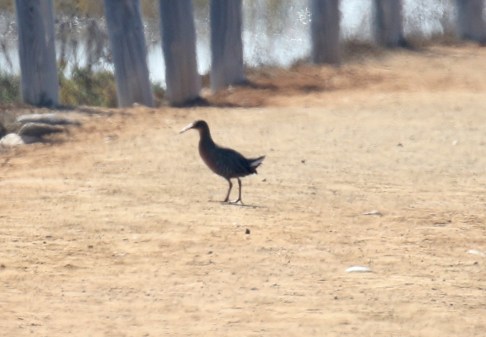
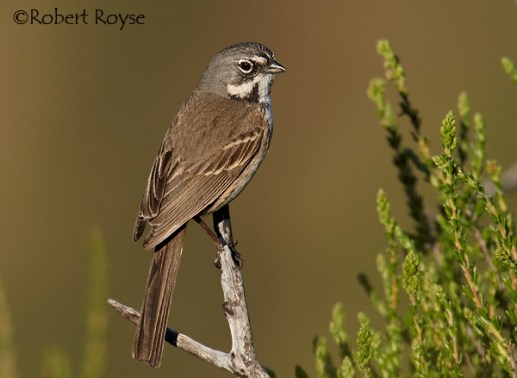
2017 – All Goals Reached (At Least the Birding Ones)

Quite a year – filled with wonderful birds and people and places – many filling previous blog posts in 2017.  Some repetition here is probably inevitable, but I will try to keep it to a minimum.  I just want to celebrate and summarize and then move headlong into the next year.

Somewhere along the way, I set some goals for birding as well as for personal matters.  Some of the latter did not go as well as I would have liked but this is a birding blog, so I will mostly skip those and reflect on the birding ones.  That said I do wish the others had been met and if it would have mattered, I would have given up the birding successes to achieve the others.

In one of my blogs earlier this year I think I set out the 7 goals I had set for the year – all multiples of 100 – my “double zero” goals, and later blogs have detailed reaching each of them.  Again, these were the objectives:  100 species in one day; seeing my 200th species in Kittitas County; seeing 300 birds in my home state of Washington for the year; getting a photo of my 400th species in Washington; seeing 500 species in the ABA area for the year; getting a photo of my 600th species in the ABA area; and lastly getting my ABA area life list over 700 species.

I hit the 100 goal on June 24th starting out in hometown Edmonds with a Barred Owl in Yost Park.  I added another 34 birds in Edmonds and then headed east picking up another 15 species in the Snoqualmie Pass area before moving on to one of my favorite birding areas, Kittitas County, where I added 36 species.  The 100th species for the day – a Bullock’s Oriole was found at the Wenas Campground in Yakima County.  I added 16 more species ending the day with a Common Merganser on the Tieton River.

Goal 1 – 100th Species in One Day – Bullock’s Oriole – Wenas Campground, June 24th
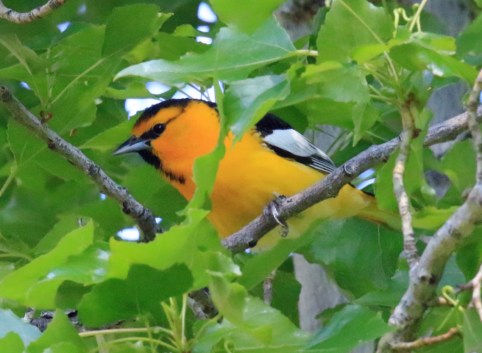
Bullock's Oriole

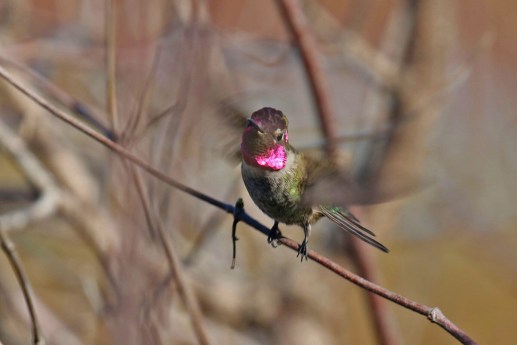
The second goal – my 200th bird in Kittitas County was almost unknowing – an Anna’s Hummingbird at feeders – just east of Snoqualmie Pass and thus in Kittitas County.  Rufous Hummingbirds are common in Kittitas County but Anna’s are not.  I had lost track of that and it was almost an afterthought to try to find one Anna’s among the many Rufous Hummingbirds at the feeders.  Greatly outnumbered by the 16 Rufous Hummers, on June 16th, I found a single Anna’s.  Later on July 12th an American Three Toed Woodpecker became species 201 in the County.

Goal 2 – 200th Species in Kittitas County – Anna’s Hummingbird – Snoqualmie Pass – June 16
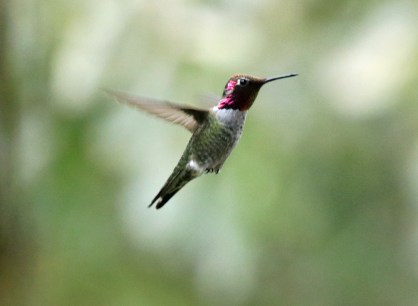
Anna's Hummingbird

Although I wasn’t so sure at the time I set it, the goal of seeing 300 species in Washington for 2017 was readily reached (and surpassed).  Over the preceding 5 years I had averaged 355 species so 300 would have seemed “easy”, but in each of those years I had intentionally tried to maximize the species seen, and in 2017 much more time and energy was planned to be spent seeking birds outside of Washington in the ABA area going after some of my other goals.  The combination of some good birds showing up in Washington which led to adding both ABA birds and state birds for the year and doing more state birding than anticipated as some of my non-birding goals went astray, resulted in me hitting my 300 goal with a Solitary Sandpiper at the Redmond Retention Ponds on July 26th.

Goal 3 – 300th Species in Washington – Solitary Sandpiper – Redmond Retention Ponds – July 26

Solitary Sandpiper1


Getting photo number 400 of Washington bird species was maybe the highlight of the year.  As chronicled in my Blog Post: A Swallow Tailed Gull – Way Beyond WOW!! somehow a Swallow Tailed Gull which belongs in the Galapagos and had only been seen north of the Equator one other time, made it to Carkeek Park on the morning of August 31st just when super birder Ryan Merrill just happened to be there.  He recognized the rarity and got the word out to the birding community.  Even though I was 25 miles away in Bellevue at 6:45 a.m. when Ryan’s Tweeters post appeared, I somehow got dressed and with the miraculous absence of traffic was at Carkeek park and looking at this incredible find by 7:30 a.m.  I took a quick photo – and then many more – so this of all species turned out to be photo number 400 for Washington.

Goal 4 – 400th Washington Species Photographed – Swallow Tailed Gull – Carkeek Park – September 1, 2017

Swallow Tailed Gull 3

With goals, 5, 6 and 7 in mind, I had planned lots of travel in the U.S. for 2017 with trips to Arizona and Florida being the most important but there was also a mostly non-birding visit to San Diego in late January and a visit to the East Coast to see my kids that included a day with some birding on Cape Cod.  It was during the Cape Cod trip that I met goal #5 – seeing my 500th bird in the ABA area for the year.  It was a Mute Swan seen in a pond in Duxbury, MA on October 9th.  Mute Swans are occasionally seen in Washington but are not “countable” here as they are not considered an established species (and I disagree), however, they are well established in the East and countable as such in Massachusetts.  Given that inconsistent status, I night have preferred a “better” species for #500 for the year but it is a fine looking bird.

Goal 5 – 500th ABA Species for the Year – Mute Swans – Duxbury, MA – October 9th

Mute Swans

Goal 6 was the corresponding ABA accomplishment to Goal 4.  Instead of 400 species photographed in Washington, it was getting a photo of my 600th ABA species.  This one is a little embarrassing as I really do not know which specific bird on my Arizona trip was photo number 600.  I added MANY new photos on that trip and since I was not the one keeping the lists, some of the specificity as to exactly when each bird was seen and photographed is not clear.  I know it was one of the new birds/photos for August 3rd and my favorite bird that day was the Thick Billed Kingbird so I am going with that.

Goal 6 – 600th ABA Life Photo – Thick Billed Kingbird – Patagonia Roadside Rest Area – August 3rd
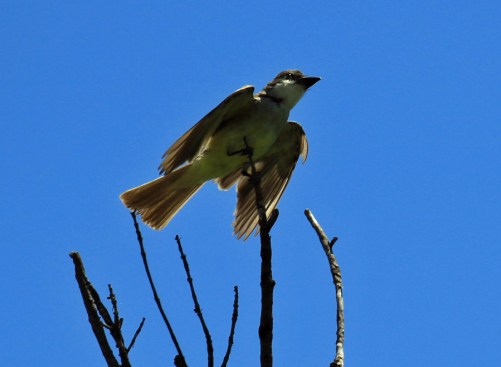
Thick Billed Kingbird1

One more to go and this was the one that I did not think I was going to make.  It used to be that someone who had an ABA Life List of 700 species had probably spent many years and many miles accumulating that number of species.  Getting to that number was like gaining admittance into a special club – rarefied company.  It is still a pretty good club but with an enormously expanded membership as modern travel, communication and data resources has made 700 a number that many have even gotten in a single year.  That said, finding 700 species in the ABA area requires extensive birding in many habitats at many times of year, multiple “chases”, some skill and some luck and definitely some perseverance and drive – and maybe a little mental instability – at least according to non-birders.  It almost certainly requires lengthy and probably repeated visits to Arizona, Texas, Florida, Alaska, California, New England, the plains, the coasts, deserts and the mountains.  It probably involves multiple pelagic trips and visits to some famous birding meccas.

I had done most of the above – many back in my first decade of birding – 1971 to 1981 – and then some more lately.  I had visited Texas and Arizona and Florida and seen many of the “specialties” in those places.  I had more recently been to Maine and Colorado and Alaska and added 30 ABA “Lifers” on those trips.   But my concentration had been more on birds in Washington, so at the end of 2016 my ABA Life List was 664.  The “magical 700” was imaginable, but it would require some travel, lots of luck and some help.  I think I made up my mind to at least try for 700 when a Falcated Duck showed up in Washington in mid-January – a first new ABA bird for the year.  I made plans to visit Florida and Arizona – states where as I said I had previously seen many of the specialties, but where many possibilities remained – especially in Florida where a number of “exotics” were now recognized and had not even been on the list when I had last visited in the 1970’s.

Falcated Duck – Padilla Bay – January 16th – The Catalyst to go for 700

falcated-duck2

As it turned out, a couple of misses in Florida and some more in Arizona left me at 690 when I got back from Arizona on August 8.  One might think that it would be easy to add “only 10 more species” but without an expensive and maybe not even possible trip to remote Alaska, there just weren’t places to go to get more than a couple of birds at a time and I did not have the time, money or energy resources to make the 5 or 6 trips that would probably be required.  I decided I would just be happy with hitting goals 1 through 6 and then work on 700 in 2018.

Then a couple of unexpected new birds.  The aforementioned Swallow Tailed Gull showed up within just a few miles from my house.  That was 691.  In October at the end of a visit to old haunts on the East Coast and a visit to my children in Brooklyn and Boston, I squeezed in a few hours of birding on Cape Cod – getting that 500th ABA Bird for the year and adding Cory’s and Greater Shearwaters bringing my total to 693.  It still looked unlikely – especially as now it was already mid October – past migration and a time when new birds are less likely to find.  California might offer a handful of species, but preliminary study suggested that I could maybe get 5 new species and with some real luck – maybe a 6th.  Figuring it would be worse to get to 698 or even 699 after yet another expenditure of time, energy and dollars.  I decided to forego the trip.

Then two things happened.  I got a reminder from Alaska Airlines that I had some credit in my account from a changed earlier trip to California – no refund but credit towards another trip that would be lost if not used during this calendar year.  And I also got a reality check that the relationship I had been trying hard to build and preserve over the past year just wasn’t going to work.  We had both known for some time that despite so many good parts, those parts just weren’t going to add up to the “be all” relationship that had been hoped for.  No ill will or blaming – just a sad and disappointing reality and definitely some pain in the process.  I acknowledge that I often use birding as a distraction from those parts of life that are not so great to deal with.  I needed to get away.  The credit from Alaska Airlines would cover a trip to California.  As a minimum I would get some new ABA Photos and some new ABA year birds and I would get closer to the 7th goal as well.  So off I went.

The details were outlined in my numerous blog posts about the California trip.  It was helpful as a distraction and with the surprise arrival of three major unexpected rarities: Red Footed Booby, Garganey and Rufous Backed Robin, I was able to reach 700.

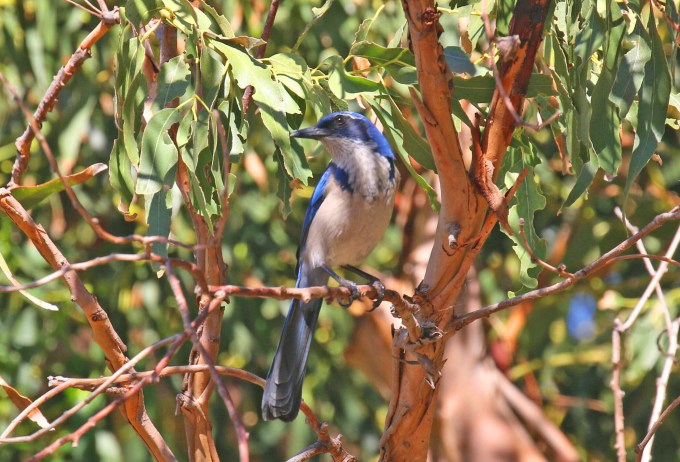
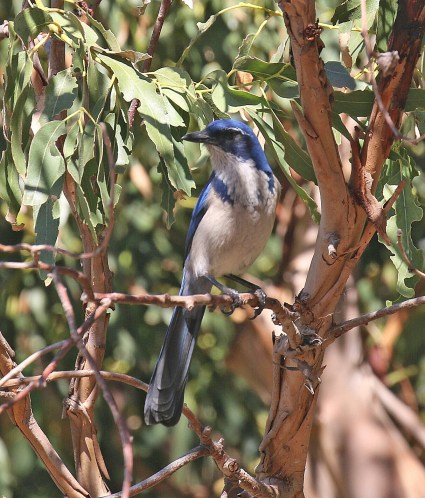
Goal 7 – 700th ABA Life Bird – Island Scrub-Jay – Santa Cruz Island

Island Scrubjay 1

So after all the twists and turns, hits and misses, great places, great people and great birds all 7 of the goals for the year were met.  Some were met just barely and others were significantly surpassed.  Here is the scorecard:

Species in one day – Goal 100 – actual 116.

Life Birds in Kittitas County – Goal 200 – actual 201.

Year Birds in Washington – Goal 300 – Actual 333.

Photos of Washington Species (Life) – Goal 400 – Actual 402

ABA Species for the Year – Goal 500 – Actual 532

ABA Photos (Life) – Goal 600 – Actual 634

ABA Species (Life) – Goal 700 – Actual 702

And to cover all the territory – the goal of a sustained special relationship – probably the hardest and most important one – that one despite our best efforts was not met – maybe some other year…maybe…

Now what?  It is January 10, 2018.  I have set two specific goals for the year and have some others that are not defined.  The specific goals include a personal one and a birding one.

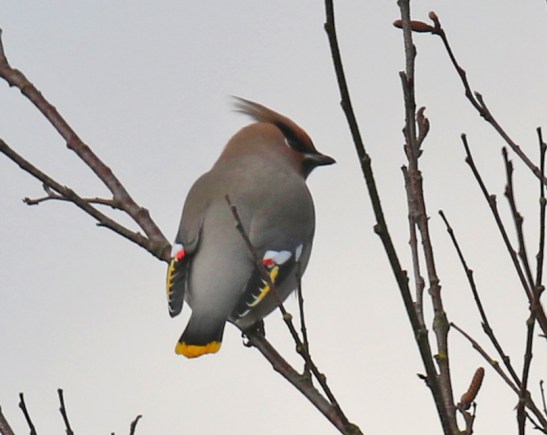
The birding goal is to do a “Big Month” – see how many birds I can see in one month in the State of Washington.  Since my undefined goals include several trips out of state during prime birding times, I have chosen the month of January and am pressing hard to maximize the number of species seen.  The most species I have ever seen in Washington in January was 154 – during a year where a goal was for a Big Year in the State so a month that had lots of birding.  I have birded every day so far this year and have been both driven and fortunate.  Earlier today I saw some Bohemian Waxwings that were found by David Poortinga in Marysville.  They were species 157 for the month.

Bohemian Waxwing – Marysville – January 10, 2018 – Species 157 for the Month
Bohemian Waxwing

I have  set the “minimally acceptable” target as 175 species.  One might think that already being at 157 makes that an easy “get”, but it gets harder to find new species each day.  I am traveling to Walla Walla later this week and we’ll see how I do.  With luck (and lots of help from Mike and MerryLynn Denny) I might be able to get to 170 or 172.  If so then 175 will be a given with some targeted additional trips elsewhere.  Research suggests that 200 species is at least a possibility – lots more travel and lots more luck.  If things go really well on the Walla Walla trip – I may press on and see if I can hit yet another goal with two zeroes.

The personal goal is far more important and when met will be far more rewarding.  At the end of last year I learned that my daughter and son-in-law are expecting their first child in late March.  All are healthy and everything looks good.  I have hoped for a grandchild for many years.  It is going to happen in 2018.  My goal is simply to hold him in my arms…

Closing Out the Year

2017 was a fun and productive birding year.  Goals I had set were somehow met and looking back on that will be the subject of my next blog post. I had expended a lot of energy in the California trip that I chronicled previously and per my previous blog post, Neah Bay delivered in December yet again with the completely unexpected Arctic Loon.  Maybe that should have been enough for the year.  In each of the previous five years, I was doing some kind of “Big Year” so December was a month of chases for “just one more”.  It was different this year, but after meeting my goals for three ABA Lists – life birds, life photos and year birds – there was still an allure to adding “more” if possible.  And while there was no chance to have a “really big” Big Year for Washington, the appearance in Washington of some rare birds like that Arctic Loon provided impetus to close strong by adding some new state birds for the year that might also add to my ABA total for the year.  Plus, any goals aside, they were cool birds.

The first “special bird” was a Blue Jay that was reported at an undisclosed private residence in Skagit County early in December.  I saw a report when I was still in California and hoped there would be a chance to look for it when I returned.  Blue Jays are pretty rare in Washington – usually one or two appear each year – usually somewhere in Eastern Washington and usually in December although I did see one at Palouse Falls State Park in October 2013.  I did not see one in 2016 and this one would be my first west of the Cascades.  It took a day after I returned to get some “inside information” that would let me give it a try and the following day I was there bright and early and found not only the Blue Jay but also a very fun property owner who it turned out welcomed birders to visit.  I gave friends some directions and in the following weeks would revisit several times with others – for most of whom the Blue Jay was a State Life bird.  As much as I enjoyed seeing this very beautiful rarity, the best part was the visit with the homeowner, Barry, and with other birders who came to see the Jay.  I would guess that more than 70 people have visited.

Blue Jay – Skagit County – December 7, 2017

Blue Jay (2)

The Arctic Loon in Neah Bay was the next special bird – no need to add more after my previous blog but I include the photo – well because it really was that special for me.

Arctic Loon – Neah Bay – December 18, 2017

Arctic Loon

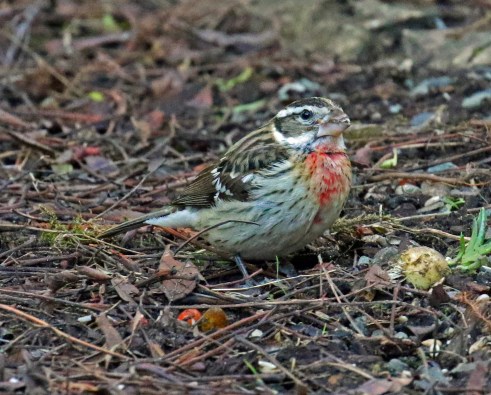
On December 21 Ebird reported a Rose Breasted Grosbeak in a residential neighborhood near Greenlake in Seattle.  The report did not appear until too late to go look for it that day, but I was there very early the next morning.  Already there was Sarah Peden – who had helped me find the Arctic Loon in Neah Bay 4 days earlier.  Dave Slager soon joined us.  We met the home owner who had reported it – Max Kingsbury.  He had not seen it again that morning.  He was very engaging and very happy to have others looking for it at the feeder in his back yard.  It did not make an appearance while we were there – perhaps it would be another one-day wonder.  Max took our numbers and said he would let us know if it returned.  The only messages we got that day were that it had not returned – until a very late brief appearance – too late for us to return and try – but that was sufficient encouragement for a return the next morning – and Sarah returned as well.  Soon a few other people showed up.  We watched for maybe 45 minutes – another no show.  I volunteered to walk the neighborhood and see if was nearby.  About ten minutes after I left, it came to the feeder.  Sarah called and texted me BUT my phone had turned itself off and when I returned, everyone said – you just missed it.  AAARRGH!!!

After a while everyone left and I stayed hopeful.  Max’s wife, Melissa had come down and it was her sharp eyes that found the Grosbeak in a tree above the feeder.  Hard to see and not a great photo – but this was only the second time I had seen one in Washington.  The other last year – you guessed it – in Neah Bay.  That one was also coming to a feeder – at Butler’s Motel – but it was a less striking female.  This was a young male with some rose on its chest.  Not a gorgeous full breeding plumage male – but pretty nonetheless.

Rose Breasted Grosbeak – Greenlake Area – December 23, 2017

Rose Breasted Grosbeak

Dozens of people have visited the Kingsburys over the past 9 days to see this special visitor – a life bird or state life bird for many.  I have been back several times hoping for a better photo.  Today I got one.

Rose Breasted Grosbeak – Greenlake Area – January 1, 2018

RBGR1

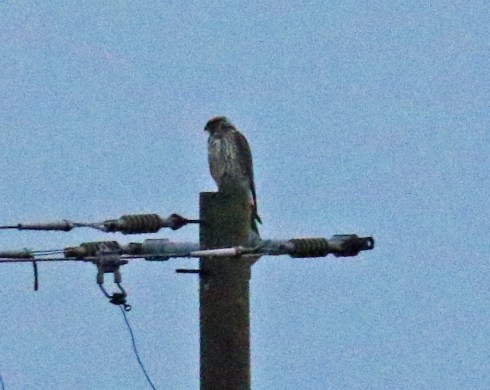
There would be one more special bird to show up – a Gyrfalcon found near a runway at McChord Air Force Base south of Tacoma.  A Gyrfalcon had been reported the first week in December in the Samish/Skagit area first by Marv Breece and then at a different location later by one other birder.  I had searched for it alone and with others – unsuccessfully.  Nobody else had found it either.  Then the McChord report came and on Christmas Day in the snow, I visited the area and got a truly terrible distant view through the scope with snow falling.  I hoped it would stick around and I would have another chance – to try for a photo.  People were having mixed luck finding it but there were successes each day.  My daughter and son-in-law were visiting and when I took them to an early flight on the 28th, I had the opportunity to try again.  I waited 90 minutes until there was any light (it was a VERY early flight) and sure enough there it was perched on the northernmost telephone pole – which seems to be its favorite spot.  Very gray poor light but at least it was not snowing – so an ID quality photo.

Gyrfalcon – McChord AFB – December 28, 2017

Gyrfalcon

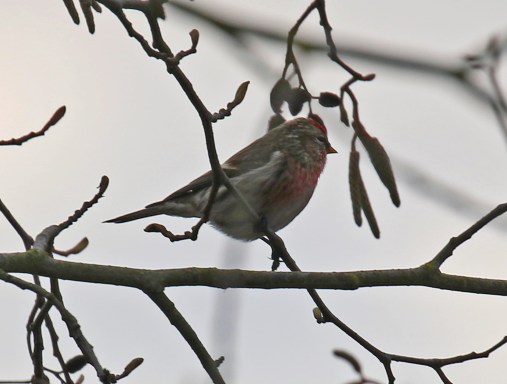
A trip to the Okanogan in north Central Washington is imperative for anyone doing a big year – or trying for certain species as it is the best place to find them – in winter.  Ideally a visit is in February but I had not made the pilgrimage in 2017.  It is a good area to find Gyrfalcons but I no longer “needed” that species.  It is also a great area for Snow Buntings, Snowy Owls and Common Redpolls.  I had seen the first two species at Sandy Point in Whatcom County in early November and Redpolls had shown up in many locations in King and Snohomish Counties and I had seen them at Greenlake and at the Everett Sewage Ponds.  Before those observations, I was definitely going to make a year end visit both to add some ABA Year birds – and stay over until January 1, 2018 to start the year with those species already in hand.  I planned to leave on the 29th and return on the first.  With the Gyrfalcon and Redpolls now seen, it was  less appealing,  but there were still some possibilities – Great Gray Owl, Gray Partridge, American Tree Sparrow, Gray Crowned Rosy Finch, Pine Grosbeak and Sharp Tailed Grouse.

Common Redpoll – Everett Sewage Ponds – December 22, 2017

Common Redpoll

A report from Bill Boyington on the 22nd had been pretty discouraging.  He found some Sharp Tailed Grouse but little else.  Good friends Jon and Kathleen Houghton had gone up the day before I planned to go – again not a great report although Jon Had found (finally!!) a Great Gray Owl at Havillah, some Pine Grosbeaks on Badger Mountain and some Partridge.  The problem was that there were very few birds and these were not reliable.  The feeders on Nealey Road were not active – a definite negative.

Weather for the 29th called for freezing rain.  I decided not to go.  Jon was returning on the 29th and before leaving he found a single flock of Rosy Finches at Molson.  He said the roads were ok.  So I decided to go figuring there was a decent chance of at least two new species and an outside chance at a couple more – and the Great Gray Owl was an always treasured find.  So I set off early on the 30th figuring I would stay two nights (it is a long way to go).

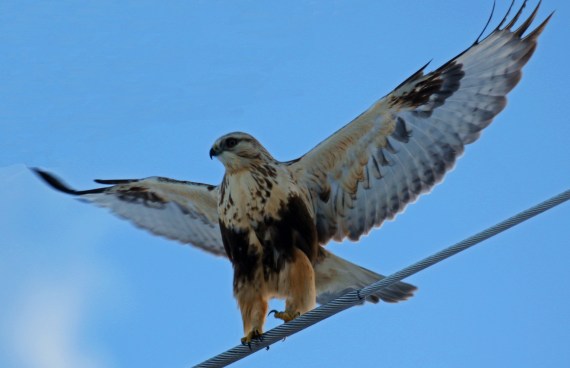
It was snowing on Stevens Pass but the roads were good and after that, it was actually a good bright day.  I found a few Pine Grosbeaks near where Jon had had them on Badger Mountain, but where his were close and on the road, mine were distant and in tall pines.  Still a new ABA and State species for the year.  I continued through the Waterville Plateau – usually a good area for Gray Partridge and always full of Horned Larks and Snow Buntings.  There were a couple hundred Horned Larks – far fewer than usual – and essentially nothing else.  Then on to to Bridgeport Hill Road – one of the best Sharp Tailed Grouse areas – nothing and then to the Okanogan with the first focus at Scotch Creek – where Bill had his Sharp Tailed Grouse and where I have found them often in the past – nothing.  And at the pasture area where Jon had had Partridge I had only California Quail, Ring Necked Pheasants and Black Billed Magpies.  There was snow – usually helpful – but perhaps not enough.  It also did not help that hunters with dogs were in the area and there were also numerous Rough Legged Hawks.  One was very photogenic – but I wanted the Grouse.

Rough Legged Hawk – Conconully Road – December 30, 2017

Rough Legged Hawk Wings Spread.jpg

It was then on to the Highlands and especially to Havillah looking for that Owl.  There were essentially NO birds anywhere in Highlands – possibly because it was VERY cold.  The lowest temperature was 8 degrees – snow on the ground – roads good but no birds.  I found a room at the Omak Inn but only made a reservation for a single night as it did not look promising to stay to start the new year.

Early the next morning I went back to the pasture and then to Scotch Creek.  Even more Quail and Pheasants but no Partridge.  Luck was better at Scotch Creek.  But it was very cold – 12 degrees.  A small flock of Sharp Tailed Grouse were in distant trees by the Creek between Happy Hill and Salmon Creek Roads.  It was very overcast and poor light so I elected to head into Conconully to see if there were Grosbeaks or other finches and then return hopefully to get some photos.  There were essentially NO birds in Conconully and when I got back to the Grouse spot, the Grouse had dispersed – somewhere out there – but not to be seen.  I opted to head up Happy Hill Road – another good Sharp Tailed area.  The first part of the road had been lightly plowed but in about a mile, the snow deepened.  I came around a bend and flushed a few Sharp Tailed Grouse but no time for a photo before they disappeared over a ridge.  After about 1.5 miles, the snow was a bit too deep and I turned back.  A photo would have been nice, but I was happy to have at least seen the Grouse.

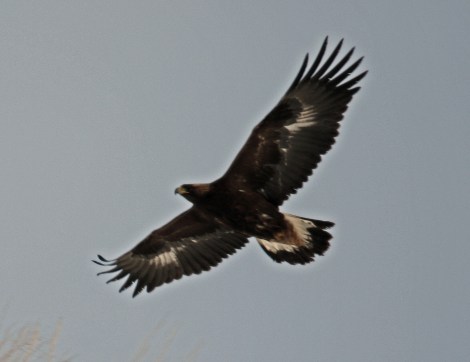
Should I give the Highlands and especially Molson another try?  It was cold and despite the grouse, there just did not seem to be many birds around.  It was also a long way and I had made the decision not to stay another night – so it would add a few hours to the day.  I did not think there was sufficient reward.  I decided to try Cameron Lake Road on the way home and call it a day.  I took the Riverside Cutoff Road to get back to Omak and then head south.  A treat along the way was a Golden Eagle – often found in the area but by no means a sure thing.

Golden Eagle – Riverside Cutoff Road – December 31, 2017

Golden Eagle2

The main goal for Cameron Lake Road was a generally reliable spot for American Tree Sparrow.  Cameron Lake Road is a primitive road that parallels Highway 97 for about 15 miles.  I started at the north end and a few miles in a flock of 50+ Common Redpolls flew onto the road ahead of me.  Pretty skittish, but I got a few photos.

Common Redpolls – Cameron Lake Road – December 31, 2017

Common Redpolls.jpg

Common Redpoll1

Unfortunately the snow got too deep and I was worried about some trouble.  I had survival gear – but this road gets little or no traffic and if there was trouble it might require a long hike out.  So I back tracked and figured I would try the southern part of the road as that was closer to the Sparrow spot anyhow.

The southern section was also snowy but had some of the best birds of the trip as first there was a small mixed flock of Horned Larks and Snow Buntings and then a large flock of Snow Buntings joined them.

Snow Buntings – Cameron Lake Road – December 31, 2017

Snow Buntings

Just as the deep snow turned me back on the northern part of the Road, so it did on the southern end as well – no more than 4 miles in.  BUT – one more gift.  Another small flock flushed from the road.  I figured they were more Larks or Buntings but a decent look showed gray heads and rosy chests and butts – a small group of Gray Crowned Rosy Finches.  A quick look and then they were gone.  By far, the visit to Cameron Lake Road was the best part of the trip.  There was too much snow to reach the target zone for the Tree Sparrows but the three flocks were more than consolation prizes.

Roads were good but traffic was tough coming home and it is a long way.  I am not a New Year’s celebrant anyhow, but I crashed when I finally got home.  Not a terrific trip but still a good way to end the year – added three new State and ABA birds.  That made it seven State and six ABA year birds for the month of December (after California) – as I had had a Rose Breasted Grosbeak in Florida earlier in the year.

Goodbye 2017.  Hello 2018.  Thanks for the great experiences and memories – ready to start finding some more.


Crazy Like a Loon — or Like a Fox?

“Crazy as a Loon.” What is that all about?  The idiomatic phrase is readily found in literature (egads even in “Peyton Place”) and in general parlance.  Undoubtedly the phrase derives from the loon’s unmistakable wild call – compared to a madman’s ravings.  Which might suggest that the bird got its name from lunatic.  But the origin of that is from the Latin luna – moon – and the notion that people acted crazy under the influence of the full moon.  Actually the Loon got its name from lom – a Swedish word for someone who is clumsy – think “lummox. ”  The Loon is a brilliant swimmer and diver and in England Loons are called Divers.  Out of the water, however, it stumbles unbalanced on feet made for paddling and not for standing – a lummox for sure.

Combine stumbling behavior and eerie calls and I definitely understand “crazy”.  Maybe that adds a layer of appeal but moreso – especially in breeding plumage – their appeal to me is their striking beauty.  Yesterday, however, I was driven by a different appeal – the appeal of  getting a photo of one of only a dozen species I have seen in Washington that I had not photographed and definitely one that I never expected to remove from that list.  Pursuit of that quest was initiated by a Tweeters post by Joshua Glant, a talented young birder in the area, who was participating in his first Christmas Bird Count (“CBC”).  He was in Neah Bay, aka the “Land of Rarities” and he reported that Brad Waggoner, a VERY talented not all that young birder had found an Arctic Loon.

I had seen my first, last and only Arctic Loon at Port Gamble on October 22, 1973.  That was barely a month after I had moved to Seattle.  More than 44 years had passed and now there was a chance of seeing one.  There were three problems.  (1) Neah Bay is about 3 hours away. (2) It was not clear that there was a real photo opportunity as the bird seemed to be distant and maybe even heading further away.  (3) I was very tired – a month plus of imperfect sleep.  Was there really enough energy to even make a try.

As it turned out number (3) determined the matter.  Another troubled night and I was up before 4:00 – unable to return to sleep.  Being “crazier than a loon” I figured, what the heck – follow Rule 1 – go now.  If there was no energy to carry through, I would just pull over somewhere and … sleep?  I knew the drill – catch an early ferry in Edmonds – just over a mile from home.  Slog through the only route to get to Neah Bay.  Hope that storms had not closed roads and also hope not to get stuck behind one of those logging trucks on the very curvy roads past Port Angeles.  Get to Neah Bay and begin scanning the water.  Hope it was still there.
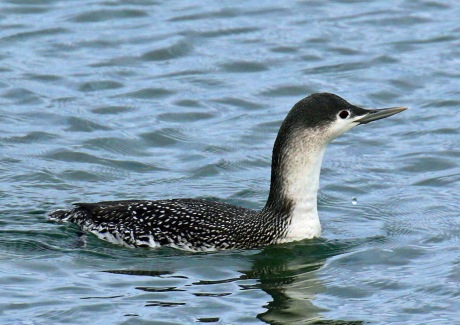
The bird had been seen from the Ba’adeh Village Loop – just east of town.  It was also reported later from “The Wedge” an area even further east – in the strait itself.  I had no idea how to get there.  I hit the restrooms in town (thank you, thank you for being there) and scanned the main bay/harbor.  Lots of loons but all were either Common Loons or Red Throated Loons.  They are all great birds, but I needed the one with the white flank patch – the Arctic Loon.

Red Throated Loon in the Harbor

Red Throated Loon

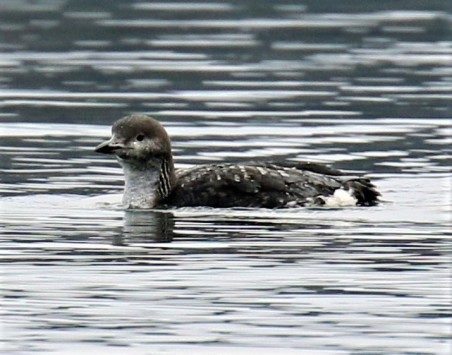
There are not great observation spots at Ba’adeh Village but I tried them all.  Not long after starting my scans I saw one loon in flight that seemed to fit the bill.  Smaller than a Common Loon – was it a Red Throated Loon? Especially in flight they seem to have very slender necks and this one was chunkier.  Was it a Pacific Loon or was that really a white patch on its flank – making it the prized Arctic Loon?  Although I was convinced that flank patch was real, the view was through the scope and far too brief before it disappeared heading west.  Definitely no picture – so the real objective was not met anyhow.  Just not sufficient data to be sure – so I determined not to count it.  I saw two Pacific Loons – definitely no flank patches – more Common Loons and Red Throated Loons and that was all.

Common Loon (in the Harbor)

Common Loon1

I spent the next several hours trying to figure out how to get to The Wedge (and not doing so) returning to the town and scanning the harbor and bay from numerous vantage points and then visiting other spots in the area looking for Pine Grosbeaks, which had also been reported on the CBC.  I found no Pine Grosbeaks and my best bird was a Ruffed Grouse that I flushed coming down from Bahokas Peak.  I had seen one there in years past but more often find Sooty Grouse.

I had one more card to play.  I had not yet visited the jetty and to scan the bay from there.  It was now after noon.  Somehow I was still awake.  Maybe it was the caffeine from the coffee and my Mountain Dew.  The area at the base of the jetty and along Boom Road to get there had been incredible birding spots in the past.  Rarities seen have included Rustic Bunting, Horned Puffin, Red Phalaropes, and Dusky Capped Flycatcher – an unbelievable list.  Was there one more in the offing?

As I rounded the corner onto the jetty itself I saw first a parked car and then a birder with scope – a familiar one.  As I drove past Sarah Peden, she said: “You may want to get your camera and your scope.”  “Why is that?” I asked.  “There’s an Arctic Loon here.”  Was it really going to be that easy?  YES!! YES!! YES!!  I ignored the scope but was immediately ready with the camera.  I grabbed a quick look through Sarah’s scope more to pinpoint the location than to actually get a view and then took a picture.  Now no matter what else, and as it turned out there was a lot “else”, I would have that never expected, long awaited photo of an Arctic Loon – in Washington.  If that had been the only photo, it would have been a great day, but there would be many more.  Sarah said earlier it had been very close but it was now further out – just in front of Boom Road 200+ yards away.  After a few more record shots I walked the Beach and got within less than 40 yards and in much better if not great light got very nice photos.

Arctic Loon

Arctic Loon 2

Arctic Loon

The bird seemed very comfortable in this location and over the next 45+ minutes we watched the Arctic Loon forage and feed continuously including coming back towards us on the jetty.  The energy boost was palpable and significant.  There is a “low” from missing a chased bird but it is far less than the “high” that comes with finding one – some more than others and this one was way up on my “want” list.  With a very limited data base – one observation – I had not expected the white flank field mark to be so obvious.  I had also not expected to see an Arctic Loon as close to breeding plumage.  The neck markings indicated either molting away from breeding plumage or molting towards it. A distant photo may not have shown the neck stripes but my good fortune captured them – a bonus.

I would like to think that I would have found the Arctic Loon at that spot on my own.  The field marks and view were very clear and especially if it had swum back towards the jetty as it did, it would have been hard (and inexcusable) to miss.  But that is a question I don’t have to answer.  Sarah is an outstanding birder and it was wonderful to have her on the bird – a Christmas gift a week early.  Thank you Sarah!!

Had I not gotten the Arctic Loon photo it would probably would have been appropriate to say I had been “crazy as a loon”.  There is another crazy animal idiom though that now seemed a better fit – “crazy as a fox” .  The meaning of that one is “seemingly foolish but actually very shrewd”.   Probably a little bit of both – comes with the territory.  The adrenaline hit lasted just long enough to get back to the ferry.  I dozed on the crossing and then slept very well last night.  Definitely would rather be thought of as “foxy” as opposed to “loony”.

BONUS COVERAGE

Having seen Common, Pacific, Red Throated and Arctic Loons at Neah Bay, I wondered if the Yellow Billed Loon that had been reported there earlier had been seen again.  Sarah said “no” and that the report may not have been accepted as well.  I knew that Bruce LaBar’s Sequim CBC boat was out that day.  It always finds Yellow Billed Loons.  I expected that some of the folks who had done the Neah Bay CBC the preceding day and had seen the Arctic Loon might be on that trip.  It turned out that Charlie and Linnaea Wright were the only ones who were and indeed they had seen a Yellow Billed Loon – giving them all five loons in a two day period.  Bruce speculated that they may be the only two people who had ever seen all five loon species in a two day period.  Quite an accomplishment.

But…I got thinking about that.  On my visit to Nome, Alaska in June last year, I knew I had seen Yellow Billed, Red Throated and Pacific Loons and that we had missed an Arctic Loon that was seen by others.  I could not recall if we had seen a Common Loon and did not even know if they are found there.  I checked my records and found no Common Loon.  Great shots of the others though.

Yellow Billed Loon in Nome

Yellow Billed Loon

Red Throated Loon in Nome

Red Throated Loon

Pacific Loon in Nome

Pacific Loon

And I found that although uncommon, there are Common Loons in Nome (is it called the Uncommon Loon there?), so yes there was the chance for all five loons in one day.  But chances don’t count; only experiences do and yep I found that someone else had the experience of seeing all five loons in Nome on the same day.  On June 5th last year, Liam Singh, a young birder I know from Victoria, B.C.  had all five.  Oh yeah – pretty great Liam – but I bet that Charlie and Linnaea probably are the only ones who have all five species in two days IN WASHINGTON!!

Those really are awesome accomplishments – and fabulous birds.  I will settle for a photo of an Arctic Loon in Washington – happily…
 

California Day 7 – Some Last Shots and Summing Up

It had been a long and wonderful week.  Admittedly I was pretty tired and running out of targeted species coincided without running out of energy – well almost – for both.  I had gotten a mediocre photo of a California Gnatcatcher and really wanted a better one.  There was enough gas in the tank – both the car’s and mine for one more try.  I made it to the San Elijo Lagoon in yet another day of warm, bright sunshine.  The habitat looked great for gnatcatchers – probably both Blue Gray and California.  I just wanted that one photo.

During my past attempts to find and photograph the California Gnatcatcher I had become quite familiar with its “zeer” calls.  I had heard it more than once and had used it to locate the birds I had photographed at Lake Hodges.  As I walked down the trail towards the lagoon I played the “zeer” calls on my phone and very quickly saw a small bird fly into some dense brush just ahead.  It began calling back – no mistaking the calls.  This was a California Gnatcatcher, but I had been here before – the Gnatcatchers can be “there” but almost invisible.  This time I was lucky.

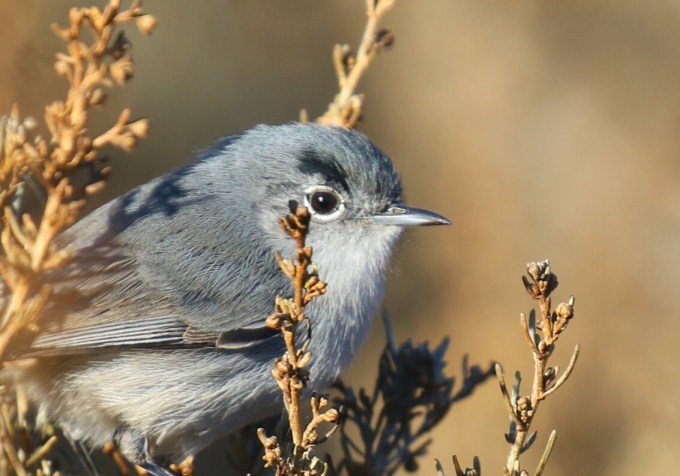
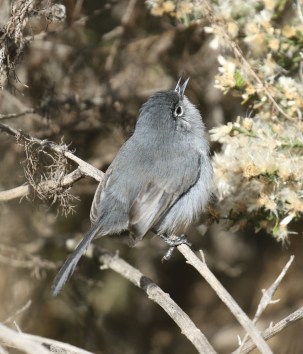
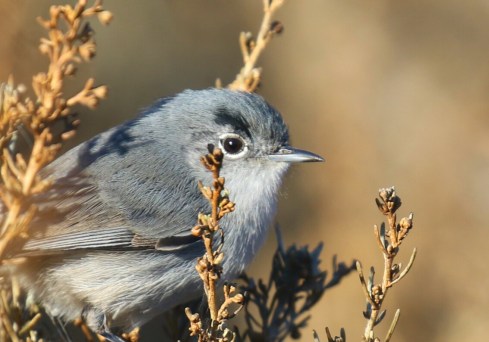
Continuing to call, the California Gnatcatcher popped out into the open in perfect light.  I got my photos.  The first shows the Gnatcatcher singing and the second shows the very distinct eye ring and black eye brow.  The third photo shows the black tail with thin outer tail feathers that are white.

California Gnatcatcher Calling

California Gnatcatcher 3

California Gnatcatcher Close Up

California Gnatcatcher close

California Gnatcatcher – Black Tail with White Outer Feathers

California Gnatcatcher Tail

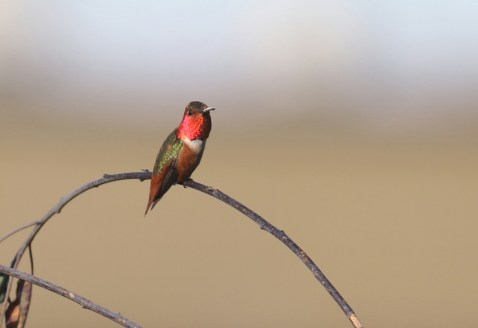
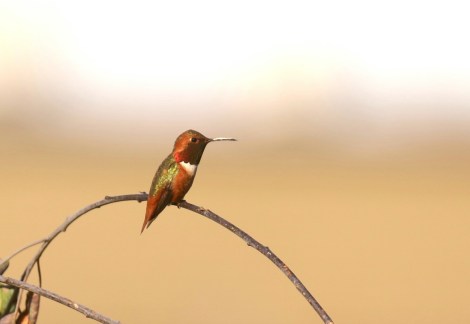
Mission accomplished but I really liked this area and continued birding.  It was a birdy place and the light really was great.  There would be more good photos to come.  As I walked the trail I repeated heard the “zee chuppity-chup” call/buzz of an Allen’s Hummingbird.  I saw one displaying and then landing on an open branch – a male brilliant in the light.

Allen’s Hummingbird

Allen's Hummingbird 6

Allen's Hummingbird 4

As is often the case in this area, there were also Anna’s Hummingbirds and one was also very photogenic.

Anna’s Hummingbird

Anna's Hummingbird 2

Fortunately at this time of year Rufous Hummingbirds are gone, so no confusion with the Allen’s although the call would have avoided that issue as well.  The most abundant birds were the sparrows Savannah (14), White Crowned (30), and Song (6) and also California Towhee (10).

California Towhee

California Towhee

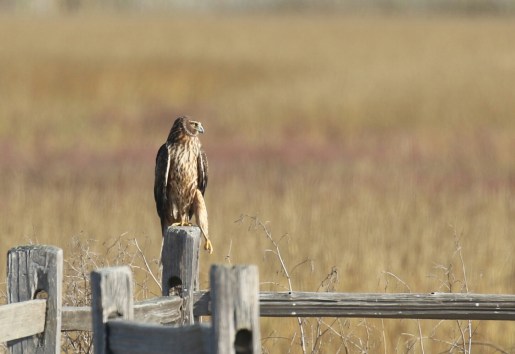
When we are out birding we are open to experiences as they come our way – sometimes it is the bird we are looking for; sometimes it is a great person; sometimes it is another bird – unexpected perhaps.  As I neared the Lagoon a Northern Harrier swooped by and landed on a fence post just ahead.  I often see shorebirds standing on just one leg, but this was the first time I had seen a raptor do so unless it was holding prey in the other.  It held its left leg out almost as if it were injured.  Interesting photo.

Northern Harrier

Northern Harrier

I retraced steps and headed to the other end of the lagoon.  Along the way I met another birder – a local who birds the area often.  When he learned I was from out of the area, he wanted to be sure that I saw everything that was there and went through the list of what he had seen earlier.  I had seen all of them except for the California Thrasher.  He told me where he had seen it and not too far from there, I found it there as well.

California Thrasher

California Thrasher 3

As I left I heard a Ridgway’s Rail calling – no visual and no photos this time.  I was done.

Whenever I visit San Diego I always try to swing by the La Jolla Cove.  A gorgeous spot often with birds close by on the rocky outcroppings.  I had enjoyed visiting there with Lynette in February.  That seemed like ages ago and I was reminded of how all that had changed – sometimes things just don’t go like we would want.  With birds as opposed to people, however, it is easier sometimes to have a Plan B – another try to find what we want.  As I said in that first post, getting away from personal matters was one of the motivations to take this trip.  On the many long drives, there had certainly been many opportunities to re-examine the past and to look to the future.

La Jolla Cove

La Jolla Cove

The trip had been therapeutic – helping ease some of the pain and disappointment – and more importantly reminding me of some of the things that are important to me being true to myself – being in nature, looking for and watching birds – the special targeted ones and the others as well – relating to people with shared interests and shared perspectives – recognizing both the potential to change and adapt but also the very real limits to how much that could be done.  It had been a wonderful week.  I was ready to go home…

Summing it All Up

7 days – 6 hotel rooms – 1500 miles – Mexican, Asian, Greek, Italian and American food – more coffee than tea.  Forests, mountains, deserts, islands, oceans, lakes.

152 species – 8 ABA Life Birds – 11 ABA Life Photos (and two more that were for sure when previous ones had some ambiguity) – 13 ABA Year birds

Life Birds:   Red Footed Booby, Bell’s Sparrow, California Condor, Garganey, Black Vented Shearwater, Island Scrub-Jay, Red Crowned Parrot and Rufous Backed Robin

Life Photos:  All of the Life Birds except the Bell’s Sparrow plus Yellow Billed Magpie, California Gnatcatcher, Scaly Breasted Munia, Ridgway’s Rail plus definite photos of Costa’s and Allen’s Hummingbirds

Those additions brought my Life List to 702 ABA, my Life Photo List to 639 and my ABA Year List to 527

I had been in 10 Counties

The lowest temperature was in the high thirties and the highest temperature was 85.  No rain, very little wind and sun, sun, sun.

I had met truly wonderful people and seen truly spectacular places.

On the last two days I was there, the Santa Ana winds had arrived – with wind velocities in excess of 75 mph.  They had brought devastating and death causing fires to areas I had visited two days earlier.  The only effect on me was that the flight home got very bumpy as we moved up the coast by Orange and Los Angeles counties.

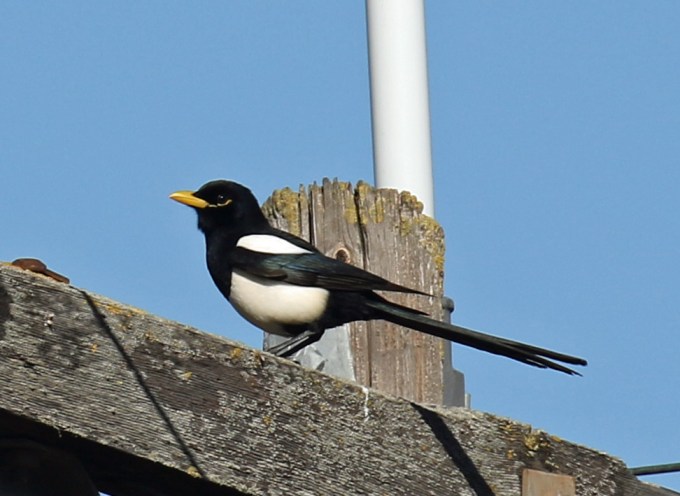
I had some notable misses: the Groove Billed Ani and Nazca Booby departed before I arrived (although the Nazca Booby returned at least for a day five days after I departed).  There was no Yellow Footed Gull and I failed to find a LeConte’s Thrasher or Lawrence’s Goldfinch.  I failed to get a photo of a Bell’s Sparrow.  There are always misses and I will try again sometime.

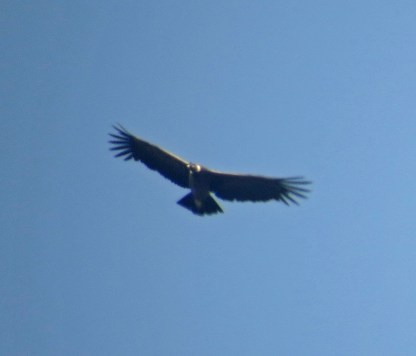
If there had been nothing more than the magical moment with three California Condors flying overhead, it still would have been a fantastic and successful trip.  But oh yeah – there had been much more…

Condor Tag4a


California Day 6 – A Very Full and Birdy Day Around San Diego

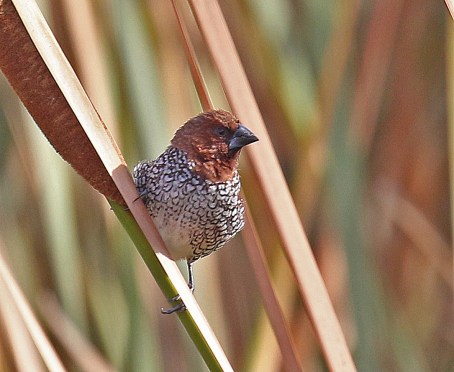
Another early morning start and I was at Lake Murray in La Mesa.  This was purportedly a good spot for Scaly Breasted Munias, an introduced species from the Waxbill family that was formerly known as the Nutmeg Mannikin.  I had first seen this species in its natural habitat at the Mai Po Nature Preserve outside of Hong Kong on Christmas Day 1979.  I also saw them on the Cairns Esplanade in Australia in 2003, in South Delhi, India in 2011 and also  a half dozen in Hawaii in 2011 where they are non-native.  I had seen my only one in the ABA Area on my previous trip to the San Diego area in reeds across a channel ditch at Tecolote Park in February.  I wanted a better ABA look and a photo.

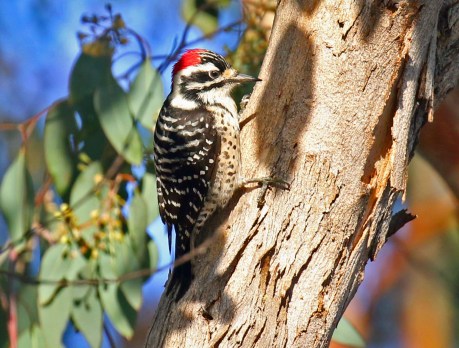
I found lots of birds at Lake Murray including a somewhat late Spotted Sandpiper and a gorgeous Nuttall’s Woodpecker (which I had also seen on that previous trip to Tecolote Park) but no Munias.

Spotted Sandpiper

Spotted Sandpiper

Nuttall’s Woodpecker

Nuttall's Woodpecker2

I was also on the lookout for Lawrence’s Goldfinches.  There were many candidates but despite my best efforts to turn them into something else, they were all Lesser Goldfinches.  I had counted on this spot for the Munia photo but there was a Plan B and I headed off to Santee Lakes – highly recommended by Melissa Hafting and a good spot per Ebird.  It was less than 8 miles away.  I was there just after 9:00 a.m. and as had been the case on some other occasions on this trip, I was surprised to find it as large as it was.  Where would those Munias be?  After driving and walking around for about 30 minutes and finding lots of ducks but no Munias, I called Melissa in Canada for more specific help.  “Try in the tall grass out near lakes 5 and 6.”  I had covered that area once but now went back in earnest.

For another 30 minutes – no Munias.  It wasn’t sufficiently special to be considered a consolation prize and I had not yet given up, but I got a great photo of the inaptly named Ring Necked Duck – a new species for the trip and plentiful here.  In addition to it being a close up in good light, what made this a memorable photo is that it actually shows the ring around the neck.  You can always see the ring around the bill, and it should be named “Ring Billed Duck” but the neck ring is usually not visible.

Ring Necked Duck

Ring Necked Duck.jpg

I made another loop around Lake 5 by car and was about to unhappily give up on my desired Munia photo.  There was one more stand of tall reeds to explore (again) and as I approached I could see some birds twittering about.  They were a half dozen Starlings – are you kidding!!??  But then the Starlings flew off and there was still movement and my sought after Scaly Breasted Munias came out into the open for some long awaited photos. Finally I could check it off of my ABA Missing Photos list.

Scaly Breasted Munia Male

Scaly Breasted Munia Male

Scaly Breasted Munia Female

Scaly Breasted Munia Female

Time to move on.  I texted Mel about the success.  On the way out a flash of yellow flew in front of me and perched on a wire.  At first my brain said Tropical Kingbird but then I remembered where I was and Cassin’s Kingbirds are common here.  The light was great for a photo.

Cassin’s Kingbird

Cassin's Kingbird 1

In addition to it being a good photo, I add this picture here as a means of bringing up some ornithological history.  The Cassin’s Kingbird gets it name from John Cassin a talented ornithologist and taxonomist from Philadelphia in the first half of the 19th Century.  Many of our birds are named after famous ornithologists, naturalists or illustrators such as John James Audubon (Audubon’s Oriole and Audubon’s Shearwater), John Graham Bell who accompanied Audubon (Bell’s Vireo and Bell’s Sparrow), William John Swainson – a British illustrator/lithographer (Swainson’s Hawk, Swainson’s Thrush and Swainson’s Warbler plus many others throughout the world) and John Kirk Townsend a naturalist/collector also in the first half of the 19th century (Townsend’s Warbler, Townsend’s Solitaire and possibly the Townsend’s Storm Petrel recently split from Leach’s Storm Petrel).  There are many others with a single ABA species bearing their name, but I believe John Cassin wins the eponymous bird lottery with 5 species:  Cassin’s Vireo, Cassin’s Sparrow, Cassin’s Finch and Cassin’s Auklet in addition to this Cassin’s Kingbird.  I have seen all of the Cassin species this year.  The Kingbird is certainly the most colorful.

Now back to birding…

Another species that was on my list from my earlier trip to San Diego this year was the Ridgway’s Rail.  I had heard one at the Tijuana Slough NWR but not seen or photographed it.  This rail used to con-specific with the Clapper Rail but was split off in 2014 thus giving me an additional ABA species as I had first observed these rails in California at the beginning of my birding life in the 1970’s and had first seen the “true” Clapper Rail in Maryland in 1975.  I did not have photos of any of these species or of the closely related King Rail – also seen in Maryland in 1975.  So with timing good for a high tide (the best time to see all rails) and the added bonus of some Nelson’s Sparrows being reported there, I headed back to the Tijuana Slough hoping for both.  I had photos of the Nelson’s Sparrow from Maine but it would be a new ABA bird for the year.

My first blog post about this trip which focused on the great people intersections I had told the story of how I met another birder at the Slough, Shirley Reynolds, and how she kindly retraced her steps and guided me to the spot where she had had the Nelson’s Sparrows and a Ridgway’s Rail and how we refound and got photos of both.  I later learned that Mel Senac (see my earlier Rufous Backed Robin story where I met Mel) had helped Shirley get on the Sparrows – so the chain of connection was even better.  It was not the greatest photo, but any photo of a rail is a victory as they are often stealthy and buried in the reeds.  It was an ABA Life Photo so I was very happy.

Ridgway’s Rail

Ridgway's Rail1

Since I was in the area I moved down to Dairy Mart Road where a Green Tailed Towhee had been reported – not needed for any of my “lists” it is just a cool bird and I remembered the location from a visit many years ago.  I did not find the Towhee but saw my only Common Gallinule for the trip.  After a quick lunch I headed to a Hooded Warbler Stakeout at Ruette le Parc in Del Mar about 30 miles away.  I also told this story in my first “People Post”.  No success in finding the Hooded Warbler which again would only have been a new bird for the year but a wonderful time visiting with Dave Trissel one of the fine people I met on the trip.

It was getting dark and I decided to call it a day.  I would be leaving the next day but could bird until around 2:00 p.m if I wished.  There really were no new targets but I wanted a better photo of a California Gnatcatcher.  Melissa had recommended the San Elijo Lagoon in Encinitas – seconded by Dave Trissel so I found a hotel nearby and called it a day – a very good day since I had finally gotten photos of the Scaly Breasted Munia and the Ridgway’s Rail.

New ABA Life Birds:  None

New ABA Photos:  Scaly Breasted Munia and Ridgway’s Rail

NEW ABA Year Birds:   Same plus Nelson’s Sparrow

The  trip list total was now at 147.

California Day 5 – Borrego Springs and On to San Diego

I returned to the Borrego Springs WTP early in the morning on Sunday hoping to maximize my chances for sparrows which I had totally missed the afternoon before and hoping that somehow a LeConte’s Thrasher might show up.  Before that, I drove some of the back roads in the near dark hoping for some wildlife on the road.  Lots of rabbits and a skunk but the prize was a Bobcat in a thinly populated residential area.  At the WTP, it was mostly the same birds as the previous visit.  In the better light I was able to confirm that my “Sage Thrasher” was indeed a Northern Mockingbird and no other thrashers were seen but there were some sparrows.

Clearly a Mockingbird

Northern Mockingbird 3

Again the Phainopeplas were the most noticeable birds as they would sit out in the open and called to each other and to recognize me in the area.  How different the plain brown female from the bright black male.  But the bright red eye is there on both – glistening in the sun.

Phainopepla Female

Phainopepla Female

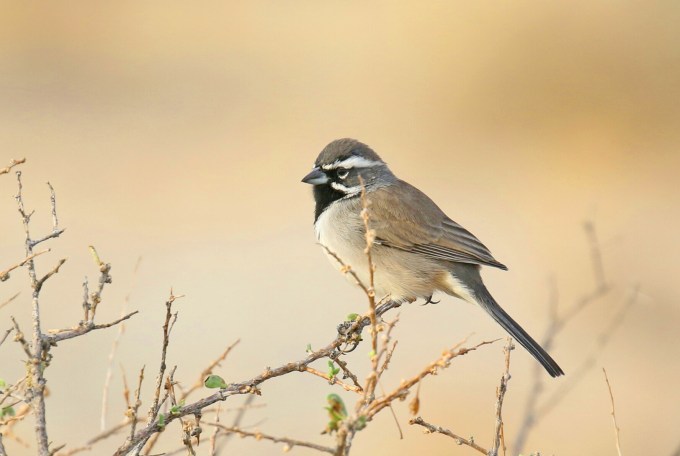
In this area the closely related Bell’s Sparrow and Sagebrush Sparrow both exist requiring very good looks and a photo to make a positive ID.  Unfortunately my looks were distant and whenever I approached, the two birds flew off and further away.  After repeating this exercise for three flights, I gave up and just listed the sparrows as either of the two species.  More cooperative were some Black Throated Sparrows, one of my favorites.  I would later see quite a few at the Anza Borrego Park Visitor Center but these were the first for this trip.

Black Throated Sparrow

Black Throated Sparrow 2

Absent the past two years, this sparrow was found off Recreation Road near Vantage, WA in the summer.  I miss them and hope some will return.  I spent over 90 minutes working the WTP area and probably hiked around for more than 2 miles before opting to go to the Visitor Center.  Anza Borrego Park includes more than 600.000 acres and is the second largest state park in the U.S. behind Adirondack State Park in New York.  Much of it is back country accessible only with off road vehicles.  It is ruggedly beautiful.  I did not add anything new at the Visitor Center but I did learn that the Verdin’s nest that Lynette and I saw just a couple feet off the ground and along a main path back in late January had not survived – expected news but disappointing.  I talked with one of the naturalists at the Center about LeConte’s Thrashers.  She confirmed that they were around but very difficult to find especially at this time of year when they are not singing.  My only new bird was a Ladder Backed Woodpecker.

The naturalist suggested trying a dried up sandy lake bed off Rockhouse Trail Road.  Off I went and spent the next two hours there both on foot and driving looking for my nemesis thrasher.  The habitat looked perfect but no thrashers were found – only some of the same birds seen earlier and not very many at that.  Time to head west for San Diego.  I would be able to get in some late afternoon birding and have the entire next day there plus the morning of the following day when I would fly back to Seattle.  It would have been about 75 miles to my first stop near San Diego – Lake Hodges near Escondido – but I had my first location mishap of the trip and lost a birding opportunity and a lot of time.

LeConte’s Thrasher – Maybe Someday…

LeConte's Thrasher

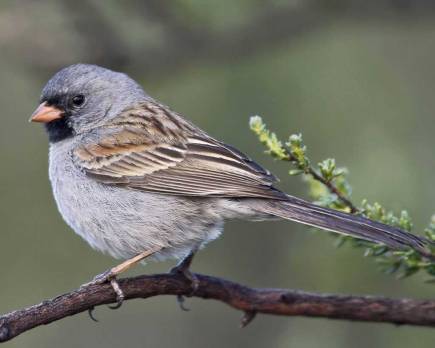
A big disappointment on my Arizona trip in August was that we did not pursue a Black Chinned Sparrow.  There were some not far from one of our stops but apparently, it just did not fit our schedule.  I had seen this sparrow previously but did not have a photo.  So when I saw one reported on Ebird somewhat along my route to San Diego, I plugged in the coordinates and went on the chase.  Everything went well until the last turn off about 2 miles from the designated spot where the observer had written “Adult male noted on east slope of preserve near water tank”.  My GPS took me to a locked gate on a primitive road where I could see a blue water tank far up the mountain but there was no way to get there.  I googled the Preserve name and came up with nothing and drove around for 30 minutes looking for another way up – nothing but a lot of wasted time and effort and my first real unhappiness of the trip.

Black Chinned Sparrow – Audubon Photo

Black-chinned_Sparrow

With two hours wasted, I retraced some steps and headed off to Lake Hodges which was one of the spots where I was likely to find a California Gnatcatcher – an ABA Life photo bird.  I worked the trail around Lake Hodges pretty hard and was able to located both Blue Gray and California Gnatcatchers.  I got a decent photo of the latter and don’t include it here but (hint, hint) I got a much better one later at a different location.

After and compared to the adrenaline rushes of the previous days, this had been pretty boring.  The photo of the California Gnatcatcher was a new one and I added 7 species for the trip but that was all.  Maybe tomorrow.


California Birding Day 4 – A Raucous Start in Pasadena and then Off to the Desert

Growing up on the East Coast I always had trouble distinguishing between Jan and Dean and The Beach Boys.  I was more into Soul Music but there was a definite appeal to their Surf Music sound and genre.  Visions of blue skies and breaking waves, blondes and warm sand sounded pretty great especially when we had snow on the ground.  Pasadena, California is probably most famous as the home of the Rose Bowl but to me it will always be part of the lyric of The Little Old Lady from Pasadena released by Jan and Dean in 1964 and also recorded by the Beach Boys.  Now 53 years later instead of “Go granny, go granny, go granny go…”, on the morning of my fourth day on my California Birding Adventure, it was “Go birder, go birder, go birder go” as I left my hotel room in Pasadena early to get to the mega roost for Red Crowned Parrots before they dispersed.

Somehow despite seeing a dozen parrot or parakeet species in Florida earlier this year, we had missed the Red Crowned Parrots which are also found there.  This was important because the only species from this group recognized and countable by the ABA (at least as of yet) are White Winged Parakeet, Green Parakeet, Monk Parakeet, Nanday Parakeet, Rosy Faced Lovebird and the Red Crowned Parrot.  The Lovebird is found only in the Phoenix Arizona area and I had not yet looked for one there.  I had seen all of the others in or around Miami.  Today was to be Red Crowned Parrot Day!!

Rosy Faced Lovebird – Someday…

Rosy Faced Lovebird

I got to the roost spot at E. Washington Blvd and Fair Oaks Avenue before 6:30 a.m.  It was still mostly dark and as soon as I opened my car door I could hear the raucous cacophony of the parrots.  Entering the park (fortunately there were no drug deals being done and I was alone) even in the grayness of the as yet sunless morning, I could see parrots flying all about.  For the next 30 minutes as the light increased, I watched in amazement as every tree was full of parrots all squawking.  I don’t know what the official count is but I guesstimated over 500 birds.  I took photos in low light and continued as sunlight filtered into the park.

Red Crowned Parrots

Red Crowned Parrots.jpg

At the time I thought that the Red Crowned Parrot was ABA species #700 and thought how much better it would have been for example if the Thayer’s Gull/Iceland Gull split had not occurred and yesterday’s Island Scrub-Jay had claimed that honor.  But at that moment I was just happy to reach the unexpected benchmark this year and at least rationalized that the extraordinary spectacle of seeing so many flying about including right overhead and right by me within three feet made the experience sufficiently special for the occasion.  Some single branches had over a dozen Red Crowned Parrots.  It really was an awesome experience.  As I have now clarified in a postscript to my previous blog post, the Island Scrub-Jay actually was #700.  I had erred in subtracting some non-countable ABA birds from my Ebird list – glad now to have the extra bird – and taking nothing away from the experience with the parrots – to have the endemic Island Scrub-Jay hold that honored position.  And I found another error – in my excitement to see the Red Crowned Parrots I had not realized that some of the parrots there were actually Lilac Crowned Parrots.  You can see the difference (if are looking and at the time I was not) in the ring around the eye and much more extensive red in the Red Crowned ones.  I had seen some Lilac Crowneds in Florida and they are not yet recognized by the ABA – maybe someday.

Lilac Crowned Parrot

Red Crowned Parrot

Almost as soon as there was light some of the parrots started flying off for their day time haunts.  They just kept coming and coming out of the trees.  As I returned to my car and then headed off for what was to be another long day, I saw parrots individually and in small groups flying off in every direction.  Throughout the whole time, the noise had been overwhelming.  This was not a neighborhood I would have chosen for my residence – as much as I love birds.

One of the rarities that had shown up after my initial planning was a Rufous Backed Robin that had been seen daily for about a week on the campus of Barstow Community College.  I had never been to Barstow and in my mind, I pictured it as what used to be called a “one horse town” – an insignificant spot in the remote California desert.  Although not a thriving metropolis, Barstow was hardly insignificant, an attractive transportation center for California’s Inland Empire situated in San Bernadino County.  It was much closer to Pasadena than I had expected – only 110 miles away – north and east.  After a brief stop for breakfast on the run, I arrived at the Community College around 9:00 a.m.

I had expected the campus to be bustling and I would look much out of place standing by the Student Union Building where the Rufous Backed Robin was generally seen.  Then I remembered that it was a Saturday.  I guess there are not many classes on Saturday.  One of the very best things about intense birding trips like the one I was on is that the outside world disappears and so does time.  I had not thought about the calendar at all.

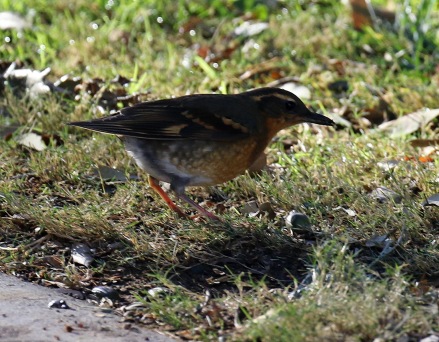
As I approached the target zone I saw a number of birders with binoculars, cameras and scopes looking at birds on the ground between me and them – maybe 80 feet in front of me.  A first quick glance told me they were robin-like so I immediately pointed my camera and took some photos.  Was it going to be this easy?  Not quite.  Had I looked more closely through my binoculars I would have seen that the two birds were just a regular old American Robin and a closely related Varied Thrush.  As it turns out the Varied Thrush was quite a rare bird for the area in its own right, but it is a common bird for me in the Northwest – and what did this mean for my real quest the Rufous Backed Robin.

Varied Thrush

Varied Thrush2

Varied Thrush and Robin

American Robin and Varied Thrush

After the two birds flew back into the bushes, I went over to the other birders and found that most of them were on a San Bernadino Audubon Society field trip being led by Gene Cardiff – a legendary birder, leader and educator.  I was told that I had missed the Rufous Backed Robin by 10 minutes.  They had all had good looks on the grassy area just in front of the building but it had flown back into the Cypress trees.  Apparently this was its modus operandi and it would return to feed some more on the ground — soon.  Soon turned out to be longer than 15 minutes and with other places to go, the group headed off.  One birder remained, Mel Senac.  I wrote about Mel in my first blog about this trip.  Great guy and excellent birder.  We traded stories and waited.  He had seen it also but wanted a better photo.  In about 10 minutes we both got that photo opportunity as the Rufous Backed Robin flew down onto the grass less than 50 feet from us.  The light was good and our cameras were ready.

Rufous Backed Robin

Rufous Backed Robin 2

Looking very much like our American Robin, except – are you ready for this? – it has a rufous back – the Rufous Backed Robin is a fairly common bird of western and central Mexico.  The first ABA record was in 1960 and it is now generally seen every year somewhere in the Southwestern U.S.  In fact during the same week I saw this guy in California, Rufous Backed Robins were seen in Nevada and Arizona.  But mine was right in front of me in Barstow – my second ABA Life Bird of the day – and it was not yet 10 a.m.  That was the good news – the very good news.  The bad news was that there were no more ABA Lifers to be seen.  But there were still a number of  new ABA photo possibilities on my list and with three days remaining – maybe something else would show up.

I took more photos of the Rufous Backed Robin, the American Robin and the Varied Thrush.  A Hermit Thrush was also there and I took his photo as well.  Mel and I both dreamed of a shot with the Rufous Backed Robin, American Robin and Varied Thrush all together in the same field of vision.  It did not happen so I headed off.  Four thrushes together in the same small area was pretty cool though.  I also saw Mountain Bluebirds and Western Bluebirds on this trip – a pretty good six thrush tally.  Then I thought about one of my trips in Washington – no Rufous Backed Robin but in addition to those other five thrush species, I had had Townsend’s Solitaire, Veery, and Swainson’s Thrush – an eight thrush trip.

Hermit Thrush

Hermit Thrush

When I had first started planning this trip, a much sought after new Life Bird was a Yellow Footed Gull.  Another Mexican resident, each year a small group makes it to the Salton Sea and they are readily found there in late summer.  In each of the last five years, a few have over wintered and were seen in November/December.  Unlucky me, the last one seen at Salton Sea this year was on October 18th.  It was very unlikely that I would find one there, but there were two other new ABA Year birds that were possible – Ross’s Goose and Lesser Black Backed Gull (although there were no Ebird reports for this year). It was either give that a try or forego both species and head to Borrego Springs where I could try again for a photo of a Bell’s Sparrow and also look for LeConte’s Thrasher.  Even though it was a long drive (180 miles)  and a bit out of the way to get back to Borrego Springs, it was early and I decided to head off to Salton Sea and bird Borrego Springs late that day and again the following day.

Yellow Footed Gull (Audubon Photo)

Yellow Footed Gull

The gulls were not cooperative but I found a half dozen Ross’s Geese mixed in with the Snow Geese and also added a lot of other new trip birds.  Probably my favorites there were the Sandhill Cranes – first heard and then seen on a distant field – and a nice flock of White Faced Ibis.

Ross’s Goose

Ross's Goose

White Faced Ibis

White Faced Ibis1

It was less than an hour to Borrego Springs – so I made a room reservation – and headed off arriving at the Borrego Springs Water Treatment Plant around 3:45 p.m.  Light was already starting to go, but I used the 30 minutes or so of decent light as best I could.  I found what at first I thought might be a rare for the area Sage Thrasher but later changed my identification to a Northern Mockingbird appearing too brown in that low light.  I also had an acceptable photo of a Costa’s Hummingbird and a good one of a Black Tailed Gnatcatcher. I also had a few Verdin and many Phainopepla – striking, bold and rather noisy birds.  I had seen them all on my visit to the area with Lynette Bruett in better days together earlier in the year.  But no Bell’s Sparrow.

Black Tailed Gnatcatcher

Black Tailed Gnatcatcher

Verdin

Verdin

Phainopepla

Phainopepla

It had been a wonderful day covering lots of territory and quite a mix of birds.  The two ABA Life Birds were of course the highlights – bolstered by meeting Gene Cardiff and visiting with Mel Senac.  The disappointment of not finding the Yellow Footed Gull was more than made up for by the Rufous Backed Robin.

New ABA Life Birds:  #701 Red Crowned Parrot and #702 Rufous Backed Robin

New ABA Photos:  Same

NEW ABA Year Birds:   Same plus Ross’s Goose

The  trip list total was now at 122

California Birding Day 3 – Santa Cruz Island – Joining the 700 Club

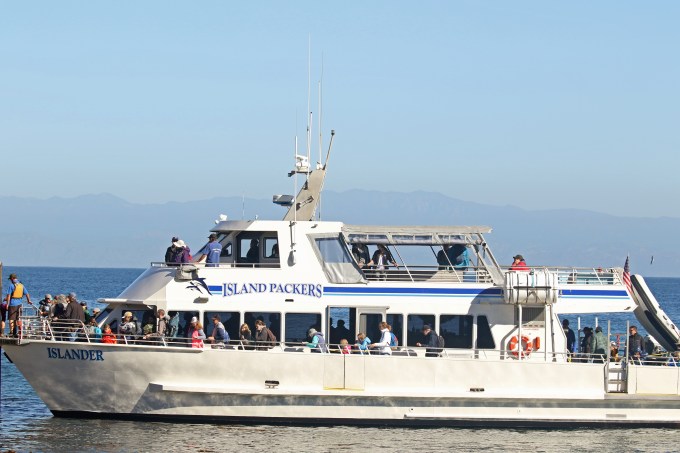
There is only one place in the world to see an Island Scrub-Jay and that is on Santa Cruz Island, the largest of the Channel Islands off the Santa Barbara/Ventura Coast.  Unless you have your own boat or the wherewithal to pay for a helicopter or seaplane, the best way to get there is on the high speed catamaran ferry cruise with Island Packers Cruises.  I wanted to see the Scrub-Jay so I signed on with Island Packers for their December 1st trip to Scorpion Harbor on Santa Cruz Island.

As stated in my initial blog post on the California trip, the Island Packers operation was first class – efficient and fun.  The crossing is about 30 miles and depending on stops for marine mammals etc it takes something around 90 minutes.  On this day, the weather was beautiful – no wind and calm seas.  In addition to the birds on the Island, the crossing provides opportunities to see pelagic birds and in addition to the Scrub-Jay I had high hopes of seeing a Black Vented Shearwater – an ABA Lifer.  While I had been told that the shearwater was almost guaranteed, I had not seen any included in Ebird reports for this time of year so I was of course a bit apprehensive.

Our High Speed Catamaran

Our Boat

Island Packers offers daily service to Santa Cruz and less regular service to some of the other islands.  There are plenty of campers, kayakers and casual tourists.  At least on this day, I was the only birder. Our Captain, Dave Corey, was excellent and knew quite a bit about birds.  I had great visits with him on both legs of our trip.  There were also three volunteers on board who led hikes and provided background on the Island’s history, flora and fauna.  The Santa Barbara Channel is renowned for an abundance of marine mammals and in addition to general crossings, Island Packers offers whale watching trips and even an occasional birding trip.  Birder or not, I would highly recommend a visit to all.

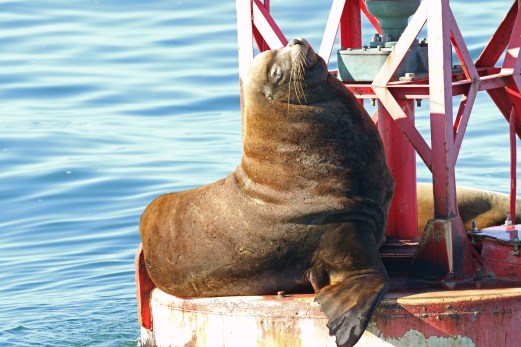
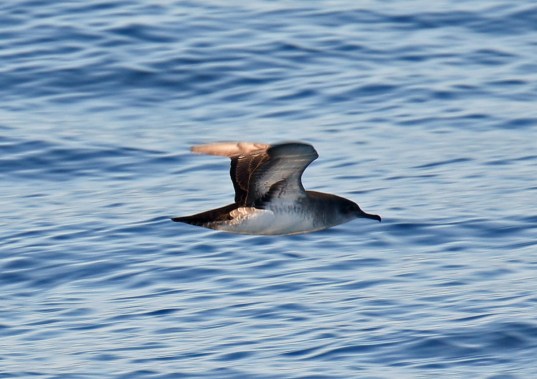
We started seeing birds immediately as there were gulls, cormorants and Brown Pelicans on the rocks and flying about as we departed.  Not too much later, my fears about seeing Black Vented Shearwaters were proven unfounded as several flew by at first in the distance and then much closer to the boat.  Not the same as the up close and personal experience I am used to with Westport Seabirds where Captain Phil stops for the birds or chums them in and get us real close, but definitely good looks.  Our first marine mammal was a California Sea Lion basking in the sun on a buoy not far from shore.

California Sea Lion

California Sea Lion

I don’t know how many shearwaters are usually seen on these trips, especially in late November or early December but my best guess is that there were more than 500 seen on the round trip.  It was really nice to be able to take photos on calm seas and on good light, even if no effort was made to get close.

Black Vented Shearwater

Black Vented Shearwater

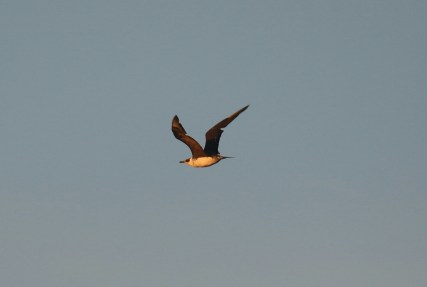
While the diversity of species was not as high as on the Westport trips, and it is probably higher at other times of the year, there were more species than I expected.  In addition to the many Brown Pelicans, other species seen were Cassin’s and Rhinoceros Auklets, Pacific and Common Loons, Horned and Western Grebes, one Pomarine and at least one Parasitic Jaeger, Bonaparte’s, Western, Heerman’s and Glaucous Winged Gulls and some Royal Terns – the latter as we began our return from the Island.

Brown Pelican

2P5A1076

Cassin’s Auklet

Cassin's Auklet

Parasitic Jaeger

Parasitic Jaeger

I am also about 90% sure I saw another alcid – most likely a Scripp’s Murrelet but it was too distant to get a photo.

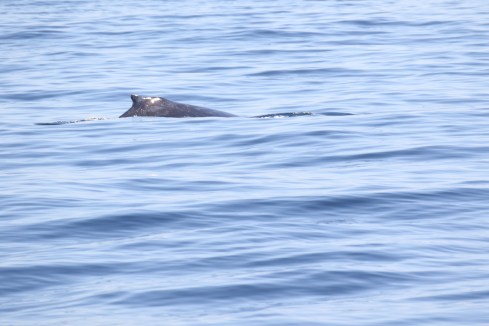
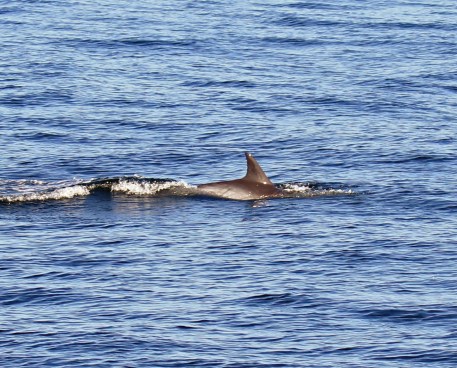
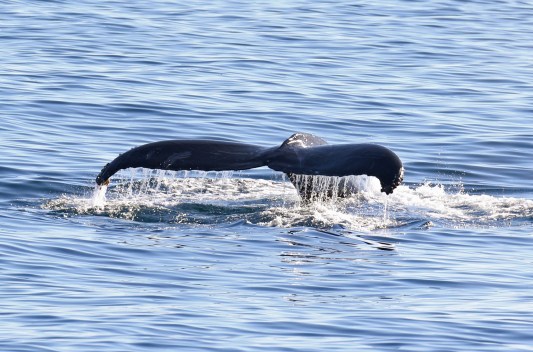
We had other marine mammals as well – many Common Dolphins often bow riding on the boat as well as several Humpback Whales.  Yes, whales are amazing animals but they have never really had great appeal to me.  After seeing a couple of humps and maybe a fluke or tail, I am ready to move on.  However, that opinion was not the general one and we spent a lot of time chasing whales.  They were a nice add on for me but I wanted to get to the Island.

Humpback Hump

2P5A0553

Common Dolphin

Common Dolphin

Humpback Spout

Spouting Off

Humpback Tail

Humpback's Tail

There has been off shore oil drilling in the Santa Barbara Channel for over 100 years.  It continues today despite the near complete disaster of the Union Oil spill in 1969.  This halted new leases and imposed restrictions but it was shocking to me to see the many oil rigs/platforms in the channel.

Oil Rig

Oil Rig

After the pleasant crossing we made it to Scorpion’s Harbor on the Southeast side of the Island.  There is another point of disembarkation on the west side called Prisoner’s Harbor.  Visitors have to bring all of their own food and gear but there is potable water available at numerous camp areas, a small visitors center and rest rooms.  The Island is hilly and quite dry with varied native vegetation.  It is part of the Channel Islands National Park and you are not allowed to leave anything on the Island nor to remove anything.  They try hard to prevent the introduction of any non-native flora or fauna.

There are many trails leading up into the hills and back away from the shore.  I spent my time within a couple miles of our landing point but I can see how the hiking would be very good.

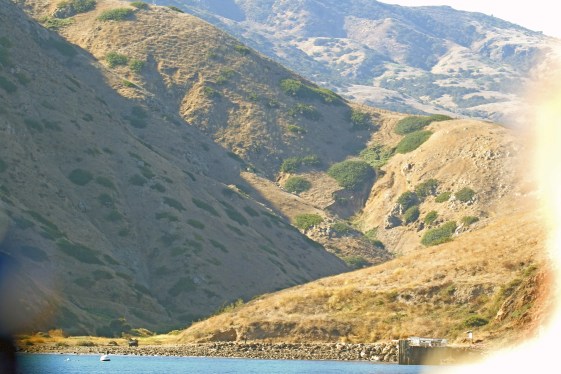
The Island Terrain

Santa Cruz Prisoner's Harbor

My objective of course was to find an Island Scrub-Jay.  There are estimated to be about 2300 Scrub-Jays scattered over the almost 100 square miles of the Island.  I just needed one.  Birders I know had seen them in the picnic area near our landing spot.  One of the naturalist volunteers suggested hiking through the campgrounds and up into Scorpion Canyon.  I found my first one in the first campground and all told on my various hikes I counted at least 10 some seen flying up the hillsides, some closer and some heard only.


Island Scrub-Jay

Island Scrubjay

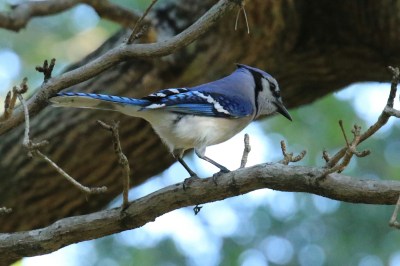
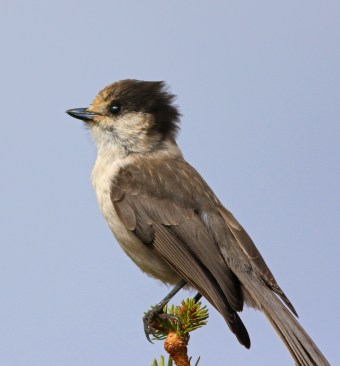
Although very similar to the California Scrub-Jays found throughout the West, this species appeared a much deeper and brighter blue with a longer tail.  A very handsome bird.  There are Steller’s Jays on the Island but no other Scrub-Jays.  I was very pleased to see and photograph this bird for many reasons.  Foremost of course was that it was an ABA Life Bird but after adding the Florida Scrub-Jay this spring, it had been the only one of the 11 ABA jay species that I had not seen.  Now it joins the California, Florida and Woodhouse’s Scrub-Jays, Gray Jay, Steller’s Jay, Brown Jay, Mexican Jay, Blue Jay, Pinyon Jay and Green Jay on my “Jay” list.  I have photos of all except the Brown Jay which I saw at Falcon Dam State Park in Texas in 1975.  My photos of all for comparison are below.

Blue Jay – Florida                    

Bluejay

Mexican Jay – Arizona

Mexican Jay             

Gray Jay – Washington

Gray Jay
Florida Scrub-Jay -Florida

Florida Scrub-jay

 Pinyon Jay – Colorado                          

Pinyon Jay

Wodehouse’s Scrub-Jay – Colorado

52-Western Scrubjay Woodhouse Form

Green Jay – Texas

Green Jay (2)

Brown Jay – Texas (Not My Photo)

Brown Jay

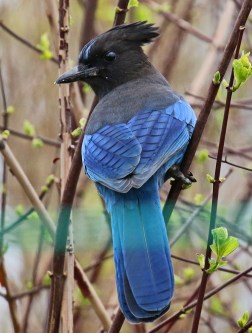
Steller’s Jay – Washington 

Steller's Jay1

California Scrub-Jay – Washington

California Scrub Jay

Another good birding reason to visit Santa Cruz Island is that there is a resident population of Allen’s Hummingbirds.  No Rufous Hummingbirds are ever on the Island which is a good thing since the two can be very difficult to tell apart.  Any hummingbird found on Santa Cruz Island with any rufous coloring is always an Allen’s.  I had a photo of what I believed to be an Allen’s Hummingbird from Southern California that I took earlier this year but with this photo I was now sure that I had one.

Allen’s Hummingbird

Allen's Hummingbird Tongue1

There are also several endemic subspecies on the Island.  Maybe someday they will be recognized as species of their own just like the Island Scrub-Jay.  These include Spotted Towhees, Dusky Orange Crowned Warblers, Loggerhead Shrike, Channel Island Song Sparrow, Island Horned Lark and Santa Cruz Rufous Crowned Sparrow.  I saw all but the Rufous Crowned Sparrow and Horned Lark.  If either becomes a species on its own I guess I will have to go back.

There is one other endemic on the Island that was hard to miss, the Santa Cruz Island Fox.  I saw at least 5 while I was there.  They are not in the least people shy.  One looked for food in a small tree right over my head as I sat and rested.  It was often just a couple feet away.

Santa Cruz Island Fox

Island Fox

The boat loaded for the journey back at 3:00 p.m.  The seas remained calm and we had a following tide making for a very smooth journey.  We had more of the same birds as on the way out except there were a few Royal Terns at Prisoner’s Harbor.  I would have much preferred an Elegant Tern as they did not make an appearance in Washington this year, but it is too late and they are now further south.

Royal Tern

Royal Tern3

Back in Ventura we had a beautiful sunset and then not too much later a good view of the near “Mega-Moon” the phenomenon when the moon is closest to the earth and thus appears quite large.  The next day was the mega-event itself.

Sunset

Sunset

The “Mega-Moon”

Mega Moon

It had been another memorable, enjoyable and successful day.  I had my two target species and added an unequivocal photo of an Allen’s Hummingbird.  I also added another dozen plus trip birds.  I now headed off to Pasadena where I hoped to find my next targeted bird at a roost site the next morning.  Traffic was horrendous and although I was only going 65 miles. almost all on freeways, it took over two hours.  And I thought Seattle traffic was bad…

(Postscript December 20, 2017)

Due to some user error separating Countable and Non-Countable species on my Ebird ABA lists, when I found one, I thought that the Island Scrub-Jay was ABA species #699.  Correcting the error, it turns out that the Island Scrub-Jay was actually #700.  I was thrilled to see it without knowing that it gained me membership in the ABA 700 Club.  I wish I had been aware of it at the time – I am sure I would have come up with an appropriate celebration of sorts.  And I will be making a change to my next blog post as well as the Red Crowned Parrot that I saw the next morning was actually #701.  Somehow the endemic Island Scrub-jay seems more appropriate than the introduced but now established Red Crowned Parrot – as special as that next morning was.

New ABA Life Birds:  #699 Black Vented Shearwater and #700 Island Scrub-Jay

New ABA Photos:  Same

NEW ABA Year Birds:   Same

My trip list was now at 94.

California Birding Day 2 – Finally a California Condor – and then a Garganey

With a wingspan of almost 10 feet, the California Condor is the largest land bird in North America being surpassed only slightly by the Andean Condor for that distinction worldwide by less than 12 inches.  Habitat destruction and lead poisoning and some poaching led to the near extinction of this magnificent bird which was described in the annals of the Lewis and Clark Expedition.  All of the remaining 27 Condors in the wild were captured in 1987 and were placed in a breeding and conservation program at the San Diego Wild Animal Park and the Los Angeles Zoo.  Bringing back the California Condor to the wild is one of the great success stories of bird conservation.  Reintroduction into the wild began in 1991 and the first fledgling in the wild was seen in 2003.  Condors have been introduced into Arizona, California and Utah and today the population is around 450 individuals with more than 275 in the wild.  There are historical records from my home state of Washington.  Maybe someday they will be seen here again.

Andean Condor – Peru 2013

Andean Condor

I had seen an Andean Condor in Peru in 2013 (poor photo above) but had never even looked for a California Condor.  I doubt I will still be capable of even looking for one by the time they make it back to Washington, so my options were Arizona or California.  California was my choice and that decision prompted this trip.  My original plan to look first at Pinnacles National Park was changed when the opportunity came to see the Red Footed Booby at Pillar Point in San Mateo County (see my previous blog post) which although successful threw off my schedule.  So I opted instead to visit the Big Sur area at Julia Pfeiffer Burns State Park down the coast from Monterey.  Melissa Hafting had recommended the Nepenthe area just south of the Park Visitor Center on Highway 1 as the “go to spot” something confirmed by Ebird reports.  I left Monterey early and headed south – Nepenthe being about 55 miles away.

Maybe a third of the way into the trip, a road sign notified travelers that Highway 1 was closed at Milepost (?).  I was not able to determine exactly where that was – before or after my destination.  I was worried. Very worried.  With my very early start I arrived at the Park visitor center before 7:30 a.m.  It was closed but fortunately a restroom was open.  There had been more signs about the road closure a few miles earlier.  I thought there might be some information posted about the road closure but I could find none.  As I was walking around, a large bird came into view being chased by a smaller bird – what appeared to be a Raven.  Was this my Condor?  No…only a Turkey Vulture.  Not a small bird – unless compared to a Condor.

A road crew was preparing to head out.  I caught the eye of a woman as she prepared to move out on a road grader and approached figuring she could give me information about the road closure.  She was great – personable, sharp and funny.  She gave me the bad news that I would not be able to continue all the way south on Highway 1 – my original plan to get to my next spot.  I would have to backtrack to Monterey.  But the good news was that the road closure was south of Nepenthe.  Even better was this lady was a local who knew a lot about Condors and gave me very specific information about where the best spot to see a Condor was – just a couple of miles south and just above where the road was closed.  It was the same general area Melissa had recommended.  Off I went.

There was a brief stop where some roadwork was already underway, then a few minutes later, I got to “the spot” and pulled off the road and parked.  Within no more than 2 minutes three GIANT birds flew right overhead.  The light was not great but oh my god, here were three California Condors not even 70 feet away.  My camera went crazy.  With the sun behind and above I could not get the clear detail I would have liked – but who cared.  These were spectacular, awesome, phenomenal birds!  I was actually shaking with excitement.

California Condors

Condor Tag4a

Condor Tag2

All of the Condors that have been released have tags visible under their wings.  You can see that these two birds have yellow tags numbered 2 and 4.  Condor number 4 is “Amigo” and was hatched in 1999.  I was not able to get a clear photo of the third bird and I have not found information on Number 2.  Since California Condors can live up to 60 years, Amigo will hopefully have a long life ahead and will be seen by many.  He and his cohorts certainly gave me a thrill!

It did not take long for these giants to soar out of sight.  It was barely after 8:00 a.m.  There was a lot of birding still ahead and I had to backtrack through Monterey adding a couple of hours to my traveling.  I decided to count my blessings and move on.  Frankly everything else that would happen on this trip would now be icing on the cake.

One of the rarities that had shown up after my initial planning was a Garganey – a small Eurasian teal-like duck.  It was being seen regularly at a pond in a public park in Santa Maria in Santa Barbara County.  If I had been able to continue south on Highway 1, the park was 139 miles away – about 3 hours on that road.  Having to backtrack added over 70 miles but because of  the faster roads only about another 40 minutes.  I had no choice so I headed north before heading south.  I made a few brief stops along the way just seeing some of the local birds and then arrived in Waller Park just before 1:00 p.m.

I had seen a Garganey twice before but never in the ABA area where it is quite rare.  My first one was seen in Pecs, Hungary in July 2002.  Relatively common there but no photos in those days.  I saw one again in Kenya in November 2007.  Garganeys breed in Europe and Asia but then migrate to Africa, South Asia and Australia. No photos in Kenya either.

It took a little while to actually find the pond in the large park. But once I did I quickly found the Garganey as it was by far the smallest duck there.  As I said, anything after the Condors would be icing but this was really, really good icing.

Garganey – Waller Park – Santa Maria, Santa Barbara County

Garganey 1

Garganey

Garganeys are often confused in migration and occasionally show up in North America.  With a bird like this, there is always a question if it might be an escapee from a collection.  The consensus has been that especially as a juvenile, this bird is probably for real.  I am certainly treating that way until there is some official determination to the contrary – if any.

I had to be in Ventura for my next pursuit – taking the high speed passenger ferry to Santa Cruz Island.  That was another 100 miles away.  No other specific targets in the area so I did some general birding and made it to Ventura as the sun was setting.

What a great day.  A California Condor and a Garganey with photos of both.

New ABA Life Birds:  #697 California Condor and #698 Garganey 

New ABA Photos:  Same

NEW ABA Year Birds:   Same

I had not been trying to add species per se – only the targets but just by being in good and different habitats, my trip list was now over 80 species.

California Birding Day 1 – Starting with a Booby

When I first thought about a November birding trip to California my main objective was to finally see a California Condor in the wild.  Shame on me for not having done so earlier.  It was about time.  I started putting together some details and figured that with luck and perseverance there was a reasonable chance of adding five new ABA Life birds.  I would still fall short of my goal to reach 700 but I would be a lot closer and that would then be an easy goal for 2018.  Then some very rare and special birds started showing up and if they somehow remained, maybe 700 was a possibility.

Two of the rarities that appeared were boobies – a rare Red Footed Booby at Pillar Point in San Mateo County and an even rarer Nazca Booby at Dana Point in Orange County.   I had seen 55 Red Footed Boobies at Kilauea Point in Kauai but never in what I consider the “true” ABA area which for me does not include the Hawaiian Islands.  Maybe it would have been possible to see a Nazca Booby on my trip to Peru, but I had not done so.  It has been seen only a handful of times in California – definitely not on my ABA list.  I did not know of either observation when I made my flight reservations.  I planned to go first to San Jose and then head south – get a photo of a Yellow Billed Magpie and then continue to Pinnacles National Monument to look for the Condor.  The Nazca Booby was seen on November 27, two days before my scheduled departure.  When I saw the record I looked into changing my departure date and arrival spot but it was prohibitively expensive.  If somehow it remained until I arrived on the 29th maybe I could consider a Plan B.  It did not – being only a one day wonder so just as well I had not made the change.

Nazca Booby – Dana Point – November 27, 2017 – Photo by Shirley Reynolds (See my previous post)

Nazca Booby

But the Red Footed Booby had been seen regularly at Pillar Point since November 12th.  No guaranty it would remain until I got there but the odds were good enough for me to change plans and divert first to Pillar Point when I first arrived.  Hawaii is now within the ABA Area but as I said I don’t count those birds.  This would be a great addition and if seen and if I could get some of the other rarities that had shown up since my first planning, 700 was a possibility.

Red Footed Booby (Adult) – Kilauea Point 2011

Red Footed Booby

My flight left Seattle at 6:00 a.m. which meant getting up at 3:00 a.m. and thus not much sleep – a recurring theme during my California trip.  No way to know if the Booby would remain but the best odds were to get to Pillar Point as soon as I could and hope – especially hope to see another birder with a scope on the bird.  The plane got to the gate in San Jose at 8:00 a.m. and since I had not checked any bags, the San Jose airport is pretty manageable and the process at Fox Car Rentals was very efficient, I was miraculously on the road by 8:20.  Although Pillar Point was only about 50 miles away, it was now rush hour and traffic was pretty bad for a good part of the trip.  Somehow I made it to the marina around 9:45 a.m. – and my heart sank.  The area was much larger than I had expected and it was not at all clear where to look for the bird.  There had been a reference in one report to Johnson Pier.  I located it – drove to a viewing point and began scanning.  Nothing.  For the next hour I moved to various points to check the many breakwaters.  I saw no other birders and definitely no Red Footed Booby.  I considered admitting defeat and returning to my original plan and decided to try one more spot – going to the boat launch area to scan yet another breakwater from yet another perspective.

I missed it on my first two scans because its head was tucked down, but on my third pass I saw the distinctive bill shape of a booby and knew I had my bird.  At first it was flanked by a Brown Pelican and a Western Gull – giving a good size comparison.  The Pelican flew off and my photo – very distant – at least could show the bill, the size compared to the gull and some of the coloration of a juvenile Red Footed Booby. It was not yet 5 hours after I had left Seattle and I had my first prize.  ABA Bird #694.  An excellent start.  Interestingly no other observations for this rare bird were posted to Ebird for the day I was there although it has been reported almost every day since.

Red Footed Booby

Red Footed Booby2

It was now back to the originally planned itinerary but with a much delayed start.  I headed back towards San Jose and then continued on to Coyote, CA on Highway 101 about 60 miles away.  This was an agricultural area that my research said was very good for Yellow Billed Magpies.  I had seen my only Yellow Billed Magpie 46 years earlier not long after I started birding.  It is found only in the Central Valleys of California.  I wanted/needed a photo.  It took a little longer to find one than expected but soon after finding my first one, I found several more.  Especially in flight and even moreso than its Black Billed Magpie cousin which is very common in Eastern Washington, it is a very striking bird.

Yellow Billed Magpie with Black Billed Magpie for Comparison

Yellow Billed Magpie1

Yellow Billed Magpie Flight1

Black Billed Magpie

A bonus was that I also found a White Tailed Kite in the same area.  I have seen many in California before and also several in Washington, but this was my first one for the year – so a new ABA Year bird.

White Tailed Kite

White Tailed Kite1

The original plan was that I would have been in this area and seen the Magpie by not later than 10:00 a.m. and then gone to Pinnacles to look for a Condor.  No complaints, but because of the pursuit of the Red Footed Booby, it was now almost 1:30 p.m.   I could get to Pinnacles before 3:00 but I wasn’t sure exactly where I might find a Condor once I got to the area or how long that might take and when the light would make sightings and especially photos more difficult.  Another option I had considered was going to the Gloria Road area where two of my other target birds were possible – Bell’s Sparrow and Lawrence’s Goldfinch.  I decided to go that route and then to try for Condors at Julia Pfeiffer Burns State Park the next day – arriving early both to give myself more time and hopefully to catch the birds as they were leaving their roosts and beginning their scavenging forays.

It was almost 70 miles to my next area, but one of the best parts of this trip was that at least out of the cities, travel was fast.  I made good time and began my search around 2:30 and spent the next hour plus on pretty remote roads through varying habitat.  Around 3:30. I found a pair of Bell’s Sparrows in sage/chaparral on a hillside on Gloria Road.  It was not on the sunny side of the road and the light was not great.  I had been trying playback off and on for more than 5 miles of seemingly appropriate habitat.  These two birds flew in in response but immediately buried themselves in the dense vegetation and would not come out.  My only views were impeded by the thick branches. Nonetheless in a series of views, I could make out the dark head, white throat, white eye ring, dark malar stripe and little if any streaking on the back, sufficient in this habitat and location to give good confidence to identification as the Bell’s Sparrow as opposed to the Sagebrush Sparrow.  I counted it as a new ABA Life bird but was very frustrated to not get a photo.  The one below is from the internet.

Bell’s Sparrow

Bell's Sparrow

Time to call it a day.  I headed to Monterey to spend the night at a good spot to get an early start for the Condor search the next day.  I was high from the successes of the day but very tired from the early start and lack of sleep the night before.  It had been an excellent day in excellent weather.

New ABA Life Birds:  #695 Red Footed Booby and #696 Bell’s Sparrow 

New ABA Photos:  Red Footed Booby and Yellow Billed Magpie

NEW ABA Year Birds:   Red Footed Booby, Bell’s Sparrow, Yellow Billed Magpie and White Tailed Kite