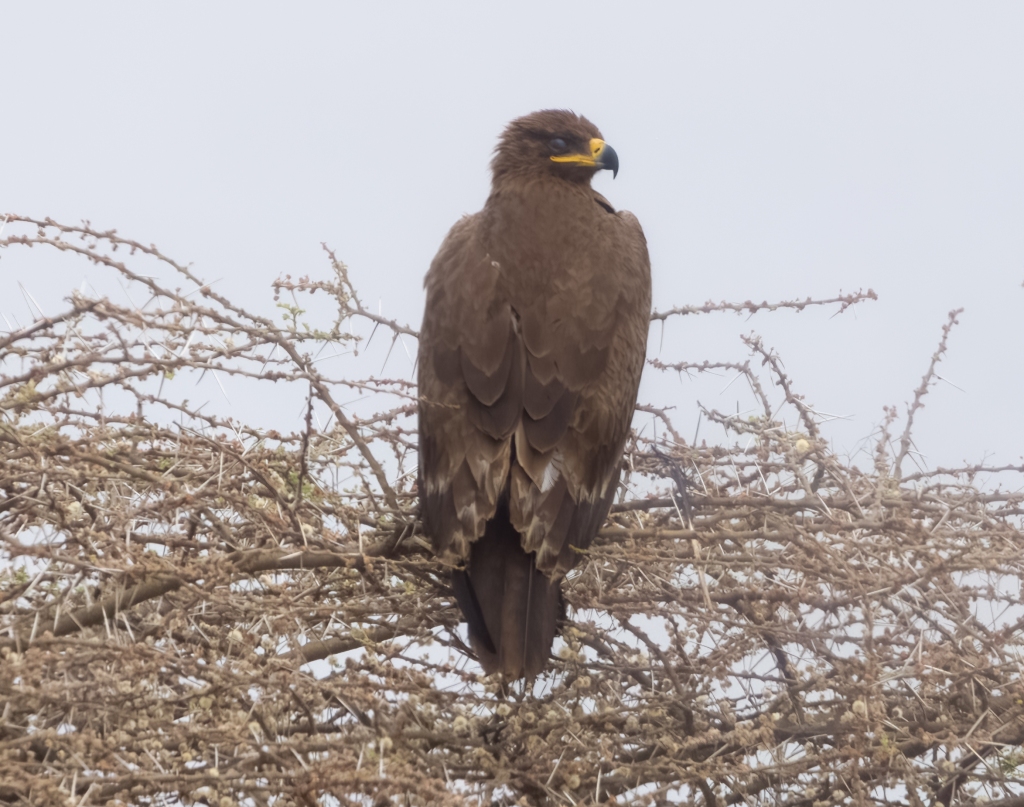
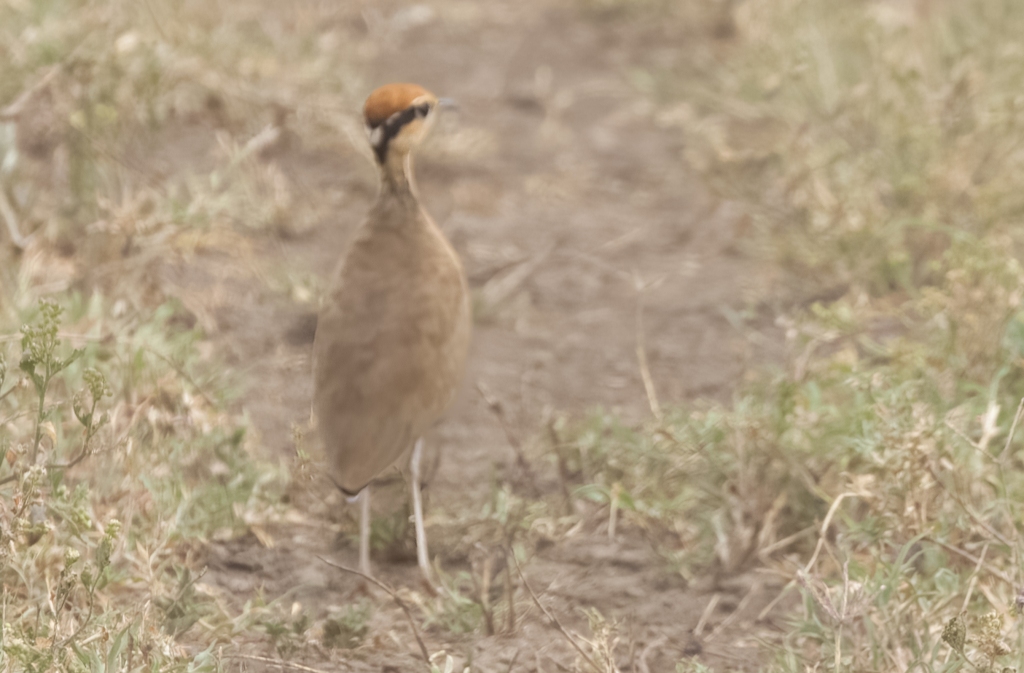
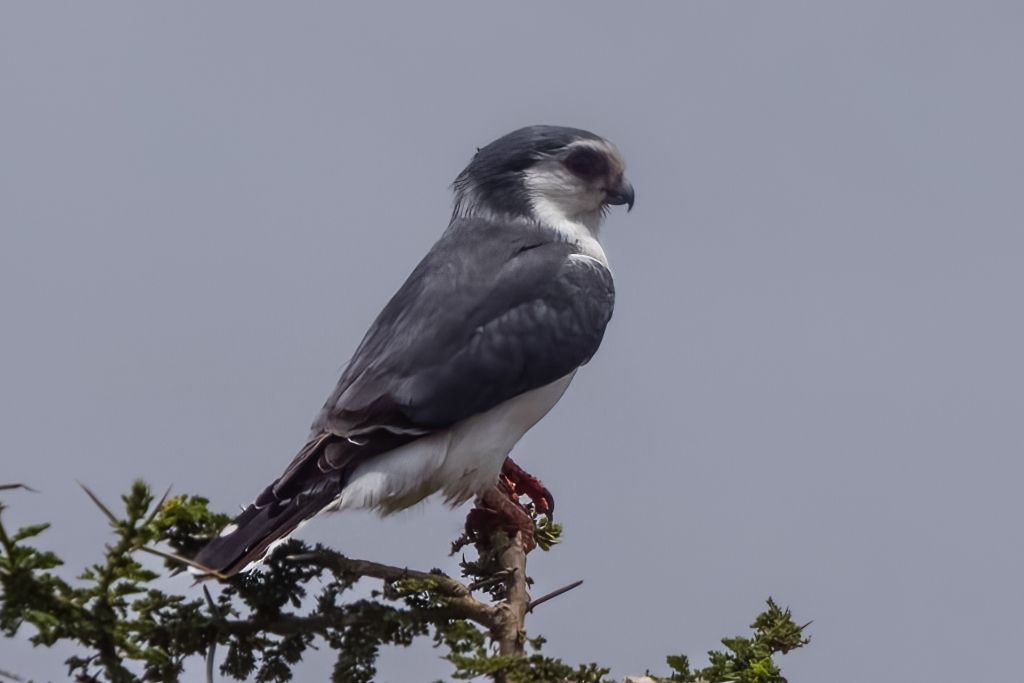
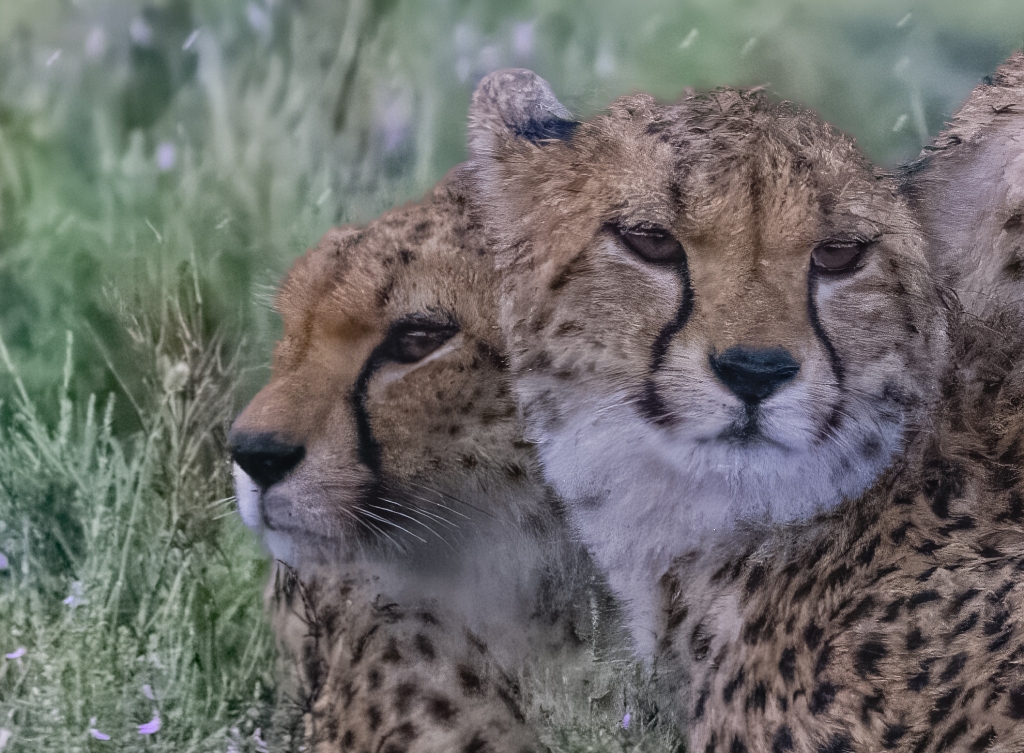
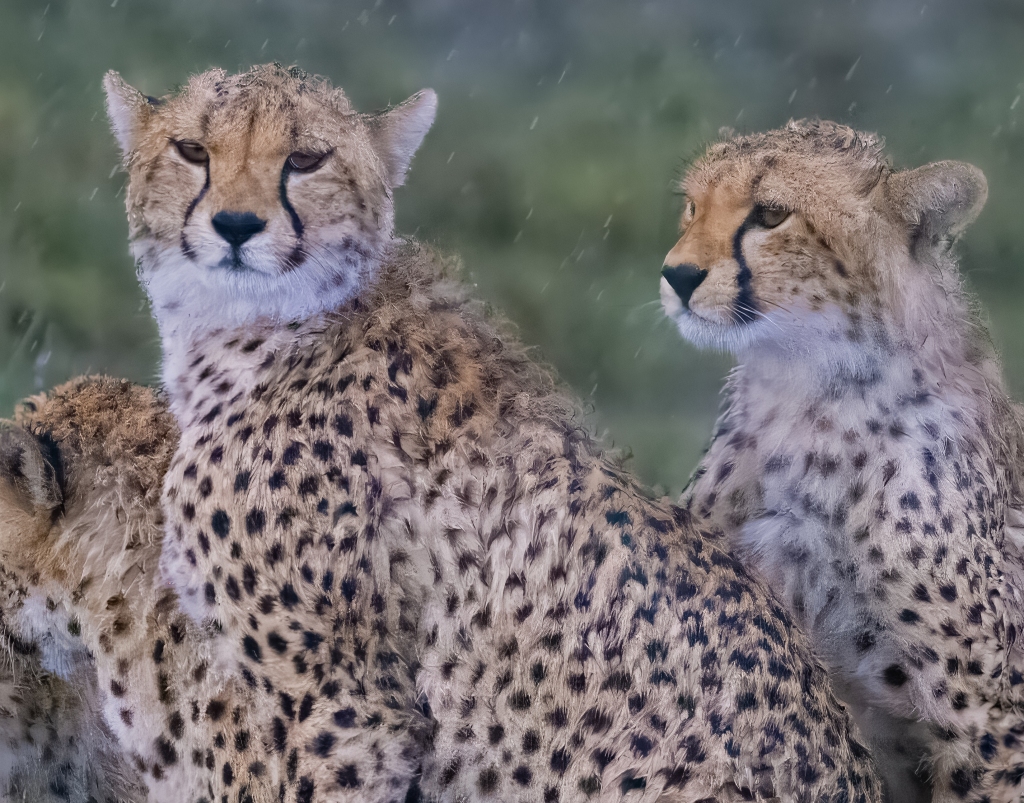
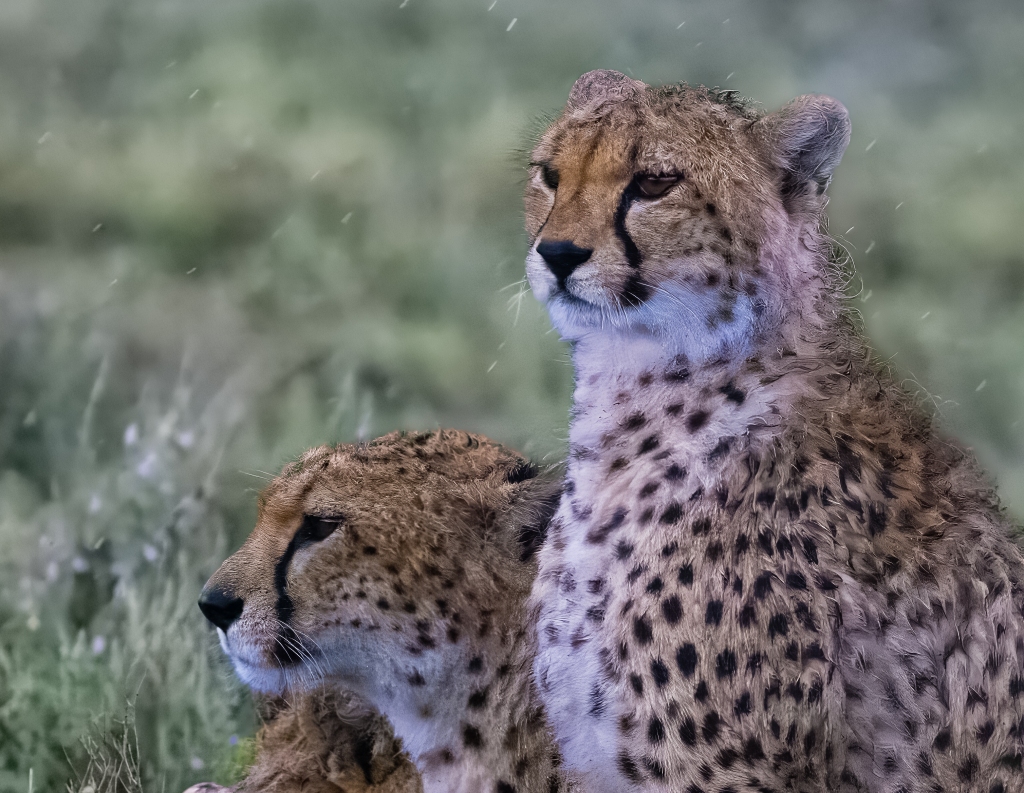
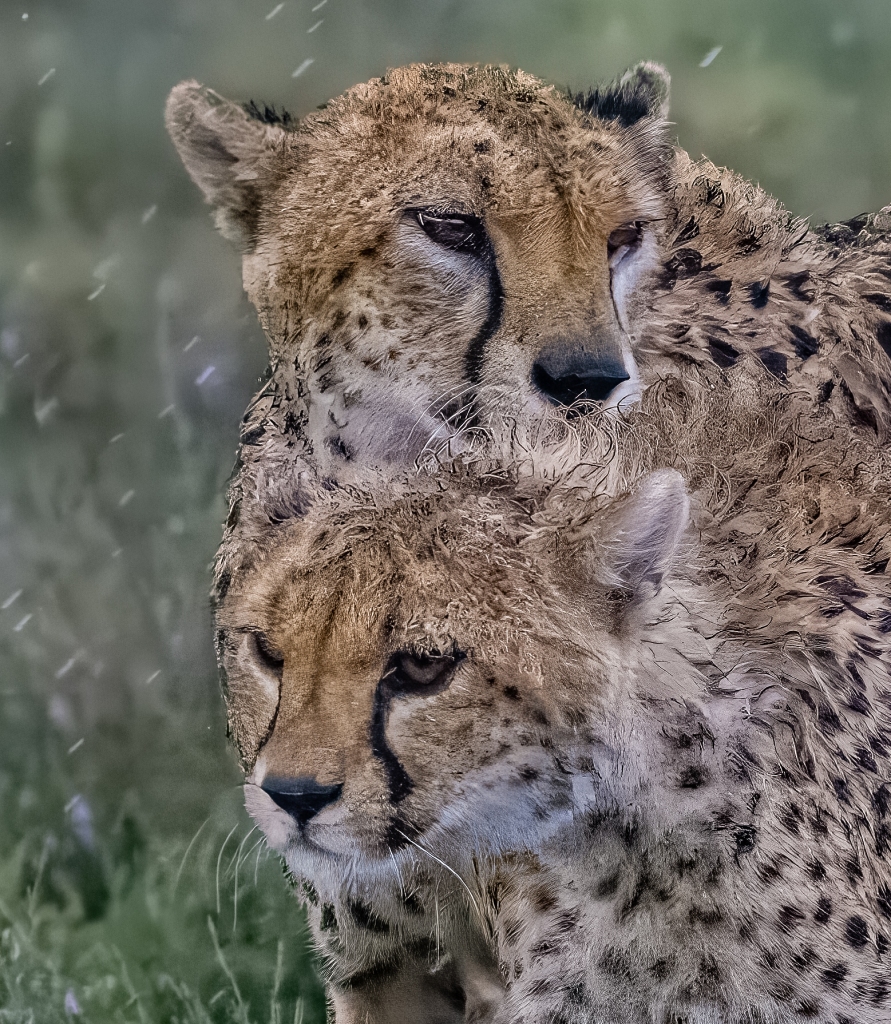
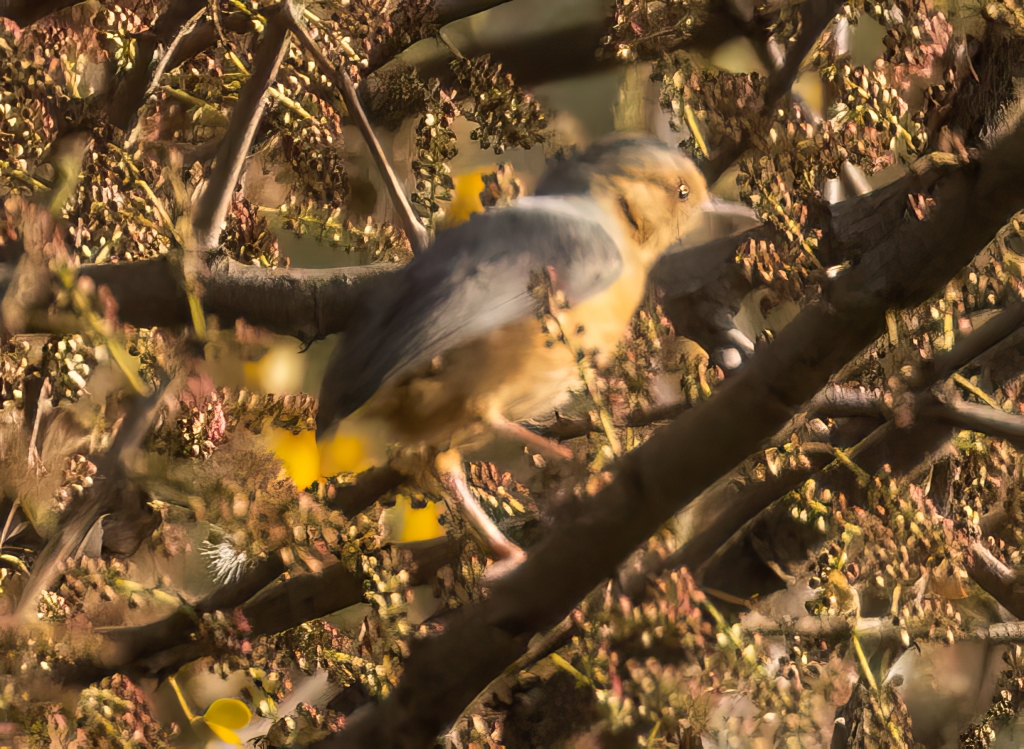
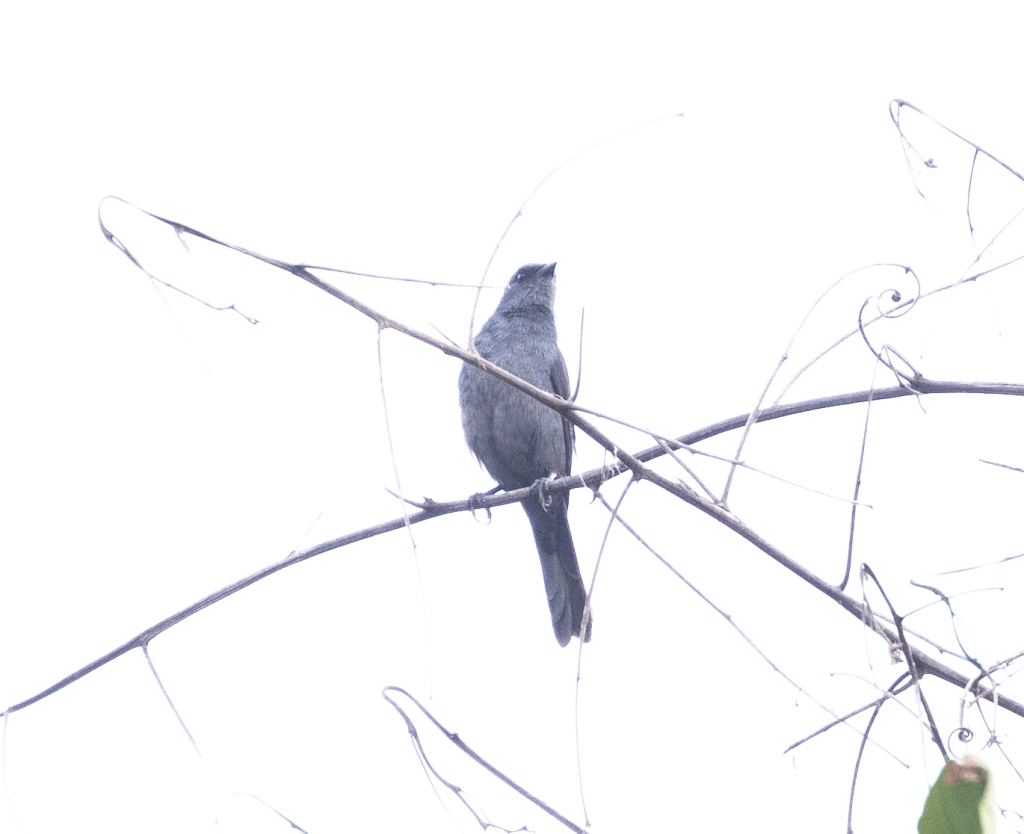
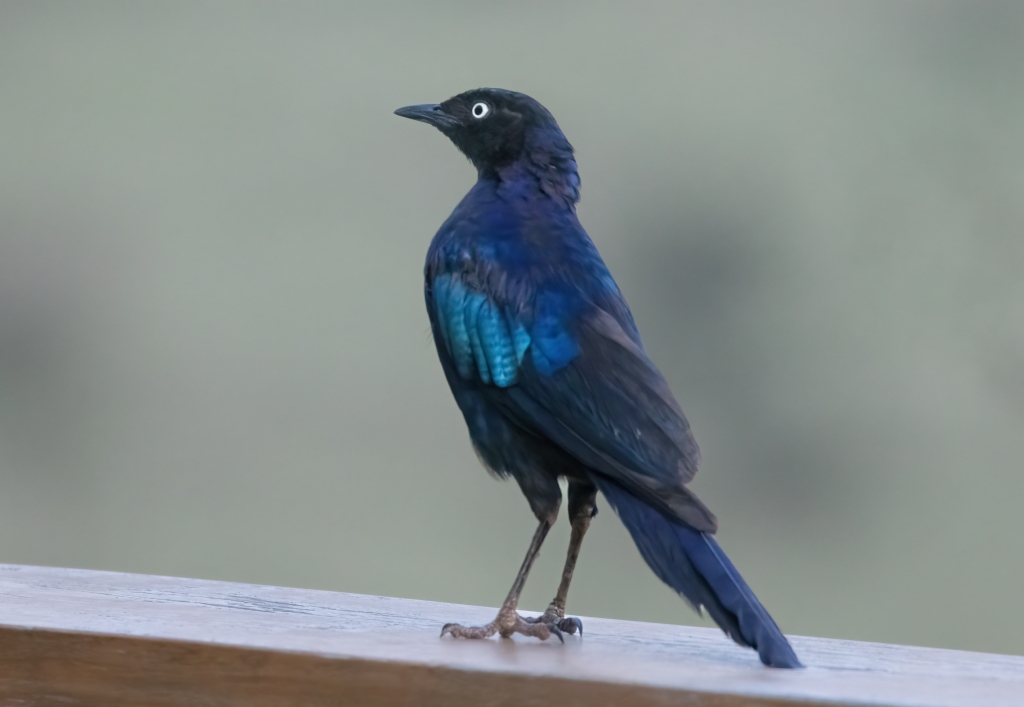
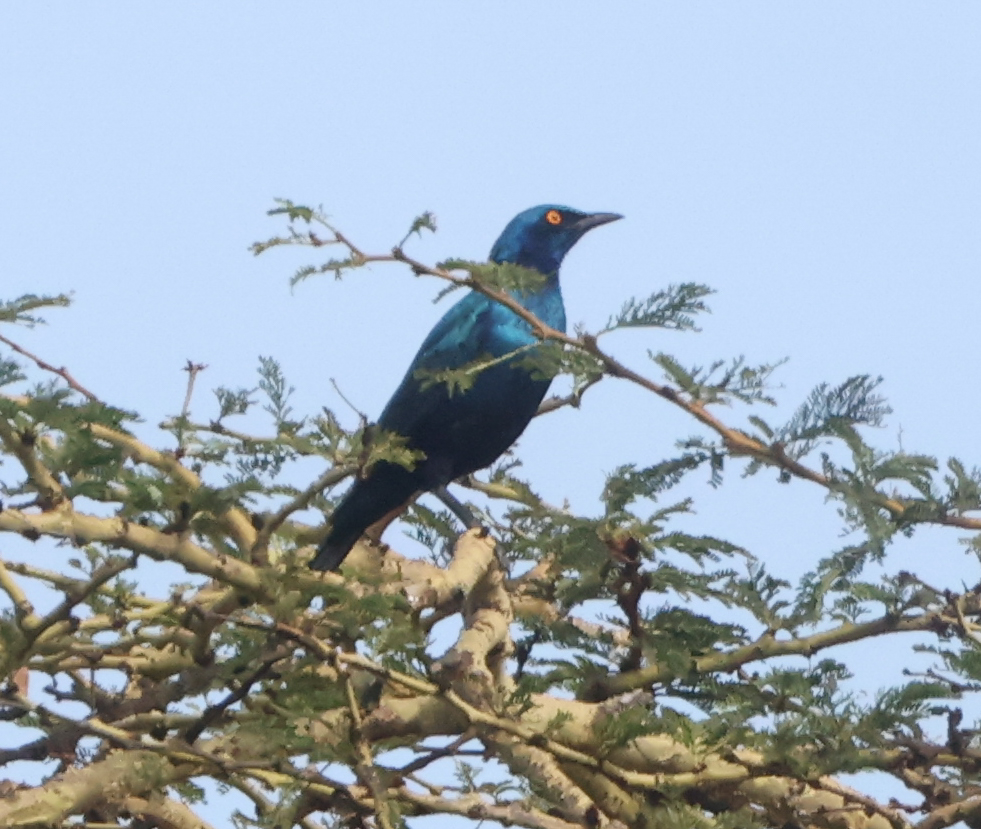
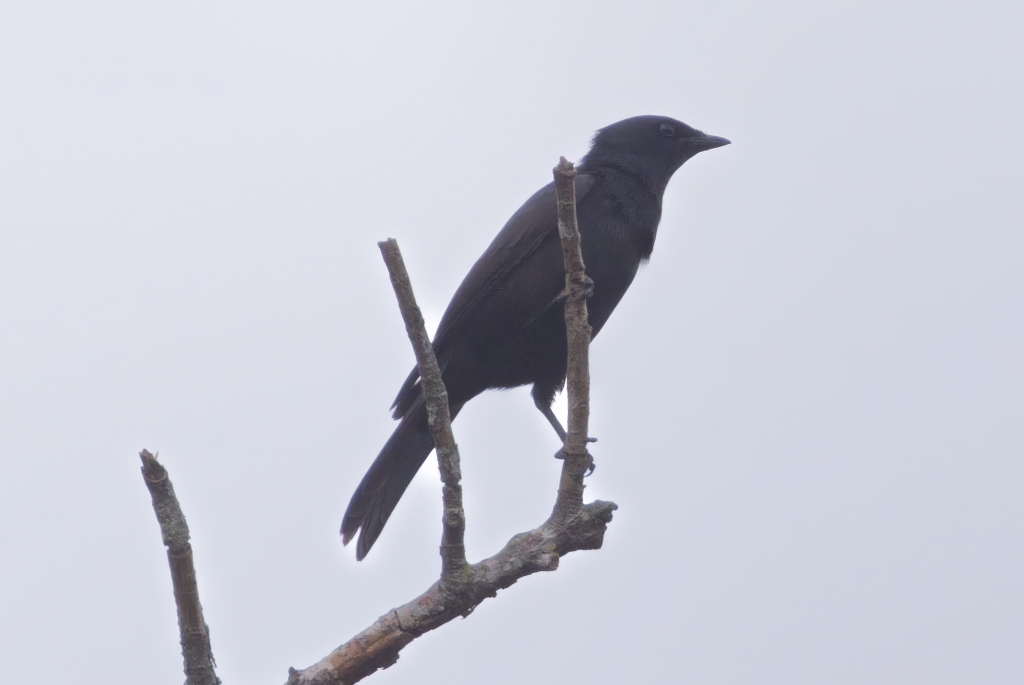
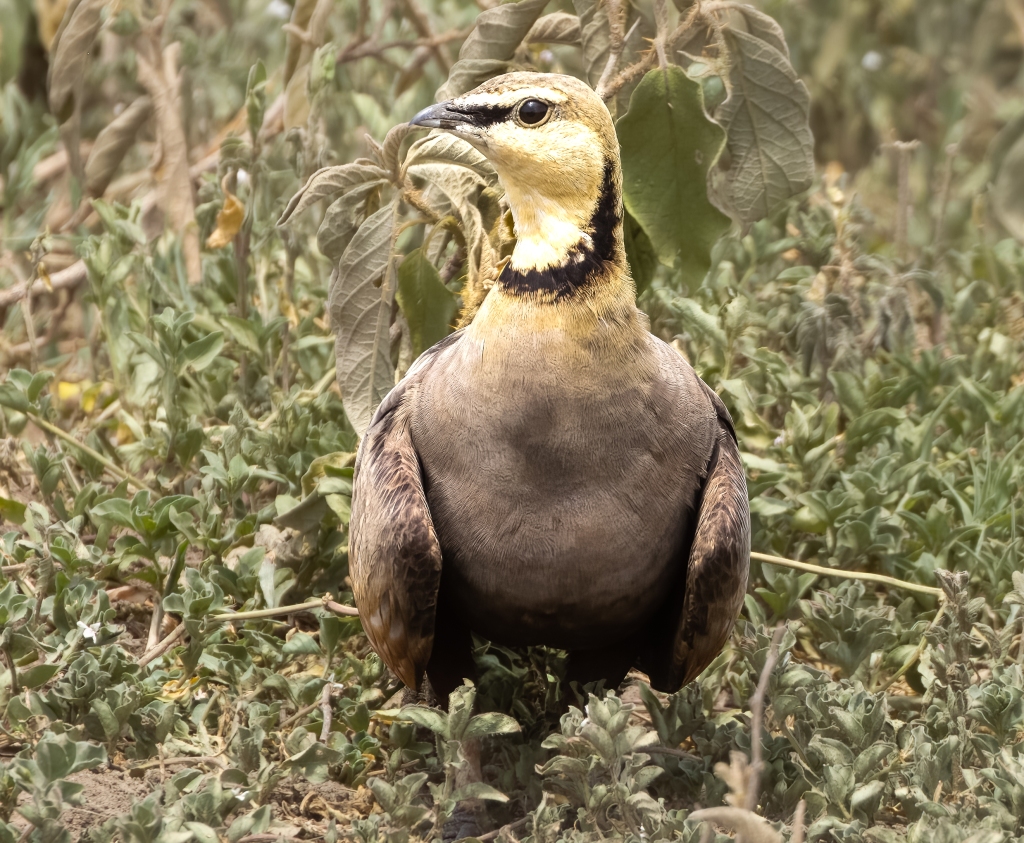
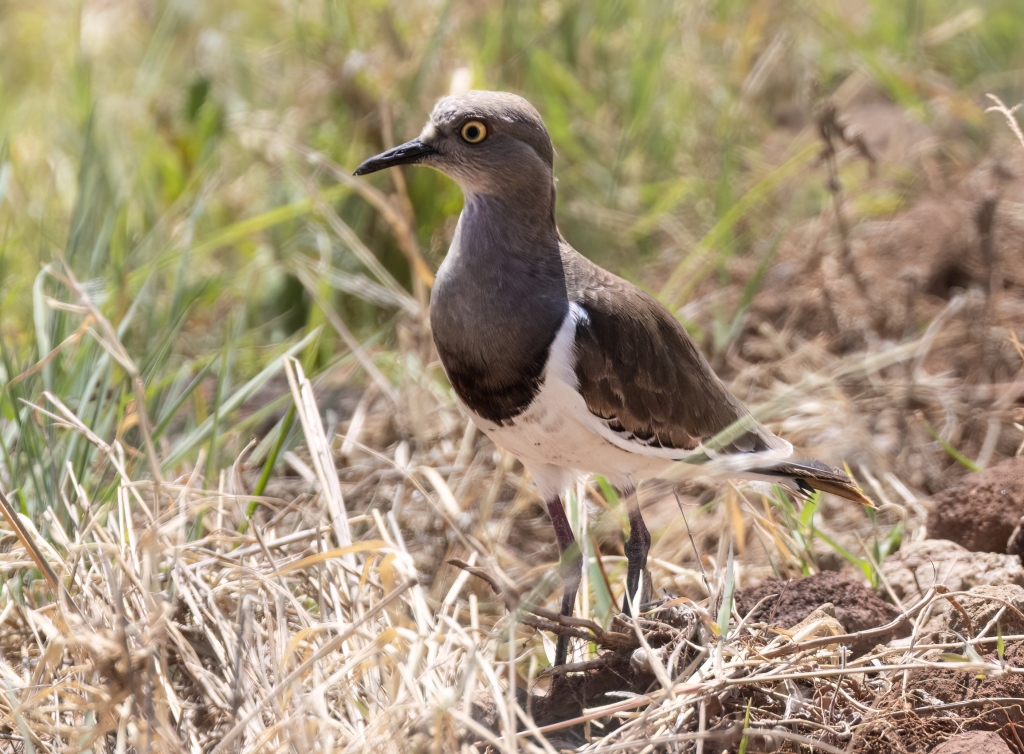
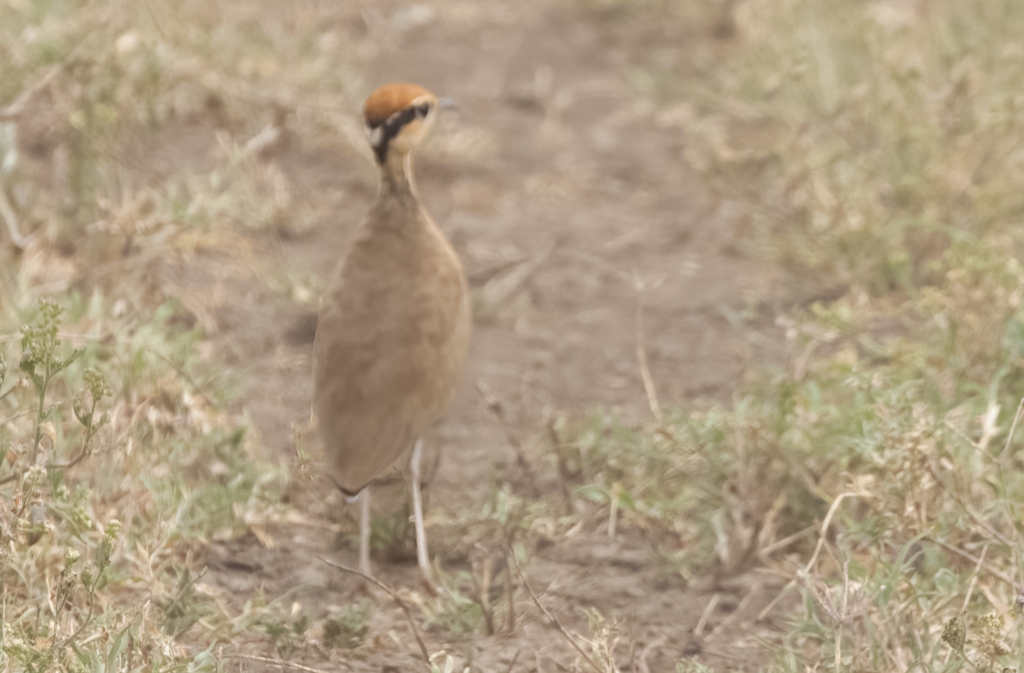
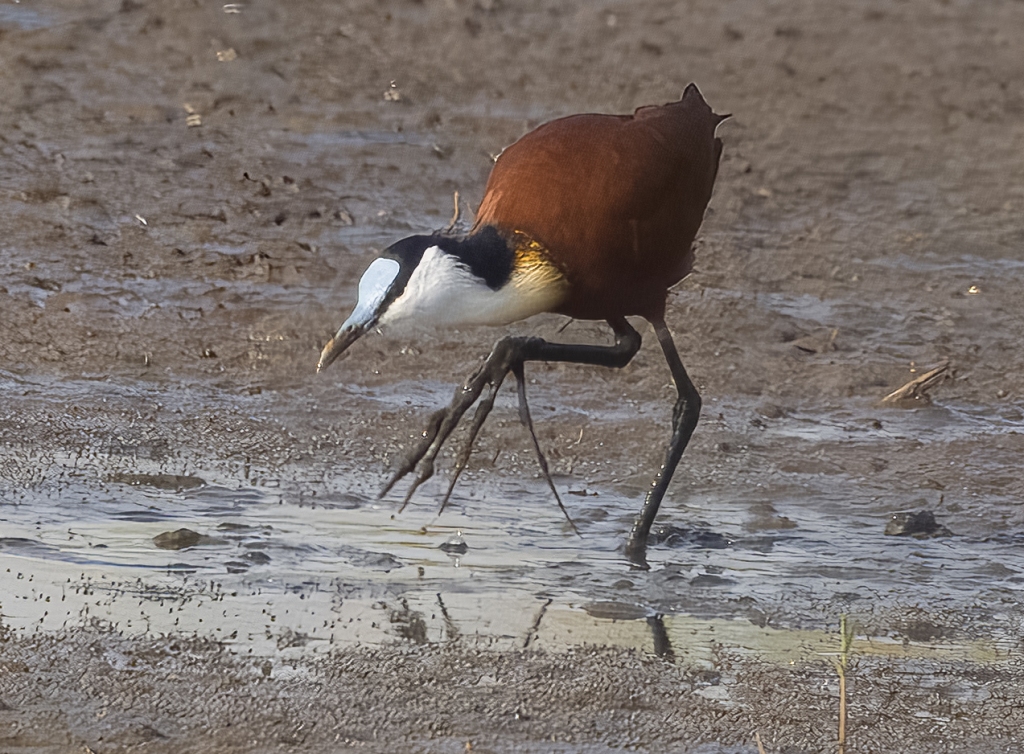
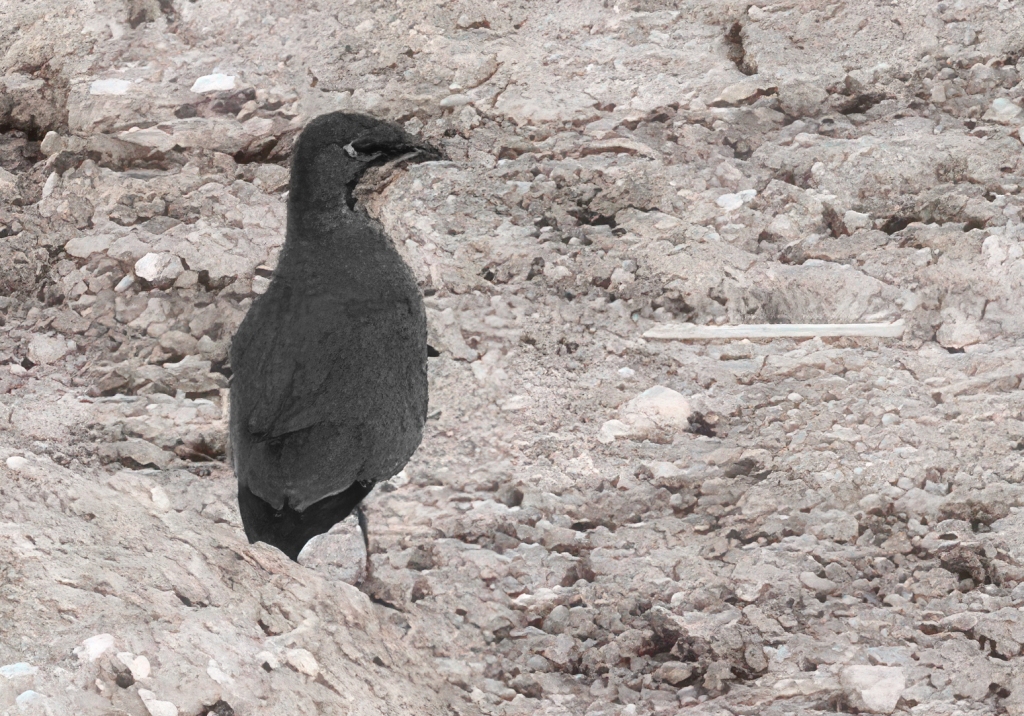
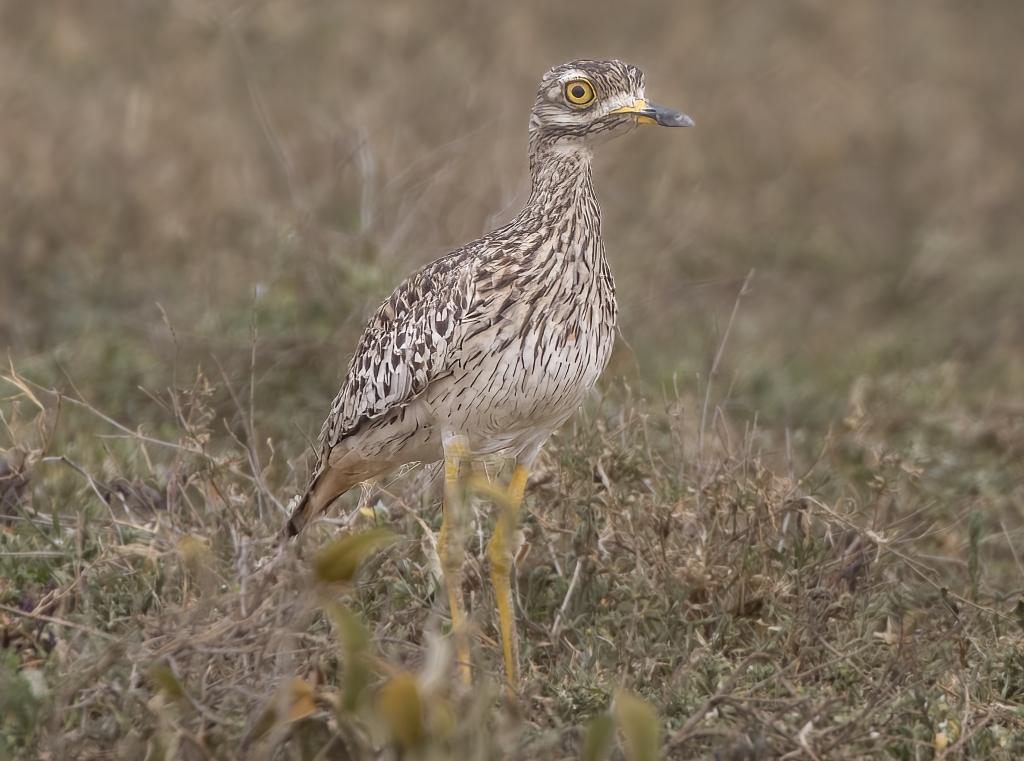
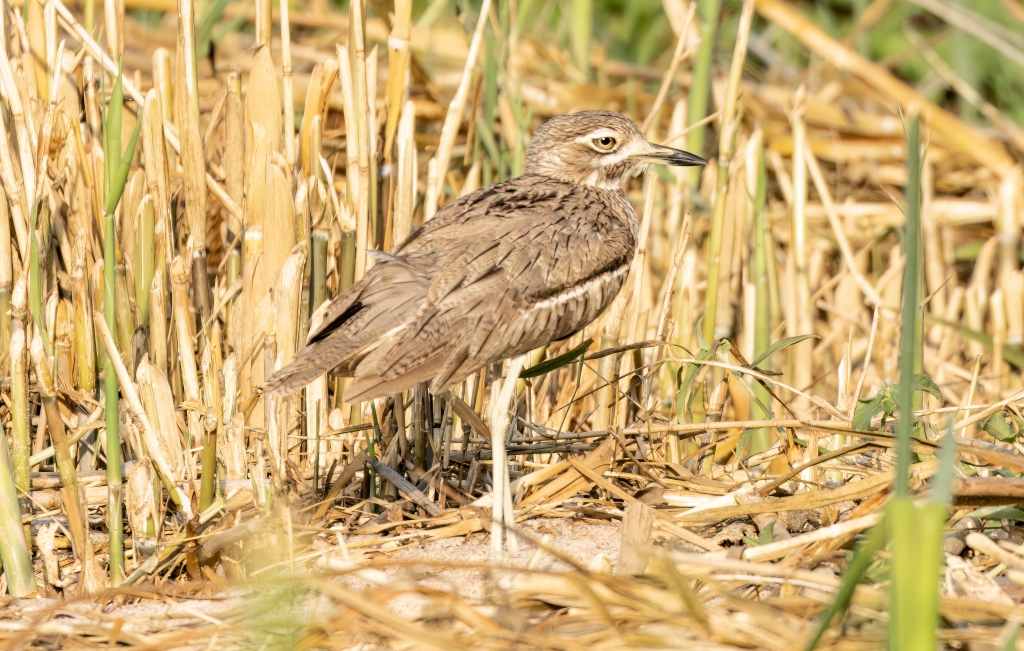
September 24th: We left Ndutu Safari Lodge after breakfast and continued our birding/wildlife safari in the Ngorongoro Conservation District and the Southeastern Serengeti. This was our worst day for birds so far but that statement only means that it was great but not as great as other days. We saw some wonderful birds and some wonderful animals. There would only be 64 species seen this day and only three were new for the trip – Temminck’s Courser (a lifer), Steppe Eagle and Pygmy Falcon. On many occasions earlier we had tried to make a Tawny Eagle into a Steppe Eagle and either did not have a good enough view to be certain or fairly quickly concluded it was “just another Tawny Eagle“. I had seen many of both species in earlier visits, so I didn’t “need” one, but it was great to finally get a good look where we could clearly see a key differentiating feature – the gape extending to and past the eye.
Steppe Eagle
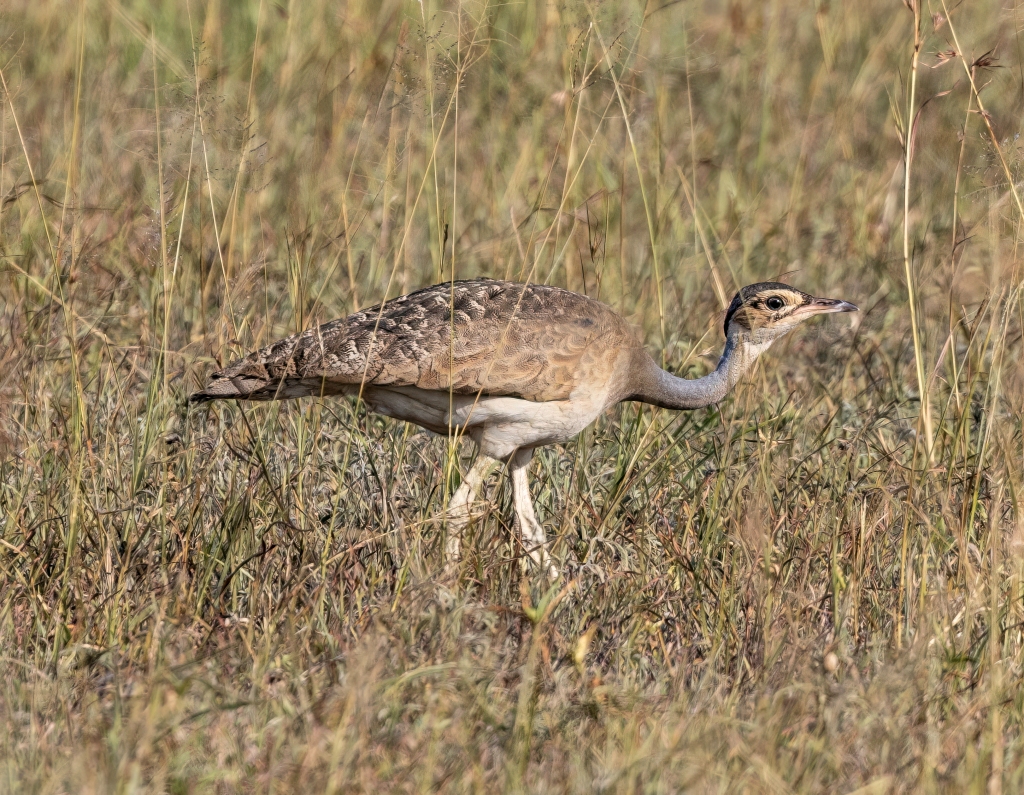
I never got the photo I wanted of the Temminck’s Courser but any photo of a new life bird is a prize so I was happy with it (included in a previous blog post and again here). I was also very happy to get photos of the Pygmy Falcon, my first ever for the species.
Temminck’s Courser
Pygmy Falcon
The other species may not have been new but especially with continuing photo ops interspersed with more mammals it was constant fun and there was a continuing need to “be ready” as we never knew what would come next. The configuration in the safari vehicles with each person having his/her own window seat. Windows for the first two seats would roll down halfway and for the others, the windows would slide – so never fully open but with enough room to get decent camera angles. Alternatively, we could stand up either on the floor or on the seats and get great views without obstruction in the space below the pop top roofs. Ok, pretty good, but then there as the challenge of the bird being on the opposite side of the vehicle to where you were sitting. If the bird was perched or at least moving in a particular tree, there was generally time to stand up and get over to the other side of the vehicle and find a view angle. For me it was less of a problem than probably anyone else, because I always sat across from Cindy who was very accommodating in making room for my camera. As every birder knows, however, birds have wings and they know how to use them, so they do move around and although many of the African trees are much less densely leafed than our forest trees or the rainforest, it was still often challenging to “find the bird” and even if you did to find it without branches in the way of a clear shot photo. That’s another way of excusing my missing photos or getting pretty poor ones. Fortunately, that happened less often than might have been the case.
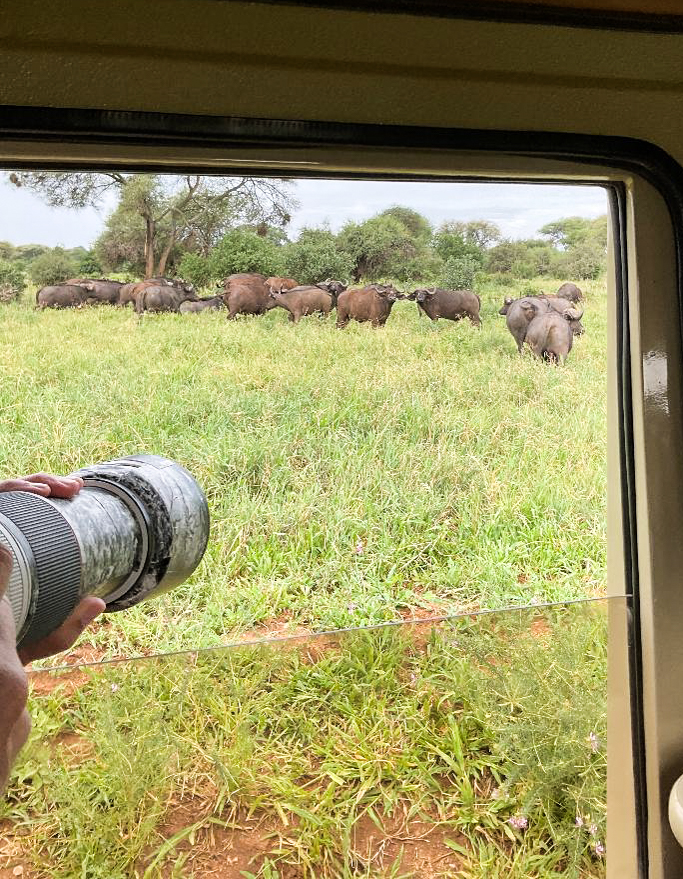
This was how photos could be taken through the windows (front row). I preferred the pop top if more flexibility was needed.
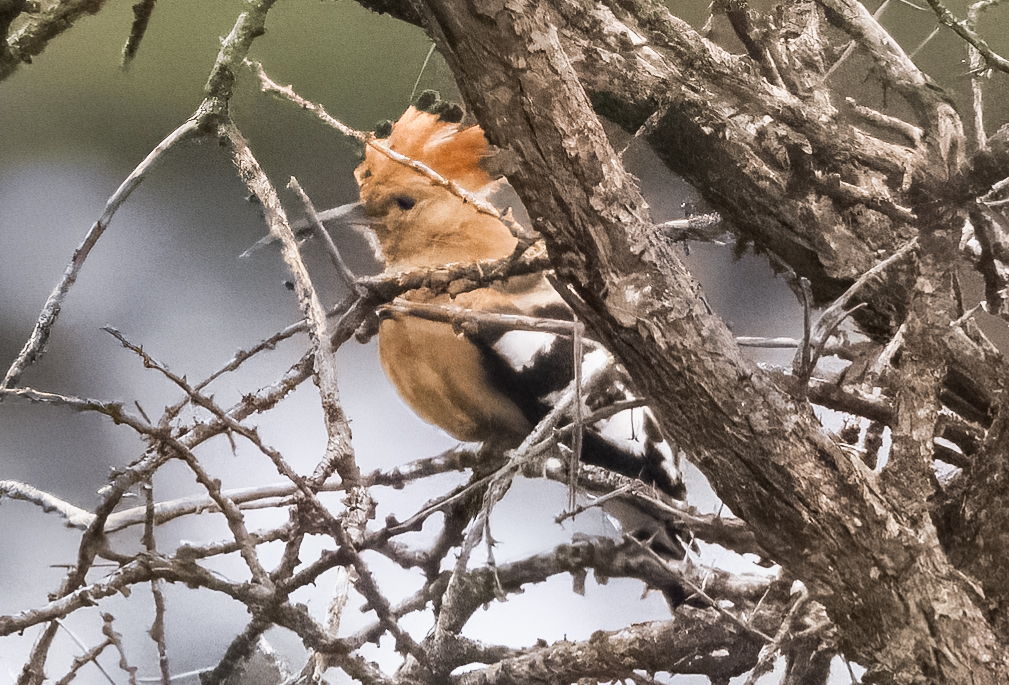
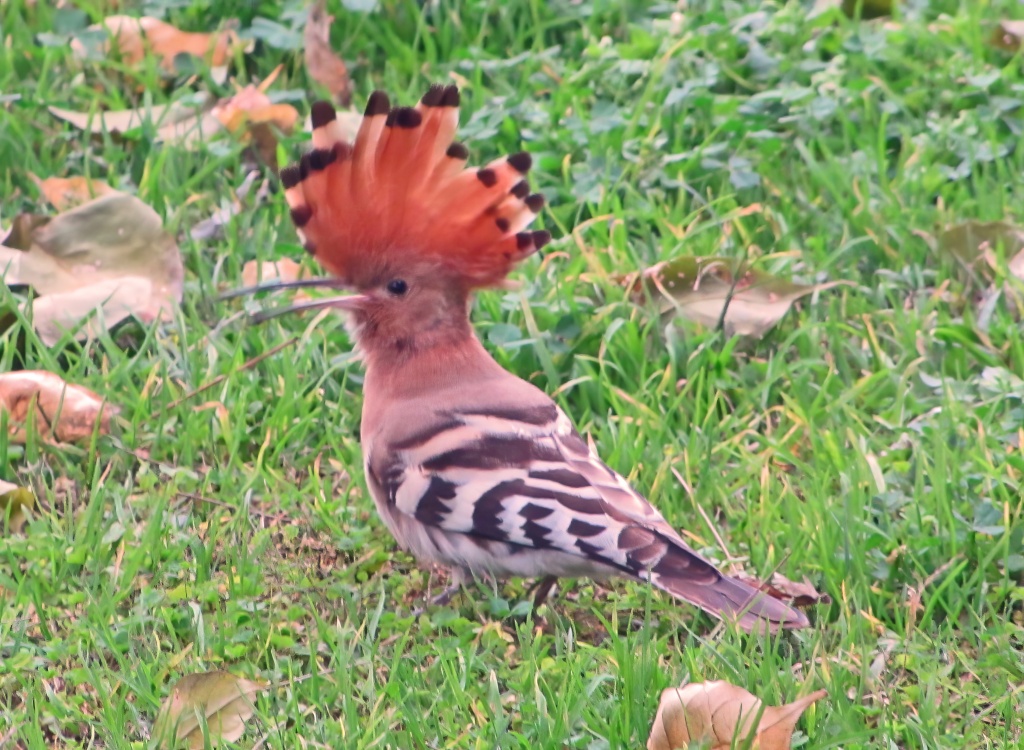
One of my favorite birds from previous Africa trips was the Eurasian Hoopoe. It is also seen in Europe and I had seen it in Kenya, South Africa and India. There has been some talk of it being split into two species, so our notation on our Ebird lists was “Eurasian Hoopoe (African)“. I had great unobstructed views in those other countries and hoped for the same in Tanzania for Cindy, but our only looks were either really distant or mostly obstructed. It is really a cool and unique bird. The first photo is from Tanzania, and the second is from India.
Eurasian Hoopoe – African in Tanzania
Eurasian Hoopoe – India
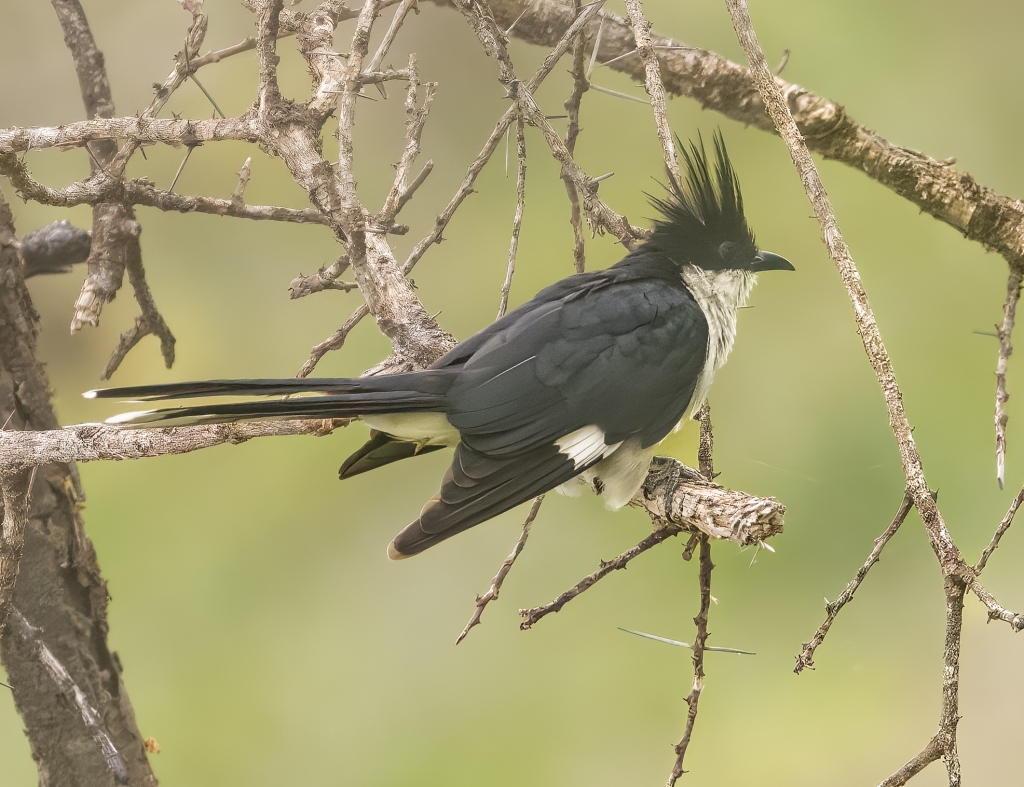
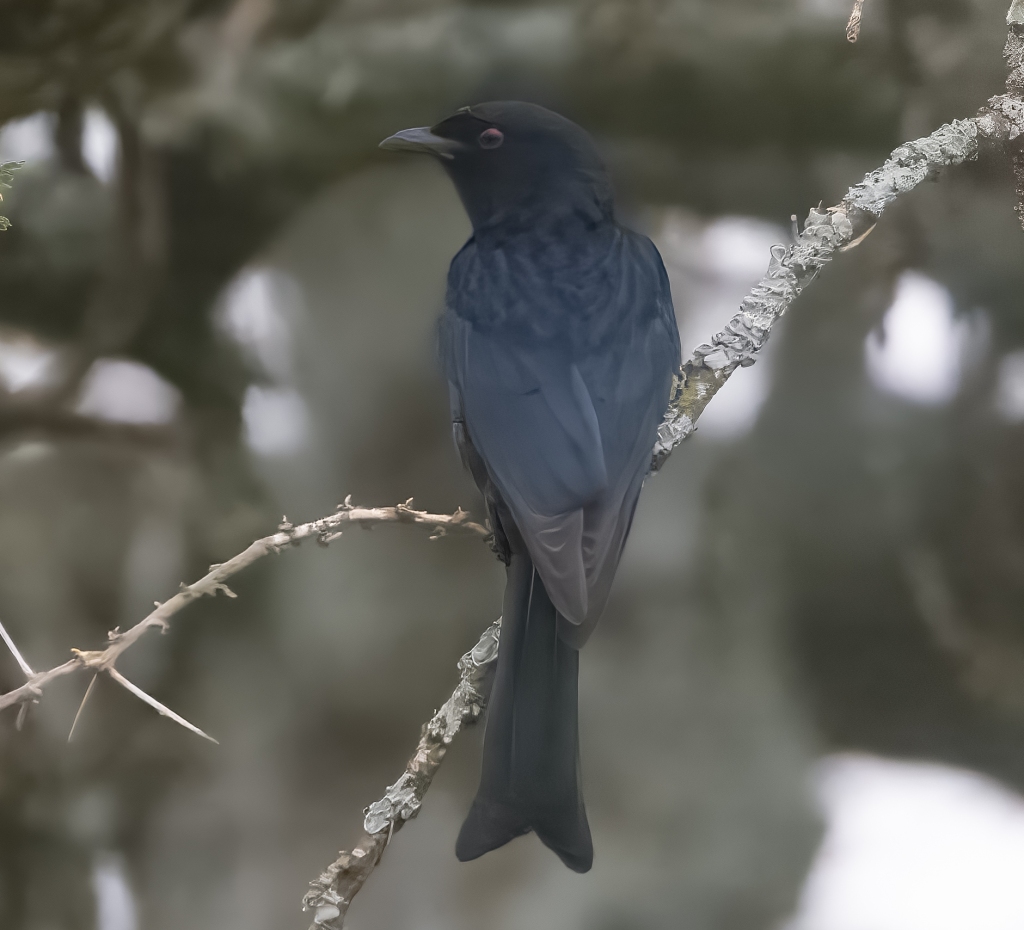
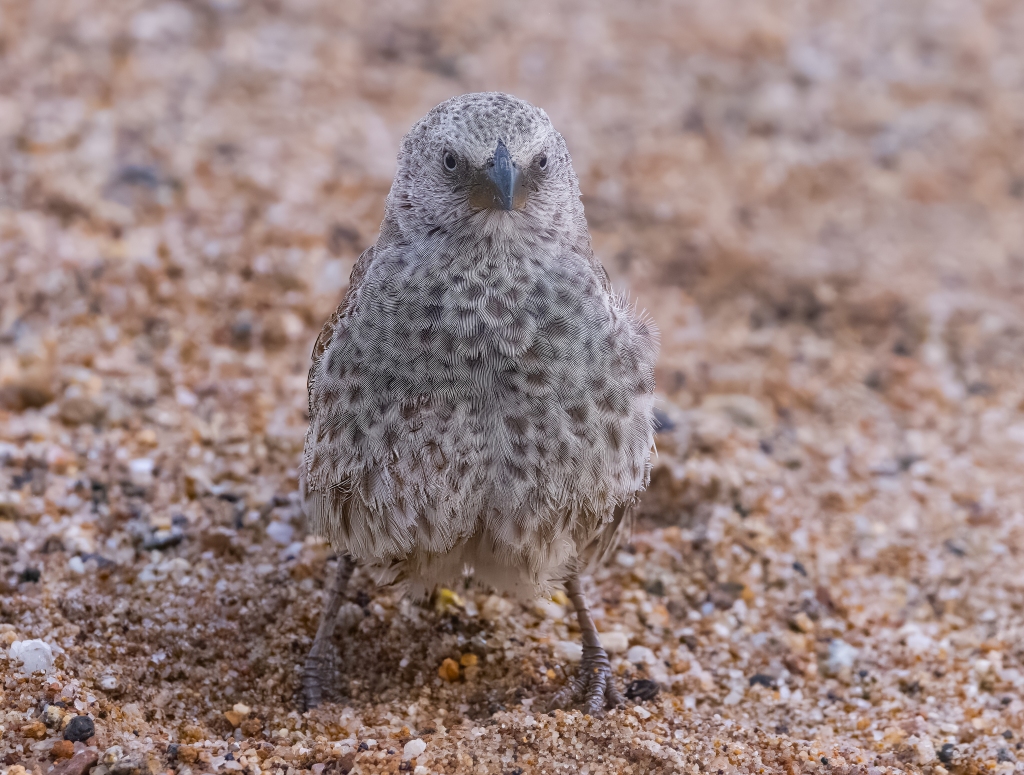
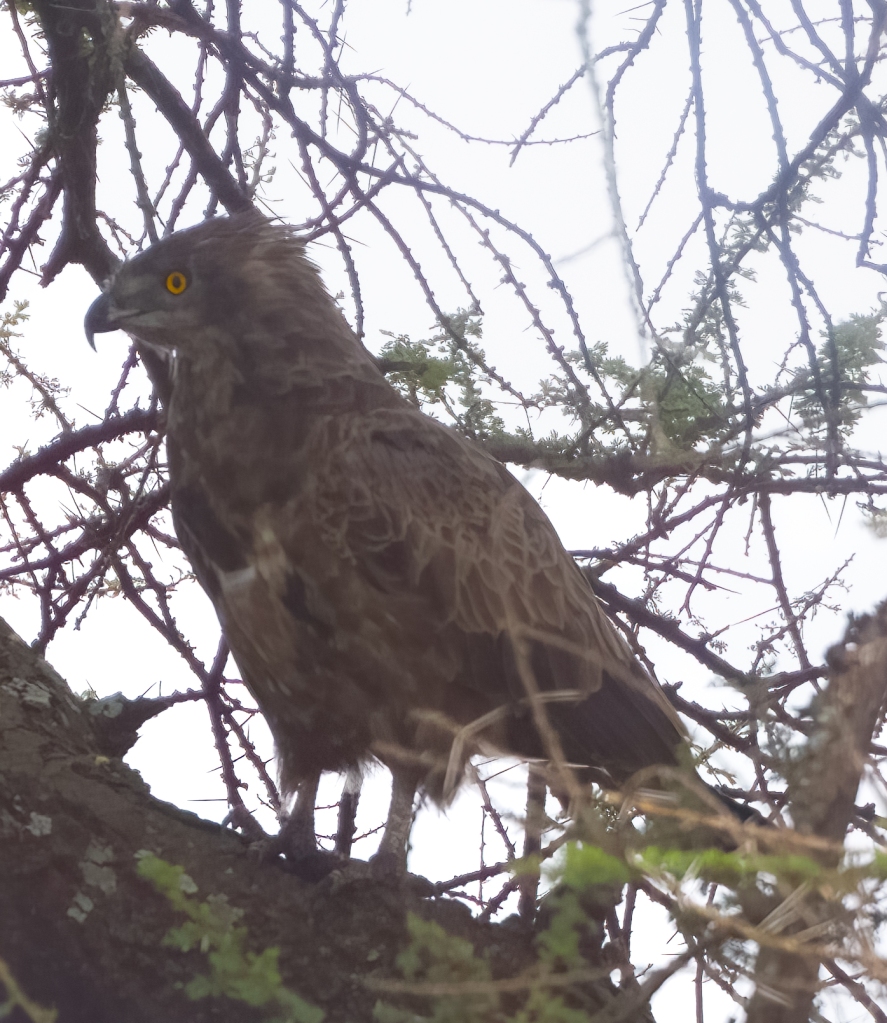
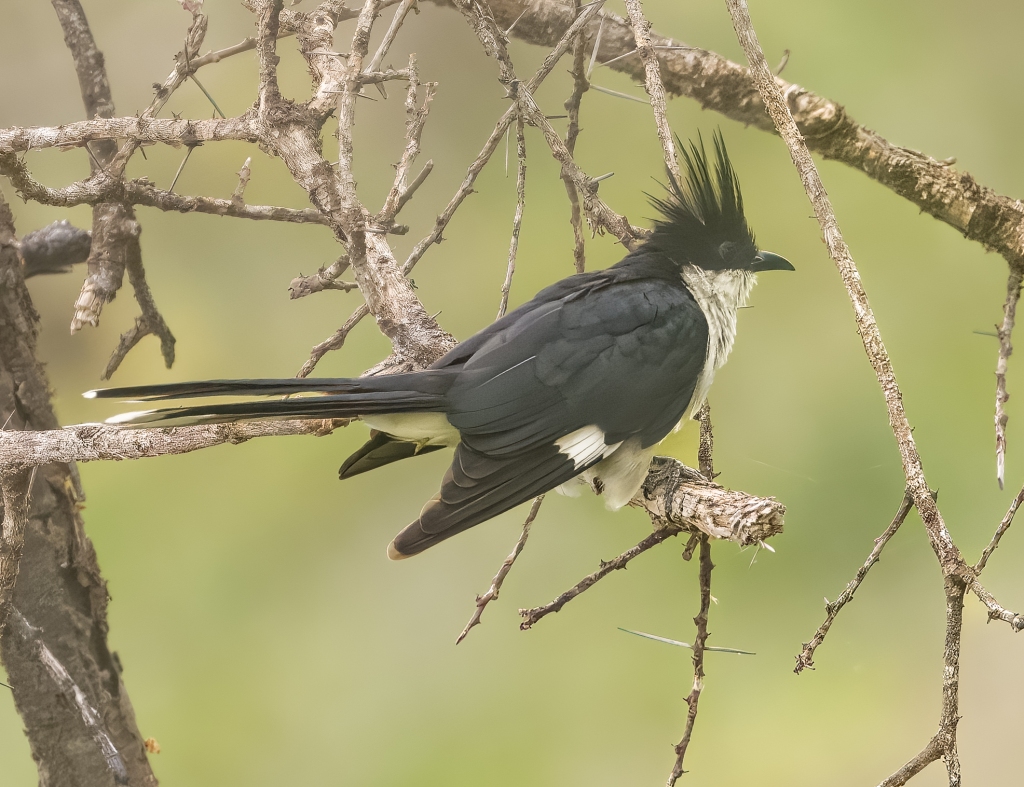
Randomly adding some other photos from the day, here are a Pied Cuckoo, a Fork Tailed Drongo, a Rufous Tailed Weaver and a Brown SnakeEagle. Photos of almost all of the other species seen have been included in earlier blog posts.
Pied Cuckoo
Fork Tailed Drongo
Rufous Tailed Weaver (The Tail Really Is Rufous)
Brown Snake Eagle
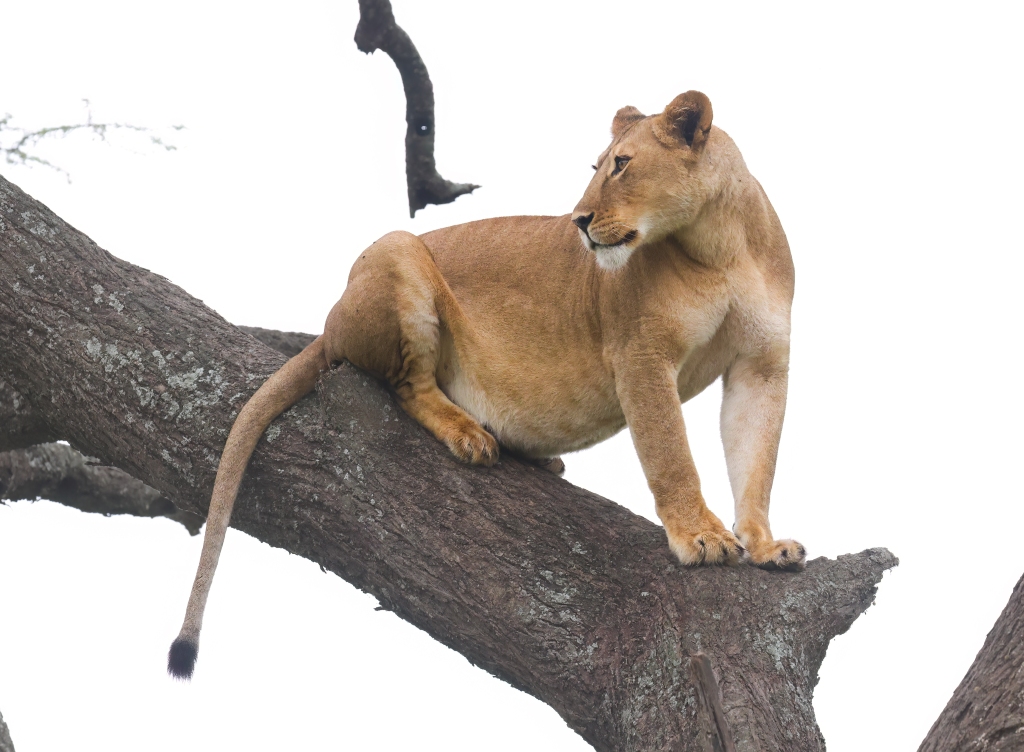
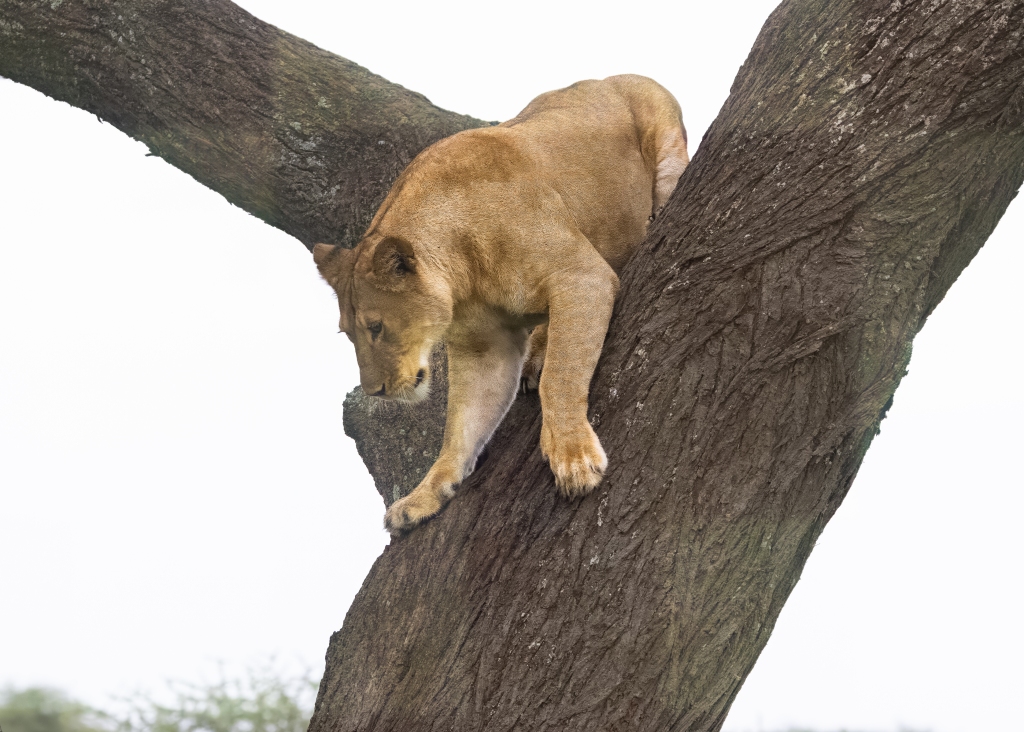
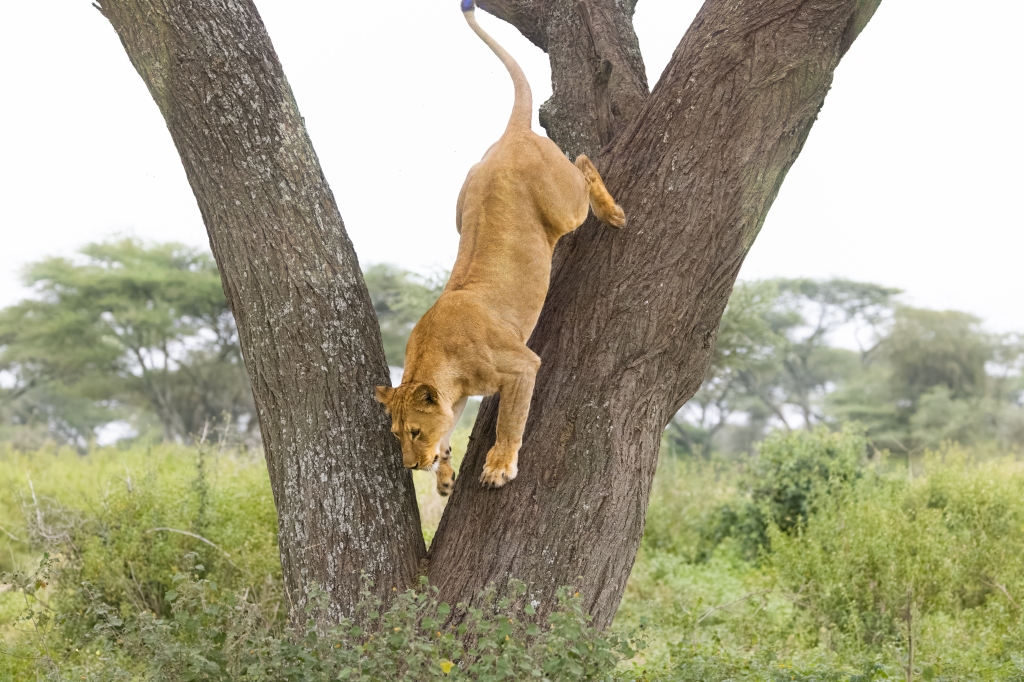
Okay, so much for the birds. How about lions and tigers and bears, oh my. Right – sorry, we were still in Africa so no tigers or bears, but this would be another good day for lions and most importantly Cindy would get her first cheetah and later yet more. Our first treat was something we had not only not expected but did not know even existed. Just as we had had “rock lions” earlier, now we would have a “tree lion”. We knew that leopards were tree climbers but even large ones are smaller than lions. Maybe it is only females and not the big males but it was clear that this lion was an accomplished climber as she was at least 15 feet up in a tree.
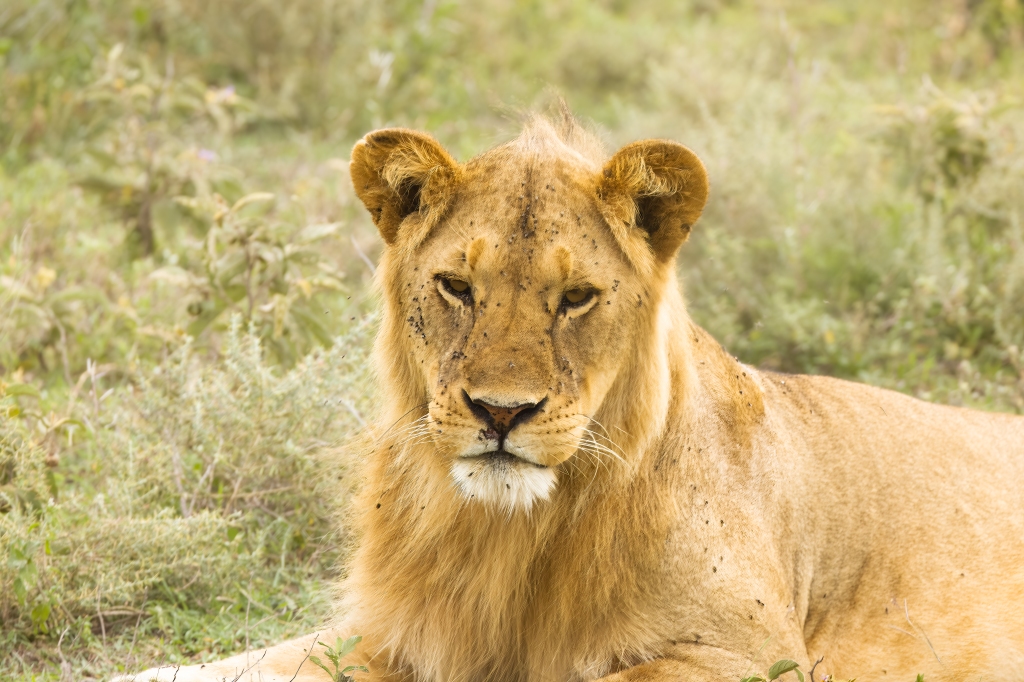
Not long afterward we found a group of lions including a young male with as many bugs on his face as any we had seen. We, too, were starting to have some flies around us in the van – not particularly enjoyable for us and probably not so for him either although it just seemed to be part of the daily existence.
Young Male Lion with Flies
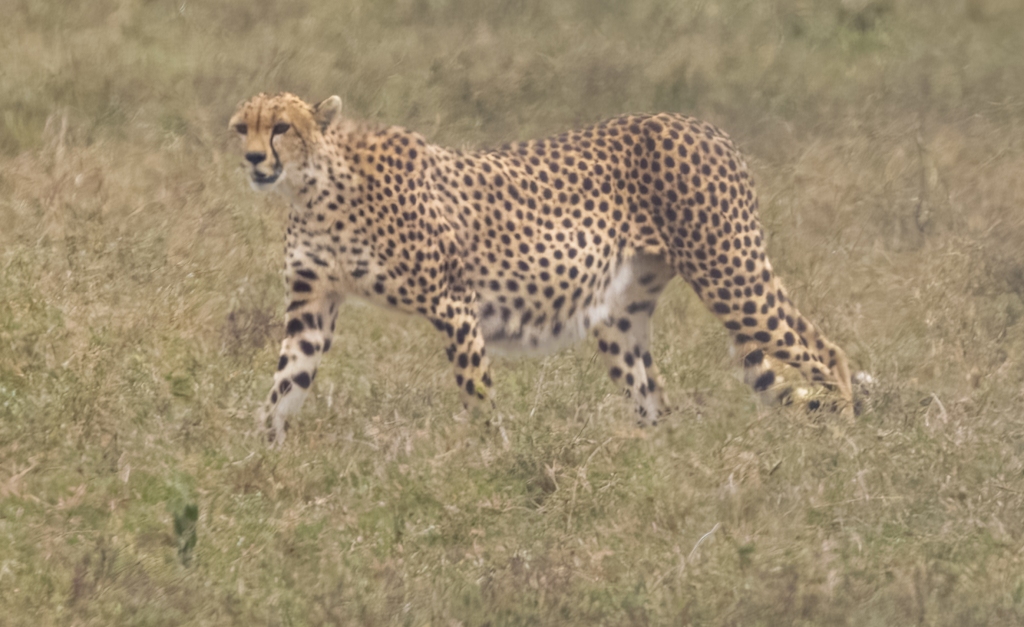
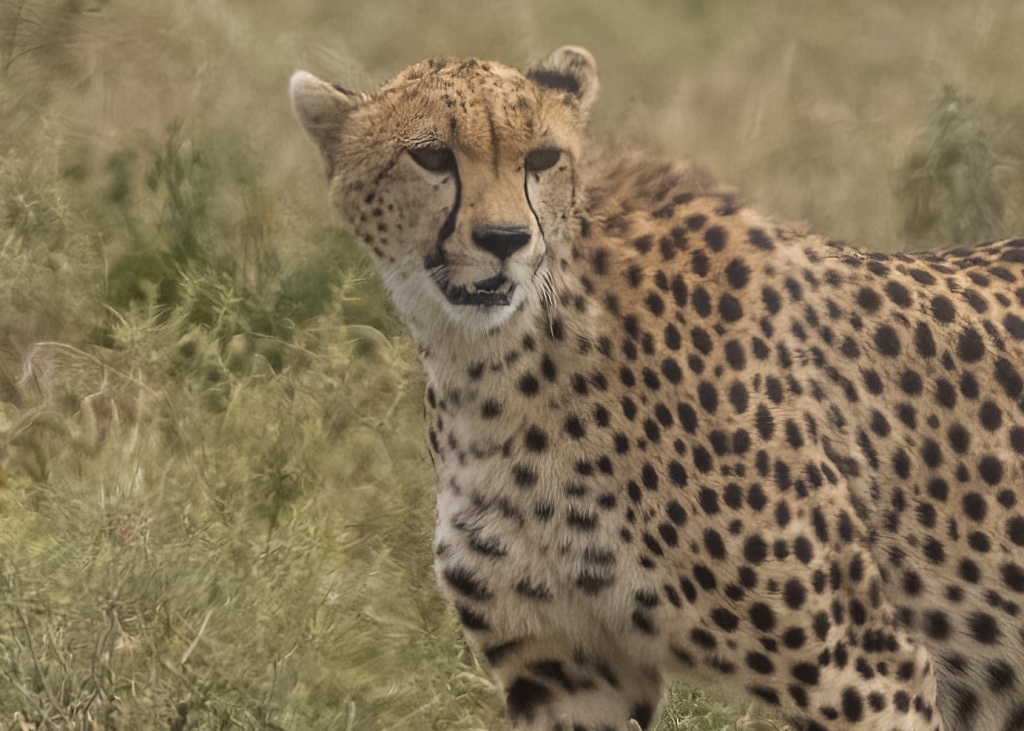
There was lots of game animals around – zebras, wildebeests, and antelopes, but as had been the situation earlier, the grazers grazed and the predators – rested. In fact we only had a couple of occasions where we even saw the cats move – one was the tree climber coming down from the tree. A second happened shortly after out fly covered lion visit when we saw a large cheetah walking through the grass. Its belly appeared quite full, either recently well fed or possibly pregnant. Cindy had her cheetah and all cameras were busy capturing this beautiful animal.
Cindy’s First Cheetahwith Full Belly
Too Gorgeous for Words
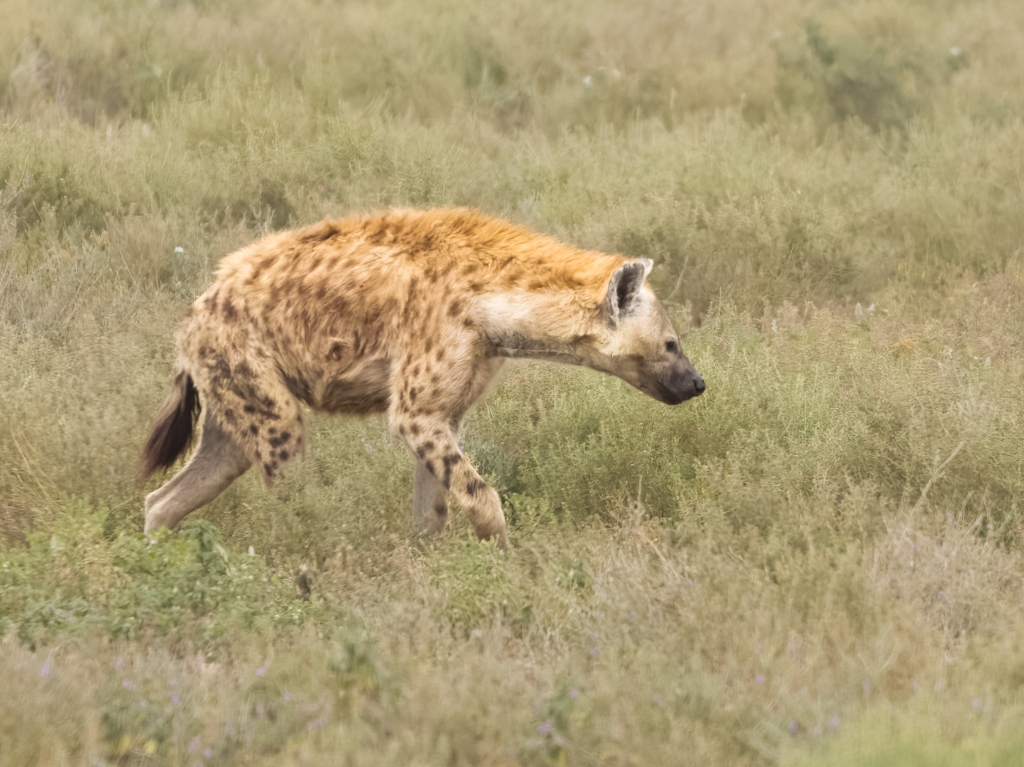
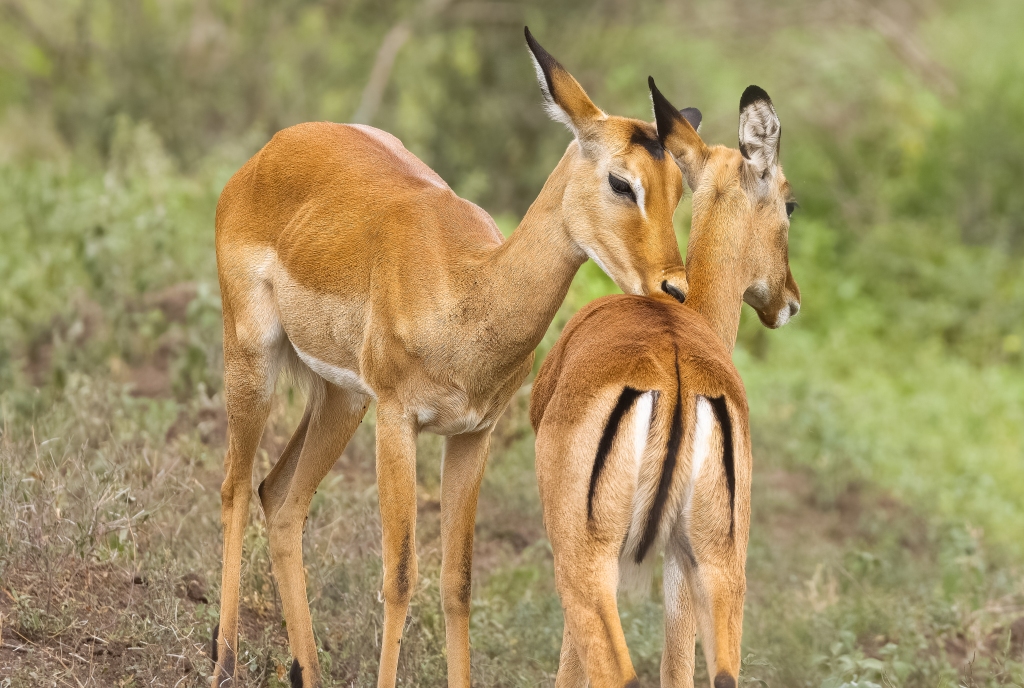
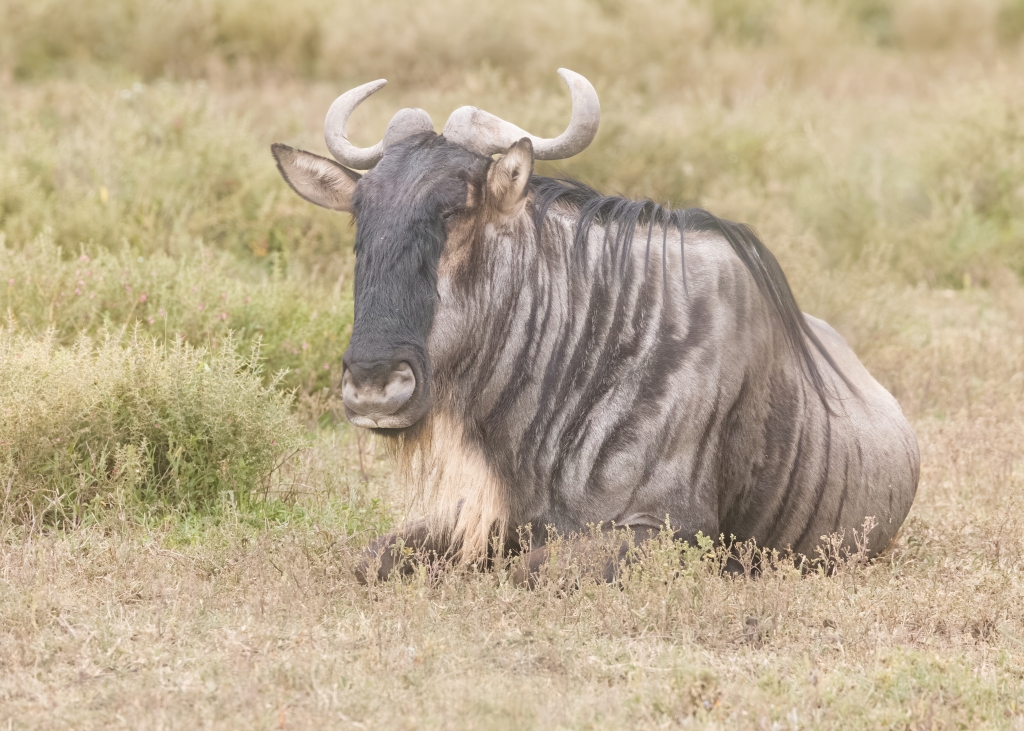
So another great morning and with our beautiful cheetah, the pressure was off to find one for Cindy. Looking back it is easy to focus on the special animals like the cheetahs and lions, but the reality was that all of them were amazing and beautiful and it was such a privilege to be in their wild environment and not in a zoo. That morning we had one of our best close-ups of a hyena, a much-maligned predator/scavenger on the plains and a really good look at a herd of impalas, animals that are commonplace and thus overlooked, but well worth a close study to appreciate their beauty. Even the wildebeests or Brindled Gnus, were awesome to see up close.
Spotted Hyena
Female Impalas
Brindled Gnu – Wildebeest
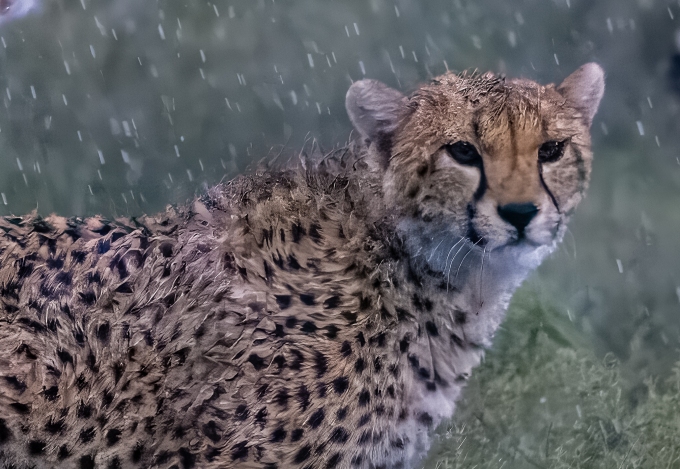
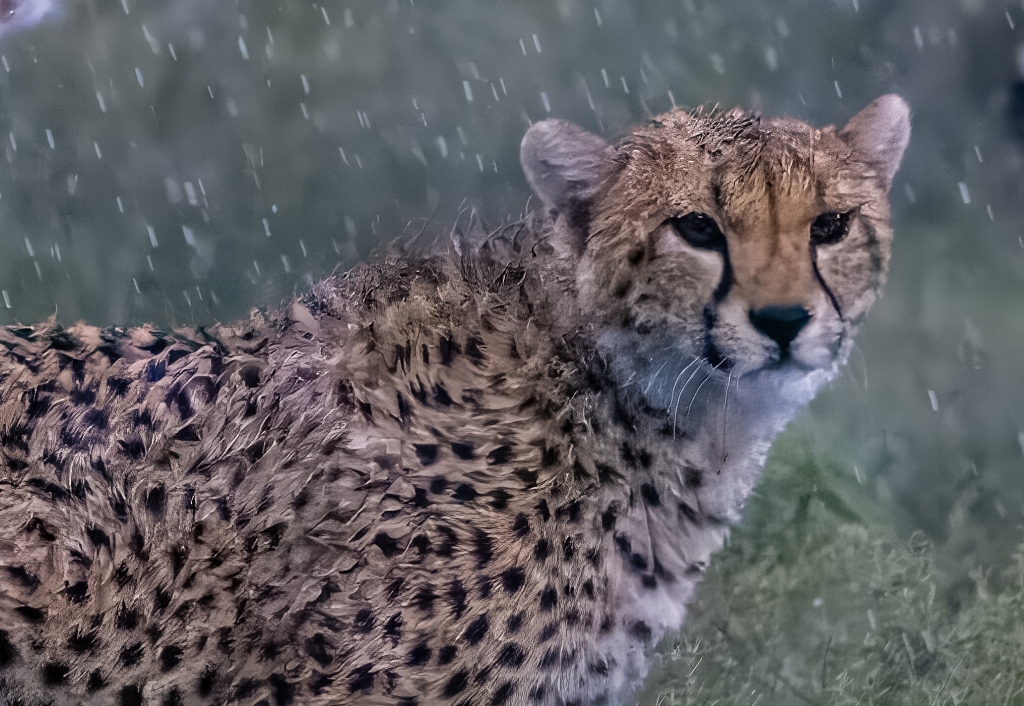
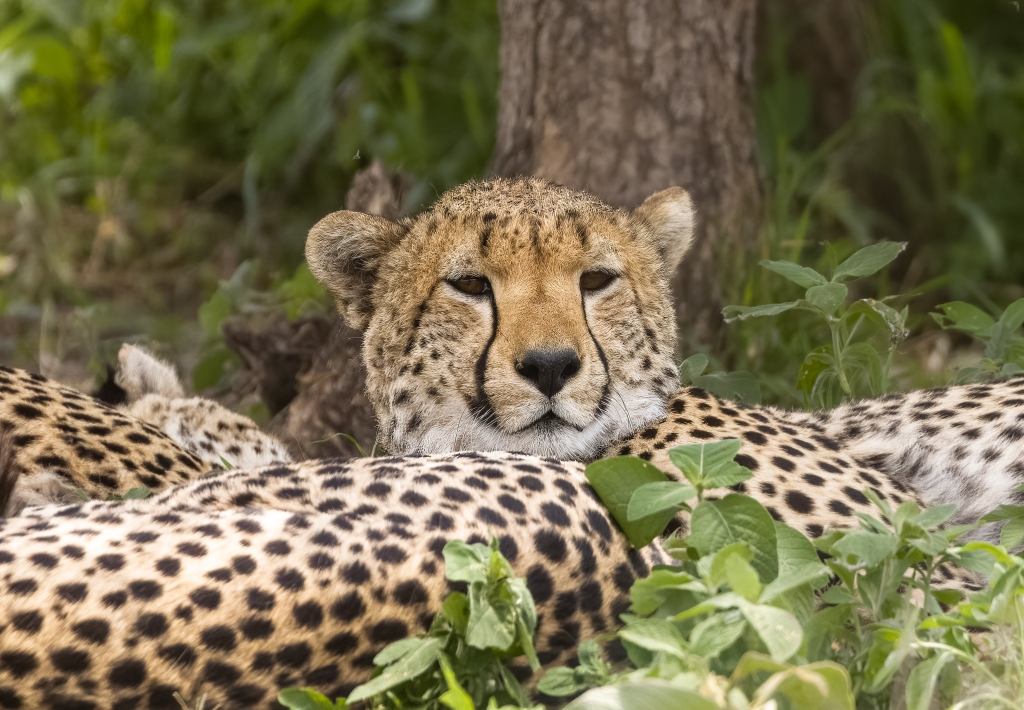
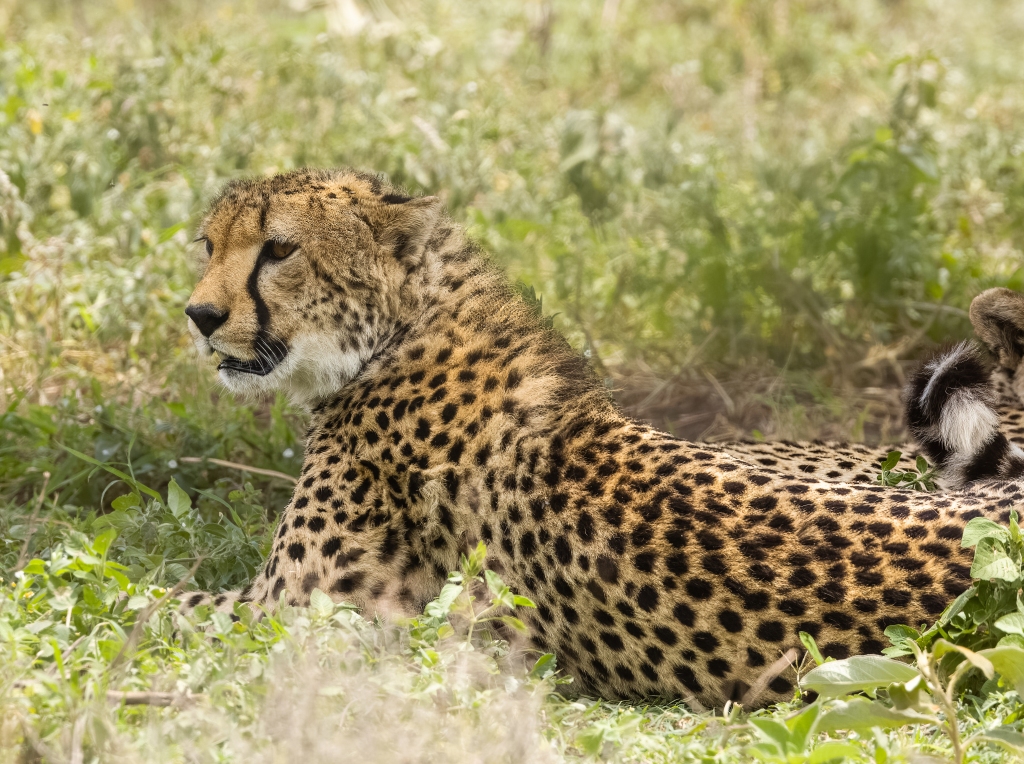
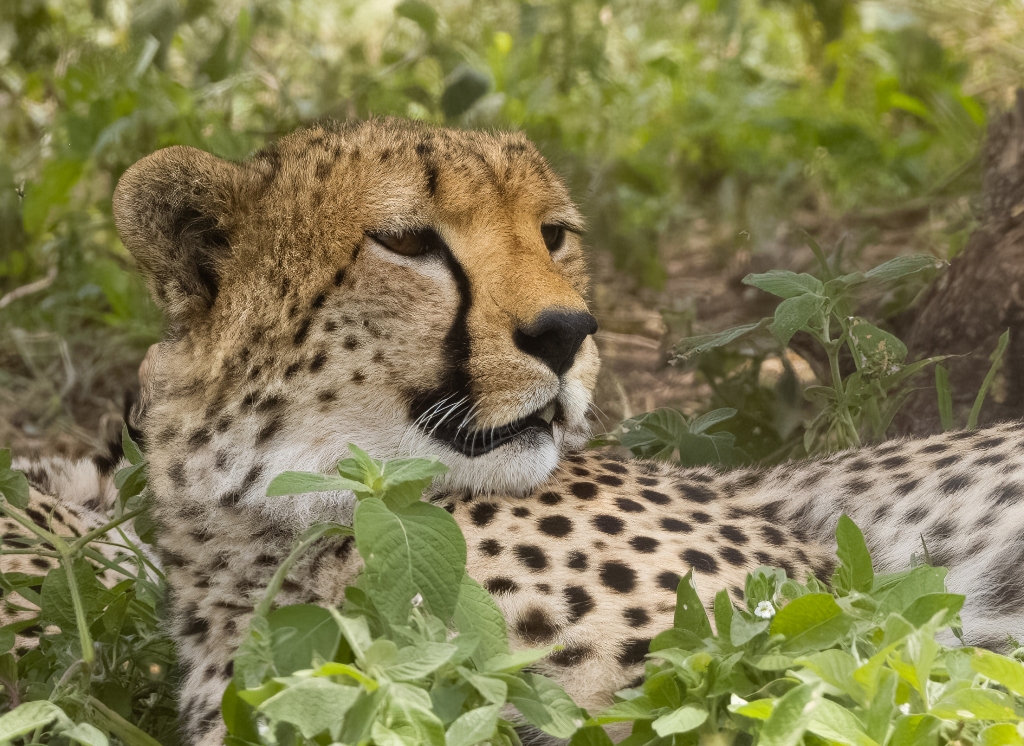
We had checked out of the Ndutu Safari Lodge and were heading to the Ngorongoro Crater where we would stay at the Ngorongoro Serena Lodge for two nights. On our last afternoon in the Serengeti as we headed towards our new accommodations, we had what was probably my favorite wildlife encounter of the trip. Our weather had been wonderful, with rain only at night and temperatures mostly very pleasant. As we traversed the plains, a light rain began to fall. Word arrived through the driver grapevine that a group of cheetahs had been seen not far ahead. We arrived on the scene in lightly falling rain and under darkened skies. Four cheetahs, a mother and three of her almost fully grown cubs were huddled together completely in the open, the nearest tree a couple hundred yards away. We had to share the view with two other safari vehicles, but in the vastness of the Serengeti, it was as if we were invisible, and we were captivated and mesmerized by the cheetahs as if they were the only things that existed. We watched for maybe 30 minutes as they shifted positions only slightly, always tightly together as if they were a single being, a beautiful fabric woven against the grass. The rain increased a bit and finally the mother decided it was time to seek the shelter of the lone tree and they went off single file to take cover, such as it was. These are some of my favorite photos of the trip.
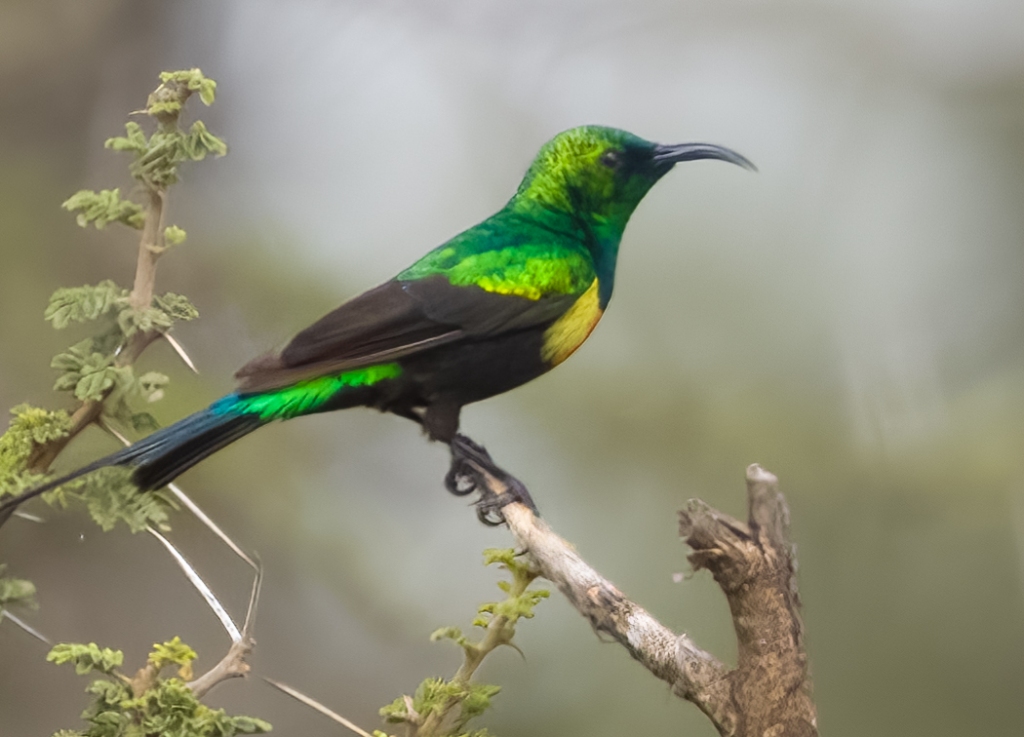
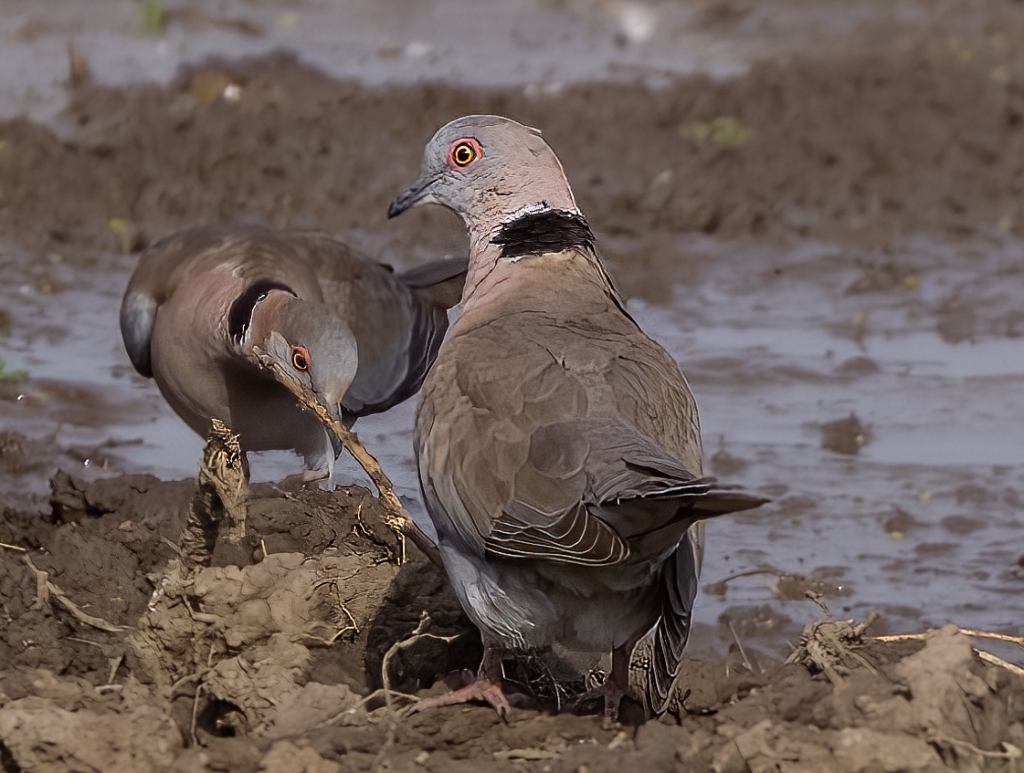
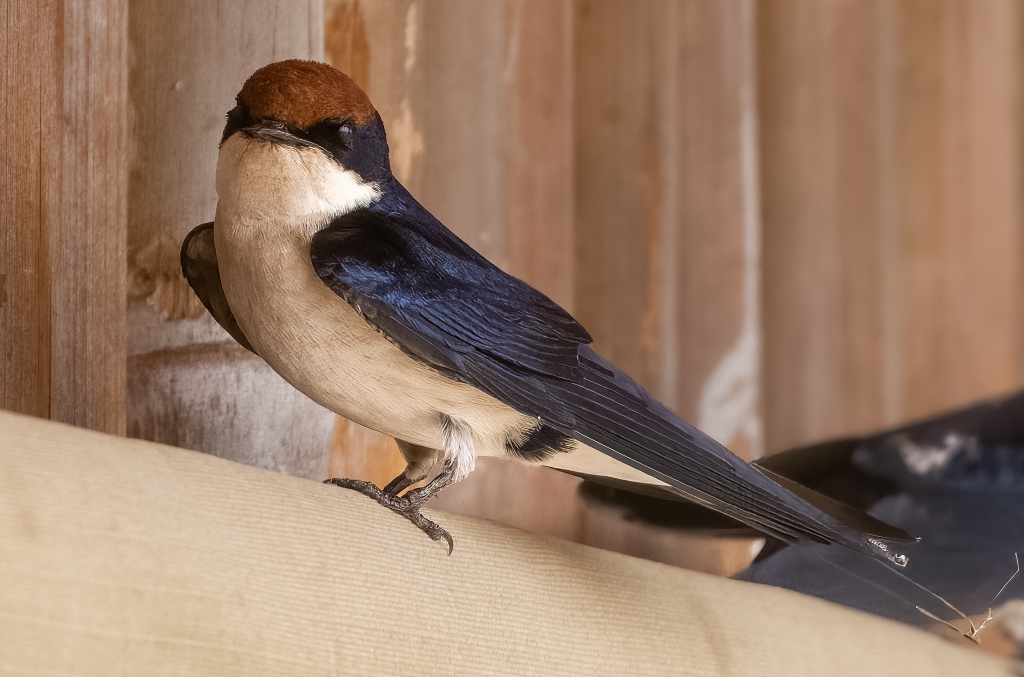
Ndutu Safari Lodge is a classic with 34 individual ensuite cottages where once again we were to be escorted coming to and from the main lodge building at dawn and after dusk. Unlike the spear equipped Masai at Kubu Kubu, our guides here were only equipped with flashlights. We decided not to think about what would happen if there really was an encounter with unfriendly wildlife. Our cottage was comfortable and again came with a very nice shower. We had a good dinner after going over the bird list for February 22nd and after a comfortable sleep we birded on the grounds of the lodge starting just after 6:00 a.m. Then we had breakfast and were back in our safari vehicles and on the “road” by 7:30 a.m. None of the 27 species seen at the lodge were new for the trip, but we had really good looks at a Beautiful Sunbird, Mourning Collared Doves and Red Rumped Swallows.
Beautiful Sunbird
Mourning Collared Doves
Red Rumped Swallow
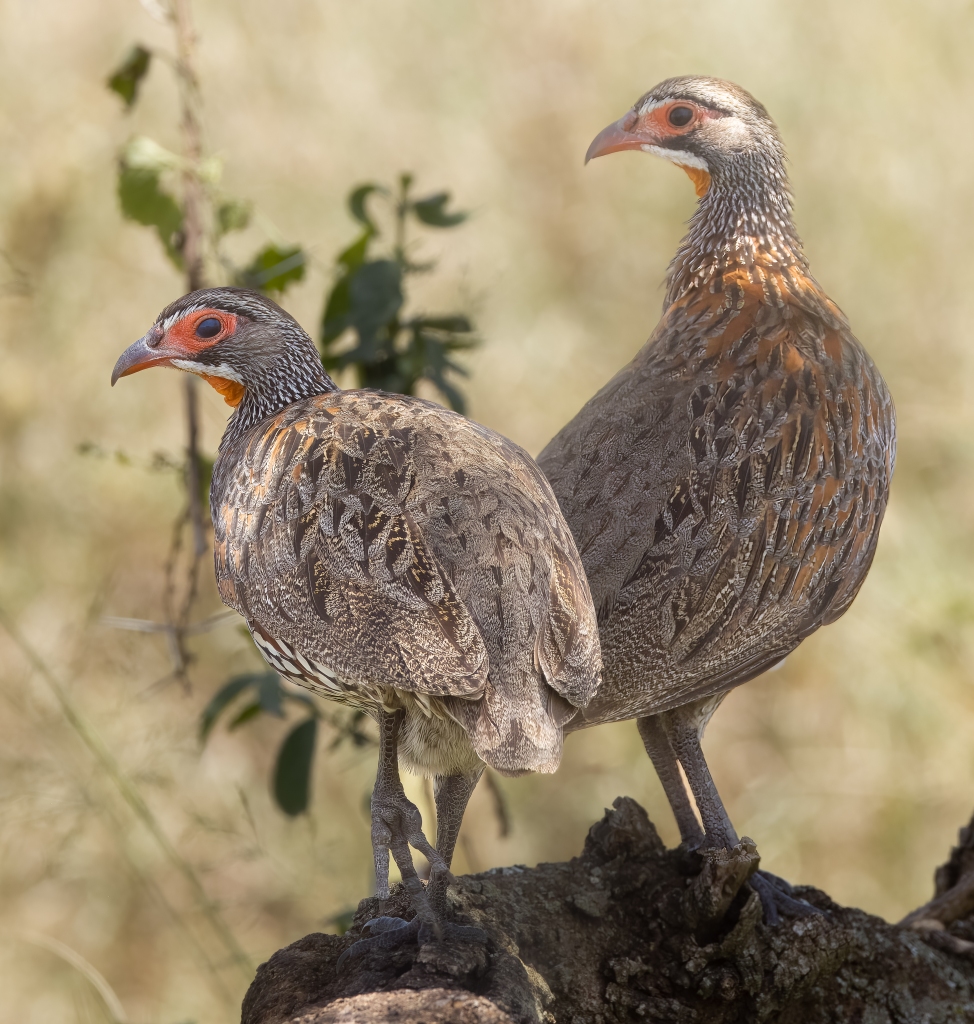
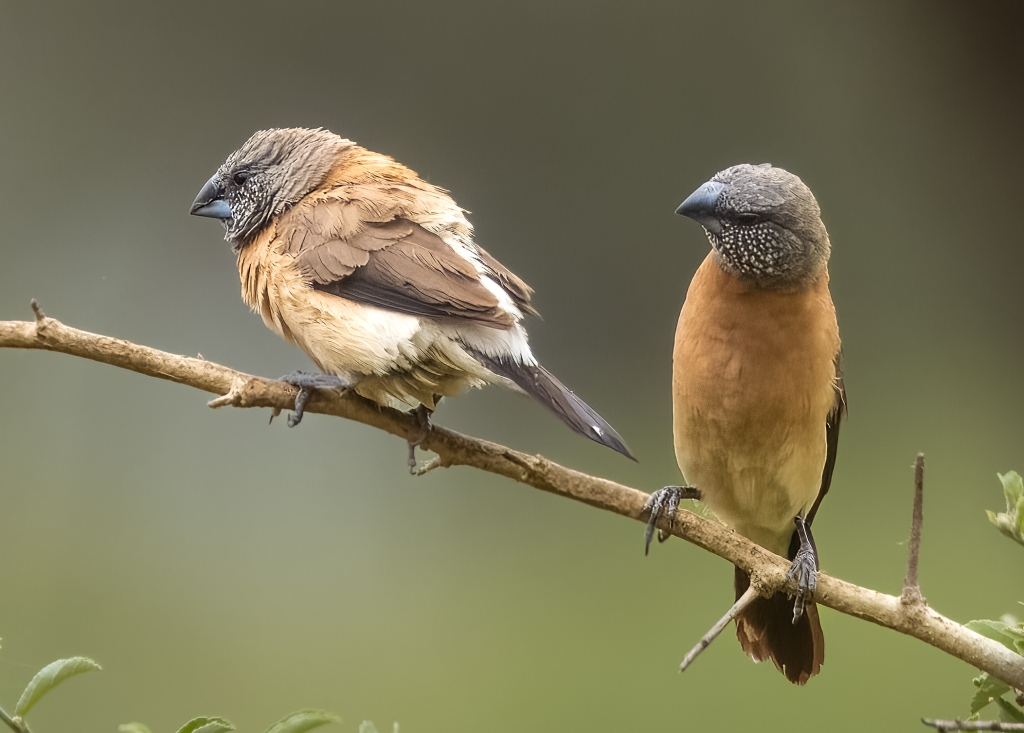
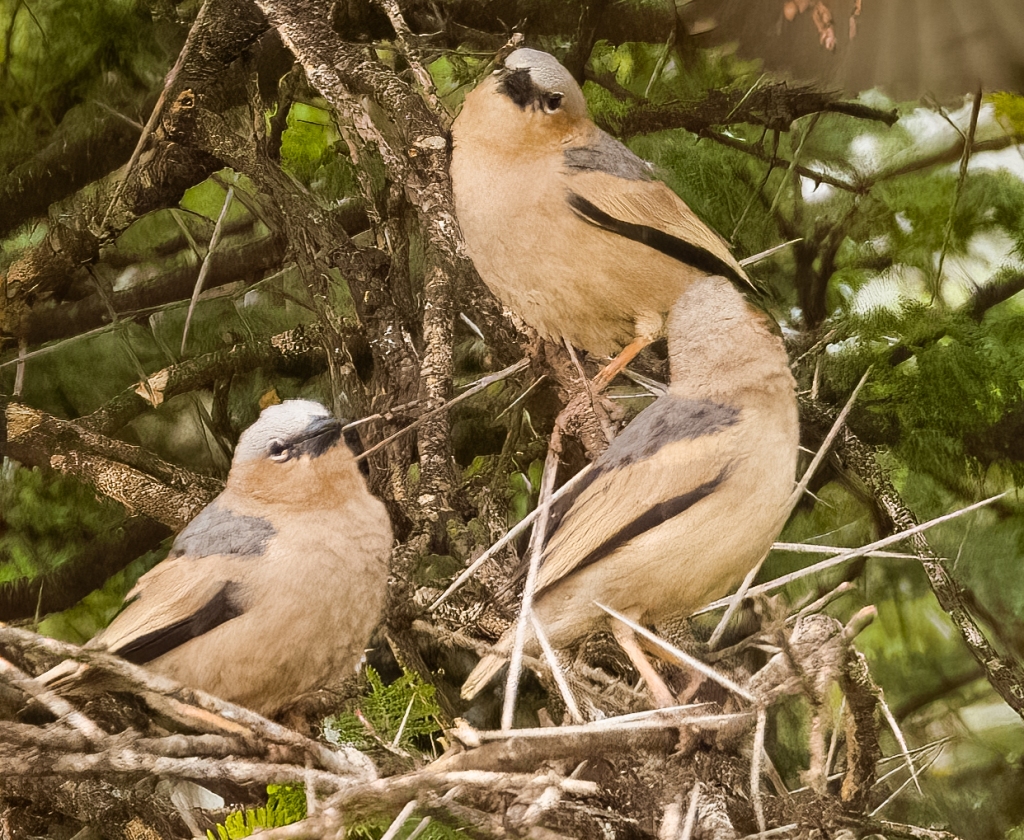
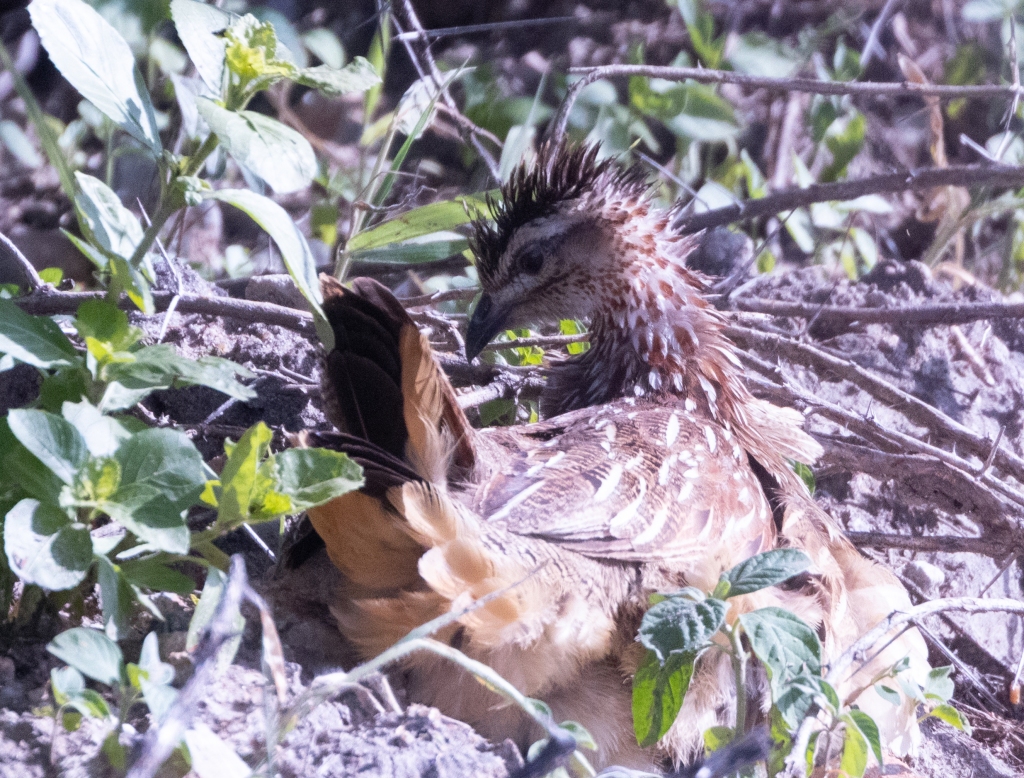
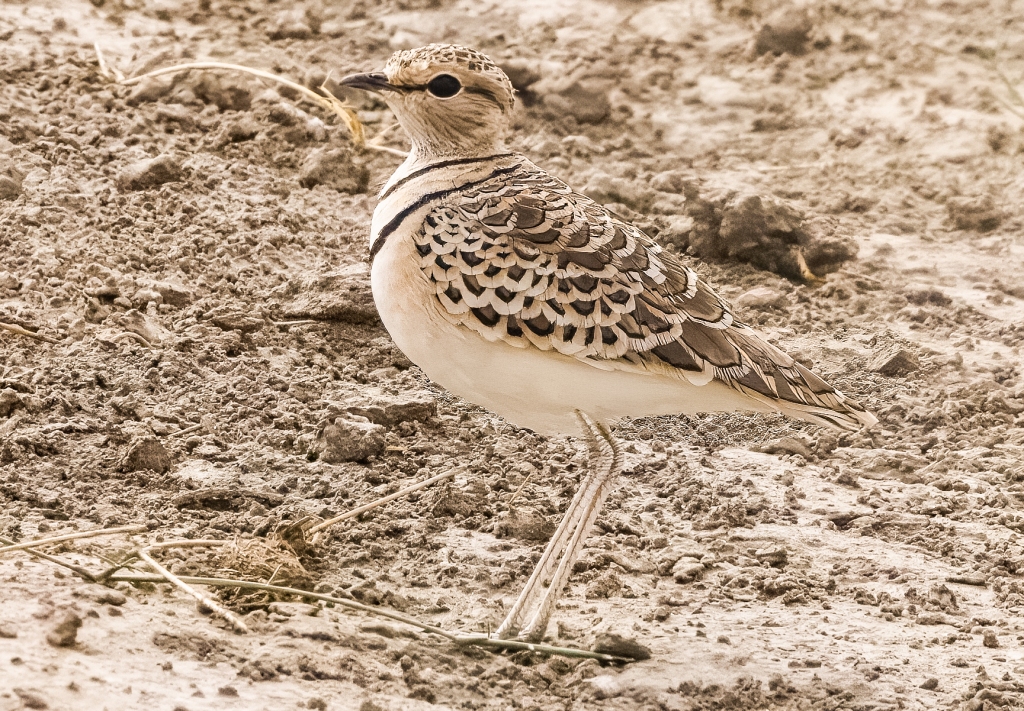
Our birding that morning went through the Ndutu woodlands to the Big Marsh and on the Ndutu plains. Cindy decided to sit out the birding that morning and remained at the Lodge. You never know what will be seen and this decision could have been disastrous as we would see two really great male lions and then our first cheetahs, but there would be many more lions and more cheetahs as well, so disappointment turned to celebration later. On the birding side, it was another great morning as we observed 91 species of which 13 were new for the trip and four were lifers for me: Gray Breasted Spurfowl, Double Banded Courser, White Tailed Lark and Gray-Headed Silverbill. Okay there is some confusion here because I have photos of Gray Breasted Spurfowl from February 21 and it appears on our bird lists for both the 21st and 22nd but does not appear on an Ebird list until February 23rd. Rather than go back and rewrite the Ebird lists from our guide and my Blog post for the 21st, I am just going to go with the photo here. A Courser photo was included in the previous blog and I was not able to get a photo of the Lark. A photo of the Silverbills is also below.
Gray Crested Spurfowl
Gray Headed Silverbills – Lifer
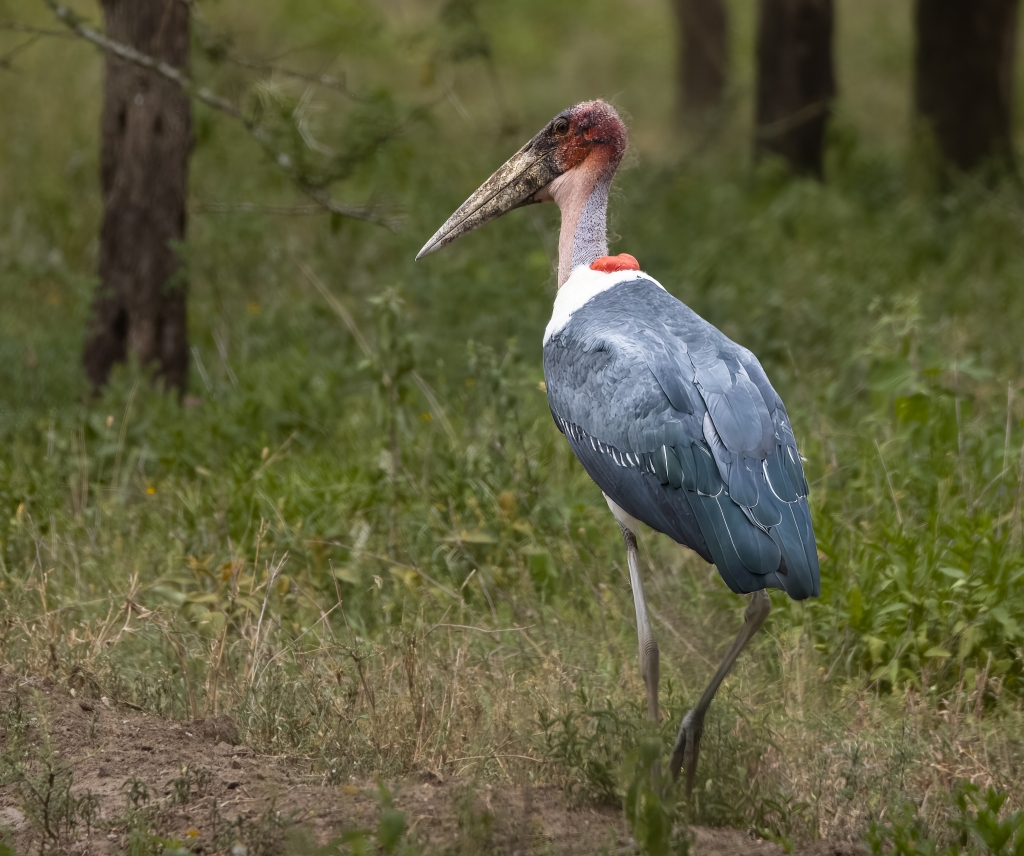
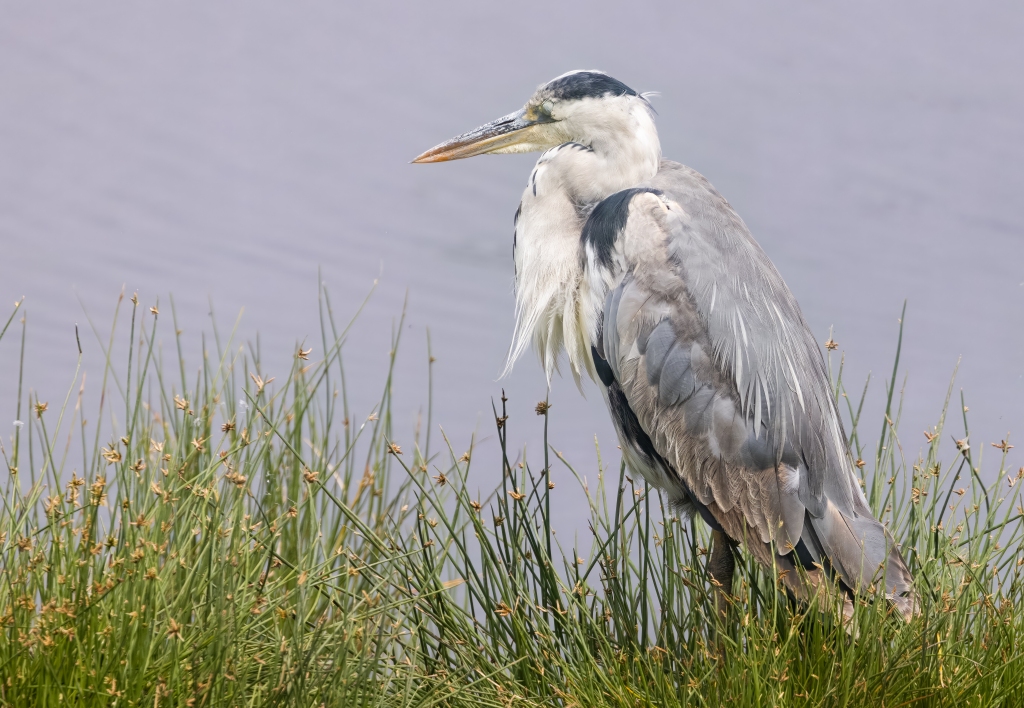
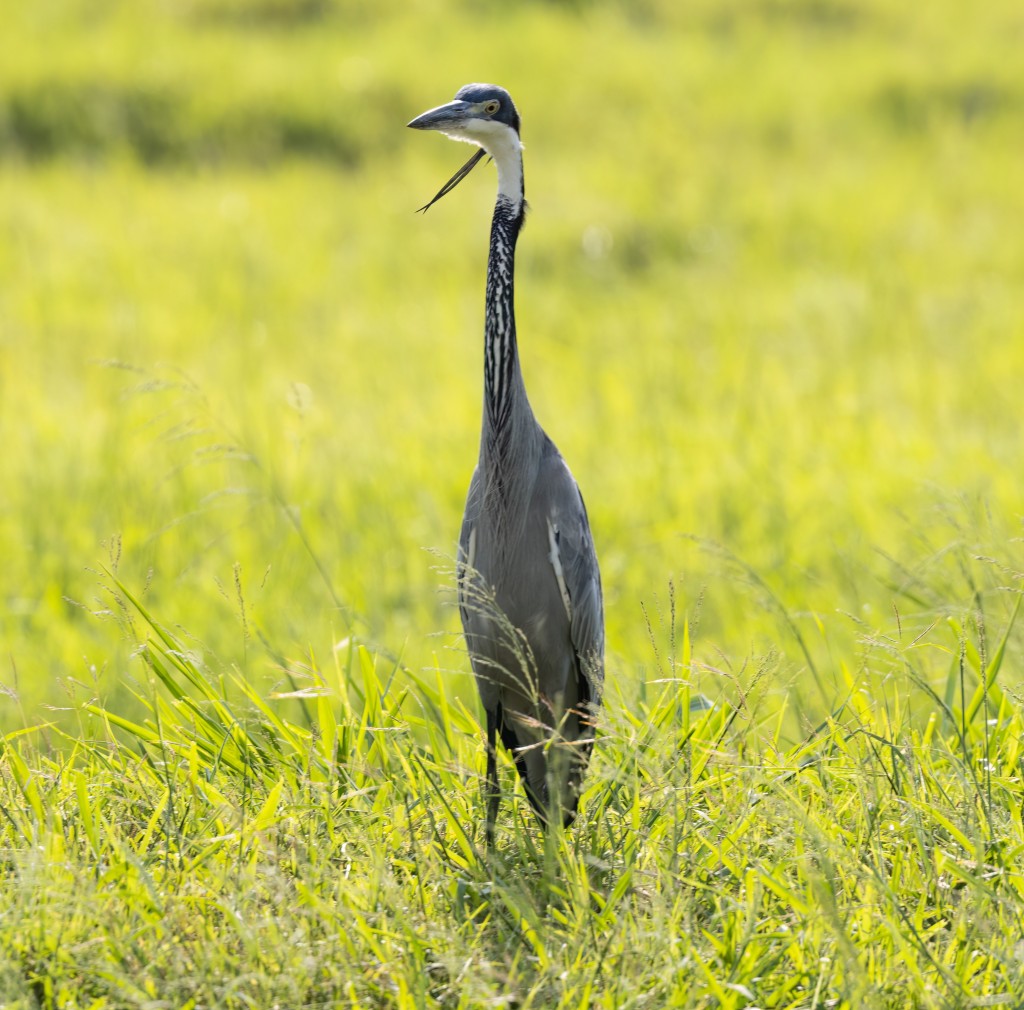
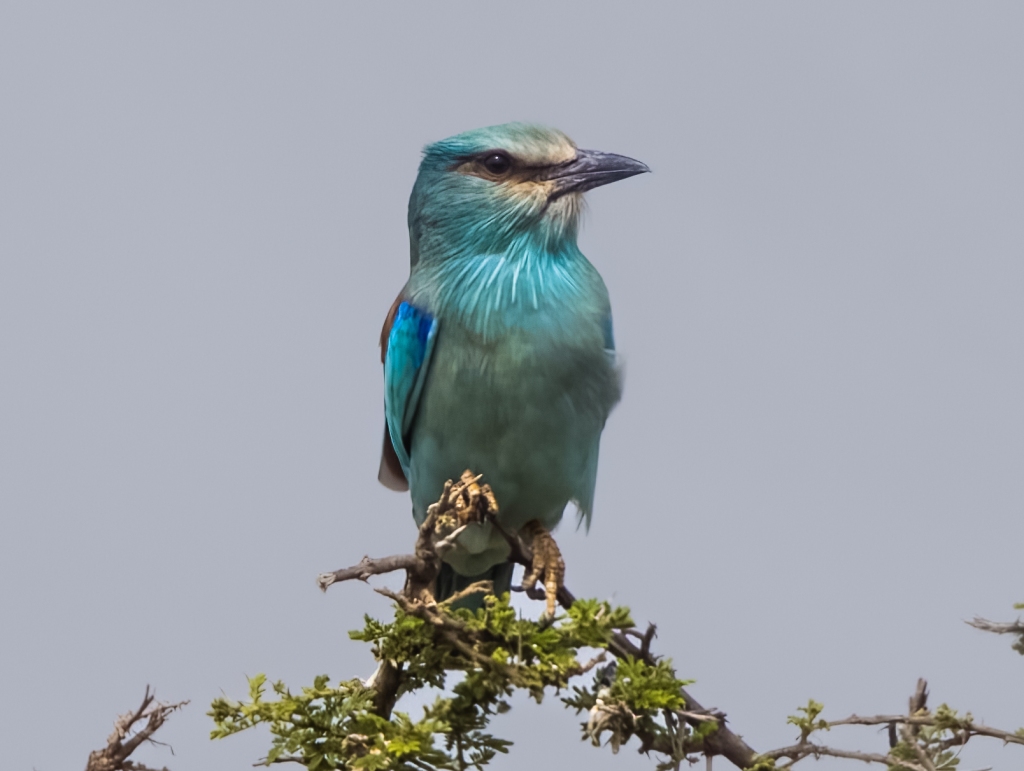
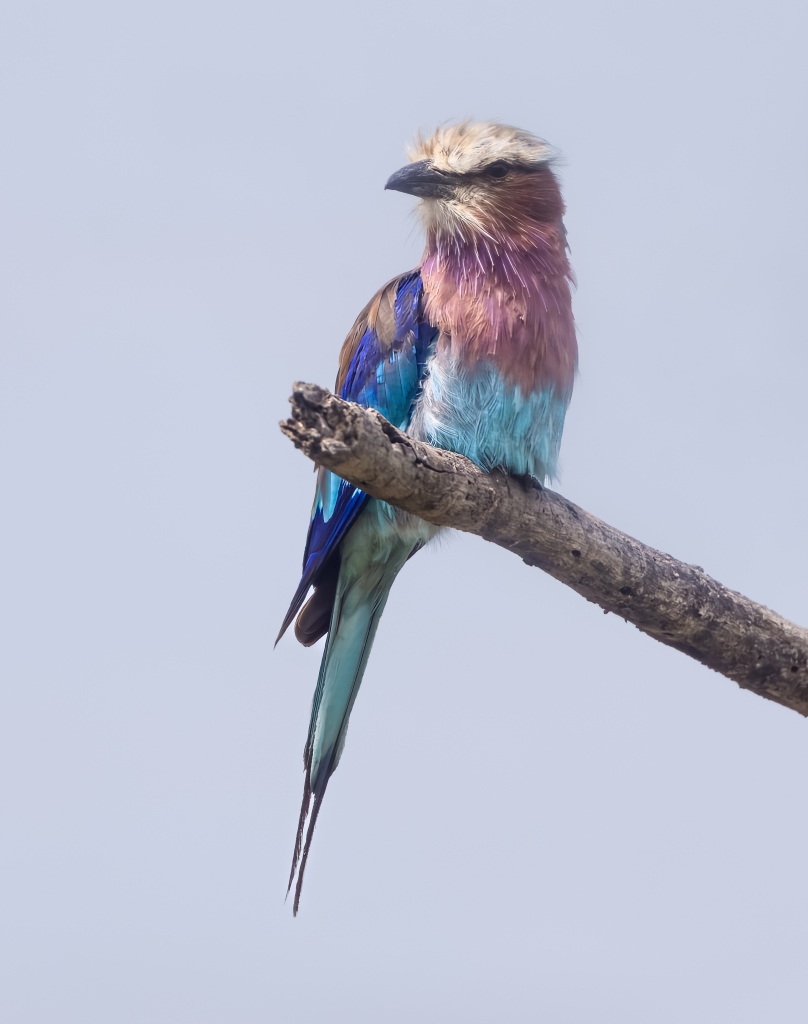
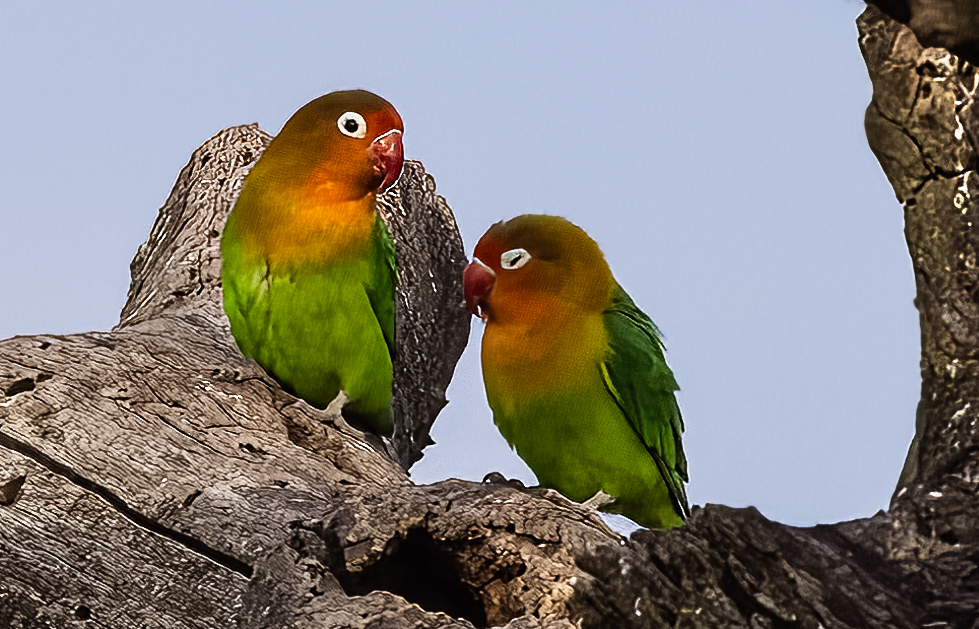
Many of the shorebirds included in the preceding post were seen at the Big Marsh as were large flocks of both Lesser and GreaterFlamingoes and we also had Marabou Storks, Gray and Black-Headed Herons, and a flock of Gull Billed Terns. We flushed a Kori Bustard off its nest revealing two large blue eggs. As was our experience in much of the open plains, we also had a number of raptors, Lilac Breasted and European Rollers, Secretarybirds, Hornbills and Bee-eaters. It was this morning that we also had a number of beautiful little Fischer’s Lovebirds, a crowd favorite.
Marabou Stork
Gray Heron
Black-Headed Heron
European RollerLilac Breasted Roller
Fischer’s Lovebirds
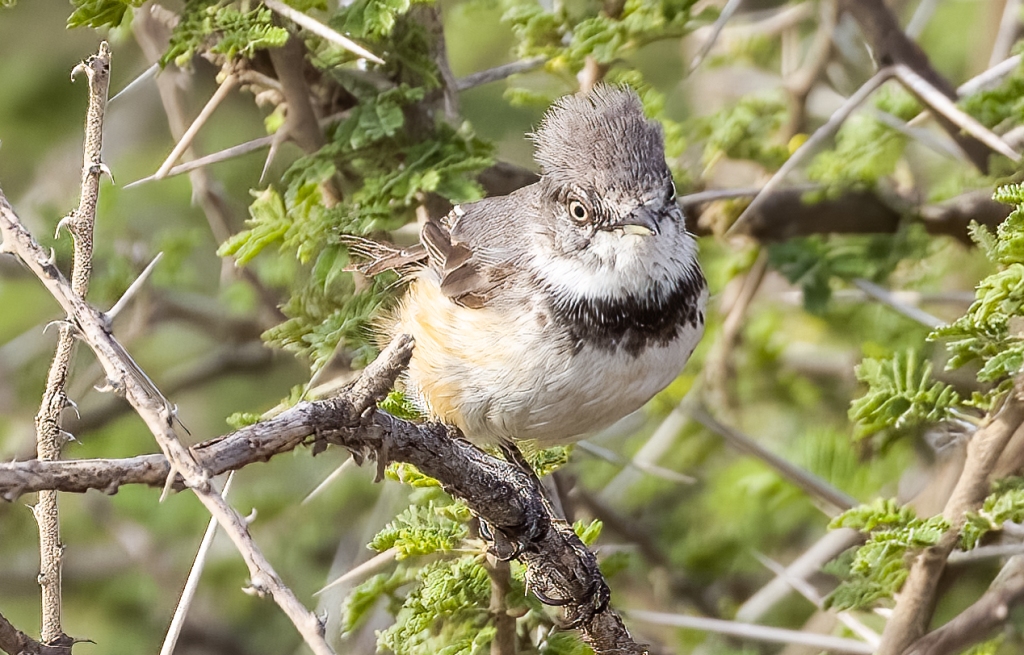
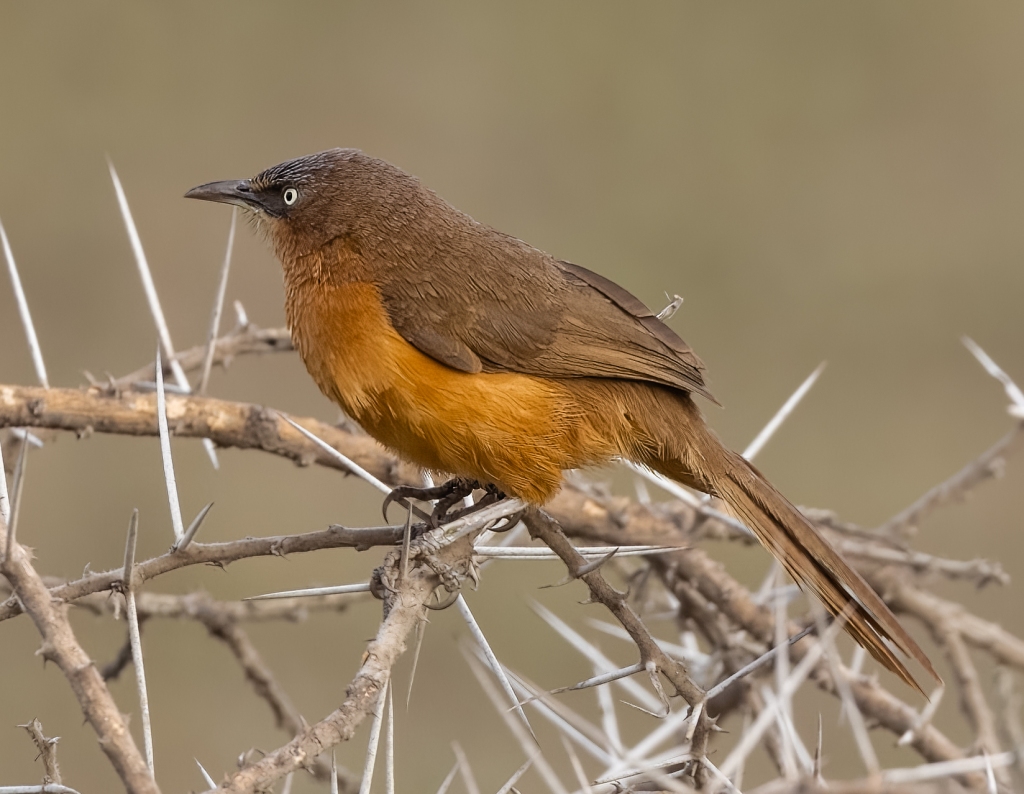
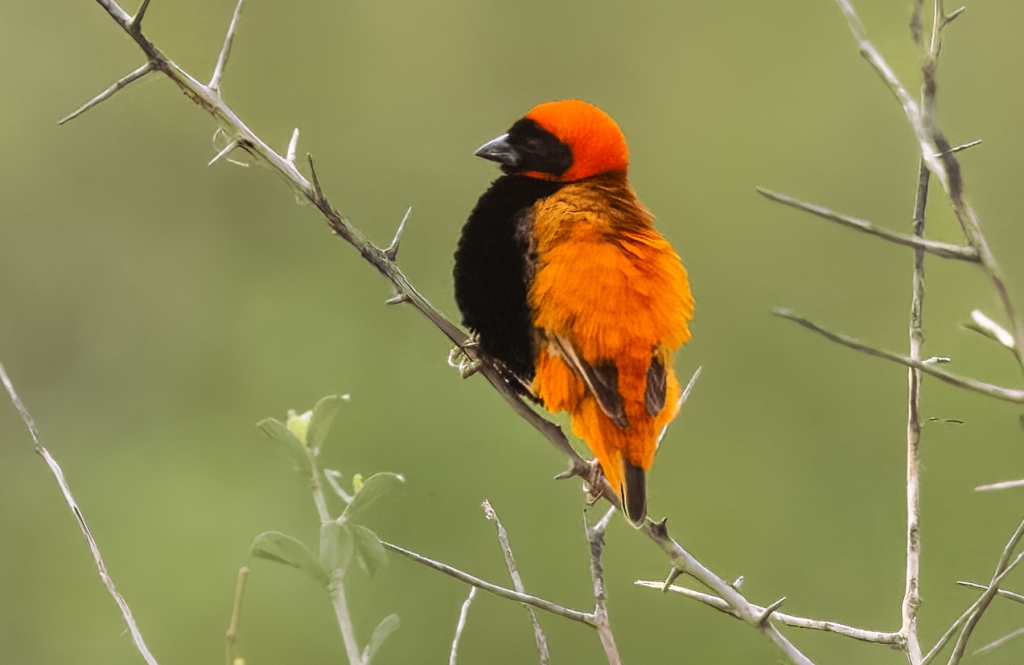
In addition to these bigger showy birds, we also had some lovely little ones that were fun to photograph.
A Banded Parisoma with an Attitude
Rufous Chatterer – and It Really Does Chatter
Southern Red Bishop
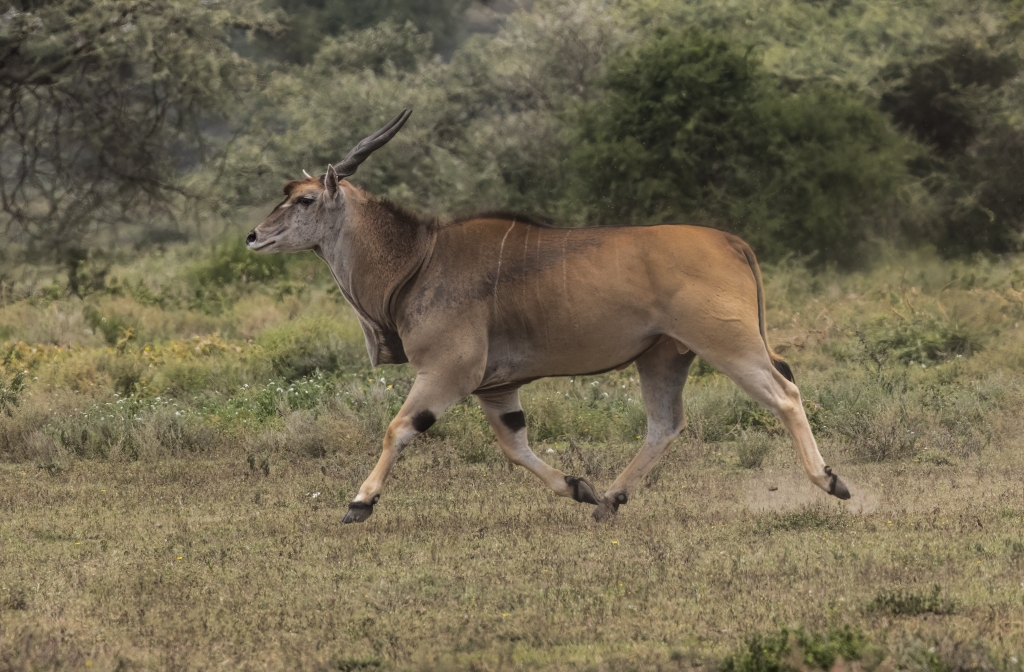
Without question, it was a great morning of birding but much more so, it was a super morning for animals. In addition to our “usual suspects” we had our first Eland of the trip. These are large and powerful antelopes. The males can weight up to 2,000 pounds with the females coming it a svelte 600 pounds. Males can be 6 feet high at the shoulder – the largest antelope in the world.
Eland Bull
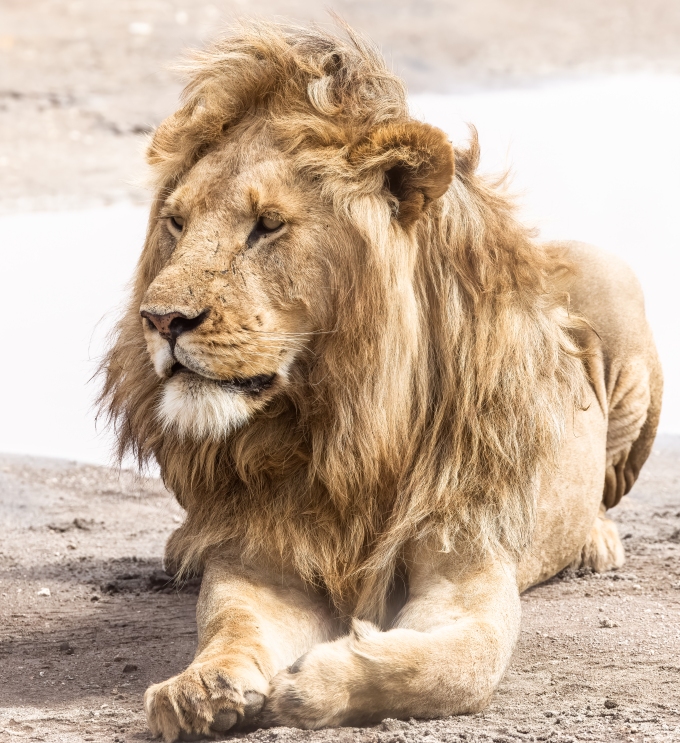
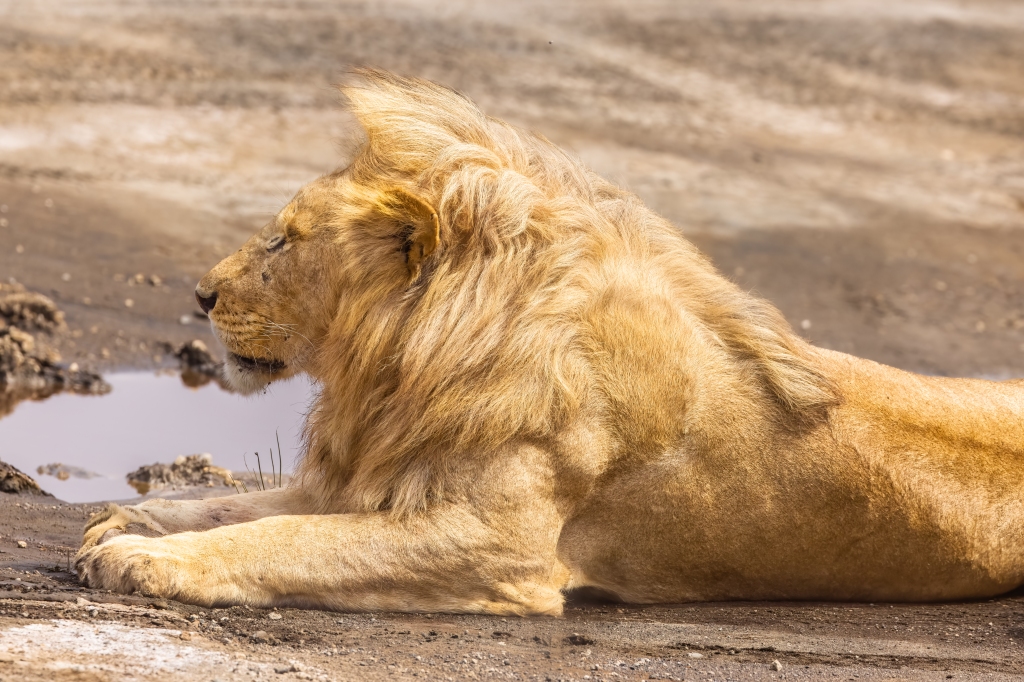
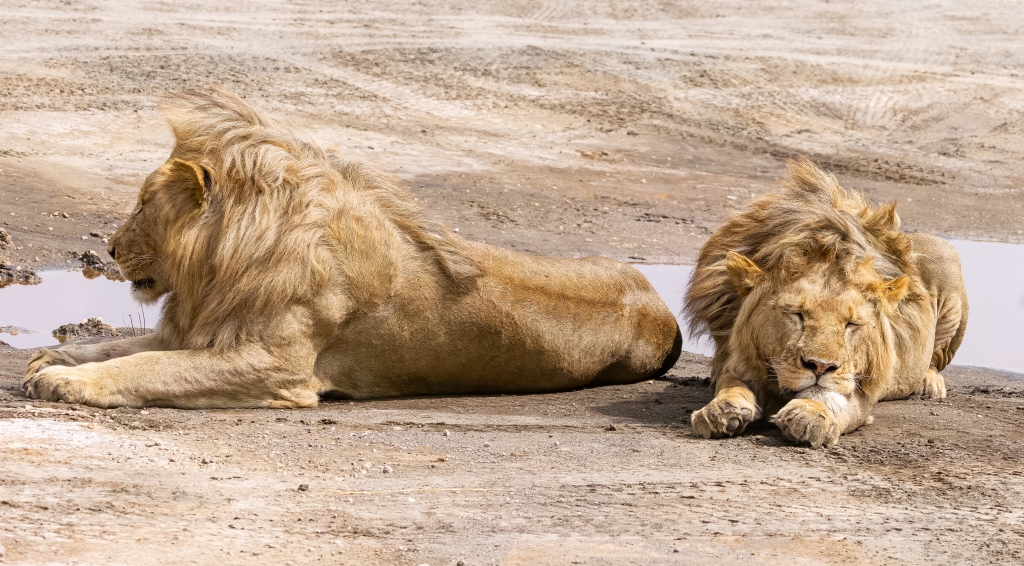
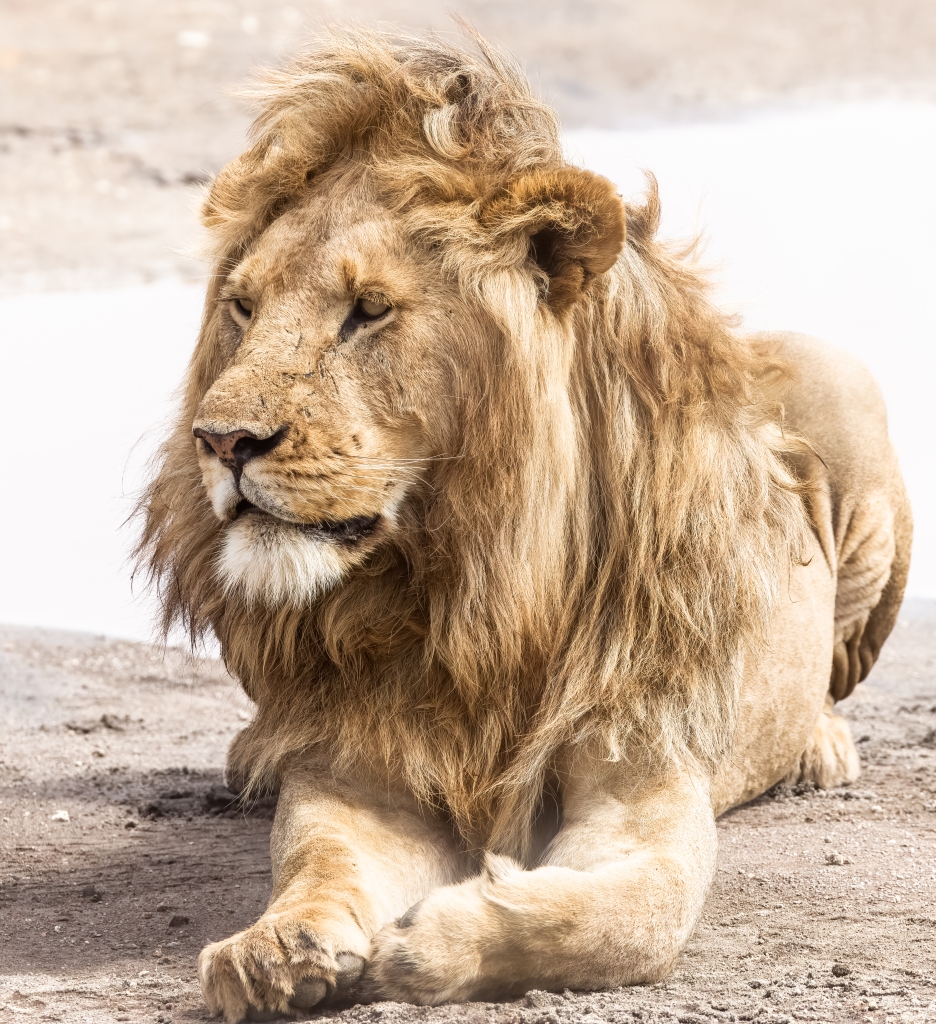
The Eland was great but the find that brought the most excitement – until there was an even better find – was a pair of male lions lazing on the dirt. We first noticed several safari trucks out across a mud flat and knew there had to be something good. The driver radio network confirmed that there were lions so we headed off to them. But at first it did not seem that way as they looked to be less than a mile away. We had to take a circuitous several mile route to actually get there, however, as the mud was not crossable. It was definitely worth the wait as these were unquestionably very handsome animals – our best looks at lions yet. These pictures have appeared in an earlier blog – out of time sequence. We watched these big males for 20 minutes and they barely moved. These were the only lions that we saw that were not in the grasses.
Not too long after our visit with the lions we got word that a group of cheetahs were resting under a tree and off we went – retracing our circuitous route that had brought us to the lions and completely ignoring any birdlife along the way. As I have indicated previously, our intersections with lions on this trip were better quality and quantity wise than my trip to Kenya where we had only two lionesses. I had seen more lions, including males in South Africa, but nothing close to our encounters in Tanzania. Cheetahs had also been a disappointment in Kenya, where we had only distant views of two cheetahs mostly hidden in the grass. This history was about to change as when we arrived at the “cheetah spot” we had three gorgeous cheetahs lounging together in the grass, hidden more by each other than the grass itself. They were resting and hardly active but we were pretty close and had great views and many photo ops. The bad news was that Cindy was not with us. She would be extremely disappointed to miss the two lions, but that would be nothing compared to missing the cheetahs.
Our First Cheetahs
Truly a Beautiful Animal
Just Wow!!
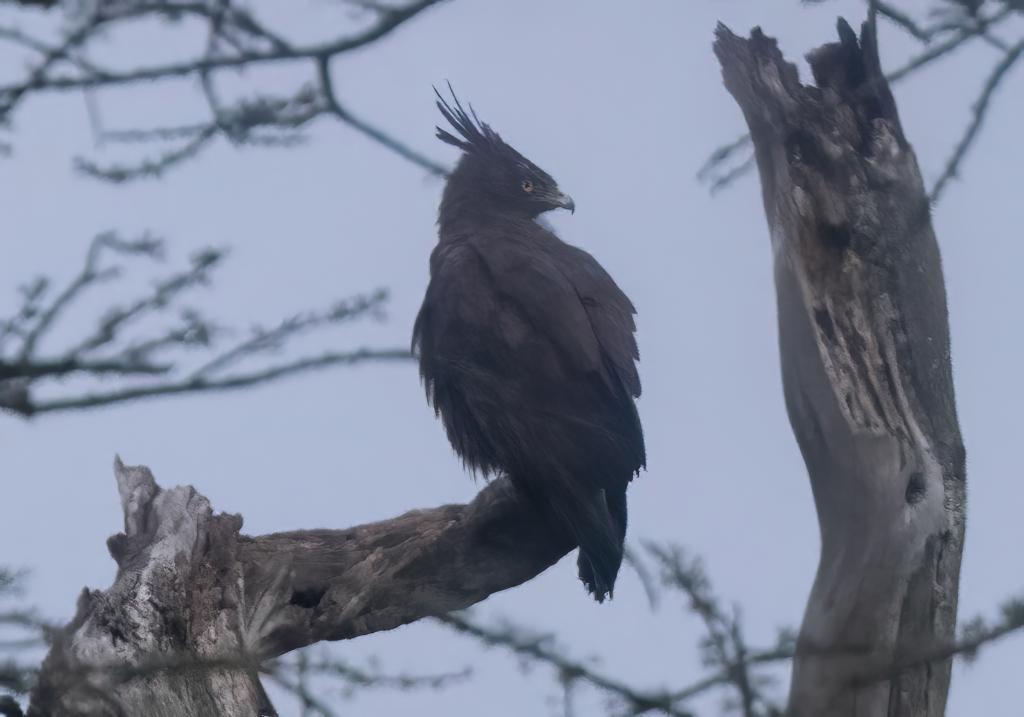
We would return to the Lodge for lunch and I would have to tell Cindy what she missed. On the way back we had a distant view of a Long-Crested Eagle constructing a nest, its long crest showing well in profile. Two pictures I had missed were of Winding and Desert Cisticolas. As anyone who has bided in Africa knows, cisticolas are really tough to ID. Of the 10 species of cisticola seen on our trip, Rattling Cisticolas were by far the most common, being observed on 13 different days. I got many photos of that one but missed 50% of the group – I think. And I say that because I have photos of some cisticolas that I simply cannot ID
Long Crested Eagle
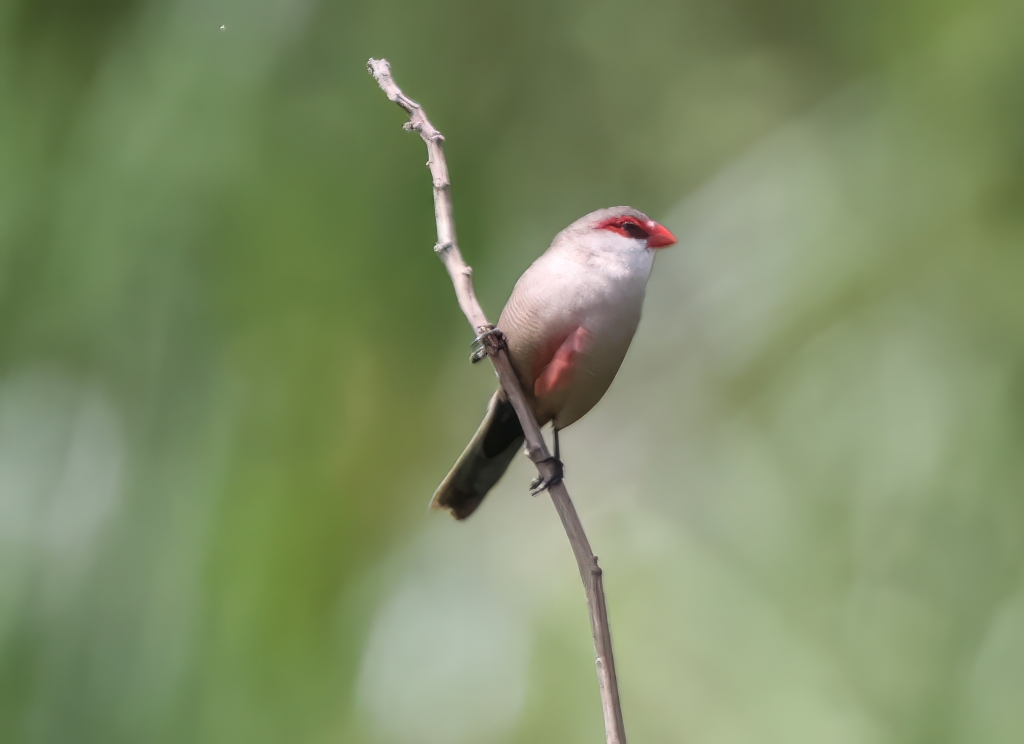
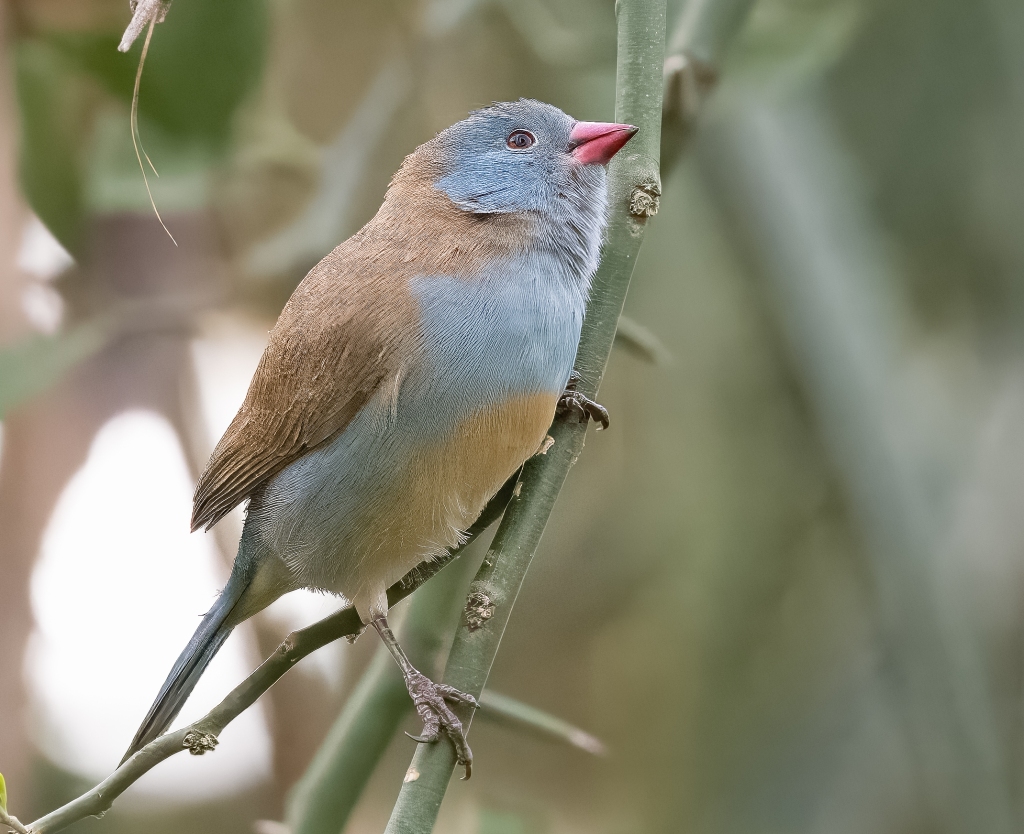
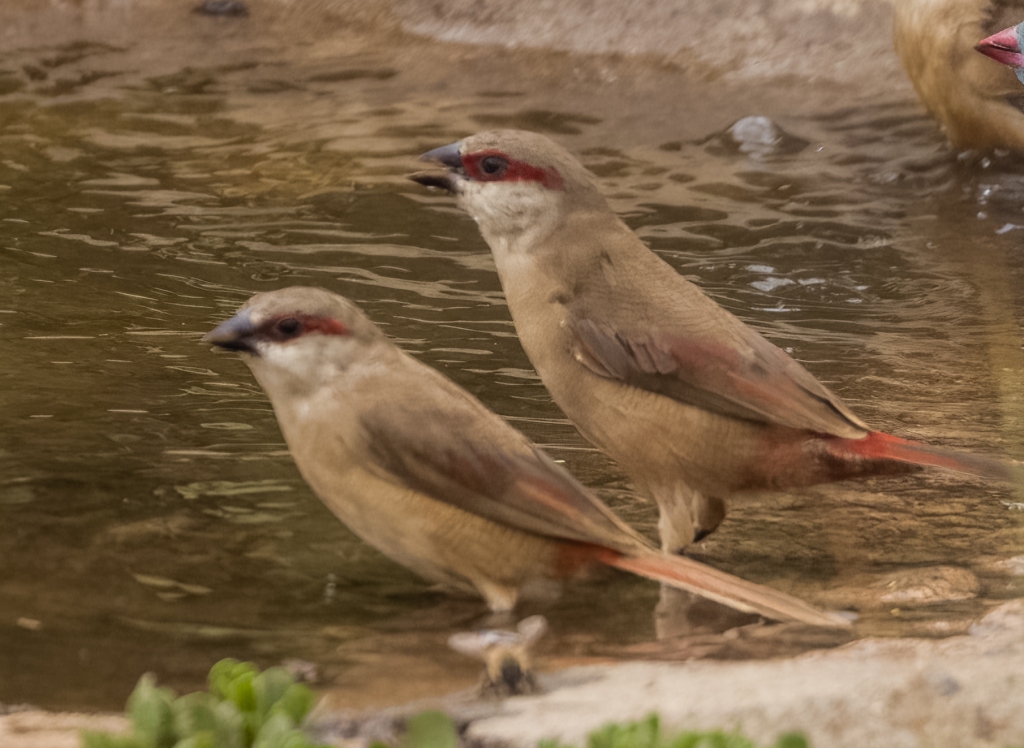
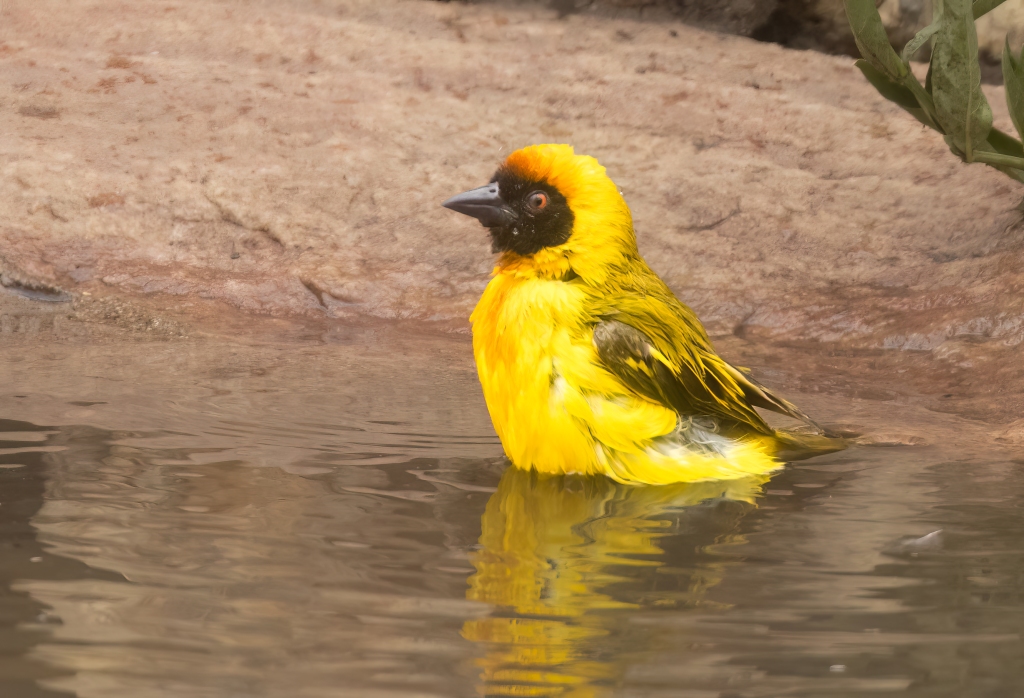
On the surface Cindy was really happy that we had seen the cheetahs and seemed ok, but underneath I knew she was unhappy with herself for sitting it out that morning. I consoled her that there would be more but of course there was no guarantee of that – but that was the last day she would sit out any part of the trip. We had lunch outside at the Lodge where we could watch a little water drip that was a great bird magnet visited by Blue Headed Cordonbleu, Red-billed Firefinch, Vitelline Masked Weaver, and Common and Crimson Rumped Waxbills, the latter two new for Tanzania although I had previously seen them in Kenya and South Africa respectively.
Common WAxbillBlue Headed CordonbleuRed-rumped WaxbillsVitelline Masked Weaver
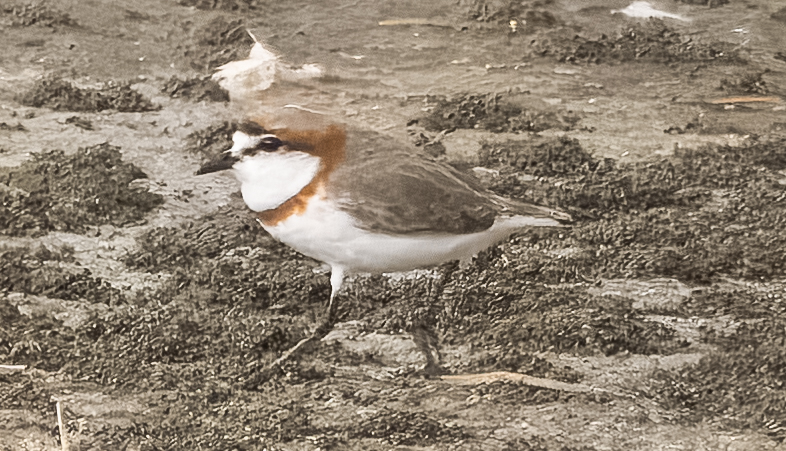
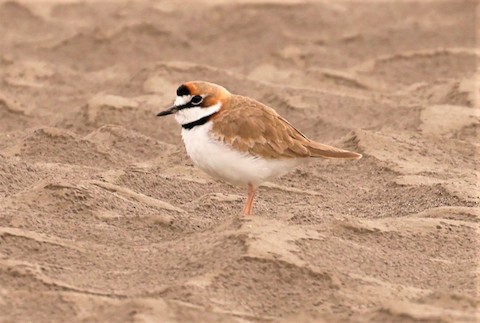
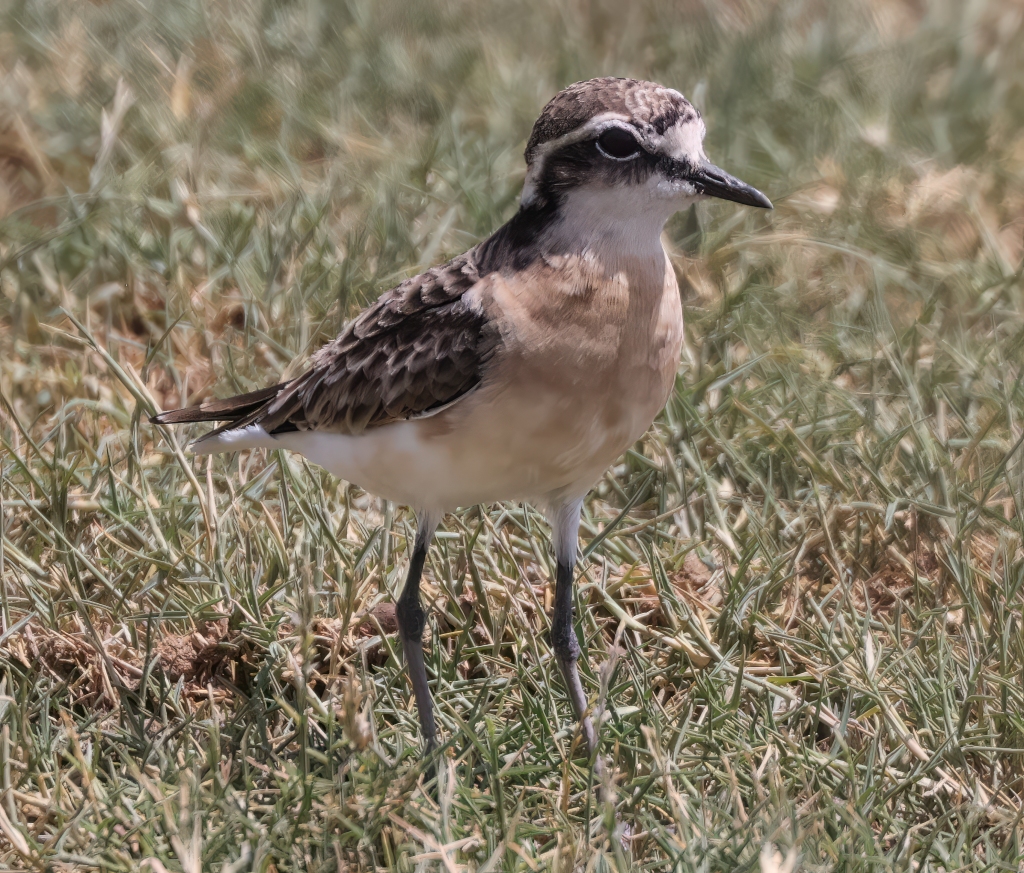
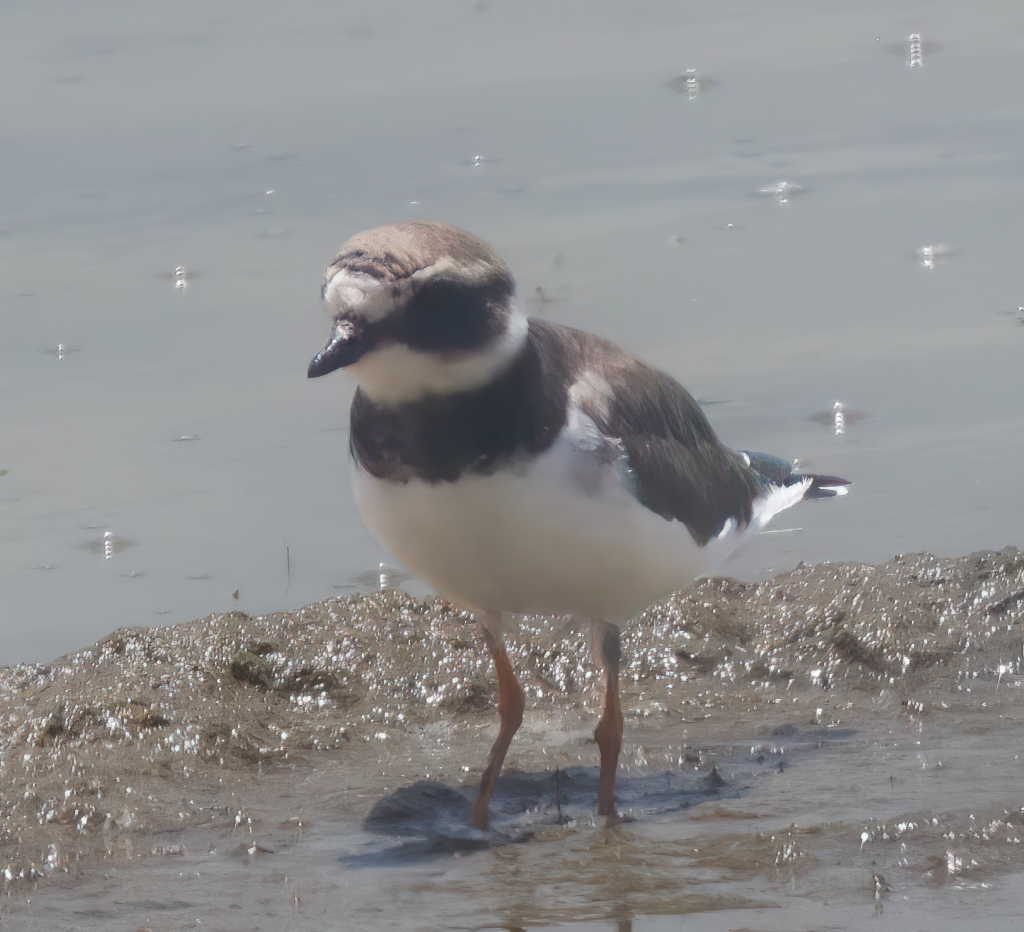
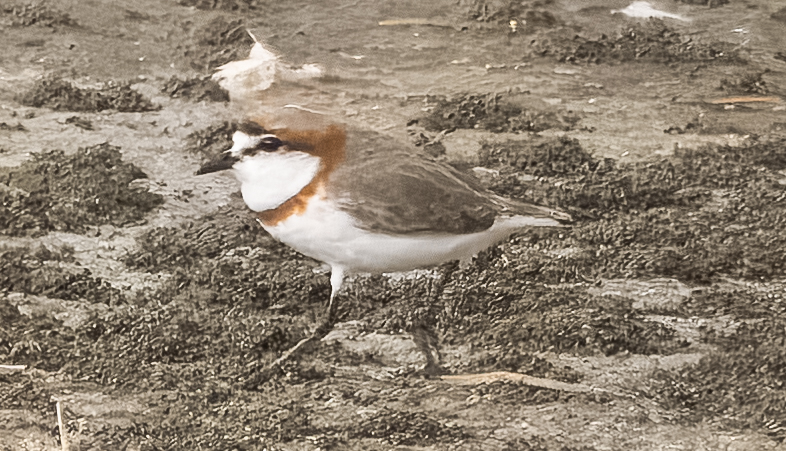
After lunch we were back in the safari vehicles birding the area around the lodge and then down to the Ndutu Lake shoreline. We had no new species until we got to the shoreline, and unfortunately, we also got no cheetahs or lions. At the shoreline we had only a single look at a single bird, but it was one that I very much wanted to add to my world list, a Chestnut Banded Plover, one of the Charadrius small plovers and very similar to the Collared Plover I had added to my life list in Mexico in 2021 and saw again in Ecuador last year. This sharp looking little guy was my 17th Charadrius plover. There are currently 32 such species, so I am only just over halfway there with zero chance of seeing them all, although that would be a lot of fun. In home state Washington our common Charadrius plovers are the Semipalmated and Snowy Plovers. In addition to those two, I have seen Wilson’s Plover, Lesser Sand Plover and Mountain Plover there – three big time rarities for the state.
Chestnut Banded Plover – Tanzania LiferCollared Plover – Mexico and Ecuador
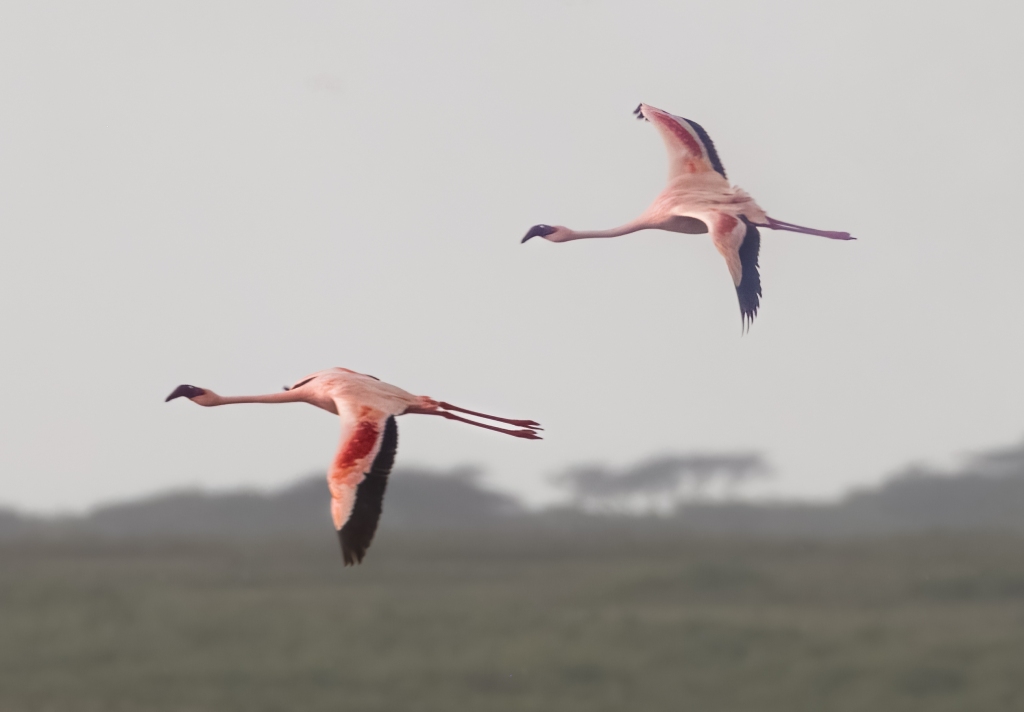
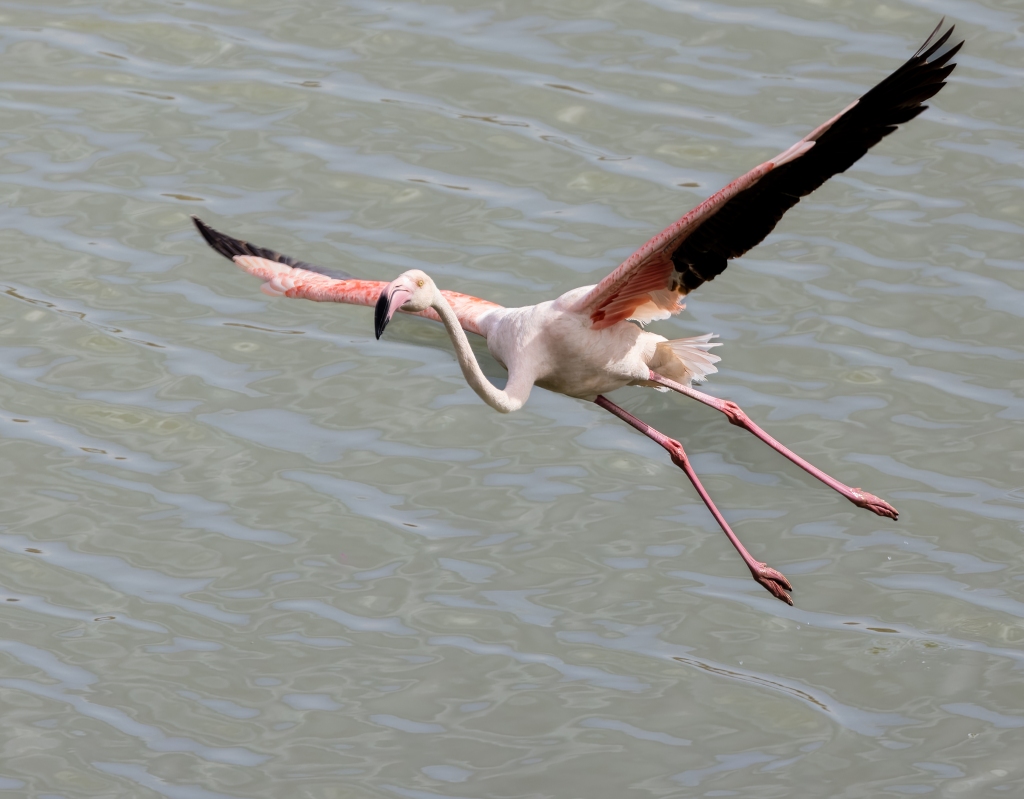
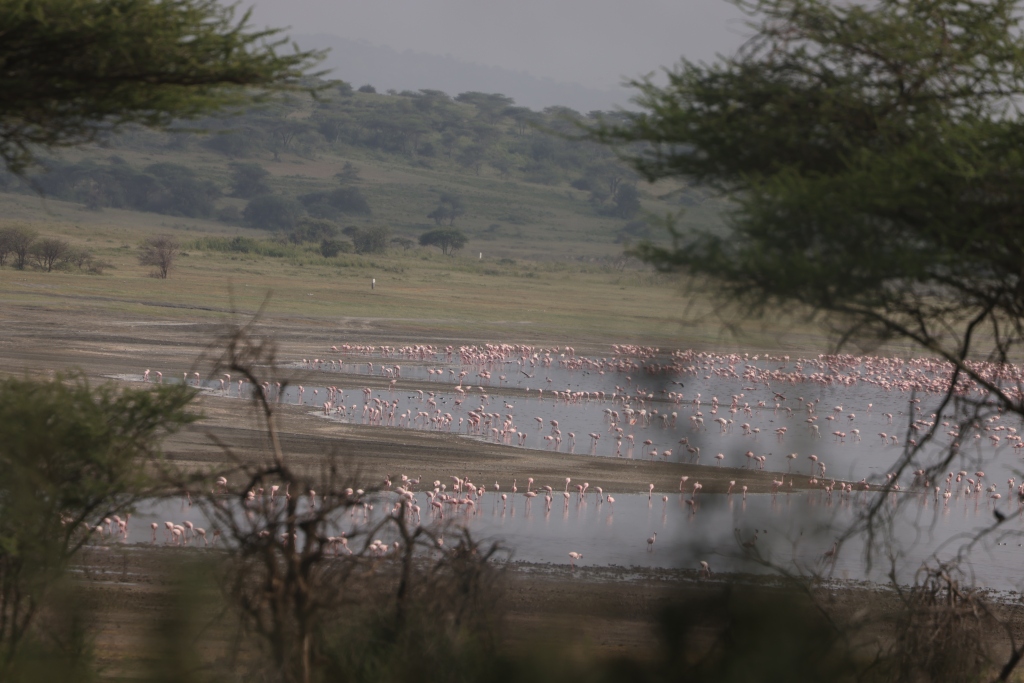
We had 62 species on that last birding trip for the day with only five new for the day and with one more lifer for me – a BlackWinged Bishop which somehow I managed not to get a photo of despite having good looks. Probably the most spectacular birding was seeing the large flocks of Lesser and Greater Flamingoes including close up – one of the spectacles of any visit to East Africa – birding or not.
Lesser Flamingoes in Flight
Greater Flamingo
Flamingoes – A Small Portion of Those Present
We had 114 species for the day bringing my Tanzania list to 329 species so far and my World List to 3016. Very pleased with both, I just wished Cindy had seen the cheetahs, unquestionably the highlight of yet another great day.
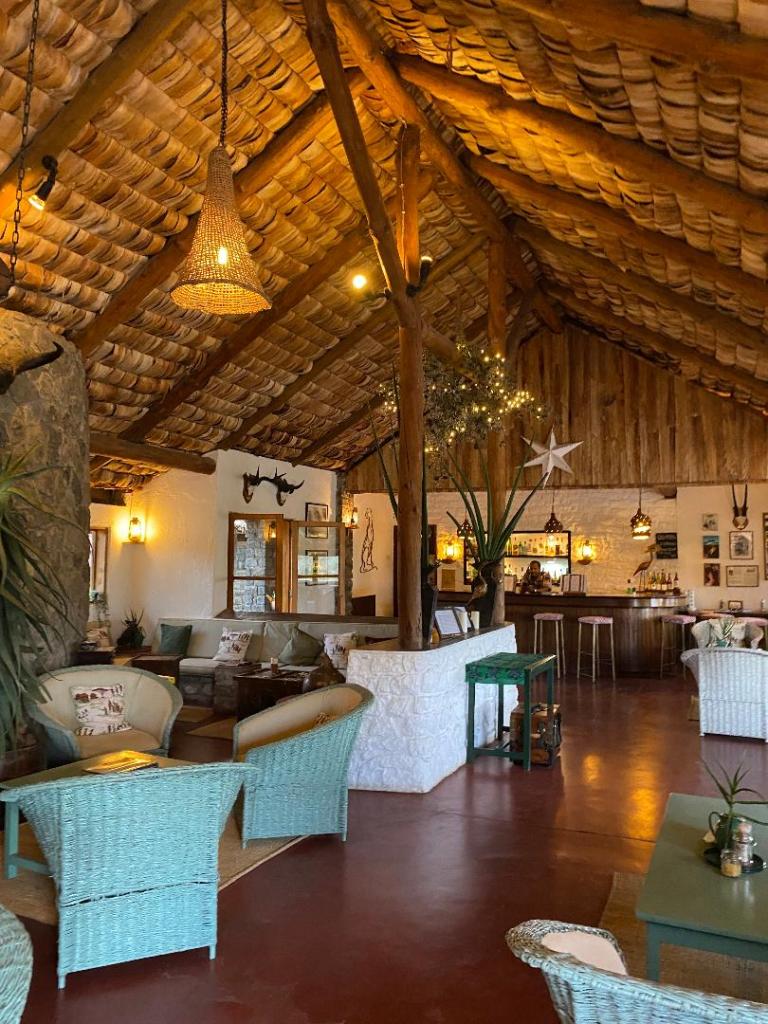
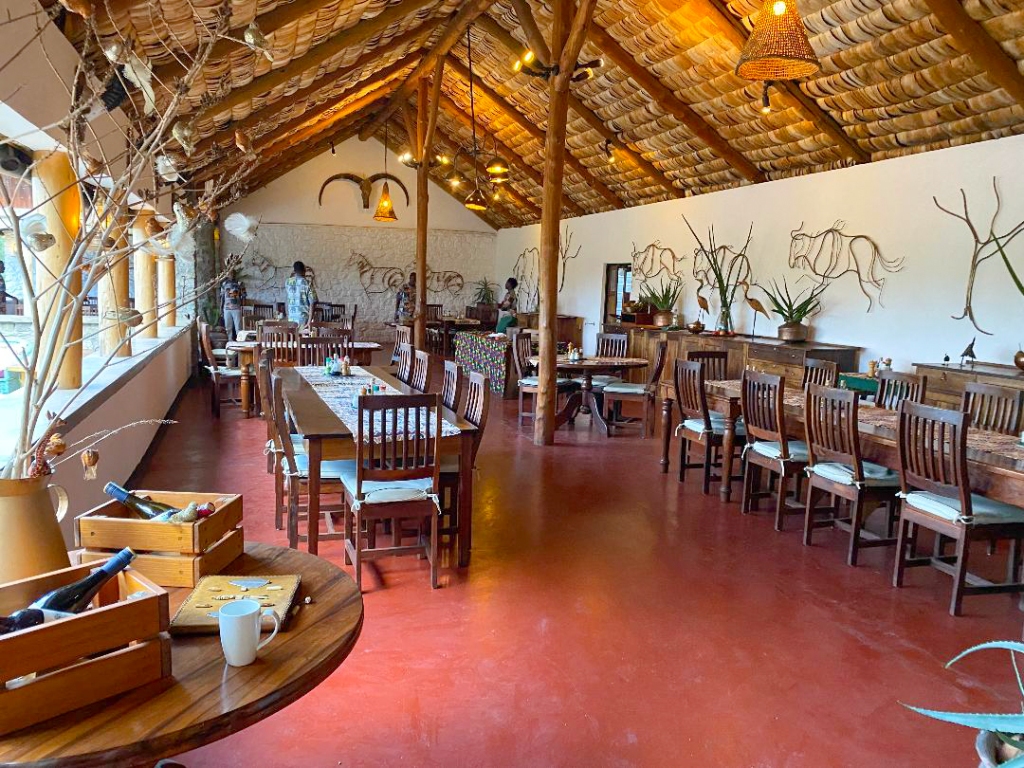
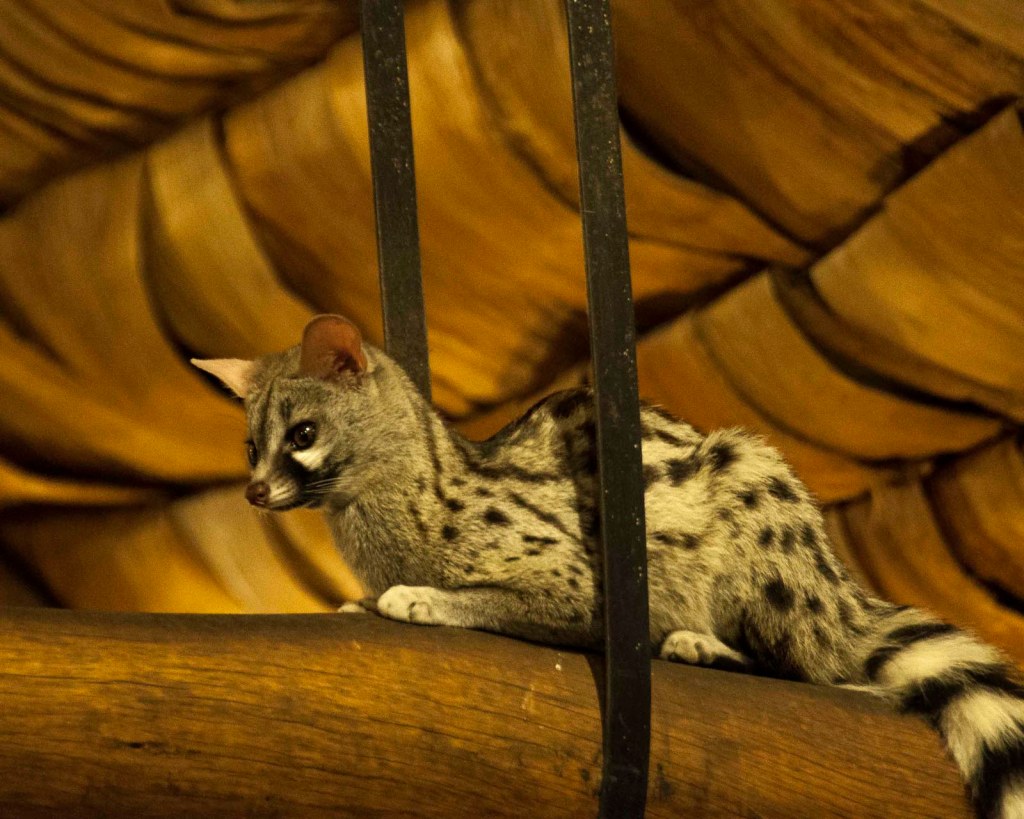
One of the best things about Ndutu Lodge was its smaller size and homey feel despite being far from home. It was welcoming and all-around comfortable with an appropriate understatement that felt just right. Regular visits from the Civet helped.
Our tour continued in the Central Serengeti area adding new bird species, grand vistas, increasing numbers of ungulates and more lions, Our trip list for bird species in Tanzania had grown to over 250 species and especially since we were in similar habitat to ones we had covered in the previous few days, it was getting harder to find new species, but we were in some drier country, and we did add 28 new species on February 21 and another 25 the following day. Birding in South American countries like Ecuador, Peru and Brazil (for me and certainly other places where I have not birded) it always seemed like there could be yet another species around every corner with even small changes in habitat leading to more species, and with species density being so great, even going back over the same places again and again, new species would be found that were previously missed. Especially on the plains in Africa, where there is neither the same density of species nor certainly the same density of supporting plant life, it did not seem that new species would so readily appear. However, what African birding lacked in density was made up for by coverage as we would travel through pretty large areas, always on the lookout for something new.
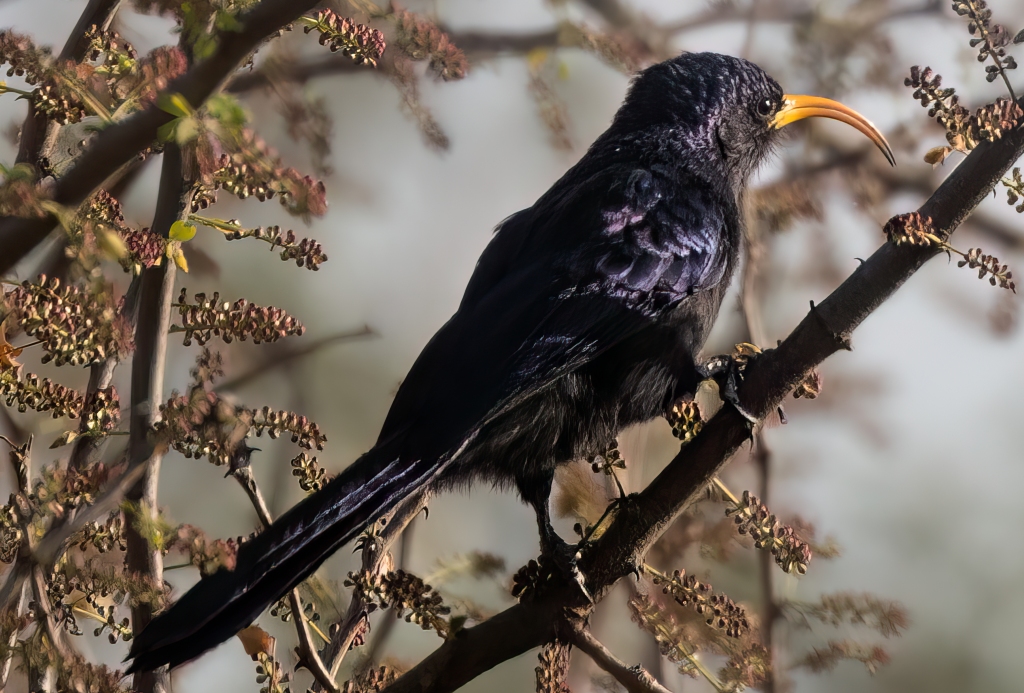
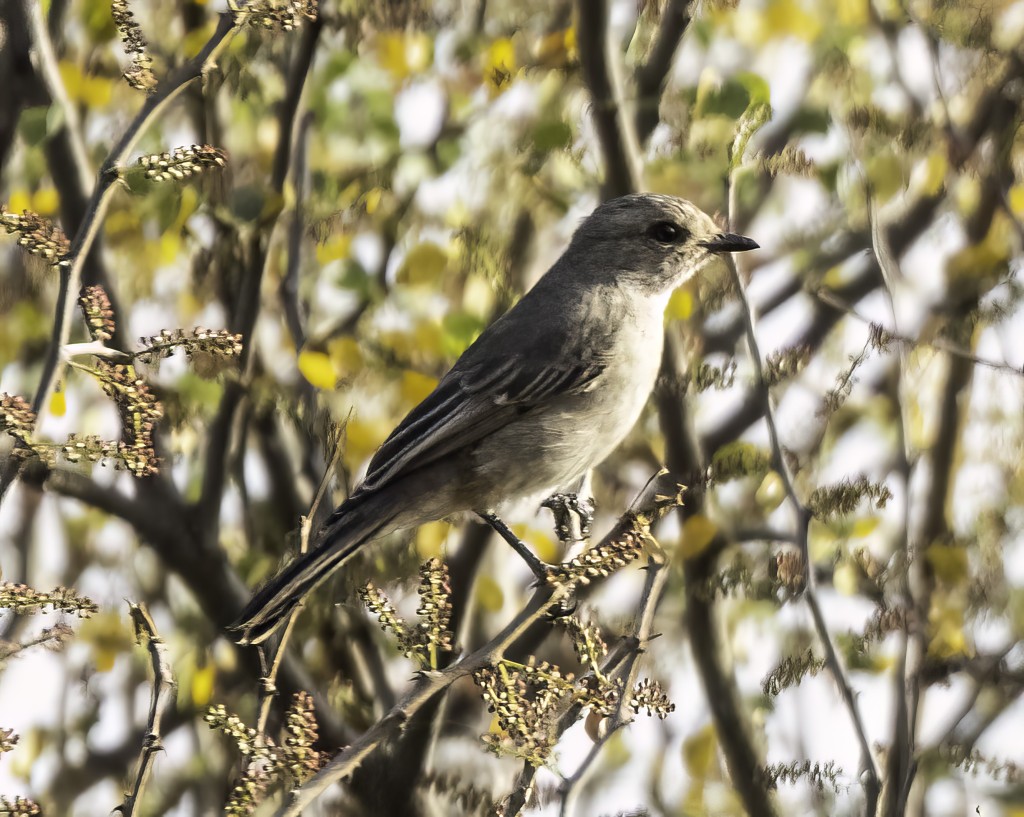
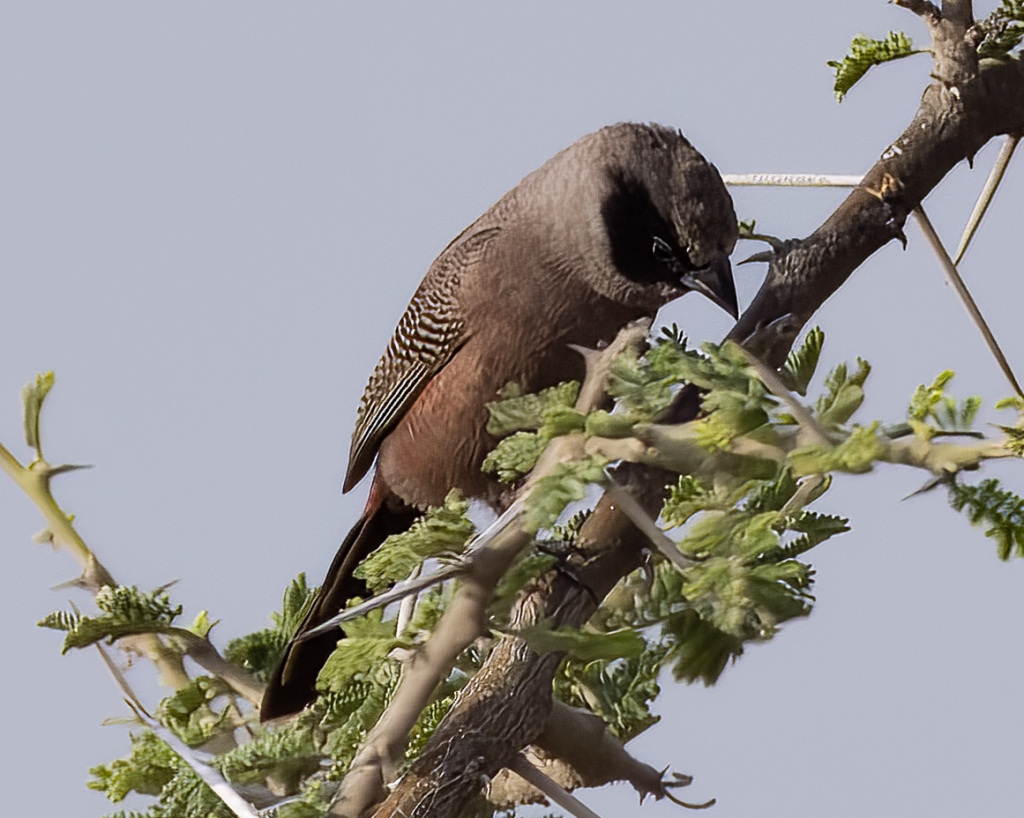
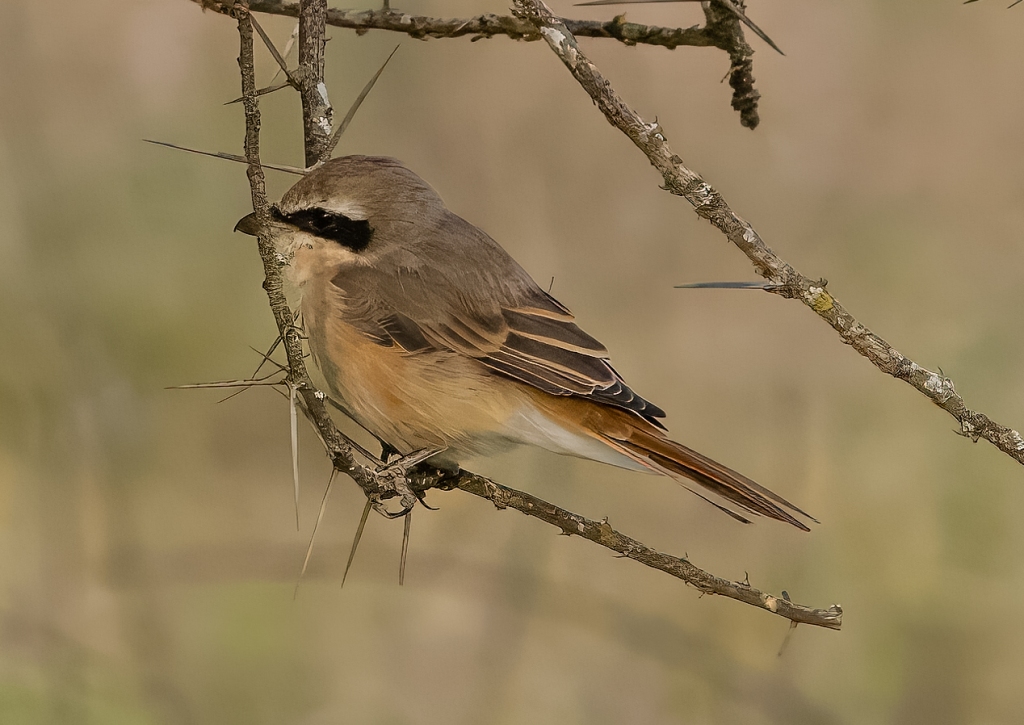
On the morning of February 21st we again traveled through the area from Kubu Kubu to the Seronera area in the Serengeti and then continued along the Seronera Circuit to the North Park Entrance. Pictures of many of the birds we found are grouped below. It was a good morning for photos including three new lifers and a photo of a lifer from the previous day that I had not photographed. Unfortunately I did not keep detailed lists along the way so I did not realize that with these three new lifers, I was now over 3000 species worldwide. Reconstructing the morning from photo data, I believe that in retrospect, the Isabelline Shrike was species number 3000.
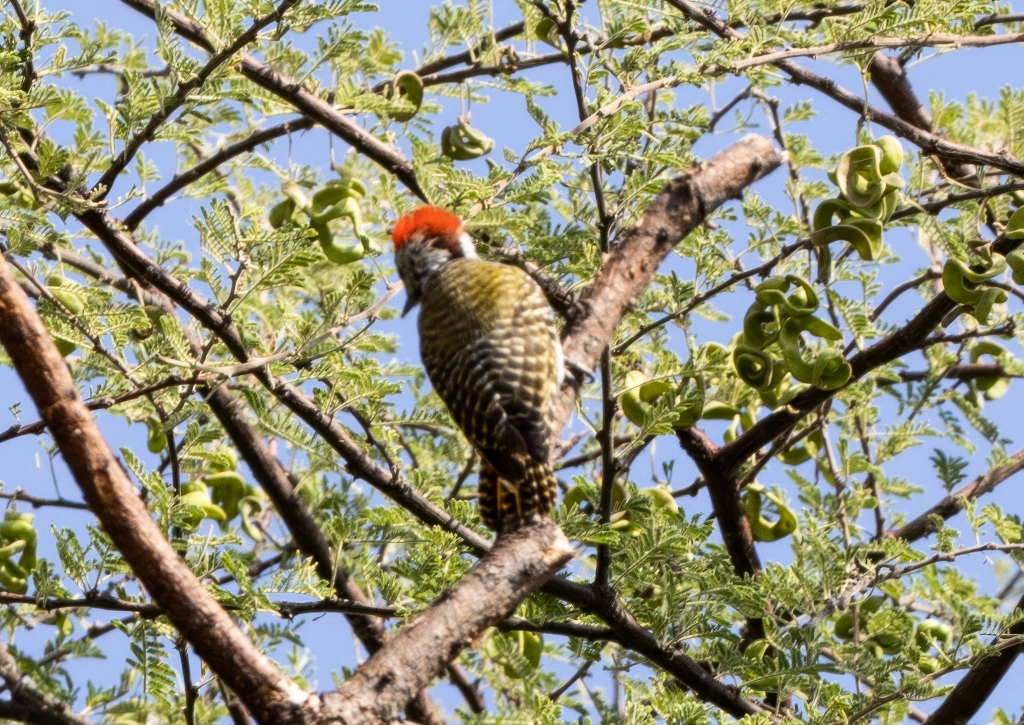
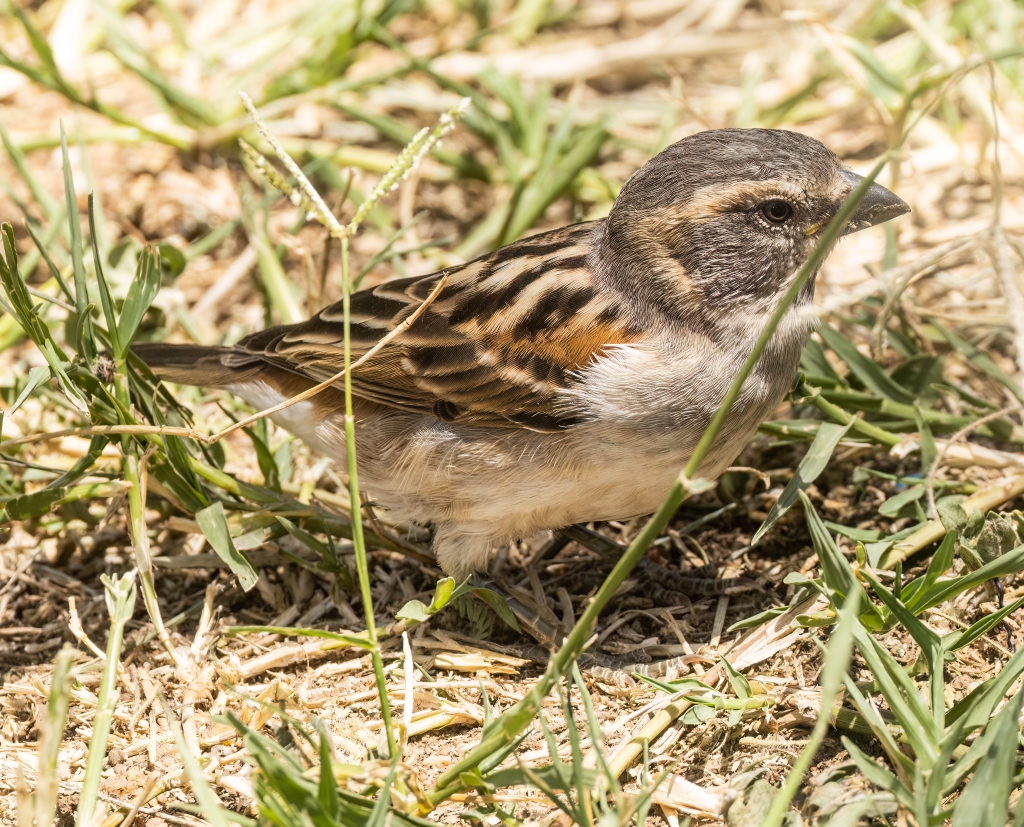
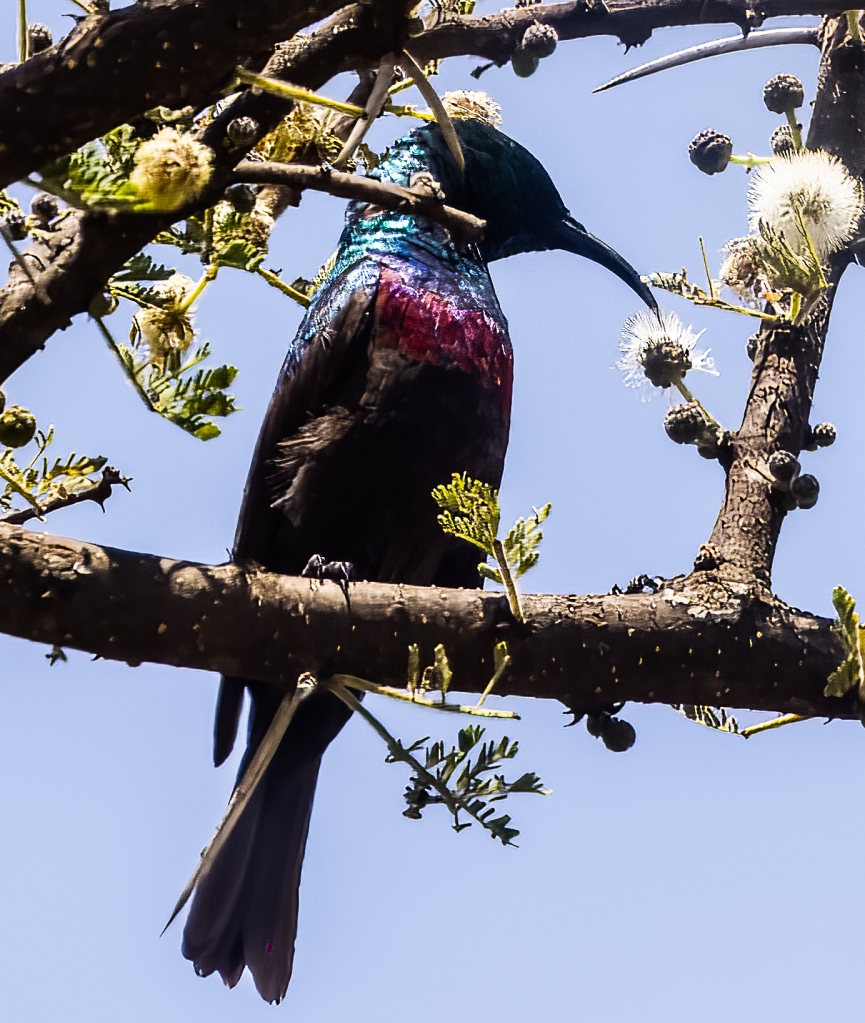
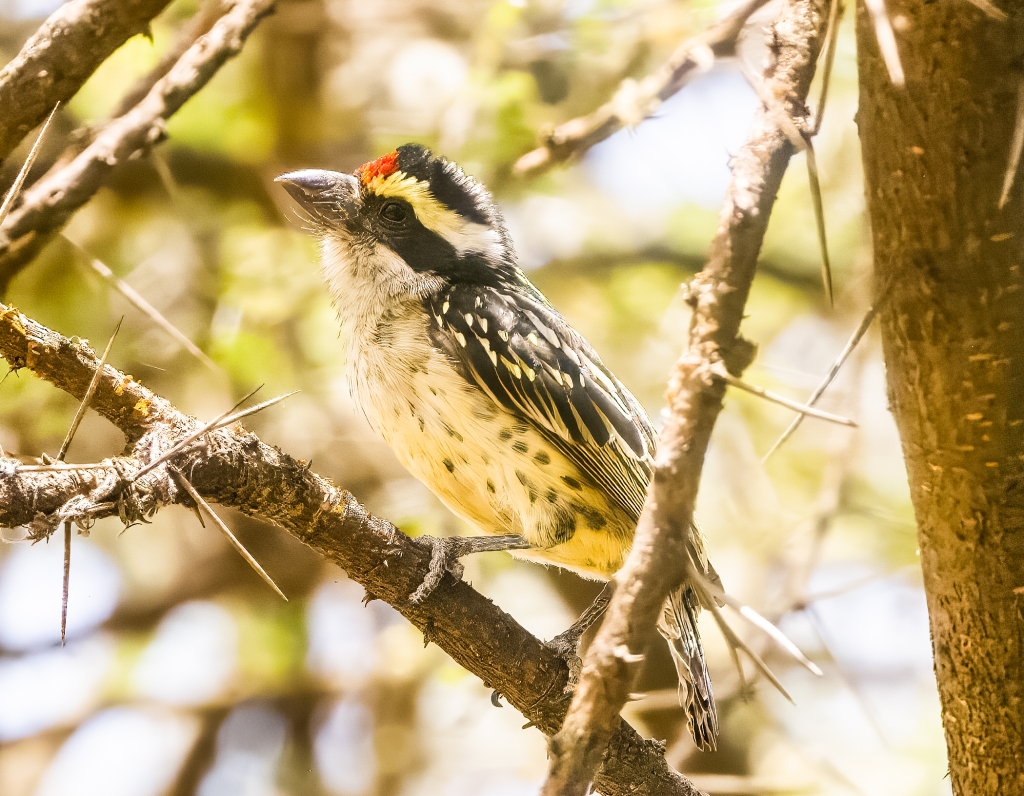
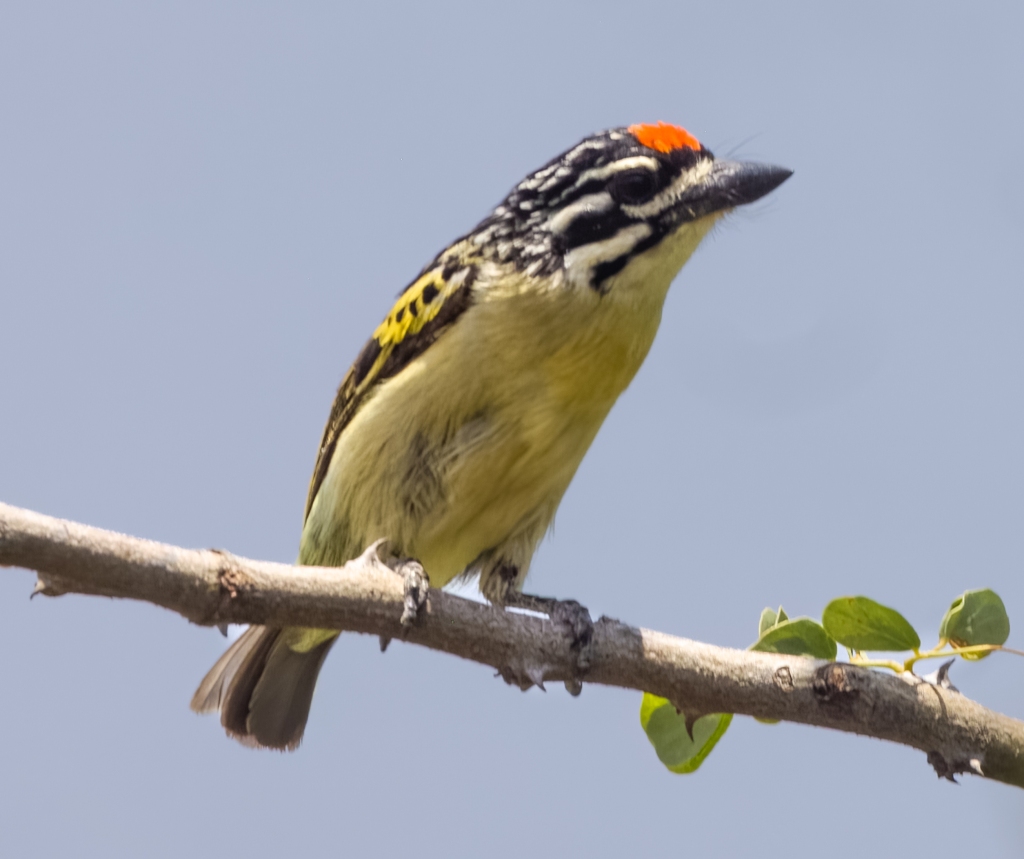
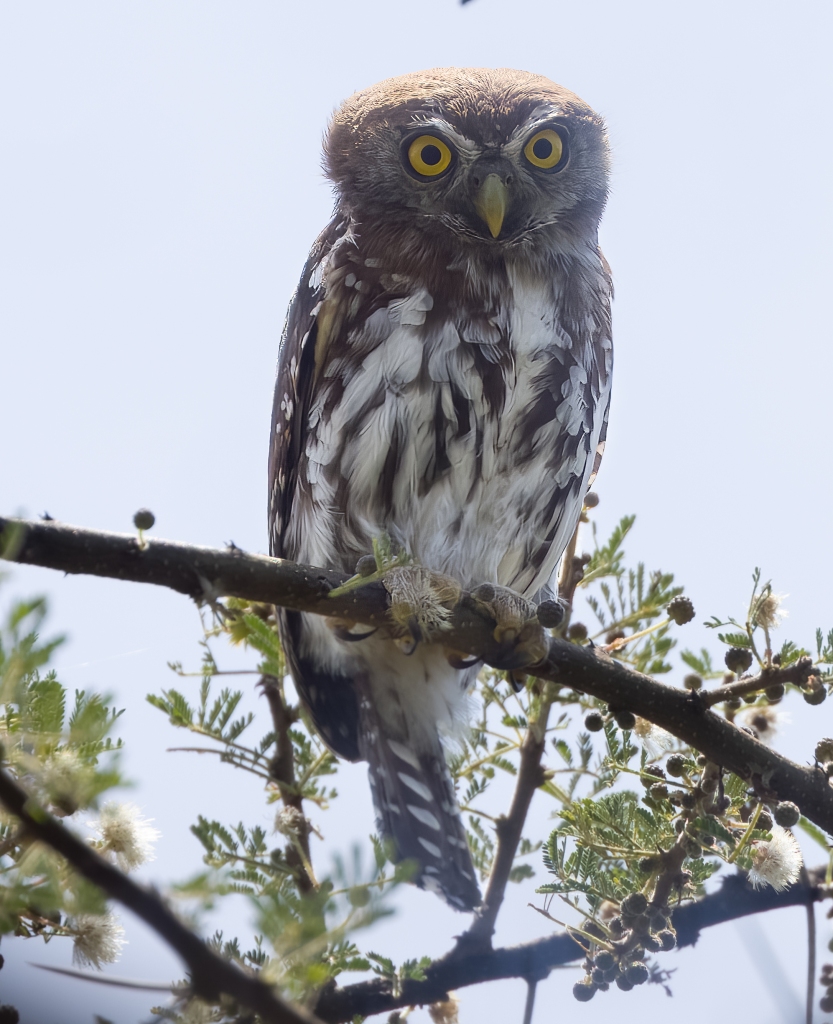
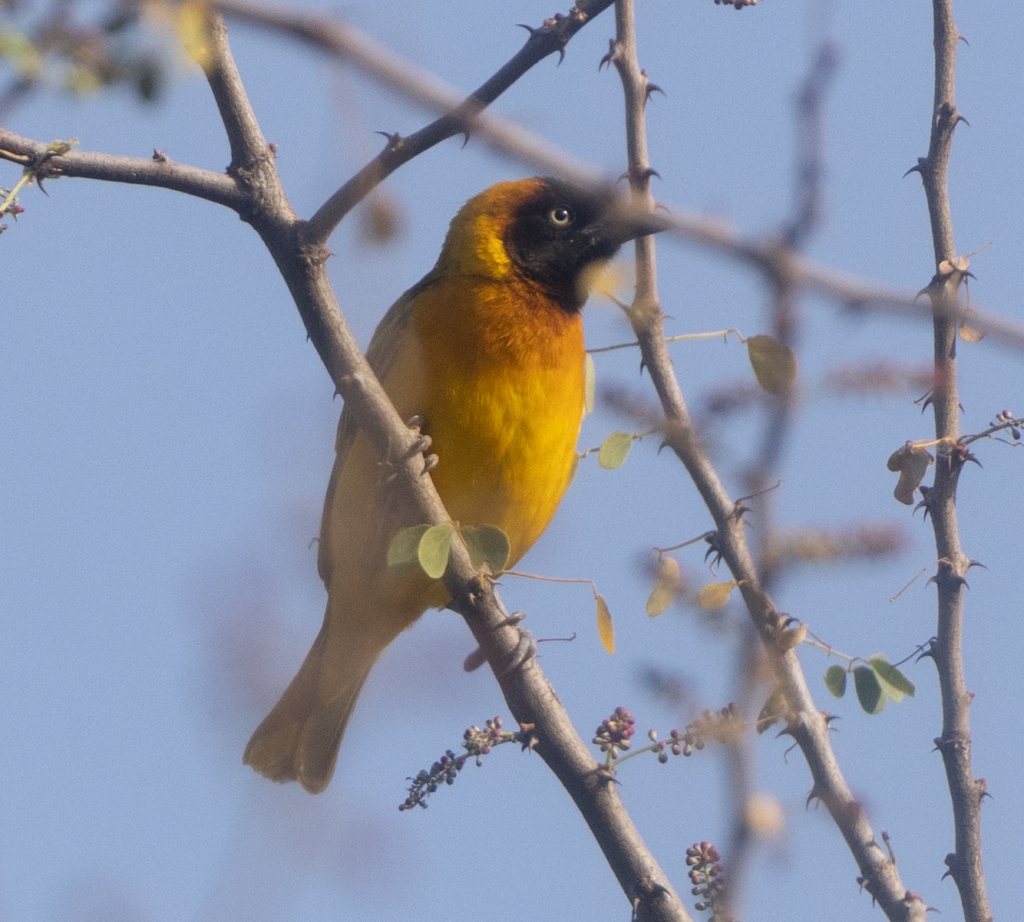
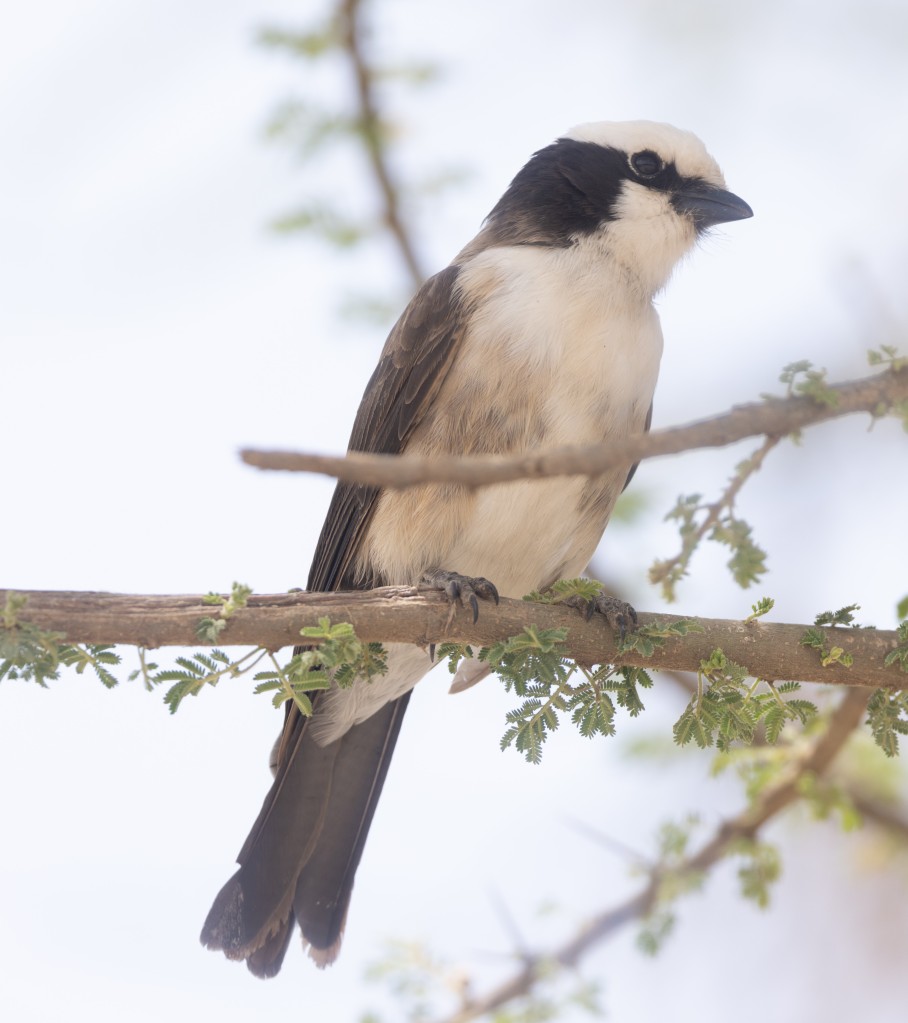
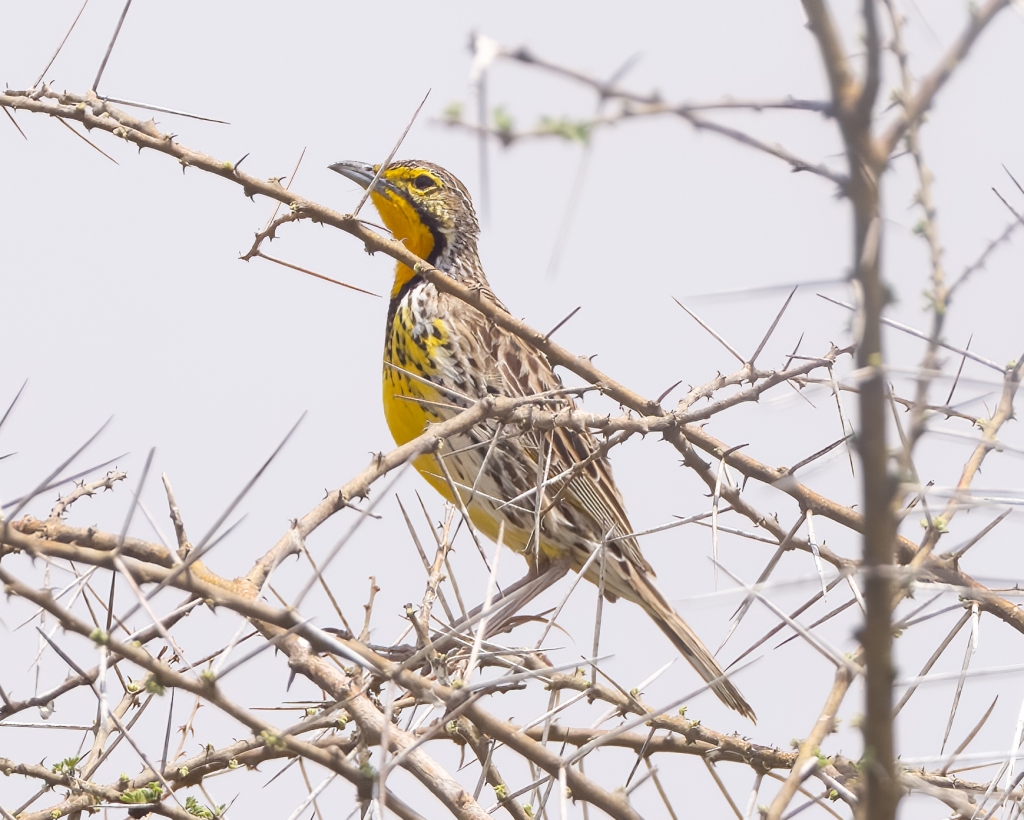
Abyssinian ScimitarbillPale Flycatcher – LiferBlack Faced Waxbill – Lifer from the Previous Day – Now a PhotoCardinal WoodpeckerIsabelline Shrike – Lifer (maybe #3000)Kenya Rufous SparrowMariqua SunbirdRed-Faced CrombecRed Fronted BarbetRed Fronted TinkerbirdPearl Spotted OwletLesser Masked WeaverGray Headed Social Weavers – LiferWhite Rumped ShrikeYellow Throated Longclaw
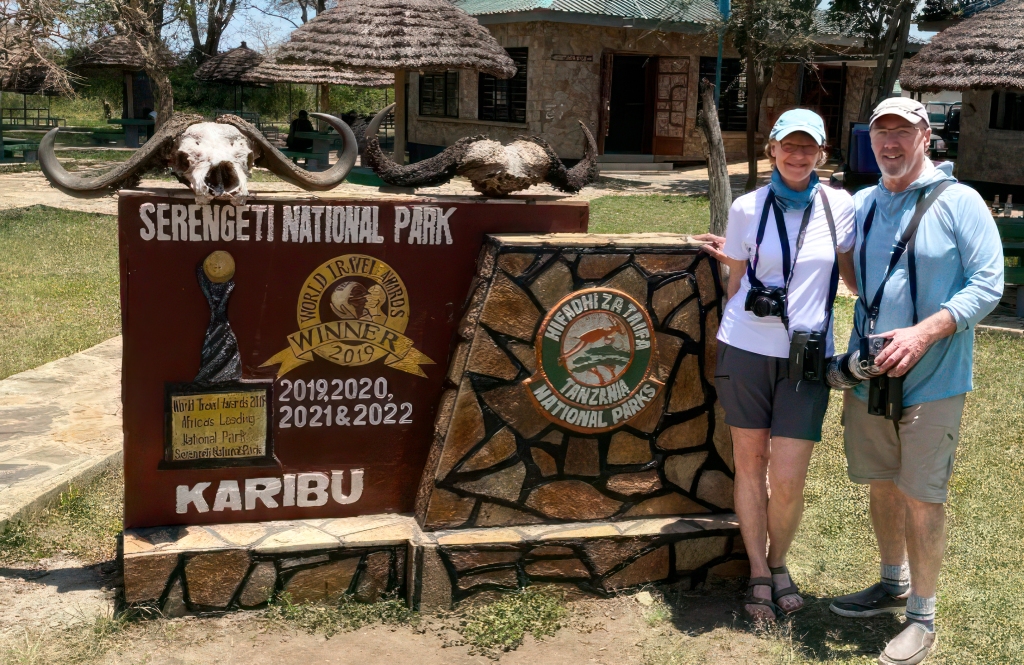
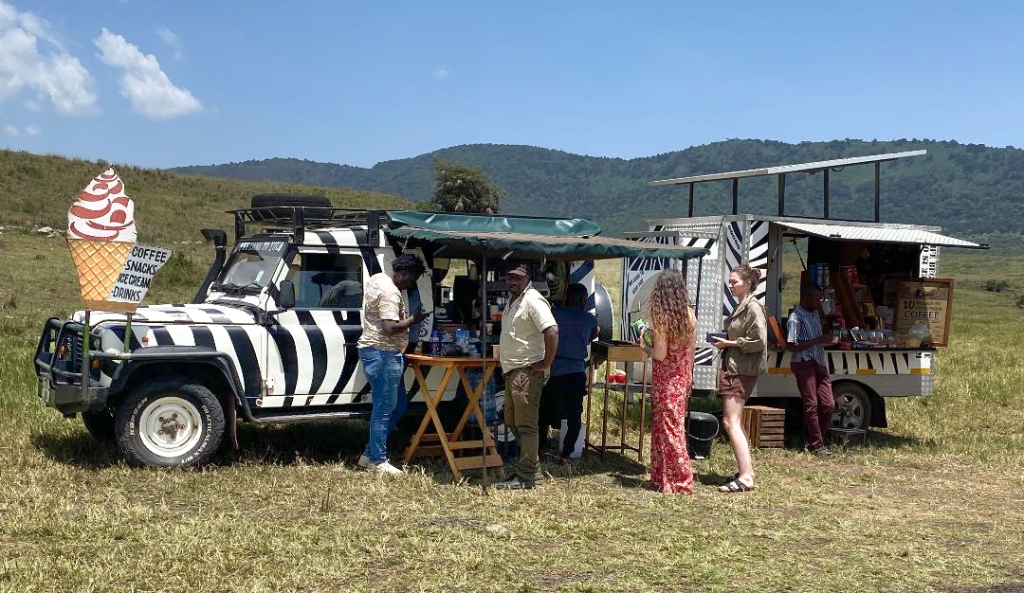
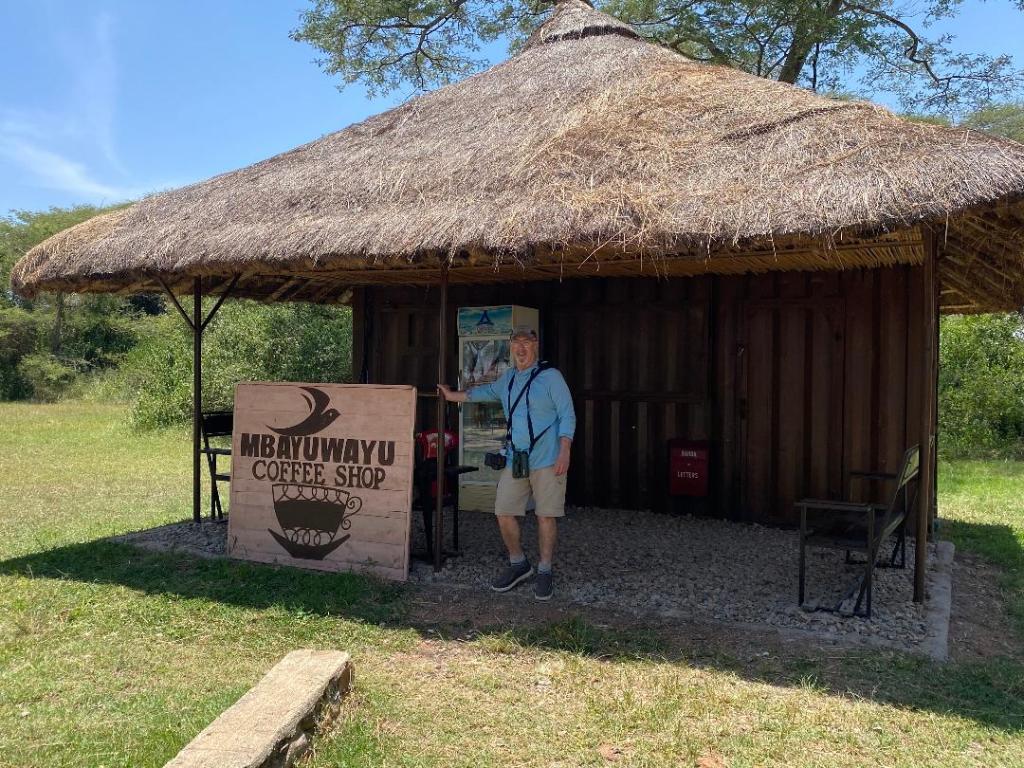
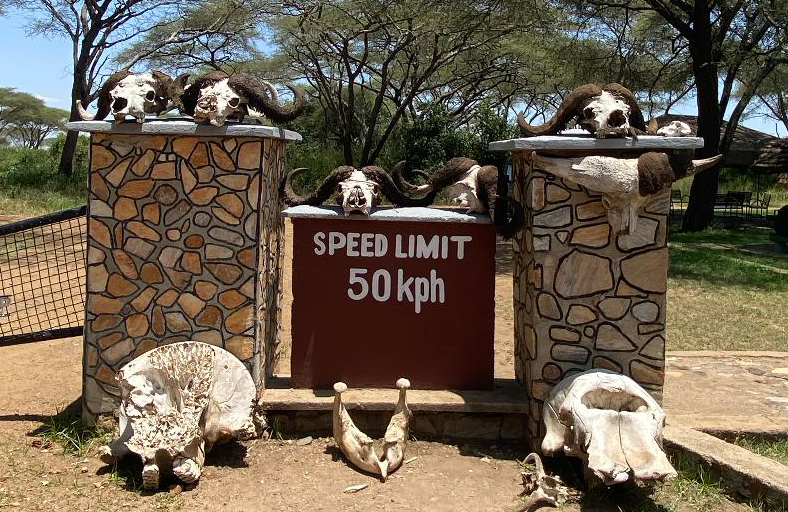
I mentioned in a previous blog post that there were restrooms in the parks at entrance gates or sometimes at other places used for rest stops or picnic areas. There were also a few commercial enterprises at these areas for sundries, coffee, candy etc. These photos give a sense of these spots and the entrance gates themselves.
A Lovely Attendant at One of the Spotless Ladies Restrooms
Blair and Cindy at One of the Serengeti Entrances
Food Truck
Coffee Shop – Coffee is a Major Crop in Tanzania and the Coffee was Excellent
Speed Limit in the Park was 50 Kilometers per Hour (about 31 mph) and was generally followed, good advice on bumpy dusty tracks, except when racing off for Big Cats. Buffalo Skulls and horns were at most entrances.
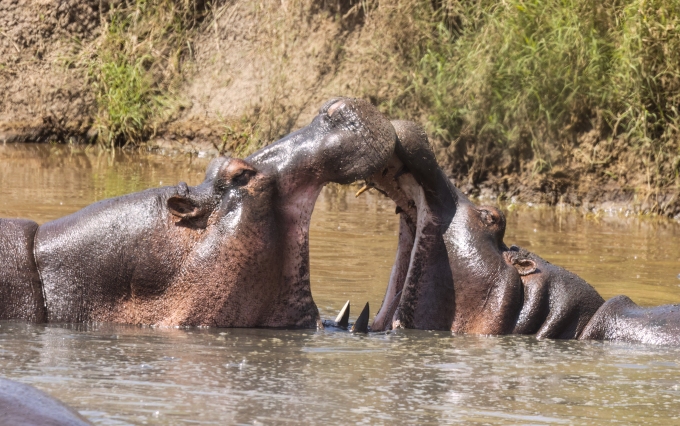
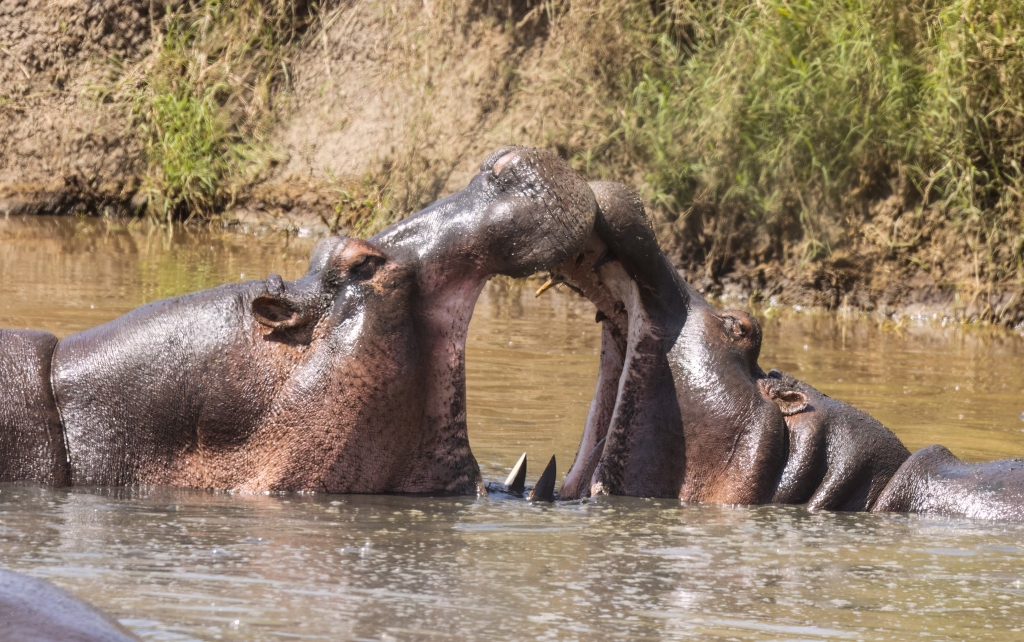
As written previously, most of our animal encounters were hardly action scenes – mostly grazing or sleeping with little interaction. There were two notable exceptions on these days in the Serengeti. The first was a challenge for dominance at a waterhole filled with Hippopotamuses. While a couple dozen other hippos basically remained unmoved, swishing their tails, almost fully submerged and often grunting, two large bulls faced off and pushed each other around, gaping mouths open with long razor-sharp tusks. This continued for many minutes until one finally convinced the other that he was the boss. Neither suffered any visible damage, but we expect one at least suffered damage to his ego and standing in the community. When the tussle was done, both males acted as if nothing had happened with the loser only retreating a few yards and all was quiet again – grunting aside.
A Battle for Dominance – the Hippo on the Left Prevailed
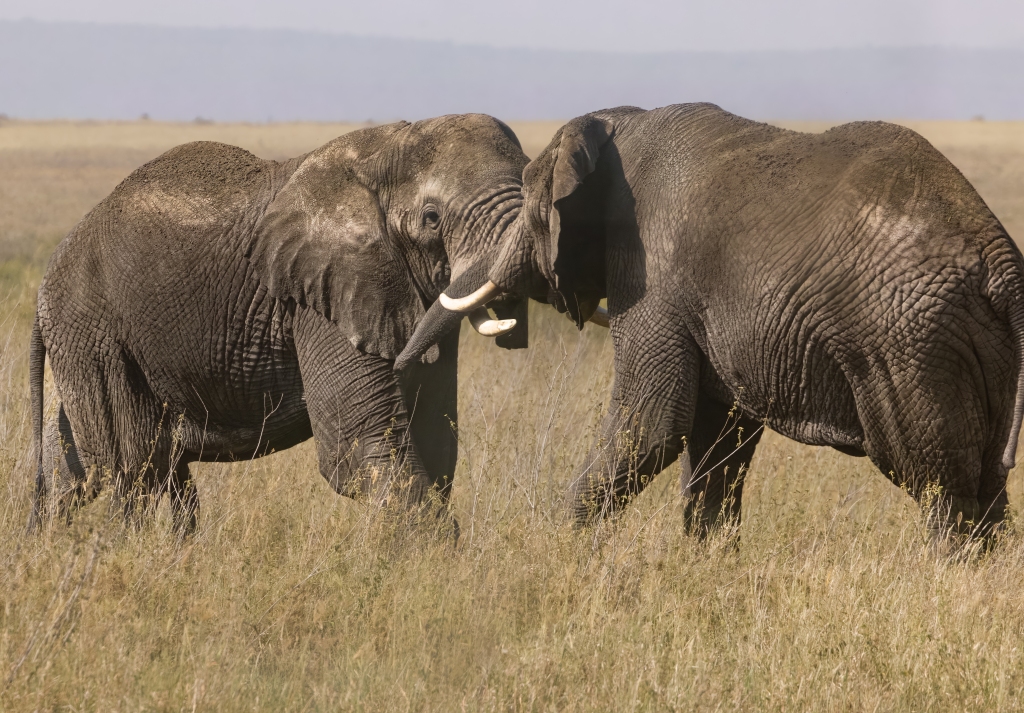
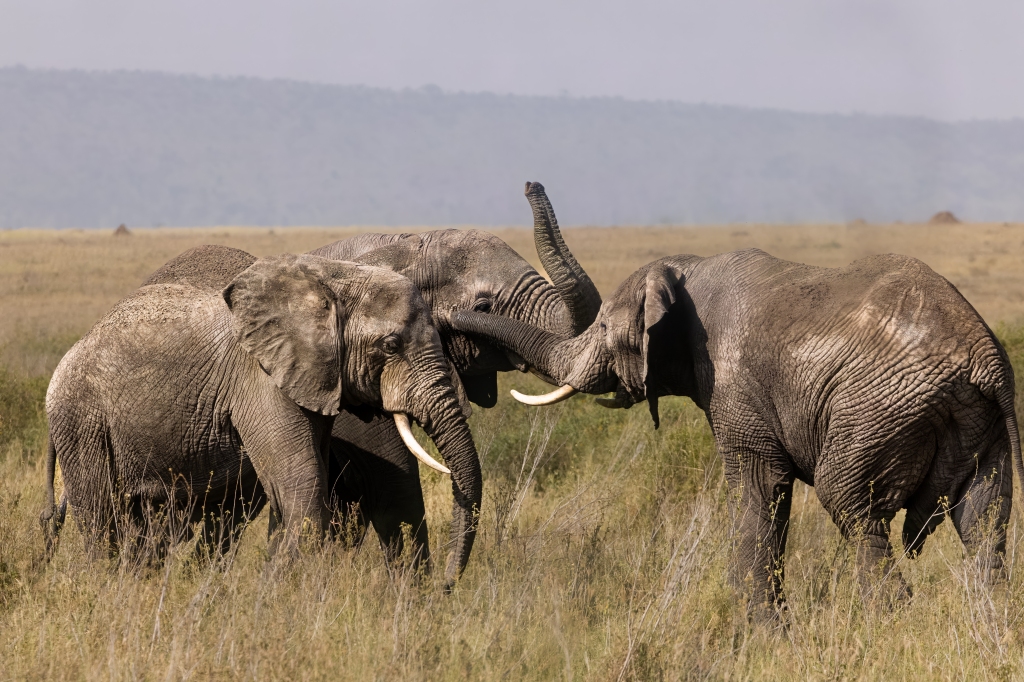
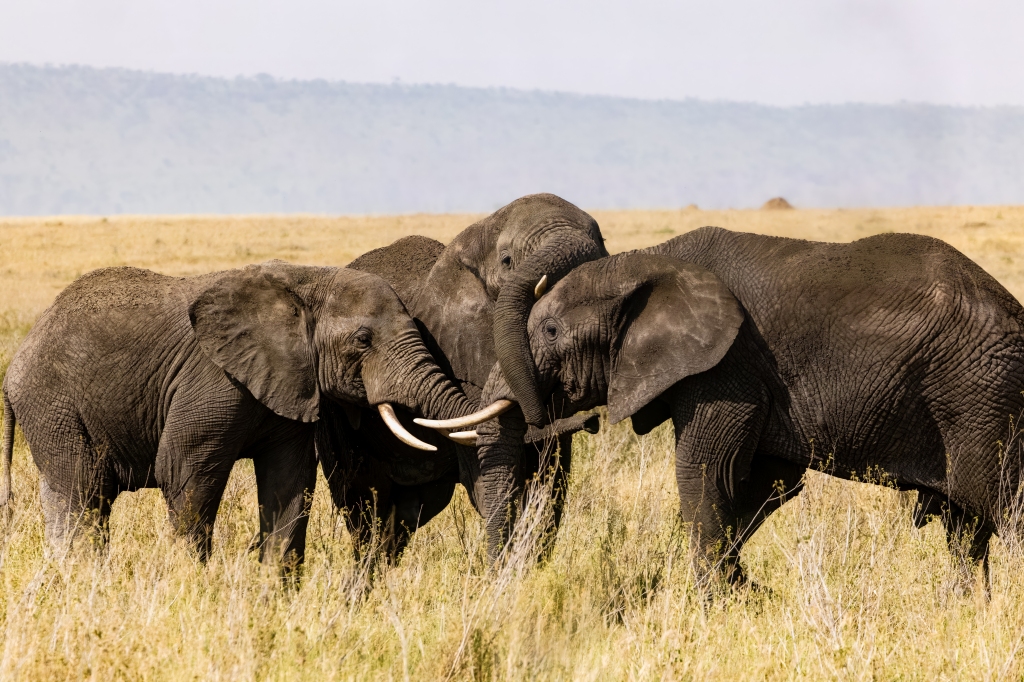
The second action sequence was even briefer than the hippo battle but involved even larger animals as two elephants pushed each other around for a few moments as we watched not sure what was at stake or what would happen next. Then a third elephant joined the fray. There was some trumpeting and movement, but it did not last long, and we wondered if it was a family feud or maybe some kind of family bonding. After a few moments the elephants moved off as if nothing had happened.
The Initial Face Off
A Third Elephant Enters
Was It a Family Feud or Family Bonding?
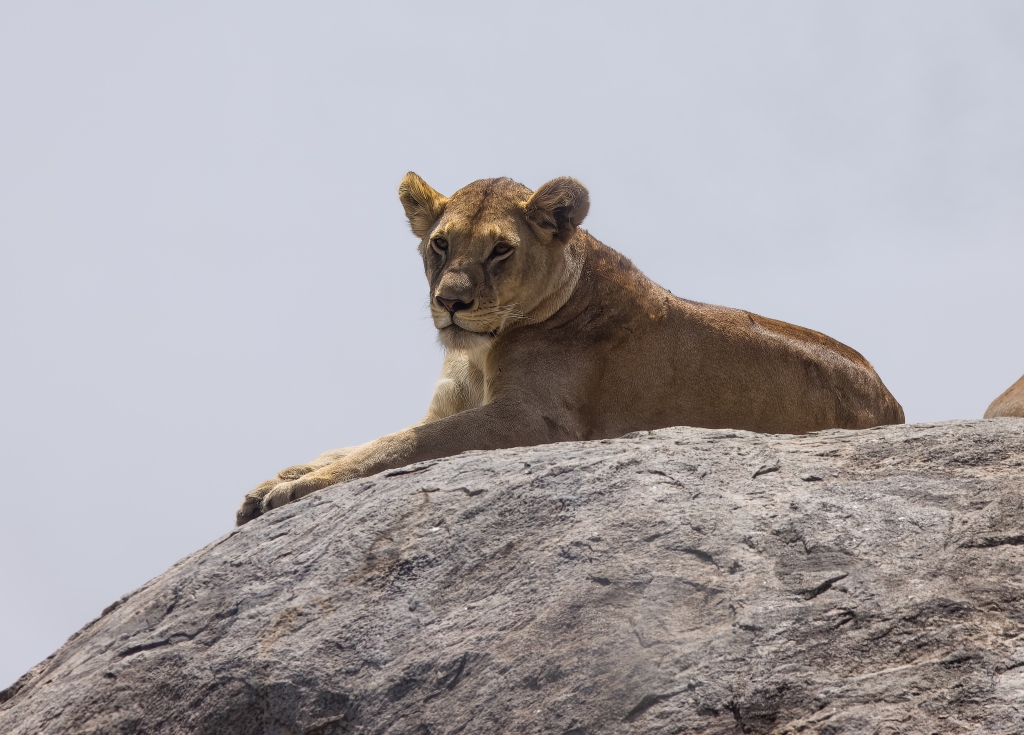
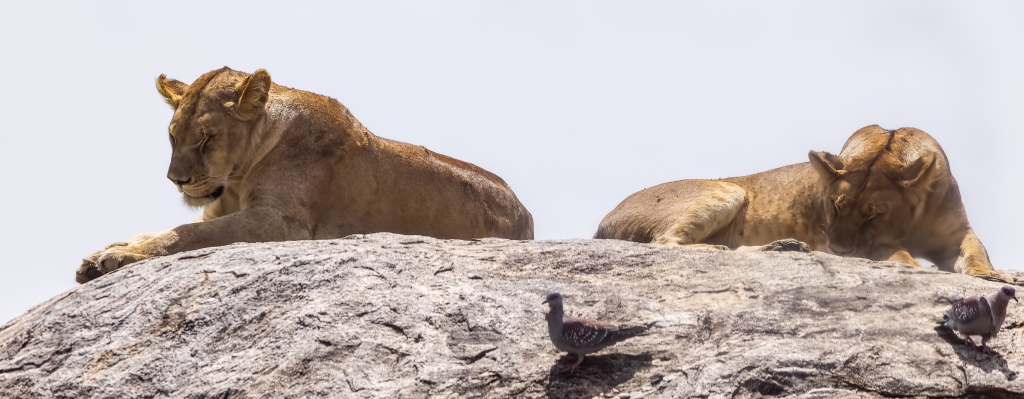
We continued to see lions on both of these days in the Serengeti and hoped for another leopard or our first cheetahs. It was not to be. Hard to be disappointed with “just more lions”, but we had been spoiled. We had been told that there were some lions in the park that were rock climbers – often settling on top of kopjes (pronounced “copies”) either for the warmth of the rocks or perhaps a better lookout spot. It was always a surprise to see a rock outcropping as the rest of the grasslands were incredibly flat with only the rocks, mostly acacia trees, termite mounds and animals rising above the flat land. We expected that lions might be atop rocks that were maybe 5 or possibly ten feet high. When we finally saw “rock lions”, they were on boulders that were at least 20 feet high and did not seem to have clear paths up. Of course, we only saw them from the front, but it still seemed an impressive feat.
This Lioness Rocks
I Guess Pigeons are not Lion Food
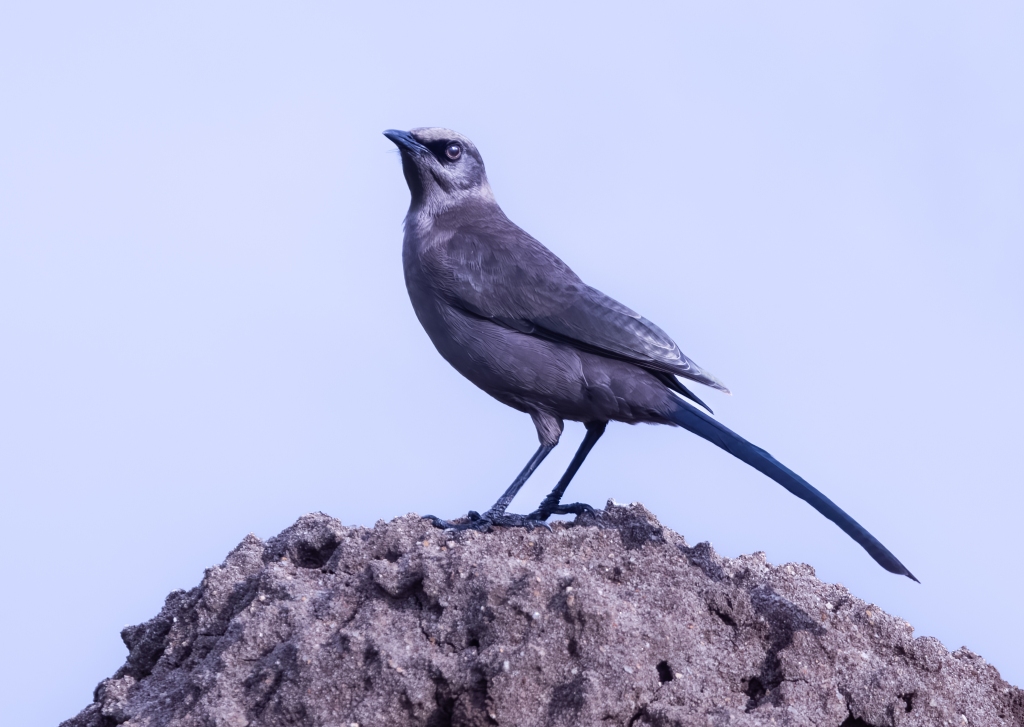
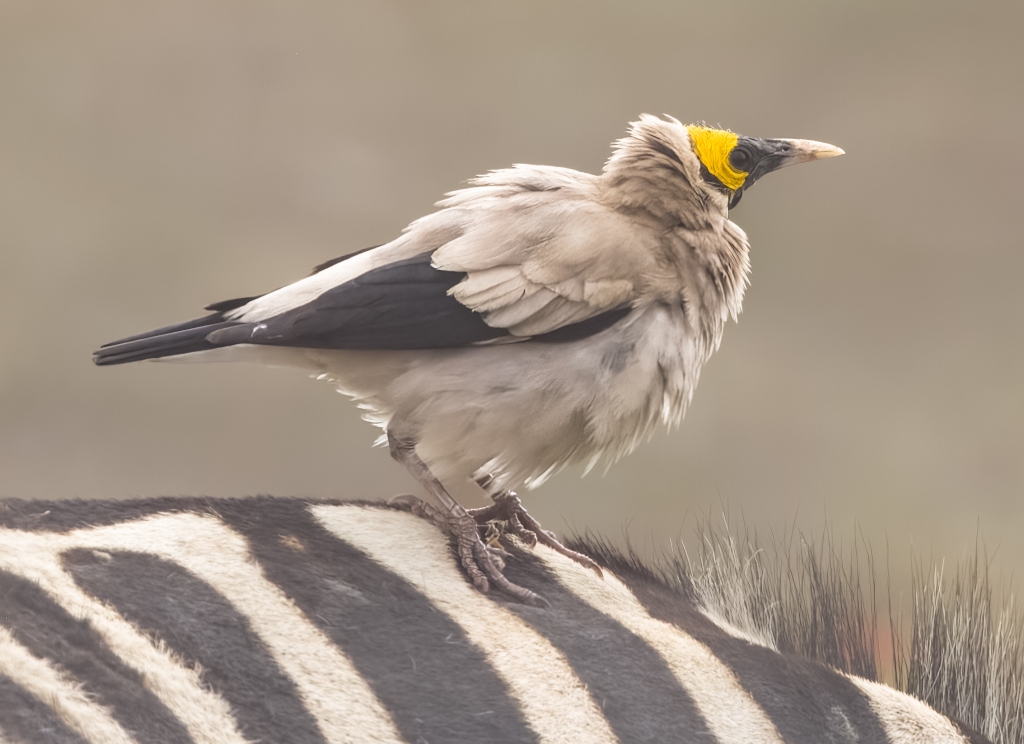
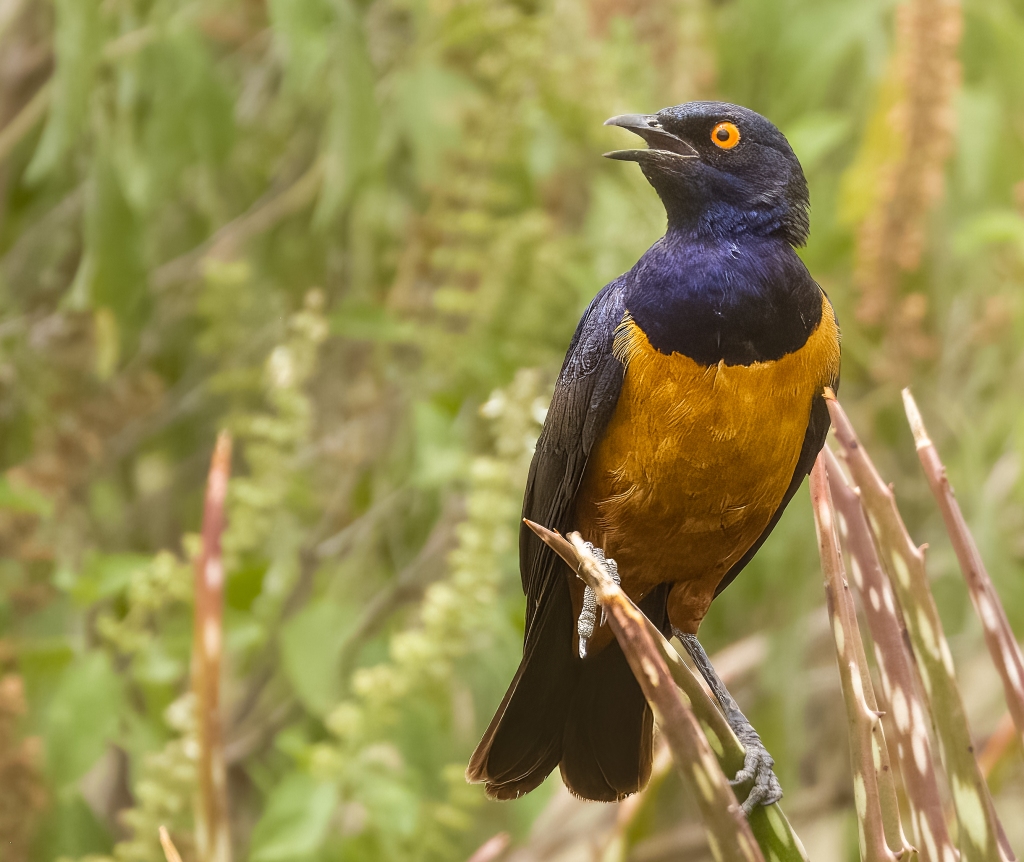
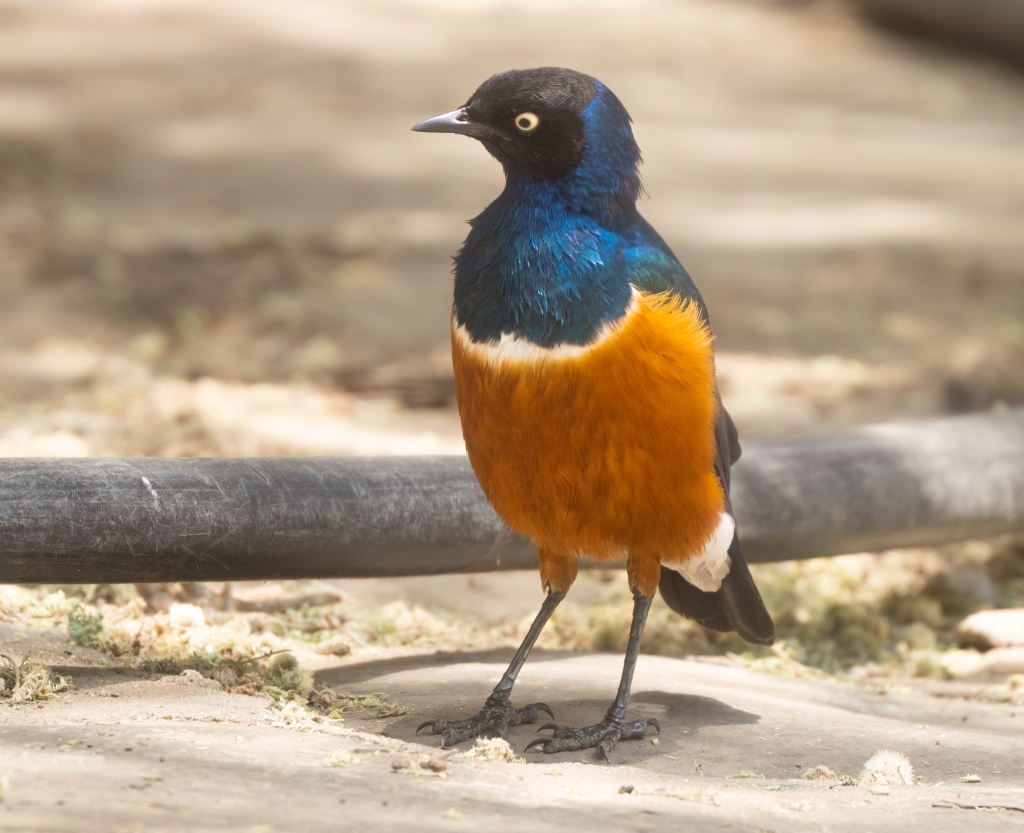
In the previous blog post, I promised a big section on shorebirds seen on the trip. Reviewing lists and photos, though, I see that while many were seen on these two days and previously, my lifers were seen later, so I am putting off that writing until later in this blog. Instead, however, I am including a section on starlings, a much-maligned species in the US where we only have the introduced European Starling that is found almost everywhere. It has its moments when its iridescence is in full color and in good light, but it is an otherwise dim cousin of the many striking and even beautiful starlings of Africa. We saw 8 species on this tour and I was able to get ok photos of them all. I have seen 8 other species of starling elsewhere and hope there will be more to come.
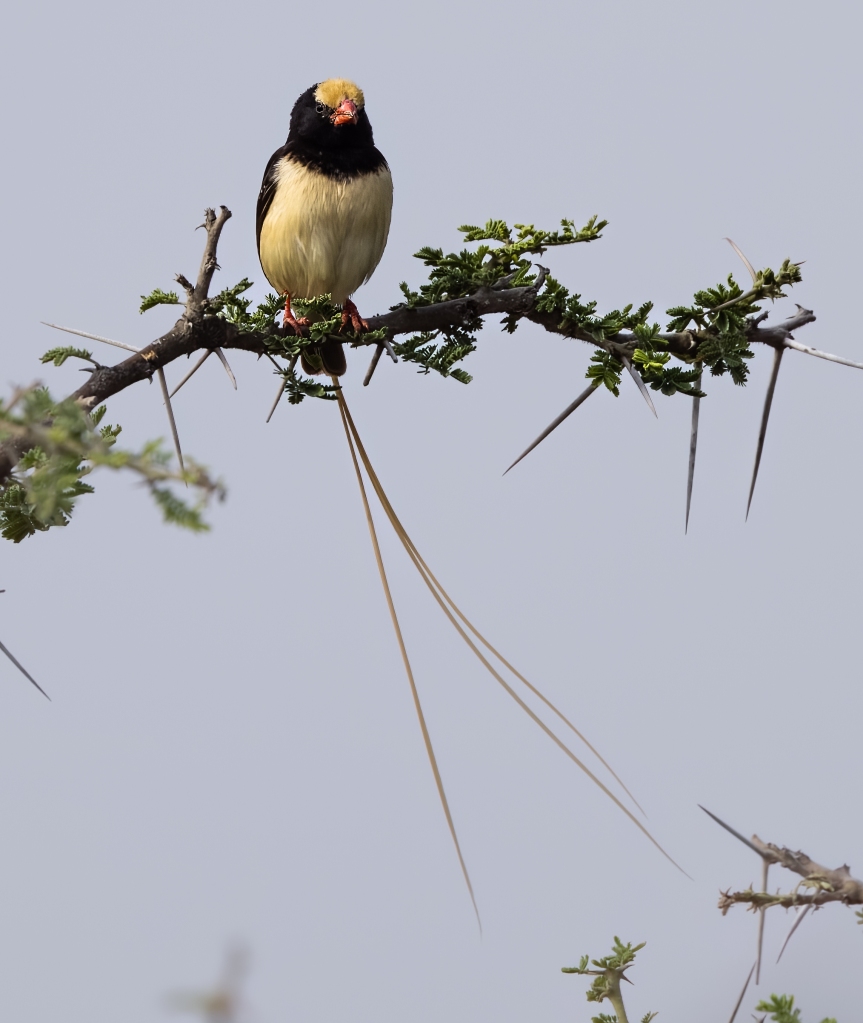
The late birding on the 21st added two lifers and some really cool birds. The lifers were Tanzanian Red Billed Hornbill and Straw Tailed Whydah. The hornbill had only relatively recently been split from Northern Red Billed Hornbill as a new species, and the Whydah in addition to be a very neat bird also completed the Whydah Grand Slam with the previously seen Steel Blue,Eastern Paradise, Pin Tailed Whydahs and the Village Indigobird. These other Whydahs were new for the trip if not my life list but were great additions.
Tanzanian Red Billed Hornbill – Lifer
Straw Tailed Whydah– Lifer
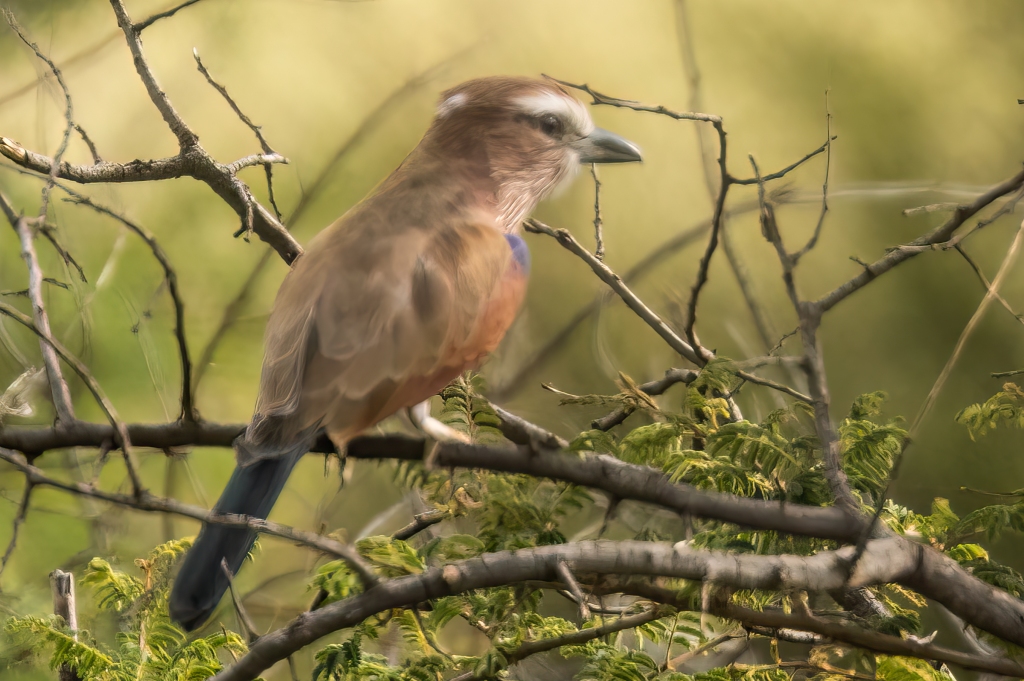
Rufous Crowned Roller
White Bellied Bustard
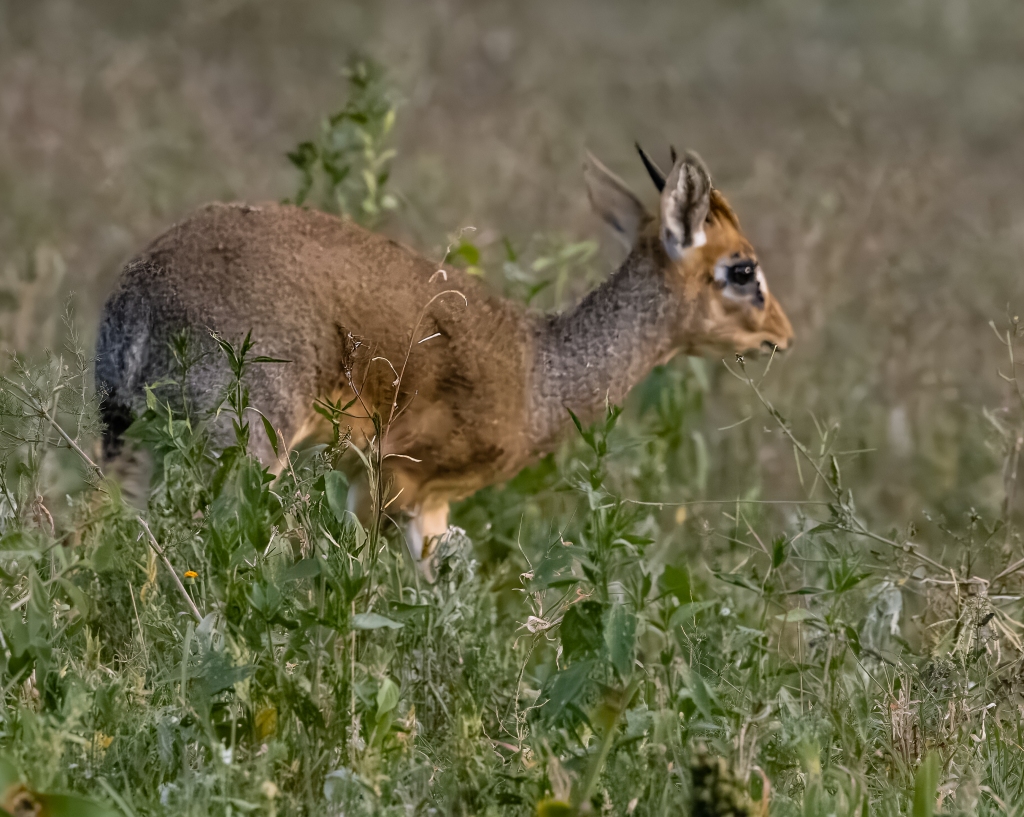
February 22(Day 8) would be a movement day leaving Kubu Kubu and ending up at Ndutu and the Southeastern Serengeti. Birding started again within the Central Serengeti later moving to the Ndutu area with over 100 species for the day – 25 new for the trip bringing us well over 300 species for the tour and I would add another 7 lifers. This was one of the days where there was no official Ebird lists so I lumped everything together on an eight-hour list of my own and I really cannot separate the list into parts of the areas we visited. I am not going to try to be specific and will just cover all the birding for that day – skipping over many of the mammals seen again – except for the Dik Dik, the third smallest of the African antelopes, which greeted us in the morning at Kubu Kubu. Weighing under 10 pounds, they are solitary grazers that are monogamous (rare for antelopes) and are decidedly “cute”.
Dik Dik
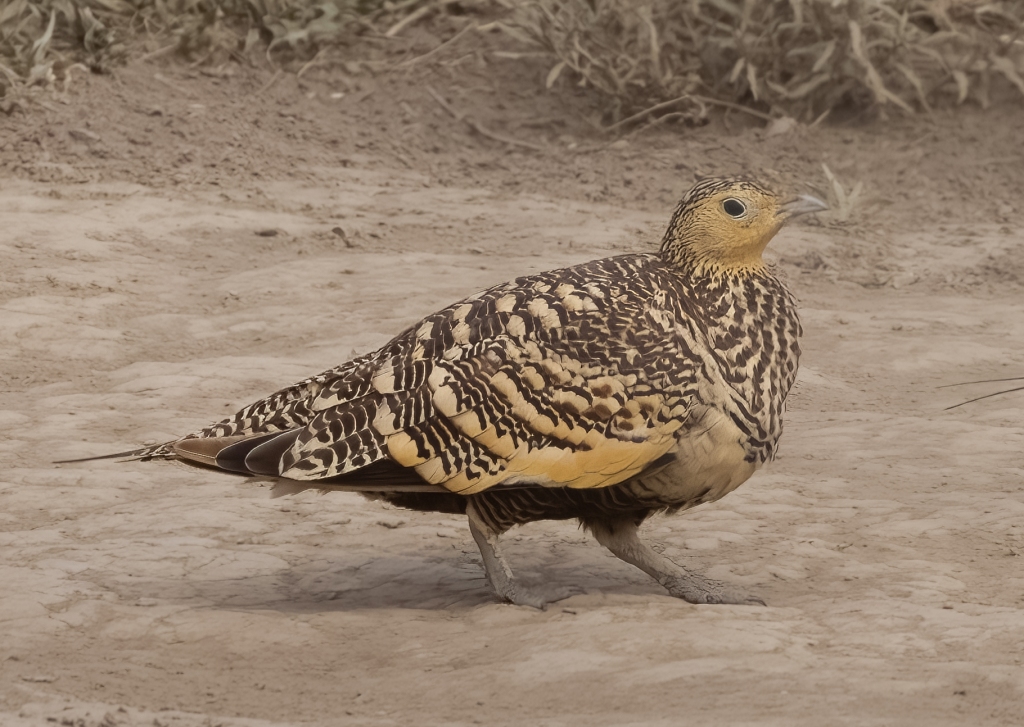
In no sequential time order here, I am going with some of the great birds, starting with two species of francolin and two species of sandgrouse that we saw, one of each of which were lifers for me. I was particularly keen to see and photograph the sandgrouse. Sandgrouse are visually like a cross between a dove and a grouse. I had seen one of the species, the Chestnut Bellied Sandgrouse in Hawaii during my 50/50/50 project (where like most birds on the islands, it is an introduced species), but had not gotten a photo. How much better to see and photograph it on its native turf. The other sandgrouse was the Yellow Throated Sandgrouse – and a third species, Black Throated Sandgrouse, would be added later in the trip.
Chestnut Bellied Sandgrouse -Life Photo
Yellow Throated Sandgrouse – Lifer
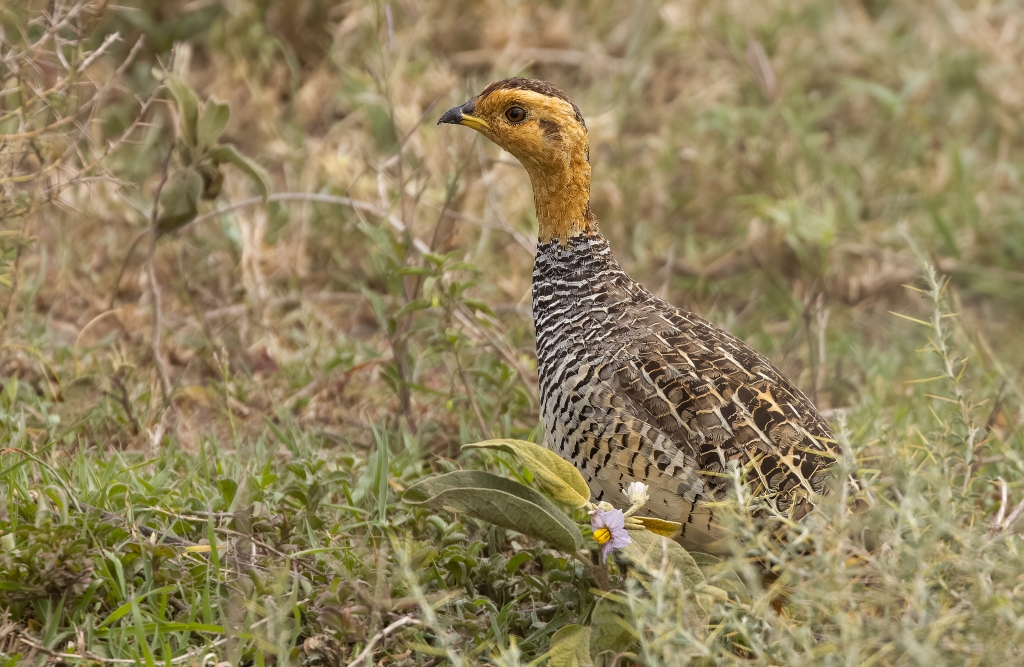
The lifer francolin was the Coqui Francolin, one of 9 gallinaceous birds (francolins, quail, spurfowl and guineafowl) seen on the trip. The Coqui is smaller than the Crested Francolin (the other francolin seen that day) and the male is easily distinguished by its golden/rufous head. Altogether I have seen 16 species of gallinaceous birds in Africa with most seen on the side of roads as we drove through various habitats. On the roads they jump out, but in the grass, they are well camouflaged and can be nearly invisible.
Coqui Francolin – Lifer
Crested Francolin- Also Seen in Kenya
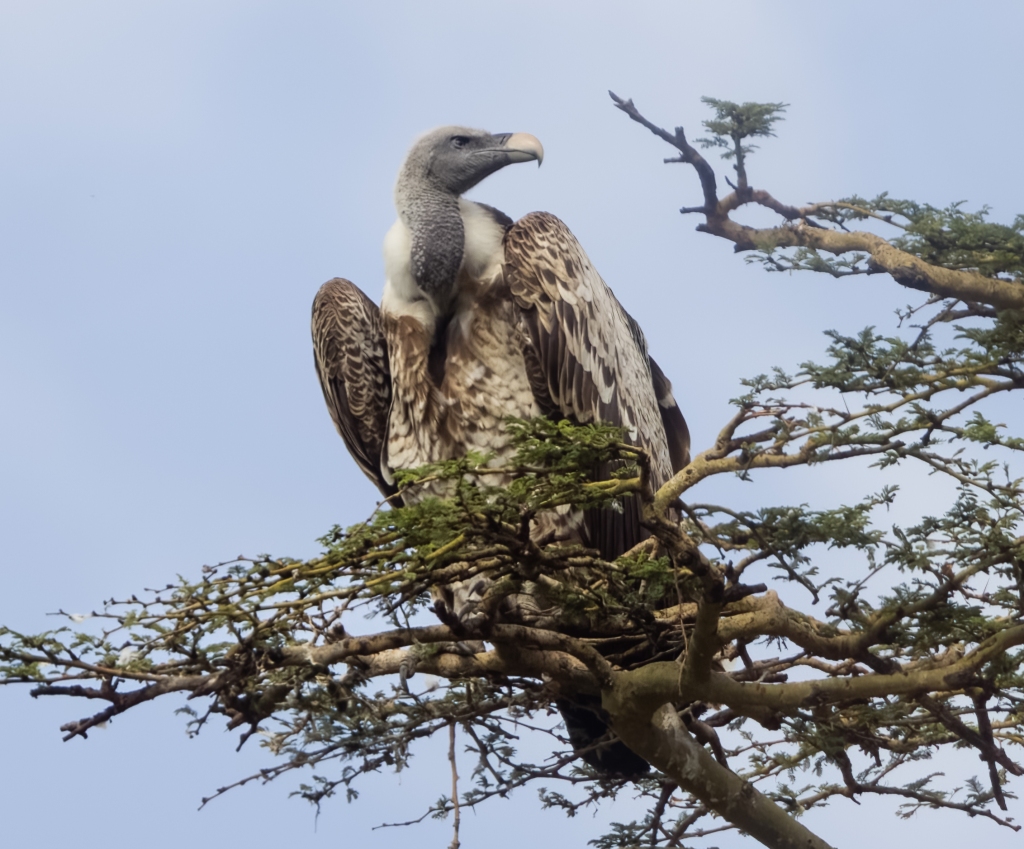
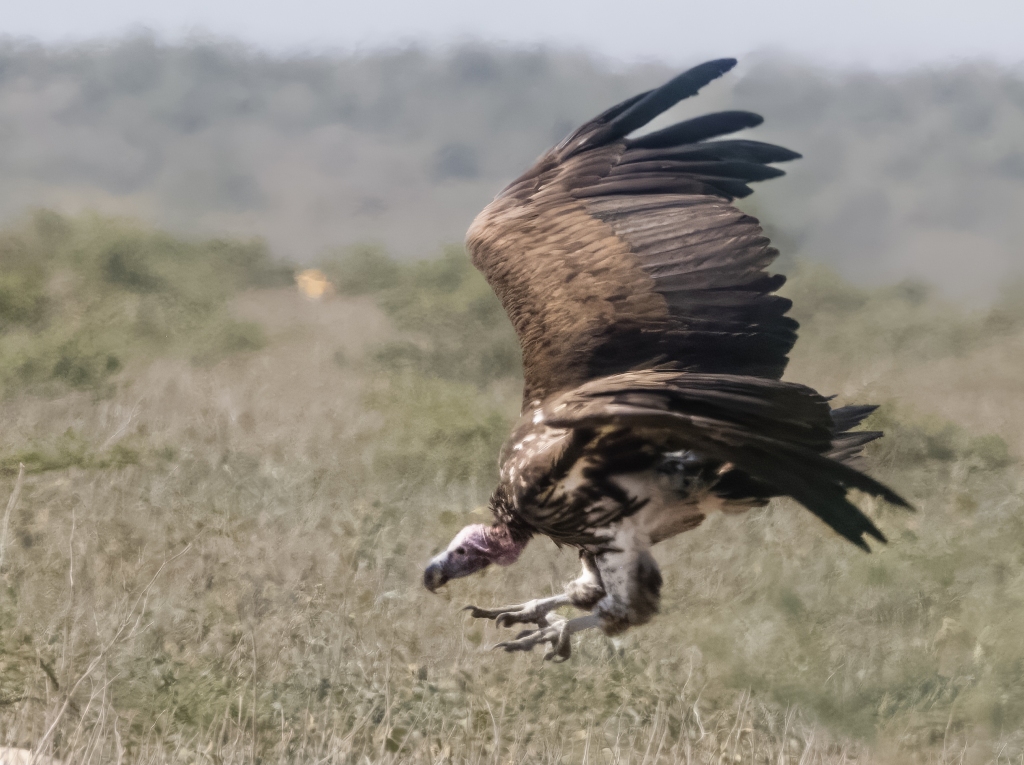
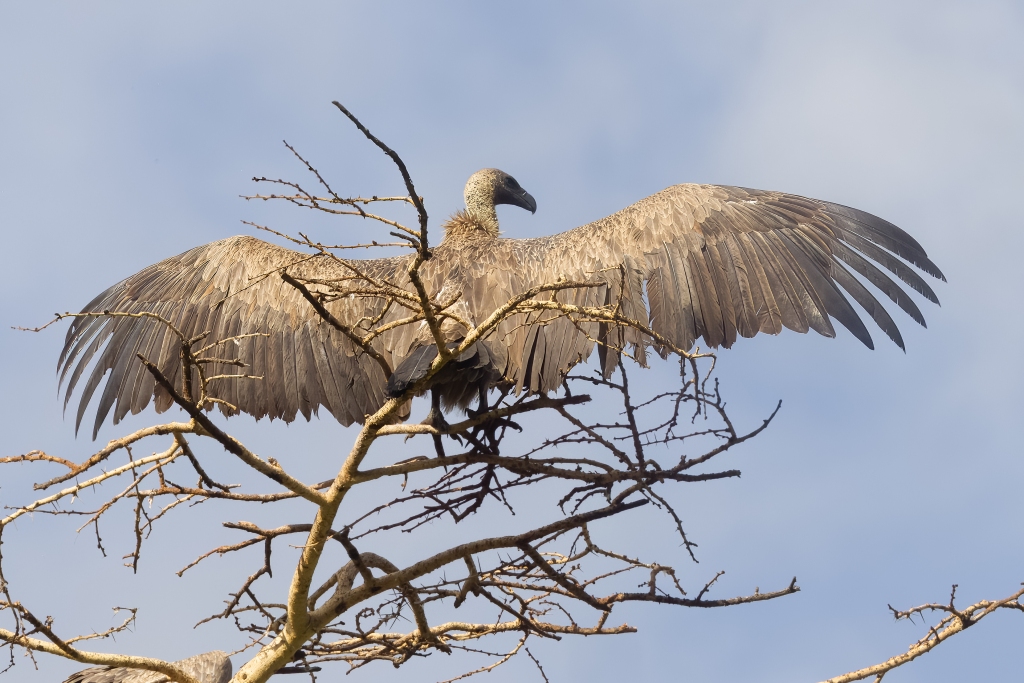
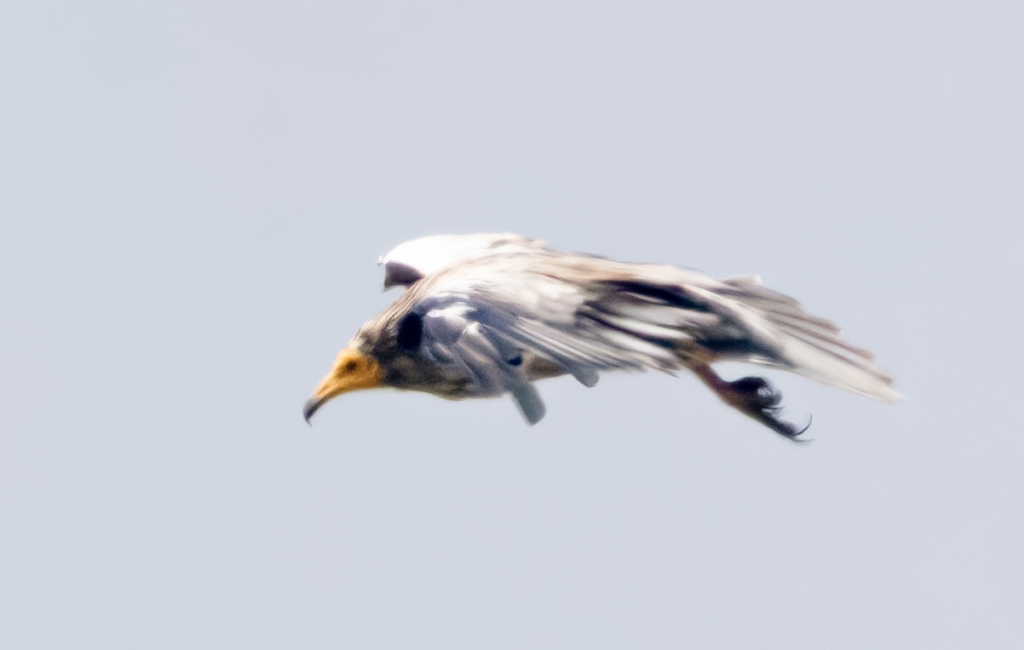
I mentioned earlier that vulture populations or at least their presence seemed to be much lower than expected. This was maybe the best day for seeing them, as we had a small group at a rotting carcass, some perched and many soaring in the air. On my previous visits to Africa there had been at least one scene where dozens of vultures were scavenging a carcass – a raucous and gory scene. On our trip we had six species of vulture, missing only the Palm Nut Vulture from my Africa list (seen in Kenya) but they were often distant or soaring high in bad light. The pictures below are from a number of different sightings/locations. I was not able to get photos of Hooded or White-Headed Vultures.
Ruppell’s Griffon
Lappet Faced Vulture
White Backed Vulture
Egyptian Vulture
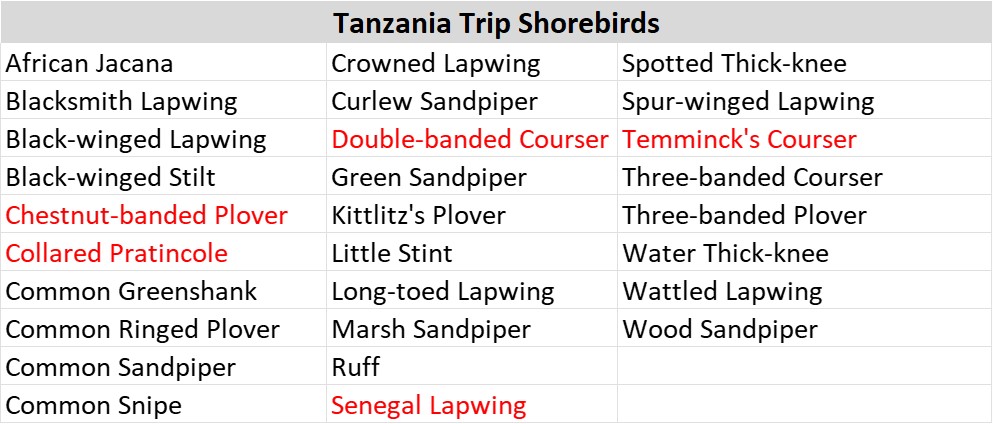
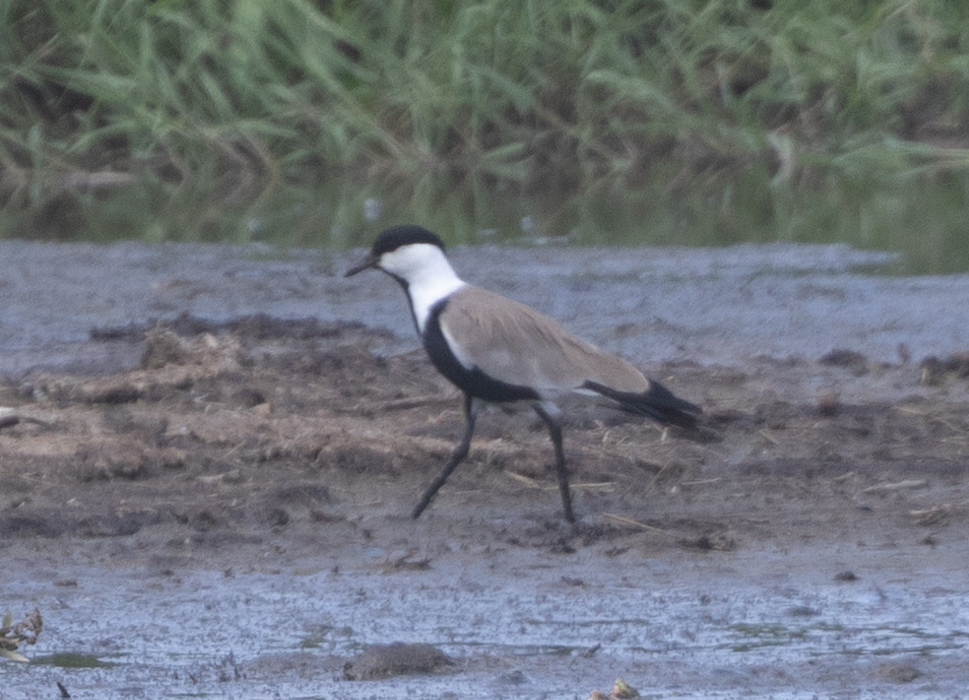
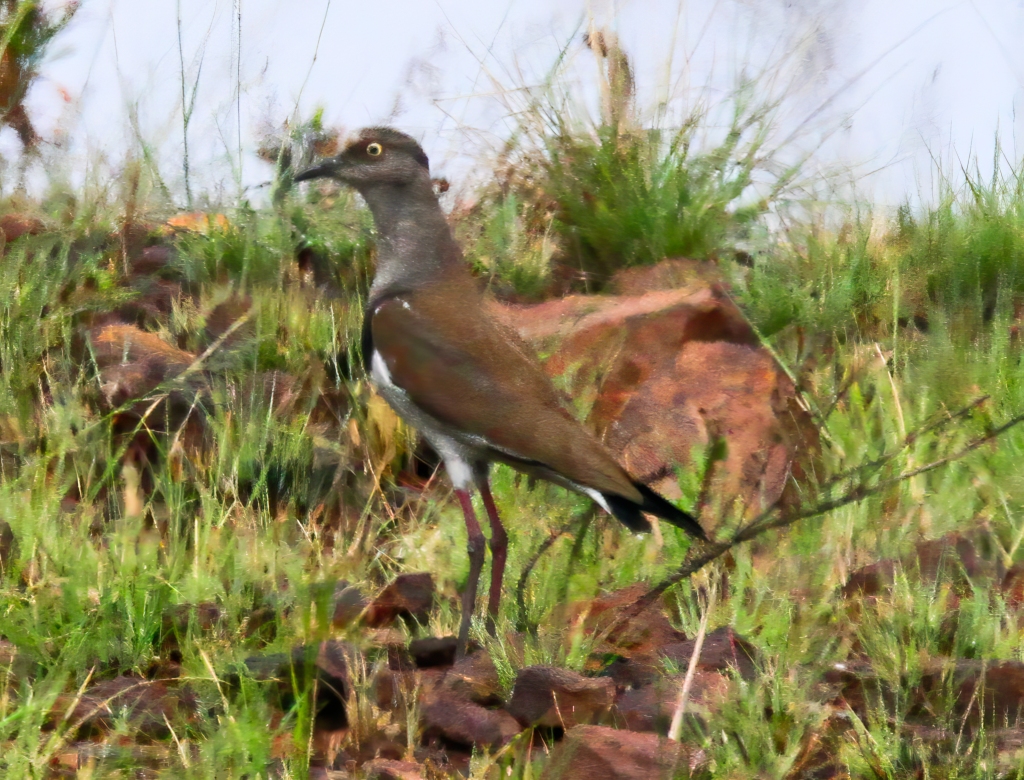
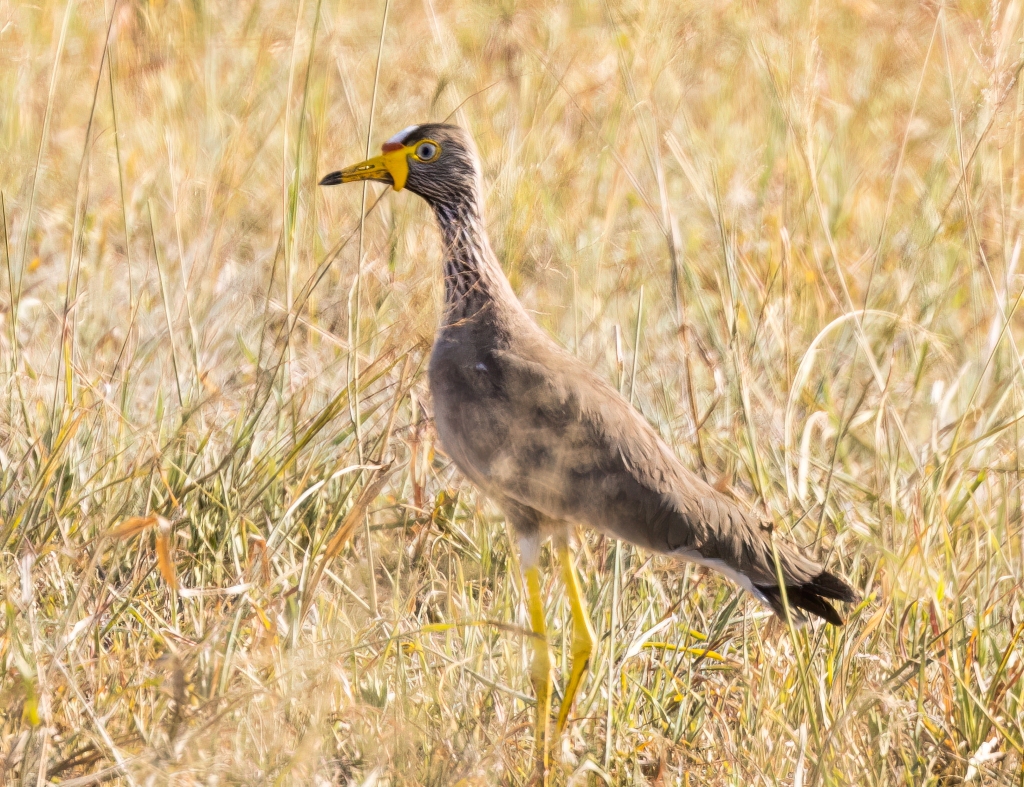
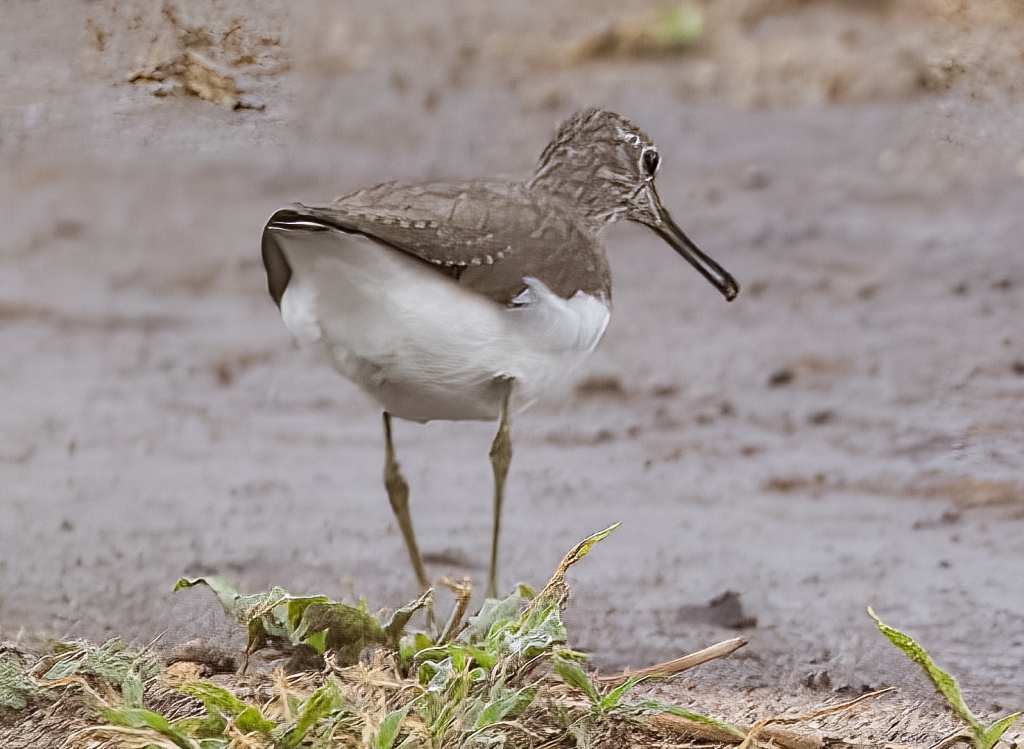
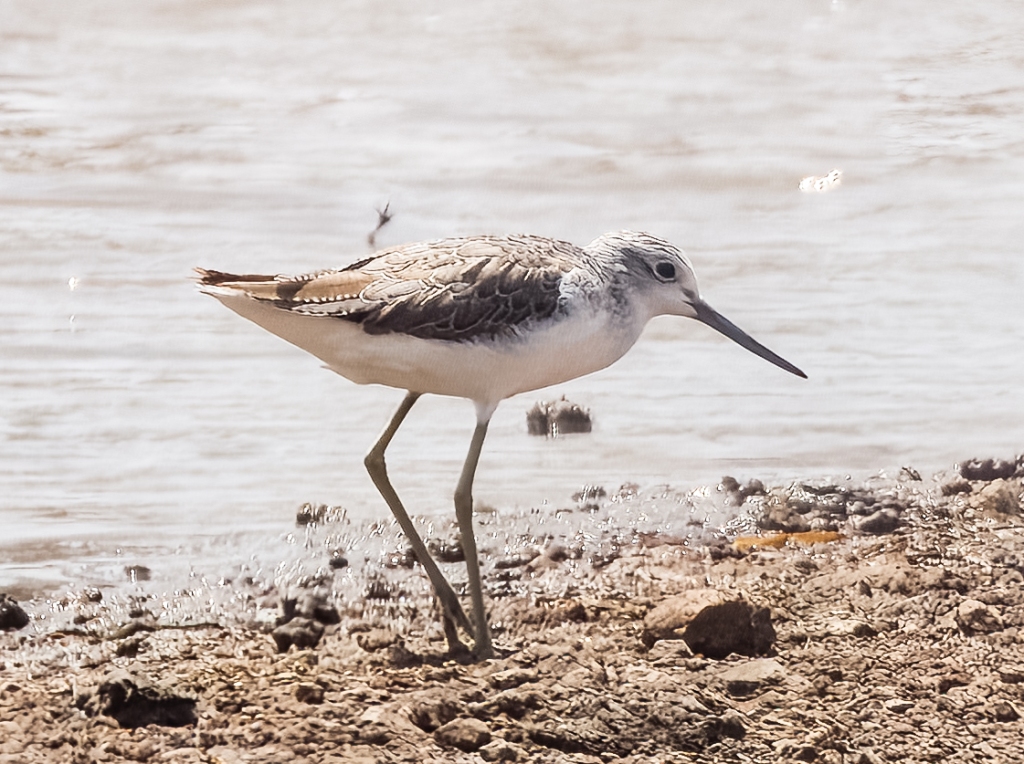
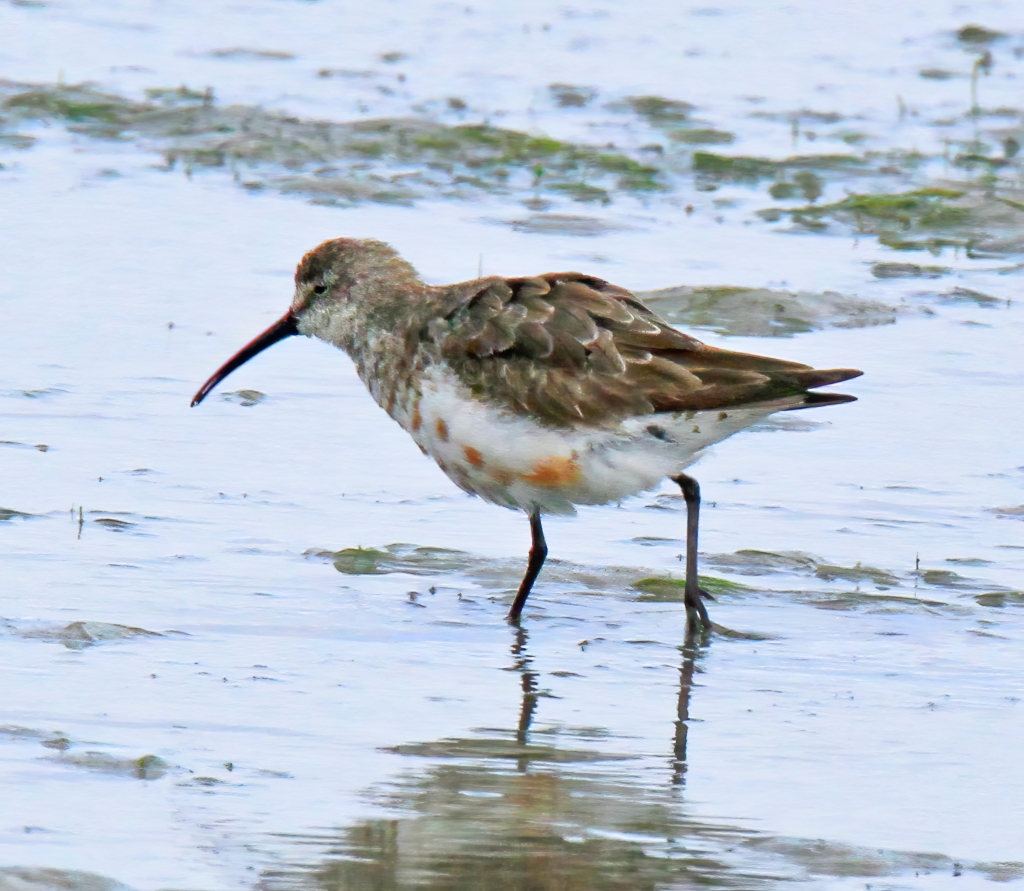
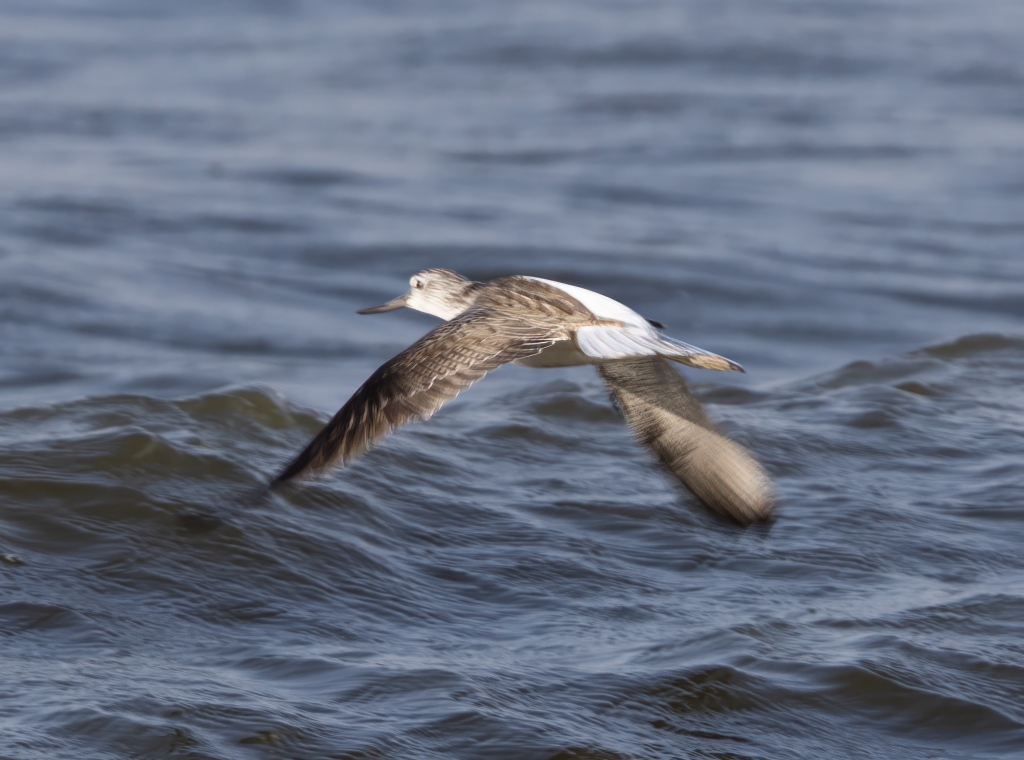
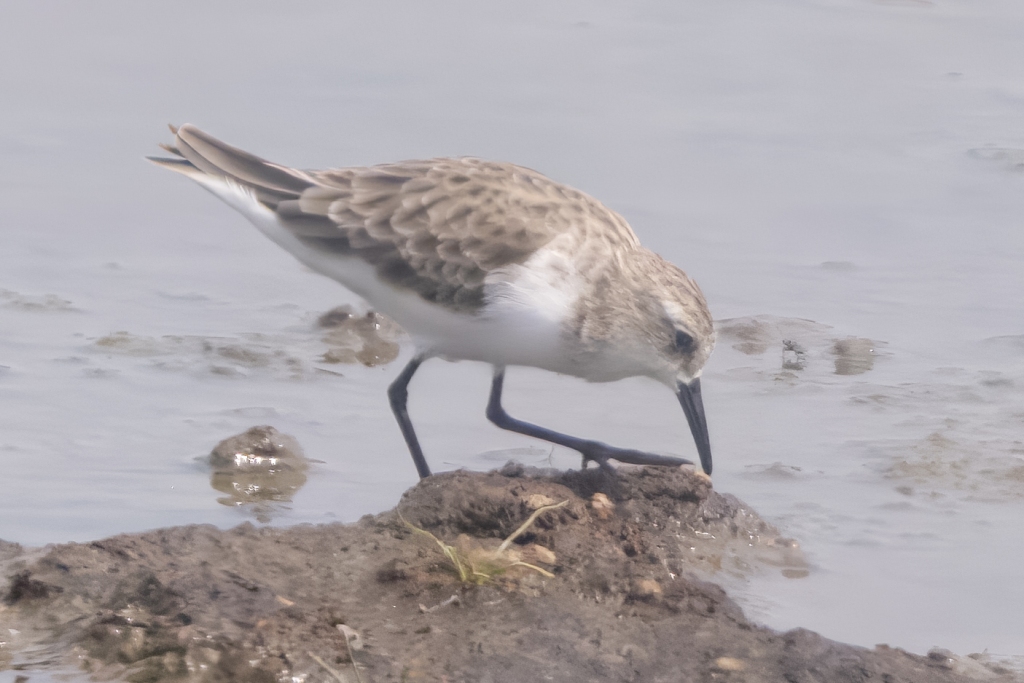
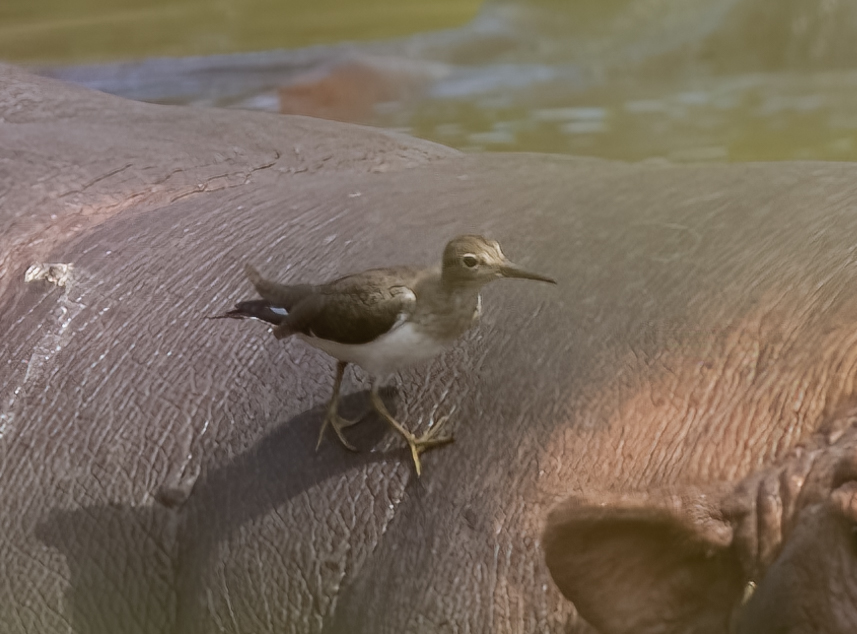
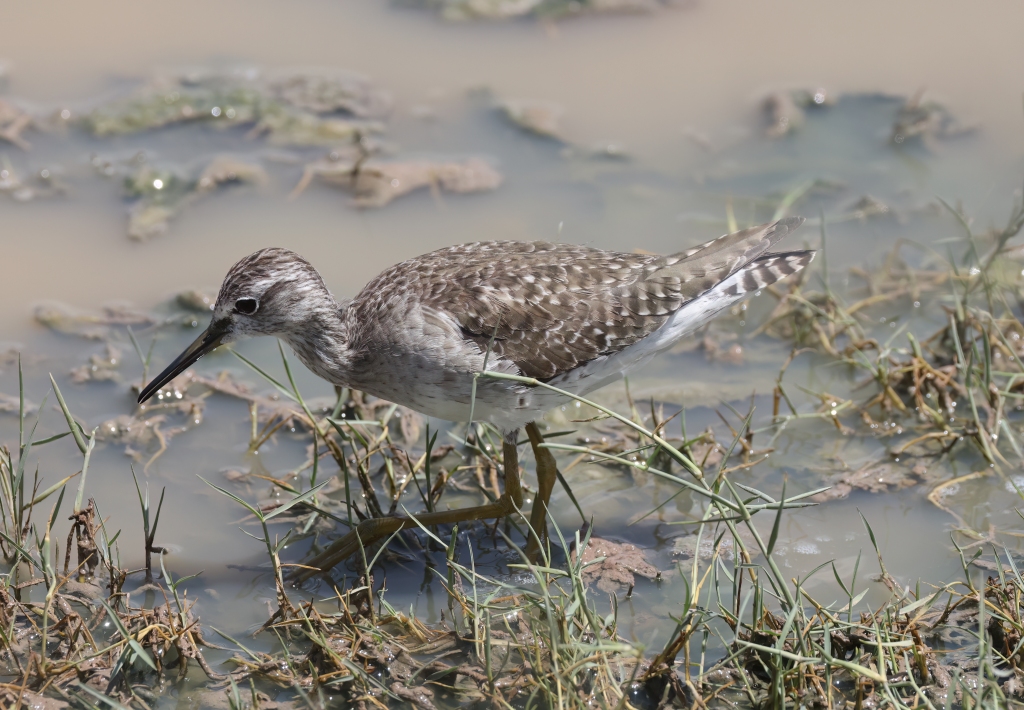
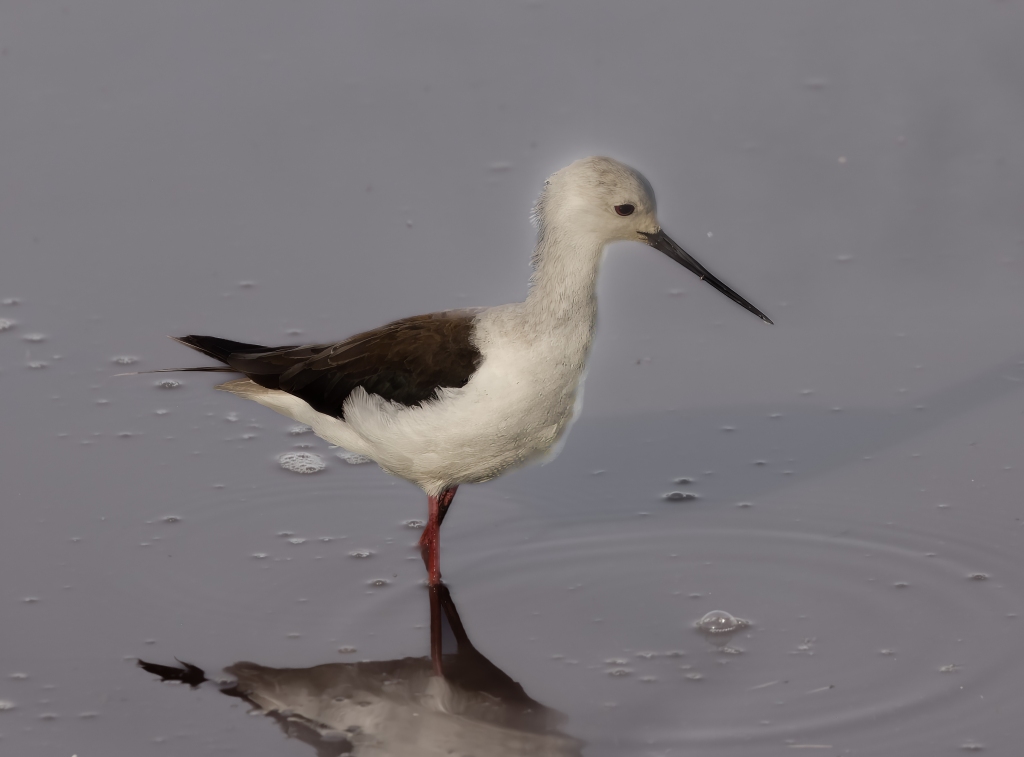
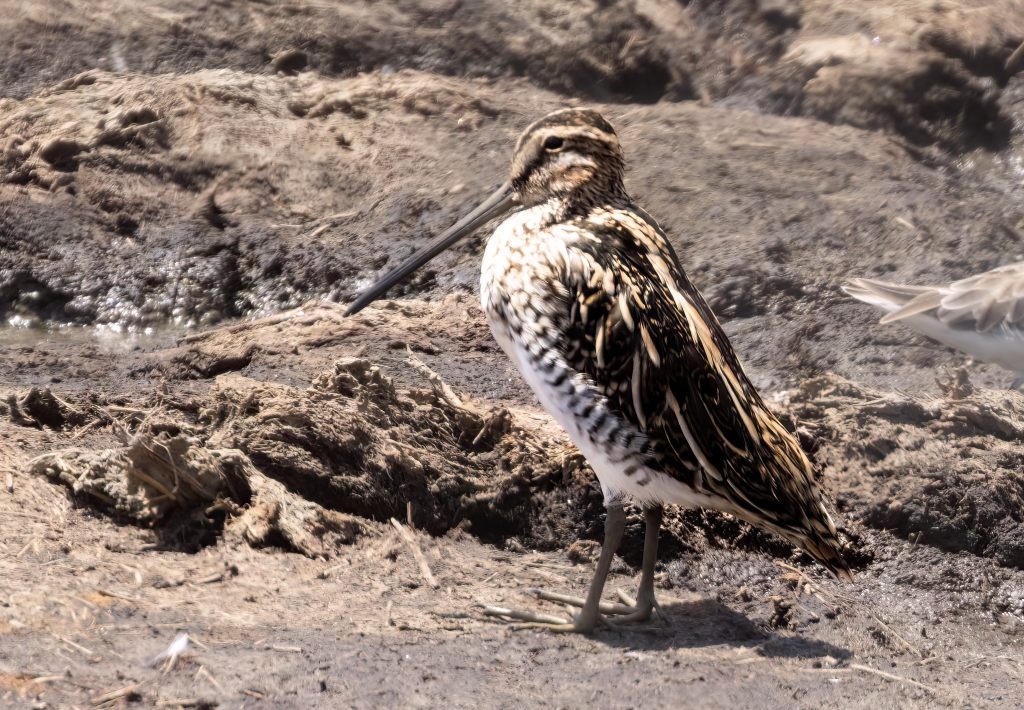
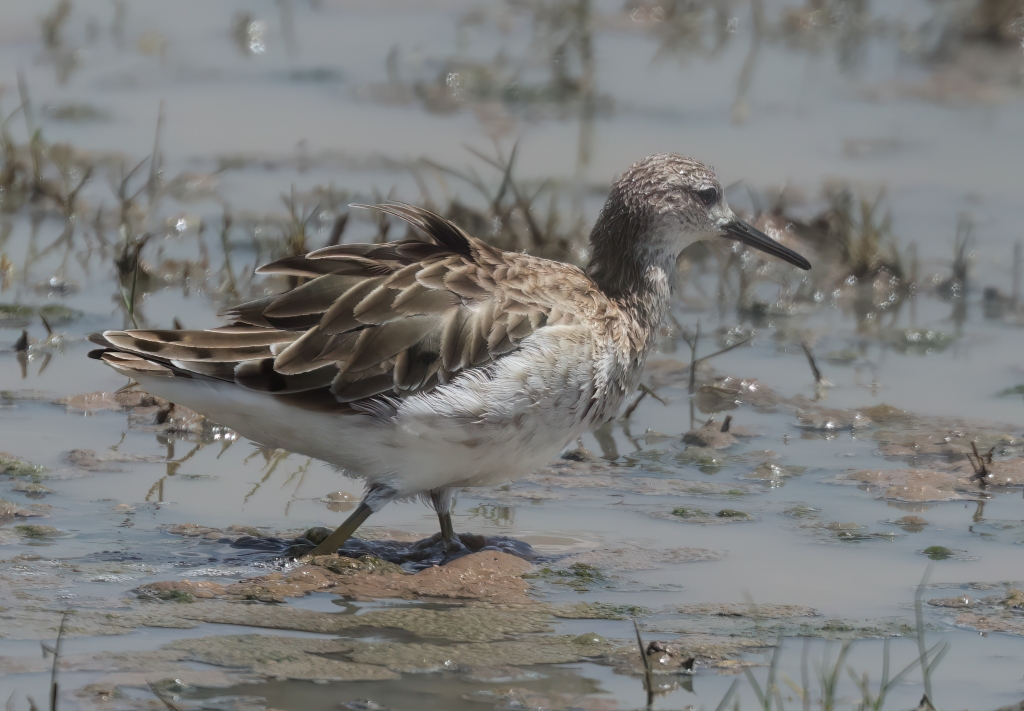
As was often the case, dry savannah was intermixed with water holes or riverine areas or ponds so there was the chance to see shorebirds and other water-oriented species. OK, here it is the afore-promised collection of shorebirds. Twenty-eight species seen – 5 lifers in RED.
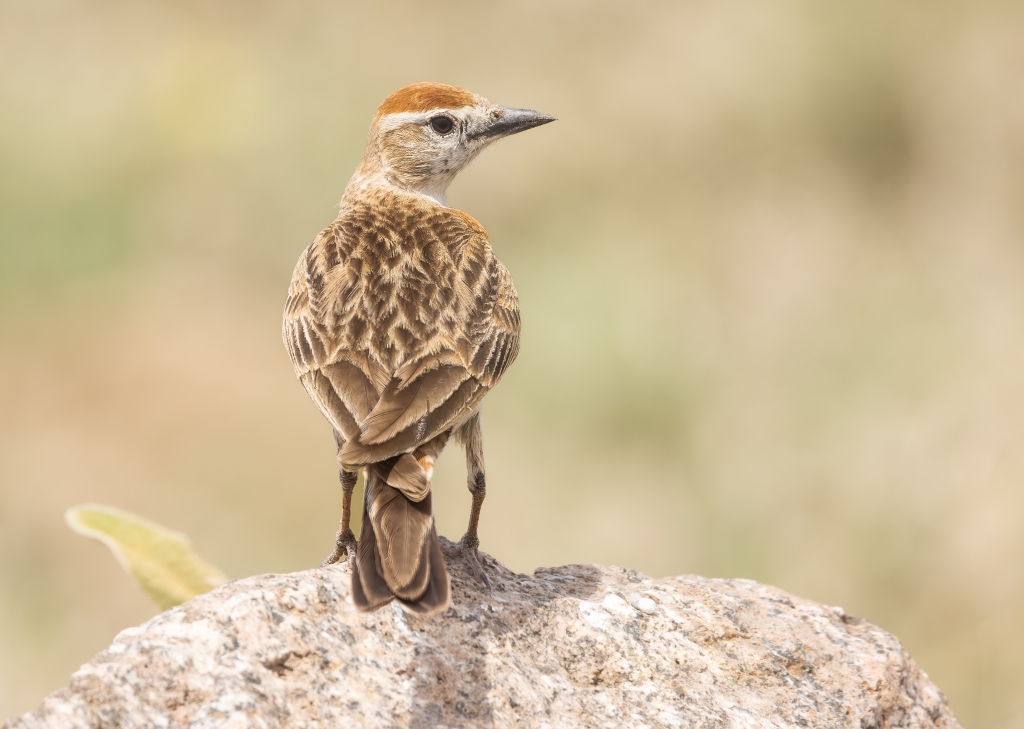
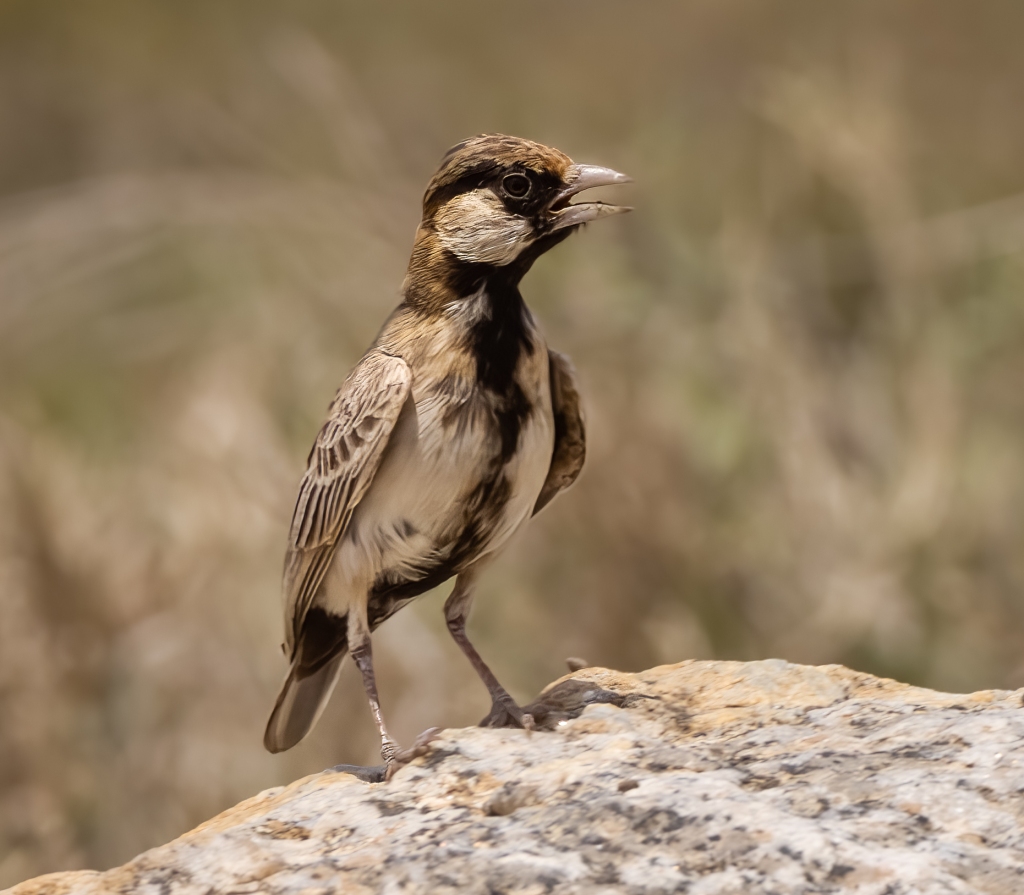
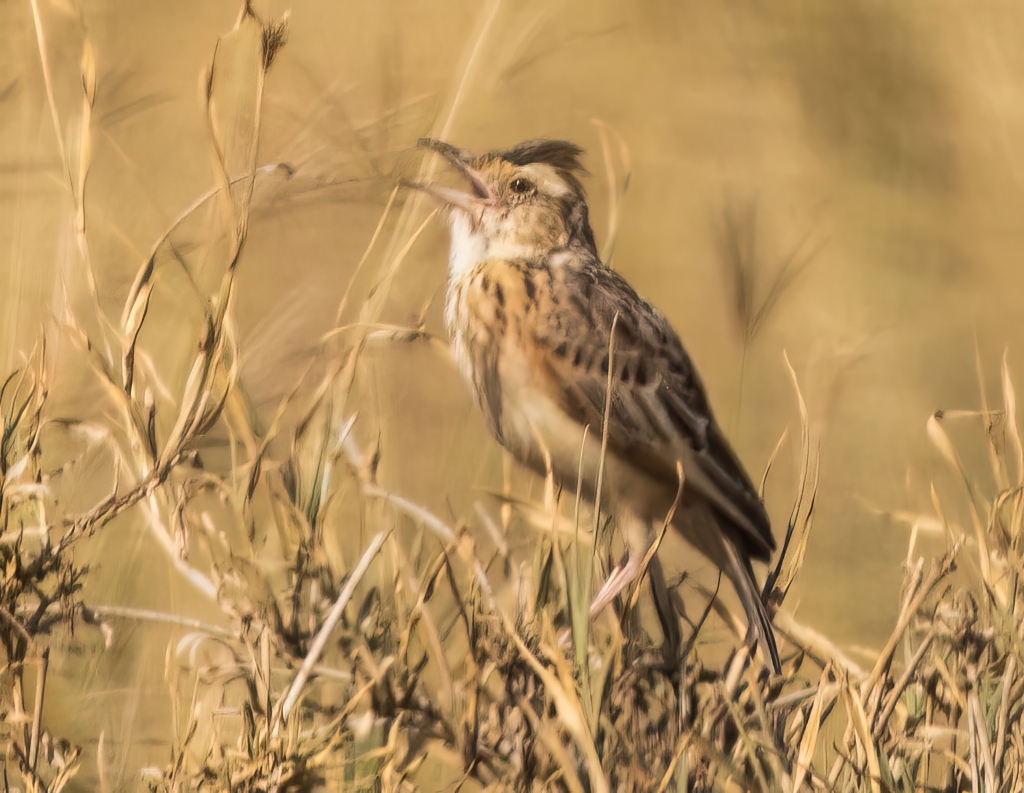
In the afternoon, we were in drier country and started seeing larks. By far the greatest number were Fischer’s Sparrow Larks, but we also had both Red-Naped and Red-Capped Larks. I got photos of these three species and would later add Short-Tailed Lark. If I had been the only person in the vehicle, I may have gotten photos of Fawn-Colored and Flappet Larks earlier but it was just too hard to stop the vehicle in time to get photos of birds that were both hard to see and also usually on the run. Later in the trip I would also miss a photo of a White Tailed Lark but at least I got a good view as it scurried off.
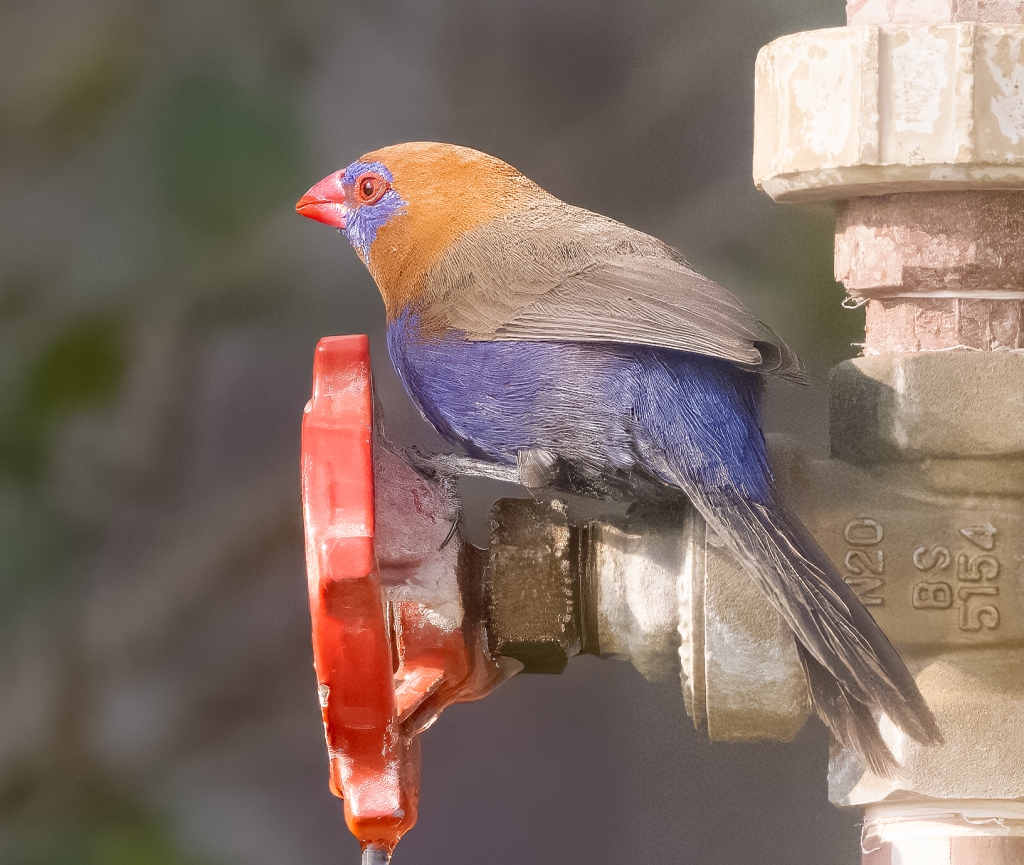
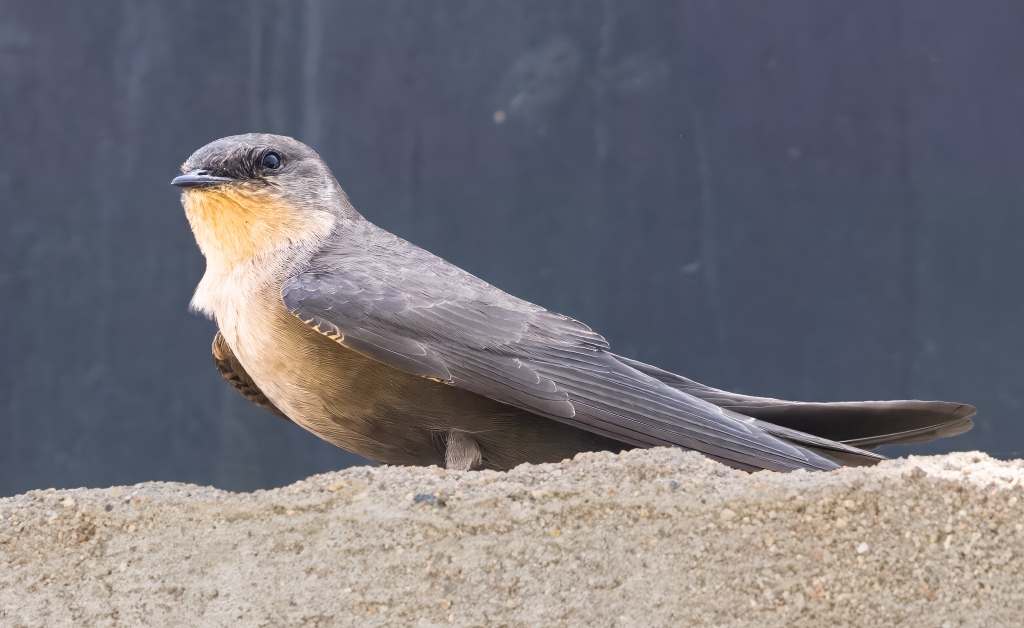
To close out this blog post I am adding some miscellaneous species that were seen this day and at other times as well.
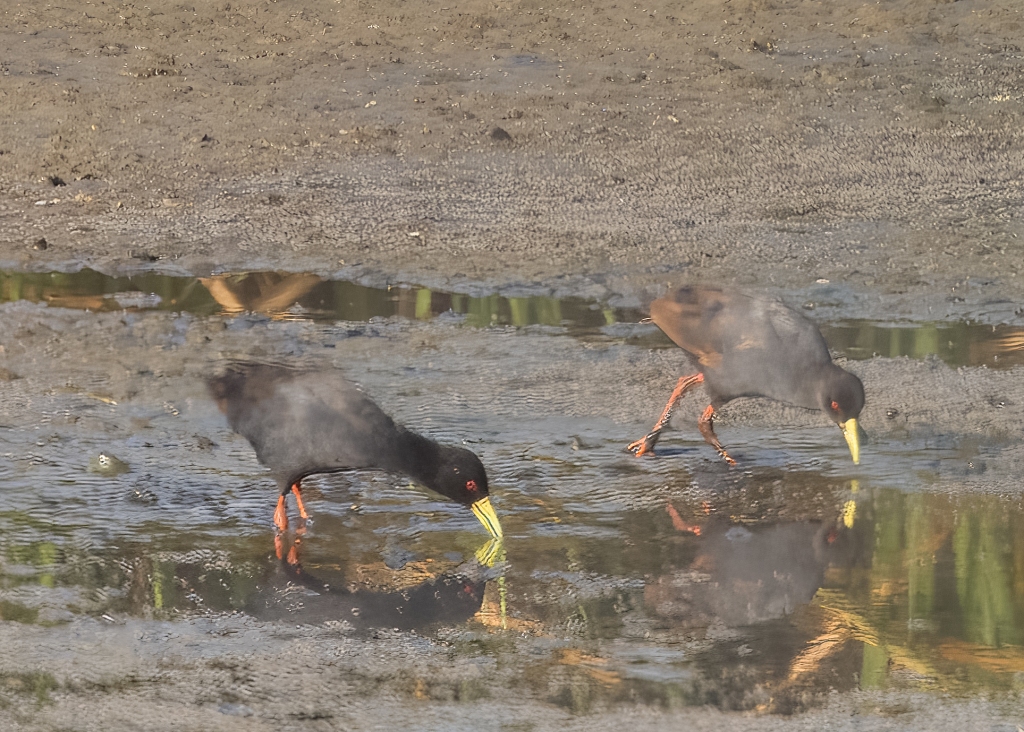
Black Crakes
Pied Cuckoo
Purple Grenadier
Rock Martin
It has been another great day and we now left the Central Serengeti and would spend time in the Ndutu area with nights at Ndutu Lodge. Although we would not see the massive migration hoped for due to he late arriving rains, this would be the area where we saw it beginning and hopefully predators would follow prey.
This is how Kubu Kubu Tented Lodge was described in the VENT materials for our Northern Tanzania Tour: “our luxurious home for the next three nights…Situated on a hilltop overlooking the vast plains of the central Serengeti this recently opened (Summer 2016) luxury tented camp is a delightful base of operations for our time in the Serengeti. The tents are incredibly spacious and well-appointed and are placed on permanent platforms, each with its own private balcony. In-suite, private bathrooms feature open air showers with abundant hot water (dubbed “the world’s best shower” by more than one participant) and flush toilets, and the entire camp is solar powered, with backup generators providing 24-hour electricity. The camp is full board (including all drinks), and WI-FI is available in the central area.” Right on all accounts, with my only slight challenge being why the accommodations were called tents as they in no way resembled my picture of such. The walls were so sturdy and solid that I would have considered them buildings – and that is not a complaint. The showers – one outside (private adjoining our indoor bathroom) and one inside really were awesome. The water was solar heated, plentiful and very forceful. There was a beautiful pool – of no interest – and a fine main lodge with good food and a good bar. Best of all the people were terrific.
Some photos of Kubu Kubu – hardly roughing it.
The BedroomOur “Tent”View at Dawn
View from the Balconyof Our Tent
Our View from the Main Building Balcony at Kubu Kubu
Definitely Not Roughing it at Kubu Kubu
Cindy and Priscilla at Kubu Kubu – She Made Our Stay Even Better
Our “Tent” Was the First One on the Left – Blair Carrying a Lunch for the Road
Kubu Kubu was another place where we had to be escorted to and from our rooms at dawn and after dusk. Our escorts were local Masai tribesmen dressed in their beautiful red Shuka cloths and their beaded necklaces and bracelets and always accompanied by an iron rod/spear just in case the hyenas or lions (which we could hear at night) were on the prowl. Cindy asked one of her protectors if he had ever used his spear. “Why yes…on both lions and hyenas.” This is a good place to interject how much we were enamored with everyone we met in Tanzania. Incredibly friendly and always with a smile. It always seemed genuine and always welcoming. The standard greeting every time you pass someone was “Jambo”, Swahili for “hello” but there was so much more to it as it was always followed by “How are you?” (Habari) and it was often more than a platitude. Not too long after our arrival we found ourselves using these same words every time and we usually got a response of at least “very good” or even “wonderful”.
Our Masai Escorts/Protectors
On Monday February 20th, our actual Day 6, we started the morning with breakfast and then birded around the lodge until 8:30 a.m. We had 27 species including many new for the trip (Note once again that the Ebird lists did not always correspond to bird lists reviewed at night, but it all came out right in the end). The following is just a sampling of birds that morning.
Afterwards, we loaded up onto the safari vehicles and drove the Kubu Kubu entrance road to the park. It was excellent birding with 39 species of which 8 were new for the trip and a Greater Kestrel which was a lifer for me.
Greater Kestrel (Lifer)
Swahili Sparrow – Lifer
It was 9:30 a.m. and we were now in the park where we would bird and animal gaze for the next 3+ hours before lunch on the road in the Seronera area. Of our 61 bird species, half were new for the trip and 8 were lifers for me getting me within two of my self-important target of 3000 species in the world. Photos of 6 of those lifers are below.
Fischer’s LovebirdGray KestrelHildebrandt’s StarlingSteel Blue WhydahYellow Billed OxpeckerRed Throated Tit
I did not include a photo of one of the lifers that was really high on my list both to see and hopefully to get a good photo. That is the Collared Pratincole which is a shorebird but looks something like a swallow. We saw them several times during the trip – always next to water and always pretty distant and in poor light. So I got some photos, but all were disappointing as it is a really cool looking bird. I have added an internet photo that really shows it off to my own rather poor one.
Collared Pratincole – My PhotoA Better Photo from the Internet
There would be more birds later in the day and there were always lots of mammals – more views of species previously seen, but everyone was a wonderful experience – just so different from life in the US of A. But this day added some new mammals and lots of excitement. As I have mentioned in an earlier post, there are LOTS of safari operators and thus lots of safari vehicles in the parks at the same time. Maybe its not true for all of them, but there is a community of guides/drivers/operators that seem to be constantly in touch with one another over their radios. Like information posted real time on our WhatsApp groups, there is a constant flow of sightings over the radios. Of particular interest are any sightings of Big Cats – Lions, Cheetahs and Leopards. Over the course of our tour we would have many such sightings usually following some shared radio information and then maybe followed by a race to the place, less for the lions which were pretty much sleeping and resting and remaining for a long while, but definitely the case for the cheetahs and any leopard. I don’t recall if our first lions were found on our own or were tipped off by the radio community, but there is something very special about any lion sighting and not much compares to your first one.
This Gives an Idea of the Number of Safari Vehicles (from a lunch stop in the Ngorongoro Crater – a later post)
I had seen only two lions, both females, on my Kenya trip in 2007. That was disappointing, especially without a male, but it was somewhat made up for by their proximity – as in literally on the hood of our vehicle – an open vehicle. They had been resting very close and then one decided to check the comfort level on the hood. That got the adrenalin going. There were more lions on my trip to South Africa in 2014, maybe a dozen or so including a couple of fully maned males. The Serengeti has more lions than probably anywhere else. During our tour we saw almost 100 lions, including many males, mostly in the Serengeti. We never saw any hunting activity, which occurs mostly at night, but we had great looks. The photos below are from several days in the Serengeti – a great collection of beautiful and very impressive animals.
Our First Male Lion – A Fitting Look for the King of the Beasts
Typical Sighting – Resting in the ShadeLion Cub Relieving Itself in the GrassOur Only Male that Moved at AllYoung LionYoung Male with Many FliesHead Lioness with Tracking Collar
Probably Two Brothers Resting in the Open – They Were Unmoved for Well Over an Hour
Most of the groups of lions we saw had a single Alpha Male and maybe 8 lionesses and a few cubs. We saw two or three lionesses that had radio tracking collars. Many of the lions (and other animals) in the Serengeti have been studied for many years. (See photo above.) Many of the lions, and many of the other animals we saw, were covered with flies – a fact of life on the plains. We had our own intersections with the flies but mostly in wooded/forested areas. With few exceptions, we never had a group of lions to ourselves as there would either be other vehicles there when we arrived or would join us while we watched. We heard stories of major traffic jams and skirmishes at some sightings, but all went smoothly for us. The photo below taken on Cindy’s iPad is typical of how we saw most of the lions – sleeping in the shade under a tree. There were probably at least 4 other safari vehicles around this group when we were there.
Five of maybe 10 Sleeping Lions – Our First of the Trip
When we were around the lions, we completely forgot about the birds and kept hoping for some action – it never happened – just lions at rest. After maybe 20 minutes or so it was back to birding. We had lunch at a safe stop where we could get out of the vehicles – and like every other meal in Africa, there was too much food. Somehow that did not stop us from eating all of it, burying any guilt feelings. An interesting part about birding in Africa, and animal watching, too, is that even though there is mostly grassy plains, there is water and both mammals and birds are drawn to it. As an example, over the course of the trip we saw 75 species of “water birds” including waders, shorebirds, gulls and terns, waterfowl and such. Except for some of the large waders, none of the species were new for my world list, but how cool to get great looks at species that are mega rarities when seen in the US – shorebirds like Marsh, Wood and Green Sandpipers, Common Greenshanks and 11 species of Plovers/Lapwings. There will be a big section of the next blog dedicated to shorebirds, but it was particularly fun to see them and then a few minutes on the plains seeing species like Common Ostrich, Secretarybird and Guineafowl or one of the four species of bustard or one of the 8 species of gallinaceous birds that were often feeding on the dirt roads.
Common Ostrich
Helmeted Guineafowl
We were told that vulture populations seemed to be down and this matched our experience and it also seemed that there were not as many raptors seen as we expected. That said during the trip we found more than 40 raptor species even if not in great numbers of some. Without question the Secretarybird was my favorite – as it had been on my first African trip in 2007. Altogether we probably had more than a dozen sightings of this species. They were not new life birds, but on this day I was happy to add photos of 4 kestrel species to my world photo list, the Greater, Eurasian and Gray Kestrels shown above as well as a Lesser Kestrel. The most common raptor was Tawny Eagle.
Lesser Kestrel
Tawny Eagle
Birders in the vehicles could not hear the conversations over the radio, but every once in a while, a word would be heard. As we were driving along one of the dirt tracks, we thought we heard a word that brings instant excitement, “Leopard”. Shortly thereafter there seemed to be a lot less attention to bird sightings and a quickened pace of the vehicle. Maybe 15 minutes later we could see a group of safari vehicles surrounding a tree in the middle of the savannah. Guide and driver confirmed that we had our first leopard of the trip. We did not know it then, but it would also be our last one as well. Lions are awesome, and cheetahs are beautiful and elegant, but most people on safari would agree that leopards are special. Part of it is their beauty, part their rarity and part that they are so often seen up in trees, usually with the partially eaten carcass of a prey animal hung over a nearby branch and it seems impossible that not only could such a large animal climb up into the tree but that it could carry a heavy animal up with it. They are amazingly strong and powerful animals. And yes they are quite beautiful. I had seen only a single leopard in Kenya and only two adults and 4 cubs in South Africa. Each was breath-taking. This one was as well even though it almost looked like you could pet it with its sleepy lazy look as people in maybe 8 vehicles looked on.
Leopard
Leopard Balancing Act
Unlike lions and to a lesser extent cheetahs, leopards are solitary animals with defined territories. Males which are larger than females, can weigh up to 200 pounds and measure 28 inches at the shoulder and over 8 feet in length (tail included). They are the smallest of the “Big Cats” – lions, tigers and jaguars all being larger and cheetahs not included in the group. Smallest, yes but pound for pound also the strongest being able to carry prey weighing more than it does up a tree. Leopards are still found in Africa, India, China and Southeast Asia. Snow Leopards of the Himalayas are a different species. Like lions, they hunt mostly at night and rest during the day. Our leopard definitely had mastered the resting thing. We did find an antelope stashed on a lower branch, but we could not identify it. When I was in South Africa, I saw a huge male leopard carrying a Steenbok up a tree. We watched the leopard for maybe 30 minutes, maneuvering for different positions as one or another of the safari vehicles would finally leave.
We birded some more on the way back to Kubu Kubu. What a great day, familiar mammals again adding lions and our leopard, more than 100 species of birds including 45 that were new for the tour and 13 new lifers and many photos. Many would later consider the leopard the best sighting of the trip. Cindy thought it was the giraffes, until there was a close up elephant and then the lions and then the leopard. Africa is a smorgasbord of delights. It was February 20th – less than a week into the trip with anther 12 days ahead.
I did not keep Ebird lists during the trip relying on Kevin Zimmer for that. We did, as usual on most tours, do group bird lists each evening before dinner checking off each species seen that day. Kevin shared a few lists early but as the tour pressed on, it became an overwhelming task to keep current and most lists were not entered on Ebird until well after we returned and as might be expected, there was not always a full correlation between the Ebird lists and our checklists as we recounted them each day. In this post I have pretty accurate information for the morning of Day 5 at Speke Bay and then our drive to the Serengeti after lunch, but it falls apart a bit after that. The following details the morning of the 19th and the drive to the Park, but thereafter I am combining all of the sightings for our days in the Serengeti – one of many highlights of the trip.
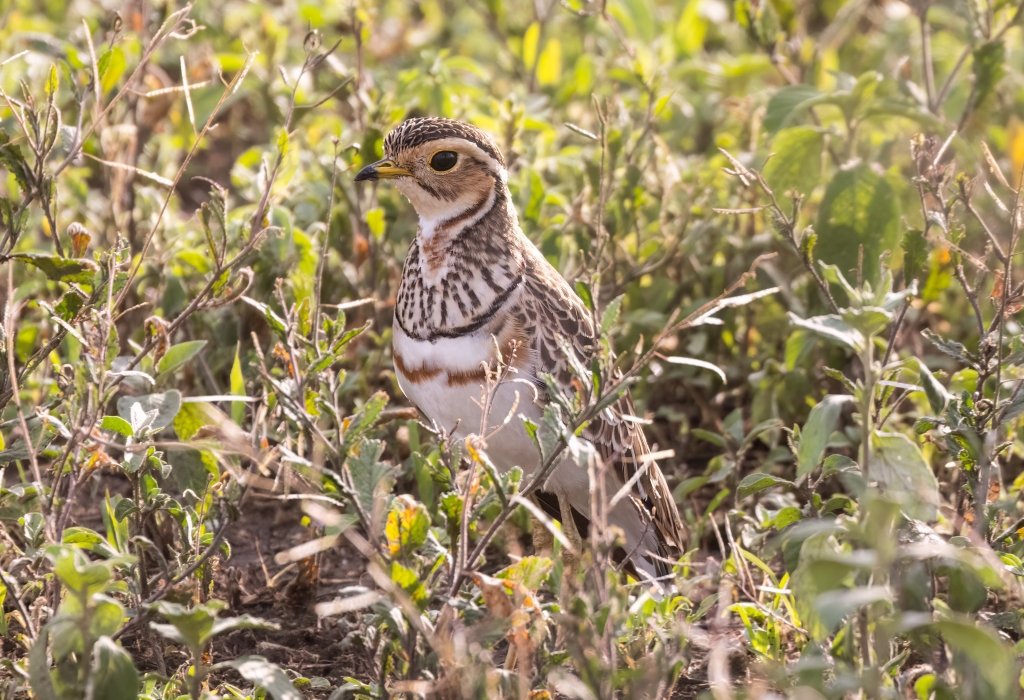
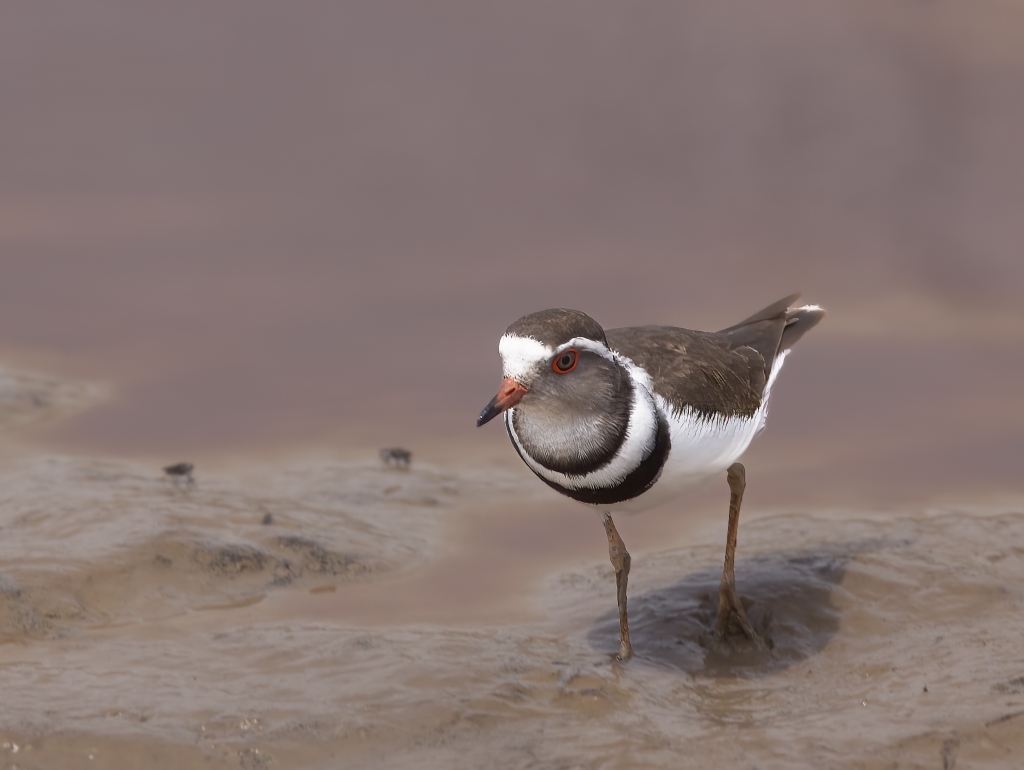
Sunday morning at Speke Bay got off to a great start. One of the staff at Speke Bay had located a roosting Barn Owl and two Three Banded Coursers on the property. It was a bit of a walk especially stumbling over the Hippopotamus tracks, but some really great birds. Like the Osprey, Barn Owls are found on every continent except Antartica. I had seen them in Australia and of course North America, but this would be the first one in Africa. I had seen Three Banded Coursers in Kenya at Lake Baringo in 2007 and even had photos, but they are a very cool looking bird and I was very happy to see it and photograph it again. We birded for several hours at the Lodge before heading to Serengeti National Park in the afternoon. The first set of photos are all from Speke Bay.
Barn Owl – A Very Tough Photo
Three Banded Courser
Chinspot Batis
Klaas’s Cuckoo
Red-billed Firefinch
Buff-bellied Warbler
Swamp Flycatcher
These next photos are not necessarily in sequence as explained above regarding Ebird lists. Some sightings that can be specifically linked to a place are photos of Bare Faced Go-Away Bird, Hamerkops, Pin-tailed Whydah and Eastern Plantain Eater that were taken at the Grumenti River in the Serengeti. This was also where we had one of my favorite experiences of the trip. We saw at first one and then several large white birds in a field. They were White Storks. I had seen some in Pecs, Hungary in 2002 but had no photo. They are the birds that “delivered babies” in some European folklore. I got my photo and then we saw more and more including a group perched on an open branched tree. They are gorgeous, magnificent birds and seeing them flocked and then perched was very special. The Plantain-eater was a lifer and earlier we had a Karamoja Apalis, the only other lifer among the many dozens of birds seen.
Karamoja Apalis (Lifer)
Bare-faced Go Away Bird
Eastern Plantain-eater (Lifer)
Hamerkops
Yellow-billed Stork
Pin-tailed Whydah
White Stork
White Storks
Village Indigobird
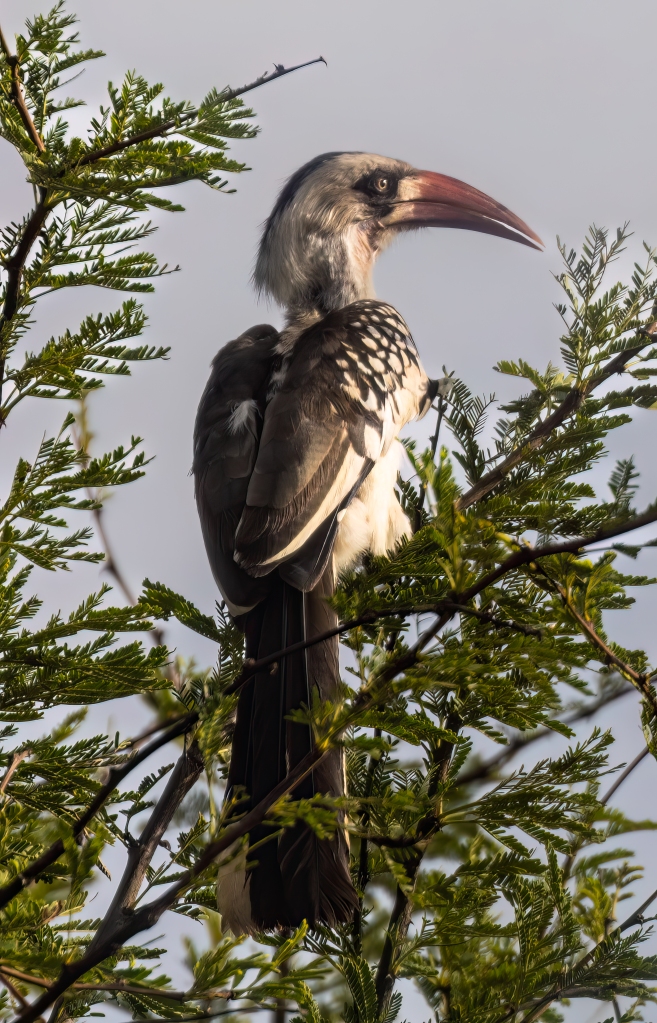
Not at the river, but some other great birds seen that day in Serengeti National Park were our first Secretarybirds, Southern Ground, African Gray and Von der Decken’s Hornbills, Kori Bustards, Gray Capped Warbler, and our first of what would be many Lilac Breasted and European Rollers.
Secretarybird
Southern Ground Hornbill
Von der Decken’s Hornbill – Female
African Gray Hornbill
Gray Capped Warbler
Kori Bustard
Lilac Breasted Roller
European Roller
It was at the river that we also saw our first Hippopotamuses and our first Nile Crocodiles. We would see hippos many times later always in large groups. The Crocs were less abundant and neither looked very friendly.
Our First Hippos
Our First Nile Crocodile
These photos provide a great transition from birds to mammals for it was at the Serengeti that we experienced the great diversity of African mammals. Some would be on this first day in the park and then others each day later we would see Elephants, Hippos, Impalas, Zebras, Baboons, Hyenas, Lions, Jackals, Warthogs, Giraffes, Wildebeest, Cape Buffaloes, Waterbucks, Topi, Gazelle’s and Kongoni (Hartebeest) and our only Leopard. These photos were from that first day – many more will be added later in this post which combines the following days. The Serengeti may well be the most famous of the African National Parks. It was both a very favorite place and a huge disappointment on the trip. The disappointment had nothing to do with the place itself – only the timing of our visit. VENT had scheduled this trip when it did to be able to see the great migration of wildebeests and zebras (among others) that occurs annually. Unfortunately this year the rains came late so the migration of a million animals was delayed. We saw maybe the start but instead of hundreds of thousands of animals, we saw “only” thousands – still amazing but how awesome to have been able to see “the real thing”.
The Serengeti is a vast grassland plain of more than 11,500 square miles (about the size of Massachusetts and Connecticut combined) of which about 5,700 square miles are in the National Park, a World Heritage site that was established as a park in 1951. The Entrance to the park is $60.00 ($70.00 in peak season) per person per day with additional costs per vehicle and per person for each night stay (part of the accommodation cost). This generates a lot of money which is used for maintenance etc. As an aside the restroom facilities in the park were spotless!! Only 4-wheel drive vehicles are permitted in the Park and driving is allowed only on existing tracks – no cross-country exploration. Tourism is big business with many levels of accommodation ranging from basic to super-luxury. It is estimated that more than 350,000 people visit the park each year!!
A Sampling of Mammals of the Serengeti (Saving the Cats for Later)
African or Cape Buffalo
Serengeti Elephant
Baboons
Spotted Hyena
Silver Backed Jackal
Blue Wildebeest or Brindled Gnu
African Zebra
Giraffe
Impala
Topi
Waterbuck
Thompson’s Gazelle
Grant’s Gazelle
Kongoni (Hartebeest)
Since I was only using a telescopic lens (100-500 mm with a 1.4 extender) I could not really get any wide-angle photos showing the scale of the migration that we did see – often hundreds or even thousands of animals of numerous species at one time. This photo gives some sense of the mixed herds with some birds mixed in. By far the largest groups were of Wildebeest followed by Zebras and then Buffalo. There were often small herds of Impala – usually a single male with his harem of females or maybe a small group of non-dominant bachelor males together.
Life on the Plains
This post has largely been a collection of photos and there is just no way they can give anything but a snapshot of what really has to be experienced in person capturing the diversity of life, the immensity of the plains, the gatherings at waterholes and the constant moving and grazing of the animals with amazing birds in every niche of the Serengeti. I have included most of the mammals seen in the Serengeti here except for the Big Cats – always favorites of every visit, even those by list building birders. We would leave Speke Bay Lodge and move on to Kubu Kubu Tented Lodge from which we would continue to explore the Serengeti. And in the next post, there will again be lots of birds and there will also be Cats!!
To avoid a long drive, we would be flying from West Arusha to Mwanza from which we would then head to our next accommodations at Speke Bay Lodge on the shores of Lake Victoria. Our flight was preceded by some birding on the grounds of Ngare Sero Mountain Lodge and would include some birding on the drive from the Mwanza Airport to the Lodge. This limited birding added only 18 species to our trip list, but three were new life birds as well. One of the life birds, Abdim’s Stork, was found at the Kilimanjaro Airport where a group of 40 were circling just as we arrived. We would see many later with good views and photo ops.
The entrance to the airport was chaotic as maybe 200 people were in line outside the entrance to the small terminal waiting to get through security – there was not enough room inside to accommodate the crowd. It was pretty hot and there was no sun cover but the real concern was making our departure time. It was not a great case of efficiency, but the line moved faster than feared and we were there in plenty of time. It is about 500 miles from Arusha to Mwanza – a drive of 10 hours or more. The flight was only an hour and 10 minutes and saved us the long drive and made for a much more efficient itinerary.
The new life birds seen at Ngare Sero Mountain Lodge that morning were Green Malkoha and Green-backed Honeyguide. Not the best of photo ops for the Malkoha as it was buried in foliage, but getting any picture was greatly appreciated. I am also including photos of some other fun birds seen that morning.
Green Malkoha
Green-backed Honeyguide
Little Greenbul
African Pied Wagtail
White-eared Barbet
Black-backed Puffback Female
Amethyst Sunbird
We made no serious stops on the way from the Mwanza Airport to Speke Bay but had passing looks at a number of waders that we would see again later in the trip. Cattle Egrets seemed to be in every field and we easily saw more than 500 of them. Other “waders” included Great and Little Egrets, African Sacred Ibis, Black-headed Heron, Marabou Stork and African Openbill. Speke Bay Lodge is located on the south-eastern shore of Lake Victoria in Tanzania, East Africa. It is 15 kilometers from the Serengeti National Park. It would be our comfortable home for the next several nights and our take off place for exploring the wonderful Serengeti. At the end of the day, our trip list was at 134 species.
Black-headed Heron
African Openbill
Our accommodations at Speke Bay were in individual bungalows fronting on Lake Victoria. As would be the case in many places we stayed, after dusk we were supposed to be escorted back to our rooms after dinner. Why was that? Because we were in Wild Africa and hippos often would amble through the grounds to feed at night. We never saw a hippo but we saw many hippo tracks even a quarter mile or more from the Lake.
Our Bungalows at Speke Bay Lodge
After breakfast on Saturday, February 18th, Day 4 of our tour, we birded all day on and around the extensive grounds at Speke Bay Lodge. In about 10 hours we had 77 species, including 53 new birds for the tour and 5 new life birds for me: Eurasian and Square Tailed Nightjars, Common Reed Warbler, Black Bishop and Blue-capped Cordonbleu. I don’t know how many were new but I got photos of more than half of the species seen.
Eurasian Nightjar
Square Tailed Nightjar
Blue-capped Cordonbleu
Black Bishop
It is tempting to add all of the photos, but I am doing some self-imposed selecting and just including favorites from the day including the 4 Kingfisher species we saw.
Woodland Kingfisher
Gray-headed Kingfisher
Malachite Kingfisher
Pied Kingfisher
Dideric Cuckoo – The Cuckoo that Says Its Name
Nubian Woodpecker
White-browed Robin Chat
Golden-backed Weaver
Malachite Sunbird
Black-headed Gonolek
Blue-cheeked Bee-eater
Blue-Naped Mousebird
Water Thick-knee
Silverbird
Brubru
Red-chested Cuckoo – The Most Common of the 11 “Cuckoo” Species Seen on the Tour – Heard Often
D’Arnaud’s Barbet – “Usambiru” maybe a split later
Our weather was great and there were very few bugs. Food was good and we even got in some walking, which would become much more limited as we got into wildlife parks where we could be in danger. Our trip species count was now at 187 species. I had added 20 lifers and probably more than twice that many life photos. The next day we would bird again at Speke Bay Lodge and then head into the iconic Serengeti National Park.
After the multi day/multi hour flight to Tanzania and the 11 hour time change, we had no idea how sleeping would go and how we would feel for our first morning in Tanzania. Breakfast was a civilized 7:00 a.m. and our trip to Arusha National Park would not start until after 8:00. Under the circumstances, sleeping went well and we made it to the generous breakfast on time and were ready to go, excited for the adventure. The basic set-up for the tour would be travel in two safari vehicles – Toyota Land Cruisers with 8 passengers each and a pop top. Each had the driver and guide in the front two seats and six tour members in back with three rows of two passengers each with a window. A good policy was that each day, passengers would rotate – the two in the back would move up to the middle, the middle would move to the front and the two in front would go to the other vehicle, replaced by two from that vehicle who had been in the front and now would go to the back. This completely removed some of the friction that has occurred on some tours where seats are literally fought over.
A bit more background: Our two guides were Kevin Zimmer from VENT and Anthony Raphael from Tanzania Birding Tours (tanzaniabirding.com), the local partner for VENT. Our two wonderful drivers were Godbless and Moses. Kevin has been leading this trip for VENT for many years but is probably even better known for his guiding excellence in Brazil. In addition to his formidable birding skills, Kevin is a great storyteller and all around good company. Just give him a Coke Zero and he is a happy guy. Anthony also has amazing birding skills, extremely knowledgeable with an uncanny knack for finding birds in dense foliage and high up in the trees. Anthony was also the go to guy for any administrative needs or help finding anything you needed. Godbless and Moses were excellent drivers and really fun to be with. If you are wondering about those names, in Tanzania, when you reach a certain age (maybe 18) you get to pick your own name. Those were their choices.
Our Safari Vehicles
After breakfast we boarded the vehicles and were off. In what would be a familiar pattern, we would head for a destination but might bird along the way once we got off city roads, stopping at likely places or where one of the guides spotted a bird of interest. Our main destination would be Arusha National Park, a small park of only 215 square miles. Being only 8 miles from our lodge, we went directly to the Entrance gate where we birded on foot for a while and then turned off the main park road onto the side track to the Fig Tree Arch. In just under 2 hours, we saw 28 species (no lifers yet). As tempting as it is to detail each species and include photos, if I want to get these blogs done, that is too large a task. Instead I am going to include a list of species as reported on Ebird, including just a few photos. We were now in mammal country so there will be lots of those photos as well.
Yellow Breasted Apalis
Spot Flanked Barbet
Cinnamon Chested Bee-Eater
Speckled Mousebird
Variable Sunbird
At the entrance gate, we also had our first “elephant” – an amazingly life-like creation. From the Momela Gate Entrance, we drove to Fig Tree Arch – a giant fig tree with an arch at the base large enough to drive through – truly an awesome tree. Along the way we observed 18 bird species – 12 new for the trip, including two spectacular birds: Hartlaub’s Turaco and Bar Tailed Trogon. In addition to the Trogon, I had 5 other lifers including Scaly Spurfowl. It seems like there is confusion or disagreement about using names “spurfowl” or “francolin”. We would see many on this tour.
Momela Entrance Gate “Elephant”
At the Fig Tree Arch
Scaly Spurfowl (Lifer)
Hartlaub’s Turaco
Bar Tailed Trogon – Lifer
We spent the rest of the afternoon birding in the Park along the Momela Lakes Circuit. Now our birding would be mixed with our first mammal watching including giraffes, elephants and zebras. And this is where it gets really hard to pick what to write and what pictures to include. with a variety of habitats we had forest birds, water birds, shorebirds, and birds of more open country – 56 species in all including 6 species of waterfowl, 6 species of swifts, and 8 species of shorebirds. The only lifer was a Moustached Grass Warbler – sadly no photo. Among the avian highlights were our first Greater and Lesser Flamingoes, Little and White Fronted Bee-eaters, 50 Ruffs and our first Gray Crowned Cranes.
Greater Flamingo
Lesser Flamingoes
White Fronted Bee-eater
Little Bee-eater
Gray Crowned Crane
All told we had 70 species for the day bringing our trip list so far to 116 species. This included 12 world lifers for me and many new photos (I did not keep a running account of these.) I expected that the parade of lifers would slow but I was feeling pretty good that I would get to my minimum target of 37 to get to my self-imposed important target of 3,000 species. Cindy was enjoying the birds but it was really the scenery and the mammals that got to her. She was hooked when we saw our first distant tableau of giraffes, impalas, wildebeests and zebras.
Later we had a herd of zebras very close including a mother and colt and then had a giraffe that was towering over us from maybe 25 feet away and lots of warthogs. The first elephant was also pretty close and knowing that it could charge and tip over the vehicle brought home that we were most definitely in Africa.
Zebra Colt
Warthog Boar
Giraffe Above Us
A Very Real Elephant
It was then back to Ngare Sero Mountain Lodge for another fine dinner and a celebratory Gin and Tonic, which soon became our favorite drink in Africa. It was a bit warm in our room which did not have a fan (turned out we should have asked for one), but we left the screened windows open and it got comfortable pretty soon. My best moment of the day was when Cindy called the trip “life changing”. You really have to see the animals in the wild yourself to understand; and we were just beginning.
The Prelude – When Cindy Bailey and I first started dating now going on five years ago, one of the subjects we explored was travel goals. Close to the top of the list was my telling her she had to get to Africa before it disappeared. I had been fortunate to have traveled to Kenya and to South Africa and each trip had been magical. We also talked about travels to South America. She had not been to either area and we agreed to make them early travel priorities. We found two trips that greatly appealed: a trip to Tanzania with Victor Emanuel Nature Tours (VENT) and a birds and wine trip to Argentina and Chile with Field Guides. Given that Cindy was not a birder, these at first seemed like a bit selfish on my part, but the sale was easy. It was the wine that made the Field Guides trip easy and as for Africa, it was my assurance that even avid birders quickly forgot about the birds when there were cheetahs, lions or leopards to be seen.
We committed to both trips and then…Covid. Both of those trips were wiped out as were possible trips to Cuba and to Charleston S.C. and Savannah, GA. Two years of exciting travel disappeared as the world isolated and tourism vanished. When a comfort level with travel finally returned, the trips we had planned were no longer available. I was desperate for a great birding trip and Cindy just wanted to travel somewhere new. So we traveled to Ecuador – a top birding destination and a trial run for other travel later. Ecuador was great and even though there was maybe a bit more birding than Cindy would prefer, she loved the nature, the people and the place and even many of the birds, especially the colorful tanagers and hummingbirds that visited the many feeders at fun lodges. OK Africa was back on the agenda – even a “birding” trip. When we found two spots open on the VENT Tanzania trip for February/March 2023, we signed on. It was months ahead and when Cindy had her fall on some ice in November 2022 and tore her rotator cuff, there was a possibility that we would have to cancel. The surgery went well. The recovery went well; and we were good to go. In this series of blogs, I will share the rest of the story, in Cindy’s words, “a life changing trip.”
All told our trip was 20 days – leaving Seattle of February 13th with an 11.5 hour flight on Qatar Airways from Seattle to Doha, Qatar. an 8-hour layover and then a 5.5 hour flight from Doha to Kilimanjaro, Tanzania, reversing that with a somewhat shorter return to Seattle on March 5 – with an 11 hour time difference making that 28 hour trip seem a lot less. I probably could write an entire blog post about flying on Qatar Airways (not as great as advertised) or our two layovers at the Doha Airport – otherworldly and not necessarily in a positive way. We had “economy premium” seats. Basically that meant a few extra inches of leg room – same food as economy and that’s it. Before we left, we had seen a list of movies on the Qatar Air entertainment system. Not the case. They advertised 4000 options. Maybe so but the sound quality was poor, the picture not much better and, understandably, many of those thousands were either Arabic or Bollywood movies. Maybe three of the movies that had caught our interest earlier were available, the rest ones we had barely heard of. On an 11+ hour flight, anything to kill time is welcome. We did watch “Rear Window” and that was about it.
Doha, Qatar at Night
The flight was smooth and did leave and arrive on schedule. Flying into Doha is quite an experience. After miles/hours of nothing, we could see the bright lights of the City of Doha – almost a Disneyland of architecturally flamboyant high rises. Cindy likened it to the strip in Las Vegas. The airport is over the top as well. It is humongous. We got off the plane down a stairway that was brought up to the plane. Then we boarded a bus and had a fairly long ride around the tarmac to get to the terminal itself. Then, even though we had obviously cleared security to board the plane, we went through even more stringent security to get into the terminal itself – as connecting passengers. I think it was around 5 in the evening local time and the terminal was busy but not crowded. There were helpful guides around to direct people to wherever they were going. (“Go the giant bear and turn right” was our direction.) We were going to a lounge where we would spend the next 7 hours until our flight to Kilimanjaro. This was no ordinary terminal shopping place. A partial list of stores includes Harrods, Jimmy Choo, Apple Store, Samsung Store, Swarovski, Duty Free, Coach, and Michael Kors among others. A simple magazine shop? Not really. The lounge was nice although somewhat crowded. For the entry fee of $55 each, we got nice seats, free drinks, some decent food (a great soup) and access to a very limited sleeping area with some horizontal seats that were ok, but the room was too small and too noisy (including people talking out loud on their phones – really?!!??). We each got maybe an hour of sleep once sleeping spots opened up. Our departure was set for 1:30 a.m. on the 15th. We left the lounge at midnight and OMG, there were thousands of people in the terminal. Definitely a mix of folks from everywhere, Africa, India, Europe, America, and Australia. Surprisingly not many East Asians and no noticeable Hispanics. Not too many were shopping except mostly at the duty free shop. It was a LONG walk to get to our gate, but we were there in plenty of time and boarded for the next flight which at 5 hours seemed a dream after the previous one. No improvements on the entertainment system, but adrenalin and excitement was kicking in and despite so little sleep, we felt pretty good when we arrived. Tanzania is 11 hours later than Seattle so we left on the 13th and arrived on the 15th. Altogether, we had flown almost 10,000 miles.We were ready.
Seattle to Doha to Kilimanjaro
Tanzania is in East Africa, largely south of the Equator with an area of 364,900 square miles, almost 900 miles of coastline on the Indian Ocean and a population of 64 million. As points of reference, that is 100,000 square miles larger than Texas and a population almost twice that of California with a longer coastline. It is only the 13th largest country in Africa – a big continent indeed, second only to Asia. Our tour started in Kilimanjaro – about 250 miles west of the Indian Ocean and basically was a circle route going west to Mwanza and then back with stops at 8 lodges – all way more than comfortable.
Our Tour Route in Tanzania
After considering other approaches, I have decided to write this in a similar fashion as other travel blogs, a mostly sequential log of what we did when although there may be some jumps or references backwards and forward. There will be a lot left out, but I am going to try to include places and birds and animals and peoples and stories and impressions without an absolute consistent linear connection. First though a continuation of this prelude for context if nothing else.
I had four main goals for this trip. First and foremost was for Cindy to enjoy Africa, seeing the animals I had talked about as well as some beautiful birds but mostly to feel the magic of a very special place so different from anything else she had experienced. Secondly I specifically wanted to add at least 37 species to my World Life List of bird species seen to get me to 3000 species. Third was to get pictures of some of the new birds as well as of species I had seen in Kenya or South Africa but for which I had no photos. The hope was to get photos at least 130 new photos to get me to around 1770 species hopefully on my way to more than 2000 someday. The last goal was to have both of us come away wanting more. This was not a trip to add that many species to my life list. Looking at the bird list from previous VENT Tanzania trips, even though the species list promised over 400 species, there was great overlap with my 2007 trip to Kenya and 2014 trip to South Africa, and at the very most it looked like maybe a chance for maybe 70+ lifers. Not going to make you wait for the end to find out. The final numbers were 432 species seen including 77 World Lifers. I got photos of 339 species including 150 new species photographed. (As a side note: when I returned home I had a chance to go over all of my photos from earlier trips – something that took well over 100 hours. I discovered I had previously unidentified photos of another 15 species including another 7 world lifers. So bottom line a very good listing and photography trip plus the trip-initiated review process resulting in more lifers in both categories. The official Ebird stats are a World Life List of 3040 species and 1810 world photos. Since I took almost no photos on many early trips and relatively few until fairly recently, I guess I am pretty happy – just wish I had taken photos earlier.)
In Africa Officially Day 2 – Arrival at Ngare Sero
I have friends that have undertaken international adventure travel on their own. We are not that brave. We did have to arrange our own air travel – a lot more challenging, a lot less fun, and a lot more expensive than it was even not that many years ago. But everything else was in the hands of VENT. I had excellent experience with them on earlier trips to Kenya, India and Texas and was pleased with the itinerary, the planned accommodations, the guides and office administration. The only moment of tension was upon arrival at the Kilimanjaro Airport, just Cindy and me, hoping that as we departed the airport, someone would be there holding a sign with our names on it – our secure entry into our adventure and transportation to our first accommodation, the Ngare Sero Mountain Lodge, where we would join the group, all of whom had arrived the previous night flying through Amsterdam. Thankfully, there he was, holding that welcomed sign: Bernson/Bailey. We were now officially “On Safari”.
Eco-tourism, especially the safari business, is a big part of the Tanzanian economy – over 10% of GDP. This is similar to many European Countries like the U.K., Italy and France but contrasts greatly with not even 3% in the U.S. And unlike those countries, the large majority of Tanzanian tourism is international. Accordingly the tourist infrastructure in Tanzania is highly developed, with many well-maintained National Parks, superb lodges and numerous travel companies. For example, all of the safari vehicles we saw had company signs/logos on their sides or on their spare tire covers at the back of the vehicle. We noted over 100 different safari companies. It’s a big business. That’s not to say the roads were all that great – except the main highways between cities, we were almost entirely on dirt roads/tracks, dusty and bumpy. A surprising measure of that bumpiness was the “steps accounting” on the digital watches of many travelers. The watches counted the bouncing as steps and at the end of a day when we were barely out of the vehicles, total steps often were in excess of 12,000.
We encountered our first bumpy, dusty dirt road on our way from the Kilimanjaro Airport to Ngare Sero Lodge, our first home away from home. The Lodge is about 21 miles from the airport. The first 19 or so miles are on the good 2 to 4 lane T2 (Kikatiti) Road. The road provided our first glimpse into non-tourist Africa with commercial activity on both sides of the road and also agricultural fields. Shops were generally very small and constructed very differently from familiar development back home – mostly simple construction with materials at hand, adobe bricks, corrugated iron, some wood – not built for the long haul. The road was fairly busy with a mix of small cars, small trucks, jitneys, and many motorbikes. Fruits and vegetables were often being sold right at the curbside perhaps by the families that had grown them on small pieces of land. Intersections along the way were with dirt roads that headed off to small lots and small homes away from the highway. It was on one of these intersections that we left the pavement and headed off on dirt. One would not have guessed that a mile or so in, passing some very rundown looking properties we would turn onto a paved driveway and a gate that took us to our lodge – manicured lawns, beautiful plantings, a main building and lodge rooms which would be our very comfortable home for the next two nights.
All of the other members of the tour had arrived at Ngare Sero the night before, met for breakfast and had a first bird walk with VENT guide Kevin Zimmer early that morning. We arrived a bit after that first bird walk had finished and checked into our room and then walked the grounds, met some of the others and looked for some birds on our own. The first species I saw was a Red Headed Weaver, which I had previously seen in Kenya. The group reassembled and we walked around the grounds, the small pond and the little stream that were on the property. It was not the greatest look, but I quickly added my first life bird for the trip, a Taveta Golden-Weaver at its nest on some reeds in the pond. On that first walk we had a total of 41 species including additional lifers Little Sparrowhawk, Common House Martin, Kenrick’s Starling, and Gray Olive Greenbul. Some other highlights were Cindy’s first hornbills, Silvery Cheeked and Crowned, an African Fish Eagle, and a Tambourine Dove. I was happy to get several photos including of a very lovely Yellow-breasted Apalis.
Red-Headed Weaver
Taveta Golden-Weaver
Kenrick’s Starling
Gray Olive Greenbul
Common House Martin
Crowned Hornbill
Silvery Cheeked Hornbill
Tambourine Dove
Yellow-breasted Apalis
Peter’s Twinspot – Sadly Not Seen by Me
Unfortunately a species we did not see was a Peter’s Twinspot. It was high on my target list and this was the only location where it was a possibility. It had been seen by two birders briefly at breakfast and despite looking for it with many eyes and at many times later, it was not seen again. There were very few disappointments on this trip, but this was one.
After lunch and then a chance to rest, we had another bird walk on the grounds in the afternoon which added a few more species although no lifers and then after dinner we reassembled and Kevin called in an African Wood Owl. There is a resident pair at the lodge. Unfortunately I forgot to bring my camera. The male perched in the open and with Kevin’s spotlight we had great looks. I borrowed Kevin’s camera so I could say that I took a photo. I have not received a copy of that photo yet so am substituting one from online and will replace it if I get one from Kevin.
African Wood Owl
The tally for the day was 47 species with some lifers and some new photos. Missing the Twinspot hurt but I at least thought there was always tomorrow. And tomorrow meant into Arusha National Park – great birds and our first African mammals. Sleep came easily.
The period from late October through early December has been an amazing time for rarities at Neah Bay at the Northwestern tip of the Olympic Peninsula in home state Washington. On a Washington State level there have been at least 25 observations during this period that would be considered very rare and many of those would be considered rare even on an ABA level. If time of year is also considered and the test is whether the observation would be considered as rare on an Ebird post the list would be much longer – with 50 or 60 species meeting that test.
Consider these rare birds: Eurasian Hobby, Brambling, Rustic Bunting, Arctic Loon, Eurasian Skylark, Snowy Owl, Tufted Duck and Slaty Backed Gull. All would draw attention wherever seen. Then there are the ones that are extremely rare for Washington (and many other places) like Zone Tailed Hawk, Lucy’s Warbler, Dusky Capped Flycatcher, Eurasian Tree Sparrow, and Gray Crowned Rosy Finch. Not rare elsewhere but definitely so in Washington would be Blue Gray Gnatcatcher, Prothonotary, Hooded, Blackburnian, Tennessee and Palm Warblers, Dickcissel, Blue Grosbeak and Cattle Egret. And there are many more that would be either rare for November or rare for Western Washington etc. I have seen many of these species there – some of my best sightings in Washington.
Dusky Capped Flycatcher
In late October this year, reports from Neah Bay included Blue Gray Gnatcatcher, Tropical Kingbird, Eurasian Skylark and Palm Warbler – each of which would be a First of Year for me with the Gnatcatcher and Skylark really good birds in Washington for any year. It was time to head to Neah Bay. Birding friend Jon Houghton had the same idea and we made plans to go on November 1st not because it was the first day of the month but because it was the first day we could go. Another friend and new birder Tom St. John was also game for the trip and our plan was to catch the first ferry from Edmonds at 5:35 a.m. and to return late that night. On the ferry we met another birder Jordan Gunn who had been in the Seattle Audubon Master Birder class with Jon and me 10 years ago.
We arrived in Neah Bay just after 9 a.m. and began our birding in town along the Bay with particular attention to the creek mouth where the Palm Warbler had been seen and checking the wires hoping for the Kingbird. No luck on the Warbler but after an hour or so we finally located a Tropical Kingbird. It seems odd to have a “Tropical” anything this far north especially in November. They are common in Middle and South America with a few coming into the Southern U.S. in the Spring and summer. But every year in late October or November some juveniles travel up the Pacific Coast and some are found in Neah Bay each year. Oddly a year ago, Cindy and I were in Southern Mexico in November where they were seen almost daily.
Tropical Kingbird
There were a number of species along the beach, in the Bay and at the creek mouth. Uncommon for the area was a Marbled Godwit which we found quickly along with some Black Turnstones, Dunlin and a Western Sandpiper. The creek mouth is a favorite place for gulls to gather and we had 5 species: Short Billed, Heerman’s, Herring, Glaucous Winged and Iceland. In the Bay, there were six duck species, grebes, loons and cormorants – nothing unusual.
Marbled Godwit
Iceland Gull
We would return to this area often in the day never finding the Palm Warbler. Our next stop was near the Neah Bay Sewage Treatment Plant where the Blue Gray Gnatcatcher had been seen often in the previous few days. We found a couple of Ruby Crowned Kinglets but nothing else – a major disappointment which would be repeated on two later visits. This disappointment would be repeated on our next search – along Hobuck Beach where the Eurasian Skylark had been seen. We walked the dunes in methodical fashion covering the grasses and the sand and had no success. The Skylark was on the top of my target list. It is a mysterious rarity. As the name indicates, it is a Eurasian species. Small populations were introduced near Vancouver, B.C. and on San Juan Island in Washington. I saw one on San Juan in June 1976, before I was taking pictures. That population died out many years ago and it remains my only record in Washington. I have seen them in Vancouver twice finally getting a photo of one on May 18, 2018. That population is almost gone as well. There is a debate as to the origin of the one seen in Neah Bay. One had been seen there in the same location several years ago. Most people assume it came from the British Columbia population – not that far away. Some folks think it may have come from Siberia. Seems unlikely to me. I really wanted to get a photo of this species in Washington – one of about a dozen species I have seen here but without a photo. It was just not meant to be and as it turned out, it was not seen again after the October 31st sighting.
Eurasian Skylark – British Columbia
We visited all the “hotspots” in Neah Bay, some more than once looking for rarities or specialties – species harder to find in other areas. Although we were not trying for a big species list for the day, it is such a good location that we added them one by one or in groups. But we did not find the targeted rarities. Just as we were ending our day and getting ready to return home, we added two very nice ones: a Black Oystercatcher – a lifer for Tom and a Black Legged Kittiwake – the first of the year for Jon. I asked them how many species they thought we had seen that day. Both thought it was something around 35. I checked the lists and we had seen more than 50 and I am sure if that had been our goal, we could have gotten to 60. But the disappointments were hard and as will become clear later in this post, missing the Palm Warbler and Eurasian Skylark would become more important for me. So the month whose name starts with “No” started with yes for fun and a nice list but definitely with a “No” for the rarities missing three of them.
Black Oystercatcher
Black Legged Kittiwake
The weather remained beautiful on November 2nd and since several rarities for my home Snohomish County the previous day, I set out to find them. At the Edmonds waterfront – very near my home – I easily spotted the Brown Pelicans that had been there for two months. Then it was off to look for a Tropical Kingbird, the same rarity that we had seen in Neah Bay but regular there but seen only once or twice previously in Snohomish County. It took some doing but after moving to a second viewing spot, several of us finally relocated the Kingbird, species number 270 in Snohomish County for me. Hoping to continue the good fortune. I joined a young birder I had just met, Joey McCracken, and we moved on to the Marysville Sewage Treatment Ponds and the Ebey Waterfront Trail where two county rarities had been seen the previous day – a Harris’s Sparrow and a Franklin’s Gull. There were hundreds of Bonaparte’s Gulls. The similar Franklin’s Gull had been seen among them earlier but we were not able to locate it. Fortunately the Harris’s Sparrow was easier as it foraged along the trail.
Harris’s Sparrow – Ebey Waterfront Trail
Continuing the chase for Snohomish County Rarities, I went to Jennings Park and found Maxine Reid looking up into an oak tree. Of course she was looking at the Acorn Woodpecker that has been there for over a month. Terrible photo but a good bird – one that usually requires going to Lyle Washington on the Columbia River in Klickitat County to see. I also made stops that day at some parks near my home and at the Edmonds Waterfront. By the end of the day I had again seen more than 50 species and the total for the two days was 80 species and that’s when it hit me. I had recently finished a big Month of September with almost 240 species in Washington for the month. That was the 7th month for which I had 200 or more species in the State. I thought I might try for another Big Month in 2023 but what if I could get to 200 for November – this November. There were some complications as Cindy was off to Texas for a short trip and we would be dog-sitting for part of the month – including those days she would be away. Also it was a short month with only 30 days and then, too, there was Thanksgiving – a day when the only bird would be a Turkey, a non-countable one. Maybe more importantly there would be no pelagic trips this month – those ended in October.
I did some quick research on Ebird and concluded that it was possible to get to 200 – maybe even 210 – IF everything broke right. I had already seen some really good birds BUT I had also already missed some. Had I known, Neah Bay would have been done differently. I also would have planned day 3 differently also – heading east immediately for some of the migrating birds that had not yet departed as I had learned in Big September that every day counts in that regard. But a trip to Eastern Washington takes more planning than I had time to do – so instead I was off to familiar territory – north to Skagit County – just adding numbers. There were a couple of specific targets – somewhat rare – but mostly it was adding species that I knew (or hoped) would be there and that would have to be found if there was a chance to get to 200. The best species found were a White Throated Sparrow seen with a group of White Crowned and Golden Crowned Sparrows as is usually the case and the Northern Waterthrush that has been seen or actually heard regularly at Wylie Slough. I heard it many times, but unlike the last time I was there, there were no visuals. The last stop on the 3rd were along the Edmonds Waterfront where the only species I added for the day was a Black Scoter – not always easy to find. At the end of the day I was up to 98 species. With 27 days left, this seemed like a good start but the beginning is always the easiest.
Black Scoter
I stand by the statement that May is the easiest month to do a Big Month. Some of the wintering birds are still around early in the month and migrating birds are arriving daily. The birds are in their brilliant breeding plumages and are setting up territories and are calling and singing. Pelagic trips are leaving almost weekly adding significantly to the possibilities. And to top it off the weather is pretty good. In November on the other hand the only plus is that most, but not all of the returning wintering birds are around even if in smaller numbers early in the month. I knew all of this when I decided to go for it, but I had underestimated the impact of weather. On day 4 the weather took its toll limiting my birding time and effectiveness. I almost drowned finding the American Dipper at the Fortson Mill Ponds but could not find a Red Breasted Sapsucker there or on nearby C-Post Roads – my go to spot. Black Turnstones are relatively easy to find in Washington, but Ruddy Turnstones are very rare. The one that has been seen fairly regularly at Tulalip Bay was my main target for the day – a “need” even more than a “want”. In heavy rain I found the Ruddy on the log booms in the Tulalip Marina – one of only five species added that day. I was more than half way, but some challenges were ahead.
A series of personal obligations limited my birding on the 5th to about 90 minutes at the Edmonds Waterfront and two local parks – just looking for “sure things” that were only “sure” when they cooperated – present, but not necessarily accounted for – like the Pileated Woodpeckers at Pine Ridge Park that were silent and invisible. Fortunately a Hermit Thrush was a bit more cooperative, a heard only checkmark – number 111 for the month. There were two birds that were clearly on top of my list for November 6th – a Seahawk and a Cardinal – watching our surprising NFL team who came through and thumped the Arizona Cardinals. Thankfully another bird made its appearance. I got a call from Jon Houghton in the morning before the game and was able to rush down to the waterfront and quickly found both Jon and the Surfbirds that he had called about. They are seen at the Edmonds breakwater irregularly. This day there were 15 of them, more than I have ever seen there – and then they were gone later – timing is everything. #112 for the month.
Surfbird
March 7 was the day Cindy was off to Texas to visit some high school girl friends. I would be alone with two dogs for the next 4 days. And this day also meant chauffeuring duties to get her to the airport. You can translate those two sentences to mean not much birding this day – just a single stop at the Everett Sewage Ponds after the airport and before heading home for dog duty. Our lab Chica is not the best traveler in the car – whining when she feels it is time for her to get some attention. Our guest dog Frankie is a much better traveler and is a calming influence on Chica. Time for an experiment. I loaded them into the car early and set out for the Coast – birding for me and romping around for them. The weather cooperated and it worked out pretty well – except for the camera – more on that later. I built in plenty of stops for the doggies to run around.
The first was at Weyerhauser Pond where there were no Redheads – just two Coots and a Domestic Muscovy Duck.
The next was the Bishop Athletic Complex in Aberdeen where I had one Snow Goose among my first Greater White Fronted and Cackling Geese. for the month.
Next at the Tokeland Marina they romped after I saw Willets and the Bar Tailed Godwit among the 150+ Marbled Godwits. It was super windy making it difficult to search for a Clark’s Grebe among the scattered Western Grebes. All three of the above Geese were there as well and I also added a Red Throated Loon for the month. A surprise there was a single Eared Grebe.
Marbled Godwit and Willet at Tokeland Marina
The dogs were super well-behaved roaming along Fisher Ave while I scoped Graveyard Spit. Shorebirds there included Dunlin, and Western Sandpipers and two contrasting studies. The first was a single and surprising Snowy Plover among numerous Sanderlings. Both looked very white at first with one being clearly smaller. A scope view showed the gray brown back and the so- called broken collar for the Snowy. The other pair included a Red Knot mixed in with the Black Bellied Plovers – all plumper than the other shorebirds but the plovers were larger and shorter billed than the Knot which also was much more horizontal as opposed to the more vertical plovers. A great stop.
We drove onto the open beach at Grayland. The dogs got two chances to run and fetch and I got a lot of shorebirds, a small group of American Pipits and a Lapland Longspur. Some estimates (all probably low): 150 Black Bellied Plovers, 8 Semipalmated Plovers. 170 Sanderling, 250 Least Sandpipers, 30 Western Sandpipers and AT LEAST 5000 Dunlin. The Dunlin were amazing – one group of several thousand and several smaller groups of more than a hundred each plus scattered small groups. There were also numerous really pure Western Gulls. No more doggie stops as they slept most of the way home, but I had one more good observation – two Great Egrets visible from the highway just past Monte Brady Road. All told another 16 species for the month – now at 132 and trying to figure a way to go for 200.
Semipalmated Plover – Grayland Beach
Oh yeah the camera frustration. There were lots of details needed to take the dogs (water, food, treats, poop backs, leashes, bowls, towels) and dealing with those I forgot my good camera. Only had back-up SX70 and an SD card with a VERY low capacity – room for only 8 photos. I had to continuously delete photos as something else popped up. One erroneous deletion was of the Bar Tailed Godwit. Thought I had deleted the Willet but blew it. (I have great pictures from our first sighting of it back on September 12, but plumage is even more distinct now.)
The trip with the dogs had worked out pretty well but now Greg was coming back and would be picking up Frankie. It meant I had only a half day for birding. Canvasbacks were reported at Tracy Owen Log Boom Park with a single Redhead with them. I found the flock of Canvasbacks pretty easily but it took a lot of doing to pick out the Redhead as the group was pretty far out. There are usually Common Mergansers at the Park. I found one and also added a Eurasian Wigeon so 4 new duck species for the month to get to 136. I would need a good trip the next day in Eastern Washington to stay on pace. Cindy would be back the day following but I could take Chica with me on this trip.
As is usually the case, my first stop in Eastern Washington was at Bullfrog Pond in Kittitas County – although not at the pond itself but at the road just past it that leads to restrooms (now closed). Even with the dogs running around I was able to find three nuthatch species – Red and White Breasted and Pygmy, the latter two new for November. I did not even bring out the camera as I needed both hands free for Chica and Frankie. I was hoping for a late Cassin’s Finch at this spot but no luck. Following my normal routine, I next went to the Norther Pacific Railroad Ponds in South Cle Elum after driving past the still seedless (and birdless) feeder across from the Cle Elum Ranger Station where I have had Evening Grosbeaks before. At the ponds I added Mountain Chickadee and Varied Thrush for the month. All of these species were “must get” (Group 1) in my projections for the Big Month. So that was good, but a surprise something else would have been even better,
White Headed Woodpecker was in Group 2 in my planning. I calculated that I needed 80% of that group so the woodpecker was important. It had been reported regularly at the Swauk Cemetery. It is always a bit eerie birding at cemeteries but there are many Birding Hotspots around the country that are at cemeteries where the trees are perfect habitats. It was a beautiful day and I thought I heard a White Headed Woodpecker calling, but it turned out to be another White Breasted Nuthatch with an unusual call. Again I found all three nuthatches – this time with camera ready. I would have traded them all for a White Headed Woodpecker.
Pygmy, Red Breasted and White Headed Nuthatches
I had birded at the cemetery before but it was not on my regular route. The same was true for my next destination, Robinson Canyon where a number of new species were possible. It was also a place where the doggies could run free for awhile. On the way I added California Quail, Black Billed Magpie, Merlin and Purple Finch. At Robinson Canyon there was snow and as I drove into the canyon, birds flushed from the road. They were Varied Thrushes – except for a much larger one that was a much appreciated Sooty Grouse.
Varied Thrush in the Snow at Robinson Canyon
It was 11:30 and normally I would have continued on for several more stops including crossing the Columbia and birding in Grant County. but I did not bring food for Chica and needed to get back to Edmonds around 4:00 pm. I figured I had time to bird at Rocky Coulee in Vantage where I hoped for (and needed) Rock and Canyon Wrens. I had both there in September and it is a good place for both. Alas it was not to be. No wrens at all but in the “migrant trap” camping/picnic area at Rocky Coulee I did add a Townsend’s Solitaire, my 10th new species for the day and #146 for the month. That was the good news, but missing the wrens and the White Headed Woodpecker and one or two “something elses” was disappointing.
Cindy was back, so I was a free agent again, but an honest assessment of the numbers did not look good even through it was only November 11th and I needed “only” another 54 species – fewer than 3 a day. A Black Oystercatcher had shown up at Tulalip Bay – a very rare bird for Snohomish County. Not optimistic about 200 for the month I decided to chase the Oystercatcher and then continue north maybe adding some new species for November as well. The Oystercatcher proved easy to find – especially since David Poortinga was looking at it through his scope when I arrived. I told him about my Big Month attempt and as I was leaving he knocked on my window and asked if I needed a Pileated Woodpecker. I did. Just as I got my camera on the distant bird, it flew off – unmistakable, countable but hardly satisfying. I drove up to the area where it had been. I never saw it again but heard it several times – good enough for #147. Then it was back to the Marysville STP to find a Cinnamon Teal that I had missed on my earlier visit. I found it but the Franklin’s Gull that was also missed was no longer there.
I continued on to Semiahmoo Spit in Whatcom County – a good place for Long Tailed Duck. I found only two that flew by and never landed. Surprisingly I also had a flock of 35 Brant. This small goose is regularly found along the Edmonds Waterfront and can often be seen from my home. But they had not arrived yet so this was a good add to the list.
Short Eared Owls had been reported at the North Fork Access on Fir Island my last stop for the day. There were 3 owls and at least twice that many photographers. They never got close but I got some photos of them and also of a Ring Necked Pheasant – or at least so I thought. When I checked photos later at home I found that the SD card was defective and none of the pictures could be opened. I did not care so much about the Brant and Owls but having one of the Oystercatcher – species #270 for Snohomish County – would have been great. I reformatted the SD card and it now seems ok. The six new species brought the running total to 152. I was feeling “iffy” at best.
In any pursuit of a goal with a plan, there need to be changes pursuant to changing circumstances. There are also always choices to be made. Two of the challenges in this time delimited undertaking were balancing the pursuit of what were perceived as “easy” birds with the pursuit of “difficult” birds which in turn was complicated by the second challenge, the need to balance shorter trips with longer trips. Big Months in Washington require many kinds of trips including ones to relatively distant places like Walla Walla County, Tri-Cities, the Okanogan, Clark County, Neah Bay and possibly Spokane or even Pend Oreille Counties. Some of these distant trips really need to be for more than one day to be effective especially as the shortening days of the year leave fewer hours for birding. Another complication was that “easy” species were found only on those distant places as well, and particularly further into the month now, many of the more “difficult” species that were nearby had already been found. It was decision time. Continue to look for the “easy” ones closer by or make the longer trips to both go for the “easy” ones found only in those distant places as well as chasing some of the rarer ones in those locations as well. At least in theory, there were more new species available in distant places compared to the dwindling numbers nearby. In deciding what to do next, I figured it would be impossible to get to 200 if I could not find those “theoretically easy” ones close by, and if I could not find them, there was no point in making the increased investment to go further afield for multiple days.
All of that was a roundabout way of saying that on November 12th I decided to again stay closer to home and see if I could get some of those “easy” species that were essential to ultimate success. It was down to the 212th Street Ponds in Kent, Washington where I was hoping for American Bittern, Green Heron and possibly Black Phoebe which had been seen there in the past (including by me in March 2022) but not recently. Again it was one step forward and one step backwards. A Green Heron flushed from the northwest corner of the ponds as I approached. I found a Hairy Woodpecker in the trees surrounding the ponds and a Lincoln’s Sparrow called from one of the the thickets. Three new species but no Bittern and no Phoebe. Next I went to Juanita Bay Park – where Wilson’s Snipe are “guaranteed”. The water level of Lake Washington was higher than usual and the mud where the Snipe hang out was non-existent. Without Snipe and a Bittern this was going to be a complete loss for the day and perhaps one more nail into the coffin. I checked Ebird reports and found that Snipe had been reported at the park the previous day. Maybe they were at a different spot. I walked out on the long path at the north end of the park and there they were, at least 4 of them probing the mud with their long bills and posing nicely. In the trees on the other side of the path, I heard a familiar call – Hutton’s Vireo – not an easy species on my targets list. My last effort for the day was scanning treetops in neighborhoods where I have had Band Tailed Pigeons in the past – no luck – so the day ended with 5 new species – a couple of misses, a couple of hits and some add-ons that helped enough to keep hopes up.
Wilson’s Snipe – Juanita Bay Park
In my original planning, the only birds on Sunday November 12th were going to be Seahawks – watching the game between the Seahawks and the Tampa Bay Buccaneers in Munich, the first ever NFL game in Germany. It did not go so well. After several good games in a row, the Seahawks were both outplayed and outcoached by the Buccaneers and still almost won. This being football and not horseshoes, however, close is not good enough. The only good news was that the game was very early in the morning and that enabled me to go over to Marymoor Park in Redmond after the game chasing two King County rarities that would both be new for the month as well. Once I got to the right area, it took all of 5 seconds to find the Horned Lark. It took another 15 minutes to find the Clay Colored Sparrow that had moved further afield than where it was originally reported but still pretty close by. The Lark was one of those “easy” birds on my list – but only in the right area in Eastern Washington. The Sparrow was a rarity – at most a “maybe” if the one reported the previous week in Neah Bay remained. The two additions brought me to 159 for the month and were sufficient encouragement to head back to Neah Bay the next day. The Clay Colored Sparrow was species #258 for King County.
Clay Colored Sparrow – Marymoor Park
I previously explained how Neah Bay is such an incredible place for rarities in addition to the specialties that are regularly found there. It was the great trip there on the first of the month that had started this crazy project in the first place. At the time I had felt bad about missing some rarities there but had not realized how those misses might come back to haunt me. This second trip had some similar aspects as in addition to continued appearances by the Blue Gray Gnatcatcher that I had missed earlier, two new rarities had been seen – a Rusty Blackbird and a very late Bullock’s Oriole. The latter two were projected as highly unlikely in my original planning. It took five visits to the “Gnatcatcher Spot” to finally find it. The earlier visits had essentially been birdless. I also made numerous visits to the spot where the Rusty Blackbird had been seen “easily” the previous day and where the Oriole had been found. I found neither. It helped my feelings only a little that nobody else reported either species again – a day late and a dollar short, so to speak.
Blue Gray Gnatcatcher – Neah Bay – Fifth Time Was the Charm
On the way to Neah Bay, I had flushed a Ruffed Grouse along the Pysht River and in the Bay itself, I finally found a Pacific Loon among many Common Loons. On one trip to Butler’s Motel looking for the Oriole and Blackbird a small accipiter flew overhead and disappeared into trees across from the motel. I could not find it perched but by its small size, it was clearly a male Sharp Shinned Hawk, new for the month and one of those “easy” species that are only “easy” when one finds you. A much harder bird to find was a Swamp Sparrow. They are regularly found along Backtrack Road along the Wa’atch River but are very secretive and are generally located only by their metallic chip notes. I found one in much the same spot where I have had them a few times in the past. It is a long drive (and ferry ride) to get back home from Neah Bay and with the now shorter days, there was not time to try for Snow Buntings at Ediz Hook in Port Angeles where some had been reported. The day ended with 5 new species for the month – just ok and once again two rarities had been missed. Given that there would be no birding on Thanksgiving – unfortunately only Wild Turkey was countable – I was essentially half way through the month. With 164 species seen, that seemed pretty good. If I could bird another 14 days, I would need to average just over 2.5 new species each day to hit the target. There would be no room for misses.
Tuesday November 15th was one of those days where changed plans were a positive and yet not. I was scheduled to give a program on Birds of Ecuador to our Condominium Community. It would be the fifth birding program for me but only the second in the Post-Covid period which meant it would be given to both a live audience in our Club Room Theater and also via zoom to a larger audience. The last program I had given, with a similar two audience approach, had a live group of over 20 and another 50 or so online. In the end it went very well, but there had been a number of technical challenges and glitches along the way as we struggled to be able to access the internet both for the zoom audience and to play some imbedded videos. The person who had handled the technical details in the end made it successful, but we found out only early Tuesday that she would not be able to help. The plan had been to have a practice run through early in the day with the program in the evening. That would leave no time for birding anywhere other than a close-in location. We ended up canceling the program with new date to be determined. Had I known earlier, I would either have stayed in Neah Bay and environs another day or instead of Neah Bay would have gone on a multi-day trip to Eastern Washington. Oh well. Too late to set off elsewhere on Tuesday I returned to the 212th Street Ponds in Kent trying again for an American Bittern which had been reported there on Monday with a follow-up visit to the Theler Wetlands in Mason County trying for a Pectoral Sandpiper that had been there for more than a week.
I was able to find an American Bittern at the 212th Street Ponds but despite being joined by another birder at the Wetlands who was also looking for the Pectoral Sandpiper and knew the area well, we did not find it. Granted that this was a day that originally was not going to be available for any birding, still it was a big disappointment to not add the Sandpiper as it was one of those uncommon species that was on my “got to get it list”. The Bittern was species #165 but opportunities to get to 200 were falling off the target list too frequently. When I got home I reassessed real chances to succeed and concluded that unless some new birds showed up in the state, I would have to make several long trips and be lucky to get to even 198 species and very very lucky to get to 200. I was ready to call it quits. THEN…
THEN…Back home, I got a chance to look at some photos of a sparrow I had taken at the 212th Street Ponds. It had struck me as “different” but after a couple of distant shots, it had disappeared in vegetation near the ponds. If I had not been so focused on the “next target” on my 200 list, I may have spent more time either chasing it further or at least going over the photos carefully. Actually I should have done so regardless of those other considerations. At home, significantly magnified I discovered I had found an American Tree Sparrow. Quite rare although regular for King County, it was on my list as a “maybe” on a couple of distant locations in Eastern Washington. It did not really make up for missing the Pectoral Sandpiper but it provided just enough of a boost to my spirits to stay with the project. 166 species and counting.
American Tree Sparrow – 212th Street Ponds
Not feeling at all confident but still hanging on to “maybe”, I got up early the next morning and headed south to Clark County. There were three species that I absolutely needed to find if there would continue to be any chance for 200 species in November and a couple of other possibilities. The three “must haves” were all potentially to be found at Ridgefield National Wildlife Refuge: Black Phoebe, Sandhill Crane and Red Shouldered Hawk. When I had last been to the Refuge as part of my Big September I had not needed the Red Shouldered Hawk because I had seen one at the 204th Street Pond in Kent but had needed the other two and found them both there and also added a Barn Owl. That was just as well since I did not see a Red Shouldered Hawk there then. As soon as I got to the Refuge I heard the distinct clattering of Sandhill Cranes. (Later I would see many more at the Refuge and even more elsewhere.) One down and two to go. At the pullout leading to the blind is a spot I have often at least heard Red Shouldered Hawks. Today would be another such time, as one was calling as I parked and then flew out over the marsh. A second one called from a group of trees across the autoroute from there. Now for a Phoebe. As I walked out to the blind I had the Merlin Sound recognition app on and fairly quickly it registered a “Black Phoebe“. A few moments later I heard the call myself and then with some doing finally found one barely in the open – not great light or a great photo, but pretty nice to get target #3 so quickly. On the way out of the Refuge I watched a Great Blue Heron stalking something in the field, after a lightning fast strike it came up with a small rodent. Within seconds, it was swallowed.
Sandhill Crane – Ridgefield NWR
Black Phoebe – Ridgefield NWR
Great Blue Heron with Rodent – Swallowed Immediately thereafter
There were three other possibilities on this trip: American White Pelican, Great Horned Owl and Lesser Goldfinch. All were possible and possibly more likely elsewhere, but I was at the stage where every species found meant not having to look for it at another time or place. The goldfinches were not at the one public spot where I might have found them (and have in the past) and I did not find a Great Horned Owl at two places where they had been reported in the last week or so. At American Lake I did find American White Pelicans – a group of five at one spot and then a large flock of maybe 70 at another – all distant but impossible to miss as large white forms in the lake. If this had been later in my pursuit and if I had tried for them and missed them in Eastern Washington, I would have spent more time looking for the Lesser Goldfinches – probably needing to visit some private feeders.
And then there was something else. If things had been different, I may have continued on to Klickitat County and into Eastern Washington for a longer trip, but something had happened that morning that changed everything. Since I had departed early that morning, Cindy had dog walking responsibilities after her morning training workout. It was cold and a little icy and she slipped on some black ice. She landed on her butt and also hurt her shoulder. There had not been plans to continue on, maybe a stop at Nisqually NWR on the way home, but now I needed to get back. I returned home with the count at 170 species and had to seriously confront the future. At most there were 13 more birding days left and with 30 species to go I was still on pace IF I could get 2.5 species on average each day. The problem was that there were not that many places to go where I could count on even two or more new species. Each day would be critical. And frankly it did not look very positive. Now with Cindy hurting, I felt it was time to stop. Cindy had been able to get to her clinic and had x-rays taken. The good news was that nothing was broken. The bad news was that the shoulder seemed to be pretty bad. She could not get an MRI until the following Wednesday.
Cindy had been encouraging and supportive throughout my month of birding as she had been on all of my birding ventures. Snow Buntings had been seen for several days at Crockett Lake on Whidbey Island and from there I could take the ferry across Puget Sound to Port Townsend. Chances were pretty good to find Ancient Murrelets either on the ferry crossing or at Point Wilson in Port Townsend with a long shot chance for a couple of other species. If my project was to continue, that would be an option for the next day. I thought it best to just stop. Cindy thought I should go as there was nothing we could do about her shoulder that day. She is as good as they come.
With mixed feelings, after walking the dog early, on November 17th I was on a ferry leaving Mukilteo for Clinton on Whidbey Island. Thirty minutes after disembarking I was at Crockett Lake and checked and rechecked Ebird reports trying to figure out where the “viewing platform” was as the gravel road near it was where the Snow Buntings had been seen. I finally found what had to be the right spot and first drove and then walked the roads near it and also the dunes and log piles. All were great habitat areas for Snow Buntings (and possibly Lapland Longspurs) but I could not find any. All of the other reports made it sound like you just drove up and there they were, so I worried that maybe they had left. After at least 40 minutes I retraced steps and at the very end of the gravel road away from the platform ( a small raised area that might be a platform but was hardly good for viewing), I saw some white specks on the gravel. I got some very distant photos of what were clearly three Snow Buntings and then as I approached, they flew off – first over the dunes and then landing on the road fairly near the so-called platform. I stalked them taking photos along the way. The light had a beautiful golden glow – not perfect for photos at least with the white balance setting I had – but way better than the fog that might have been there. Snow Buntings had been one of the species that was projected as “likely but not certain” in my initial planning but was expected to be seen, if at all, in Eastern Washington.
Snow Bunting – Crockett Lake, Whidbey Island
The Snow Buntings were not actually at Crockett Lake but in the beachy area across the road that leads to the ferry terminal. Over the years I have had a number of great birds at Crockett Lake itself which has been especially good for shorebirds. My three best species there have been White Wagtail (January 1984), Red Necked Stint (July 2017) and Hudsonian Godwit (August 2019). Thirty seven shorebird species have been reported there.
Red Necked Stint – Crockett Lake – July 2017
Crockett Lake is essentially across the road from the ferry terminal for the Whidbey Island/port Townsend Ferry. My timing was pretty good and I was on the ferry heading west within 20 minutes of leaving the Snow Buntings. It was an almost windless day and the crossing was smooth in good light. I positioned myself outside on the second level of the ferry and watched for birds, hoping first and foremost for Ancient Murrelets among the other species in the Sound, mostly seen in flight. Unless they are pretty close or sitting on the water, the Murrelets can be a pretty tough ID separating them especially from the usually far more numerous Common Murres. It is not really possible to effectively use a spotting scope with the vibration and movement of the ferry even in calm weather. Fortunately though the light was behind me making it easy to see birds in flight, usually low on the water, dark forms or flashing black and white. I did not see as many birds as I expected on the crossing, but fortunately at least two of them were Ancient Murrelets. Other alcids were Common Murres and Pigeon Guillemots.
Ancient Murrelet – Keystone Port Townsend Ferry
Common Murre – Keystone Port Townsend Ferry
Even though I had good views and a picture of the targeted Ancient Murrelet from the ferry crossing, I continued on to Point Wilson at Fort Flagler and did a seawatch for about an hour. Not nearly as many individuals as other times I have been there but I had at least a dozen Ancient Murrelets, a couple of Marbled Murrelets, Common Murres, Pigeon Guillemots and Rhinoceros Auklets. I guess a Tufted Puffin was possible, but that was a good list of alcids. Later I went into the forested area behind the fort buildings where I have birded before and found the other species I had hoped for there, Red Crossbills, a group of at least 4 feeding on the abundant cone crop – too high for photos but noisy and good binocular views. I returned home via the Edmonds Kingston ferry and tried to again realistically look at possibilities to get to 200. My conclusion was that reaching that total would be very difficult at best. Executive decision time.
Cindy of course said to completely disregard her and go for it regardless. I could not disregard her but independently made the decision to call it off. NOT because of her situation but because I had not done well enough to feel good about getting there even without this new development. Then, too, even though Cindy could get by without my assistance, I wanted to be there for her as she has always been there for me. On the 18th Cindy somehow convinced a doctor at the same practice group where she had her knee replacements done to see her NOW!! He was pretty certain that she had a significant rotator cuff tear and scheduled an MRI for the next Monday. The MRI clearly showed a tear that was going to require surgery and the earliest that could be scheduled was December 9th. We got into countdown mode and that included the decision that we HAD to preserve that surgery date if there was any chance of keeping our trip to Tanzania scheduled for mid-February 2023 alive. Reluctantly Cindy agreed to full quarantine in our condo until the surgery date and I am now returning to fully masking everywhere I go. We also cancelled several parties and events. Even though fully vaccinated, we simply cannot risk ANY possibility of COVID before the 9th. Postponing the surgery would almost certainly mean we could not make it to Africa.
So there is NO longer a Big NOvember. The count got to 173 and that is where it ended. Now it is the end of the month and I can look back and wonder and look back and see what I missed and when and how things might have been different.
POSTSCRIPT — WHAT IF’s – Looking Back/Ahead
Especially at times like this with birds migrating out and others migrating in, timing can be everything. There are so many birders out in the field ranging from barely beginners to real experts that birds are reported all through the month and from all over the state. As examination of the Ebird reports showed, many of the species reported during the month were seen by only a single observer (or maybe two birding together) on a single occasion, never to be seen again. According to Ebird, 257 species were seen in Washington this November. Yikes – that means I missed 84 species!! I must be terrible at planning if not actual birding. But hold on there – I took a closer look and it’s interesting.
Of those 83 species, 6 were not really open to be found by mere mortals. They were found only on an offshore survey vessel – the closest to a pelagic trip for the month. Now we are down to 77 – and deducting…
For another 16 of those species there was only a single observation – one bird seen by one person or perhaps by 2 birding together. Most but not necessarily all of these observations are well-documented – who knows. So deduct them and we are down to 61.
Five of the observations were made on the first two days of the month and then not again. I wasn’t thinking “Big Month” until after that – so too late to find them in any event. Now down to 56.
Finally at least 11 of the remaining species were not reported until after November 17th – the last day I was still in the game. Take those away and 83 becomes 41 – or less. I cannot be exact but at least 35 of those were still on my “target list” when I hung it up.
As acknowledged throughout this blog post, I had lots of misses and it was those misses that were most in mind for my calculus that continuing after November 17th was not a good plan. Those misses included: Palm Warbler, Bullock’s Oriole, Eurasian Skylark, Franklin’s Gull, Pectoral Sandpiper, Band Tailed Pigeon, Canyon Wren, Rock Wren, Great Horned Owl, Red Breasted Sapsucker, Rusty Blackbird, White Headed Woodpecker, and Spotted Sandpiper.
Excuses, excuses, excuses… sort of, but moreso it is looking back like this that helps me plan for other undertakings. IF and it is a BIG IF, I had continued to push for 200 after November 17th, I think I would have had a reasonable chance to get 6 of the species not seen by others until after that date. Of the 35 that were still on my target list, maybe I could have gotten 22 of them. Add those two numbers to my 173 and BINGO – 201 species for the month. Yes, but, it would have meant birding every day except Thanksgiving and trips to Walla Walla, Spokane, Pacific County, Clark County, Okanogan County and elsewhere. That is what should be involved in a Big Month – Big dedication – birding everyday and travelling all over the state. It is doable.
ANOTHER SLICE – Ebird allows you to slice and dice your data in many ways. When I put together a list of all of the species I have seen in any November – over the entirety of my birding career – it told me I had seen 220 species – so 47 more than I saw this year. It was interesting to me that sort of cycling back to what I had written in the beginning of this blog post, was that more than half of those 47 species are real rarities – not even on my target list for the venture. This group included among others: Orchard and Hooded Orioles, Zone Tailed Hawk, Painted Bunting, Tennessee, Black Throated Blue, Hooded and Lucy’s Warblers, Steller’s and King Eiders, Snowy and Cattle Egrets, Snowy and Northern Hawk Owls, Black Headed Gull, Dusky Capped Flycatcher, Emperor Goose and Mountain Plover. Only one or two of these species were seen this November. They are species that would be proud additions to any Washington birder’s life list –anytime, forget November. Fully 14 of them were State Lifers for me – many at Neah Bay. So at least rarities-wise maybe this wasn’t such a great month to Go Big!!
That’s all folks – cannot leave without acknowledging that this has been a failure – the first time I have set a goal and missed. Not a good feeling, but while I do not undertake a project to fail and expect to succeed, it is not crossing the goal but the journey to get there that makes these ventures worthwhile. As in ALL previous “projects”, there were wonderful moments with good people, in great places and with great birds. May not do another Big November, but there will be other projects ahead. Right now the project is helping Cindy in every way I can – helping us get to Tanzania and beyond.
Cindy was back home. I had a clear bill of health after my check up and was as protected against Covid as I could be. I had passed 200 species for the month sitting at 209. The long range forecast was good for my pelagic trip on September 26th. I had gone back to the drawing board and looked at potential species to be added and set new goals. 225 looked really good and there was a shot at 235 or maybe more. Time to go birding.
My friend Deb Essman in Ellensburg knew I was still looking for a Great Horned Owl and for Cassin’s Finch. The former had been roosting fairly regularly near her home and she was up for another trip up Coleman Canyon in her jeep where we had had Cassin’s Finches and Williamson’s Sapsuckers in August. Tom St. John was up for another Eastern Washington trip, so we headed East on Thursday morning again stopping at Bullfrog Pond and again being underwhelmed with the birds there. Nothing new so it was off to Deb’s. First things first Tom had to pose with “the Bear”. Over the years many friends have accompanied me to visit and bird with Deb. A photo with the bearskin on her pool table is a rite of passage. Tom is now a member of the club.
Tom St. John and Friend
We pored over the brushy trees nearby looking for the Great Horned Owl. I have seen one with Deb many times including in her front yard – not today. And I will get this out of the way quickly as well – no Cassin’s Finches at Cooke or Coleman Canyons. And I would see neither the rest of the month either – near the top of the list of disappointments. It was a gorgeous day again though and we had some nice birds including Tom’s lifer Lewis’s Woodpecker, some new for the month Red Crossbills, some unexpected American Pipits and some bright male Mountain Bluebirds. When we got out of the car to check out the Crossbills, two Sharp Shinned Hawks flew by, cartwheeled and flew by again – my first for September. Tom was in the back of the jeep, usually the seat with the worst view, yet it was Tom who spotted the Sooty Grouse next to the road. They posed just long enough for a photo of one and then flushed 1,2, 3. So no Cassin’s Finches but I had added three nice species to the September list.
Mountain Bluebird
Sooty Grouse
On the way back we made one stop – Irene Rhinehart Park where an Eastern Kingbird or Bullock’s Oriole was at least a possibility. We had a very cooperative Pileated Woodpecker but nothing else of any note. Still at this stage adding 3 species for September felt pretty good and 212 sounded good. Eight more days to go.
Pileated Woodpecker
September 23 – Birding the Coast before the Pelagic Trip
Foregoing the Ocean Shores side of the Coast my first stop was at Bottle Beach about 10 miles north of Westport. Birding at Bottle Beach is highly dependent on the tides – best to bird on an incoming tide and as it is a very flat, that can mean getting there 2 or more hours before high tide. I arrived about 9 a.m. with the high tide set for just before noon. When I hit the mudflat area, the water was way out but with the scope I could see lots of shorebirds at the edge in all directions but particularly south. I usually just walk straight out from where the path from the parking area hits the flats, but being early I headed further south than I usually go. It was unfortunately a very gray day and visibility was pretty poor. There were many dozen Black Bellied Plovers and hundreds of peeps – Western and Least Sandpipers. The birds were actively feeding and moving around quite a bit. One of the plovers was smaller and “golden”. I was able to make it out as a Pacific Golden Plover – new for the month. I tried to get closer for a photo but as the tide came in the plovers all flew north past me and joined others further away.
For the next 2 hours I played hide and seek with the ever changing flocks. I estimated close to 250 Black Bellied Plovers, many hundreds of both Western and Least Sandpipers. A flock of 50 Marbled Godwits made a brief appearance and then headed towards Westport – perhaps to join the huge flock that hands out near the Coast Guard Station there. Two Whimbrels fed for awhile and I was able to pick out at least two Dunlin – a bit larger than the peeps with their longer slightly decurved bills. I did not see any Baird’s Sandpipers although they could easily have been in the mass of peeps. I first heard and then saw a flock of presumably Short Billed Dowitchers. I never found the Golden Plover again. Returning to the parking area I had a Lincoln’s Sparrow calling and appearing briefly and a seemingly late Common Yellowthroat.
Lincoln’s Sparrow
After Bottle Beach, I went past Westport and again drove onto the open beach at Bonge Road. It would have been nice to get a good look at a Semipalmated Plover and I definitely wanted a Snowy Plover but as before I found neither. I went back to Tokeland where the flock of Marbled Godwits had grown to at least 200 and now there were 17 Willets and 2 Whimbrels and the Bar Tailed Godwit was harder to find but still present. I have often seen Greater White Fronted Geese at Tokeland but not this time – another species I thought would be easy for September but was never seen. Time to go to Westport itself where from the jetty overlook I found my first Pacific Loon for the month along with 5 Common Loons. I drove the beach again and again no plovers – just was not meant to be.
Bar Tailed Godwit – With Barred Tail
I scanned the rocky outcroppings for rockpipers but found none. Maybe we would have better luck on the Westport jetty returning from the pelagic trip tomorrow. It was clearer than it had been earlier in the day and there was little if any wind, so things looked good for that trip. I had added only two species for the day both Pacific – Loon and Golden Plover – so I was now at 214 species. I thought that at least 10 species would be added on the pelagic trip and if it was an historic trip, as many as 20 new species were possible. This late in the year the boat leaves the dock a bit later than in the summer so I did not need to be at the dock until 6:15. Since I was staying in town that meant I could “sleep in” until 5:30 – no problem.
September 24 – Pelagic Birding
A number of the recent pelagic trips had encountered significant fog. It was clear when we boarded the M.V. Monte Carlo greeted by Captain Phil Anderson and First Mate Chris Anderson. Phil said it looked like calm seas and not much wind and there were a number of fishing boats working which is usually a great place to find massed birds. It looked like a great trip. Indeed it was smooth going and we crossed the bar without discomfort. The regular cast of characters were seen on the way out to deeper waters but it seemed a little slower than usual and it also seemed to take longer than usual to find our first true pelagic species, Sooty Shearwater. A bit later we had our first Pink Footed Shearwater and then some Short Tailed Shearwaters. We could see fishing boats ahead and Captain Phil steered the boat to them. The problem was that the fog we had avoided at the beginning of the trip was now challenging us. It never got really bad but it also never got really good either – an added burden to finding, watching and definitely photographing the birds.
I had been on many pelagic trips before and while they follow a general pattern, they are all different. The ocean is really big and the birds cover a lot of territory. There are some species that are seen every or almost every trip, although in differing numbers and closer or further away from the boat. Others are more variable and a species seen one day may be missed the next. Birds may gather in the dozens, hundreds or even thousands near the fishing boats – a great mix of species and great hunting ground for the pelagic trips. Best views are generally had at “chum stops” where Phil throws fish parts off the stern attracting feeding birds in close or when an oil slick (vegetable oil) is put out and the wind carries the smell to foraging birds that come in to explore and in the process become visual attractors to bring in other birds.
There are always three spotters on each trip who are expert at seeing and identifying the birds – often at great distance. A problem/challenge is that a bird seen by a spotter (or a birder) at the bow may not be visible to birders at the stern and the same applies to birds on starboard and port sides. They attempt to get the word out to everyone but sometimes the birds do not cooperate and are gone in an instant. Other times Phil is able to maneuver the boat to follow a good sighting giving everyone a chance for a view. I am not going to try to relate the sightings sequentially. Some were seen in small groups or alone and either right after another or 30 minutes later. It is not until the boat is out in deep waters (30 or 35 miles) out that many of the pelagic birds are found. There are quiet times but without warning a good species may appear out of nowhere, so best to be constantly on alert.
With that introduction, here are the species we saw that were new for the month for me: Sooty, Short Tailed, Pink Footed, Buller’s and Manx Shearwaters. The Buller’s is not seen until at least mid-August and is a key target on these late year trips. The Manx Shearwater is pretty rare – always a great find. Continuing the list: Northern Fulmar, Black Footed Albatross, Fork Tailed Storm Petrel, Sabine’s and Herring Gulls, Cassin’s Auklet; Pomarine and Parasitic Jaegers, and South Polar Skua. Some birders also saw an Arctic Tern but I did not and was unaware that it had been seen. That made 14 new species for the month – a good trip and the total for the month was now 224. The biggest surprise on the trip was the small number of Black Footed Albatross seen – a total of 3 – by far the fewest I have ever seen – with them sometimes numbering more than 100. More disappointing was that several other trips in September also had the much rarer Laysan Albatross. In addition to the Arctic Tern that I missed, the only other species that were good possibilities on the trip but not seen were Long Tailed Jaeger, Flesh Footed Shearwater, Common Tern and Leach’s Storm Petrel. Anything else would have been extraordinarily rare.
I had not taken my good camera on this trip to the coast, only my back up Canon SX70 Zoom – one of the reasons for no shorebird photos the previous day. [It was an experiment and one that did not work so well.] That and the fog also meant fewer photos than usual on this trip. Making matters worse, there was some glitch on the SD card I used and a lot of the photos could not be “read” – a complete mystery. Here are some of the photos that did come out (and some I took from an earlier trip).
Brown Pelican
Northern Fulmar – Light Phase
Pomarine Jaeger
Buller’s Shearwater
Short Tailed Shearwater
Sabine’s Gull – From an Earlier Trip
Black Footed Albatross – from Earlier Trip
South Polar Skua
Sunday September 25 – No birding – Sister’s Birthday
Monday September 26 – Mount Rainier
The last few years I have gone to Sunrise at Mount Rainier specifically to look for a Boreal Owl. Up until last year this had been successful to at least hear the owl. There was a brief distant visual but no photo joining Flammulated Owl on my photo nemesis list for the state. In the past I have gone the first week of October, but of course this year I wanted one in September and I knew the owls were there just perhaps not yet as vocal. There were other possible species to be seen there as well including Pine Grosbeak and especially Clark’s Nutcracker with Gray Crowned Rosy Finch being a more remote option. After a late start I arrived at Sunrise just before 5 p.m. I parked and started arranging camera equipment etc. I noticed someone else was doing the same at another car. I walked up to him and said: “Expect you are here for your Boreal Owl.” At first the birder was startled and then recognized me. It was Bruce Berman a birder from the Bay Area that I had met on the pelagic trip and we had discussed Boreal Owl’s at Sunrise. I had meant to get his contact info but missed him as we got off the boat. What a coincidence to re-intersect now.
Bruce and I joined forces in our shared quest for a Boreal Owl. It was a beautiful mostly clear afternoon and not very cold even at 6000 feet elevation. It would be cold later but we were equipped. Our plan was to check out the service road where we would return later and get a sense of the terrain and good places to owl later. First however, there was the matter of finding a Clark’s Nutcracker for the month. That proved quite easy as a couple were hanging around the parking area – probably looking for handouts. They were joined by their corvid cousins Canada Jays. Both provided good photo ops. The Nutcrackers were new for the month and it was good to get photos of the Jays as I had been unable to do so at Hurricane Ridge.
Clark’s Nutcracker – Sunrise Mount Rainier
Canada Jay – Sunrise Mount Rainier
Bruce had some intel about a meadow area down the service road that he thought would be good for the owls later. I knew of sightings along the road and particularly where the road split and a trail went uphill to the right. We covered the ground without hearing a sound – until near maybe 150 yards past the split in the road, we heard a woodpecker tapping sounding like it was coming from some bare snags on the other side of the meadow. From the cadence of the tapping I thought there was a good chance it was a American Three Toed Woodpecker. We did not have scopes so could not scan the distant snags. It would be a new bird for 2022 and of course for September, so while Bruce stayed on the road talking with some hikers. I set off across the meadow. I got within maybe 50 yards of the snags and saw a woodpecker but it was mostly behind the tree. I tried to slowly sneak up on it for a better look and hopefully a photo – again facing the choice of getting a view through the binoculars to ID it or to bird through the camera hoping for a photo. Still pretty far away, I chose the bins and was just able to get a view of the head and the golden/yellow forehead to confirm the ID. I crept a bit further and the woodpecker moved to the back of the snag. When I tried to change my angle it flew off across another meadow area and landed in another set of snags. Unlike the first meadow, crossing the second would have meant tromping on a lot of vegetation, so I decided not to follow. I was sure of the ID after the visual – number 230 for the month.
I really wanted #231 – the Boreal Owl. Bruce and I returned to our cars and got a bit of rest and then headed back down the service road scanning the trees and listening carefully. Nada. We stayed out for more than an hour in the dark and then split up with Bruce going further down the road and me re-covering the trail back up to the parking lot. On the way I had an odd experience as something flew past my face. It seemed way too big for a moth but not big enough for an owl. I also heard a sound that was at least close to the “skiew” call of the Boreal Owl. Was the flying object or the call an owl, a Boreal Owl? Possibly but definitely not enough to go on for an ID. It was not to be. Later I found out that Bruce also had no success and in fact he also had no success when he returned and tried again a couple of days later. It was very late (actually very early the next morning when I got back home.)
September 26 – Another Miss
A Sharp Tailed Sandpiper had been reported at Marsh Island/Foster Island in Seattle. This was near the same spot where many other birders and I saw a Ross’s Gull on December 1, 2019 – and “saw” includes not only really good looks but also watching it get taken and eaten by a Bald Eagle as soon as it took to flight. The gull was seen from the Arboretum Waterfront Trail. That is how I expected to get to where the Sharp Tailed Sandpiper was being seen, but due to work on the Highway 520 bridge which crosses Lake Washington, that trail was closed. Instead the viewing was actually from a pedestrian path that parallels the highway. I hiked out the half mile or so with my scope with another birder and found the mud. We searched diligently and found some Killdeer and a Pectoral Sandpiper (which is very similar) but no Sharp Tailed. Other birders had had this experience as well – only to leave and have the Sharp Tailed show up some hours later. We waited a while – and gave up – leaving disappointed as although one or two are found in Washington every year, it is a really rare one and would have been a good add to year and month lists – and for the other birder, it would have been a lifer.
September 27 – Making Up for the Miss
As had been the case for others, the Sharp Tailed Sandpiper did show up a couple of hours after we had missed it and it was being reported on the morning of the 27th. Jon Houghton was up for a go so we retraced my steps from the previous day and this time we were successful finding the Sharp Tailed Sandpiper and 2 Pectoral Sandpipers making the ID pretty easy as the chest marking is much sharper on the Pectorals and the Sharp Tailed has a rusty cap. For good measure there were also 3 Wilson’s Snipes. The walk back next to the 520 Bridge was much more enjoyable this day with species #231 for the month checked off.
Sharp Tailed Sandpiper
September 28th – Clark County After All
In my original logistical planning for this undertaking I had included an Acorn Woodpecker as a “guaranteed” species recognizing that would mean a long trip to Lyle in Klickitat County along the Columbia River – the only place in the state where they are regular and where I had already seen them this year when I did a “Big March” and really needed one for the number. I had assumed that would be part of a longer trip either including Clark County or more county birding in Klickitat and then returning home through some good Eastern Washington spots or even continuing on for a couple of days in the Walla Walla area. I changed plans, however, when nobody was finding Ash Throated Flycatchers in Lyle – the other big target there – and it was really really hot still in Walla Walla early in the month and there were also some forest fire issues. I thought I would only make the trip at the end of the month if I needed an Acorn Woodpecker to get to 200.
Now that I was over 200, the long trip to Lyle was not necessary. In my earlier planning I had also built in a trip to Clark County which would be a guaranteed spot for Sandhill Crane and possibly good for some other species including Red Shouldered Hawk, which I no longer needed for the month. In 2021, Cindy McCormick found some Acorn Woodpeckers at the Fort Vancouver National Historic Site and I had gone there in January that year as part of yet another Big Month – January 2021. Now she had found them there again and they were reported by others on September 27th. At least for me goals are meant to be not just reached but surpassed. At 231, I had clearly done that but now a trip to Clark County looked good for at least two more species and possibly a third as I had missed Black Phoebe earlier and it was regular at Ridgefield National Wildlife Refuge there would be Cranes as well.
Ridgefield is not quite 3 hours south of my home Edmonds so it was another fairly early start and I was driving the loop road at the River S Unit by 9:15 a.m. I was shocked. Due to a drier than usual summer and early fall and perhaps some management decisions (mismanagement?) at the Refuge, there was almost no water. The place is usually a great wetland full of waterfowl with some shorebirds in the mud. Granted that waterfowl migration was just starting, still it was amazing that I saw only two duck species and no other waterfowl at all. Thankfully I first heard, then saw and then photographed some Sandhill Cranes. It took some doing but I did find a Black Phoebe flycatching in the slough (or is that the River S?) next to the road so the targets I had aimed for were found.
Sandhill Cranes – Ridgefield NWR
Just before getting to the return leg of the loop road, I saw a car stopped with a lady looking at something in the distance with her binoculars. I asked what she saw and she said she thought it was an owl sitting on a fence. I got out my scope and confirmed that it was indeed an owl, in this case a Barn Owl, but it was not sitting on the fence, it was caught on the barbed wire. Yikes! I made the executive decision to head off across the field (a no no by Refuge rules) to see if I cold get it loose. The lady had a towel in her car and she came out as well. The owl was in pretty bad shape as its wing was completely wrapped around the wire and bones were exposed. I was able to calm it by putting towel over its head and then the two of us slowly worked the barb out of the wing and freed it. There was no way it could fly or survive on its own. We would look for a refuge official or try to get it to a rehab center. The lady had a companion in her car who could hold the owl (still calm in the towel) while aid was sought. I went online looking for an open center. The closest one was in Portland more than 30 minutes away. We parted with me driving the refuge looking for help while she headed off to the Refuge Headquarters. I never found anyone and I do not know her or the owl’s fate. This is NOT how I wanted to add a new species for the month.
Barn Owl – Before We Disentangled It
Saddened by the Barn Owl experience and wondering why there was barbed wire fencing at a refuge where there are many raptors, I continued south to Fort Vancouver. The latest reports of the Acorn Woodpeckers were from an oak grove different than the one where I saw them in 2021. A road closure made it a challenge to get to the area and I ended up parking not far from where I had them in 2021 and then headed east on foot to search in the new location. That was unsuccessful and when I returned to my car, I figured it was worth a try in the old location. Worth it it was as I found a group of at least 3 and probably 4 Acorn Woodpeckers actively feeding and flying around at the tops of the oaks. It was poor light and they never came very low but I got a few photos.
Acorn Woodpecker – Fort Vancouver
It had been a very successful trip adding 4 new species for the month including the unexpected Barn Owl and Acorn Woodpeckers without the additional 90 minute trip Lyle. The month total of 235 seemed like a good ending spot if I couldn’t somehow get to a nice round number like 240 – and there just was no way to see how that was possible.
September 29 – One Last Species
On the morning of the 29th I scanned the Edmonds waterfront and Puget Sound from our balcony hoping that Brant had returned or that maybe a Barrow’s Goldeneye would be there. If both of those species were seen I might try some crazy trip to try to get to 240 – most likely a trip to Salmo Mountain in far Northeastern Washington (6 hours away) where there would at least be a chance for Boreal Owl, Pygmy Owl, Saw Whet Owl, Boreal Chickadee and Spruce Grouse and maybe 50/50 odds at best for getting 3 of them to get to 240. The craziness of something like that was appealing (or should that be appalling?) as a great ending for this adventure. Sadly, or gladly, neither species was seen. I thought I would make one last trip to a local park maybe getting lucky and finding a Barred Owl. At Pine Ridge Park, I found 17 species and the last one I found was a Hermit Thrush – in fact I found three and with some playback I got one to come out in the open just long enough for a photo. Both Hermit and Swainson’s Thrushes had initially been on my probable list. I had to settle for just one of the two.
Hermit Thrush – Pine Ridge Park
I had birded Pine Ridge Park on the first day of September so this seemed like a good place to end the month as well. Sure I watched Ebird reports on the 30th and if something wonderful had been nearby I would have gone, but there was nothing new. I was done with 236 species for the month. Lots of great birds and yes still lots of misses. Looking back on my reports and my earlier projections, I found that I had specifically “chased” maybe 14 species that I did not find. Of course there were a lot of birds seen by others somewhere in the state during September that I did not see – 90 species to be exact. Of those 40 would be considered rare to very rare. As to the other 36 species – woulda, coulda, shoulda – with better planning and diligence and a lot more time on the road, I might have gotten half of them. So bottom line: the goal was 200; I got 236; I might have gotten 250 or even 260; and if someone really good and really lucky really wanted to go for it, well 275 would certainly be possible. So if you are reading this and are so inclined – go for it. I will have champagne waiting.