In the dictionary, “cairns” are human made piles of stones used to mark a trail or a burial site. It is pronounced as the word “care” with a distinct “n” at the end made plural and pronounced as such with the “s”. In Australia Cairns somehow ignores “ai” and is pronounced as it would be without those letters as in “cans” of tomato soup. We found ourselves often catching ourselves mispronouncing the word, only rarely in front of Australians, fortunately. Even more fortunately, mispronouncing it did not keep us off the flight from Uluru to Cairns – 4 hours over mostly mostly uninhabited land of which Australia has a lot. Cairns is on the tropical northeast coast of the country, heavy vegetation and wet and dry seasons and home to the Great Barrier Reef, one of the natural wonders of the world. In 2003, I spent 4+ days birding in the Cairns area in Eastern Australia – including north up to Cape Tribulation. My memories are nonspecific but very positive – blue skies, blue waters and lots of birds. Why not – I had 82 species and all but two of them, Osprey and Caspian Tern, were lifers. Well, maybe. At the time I was not using Ebird and I probably saw some other species that I had seen previously on that 2003 trip that never made it onto the lists I posted on Ebird many years later. Nonetheless, 80 lifers was really fun. However, I was not taking photos back then so the 80 lifers resulted in zero life photos.
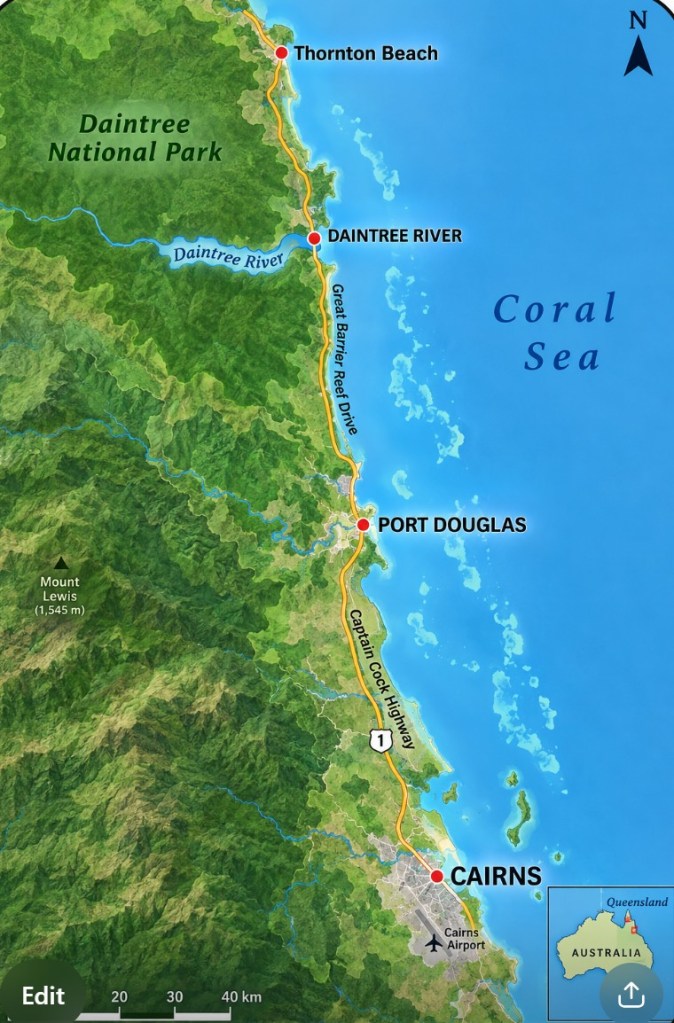
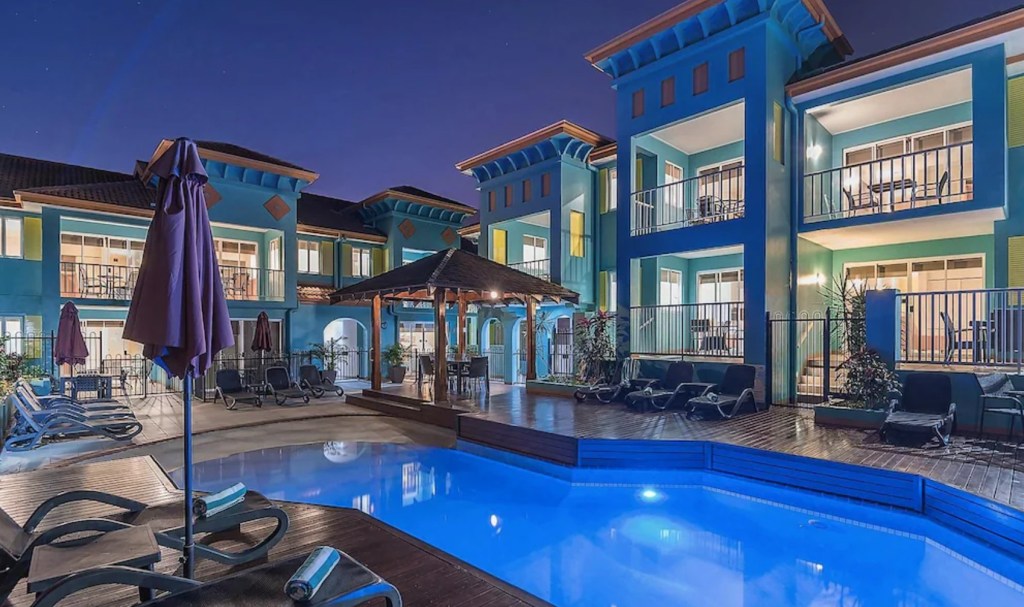
When Cindy visited Australia in 2018, she, too, visited Cairns but her interests were not birds so she was occupied with the Great Barrier Reef with some snorkeling and a trip on a submersible. In 2003 I had stayed at Kingfisher Lodge, Cassowary House and Red Mill. Not sure it would have been a good idea to repeat any of those places with Cindy, but they were unavailable anyhow. We chose what looked like a fun place to stay in Port Douglas, about an hour north of Cairns. The plan was to rent a car and combine some birding with some croc spotting and maybe a visit to the Reef. Our “home” in Port Douglas was to be “Le Cher du Monde”. Online it looked – well, better than in real life. In fairness, the location was great in the heart of the very touristy Port Douglas’s “downtown” and it was “ok” and our room was quiet, but it was not what was expected – lots of stairs and no elevator, no food service of any kind, no maid service, no atmosphere, a loss of electricity one day and a mix up about beds – but we weren’t planning to spend much time in the room anyhow, so – well, ok.
I had arranged one day of guided birding with Doug Herrington, an excellent birder/guide in the area and I hoped that would cover some of what I had seen in 2003, but the 2003 list was very strong, so mostly I wanted to get as many life photos as possible and did not expect many new lifers. At the top of the list for both Cindy and me was to see and photograph a Southern Cassowary. I had seen an adult and chick briefly in 2003, but no photo. We covered a lot of areas where they were found and often saw “Cassowary Crossing” signs and even “Cassowary in Area Recently” signs but not keeping you in suspense, we never saw one. No Cassowary but before going out with Doug, we managed 59 species – one lifer, an Australian Swiftlet, and 19 life photos. After my trip with Doug Herrington the numbers would be 107 species, 4 lifers and a total of 50 life photos. Amazingly 50 of the 82 species seen in 2003 were not seen on this trip – reflecting the different habitats I visited in 2003 with much more time off the coastal area and up into the forests. The close of this post will be the full day with Doug Herrington but until then here is what we did each day – birds mixed with being tourists.
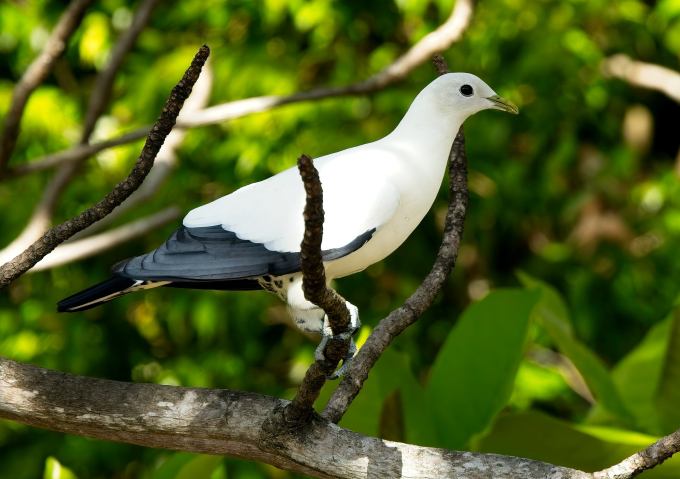
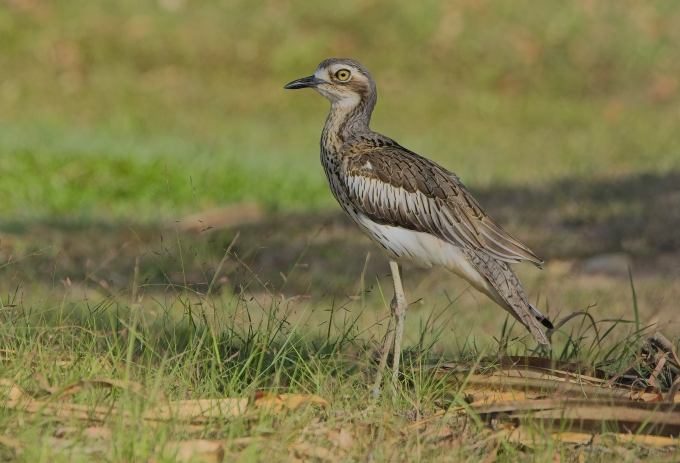
It was almost 5:00 pm when we got into Port Douglas after the flight from Uluru. On the way in I saw an interesting bird at the side of the road, a Bush Thick-knee, like a cross between a shorebird and a wader and a species I had seen only once, in Brisbane in 2003. This time I also got a photo. Another species seen before checking in was the beautiful Torresian Imperial Pigeon. Apparently these birds was just moving into the area as the Australian Autumn was approaching – equivalent to our Spring when migrants returned. We would see them in great numbers throughout our stay in the area and then again in Brisbane – another life photo.
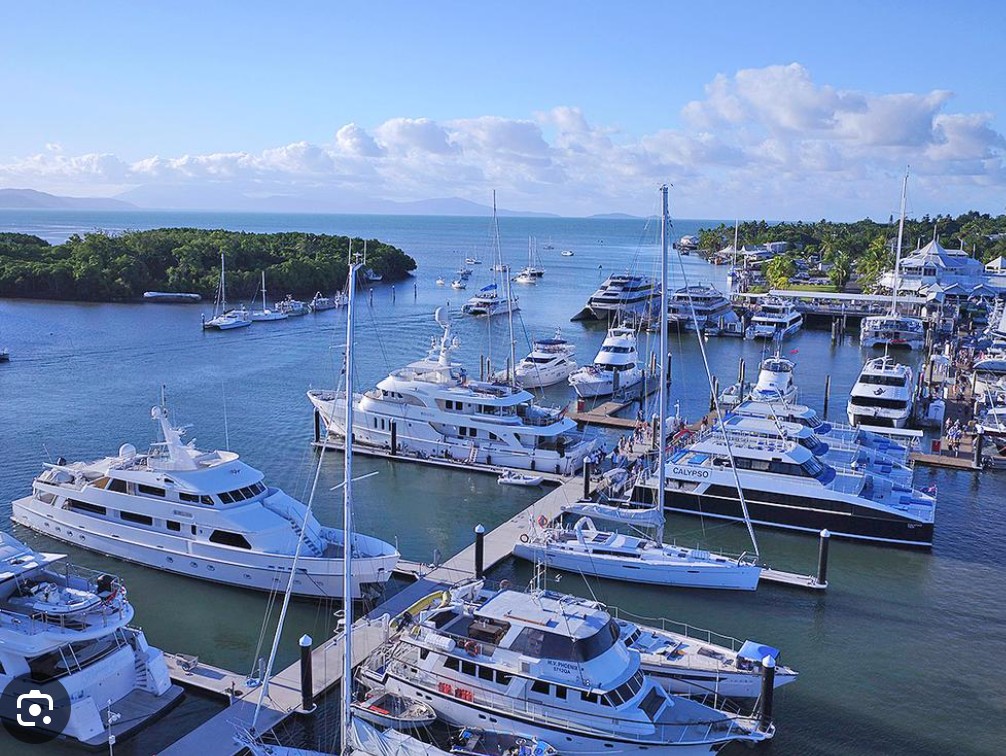
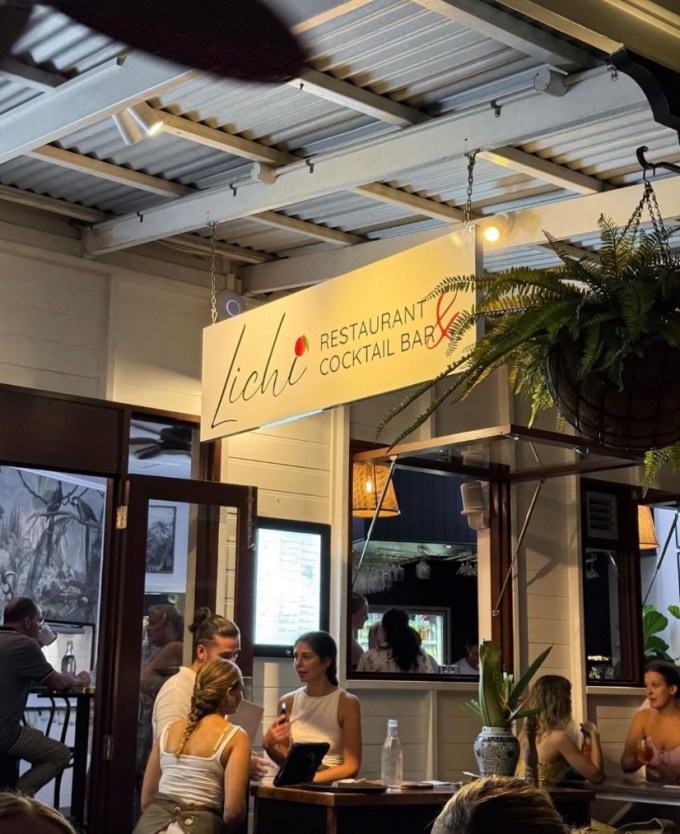
Port Douglas has lots of nightlife and many restaurants including many on a street by the Marina which had many very impressive yachts moored there. That first night we ate at one of the restaurants, the Lichi Restaurant and Cocktail Bar described as “sophisticated with a fusion menu”. The food very good and Cindy and I both tried new seafood dishes: Barramundi for me and coral trout for her – both were very nice and would show up on our dinners again.
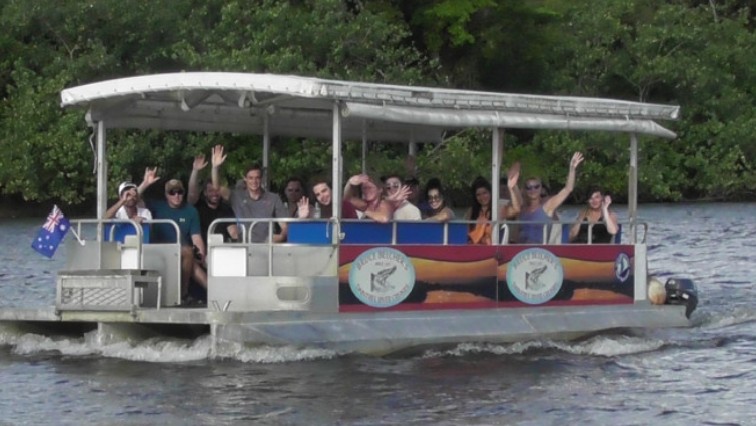
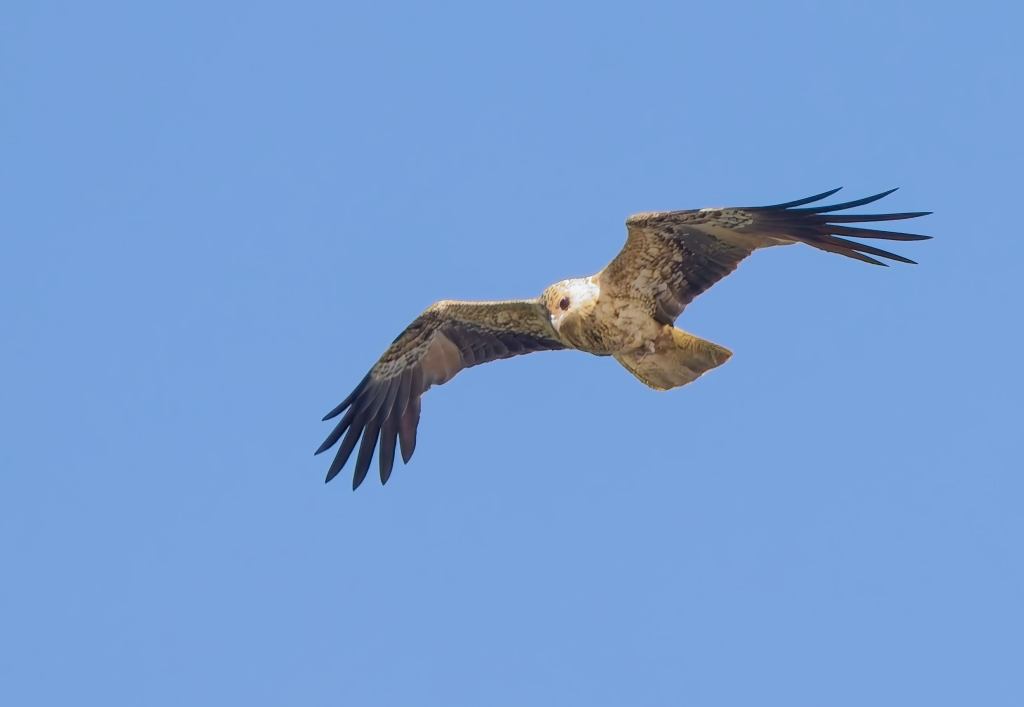
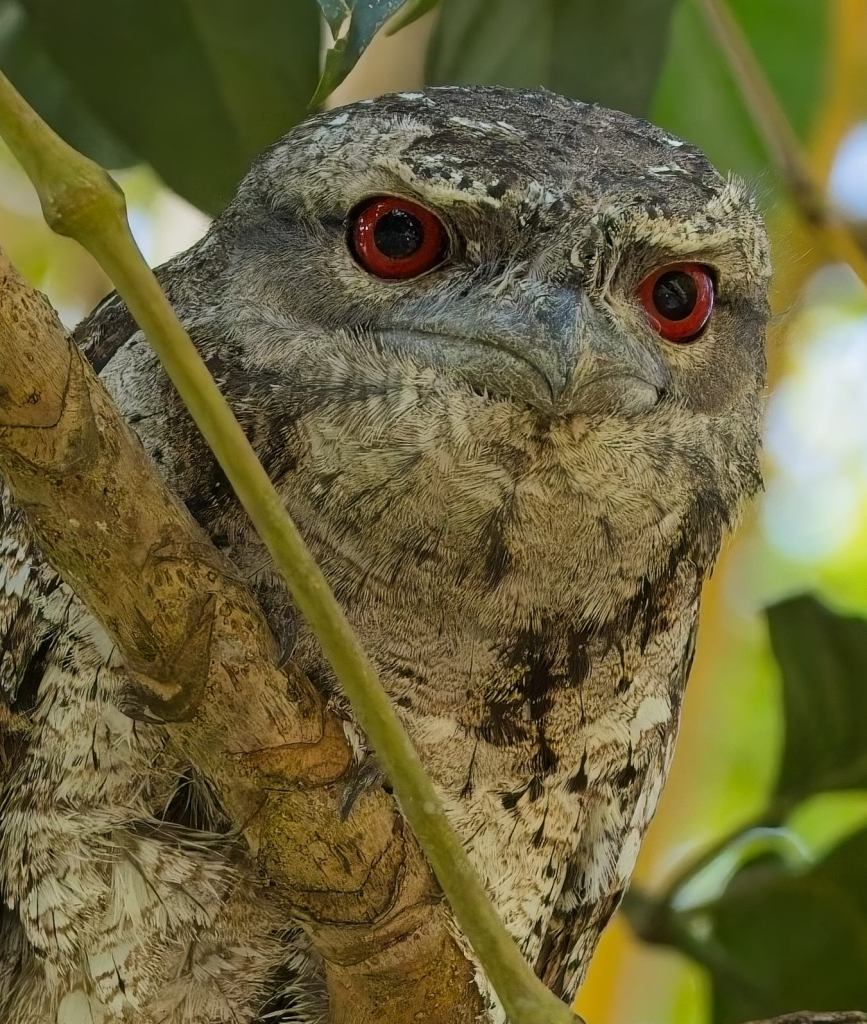
Cindy has this fascination with BIG reptiles. In Costa Rica it was to see crocodiles or caiman and in Africa it was again to see crocodiles and she is always hoping for an Anaconda so of course we had to go look for some big “salties” – Australian Saltwater Crocodiles. After dinner on September 17th as we planned the next day it was imperative to do a river cruise on the Daintree River to see big crocs. She found Bruce Belcher’s Daintree River Cruise and reserved two spots for 9:30 am the next morning. We got a message back that there had to be at least 4 people to make it a go, so we imagined a small boat and not too many passengers and since it was reasonably priced decided to “buy” two more spots if needed to make it a go. We shouldn’t have worried. Bruce has a big operation with several boats and there were at least 8 other people there for the 9:30 trip when we arrived. Their promotional material said they were “keen bird watchers with a good eye for crocodiles and tree snakes”. Crocodiles? Yes. Birds? Not so much. But we did see several crocodiles and they did take us to see a roosting Papuan Frogmouth but I was the one who pointed out an Australasian Darter, Forest Kingfisher and Sacred Kingfisher. The Frogmouth, Darter and Forest Kingfisher were all life photos. I had seen and photographed the Sacred Kingfisher in Sulawesi. Leaving the river, I also got a life photograph of a Whistling Kite. The crocodiles were all resting on the riverbank which was fine by us and we got close up excellent looks.
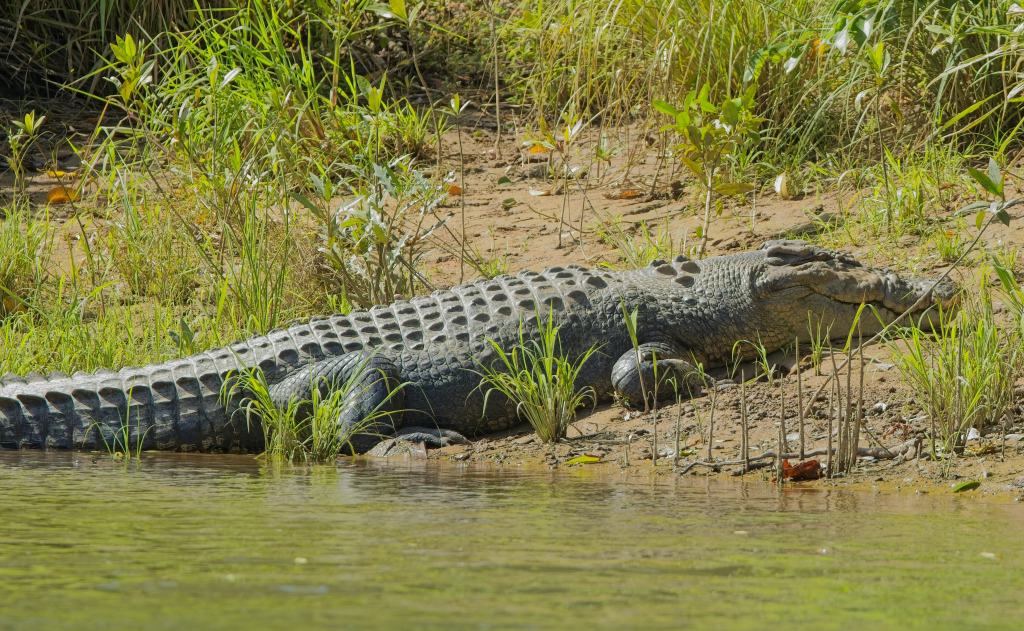
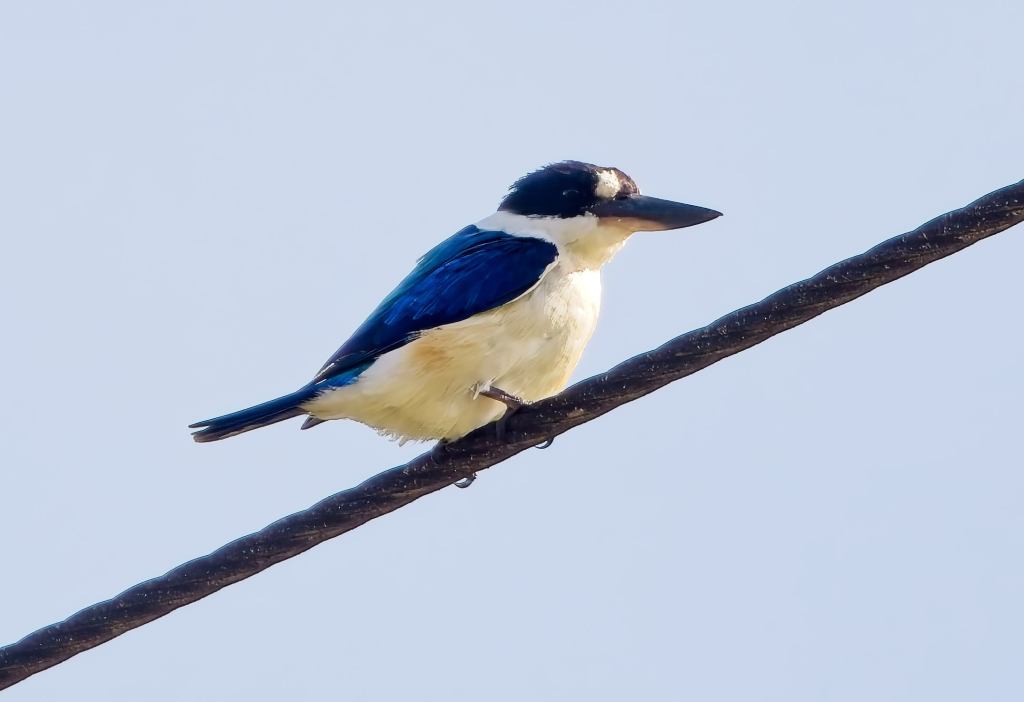
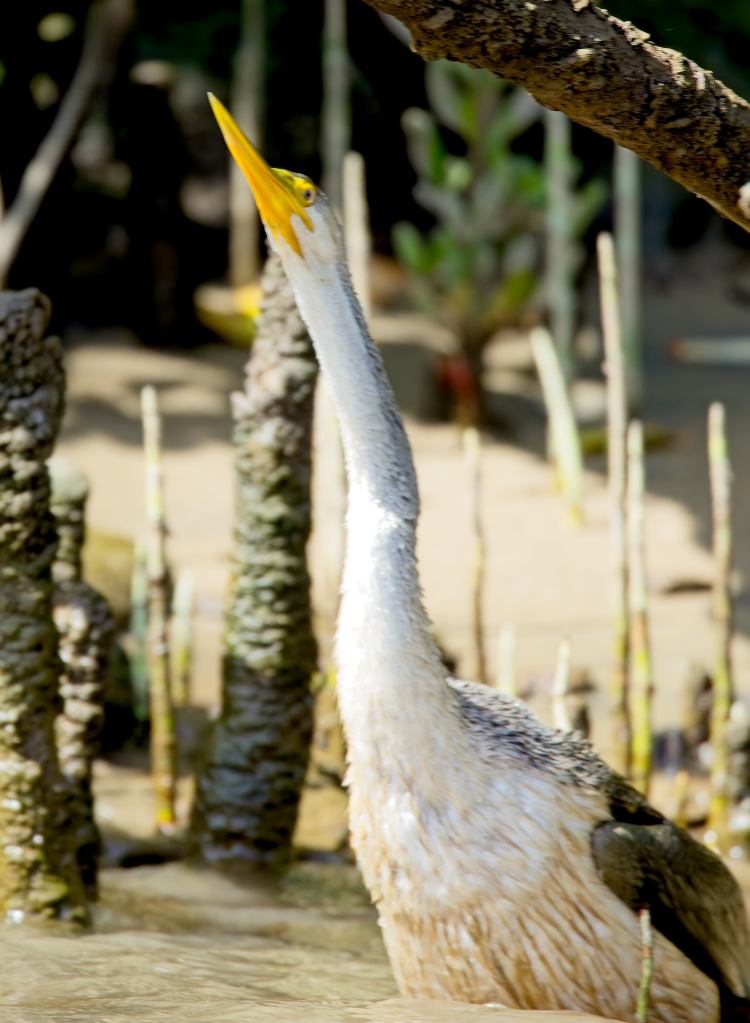
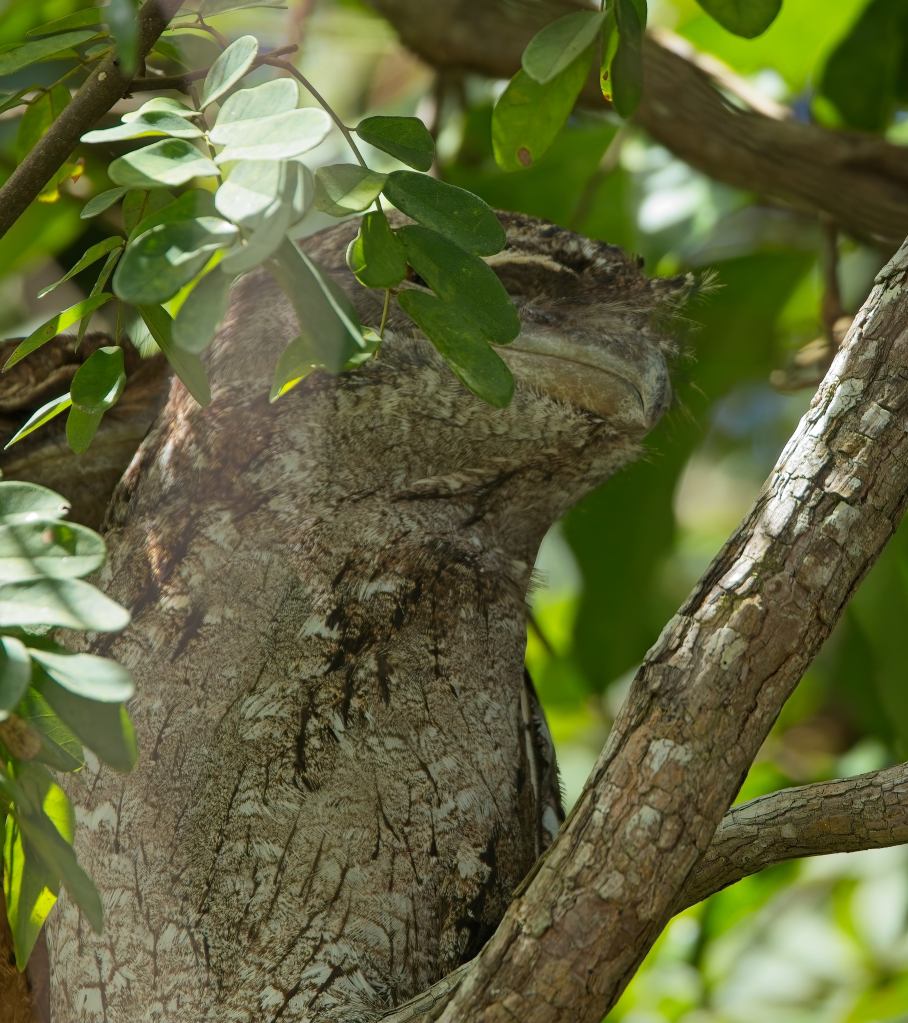
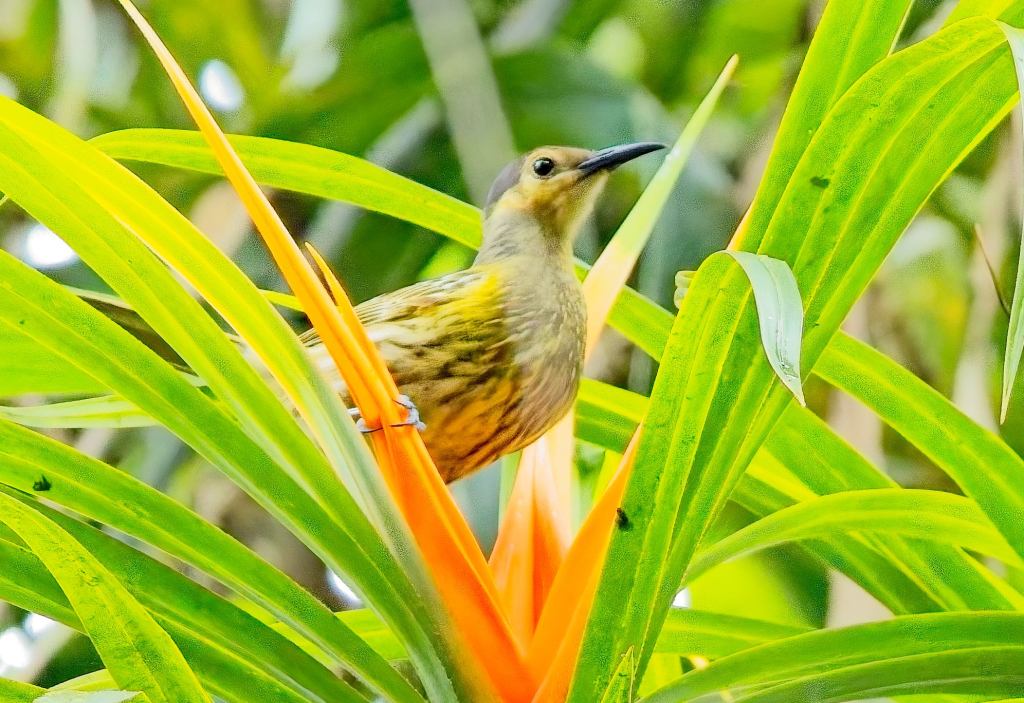
After our crocodile adventure we continued north up to Daintree National Park and Cape Tribulation including crossing the Daintree River on the small ferry. We were constantly on the lookout for a Southern Cassowary and were constantly disappointed. But the scenery was beautiful, either the tropical forest or the beautiful Coral Sea eventually reaching Thornton Beach which I had visited in 2003. A couple of new birds for the trip, no lifers and a single and very pleasing life photo of a Macleay’s Honeyeater.
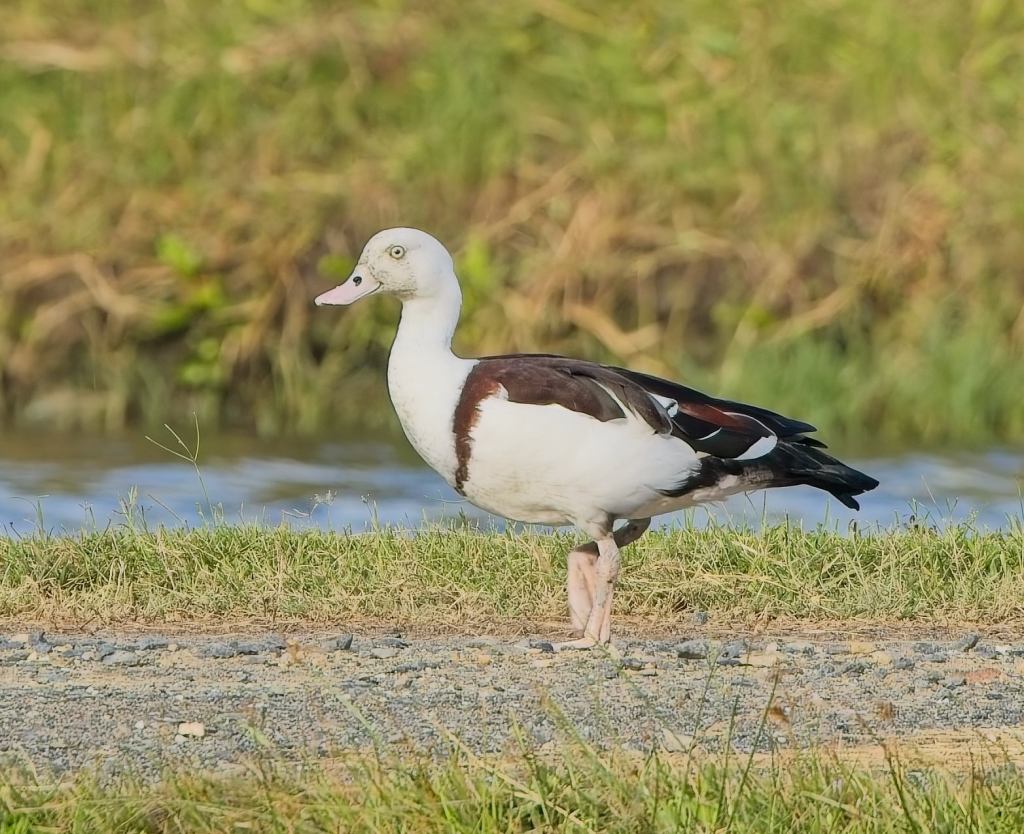
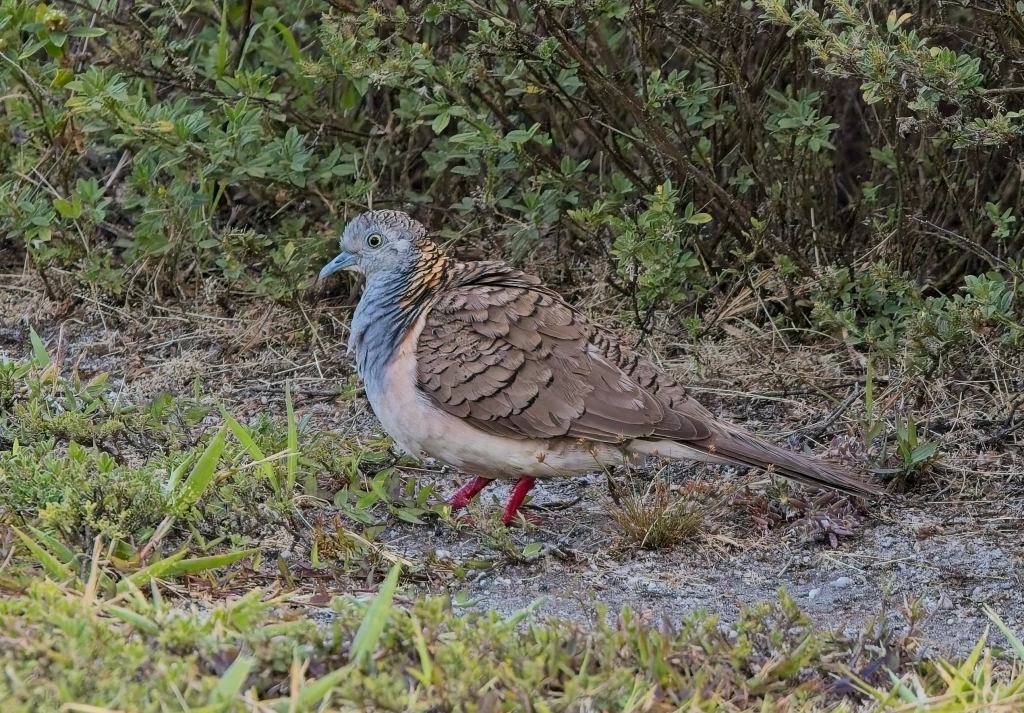
Time to head back so we turned south and I caught site of what looked like a wetland near Wonga Beach. It turned out to be the Wonga Beach Barra Farm – a manmade series of ponds where Barramundi (the same fish I had eaten the night before) are farmed and and then available (at a price) to be caught by the public to be taken home and eaten. Barramundi are also known as Asian Sea Bass. They can get to be as large as 6 feet and 180 pounds but average 2 to 4 feet and the farm raised ones are much smaller. We pulled into the parking lot just as everyone seemed to be leaving and indeed they were closing operations for the day. I had hoped to be able to get a quick non-paying walk into the facility and if not then to walk along the fenced in area from a side road. Here is another prime case where we kept meeting wonderful Australians. Despite their closing, they invited us in to not only get a couple of photo ops of birds there, but to walk around with them as they were feeding the fish to get a look at the Baramundis and hear about the operation. Fun and interesting – and – there were some birds including several Radjah Shelducks which were the ones I had seen from the road and got my attention in the first place. That was a life photo and I also got a life photo of a Bar-shouldered Pigeon. Other birds there were three species of egrets (Eastern Cattle, Little and Plumed), Pied Stilts, a Laughing Kookaburra and a fly-over Osprey.
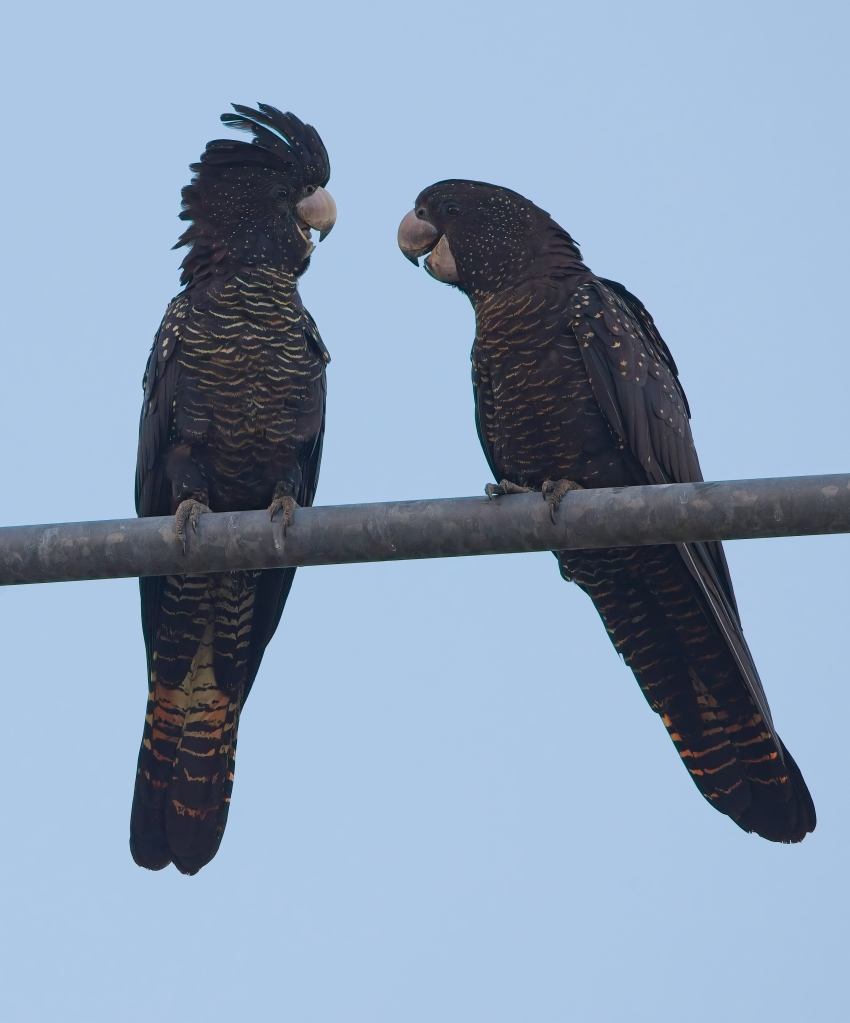
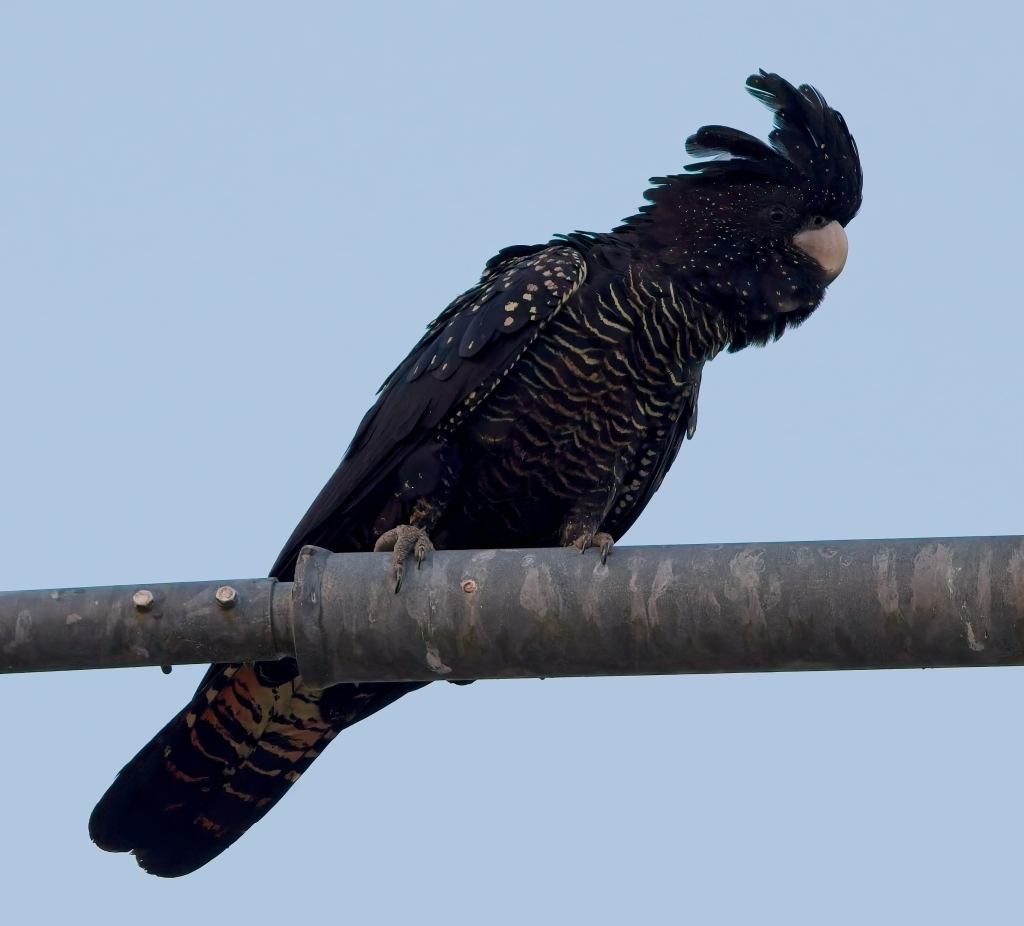
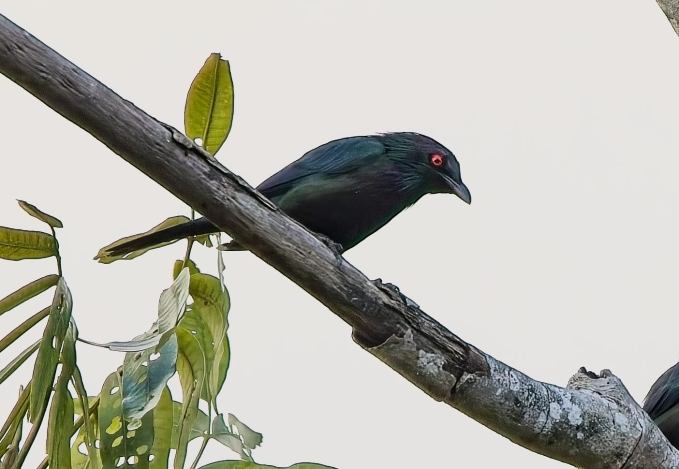
We continued south and in the town of Mossman, I saw some birds perched on a wire that I assumed were doves or pigeons but you have to check out every bird you can. Thankfully I did as they were all Red-tailed Black-Cockatoos and then a few hundred yards further down the street there was a large flock of Metallic Starlings, two more life photos.
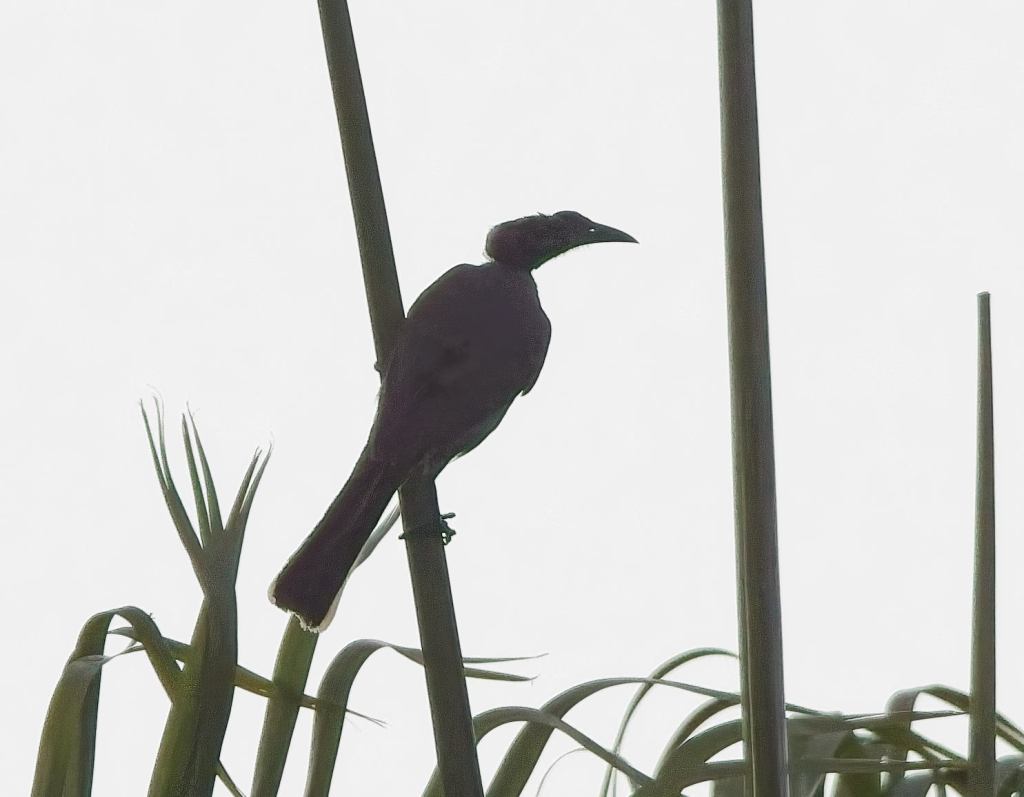
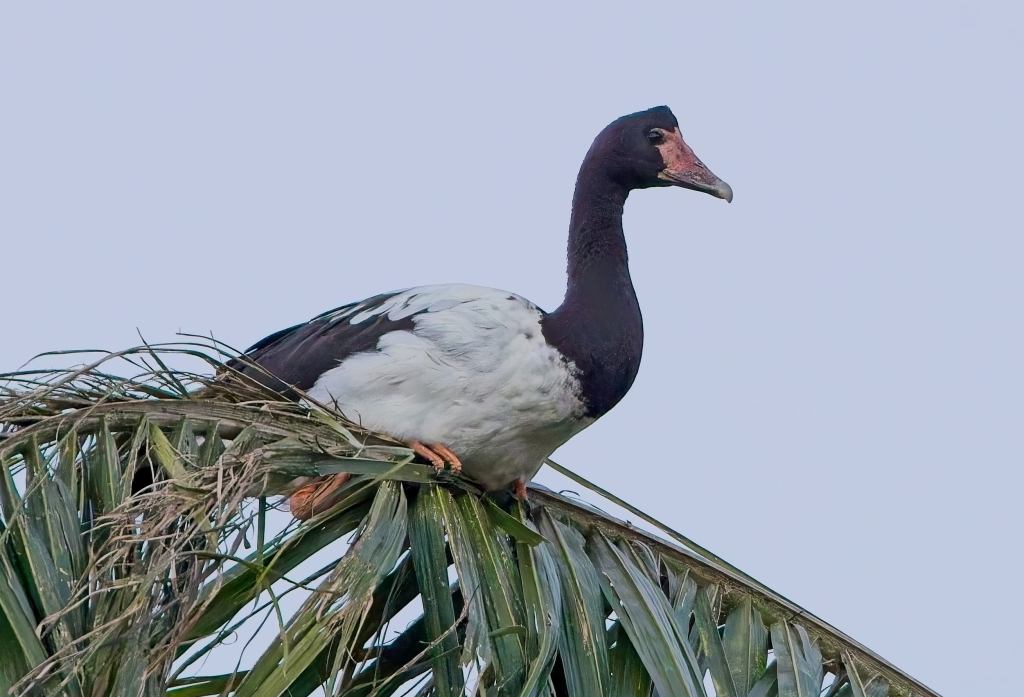
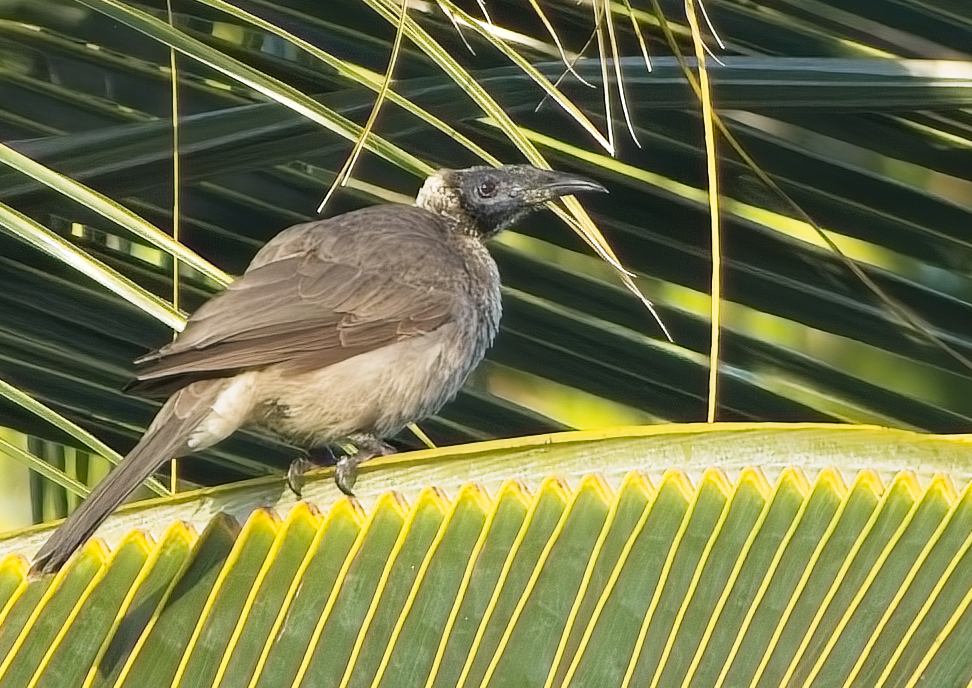
A last stop was at the Wildlife Habitat facility at the turn-ff into Port Douglas. After a u-turn, we found that what I had thought were Australian Ibis in the palm trees were actually Magpie Geese, and more flew in to roost in the trees as we watched, and across the street, now in diminishing light was a Helmeted Friarbird. I would get better photos of each later, but these were both life photos – a great way to close out the Cassowary-less but none-the-less excellent day with 11 life photos!! We closed the night with another good dinner at one of the marina area restaurants.
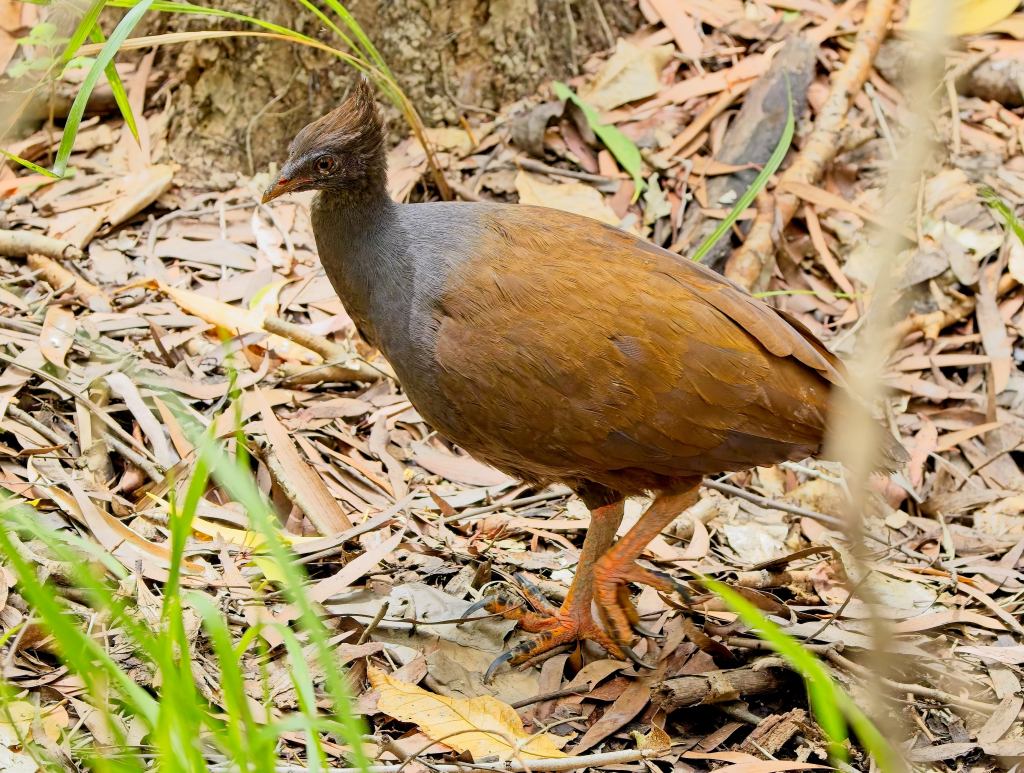
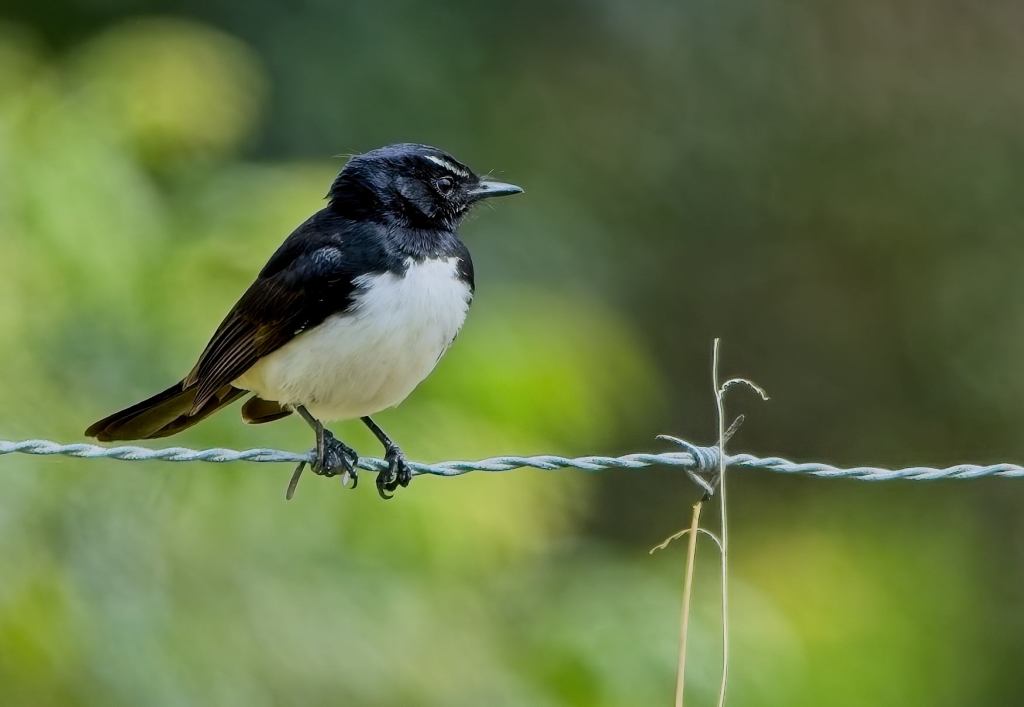
There was a small kitchenette in our hotel in Port Douglas and we had bought milk, granola, orange juice and some fruit which we had for our breakfasts – as there was no food service of any kind at the hotel. There was, however, a small cafe next to the hotel and each morning we had coffee and a pastry there before heading out. The coffee was not as good as in Melbourne but better than at Uluru and a welcome start for the day. On September 19th we would be heading a bit west into the area bordering the Tablelands, one of the areas where I had stayed back in 2003. Specifically we went looking for Kingfisher Park, one of those 2003 places where I had great birds – 35 species of which 27 would have been new for this trip. We made a first stop at the Cattana Wetlands, an Ebird Hotspot. It was pretty quiet. We ran into two local birders who said the same thing and we found no waterbirds at all.. The biggest disappointment was the Green Oriole that was singing right over our heads somewhere but could not be found even with coaxing with some playback. I did get life photos of an Orange Footed Megapode and of Willie-Wagtail, a common black and white flycatcher that did indeed constantly wag its tail.
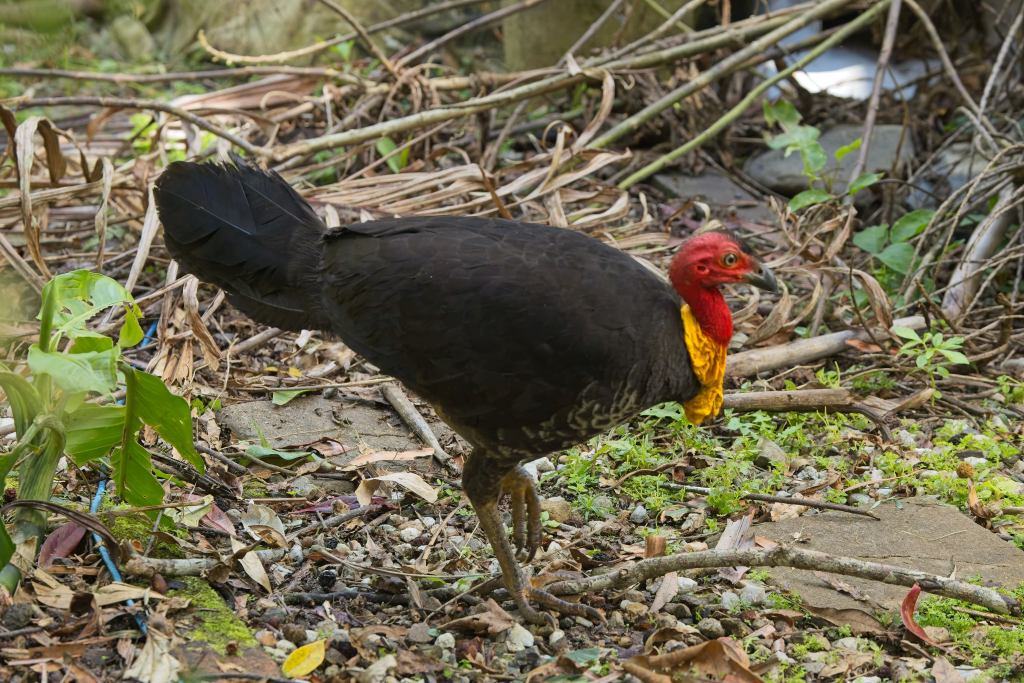
Then we began our search for Kingfisher Park Birder’s Lodge. We had excellent GPS directions and followed them precisely leading us to – a spot on the road in the forest in an area that had a few residences – no sign of any lodge. We drove around and tried a different GPS source with the same result. We stopped a woman walking in the neighborhood and she had heard of Kingfisher Lodge and gave us some directions that took us close to the same place we had stopped before but no Lodge. However, persevering, not far away we found a worn track into the forest with an old beat up sign that said “kingfisher”. It was barely the width of our vehicle, but we followed it to a garage/workshop with a car parked alongside and got out. A bit further in there was what looked like a residence. We approached and could hear a television inside and called out “hello”. No response for 5 minutes and then a woman came out who told us that it was no longer a lodge but had occasional guests. I have no specific memory of my visit in 2003, but find it hard to believe that I could have been there. The lady told us that cassowaries did come by and were found all through the area, but the regular one had been through a couple of hours earlier and probably would not return for hours. An Australian Brushturkey walked down the road and gave me my life photo, but that was it. So much for reliving old memories – at least that one. In 2003 I had also birded the Cairns Esplanade and we decided to head on into the City and maybe have better luck.
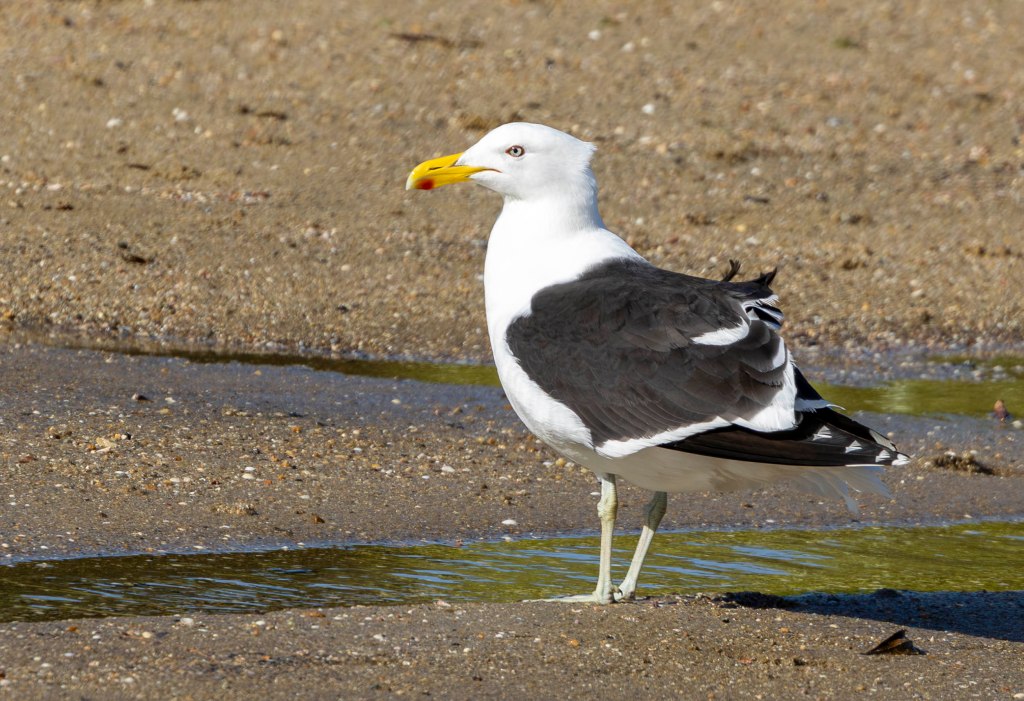
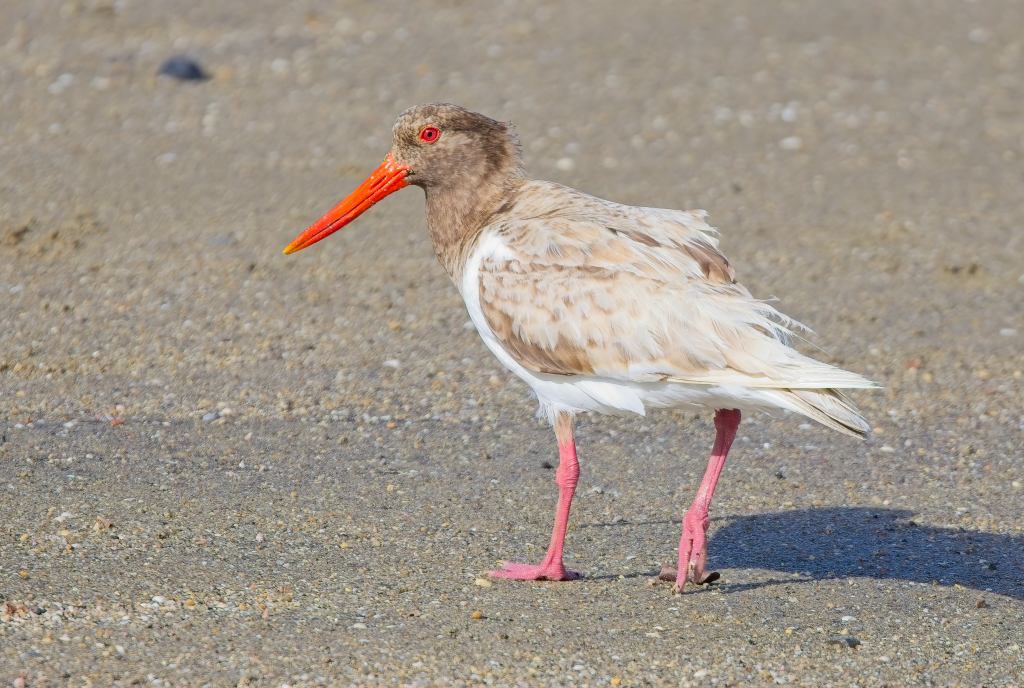
Among other reasons to visit the Esplanade, it can be a great place for shorebirds. In 2003, my Ebird list for the Esplanade had only 11 species, 8 of which were shorebirds, and half of those were ones for which I still did not have photos: Gray Tattler, Greater Sand-Plover, Little Curlew and Broad-billed Sandpiper. Hopes were high to see them again and get pictures. This time we saw 29 species, and again 8 were shorebirds, none of the targets. A Kelp Gull was a continuing rarity but I had seen and photographed one elsewhere earlier and a very odd leucistic Pied Oystercatcher was a challenge tio ID . A Nordmann’s Greenshank had been seen at the Esplanade the previous year and a local birder I met thought one of the shorebirds we saw might be it again but unfortunately it was only a Common Greenshank – not the would be lifer.
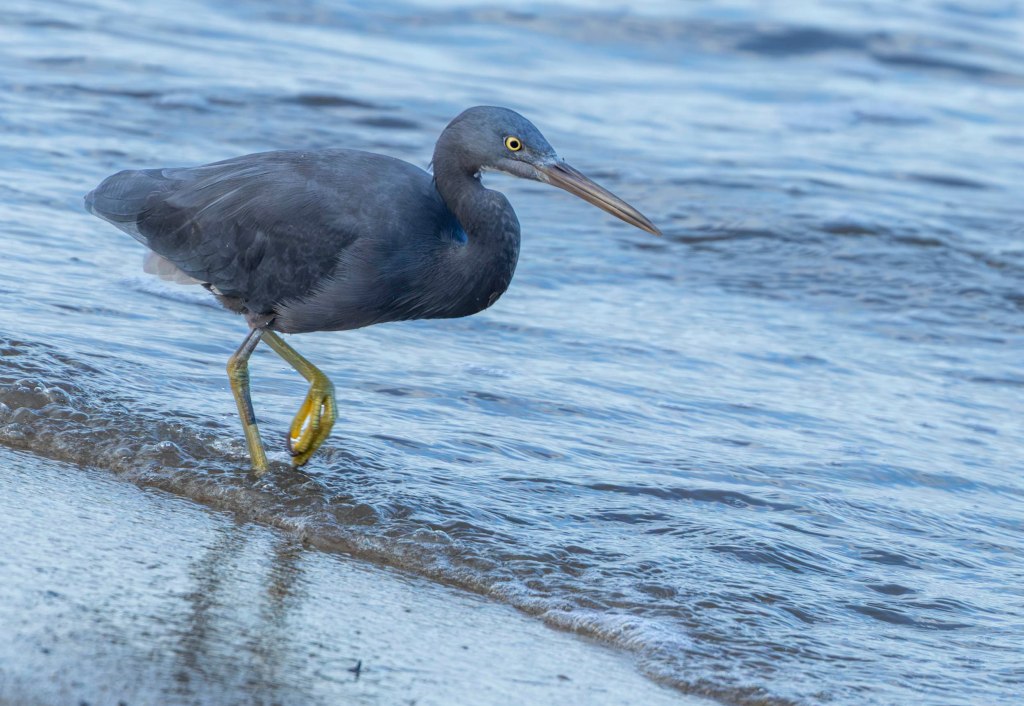
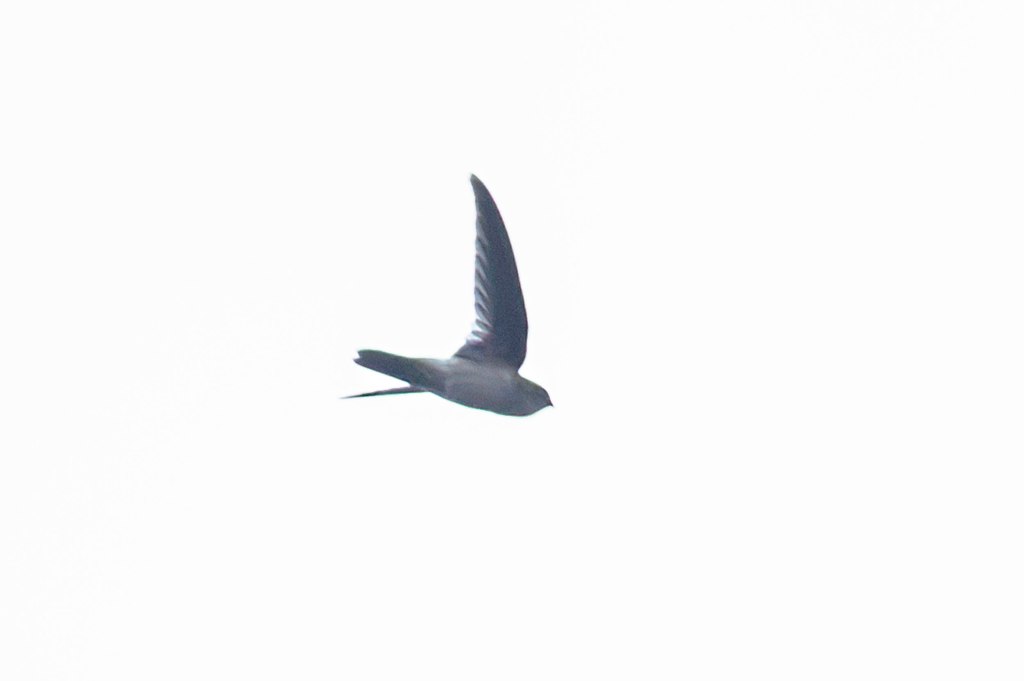
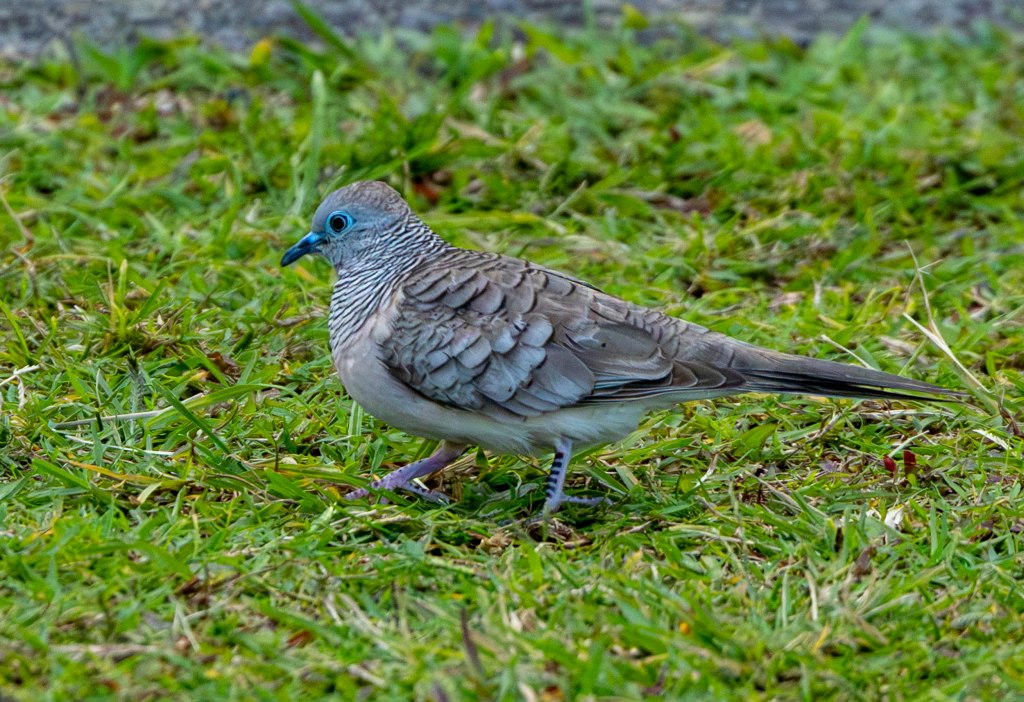
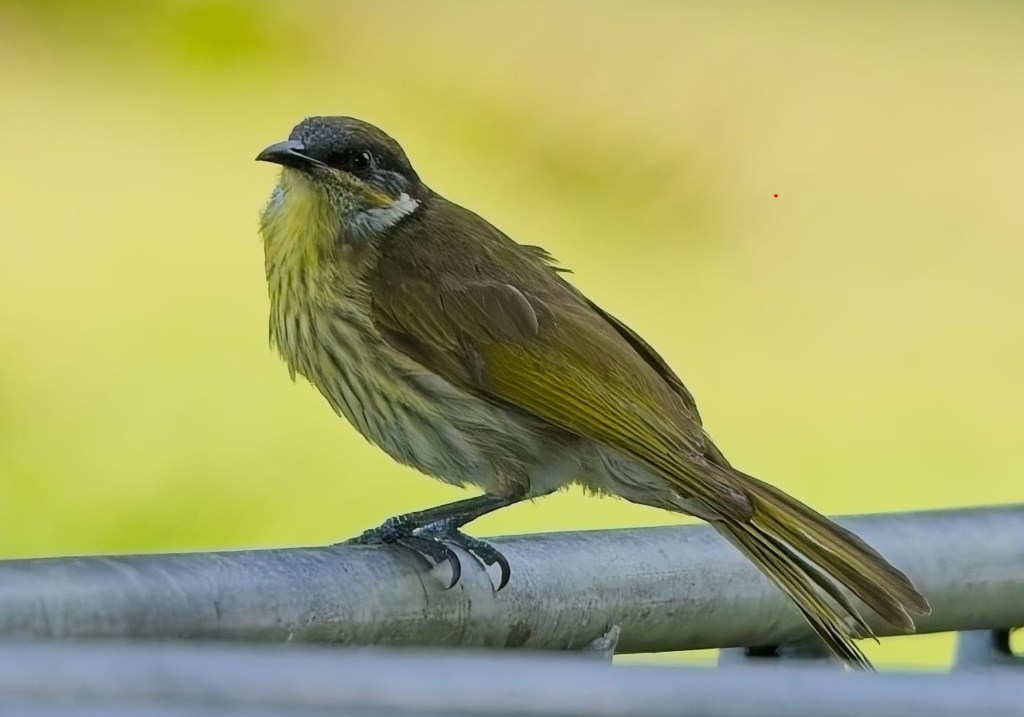
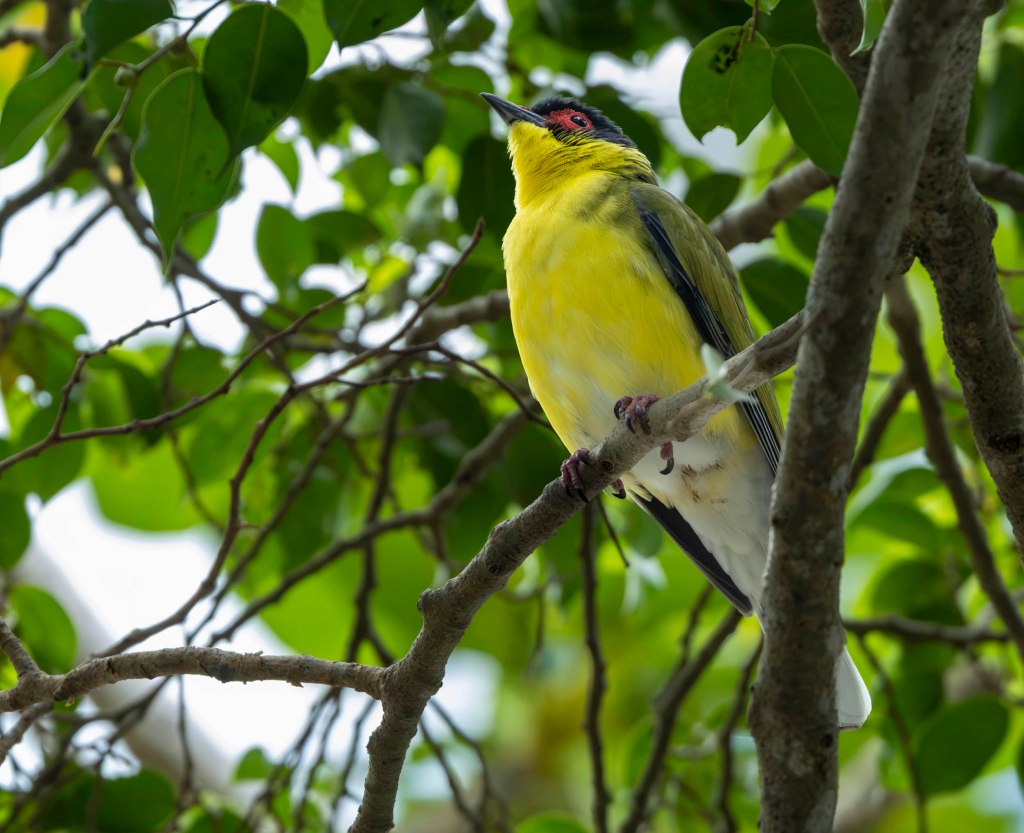
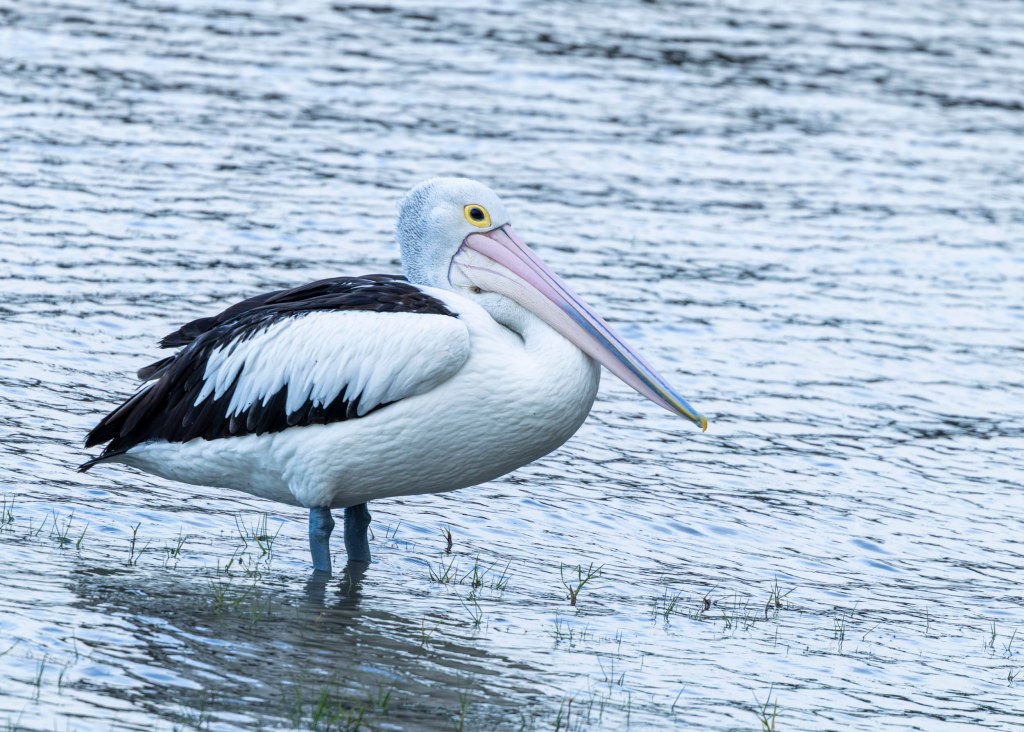
But there were a few treats – life photos of a Pacific Reef Heron, a Varied Honeyeater and an Australian Swiftlet, with many of the latter seen. This would be one of those odd stories that happens in birding. As mentioned, I had met another birder/photographer there – a very nice fellow originally from South Africa. He knew the local birds and at first we started looking for a Rose Crowned Fruit-Dove which he said could be found in some large trees near the northern end of the Esplanade where we were biding. I don’t know how the goal changed but he had received a photo of a nest with a Double-eyed Fig Parrot in it located further south on the Esplanade. Cindy was game so off we went. It was a very long walk as the tree was much further south than expected and when we got there we found the parrot-less nest hole and then it was a very long walk back with no time now to look for the Fruit Dove. As it turned out, I got the Fig Parrot later in the trip and never did see the Fruit Dove – but it was fun visiting with the fellow and we did get a lot of exercise at a very pretty place. But I got a life photo of a Peaceful Dove on our walk. I am also including a portfolio of other nice photos from the visit.
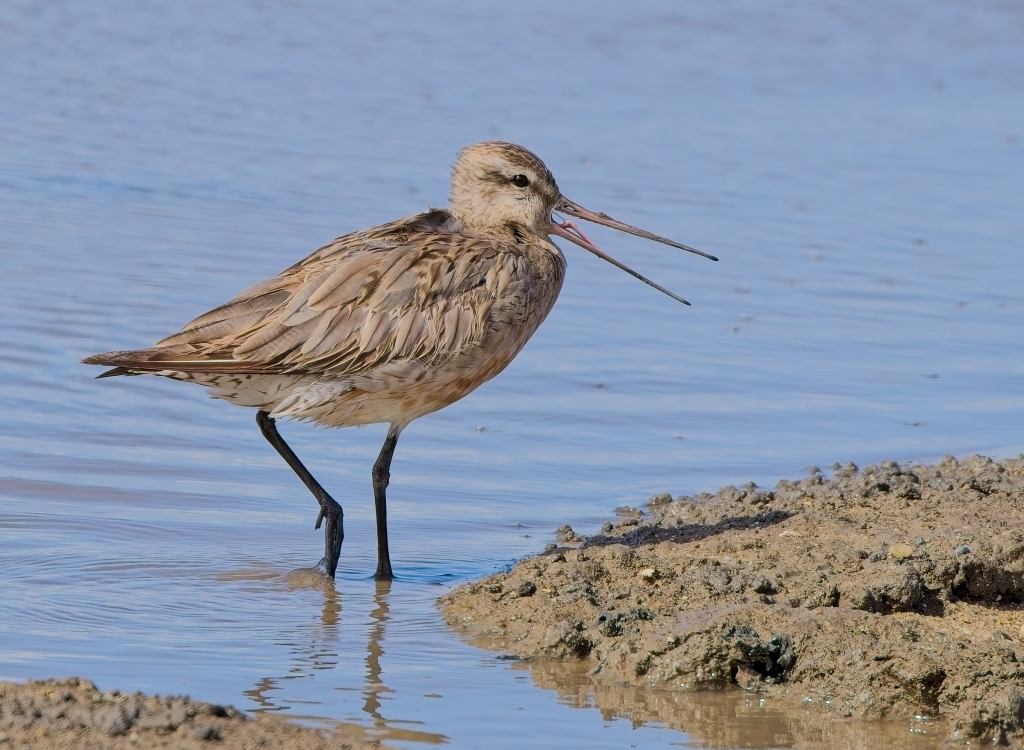
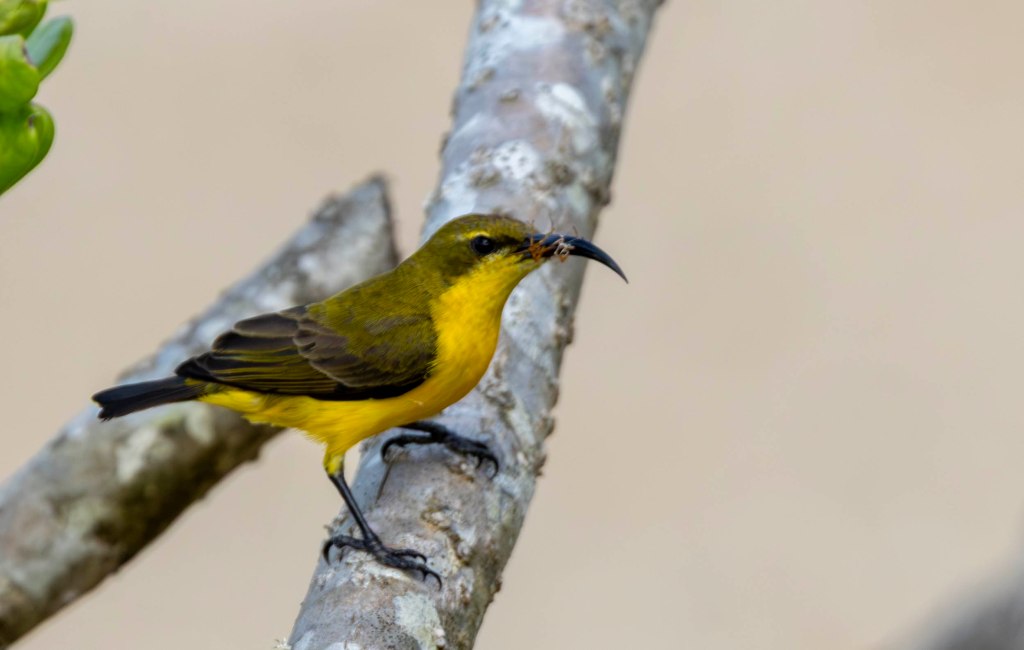
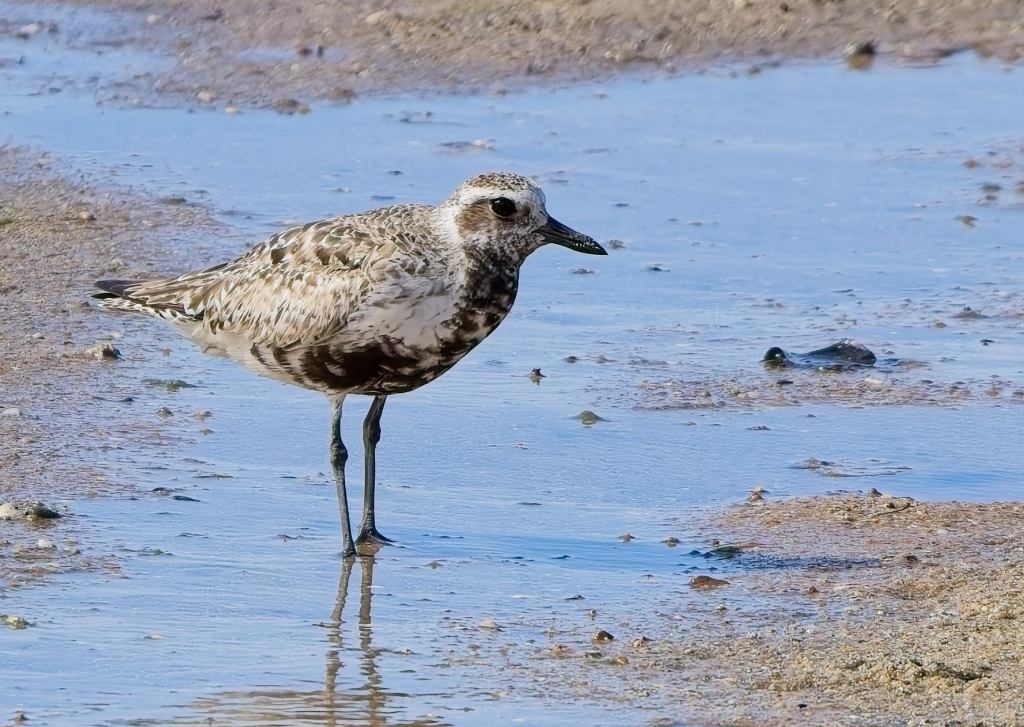
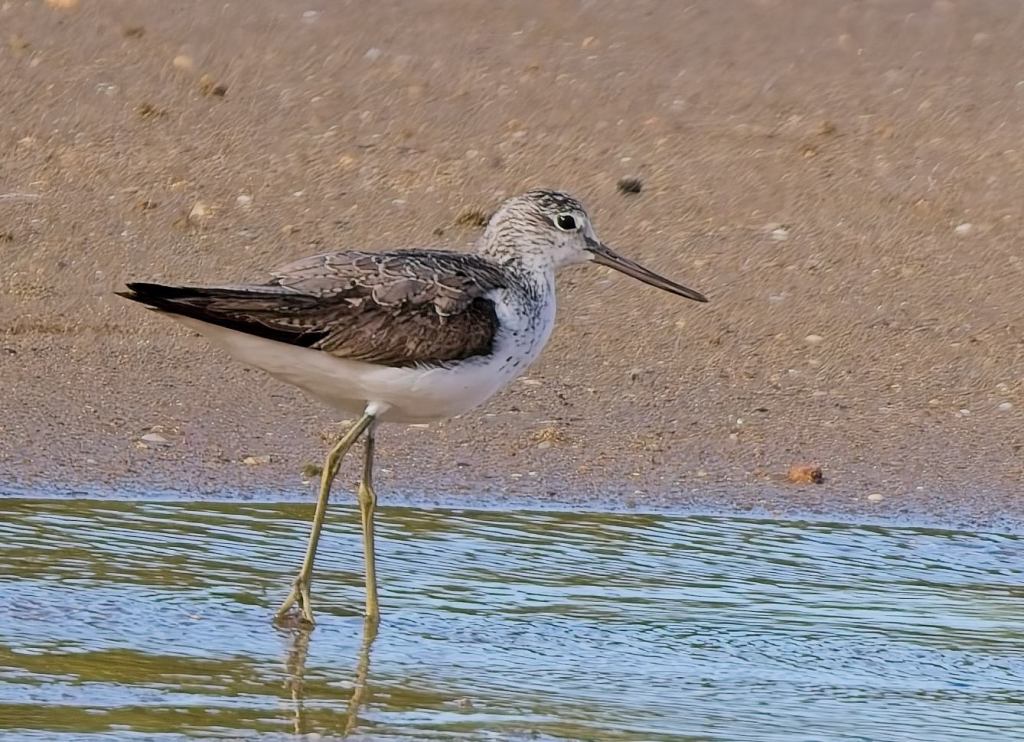
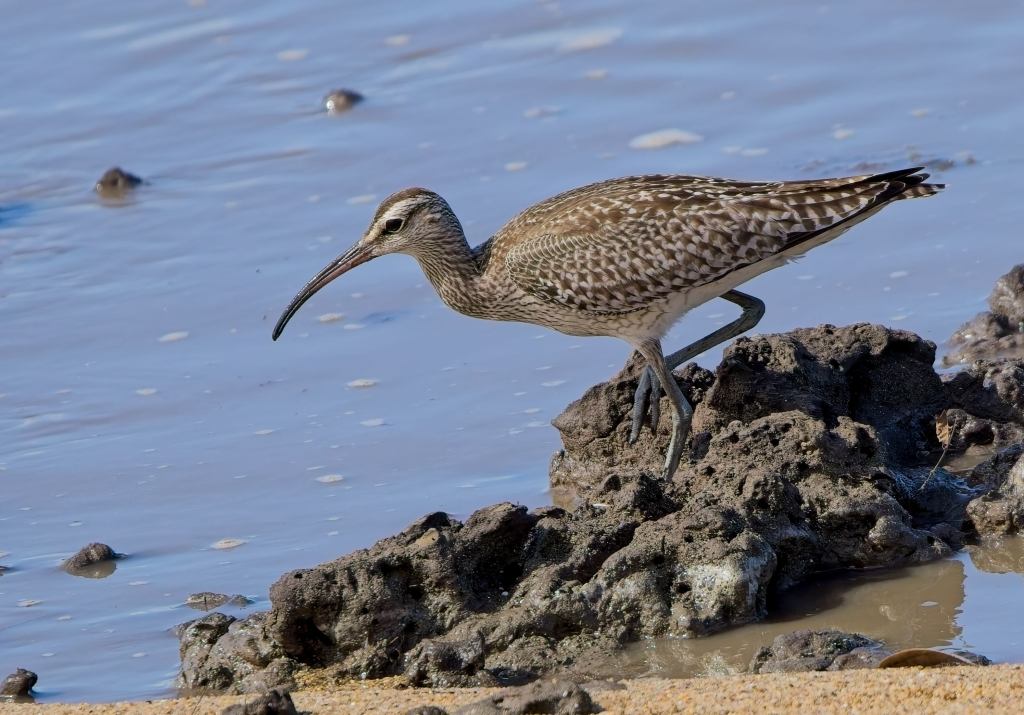
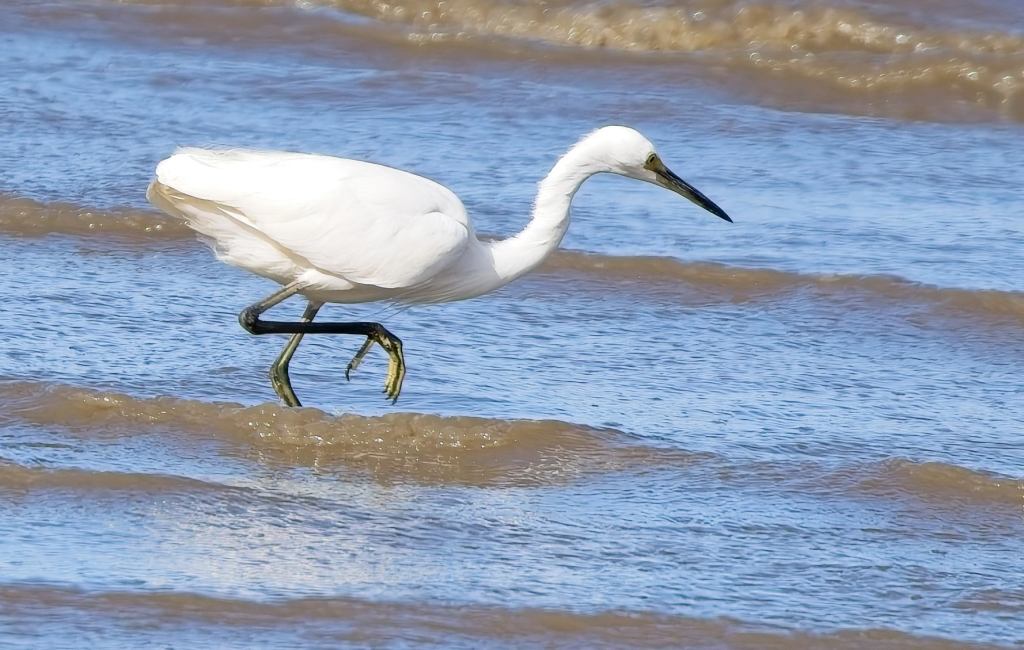
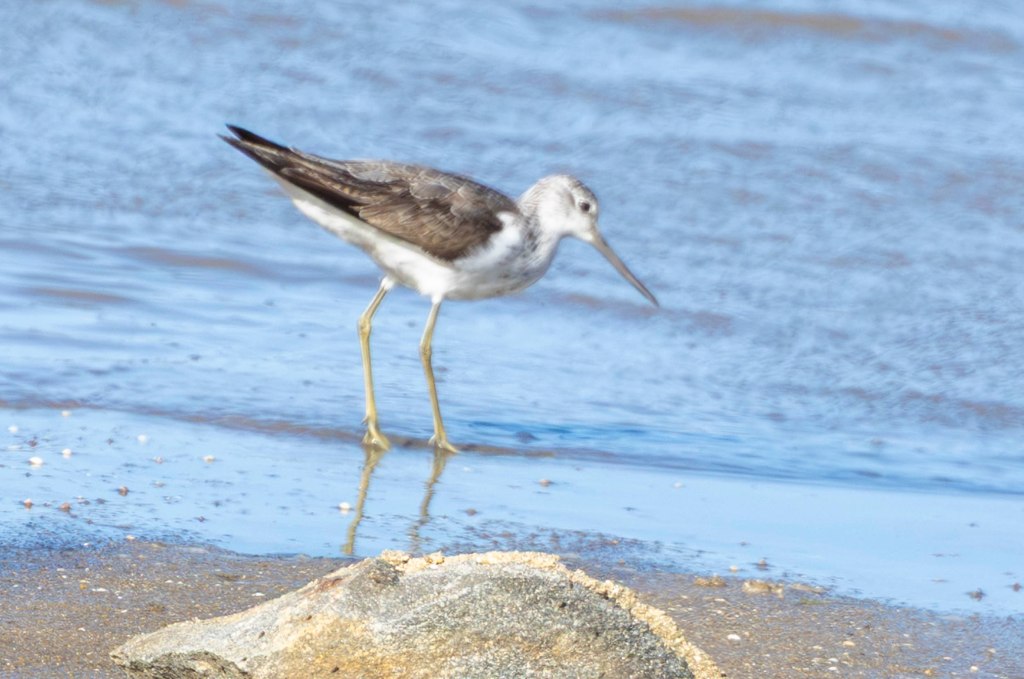
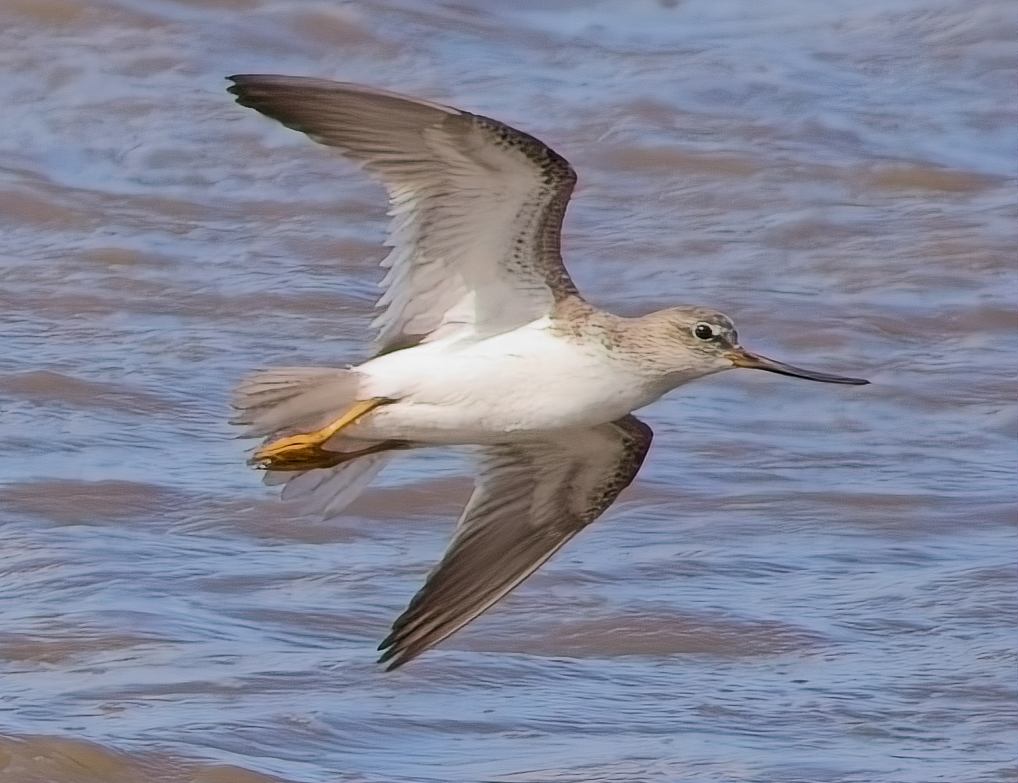
Catching the Terek Sandpiper in flight was a treat. I first saw this species in Wajima, Japan in 1983 without a photo. In July this year, one made a surprise visit to a Sewage Treatment Plant in Snohomish County, Washington, about 30 miles from my home. It became my life photo. This one is much better. It was about an hour to get back to Port Douglas. A comment is in order here. Originally we had planned to spend this day going out to the Great Barrier Reef on one of the many excursion boats leaving from either Cairns or Port Douglas. I am not a water person, poor swimmer and snorkeling is a challenge. Cindy had done this on her earlier visit and we looked at trips using glass bottomed boats. On close look none of the trips were that appealing and Cindy said she was ok to skip the activity. I wish I was able to snorkel as I am sure it would have been amazing. Another time where Cindy probably sacrificed for me.
Cindy and I were both scheduled to go out with Doug Herrington on September 24th. I got a surprise message from him that another birder would be joining us. This would be a “hard core” birding day which would inevitably include some of those LBJ’s (“Little Brown Jobs”) that are the part of birding Cindy does not like so she decided to sit it out and explore Port Douglas. Although there were some awesome birds that day, it was probably a good decision on her part as there were definitely some tedious moments including a visit to a trailer park that was very birdy but admittedly not that scenic. Doug was going to pick me up at the hotel around 7:00 am. I got a much better Helmeted Friarbird photo as I waited. The other birder was a Britisher about my age and more into photography than birding. We took turns being in the front and back passenger seats and all worked well.
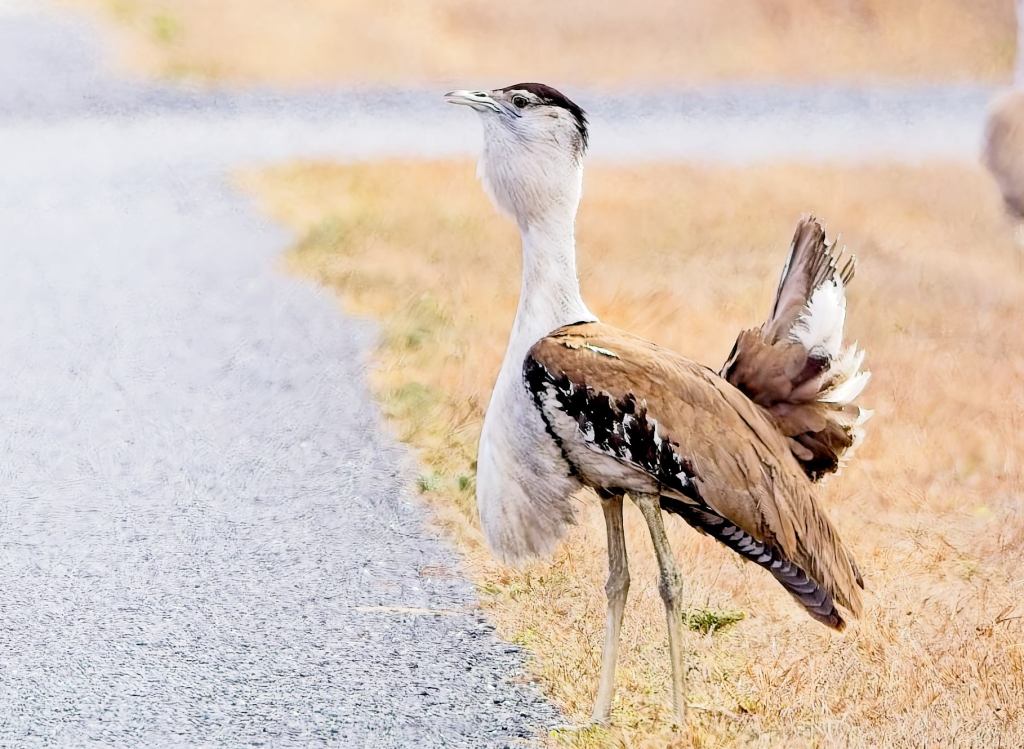
We would make 11 stops during the day and since Doug did not use Ebird, I did my best to enter species as we found them. When we were done, our species list was 76 species and I had added 3 lifers and 31 life photos. I am pretty sure I missed some heard only species but think I got all of the ones seen. The lifers were Black Faced Monarch, Australian Bustard and Pheasant Coucal. I got photos of the first two but the latter was heard more than once and clearly but never seen so not photographed. Doug was an excellent guide and knew the birds and their special locations well. I never would have found many if not most of the species without his special knowledge. The trailer park – they are called caravan parks in Australia – was not scenic but it was very birdy with 21 species including 12 life photos.
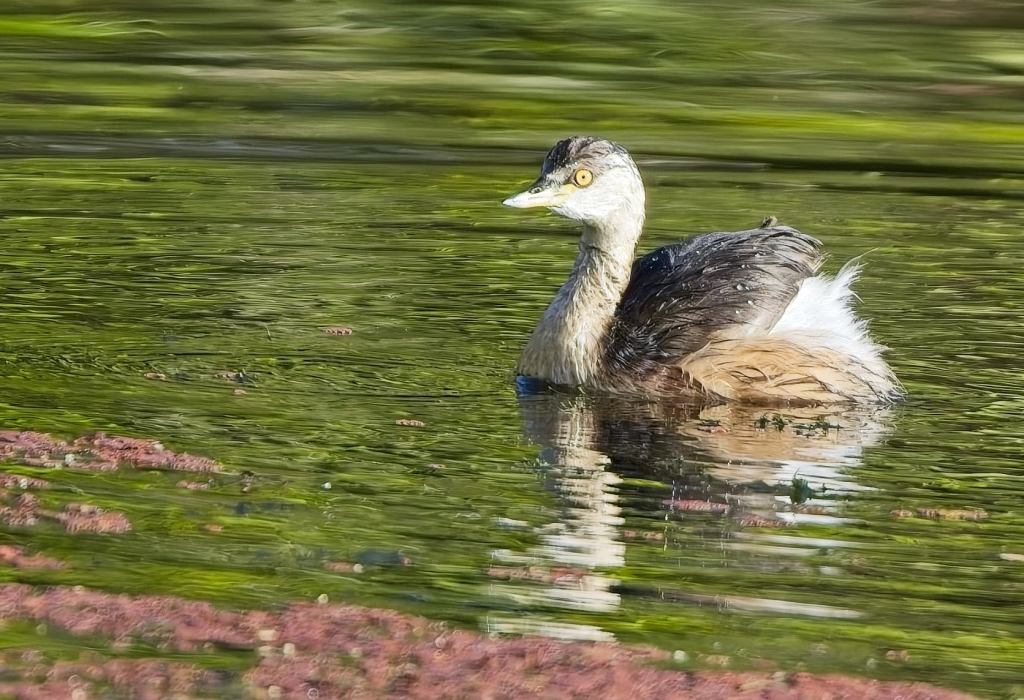
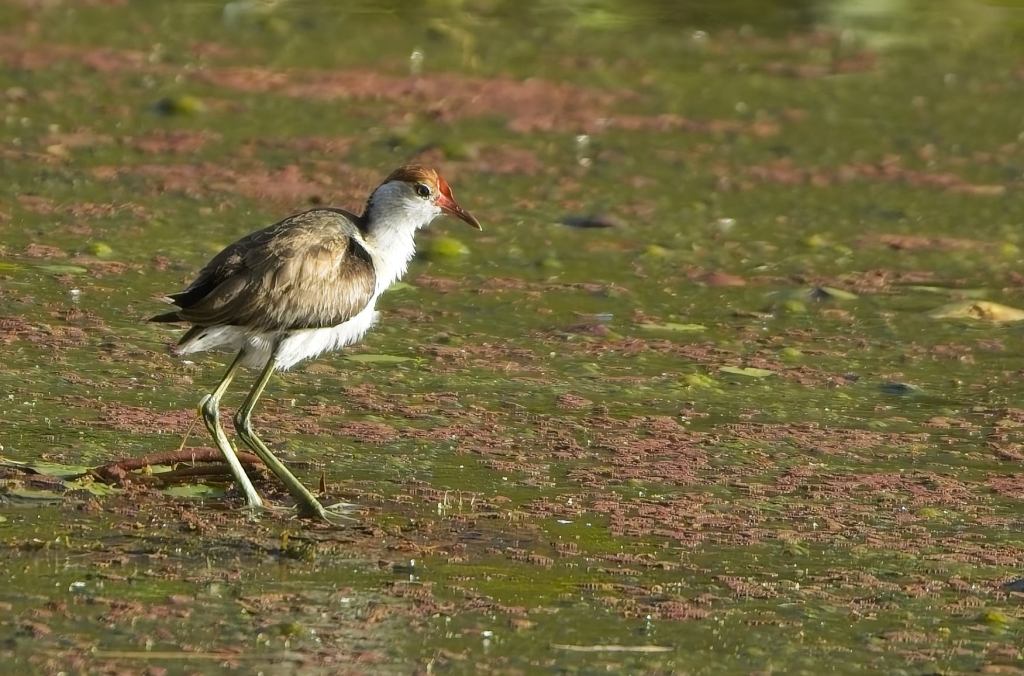
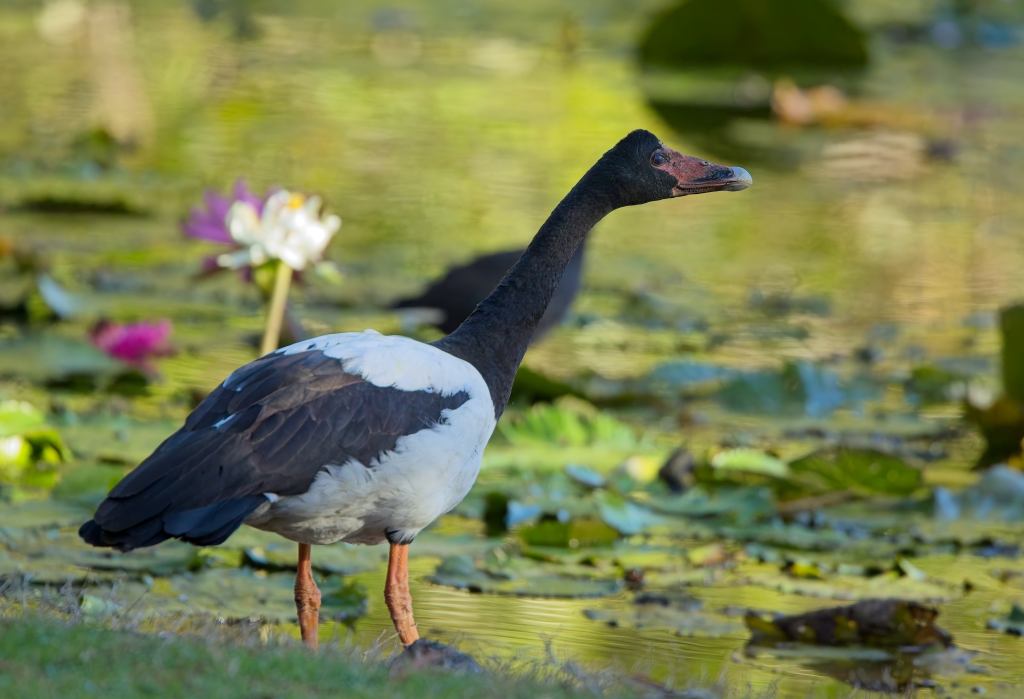
It took less than 15 minutes to get to the Warri Park Wetland in Port Douglas and my first life photo – an Australasian Grebe with a second life photo, Comb-crested Jacana a minute later. This was quickly followed with a stop at the Ferrero Road Wetland also in Port Douglas where we had more than 100 Magpie Geese and 35 Plumed Whistling Ducks (a life photo) and 3 Green Pygmy Geese (another life photo). I also had another really good photo of a Straw Necked Ibis – photographed previously when in Melbourne. The pace slowed down as Doug made our way to a stakeout roosting spot for a cooperative Brahminy Kite. I had previously photographed one in Sulawesi in 2023. Next up was a beautiful Black Necked Stork, a species I had last seen, and photographed, in India in 2011.
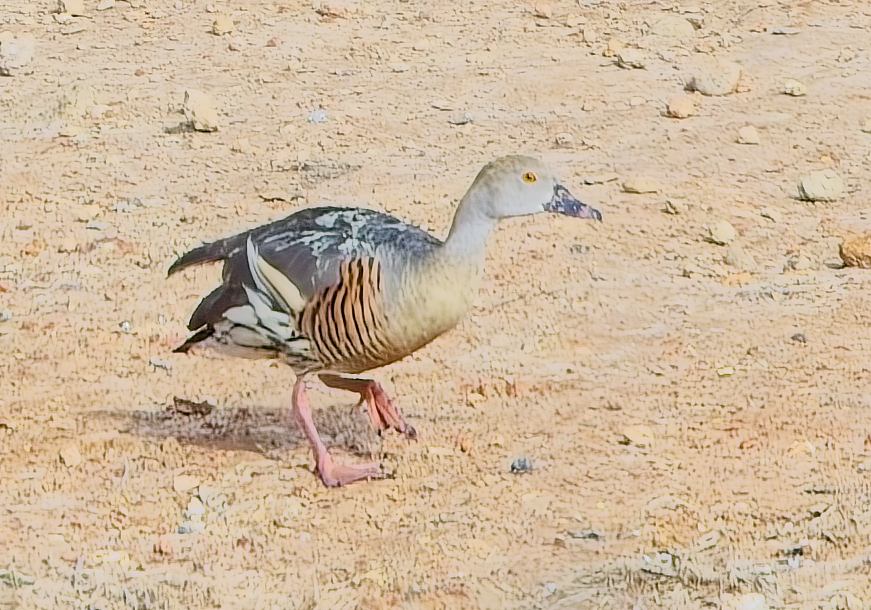
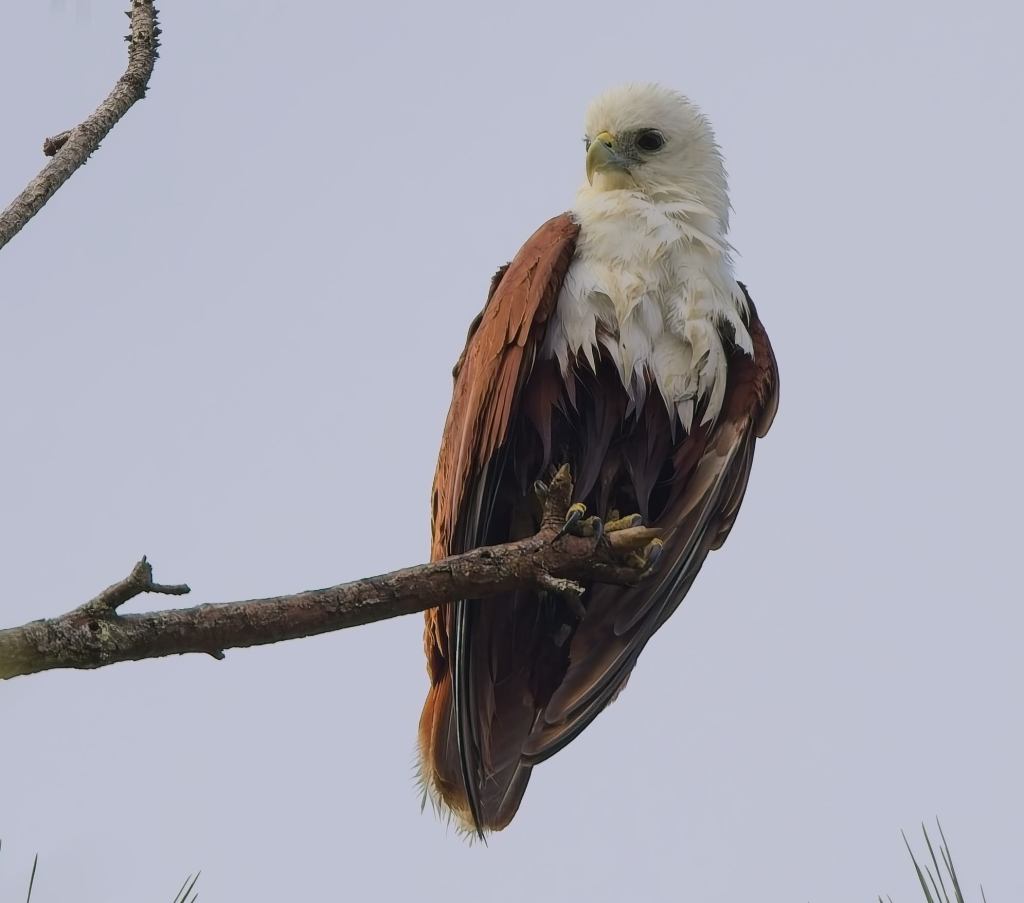
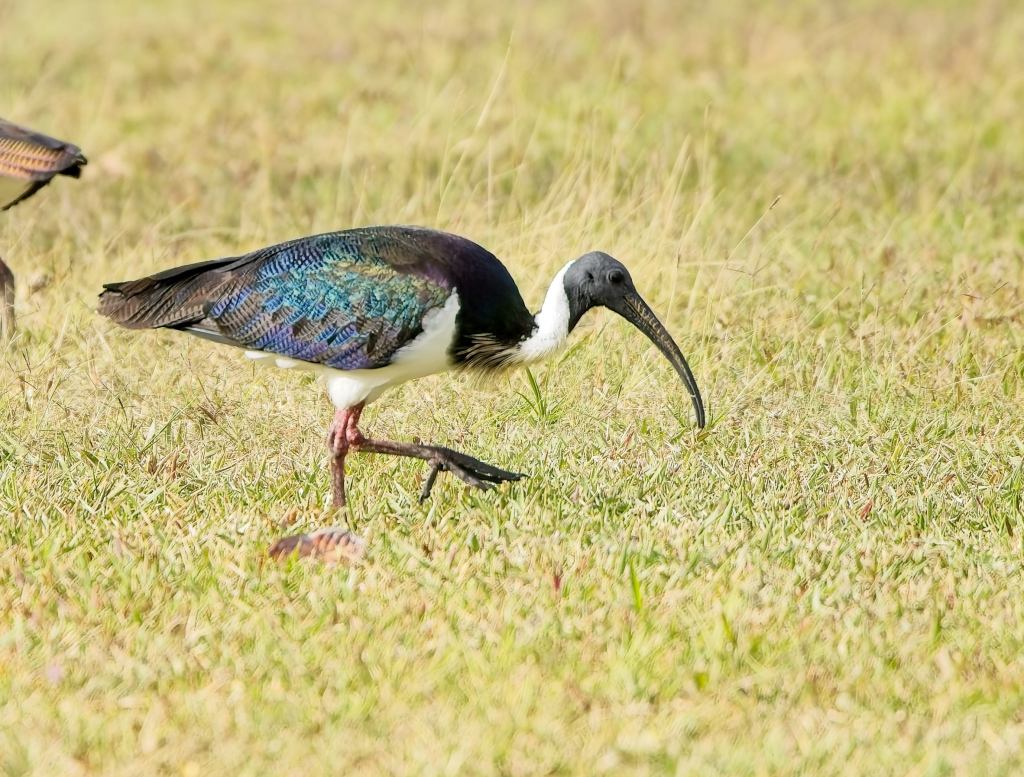
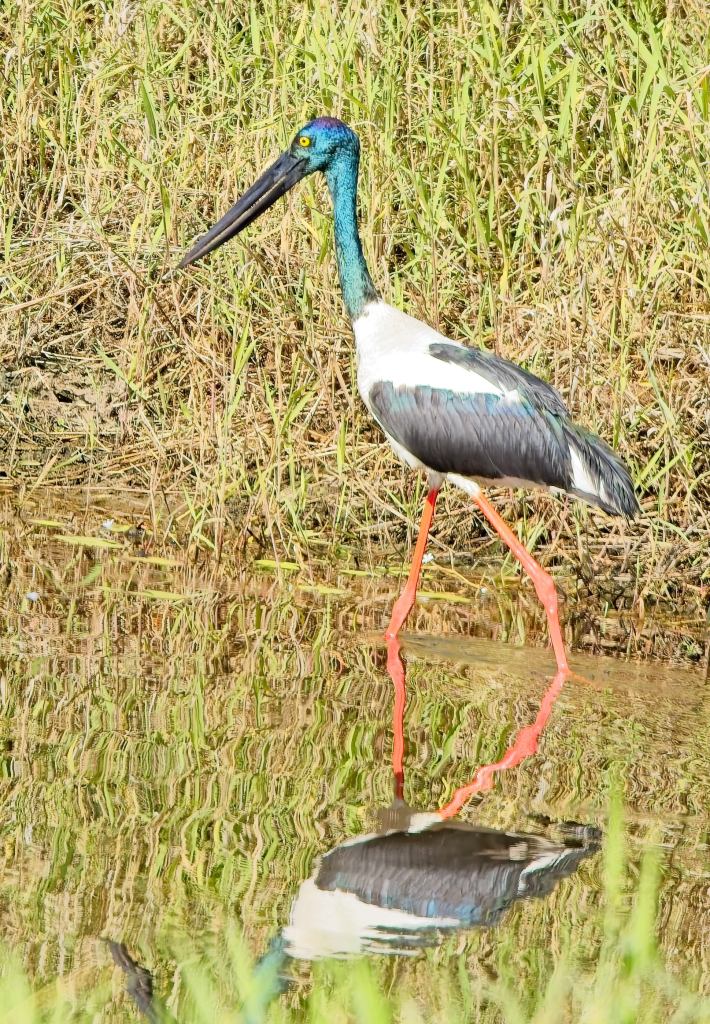
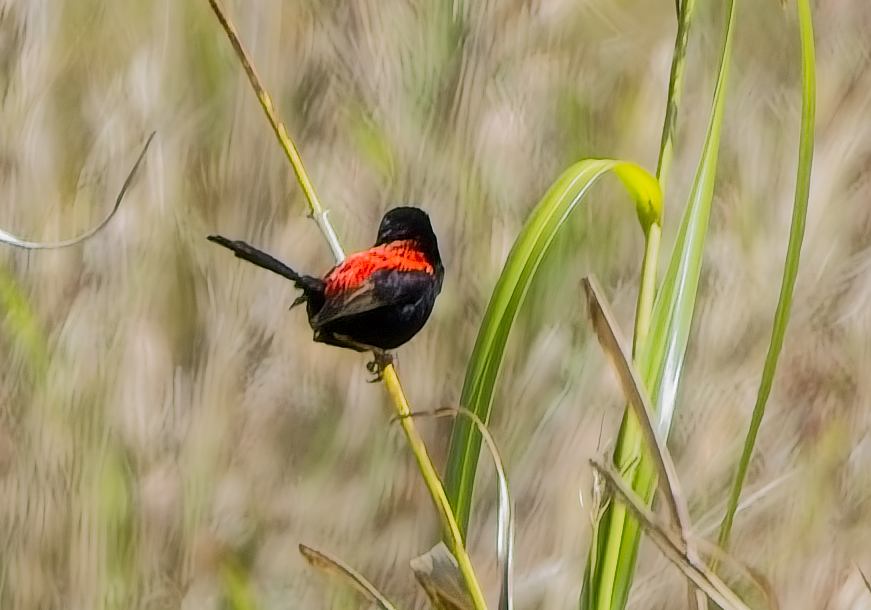
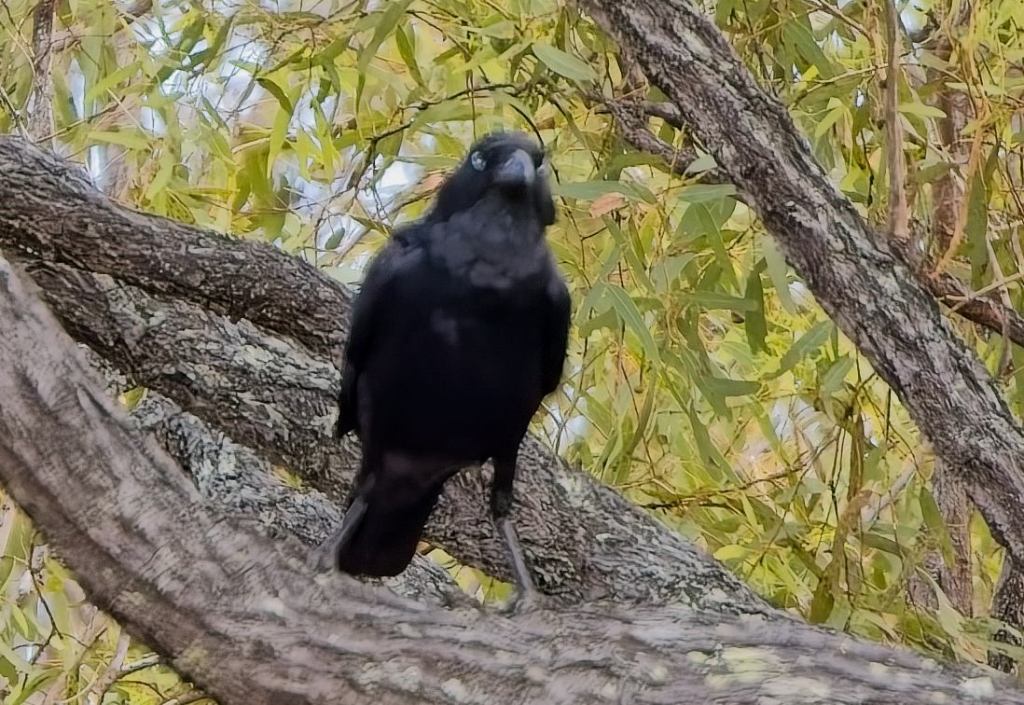
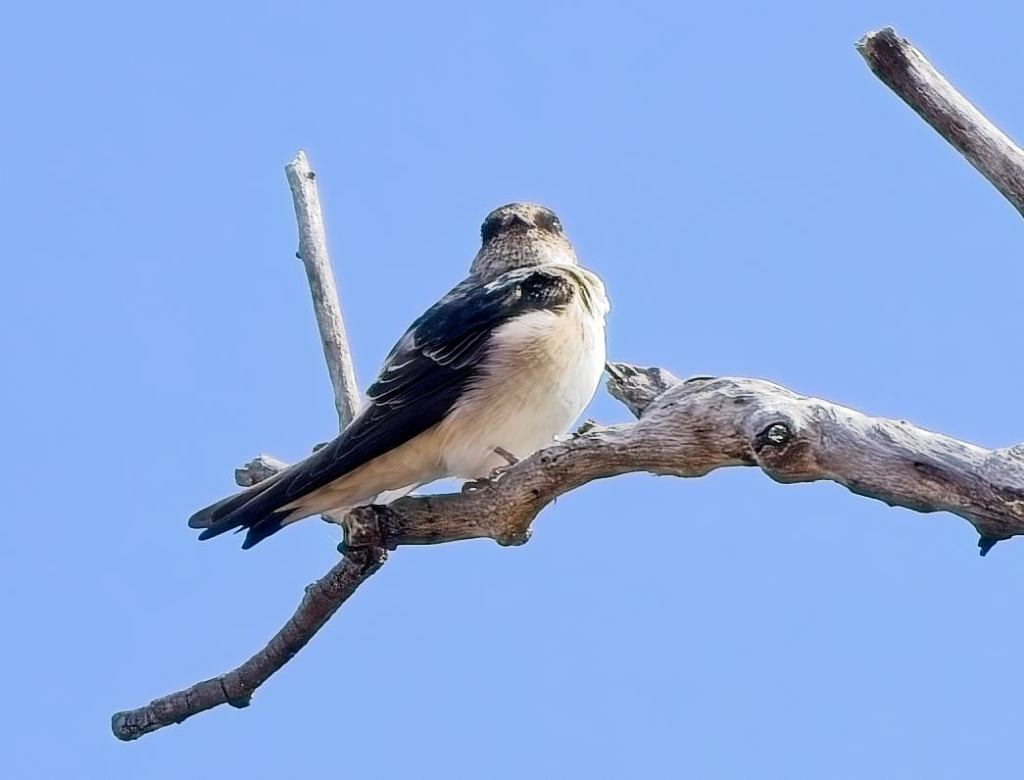
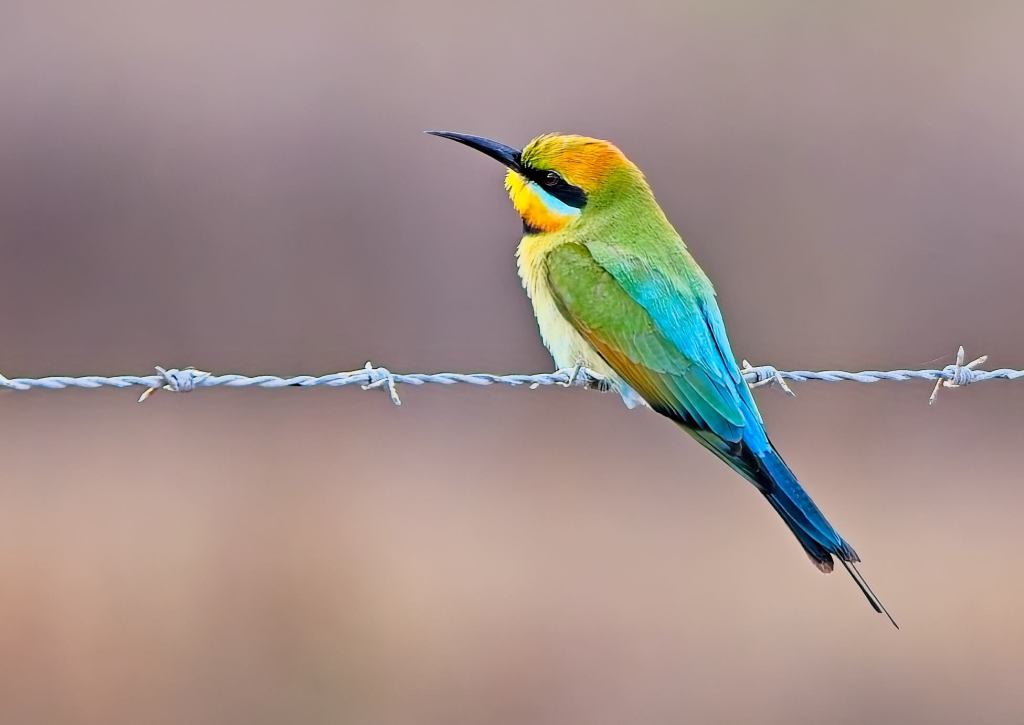
So it was a good and fast paced start, and we slowed a bit until we reached a special treat at Mary Farms Road in the Tablelands and which delighted us with a lifer displaying male Australian Bustard plus more males and a number of females. I got life photos of Tree Martin, Torresian Crow and Red-backed Fairy-Wren and nice shots of the beautiful Rainbow Bee-Eater.
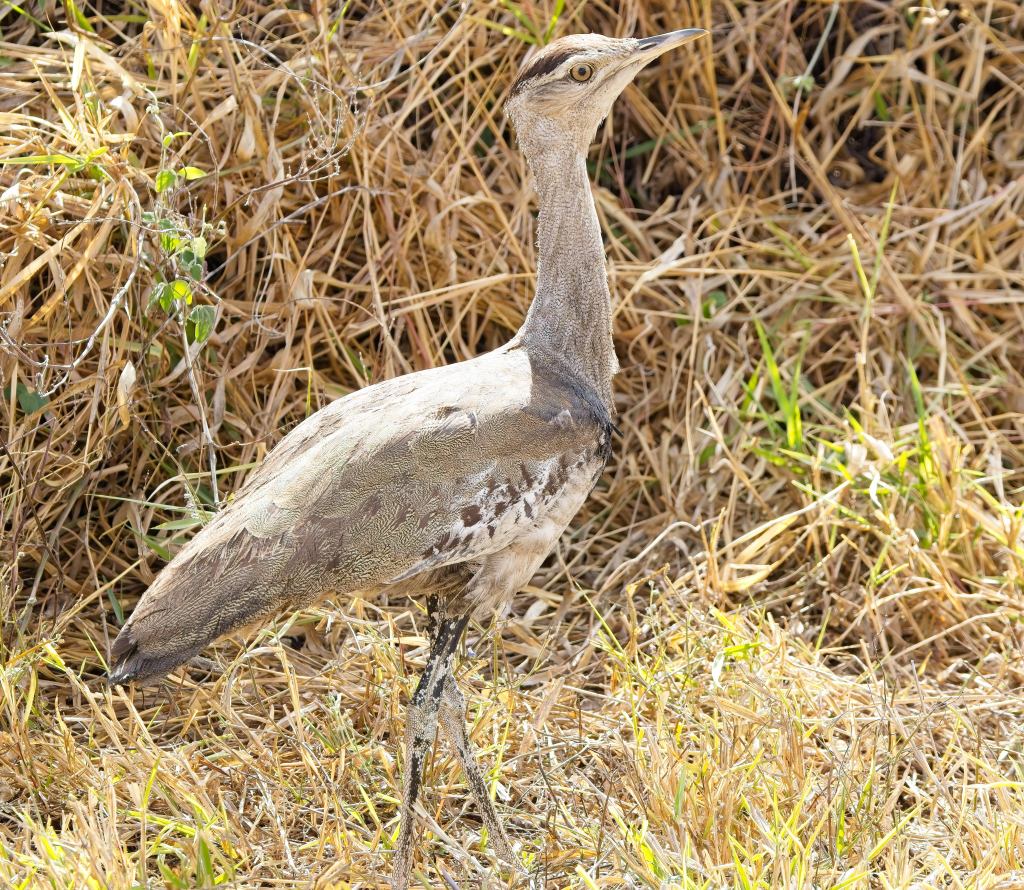
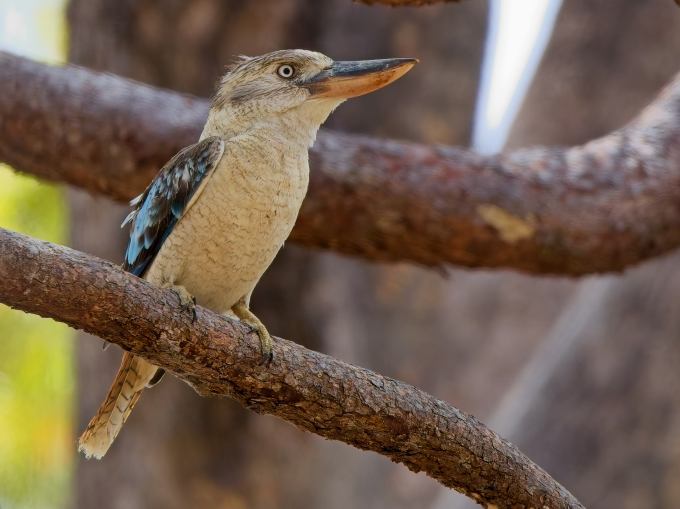
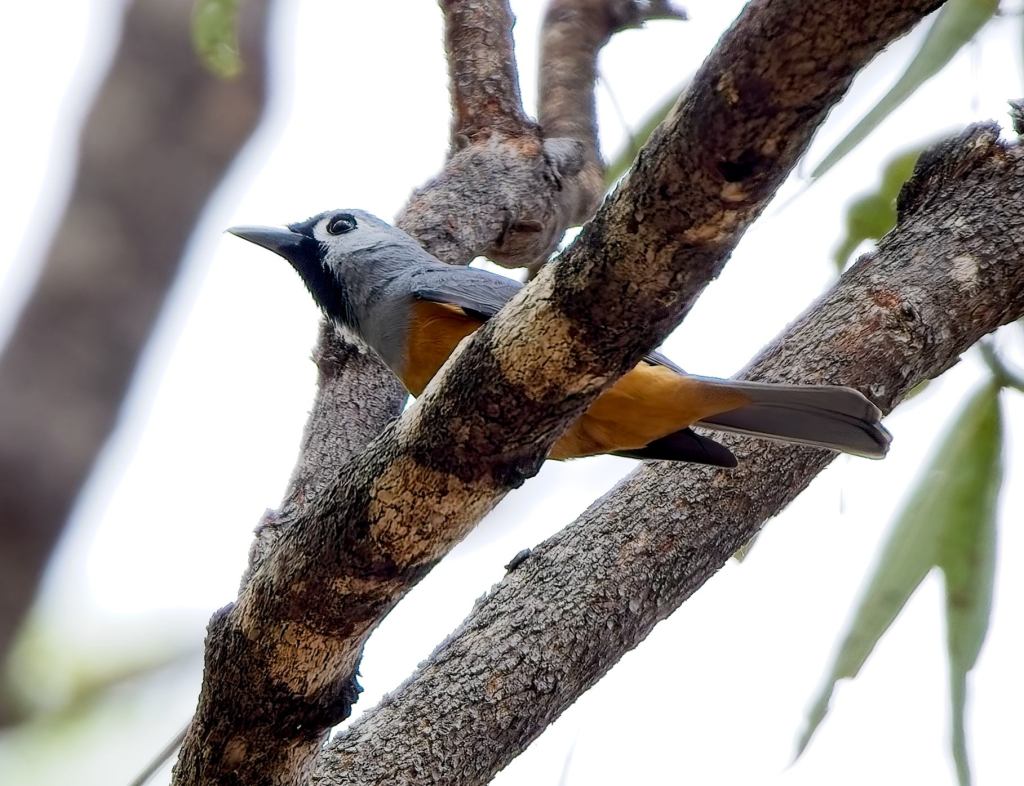
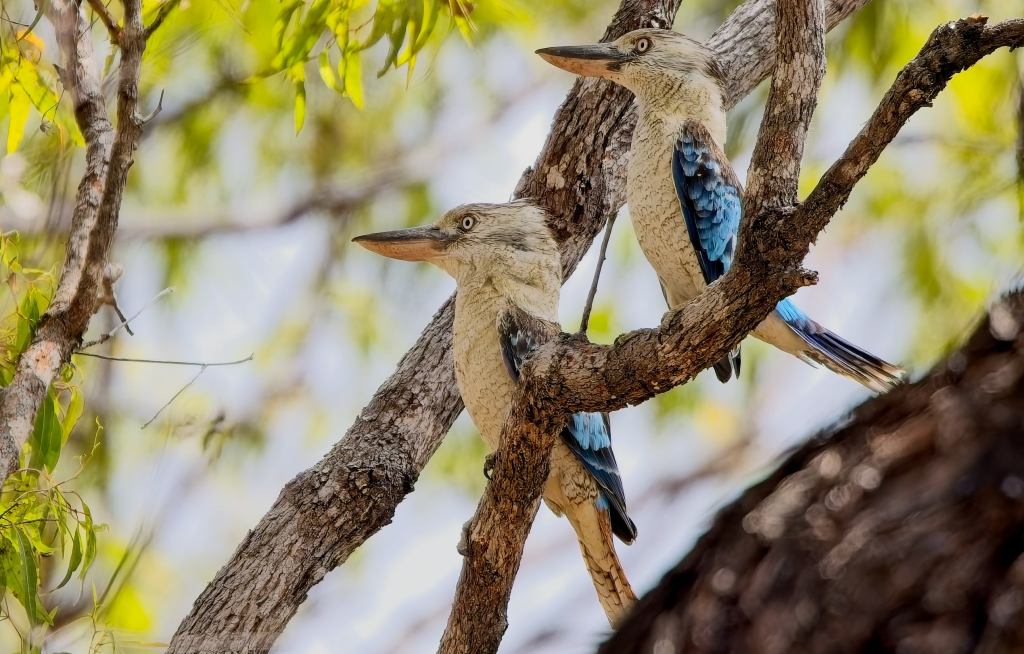
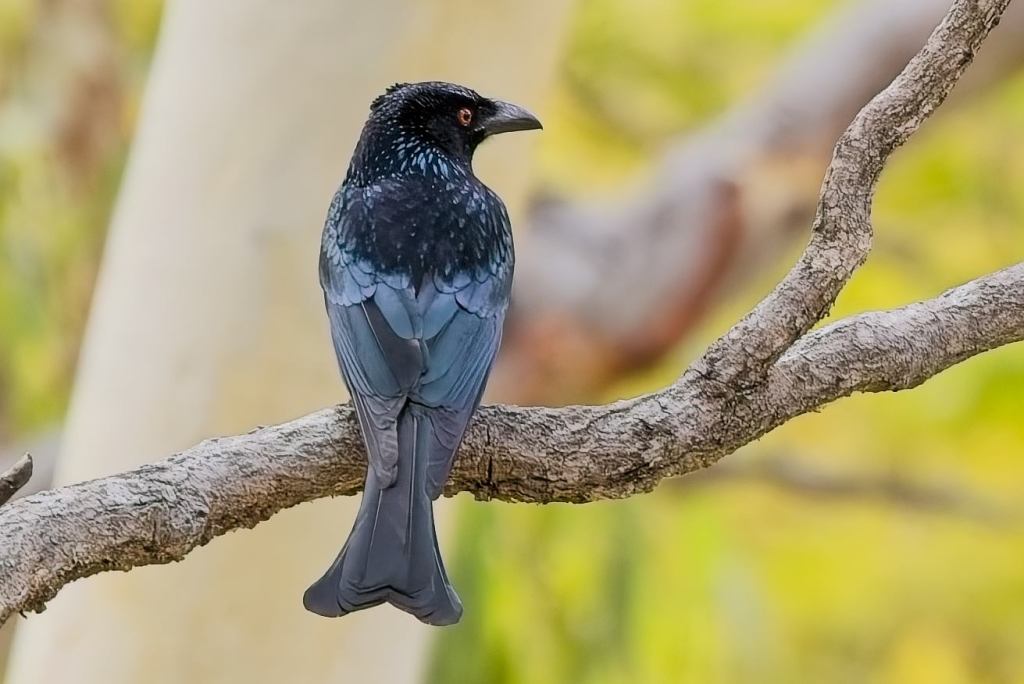
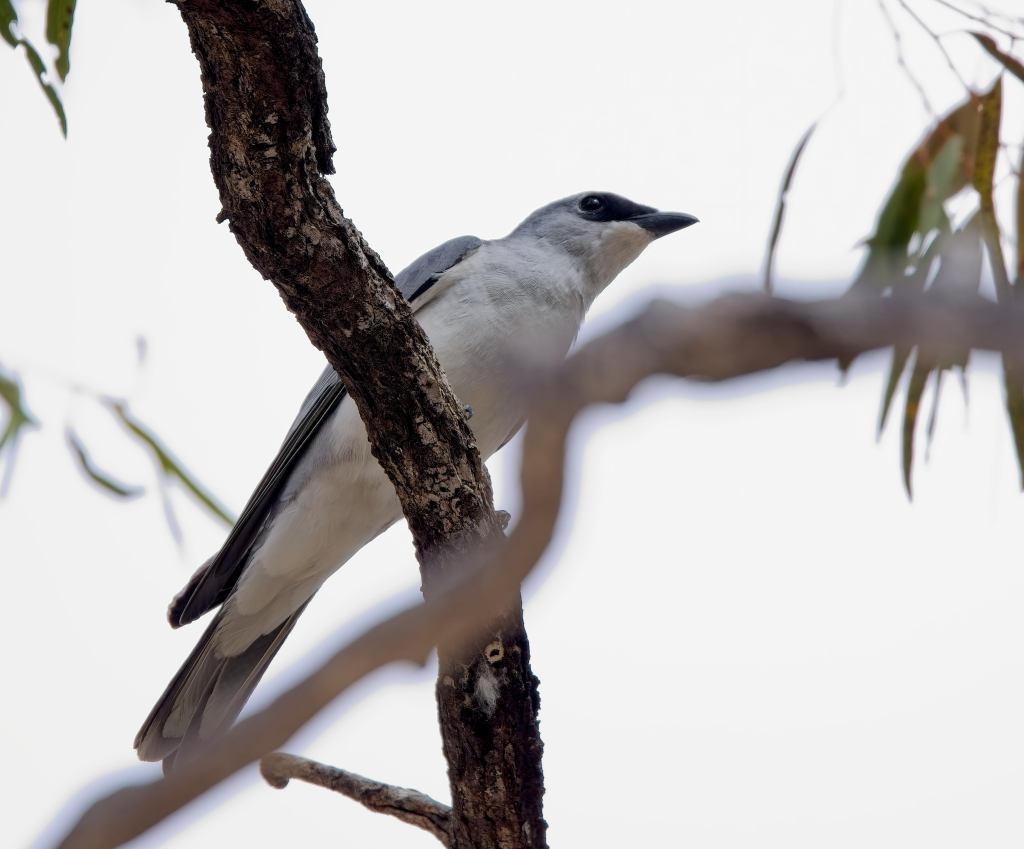
Around 10:30 am we arrived at the Mt. Carbine Caravan Park. We would spend an hour and a half there – a place often birded by Doug and with some terrific birds, Doug knew many of the people at the park and many of them knew the birds. We had 21 species with photos of 17 of them of which 12 were life photos, and this is where I had my lifer Black Faced Monarch. The really special birds were Blue-winged Kookaburra, Squatter Pigeon, an Apostlebird, a Little Friarbird, a Tawny Frogmouth, Pale-headed Rosella, and a dozen Great Bowerbirds, including one in its bower. That list leaves out life photos of Pied Butcherbird, Blue-faced Honeyeater, Spangled Drongo and White Bellied Cuckooshrike. Lots of photos.
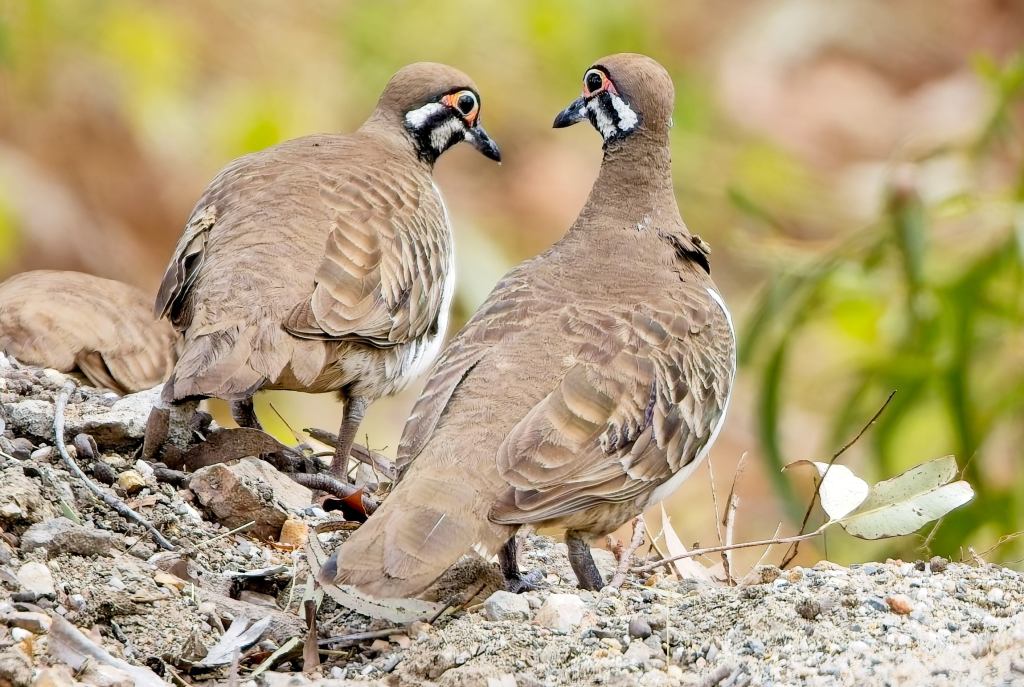
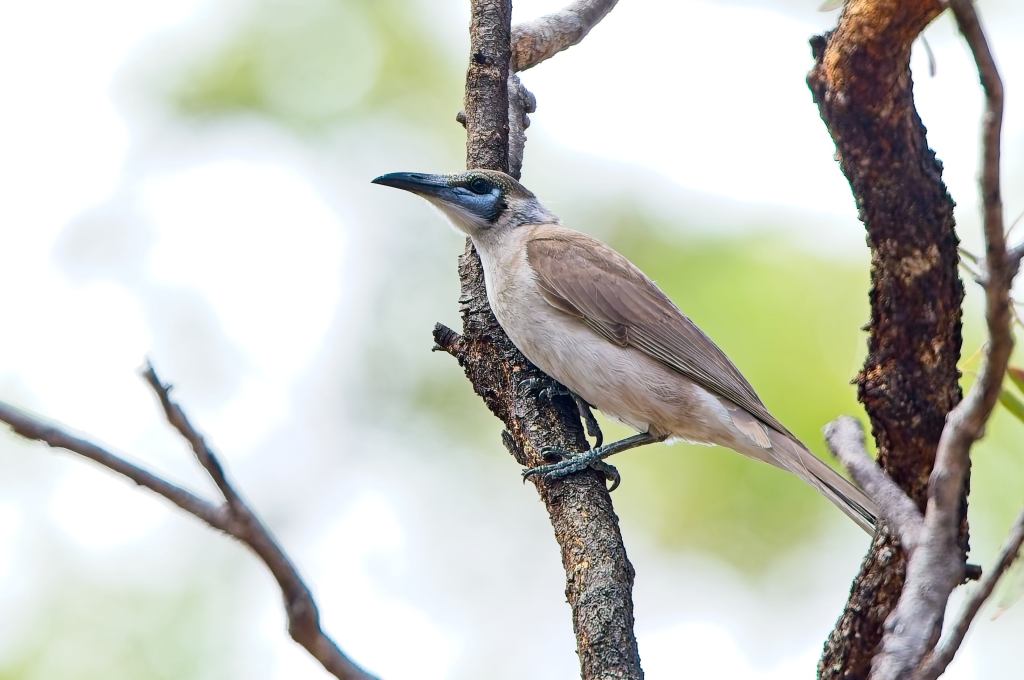
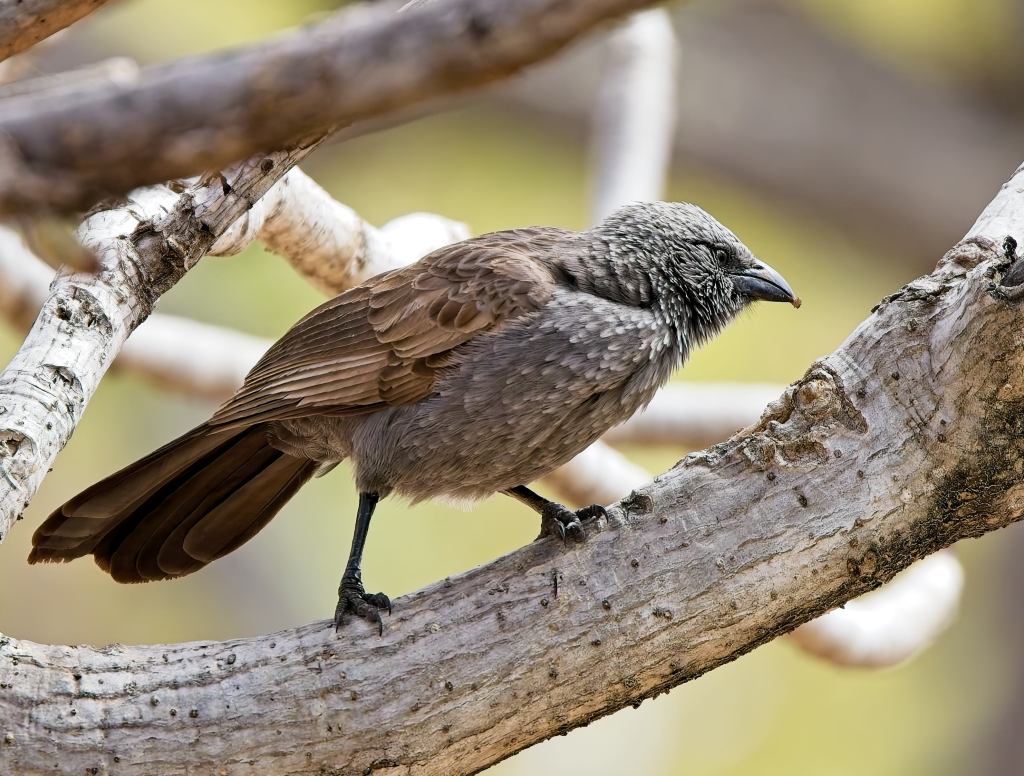
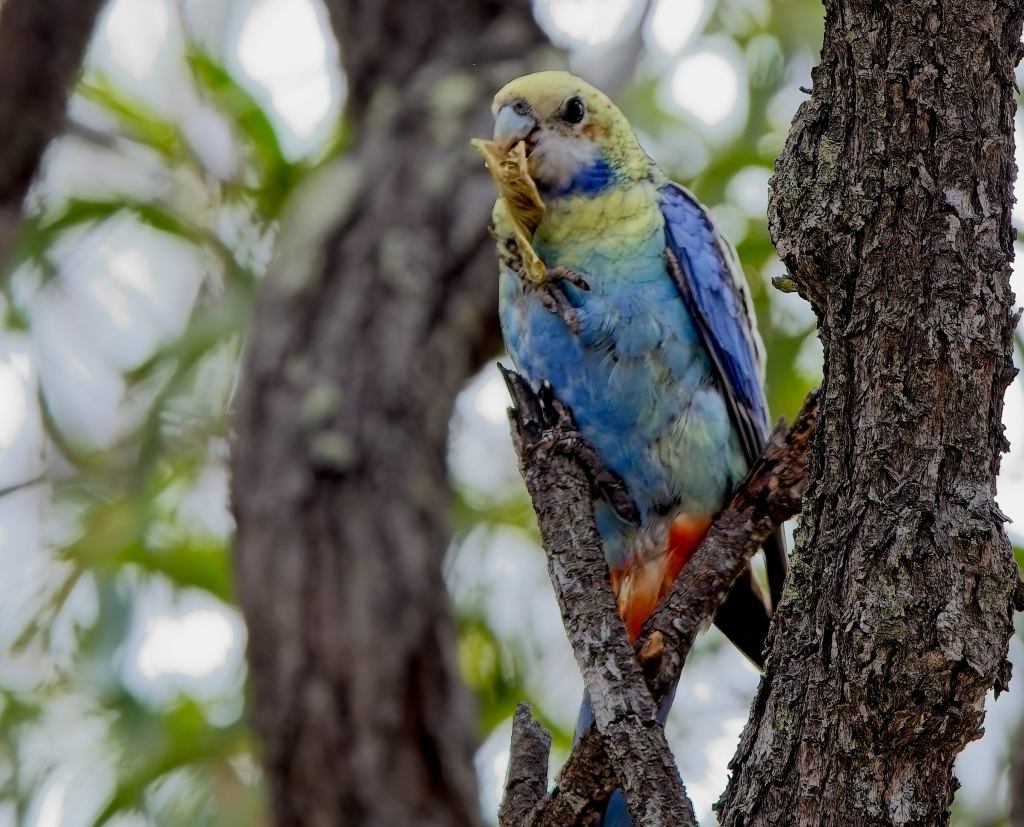
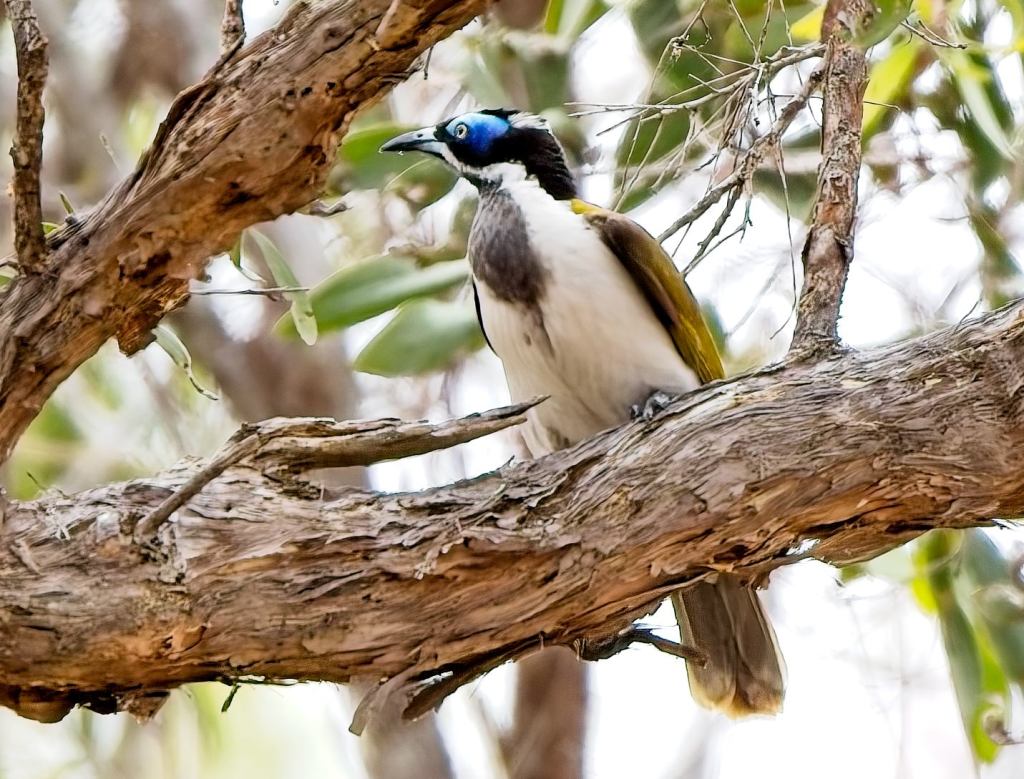
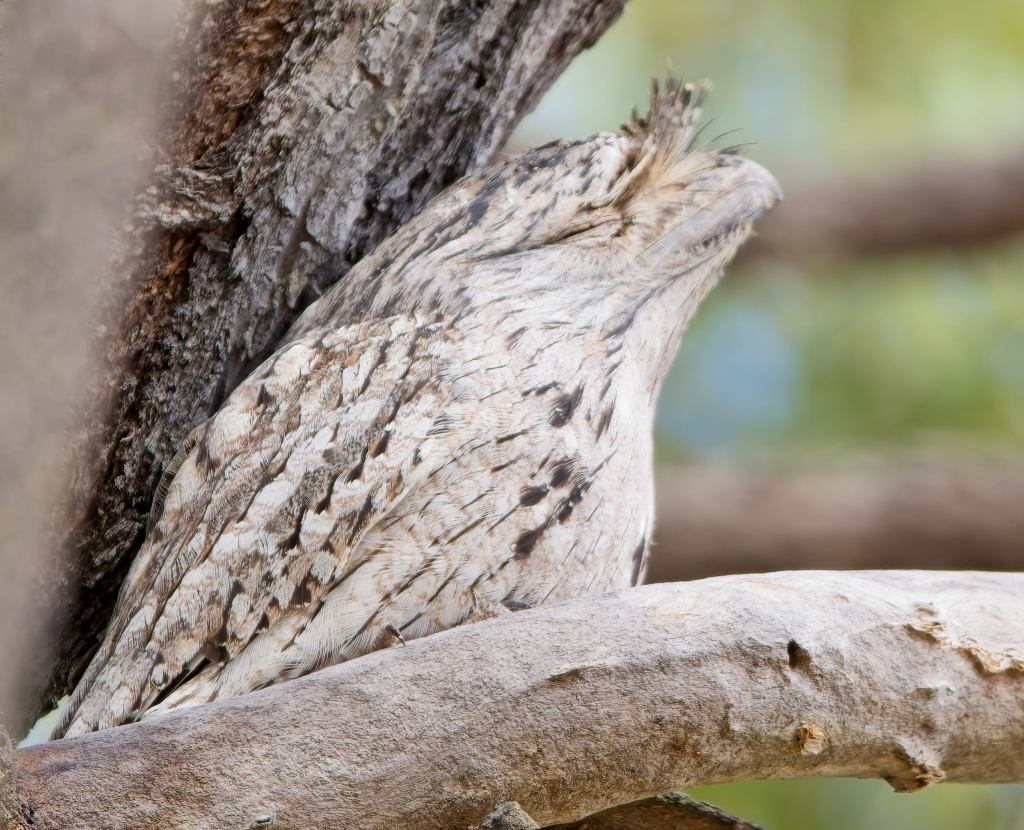
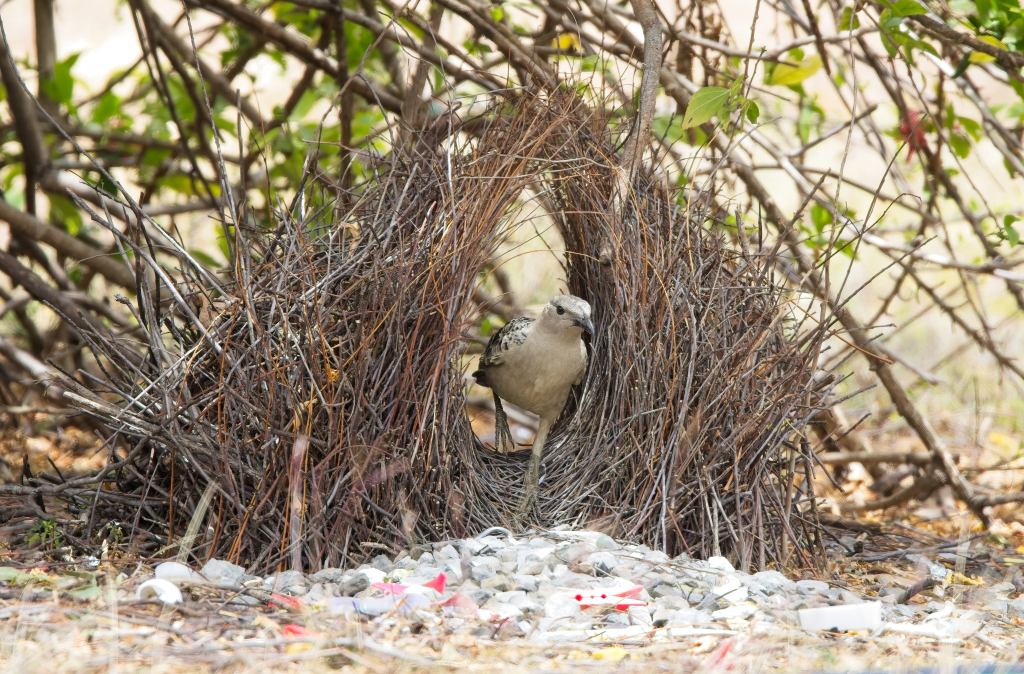
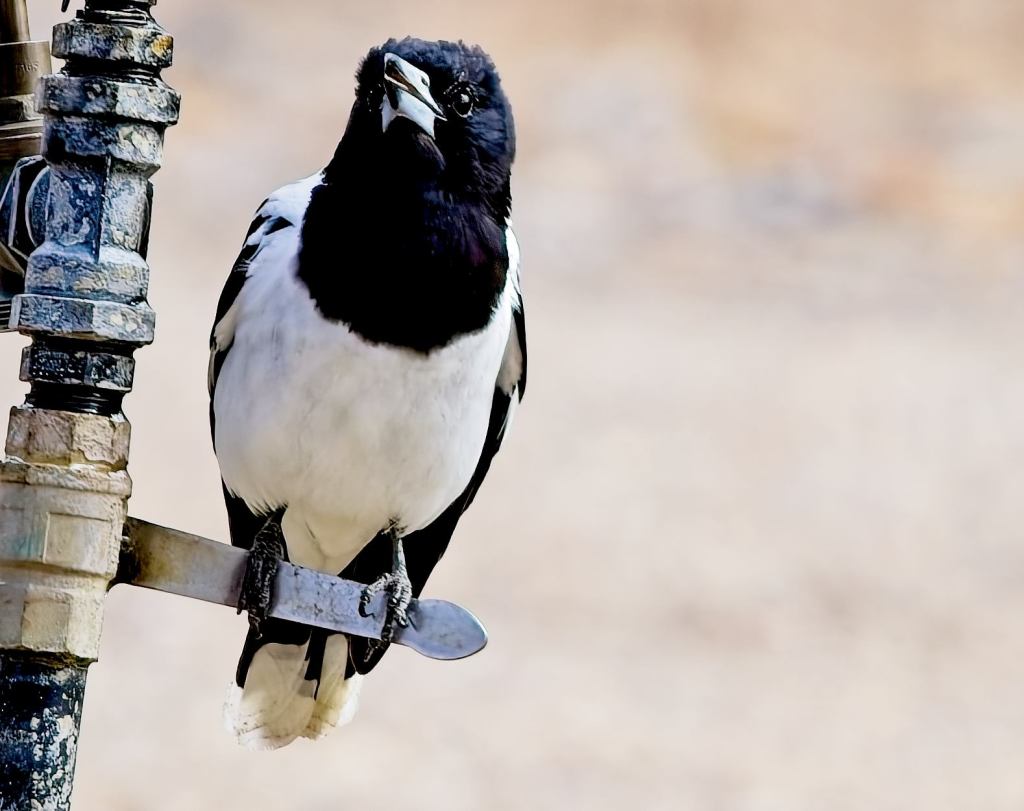
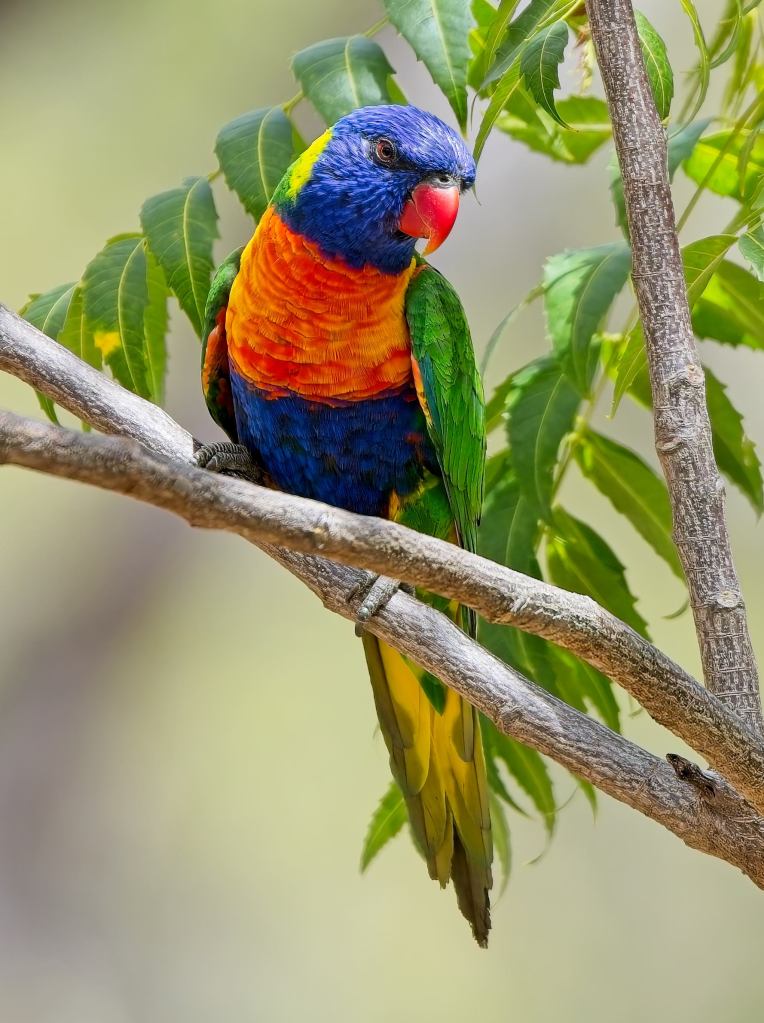
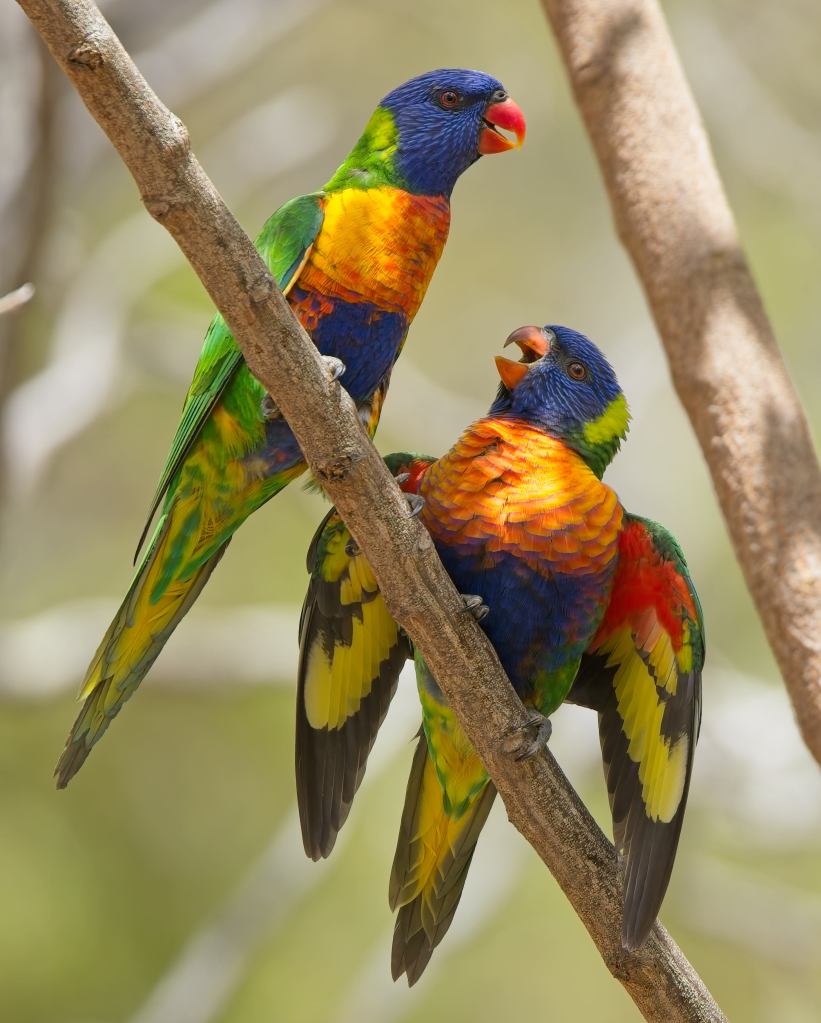
It was particularly fun to see the bowerbird in its bower. Note the various items strewn on the ground in front. The bower is not a nest. It is a stage built and decorated with those items to display the prowess of the male to nearby females. If they are impressed and approve, they will mate with the male. Later in the trip we will see the bower of the Satin Bowerbird. It is decorated only with blue items, probably connected to to the satiny feathers of the male with a bluish sheen. Bird mating rituals are amazing. Although they were seen and photographed many times during our trip, perhaps my best photos of the omnipresent Rainbow Lorikeets were at this caravan park.
After lunch we visited the Abattoir Swamp in Julatten. It produced six new life photos and two near misses. The near misses were the lifer Pheasant Coucal which was heard only and the Lovely Fairy-Wren which buried itself in foliage and darted constantly just barely in view and I was never able to get a photo – opportunities lost and probably never to be repeated, but six life photos was great.
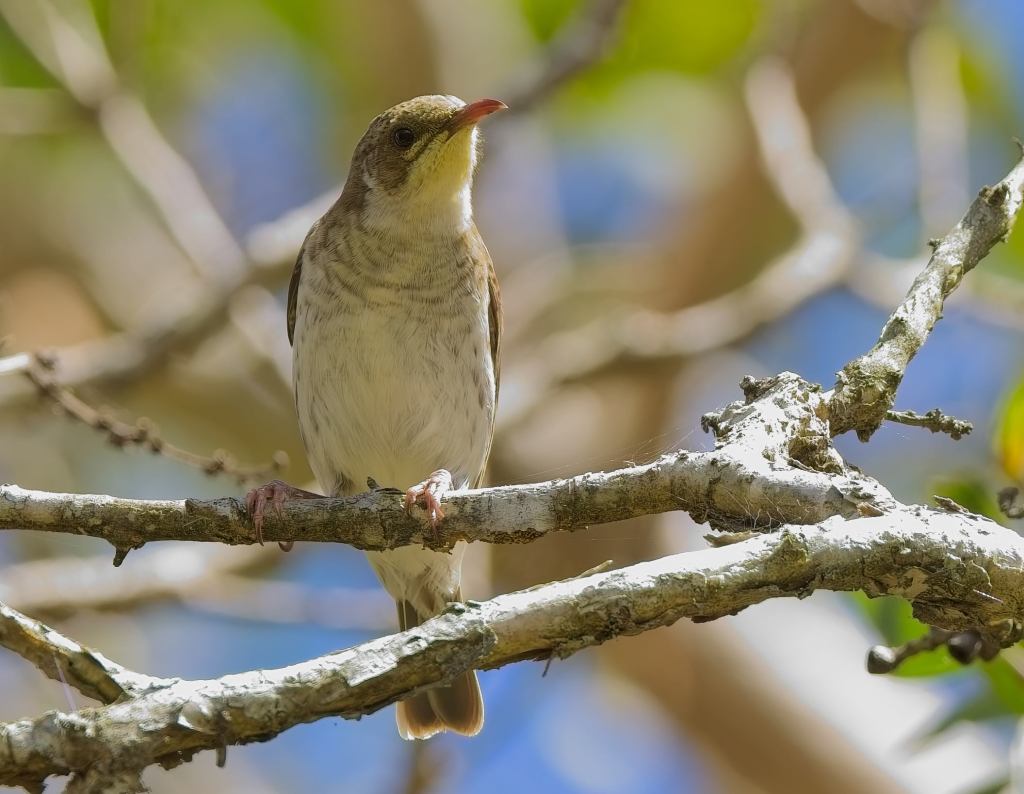
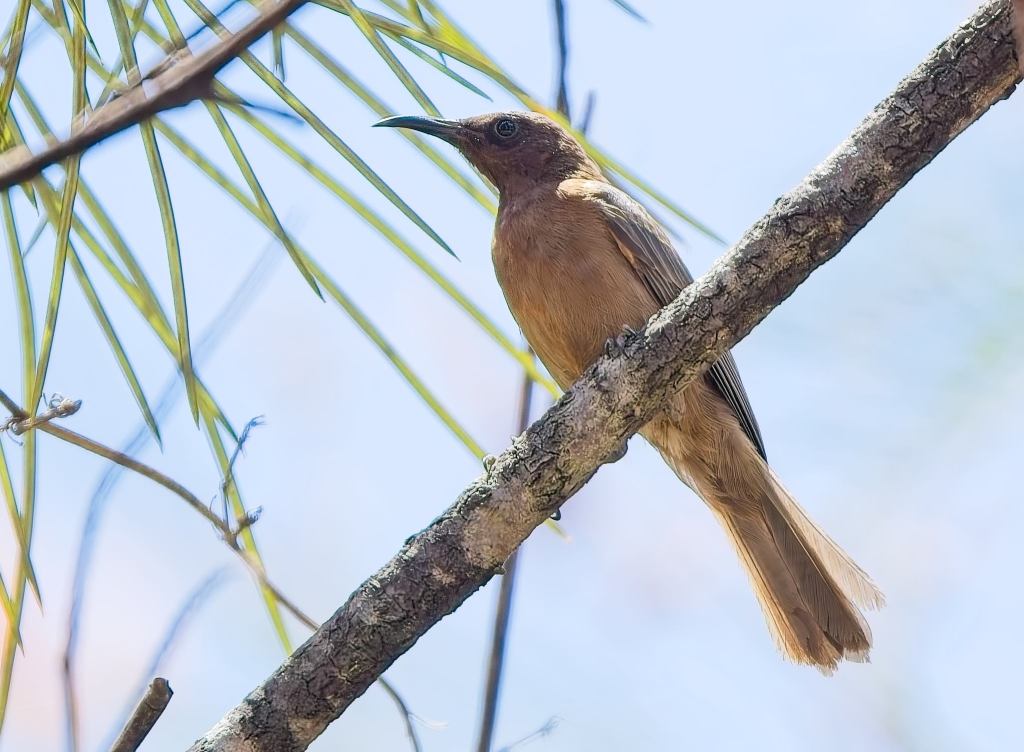
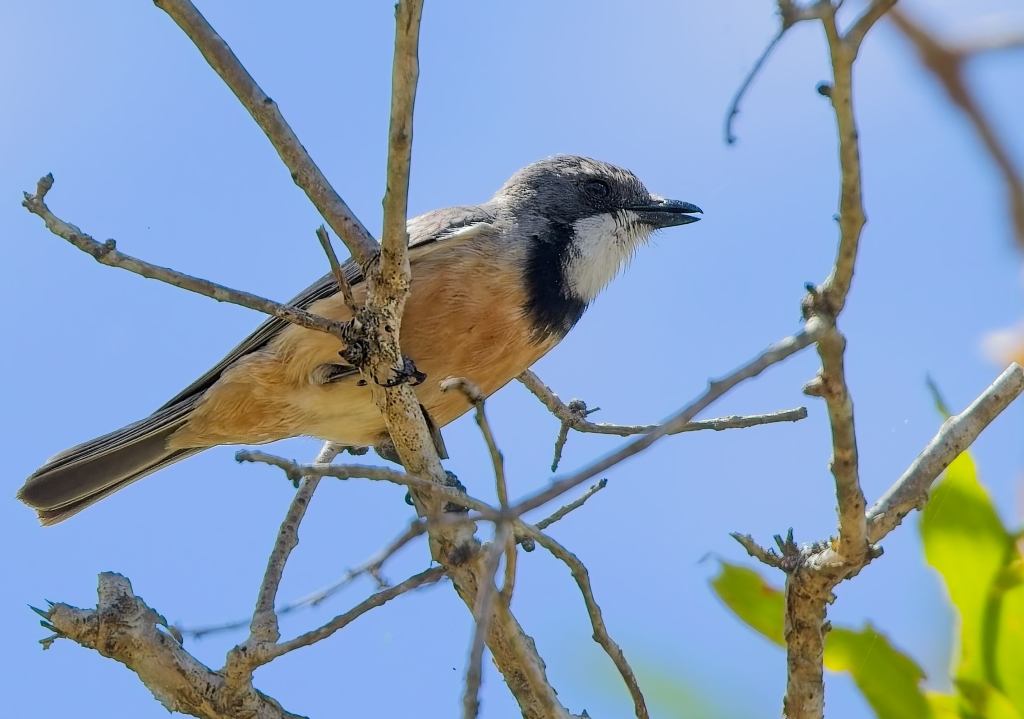
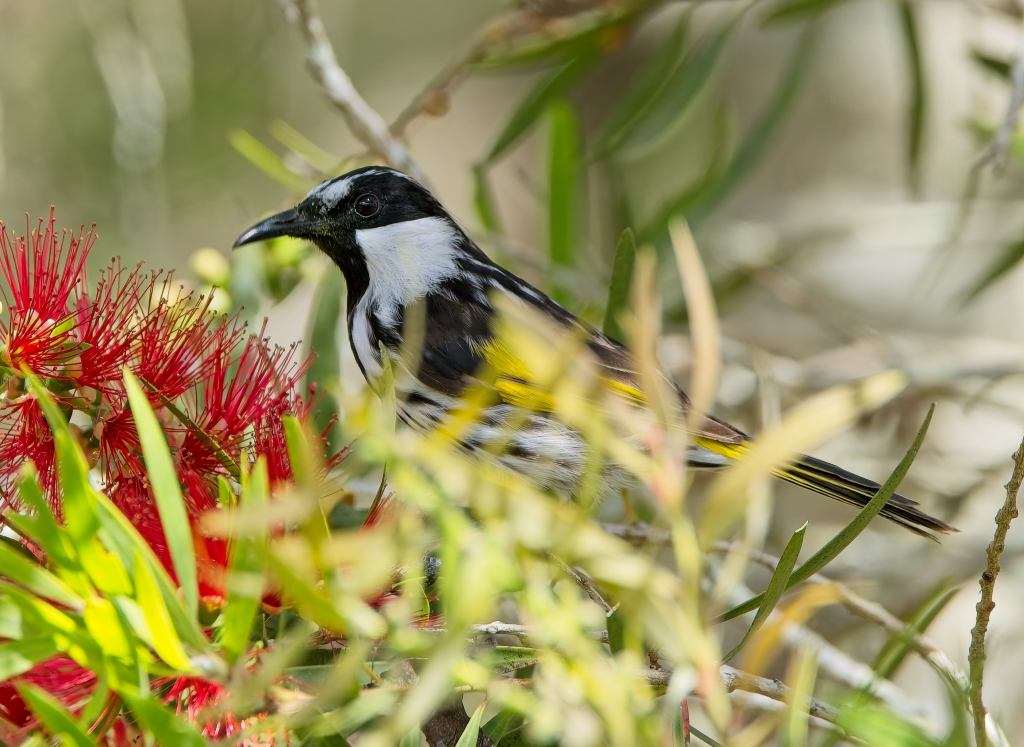
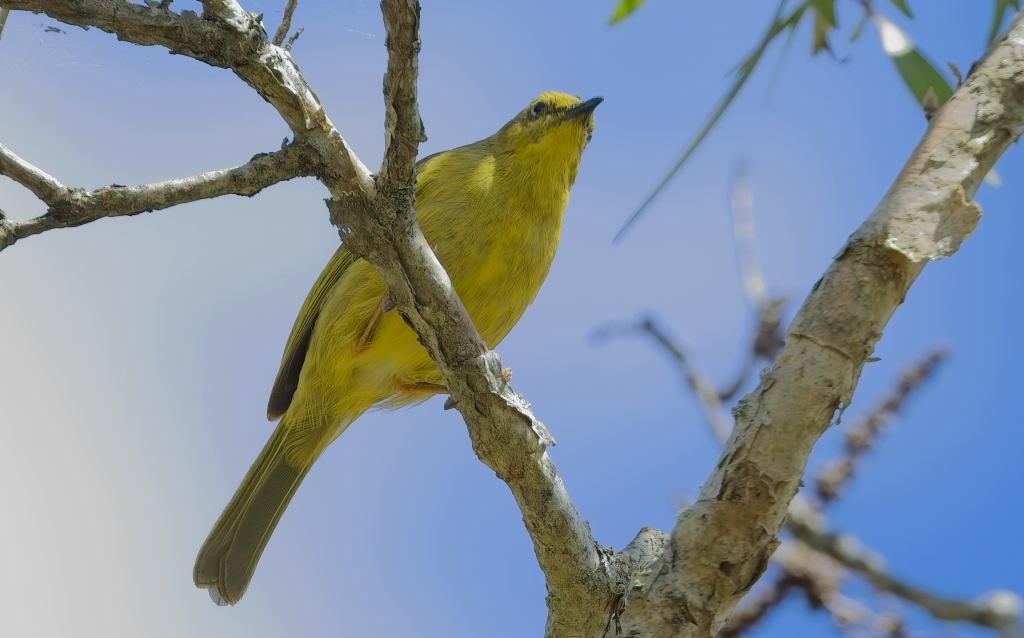
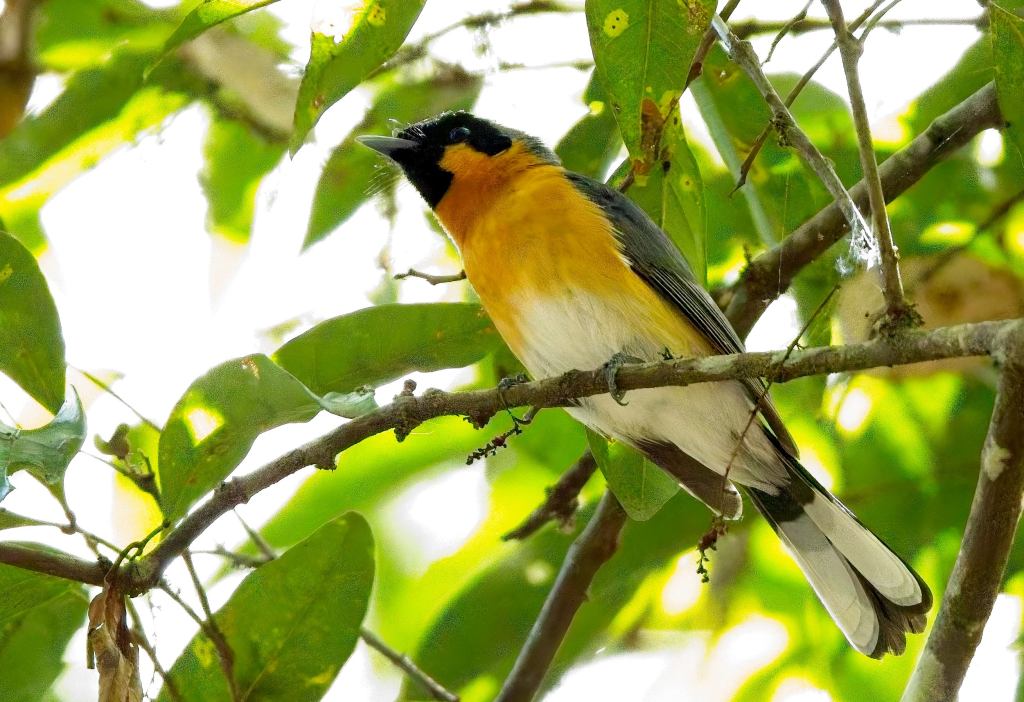
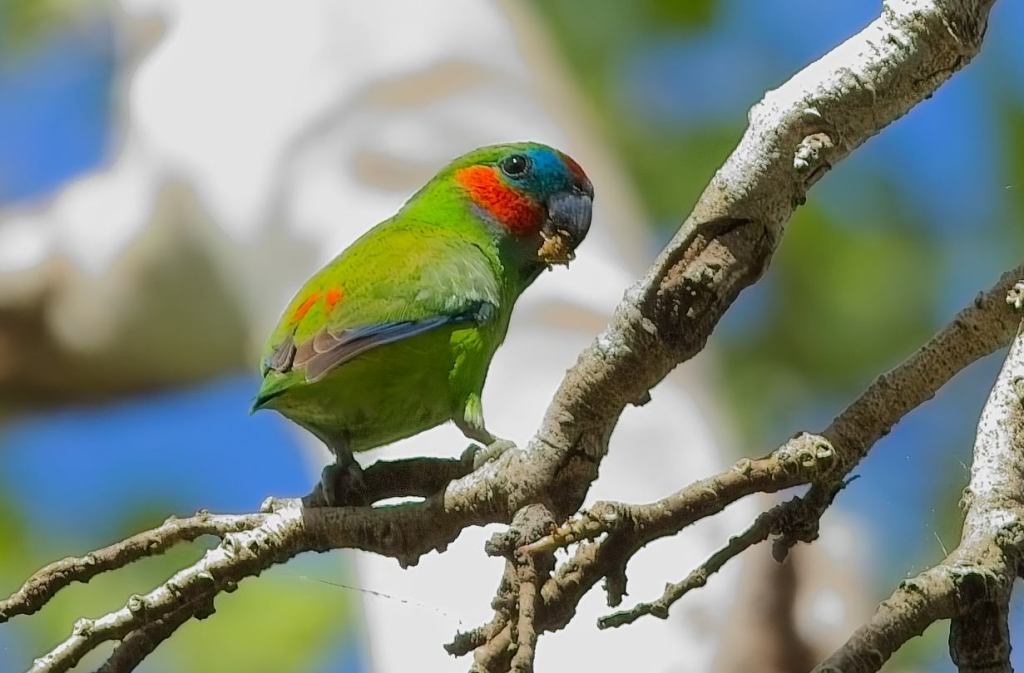
At the end of McDougall Road also in Julatten, we kept adding species including finding a Double-eyed Fig-Parrot, the species we had unsuccessfully chased at the Cairns Esplanade. It is a tiny colorful parrot that Doug kept hearing. Eventually we found one in the open, a treat for the yes and it felt good to find one that had been missed. Altogether it was another 5 life photos.
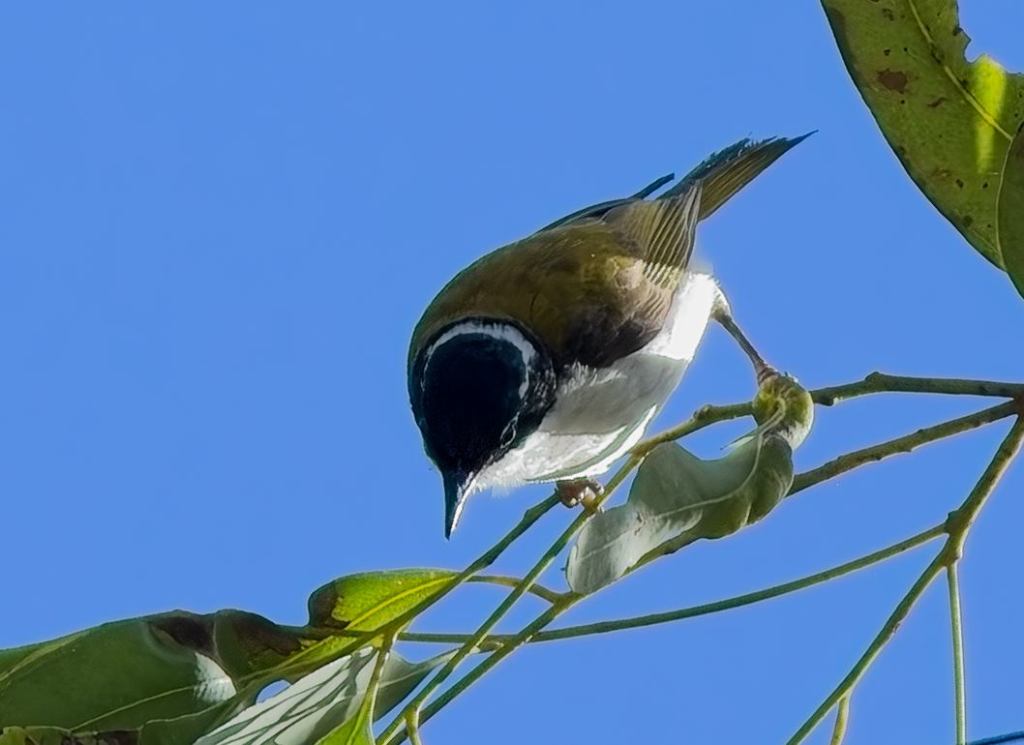
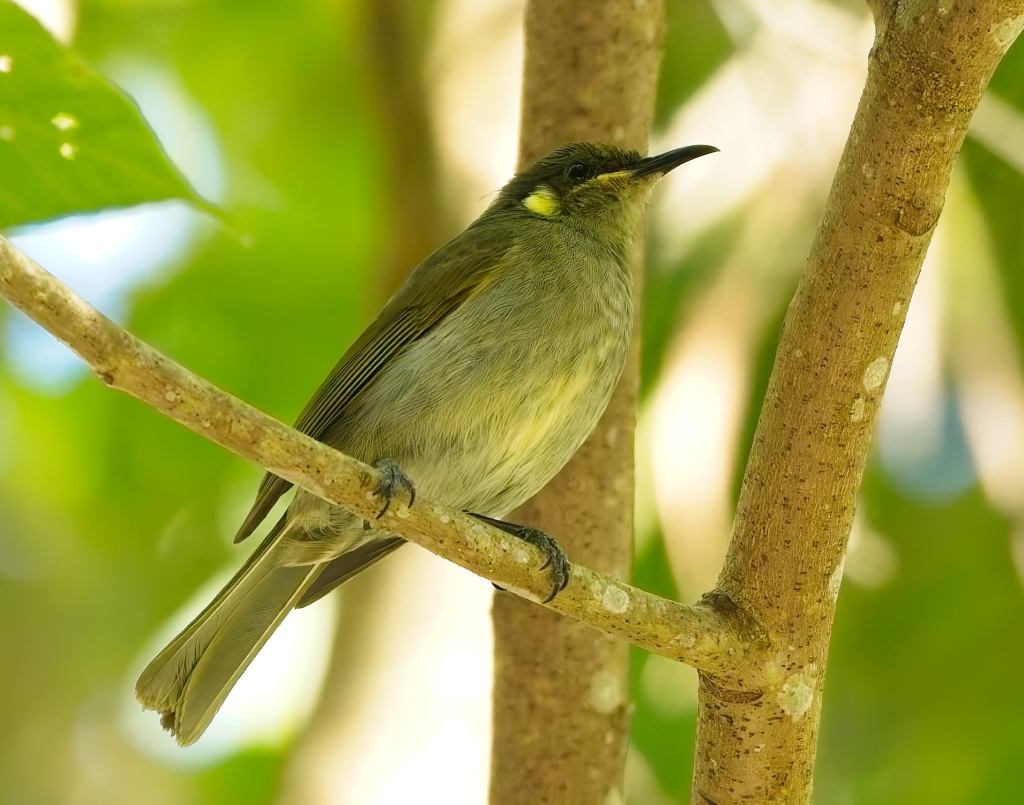
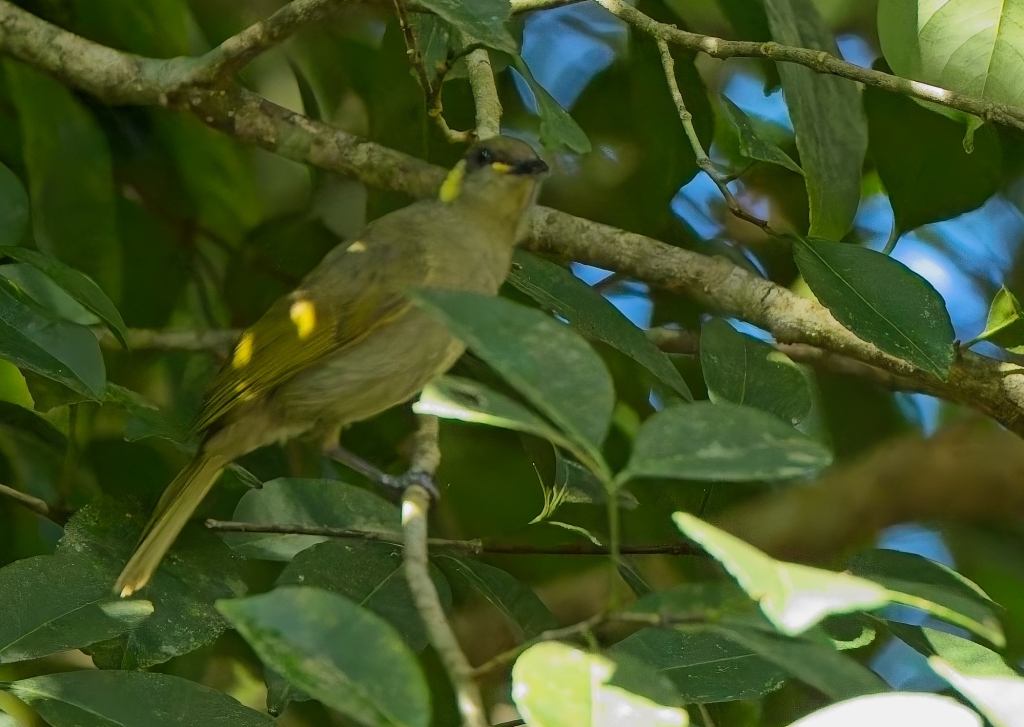
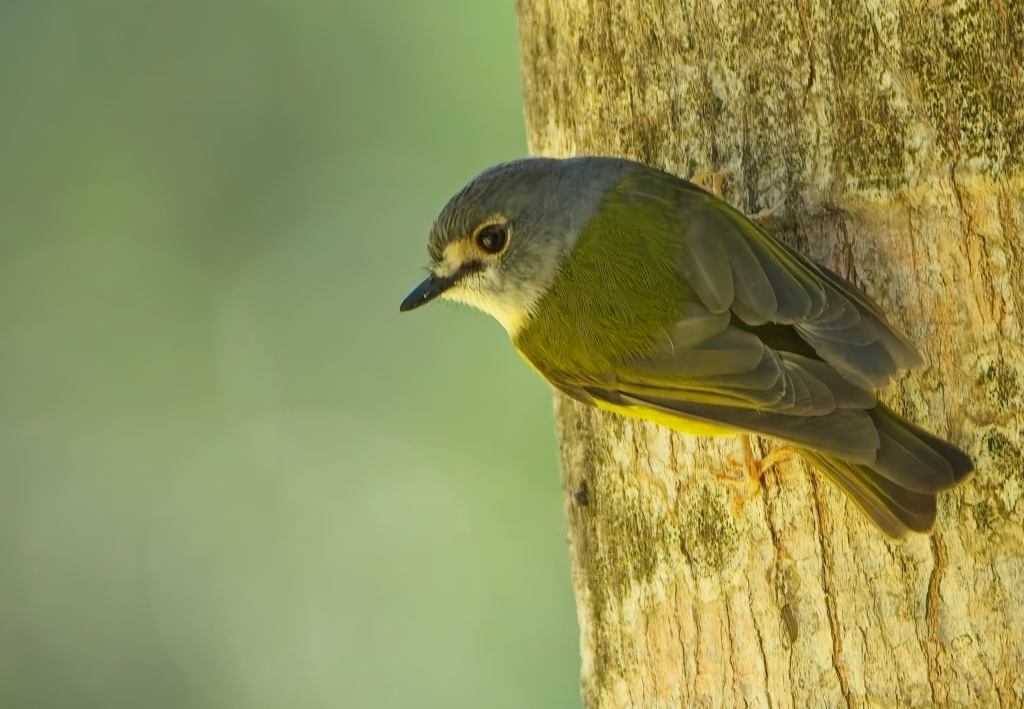
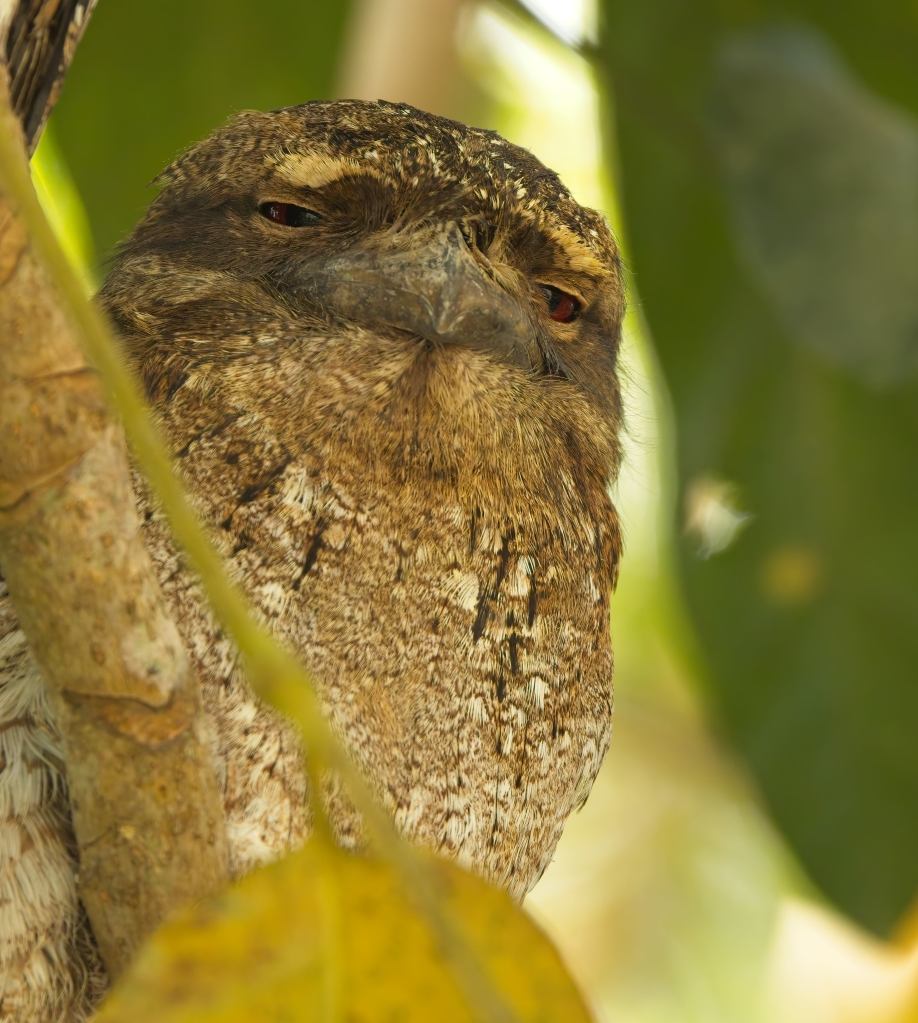
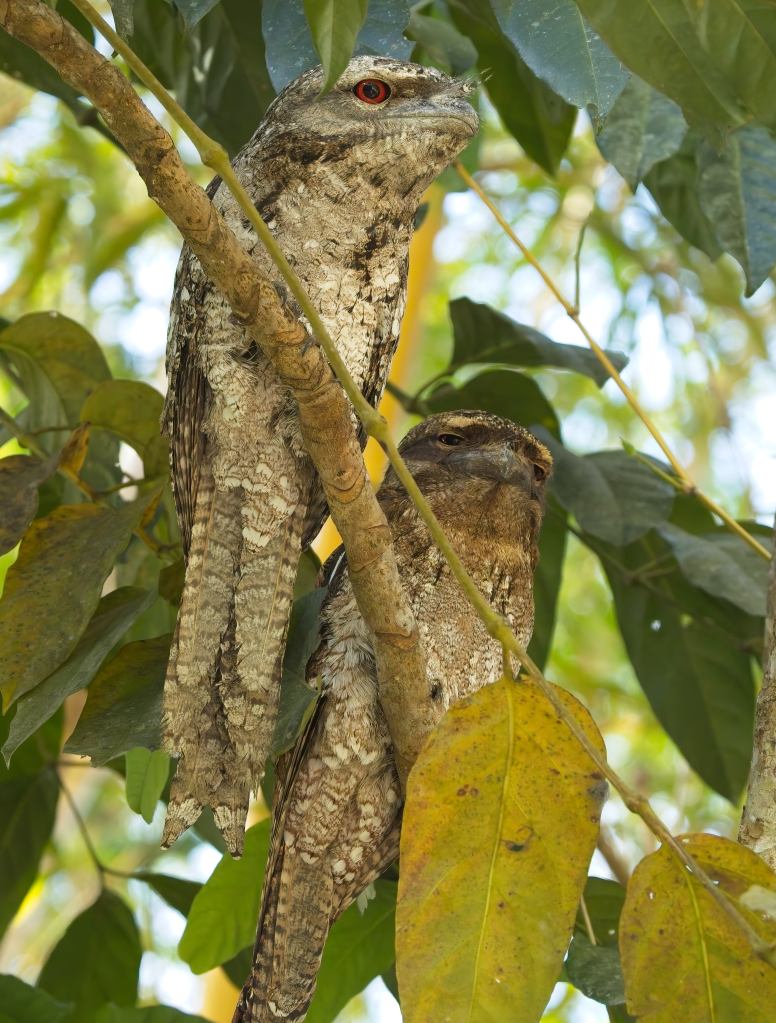
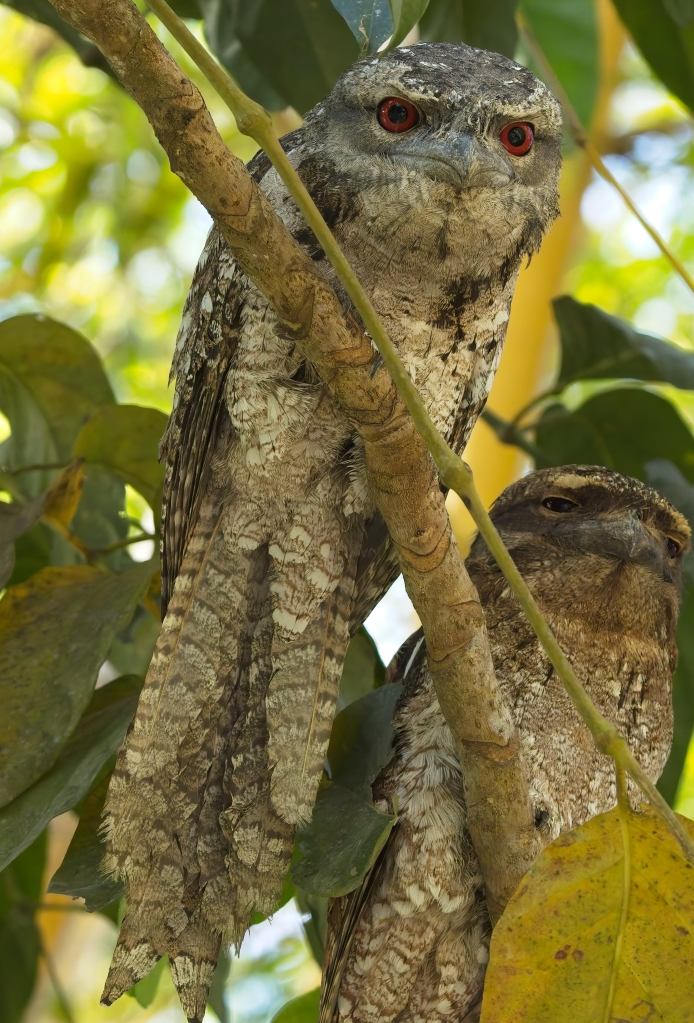
Doug had saved a very special stop until the end. Off Mount Kooyong Road in Julatten, Doug took us to a day roost for a pair of Papuan Frogmouths – a mother and juvenile. Fabulous photo ops of these bizarre birds. Since this is the final find of the day and it is such a cool species, I am attaching several photos.
Back to Port Douglas and another good dinner. Cindy had roamed around the city and got some rest. She was ready for our next adventure – flying to Brisbane the next morning. The species list for the trip was now 190 with 33 lifers and 138 life photos – so far so good.

