Bird and Memory of the Week – Lark Sparrow (and the Locked Gate)

Some of my posts have been about fairly exotic or charismatic birds.  There is nothing wrong with a Lark Sparrow (Chondestes grammacus) – not bad looking and not all that common but definitely neither exotic nor charismatic in comparison to those other featured birds.  But my aim in writing these posts is to share some experiences that may have some meaning or value to others and admittedly to relive some past moments for me and to recall the joy or excitement of the time.

I saw my first Lark Sparrow on June 20, 1975 on Dodson Road near Ephrata.  I cannot remember a thing about the day or the observation.  Later recorded observations were at Toppenish, Balch Lake, Gingko SP, Wilson Creek and several other spots.  On Decker Road in Pasco on May 15, 2014 they seemed to be everywhere and I saw 10 in less than an hour – for sure a memorable experience.  All were nice times, but the memory that is the basis of this post was a single sparrow almost exactly a year later on Road C Northeast in Grant County between Moses Lake and the Potholes – May 19, 2015.

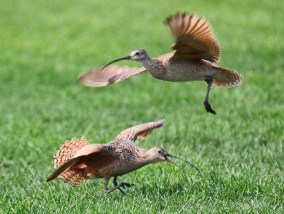
I was heading off to Walla Walla for another great trip with Mike and MerryLynn Denny this time up onto Biscuit Ridge hoping for a Great Gray Owl and earlier that day had success in tracking down a pair of Long Billed Curlews on Hungry Junction Road in Kittitas County and then a Yellow Breasted Chat hiking in from the Black Throated Sparrow spot on Recreation Road in Gingko State Park.  I had fished on the Yakima River the previous day and it was my fishing guide who told me about the grass farm on Hungry Junction Road where he had himself seen some Curlews.

Long Billed Curlews

Long Billed Curlews

Yellow Breasted Chat

Yellow Breasted Chat

When I left Vantage I did not have a specific plan in mind but thought it might be fun to visit the rookery area at North Potholes – a place my Master Birder Class had visited and enjoyed in 2013.  Since I had not planned ahead, I relied on my GPS to get me there and plugged in the destination and followed directions.

I cannot recall what preceded it but at some point the GPS told me to turn south on Road C Northeast an unpaved road.   At least several miles in I passed through an open gate.  It registered as odd but the gate was open and the direction seemed correct so on I went.  Some miles in I passed by a corral on my right where a bunch of cowhands were working cattle into the corral or possibly from the corral onto trucks.  This is open range and cattle are not uncommon even if cowhands might be.  I waved as I passed by and they waved back.

Maybe another 4 miles later I arrived at North Potholes – well sort of.  It was definitely North Potholes but not the area I remembered from the Master Birder trip and in fact there was another gate – this one closed that led to what looked like the more familiar area.  It seemed wrong but the area was quite birdy looking and just as I arrived at the locked gate I saw a Black Headed Grosbeak and then a pair of Eastern Kingbirds – my first of the year – so how bad could it be?

Eastern Kingbird

Eastern Kingbird (2)

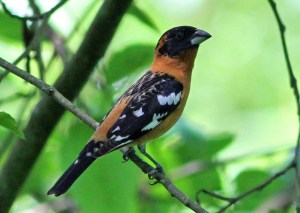
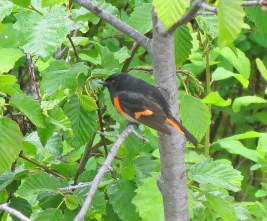
Black Headed Grosbeak

Black Headed Grosbeak

Then it hit me – HARD – two and two really does add up to four.  What if the reason the first gate was open was because the cowboys had the key and had come in to work the cattle AND what if when they were done, they went back out and locked the gate behind them AND what if I did not get there before they did?????  Trouble – BIG TROUBLE – because the rest of the area was completely fenced in and I would have been many miles from any help – if any help really would have been a useful help in any event.

I no longer was at all concerned about how birdy this area was, I got back into the car and went as fast as I could back towards what I hoped would be a still open gate.  Sure enough, I arrived at the gate just as the last of the cowboy vehicles had passed through and one guy was walking back towards the gate to lock it up and prevent weirdos like me from getting in – BUT of course in this case had it been a tad earlier or I had gotten there a tad later, it would also have locked this weirdo IN!!

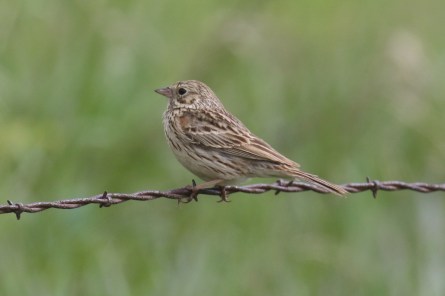
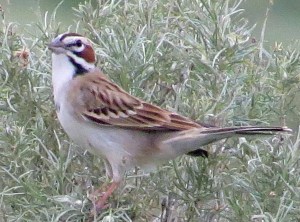
I had lots of adrenaline racing through my system and once through the gate, I just stopped to catch my breath, settle my heart and thank all my lucky stars.  And as I did so what flew up and landed on that infamous gate – a Lark Sparrow of course – my first of the year and a wonderful consolation prize.

Lark Sparrow (on the sage next to the re-locked gate)

Lark Sparrow2

The good news (in addition to the Lark Sparrow) was that I was not trapped.  The bad news was that I had not had a chance to see the great birds at North Potholes.  The further good news though was that I definitely had time to get to Walla Walla early and try to find a White Faced Ibis at Millet Pond.

At Millet Pond I indeed found not just one but at least 10 White Faced Ibis and also had some other nice birds including Cinnamon, Green and Blue Winged Teal, Avocets, Black Necked Stilts, a Solitary Sandpiper and a single Yellow Headed Blackbird.  Four Bullock’s Orioles on the way out put an exclamation point on the day.

White Faced Ibis

White Faced Ibis 2

Although I am not going to add much detail – saving it for another blog post, the following day I was joined by Jon Houghton and we accompanied the Dennys onto Biscuit Ridge where the birding was as great as the great company.  In addition to a dozen each of MacGillivray’s and Yellow Warblers and 25 Townsend’s Warblers, we also had 5 Lazuli Buntings, 10 Calliope Hummingbirds and’ oh yeah, a photogenic Great Gray Owl and a similarly photogenic Green Tailed Towhee – one of three.  And a bunch of other great birds.  Indeed a super trip!

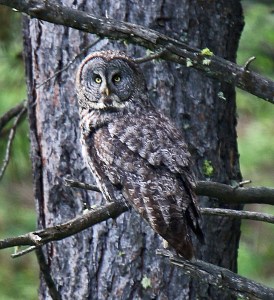
Great Gray Owl

Great Gray Owl (2)

Green Tailed Towhee

Green Tailed Towhee 2

It did occur to me that if I had not raced to the gate, I may never have made it to Walla Walla and had the great trip.  So what are the lessons here:  One might be – don’t trust your GPS or at least your Garmin (my version).  Another is maybe to use the GPS but be sure you have looked at a map personally.  Another is probably that when you get to an unlocked gate, think of why it might be unlocked and proceed if at all – very carefully.

But maybe too the lesson is that all’s well that ends well and as I have said before – life should be about gathering experiences that provide good stories and then being sure to live to be able to share them.  I hope you like this story – whether or not any of the lessons are of value.  And maybe the ending is that if you let it happen there is usually a silver lining or a consolation prize when first prize is not attained.  The Lark Sparrow was certainly that and will remain a favorite bird because of the associated story for me.

Birding Semiahmoo, Birch Bay and Blaine – with Pilchuck Audubon

Pilchuck Audubon Society has a very active and dedicated group of birders who are off on a field trip somewhere almost every Tuesday morning.  I have not been able to join them as often as I would like, but always have a good time when I do.  This Tuesday the group headed off to Whatcom County to bird at the Blaine, Semiahmoo and Birch Bay area.  After threatening skies, the sun came out (sort of) and we had an excellent day with about 75 species seen.

As has been the case with every trip I have been on, Virginia Clark was the intrepid trip leader.  She is an excellent birder, a great leader and comes with a fabulous bonus – her wonderful homemade cookies and breads.  In addition to banana bread this time, Virginia brought cookies with bright green frosting – anticipating St. Patrick’s day later in the week.

We started at the Blaine Waterfront.  Tide was a bit higher than best for shorebirds so we settled for a variety of ducks and grebes, a dozen plus Golden Crowned Sparrows, a beautiful Killdeer and a single Greater Yellowlegs.  We had a distant look at a Long Tailed Duck – one of the hoped for species and some beautiful Greater Scaup with their iridescent heads colorful in the light.

Killdeer

Killdeer

Greater Yellowlegs

Greater Yellowlegs

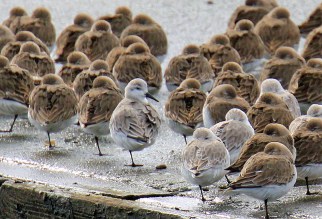
We moved on to Drayton Harbor on our way to Semiahmoo and found fewer ducks than generally seen and nothing of note.  Our fortunes changed at Semiahmoo though – one of my favorite birding spots in Washington.  Here we had both Goldeneyes, Red Breasted and Common Mergansers, the three Cormorant species, and Common and Pacific Loons, the former starting to come into their beautiful breeding plumage.  We also had some nice shorebirds many Black Turnstones, Killdeer, a single Black Oystercatcher and then a large group of  Dunlin and Sanderlings on one of the rafts.

Black Turnstone

Black Turnstone

Dunlin and Sanderlings

Dunlin and Sanderlings.jpg

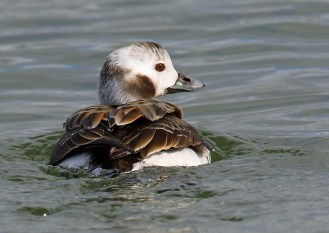
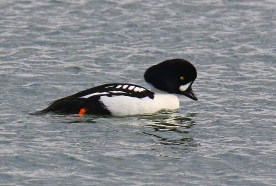
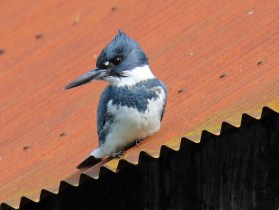
But the treat here was the variety and quality of looks at the sea ducks.  There were many Long Tailed Ducks, mostly females, and two that were in very close.  We had numerous Surf Scoters and some White Winged Scoters as well.  Nice Red Breasted Mergansers and close ups of Barrow’s and Common Goldeneyes. A female Belted Kingfisher provided a beautiful photo op perched on a colorful metal roof.

Long Tailed Duck Female

Long Tailed Duck Female

Barrow’s Goldeneye

Barrow's Goldeneye

Common Goldeneye Female

Goldeneye Female

Surf Scoter

Surf Scoter

Red Breasted Merganser

Red Breasted Merganser

Belted Kingfisher

Belted Kingfisher

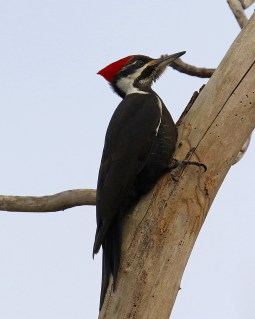
As we departed for our lunch stop at the base of the spit we had a Fox Sparrow and at the lunch stop, super views of a Pileated Woodpecker female and a flyover of the male.  A gorgeous Bewick’s Wren serenaded me as I searched for the male Pileated.

Fox Sparrow

Fox Sparrow

Pileated Woodpecker

Pileated WP2

Bewick’s Wren

Bewick's Wren

We went through the town of Birch Bay and had another Greater Yellowlegs but not many birds and not much of note.  At Birch Bay State Park though we finally got our Black Scoter, a distant view of an Eared Grebe and distant Red Throated Loons in addition to more of many of the birds we saw earlier and more Long Tailed Ducks.  On the way there a large flock of Wigeons included a single Eurasian.  At the Park we had many Brant included three up close one of which had a bright yellow leg band.

Banded Brant

Banded Brant

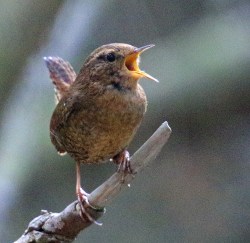
Our final stop was Lake Terrell.  Not real birdy but we had our only Swallows of the day including a huge number of Tree Swallows and at least one Violet Green, my first of the year.  We also added our first Pied Billed Grebe and some Ruddy Ducks.  In the woods, Pacific and Bewick’s Wrens serenaded us and we had a good look at a Brown Creeper.  It was here too that we had our only Ruby Crowned Kinglet of the day…go figure.

Brown Creeper

Brown Creeper

Pacific Wren

Pacific Wren

We called it a day and shortly after leaving we found a Kestrel on a wire.  The group is very cordial and shares their expertise, observations and experience. Art and Carlos were great passengers – and Virginia delivered like always.


Bird and Memory of the Week…Crested Caracara in Skykomish- and its cousins around the world

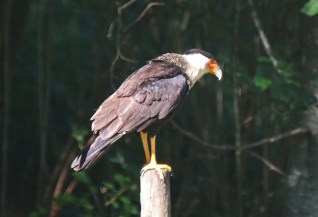
The Bird and Memory of the Week is the Crested Caracara, Caracara cheriway, a member of the Falcon family and considered a bird of prey but also very much a scavenger. I have seen this species and its cousins in many locations but the spark for the memory was the very rare visitation of this species to Skykomish, Washington from June 15th through July 5th in 2014. The Caracara showed up while I was in Maine and I had no faith that it would still be there when I returned. This would have been a major disappointment as I had never seen one in the state before (the only other state record was in Neah Bay in early 1998). But the bird gods were kind this time and although I missed it on my first attempt to find it and there were thoughts that it had departed.  On Independence Day, July 4th, finally success…better than fireworks for me.

As I have stated before, a big reason for this “feature” in my blog is that each individual memory brings back additional memories and much of this post deals with these. My first Caracara was seen 37 years earlier on a wonderful trip that included great birding in Texas, Florida and Trinidad with friends taking advantage of an incredible offering on the long defunct Eastern Airlines. Eastern had a special that allowed travelers to go anywhere in its route system as long as they did not land in any city twice. As the name suggests, most of their cities were on the East Coast. The one exception was Seattle. The price for this incredible opportunity was $299.00 Round Trip. So we were able to go from Seattle to two different locations in Texas (enabling us to bird several spots in South Texas) and then to Florida and then to Trinidad and then back to Seattle. Ah, the good old days.

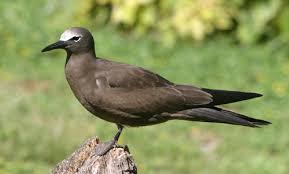
Back to the Caracara. We missed it in Texas, but after some really fun birding in the Florida Keys, and before heading to the Dry Tortugas, we visited Kissimmee Prairie Preserve and found our Caracara. We also had Short Tailed and Short Tailed Hawks there – both life birds at the time. My early record keeping was manual only and was on individual checklists from refuges etc. I did keep track of life list additions but otherwise it was primarily those individual lists many of which got lost over the years. Some other “lifers” seen on the Florida part of that remarkable trip were Swallow Tailed and Snail Kites, American Flamingo, Brown Noddy Tern, Masked Booby and many other specialties.

Swallow Tailed Kite

Swallow Tailed Kite

Brown Noddy Tern

Brown Noddy Tern

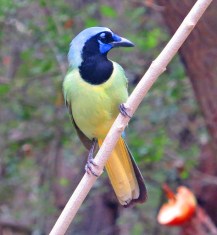
So it is very possible that I saw a Caracara again in later Texas trips but as best I know it was not until 2013 that I next recorded this species. First at Laguna Atascosa on April 16th and then again at Aransas the next day. Other great birds at those birding hot spots were Aplomado Falcon, Bronzed Cowbird, Green Jay, Roseate Spoonbill and Scissor Tailed Flycatcher.  Later that year I saw a Caracara at Abra Gavilan in Peru in November. It was identified as a Crested but may have been the very closely related Southern Caracara, which I had seen in 2005 at Iguassu Falls in Brazil.

Crested Caracara at Laguna Atascosa

Caracara1

Bronzed Cowbird at Laguna Atascosa

Bronzed Cowbird

Aplomado Falcon at Laguna Atascosa

Aplomado Falcon

Green Jay at Aransas

Green Jay (2)

Scissor Tailed Flycatcher

Scissor-Tailed Flycatcher

Roseate Spoonbill at Aransas

Roseate Spoonbill

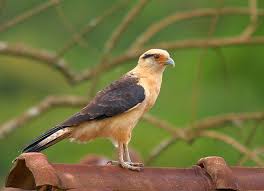
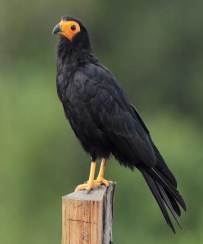
In the intervening years in addition to the Southern Caracara, I had seen Yellow Headed Caracara at Tiskita in Costa Rica, Chimango and Mountain Caracaras in Junin de los Andes, Argentina and Black Caracara also in Brazil. All are very striking birds and were valued observations at the time. These were all bird rich areas: 409 species in Peru; 273 in Brazil, 152 in Costa Rica and 41 in Argentina even though Argentina was primarily a fishing trip and Costa Rica was a family vacation with little birding and Brazil was at most 50/50 birding and other activities. Future posts will likely provide details. But I have included a few photos of birds seen on the trips along with the Caracaras as I did above in the Texas and Florida Caracara sightings.

Hyacinth Macaws – Pantanal, Brazil

Hyacinth macaws 4

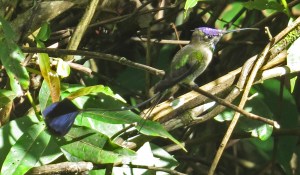
Magnificent Spatuletail – Peru

Spatuletail

Yellow Headed and Black Caracaras (Pictures by Others)

Yellow Caracara       Black Caracara

All of that is prelude to the Washington Caracara. All of my other Crested Caracara observations had been in open areas – with little if any forestation and in general the birds were seen scavenging rather than perching or foraging. Often those observations were at distance, but the Washington experience was just the opposite. Skykomish is generally logging country. There are a couple of open areas but mostly lots of trees. One of the open areas was “the Goat Farm” and after looking there and in MANY other areas on both July 3rd and July 4th, it was finally at the Goat Farm, that the Crested Caracara was found.

There were many birders searching for the rarity on both days even though it had been around for more than a week and had already been seen by many. But perhaps because of the terrain, it was not seen every day as I had found out the day before. But on this lucky day we found it perched and on the ground at the Goat Farm but unfortunately that also meant we had to interact with the “Goat Farmer”.

Crested Caracara in Skykomish

Crested Caracara - Copy

Although we were on a public street and never went onto any private property, this sad character was tired of “outsiders” being in his world especially with their cameras and binoculars “spying” on him. Grace and Ollie Oliver were with me when we saw the bird and we were confronted by the farmer (who was with his son and another guy). Cursing and fuming, he got into my face and actually threatened to beat me and then, the coward he was, he changed instead to “getting his boys” to take care of us. His son prevailed and pulled him back – perhaps avoiding an even uglier scene. He had also threatened to “shoot the damn bird” and we worried that he might do it. Fast forward to the sad end of the Northern Hawk Owl at Cassimer Bar a few months ago, and such interactions and threats are all too dangerous.

The Caracara was reported again the following day and then it was gone. Who knows maybe Goat Man indeed did kill the bird…a horrible thought. As with all rarities, there is a fascinating question of “why here” and “why now”. The speculation was that however the Caracara had gotten to Skykomish, it had found many snakes there to eat and when finally it had cleared them all out, it left…if it was not shot that is…

Bird and Memory of the Week – Ross’s Gull

The Bird and Memory of the Week is Ross’s Gull, Rhodostethia rosea, a super rare small gull rarely found out of the Arctic. I believe the Gull was first found at Palmer Lake in far north central Washington by Fish and Wildlife biologists on December 13, 2011 but it did not make it to the public grapevine until December 20th. When I learned of the sighting I immediately posted on Tweeters that I was going to go early the next morning. Three responses came in quickly – Michael Willison, Knut Hansen and _______.

Palmer Lake

IMG_2247
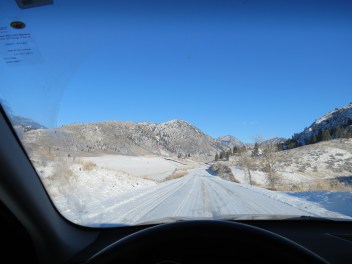
We met at the Starbuck’s in Issaquah. Palmer Lake is approximately 280 miles from Seattle. December 21st is the shortest day of the year and there was snow on much of the route. We were all VERY keen on getting to the lake as soon as we could. I acknowledge a love for driving fast, especially when there is a potential treasure trove at the end of the journey, so I asked if anyone had a problem if I went fast. Being focused on the Ross’s Gull possibility, nobody objected. That was all I needed. Snow be damned, we made it to the lake in just about 4 hours…no tickets, no incidents, but I think there was some fear of loss of life along the way and definitely questioning about giving the “Go Sign”.

Snowy Roads – Clear Skies

IMG_2245

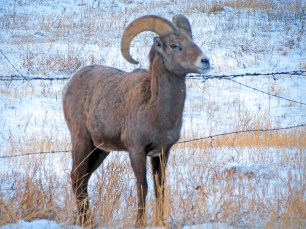
Palmer Lake and the surrounding country are gorgeous, especially with the snow and especially since it was a bright sunny day. When we arrived in the town of Loomis, we were greeted by a herd of Bighorn Sheep. I see them often on the cliffs along the Yakima River Canyon, but these were up close and personal…impressive animals. There was some confusion as to where the gull might be and when we scanned the Lake from the South, we found some Common Mergansers, some Trumpeter Swans and some Canada Geese but no gulls at all.

Bighorn Sheep

Bighorn
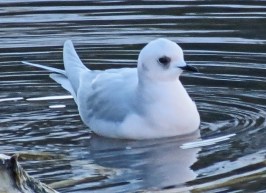
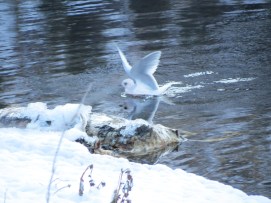
The reason there was no gull was simple – it was tight against the eastern bank feeding on a deer carcass which apparently was the major reason it had remained so long. When we found the carcass, we found the gull – WOWSERS!!! Truly a gorgeous little gull, delicate and dove like with a hint of a dark spot behind the eye and a dark smudge around the eye. A tiny black bill and if the light was just right, a faint rosy pink on the breast. It was not yet even 11:00 a.m.

Ross’s Gull

Ross's Gull 2

IMG_2276

IMG_2283

IMG_2274
We watched it for a long while as it pecked at the carcass and then flew off briefly only to return and continue its feast. This was only the second Washington State record and it was a life bird in the State and I believe in the ABA area for all of us. As bad as it feels when there is a chase and a miss, the elation and adrenalin rush when you find a target bird is much greater. Multiply that several fold for this super bird – a bucket list bird for many. It was exhilarating. Other birders arrived and joined the party and some had been there before we arrived. The Ross’s Gull remained for the rest of the week and was seen by many birders from Washington, B.C. and probably elsewhere – probably between 50 and 100 sightings.
We had other birds in the area and on the way home, including two Snowy Owls, but they fade from memory as the Ross’s Gull, as little as it was, remains a giant super fond memory in my birding life.

Snowy Owl (Distant) on Highway 17

IMG_2316

Kittitas County March 5, 2015

Spring was definitely in the air as Steve Pink, Frank Caruso and I headed off early Saturday morning for some birding in Kittitas County with a special effort to find White Winged Crossbills reported for awhile at the Central Washington University Campus in Ellensburg.  The weather was predicted to be warm but with a good chance of precipitation and some wind.  Weatherman was wrong again as we had a mostly sunny, dry and wind free day after early morning fog.

White Winged Crossbill from Okanogan

White Winged Crossbill3

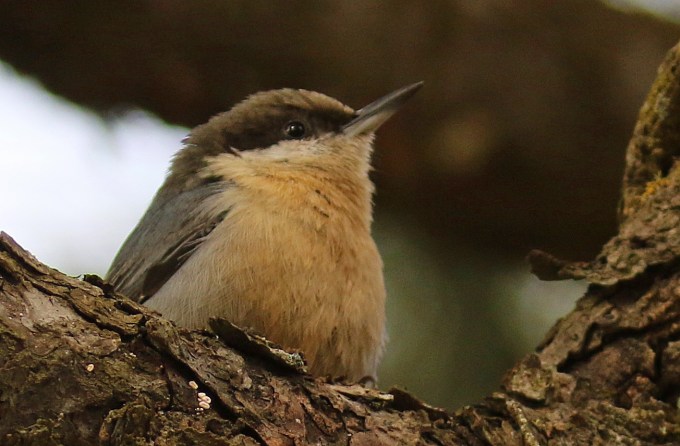
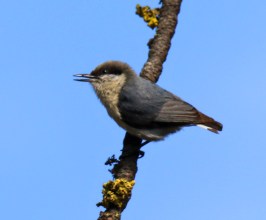
Our first stop was in Cle Elum where we drove through town (and South Cle Elum) checking feeders and hoping for Evening Grosbeaks and Cassin’s Finches and whatever else.  Not a lot of birds and nothing of note.  We had little trouble finding  4 or 5 Pygmy Nuthatches at their favorite spot at the Northern Pacific Railroad Ponds but no Evening Grosbeaks or Cassin’s Finches and generally pretty quiet even though the fog had broken and we had nice sunshine.  We did however have at least 5 Tree Swallows – first of year for all of us. Also some Mountain Chickadees with their rasping calls.

Pygmy Nuthatch

Pygmy Nuthatch

We made the required stop at the Cle Elum Bakery for coffee and a donut and then returned to I-90 heading to Ellensburg and CWU.  As we got out of the car in the parking lot at the University, we saw a birder with camera intently watching a cone laden tree and we wondered if it was going to be a target quickly found.  Alas Lamont ? did not have Crossbills or anything else of note but he was a great source of info and told us two Seattle area birders (Grace and Ollie) had seen a single White Winged Crossbill earlier up by the Japanese Garden where they had been reported by Walter Szeliga earlier in the week.

As we wove our way through the campus construction projects and to find the  Garden, we heard a call that was “different”.  Steve was the first to suggest Townsend’s Solitaire.  I played the call and the bird came in immediately from a rooftop to a tree within 5 feet of us.  Posed for a few seconds and then left for its unseen rooftop hangout.

Townsend’s SolitaireTownsend's Solitaire

We finally arrived at the Garden and found another birder, Woody Wheeler, also intent on more cone laden trees. And now there were Crossbills – lots flitting around – mostly not in the open.  After a few moments, Frank and I independently got quick but fairly good views of a single bird with distinct wing bars – and then it was gone.  We all searched for quite a while longer and never again saw the singleton.  About 90% sure it was our target – especially after learning later that this was the same experience Grace reported.  There were also lots of Red Breasted Nuthatches and Black Capped Chickadees and a few Pine Siskins.  Sadly no photo of the disappearing “probable” WWCB.

Red Crossbill in Thick Cones

Red Crossbill2

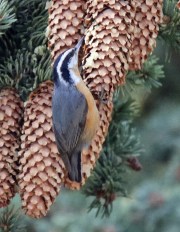
Red Breasted Nuthatch

Red Breasted Nuthatch

After an hour plus, we gave up and headed East.  Deb and Bill Essman have been great friends and tour guides in the area before so we took a chance and stopped at their home east of Ellensburg not far off the old highway.  Frank and I had a wonderful trip with them up Coleman Canyon last year and any visit is always fun and informative.  Deb was home and we introduced Steve to the “trophy collection”. (They are serious, successful and ethical hunters as well as excellent birders.)  We shared stories, got some tips and then headed off.  BTW many years ago a White Winged Dove was at her place – long gone now LOL!!

Steve with New Friend (Jon Houghton will Recognize this photo)

IMG_20160305_130609004~3[1]

We headed towards Vantage on the old highway.  We stopped first at a spot where Frank and I had Burrowing Owl last year – but no go – too early still most likely.  Then we birded some spots in the Quilomene.  At the Corral we were treated to several of the Sage/Shrub Steppe specialties although it is still a tad early for some others.    We had killer views of Mountain Bluebird, Sagebrush Sparrow and Say’s Phoebe.  We continued on to Gingko State Park and Recreation Road where we had very few birds including a distant heard only Rock Wren.

Mountain Blue Bird

Mountain Bluebird1

Sagebrush Sparrow

Sagebrush Sparrow3

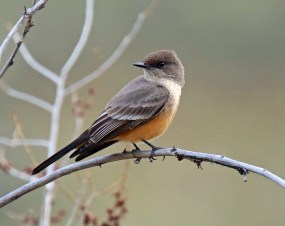
Say’s Phoebe

Say's Phoebe

It was now getting late so instead of returning for one more try at the White Winged Crossbills we headed down Huntzinger Road to a good spot for Canyon Wren. When we arrived I mistakenly played the Rock Wren song and almost immediately had a Canyon Wren reply and fly in towards us.  This feisty guy almost never shut up afterwards – definitely one of the best songs in the bird world.  He kept coming closer and closer – maybe only 15 feet away – best views ever.  Later returning the favor, we had at least 3 Rock Wrens respond when we played the Canyon Wren song followed by the Rock Wren.  They did not come in close for photos but provided nice views in the downhill mini-canyon.  And then out of nowhere a small falcon zipped through.  We had seen two Kestrels up the road, but this was a very dark Merlin – an unexpected treat.

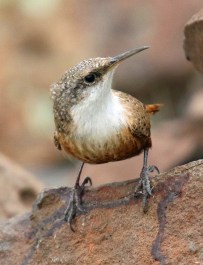
Canyon Wren

Canyon Wren1   Canyon Wren4

So we ended on a high note and headed back to Edmonds.  I will be co-leading an Audubon field trip to the area on March 26 with Jean Olsen.  I hope these birds remain and some of the other special birds will join them and show off for us as well.


Bird and Memory of the Week – Red Legged Kittiwake – Well No But…

The Bird and Memory of the Week is the Red Legged Kittiwake, Rissa brevirostris, and I only wish that the memory included actually seeing this rarity. BUT…although sadly I did not find it, it serves as another example of why I write these posts – great memories for me and hopefully some enjoyment for others even when a bird is missed. As is usually the case, just in the process of being out in the field – looking for a particular species or just observing the world around us, there is great value and reward.

Red Legged Kittiwake (Photo by Charlie Wright)

RLKI

On September 8, 2015 Charlie Wright and Linnaea Chapman found a Red Legged Kittiwake at Neah Bay and got Brad Waggoner on it a bit later. Their Ebird report included great photos…wow!  Now one should not need special incentives to go to Neah Bay even though it is quite the jaunt from Edmonds. This is an area that continually produces rarities in addition to many fine “regularities” and some incredible scenery. I am sure there will be many blog posts that involve Neah Bay in the future. But in this case the Red Legged Kittiwake report was a call for immediate action. Remember Rule 1 is “Go now” and Rule 2 is “No whining if you miss a bird because you do not follow Rule 1”. So on September 9, three hopeful birders caught the ferry from Edmonds hoping to find a new life bird.

As is sometimes (too often?) the case, we were a day late. And I guess since we stayed over for a second day, one could say we were also two days late. We searched diligently both days but it was simply not to be found. But after all, this was Neah Bay so likely there would be some consolation prizes and while there was nothing to report on Ebird or Tweeters as a rarity, we had great birds, great birding and a wonderful time – richly rewarded for our time in the field and together. Just in Neah Bay itself we had almost 70 species including Black Legged Kittiwake, Stilt Sandpiper, Sooty Grouse, Peregrine Falcon, Vaux’s Swift, Marbled Godwit, Whimbrel, Red Crossbill, Black Oystercatcher, Northern Pygmy Owl, Sooty Shearwater and Lapland Longspur. Neah Bay is also the only place where I succumb to the lister’s temptation to include Northwestern Crow (although I am a doubter) so that was added as well. That’s a great list for me any day.

Black Legged Kittiwake

Black Legged Kittiwake

We were of course really excited when we saw the Black Legged Kittiwake exactly where the Red Legged had been reported the day before. Just could not get those legs to change color for us. Still a gorgeous bird. And not far off we had Red Throated and Common Loons, all three Washington Cormorants, and some Sooty Shearwaters. Our first visit here produced Black Oystercatchers, and Least and Western Sandpipers as our only shorebirds.

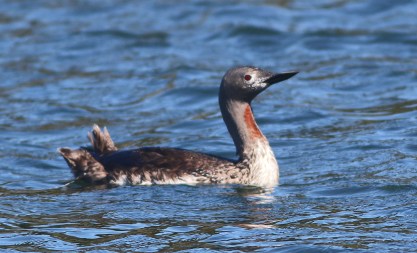
Red Throated Loon

Red Throated Loon

After many hours at the harbor area, we hit the Wa’atch Valley and picked up the Northern Pygmy Owl, some Band Tailed Pigeons and our Peregrine. The next morning we got an early start at the harbor again. Now there were two Kittiwakes but sadly both had those darn black legs…sigh. So we consoled ourselves with a nice array of shorebirds – numerous Oystercatchers, Stilt and Spotted Sandpipers, a Whimbrel, a Marbled Godwit, Killdeer, Sanderling and Black Turnstones. We also found the Lapland Longspur that Charlie et al had reported on the 8th.


Black Oystercatchers

Black Oystercatchers

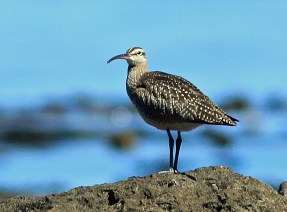
Whimbrel

Whimbrel

Marbled Godwit

Marbled Godwit2

It was time for a change of scenery. There was a lot of fog along the Wa’atch so we headed for high ground and went up Bahokas Mountain/Peak, an area I had visited only once before. Again we had some nice birds and truly some incredible scenery. This is becoming a famous hawk watching spot and I hope to return for that this year, hopefully catching some of the Broad Winged Hawks that were reported in 2015 migration.

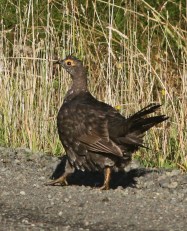
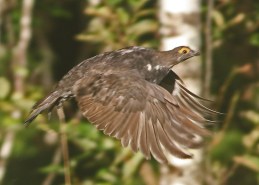
I rank grouse almost as highly as owls as favorite finds and we were treated to a very nice Sooty Grouse. I have never seen one that looks like the one we found with its eye completely surrounded by a yellow-orange patch – but not raised as in display.

Sooty Grouse

Sooty Grouse2        Sooty Grouse in Flight2

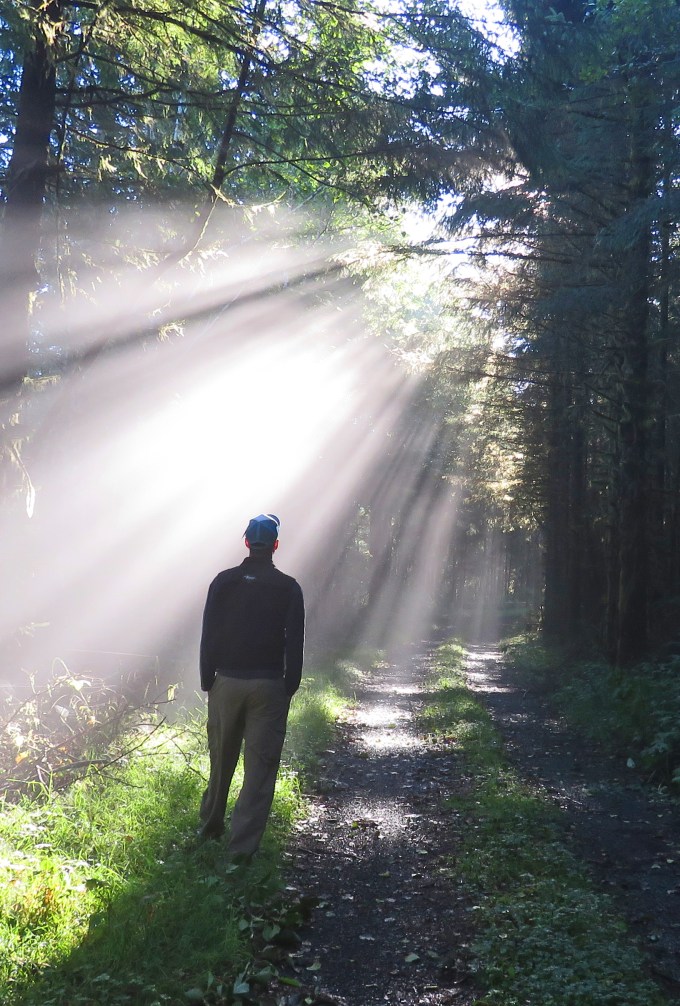
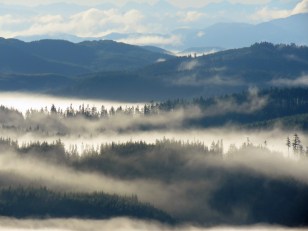
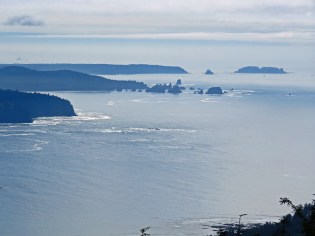
We also had a large number of Vaux’s Swifts, some Hutton’s Vireos, Red Crossbills and more Townsend’s Warblers than I have ever seen – 18. A Swainson’s Thrush was still singing and we also found a Warbling Vireo. But the highlight was the “light”. We had beautiful views of the fog in the Valley, the islands in the Pacific and a picture of Nathaniel in the forest broken light that I will just call “Enlightenment”.

Scenery

Scene4

Scene

Enlightenment – Nathaniel “Sees the Light”

Enlightenment

We looked again in vain one more time for the Red Legged Kittiwake – no go – but a very wonderful trip.  I am headed to Alaska this June with John Puschock and hope to see a Kittiwake with those bright red legs then.

Bird and Memory of the Week – Magnolia Warbler

The Bird and Memory of the Week is the Magnolia Warbler, Setophaga magnolia. Thanks to our digital world and good friends in the Washington Birding Community, on June 5, 2013 I got to see one in Washington State where they are quite rare. This is a perfect example of why I have chosen to include a “Memory” in this blog each week. It recalls great birds, great people, great places and great times.

On June 4 2013, George Pagos and I set off on a whirlwind trip to Eastern Washington. Jon Isacoff, an extraordinary birder in the Spokane area had agreed to meet us for a tour de force of Calispell Lake, a beautiful and very birdy area in Pend Oreille County on June 5. The area is home to a number of specialty birds and has become one of my favorite Washington birding locations. We left early on the morning of the 4th with some planned stops before a night in Spokane and then another early start for our trip with Jon.

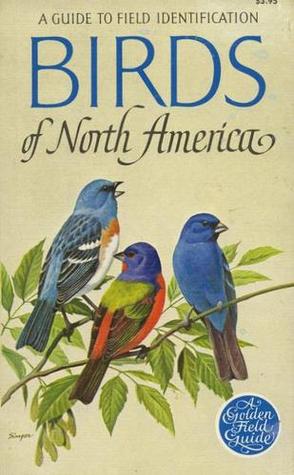
We had a long list of possible birds and a good number of target species but Magnolia Warbler was certainly not included. I first saw a Magnolia Warbler on May 9, 1975 at the Pocomoke River State Park in Maryland. I was on a field trip as part of the Maryland Ornithological Union Convention. It was led by the legendary Chan Robbins – an extraordinary birder and co-author of my first Birding Guide Book – Birds of North America – part of the Golden Field Guide series. In Maryland, Magnolia Warblers are a dime a dozen and on that extraordinary day, it was merely one of the 20 warbler species seen. In all we observed more than 135 species – many of them life birds for me as a beginning birder. I am sure that trip will have a blog post of its own someday.

Chan Robbins and Birds of North America (my first guidebook)

Chan Robbins   Birds of North America


I had also seen Magnolia Warblers on April 25, 1978 on one of those heaven sent “fallout” days on High Island in Texas where migrating birds exhausted from their flights across the Gulf of Mexico literally fall to the ground at first opportunity – this day right in front of three of us. I no longer have the official list but recall that we had more than 25 warbler species that day. I would never have guessed that another 35 years would pass until I next saw this species – and certainly would never have expected it to be in Washington. Back to our trip…

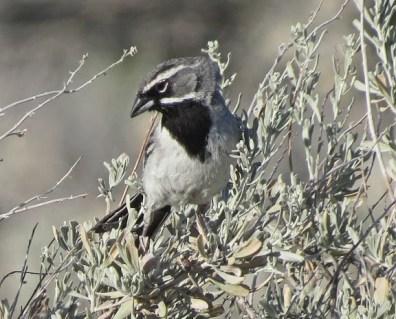
George and I first stopped at Recreation Road near Vantage, historically a good spot for a Black Throated Sparrow. We were on the trail before 8:00 a.m. and were rewarded with close-ups of this beautiful bird, and among other species we also had Bullock’s Oriole and Rock Wren. A great start to the day. Unfortunately in the last couple of years Black Throated Sparrow sightings here have been few if any – a great loss.

Black Throated Sparrow – Recreation Road

Black Throated Sparrow

We saw birds along the way, but our next official stops were Potholes State Park in Grant county and then Palouse Falls State Park in Franklin County. Our best birds in these locations were Forster’s Tern, Golden Eagle and Grasshopper Sparrow. We continued to Crooked Knee Lake and Sheep Lake in Whitman County where we found our targeted Black Tern (which proved to be easy elsewhere later). We ended the day at North Forker Road in Spokane County where we missed Clay Colored Sparrow but had a good look at our first Black Chinned Hummingbird.

Early the next morning we atoned for our Clay Colored Sparrow miss finding 2 in a grassland at West Medical Lake and then 2 more on South Stroup Road also in Spokane County. In both places they were accompanied by Vesper and Savannah Sparrows.

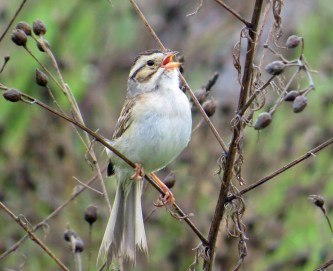
Clay Colored Sparrow

Clay Colored Sparrow 2

We pushed on to Pend Oreille and we met Jon Isaacoff near Calispell Lake. It was a picture perfect day and Jon was an extraordinary guide. I am not going to go into each location around the lake in detail – read the Guide to Bird Finding in Washington section on the area – or better yet find a trip with Spokane Valley Audubon or WOS and just go. The birds are wonderful, the scenery great and you will want to return many times. In three hours with Jon (including the time we were stuck behind a large bull on the road that did not want to give ground and we did not want to further arouse and possibly suffer major car damage), we tallied 76 species including several that this area is famous for: Bobolink, Northern Waterthrush, American Redstart, and Red-Eyed Vireo.

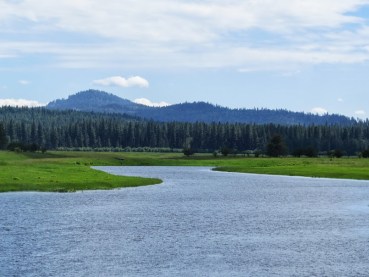
Calispell Lake

Calispell Lake

Bobolink – Calispell Lake

Bobolink

Northern Waterthrush – Calispell Lake

Northern Waterthrush


American Redstart – Calispell Lake

American Redstart

Red-Eyed Vireo – Calispell Lake

Red Eyed Vireo

Other good birds included more Black Terns, Virginia Rail, Sora, Redhead, Black Chinned, Rufous and Calliope Hummingbirds, Red Naped Sapsucker, Cassin’s and Warbling Vireo, Pygmy Nuthatch and Ruffed Grouse. A wonderful place and day. Many many thanks to Jon.

It is a long drive back to Seattle and we wanted to make it home that evening. We made a quick stop at Reardan Ponds and then headed west. Somewhere along Interstate 90 I checked my email and found that Mike Clarke and Kevin Black had found a Magnolia Warbler at the Ranger Station at Ginkgo State Park. We had wonderful birds that day but a Magnolia Warbler would be a new State bird for both George and me and we were headed that way. To repeat something I am sure I have said earlier and will repeat often, “Just get out into the field and you never know what might happen.” Or said another way, “If you are not out in the field, nothing will happen.”

I had Mike’s cell number and gave it a try. Not only did he answer, he was still at the Ranger Station looking at the warbler. We were an hour away (“Officer, I swear there were no speed limit signs”). I hoped for detailed information and then a chance it would stay and we would find it. But Mike and Kevin are as good as it gets both as people and as birders and they said – “We will wait for you.” And they did. We arrived around 6:45 p.m. and joined them at the Ranger residence. Thankfully in June the days are long and even by 7:00 p.m. there was still plenty of light. The warbler had not left but was currently buried in a thick bush below and not visible. While we waited for it to make an encore appearance in the open, we were treated to a super view of a Common Nighthawk – roosting on a branch a few feet away.

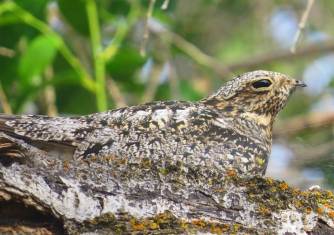
Common Nighthawk

Common Nighthawk

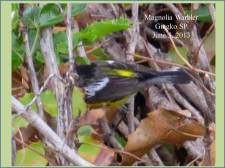
We could see fluttering below but the bird would not emerge. Finally after maybe 20 minutes we got a sufficient view for a sure ID and a photo. Mine (on left) was terrible. George who is an excellent photographer got a much better one (right).

Magnolia Warbler Magnolia Warbler

We also had a Lark Sparrow and a Wilson’s Warbler there. All told we had nine different sparrow species and nine different warbler species for the trip – not bad in Washington.  The Magnolia Warbler was species number 107 for our trip. It was also my 296th species in Washington for that year and and my 376th Washington State Life Bird. And it was gorgeous…And how appropriate that it was within a couple of miles where we had found the Black Throated Sparrow the previous morning.

This was definitely a day when I got all three of the great possibilities when birding … great people (Jon, Mike, Kevin and of course George), great places (many) and great birds – again many but especially the Magnolia Warbler.

Fast forward to June 2015. I was in Maine on a birding trip described in a previous blog. Now Magnolia Warblers were commonplace. I saw 20 during the several days in Maine. Still never got a really great photo but now at least I had one of my own where you could see the head not buried in a thick bush.

Magnolia Warbler – Baxter State Park – Maine

Magnolia Warbler


Bird and Memory of the Week – Northern Hawk Owl

The Bird and Memory of the Week is the Northern Hawk Owl, Surnia ulula. There has been some recent controversy over this owl and I will touch on that briefly but this post deals with my treasured intersections with what has to be one of the fiercest looking and most appealing of all the North American Owls.

The first time I observed this species was in March 1982 in Bridgeport, WA. It had been first seen in late January that year and again through February. Back in those days there was no Ebird or Tweeters and word of mouth and some information at Seattle Audubon was the way one learned of what birds had been seen – or at least those were my resources and I had heard of this observation through Seattle Audubon. Now almost 34 years later I do not recall specifics of the observation except that it proved relatively easy to find and the owl was out in the open and VERY STRIKING!! Also at least for me this was pre-photography days so no picture.

Fast forward to December 2012. I was now back into birding and this was the end of my first year of “listing” and “chasing”. I was in Dennis Paulson’s Master Birding Class and I was avidly following reports on Tweeters and Ebird and often rushing out to “see those birds”. On the 21st a Hawk Owl observation was reported near Ephrata and a picture was included – it was beautiful. I wanted desperately to see that bird.

Northern Hawk Owl (December 21, 2012 – reported by others)

First NOHA

Early the next day Samantha Robinson and I headed east – with high hopes. We had an approximate location and it was a three hour drive from Seattle. I had been in the same general area on December 11th when a two hour search resulted in observing a Gyrfalcon that had first been found by Matt Yawney. A Northern Hawk Owl would be as good or better. We first stopped at Wanapum State Park checking the trees (unsuccessfully for Long Eared Owls), saw some ducks including a Red Breasted Merganser near the boat launch and then continued on our quest. We birded the area where it had been seen earlier and all along Highway 28 east and west of Ephrata for several hours without luck.

Being the next to shortest day of the year, we knew that light would be gone pretty early. Around 2:00 we decided to head home planning to check “every” post, tree, pole etc. along the way to give it a last shot. About 7 miles from where the owl had first been seen (on Highway 28), we came upon a ranch/farm on the south side of the road that had several buildings, few trees and a number of lamp structures. On one of the lamps/lamp posts, maybe 300 to 400 yards away, there was – a bump. We pulled into the driveway; got as close as we could; got out of the car and …Eureka – we had our bird!!

Distant Northern Hawk Owl December 22, 2012 – Highway 28

NOHA on lamp

Not a great look from afar but still very exciting. It really is a magnificent bird. We watched it on the lamp for a few minutes and it actually seemed to be watching us even at that distance. It turned its attention away from us – and dove – disappearing behind one of the outbuildings. We figured our viewing was done – disappointing our thirst for more but still a very exhilarating experience. It soon got MUCH more exhilarating. Of all of the places that the Owl could have chosen for its next perch, it actually flew into one of the only two trees around – the one right next to – US!! Unbelievable.

At first it had its back to us and we could only glimpse the full magnificence when it would swivel its head as only owls can do.

Northern Hawk Owl 1

But our show was not done. The owl turned completely around to face us – no more than 50 feet away. And now we could see the purpose of the dive. A rodent was grasped in its talons – the tail and rear legs dangling in clear sight. The Hawk Owl’s ferocious and piercing glare suggested that perhaps we should allow it to eat in peace.

Northern Hawk Owl with Prey

Northern Hawk Owl 2

One more close up and we left – adrenalin still raging through our veins – a most memorable, fantastic and fortuitous encounter. No more sightings were reported (on Ebird) for this species after our observation. The only other Hawk Owl reported in 2012 had been back in January and another was not reported in Washington until July 2013.

Northern Hawk Owl December 2012 – Final Close Up

IMG_8531

2013 was the year of my official “Big Year” in the state – complete craziness but a lot of fun. And as luck would have it, I was not able to find a Northern Hawk Owl that year (being unable to try for the only one reported, in the Okanogan in July). It would have been great for the “tick” but how could it ever beat our 2012 experience? The following year I was moving more and more to photography and hoped for another Hawk Owl. One was reported in the Brewster Flats area on November 17th and as soon as I could arrange it, I made the trip again with Samantha Robinson.

After a hard couple of hours of searching we were about to give up. Another birder had joined the search and when he separated for a “nature call” we heard “I got it.” He had obviously chosen the right “bush” and there it was on a wire in the open if not as close as our earlier bird. Under normal circumstances, the resulting picture would have been treasured – as fuzzy as it was. But it was hard not to compare to our 2012 experience – so “just a photo”.

Northern Hawk Owl – Brewster Flats November 2014

Northern Hawk Owl

2015 became another “Big Year” but of a different nature (already covered in my first blog post) as I tried to get photographs of as many birds in Washington as I could. Unfortunately the only Northern Hawk Owl reported was by Dan Waggoner at Cassimer Bar on December 30th. It apparently had been found a couple of days earlier but that observation had not made it into the “information stream” by the time I drove within a mile of its location returning from my trip to the Okanogan. And there was no way to turn around and try for this bird as I had organized a boat trip out of Sequim on December 31st – an impossible conflict.

As many readers know the Cassimer Bar Hawk Owl turned into a very unhappy and ugly story as the property owner did not enjoy the attention this bird brought to his property, although it was viewable from a public street and there was no trespassing involved. He ended up shooting the owl and stringing it up in full view as his illegal retaliation. Legal forces did punish the landowner but that certainly did nothing to save one of nature’s wonders.

We are blessed to witness the many wonderful birds in Washington – none to me more appealing or charismatic than the Northern Hawk Owl…but sometimes we encounter those with a very different aspect and appreciation and sometimes we may ourselves overstep boundaries- clear or less clear. Enjoy, educate, acknowledge and respect – as best we can.


Bird and Memory of the Week – Bush Thick-Knee

After lots of birding in the 1970’s time commitments changed with the addition of two children, Alex and Miya, in the 1980’s and birding mostly disappeared from my life (time with them was far better).  But by 2003 both were in school and interest in some international birding developed and I had to choose a first destination.  I do not remember exactly why, but Australia seemed the right combination of exotic, different, birdy and English speaking – well sort of…  I had accumulated some airline miles, found a good flight availability and began making plans.  I wanted to engage a guide for some of the trip but also wanted to be on my own for some adventures.

Australia is a long way off so I arranged for it to be almost three weeks.  My research was all online and I came up with what looked like a reasonable plan that would be entirely on the East Coast of Australia – from Sydney to Cape Tribulation.  All arrangements were made completely online – never actually talked to a single person – and fortunately all went very well.  After Sydney, stops included Brisbane (briefly but that is where I found the Bush Thick Knee), Toowoomba (Abberton Lodge), O’Reilly’s Rainforest Retreat, Cassowary House (Kuranda), Kingfisher Park Birder’s Lodge, Daintree National Park and the Cairn’s Esplanade.  I will comment very briefly about couple of these spots – but the focus here is on the  Bird of the Week  so a later post will have many Australia stories.

I have chosen the Bush Thick-Knee (called Bush Stone Curlew at the time) not only because it brings Australia into play but also because it has to be one of the most preposterous surprise sightings for me ever.  As mentioned I did want some guided birding and had arranged to spend a few days with Bill Jolly at Abberton Lodge in the Lockyer Valley outside of Brisbane. http://www.abberton.org  The plan was for me to fly into Brisbane – spend a night and then meet Bill across from Roma Street Parkland – a good birding spot in its own near my hotel.  I got in a little early morning birding picking up a few species and then sat at the designated pick up spot – waiting for my guide.

I was across from the very edge of the Park on a very busy street and spied a very odd looking bird – and I had no clue what it was.  It stood dead still even as I approached for a photo.  It looked like a wader but also like a large shorebird.  I eventually found it in my “Birds of Australia” – my first stone curlew or thick-knee.  And indeed it appeared to be a stone statue of a bird – dead still.

Bush Thick Knee or Bush Stone Curlew  Roma Park – Brisbane Australia 2003

bushstonecurlew

Burhinus grallarius, is over 20 inches high and is a ground-dwelling bird endemic to Australia.  It is a terrestrial predator filling an ecological niche similar to that of a Roadrunner in North America.  It was a stunning bird and a stunning experience – completely unexpected.  Australia is full of exotic, colorful and charismatic birds, again stories for another post, but this is one of the most memorable from that trip.

Before moving on to other Thick-Knees, I have to throw in at least a few Australian birds.  It is impossible not to be struck with the incredible Australian parrots.  There are many beautiful species, often in huge flocks.  One favorite is the Galah which at times I saw in groups of more than 100 birds.  Another favorite group is the fairywrens – beautiful little gems.  I saw five species there and any could win a beauty pageant. Lastly I will mention the Southern Cassowary – looking more like a dinosaur than bird.  I found two, what I thought was a mother and chick, on an early morning walk in Daintree NP at Rosa Beach.  I later learned that it is the male that cares for the young so I stood corrected.  By the way, the adult Cassowary stands just under 6 feet tall and has a deadly knife-like middle toe  that is 5 inches long!!  I surprised the two (as they surprised me) and I made sure to back track quickly.

Galahs

galahs

Lovely Fairy-Wren

LovelyFairywren

Southern Cassowary

cassowarywithchick

Back to the Thick-Knees.  After the  surprise in Brisbane I was at least now ready to quickly identify various cousins found on later trips.  The first of these was to Kenya in 2007 – definitely the subject of probably many future posts.  An incredible trip in November 2007 produced two new Thick-Knees, a Water Thick-Knee in Samburu NP and a few days later a Senegal Thick-Knee at Lake Baringo. This was my first trip with a professional bird guiding organization – Victor Emanuel Nature Tours and remains my favorite all-time trip due to the incredible birds (504 species seen), incredible people, incredible scenery and of course the super incredible animals.

Water Thick-Knee – Samburu NP Kenya

Water Thick Knee

Senegal Thick Knee – Lake Baringo – Kenya

105 Senegal Thick-knee Baringo

So I now had seen Thick-Knees on two continents and in 2013 on a trip to Peru I added another species and another continent – the Peruvian Thick-Knee in Chappari. I never could get a clear view or photo as they simply never moved.

Peruvian Thick-Knee – Chappari Peru

Peruvian Thick Knee

Then finally (for the time being at least) I had the opportunity to observe Spotted Thick Knees on two separate days on a wonderful Rockjumper/ABA trip to South Africa in 2014.

Spotted Thick-Knee – South Africa

Spotted Thick Knee2

So recalling that crazy first sighting of a Stone Curlew/Bush Thick-Knee just off a busy street in Brisbane now more than a dozen years ago brought back the memories of not only other Australian birds but then also of other Thick-Knees on other continents and other birds in those places as well.  That is why I have included this feature in my blog – the interconnected experiences we all have birding.

Just getting out into the field – exotic ones like these or the ones around our homes always give the opportunities for great experiences and memories.  I hope this post has put you in a state of mind to remember some of yours or to go create/find new ones.

On the Road – Car Troubles and Birds in Eastern Washington – Part II

As I closed my previous post my BMW had  “died” a half mile east of the Marina near Bateman Island, and had been safely towed to the Service Department of BMW Tricities on Thursday evening and was in the helpful and capable hands of Mandy Slaugh, Service Advisor. In the morning they would look into the problem and let me know. I would either have the car back that day, have it on Saturday or face a giant problem getting back to Edmonds and then somehow with eye surgery impending have to get back to Richland, get the car and get back once again to Edmonds.

Car Trouble 2

Whatever fate was going to be revealed on Friday morning, I was now in a very nice rental car from Enterprise that was rented on a daily rate regardless of mileage so with my car out of my helpless hands and in their competent ones, I had decided to carry on to Walla Walla to join Mike and MerryLynn Denny for a day of birding. If nothing else (and there was much else) it would distract me from my problem – a role that birding often performs for me.   Walla Walla was less than 60 miles away. It was disappointing that I could not bird this area as had been the pre-breakdown plan but at what I believe is milepost 300 a single Black Crowned Night Heron flew over the road in front of me – a species I had hoped to see in daylight.

I spent the night in Walla Walla at the Red Lion – normally a good brand – but not in this case. Nice folks but a cinder block cell block with very noisy heating units. Not recommended. If any of you reading this are inventive types – how about inventing a silent air conditioner/heater unit for motels. There is a fortune to be made there. Not a great night of sleep as I still pondered the fate of my car (and the cost to be paid), but in gorgeous weather I met Mike and MerryLynn at their home and birds were ahead of us.

The Dennys as You Often See Them

Mike and MerryLynn

At the end of their emails/posts the Dennys sign off with:

Mike & Merry Lynn Denny

Birding the Beautiful Walla Walla Valley

“If you haven’t gone birding you haven’t lived.”

I would revise that to be “You haven’t lived if you haven’t gone birding in the Beautiful Walla Walla Valley with Mike & MerryLynn Denny.” Doing so is guaranteed to produce fabulous birds, fabulous places (well maybe the Poop Piles excluded), beautiful scenery, great company and more information and insight than is possible to process about every bird, reptile, tree, mountain, plant, river, mushroom and everything else you will encounter. I have been fortunate to have birded with them many times and there is always a special treat. Two special memories below.

Great Gray Owl on Biscuit Ridge with Jon Houghton – May 20, 2015

Great Gray Owl (2)

Western Screech Owl – Whitman College Library May 8, 2015

Western Screech Owl

Birding with the Dennys is also a whirlwind as they guide you to place after place after place where either recently (they bird almost every day) or in the past such and such a bird has been seen or might be seen. You visit parks, rivers, ponds, open spaces, mountains, wildlife areas and places you really have no idea where you are. All have birds – and depending on timing sometimes LOTS of them. This day was primarily a scouting trip for their Owls By Day trip the following day (and I just read their report and it was very successful) so yes we looked for some owls but there were other birds as well.

For me at least the first bird of note was a Prairie Falcon gleaming in the sunshine perched on a post on a ridge up ahead. All falcons are super. In Western Washington I most frequently see Peregrine Falcons and Merlins and Prairie Falcons are a rarity. Even in Eastern Washington I never see as many of this species, described as “very nasty” by Mike, as I would like so this was very welcome.

Prairie Falcon

Prairie Falcon3

As we drove the wheat fields on our way to Hollebeke HMU we saw many raptors (including some beautiful Northern Rough Legged Hawks), many many Horned Larks, and were often serenaded by Western Meadowlarks. We searched in vain for Snow Buntings and Lapland Longspurs, both possibilities but not this time. It felt like spring time.

My deal with the car dealer was that they would text me their findings sometime around 10:00 a.m. There is not always (there is rarely?) cell coverage in some of the remote areas we visited so Mike made a special effort to get us up on a ridge around that time and indeed there was a message. The main problem was that it needed a new starter, and there were a couple of other less expensive matters as well. They had the parts and could have it done that afternoon. While I dreamed that maybe it was just a fuse or a loose wire, I had actually expected something worse than this. Not in the budget planned for the month, but really no option, so the go-ahead was given and at least I knew I would be able to get home and not have to return again next week – back to birding.

Hollebeke has been a favorite owling site for the Dennys especially for Long Eared Owls having had more than a dozen (or was it two dozen?) there one time. Unfortunately it is “(mis)managed” by the Army Corps of Engineers (don’t get Mike started) and the Corps had recently devastated much of the habitat – clearing brush and Russian Olives – the roosting spots for many of the owls. It was very sad to see. We still had some birds, but Mike was so distressed that he decided to not include it on the trip the next day. We flushed a Barn Owl, a Long Eared Owl and a Great Horned Owl – but fleeting looks of fleeing owls only – no photo ops. MerryLynn had a pair of Great Horned Owls out in the open but they were flushed off by a Bald Eagle before we could get there.

IMG_5116

Among the birds at Hollebeke were Cedar Waxwings, both Kinglets, a Fox Sparrow and at least two White Throated Sparrows (heard only by Mike and me). There were lots of California Quail and surprisingly to me a lot of Varied Thrushes. The Dennys said Hermit Thrushes are often there – but not this day. There were amazing numbers of Song Sparrows including many of the very white Great Basin form. We spent a lot of time there and hiked over two miles. DO NOT try this on your own – it is very confusing with criss-crossing trails and paths. I eventually would have found my way out…I think.

Fox Sparrow

Fox Sparrow

It had gotten quite warm – over 50 degrees and we were hungry and thirsty when we got back to the car. So some sustenance for a late lunch and now off to Fish Hook Park – where a Northern Saw Whet Owl was GUARANTEED (sort of). Mike and MerryLynn had directed me there for a Saw Whet on an earlier visit in 2014. As is often the case these tiny owls can be found tucked into low lying branches which sometimes require you to duck in to see them. Quite tame, they usually remain in place staring back at you. Such was NOT the case in 2014 as one flew out right past my ear as soon as I ducked in – the only time that has happened.

One way to find an owl is to look for whitewash – on the ground, leaves, branches etc. If found that means an owl had at least been there – and it still might be. The best way is simply to go with Mike and MerryLynn – not only are they excellent spotters of whitewash – they also know every roosting spot in Walla Walla County – so they go right to the tree. And that was what we did at Fish Hook and indeed a Northern Saw Whet Owl was tucked in where expected. It was even smaller than I remember as it had pulled in its feathers instead of puffing them out. They really are tiny (and yes cute). Seeing one of these guys or a Northern Pygmy Owl for the first time each year is always a shocking reminder of just how small they are.

Northern Saw Whet Owl

Northern Saw Whet Owl2

The other really nice find at Fish Hook was a large flock of Purple Finches – rare at this time and location. They were feeding on White Ash seeds and always seemed to have branches in front of them no matter what angle we took. There was one very “purple” male and the rest seemed to be females or immatures. The picture below is pretty poor but identifies the species.

Purple Finch

Purple Finch

Before heading off to Ice Harbor Dam which had provided an awesome Gull show when the Shad were dying off about a week ago, we stopped at Charbonneau Park and had another beautiful little Northern Saw Whet–too close to even focus for a picture. At Ice Harbor there were a couple of Mew Gulls – new in Eastern Washington for me (but having seen 1000 plus recently at Point No Point and hundreds at Crescent Lake with the Black Headed Gull(s)) and many Ring Billed and California Gulls in addition to a few Herring Gulls and many immature Glaucous Winged Gulls. On this day we could not find the Long Tailed Ducks but there were many Barrow’s Goldeneyes and American White Pelicans – the males beginning to show their breeding “horns” on those extraordinary bills.

Mew Gull

Mew Gull Flight

American White Pelican – Male with “Breeding Horn”

White Pelican Male in Flight

It was now time to head back. I had gotten a message that my car was ready and I was not sure if I would stay over another day or head home staying the night at Yakima or Ellensburg depending on my condition and road conditions on the pass. We checked a few more spots including the Delta. It was too dark to even try for a Tricolored or Rusty Blackbird at the “Poop Piles” but there were indeed hundreds of birds on the distant wires nearby.

We were back at the Denny’s home and I loaded up to head back to Richland. It had been a great day and given what could have been not a bad ending for my car problem either. It was impossible not to think of what could have been if the starter had given up at any of the remote spots we visited today. Rarely was there any traffic, rarely was there cell coverage and it would have been miles from any tow company and many more miles from that friendly dealership in Richland. It would have been a disaster…

Good bye hugs and then I was heading west again. A last treat was a fly over Wilson’s Snipe as I reached Richland. It was the 85th species seen on my two day trip. Such numbers always amaze me as it just does not feel like there is that much diversity when I am in the field. But Washington is an incredible place to bird and when you have such a great community sharing information and birders like Mike and MerryLynn – there are many birds to be found.

I drove in to the dealership and saw my car parked close – ready to go and even washed!! Mandy went over the details and I learned that they had also found a problem with the tank that holds the engine coolant. BUT they did not have a BMW part to solve it. Knowing that I wanted to head home and that a major leak could create yet another problem and certainly the threat of same being cause for worry, they had taken on themselves to put in an off market replacement. A problem though was that it would not be read properly by the sophisticated BMW indicator system so it would show that the coolant was low. Mandy explained this would not be a real problem but that I should have the part replaced with a BMW part to solve the indicator problem…she made an adjustment in the bill to recognize the duplication of the work and part that would be required. Repeating what I said earlier – they really were fantastic in every way. If I was going to buy another BMW – I might drive there to do so. (And maybe get a little birding in as well…)

It was now 5:45 and I was 235 miles from home. Maybe just having the car re-energized me so I decided to head off and play it as it developed. I got to Yakima – still feeling good. I got to Ellensburg – still feeling good and the pass conditions said rain and snow but not a real problem. I decided to go for it. Incredibly heavy rain in Cle Elum – if this was going to continue as snow as I climbed into the mountains this could be a problem. But as is often the case it actually gets warmer going west from Cle Elum and Snoqualmie Pass had light rain only and far less traffic than usual. Sure the large trucks are not fun to follow or pass but there were really no problems. I made it safely and then just as I hit I-5 with 15 miles to go, it was as if my body starter had given out. VERY tired. Took my time (unusual for me) and pulled in to Edmonds at 9:45. Exhausted – but I had survived another adventure.

Once again – life should be about collecting good stories – and being sure to survive to tell them.

I have to end with special thanks to Mike and to MerryLynn and to Mandy. Looks like the “M’s” were my guardians this trip.