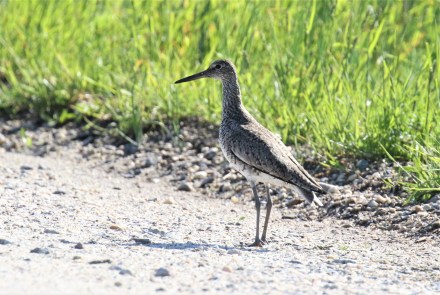
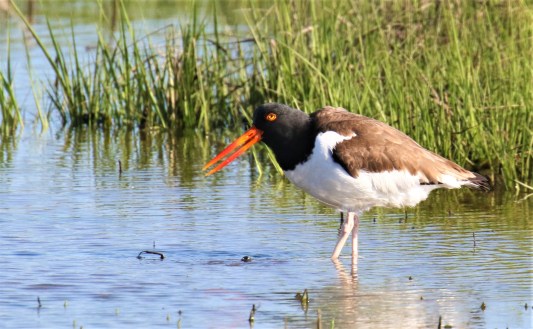
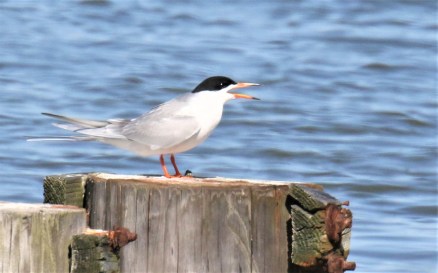
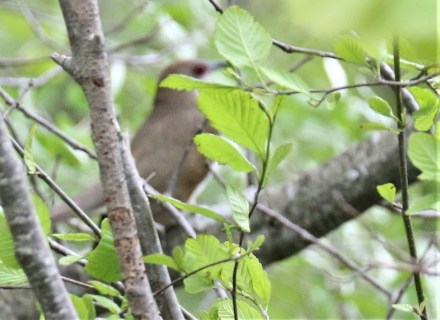
How Not to Gamble in Las Vegas…

What was a birder doing in Las Vegas – Sin City – the Gambling Capital of the U.S.?  At least in reference to me on May 27, 2019, the answer was easy – looking for 50 species in a day in a State for the 38th time.

Sin City

My original thinking had been to include Northeast Nevada in an upcoming Mountain States foray probably squeezed in between Idaho and Utah.   I would try for the Himalayan Snowcock and hopefully be able to either find another 49 species somehow that day or add another day in a more bird rich location.  The details were not working out though.  The Snowcock was more readily found later in June or even later in the summer or the fall.  And making the attempt would add a number of days to a schedule already getting longer because of miles to travel and non-birding plans along the way.  And there was no guarantee of finding the Snowcock, so I would be gambling in Nevada.

With the help of Alaska Airlines, I came up with another plan – return to Seattle from Boston via Las Vegas.  No Snowcock, but I have mixed feelings about that species anyhow.  So Plan B would remove one gamble.  Was it still a gamble for 50 species?  I would only have one day as I would be arriving very late the night before the counting day and really did not want to extend the visit for a second day beyond that.  Thanks to Las Vegas Audubon, I removed that gamble as well.  Researching through their website I had come up with names of some local birders who might be able to help me.  One name was Douglas Chang.  Easy contact. Receptive.  Definitely capable.  Available.  Done.  I had a birding companion for my trip.  Let’s do it.

Based on my early research and then discussions with Doug, the area west and northwest of Vegas seemed like our target area.  I had been using Hotels.com to find lodging and tried for a place in the area.  No familiar names but I came up with Arizona’s Charlies Hotel and Casino on Decatur street.  What the heck.  I try to get some local color on my trips.  The reviews were good.  The rooms looked ok online.  The price was right and so was the location.  Had I paid more attention I might have realized that the place should be named Arizona Charlies Hotel and CASINO!!  You go through the casino to get to the registration desk (inhaling smoke along the way) and then through more of the casino to get to the single small elevator that takes you to the 6 floors of rooms.  And even at midnight which is about when I arrived the parking lot was full and the casino floor was busy – automatons at the machines.  Not a pretty sight – to me.

Arizona Charlies Hotel and CASINO!!

Arizona Charlies

Smoke aside it was an ok place.  The room was large, basic and quiet.  Actually I wondered if the gamblers who stayed overnight did most of their staying downstairs at the machines.  The place seemed still half full when I left for my birding early the next morning.  That was gambling that was easy to resist – for me – not them.  Of course maybe it wasn’t really morning.  There was no light coming in to the casino, so you couldn’t tell that way.  And my body certainly had no clue.  It was midnight local time when I got to my room which meant it was 3:00 a.m. for my body – still on East Coast time.  Doug was going to pick me up at 6:30 a.m.  No free breakfast at this place, so it would be fast food down the street.  I set my alarm for 5:15 a.m. local time and woke up without it at 4:00 – as I said my body had no clue what time it was.  I gave up trying to sleep, got clean, went out for a McSomething breakfast and was waiting for Doug in front of the Casino/Hotel at 6:30 a.m.  My first bird for the trip was a Rock Pigeon as I waited.

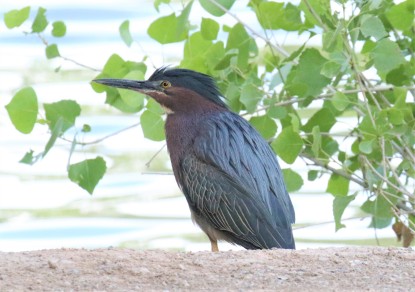
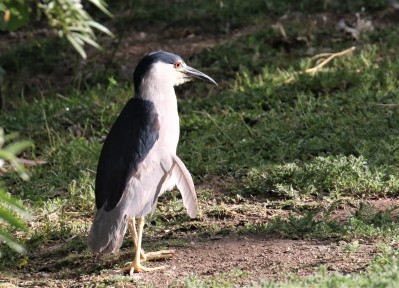
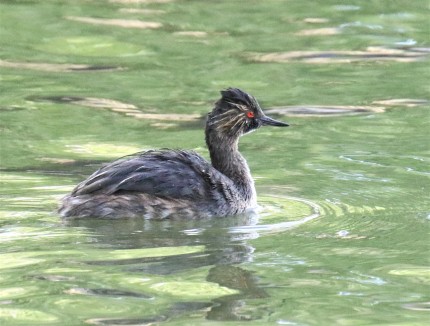
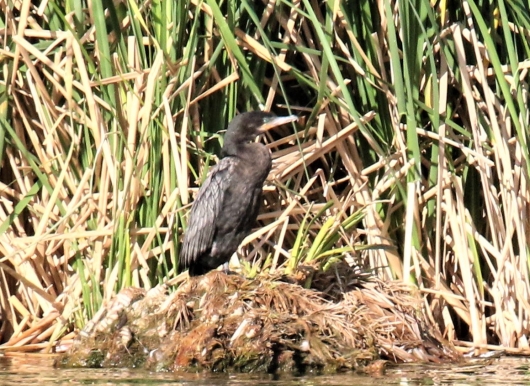
Doug was accompanied by birding friend Paul Rodriquez.  Both were eager to go and had a plan.  It was the beginning of a really fun and successful day.  We started at a large park on Tule Springs Road.  The mix of ponds, brush, trees and scrub provided a good mixed habitat with lots of birds.  After all of the forest birding in the East it was nice to be dealing with less and lower vegetation.  We spent more than two hours and walked almost 3 miles.  The weather could not have been better – cool and clear.  The mixed habitat meant a good mix of birds, too.  Around and in the ponds we had ducks, grebes and herons and a Neotropic Cormorant.

Green Heron

Green Heron

Black Crowned Night Heron

Black Crowned Night Heron

Eared Grebe

Eared Grebe

Neotropic Cormorant

neotropic-cormorant1.jpg

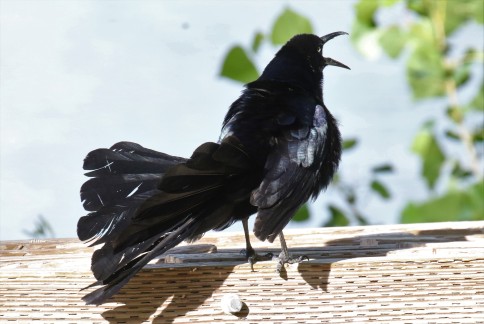
Great Tailed Grackles were plentiful giving me the Grackle Trifecta after my Boat Tailed Grackles and Common Grackles in the East.

Great Tailed Grackle

Great Tailed Grackle

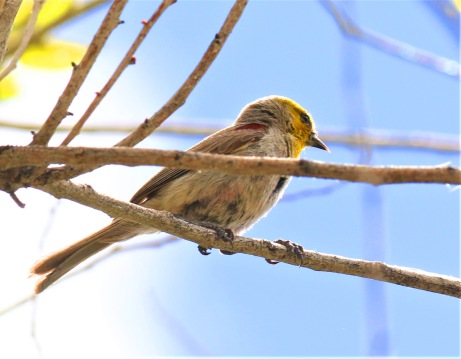
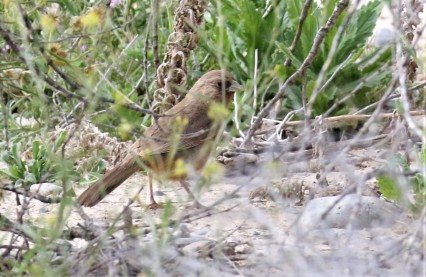
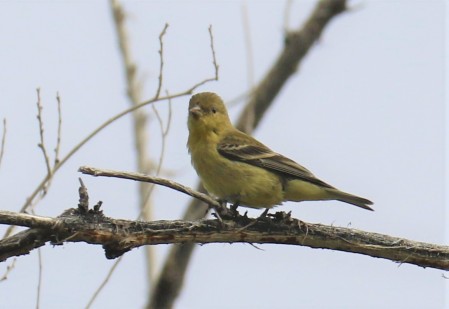
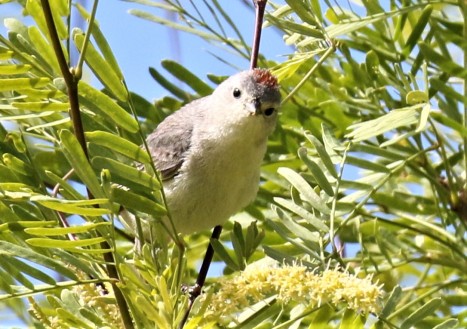
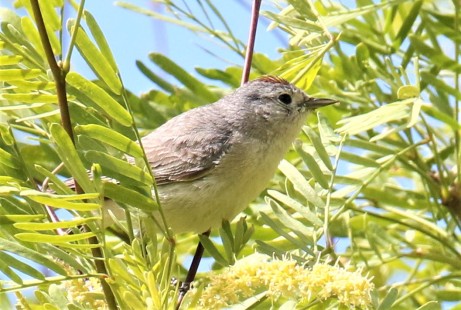
In the shrubby areas we had several Verdin , Phainopepla, Abert’s Towhee, Lesser Goldfinch, and my favorite – the relatively drab Lucy’s Warbler.  Photos of the latter even captured the red feathers on the top of the head.

Verdin

Verdin

Abert’s Towhee

Abert's Towhee

Lesser Goldfinch

Lesser Goldfinch

Lucy’s Warbler

Lucy's Warbler2

Lucy's Warbler

Doug knew of a Burrowing Owl’s nest in the park.  It was not the easiest bird to see even though it was out of its burrow.  It was just well camouflaged in the terrain.   Amazingly it was only the second owl (species and individual) that I had seen in my month of birding.

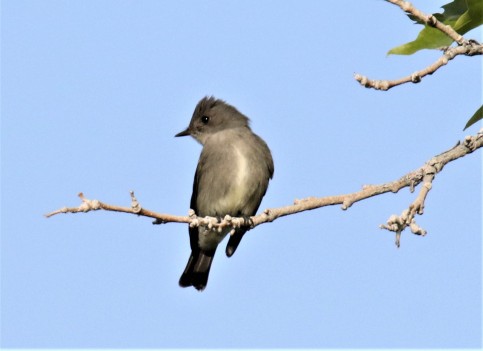
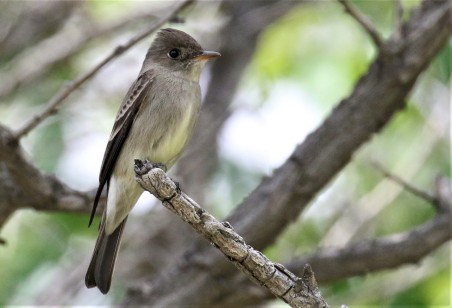
There were also several flycatchers at the park – Olive Sided, Hammond’s, Willow plus Western Wood Pewees.

Olive Sided Flycatcher

Olive Sided Flycatcher

Western Wood Pewee

Western Wood Pewee

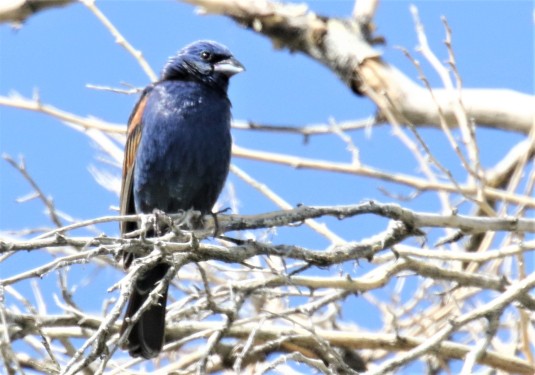
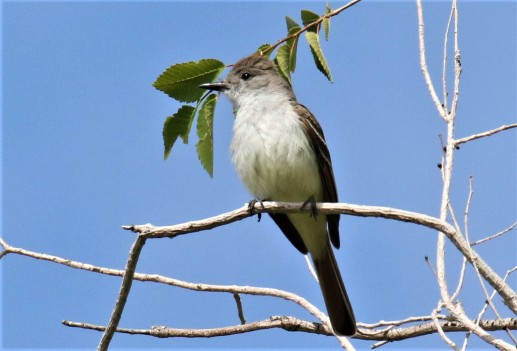
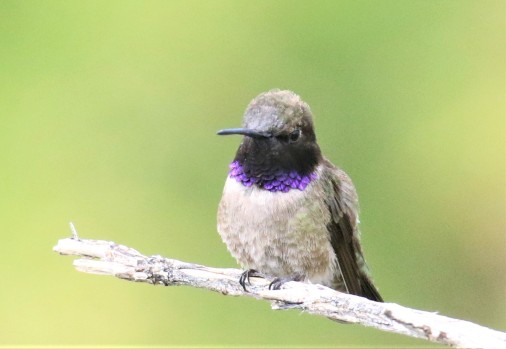
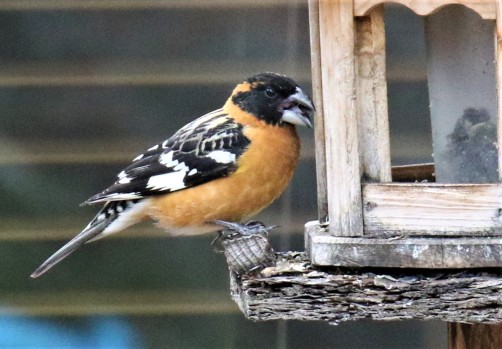
We left the park with 40 species seen and headed up into the mountains with our first stop at the Corn Creek Field Station in the Desert NWR.  There we had some of the same scrub birds we had before but added Blue and Black Headed Grosbeaks, Ash Throated Flycatcher, Blue Gray and Black Tailed Gnatcatchers, Cedar Waxwing, Black Chinned Hummingbird, Western Tanager, Bewick’s Wren and some warblers – 11 new species at all – so 50 species in a day was accomplished already.

Blue Grosbeak

Blue Grosbeak

Ash Throated Flycatcher

Ash Throated Flycatcher1

Black Chinned Hummingbird

Black Chinned Hummingbird2

Black Headed Grosbeak

Black Headed Grosbeak at Feeder

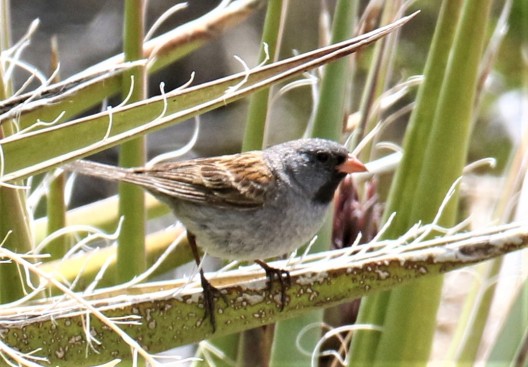
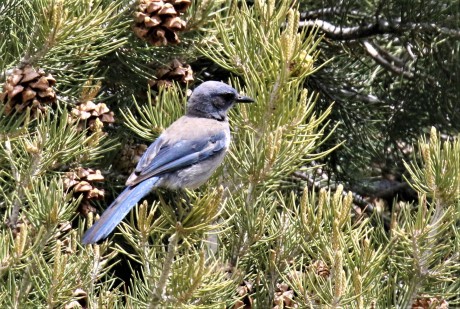
Doug and Paul were both excellent at finding the birds and knowing the area.  They were also great guys and we had far ranging discussion about their paths to Vegas, birding in the area, Paul’s work on web design and Doug career at Proctor and Gamble before he retired and moved west.  They asked if I was interested in a Black Chinned Sparrow…definitely.  We found one quickly at a very specific location – Step Ladder Trail – the kind of place I never would have found on my own.  We also had a Woodhouse’s Scrubjay.

Black Chinned Sparrow

Black Chinned Sparrow

Woodhouse’s Scrubjay

Woodhouse's Scrub Jay

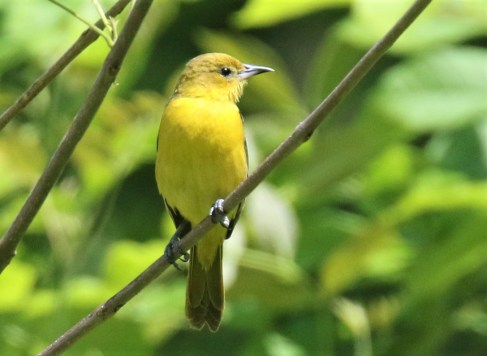
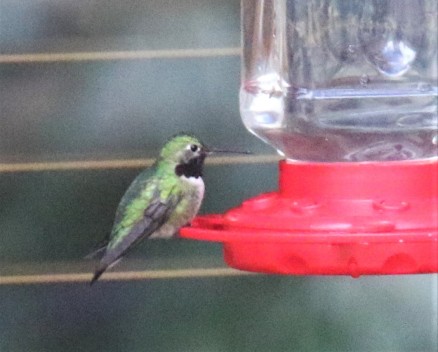
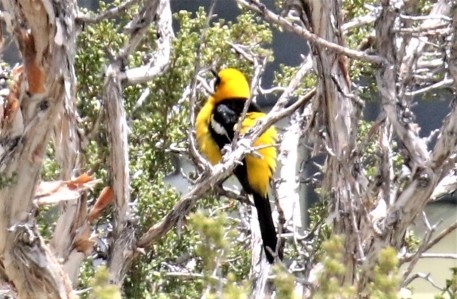
We continued up the road towards Charleston Mountain – a very beautiful trip.  There was no snow now but there had been quite a bit in the winter when even 4 Wheel Drive is insufficient and chains are required.  At some feeders we saw some Broad Tailed Hummingbirds and a Hooded Oriole.  As had been the case with many birds seen that day they were new for the day, my month long adventure and for the year.

Broad Tailed Hummingbird

Broad Tailed Hummingbird at Feeder

Hooded Oriole

Hooded Oriole

Even though it was Memorial Day the traffic wasn’t bad and despite the appeal of being in the mountains, it was not crowded.  Thoroughly enjoyable – and although it was not quite noon, we had 60 species for the day.  We had one more stop to make – a place Paul knew was good for Gray Vireo.  We had at lest two respond to our playback but could not draw them in for a look or photo.  It had been a great day.  I had hoped for a Roadrunner but they seem to be somewhat of a nemesis bird for me.  Paul and Doug were surprised we had not seen a Bell’s Sparrow and a couple of other regular birds, but we all know that is the nature of birding.  Demonstrating how different this birding habitat was, more than 25% of the species seen were new for my year despite many days of birding.  Last year with much birding in Arizona and Southern California, none would have been new.

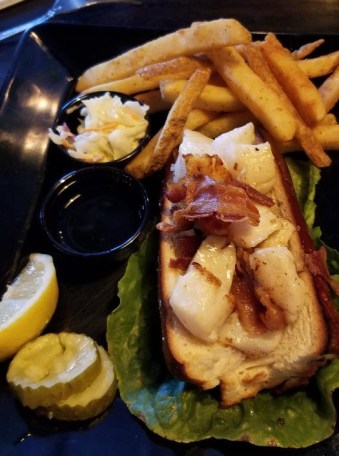
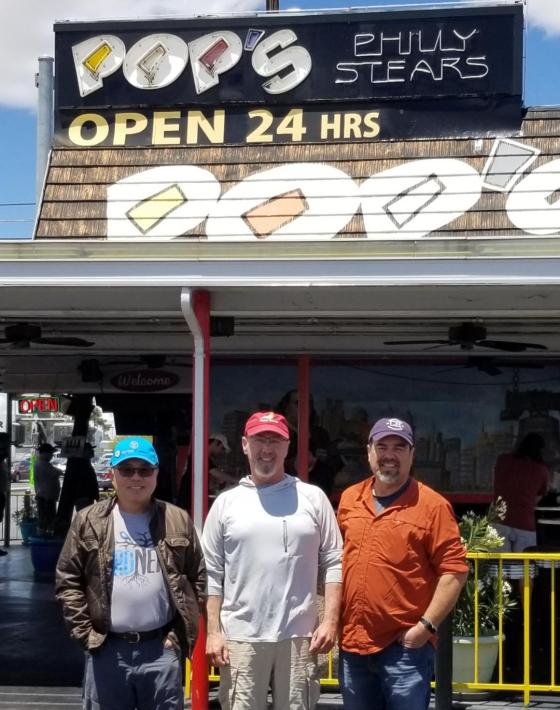
There would be one more treat.  As I drove in to my hotel the night before I had noticed an odd little building with an even odder sign.  It was “Pop’s Philly Steaks” – open 24 hours.  I guess that was further proof that Las Vegas is a 24 hour city and those all night gamblers need sustenance.  This is where they suggested we go for lunch.  It was a great choice – as long as calories don’t matter.  It may have seemed out of place, but that was my sense of ll of Las Vegas – especially after my trip later to the Miracle Mile and the mega-casinos “downtown”.

Pop’s Philly Steaks with Doug Chang and Paul Rodriquez

Philly Cheesesteak


The lunch was the close to another fun day and I could celebrate having 50 species now in 38 states.  Doug and Paul had made it efficient, fun and memorable.  Here were regular guys who shared my love for birds and birding.  They had given up a holiday day to take a complete stranger around their town.  I would do this for them or any other visiting birder on a mission.  It is part of being in the vast community of birders.  Thank you Doug.  Thank you Paul.  I have invited you to Washington.  I hope you visit some day.

I hope I can say this the right way.  Doug is of Asian ancestry and Paul has a Hispanic background.  My forebears were Eastern European Jews.  None of that made any difference on this day of birding; but in our in our everyday world, too often it does  – how nonsensical that is.  Around the world there are birders everywhere of every race, color, belief, background, nationality, age, sex and orientation.  We share a love of birds. birding and usually of each other.  While there are definitely other Pauls and Dougs and Blairs out there, if I reflect on birding in my home state of Washington and my experiences during this past month on the road, most of the birders I have seen have been white and older.  Younger faces here and there and skins of different colors here and there as well.  Hopefully there will be more.  I have often said that the birds could care less about such things about the people that watch them.  How nice if it worked that way with people as well.


What Did Dela Wear? She Wore a Brand New Jersey

Apologies – I just couldn’t help myself.  These are just some of the corny lyrics from the song “Delaware” written by Irving Gordon and sung by Perry Como and others.  It came out in 1959 – dating myself I know – with puns involving 15 states.  It just popped into my head as I started to write this blog about my 50/50/50 visit to Delaware which followed my visit to New Jersey.  I can remember many of the silly lyrics from those many years ago.  Now if I could only have remembered to take my tripod out of the overhead luggage bin on my flight from Boston to Nevada last week.  Not fair…

When I started planning this trip several months ago, much of the route could have been chosen in a variety of ways and orders, but one part was clear.  I would bird in Southern New Jersey in and around Cape May and then I would take the ferry from Cape May to Lewes, Delaware with the prime birding target being Bombay Hook NWR, like Cape May itself, another legendary birding spot I had not visited before.  The two areas were almost like one in my mind and I will use that as the excuse for the lyrical reference.

Cape May, N.J. – Lewes, DE Ferry – 17 Miles 85 Minutes

Lewes Ferry

I had originally reserved space on a mid-afternoon ferry figuring I might need or want more time at Cape May, but the birding there had gone well so I decided to try for an earlier ferry giving me more time in Delaware.  The focus and framework for this adventure of mine is about the birds but so many of the best moments are about people – even little moments.  One such was my interface with the attendant at the ferry toll booth.  I had prepaid well in advance to be sure to have a space on the boat, not knowing what to expect traffic wise.  Checking online, I knew there was room on the earlier ferry. The hope was to just drive up early and be allowed to change.  Not only was I able to get on the earlier ferry, I was able to get a partial refund as the original plan was for a second passenger and he was unable to join me.  More meaningful to me was the great conversation with the attendant.  She wanted to know about birding, Seattle, my travels etc.  Granted there were no other cars waiting behind me, but this personal connection was really great – and I could understand every word even with her “Joisy” accent.  A great start to the day.

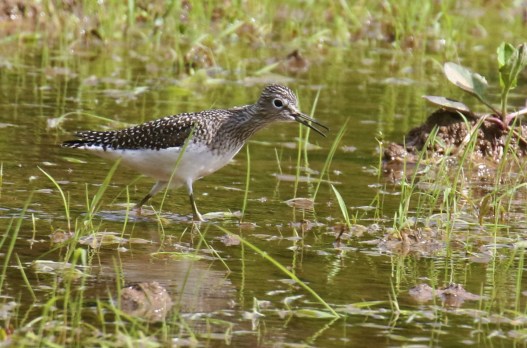
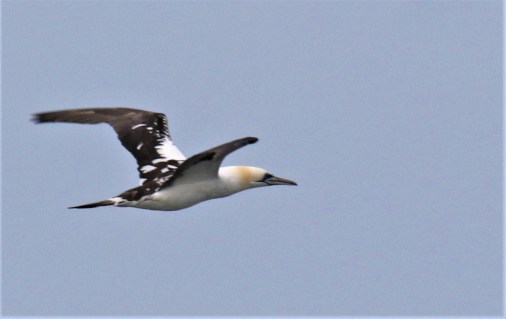
Birds were relatively few and far between on the ferry crossing, but I did have some Northern Gannets, Herring and Laughing Gulls a good way to start a list.  I had read about Prime Hook NWR which was on the way to my hotel and had great birding there for about 90 minutes – with a good mix of shorebirds and passerines.  My favorite shorebird was probably a very cooperative Solitary Sandpiper.  A Blue Gray Gnatcatcher was my favorite passerine.

Solitary Sandpiper

Solitary Sandpiper Wings Up

Blue Gray Gnatcatcher

Blue Gray Gnatcatcher1 - Copy

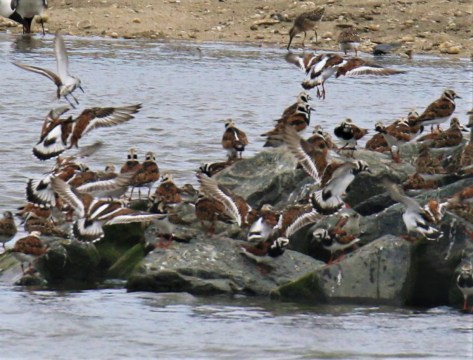
I had 36 species there.  With the few from the ferry and some incidentals (gotta track those Rock Pigeons and House Sparrows) along the way, I was pretty sure that I would have 50 species this day – again relieving pressure from the next day which is when I had expected to make the push.  This was pretty much confirmed by the birds at my next stop, the DuPont Nature Center at Mispillion.  There were lots of shorebirds and my first Boat Tailed Grackle of the trip.  It was known as a great spot for Red Knots, but I had just missed the flock and got only a distant scope view of two birds.  The flock I did see was a group of over 50 Ruddy Turnstones.  I also had great chats with local birders who regaled the wonders of the place and were very curious about Seattle never having been west of Ohio – which had been the same for me until moving to California for grad school a long time ago.

Boat Tailed Grackle

Boat Tailed Grackle - Copy

Ruddy Turnstones

Ruddy Turnstones Flight

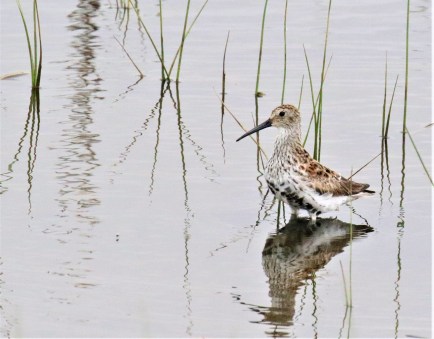
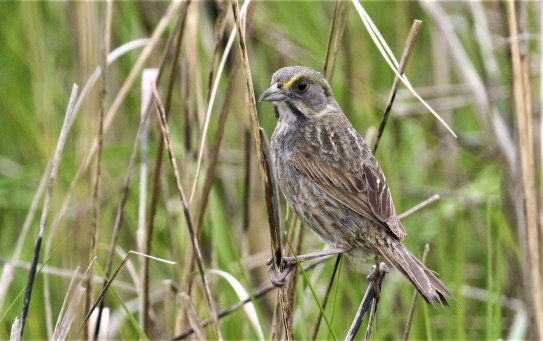
I was now over 50 species for Delaware and I had not even gotten to Bombay Hook NWR, my next stop.  There I had 44 species with a great mix of gulls, terns, waders and some passerines pus lots of shorebirds including hundreds of Dunlin and Short Billed Dowitchers.  A highlight was a photo of a Clapper Rail and another was a brief visual of two Seaside Sparrows.  Interestingly Snowy Egrets outnumbered Great Egrets 25 to 5.

Clapper Rail

Clapper Rail (2) - Copy

Dunlin – Just A Photo I like

Dunlin Profile - Copy

I would return the next day, but I had 70 species for the day – so I was again a day ahead of schedule.  The next morning I started birding at a small marshy area next to my hotel.  The 10 species included the loudest Carolina Wren I had heard and that is saying a lot.  Not unlike our Bewick’s Wren in Washington, this species has a wide ranging repertoire and I think I heard most of it.

Carolina Wren

Carolina Wren2 - Copy

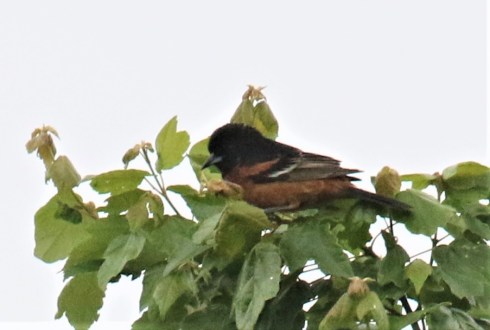
My first official stop was the Abbott’s Mill Nature Center.  Here were primarily passerines including a vociferous Orchard Oriole.  It was the first decent look I had had of a male on the whole trip.  Other good birds were Blue Grosbeak, Blue Gray Gnatcatcher, Great Crested Flycatcher and Field Sparrow.  I wanted to get back to the DuPont Nature Center to look for Red Knots.  They were being seen at their go to place, Bottle Beach, in Washington but I might not get back in time to see them there.

Orchard Oriole

Orchard Oriole1 - Copy

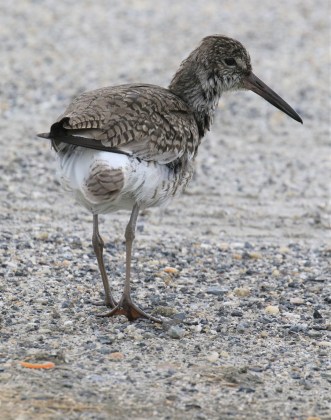
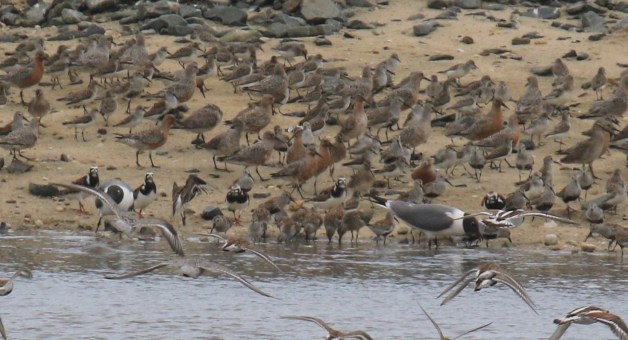
The tide was better and so were the birds at DuPont compared to the previous day.  The 25 species included 10 species of shorebird:  800 Ruddy Turnstones, 700 Dunlin, 14 Willets, 2 American Oystercatchers and 140 Red Knots among others.

Willet

Willet3

Red Knots and Others

Red Knots - Copy

The shorebird spectacle was great but the highlight came from a marshy field as I was leaving.  From both sides of the road I heard the unmistakable buzzy insect like song of the Seaside Sparrow.  My only picture of one was from Alabama last year.  It was near the top of “Pictures I Most Want to Improve” list.  They hid at first and then several came into the open singing away from atop the grass.  Now these were good photos.  I reported 10 individuals on Ebird, but I only covered a fraction of the good habitat and there were certainly many, many more

Seaside Sparrow

Seaside Sparrow - Copy

I returned to Bombay Hook NWR and again had great birding with 48 species in almost 3 hours.  Ten shorebird species with a surprising almost 100 Semipalmated Plovers and 25 Black Bellied Plovers.

2P5A1537

Semipalmated Plover

Semipalmated Sandpiper1

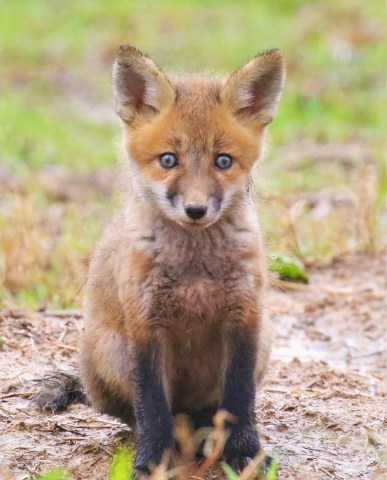
It had been another great day in the smallest of the States. Over 70 species for the day and 87 for the State all told.  A last observation was of an emaciated looking Red Fox.  The previous day I had seen what had appeared to be an abandoned Red Fox Kit sitting on the side of the road in no fear of or perhaps oblivious to the cars that stopped for photos – including mine.  I wondered if the two were related.

Red Fox Kit

Young Fox1

Now it was time to head to Pennsylvania.

Magee Marsh: Marvelous May Migration Mecca

Day One…

There have been some long breaks between energetic spurts, but I have been birding now for almost 50 years.  The Mountains and Canyons of Southeast Arizona and the Rio Grande Valley of South Texas.  Islands off of Maine and South Florida.  All over California and of course all over my home state of Washington.  Some remote Alaska and Nome.  Off the North Carolina Coast and in the Mountains of Colorado and New Mexico.  I have birded in a lot of places and have been to many of birding’s iconic hotspots.  But I had never been to Magee Marsh.  It was a must do during my Eastern Birding Marathon.  I had a lot of other states to visit and I needed to try to catch at least part of the migration in each, so making it to the Biggest Week festival at Magee was not doable.  Getting there the next week was and it worked perfectly.

I broke up the long drive from West Virginia to Magee with a night of sleep in Somerset, PA.  It was odd to be there as that was on the route our family had taken on all of our “vacations” when I was a kid.  Vacations were unexciting visits to my grandparents, aunts, uncles and cousins – all of whom lived in and around Pittsburgh.  It was a drive of 4+ hours from our home in Maryland just out of Washington, D.C.  My memories were not good.  I was tempted to revisit some of those spots on this trip – see how they looked now, but I opted for more time birding.  Maybe another time…well, probably not.  Magee Marsh beckoned.

It and other nearby spots on Lake Erie in Ohio were famous as migrant traps where rather than crossing the large lake, passerines would often stop for a rest and refueling on their long journeys to breeding grounds in the north.  And especially if the winds from the north making their journey even harder, there might be a “fallout” where thousands of birds could almost literally fall from the sky, exhausted by their battles and rather than flitter endlessly at the tops of the trees, they might just sit in open view maybe even on the ground – easy to see and especially appealing to me – easy to photograph.  Fallouts at Magee were legendary.  It was what every birder hoped for.

I had seen fallouts before.  One on High Island when I was just beginning birding in the 1970’s and another at Fort Jefferson in the Dry Tortugas about that same time.  Hundreds of birds were at eye level – warblers, vireos, orioles and more.  Exciting…even exhilarating.  There had been a mini-fallout at South Padre Island in South Texas on our VENT Trip last year and it was quite a spectacle.  I was hoping for even more at Magee.  Furthermore, Cindy Bailey was flying out to join me for one day at Magee.  She’s is just beginning as a birder and those colorful warblers up close and personal could be a great way to encourage her interest.  Fingers were crossed.

Even though my planned 50 species day was not until May 16, I got there early enough on the 15th to check it out and to plan my approach for the following day.  I had noted 14 species as I had driven in Ohio on my way to Port Clinton where I would be staying that night.  I found another dozen as I drove from Port Clinton towards Magee.  I stopped first at the Black Swamp Bird Observatory Center and picked up another few species.  I was feeling pretty certain that I would have 50 species easily that day – taking the pressure off for the following one.

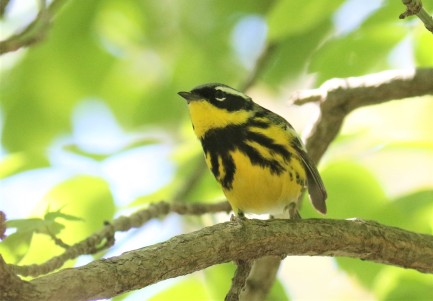
The main attraction at Magee is the Boardwalk, extending about 1.2 miles through the marsh with a mix of trees that are magnets for the migrating hordes. During the Biggest week in America Birding Festival, it is visited by throngs of birders – projected to be 90,000 during that week.  It is packed shoulder to shoulder and is hard to move along, but the atmosphere is electric with everyone sharing observations and helping others find their birds.  There were hundreds of birders there when I arrived.  I could not imagine what it was like the previous week.  The birds were there, too, not in great numbers, at least by Magee standards, and definitely not exhausted and down low to see, but with the team effort of all and the cooperation of so many excellent birders, all I had to do was look for a crowd with cameras and binoculars pointed up, approach, and ask “what do you have”?  Later I would catch on, find some birds on my own and reciprocate, but at the start this was a great way to go and quickly led to great birds – more than a dozen warbler species, vireos, flycatchers, and more.  Some were playing hide and seek.  Others like this Magnolia Warbler were more cooperative.

Magnolia Warbler
Magnolia Warbler1

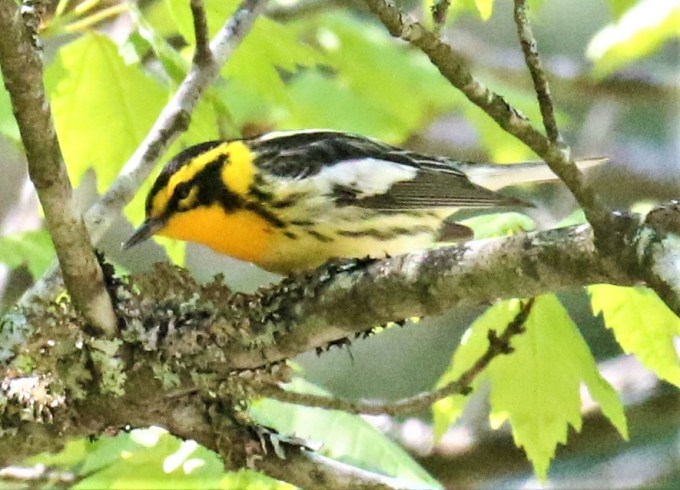
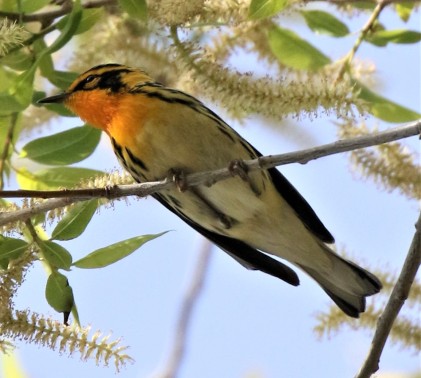
I did not expect any new ABA Life birds on my visit but I had hopes for some new ABA Life photos.  In fact I expected an easy one would be of an American Woodcock.  In each of the past many years, one had been staked out in the open – even in the parking area.  No go this year – no Woodcocks.  But fairly early in the day, when I asked one group what they were looking at, the answer got my adrenaline up immediately.  They had a Blackburnian Warbler – not just a gorgeous bird but one I had seen only twice – forty years ago and and had never photographed.  It, too, played peekaboo but did provide some photo opportunities.

Blackburnian Warbler – ABA Life Photo #699
Blackburnian Warbler1 (2)

This was ABA Life Photo #699 and was probably the warbler I most wanted to see and photograph.  Not long after that I saw a familiar face.  I had met Laura Keene at a wild goose chase – literally.  She had come to the Finley NWR in Oregon looking for the Tundra Bean Goose that had been reported there.  I had missed it on an earlier chase but arriving much earlier this time, I was the first on the scene and found it in a large flock of Canada, Cackling and White Fronted Geese.  Laura was traveling with Bert Filemyr and Casey Weissburg.  The target had flown off just before they arrived disappointing Casey and Bert who came to the platform where I was stationed.  But Laura had gone to the other end of the marsh and had relocated it.  She texted Bert and Casey and they joined her and got their goose.  I joined them later and met Laura that way.

Laura and Bert had both been helpful in helping me find birders in other states that I could join on my 50/50/50 birding ventures and it was great to visit with her.  Laura is an incredible birder.  She has recently moved from Ohio to the San Antonio area in Texas.  She knows Magee well.  She also knows everywhere else well as she did a fantastic Big Year in 2016 ending with an incredible 763 species (a more incredible 815 if you include Hawaii).  More importantly she is known as a great friend to many birders, a wonderful resource in a wonderful community.  She hardly knows me, but I have found that same warm friendly spirit in all of my intersections.  [The next day I saw Laura again and she introduced me to Chris Hitt, another legendary birder who was the first to do a Big Year with 700 species in just the “lower 48” – meaning the ABA area less Canada and Alaska – an extraordinary accomplishment.  Chris, too, was wonderful and allowed me to tag along, sharing stories and helping me with many observations.]

Laura Keene (with other 2016 Big Year Birders Christian Hagenlocher and John Weigel
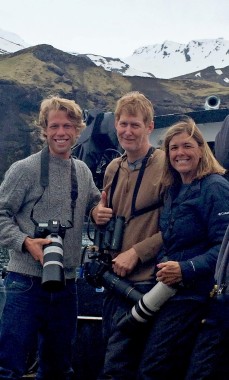
Laura Keene

Chris Hitt at Magee Marsh Appropriately
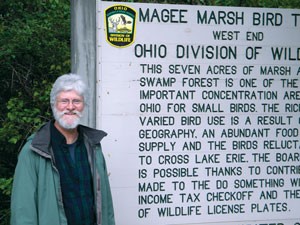
Chris Hitt

So Magee is obviously an important stop for many top notch birders and they come back year after year, but it is also a magnet for birders of all levels from all over the U.S. and the world.  Many were dressed in one of the standard birding “uniforms” with floppy hats, cargo pants and vests sporting patches or pins from birding hotspots that they had visited.  Still mostly a “white” crowd, but there were some birders of colors other than white and I heard many languages spoken.  A group of birders I had not seen before but for which Magee is famous is a large number of Amish birders – hard to miss with their unique attire.  I am told they are among the best birders there are and take this very seriously.  It was pleasing to see many families engaged in this activity together.

Amish Birders
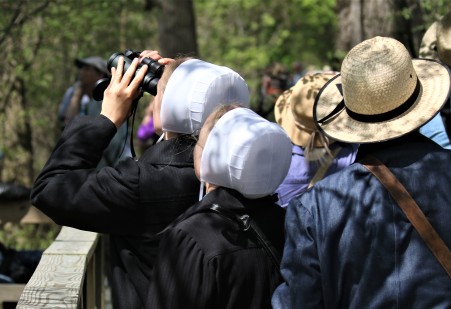
Amish Birders

It was not a particularly birdy day and the birds were not always easy to see, but it was hard not to get a lot of birds with so many friendly and sharing eyes watching.  My species count got to over 60 and I decided to head off to another nearby hotspot, the Howard Marsh Metropark.  As I was pulling out of the parking area, I saw a big cluster of birders obviously looking at something – but on the ground.  Was this an American Woodcock after all?  From the car I asked what they had.  They had a Connecticut Warbler.  This is one of the most sought after birds that breeds in the ABA area.  It is a skulker, not all that common, a late migrant and almost impossible to photograph as it is usually buried in heavy undergrowth.

I parked the car – actually double parked the car – jumped out with camera in hand found an open spot among the 30 plus birders that were lined up trying for a look.  The bird gods were smiling on me as the Connecticut Warbler came briefly into the open immediately in front of me.  I rattled off photo after photo following it as it moved in and out of the light and the brush.  Some turned out pretty darn well and I had my milestone ABA Photo #700 and what a super bird to have that honor.

Connecticut Warbler – ABA Life Photo #700
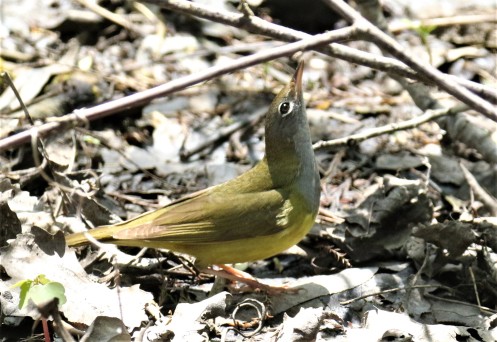
Connecticut Warbler3

Later many more birders would get word that a Connecticut Warbler had been seen and they would gather hoping for a look.  At one point, there were more than 100 birders at the spot.  Some found it and some did not and I expect some claimed to have but…well, let’s not go there.

At Howard Marsh I added another 12 species for the day including several ducks and shorebirds.  I had not planned for this to be my 50 species day, but there I was with 80 species for the day including two new photos, reaching the 700 level which was important to me.  I had intersected with Laura Keene and had great interactions with dozens of other birders.  This was exactly what my 50/50/50 quest was supposed to be – great fun, people, places and birds – expanding my horizons and adding to my life.  And if having one of the species seen and photographed be a Blackburnian Warbler was special, then having another be a Connecticut Warbler was even beyond that – ultra special.  Fallout or not – it was a great day.  And the next day would be another one.

Day Two…

There had been little worry about finding 50 species in a day at this incredibly bird rich area, but it was still good to have the pressure off with the success of the previous day.  I certainly did not expect that anything could top adding the two Life Photos and reaching 700 and the  Connecticut Warbler really was that incredible – unlikely to be topped.  My warbler life list for the State of Washington is only 21, including 7 that have been seen very rarely in the state.  Magee is most famous for its warblers with 40  species having been seen there.  So far in 2019, 38 warbler species had been seen.  On my first day I had only 16 warbler species although I had missed some seen by others.  Maybe this day would add to the list.

When I got to the Marsh there were fewer birders than there had been the previous day, but it was early.  There also seemed to be fewer birds.  A storm that had been predicted for the night before, a critical element determining the birds present, had not materialized, and the sense was that many birds had departed at night.  It started as a slow go.  I saw Laura Keene again and it was this morning that she introduced me to Chris Hitt. Another highlight was meeting Shep Thorp on the Boardwalk.  He and several Tacoma area birders had been in the area for several days.  They had a good fallout the day before I arrived and also had good but somewhat slow birding at Point Pelee – another migrant trap  – but in Ontario, Canada.  Shep had grown up birding in the east and had been to Magee often.  He is also an excellent birder.  He had some terrific videos from both places.  So even if the birds were not cooperating, it was a great day for people.

Maybe anywhere else, this would have been an excellent day birding.  At Magee, it felt disappointing, yet I had 20 species I had not had the previous day including 6 new warblers.  Black Billed Cuckoos also made an appearance as new arrivals.  If I had not gotten a photo of one earlier in Philadelphia that would have been a super find.  Not as super but still a welcomed bird.

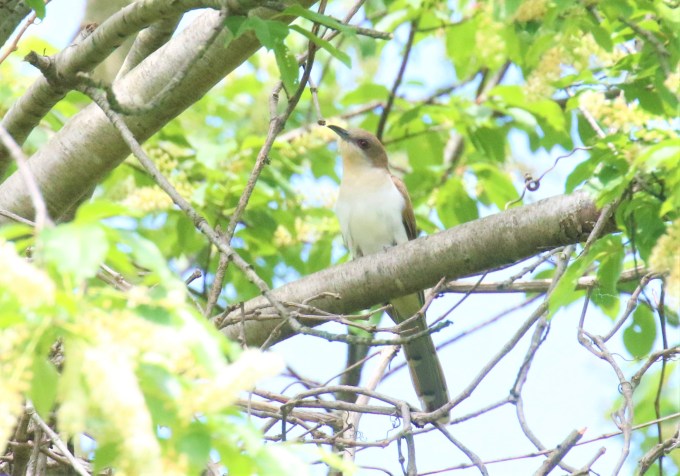
 Black Billed Cuckoo
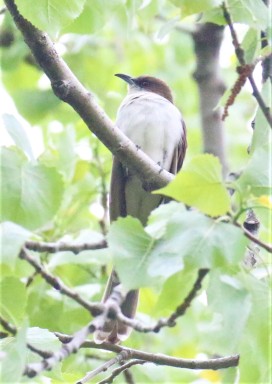
Black Billed Cuckoo1

Another highlight was seeing an Eastern Screech Owl on a roost somewhat in the open.  Owls are always special and this was only the second Eastern Screech Owl  I had photographed.  Thanks to Chris Hitt for showing me.

Eastern Screech Owl
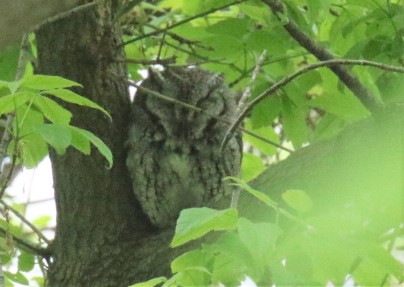
Eastern Screech Owl

When I was planning this visit, I had hoped to meet up with Danno Gesualdo.  I had met Dan on a pelagic trip out of Westport in my home state of Washington and then birded with him again on an awesome pelagic trip out of San Diego – just two of his many stops in an incredible Big Year done entirely in the Lower 48 and entirely without any plane travel.  He had visited all 48 states, seen 704 species, spent 208 days away from home and had driven more than 140,000 miles.  Let me repeat that – 140,000 miles!!!  Even simple math says that at an average speed of 60 mph, that translates to more than 2300 hours in the car – just under 100 full days – with NO sleep.  Call it what you will – impressive, dedicated, insane, extraordinary – it is awesome and inspiring!!

It was hard to coordinate with him because he was buried in some family matters and in trying to finish a book about his incredible journey.  He self published “Highways to Flyways: A Wheels on the Ground Year of Birding” using Blurb! in time to have it available at the Biggest Week in Birding Festival.  I would have ordered it online but it would not have arrived before I left on my own adventure.  Fortunately they still had some at the Black Swamp Visitor Center.  I finally connected with Danno just before getting to Magee and arranged to meet him on the 16th – with the original thought being it would be great to have some birding with him as part of my 50 species day.  We did meet in the morning and he wrote a nice note autographing my copy.
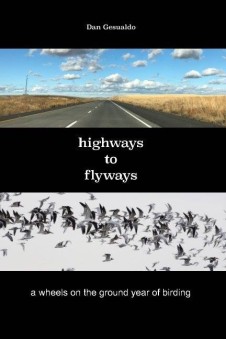
Highways to Flyways

We were able to spend some time together and it became immediately apparent how he was able to do his Big Year – he is an awesome birder – great eyes, ears and instincts.  On one trail we ran into David and Tammy McQuade.  I had first met them on a great pelagic trip with Brian Patteson our of Cape Hatteras last year and then our paths crossed again on the same pelagic trip with Danno out of San Diego.  They are doing a Lower 48 Big Year (again) this year and had just come to Magee after being on a repositioning cruise from L.A. To Vancouver B.C.  [As of May 29, they lead the pack in that pursuit with an jaw-dropping 623 species!].  They had seen the Connecticut Warbler earlier and were about to head off to another birding spot before tending to the business of business instead of the business of birding.  I have followed their travels on Facebook – especially enjoying Tammy’s  great photos (with much lens and quality envy).  I hope to bird again with Danno and with the McQuades some time.  Great birders and great folks – adding so much to the experience.

David and Tammy McQuade (Dressed to Bird!!)
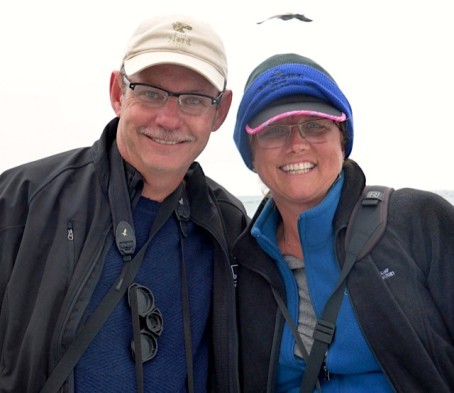
The McQuades

I moved on to the Ottawa NWR Visitor Center and Boardwalk where I added another half dozen species for the day and the trip.  I had again seen 80 species in a day.  Had the previous day not been so good – especially with the two new ABA photos – I would definitely have used this day as the 50 species day because of the personal connections with Laura, Chris, Shep, Danno, Dave and Tammy.  Since it is my adventure and I get to make the rules, I am going to include both of these days…so there.

Some other photos:

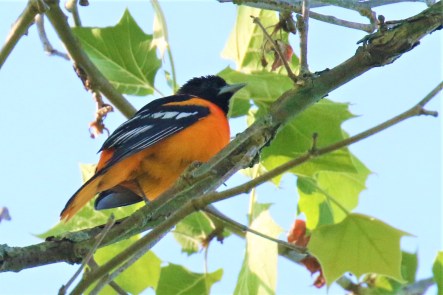
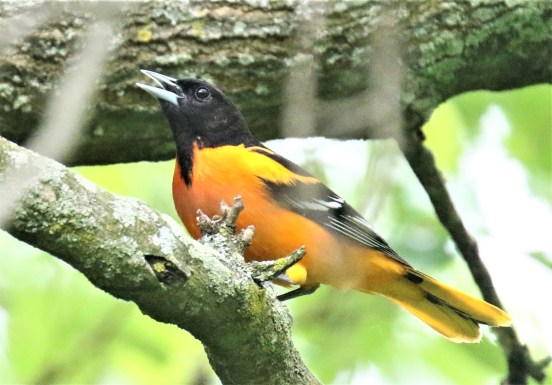
Baltimore Oriole
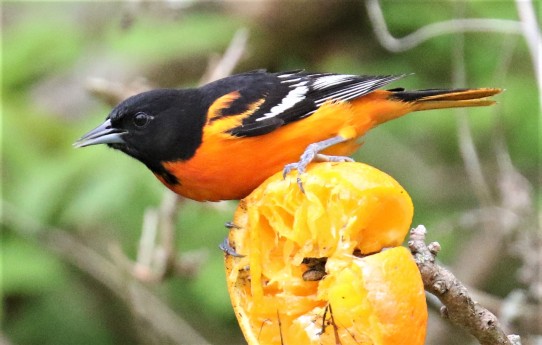
Baltimore Oriole on Orange

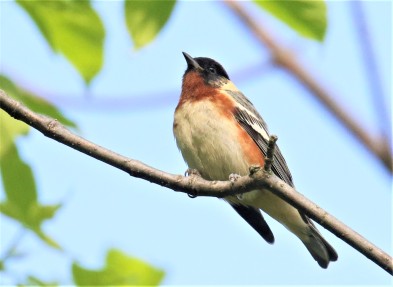
Bay Breasted warbler

Bay Breasted Warbler(2)

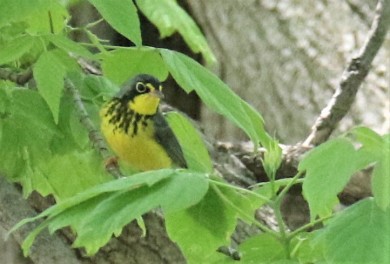
Canada Warbler

Canada Warbler1

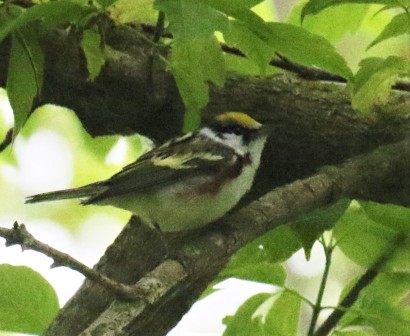
Chestnut Sided Warbler

Chestnut Sided Warbler2

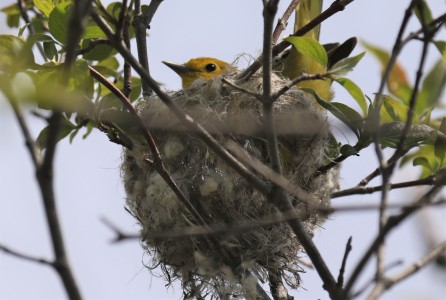
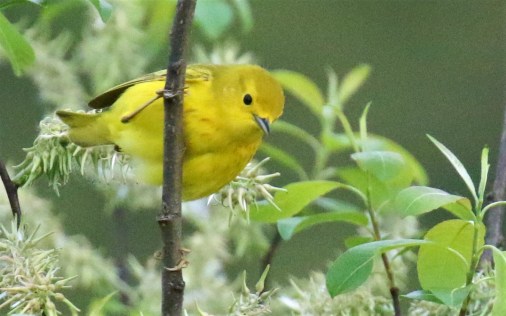
Yellow Warbler on its Nest

Yellow Warbler on Nest

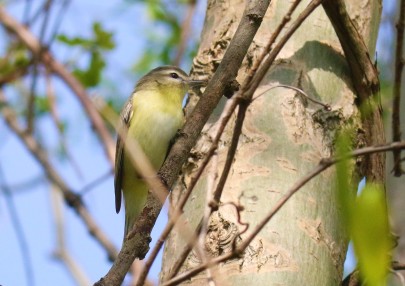
Philadelphia Vireo

Philadelphia Vireo

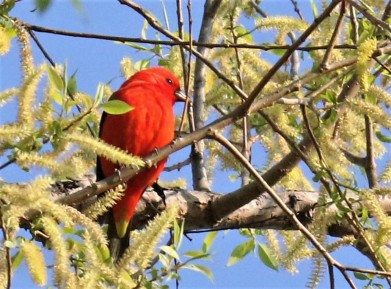
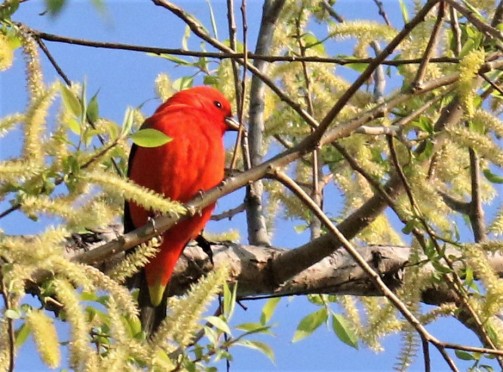
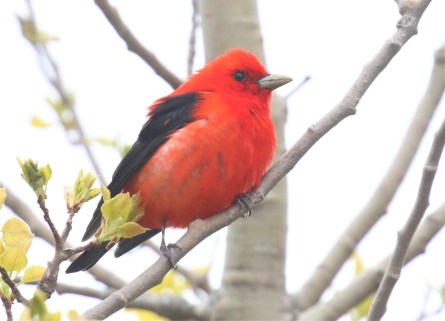
Scarlet Tanager

Scarlet Tanager

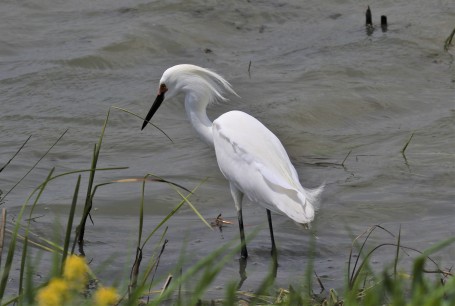
Snowy Egret

2P5A1147 (2)

There might have been more species seen but I had an important meeting ahead and I had to leave early.  Cindy was flying in to Detroit.  Even though she had a million things to do and would soon be leaving on her own two week trip to Portugal, she wanted to share in my experience and was intrigued by stories of Magee Marsh and Kirtland’s Warblers.  She is a really good sport and I was looking forward to another introduction for her into birding – one that I thought she would enjoy.  A short vacation to Niagara Falls after the birding didn’t hurt her enthusiasm.  We would spend the night in Oregon, Ohio – a weird name for a Northwesterner visiting the area – and then hit Magee Marsh early and later make the long drive to Tawas, Michigan for the Tawas Point Birding Festival and a trip to Kirtland’s country.

Magee remained slow and the Warblers remained high up in the trees.  Not the enticing great looks I had hoped for and sort of promised.  But the spectacle was great as Cindy saw hundreds of birders sharing in my passion.  She was able to see some great birds and even found some on her own.  She, too, found the Amish birders quite interesting – not an everyday sight elsewhere.  And the weather cooperated and somehow she functioned well despite little sleep and a three hour time difference.  I think her favorite bird was probably the Magnolia Warbler she found with the Scarlet Tanager being a close second.  Or maybe it was the Yellow Warbler.  Good choices all.

Cindy’s Magnolia Warbler
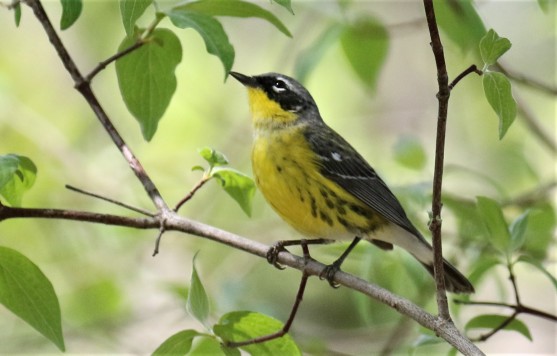
Magnolia Warbler2

Scarlet Tanager

Scarlet Tanager

So that’s the story on Magee and my 50/50/50 adventure successfully completed – twice – in Ohio.  Not the incredible birding it might have been, but damn good and lots of fun.  113 species seen.  2 Life Photos.  Old friends seen again.  And a girlfriend that hadn’t given up on me or birding – yet.  Here is my favorite picture from the trip because Cindy chose it for her Facebook Photo without even telling me.  I guess it went okay!!
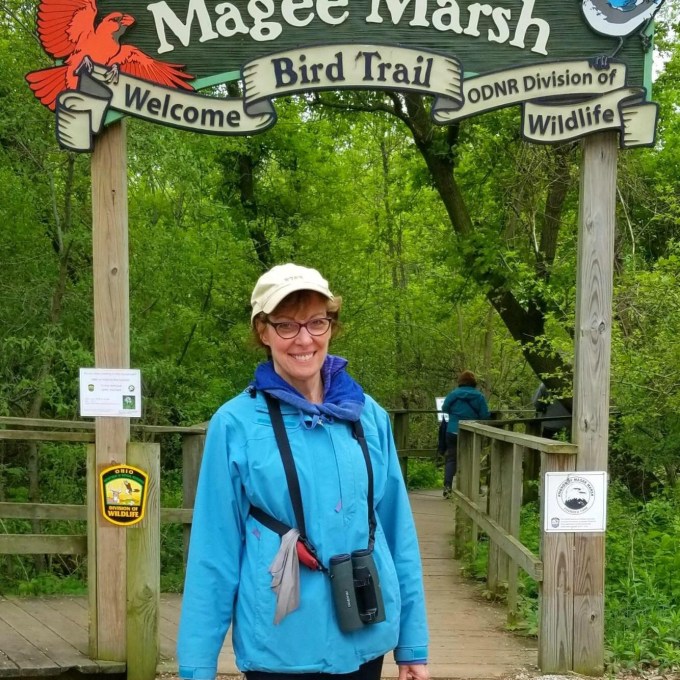
Cindy at Magee

And it got better as we moved on to Michigan and later to Niagara Falls.
The East is Done!!! – 100+ Species in New Hampshire

Today started the Memorial Day Weekend and also ended my 50/50/50 Birding Marathon in the East.  Finding 100+ species in New Hampshire today (May 25th) also meant that I have now observed over 50 species in a single day in all of the Eastern states.  Each state has been different in birds, people and places but all have been rewarding, fun and full of wonderful moments and memories and all have shown over and over what a great activity birding is and that our community is fantastic.

Mike Resch was my companion again today as he had been at the start of this marathon over three weeks ago in Connecticut.  There may be birders out there as good as Mike, but I don’t think any are better – both in the field and at home doing the preparations and logistics for a trip.  He has a sharp ear, a keen eye and a wealth of knowledge and experience.  I owe him a lot.

Before sharing the birds and stories of the day, I am going to go back to yesterday (May 24th).  A major purpose of my beginning the 50/50/50 Adventure was to visit people and places along the way that had meaning to me – whether returning to old haunts or finding new ones – seeing old friends again or making new ones.  On the way from my birding spot in Vermont to my birding spot in New Hampshire, I was able to spend time with my college roommate from Harvard, Charlie Ajootian.  For the most part I have lost touch with those long ago days and Charlie and I have had only a few intersections.  How appropriate to get together this week as it was exactly 50 years ago that we graduated.

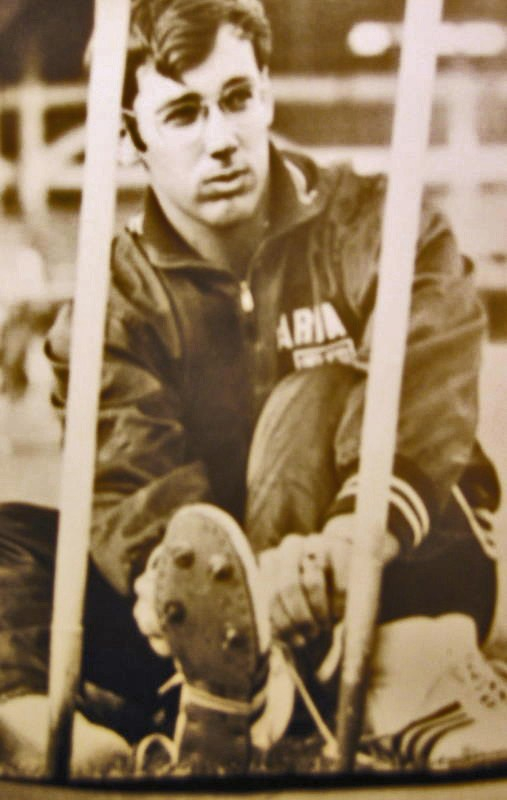
Charlie now lives in rural New Hampshire.  He is not a birder but is an avid hiker and enjoys the outdoors as much as I do.  He and I were on the Harvard Track team together for 4 years.  Charlie was a champion hammer and weight thrower and shot putter and I did pretty well with the javelin.  In our rambling get together, we recounted stories from those competitions and our travels to meets not only in New England but also to Europe and to California.  It was a stellar team with lots of great athletes.  We reminisced about many of them as well.  We also talked politics.  Charlie’s view of the current state of affairs is even dimmer than mine.  We agreed that the best cures for such depression were more birding and more hiking.  If I had not undertaken this birding adventure, I would not have had this time with Charlie.  It is working even better than I hoped.

A Harvard Track Photo from a Long Time Ago

Javelin Record

I had arrived at our agreed meeting place earlier than expected so I squeezed in a little birding when I saw some Wild Turkeys displaying in a grassy field.  I took a couple of photos and then just as I was about to leave a Bobolink flew onto a fence just in front of where I was parked.  I have now seen several on this trip – never can have too many of one of my favorite birds.

Wild Turkey Strutting His Stuff

Wild Turkey

Bobolink

Bobolink

After leaving Charlie I drove to my hotel in Dover, N.H. and did a little more birding at the Rochester WTP.  The 24 species there included numerous Wood Ducks, a flock of Chimney Swifts and more Rough Winged Swallows than I can recall seeing at one time.  Also there was a Black Billed Cuckoo.  Before starting this marathon, I had seen this species twice – both times more than 42 years ago and neither time with a photo.  I got my Lifer photo of it on my Pennsylvania trip and then another observation and photo at Magee Marsh.  I got another photo here – not in the open and not in focus – but a reminder that there are unexpected treats out there to be enjoyed.

Black Billed Cuckoo

Black Billed Cuckoo

So much for appetizers, now back to the main course.  I met Mike Resch at one of his favorite spots – Reservation Road in the Pawtuckaway State Park.  He had promised great passerines and it was a promise kept.  We were constantly surrounded by bird song.  With the trees fully leafed out, it was not always possible to see our singers, but Mike got me on most of them.  We had 58 species in about 3 hours including 19 warbler species.  At Magee March I had my Lifer photo of a Blackburnian Warbler.  It was my favorite here as well followed closely by the Magnolia Warbler.

Blackburnian Warbler

Blackburnian Warbler5

Magnolia Warbler

Magnolia Warbler1

With more than 50 species observed for the day, the rest of the day would be icing on the cake.  We dipped on a stakeout Trumpeter Swan (a first for New Hampshire) but at the stakeout for Mississippi Kite, we found it as soon as we got out of our cars.  Our only views were of it soaring above us so not the best of photos but all Kites are wonderful birds so I include it here.

Mississippi Kite

Mississippi Kite2

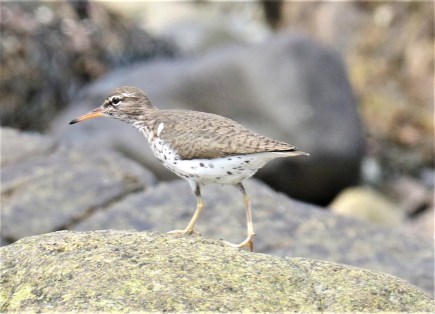
After the Kite we were over 80 species and we still had the Coast to bird.  We didn’t time the tide very well so we missed some shorebirds but we still added almost 20 species to the day count and finished with 104.  Highlights for me were more than a dozen Purple Sandpipers and 3 Roseate Terns.  The biggest surprise were the Spotted Sandpipers.  I do not recall having seen them in a flock.  We had more than 2 dozen around the rocks on the beach including one flock with 15 birds.

Purple Sandpipers

Purple Sandpipers2

Spotted Sandpiper

Spotted Sandpiper

Mike had been very generous with his time, and his expertise was critical to the success of this day as it had been earlier.  Birding is so different in the East compared to my birding in the West.  Knowing songs and calls is always a benefit but it is essential in the East with the many warblers, vireos and other passerines.  Also the forests are very different – dense with mostly leafy and tall deciduous trees.  My not knowing the songs is bad enough but I also have trouble picking out one song among the many that seem to be present all the time.  I have birded with and met many great birders on this journey and they all have a great ear and can quickly identify the species that way.  I need a visual to really enjoy the birds.  There were many great looks today and more partial views but many of the birds were simply never seen.

I did not take time to visit “special” places in either Vermont or New Hampshire – no battlefields or monuments, but in many ways the entire trip was experiencing a different world and perspective – again an objective of my 50 state project.  Everything about New England feels different.  The small villages, the curvy roads, the endless trees, the old homes of a very different style than out west.  Signs introduce every town proclaiming when they were established – usually more than 250 or even 350 years ago.  And there are those damn ticks and black flies.  But also lobster rolls and clam “chowdah” and yes, I heard many people pronounce it that way as well as talking about “wobblers” which since they were birders I fairly quickly understood to be “warblers”.  Of course I did see a special person – roommate Charlie – a big treat.

I have enjoyed this trip immensely but I am definitely looking forward to returning home and birding in the West again.  That transition starts tomorrow with a flight to Las Vegas.  I will go for 50 species in Nevada the next day and then return to Seattle.  A short rest and then back out again.  37 down and 13 to go.  I put on a lot of miles on this trip – about 4,000 – but that will seem like nothing when I next take on Idaho, Montana, Utah and Wyoming.  Lots of good birds ahead.

Birding in the Green Mountains

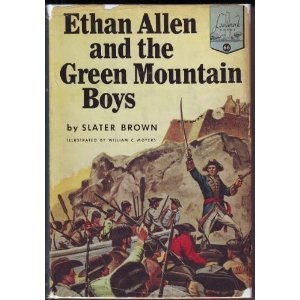
On May 10, 1775, fewer than a hundred of the Green Mountain Boys under the joint command of Ethan Allen and Benedict Arnold, captured Fort Ticonderoga.  Five years later, Benedict Arnold defected to the British side becoming the most famous or infamous traitor in American history.  Almost 11 years after that, Vermont became the 14th State of the Union and is known as the “Green Mountain State”.   It would be another 141 years in 1932 at the depth of the Great Depression before Ethan Allen became famous not as a military leader but as a furniture brand.

About 23 years later, my parents bought a set of encyclopedias that included a group of short books from the Landmark Series on American History/Folklore that included one on Davy Crockett and another titled “Ethan Allen and the Green Mountain Boys“.  I devoured those books – taking me to places that existed only on their pages but fascinated me and left everlasting images.  Growing up in a drab Maryland suburb of Washington D.C. I often visited places like the Washington Monument, the Lincoln Memorial, the Smithsonian Institute – a treasure trove of riches for a young boy – but the idea of Green Mountains was of another sort.  Green Mountains seemed magical.

Ethan Allen

As I moved on to other parts of my life and discovered the West first in California and then the splendor of Washington where I would live for more than 45 years, I forgot about the Green Mountains.   On May 22 as I drove from Buffalo, NY through western Vermont on my way to Rutland where I would be trying to add yet another state to my 50/50/50 Birding Adventure, Ethan Allen and his Green Mountain Boys came immediately back to mind.  To my Western eyes, the mountains were not imposing, but they were certainly green.  Even in the many small towns with their picturesque farmhouses or white steepled churches or white clapboard houses, there were trees everywhere.  Green. Green. Green.  So many trees.  I knew there would be birds, but would I be able to see any of them in the dense foliage?  It looked like one undifferentiated habitat.  Would there really be 50 species here?

Edmonds birding bud John Houghton was from Vermont.  He had given me the name of Sue Elliott as a great birder in the Rutland area that might be able to help me.  I contacted her and in a bit of confusing communication learned that the Rutland County Audubon Society had a walk scheduled for the West Rutland Marsh IBA (Important Bird Area on May 23 – a perfect fit for my schedule and a great way not just to find my 50 species but also to get the local perspective that was an important part of the 50/50/50 undertaking.  The confusion came from emails not from Sue Elliott but from Sue Wetmore.  Two people? or one person with two names?

It was a 6 plus hour drive from the Buffalo Airport where I had said my goodbyes to Cindy Bailey to Rutland.  I arrived in time to check out the Marsh that evening in anticipation of the birding the next day.  I immediately heard a number of noisy American Bitterns and then found a number of marsh birds along the boardwalk into the marsh and then walked just a short distance into some neighboring woods which I assumed would be part of the walk the next day.  I had 25 species in less than an hour and I had heard several songs I could not identify.  I relaxed.  I was certain I would have 50 species the next day … IF the forecast thunderstorms did not interfere and it was already starting to rain.  And that was a big worry.  In fact I thought that maybe I would have to change my ground rules and define a day as 24 hours – and have this one start at 6 p.m. on the 22nd so I could include these 25 species and hope there would be sufficient breaks from the rain to find more before 6 p.m. on the 23rd.  I shouldn’t have worried.

I arrived at the Marsh 20 minutes before the 7:00 a.m. start time for the walk.  On the way from the hotel I picked up a dozen “easy species” like House Sparrow, Common Grackle, Blue Jay, and European Starling – a good start.  At the marsh there were no people and also no booming Bitterns and no grunting rails.  Still plenty of Yellow Warblers though.  And the best news was that the weather had changed and the forecast of thunderstorms was pushed out to that night – if at all.

Yellow Warbler

Yellow Warbler1

Maybe 10 minutes later another car arrived.  “Are you Sue?”, I asked.  Yes.  “Are you Blair?”  It was Sue Wetmore who explained that I had been referred to her by Sue Elliott who would be leading the walk and they often birded together and called each other “Ditto”.  The other Sue showed up shortly thereafter with husband Marvin.  I tried staying close to them during most of the following walk and learned much about the area, birding and definitely the birds at the Marsh.  The walk was a 4 mile circumnavigation of the marsh with a group that started around 18 and dwindled to half that at the end.  There were a number of beginners and a number of experts including a young brother and sister duo who had both bionic ears and bionic eyes.  They were often the first to find many of the birds.  If they weren’t then one of the “Sues” usually did.

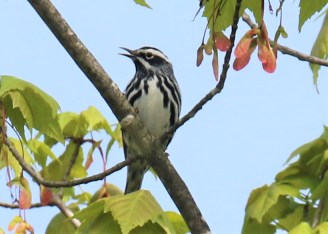
I had not realized that we would be doing a long walk away from the cars and had both too many layers and not enough (as in any) water.  It is tempting to blame my inability to hear and/or see many of the birds on those two matters, but the truth is simply that I was not able to identify the songs and thus had to rely almost entirely on others.  I missed many birds or was not comfortable counting them, but there were lots of birds and I did okay.  Altogether the group had 78 species.  I was comfortable counting 68 so no problem with 50 species for a day.  Included were 17 warbler species.  Some were heard only (or heard barely in my case).  Yellow Warblers were everywhere singing and setting up housekeeping.  Good looks at Black and White Warblers and a Blackpoll Warbler provided a good comparison of similar species.

Black and White Warbler and Blackpoll Warbler – A Comparison

Black and White Warbler1 blackpoll-warbler.jpg

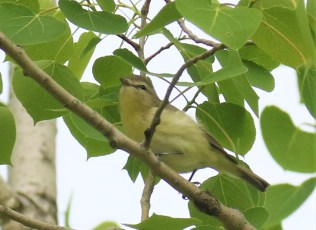
Another good comparison was provided by good looks at both Philadelphia and Red Eyed Vireos.

Philadelphia and Red Eyed Vireos – Another Comparison

Philadelphia Vireo2  Red Eyed Vireo

Many of the birds were distant and/or hidden in the now verdant foliage.  It had been so much easier earlier in the month before the trees had leafed out or at places likes Tawas, Michigan and to some extent, Magee Marsh where the trees were shorter and less dense.  When you are big and beautiful and bold like a Baltimore Oriole, however, photos are an option.

Baltimore Oriole

Baltimore Oriole1

The best part of the visit was spending time with Ditto and Ditto.  These walks and other counts have been going on at West Rutland Marsh for more than 20 years and there is a wealth of knowledge about the arrival and presence of all the birds, breeding success etc.  They have also birded extensively both in Vermont and in many great places around the country.  Trading stories was great fun.  They really know their stuff and happily share it.

We had lunch at Mary’s Cafe after the walk – a very down home place in West Rutland where everyone knew each other.  How different from what has been mostly an anonymous big city existence for me.  Sue gave me directions for nearby places to try for Cerulean and Golden Winged Warblers.  Both of these warblers were ones I have seen but never photographed and had been seen in the County recently.  I was unsuccessful at both spots.  The Cerulean was a long shot and my attempt at the Golden Winged was hampered by the rains that finally came along with heavy winds.  But I added some more species for the day and got some nice photos of an Ovenbird.  We had heard many on the morning walk but no photos.  At the Cerulean spot they seemed to be everywhere and were much more cooperative.

Ovenbird

Ovenbird1

And even though I did not find the Golden Winged Warbler in the on again off again, rain, I added several new birds for the day including a Northern Harrier, Eastern Meadowlark and, a favorite, Bobolink.  The area I birded was more open country and was quite lovely and almost traffic free – always a treat.

Northern Harrier

Northern Harrier

Bobolink

Bobolink

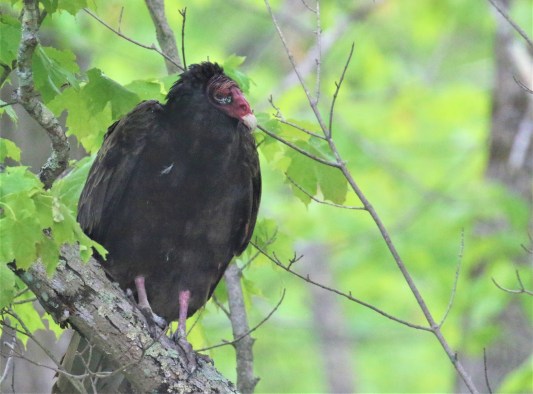
Maybe I am remembering my own Northwest in the winter and not the spring, but there were very few raptors seen on all of my Eastern trips and Vermont was no exception,  But there were many Turkey Vultures including a rather gruesome sight.  Driving on a quiet road, a number of Turkey Vultures were perched in trees on both sides of the road.  I figured there must be a carcass nearby.  There was.  A dead and bloody Turkey Vulture was on the road ahead.  Some of the perched birds returned to it after I passed by.

Turkey Vulture

Turkey Vulture

I returned to the West Rutland Marsh for a last time that evening hoping for a repeat of the experience from the previous night.  I heard a couple of American Bitterns and some Virginia Rails but failed to find the hoped for Sora as I dodged raindrops.

The next morning I continued my trip driving through the Green Mountains on my way to New Hampshire.  On my 50/50/50 day with much needed help from Sue Elliott and Sue Wetmore, I was able to observe 75 species.  The thunderstorm never came and the rain was too little and too late to seriously hamper my birding.  I wondered how many warblers were in all of those green trees that I drove through.  I also wondered if Ethan Allen was a birder…

Tawas, Ticks and Tornadoes: Lifers in Michigan – Kirtland’s Warbler and Henslow’s Sparrow

When I was initially planning the Michigan part of my Eastern Birding Marathon, I knew I wanted to see a Kirtland’s Warbler but I did not think I could do that as part of a 50 species day.  So I thought I would bird somewhere in the Ann Arbor area and then head north for the Kirtland’s Warbler on a following day and then head to upstate New York.  But then two women entered the calculations and favorably changed my plans.

First I contacted Karen Markey, a superb birder in the Ann Arbor area seeking her help in choosing birding locations and maybe her company on my 50 species day.  Then the new special lady in my life, Cindy Bailey, said she would like to join me for part of my trip.  Karen told me about the Tawas Point Birding Festival which she assured me would enable me to find 50 species in a day and which included a field trip to see Kirtland’s Warblers.   Cindy was game even though it meant a pretty hectic schedule that included a short visit to Magee Marsh the day after the flight from Seattle and then a long drive to Tawas.  It worked perfectly…

The Magee Marsh story will be written later, but as good as it was, it was relatively slow and definitely not a fallout with easy to see close in warblers in every tree.  I had not exactly promised that to Cindy – a beginning birder for sure – but I hoped for that to build her interest.  Tawas came to the rescue.  Our first outing was an early morning bus ride to the Pine River Preserve – one of the areas carefully managed for the Kirtland’s Warbler.  It was led by Sam Burckhardt who is intimately involved as a volunteer in the Kirtland’s story and by Eric O’Neil from Fish and Wildlife.

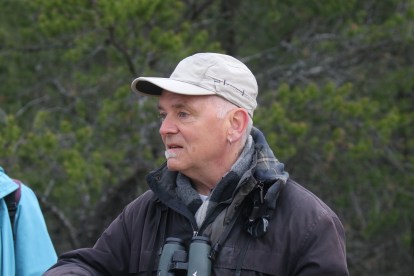
Sam Burckhardt

Guide

Eric O’Neil

Eric

The same trip the day before had been successful…sort of.  A number of Kirtland’s Warblers had been heard but at most there had been a brief visual sighting – maybe.  I had never seen or heard a Kirtland’s Warbler before.  I would be disappointed without a visual, so it would still be a much sought after ABA Life Bird even if just heard, but I really wanted to see one and really wanted a photo.  There was high anticipation as we neared the habitat area and then the bus stopped.  I was surprised.  On one side of the road was a seemingly mature forest with tall trees.  On the other side, the trees were much smaller and much shorter and it was these trees that were the favored ones for the warbler.

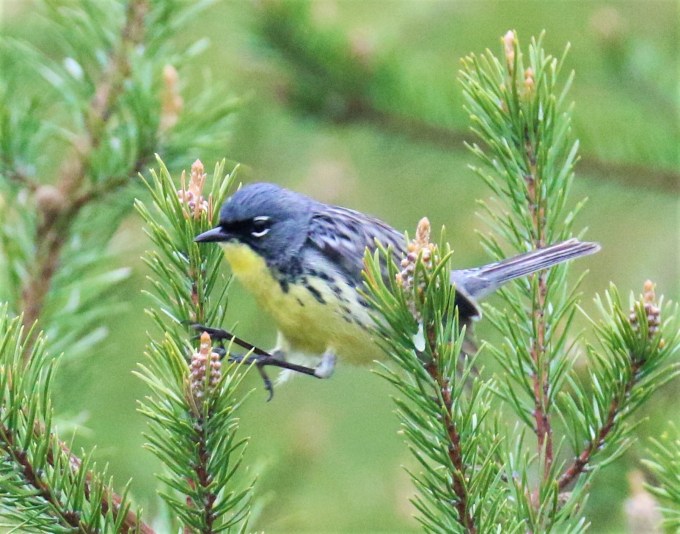
Within moments of getting off the bus, Sam heard a Kirtland’s Warbler  singing.  Maybe ten minutes later one popped up briefly – a visual – a Lifer.  More singing from elsewhere and then ten minutes after that one came fully into the open and sang for us and I had my photo.   All told we heard at least 8 individuals and had visuals of two males and one female.  It appeared to Sam and Eric that one male and the female were pairing up – a very encouraging sign.

Kirtland’s Warbler

Kirtland's Warbler

Kirtland's Warbler1

The Kirtland’s Warbler is a great conservation success story.  Almost extinct 50 years ago with fewer than 200 pairs, today there are more than 2500 pairs.  The Forest Service has protected and expanded the Jack Pine habitat with controlled fire burns as well as preventing major fire damage. Things look good on the limited breeding grounds but as Sam explained, there are grave concerns in the wintering area in the Bahamas.  Changed farming practices threaten the availability of the insects needed to sustain the warblers there.  Time will tell.

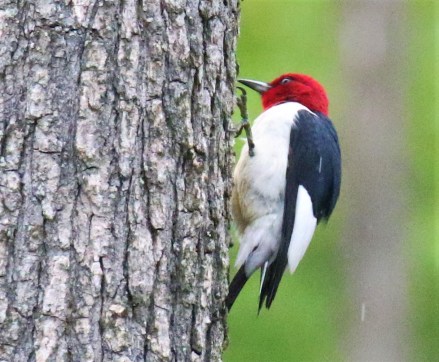
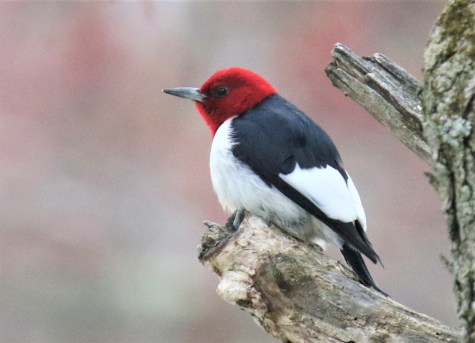
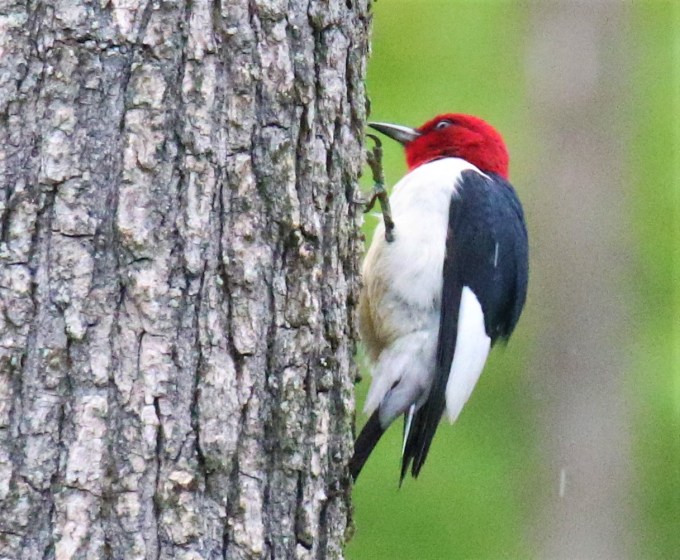
I was privileged to spend a lot of time with Sam Burckhardt who shared his great local knowledge to help me plan the rest of the trip to find 50 species on this day.  Being able to do that with the Kirtland’s Warbler as part of the story was more than I had originally hoped for.  Our next stop added not only more species for the day but also a wonderful favorite bird – a Red Headed Woodpecker.  [Sam was having a big day as well.  Sandhill Cranes had hatched a chick on his property and like a proud grandpa, he was eager to get back home to see if the second egg had hatched.  Hoping it did…]

Red Headed Woodpecker

Red Headed WP1

By the time our morning tour was over, the species count was approaching 50 and there had been some other really good birds as well, especially a flyover Northern Goshawk, but by far the best part for me was having Cindy fully engaged and excited.  This literally was only her 4th day of birding and what a start – great birds including Black Oystercatcher and both Harlequin and Long Tailed Ducks at Semiahmoo, many wonderful birds in Eastern Washington on our trip joined by Ann Marie Wood, a half day at Magee Marsh and now a Kirtland’s Warbler and a Red Headed Woodpecker in Michigan.  And it got better.

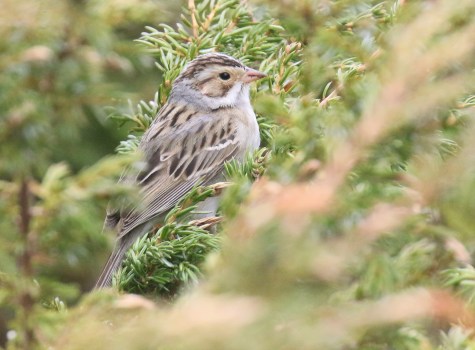
The “better” was at Tawas Point State Park.  When we first got there, we took a wrong turn and headed off to the beach where it was windy, cold and relatively birdless.  Then we hit the correct trail and there we found the birds.  And unlike at Magee Marsh, many were low in small trees and much easier to see often with multiple birds in the same tree.  These were among the highlights:  Clay Colored Sparrow, Baltimore Oriole, 13 warbler species, Scarlet Tanager, and Rose Breasted Grosbeak.  One of the Warblers was a very rare Kentucky Warbler.  

Clay Colored Sparrow

Clay Colored Sparrow5

Baltimore Oriole

Baltimore Oriole with Orange

Warbling Vireo

Warbling Vireo

Ruby Throated Hummingbird

Ruby Throated Hummingbird1

Scarlet Tanager

Scarlet Tanager3

Rose Breasted Grosbeak

Rose Breasted Grosbeak Juvenile

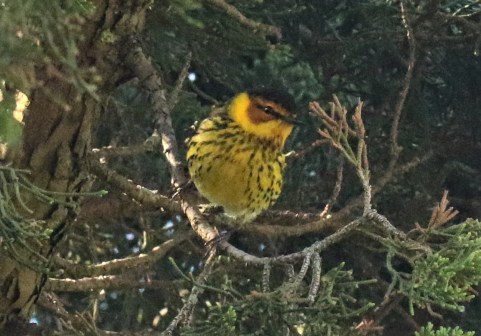
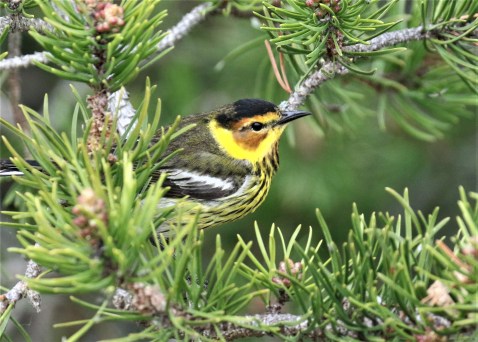
Cape May Warbler

Cape May Warbler

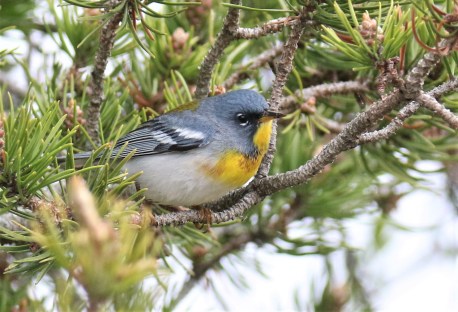
Northern Parula Warbler

Northern Parula Warbler

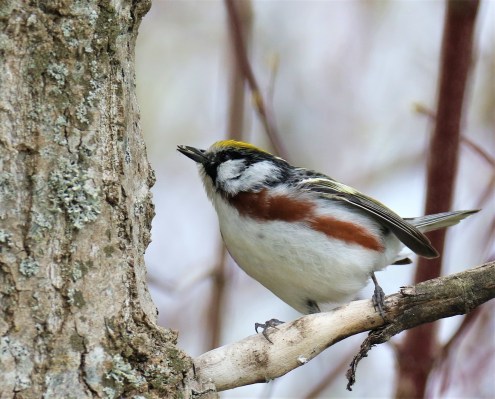
Chestnut Sided Warbler

Chestnut Sided Warbler1

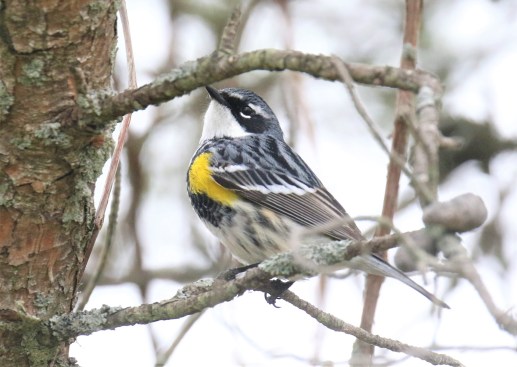
Yellow Rumped Warbler

Yellow Rumped Warbler - Myrtle

Kentucky Warbler

Kentucky Warbler3

The photos are all of birds that were close and relatively easy to see.  Nowhere’s near the crowds of Magee but there were many birders enjoying these beauties.  The Tawas Festival, organized and run by Michigan Audubon, is low key and accessible and should grow in future years.  I would like to come back for several days in the future.  This was exactly the experience I had hoped that Cindy would experience and she was enthralled by the lovely birds and found many on her own.  We ended the day with a trip to the Tuttle Marsh Wildlife Area, another place recommended by Sam Burckhardt.  There we heard the call of the Whippoorwill which does indeed sound like Whip Poor Will – over and over.  After two long days, this was proof positive that Cindy was a trooper and at day’s end we had 79 species.  This was State #35 with 50 species in a day for my 50/50/50 Adventure – a great day indeed.

The next day Cindy and I headed off to a couple of non-birding vacation days at Niagara Falls, but we had one more birding stop.  A Henslow’s Sparrow had been reported at 25 Mile Road in New Baltimore, Michigan.  There were also Bobolinks in the area.  It was mostly on the way, so we made a stop in threatening weather.  I immediately heard Bobolinks when we arrived at the unmowed grassy field.  Cindy heard them, too, and we had distant visuals.  That was at a private field and we stayed on the edge.  A short way further along the road there was a public field.  We heard more Bobolinks and headed into the field for a better look and possibly a chance for a Henslow’s Sparrow.  This was a brilliant stupid move.  Brilliant because we got better looks of Bobolinks and really brilliant because I heard the distinctive call of a Henslow’s Sparrow which then flushed for a quick confirming look.  But stupid because we forgot about ticks and almost really stupid because as we got farther out into the field the rain started.  We got back to the car just before a true downpour … and heard a siren.  What was that all about?  My brain slowly engaged and I realized it was an alarm signal for possible tornadoes.  This was confirmed by a sign we saw later.  OK – we did not get drenched and we did not get flattened by a tornado.  But we did each get a tick – pulled off before any biting.  And if we had not ventured out, there would be no Henslow’s Sparrow – my second ABA Lifer in Michigan.  So a good story all around.


Heinz 57th Variety – Black Billed Cuckoo

This story has lots of good pieces.  It is mostly about some wonderful birding at the John Heinz National Wildlife Refuge in Philadelphia, PA as part of my 50/50/50 Adventure.  I birded there yesterday starting on my own and then with a new friend Ned Connelly.  That story has to wait, though.  Today the birding was with a great group of birders/folks on the 7:00 a.m. Bird Walk led by Gregg Gorton – a super birder and an even more super guy.  And more on that later as well.

Let’s start with this:  “While riding a train in New York City in 1896, Henry Heinz saw a sign advertising 21 styles of shoes, which he thought was clever. Although Heinz was manufacturing more than 60 products at the time, Henry thought 57 was a lucky number. So, he began using the slogan “57 Varieties” in all his advertising.”   That Henry Heinz was the grandfather of Henry John Heinz III, best known as Senator John Heinz who died in an airplane crash on April 5, 1991.

Senator Heinz had helped preserve the Tinicum Marsh Refuge which was was declared a National Natural Landmark in 1965.  In November 1991, the name of the refuge was changed to John Heinz National Wildlife Refuge at Tinicum to honor the late Senator.  It is a marvelous place for birds and it was the focus of my visit to Pennsylvania seeking to find 50 species there in a single day.

John_Heinz_NWR_entrance_sign,_Tinicum,_PA

Since an essential and important part of my 50/50/50 Adventure is to interact with local birders in each state, I had contacted Bert Filemyr, someone I had met on my Tundra Bean Goose Chase and a big time birder in the  Philadelphia area, to see if I might be able to hook up with him.  Like many other birders, Bert was going to be in Magee Marsh while I was in Pennsylvania.  When I told him I would be able to satisfy my need for a local connection by joining with the John Heinz bird walk, he contacted his friend Gregg Gorton and told him of my project.  So when I met Gregg at the refuge before the walk, the stage was set for a great day.

And the stage was different than some of my other days attempting to get 50 species in a day because I had accomplished that the previous day birding first with Ned Connelly as I indicated at the start and then later on my own.  I had seen Ned when I arrived at the Refuge on Friday around 9:00 a.m. after a fairly early departure from Delaware and asked if I could tag along since I had never been there before and was unfamiliar with many of the bird calls and songs.  He welcomed me and we spent the next several hours together ending up with 40 species.  I had seen 5 other species just driving to the Refuge so with a total of 45, even though the plan had been to bird that day just for familiarity for the project day on Saturday, after lunch (with Ned at a very cool diner), I returned to the Refuge alone and following some advice from Ned, I picked up another 10 species and ended the day with 55.

Some good birds from the first day at John Heinz NWR with Ned included 12 species of warbler.  By far the most abundant species was Gray Catbird – maybe 50 seen and constantly heard.

Black and White Warbler

Black and White Warbler

Northern Parula Warbler

Northern Parula

Yellow Rumped Warbler (Myrtle)

Yellow Rumped Warbler

Magnolia Warbler

Magnolia Warbler

Yellow Warbler – The Most Abundant Warbler – More than 20 for the Day

Yellow Warbler

Common Yellowthroat – The Second Most Abundant Warbler

House Wren1

Northern Waterthrush – Right where Ned said it would be

Northern Waterthrush

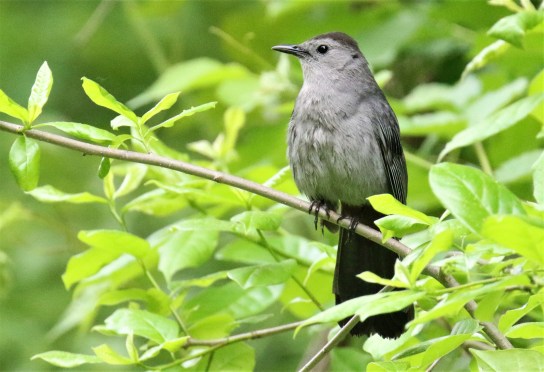
Gray Catbird

Gray Catbird1

Baltimore Oriole

Baltimore Oriole1

Orchard Oriole (First Year Male)

Orchard Oriole1

Considering that there were only two duck species (Mallard and Wood Duck) and a single shorebird species (Greater Yellowlegs), I was very pleased to get more than 50 species for the day.  But mostly it had been a great visit with Ned.  He has birded the refuge for decades and finds it especially fulfilling after having lost his wife not long ago.  He was full of stories and knew the Refuge and the birds well.  He was great company and reinforces how intersecting with local folks is such an important and rewarding part of this experience.

And that gets us back to Gregg Gorton.  A recently retired physician, Gregg was simply wonderful.  I had met other birders in the area before meeting him and they all told me how expert he was especially with bird songs and calls.  Dead on.  Like my friend Frank Caruso back home and Mike Resch who I birded with earlier on this trip in Connecticut and Rhode Island, Gregg had both fantastic hearing and a processor that knew every song, call and chip note.  Since this is my greatest weakness, I could not have had better company.  And there were great birders and great people in our group.  Gregg had told the group of my 50 state quest and they were all supportive and helpful and friendly.  It was a great team and we had great birds.  Many species were the same as with Ned or on my own the day before, although some of those were missed this day.  However, there were many new ones as well including 5 new raptors: Red Tailed, Red Shouldered and Cooper’s Hawks. Peregrine Falcon and Bald Eagle.  I also added two new warblers, Chestnut Sided and Black Throated Green although I missed two seen by others in the group, Canada and Bay Breasted Warblers.

I also had much better looks at and photos of our two vireos – Red Eyed and Warbling.   Some sunshine helped.

Red Eyed Vireo

Red Eyed Vireo2

Warbling Vireo

Warbling Vireo1

There are lots of stories I could add and definitely lots of thank yous to share, but it is late and I have to head off to Virginia early tomorrow, so I will add two quickly and then get to the close and to the story of the title of this post.   Two very fun sightings were of two little birds on two little nests,  The first was a Ruby Throated Hummingbird, the smallest bird in the East, and the second was a Blue Gray Gnatcatcher – not much larger.

Ruby Throated Hummingbird on Nest

Ruby Throated Hummingbird on Nest1

Blue Gray Gnatcatcher on Nest

Blue Gray Gnatcatcher on Nest

Coming to the end of our great morning after 5 hours, we reached the Pump Station on the Pipeline – a Hotspot within the Refuge.  A real-time messaging service is used by birders at Heinz telling of special observations.  Earlier there was a message that a Black Billed Cuckoo had been seen there.  Not only is this species a rarity for the Refuge, it also had special appeal to me as I had only seen them twice before – more than 40 years ago – and I did not have a photo.  I thought one might be possible later at Magee Marsh, but not here.   When we got to the Pump Station, Denis Brennan was there.  I had met him the day before with Ned, and Denis had seen the Cuckoo about 15 minutes earlier.  It had not been calling.  This is where being with a group of birders, especially good ones and motivated ones is really beneficial.  After diligent searching and great patience the Cuckoo was seen – high up in a tree and distant and blocked by branches.  I got a quick visual but no photo.  It moved.  Another view.  After much hide and seek I finally got a great look and a photo – and then an even better one.  The Black Billed Cuckoo was the 57th species I had seen that day at the Refuge – Variety 57.  Much more importantly the lifer photo was number 698 in the ABA area.  I should be able to get 2 or more additional ones on the remainder of this trip getting me to the magic number of 700.

Black Billed Cuckoo

Black Billed Cuckoo

That ended a wonderful day with wonderful birds, at a wonderful place with wonderful people.  Since Gregg had mentioned my quest to the others at the start of the trip, it had come up in discussions with many of them during the time together.  They were all so positive and encouraging and interested.  The birds are great but it really is about the people!!

[I have been traveling for almost two weeks now and this is the first time I have been able to post anything in these blogs.  There have been lots of other great stories and successes getting over 50 species in Connecticut, Rhode Island, New York, New Jersey and Delaware.  The success in Pennsylvania made that State #31.  Still a long way to go.  Still lots of fun ahead.  And I will eventually get to those blog posts…someday.]

The Coast and a Pelagic – Getting Ready for my Big Trip

It seems like I have been planning this trip forever and now my departure is only 6 days away.  On Monday April 30, I fly to Boston and take a giant step on my 50/50/50 Adventure that will take me to 15 states in 30 days, birding in 13 of them and hopefully adding all of those to the “Completed” column in that 50 species in a day quest.  The logistics have been fun but at times overwhelming:  mileage, hotels, bird lists, companions, flights, hotspots, and then more of all of it over and over again.  There are still a couple of details to attend to, but I am good to go and very excited.  Before sharing my “before I go” Washington birding, here is a peek at my upcoming schedule.

ItineraryAs I have said many times as I have discussed this trip with others, it sure would be nice if there was more than one “May” in the year.  It is the best month for the most species to find and the easiest time to find them in most states.  I am packing so much into this trip because there is only one May each year and I need to make the most of it.  One negative consequence is that I will miss almost all of May in my home State of Washington.  While I gave up on any thoughts of a really big species count for Washington this year because of the May trip east and another trip for half of June in the Mountain States, it was hard to completely break old patterns and habits.  Accordingly I have still targeted a state list of 300 species for Washington in 2019, and that has required some serious scurrying around in late March and April. Trips to Eastern Washington and Semiahmoo in Whatcom County were detailed in previous blog posts.  This one very briefly covers my trip to the Coast and a pelagic trip out of Westport.

A first stop was at the Hoquiam Sewage Treatment Ponds.  Not raining but very grey.    Among the many swallows were some Vaux’s Swifts, a pleasant addition to my year list.  Other highlights were a lovely Northern Harrier and a flock of at least 700 Greater White Fronted Geese at the adjoining Bowerman Basin NWR.  I would later see thousands of them in long skeins flying overhead in many places.

Northern Harrier

Northern Harrier2 (2)

At the Westport Jetty and Marina, the only bird of interest was a Common Loon gorgeous in full breeding plumage.  Lots of fisherman on the jetty but no Rockpipers.

Common Loon

OLYMPUS DIGITAL CAMERA

After Westport, I got to Bottle Beach in time for a great show – thousands of shorebirds and many birders including a WOS Trip.  I had not seen any Short Billed Dowitchers in 2019.  There were more than a thousand on the mudflats – a great way to get a FOY.

Short Billed Dowitcher

Short Billed Dowitcher

Other species were Black Bellied Plovers, Dunlin and Western Sandpipers, the first time I had seen the latter in numbers.  Returning from the beach, there were some nice warblers in the trees along the path including several Orange Crowned Warblers and my FOY Wilson’s Warbler.  The former posed nicely and the latter played hide and seek.

Shorebird Trio

Shorebird Threesome

Orange Crowned Warbler

Orange Crowned Warbler4

With the tide coming in I headed to the Point Brown Jetty at Ocean Shores, still hoping for some Rockpipers especially a Rock Sandpiper.  But it was no go – too much wave action and no birds at all.  I later found out that Wilson Cady had a Rock Sandpiper there several hours earlier.  If I had skipped Bottle Beach, I may have seen one.  Can’t do everything – sadly.  The tide was not too high for some driving on the open beach and that was my next venture.  A good choice as there were hundreds of birds with eight species of shorebirds including a large flock of Marbled Godwits and lots of Semipalmated Plovers.

Marbled Godwit

Marbled Godwit Landing

Semipalmated Plover

Semipalmated Plover

I had waited too long to make a room reservation in Westport for that night – before my pelagic trip the next day, so I ended up staying in Aberdeen.  Not ideal, but workable with an early start.  I made another stop at the Hoquiam STP on the way to the hotel and found nothing new.

Hopes were high for the pelagic trip – not just because it would be my first one for the year – and only then because there had been a cancellation opening up one spot – but because the previous trip had been “EPIC” with 2 Short Tailed and 8 Laysan Albatrosses in addition to the regular fare.  Captain Phil Anderson had sent us an email the day before warning us of a rough crossing of the bar and some high seas, but the trip would be a go.  Lots of good birders were on board and sea conditions aside, the weather looked great with a beautiful sunrise as we headed out.  I won’t go into great detail – just some highlights.

Sunrise

Sunrise

Crossing the bar was indeed no fun but not nearly as bad as I had expected.  There were large ocean swells though that slowed our progress, made good handholds essential, and made viewing even more challenging than usual.  A good omen was an early sighting of a Tufted Puffin – our only one of the trip.  There was also an early Manx Shearwater – but it disappeared quickly.

Tufted Puffin – FOY 

Tufted Puffin2

Lots of Common Murres and Pacific Loons but maybe due to the swells, it seemed really slow.  It seemed to take a bit longer than usual but we finally found some Sooty Shearwaters and a bit later our first Pink Footed Shearwater of the trip.  New for the year but a given for an April pelagic trip.  We had a nice flyby of some Surf Scoters and some excitement with a small flock of Bonaparte’s Gulls with some Phalaropes – both Red Necked and Red.   A single Pomarine Jaeger distant and flying away from us would be the only Jaeger of the trip.

Sooty Shearwater

Sooty Shearwaer

Pink Footed Shearwater

Pink Footed Shearwater1

Surf Scoters

Surf Scoters (2)

Bonaparte’s Gulls

Bonaparte's Duo

Red Necked Phalaropes

Red Necked Phalaropes

Pomarine Jaeger

Pomarine Jaeger1

A Black Footed Albatross made a brief appearance but it continued to be slow.  And there was some bad news.  The fishing boats that Phil had seen on radar earlier all had moved north.  There would be no intersection.  Phil’s deft intersection with a fishing boat on the epic trip had been the key to the good birds then.  Was this going to be an unproductive trip without a fishing boat to follow?  Westport Seabirds always does a great job, and my concerns proved unfounded.  Phil and Chris put out an oil (vegetable? fish?) slick and it drew in the birds and this was aided by chumming with fish “bits”.  It was not a feeding frenzy, but we had a good diversity of birds with the highlight probably being 2 or 3 Laysan Albatrosses.

Black Footed Albatross

Black Footed Albatross Wave

Black Footed Albatross1

Black Footed Albatross Close Up1

Laysan Albatross

Laysan Albatross2

Laysan Albatross (2)

Fork Tailed Storm Petrel

Fork Tailed Storm Petrel Foam

Black Legged Kittiwake

Black Legged Kittiwake1

No Short Tailed Albatross this time and only a single Northern Fulmar.  As we left this stop, we had a single Sabine’s Gull and there would be a few more later.  Numbers were low and although it had not seemed it, I had now seen 13 new birds for the year. (But who’s counting 😉 )  The seas were much more favorable on our return trip and we continued to see some of the birds that we had observed on the way out.  I had been disappointed that I missed a Cassin’s Auklet that a few others had seen earlier but this feeling disappeared when I spied one off the starboard bow.  Lousy photo but another FOY.  A much better photo is of one of the Rhinoceros Auklets that we saw.

Cassin’s Auklet

Cassin's Auklet

Rhinoceros Auklet

Rhinoceros Auklet1

There would be one more alcid as well.  Not the hoped for Parakeet Auklet or equally rare Scripp’s Murrelet but a lovely pair of Ancient Murrelets.   I had seen some earlier this year – but at a distance too great for a photo.  They are lovely birds.

Ancient Murrelet

Ancient Murrelet3

It had not been an “epic trip”, but a very good one.  Numbers were fairly low and I definitely missed some photo ops, but it was fun and productive.  I hope to be able to schedule another trip in the Fall after my 50/50/50 trips…but there will still be a bunch of prairie states to bird to finish off that project.  North Dakota in September?  Maybe…

Super spotter Scott Mills – Keeping Track of “Numbers” – Sorry but no photo of the other super spotter Bill Shelmerdine – Many thanks to both and to Phil and Chris.

Numbers


Going Back East Before Going Back East

On April 28th I leave for a 12 state swing “Back East” as the next step on my 50/50/50 Adventure.  I will be gone for almost all of May, and then in June I will be off again.  Since that project/adventure is my birding priority for this year, I knew I would not be able to amass a large number of observations in Washington as I have for each of the last 7 years.  But it would still be nice to at least hit 300 species for the State.  May is a great month for birding – the major reason behind scheduling my trip Back East.  Of course it is a great month in Washington as well – and I will miss it.  Over those past 7 years on average I have added 54 species during the month of May.  A big number to make up especially since I will be gone much of early June as well.

So I have been doing a lot of birding in late March and so far in April trying to get as far along as I can.  Yesterday was another big step in that endeavor as I went Back East as in back to Eastern Washington on a marathon trip through Kittitas, Yakima, Grant and Adams counties chasing some recent observations and looking for new arrivals as migration heats up.  It was one of my best days birding in the State despite yet again not being able to find a Loggerhead Shrike.  Over 650 miles in over 16 hours.  Not so many species as I skipped a lot of good habitats but with a lot of luck and some assistance from Paul Baerny who was out birding in much of the same territory, I was able to find 10 new species for the year – FOY’s, and despite a day that started with clouds and rain and even a little snow, I got some of my best pictures ever.  And I had a lot of fun.

With a very early start, I got to the Ellensburg area before it was warmed up enough to get the sagebrush birds going, so I went for a sure thing – the active Osprey nest on Woodhouse Loop just off Canyon Road.  I had not had a chance to look for it on my last trip but knew the pair had returned.  Just as I pulled onto the turnoff, the male flew in with a fish still wiggling in his talons.  A terrible photo in terrible light, but you can see the fish and it was a good start with my first new bird for the year.  As it turned out I saw a total of 11 Ospreys at 8 nest sites during the day.

Osprey – Woodhouse Loop – Ellensburg, WA – Kittitas County

Osprey

I replenished my coffee and headed to the sagebrush on Durr Road – just off Umptanum Road west and south of Ellensburg.  It was pretty cold and very grey.  A Prairie Falcon sped by as I turned onto Durr Road.  Would this be a good omen? I was not sure if the birds would be active or not, but as soon as I parked, I heard bird song.  However, it was confusing as one song sounded like a Western Meadowlark and another sounded similar but with a lot more going on.  The second was a Vesper Sparrow, common at this location but already seen last week.  My target was a Brewer’s Sparrow.  I had always found them here.  But I heard nothing and saw nothing.  Then just as I got into my car to drive to other spots on Durr Road – hoping to end my Loggerhead Shrike drought, a single little sparrow flew, landed briefly and sang its buzzy little song.

Brewer’s Sparrow – Durr Road – Kittitas County 

Brewer's Sparrow

I drove a few miles looking for a Shrike and saw only a couple of Mountain Bluebirds and Meadowlarks.  I went back down to Umptanum and drove a few miles south with the same goal and had the same experience except this time with Western Bluebirds.  This was the fewest Bluebirds I had ever seen on this road – often thick with both species.  I hope it was just the chilly start to the date and not something more ominous.  Paul Baerny got to Durr Road shortly after I had left and also found it light on birds.  He had not stopped at the first place I had and when I told him I had several Vesper Sparrows there (his target) he returned to that spot and found the same birds I had – including no Loggerhead Shrikes.

Knowing I had to cover a lot of ground, I went to Yakima via I-82 rather than my normal but much slower route through the Yakima River Canyon.  I reached Randall Park where a Blue Jay has been seen regularly for quite a while.  I had never been there before and wondered where to start looking (and hoping).  I was greeted by woodpeckers drumming – two Downy Woodpeckers and two Northern Flickers.  I walked along the creek in the rain leaving my camera in the car since I had forgotten its rain shield.  In a very few minutes I heard the “mobbing call” of the Blue Jay.  I could “count it” but could I find it?  I was helped by its continued calling and then by the sight of a large brown bird flying between two trees along the creek.  It was a Great Horned Owl – explaining the Jay’s call.  I took a pathetic picture of the Jay with my phone and then raced back to the car for the camera figuring I could shield it under my rain jacket.  By the time I got it and returned, the Jay was silent and both birds were gone. Rats (or something like that…).

After another 5 or 10 minutes, I heard a different call from the Blue Jay and was able to find it buried in branches.  Not a great photo – heck – not even a good photo – but unmistakably a Blue Jay.

Blue Jay – Randall Park – Yakima

Blue Jay1

The weather was getting worse if anything and I wanted to go to three different places in three different directions and none were on the way to each other.  Mostly I wanted to find a Lewis’s Woodpecker.  They were a sure thing at Fort Simcoe State Park and would have been a sure thing at Oak Creek but the road up along Oak Creek had been closed and if still closed would require a hike in (and up).  I was sure the woodpeckers would be there but how far would I have to go on foot if closed?  I gambled it might be open (after April 1) and opted for that choice as it was also closer – sort of.  Since as it turned out I would next head to Kerry’s Pond near Sunnyside, either choice would have been about the same.

When I got to Oak Creek, the gate on the road was indeed closed and it was cold and miserable.  I tucked my camera under my rain jacket and headed up hill.  Then it began to snow with the rain.  Not cold enough to stick, but it was a bit eerie and did not help finding birds.  After about a half mile – having passed all the snags close to the road I spied two woodpeckers high up in a bare tree.  Bad light and a lot of distance but it is such a great looking bird that even with those drawbacks and with rain and snow clearly visible – still a nice photo commemoration of the trek – and another new bird for the year.  I took the photo and got back to the car as soon as I could.

Lewis’s Woodpecker

Lewis's WP in Rain and Snow

There would be a lot of retracing of steps on this journey and now I headed back east heading to Kerry’s Pond where I expected to find Black Necked Stilts.  I could see some Stilts as I drove by the pond and parked.  I had seen this hotspot on many Ebird and BirdYak postings but had never visited it.  I can see why it is a popular and productive place.  I watched 10 or 11 Black Necked Stilts feeding and playing along the edges of the pond with a little bit of aggressive interaction.  I also noted several duck species including a Bufflehead which turned out to be a first for me in Yakima County.  More appealing though was a lovely pair of Redheads – the duck kind.  A gentleman on a small tractor was working the area and had a pair of dogs which came up to me at the fence (electrified) to let me know I should keep out.  (As an aside – with no dogs and if the fence were not electrified entry would have been tempting – but the sun was now out and photos were available from the fence line).  The man came over and we had a nice conversation about the pond, his dogs and his working.  A nice add to the day.

Black Necked Stilts – Kerry’s Pond – Yakima County

2 Stilts

Redheads – Kerry’s Pond – Yakima County

Red Head Couple

Long Billed Curlews were high on my list and some had been seen on Lewandowski Road – my next destination.  Along the way I found my first Swainson’s Hawk of the year.  Deb Essman had one the day before on Brick Mill Road.  I had shared her info about it with Paul and he had found it earlier.  I had planned to stop on way home to see it but now that was not necessary at least for the list.  I would later see another one not far from there.

Swainson’s Hawk – Lewandowski Road – Sunnyside

Swainson's Hawk1

Unfortunately no luck with Curlews on Lewandowski Road although there were miles and miles of grassy fields – great habitat – and I very well might have missed them.  But Paul Baerny came to the rescue.  He had just seen four Long Billed Curlews on the North Frontage Road just east of Silica Ponds along I-5.  My original plan had been to head to Para Ponds next and look for Tricolored Blackbirds.  The combination of REALLY wanting the Curlews and needing gas convinced me to change plans even if it meant more miles.  It could not have worked out better.  Over an hour later, I arrived at the spot Paul had described.  it looked right but with landmarks in sight, I called Paul to confirm – and just as I did, I saw a Long Billed Curlew flying over the field to my left (north).  Then I heard another calling.  Then another.  I walked out into the field and was treated to quite a show of birds singing, feeding and flying.  Six Curlews altogether – all sang at one point and two cooperated coming close and even flying right over me.  Photo ops!!!  Pardon this indulgence as I include many photos – my best of this species ever.

Long Billed Curlews – North Frontage Road – Quincy, WA East of Silica Road

Long Billed Curlew Ground Long Billed Curlew Landing

Long Billed Curlew Flight Wings Down1

Long Billed Curlew long-billed-curlew-flight-wings-up1.jpg

The Curlews were definitely the highlight of the day and were the 7th new species for the year.  There would be more of both.  Now it was back to the original plan – head off to Para Ponds about an hour away if I went through the Columbia National Wildlife Refuge which would give me yet another chance to find a Loggerhead Shrike.  Again no Shrike and instead of stopping at the ponds – always birdy – I went directly to the grain terminal on McManamon Road further east and overlooking the ponds.  This is where the Tricolored Blackbirds were now being found and that was my target.  When I arrived there were blackbirds everywhere:  Red Winged Blackbirds (a few); Yellow Headed Blackbirds (at first only two but later joined by a flock of more than 40); Brewer’s Blackbirds (dozens) and most importantly Tricolored Blackbirds (many).  A veritable Blackbird Bonanza with some Brown Headed Cowbirds thrown in for good measure.

Now this is not the most natural or picturesque setting and often many of the birds were behind a fence, but the light was good and there were many photo ops including the chance to see the different species next to each other highlighting some of their differences such as in the thinner bill of the Tricolored compared to the Red Winged.  It was also my first time really noticing any Tricolored Blackbird females.  The Tricolored Blackbird was also new for the year.

Yellow Headed Blackbird

Yellowheaded Blackbiird

Tricolored Blackbird – Another FOY and My Best Photo of this Species

Tricolored Blackbird1

Tricolored Blackbird Female

Tricolored Blackbird Female

Tricolored Blackbird with Brewer’s Blackbird

Tricolored and Brewer's Blackbirds

Brown Headed Cowbird

Brown Headed Cowbird

Late Arriving Flock of Yellow Headed Blackbirds

YHBB flock1

It was just a little after 3:15 so lots of birding time was left and I headed North to the Rocky Ford Fish Hatchery.  Many years ago I used to go there flyfishing for trout, now the quarry was a Sora.  I had them there last year and they had been reported frequently this year.  It was about an hour away – without stops.  Just over a mile south of the turnoff onto Trout Lodge Road from Highway 17, however, there was an important although unplanned stop.  As I was speeding along close to 70 mph, somehow I noticed a small blob on a post on the east side of the road (my right).  My brain processed it as a Burrowing Owl – completely unexpected and seemingly too close to the busy highway for it really to be that.  A quick U-Turn and the bird was still there and the bird was indeed a Burrowing Owl – my first for 2019. First I got a photo and them called Paul as I knew he had been looking for one.  He was probably too far west to seriously consider coming, but he thought about it.

Burrowing Owl – Highway 17 just south of Trout Lodge Road

Burrowing Owl Post Horizontal

With an unexpected new bird for the year, I continued on towards Rocky Ford.  About 200 yards in on Trout Lodge Road, it was deja vu all over again.  This time the blob was on some rocks and since I was only going maybe 50 mph, I was positive I had another Burrowing Owl.  Another quick U-Turn and now I saw a second owl which quickly flew off as I approached in the car.  Probably a pair with a nest right behind the rocks somewhere.  More photos and another call to Paul.  He was torn by the certainty that these birds would remain and the probability that since a nest was likely they would be there on a return visit later as well.

Burrowing Owl – Trout Lodge Road

Burrowing Owl1

Not quite, but this almost overtook the Long Billed Curlews as the highlight of the day.  If I could find a Sora, I would have ten new species for the day – even without that darn Loggerhead Shrike.  There were several fishermen at the creek but I did not see any fish being caught.  I remembered this place and catching some nice trout there years ago – and also remembered days with no trout at all.  I was more interested in a Sora and I walked out onto the boardwalk/fishing platform where I had a Sora last year.  A single playback got a response and a quick peek as it ran between some reeds and that was that.  A great topper for a great day!!

I could not have dreamed of 10 new species for the day especially without the Shrike.  I made one last try for it on the way home, driving along Vantage Highway and stopping at the Wind Farm – very quiet with only a Sage Thrasher, some bluebirds, another Vesper Sparrow and another Brewer’s Sparrow.  I was very tired when I got home but very, very pleased with the day.  And very thankful for folks like Paul Baerny in our wonderful community of birders.

Beginners and Beginnings

Do you remember when you first started “birding”?  Not just noticing a bird like an American Robin or a Mallard or Bald Eagle, but started really paying attention and trying to figure out what was s going on and what you were seeing that wasn’t one of those widely known birds.  Do you remember how challenging it was to not just see a bird but to figure out first what type of bird it was and then progressing, making lots of mistakes along the way, to what species it was?  Probably even trying to understand what a species was exactly – something that is a challenge in a different way even for experts.

We all went through it, maybe starting with a so-called “spark bird”.  We went out with others who seemed to see everything and know everything.  We got our first binoculars and field guide books.  We joined bird walks or Audubon trips or just starting paying attention differently when we were out doing other things – hiking, sailing, gardening – heck even just driving down the road.  The birds had been there all the time but we just hadn’t noticed them.  If our interest really got hold of us, we may have gotten a scope, or a camera, definitely more field guides, taken more trips, listened to recordings, started a list (or two or three or more).  Maybe we took a class, joined a club, made new friends and both our joy and our frustrations increased.  There was always more to learn, more to do, more to see, more places to go.  At some point maybe we brought others into the fold – helped others become – Birders!!  They, too, started as beginners and we were now teachers, encouragers, and best of all companions and friends who shared a love for being outdoors and were moved by the beauty and wonder of birds and the myriad joys of birding.

My “Spark Bird” – Black Rail – Baylands in Palo Alto (Wish I had a photo of my own)

Black Rail

Cindy and I met not all that long ago.  We got along better than great and found that we shared important values, politics, beliefs and a long list of other likes and dislikes.  We also found that we wanted to learn more about each other and invest the time to see where “things might go”.  What we did not have in common was shared hobbies or avocational interests or pasts.  She had spent a lot of time boating.  She field trained dogs and she was taking ballroom dancing.  The only boats I was familiar with were ferry boats, drift boats and boats going out to find pelagic birds.  I had never owned a dog and while recognizing them as great companions for dog owners and lovers everywhere, I saw them more as obligations that you had to feed, walk and take to the vet and definitely could not just leave on their own when you went off on a long day, weekend or even multi-week birding trip.  I loved to dance but the last time I had even waltzed was at my daughter’s wedding now nine years ago.

And of course, I was passionately, deeply and happily into birding.  It consumed much of my time and energy and I was also midway into my 50 state birding adventure – so how was this going to work?  Cindy liked bird pictures I shared with her and said she was game to “go birding”.  I figured the best way to go would be to start with a low stress visit to a beautiful place, on a beautiful day and where there would be some easily seen beautiful and charismatic birds.  Semiahmoo Spit at the north end of Whatcom County seemed the perfect spot.  March 16th was such a beautiful day.  Our first stop was at the harbor in Blaine and right away, a great bird, a close-in Black Oystercatcher.  Definitely the first time she had seen one and a  Black Oystercatcher offers a lot to birders and non-birders, or new birders, alike.  That long red/orange bill and the pale pink legs, and the yellow eye surrounded by orange/red and the dark spot in the middle.  Not other complicating fieldmarks and it is fairly large and is not hidden in the trees and often is relatively slow moving or even still.  It is a “shorebird” on the shore but next to deep water which provides the opportunity for some education as well.  The “spark” had happened.  More to come.

Black Oystercatcher – Blaine Harbor – March 16, 2019

Black Oystercatcher1

When is a “duck” not a “duck”?  Or better, when is a duck not “just a duck”?  One answer to the first question could be when it is a loon, grebe, coot, goose or alcid that are also water birds that maybe were never even noticed or if so just taken as just another duck.  Being able to recognize the existence of those other birds was an important goal for this trip.  So, too, was answering the second question – getting into the world of species identification.  Seasoned birders do not see “ducks”.  We see Scoters and Scaup and Goldeneyes and Pintails and Buffleheads and Mergansers and many others and know that they are all “ducks” but are also distinct species.  Beginners often don’t know that there are different kinds of ducks or maybe even what a “species” is.  If finding out is interesting to them and leads to questions, analysis and attention to detail and most importantly to wonder and joy, then there may just be a birder in the making,  Semiahmoo is a great place to begin that journey of exploration and learning.

Seasoned birders may not pay much attention to a Surf Scoter as they are pretty common and easily identified.  To a beginner though, they border on the amazing.  Definitely “duck-shaped” but look at that huge bill and the the clown-like face and the strong contrast between the black and the white.  Certainly nothing like the most well known duck, a Mallard.  Then there is the discussion about how different species of ducks don’t always have  the word “duck” in their names.

Surf Scoter

Surf Scoter1

And just to drive the point home, we find some White Winged Scoters.  Yes, Scoters are ducks and no White Winged Scoters are not the same species as Surf Scoters and yes they may be seen together but no not always and yes the two tend to flock with others of their species but also with each other and oh by the way, there are also Black Scoters but no we haven’t seen one yet but yes we might.  Observing, questioning, getting confused and staying interested are all part of the learning process and all part of becoming a “birder”.  And they are present big time at the beginning and hopefully never leave as that is how we all grow.

White Winged Scoter vs. Surf Scoter

White Winged and Surf Scoters

Fortunately Cindy’s interest and appreciation were growing – but the frustration of not knowing was probably ahead of the satisfaction of beginning to know.  This made me feel good and that feeling grew dramatically when I spotted one of the birds I was hoping to see and to show her – another species of duck and this one even had “duck” in its name.  Semiahmoo is a great place to find Long Tailed Ducks and two appeared in among the Scoters.

Long Tailed Duck

Long Tailed Duck

And another learning opportunity as this male Long Tailed Duck did not have its long tail.  Thus a perfect chance to at least start to talk about molting, plumage, breeding season etc. and then there was another species and another learning opportunity as we found Northern Pintails close to shore.  Tail was in the name, but duck was not and although not prominent in the photo below, the tail on this guy seemed pretty long and certainly longer than the tail of the Long Tailed Duck that we saw.  In the beginning, so many mysteries – so many details.  I could at least clear up the length of tail question when I shared another of my photos of a Long Tailed Duck with a tail that fit the description.

Norther Pintail

Northern Pintail

Long Tailed Duck with a “Long Tail”

Long Tailed Duck 1

OK, so now we had covered (or maybe uncovered) some important topics, considerations and the beauty of these species had triggered and kept interest.  So far so good.  So good became so great when Cindy got to see her first Harlequin Duck.  To me the male Harlequin ranks right up there with male Wood Ducks and male Hooded Mergansers as the most striking of our Northwest ducks.  If she had not been a believer before, she was now.  She had boated frequently in areas where I expect all of the ducks we had seen were around – just never noticed and she could not believe she had missed this fellow.

Harlequin Duck

Harlequin Duck

We would see more duck species like Buffleheads and Goldeneyes and Wigeon and Mallards and Scaup – adding both enjoyment and frustration as the names and fieldmarks were confused and forgotten in the data overload.  The data increased again as we found other duck-like but not duck water birds.  No moment by moment account but try to forget everything you know and put yourself in the place of just beginning to appreciate duck species and then you see Brant and a Pigeon Guillemot and a couple of different Cormorant species and a couple of different Loon species and a couple of different Grebe species.  Yikes!!!   We had them all and at least the impressions stuck if the details did not.  More than anything else though, it was the appreciation of the wonders, diversity, accessibility and beauty of nature that mattered most and those were occurring regularly.

Pelagic Cormorant

Pelagic Cormorant

Common Loon

Common Loon1

Horned Grebe

Horned Grebe1

Brant

Brant

If ducks and waterfowl are not confusing and challenging enough, how about shorebirds?  We saw some more Oystercatchers and then I heard the squeaky chatter of a small flock of Black Turnstones.  So now we had two shorebirds and both were black.  Before she could even ask if this was the norm, Cindy found a couple of mostly white birds also scurrying among the rocks at edge of the shore.  This was her first independent sighting of the trip – our first Sanderlings.

Black Turnstone

Black Turnstone

Sanderling

Sanderling

It was time to quit on that high note – mission accomplished.  A whole new world had been opened, and she was interested and appreciative and now had at least a peek into what birding was all about and why I was passionate about it.  She opened an Ebird account and when she accepted the checklists I had shared, she now had a “Life List”.  A good start indeed.  However, like it had for me when I was a beginner and as it probably did for you as well, much of the input of names and species and families and myriad other details was swirling around in her brain.  Was it Scoter or Scooter?  Not a “seagull” just a gull.  Why did one “grebe” (nearing breeding plumage) look so different than the other (still in winter garb)?   I always encourage new birders to not be afraid of making mistakes – just try to remember a name or a bird type.  If you are not making mistakes you aren’t learning and not going to get better.  I try to remind myself of that as well.

I knew things had gone well when later Cindy sent me a photo of her with binoculars around her neck with the tagline -“Hey, look at me I’m a birder”!  Our relationship had survived Round One.  Time for Round Two.  Ann Marie Wood and I were planning a long trip to Eastern Washington, looking for some of the same birds that were seen by Jon Houghton and me earlier [See FOY’s – wordpress.com/post/blairbirding.com/21914] as well as some new species we hoped had arrived in the intervening week.  We also planned to visit Deb Essman in Ellensburg – always a fun visit and a rite of passage of sorts for my friends joining me in Kittitas County birding.  I described the day to Cindy and invited her.  She enthusiastically accepted even with a 6:00 a.m. start time.  I think that promising her an American Dipper influenced her thinking as she was fascinated by one of my photos of it with its “nictitating eyelid” closed and the accompanying stories.  I was actually less worried about the early start than I was about the interaction with Ann Marie who knows way too much about me.  I was counting on her discretion.

So our first stop was at the bridge over the Cle Elum River on Bullfrog Road.  We searched diligently and found no Dippers.  I had told her earlier that just like it is called “fishing” rather than “catching” because sometimes the fish just aren’t there, so it goes with birds.  Still not a promising start.  I am going to skip ahead, however, because after a couple of other stops, she and I hiked out across the other bridge over the river that is accessed from the Bullfrog Pond area and we were able to see a pair of active American Dippers which were exactly in the first area we had looked.  Go figure. Too far to see those white eyelids, but lots of tail bobbing and swimming in the shallows.  She agreed to try again for the eyelid on another trip.

American Dipper – Showing Eyelid – Photo from a Different Trip I had Shown Cindy Earlier

6bdf3-american2bdipper

Prior to the aforementioned sighting of the Dippers, we had birded on Wood Duck Road.  It was not as birdy as when Jon Houghton and I had visited, but there was a pleasant surprise.  I heard what I thought was a Western Bluebird.  We got out of the car and immediately heard chatter from a flock.  It was a very active group of 20+ Evening Grosbeaks – an unexpected FOY for Ann Marie and of course for Cindy.  The light was poor and they remained in the tops of the cone laden trees but I eventually got an ok photo and was able to get one in the scope for Cindy to see briefly.  Definitely a “Wow” bird and that was one term she used.

Evening Grosbeak

Evening Grosbeak6

There would be better looks later but we also had a number of Pygmy Nuthatches (“they’re so cute!!”) and we heard a Cassin’s Finch.  At Bullfrog Pond itself, in addition to the views of the American Dippers, we had more Pygmy Nuthatches, more Evening Grosbeaks and also heard but did not see a number of Varied Thrushes.  “Heard only” is part of any birding experience and especially for a beginner it is pretty hard to beat the ethereal song of a Varied Thrush.

By reading some of my blog posts, Cindy had gotten the idea that I like donuts and also that a visit to the Cle Elum Bakery was part of all trips to Eastern Washington.  I think Ann Marie was a co-conspirator and they lobbied to go there next.  Having much more willpower I said “only” if we earn it – the willpower coming from knowing full well that there was no way I would not go and also that we had already earned it with earlier sightings.  So we headed to the Northern Pacific Railroad Ponds in South Cle Elum – which after all come before the Bakery in any event.  We immediately saw Tree Swallows dashing above the ponds and I spied one in its nest hole in a snag – peering out at the world.

Tree Swallow in Nest

Tree Swallow in Nest Hole1

When we stopped at our “go to” spot for Pygmy Nuthatches a bit further west, it was Cindy who first spied the Pygmy Nuthatch, and it, too, was at a nest hole – looking like it was either doing some further excavating or some spring cleaning.  This was a great moment for all of us – not only seeing this fascinating bird in the open and actively displaying important behavior but moreso the sharing in a beginner’s joy at being an important part of a birding team.  Cindy was definitely becoming a birder and the big smile on her face said she was happy about that – and probably also happy that I acknowledged that this clearly earned a Bakery stop.

Cindy’s Pygmy Nuthatch at Its Nest

Pygmy Nuthatch at Nest Hole

We continued on to the road leading to the Cle Elum Fish Hatchery where we finally found a Mountain Chickadee foraging with a small group of Black Capped Chickadees.  No Chestnut Backed Chickadee for the trifecta this time but it was another new year bird for Ann Marie.  Birding with new birders is good for us in many ways.  Cindy had never really noticed any Red Winged Blackbirds before.  Several were singing and displaying their red and yellow epaulets on the reeds in river and she enjoyed that colorful display immensely.  It was a reminder that we too often take some beautiful common birds for granted and almost pay them no attention.  We should appreciate them uncommon or not.

Red Winged Blackbird Display

Red Winged Blackbird (3)

I promised not to divulge anything about the type or quantity of pastries consumed.  They were yummy and fortified us to now head to Ellensburg to visit Deb and Bill Essman.  Deb was busy working on a charity event and could not go out birding with us but a visit to them is a rite of passage including a required photo.  First though we checked out the Great Horned Owl nest a bit further east on Brick Mill Road.  Jon and I had seen it really buried in her nest.  This time the view was even better and I think it was the first owl in the wild that Cindy had ever seen.  Surely this plus the Dippers and the Evening Grosbeaks and her Pygmy Nuthatch to say nothing of pastries had to prove that birding was really fun.  And if not then meeting Deb and Bill would.

Great Horned Owl on Nest

Great Horned Owl on Nest 1

Bill and Deb Essman are really fine folks who love the outdoors.  I fish with Bill and bird with Deb and don’t hunt with either of them (or anyone else) but they are great hunters and have many trophies in their home.  I recognize the enormously positive role that hunters have played in conservation matters – benefiting many of us birders – and believe that birder/hunter coexistence and cooperation is a good thing.  The NRA is another matter altogether but one best not discussed here.  Deb and Bill are active in many conservation projects, teach ethical and safe hunting and seem to know everyone in Ellensburg.  As I said really fine folks.  All of my Edmonds birding friends have visited them with me and the rite of passage is to have your photo taken with “THE BEAR” – a bear skin covering their Brunswick pool table.  (They did not shoot this bear.)  It was Cindy’s turn, and I joined in.  It is not for me to judge the quality of the photo and the participants, but Cindy is definitely now a member of the “Bear Club”.

Rite of Passage with “The Bear”

The B Team and the Bear

Before heading off to the Shrub Steppe Sage area along Vantage Highway, there would be one more photo.  Hopefully she will not kill me for including it here, but i just have to.  Here is Deb Essman with her “Camo-Tuxedo” that she would be wearing as the emcee for the charity auction.  Who says there are not fashionistas east of the mountains!!

Deb with Camo-Tuxedo

Deb

We headed off to the Sagebrush.  I was hoping for a repeat of last week’s success with Jon Houghton and also to find a Sage Thrasher and a Loggerhead Shrike which he and I had missed.  We quickly found a beautiful electric blue Mountain Bluebird – new for Ann Marie and of course for Cindy and admired by both.  We stopped at one of Deb Essman’s go to spots for Sage Thrasher and hiked out on the abandoned road into the sagebrush drawn by the melodic airs of a singing Sage Thrasher.  It seemed close but was still ahead of us as we kept walking.  Finally I spied it on the top of a tall sagebrush singing for a mate or telling competitors to stay away.

Sage Thrasher (FOY)

SAge Thrasher1

We continued down to “the corrals” constantly surveying the wires and sagebrush for a Loggerhead Shrike or a singing Sagebrush Sparrow and found neither.  There we did find two more Sage Thrashers and heard a couple of Vesper Sparrows but nothing else.  A bit further east Ann Marie spied some sparrow-like birds on some barbed wired fencing.  Two flew off but the one that remained gave us great looks at a Vesper Sparrow – now easier to count as a First of Year bird.

Vesper Sparrow (FOY)

Vesper Sparrow1

Unfortunately we never did find a Sagebrush Sparrow or a Loggerhead Shrike anywhere.  The latter had been reported frequently in the area in preceding days, but interestingly there were a number of others birding along Vantage Road the same day as us including an Audubon trip and nobody reported a Loggerhead Shrike.  And birding was slow on Recreation Drive as well although we finally found our first Say’s Phoebe of the day – another FOY for Ann Marie.

Say’s Phoebe

Say's Phoebe

It was decision time.  It was now 2:30 pm.  The weather was good and with the longer days there was still a good while to bird but was I already pushing Cindy’s time tolerance?  She earlier said she really loved the bridge across the Columbia at Vantage and I had a surprise on the other side, so the decision was made to cross the Columbia and head to that surprise – Frenchman’s Coulee.  Created by the Great Ice Age Floods, to me this is one of the truly special places in Washington.  It is a big canyon with columnar basalt cliffs, a low volume cataract (waterfall) and even good birds.  Best of all it is a surprise that appears magically as you make a turn off a drab flatland at the Silica Road ponds.  And it is one of the premier rock climbing spots in the State.  I knew Cindy would enjoy the magnificent scenery and I was hoping that we might find an early White Throated Swift.  This is my favorite spot to find them, but none had been reported from the spot yet in 2019 although one had been reported from nearby Ancient Lakes.

We saw grey skies and had a few drops of rain as we neared the Silica Road turnoff but it magically cleared and there was blue sky as we hit the Coulee.   First there was just the splendor of the area improved by a good flow in the waterfall.  And then there they were – at least 5 White Throated Swifts flying right overhead.  I think the earlier clouds may have brought them lower than usual and these may have been the best views I have had of them.

Frenchman’s Coulee with Falls

The Falls

White Throated Swift (FOY)

White Throated Swift3

We continued on to the basalt pillars that are irresistible to rock climbers.  Spectacular with or without the climbers.

Frenchman’s Coulee Basalt Pillars – Rock Climber Heaven

Cliffs

When I first planned this trip, I felt that finding a Swift was no more than a 50% chance.  I knew that some Long Billed Curlews had been seen sort of close to the Coulee and in an area where I thought we might see some Sandhill Cranes.  The odds were no better than that 50% but it had worked for the Swifts.  Everyone was game so we headed south and east along Highway 26.  We never did find any Curlews and the only Cranes we saw were in flight but it was a new county bird for Ann Marie and the first time Cindy had seen any.  Otherwise birding was pretty slow and disappointing.  There was another treat for Cindy though.  Just as I commented that I would have expected some Western Meadowlarks we heard their beautiful song and then found one posted up on a wire.  A lovely bird especially for a beginner.

Western Meadowlark

Western Meadowlark

We retraced our steps and recrossed the Columbia.  One more decision to make.  Should we call it a day – already a long day – or add one more spot?  One more spot of course, so we headed south on Huntzinger Road to the small canyon where Jon and I had both Canyon and Rock Wrens last week.  We had seen neither on this trip.  At the canyon there was no response to playback for either species – at first.  After maybe 10 minutes of waiting, we tried again and this time I heard what I thought was a distant Canyon Wren.  Last week one had gotten very agitated and flown in to us from over 1/8 mile.  Maybe there would be a repeat.  Instead we began to hear a Rock Wren’s “dree” or “tick-ear” calls.  It seemed to be pretty far down in the canyon but not changing position.  Then we heard a second one but could not figure out where it was.  Cindy worked some magic again.  Ann Marie and I were so intent looking into the canyon we did not consider other options.  Cindy looked back across the road and found a spectacular male Rock Wren perched completely in the open in perfect light not more than 100 feet away.  She was indeed now a birder.  The picture is proof.
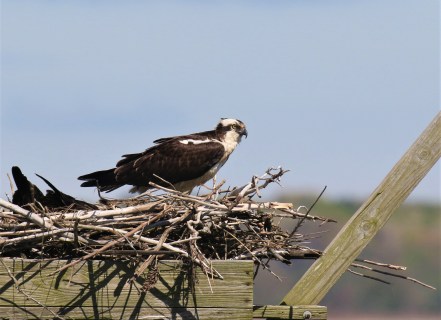
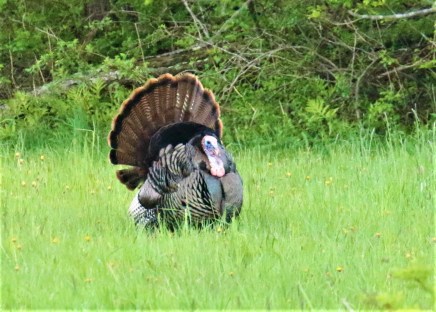
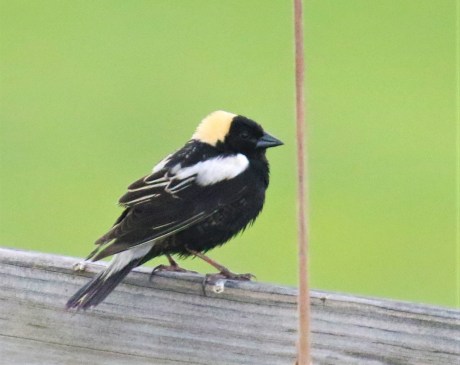
Rock Wren – Probably my Finest of this Species Ever

Rock Wren Looking Right1

Now it was time to leave but there was one more surprise.  Heading down Huntzinger Road, Ann Marie had wondered aloud it we might see some American White Pelicans.  We had not.  But on the way back just below Wanapum Dam we saw two.  One had a prominent “breeding horn” on its bill.  Another first for Cindy.

We had some good barbecue in Ellensburg and got back to Edmonds around 10.  It had been a long day.  We had missed some targets but found others.  We had really good looks at many and were really thrilled with the scenes and Swifts at Frenchman’s Coulee.  We had taken turns finding birds – a good team in the field.  I did not hear any horrible stories about me from Ann Marie to Cindy, but they were alone for a couple of minutes so who knows.  After all the water birds at Semiahmoo, Cindy had now been exposed to heavy duty birding on land in Eastern Washington.  She had also heard birds singing in breeding season and had seen her first owl.  There were no complaints and a lot of smiles.  Still barely a beginner in the world of birding but already progressing on the learning curve and enjoying it.  She and I are also still beginners in our relationship and are progressing and learning there as well.  And we are definitely enjoying that too.