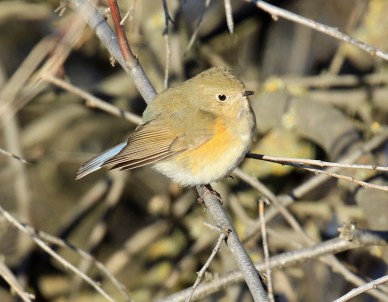
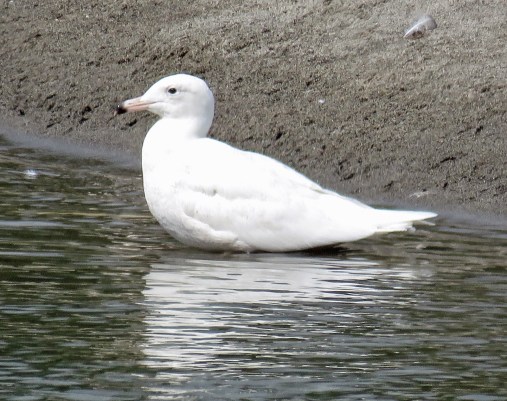
Quickies

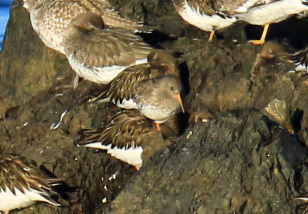
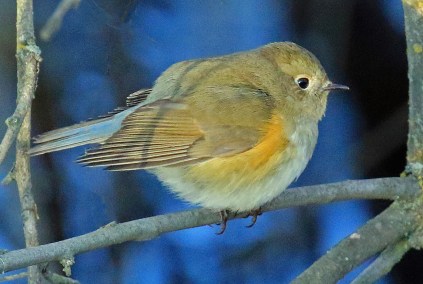
Plan A had been to go to Victoria B.C. and get two new ABA photos and maybe improve two others.  The two new photos would be of the Pink Footed Goose that had been seen there regularly for several weeks and of an Eurasian Skylark – a bird now found only near Victoria in the ABA area.  The possible improvements would be of the Redwing that somehow had magically returned to the same holly bush where I had seen it last year and gotten a very poor photo and of the Purple Sandpiper which was still at Kitty Islet where I had seen and photographed it (poorly) earlier this year. My only record of the Pink Footed Goose was from Massachusetts last Thanksgiving where photo conditions were poor and my only records of the Eurasian Skylark were from Victoria in 1973 and on San Juan Island in 1976.  I was not taking photographs in those days and the Eurasian Skylark is now extirpated on San Juan Island.  Just before heading north to execute the plan, the Pink Footed Goose disappeared and I decided not to make the expensive trip for just the one new photo.

On to Plan B which was a three day trip to the Okanogan.  Field trips with the Audubon Society and the Washington Ornithological Society were full, so I planned to go it alone the following week pending their reports.  Their reports were good – for raptors – but completely devoid of the northern finches for which the Okanogan is a favorite place for birders.  If the reported Snowy Owl, Great Gray Owl and Gyrfalcon were even probable, I may still have gone; but it is a long trip, and the chances were not great to refind even two of the three birds, so no go on that plan either. The trip to the Okanogan was not really for specific sightings anyhow.  I just wanted to get in some birding.  I had other personal matters to attend to anyhow, so I went with Plan C: revisit some local spots where some appealing birds were being seen and which I had not visited in a while.  Hopefully get some photos and just enjoy the moments.  Plan C was for “Quickies” – short trips here and there – save the wear and tear and expense of the longer trips and move some of those personal things off the plate as well.

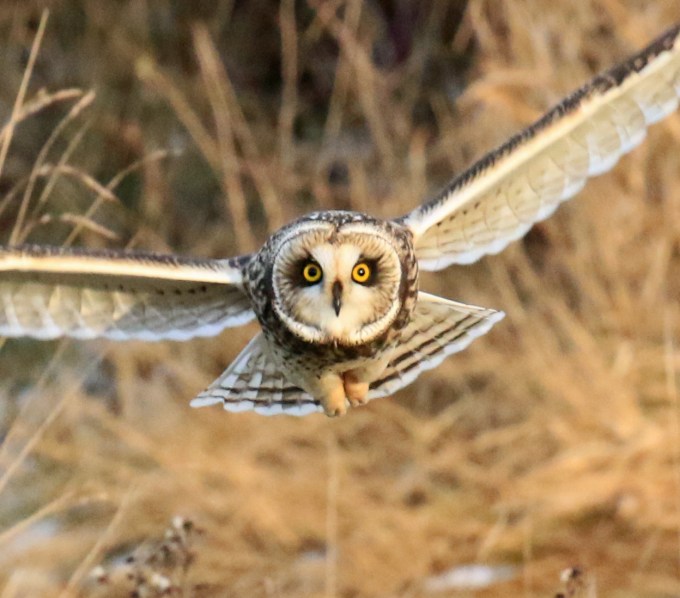
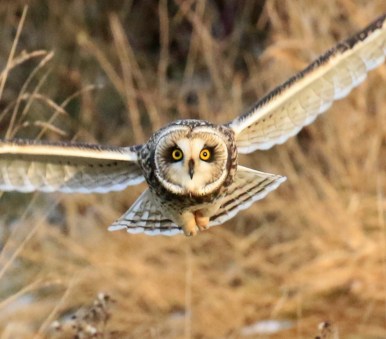
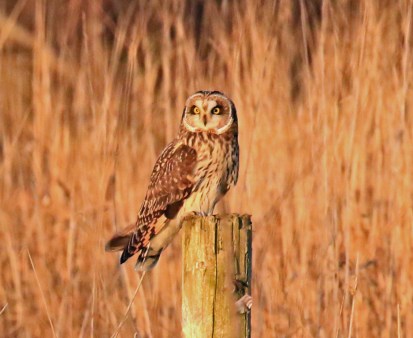
The first sojourn was to Boe and Thomle Roads where a juvenile Golden Eagle was being reported.  There are dozens of Bald Eagles in the area but a Golden Eagle is fairly rare.  I had photos of Golden Eagles in Washington but not great ones and none showing the white wing and tail patches, so that photo was the allure.  When I got to the spot where the Golden had first been reported I was welcomed by a Short Eared Owl, but no eagles were in sight.  One can never complain about any owl, especially one posing to have its picture taken.  When the perched owl was attacked by a Northern Harrier, I just barely got a photo – not technically very good but a fun shot.  And if no Golden Eagle was found, this encounter would have made the trip worthwhile.

Short Eared Owl Buzzed by a Northern Harrier

harrier-and-short-eared

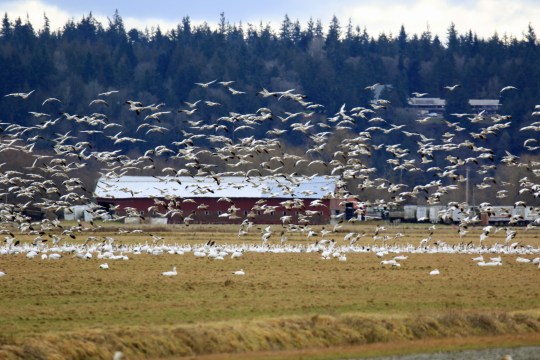
After a lot more searching I saw the Golden Eagle fly onto a distant power pole where near a very large flock of Snow Geese and also very close to some Bald Eagles.  The resulting photo was taken from great distance but does show the wing windowpanes.

Golden Eagle with Bald Eagle in the Background

golden-and-bald-eagles

Snow Geese Flock

snow-geese1

I later learned that a Prairie Falcon had been seen in the area – but that was not on my list for the day – but no complaints – a very nice “quickie”.

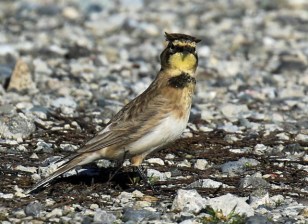
A couple of days later, knowing I was going to be in Bellevue for a personal matter, I decided to stop by Marymoor Park to see if I could find the Horned Lark that had been reported there.  Had I gone to the Okanogan, I probably would have seen thousands of Horned Larks in the fields in the Waterville Plateau, trying to find a Snow Bunting or Lapland Longspur among them.  And I had already seen some in Washington on the way back from my Red Flanked Bluetail chase.  But I had never seen one in King County.  I was the only one there when I arrived at the designated area and was confronted by a very large grassy field next to a very large closed gravel parking area.  A first scan revealed nothing on the field, but that is often the case with larks as they are most easily seen as they fly from one spot to another – identifying a location where you can then focus in and see them better.  OR – they can often be seen “graveling” on the roads between the fields.  With that in mind, before walking the entire field, I focused attention on the gravel parking area and sure enough the tiny bump I saw proved to be the Horned Lark.  The sun was perfect and the photos were pretty nice.

Horned Lark at Marymoor Park

horned-lark1  horned-lark

As a side note, ground birds apparently often use gravel – or grit – to help them digest the whole seeds they eat.  The gravel helps them grind the seeds to better get to the nutrients.  Is this using a tool?  There are other examples of similar usage of foreign objects – sticks to poke and rocks dropped on clams to break the shells.  Maybe that will be a future blog post.  Tool or not, the Horned Lark on the gravel was another good “quickie”.

The next “quickie” was even quicker.  Joe Sweeney does a weekly (daily) vigil at Richmond Beach Park and shares his observations with the community on Tweeters and Ebird.  He had reported a Townsend’s Solitaire – a species common in the right habitat area east of the Cascades but quite rare west of the mountains.  I had seen one at the Union Bay Natural Area some years ago, but a lovely, if subtle bird and definitely worth a “quick” trip especially since it would give me a chance to revisit a spot that was not that well known to me.  I was coming back to Edmonds from another personal matter this time in Seattle and stopped by Richmond Beach in the late afternoon.  I called Joe who provided some good insights on places to look and was directed to the “caretaker’s” house.  There was only one house there, not designated as having any formal relation to the park, but that had to be the place.  As I approached I heard the unmistakable call and then song of a Townsend’s Solitaire.  It seemed to be coming from some brush very near the house.  Usually I see Solitaires perched in the open, especially when they are vocal.  This guy was buried and I could not get a look.  I tried playback – very responsive but no movement and again no look even though it now seemed to be on the other side of the house and I had certainly not seen it fly.  Finally the location seemed to change again, and now there it was on the top of an evergreen providing an opportunity for a photo even if from the rear only.

Townsend’s Solitaire

townsends-solitaire

I had located the sound quickly but it had taken at least 15 minutes to finally get the photo – still definitely qualifies as a “quickie” especially since it is not more than 8 miles from my home.

The next trip requires an expanded definition of “quickie”.  I was off to the Green River Natural Area to try again for the Red Shouldered Hawk that seemingly everyone that tried was finding there.  Brian Pendleton and I had failed to find it on an earlier visit. It is less than 30 miles from home so not a great distance and thus at least a “quickie” compared to the Okanogan or Victoria for example.  It had been reported as being seen and heard near “the grassy knoll”.  I am not all that familiar with this location and certainly did not know where the grassy knoll was located.  The only “grassy knoll” I knew was the infamous one in Dallas from which Lee Harvey Oswald had shot President Kennedy. (My mind cannot help but think of getting Donald Trump near some grassy knoll with a … ok never mind.)  Not knowing where that was, I entered the area from the only spot I knew – on the west side.  Exploring without any focus in the light rain, I came upon a beautiful American Kestrel posted and posing.  The photo captured the bird and the rain drops – not a Red Shouldered Hawk but it made the day worthwhile.

American Kestrel in the Rain
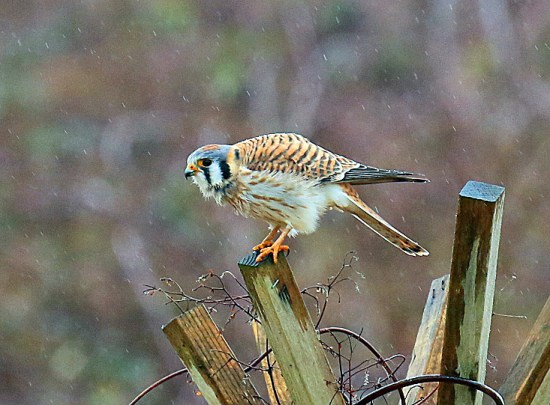
american-kestrel

A few minutes later I saw what appeared to be a small buteo flying from the northwest south and then disappearing in a stand of trees.  As I was walking to the area, I saw another birder coming from the East in the same direction.  It was Steve Giles who had been there some time also looking for the Red Shouldered Hawk.  He too had seen the buteo.  We tried in vain to relocate it.  And we then spent the next hour walking the area together including to the spot where Brian and I had bushwhacked on our earlier visit and where we had at first thought we had heard the Red Shouldered Hawk but then found a Red Tailed Hawk.  Our search was futile.  I then followed Steve by car to the “grassy knoll” where there was no Red Shouldered Hawk nor any president or…  So not really a “quickie” but definitely a nice time despite missing the target.  Steve is a great birder and it was fun just to visit and to get some exercise away from the world.

After missing the Red Shouldered Hawk, I felt I needed a successful chase and why not keep it “Red”.  I have never heard the explanation, but for some reason every winter Redheads – the duck kind – return en mass to the pond by what is now the former Weyerhauser Headquarters in Federal Way.  It was not far from Kent, so it was an easy next stop.  The ducks did not disappoint as there were at least 32 Redheads on the pond along with a Trumpeter Swan , Mallards, Wigeon, Gadwalls, Buffleheads and Ruddy Ducks.  This indeed was a “quickie”.

Redheads at the Weyerhauser Pond
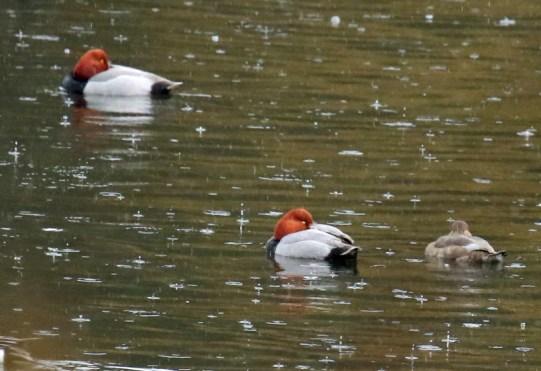
redheads

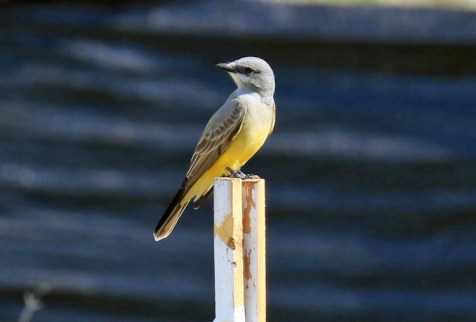
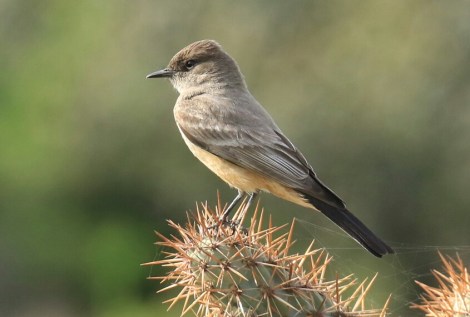
I had not been out birding with Ann Marie Wood or Frank Caruso for a while.  When I called Ann Marie, it turned out that she had some other obligations but wanted to squeeze in a little birding that morning.  So we opted to go to Magnuson Park to see if we could find the Say’s Phoebe that had been reported there.  This also gave Frank and me a chance to get better familiarized with Magnuson Park since Ann Marie birded there often.  I had invited Brian Pendleton to join us, but he had appointments later in the day so he could not.  But he had not heard about the Phoebe, and since he lived very close to the Park, he said he would look for it early in the morning before he left for them.  Being the excellent birder he is, Brian found the Phoebe and shared specific location info with us when I called upon arriving ourselves.  When we got to the open area where the bird had been found, it looked promising but no Say’s Phoebe was in sight.  After a couple of minutes, I thought I heard its call in the distance.  Then again – now closer.  The Say’s Phoebe flew into a small tree not far from us and we all got good looks.  I slogged out into the wet muck and got the pretty good photo below.

Say’s Phoebe at Magnuson Park
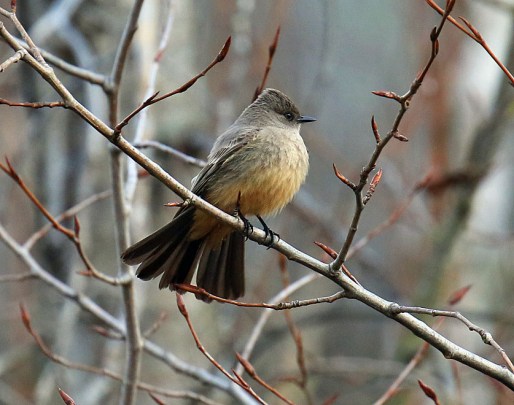
says-phoebe2

Ann Marie then gave us a great tour of the Park pointing out her favorite spots.  This included the cove at the north end where a good looking Canvasback was found.  While not as showy as some of its cousins, I think the Canvasback is elegant or handsome.  Always nice to see – especially with that bright red eye.

Canvasback

canvasback

The Say’s Phoebe had definitely been another “quickie” and now there was a Canvasback bonus.  A good morning indeed.

Tine for one more “quickie”?  Well sure, why not.  Yesterday I had some time to kill in the afternoon and decided to look for a Wood Duck.  This is a species I would like to show Lynette and I had always been able to find some at the parks at the North End of Lake Washington – Log Boom Park in Lake Forest Park and Juanita Bay in Kirkland.  It turned out to be easy to find them at both places with one along the Boardwalk at Juanita Bay being particularly photogenic.

Wood Duck

wood-duck

A bonus was a surprise near Pier 3 at Log Boom Park.  I had walked out past the piers and then as I was returning, a small dark bird flew past me up ahead.  I immediately thought Green Heron but also thought it unlikely that I would find it as it appeared as if it had kept going.  Nope.  It landed out in the open and posed for several photos.  Really nice looking bird – although not much can compete with a Wood Duck.

Green Heron at Log Boom Park Marina

green-heron1

green-heron

So this day was a “Quickie Two-fer” so to speak.  Other good birds as well and a couple of miles of walking all told.  It started to rain as I got back in my car – so even the weather had been cooperative.

In addition to seeing some targeted birds, there had been many other nice birds this past week – several (like Townsend’s Warbler, Red Breasted Sapsucker and Hutton’s Vireo) being incidental to other non-birding activities.  The “quickies” and the incidental bonus birds are a reminder that there are birds and bird stories all around us.  Just got to get out and go look for them.
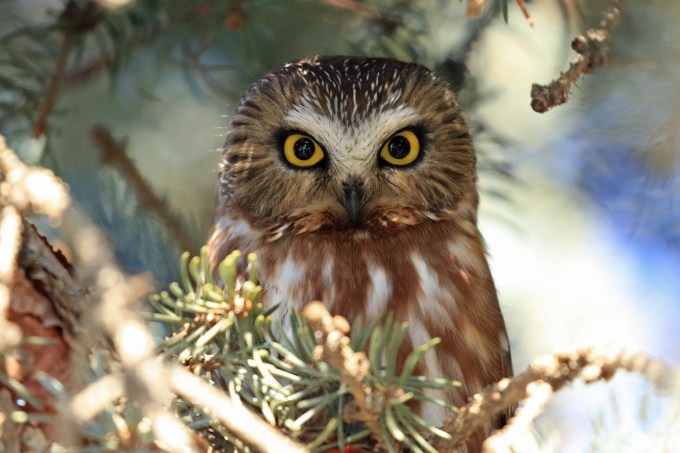
Owls by Day – You Should Have Been There

There is a magic – a special appeal –  to seeing owls.  In irruption years, Snowy Owls might be seen in the daytime – even in quantity.  In the winter, Short Eared Owls can be seen hunting favorite fields – closer to dawn and dusk but sometimes even in the middle of the day.  While there are occasional exceptions to the rule, for most other owl species, seeing them in the daytime means finding a roosting spot or a nest and getting what are often not terrific views.  Every year in February Mike and MerryLynn Denny take on a bunch of highly appreciative birders to show them owls in their beloved Walla Walla County – in the daytime.  Not surprisingly it is a very popular trip, and this year I got to go along.  LOTS of owls and LOTS of fun.

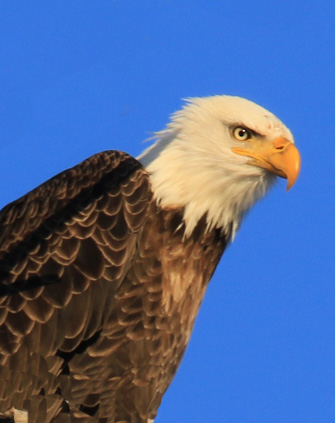
It has been a harsher than usual winter in Walla Walla County and there was lots of snow.  No problems on the roads, but our hikes were often through crunchy snow.  An initial worry was that the snow on the ground would prevent us from seeing the telltale whitewash on the ground that is often a first clue that an owl is roosting in the tree above.  Fortunately the trees acted as shields or umbrellas so the ground below was clear and there was lots of whitewash in our first stop – Hood Park where there are ALWAYS Northern Saw Whet Owls – but…not this day.  We had been greeted by an American White Pelican with its breeding horn clearly visible and there were lots of Bald Eagles including one beautifully silhouetted against a brilliant blue sky but not very many other birds and definitely no owls.  Some birds that were not so great to find were Mallards – or at least parts of them as we found feathers and skeletons and wings all over the ground – probably the work of the eagles and Red Tailed Hawks.

White Pelican

american-white-pelican

Bald Eagle

bald-eagle2

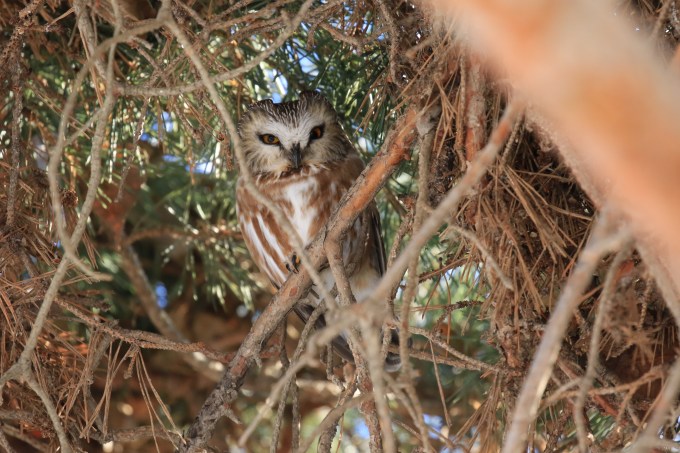
We had trudged through a lot of snow and did not have a lot to show for it.  In addition to knowing every birding spot in the County (and every rock and tree and flower and bush etc) the Dennys are ever optimistic and were sure we would find some owls at our next stop – Charbonneau Park. At first it looked like a repeat of our first stop – lots of whitewash but where were the owls.  Oh – wait – there’s one – and what a little beauty.  A Northern Saw Whet Owl buried in the thick branches of one of the pine trees.  Unlike what is often the case, there was a clear view through the branches and this little 8 inch beauty was in good light and was very photogenic.

Northern Saw Whet Owl

northern-saw-whet-owl

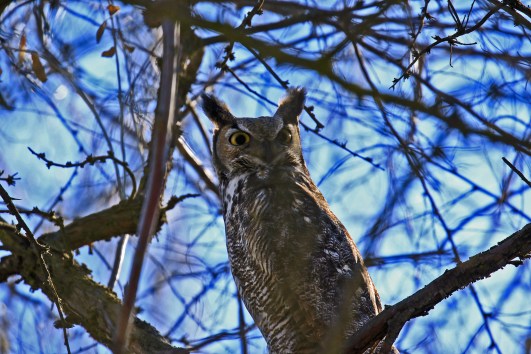
The first owl sort of broke the dam and the rest of the day was filled with owls – another Saw Whet at Charbonneau and then three more at Fish Hook Park.  And three Great Horned Owls at Charbonneau and three more at Fish Hook.

Great Horned Owl

great-horned-owl1

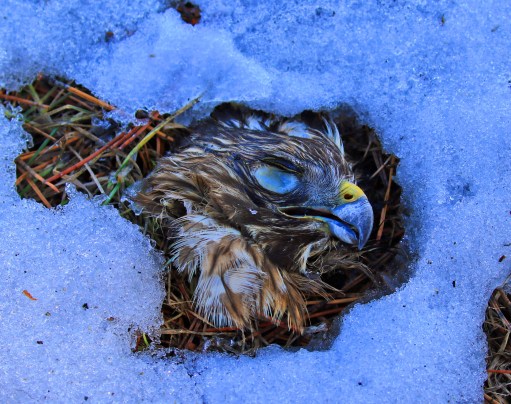
We also had a probable Barn Owl as we were leaving Charbonneau and then at least two more Barn Owls at Fish Hook.  The latter were very uncooperative – always flying out of trees just as we got to them and always out the back of the tree giving only brief views in flight.  I botched one good look and photo op with the wrong setting so can only show one very mediocre flight shot. An unusual photo op was of the disembodied head of a Red Tailed Hawk on the ground in the snow – probably the result of Great Horned Owl predation.

Red Tailed Hawk Head

red-tail-hawk-head

A More Typical View of a Northern Saw Whet Owl

036a7137

Barn Owl in Flight

Barn Owl Flight.jpg

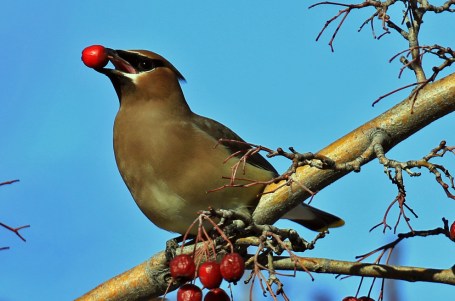
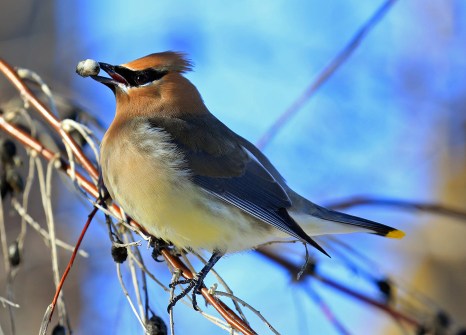
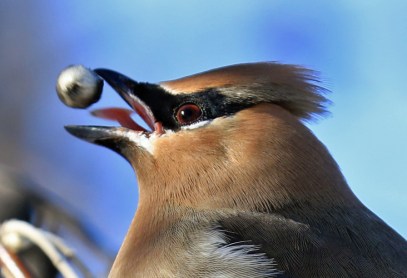
I missed some Long Eared Owls seen by others as the group split on trails in the snow but as will be obvious later, there were many others.  What I did not miss was a flock of Cedar Waxwings feasting on berries and Russian Olives and providing some very nice photo ops.

Cedar Waxwings

cedar-waxwing2

cedar-waxwing

cedar-waxwing-head

I was not tracking every stop that we made, but Mike and MerryLynn had scouted out numerous Long Eared Owl roosting spots in thickets along Sheffler Road and and Smith Springs Road.  With spotting help from others , especially eagle eyed Dan Reiff I was able to finally see the owls in the very thick brush and even got some photos.

Long Eared Owl

long-eared-owl

long-eared-owl2

A week earlier, the Dennys had located a Harris’s Sparrow along Smith Springs Road in a thicket with other sparrows.  We only got intermittent and distant views, but there was no mistaking the bird and I got a couple of ID photos.  Mike said that historical records had numerous Harris’s Sparrow records for the county each winter.  Now they are few and far between.

Harris’s Sparrow

harriss-sparrow3

There were more Long Eared Owls ahead but there was another possibility and the group was excited at the prospect of seeing a Great Gray Owl.  A pair had been seen regularly, including earlier that morning, on Lewis Peak Road.  We traveled to the spot and it looked perfect – hunting meadows and great trees for perching.  Dusk was approaching and the timing was just right – but the owls had not gotten the message and pulled a very disappointing no-show.  It would have been a life bird for many on the trip.

The gang regrouped later at a nice Mexican restaurant in Walla Walla.  It had been a great day.  5 Northern Saw Whet Owls, 7 Great Horned Owls, 13 Long Eared Owls, 3 (or maybe 4) Barn Owls.  After dinner, some of the group (not me) joined Mike and MerryLynn for one more owl – a Western Screech Owl. It was not an “owl by day” but it added a species and brought the total to 29 or 30.  Quite a show – and the Dennys were super as always.

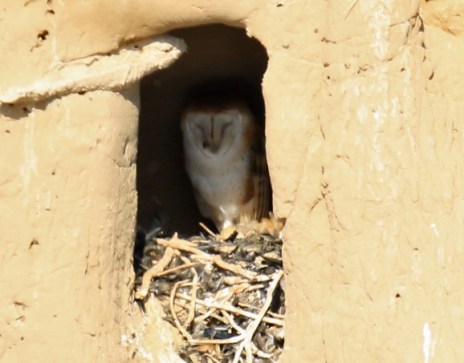
The next day on the way home, I stopped at the Dodd Road Barn Owl cliff and had one clearly visible in its cavity nest.  So make that 30 owls for sure.  Wow!!

Barn Owl in Nest Cavity

barn-owl-on-nest

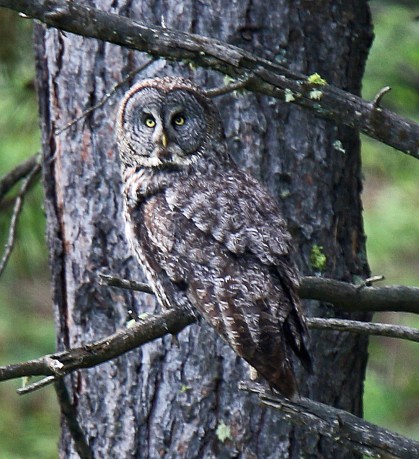
My only Great Gray photo in Washington was with the Dennys in 2015 on Biscuit Ridge – not far from Lewis Peak.  I want another Great Gray Owl and another photo.  I will have to return.

Great Gray from Biscuit Ridge in 2015

Great Gray Owl (2)

California Dreaming Part IIIB – The San Diego Zoo – The Birds

My previous post was originally intended to cover our day at the San Diego Zoo including both the mammals and the birds seen, but it got so long with just the fabulous mammals that I decided to do this separate post for the birds we saw.  Have to repeat again that the Zoo was fantastic in every way (except for the signage and map).  Great collection, great docents, great exhibits and great maintenance and even great food.  Highly recommended for everyone.

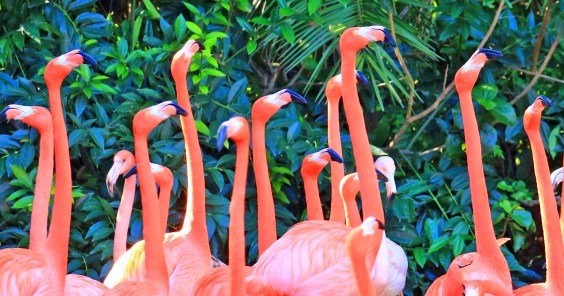
There are many bird aviaries at the Zoo and a number of other bird exhibits.  We visited many but not all barely scratching the surface and foregoing some of the more spectacular species and exhibits.  We simply ran out of time.  Someday I hope to return to see the birds missed – including some of the birds that were probably in the aviaries we did visit – but just as in birding in the field – and especially in rain forests for example, you just do not see everything that is there.  A spectacular exhibit is immediately seen by visitors near the entry.  Pretty hard not to see and enjoy a flock of  Caribbean Flamingos in a pool close by.

Caribbean Flamingos

caribbean-flamingoes

In the same pool there were Pelicans, Great Egrets (that are probably local and not part of the collection, Beautiful White Faced Whistling Ducks and Pelicans.  I saw huge numbers of both Greater and Lesser Flamingos in Africa in 2007 and an American Flamingo on Sugarloaf Key in Florida almost 40 years ago.  I will be revisiting the Keys in April and would very much love to see and photograph one there again.  Cannot imagine a better photo than here at the Zoo, however.

Great White Pelican – another African species and one that I saw on that trip to Kenya in 2007.

great-white-pelican

White Faced Whistling Duck – also seen in Kenya in 2007.

white-faced-whistling-duck2

In no particular order, I am going to include photos and nominal comments on my favorites among the dozens of birds that we saw.  Going to start with my absolute favorite bird on my world life list so far – the Secretarybird.   I was fortunate to see a few on that Kenya trip in 2007 and then some more at Kruger Park in South Africa in 2014.  On that first Africa trip it was one of three “must see” birds. The other two were African Hoopoe and Bateleur Eagle – successful for all of them.  In South Africa we saw one Secretarybird catch a snake – they are raptors.
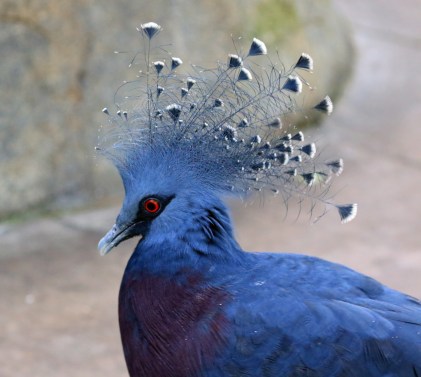
Secretarybird – I was thrilled at how well these photos turned out.  The bird was literally a few feet away – almost too close to focus with the telephoto lens – and behind thick glass.  We had an interesting talk with one of the docents as to the derivation of the Secretarybird’s name.  The theory I had heard before is that it came from the feathers jutting out behind the bird’s head reminiscent of the quill pens that 19th Century secretaries on the streets of England tucked behind their ears, while its grey and black body was reminiscent of their tailcoats. The docent said it may more likely be that the name derives from the Arabic ‘saqr-et-tair’, or ‘hunter bird’.  Either way – a truly spectacular animal.

secretarybird-head1

secretarybird-head

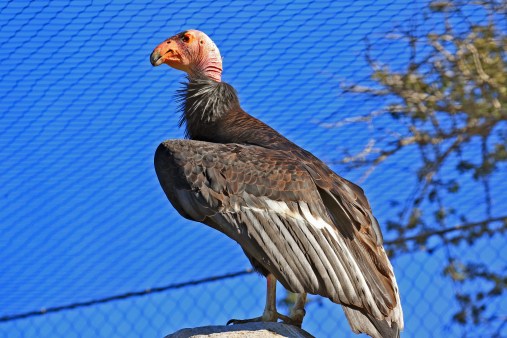
Another spectacular bird not in an aviary was the American Condor.  San Diego Zoo participates in a breeding program to recover this highly endangered species.  The 23 remaining birds in the wild were captured by 1987, and it was feared this largest of North American birds might become extinct.  Today there are more than 435 Condors, more than half of which are flying free in the wild.  Our program speaker at the Washington Ornithological Society meeting last night, Tate Mason of the Peregrine Fund, said that the biggest threat is the use of lead bullets which the Condors ingest from dead game as they scavenge their huge areas.  If copper could be used in place of lead, it is expected that thousands of Condors could survive throughout their former range that would include my State of Washington.  I have seen the closely related Andean Condor and would love someday to see an American Condor and how great if it were in Washington.

American Condor

american-condor

There are at least five aviaries at the Zoo – maybe seven.  We only visited three and all were terrific with exotic birds flying free.  Some were birds that I had seen in the wild in Africa or Australia or South America.  Others were new to me and in most cases the views of the ones I had seen elsewhere were much better here with the limited even though large area of the aviaries.

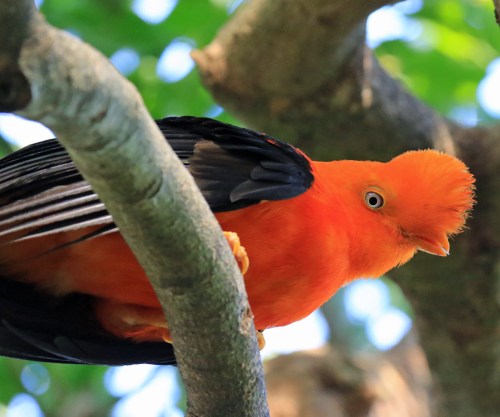
Cock of the Rock – I had a fleeting view of one in Peru and the ones here at the Zoo were much much cooperative and photogenic.  Another spectacular South American species.

cock-of-the-rock1

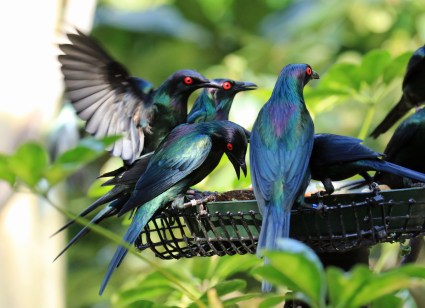
I remember my first Golden Breasted and Superb Starlings from my Africa trip – how different from the relatively plain bird that so often is a junk bird on my trips or at feeders in the U.S.  The Golden Breasted is pictured below.  Just as noisy and intrusive but so much prettier than our imported Eurasian Starling pests, the Metallic Starlings in one aviary fed voraciously as they posed on a feeding platform. I had seen similar groups in their native Australia.

Golden Breasted Starling

golden-breasted-starling

Metallic Starlings

metallic-starlings

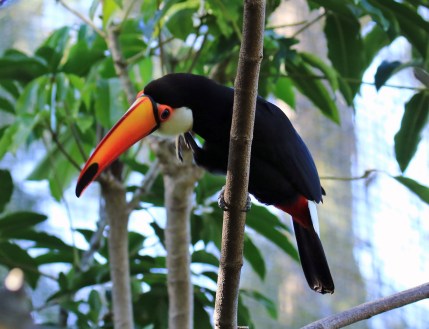
Anyone visiting Central or South America cannot help but being impressed by the various large billed Toucans and closely related Aracaris.  The Toco Toucan and Curl Crested Aracari were both familiar to me from Brazil.  The former was an unavoidable begging pest at several outdoor meals. I wonder if Toucans really do like Fruit Loops?

Toco Toucan

toco-toucan

Curl Crested Aracari

curl-crested-aracari

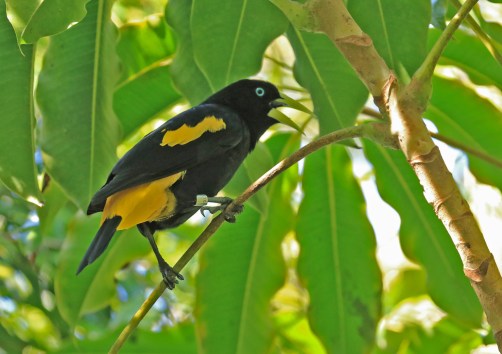
Another well remembered bird was the Crested Oropendola seen on a fabulous trip to Trinidad in  1978 – my first international birding experience – and where I also saw another of the striking San Diego aviary birds – a Yellow Rumped Cacique.

Crested Oropendola

crested-oropendola2

Yellow Rumped Cacique

yellow-rumped-cacique

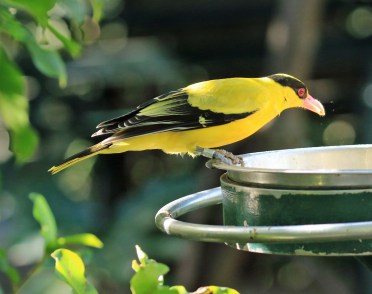
Another spiffy yellow and black bird posing for us in one of the aviaries was the Black Naped Oriole. I had seen a single one at the Kanha Tiger Preserve in India in 2011.

black-naped-oriole

Some of the most spectacular birds in the aviaries were the pigeons and doves.  We particularly liked the very showy Victoria Crowned Pigeon that almost stepped on our toes.  It is found only on New Guinea a place I someday hope to visit.

Victoria Crowned Pigeon

victoria-crowned-pigeon

Probably the most colorful pigeon was the Nicobar Pigeon.  It is a native of islands east of India and onto the Malay Peninsula – an area it would be great to visit someday.  The first picture is of the whole bird and the second zooms in on the incredibly colored back.

nicobar-pigeon    nicobar-pigeon-back

Another spectacular pigeon did not seem to be a pigeon at all – looking more like a pheasant.  Not surprising since it is the Pheasant Pigeon, another bird found only in New Guinea.

Pheasant Pigeon

pheasant-pigeon

I had not seen any of those species, but I had seen and actually remembered the Wonga Pigeon from Australia which would have seemed a lot more exotic if it were not for those others.

Wonga Pigeon

wonga-pigeon

The last of my featured pigeons/doves are two that are “green”, the Green Imperial Pigeon found in South Asia and the beautiful and smaller Emerald Dove.  The last name was familiar to me but I checked my world list and found that I had been thinking of the Emerald Spotted Wood Dove which I had seen in Africa and may well have been at the Zoo as well but not seen by us.

Green Imperial Pigeon

green-imperial-pigeon1

Emerald Dove

emerald-dove1

Looking at this last picture again reminded me of the observation that most if not all of the birds in the Zoo are banded.  So if any birders out there come up with one of these exotics – sorry just an escapee and not countable.

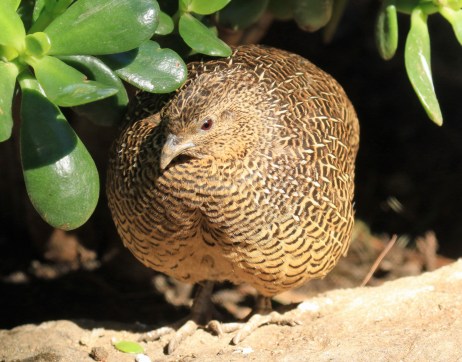
I don’t know if there was a separate exhibit of pheasants or their relatives at the Zoo but I am sure there were many on display somewhere.  We only saw one – the Madagascar Partridge – a very plain but handsome little bird.  On a return trip I will search for more.

Madagascar Partridge

madagascar-partridge

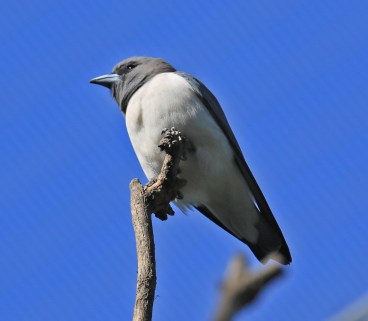
There were smaller birds as well – some familiar and some new to me.  One familiar bird was the White Breasted Wood Swallow from Australia – small flock was perched together on a wire as our North American swallows often do.

White Breasted Wood Swallow

white-breasted-wood-swallow

Another familiar bird was the Black Throated Laughing-thrush.   I had forgotten where I had seen the bird but upon checking my Ebird records I found it was a species I had seen at the marvelous Mai Po Nature Preserve outside of Hong Kong on Christmas Day 1977. That brought back great memories of that wonderful place – so close to the crowded city that epitomized density and commerce but had fabulous birds reminiscent of the Everglades.  On that one incredible day I saw 81 species that included large waders, shorebirds, raptors and a large number of very diverse passerines.

Black Throated Laughing-thrush

black-throated-laughingthrush1

Two other birds I had seen elsewhere were the Gouldian Finch which is endemic to Australia and the Blue Naped Mousebird – one of the 500+ species I had seen on my three week trip to Kenya.

Gouldian Finches

Blue Naped Mousebird

blue-naped-mousebird1

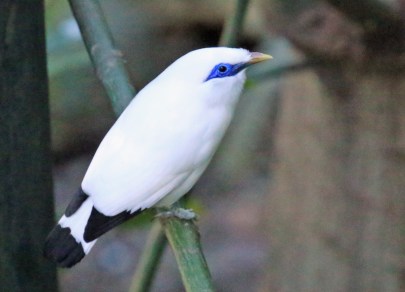
Two smaller birds I had not seen elsewhere were the Collared Finchbill and the Bali Myna – both striking birds – and respectively from China/Taiwan/Vietnam and of course Bali.

Collared Finchbill

collared-finchbill

Bali Myna

bali-myna1

I will end the parade of pictures with one of the only shorebird I noted in any of the aviaries but I probably missed others and expect there were others in other aviaries or exhibits at the Zoo.  It is the Egyptian Plover which is also sometimes called the Crocodile Bird for the probably apocryphal story that they supposedly go into the open mouths of crocodiles and remove rotting meat.  There is no anecdotal or photographic evidence of this but they do inhabit banks of rivers where crocodiles abound in sub-Saharan Africa.

Egyptian Plover

egyptian-plover

I don’t know how many of the almost 10,000 species of birds in the world can be found at the San Diego Zoo.  They have birds from every continent (except Antarctica I believe) and the collection includes many rarities and definitely many beauties. The Zoo is a major participant in breeding and conservation programs and is a wonderful resource for those reasons in addition to its important role in education and exhibition.

As I said earlier, we did not visit all of the bird exhibits.  We did not see the Cassowaries, Kiwis, Hummingbirds or Birds of Paradise, nor the Steller’s Sea Eagle or Harpy Eagle.  Guess I will have to come back – and what a pleasure that will be.

California Dreaming Part III – The San Diego Zoo – The Mammals

I have heard about the San Diego Zoo for my whole life but had never been there.  In part that reflects a preference to see “the real thing” in the “real world”. I have been fortunate to have traveled to wild places with wild birds and wild animals.  I remembered visits almost 60 years ago to the National Zoo in Washington, D.C. where I grew up.  While I have have forgotten the animals I saw there, I do remember the cages – the cells – steel bars, concrete and little else.  I knew that much had changed and zoos were much more humane (“animalane?”).  Now there were exhibits with open space, plants and water features etc.  I had seen this to some degree at the Woodland Park Zoo in Seattle.  If these changes in attitude and treatment had not been made, I would not have gone to the San Diego Zoo at all.  I was also aware of the role that zoos play including especially the San Diego Zoo in research and in breeding programs to sustain endangered animals.  I wanted to see what many consider one of the best zoos in the world.

Rarely do experiences greatly exceed expectations.  Never has an experience exceeded expectation like this visit to the San Diego Zoo did.  It was marvelous.  We thought it might be a three hour visit.  Seven hours after arriving, we were still going strong and there was a great amount that we did not see.  We easily could have filled another day.  Let me get the one complaint out of the way now.  Everything else will be super positive.  The complaint is that the maps and signage are challenging at best.  We were often confused as to where we were in relation to where we wanted to go and had little sense of the best way to get anywhere.  This was not helped by many construction projects and resulting detours, but completion of those projects will undoubtedly be great additions, so really no problem there.

The Zoo Map – Colorful but Confusing in Use

map

That’s it – the only negative.  Now for the positives.  There seemed to be docents everywhere – helpful, knowledgeable, informative, personable, clearly enjoying there work.  They helped overcome some of the negative impact of the signage issue.  Indeed, there should have been a suggestion on the maps in bold print: “Just ask a docent.”  Entrance to the Zoo was expensive and there were many possible added costs for private tours, bus tours, tram tours, skyway tours etc.  There were also many souvenir chops with mostly quality goods priced accordingly.  And many food places to spend money as well.  BUT…the parking was great and free – a rarity in the world these days.  The food was actually quite good, very diverse and given a trapped audience even reasonably priced.  (I wonder what a hot dog went for at the recently concluded Super Bowl.)  Something that was apparent every minute was how well the entire facility was cleaned, maintained and presented.  We saw workers polishing metal work, sweeping, and cleaning everywhere – unobtrusively and with obvious results.

Zoo statistics are amazing.  The Zoo alone (there is a much larger Safari Park 30 miles north of downtown San Diego) is set on 100 acres within Balboa Park – itself a treasure.  There are more than 500,000 members including 130,000 children.  ALL expenses and all capital costs are covered by donations – admissions fees and profits from sales go to research and the animals themselves.  There are more than 3500 animals representing more than 650 species and subspecies.  The botanical collection is more than 700,000 exotic plants.  EVERY animal we saw looked healthy and every compound was clean. Animals were not entirely free to roam wherever but there seemed to be plenty of room and we observed no nervous pacing.  To anthropomorphize a bit, the animals seemed “happy”.

To fully describe and catalog our day would take many pages and many hours.  I took almost a thousand photos on our visit – dozens of some animals, just a few of others and none at all of many.  I have chosen some favorites to focus the rest of this blog post.  Often you cannot tell that the animals were behind glass, bars or fences as my camera sometimes focused without the hindrance, but be assured that except for the birds in the aviaries, all were safely separated from us.  It was just at times – and happily so – that it did not feel that way.

Before focusing on the animals, I need to make a comment about one docent in particular.  We firsts approached here asking for directions and like happened with many other docents there, we were soon in a long conversation.  It turned out that this lady – perhaps two or three years younger than I am, grew up a few miles away from where I did in the Maryland suburbs of Washington D.C. – most specifically Silver Spring and Takoma Park.  She went to a rival high school and knew many of the places that were important in my youth – at a much simpler time in our country’s history.  Small world indeed.

We had not set a basic plan for what to see, but knew we wanted to see Koalas, Orangutans, Gorillas, Big Cats, Elephants, the aviaries and the Pandas.  Otherwise we would take things as they came to us – feasting on the next exhibit and then the next and so on.  I had great wildlife viewing experiences in Africa, South America, Australia and India and was curious how seeing some familiar animals in a Zoo context would feel.  Not the same as those real world experiences but pretty good and better than I expected.

I did not keep notes to show photos and discuss animals in the order we saw them.  The following photos are arranged in two large groups – mammals (in this post) and birds (separately in a following one) – and then by similar types.  It was a lot of fun.

Mammals

Koalas – I had seen a few of these in Australia in 2003.  They are always eating as it takes a lot of eucalyptus leaves to provide needed nutrients.  There were several at the Zoo – all munching away or resting between bites.

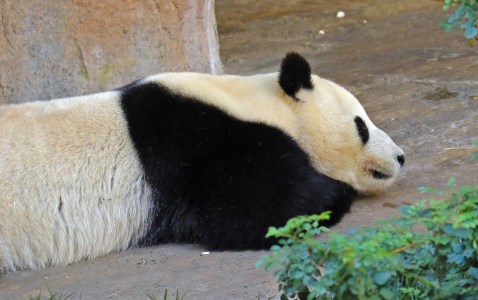
Panda – like the Koalas, Pandas are often called bears – but Koalas are not and I see mixed info on the Panda – more appropriately “Giant Panda”.  It subsists almost solely on bamboo – eating up to 30 pounds a day.  Our Great Panda tied with the African Lion for most disappointing – viewing and activity-wise.  Asleep and sprawled on the ground – not very exciting.

giant-panda1

Andean Bear – also called a Spectacled Bear, it is the only bear found in the Southern Hemisphere.  I had seen one briefly in Argentina more than 30 years ago.

andean-bear

Polar Bear – the largest of all bears and most aquatic and northernmost – we arrived just as a keeper talk was ending and the bear climbed out of its pool – water still dripping from its super thick coat.

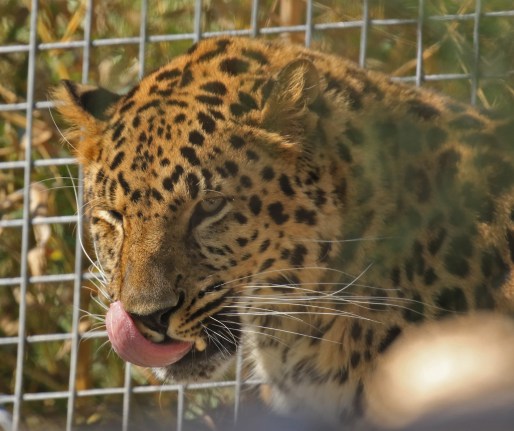
Leopard – my favorite animal on my African trips – great closeup looks at the ones at the zoo. There are populations in Africa, India, Asia and the Middle East.

leopard-tongue

Jaguar – another animal I had been fortunate and privileged to see in the wild in the Pantanal in its native Brazil, the Zoo’s Jaguar paced in its compound inches away behind bars.  Incredibly beautiful animal.

leopard

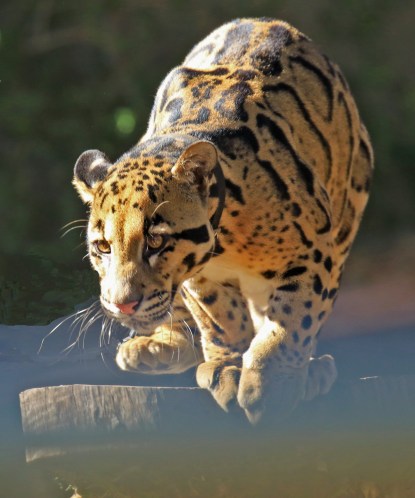
Clouded Leopard – a denizen of the Himalayan foothills, I would love to see one in the wild.  This one was with its keeper and was a great treat. It is about half the size of its spotted cousin.

cloud-leopard

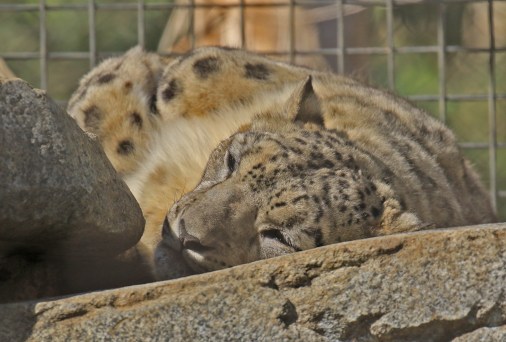
Snow Leopard – a big cat of the Himalayas, it can be as big as the African or other spotted leopard cats.  An endangered species that I doubt I will ever see – at least in the wild.

snow-leopard

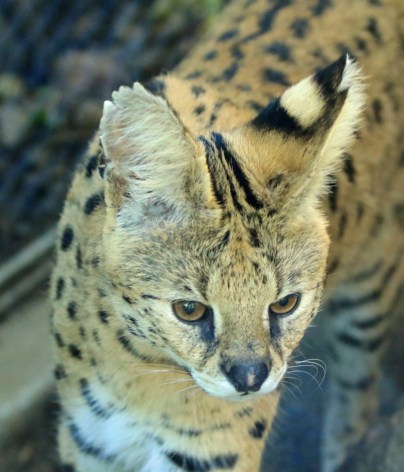
Serval – a smaller cat with long legs and long ears, it is found only in Africa (I saw a single one) where its population is stable.

serval

African Lion – as with most of the males I saw in South Africa, this guy was sleeping and flat on the ground.  Lions and Tigers (which we did not see at the Zoo) are the biggest cats with big males reaching 400 pounds or more.

lion

Elephants – at the top of Lynette’s list, I hope she gets a chance to see them in the wild someday.  The Zoo has both Asian (smaller) and African Elephants (bigger and bigger ears) Having to deal with such large animals, this was probably the largest compound at the Zoo.  The elephants were eating – what else.

elephant1  elephant

elephant2

Rhinoceros – basically an armored tank of an animal, this is a White Rhinoceros – so named not because it is white but because of its “wide” snoot which in Dutch is “veidt” and sounds like white.  The Black Rhino is smaller and has a much narrower snoot.

036a1138

Giraffe – I remember distinctly my first Giraffe in Kenya as it seemed even larger than expected and struck me as graceful and elegant.  It was an instant favorite.  The Giraffes at the San Diego Zoo are Masai Giraffes from Kenya but the ones I saw there were Reticulated Giraffes – a different species (subspecies?) with a more regular patterning.

giraffe

Camel – We forget that the camel is a wild animal and not just a pack animal domesticated to serve our needs.  It has a reputation as being “nasty” and the one in my photo has that look about it.

036a1282

Gerenuk – This was another favorite in Africa.  I had seen wildlife films where this super slender antelope with the long neck was standing on its rear legs and foraging on leaves on the trees – a great competitive strategy to get food.  Seeing one doing exactly that in Africa and then here at the Zoo was extra cool.

Antelopes and Such – I admit to being confused by the various Gazelles, Antelopes, Bucks, Boks and  other hooved animals that grace the plains and savannahs of Africa, Asia and India and also the San Diego Zoo.  The first photo below is of a Soemmering’s Gazelle and the second is of a Duiker – a much smaller antelope caught here eating a leaf that had fallen from a tree outside of the compound.  We watched them chase after and eat each leaf that blew in.

gazelle gazelle-with-leaf

Capybara and Tapir – I saw these South American mammals on my Brazil visit.  The former is the largest rodent in the world and the latter, although looking like a pig is actually more closely related to horses and rhinoceroses and spends much of its time in the water – where I saw several.

Dwarf Mongoose and Hyrax – two more mammals I have seen in my journeys in Africa. The Dwarf Mongoose is the smallest predator in Africa and the Rock Hyrax is actually a relative of the Elephant.

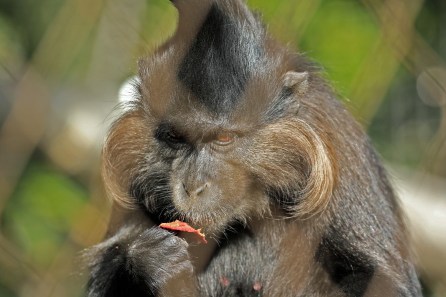
Mandrill and Mangabey – this is a face that you gotta love or hate.  The Mandrill is the largest of the Old World Monkeys and is also probably the most colorful.  I have not seen one in the wild – happy to see one at the Zoo.  Less colorful but still striking is the Mangabey a close and rare relative of the Mandrill – also found only in Africa and very rare.

mandrill

036a1905

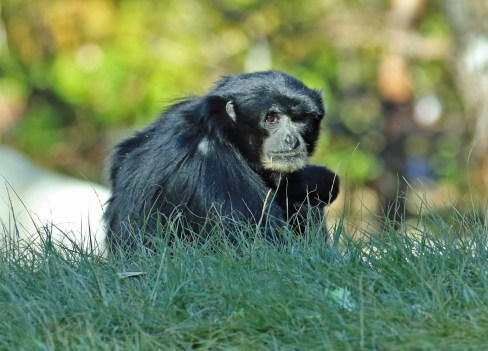
Gorillas and Siamang – Someday I hope to see a Gorilla in the wild – probably in Uganda.  The family group at the San Diego Zoo was fun to watch – well mostly the youngster was – as mom and dad were pretty lethargic.  In the same compound was another ape, well actually a “lesser ape” – the Siamang, the largest of the gibbons and a native of Asia.  I mistook it for a Bonobo which I had hoped to see and somehow was missed.

siamang

Orangutans – definitely a must see and someday maybe I will see one in their native lands – the islands of either Borneo or Sumatra.  The male ape is unmistakable with its huge head and cheek pads.  The youngster is more “human-like” in appearance and seems to be all arms and legs and red hair.

orangutan1

orangutan-baby1

The last mammal to be included is the Maned Wolf.  We were able to watch a demonstration with this beautiful canid and two keepers.  It looks like a fox but is not and it is not a wolf either.  Native to and endangered in South America, it is the largest canid there.  Among the fascinating facts about this animal is that when it walks it uniquely moves both legs on the same side together – and not the opposing front and rear leg together as other canids do.  When excited the hair on their backs – their manes – stand straight up.

We saw many other animals and I have many more photos but this has run on long enough and I still have another long post to do on the wonderful birds of the San Diego Zoo, so I will end it here.  I feel compelled to repeat what I said at the beginning.  The San Diego Zoo is marvelous.  This post merely catalogs the animals seen and some photos, but the importance of the Zoo is in its role in education and conservation.  Literature at the Zoo and online makes that very clear.  It was a most enjoyable privilege to visit.

California Dreaming – Part II – La Jolla Cove and Tecolote Canyon Natural Area

Before any birding trip, I do as much homework as I can relying largely on Ebird and my own library to plan where to go and to compile target lists of what I hope to see.  I focus on new life birds and birds that I have not photographed before.  The trip to Anza Borrego described in my previous blog post was not likely to produce any of the former but had been pretty successful for the latter – adding six new “life photos”.  The following day we visited the super fabulous San Diego Zoo.  Most of the birds there were in aviaries and I will write about that in a supplemental post that will be about the Zoo – its birds and its mammals.  My homework had identified a couple of spots relatively close to where we were staying that might produce a lifer or two and would also provide some photo ops.

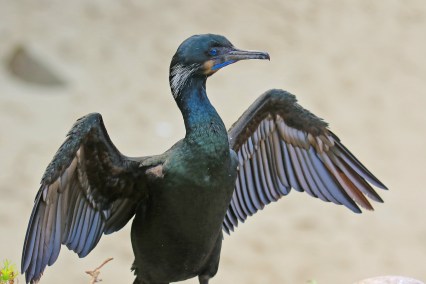
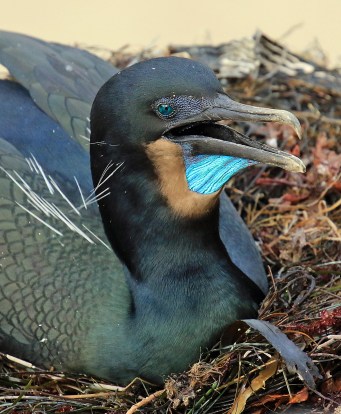
The first such place was the La Jolla Cove.  After a brief rest from the full day at the Zoo, we headed to La Jolla to visit the Cove, to watch a sunset and hopefully to find a Black Vented Shearwater.  They are often seen from the Cove and the adjoining beach viewpoints and I was hopeful to add this southern shearwater to my life list.  We arrived in decent light and we were not alone – hundreds of tourists and locals enjoying the beautiful scenery, the great weather and some pretty cool birds.  Unfortunately those birds did not include my targeted shearwater.  I did not have a scope and there were no other birders present who did.  Maybe that would have made a difference with an ocean scan past the limit of my binoculars.  Hundreds of gulls – Western and Heerman’s – lots of cormorants and pelicans – but no tubenoses of any kind. As I often write, however, there were wonderful consolation prizes – fantastic up close views of nesting Brandt’s Cormorants in their spectacular breeding colors and beautiful roosting Heerman’s Gulls.

Brandt’s Cormorant

brandts-cormorant-wings

Brandt’s Cormorant at Nest

brandts-cormorant-head2

Heerman’s Gull

heermans-gull-2

They were so commonplace that I forgot to take a photo, but the Western Gulls really were beautiful.  Unlike in our northern waters in Washington, here the Western Gull is dominant and does not hybridize with the far less common Glaucous Winged Gull.  Their mantles are very dark and their heads very white and they are everywhere.

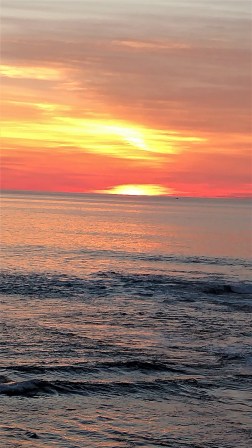
Just south of the Cove were many pullouts looking west over the Pacific and one was perfect for the beautiful sunset.

Sunset over the Pacific at La Jolla

img_20170201_172439708_top

The next day was to be our last and we went separate ways for part of it as I headed off to Tecolote Canyon Natural Area.  I had found this spot in my Ebird research and recent birdlists there had included a number of photo targets and a seemingly good chance to add the Scaly Breasted Munia to my life listed.  Also known as the Nutmeg Mannikin, a bird of Asia, it is an “exotic” – one of many in Southern California – that had been introduced to the area in the 1980’s and has seen its population expand to the point where the American Birding Association (ABA) added it to its recognized North America list.  Although I had already seen and photographed most of the targets that were also potentially to be found at Tecolote, there was another non-lifer but new photo op that I really wanted to find there – Nuttall’s Woodpecker.

Very friendly employees at the Visitor Center confirmed that Munias were often seen and gave some suggestions on where to look for the Woodpecker and some other good birds.  I had expected to spend maybe an hour there and to not have to wander too far from the entrance.  Such was not the case, however.  There were birds but pretty scattered and not so cooperative – especially the two I most wanted.  The place was overrun with Yellow Rumped Warblers and I got tired of seeing something fly into a tree or bush and have it be yet another of these butterbutts.  I ended up spending more than 2 hours walking almost 4 miles.  But once again the weather was spectacular and rewards were available.  The first was a great look at California Towhees feeding on the ground.  I saw more than 10 during my visit.

California Towhee

california-towhee-2

Also pretty close to the entrance I found a singing California Thrasher – one of five seen that morning.  A very pretty and cooperative fellow and just like the ones seen at Anza Borrego, it did not move off its territorial post.

California Thrasher

california-thrasher2

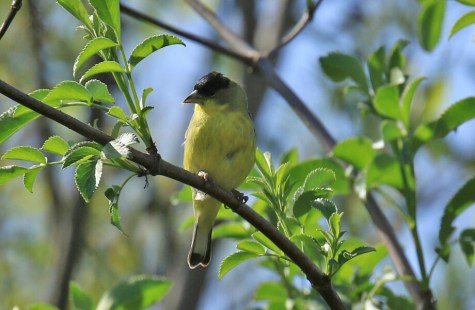
There were also numerous California Scrubjays, House Finches, Northern Mockingbirds and hummingbirds.  I worked hard to find, confirm and photograph an Allen’s Hummingbird.  Most of the hummers were Anna’s (more than a dozen) but I got very good looks at one that at first was visiting a feeder across the channel and then flew to a branch near me.  I was pretty sure from the start that it was an Allen’s – and felt really good about the ID (even without a picture of the tail feathers) when I listened to its frequently repeated chip notes.

Allen’s Hummingbird

allens

I got excited when I saw a Kingbird first perched and then flycatching.  I had forgotten that Cassin’s Kingbirds are pretty common at this location in the winter but was still pleased to get the photo.  I was not able to get a photo of two White Throated Swifts that I saw zooming overhead when I first spotted the Kingbird in a higher tree.  I later found three more Kingbirds throughout the area.

Cassin’s Kingbird

cassins-kingbird1

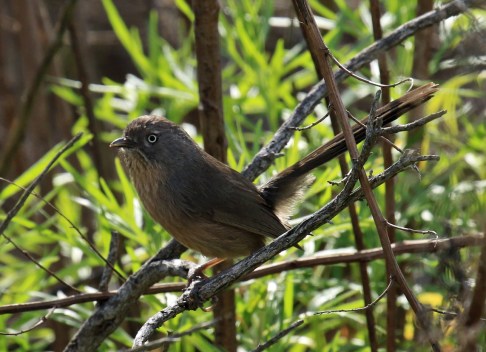
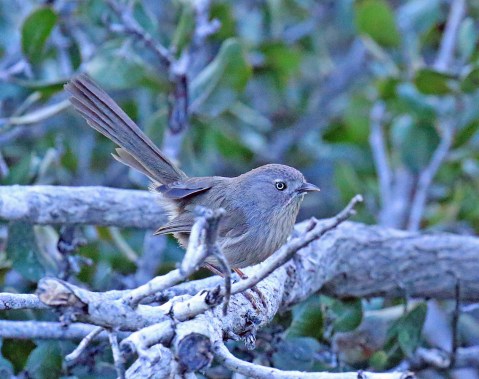
I had now passed the Sycamore tree that was described as a likely spot for my woodpecker.  No woodpeckers at all were seen or heard and I admit to having felt pretty disappointed thinking one would be guaranteed at this location. I played my Nuttall’s recording and got a response and movement in a shrub – not a likely spot for a Woodpecker – and the trill was vaguely familiar.  It was a Wrentit – my second really good look on this trip and another good photo.  A second one trilled from across the path as well.

Wrentit

wrentit1

As I changed my gaze to the second Wrentit, a quick movement off the ground and into the brush and then down into the ravine caught my eye.  The brown back, small size and heavy finch bill signaled a possible Munia.  I desperately tried for a clear view and hoped it would come into the open.  The foliage and angle were bad for a photo so I kept watching with my binoculars only.  A partial view through the brush finally revealed the tell tale scaly breast of the Scaly Breasted Munia but no amount of pishing, playback or praying over the next 15 minutes got the bird into the open.  I had a lifer but no photo – so I had mixed feelings at best.

Scaly Breasted Munia (stock photo)

munia_scalyb_8035

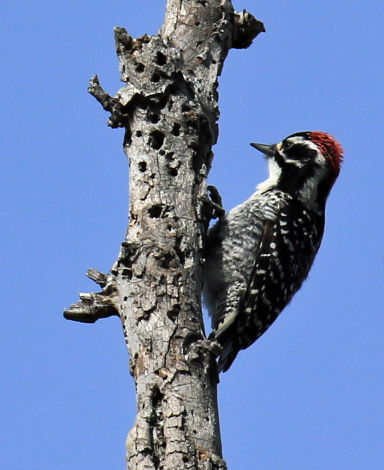
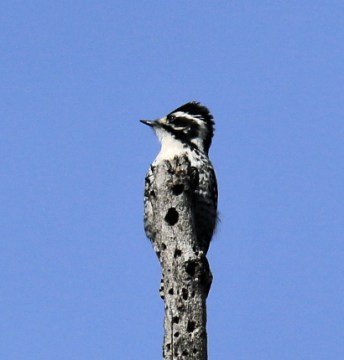
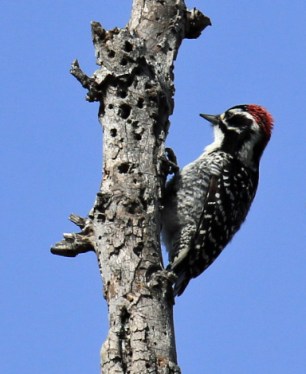
Another feeling was that now I HAD to find a Nuttall’s Woodpecker.  I continued on for another half mile+ and had NO drumming, rattles or visuals.  After maybe a dozen attempts at playback I finally heard a rattle response in a thicket up ahead.  I looked and looked but could not find the woodpecker – that is until I noticed it at the top of a hole ridden snag and saw the bird with only the very top of its head visible.  Its entire body and most of its head was directly behind the snag – completely immobile and hard to see.  I grabbed a shot and then waited – and to my surprise a second bird flew in and this got the first to move and now I had my photo opportunity – in good light and out in the open.

Nuttall’s Woodpecker (moments before only the top 1/2 inch of head was visible)

nuttalls-woodpecker3

Nuttall’s Woodpecker – Second Arrival

nuttalls-woodpecker4

Somewhat assuaging the disappointment over the photo-less Munia, the Nuttall’s Woodpecker photo meant I could head back – hoping for another Munia and maybe a Gnatcatcher or something else fun.  Yellow Rumped Warblers continued their distracting flights and then one led me to a small group of Goldfinches, some American and some Lesser that I tried unsuccessfully to make into Lawrence’s Goldfinches.

Lesser Goldfinch

lessser-goldfinch

I turned my concentration to a search for gnatcatchers.  I heard some promising squeaks and saw some movement in some brush ahead.  There were four birds, a Bewick’s Wren and three Gnatcatchers – unfortunately once again all the Gnatcatchers were Blue Gray. My quest for either a Black Tailed or California would have to wait for another day.

Blue Gray Gnatcatcher

blue-gray-gnatcatcher

There were more warblers, House Finches and a Black Phoebe on the way in but no more Munias.  I had seen 28 species and was especially happy with the Nuttall’s Woodpecker.  Had I not seen and photographed some of the other species elsewhere, it would have been an exceptional day for specialties.

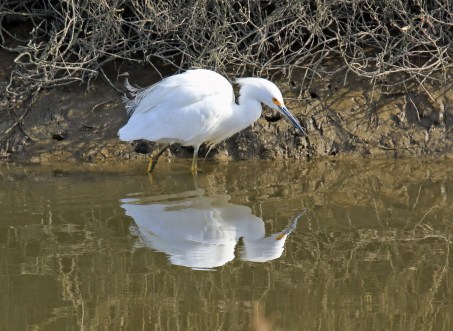
I had just enough time for a mad dash to the Tijuana Slough hoping for a picture of a Ridgway’s Rail.  It was very light on birds, a Little Blue Heron, Snowy Egrets, a Say’s Phoebe and Whimbrels and Willets being the best seen.  I heard at least one rail but I could not coax it out into the open – another photo missed. I include a few photos to memorialize this part of my  trip.

Whimbrel

whimbrel

Say’s Phoebe

says-phoebe

Snowy Egret

snowy-eget

Little Blue Heron

little-blue-heron

All told this California visit resulted in 70 species seen.  I added one life bird and 8 life photos.  I had many other great photos and lots of fun at beautiful places.  Lynette enjoyed her birding and may be willing to try some more.  Ebird says that California has been the state where I first saw 157 life birds.  Of those I only saw 33 on this trip, so if this trip had been back in the early days subtracting them from the 70 observed means I would have added another 37 life birds here.  40 Years of birding elsewhere means that those birds were first seen elsewhere – probably many elsewheres for quite a few. It would have been really nice to have seen a Black Vented Shearwater but I doubt any photo would have been available and there are a number of other pelagic species I “need”.  Maybe that will be my next California visit – join the legendary Debi Shearwater for one of her excursions.  I look forward to that.

California Dreaming – Part I – Anza Borrego

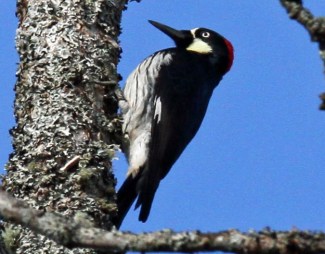
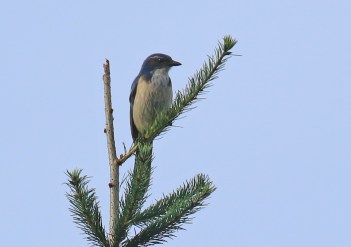
Long ago and faraway in a distant land called California, I began birding.  Most of the earliest experiences were at Baylands Park in Palo Alto or at Coyote Hills Regional Park in San Jose.  I did not keep lists when I started, so no records per se.  I arrived in California in August 1970, found an apartment over a garage in Menlo Park and got ready for Law School at Stanford.  I did not own any binoculars and had only a vague awareness of bird species, but I have a distinct recollection of seeing an Acorn Woodpecker in a neighboring back yard.  I of course remembered birds from growing up in Maryland including a Killdeer nest in the sand at the playground of my elementary school with the parent using the broken wing trip to lure us kids away from that nest.  I also remember that the “Blue Jay” in California was very different from THE Bluejay  I grew up with and it was either that bird or the Acorn Woodpecker that was my first California species.

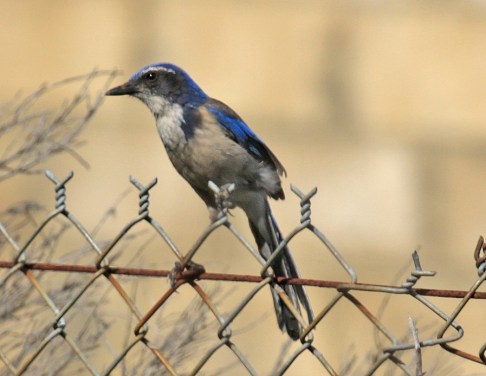
Acorn Woodpecker and California Scrubjay – my first California Species

Acorn WP1 california-scrubjay

It did not take long for the appeal of birds to grab my interest and I found myself often (too often) paying them a lot of attention and noting differences – becoming a birder.  I spent one semester in the spring of 1972 in Maryland and then had a summer clerkship in Seattle that summer.  It was in those places that I started to keep track of new “life birds” but I did not keep detailed lists so records remained spotty.  By the time I returned for my final year at Stanford, my life list was just under 100 species.  In the next nine months I added 150 species to the list – all in the San Francisco Bay area.   So on May 22, 1973 my life list stood at 248 species and I said goodbye to California.  When I next visited, it was June 1977 and I had done a lot of birding in Washington State, Arizona and Texas and some in Wisconsin.  My life list had swelled to 450 species.  I spent a day at Anza Borrego State Park before another trip to Arizona.  Five new species were added at Anza Borrego and  then 32 more in Arizona.  I was definitely paying attention, but lists were still limited except for new life birds.

It is now February 2017 – almost 40 years since that last trip to Anza Borrego – how could so many years have passed by!?  Had I really not returned to bird where it had all started?  There was a day and a half near Newport Beach in August 2012 and that was it.  In those early years, photography was not part of my birding life.  It very much is now and I wanted photos of some of those birds I had observed in California many years ago but had not seen or photographed elsewhere in the past.  It was time to return to California.  I planned a trip to San Diego and in part wanted to continue baby steps in exposing a friend to birding and thought one day in a four day visit with lots of other fun activities would not be too bird-heavy.  Where to go?  Anza Borrego seemed perfect – a good day trip with some potentially interesting birds (for her and needed photos for me) and some equally appealing scenery – certainly different from Seattle.

Our first day focused on a very interesting tour of the USS Midway Aircraft Carrier.  Highly recommended for all San Diego visitors.  The scale of the ship is incredible and the aircraft and communications equipment fascinating.  The history of the Midway and its pivotal role in the Pacific Theater of WWII should be known as appreciated by all Americans.  It continued service in the Pacific and the Middle East.  Very impressive.  Afterwards, there was time for a trip down Point Loma to the Cabrillo National Monument with our first look at the Pacific.  Near a parking area I had my first “target” bird of the trip – a Wrentit.  I had only seen this bird a couple of times and of course had no photo.  It is a skulker so I was not sure that any photo would be forthcoming.  I was thrilled to get a pretty good one.

Wrentit

wrentit

The next day was our trip to Anza Borrego.  This park is huge and birds can be scattered.  It is a more than two hour drive from San Diego proper.  We left during what should have been rush hour but we were going against traffic and thankfully had little traffic.  Also thankfully it was not the previous week.  Our weather was spectacular – low to mid 70’s and sunny.  Contrast that to the previous week (when we had originally planned the trip) when it was in the 50’s and VERY rainy.  Getting to Anza Borrego means going over mountains and the previous week there had been LOTS of snow, closing some roads or  requiring chains.  We saw some remnants at a few spots but had no problems.

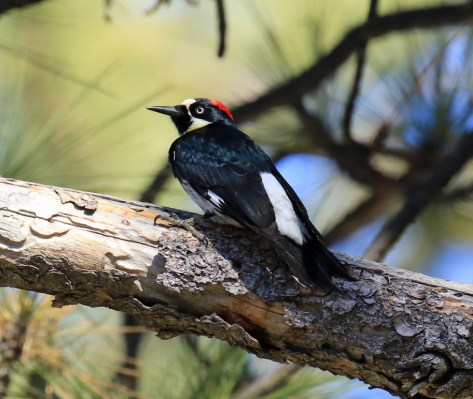
Our first serious stops were in the vicinity of Lake Cuyamaca and Cuyamaca Rancho State Park.  The road was clear but there was quite a bit of snow on the ground and there were lots of birds.  The most abundant interestingly were those first two California birds of memory – Acorn Woodpecker and California Scrubjays.  They seemed to be in every tree.  One was what is known as a “granary tree”, a place where the Acorn Woodpeckers drill holes and then fill them with acorns.

Acorn Woodpecker

acorn-woodpecker

California Scrubjay

california-scrubjay

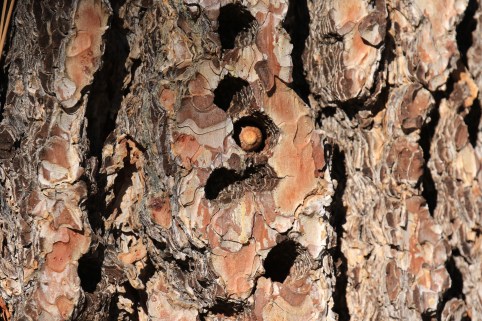
Granary Tree with Acorn

036a7047

Here is a bit of info from “All About Birds” about these woodpeckers and their granaries: “The woodpeckers harvest acorns directly from oak trees and are famous for their habit of storing nuts—primarily acorns, but also almonds, walnuts, hazelnuts, pecans, and pinyon pine nuts—in individually drilled holes in one or more storage trees. These are known as granaries and can have upwards of 50,000 nuts stored in them. The birds drill the holes primarily in the winter, in the thick bark of dead limbs where the drilling does no harm to a living tree. Each year they reuse old holes and add some new ones. The acorns are wedged so tightly in their holes that they’re very difficult for other animals to remove. After they’ve been stored for a while, the fit becomes looser as the acorn dries out—group members periodically check their stored acorns and move the loose ones to smaller holes.”  One Park Ranger we met said the acorns were stored as “bait” for grubs who fed on the rotting acorns and then became food for the woodpeckers.

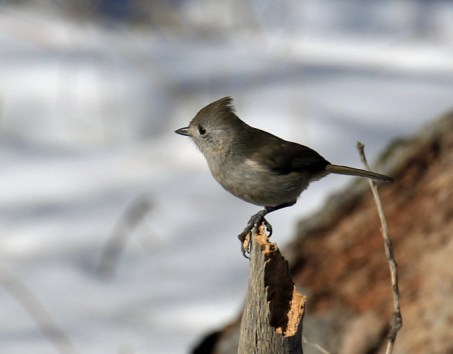
We also found one of my photo target birds, an Oak Titmouse, a very plain little bird but with a nice call and a very distinctive tuft.

Oak Titmouse

oak-titmouse1

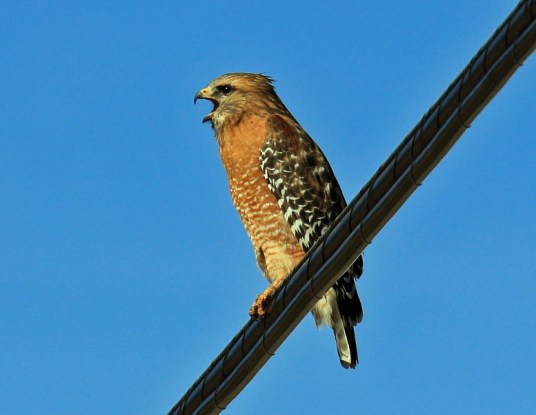
Not far from Lake Cuyamaca we found an incredibly cooperative and photogenic Red Shouldered Hawk.  It made unhappy noises but remained perched on a wire above us as we approached quite close.

Red Shouldered Hawk

red-shouldered-hawk

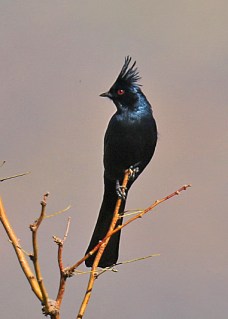
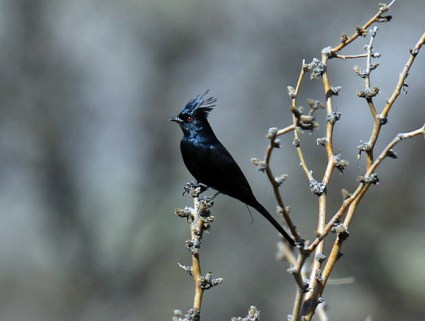
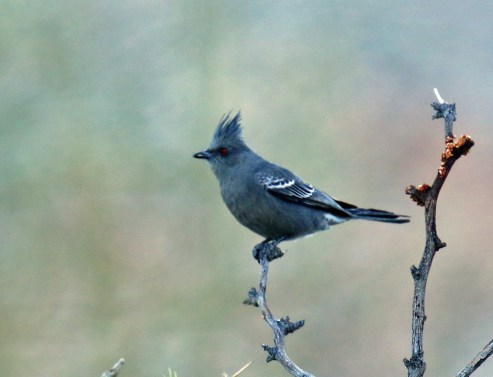
Continuing on Highway 78 I plugged in GPS coordinates looking for a spot listed on an Ebird report that was good for Phainopeplas.  This was another target bird and one that I was not certain I would find. At the exact spot identified in the report I pulled the car off the road and within a minute I spied a dark form on a shrub maybe 60 yards away.  It was a male Phainopepla.  I got a quick photo and then seeing no “No Trespassing” sign, decided to crawl under the barbed wire fence and cross the field to see if I could get closer.  It worked perfectly as the bird was very responsive to my recorded call and I got far better photos than I ever expected.

Phainopepla

phainopepla phainopepla1

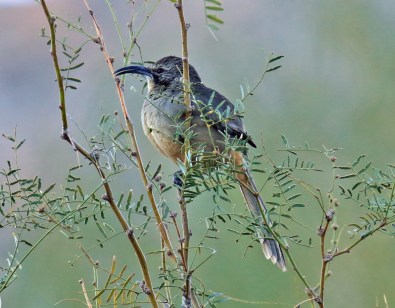
Not too much further along another target bird appeared, a very noisy California Thrasher.  It sang continuously perched high on a shrub and caring not at all that we were approaching. There was a second Thrasher close by – also singing incessantly – must be staking our their breeding territories already.

California Thrasher

california-thrasher1-2

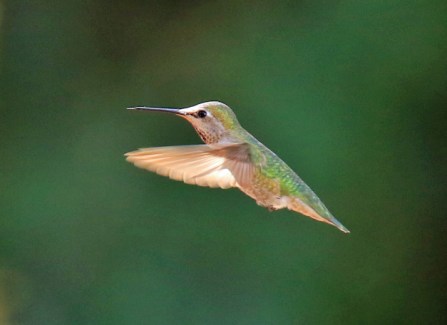
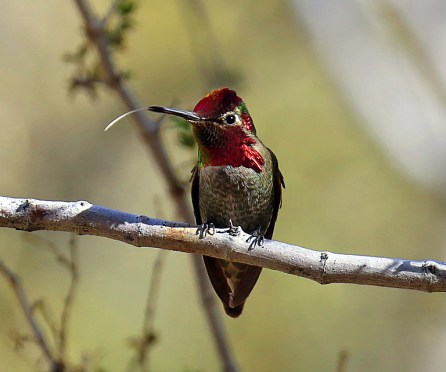
At many spots along our journey we had seen hummingbirds.  I was mostly interested in finding and photographing Allen’s or Costa’s Hummingbirds.  Until this point I was pretty sure that all of the hummers we had seen were Anna’s Hummingbirds, the predominant species in Western Washington.  We stopped at one campground where we had at least 6 and possibly as many as 9 hummers buzzing around in an area near a feeder.  Unfortunately they all seemed to be Anna’s.  Pretty near the Thrasher spot, there was one hummingbird that I am pretty sure was a Costa’s but I could never get the right position for a photo to show the purple mask.  Here are two out of a large number of Anna’s photos – a female in flight and a male with a clearly visible long tongue.

Anna’s Hummingbirds

annas-hummingbird1

annas-hummingbird-tongue-out-copy

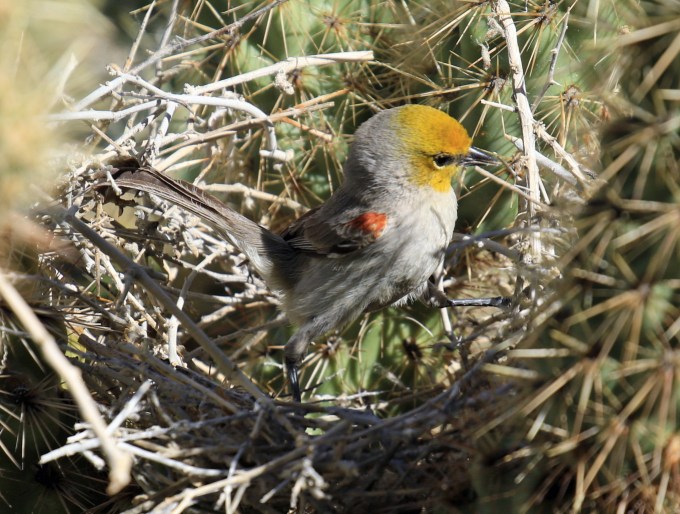
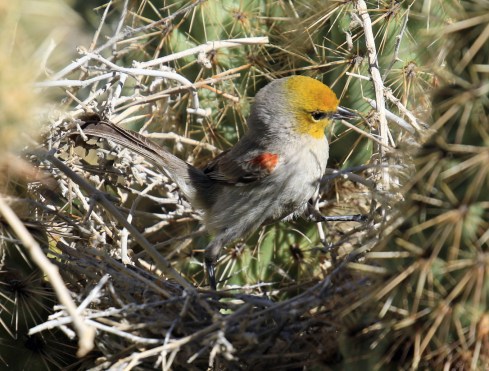
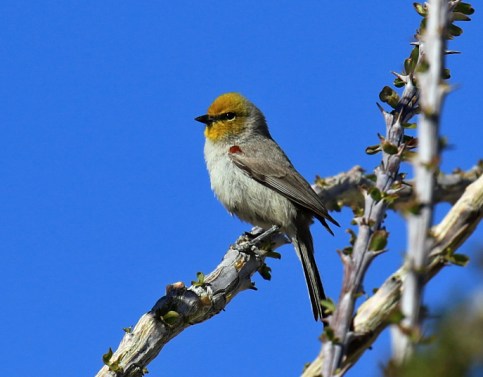
About lunch time we made it to the town of Borrego Springs and then to the Anza Borrego Visitor Center.  A special target here was the lovely little Verdin.  As I was walking in from the parking area I heard its distinctive three note call and then had one fly past me disappearing near a shrub in front of the visitor center.  At first I could not find the bird and was perplexed as I was sure it had landed.  Then I noticed a nest in a low bush and seconds later the Verdin lifted its head for a great view.  This bush was only a few feet from the path and was no more than 3 feet off the ground.  I was fascinated watching it try to weave an unwieldy twig into the nest.  It flew off and returned many times before finally moving further away and out of sight.

Verdin on Nest

verdin-in-nest1

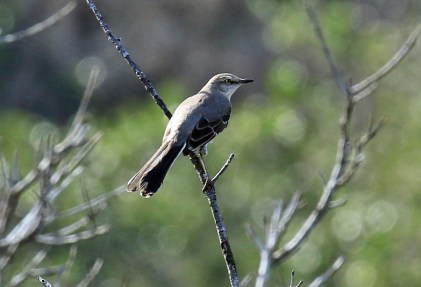
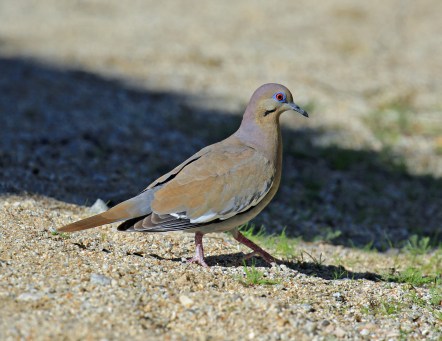
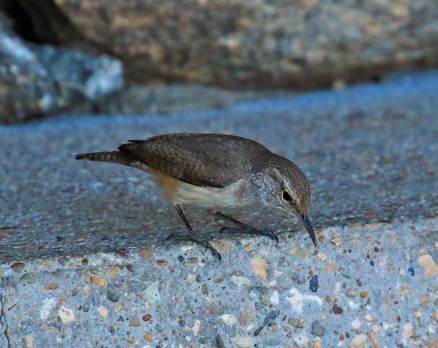
The Verdin may have been my favorite bird of the trip but there were other birds at the Center as well, including more Phainopeplas, Northern Mockingbirds, a definite (but not photo friendly) Costa’s Hummingbird, a gorgeous White Winged Dove and a very inquisitive Rock Wren.

Northern Mockingbird

northern-mockingbird

White Winged Dove

white-winged-dove

Rock Wren 

rock-wren1

It was still a bit early in the year to see some of the other targets at the Visitor Center like a LeConte’s Thrasher – guess I will have to come back again.  But one bird I very much hoped to see was a Black Tailed Gnatcatcher.  It would be a life bird.  Someone we had met told me that he was camping at Agua Caliente and had two “easily found” Roadrunners in the campground.  Gnatcatchers ere also reported there so we decided there was time for the detour to see if we could get lucky.

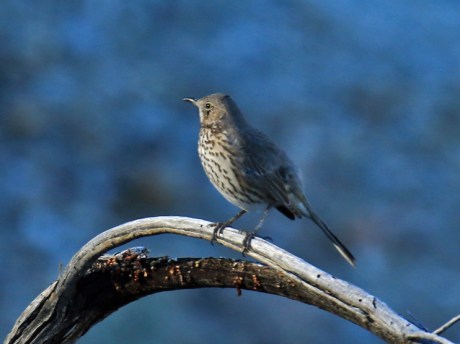
The campground proved to be quite birdy but also Roadrunner-less.  There were a few small rabbits – our only mammals of the day. We also had repeats of many of thee birds we had seen earlier in the day: California Thrasher, Verdin, Oak Titmouse, Phainopepla, White Winged Dove, Costa’s Hummingbird (again no photo) and Northern Mockingbird.  One new bird was a juvenile Sage Thrasher.  I had not seen one before and was surprised by its quite speckled breast.

Juvenile Sage Thrasher

sage-thrasher

Verdin

verdin

Phainopepla Female

phainopepla-female

I heard an unfamiliar call that I thought just might be a Gnatcatcher so I played my Black Tailed Gnatcatcher recording.  Immediately two small birds flew into a nearby bush.  At first they remained hidden but then I clearly saw that they were Gnatcatchers and they had black tails.  I was very excited and waited for them to come into the open for a photo.  Shortly they did that and I got a few ok shots in somewhat failing light. Given the immediate response to the call and the black tails, I thought I had my bird.  Then I looked closely at the photos and my I Bird Pro and saw that they were only Blue Gray Gnatcatchers – a bird I had recently photographed in Neah Bay, Washington and which also has a black tail.  Sigh…

Blue Gray Gnatcatcher

blue-gray-gnatcatcher1

Time to retrace our steps for the long ride back.  The roads seemed even curvier on the return but no traffic and we made good time.  It had been a good visit.  Lots of nice birds including several targets.  Some misses but that is usually the case.  The weather had been great the whole time and Lynette had enjoyed the trip and even some of the birds.  It was neither low key nor hard core so a good introduction.  We made it back in time for a nice Mexican dinner at Miguel’s.  The next day will be the San Diego Zoo and then dinner in La Jolla (with a brief birding stop at the Cove).  Sure do like San Diego.

There Sure Are Lots of Birders Out There

As evidenced by some preceding Blog Posts, January 2017 is proving to be a great start to a birding year with many rare and compelling species.  I have seen a Red Flanked Blue Tail in Lewiston, Idaho, a Purple Sandpiper near Victoria, British Columbia, a Common Eider on Purdy Spit,  and a Falcated Duck on Padilla Bay.  I have not been alone on any of these sightings – not actually on the day each rarity was sighted nor statistically as many other birders added their observations of these birds to Ebird or local listservs or just their own record books.  In just the past four days, I have been able to add Yellow Billed Loon, Northern Mockingbird and Swamp Sparrow to my observations for this month.  Again for each, others were either present at the same time or preceded or followed me and added these special birds to their lists.  Not just a few others – many, many others…there sure are lots of birders out there!  Here are some numbers, stories and photos accordingly.

First some of those birds already in my blog posts.

January 4, 2017 – Red Flanked Blue Tail – Lewiston, Idaho.  

red-flanked-bluetail1r

This rare little beauty may have taken first place in the Most Popular contest.  On the day that I was able to see it, there were another 7 birders there at the same time and I know others came later.  More than 145 birders reported this species on Ebird and not everyone uses Ebird.  I I would not be surprised if more than 200 birders saw this gem.  And go look at a map, not a lot of major population centers near Lewiston.
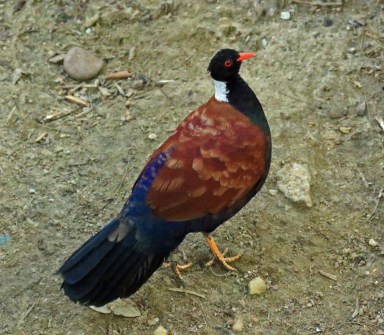
January 11, 2017 – Common Eider – Purdy Spit

coei-flight

Not quite as rare – nor as photo-friendly as the Bluetail, this misplaced duck was almost as popular and definitely a lot closer to major population centers.  There have been at least 90 Ebird reports of this species this month.  It remains and continues to be seen so no telling what the final count will be.

January 12, 2017 – Purple Sandpiper – Kitty Islet, Victoria, B.C.

purple-sandpiper1

This was definitely the most difficult of the January rarities for me to find.  As reported, had Steve Pink and I arrived there 10 minutes earlier, we likely would not have seen it.  I know of many who have tried and missed and/or for whom it took several attempts.  There are 65 reports on Ebird – even with the U.S./Canadian exchange rate that is a lot – especially given the cost of the ferry to get there from the Mainland – either Canadian or U.S.

January 16, 2017 – Falcated Duck – Padilla Bay

falcated-duck2

At least for me, this was the most treasured of the January rarities, a species I never expected to see anywhere let alone in Washington. It has also been the most ephemeral of the rare visitors. It was first seen on January 15th and last reported on January 17th.  Now you see it and now you don’t.  Only one report was from the 15th and another 15 Ebird reports were from January 17.  On the 16th, the day I saw it, there were 27 Ebird reports – so a total of 43.  I know of at least another dozen birders who saw it and do not report on Ebird.

I may have been the only person who reported all four of those species on Ebird (which you can rightfully translate as the only person crazy enough to make all those trips), but many people reported more than one of the four and some reported three.  The simple math is that there were almost 350 Ebird reports on those four species and my guess is that there were more than 500 observations by more than 300 distinct observers.

But that was then – how about now?  January has continued to deliver exciting opportunities and the birding community has eagerly responded.  A Yellow Billed Loon was found at Rosario Beach State Park, the same place where many birders went to see a Rock Sandpiper after the Falcated Duck observations.  It was probably first seen on the 17th (by Eric Heisey) but reports did not appear until the next day.  It is continuing to be seen as this is written (January 26th) – often quite close to shore as it seems to come in as the tide changes.  So far it has been reported by 85 observers on Ebird and based on anecdotal experience and many posts on Tweeters, I expect that the actual number of observations/observers may well be twice that many.  A bonus has been that the loon is in almost full breeding plumage – very rare for Washington and even rarer for this early date.  This Yellow Billed Loon is thus very photogenic, and the ease of getting to the location and its cooperative behavior coming in close has resulted in many photos.

I was finally able to look for the loon on January 23rd.  When I first arrived, others were already there and we watched the Yellow Billed Loon pretty far out – maybe a half mile away by the large island in the bay.  After maybe an hour, it began its journey into closer waters and more and more birders arrived with scopes, binoculars and varying photographic equipment.  The weather was beautiful, and the photographers, myself included, jockeyed for position along the beach to take advantage of the sun behind us and the bird in front of us.  Lots of good socializing was a fun part of the day.

Yellow Billed Loon – Rosario Beach – January 23, 2017

yellow-billed-loon4

yblo1

yellow-billed-loon3

This photo gives at least a sense of the birding scene – all happy observers.

036a0424

Brian Pendleton and I were fortunate to be able to participate in the year end wrap up by the ABC birding group in Tacoma on January 24th – sharing some photos and experiences from our 2016 “Big Years” in Washington.  It was an easy decision to do some birding on our way down and we decided to do quick chases for some of the better birds that had been reported locally in the past few days.  Our first stop was to look for the Bohemian Waxwings that were being reported daily at Magnuson Park near where Brian lives.  I had a pretty pathetic look at a couple of the waxwings two weeks earlier but was not able to get a photo.  Unfortunately poor weather and a hunting Cooper’s Hawk precluded a picture on this visit as well.  We had a couple of flocks of waxwings and I am pretty sure there was at least one or two Bohemians with many more Cedar Waxwings – but only from afar.  There have been 110 Ebird reports of Bohemian Waxwings in Magnuson Park in January and their presence continues.  Another 16 Ebird reports for this species at the Park were filed in December 2016.

Cooper’s Hawk – Hunting at Magnuson Park – January 24, 2017

coopers-hawk

Our next stop was to look for the Swamp Sparrow being reported almost daily from the Center for Wooden Boats at South Lake Union Park.  Although the location is well defined and easily approached and birded, the Swamp Sparrow is very furtive and acts more like a little rodent as it scurries from the open into the deep grass/weeds and can thus be a difficult find.  Brian had seen it before but this was my first trip.  He had a fleeting view of it on this visit and I had none.  We decided not to spend much time there and to head off for other opportunities as we worked our way south.  But first a diversion to the East. (More on the Swamp Sparrow later.)

Our Eastern diversion was to look for the Northern Mockingbird that had been reported frequently from a residential area in Kirkland.  We had connected with Gregg Thompson at the Swamp Sparrow stakeout, and he was not encouraging for photo ops for the Northern Mockingbird.  It was generally being reported in a holly tree behind a house, and Gregg had seen the holly and decided to not spend the time there trying for what seemed like an unlikely good photo op. I am pretty sure I have never gotten a better photo than Gregg, but in this case, at least it was a good decision to try for one despite his decision not to.

When we arrived at the designated address in Kirkland, I decided to park in the driveway behind one of the cars, with the intent to knock on the door (the owners had been described in many reports as very friendly) and ask if they had seen the Mockingbird and if we could take a look.  As soon as he got out of the car, however, Brian exclaimed “There it is!”  Our Northern Mockingbird was perched in the open on a small tree at the adjoining home.  I snapped a few photos before it took off to the south.  We followed and found it again briefly in a tree three homes away.  The homeowner saw me with my large lens and came out to ask what we were doing.  Anticipating concern, I explained we were not spies – just chasing a rare bird.  Turned out, he was from Texas and was more than familiar with Mockingbirds and their chatter.  He had not known it was in the area and was happy to have us point it out – just before it took off and headed back north again.

As we started to retrace our steps, we saw another fellow walking towards us.  I wondered if maybe my car was parked behind his and was either blocking his way or at least needed an explanation.  This turned into one of those fun intersections on a birding trip.  Brad was the owner of the house next to where the holly bush was located.  He led us to the house with the holly and into the back yard where the Northern Mockingbird was conveniently perched completely in the open on a wire directly above us and next to said holly tree.  Not great light, but photos were easy and much better than other Washington Mockingbird photos from my past.  We also had a great talk with Brad about hunting, ducks, construction (he is a contractor) and birds and birders. Really a good guy – a perfect host for visiting birders.  At least 25 Ebird reports have included this bird.  Many other observers have seen it as well and it continues as far as I know.

Northern Mockingbird – Kirkland Residential Area – January 24, 2017

northern-mockingbird

Now it really was time to head south, so we headed to the Kent Ponds – aka the Green River Natural Area where a Red Shouldered Hawk had been reported.  We got a lot of exercise, found another Cooper’s Hawk and little else – well except a Red Tailed Hawk that was located at the exact spot where the Red Shouldered Hawk was described – and our Red Tail was calling just as the Ebird report had indicated the Red Shouldered Hawk had been doing.  The Red Shouldered Hawk report was from a Monthly Census and there were 8 separate Ebird reports as every member of the Census team was included (one apparent sighting otherwise calls only) so maybe 8 actual observations is an over counting. Disappointed, Brian and I continued on to Tacoma where we failed to find the Slaty Backed Gull at either Gog Le Hi Te or the 11th Street Bridge.  Our last stop was at Ruston Way in the area where Bruce Labar first located the King Eider last year.  No Eider but some beautiful Barrow’s and Common Goldeneyes and lots of Mew Gulls.

Barrow’s Goldeneye – Ruston Way – January 25, 2017

barrows-goldeneye

Mew Gull – Ruston Way – January 25, 2017

mew-gull

The event with the ABC group was a lot of fun.  They are super birders and many of their names could be found on the Ebird reports for the rarities which are the subject of this blog post.  We had dipped on some of the birds we chased but the Mockingbird more than made up for that and meeting Brad was another of those great bonus experiences.

I felt I had unfinished business though as I really wanted a photo of the Swamp Sparrow,  Between errands today I revisited the Center for Wooden Boats.  Immediately upon arrival I saw a sparrow skulking at the water’s edge and started snapping photos.  Was it really going to be that easy?  Well, no.  Turns out it was a Song Sparrow.  I was beginning to wonder if I was going to remain on the list of those missing the target but then saw some movement in the grass.  A fleeting glance confirmed it was the Swamp Sparrow but a photo was out of the question.  I watched it almost completely concealed for maybe 10 minutes and then miraculously it came out into the open for a moment and I was able to finally get some nice shots.  Really a fine looking bird.

Swamp Sparrow – Lake Union Park – Center for Wooden Boats – January 26, 2017

swamp-sparrow1

swamp-sparrow

Mine was the 27th Ebird report for this lovely sparrow.  I expect there will be more in the days to come.

Indeed it has been a great January.  Easy for me to conclude from this great group of rare to very rare birds.  And obviously many others in the area have enjoyed birding this month as well.  As I said. there sure are a lot of birders out there – and many of them are sharing their experiences on Ebird and Tweeters and other sites.  We all benefit from that shared wealth of information.  I wonder what will show up and be enjoyed by so many in the community next.

Afterthought:  The Song Sparrow was spied first and easily and at first I thought it was the targeted Swamp Sparrow.  The real Swamp Sparrow took a lot more effort to find and photograph.  Here is the comparison.

song-sparrow-vs-swamp-sparrow

Conjuring Up a Falcated Duck

Among the benefits of birding with Steve Pink is that his birding in Britain has familiarized him with many species never seen or very rare in the States (or the Provinces if in Canada).  For example, if I were to whimsically say how nice it would be to see a Smew (my top of the bucket list bird), Steve will relate the numerous occasions he has seen one in Britain.  This also makes him a great resource for identification of many Eurasian visitors that are such sought after rarities here.  Additionally Steve is as avid a lister – year/state/county/ABA – as anyone, so he is always up for a chase and for great “wouldn’t it be nice if a such and such shows up” wishful thinking.

In my previous blog post “Chasing, Chasing, Chasing” I detailed my most recent birding experience with Steve, our visit to Victoria where we found the Purple Sandpiper at Kitty Islet.  I am not making this up: On our return from that successful chase, there was plenty of travel time, and we filled some of it discussing how nice it would be if another rarity showed up closer to home and debated whether it would be better if it were a Baikal Teal or a Falcated Duck.  Both would be life birds for me,  while Steve had seen them both.  That was the afternoon of Thursday  January 12th.  It was wishful and playful thinking – not serious but a good way to fill time.

Fast forward less than 72 hours.  On the morning of January 15th, Rick Klawitter – a birder not known by me – found of all things, a Falcated Duck at Bayview State Park in Skagit County – barely an hour from Edmonds where Steve and I reside.  Little did he know that Steve and I had somehow sent a message out to the bird gods to send this little beauty to our great state and to place it where someone with great discernment would find it and then communicate its presence to the world.  We apparently had that power.  If I had only known it would work this way, I would have put all that energy into conjuring up a Smew, the bird I have written about previously as being on the very top of my birding bucket list..  Rick’s posting on Ebird informed us all but not until it was too late to chase it on the 15th.  Early the 16th would have to do.

I had planned to do a lot of catch up that day, but as soon as I learned of this rare find late on the night of the 15th, I called Ann Marie Wood and Steve to see if they were interested (knowing of course that they would be).  Turned out they had already planned to bird on Monday and now there would be a powerful purpose and intent to the venture.  We left Edmonds a bit after 8 and encouraged by Ryan Merrill’s Tweeters post that he had already seen the Falcated Duck that morning, we made a beeline to Bayview State Park.  There were already cars parked at the trail, and we could see birders with scopes in the distance – YES!!!

We trekked maybe just under a mile down the trail and saw a very large (400-500) flock of ducks – mostly American Wigeon but with Mallards, Eurasian Wigeon, Pintails and Greater Scaup also present.  With the help of many birders already there  (thank you Gary Bletsch, Bob Kuntz, Scott Downes among others) and with great difficulty, we all got views of the mega-rarity – losing it almost immediately each time we did  as it repositioned itself in the ever moving flock.  I could not find it once I transferred my view from scope to camera, so I took dozens of random photos of the flock – trying to concentrate on different areas or the ones where I thought I had just viewed it.

Finally the light improved and the Falcated Duck made its way somewhat into the open and I got an acceptable if distant photo. Its iridescent green head with its distinctive helmet shape was only visible when it was sideways with good light.  The white neck or chin was a great marker to aid in finding it and I was struck by its very thin bill.

Falcated Duck – Bayview State Park – South Trail – January 16, 2017

falcated-duck2

falcated-duck1

It turned out that one of my random shots had also captured the duck, and it shows its size relative to the Wigeon, much larger than I had expected.

Falcated Duck – Bayview State Park – South Trail – January 16, 2017 (Lucky Random Shot)

falcated-duck7

This was a new year bird, county bird, state bird, ABA bird and new World Bird – complete “Lifer” in every sense.  The photo also made it the 400th species I had photographed in Washington.  Despite the playful wishful thinking in the conversation with Steve about fun rare birds to find in Washington, I never expected to see let alone photograph this species here.  What a fabulous morning!!  [And an aside – how great it was to see so many young birders on the scene to view this rarity.  They will contribute greatly to our birding community.]

It was about 10:30 a.m. – what next?  Before the Falcated Duck had appeared, Steve and Ann Marie’s day was going to include a visit to Rosario Head, certainly one of the most spectacular spots in Washington, hopefully to see the Rock Sandpiper that had been scouring the rocks there.  So off we went – following many others who had left Bayview before us and headed that way.  When we arrived, the park was closed but there were several dozen cars along the road.  There could not be that many birders there, could there?  Turns out there was a clean up project underway adding to the handful of birder’s cars.  On the way in we saw a man with a scope accompanying his son in a wheelchair.  Hoping for news of a Rock Sandpiper sighting, we stopped to chat.
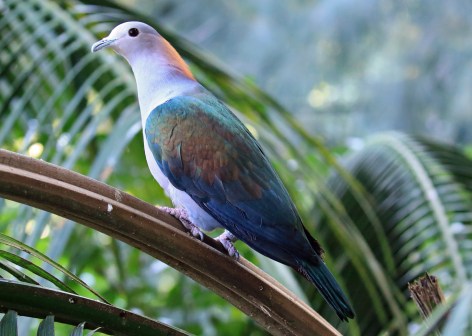
He gave us the news that his wife was up on the bluff sans scope.  The Rock Sandpiper was there but a difficult view without the scope.  The wheelchair was not going to make it up the steep path, so we volunteered to take the scope up – or to just share ours with her.  We learned that this was Steve Sutherland, with his son Ryan, and his wife Debbie was the birder up above.  The Sutherlands are from Chelan, Washington and are a very cool family.

Chased birds are like magnets, and with their presence advertised on Ebird or Tweeters or BirdYak or other listservs, they draw birders from near and far thus providing the opportunity to meet folks in real life that we only know from their posts on those electronic media.  Such was the case with Debbie Sutherland – and now her family.  We knew her from Tweeters and Ebird but generally as “Sutherland Debbie” and among other claims to fame is the frequent presence of Lesser Goldfinches at her feeders.  Since she does not wear a name badge or sport an “I am from Chelan” sign, we would not know her if we saw her.  But we knew her posts and it was fun to meet her on top of the bluff, to see the Rock Sandpiper together, to share the scope and some stories as well.

The cliff was high and there was no guardrail.  Ann Marie had braved the path up to the viewpoint but her vertigo was a threat to her being able to look over and down the cliff to where the Rock Sandpiper was foraging with some Surfbirds and Black Turnstones at the base.  Ann Marie drew on some inner strength as she always does and was able to get just close enough to the cliff’s edge to view the Rock Sandpiper.

Rock Sandpiper at Rosario Head – January 16, 2017

rock-sandpiper

Surfbird at Rosario Head – January 16, 2017

surfbird1

Something flushed the birds and I snapped a photo that I am pretty sure is the Rock Sandpiper coming in for a landing.

Rock Sandpiper Landing at Rosario Head – January 16, 2017

rock-sandpiper-flight

Debbie had returned to her family below, and this enabled Steve to come up for his look.  Since I had errantly chosen the steeper of the two paths back down, this was a good thing as he added another supporting arm helping Ann Marie down. Returned to the safety of the base of the hill, we continued our visit with the Sutherlands and learned how they utilized some pretty fun technology to further include Ryan in the family birding.  They transmit images directly from their scope to a screen in their van which Ryan can view.  Sometimes he finds birds before they do.  How great is that?!

It was then noon, and I am not going to detail every stop along the way for the rest of the day, many of which were new places for me as I am not the ardent county lister/birder that both Steve and Ann Marie are.  Highlights were hundreds of swans – both Trumpeters and Tundras, some Greater White Fronted Geese, thousands of Snow Geese (in seemingly endless flocks in flight as the day ended), Black Oystercatchers, more hundreds of ducks, many Bald Eagles, a very cooperative Greater Yellowlegs and at the end, just a few loons and alcids, an elegant Lincoln’s Sparrow and of course gorgeous scenery at every turn.

Tundra Swans

tundra-swan

Greater White Fronted Geese

greater-white-fronted-goose

Greater Yellowlegs

greater-yellowlegs1

Black Oystercatcher

black-oystercatcher1

Lincoln Sparrow

lincoln-sparrrow

Scenic Views

scenery

I have written often that birding gives us the opportunity each time we are out to visit beautiful places, mix with great people and see great birds.  All three were surely present on this day.  I do have to add that when one of the birds is a fantastic bird like a Falcated Duck that I have helped conjure up – well that is really special!!

[An afterthought: In less than two weeks this month, I have been fortunate to see a Red Flanked Bluetail in Idaho, a Common Eider and a Falcated Duck in Washington and a Purple Sandpiper in British Columbia.  Each a fantastic bird in the place observed – either a first ever record or one of less than a handful.  True rarities AND NONE of them were in Neah Bay!!!]

Chasing…Chasing…Chasing

My professed birding philosophy this year is to limit chases to new state birds, new ABA birds and new (or improved) ABA photos and when some other factors line up just right, to go for targeted birds with birding friends to enjoy the birds and places and people.  This past week has had three such chases.  They may have been only partially successful in birds found, but they have been very successful in rich experiences with great folks and great places and some of the chased birds as well.  The first of these was a different kind of “chase” – a visit to a favorite spot to find some very charismatic birds in part to build the interest of a special friend in birds and birding.

Especially for “listers”, it is not unusual to drive many hours to stand for many hours at some not all that pretty spot waiting in the cold or even rain waiting for some non-descript bird to come out of hiding just long enough for a glimpse and a “tick” – that statement that we have seen “IT”.  The draw is that the “IT” is a bird that we have not seen before, or not seen before that year or not seen before in that state, or not seen before in that county – thus an addition to our self-important list – our way of competing with ourselves or with others or just our way of organizing and feeding our passion for birds or maybe in this case our passion for birding.  Almost exactly a year ago, that was the experience as Frank Caruso and I took the long ferry ride to 3940 South Valley Drive in Capital County, British Columbia, Canada and then waited and waited with another birder who had come all the way from Chicago, who like us, was hoping to add Redwing to our ABA lists.    Native to and common in Europe and Asia, the Redwing looks a lot like our  American Robin and is VERY uncommon in Canada or the U.S. not even seen most years.  It had been hanging out in a holly bush in a vacant lot and was very furtive – a real challenge to see.  Finally after many hours, it came out almost into the open and we had both visuals and a not very good commemorative and proof positive photo.

Redwing – January 5, 2016 – Victoria B.C.

Redwing

The Redwing chase was successful because the rarity was found.  Had it not been, there still would have been a story but it would have emphasized agony and discomfort instead of the joy of success.  At least that is how it was for birders/listers like me and Frank and our compatriot from Chicago.  To a non-birder or a “not-yet-birder” however, that kind of chase and even that kind of successful “find” would more likely fall into the category of: “Are you kidding?” or “We are going to do what – for what?” Sooo – much better to start out and develop interest by going somewhere pretty with charismatic birds, easy to find, easy to see and identify and with some aesthetic quality that resonates even to a non-birder.

Waterfowl are a good start – if close and not in the rain or wind – and owls are even better as there is that overlay of a mystical quality that they bring with them.  Waterfowl are easy to find and to see and the diversity is always a surprise to someone who has not paid that much attention before.  At a place like the Semiahmoo Spit in Whatcom County, where I had taken Lynette on our first birding trip late last year, the waterfowl were plentiful and colorful; the setting was gorgeous and a good lunch was nearby.  All elements for a good introductory experience.  Finding Bufflehead, Surf Scoters, Long Tailed Ducks, Pintails and  Harlequin Ducks easily brought home the notion that not all ducks are Mallards, that they are quite different in many details while still having their basic “duckiness” and that they are very beautiful.  Hard to beat a male Harlequin Duck for that last point.
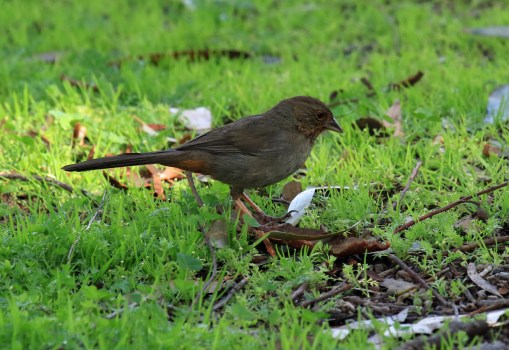
Harlequin Duck (seen at Semiahmoo on December 30, 016 – but photo from elsewhere)

harlequin-duck

After that positive introduction, I thought a good next step would be to add some owls to Lynette’s birding experience.  An owl at night would be great but challenging, so the choice was to go to Legue Island – Eide Road in Stanwood, Washington where at this time of year, Short Eared Owls are almost a certainty and with luck there could be many and some would be seen relatively close.  When we arrived the parking lot was full – uh-oh  what was going on?  We saw many (20?) photographers in the field but there did not seem to be any spotting scopes or binoculars – not a birding crowd.  But they were there for the same reason – the owls – and to a lesser extent the scenery – and since there were also MANY owls, we were happy to share.  (An aside.  There were many large and very expensive camera lenses – 500 mm and even 600 mm – probably over $100,000 of equipment – I was very envious.)

The Short Eared Owls were very cooperative flying and perching and diving for prey seemingly everywhere – some very distant and others flying right at or over us.  We know there were at least 8 and maybe 9 giving their aerial displays – the most I have seen at this location.  The lighting was great and the views of Mt. Baker and the Olympics in varying degrees of sunlight were spectacular.  It could not have been a better experience and Lynette noticed and approved – her first owls – so far so good.

Short Eared Owl – Eide Road – January 6, 2017

036a0317

Short Eared Owl – Eide Road – January 6, 2017

036a0460

Mt. Baker from Eide Road – January 6, 2017

baker-in-sun

Sunset and the Olympics – Eide Road – January 6, 2017

036a0516

OK, maybe that was not really a “chase” but it was an intended purposeful trip to look for a specific species – focused and with most of the elements of my other chases.  It was possible that we would have missed an owl, but they are almost assured in those fields at this time of year.  But as I said in the introduction, there have been two other chases this week – and they have been the traditional kinds – looking for a rarity with much less of a certainty for success.  The first of these was with one of my best birding friends, Brian Pendleton, to go look for the Common Eider that had been discovered on Purdy Spit a few days earlier.  I had seen hundreds of Common Eiders on my trips to Maine in 2015 and to Alaska last year.  They indeed are “Common” in both places.  Not so in Washington as there had only been three records previous to this one.  I had seen one of those in Westport on October 28, 2012 – the same day as seeing another MEGA rarity for Washington – a Northern Wheatear.  But Brian had missed that one so this would be a new state bird for him if we found it.

Common Eider – Westport – October 28, 2012 

common-eider-3

Common Eider (Male left and female right) – Nome Alaska – June 3, 2016

Common Eiders (2)

When we got to the spit, there was already a line up of birders with scopes scanning the water.  We made a U-turn, parked and joined the throng.  I noted that Matt Bartels was one of the birders and he had a smile on his face.  It was clear that he had found the targeted Eider and before setting up my own scope, I grabbed a quick peek through his.  This was not the first time I had piggy backed on a Bartel’s Bird – and I was happy to do so again.  I returned to Brian and quickly got him on the bird.  It was pretty far out but the light was good enough to see the distinctive head and bill shape and even to pick up a little bit of white over the eye.  Shortly thereafter, it took to flight and we were able to see the white in the wing as well.  ID photo only but a great bird and a lifer for Brian!!

Common Eider in Flight – Purdy Spit – January 11, 2017

coei-flight

We spent much of the rest of the day looking for Mountain Quail near the Port Orchard Quarry.  It was very cold and we had no luck but it is always good to be out and always a treat to be with Brian.  He was like a little kid skating on the ice we encountered in a number of spots  – frozen ground essentially.  I could not resist this photo.

A Playful Brian Pendleton on Ice

036a0627

While out with Brian, I kept monitoring my emails and text messages.  Steve Pink and I had tentatively planned to chase two real rarities in B.C. the next day IF either was seen again this day and the weather was ok.  The two were a Purple Sandpiper and a Red Throated Pipit.  Both would be ABA life birds for Steve and the Pipit would be an ABA life bird for me.  I had seen a Purple Sandpiper on the East Coast 40 years ago but had no photo despite trying when I was in Massachusetts over Thanksgiving last year.  Red Throated Pipits are another Eurasian species.  They are frequently seen in fields in California and there have been a couple of records I believe in Washington but are never common in any of these areas.  The Purple Sandpiper is regularly found on the Atlantic Coast, but this one is only the second Pacific Coast and first Northwest record.

Late in the day I got a text from Melissa Hafting my infosource extraordinaire for B.C. birds.  The Purple Sandpiper was reported that afternoon.  The Pipit had not been seen or heard for a couple of days, but the Purple Sandpiper was enough and Steve and I agreed to undertake the chase.  The problem was that both birds were near Victoria on Vancouver Island.  This requires at least one ferry ride and means at least a 5 hour trip to get to the spot where the Sandpiper was being seen.  Fortunately Melissa had encouraged me to get the earlier  ferry from Tsawwassen to Swartz Bay – so that we could have a more favorable tide.  The ferry left at 7:00 a.m. which meant Steve and I had to be on the road out of Edmonds by 4:15 a.m.  Such is birding/chasing.  The next ferry left at 9:00 a.m. and we felt it would probably have been too late – how right we were in that calculation.

We made good time heading north and crossed the border without a wait. There was a spectacular full moon as we drove north.  We did not have the luxury of extra time to stop to take a photo but we were glad to have its beauty and abundant light.  As is always the case, the Canadian Border folks are friendly and efficient – not the case re-entering the US.  The BC Ferries are huge and beautiful.  We had not made a reservation so we were pleased to see the sign before arrival that there was space available.  We rolled onto the massive ferry and planned to do some birding on the voyage once the sun rose.

BC Ferry – Tsawwassen to Swartz Bay

036a0638

About 30 minutes into the trip there was enough light to go on deck.  We had a low temperature of 13 degrees Fahrenheit on the way north.  It was probably now 28 degrees but while there was not much wind per se, the travelling ferry made for a very low wind chill on deck.  Fortunately there was some cover and we could scan the waters.  With the exception of one channel we did not see many birds, and even there nothing special, but as we came around one of the small islands, we had a spectacular sunrise with a beautiful reflection on the water.

Sunrise from the Ferry

sunrise

Steve Pink Checking out the Birds from the Ferry

036a0647

If nothing else, we took it as a good omen.  The Purple Sandpiper was our first quest.  It was being seen from Kitty Islet, essentially a small rock just southeast of Victoria – about 25 miles south of the ferry landing.  More traffic than we would have liked, but we found our way to this very cool little spot around 9:25 a.m.  It was supposed to be low tide but it seemed quite high.  We later learned that this morning the tide was pretty flat with the low being almost as high as the high tide.  This meant that there were fewer nearby rocks exposed and they were farther off shore – in this case maybe 50 yards instead of 20 or less.  As we got out of the car, we saw a woman with a humongous lens pointed out to one of the nearby rocks and we saw that there were a number of shorebirds perched on that rock.  Was it going to be that easy?

Well not quite.  It turned out that the bird she was focused on had its head tucked in and while it did have yellowish legs, so do Surfbirds and that is what she had.  Fortunately a young local birder, Geoffrey Newell, had just shown up and had moved further out onto the Islet itself (across a stairway).  We followed him and saw that quickly he had found the Purple Sandpiper.  The rock was full of shorebirds – a mix of Black Turnstones, Surfbirds, Black Oystercatchers and our rarity – the Purple Sandpiper.  It mostly was resting with head tucked in but a few quick looks with the head exposed showed the bicolored longer bill, the smaller size and breast pattern that confirmed that it was the Purple Sandpiper.  It is very similar to a Rock Sandpiper – which is the expected species on the Pacific Coast but the thinner wing stripe and less distinct breast markings differentiated the bird and the ID had been previously confirmed by experts.

I was able to snap a couple of distant photos with the head and bill visible.  Fortunately the sun was immediately behind us, but still the distance made it difficult.  Then, less than ten minutes after we had arrived, a cormorant flew near the rock and almost all of the birds, including the Purple Sandpiper took off.  I was able to follow it briefly in flight – good looks at the wing stripes – but the flock did not return – instead flying off to Trial Island, perhaps a quarter mile away.  Another local showed up and told us this was often the pattern.  The birds leave and may not return for hours.  If we had taken a later ferry or stopped for coffee … or … we probably would have missed the bird.  Instead Steve had his ABA lifer and I had my ABA photo even if not the one I might have had in a lower tide.

Purple Sandpiper – Kitty Islet, B.C. – January 12, 2017

purple-sandpiper1

It was now barely 10:00 a.m.  Time to looking for more.  In addition to the hoped for Red Throated Pipit, we also wanted to find a Eurasian Skylark and to see a Harris’s Sparrow that had been seen recently.  Martindale Flats was the pipit spot and this is also where the Harris’s Sparrow had been reported.  It is also one of the few spots where Skylark’s are still a possibility.   Steve and I both had seen Skylarks before.  Steve’s was near this location and mine was from my early birding days – June 15, 1976 at American Camp on San Juan Island, the only place where they were regular in the U.S.  That is no longer the case as they are extirpated there and the only remaining population – near Victoria where we were – is dwindling.  At Martindale Flats we met Jeremy Gatten, the B.C. birder who had first identified the Purple Sandpiper – a nice coincidence.  He had heard the Red Throated Pipit on an earlier visit a few days ago but had not seen it.  Over the next hour plus we separately walked all of the fields looking for (praying for?) the Pipit.  Steve and I also looked for the Harris’s Sparrow – particularly at the pump house where it had been reported.  No luck for either bird and no Skylark either.  Reluctantly we gave up on the Red Throated Pipit and headed off to the Mount Newton Crossing area where Skylarks were sometimes seen.

Just as we arrived at the fields on Central Saanich Road, two large SUV’s pulled up.  They were B.C. Police doing some canine training.  The good news is that they knew about Skylarks being seen in these fields.  The bad news was that they were going to be running a dog through the fields.  The good news was that this might flush a bird.  The bad news is that when they did, no birds flushed.  We had worked an adjacent field with similar results.  The worse news was that they told us not to go out into the other fields east of the road as the owners would chase us out.  Seemed to us like they were saying they would as well so we left Lark-less.

Canine Training on the Skylark Field in Saanichton

036a0798

We made another stop to look for Skylarks near the airport – again no luck, so we decided to head home hoping to catch the 3:00 ferry which we did.  There were more birds seen from the ferry on the eastward crossing than seen in the morning but again nothing exciting.  A lovely sunset and that was the end of our trip in Canada.  A wonderful time despite the missed birds.  The Purple Sandpiper really was special and it was very fun to meet both Geoffrey and Jeremy on their home turf.  It is beautiful country and I expect to return in the spring when the Skylarks are singing and much more likely to be found – and finally photographed.

There was one last highlight.  Driving south on I-5 we could not fail to notice the spectacular huge moon – low in the east – s it rose.  Again we did not stop for a photo.  But at that same time, another Washington birder was noticing the same thing.  Eric Ellingson posted a truly spectacular photo on Tweeters.  He has given me permission to include the photo in this blog…thank you Eric.  There is more to birding than birds – shots like this make that very clear.

Moon Over Mount Shuksan – January 12, 2017 – Photo by Eric Ellingson

Moon over Mt Baker

That image is not quite as good as a photo of a Red Throated Pipit would have been – but not too bad…

Keith Carlson and Birds with Blue

Not a normal headline I acknowledge but it fits.  Who knows why, but Keith Carlson is somehow tied in to birds I want to see that are at least in part BLUE – Read on.  Keith lives in Lewiston, Idaho but is a premiere birder (and photographer) in Clarkston and Asotin County across the Snake River from that hometown.  Late last year he reported that a Red Flanked Bluetail had been found by John Hanna at Hells Gate State Park in Lewiston and then posted some beautiful photos.   It is a primarily Asian bird that should be wintering in Southeast Asia.  I had seen one at the Mai Po Nature Preserve in Hong Kong on Christmas Day in 1979.  It is extremely rare in North America.  There are Ebird records from the easternmost Aleutian Islands in Alaska, a single record from California and a single record from Oregon.  One was on private property in Ferndale, Washington in 2015 but I did not know of it at the time.  I did see the one at Queen’s Park in British Columbia on January 16, 2013, the only B.C. record until another showed up in Comox recently.

If it had been in Washington I would have gone immediately as it would have been the first state record and a Mega-must see. It was just across the Snake River – less than 1/2 mile from Washington, but borders are borders – so I stayed at home in 2016 perhaps hoping that some other rarity would show up in Washington.  But I had no photo of this species – did not take photos in 1979 and my visit to Queen’s Park was miserable – pouring rain and very poor distant views of an uncooperative bird.  When 2017 arrived I debated making the long drive to Lewiston or the even longer trek to Comox which involved two ferries and the border crossing.  Both would require either a ridiculously long single day trip (although I have done longer before) or an overnight.  I only had two windows of available time and the weather was getting really cold in Idaho, so there was concern whether the Bluetail would survive.  After finishing a morning commitment on Tuesday January 3, I decided to head off to Lewiston, spend the night there and try for the bird on Wednesday morning.

Of course I contacted Keith and he confirmed that the bird was still being seen and that he would be happy to serve as guide and meet me the following morning and try together.  Before concluding that story, here is the other Keith and Blue connection.  In early December 2015, Keith reported a Blue Jay in Clarkston.  I had seen a Blue Jay in Washington in each of the preceding three years but did not have one for 2015 and since I was doing a “Big Picture Year” really wanted to add a picture to my list.  I contacted Keith who did not think he would be available to join me but provided terrific directions to the area where the bird had been seen.  When I got there in the very late morning, I drove the neighborhood and stopped on occasion to listen for the Jay’s raucous call.  At one point I heard the Jay calling from an area close by and down hill from where I had been looking.  Just then I got a call from Keith who told me he had found time to go birding and was on the Blue Jay right then.  Indeed he was downhill from me – just where I thought I had heard the call.  I quickly joined him, and there it was – species number 355 in Washington for 2015 and photo number 352.

Blue Jay – Clarkston – December 5, 2015

blue-jay

I told Keith that I had been just uphill and thought I had heard the Blue Jay calling.  However, as it turned out, Keith said the Jay had not been calling – what I had heard was Keith’s playback trying to attract the bird.  It makes you wonder at least a little about some of those “heard only” identifications…

So that was the first Keith and Blue experience.  This one went even better.  Keith met me at my motel in Lewiston at 8:20 on the morning of January 4th in clear but very cold weather.  It had at least come close to single digits the night before and Keith mused that we might find a Red Flanked “Popsicle” instead of a Red Flanked Bluetail.  It was great to have Keith as guide and companion and we were at the bird’s favorite spot within minutes.  It was immediately next to the river in a small patch of brambles and Russian Olives.  Fortunately the river was not frozen over and despite the cold, there was some bug life.  It was this together with the olives that kept the bird going as it is able to eat both bugs and berries, the olives fitting that nicely – once they thawed that is.

In less than five minutes we saw a flickering buried deep in the tangle of branches.  It was a Song Sparrow.  But a few seconds later, there was a smaller bird that was flicking its tail and although not a great look and impossible for a good photo, at least we knew the bird had survived.  Keith predicted it would come more into the open as the sun (which was conveniently right behind us) warmed the area even a little bit.  I don’t know how much warmer it actually got, but within two more minutes our Red Flanked Bluetail made a brief foray into the open and perched on a branch providing an unobstructed view and a good photo op.

Red Flanked Bluetail – Hells Gate State Park – Lewiston, ID – June 4, 2017

red-flanked-bluetail1r

What a little beauty!!  A wonderful female with an obvious blue tail and orangish-yellow if not red flanks.  The open shot did not last long, and the Bluetail disappeared in the depths of the brush.  Shortly thereafter two more birders showed up.  We assured them that it was still here, and they concentrated on the brush in front of us.  It took maybe another 10 minutes before the Bluetail reappeared and then it put on a good show foraging sometimes deep and sometimes in the opening.  Cameras and cameramen were happy.  More birders arrived and joined the show.  It was a life bird for all of them.
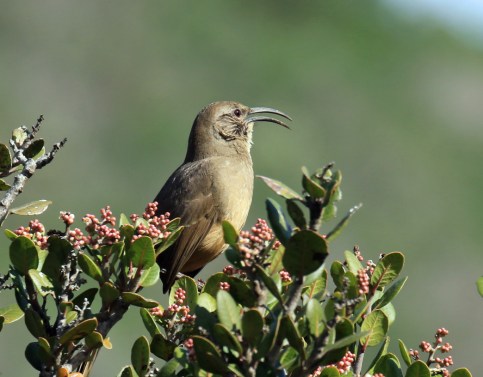
Red Flanked Bluetail – Hells Gate State Park – Lewiston, ID – June 4, 2017

red-flanked-bluetail7

red-flanked-bluetail6

red-flanked-bluetail8r

The light was perfect and the blue tail was a beautiful ID aid.  Everyone was enchanted by this visitor from afar. As all birders/chasers know, it does not always work this way.  Sometimes it takes hours to find the target bird.  Sometimes even after a very long drive and very long search, it is not found at all.  Sometimes, we hear those terrible words – “You just missed it”.  Or “You should have been here yesterday…”  This wonderful experience balanced some of those painful misses.
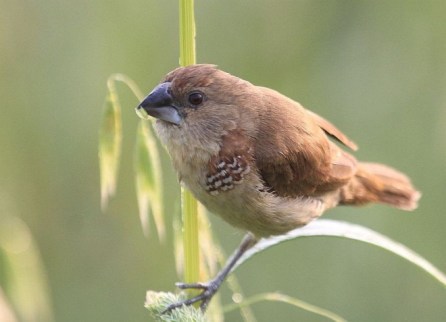
It was not yet 9:30 and I was ready to head off.  I had to be back home by evening so I figured I would try a few more spots and then call it good.  Keith told me of a Northern Saw Whet Owl that should be easy to find in Swallows Park back across the river in Clarkston.  He said it would be facing the wrong way for a photo but always a good bird.  Another reason to thank Keith, which I did, and then it was off to Swallows Park where I had seen a Glaucous Gull on March 14, 2015.  This was another Keith Carlson aided bird as it was Keith who told me it had returned after I had missed it on an earlier try.  Just to be accurate, Keith was not actually there when I was.  I guess the gull was not Blue enough :-).

Glaucous Gull – Swallows Park, Clarkston – March 14, 2015

0e2de-img_0007

I had learned that the best way to find a roosting Northern Saw Whet Owl was to look for the white droppings on the ground below a roost tree.  I was concerned that with the snow and ice, I would not be able to see any.  Sure enough, however, the ground was bare and the whitewash was apparent.  It was buried and like Keith said, facing the wrong way, but the owl was easy to find.

Northern Saw Whet Owl – Swallows Park Clarkston – January 4th 2017

nswo

My next stop was to try for a Glaucous Gull that had been seen at the Clarkston/Asotin County dump.  When I got there I realized two things – the gull was not there and neither was the sun shade for my camera lens.  I hoped it had somehow come off unnoticed while I was trying for a shot of the owl, so I returned to Swallows Park and fortunately found the sun shade under the tree – where the owl had not moved even a fraction of an inch, so still no face for a photo.

Now it really was time to go.  A Lesser Black Backed Gull had been reported near Chief Timothy Park on the Snake River which was on the way home, so I made that my plan.  Within a mile of the park, there were indeed many gulls but none with dark backs/mantles.  Surprisingly, however, as I was scanning the gulls, a very pale gull flew in and landed long enough for a scope view to confirm that it was a Glaucous Gull.  But before I could get a photo, a Bald Eagle flew overhead and all the gulls scattered.  I waited 5 minutes hoping for their return, but it was not to be.  A couple of Mourning Doves were pretty diversions.

Mourning Dove – Chief Timothy Park – January 5, 2017

mourning-doves

The long trip back was uneventful and without any “special birds”.  There was lots of wind and in a couple of places, trucks ahead of me kicked up enough snow to make visibility at least briefly almost nil.  What I did see along the way back was a very large number of raptors and several hundred Horned Larks.  The hawks were almost evenly split between Red Tails and Northern Rough Legs – more than 35 of each.  There were also many Bald Eagles, over 20 American Kestrels and a single Merlin.  I thought I saw a Northern Shrike perched but I was not able to turn around and go back to check.

Horned Lark – Highway 26 – January 4, 2017 (Photo through window)

horned-lark

If I had not seen a single other bird, the Red Flanked Bluetail with photo would have made the trip a great success.  Thanks again to Keith Carlson for his company and guidance.  I am hoping that a Blue Grosbeak will show up in Clarkston this year.  If so I am sure Keith will find it and share.