Marching Along in Kittitas County – Ebird Comparisons for March 2016 and March 2017

Ebird has been a wonderful addition to the birding community in many ways – making organizing, preserving and sharing information on a personal, community, national and international level much easier.  It is a very powerful analytical tool as well allowing birders and researchers to compare and contrast our data and that of others over time and from place to place.  This blog post compares data from my Ebird reports from various trips to Kittitas County from March 2016 and March 2017.  It in part updates two posts from last year and my post on my previous trip to the area on March 16 this year.  That was covered as part of “Birding in Dibs and Dabs over Miles and Miles” (posted on March 18, 2017).  The two earlier posts from 2016 visits were: “Kittitas County Birds – Changing Experiences in March” (posted on March 28, 2016) andKittitas County March 5, 2016″ (posted on March 6, 2016)

Last year I visited the area three times in March – once on a scouting trip for a later Seattle Audubon trip, then on the trip itself and then again on March 30 with Brian Pendleton that included going further east.  This year I went there on a very windy day and when there was still a lot of snow in the Westernmost part of the county on March 16 and then I returned with Steve Pink last Friday, March 31st.  Comparing results on of the trips for the two years trips provided a fun opportunity to use some of that Ebird power.

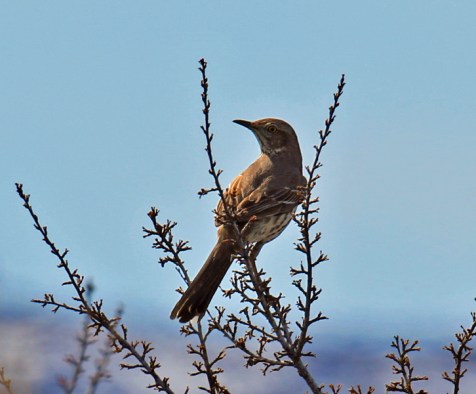
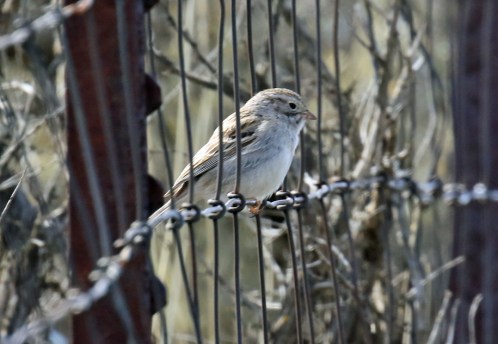
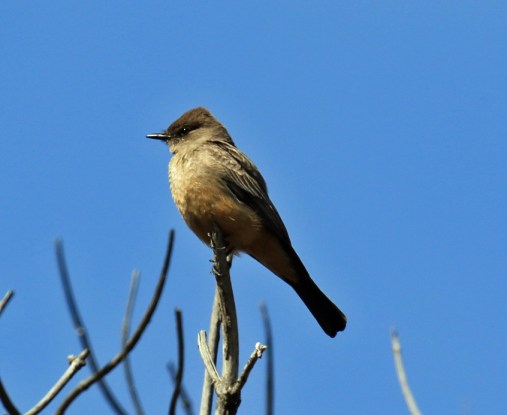
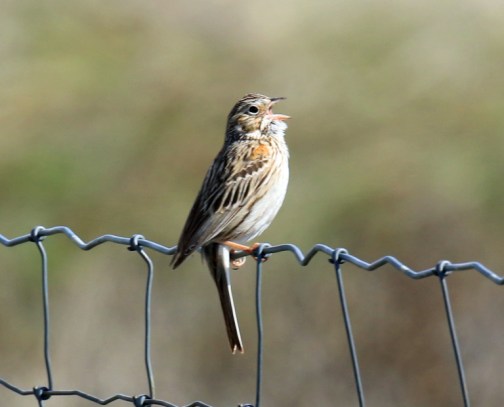
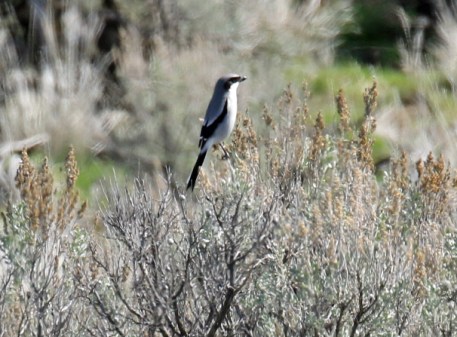
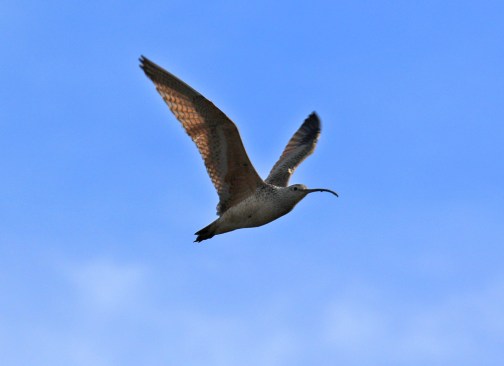
Combining all observations from 2016 and 2017 results in a list of 103 species.  Interestingly, there were almost the same number of species seen in each of the years: 71 in 2016 and 72 in 2017 even though there was one fewer trip in 2017 and one of the 2017 trips had only 40 species.  With a total of 103 species seen, there obviously were unique observations one year that were not seen in the other.  There were a total of 42 such unique species observations. Of these only six were from this year:  California Gull, Hairy Woodpecker, Long Billed Curlew, Savannah Sparrow and Wilson’s Snipe.  Photos of many of the species seen (in either year) have already been included in the earlier blog posts.  I am adding some from the most recent visit on March 31st below.

Sage Thrasher

Sage Thrasher - Copy

Brewer’s Sparrow

Brewer's Sparrow - Copy

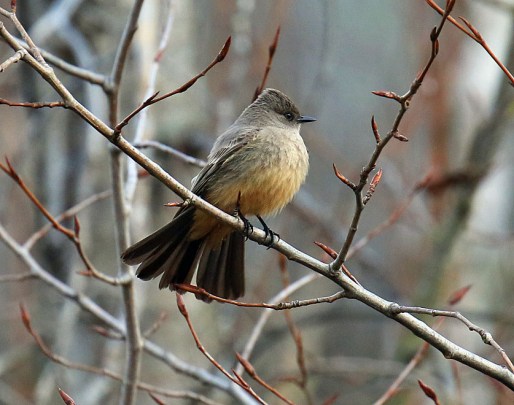
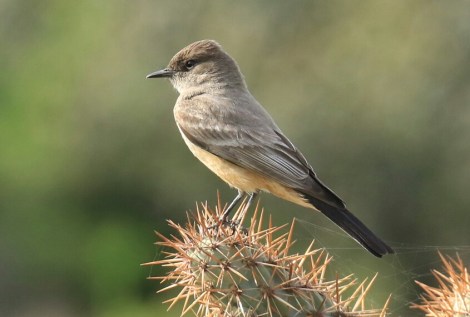
Say’s Phoebe

SAy's Phoebe - Copy

Vesper Sparrow

Vesper Sparrow - Copy

Loggerhead Shrike

Loggerhead Shrike - Copy

Long Billed Curlew

Long Billed Curlew Flight1 - Copy

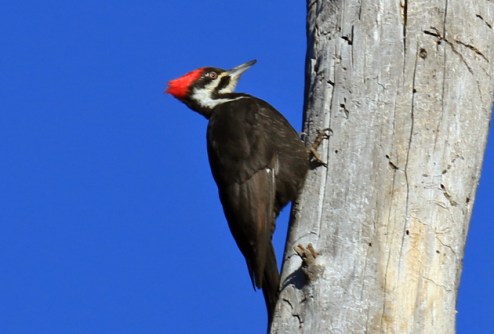
Pileated Woodpecker

Pileated WP - Copy

Turkey Vulture

Turkey Vulture Perched - Copy

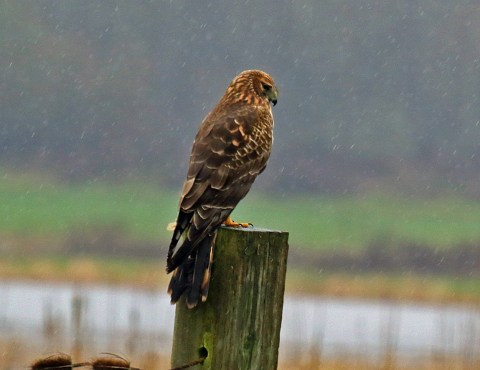
Rough Legged Hawk

Northern Rough Legged Hawk - Copy

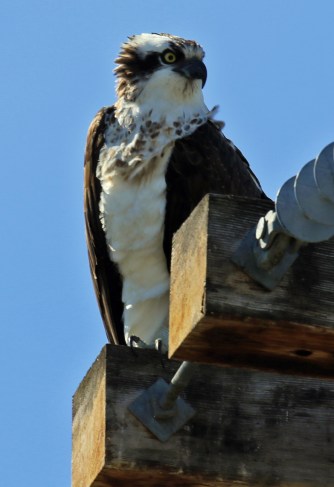
Osprey

Osprey - Copy

Although I am not a “County Lister” per se, Ebird does keep track of observations by county and my Kittitas County list stands at 199 species.  I hope to return to one of my favorite birding areas in the State soon and get that 200th species.

Seeing Red – and a Little Rusty Too

This is my second blog post in two days and certainly was not planned.  It just popped into my head after a very fun day chasing (and finding) the Rusty Blackbird that was being super-cooperative at the Fred Meyer parking lot in Bellingham, followed by a close encounter with grebes and loons at the Blaine Marina.  After so much rain, it was finally sunny today, making for better photos and particularly highlighting the bright red eyes of those grebes and loons and thus the blog topic.  I have to, and will, include a sidebar about the Rusty Blackbird, but those red eyes got to me and I started thinking of all the birds with those sparkling eyes.  More birds probably have black or yellow or orange eyes, but why do so many have red ones.  I will do some research or maybe some reader of this blog knows the answer, but for now, this post will recount some Redeye experiences from today and then catalog some of my photos of other birds with red eyes that are very cool birds.

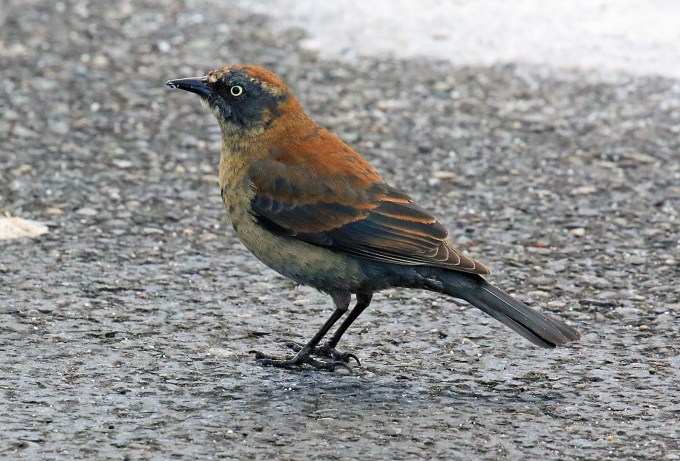
But first the Rusty Blackbird.  It was discovered by Noah Sanday at the Fred Meyer parking lot in Bellingham on Thursday. Rusty Blackbirds are seen in Washington every year but are uncommon and usually uncooperative.  They are generally loners in large flocks of other birds that are black – European Starlings, Brewer’s Blackbirds and/or Red Winged Blackbirds.  Hard to pick out at all, they are even harder to photograph because they disappear into the flocks and the flocks themselves are always reordering themselves and often skitterish.  Just when you get on the Rusty Blackbird, the whole flocks takes off and even if they return to the same spot, the Rusty is in a totally different spot and you have to start the search all over again.  The Whatcom County bird was special not only because the location was so accessible but because it was associating with very few other birds – often with just two more – and it was very confiding – remaining unfazed even when surrounded by very interested birders.  It moved back and forth between the Fred Meyer’s lot and the Costco lot across Bakerview Drive but it had been seen consistently for three days.  My only good photo of a Rusty Blackbird in Washington was at Crescent Lake in early February 2015 and I was looking forward to another.

Rusty Blackbird – Crescent Lake – February 4, 2015

Rusty Blackbird2

Ann Marie Wood and I arrived at the area around 8:00 a.m. and drove both lots and saw only a couple of Starlings and a single Brewer’s Blackbird.  At first we also saw no other birders, but then we saw Paul Baerny with a cup of coffee.  He had arrived 15 minutes before us and had also driven both properties without success.  We split up with promises to call if any of us found the blackbird.  About 10 minutes later, Paul called and he had the bird.  It was on the parking lot ground near Fred Meyers and we raced over to join him.  It was feeding on some salt with two Brewer’s Blackbirds, easy to find, easy to approach and easy to photograph.  Hurray!!  We watched it for 20 minutes and within that time more birders arrived and all they had to do was to find us – an easy way to find the bird.  As repeated often in my blog posts, it is not always this easy, but it sure feels good when it does.  Many more people saw the bird throughout the day.

Rusty Blackbird – Bellingham – March 19, 2017

Rusty Blackbird

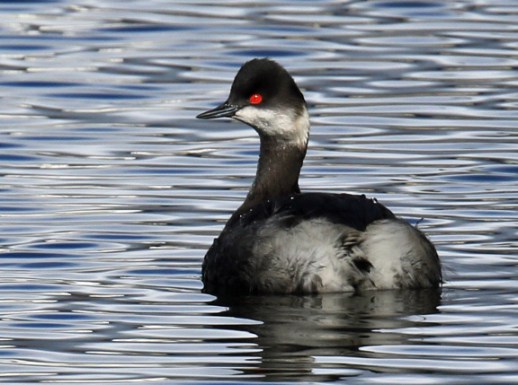
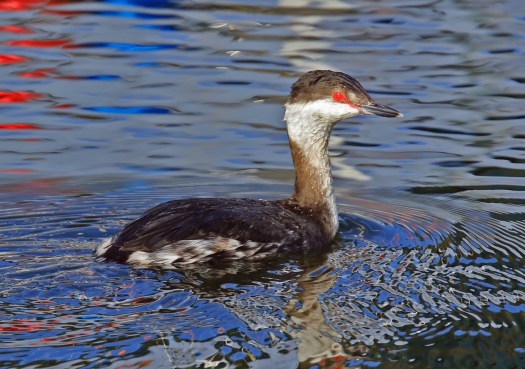
It was only 9:30 and the weather was great.  My friends Melissa Hafting and Ilya Polyaev had great views of Eared Grebes in the Blaine Marina on Saturday and were heading back there today.  We decided to join them there and look for the grebe – not rare but not common and if close by, unusual and a good photo op.  This begins the transition to birds with red eyes.  We found two Eared Grebes among the far more numerous Horned Grebes and the red eyes of each species were striking indeed.

Eared Grebe – Blaine Marina – March 19, 2017

Eared Grebe1 Eared Grebe5

Horned Grebe – Blaine Marina – March 19, 2017

Horned Grebe

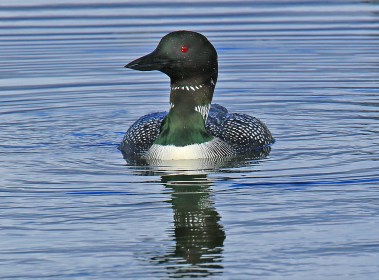
Continuing the Redeye journey, there was also a very cooperative Common Loon in breeding plumage – very photo friendly – red eyes blazing.

Common Loon

Common Loon Common Loon4

There were also Pied Billed and Red Necked Grebes in the Marina but they have dark eyes.  We did not see the other Washington Grebes – Western and Clark’s and guess what – they do have red eyes.

Clark’s and Western Grebes (Lind Coulee)

Western and Clark's Grebes

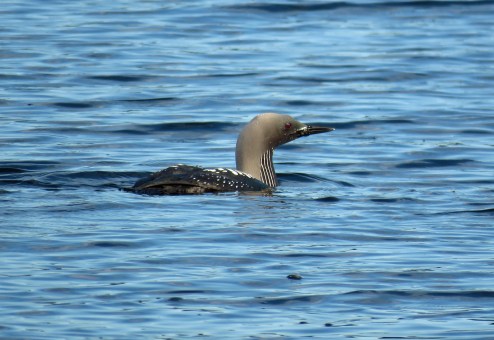
We also visited nearby Semiahmoo Spit where we had more Horned Grebes and Common Loons.  We did not see them there today, but it is a good place for both Red Throated and Pacific Loons – and yes you got it – they, too have red eyes.

Red Throated Loon

Red Throated Loon Breeding

Pacific Loon

Pacific Loon

Never seen there but another loon with red eyes is the Yellow Billed Loon – included in an earlier blog post this – the one up close at Rosario Head.

Yellow Billed Loon

yellow-billed-loon4

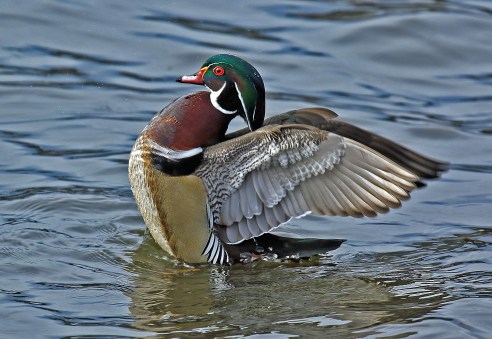
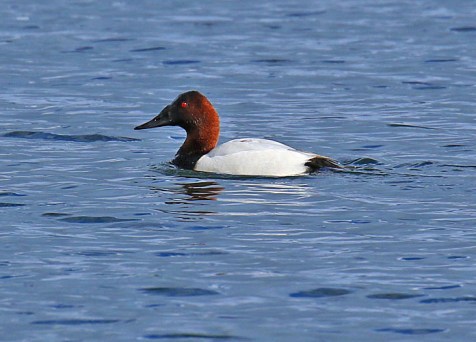
With today’s loons and grebes in mind and with those red eyes so prominent, I wondered about other birds with red eyes.  Not going to include stories for each one (at least not now), but a quick search of my photos came up with lots of other birds – including many, but not just water birds, that have those bright eyes.  Here are photos of ones I came up with.

Wood Duck

wood-duck

Canvasback

canvasback

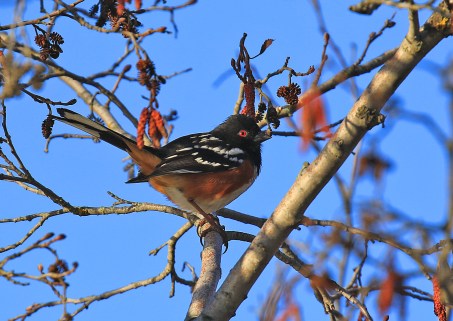
Spotted Towhee

Spotted Towhee

Eastern Towhee

Eastern Towhee

Phainopepla

phainopepla

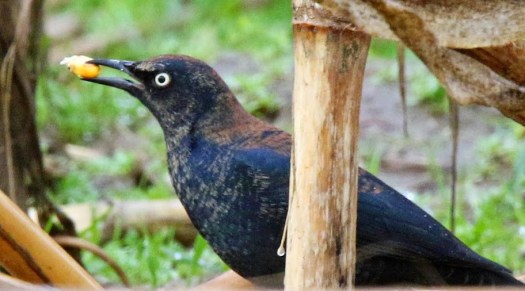
Bronzed Cowbird

Bronzed Cowbird

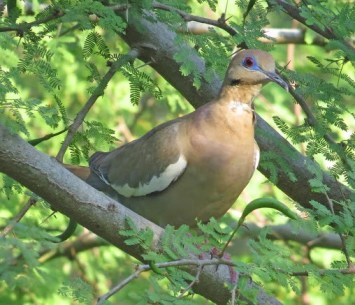
White Winged Dove

White Winged Dove

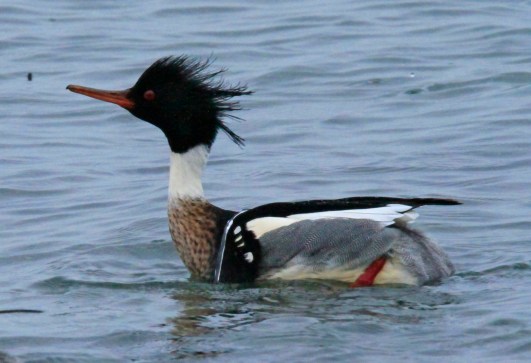
Red Breasted Merganser

Red Breasted Merganser (2)

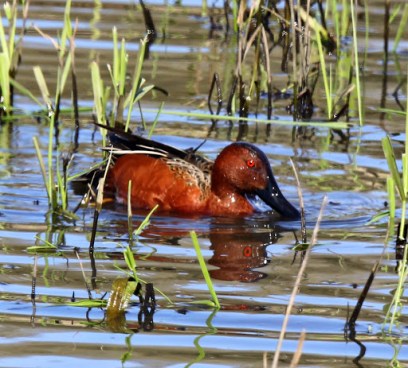
Cinnamon Teal

Cinnamon Teal (2)


Sora

Sora 1

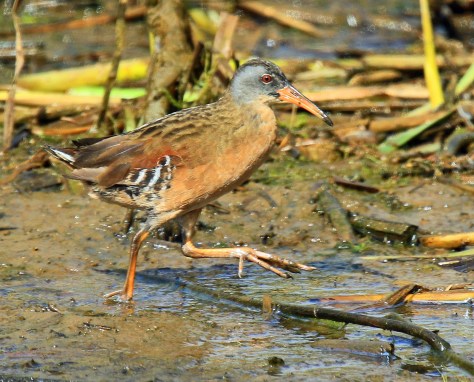
Virginia Rail

2374d-virginia2brail2b2

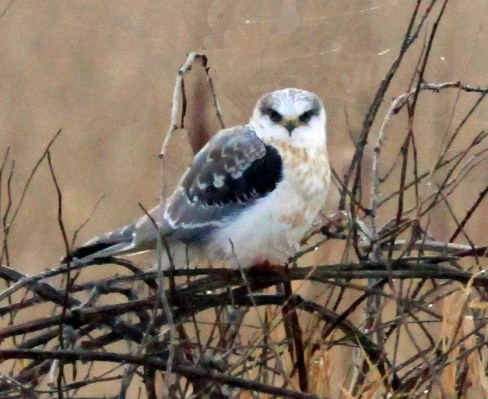
White Tailed Kite

White Tailed Kite2

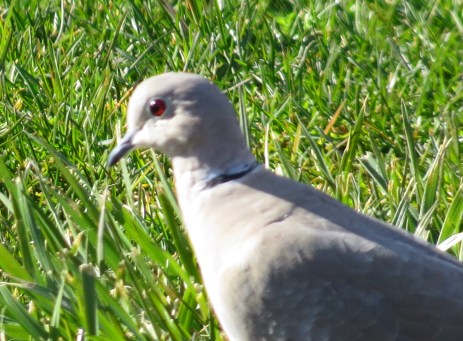
Eurasian Collared Dove

Eurasian Collared Dove

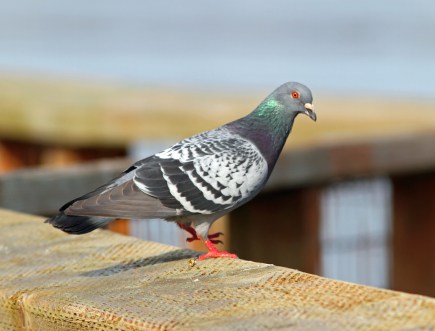
Rock Pigeon

Rock Pigeon

White Faced Ibis

White Faced Ibis 2

American Coot

American Coot3

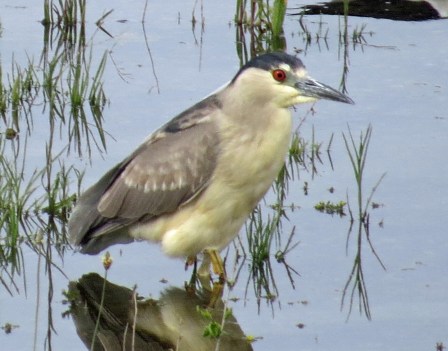
Black Crowned Night Heron

Black Crowned Night Heron

Yellow Crowned Night Heron

Yellow Crowned Night Heron

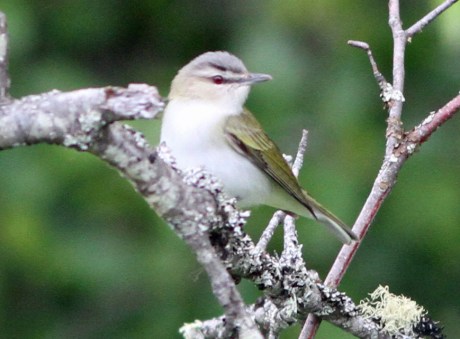
Red Eyed Vireo

Red Eyed Vireo1

I have not looked at my photos from outside the U.S. and I am sure I have missed some birds in the U.S. that have red eyes, but I was surprised to find this many.  Maybe it is a stretch to go from Rusty Blackbirds to red-eyed birds but I think it does take some red to make rusty and in any event it is my blog and I get to do what I want.  Mostly I wanted to include the Common Loon and Eared Grebe photos from today.  I could have stopped there but it was fun to broaden the scope.

Most importantly, it was an excellent day with great birds and – finally – some great weather.

Birding in Dibs and Dabs over Miles and Miles

After what has seemed like months, there was to be a break in the weather – at least for one day – and NO rain (or snow) was predicted for Thursday March 16.  I had nothing on the calendar for a few days and I have always enjoyed finding the Shrub/Steppe birds as they return to the sagebrush, so I set out early for a trip to central Washington with the possibility of extending the trip for another day depending on how it went.  While there were certainly some target birds, mostly this was going to be revisiting familiar places and just enjoying the time out.  Oh yeah…I also had hopes of seeing some Sandhill Cranes.

Even at 5:15 a.m. there is too much traffic, but the trip down I-405 was not too bad and there seemed to be nobody else on the road once I hit I-90 going East.  Snowing or not, getting over Snoqualmie Pass has been a big problem of late, with many closures and delays for avalanche control.  No problems today and I was at my first stop – Bullfrog Pond – just as there was enough light to see.  But there was tons of the snow on the ground so not much in the way of bird life or of access.  There was no snow there at this time last year.  I had hopes (dreams) of a very early Red Naped Sapsucker, which I have had there in April but I settled for three other woodpeckers, Northern Flicker, Hairy Woodpecker and Pileated – none close enough for a decent photo.

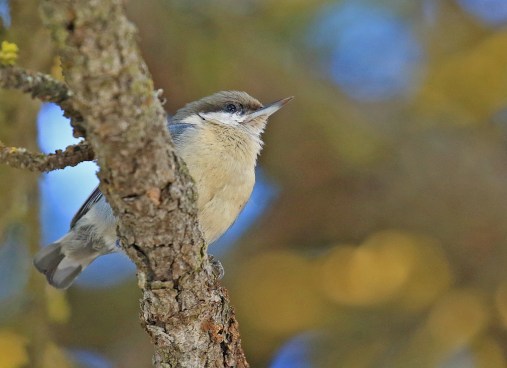
On these trips, I head next for the Northern Pacific Railroad Ponds in South Cle Elum.  Not as much snow as when I visited last month and the ponds were not frozen.  And no surprise, much better birding.  The “target” here is the aptly named little Pygmy Nuthatch which nests in the area.  When I got to the right spot I immediately heard their high pitched piping call and located several birds including one going into and out of its cavity nest.  When two came in pretty close I was able to get a nice photo.

Pygmy Nuthatch

Pygmy Nuthatch1

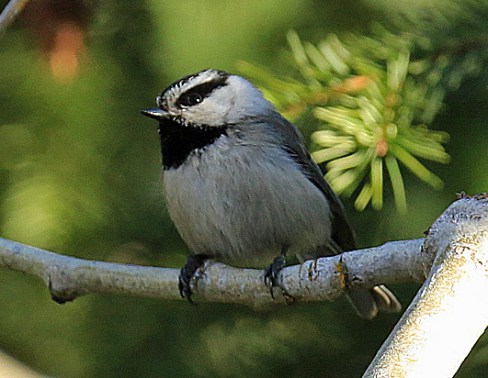
On the road to the fish hatchery, I coaxed in a beautiful Mountain Chickadee (also reliable here) but despite its fervent singing I could not get a White Breasted Nuthatch to come in for a photo.  I was happy to capture the sparkling red eye of a Spotted Towhee though.

Mountain Chickadee

Mountain Chickadee1

Spotted Towhee

Spotted Towhee

There was still too much snow to access a favorite feeder spot in South Cle Elum where I usually find Cassin’s Finches and often Evening Grosbeaks, but I did find a few Cassin’s Finches high up in a tree near the old railway station, directly into the sun so a photo will have to wait.  Trying to lose some extra pounds, I did not stop at the Cle Elum Bakery and settled for some coffee before heading off to Ellensburg to look for a California Scrubjay that has been hanging around near Second Street.  About this same time last year, we visited the campus of Central Washington University (a short distance away) where we had a Townsend’s Solitaire, Red Crossbills and a single White Winged Crossbill.  Those birds were not back, but finding the Scrubjay was a nice substitute.

California Scrubjay

California Scrubjay

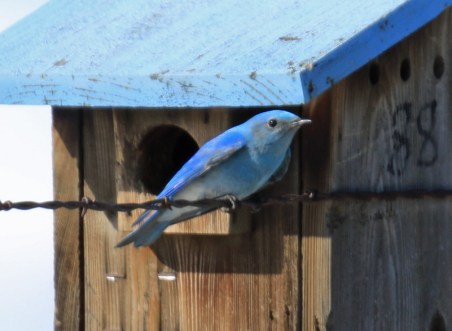
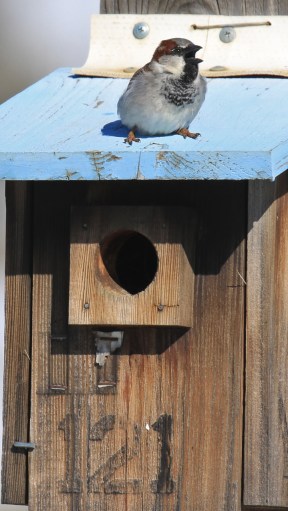
Now it was time to visit the sagebrush or shrub steppe area.  I was expecting to find Western and Mountain Bluebirds, Say’s Phoebes and Sagebrush Sparrow and hoping to see Loggerhead Shrike, Sage Thrasher, Vesper Sparrow and maybe even a Brewer’s Sparrow all of which I have seen in the area by this time.  I first went south on Umptanum Road out of Ellensburg where the Bluebirds were almost guaranteed and where up on Durr Road I had seen most of the other birds.  There was still some snow around (not on the road which was pretty muddy and wet) but the wind was picking up, and that never helps.  I easily found numerous bluebirds where the efforts of many in putting up and maintaining nesting boxes has been very successful.  I also had several Say’s Phoebes but no other birds of note. The only birds on Durr Road were Dark Eyed Juncos and another Mountain Bluebird.  There were lots of House Sparrows on the beginning of Umptanum Road with a couple seemingly very interested in one of the nest boxes.

Mountain Bluebird

Mountain Bluebird

Western Bluebird

Western Bluebird

House Sparrow at Nest Box

House Sparrow

Not finding any sparrows was disappointing, but they were more likely along Old Vantage Highway, so I was still optimistic heading off to favorite spots there.  However, the wind picked up and either that or my poor birding resulted in finding almost no birds anywhere in the area.  One Mountain Bluebird and again some juncos and that was it.  I met two other birders at the ranger house stop and they had a similar experience – nada. I missed Canyon Wren and Rock Wren at the Rocky Coulee site, so a complete bust.  Undaunted (mostly) I continued on to my favorite Canyon Wren spot about 8 miles down Huntzinger Road.  The wind continued pretty strong and the best I could do was a singing Rock Wren deep in the Canyon that would not come in to playback – unusual.

Now what?  Although it was possibly a bit early, I thought I would try for Sandhill Cranes in the Othello area.  Maybe I went to the wrong spots (many of them) or maybe it was early, but I found no cranes and spent a lot of time looking.  It was decision time – head home with meager success for the day or commit to a second day and concentrate on points south.  I chose the latter and began the long drive to Fort Simcoe where I knew I would find Lewis’s Woodpeckers, and then after staying somewhere in the area head off to Lyle and then over to the Clark County refuges where I figured I would find the cranes and have a reasonable chance for Wilson’s Snipe and Red Shouldered Hawk.

Fort Simcoe State Park is a wonderful spot – especially when there is nobody else there.  This was the case when I arrived -probably because the Park was closed.  Fortunately it was ok to walk in past the gate and I had a couple of Lewis’s Woodpeckers almost immediately.  My favorite spot for them is Oak Creek Canyon where they are often perched on snags at eye level.  Here they are usually high up in the oak trees, so the challenge is to get one lower, unblocked by branches and with the sun in the right place.  It took some doing, but there are so many woodpeckers (I saw at least 15 and probably several times that many throughout the park), that eventually I got some good photos – really a beautiful bird.

Lewis’s Woodpecker

Lewis's Woodpecker1

Overnight accommodations are limited in the area and I eventually found an ok place in Goldendale.  I awoke to a heavy frost on the car and a nice sunrise.  If only that weather had continued.

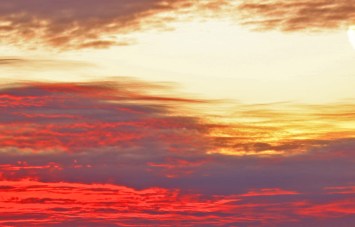
Sunrise Scenery and a Silhouetted Windmill

Sunrise Sky  Windmill at Sunrise

Usually when I head off on a bird trip there is a set itinerary and a tight schedule (luck dependent).  It was pretty obvious from the preceding day’s experience that there was a lot of freelancing, and since I had no commitments and am not trying for a giant list this year, I thought I would try some new territory before heading to Lyle.  Russ Koppendreyer had reported seeing some Bonaparte’s Gulls at a park off Roosevelt Ferry Road in eastern Klickitat County.  I keep track but am not a driven/dedicated County Lister, so seeing one in Klickitat County was no big deal, but why not try something new. So I headed off east on Highway 14.  It is pretty country – but also BIG country and I had not realized how far east I was to travel.  When I got to the place, there were no Bonaparte’s Gulls, but there were some other birds I had not seen in Klickitat County before, and as I was leaving I heard a staccato call and then a chorus that I thought might be a Lesser Goldfinch.  My hunch proved right as there was one on a distant wire across an uncross-able field.  So that was a big bonus.  I added a lot of new birds for the county (mostly waterfowl) and enjoyed the journey – although I was again a bit off on timing.

I headed back west along Highway 24 to Lyle and then went to the Balch Lake area hoping to find an Acorn Woodpecker.  With varying amounts of effort, I have always found this species there.  It took a lot of doing but I again found one near where I had three last year on Tuthill Road.  I did have at least three Lewis’s Woodpeckers in the area and several Flickers and I wonder if maybe these species are out-competing the Acorns.  Now I was off to Ridgefield Refuge – back to Highway 24 and the beautiful Columbia Gorge.  Sometime I hope to spend many days there exploring – really a beautiful area.  Along the way, passing a rock face near the Crawford Oaks Trailhead, I saw some swallows that I thought might be Cliff Swallows, my first of the year.  I pulled over and discovered they were just more Violet Green Swallows – which I saw in the many hundreds over the two days.  The habitat looked good for Canyon Wren and I got one to respond from way up on the cliff face.  Truly a favorite song.

Now the rain really started in earnest, and the remainder of the day was going to be wet and even wetter.  I decided to forego Steigerwald NWR and headed to Ridgefield.  It was pouring the whole trip including my time there along the Auto Tour of the River S Unit.  The refuge is engulfed in water, higher than I remember in the past.  Great for waterfowl, not so much for the birders.  A pleasant surprise was a pair of close by Cinnamon Teal near the start of the route.  There were hundreds (thousands?) of ducks and geese with Cackling Geese and American Coots most obvious.  Also Violet Green and to a lesser degree Tree Swallows everywhere.  A real shortage of raptors but I did have a close beautiful view of a Northern Harrier and a very distant and rainy view of a Red Shouldered Hawk.  There were no visible Snipe or Cranes and the only good passerine was a single Savannah Sparrow.  The rain made viewing difficult at best but the at least 6 Nutria seemed unfazed.

Cinnamon Teal

Cinnamon Teal

Cackling Geese

Cackling Goose  Cackling Geese

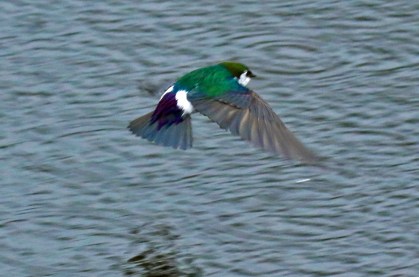
Violet Green Swallow

Violet Green Swallow

Northern Harrier

Northern Harrier

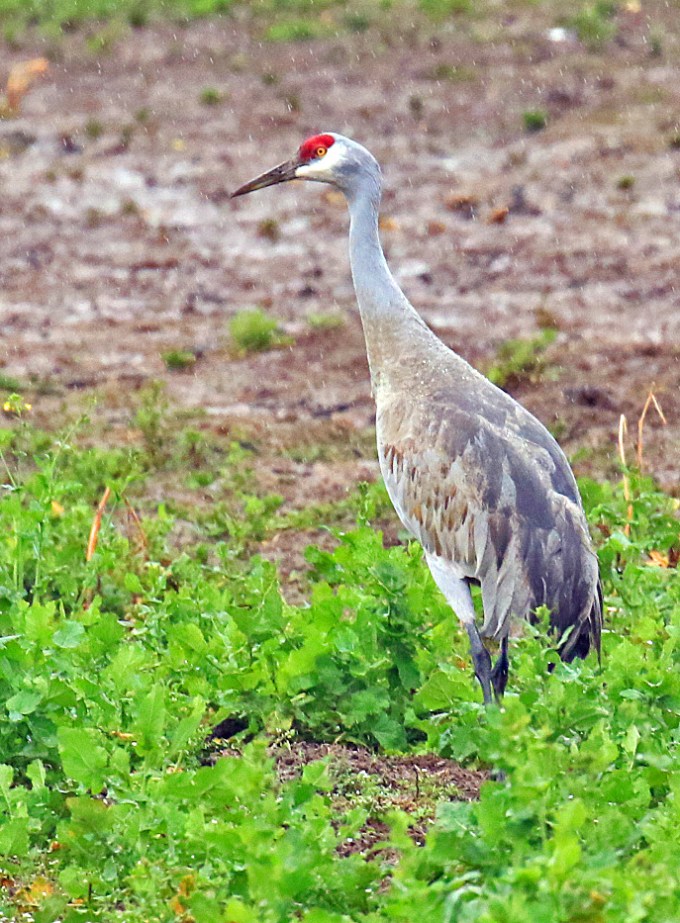
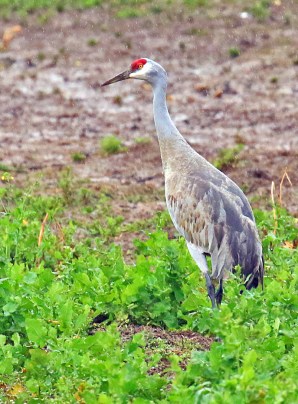
I had seen Sandhill Cranes at the River S Unit many times in the past so that miss was a disappointment – maybe just too much water.  I remembered posts about flocks in the Woodland Bottoms – an unfamiliar area but since it was not far away, I gave it a try.  As I was speeding to a site reported on Ebird, I glimpsed a large group of “Great Blue Herons” in a field along the road – of course they were the targeted Sandhill Cranes and were close and photogenic.  Interestingly when I returned to the spot after searching elsewhere, maybe 15 minutes later, they had all disappeared into some newly planted vines/bushes.  Had they been there originally I would have missed them.  Altogether I found 4 flocks with a total of at least 300 birds.  Very cool.

Sandhill Crane (in the rain)

SAndhill Crane2

Time to head north but it was clear that I was going to hit rush hour.  No other options in the rain, so I headed off.  The rain was horrible and the spray from autos and especially trucks was blinding.  Around Olympia the traffic got very bad and came to a crawl.  Rain or not, I decided to detour to Nisqually NWR still hoping for a Wilson’s Snipe and maybe an American Bittern.  There was but a single car in the parking lot when I arrived and I saw nobody else while I was there.  Again very wet conditions (flooded fields and raining hard) so almost no passerine activity.  Hundreds of Violet Green and some Tree Swallows, but the big surprise was a single Northern Rough Winged Swallow (very poor photo) – the earliest ever for me by 9 days.  Definitely no Bitterns or Snipe and nothing else of note.

Northern Rough Winged Swallow

Northern Rough Winged Swallow

It was now about 5:30 p.m. and the traffic was backed up so far from the northbound on ramp for I-5 that I decided to wait and get a bite at one of the road side “restaurants”.  It being St. Patrick’s Day, the preferred Bar and Grill was so busy, I could not even find a parking space so I settled for the other.  Too many calories of not too good food, but finally I saw that the traffic was at least moving.  It took 30 minutes to go the first 6 miles but then it mostly cleared (until Tacoma) and I was actually home before I thought I would be – even though pretty late.

This was a disjointed trip that often deviated – in approach and results – from whatever little planning there had been.  I ended up seeing a lot of new birds for the year (and for both Klickitat and Skamania Counties).  I had seen some of the expected birds and missed others and had some surprises.  Basically there were dibs and dabs of this and that and even with the rain, a very fun time.  It is nice not “needing” to see any particular species but still nice when some that are enjoyed are seen according to plan or otherwise.  A recurring thought during the trip was just how much open space there is in our state and in our birding areas.  The area along Highway 97 for example is vast and I imagine infrequently birded – at least compared to areas closer to population centers or birding hotspots.  When I was at Russ’s Roosevelt Ferry Road spot, I looked across the Columbia, and Oregon seemed very close.  Maybe not there but at some other such spot on the Columbia and further west, just maybe someday a Wrentit will finally show up in Washington.  Maybe one already has and we have just not been there at that remote unbirded spot at the right time.

A Gull and A Goose but Not Another Gull

To go or not to go that had been the question.  Melissa Hafting, my good friend and birding resource extraordinaire had been campaigning for me to come up to British Columbia yet again to see some new rarities that were being seen near Victoria on Vancouver Island.  As chronicled in my earlier blog “Chasing…Chasing…Chasing” on January 12th this year, Steve Pink and I had ventured to Victoria and were successful (and fortunate) to see the Purple Sandpiper there on Kitty Islet.  Also as detailed in that post, we had not been successful in finding any Skylarks nor the Red Throated Pipit that had been there a few days earlier.  Just like on that trip, I wanted the possibility of at least two new life birds or life photos to justify the time and expense.

The Skylarks still beckoned but even though I also just wanted to see Melissa and bird with her, I needed a second target to justify the trip to Vancouver Island.  That opportunity arose when two Pink Fronted Geese had appeared and were being seen regularly.  Although I had seen these very rare geese last year in Boston over Thanksgiving Holiday, I did not have a photo so I was now happy to make the trip.  Frank Caruso was also interested – not for the geese, but for the Eurasian Skylarks which would be a new ABA bird for him and was missed by the two of us last year when we made a successful visit to find the visiting Redwing – an extreme rarity – a life bird for both of us and a new photo for me as well.  Jon Houghton was also interested in these same birds and was up for the trip.  BUT – there were complications.  One was that the geese were seen regularly – and then disappeared.  A second was that the weather continued to be miserable – decreasing the chance for finding and certainly for photographing the birds and also decreasing our enjoyment.  When the geese were refound – this time an hour north of Victoria, and the weather looked good for Friday – we made tentative plans.  BUT – another complication – the geese disappeared from their new location in Duncan.  With just the single opportunity, I was not willing to make the trip and Jon and Frank agreed.

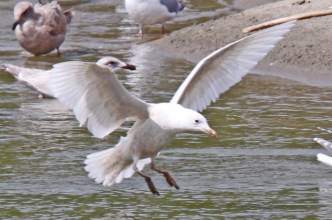
Step back a moment – as the plans for a trip to B.C. were riding that roller coaster, a good bird showed up much closer to home.  At about 4:00 p.m. on Wednesday, March 8, I got a call from Steve Pink who was looking at an adult Glaucous Gull at the Everett Marina.  I had seen and photographed Glaucous Gulls in Washington before, and I had even seen one already in 2017 on my return from the Red Flanked Bluetail trip to Lewiston, ID.  But I did not have a photo this year and this was an adult which I had not seen before, so I raced up there and arrived in time to get a photo – and then five minutes later, the gull flew off – heading north.

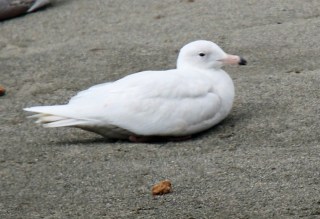
Glaucous Gull at Everett Marine Park March 8, 2017

Glaucous Gull

All of the Glaucous Gulls I had seen before were first cycle birds – appearing much different – almost entirely white and with a dark tip on their pink bills.  My first photo of one was at Swallows Park in Asotin County on March 14, 2015 and I had made that long drive primarily to get that first ever photo.  That sighting seemed to open the door for more sightings and photos as I discovered one near Monroe two weeks later and then found yet another on April 2nd. In fact when I had seen an earlier photo of the Everett bird, I thought there had been a mistake because the adult looked so different.

Glaucous Gull – Monroe – March 2015

Resting  Landing

The rest of the story and the reason for the digression is that the next morning, Frank and Jon searched for the Glaucous Gull for several hours and never found it – perhaps a portent of things to come.  While they were searching I got a message from Melissa that not only had the Pink Footed Geese been relocated but now there was an Iceland Gull that was being seen regularly and easily in Parksville – another hour north of where the geese had been refound.  And to add to the appeal of a trip, the Redwing that Frank and I had seen the previous year was now being seen regularly and more easily than in the previous year.  So in addition to the ever possible Skylarks, there were three additional draws.  The weather looked good for the next day and it was not hard to recruit Jon and Frank.

Iceland Gull in Parksville

Iceland Gull

The plan was to leave Edmonds at 4:00 a.m., pick up Melissa near the ferry terminal in Tsawwassen at 6:40 and be in line by 6:45 – an hour ahead of the 7:45 departure for Nanaimo.  All worked smoothly – actually too smoothly.  We had no traffic, clear weather, and no wait at the border (where yet again the Canadian border guard was friendly and efficient) so we arrived 45 minutes ahead of schedule.  And the ferry was not even half full, so we could have arrived even a half hour later and been fine.  A 5:15 a.m. departure would have been a lot easier on us, but adrenalin is a good substitute for rest, no problem.

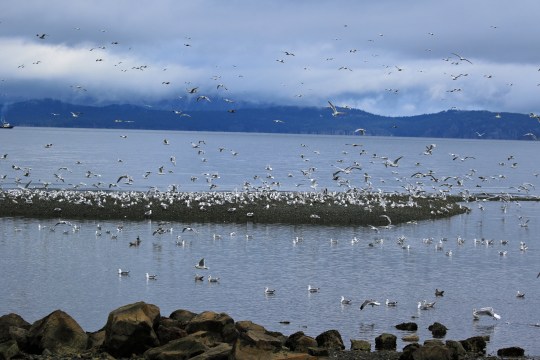
It takes almost two hours to get to Nanaimo.  It was mostly a boring, but easy trip across smooth open water with very few birds seen.  Guy Monty, a gull expert, who had discovered the Iceland Gull met us at “the spot” but there were NO gulls on the field at all. Uh-oh.  But Guy said he had seen it yesterday in the gull flocks in the Bay so we would search there.  There were a zillion gulls in the bay – maybe two zillion.  They gather for the herring roe which were being deposited by unseen herring on the sea grass in the shallow water.  I will not go through all the details, but we really did see thousands of gulls – of many species (Thayer’s, Glaucous Winged, Herring, California, Mew and even a single Bonaparte’s) – in front of us at the first spot and then at 4 more spots nearby.  There were gulls everywhere – but no Iceland Gull.   Iceland Gulls are quite rare in the Northwest.  Frank had seen several in New England and I had seen a single one before, but no picture.  Jon had hopes of seeing them in Iceland when he visits later this year, but he might be too late for them there, so this was a major disappointment AND instead of the 30 minutes originally planned, we had spent two hours and were now behind schedule.

Gulls Were Everywhere in Parksville

Mass of Gulls

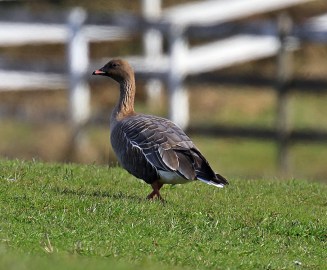
The good news was that Melissa had gotten word that the Pink Footed Geese had been seen that morning – not in Duncan – but back in the Victoria area.  So we set off for the two hour trip.  Each traffic light (and there seemed to be an endless supply) was a frustration, but with Melissa’s expert guidance, we arrived at a parking spot at Blenkinsop–Lohbrunner Road East and headed off on the trail to the bridge from which we hoped to see the geese.  After a short while we could see other birders down at the bridge with cameras and scopes focused on what surely had to be our quarry.  Indeed they were looking at the Pink Footed Geese but the view was through a very thick bramble of shrubs – good enough for identification but hardly for the good photo that I had hoped to get. If necessity is not the mother of invention, then certainly passionate desire is.  The geese were grazing on a grassy field that was blocked by the vegetation but there was a gate (locked, high and not passable) that was adjacent to the trees.  Some other birders had tried for a view from that spot and could not see the geese.  I think this was because the geese were grazing on the other side of a rise and the rise hid them from the perspective of the gate – BUT – the gate was attached to a high wooden fence – maybe 6 feet tall.  I climbed the fence and then sat atop of it and had an unobstructed view and got the desired quality photos.

Pink Footed Geese – Blenkinsop–Lohbrunner Road East – March 10, 2017

Pink Footed Geese

PFGO1 PFGO

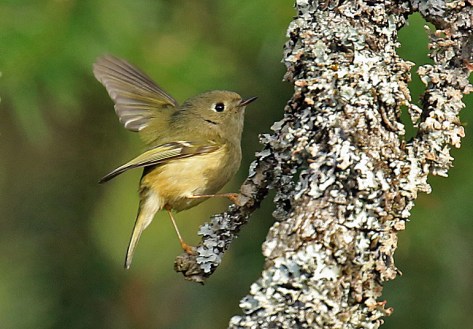
Before the trip had begun, I had expected the Iceland Gull to be the most likely and easiest of the birds to find and the Pink Footed Geese to be the hardest.  What do I know…  Now we were off to try for the Redwing.  Melissa had said it was much more cooperative this year, and a birder we met at the goose site said he had this morning and that it was singing.  But alas birds have minds of their own.  Already running late, we ran into heavier than expected traffic to go the short distance to the Redwing stakeout.  And when we arrived at its favorite holly tree, another birder was already there.  He had failed to see it for the previous 20 minutes.  We waited – and waited – and waited – no luck.  A very photo friendly Chestnut Backed Chickadee and a Ruby Crowned Kinglet were the only birds that cooperated for us.

Chestnut Backed Chickadee

Chestnut Backed Chickadee

Ruby Crowned Kinglet

Ruby Crowned Kinglet (2)

I was admittedly getting very concerned about having sufficient time to find the Skylarks even though Melissa thought they were a sure thing.  Finally, just as we started to leave, Melissa saw a thrush-like bird fly over head and disappear into nearby trees.  So back we went and spent another 20 minutes hoping for an appearance.  But it did not appear for us and we headed off to try for a Skylark.  This was especially disappointing for Jon since Frank and I had seen it the previous year and it would have been a life bird for him.  Unfortunately the time spent without success looking for the Iceland Gull and the long drive and the traffic compromised our efforts.

Redwing (from 2016)

Redwing

We first tried for the Skylarks at the Airport – where Melissa “always” had them and where some had been seen and heard that morning.  Nothing.  We tried another area near the airport – again nothing.  It was getting darker and colder and we only had time for one more spot – the Saanichton fields.  Steve Pink and I had tried those on our visit without success.  Our group walked the road along the fields without success.  At one point, a Western Meadowlark flushed up from in front of us.  We had no clue it had been there as it was hunkered down in the grass.  Shortly thereafter many more birds flushed and then more again.  The light was now pretty bad and it was hard to get a look.  All or maybe all but one had the distinctive broad white tail corners of Meadowlarks.  I thought I saw one without that field mark and Melissa thought she had a pretty good look and that one of the birds was probably a — Skylark.  But we could not get the birds to be still, nor to get a good look – so no Skylarks yet again.

Of course we were disappointed not to see the Iceland Gull or the Redwing or a Eurasian Skylark.  We had only seen one of four targets.  At first blush that sounds like a poor trip, but such was not the case.  Originally we were ready to go if there was only a chance to see the Pink Footed Goose and a Skylark.  My calculation was that with two possibilities, there was at least a reasonable chance at getting one – and if I could only get one, then I would have chosen the Pink Footed Goose.  The Iceland Gull became a major plus but our trip planning to try for that probably not only added a lot of wear and tear but also cost us precious time that if spent differently might have resulted in seeing both the Redwing and the Eurasian Skylarks.  BUT it was definitely worth a shot.  That is the nature of birding for targets – no guarantees and things change.  We visited a lot of good places and had great conversations about birding trips of the past and in the future.  I got far better looks and photos of the Pink Footed Geese than I ever expected.  Some day I will photograph a Skylark and someday Frank will see one.  I may never photograph an Iceland Gull, but I bet Guy Monty will find one next year, so who knows.  It was great to meet him and it was as always great to spend time with Melissa.  I hope that she is by my side when that Skylark is finally captured by my camera.  And I know that there will be many times in the future when we will see rarities – in B.C. or in Washington again.  I look forward to those days.

Mockingbirds, Duck Breasts and Fine Dining -a World with Room for Hunters, Birders and Birds

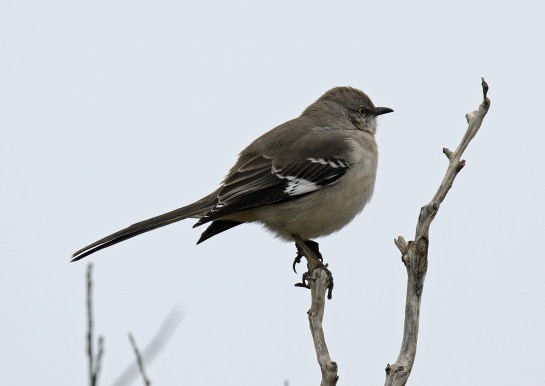
I know this is a different kind of blog post, but particularly at a time when so much of the country is divided into “us” and “them”, maybe it is in order.  In an earlier post, I shared some moments from a trip by Brian Pendleton and me to look for a Northern Mockingbird that had been reported frequently from a residential area in Kirkland essentially as follows:  When we arrived at the designated address in Kirkland, I parked in the driveway behind one of the cars, with the intent to knock on the door (the owners had been described in many reports as very friendly) and ask if they had seen the Mockingbird and if we could take a look.  (However) As soon as he got out of the car, however, Brian exclaimed “There it is!”  Our Northern Mockingbird was perched in the open on a small tree at the adjoining home. It took off to the south.  We followed and found it in a tree three homes away.  It then flew back to the north and as we started to retrace our steps, we saw another fellow walking towards us.  I wondered if maybe my car was parked behind his and was either blocking his way or at least needed an explanation.  This turned into one of those fun intersections on a birding trip.  Brad was the owner of the house next to where the holly bush was located.  He led us to the house with the holly and into the back yard where the Northern Mockingbird was conveniently perched completely in the open on a wire directly above us and next to said holly tree. We also had a great talk with Brad about hunting, ducks, construction (he is a contractor) and birds and birders. Really a good guy – a perfect host for visiting birders.

The Kirkland Northern Mockingbird

northern-mockingbird

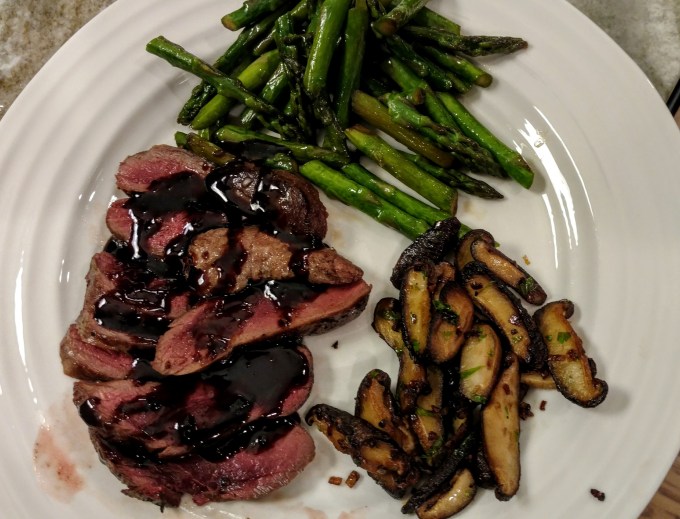
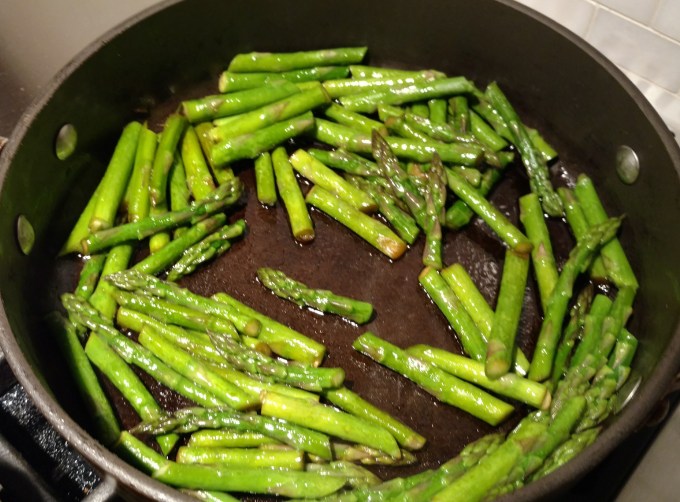
What I did not add at the time was that Brad not only was good company and an expert guide in this case, but when we talked about hunting and conservation, he reached into his well stocked freezer and gave each of us some Mallard breasts.  How cool was that!!  Well last night I got to find out just how cool it really was.  Lynette and I had a chance to cook up the wild duck breasts.  It was an amazing dinner.  Part of the fun was to research all of the recipes for wild game and duck breasts in particular.  I am not a hunter and as best I know, I have never had any wild game and am unfamiliar with a very extensive library of recipes – simple and complex – for duck and many other meats.  We found some that were closer to the complex side but manageable.  I will not go into the details, but we chose three dishes:  young asparagus – steamed and then flavored with sesame oil and sesame seeds, Shiitake mushrooms sauteed in butter, shallots and garlic and the main fare of duck breasts with a sauce that was a reduction of home made black raspberry jelly and some other little touches.

Simmering Wild Duck Breasts

img_20170301_181110425-2

Young Asparagus in Sesame Oil (Sesame Seed Garnish Later)

img_20170301_181836161-2

Shiitake Mushrooms

img_20170301_181823899-2

The Finished Meal

img_20170301_182635274-2

We had read that wild duck tasted a lot like steak and while cooking it certainly looked like that.  The taste was very similar as well – tender and flavorful and the reduction was a great compliment.  It was a great meal – appearance and taste.  Not that I will probably repeat culinary posts very often (ever?) but the meal frankly is worth such mention and wild duck is highly recommended.  But the purpose of this writing is to get back to a theme of many of my posts and of my birding life.  My birding inserts me in situations where there is always the chance for great birds, great places and great people.  Rarely does a trip not include at least one of those, and at the best of times, I get all three.  The Kirkland Mockingbird was a great bird in not such a great place but with the real highlight being the great intersection with Brad – a hunter not a birder.  As I said at the start, our vision is too often of two worlds – ours and theirs.  But the inescapable truth is that it is ONE WORLD – and that world and each of us would be better if we all spent more time finding common ground and value in each other’s perspectives and passions.  Sure, there is the need for all to follow our passions responsibly and respectfully but we are not alone.

There are many wonderful birders AND wonderful hunters out there, just as there are some of each that are not so great.  The early birders like Audubon were collectors who killed the birds to get specimens for identification and study.  Digital cameras have changed that it many ways and in that sense I hunt birds daily but shoot them with the camera only – adding to that kind of collection.  Hunters often are a major source of funds for preservation of habitat where I find my birds and there is a clear benefit to hunters and birders alike.  Hunters are often active in important conservation efforts shoulder to shoulder with birders.  Ethical hunters gather their spent shell casings and have moved away from lead shot.  Maybe they will someday move to copper bullets instead of the lead ones that do much harm to scavengers including the California Condor.  They will do so much more readily if we can come together rather than battle one another.

Meeting Brad and sharing the Mockingbird and then stories together was a highlight of that day.  I will fondly remember that and last night’s wild duck meal for a long while and it will always remind me to find room for others as I pursue my own passionate course.  Really leaves a good taste to do so…   Thanks Brad.

Quickies

Plan A had been to go to Victoria B.C. and get two new ABA photos and maybe improve two others.  The two new photos would be of the Pink Footed Goose that had been seen there regularly for several weeks and of an Eurasian Skylark – a bird now found only near Victoria in the ABA area.  The possible improvements would be of the Redwing that somehow had magically returned to the same holly bush where I had seen it last year and gotten a very poor photo and of the Purple Sandpiper which was still at Kitty Islet where I had seen and photographed it (poorly) earlier this year. My only record of the Pink Footed Goose was from Massachusetts last Thanksgiving where photo conditions were poor and my only records of the Eurasian Skylark were from Victoria in 1973 and on San Juan Island in 1976.  I was not taking photographs in those days and the Eurasian Skylark is now extirpated on San Juan Island.  Just before heading north to execute the plan, the Pink Footed Goose disappeared and I decided not to make the expensive trip for just the one new photo.

On to Plan B which was a three day trip to the Okanogan.  Field trips with the Audubon Society and the Washington Ornithological Society were full, so I planned to go it alone the following week pending their reports.  Their reports were good – for raptors – but completely devoid of the northern finches for which the Okanogan is a favorite place for birders.  If the reported Snowy Owl, Great Gray Owl and Gyrfalcon were even probable, I may still have gone; but it is a long trip, and the chances were not great to refind even two of the three birds, so no go on that plan either. The trip to the Okanogan was not really for specific sightings anyhow.  I just wanted to get in some birding.  I had other personal matters to attend to anyhow, so I went with Plan C: revisit some local spots where some appealing birds were being seen and which I had not visited in a while.  Hopefully get some photos and just enjoy the moments.  Plan C was for “Quickies” – short trips here and there – save the wear and tear and expense of the longer trips and move some of those personal things off the plate as well.

The first sojourn was to Boe and Thomle Roads where a juvenile Golden Eagle was being reported.  There are dozens of Bald Eagles in the area but a Golden Eagle is fairly rare.  I had photos of Golden Eagles in Washington but not great ones and none showing the white wing and tail patches, so that photo was the allure.  When I got to the spot where the Golden had first been reported I was welcomed by a Short Eared Owl, but no eagles were in sight.  One can never complain about any owl, especially one posing to have its picture taken.  When the perched owl was attacked by a Northern Harrier, I just barely got a photo – not technically very good but a fun shot.  And if no Golden Eagle was found, this encounter would have made the trip worthwhile.

Short Eared Owl Buzzed by a Northern Harrier

harrier-and-short-eared

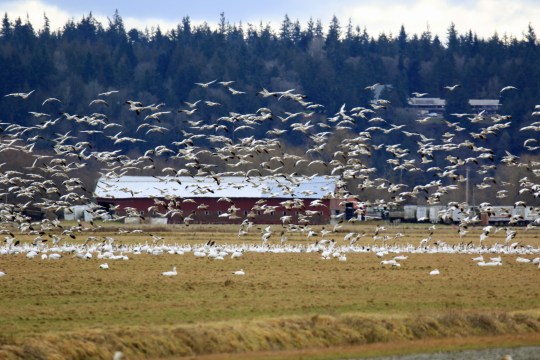
After a lot more searching I saw the Golden Eagle fly onto a distant power pole where near a very large flock of Snow Geese and also very close to some Bald Eagles.  The resulting photo was taken from great distance but does show the wing windowpanes.

Golden Eagle with Bald Eagle in the Background

golden-and-bald-eagles

Snow Geese Flock

snow-geese1

I later learned that a Prairie Falcon had been seen in the area – but that was not on my list for the day – but no complaints – a very nice “quickie”.

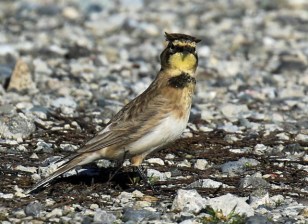
A couple of days later, knowing I was going to be in Bellevue for a personal matter, I decided to stop by Marymoor Park to see if I could find the Horned Lark that had been reported there.  Had I gone to the Okanogan, I probably would have seen thousands of Horned Larks in the fields in the Waterville Plateau, trying to find a Snow Bunting or Lapland Longspur among them.  And I had already seen some in Washington on the way back from my Red Flanked Bluetail chase.  But I had never seen one in King County.  I was the only one there when I arrived at the designated area and was confronted by a very large grassy field next to a very large closed gravel parking area.  A first scan revealed nothing on the field, but that is often the case with larks as they are most easily seen as they fly from one spot to another – identifying a location where you can then focus in and see them better.  OR – they can often be seen “graveling” on the roads between the fields.  With that in mind, before walking the entire field, I focused attention on the gravel parking area and sure enough the tiny bump I saw proved to be the Horned Lark.  The sun was perfect and the photos were pretty nice.

Horned Lark at Marymoor Park

horned-lark1  horned-lark

As a side note, ground birds apparently often use gravel – or grit – to help them digest the whole seeds they eat.  The gravel helps them grind the seeds to better get to the nutrients.  Is this using a tool?  There are other examples of similar usage of foreign objects – sticks to poke and rocks dropped on clams to break the shells.  Maybe that will be a future blog post.  Tool or not, the Horned Lark on the gravel was another good “quickie”.

The next “quickie” was even quicker.  Joe Sweeney does a weekly (daily) vigil at Richmond Beach Park and shares his observations with the community on Tweeters and Ebird.  He had reported a Townsend’s Solitaire – a species common in the right habitat area east of the Cascades but quite rare west of the mountains.  I had seen one at the Union Bay Natural Area some years ago, but a lovely, if subtle bird and definitely worth a “quick” trip especially since it would give me a chance to revisit a spot that was not that well known to me.  I was coming back to Edmonds from another personal matter this time in Seattle and stopped by Richmond Beach in the late afternoon.  I called Joe who provided some good insights on places to look and was directed to the “caretaker’s” house.  There was only one house there, not designated as having any formal relation to the park, but that had to be the place.  As I approached I heard the unmistakable call and then song of a Townsend’s Solitaire.  It seemed to be coming from some brush very near the house.  Usually I see Solitaires perched in the open, especially when they are vocal.  This guy was buried and I could not get a look.  I tried playback – very responsive but no movement and again no look even though it now seemed to be on the other side of the house and I had certainly not seen it fly.  Finally the location seemed to change again, and now there it was on the top of an evergreen providing an opportunity for a photo even if from the rear only.

Townsend’s Solitaire

townsends-solitaire

I had located the sound quickly but it had taken at least 15 minutes to finally get the photo – still definitely qualifies as a “quickie” especially since it is not more than 8 miles from my home.

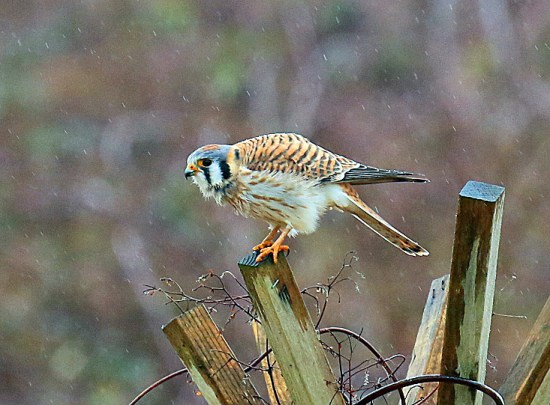
The next trip requires an expanded definition of “quickie”.  I was off to the Green River Natural Area to try again for the Red Shouldered Hawk that seemingly everyone that tried was finding there.  Brian Pendleton and I had failed to find it on an earlier visit. It is less than 30 miles from home so not a great distance and thus at least a “quickie” compared to the Okanogan or Victoria for example.  It had been reported as being seen and heard near “the grassy knoll”.  I am not all that familiar with this location and certainly did not know where the grassy knoll was located.  The only “grassy knoll” I knew was the infamous one in Dallas from which Lee Harvey Oswald had shot President Kennedy. (My mind cannot help but think of getting Donald Trump near some grassy knoll with a … ok never mind.)  Not knowing where that was, I entered the area from the only spot I knew – on the west side.  Exploring without any focus in the light rain, I came upon a beautiful American Kestrel posted and posing.  The photo captured the bird and the rain drops – not a Red Shouldered Hawk but it made the day worthwhile.

American Kestrel in the Rain

american-kestrel

A few minutes later I saw what appeared to be a small buteo flying from the northwest south and then disappearing in a stand of trees.  As I was walking to the area, I saw another birder coming from the East in the same direction.  It was Steve Giles who had been there some time also looking for the Red Shouldered Hawk.  He too had seen the buteo.  We tried in vain to relocate it.  And we then spent the next hour walking the area together including to the spot where Brian and I had bushwhacked on our earlier visit and where we had at first thought we had heard the Red Shouldered Hawk but then found a Red Tailed Hawk.  Our search was futile.  I then followed Steve by car to the “grassy knoll” where there was no Red Shouldered Hawk nor any president or…  So not really a “quickie” but definitely a nice time despite missing the target.  Steve is a great birder and it was fun just to visit and to get some exercise away from the world.

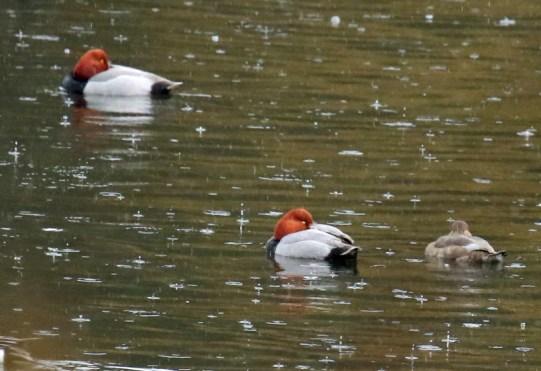
After missing the Red Shouldered Hawk, I felt I needed a successful chase and why not keep it “Red”.  I have never heard the explanation, but for some reason every winter Redheads – the duck kind – return en mass to the pond by what is now the former Weyerhauser Headquarters in Federal Way.  It was not far from Kent, so it was an easy next stop.  The ducks did not disappoint as there were at least 32 Redheads on the pond along with a Trumpeter Swan , Mallards, Wigeon, Gadwalls, Buffleheads and Ruddy Ducks.  This indeed was a “quickie”.

Redheads at the Weyerhauser Pond

redheads

I had not been out birding with Ann Marie Wood or Frank Caruso for a while.  When I called Ann Marie, it turned out that she had some other obligations but wanted to squeeze in a little birding that morning.  So we opted to go to Magnuson Park to see if we could find the Say’s Phoebe that had been reported there.  This also gave Frank and me a chance to get better familiarized with Magnuson Park since Ann Marie birded there often.  I had invited Brian Pendleton to join us, but he had appointments later in the day so he could not.  But he had not heard about the Phoebe, and since he lived very close to the Park, he said he would look for it early in the morning before he left for them.  Being the excellent birder he is, Brian found the Phoebe and shared specific location info with us when I called upon arriving ourselves.  When we got to the open area where the bird had been found, it looked promising but no Say’s Phoebe was in sight.  After a couple of minutes, I thought I heard its call in the distance.  Then again – now closer.  The Say’s Phoebe flew into a small tree not far from us and we all got good looks.  I slogged out into the wet muck and got the pretty good photo below.

Say’s Phoebe at Magnuson Park

says-phoebe2

Ann Marie then gave us a great tour of the Park pointing out her favorite spots.  This included the cove at the north end where a good looking Canvasback was found.  While not as showy as some of its cousins, I think the Canvasback is elegant or handsome.  Always nice to see – especially with that bright red eye.

Canvasback

canvasback

The Say’s Phoebe had definitely been another “quickie” and now there was a Canvasback bonus.  A good morning indeed.

Tine for one more “quickie”?  Well sure, why not.  Yesterday I had some time to kill in the afternoon and decided to look for a Wood Duck.  This is a species I would like to show Lynette and I had always been able to find some at the parks at the North End of Lake Washington – Log Boom Park in Lake Forest Park and Juanita Bay in Kirkland.  It turned out to be easy to find them at both places with one along the Boardwalk at Juanita Bay being particularly photogenic.

Wood Duck

wood-duck

A bonus was a surprise near Pier 3 at Log Boom Park.  I had walked out past the piers and then as I was returning, a small dark bird flew past me up ahead.  I immediately thought Green Heron but also thought it unlikely that I would find it as it appeared as if it had kept going.  Nope.  It landed out in the open and posed for several photos.  Really nice looking bird – although not much can compete with a Wood Duck.

Green Heron at Log Boom Park Marina

green-heron1

green-heron

So this day was a “Quickie Two-fer” so to speak.  Other good birds as well and a couple of miles of walking all told.  It started to rain as I got back in my car – so even the weather had been cooperative.

In addition to seeing some targeted birds, there had been many other nice birds this past week – several (like Townsend’s Warbler, Red Breasted Sapsucker and Hutton’s Vireo) being incidental to other non-birding activities.  The “quickies” and the incidental bonus birds are a reminder that there are birds and bird stories all around us.  Just got to get out and go look for them.

Owls by Day – You Should Have Been There

There is a magic – a special appeal –  to seeing owls.  In irruption years, Snowy Owls might be seen in the daytime – even in quantity.  In the winter, Short Eared Owls can be seen hunting favorite fields – closer to dawn and dusk but sometimes even in the middle of the day.  While there are occasional exceptions to the rule, for most other owl species, seeing them in the daytime means finding a roosting spot or a nest and getting what are often not terrific views.  Every year in February Mike and MerryLynn Denny take on a bunch of highly appreciative birders to show them owls in their beloved Walla Walla County – in the daytime.  Not surprisingly it is a very popular trip, and this year I got to go along.  LOTS of owls and LOTS of fun.

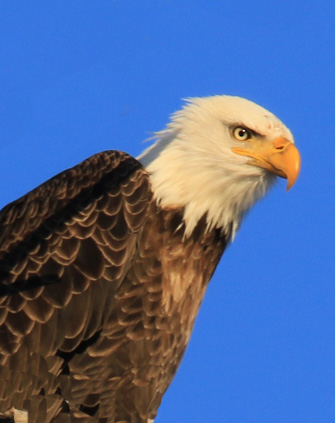
It has been a harsher than usual winter in Walla Walla County and there was lots of snow.  No problems on the roads, but our hikes were often through crunchy snow.  An initial worry was that the snow on the ground would prevent us from seeing the telltale whitewash on the ground that is often a first clue that an owl is roosting in the tree above.  Fortunately the trees acted as shields or umbrellas so the ground below was clear and there was lots of whitewash in our first stop – Hood Park where there are ALWAYS Northern Saw Whet Owls – but…not this day.  We had been greeted by an American White Pelican with its breeding horn clearly visible and there were lots of Bald Eagles including one beautifully silhouetted against a brilliant blue sky but not very many other birds and definitely no owls.  Some birds that were not so great to find were Mallards – or at least parts of them as we found feathers and skeletons and wings all over the ground – probably the work of the eagles and Red Tailed Hawks.

White Pelican

american-white-pelican

Bald Eagle

bald-eagle2

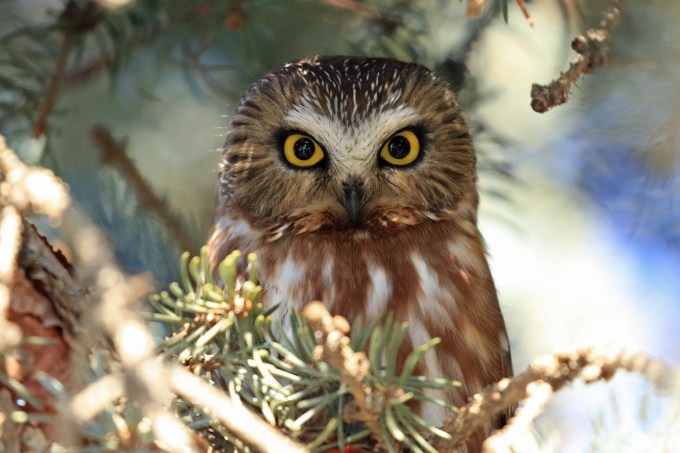
We had trudged through a lot of snow and did not have a lot to show for it.  In addition to knowing every birding spot in the County (and every rock and tree and flower and bush etc) the Dennys are ever optimistic and were sure we would find some owls at our next stop – Charbonneau Park. At first it looked like a repeat of our first stop – lots of whitewash but where were the owls.  Oh – wait – there’s one – and what a little beauty.  A Northern Saw Whet Owl buried in the thick branches of one of the pine trees.  Unlike what is often the case, there was a clear view through the branches and this little 8 inch beauty was in good light and was very photogenic.

Northern Saw Whet Owl

northern-saw-whet-owl

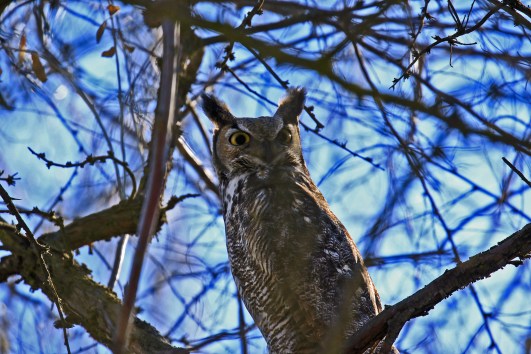
The first owl sort of broke the dam and the rest of the day was filled with owls – another Saw Whet at Charbonneau and then three more at Fish Hook Park.  And three Great Horned Owls at Charbonneau and three more at Fish Hook.

Great Horned Owl

great-horned-owl1

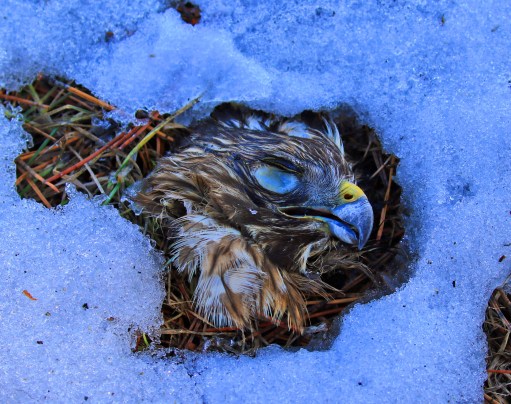
We also had a probable Barn Owl as we were leaving Charbonneau and then at least two more Barn Owls at Fish Hook.  The latter were very uncooperative – always flying out of trees just as we got to them and always out the back of the tree giving only brief views in flight.  I botched one good look and photo op with the wrong setting so can only show one very mediocre flight shot. An unusual photo op was of the disembodied head of a Red Tailed Hawk on the ground in the snow – probably the result of Great Horned Owl predation.

Red Tailed Hawk Head

red-tail-hawk-head

A More Typical View of a Northern Saw Whet Owl

036a7137

Barn Owl in Flight

Barn Owl Flight.jpg

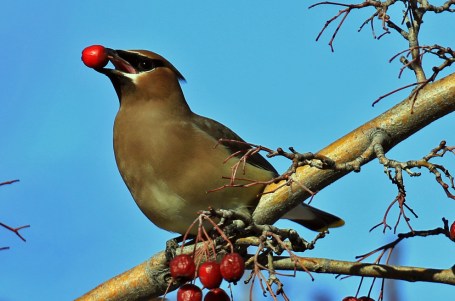
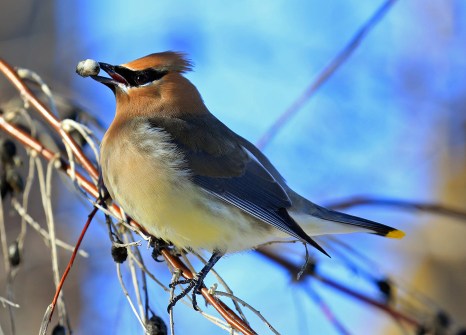
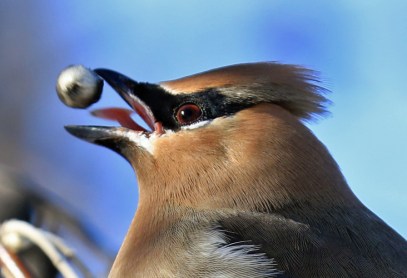
I missed some Long Eared Owls seen by others as the group split on trails in the snow but as will be obvious later, there were many others.  What I did not miss was a flock of Cedar Waxwings feasting on berries and Russian Olives and providing some very nice photo ops.

Cedar Waxwings

cedar-waxwing2

cedar-waxwing

cedar-waxwing-head

I was not tracking every stop that we made, but Mike and MerryLynn had scouted out numerous Long Eared Owl roosting spots in thickets along Sheffler Road and and Smith Springs Road.  With spotting help from others , especially eagle eyed Dan Reiff I was able to finally see the owls in the very thick brush and even got some photos.

Long Eared Owl

long-eared-owl

long-eared-owl2

A week earlier, the Dennys had located a Harris’s Sparrow along Smith Springs Road in a thicket with other sparrows.  We only got intermittent and distant views, but there was no mistaking the bird and I got a couple of ID photos.  Mike said that historical records had numerous Harris’s Sparrow records for the county each winter.  Now they are few and far between.

Harris’s Sparrow

harriss-sparrow3

There were more Long Eared Owls ahead but there was another possibility and the group was excited at the prospect of seeing a Great Gray Owl.  A pair had been seen regularly, including earlier that morning, on Lewis Peak Road.  We traveled to the spot and it looked perfect – hunting meadows and great trees for perching.  Dusk was approaching and the timing was just right – but the owls had not gotten the message and pulled a very disappointing no-show.  It would have been a life bird for many on the trip.

The gang regrouped later at a nice Mexican restaurant in Walla Walla.  It had been a great day.  5 Northern Saw Whet Owls, 7 Great Horned Owls, 13 Long Eared Owls, 3 (or maybe 4) Barn Owls.  After dinner, some of the group (not me) joined Mike and MerryLynn for one more owl – a Western Screech Owl. It was not an “owl by day” but it added a species and brought the total to 29 or 30.  Quite a show – and the Dennys were super as always.

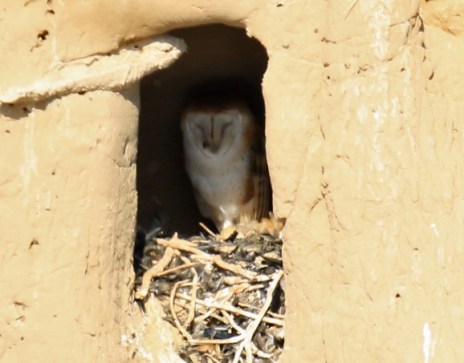
The next day on the way home, I stopped at the Dodd Road Barn Owl cliff and had one clearly visible in its cavity nest.  So make that 30 owls for sure.  Wow!!

Barn Owl in Nest Cavity

barn-owl-on-nest

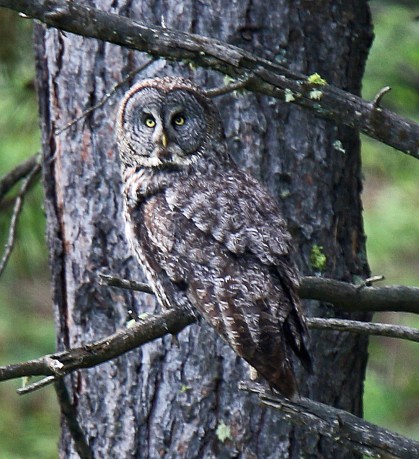
My only Great Gray photo in Washington was with the Dennys in 2015 on Biscuit Ridge – not far from Lewis Peak.  I want another Great Gray Owl and another photo.  I will have to return.

Great Gray from Biscuit Ridge in 2015

Great Gray Owl (2)

California Dreaming Part IIIB – The San Diego Zoo – The Birds

My previous post was originally intended to cover our day at the San Diego Zoo including both the mammals and the birds seen, but it got so long with just the fabulous mammals that I decided to do this separate post for the birds we saw.  Have to repeat again that the Zoo was fantastic in every way (except for the signage and map).  Great collection, great docents, great exhibits and great maintenance and even great food.  Highly recommended for everyone.

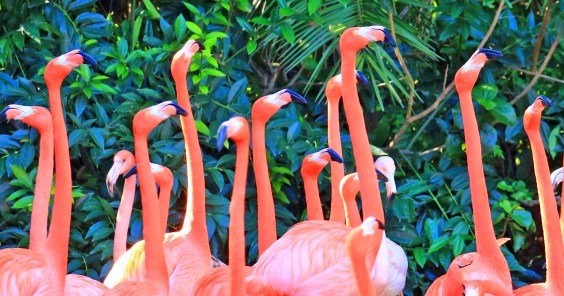
There are many bird aviaries at the Zoo and a number of other bird exhibits.  We visited many but not all barely scratching the surface and foregoing some of the more spectacular species and exhibits.  We simply ran out of time.  Someday I hope to return to see the birds missed – including some of the birds that were probably in the aviaries we did visit – but just as in birding in the field – and especially in rain forests for example, you just do not see everything that is there.  A spectacular exhibit is immediately seen by visitors near the entry.  Pretty hard not to see and enjoy a flock of  Caribbean Flamingos in a pool close by.

Caribbean Flamingos

caribbean-flamingoes

In the same pool there were Pelicans, Great Egrets (that are probably local and not part of the collection, Beautiful White Faced Whistling Ducks and Pelicans.  I saw huge numbers of both Greater and Lesser Flamingos in Africa in 2007 and an American Flamingo on Sugarloaf Key in Florida almost 40 years ago.  I will be revisiting the Keys in April and would very much love to see and photograph one there again.  Cannot imagine a better photo than here at the Zoo, however.

Great White Pelican – another African species and one that I saw on that trip to Kenya in 2007.

great-white-pelican

White Faced Whistling Duck – also seen in Kenya in 2007.

white-faced-whistling-duck2

In no particular order, I am going to include photos and nominal comments on my favorites among the dozens of birds that we saw.  Going to start with my absolute favorite bird on my world life list so far – the Secretarybird.   I was fortunate to see a few on that Kenya trip in 2007 and then some more at Kruger Park in South Africa in 2014.  On that first Africa trip it was one of three “must see” birds. The other two were African Hoopoe and Bateleur Eagle – successful for all of them.  In South Africa we saw one Secretarybird catch a snake – they are raptors.

Secretarybird – I was thrilled at how well these photos turned out.  The bird was literally a few feet away – almost too close to focus with the telephoto lens – and behind thick glass.  We had an interesting talk with one of the docents as to the derivation of the Secretarybird’s name.  The theory I had heard before is that it came from the feathers jutting out behind the bird’s head reminiscent of the quill pens that 19th Century secretaries on the streets of England tucked behind their ears, while its grey and black body was reminiscent of their tailcoats. The docent said it may more likely be that the name derives from the Arabic ‘saqr-et-tair’, or ‘hunter bird’.  Either way – a truly spectacular animal.

secretarybird-head1

secretarybird-head

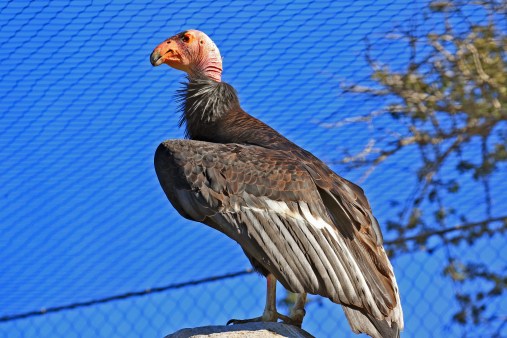
Another spectacular bird not in an aviary was the American Condor.  San Diego Zoo participates in a breeding program to recover this highly endangered species.  The 23 remaining birds in the wild were captured by 1987, and it was feared this largest of North American birds might become extinct.  Today there are more than 435 Condors, more than half of which are flying free in the wild.  Our program speaker at the Washington Ornithological Society meeting last night, Tate Mason of the Peregrine Fund, said that the biggest threat is the use of lead bullets which the Condors ingest from dead game as they scavenge their huge areas.  If copper could be used in place of lead, it is expected that thousands of Condors could survive throughout their former range that would include my State of Washington.  I have seen the closely related Andean Condor and would love someday to see an American Condor and how great if it were in Washington.

American Condor

american-condor

There are at least five aviaries at the Zoo – maybe seven.  We only visited three and all were terrific with exotic birds flying free.  Some were birds that I had seen in the wild in Africa or Australia or South America.  Others were new to me and in most cases the views of the ones I had seen elsewhere were much better here with the limited even though large area of the aviaries.

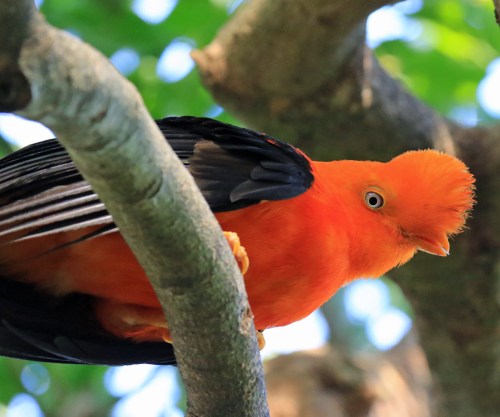
Cock of the Rock – I had a fleeting view of one in Peru and the ones here at the Zoo were much much cooperative and photogenic.  Another spectacular South American species.

cock-of-the-rock1

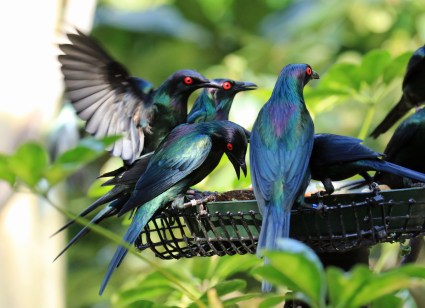
I remember my first Golden Breasted and Superb Starlings from my Africa trip – how different from the relatively plain bird that so often is a junk bird on my trips or at feeders in the U.S.  The Golden Breasted is pictured below.  Just as noisy and intrusive but so much prettier than our imported Eurasian Starling pests, the Metallic Starlings in one aviary fed voraciously as they posed on a feeding platform. I had seen similar groups in their native Australia.

Golden Breasted Starling

golden-breasted-starling

Metallic Starlings

metallic-starlings

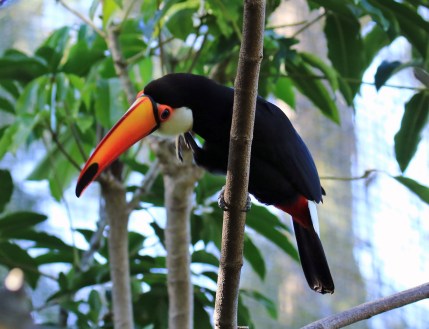
Anyone visiting Central or South America cannot help but being impressed by the various large billed Toucans and closely related Aracaris.  The Toco Toucan and Curl Crested Aracari were both familiar to me from Brazil.  The former was an unavoidable begging pest at several outdoor meals. I wonder if Toucans really do like Fruit Loops?

Toco Toucan

toco-toucan

Curl Crested Aracari

curl-crested-aracari

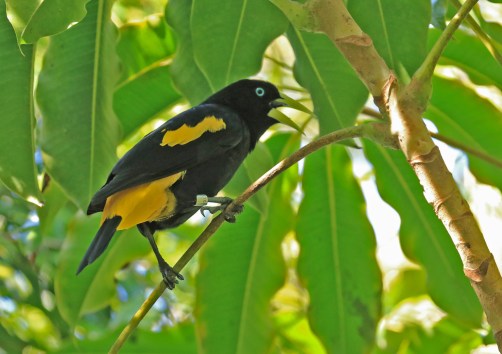
Another well remembered bird was the Crested Oropendola seen on a fabulous trip to Trinidad in  1978 – my first international birding experience – and where I also saw another of the striking San Diego aviary birds – a Yellow Rumped Cacique.

Crested Oropendola

crested-oropendola2

Yellow Rumped Cacique

yellow-rumped-cacique

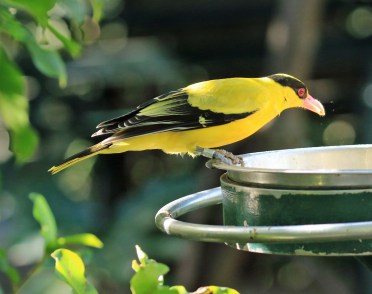
Another spiffy yellow and black bird posing for us in one of the aviaries was the Black Naped Oriole. I had seen a single one at the Kanha Tiger Preserve in India in 2011.

black-naped-oriole

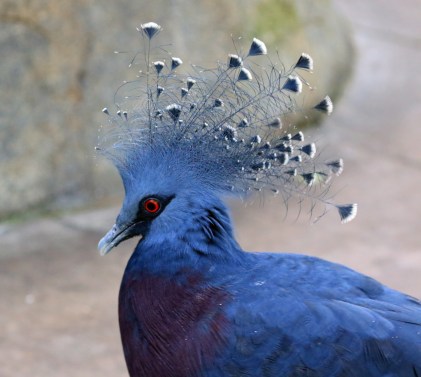
Some of the most spectacular birds in the aviaries were the pigeons and doves.  We particularly liked the very showy Victoria Crowned Pigeon that almost stepped on our toes.  It is found only on New Guinea a place I someday hope to visit.

Victoria Crowned Pigeon

victoria-crowned-pigeon

Probably the most colorful pigeon was the Nicobar Pigeon.  It is a native of islands east of India and onto the Malay Peninsula – an area it would be great to visit someday.  The first picture is of the whole bird and the second zooms in on the incredibly colored back.

nicobar-pigeon    nicobar-pigeon-back

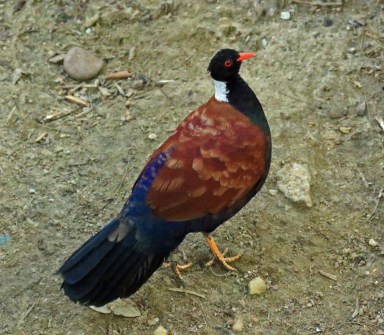
Another spectacular pigeon did not seem to be a pigeon at all – looking more like a pheasant.  Not surprising since it is the Pheasant Pigeon, another bird found only in New Guinea.

Pheasant Pigeon

pheasant-pigeon

I had not seen any of those species, but I had seen and actually remembered the Wonga Pigeon from Australia which would have seemed a lot more exotic if it were not for those others.

Wonga Pigeon

wonga-pigeon

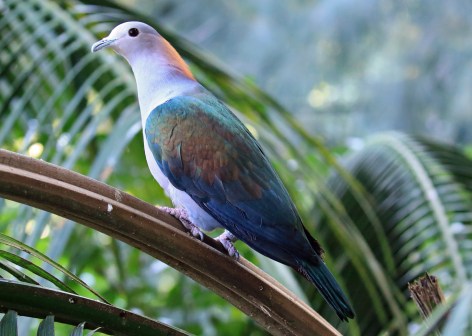
The last of my featured pigeons/doves are two that are “green”, the Green Imperial Pigeon found in South Asia and the beautiful and smaller Emerald Dove.  The last name was familiar to me but I checked my world list and found that I had been thinking of the Emerald Spotted Wood Dove which I had seen in Africa and may well have been at the Zoo as well but not seen by us.

Green Imperial Pigeon

green-imperial-pigeon1

Emerald Dove

emerald-dove1

Looking at this last picture again reminded me of the observation that most if not all of the birds in the Zoo are banded.  So if any birders out there come up with one of these exotics – sorry just an escapee and not countable.

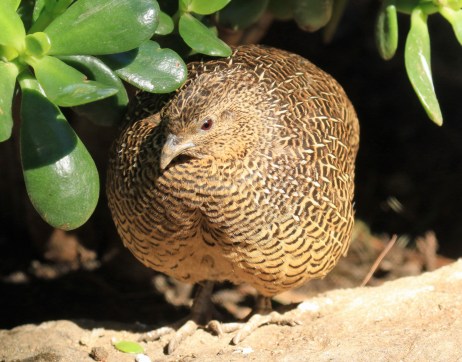
I don’t know if there was a separate exhibit of pheasants or their relatives at the Zoo but I am sure there were many on display somewhere.  We only saw one – the Madagascar Partridge – a very plain but handsome little bird.  On a return trip I will search for more.

Madagascar Partridge

madagascar-partridge

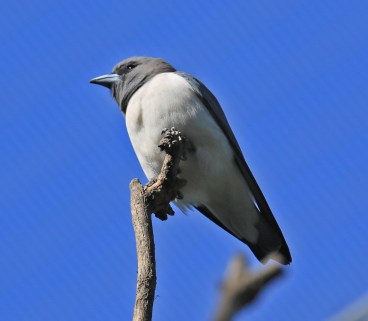
There were smaller birds as well – some familiar and some new to me.  One familiar bird was the White Breasted Wood Swallow from Australia – small flock was perched together on a wire as our North American swallows often do.

White Breasted Wood Swallow

white-breasted-wood-swallow

Another familiar bird was the Black Throated Laughing-thrush.   I had forgotten where I had seen the bird but upon checking my Ebird records I found it was a species I had seen at the marvelous Mai Po Nature Preserve outside of Hong Kong on Christmas Day 1977. That brought back great memories of that wonderful place – so close to the crowded city that epitomized density and commerce but had fabulous birds reminiscent of the Everglades.  On that one incredible day I saw 81 species that included large waders, shorebirds, raptors and a large number of very diverse passerines.

Black Throated Laughing-thrush

black-throated-laughingthrush1

Two other birds I had seen elsewhere were the Gouldian Finch which is endemic to Australia and the Blue Naped Mousebird – one of the 500+ species I had seen on my three week trip to Kenya.

Gouldian Finches

Blue Naped Mousebird

blue-naped-mousebird1

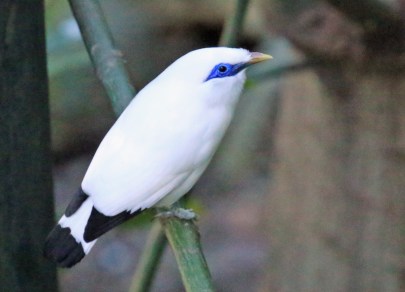
Two smaller birds I had not seen elsewhere were the Collared Finchbill and the Bali Myna – both striking birds – and respectively from China/Taiwan/Vietnam and of course Bali.

Collared Finchbill

collared-finchbill

Bali Myna

bali-myna1

I will end the parade of pictures with one of the only shorebird I noted in any of the aviaries but I probably missed others and expect there were others in other aviaries or exhibits at the Zoo.  It is the Egyptian Plover which is also sometimes called the Crocodile Bird for the probably apocryphal story that they supposedly go into the open mouths of crocodiles and remove rotting meat.  There is no anecdotal or photographic evidence of this but they do inhabit banks of rivers where crocodiles abound in sub-Saharan Africa.

Egyptian Plover

egyptian-plover

I don’t know how many of the almost 10,000 species of birds in the world can be found at the San Diego Zoo.  They have birds from every continent (except Antarctica I believe) and the collection includes many rarities and definitely many beauties. The Zoo is a major participant in breeding and conservation programs and is a wonderful resource for those reasons in addition to its important role in education and exhibition.

As I said earlier, we did not visit all of the bird exhibits.  We did not see the Cassowaries, Kiwis, Hummingbirds or Birds of Paradise, nor the Steller’s Sea Eagle or Harpy Eagle.  Guess I will have to come back – and what a pleasure that will be.

California Dreaming Part III – The San Diego Zoo – The Mammals

I have heard about the San Diego Zoo for my whole life but had never been there.  In part that reflects a preference to see “the real thing” in the “real world”. I have been fortunate to have traveled to wild places with wild birds and wild animals.  I remembered visits almost 60 years ago to the National Zoo in Washington, D.C. where I grew up.  While I have have forgotten the animals I saw there, I do remember the cages – the cells – steel bars, concrete and little else.  I knew that much had changed and zoos were much more humane (“animalane?”).  Now there were exhibits with open space, plants and water features etc.  I had seen this to some degree at the Woodland Park Zoo in Seattle.  If these changes in attitude and treatment had not been made, I would not have gone to the San Diego Zoo at all.  I was also aware of the role that zoos play including especially the San Diego Zoo in research and in breeding programs to sustain endangered animals.  I wanted to see what many consider one of the best zoos in the world.

Rarely do experiences greatly exceed expectations.  Never has an experience exceeded expectation like this visit to the San Diego Zoo did.  It was marvelous.  We thought it might be a three hour visit.  Seven hours after arriving, we were still going strong and there was a great amount that we did not see.  We easily could have filled another day.  Let me get the one complaint out of the way now.  Everything else will be super positive.  The complaint is that the maps and signage are challenging at best.  We were often confused as to where we were in relation to where we wanted to go and had little sense of the best way to get anywhere.  This was not helped by many construction projects and resulting detours, but completion of those projects will undoubtedly be great additions, so really no problem there.

The Zoo Map – Colorful but Confusing in Use

map

That’s it – the only negative.  Now for the positives.  There seemed to be docents everywhere – helpful, knowledgeable, informative, personable, clearly enjoying there work.  They helped overcome some of the negative impact of the signage issue.  Indeed, there should have been a suggestion on the maps in bold print: “Just ask a docent.”  Entrance to the Zoo was expensive and there were many possible added costs for private tours, bus tours, tram tours, skyway tours etc.  There were also many souvenir chops with mostly quality goods priced accordingly.  And many food places to spend money as well.  BUT…the parking was great and free – a rarity in the world these days.  The food was actually quite good, very diverse and given a trapped audience even reasonably priced.  (I wonder what a hot dog went for at the recently concluded Super Bowl.)  Something that was apparent every minute was how well the entire facility was cleaned, maintained and presented.  We saw workers polishing metal work, sweeping, and cleaning everywhere – unobtrusively and with obvious results.

Zoo statistics are amazing.  The Zoo alone (there is a much larger Safari Park 30 miles north of downtown San Diego) is set on 100 acres within Balboa Park – itself a treasure.  There are more than 500,000 members including 130,000 children.  ALL expenses and all capital costs are covered by donations – admissions fees and profits from sales go to research and the animals themselves.  There are more than 3500 animals representing more than 650 species and subspecies.  The botanical collection is more than 700,000 exotic plants.  EVERY animal we saw looked healthy and every compound was clean. Animals were not entirely free to roam wherever but there seemed to be plenty of room and we observed no nervous pacing.  To anthropomorphize a bit, the animals seemed “happy”.

To fully describe and catalog our day would take many pages and many hours.  I took almost a thousand photos on our visit – dozens of some animals, just a few of others and none at all of many.  I have chosen some favorites to focus the rest of this blog post.  Often you cannot tell that the animals were behind glass, bars or fences as my camera sometimes focused without the hindrance, but be assured that except for the birds in the aviaries, all were safely separated from us.  It was just at times – and happily so – that it did not feel that way.

Before focusing on the animals, I need to make a comment about one docent in particular.  We firsts approached here asking for directions and like happened with many other docents there, we were soon in a long conversation.  It turned out that this lady – perhaps two or three years younger than I am, grew up a few miles away from where I did in the Maryland suburbs of Washington D.C. – most specifically Silver Spring and Takoma Park.  She went to a rival high school and knew many of the places that were important in my youth – at a much simpler time in our country’s history.  Small world indeed.

We had not set a basic plan for what to see, but knew we wanted to see Koalas, Orangutans, Gorillas, Big Cats, Elephants, the aviaries and the Pandas.  Otherwise we would take things as they came to us – feasting on the next exhibit and then the next and so on.  I had great wildlife viewing experiences in Africa, South America, Australia and India and was curious how seeing some familiar animals in a Zoo context would feel.  Not the same as those real world experiences but pretty good and better than I expected.

I did not keep notes to show photos and discuss animals in the order we saw them.  The following photos are arranged in two large groups – mammals (in this post) and birds (separately in a following one) – and then by similar types.  It was a lot of fun.

Mammals

Koalas – I had seen a few of these in Australia in 2003.  They are always eating as it takes a lot of eucalyptus leaves to provide needed nutrients.  There were several at the Zoo – all munching away or resting between bites.

Panda – like the Koalas, Pandas are often called bears – but Koalas are not and I see mixed info on the Panda – more appropriately “Giant Panda”.  It subsists almost solely on bamboo – eating up to 30 pounds a day.  Our Great Panda tied with the African Lion for most disappointing – viewing and activity-wise.  Asleep and sprawled on the ground – not very exciting.
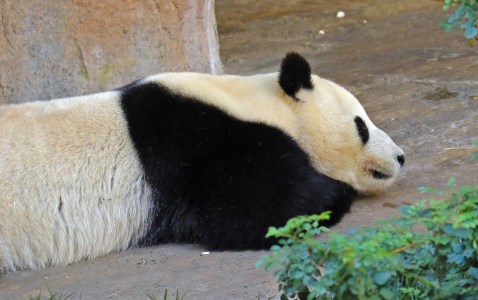
giant-panda1

Andean Bear – also called a Spectacled Bear, it is the only bear found in the Southern Hemisphere.  I had seen one briefly in Argentina more than 30 years ago.

andean-bear

Polar Bear – the largest of all bears and most aquatic and northernmost – we arrived just as a keeper talk was ending and the bear climbed out of its pool – water still dripping from its super thick coat.

Leopard – my favorite animal on my African trips – great closeup looks at the ones at the zoo. There are populations in Africa, India, Asia and the Middle East.
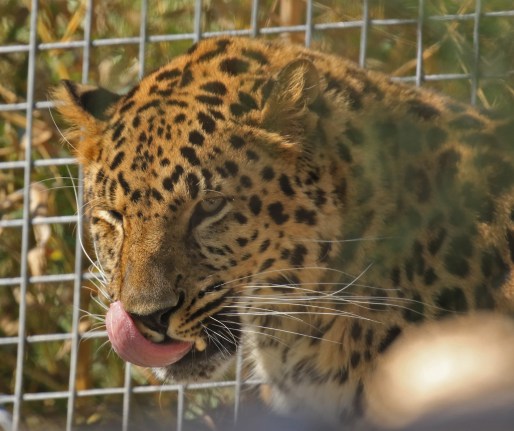
leopard-tongue

Jaguar – another animal I had been fortunate and privileged to see in the wild in the Pantanal in its native Brazil, the Zoo’s Jaguar paced in its compound inches away behind bars.  Incredibly beautiful animal.

leopard

Clouded Leopard – a denizen of the Himalayan foothills, I would love to see one in the wild.  This one was with its keeper and was a great treat. It is about half the size of its spotted cousin.
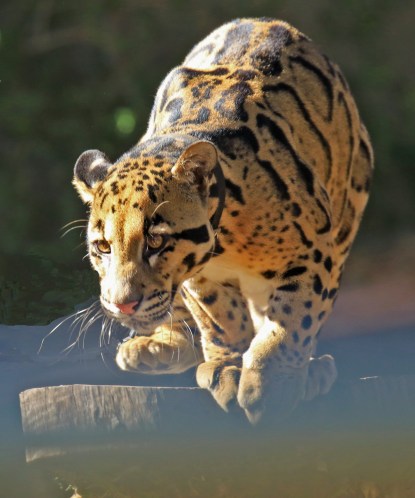
cloud-leopard

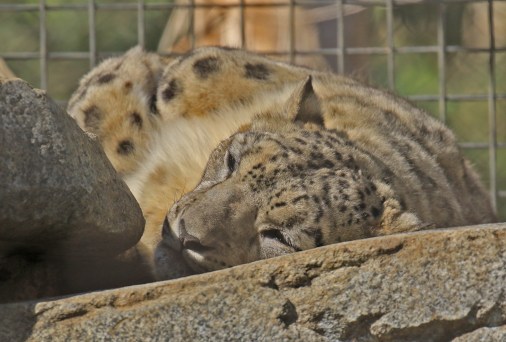
Snow Leopard – a big cat of the Himalayas, it can be as big as the African or other spotted leopard cats.  An endangered species that I doubt I will ever see – at least in the wild.
snow-leopard

Serval – a smaller cat with long legs and long ears, it is found only in Africa (I saw a single one) where its population is stable.
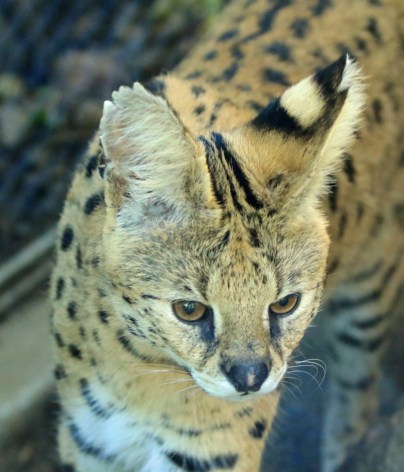
serval

African Lion – as with most of the males I saw in South Africa, this guy was sleeping and flat on the ground.  Lions and Tigers (which we did not see at the Zoo) are the biggest cats with big males reaching 400 pounds or more.

lion

Elephants – at the top of Lynette’s list, I hope she gets a chance to see them in the wild someday.  The Zoo has both Asian (smaller) and African Elephants (bigger and bigger ears) Having to deal with such large animals, this was probably the largest compound at the Zoo.  The elephants were eating – what else.

elephant1  elephant

elephant2

Rhinoceros – basically an armored tank of an animal, this is a White Rhinoceros – so named not because it is white but because of its “wide” snoot which in Dutch is “veidt” and sounds like white.  The Black Rhino is smaller and has a much narrower snoot.

036a1138

Giraffe – I remember distinctly my first Giraffe in Kenya as it seemed even larger than expected and struck me as graceful and elegant.  It was an instant favorite.  The Giraffes at the San Diego Zoo are Masai Giraffes from Kenya but the ones I saw there were Reticulated Giraffes – a different species (subspecies?) with a more regular patterning.

giraffe

Camel – We forget that the camel is a wild animal and not just a pack animal domesticated to serve our needs.  It has a reputation as being “nasty” and the one in my photo has that look about it.

036a1282

Gerenuk – This was another favorite in Africa.  I had seen wildlife films where this super slender antelope with the long neck was standing on its rear legs and foraging on leaves on the trees – a great competitive strategy to get food.  Seeing one doing exactly that in Africa and then here at the Zoo was extra cool.

Antelopes and Such – I admit to being confused by the various Gazelles, Antelopes, Bucks, Boks and  other hooved animals that grace the plains and savannahs of Africa, Asia and India and also the San Diego Zoo.  The first photo below is of a Soemmering’s Gazelle and the second is of a Duiker – a much smaller antelope caught here eating a leaf that had fallen from a tree outside of the compound.  We watched them chase after and eat each leaf that blew in.

gazelle gazelle-with-leaf

Capybara and Tapir – I saw these South American mammals on my Brazil visit.  The former is the largest rodent in the world and the latter, although looking like a pig is actually more closely related to horses and rhinoceroses and spends much of its time in the water – where I saw several.

Dwarf Mongoose and Hyrax – two more mammals I have seen in my journeys in Africa. The Dwarf Mongoose is the smallest predator in Africa and the Rock Hyrax is actually a relative of the Elephant.

Mandrill and Mangabey – this is a face that you gotta love or hate.  The Mandrill is the largest of the Old World Monkeys and is also probably the most colorful.  I have not seen one in the wild – happy to see one at the Zoo.  Less colorful but still striking is the Mangabey a close and rare relative of the Mandrill – also found only in Africa and very rare.

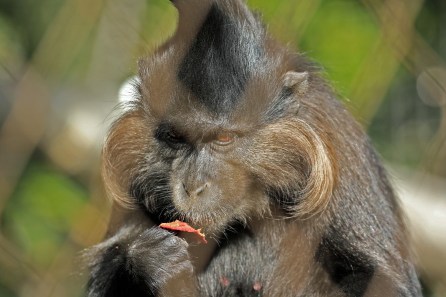
mandrill

036a1905

Gorillas and Siamang – Someday I hope to see a Gorilla in the wild – probably in Uganda.  The family group at the San Diego Zoo was fun to watch – well mostly the youngster was – as mom and dad were pretty lethargic.  In the same compound was another ape, well actually a “lesser ape” – the Siamang, the largest of the gibbons and a native of Asia.  I mistook it for a Bonobo which I had hoped to see and somehow was missed.
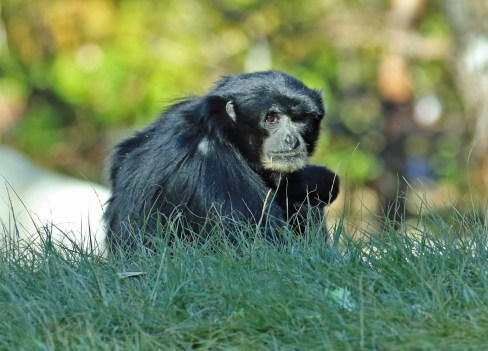
siamang

Orangutans – definitely a must see and someday maybe I will see one in their native lands – the islands of either Borneo or Sumatra.  The male ape is unmistakable with its huge head and cheek pads.  The youngster is more “human-like” in appearance and seems to be all arms and legs and red hair.

orangutan1

orangutan-baby1

The last mammal to be included is the Maned Wolf.  We were able to watch a demonstration with this beautiful canid and two keepers.  It looks like a fox but is not and it is not a wolf either.  Native to and endangered in South America, it is the largest canid there.  Among the fascinating facts about this animal is that when it walks it uniquely moves both legs on the same side together – and not the opposing front and rear leg together as other canids do.  When excited the hair on their backs – their manes – stand straight up.

We saw many other animals and I have many more photos but this has run on long enough and I still have another long post to do on the wonderful birds of the San Diego Zoo, so I will end it here.  I feel compelled to repeat what I said at the beginning.  The San Diego Zoo is marvelous.  This post merely catalogs the animals seen and some photos, but the importance of the Zoo is in its role in education and conservation.  Literature at the Zoo and online makes that very clear.  It was a most enjoyable privilege to visit.
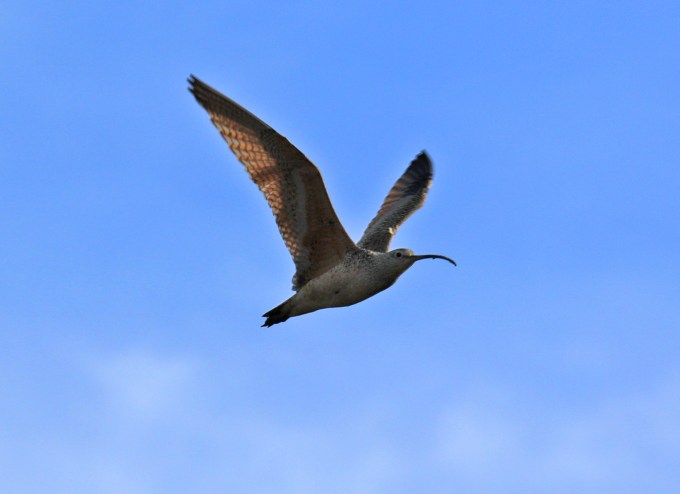
California Dreaming – Part II – La Jolla Cove and Tecolote Canyon Natural Area

Before any birding trip, I do as much homework as I can relying largely on Ebird and my own library to plan where to go and to compile target lists of what I hope to see.  I focus on new life birds and birds that I have not photographed before.  The trip to Anza Borrego described in my previous blog post was not likely to produce any of the former but had been pretty successful for the latter – adding six new “life photos”.  The following day we visited the super fabulous San Diego Zoo.  Most of the birds there were in aviaries and I will write about that in a supplemental post that will be about the Zoo – its birds and its mammals.  My homework had identified a couple of spots relatively close to where we were staying that might produce a lifer or two and would also provide some photo ops.

The first such place was the La Jolla Cove.  After a brief rest from the full day at the Zoo, we headed to La Jolla to visit the Cove, to watch a sunset and hopefully to find a Black Vented Shearwater.  They are often seen from the Cove and the adjoining beach viewpoints and I was hopeful to add this southern shearwater to my life list.  We arrived in decent light and we were not alone – hundreds of tourists and locals enjoying the beautiful scenery, the great weather and some pretty cool birds.  Unfortunately those birds did not include my targeted shearwater.  I did not have a scope and there were no other birders present who did.  Maybe that would have made a difference with an ocean scan past the limit of my binoculars.  Hundreds of gulls – Western and Heerman’s – lots of cormorants and pelicans – but no tubenoses of any kind. As I often write, however, there were wonderful consolation prizes – fantastic up close views of nesting Brandt’s Cormorants in their spectacular breeding colors and beautiful roosting Heerman’s Gulls.

Brandt’s Cormorant

brandts-cormorant-wings

Brandt’s Cormorant at Nest

brandts-cormorant-head2

Heerman’s Gull

heermans-gull-2

They were so commonplace that I forgot to take a photo, but the Western Gulls really were beautiful.  Unlike in our northern waters in Washington, here the Western Gull is dominant and does not hybridize with the far less common Glaucous Winged Gull.  Their mantles are very dark and their heads very white and they are everywhere.

Just south of the Cove were many pullouts looking west over the Pacific and one was perfect for the beautiful sunset.

Sunset over the Pacific at La Jolla

img_20170201_172439708_top

The next day was to be our last and we went separate ways for part of it as I headed off to Tecolote Canyon Natural Area.  I had found this spot in my Ebird research and recent birdlists there had included a number of photo targets and a seemingly good chance to add the Scaly Breasted Munia to my life listed.  Also known as the Nutmeg Mannikin, a bird of Asia, it is an “exotic” – one of many in Southern California – that had been introduced to the area in the 1980’s and has seen its population expand to the point where the American Birding Association (ABA) added it to its recognized North America list.  Although I had already seen and photographed most of the targets that were also potentially to be found at Tecolote, there was another non-lifer but new photo op that I really wanted to find there – Nuttall’s Woodpecker.

Very friendly employees at the Visitor Center confirmed that Munias were often seen and gave some suggestions on where to look for the Woodpecker and some other good birds.  I had expected to spend maybe an hour there and to not have to wander too far from the entrance.  Such was not the case, however.  There were birds but pretty scattered and not so cooperative – especially the two I most wanted.  The place was overrun with Yellow Rumped Warblers and I got tired of seeing something fly into a tree or bush and have it be yet another of these butterbutts.  I ended up spending more than 2 hours walking almost 4 miles.  But once again the weather was spectacular and rewards were available.  The first was a great look at California Towhees feeding on the ground.  I saw more than 10 during my visit.

California Towhee

california-towhee-2

Also pretty close to the entrance I found a singing California Thrasher – one of five seen that morning.  A very pretty and cooperative fellow and just like the ones seen at Anza Borrego, it did not move off its territorial post.

California Thrasher

california-thrasher2

There were also numerous California Scrubjays, House Finches, Northern Mockingbirds and hummingbirds.  I worked hard to find, confirm and photograph an Allen’s Hummingbird.  Most of the hummers were Anna’s (more than a dozen) but I got very good looks at one that at first was visiting a feeder across the channel and then flew to a branch near me.  I was pretty sure from the start that it was an Allen’s – and felt really good about the ID (even without a picture of the tail feathers) when I listened to its frequently repeated chip notes.

Allen’s Hummingbird

allens

I got excited when I saw a Kingbird first perched and then flycatching.  I had forgotten that Cassin’s Kingbirds are pretty common at this location in the winter but was still pleased to get the photo.  I was not able to get a photo of two White Throated Swifts that I saw zooming overhead when I first spotted the Kingbird in a higher tree.  I later found three more Kingbirds throughout the area.

Cassin’s Kingbird

cassins-kingbird1

I had now passed the Sycamore tree that was described as a likely spot for my woodpecker.  No woodpeckers at all were seen or heard and I admit to having felt pretty disappointed thinking one would be guaranteed at this location. I played my Nuttall’s recording and got a response and movement in a shrub – not a likely spot for a Woodpecker – and the trill was vaguely familiar.  It was a Wrentit – my second really good look on this trip and another good photo.  A second one trilled from across the path as well.

Wrentit

wrentit1

As I changed my gaze to the second Wrentit, a quick movement off the ground and into the brush and then down into the ravine caught my eye.  The brown back, small size and heavy finch bill signaled a possible Munia.  I desperately tried for a clear view and hoped it would come into the open.  The foliage and angle were bad for a photo so I kept watching with my binoculars only.  A partial view through the brush finally revealed the tell tale scaly breast of the Scaly Breasted Munia but no amount of pishing, playback or praying over the next 15 minutes got the bird into the open.  I had a lifer but no photo – so I had mixed feelings at best.
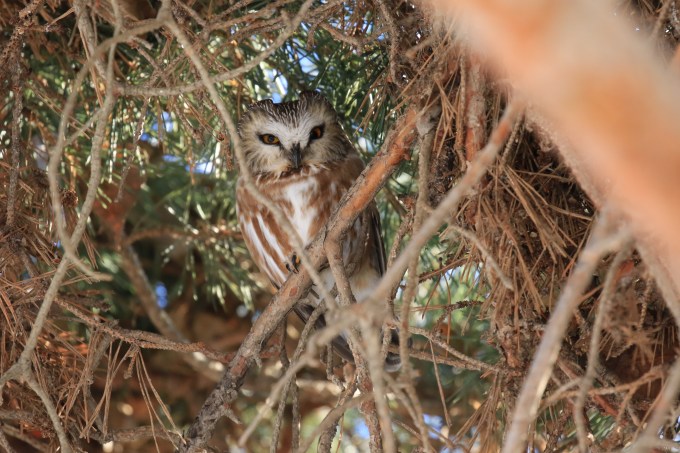
Scaly Breasted Munia (stock photo)

munia_scalyb_8035

Another feeling was that now I HAD to find a Nuttall’s Woodpecker.  I continued on for another half mile+ and had NO drumming, rattles or visuals.  After maybe a dozen attempts at playback I finally heard a rattle response in a thicket up ahead.  I looked and looked but could not find the woodpecker – that is until I noticed it at the top of a hole ridden snag and saw the bird with only the very top of its head visible.  Its entire body and most of its head was directly behind the snag – completely immobile and hard to see.  I grabbed a shot and then waited – and to my surprise a second bird flew in and this got the first to move and now I had my photo opportunity – in good light and out in the open.

Nuttall’s Woodpecker (moments before only the top 1/2 inch of head was visible)

nuttalls-woodpecker3

Nuttall’s Woodpecker – Second Arrival

nuttalls-woodpecker4

Somewhat assuaging the disappointment over the photo-less Munia, the Nuttall’s Woodpecker photo meant I could head back – hoping for another Munia and maybe a Gnatcatcher or something else fun.  Yellow Rumped Warblers continued their distracting flights and then one led me to a small group of Goldfinches, some American and some Lesser that I tried unsuccessfully to make into Lawrence’s Goldfinches.

Lesser Goldfinch

lessser-goldfinch

I turned my concentration to a search for gnatcatchers.  I heard some promising squeaks and saw some movement in some brush ahead.  There were four birds, a Bewick’s Wren and three Gnatcatchers – unfortunately once again all the Gnatcatchers were Blue Gray. My quest for either a Black Tailed or California would have to wait for another day.

Blue Gray Gnatcatcher

blue-gray-gnatcatcher

There were more warblers, House Finches and a Black Phoebe on the way in but no more Munias.  I had seen 28 species and was especially happy with the Nuttall’s Woodpecker.  Had I not seen and photographed some of the other species elsewhere, it would have been an exceptional day for specialties.

I had just enough time for a mad dash to the Tijuana Slough hoping for a picture of a Ridgway’s Rail.  It was very light on birds, a Little Blue Heron, Snowy Egrets, a Say’s Phoebe and Whimbrels and Willets being the best seen.  I heard at least one rail but I could not coax it out into the open – another photo missed. I include a few photos to memorialize this part of my  trip.

Whimbrel

whimbrel

Say’s Phoebe

says-phoebe

Snowy Egret

snowy-eget

Little Blue Heron

little-blue-heron

All told this California visit resulted in 70 species seen.  I added one life bird and 8 life photos.  I had many other great photos and lots of fun at beautiful places.  Lynette enjoyed her birding and may be willing to try some more.  Ebird says that California has been the state where I first saw 157 life birds.  Of those I only saw 33 on this trip, so if this trip had been back in the early days subtracting them from the 70 observed means I would have added another 37 life birds here.  40 Years of birding elsewhere means that those birds were first seen elsewhere – probably many elsewheres for quite a few. It would have been really nice to have seen a Black Vented Shearwater but I doubt any photo would have been available and there are a number of other pelagic species I “need”.  Maybe that will be my next California visit – join the legendary Debi Shearwater for one of her excursions.  I look forward to that.