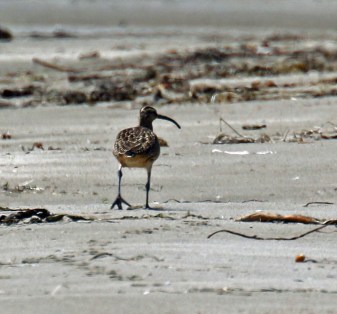
Paying it Forward at Scotch Creek

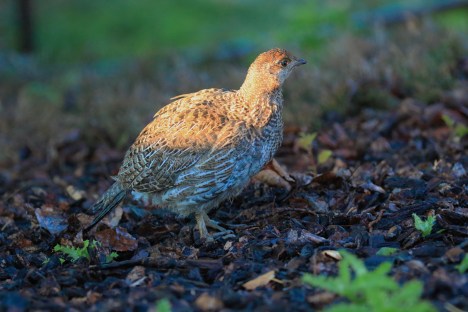
On December 27, 2015 I finally got my first photo of a Sharp Tailed Grouse.  It was at the Scotch Creek Wildlife Area near Happy Hill Road in the Okanogan.  There is a good story that goes with it.  And it connects to another good story with an unexpected sighting of a pair of Sharp Tailed Grouse at the same place yesterday (July 19, 2016).  I will tell both in a bit, but first some preliminaries.

Midday on Tuesday I got a message from a birding friend/acquaintance saying he was in Washington with his wife at Sun Mountain Lodge leaving the next day.  He had lost and then found my contact information – the reason for the last minute contact.  I had told him previously that I was always game for some birding if ever he visited Washington but I had envisioned a pre-planned trip of a day or two.  One of his Washington target birds was a Dusky Grouse and I had told him that Sun Mountain Lodge had been my “go to spot” for them – the reason he was there.  By the time I received his message, he had already seen a Dusky Grouse and he was leaving the next day heading north on his way to Calgary.  I had not seen a Dusky Grouse in Washington this year – having only a very poor quick observation on my Colorado Grouse trip – the only “chicken” seen on that trip without a photo.

A visit to Sun Mountain Lodge was on my “to do” list – possibly in fact this upcoming weekend.  Even though it meant a mad dash with a late start, I decided to go for it and left Edmonds at 3:30 P.M. to see Paul and hopefully my own Dusky Grouse and maybe some other birds.  In years past I had generally found Dusky Grouse in the Sun Mountain Lodge employee/visitor parking area or even near one of the Lodge buildings.  The plan was to get to the Lodge essentially non-stop, look for a grouse on Patterson Lake Road on the way up, have dinner with Paul and then to spend the night on Thompson Ridge Road in my car – trying for Flammulated Owl there, and then to get back to the Lodge for a dawn watch being pretty sure that Dusky Grouse would be out foraging then.

Everything worked perfectly with a bonus or two thrown in.  When I arrived at Sun Mountain I first did a quick sweep of the grounds and parking area – nada – but just as I got back onto Patterson Lake Road out of the employee parking area, I saw a familiar form on the side of the road.  There was just enough time and light for a quick photo – I now had my Dusky Grouse observation and photo for Washington in 2016.  I was supposed to meet Paul and spouse for dinner at 8:00 – the exact time I found the male grouse.  A quick call and being there only ten minutes late was certainly excusable for this bird.

Dusky Grouse Male on Patterson Lake Road

Dusky Grouse Male

A bonus was the quick phone photo of Patterson Lake below – always a beautiful scene – even moreso with the sun beginning to set.  Dinner was great and it was great to revisit with Paul and to meet Karen – another one of those spouses that enjoys the out of doors but believes her man a bit crazy when he chases off after a bird.  Chasing a bird at a great place like Sun Mountain Lodge was perfectly okay however!!  We could not convince her to try for a Flammulated Owl, and since Paul did not need it for his life list, he too passed when I explained the process and probability – fifty/fifty at best.  Also they had to leave early and he correctly calculated that hours left for sleep might be too few.  But he had a nice going away gift – and in part to make up for the late contact.  An old friend had property on Scotch Creek.  He and Karen had visited the day before (wish I had known) and although the friend had said he regularly had Sharp Tailed Grouse there, none were seen that day.  He gave me the name and said he  would probably allow me to visit.

Patterson Lake
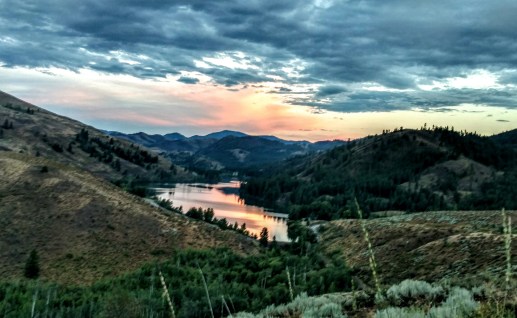
Patterson Lake

I had discovered Thompson Ridge on a visit to Sun Mountain Lodge last year.  It is an easy road off of Patterson Lake Road and has great forest habitat and a couple of pullouts with primitive restrooms – perfect for a night of owling and sleeping in the car.  There are always deer at Sun Mountain Lodge and squirrels and chipmunks are easy to find.  In the back of my mind I was hoping that a Cougar would cross the road – the top of my wild animal bucket list.  No Cougar – but not even a half mile up Thompson Ridge Road a dark form did cross right in front of the car – maybe 30 yards out – a young Black Bear – maybe a yearling.  I had not seen one in Washington for many years – a definite treat even if there was no chance for a photo.  Definitely reaffirmed my decision to sleep in the car and not on the ground.

It was quite dark by now – perfect for the birds of the night and just like the previous year about 3 miles up the road, I heard a Flammulated Owl.  As usual -I could not locate the exact spot or get him to come in for a photo.  Additionally I was able to hear at least two calling Common Poorwills and a Common Nighthawk flew directly overhead, its “pe-ent” call quite clear.  A nice threesome for the night with a bear bonus!

Sleeping in the car is “okay” but a definite problem in these parts in the summer is that the light floods in very early – which in this case was okay as an alarm clock so I could get an early start to get back up to Sun Mountain Lodge and see if more grouse were about.  Indeed they were.  It was before 6:00 a.m. and I am not sure if the front desk was open to check anyone in but if guests had arrived just then and parked in the spot reserved for registrations, they would literally have had to step over grouse to get in.  A mother and five chicks were grazing without care on the lawn right at the main entry.  At the next building over I found an additional four Dusky Grouse – mother and three chicks – paying me almost no attention.

Dusky Grouse Female (one of two)

Dusky Grouse Hen

Dusky Grouse Chick (one of nine)

Dusky Grouse Chick

I left Paul and Karen a good bye note and then headed off to the Okanogan to check out Scotch Creek and Conconully and maybe more.  On the way out I could not pass up some deer photos – at least a dozen on the grounds – bucks, does and fawns.

Deer Buck

Buck

Grazing Doe

Doe with Flowers

And the final gift was yet another grouse – another female on the road near Patterson Lake itself.  This made it 12 Dusky Grouse for the trip – definitely more than I have ever seen there or anywhere else before.

Last Dusky Grouse of the Visit

Dusky Grouse Hen2

Now – back to the pay it forward stories that are the important part of this post.  I had been to the Okanogan with Jon Houghton in late November 2015.  We had a great trip but there had been little or no snow and when we tried to find Sharp Tailed Grouse at Scotch Creek and elsewhere, it was the usual story – none.  During the next month, however, the area had lots of snow and reports were out that Sharp Tails were being seen eating in the water birch along Scotch Creek – driven up out of their normal grass habitat where they are a challenge to find/see.  Samantha Robinson and I headed over to try our luck.

There was a lot of snow on the roads and a lot of snow on the ground in the Scotch Creek Wildlife Area.  When we arrived I could see some forms in the willows off the road that were promising.  Still from the road, through my bins I could confirm that they were Sharp Tailed Grouse – but a bit too distant for a photo – something we both wanted.  There was so much snow, it was hard to tell where the road ended and the shoulder began, but I picked what I thought was a likely and safe spot and pulled over so we could get out and pursue our quarry.  I thought I was on solid ground but it turned out that there was a drainage ditch and one wheel was okay – but the other not.  My four wheel drive was not up to the task – uh oh!!

But first things first, we left the car and moved towards the birds.  Indeed the snow was a plus in this case and we could identify at least 6 Sharp Tailed Grouse and there may have been more.  One perched at the top of one of the Water Birch and I finally had a picture of a Sharp Tailed Grouse in Washington.

Sharp Tailed Grouse – Scotch Creek December 2015

76f6a-sharp2btailed2bgrouse

But as I said – the snow was definitely not a plus for our car – stuck alongside the road.  Remember my main mantra – birding provides the opportunity to intersect with good places, good birds and good people.  So far the trip had given us two of the three and now good people were to be included as well.  As opposed to us “city folk”, the locals there knew how to be prepared for snowy conditions.  Almost as soon as we got back to the car, two other cars stopped to help.  We tried to just push the car out – no go.  But they also had a shovel and within a few minutes enough snow was removed to get the traction to get us unstuck and on our way.  In addition to a very large thank you, I tried to offer some “gas money” – politely refused with the statement – just doing what everyone should  – helping others when needed just like we would want to be helped if we needed it.  Saved our day and brought big smiles to our faces – and they had smiles too – a very fine experience.

Later that day we visited a number of other spots in the Okanogan Highlands, and Conconully including Common Redpoll, Bohemian Waxwing, Northern Pygmy Owl, Black Backed Woodpecker and some large flocks of both Gray Crowned Rosy Finches and White Winged Crossbills.  Great birds but not able to top the Sharp Tailed Grouse at Scotch Creek.

White Winged Crossbill (Okanogan Highlands December 2015)

White Winged Crossbill 2

Fast forward to yesterday.  I arrived at Scotch Creek and there was definitely no snow – already 72 degrees and clear skies.  I had not been able to reach Paul’s friend .  I first hiked in to the area that is accessible and noted the very tall grass.  I had low expectations of finding any grouse but it was beautiful and there were other birds including some very active Lazuli Buntings that reacted to simple “pishing” no need to use playback at all.

Lazuli Bunting with Insect

Lazuli Bunting with Bug

When I returned to the pullout where I had parked the car I saw that another car was parked nearby but paid it no attention other than wondering if another birder had arrived.  I checked messages and had one from Paul’s friend saying that while he was not able to meet me, he gave permission to enter his land and said to have anyone contact him if I was stopped.  Just then I heard a knock on my window.  It was a young woman who had been in the car I had noticed.  She was not just parked there, she was stuck there – with a completely flat tire.  Her three year old son was in the back seat and although she had a spare tire, she did not have a jack or tire wrench.  Could I help?  Of course and also of course, images of being helped out of the snow in December came immediately to mind.  We spent the next 20 minutes plus trying to get the car jacked up and the tire changed.  I could not get enough lift from the jack to get her car up sufficiently high to get her tire off.  She also did not have a cell phone, so I let her use mine to call her husband who was at work – at an auto shop in Omak.  He was out.  Our plan B was to get her, her son and her groceries to her home in Conconully.

I was planning to go there anyway but now I had permission to go on the private property about where we were and would have headed to Conconully only after that.  No matter – it would add a bit of time but the priority was clear.  Off we went to Conconully and the only damage may have been a little melted ice cream.  A big thank you from her and her extremely well behaved son, smiles all around – deed done – feeling good.

Birding was slow in Conconully – not a single Woodpecker or Nutcracker and definitely no Goshawk.  Would it be any different back at Scotch Creek?  Well it would be a new experience and high grass or not, it would be fun.  So back to Scotch Creek and onto the ranch land and it really was a beautiful drive – on a primitive road/track in fields with high grass, some sage, some water birch and no grouse – until almost at the end two Sharp Tailed Grouse flushed from the field and flew directly across the car before quickly disappearing in the grass again.  No photo this time – except for a Western Meadowlark with an insect – but maybe a little local thank you and reminder of good people to be found everywhere.  Scotch Creek is a very special place in my birding life now.

Western Meadowlark with Insect
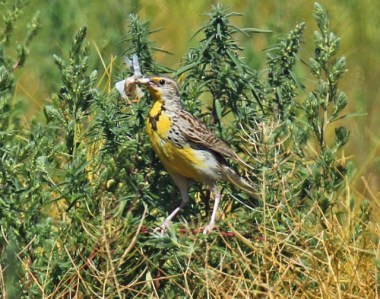
Western Meadowlark with Bug

I tried some other areas in an unsuccessful search for woodpeckers and then called it a good day and headed home.  About half way I looked at tide tables and thought they looked good for a visit to Eide Road to see if the shorebird extravaganza reported by Marv Breece might still be around with my hope being a photo of a Semipalmated Sandpiper.  It added some miles and time to an already too long trip but despite the usual slow go on U.S. 2 I arrived at Eide Road at just after 6:00.  Two cars in the parking area suggested that other birders might be there and hopefully were on some good birds.  As I walked towards the pond, I noted two birders with big lenses on the far side, but they did not seem to be watching anything and when I could finally see the pond, there were no birds to be seen.

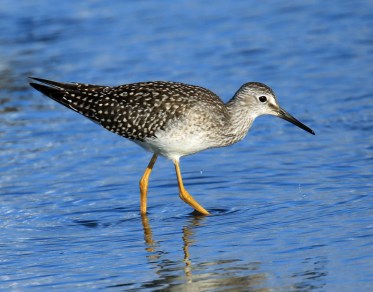
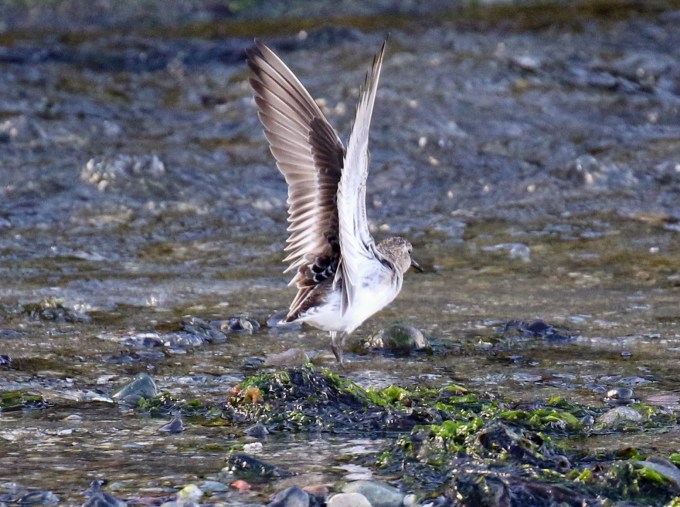
When I joined Gregg Thompson and Andy (Anderson?) I asked if I had missed the show or if they show had been a “no show”.  They said there had been a large flock of shorebirds until a Peregrine chased them all off about 5 minutes ago (now I really hated Highway 2).  And yes there had been at least one probable Semipalmated Sandpiper in the mixed flock.  They are both good company so I hung around and a couple of birds came in.  Andy took off but Gregg and I stayed and slowly some birds returned.  They remained a little skitterish and took off and came back a couple more times.  All told there was a nice assortment of Long Billed Dowitchers, Greater and Lesser Yellowlegs and some peeps – including at least one and probably two Semipalmated Sandpipers.  Good light helped enable a decent photo.

Semipalmated Sandpiper

Semipalmated SP1

Lesser Yellowlegs

Lesser Yellowlegs

Long Billed Dowitcher

Long Billed Dowitcher

I know I have never had 24 hours of birding that included Sharp Tailed and Dusky Grouse, Flammulated Owl, Common Poorwill and Common Nighthawk and Semipalmated Sandpiper, Lesser Yellowlegs and Long Billed Dowitcher.  Probably never will again.  But I do hope I will have many more 24 hours that include good people – birders and helpers and friends and those that I can help – throw in any good birds and some beautiful places and what more can you ask for…
 

Birding with The Rolling Stones: “You Can’t Always Get What You Want…”

1969 was quite the year for me.  Graduated from college, got married, moved to Baltimore to teach school for a year, somehow got out of the draft despite having lottery number 10, and loved The Rolling Stones.  One of their albums of the year featured one of my favorite songs, “You Can’t Always Get What You Want”.  No you can’t…but as the song also advised, “if you try sometime, you find you get what you need.”

I almost entitled this “Hits and Misses” or actually in this case, “Misses and Hits”.  In some of my earlier posts I have written of looking for targeted birds, missing them but then finding something terrific as a consolation.  That is a pretty good kind of “miss” or “dip” as we generally admit.  And especially if you try a lot, you are going to have some flat out misses – bird not there, or gone 5 minutes before you arrived or it’s your nemesis and you should not have even tried.  You just can’t always get what you want

But aha!!  There is always tomorrow or even the next day and “if you try sometime. you find you get what you need.”  As in, why sure we missed the Baird’s Sandpiper found by Spencer Hilde at Carkeek Park when we arrived too late on July 7th, BUT when I went back yesterday on the 9th – early in the morning, I was alone and there it was – a definite Hit.  With long wings, black legs and definitely larger than the Least Sandpipers also present, one of which was there on our earlier visit and, which “WANTING” badly, we ignored all of the field marks and convinced ourselves was the Baird’s – until it kept getting smaller and smaller (despite getting closer and closer) and the legs got yellower and yellower and the wings shorter and shorter.

Least Sandpiper – Clearly NOT a Baird’s

Least Sandpiper

Baird’s Sandpiper – Clearly NOT a Least

Baird's Sandpiper

Baird’s Sandpiper – Now Those Are LONG Wings

Baird's Sandpiper Wings

When you can’t always get what you want, sometimes you just make it into that something anyhow.  Not a good idea and another reason I take so many photos – out of the excitement in the field, a lot of field marks magically appear in the photo and either prove or disprove the find.

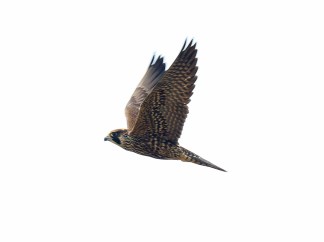
We had great looks at the peep in the creek outflow on the 7th – but we saw what we wanted and not what was there.  It has happened before and will happen again.  Sometimes the “want” is just that great.  I will leave out the name, but I recall being in Neah Bay during the Hobby frenzy out along the Wa’atch Valley where the bird had been seen frequently.  A problem was that there were also Peregrine Falcons in the area.  Steve Pink and I tried to make each one into the Hobby but our filters were working well and there must have been truth serum in our coffee earlier.  We stayed with Peregrine despite desperately wanting that Hobby.  Rarity and distance traveled probably distort reality sensors and supercharge want overrides.  As we watched yet another Peregrine zoom overhead, another birder just a few feet away was exclaiming that he now finally had the Hobby…but he was looking at the same bird we were and we had double and triple checked it -NOT the Hobby.  Later that day we finally saw the real thing and had a pretty close flyby of the mega rarity – the Hobby moved from WANT to GOT.

Eurasian Hobby (Archive Photo) vs Peregrine Falcon (Eide Road)   Peregrine Falcon at Eide Road

Don’t know what happened to the other birder,  He was not with us when we finally had our success.  He reported it as an observation on Ebird.  He probably found it elsewhere…probably.  Reminds me of some reports of Chestnut Sided Warbler – a real nemesis bird for me.   But that is a story for another time – hopefully when I finally actually see one in Washington.

Chestnut Sided Warbler – Unfortunately from Maine and NOT Washington

Chestnut Sided Warbler

So my Baird’s story had a happy ending as I did “find what I need”.  And it was even better, because as we arrived on the 7th, we saw Sarah Peden who was leaving.  This was her turf so it was doubly unfair that the peeps she saw as she arrived earlier had been spooked by an Eagle flyby – not to be seen by her again that day – probably including Mr. Baird.  But she too must like The Stones, because she returned the next day and found it – a LIFER!!  Great for her and encouragement for me to try again on the 9th.

And similarly, George and Terry Pagos arrived on the 7th to join us in missing the Baird’s – a shared downer.  They, too must be Stone’s fans (isn’t everyone!!?).  I had an eagle experience on the 9th as well.  I found the Baird’s in the outflow of the creek – easily observed and, as per the above, photographed.  It was foraging with 4 Least Sandpipers and several Killdeer – just as reported the first day.  Then three crows arrived and the birds moved to the pebbles on the south side of the creek, but still close and maybe in even better light.  A couple of minutes later, a Red Tail Hawk and Bald Eagle appeared and off they all went – much further down the beach to the south across the stream.  I did not have appropriate foot gear so I could not follow them.  George and Terry arrived a few minutes later and I gave them the good news that it was “here” but the bad news that it had flown south although I was pretty sure was still nearby.  I departed and I was happy to see later that they had refound the bird (or maybe it had refound them) and their Ebird report included another of George’s always fine photos.

So a happy story all around – those special chased birds are definitely best when shared – they belong to nobody and to all of us.  Birding with The Rolling Stones in mind – pretty damn good stuff.


In the “Catbird Seat” on a “Veery” Good Day of Birding

Ok, Ok … I know I am definitely overdoing the cutesy punning, but it’s my blog and I get to write what I want!!  So just go with it and there are even baseball and literature references ahead for those of you whose interests go beyond birding.
Frank Caruso wanted to go birding.  Ann Marie Wood ALWAYS wants to go birding.  I almost always want to go birding.  So we joined forces and headed east.  Our choice among several options was clear when my fun friend Deb Essman in Ellensburg/Kittitas said she had time and could join us.  We decided to head up into Coleman Canyon – north out of Kittitas – repeating a terrific trip that Frank and I enjoyed with her and her husband Bill last year.

As with most trips there were target or hoped for birds.  Deb and Bill have very serious jeeps and spend a lot of time up in the Colockum and Naneum canyons and hills and have seen many good birds (and other wildlife there) including Spruce, Dusky and Ruffed Grouse and Goshawks.  Frank and I had seen Dusky Grouse there last year but I believe Spruce Grouse may not even have been officially accepted as a Kittitas record so this was a major “want”.  (And more on that later.) And a Goshawk anytime is very special.  But there were others as well, including for me a photo of a Williamson’s Sapsucker for the year.  We had a nesting group on our visit last year and I had already seen one this year but no photo.

BUT first back to my puns.  Whichever way we were eventually going to go, a first stop was going to be at Bullfrog Pond.  This is definitely a fan favorite and since Ann Marie wanted a Gray Catbird and Frank wanted a Veery, this should be a great place as I have had both species there often and recently.  An early start got us to Bullfrog pond at 7:30 in the morning.  The somewhat hidden restrooms that had been closed on all my earlier trips were now open – always welcome.  I had also had my Veery close up there on my last trip so that was our first attempt and – failure – no songs, no thrushes, nada.  It was a bit bizarre though as the only bird that responded – immediately – to our Veery call – was a Virginia Rail.  OK both begin with “V” but what’s with that????

Veery (from Earlier Visit)

Veery

I was beginning to regret my promise – “They will both be easy at Bullfrog Pond”.  But now puns were to meet reality for after all, I was in the Catbird seat – which as you will see  – means being in a very advantageous position.  We headed over to my regular birding spot at Bullfrog Pond – down from the gated pullover off Bullfrog Road – and immediately we had a Gray Catbird for Ann Marie – just where I had one last time – and then another and then another.  All were raucous and even in the rain were photo worthy.  AND – we started hearing Veeries and I mean LOTS of Veeries – first just the short “Breeuh” call and then the full beautiful ethereal song.  We only listed four individuals of each species, but there may well have been many more.

As an aside, we also looked for American Dippers along the Teanaway River.  They nest under the bridge that crosses the river on Bullfrog Road and I have seen them there on my previous visits.  However, as was later explained to us by Bill Essman, lots of water was released from the upper dams per agreement with the Yakima Valley farmers who needed more irrigation water after a particularly hot and dry week.  Thus the river was running at least 18 inches higher than just two days ago – not leaving many places for the American Dippers to hang out – or at least to be seen by us.

Gray Catbird in the Rain

Gray Catbird

So what about this Catbird seat thing?  Most sources attribute its popular use to a James Thurber story which appeared in The New Yorker in November 1942, appropriately entitled In the Catbird Seat.  Here is part of the story:  “Are you scraping around the bottom of the pickle barrel? Are you sitting in the catbird seat?” It was Joey Hart, one of Mr. Martin’s two assistants, who had explained what the gibberish meant. “She must be a Dodger fan,” he had said. “Red Barber announces the Dodger games over the radio and he uses those expressions — picked ’em up down South.” Joey had gone on to explain one or two. “Tearing up the pea patch” meant going on a rampage; “sitting in the catbird seat” means sitting pretty, like a batter with three balls and no strikes on him.”

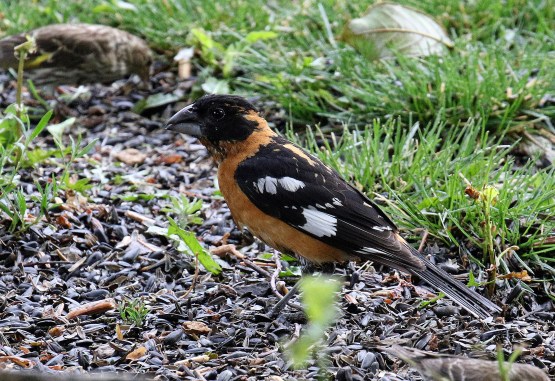
Now after delivering on my promise, I indeed felt like I was “in the catbird seat” – sitting pretty and everything else would be like whipped cream on top of the sundae. We spent less than an hour at Bullfrog and ended up with 22 species without even crossing the road to the drier woodland area where I am sure we would have added many more.  Next we visited the Northern Pacific Railroad Ponds – another favored spot – with the main quest being a Pygmy Nuthatch for Ann Marie.  This is my go to spot for these definitely cute little birds and they made a great appearance again.  AND we had more Gray Catbirds.  We also added a gorgeous male Black Headed Grosbeak at my favorite South Cle Elum feeders.

Pygmy Nuthatch

Pygmy Nuthatch

Black Headed Grosbeak

Black Headed Grosbeak

I had told Deb that we would meet her at her place on Brick Mill Road at 10:00.  Being a man of my word – and still being in that catbird seat – we arrived EXACTLY at 10.  Usually I am greeted by a throng of their bird dogs, but this time it was silent.  Both jeeps were there so I figured they were home but this was different.  No worries, my knock brought the dogs and Deb and all was good.

She will probably hate me for this, but here is a bit on Deb Essman – really one of my favorite folks.  She (and Bill) spent many years as game wardens in the Park Service and are as knowledgeable as anyone I know (except maybe Mike Denny) about “the wild” – weather, trees, animals, wildflowers, plants and yes definitely birds.  They are also fabulous hunters and their home is like a museum in evidence of that with beautiful trophies everywhere – any one of which would make most hunters proud. Deb apologized after our trip for being such a “redneck”, but I told her we liked her red neck and her ethics and love of the outdoors and her big heart are far more important.  Many friends have visited the Essmans with me now and there is a ritual of sorts – the bearskin pose in their home.  Ann Marie is the latest to oblige – pretty darn cute huh?!!

Ann Marie and the Ritual Bearskin Pose

Ann Marie

And this is the place to get back to the earlier reference to Spruce Grouse in Kittitas County.  Deb and Bill are up in the canyons many times a month and with their heavy duty jeeps and winches get farther up and in than us  flatlanders.  They have seen many things there that I can only dream about – wolves, cougars, bears AND Spruce Grouse.  They know their birds and unlike some of us listers – have no agenda – just enjoying the wildlife and sharing it with others.  Deb is just now starting to take pictures and does not yet have one of a Spruce Grouse but I am sure one will be forthcoming.  If she reported a Spruce Grouse – it was there – photo or not.  And she has had some amazing finds – like a White Winged Dove (many years back – seen by many visitors) and a Grackle (photographed) this year.  This lady knows and loves her birds.  I hope to be with her (and her red neck) when a photo of a Spruce Grouse is taken in them thar’ hills.  And I hope for a Goshawk there as well.

Back to the trip.  Coleman Canyon is beautiful, birdy and completely “other”.  It really is like visiting a new world after leaving the flat and frankly pretty boring farmlands in Kittitas.  The streams provide water for a great variety of plants, trees and wildflowers and the elevation gains create new habitats to support a rich diversity.  There are wonderful views of Mt. Rainier and Mt. Adams as well as the Stuart Range and the riparian areas are great passerine hideouts.  I am not going into a lengthy description of what we saw where as I hope to do another blog at a later time to better cover that and the beauty of the place.  We had around 40 avian species (without any waterfowl, shorebirds or gulls) and this time no grouse and no accipiters but there were lots of woodpeckers, warblers, sparrows, vireos, and flycatchers.  And I did finally get my photo of a Williamson’s Sapsucker – one of at least 4 that were seen. Some photos below:

Williamson’s Sapsucker

Williamson's Sapsucker3


Mountain Chickadee

Mountain Chickadee

Evening Grosbeak

Evening Grosbeak1

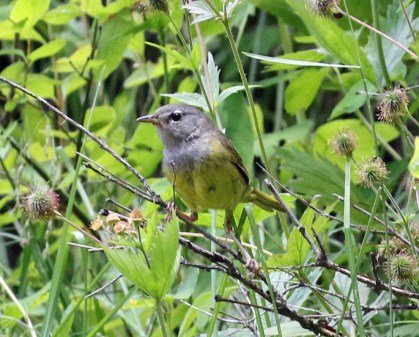
MacGillivray’s Warbler

Macgillivray's Warbler

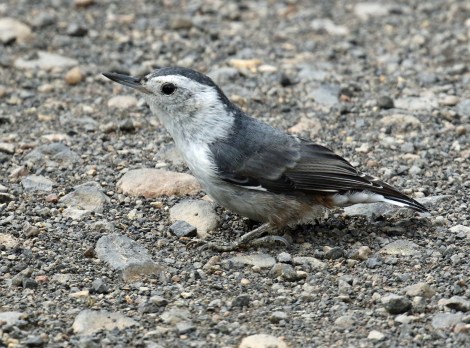
White Breasted Nuthatch

White Breasted Nuthatch

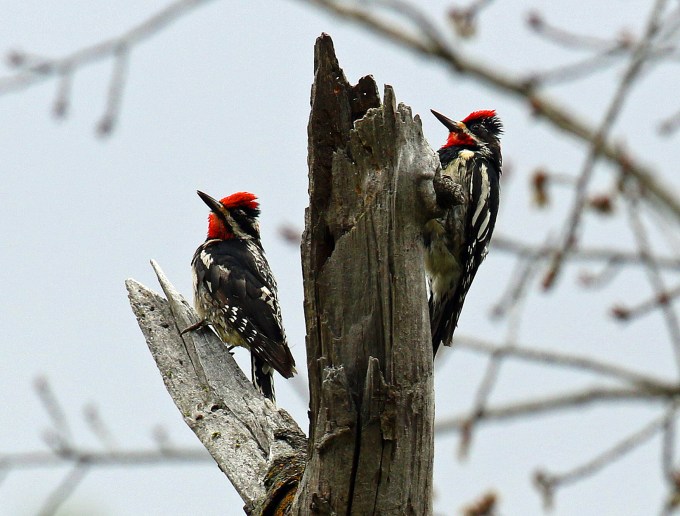
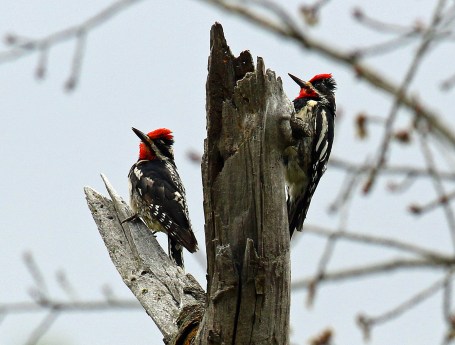
Red Naped Sapsuckers

Red Naped Sapsuckers

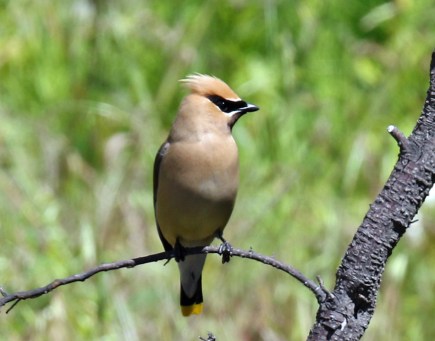
Cedar Waxwing

Cedar Waxwing

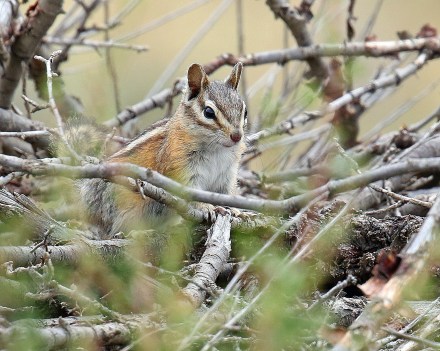
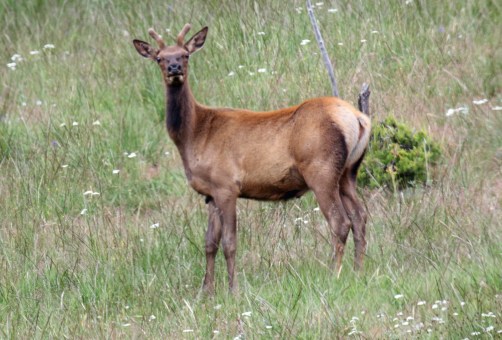
Unfortunately no bear or cougars or wolves were seen but we had a number of elk, some deer, lots of squirrels and arguably as cute a Chipmunk as could be found anywhere.

Chipmunk

Chipmunk

Young Bull Elk

Young Elk Buck

We returned to the Essman abode and said our goodbyes.  Heading home now would put us in the worst of the Seattle traffic so we extended our stay with a trip to Vantage with a single Burrowing Owl (on private property) along the way and with numerous Rock Wrens (another Ann Marie target) on Recreation Road.  The Columbia River had a few Western Grebes and nothing else.  We planned one more stop on the way home – briefly up Umptanum and Durr Roads out of Ellensburg looking for Bluebirds and hopefully swifts and a Common Nighthawk.

Burrowing Owl (from same location last year)

Burrowing Owl

Rock Wren

Rock Wren2

We found a few Vaux’s Swifts almost immediately upon starting up Umptanum Road – my only photo of one this year but too far away to even post the picture.  Light was also not very good for most of our bluebirds, but there were many with Mountain Bluebirds (Ann Marie’s target) outnumbering Western Bluebirds by at least 2 or 3 to 1.  We had more than 20 all told.

Mountain Bluebird

Mountain Bluebird

It had been a great day – hitting all three of the important parts of birding for me – great people, great birds and great places.  And a word about Ann Marie.  I expect most people reading this know her and love her.  She is a terrific birder with an easy smile that may belie the toughness below.  She is the just right combination of driven and patient and thus finds birds that I often overlook.  She is on a crazy quest this year.  I am certainly no stranger to crazy quests, but I would not like to undertake the one she has chosen.  Her goal is to see a different species every day.  This means no days off and very strategic planning – and executing.  And you cannot stockpile any of the new birds on one day for another that may not otherwise have one.  Ann Marie had a number of new birds for the year on this trip – but she could only uses a single one for that day. Choosing which one is tough and calculated.  For example both Gray Catbird and Williamson’s Sapsucker were new.  She chose the Williamson’s Sapsucker.  Can’t carry over the Catbird for another day … but now knowing where they are … easier to go back for one on another day than finding the sometimes unobliging Williamson’s Sapsucker which is also harder to get to.
It was fun to help Ann Marie on her quest.  She has helped me in the past on mine as have many others.  Hats off to all who help by guiding, sharing, accompanying and supporting others – in birding and in all else that makes life worthwhile.  And Hats off to Ann Marie on her quest and to Deb Essman for all her help.  And to Frank for putting up with all of us.

Signing off until next time – and still enjoying the (Gray) Catbird seat – Veery much!!


Catching Up Between Three Mountains

Although I am not quite as obsessed about it this year as I was last, I am still trying to get photographs (and improved photographs) of the birds I see.  Certainly there are some birds (yes I am talking about you Flammulated Owl and Common Poorwill) that are always difficult at best, but sometimes the situation just does not make it easy or maybe even possible.  And even when we KNOW what we have seen that photograph is certainly the best proof and on occasion even is what let’s us know that indeed we saw something different after all.

For a variety of reasons, there have been a number of birds seen this year where I just was not able to get a photo.  As the first half of June drew to a close this week, the report of an Indigo Bunting which was one of those photo misses,  caused me to decide to play “catch up” – to try for some of those missed photos and maybe to hit the “magical” 300 mark for species seen in Washington this year as well.  It meant a lot of miles and would require a lot of luck as well as effort.  And it also turned out to be full of both disappointment and excitement.  It took me to beautiful spots between three mountains – Rainier, Hood and Adams.  Seeing them is another bonus for all of us who bird in the fabulous state of Washington.

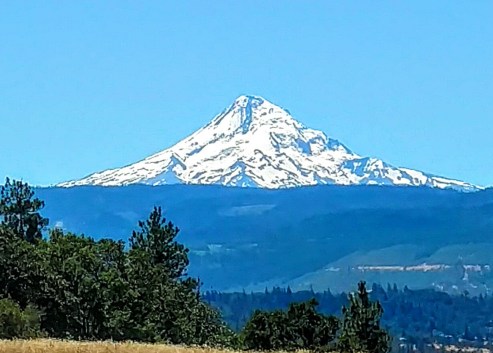
Mount Hood from Lyle, Washington

Mt. Hood

Mount Adams from Highway 142

Mt. Adams

The first order of business was to find the Indigo Bunting that was reported by Bill Tweit and Whittier Johnson near Randle on Highway 12 in Cowlitz County.  Usually when I head off on such ventures I leave very early in the morning trying to avoid the horrendous traffic that now ensnarls Metro Seattle at almost all times.  On Monday, however, I had early morning obligations that meant I could not leave until late, so when I started out I really did not have a long agenda…things changed.  They changed in part because this was definitely one of the easiest chases ever.  I made my way onto Highway 12 and found Peters Road.  Within seconds I found the referenced barn and there was a single bird perched on the telephone wire across the street.  As soon as I parked and opened the door, I heard the song of an Indigo Bunting.  I took a distant photo immediately and then spent the next while watching it fly from wire to tree to another spot on the wire and another tree across the road.  It sang incessantly.   The sun was bright but high in the sky so not the best for photos, but eventually I got one that was “good enough”.

Indigo Bunting (Peters Road)

Indigo Bunting1

I had seen the Indigo Bunting that visited a feeder in Mukilteo back in March but had a fleeting look in the rain and had no photo opportunity.  My first Indigo Bunting in Washington was a lovely male seen at Steigerwald NWR in June 2014 with Samantha Robinson – resulting in a beautiful photo for each of us.  I never expected to see another one in the state.

Indigo Bunting (Steigerwald NWR June 2014)

Indigo Bunting3

Check off one “catch up”.  And despite my late start it was now still just before noon and I wondered what to do with the rest of the day.  The Bunting had been such a positive success I was feeling bullish and decided to try for more.  Options were to head back west to Rainbow Falls and try for a Hermit Warbler photo (another miss) and maybe to go look for those “are you kidding me” Monk Parakeets in Yacolt or to really push the envelope and head further east and try for a photo of an Ash Throated Flycatcher (another miss) at either Bear Canyon or Oak Creek with the possibility of other birds along the way.  I chose the latter…a bad choice as it turned out.

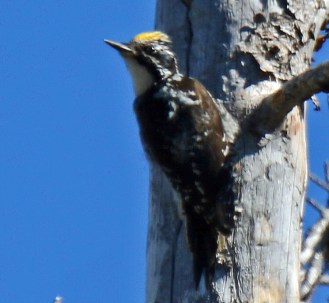
Especially on chases, there is the possibility of great excitement (even sometimes with fist pumps) but also the possibility of big disappointment.  The latter can really ruin a day – a feeling that at least for me at times remains until the next fist pump…  The rest of Monday was mostly full of disappointment.  Very hot…not real birdy…no Ash Throated Flycatchers at Bear Canyon (at most one heard in the distance) or at Oak Creek Canyon where I had seen one before but only in flight on May 17 this year.  No Common Nighthawks (another photo miss) and in fact I added another photo miss.  It was a good news/bad news kind of thing.  I decided to bird Bethel Ridge and found it to be as slow as I have ever had it there.  I was hoping for a photo of a Black Backed Woodpecker – a miss from that same May 17 trip.  Did not get a photo, or hear one or see one…BUT…in the same general area I found the Black Backed on May 17, I located an American Three Toed Woodpecker.  It was a FOY but would not come in for a photo so I actually moved backward on my photo listing.  I had nice photos of both last year on June 4 so it was a big disappointment this trip.

American Three Toed Woodpecker (Bethel Ridge June 4, 2015)

American Three Toed WP

Black Backed Woodpecker (Bethel Ridge June 4, 2015)

Black Backed WP at Nest1

So after such a great start I headed home on a down note.  The Three Toed Woodpecker was species 297 for 2016 but I did not realistically figure on any more for the month nor did I think there would be any new photos and with one up and one down, the photo percentage had actually dropped … so that was that…well not quite.

I left my bedroom window open on the night of June 29/30 and around 2:30 a.m. was awakened by some loud voices in the neighborhood.  The combination of too much on my mind anyhow, the tone of the voices and the hour somehow conspired to get me fully awake and unable to return to sleep.  Maybe the error in not visiting Rainbow Falls again and images of parakeets in Washington were still in my head.  After an hour of tossing and turning, I made an executive decision – go birding.

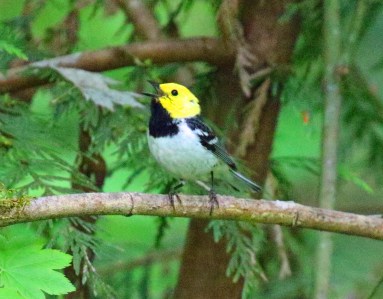
Even at oh-dark-hundred i.e. 4:15 a.m. there was traffic on I-5…aargh.  Not super bad but I was definitely not alone.  Fortunately it cleared once through Seattle and I made it to Rainbow Falls at 6:30 a.m.  My friend and superbirder Melissa Hafting from Vancouver had been there recently and had gotten some beautiful Hermit Warbler photos so that was probably a large part of my motivation.  She said she found the warblers as soon as she parked the car.  So when I heard a Hermit singing as soon as I opened my car door, I felt it was a shared karma thing.  But not so fast.  Hearing a singing bird and getting a photo are often but not always related.  I could not find the bird and after hearing song from another and then another direction, I figured this guy was either a ventriloquist, a skilled stealth flier or was not alone.  It took a full 20 minutes of very frustrated chasing and accidentally disturbing at least one campsite, but finally one of the warblers made a nice appearance in front of me and even though the light was poor and there was some light mist/rain I had my photo.  I had determined that there had to be at least three birds as I heard songs from three different spots at the same time and then later heard two more at a spot far enough away to think there were at least five.  FIST PUMP and check off another catch up!!

Hermit Warbler

Hermit Warbler2

When I had found the Indigo Bunting it had already been after noon.  This time it was only 7:00 a.m. – plenty of time left for more.  I have been birding off and on in Washington for 43 years – amazing since I don’t look or feel a day over 50 and I was certainly much older than 7 when I started.  OK – yeah that look and feel statement is somewhat of an exaggeration…but as I set off to find Monk Parakeets – which I had not even been aware of for 41 of those 43 years, I felt energized and maybe even younger than 50 again.

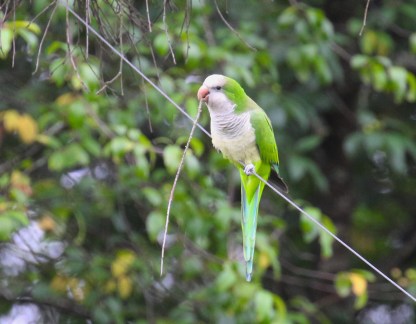
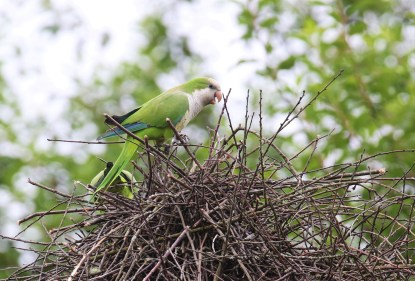
I had never been to Yacolt or even near it.  Hell, I had never even heard of it – but here it was the Parakeet Capital of Washington.  Getting there was a pleasant drive through very rural territory.  It is a very small town, but not so small that you can just pull up to the one tree or telephone poll and see the resident parakeets.  I drove around and wondered exactly where they might be, expecting to hear raucous calls at every corner.  Then I recalled a reference to Hubbard Road in one Ebird post and GPS got me to the right road.  Now what…”What” turned out to be that that luck entered in, because as I stopped to get out and walk, I was in exactly the right spot – a grassy area next to 508 Hubbard and two parakeets flew directly overhead and into some trees behind the house.  I walked down the grassy area (it is not private) and found a huge stick nest.  Then the two Monk Parakeets flew onto the nest and were then joined by a third.  They flew off and returned a couple of times before finally leaving for good.  My camera was ready and became busy and I was very happy with the photos.  If I had done a better job planning my visit I would have seen that this address was specified in a recent Ebird report.  When preparation fails, sometimes luck bails us out.

Monk Parakeets (Yacolt, Washington)

Monk Parakeet

Monk Parakeets on Nest

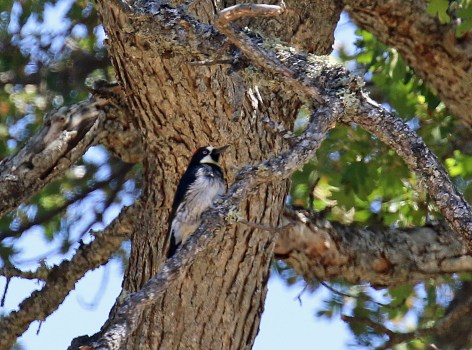
It was now barely 10:00 a.m.  I mailed something from the Yacolt post office (won’t the recipient be surprised at the post mark) and decided to try for more “check offs” and maybe to add another bird or two.  This meant heading to Klickitat County and trying to find Ash Throated Flycatchers, Lesser Goldfinches and if I was really fortunate an Acorn Woodpecker. Lyle was not all that close – but closer than if I had gone directly from Edmonds  – and the day was going well so why not.  I had spoken to Ann Marie Wood the night before and she said that she had Ash Throated Flycatchers everywhere but had not seen an Acorn Woodpecker there during her visit earlier this week.  Acorn Woodpeckers were downright strange last year as they showed up in many very unusual spots including in the Redmond backyard of Grace and Ollie.  Usually they are found only in the Balch Lake area near Lyle and this year they had been relatively hard to come by even there…a few Ebird reports but I had not seen any photo.

Acorn Woodpecker (Redmond Washington 2015)

Acorn WP1

My GPS sent me across the Columbia and into Oregon to travel east along the river.  Really a beautiful trip even without birds.  I crossed back over the Columbia and paid my $1.00 toll and then turned east on Highway 14.  It was already getting warm.  It was also getting windy – great for the many windsurfers on the river – not so great for birding.  Ann Marie was right – Ash Throated Flycatchers were everywhere and I quickly located first one pair and then another and another.  They seemed to be mated and I am not aware of any differences between male and females. It seemed that both were calling/noisy and were very responsive to my calls and very active.  Not prize winners, but acceptable photos showing the ashy throats and I checked off another catch up.

Ash Throated Flycatcher

Ash Throated Flycatcher1

So much for the easy bird, what about the Acorn Woodpecker?  There had been a number of Ebird repots for woodpecker in the area but nothing in June.  I had posted for information on Tweeters and got some encouragement – they’re there – but again nothing recent and also recognizing that many had failed to find them this year and no photos were included.  I drove the area several times with stops near the cemetery, at Balch Lake etc.  Finally I ventured up Tuthill Road which runs north off Balch Road.  Nothing on the way up but on the way down a bird with undulating flight passed over joined by a second.  I knew they were woodpeckers and figured it was most likely a pair of Acorns.  I tried some playback and got a response as first one and then a second bird flew back over the road and up into some tall trees in front of a red house.  They criss crossed the road several times and were joined by a third woodpecker – always perching very high and/or on the back sides of tall Oaks.  Finally one perched on the front side of a tree – still high up and distant but sufficiently photo friendly for a shot.  My first record for 2016.  Double fist pump!!

Acorn Woodpecker

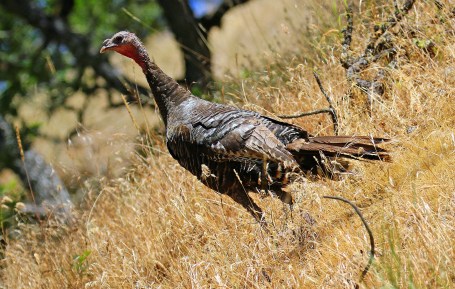
There were not a lot of birds in the area but there were a lot of squirrels – their squeaks and squeals often leading me to look for the bird but the last time I checked, no birds have fur.  One squeal was particularly loud and this time there was a bird as a Prairie Falcon had swooped in and grabbed a squirrel maybe 100 feet from me and then flew off before I could even get the camera up. A much easier photo was of some Wild Turkeys crossing the road – a hen and 10 chicks.  The chicks hid quickly but I was able to grab a shot of mom in the shade.  This was sort of the reverse of a catch up.  On an earlier trip to Walla Walla I had seen a very large flock (maybe 50 birds) in a field on the way home and had snapped a picture.  When I submitted my checklist for Balch Lake, Ebird told me that “Wild Turkey” was a new year bird – number 300.  I guess I had forgotten to submit the Walla Walla area report because it was an incidental observation from the road only – despite the photo.

Wild Turkey (Balch Road) 

Turkey2

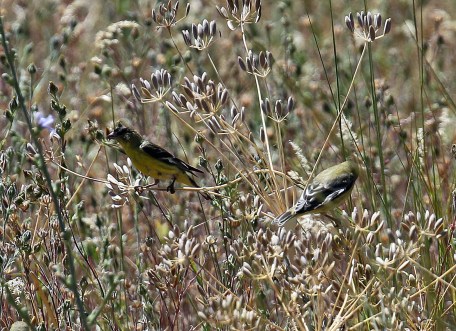
I knew of some weedy fields along High Prairie Road off Centerville Highway and hoped that even in the heat I might find some Lesser Goldfinches there – another hoped for “catch up” on the trip.  Sure enough as I was driving on the road next to some good looking candidate fields, I heard the birds singing in flight.  It took a while to locate them and then for some to finally perch nearer to the road.  Not real close and they did not stay long but a good ID photo anyhow.  This may have been my worst “miss” of the year as I had seen them in January in Arlington and twice in Walla Walla and either forgot to take a photo or was not able to.  So this was a great way to end the day and check off another miss.

Lesser Goldfinches

Lesser Goldfinches

It had already been a long day and an excellent one.  It was going to be a long drive home so time to get going.  My GPS said that the quickest route home was back through Oregon and up I-5.  I figured that would take me through the worst of traffic in both Tacoma and Seattle so I opted for Highway 142 up through Goldendale and then Highway 97, I-82 and I-90.  I thought this would also at least give me a chance for Common Nighthawk – another photo miss.  If I was not so tired I would have stopped at many of the birdy and beautiful places along the way, but that will have to wait for another time.  No nighthawks and frankly not much of anything else either.  And fortunately not too much traffic…at least until I hit Mercer Island – at 6:45 P.M. – it then took me another 45+ minutes to get home to Edmonds from there.  AAARGH!!

It had been a wonderful trip with as high a hit list success ratio as I can remember and good bonus birds as well.  The scenery had been spectacular – any time you have clear views of Mount Rainier, Mount Adams and Mount Hood on the same day is awesome.  Probably saw what is left of Mt. St. Helens as well but do not remember it.  Washington is beautiful and so are its birds!!!

Mount Rainier

Rainier


Heading East – Eastern Washington that Is…

As much fun as it is to bird in far away places, there is always a feeling of “what did I miss” that accompanies being away.  In 2013 when I did my (first?) Big Year in the State, I spent 11 days in Texas during the peak of migration (April) and then essentially all of November in Peru (heavy duty birding on an organized trip) and Florida (light birding on a non-birding trip).  I know I missed some birds while I was away but those were fun trips in their own right and there is more to birding than just having a Washington list.  Right?  Right…

Returning from elsewhere though it always feels like I need to get out and revisit some favorite places and especially in early summer, one of those places is Calispell Lake in Pend Oreille County north of Spokane.  I first visited the area in 2012 – on a WOS Conference trip.  The first trip where I really got to know and fell in love with Calispell Lake was a terrific trip with Jon Isacoff and George Pagos in June 2013.  Jon was the best possible tour guide.  George and I joined him as part of our own two day whirlwind in Eastern Washington that found 108 species and added 10 new birds to my year list.

Calispell Lake

Calispell Lake

While I wanted to get back to Pend Oreille County and particularly Calispell Lake because of the beauty I also had a list of target birds – some new for the year and some new photos for the year and those targets to some degree determined my route and schedule.  However I had originally thought it would be a three day trip and as it turned out, some of the successes and some changes in the weather cut that short and once again it was but a two day visit – a VERY LONG two day visit.

A first stop was at the Hyak area feeders at the Snoqualmie Summit to see what hummers were around – even early in the morning some Rufous Hummers were coming for their sugar fix – a good way to start a trip.  Next I hit Bullfrog Pond – continuing to move its way up on my favorite birding stops and one where I can generally find Gray Catbirds and also a good spot for Veery.  Both were new for the year and easily found.  The Catbirds cooperated for a photo but the Veeries were heard only (many).  All told 33 species but nothing new or exciting.  Birds do not have to be either new or exciting to be greatly valued and appreciated and I just like the feel of this area anyhow so I was in very good spirits when I left.

Gray Catbird

Gray Catbird1

I continued East with Potholes Reservoir being the next spot on my agenda.  Along the way I had one of those strange coincidences that occur in birding.  Heading south on Highway 26 on the east side of the Columbia I saw a birder getting back into her car putting a scope away.  As a corollary of the rule to look for the birders when you are chasing a bird, I always try to ask birders I meet what they have seen.  Turns out this birder was Carol Riddell -an Edmonds neighbor.  She, too, was off on an Eastern Washington quest – travelling to meet a friend.  We shared notes and headed off to similar but different locations.  Potholes was a bust as it often is and the hoped for Forster’s Tern was a no show – not much else showed either and the long necked grebes out in the reservoir were Westerns and distant – not Clark’s and close.  My consolation prize were some first of year (FOY) Eastern Kingbirds.

Eastern Kingbird

Eastern Kingbird1

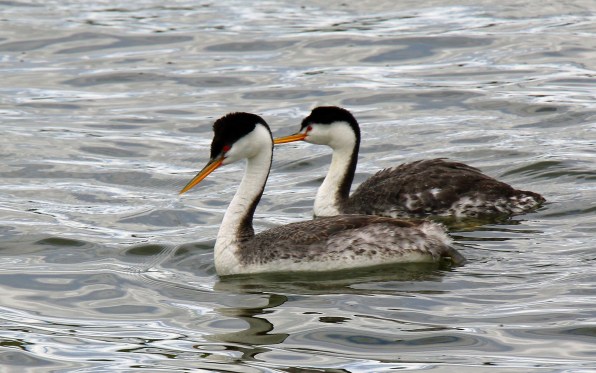
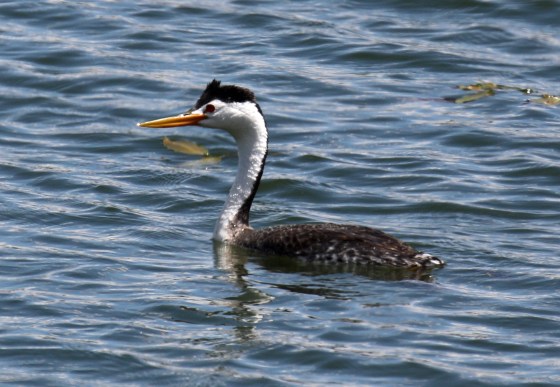
Lind Coulee can be a great birding spot or can be almost completely devoid of birds.  On this day, it was mostly the latter BUT one of the very few birds present was indeed a lovely and fairly nearby Clark’s Grebe.  Last year a single Clark’s Grebe swam close to a Western providing one of those guidebook comparison experiences where the field marks could be easily noted.  This year I was pleased to see the red eye completely outside the black making it a Clark’s Grebe and although alone still a great photo opportunity.

Clark’s Grebe and Western Grebe (Lind Coulee 2015)

Western and Clark's Grebes

Clark’s Grebe (Lind Coulee 2016)

Clark's Grebe - Copy

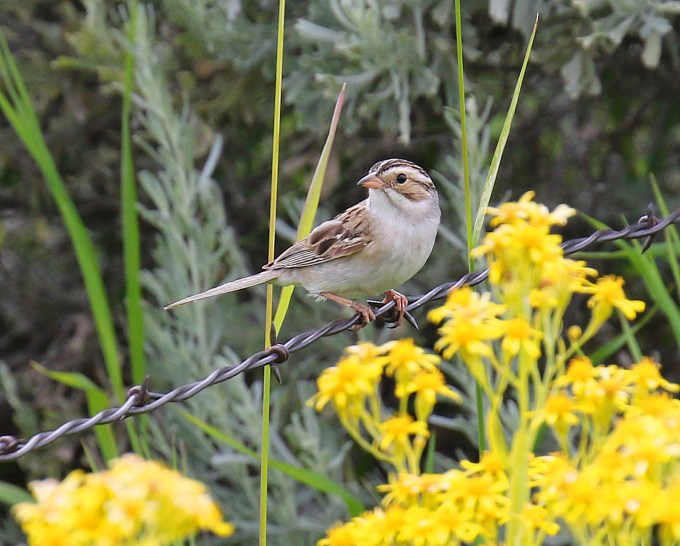
Terry Little is a great source for birds/areas in Spokane and environs and I followed an Ebird post of his to visit the Hawk Creek area in Lincoln County where birds were plentiful including a Least Flycatcher with its constant Che-Bekking call.  Also in Lincoln County I birded 7 Mile Road a usually dependable place for Grasshopper Sparrows (which cooperated and posed again).

Grasshopper Sparrow

Clay Colored Sparrow (2)

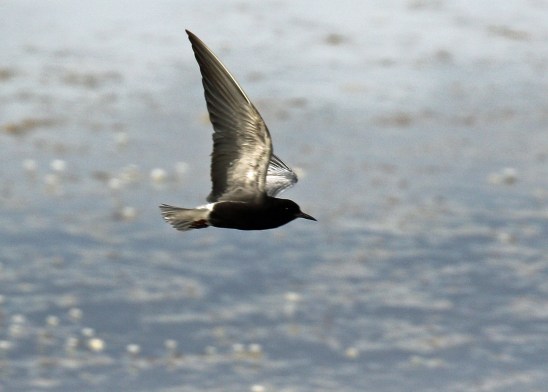
My next stop was Ames Lake where I had numerous Black Terns last year.  There were at least 25 present Wednesday afternoon but none the next day. (It was much windier the second day and this was the only difference.)  There may be a better way but I had to backtrack on I-90 and park on the freeway shoulder to get a shot at the terns and the photo – my last stop before my low budget hotel outside Spokane.  Thankfully there was no visit from the Washington State Patrol.

Black Tern

Black Tern3 - Copy

My motel was … well it had a bed … and even though breakfast (such as it was) was included, supposedly it was not available until 6:00 a.m. – a reasonable time for most but my birding usually gets me up early so I was pleased to find that I could grab something at 5:30 when I was up and ready to go.  An aside…the evening before I had dinner at a nearby spot that catered to truckers.  Interesting people watching for sure.  Also it had an all you can eat kind of buffet.  I passed and had a simple sandwich but if there were world records for most food stacked on a single plate, the holder would surely be the woman who sat two seats down from me – unbelievable.  On a much prettier note, my waitress, who I am guessing might have just turned 19 or 20 may well have been the finest looking young woman I have ever seen.  I told her so in a grandfatherly kind of way on my way out. I wish I knew someone in the modeling agency business as I think she would be a great model and I also think she could have used a better job.  (Would love to add a photo but none available.)

And back to birding…

I headed to Hafer Road in Stevens County.  I had good birding there last year and I had noted that Brian Pendleton had a Clay Colored Sparrow there recently so it was a gotta for the trip.  I arrived early around 7:00 a.m. and immediately started hearing and seeing birds.  In just over an hour along no more than a quarter mile of the road I found 34 species – quite a diverse list including Sora, a flyby Merlin, Eastern and Western Kingbirds, Wilson’s Snipe and Wilson’s Phalarope, House Wren, Gray Catbird and Black Chinned Hummingbird.  And the best two species were Clay Colored Sparrow and Least Flycatcher.  The former was heard and seen way uphill but absolutely would not move from its perch/territory to give me a photo.

The Least Flycatcher on the other hand was a real mystery at least at first.  I thought I heard a “che-bek” call almost as soon as I arrived and it seemed close.  I tried playback in shorter and longer doses off and on for parts of the first thirty minutes I was there – nothing – no calls, no movement.  So I concentrated on the other good birds.  Then I thought I heard the call again – seemingly further away and this time when I played, a male flew in from maybe 50 yards away and landed in a tree quite close but with the sun directly behind it.  Easy to tell it was an empid but the back light made for challenging photos and even for clear views.

The guy never shut up for the next 20+ minutes although my only other playback was moving 50 feet away and close to the other side of the road where sunlight was great.  No go as it simply would not move from two or three favorite trees – all uphill and backlit.  And it was joined by a second small empid and they could have been a nesting pair as only the one sang and the other remained fairly close but nearer to the trunk of the tree.  I got the best photo I could and left them alone.

Least Flycatcher (Calling nonstop – and thanks to Photoshop for any detail)

Least Flycatcher

Now off to Pend Oreille County which took me to new territory going up and over a 4000 foot pass along Flowery Trail Road.  Good forest and a ski area tucked away meant I had to stop to see what was around.  I did not bird all that thoroughly and did not find a hoped for Clark’s Nutcracker, but there were several warblers and both Hermit and Swainson’s Thrushes and a Townsend’s Solitaire.

Swainson’s Thrush

My first target bird in Pend Oreille County was Bobolink which I think of as the “upside down bird” because it is darker below and lighter up above contrary to most birds.  A friend calls it “Blondie” because of the yellow/blond cap.  In any event it is a bird I look forward to seeing every year and especially to hearing as it sings in flight and as it flutters over the fields.  I headed to a spot near Cusick where I had Bobolinks last year.  As I was getting close driving on McKenzie Road through perfect habitat (although I was not thinking of that instead being focused on “the next road where they were supposed to be”) I had my window down and played the Bobolink calls to re-familiarize myself with them.  I was probably going 30 mph and bingo – a Bobolink flew up out of the field next to me and flew right in front of the car singing away.

The fields were perfect and the bird put on quite the aerial display often landing on higher weeds and then disappearing in shorter grass and then hovering.  I got a good photo on one perch and some ok of it in flight.  I continued another half mile at most to my “regular” spot where I found two more Bobolinks.  There are miles of good fields here and I am sure there are many more Bobolinks around.  It used to be that they were readily found at Lateral C at the Toppenish National Wildlife Refuge but I think those birds are either gone, greatly diminished in numbers or unreliable.


Bobolink

Bobolink - Copy


Bobolink in Flight

Bobolink Flight1

My plan was then to head to Calispell Lake – going along the Westside Calispell Road at first but to cover the entire area and just slowly enjoy it.  The weather was changing however and got progressively worse as I worked my way south.  I stopped several times along the way and readily found both American Redstarts and Red Eyed Vireos.  I know these birds are often found elsewhere in Washington, but I believe this to be the most reliable area and one where they are in good numbers – obviously breeding.  The Vireos were posing on open branches singing away while the Redstarts were more furtive and often buried in the foliage. Finally one came out well enough for a decent shot.

Red Eyed Vireo

Red Eyed Vireo

American Redstart

American Redstart Singing - Copy

This area is also fairly reliable for Northern Waterthrush especially in the area by the bridge where I have had them annually.  By now the weather had really deteriorated though with both rain and winds.  I was able to hear and then see a couple of Waterthrushes but they remained very furtive and I could not grab a photo of any kind – my only disappointment that day.  (I include one from the same area last year taken 10 days earlier.)  This was almost a junk bird during my recent Alaska trip but is always a treat in Washington.

Northern Waterthrush

Northern Waterthrush

As I was stopped along the road a local pulled up in an ATV.  These intersections can go a number of ways – birders are not always welcome – but when they are it is a highlight of any trip.  He owned the land I was looking at and while not a birder, he knew quite a bit and we must have talked for 15 minutes about life there including the grouse and woodpeckers and ducks and birds of prey that were there to be found.  He gave me permission to enter the land and in better conditions I might have done so.  Almost on cue, a few minutes later I heard a Pileated Woodpecker on the property.  With it getting wetter, I decided it was time to leave and headed back south to try for Clay Colored Sparrow on Stroup Road where I have had them in the past and where Terry Little had reported one recently.

Stroup Road is in the Medical Lake area and is one of many grid roads in the basically farming/grassland country. When I got to the “regular” spot at the 90 degree bend to the west at the bottom of Stroup, I saw two cars parked.  I assumed they were birders in this way out of the way spot.  But instead it was some young folks doing I don’t know what.  My concerns that this would ruin the birding proved unfounded when they left shortly after I arrived and I found the photogenic Clay Colored Sparrow quickly. It is not colorful (clay is pretty dull), but the markings are so striking – a really beautiful bird – so it gets two photos.

Clay Colored Sparrow

Clay Colored Sparrow - Copy

Clay Colored Sparrow2 - Copy

No longer planning a second night away, the plan became one with another stop at Portholes searching for Forster’s Tern and then to try yet again for a Poorwill photo – this time at Robinson Canyon.  First, however, I decided to drive by Para/McCain’s Pond hoping for a photo of American Avocet and maybe the here again gone again Tricolored Blackbirds.  The Avocet cooperated and was accompanied by many Black Necked Stilts and a pair of Wilson’s Phalaropes.  The single Tricolored Blackbird clung tight to the reeds in the heavy wind.  As I was leaving I got a bonus bird as a Black Crowned Night Heron flew up and past me – my first photo of it this year.

American Avocet

American Avocet1 - Copy

Black Necked Stilt

Black Necked Stilt

Wilson’s Phalarope

Wilson's Phalarope1

Black Crowned Night Heron

Black Crowned Night Heron2

When some time later I arrived at Potholes, there were five distant terns – four were clearly Caspians and the other was either a Common or a Forster’s.  Although they never came close – through my scope I finally got a good look to see the long reddish bill with a black tip making it a Forster’s.

Forster’s Tern (Potholes 2015)

Forster's Tern

I include the photo above from 2015 for two reasons – first because it is of a Forster’s Tern at Potholes albeit from a year ago and secondly because although there was no close-in Forster’s Tern this time, in almost the exact same spot there was a gorgeous Great Egret – which I had almost missed as I concentrated on the distant terns.

Great Egret

Great Egret1

When I first started birding in Washington in the 1970’s, these birds were generally known as Common Egrets but they were definitely not “common” in Washington.  Their range has expanded greatly and are easily found at many places in Eastern Washington and far less frequently west of the Cascades.

I stopped for gas and a sandwich in Ellensburg and headed to Robinson Canyon.  A good thing about birding in Washington in June is that there is plenty of daylight.  But that is not so good for owling or for trying to find Common Poorwills which are best seen as their eyes reflect spotlights or headlights on dusty roads – when it is dark. I arrived at the Canyon around 8:00 p.m. which meant I still had well over an hour before the sun would be down.  I drove in and opened the gate and drove the full length of the Canyon to see what was around (just over a mile perhaps).  I could I.D. Pacific Slope, Hammond’s and Gray Flycatchers and Western Wood Pewees and some Robins and Cedar Waxwings.  Time to rest and wait for the dark.  I did so at an open area not too far past the gate and probably dozed a bit from the long day. Around 9:00 P.M. I started hearing some of the “poor will” calls from which the eponymous Common Poorwill takes it name.  They seemed to come from the hillsides along the canyon.  So far so good.  Now if only one or two would come down for a dust bath in my path.

About 9:15 I drove back up to the end of the road and figured I would just slowly head back down as it got dark.  At 9:30 I started this trek and … nothing.  No longer hearing the calls and definitely not seeing any birds on the road.  When I got back down to the gate, I found two boys with flashlights setting up a camp (or at least I think that is what they were doing).  They had clearly just arrived since I had been there recently.  I figured they had disturbed whatever birds may have been around as they came in so it was time to leave…defeated yet again.  I opened and then reclosed the gate and started home.  About a half mile down the now paved road, red eyes gleamed in my headlights and then rose up from the side of the road and flew off.  Of all places a Common Poorwill had been in the 18 inch wide strip next to the pavement in some grass.  Once again – no photo.

Common Poorwill was one of only three of the 359 species I saw in Washington last year that I failed to photograph.  The others were Boreal Owl and Flammulated Owl.  I still have hopes for photos of them this year – but not doing well so far.

The missed Common Poorwill photo aside, it had been a really fun trip.  Too many miles but definitely not too many birds.  Not sure if I will get back to Pend Oreille this year – can pass through on the way to Salmo Mountain if I give that a go again.  But I hope to be back many times – just a gorgeous place.


Remote Alaska Part III -Nome

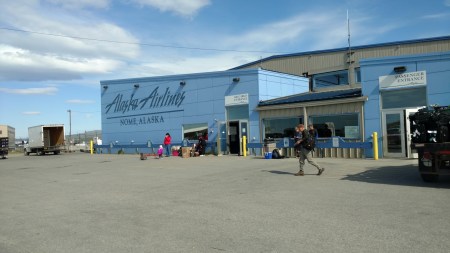
Getting to Nome from Adak meant a flight first to Anchorage and then another to Nome.  The first flight was in a combo Alaska Air cargo/passenger jet and again there was lots of room.  A comfortable connection in Anchorage and then another Alaska Air combo heading north.  This time the plane was pretty full – lots of birders on board – but the flight was relatively short and easy.  As I waited for my bags at the quite small Nome airport, I heard a voice “Are you Blair?” and turned around to see a woman from near me in Edmonds, WA whom I had never met but with whom I had exchanged birding information/photos.  Small world – birding in Alaska – and here was Pam Meyers.  I want to add a shout out here for Alaska Airlines.  Just as had been the case with my April trip to Colorado, all flights were on Alaska Airlines and every aspect of the intersection with them was fantastic – easy, quick, friendly, efficient and smooth.

Nome Airport - Copy

Our first stop was to pick up our vehicle in “Downtown” Nome.  Only four on this trip so it was an extended cab pickup with a back seat.  Very serviceable and definitely good for our purposes.  Then it was a short ride to check in to our Nome abode.  Can’t say I have ever stayed at a place with “Dredge” in its name but “Dredge No. 7 Inn – Sluicebox” was to be our Nome Home.  Apparently has something to do with Nome’s gold mining history. Perfectly comfortable.

Dredge No7 - Copy

Whatever its previous gold boom past, today Nome is a pretty dismal town – certainly more going on than Adak, but not much.  Flat, not scenic, somewhat downtrodden etc.  However, once out of the town, it is spectacular with the ocean, vast tundra, mountains and rivers.  Quite the beautiful place with lots of good birds.  It is also as far north as I have been and definitely the land of the Midnight Sun as on more than one night we were birding in good light until midnight and at most there were perhaps 3 hours of dim light – never completely dark.

There are basically three main roads out of Nome – Council Road and Teller Road each to another “town/settlement” of those names and also the Taylor Road but better known at least for birders as the Kougarok Road. During our four day stay we birded the full length of each including more than one trip on the Council Road. I am going to take the liberty here of going out of sequence and just sharing birding stories without regard to timing – trying as best I can to provide some locational details – and definitely lots of photos.  As on Adak, John was a great guide – finder and identifier of birds.  We ran into lots of other birders – some local and others on organized trips.  For the most part information was shared – always beneficial especially in large areas where pinpoint information can be very helpful.

The main “targets” for the trip were probably Bluethroat, Arctic Warbler and Bristle Thighed Curlew with next in line being Eastern Yellow Wagtail, Willow Ptarmigan, Northern Wheatear, Red Necked Stint, Bar Tailed Godwit and Gray Cheeked Thrush.  There was also an outside chance for White Wagtail and maybe some Eiders in addition to Common Eider which we had seen on Adak.  As it turned out we found all of these birds except for the Bristle Thighed Curlew despite a very thorough search and this included a Spectacled Eider, the only Eider I had not seen.  I had also already seen Northern Wheatear, Bar Tailed Godwit and Red Necked Stint in Washington but the looks here especially in breeding plumage were superior and greatly enjoyed.  We also lots of other great birds including many Redpolls both Common and Hoary and the most surprising to me was the number of Long Tailed Jaegers which seemed to be everywhere.  Also had many Parasitic Jaegers – all great looks. Some other “common” birds were Lapland Longspurs, Glaucous Gulls and Northern Waterthrushes.  I had seen and photographed all of them in Washington, but these breeding birds were spectacular.

Nome birds in no particular order:

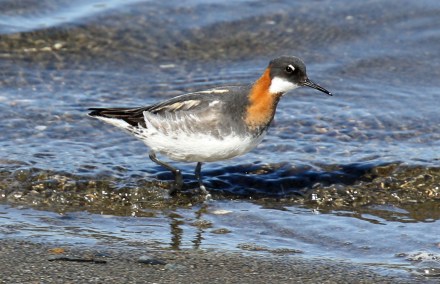
Red Necked Phalarope – Beautiful in perfect light along the Council Road

Red Necked Phalarope1 (1) - Copy

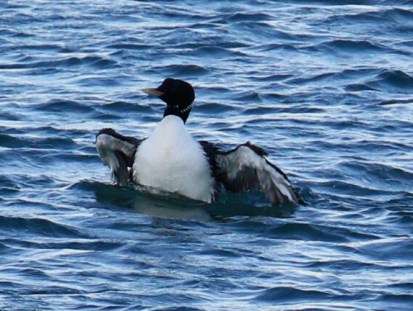
Yellow Billed Loon – found by John in the sea off Council Road.  First one I have ever seen in breeding plumage.

Yellow Billed Loon

Red Throated Loon – the most common loon – seen often – primarily along Council Road.

Red Throated Loon

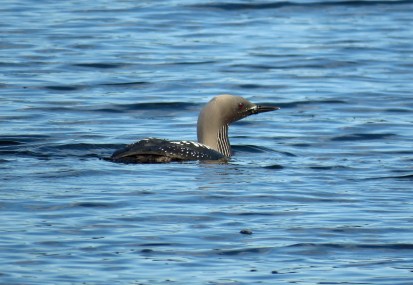
Pacific Loon – we tried to make it into an Arctic Loon but settled for tis beautiful Pacific Loon in breeding plumage.

Pacific Loon

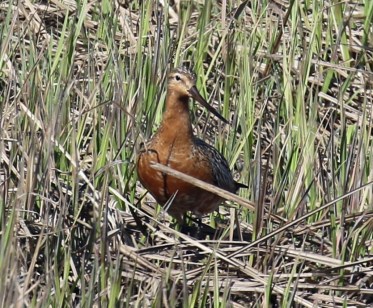
Bar Tailed Godwit – several were seen – both male and female.

Bar Tailed Godwit1

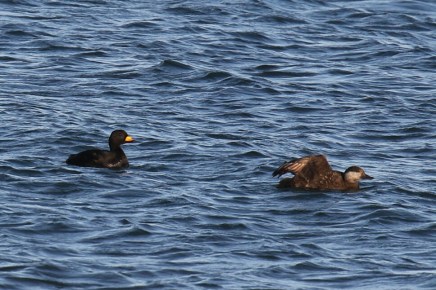
Black Scoters – in sea off Council Road.

Black Scoters

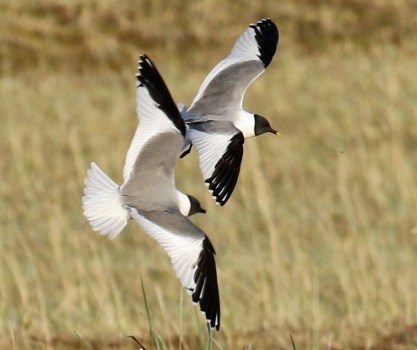
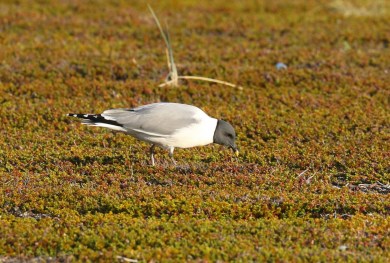
Sabine’s Gull – a very fun find as there was a flock of at least 80 in the “grass” and ponds along Council Road.

Sabine's Gulls

Sabine's Gull Ground

Arctic Tern – Much more common than the Aleutian Terns but both were present.

Arctic Tern Flight

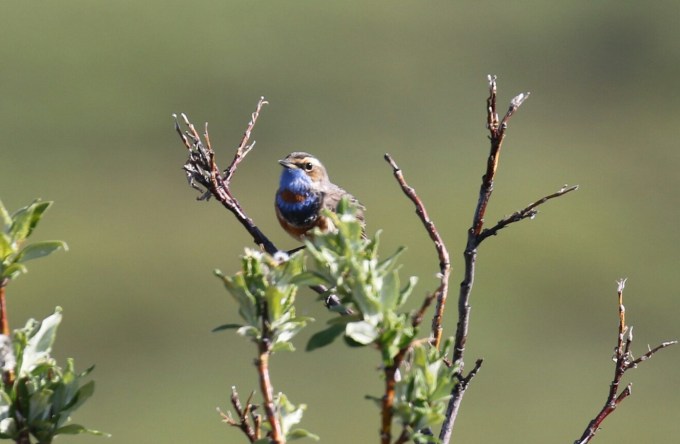
Bluethroat – One of the prized finds – several seen and heard along Kougarok Road.

Bluethroat


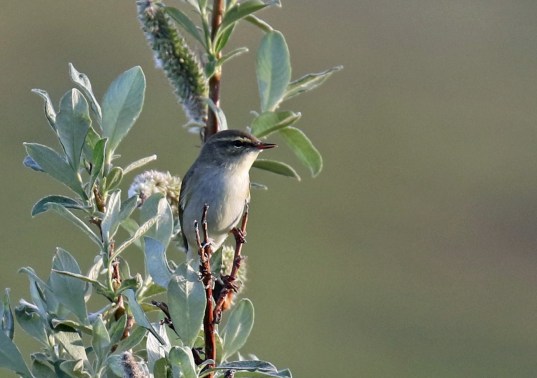
Arctic Warbler – We found quite a few in a number of places.  A Nome specialty.

Arctic Warbler4

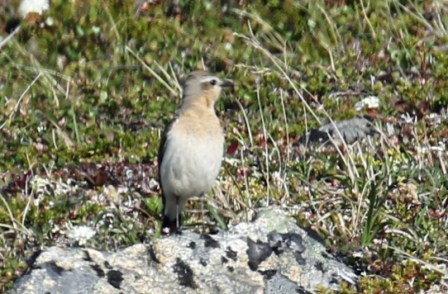
Wheatear (Male and Female) – A mated pair on Kougarok Road.

Northern Wheatear

Northern Wheatear female

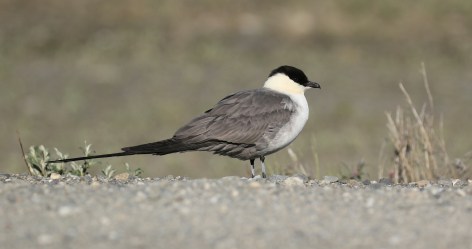
Long Tailed Jaeger – We saw these everywhere from the coast to the mountains.  Quite common and quite beautiful.

Long Tailed Jaeger

LTJAEGER 3

Parasitic Jaeger – not nearly as common as the Long Tailed Jaegers but seen frequently mostly at the lower elevations.

Parasitic Jaeger 2

Glaucous Gull – the dominant gull.  We also saw some Kittiwakes and Mew Gulls but at most a single Glaucous Winged Gull (or so John said…inside joke)

Glaucous Gull

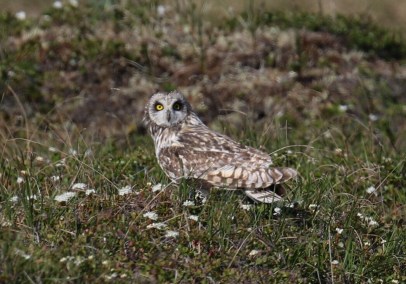
Short Eared Owl – several seen as we had on Adak.

Short Eared Owl

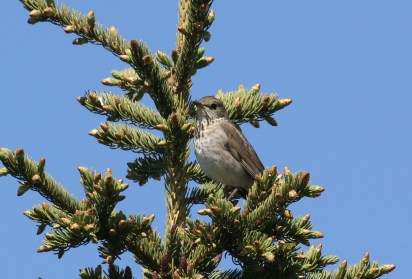
Gray Cheeked Thrush – seen and heard almost everywhere including in a little clump of brush next to our lodging.

Gray Cheeked Thrush 3.jpg

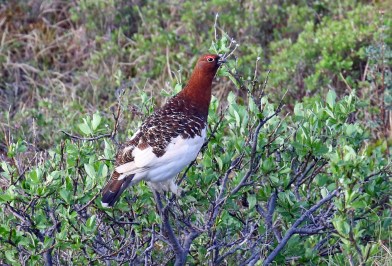
Willow Ptarmigan (Male and Female) – We saw several in the tundra.  This was the 19th gallinaceous bird I have seen this year.  There are only 4 more “regulars” in the ABA area and I am tempted to try for them all.

Willow Ptarmigan 2

Willow Ptarmigan Female

Rock Ptarmigan (Winter Plumage) – a consolation on our failed search for the Bristle Thighed Curlew – very cool to add this white form to the breeders we saw at Adak.

Rock Ptarmigan White

Northern Waterthrush – another very common bird – hard to get to sit still for a picture but found almost everywhere.

Northern Waterthrush1

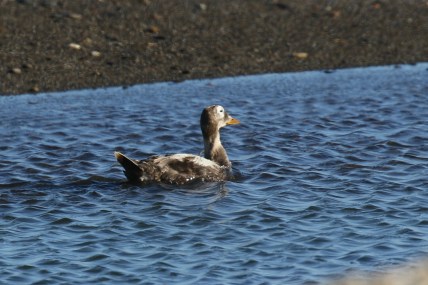
Spectacled Eider – We were told of this rarity by another group – Hastings Creek/Bay off Council Road. We may have missed a Steller’s Eider but at least I had seen one many years ago in Washington.  This was one of the best birds to me for the whole trip.

Spectacled Eider2

Spectacle Eider

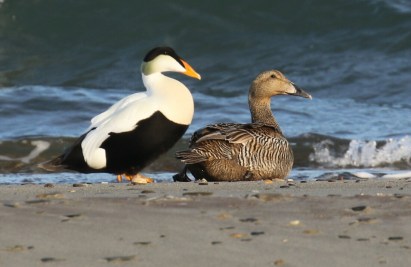
Common Eider – We saw many in the sea off Council Road and John located a single immature King Eider in a small flock of Common Eiders as well.

Common Eiders (2)

Long Tailed Ducks (Male and Female) – In a pond off Council Road.

Long Tailed Duck1

Long Tailed Duck Female

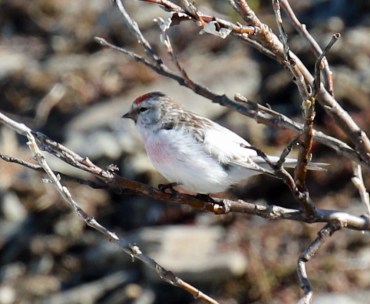
Hoary Redpoll – Common Redpolls were more numerous and were abundant in town, but we saw many Hoary Redpolls out in the tundra especially.

Hoary Redpoll

Common Redpoll – heard and seen frequently including at our motel.

Common Redpoll3

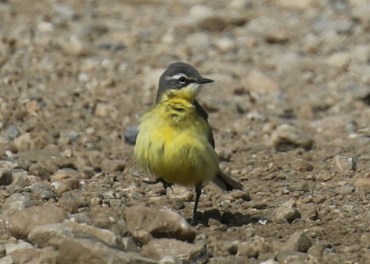
Eastern Yellow Wagtail – We ended up seeing 3 or 4 including two at Teller.

Eastern Yellow Wagtail1 - Copy

White Wagtail – rarer of the wagtails – one or maybe two seen at pond near Teller.

White Wagtail

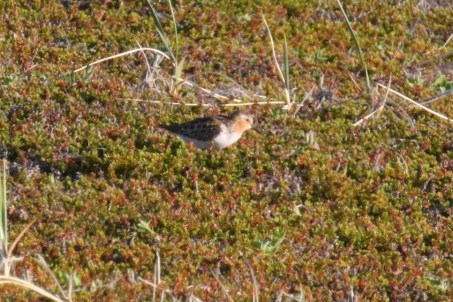
Red Necked Stint – brilliant in the sunshine together with a number of Western Sandpipers and a single Dunlin.

Red Necked Stint 2

American Golden Plover – Another consolation prize in our unsuccessful attempt to find the Bristle Thighed Curlew.

American Golden Plover

Pacific Golden Plover – Seen on both the Council and Kougarok Roads – lower elevation than the American Golden Plovers.

Pacific Golden Plover

Snow Bunting – the only one we saw – on the Kougarok Road – why couldn’t it have been a McKay’s!!??

Snow Bunting

Fox Sparrow (Red) – heard and seen at a number of locations.

Fox Sparrow (2) - Copy

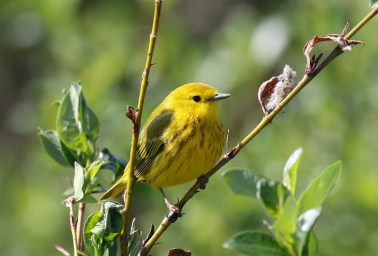
Yellow Warbler – seen and heard frequently.

Yellow Warbler 2

Blackpoll Warbler – Council Road – male and female – and lots of mosquitoes.

Blackpoll Warbler 2

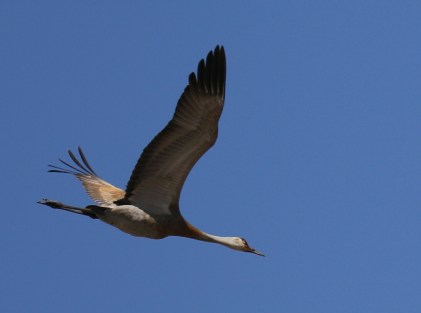
Sandhill Crane – we saw a good number including a small flock.

Sandhill Crane

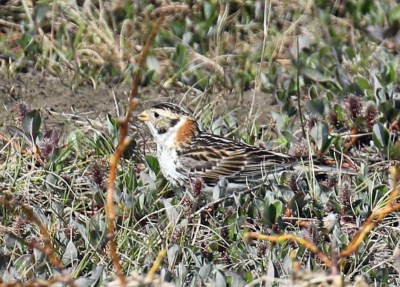
Lapland Longspur (Female) – not as common as Redpolls but seen frequently.

Lapland Longspur Female

We also had good mammal sightings including many Musk Ox, Moose with Calf and a Red Fox.

Musk Ox – we saw several small herds – a “life mammal”.

Musk Ox1

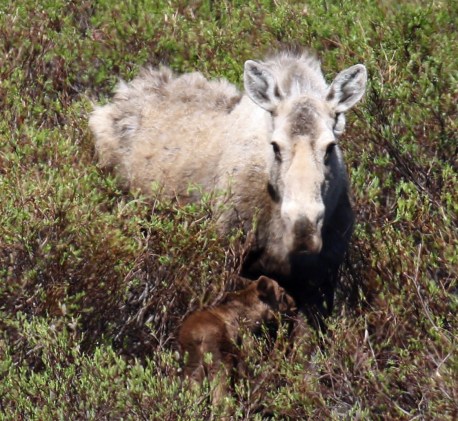
Moose with Calf – the calf did not appear for quite awhile – certainly looked like it was not very old.

Moose with Calf

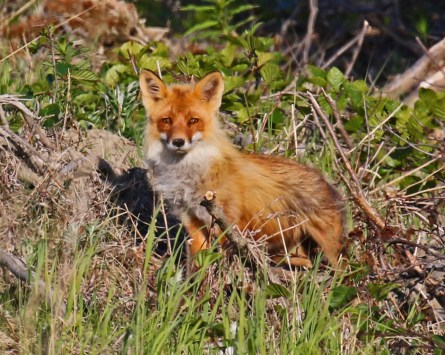
Red Fox – seen on the Council Road.

Red Fox1

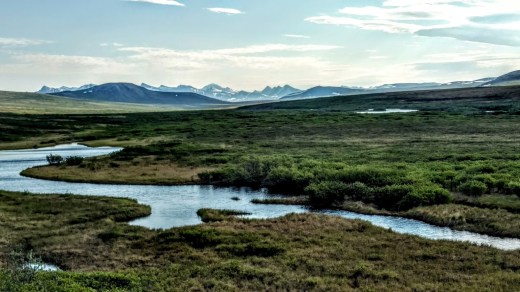
And of course there was great scenery along the way.

Scene`

Scene2

Scene

And finally (photo wise at least) the tundra was full of beautiful wildflowers.

On this Nome portion of my trip I added 55 new birds to my Alaska State list bringing the total to 142 (with 129 seen on the trip to all places in Alaska this year).  New life birds were: Gray Cheeked Thrush, Arctic Warbler, Bluethroat, Eastern Yellow Wagtail, Willow Ptarmigan and Spectacled Eider – making it 16 altogether for the Alaska trip in total.  Some misses and some surprise finds – as it almost always is.

There was not a lot of interaction with locals – offered some ivory jewelry in Teller where we also surprisingly found a small store with cold sodas – not even hideously over-priced.  Food was not fantastic but there were some decent options in Nome.  Definitely a popular place for birders as we intersected both with birders on their own and also several organized groups including one of local educators.  The weather was fantastic – no rain and very little wind.  High temperature was maybe 70 and the low in the morning was probably high 30’s.  The long days were great but I am sure I would not enjoy the corresponding long hours of darkness in the winter (nor the snow or below zero temperatures).  I brought sun block and insect repellent and needed both but surprisingly bugs in only  a very few places.

It was time to go home and once again Alaska Airlines delivered.  Good flight back to Anchorage and then they even moved me up to an earlier flight back to Seattle.  Continuing to lead a charmed life, my bags were among the first on the carousel at baggage claim and my ride was on time and it was back to civilization.

I do not expect I will return to either Nome or Adak – but Nome is certainly doable on one’s own – if accommodation and a rental car (both in short supply) can be arranged.  I heard many stories about other Alaska birding meccas including Gambell, Attu and the Pribilofs.  Maybe some day.


Remote Alaska Part II – A Pelagic Trip out of Adak

This was the focus of the Zugunruhe Bird Tours trip that had both caught my attention and also gave me the most apprehension.  The tour description is included in my previous blog post – essentially it was to be 4 days/nights at sea with some great Alaskan birds as the targets.  For most birders the highlights were to be Whiskered Auklet and Short Tailed Albatross with a good chance at Mottled Petrel.  Also as described in that earlier blog post, plans were changed and weather both cut off a day at sea and also changed our destination from Sequam Pass to a more protected area.

After another good dinner prepared by Nicole, we left our dock in sheltered seas but that changed as we hit open water and the boat tossed and turned.  Not terrible and not scary but this was my first night at sea and sleep was not easy – probably more because of a worry about “what if it gets worse” rather than the conditions themselves.  There were maybe only 5 or so hours of darkness anyhow, so sleep was short in any event.  But we were here to bird and not to sleep, so getting up and about was welcome even with the boat’s tossing and pitching.

Time out for a description of boat, crew and birders.  The Puk Uk was indeed quite comfortable and seaworthy.  Onboard Billy Choate was our captain and he was joined by First Mate Oxsana and Cook Nicole – all terrific.  John Puschock was our leader and Neil Hayward was helping John as co-leader and spotter.  Both had also just led a trip to Attu on the Puk Uk and were terrific with the birds in Alaska.

John Puschock

John Puschock

Neil Hayward

Neil Hayward

Neil is the current ABA Big Year leader with 749 species seen in 2013.  I just finished reading his brand new chronicle of that year, Lost Among the Birds: Accidentally Finding Myself in One Very Big Year.  Especially enjoyable to birders, it is a great read in any event as Neil very honestly deals with emotions, psychology and “life”.  Highly recommended to everyone.

Media of Lost Among the Birds

John and Neil were superb and obviously accomplished birders, but others in the group were quite impressive as well, and there was also a fascinating situation/dynamic in that one in the group, Olaf Danielson was well into his own Big Year and seemed poised to break Neil’s record – and Neil was essentially helping him do so.  Olaf in fact already held one Big Year record – having seen the most ABA species in one year – nude – shoes, hats and gloves the only exceptions to the no clothes requirement.  Olaf’s Nude Big Year was in 2012 and 2013 (so not a calendar year) and resulted in 594 species seen in the buff.  Of course there was a book (Olaf is a fiction writer as well as birder, businessman and doctor) and of course it is titled Boobies, Peckers and Tits – the next book on my reading list.

bpt coverThe Rock Ptarmigan was species 700 for the year for Olaf on Adak and he was to add many more during the pelagic and then the return to Adak and he kept his clothes on for all of them.  Olaf’s daughter accompanied him. I had her name as Lauren but believe she goes by Lena or maybe that is the name and I am wrong about the other.  In any event she is 16, bright, personable and able to both put up with her father and also with a boatload of birders living in close quarters – quite impressive.  Impressive too were our other birders.  I shared my berth with Bart Whelton from Spokane and Jay Gilliam from Norwalk, Iowa.  Both were good company and good birders with ABA lists over 700 and for Bart – a world life list of more than 6000.  He had bird lists from places I had not even heard of and had also been to the international spots where I had birded making shared stories easy.
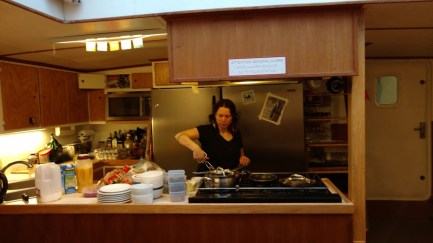
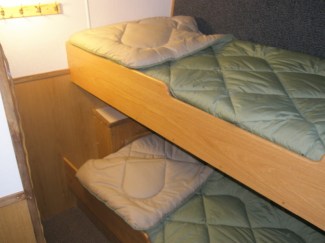
Chris Feeney is from Georgia and was working hard to reach the lofty heights of 800 ABA species.  Every new bird was precious and Chris was dedicated and talented in finding them.  I think that after Adak and the pelagic, Chris was around 790 (hope I am not short changing him).  Rounding out the group were Paul Budde (from Minnesota but now in Washington, D.C.) and Don Harrington – another Minnesotan.  Sadly, I did not spend enough time with Paul to learn his story – in part because he may have been the most dedicated birder on deck braving the wind and spray outside more than any of us.  Clearly a superb birder I know he has been very active in the Minnesota Ornithological Union.  Don also was on my Nome trip and is a great photographer – and that will be my last comment on him.

Back to the boat – here are some photos of the interior and our crew.  I really cannot say enough about how good they were and the food really was outstanding.

Nicole in the Galley

Nicole at Work in HER Galley

John, Bart and Chris at the Benches/Tables

John Bart and Chris

Our Bunks

OLYMPUS DIGITAL CAMERA

Captain Billy, Nicole, First Mate Oxsana, John and Jay

Bill Nicole Oxsana Jay and John

Olaf and Lauren/Lena Danielson

Olaf Danielson

And now again – back to the birds…

As anyone who has taken a pelagic trip knows, it is an up and down matter – both as relates to the movement of the boat and the presence and absence of birds.  There are long periods of time with little or no activity, short bursts of frenzied activity, some sustained activity – especially with chumming and the constant sense of possibility.  One challenge is that with some species being so scarce – if you miss the one sighting that may have been the only time the bird was seen and you are out of luck.  So there is great incentive to be out on the deck and also great value in having many trained eyes and good shared communication.  Heavy seas and heavy winds (often going together) are additional challenges.  All in all however, the weather was not too bad and it was possible to find places on the deck where there was at least some shelter from the wind and despite heavy cloud cover, there was very little rain – a big plus.

I am not going to chronicle what was seen when and how many – just going to cut to the chase and then embellish a bit.  The two stars of the show for everyone (well except me in a way) were the Whiskered Auklets and the Short Tailed Albatross.  The former were numerous and mostly quick flybys or floating on the water but neither close at hand nor in good light.  The latter was a single bird – and only a juvenile but oh boy what a bird – especially very up close and personal at our chum stop.  I had an extremely brief and poor look and quick picture of an immature Short Tailed Albatross on a Westport Pelagic trip in 2014 so it was not the prized lifer that it was for almost everyone else on board.  But being able to see it so well made it easy to appreciate and admire its size and power.  Especially the case when it was paired so readily with numerous Laysan Albatrosses both in flight and on the water.

Short Tailed and Laysan Albatrosses

Short Tailed and Laysan Albatrosses

A Short Tailed Albatross is a big bird – 3 foot body and 7 foot wingspan and weighing over 16 pounds (a lot for a bird).  When you see a Laysan Albatross alone, it looks big as well but weighs half as much with shorter wings and body.  Both are amazing flyers.  The Laysan is not common in Washington but I have been fortunate to see one up close and get a good photo and some are seen most years.  All albatrosses have huge bills and big feet gving them a gawky look but oh can they fly.

Short Tailed Albatross on Water

Short Tailed Albatross Head

Laysan Albatross Landing

Laysan feet

Albatrosses with Chum

Short Tailed Albatross with ChumLaysan Albatross with Chum

We also saw a single Black Footed Albatross – the common albatross in Washington where I have seen as many as 170 on a single trip!!   The Short Tailed Albatross breeds on Islands off Japan and has a world population of fewer than 2500.  The Laysan breeds on Pacific Islands – particularly at Midway Island and has a world population of just under 1 million birds.

The most common species coming to our chum (and also seen while motoring) were Short Tailed Shearwaters and Northern Fulmars. I have seen both in Washington although there the former is far outnumbered by Sooty Shearwaters.

Northern Fulmar

Northern Fulmar (2)

Short Tailed Shearwater

Short Tailed Shearwater

All of these birds are Procellariformes or “tubenoses”.  The “tube” is a special gland that allows them to drink seawater and excrete the salt since they live primarily in the open ocean and do not have access to freshwater.  On most pelagic trips these birds are one of the highlights but especially in Alaska that honor is shared by the alcids – Northern Hemisphere birds replaced by penguins in the Southern Hemisphere.  These were the birds of most interest to me as they would be mostly life birds or at least life picture birds.  And of course the Whiskered Auklet was the real prize.  It is not that they are rare – just that they have a very limited range.  In fact all told we surely saw more than a thousand but only in very few places.

Whiskered Auklets

Whiskered Auklets1

Whiskered Auklet on the Water

Whiskered Auklet1

These guys do not come in for chumming and always seemed to be flying away from the boat so pictures were a challenge but all were thrilled to add this species to life or year lists – including me.  I also added Least and Crested Auklets to my life list and we also saw a few Parakeet Auklets (no photos).  They were far less common and again very difficult to photograph. A single poor picture of the former but none of the latter.

Least Auklet

Least Auklet.jpg

On my trip to Glacier Bay I had looked very hard for and finally found a single Horned Puffin.  It was one of the birds I most wanted to see and photograph on this trip.  Surprisingly all puffins were few and far between and I managed to see only a handful of Horned Puffins and was able only to get pretty crummy photos.

Horned Puffin

Horned Puffin

Tufted Puffin

Tufted Puffin

We had many Common Murres but a disappointment was that we had no Thick Billed Murres – not a life bird as I have seen the one that hung out at Ediz Hook in Port Angeles but a good photo would have been nice.  And while we did have some Ancient Murrelets, no Long Billed Murrelets which would have been a great surprise and welcomed.

Ancient Murrelet

Ancient Murrelet

While there were some misses on the trip (there always are) there was also a great unexpected bonus (which there sometimes are).  We never saw a Mottled Petrel – hopefully someday in Washington for example.  We had seen a few Back Legged Kittiwakes – nice and expected birds.  Again birds I have seen often in Washington.  What I had not seen and knew was only remotely possible was a Red Legged Kittiwake.  I believe it was Neil that first spotted the bird and I fortunately was on deck and close when he did.  It was not around long, but it was cooperative and while my photos do not show the red legs (they are folded up and tucked in when the bird is in flight), I could readily see the smaller yellow bill and darker mantle that distinguishes it from its black legged cousin.

Red Legged Kittiwake

Red Legged Kittiwake

As can be seen from all of the photos – it was pretty dismal gray the whole time we were at sea.  But all in all a very pleasant trip with moderate (15-25 knot) winds and ok seas.  It is tempting to go into details on some of Nicole’s food creations but I am trying to lose some of the weight gained on the trip and do not want to be tempted – especially the amazing pizzas she created from scratch. We generally anchored for the nights in calm sheltered waters and I slept much better than expected and fortunately had no seasickness at all.  Neither did anyone else.

I was not sure where to insert this trip highlight and figure this is as good a spot as any.  It is often the case that small birds will inadvertently fly onto ships at sea.  This is true on pelagic birding trips as well and I have seen a number of passerines on Westport trips.  But we were treated to some truly special visitors on our journey.  One night we had both a Leach’s and a Fork Tailed Storm Petrel fly on board.  Another time we were visited by one of the Whiskered Auklets. The latter was not able to get up enough “go” to fly off over the railing so it was captured and viewed closely by all before it was released.  So much better than the distant fleeting views in rolling seas, under gray skies from a bouncing boat.

Whiskered Auklet Onboard

Held Auklet

As I indicated in the previous post, we birded an additional morning when we returned to Adak.  I forgot to add them then so will now. One of the nice sightings on Adak was not of birds but of always beautiful Sea Otters – usually a mom with baby floating by her side or on her stomach.

Sea Otters

Sea Otter with Pup1

At sea we had also come across a small group of Steller’s Sea Lions.  Only a brief look at some Orcas and  a couple of distant whales but nothing else on the marine mammal front.

Steller’s Sea Lions

Sea lions2

After the morning back on Adak, the bad news was saying goodbye to a fascinating place and some wonderful people.  The good news was that our plane was on time and weather would not be a problem for the trip to Anchorage and then to Nome.  It had been a good trip.  I added 30 species to my Alaska List and the following 10 species to my ABA List:

Far Eastern Curlew, Kittzlitz’s Murrelet, Rock Ptarmigan, Aleutian Tern, Common Snipe, Hawfinch, Whiskered Auklet, Least Auklet, Crested Auklet, and Red Legged Kittiwake.

It was now off to Nome and more adventures.


Remote Alaska – Part I: Adak Island

My birding experience in Alaska had been very limited – some incidental birding on a business trip to Anchorage in 1979, more incidental birding on a fishing trip to Alexander Creek in 1986 and a visit to Juneau and Glacier Bay with my kids in 1995.  Those three trips resulted in a State List of 40 birds with the best ones being Boreal Owl, Horned Puffin and Hoary Redpoll.  It was time to return for a concentrated trip to see some Alaska specialties and add to my ABA List.  I had come to know John Puschock and thus know of his unique trips through his Zugunruhe Bird Tours to remote Alaskan destinations.  He told me of a private trip he had arranged to Nome and I was interested.  But that was a long way to go for just a four day trip so when he said he had room available on a very unique pelagic trip from Adak Island the makings of an Alaskan adventure was in order and I was interested.

The tour description: “This pelagic trip targets three of North America’s most-wanted pelagic species: Whiskered Auklet, Short-tailed Albatross, and Mottled Petrel. Other birds that are very likely including Laysan (usually in big numbers) and Black-footed Albatross, Northern Fulmar, Short-tailed Shearwater, Fork-tailed Storm-Petrel, Red-faced Cormorant, Black-legged Kittiwake, Common and Thick-billed Murre, Pigeon Guillemot, Ancient Murrelet, Cassin’s, Parakeet, Least, and Crested Auklets, and Horned and Tufted Puffin. Both Marbled and Kittlitz’s Murrelet and Aleutian Tern can be seen fairly easily at Adak after the trip.”  I was sold and signed up – with the Nome trip to be an add on after the 5 day Adak trip.

My blogging skills are not sufficient to share all the great moments and birds from the Alaskan trips and a single blogpost is far too limited to include even those experiences that I can relate so there will be three posts:  this one covers birding on Adak Island before and after the pelagic trip; Part II will cover the pelagic trip itself and Part III will cover the extension to Nome.

Rather than chancing delays and disconnects getting from Seattle to Adak with only two flights a week to Adak, I opted to fly to Anchorage a day earlier (the origin of all flights to Adak).  This gave me a chance to do some limited birding around my motel – specifically at Lake Spenard and Lake Hood in spectacular weather on the morning of May 29 before my flight to Adak.  Nothing terribly exciting although the single Pectoral Sandpiper I found was an Ebird “rarity” and my Alaska Life List was increased to 57 birds.  Moreso it certainly got me into the mood for some more specialized Alaskan birding and I was excited when I boarded the Alaska Airlines flight for Adak on the afternoon of May 29th.  I was not looking forward to the flight but having a full row to myself (indeed 6 rows if I wanted them) was appreciated.  The flight was easy with views mostly of clouds below.  The sign welcoming us to the primitive Adak airport was thought provoking and accurate:  “Adak, Alaska – Birthplace of the Winds”

Welcome to Adak

Adak History and Geography

Adak is located in the Andreanof Islands, 1,300 miles southwest of Anchorage and 350 miles west of Unalaska/Dutch Harbor, at the end of the Aleutian Island Chain. It is the southern-most community in Alaska and has 122 sq. miles of land and 5 sq. miles of water. The Aleutians were historically occupied by Aleuts. Once heavily-populated Adak island was filled with many Aleut villages that were later abandoned in the early 1800s as the Aleut hunters followed the Russian fur trade Eastward and famine set in on the Andreanof Island group. However, they continued to actively hunt and fish around the island over years, until World War II broke out and Attu Island was occupied by the Japanese. This led to the establishment of a military presence on Adak beginning in August 1942 and Adak was attacked by Japanese fighter planes which strafed the island and dropped a few bombs in October 1942. Thus Adak was one of only a handful of places on U.S. soil actually subjected to an enemy air raid.

After  World War II, Adak was developed as a Naval Air Station after the War, playing an important role during the Cold War as a submarine surveillance center. Large earthquakes rocked the Island in 1957, 1964 and 1977. At its peak, the station housed 6,000 naval personnel and their families. In 1994, severe cut-backs occurred, and family housing and schools were closed. The station officially closed on March 31, 1997, and currently houses approximately 30 Navy personnel and 200 civilian caretakers.  Today the scene is quite sad as the abandoned military housing and installations are in great disrepair and have been vandalized and stripped of materials.

Abandoned Adak Housing

And now back to the birding…

It was definitely comforting to be see John Puschock at the airport.  I do not want to even ponder what I would have done had he not been there.  But as was the case throughout the trips, logistics were well handled by John and it was time to go birding.  I met other members of the tour group including Neil Hayward, of ABA Big Year fame, who was serving as a co-leader on the trip.  Much more on all of the participants later, but suffice it to say that I was in the company of extremely accomplished birders, all but one of whom had been to Alaska before for some serious birding and were now back on focused missions to add specific birds to very impressive lists.

We piled into two vehicles and were off in pursuit of one of those “vagrant specialties” that make these remote locations magnetic for birders.  On a nearby beach we located two birds – a Whimbrel (Eurasian subspecies or race) and the real gem – a Far Eastern Curlew.  So not long after arriving I had my first “lifer” and, if the Whimbrel is someday recognized as a distinct species and not a race, maybe two. While I “may” have been able myself to recognize the Far Eastern Curlew as different from the Long Billed Curlew found in my home Washington State, it was nice to be in the company of experts and also to know that in fact the Long Billed Curlew was not ever seen on Adak in any event.  And this is what made birding here so appealing – even though there was not much bird density (except for Gray Crowned Rosy Finches and Lapland Longspurs – and more on them later) each bird was possibly or even likely to be something special and maybe even very special.

Far Eastern Curlew and Eurasian Whimbrel

Far Eastern Curlew and Whimbrel

Two more special birds were also seen fairly quickly, Aleutian Tern and Kittzlitz’s Murrelet.  Both were life birds and high on my “target list” for the trip.  I had expected to see both and probably frequently.  Such was the case for the terns but we saw only a few of the Murrelets so it was particularly great to get photos of the first pair seen.

Aleutian Tern

Aleutian Tern1

Aleutian Tern 5

Kittzlitz’s Murrelet

Kittzlitz's Murrelet

It had been a long day but in this part of Alaska, the days are very long in the summer and the sun shines (well at least shines through the cloud cover) for most of the day so all internal clocks are off. Time now to settle in to our boat that was to be home for the next 4 days and to head off on our pelagic journey — well not so fast.  Heavy winds and heavy seas required a “Plan B” as it would be impossible to head to Sequam Pass that night – our target area for the Whiskered Auklets and more.  It was determined to wait another day to bird more on Adak and then to either keep the original objective or to go to an alternate more weather friendly location.

Our home away from home was the M/V Puk-uk, a 72-foot vessel custom-built for Alaska charters.  I had been on many pelagic birding trips out of Westport, Washington where I had encountered less than perfect weather, and a single pelagic trip out of Cape Town South Africa, where I had encountered truly scary weather, but these had all been day trips and I had not yet spent a single night onboard a boat of any kind.  My apprehension was not assuaged when it was necessary to deal with a less than familiar obstacle course of ladders, railings, planks, barges and docks to get on board, but Captain Billy Choate and his crew made us very comfortable and once aboard the quarters may have been compact but the accommodation was comfortable and welcoming.

M/V Puk Uk

Puk Uk

I had prepared for possible sea-sickness with an adequate supply of Dramamine and some wristbands but when I saw that most of the other birders were using scopolamine patches, I wondered if I would be ok with what would be ahead.  So perhaps it was best that this first night would be anchored at the dock with minimal movement and calm conditions.  I had been sick onboard only once – and I think it was more a question of something I had eaten than the sea movement – but I had seen many others with seasickness and I wanted no part of it.

Life on board was actually quite good.  Our staterooms/berths were small (I shared a room with two others – Bart from Washington and Jay from Iowa) which meant there was an extra bunk which together with some “closet” space left plenty of room for cameras, binoculars and bags.  Most importantly the kitchen and common room were super and more importantly still; Nicole our cook was terrific – as long as you followed the important rule to stay out of her kitchen space.  Good food helps any situation.  (Pictures will be added in Part II which covers the pelagic trip.)

With the changed plans, we birded Adak again the following morning.  It started off with a mystery that sadly could not be solved.  I left the boat to take my gear up the convoluted route to get to the cars.  This involved some very tight passages and I did not want my camera and lens hanging down as it usually did so I packed in my pack to carry it up the ladders etc.  When I got up onto the dock where the cars were parked I noticed maybe a dozen gulls.  A Slaty Backed Gull had been seen by some in the group the night before so I paid some attention and among the Glaucous Winged Gulls I saw one with a very dark mantle, a white head and tail, a few very small white specks on its wingtips AND quite yellow bill, legs and feet. I could not remember the leg color of the Slaty Backed Gull and had great photos of that species from Tacoma in Washington.  My camera was stowed away so I made the mistake of not immediately digging it out for a photo.  My sense was that it was not a “small gull” – that is it was not Mew Gull sized for example.

The “Path” from Boat to Dock

Plank - Copy

When John and Neil came up onto the dock later I asked what gull here might have a dark mantle and yellow legs and feet and the answer essentially was “none”.  I have definitely made observation errors before and certainly will again, but there was no doubt to me that the field marks of yellow legs and feet and dark mantle were accurate.  And same for the clear head and tail.  Without a photo or a more conscious and conscientious observation, the identity will have to remain a mystery.  As I thought about it, it seemed at least consistent with Lesser Black Backed Gulls I have seen in Washington.  Who knows…

As we birded the island we were able to add another special Asian Vagrant – Common Snipe.  This is again a situation where having experts around was critical as the species is very similar to the Wilson’s Snipe (our snipe in Washington) which is also present on Adak and at one time both were considered the same species.  But the call and winnowing sound are different – immediately recognized by John and Neil.  It was quite overcast this day, so light for photos was not great, but I was able to capture a winnowing snipe which actually shows the individual tail feathers – and counting them is another way to distinguish the species.

Common Snipe

Common Snipe2

We actually had access to only a small portion of Adak Island but the roads were good and we visited a number of likely spots including within the town and the abandoned housing, various other structures in the hills, the coast and inlets and “the Adak Forest”.  The letter is pretty hilarious as Adak is essentially without trees and the forest is a small copse of stunted evergreens up one of the hills.  John and Neil had placed seed near some of the trees (including a couple in town) and we scoured the trees carefully.  Unfortunately at least on this day, we saw only “common birds” – Lapland Longspurs and Gray Rosy Finches.  I have seen and photographed both often in Washington but I was excited to see the longspurs in full breeding plumage for the first time – truly beautiful birds.

The Adak “Forest”

Adak Forest

Gray Crowned Rosy Finch

Gray Crowned Rosy Finch on Cross

Lapland Longspur

Lapland Longspur

A Gyrfalcon had been seen frequently on the Island and this is the one bird that I was actually the first to spot as we traversed the hills.  At first just a distant glance but then we followed it quite a distance and found it perched on one of the structures and it put on a great show. I have seen this species in Washington (including one this year and a gorgeous “white bird” three years ago, but it is always a treat).  Not the greatest photos – but as just stated – always a treat.

Gyrfalcon

Gyrfalcon3


Gyrfalcon Dive

As reported in an earlier blog post, I had already enjoyed a great year for “chickens” – gallinaceous birds such as quail, grouse etc. as a result of my wonderful trip to Colorado.  I had 13 species of gallinaceous birds there with 4 additional species seen in Washington.  This was all the more reason that I was eager to see two new “life chickens” in Alaska – Rock and Willow Ptarmigans.  Adak delivered on the Rock Ptarmigan – seen frequently in the tundra in the hills – usually flying away from us as we drove by.  But one cooperated for a nice photo and life bird number 5 for the trip.  (More will be written on it in the last post but I also got the Willow Ptarmigan later at Nome).

Rock Ptarmigan

Rock Ptarmigan 2

This is where I am going to mix and match a bit as after the added day of birding on Adak we returned to the boat and took off for the pelagic part of the trip in a different Plan B direction.  We returned after that for another morning of birding on Adak and I want to cover that here as well.  Before our arrival at Adak on May 29th some other great birds had been seen including some Hawfinches, and a Temminck’s Stint.  (Much earlier my prize bird had been seen – a pair of Smew).   On our last morning on Adak we found one of these prizes – a nice male Hawfinch – an ABA life bird for me although I had seen them in Hungary more than 15 years ago.

Hawfinch

Hawfinch

It was time now to head back to Anchorage.  Adak was fun and as will be written in the next post, so too was the pelagic trip.  We missed the Red Faced Cormorants that were usually seen on Adak – too windy – but had some other birds that could not be counted on.  Definitely a strange and mostly unwelcoming place in many ways.  But great birding and great birding company.  I don’t know that I will ever be back so definitely glad to have made the journey.


Do You Know the Way to … Neah Bay?

Neah Bay has become a “must include” stop in any Washington birder’s plans for the year.  In addition to just being a great place to find many good birds, it is a place where rarities are often found.  And if you can visit in good weather, it is extremely beautiful and peaceful.  There is always the chance for something special and there is usually the likelihood that you will find other birders there – hopefully with their cameras, scopes or binoculars already looking at something wonderful that they will share with you.

An Olympic Peninsula Audubon Society joint field trip with the Washington Ornithological Society – part of which was to include a hawk watch on Bahokas Peak – provided a perfect reason to return to Neah Bay (many trips a year are highly recommended) and an opportunity to give my friend Linda insight into my crazy birding life.  It was to be a two day trip with stops in Sequim and Port Angeles – the latter with hopes that the Yellow Billed Loon would still be near the City Pier.  The weather was great but the bad news was that the timing coincided with a one day halibut season that meant that many slow moving boats were heading to Sekiu and Neah Bay and that most of the hotels in the area were already booked.

I was keen to stay at Hobuck Beach but those cabins were long since booked and in fact I could not find any rooms in Neah Bay or Sekiu at all.  I got on the waiting list at the Hobuck Beach resort and took a room at Port Angeles which would have required a very early departure to meet Denny Van Horn, the trip leader in Neah Bay at 9 the next morning.  The day before the departure I received a call with news that a cancelation meant a cabin was open at Hobuck and I jumped at the chance.

Ebird reported that a Pectoral Sandpiper was being seen at the pond at Hogback Road in Sequim and that was our first stop.  The pond is a VERY flooded field in a private residential area downhill from the road itself.  I had never visited it before or known about it.  There were lots of birds and even through the scope I could see what appeared to be a Pectoral Sandpiper – larger than the many peeps but smaller than the Dowitchers that were spread around the pond – and with pale legs.  Signs were clear that the road was private, but when a resident of the development visited with us and said it would be fine for us to move down to be close to the birds, we took that as a go and went down.  We saw another couple on the way down and confirmed with them that it was ok and moved closer.  I say all of this because I have since learned that there have been some less than good interactions between residents and birders and the Sequim birding community stresses birding from the upper road only.

The Pond really was a treasure trove with Least and Western Sandpipers, Greater and Lesser Yellowlegs, Long Billed Dowitchers, a calling Sora, baby Killdeer Fuzzballs, a single Wilson’s Snipe and of course the Pectoral Sandpiper.  Unexpected bonus birds were a pair of Blue Winged Teal and my FOY Greater White Fronted Goose. It was a good way for Linda to get a taste of birding.

Pectoral Sandpiper

Pectoral Sandpiper

Baby Killdeer

Baby Killdeer

Blue Winged Teal

Blue Winged TEal

Greater Yellowlegs with Long Billed Dowitcher

Yellowlegs and Dowitcher

Greater White Fronted Goose

White Fronted Goose

Linda is a residential home builder with a strong interest in projects that enhance community.  We drove around Sequim observing opportunities and instances of both good and not-so-good development.  We then headed off to Port Angeles where we did find the continuing Yellow Billed Loon just off the City Pier.  Remembering how difficult it has often been for me to find this species in years past and that I only finally got a picture of it on the boat trip I arranged out of John Wayne Marina last December 31st, it seemed hardly fair that Linda would get to see one up close on her first birding trip.

Yellow Billed Loon

Yellow Billed Loon2

After lunch we continued on the tortuous curvy boat stalled drive to Neah Bay with a few scenic stops along the way but without looking for any birds.  In Neah Bay itself we scanned the marina finding only common birds and then headed off to Cape Flattery, a beautiful and favorite spot, and one that Linda had not seen.  The weather remained perfect and the hike out to the viewing platform was beautiful.  I had hoped there might be some Tufted Puffins playing in the surf when we arrived, but such was not the case and we settled for the gorgeous scenery and some of the very striking Black Oystercatchers that are regularly seen on the rocks below.

Black Oystercatcher

Oystercatcher

Although we would be going back the next day, I also wanted to head up to Bahokas Peak on our own.  Not only is the scenery from some of the viewpoints spectacular, there is also the chance for Sooty or Ruffed Grouse.  Unfortunately others also drove the remote road while we were there making it highly unlikely that grouse would be on the road.  But the scenery was spectacular with views both south and west of Hobuck Beach and the coves and beaches to the south and also north and east of the Neah Bay Marina and the straits.

View to the South and West from Bahokas Peak

iew of Coast from Bahokas Peak

We found many Wilson’s Warblers and a few other birds including some views of soaring American Bald Eagles (we had already seen many) but it was generally pretty quiet and definitely no grouse.

Time to get to Hobuck Beach to check in and then to walk the beautiful beach itself.  A few peeps were on the beach and is generally the case, there were many gulls especially up near the mouth of the Waatch River.  Mostly Glaucous Winged and “Olympic” Gulls (Glaucous Winged/Western Hybrids) but there were also some Herring and Thayer’s Gulls – both new for the year.

Herring Gull

Herring Gull

Time to head into town for dinner.  There are not a lot of options in town but food has always been good at the Warm House and we were hopeful of some Halibut since the fishing had begun.  Unfortunately they had sold out of their limited supply so we missed that favorite.  It was then back to Hobuck in time for a glorious sunset.

Hobuck Beach Sunset

Sunset2

The official field trip was to start at 9:00 a.m. the next morning.  This gave me time to head back up to Bahokas Peak early to look for grouse before anyone else had driven the road to disturb them if they were out.  The strategy worked perfectly as I fairly quickly found a single Sooty Grouse gravelling on the road.  A little further along I also had many Band Tailed Pigeons also gravelling and then flying up into the trees.

Sooty Grouse

Sooty Grouse

Band Tailed Pigeons

Band Tailed Pigeons

I later heard the “Quick Three Beers” call of an Olive Sided Flycatcher but I could not get it to respond and it remained in a treetop directly into the sun. I also heard and easily saw numerous Pacific Wrens and even more Wilson’s Warblers.  Time to go, pick up Linda and meet the group at the General Store.

Denny told us that he had relocated the White Winged Dove that had been seen at Butler’s Motel the previous month and that was going to be our first stop.  I had a very brief and frustrating view of it then without being able to get a photo so I hoped to make up for that miss.  Unfortunately just as had been the case earlier, there were MANY Eurasian Collared Doves in the trees and swampy area behind the motel, but no dove with white wings could be found.  Fortunately Nancy had kept her feeders stocked and many birds came in for the treat and gave us good views including Brown Headed Cowbird, Purple Finch, Black Headed Grosbeaks, American Goldfinches and a single Pine Siskin.

Brown Headed Cowbird

Bown Headed Cowbird

Purple Finch

Purple Finch

Black Headed Grosbeak

Black Headed Grosbeak

We gave the dove every chance to show off but it just did not happen so we headed over to the waterfront and checked the birds on the shoreline and out in the water.  We had a single Lesser Yellowlegs and a half dozen Long Billed Dowitchers mixed with many more Least and Western Sandpipers.  We found American Pipits, a Thayer’s Gull and a Purple Martin with other swallows.  Nothing to write home about but nice to see.  Now we were off to Bahokas Peak with the main objective being some hawk watching.

Bahokas is a great spot for viewing hawks in migration.  The previous weeks many hawks were seen in migration including a handful of Broad Winged Hawks – extremely rare in Washington. Maybe we were past the migration or maybe it was just bad timing that day, but there were very few raptors to be seen despite lengthy looking. After a lengthy time with not much to show for it, I made the executive decision to break ranks and head off on our own also recognizing that there would be a long ride back to Seattle while most of the others there were only going to Port Angeles or Sequim after the trip.

We went back to Hobuck Beach for more searching on the sand.  At one point I saw a couple of American Pipits among some debris and went closer for a photo.  Another group of pipits materialized and I got very excited when one seemed to have a reddish cast on its throat.  A Red Throated Pipit is an extreme rarity but one had been seen near Victoria a couple of days earlier and then not seen again.  It had been in with a large group of American Pipits.  I was now watching a group of 20 plus and it would make sense for the Victoria bird to have crossed the straits and visited this spot.  Unfortunately I had to conclude that what I had seen was most likely a reflection or a particular way in which it caught the light since I could not find the bird again.  The view had been brief and I had very good looks at all birds thereafter so just wishful thinking.

American Pipit

American Pipit

A few minutes later a small flock of larger shorebirds landed on the beach.  They walked away from us and then flew off but I got a single photo of one of the Whimbrels.

Whimbrel on the Beach

Whimbrel

Time to leave.  We decided to make a quick stop at the fish hatchery before heading back to Seattle.  On the way we ran into the group from the trip looking intently through scopes at some distant shorebirds.  Denny had found two American Golden Plovers – excellent birds and my first for the year.  They were way off across a bay but in good light it was possible to tell in the scope that they had golden backs and dark caps and the black on their bellies extended to under the tail – the key field marks.

We added nothing at the hatchery and headed homewards hoping to have a decent ferry connection.  It was quite a way but when we got to the Kingston Ferry it looked like we would not have much of a wait – getting on to the next boat.  Gulls and cormorants were near the terminal and a Rhinoceros Auklet was close in – the last good bird on a very good trip.  Linda held up well – probably somewhat bemused but she enjoyed the birds and even the birders but the highlight was clearly the beautiful beach and coast around Neah Bay.  I just saw that a Dickcissel was found there yesterday.  If I were not leaving for Alaska tomorrow I would already have been there to try to find it.

Rhinoceros Auklet

Rhino