Birds and Wine in Chile and Argentina – Closing Out the Trip Back in Chile

February 15 – Day 13:

On the evening of February 14th, after our flight from Mendoza back to Santiago, we loaded back onto the van with Ugo and drove to Vina Del Mar on the Pacific Coast. Along the way we added one bird for the trip – a drive by view of a White-tailed Kite. I knew we were ending our trip on the coast and was looking forward to adding new birds and relaxing by the ocean. Not at all doing my homework, I envisioned a quaint little beach town like the one I had enjoyed with Greg Homel in Jalisco, Mexico back in December. Not the case – not by a long shot. As we got close, all I could see were lights- thousands of lights. To the South were the thousands of lights of Valparaiso and to the North where we were headed were the thousands of lights of Vina del Mar. Valparaiso is the port and harbor city and Vina del Mar is the beach city and also the effective administrative capital of Chile, with Santiago being the actual capital.

Each of the two cities have populations over 325,000 and the population of the combined Metropolitan area is almost 1 million. Additionally it was a holiday weekend and there was a music festival in Vina del Mar. As we drove steeply down to the center of Vina del Mar, there were people everywhere – on the streets, on the sidewalks, in long lines in front of every restaurant, cafe and bar. I don’t like crowds – especially in unfamiliar places and especially when unexpected – a kind of claustrophobia. Even in the van, I felt uneasy like I was being swallowed up, a mini-panic attack. There was absolutely no danger as it was just crowds of people having a good time and not a mob of any kind, but I felt very uncomfortable. So much for a quaint relaxing oceanside visit. The discomfort did not disappear when we dismissed any plan to eat at a restaurant in town and stopped at a convenience store to get “dinner” in the form of once again a chicken sandwich being essentially two pieces of white bread with mayonnaise and a few slices of chicken. (Actually no complaint about that – I had one before and it was actually tasty and a lot less calories than our typical dinner extravaganzas.) Even the convenience store was mobbed and I just wanted to get out of there and hoped that what had been described as a quiet hotel north of town would be just that.

We would be staying at the Hotel Oceanic which while only a few miles north of the bustling city, was actually mostly quiet – except for the crashing waves as we were in fact right on the ocean. Marcelo was right on when he said that someday a developer would grab the hotel and turn it into a resort. In the meantime, it was comfortable if somewhat dated and the views were nice indeed. It was dark and late. I ate my sandwich and went to bed in a comfortable room, the anxiety from the shock of hitting what seemed like the chaos of Vina del Mar was gone.

Hotel Oceanic

Early on the tour I asked Marcelo if we would have a good chance for views and photos of an Inca Tern, a truly cool bird. His response was that we would be able to see them from our rooms at our hotel in Vina del Mar. He was right as looking out onto the ocean from the room, some terns flew by – generally in the company of many Kelp Gulls. Early on the morning of the 15th, before breakfast, I grabbed my camera and went looking for a place in the hotel where I might get a good photo. Down two flights there was a porch that could not have been better – both for views out to the ocean and also to a support wall of the hotels where many Inca Terns were perched – less than 25 feet away. I also grabbed quick shots of a Kelp Gull and an American Oystercatcher.

Inca Tern
Inca Terns on the Wall
Kelp Gull
American Oystercatcher

All of these species were new for Chile and for the trip but I had seen and photographed all before, but the single Inca Tern photo I had from Peru was awful. I was very pleased with this pre-breakfast photo session and knew there was more to come. We had a good leisurely breakfast and I made sure the others knew of the photo porch downstairs – visited by all after the meal. I joined them and while they focused on the Inca Terns, I grabbed a quick life photo of a Peruvian Booby.

Peruvian Booby – Life Photo

We would be heading off to bird at the beautiful and very birdy Humedal Park at the mouth of the Maipo River south of Valparaiso. The map below shows the spot and looks like it is almost closer to Santiago than to Vina del Mar – proof in any event that it would be possible to include it in a day trip from the capital city.

Birding at Humedal was terrific and the park really was spectacular – with the best boardwalk I have ever seen, restrooms and info center and beautiful signage. And the birds were terrific.

In the early morning at the hotel I had a glimpse at a lifer Blackish Oystercatcher flying by – actually 4 of them, but had not gotten a photo. There was another, along with American Oystercatchers at Humedal but again no photo. The first lifer with a photo was a Snowy-crowned Tern, hidden amongst a large flock of Black Skimmers, and that was followed by a distant photo of a South American Tern. And we also had a couple of Elegant Terns, with their super long orange bills and “elegant” head crowns – also new for the trip.

Snowy-crowned Terns
South American Tern
Elegant Terns
Black Skimmers

A photo I was very happy to get was of a Coscoroba Swan. I had seen this species in the Junin area on my first visit to Argentina in 1989 – no photo. Then we had seen two in the great distance in Argentina a few days earlier – again no photo. They are not spectacular as swans go, but the photo even though distant brought a lifer photo smile. And being on a shore, not surprisingly there were lots of shorebirds -11 species: Blackish and American Oystercatchers, Black-Necked Stilts, Baird’s Sandpipers, Sanderlings Hudsonian Godwits, Whimbrels, Greater Yellowlegs, a Semipalmated Plover, a Southern Lapwing, and a larger plover that was either a Black-bellied Plover or Golden Plover – too distant to tell for sure. In addition to the Kelp Gulls seen earlier, we now added a few Brown-hooded Gulls, misidentified as Franklin’s Gulls at the time and indeed many hundred Franklin’s Gulls (better pictures of them tomorrow).

Coscoroba Swan – Life Photo
Southern Lapwing
Baird’s Sandpiper
Whimbrel
Sanderlings
Brown Hooded Gull

Exactly 24 years and 11 months before this day I had seen a Thorn-tailed Rayadito in Junin, Argentina – no photo. It took a lot of work and if I had more skill the result would have been better, but I managed to get a photo of one this morning. Taking even longer but with much better results, I also managed nice photos of a lifer DeMurs’s Wiretail in very similar dense foliage. Marcelo recognized the call and got it going in a back and forth conversation with his recording, but it took many moments for it to show itself. When it did, it was quite a show. I wish the Plain-mantled Tit-tyrant and Ticking Doradito had been as cooperative. They sounded off but remained hidden – at least for me. Both would have been life photos.

A Welcomed but Pretty Poor Lifer Photo of a Neat Little Bird

There were two more lifers at Humedal this morning: Chilean Pigeon – distant, and Guanay Cormorant – a very distant flyby called out by Marcelo and seen for perhaps a half second by me. I would get another look – equally distant the next day with a barely ID quality photo.

Chilean Pigeon

Sometimes even though the bird has been seen and photographed many times, the setting on a photo makes it special. I have commented before how much everyone liked the Spectacled Tyrants. We saw several at Humedal, but the one on the park sign was the star of the show without doubt. A couple of seconds later a Correndera Pipit flew in for a nice photo, too.

Spectacled Tyrant
Correndera Pipit

Time for lunch – but we would return for a bit afterwards. It had been a great morning with 6 lifers – closing in on 100 for the trip. We were also closing in on 100 species for Chile and were now over 200 species for the trip. Lunch would be at our last winery for the tour – the Matetic Winery. The grounds at the winery were beautiful and although there were no new lifers, I got some nice photos including a life photo of a Dark-bellied Cinclodes, which I had seen almost 35 years earlier in Argentina. And although it had been several times before, i finally got a good and life photo of a Chilean Swallow.

Dark-bellied Cinclodes (Life Photo)
Chilean Swallow (Life Photo)

Again not new, but a good photo series was of one of the Long-tailed Meadowlarks feeding on the grass – back, front and side views.

The lunch was wine filled and wonderful. Chile is better known for its white wines than for its reds with a definite exception being for the Carmenere grape and Carmenere wine. This grape was rediscovered in Chile after it had completely died out in Europe from a root disease. But at Matetic they were most proud of their Syrah and their Chardonnay and Sauvignon Blanc. We had all three at lunch and they were superb. I had a shrimp risotto that was perfect.

Matetic Chardonnay
Matetic Syrah
Risotto

Our last stop for the day was at a small pond/estuary which Ebird noted as Estero el Totoral and which I believe Marcelo called Quebrada de Cordova. There were a number of people at the small pond and many others walking along the path that we birded, maybe somewhat affecting our birding. Mike Warner immediately noted a “different looking coot” at the “pond”. Good spotting as it was a lifer Spot-flanked Gallinule. Although we would “have” two more lifers at this non-descript place, they were definitely not as cooperative. A small green hummingbird that darted by was a Green-backed Firecrown. The look lasted all of one second and that was it. At least I saw it. Marcelo’s main quest was a White-throated Tapaculo. Looking for all the world like a small brown wren with a heavy supercilium and a striped chest, it played with us for 30 minutes – actually they played with us as there were at least two and probably three. It called to the left of us, to the right of us, across the stream, back behind us and then from all those places again. The best I ever saw was movement of a little brown object in foliage on the ground across the river. Sometimes, it seemed just feet away. It never came out fully into the open. The song was a clear ID, but it sure would have been nice to get a great view and better yet a photo. The photo of the Gallinule below is mine, the Tapaculo was taken by someone else.

Spot-flanked Gallinule
White-throated Tapaculo – Ebird Photo by Jaime Mancilla

As we left, I got a photo of a Blue and White Swallow – first time my photo of this swallow on the trip was recognizable as such. It had been a really good birding day with the 9 lifers bringing my trip total to 97 with some nice photos in addition to those misses. The Chile list was up to 99 and the trip list to 207. We would have a half day of birding on the 16th and then would head back to Santiago where everyone except Cindy, me and Marcelo would be dropped at the airport for flights home. The three of us would be leaving the next day. We went back to our hotel for a brief refresh and then we had “The Last Supper”, our final big meal of the trip at the Tierra del Fuego Restaurant on the waterfront in Vina del Mar.

Blue and White Swallow
Vina del Mar – Beach “Town”
Tierra del Fuego Restaurant

February 16, Day 14:

I do not recall what the original plan had been, but Marcelo said there would be a change to enable us to see penguins. These iconic birds are found only in the Southern oceans most notably on or near Antarctica. The only penguins I had seen were African Penguins in South Africa in 2014, so I was happy with this decision although was not sure if there was a trade-off for other possibilities going north to the penguin colony.

Our first birding stop was at Renaca Playa Cochoa, a beach at the north end of Vina del Mar with a large rock offshore. I picked up two lifers – a Seaside Cinclodes and a Red-legged Cormorant, the latter posing very close and the latter very distant almost at the top of the offshore rock. There were other good birds and photo ops as well including my lifer photos of Blackish Oystercatcher which had been seen but not photographed the previous day.

Seaside Cinclodes
Red-legged Cormorants

The photos of the Blackish Oystercatchers show well the difference between them and our Black Oystercatcher of the Northwest. The heads and bills are essentially the same but the body feathers of the Blackish Oystercatcher are notably browner – and the feet are paler. At this spot we also had other birds familiar from the U.S. – Surfbirds and Ruddy Turnstones – both new for the trip and the Surfbirds, my first is South America.

Inca Tern Adult with Young
Kelp Gull with Starfish
Snowy Egret

Our last stop for the day and for the tour would be at a breeding colony for the Humboldt Penguin – a lifer for everyone except Marcelo. On the way we passed by a wetland/estuary where a small group of Coscoroba Swans were resting. The photo was far superior than the one from the previous day.

Coscoroba Swan

We accessed the penguin colony through the high-end private Cachagua Gated Community, and walked to an overlook. The light was not great with a light mist and we could not get real close, but penguins are unmistakable and we had great scope views and a chance for some relatively poor photos, that we were pleased to get at all. It was my world lifer #100 for the trip – a fitting end. The photos of the Humboldt Penguins were not great, but the life photo of a distant Guanay Cormorant in flight was even worse. I will probably never seen one again – so glad to get anything. Far better were photos of the abundant cormorant of the area – a Neotropic Cormorant with wings extended, a far better photo of a Peruvian Pelican than I had gotten in Peru in 2013 and of two Seaside Cinclodes displaying below us. Lastly a photo of some Franklin’s Gulls in flight caught three adult birds nearing full breeding plumage with nearly full black heads, white eye arcs and pink bellies.

Very distant Guanay Cormorant
Peruvian Pelican
Neotropic Cormorant
Seaside Cinclodes Displaying
Pink-bellied Franklin’s Gulls
The Humboldt Penguin Colony
Highly Magnified Photo of Two Humboldt Penguins – Lifers

We had a last lunch on the way back to Santiago with an excellent Carmenere Wine – a fitting close to the wine part of the tour to go with the Humboldt Penguins as a fitting close to the birding part. After dropping the others at the airport, Marcelo, Cindy and I returned to the Hyatt Place Hotel in Santiago. Marcelo left early the next morning. We had a late night flight and the Hotel allowed us a late check out. The hotel really treated us well and we are very thankful. As had been the case throughout the trip, Marcelo attended to every detail and arranged for an Uber to pick us up at the hotel and take us to the airport. He was there right on time and we returned to the airport, where we luxuriated in the gorgeous LATAM Airline Lounge until our flight departed around 11. The flight to Miami was long but pleasant. Unfortunately we had a very long layover at the Miami Airport and since we were flying back to Seattle on Alaska Airlines which has only two flights out of Miami – both late, we were not able to check bags and get through security for many hours. So we camped out and killed time and were happy to finally get onboard for the long flight home.

In Summation – Post Mortem

It is hard to believe that it has now been almost three weeks since our return. Especially since I have spent many hours since that return working on photos and these blog pots, much is fresh or refreshed in my mind. That said, partly due to my aging brain also to what I would call the “density” of the trip, details are fading. There were so many great meals with both great food and great wines, like some of our best wines they are blending into fine memories but with the component parts indistinct. On a scorecard reviewing the trip I would give exceptional high marks to Field Guides, Marcelo Padua, most of our accommodations, to wine and food in both Argentina and Chile, and to almost everyone we met along the way, certainly our tour companions, but also drivers (well one exception), everyone at wineries, restaurants, hotels and shops. LATAM Airlines was great. Alaska Airlines was fine, but no comparison to LATAM. The Santiago Airport was fine. We hated the Miami airport – even without the “lost” wallet incident.

While not a fan of Vina del Mar, we really enjoyed the little we saw of Santiago, Chile and loved the countryside, especially in the Andes, in both countries. This was a “bird” and “wine” trip. The birds were generally as expected both in quantity and quality. Not the spectacular birds of the tropics and more brown and gray birds than would be ideal, but Marcelo was terrific in finding and identifying them and the 100 World Lifers and even more life photos were in the range I expected. We had not had much experience with wines from this region and are no means wine experts (and definitely not wine snobs) but we left with a great appreciation of these wines, this wine region and of wines and wine-making in general.

Just as choosing a best bird would be difficult, so, too would it be difficult to choose a best wine. In the running for best birds would be the Diademed Sandpiper-plover, the Elegant-crested Tinamou, the Inca Terns and the Humboldt Penguins. As to the wines, the Chardonnays at the beginning of the trip in Chile stood out to me. Malbecs, Cabernet Sauvignons and especially the mix of the two were favorites in Argentina. Back in Chile again, we loved the Carmeneres, and Cindy was especially fond of the Sauvignon Blancs – which surprised her. The wonderful dinners and lunches are impossible to recall accurately but we both agree that a luscious chocolate mousse may be the most memorable dessert and for something truly different, the Duck Confit Marcelo made on an open fire was awesome. We lost track of the number of empanadas we had on the trip. We were first exposed to them in Ecuador. Afterwards, Cindy perfected her own version. The ones on this trip were always a welcome sight.

Would we take this trip again? No. But only because we have so many other places to visit and time is running out. But we would recommend it to anyone except to someone whose sole goal was list building – just not enough lifers probably. We will consider another wine and birds trip to another location and would definitely be happy to see Marcelo Padua again.

ONE CAVEAT – there is simply no way to take this tour without significant weight gain – just too much food and wine. I have now starved myself to lose the ten pounds I put on. I want to lose more, but am starting to drink wine again – Chilean and Argentinian are fortunately readily available nearby.

Final Counts:

Chile – 105 species seen – 78 with photos – 37 species lifers

Argentina – 153 species seen – 119 with photos – 63 species lifers

Tour total – 212 species – 181 with photos – 100 species lifers/116 photo lifers
Birds and Wines of Chile and Argentina – Argentina Part IV – Last Days in Argentina with Water Birds, Creepers, Woodpeckers and Hummers

Argentina had been great – beautiful places, great birds, amazing food and awesome wine. We had one more full day and then a part day before flying from Mendoza back to Santiago for our last two days in Chile to end our tour. Still some target birds to find.

February 13, Day 10:

We departed very early and got a little delayed when the only convenience store where we could get something that would pass as breakfast did not open until 7:00 a.m. It did open and we improvised breakfast before spending the rest of the morning in fairly familiar in mostly scrub habitat and found lots of new birds in three hours of birding along Ruta 142 still in the Mendoza area. Although we missed a hoped for photo of a Campo Flicker, we had a very brief look as we drove by. I had seen it before but no photo. Two other woodpeckers were more cooperative – lifer White-fronted and Checkered Woodpeckers.

White-fronted Woodpecker
Checkered Woodpecker

It apparently was a good morning for species with “wood” in their names and they came in pairs as after the woodpeckers, I had a pair of lifer “woodcreepers” – Narrow and Scimitar-billed Woodcreepers. As is often the case with woodcreepers, we waited for them to come mostly into the open on the trunks or snags of the trees. Great theory but they just did not perform their assigned roles and the photos were less than desired.

Narrow-billed Woodcreeper – awful photo
Scimitar-billed Woodcreeper – Better photo

Even less cooperative was the lifer Tufted Tit-spinetail. I had glimpses as it flitted about buried in the foliage, but never a great look and definitely no photo. Why couldn’t it behave like the Straneck’s Tyrannulet, Black-crowned Monjita and Swainson’s Flycatcher all of which came into the open enough for recognizable photos.

Straneck’s Tyrannulet
Black-crowned Monjita
Swainson’s Flycatcher

There would be one more lifer for the morning – a Many-colored Chaco Finch and some other good photos of birds seen before – Crowned Slaty-flycatcher and Short-billed Canastero. All in all a truly exceptional morning with the NINE lifers!! And oh yeah we had a quick view of a Southern Gray Fox!

Many-Colored Chaco Finch
Crowned Slaty-flycatcher
Short-billed Canastero
Southern Gray Fox

I have not been able to locate notes for what we did at lunch after the great morning, but I know well that we spent a long and very successful afternoon birding the Piletones de El Paramillo, extensive sewage treatment ponds outside Mendoza that were full of waterbirds. Although some of the birds had been seen earlier on the trip, this was the first time I could get photos – lots of photo ops.

Life birds were Black-headed Duck, White-tufted Grebe, South American Painted Snipe and Brown-hooded Gull. Additional life photos included White-cheeked Pintail, Lake Duck, Red Shoveler, Great Grebe, White-winged Coot and Cattle Tyrant. There were lots of other photos too!

Black-headed Duck
White-tufted Grebe
White-cheeked Pintail
South American Painted Snipe
Brown-hooded Gull
Lake Duck
White-winged Coot
Red Shoveler
Great Grebe
Cattle Tyrant

Those were the lifers – species and/or photos, but as I said there were lots of birds and lots of photo ops. Some species would be distant at first but then we would drive by another pond and have them closer, or maybe in poor light at one place and then better light as we continued to drive around the multiple ponds. And on the way out we had another Burrowing Owl and our first Diuca Finch in Argentina.

Burrowing Owl
Diuca Finch – First in Argentina

Especially this late in the trip, the 13 new lifers was awesome – now at 89 for he trip so maybe 100 would be possible. And I also added 30 new species for Argentina. It was a very good day indeed.

February 14, Day 11:

Happy Valentine’s Day – well at least for us Americans. And that is a good segue for a comment about wife Cindy. When we first met – now almost 5 years ago, a deal had to be struck pretty early on: I would learn about dogs and especially her, now our, Black Labrador – Chica. And she would have to learn about birds and birding. Neither of us probably had a real grasp on what each of those undertakings would entail, but I think we have done pretty well. I have become Chica’s “Alpha” in our pack and Cindy, while I can’t say has become a birder, she has come a long way and has enjoyed most of our birding trips with the distinct caveat that there are too many “little brown birds” and that was definitely true on this trip. No specific Valentine’s Day celebration but we did make that toast over yet another great meal with great wine on this day of transition from Argentina back to Chile.

Our Lovely Chica

The agenda today was to have breakfast, pack and load everything onto our van, bird in the morning at the impressive General San Martin park in Mendoza, sneak in a little shopping, have lunch at Espacio Trapiche a 4 star Michelin restaurant in Mendoza at the famous Trapiche winery, head to the airport, fly to Santiago passing next to Mt. Aconcagua, load up in Santiago and drive to Vina del Mar on the Pacific Coast where we would be for the next two nights.

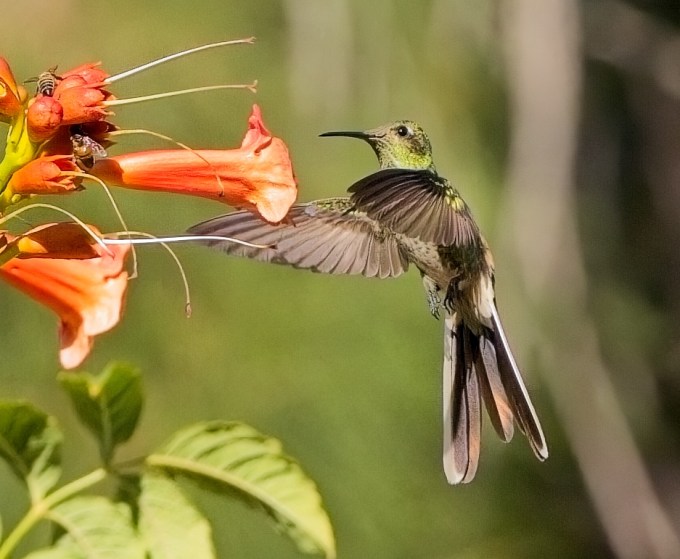
There would be no new life birds on this day, but there were lots of pictures, birds, food, wine and mountains. Two of the bird photos were especially appreciated as I was able to get life photos of two hummingbird species seen earlier but not photographed: Glittering-bellied Emerald and Red-tailed Comet. I also added three species to my Argentina life list: Harris’s Hawk, Rufous-bellied Thrush and Red-crested Cardinal.

Harris’s Hawk
Rufous-bellied Thrush (Seen and photographed in 2005 in Brazil)
Red-crested Cardinal (Seen in Brazil in 2005 and photographed in Hawaii where it is introduced)

Since this was the last day in Argentina I am including some other photos from the park, quite the birdy place.

Before lunch we visited a shopping area in Mendoza City where we hoped to find something to bring home as a memory. The shop was somewhere between a trinket filed tourist shop and a high end boutique. We found some fabric goods, a new hat for me.

In writing these blogs and looking at the web pages for the various wineries, its seems like there is an endless source of awards and ratings where each one is rated the “Best” something at sometime or another. Our last winery and lunch visit in Argentina was at the Trapiche Winery which was declared the “Best Winery in the New World for its 2019 Edition” by the Wine Star Rewards. I don’t know what Wine Star Rewards is or what it is says about them that there is a “New World” category, but our visit was fun with yet again excellent food and wines. The pictures tell the story.

It was then off to the airport for our trip back to Santiago. With his normal attention to detail, Marcelo had arranged for us to have seats on the right side of the plane (looking up to the cockpit at the front). This was so we would have the best views of the mountains and especially Aconcagua – fitting as our first birding in Argentina had been in the shadows of the mountain. The plane passed quite close to the mountain and we indeed had great views – a last memory of Argentina.

Mt. Aconcagua – tallest peak in the Western Hemisphere – over 22,000 feet

We had spent the better part of 7.5 days in Argentina. I did not keep track of the number of wines tried or wineries visited, but with the help of Ebird, I have a precise count of our birding. I had submitted 40 Ebird reports covering 153 species and bringing my Argentina life list to 173 species. Of the birds seen, 62 were new lifers and I had photos of 119 of the species seen (and there were others, like House Sparrow, Great and Western Cattle Egrets, and Rock Pigeon among others where I did not even bother). All of these photos were new for Argentina and more than half were new world photos. We would have a long drive to the Chilean coast after landing in Santiago, but that is a story for another blog post – my last for this trip.

Birds and Wines of Chile and Argentina – Argentina Part III

February 11, Day 8:

We were back on the road again in the area around Mendoza in the Uco Valley, Argentina – another beautiful day. A word about weather. All in all the weather was great. The only rain was night. Days were generally clear and dry, sometimes a little cloudiness, little wind and temperatures mostly in the low 80’s but sometimes getting into the 90’s. Even in the higher elevations, it was never very cold and we could have left our colder weather gear at home – if we had known for sure. Even though there was generally sun, photo ops were not always perfect as too often birds were backlit or seen against light sky backgrounds. This was Cindy’s first trip with her new camera – the Sony RX10 – a fabulous bridge camera with zoom that went up to 600 mm. It was an experimental learning experience and she did great.

After breakfast we were packed and birding before 9:00 a.m. – very civilized – although some of the “delay” was because the restaurant at the hotel (again not our favorite) was very slow to get going – with everything out at least 15 minutes later than scheduled. At our first stop on Ruta Provincial #186, a Sandy Gallito was added to our trip list and to my World list and world photo list. We also got great photos of Southern Martins, indistinguishable to me from Purple Martins which fly overhead of us back in Edmonds in the Summer.

Sandy Gallito
Southern Martins

A short while later at a “rest stop”, we had one of the best birds of the trip, an Elegant Crested-Tinamou. While attending to other needs, I almost missed it. Although it had moved from the “even better view” earlier, it fortunately stayed in the area and I was able to get some photos. It would have been very disappointing had I missed this very cool bird.

There are more than 45 species of Tinamou – found only in Central and South America. Although they can fly, they are essentially terrestrial birds, often skulky, most often in forested habitats although some like this one are found in the open plains, and usually well camouflaged and hard to see. They range in size from the Dwarf Tinamou (6 inches or so) to the Great Tinamou (about 20 inches) – somewhat larger than the Elegant Crested-Tinamou we were fortunate to see. Earlier, we had heard but not seen the Darwin’s Nothura – another species in the Tinamou group. I have seen or heard 10 species of tinamou but have few photos. Again very happy to get these!!

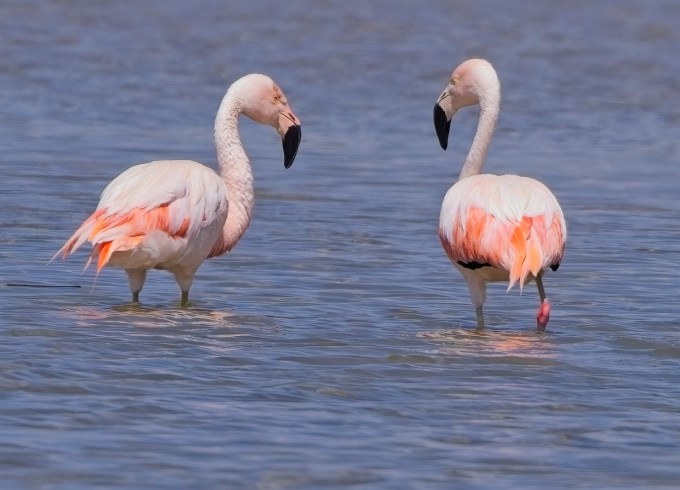
We left the dry grasslands and found some water and water birds at Laguna Llancanelo Provincial Park. Lots of new birds for the trip with more to come at another wetland after lunch – and I am combining those two stops here. All told 14 new species for my Argentina list and 7 new lifers with lots of photo ops. The lifers were: Lake Duck, Chilean Flamingo, Red-fronted Coot, Yellow-billed Tit-tyrant, Yellow-winged Blackbird, Red Shoveler and Correndera Pipit. Three new Argentina birds that I had seen elsewhere but were nice here were the Many-colored Rush Tyrant, Wren-like Rushbird and Grassland Yellow-finch. Much better photos of some of these species will be in later entries. I am also including more photos of Spectacled Tyrant – a group favorite on the trip.

Chilean Flamingoes
Chilean Flamingo
Red-fronted Coot
Yellow-billed Tit-tyrant
Yellow-winged Blackbird (It was surprisingly hard to get photo showing the yellow in the wing – hardly visible except in flight)
Wren-like Rushbird

Lunch today was a significant departure from our usual approach – although of course there was lots of wine. Today would be a picnic – well sort of. We learned that in addition to his knowledge of birds and wines, guide and tour leader Marcelo Padua was also quite the cook. He and driver Ariel teamed to prepare an extraordinary duck confit lunch prepared over an open fire – sort of in the middle of nowhere. Not really, just felt that way. We were at Campo Carcilauquen Horse Camp sharing the habitat with quite a few equestrians. I will let the photos speak for themselves.

Marcelo and Ariel at Work over the Open Fire
Duck Confit
Duck Breasts on Open Fire
The finished product …Duck Breast, salad and native grown potato chips – Scrumptious!!

As I said, some of the birds and photos were out of order – coming after the duck lunch. I will close the birding photos with two more from later in the day – ones that I really luck. As we were tooling along, I saw a large bird on a post and asked to go back. Somehow it stayed as we pulled alongside and we were all able to get really nice photos of an Aplomado Falcon. The other photo is of one of the many American Kestrels we saw on the trip, caught as it was coming in for a landing.

Definitely my best ever photo of an Aplomado Falcon
American Kestrel Landing

Unfortunately we had a second night at the Hotel Malargue and then an early breakfast (for this trip) and on the road with a really fun day ahead.

February 12, Day 9:

We headed out on Ruta 40 – which seemed to be viewed there something like Route 66 in the U.S. – lots of T-Shirts and souvenirs at gas stops calling that out. This was not going to be a day with lots of birds, but one of them was really important. I got a distant view of a West Peruvian Dove – new for the trip and for Argentina, but seen (and fortunately photographed) 11 years earlier appropriately in Peru – go figure! Motoring further along on Ruta 40, Marcelo called out “Pare, pare”. Ariel stop[ped as requested and we wondered what had been seen. It was a species we had been looking for for several days – a Lesser Rhea – along with the Greater Rhea, South America’s answer to the Ostrich of Africa and the Emu’s of Australia. Also known as Darwin’s Rhea, the flightless Lesser Rhea stands around 3 feet tall and weighs around 40 pounds. A bonus for us was that this was a male and he had young in tow. Males incubate the eggs and then cares for the young for six months or longer. I had seen Greater Rheas in Brazil, and have seen Ostrich and Emu, so I was especially happy to complete the set.

Lesser Rhea
Lesser Rhea with Young

A little further along several small birds flew next to us along the road. My impression was that they were pipits. One landed on a fence post and I was able to get a life photo of the Correndera Pipit through the window. I had seen the species in flight a day earlier, so much better to have the photo.

Correndera Pipit

As I said slow birding this day, but our lunch stop and wine tour was sensational as we visited the La Vigilia vineyard and had lunch at the beyond beautiful Rope Restaurant associated with the winery. It was such a great place I am including lots of photos so people can appreciate that. The food, service and wines were all superb and the setting incredible.

Entrance to Restaurant
Checking In
Rope Menu
At Our Table
Dessert and Dessert Wine

After a very long lunch break, we birded a bit and I added two more lifers, a Glittering-bellied Emerald and a Rufous-tailed Plantcutter. No photo of the hummingbird until later in the trip. My photo that day of the Plantcutter is ID quality at best, so I am including one again from later. Interesting note, that there are three species of Plantcutters – all found only in South America – and currently classified as Cotingas. I included the White-tipped Plantcutter in an earlier post. I saw the third Plantcutter species, the Peruvian Plantcutter in Peru in 2013.

Rufous-tailed Plantcutter

We carried on to Mendoza City with a stop at the Market Manzano Historico. Lots of people having a good time outdoors with some food and trinket booths – a sharp contrast with the luxury of the Rope Restaurant. That night was at the Hotel Huentala in Mendoza. Counting on more but now at 76 lifers for the trip and 143 species for the trip. Hope to get to benchmarks 100 and 200.

Birds and Wines of Chile and Argentina – Argentina Part II

February 9, Day 6:

We had settled in to the beautiful Salentein Lodge and Winery. We had for us an early morning start birding around the winery at 7:00 a.m. picking up 7 lifers in around 2 hours. The Crested Gallito and Brown Cachalote were seen briefly or heard only but I would get good looks and photos of them later. Then there were the two “Creamy Birds”, Creamy-breasted Canastero and Creamy-bellied Thrush– I thought I had a photo of each but cannot find them possibly confused with other “brown bird” photos. The other lifers were White-banded Mockingbird, Screaming Cowbird, and Ringed Warbling Finch. Here are their photos.

White-banded Mockingbird
Screaming Cowbird

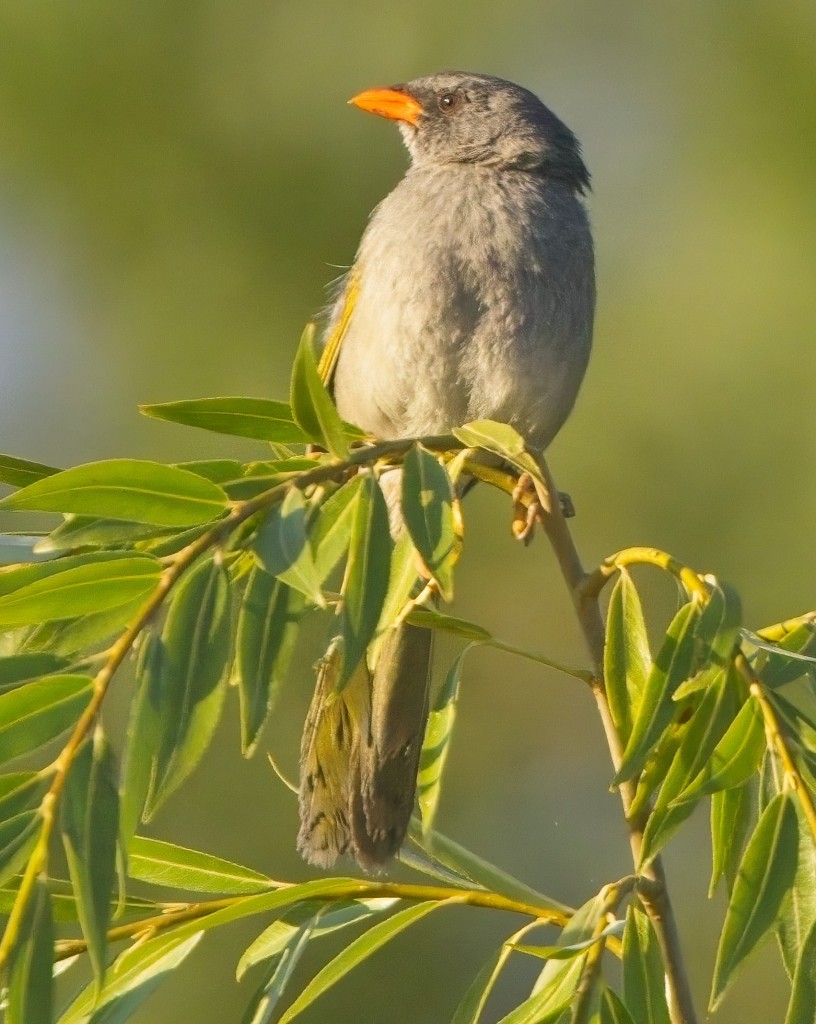
No surprise the breakfast at Salentein was wonderful and then we continued bird on the extensive Salentein holdings adding one more lifer before lunch – a White-tipped Plantcutter, in addition to new birds for the trip like Blue and Yellow Tanager, Banded Seedeater and Mourning Sierra-finch.

White-tipped Plantcutter
Blue and Yellow Tanager
Band-tailed Seedeater

It was great that we had such good birding in the morning because the next many hours would be all about wine. The Salentein Winery was founded in 1997 by a Dutch businessman, Myndert Pon, with the vision of creating a world class winery. One of its vineyards, San Pablo, however, dates back to the 17th Century. Everything we saw and experienced at Salentein was impressive with beautiful buildings, vineyards, facilities and of course food and wines. In 2019 at Mundus Vini, a top European Wine Competition, Salentein was named the best “overseas winery”. Where to start…

Main Building

The Salentein property is over 5,000 acres with 1200 acres currently planted in vineyards. The winery produces red, white, rose and sparkling wines and is probably best known for its Malbec’s. Every architectural detail is beautiful and impressive. We had wonderful food and of course wine including several bottles with the meals in addition to the many wines at a tasting in their exquisite tasing room. I could add dozens of photos taken during our visit but include here just a sampling.

View into one Oak Barrel Storage Area
Marcelo and our host in front of Tasting Room
Our Tasting
Blair and Cindy with the Big Barrels/Vats
Probably My Favorite Wine at Salentein
The architecture was understated but splendid in the details

After the wine at lunch and the tastings but before the wine at dinner, we actually continued birding – all on or near the Salentein property. I added another 3 world lifers: Darwin’s Nothura (unfortunately heard only), White Throated Cachalote and Hudson’s Black Tyrant (a female)- finally photographed after much work. This last photo, despite the poor quality, is noteworthy only because it is a very skulking bird and photos are hard to come by. I also finally got a photo of a Brown Cachalote – a lifer heard only and seen without photo before.

White-throated Cachalote
Hudson’s Black Tyrant – Female
Brown Cachalote

You never know when a bird will appear and just beg to have its photo taken. Such was the case with a Burrowing Owl and a Guira’s Cuckoo near the winery. They were new for the trip but seen by me previously. Both were spied as we drove the access roads to the winery and were seen and photographed from the van. I don’t think I have ever seen any cuckoo so much in the open before.

Burrowing Owl
Guira’s Cuckoo

I also got my best of the trip so far photos of Long-tailed Mockingbird and Chiguanco Thrush and a lovely photo of a Fork-tailed Flycatcher and a posing Chimango Caracara. Lastly I also got a decent shot of a Double Collared Seedeater.

Long-tailed Mockingbird
Chiguanco Thrush
Fork-tailed Flycatcher
Chimango Caracara
Double Collared Seedeater

It had been a great day for wine, food, birds and photos probably as representative of why we chose this tour as any. We had seen 42 species that day with 11 being new lifers and 19 new for my Argentina list. There would be more to come the next day. Dinner this night was another extravaganza at the Gaia Restaurant at the Domaine Bousquet Winery.

February 10, Day 7:

Our first birding on the morning of February 10 added another lifer and a photo of a lifer missed earlier. The new species was a Chaco Earthcreeper and the new photo was of a Crested Gallito, both were again LBJ’s – “little brown jobs” but the crest on the Gallito made that ID a lot easier. Another life photo, but of a bird seen many years ago on that Argentina fishing trip in 1989, was the Red-gartered Coot.

Chaco Earthcreeper
Red-gartered Coot

We were headed to Malargue for the night with lunch along the way at Villa Bonita de Mayo. As was usually the case when we entered the restaurant, Marcelo was embraced by the proprietor – old friends. I wish I had taken notes on all of the meals. Nothing specific on this one except remembering it was very good and the atmosphere was really fun.

After again too much food and wine, it was back to the birds around San Rafael. In fairly short order birding in the scrub habitat, I added 5 more lifers: Short-billed Canastero, Sooty-fronted and Stripe-crowned Spinetails, Greater Wagtail-tyrant and Southern Scrub-flycatcher.

Short-billed Canastero
Southern Scrub-flycatcher
Greater Wagtail-tyrant

There were not many mammals on this tour but on the road we did see a wild Guanaco.

Guanaco

New for the trip but a nice photo of a species I had seen and photographed in Peru in 2012 was a Golden-billed Saltator.

The early afternoon had been great for lifers and photos. Late afternoon added 4 more lifers but I only got a photo of one and not a great photo at that. The photo was of a White-winged Black-tyrant. Lifers added without photos were Carbonated Sierra-finch, Patagonian Canastero, and Band-tailed Earthcreeper. The Sierra-finch was a quick drive-by view and the Canastero never unburied itself. I thought I had a photo of the Earthcreeper but it has not been found if it ever existed.

White-winged Black Tyrant – the View Was Much Better than this Photo

Fortunately we were staying at the Hotel Malargue only one night – pretty low quality and I have already repressed details and took no photos. I do not even have notes or photos of dinner that night. Maybe just as well.

We were now half way into our trip (although not quite half way through the tour). Only 32 species were seen that day but,10 more species had been added to my growing life list (64 added so far). Our group trip list was at 120 species. We would not add that many new ones in the second half of the trip, but there were a lot more to come.

Birds and Wines of Chile and Argentina – Moving on To Argentina Part I

February 7, Day 4:

If you read my previous blog about Chile (and please do if you did not – https://blairbirding.com/2024/02/29/birds-and-wines-in-chile-and-argentina-let-the-birding-begin-chile-part-i/ ), you know that our lovely first van had mechanical troubles and we had to be rescued from a roadside inn where we had wine and dessert while we waited and had a new van for day 3 in Chile. The original plan had been for the original van to be with us the entire trip transporting us and our gear around both countries. For whatever reasons pertaining to licensing, the first van was licensed to transport people in both countries but the replacement van was only licensed for Chile. This meant that we would need a new van in Argentina.

Simple right? Just drive to the border and leave Van 1, move people and goods to Van 2 and carry on. Hold on there – not that easy. Turns out that the physical geographical border between the two countries is some miles before the Passport Control and Customs location where you actually “enter” the other country. Thus it was necessary somehow to get the van licensed only in Chile to intersect with van licensed in Argentina but where. The “arrangement” had been for Chilean Van to go to the actual administrative border, where the transfer would be made to the Argentinian van. The problem was that Ugo, our Chilean van driver dug in his heels. He felt that every inch he drove on Argentinian dirt threatened his license. Heated discussion between him and Marcelo ensued. Never mind that we were already “in” Argentina, despite whatever had been arranged before, Ugo was a no go. If you can’t get the horse to water, bring water to the horse. Now discussions were between Marcelo and the Argentinian van. Although I am sure it raised some complications with them going through the checkpoint to get from the administrative Argentinian side to the Chilean administrative side – although always in geographical Argentina, they agreed to come to us and make the transfer on the Chilean administrative side – although again I point out (as Marcelo did repeatedly to Ugo) that we were already in Argentina!

This kerfuffle added some time to our already long journey but the Argentinian van got to us and we off-loaded and reloaded and headed to the customs/passport control entry point. The line seemed incredibly long – it is the ONLY way to get by road from Chile to Argentina and vice versa – and I figured we were in for hours of lost time. Maybe 20 minutes into the wait, I noticed that some vehicles were splitting off to the far right and seemed to be moving much faster than the line we were in. I had learned early on not to suggest deviations from whatever plan Marcelo was working with (and that his was a good plan), so I said nothing. A few minutes later – for whatever reason, we split off and joined that line and seemingly sped through and got to the control point booth with the Chilean immigration officer. Marcelo had gathered our passports and had a long and what looked like a pleasant conversation with the officer. It took only moments and now we were through, passports stamped and all.

This is a good point to remember and remind others that there is much more to leading a tour than “just” birding. When things go without a hitch, it may seem easy but even then, the reason things go without a hitch is because of the groundwork done by the guide and the tour company that set the stage and carried out a good plan. And when there are hitches like broken down vans, recalcitrant drivers, road closures, health problems and many other possible mishaps and changes in circumstances, the ability to think on one’s feet, re-imagine and create new plans and to negotiate with all sort of folks is an invaluable skill set. Marcelo had this quality in spades. He made it look easy when I know it probably was far from that. Sure, we pay a bit extra to travel with known companies, but for us it is because of times like these when we are glad we are not on our own that makes it all worth it.

So much for the complications. The way to get from Santiago to Mendoza (our target area in Argentina) means goin East on Route 60 across the Andes and negotiating the windy road up to Los Liberdatores Pass (Elevation 10,499′). It is about 100 miles from Santiago but because of the twists and turns and LOTS of truck traffic, it generally takes 3 hours or more. There is no other way to go by land – so just go with the flow – such as it is.

Twists and turns on the Highway

It may be a slow go, but the scenery is fantastic being in the Andes for many miles, and our vans were very comfortable. We were mentally prepared for cold weather but such was not the case as the outside temperature was maybe in the 50’s. Very comfortable. We made no real birding stops along the way, but as was our usual procedure there was an early stop at a convenience store for snacks and whatever drinks were desired. A lot of Coke Zero was consumed on our trip.

Scenery

Our first real stop in Argentina was the Portillo Hotel and the Portillo Ski Resort. I am not a skier but remember hearing about skiing in Portillo when I was in college. Let’s just say that some kids at my college were “privileged” and that included skiing in Portillo during our Northern Hemisphere summer. Hard to imagine in the absolutely brown and dry conditions when we visited but the ski lifts were apparent and the hotel included pictures of famous Olympians and ski champions. It also included a gift shop, a nice restaurant and spectacular views. Although we ate it with wine, of course, our lunch was a very tasty and very large burger.

Hotel Portillo
View East from Portillo Lodge

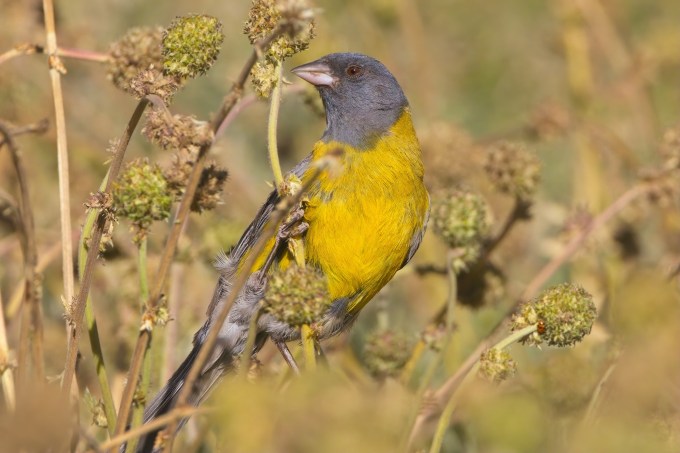
After lunch it was finally time for some high elevation birding and we went to Aconcagua Provincial Park including Laguna La Horcones certainly one of the most beautiful areas I have birded including views of Mt. Aconcagua, which at 22,838 feet is the tallest mountain in the Western Hemisphere and the tallest mountain outside of the Himalayas in the world. It was always partially covered by clouds (it produces its own weather) but still impressive. Like most such habitats, it was not full of birds, but our EBird checklist had 14 species and 40 individuals including 4 lifers for me: Andean Goose, Crested Duck, Scale-throated Earthcreeper and Black-fronted Ground-tyrant. I also had nice photos of Rufous-crowned Sparrow and Gray-hooded Sierra Finch and again saw Gray-breasted Seedsnipe. Unfortunately no photo of the Earthcreeper.

Andean Geese
Black Fronted Ground Tyrant
Crested Duck
Aconcagua in Clouds
Mule Pack Train

We hiked around in the beautiful spot for a couple of hours. As we were leaving a large pack train of mules, burros and horses came down from a climber/trekker base camp – not an everyday sight.

The scenery was relentlessly beautiful as we continued east moving through and down from the Andes.

We would be staying that night in Uspallata about 45 miles from the Provincial Park, and would be having another fine dinner at the El Rancho Restaurant in Uspallata. From our balcony window at the hotel, I added another lifer – Grayish Baywing, a species that would be seen often over the next few days.

Grayish Baywing

The restaurant was what we think of as a classic Argentinian restaurant – lots of meat – a Parrillada – a restaurant with a variety of grilled and barbecued meats. Portions are endless. It was here that I had what at least at time was my favorite wine of the trip – a Cabernet – Malbec blend. We had so much good red wine later including more blends and pure Cabs and Malbecs, that maybe my impression would have been different later, but that night, it seemed the best.

Merlot – Malbec Blend

I was back in Argentina – 45 years after my only other visit. No fishing ahead but there would be lots of food, wine and birds. With so much time taken up by travel, there had not been a lot of birds (19 species for the day), but it had been a momentous day because the Andean Goose was my 27th lifer for the trip and World Lifer #3300. Not so many compared to many people I know or know of. I hoped for more on this trip of course. With luck maybe I will get to 4,000 someday. With the others seen this day, I was now at 3303 – and counting.

February 8, Day 5:

We were only at the Uspallata Hotel one night, just as well as it was our least favorite on the trip. No big problems, just ok. We birded around the grounds a bit and then had breakfast and packed up birding and for our transfer to our next abode, the Salentein Winery Lodge. There were fields and a river near the hotel that produced five new lifers and a blown chance at an additional lifer photo. The lifers were: Spot-winged Pigeon, Ticking Doradito, White Crested Tyrannulet, Southern Yellowthroat and Great Pampa-finch. The missed photo was of a Plumbeous Rail. It was out in the open for several seconds but I was in the wrong position for a shot. Thinking I already had a photo of this species, I didn’t rush to get a picture and it disappeared. I was wrong. I had seen one before but with no photo. Oh well. I only got a fleeting mostly obscured view of the Doradito so again no photo.

White-crested Tyrannulet
Great Pampa-finch
Southern Yellowthroat – best I could do
Spot-winged Pigeon

I picked up three more lifers at our next stop, a wet area along Route 7. They were Southern Martin, Patagonian Mockingbird and one of my favorites for the trip, Spectacled Tyrant. I also go life photos of a cooperative Yellow-billed Pintail.

Southern Martin
Patagonian Mockingbird
Spectacled Tyrant

We next birded around the Pueblo del Rio Lodge where we had yet another great lunch with wine pairings. Two new birds that were especially appreciated were a Brown-capped Tit-spinetail and a Steinbach’s Canastero, fortunately getting photos of each of these lifers. A third lifer would also be on that especially appreciated list if I had been able to get even a good view let alone a photo, was a very cool hummingbird called a Red-tailed Comet, which has, yes you guessed it, a striking red tail. I had only fleeting and distant views, good enough to count it, but I wanted much more (and would get it later).

Brown-capped Tit-spinetail
Steinbach’s Canastero

We would be spending the next two nights at the Salentein Winery and Lodge, which turned out to be our favorite place on the tour. As we made our way there we birded along Ruta 40 and Calle el Alamo enroute. I picked up two new life birds, Monk Parakeet and Green-barred Woodpecker. The latter would be seen several times again and the former needs some explanation. I had seen Monk Parakeets before – at a now almost extirpated colony in Yacolt, Washington and also in the area around Miami, Florida where they are plentiful. They are introduced non-native species in both places and thus are not countable on official World lists. Being native in Chile and Argentina, they are countable as such there. I had actually seen and mostly heard several on our fist day in Chile, without photo and had not included them on any list. Now with photos, I added them to one of my Argentina lists. Dozens would be seen and heard on this trip.

Green -barred Woodpecker
Monk Parakeet

New life photos from the afternoon included Fork-tailed Flycatcher and Burrowing Parakeet and I was also happy to get an ok shot of a White-collared Swift showing the collar.

Fork-tailed Flycatcher
Burrowing Parakeets
White-collared Swift

My original thought was to include both days 4, 5 and 6 on this Blog post, but I can see that Day 6 is going to be a long post with lots of wine so I am going to end this here. At the end of the day 5, my lifer total stood at 40 for the trip and we had now seen 91 species with lots of photos including life photos.

We checked into the lovely Salentein lodge with a beautiful room and did our bird list outdoors watching Fork-tailed Flycatchers and White-collared Swifts hawking insects with Monk Parakeets flying through frequently. Dinner was at Salentein and although excellent, somehow I only have a photo of a dessert and of course a bottle of Malbec. More later.

Salentein Room
Excellent Salentein Primus Malbec
Flan Dessert