Spring Has Sprung – Kittitas County is Calling

Sometime in March every year, it is like an alarm goes off in my birding brain that says time to go East, the shrub/steppe/sage birds are returning to Kittitas County. In a pattern that has played out almost every year since I returned to serious birding in 2012, I begin mentally planning a trip to Kittitas County which starts just east over Snoqualmie Pass and continues east to the Columbia River, easily accessed in about an hour over Interstate 90. If it is early March, it is still dark at 7:30 a.m. and Daylight Savings Time has not yet clocked in, so instead of leaving at 6:00 a.m. or even 5:00 a.m. which I might do for this trip in May, I can leave as late as 7:00 a.m. planning to arrive at my first usual stop at Bullfrog Pond at 8:30 a.m. when it is just about light enough for the birds to be out. In early March there won’t be many there but a couple of months later that will change dramatically. Farther east, though, certainly by mid-March the special birds of the shrub/steppe/sage habitat that essentially starts in Ellensburg will be making their first appearances in bright new breeding plumage, pairing up and singing. It’s a good time to be birding and it will keep getting better over those next two months although some of the earlier arrivers will be quieting down.

Kittitas CountyOutlined in Broken Red Dots

For a variety of reasons, my instate birding activity in 2024 has been less active than usual. I did not even visit Eastern Washington for the first time until March 24th and I just returned from my second visit two days ago on April 12th. Birding was good both days with noticeable differences from one to the other with new arrivals. I will most likely return in another two or three weeks when migration will have been in full swing bringing in many returning species.

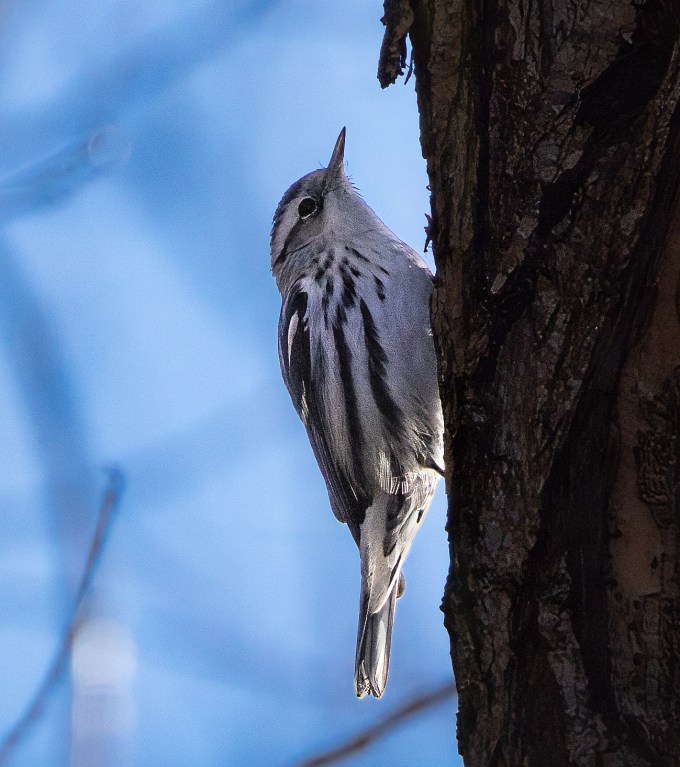
Some numbers: my life list for Kittitas County is 213 species. The most recent addition to that list was a Baird’s Sandpiper in September 2022 preceded by my Washington State Lifer Black and White Warbler in June that year. At least per my Ebird records, the first species I recorded in the County was a Sage Thrasher in May 1974 – along with several other sage habitat species. So yes I have been birding in the county for almost 50 years, albeit with a 36 year gap between 1975 and 2011. Probably not unlike many other Washington counties, the large majority of my species for Kittitas County have been seen in the Spring (March through May) – fully 177 of the 213 (almost 85%) with a large portion of the others, especially waterfowl added in the Winter. Each year over the past 5 years, I have made at least one trip to Kittitas County during March and April and have noted between 62 and 82 species in those months in those years. Altogether, over those 5 years I have seen 114 species during those two months and seen an addition 63 species during the month of May during that time. So far this year I have seen 65 species in the County and could reasonably expect another 40 or so with some good birding if I visit in May when many passerines have returned.

Black and White Warbler – Getty’s Cove – June 2022

I have presented those numbers for context, but it is the make-up of those numbers, especially the species just east of the Cascades and the adjoining shrub/steppe/sage desert-like habitats farther east that is the real focus of this blog post and the major reason I return to the same birding spots each Spring. These species initially include Mountain and Western Bluebirds, Say’s Phoebe, Rock and Canyon Wren’s, Brewer’s, Sagebrush and Vesper Sparrows, Prairie Falcon, Western Meadowlark, Loggerhead Shrike, Chukar, Sage Thrasher, Pygmy and White Breasted Nuthatch, White Headed Woodpecker, Red-Naped and Williamson’s Sapsuckers, Mountain Chickadee, and House Wren. Later in May I can find Nashville, Yellow, Wilson’s, and MacGillivray’s warblers, Eastern and Western Kingbirds, several Empidonax flycatchers, Veery and Swainson’s Thrush, Bullock’s Orioles, Lazuli Bunting, Yellow Breasted Chat, Black Headed Grosbeak, Rufous and Calliope Hummingbirds and many others. All of these species can be found elsewhere in Washington – further east or further south, but the 83 miles from Snoqualmie Pass to Vantage on the Columbia River along Interstate 90 is easily birded in a single day and with additional time, I can venture south or north from the Interstate to get to more forested, agricultural or riparian habitats that add to the species variation. It is great Spring time birding.

I generally make a first stop at Snoqualmie Pass for coffee, a restroom and in May to look for Rufous Hummingbirds at a house with many feeders at Hyak and MacGillivray’s Warblers in brush along the roads. Then it is back to I-90 and east with a stop at Bullfrog Pond and/or Wood Duck Road a couple of miles west of Cle Elum. The latter is often good for Western Bluebird, Chipping Sparrow, Pygmy Nuthatch and Cassin’s Finch among other species. Bullfrog Pond is usually quiet until late April but afterwards can be super birdy. I have seen 99 species at this location including 7 species of woodpecker, 8 flycatchers, 7 thrushes, and 8 warblers.

Red-naped Sapsucker

After Bullfrog my route varies but usually includes a long visit to the Northern Pacific Railroad Ponds and perhaps the adjoining fish hatchery in South Cle Elum, a few miles further east. This hotspot has been very productive as I have 112 species there including 13 duck species, 6 swallows, 4 wrens, 6 warblers, 6 sparrows and a good mix of most every other group. I have been there on two separate days where there was a fallout of sorts of Yellow Rumped Warblers – over 100 seen each day. It is my “go to” spot for Pygmy Nuthatches as they have nested there every year I can remember. One day I had all three area chickadees – Mountain, Black Capped and Chestnut Backed – in a single tree and later had the three nuthatches – Pygmy, Red Breasted and White Breasted in another single tree. Cle Elum is also good to gather food for the rest of the trip either at the Safeway west of town or at the Cle Elum Bakery along the main street downtown.

Pygmy Nuthatches

It is about 25 miles from Cle Elum to Ellensburg where I have to make a big decision about which route to take. Although I often combine at least parts of the two options, depending on whether I am going to carry on either further east to Grant and/or Adams counties or further south to Yakima County, which in either case usually precludes going the other direction. The first option is to take Exit 109 into Ellensburg and then follow Umptanum Road which first goes north and then turns southeast becoming North Wenas Road in maybe 10 miles or so. The second option is to keep going east on I-90 and exit in the City of Kittitas to eventually make it to Old Vantage Highway which continues east to the Columbia River. With either there are multiple possible stops or side trips before hitting the main target areas with good sagebrush. [Note: recent fires the past two years have severely damaged a lot of sage in both areas.]

If I take the Umptanum Road route, a first stop might be at Irene Rhinehart Riverside Park which generally has many of the same species seen at the Cle Elum stops. Usually I carry on to Durr Road which is a turn off not long after the road becomes dirt (recently well maintained). This road and the miles along Umptanum Road heading further south are maybe the best in Washington for both Western and Mountain Bluebirds as well as other sage and shrub steppe species including especially Brewer’s and Vesper Sparrows, Loggerhead Shrike and occasionally Sage Thrasher. The 7 photos below were all taken in the last month.

If I am going to carry on to Yakima County I continue south with a stop near “Kindle Lane” – a private road onto gated private property. In the pines there I regularly find White Headed Woodpeckers. Two days ago I found two there – one of the highlights on a day where I was also able to backtrack and then bird on into Vantage with many more highlights for the day. In May the entire area is good for a variety of passerines.

White Headed Woodpecker – near Kindle Lane – just into Yakima County

If I have taken this southern route but am not going on further south, I backtrack into Ellensburg and generally head east on I-90 exiting at the Kittitas exit and then head a bit north on Road No. 81 before again heading east to Old Vantage Highway. Road No. 81 is usually good for a Swainson’s Hawk. On Friday I did not see one on way way in but later that evening one was perched there on my way out. There are often exceptions to this route to look for species in and around Ellensburg including in recent years a Costa’s Hummingbird that was coming to a feeder in Ellensburg. Note that Calliope Hummingbirds as well as Anna’s and Rufous can also be found in the area and once I had a Black Chinned.

Swainson’s Hawk – First of Year – April 12, 2024 on Np. 81 Road

Ellensburg is also a reliable place for Ospreys that arrive in March usually earlier than their appearances west of the Cascades. There are usually several active platform nests easily viewed from main roads with many photo ops. Most years my first Ospreys are from either the aforementioned Railroad Ponds or Ellensburg.

Osprey

Although there are great birding opportunities all along Old Vantage Highway on into Vantage itself, most of my interest is in the sagebrush areas about halfway between Kittitas and Vantage. As I mentioned before much of the sage in the area was destroyed in recent fires – very sad to see and devastating to birds and birders. Fortunately it is a large area and there is lots of good habitat remaining. Similar to Durr Road the area is really good for Brewer’s and Vesper Sparrows, Sage Thrasher and Say’s Phoebe. The area around the “corrals” used to be really good for Sagebrush Sparrow but the sage is now gone and so too are the sparrows. Now the go to place for them is hiking in a short way uphill from the “Pumphouse Road” parking area on the north side of Old Vantage Highway. On Friday I had at least 4 there – all active even though they first arrived there almost two months ago. A favorite spot a couple of miles west of there is what I call “Deb’s Awesome Sage”, named in honor of Deb Essman, a good friend and super birder who lives in the town of Kittitas and who first showed me the spot many years ago. It is always good for Sage Thrasher and usually for Brewer’s and Vesper Sparrow’s as well.

Sagebrush Sparrow – Pumphouse Road April 12, 2024

You can never count on one, but I have seen Prairie Falcons along this stretch of Old Vantage Highway several times including this past Friday – a lucky photo of a quick flyover. Not as plentiful as along Durr or Umptanum Roads, but there are usually Mountain and sometimes Western Bluebirds around as well. Another species that might be seen anywhere in the areas I describe is a Loggerhead Shrike. I had only a VERY distant one last week but other times, they have been seen posted on a wire or post waiting for some large insect or small bird for prey.

Prairie Falcon – Old Vantage Highway – April 12, 2024
Loggerhead ShrikeOld Vantage Highway – April 2021

Continuing east, a few miles before reaching the Columbia River, I turn off left/north onto Recreation Road which continues on to the Columbia as well – at Rocky Coulee where there is a small camping area and a boat launch. This is a great area for both Rock and Canyon Wrens, and Say’s Phoebes are seen every Spring. It can also be a good area for Chukars up on the rocky slopes as well as swifts, swallows and waterfowl in the Columbia. For several years about 10 years ago, Black Throated Sparrows were found on this road and it is still often good for Lark Sparrows.

Black Throated Sparrow

I have seen and/or heard Chukars at Rocky Coulee several times but they are by no means regular. This past Friday I found two Chukars at the Wind Farm on Old Vantage Highway – a good sage area a bit before “Deb’s Awesome Sage”. I believe this is the furthest west I have ever had this species. There are a number of other gallinaceous birds possible and that I have seen in Kittitas County – Ring Necked Pheasant (Common), Wild Turkey (common), California Quail (common), Ruffed Grouse (regular but hard to find), Sooty Grouse (up in the hills – regular at Liberty), and Gray Partridge (regular but hard to find in the agricultural fields). There may also be Spruce Grouse – high up in the backcountry – never seen by me.

If I have reached Vantage early enough, I may head south along the Columbia River on Hunzinger Road watching for waterfowl on the river, stopping at Getty’s Cove, where the Black and White Warbler was found, or a bit further south on rock cliffs for Canyon Wren or Wanapum State Park, where among other species I have seen Long Eared Owl. And speaking of owls, but not in the Spring and only later into the summer, in a whole different part of Kittitas County, the Teanaway Valley, I often go to the Liberty Area which is on Highway 97 connecting the Cle Elum/Ellensburg area with Leavenworth to the north. It is my go to area for Flammulated Owls (always heard but still never seen) and where I have also had Great Horned Owl, Barred Owl, Long Eared Owl and even Spotted Owl. It is a great birding area for woodpeckers including Williamson’s Sapsucker, plus Common Poorwill, Northern Goshawk and lots of passerines. My local list there is 60 species.

Kittitas County has rivers, mountains, agricultural fields, sagebrush, forest and semi-arid near desert. The first month or two of the new year I am generally concentrating on the wintering waterfowl and raptors found in my home Snohomish County or just north in Skagit County – both west of the Cascades. As the ducks, swans and geese start to leave, my birding mind turns to other places and I want to either hit the coast or head east to Kittitas County and beyond. This year, as the Spring is coming alarm went off in my brain, the decision was to head east, partially lured by its usually much drier and sunnier climate but mostly by those sagebrush birds and my familiarity with so many great birding spots there learned over years of visits. And then I return home and feel so fortunate to also have Puget Sound and its great birds at my doorstep. Not many states where you can see Sagebrush Sparrows, Mountain Bluebirds and White Headed Woodpeckers one afternoon and then Pigeon Guillemots, Surf Scoters and Pelagic Cormorants the next morning. Washington is a great place to bird!
Birds and Wines of Chile and Argentina – Argentina Part IV – Last Days in Argentina with Water Birds, Creepers, Woodpeckers and Hummers

Argentina had been great – beautiful places, great birds, amazing food and awesome wine. We had one more full day and then a part day before flying from Mendoza back to Santiago for our last two days in Chile to end our tour. Still some target birds to find.

February 13, Day 10:

We departed very early and got a little delayed when the only convenience store where we could get something that would pass as breakfast did not open until 7:00 a.m. It did open and we improvised breakfast before spending the rest of the morning in fairly familiar in mostly scrub habitat and found lots of new birds in three hours of birding along Ruta 142 still in the Mendoza area. Although we missed a hoped for photo of a Campo Flicker, we had a very brief look as we drove by. I had seen it before but no photo. Two other woodpeckers were more cooperative – lifer White-fronted and Checkered Woodpeckers.

White-fronted Woodpecker
Checkered Woodpecker

It apparently was a good morning for species with “wood” in their names and they came in pairs as after the woodpeckers, I had a pair of lifer “woodcreepers” – Narrow and Scimitar-billed Woodcreepers. As is often the case with woodcreepers, we waited for them to come mostly into the open on the trunks or snags of the trees. Great theory but they just did not perform their assigned roles and the photos were less than desired.

Narrow-billed Woodcreeper – awful photo
Scimitar-billed Woodcreeper – Better photo

Even less cooperative was the lifer Tufted Tit-spinetail. I had glimpses as it flitted about buried in the foliage, but never a great look and definitely no photo. Why couldn’t it behave like the Straneck’s Tyrannulet, Black-crowned Monjita and Swainson’s Flycatcher all of which came into the open enough for recognizable photos.

Straneck’s Tyrannulet
Black-crowned Monjita
Swainson’s Flycatcher

There would be one more lifer for the morning – a Many-colored Chaco Finch and some other good photos of birds seen before – Crowned Slaty-flycatcher and Short-billed Canastero. All in all a truly exceptional morning with the NINE lifers!! And oh yeah we had a quick view of a Southern Gray Fox!

Many-Colored Chaco Finch
Crowned Slaty-flycatcher
Short-billed Canastero
Southern Gray Fox

I have not been able to locate notes for what we did at lunch after the great morning, but I know well that we spent a long and very successful afternoon birding the Piletones de El Paramillo, extensive sewage treatment ponds outside Mendoza that were full of waterbirds. Although some of the birds had been seen earlier on the trip, this was the first time I could get photos – lots of photo ops.

Life birds were Black-headed Duck, White-tufted Grebe, South American Painted Snipe and Brown-hooded Gull. Additional life photos included White-cheeked Pintail, Lake Duck, Red Shoveler, Great Grebe, White-winged Coot and Cattle Tyrant. There were lots of other photos too!

Black-headed Duck
White-tufted Grebe
White-cheeked Pintail
South American Painted Snipe
Brown-hooded Gull
Lake Duck
White-winged Coot
Red Shoveler
Great Grebe
Cattle Tyrant

Those were the lifers – species and/or photos, but as I said there were lots of birds and lots of photo ops. Some species would be distant at first but then we would drive by another pond and have them closer, or maybe in poor light at one place and then better light as we continued to drive around the multiple ponds. And on the way out we had another Burrowing Owl and our first Diuca Finch in Argentina.

Burrowing Owl
Diuca Finch – First in Argentina

Especially this late in the trip, the 13 new lifers was awesome – now at 89 for he trip so maybe 100 would be possible. And I also added 30 new species for Argentina. It was a very good day indeed.

February 14, Day 11:

Happy Valentine’s Day – well at least for us Americans. And that is a good segue for a comment about wife Cindy. When we first met – now almost 5 years ago, a deal had to be struck pretty early on: I would learn about dogs and especially her, now our, Black Labrador – Chica. And she would have to learn about birds and birding. Neither of us probably had a real grasp on what each of those undertakings would entail, but I think we have done pretty well. I have become Chica’s “Alpha” in our pack and Cindy, while I can’t say has become a birder, she has come a long way and has enjoyed most of our birding trips with the distinct caveat that there are too many “little brown birds” and that was definitely true on this trip. No specific Valentine’s Day celebration but we did make that toast over yet another great meal with great wine on this day of transition from Argentina back to Chile.

Our Lovely Chica

The agenda today was to have breakfast, pack and load everything onto our van, bird in the morning at the impressive General San Martin park in Mendoza, sneak in a little shopping, have lunch at Espacio Trapiche a 4 star Michelin restaurant in Mendoza at the famous Trapiche winery, head to the airport, fly to Santiago passing next to Mt. Aconcagua, load up in Santiago and drive to Vina del Mar on the Pacific Coast where we would be for the next two nights.

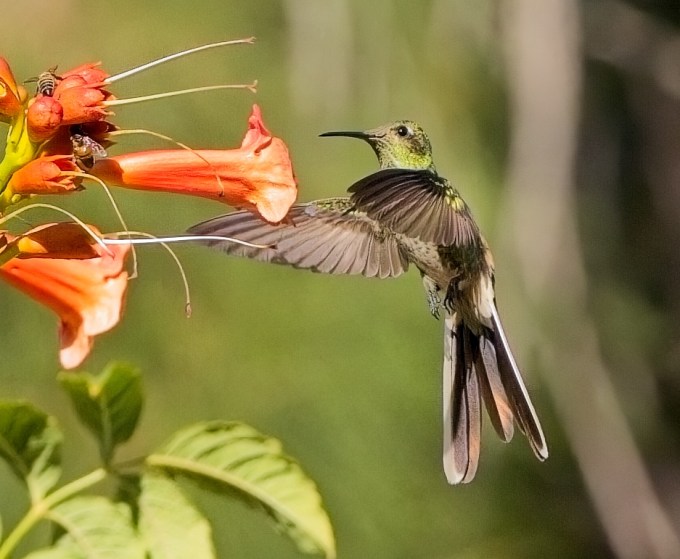
There would be no new life birds on this day, but there were lots of pictures, birds, food, wine and mountains. Two of the bird photos were especially appreciated as I was able to get life photos of two hummingbird species seen earlier but not photographed: Glittering-bellied Emerald and Red-tailed Comet. I also added three species to my Argentina life list: Harris’s Hawk, Rufous-bellied Thrush and Red-crested Cardinal.

Harris’s Hawk
Rufous-bellied Thrush (Seen and photographed in 2005 in Brazil)
Red-crested Cardinal (Seen in Brazil in 2005 and photographed in Hawaii where it is introduced)

Since this was the last day in Argentina I am including some other photos from the park, quite the birdy place.

Before lunch we visited a shopping area in Mendoza City where we hoped to find something to bring home as a memory. The shop was somewhere between a trinket filed tourist shop and a high end boutique. We found some fabric goods, a new hat for me.

In writing these blogs and looking at the web pages for the various wineries, its seems like there is an endless source of awards and ratings where each one is rated the “Best” something at sometime or another. Our last winery and lunch visit in Argentina was at the Trapiche Winery which was declared the “Best Winery in the New World for its 2019 Edition” by the Wine Star Rewards. I don’t know what Wine Star Rewards is or what it is says about them that there is a “New World” category, but our visit was fun with yet again excellent food and wines. The pictures tell the story.

It was then off to the airport for our trip back to Santiago. With his normal attention to detail, Marcelo had arranged for us to have seats on the right side of the plane (looking up to the cockpit at the front). This was so we would have the best views of the mountains and especially Aconcagua – fitting as our first birding in Argentina had been in the shadows of the mountain. The plane passed quite close to the mountain and we indeed had great views – a last memory of Argentina.

Mt. Aconcagua – tallest peak in the Western Hemisphere – over 22,000 feet

We had spent the better part of 7.5 days in Argentina. I did not keep track of the number of wines tried or wineries visited, but with the help of Ebird, I have a precise count of our birding. I had submitted 40 Ebird reports covering 153 species and bringing my Argentina life list to 173 species. Of the birds seen, 62 were new lifers and I had photos of 119 of the species seen (and there were others, like House Sparrow, Great and Western Cattle Egrets, and Rock Pigeon among others where I did not even bother). All of these photos were new for Argentina and more than half were new world photos. We would have a long drive to the Chilean coast after landing in Santiago, but that is a story for another blog post – my last for this trip.

A New Project and Quest – South of the Border – Precursors and Arrival

My earlier blog post very briefly covered the birding that was a very small part of the trip Cindy Bailey and I took to Italy in October this year. There was little birding on that trip, but since I had only birded a single half day in Europe (Hungary) more than 20 years ago, I did add 15 species to my World Life List and photos to my world photo list. I had not been paying attention at the time, but at the end of that trip I had seen 918 species worldwide in 2023, thanks largely to great trips to Tanzania and Indonesia as well as far less active than usual birding in my home state of Washington.

Shortly after returning from Italy, I successfully chased a King Eider that was being seen at the Tokeland, WA marina and it was accompanied by a Surfbird, hardly a rarity, but I had missed it at the Edmonds Marina, a mile from my home, and in this very reduced year of birding in the U.S., I had not seen one previously. Again at the time unbeknownst to me, my 2023 Year List was thus at 920 species. I don’t recall the specifics of how it came up, but in a conversation with good friend and very good birder, Jon Houghton, he asked how many species I had seen in 2023. When I finally looked it up and saw that number, the wheels started turning. This was already a new milestone for me, as the most species I had seen in any previous year was 811 last year due to a great trip to Ecuador (450+ species), my usual 320+ species in Washington, a 3 day trip to Texas (75+ species) and some birds in both British Colombia and Maine with some overlap of course. Passing 900 was nice, but somehow the lure of round numbers instantly said – how can I get to 1000? 

Surfbird – Tokeland Marina

It was October 23rd and I had seen only 228 species in Washington. Normally there would have been 300 or more and I would already be past 1000, but especially as there was a complicating factor, I could not do a mad chase around Washington and find another 80 species – too late. And the complicating factor limited other options as well. Cindy had some elective surgery on her foot and she would be unable to do a lot of walking for some time afterward as well. She is a trooper and would have been ok around the house, but I would have to take on the daily dog walks plus shopping etc. Originally we thought this meant I would be a “free agent” on November 27th, but this later changed to December 2nd. I would be able to get for short trips in Washington before then, but not more. And then what? Assuming I could add maybe 10 or so birds locally, I would still need 70 species to hit the mark. A bunch of rarities were being seen in Texas so that was the first option that came to mind. In January 2022 I had 77 species there in just 3 days. December 2023 should have similar species available – especially for a longer trip – maybe even 5 or 6 days. But it wasn’t 77 species that mattered, it was how many would be new for the year and then the list shrank to just over 40. With another 3 days, 70 was certainly possible but it was not guaranteed, What next?

My only birding in Mexico was a trip to Oaxaca with Cindy in November 2021. In 10 days we had seen 171 species of which more than 110 would be new for 2023. So how about somewhere else in Mexico. Jon Houghton had birded in the Puerto Vallarta area – with a local guide that in fact we had been with in Oaxaca. I checked the Ebird lists and it looked like a great option. I contacted the guide and he was unavailable, but he gave me several names. Luckily one was available for several days starting November 27th. I signed on and made hotel and flight reservations using Alaska Airlines miles. It was only after that we learned that Cindy would still be constrained until December 2. Fortunately the guide could accommodate the change, the hotel reservation was cancelable and I found new flights. Cindy convinced me to add another day and the flight to PV got in early enough to add that half day as well and a later departing flight added a half day then as well. When all was said and done, I was onboard with a 5+ day guided tour with Greg Homel whose company is Natural Encounters Birding Tours. Don’t know how it would have gone with any of the other guides, but Greg was fantastic and the trip was terrific.

Greg Homel – A Few Years Ago

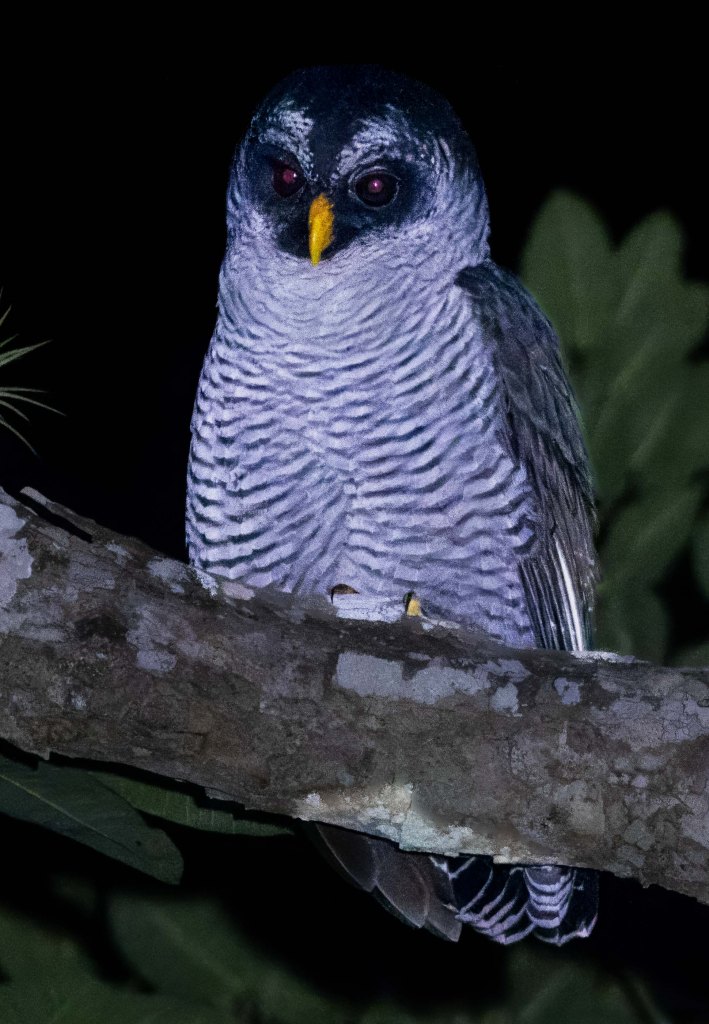
With only a couple of exceptions, my foreign birding trips have been with big companies, not with pre-arranged independent guides. Whatever worries I might have had disappeared quickly with great exchanges with Greg by email and the wondrous ability to call for free on WhatsApp. After our earliest exchange, it was pretty clear that getting past 1000 would not be a problem. I was excited and I got even more excited when Greg sent me a gorgeous photo of a Black and White Owl, a species that had not been on my target list nor his reply – because one had never been reported in the area before. He had just located a breeding pair and was pretty sure he could show them to me. But that added to my concern when I had to change the dates. Yes, Greg could accommodate the date change but I heard nothing further about the Black and White Owl – a truly awesome species and definitely a lifer for me.

Black and White Owl – What a Beauty

Since I would be the only person on this trip, the cost was higher than a trip with more birders. Additionally, in my head I had originally conceived of a trip with guide for maybe three days only – get the needed number of species and get back home – and all in the immediate area of Puerto Vallarta in the Mexican State of Jalisco. After talking with Greg and with encouragement from Cindy, we had redesigned and to some degree re-purposed the trip to be 5+ days with lots of birding in the neighboring Mexico state of Nayarit, which includes the birding area around San Blas. This would not only mean more species for the year but also new World Lifers, new World photo ops and some pretty awesome birds. And the air travel cost would be the same – go we decided to go for it.

But there was still Cindy’s surgery and recovery – about a month before I would head south. As stated, no chance for big trips as I could not leave before walking Chica (around 7 a.m.) and I had to be back in time for the afternoon walk – not later than 4 p.m. A number of rarities were being seen regularly at Neah to Bay and I probably could have added maybe even a dozen species if I could have made that trip for a couple of days. Not possible, but now thinking of a big world year list, I chased some good birds that were close to home. There were Canvasbacks at the Everett Sewage Lagoons and a pair of Gray Crowned Rosy Finches appeared at Brackett’s Landing in hometown Edmonds and stayed for several days. I somehow managed to get my scope on a Cassin’s Auklet from our living room which has a view of Puget Sound. I picked up a Lincoln’s Sparrow and a Northern Shrike at Port Susan about 45 minutes north of me and then added two pretty uncommon birds on November 21st, a Yellow Bellied Sapsucker at a stakeout in Mt. Vernon (an hour north) and a Northern Waterthrush that Ryan Merrill had found in Carkeek Park (about 15 minutes south of me) with a Fox Sparrow thrown in as a bonus – hard to believe I had not seen one earlier. On November 25th, I squeezed in a trip to Greenlake in Seattle with friend Tom St. John to see a very rare Black and White Warbler – only my second in Washington and then on the 27th – the earlier planned day of departure, Tom and I did a longer trip first to the Langus Riverfront Trail in Everett to see the Tropical Kingbird that was hanging out there – another rarity – and then to Barnaby Slough in Skagit County looking for a very rare for the area Winter Wren (only the second Washington record). We missed the Wren (relocated about 30 minutes after we left) and dipped yet again on American Dipper on the way, but we did find a Swamp Sparrow and a very unexpected Northern Pygmy Owl.

Gray Crowned Rosy Finch – Brackett’s Landing
Black and White Warbler – Greenlake
Northern Shrike

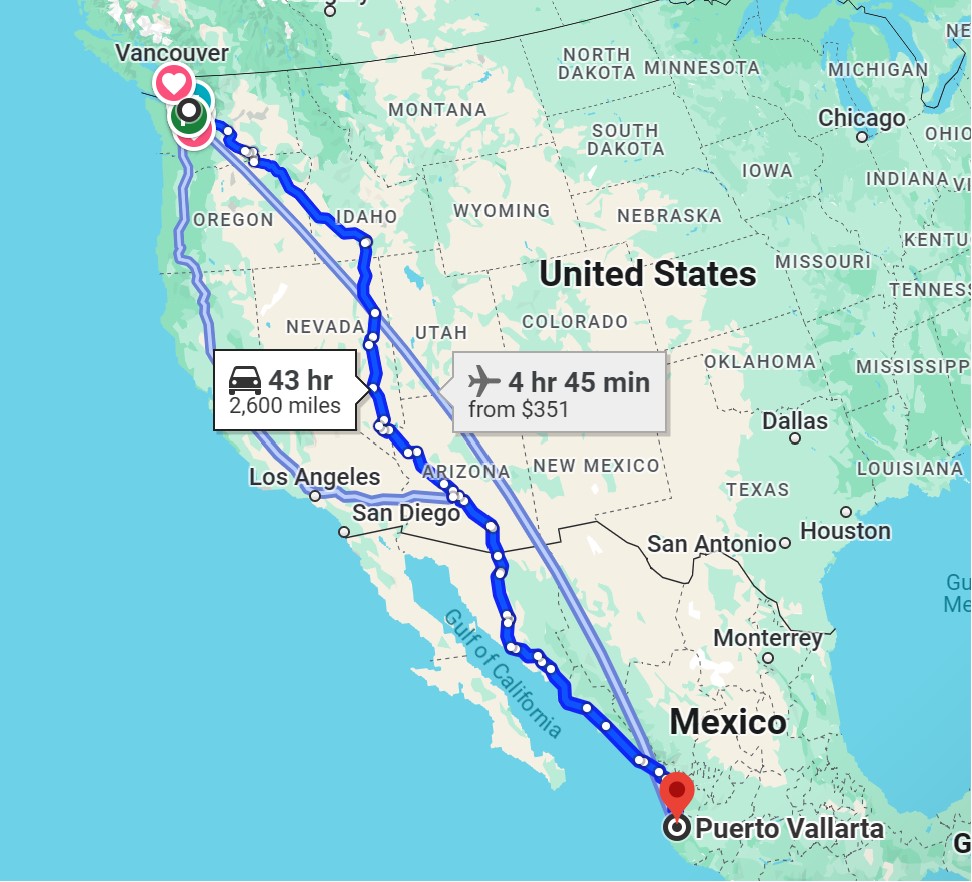
Great birds for a usually slow time of the year and as my departure date finally came on December 2nd, my year list was now at 932 species. I got to the airport well in advance of my early departure time, breezed through security and boarded with a carry-on suitcase and small pack filled with camera gear, my computer, binoculars, and clothing to cover temperatures that might range from the high 30’s in the mountains to the mid 90’s in the coastal lowlands. Needing only 62 species to get to 1000, I was now thinking more about lifers, photos, and specialties. The day before Greg had seen the Black and White Owls again and we would be looking for them this night. The non-stop flight was around 4.5 hours and it being two hours later in Puerto Vallarta than in Seattle. If all went well, I would be through security and immigration and looking for Greg Homel around 1:00 pm local time. There is always a moment of trepidation landing in a foreign country, not knowing the language, and counting on being met by someone you have never met before at the airport. Greg said he would be easy to find since he would be wearing binoculars. I said the same thing to him. I was somewhat taken aback by the number of people at the fairly small airport – lots of tourists, locals visiting and relatives and friends meeting them and dozens of cab drivers looking for fares. Fortunately there was one guy in the crowd wearing binoculars. ”Hola Blair”. ”Hola Greg” and we were off.