June 28
The good news was that we were in a new bird-rich habitat. The bad news (for me) was that again a lot of the birding would be in dense forest with challenges for both good views and photography. But there was no doubt that we would have new birds as we would add another 40 species to our Uganda list in the area before our final major stop on our itinerary at Murchison Falls National Park. Further evidence of just how different this area, tied in to the great forests of the Congo, would be was that in just over an hour at our first stop at the Nyabyeya Agricultural fields not far from our hotel, we had 34 species and 7 of them were lifers for me.
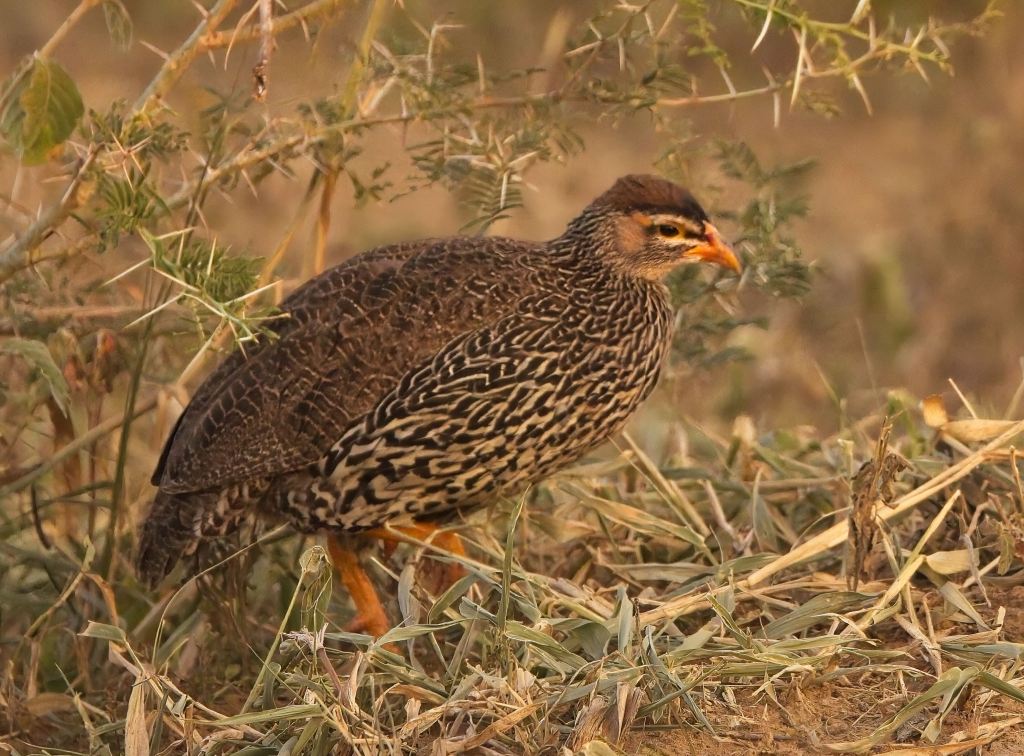
It is not just the forest, however, that provides challenges for birders hoping for good looks at special birds. Grasslands and open areas pose their own problems. Two quick ground birds were a case in point. Out of nowhere a small bird flushed from a field, flew by us and disappeared never to be seen again. It was pretty easy to identify it as a Common Quail, a species I had seen in almost identical circumstances last year in an open area in Tanzania. No photos either time. Next we heard the call of a lifer Heuglin’s Spurfowl. We called back and it ignored us – repeatedly. Fortunately photos would come later. More cooperative were lifers Compact Weaver and Brown Twinspot (although neither photo is top notch) and my lifer Fawn-breasted Waxbill, a photo that took a while to identify. A welcomed life photo was a Brown Babbler, seen but without a photo the day before.



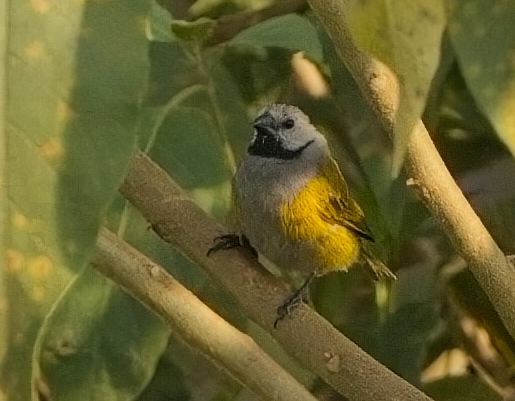
What makes seeing or photographing a particular species important to a birder? The rarity of the bird matters. If it is a lifer or a life photo or a wanted/needed year bird or one wanted for a state or county or country list, that might matter. One bird at the agricultural fields had a special meaning or importance for me. One of the first birds I saw in Africa was an African Yellow Warbler at the Safari Park Hotel in Nairobi in October 2007 – hard to believe but almost 17 years ago. No photo. And then I saw one again in Tanzania last year again with no photo. Not the best photo and it took a while before I could put a name on it, but my photo of an African Yellow Warbler was special because of that history. The last photo I include from that very productive spot is of a Gray-headed Oliveback. Of course it is important because it is a lifer, but the special meaning to me is that despite it being a decent photo (although highly enlarged), none of my photo ID programs could identify it and I kept missing it on the Ebird list for that spot. Then bingo, I noted it on yet another review of my lists and the gray head on the photo jumped out at me and the rest was easy.

In an earlier post I included with some uncertainty a photo of what I believed was a Brown-backed Scrub-robin. The picture from this morning left no doubt.

It was 9:30 in the morning, and we had a great start to our birding. We would spend the next 7 hours birding what is known as the “Royal Mile” in the thick Budongo Forest. Grading according to the number of lifers, it was a great place. Grading on photo ops and great looks – well that’s another story altogether. More than a sixth of the species were heard only and for another third, there were minimal views at best as the birds were distant, buried in foliage or just downright uncooperative. Now I must again acknowledge that this not my kind of birding and I am not at all good at finding birds in these conditions – especially predominantly green or brown ones in green and brown surroundings in low light. BUT there were some great birds and even a few, but only a few, that I photographed.
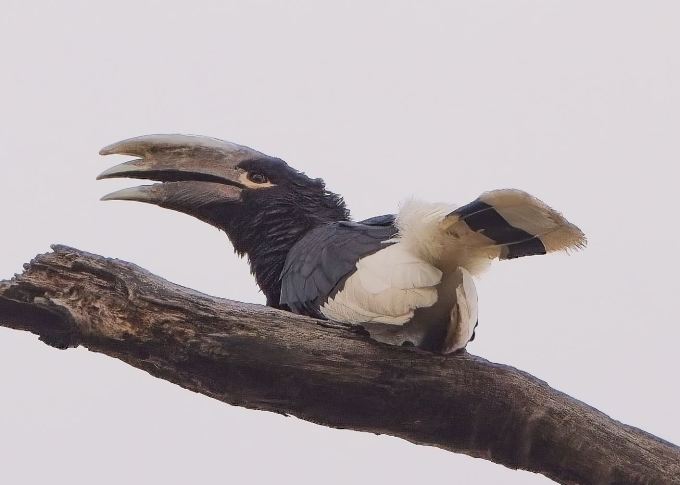
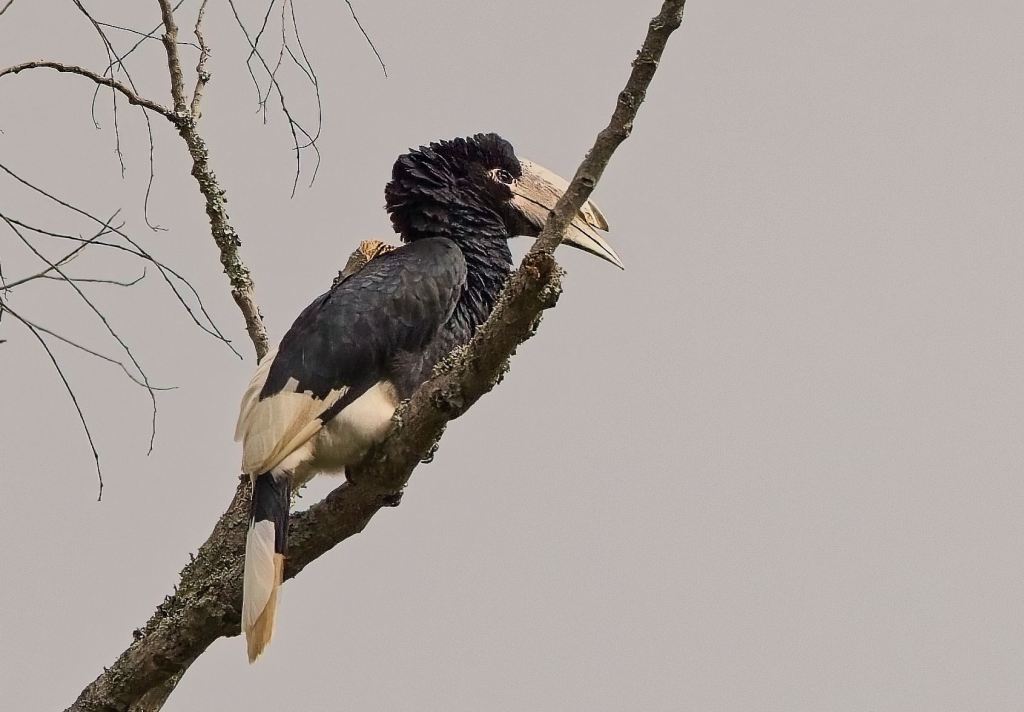
Let’s start with a list of the species that were “heard only” with the 3 lifers in italics: Dusky Long-tailed Cuckoo, Red-chested Cuckoo, Yellow-billed Barbet, Yellow Longbill, Gray Longbill, Uganda Woodland-Warbler, and Pale-breasted Illadopsis. This was the second time the very striking Yellow-billed Barbet was a heard-only species on a Uganda list, one I regret not having seen and photographed. On the other end of the happiness spectrum were lifers that were seen well and photographed: White-thighed Hornbill, Chocolate-backed Kingfisher, Blue-throated Roller, and Chestnut-capped Flycatcher, with the photo of the flycatcher being barely ID quality. The last photo in the group is a life photo of a Speckled Tinkerbird, photos of which were missed earlier in the trip.
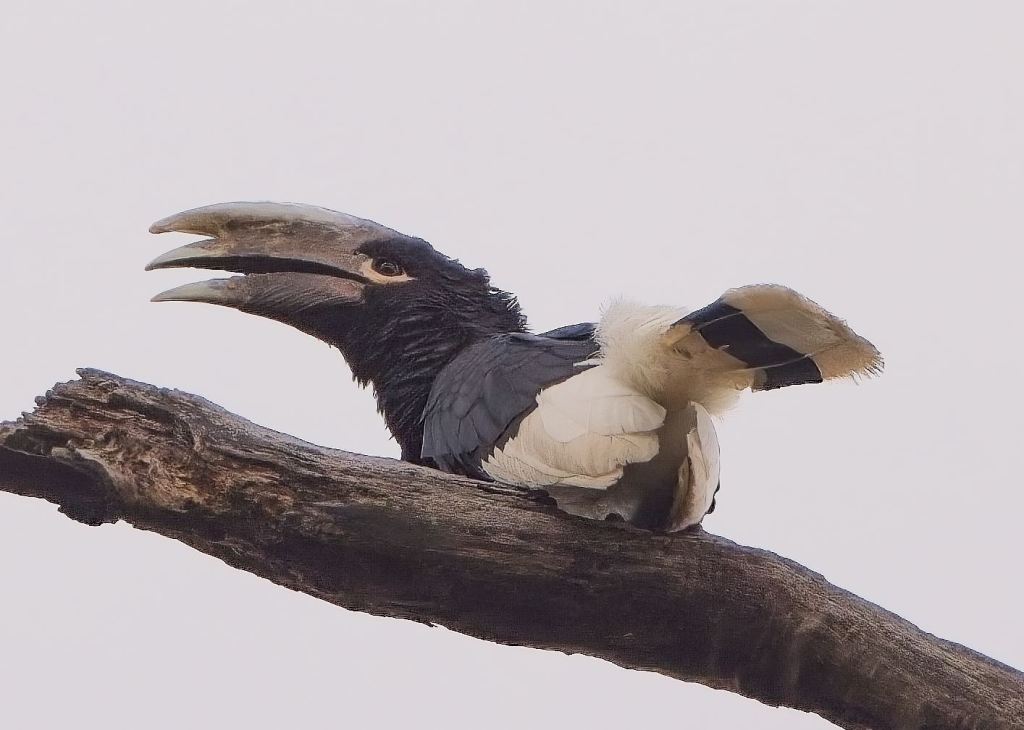

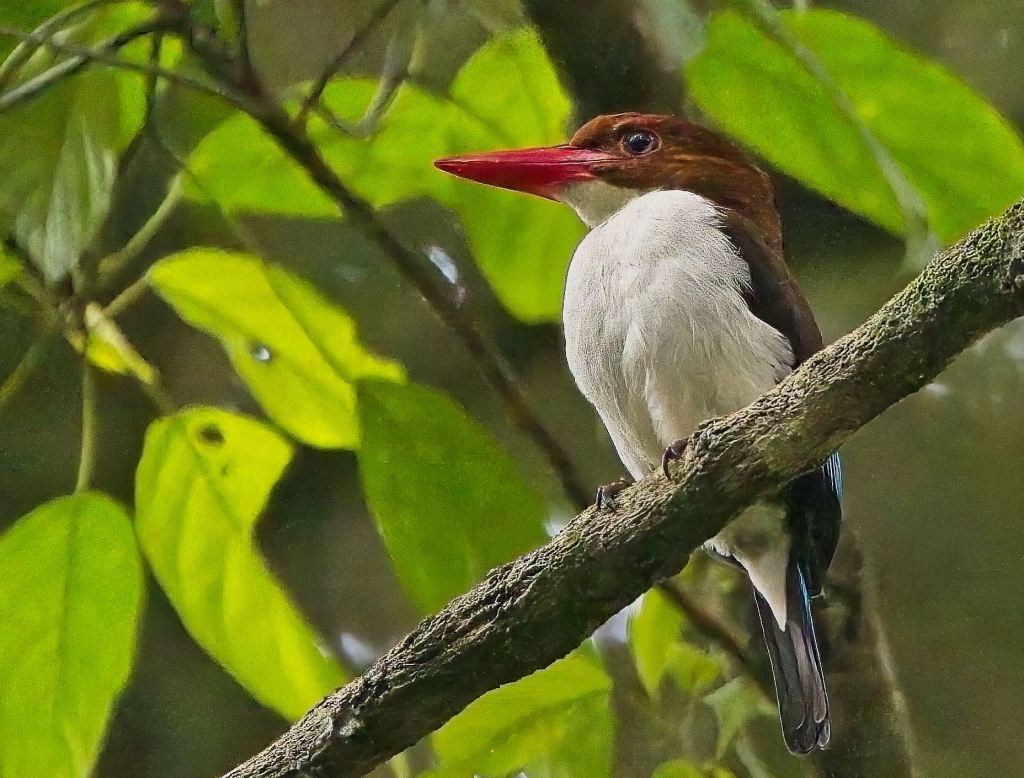
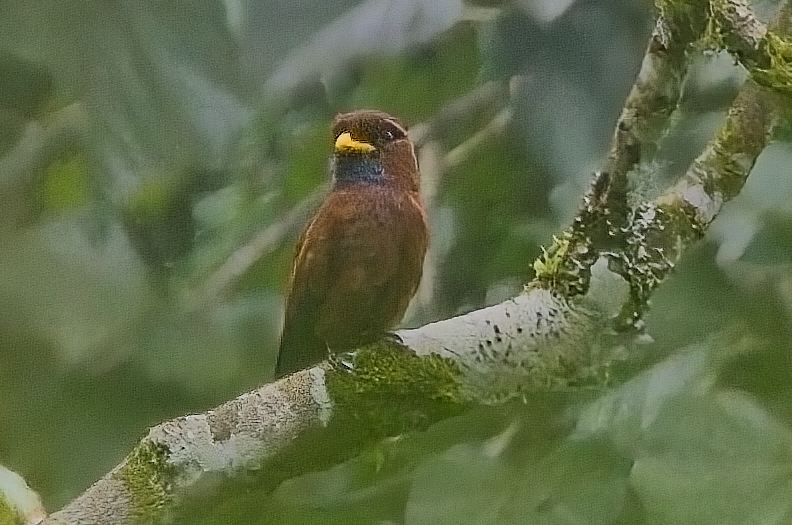


Last list for this fruitful and frustrating birding experience – lifers seen poorly and not photographed: Little Green Sunbird, Yellow-breasted Forest-robin, Fire-crested Alethe, African Forest-flycatcher, Spotted Greenbul, Rufous-crowned Eremomela, Lemon-bellied Crombec, and Western Nicator. With the exception of the Yellow-breasted Forest-robin and maybe the Rufous-crowned Eremomela, these are all pretty drab birds, many quite small, and all favoring the higher spots on very tall trees. Nonetheless, especially when added to the species that were heard only, it was tough and again, at least for me, some disappointing birding. Since it would probably have been more of the same for the quality of looks and photo ops, I had mixed feelings when our guides said that despite the number of new species, the “Royal Mile” was usually better and a number of species often seen (or heard) were missed.
June 29
Today was another moving day, starting with some more birding in the Budongo Forest and then birding our way to Murchison Falls National Park where we would be for the last 3 nights of the tour. Murchison was actually only a little over an hour from the Budongo Forest but with our stops for birding, it was not until 4:30 pm that we did our first birding in the park. Except for the birding there this afternoon, our visit to Murchison Falls NP will be covered in the next blog post. The rest of this one covers our birding before getting there and the time at Murchison that afternoon.
The morning started with the brief stop in the Budongo Forest Reserve again. The Ebird report lists 11 species, mostly repeats from the previous day at the Royal Mile, nothing new for the trip and no photos. I frankly do not remember the birding at all. Next was an hour plus birding at the Butiaba Escarpment on the shores of Lake Albert. Of the 13 species seen, 4 were lifers for me and 6 were new for our trip bringing it to over 400 species. The lifers were Red-winged Gray-warbler, Foxy Cisticola, Lesser Blue-eared Starling and White-fronted Black-chat. I had many photos of the species from last year in Tanzania, but I was happy to add a Uganda Beautiful Sunbird to my photo list.


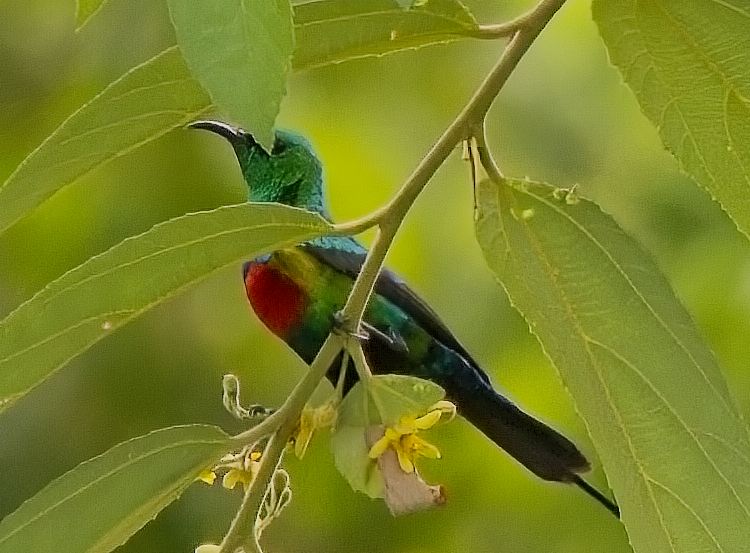
You may note that there is no photo of a Lesser Blue-eared Starling. Shame on me. I watched several of them at the location, in the clear, decent light and not too far away. Somehow I simply failed to take a photo, probably processing them as something else. They are very striking, so I am including a photo from someone else on Ebird.

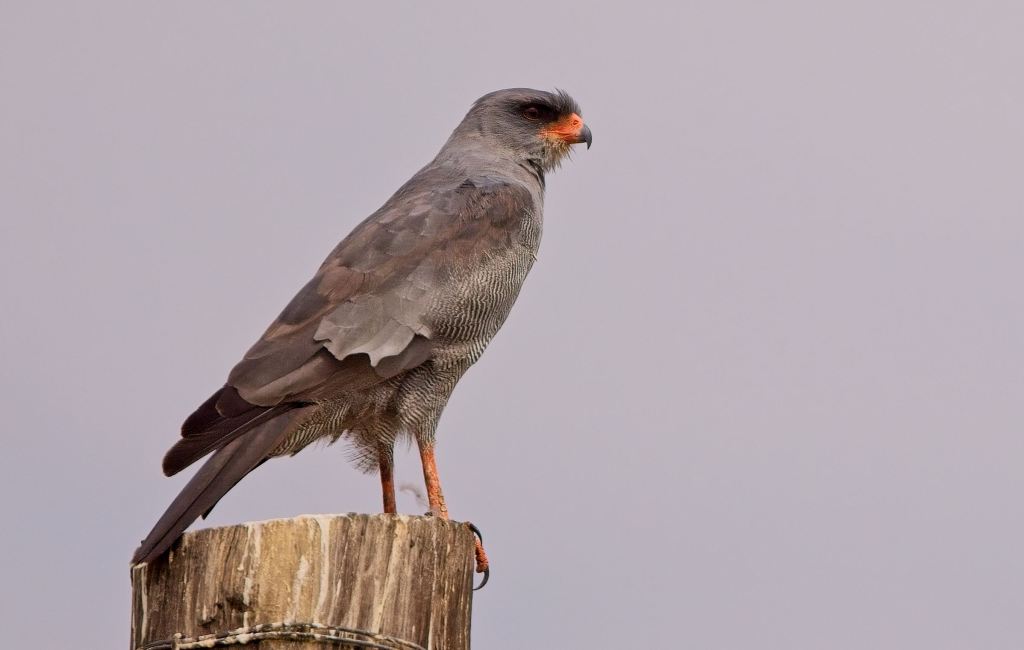
Our next “stop” was literally 15 seconds for me to get a photo of the first Chanting-Goshawk (Dark) of the trip. I first saw one in Kenya in 2007 and had many of them in Tanzania last year and was surprised we did not have one earlier.
A short while later we had my first lifer for the day and a major frustration as a lifer Shelley’s Rufous Sparrow was spotted on the road in front of our vehicle, together with a couple Northern Gray-headed Sparrows. My request for a stop so I could get a photo was either unheard or unheeded – aargh! Fortunately there was another opportunity later in the trip and I did get that photo. And not too long later another frustration as a lifer Northern Red Bishop was seen and again, by the time we stopped, the photo op was gone. Again I would get a photo later. And, yes you guessed it, there would be another lifer without a photo as a much hoped for Swallow-tailed Bee-eater was seen, and again it disappeared before I got get a photo. These things happen, although three in a row was a new one for me.
I bring this up as a segue to a topic that has grown to have much more meaning for me after so many related challenges/frustrations/disappointments on this trip both with seeing birds and with getting photos. If it wasn’t before, it became very apparent to me on this trip that while I very much do want to add species to my various life lists, it is not very satisfying to do so with either poor looks or no looks at all for heard-only species and also that I do put a high priority on getting a photo, and hopefully a decent photo, of the birds I see. There are tours that are described as “photographic tours”. Others promote “great photo opportunities” and others barely mention photography at all. I may not need/want a photographic tour that spends hours trying for the perfect shot of all the birds, but I do appreciate it when there is at least a recognition of what is needed for photos and that I am interested in that. So for example, there are ways to approach a bird either in a vehicle or on foot that maximizes the opportunity for a good photo and might also consider for example the angle that best allows that to happen. That did not happen on this tour naturally – just not a part of the mind set. And repeating comments from earlier, maybe especially for me, it just is not a good match to have a lot of forest birding. That acknowledgement will be part of all future planning.
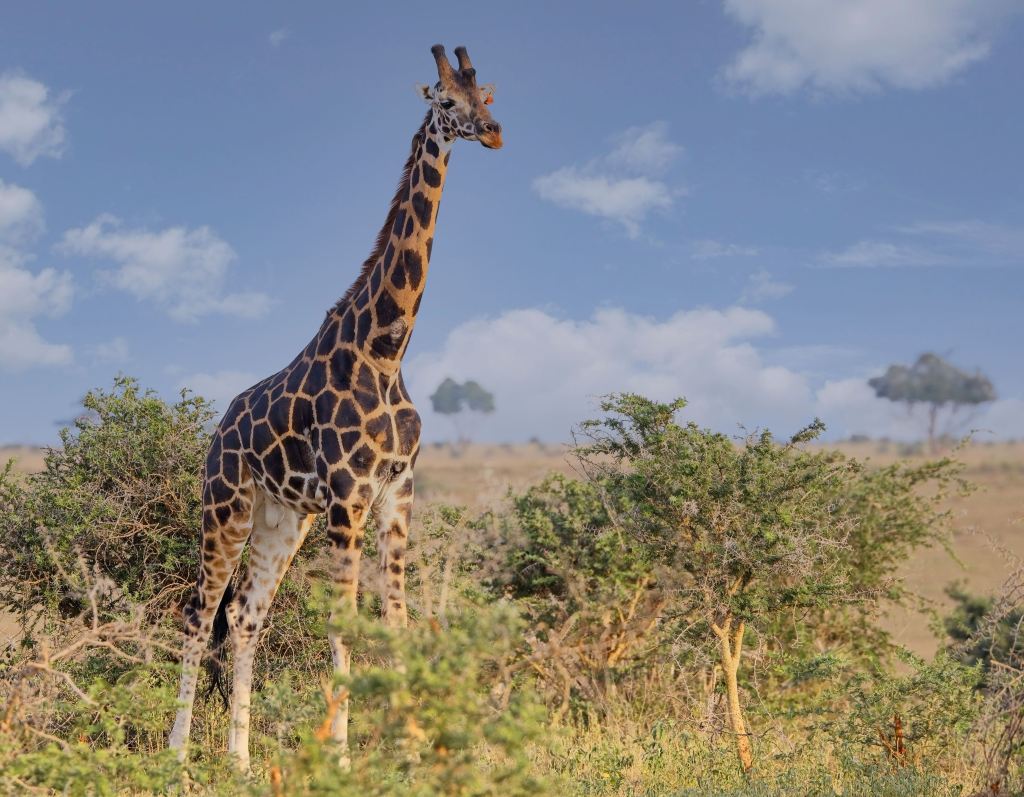
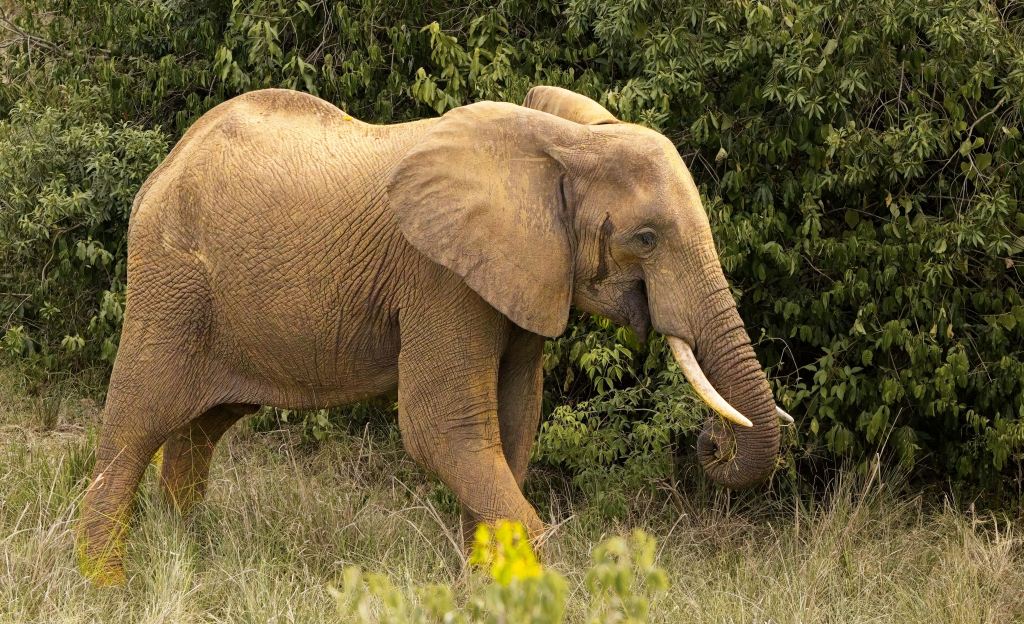
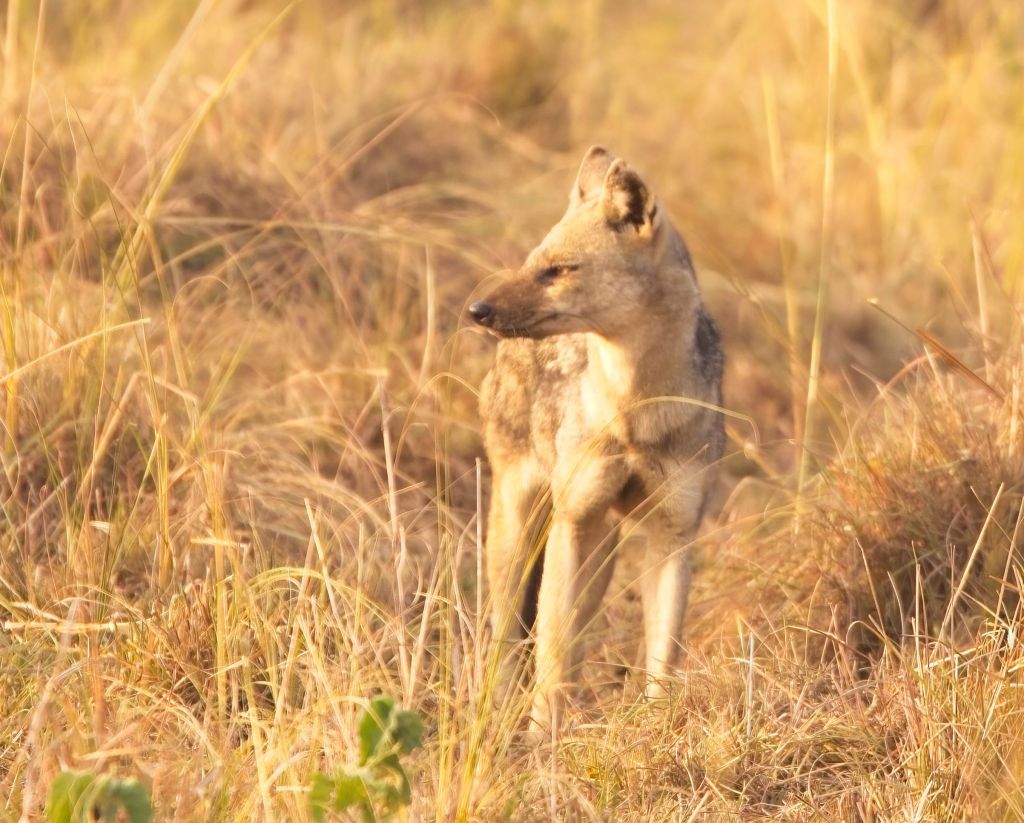
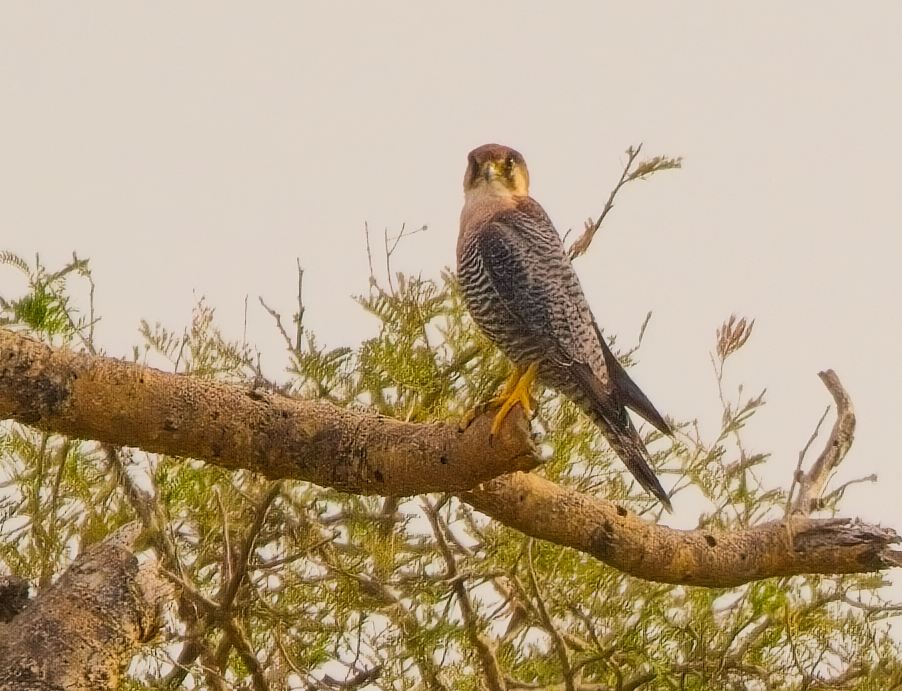
We checked in to Paraa Safari Lodge at Murchison Falls National Park and then returned to our vehicle for two hours of birding and hopefully some mammal watching. It was nice to be back in a place where we had both mammals and birds again and we quickly got reacquainted with elephants, giraffes, warthogs, buffaloes and antelope adding Red Hartebeest, also called Kongoni, and Oribi to that latter group. We also saw our first jackal – a Side-striped Jackal. And yes there were birds – 29 species – 9 new for Uganda and 5 new lifers for me including a Red-necked Falcon that was lifer number 3500.




Paraa Safari Lodge is adjacent to the Nile River in the heart of Murchison Falls National Park. It was one of the larger lodges on our trip, comfortable and as always with wonderful staff. We would be here for 3 nights and then return to Entebbe for our long flights home.
 blairbirding