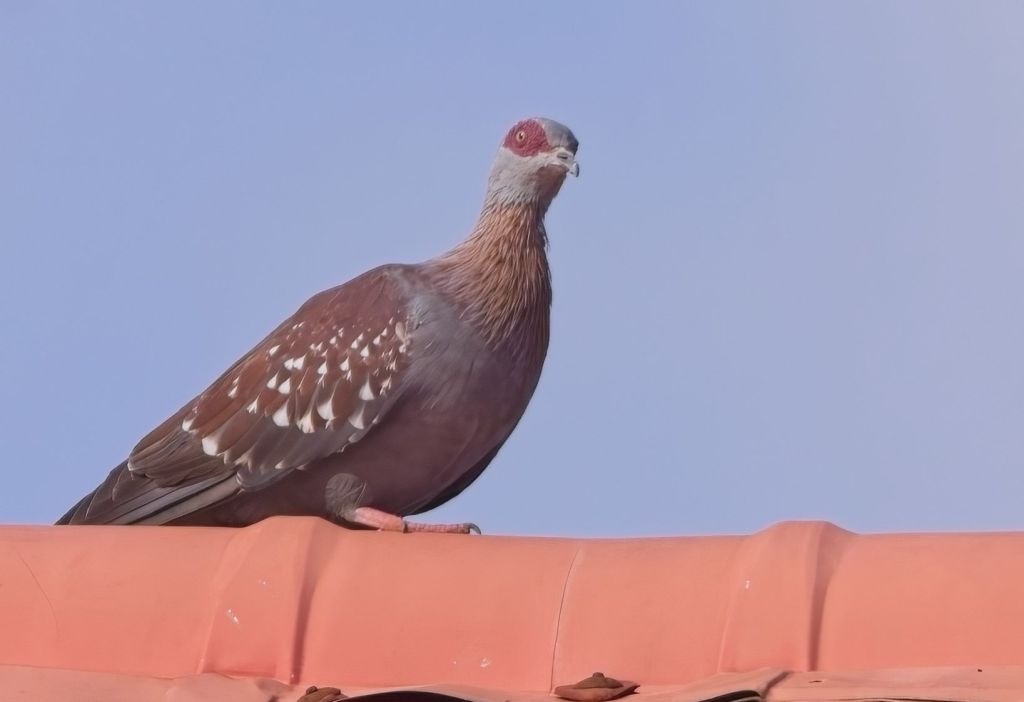
Uganda Finale: Murchison Falls National Park

At just over 1500 square miles, Murchison Falls National Park is Uganda’s largest national park. It’s most famous feature is Murchison Falls itself where the entire Nile River flows through a narrow gorge measuring just over 20 feet resulting in extremely turbulent waters below. The Park is dissected by the Nile and is home to large bird and mammal populations. Our time at the Park included two boat rides and two game/bird drives including a night drive that was at or near the top of the list of highlights for the trip.

June 30

We were out early in the North side of the park in beautiful morning light.

Good Morning Africa!

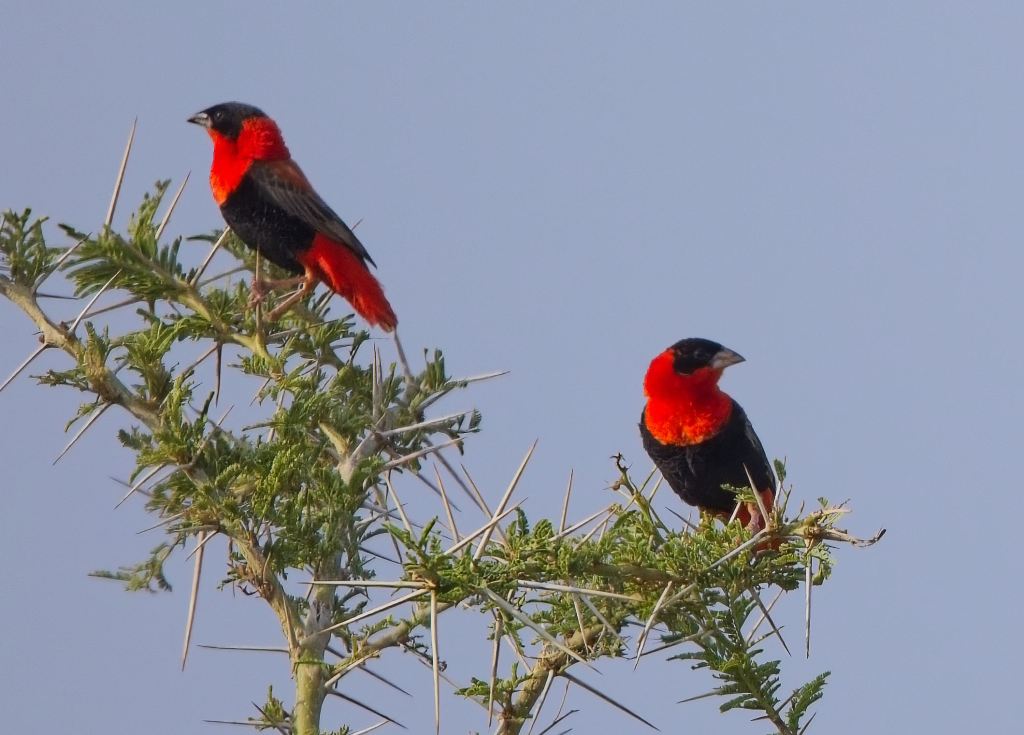
This 4 hour trip produced a bird list of 70 species and good mammal sightings. Ten species were new for our trip but lifers were understandably much harder to come by. Still I managed two: Denham’s Bustard and Black-rumped Waxbill. We had been on the lookout for Bustards in this perfect habitat, surprised we had not seen one earlier in our trip. The first one seen was a Black-bellied Bustard that flew by us and then shortly thereafter a lifer Denham’s Bustard appeared. I also got photos of some species seen but not photographed earlier and others that were new for the trip. These included photos of the three lifer species from yesterday where “vehicle challenges” did not enable me to take photos: Swallow-tailed Bee-eater, Shelley’s Rufous Sparrow and Northern Red Bishop.

Black-bellied Bustard
Denham’s Bustard – Lifer
Black-billed Wood-dove – Life Photo
Swallow-tailed Bee-eater – Life Photo
Shelley’s Rufous Sparrow
Northern Red Bishops
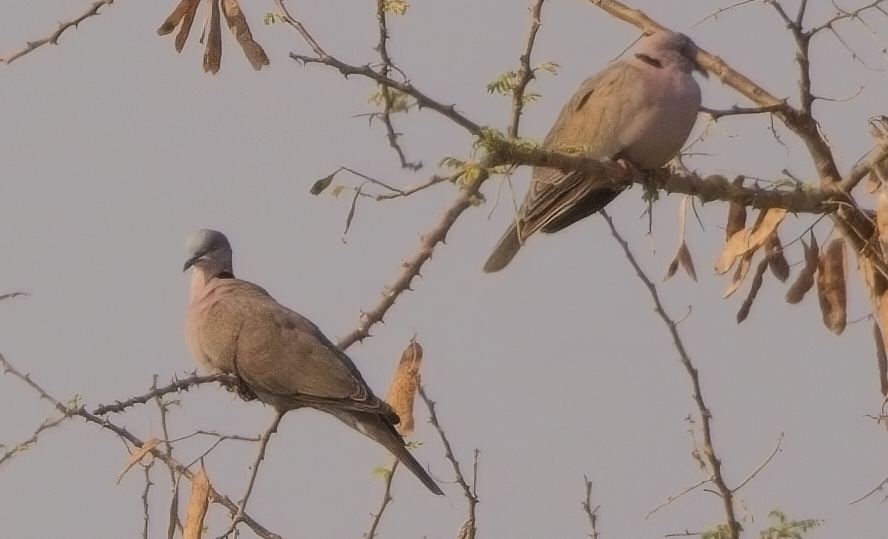
Vinaceous Dove – Lifer Photo – Another One Missed Yesterday
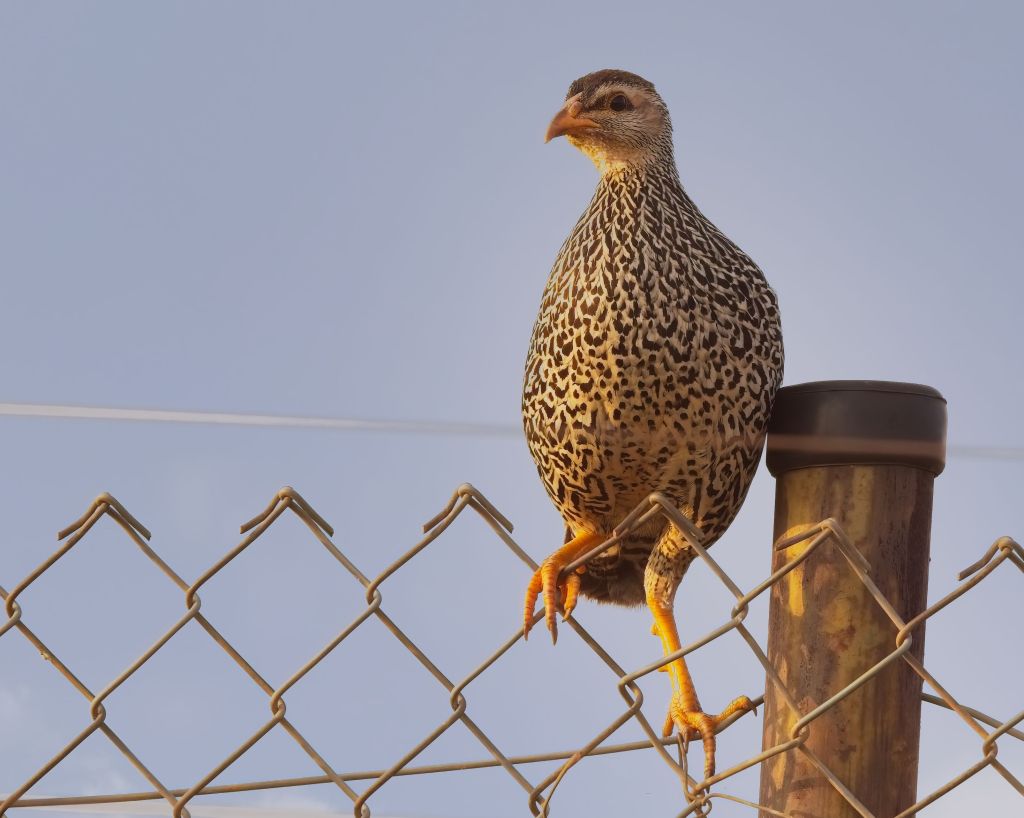
Cooperative Heuglin’s Spurfowl
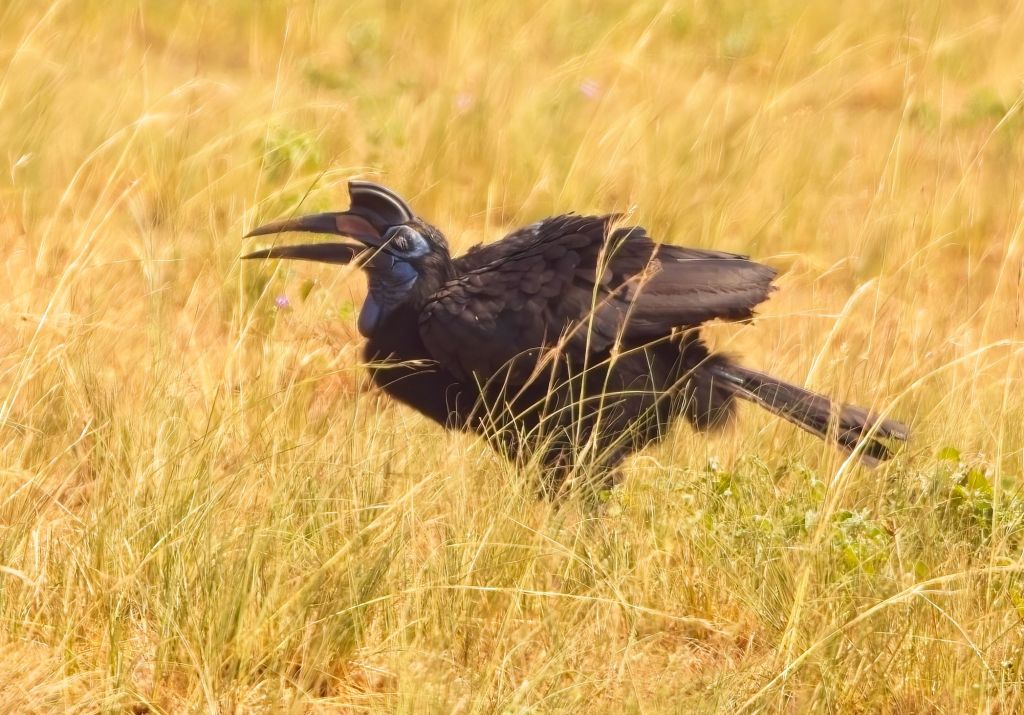
Abyssinian Hornbill – Better Photo

It was a very good morning for photos as I got photos of 31 species although I missed a few I would have liked. I also did not bother taking photos of more than 20 species that had been seen and photographed often previously.
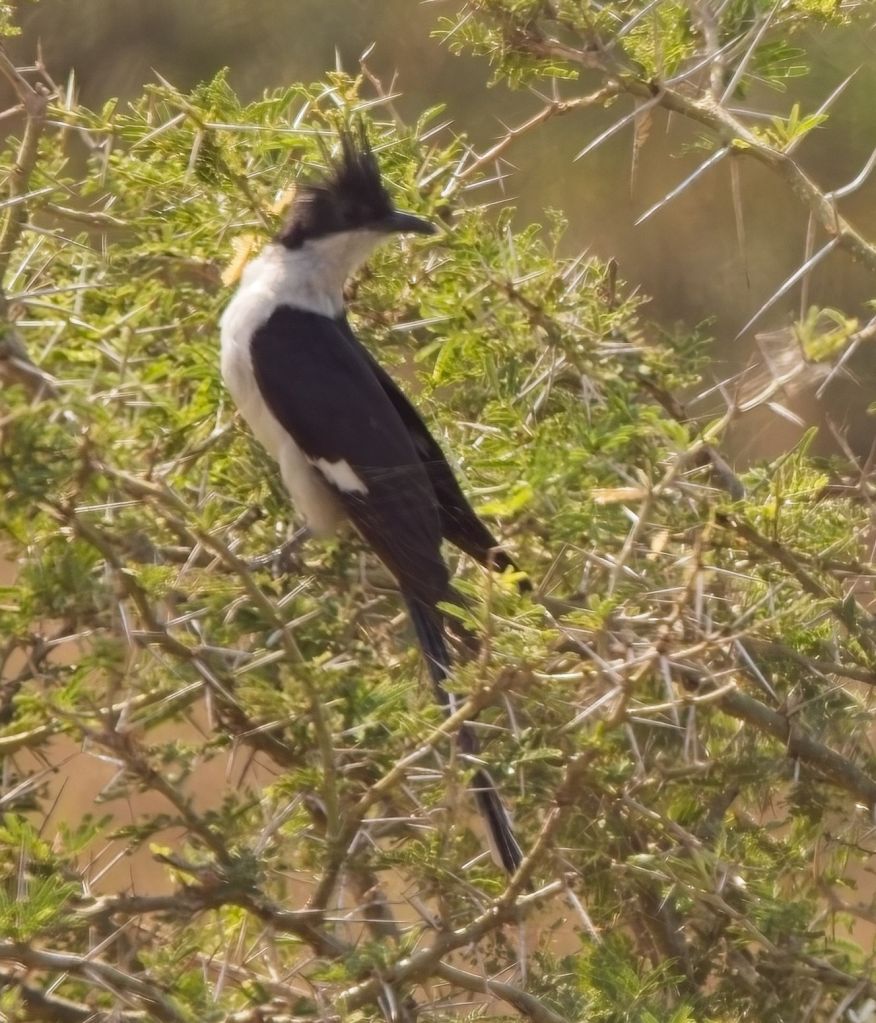
African Pied-Cuckoo
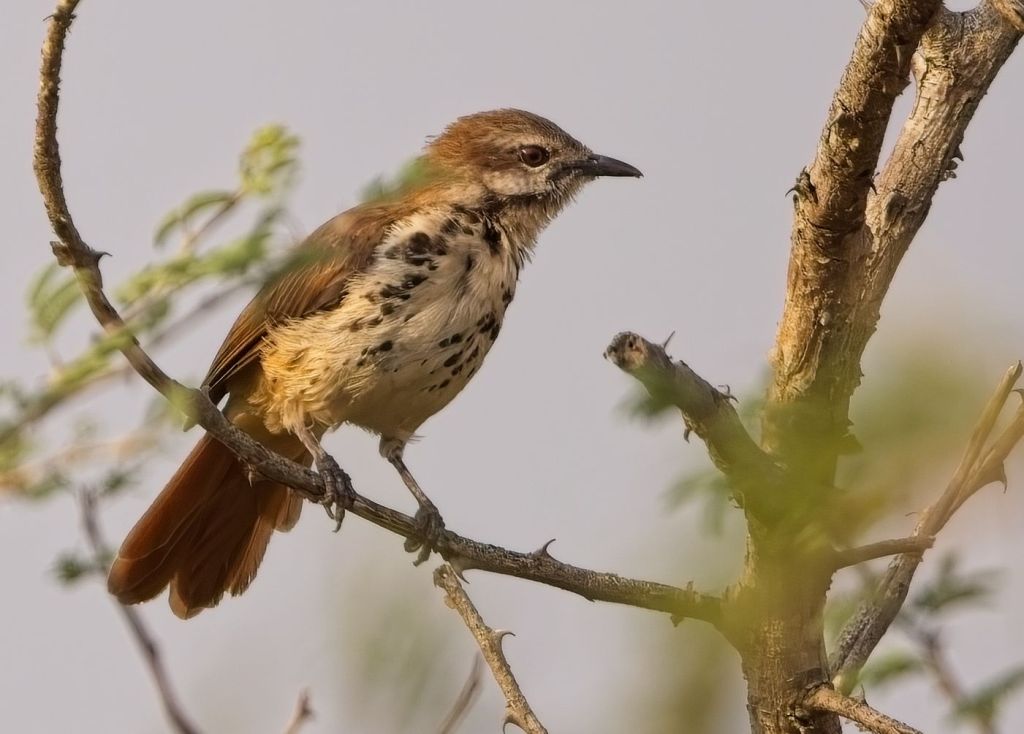
Spotted Morning Thrush
Mourning Collared-Dove
Speckle-fronted Weavers
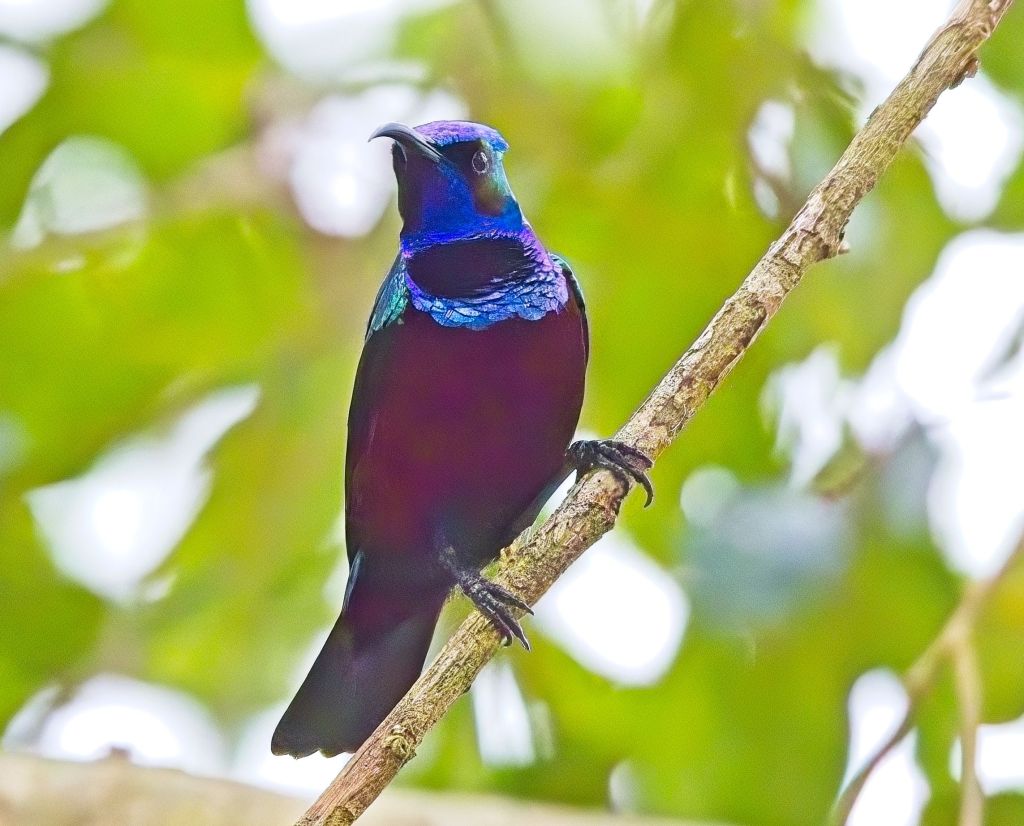
Violet-backed Starling Male
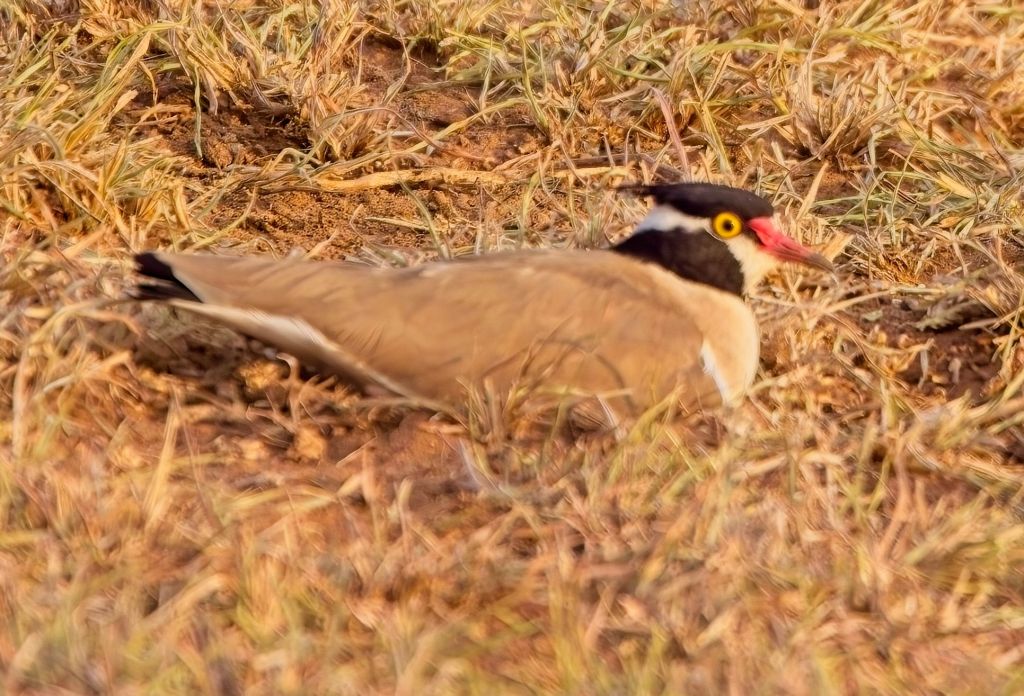
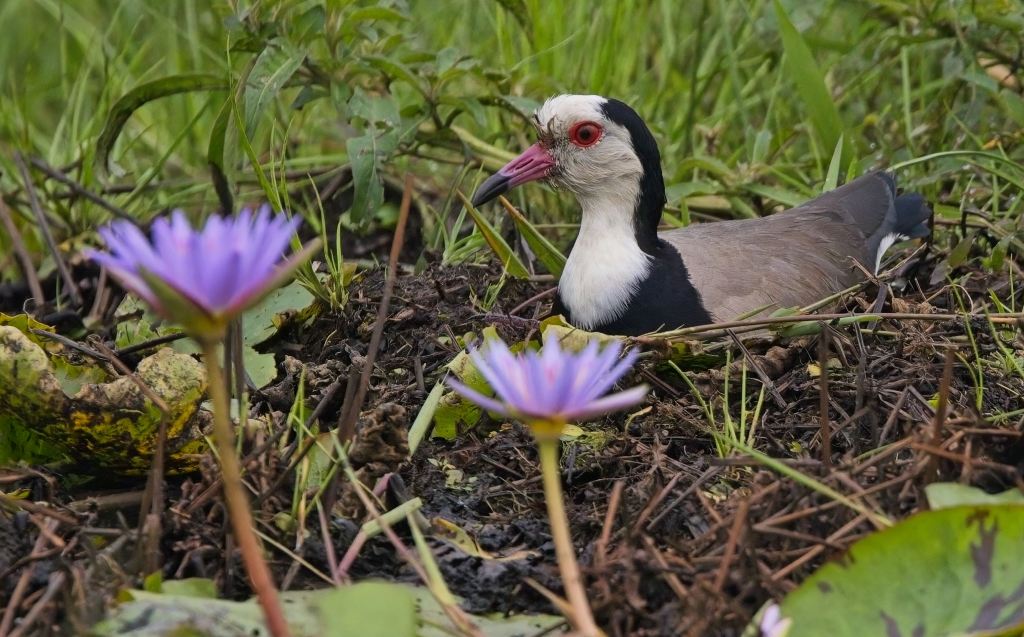
Black-headed Lapwing
Senegal Thick-knee – our 3rd Thick-knee for the Tour
Red-billed Firefinch
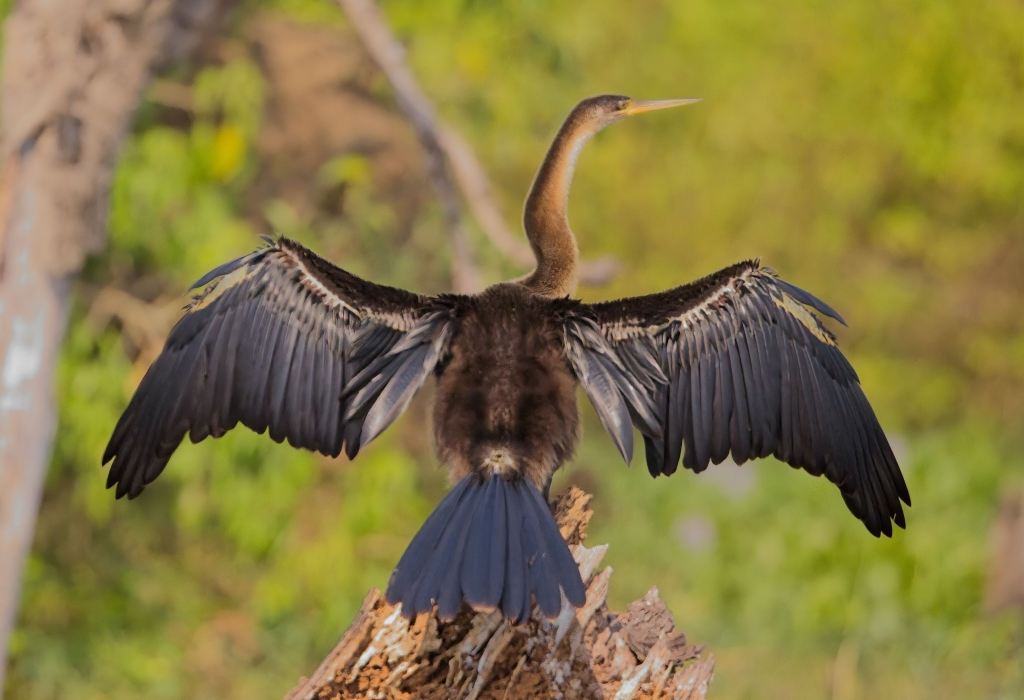
African Darter
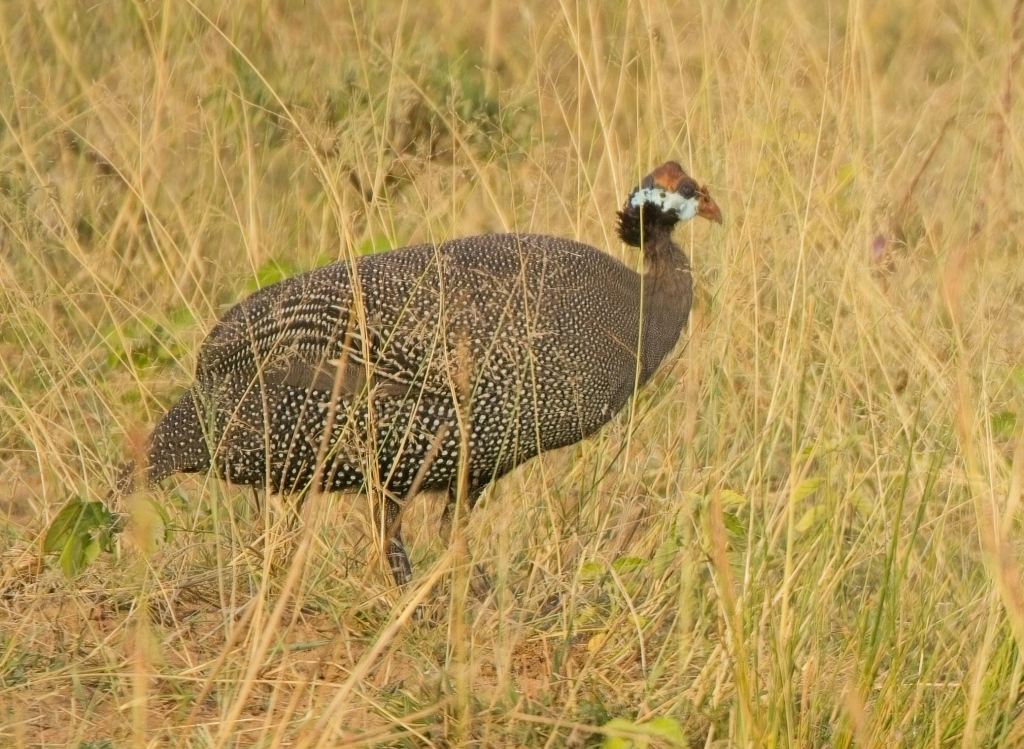
Helmeted Guineafowl
Martial Eagle
Ruppell’s Griffon and White-backed Vulture

We returned to the lodge for lunch and a short rest and then were off on another boat ride, this time to the base of Murchison Falls – or as close as we could get to it as the force of the water rushing and then falling through the narrow opening meant rough waters way past the base of the falls. As with all of our boat trips, expert handling of the boat enabled us to get quite close to mammals and birds seen along the way. Adding to our very birdy morning, we had 48 species, only four new for the tour and only one lifer for me, but it was one that had been high on my want list. Due to the high water level, there was some doubt if it would be seen. It was the Rock Pratincole – a specialty at Murchison Falls. Dion said he often had them on rocks near the base of the falls but due to that high water he questioned whether they would be on rocks that would be under water rather than exposed with the Pratincoles sitting on top. Since the falls were at the far end of the river, I am putting the horse before the cart as we did indeed see these lovely little birds – perhaps 30 of them, both in flight and perched on branches probably better than if they had been on the rocks.
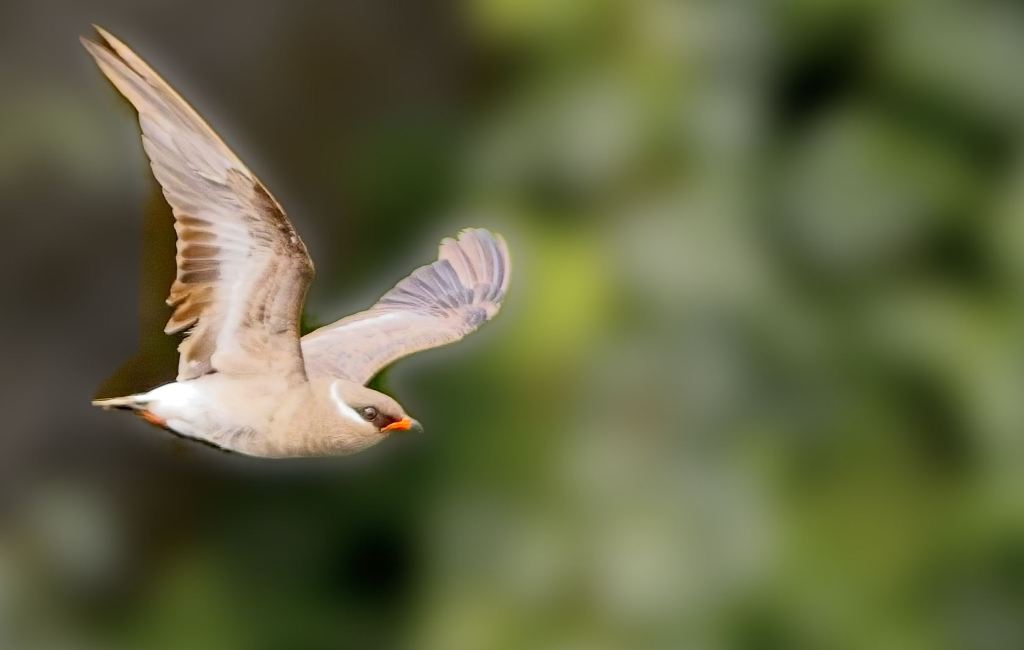
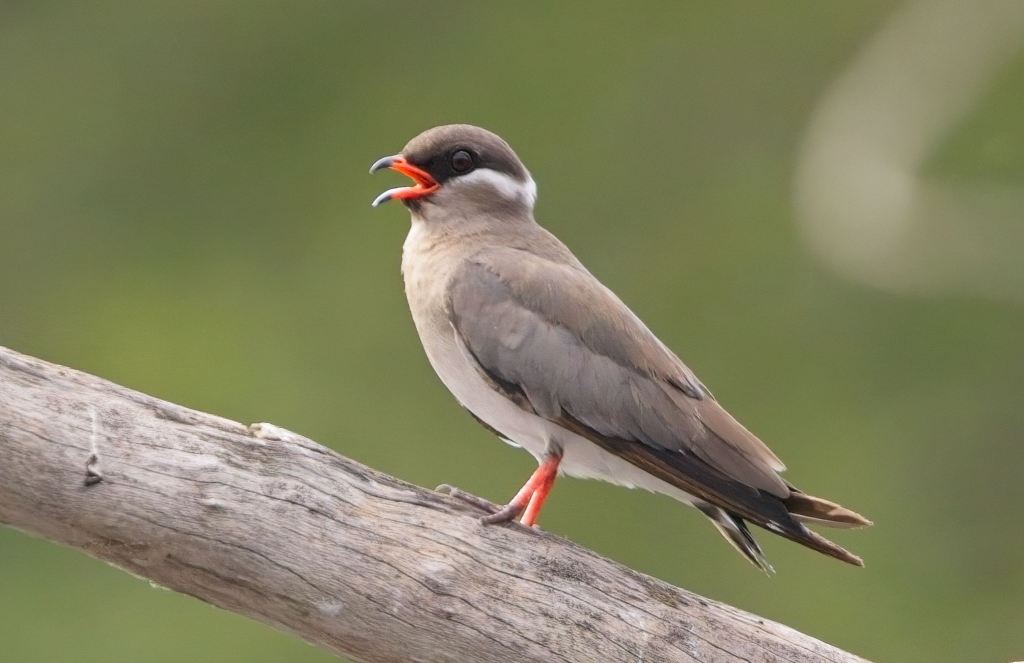
9 Rock Pratincoles

Having gotten good photos of the Collared Pratincoles earlier in the trip, I was very pleased. Now to put the cart pack in place, there were lots of good mammal intersections as well – especially with elephants and the many hippos lining the shore of the river. One of the hippos gave us an up close and personal look at its saber like front teeth/tusks – reminding us again that there are more human deaths caused by hippos in Africa than by any other animals.
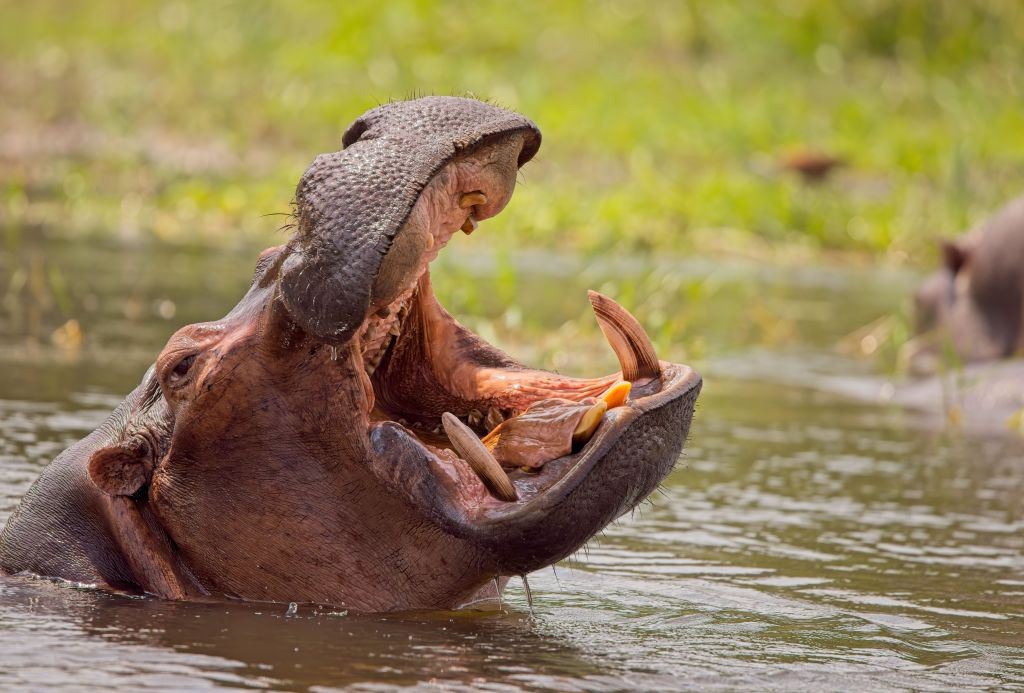
Tusks or teeth – no thanks!!

Earlier on our trip we had seen elephants drawing water up into their trunks before squirting it into their mouths for the drink. We watched this one for quite a while and we wondered if he was siphoning it directly.

A Long Drink

We also saw Uganda Kob and Buffalo along the river banks as well as a number of good sized Nile Crocodiles. One group of Buffaloes was particularly welcome because they were accompanied by the only African Spoonbill that we saw on the trip.

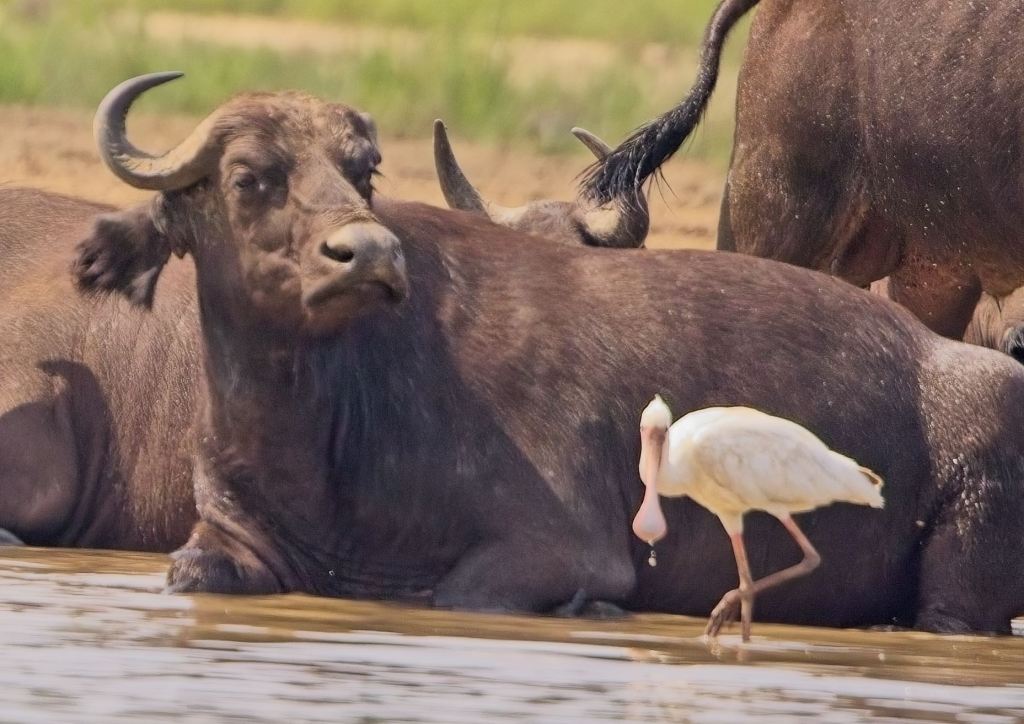
Our First Notice of the Spoonbill
African Spoonbill looking very small next to the Buffaloes

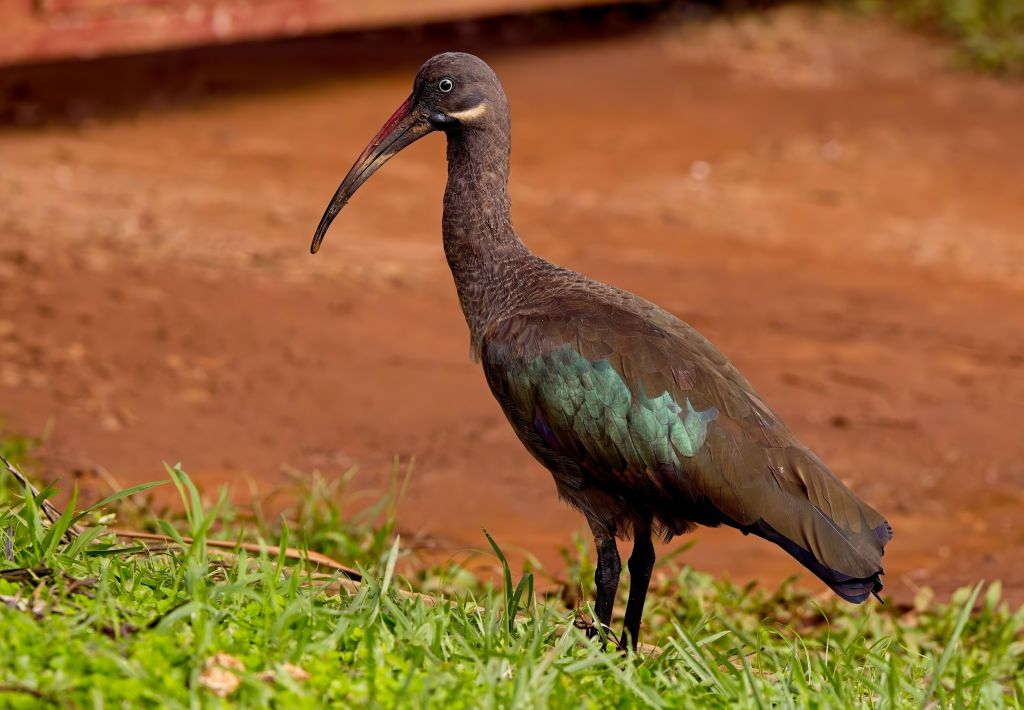
There were of course many other waders along the shore of the river: African Woolly-Necked and Marabou Storks, a single Black Heron, an African Openbill, Great, Little, Yellow-billed and Western Cattle Egrets, Hadada and African Sacred Ibis, and Gray, Purple and Goliath Herons, the latter the star of the show as it was on its nest with young.

Goliath Heron with Chick on Nest
Great Egret

Another photo was a much better one of a Piapiac, a plentiful crow in the area, here a juvenile told by its red bill hitching a ride on a Warthog waiting for an insect it would dig up.

Juvenile Piapiac on Warthog

Being on the water, of course we had many kingfishers – four species: Pied, Malachite, Woodland and Giant Kingfishers. I had missed an earlier opportunity for a photo of the latter. Finally got this one, even if not the best pose/shot. And there were other birds not associated with water that we saw on their perches onshore.
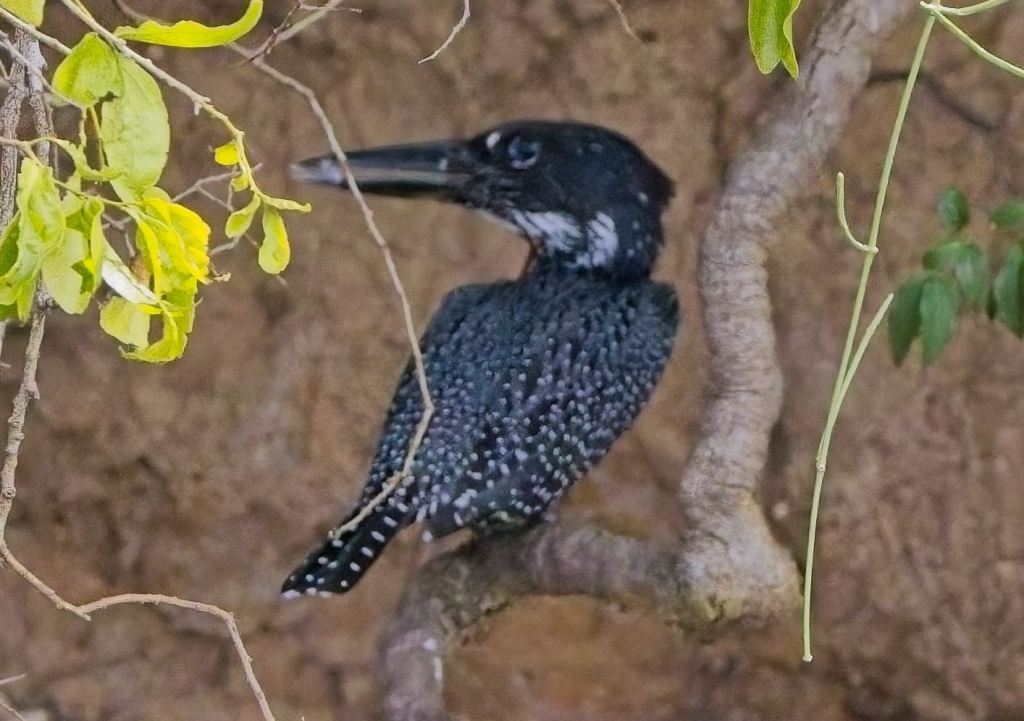
Giant Kingfisher
Malachite Kingfisher
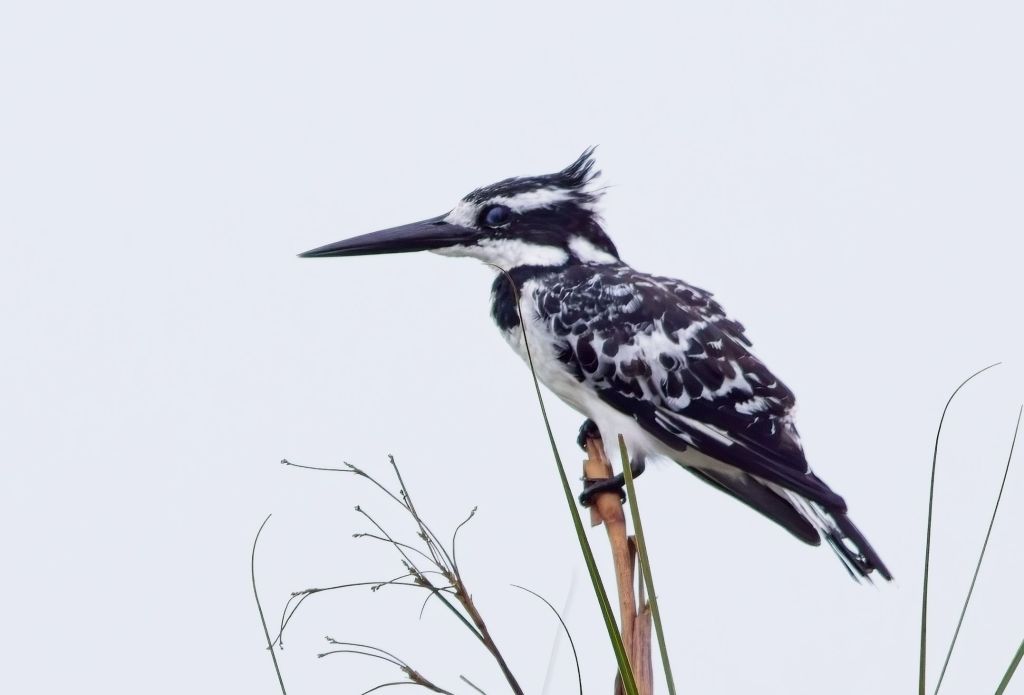
Pied Kingfisher
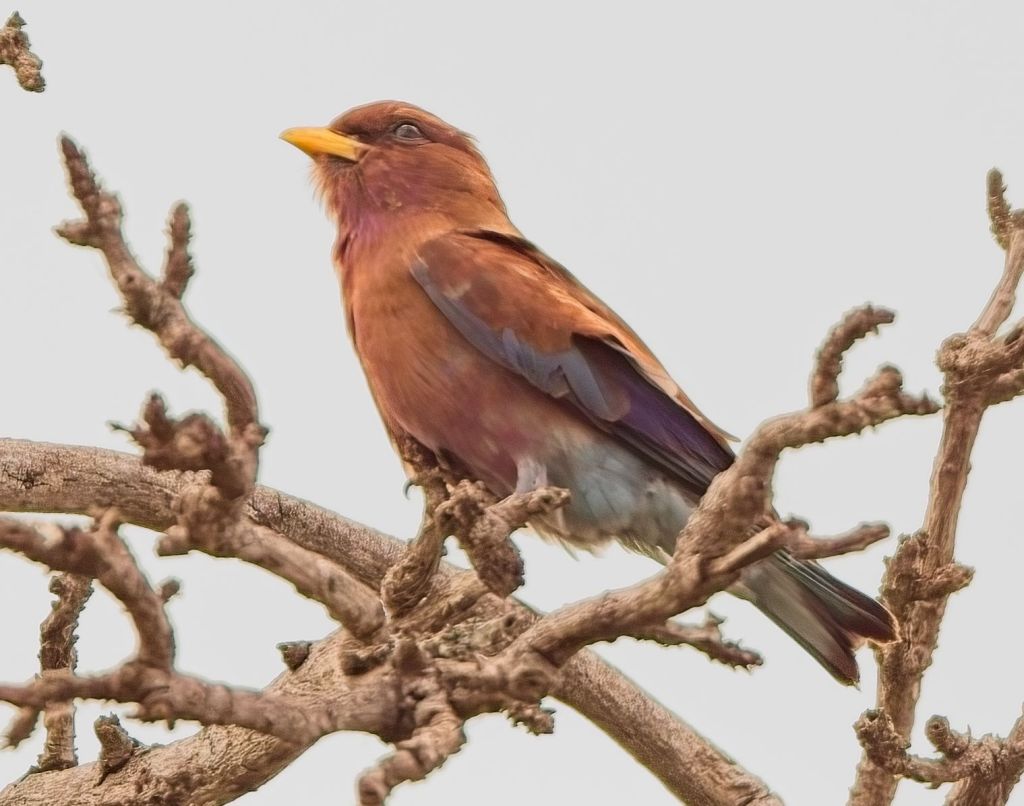
Broad-billed Roller
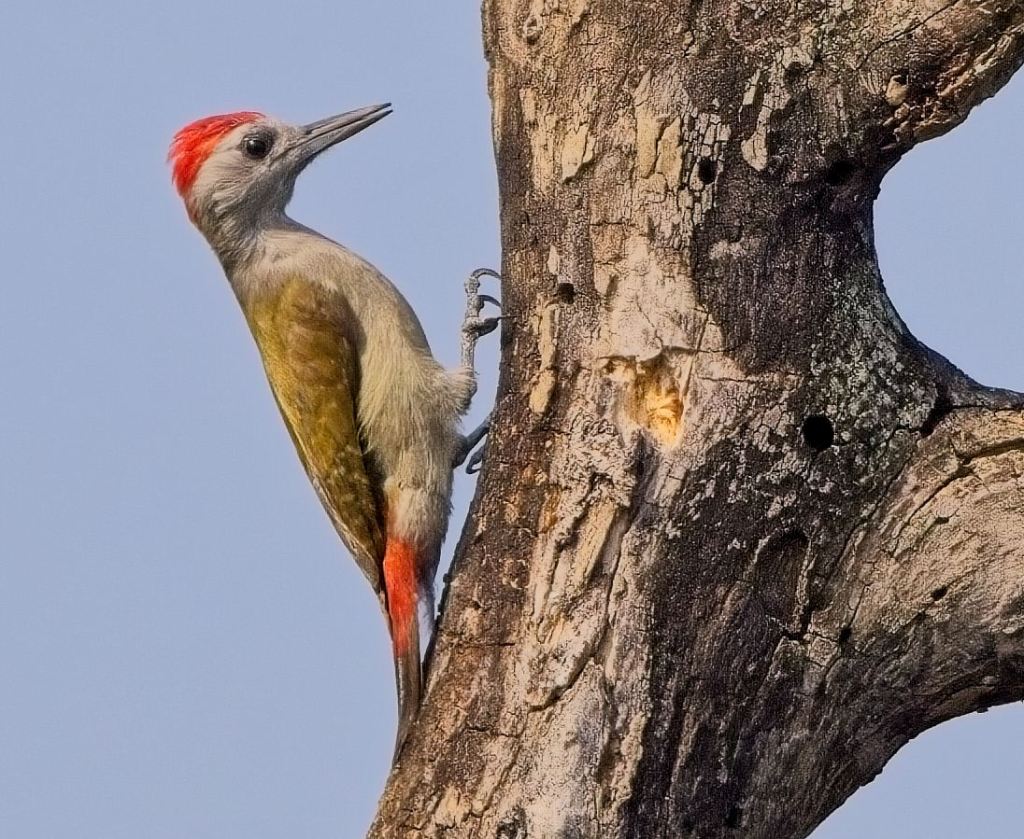
African Gray Woodpecker Male
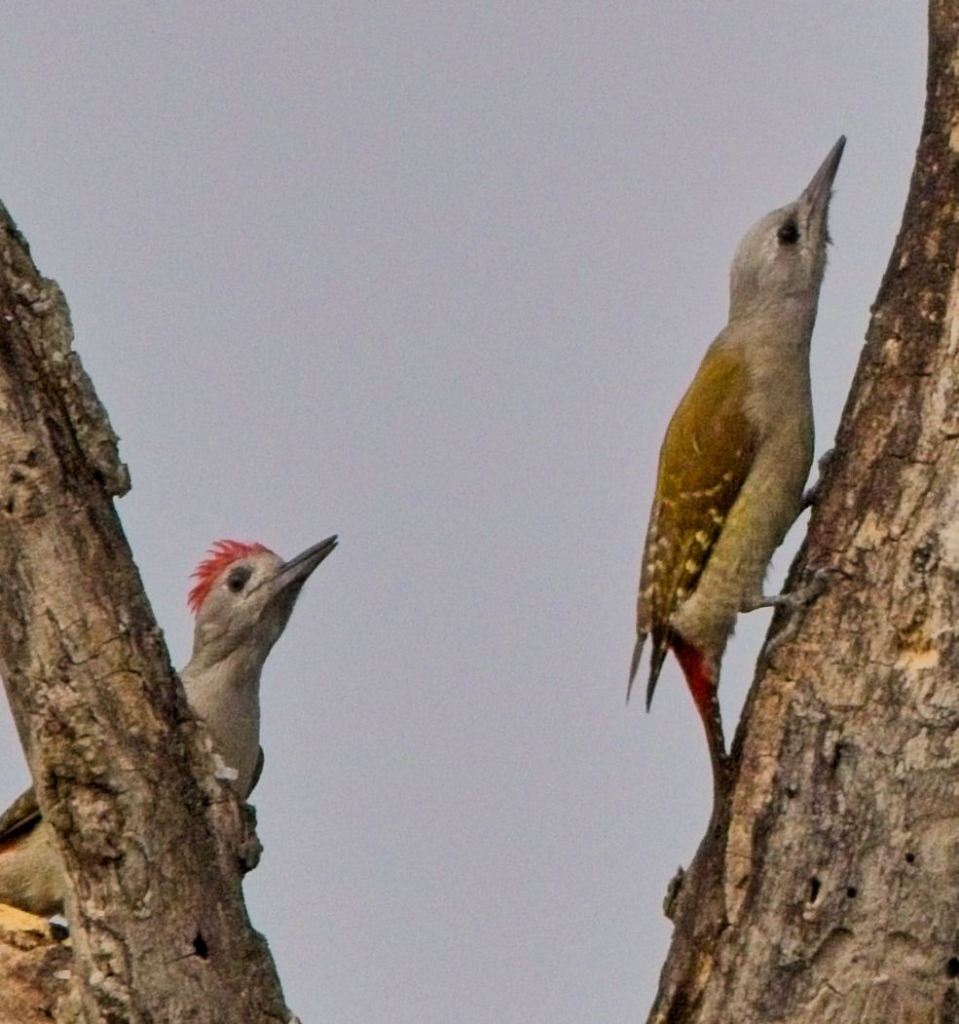
African Gray Woodpeckers – Male and Female

Our boat captain maneuvered us as close as he could to the Falls themselves – engines fighting against the current and turbulence generated by the river crashing through the small gorge. Murchison Falls is world famous and is impressive but in a way very different from other spectacular falls I have seen. The very thing that makes them special, the great volume of water coming through that small opening, is also the limitation as that narrow open is no comparison to the scale and visual impact of Iguassu/Iguazu Falls or Niagara Falls for their breadth and Yosemite or Bridal Veil falls for their spectacular scenery. Glad I saw Murchison Falls, but to be honest – not a must see.

We could not get close enough for a photo showing the full fury of the falls and from a distance they are just not that impressive.

It had already been quite a day as we again totaled over 100 species with many great photos and the view of Murchison Falls itself. But there would be more as we were scheduled to go on a night drive with a wonderful local guide/ranger – Silva. Definitely the highlight of our visit to the Park and among the top two or three parts of our trip.

The Night Drive

Being very close to the equator, darkness arrives in Uganda not long after 6:00 p.m. unlike in our home in Edmonds, Washington where at this time of year, it is not dark until after 10 p.m., thus it was not long after dinner that we could load onto our Land Rover, pick up Silva and head into the dark savannah armed with Silva’s rifle for protection (not needed) and two spotlights to search for wildlife. There was some light from distant villages but otherwise the only light was from our headlights. I have been out in total darkness returning from long birding trips or looking for owls, but I had never been out in areas like this where many animals were grazing and others were hunting. Just as with owling at night, you cannot see anything unless it is directly in the headlights or light from the spotlight. In essence then, we hunt with the spotlights trying to pick up “eye shine” as the light from the spotlight or headlights is reflected from the eyes of the animals. Almost immediately we had “eye shine” which told us where to direct the spotlight: a Hyena, the first visual of one we had on the trip as opposed to many calls we had heard at night.
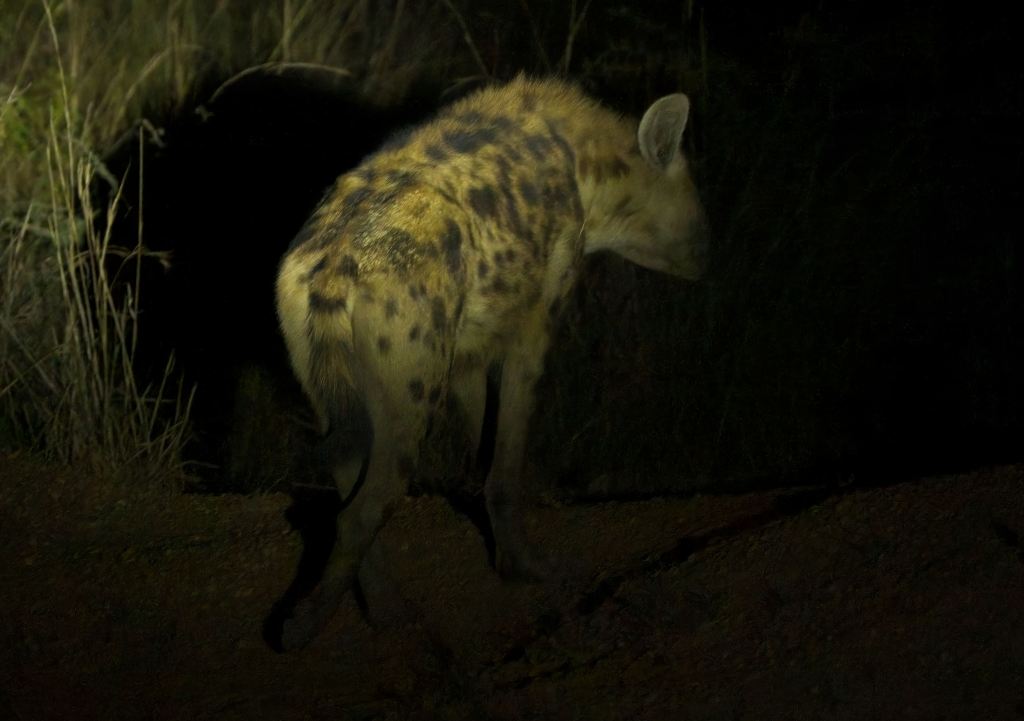
Spotlighted Hyena

The early success with the Hyena in the spotlight raised our excitement level and added to what was already sensed as a “cool adventure”. Those assessments increased as we returned to the area where we had seen many mammals on our daytime game/bird drives and we were stunned by the number of eyes that were found returning the shine of the spotlights. There were hundreds of eyes – everywhere. Mostly antelopes like the Uganda Kob and Oribi and a large herd of Buffaloes as well. Most were very distant but occasionally there would be something close on the side of the road (dirt tracks) like the Bushbuck below.

Bushbuck

Mammals on the African plains are exciting to see in the day time but especially with the big herds of antelope and even buffaloes, it becomes commonplace and the excitement at least diminishes. But it was a very different feeling at night. There was a sense of mystery and more like a hunt. What would come next? In the daytime I might see an animal hundreds of yards ahead and watch it as our vehicle got closer and closer, perhaps readying my camera for a photo. It was very different at night with far less time to process what was being seen and thus a heightened feeling of a need to “Be ready” for whatever might happen without much warning. A feeling of anticipation for … what?

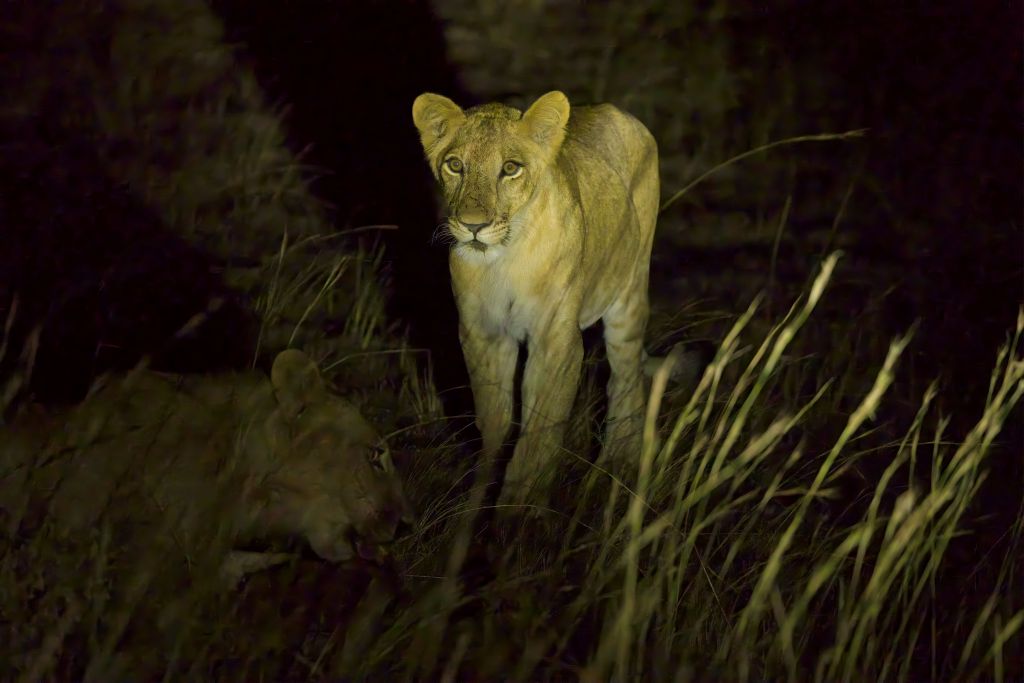
Silva was awesome as he searched the landscape with his spotlight looking for the next animal, the next surprise. Perhaps an hour into our drive the headlights of the Land Rover picked up some movement on the road ahead of us and Silva quickly got his spotlight on some lion cubs – first one then another and then the mother. Not real close but the way they had appeared out of the dark magnified the excitement acknowledging that any lion cub sighting is already very exciting. The cubs also meant that there were other lions in the area. Would we find them?

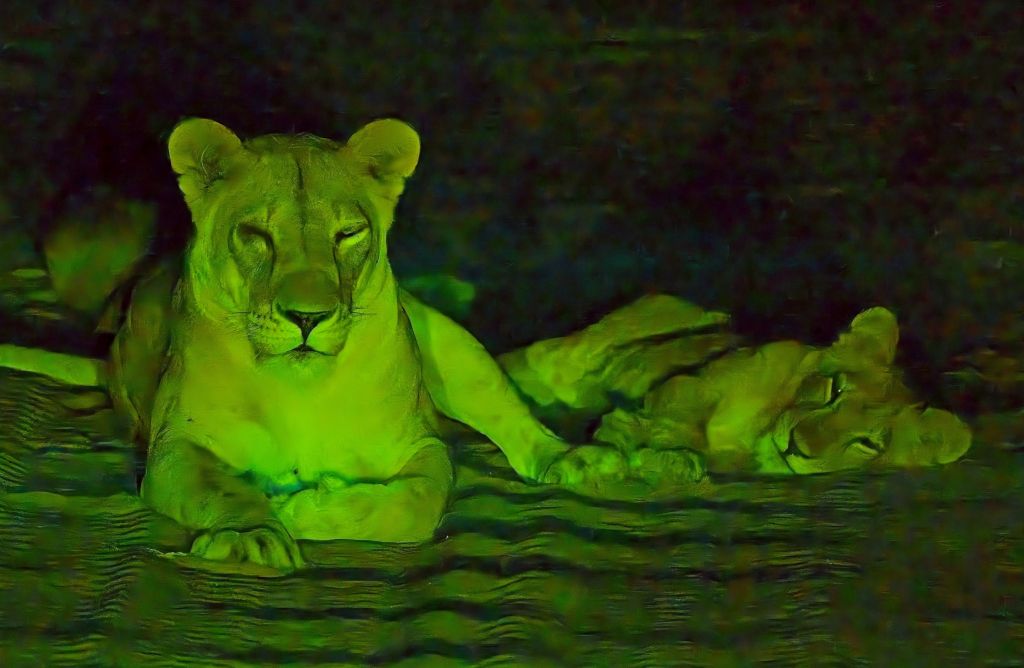
Lion Cub on the Track Ahead of Us
Lioness Mother with Cub

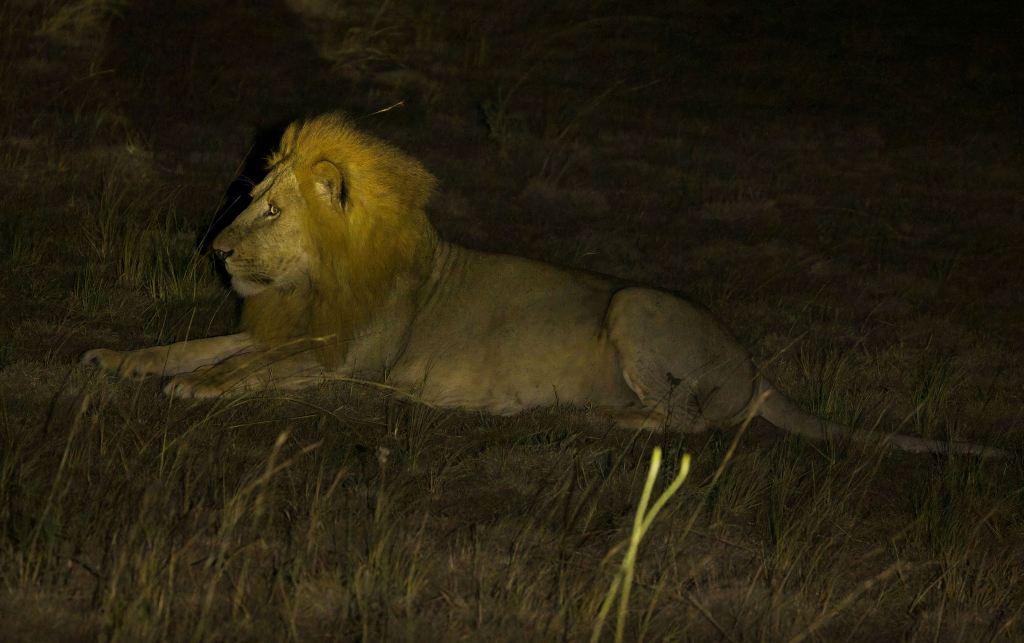
Silva was always animated, his positive vibrations felt by us all and we were confident that if there was something out there he would find it. He did. “Lionsfeeding lions“, he called. Somehow maybe 150 feet away and mostly hidden in the grass and brush, Silva had spotted a group of lions with one of them on a kill. The general rule is that vehicles are not allowed to leave the designated tracks and drive off into the bush. Silva said “lets go”. Davis, our driver and local guide hesitated not wanting to break the rules – not that there was anyone, other than Silva, within miles of us who would know or report the infraction. Without an instant of hesitation, boss man Dion said “go” and Silva directed us to a spot less than 15 feet from where a large male lion was gorging himself on the kill – an antelope of some sort – and where at least 6 other lions were waiting their turns. Headlights and the engine were turned off and for the next 20 minutes, we were treated to probably the best up close spectacle of life and death on the African savannah I had ever seen – beyond awesome.

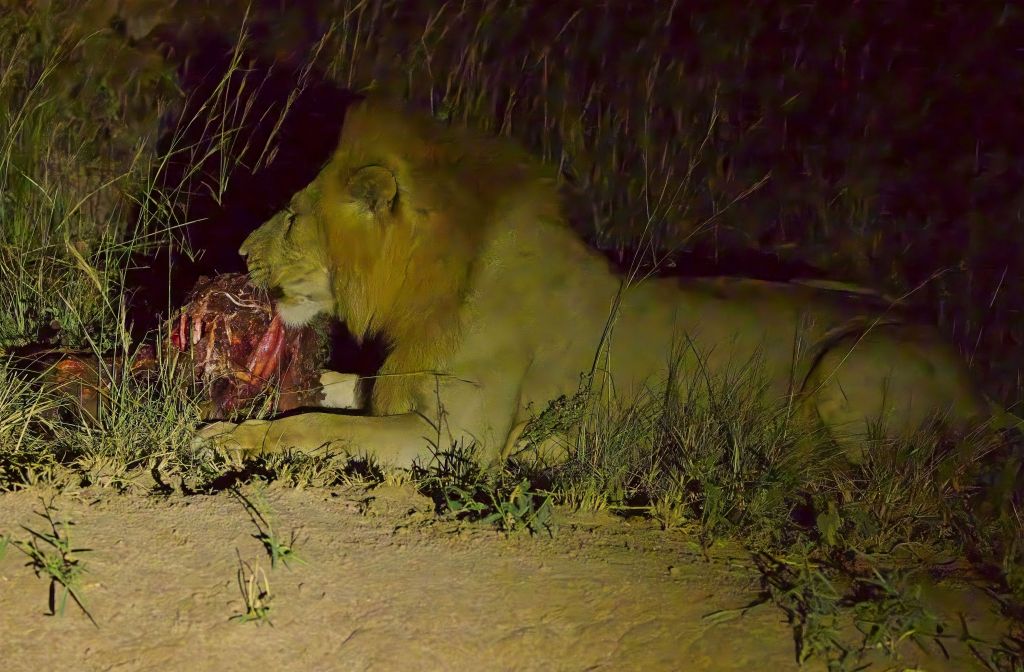
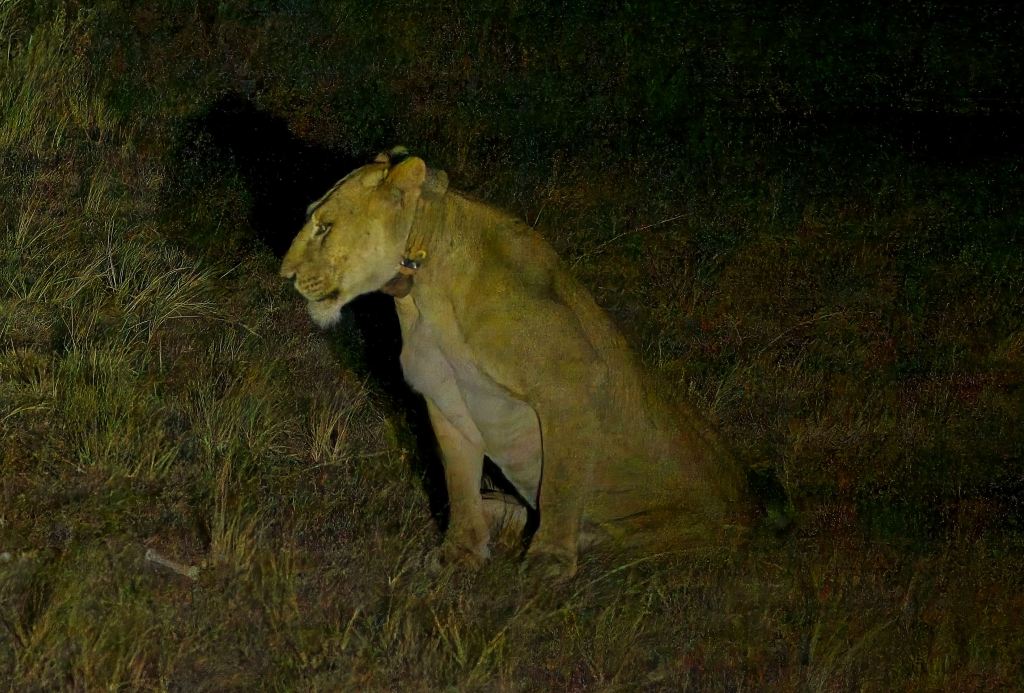
I took more than a hundred photos in addition to two videos of the dominant male feasting, another male waiting for and then taking his turn after the dominant male had finished and with females and cubs standing by hoping for opportunities of their own. If the spotlight was not directly on my target, the photos were useless, but there were successes. One of the females, probably the lead lioness, was wearing a radio collar. Silva said this pride was a study group. If the spotlight moved as the photo was taken – nada, but there were good moments when the light was steady. We watched as the first male roared after he was finished and then curled back his lips and seemed to sniff the air. This is called the Flehmen response and is a way for any mammal but predominantly big cats and mostly males to detect the smell of urine from another animal in the air to see if they are ready for/interested in mating. Our interpretation was that having satisfied one of his appetites, the big male was interested in satisfying another. I could have chosen dozens of photos but have included just a small sampling to give some idea of the great show, and unfortunately I cannot imbed the videos.
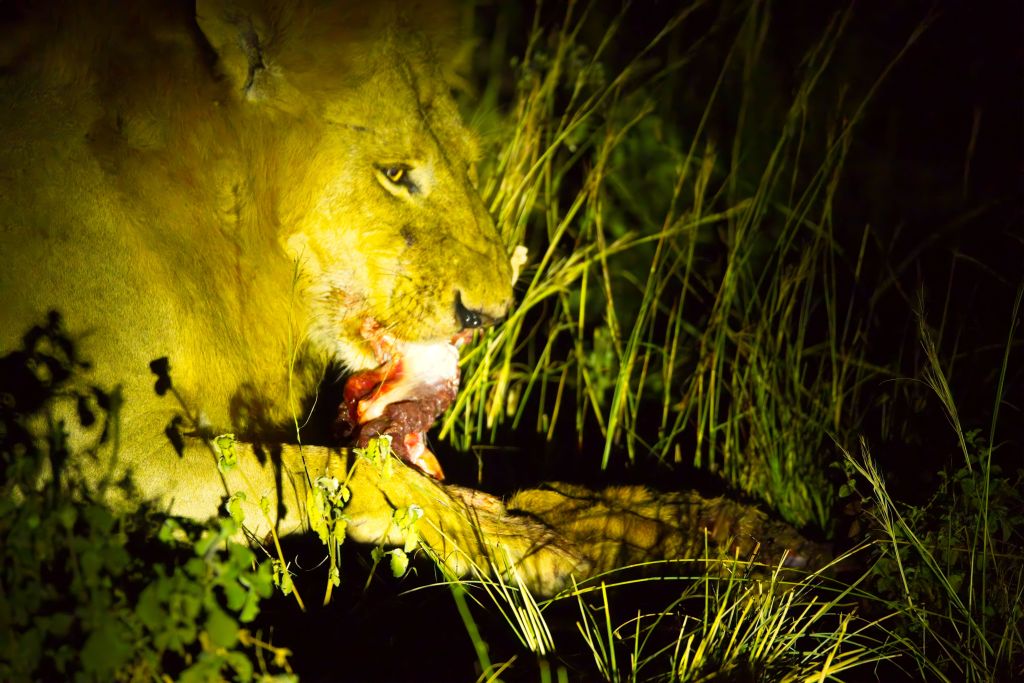
First Male Eating
Lion Moving the Carcass
Second Male Waiting His Turn
Second Male Eating
Probably the Lead Female – Note the Collar
Cub Hoping for a Bite
Male Lion Roaring and then “Air Tasting” – the beginning of the Flehmen Response
The Flehmen Response – Anybody Interested?

It was hard to leave but it was getting late – time to return to the lodge. There would be one more treat. On our return we spotted a Grayish Eagle Owl on the road. It flushed at first but returned to the road and we were able to get in the spotlight for some great photo ops. Not a lifer or even a life photo but any owl is great, and finding this one on the road in the open was a fitting close to an amazing day, one of my best ever.

Grayish Eagle Owl

July 1st

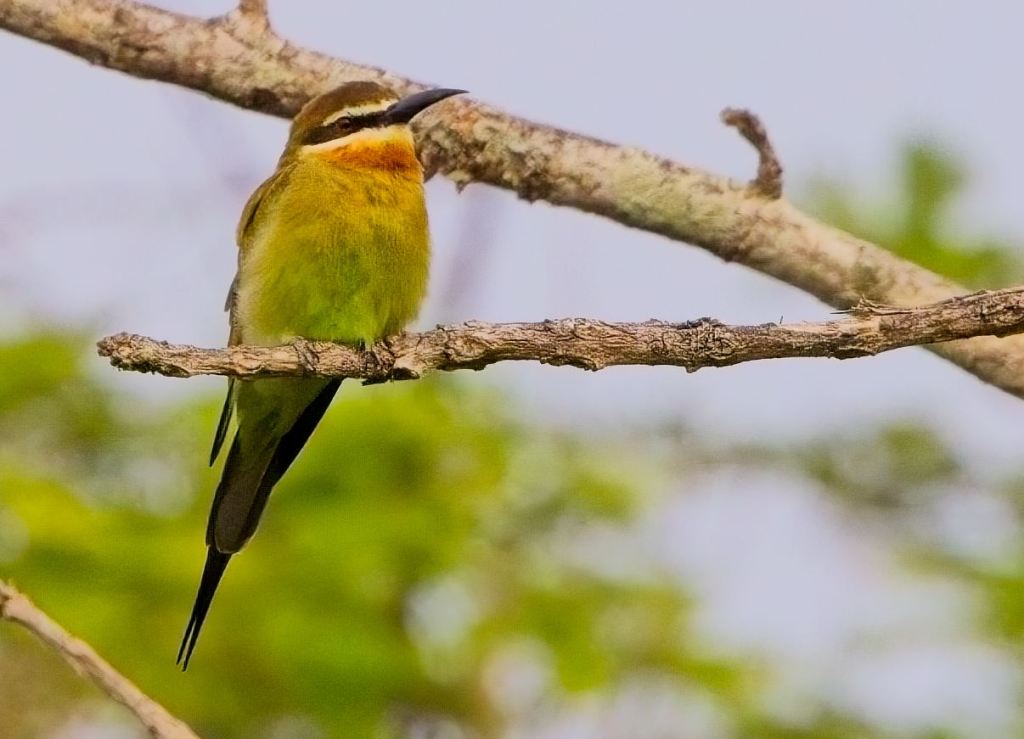
The only way we might have topped the experience of the previous day was to see a Leopard hunting or with a kill. They are in the Park but we would not see one making this my only trip to Africa where I have not seen one. We were back on the Nile River birding in the delta. There were eight new species for the tour including two new lifers for me among the 84 species seen. This was our fifth boat trip of the tour and all were great. The two lifers were Northern Carmine Bee-Eater and Black-billed Barbet. The lifer Northern Carmine Bee-eater was one I really wanted and was very happy to get, but it was the Red-throated Bee-Eaters that stole the show as we saw more than three dozen. And it was just a great day for Bee-eaters period as we also had another Swallow-tailed Bee-eater and 3 Madagascar Bee-eaters.
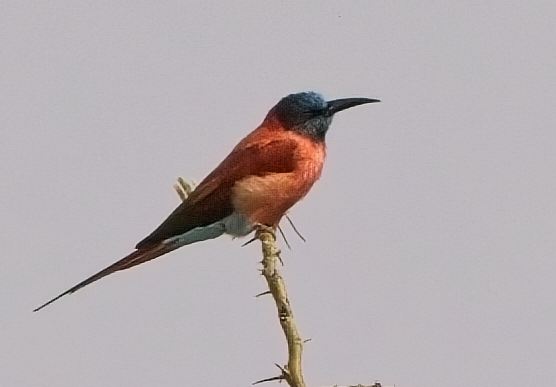
Northern Carmine Bee-eater – Lifer
Madagascar Bee-eater
One of Our 40 Red Throated Bee-eaters

It was also an excellent day for Kingfishers, as we had Gray-headed, African Pygmy, Malachite, Woodland and Giant Kingfishers – all seen and photographed before but always a treat whether in the forest on on the water. I was particularly glad to get another Giant Kingfisher photo.
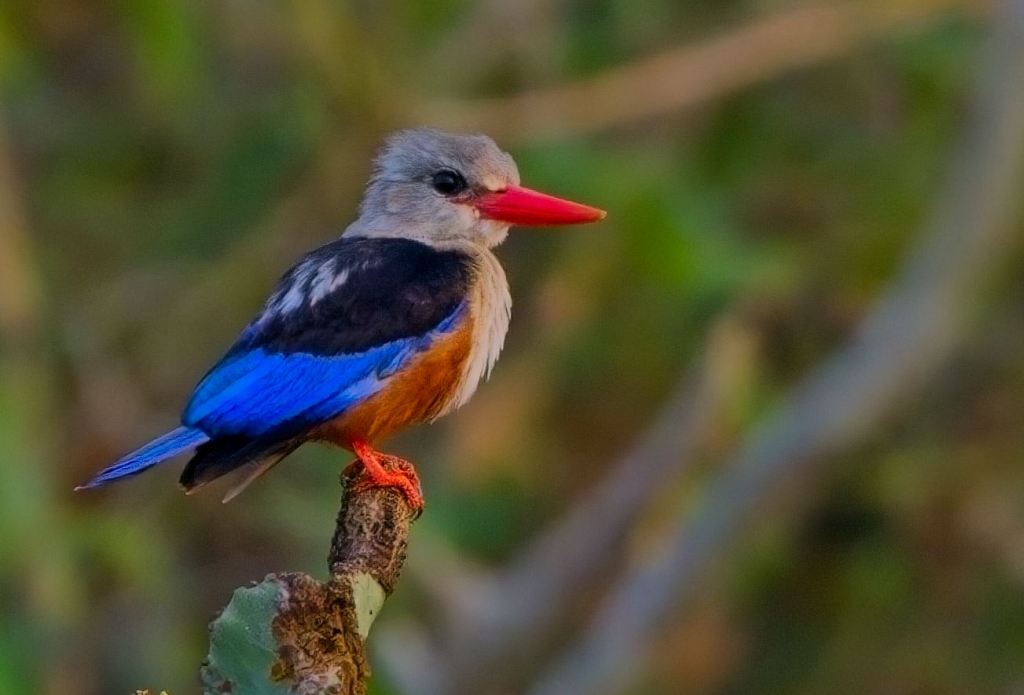
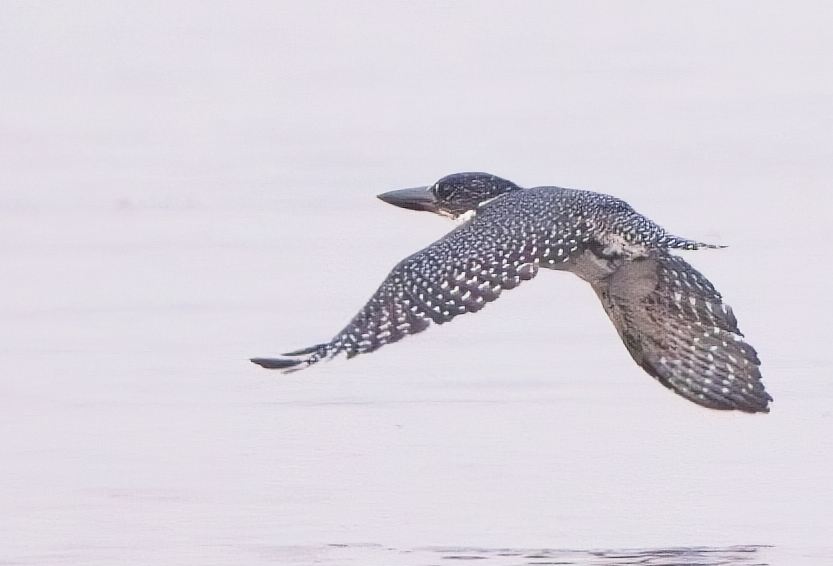
Gray-headed Kingfisher
Giant Kingfisher – Flight

It was also a good day for Barbets with the Lifer Black-billed plus Double-toothed and Spot-Flanked.

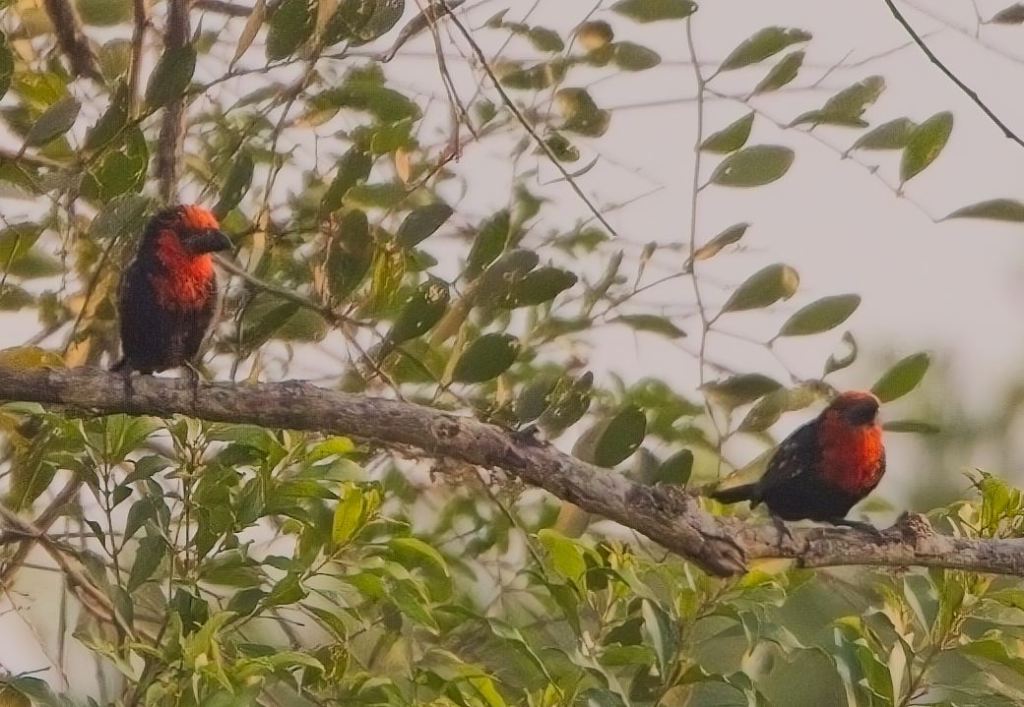
Black-billed Barbet – Lifer
Black-billed Barbets
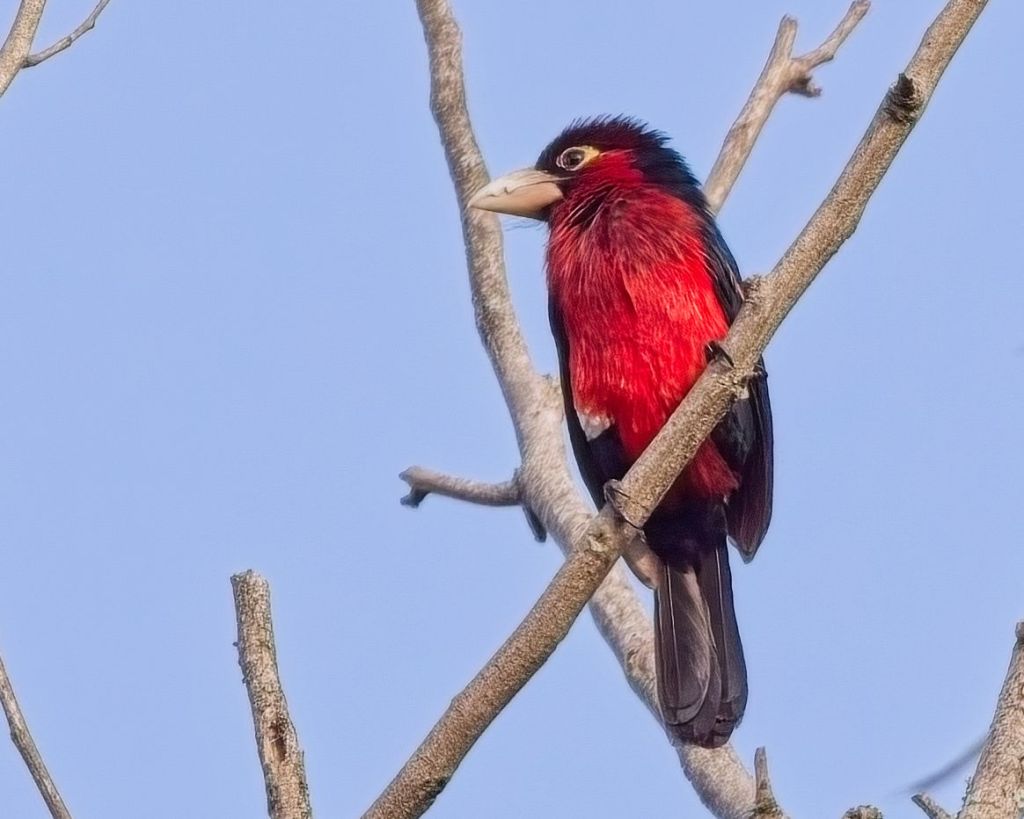
Double-toothed Barbet

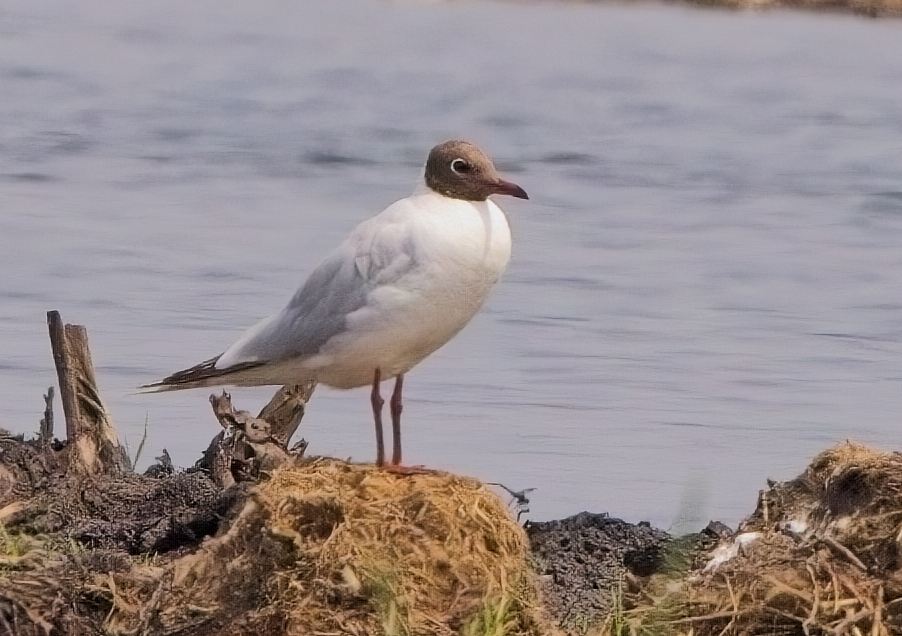
We had two gull species on the river. There were many nesting Gray-Hooded Gulls, seen earlier on the tour but these were in full breeding plumage with their gray hoods very apparent. The other gull seen was a Black-Headed Gull, very common in Europe and Asia and in parts of Africa but it was the first time Dion or Davis had seen one at this location. It is a rare vagrant in the U.S. and I have seen it both in my home state Washington and also in British Columbia.
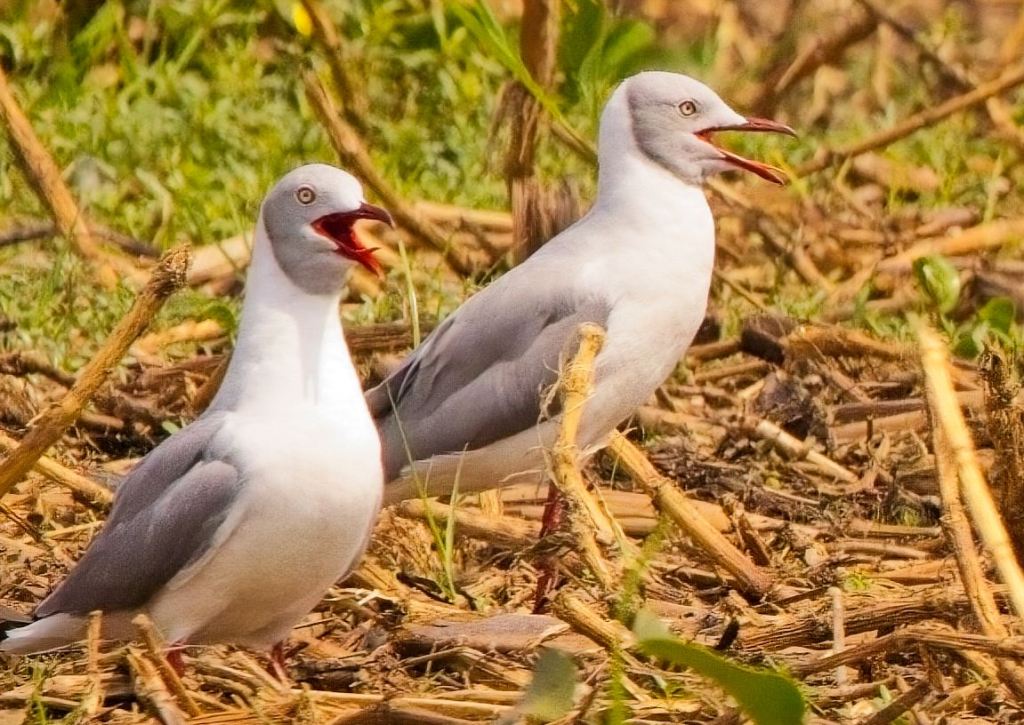
Gray-Hooded Gulls
Black-headed Gull – My First in Africa

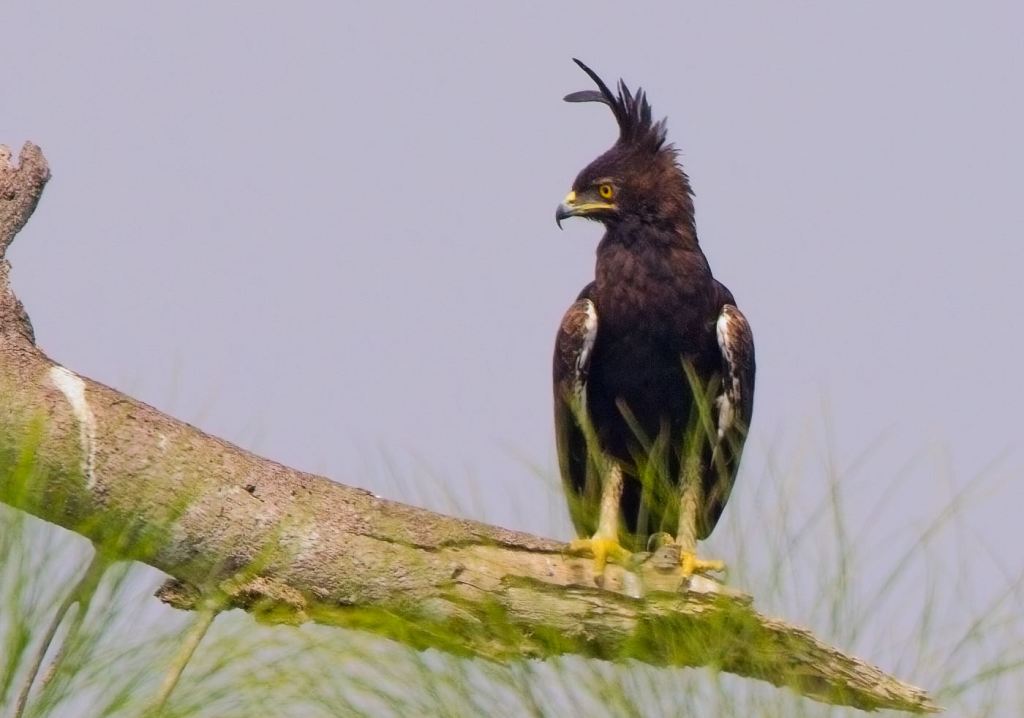
Not the greatest photo but my first for the species was of a Greater Swamp Warbler and the same as to quality and being a first photo applies to my photo of a White-crested Turaco. Much better photos were of three raptors seen and photographed earlier in the trip: Long-crested Eagle, African Harrier-hawk and a Black Kite. The Black Kite was different than ones seen earlier as it was “black-billed”.
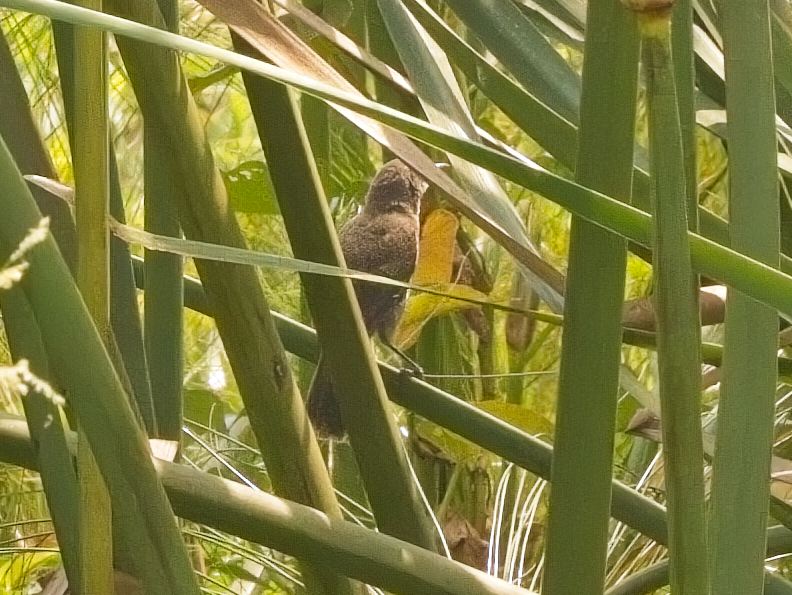
Greater Swamp Warbler – Poor Lifer Photo
White-crested Turaco – Life Photo (again poor)
Long-crested Eagle
African Harrier-hawk
Black Kite – Black-billed

Another bird of note – new for the trip and apparently very rare for the location was a Red-billed Oxpecker, seen with several Yellow-billed Oxpeckers on the backs of some of the Hippos we saw.

Red-billed Oxpecker on Hippo
Yellow-billed Oxpecker

As had been the case with most of our other boat trips, we also had great looks at some mammals and this time particularly a group of elephants that were bathing and also tussling. In one case I was able to get a sequence of one elephant completely submerging with only the tip of its trunk above water – quite a snorkel. I also photographed two elephants pushing each other around as we wondered if a full fledge fight might follow.
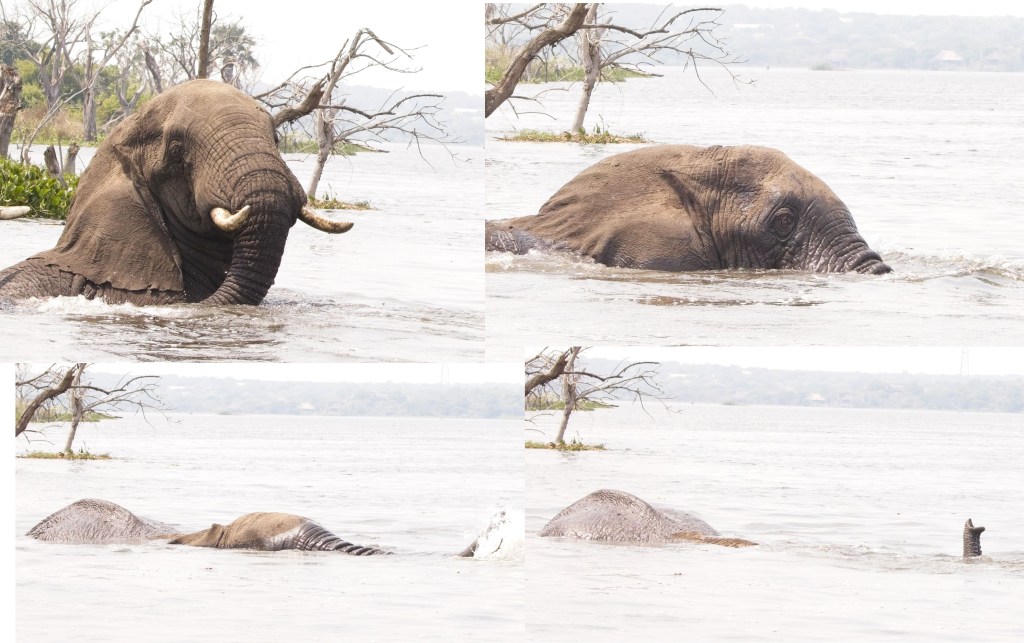
Submerging Elephant Sequence
Elephant Tussle

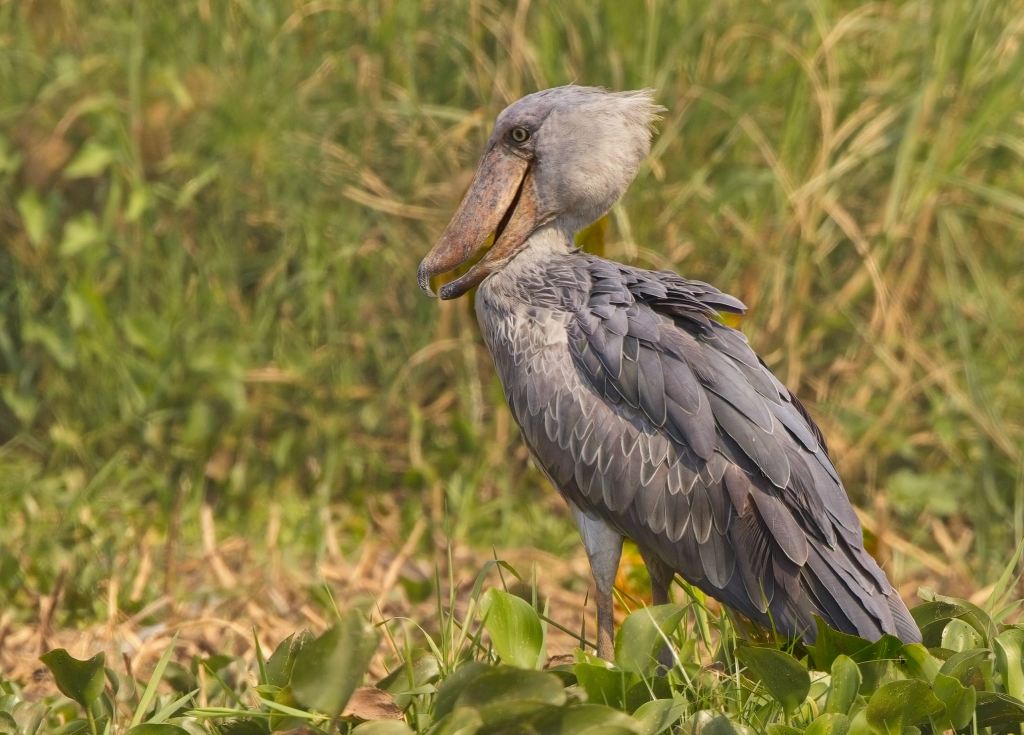
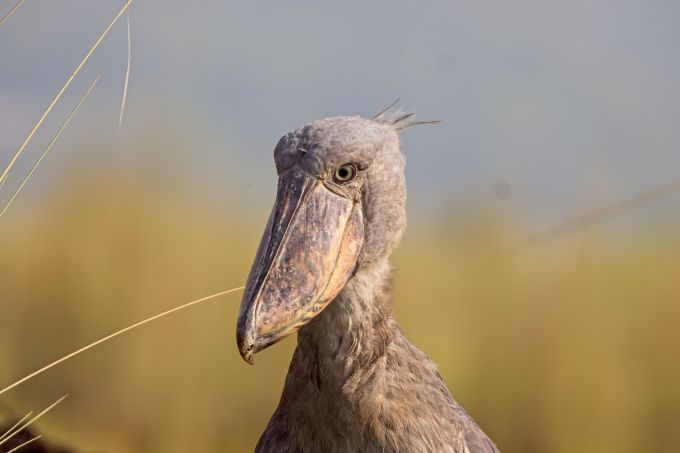
There would be one last treat on the water. It seemed ages ago that we had seen the Shoebill at the Mabamba Swamp and Wetlands. In the promotional material for the tour, this boat trip on the Nile was noted as a good possibility for Shoebill in case we had missed it earlier. And so it was as we located another Shoebill, this time having it all to ourselves. A fitting bookend to the tour to have this marvelous bird on both the second and second to last days.

Shoebill

Had it not been for the exceptional preceding day with the night drive and all the other sightings earlier in the tour, this may have ranked at or near the top with elephants, hippos, barbets, waders, bee-eaters, kingfishers, raptors and of course the Shoebill. It is testimony to the many great days on the tour, that it was “just another day” – well, without forests, chimps, gorillas, lions, owls or sunbirds.

July 2nd

This was our last tour day, starting with a visit to the top of Murchison Falls and followed by a very long drive back to Entebbe and the Boma Hotel where it had all started for us 19 days ago. There would be no new lifers this day but I added a life photo, I think. It is of what I believe is a Northern Yellow White-eye. We had Green White-eyes often earlier on the trip but Ebird says it is not found in this location – only the Northern Yellow White-eye. I cannot tell them apart so will go with the Ebird ID. I did not make it to the actual top of Murchison Falls. The rocky trail was extremely slippery from the spray and I was getting soaked even just at the bottom third. I decided to remain dry and forego the view of the Falls themselves settling for the raging river as it narrowed through the gorge to go over the Falls.

Raging Nile approaching the Falls
Northern Yellow White-eye

The 200 mile trip back to Entebbe would take more than 6 hours traveling through very congested towns, dealing with very slow trucks and the heavy traffic through and around Kampala. As with our other traveling days, we had a good chance to observe the non-safari, non-birding, non-National Park life in Uganda. I hope to write another blog post focusing only on that part of our visit, but will again omit it here.

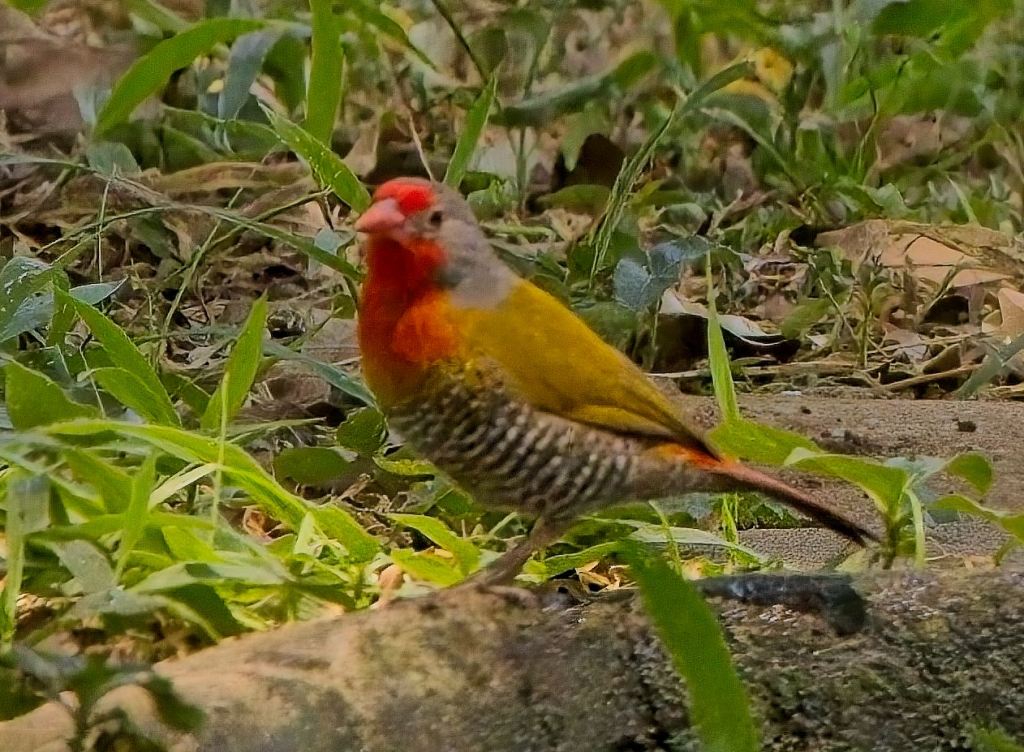
Our last Ebird list for the tour was from our lunch at the Kabalega Diner. It was pretty birdy with 16 species including a lifer photo of a Yellow-throated Greenbul as well as nice shot of a Green-winged Pytilia feeding on the ground next to us.

Yellow-throated Greenbul – Life Photo
Green-winged Pytilia

Back at the Boma Hotel, we had a last dinner – sadly strained by our interpersonal discomforts with our traveling companions. It was then off for a short rest before leaving very early in the morning for our return flight home. The short drive to the airport, our checking in and flights back home all went well even if very long. Due to the 10 hour time difference and our early departure from Entebbe, we left Uganda on July 3rd and were back in Seattle very late also on the 3rd – 18+ hours on the clock but actually closer to thirty hours of actual time. We were very tired and glad to be home.

Conclusion

Repeating what I think I recall from my first blog – which was written weeks ago – Cindy and I had been spoiled by our awesome trip to Tanzania last year where the birding was easier, there were many more mammals, our travel companions very enjoyable and the lodges were top notch. There were definitely parts of this trip that were “not great” – BUT there were also many highlights, great birds, the amazing gorillas and chimpanzees – even if maybe less incredible experiences than we may have expected/hoped for, the unforgettable night drive and especially some wonderful intersections with local Ugandans particularly our porters in Ruhija and the Ride 4 a Woman Collective in Buhoma. The forest birding was really tough and disappointing but that is what it is and is just a mismatch for what I/we most enjoy. Lots of new birds, but too many heard only or not seen well – lessons learned. All told we are very glad we went, have lots of stories to tell and have already been back in touch with Hilda, Cindy’s Ruhija porter and with Evelyn the founder of Ride for A Woman. Our first local guide, Veronica, has been wonderful in facilitating getting some funds to Hilda. Veronica was an awesome guide and driver – just an awesome person. Our second Ugandan driver and guide, Davis was also a great guide and driver (with a heavier foot – appreciated when passing those trucks) and always had a great smile and personality.

As was the case when he was the lead guide for my trip to India in 2011, Dion Hobcroft was an unbelievable resource for all things natural: birds of course, mammals, plants, reptiles bugs etc. He kept us all on schedule and on task and every detail of the trip went off as planned. Had I been a better listener I also would have learned a lot more about cricket, rugby and Australian rules football in addition to some very odd Aussie sayings.

Some numbers:

My Uganda list for the trip was 444 species.

I added 132 lifers to my World List and now sit at 3507 species – this is just about what I projected as reasonable to expect.

I got photos (some definitely pretty poor) of 306 Ugandan species. My goal is to get photos of 75% to 80% of the birds seen on a tour so being at just under 70% fell a little short. I am sure that if all of the forest species seen and all of the forest species photographed were removed from the equation, the percentage would be well over 80% – another lesson learned.

A disappointment – again connected to the forest birding was that I only added 140 photos to my life photo list. Given 132 lifers, this at first seems really good, but the reality is that only 78 of the new photos were out of those 132 lifers, a pretty poor 59%. I had expected at least 150 photos and had hoped for many more than that. My World Photo list is now 2500 species with photos – a nice round number but only 71% of the World species list. It was nice to get 62 photos of species previously seen in Africa on previous trips but not photographed. I hope someday to get to 3000 species photographed.

Someday I may get a chance to get photos of species seen in countries early on in my birding life when I was not taking photos – birding in Costa Rica, Trinidad, Jamaica, Japan, Hong Kong, Hungary, Christmas Island, Australia and on a fishing trip to Argentina. Altogether I saw 663 species on those early trips and have only 8 photos to show for it. There has been some overlap from later birding trips so a best guess might be that those trips represent maybe 500 species not seen elsewhere. Since my average of photos per species seen excluding those countries is over 80%, there are probably 400 missed photo ops that would be available with return visits. We have a trip to Japan scheduled for next year and are considering Costa Rica and Australia. Those three trips could add at least 250 photos. A trip to Ecuador in September/October that will include the never visited Galapagos and some lodges not visited before will hopefully add another 100 photos. That still leaves 150 or so photos to go. Guess I will have to keep on travelling.

And hopefully someday I can get to 4000 species on that World list. Especially since I am now probably not looking to do much forest birding, that will be a challenge. Those trips mentioned above at best would likely add no more than 150 to 200 life species. More South American trips seem in order.

I need a break from blog writing but do hope to get one out about our non-wildlife observations of Uganda. The country has many challenges ahead but has come an incredible distance in the last 30 years. We will share our impressions and photo in that yet to be written blog post.
Uganda – Starting the Tour at Entebbe and then our first Shoebill and more at the Mabamba Swamp

The promotional material for the Victor Emanuel Nature Tours trip to Uganda indicated “Uganda is safe and delightfully friendly. As a country it has undergone astonishing changes in recent decades. Infrastructure improvements to the roads, lodges and development programs for the local guides have made wildlife touring in Uganda one of the best experiences possible in the natural history world.” It continued with the note that there would be opportunities in this country where the African savannah meets the African jungle, for lions and elephants, crocodiles and hippos, leopards and giraffes, chimpanzees and mountain gorillas, many other primates and other mammals and lots of birds including the iconic Shoebill, kingfishers, hornbills, turacos, trogons, sunbirds and weavers – maybe 450 species of birds in all.

For better or worse, Cindy and I had had a wonderful trip to Tanzania with up close encounters with the Big Five, cheetahs, thousands of mammals, wonderful places to stay, beautiful scenery and super people – both traveling companions and Tanzanians and wonderful and numerous birds. The Tanzania trip set high expectations, a high bar to meet. We had not appreciated it at the time we signed on for Uganda, but there would be two major differences in the nature of the trip itself. One was that there would be a lot more time spent in the jungle/forest in Uganda with birding more challenging and sometimes frustrating as a result and another was that there would also be a lot more travel through small villages and towns in Uganda compared to travel time spent mostly in and between savannah like National Parks in Tanzania. There were pluses and minuses comparing the two environments. The tourism industry is relatively new in Uganda whereas it is well established in Tanzania, and the associated infrastructure is far more (and better) developed in Tanzania. Roads and lodges in Uganda were a level or two below Tanzania. A real problem? No. Noted? Yes.

That said, our first days and nights at the Boma Hotel Guesthouse in Entebbe were great. Very comfortable room, good food, terrific people, beautiful gardens and a great location in a safe and in some cases, upper class neighborhood with an odd combination of dirt roads and large, elegant, gated homes. We had a full day and a half to acclimatize before the formal trip began, our choice since the travel time from Seattle to Uganda was over 20 hours and there was a ten hour time difference (Uganda being ten hours ahead). It was a good decision as we got some time for a short nap and time to walk around and bird in the neighborhood in addition to some leisure time and birding at the Boma as well.

June 14

It was the morning of June 14th and the weather was a perfect 75 degrees without a cloud in sight or much humidity. Indeed weather on the trip was consistently great with there being rain on one morning or a couple of nights as we slept. The formal beginning of the trip was dinner on the 15th and it was two early for a nap, so we birded the gardens at the Boma Guesthouse which offered lots of birds and then had a leisurely walk around the neighborhood which added more. Our first finds included a Woodland Kingfisher, Hadada Ibis, two sunbirds (Red and Scarlet Chested), Gray Parrots and a White Browed Coucal.

Hadada Ibis
Scarlet Chested Sunbird

We also met two very interesting people on the walk. The first was an “older bearded gentleman” who started by speaking French to us. I responded with my very limited French and made it clear that we were American so he switched to English – who knows how many languages he spoke. We learned that he had served as a bodyguard to the former Uganda strongman Idi Amin. Not sure of his politics now but he was proud to be a Ugandan. Later on a street with many large homes – all gated – we saw a very fit and handsome man in uniform carrying an automatic rifle. His serious look turned to a smile when I told him he was the most handsome man we had seen (he was). We had a long chat in English and learned that he was hired as private security for the neighborhood and had trained with Navy Seals in Washington State and he was familiar with our hometown of Edmonds – what a surprising coincidence. We returned to the Boma and finally had that catch up snooze.

We were back out for another walk in the afternoon and I added the first lifer for the trip – a spectacular Ross’s Turaco – right on the Boma grounds. We also had Eastern Plantain-eaters and our first of many White-browed Robin-chats. All told we had 19 species for the day – a great intro to the Birds of Uganda.

Ross’s Turaco
Eastern Plantain Eaters
White Browed Robin Chat

June 15

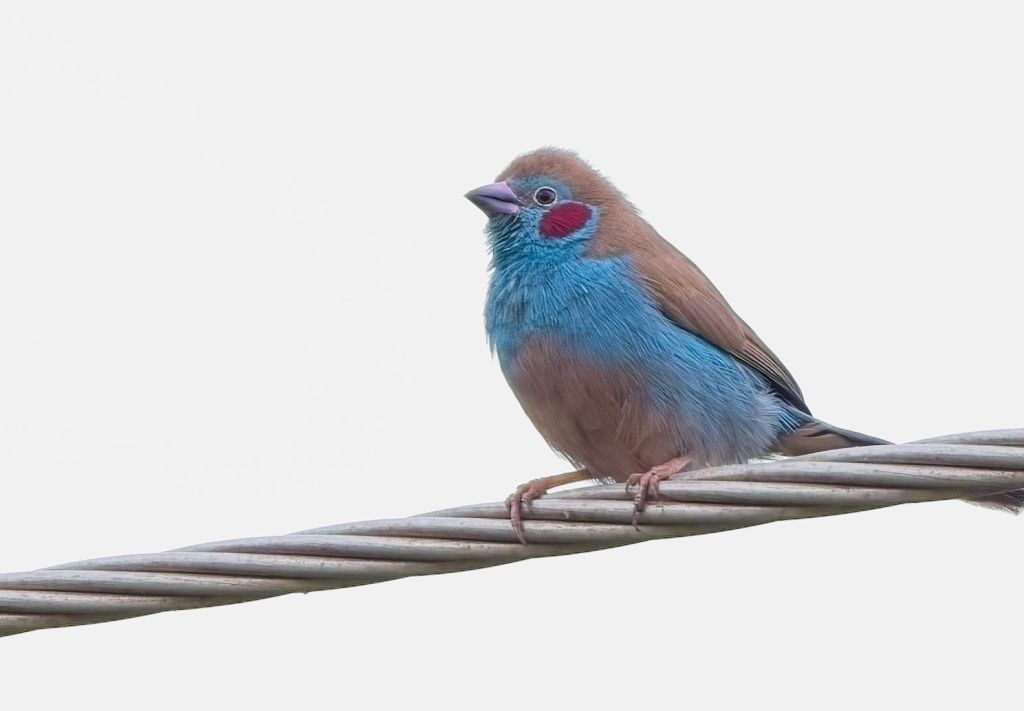
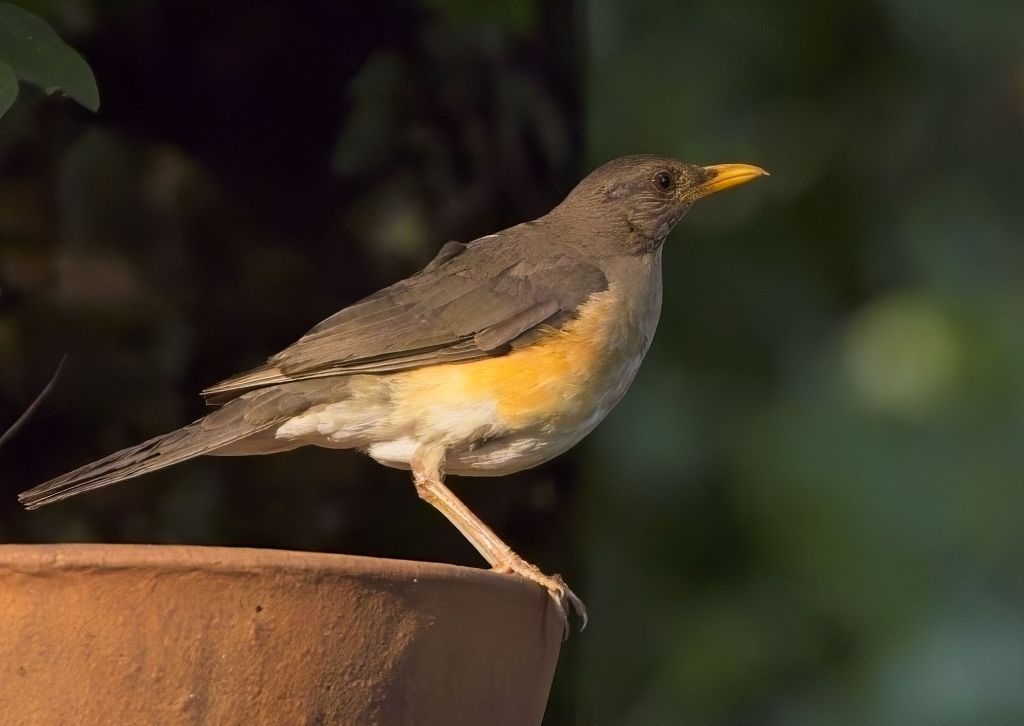
After dinner at the Boma Guesthouse, we had a surprisingly easy and good night’s sleep and were up and ready to go at a pretty normal time in the morning. We revisited the neighborhood around the Boma and had another 19 species on our hour long walk. One was a Rameron Pigeon that Ebird said was rare for the area – but I could document it with a photo. The most striking bird was a Black Headed Gonolek and the cutest was a Red-cheeked Cordonbleu. As would be the case for most birds on the trip, due to my previous birding in Kenya, Tanzania and South Africa, none of these birds were lifers, but I was also interested in adding photos to my life photo list. None of the aforementioned birds were new to that list, but I did add a photo of an African Thrush.

That afternoon, we met our tour guide, Dion Hobcroft, who had been my guide on a VENT tour in India in 2011, and the other two members of our group. We spent several hours birding on the grounds of the guesthouse seeing many species we had seen earlier and adding many more including lifers Green White-eye (no photo yet), African Hobby (quick flyover), Splendid Starling and Yellow-fronted Tinkerbird. I also had life photos of Double Toothed Barbet and Brown-throated Wattle-eye.

Splendid Starling – Lifer
Double-toothed Barbet – Life Photo
Brown-throated Wattle-eye – Life Photo

By the end of the day, my Uganda list was at 44 species. Cindy and I both felt good after the long flight and the time adjustment. We were together with the group and had had some good food. We did not know it at the time, but we should probably have made an effort to get to an ATM machine in Entebbe, a major city adjacent to the Ugandan capital of Kampala. There was a commercial area not far from the Boma which would have worked. Too late. The birding had been pretty easy and the birds were mostly in the open and some were even charismatic or even spectacular – the kind most appreciated by Cindy. As is the norm on birding trips, there would be an early start the next day and we would be off to the Mabamba Wetlands and our first boat trip on the tour with our major target being a Shoebill.

June 16

This was the official stat of our tour and there was a major addition as we were now joined by our Ugandan guide who also was the driver of our Land Cruiser for the trip. Veronica Nakafeero would be with us for the first half of the trip. She was proof of the success of the program to develop young bird guides, especially young woman bird guides in Uganda. She would deftly handle the challenging roads ahead and was an excellent spotter and identifier of birds along the way, and also good company – a great addition to the group.

Veronica Nakafeero

We were on the road around 6 a.m. and our first birds were two Great Blue Turacos – spectacular and out in the open. Shortly thereafter, we added another gorgeous bird and another lifer for me – Papyrus Gonolek, a species which was high on my “want list” and then two minutes later another lifer – a Lizard Buzzard. I had the feeling this was going to be a very good day.

Great Blue Turaco
Papyrus Gonolek – Lifer
Lizard Buzzard – Lifer

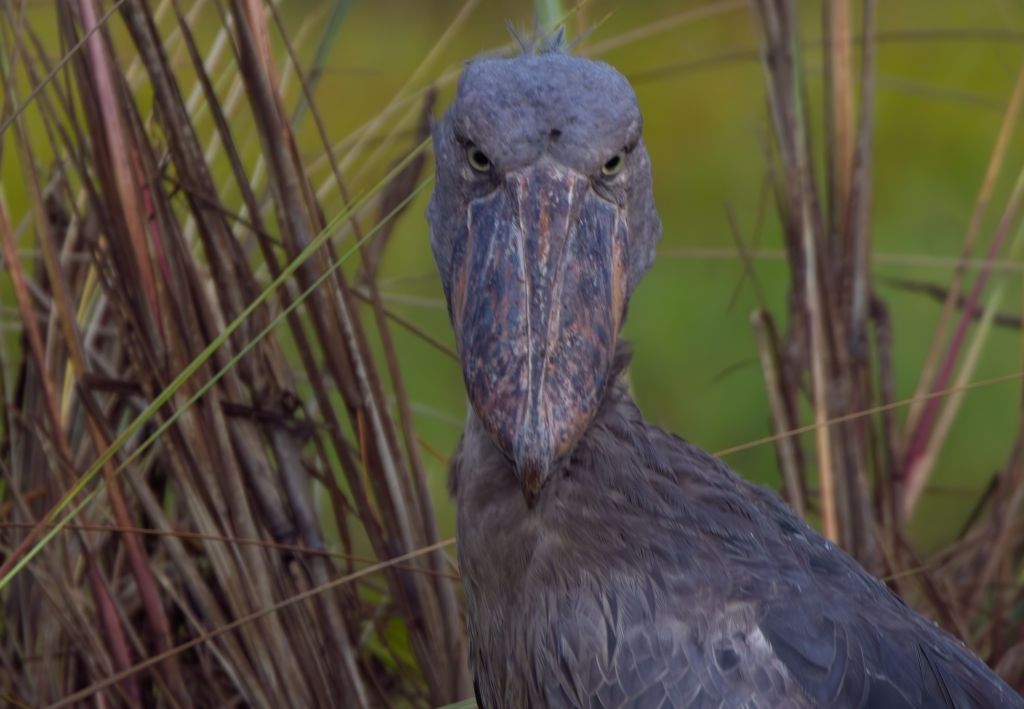
We got to the Mabamba Swamp and Wetlands around 8 a.m. and got on our small boat with our guide at the front and an oarsman at the back. It was the perfect craft to explore the wetlands and to get close to the many birds making it their home. We spent several hours there logging in 50 species and I was able to get photos of more than half of them. This is the best place in Africa, probably in the world, to find a Shoebill, a simply incredible bird. There were several treats along the way, but it did not take too long to find a Shoebill, as there were already several boats stopped along one of the many channels with passengers focused on this magnificent bird. Our guide pointed ahead and she expertly guided us to a good position for views and photos. You can see a photo of a Shoebill and easily acknowledge how unique they are, but seeing one in person is many times better, hard to believe they are real, looking like some prehistoric creature. I took more than 100 photos and could have chosen almost any to include here. Remember that they can be 5 feet tall, weigh 12 pounds (a lot for a bird with flight) and have a wingspan of 7.5 feet. They can remain motionless for long periods of time before grabbing a lungfish, its favorite prey. This lifer was definitely one of the highlights of the trip – and it was only formally day 1.

Shoebill – Is It a Bird or a Prehistoric Monster?

We watched the Shoebill for 30 minutes, and it was very hard to say goodbye, but other birds beckoned. It would take too long to chronicle them all. I have chosen some of the better photos but am leaving out some really nice birds.

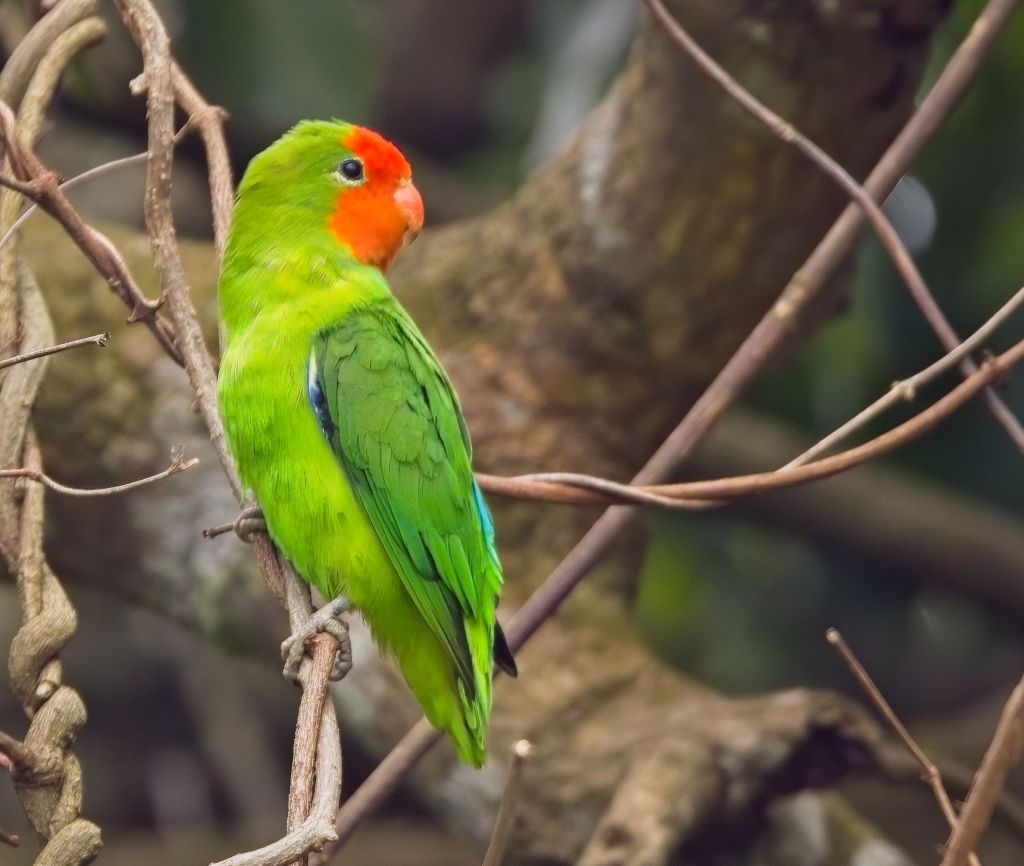
There are 9 species of Lovebirds in the world. I have seen 4 species including the Rosy-faced Lovebird as an introduced species in both Arizona and Hawaii. All 9 are native to Africa or Madagascar. Last year in Tanzania, I added Fischer’s and Yellow-collared Lovebirds to my life list in and this day I added the Red-headed Lovebird. They are small to medium sized parrots with large heads and are definitely “cute”. The only other parrots seen in Uganda were Meyer’s and Gray Parrots both of which I had seen previously.

Red-headed Lovebird – Lifer

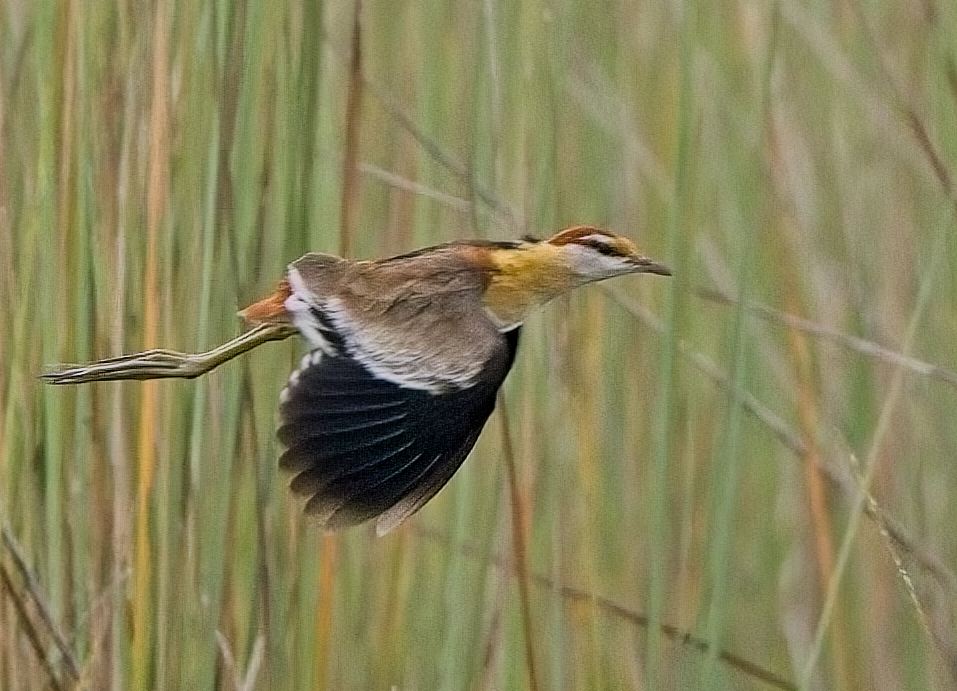
There were two other lifers seen at Mabamba Swamp – Blue-headed Coucal and Lesser Jacana. Missing a photo of the former was just stupid on my part. By the time I realized the coucal that I was watching was Blue-headed and not White-browed, it flew off. Opportunity lost. The Lesser Jacana was a success. It is a difficult bird to find and particularly difficult to photograph as it is very jumpy and does not let you get close. It flies off quickly and disappears in the grass. We found two – neither close and I was lucky to get at least ID quality flight shots – highly enlarged.
Lesser Jacana – Lifer

One last picture and story from the Mabamba Swamp. In Tanzania at Gibb’s Farm I had my lifer African Blue Flycatcher, a very lovely all blue bird. Don’t ask why, but it was just after lunch and I did not have my camera. We never saw another one, so I was sure to get a photo when I saw one at Mabamba Swamp. Unfortunately it took off just as I got onto it, not the greatest but a lifer photo nonetheless.

African Blue Flycatcher

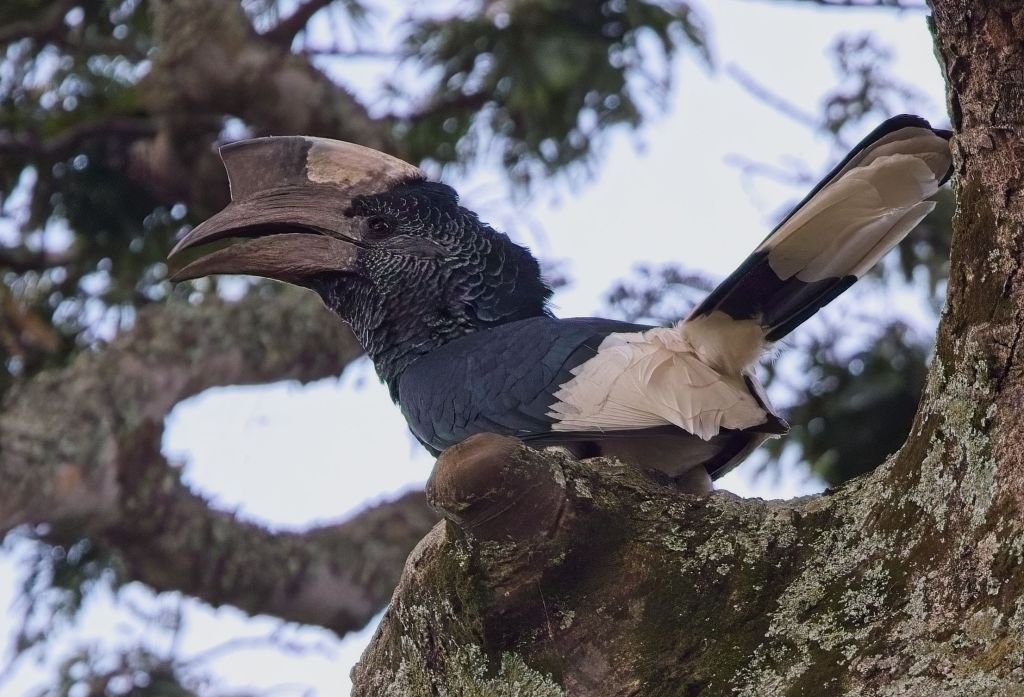
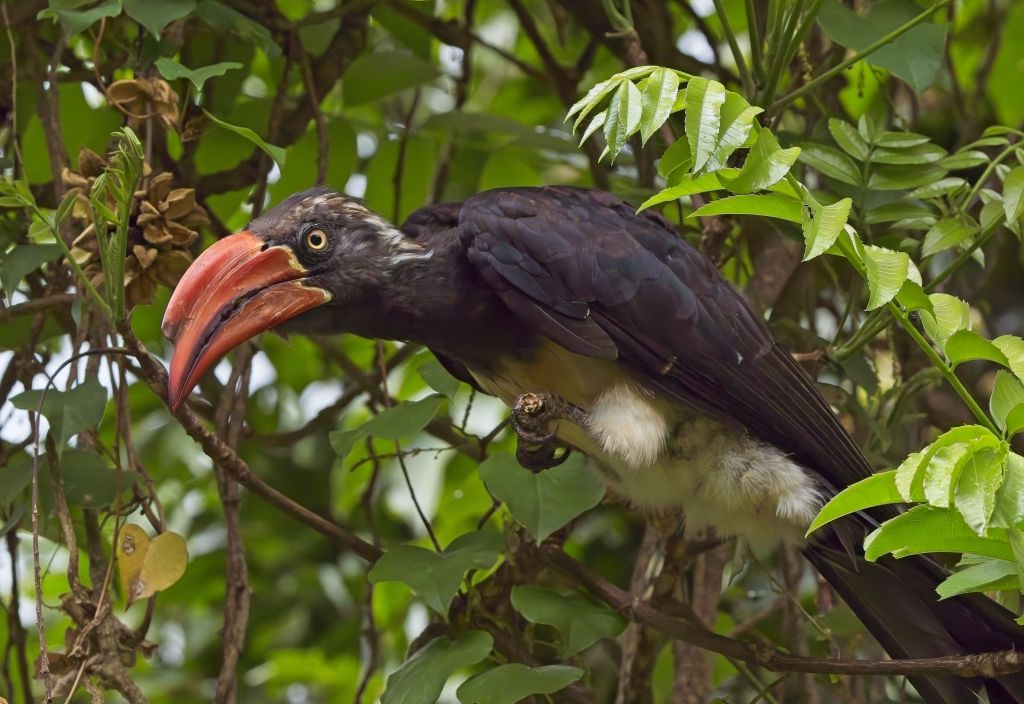
After our great boat ride we would return to the Boma Guesthouse with some stops along the way including at Nkima Forest Lodge where we had lunch and picked up a Crowned Hornbill and White Spotted Flufftail. Neither were lifers and I had photos of both but added the Hornbill to my Uganda photo list. Later we added Long-crested Eagle and White Hooded Vulture on the road and then at the end of the day, we birded the Entebbe Botanical Garden – often a great birding spot and we did have 37 species, but Dion said it was slower than usual. Our best species was a Bat Hawk. I thought I had a photo but cannot find one – a big disappointment. Other lifers for me were an Orange Weaver and an Olive-bellied Sunbird. The former was very distant and I had only a brief scope view. We also had our first Black-and-white-casqued Hornbill.
Olive Bellied Sunbird – Lifer

At the end of the day, my Uganda list stood at 96 species and I had added 16 species to my World Life list and about the same to my world photo list. The Shoebill was the highlight and the boat trip was a complete success – equally enjoyed by Cindy who continued to revel at the Shoebill sighting as well as the Kingfishers. We had grilled tilapia for dinner – tasting better than we remembered it from elsewhere. We were ready for more.

Africa: Where Next? Uganda

When we returned from our trip to Tanzania last year (see my earlier blog posts), Cindy said she wanted to do another Africa trip. I had been to Kenya and South Africa and loved those visits and although I would have enjoyed a reprise, I was more keen on a new country. Accordingly our thoughts turned to Botswana, Namibia etc. and to Uganda. Both options seemed to provide opportunities to see some African bird species that would be new to me in addition to the mammals that had beguiled Cindy in Tanzania. The great appeal of the first option was visiting the Okavango which received universal rave reviews. The special appeal of the second was the unique chance to see Mountain Gorillas and Chimpanzees and also to see a Shoebill, one of the most extraordinary birds anywhere. Based primarily on matters of cost and timing, our focus turned to Uganda, west of Kenya and north of Tanzania and smaller than both.

I am going to start with a retrospective post tour and will return to some challenges, complications and details following the choice later, and then per my usual approach in these blogs will detail the actual tour with stories and photos. The bottom line in retrospect was that there were some fantastic moments on the Uganda tour and we did return sound and safe with new birds, new mammals and yes the Shoebill, those gorillas and chimpanzees; BUT if we had known beforehand how the trip would go, we probably would not have gone on this trip. The positives outweighed the negatives but it was closer than it should have been and far closer than on any other trip we or I have taken.

ShoebillUp to 5 feet tall with a 7.5 foot wingspan

Back to the beginning. Our original plan was to go on a private tour with Greg Homel who had been such a super guide on my visit to Puerto Vallarta and San Blas Mexico in late 2023. Greg had led Uganda tours many times and had what at least had been a great working relationship with a top rate local company and guide in Uganda. Cindy and I talked about the possible trip with two friends (unnamed for now) who we had not traveled with before but were eager to go somewhere with them. Somewhat surprisingly, they were interested and we found a workable time with Greg and started putting together details for a trip for 4 of us. I am not going to belabor the story, but due to some management changes at Greg’s Ugandan partner, their responses and proposals were a combination of slow and far too expensive – even with our expectations that a private small group tour would be more pricey than with a larger group. Greg was as frustrated as we were and as we watched this approach fall apart we looked for alternatives.

To our astonishment we found that there were openings on a Uganda tour offered by Victor Emanuel Nature Tours (VENT) that was scheduled for close to the same time that we were considering and with essentially the same itinerary. VENT was our tour company in Tanzania and we knew the quality would be excellent. Even though there were only two people signed up for the trip, VENT said it would be a go with two more commitments. The price was less than Greg had been able to provide based on the pricing from his Uganda partners. We shared this information with our friends and Greg who shared it with his Uganda partners, who in turn said they just could not meet the price. Our friends were unhappy with the process from Greg’s group – which dragged out over some weeks, and this carried over to a general unease on this trip – which would have been a big first step for them in any event.

Our Itinerary

To end the story, Cindy and I committed to the VENT tour – at which point Greg’s partners came back and said they would match the price. We had had enough and despite a strong desire to go with Greg, we sent funds to VENT and that was that. Our friends decided to wait for another travel opportunity, in part influenced by some changes that had happened to their schedule. Not the best foundation for starting a trip, but the itinerary looked good and there was appeal in having a small group with a reliable company. Stay tuned…

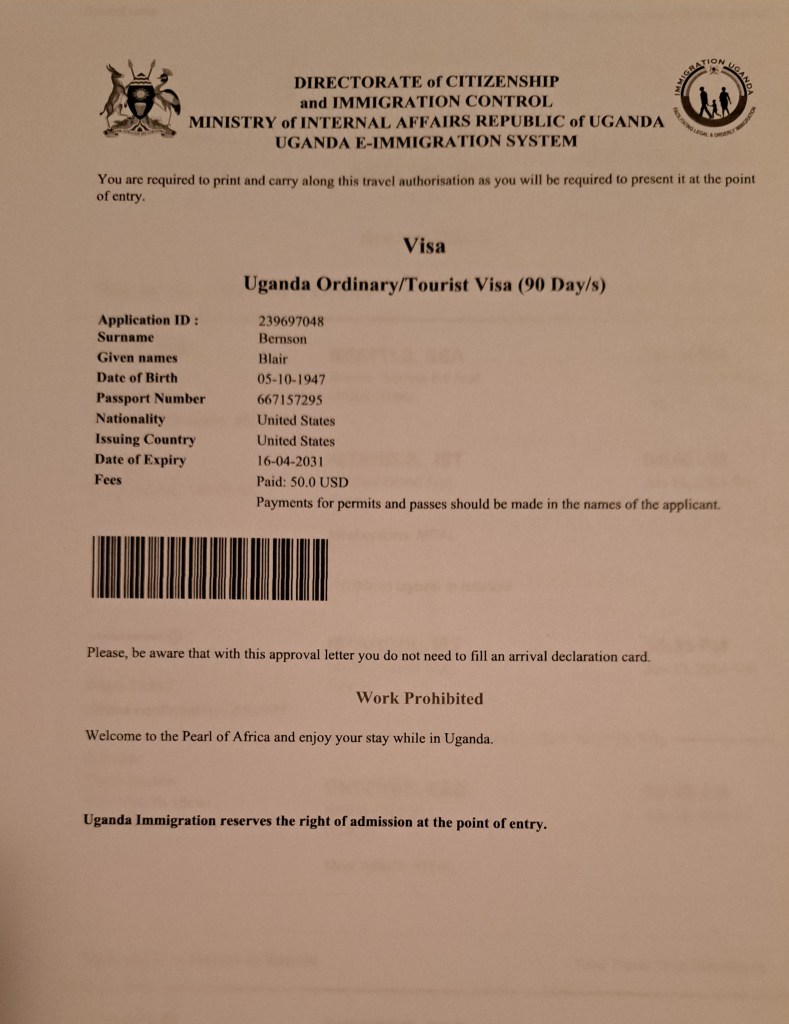
More complications ahead. Not unexpectedly a visa was needed to visit Uganda. Visas have always been easy to get for other trips if needed – easy application, pay the price and done. The online process was extremely frustrating and one requirement was particularly challenging. For some reason a Yellow Fever vaccination was required to enter the country. Given that the exposure to Yellow Fever would be while in the country and thus the traveler’s problem, this requirement seemed to protect the traveler and not Uganda. Why? It turned out that Yellow Fever vaccinations are not easy to come by and are very expensive in addition. We found that Costco had the vaccinations available – after a process of consultation online with a Travel Health Advisor. Ok, we did that only to find that they recommended against yellow fever vaccinations for anyone over 65 as the risk of complications from the vaccine was greater than the risk of the disease itself. So Costco would not provide the vaccination, instead offering an official waiver form. Now another complication. The visa application was very problematic with among other things the need to attach very small sized copies of various photos and documents. Cindy went through the process first with many starts and stops as the online process rejected documents or just gave up. She indicated no vaccination, just a waiver. Finally she got it done and received a confirmation that the application was accepted and being processed. A few days later, she got notice that it was approved.

Now it was my turn and I had similar problems attaching documents and a faltering online process. Finally all the attachments were accepted and it came time to pay. I entered the correct information for the credit card (the same one accepted for Cindy’s application). The system crashed without acknowledging receipt or non-receipt. Worse, now there was an official application, which I could not reopen to modify and/or try again to pay. What next? I tried repeatedly to reopen the process and got the same message that there already was an application filed for that passport, and another could not be filed. After several stressful days including unanswered calls to the number provided for the Ugandan embassy, I found an email address for the director of immigration and explained the problem. I finally got a response with a way to make payment and I did. Another two days later the notice came that it was approved. Would that end the matter? Well maybe. It was not at all clear that when we showed up in Uganda, that our yellow fever vaccination waiver would actually be accepted. And later it came up as we checked in for our flight. We were allowed to board, but there was some skepticism as to whether we would be allowed to enter.

So after the stress of getting the tour commitment, there was the added and really quite great stress with the visas. Not holding you in suspense, when we arrived at the airport in Entebbe, Uganda – at around 4:00 a.m., our documents were approved almost perfunctorily and no attention was paid at all to the waiver. The notice of acceptance from the Directorate of Citizenship and Immigration was all that was needed and our passports were stamped and we were good to go. But there would be more stress ahead – some self inflicted. The tour materials provided by VENT indicated that credit cards were commonly accepted and that there would be opportunities to use ATM’s in the country. Even so, as we had done for our Tanzania trip, we should have gotten some foreign exchange to take with us. We did not, and we made matters worse since we arrived at the airport so early, we did not get Ugandan shillings there either. Our lack of this currency would rear an ugly head throughout the trip. Nothing was uglier than when we finally got to an ATM midway through the tour as they were most definitely NOT commonly available, the ATM not only did not provide funds, but confiscated the card. AAARGH!!! AND many/most places did not accept credit cards and if any American currency was accepted, it had to be crisp and recently printed.

After all the preliminary stress, the trip to Uganda was actually quite good. We gave ourselves a gift by flying business class starting with a long 11 hour non-stop flight from Seattle to Istanbul on Turkish Airlines. The lay-flat seats were great, the ride was comfortable and the service excellent even if offerings of water were rare. The Istanbul Airport is pretty new and very impressive. Finding and getting to our connecting flight to Entebbe (with a short stop in Kigali Rwanda) was easy and quick with a relatively quick layover. If anything, we would have enjoyed a longer layover as we hear that the Turkish Airlines lounge in Istanbul is superb. Our flight to Kigali left on schedule. The seats were not as luxurious as on the first flight, but very comfortable and the entertainment system was good. Six plus hours hardly seemed that long. Then a short stop in Rwanda and then on to Entebbe. There is always that moment of dread as you leave the airport counting on someone with your name on a sign who will get you to your hotel – especially when you arrive so early. He was there and not more than 20 minutes later we were at the Boma Hotel – our tour semi-officially on its way – the formal tour to actually start at dinner the next day.

Business Class on Turkish Airlines

Although at the end we are glad that our friends did not come on this tour due to some of the challenges, it sure would have been nice to have had them with us. From the start when we met the two other members of the group, there were concerns. No reason to go into details as we will never see them again. I will just leave it that we were not fans and there were issues that arose far too frequently. I cannot think of many if any people that Cindy, the always good hearted and good natured person that she is, cannot get along with. But it happened here – not horribly obnoxious as some people I have seen are – but enough chafing to actually make much of the trip unpleasant. Unlike other trips where for example meals with the group are fun with shared stories etc., these were silent – eat and be gone. That’s enough on that – no war stories. Just sad. Blogs to follow will talk about places and animals – birds and mammals and some people – the Ugandans that we met along the way. Mostly positive to great with a couple of not so great. Especially, wonderful Ugandan people who were in many ways the best part of the trip. We thoroughly enjoyed our first accommodation at the Boma Hotel in Entebbe. Our trip would end there as well. Let’s go.