June 22
After a good night’s sleep followed by a good breakfast (custom omelets really help) at Mahogany Springs, our favorite lodge on the trip, our morning would be a long birding session along the Buhoma Tract still in the Bwindi Impenetrable Forest, a very bird rich area. We would be rewarded with lots of new species but once again much frustration for me as this was deep forest/jungle birding with many birds high up in the big trees, buried in dense foliage – or both. Honestly, I had barely ID quality looks at many of the birds and photos were very hard to come by. Of the 56 species on our list for the 4 hours of birding, I was only able to get photos of 9 and some of those were not very good. At least 6 species were heard only (but distinctly) and another dozen were seen poorly at best. Again, very frustrating.
But there were birds. Twenty-three were new for our trip and 14 were lifers for me including 2 new sunbirds, a new woodpecker and a new bee-eater. Another lifer, found by Veronica and in the open briefly, was the Red-headed Malimbe, a kind of weaver. It is was the first time I have seen a bird with that very African sounding name although there are three other Malimbes in East Africa.
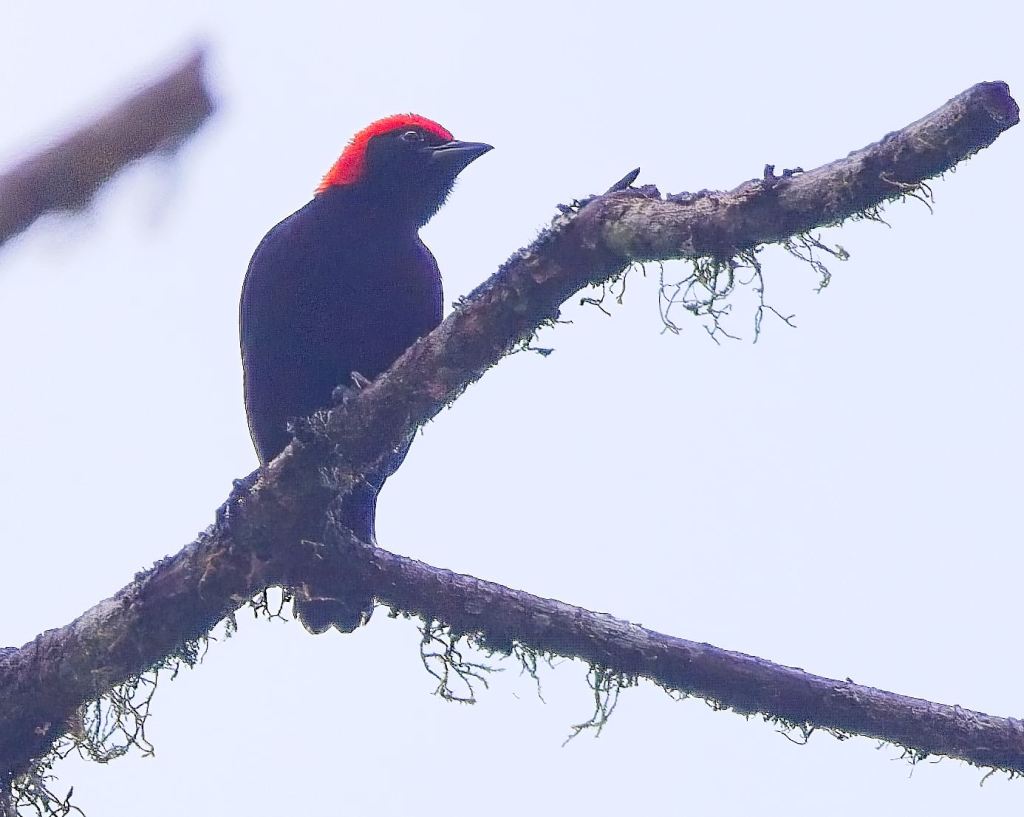
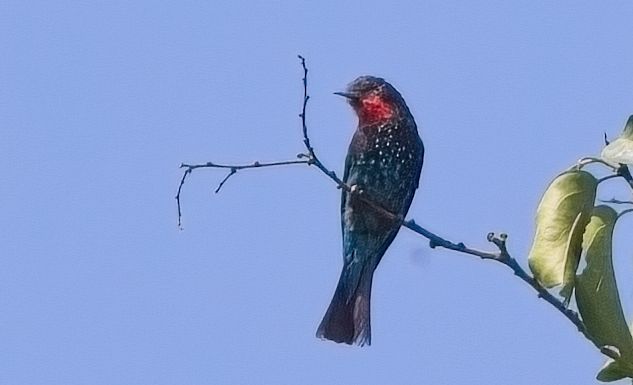
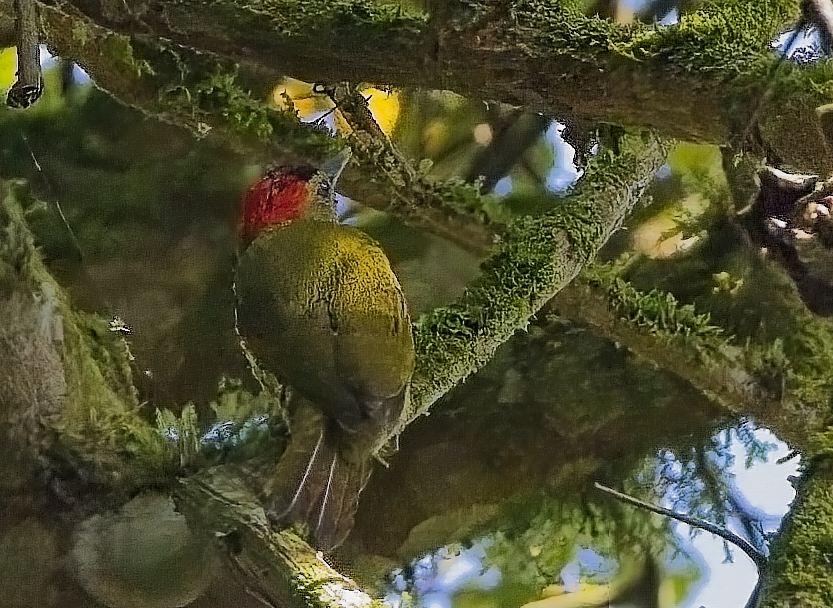


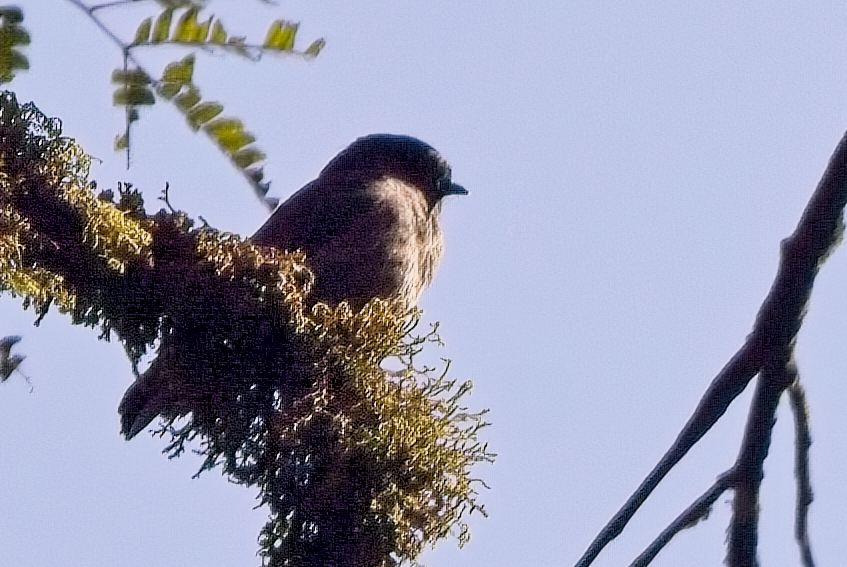


Those were the best of the photos. There were many others that had unidentifiable parts of birds buried in the foliage – probably greenbuls (we had 7 species) but not really enough to even go with an ID suggestion. We had already gone over 2 miles and the question was what would be next. Dion really wanted to carry-on farther in search of a new Uganda bird for him (and of course for all of us as well) but that would involve at least another mile out and back and maybe more.
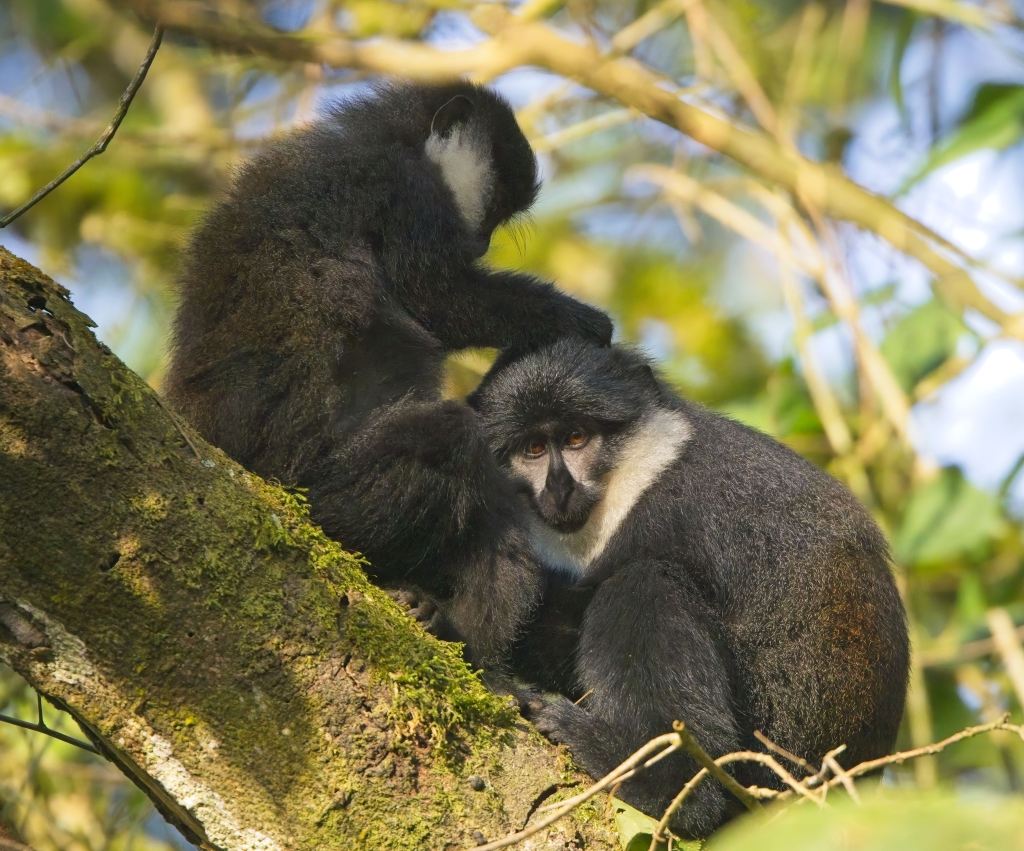
I probably could/should have included these photos above or even in the previous post as along with the many birds, we also had lots of monkeys – often just a movement high in the trees but sometimes at least relatively in the open for photo ops. The most common monkeys were Red Tailed Monkeys with incredibly long tails (yes red) and L’Hoest’s Monkeys which were somewhat more common and more in the open.

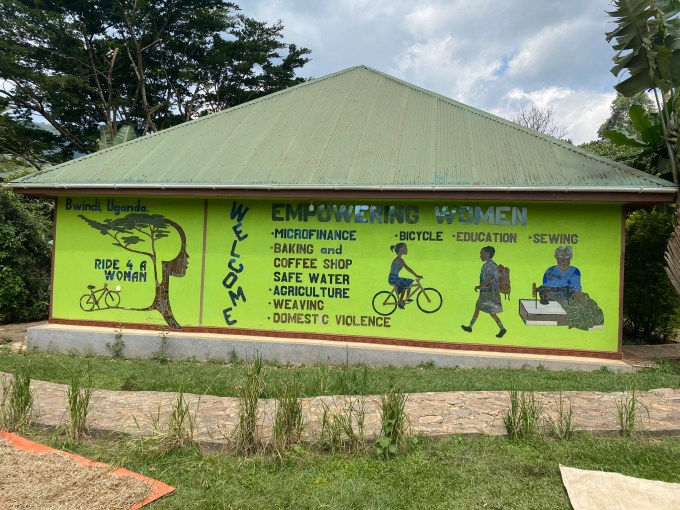
We had been given the option to continue on with Dion or to walk back to the vehicle with Veronica who would return us to Mahogany Springs. One of the party chose to continue with Dion and the rest of us went back. Veronica dropped the other tour member back at the lodge but Cindy and I very much wanted to visit a women’s cooperative that Cindy had learned about at dinner the previous night. It was called “ride 4 a Woman” and was not far from the Lodge. Veronica drove us there. It turned out to be one of the highlights of our trip.
Ride 4 a Woman
Cindy and I spent several hours at this inspirational place. Its website http://www.ride4awoman.org introduces the organization perfectly: “Ride 4 a Woman was set up in 2009 by Evelyn Habasa and her husband Denis Rubalema. The organization exists to support local women struggling at home with issues associated with HIV, domestic violence and poverty….More than 300 women from 11 villages now use or work at the Ride 4 a Woman community center, where they can learn to pedal sew, weave baskets, dance, sing and drum; learning new skills, making a living and making it possible for their children to gain an education…The organization also offers microfinance, helping women to help themselves and support their families. To date over 100 women are actively engaged in the Ride 4 a Woman Microfinance Program…This retreat in the local community offers local women a place to stay, something to eat and a wage while they learn new skills. Every day we welcome visitors to Stay With Us, Learn From Us, Shop or simply drop by to see what is going on.“
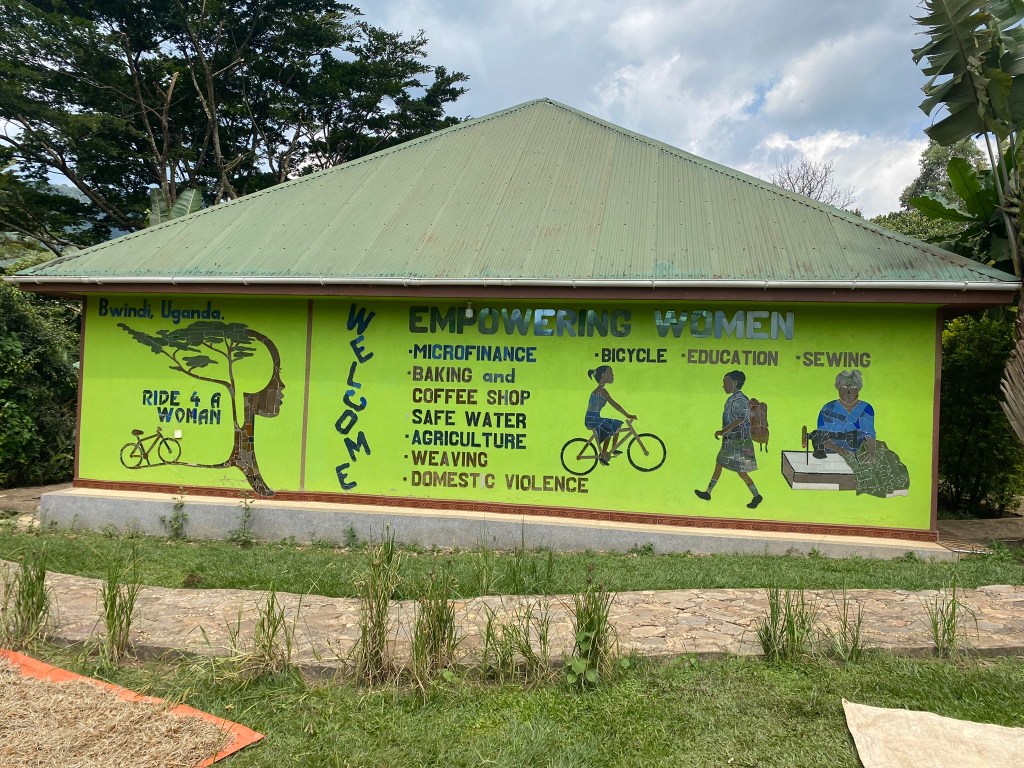
When Veronica dropped us off, we met by a young woman, Shallon, who became our guide as we toured the impressive retreat/community center interacting with many of the 30 or more women who were all busy weaving, sewing, serving food or attending to other matters for the organization. Shallon gave us the background and history of the place and told us a lot about Ugandan culture which is slowly changing especially related to the place of women in society and in the villages. Ride 4 a Woman started with She also introduced us to the founders Evelyn Habasa and Denis Rubalema and took us through the different buildings including some lovely rooms which provide a respite for women who have experienced domestic violence. Every woman we met was busy, completely engaged in their work and certainly outwardly and in interactions with us, smiling and happy.


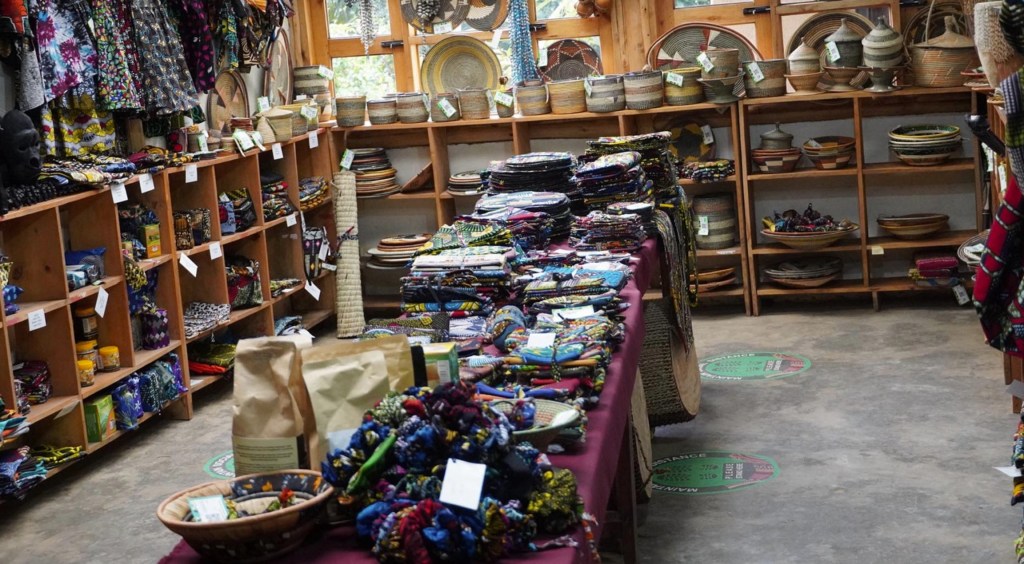
Evelyn and Denis started out renting bicycles to tourists who visited the area primarily for gorilla trekking. With those funds and hard work and some donations, they have expanded the operations to reach many women in the nearby small villages. There is a small gift shop where items made by the women can be purchased – at very reasonable (actually very low) prices. We had seen some particularly appealing fabric as we had toured and asked if it was possible to have a tablecloth made with it. Several women immediately went to work calculating how much fabric would be needed, laying out the design and then beginning to cut and sew it. We found some complementary cloth for a set of napkins and added that and a couple of weavings to our purchase. It was getting late and we had to return to our lodge. We were told that the finished goods would be delivered to us there. Right after dinner we found them in a beautiful colorful bag waiting for us in the lobby.

Most of the people in these villages live at not much above subsistence level with no electricity or running water in their simple homes. Getting clean water generally involves long walks returning with heavy jugs. Goats are an incredibly important and valuable addition to any family. Ride 4 A Woman has made it an aim to be able to provide a goat for all of the families they serve. It is also undertaking a program to provide solar panels to bring electric power to the communities. All of this of course costs money and opportunities to bring in significant revenue at such a remote area are limited. When Covid seriously cut into the tourism in the area, Ride 4 A Woman was seriously hurt. Private donations helped them weather the storm. Cindy and I have committed to try to aid this worthy organization both with some of our own personal funds and also through some fund raising activities tarting to develop that we are starting to develop. Stay tuned. Interpret this comment as you wish: it was disappointing to us that the tour and all of the other tour members showed no interest in this remarkable place. There was no interest in visiting it or frankly in hearing about it. OK, it’s a birding tour, but Cindy and I felt much enriched from our visit.

June 23
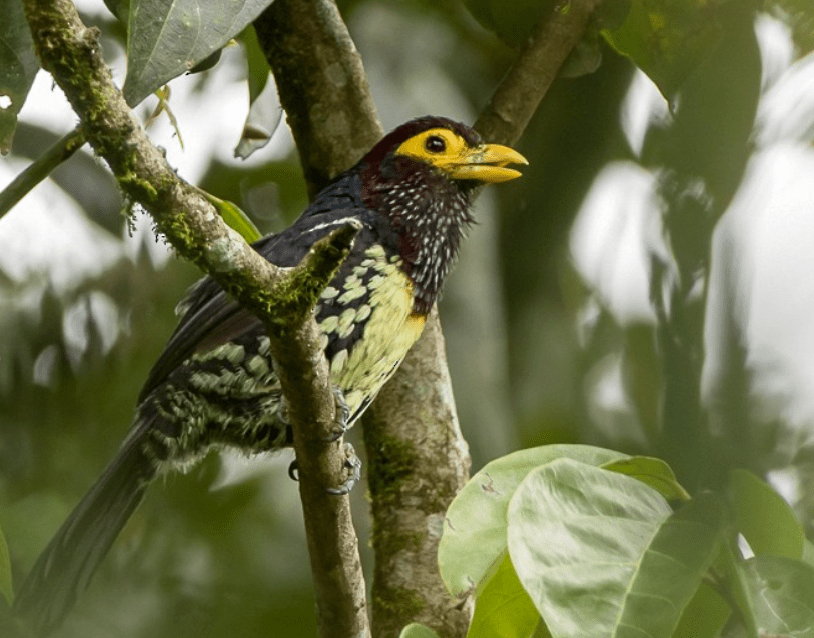
After breakfast we packed up to sadly leave Mahogany Springs but with excitement as we were heading to Queen Elizabeth II NP with the promise of big mammals, another boat trip and of course more birds. To start we again birded the Bwindi Impenetrable Forest Entrance Road with 21 species – six new for the tour, 2 lifers for me and a couple of new life photos. Again the birding and especially the photography was tough with birds high in dense foliage. A particularly sad miss for a photo was a Yellow-billed Barbet. I had seen one in Kenya 17 years ago and we would have them later on this trip, but I love barbets and this is a very striking one. I have a photo that is possibly of this bird but it is truly awful and does not do even a bit of justice to the real deal and I am not counting it.
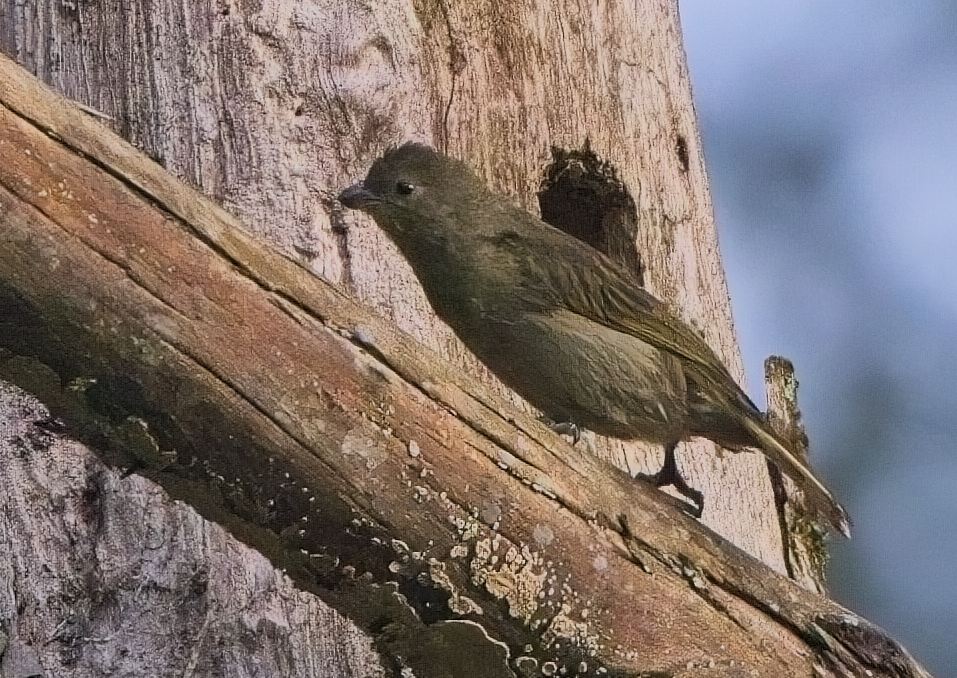

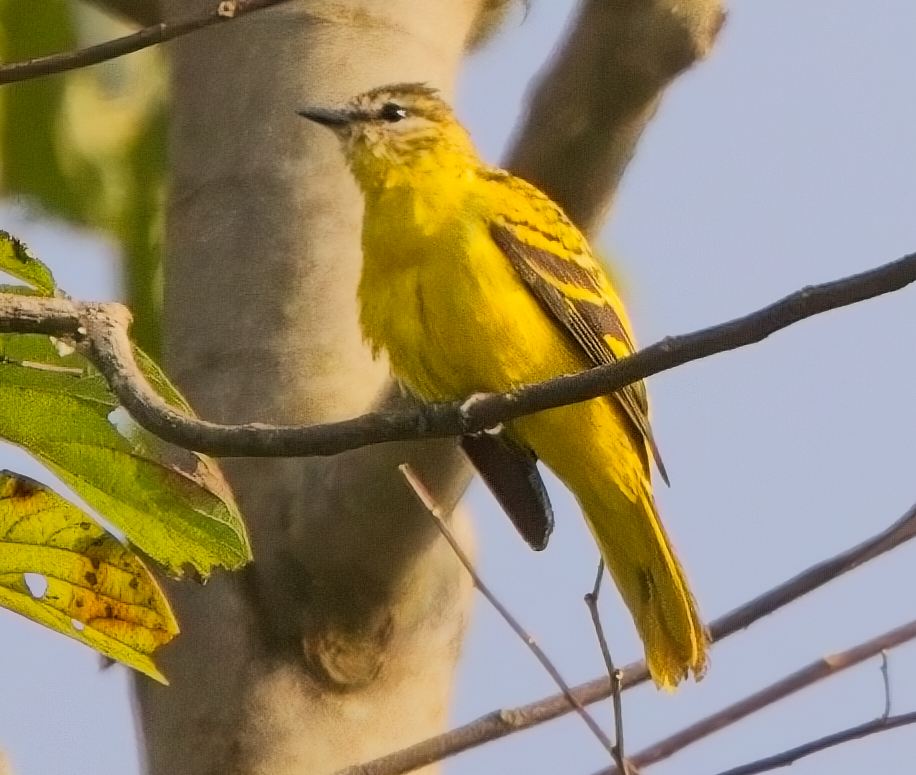

We had a few incidental species as we continued on towards the Park. At one spot we had a field full of Red-billed Quelea, one of the most numerous birds in Africa. I had seen them before but somehow never got a photo. Today would be the day.


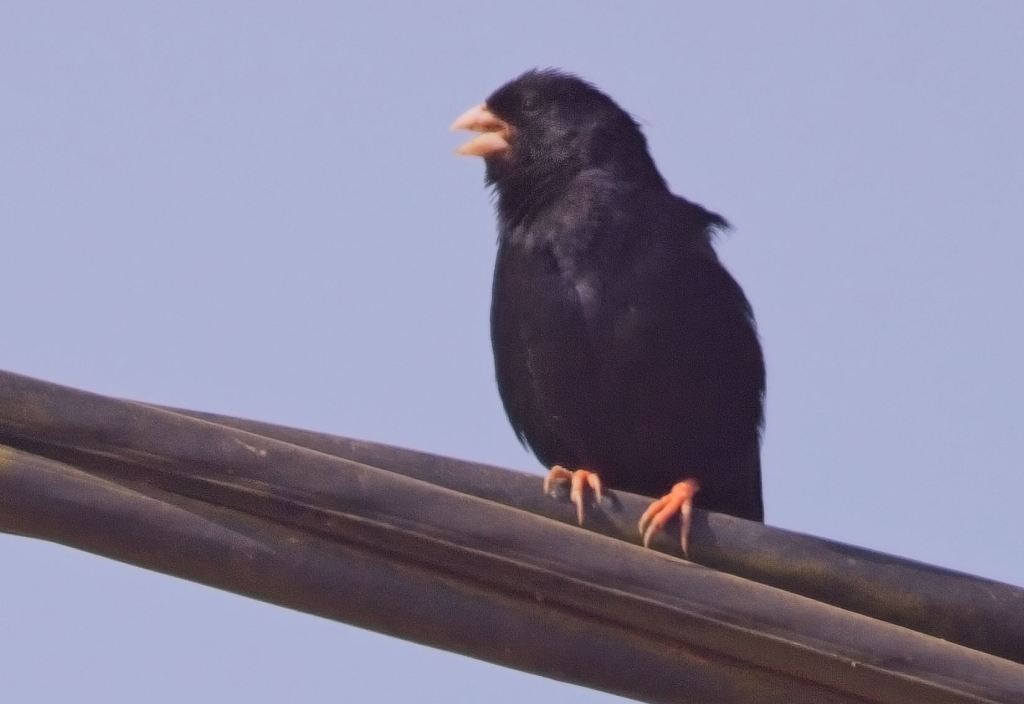
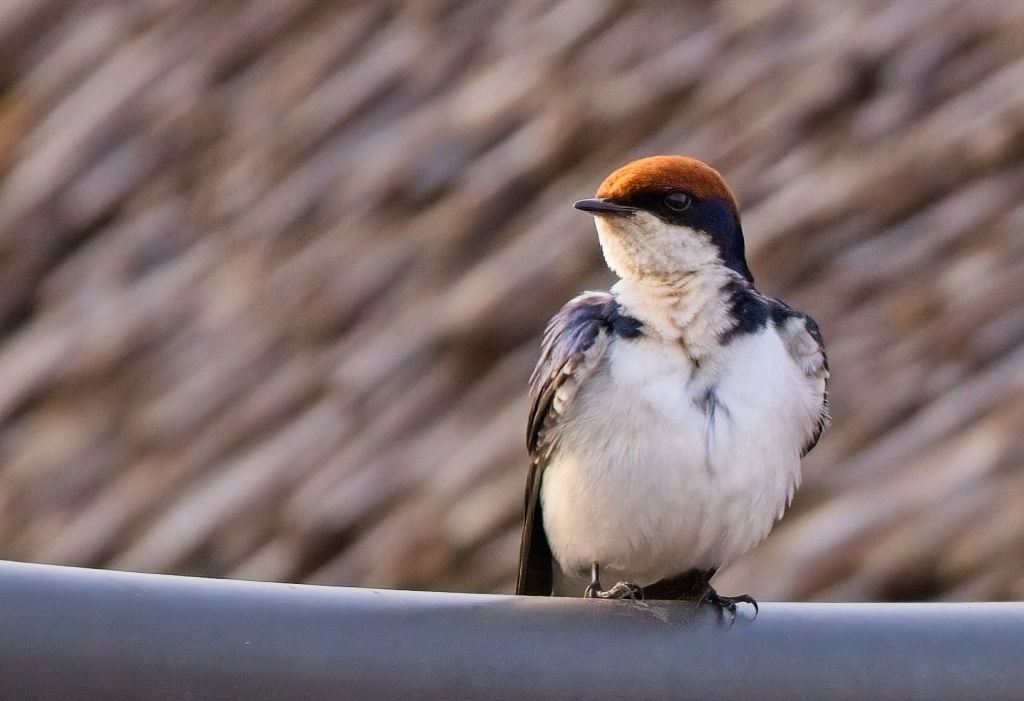
A little further along, we had our first Village Indigobird. The previous day I got a fairly poor photo of a perched Wire-tailed Swallow showing the wire tail. Now I added one of another perched Wire-tailed Swallow better showing its face etc.

We had another box lunch (always way too much food) and then spent the next 5 hours mammal and bird watching in Queen Elizabeth II National Park. It was founded in 1952 by combining the Lake George and Lake Edwards Games preserves, first named at Rwenzori National Park and then changed to its current name. The 764 square mile park, like many parks in Africa, has a somewhat tainted history due to the forced relocation/removal of many tribal people. With a large mammal and bird population, it is a very popular safari location. There are no Zebra, Giraffes or Impala as we had seen previously, but it was here that we had our first lions and elephants. We would also add 31 species to our growing Uganda bird list. Our boat trip on the Kazinga Channel connecting the two lakes was once again a trip highlight. Our time at the park will be covered in the next blog post.
Please visit the Ride 4 A Woman website. ride4awoman.org
 blairbirding