Even without the Smew, yesterday had been a great day, but of course it was the Smew that made it one of my very best birding days ever. Our bodies were still adjusting to the jet lag and time differences, but we were doing fine – ready for more – with the plan being to fly to Hokkaido for several days birding there looking for some very special species
Day 2 – Birding in Hokkaido – Maybe
As Koji planned it, we would have flown from Haneda Airport to Kushiro Airport on Hokkaido on a 7:50 AM flight arriving in Kushiro at 9:30 AM. We would then rent a car and drive to spots to see Red Crowned Cranes, and a Ural Owl, look for eagles on the coast and also look for some seabirds including the Stejneger’s Scoter which would be a lifer. We would stay that night and the next at the Yuyado Daiichi Onsen where we would have a good chance of seeing the Blakiston’s Fish Owl. Unfortunately that plan did not take into account that there would be record snowfall (up to 36 inches) that night canceling all flights to Kushiro and closing all roads to travel in the area. Among the many reasons that I bird with local guides rather than striking out on my own is that they are really good at coming up with a Plan B when necessary. It was necessary and Koji came up with a Plan B that would effectively mean that we would lose a day but would also get us to Hokkaido to be in a position to touch all intended bases when (if?) conditions improved. So we took a later flight into the Memanbetsu Airport and rented a car which would take us to alternative lodging as we learned that the road was still closed to the Yuyado Daiichi Inn. It still meant hours driving on snowy roads, but hopefully the next morning the roads would open and we could get to Rausu for one of the big treats of the trip, a boat trip to see the magnificent Steller’s Sea Eagles.
Day 3 – Birding in Hokkaido – For Real
On short notice Koji had been able to find lodging. It was the least appealing of the places we stayed on the trip but was safe, convenient and comfortable. And fortunately the roads became passable the next morning for our 90+ minute drive (with not too many white-knuckle patches) to the port of Rausu and in beautiful weather we were able to take the boat trip. The departure time for the boat was pushed back an hour to allow more people to get there over the snowy roads. This gave us time to do a little pre-boat birding including seeing our first (and lifer) White Tailed and Steller’s Sea Eagles which were flying overhead and perching on trees on the nearby hillside. Not knowing what would follow, I took pictures, distant and low quality but good enough to ID the species if no others were seen. I needn’t have worried. There was a small stream flowing into the bay and species there included Tufted Ducks, Red Breasted Mergansers and Whooper Swans. I had seen the latter on two occasions in home state Washington where one appeared as a mega-rarity bringing in birders from all across the ABA area in the winters of 2022, 2023 and 2024. This was the first time seeing them on their home turf. Also seen were both Carrion and Large Billed Crows and several gull species although predominantly Slaty Backed Gulls, another rarity I had seen in Washington. One lifer gull was a Common Gull, recently split from Mew Gull. The split left us in Washington with Short Billed Gull and now I had both parts of the split.


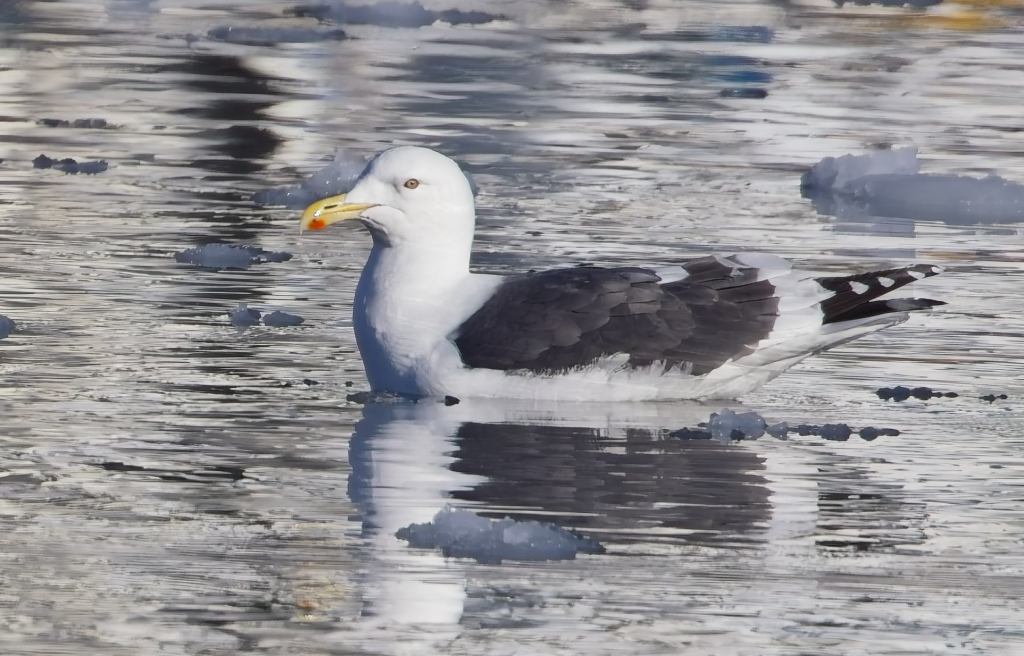
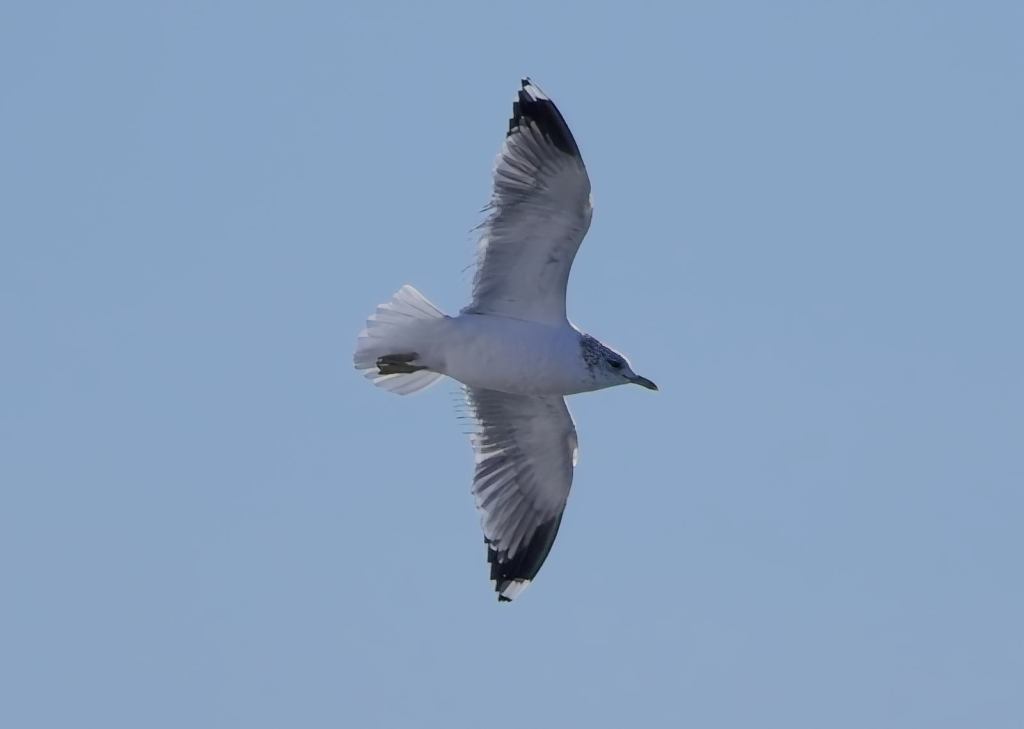


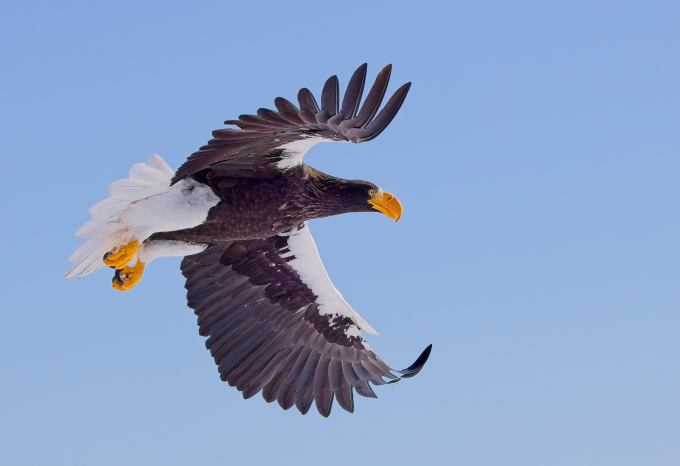
So much for the preliminaries. It was now time for the real show as we boarded the boat in the Rausu Harbor for our Eagle Watching Cruise. No other noticeable birders but many Japanese tourists. We were told that the cruise would be shortened by 30 minutes. I didn’t know if that was due to the late start, the not quite full boat or sea conditions, but not being familiar with the operation, early on I was concerned as our views of the eagles were pretty distant or of an occasional flyby. Many eagles had stationed themselves on a snow covered breakwater and in the outgoing part of the trip the boat did not get close and I was disappointed. Patience please. On the return journey the boat returned on the inside of the breakwater and it was “SHOWTIME” – time for chumming. Crew on the boat throw whole fish to the eagles, in the water and on the breakwater and it is a fish feast for them and a photo feast for tourists on the boat – aided today by perfect light and blue skies. It was now obvious. There are many eagles in the area, but the numbers, hundreds, we saw seemed disproportionate to the area, but a symbiotic relationship has developed. The eagles have learned that the boats will be providing easy food and they arrive early en masse to take advantage. In turn the tourists benefit from the number and proximity of eagles. Win/win. Many Slaty Backed Gulls and Large Billed Crows come for the party as well.
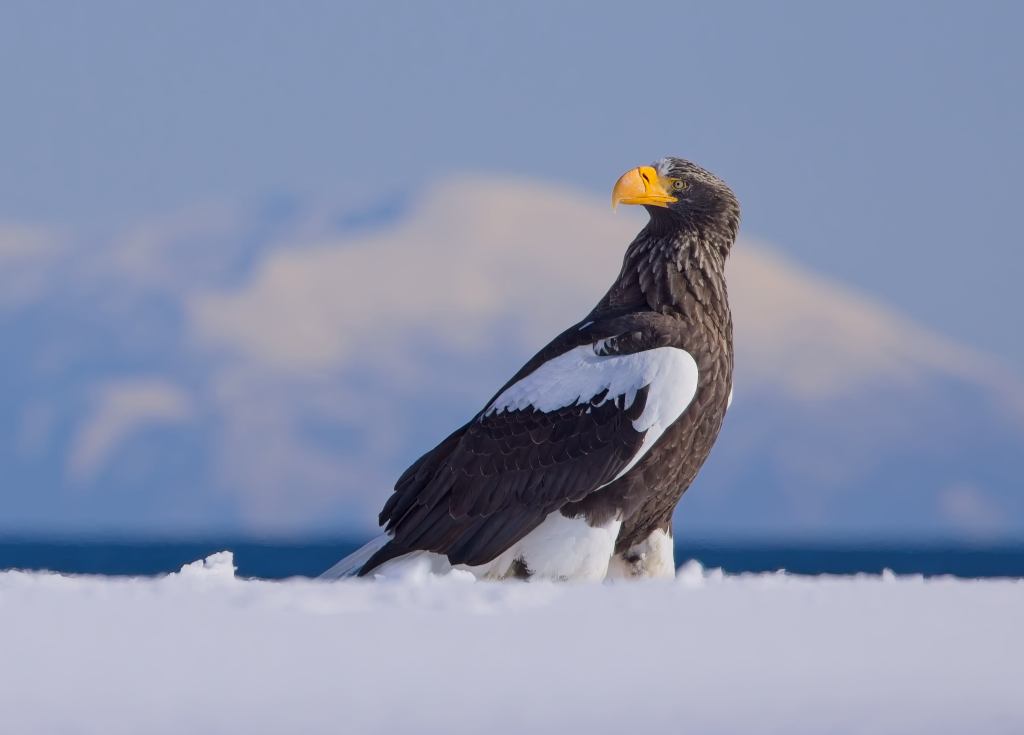
There are two eagle species that come to Rausu: the White Tailed Eagle with a light brown body and white tail and about the same size as our American Bald Eagle; and the much larger and showier Steller’s Sea Eagle which along with the Harpy Eagle of South America and the Philippine Eagle is the largest eagle in the world. It can weigh up to 20 pounds with a wingspan of up to 8 feet and a height of almost 3 feet. It’s talons are described as ” like those of a grizzly bear”. With beautiful black and white plumage and a huge orange beak to go with those huge orange talons, it is a very impressive animal. Its range is essentially Japan, Korea and Russia with some records in Alaska and over the past few years in the northeastern U.S. and Canada as a single individual was seen by many. It was an awesome show, one of my favorite birding experiences.
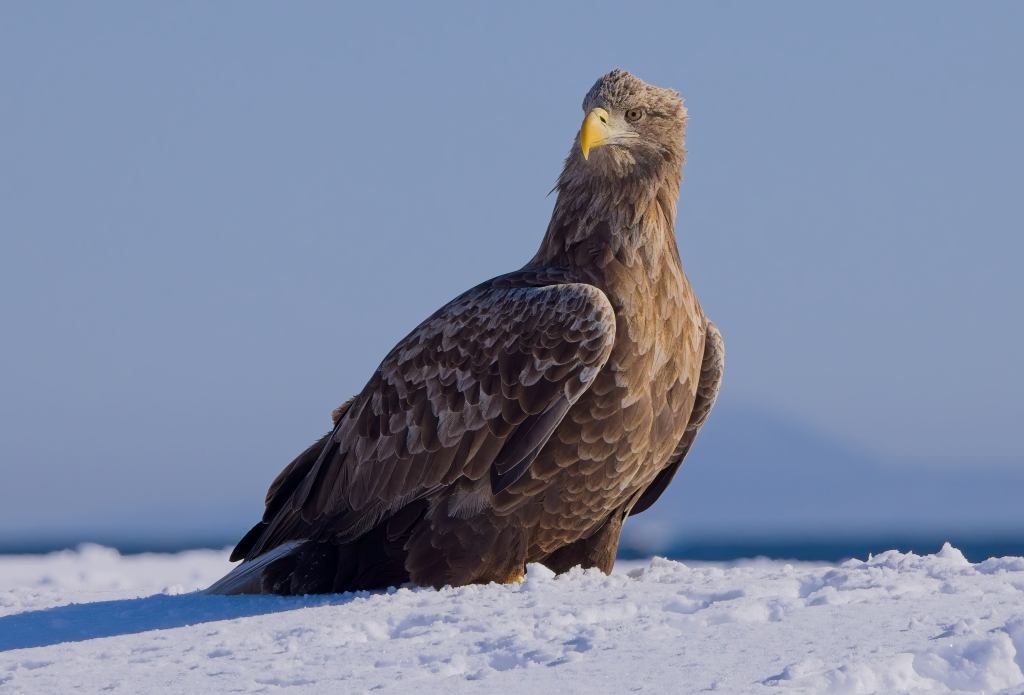


More Eagle Photos
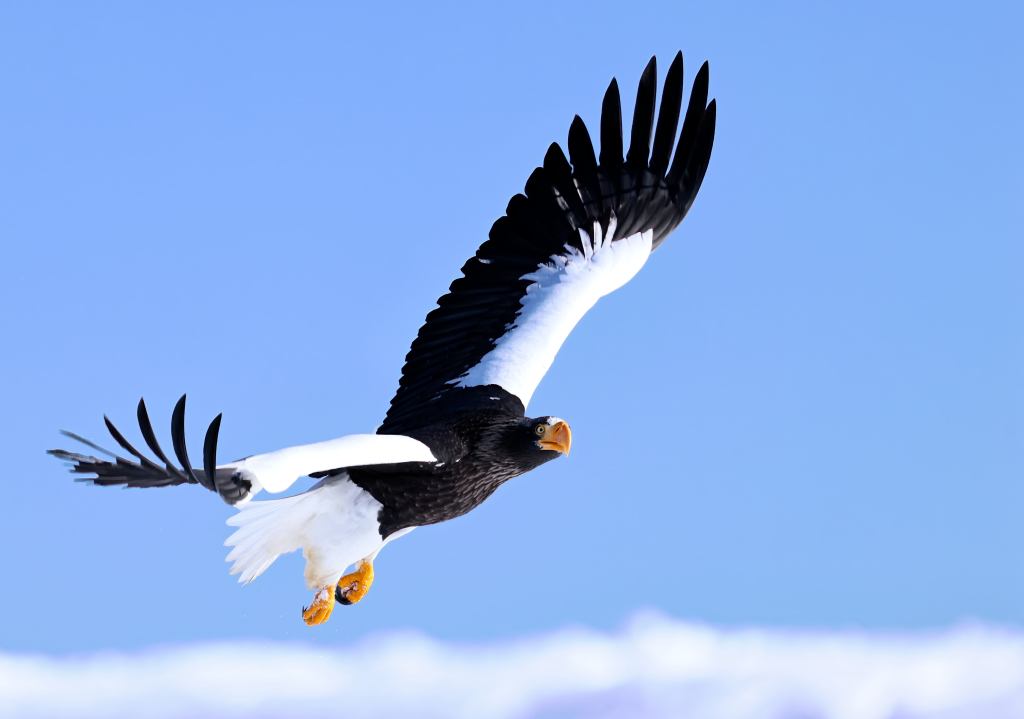
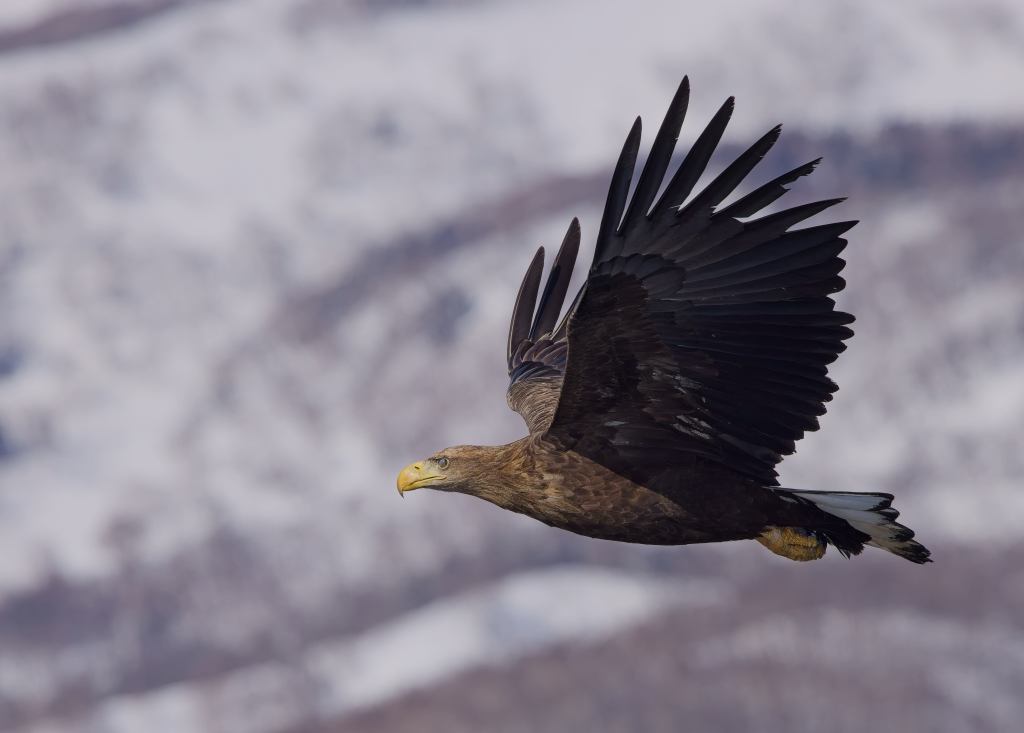
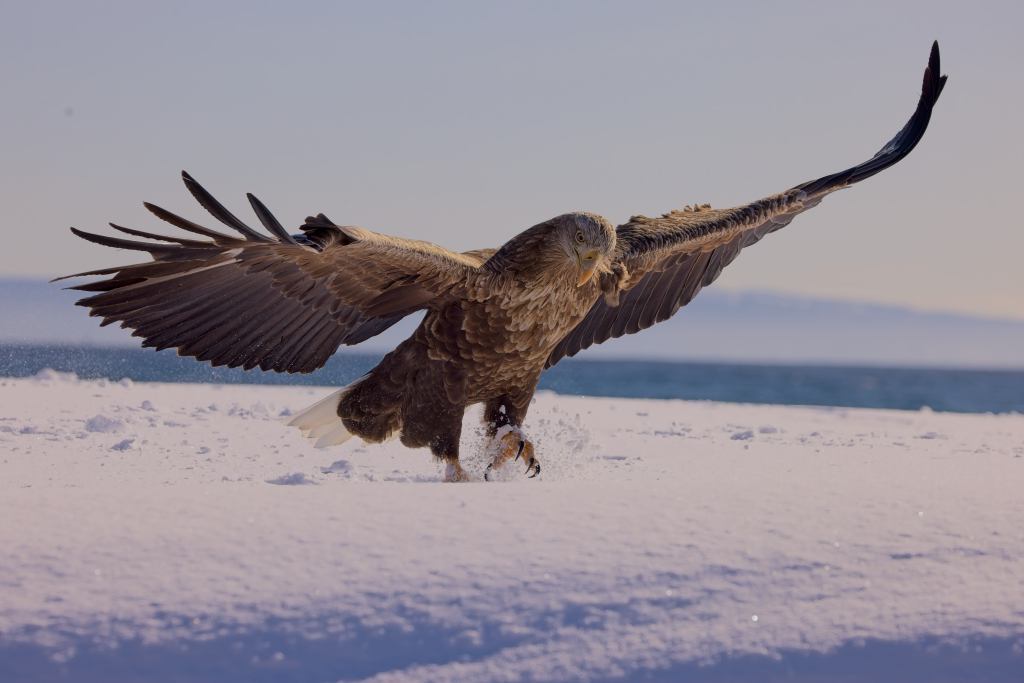
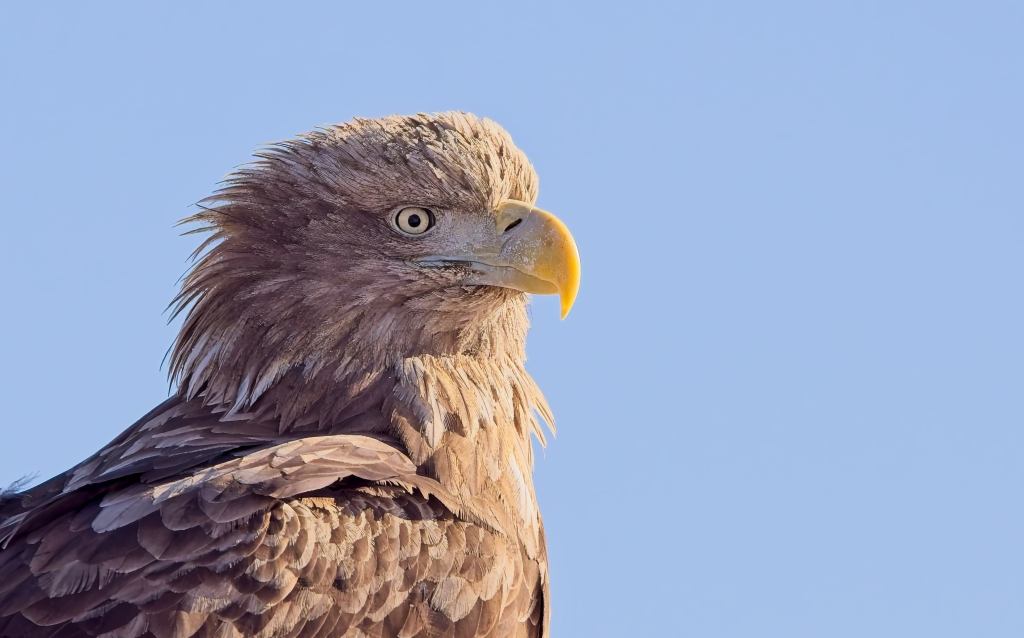
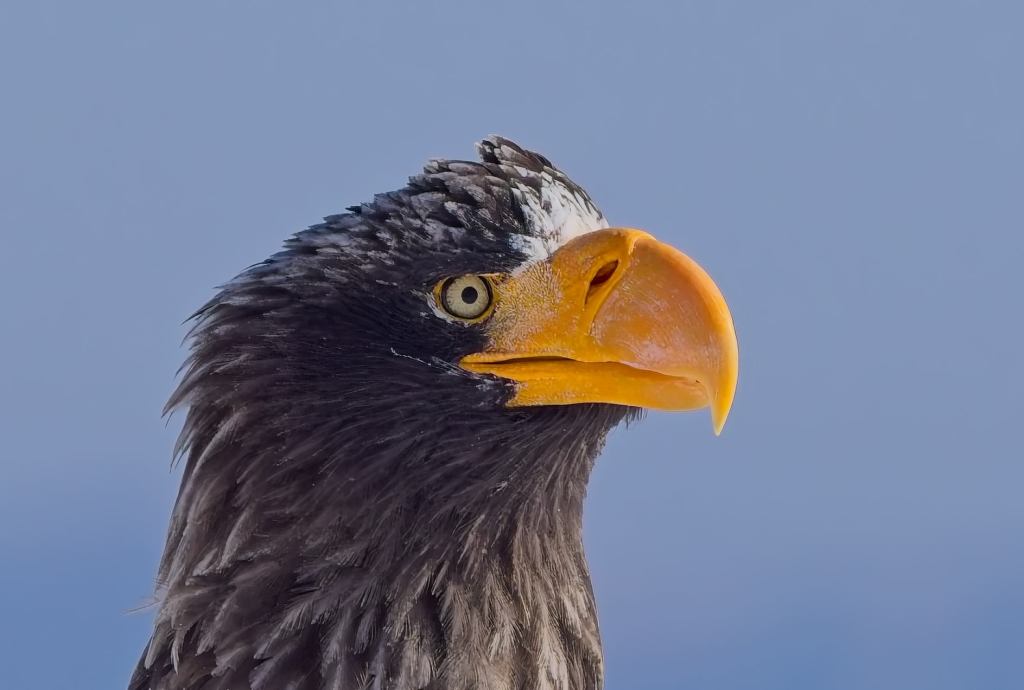


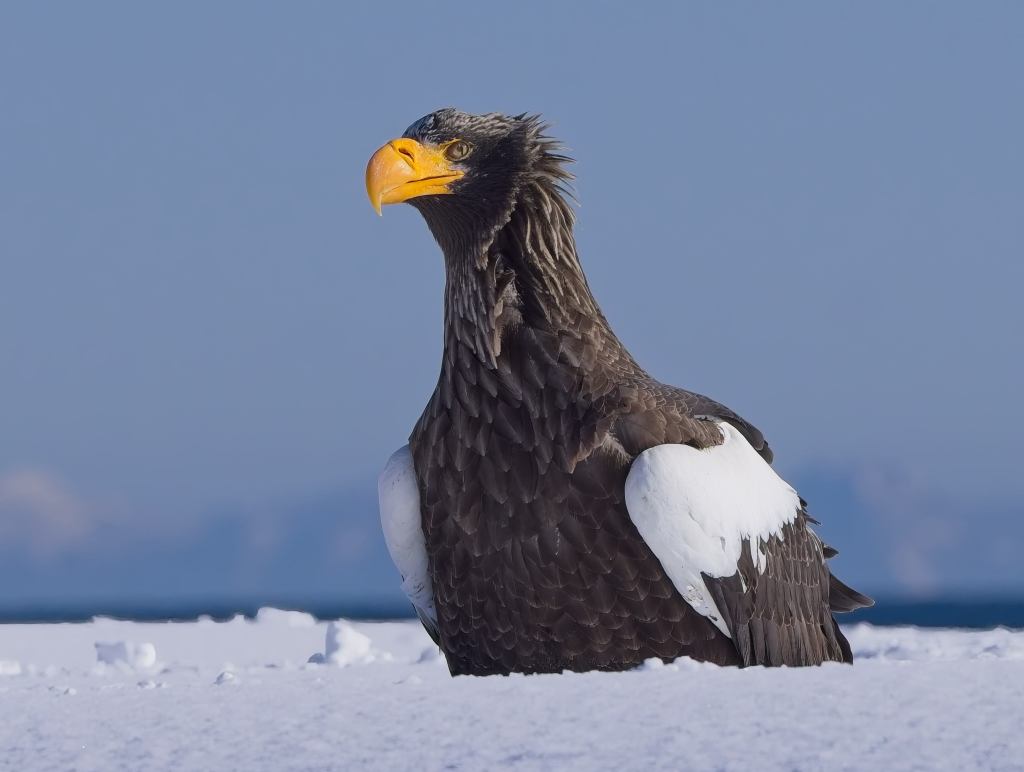
With so much action and so many photo ops it was not possible to keep an accurate count of the number of eagles we saw. Our conservative number for the Ebird report was 150 Steller’s Sea Eagles and 100 White Tailed Eagles but there were probably many more than that. Anyone not getting a great photo, even with a Smartphone, had only themselves to blame. We also saw many Harlequin Ducks, some Common Goldeneyes and some Pelagic Cormorants. Unfortunately no scoters or alcids.
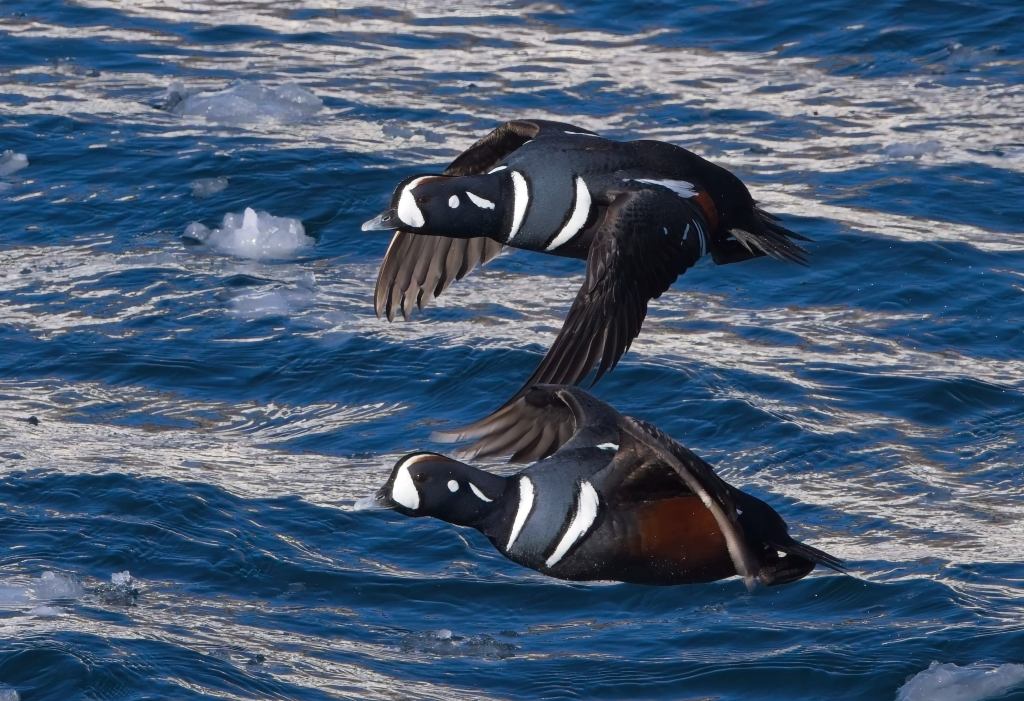

Koji’s Plan B had worked well. We had 15 species at Rausu (with good photos of all). There were the three lifers (both eagles and the Common Gull) and another life photo – Carrion Crow. We would spend the rest of the afternoon stopping at various places along the coast looking for alcids and the much desired Stejneger’s Scoter and would then make it to our hotel, Yuyado Daiichi and the Youroushi Hot Springs in time to watch the feeders for awhile and hopefully have an owl visitor.
Koji noted that there seemed to be far fewer birds in the water than expected and we were generally unsuccessful finding any targets. We added a Black Scoter, some Greater Scaup and some Great Crested Grebes and that was it. We did see our first wild mammals of the trip – Red Fox and Sika Deer. There were two foxes and the deer were plentiful. Both gave us good photo ops in the barren landscape.
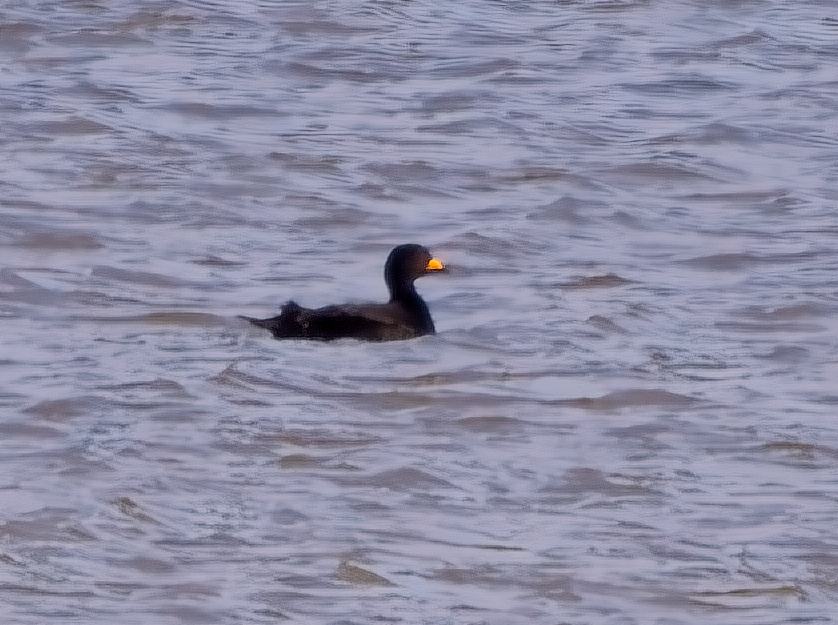
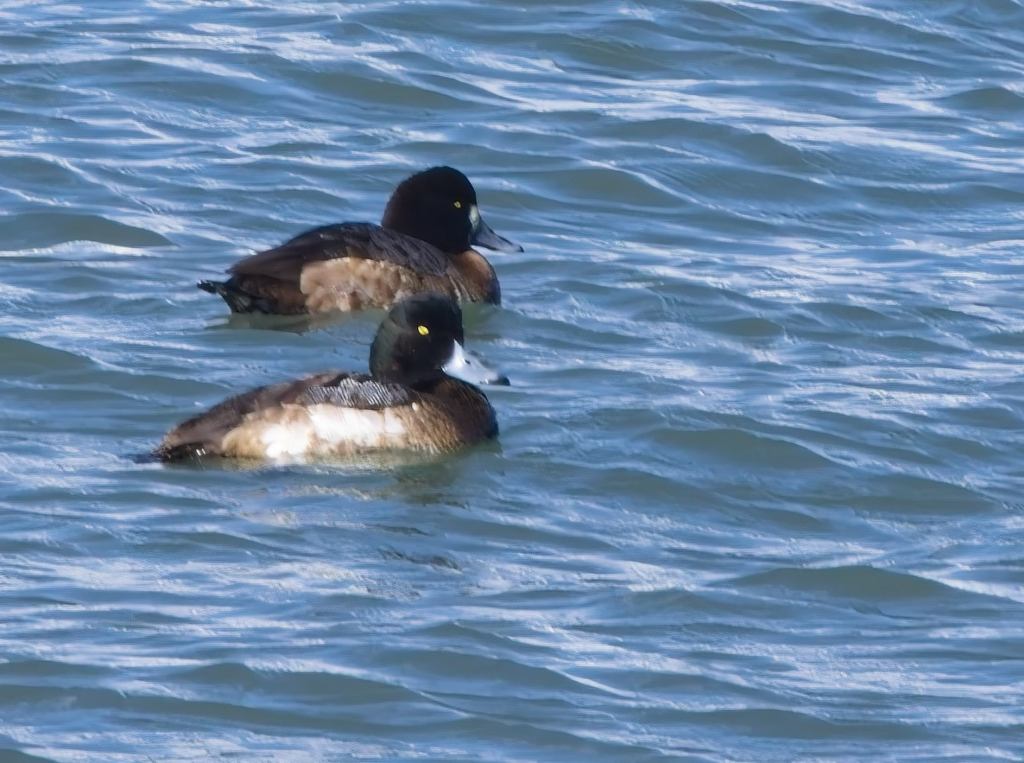

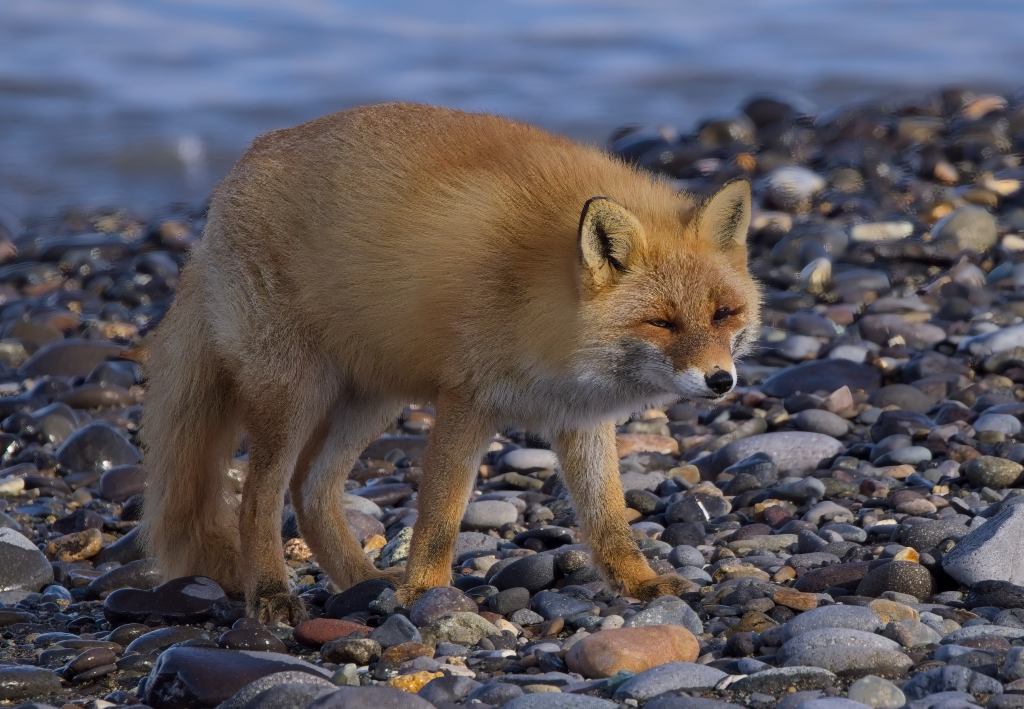
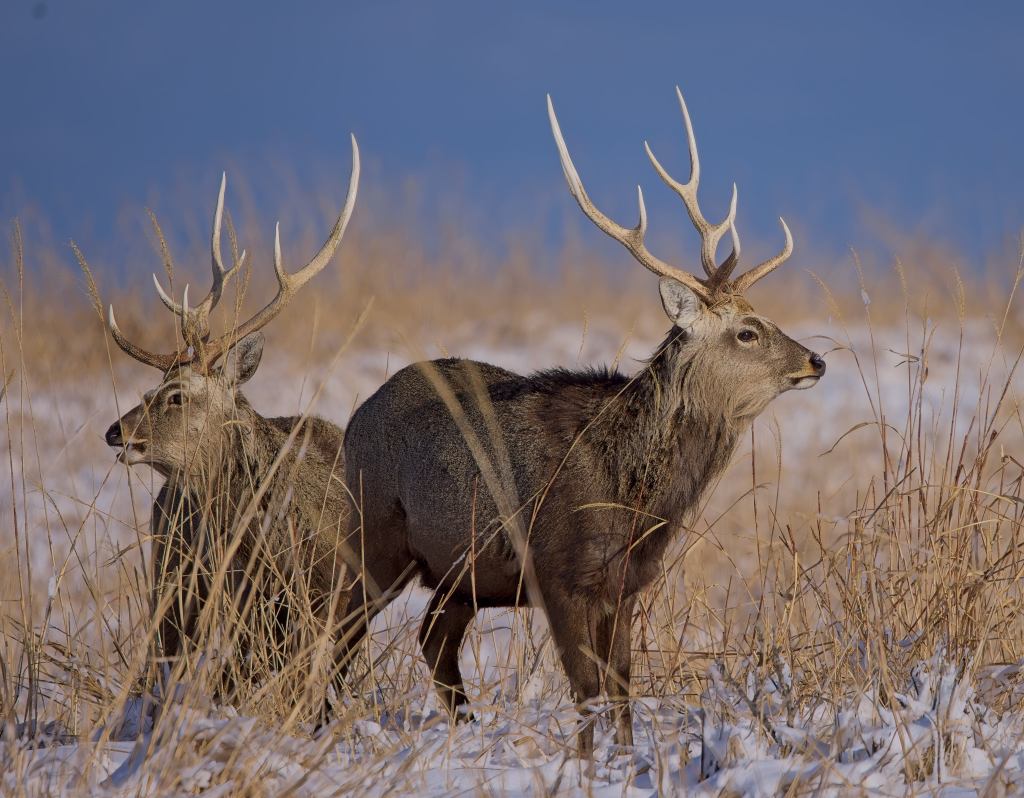
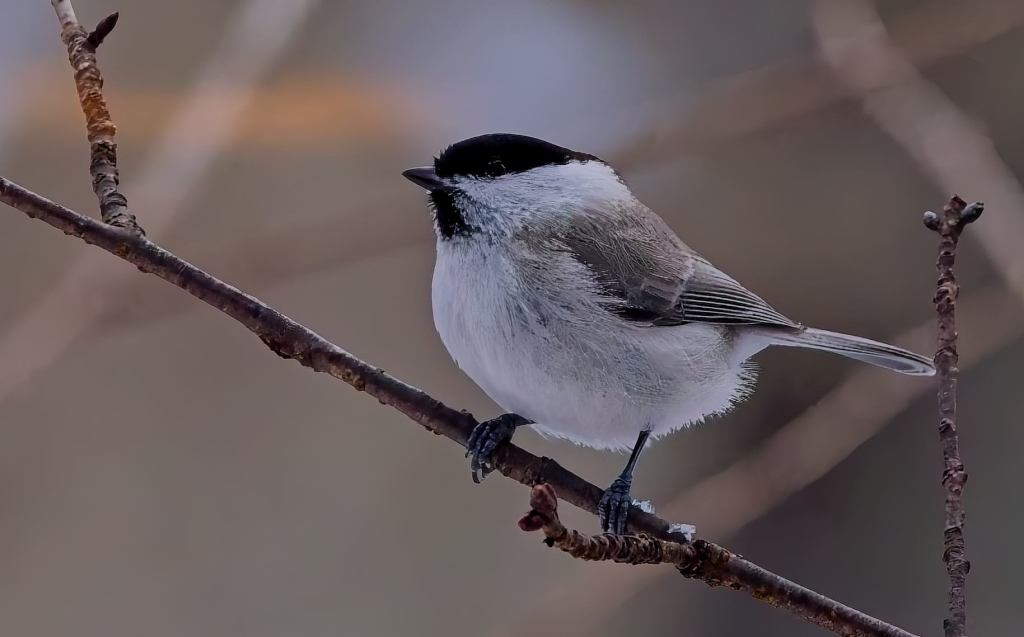
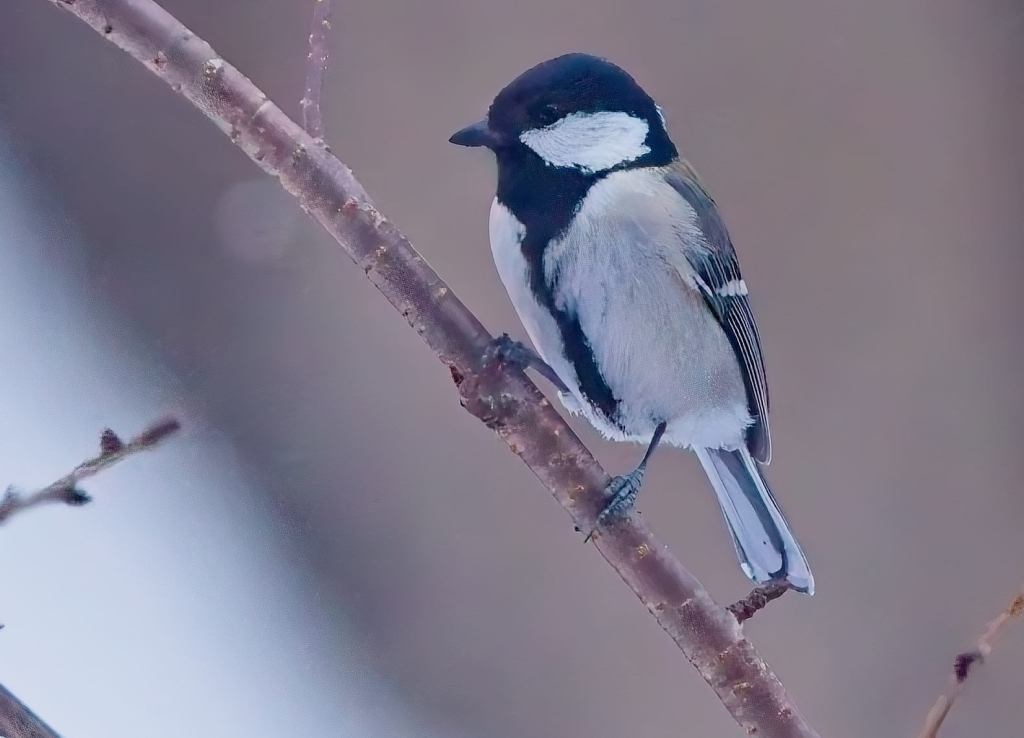
We got to our lodging around 3:30 PM. It was our favorite place on the tour so far and remained as such until we got to Kyoto. Beautiful room looking out onto the creek flowing by. There were hot springs there and Cindy braved a visit to this very Japanese bathing place – picking up some cultural guidance along the way. I passed on the opportunity and elected to sit in the lobby watching two feeders along the creek that attracted both birds and birders. Light was already beginning to fade, but the birds were still active and I added lifer Marsh Tit and Eurasian Bullfinch and got a lifer photo of a Great Spotted Woodpecker. The only other one I had seen was almost 23 years ago during a few hours of birding in Hungary! I also got decent photos of Asian Tit, Eurasian Nuthatch and another Japanese Pygmy Woodpecker. I saw a Coal Tit (my first one in 42 years) and thought I had a lifer photo but cannot find it.


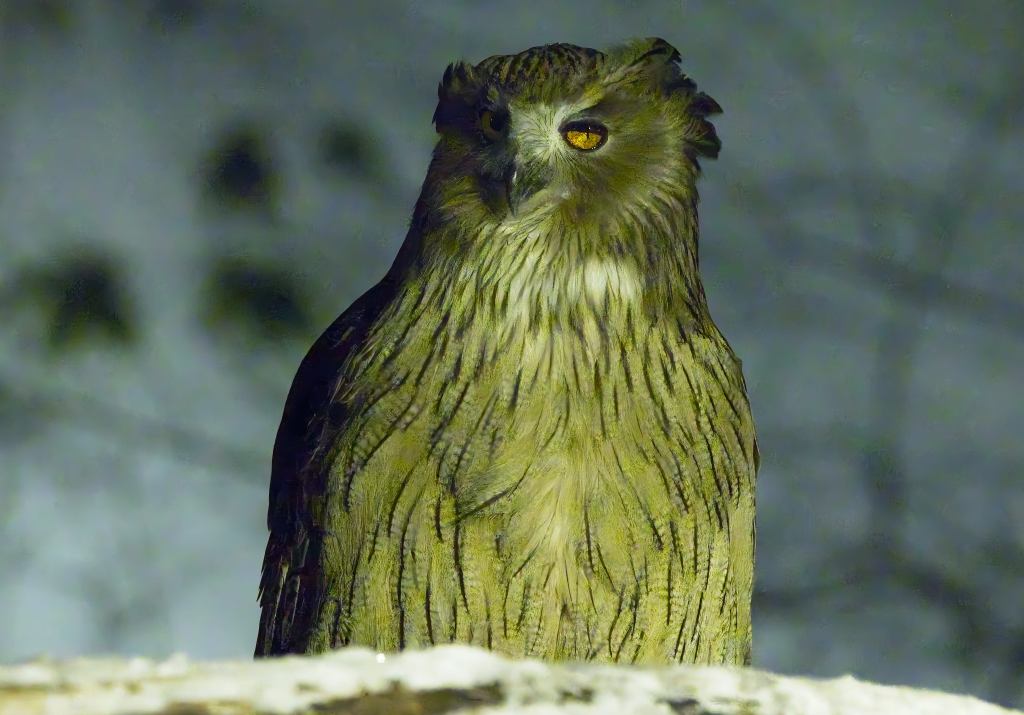
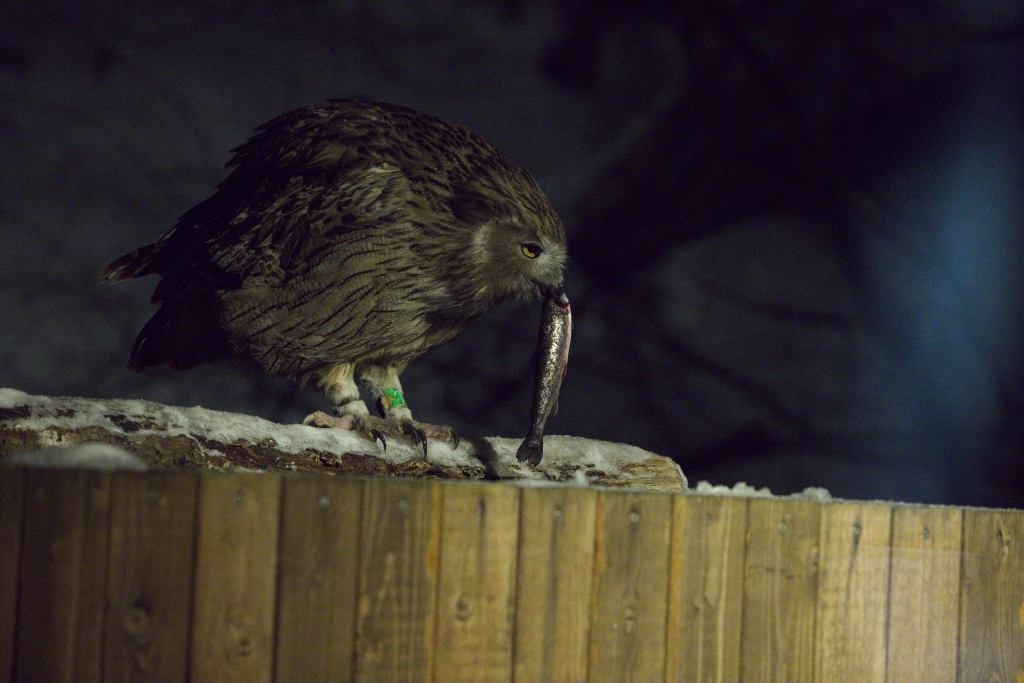
Dinner at the hotel was a mix of traditional Japanese food. This is one area where Cindy and I differ. There are definitely Japanese dishes that I do not particularly like, like most pickles, but I am fairly adventurous and enjoy most Japanese food. Cindy is less adventurous and this was not her favorite meal but as I will discuss much later in the part of this blog covering our stay in Kyoto, this was an important lesson learned. But there would be something far more important this evening. The Inn is famous as probably the best place in Japan (the world?) to see a Blakiston’s Fish Owl. It is the largest species of owl and one of the rarest, found only in China, Japan, and the Russian Far East with an estimated world population of between 1000 and 1500 individuals. There is a small pond/bathing area at the Inn where the owl regularly comes to visit to get an easy meal of trout that are stocked in the pond by the Inn, thus creating a rare opportunity to see the owl – available only to guests of the Inn, a good business promotion. There is a chart at the Inn telling when the owl has recently visited. It generally makes two stops – once around 10:00 PM and then again around 2:00 or 3:00 AM. It is such an important part of life at the Inn that you can arrange for the front desk to call you when it appears.
Even though it was before the regular visiting hours, several birders were camped out at seats with a view of the log near the pond where the owl usually sat. After dinner Cindy and I joined them, both with fingers crossed and also just to socialize. Not more than 15 minutes later, the magnificent owl made an appearance. Photos were through glass and affected by the artificial light but who cares, the opportunities were awesome as the owl stayed longer than usual and caught two fish in front of us. Apparently it usually only takes one, so the suspicion was that eggs had already been laid and this owl was fishing for two. Of all the hoped for lifers on the trip, this was the one that seemed the least likely – maybe a 50/50 chance it would show at the pond and then the question of being there for what might be a short visit. It could not have been better this night.

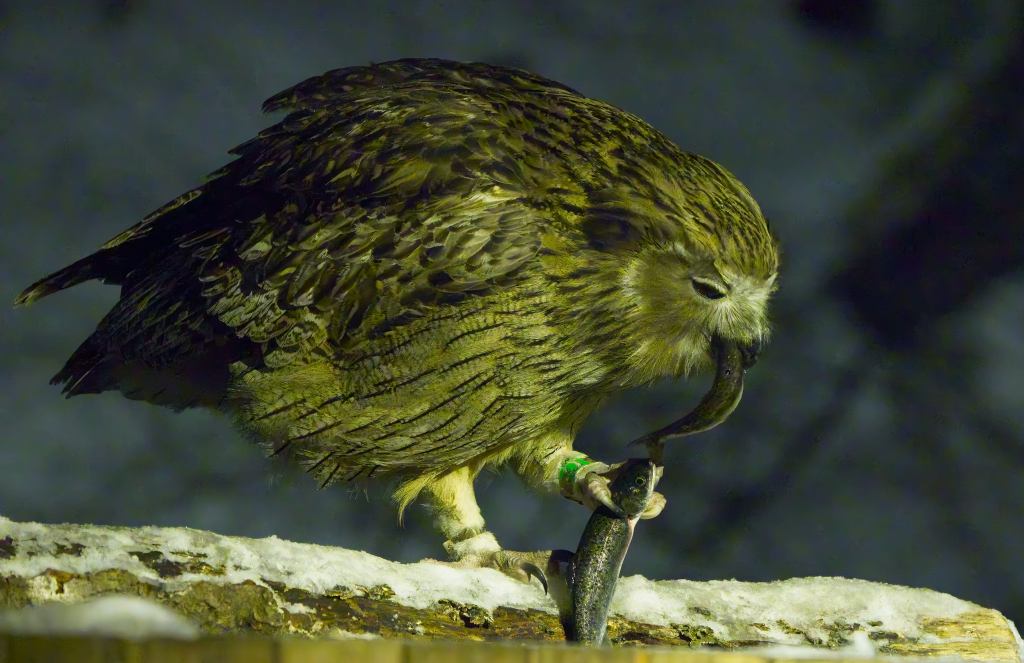
Nothing was going to beat a day with my bucket list Smew followed by a Baikal Teal, but this day with Steller’s Sea Eagle and Blakiston’s Fish Owl was a very close second. I slept well that night – despite the adrenalin rush.
Day 4 – Hokkaido in the Morning
Having lost a day due to the heavy snow, the pressure was on for a make-up morning. There were two important objectives – Ural Owl and Red Crowned Cranes. Koji’s plan had us first driving to a stakeout spot to hopefully see a Ural Owl on its favorite roost and then we would head to the Ito-Tsurui Red Crowned Crane Sanctuary to see the beautiful Red Crowned Cranes, an iconic species often seen in Japanese art and very much on the top of Cindy’s want list. Then we would get to the Kushiro Airport for our long flight to Kagoshima on Kyushu Island in southern Japan. We had a fairly tight schedule – enough time to hit both target places but no time to linger. When we got to the Ural Owl spot, there was fortunately a trail of sorts heading downhill through deep snow. We had followed Koji’s suggestion to get cleats for our boots to better handle ice and snow, and this was when we needed them and they were great. The trail down to the viewing spot was no more than a quarter mile. At the end there was a small flat area where we could look across a ravine to a tree with a large hollow – the place the owl liked to roost. Sure enough, we could see the owl almost completely in the open as soon as we arrived. It was not real close and the light was not perfect, but it was a beautiful sight. It is found from Japan through the norther coniferous and mixed forests all the way to Scandinavia. Like many owls, Ebird treats it as a “sensitive” species, hiding locations, but it is not greatly endangered. On our way out several birders were coming down the trail as we returned to the car.

Our last Hokkaido stop was both wonderful and disappointing. It was wonderful because we were able to spend 20 minutes watching the majestic Red Crowned Cranes. Only a few were there when we arrived joining a small crowd of observers. Then 4 more flew in and they were later joined by 4 more. The disappointment was only that we could not spend more time with them. Under the original plan we would have visited the crane sanctuary and possibly other crane gathering spots in the afternoon and there would have been many more of them, with closer views and possibly with them more active. Sorry for what we may have missed. we were thankful for any chance to see these graceful birds – both adults and juveniles. Snow covered the ground both fitting for the wintering mostly white cranes but also challenging for photographs. We saw only a few moments of interaction, none of the elaborate courtship displays that we hoped for in a romanticized world, but there was no denying their appeal, their beauty, their elegance.
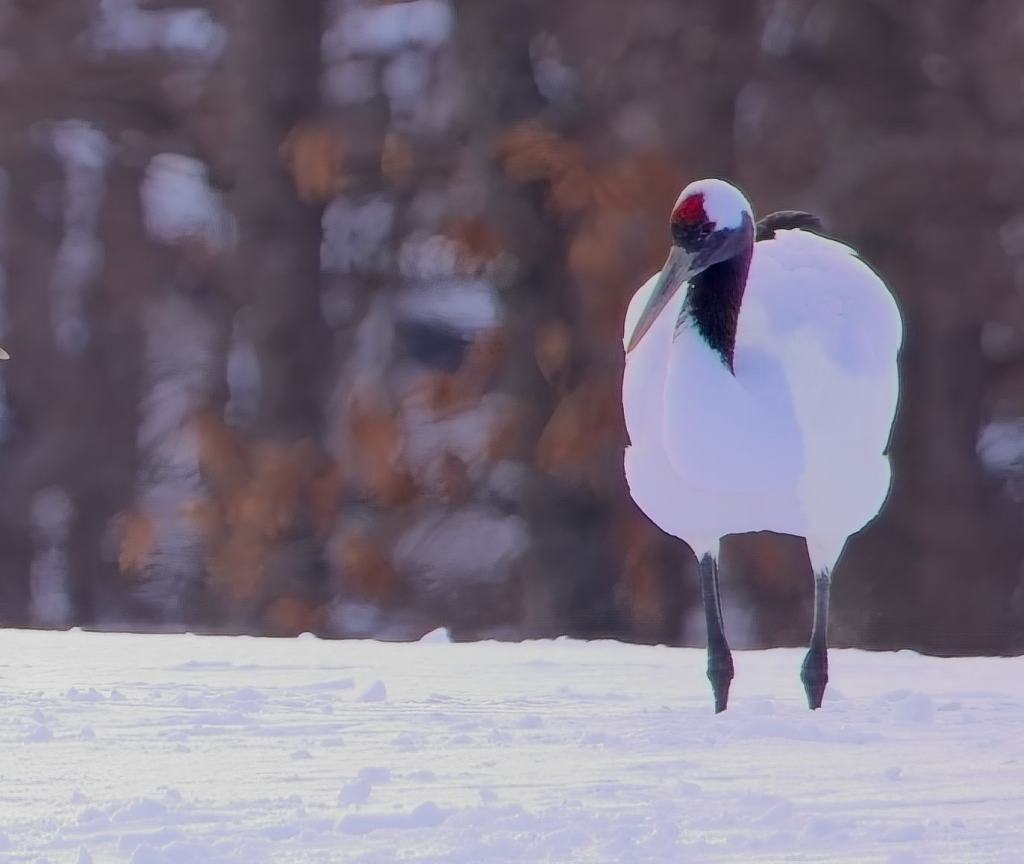


More cranes were arriving as we had to leave. Maybe if we had another hour we would have gotten better shots. It was sad to leave them, but we had a flight to catch and there would be more cranes in Kyushu after a long flight of almost 4 hours including a stop back at Haneda Airport. The actual air distance is about 1070 miles not much different than the air miles between Seattle and Los Angeles.

Next up…Kyushu…
 blairbirding