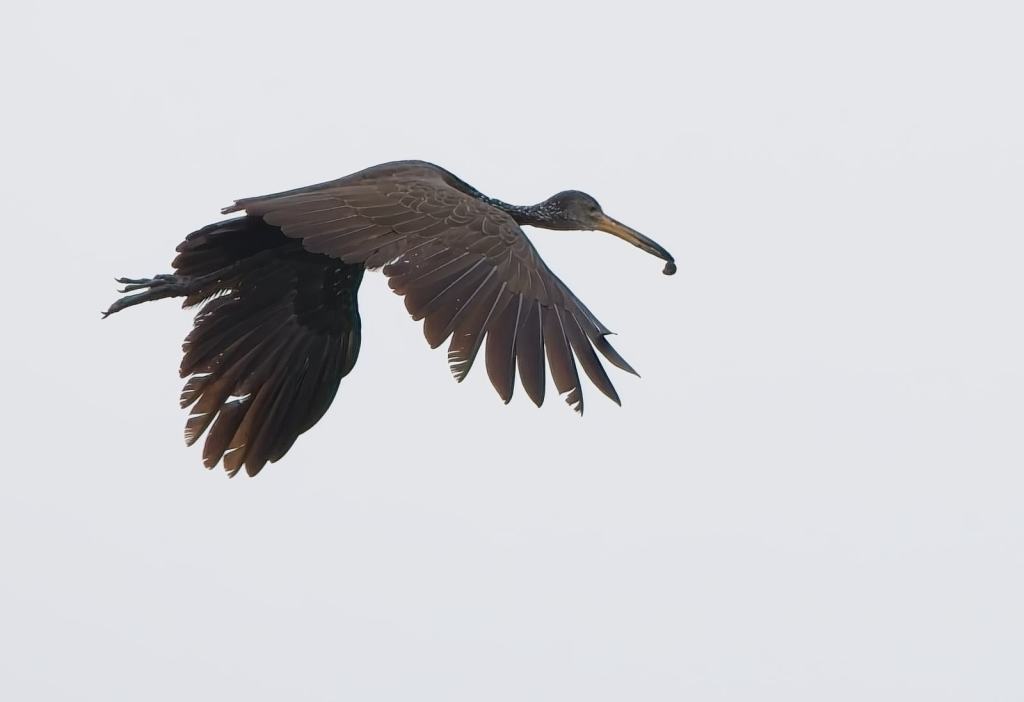
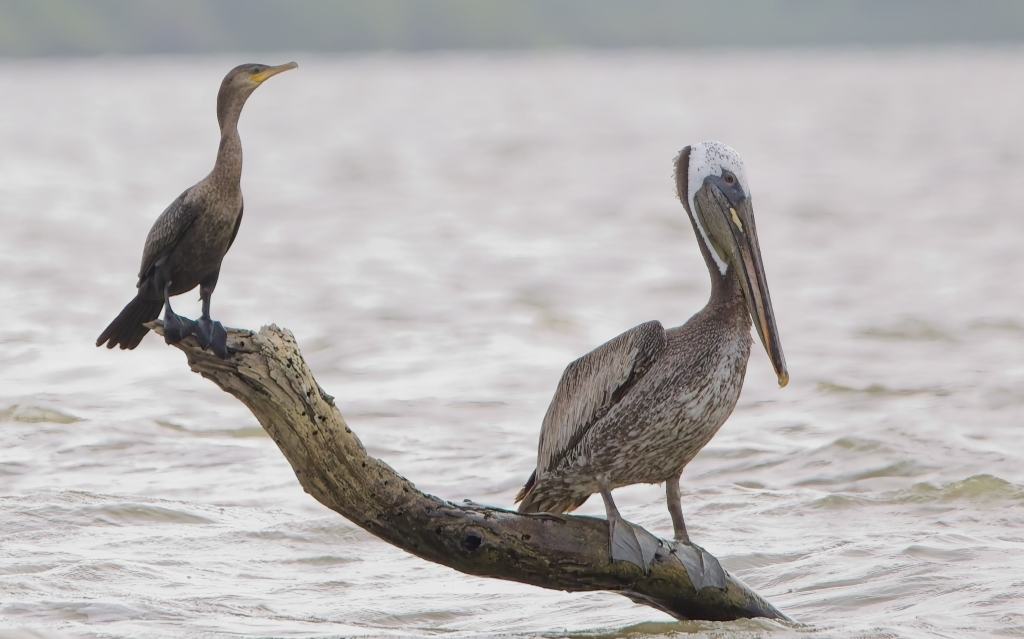
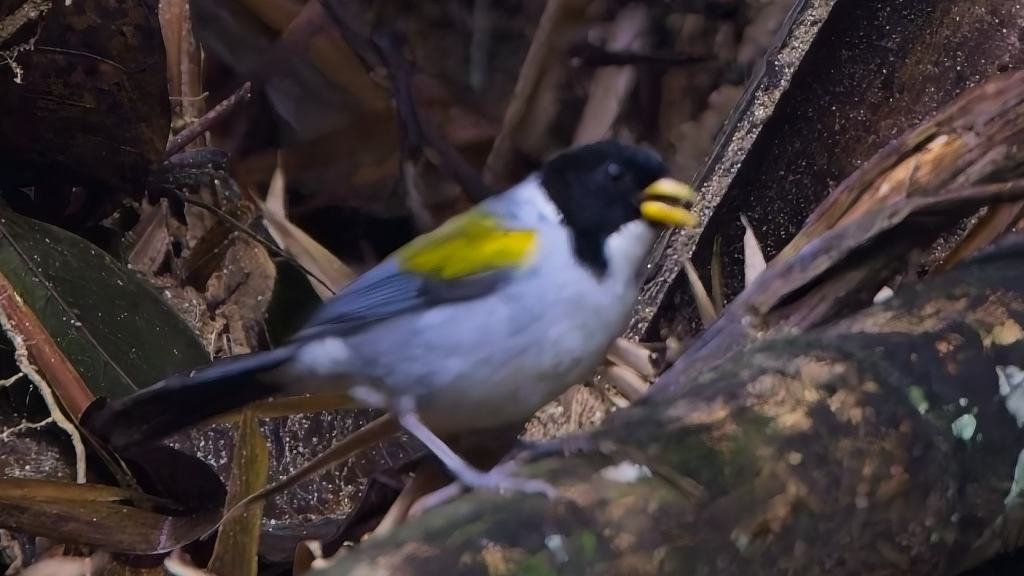
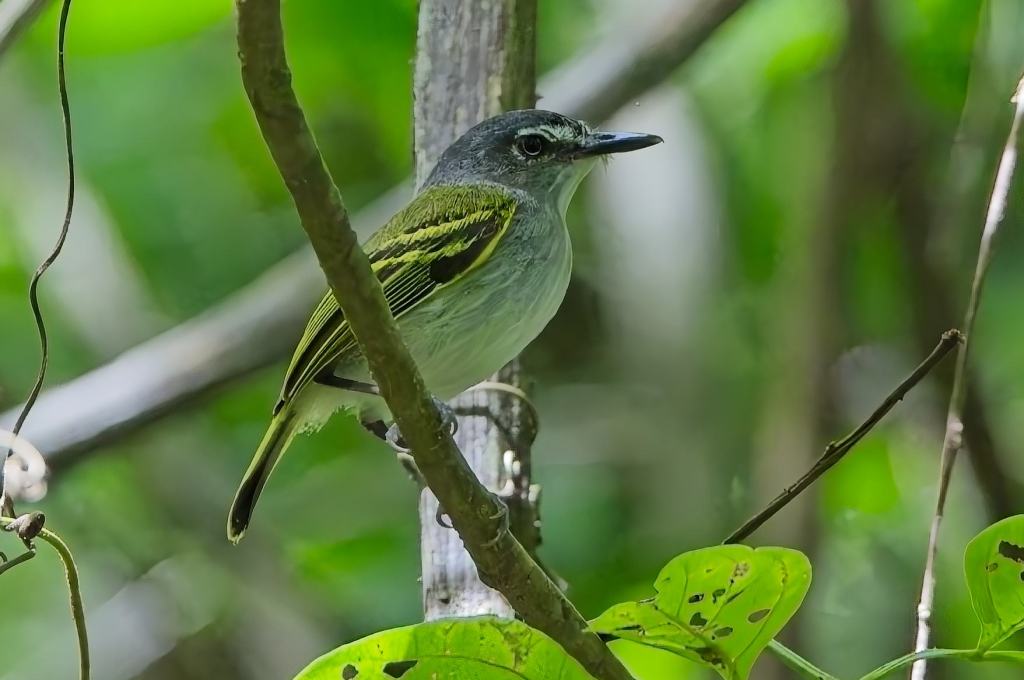
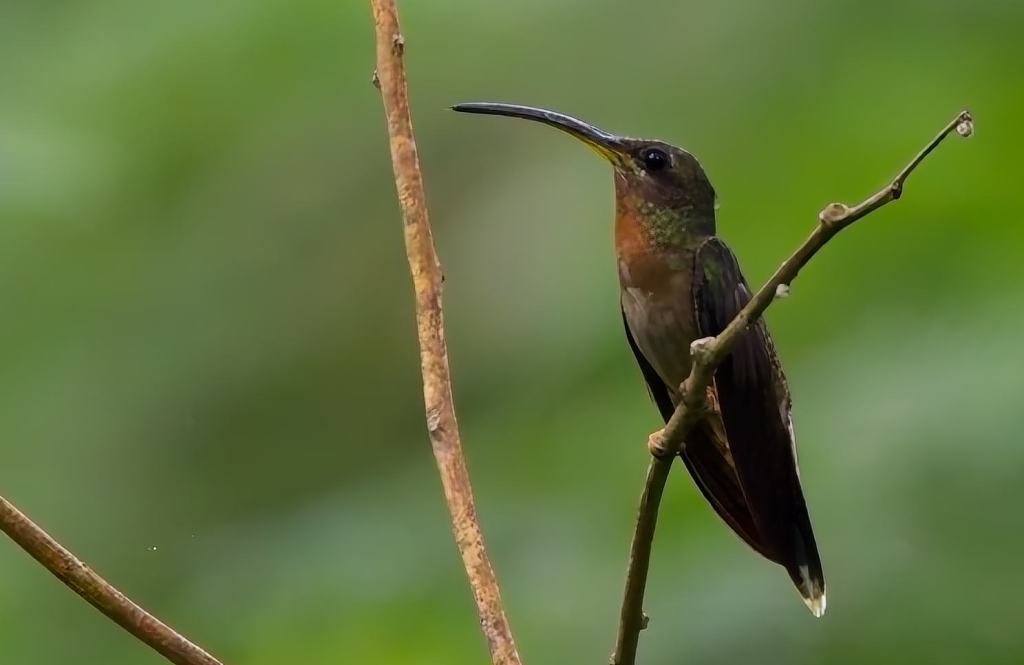
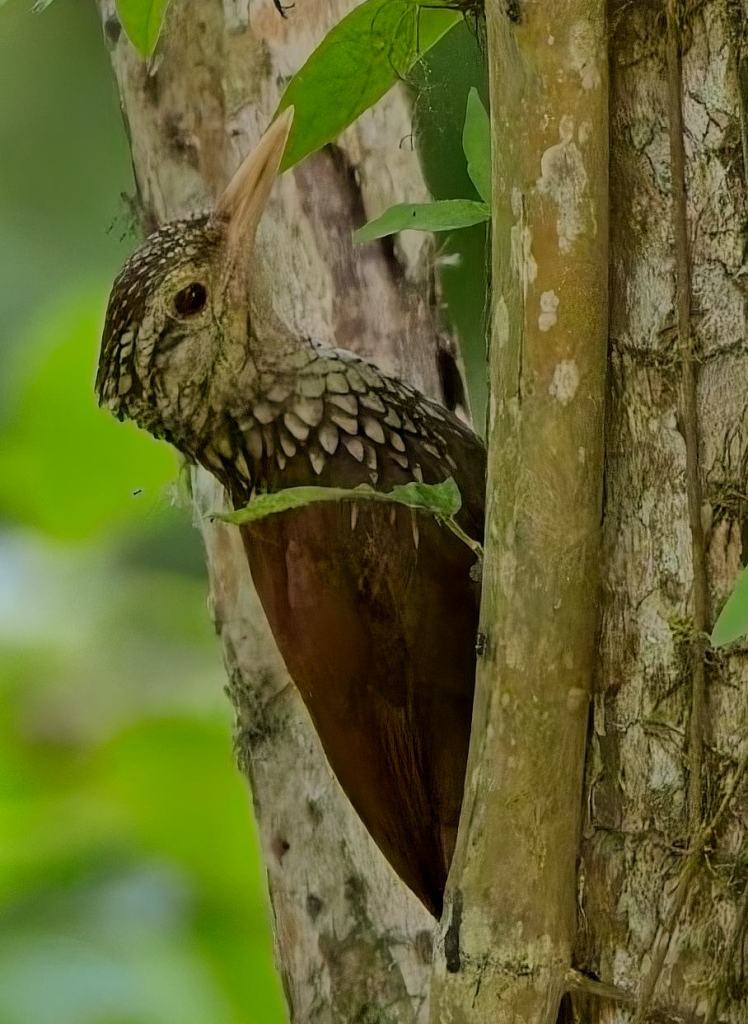
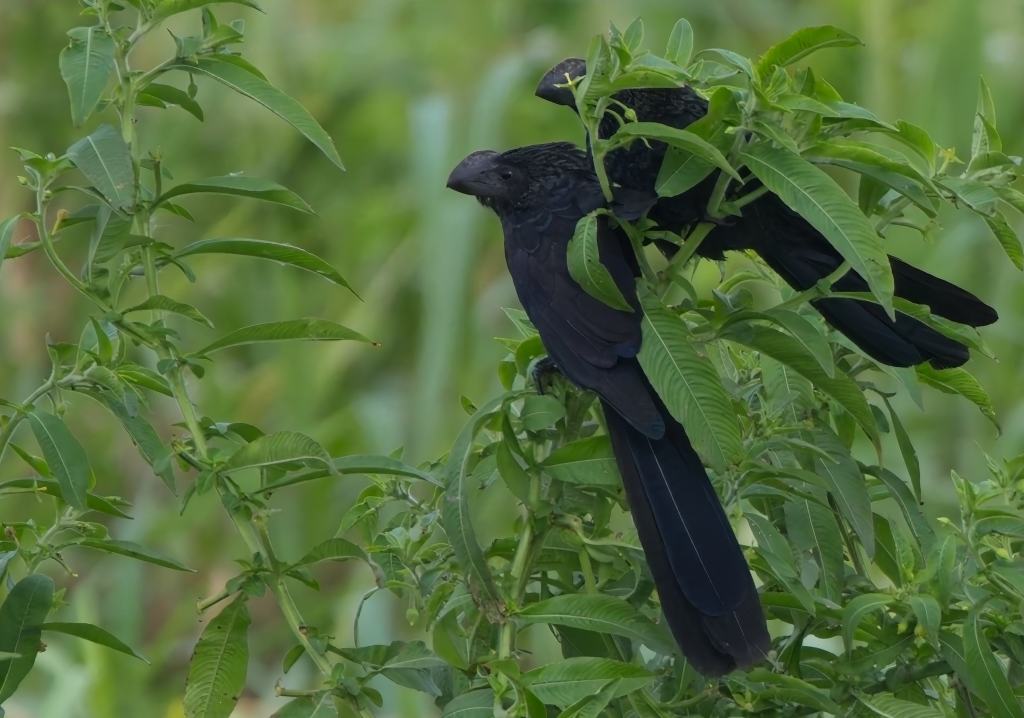
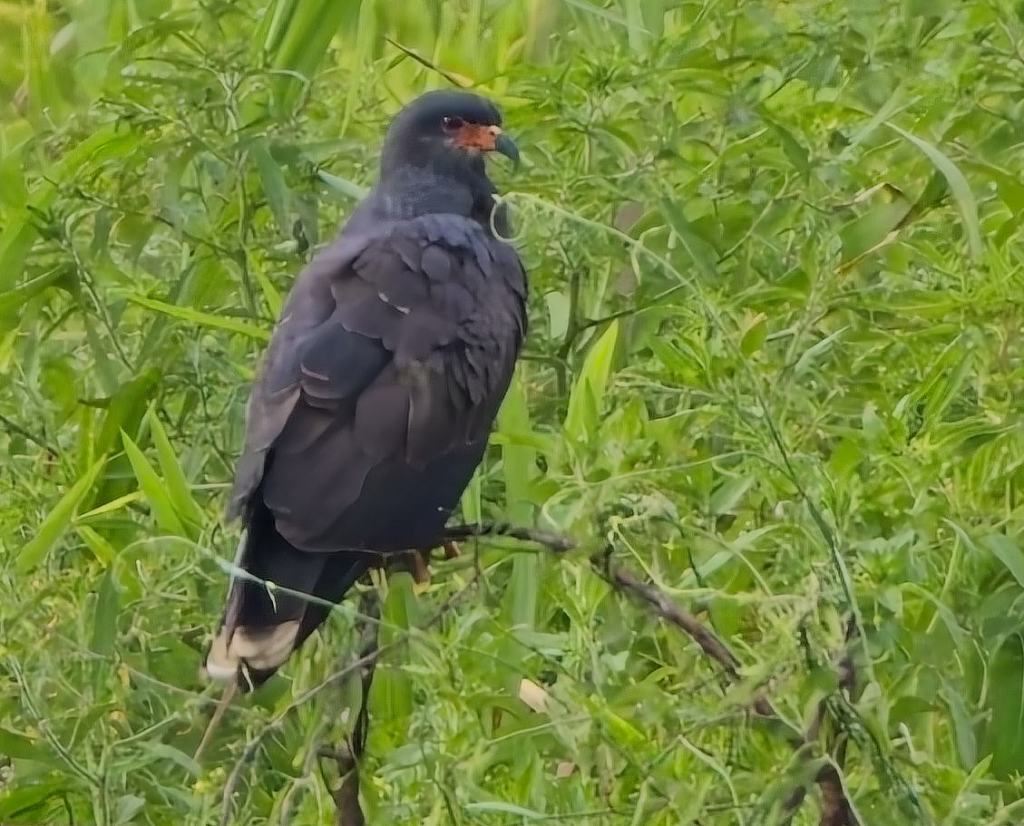
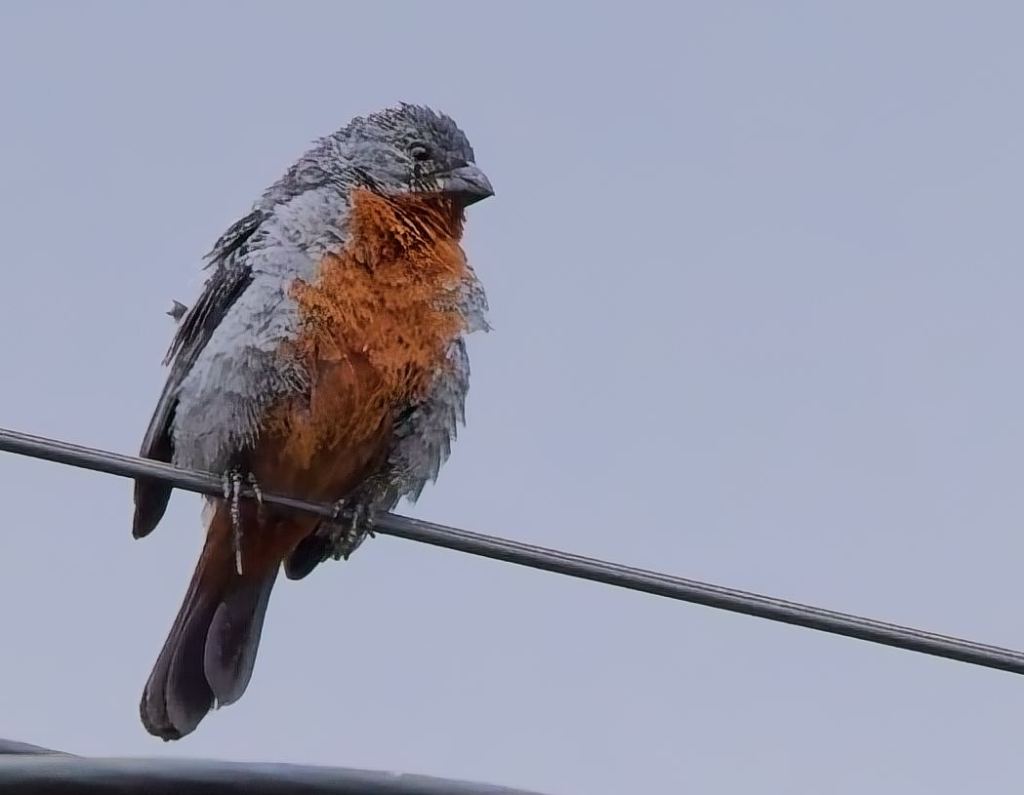
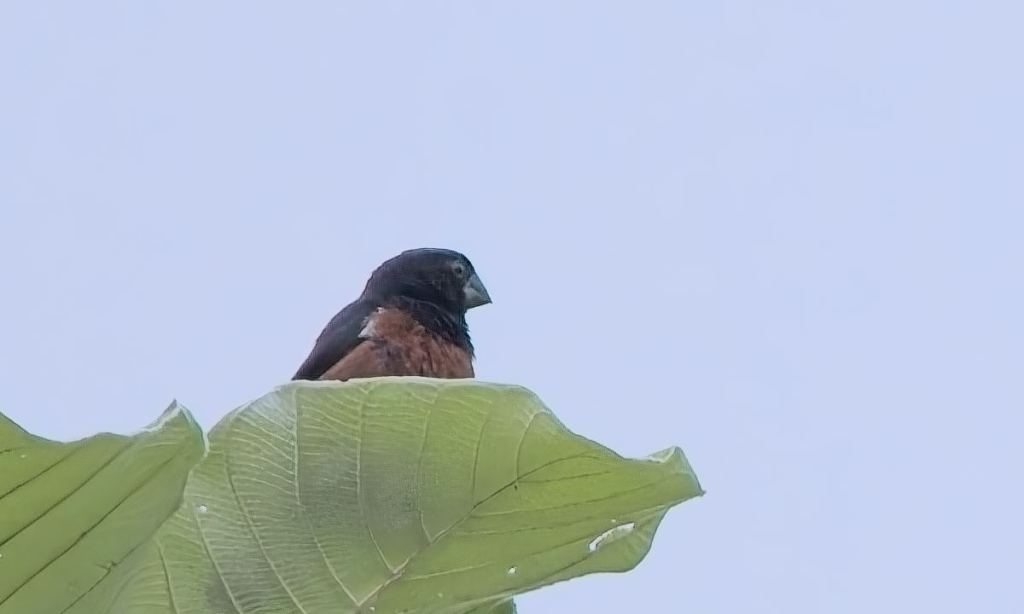
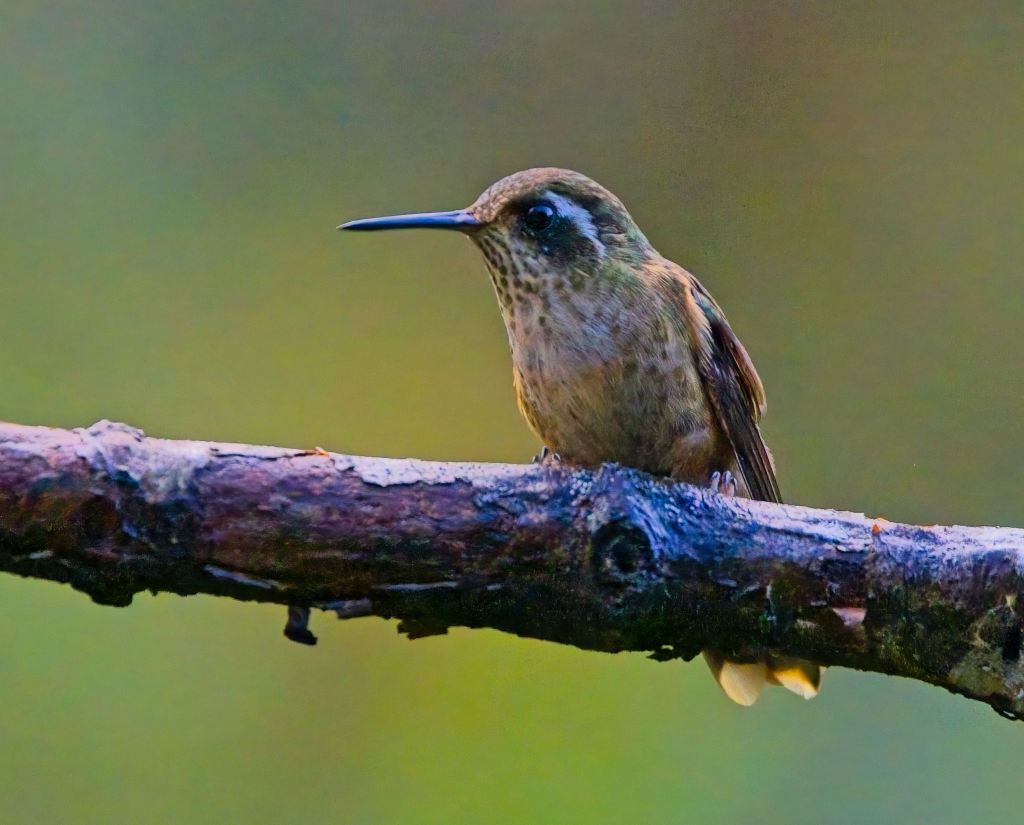
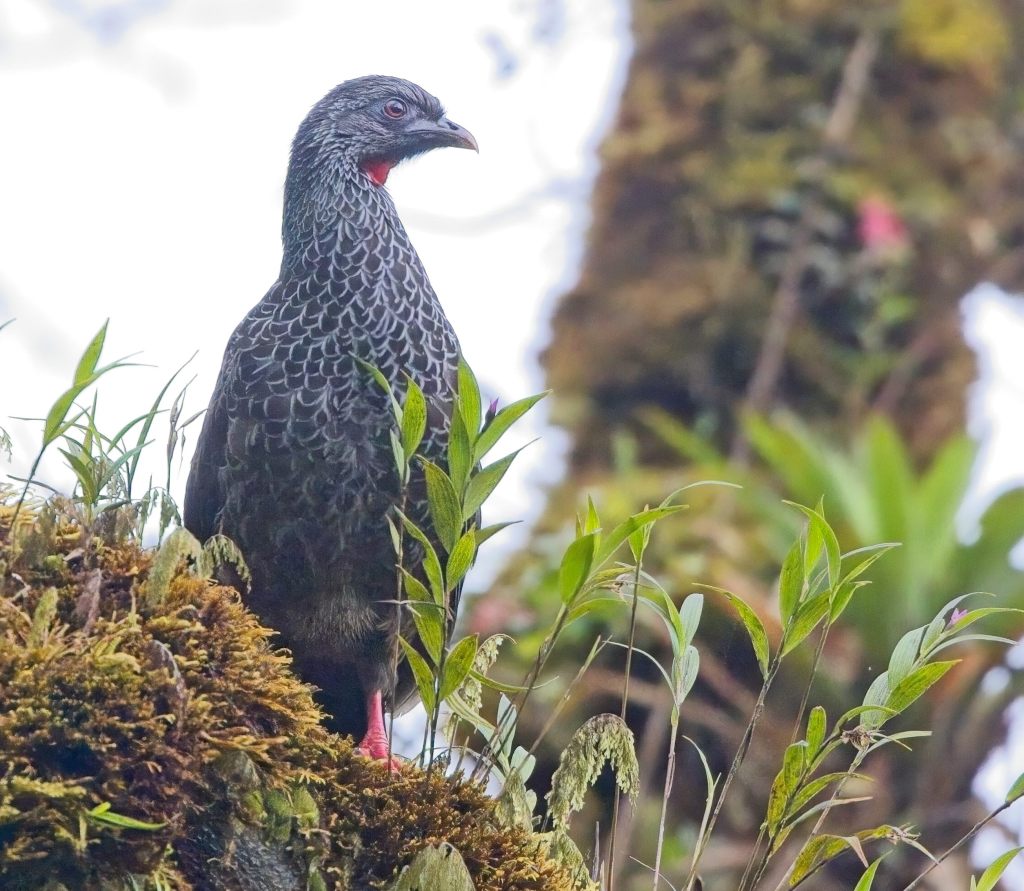
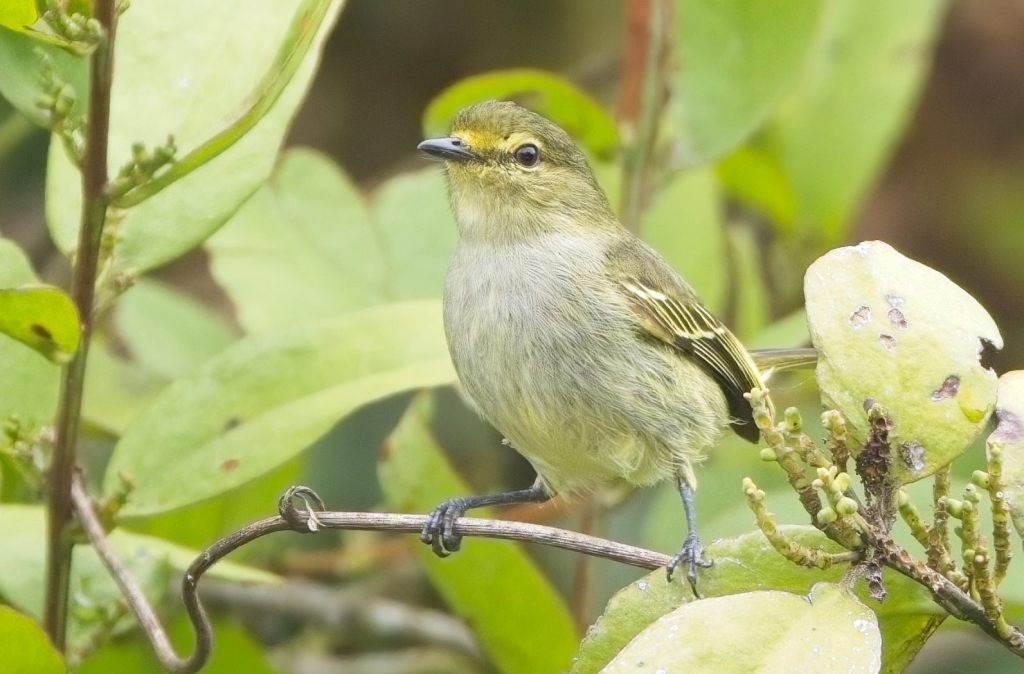
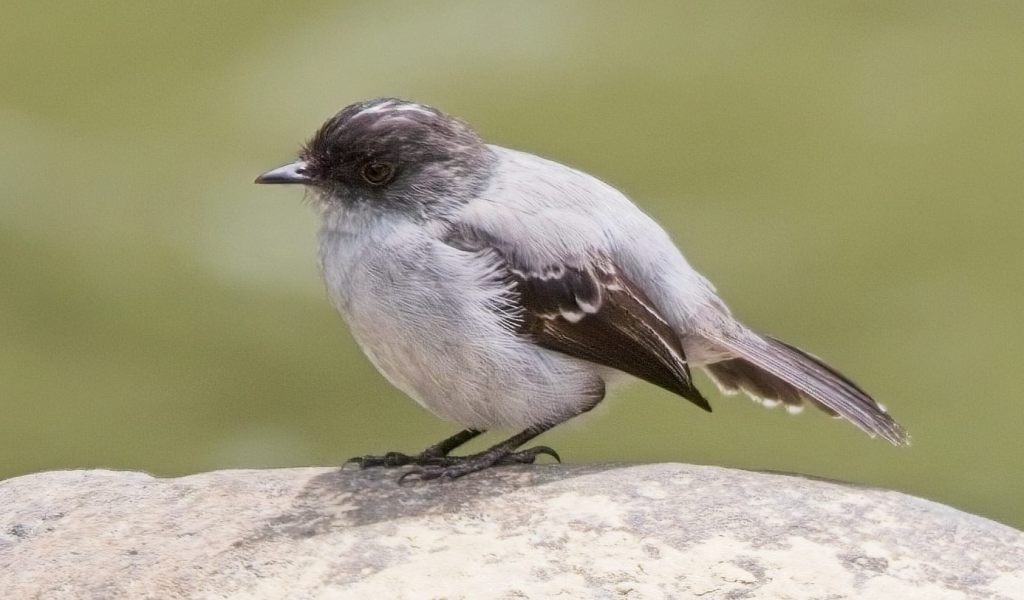
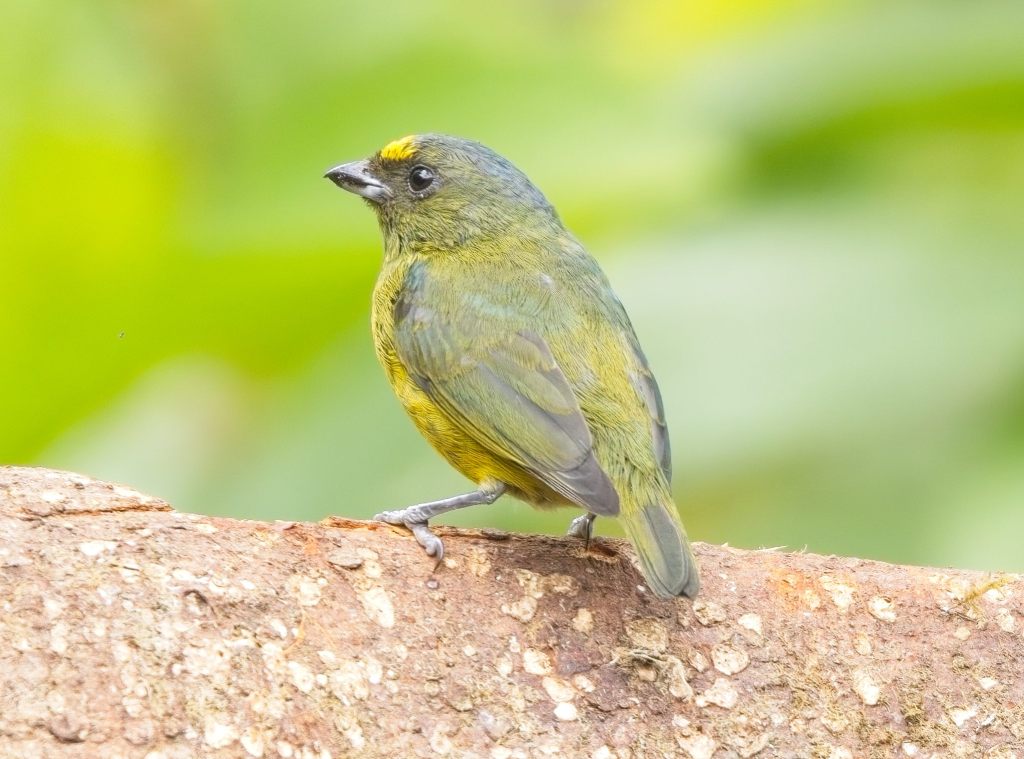
Colombia 2025 – The Tour Begins – Days 1 through 5 – Barranquilla through Santa Marta

Before this trip I had never heard of the city of Barranquilla. It is the 4th largest city in Colombia, behind Bogota, Medellin and Cali with a metro population of 2,370,000. Like many South American cities there is a striking contrast between the wealthier and poorer sections. Barranquilla, situated on the Caribbean Coast is the the capital of Colombia’s Atlántico Department, a bustling seaport flanked by the Magdalena River. The city is known for its enormous Carnival and a major attraction along the Riverwalk is a very large statue of perhaps its most famous citizen, Shakira. My first night would be at the Hotel Barranquilla, a very nice hotel in a lovely area, about 25 minutes from the international hotel. Guide Breiner Tarazona was waiting for me as I came out of the easily managed entry process at the airport – and then I could relax. I have never had a problem with a guide or driver meeting me upon arrival, but it is always a tense moment – “What if there is nobody there?” With that hurdle passed, it was almost 1 p.m. and it was time for some birding.

Day 1 – June 20th

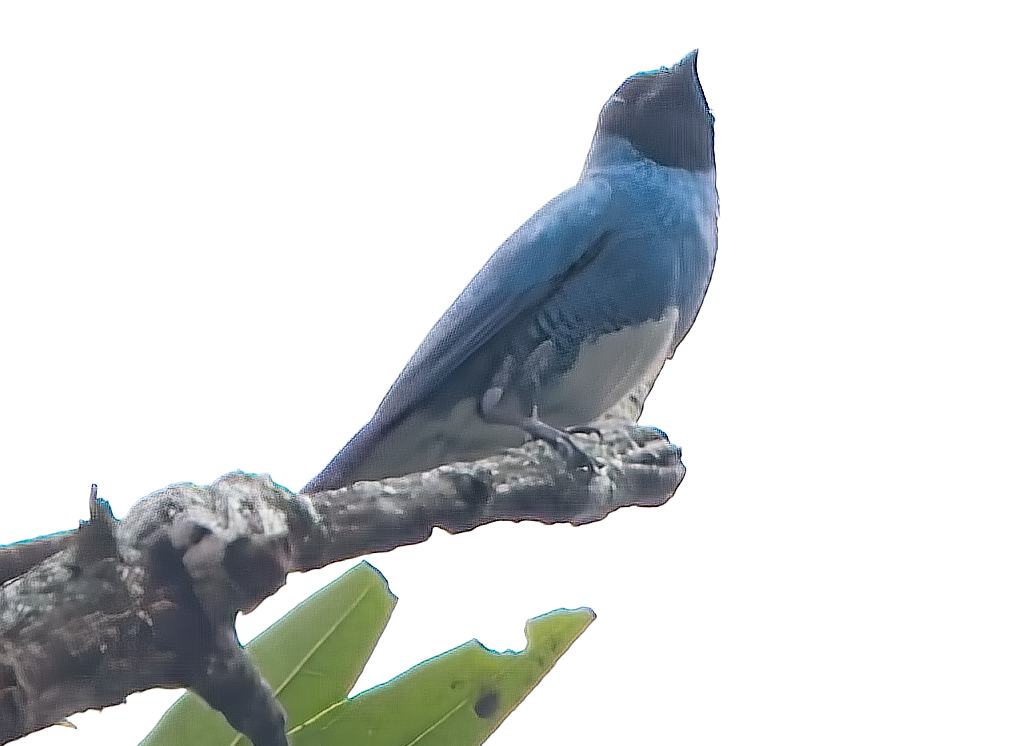
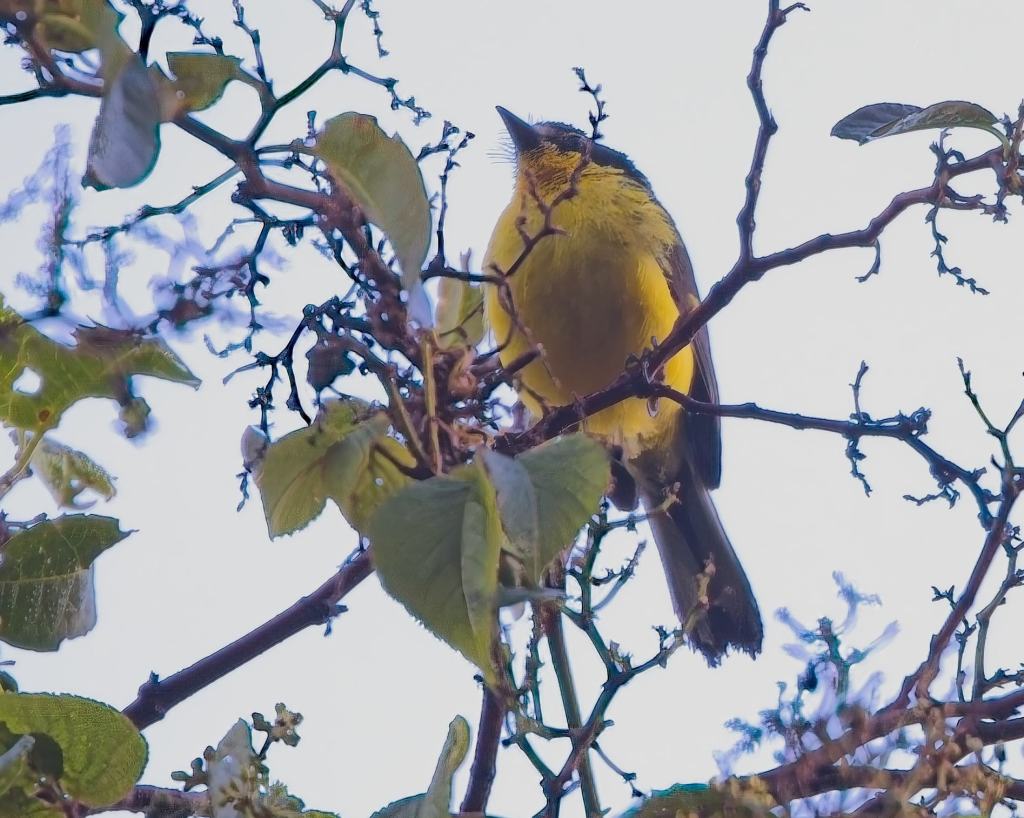
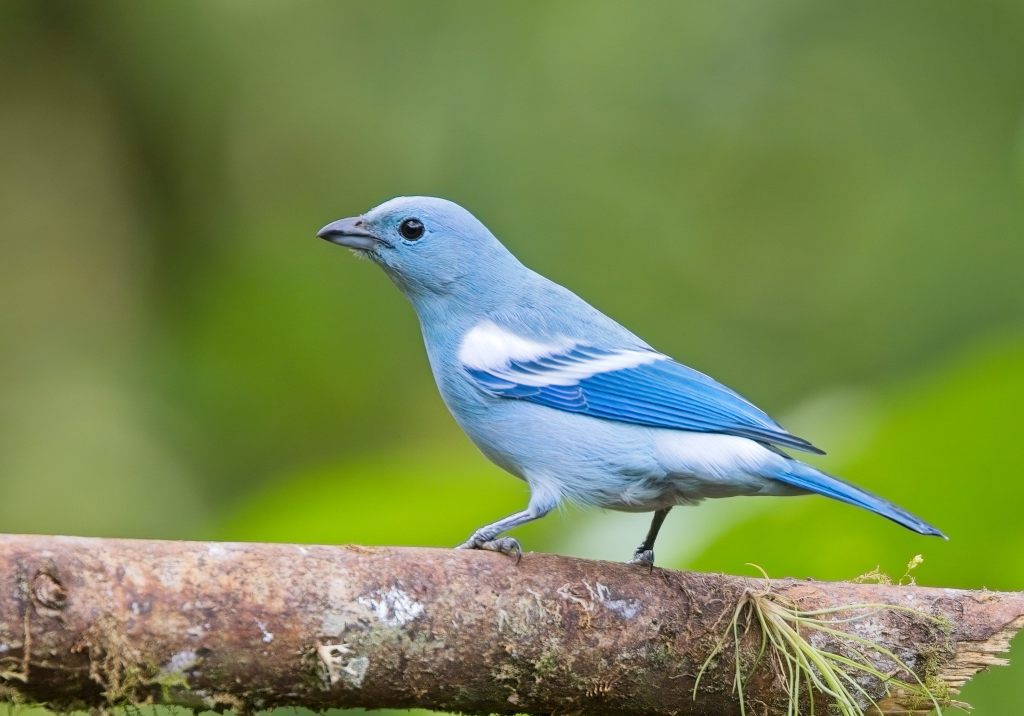
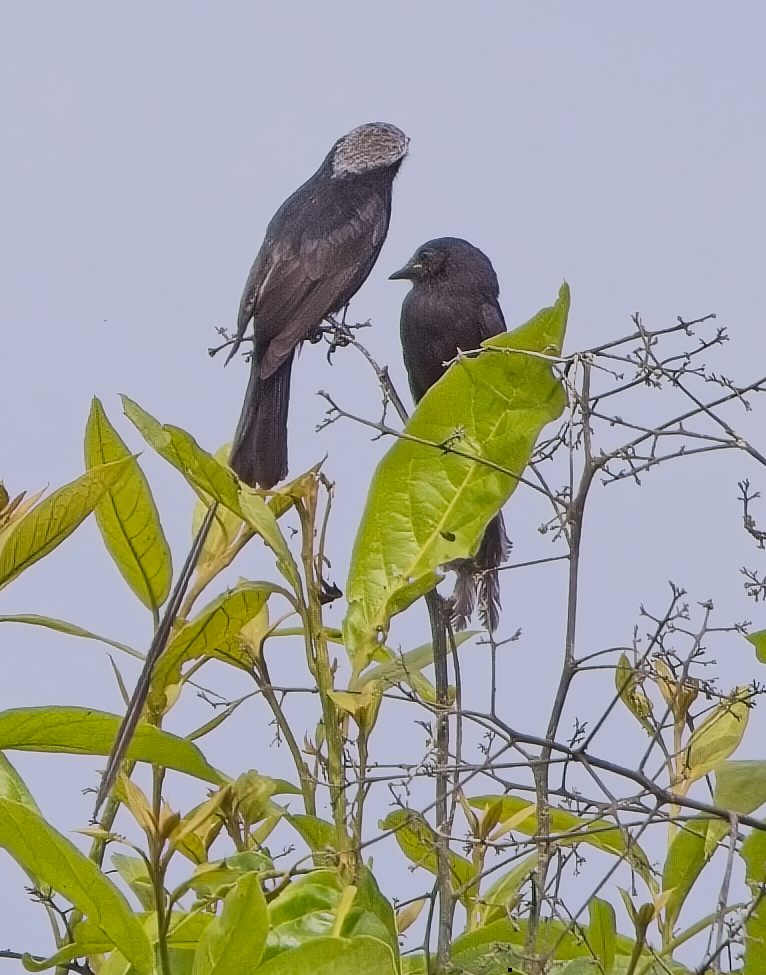
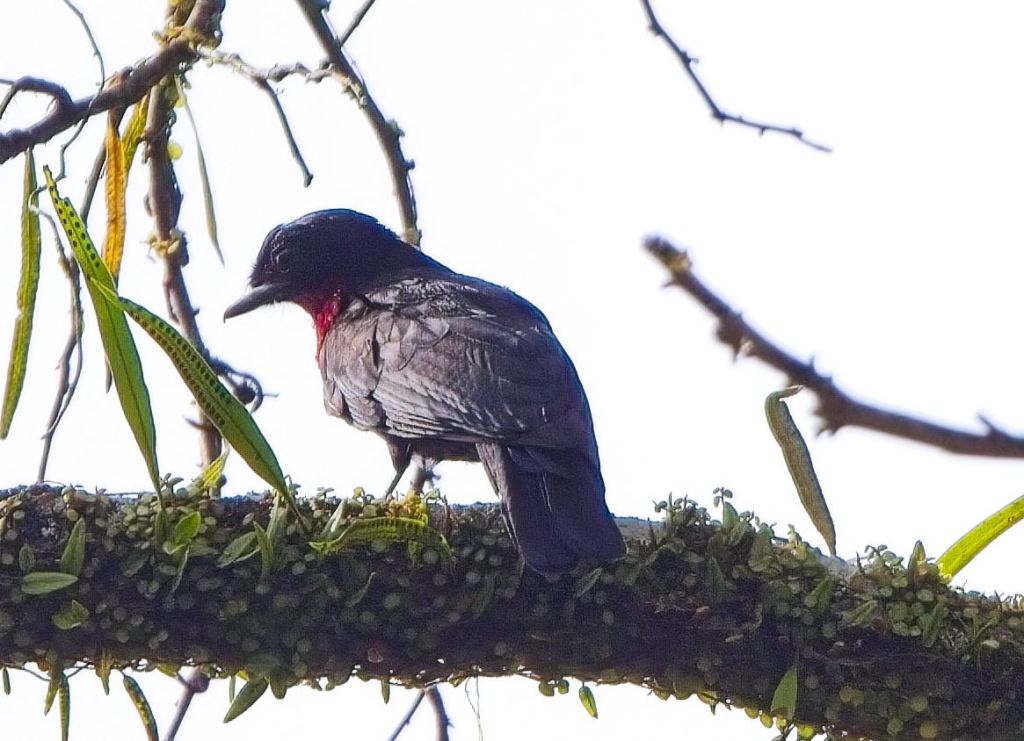
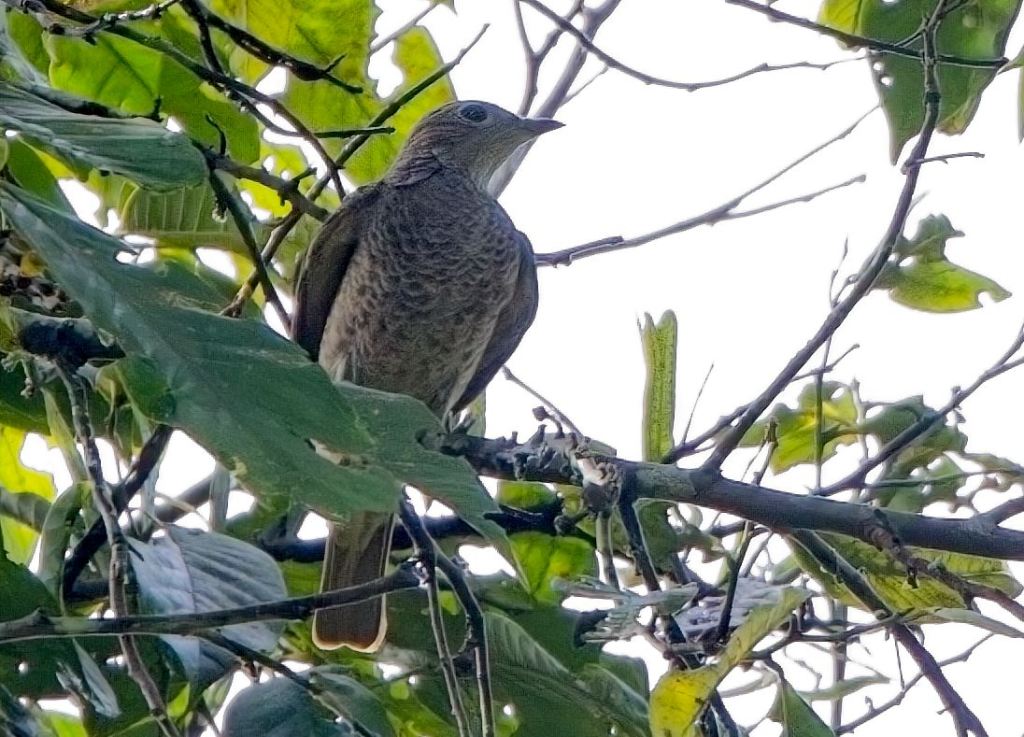
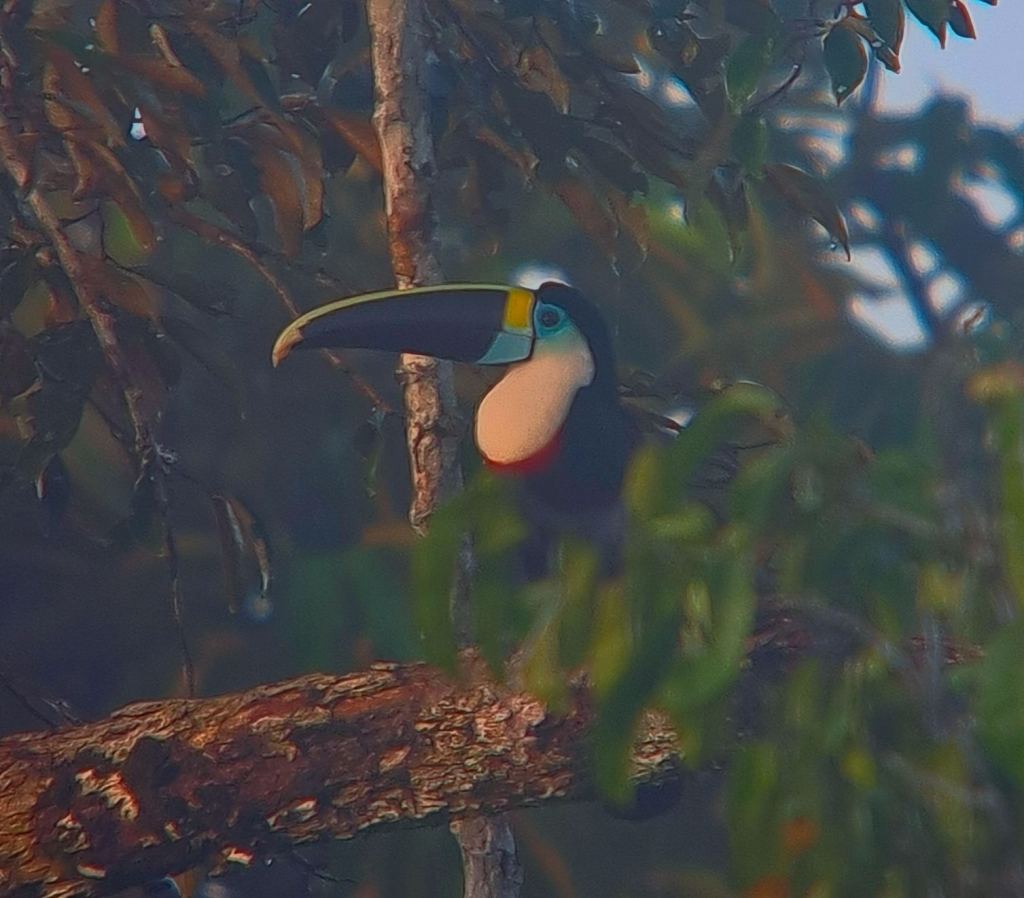
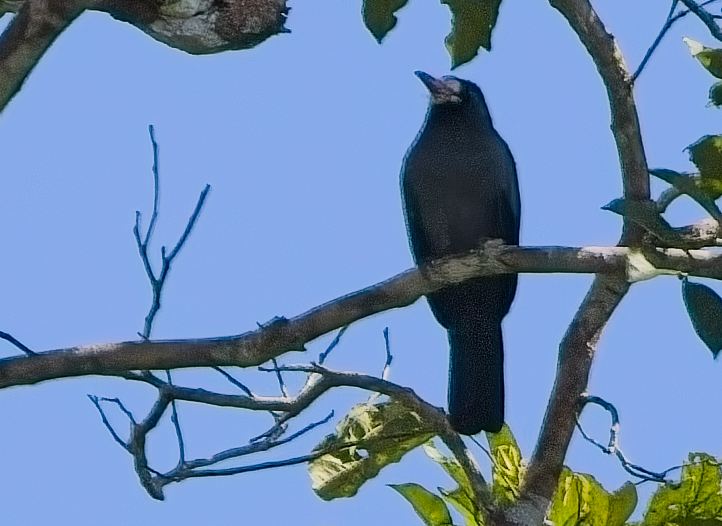
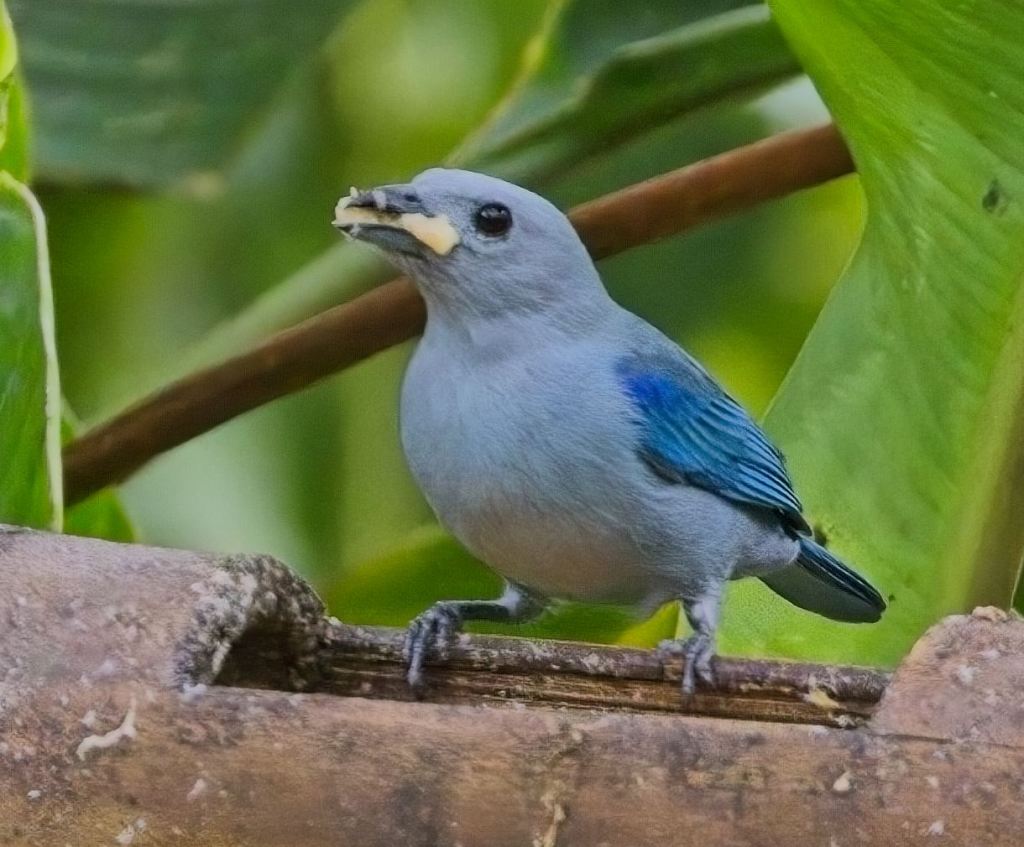
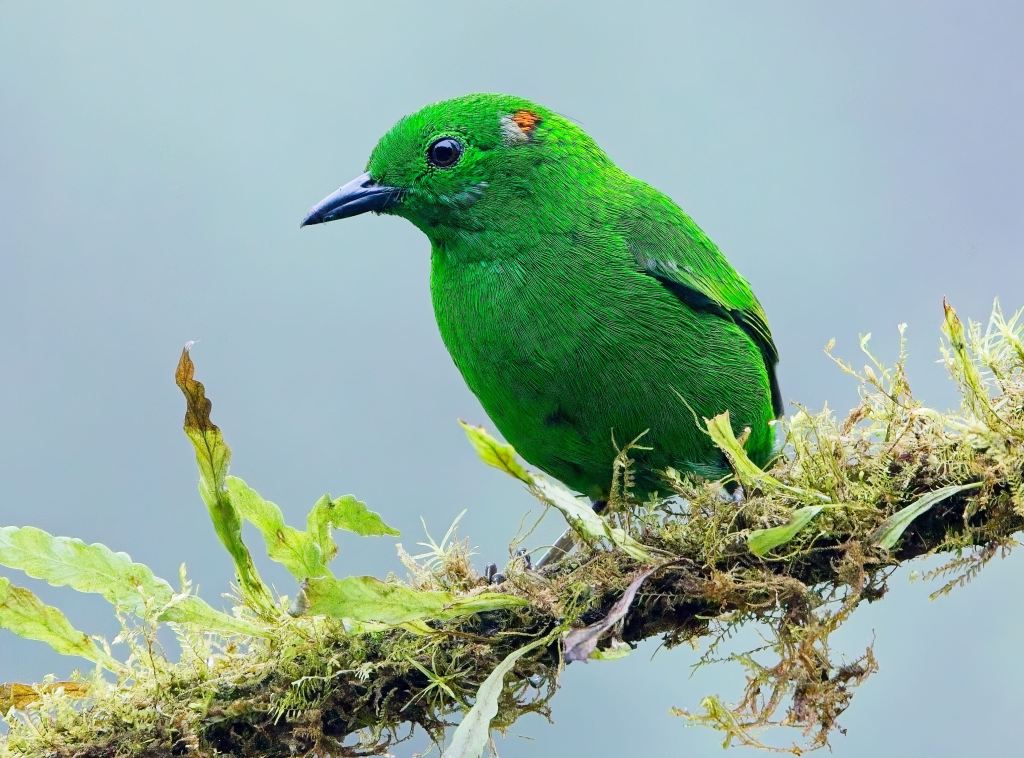
Our first targeted destination was to be the Ciénaga del Totumo–Volcán del Totumo, a large wetland located behind the Totumo volcano. There were birds along the way including some that would later be seen better at our first real stop and become life photos: Carib Grackle, Lesser Yellow-Headed Vulture, and Gray-Headed Martin. I also got my first lifer, a Glaucous Tanager, which brought my Colombia life list to 11 before reaching the Ciénaga. This was a fabulous first Colombia birding experience as we headed off to explore in a small motorized boat which brought us to many more birds and many photo opportunities.

Glaucous Tanager – First Lifer in Colombia

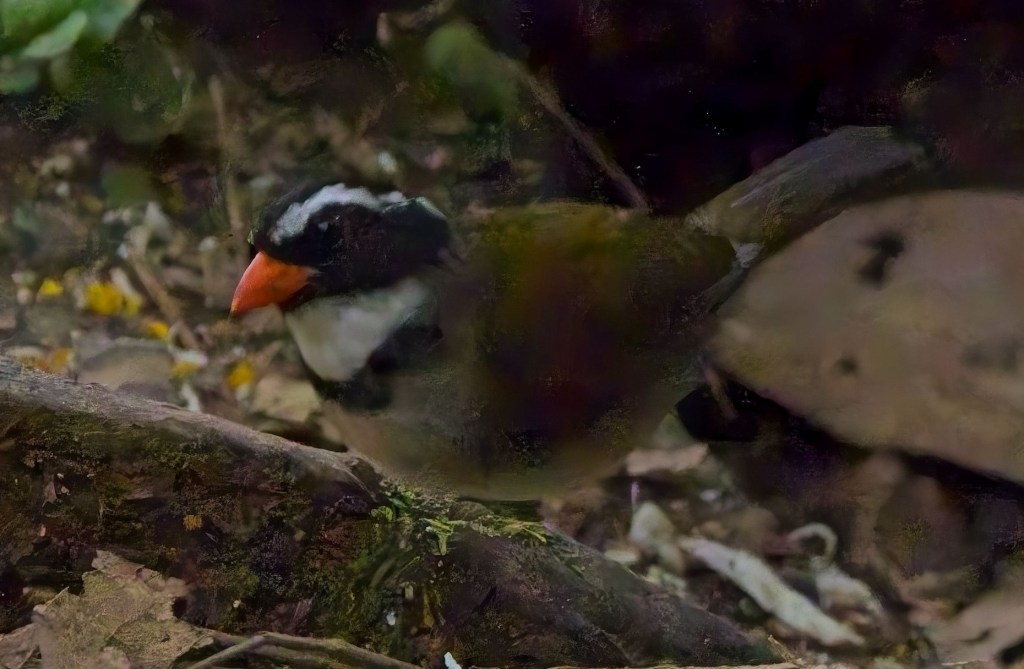
The Ciénaga was a great location with 47 species split almost 50/50 between water-related species and others. The same even split applied to the 6 world lifers and despite the water orientation, there were actually more life photos of the non-water birds. This visit also included one of the rarest birds and photos of the entire trip as Breiner expertly found and then called out a very rare Yellow-breasted Crake an early demonstration of Breiner’s expertise and skill. Previously there had been fewer than 10 photos of this species in all of Colombia. It is hard not to include all of the 25 species photographed on this visit, but I will limit them here to just the lifers (life list or photo) — and well a few others.
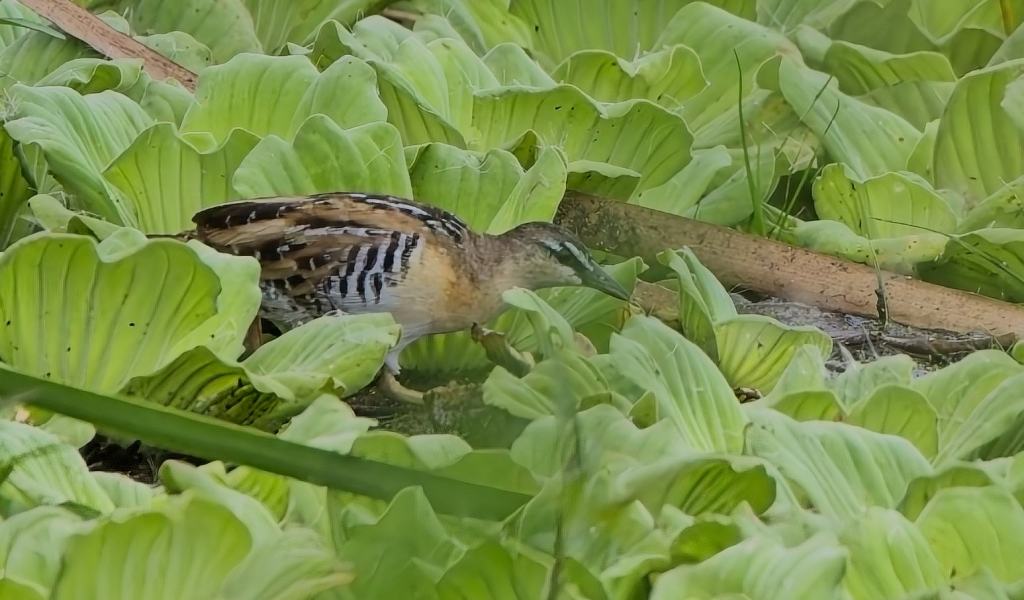
Rarely photographed Yellow-breasted Crake
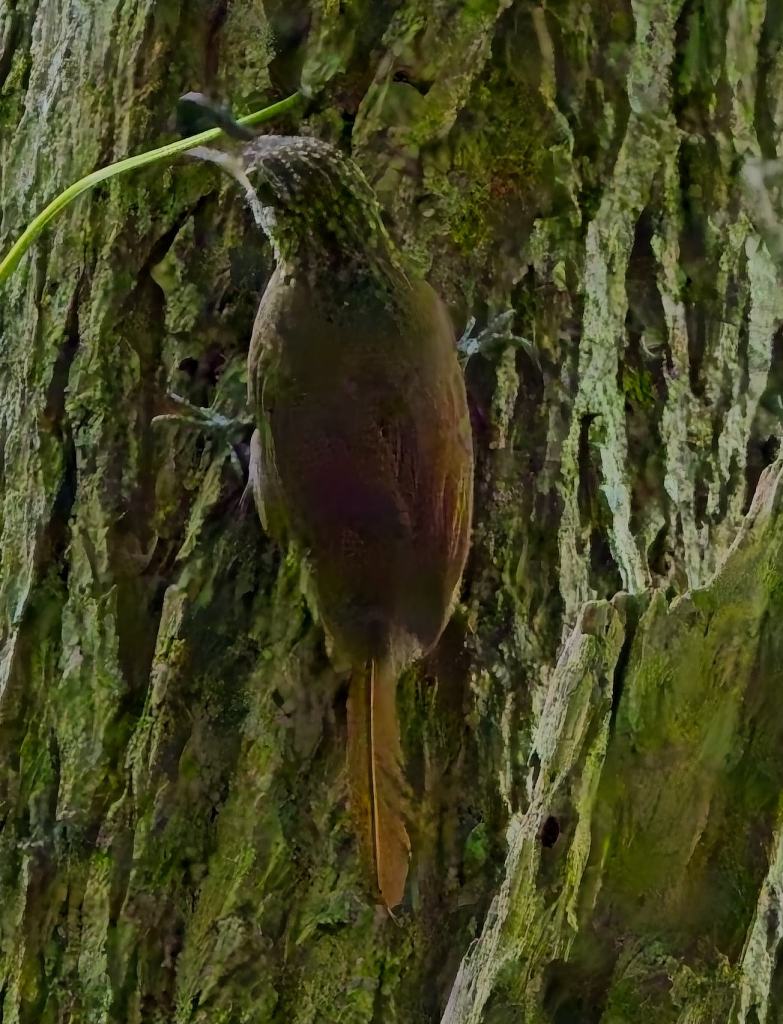
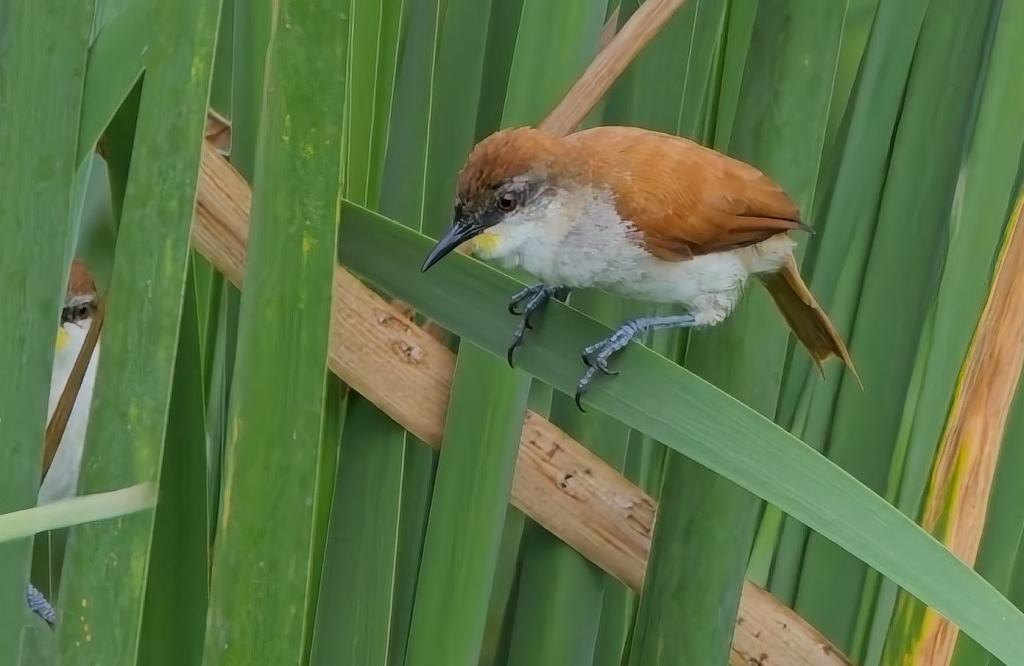
Yellow-chinned Spinetail – Lifer
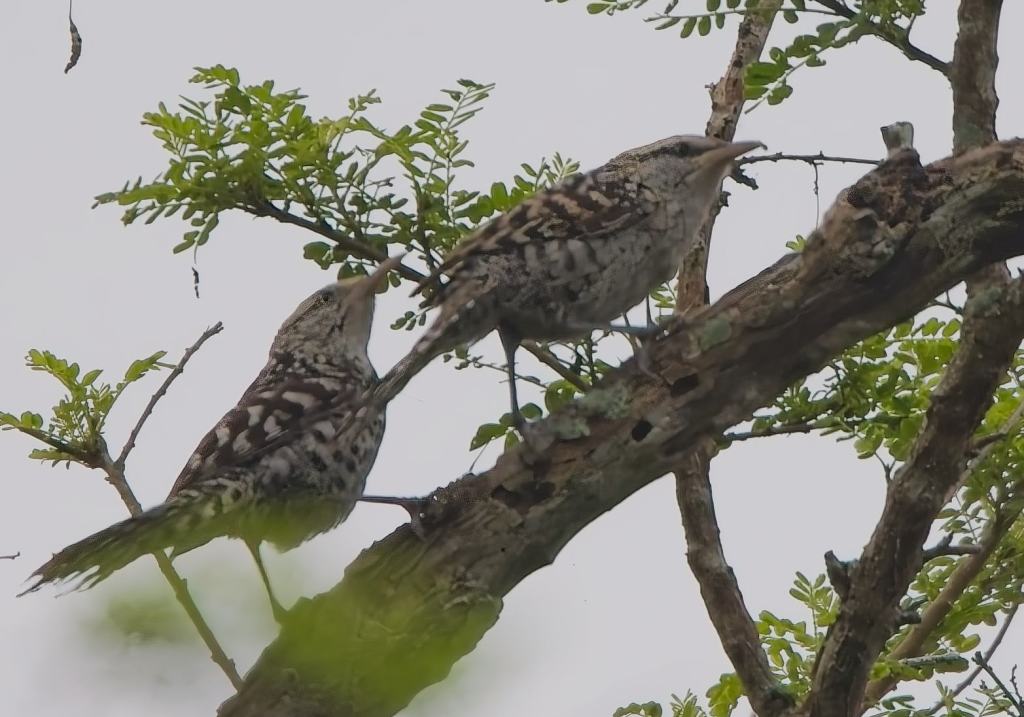
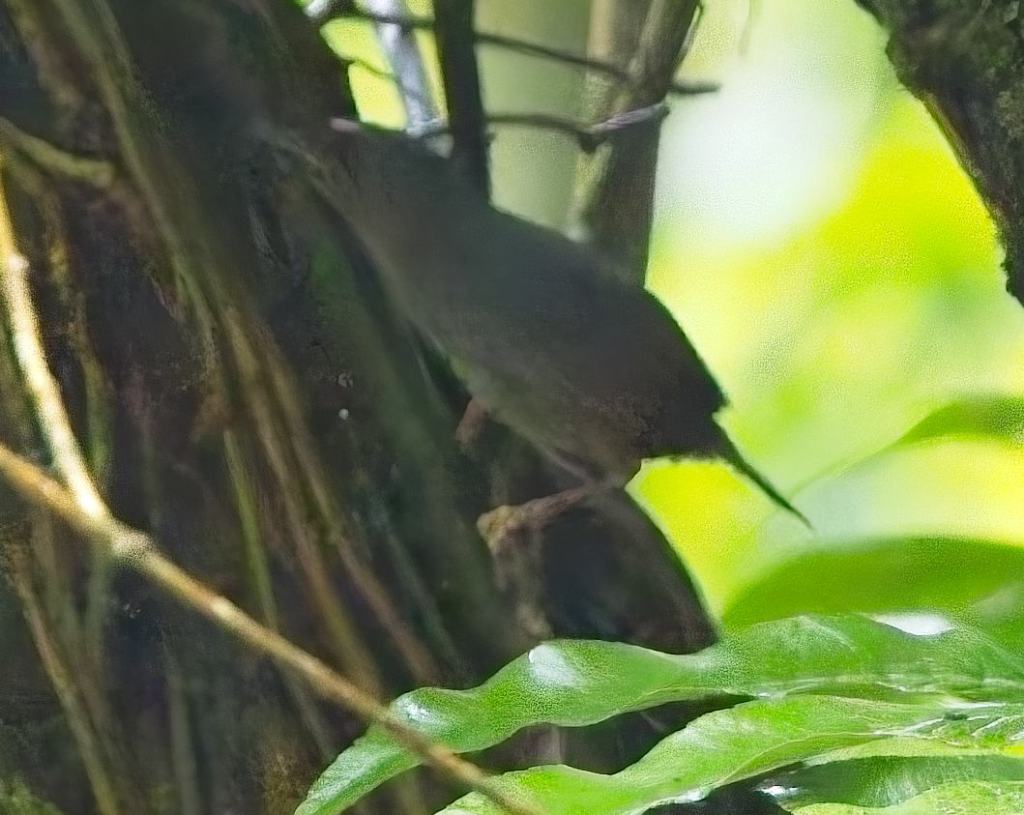
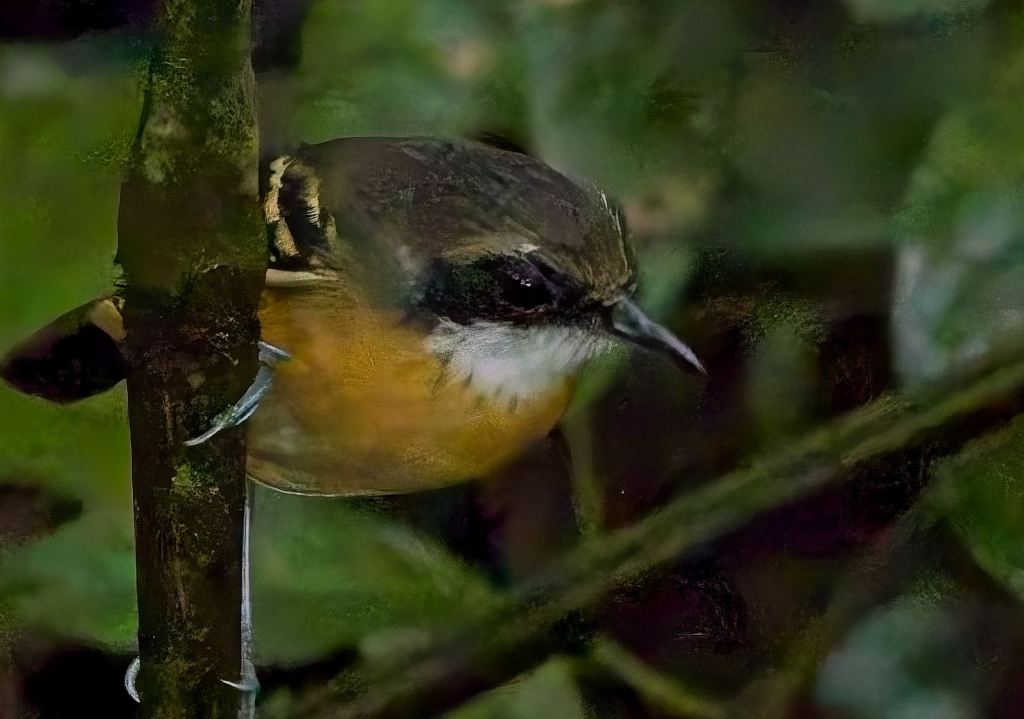
Bicolored Wren – Lifer
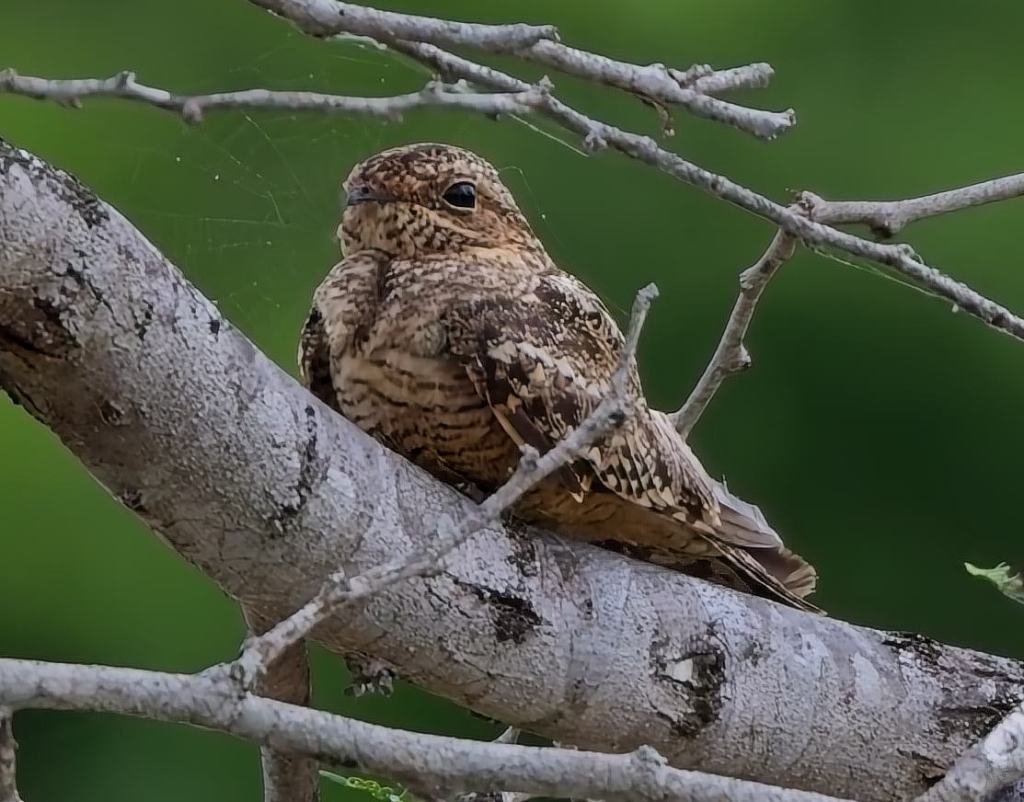
White-tailed Nightjar – Lifer
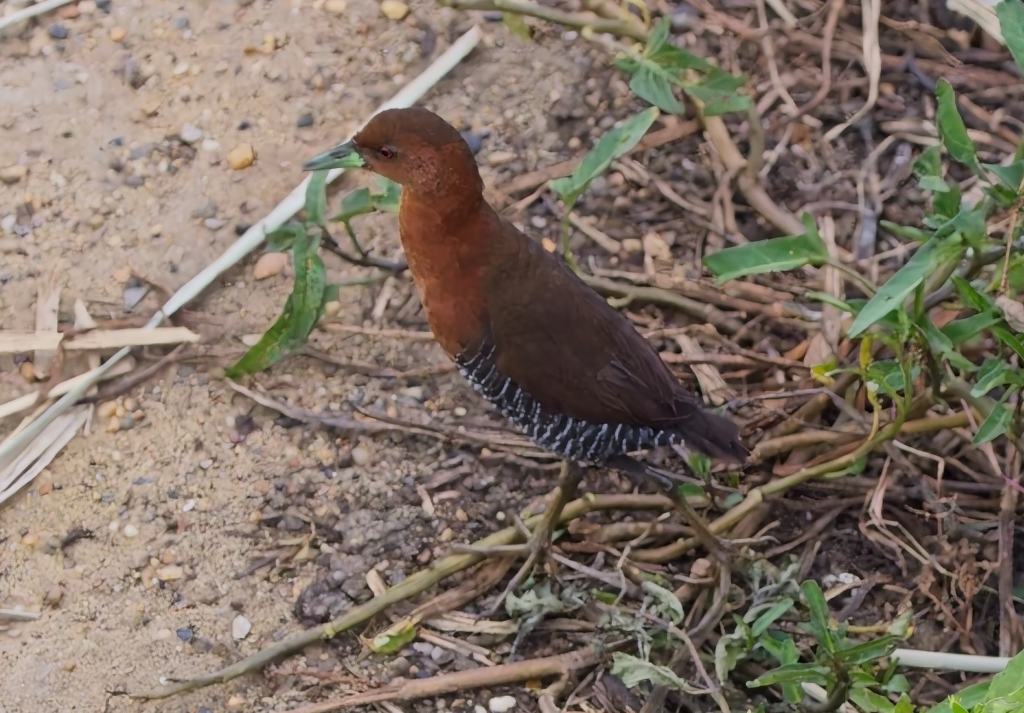
White-throated Crake – Lifer
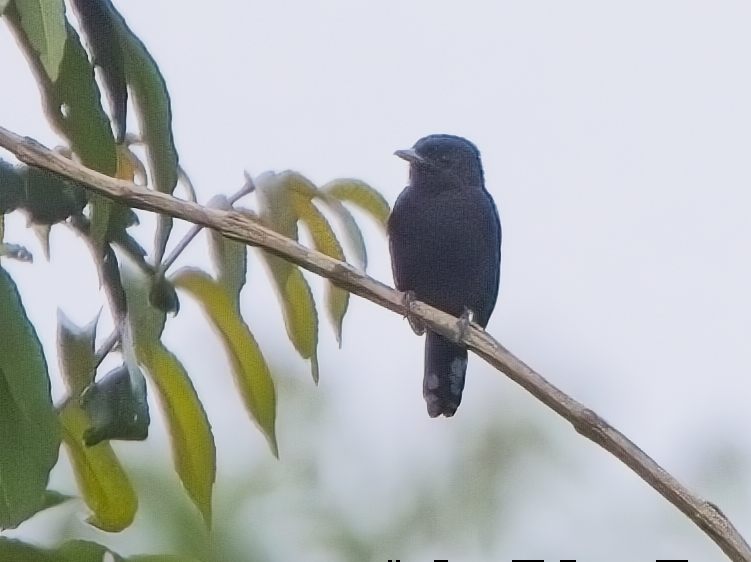
Black-crested Antshrike – Life Photo
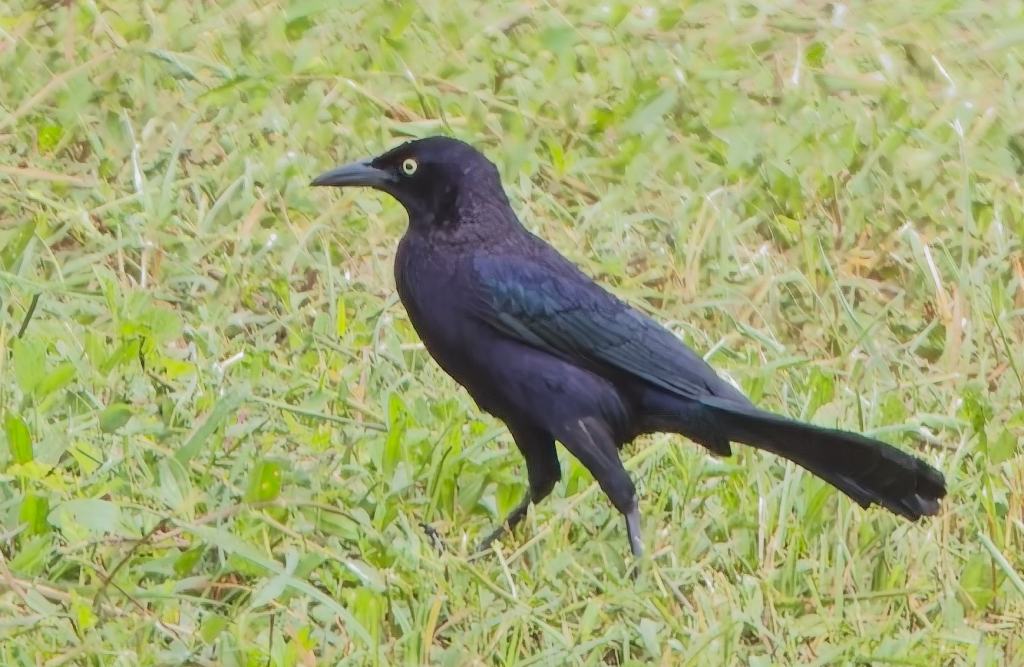
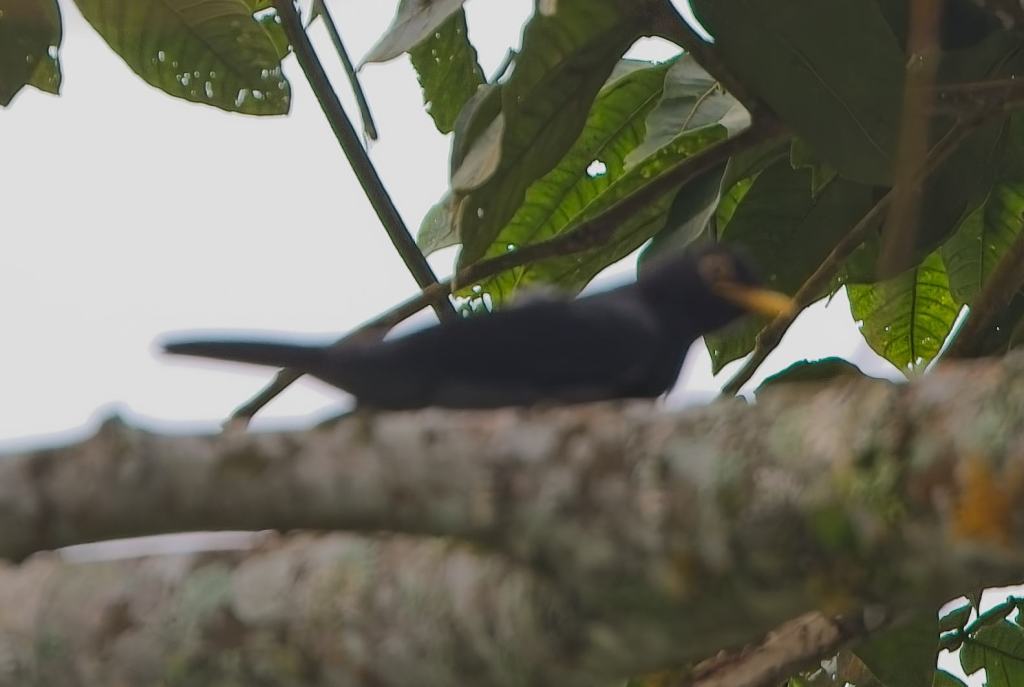
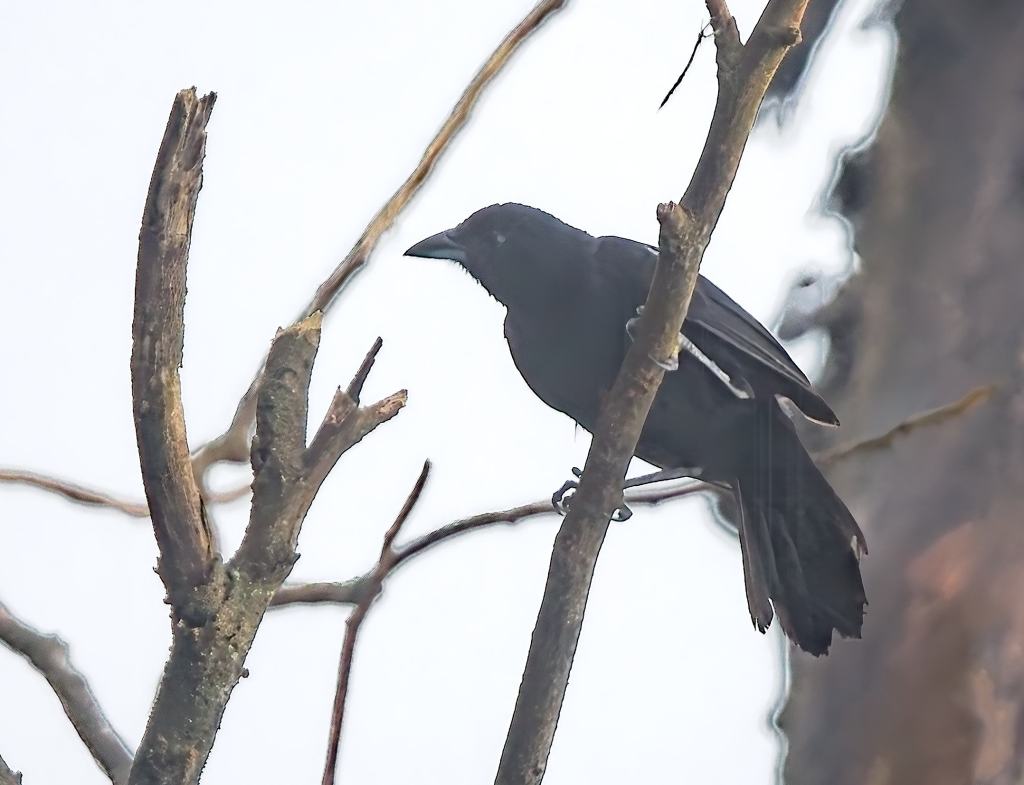
Carib Grackle – Life Photo
Bare-faced Ibis – Life Photo
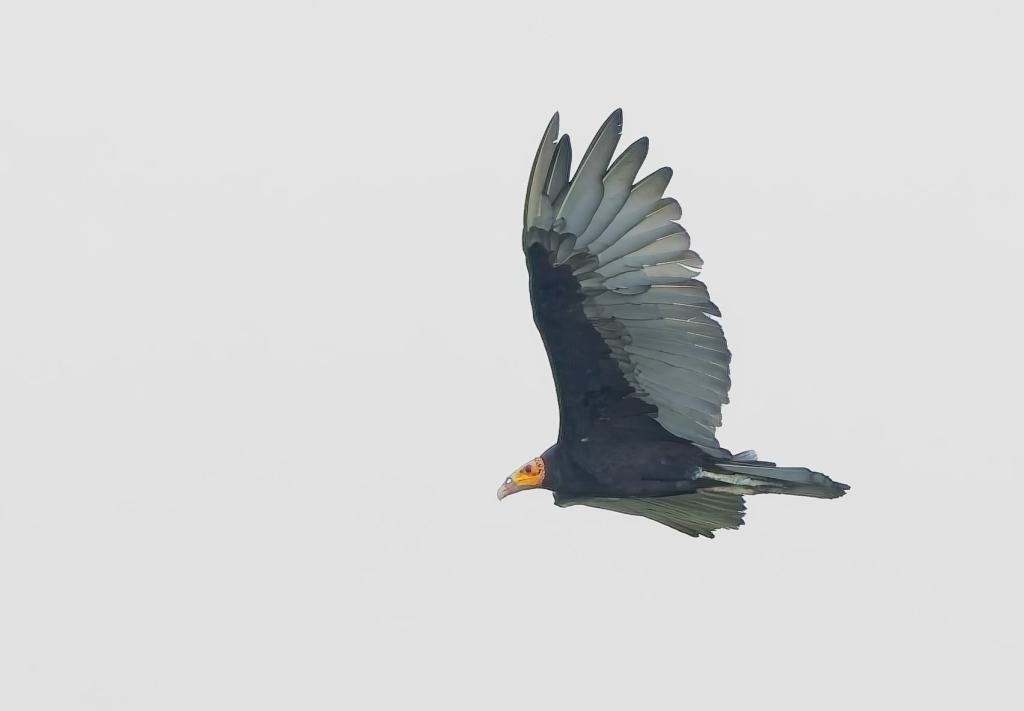
Lesser Yellow-headed Vulture – Life Photo
Gray-breasted Martin – Life Photo
Yellow-hooded Blackbird – Life Photo
Cocoi Heron – Life Photo

Other photos that were not lifers or life photos.

We added a few more species at a last stop for the day and headed to our hotel. Totals for the day: 57 species; 7 lifers and 11 life photos – excellent for barely a half day of birding.

Day 2 – June 21st

As is often the case with birding trips it was an early morning start to be able to get to our target area for the morning – the Matute Birding Nature Reserve, in a tropical dry forest south and west of Barranquilla, fairly close to Cartagena. We birded there from just past 6 a.m. until noon. Seventeen of the 46 species seen there were lifers for me. The 32 species photographed included 10 of those lifers (getting photos of two of the others later in the trip) and life photos of 8 other species. I have grouped the lifers with photos in the first gallery and life photos but not lifers in the second.
Life Photos of Non-lifers

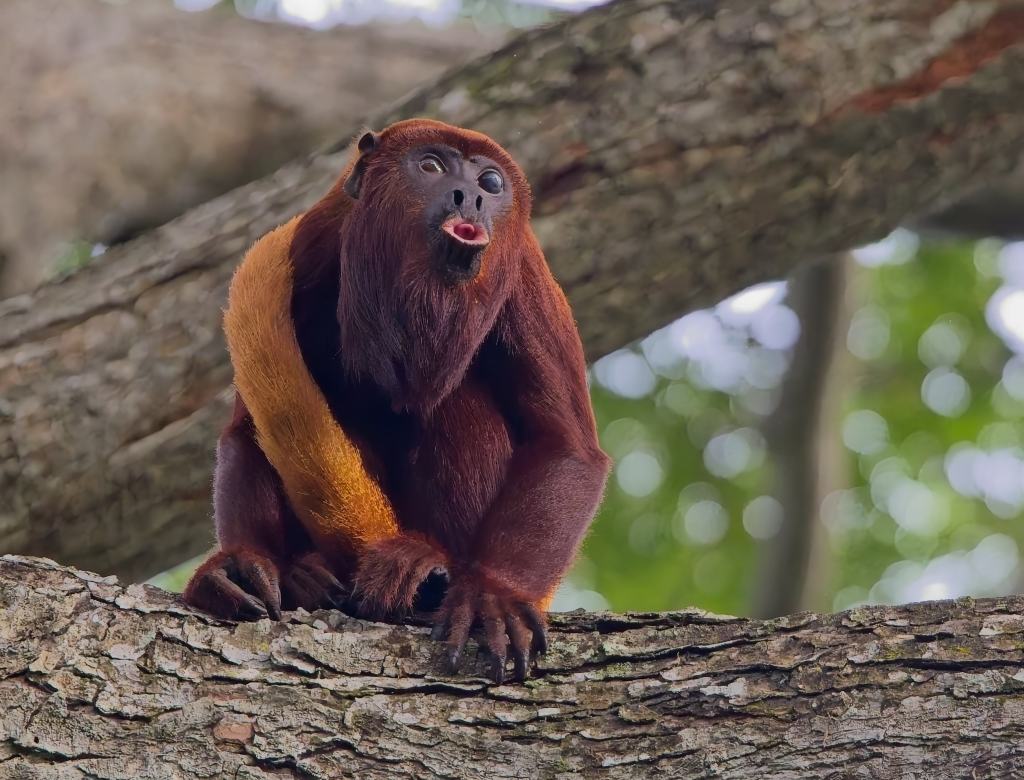
A highlight of our visit to the Matute Reserve was several interactions with resident Red Howler Monkeys with some excellent views and photo opportunities. We also had our only Capybara of the trip – a brief distant view before it scurried off the road in front of us providing a single quick chance for a photo.
Capybara

Although neither lifers nor life photos, I have to include photos of some iconic tropical species: Rufous-tailed Jacamar, Whooping Motmot (it actually does “whoop”) and Keel-billed Toucan.
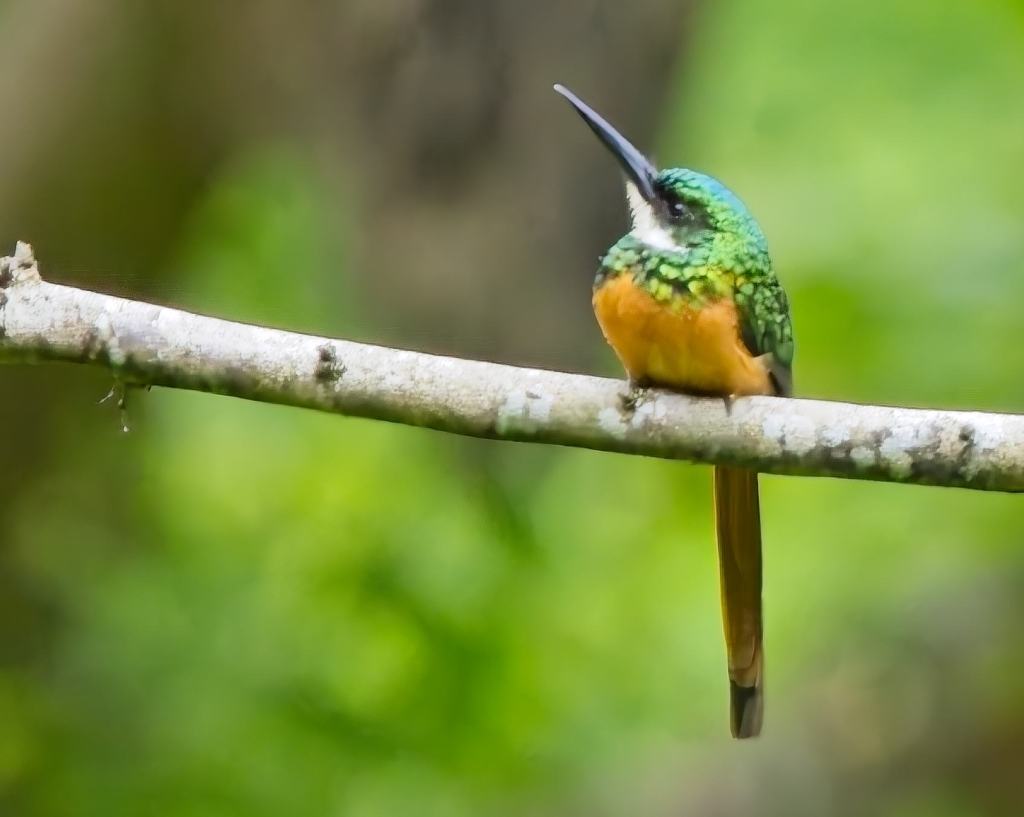
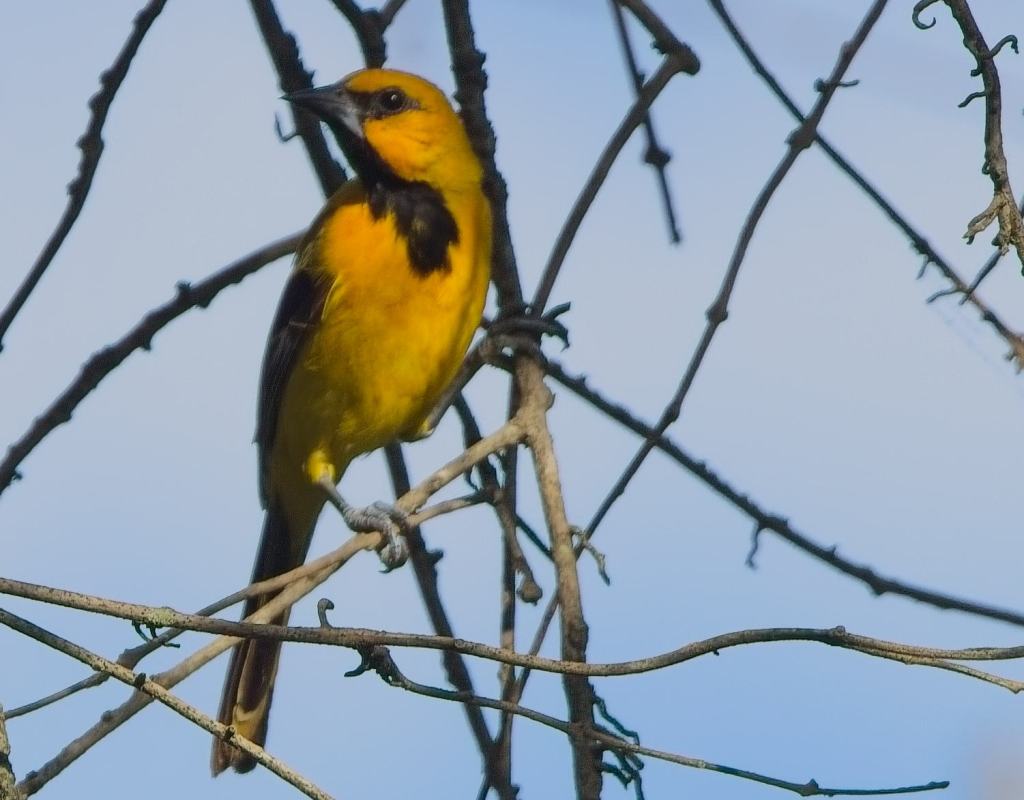
After a long and large lunch on the road, we headed back to Barranquilla with a productive stop at a marshy/wetland area along a branch of the Magdalena River. The only lifer was of an unphotographed Yellow Billed Tern but I did get life photos of a Yellow Oriole, Northern Screamer, and Olive-gray Saltator as well as nice photos of Snail Kite, Ruddy Ground-Dove, Smooth Billed Anis, and Southern Lapwing.
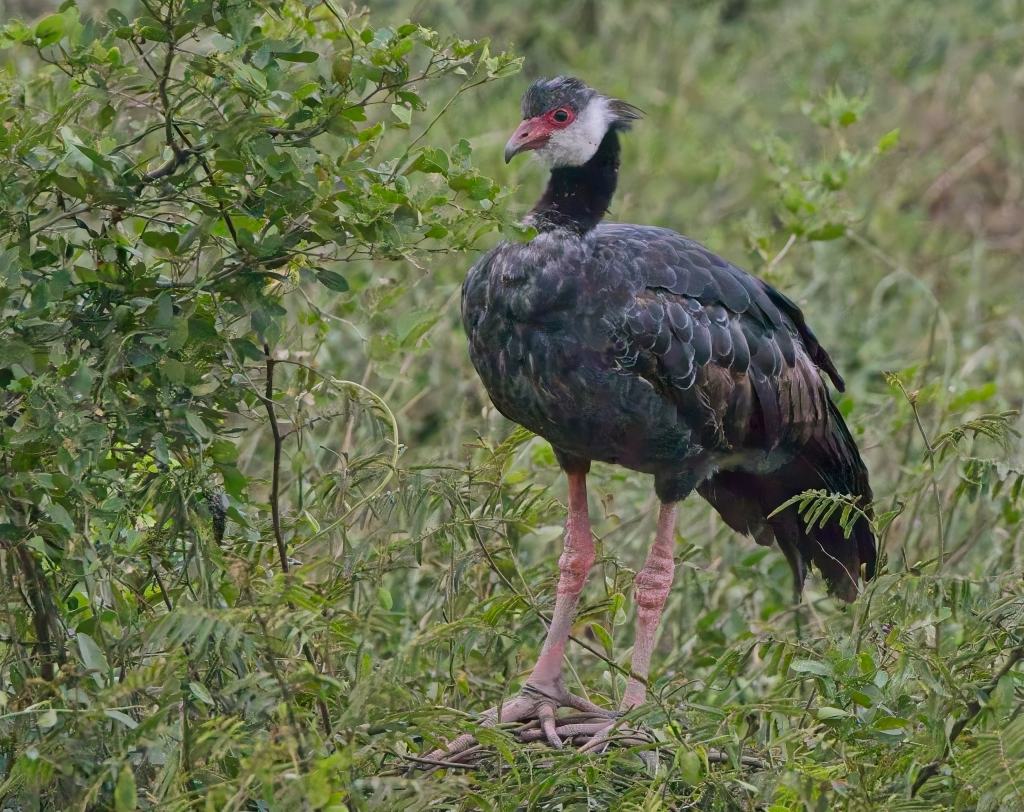
Northern Screamer – Life Photo
Yellow Oriole – Life Photo
Olive-gray Saltator – Life Photo

Totals for the day: 70 species; 18 lifers and 21 life photos. My Colombia list was at 102 species.

Day 3 – June 22

W were off on an early start evidenced by a first Ebird list beginning at 5:36 a.m. We would be working our way East towards Santa Marta but after picking up some miscellaneous species, we stopped at a somewhat odd mixed habitat place noted as the first of many stops along Troncal del Caribe in our Ebird reports which is much better sounding than the translation which is “Caribbean Trunk Road” – essentially a mix of places known to Breiner. Altogether there were 5 lists from the area and we had 69 species (not including the pet Muscovy Ducks or Peacocks). Twenty-five were new for Colombia, 7 were lifers and I added 9 life photos (a couple not worth sharing!). Unfortunately I was not quick enough to get what would have been a life photo of a flyby Amazon Kingfisher. It could have landed on any of a number of photo friendly perches, but just kept on going – little bastard!

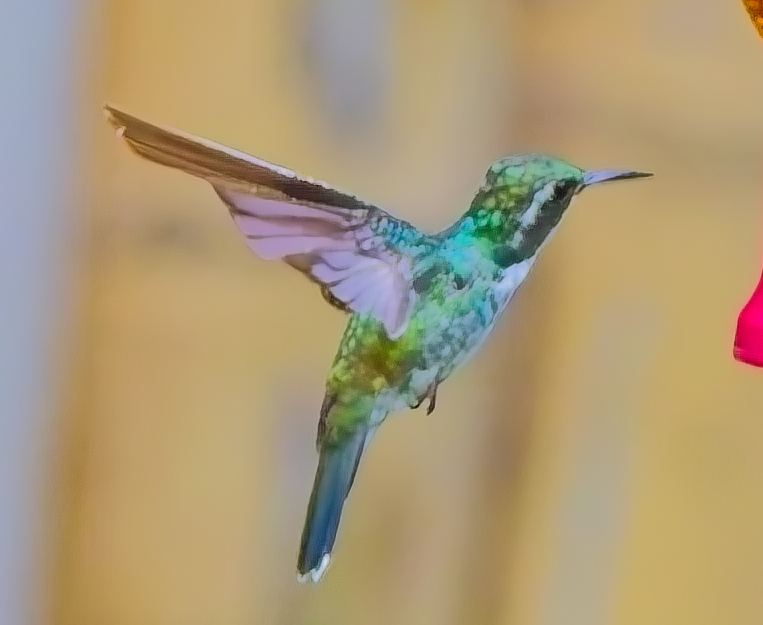
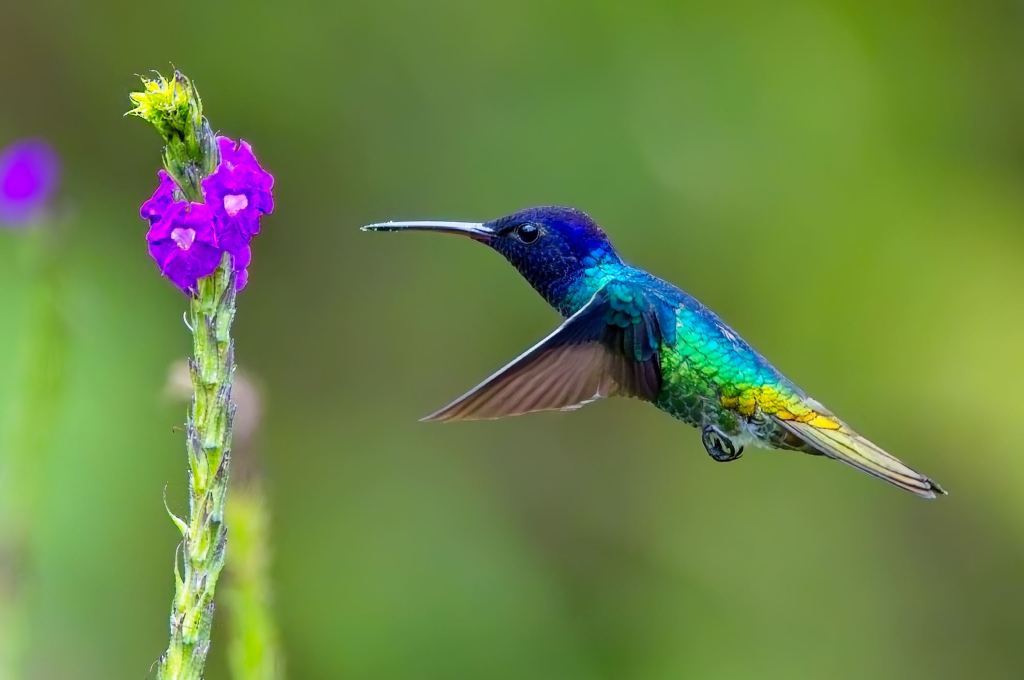
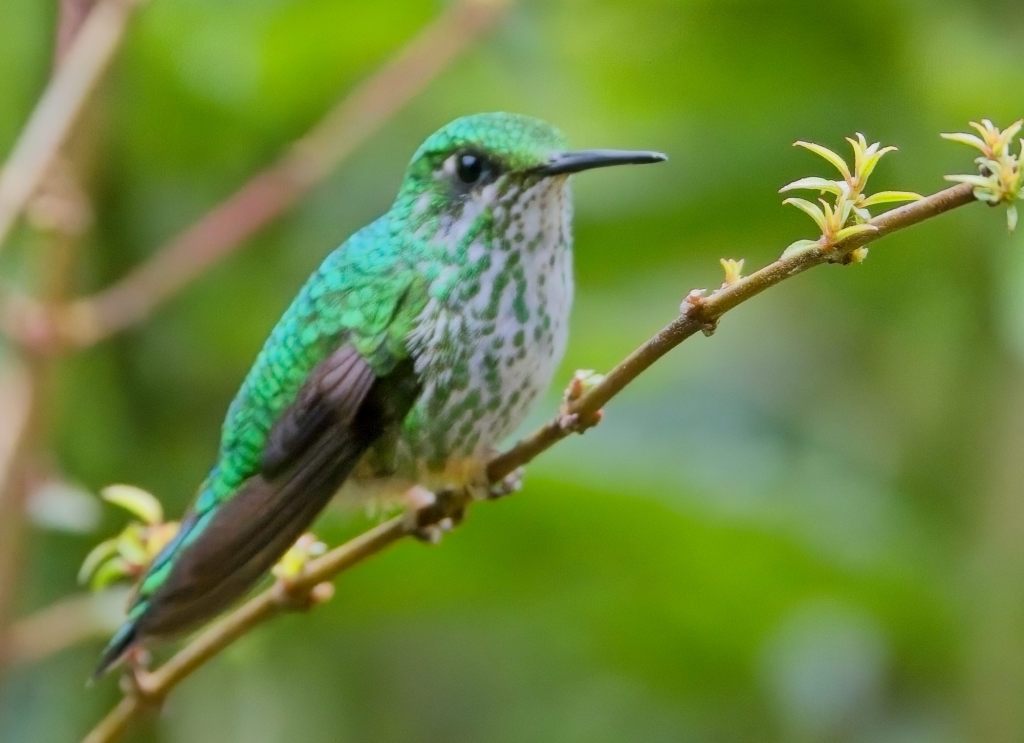
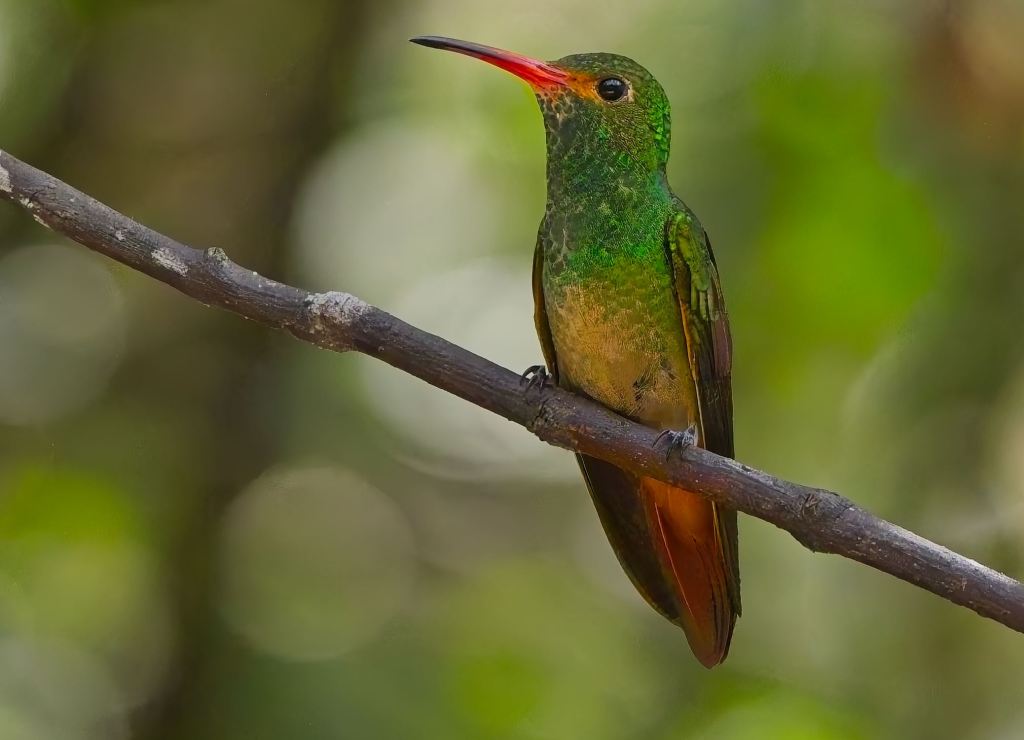
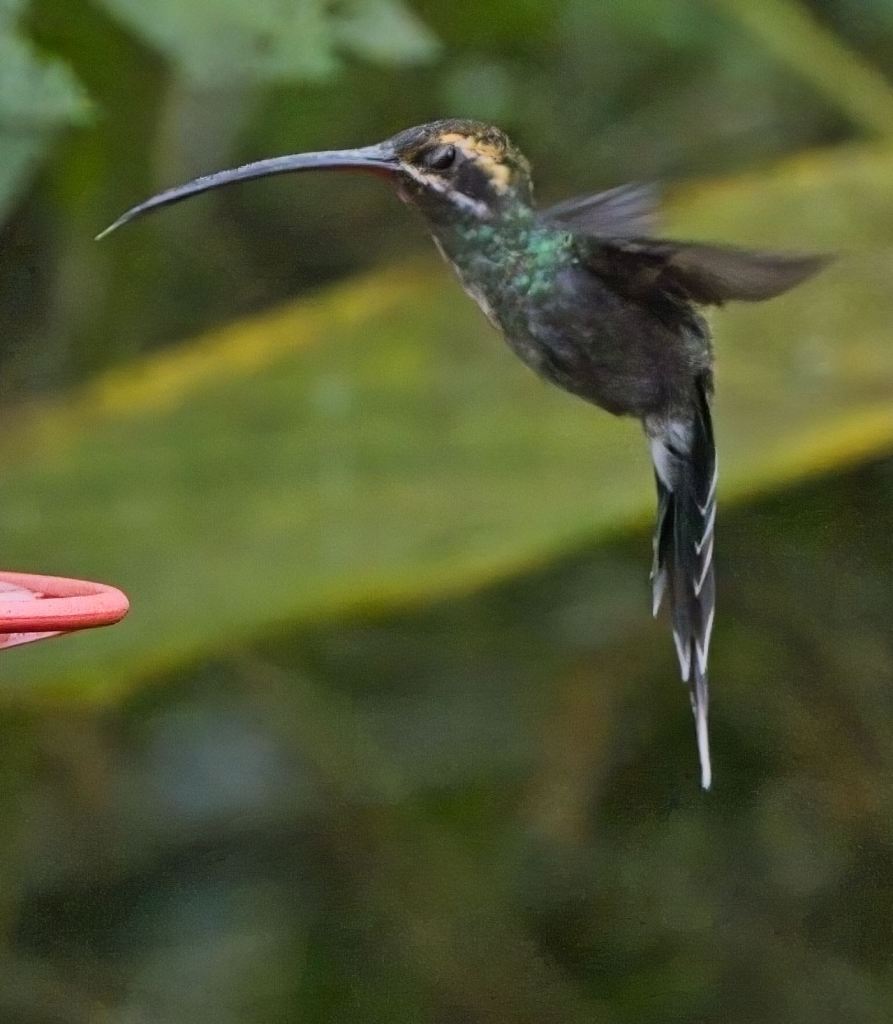
Shining Green Hummingbird – Lifer
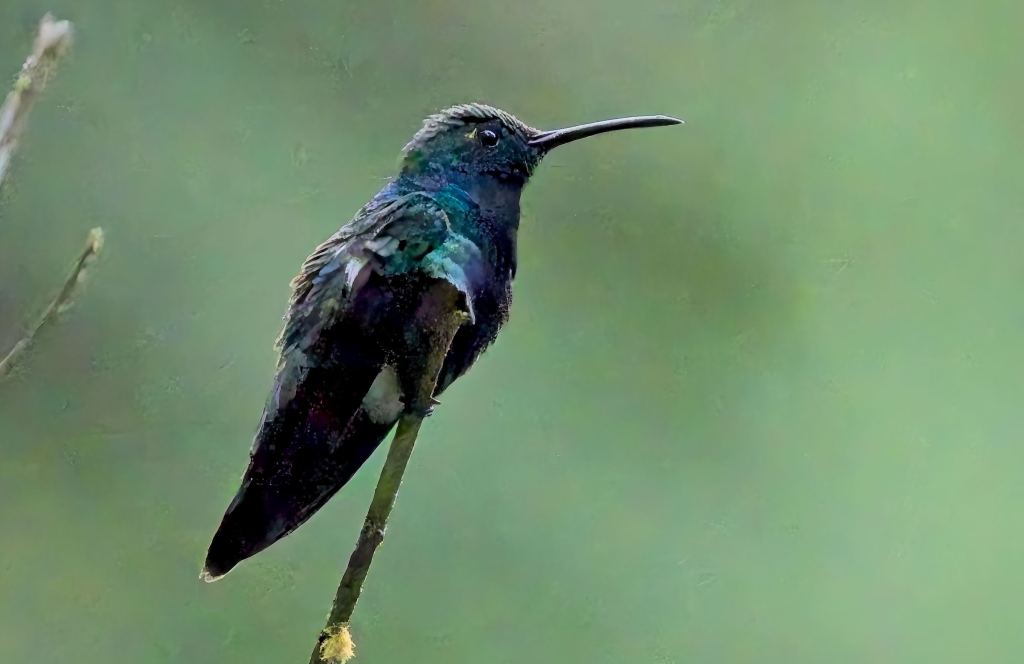
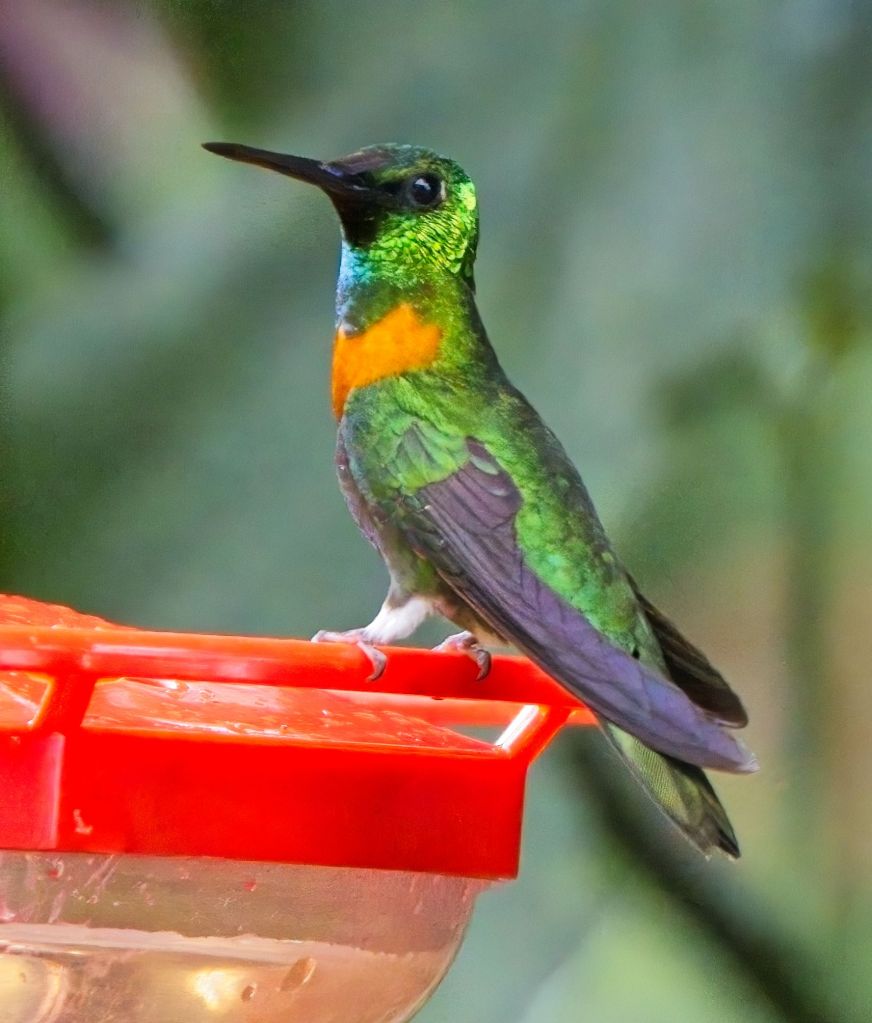
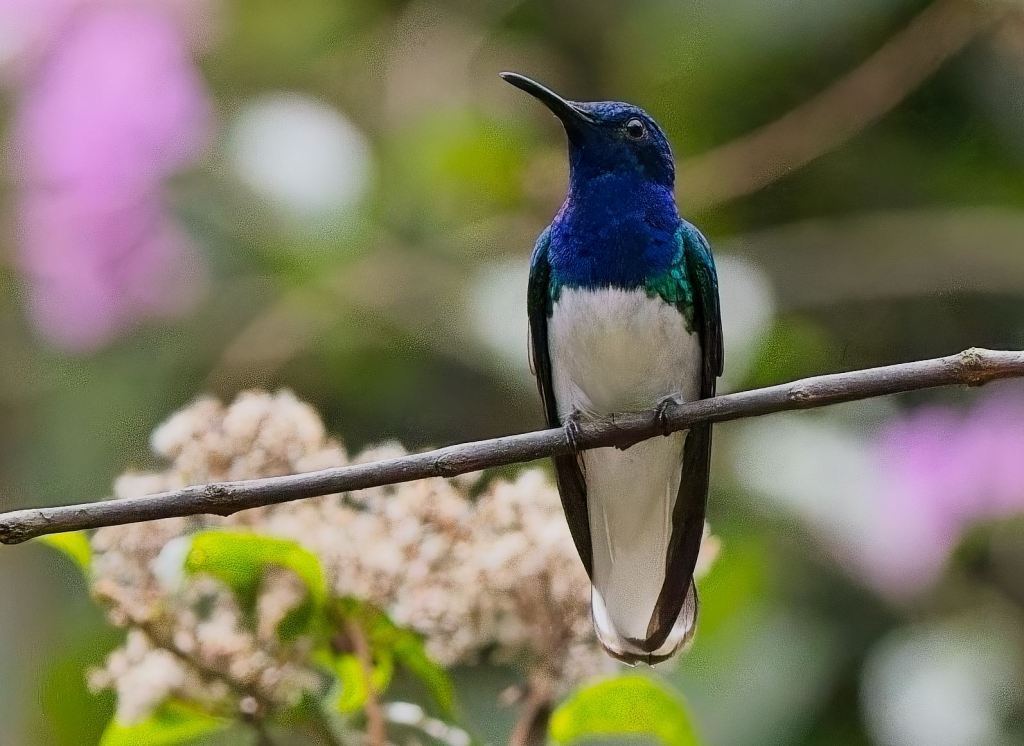
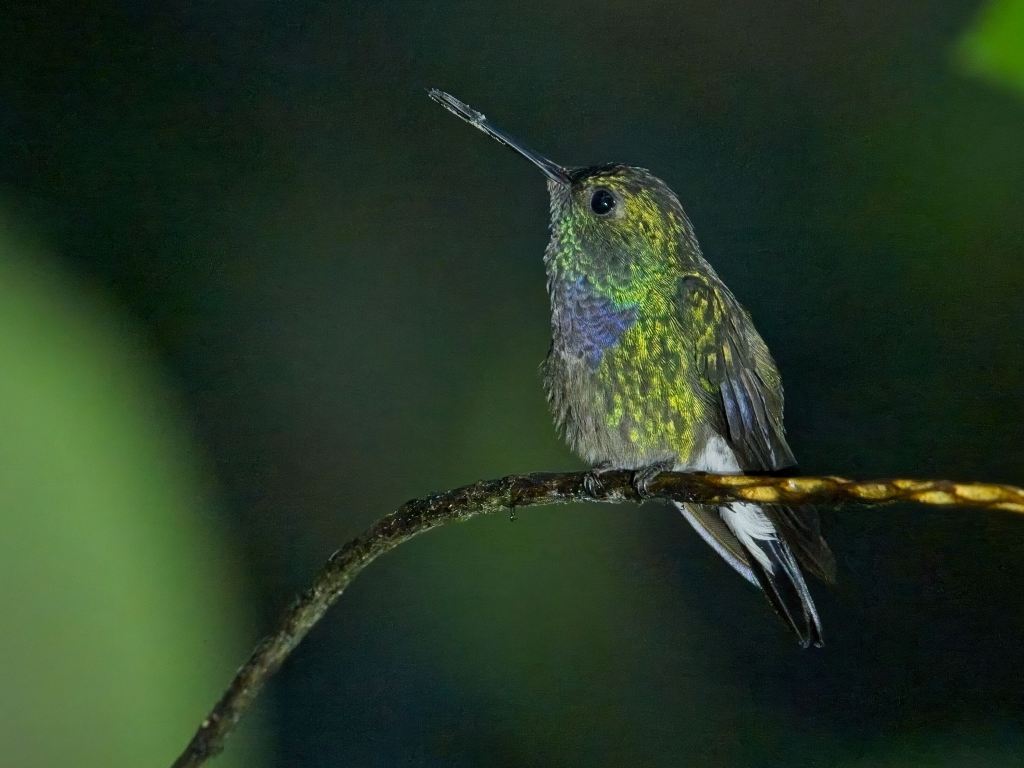
Sapphire-bellied Hummingbird – Lifer
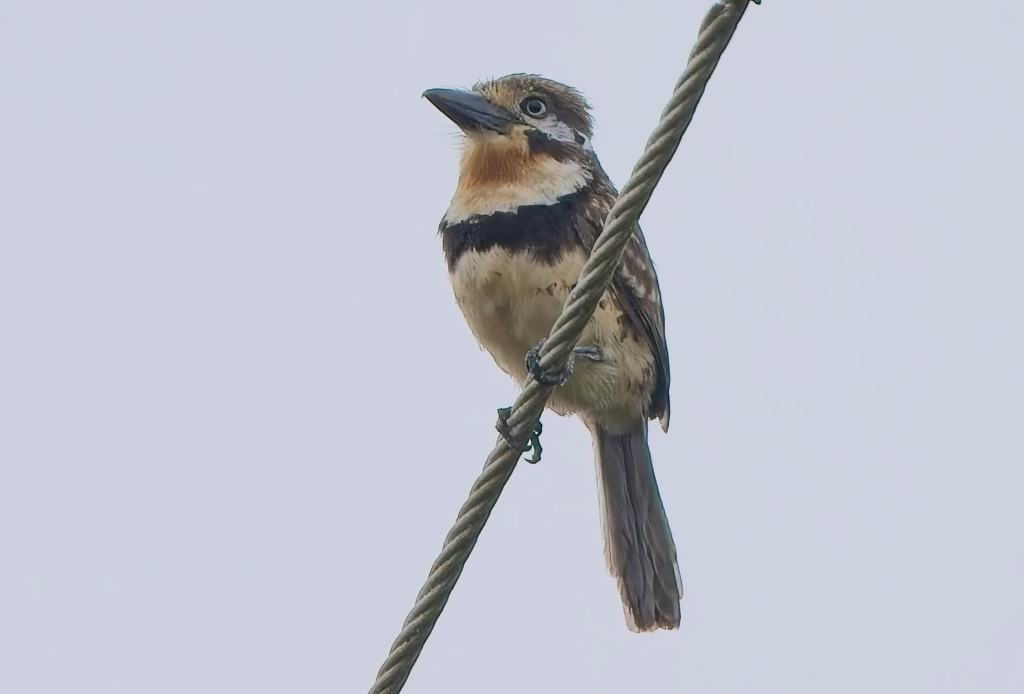
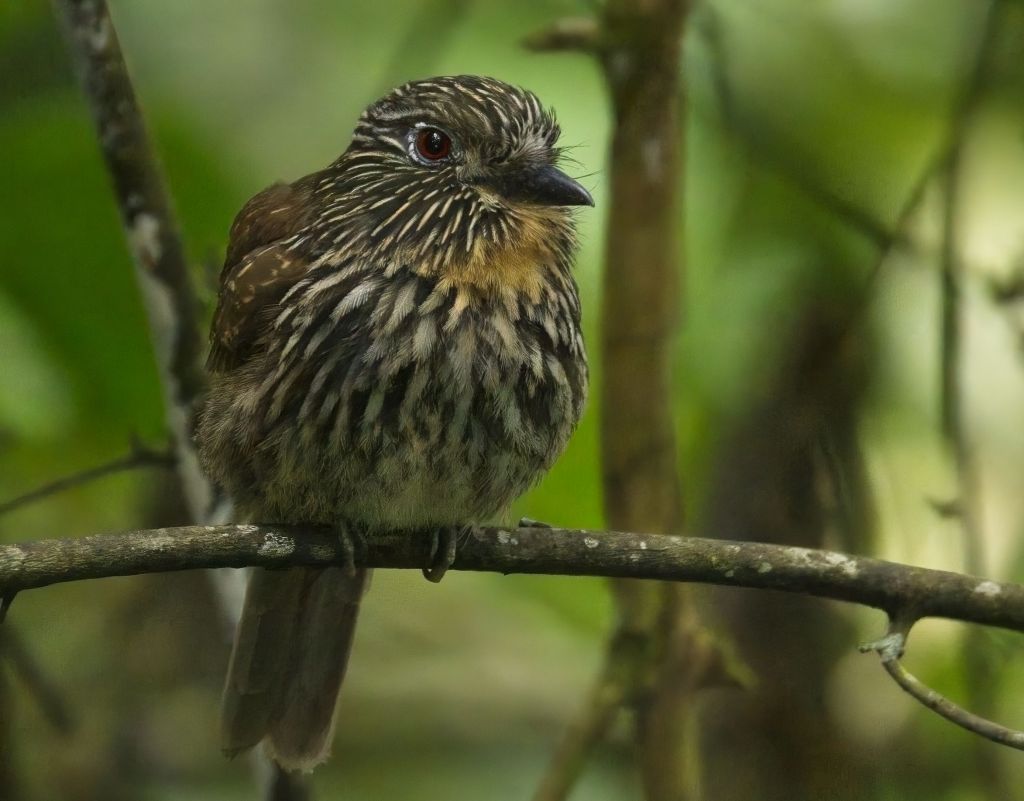
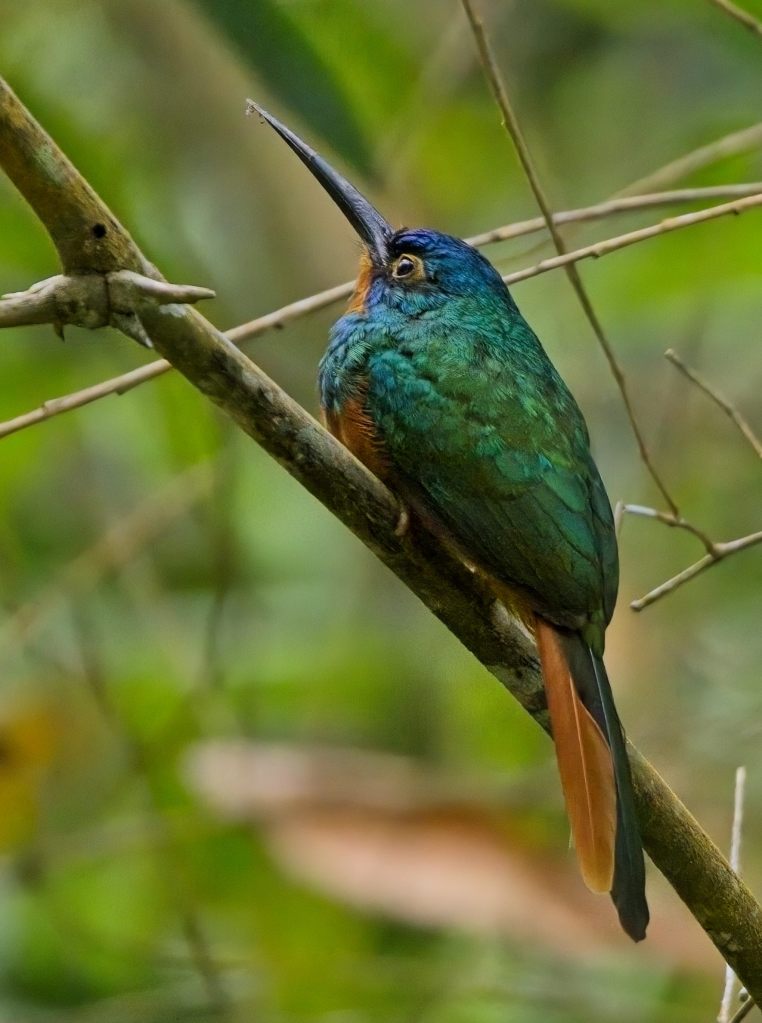
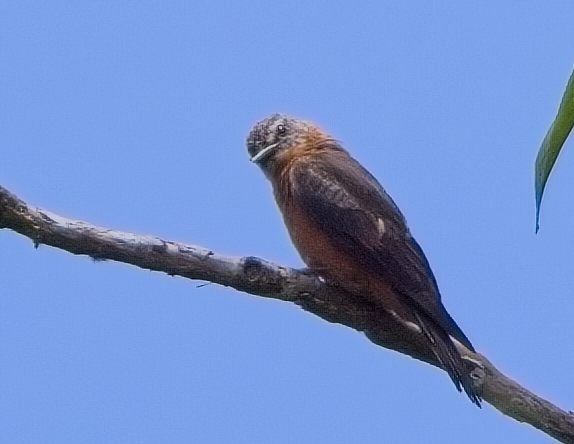
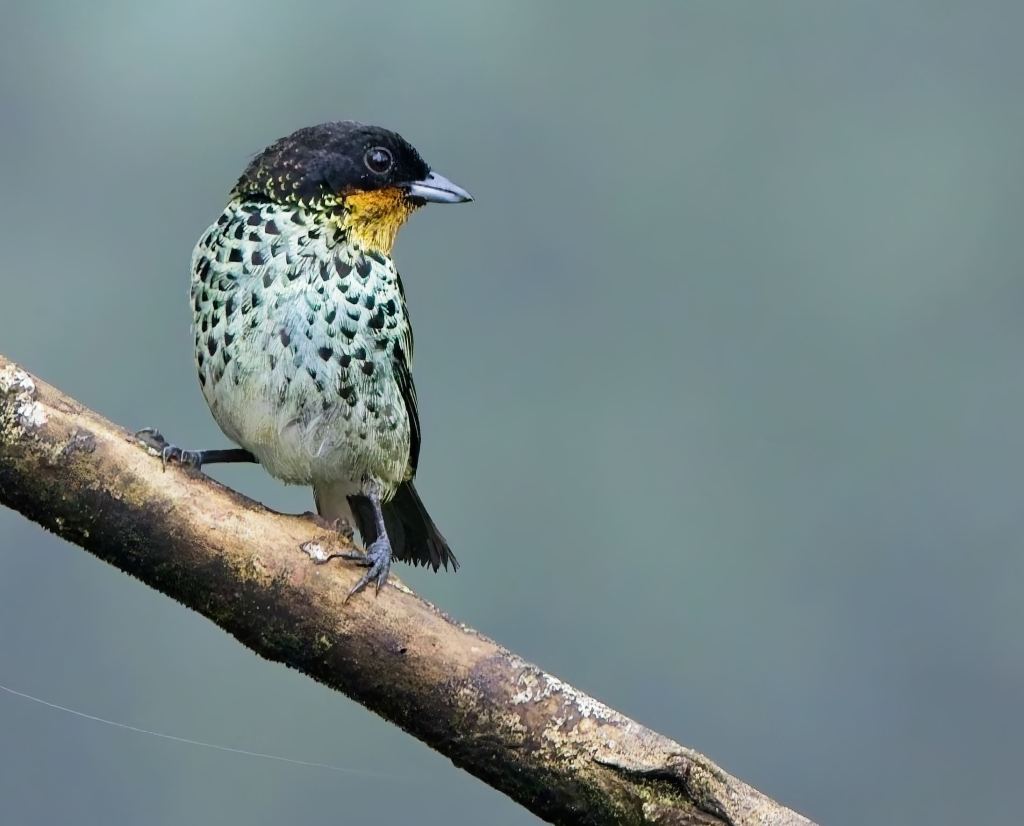
Russet-throated Puffbird – Lifer
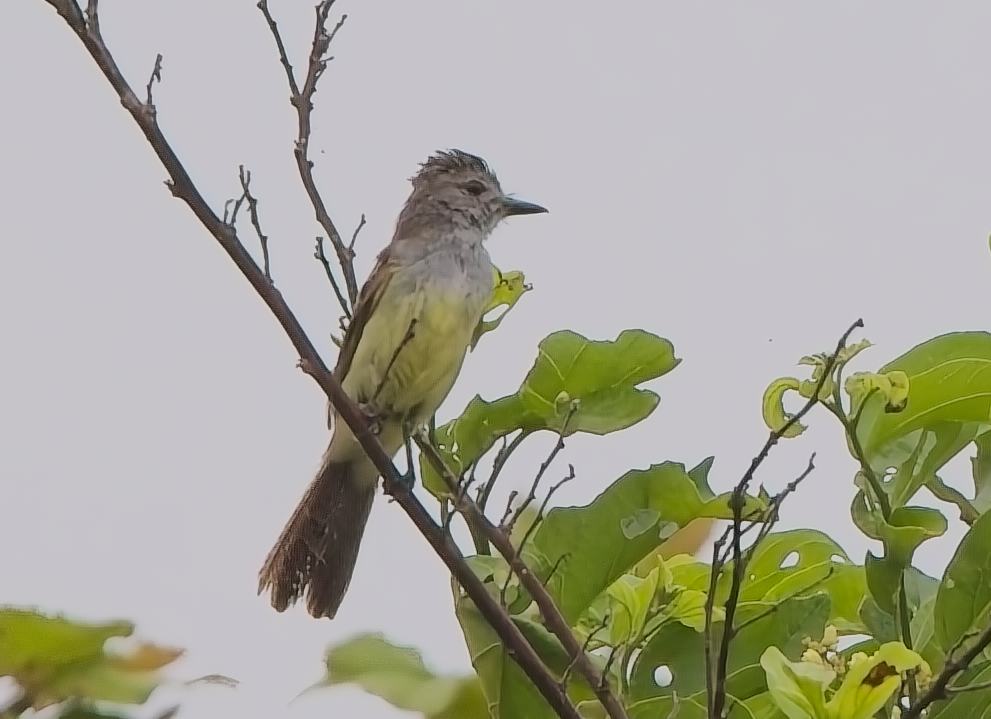
Panama Flycatcher – Lifer
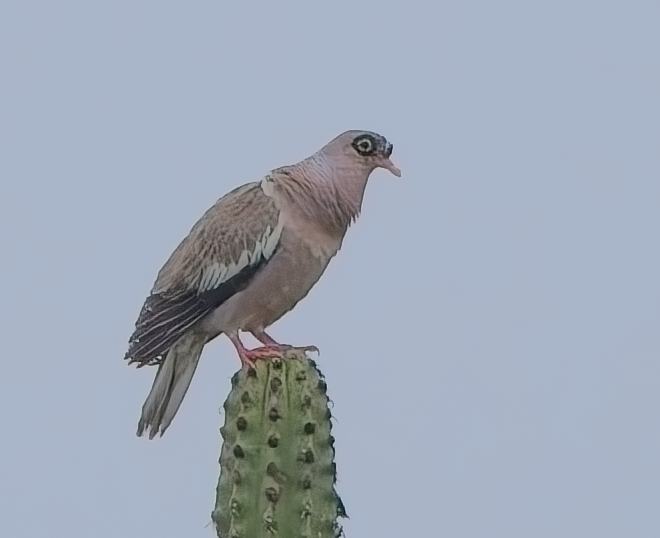
Bare-eyed Pigeon – Lifer
Caribbean Hornero – Lifer
Yellow-bellied Elaenia – Life Photo

I also had my best photos for the trip for Fork-Tailed Flycatcher, Yellow-headed Caracara and Pale-vented Pigeon among other photos.

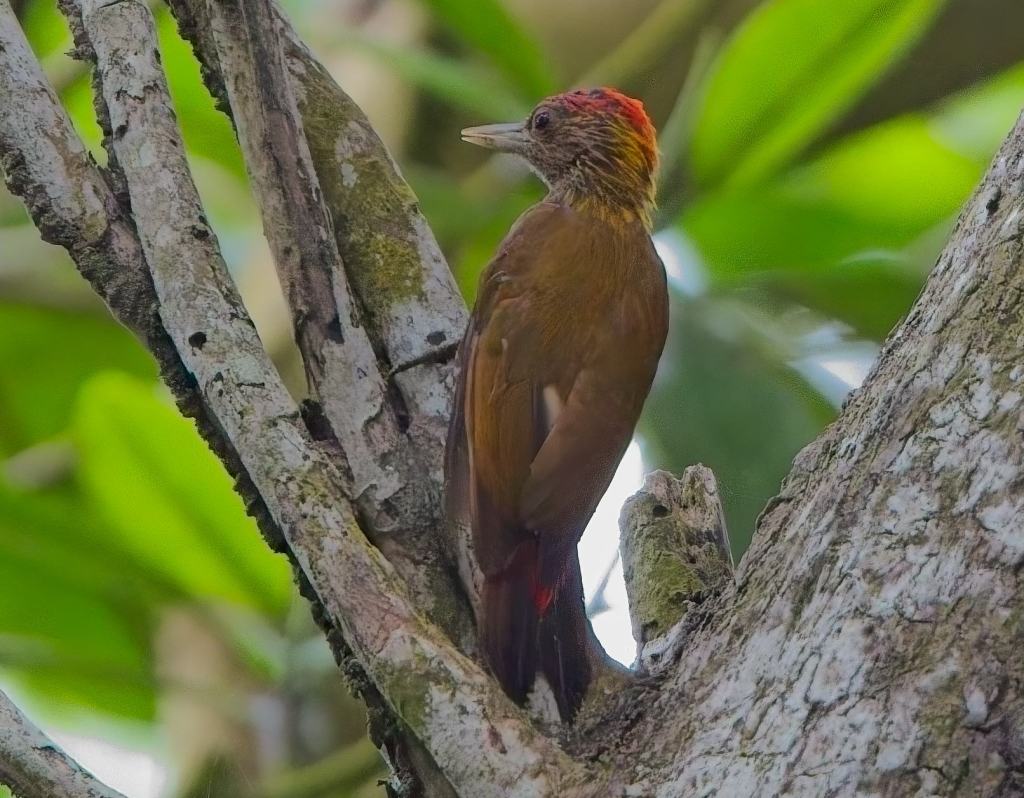
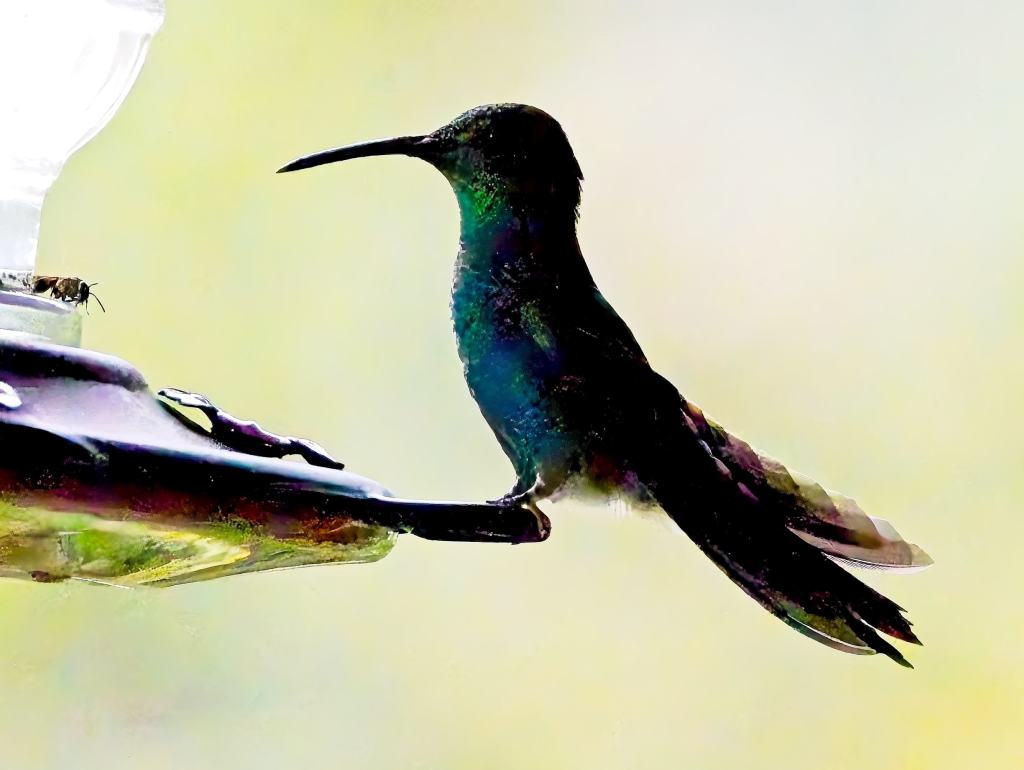
Continuing East towards Santa Marta and before lunch, we birded at Parque Isla de Salamanca, with 22 species, half of which were new for our trip including 3 more lifers: Sapphire-throated Hummingbird, Pied Puffbird and Northern Scrub-flycatcher (all with photos) and additional life photos of Red-rumped Woodpecker and Scaled Dove.

Sapphire Throated Hummingbird – Lifer
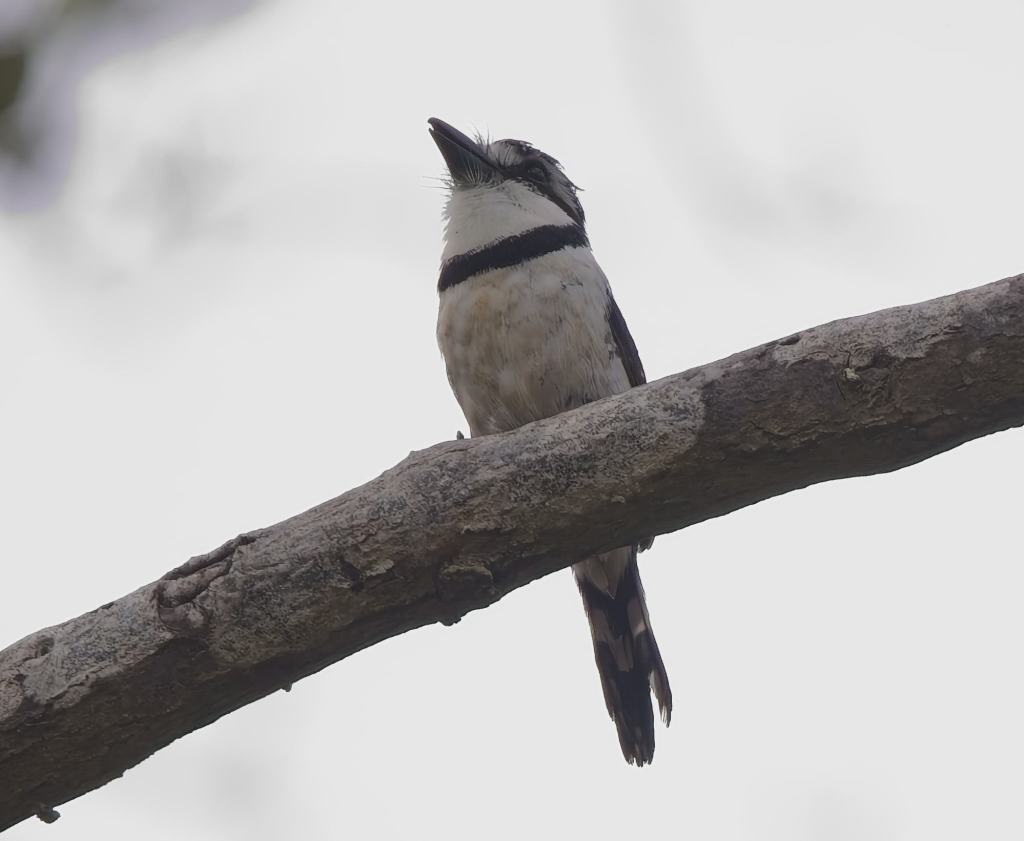
Pied Puffbird – Lifer
Northern Scrub Flycatcher
Red-rumped Woodpecker – Life Photo
Scaled Dove – Life Photo

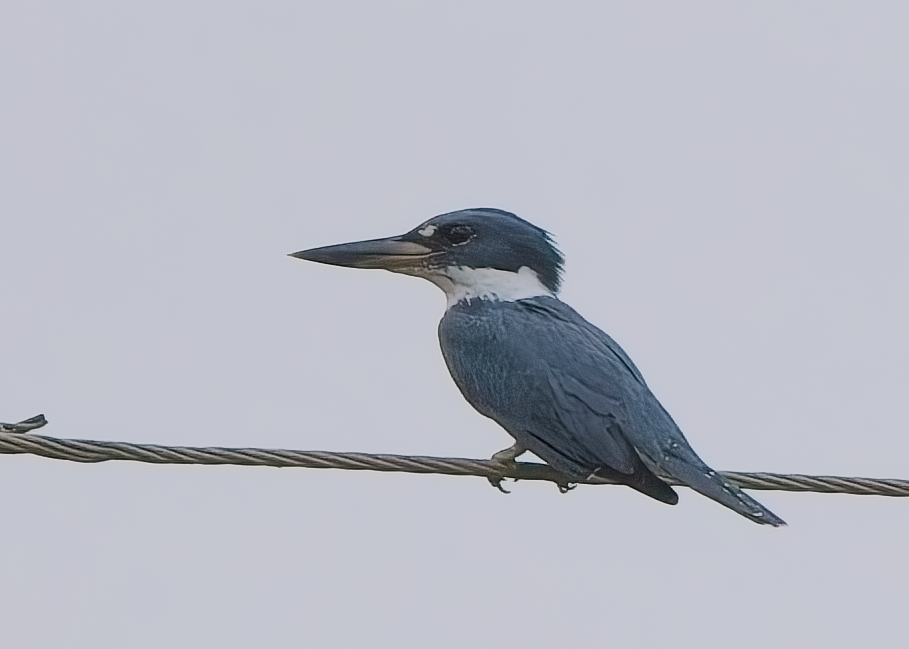
We also had both Green and American Pygmy Kingfishers, joining Ringed Kingfisher and Amazon Kingfisher to total 4 kingfishers that day, missing only the Belted Kingfisher and Green and Rufous Kingfishers to cover all the kingfishers seen in Colombia. (I have now seen all 6 of these kingfishers with photos of all but the Amazon Kingfisher that eluded me in the morning.) It is surprising to me that there are only these six kingfishers in all of South America with its great bird diversity and suitable habitat as there are as many as 118 kingfisher species worldwide with 16 in Africa, 50 in Australia and Oceania and 45 in Asia but only 1 in Europe and 3 in North America. I have seen 35 species altogether.

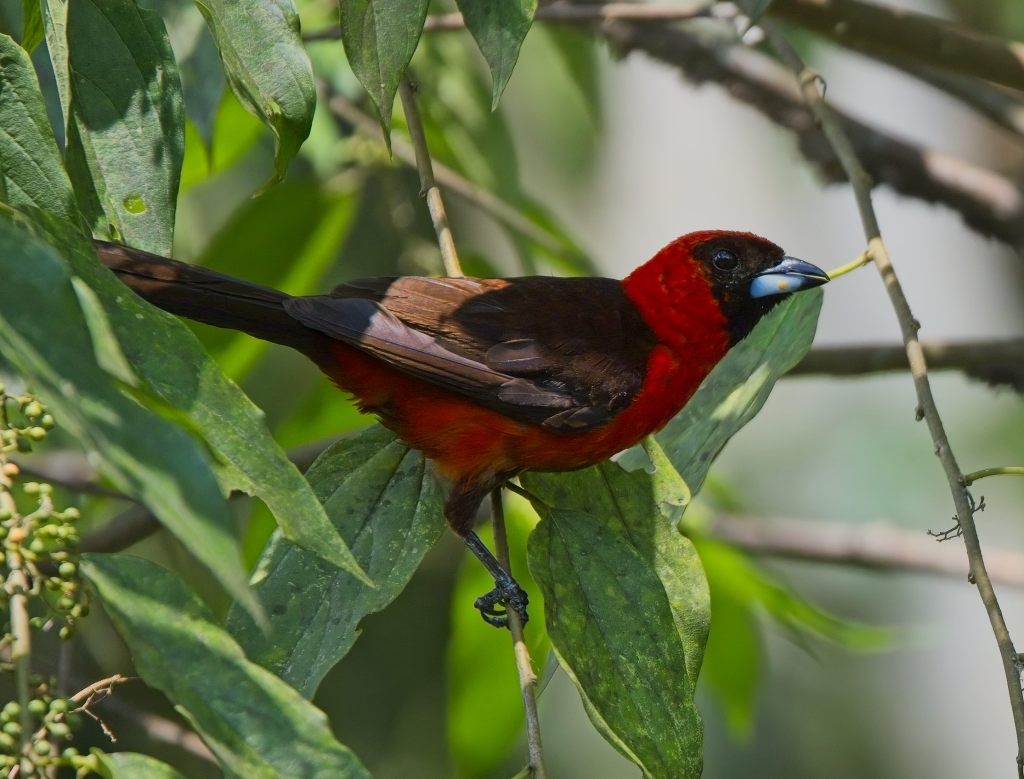
We continued on to the Hotel Colonial in Minca with Breiner’s sharp eyes picking out a Double Striped Thick-knee on the way. A lifer with a photograph it is the 6th thick-knee I have seen, the 2nd in South America, joining Peruvian Thick-knee. And at the feeders at the hotel, I added 3 more lifers: Lesser Elaenia, Crimson-backed Tanager and White-Vented Plumeleteer.
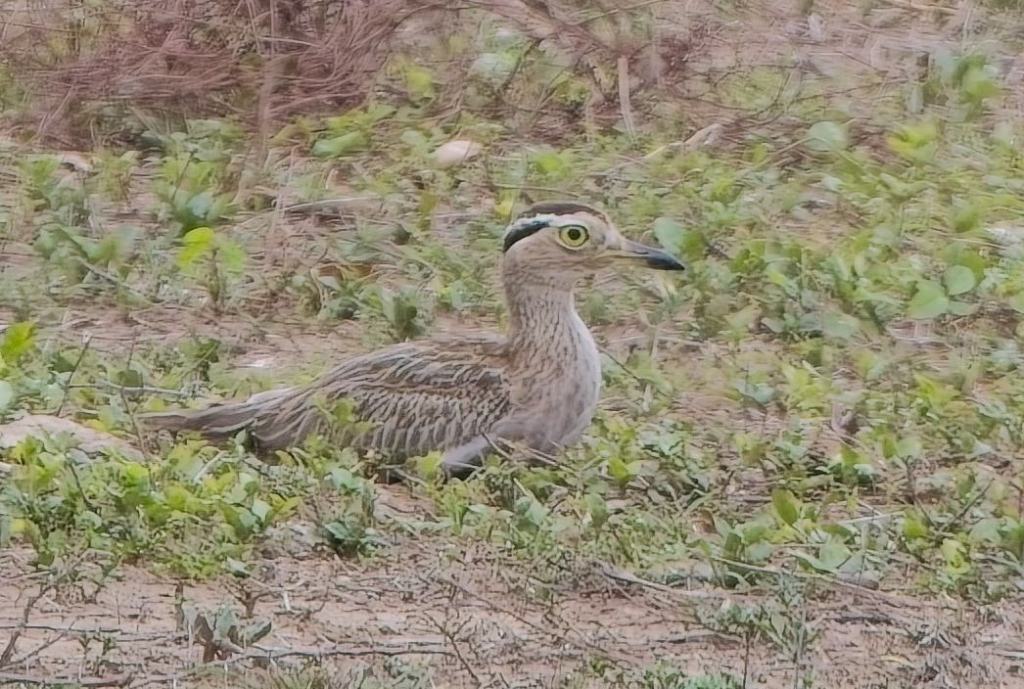
Double-striped Thick-knee – Lifer
Lesser Elaenia – Lifer
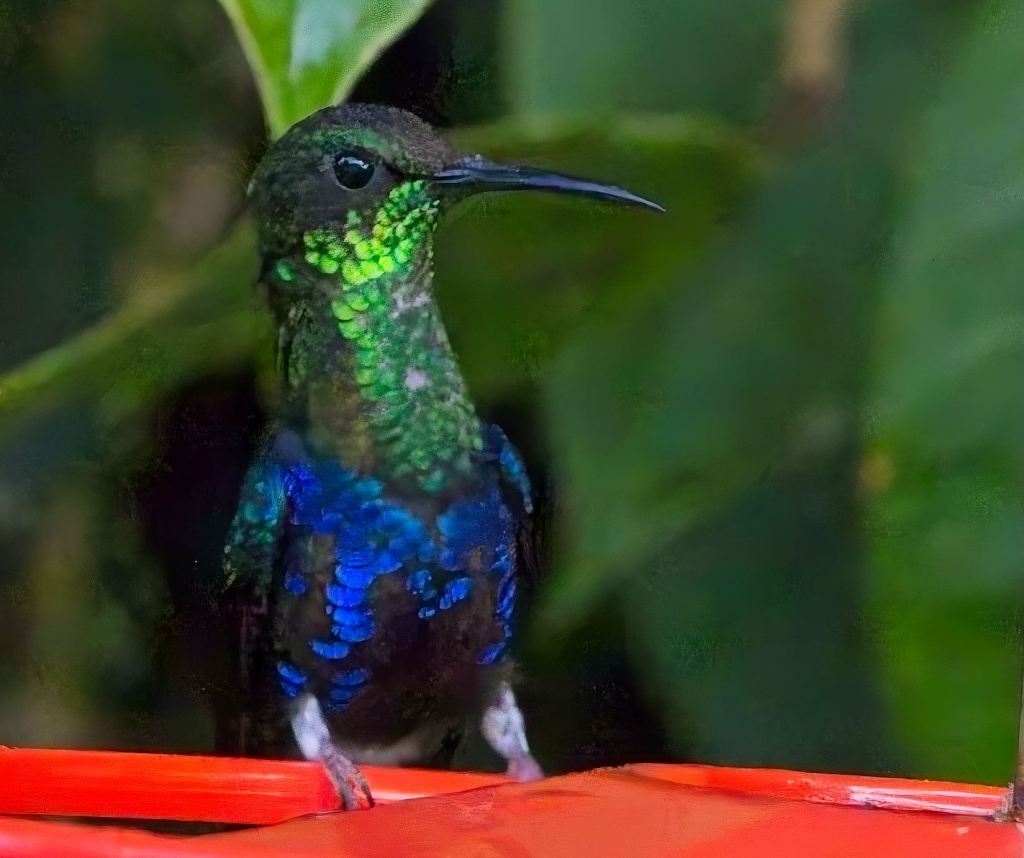
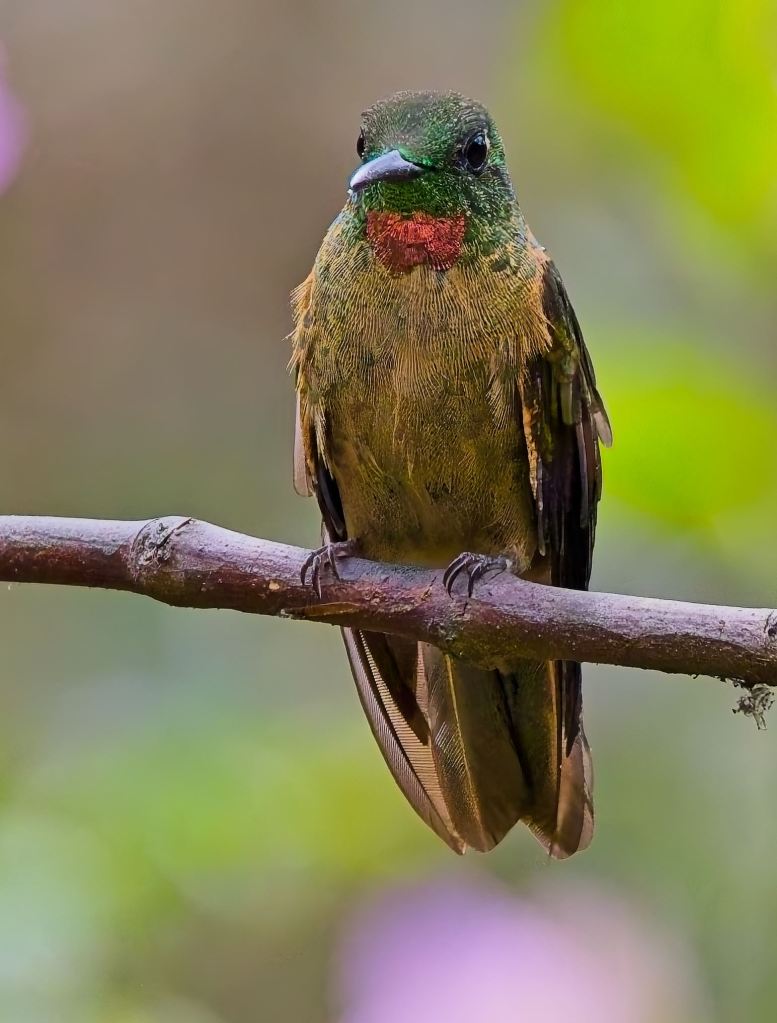
White-vented Plumeleteer – Lifer
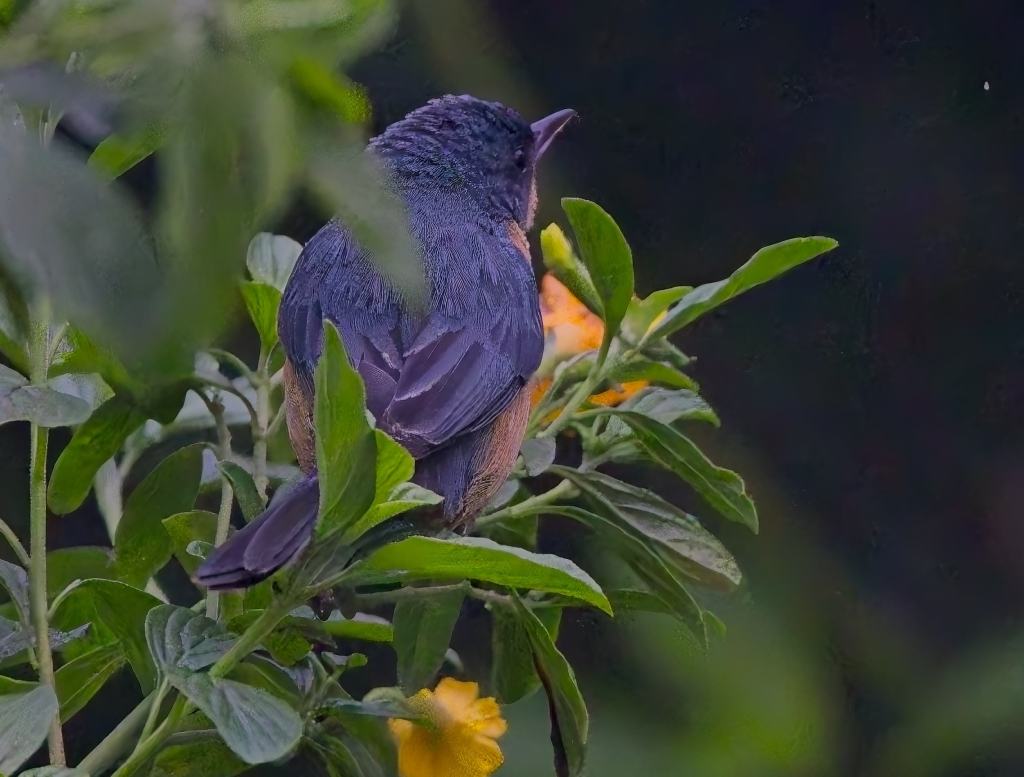
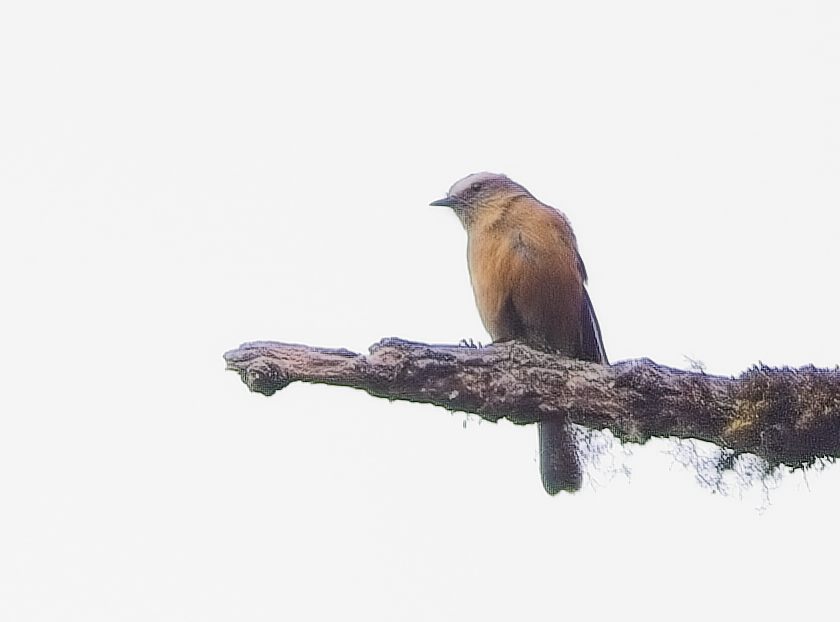
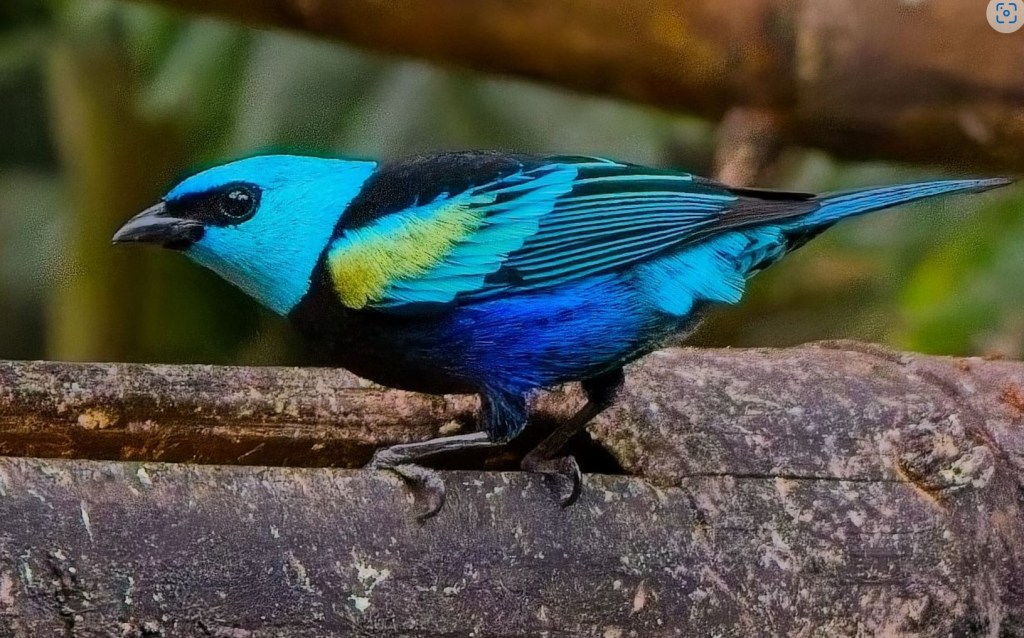
Crimson-backed Tanager – Poor Photo of a Beautiful Lifer

Totals for the day: 88 species; 14 lifers and 18 life photos. My Colombia list was at 145 species. Night at the Minca Veranda Hotel.

Day 4 – June 23rd

It was another early start picking up our first Plumbeous Kite for the trip at 5:40 a.m. at the hotel. Then we continued on towards Santa Marta with a first stop at the Gairama Reserve in the foothills of the Sierra Nevada mountains. An hour at the reserve produced 16 species, half of which were new for the trip, including only a single lifer, Band Rumped Swift (no photo). I did get life photos of a White-bearded Manakin and an Ochre-lored Flatbill but missed what would have been a life photo of a Long-billed Gnatwren.

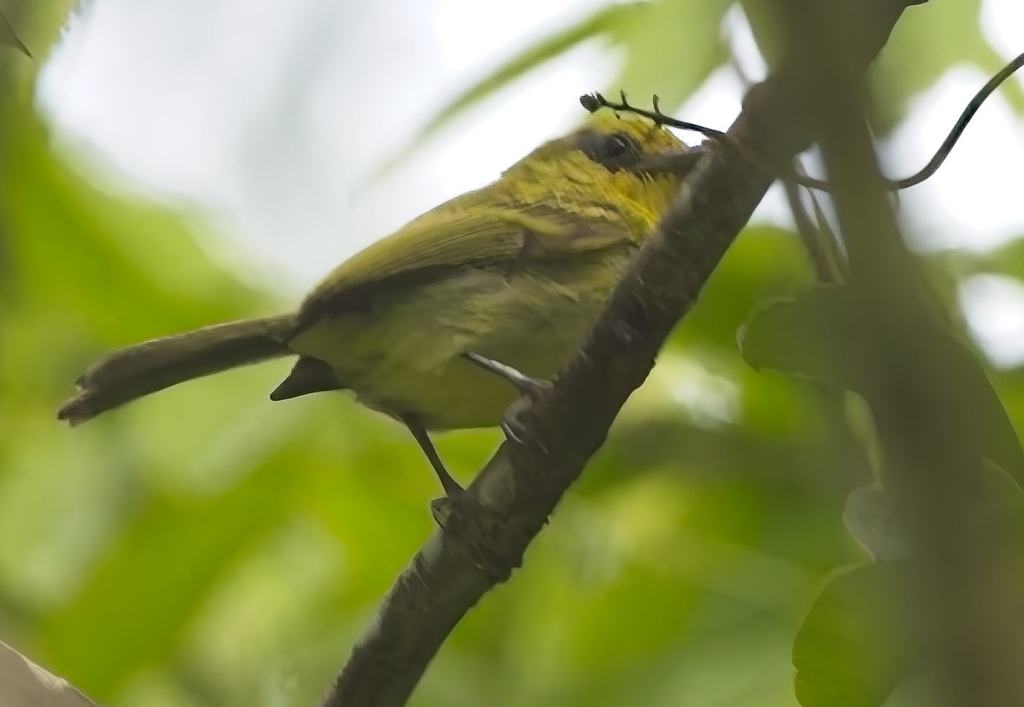
White-bearded Manakin – Life Photo
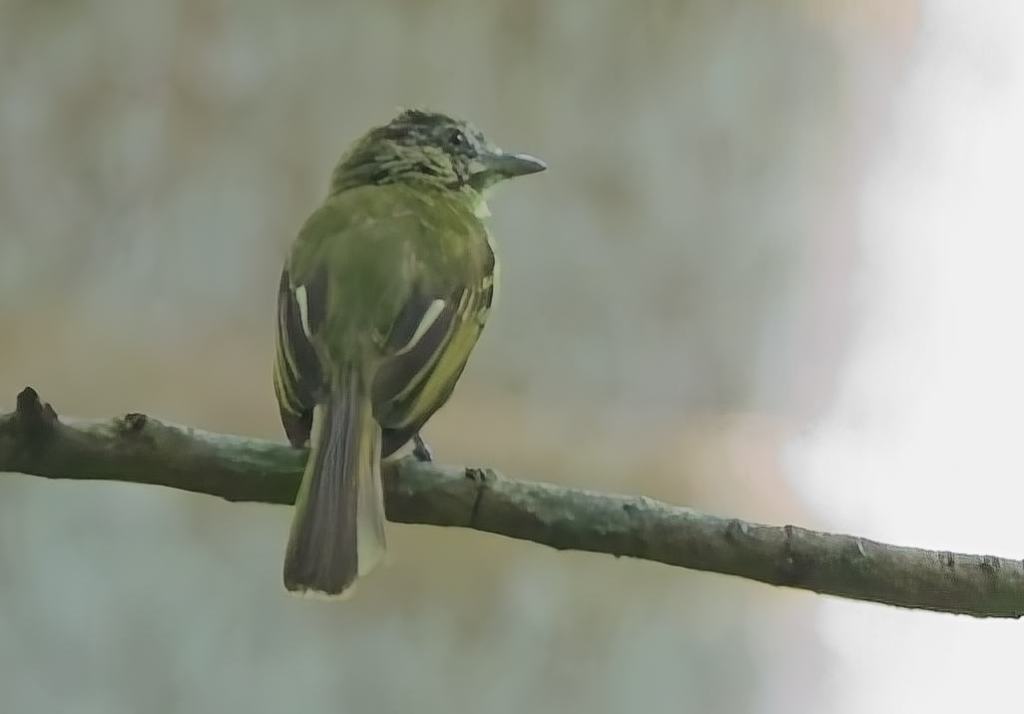
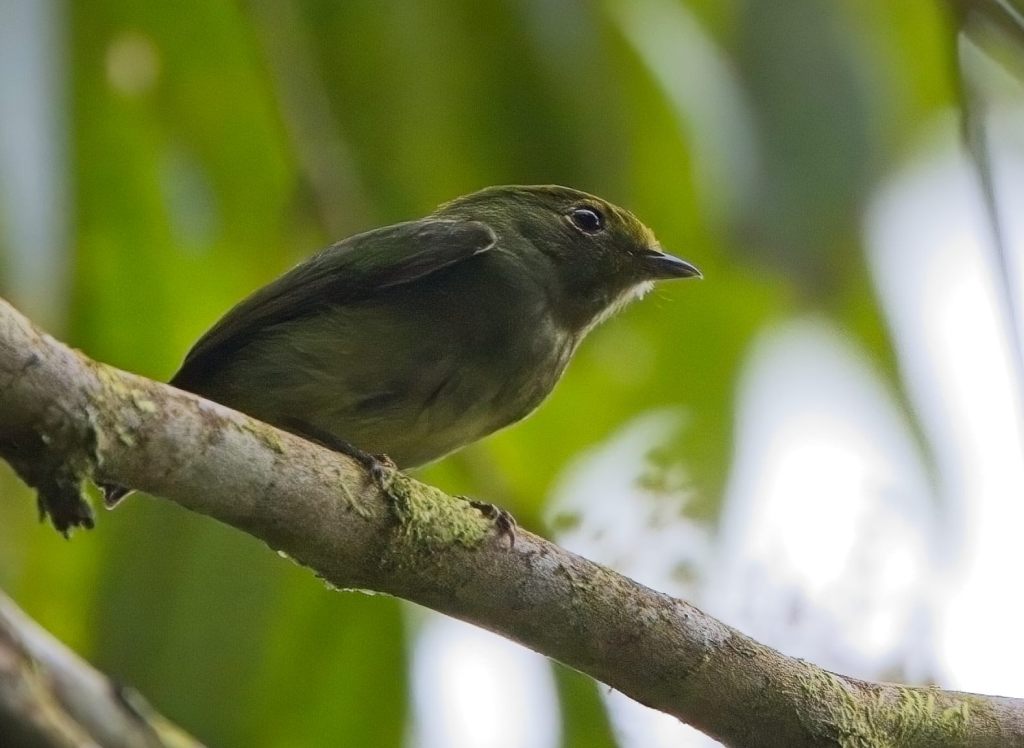
Ochre-lored Flatbill – Life Photo

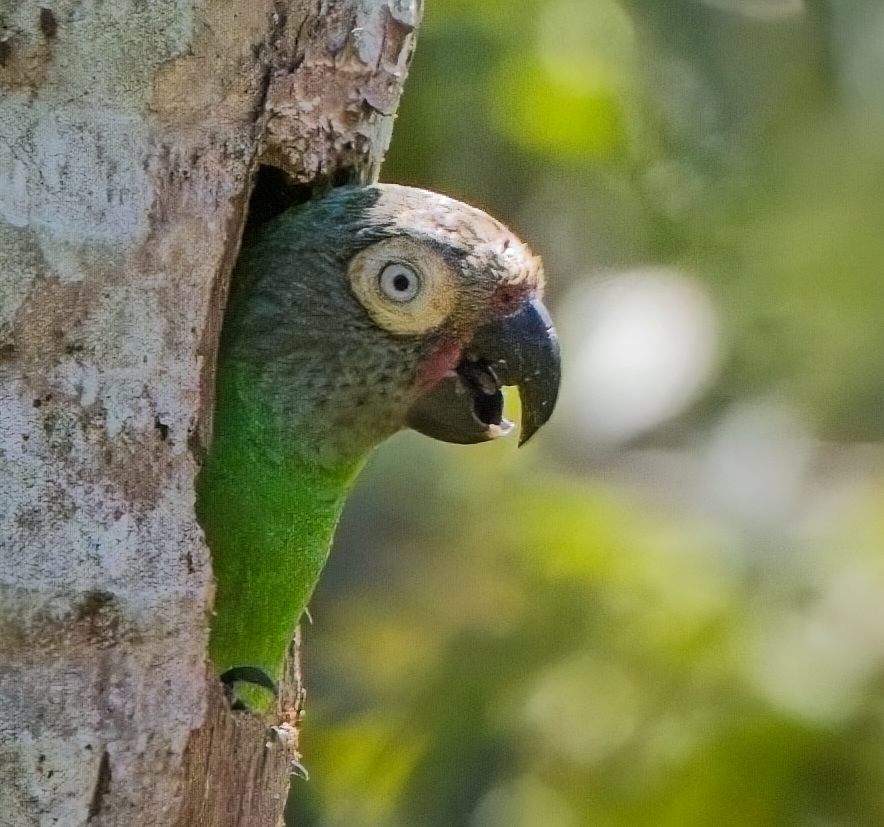
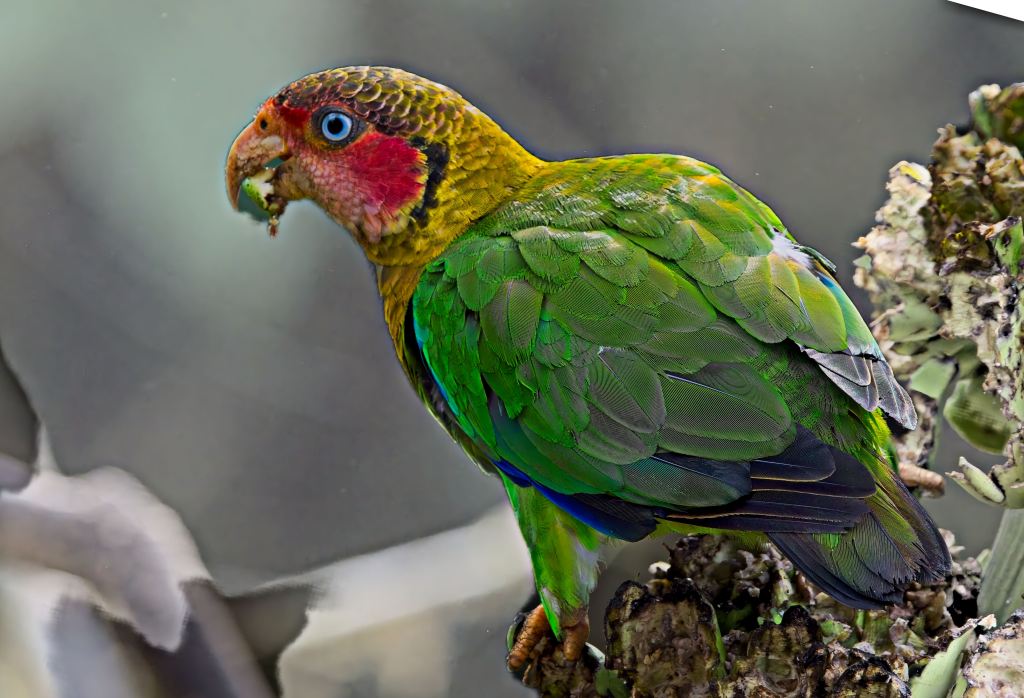
A stop on the road produced another lifer, a Scaled Piculet. Piculets are essentially miniature woodpeckers, generally less than 4 inches long. This piculet is found only in Colombia and Venezuela. Since I will likely never visit Venezuela, this was essentially an endemic for me. At the same stop I got a life photo of a Red-billed Parrot and missed a life photo opportunity for a Pale-eyed Pygmy-Tyrant. A comment about parrots and their kin. The literature says that the length of the tail is a specific feature that clearly distinguishes parrots and parakeets and that parrotlets are “smaller”. All are in the parrot family. My trouble is that my usual view of these birds is a brief one as they fly quickly by and I do not have sufficient experience to always distinguish a “longer” from a “shorter” tail. Identifying the specific species is even more challenging as field marks like “red or orange or blue chins or cheeks” are generally unseen by me as they fly overhead and quickly disappear. At least when they perch, there is a fighting chance – even if the tail is invisible so there goes that distinguishing field mark. In this case, the bird was perched and the tail appeared “short” but where is that red bill? Not clear to me, but the red vent is clear and that confirms the ID.
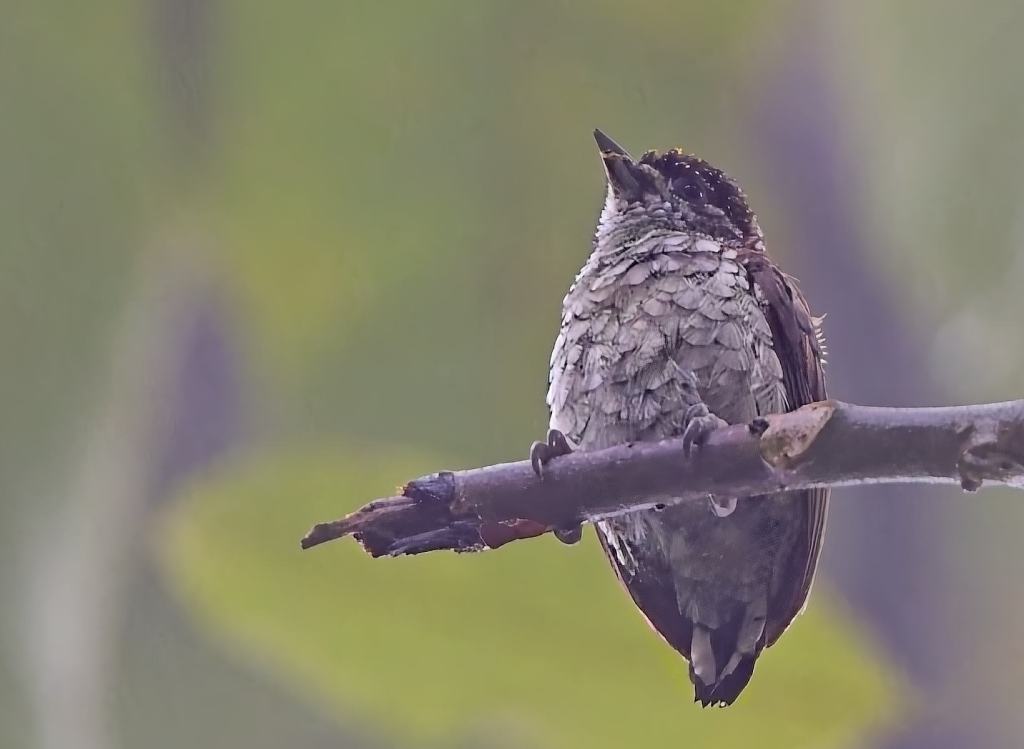
Scaled Piculet
Red-billed Parrot

We were now on the road going up to the Santa Marta Mountain-House Bird Lodge where we would spend the next two nights. The Santa Marta area is bird rich with many endemics and is a favored birding location in Colombia and the focal point of the design of my trip. I used the phrase “road going up” and although accurate, it falls far short of an accurate description as this was the most difficult, rough and challenging road I had ever travelled – good four wheel drive an absolute must. The road was uneven, unpaved, full of rocks and gouges, narrow, steep, full of sharp turns, and demanding the driver’s full attention just in case another vehicle was coming from the other direction. That did not happen often and was generally signaled by a beeping horn, but on two occasions we met another vehicle and expert maneuvering was required – generally meaning one vehicle backing down or backing up the treacherous road to a somewhat wider spot. Once we cleared each other with literally one inch separating the two side mirrors (pulled in). As mentioned in my introductory blog post, driver Jeferson was terrific, negotiating each twist and turn and bump and gouge often at less than a walking pace, but without any hesitation or danger.

It was not always easy or even possible to pull over to bird along the road. Typically Breiner would find a good spot to bird and he and I would get out of the car and walk the road while Jeferson went ahead to find a somewhat wider place to pull over and wait for us. Honestly even walking some stretches of the road was challenging, but the birds were worth it. We spent over three hours birding and driving along the road covering the less than 4 miles to get to our lodge. At the three stops along the way we had 23 species of which 14 were new for the trip, 9 were lifers and I got 6 life photos, missing the Santa Marta Woodstar which I would photograph later and the Santa Marta Foliage Gleaner and Santa Marta Antbird. Some barely ID quality photos of several as birds were hard to locate let alone see in the open (or even nearly so) and often in poorly lit dense forest. But as he always did, Breiner excelled in locating the birds, drawing them closer and getting me into position to see them and have a chance at a photo.
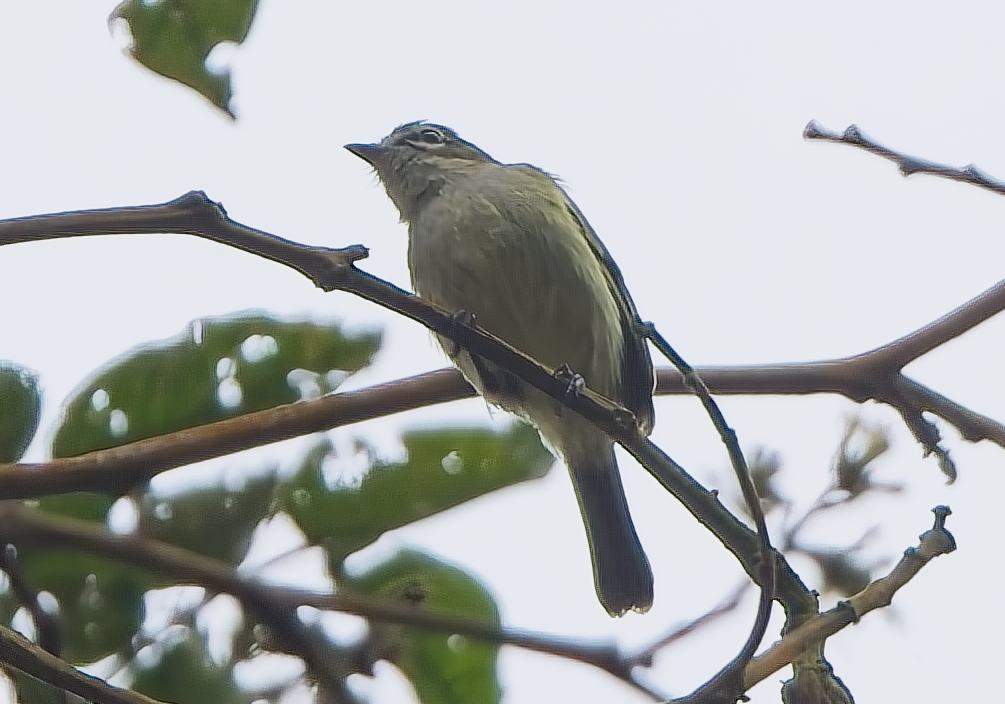
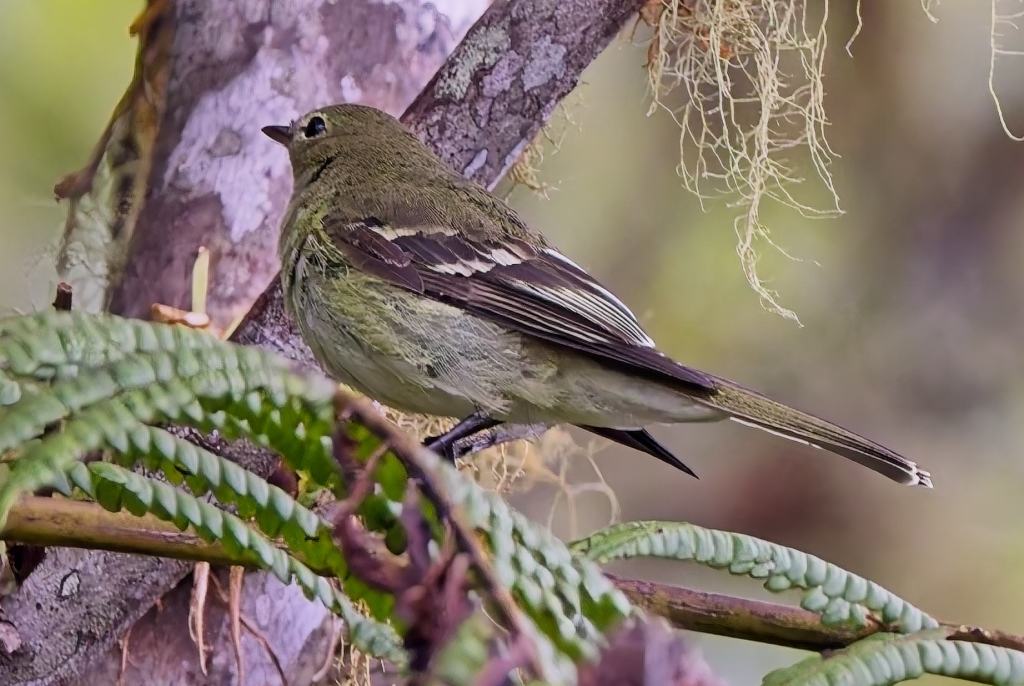
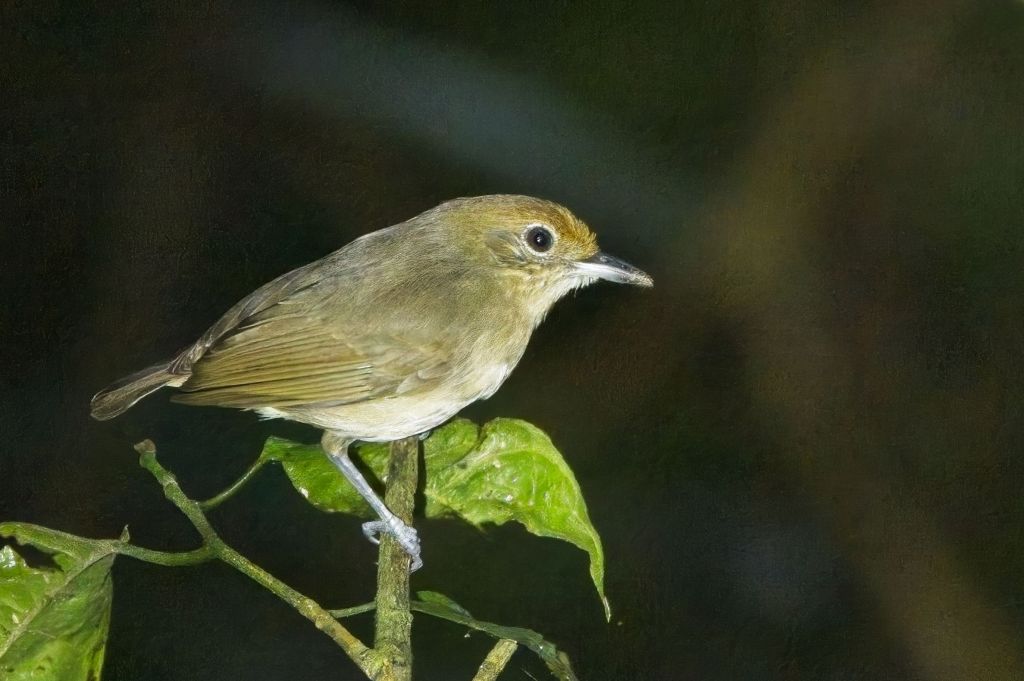
Spectacled Tyrannulet – Lifer
Sierra Nevada Brushfinch – Endemic Lifer
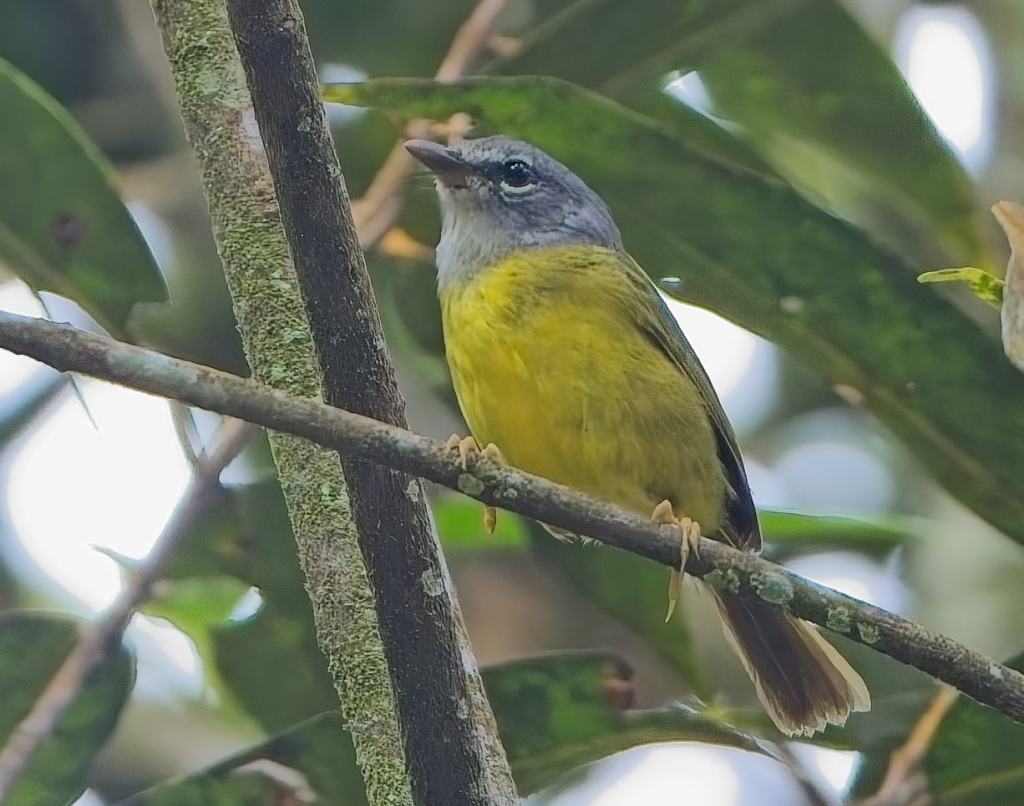
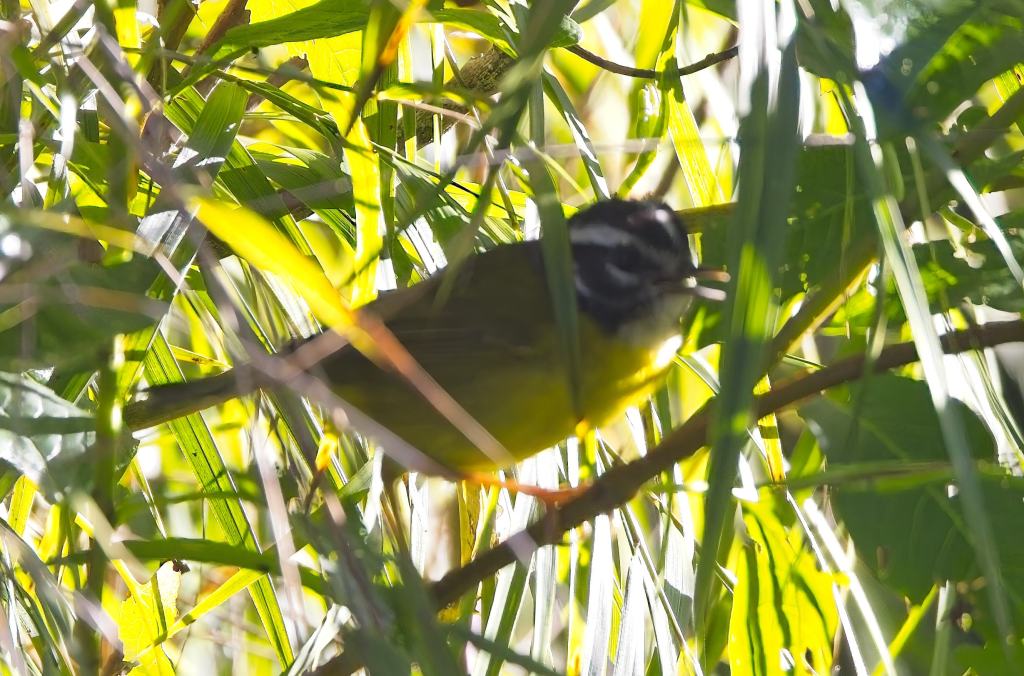
White-lored Warbler – Lifer
Santa Marta Tapaculo – Endemic Lifer (happy for any Tapaculo photo)
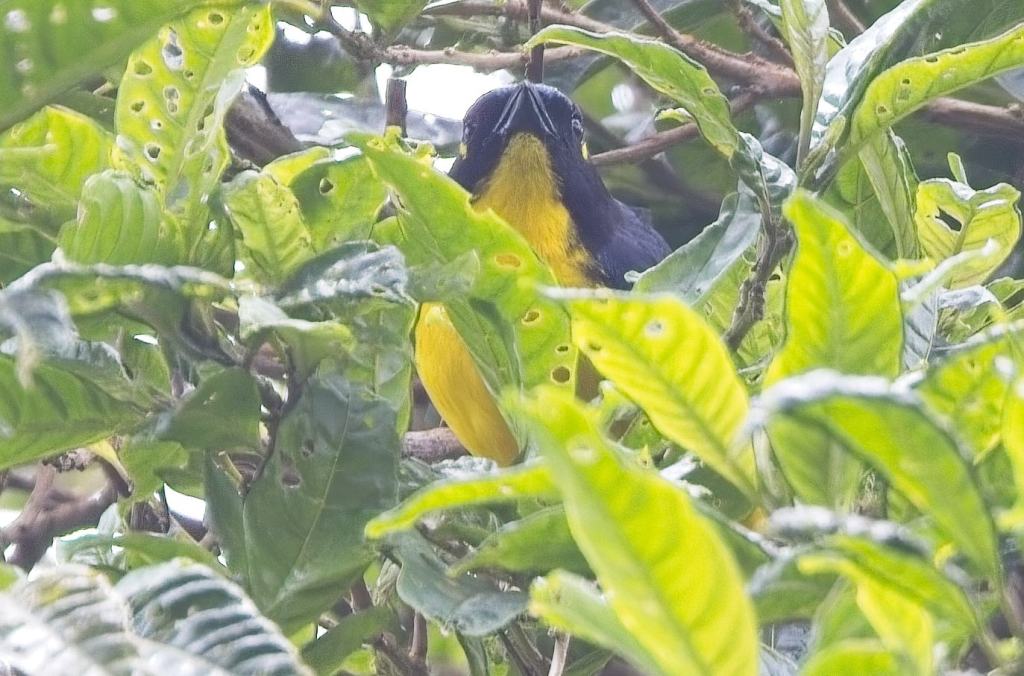
Yellow-Legged Thrush(Not happy with this one)
Black-headed Tanager – Lifer
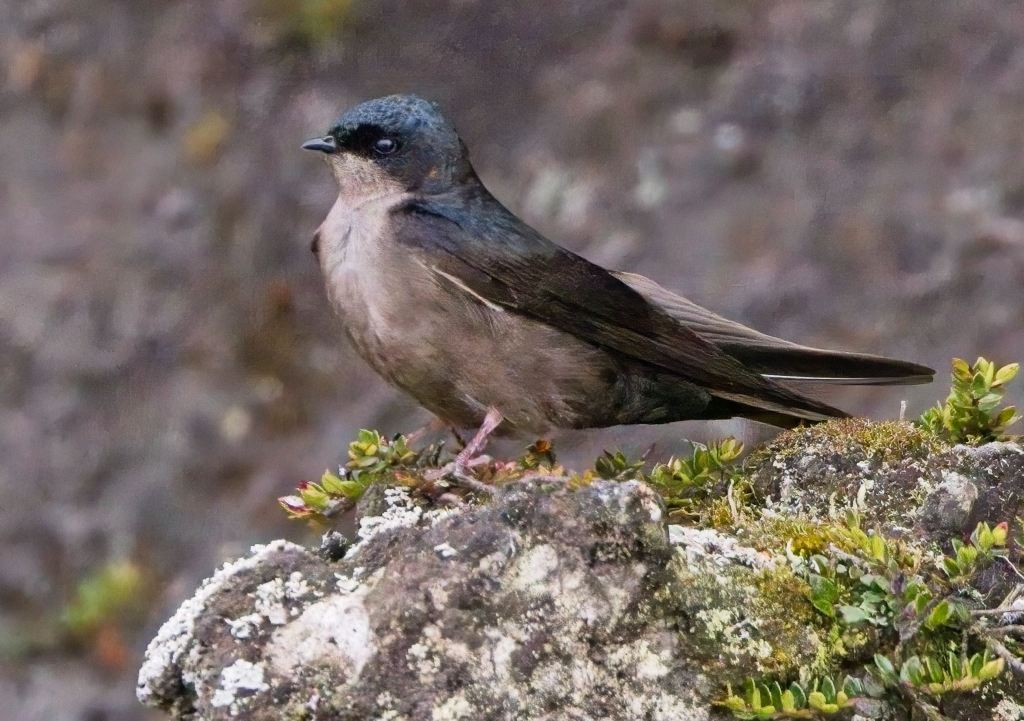
Swallow Tanager – Poor Life Photo

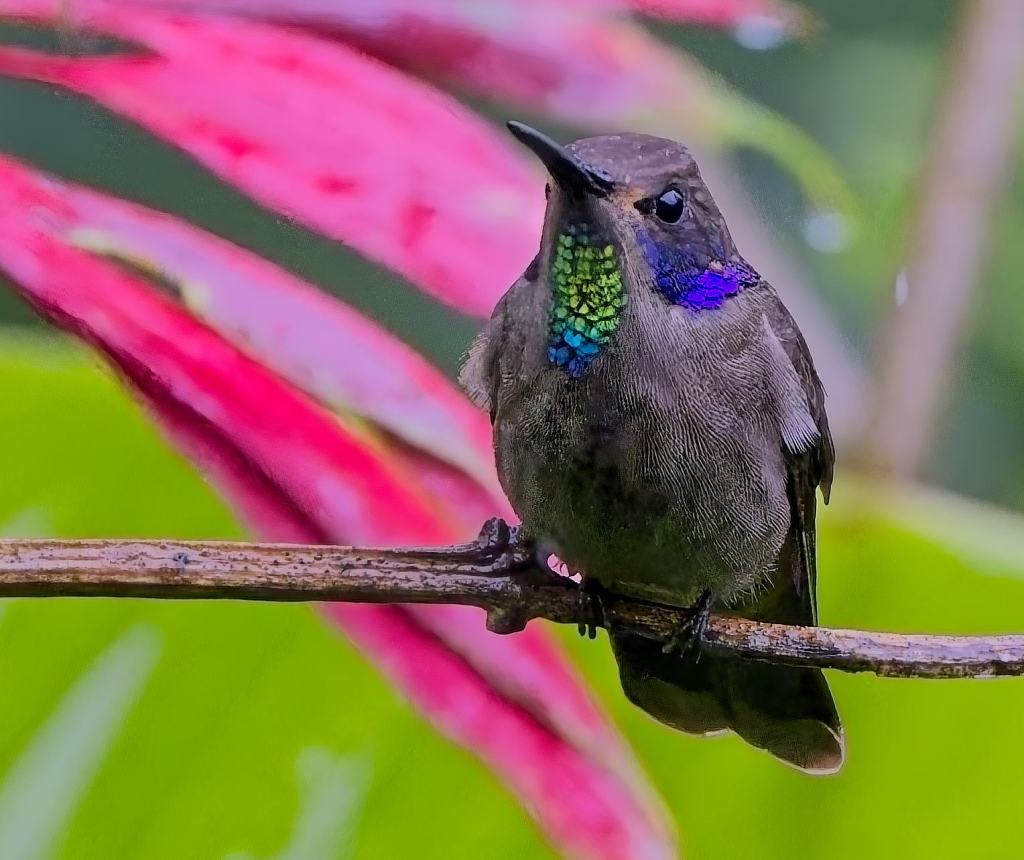
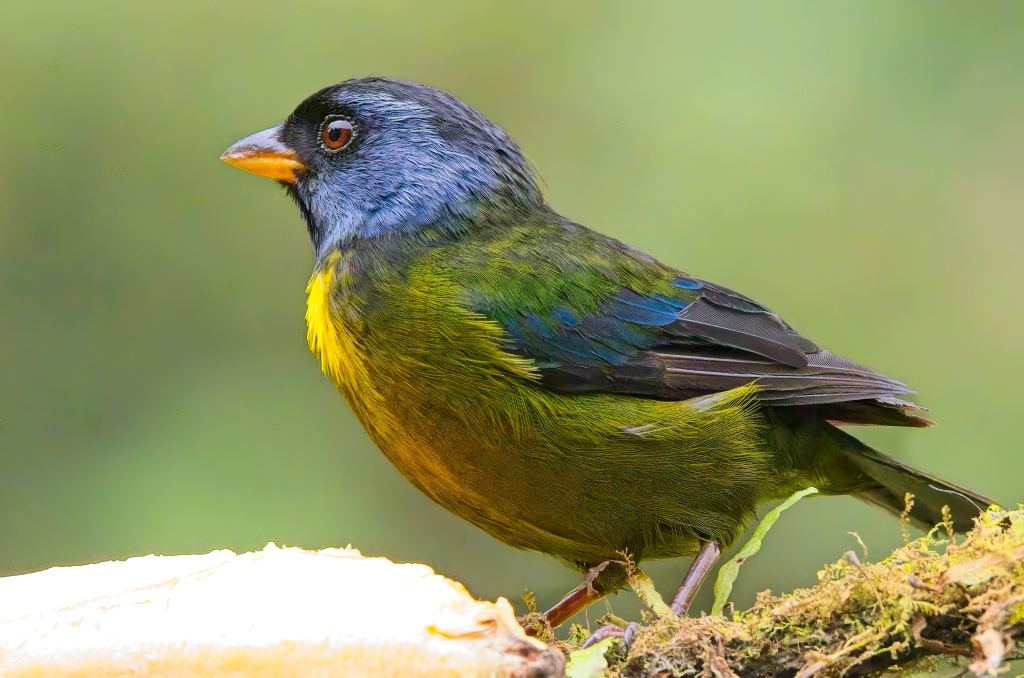
We arrived at Mountain House a little before noon and after unloading immediately began watching the hummingbird feeders which were very active and a couple of banana filled bamboo feeders attracting other species. In less than 10 minutes we had 12 species with photos of them all including 4 lifers: Santa Marta Blossomcrown, Santa Marta Brushfinch, Blue Naped Chlorophonia and Lazuline Sabrewing. I also got a much improved photo of the Black Headed Tanager and a life photo of a Rusty Flowerpiercer. Other hummers were Brown and Sparkling Violetears, and Crowned Woodnymph.

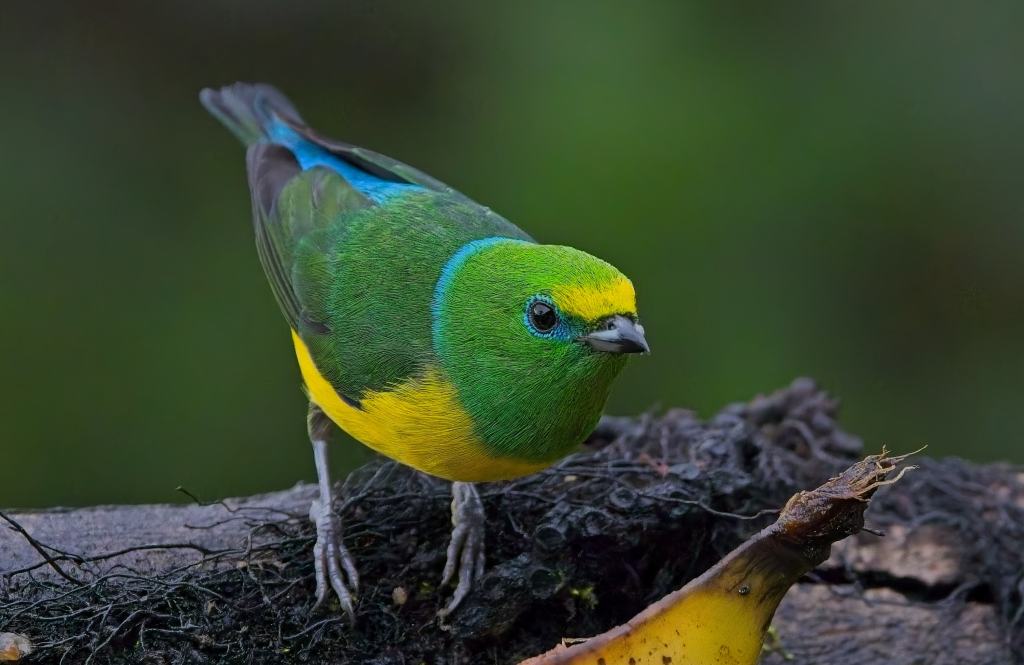
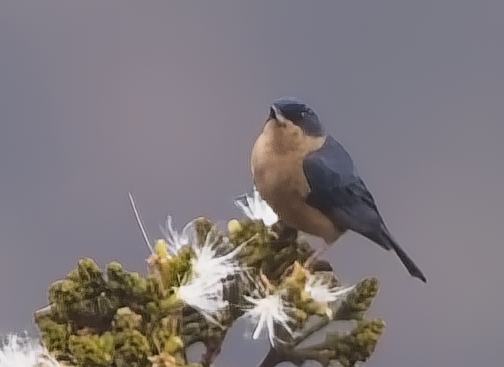
Santa Marta Brushfinch – Endemic Lifer
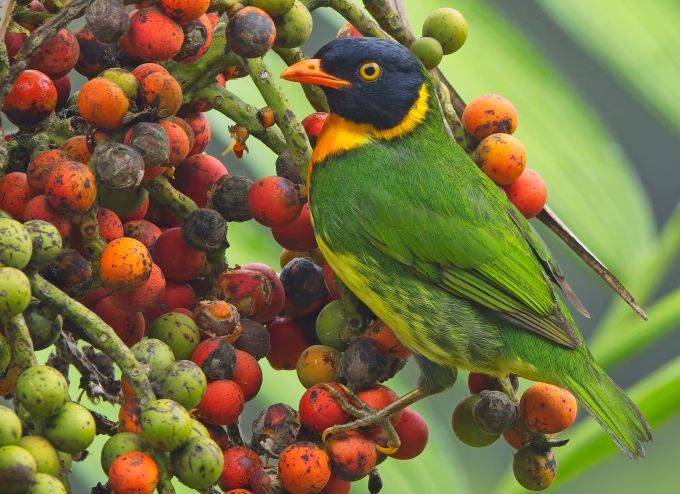
Blue-naped Chlorophonia – Lifer and one of the prettiest birds of the trip
Lazuline Sabrewing – Endemic Lifer
Santa Marta Blossomcrown – Endemic Lifer (and a major disappointment as I got this photo just as it flew off – expecting better chances later – but never got another opportunity)
Rusty Flowerpiercer – Life Photo
Black Headed Tanager on Feeder – Much Better Photo
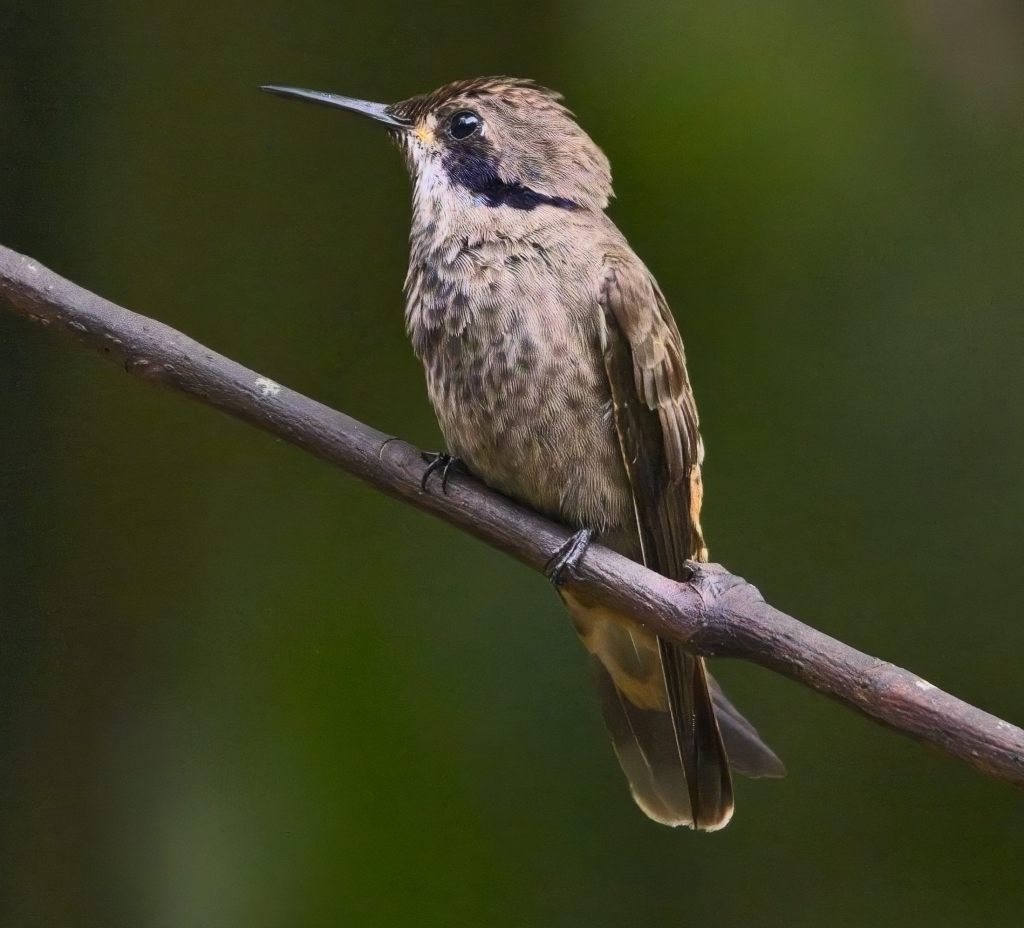
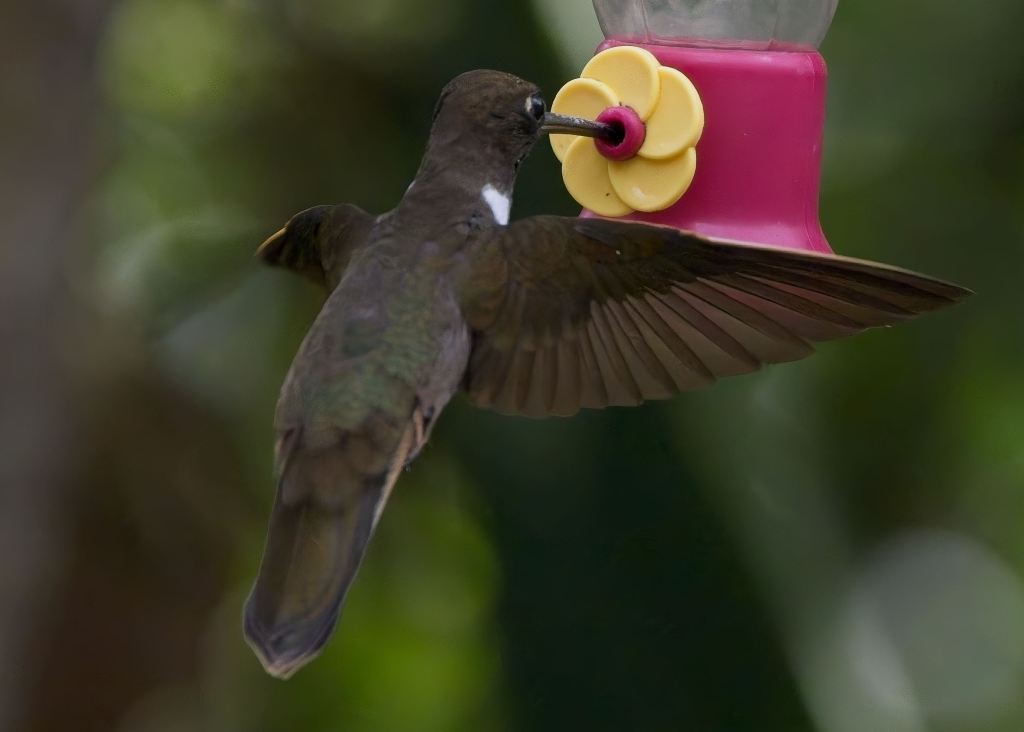
Brown Violetear
Sparkling Violetear
Crowned Woodnymph

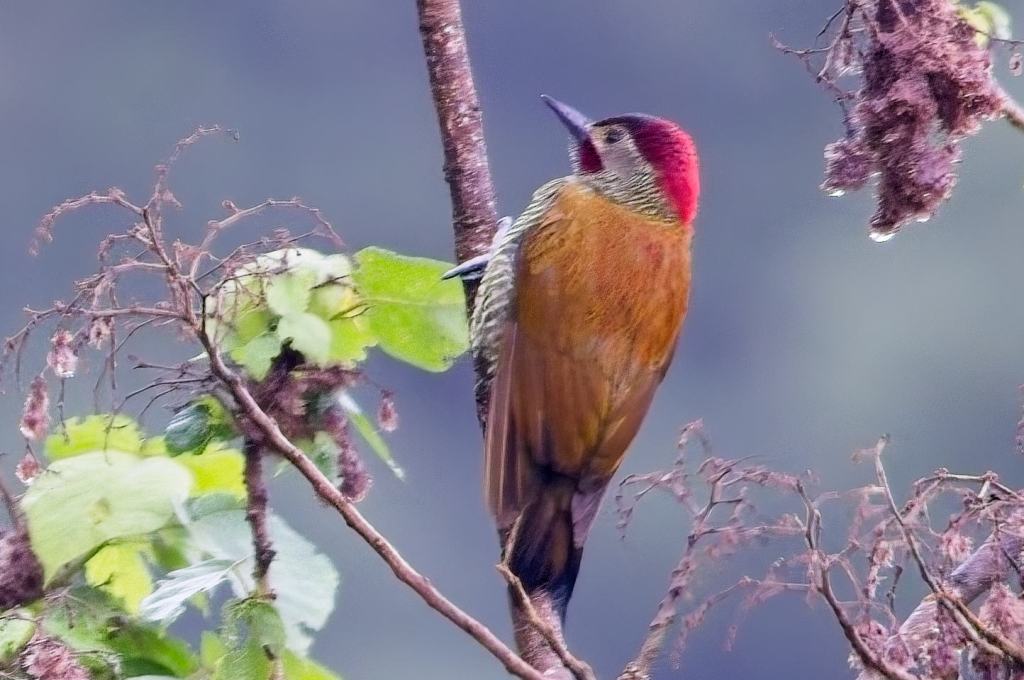
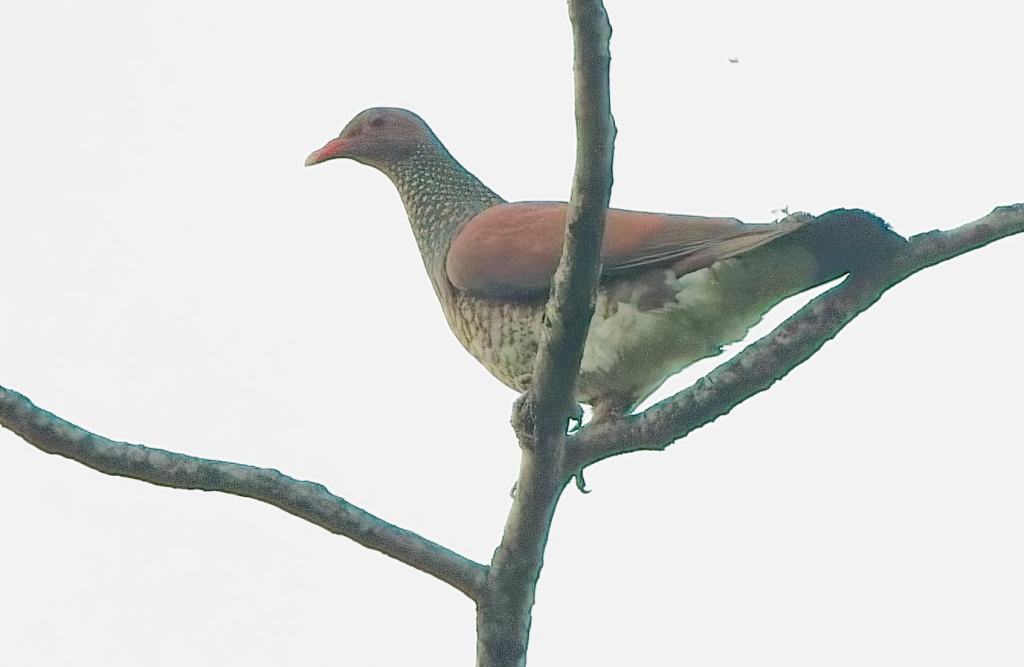
Our timing was excellent as it began to rain shortly after we arrived – it is a tropical cloud forest after all – so we had lunch and took a break for a siesta planning to begin birding again at 3:00 pm hopefully without rain. It worked perfectly as the clouds and rain moved on and we were back birding in the area around the lodge adding 10 trip species in the afternoon including lifers Coppery Emerald, Streak-capped and Pale-breasted Spinetails, Yellow-backed Oriole and Steely-vented Hummingbird. Other photos included a Streaked Saltator (Life photo), White-lined Tanager, Golden-olive Woodpecker and Scaled Pigeon.

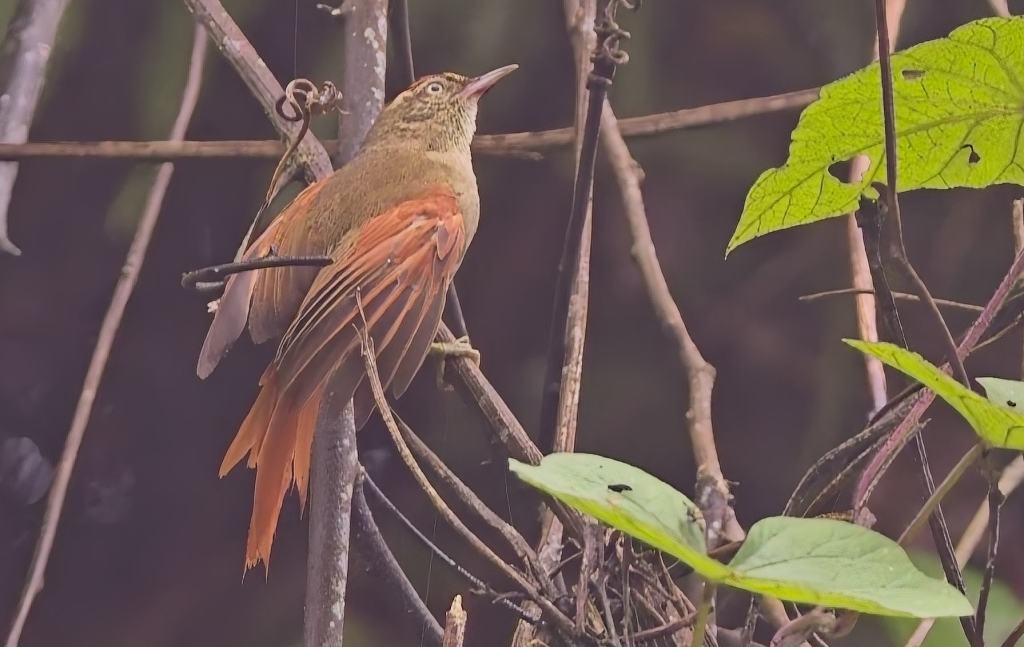
Coppery Emerald – Lifer
Streak-capped Spinetail – Lifer
Pale-breasted Spinetail – Lifer
Yellow-backed Oriole – Lifer
Steely-vented Hummingbird – Lifer
Streaked Saltator – Life Photo
Golden-olive Woodpecker
Scaled Pigeon
White-lined Tanager

We wee back at the Lodge around 5:00 p.m. in time to add a life photo that I wanted very much, a Bay-headed Tanager. I had seen this striking species many times, 13 in all, including in Trinidad, Costa Rica, Peru and Ecuador but had always failed to get a photo. Now I had one. I also improved earlier photos of Red-billed Parrot and Rusty Flowerpiercer and got a life photo of the endemic tiny Santa Marta Woodstar seen earlier in the day without a photo.

Bay-headed Tanager – Life Photo, Finally
Santa Marta Woodstar – Endemic, Life Photo
Red-billed Parrots – Improved Photo Showing the Red Bills
Rusty Flowerpiercer

Totals for the day: 71 species; 20 lifers and 22 life photos. My Colombia list was at 194 species. Night at Mountain House Lodge

Day 5 – June 24th

We were up very early again, leaving Mountain House Lodge and birding our way down the rocky road in the Santa Marta range. It was a good day starting with 5 heard only species not far from the lodge: Lifer Band-winged Nightjar, Stygian Owl, and Slaty-backed Nightingale Thrush and two others – Collared Forest Falcon – seen previously in Mexico, and White-throated Tyrannulet seen previously in Ecuador. I would later get a photo of the nightjar, but the others remain only on my “wanted photos” list.

We may have missed the wonderfully named Stygian Owl, but not much later, making great use of his heat detecting spotting scope, Breiner was able to locate and get me on an endemic Santa Marta Screech Owl high up in dense foliage almost directly overhead. One of the best birds of the trip, it is not the greatest photo, but one I never thought I would get, even after he located it. At the same location we also heard but never saw a Lined Quail-Dove, our fifth lifer for the day and it was not yet 5:50 a.m. We later had several more Lined Quail-Doves including one seen very briefly that I was able to photograph – just barely, and distantly. We also heard a Southern Emerald Toucanet, a species I had seen (or maybe heard only) in Peru 12 years ago, this one is the Santa Marta version and may someday be recognized as a separate species.

Santa Marta Screech-Owl – Endemic, Lifer
Lined Quail Dove – Very Distant Lifer

We spent almost 3 hours continuing our birding coming down the Santa Martas picking up 29 species, 21 new for the trip, including 12 lifers and 8 life photos (including the Lined Quail-Dove above). Not surprisingly lifers not photographed were the always difficult to see Brown-Rumped Tapaculo, Santa Marta and Sierra Nevada Antpittas and Rusty-headed Spinetail. If only that pace could continue for the rest of the trip!! A species also seen the previous day and heard and seen many times later in the trip was a surprise. It is the Band-rumped Pigeon, a species that is often seen near my home in Edmonds, Washington where they can be found all year. Their range is shown from Canada all the way down the West Coast through Mexico and all the way to southern South America. I had seen one in hometown Edmonds in May this year. On our checklists, the species we saw was designated as “White-necked”. I don’t know if that is a different race or subspecies (or someday different species) compared to ours in the Northwest.

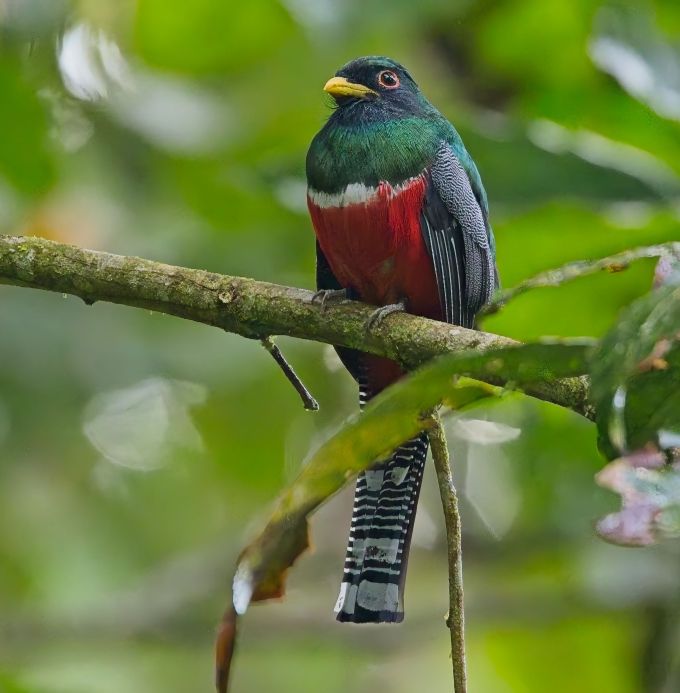
We had two more short stops before returning to the Lodge picking up a lifer at each – a White Tipped Quetzal and a Rusty-breasted Antpitta, the latter heard clearly but only – which would be repeated the next day. Quetzal’s and trogons are always prized additions to any trip as are antpittas. The former tend to be out in the open and the latter, like tapaculos, are skulkers that are often seen only briefly if at all. We had a number of interactions with the latter two types of birds that were frustratingly close to providing photos, but stayed out of sight. Of the 8 species of antpittas and tapaculos seen during the entire tour, I was able to get photos of only one and a poor one at that, but all but one were lifers. On the other hand, we only had 3 quetzals or trogons and I have photos of all of them with only the White-tipped Quetzal being a lifer and a good photo to end this blog post, essentially covering the first half of my trip.
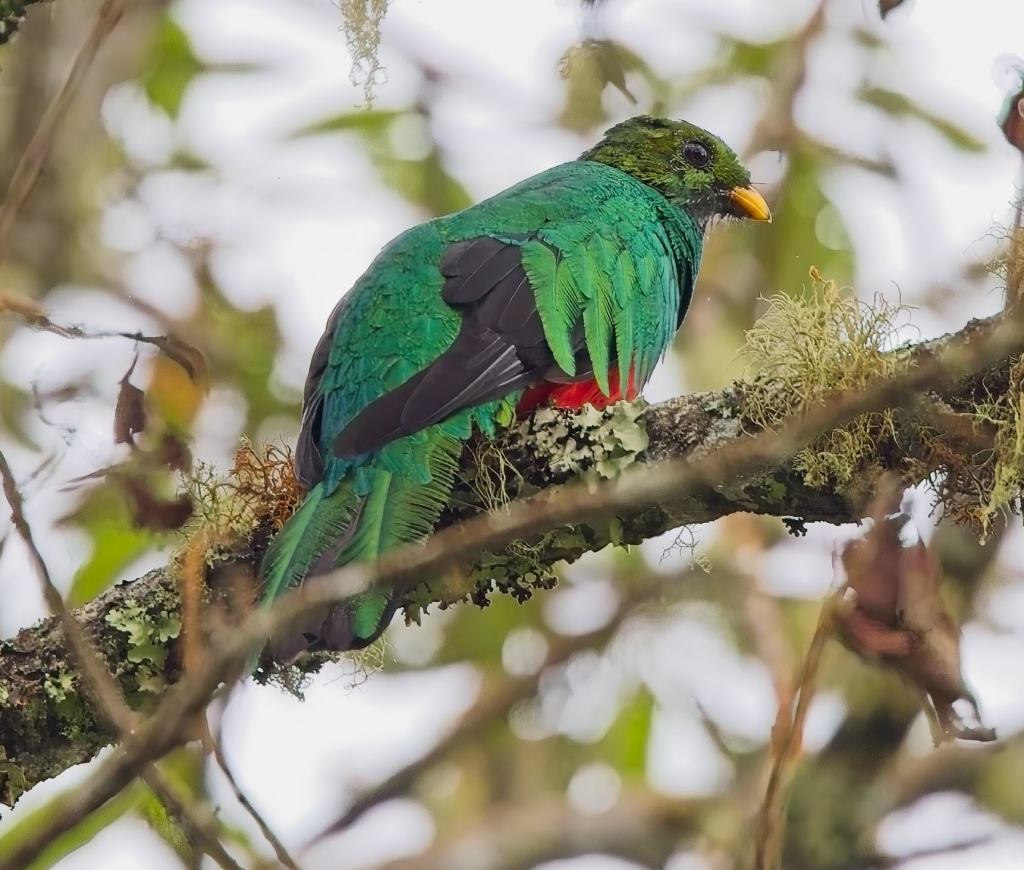
White-tipped Quetzal – Lifer

Totals for the day: 38 species; 19 lifers (78 cumulatively) and 10 life photos (82 cumulatively). My Colombia list was at 226 species. Night again at Mountain House Lodge.
Blair and Tom’s Excellent Ecuador Adventure – Part 2

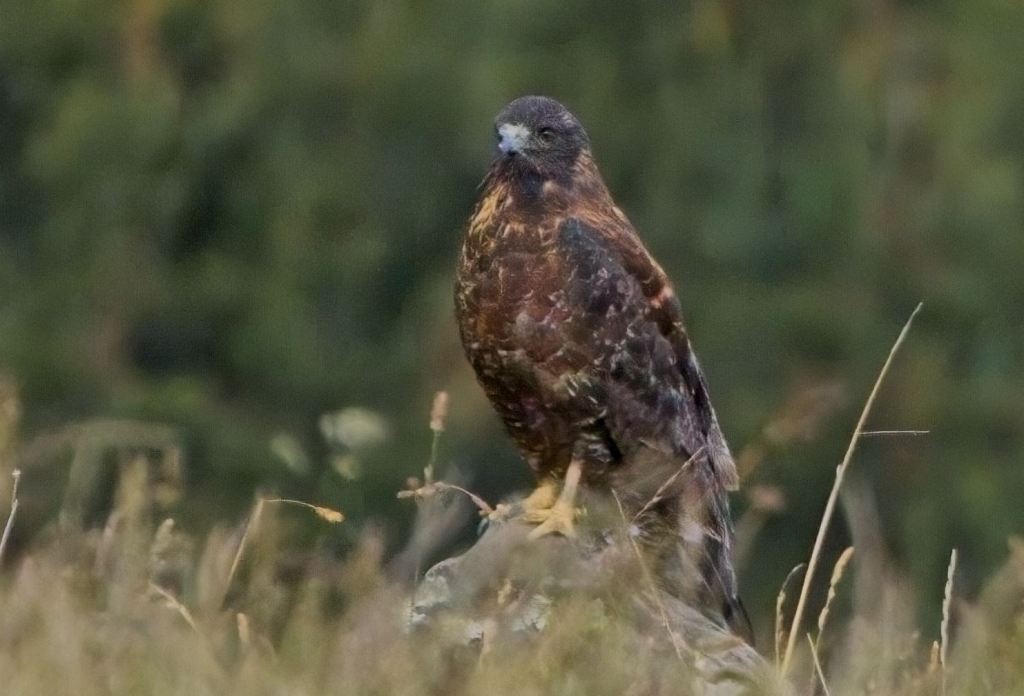
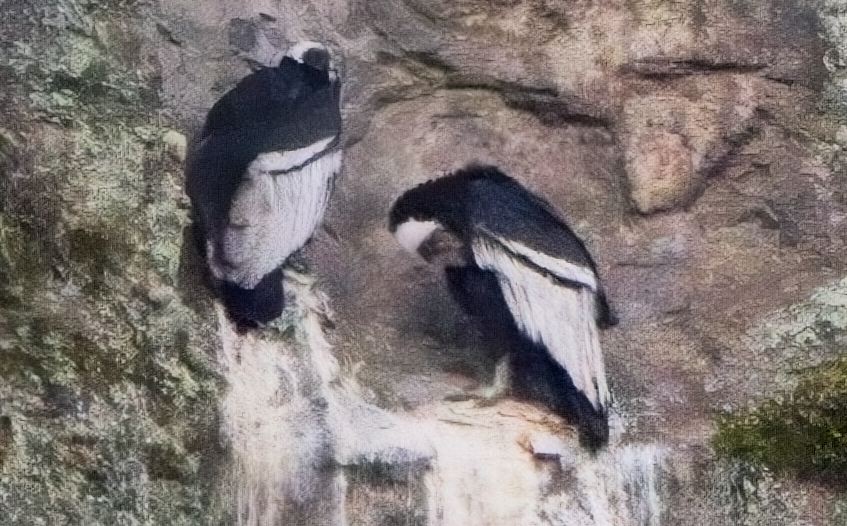
It would be a 4 hour drive south and east from Zaysant Ecolodge to our destination for the last two days of September – WildSumaco Lodge. Our route would take us over Papallacta Pass and in addition to birding there, we would also have birding stops at La Brisa and at Wayra Reserve. At our first stop up high into the Andes we were on the lookout for Andean Condors and Spectacled Bears. Scanning the cliff face across the road and quite distant, Nelson picked out the bear and then shortly later Tom found a pair of Condors. With a wingspan of up to 10 feet, the Andean Condor is the largest bird of prey in the world. I had been fortunate to see them in Chile, Argentina and Peru in addition to my earlier trip to Ecuador. Still not a real close look for a great photo, but every Condor sighting is special. We also had nice looks at another high-altitude raptor, Variable Hawk. A great start to the day.

Andean Condor
Variable Hawk – Puna Form

Still relatively early we birded a bit higher on the way to the pass at Bosque de Quishuar and picked up a number of mountain species including a lifer White-throated Tyrannulet that appeared in the open for brief seconds only. Thirteen of the 15 species seen were new for the trip, but I had seen them in 2022. Getting photos was great though.

A very brief stop at Laguna Papallacta added another five species including a distant lifer Buff-breasted Mountain Tanager. I thought I had a photo but could not find it. We left the high pass and moved on to the hummingbird feeders at La Brisa (The Breeze). In just over 75 minutes there we had 29 species, including 12 hummingbirds of which remarkably 9 were new for the trip, and two were lifers for me. Two non-hummers were lifers as well. Earlier I posted a photo of the White-booted Racket-tail. With its long tail feathers with rackets, the equally special Peruvian Racket-tail was recently split as a separate species – its boots are orange.

Geoffrey’s Daggerbill – Lifer
Chestnut-bellied Thrush – Lifer
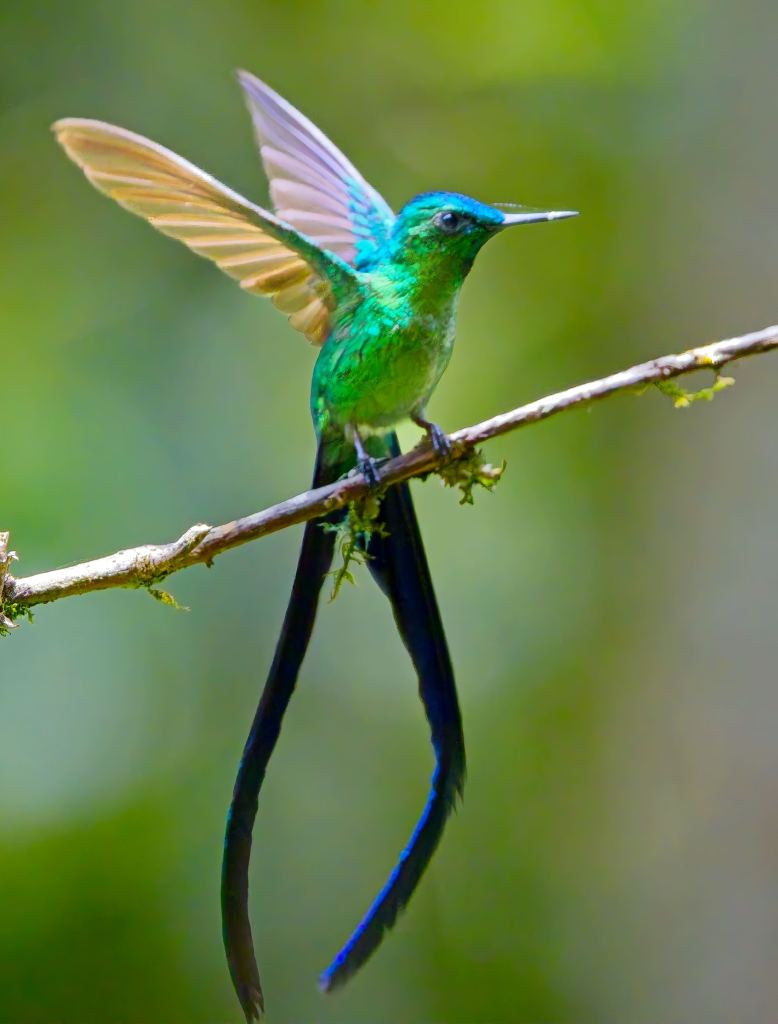
Long-tailed Sylph – New for Trip

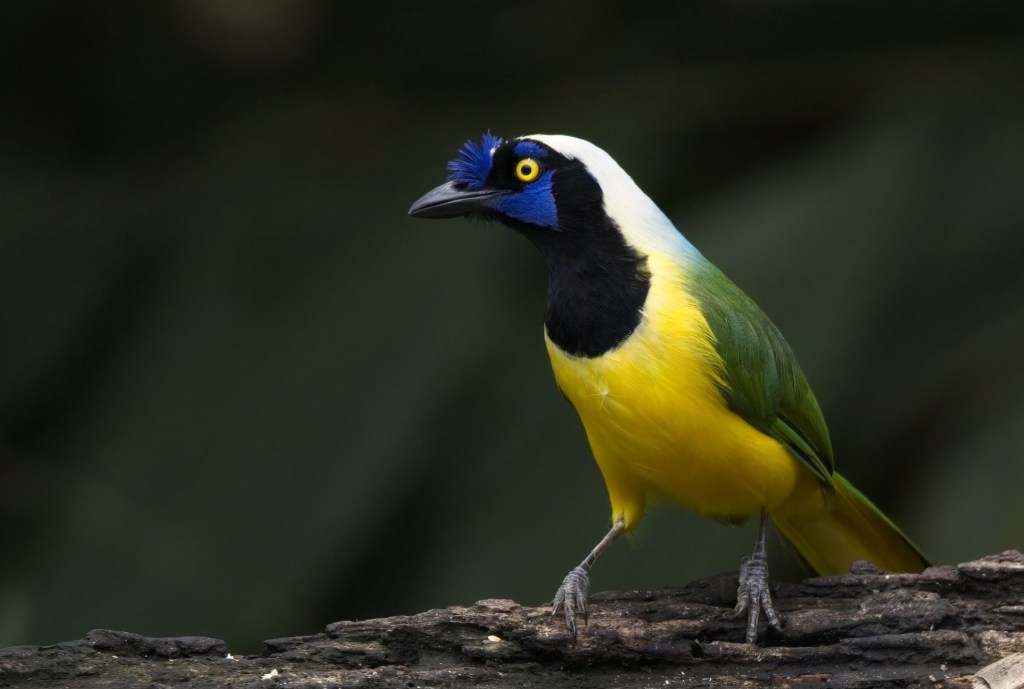
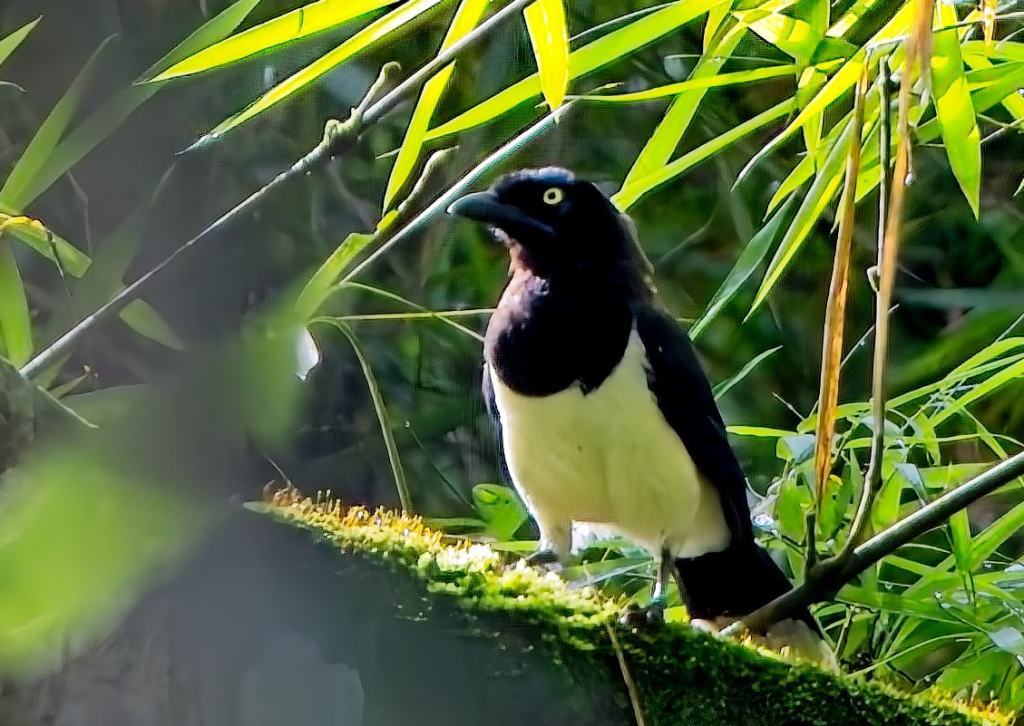
New for the trip and new for Tom was one of the more striking birds of the trip – a Green Jay. This bird which is also called an Inca Jay makes its way into South Texas and is seen throughout Central America and Northwestern South America.

Green Jay

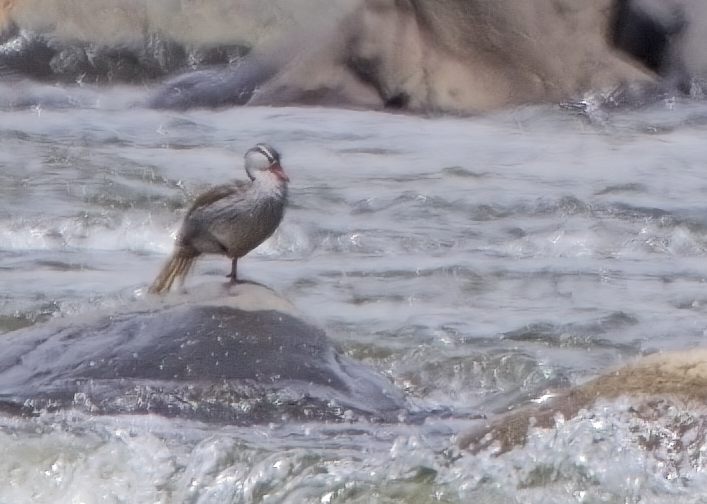
It was not the greatest look, but a species we had searched for and had eluded us at every river crossing was finally found from the bridge crossing the Cosanga River as we drove south on the Troncal Amazonica, the Pan American Highway. It was a male Torrent Duck. Cindy and I had seen only a female in 2022 but had great looks as it somehow managed to navigate the raging waters. This was a very distant view, but still very welcome.

Coming Up onto the Bridge over the Cosanga River
Surprisingly Decent Photo of a Very Distant Torrent Duck

As we continued on our way to Wild Sumaco, we made a quick stop at the Wayra Reserve, a family owned reserve on a river with yet more hummingbird feeders. Of the 18 species we saw there in just over an hour, 10 were new for the trip, including 4 more hummingbirds, all of which were new for me in Ecuador and one of which, the Golden-tailed Sapphire was a lifer as well. This is a good place to expand discussion on two of the amazing aspects of birding in species-rich Ecuador. As mentioned before, birding at hummingbird feeders can be challenging, exciting and chaotic as multiple species swarm a single feeder, and especially when there is another swarm at adjacent feeders. I do not have other photos from Tom St. John for the trip, but I asked him to send one with many hummers around a single feeder to evidence that point. It is included below. The second point is how just traveling a short distance, especially with a change in altitude can bring so many new species into the mix. There are dozens of reserves in Ecuador, many with hummingbird feeders, and as we saw many times on this trip and with Wayra Reserve being a great case in point, each reserve can have a very different assortment of species. They may seem similar surrounded by a forest, but there are so many different mini-habitats that one species but not another finds appealing.

Tom’s Photo of Multiple Species at a Single Feeder
Golden-tailed Sapphire – Lifer
Black-throated Mango – New for the Trip and for My Ecuador List
Many-spotted Hummingbird – New for the Trip and for My Ecuador List
Fork-tailed Woodnymph – New for the Trip and My Ecuador List

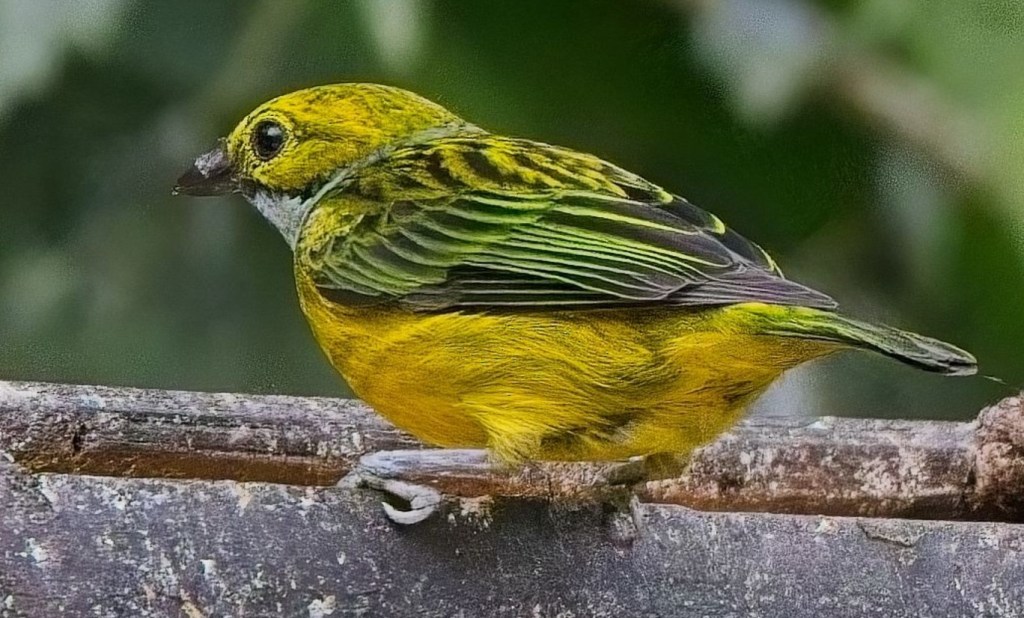
Other new birds for the trip were Black-billed Thrush, Yellow-browed Sparrow, Silver-beaked Tanager, Golden-faced Tyrannulet, Chestnut-bellied Seedeater and Red-crested Finch. Not new for the trip, but finally seen well and photographed was an Orange-billed Sparrow and the Blue-gray Tanager here was different than ones seen earlier with white wing bars.

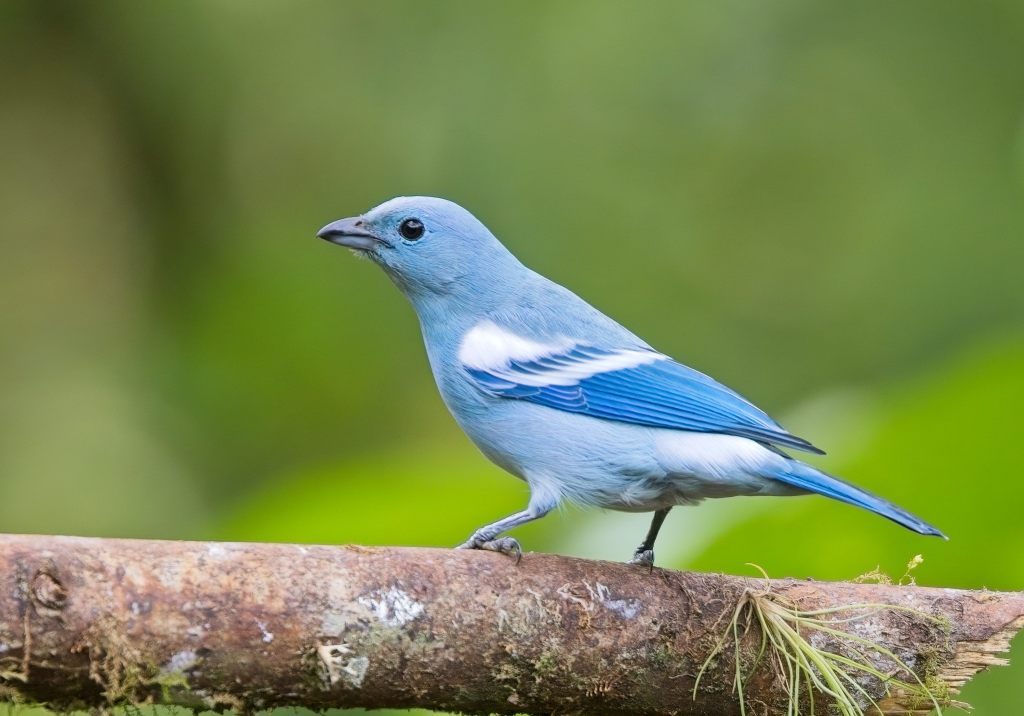
Blue-gray Tanager – White-winged
Orange-billed Sparrow

As we neared Wild Sumaco Lodge, Nelson made a stop on a promising section of road and during the half hour there we had 24 species, 9 new for the trip, of which 5 were new for my Ecuador life list and one hummingbird, a Glittering-throated Emerald, was a lifer – no photo on the road but I would get one soon later at the Wild Sumaco feeders. Many species did not provide photo ops, and I was especially unhappy to miss a photo of a Violaceous Jay, but although not a great photo, I did get one later.

Chestnut-bellied Seedfinch – New for the Trip and My Ecuador Life List
Magpie Tanager – New for the Trip
Blackpoll Warbler – a North American Warbler that Migrates South for the Winter (New for both the trip and My Ecuador Life List)
Common Tody-flycatcher

We made it to Wild Sumaco Lodge just after 4:30 with enough time left in the day to spend time at the feeders and watching the grounds of the lodge. We had 13 hummingbirds of which 4 were new for the trip, 3 new for my Ecuador list and two lifers. Altogether we had 21 species including flybys of two parrot types and two toucans and the first barbet we had had in a while, a Gilded Barbet.

Ecuadorian Piedtail – Lifer
Black-throated Brilliant – Lifer
Gilded Barbet

It had been a long and very productive day with 99 species including an awesome 23 species of hummingbirds, 12 tanagers and a great mix of other species including ducks, warblers, sparrows, woodpeckers, raptors and more. Sixty-four species were new for the trip; 22 were new for my Ecuador Life List and 11 were lifers. We would spend the next three nights at the Wild Sumaco Lodge with lots of birds ahead.

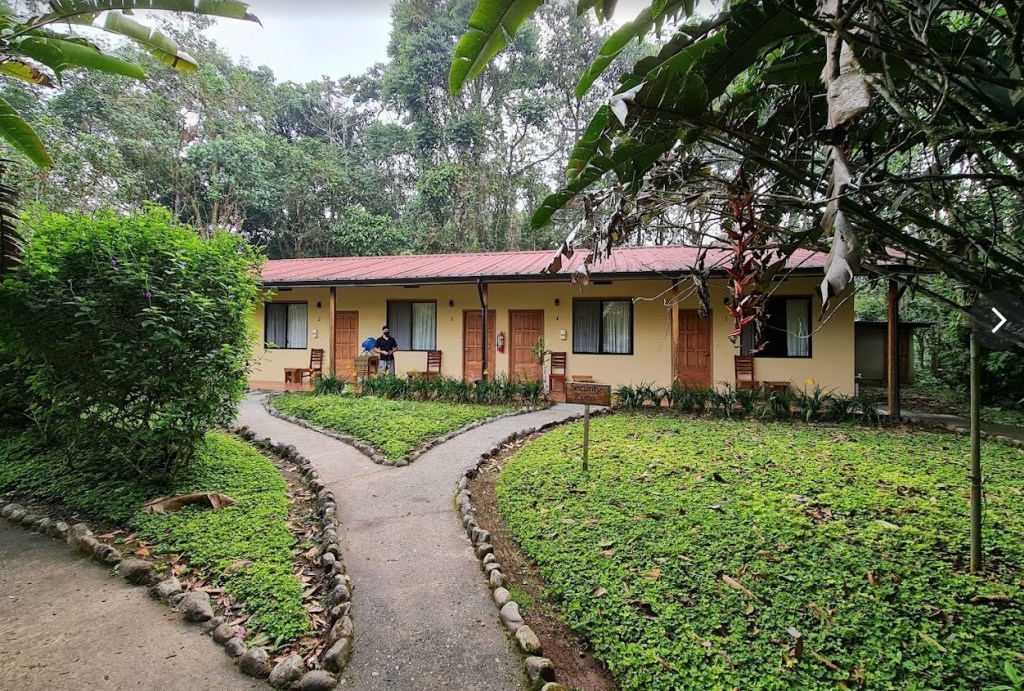
Our Rooms at Wild Sumaco Lodge

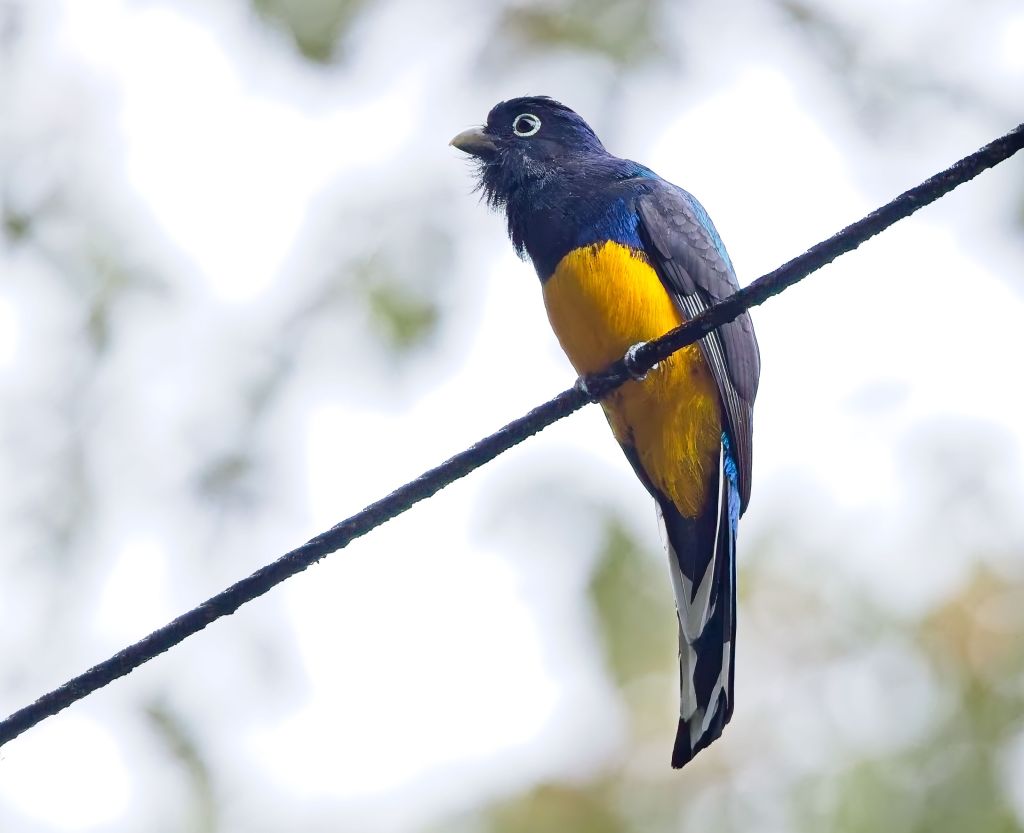
It was another early start as we would bird the grounds around Wild Sumaco and then visit the feeders as the light improved. We started with two new birds for the trip and for my Ecuador list, Plain Antvireo and Western Fire-eye which was also a world lifer. And it just kept getting better as we added a Spotted Tanager and then two iconic birds, Collared and Green-backed Trogons all providing great photo opportunities.

Plain Antvireo – Life Photo and New Ecuador Lifer
Western Fire-eye – Lifer
Spotted Tanager – New for Trip and Life Photo
Collared Trogon
Green-backed Trogon – Life Photo

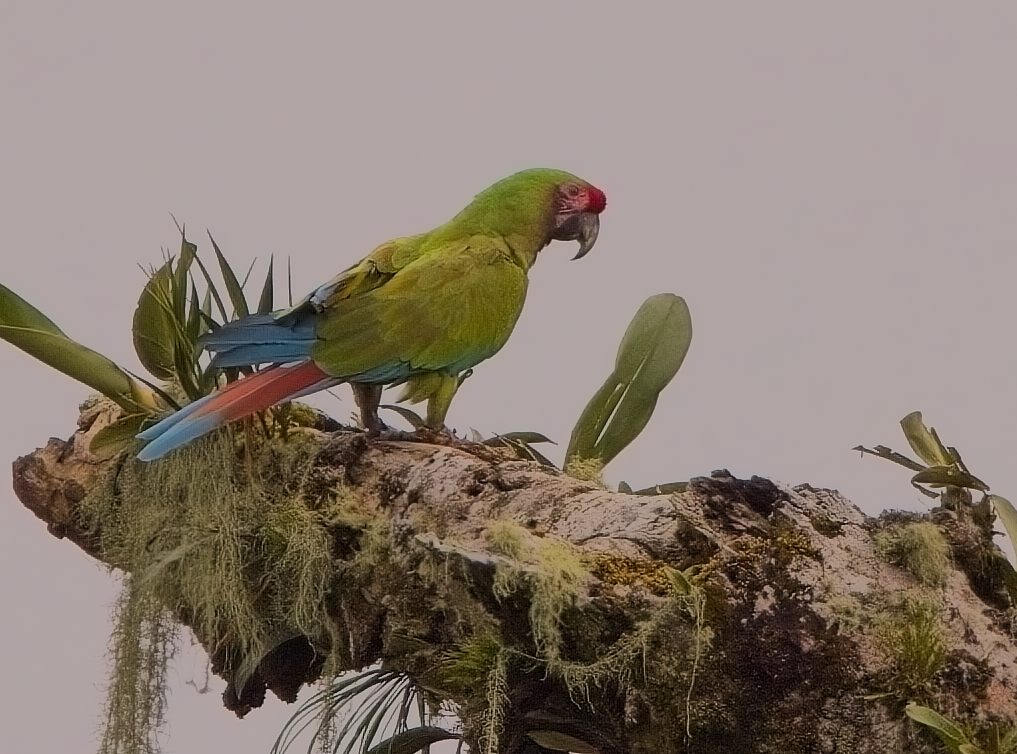
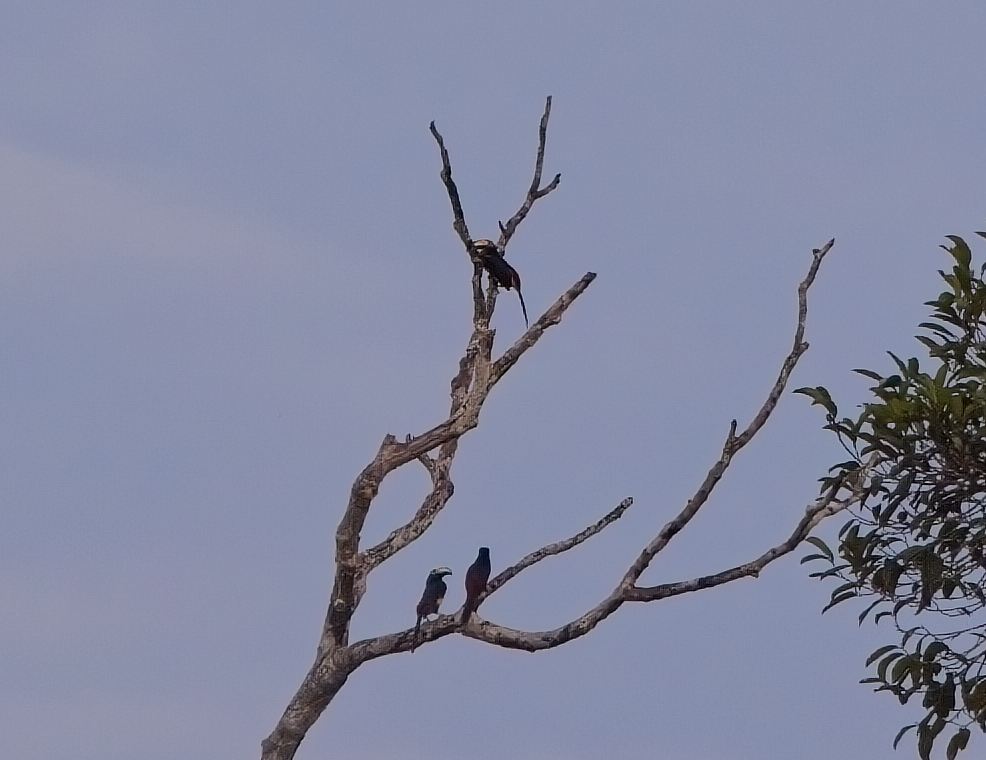
Then it was two lifers in succession, a Black-streaked Puffbird and Gould’s Jewelfront Hummingbird, both cooperating for photos. In my planning for the trip, I had noticed the Jewelfront and was hopeful that we would find one. It was a good morning for charismatic birds as we also had three parrot species – Military Macaw, Maroon-tailed Parakeet and Blue-headed Parrot, two Aracari species – Many-banded and Chestnut-eared, and three toucan species – Golden-collared Toucanet, and Yellow-throated and Channel-billed Toucans.

Black-streaked Puffbird – Lifer
Gould’s Jewelfront – Lifer

It was another hummingbird rich location with 13 species in the morning highlighted by the Gould’s Jewelfront and two other lifers: Napo Sabrewing and Rufous-vented Whitetip.

Napo Sabrewing – Female – Lifer

We birded at Wild Sumaco for more than 6 hours before our lunch break and had an amazing 102 species some of which have been included above. Unfortunately many of the birds were either heard only or seen poorly, but there were some exceptions like those above and the Black-faced Antbird, White-crowned Manakin and the White-winged Becard, all of which I had seen previously but not photographed.

White Crowned Manakin
White Winged Becard
Black-faced Antbird

And then there was one more – a lifer Band-bellied Owl buried deep in foliage with just enough clearance that using manual focus I could at least get an ID photo.

Band-bellied Owl Photo

Photos were even harder to come by in the afternoon as I got photos of only 7 of the 62 species seen one of which was of a Blue-rumped Manakin, a lifer seen but not photographed in the morning, and another was of a lifer Blackish Rail. Probably the best photos were of Plain-backed and Ochre-breasted Antpittas. I had seen and photographed the latter at Refugio Paz in 2022 and heard the latter as a lifer at Reserva Mashpi-Amagusa earlier on this trip.

Blue-rumped Manakin Female – Lifer
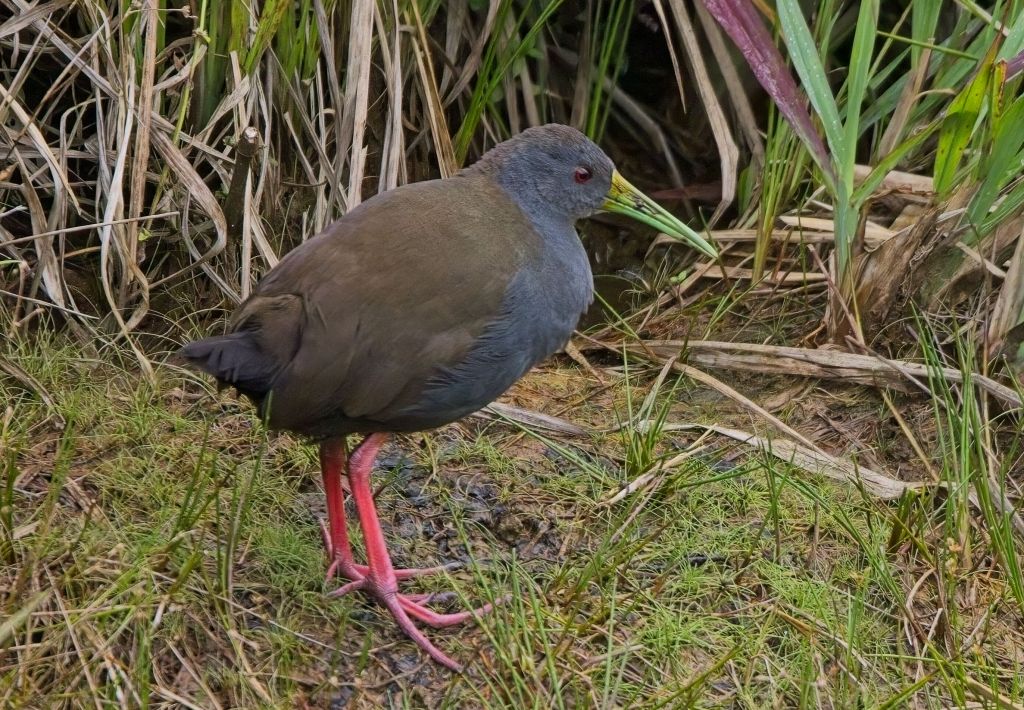
Blackish Rail – Lifer
Ochre-breasted Antpitta
Plain-backed Antpitta

There would be one more species at Wild Sumaco that day – a Common Pauraque seen and photographed at night, new for Ecuador but seen in a number of other countries including the U.S. We also heard but were unable to get a visual of a lifer Rufescent Screech Owl.

Common Pauraque – New for the Trip and my Ecuador List

Planning for the trip I had known that Wild Sumaco was species-rich with a lot of potential lifers. Including the previous afternoon we had seen 129 species: 66 were new for the trip; 46 were new for my Ecuador list; and 26 were lifers. The next day promised to be very birdy as well as we would be birding roads near the lodge.

Welcome to October. We had really only been on the official tour for barely 5 days but we had covered a lot of territory. Today we would be birding near the Wild Sumaco Lodge and then would work our way into the beginning of the Amazon region at Gareno near the Napo River. Another day with lots of birds but again with many heard only or seen only briefly. No more feeders and many fewer photo ops. In three hours along Sumaco Road we had over 70 species. Only seventeen were new for the trip as many were species already observed at Wild Sumaco, but most of them were new Ecuador birds for me and nine were lifers – but without photos of any of them many of which were in the dark foliage of the early morning or heard only. A word about lifers. Everyone has their own standards for counting new birds. Mine are different for various lists. In my home Washington State, I will only count a new state bird if I get a photo. In the ABA area, I will only count it with a visual. So in neither case is “heard only” sufficient. Disagree with me if you wish, but for other areas I will count a heard only species if (1) I hear it clearly (2) my guide is certain of the ID; (3) I can recognize the call/song and match it to a recording and (4) I hear it again and match it to the first time I heard it and to that recording. That satisfies me and I am sticking to that.

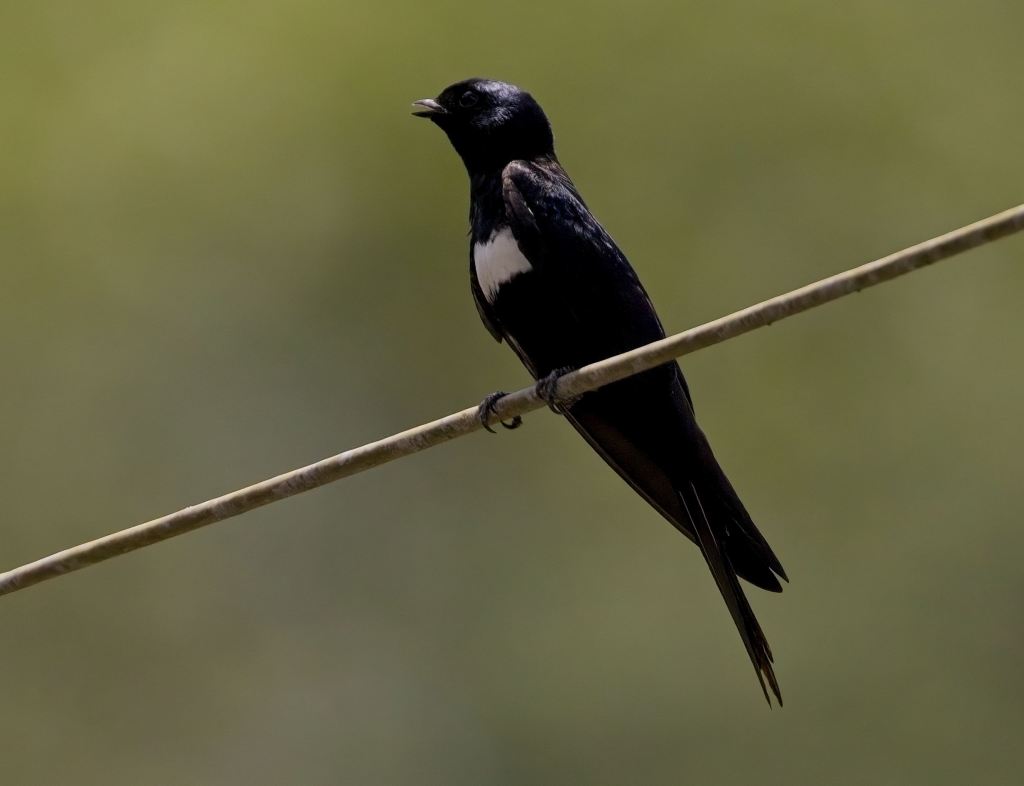
A highlight of the morning was a large kettle of more than 50 Swallow-tailed Kites soaring overhead. My photos were ID quality only but I was so spoiled by an up close and personal interaction with them in the Everglades in Florida seven years ago, that I don’t even care about photos again after that experience. A photo from then is included below. There were some other photos from the morning as well including lifer photos of Coppery-chested Jacamar and White-thighed Swallow. The Jacamar had been on the list from the previous day as a lifer but without a photo, so it was a particularly well appreciated photo that morning.

Swallow-tailed Kite from the Florida Everglades in 2017 – Soaring within 10 Feet of Me
One of 50+ Swallow-tailed Kites in Kettle
Coppery-tailed Jacamar – Lifer from the Day Before
White-thighed Swallow – Life Photo

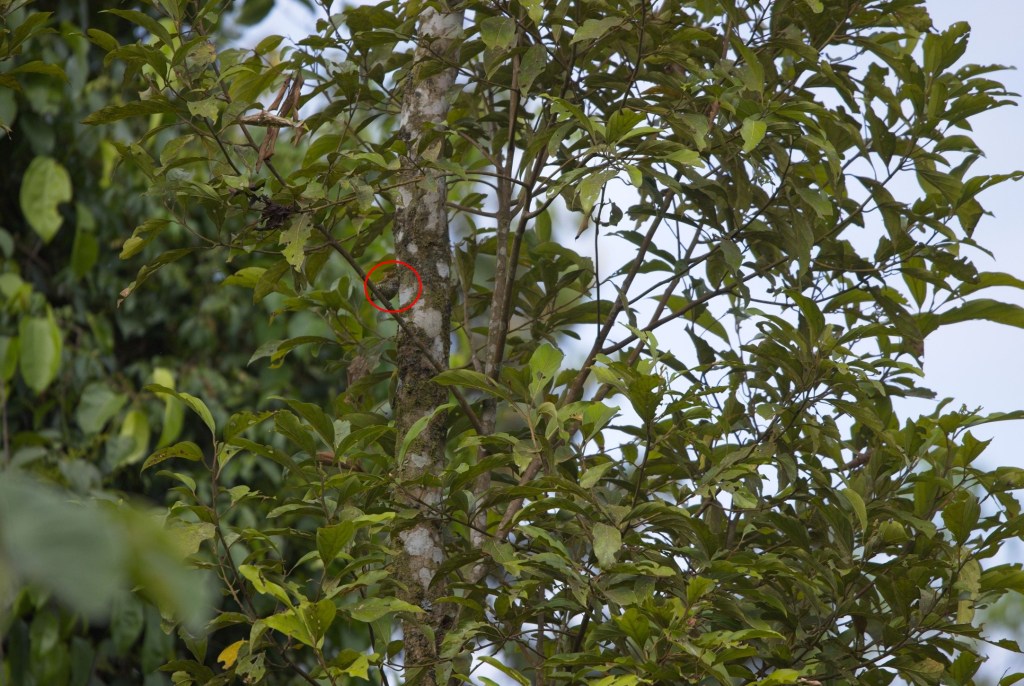
Piculets are essentially tiny stub-tailed woodpeckers found primarily in tropical South America with 20+ species and a few species in Africa and Asia. We had two this morning with a decent photo of a Lafresnaye’s Piculet. They are very small – only 4.5 inches on average and are very easily missed as they are mostly brown looking for insects on brown barked trees. I have often heard them described as “cute”. The second photo is the original uncropped or processed from the camera – already magnified 10 times by the 500 mm lens – a testament to the amazing sensors in modern digital cameras.

Lafresnaye’s Piculet – Highly Magnified
This is original photo from which the Lafresnaye’s Piculet photo above was produced – already magnified 10 times by the 500mm lens on my camera. The Piculet is in the circle.

One of the new birds for the trip was a Long-tailed Tyrant. Tyrants are flycatchers with many species found in tropical Central and South America. This species indeed has a very conspicuous long tail. I tried to capture that tail in flight – not so great but definitely makes the point

Long-tailed Tyrants
Long-tailed Tyrant Flight Shot

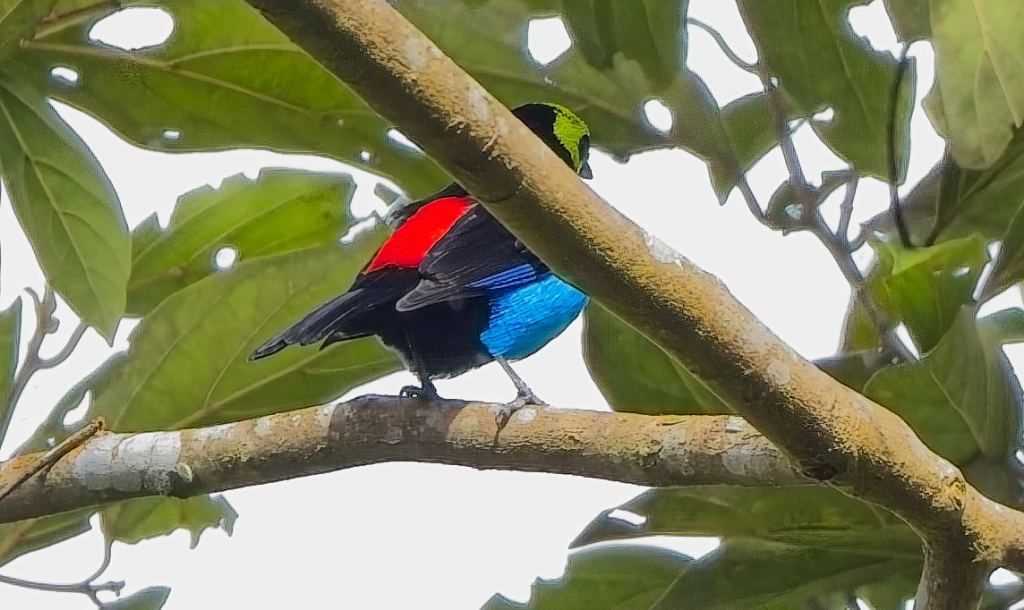
The last photo from the morning is of one of the most spectacular of the many spectacular tanagers that we observed, an aptly named Paradise Tanager. One subspecies has bright red on the back. I could get only a partial photo of that one.

Paradise Tanager
Paradise Tanager – Red Backed Subspecies

I am a strong believer in using local guides. Yes, it is more expensive than birding on one’s own, but acknowledging that I am fortunate to be able to allocate funds for this, there are just so many benefits starting with the obvious of familiarity with species that are not known by me. But it goes way beyond just the identification of species. These guides know both general areas and specific places to find particular species, know local roads and people and restaurants and cultures. They both broaden and deepen the experience with their knowledge of all of the above. I might be able to learn from Ebird that a particular species might be found at a certain park, but I could spend hours at that park looking for the specific location while my guide would know exactly where to look. A great example was our stop on Loreto Road at “the Cliff Flycatcher Spot” a hotspot recognized on Ebird. Nelson knew exactly where to stop and as expected we had Cliff Flycatchers there – a species I had seen but not photographed in Peru in 2013. We are all eco-tourist birders and the money we bring into local economies for lodges, tourism companies, restaurants and guides helps support and sustain conservation in these localities and builds a culture of environmental awareness and care in the process.

Cliff Flycatcher – Life Photo

After lunch on the road, we stopped at the Ama Ecolodge and Reserve, near the Napo River in the Amazon region. Almost half of the 50 species we found there were new for our trip, 12 were new for my Ecuador List and 7 of those were lifers. The only photos of lifers were terrible photos of Yellow-bellied Dacnis and Orange-fronted Plushcrown. I did get life photos of White-banded Swallow, Scarlet-crowned Barbet, Dusky-headed Parrot, Masked Crimson Tanager and Violaceous Jay (the latter really poor). And there was another very welcomed photo – a Hoatzin, one of the truly bizarre birds, that I had seen often before but was new for and greatly appreciated by Tom.

White-banded Swallow – Life Photo
Dusky-headed Parrot – New for Trip and Life Photo
Masked Crimson Tanager – New for Trip and Life Photo
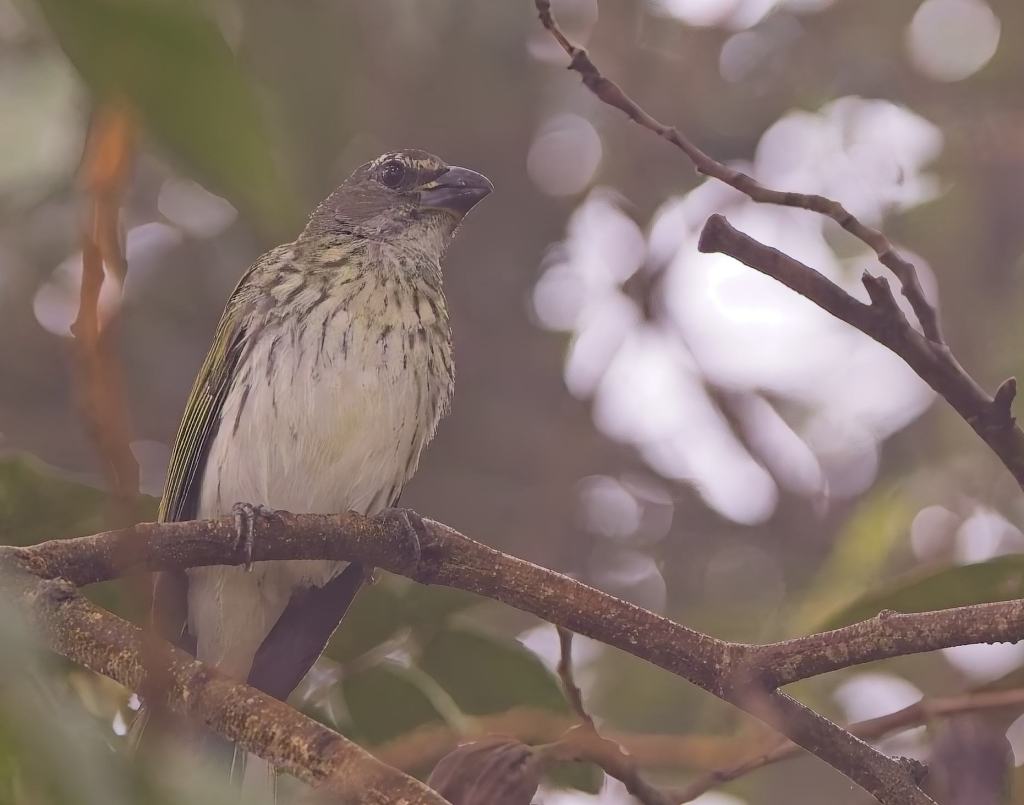
Scarlet-crowned Barbet – New for Trip and Life Photo
Hoatzin – New for Trip
Lemon-throated Barbet – New for Trip

There are almost always regrets on a day of birding in the forest – birds missed or photos missed – but of course the first regret also includes the latter as you cannot take a picture of a bird not seen. There was one species at Ama that I really regret not being able to photograph, a lifer White-eared Jacamar. Including one from Ebird here, because they are really cool birds.

White-eared Jacamar – Lifer – Ebird Photo by Stephen Gast

We arrived at Hostal Yuralpa, scheduled to be our last lodging stop on the tour just before dusk. As one reviewer termed it – a mixed bag. Located by the Napo River in the Gareno area within Waorani Indigenous area it is a mix of a birding hostel and a dormitory for oil company workers. Food was just ok and served in a large cafeteria shared by all. Our rooms were also OK. The grounds were utilitarian/industrial rather than “in nature” but the birding in the vicinity was great. There was an immediate problem when we arrived as we were informed that there was no electricity – explained as “a problem in the system”. This was the warmest of our locations and the prospect of a night without AC or fan was pretty daunting as was the prospect of no hot water, no Wi-Fi and no ability to recharge equipment and then there would be the darkness. Especially since it was critical for me to be able to communicate with spouse Cindy who was about to fly down to meet me for our upcoming trip to the Galapagos, none of this was well received. I still don’t know if it was poor communication or a change in circumstances, but what started off looking like a disaster turned out to be just a big inconvenience. There was electricity but only during limited hours due to blackouts caused by water shortages due in turn to the many months long drought that had curtailed hydroelectric power production in much of the country. We ate more than once by candlelight and only had electricity in the rooms after 8 or so, but it was survivable.

And there were lots of birds in this very different habitat. Now not all of them were seen clearly if at all, as the forest was very thick and many of the species were canopy dwellers – a big challenge without a tower. But the numbers were impressive. During our time in the Gareno Waorani area, we had 134 species adding 73 for the trip list, 47 for my Ecuador list and 31 for my Life List. Unfortunately most were not photographed. Not distinguishing by day, I am including some of the photos that I was able to get.

Yellow-browed Antbird
Peruvian Warbling Antbird
Lanceolated Monkbird
Double-toothed Kite
Black-bellied Cuckoo
Blue-capped Manakin
Roadside Hawk
Crimson-crested Woodpecker
Yellow-tufted Woodpecker
Purple-throated Fruitcrow
Spangled Cotinga Female
Mealy Parrots
White-throated Toucan
White-fronted Nunbird

The original plan had been to spend three nights at Yuralpa but Nelson, perhaps recognizing some of the issues there and also wanting to shorten the return trip to Quito made arrangements to spend our last night instead at the Cabanas Tamiaju very close to the San Isidro Lodge. After our morning birding at Gareno, we moved on to the Cabanas and its very active hummingbird feeders with a dozen species of hummingbird with one, the Greenish Puffleg, a lifer for me . At night we went owling and found a lifer Rufous-banded Owl which called a number of times but would not come into the open.

The next morning, our last with Nelson, we birded first at the Cordillera Guacamayos continuing to Borja Road. Of the 35 species at the first location, 8 were new for my Ecuador list and 4 of them were lifers, but conditions were challenging with a lot of early morning mist, so I only got a photo of one of them – Smoky Bush Tyrant. Other photos are below as well.

Smoky Bush Tyrant
Andean Guan
Pearled Treerunner
Smoke Colored Pewee
Grass Green Tanager – Ecuador Lifer
Black Crested Warbler
Turquoise Jay
Common Chlorospingus

On Borja Road, we added new species for the trip including Torrent and Golden-faced Tyrannulets and my Ecuador lifer Spotted Sandpiper as well as a few new species for the trip – heard only.

We then spent a couple of hours at the Rio Quijos Ecolodge where Cindy and I had stayed and birded in 2022. There were a number of new species for the trip but only one Ecuador lifer for me, a Yellow-olive Flatbill, a species I had seen in Belize and earlier in Trinidad 46 years ago. No photo of that but I did get photos of a Bronze Green Euphonia (life photo), Scarlet-rumped Cacique, several tanagers and another photo of a Torrent Duck.

Bronze-green Euphonia
Scarlet-rumped Cacique
Our Second Torrent Duck of the Tour

There would be one more stop – back at Papallacta Pass. Seventeen species seen including two new lifers for me – Purple-backed Thornbill and Giant Conebill. Nelson worked very hard on the first and we just got quick glimpses as it darted around against a thick vegetation background. He worked even harder to get the Conebill to finally get out into the open. Two other new birds for the trip were a Red-crested Cotinga and a Brown-backed Chat-tyrant.

Giant Conebill
Red-crested Cotinga
Brown-backed Chat-tyrant

And we were done…back to Quito and the Wyndham Quito Airport Hotel where my family waited for me and Tom would be able to get a little sleep before his early morning departure to return to Seattle. Hopefully the stories and photos in these two blog posts have successfully conveyed the success of this trip. Lots of great birds and good times at lovely places with the excellent care and guidance from Nelson Apolo Jaramillo.

Yes, I wish there had been more birds and especially more photo opportunities, but that is often the case, and forest birding is really tough. My 482 species did not reach my hoped for goal of 500 species, although there were 10 species seen or heard only by Nelson that I did not count. At the beginning of the trip I felt that 125 new lifers would be the minimal acceptable number. It was only 126 but that at least crossed the threshold and brought my life list to 3654. And there were 216 new species for Ecuador bringing that Country list to 672. (Both would be larger after our visit to the Galapagos Island.) I don’t have an exact count on the new life photos on the trip, but I managed to get photos of 220 species. Sadly I only got photos of just over 26% of my new world lifers. The ratio of photos for the new life species speaks to the challenges of forest birding. I generally try to get photos of at least two thirds of the species seen and I was at just about that level before this trip on a worldwide basis. Fortunately I did much better in the Galapagos where I had photos of all but one of the 21 lifers.

This had been my second trip to Ecuador and it continued with our family trip to the Galapagos Islands. Cumulatively after the Galapagos, I have now birded more in Ecuador than in any country other than the U.S. The total time spent in Ecuador is not quite a month, while the time spent birding in the U.S. spans more than 50 years. The numbers are striking as my U.S. list is 780 while the Ecuador list is now 714 species (much larger than my third largest country list – Kenya with 515 species – although I have seen a higher percentage of the birds in Kenya (44%) compared to Ecuador (42%) and of course far less in either case than for the U.S. (70%)).

I love Ecuador with its beautiful mountains and forests and wonderful lodges, birds and people. I doubt I will ever return as the years are running out and there are many places still on the wish list. It was great visiting in 2022 with Cindy and to share it with Tom St. John was special as well. My next birding trip is set for Japan in February – finally to see the bird that is atop my birding bucket list – a male Smew. Stay tuned.

Birding Ecuador with Tom and Nelson – Part 1

Ecuador ranks high on every birder’s must do list. At about 109,500 square miles, Ecuador is just a little larger than the state of Colorado. By North American standards, Colorado with 519 species is a bird rich state. With habitats including the Amazon basin, the Andes mountains and the Pacific Coast, Ecuador is the most bird species dense country in the world with more than 1,666 species in essentially the same area. In June 2022, Cindy and I spent two weeks there birding on a private tour arranged by Neblina Forest that included lodges in the Andes and 4 days in the Amazon. We had 455 species of which 208 were “lifers” – new for my world list – for me. The reason there were not more lifers was because of the overlap with places I had birded before – especially Peru and Brazil, and to a lesser extent Costa Rica, Belize and Trinidad. It was a great trip – but as comments from others we met along the way and after our return, it was missing two things – a visit to the Galapagos Islands and more birding at lodges and areas we did not visit on that first trip.

As covered in two blog posts on our trip to the Galapagos, Cindy and I took care of one of those omissions in October (https://blairbirding.com/2024/11/01/the-magical-galapagos-islands/ and https://blairbirding.com/2024/11/12/the-galapagos-islands-birdies-and-beasties/) and since we were going to be in Ecuador anyhow, it provided a chance for me to go earlier and visit some of those other locations. When Cindy and I knew we would be going to the Galapagos I contacted Nelson Apolo Jaramillo, an excellent guide in Ecuador and after sending him details of my earlier trip, he put together a very appealing itinerary that meshed well with the Galapagos schedule. Tom St. John is a friend that is new to birding but not to photography and is a wonderful photographer. He has taught me much about that and I have taught him about birds and birding. Earlier attempts to find a birding trip for the two of us had not worked out. His calendar was good so this would be a great opportunity. It was easy for Nelson to add Tom to the trip and the cost was attractive so he signed on.

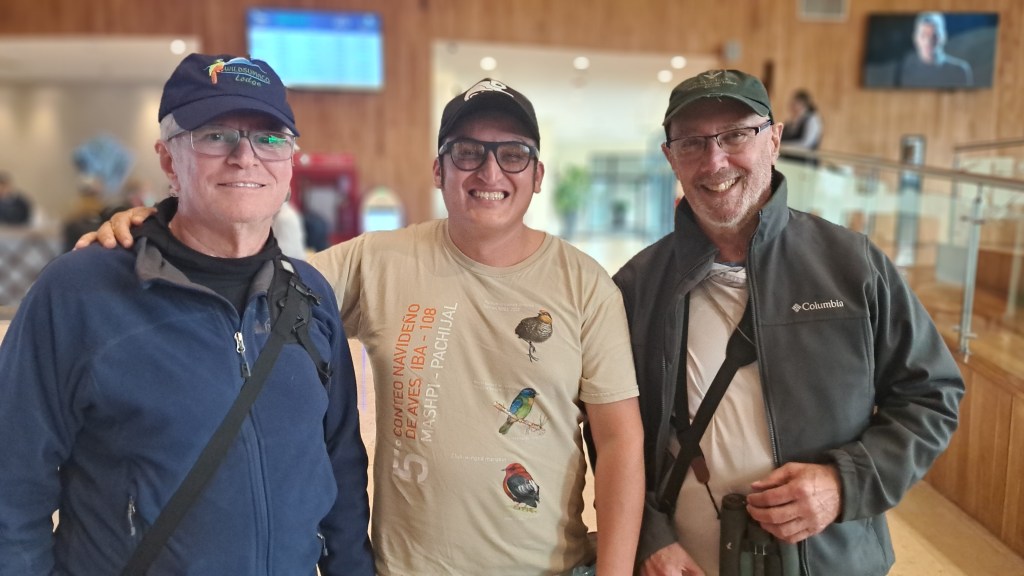
Tom St. John, Nelson Apolo Jaramillo and Blair Bernson

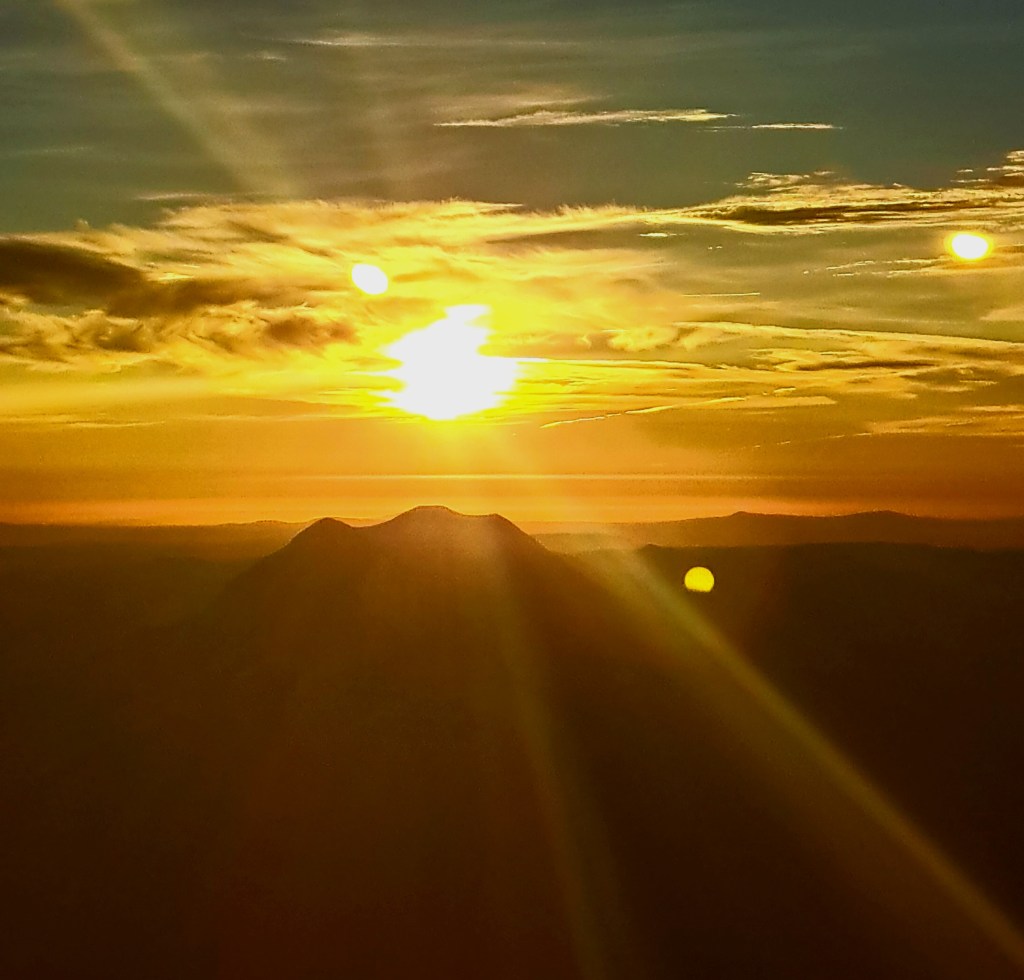
Our trip would leave Seattle early on September 24th on a United Airlines flight to Los Angeles then a switch to Copa Airlines for a flight to Panama City and a final leg to Quito, Ecuador arriving very early on September 25th. After the rest of the day to catch up, we would then meet Nelson late on the 26th at Sachatamia Lodge to begin the official tour. The early departure from Seattle gave us a chance to see a beautiful sunrise over Mt. Rainier. We would be spending many days in the Andes in Ecuador, but for me, nothing is better than our own mountain.

Sunrise over Mount Rainier

Air travel is never fun and every time there is a stop along the way, there is a chance for trouble. That was our fate in Los Angeles. After a very long walk from the arrival gate to the scheduled departure gate for our Copa Airlines flight, we learned there would be a delay due to an equipment problem. The plane was at the gate but there was no sign of leaving on time, and we started to worry about making our connection in Panama City. After maybe an hour we were finally allowed to board and although it would be tight, there was still a chance to make that connection. Then…nothing. After a very unhappy 30 minutes waiting we learned that there was some kind of electrical problem at the gate that would preclude our departure. So we off loaded and moved on to a new gate – more than a half mile away where another Copa Airlines plane would take us south. Of course by this time, any chance of making our connection was long gone and the new worry was whether we would ever see checked baggage in Quito.

We had sprung for business class for the 6+ hour flight to Panama City so it was comfortable but with some anxiety about what was ahead. One fun thing was that Copa had a very clever video for the safety routine that is usually onboard performed by flight attendants in a mechanical manner that 90% of the passengers ignored. I took some photos of pieces of the video with my phone. The one below was used to show where the emergency exits were located. We were told that we would get “hotel vouchers” in Panama City since we would have to spend the night and then leave on a flight to Quito in the morning. Well, not really. Instead we got passes to the Copa Lounge – a tacky bright and noisy room with some drinks and snacks and where the only possibility for any sleep was by pulling three chairs together for an uncomfortable horizontal “bed”. So maybe an hour of sleep and then a departure on an early morning flight to take us to Quito. There was good news: our luggage arrived on our same plane, we were met by someone from Nelson’s company (he was out with another client as we knew), and finally we would be arriving at our first stop, the Zaysant Ecolodge, mid morning (rather than at two in the morning which would have been the case on the original flight schedule) enabling us a little time for a nap and then some time to look for birds.

The Zaysant Ecolodge was convenient to the airport and was both very comfortable and also gave us a good introduction to birding in Ecuador and the first chance for Tom to see some hummingbirds coming to feeders, one of the highlights of any trip to Ecuador. We birded in the afternoon and then caught a little sleep before dinner. We would bird there again the next morning and then Nelson had arranged for a driver to take us on to Sachatamia Lodge with a great stop at the Alambi Reserve. This was a change from the original plan which Nelson added – a brilliant move. At Zaysant we only had 15 species, but that included 5 hummingbirds and a Vermilion Flycatcher – always a treat. None of the species were new for me but as would be the case for every new bird we would see, all were lifers for Tom – welcome to Ecuador.

Zaysant Ecolodge
Black-tailed Trainbearer
Vermilion Flycatcher

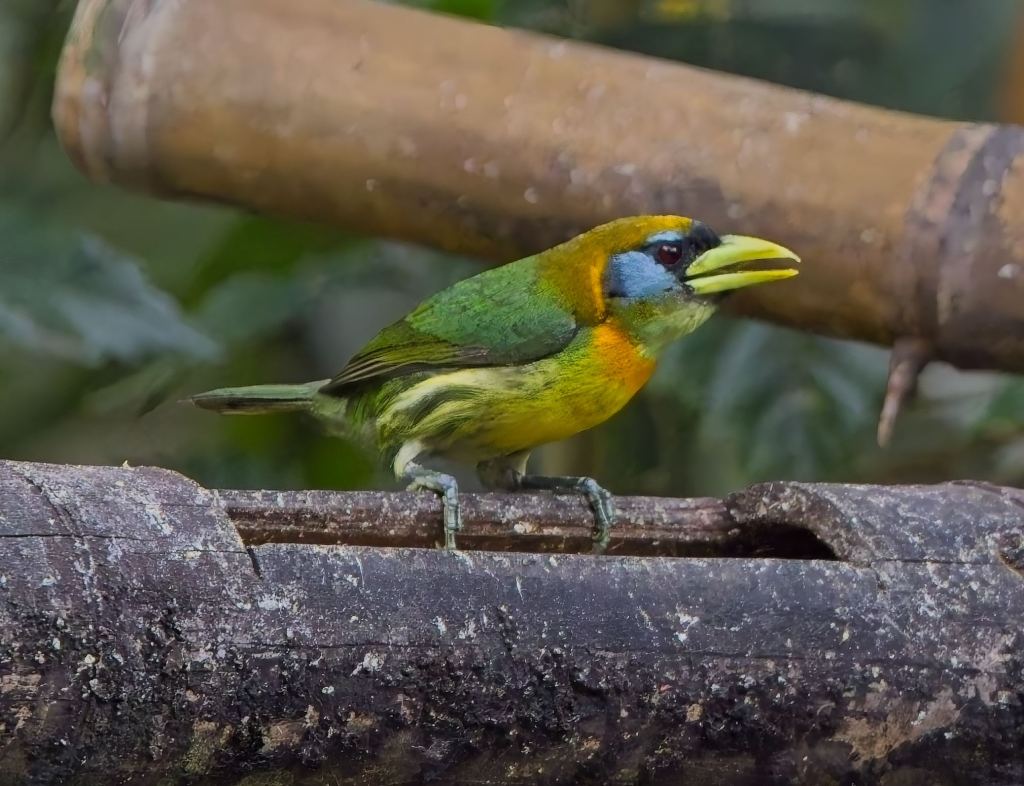
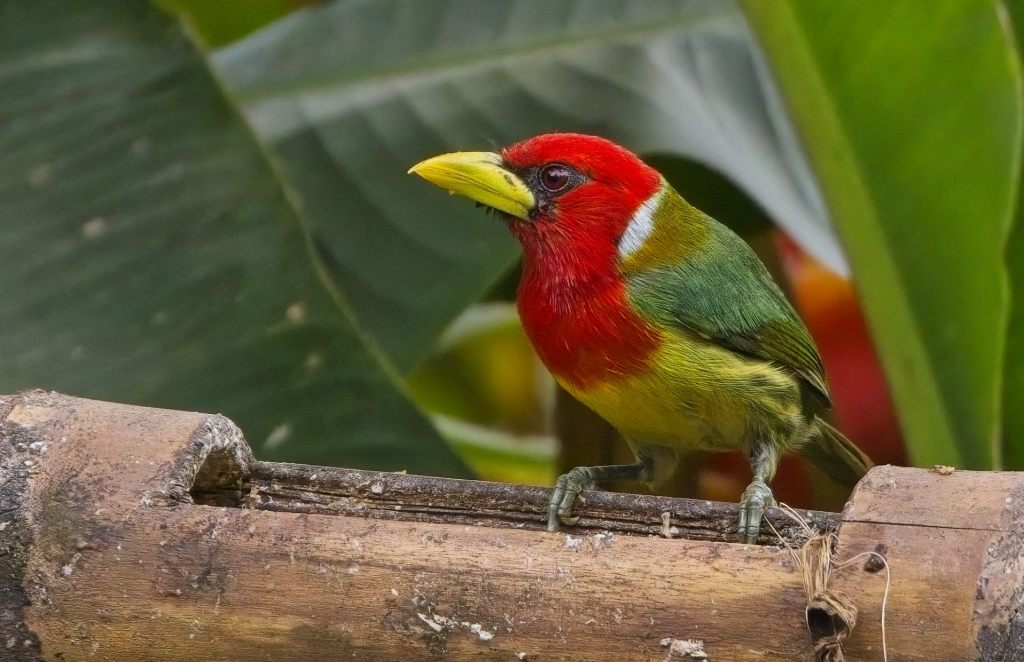
Alambi Reserve proved to be an exceptional stop. Our 26 species included 13 hummingbirds and 7 tanagers with photos for all of them and oh yeah, the Red-headed Barbet, definitely one of the best looking birds anywhere. None of those were lifers for me, but two others were: Choco Brushfinch and Orange-crowned Euphonia. As a bit of background, on my 2022 visit to Ecuador, I had also visited Alambi Reserve and had 28 species including 12 hummingbirds and 10 tanagers. As evidence of the diversity of birdlife in Ecuador, only 6 of the tanagers were seen on both visits and 2 of the hummers seen in 2022 were not seen in 2024.

Purple-throated Woodstar

Choco Brushfinch – Lifer

I cannot recall any other stop on any tour where I was able to get photos of such a large percentage of the species seen as at Alambi. Unfortunately none of Tom’s photos will be included in this blog post but from what I have seen, they are often better than the ones I took. It was great fun for both of us, and this continued when we arrived for lunch at Sachatamia Lodge. There would be no new lifers there but when we left Alambi, our species count for the trip was 40 species. That afternoon at Sachatamia, we added another 28 including 3 more hummingbirds and 3 more tanagers. We heard but never saw our first Quetzal and first Trogon, saw our first Toucan and also saw 4 very striking Aracaris among others. Nelson joined us for dinner. In addition to being an exceptional birder and guide, he is very personable, has excellent English, must have hot sauce on everything he eats and has a great sense of humor. It was going to be a great trip.

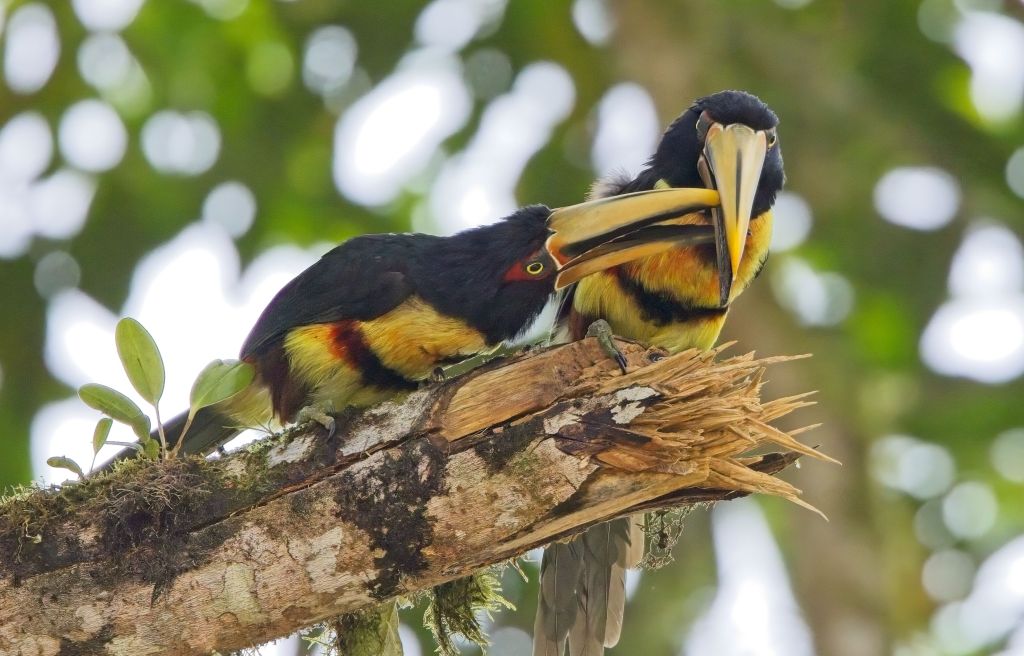
Collared Aracaris
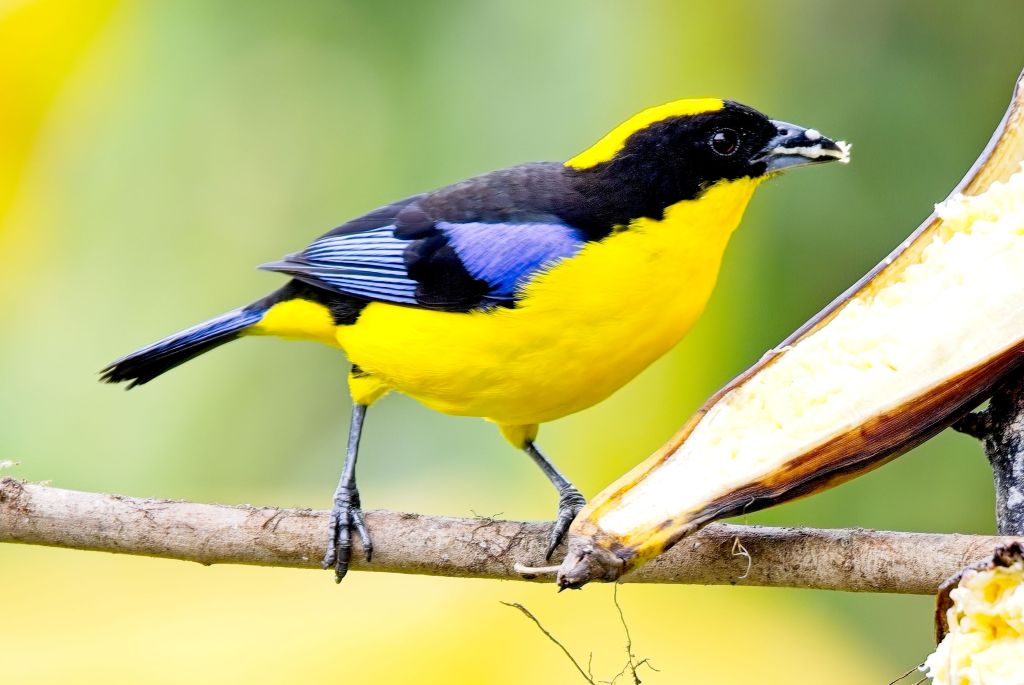
Blue Winged Mountain Tanager
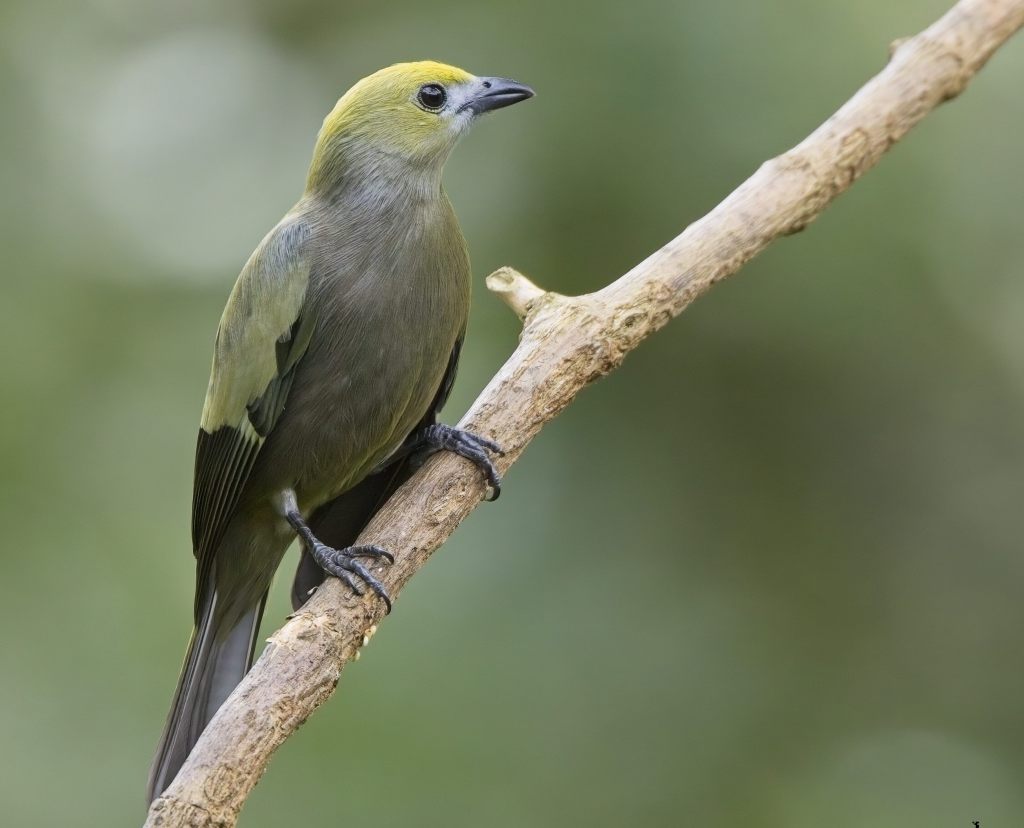
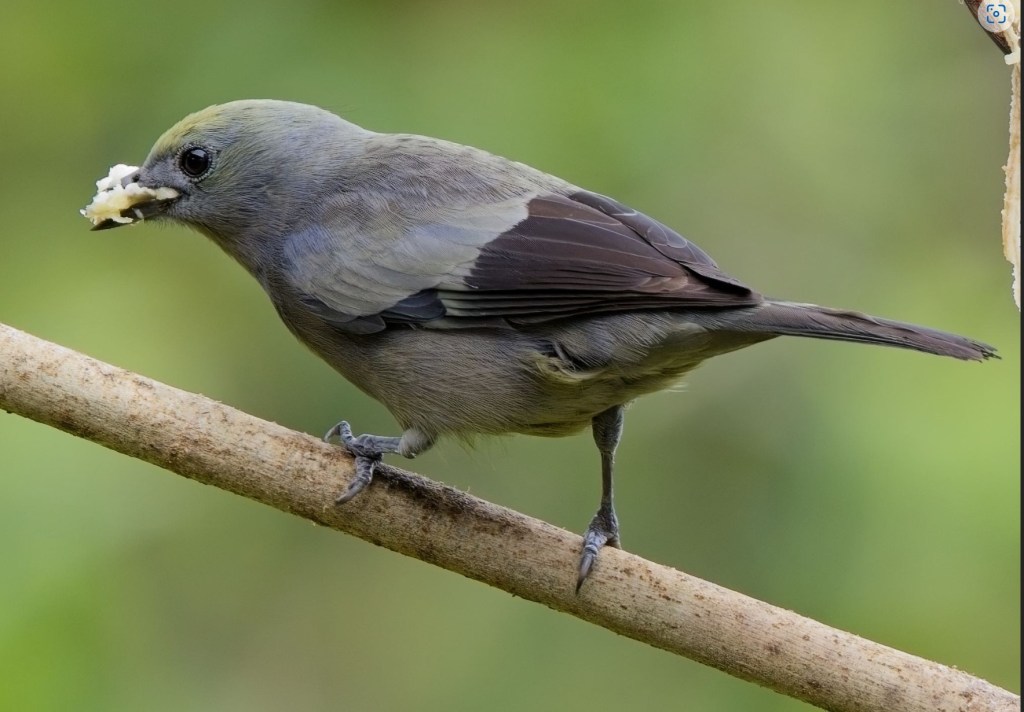
Palm Tanager
Golden-naped Tanager
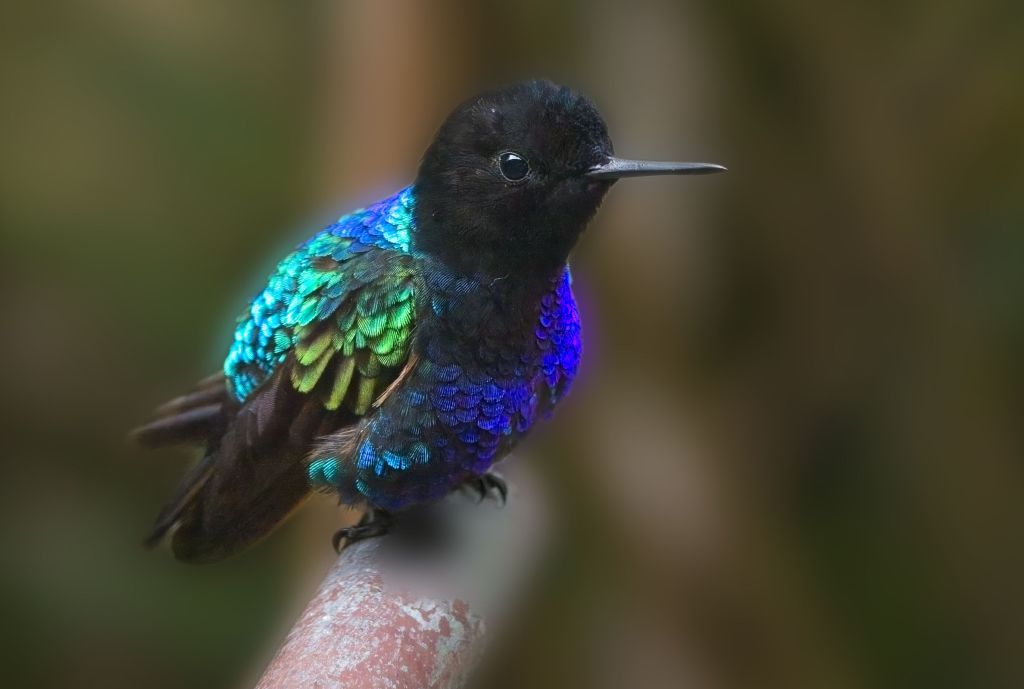
Velvet Purple Coronet
Purple-bibbed Whitetip
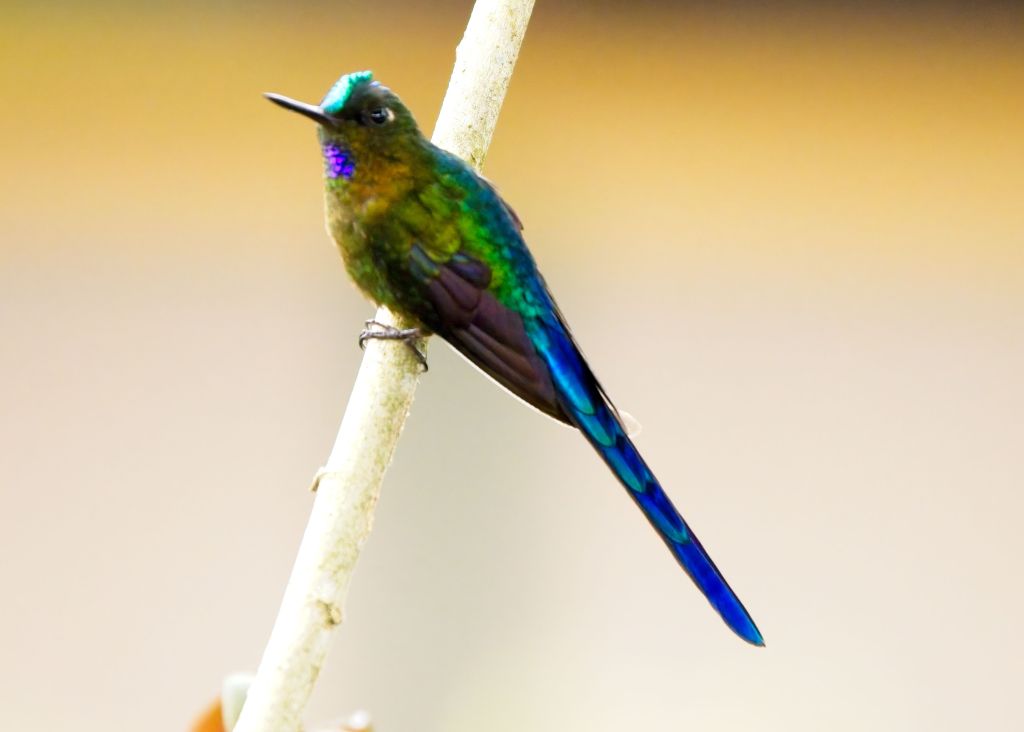
Violet-tailed Sylph
Montane Woodcreeper
Ornate Flycatcher

On September 27th, with Nelson behind the wheel of his comfortable SUV, we were off early headed for Rio Silanche Bird Sanctuary. With our knowledgeable guide and his keen hearing and eyesight, birding for the rest of our trip would be different in two distinct ways: first we would find many more birds than Tom and I had on our own and second a much larger percentage of them would not provide photo opportunities as often they were either heard only or seen at distance, perhaps mostly hidden in foliage. There would still be many feeders but not like at our first locations. In the 5+ hours we spent at Rio Silanche, we had 82 species, of which 65 were new for our trip including 15 lifers for me. The photos below are a mix of lifers and favorites from Rio Silanche.
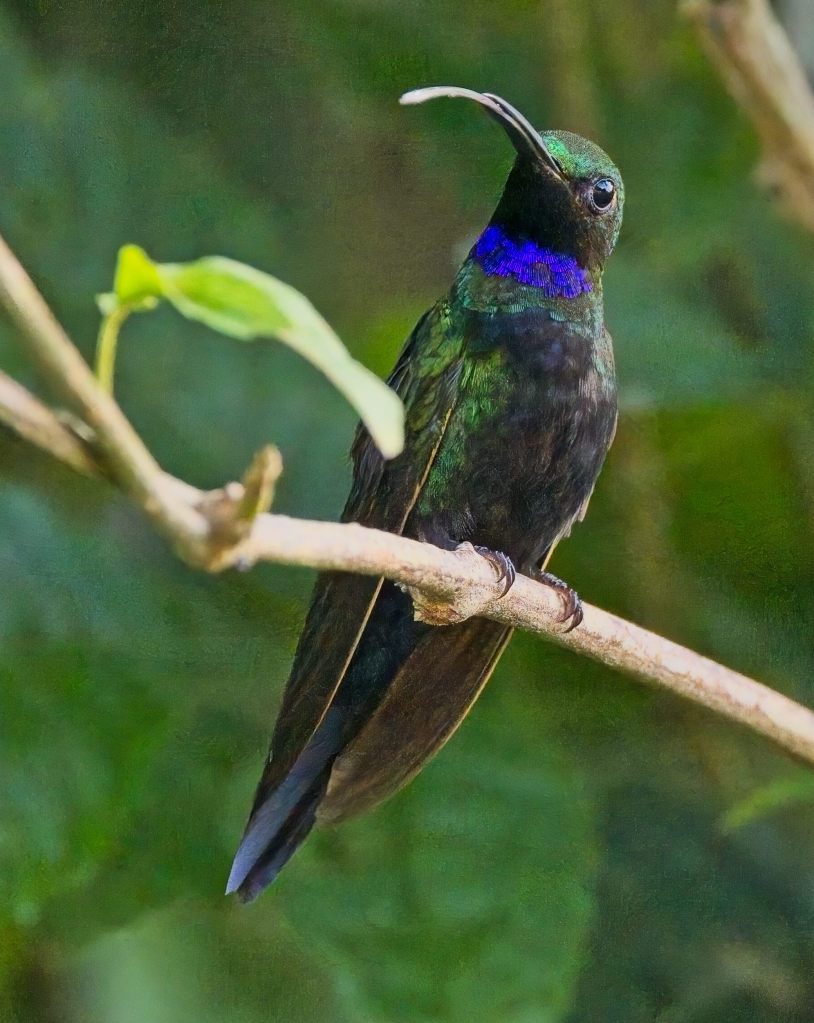
Purple Crowned Fairy
Purple-chested Hummingbird
Black-cheeked Woodpecker
Northern Barred Woodcreeper – Lifer
Maroon Tailed Parakeet -Lifer
Peruvian Pygmy Owl – One of Six Owls on Our Trip
Brown-capped Tyrannulet – Lifer
Black-capped Pygmy Tyrant – Lifer and Sometimes You Just Cannot Get a Good Shot
Scarlet-thighed Dacnis – Life Photo

We continued birding in the area and mostly on forested roads where birds were mostly either heard or glimpsed briefly and distantly – a good way in this bird-rich area to pick up new species but not to get photos. All told we added 91 species to the trip list for the day, 19 of which were lifers for me. The last was an Ochre-breasted Tanager. It was the end of the first “official day” of the guided trip although it was actually day 4 including the travel days and the time before we met up with Nelson. Our trip list stood at 161 species. There would be a lot more.

Ochre Breasted Tanager

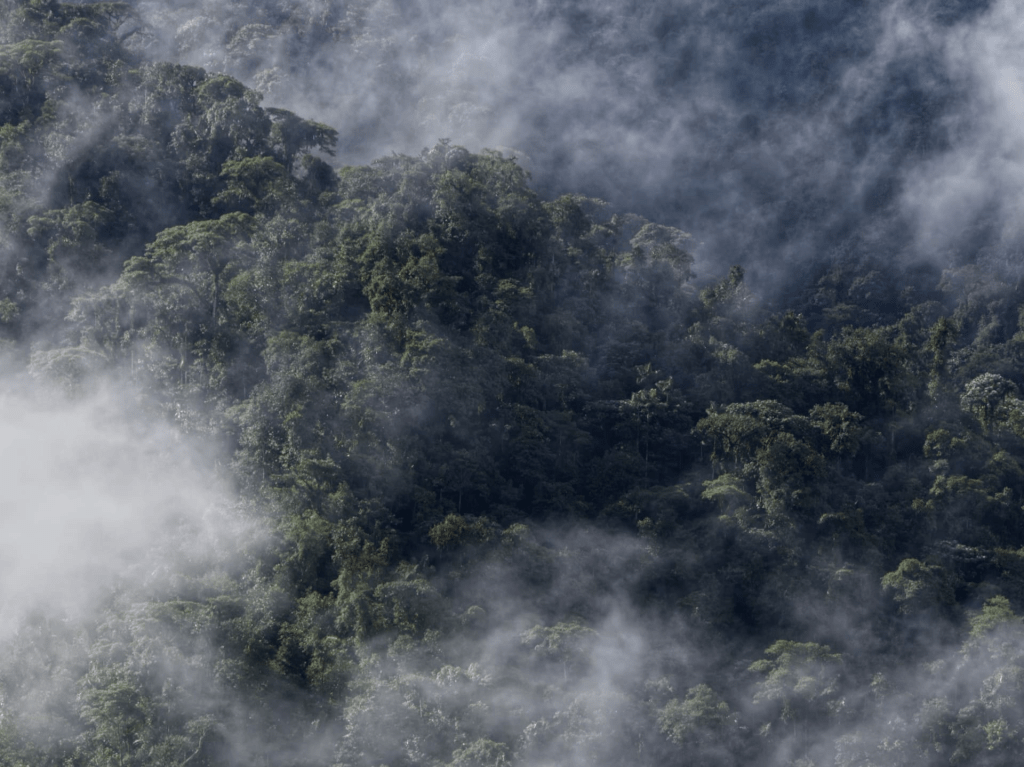
We spent the night of the 27th at Reserva Mashpi-Amagusa in the cloud forest in the Choco area which is very bird rich. An aerial photo of the area is shown below and another shows the veranda at the lodge – ideal for bird watchers. That night we heard a Common Potoo with no visual of this very odd looking nocturnal species. After an early breakfast we started birding on the grounds of the lodge and the surrounding area.

We had a great mix of species, some seen and photographed, some seen without photos and some heard only. All told including species seen later at the feeders, we had 95 species. I got photos (of varying quality) of almost half and I had 18 lifers. One of the lifers was a species that was near the top of my wish list for the trip – Glistening-green Tanager, and another was one that would have been near the top if I had realized how spectacular it is – Orange-breasted Fruiteater. As is often the case at lodges with feeders, there were lots of tanagers – 12 species in all. The photos below are some I like best. The last one is of a Black-Striped Sparrow, a life photo of a species I had seen only once before – in Costa Rica 27 years ago.

Rufous-throated Tanager
Glistening-green Tanager – Lifer
Golden-naped Tanager
Chivi Vireo – A Much Wanted Life Photo
White-throated Quail-Dove – Lifer
Scaly-throated Foliage Gleaner
Zeledon’s Antbird – Lifer
Moss-backed Tanager – Lifer
Rose-faced Parrot – Lifer
Black-winged Saltator
Black-chinned Mountain-Tanager
Orange-breasted Fruiteater – Lifer
Golden-olive Woodpeckers at Nest
Black-Striped Sparrow – Life Photo

At most Ecuadorian lodges there are feeders for the hummingbirds and bamboo pole feeders with bananas and other fruit to attract other species. The hummingbirds are both wonderful and frustrating as they zip in and out sometimes feeding for only the briefest of moments and often with more than one species at multiple feeders – a challenge to find the one you want and get a photo. That is not a complaint as it is a great experience. At this lodge there is also an area where visitors can hold flowers in their hands and the hummers will land on the flowers, or the hands, providing unique photo opportunities. Altogether we had 8 hummingbirds species at the lodge feeders: White Whiskered Hermit, White Throated Daggerbill, Green Thorntail, Violet-tailed Sylph, Violet-purple Coronet, Purple-bibbed White-tip, and Green-crowned and Empress Brilliants. The Dagger-bill, Thorntail and White-tip were new for the trip and the Daggerbill was a lifer. Sadly I missed catching the Daggerbill for a photo the only two times it showed up.

Empress Brilliant
Green Thorntail
Purple-bibbed Whitetip
Velvet-purple Coronet
Nelson and Friend (Velvet-purple Coronet)

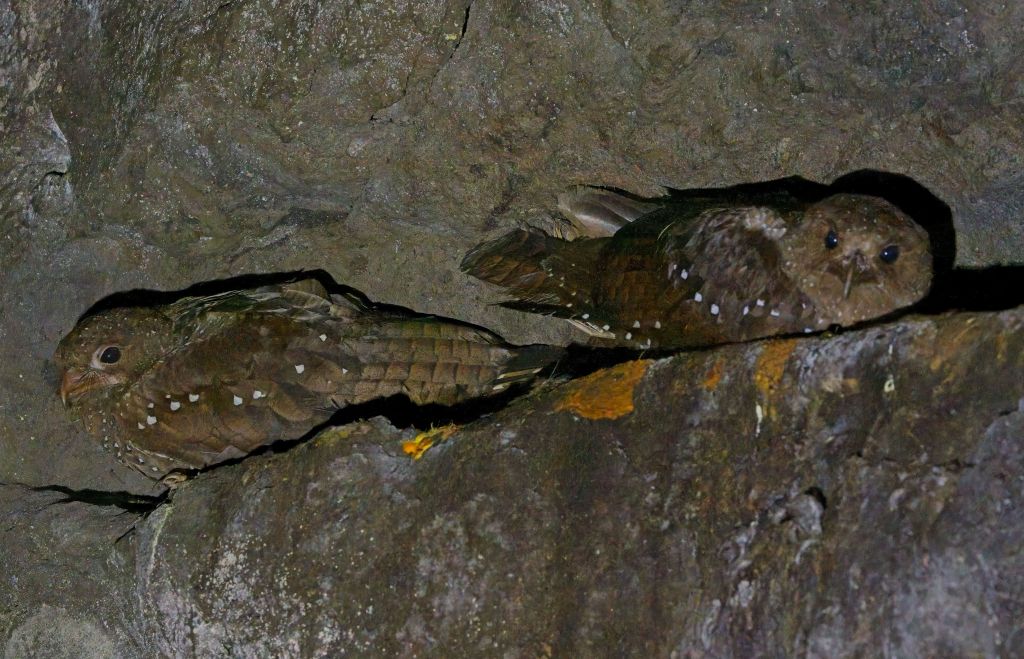
We would spend the next night back at Zaysant Lodge and we could either head directly there or go an hour out of our way and visit a special spot which had Oilbirds, a unique species found in only a very few locations anywhere. Of course we chose the latter – a great decision as we were able to get very close to these odd birds which got their name because the young birds are so fat that they were once rendered for oil for cooking and lighting by indigenous people. They are nocturnal and generally roost in caves, or in our case a cave-like crevasse blocking out all sunlight. I had seen them only once before – in Trinidad 46 years ago!

Oilbirds

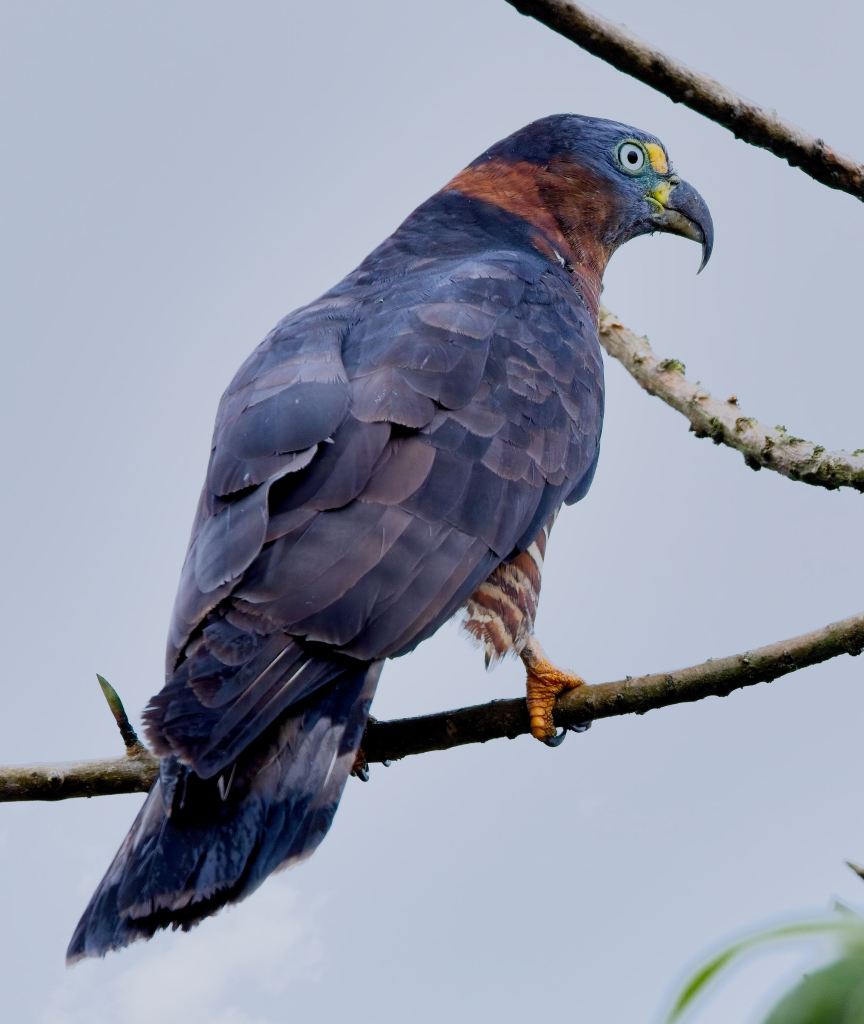
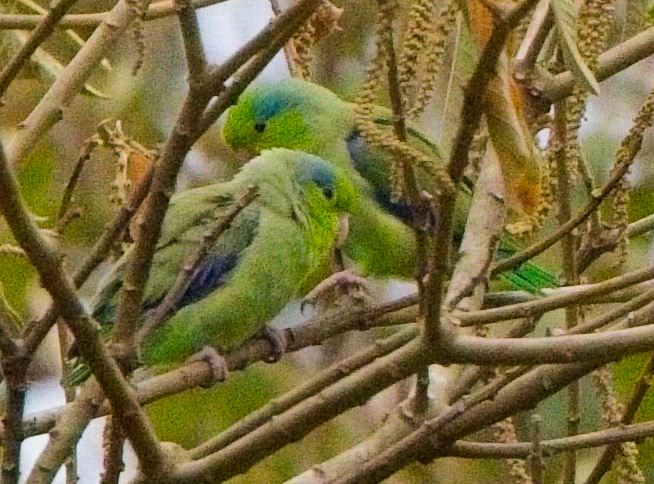
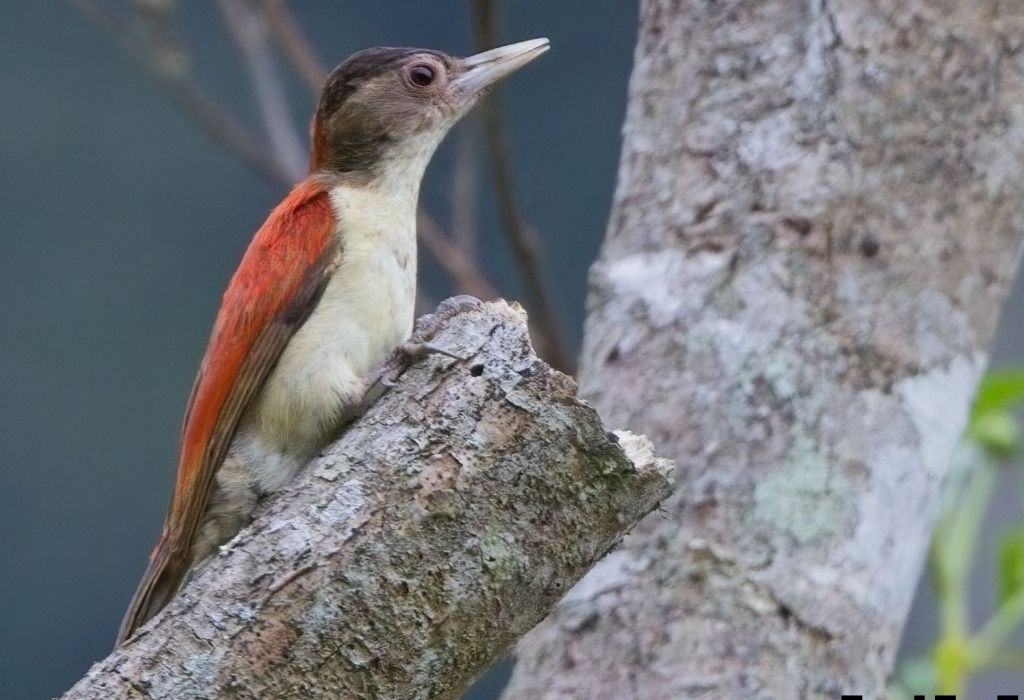
There were several other good birds along the way to the Oilbirds and then on to Zaysant. My favorite was a rare close up of a Hook-billed Kite that was perched adjacent to the road for no more that three seconds after we stopped – just enough time for a quick life photo. No lifers but other life photos were of Pacific Parrotlet, White-browed Gnatcatcher and Scarlet-backed Woodpecker.

Hook-billed Kite – Life Photo
Pacific Parrotlet – Life Photo
White-browed Gnatcatcher – Life Photo
Scarlet Backed Woodpecker – Life Photo

We were only a few days into our trip and we had seen 216 species including 28 hummingbirds and 19 tanagers and 40 lifers for me plus many life photos. Our next destination was Wild Sumaco Lodge – a species rich new location for me. On our way we would pass over Papallacta Pass at an elevation over 10,800 feet. And I will continue that story in my next blog post.

Birds and Wines of Chile and Argentina – Argentina Part IV – Last Days in Argentina with Water Birds, Creepers, Woodpeckers and Hummers

Argentina had been great – beautiful places, great birds, amazing food and awesome wine. We had one more full day and then a part day before flying from Mendoza back to Santiago for our last two days in Chile to end our tour. Still some target birds to find.

February 13, Day 10:

We departed very early and got a little delayed when the only convenience store where we could get something that would pass as breakfast did not open until 7:00 a.m. It did open and we improvised breakfast before spending the rest of the morning in fairly familiar in mostly scrub habitat and found lots of new birds in three hours of birding along Ruta 142 still in the Mendoza area. Although we missed a hoped for photo of a Campo Flicker, we had a very brief look as we drove by. I had seen it before but no photo. Two other woodpeckers were more cooperative – lifer White-fronted and Checkered Woodpeckers.

White-fronted Woodpecker
Checkered Woodpecker

It apparently was a good morning for species with “wood” in their names and they came in pairs as after the woodpeckers, I had a pair of lifer “woodcreepers” – Narrow and Scimitar-billed Woodcreepers. As is often the case with woodcreepers, we waited for them to come mostly into the open on the trunks or snags of the trees. Great theory but they just did not perform their assigned roles and the photos were less than desired.

Narrow-billed Woodcreeper – awful photo
Scimitar-billed Woodcreeper – Better photo

Even less cooperative was the lifer Tufted Tit-spinetail. I had glimpses as it flitted about buried in the foliage, but never a great look and definitely no photo. Why couldn’t it behave like the Straneck’s Tyrannulet, Black-crowned Monjita and Swainson’s Flycatcher all of which came into the open enough for recognizable photos.

Straneck’s Tyrannulet
Black-crowned Monjita
Swainson’s Flycatcher

There would be one more lifer for the morning – a Many-colored Chaco Finch and some other good photos of birds seen before – Crowned Slaty-flycatcher and Short-billed Canastero. All in all a truly exceptional morning with the NINE lifers!! And oh yeah we had a quick view of a Southern Gray Fox!

Many-Colored Chaco Finch
Crowned Slaty-flycatcher
Short-billed Canastero
Southern Gray Fox

I have not been able to locate notes for what we did at lunch after the great morning, but I know well that we spent a long and very successful afternoon birding the Piletones de El Paramillo, extensive sewage treatment ponds outside Mendoza that were full of waterbirds. Although some of the birds had been seen earlier on the trip, this was the first time I could get photos – lots of photo ops.

Life birds were Black-headed Duck, White-tufted Grebe, South American Painted Snipe and Brown-hooded Gull. Additional life photos included White-cheeked Pintail, Lake Duck, Red Shoveler, Great Grebe, White-winged Coot and Cattle Tyrant. There were lots of other photos too!

Black-headed Duck
White-tufted Grebe
White-cheeked Pintail
South American Painted Snipe
Brown-hooded Gull
Lake Duck
White-winged Coot
Red Shoveler
Great Grebe
Cattle Tyrant

Those were the lifers – species and/or photos, but as I said there were lots of birds and lots of photo ops. Some species would be distant at first but then we would drive by another pond and have them closer, or maybe in poor light at one place and then better light as we continued to drive around the multiple ponds. And on the way out we had another Burrowing Owl and our first Diuca Finch in Argentina.

Burrowing Owl
Diuca Finch – First in Argentina

Especially this late in the trip, the 13 new lifers was awesome – now at 89 for he trip so maybe 100 would be possible. And I also added 30 new species for Argentina. It was a very good day indeed.

February 14, Day 11:

Happy Valentine’s Day – well at least for us Americans. And that is a good segue for a comment about wife Cindy. When we first met – now almost 5 years ago, a deal had to be struck pretty early on: I would learn about dogs and especially her, now our, Black Labrador – Chica. And she would have to learn about birds and birding. Neither of us probably had a real grasp on what each of those undertakings would entail, but I think we have done pretty well. I have become Chica’s “Alpha” in our pack and Cindy, while I can’t say has become a birder, she has come a long way and has enjoyed most of our birding trips with the distinct caveat that there are too many “little brown birds” and that was definitely true on this trip. No specific Valentine’s Day celebration but we did make that toast over yet another great meal with great wine on this day of transition from Argentina back to Chile.

Our Lovely Chica

The agenda today was to have breakfast, pack and load everything onto our van, bird in the morning at the impressive General San Martin park in Mendoza, sneak in a little shopping, have lunch at Espacio Trapiche a 4 star Michelin restaurant in Mendoza at the famous Trapiche winery, head to the airport, fly to Santiago passing next to Mt. Aconcagua, load up in Santiago and drive to Vina del Mar on the Pacific Coast where we would be for the next two nights.

There would be no new life birds on this day, but there were lots of pictures, birds, food, wine and mountains. Two of the bird photos were especially appreciated as I was able to get life photos of two hummingbird species seen earlier but not photographed: Glittering-bellied Emerald and Red-tailed Comet. I also added three species to my Argentina life list: Harris’s Hawk, Rufous-bellied Thrush and Red-crested Cardinal.

Harris’s Hawk
Rufous-bellied Thrush (Seen and photographed in 2005 in Brazil)
Red-crested Cardinal (Seen in Brazil in 2005 and photographed in Hawaii where it is introduced)

Since this was the last day in Argentina I am including some other photos from the park, quite the birdy place.

Before lunch we visited a shopping area in Mendoza City where we hoped to find something to bring home as a memory. The shop was somewhere between a trinket filed tourist shop and a high end boutique. We found some fabric goods, a new hat for me.

In writing these blogs and looking at the web pages for the various wineries, its seems like there is an endless source of awards and ratings where each one is rated the “Best” something at sometime or another. Our last winery and lunch visit in Argentina was at the Trapiche Winery which was declared the “Best Winery in the New World for its 2019 Edition” by the Wine Star Rewards. I don’t know what Wine Star Rewards is or what it is says about them that there is a “New World” category, but our visit was fun with yet again excellent food and wines. The pictures tell the story.

It was then off to the airport for our trip back to Santiago. With his normal attention to detail, Marcelo had arranged for us to have seats on the right side of the plane (looking up to the cockpit at the front). This was so we would have the best views of the mountains and especially Aconcagua – fitting as our first birding in Argentina had been in the shadows of the mountain. The plane passed quite close to the mountain and we indeed had great views – a last memory of Argentina.

Mt. Aconcagua – tallest peak in the Western Hemisphere – over 22,000 feet

We had spent the better part of 7.5 days in Argentina. I did not keep track of the number of wines tried or wineries visited, but with the help of Ebird, I have a precise count of our birding. I had submitted 40 Ebird reports covering 153 species and bringing my Argentina life list to 173 species. Of the birds seen, 62 were new lifers and I had photos of 119 of the species seen (and there were others, like House Sparrow, Great and Western Cattle Egrets, and Rock Pigeon among others where I did not even bother). All of these photos were new for Argentina and more than half were new world photos. We would have a long drive to the Chilean coast after landing in Santiago, but that is a story for another blog post – my last for this trip.

My Last Day in Mexico – Feeder Foto Ops

After a good night’s sleep at El Cielito, it was time to start our last day. When I made the first flight reservations for the trip I had great non-stops both ways and the departure was pretty late on that last day giving us enough time for lots of birding. Unfortunately when I had to reschedule, the nonstop departing flight was not available. Instead I would have to leave several hours earlier and fly to LAX in Los Angeles and then stay overnight with an early flight back to Seattle early the next morning — the joys of international travel. But that was for later, first we headed to El Tuito and the Rancho Primavera.

The Main House at Rancho Primavera

The Rancho Primavera was in some ways the highlight of the trip. I have copied a description of this beautiful place from its website http://ranchoprimaveramexico.com/ with a couple of modifications to update it: 

“Rancho Primavera is a quiet retreat just 1 hour south of Puerto Vallarta, but feels world’s away from the city life. Here, you’ll be treated like family by the owner Bonnie – a full time resident of the ranch who enjoys entertaining and cooking for guests. She is a bilingual American who has lived in Mexico for decades. Her family purchased  this former mango and cattle ranch and proceeded to heal its overgrazed lands by planting over 5000 native trees on the 200 acres and were quickly rewarded by a return of the native birds and wildlife. Nowadays, it’s a top destination for bird-watching groups and nature lovers…Rancho Primavera is a bird-watcher’s paradise, with its restored woodlands, meadows, creeks and riparian areas supporting over 265 species of birds, including parrots, trogons, cuckoos and 16 types of hummingbirds! Birding tour groups regularly visit and cherish Rancho Primavera for its birdlife and solitude…Over 300 species of birds can be found in this region of Mexico including over 19 regional endemics such as the Citreoline Trogon, Orange-breasted Bunting, Lilac-crowned Parrot and the Mexican Woodnymph.”

We did not stay at the Rancho, but there are three homes available to rent. Were I to return to the area, I would seriously consider renting one for a week and using it as a base of operations to explore and enjoy the area. Greg had called ahead to let Bonnie know we were coming and she graciously delayed stocking the feeders until we were scheduled to arrive. We made ourselves comfortable and watched the show. And what a great show it was. We spent most of the time at the feeders by the main house with a short visit to the large pond on the property. During our two hours there, we had 44 species. Had this been the first place we visited on our trip, 40 of them would have been new year birds, and 12 would have been lifers. I don’t know how many would have been world life photos, but many would have been and beyond that the quality was extremely high. However, since we had already had 5 days of super birding, there were fewer new species, but the quality remained unmatched. There were just 3 new species for both the trip list and my year list and only 2 lifers.

Without question the most spectacular visitors to the feeders were the Magpie-jays. I had had only a brief view of a distant Black-throated Magpie-jay. This was very different with these magnificent birds very close by. So close, that with their magnificent long tails, it was at times difficult to get the whole bird in the viewfinder/photo. In Oaxaca in 2021 I had seen White-throated Magpie-jays. Adding this species was a top priority. An unexpected bonus was that there was a hybrid Black-throated/White Throated Magpie-jay among the visitors to the feeders.

Black Throated Magpie-jay
Black-throated/White-throated Magpie-jay Hybrid

Two species that had been seen before but without photos appearing in earlier blog posts were the Streak-backed Oriole and Broad-billed Hummingbird. I had seen both in Arizona, the former quite rare and the latter quite common. Another species mentioned in earlier posts without a photo was the Cinnamon-bellied Saltator. We had wonderful views of this somewhat plain but attractive bird frequently on and around the feeders.

Broad-billed Hummingbird
Cinnamon-bellied Saltator

Similarly we had great views and photo ops for other species seen previously with some photos in earlier blogs: Cinnamon Hummingbird, Yellow Grosbeak, White-throated Thrush, Rufous-backed Robin and Golden-cheeked Woodpecker. 

Cinnamon Hummingbird
Yellow Grosbeak
White Throated Thrush
Rufous-backed Robin
Golden-cheeked Woodpecker

The birds and photo ops just kept on coming. Not new for the trip or any lists, but such treats to see and photograph were the Groove-billed Ani, White-winged and White-tipped Doves, and Masked Tityra, the latter a species I associate with tropical birding as I have seen them previously in Mexico, in Brazil, Peru, Belize, Costa Rica and Ecuador. I had missed a photo of one earlier, just nice to have one of an “old friend” again.

White-winged Dove
White-tipped Dove
Masked Tityra

If we had not had such great intersections with the Military Macaws at the Sanctuary, this would have been at the top of the list. More than a half dozen visited us and gave us again spectacular views. The photo of the back shows the color mix so well. Truly awesome birds. We also had Orange Fronted Parakeets and Lilac-crowned Parrots fly over.

Military Macaw
Military Macaw from the Back

And then there were the lifers – rewarding and frustrating. First the frustration. In November 2020, I made a quick trip to Arizona chasing several world and/or ABA lifers or life photos. The most important was an Eared Quetzal that was being seen at Cave Creek Canyon. Other targets were a life photo of a Northern Jacana, an ABA Lifer Ruddy Ground Dove, an ABA Lifer White-eared Hummingbird and a barely possible Plain-capped Starthroat. The Jacana was easy but thrilling because I had seen only one in the ABA area before – in 1978 at Maner Lake in Texas where they were regular at the time. After that, however, they essentially disappeared from the ABA area, so this was exciting. Much harder to find was the Ruddy Ground Dove. I failed at several places where they had been seen in this incursion year and then finally got one at Fort Lowell Park in Tucson. [Interestingly we had a Ruddy Ground Dove just before getting to Rancho Primavera and the picture although REALLY poor was the only one I had of it this trip.] The Eared Quetzal was also pretty easy as I found other birders looking at it along he main road into Cave Creek. Ah, then there were the hummingbirds. A White-eared Hummingbird had been seen regularly the previous couple of weeks coming to a feeder in Ramsey Canyon. Unfortunately the regularity had declined by the time I got to Arizona. A Plain-capped Starthroat was seen there as well, but not in the last few days before I arrived. 

Eared Quetzal – November 2020
Ruddy Ground Dove – just before Rancho Primavera

With another birder, I staked out feeders at the Ramsey Canyon Inn hoping for the Starthroat and White-eared Hummers.. There were lots of birds. While being essentially stationary, I had 27 species and interestingly that list included 14 species that would have been 2023 Year birds had I not gone to Mexico and 10 of the others would be additional year birds even after this trip. Back to the hummers. There were several Rivoli’s Hummingbirds, a Rufous Hummingbird and at least a half dozen Anna’s Hummingbirds, and they were the problem. Every time a hummer came to the feeder, one of the Anna’s would aggressively chase it off. This continued for the 4 hours that we were there. Lasting no more than 2 seconds, a White-eared Hummingbird came in to one of the feeders and was immediately chased off. Not a chance to get a photo. It happened once more with an even quicker assault by the Anna’s contingent. Did the Plain-capped Starthroat visit? I didn’t see it if it did. The other birder there thought maybe he had, but I think it was mind over matter and wishful thinking. In any event, that species was now on my – “I really want to see one” target list.

After maybe an hour at the Rancho Primavera feeders, Greg called out “Plain-capped Starthroat” – unfortunately, I looked for it at the closest hummingbird feeder and it had been seen – very briefly at the back feeder. Still no lifer Starthroat but now I knew where to look. There were two problems: the first was that the hummer was at best a very infrequent visitor and the second was that there were so many other birds coming in that it was impossible to watch only that feeder. Almost at the end of our stay, I exclaimed that I had the Starthroat as it perched briefly on that rear feeder at a time when I was watching it. Had I been birding through my camera which I often do, I could have gotten a photo. But I wasn’t, so I had to be happy with a really good if quick view that even showed the “star” throat – but no photo. The one below is from someone else who was either luckier or more skilled than me. But that is not the end of the story.

Plain-capped Starthroat – Photo by Luis Vargas

Being so close but not getting a photo of the Starthroat would have felt like a bad ending to what otherwise was an incredible visit to Rancho Primavera and that feeling would have been compounded by missing the one bird we were most looking for at this location. A Blue Mockingbird had been coming in to these feeders regularly. It would be a world lifer for me. When Bonnie met us as we arrived, she said it had been seen. There was no sign of it while we waited for almost 2 hours, and we were preparing to leave after missing the Starthroat photo, when – drumroll please – it finally made an appearance. The joy of seeing and photographing it quickly overcame any disappointment about the Starthroat which is now just a good story. I had looked forward to seeing this species the whole trip, knowing it was only likely at this spot. It was a great moment and the bird stayed and posed for quite a while.

Blue Mockingbird’s First Appearance at the tray Feeder
Blue Mockingbird in a more natural setting

There was one last stop at Rancho Primavera before we moved on. At the beautiful pond on the property we finally saw a Least Grebe, which we had surprisingly had missed at several perfect habitat locations previously. It was not a lifer as I have seen it in Texas many times and in Oaxaca in 2021 and it would be the next to last new bird for the year.

Least Grebe – New Year Bird

There would be two more stops before getting back to Puerto Vallarta for my return flight. The first was forested area along the Camino Sierra Paraiso and the second was back near the Military Macaw sanctuary. We tried hard but unsuccessfully to bring in a Ferruginous Pygmy Owl for a visual and tried very hard and again unsuccessfully to find a Collared Becard. Ironically, the Becard was being seen in Texas, I think an ABA first, and further ironically two species that were supposedly “guaranteed” on this trip but missed were also being seen as mega-rarities there. The two were Bare Throated Tiger Heron and Roadside Hawk. It wasn’t new for the trip but I finally got a decent photo of a Sinaloa Wren. I had seen and got the world’s worst picture of one in Arizona in February 2018. This one was much better and greatly appreciated. We also added a Common Raven to our trip list.

Sinaloa Wren – Finally a Decent Photo

Our final official stop in the area near the Sanctuary produced the final two birds for the trip, and another year bird and world lifer and some good photos including one of a species that was on our trip list but looking back I was not sure I had actually heard.

The new trip birds were a lifer Black Headed Siskin and a Chipping Sparrow. I was really disappointed that I missed what would of course have been a life photo of the Siskin. A small flock flew in directly overhead and I got my camera on one of the birds in the flock. Unfortunately it was a Black-throated Gray Warbler and not a Siskin. The Siskins flew off as quickly as they came in and that was that. The photo I got that made sure that the bird was really on my list was of a Russet-crowned Motmot. The best thing about this photo was that I actually saw the bird at all. In Indonesia earlier in the year I was really frustrated not being able to see many birds seen by others – especially in foliage. I simply could not focus with or without binoculars. It turned out that a film had developed on the lens implanted in cataract surgery a number of years ago. I visited an ophthalmologist who found the problem and removed it with laser surgery. The difference was immediate and positive both actually in what I could see and also emotionally as I had lost confidence in my abilities. I picked the Motmot out of pretty heavy foliage across a ravine and at least 70 yards away and was able to get the very satisfying life photo. Yes it was a colorful bird, but before the corrective surgery, there is zero chance I would have seen it.

Russet-crowned Motmot

I will close out the last birding part of the trip and the stop with three final bird photos and one short story. The three photos are of a Boat Billed Flycatcher with a large insect in that large bill, a Gray Crowned Woodpecker and another Rose Breasted Becard.

Boat Billed
Gray-crowned Woodpecker
Rose-throated Becard

The story is about the Rose-throated Becard. As I have said repeatedly throughout my blog posts, Greg Homel was a fantastic guide and birding companion. He knew everything the about the area, the birds, habitats, calls, notes, songs, behaviors etc. He was great company with fun stories and informed views on subjects ornithological and otherwise. He was also phenomenal at locating birds and helping me to get on them. And then there was the photography. He is an exceptional photographer and not only took care to line up shots when we could but also in teaching me much about photography and my equipment. I hope and expect to engage his services again and look forward to his company and to birding with him. There was this one slip-up however, a tiny one, but magnified only because it would have been really great if it had not happened. The picture above of the Rose-throated Becard is the best one I have. The other two are a horrible distant shot from Arizona and the one from the previous day in the evening of a female or young bird in poor light. When I shot that photo, the bird was fairly distant and somewhat hidden and behind some foliage. Just as the bird came completely into the open and in great light and I was about to get what “obviously” would have been a phenomenal photo of it, Greg barely brushed my arm and by the time I recovered – not even a second, the bird was gone. If you can spend six intense days with someone and that is the sole complaint/transgression, NO BIG DEAL!!
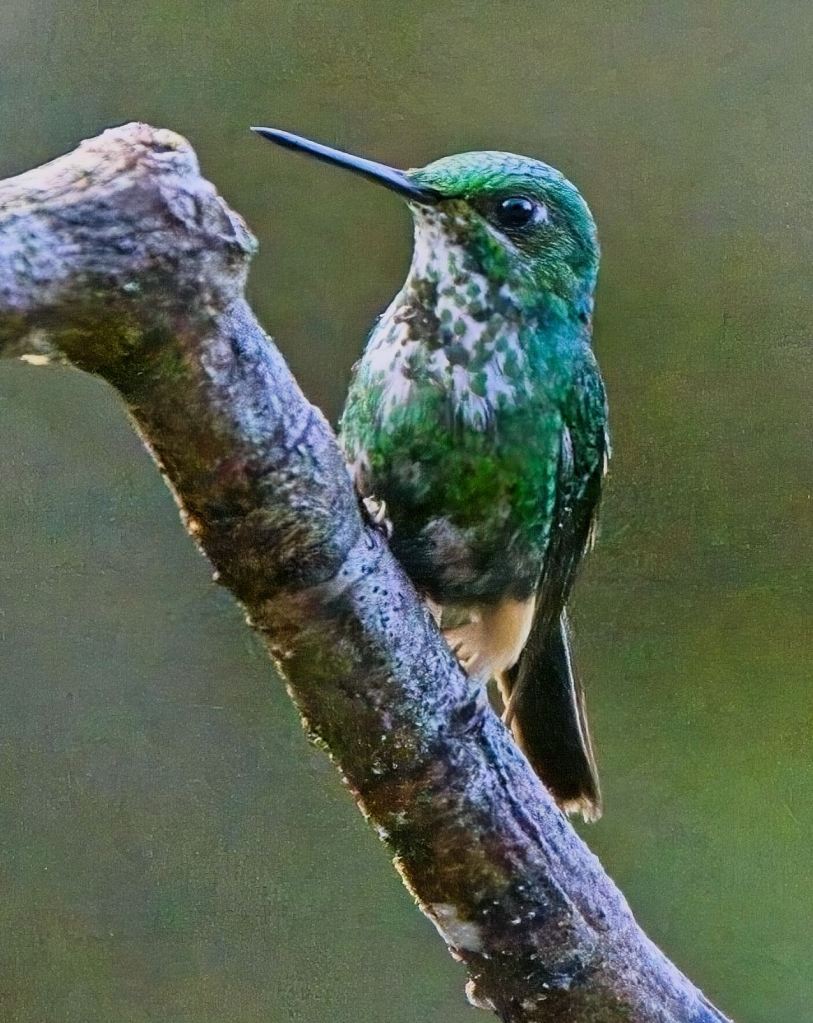
This is the best photo of a Rose-throated Becard I have seen.It is by Owen Deutsch an excellent photographer.At least is my mind this is what my photo would look like.Nice, huh!

We made it back to Puerto Vallarta in plenty of time for my flight. My last photo was of a pretty large Crocodile at a spot near the airport where they hang out. It doesn’t make it on to my list. Here are my final numbers for the marvelous trip. Species for the trip 216; new species for the year 150 to get to 1082; new lifers 29 to get to 3273; and lots of new photos to get to get 1990ish (“ish” because my list and Ebird don’t exactly match and it is just way too much work to figure it out given how Ebird shows photo totals.).

Postscript: I got back home on December 11th. If I had no commitments for the rest of the year, I would have looked at my numbers and said – “Wow, with another 18 species I could get to 1100 for the year – not as “special” as 1000, but doubting I would ever be close to that number again, 1100 is another nice round number so why not?” And seeing a photo total of 1990 or so, I would have said – “Wow, only 10 more photos to get to a really nice number, 2000”. Well, first of all I did have lots of commitments (including relieving Cindy of dog and other responsibilities that she had shouldered alone while I was gone” and 18 more species was maybe a lot but not impossible with well planned trips, time and luck. Ten new life photos was out of the question without another foreign trip and that was out of the question. But what about 1100? Well there were commitments and I should just call it a year and tend to other matters. And that’s what I did for 10 days – happy to have gotten my thousand plus.

But on the 11th day – December 21st – I took a look at my actual list for Washington for the year and realized that there were a fair number of birds that I had just assumed I had seen, because they are so easy, but I had not. And there were some rarities still around – the itch to list and count – wanted to be scratched. I made a target list that was a little stretch and would need good luck – but was possible over on the Olympic Peninsula. The target list was Lesser Black-backed Gull (returning to the farm in Sequim where it has been seen the past 2 winters), Harlequin and Long Tailed Ducks (the first a given and the second maybe 50/50); Common Murre, and both Marbled and Ancient Murrelets (all for sure at the right place), Red Throated and Yellow-billed Loons (the first probable and the second a long shot), Herring Gull (probable with the Lesser Black-backed), White Winged Scoter (how could I have missed one this year), and American Dipper (strong possibility in Sequim, but it has been a nemesis this year, missed in several likely spots). I figured if I could get at least 10 of these 11 targets, then with one long (overnight) and one all day trip to Eastern Washington and/or maybe also a long trip to Neah Bay, I could have a chance at another 10 species – so count on 8 and Voila – 1100. (Of course my indebtedness to Cindy would grow – deal with that later.)

Not to draw out the story, I only found 7 of the targets, missing both loons, the Long Tailed Duck and yet again the damn Dipper. I swallowed my pride, recognized that it was better to be very happy with more than 1000 rather than be disappointed missing a less charismatic 1100 and quit. Four days passed and a Yellow-billed Loon was discovered about 2 miles from my home. It was very rare for the County and would be a great last bird for the year – better than a White-winged Scoter. If it was seen again the next day, I would give it a go. It was so I went the next morning and got it – a new county bird for me and everyone else who saw it )lots of people) and species 1090 for the wonderful year of 2023. I am writing this on New Year’s Day morning – so the chapter for Year 2023 is done. Time to start a new list. If the Yellow Billed Loon remains, I will go to see it. But travel this year while birdy, will be far less birdy. If it even comes close to as much fun, it will be a wonderful year.

Yellow-billed Loon – #1090 for 2023 and #271 for Snohomish County

Happy New year!!