My first trip to South America was to Argentina in March 1989 mostly in the area of Junin de Los Andes with 4 buddies fly fishing and enjoying great food and spectacular scenery in addition to the wonderful trout. At that time I was more interested in flyfishing than birding but had done a fair amount of birding as well so I kept track of species seen, a total of 41 species and somehow a photo of just one – a Black Necked Swan. My first international birding had been in Trinidad in May 1978, finding 97 species on a trip with friends courtesy of an amazing airfare deal through the now long gone Eastern Airlines that had included birding stops at ABA Biding meccas in South Texas and South Florida. Altogether on that trip we had 178 species of which 143 were new for my then pretty short World Life List (no camera). My next international trip was to the Mai Po Nature Preserve outside of Hong Kong on Christmas Day 1979. The 79 species there was followed three months later in March 1980 with 13 species seen casually on a definitely non-birding vacation visit to Jamaica. No camera on either trip.
It would be another 3.5 years until my next international birding adding 31 species from a single afternoon of birding squeezed into another non-birding vacation, this time to Japan in July 1983. That was it until that flyfishing trip to Argentina which was followed by another flyfishing trip, a very exotic one to the very remote Christmas Island (Kiribati) where only 7 species were seen incidentally as we concentrated on bonefish and other saltwater species in May 1989. By that time, a daughter and a son had been added to our family and birding and fishing both took back seats to child rearing, work and family activities. By April 1997 both kids were old enough to enjoy their first exotic vacation – a week in Costa Rica that included visiting some great lodges with birds, monkeys, butterflies, frogs etc. but no camera – the standard fare for an introduction to the natural history of the tropics and giving me the chance to see 155 species of which 99 were added to my World Life list which then reached 938. Concentration remained on kids and my career including starting my own consulting company in 2000. There was little birding and little fishing until 2002 when as a half time chaperone on my daughter’s trip with the Seattle Youth Symphony to Hungary and the Czech Republic I was able to get away for a half day guided trip in Hungary which produced 54 species – all World lifers.
Snapshot – After the foregoing it was July 2002. My daughter had graduated from high school and would be starting college. My son would be entering high school. My business was underway but with lots of pressure and uncertainty. In 2003 my only “vacation” was a solo mostly birding trip to Australia. With some guiding help only around Brisbane and on my own otherwise, I managed to see 267 species and actually got photos of 7 species. The one guide I was with, Bill Jolly, took photos of many of the species we saw. I have those photos but since I did not take them, I did not use them. So at the end of that trip, my world photo list was 8!! But I was over 1000 species for the world – 1243.
Galah – One of Seven Species Photographed in Australia – 2003
I don’t know if Ebird had yet been invented but I would not start using it for another 7 years until 2010. I am sure I did a little birding in those intervening years but I did not keep lists or records except for new life birds and apparently there were none of those – at least in Washington or elsewhere in the U.S. as I have no records of any except for a single Barred Owl record in Lincoln Park in West Seattle in 2007. For the 8 years following that Hungary excursion, my recorded birding trips (paper records and then later entered into Ebird after the fact) were all international with trips on my own to Australia (2003) as above, Brazil (2005), Kenya (2007) and then Belize (2010). I began taking pictures (I would not yet call them “photographs”) in 2005.
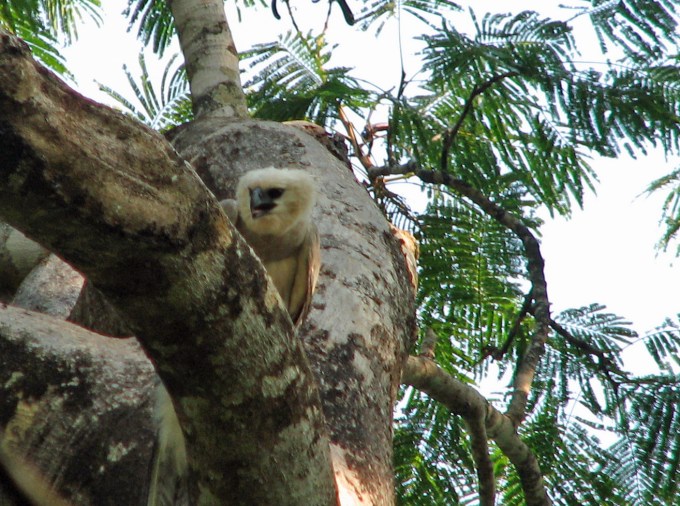
Harpy Eagle Chick – Brazil 2005
In large measure these trips enabled me to deal with pressures from business and domestic issues as I found that birding allowed me to take my mind away from those matters, re-energize and continue on. In 2010 I discovered Ebird and have 10 real time lists from that year, adding 35 species to my then very meager state list but evidencing that birding was becoming an important part of my being. At the end of 2010, Ebird showed that my Washington State Life List was at 235 species; my World Life List was 1959 and I had entered a total of 198 checklists – a number much lower than would have been the case if I had done lists as they occurred instead of retrospectively and only when new lifers were found. And per the above, I had finally started to take photos with only a handful in Australia but with another 59 in Brazil, 142 in Kenya and 19 in Belize. Those percentages would later be seen as unacceptable, but it was a start on a path that would become very important later and is very much so now.
Lilac Breasted Roller – A Favorite from Kenya in 2007
Major Transition – 2011 would begin a number of major changes in my life. My son would be graduating from college. My daughter would be in her first year of residency after Med School. Some major deals in my business would either be closing or falling apart, I would be looking at a separation in my marriage (to be followed by a divorce) and I would be undergoing my first surgery since my tonsils had been removed 60 years earlier. As I confronted all of those matters and especially the surgery for a full replacement of my right shoulder, I was at least unsure of my future and probably a little scared as well. What if that future was one of limited possibilities instead of the creation of new ones? At the top of my bucket list was a desire to see a tiger, in the wild, in India. In January, the month before the scheduled surgery I joined a Victor Emanuel Nature Tour to India that promised birds, the Taj Mahal and a good possibility of seeing my tiger. It was a wonderful trip with several tigers, the magnificent Taj Mahal and 278 bird species with photos of 150 of them.
2011 Tiger in India
Back in the U.S. after India, I had the surgery which at first seemed to have gone well, closed at least one of the pending important business deals, went forward with the separation and continued to use birding in my home state as a diversion – an increasingly active one. My shoulder was not doing well and a re-examination determined that the replacement had not worked and would have to be done again. During that surgery in 2012, it became obvious that the reason it had not at first succeeded was because there was an undetectable infection. The recovery was not fun and I have never regained the full use expected, but now 13 years later, it still works, so I cannot complain. It was a momentous year in other ways as well. We proceeded to a divorce; after another business deal closed and an option was entered that could result in a significant fee later, I contemplated retirement; and I left Seattle and relocated to Edmonds, Washington where I still reside.
When I sat down to write this blog post, I originally intended to just give a background of my birding trips to South America in anticipation of this trip to Colombia, the country which has more species than any other in the world and unlike as in my case is often the first in South America visited by birders since there are so many species to see and get on our lists. Maybe I just needed to revisit those early years and some of my own ghosts and demons and how birding has been so important in dealing with them. But enough of that – back to South America.
South America – That first South America trip to Argentina had great fishing and just the barest taste of bird life. On my own in Brazil in 2005, it had been a perfect escape for 3 weeks combining a visit to Rio, unguided birding at a large ranch in the Pantanal, time in the Amazon with help by a guide for two days and then time on my own at the incredible Iguassu Falls. At the time I was very pleased to have found 280 species but was not really looking to expand a World list. Later in 2013 I went on a guided trip to Peru with 413 species and 127 photos. Now after that trip to Peru and later visits to Ecuador (twice), with trip lists of 450 and 540 species each that Brazil list seems small, and I know that if I did it again with guides, the number would have been twice what I had in 2005.
In 2022 after canceling a number of trips in the Covid Doldrums, spouse Cindy Bailey and I went on a private birding trip to Ecuador and in 2024, even though there were too many “little brown jobs” for her taste, Cindy joined me on a wonderful Wine and Birds tour to Chile and Argentina. We had more birds (153 in Argentina and 104 in Chile) than wine (56 varieties tasted) and a great time. Cindy has learned a lot more about birds than she acknowledges and kindly tolerates my obsession but when a friend and I committed to another trip to Ecuador in 2024, she passed but together we planned a visit to the Galapagos which was wonderful and except for all the Darwin finches, the birds, especially like the boobies and albatrosses were fun for Cindy. When I looked into this Colombia trip, Cindy passed and continued that stance when I committed to a trip back to Brazil – a very different area in that very large country where I might expect 300+ species many of which would be new lifers and/or new life photos.
Enough background except for these numbers: It is June 19th as I start to write this and wait to board my plane for Miami and then on to Barranquilla. My World Life List is 3712 species. I have photos of 2,430 species. We will be birding for 10 and I half days in Northeastern Colombia, an area that includes Santa Marta and Perija with many endemics. For this trip, my organizer, ICARO BIRDING sent a potential list of more than 575 species. After comparing those possibilities with species on my World Life List, I calculated that there is a longshot chance to add 170+ new lifers and 175+ life photos. More realistically maybe 150 of each. My goals are to eventually have 4000 to 4500 species on my World Life List and to have photos of 3000 species. I sure wish I had been taking pictures on those early trips before 2005. Here is the itinerary. I will return to writing this after I have returned, gone over pictures and lists and reflected on the visit.
Colombia Itinerary
Day 1 – June 20 Arrival in Barranquilla at 12:50 PM – drive to Cartagena – PM Birding Cienaga de la Virgen Hotel Cartagena
Day 2 – June 21 Matute Birding Reserve: Scaly-breasted Hummingbird, Red-throated Ant Tanager, Black-bellied Wren and others. eBird checklist – 3 hours late afternoon drive back to Barranquilla BH Barranquilla
Day 3 – June 22 Km 4 via Palomino and Salamanca – Minca Veranda Hotel
Day 4 – June 23 Birding Minca towards Mountain House Lodge Mountain House
Day 5 – June 24 San Lorenzo Ridge and around the lodge Mountain House
Day 6 – June 25 Minca – Gaviotas – Camarones – Riohacha Hotel Taroa
Day 7 – June 26 Los Flamencos Flora & Fauna Sanctuary: Camarones – Valledupar Hotel Sonesta
Day 8 – June 27 Tananeos Reserve and Perija Perija Bird Reserve
Day 9 – June 28 Birding the Perija Mountain range Perija Bird Reserve
Day 10 – June 29 Perija and Valledupar Hotel Sonesta
Day 11 – June 30 Valledupar – Barranquilla (birding all the way) BH Hotel
Day 12 – July 1 BH – Airport flight at 1:50 PM
Back Home – Reporting/Reflecting on my trip – Overview
I am going to start with the most important comments. Overall the trip went very well – no dangers, no illness, everything went according to schedule, weather was good, guide Breiner Tarazona was great, lots of birds and lots of photos. Flights all worked although some delays and gate relocations caused more stress than I would choose. This was a solo tour with guide Breiner and driver Jeferson in a very comfortable and very capable 4 wheel drive Toyota Fortune. With maybe one exception the lodging was very good to excellent. Food was mostly unremarkable but in quantities significantly greater than needed. Everyone I met, including police officers on FOUR road stops were all friendly or more. Lots of dogs enabling me to send photos back to dog lover Cindy. More city travel than expected or compared to other international trips, but traffic was not bad, roads in general were very good with the exception of the two incredibly challenging “dirt” roads leading up to key areas in the Santa Marta and Perija mountains which were as rough as any roads I had ever traveled. Jeferson was an exceptional driver and often with speeds less than 5 kilometers an hour, got us easily through the tough roads.
Breiner was a great guide and a great human being. Very easy to travel with, good English, friends with everyone we met, and definitely on top of bird identification by sight and sound. He was very patient and particularly good at helping me get on birds buried in the foliage, a major problem for me, aided by his own keen eyes and ears, top notch binoculars, excellent recordings, a good scope, a good laser pointer and a new tool in the arsenal, a very effective heat sensor scope that helped find numerous species.
Breiner Tarazona
Let me get the only two somewhat negatives out of the way: (1) the “potential list” of 500+ species was somewhat misleading as it was not a trip list from a specific similar tour in the past – rather a compendium of all species that were possible to find in the geographic area. This kind of list is often used in tour descriptions and is certainly honest, just not as useful as a list of actual experiences in the past – like an Ebird Trip List from an earlier tour. So the reality was that the likely number of species to be actually seen was maybe 400 at most. I should/could have realized this and in no way would the smaller number have changed my mind about taking the trip. The second minor matter was that with Jeferson and Breiner in the front seats and me in the back, when they conversed in Spanish, as they did often, I felt somewhat left out/isolated. This emphasizes that I wish I had taken Spanish instead of French. Breiner never failed to communicate to me or respond to me in excellent English, just would have been nice to have been more engaged – especially since I understand that Jeferson, who had very little English, is quite the story teller. And in addition to his driving skill, Jeferson was helpful in numerous ways including in spotting some of the birds. Very minor negatives completely overweighed by many positive.
The geography of the trip was essentially in Northeastern Colombia along the Caribbean coast, almost to Venezuela and especially focused on the endemics of Santa Marta and Perija (endemics shared with Venezuela). This is a tiny part of the country and other trips would have produced very different bird lists. Bottom line on this trip was that we had 367 species, with only a few heard only. As expected there was significant overlap with species seen elsewhere so total lifers were 124 and total life photos were 142 (out of a total of 272 species for which I got a photo). Not quite the quantity I had hoped for on either account, but definitely acceptable and worthwhile and the quality was great including some unexpected and unusual finds and photos and excellent coverage of the Santa Marta and Perija endemics (altogether we had 21 endemics). So those life lists that probably get more attention than they should are now at 3836 World Lifers and 2572 photos. With trips that are scheduled for later this year (Amsterdam, hopefully with a day of birding and a birding trip to Southeastern Brazil), I think there is a reasonable chance to get to 4000 species and maybe 2750 to 2800 life photos. And if all goes well trips to Costa Rica and Thailand in 2026 should get me to that 3000 photo goal as well. But those reports are for later. My next post will get into the details of Colombia!!
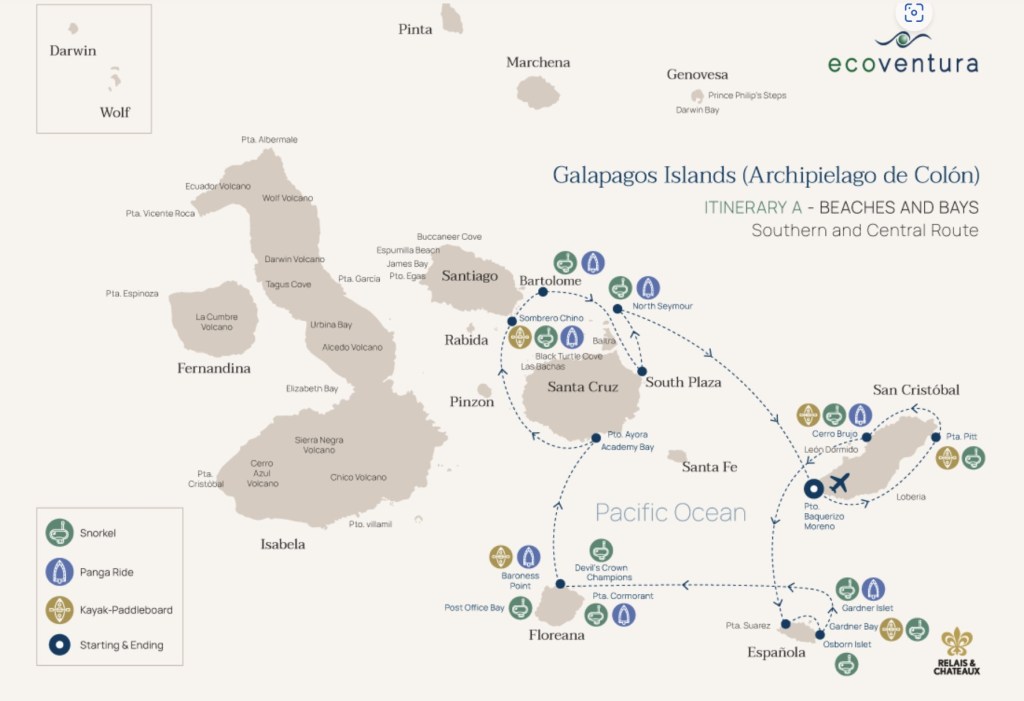
In case you missed the first Galapagos blog, here’s a quick recap. Cindy and I had a wonderful visit to the Galapagos this October, traveling with two family members and joining 12 other adventurers on an 8 day cruise through those magical islands aboard the Ecoventura “MV Theory”, a luxury super yacht with an incredible crew of 13 and a level of impeccable service that we will likely never see again. That previous blog gave some background about how we chose the Galapagos, some facts about the islands and an in-depth description of the boat and life aboard. This blog is going to dig deeper into our itinerary, our activities and the amazing “birdies and beasties” we encountered up close and personal in this very special and unique natural wonderland. Of course, with me being a birder, much of my focus was on the birds and the Galapagos have some spectacular ones in addition to the many Darwin finches that played such a key role in his conceptualization of evolution and natural selection and the development of species.
Everything in the Galapagos is highly regulated to preserve the unique environment. This includes limiting the size and number of ships, the control of itineraries to avoid overcrowding and impact on each island, and the need to have a licensed local guide/naturalist aboard each visiting vessel and every visit to any island. This coupled with the isolation of the islands almost 600 miles west of mainland Ecuador and South America, has sustained a place with a unique natural history and with fascinating and charismatic animals and plants on land and in the sea. Galápagos National Park protects more than 3,000 square miles of islands and islets, while the Galápagos Marine Reserve protects an additional 50,000 square miles of ocean around the islands. Of the 127 volcanic islands in the group, 18 are considered major and only half of those are generally visited by tourists. Ecoventura offers two itineraries – each Sunday to Sunday with 7 nights at sea, originating and returning to San Cristobal Island which has the only airport. We chose the Beaches and Bays itinerary which gave us the best chance of seeing Galapagos Penguins and the only chance of seeing Waved Albatross, but meant we would not see the endemic Flightless Cormorant seen only on Fernandina and Isabela Islands.
Although we had time to relax, have a drink and just enjoy being on the water and the beauty of the islands, this trip was very active with at least two and often three activities each day. Generally the boat would travel at night and would anchor fairly close to our island of the day which we would then access using the two motored Zodiacs taking us ashore with either wet or dry landings. The former meant getting wet maybe up to the knees and the latter meant stepping directly onto a sandy or rocky beach or in one case onto a simple stairway up to a small dock. Our buffet breakfast was always at 8:00 a.m. and was typically followed by our first activity of the day boarding the Zodiacs at 9:30. These first activities were always a visit onshore to one of the islands either to walk on a beautiful sandy beach, to hike on designated paths or to climb a hill for great views. In every case we would encounter wildlife immediately upon our landing – an exciting array of birds, reptiles, and the only mammal native to the islands, Sea Lions. We would also usually see birds on the way in and often saw fish, Sea Lions, Green Sea Turtles and of course seabirds as we made our way to shore.
If you listen to stories from visitors, something that is always emphasized is the ability to get really close to all the wildlife. It is used to human visitation but unlike wildlife almost everywhere else, there is no association of humans with danger as there is no hunting and touching, and chasing or otherwise interfering with all wildlife is strictly illegal. This results in fantastic experiences and unlimited photo ops. I am not much of a swimmer and although I tried snorkeling on two occasions, I sat out some other snorkeling trips and due to equipment issues I cut both of my experiences short and due to my lack of skill I also did not get very far below water where some of the best experiences were to be had. With one noted exception, all of the wildlife photos will be mine. And one caveat about the snorkeling: unlike Hawaii, Australia, the Caribbean and other South or Southeast Asian waters, snorkeling in the Galapagos at this time of year meant relatively cold waters that were often fairly murky. We all wore and needed wet suits.
Cindy and Wetsuit
I was on the lookout for new bird species as soon as we left the plane in San Cristobal. Ecuador is a very bird rich country with the highest density of species of any country in the world having over 1700 species. Compare that to the United States and Canada which together have less than 1100 species. If there was the same density of species in the U.S. and Canada as in Ecuador, we would have over 60,000 species. The diversity in Ecuador is due largely to the rainforests, cloud forests and altitude changes of the Andes. The situation in the Galapagos is very different with only 190 species having been recorded of which only 56 are native to the Islands and of these depending on whose definition is used and how it is applied there are between 25 and 35 endemics which are prized by visiting birders since they can be found nowhere else on earth. Although they may be the dullest colored birds on the islands, the Darwin finches (actually members of the tanager family) are of the greatest interest to many birders and naturalists. They are endemic to the Islands and were the key to Darwin’s thinking on evolution, natural selection and the origin of species.
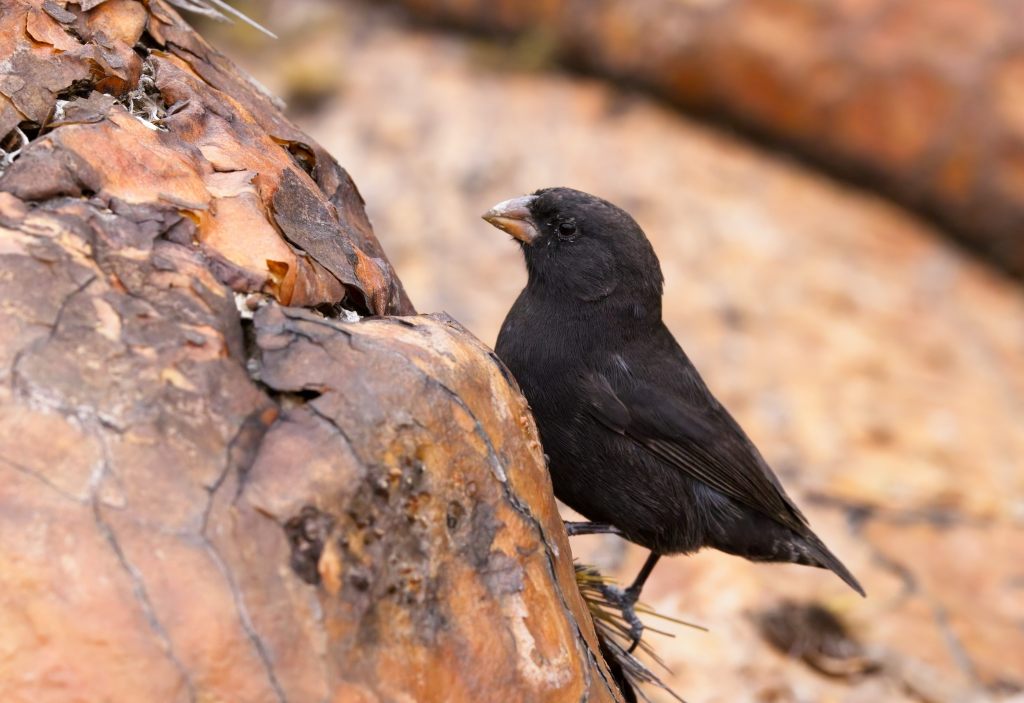
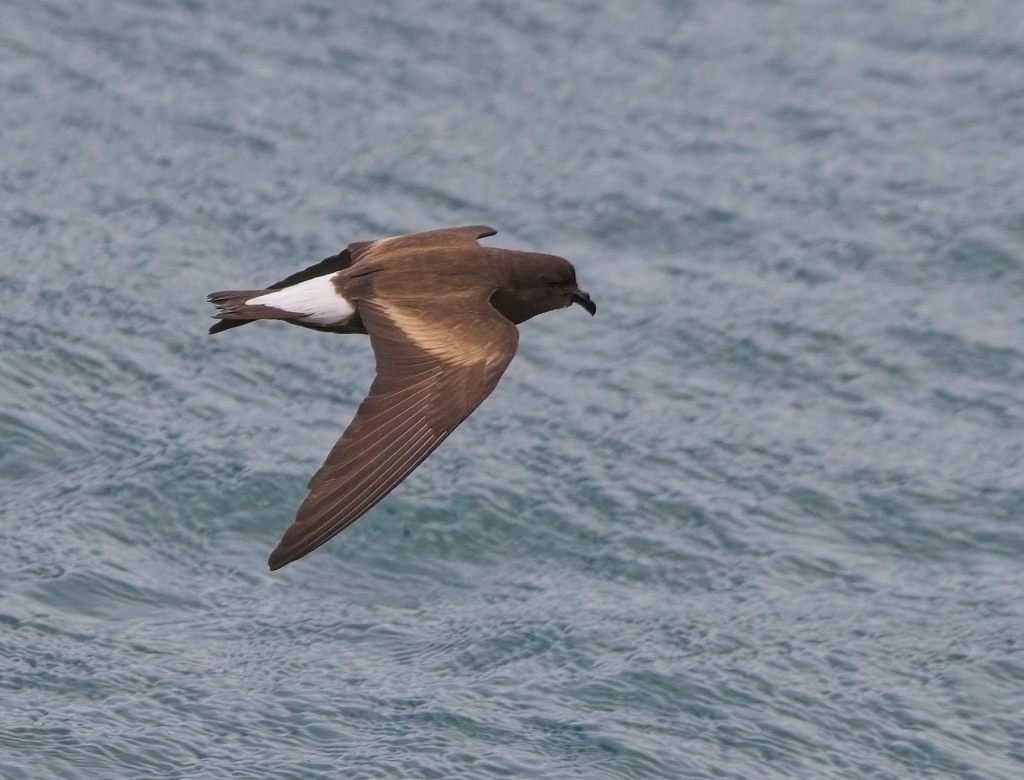
A major plus for naturalists and birders is that so many of the species found on the Galapagos, especially the finches, are unique either in that they are found either only there or a few other places and they are not shy generally seen out in the open. As a result, anything seen is likely to be special, so I was looking for anything. And it did not take long to find something special as some Small Ground Finches were foraging in the city as we approached the Zodiacs that would take us to our mother ship. And at the water’s edge we were greeted by Sea Lions, again very approachable and found almost daily during our visit. And there was quickly more as WedgeTailed and Elliot’s Storm Petrels (both lifers) followed us on the Zodiac ride and Magnificent Frigatebirds soared overhead.
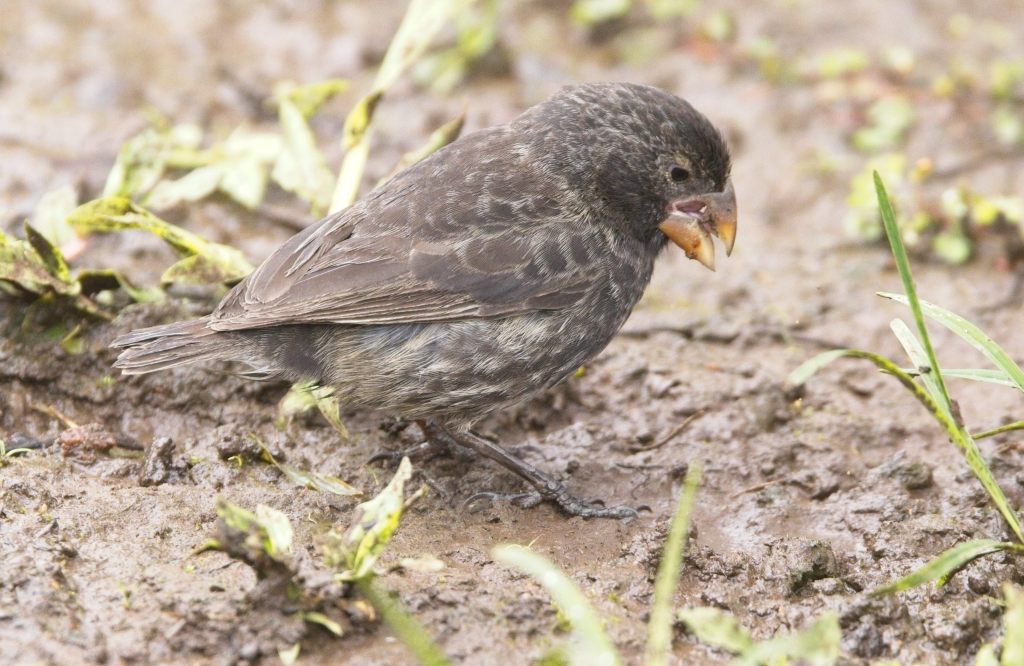
Small Ground Finch – A Lifer for Me – One of the Darwin Finches
Wedge-tailed Storm-petrel – Another Lifer
Magnificent Frigatebird – often following our boat with as many as 20 soaring above us
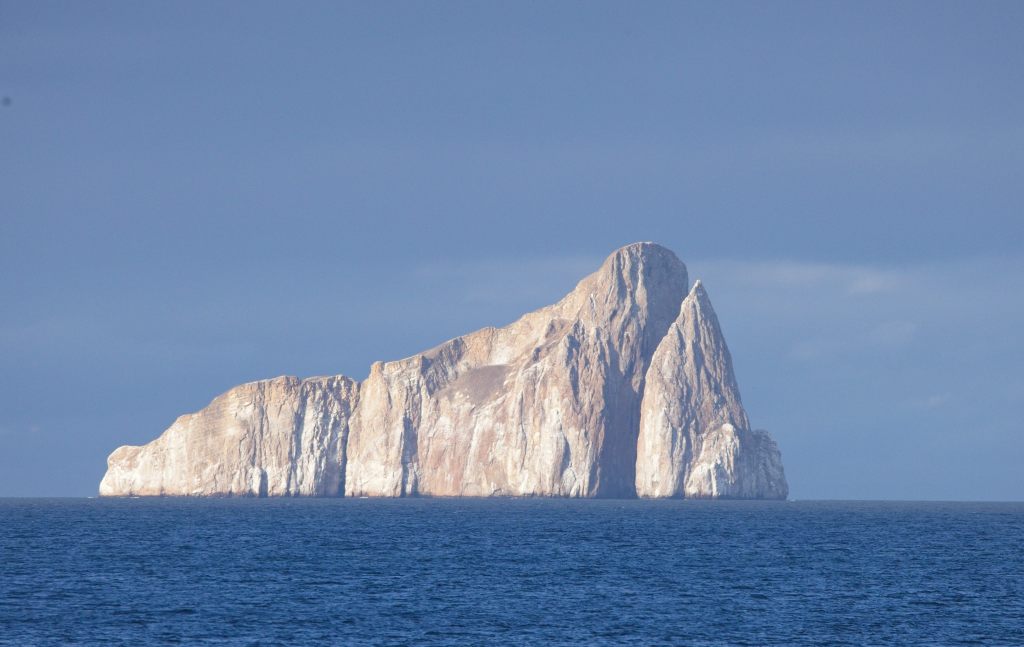
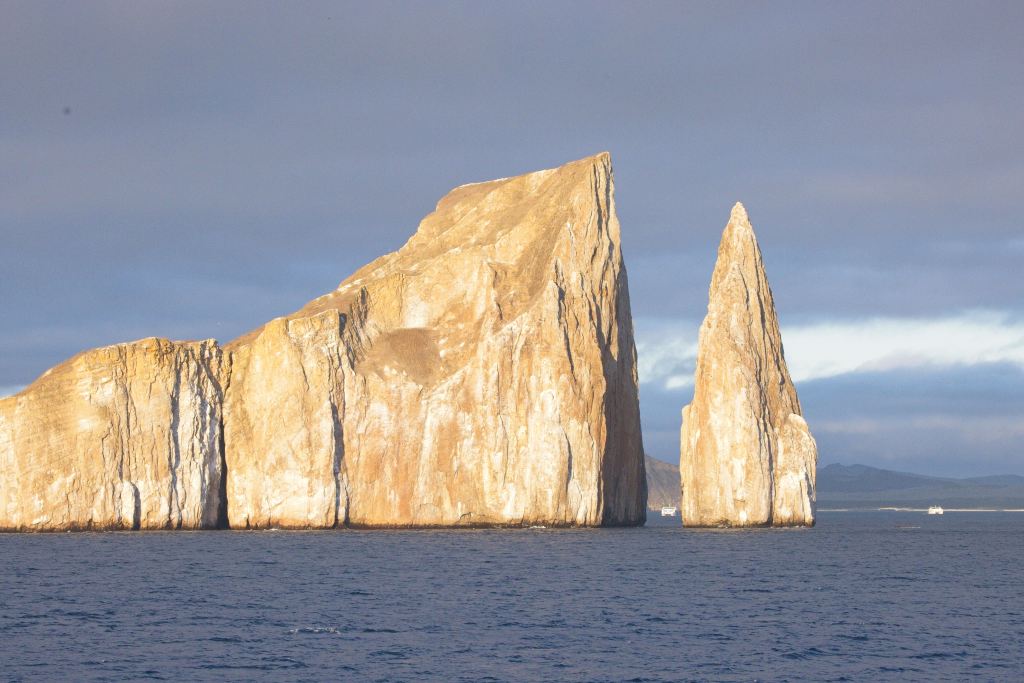
On board, introductions were made for guests and crew, cabins were assigned, luggage was delivered, safety protocols were outlined and of course there was a welcoming drink and then a lovely lunch. We met at the back of the yacht to choose our wet suits and snorkeling gear for adventures to follow. There were no excursions this day as our yacht left the harbor and took us to the Leon Dormido (Sleeping Lion), a split rock rising 500 feet above the water which we circumnavigated providing us with our first looks at roosting Nazca and Blue Footed Boobies, Brown Noddies and the highlight for me, a lifer endemic Galapagos Petrel. After a cocktail hour and a briefing for the next day’s activities, we had the first of many incredible dinners before retiring to our first night aboard – fortunately with very calm seas.
The Sleeping LionActually Two Rocks
Galapagos Petrel – Lifer/Endemic
On Monday after our first scrumptious breakfast and lots of excellent Ecuadorian coffee, we were off for our first excursion taking the Zodiacs to Cerro Brujo (Wizard’s Hill) on San Cristobal Island where after exploring the rocks with views of close by Brown Noddy Terns and my lifer endemic Lava Gull, we were met by Sea Lions on the beach and Sally Lightfoot Crabs and the endemic Marine Iguanas on the rocks with Blue Footed Boobies and Brown Pelicans fishing in the surrounding waters. We had the beautiful sandy beach to ourselves free to swim – joining the sea lions or just to explore.
Brown Noddy Tern
Lava Gull – LiferLava Gull – Lifer
Brown Pelican in Surf
Sally Lightfoot Crab
Marine Iguana – Endemic
Lots of Marine Iguanas – The Red Ones are Males Looking for Females
Sea Lion and Pup
We then returned to our ship and had a welcoming snack and a little down time before lunch onboard. In the afternoon we returned to San Cristobal at a spot called Punt Pitt with a relatively long hike on the rocky island. Our guides rated the walks/hikes on a scale from 1 to 5 with 5 being the hardest. This was rated 5. The trail was a bit rough with lots of rocks to clamber over and with challenging footing requiring constant attention. There was some elevation gain but not too bad and we were at sea level so no altitude/oxygen challenges. If this was a 5 then our gorilla trek in Uganda was at least a 10 or maybe even a 15. And the scenery and wildlife distractions made us forget about the rigor. Certainly for me the highlight was seeing all three of the boobies that can be found on these islands together in one place including seeing birds and young on their nests. The name “booby” is generally thought to have derived from the Spanish “bobo” which means “stupid”. These birds do sometimes have that look and were often eaten when they were easily captured on ships at sea, the birds being tame and unsuspecting. They live on fish that they catch after lightning quick dives from significant heights over the ocean.
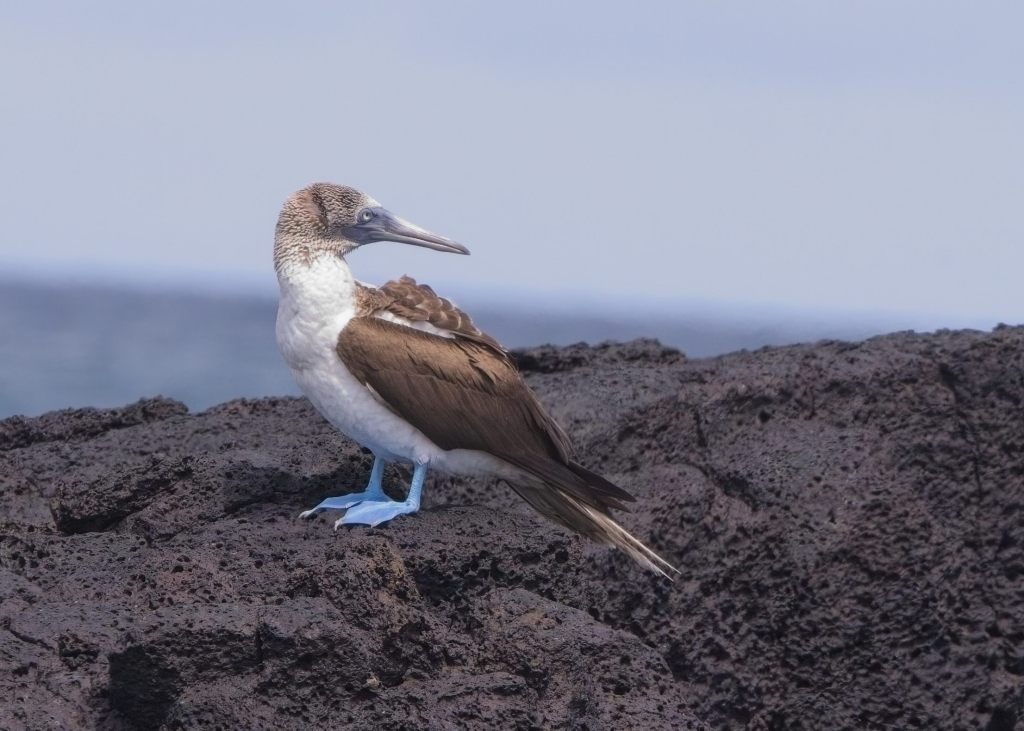
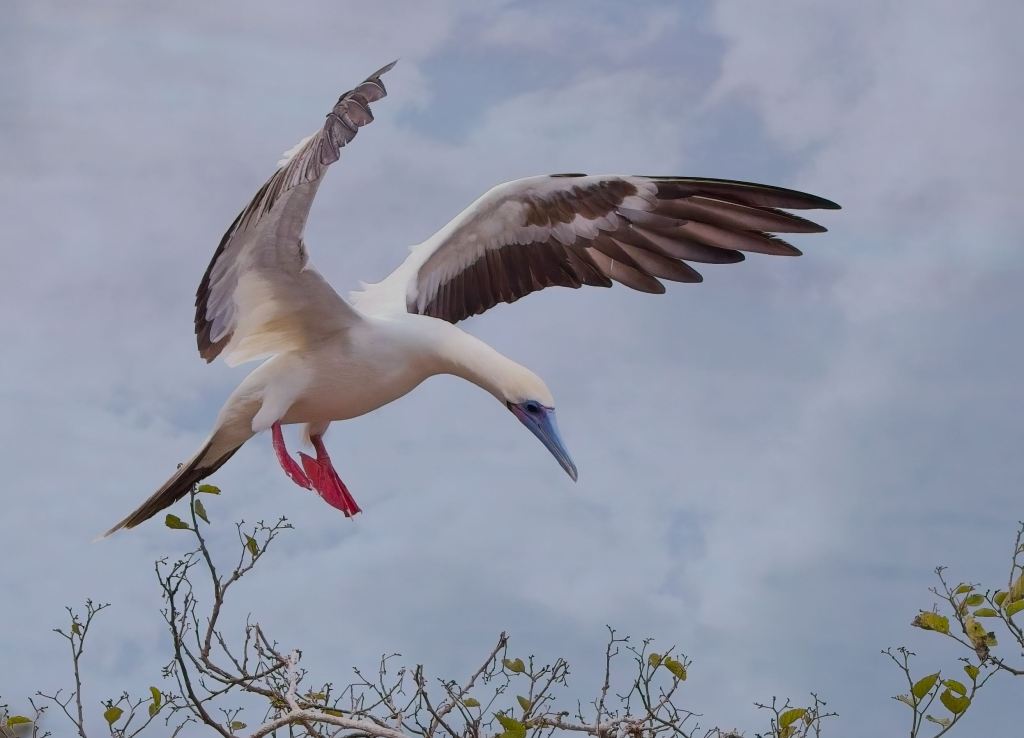
The three boobies found in the Galapagos are the Blue-footed, Red-footed and Nazca Boobies. I had seen all three species before including the first ever record of a Red-footed Booby that somehow found its way to Port Townsend this summer and in fact is still being seen there. I had seen the first North American record of Nazca Booby in San Diego 5 years ago and also saw one that was on a container ship in Puget Sound that sailed in front of my home. And I had marvelous views of Blue-footed Boobies in Mexico with Greg Homel in December last year. But those experiences all paled compared to being able to see dozens of each species of booby up close on San Cristobal. The Red-footed Booby nests only on San Cristobal and is rarely seen on the other islands.
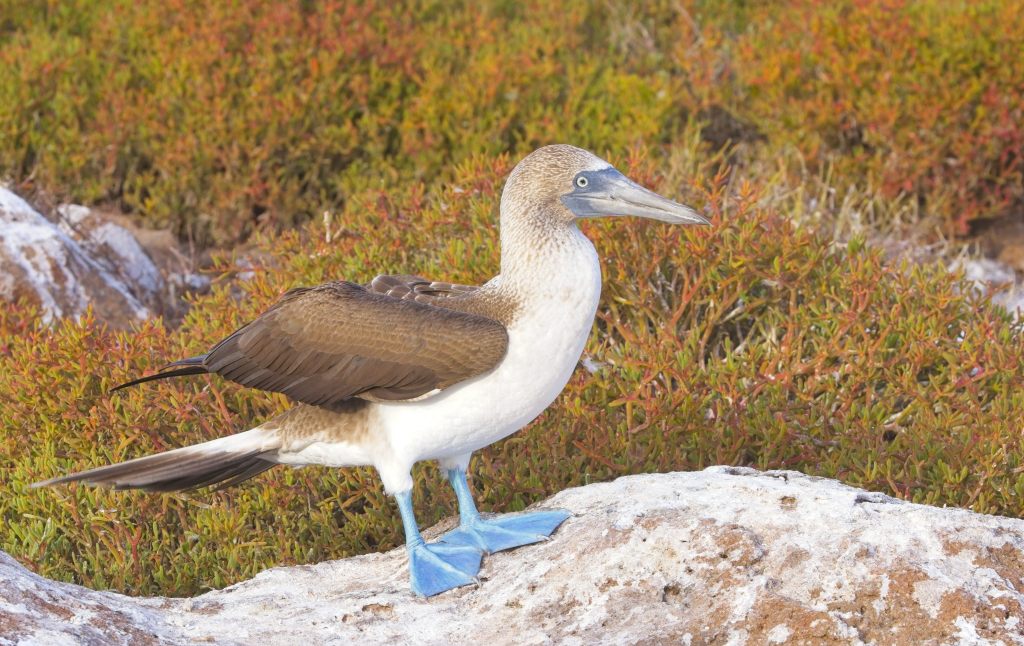
Blue-footed Booby on Rocks
Blue-footed Booby Looking Booby-ish
Red-footed Booby Perched Near Nest
Red-footed Booby Coming in for a Landing
Nazca Booby
There are eight booby species in the world. In addition to the three found on the Galapagos, I have seen Brown Booby, Cocos Booby, Masked Booby and Peruvian Booby. The only species I have not seen is Abbott’s Booby which is extremely rare and localized, breeding only on Christmas Island in the South Pacific. There are three closely related and similar looking species of gannets: the Northern Gannet found on the East Coast of the US and in Europe, the Cape Gannet, found off South Africa and the Australasian Gannet found primarily off the coasts of Australia and New Zealand. I have seen the first two but missed the Australasian Gannet when I was in Australia.
Northern Gannet – Maine, U.S.
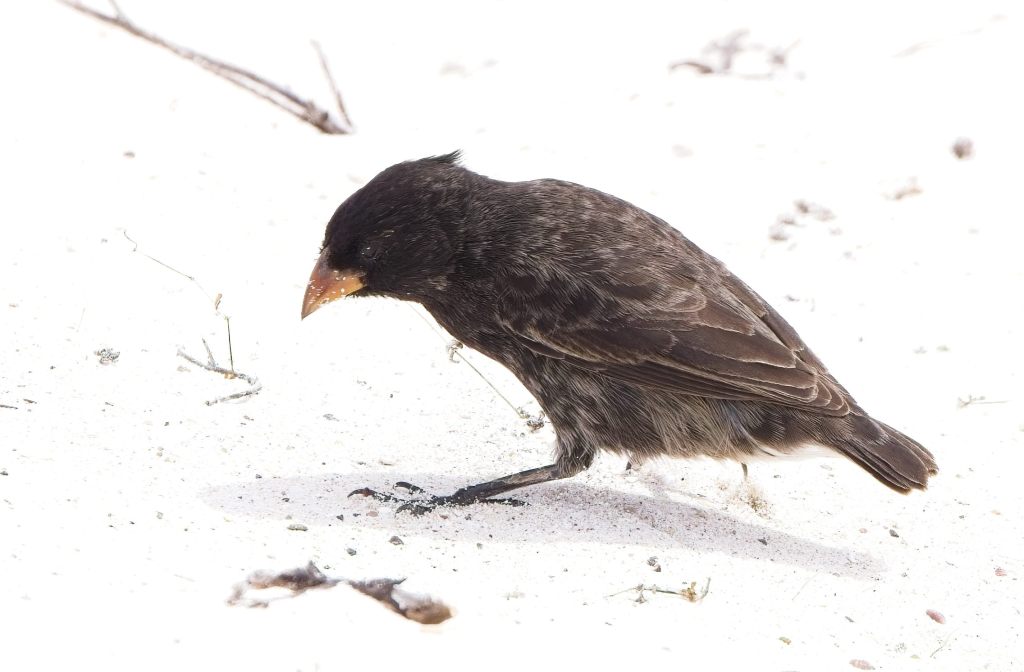
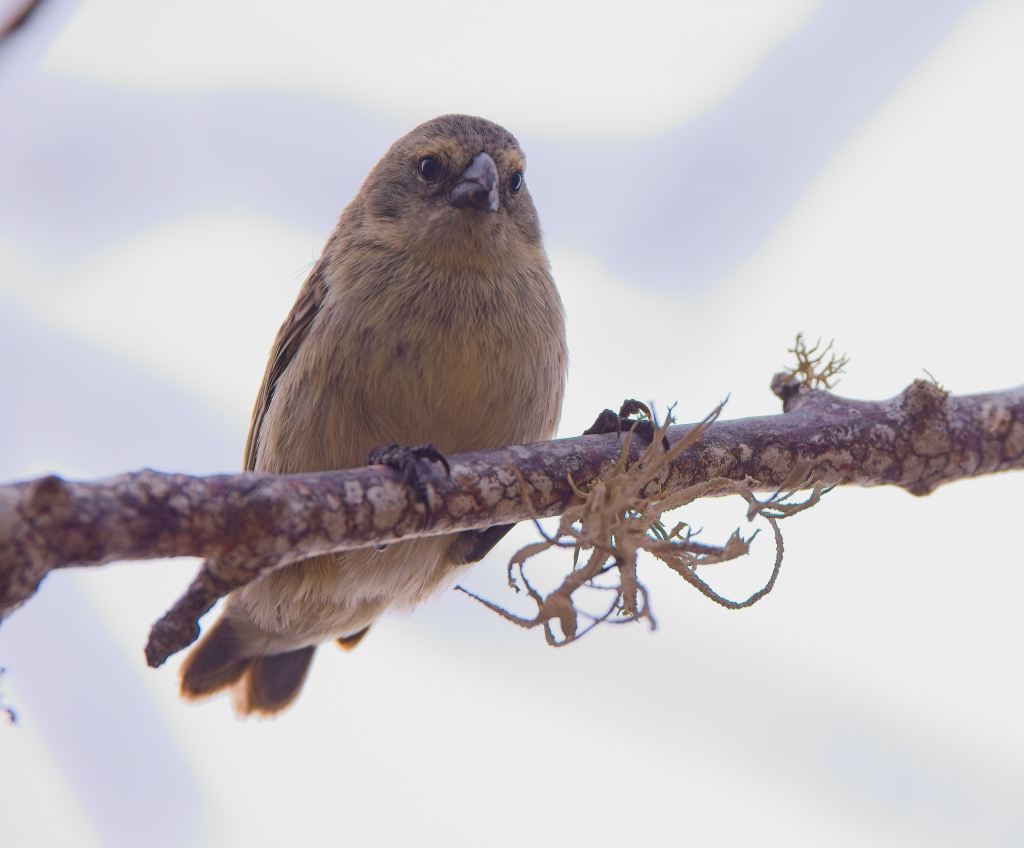
I had two other lifers on this excursion: the Medium Ground Finch and the Galapagos Flycatcher, both endemics. As mentioned before, the finches are probably the most famous birds of the Galapagos because of their importance to the development of the theory of the origin of species through natural selection developed by Charles Darwin. Somehow perhaps millions of years ago, the precursors of these birds made it to the Galapagos in sufficient numbers to begin breeding. It is theorized they crossed the many hundreds of miles of open ocean either due to a storm or a raft of vegetation that made it to the island shores. Over the millennia they bred, colonized other islands and developed unique features, primarily related to the size and structure of their bills that allowed them to fill the habitat and food niches that were available to them on the islands and were not being used by other species – since there were none. Thus there are Ground Finches, Tree Finches, Cactus Finches, Woodpecker Finches, Warbler Finches, Vegetarian Finches and Mangrove Finches. Some are found only on a few islands or even a single island. On San Cristobal, I was able to see only Small and Medium Ground Finches. Note the differences (small) in bill shape and size between these two species. It it more pronounced in some of the other finches that will be included later.
Medium Ground Finch
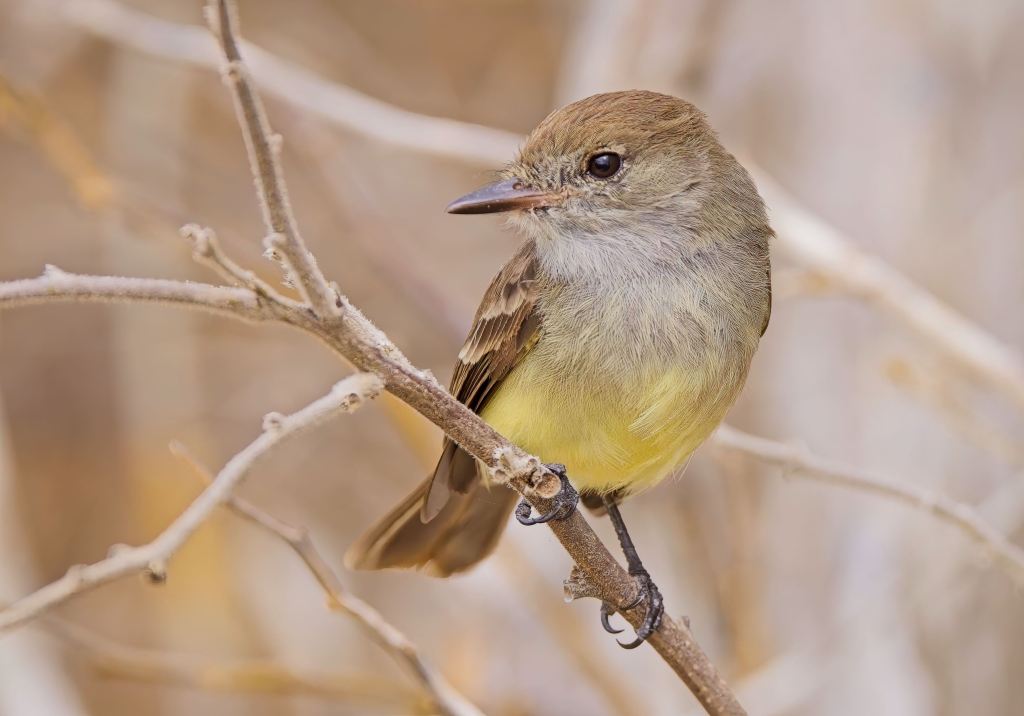
The Galapagos Flycatcher is very similar to many small flycatchers found on both the South American and North American mainlands. It is obviously related to and has evolved from an ancestor common to them all. Again how did its ancestor get to the Galapagos – a mystery. There are dozens of flycatcher species on every continent. This is the only one in the Galapagos. Why? Probably the main reason is that there are relatively few insects on the islands due largely to their arid nature.
Galapagos Flycatcher – Lifer and Endemic
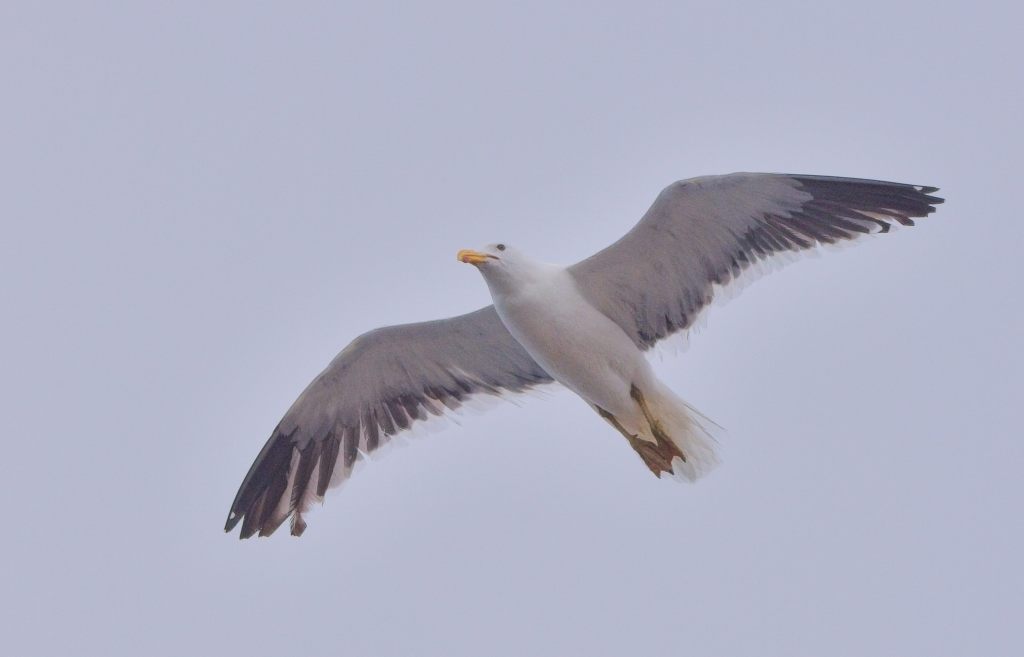
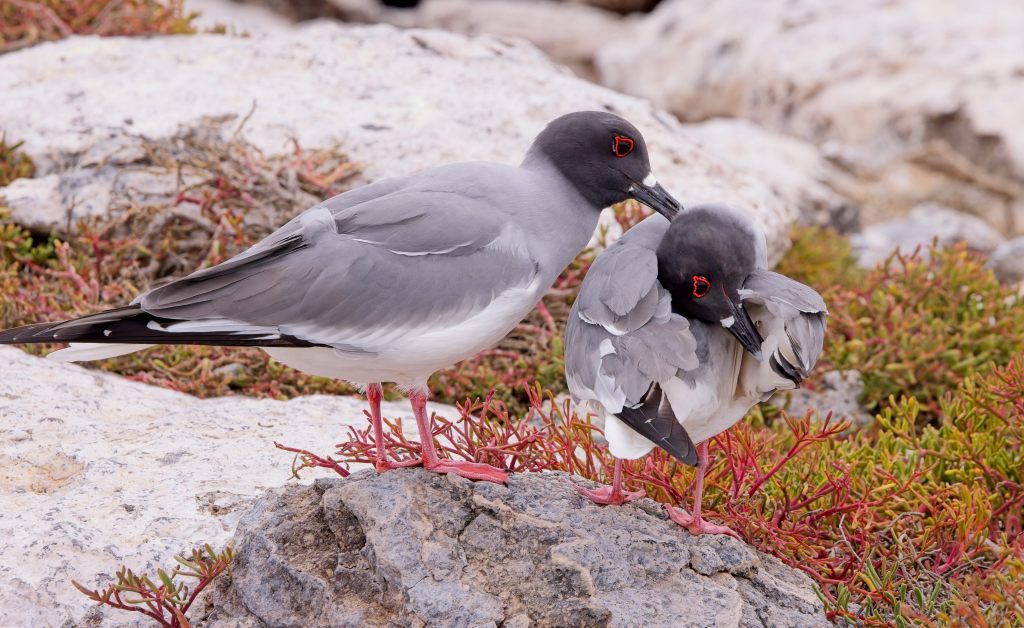
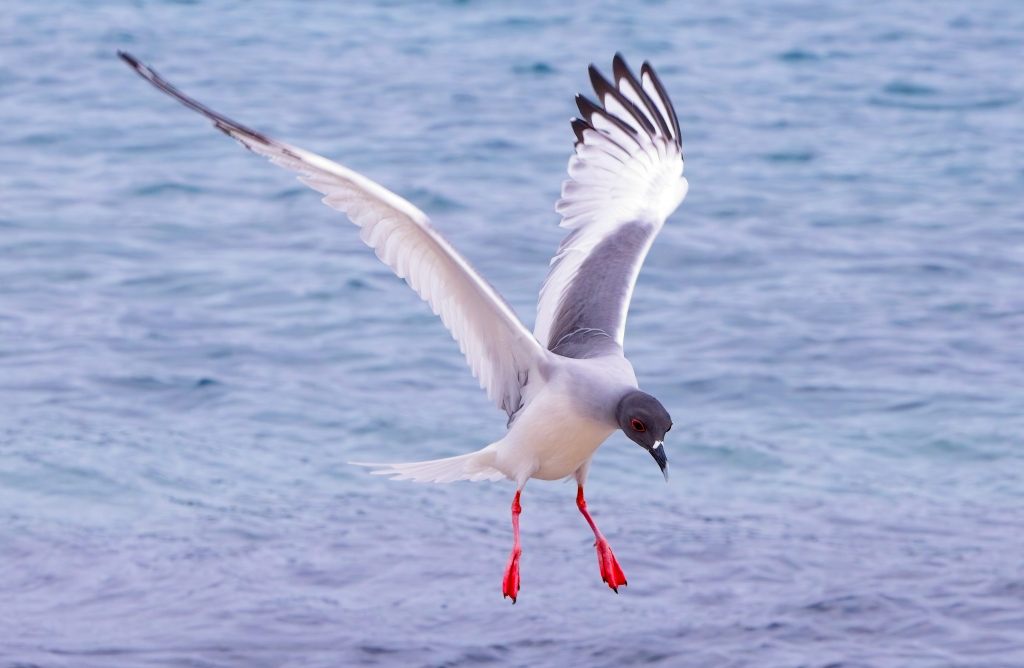
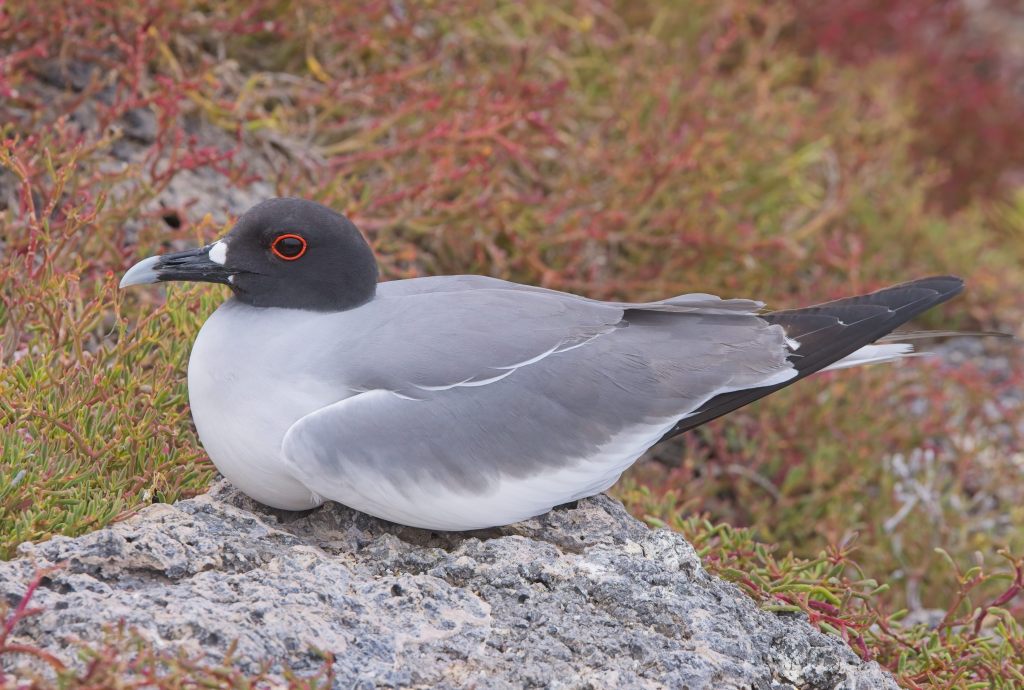
There was one other bird species of special note on this excursion. The Swallow-tailed Gull is not endemic to the Galapagos but that is where there are generally found. There is a notable exception. On August 31, 2017, Ryan Merrill, one of the super birders in Washington State found a Swallow-tailed Gull at Carkeek Park in King County, Washington. It was the first time one had been seen north of the Equator. He posted his find on Tweeters, a local listserv and I was able to get there 30 minutes later, the third person in Washington to see it. The bird remained in the area, including making several appearances in my hometown of Edmonds. It was also a big deal nationally as more than 1000 birders from across the nation came to see this mega-rarity generally seen only in the Galapagos. I saw more than 100 of these beautiful gulls this afternoon and would see many more later on our trip.
Swallow-tailed Gull
One last bird species of note was the Great Frigatebirds, both adults and juveniles – both because they are so striking and because we saw some uniquely plumaged juveniles – the first ones I had seen. There is not a lot of non-bird wildlife on the islands we visited. As was often the case, there were again many Sea Lions and some Marine Iguanas – the only iguanas that swim in the ocean. Otherwise the only other animals we saw were some Lava Lizards.
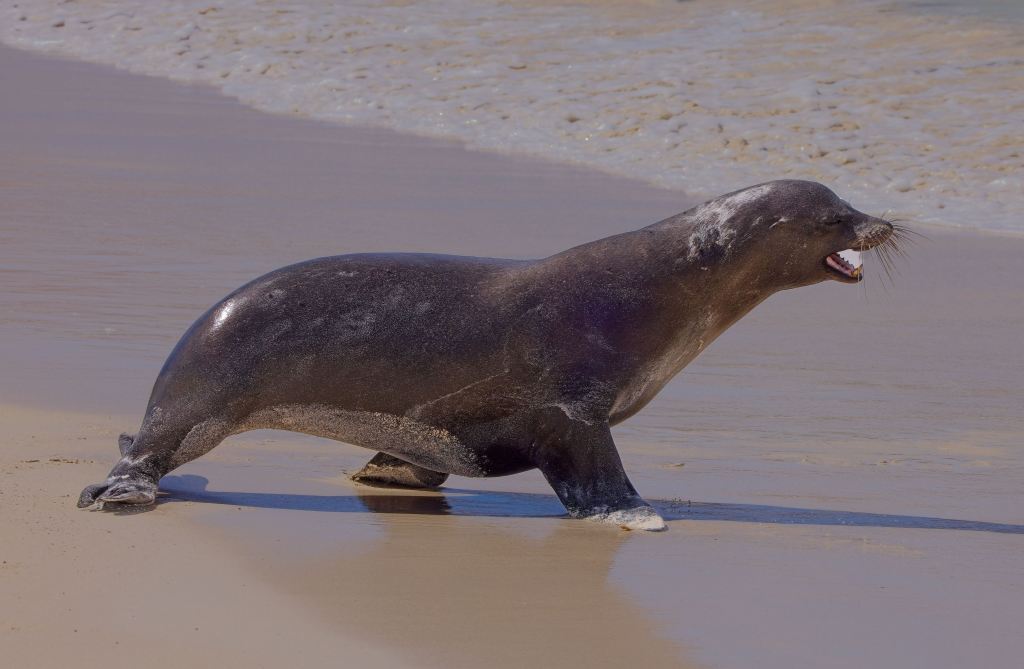
Sea Lion
Lava Lizard
Marine Iguana
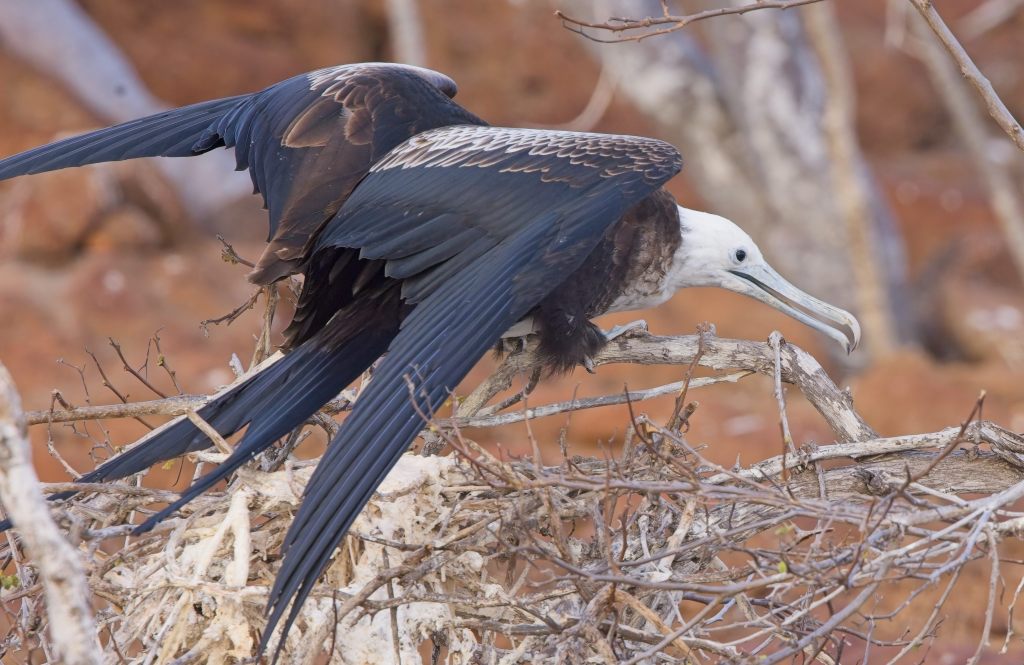
Great Frigatebird – Juvenile
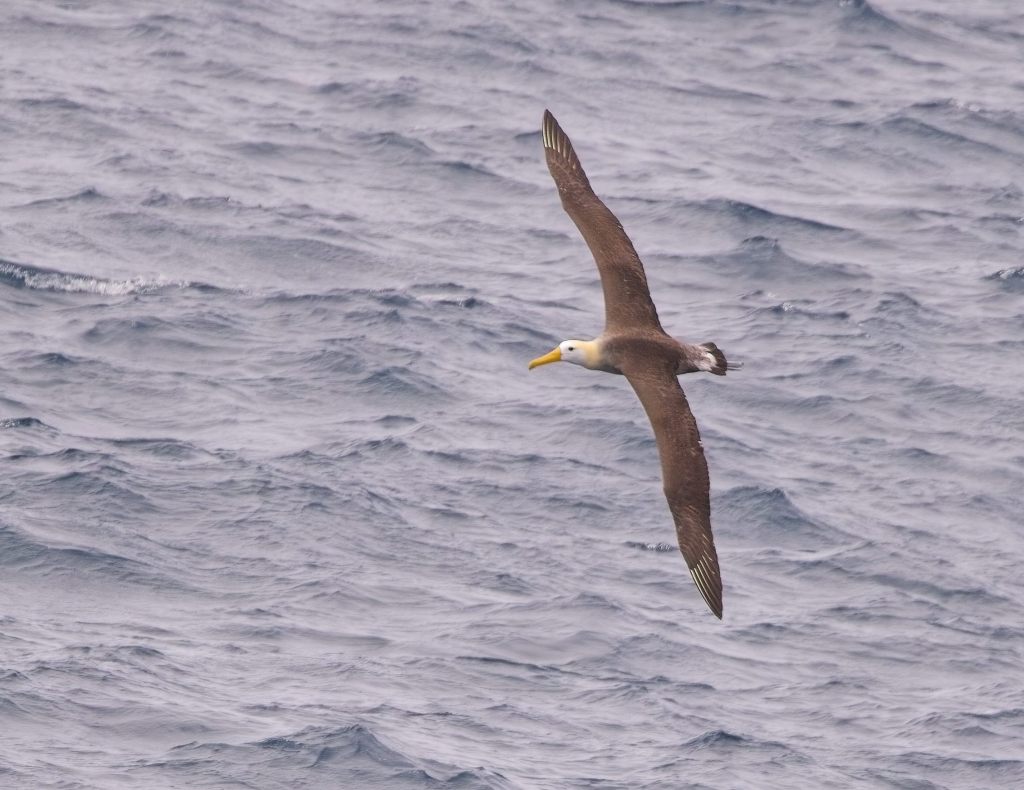
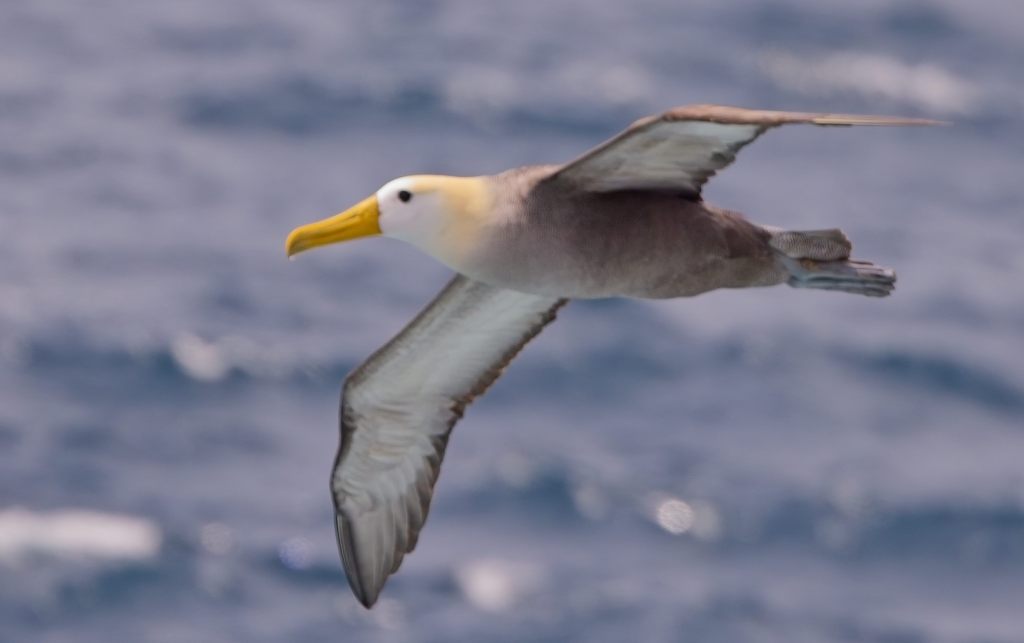
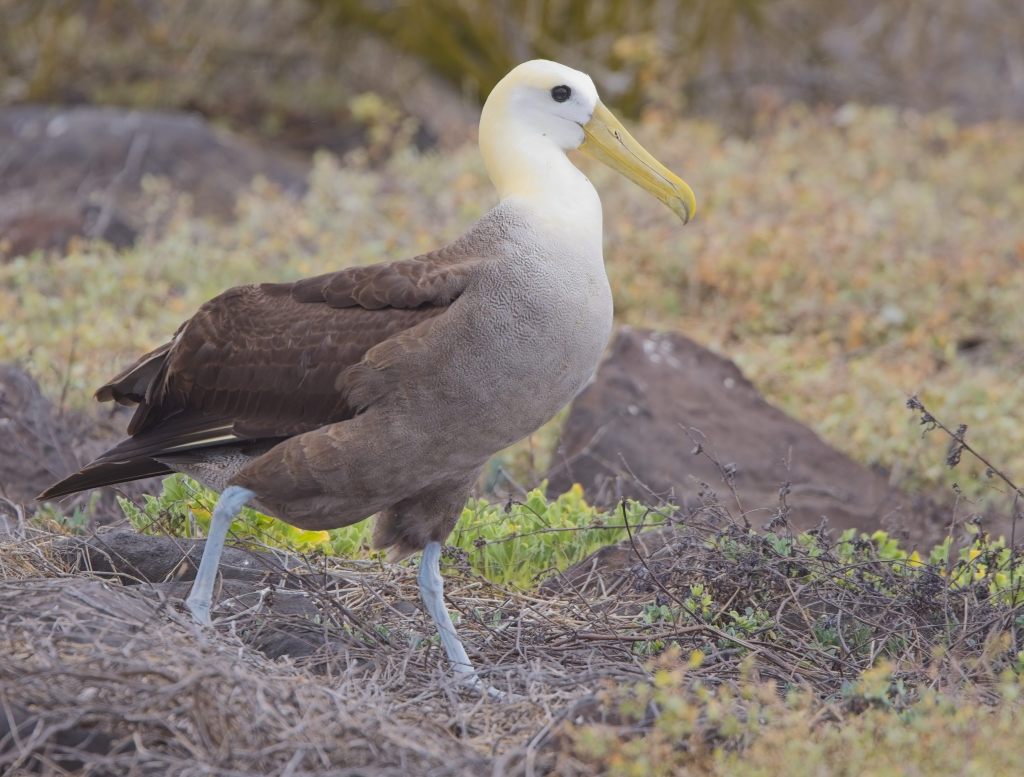
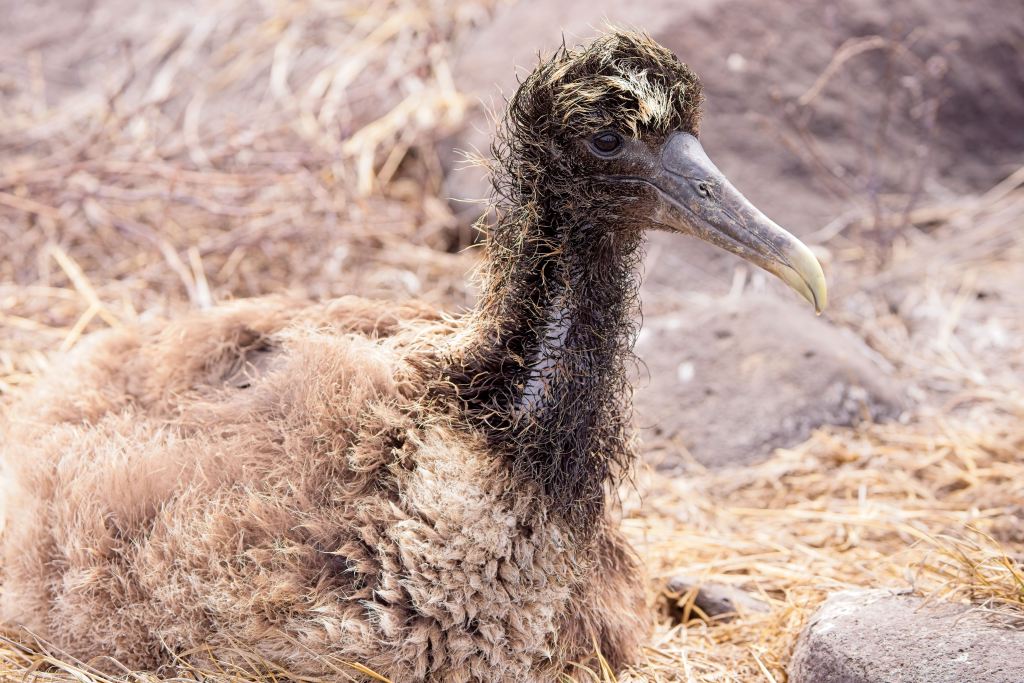
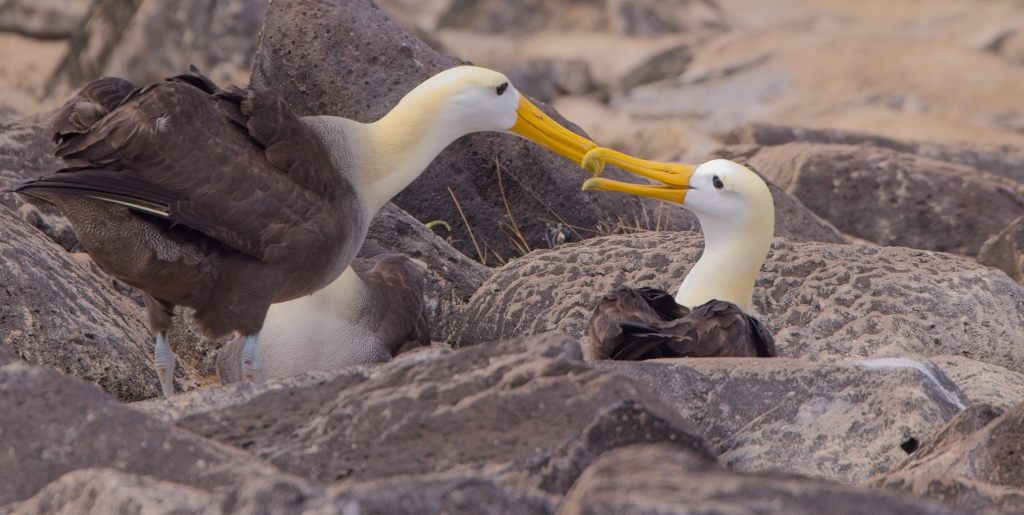
At night the yacht moved to Espanola Island our adventure land for Tuesday and a day I had looked forward to since booking our tour and choosing this itinerary as it is the only place in the world where Waved Albatross breed. There are 22 species of albatross in the world, all but three of which are found in the Southern Hemisphere. I have seen all three of the ones occurring in the Northern Hemisphere on pelagic trips out of Westport Washington. These are the Black-footed Albatross (common), Laysan Albatross (regular but rare) and the Short-tailed Albatross (extremely rare). We saw more than 30 Waved Albatross on Espanola, only albatross #4 that I have seen out of the 19 southern hemisphere albatrosses, so I have a long way to go. Albatrosses are fascinating animals, long lived (up to 50 years) which mate for life, spend almost their entire lives at sea except when they return to remote islands to mate and nest, have extremely efficient body structures with very long thin wings (up to 12 feet for the Wandering Albatross) that enable them to soar seemingly effortlessly without ever flapping their wings. Some albatrosses remain at sea – mostly in flight – for up to six years before returning to land to breed. Studies show that an albatross may fly 10,000 miles in a single journey and can circumnavigate the globe in 46 days. The Waved Albatross has a wingspan of up to 8 feet and an adult weighs 7.5 pounds.
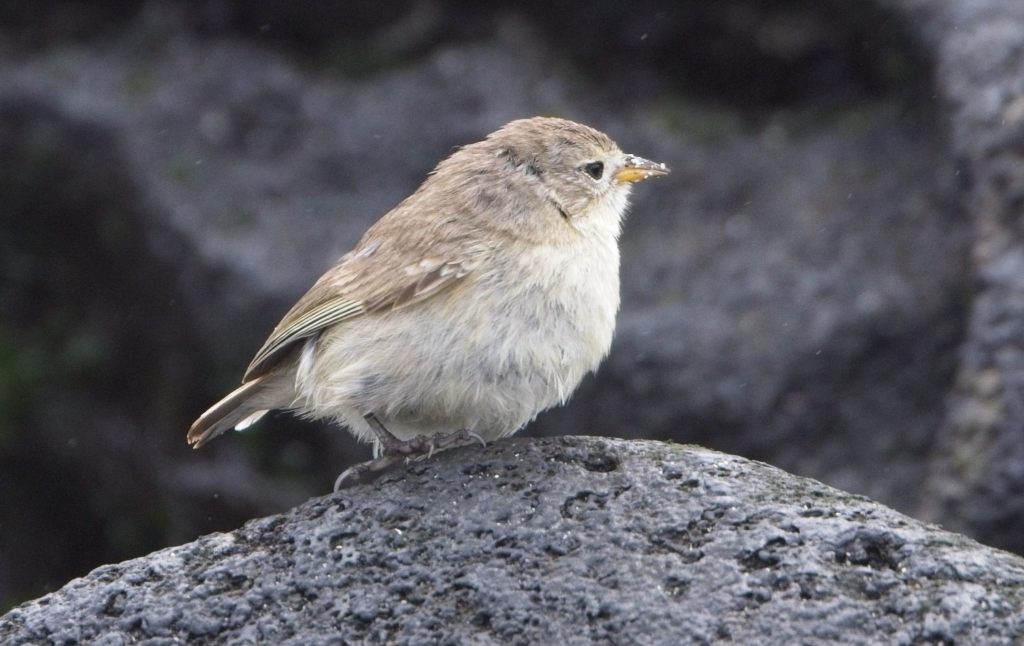
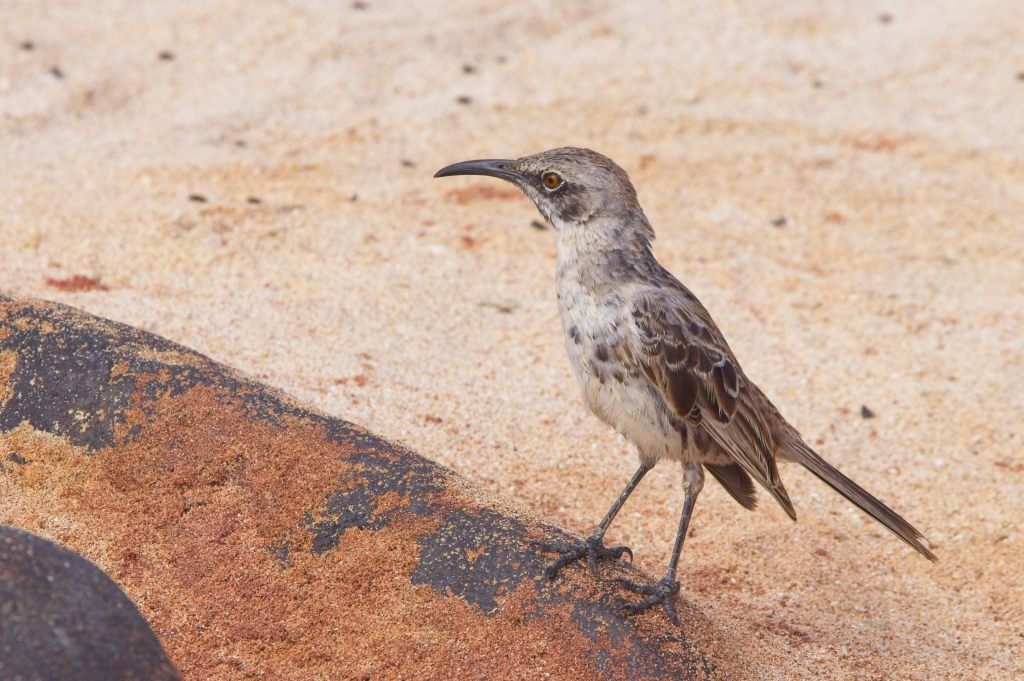
I had 5 other lifers on the island: Red-billed Tropicbird, Galapagos Hawk, Espanola Mockingbird, Gray Warbler-finch and Espanola Ground-finch. The Tropicbird was the one I most wanted to see, not because it is the rarest as that honor goes to the Galapagos Hawk, perhaps the rarest raptor in the world with fewer than 500 individuals remaining, but because I think it is very beautiful, very cool looking with its needle thin long tail.
Gray Warbler-finch– Lifer, Endemic
Galapagos Hawk – Lifer, Endemic
Espanola Mockingbird – Lifer, Endemic
Espanola Ground-finches – Lifer, Endemic
Red-billed Tropicbird – Lifer
In the afternoon the activity was snorkeling in Gardner Bay. As I mentioned had earlier I am not big on swimming and snorkeling so this was not a successful activity for me. Many of the others on the trip had a good experience seeing a variety of small fish, a couple of swimming sea lions and an octopus – sorry no photos to attach. Dinner was an outstanding ceviche.
Although this post is focused on the birds and animals of the trip while the first post covered details of the ship etcetera, this is a good place to repeat how great the service and food was – with attention to every detail. One of the delights of food in Ecuador in general and also onboard the MV Theory, were the great soups. On the mainland, we had soup with every dinner and every lunch – usually served with popcorn I guess to provide body. No popcorn on our yacht but excellent soups.
Another Excellent Soup – No Popcorn
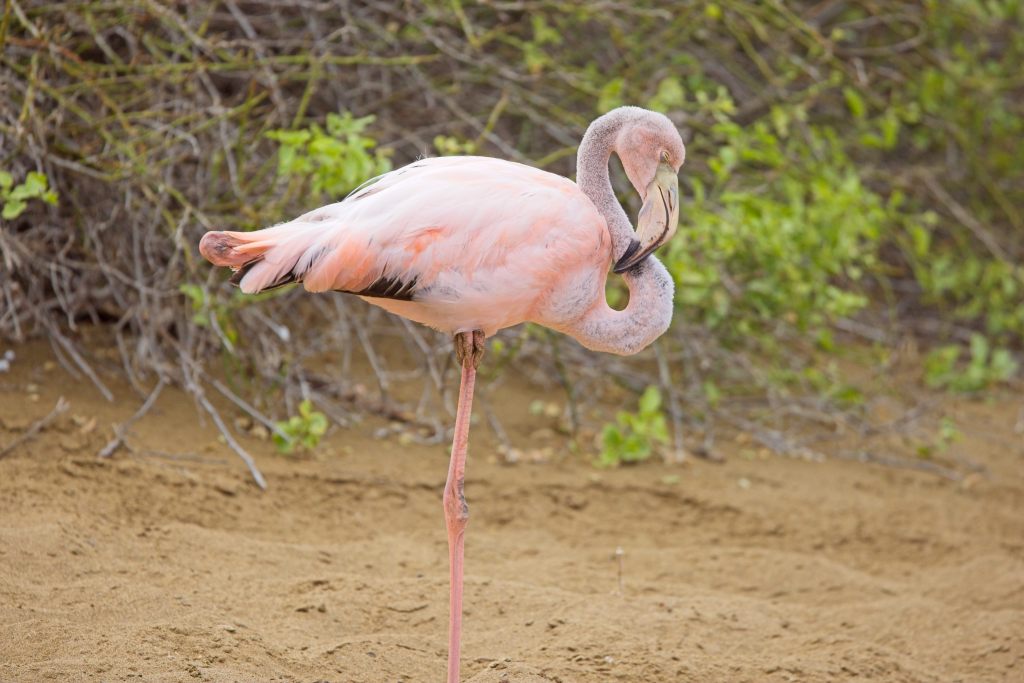
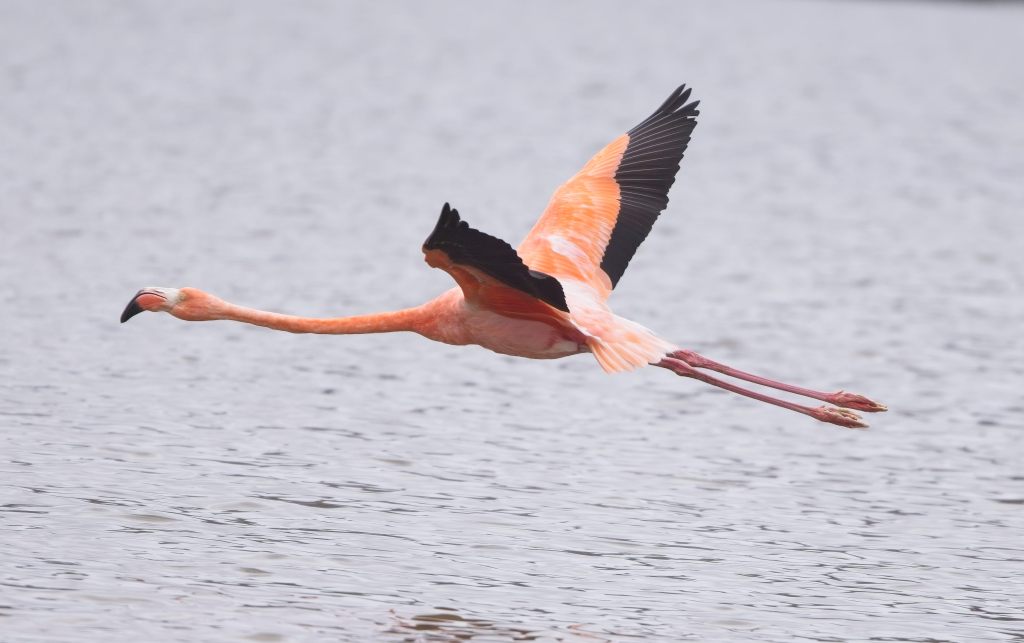
On Wednesday we had moved on to Floreana Island where on our morning visit we were greeted by American Flamingos. Although I had seen literally more than a million flamingoes in Africa (Greater and Lesser) and Chilean Flamingoes earlier this year in Argentina, the only American ones I had seen previously was one 46 years ago in the Florida keys (no photo), and an escapee from a collection near San Diego. My photos were the first of this species that I could “count”.
Welcoming American Flamingo– Life Photo
American Flamingo Close Up
American Flamingo Flight
Amazing to Get This Close to a Feathered not Plastic Flamingo
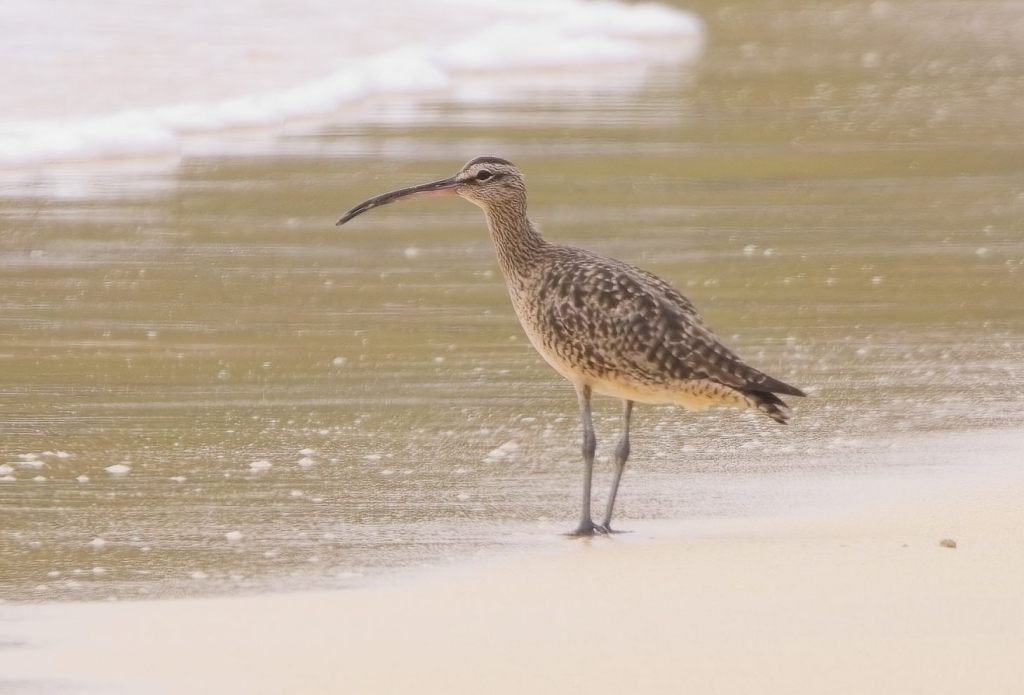
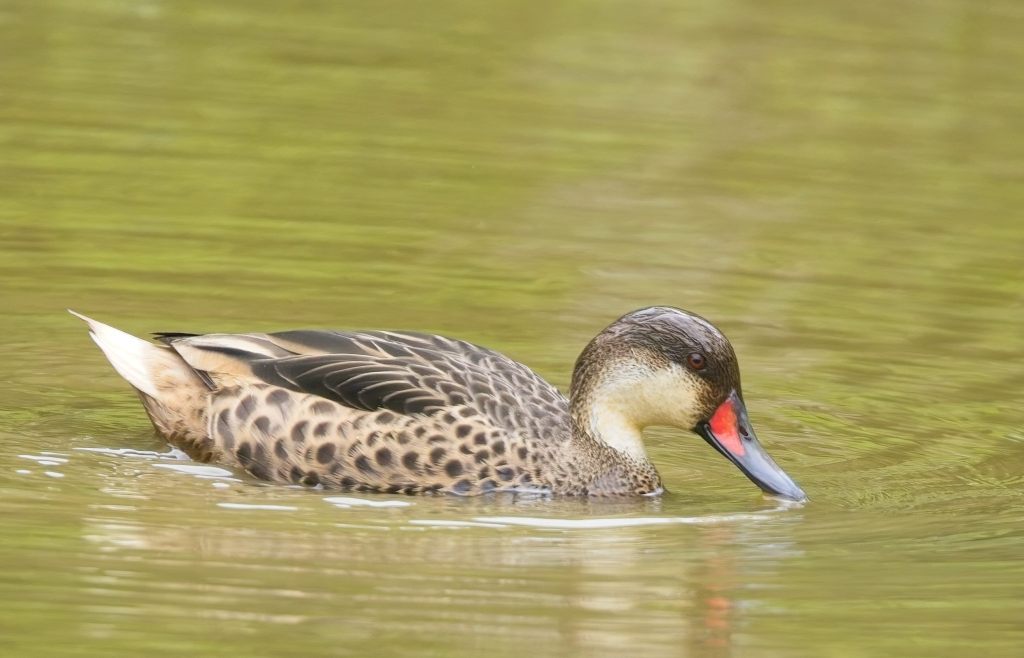
There were two world lifers for me on this visit – Small Tree-finch and Galapagos Dove. I kept waiting for the dove to come out fully in the open, but I could never get a really good angle. Sometimes it just works out that way. There were a number of other birds seen on Floreana that were new both for the Galapagos and for my Ecuador list. I had spent 10 days on the mainland birding with friend Tom St. John and guide Nelson Apolo Jaramillo which added significantly to my list of Ecuador species from the visit with Cindy back in 2022. That mainland birding was in the Andes and in the Amazon – nothing coastal and no real opportunities for shorebirds, so there were lots of new Ecuador birds on this Galapagos visit. By the end of the visit I added 42 species for Ecuador bringing my total to 713, a number surpassed only by my United States list which is at 780. Adding to that U.S. list will be very difficult with it very unlikely to get even close to 800 species. If I ever return to Ecuador, a carefully planned trip would get over 800 for sure. The shorebirds added in the Galapagos were American Oystercatcher, Whimbrel, Least Sandpiper, Killdeer, Black-bellied Plover, Ruddy Turnstone, Wandering Tattler and Sanderling. On Floreana, I also added White-cheeked Pintail for Ecuador, a species I had seen 44 years ago in Trinidad and seen and photographed in Argentina earlier this year.
Small Tree-finch – Lifer EndemicSmall Tree-finch – Lifer Endemic
Galapagos Dove – Lifer Endemic
Whimbrel
American Oystercatchers
White-cheeked Pintail
I have already mentioned several species that were seen earlier from the MV Theory or on our Zodiac trips, storm petrels shearwaters, frigatebirds, boobies, terns and petrels. We saw some of these species every day. Earlier I included a photo of a Wedge-tailed Storm Petrel seen from the yacht when I first got on board. By far the more common storm petrel was the Elliott’s Storm Petrel, probably seen every day and sometimes in groups of 10 or more. There are two other storm petrels seen in the Ecuador – Band-rumped and Markham’s. I had seen the first on a pelagic trip off the coast of North Carolina. It is not common in the Galapagos and is very similar in appearance to Elliot’s so I did not try to pick one out – in fact I am not sure I could have identified it. There is speculation that the species seen in the Atlantic is different from the one seen in the Pacific. If it is split off as a distinct species I will scour my photos of Elliot’s Storm-petrels from this trip and hope that I may find one. Markham’s is not found in the Galapagos preferring warmer water closer to the mainland.
Elliot’s Storm Petrel
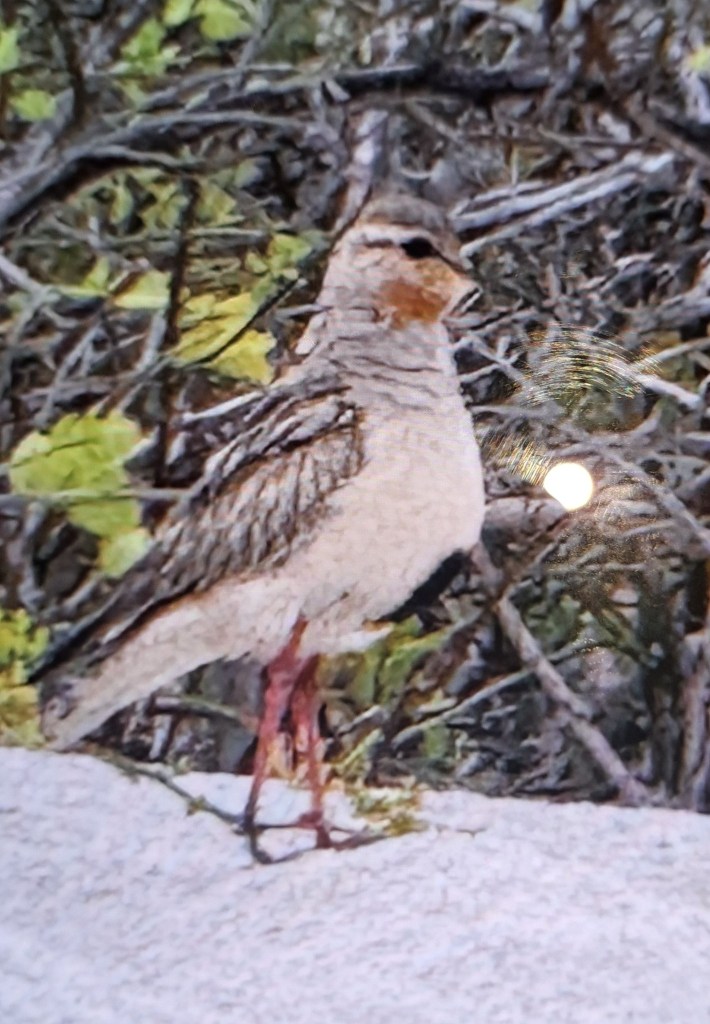
I have to add one more sighting on the island that morning, unfortunately not by me. When we went on excursions, we would split into two groups, one led by each of the naturalists. On Floreana I was with Billy Maquilon and the other group was with Martin Loyola. At the end of the excursion, Martin showed me a photo he had taken with his phone of a bird he did not recognize. It turned out to be a Tawny-throated Dotterel, a species that had been seen in the Galapagos only once previously more than 30 years ago, it being found only in limited habitats on the mainland. Sadly it was not possible for me to go back to where he had seen it, and especially since I had never seen one, it was the worst miss of the trip. Including it here for the story only.
Tawny-throated Dotterel – found by Martin Loyola
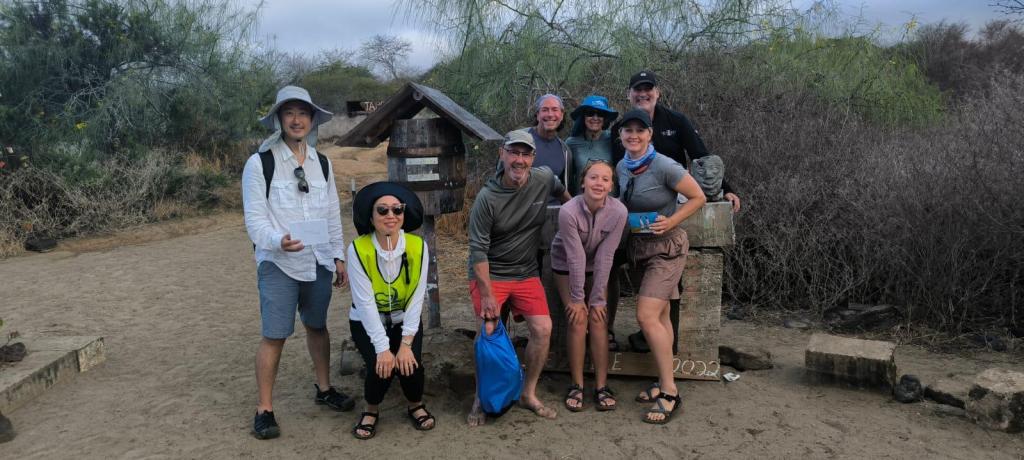
After yet another wonderful lunch and some rest, we returned to Floreana in the afternoon to participate in a thrilling Galapagos tradition. Floreana is home to Post Office Bay, the site where English whaling vessels erected a post barrel in the late 18th century. They would leave letters in the barrel with the hope that other visitors would find them and take them back to England for delivery. We had been given post cards which we filled out and dropped into the barrel, no postage required. The tradition is to search through the postcards left by previous visitors, and if you see one addressed to a location near your home, you may choose to take it with you. However, you must deliver it in person. Similarly, your postcards will be delivered by future visitors. Later we returned to the yacht and for an Espresso Martini made from Galapagos grown coffee.
Post Office Barrel
Part of Group at Post Office
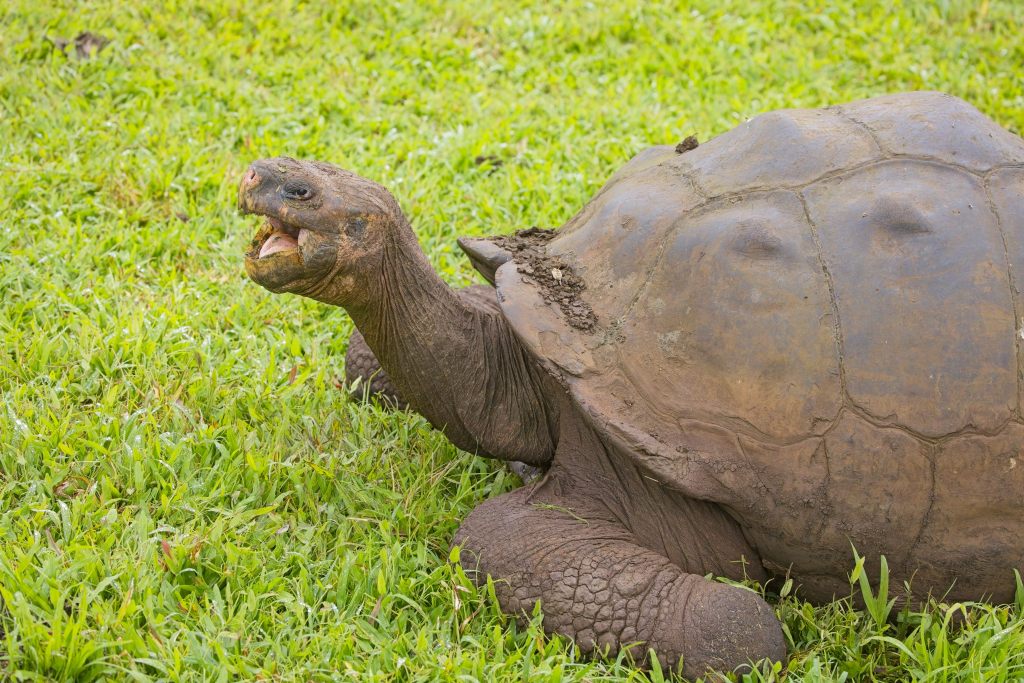
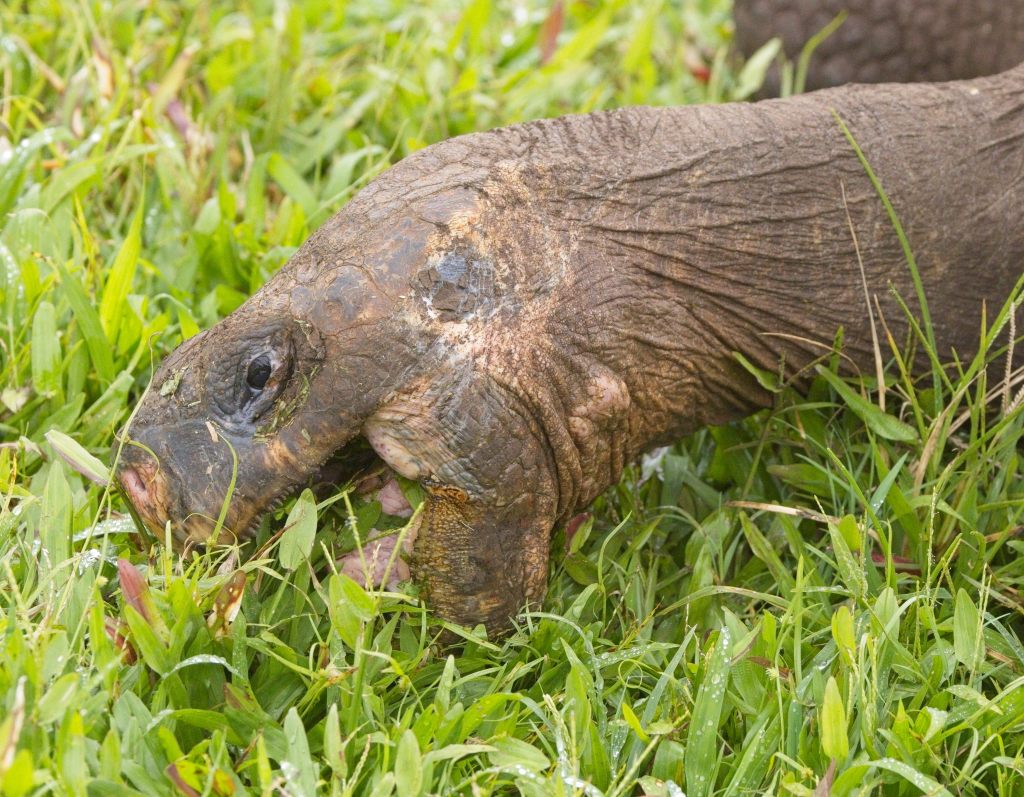
Thursday morning, we disembarked at Puerto Ayora on Santa Cruz Island, the social hub of the Galapagos Islands with a population of 24,000 and boarded a private bus for a scenic excursion to the highlands of Santa Cruz traversing diverse vegetation zones with lush greenery at higher elevations. The main objective was a visit to a privately-owned ranch where the amazing Giant Land Tortoises roam freely in their pristine natural habitat. These gentle giants grow to exceed 500 pounds and offer an awe-inspiring spectacle. We had the chance to approach these tortoises within only a few feet (never touching them) and watching them lumber around the terrain. These animals are the first thing I think of when anyone mentions the Galapagos. Altogether we saw more than 100 during this excursion.
Giant Galapagos Land Tortoise
Purely a Vegetarian
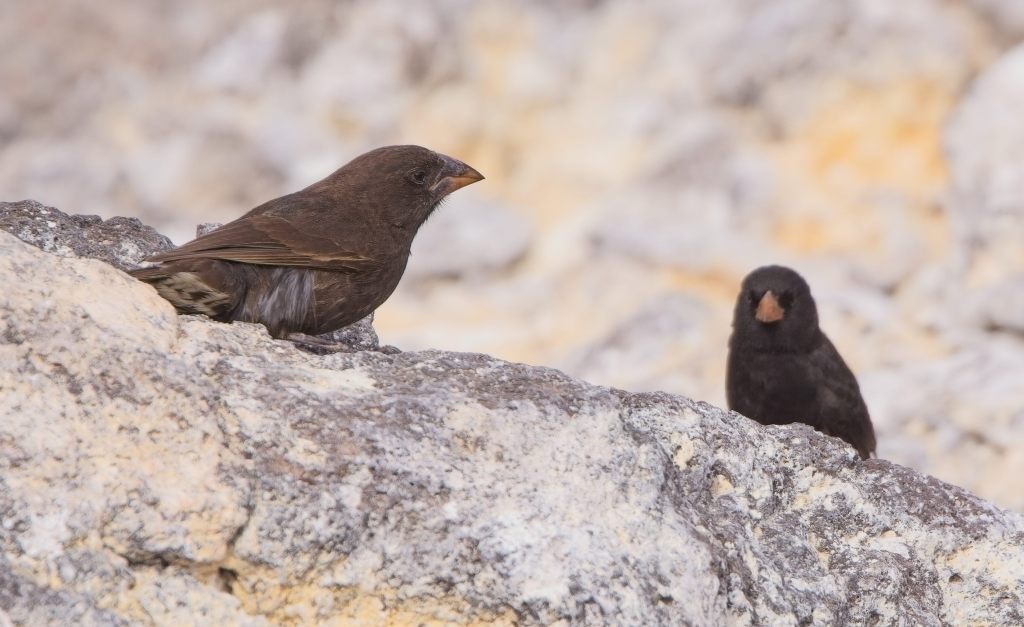
During the visit we saw many of the Darwin finches, including my first Large Ground Finch, my first Woodpecker Finch and also two new birds for my Galapagos list – Smooth-billed Ani and Common Gallinule, the latter new for Ecuador as well.
Large Ground Finch – Endemic Lifer
Common Gallinule – New for Ecuador
Smooth-billed Ani – Not Native to the Galapagos
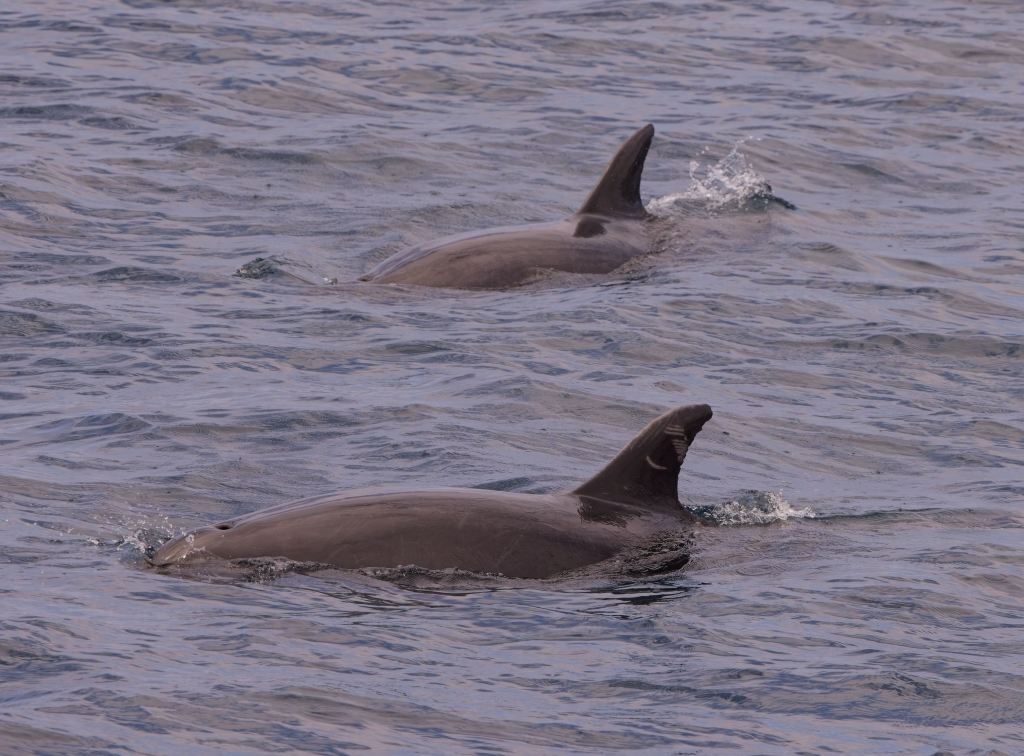
On Friday, October 11th, we had repositioned to Bartolome Island and our morning excursion would be a hike described as a challenge, with about 400 wooden steps winding around Bartolome island, ending in a gorgeous panoramic view of Pinnacle Rock. Our pace was slow and the footing was good so no problem getting to the top. On the way out to the island we had some good looks at Common Bottlenose Dolphins and close to shore we had a close up of a Marine Iguana swimming in the surf.
Cindy and Blair at the top of the Climb
Marine Iguana Swimming Just off the Beach
Common Bottlenose DolphinsCommon Bottlenose Dolphin
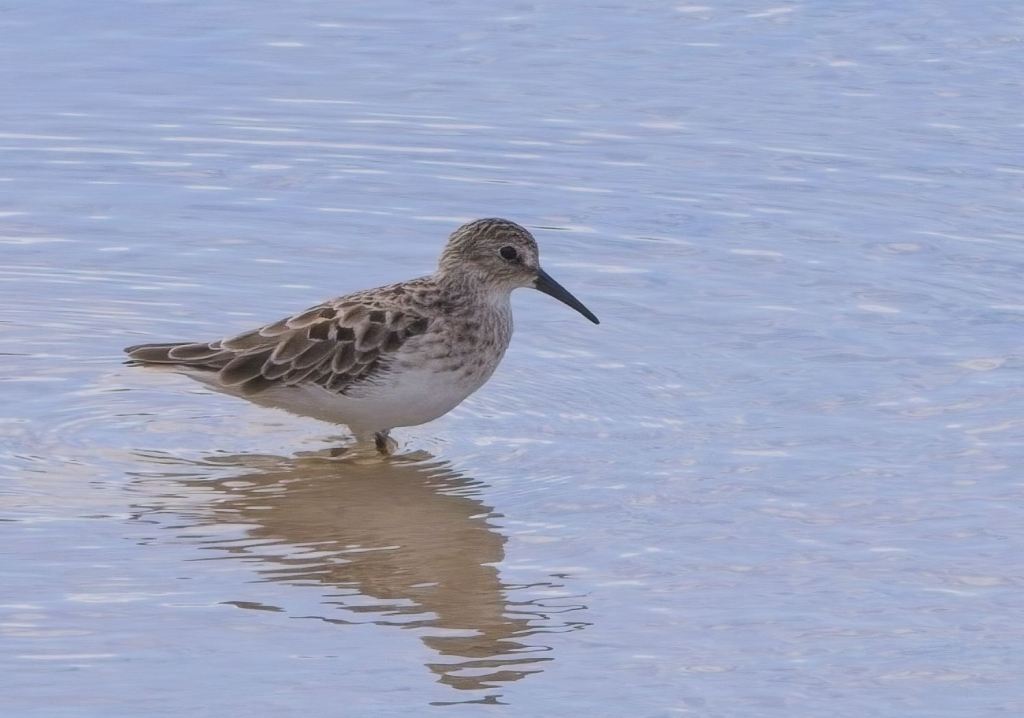
During the morning hike we saw some nice birds on the way: American Flamingo, Brown Pelican, more Small Ground Finches and the Galapagos Formof a Striated Heron – called a Lava Heron. I also had a nice photo of a Yellow Warbler. We also saw more American Oystercatchers and some Least Sandpipers on the sand.
American Flamingo
Brown Pelican
Striated (Lava) Heron
Yellow Warbler
American Oystercatcher
Least Sandpiper
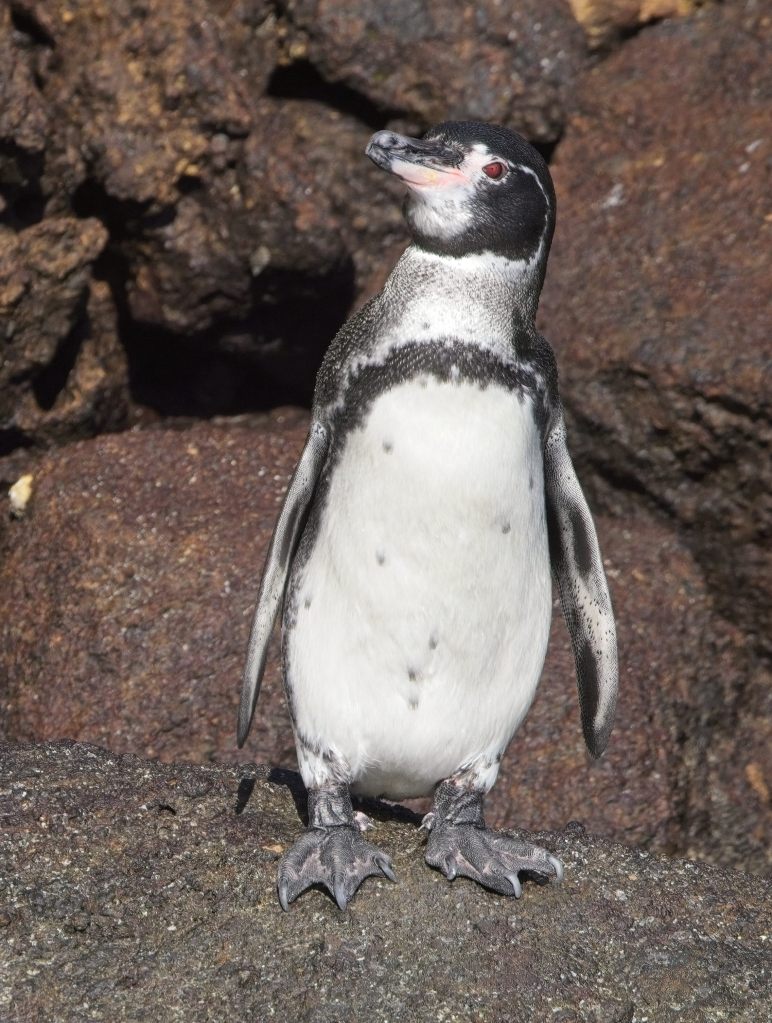
After the hike there was some swimming for anyone interested before returning to the ship with Frigatebirds overhead and then yet another great lunch before returning to the Zodiacs for a trip back to Bartolome looking for Galapagos Penguins.
Magnificent Frigatebird
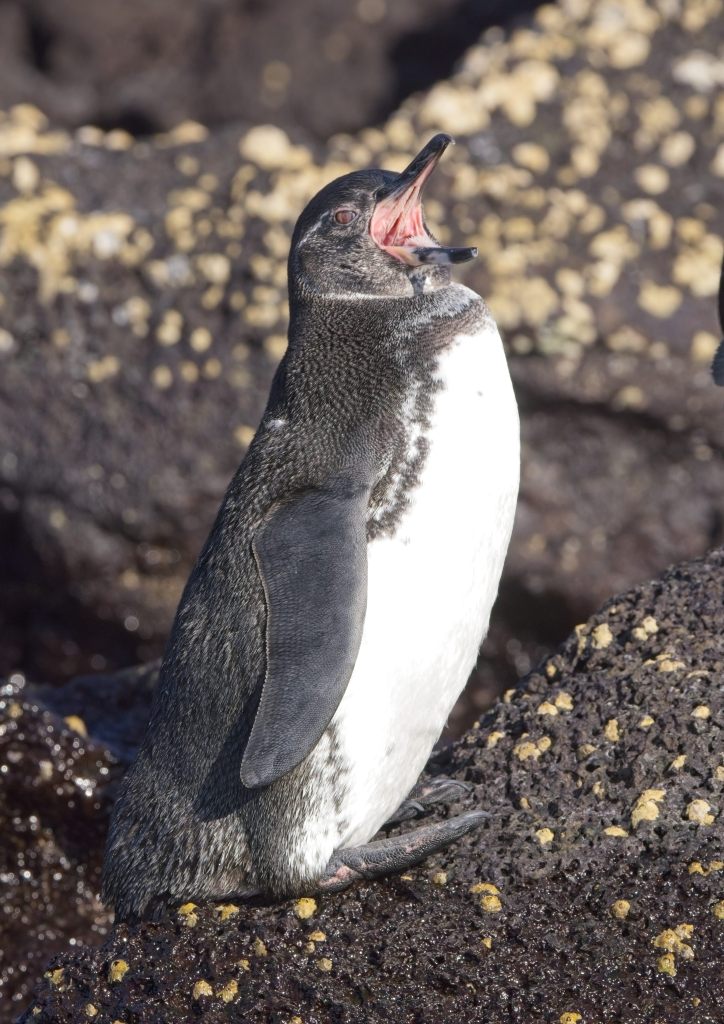
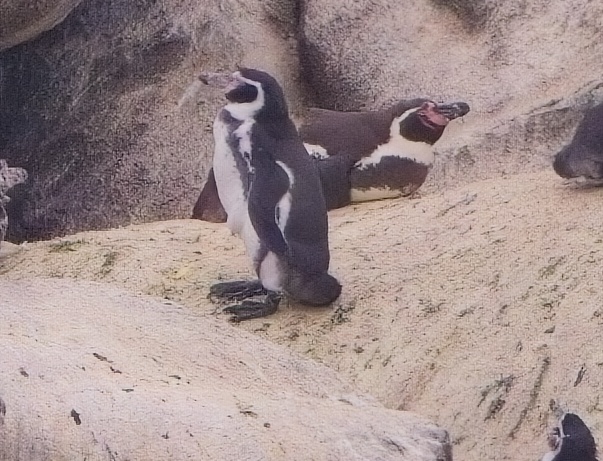
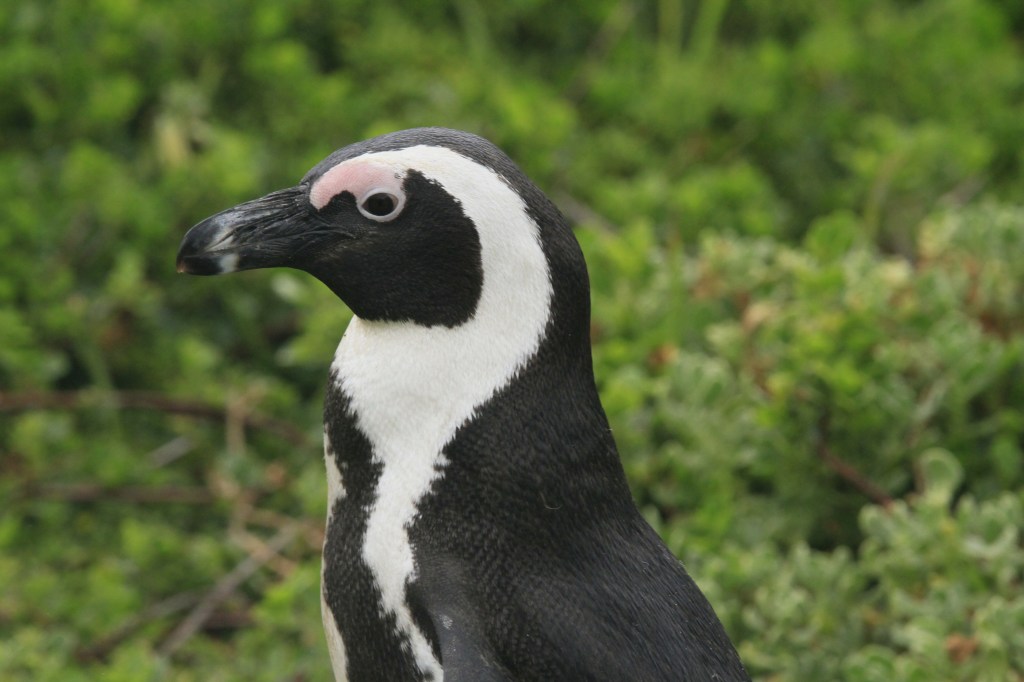
There are 18 species of penguins, flightless birds, all of which are found only south of the equator except for the Galapagos Penguin which ventures just a bit north. For most of us Penguins are generally associated with Antarctica, but only two species, the Emperor Penguin and the Adelie Penguin live only there with some others found at the tip of the Antarctic peninsula or on nearby subantarctic islands. The King and Emperor Penguins are the largest and most striking. Earlier this year, Cindy and I saw Humboldt Penguins in Chile and in 2014 I saw African Penguins in South Africa. The former were pretty far away and the latter were quite close. We got to see these endemic Galapagos Penguins at pretty close range on the rocky coast of the Island and in the water. To my eye, these three species look pretty similar.
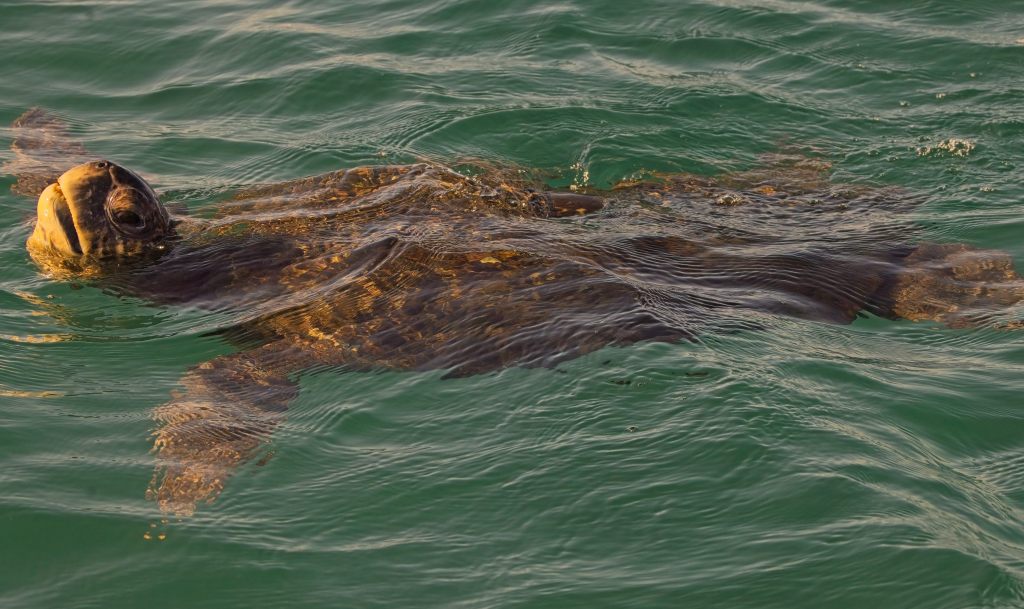
On the way back to the ship, I got my only decent photo of a Green Sea Turtle swimming on the surface of the water. All of my other shots were of the head only.
Green Sea Turtle
We were now coming to the end of this marvelous trip. It is Saturday and we are moored off of South Plaza Island. Another breakfast and more good coffee and we were off to explore the island which provided an opportunity to see nesting Swallow-tailed Gulls and Red-billed Tropicbirds and gave me a chance to see my lifer Common Cactus-Finch, the last of the Darwin Finches that I would find on the trip. There was also a single Kelp Gull a species I had identified as a possible lifer when I first planned the trip but added in Chile so now it would be “just” another species for Ecuador. It was also fitting that I also had my last Nazca Booby – joining with the Swallow-tailed Gull as species that I had actually seen in hometown Edmonds – both extraordinary rarities.
Nazca Booby
Kelp Gull – New for Ecuador
Swallow-tailed Gull Juvenile with Injured WingSwallow-tailed Gulls Preening Near NestSwallow-tailed Gull in FlightSwallow-tailed Gull LandingSwallow-tailed Gull with ChickSwallow-tailed Gull
Red-billed Tropicbird
Red-billed Tropicbird in Cavity – a Nest?
Common Cactus-Finch – Lifer, Endemic
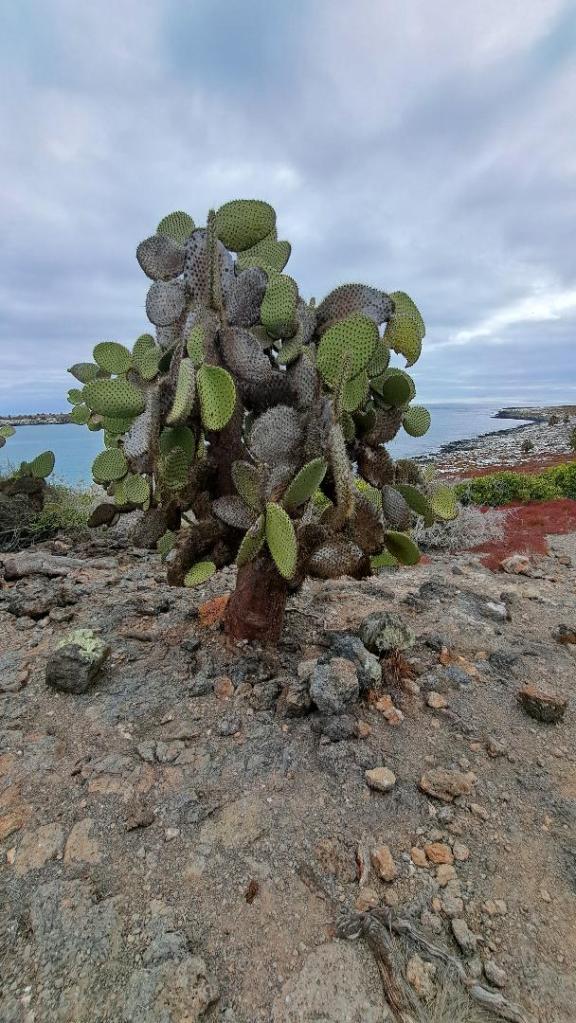
Cactus
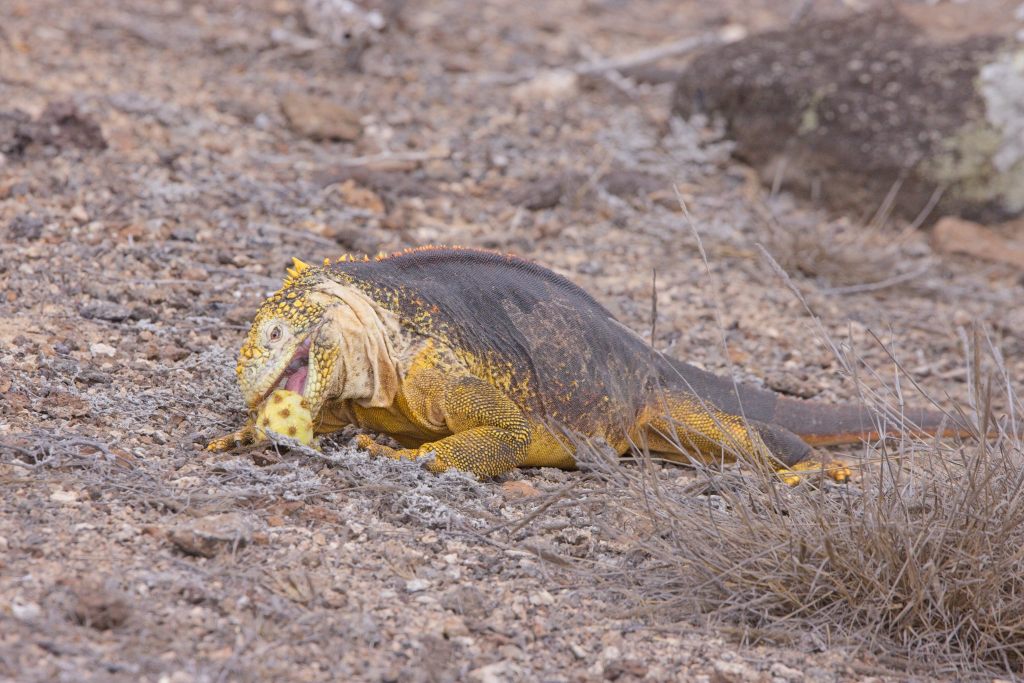
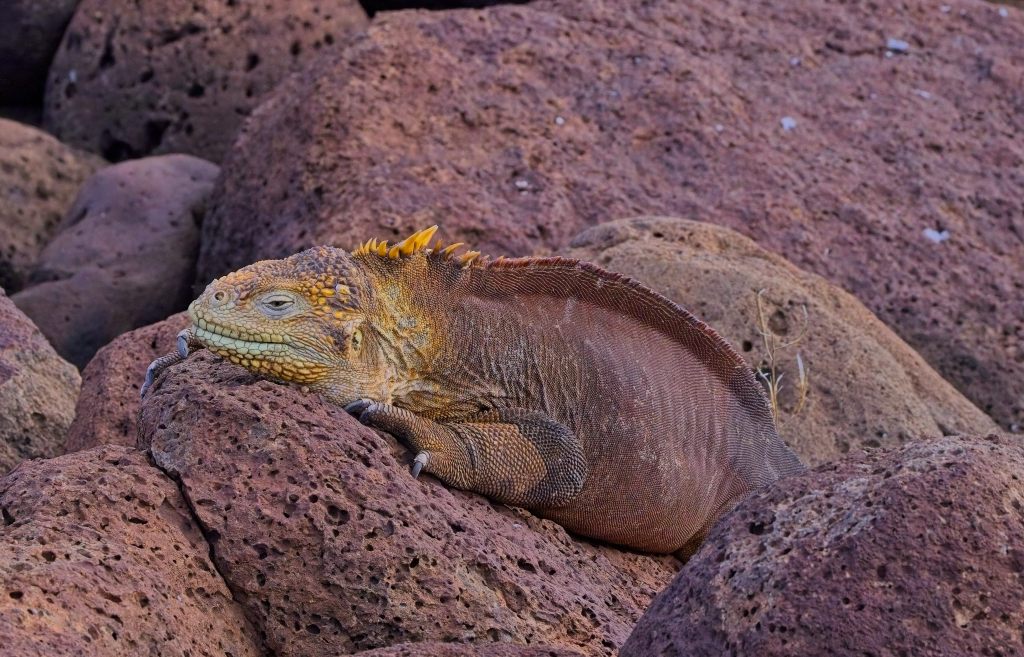
Land Iguanas were plentiful on the island, many in bright breeding color and munching away on cactus, a favorite food.
Land Iguana Eating Cactus
Land Iguana Close-up
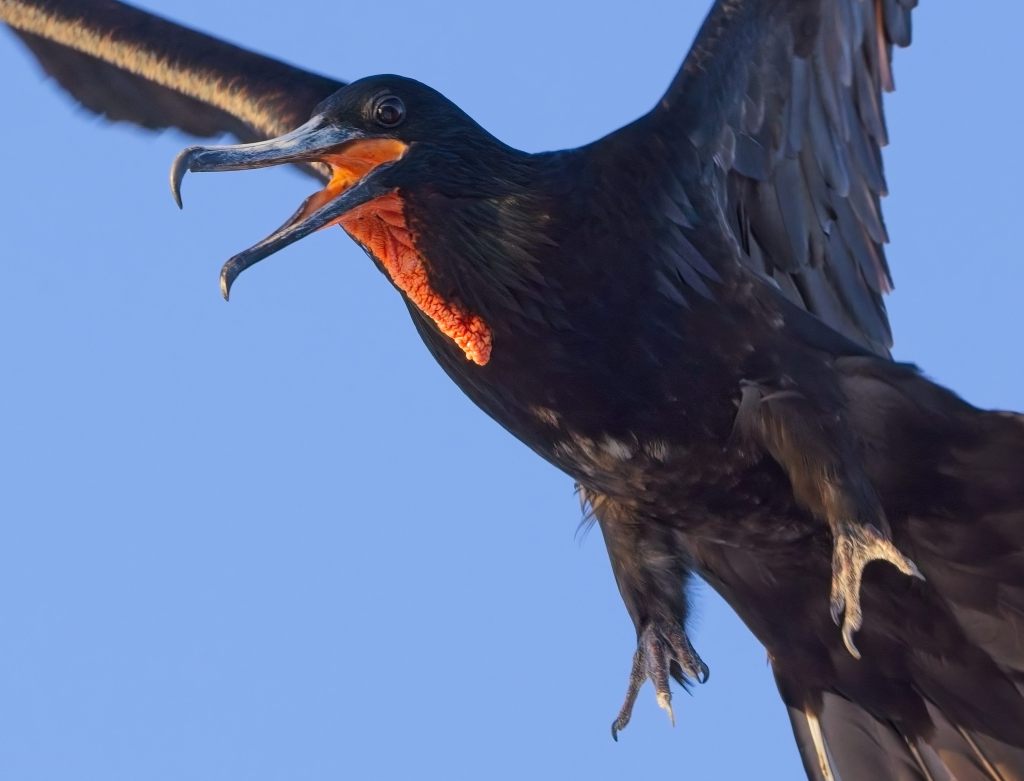
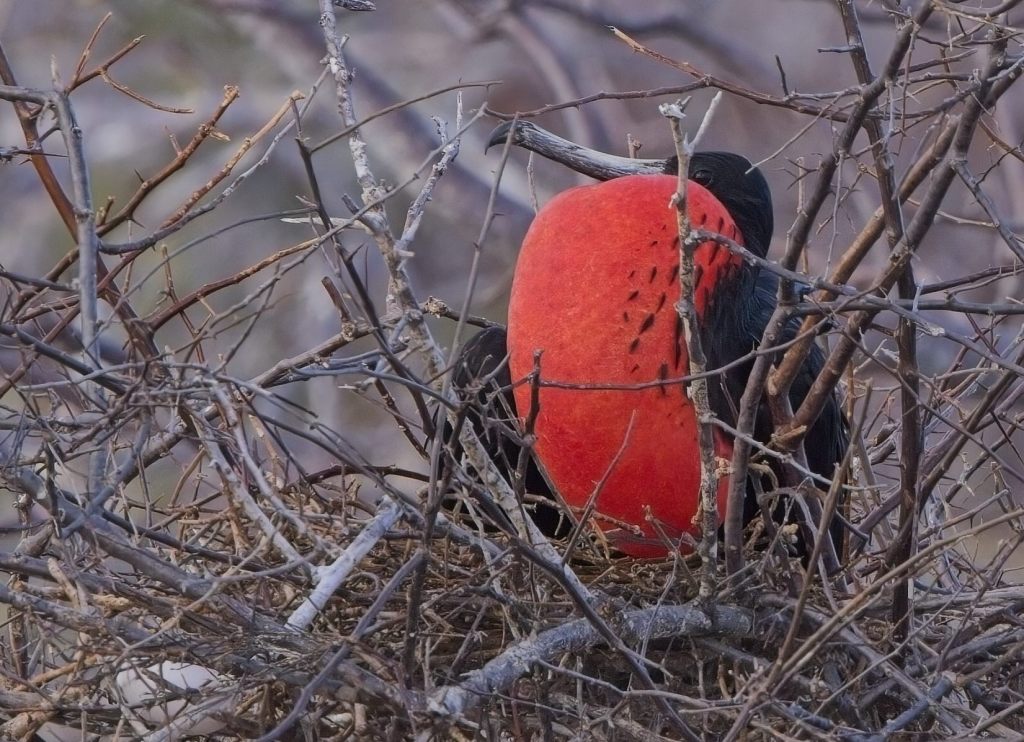
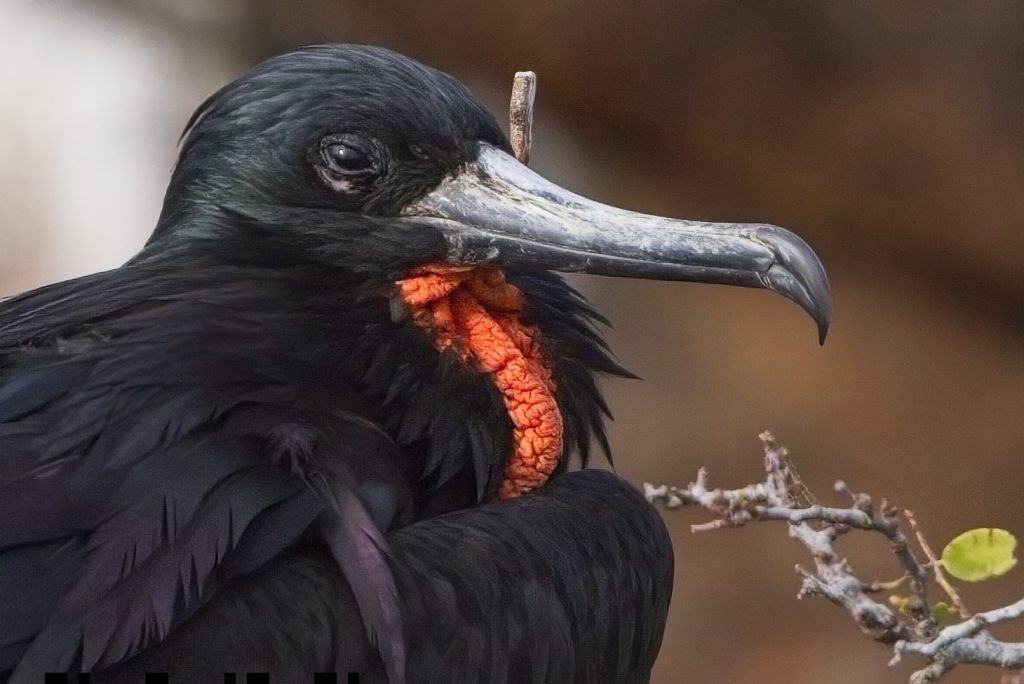
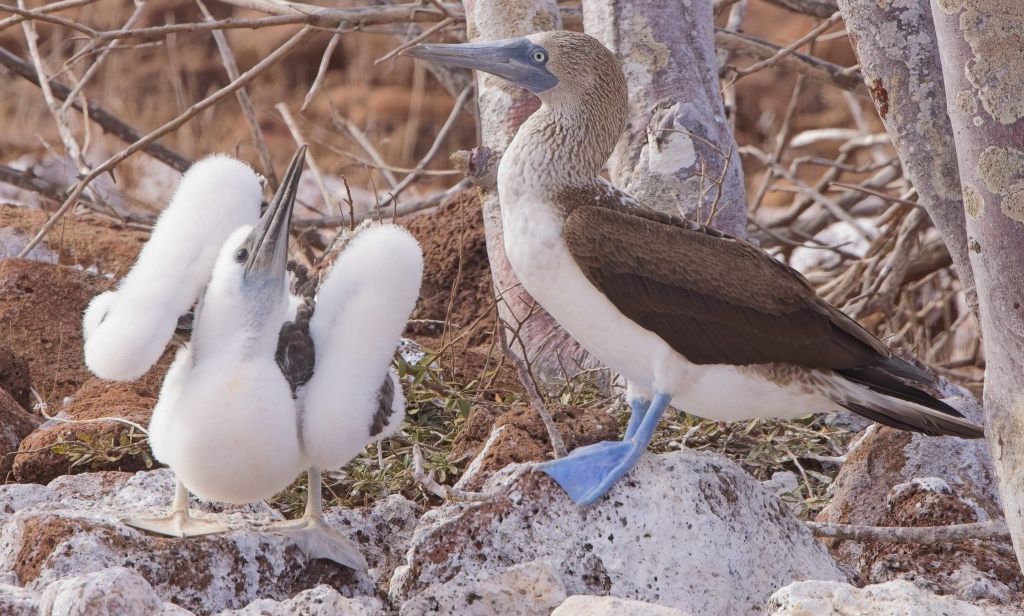
After our last lunch onboard, we took the Zodiac to North Seymour Island where the main attractions were nesting Great and Magnificent Frigatebirds and nesting Blue-footed Boobies – presenting endless photo ops. The frigatebirds with their bright red inflated neck pouches was one of the visual highlights of the trip. We saw more than 60 frigatebirds – often 10 or more at a time – adults, chicks and juveniles.
Male Frigatebird with Fully Inflated Pouch
Male Frigatebird in Flight
Great Frigatebird Female on Nest
Magnificent Frigatebird Female
Male Frigatebird Close-Up (wish I could remove that stick)
Blue-footed Booby and Chick
Downy Blue-footed Booby Chick
Blue-footed Booby
As with other island visits, we could get close to the Sea Lions and to the Land Iguanas – our last views this time. The last image is of a Zodiac returning to the mother ship after leaving us onshore.
Sea Lion
Land Iguana on Lava
Zodiac Returning Home
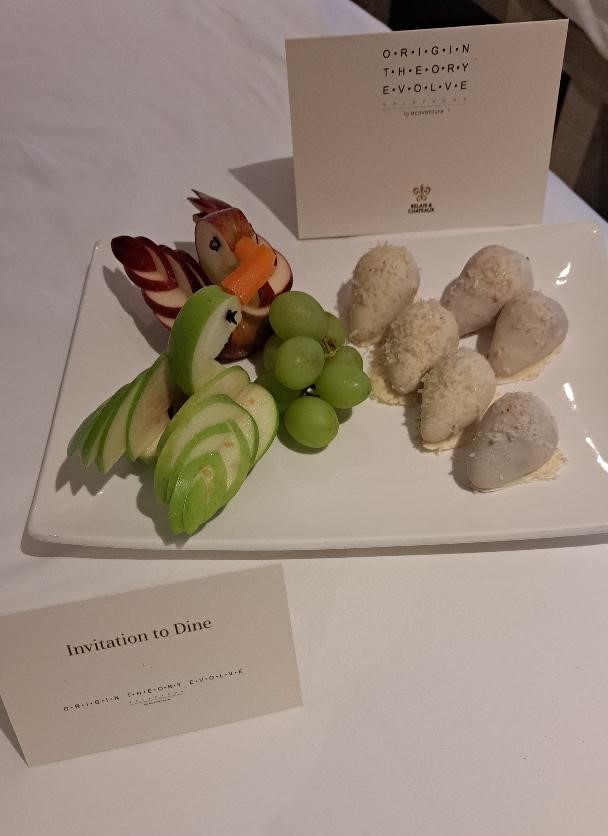
A few more comments and photos to finish our story. There was no set seating arrangement for dinners and aside from the family of five which always sat together, seating was pretty fluid and mixed. One evening, however Cindy and I found ourselves alone at a table – no seats available at the other tables. We felt a bit old and out of it and although we enjoy our own company, it did drive home that we were old enough to be the parents of most of the others there. The real reason for the seclusion was the practice every night for some of the guests to be invited to sit at the table with the Captain and maybe another member of the crew or Roxanna, the Quality Control person from Relais & Chateau, the luxury collection of hotels and restaurants around the world which includes the Ecoventura yachts. The numbers varied and it just worked out that night that one table would only have two people. (If the full complement of 20 guests were on the trip, there would never have been a table for just two, but since we were only 16, this was the result.) We had not been aware of the invitation to dinner with the captain practice and mentioned to Roxana how we had felt isolated and that maybe fewer people at the Captain’s table would solve the problem. The next morning in typical Relais & Chateau classiness we received a platter after breakfast with an apology, some fruit arranged as two birds, some chocolate covered strawberries and an invitation for us to join the Captain. Since it was only the two of us doing so, that table for two would now be a table for four – no isolation for anyone.
Our Dinner Invitation
I mentioned it earlier and forgot to include details and a photo, but guests had opportunities to use kayaks and paddleboards. Cindy and I enjoyed one kayak excursion in fairly calm water along the shore of one island. It took a few minutes to synchronize our paddling but then we easily covered a pretty good distance and were able to maneuver around rocks and back eddies. No close encounters with sharks but we were pretty close to some sea lions and both Green Sea Turtles and Marine Iguanas – a very unique Galapagos experience.
Zodiacs, Kayaks and Paddleboards
On the last night we had a party with the crew dressed as pirates, with music from the multi-talented Billy Maquilon and dancing, well sort of dancing, including the Macarena (when was the last time we heard that!!). We doubt we will ever see any of these folks again and it is unlikely we will return to the Galapagos, but it was truly a magical adventure.
Some of Our Pirate Crew
Captain Henry and Maestro Billy
Had this been a trip with a birding group, the focus would have been on seeing as many of the species on the Galapagos as possible. Not the case this time which was just fine and although I missed some species that were possible on the islands we visited, it was still beyond great. Altogether I saw 46 species of which an amazing 42 were new for Ecuador and 21 were new world lifers and there were many new photos for my world photo list. That is important to me, but for this trip probably more than any others, it was the ability to get so close to all of the wildlife seeing it in the unique and pristine habitats of the Galapagos Islands that was so special. Wow – what an adventure!!















































 blairbirding