
At just over 1500 square miles, Murchison Falls National Park is Uganda’s largest national park. It’s most famous feature is Murchison Falls itself where the entire Nile River flows through a narrow gorge measuring just over 20 feet resulting in extremely turbulent waters below. The Park is dissected by the Nile and is home to large bird and mammal populations. Our time at the Park included two boat rides and two game/bird drives including a night drive that was at or near the top of the list of highlights for the trip.
June 30
We were out early in the North side of the park in beautiful morning light.

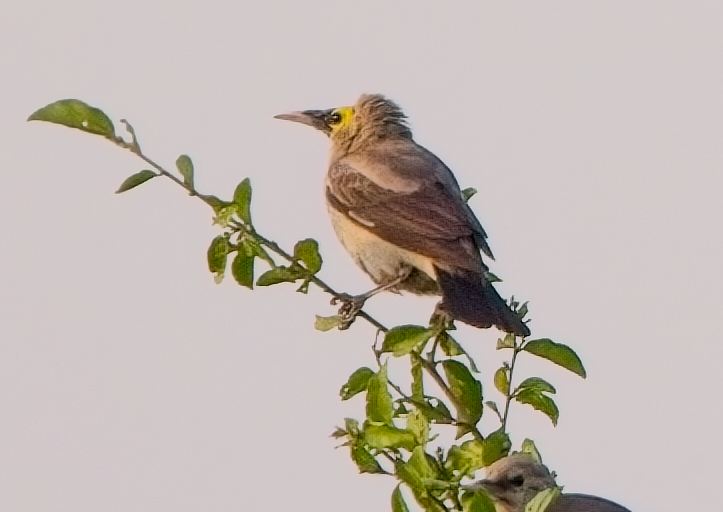
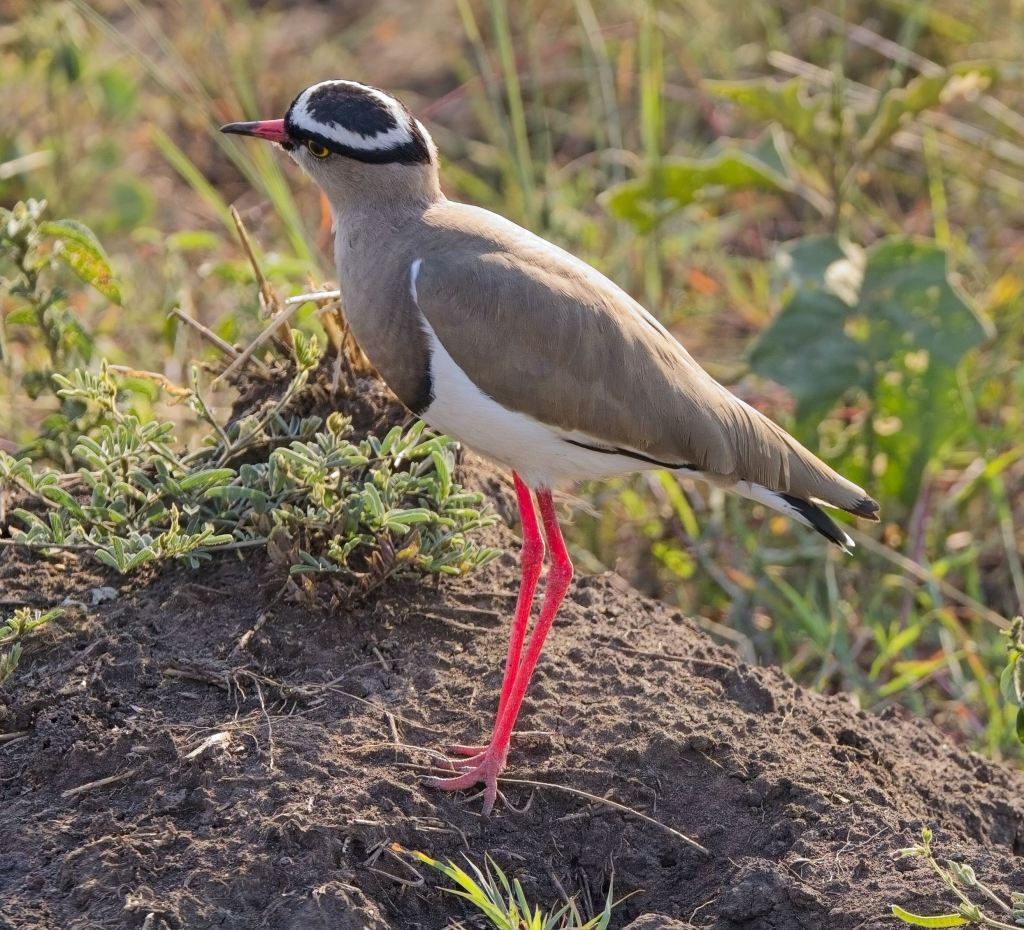
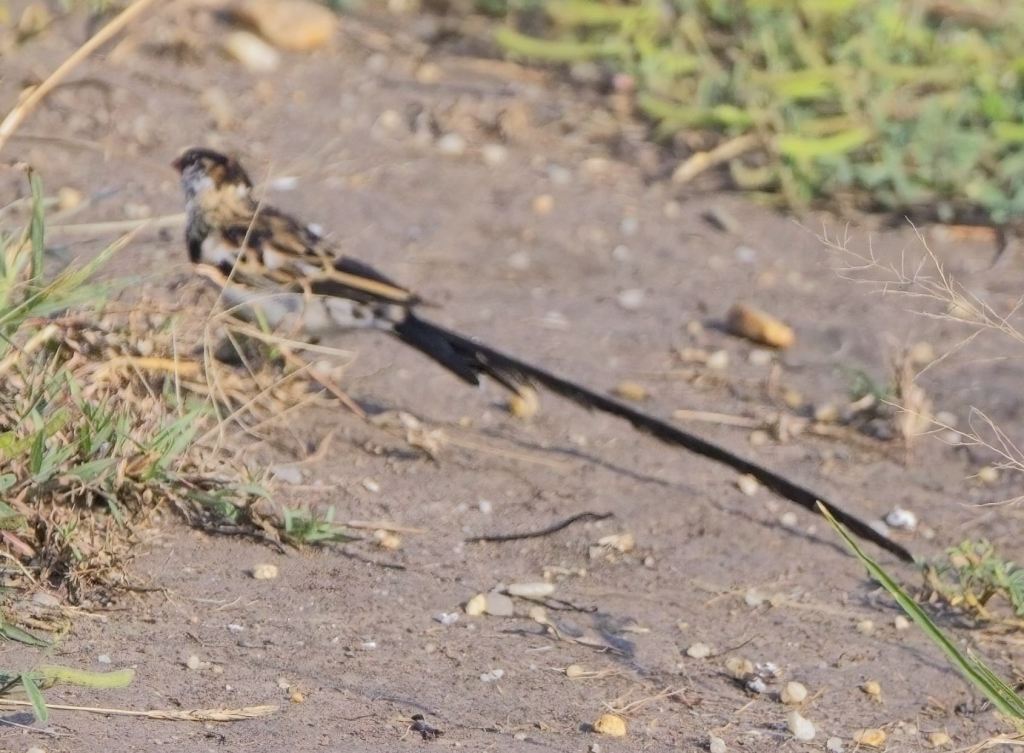
This 4 hour trip produced a bird list of 70 species and good mammal sightings. Ten species were new for our trip but lifers were understandably much harder to come by. Still I managed two: Denham’s Bustard and Black-rumped Waxbill. We had been on the lookout for Bustards in this perfect habitat, surprised we had not seen one earlier in our trip. The first one seen was a Black-bellied Bustard that flew by us and then shortly thereafter a lifer Denham’s Bustard appeared. I also got photos of some species seen but not photographed earlier and others that were new for the trip. These included photos of the three lifer species from yesterday where “vehicle challenges” did not enable me to take photos: Swallow-tailed Bee-eater, Shelley’s Rufous Sparrow and Northern Red Bishop.


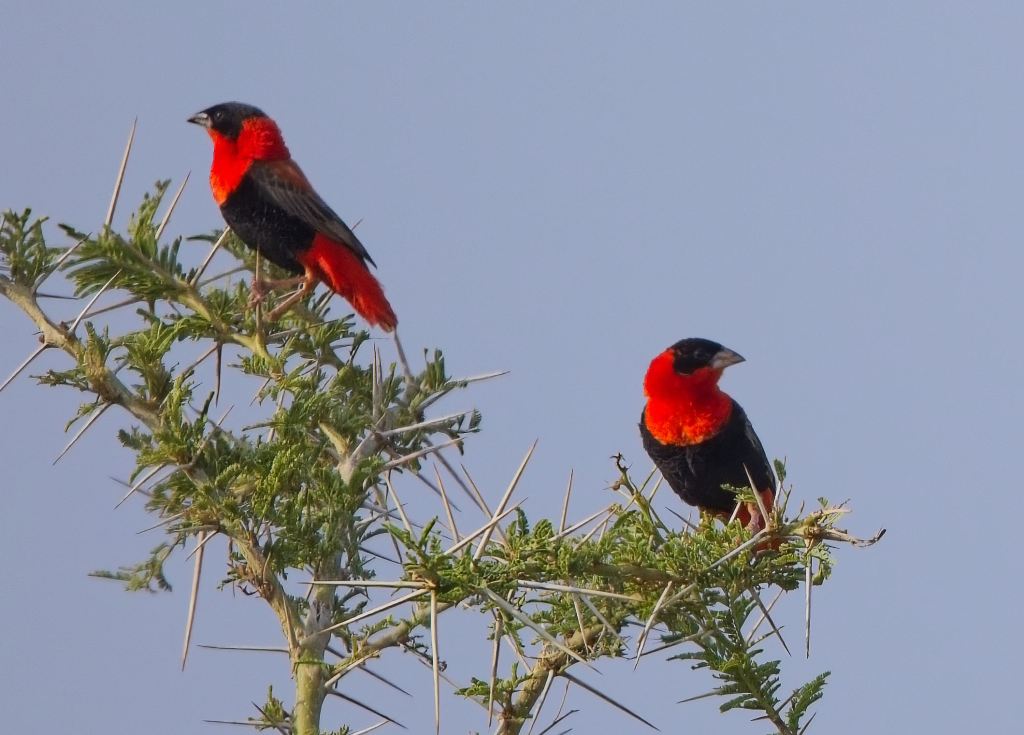
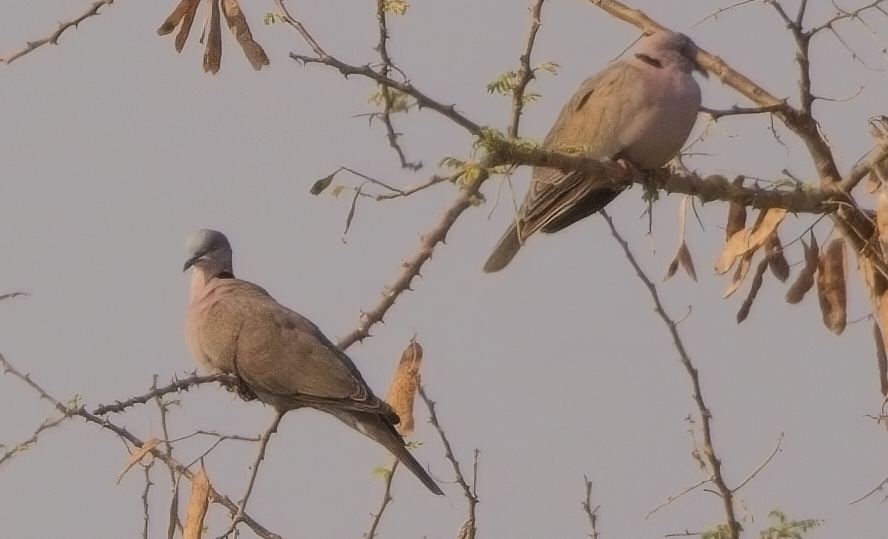
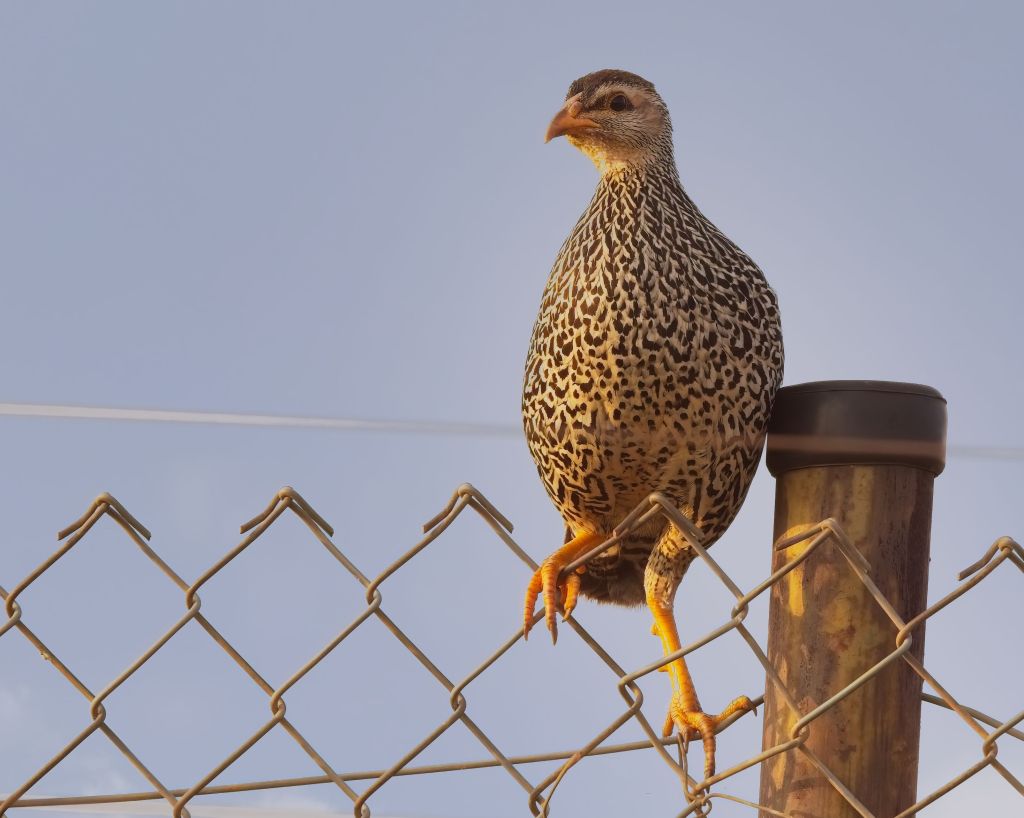
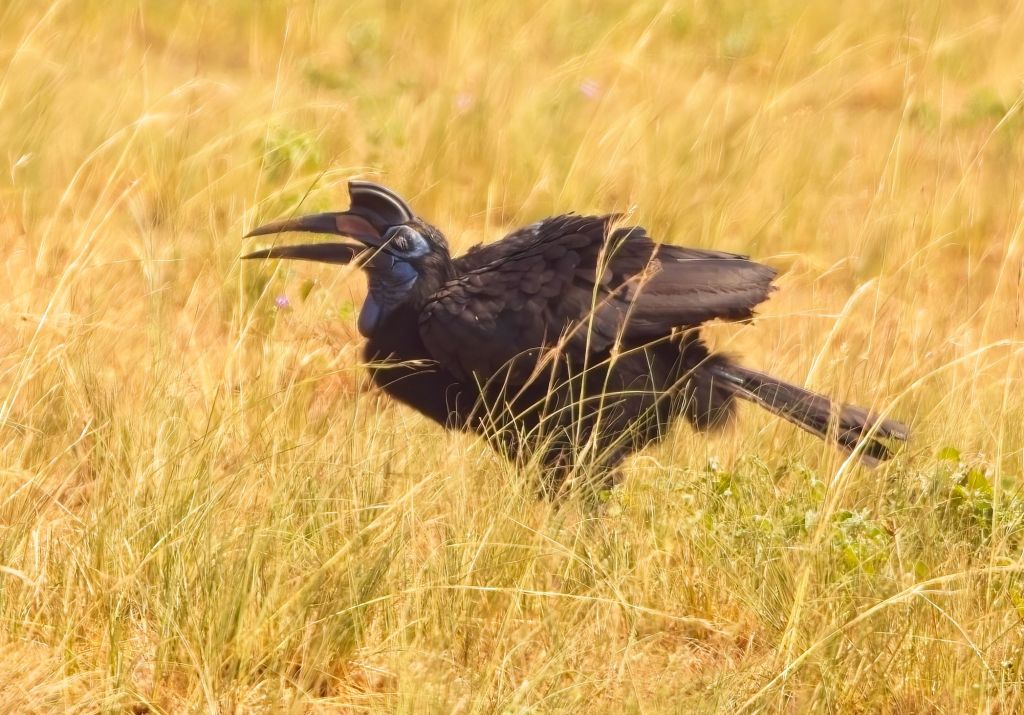
It was a very good morning for photos as I got photos of 31 species although I missed a few I would have liked. I also did not bother taking photos of more than 20 species that had been seen and photographed often previously.
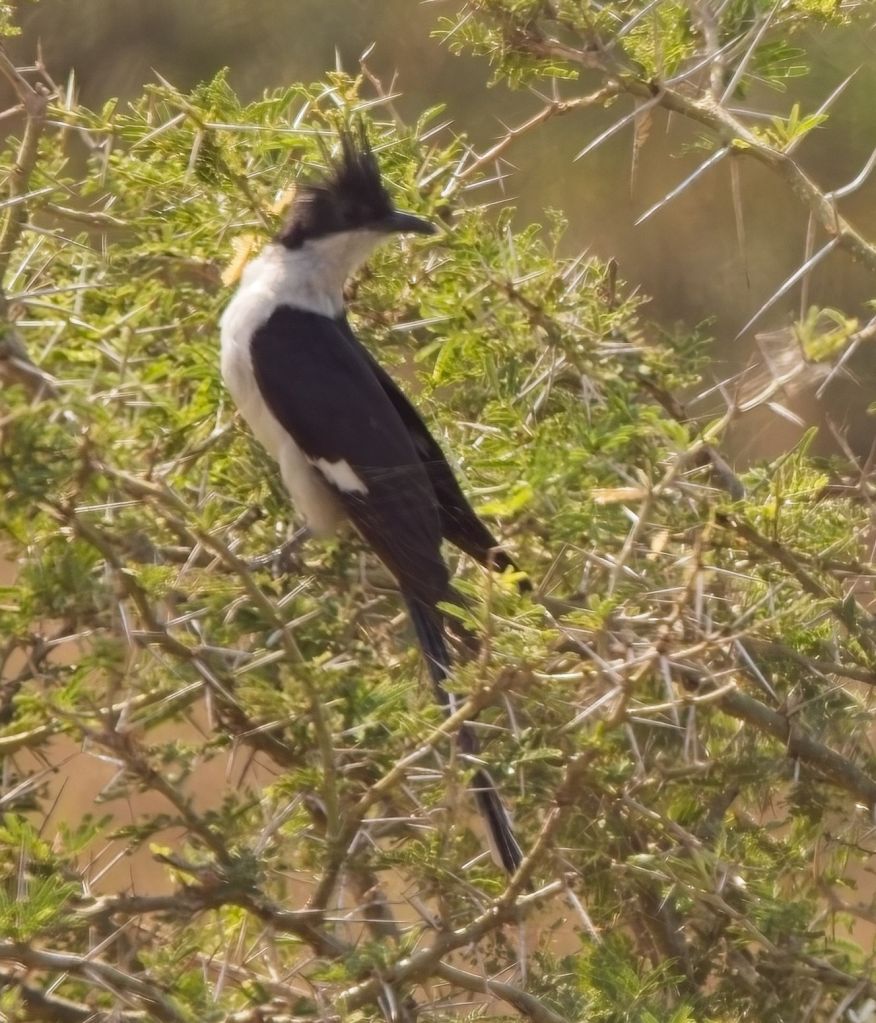
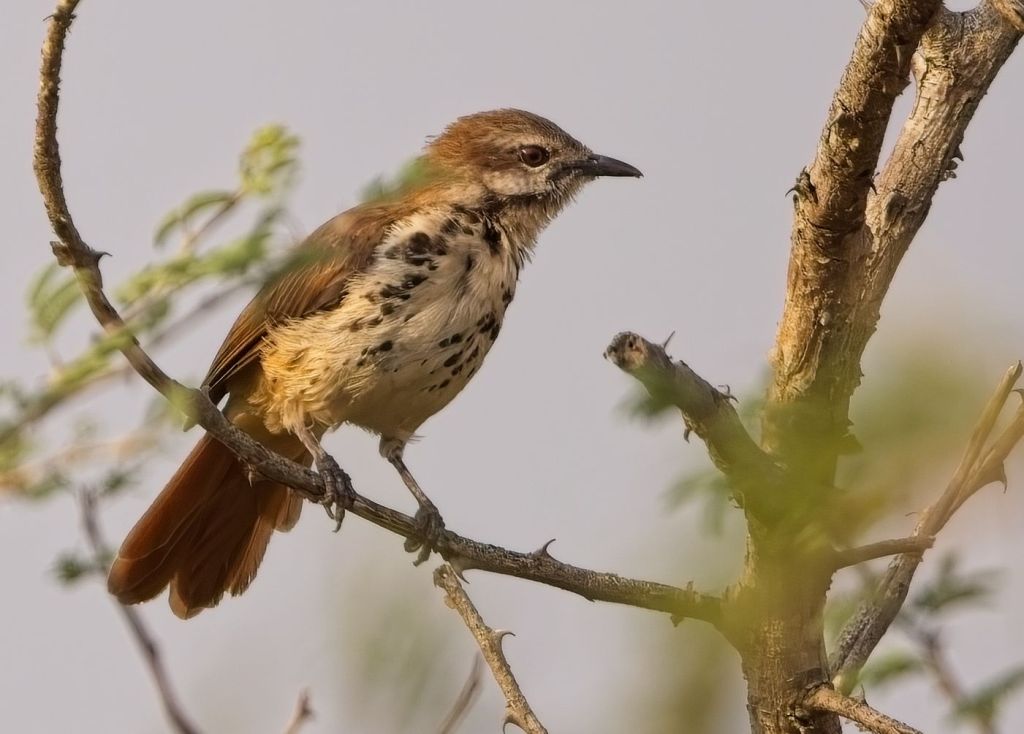


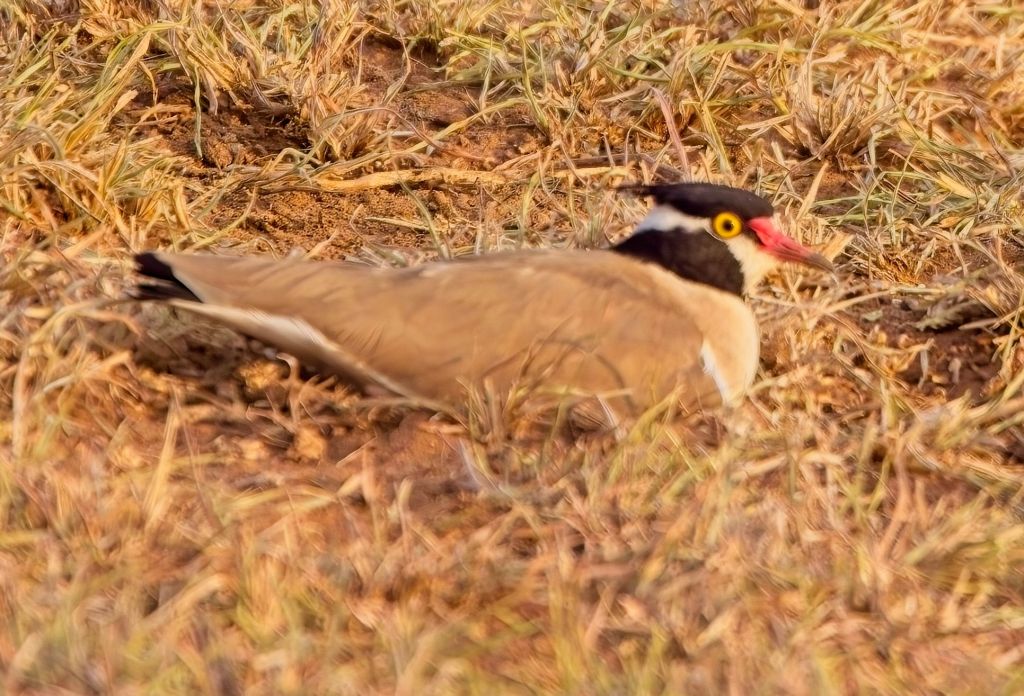


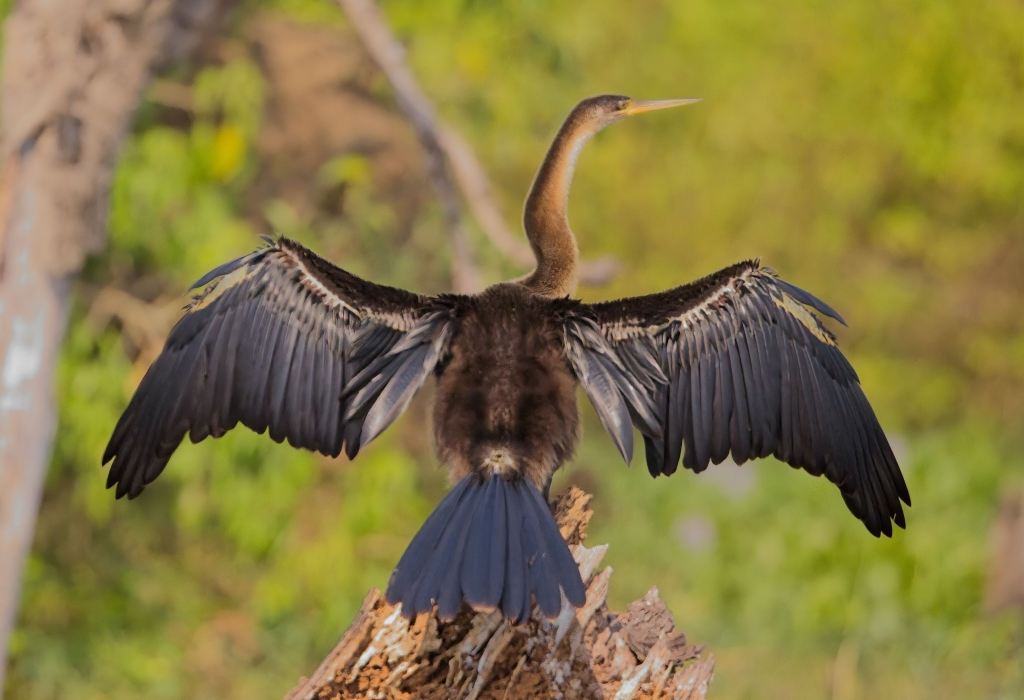
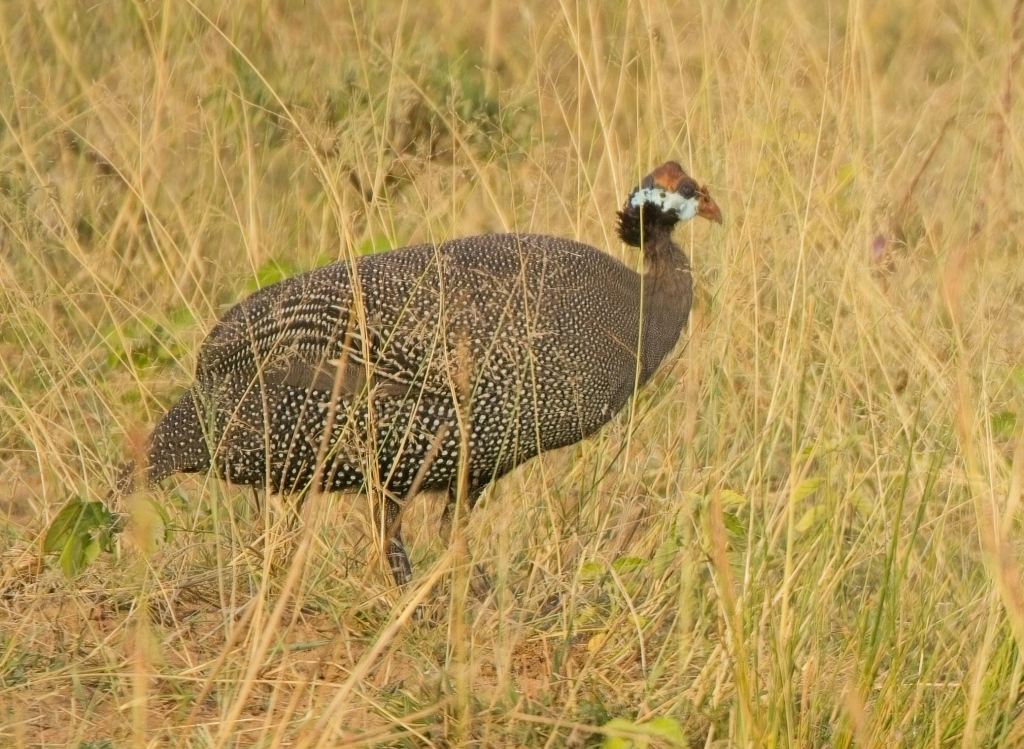


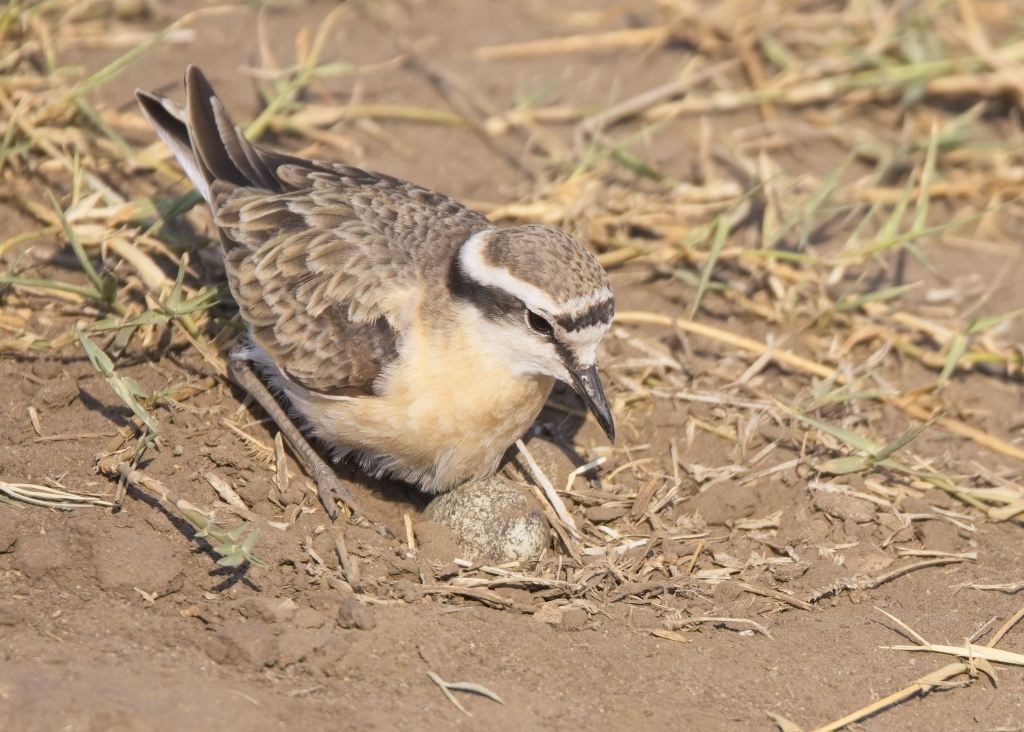
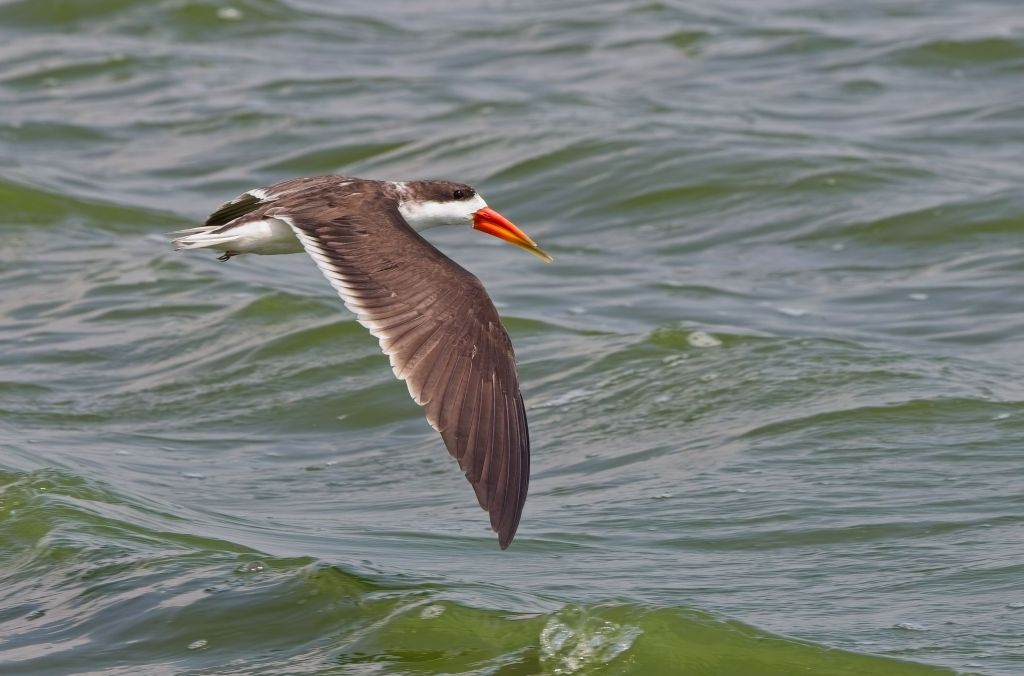
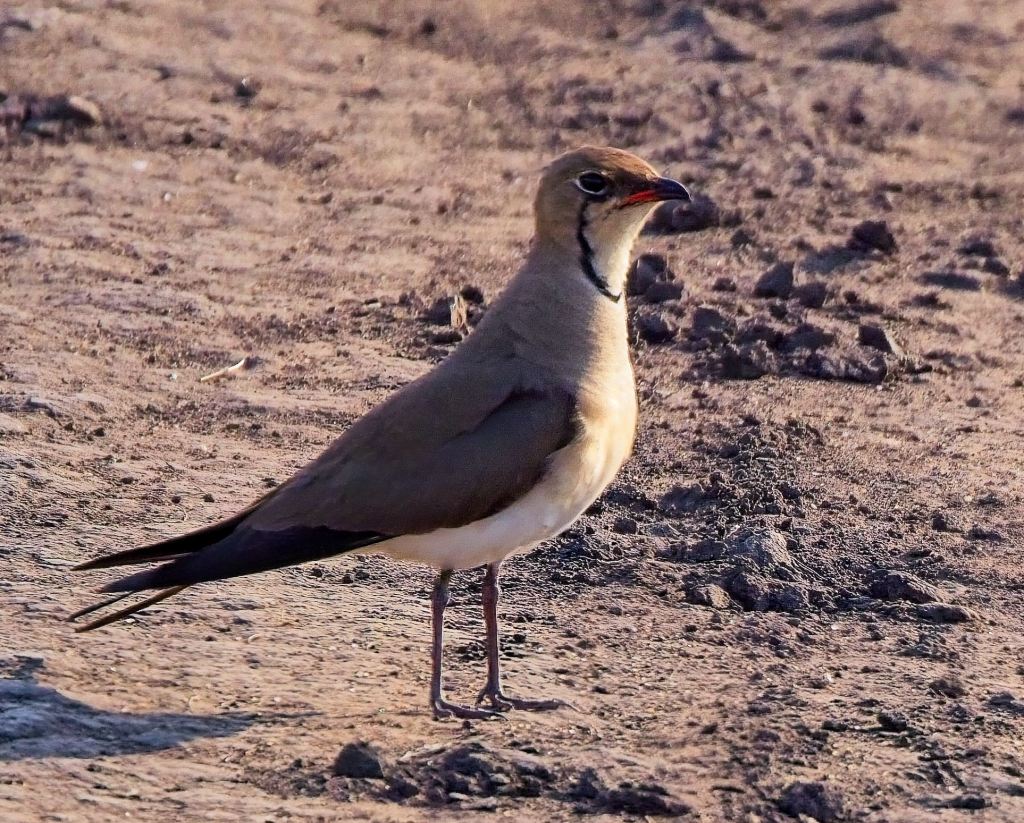
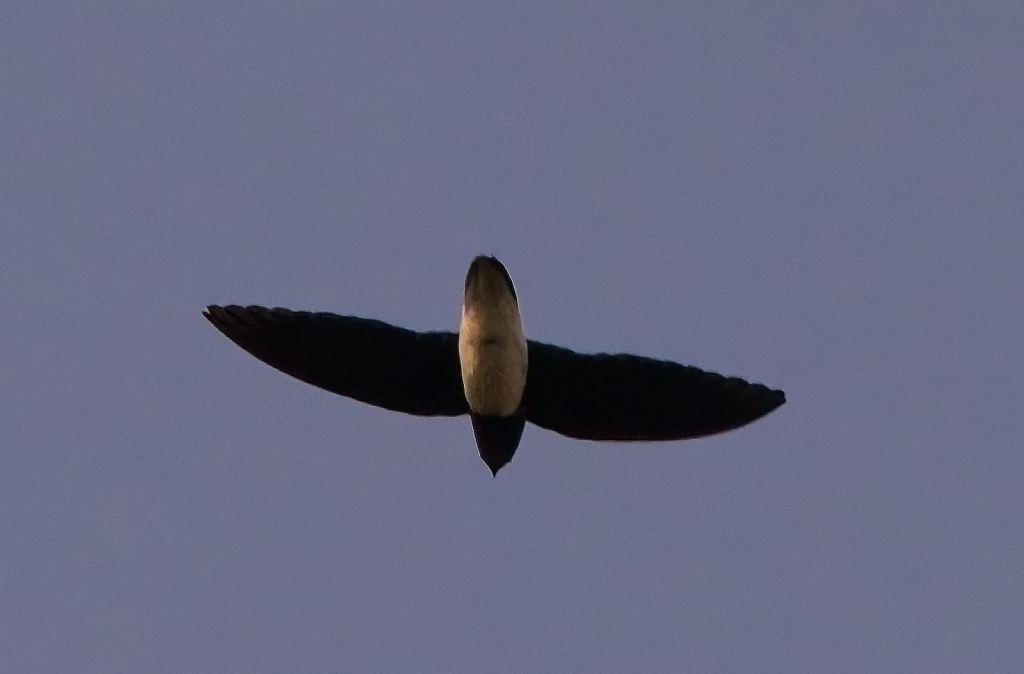
We returned to the lodge for lunch and a short rest and then were off on another boat ride, this time to the base of Murchison Falls – or as close as we could get to it as the force of the water rushing and then falling through the narrow opening meant rough waters way past the base of the falls. As with all of our boat trips, expert handling of the boat enabled us to get quite close to mammals and birds seen along the way. Adding to our very birdy morning, we had 48 species, only four new for the tour and only one lifer for me, but it was one that had been high on my want list. Due to the high water level, there was some doubt if it would be seen. It was the Rock Pratincole – a specialty at Murchison Falls. Dion said he often had them on rocks near the base of the falls but due to that high water he questioned whether they would be on rocks that would be under water rather than exposed with the Pratincoles sitting on top. Since the falls were at the far end of the river, I am putting the horse before the cart as we did indeed see these lovely little birds – perhaps 30 of them, both in flight and perched on branches probably better than if they had been on the rocks.
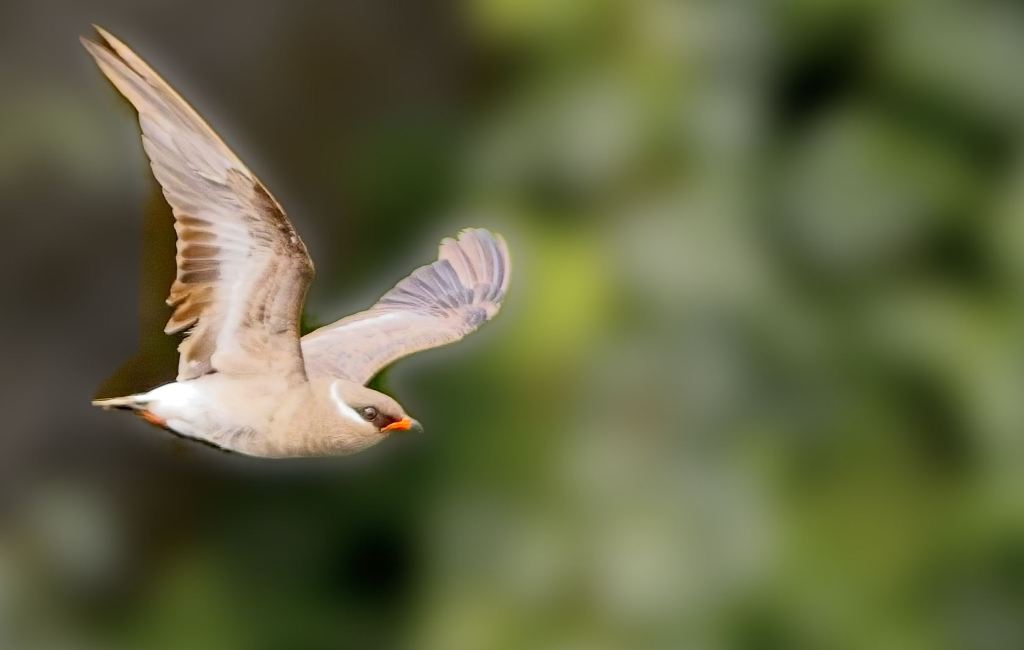
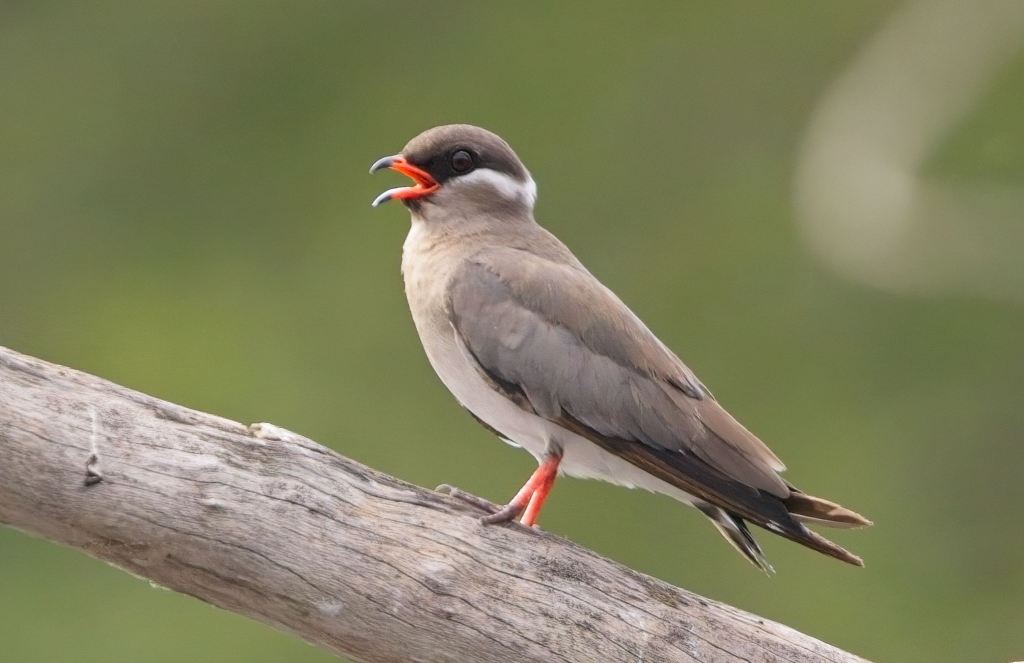


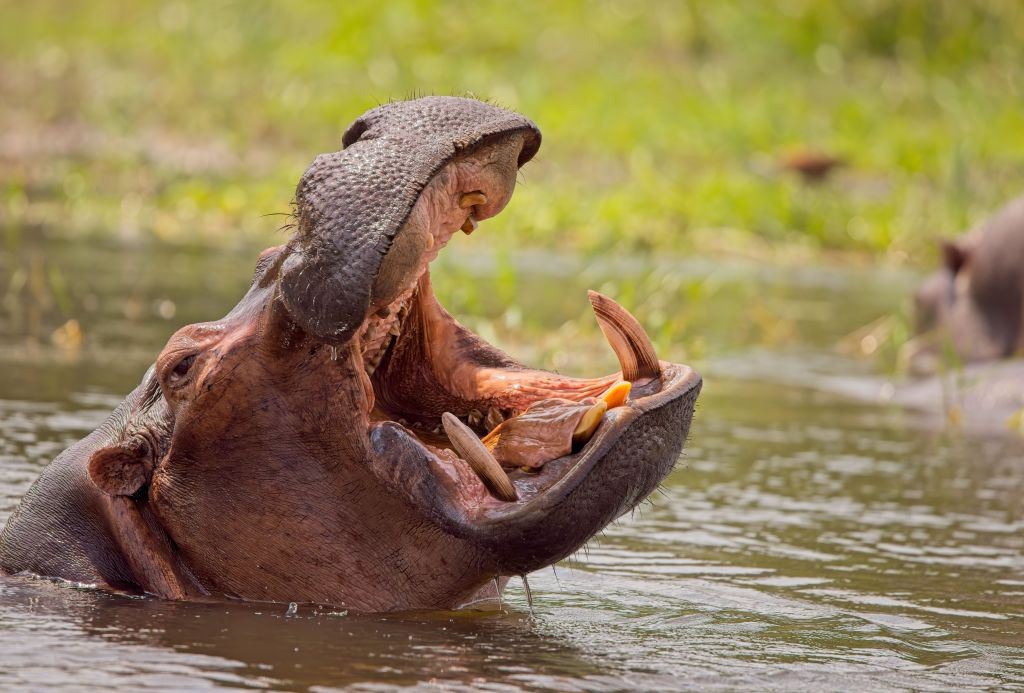
Having gotten good photos of the Collared Pratincoles earlier in the trip, I was very pleased. Now to put the cart pack in place, there were lots of good mammal intersections as well – especially with elephants and the many hippos lining the shore of the river. One of the hippos gave us an up close and personal look at its saber like front teeth/tusks – reminding us again that there are more human deaths caused by hippos in Africa than by any other animals.
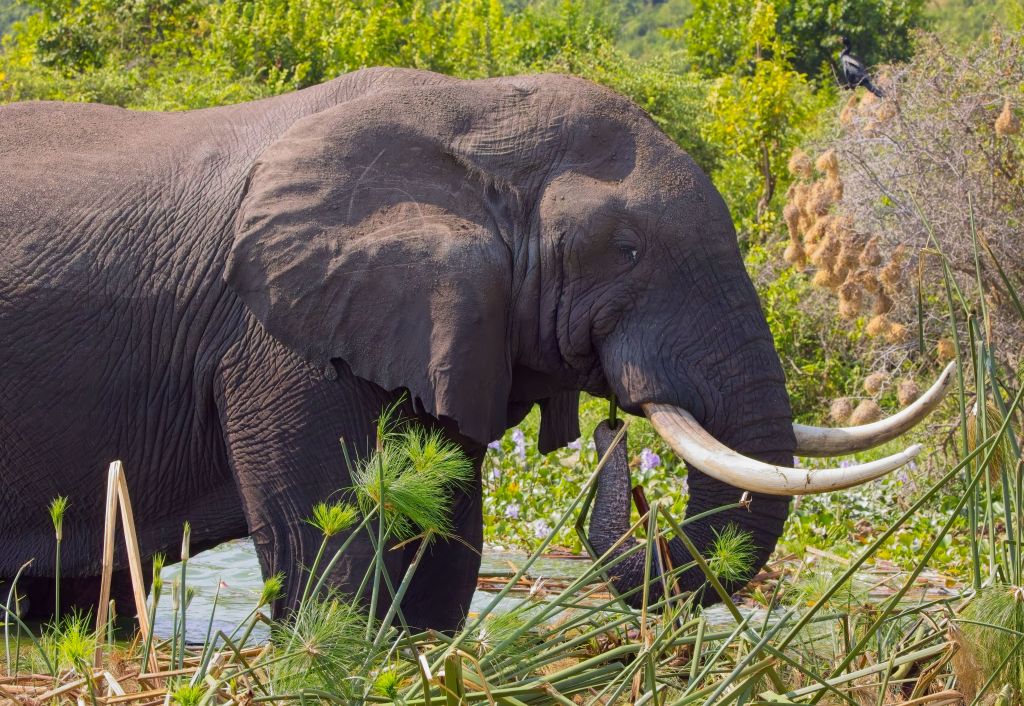
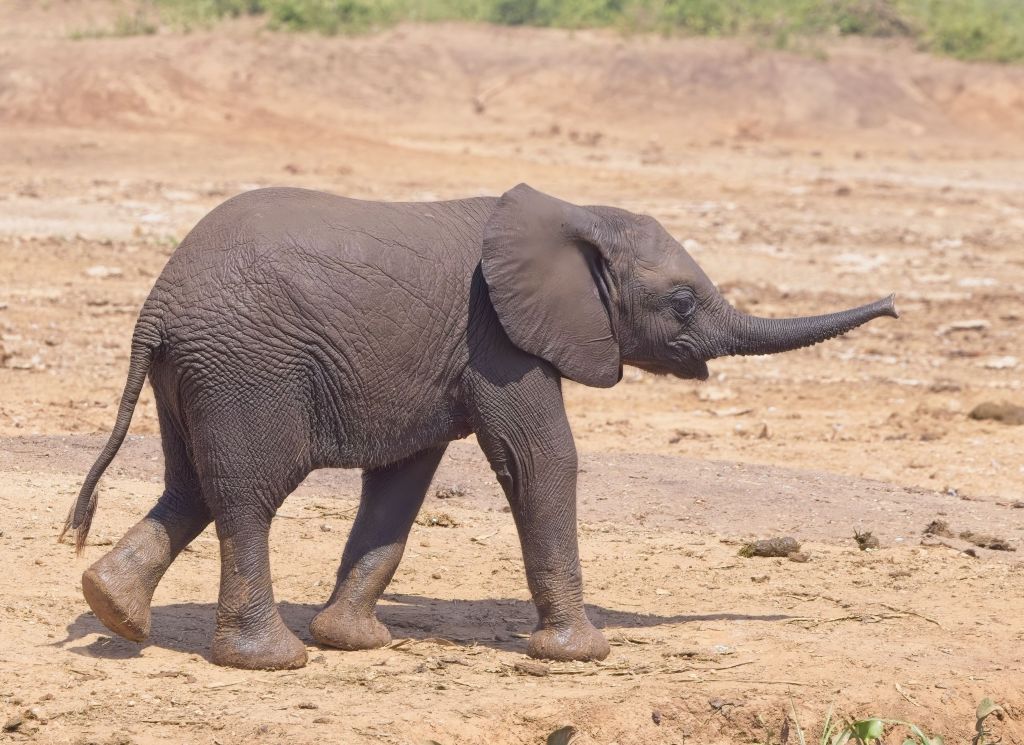
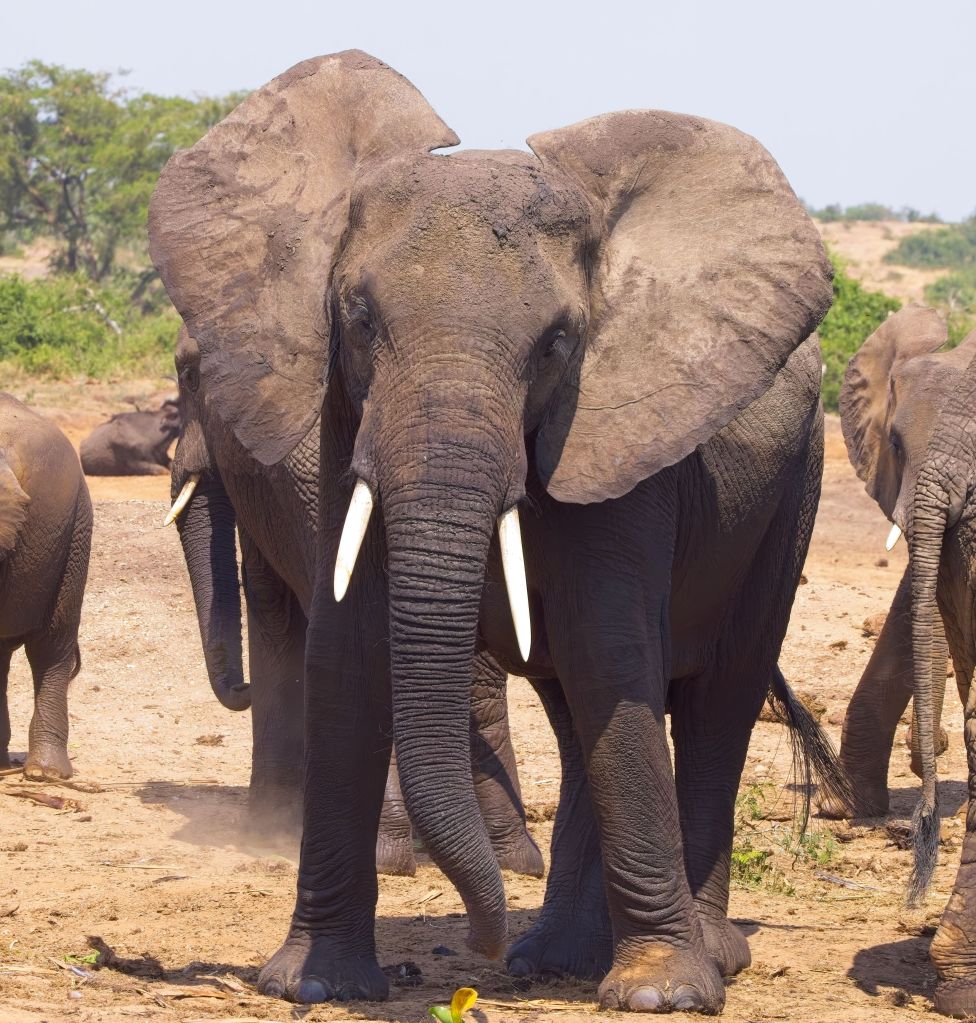
Earlier on our trip we had seen elephants drawing water up into their trunks before squirting it into their mouths for the drink. We watched this one for quite a while and we wondered if he was siphoning it directly.

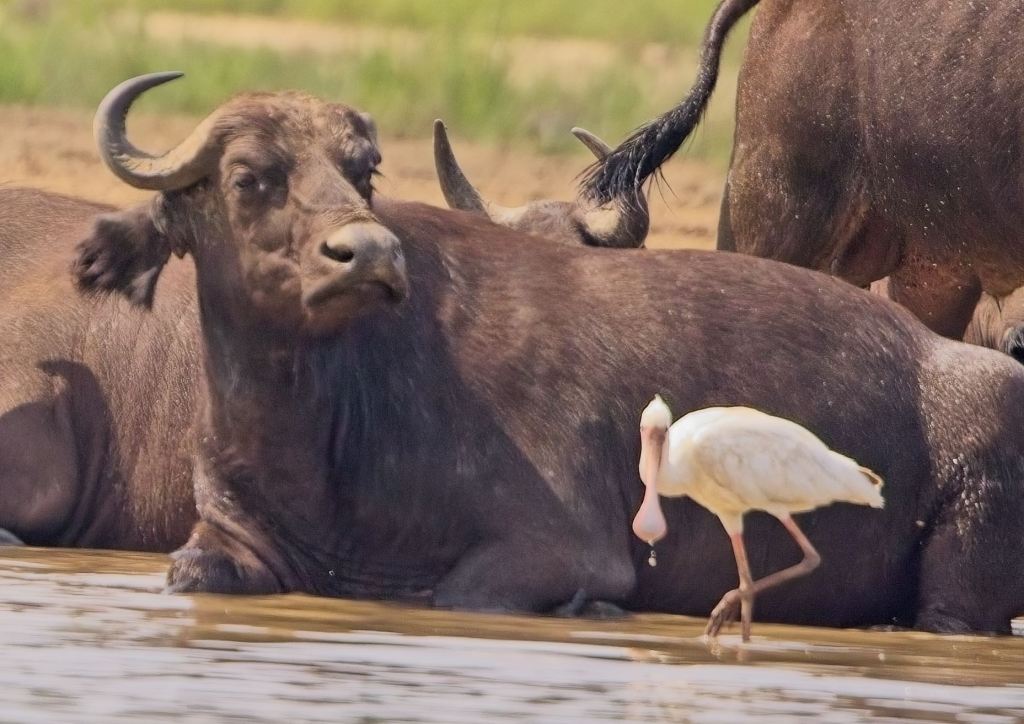
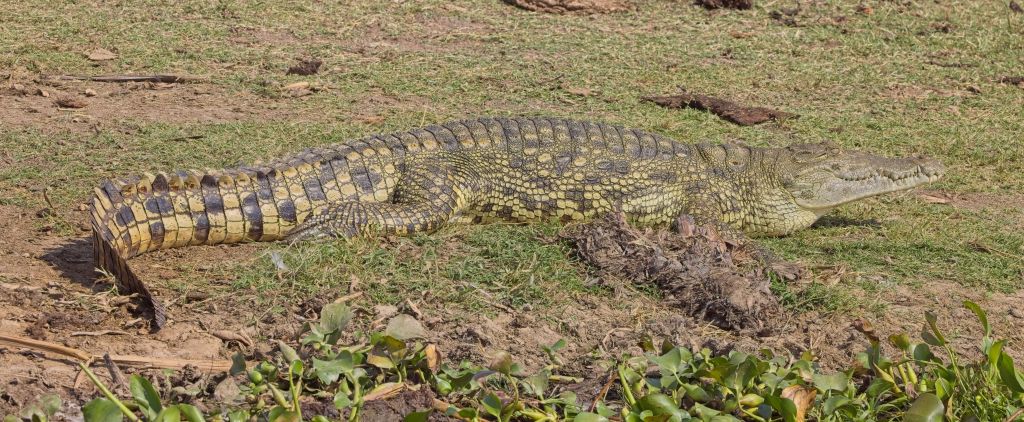
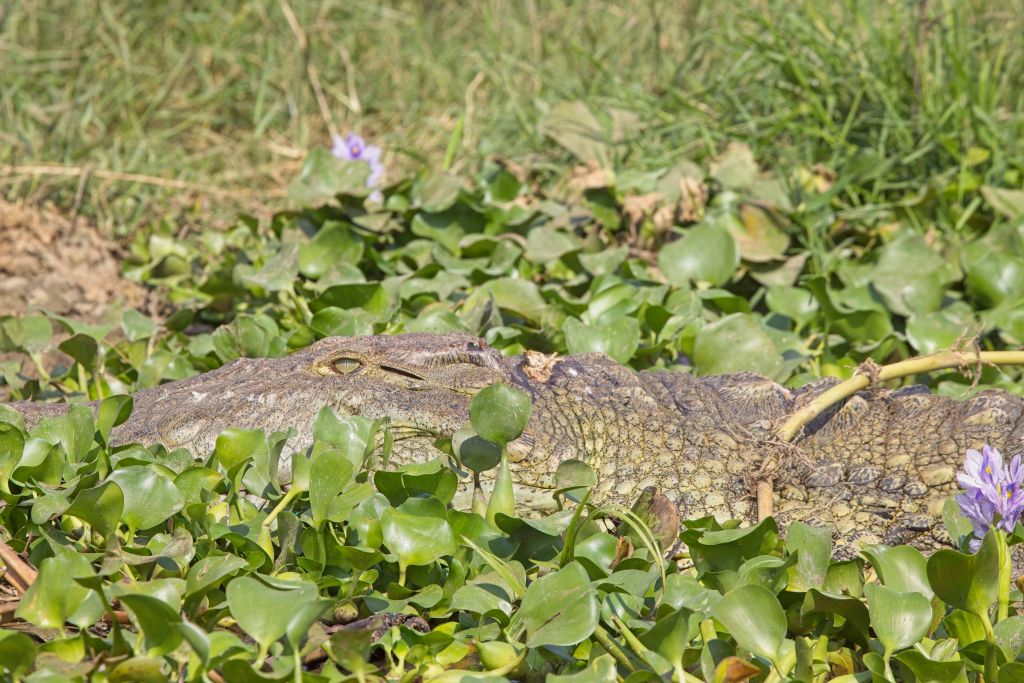
We also saw Uganda Kob and Buffalo along the river banks as well as a number of good sized Nile Crocodiles. One group of Buffaloes was particularly welcome because they were accompanied by the only African Spoonbill that we saw on the trip.

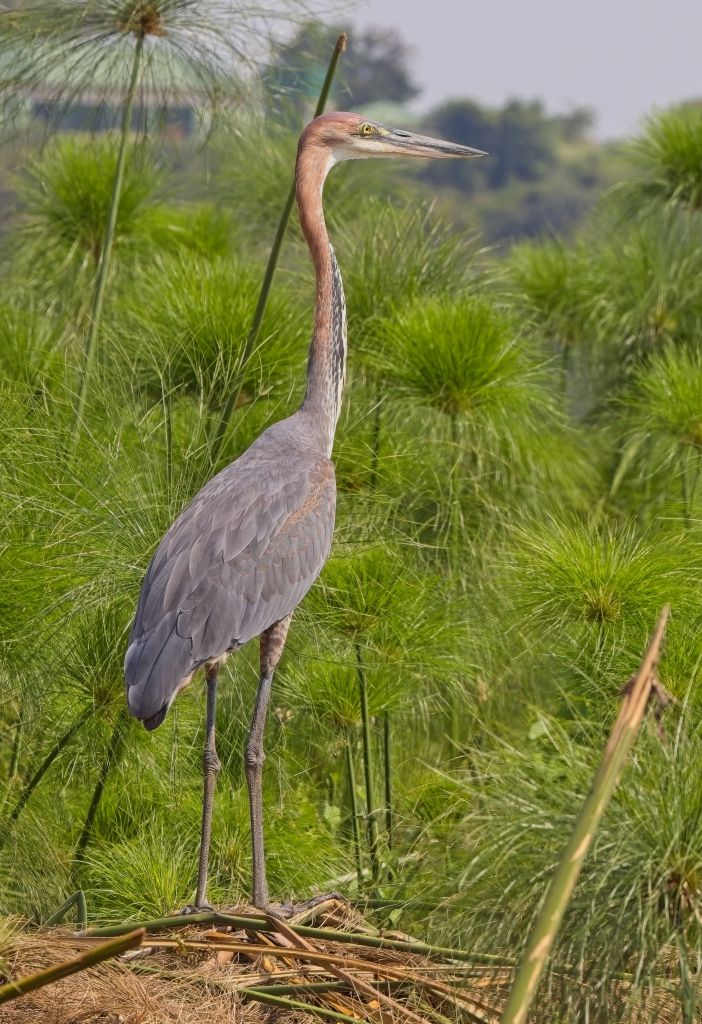
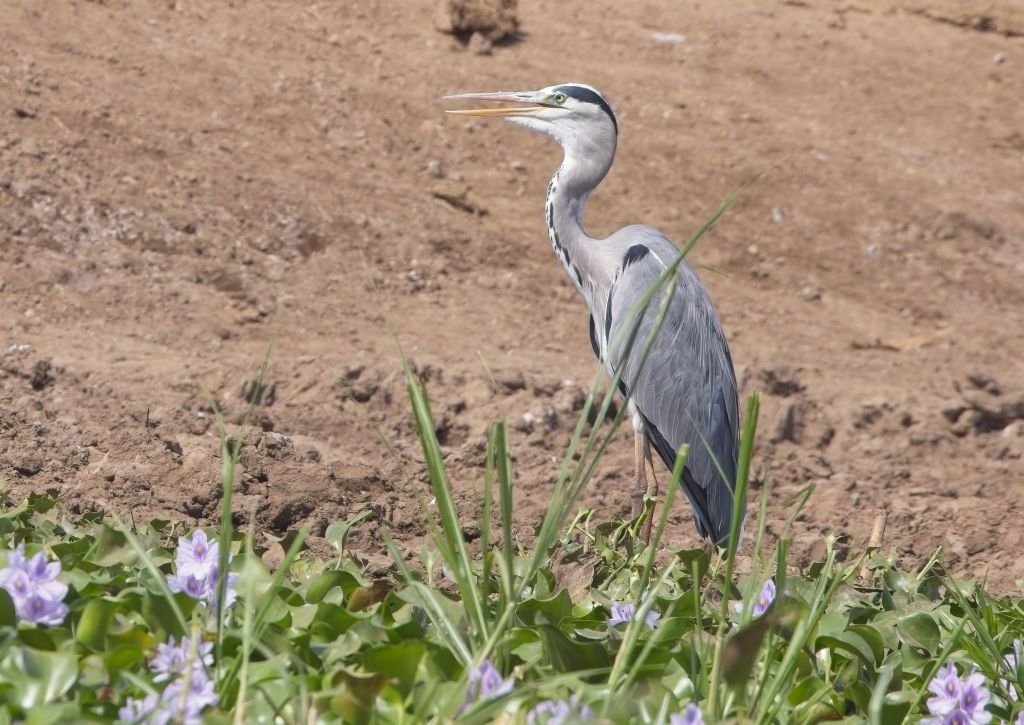
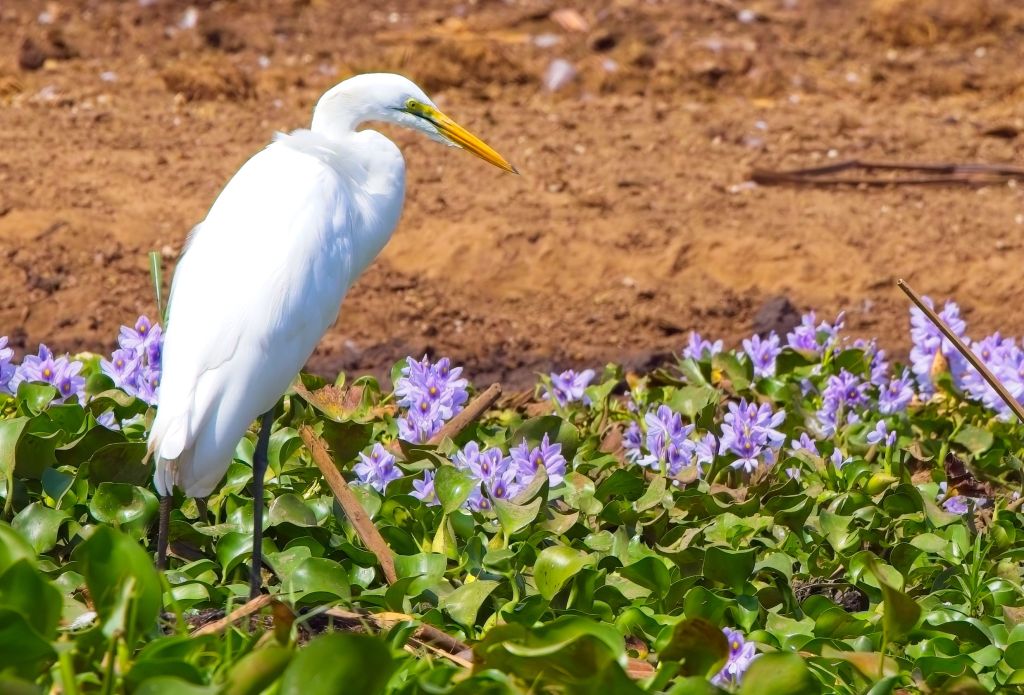
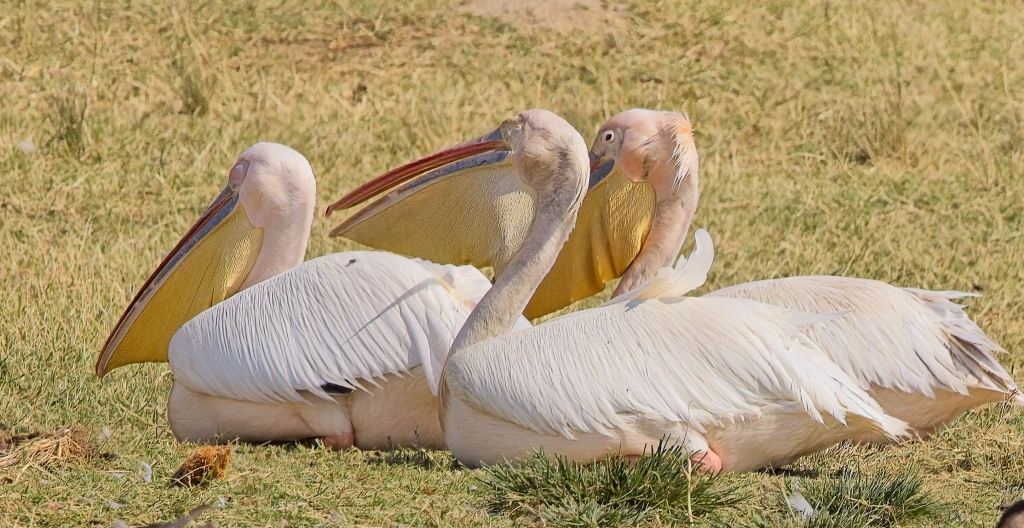
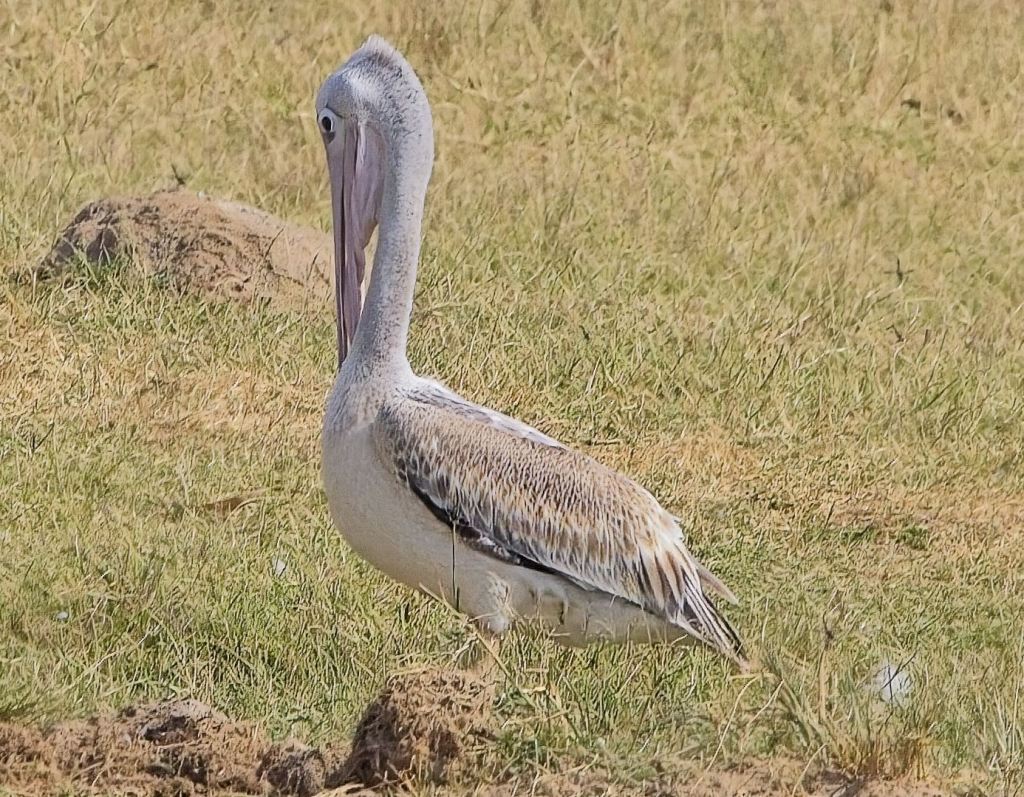
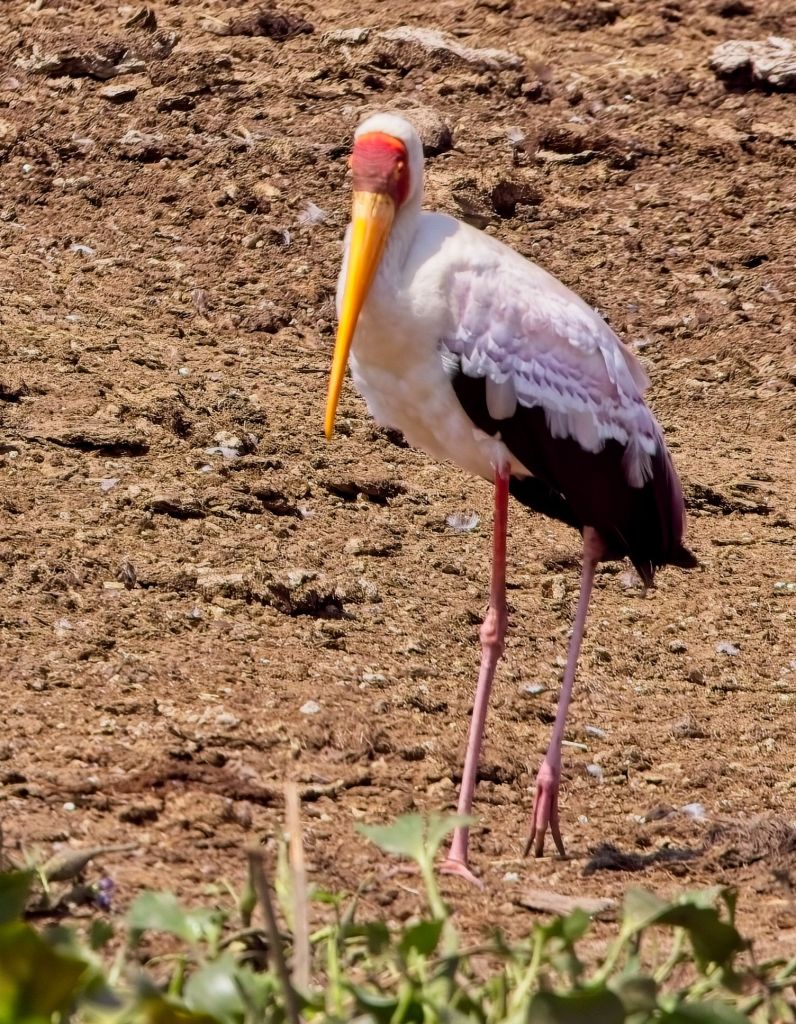
There were of course many other waders along the shore of the river: African Woolly-Necked and Marabou Storks, a single Black Heron, an African Openbill, Great, Little, Yellow-billed and Western Cattle Egrets, Hadada and African Sacred Ibis, and Gray, Purple and Goliath Herons, the latter the star of the show as it was on its nest with young.


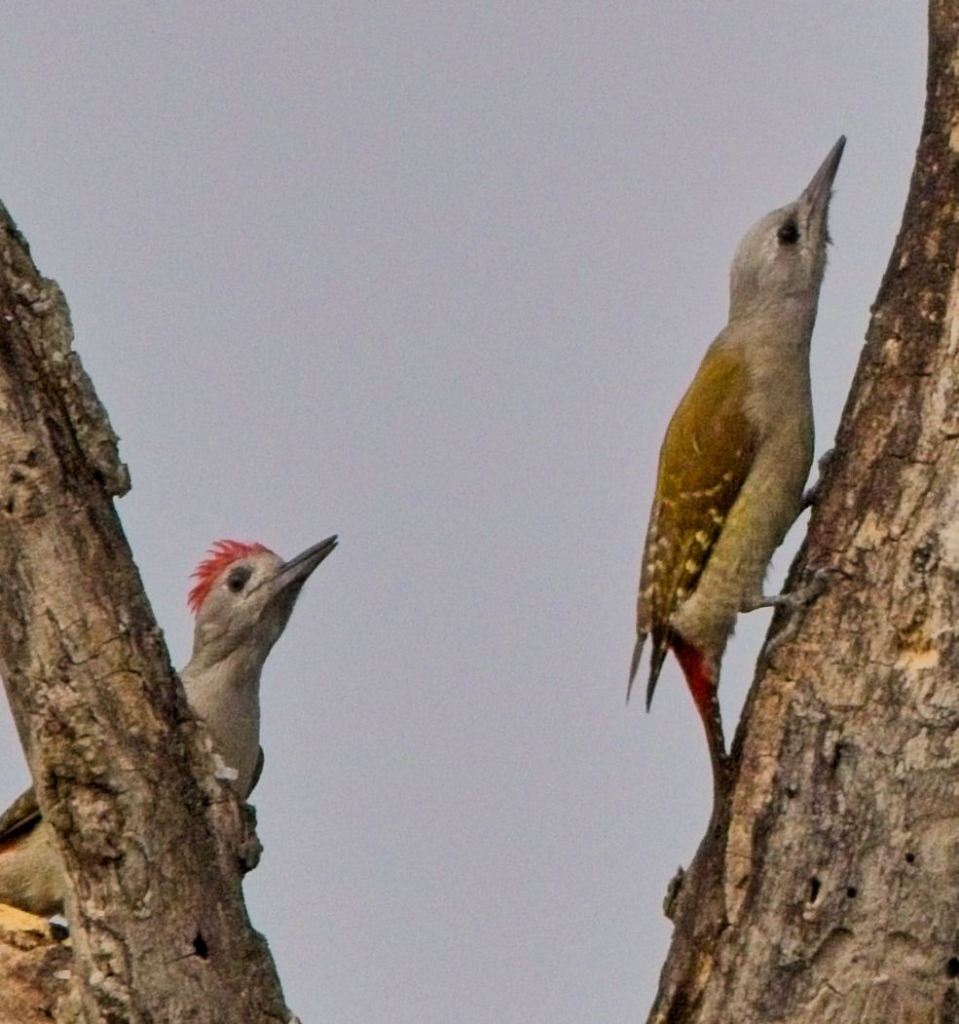
Another photo was a much better one of a Piapiac, a plentiful crow in the area, here a juvenile told by its red bill hitching a ride on a Warthog waiting for an insect it would dig up.

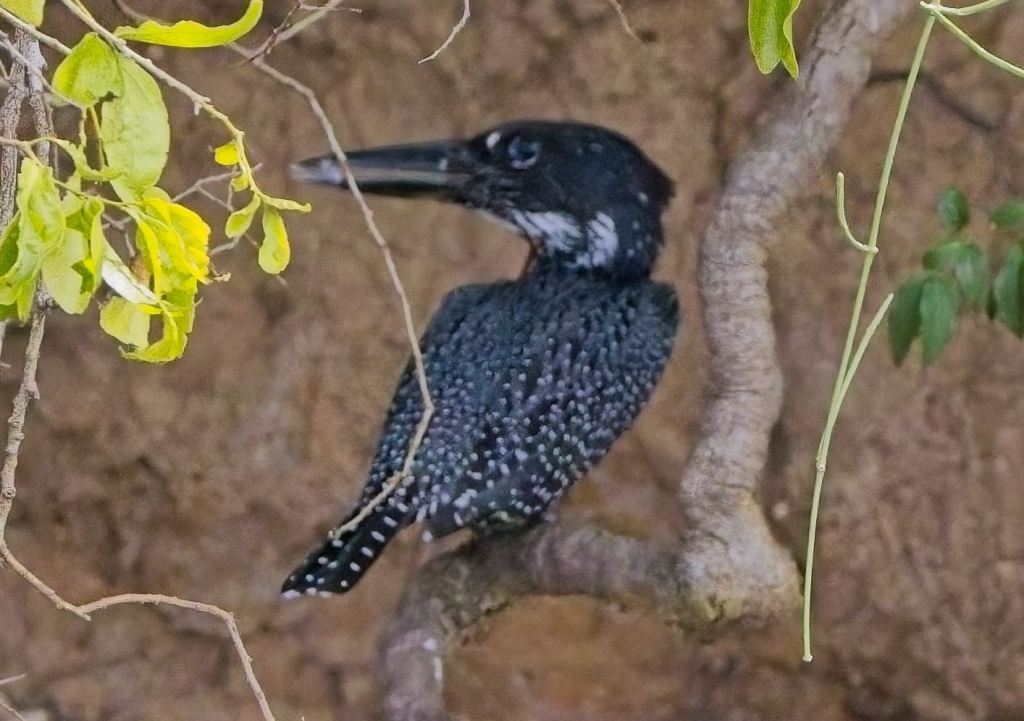
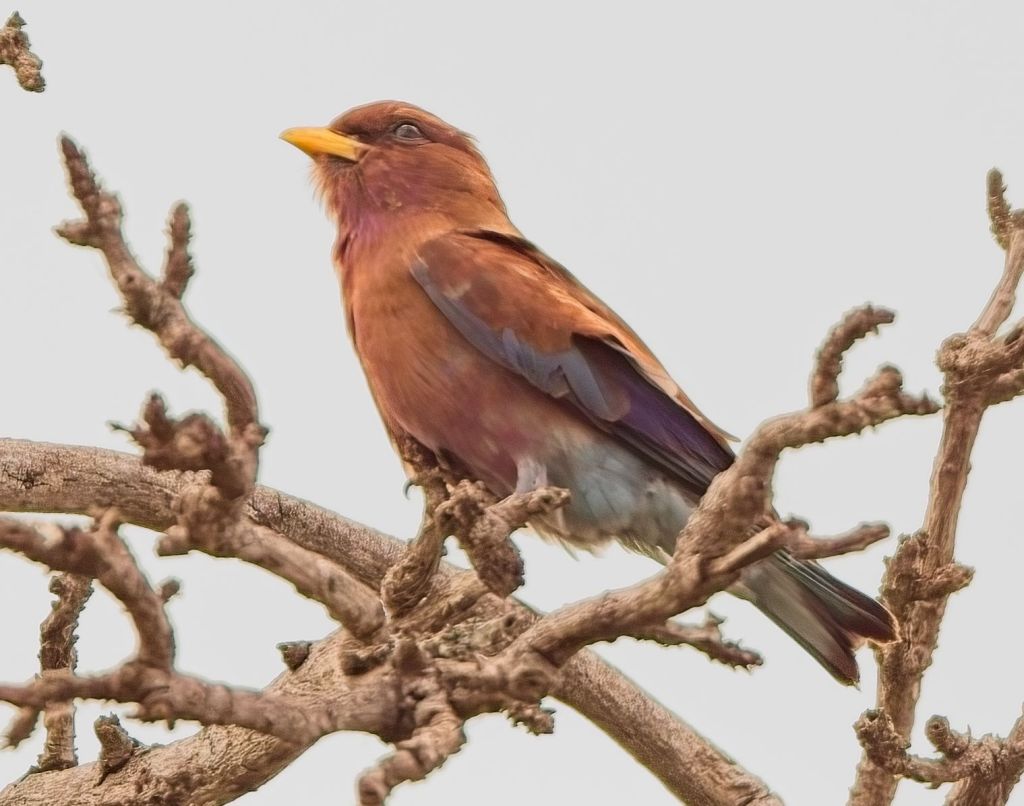
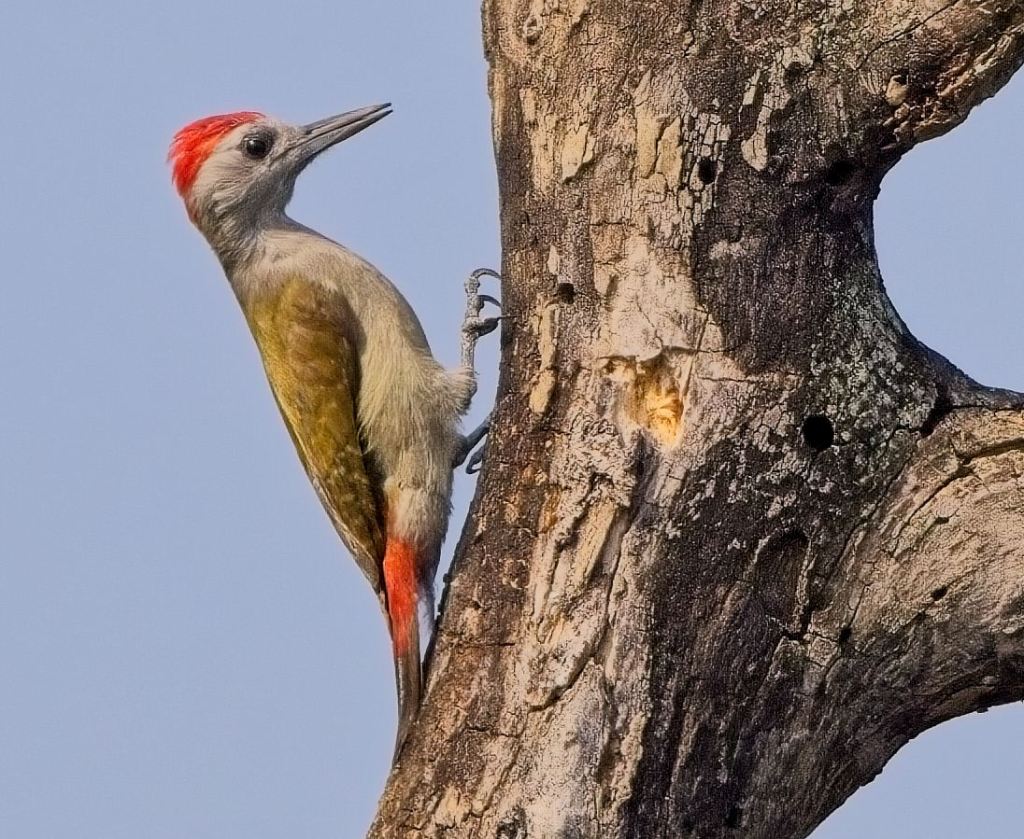
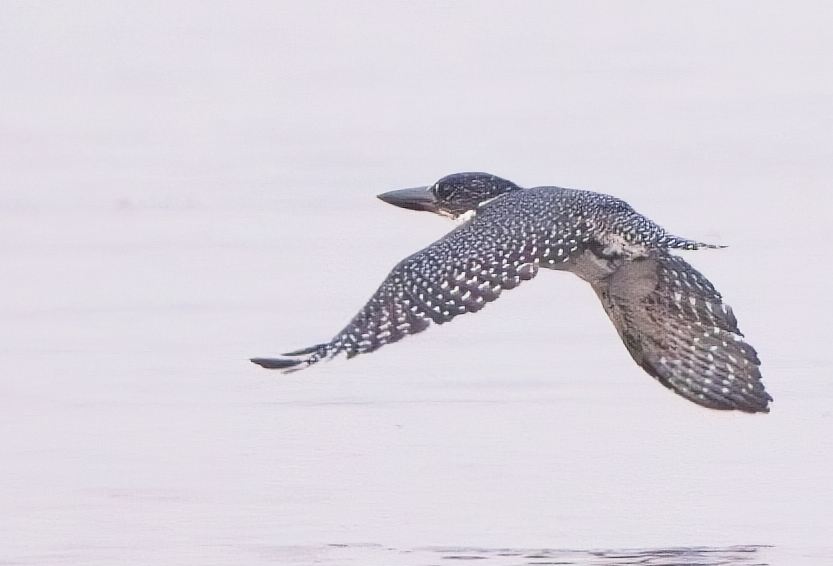
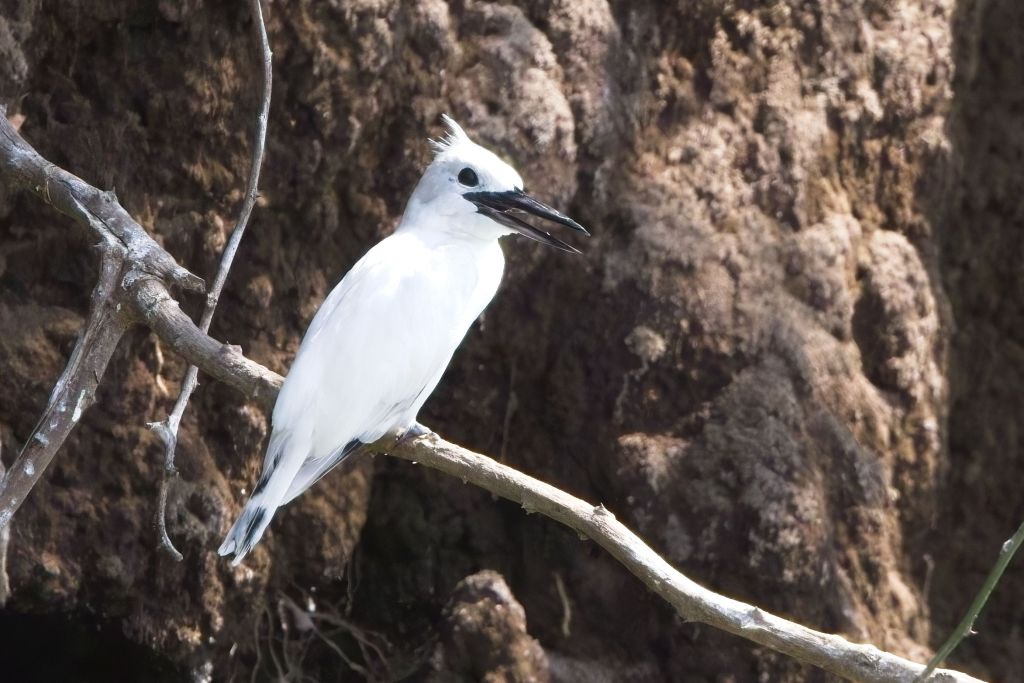
Being on the water, of course we had many kingfishers – four species: Pied, Malachite, Woodland and Giant Kingfishers. I had missed an earlier opportunity for a photo of the latter. Finally got this one, even if not the best pose/shot. And there were other birds not associated with water that we saw on their perches onshore.


Our boat captain maneuvered us as close as he could to the Falls themselves – engines fighting against the current and turbulence generated by the river crashing through the small gorge. Murchison Falls is world famous and is impressive but in a way very different from other spectacular falls I have seen. The very thing that makes them special, the great volume of water coming through that small opening, is also the limitation as that narrow open is no comparison to the scale and visual impact of Iguassu/Iguazu Falls or Niagara Falls for their breadth and Yosemite or Bridal Veil falls for their spectacular scenery. Glad I saw Murchison Falls, but to be honest – not a must see.

It had already been quite a day as we again totaled over 100 species with many great photos and the view of Murchison Falls itself. But there would be more as we were scheduled to go on a night drive with a wonderful local guide/ranger – Silva. Definitely the highlight of our visit to the Park and among the top two or three parts of our trip.
The Night Drive
Being very close to the equator, darkness arrives in Uganda not long after 6:00 p.m. unlike in our home in Edmonds, Washington where at this time of year, it is not dark until after 10 p.m., thus it was not long after dinner that we could load onto our Land Rover, pick up Silva and head into the dark savannah armed with Silva’s rifle for protection (not needed) and two spotlights to search for wildlife. There was some light from distant villages but otherwise the only light was from our headlights. I have been out in total darkness returning from long birding trips or looking for owls, but I had never been out in areas like this where many animals were grazing and others were hunting. Just as with owling at night, you cannot see anything unless it is directly in the headlights or light from the spotlight. In essence then, we hunt with the spotlights trying to pick up “eye shine” as the light from the spotlight or headlights is reflected from the eyes of the animals. Almost immediately we had “eye shine” which told us where to direct the spotlight: a Hyena, the first visual of one we had on the trip as opposed to many calls we had heard at night.
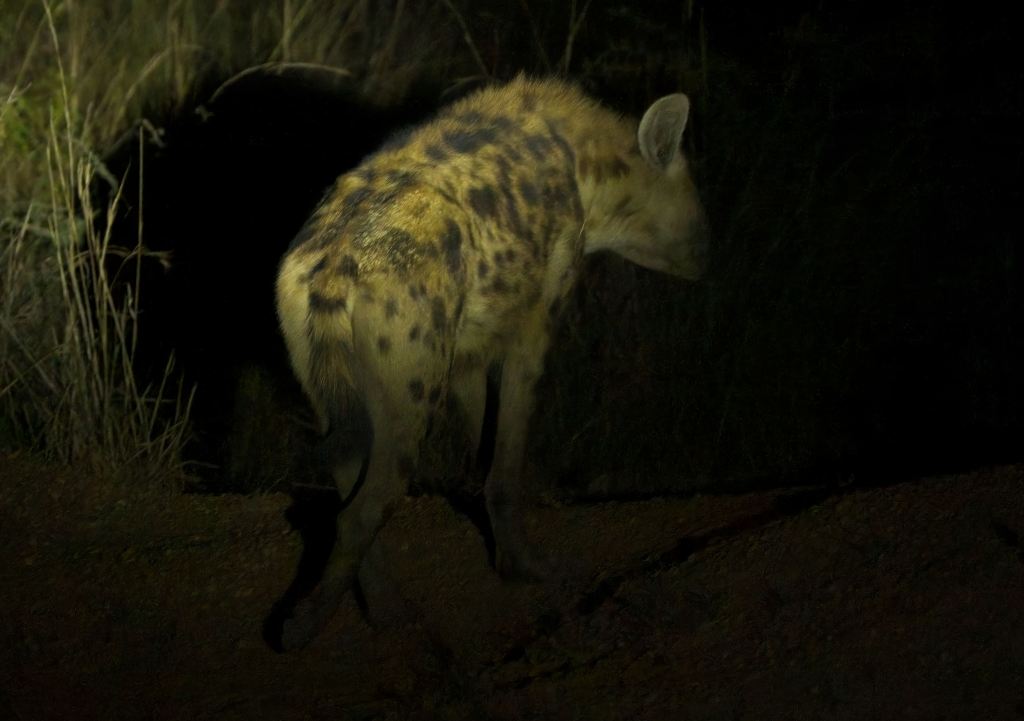
The early success with the Hyena in the spotlight raised our excitement level and added to what was already sensed as a “cool adventure”. Those assessments increased as we returned to the area where we had seen many mammals on our daytime game/bird drives and we were stunned by the number of eyes that were found returning the shine of the spotlights. There were hundreds of eyes – everywhere. Mostly antelopes like the Uganda Kob and Oribi and a large herd of Buffaloes as well. Most were very distant but occasionally there would be something close on the side of the road (dirt tracks) like the Bushbuck below.

Mammals on the African plains are exciting to see in the day time but especially with the big herds of antelope and even buffaloes, it becomes commonplace and the excitement at least diminishes. But it was a very different feeling at night. There was a sense of mystery and more like a hunt. What would come next? In the daytime I might see an animal hundreds of yards ahead and watch it as our vehicle got closer and closer, perhaps readying my camera for a photo. It was very different at night with far less time to process what was being seen and thus a heightened feeling of a need to “Be ready” for whatever might happen without much warning. A feeling of anticipation for … what?
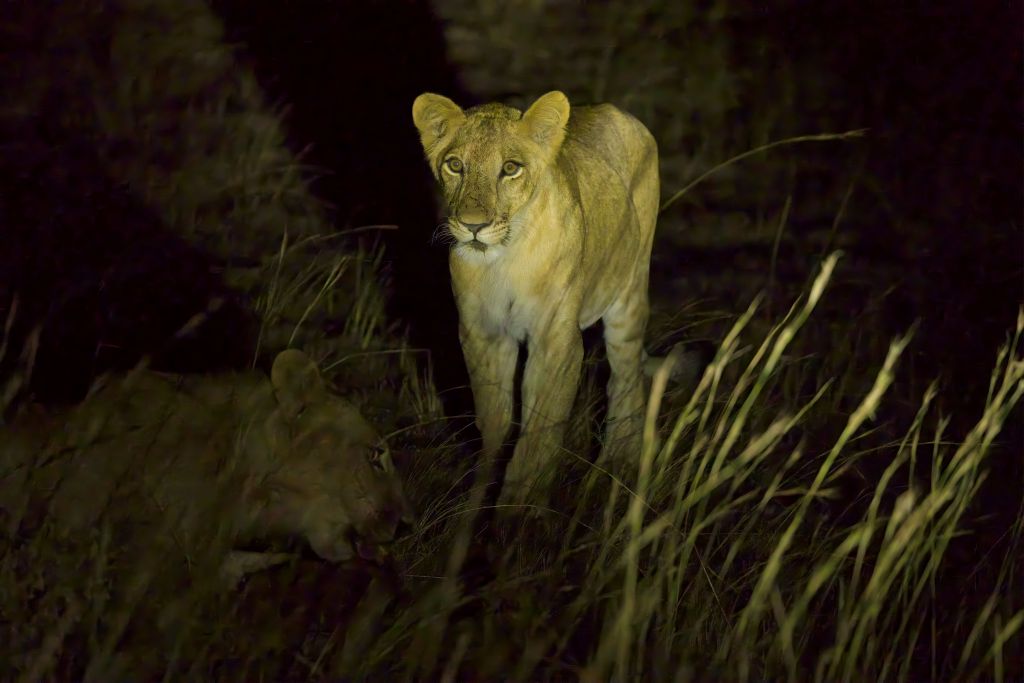
Silva was awesome as he searched the landscape with his spotlight looking for the next animal, the next surprise. Perhaps an hour into our drive the headlights of the Land Rover picked up some movement on the road ahead of us and Silva quickly got his spotlight on some lion cubs – first one then another and then the mother. Not real close but the way they had appeared out of the dark magnified the excitement acknowledging that any lion cub sighting is already very exciting. The cubs also meant that there were other lions in the area. Would we find them?

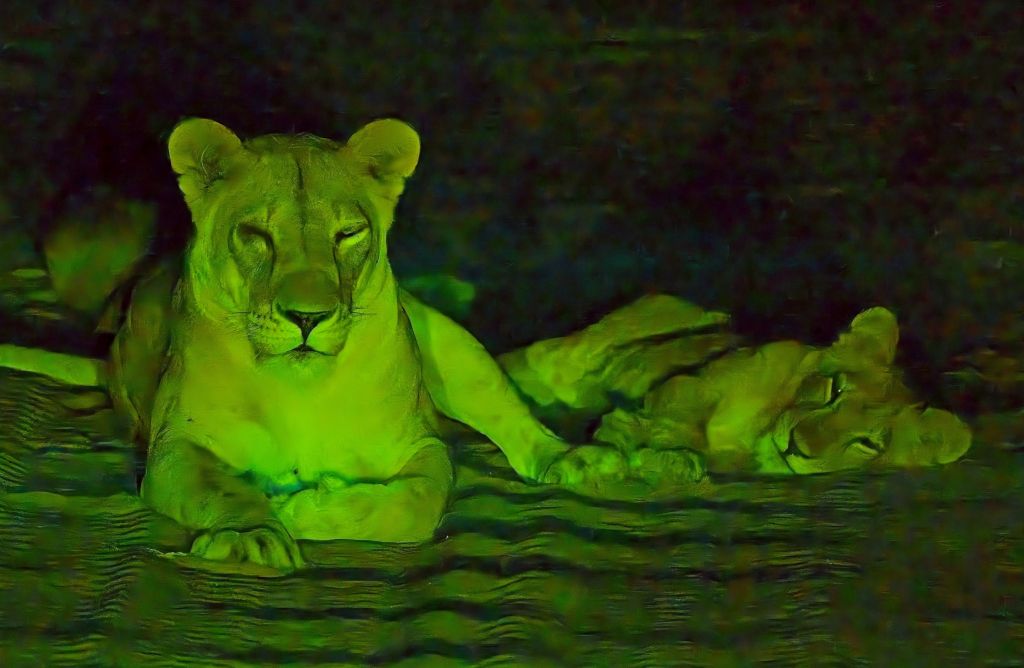
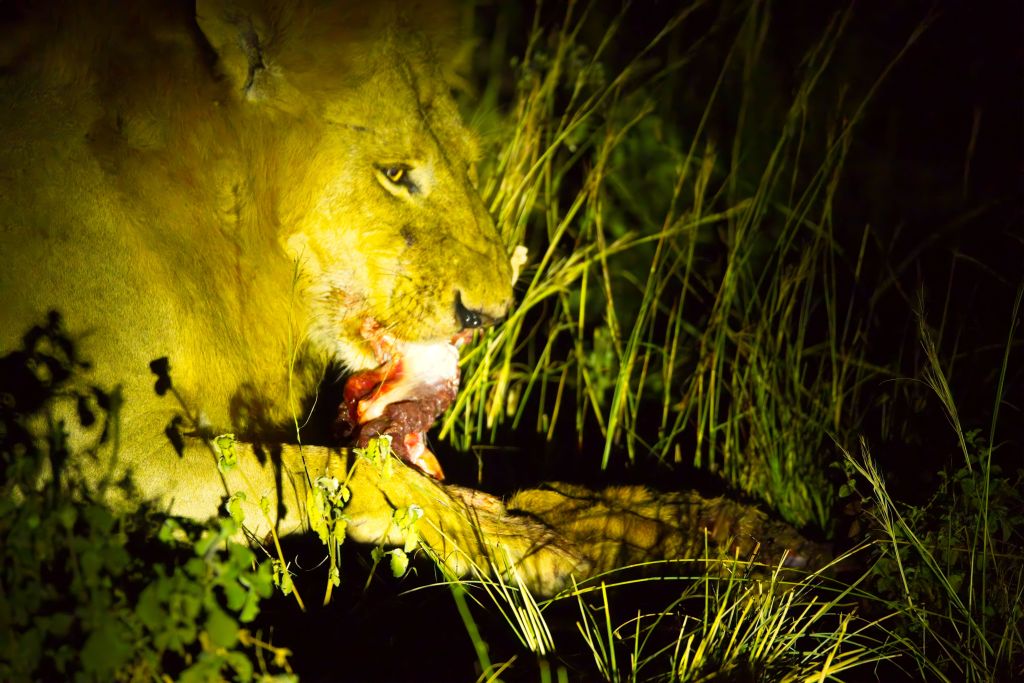
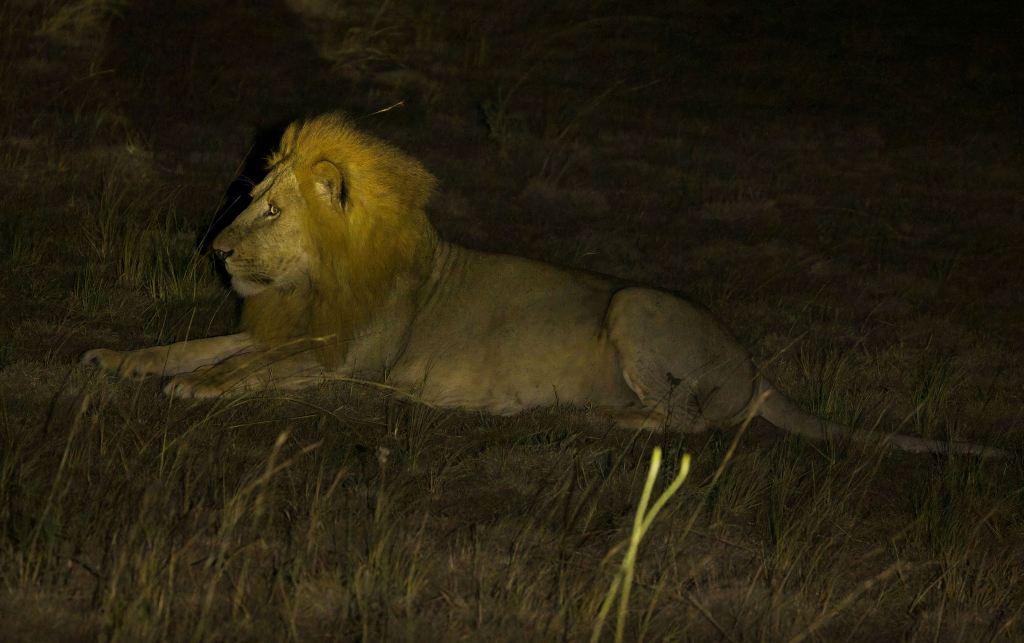
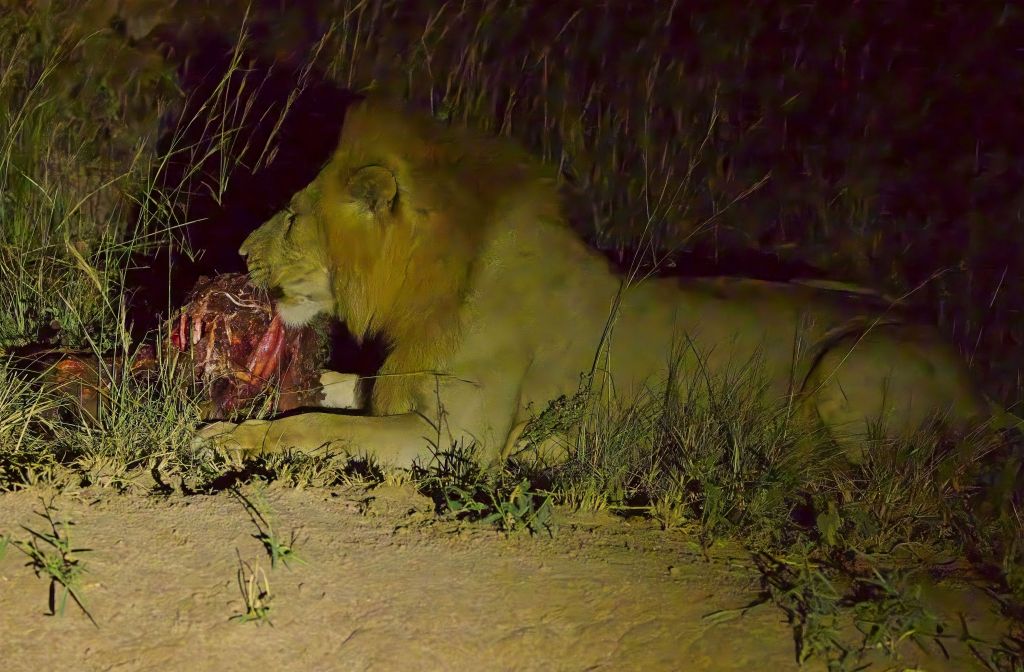
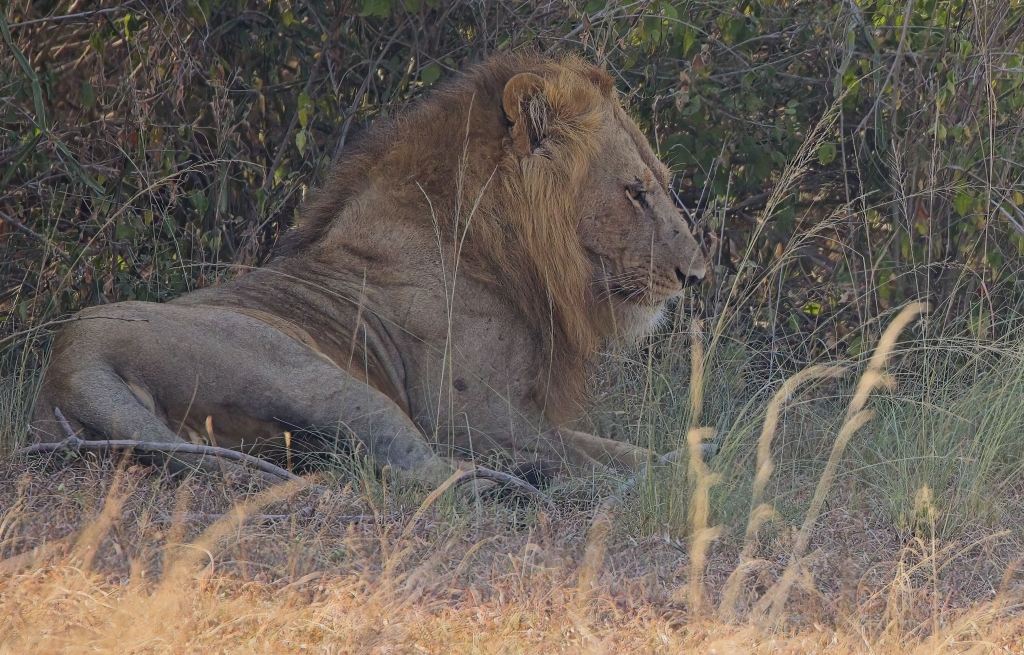
Silva was always animated, his positive vibrations felt by us all and we were confident that if there was something out there he would find it. He did. “Lions – feeding lions“, he called. Somehow maybe 150 feet away and mostly hidden in the grass and brush, Silva had spotted a group of lions with one of them on a kill. The general rule is that vehicles are not allowed to leave the designated tracks and drive off into the bush. Silva said “lets go”. Davis, our driver and local guide hesitated not wanting to break the rules – not that there was anyone, other than Silva, within miles of us who would know or report the infraction. Without an instant of hesitation, boss man Dion said “go” and Silva directed us to a spot less than 15 feet from where a large male lion was gorging himself on the kill – an antelope of some sort – and where at least 6 other lions were waiting their turns. Headlights and the engine were turned off and for the next 20 minutes, we were treated to probably the best up close spectacle of life and death on the African savannah I had ever seen – beyond awesome.
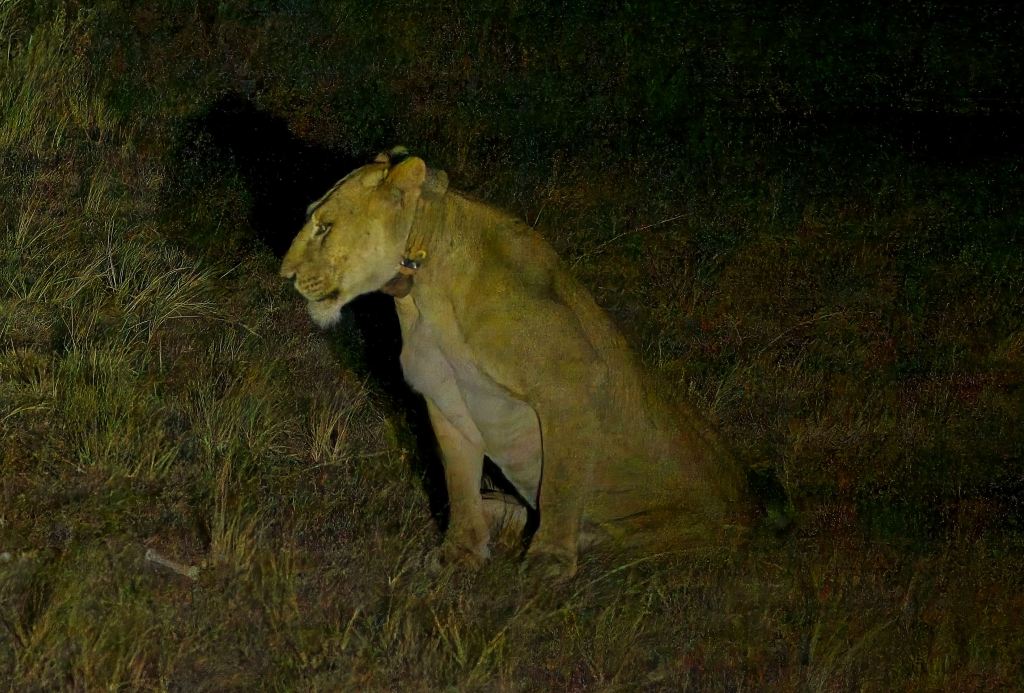
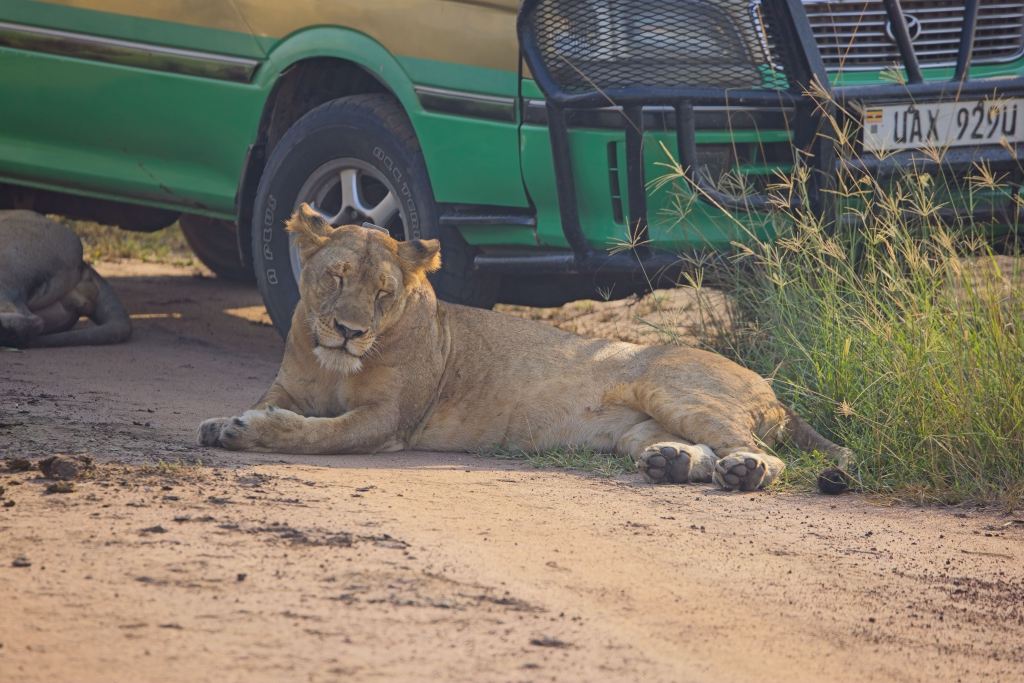
I took more than a hundred photos in addition to two videos of the dominant male feasting, another male waiting for and then taking his turn after the dominant male had finished and with females and cubs standing by hoping for opportunities of their own. If the spotlight was not directly on my target, the photos were useless, but there were successes. One of the females, probably the lead lioness, was wearing a radio collar. Silva said this pride was a study group. If the spotlight moved as the photo was taken – nada, but there were good moments when the light was steady. We watched as the first male roared after he was finished and then curled back his lips and seemed to sniff the air. This is called the Flehmen response and is a way for any mammal but predominantly big cats and mostly males to detect the smell of urine from another animal in the air to see if they are ready for/interested in mating. Our interpretation was that having satisfied one of his appetites, the big male was interested in satisfying another. I could have chosen dozens of photos but have included just a small sampling to give some idea of the great show, and unfortunately I cannot imbed the videos.



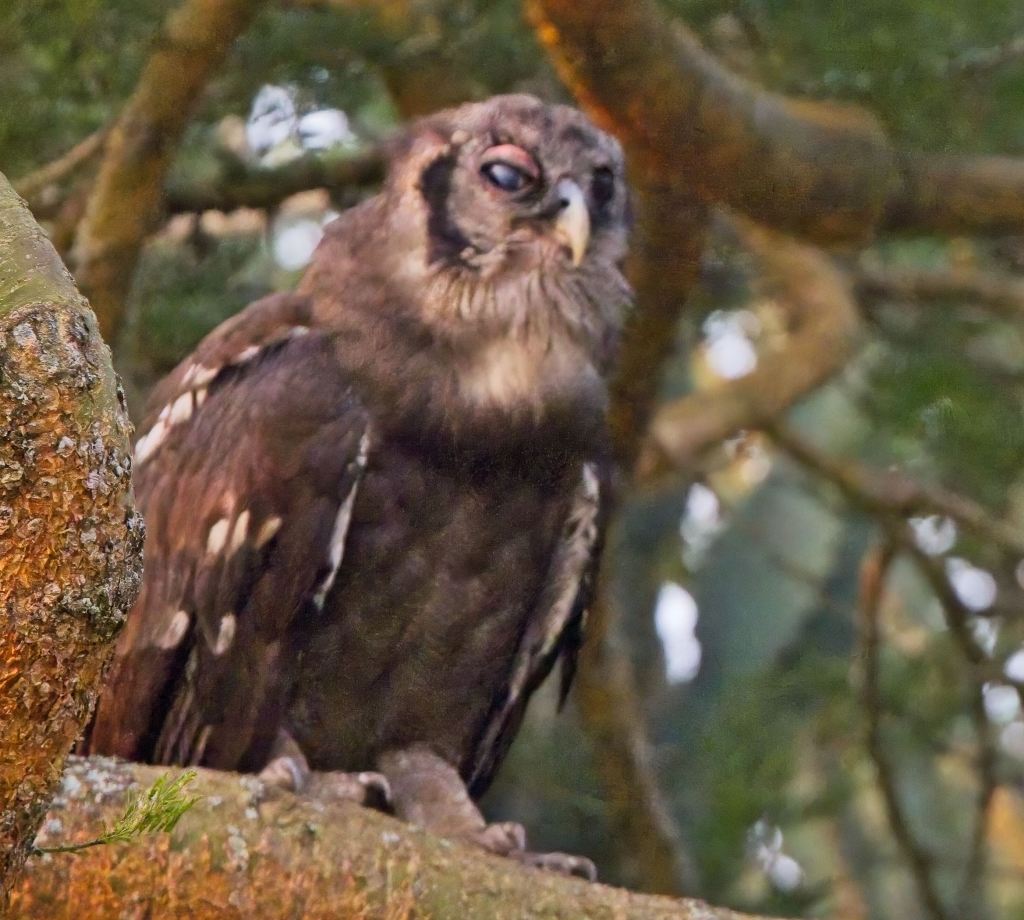
It was hard to leave but it was getting late – time to return to the lodge. There would be one more treat. On our return we spotted a Grayish Eagle Owl on the road. It flushed at first but returned to the road and we were able to get in the spotlight for some great photo ops. Not a lifer or even a life photo but any owl is great, and finding this one on the road in the open was a fitting close to an amazing day, one of my best ever.

July 1st
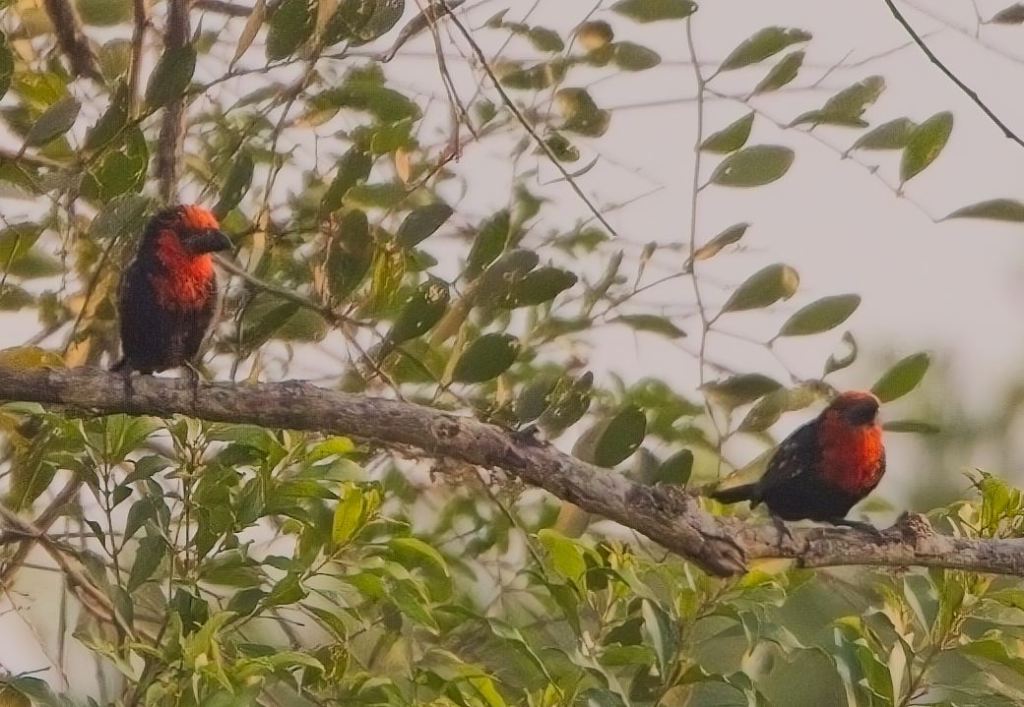
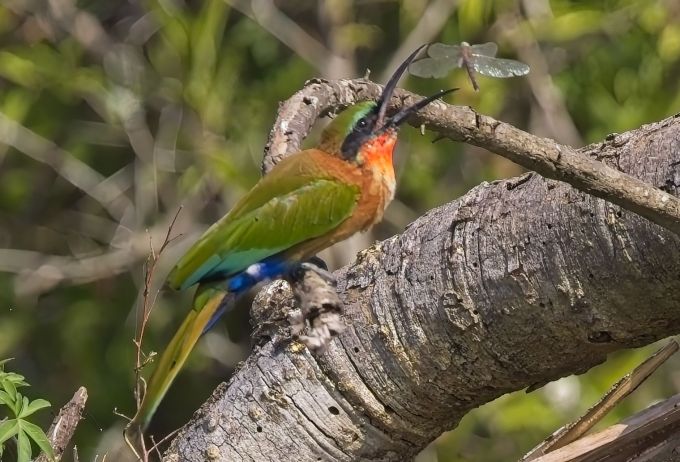
The only way we might have topped the experience of the previous day was to see a Leopard hunting or with a kill. They are in the Park but we would not see one making this my only trip to Africa where I have not seen one. We were back on the Nile River birding in the delta. There were eight new species for the tour including two new lifers for me among the 84 species seen. This was our fifth boat trip of the tour and all were great. The two lifers were Northern Carmine Bee-Eater and Black-billed Barbet. The lifer Northern Carmine Bee-eater was one I really wanted and was very happy to get, but it was the Red-throated Bee-Eaters that stole the show as we saw more than three dozen. And it was just a great day for Bee-eaters period as we also had another Swallow-tailed Bee-eater and 3 Madagascar Bee-eaters.
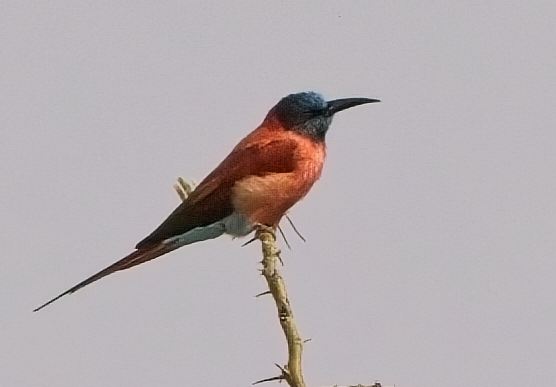
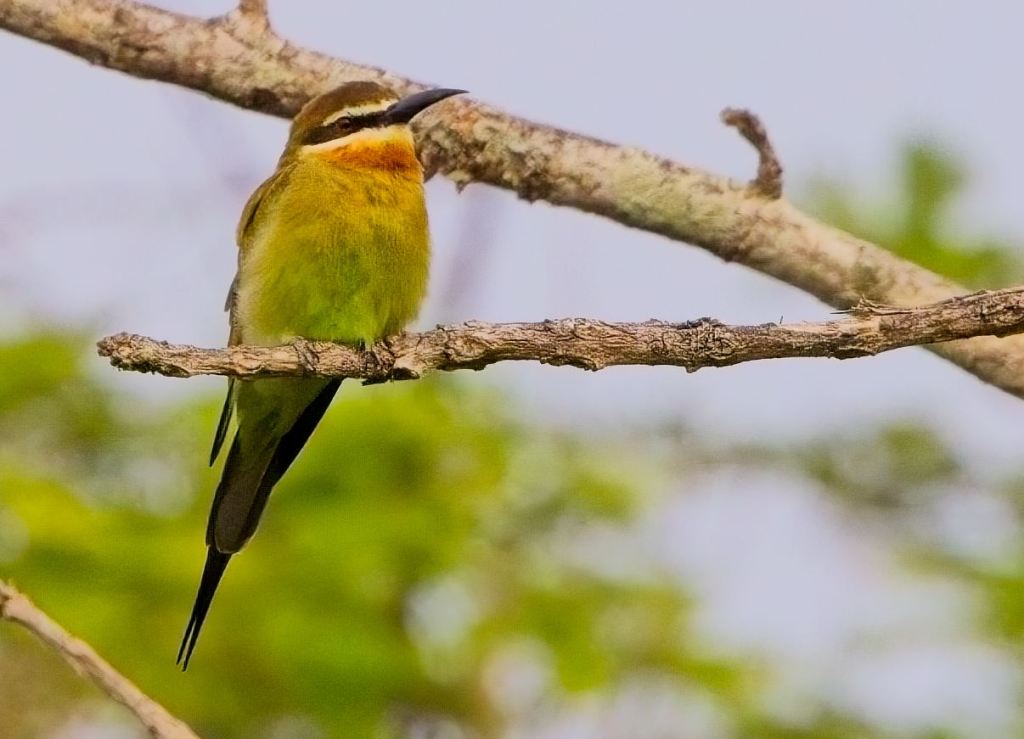

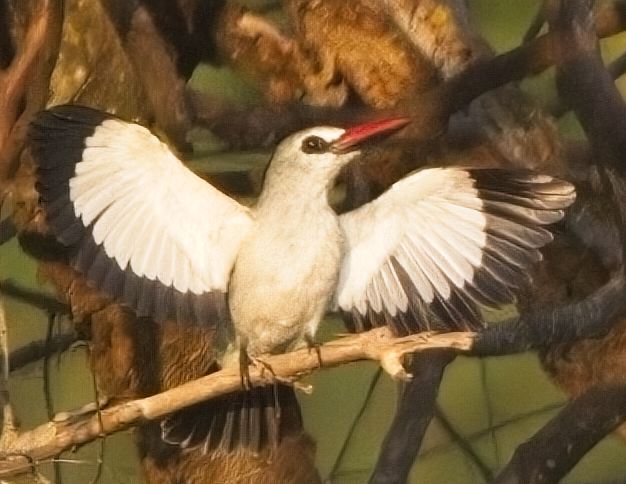
It was also an excellent day for Kingfishers, as we had Gray-headed, African Pygmy, Malachite, Woodland and Giant Kingfishers – all seen and photographed before but always a treat whether in the forest on on the water. I was particularly glad to get another Giant Kingfisher photo.
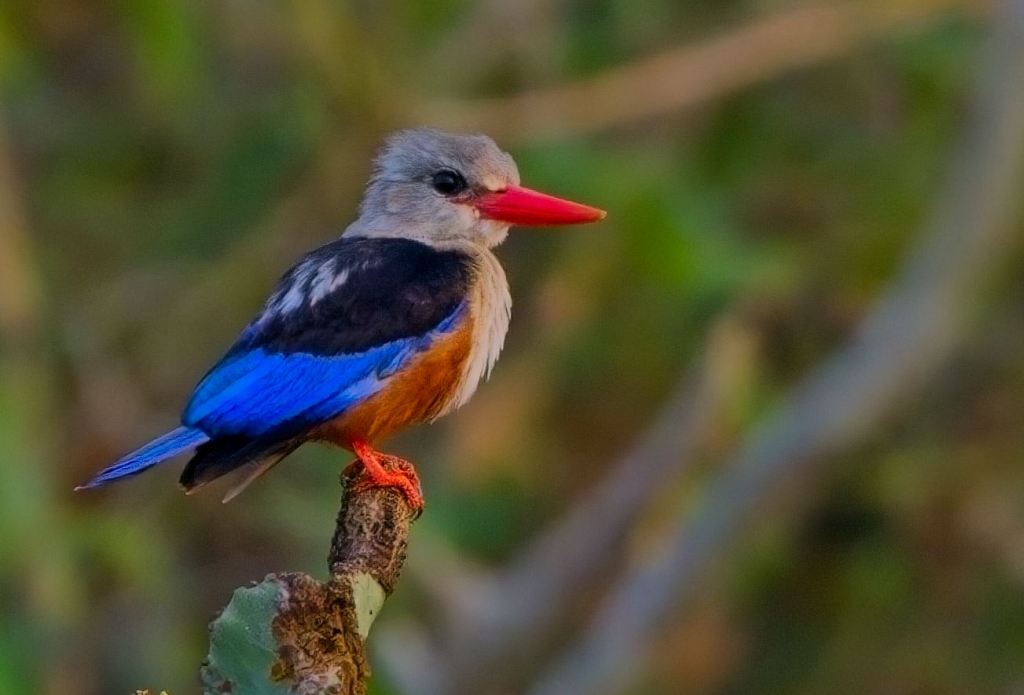
It was also a good day for Barbets with the Lifer Black-billed plus Double-toothed and Spot-Flanked.


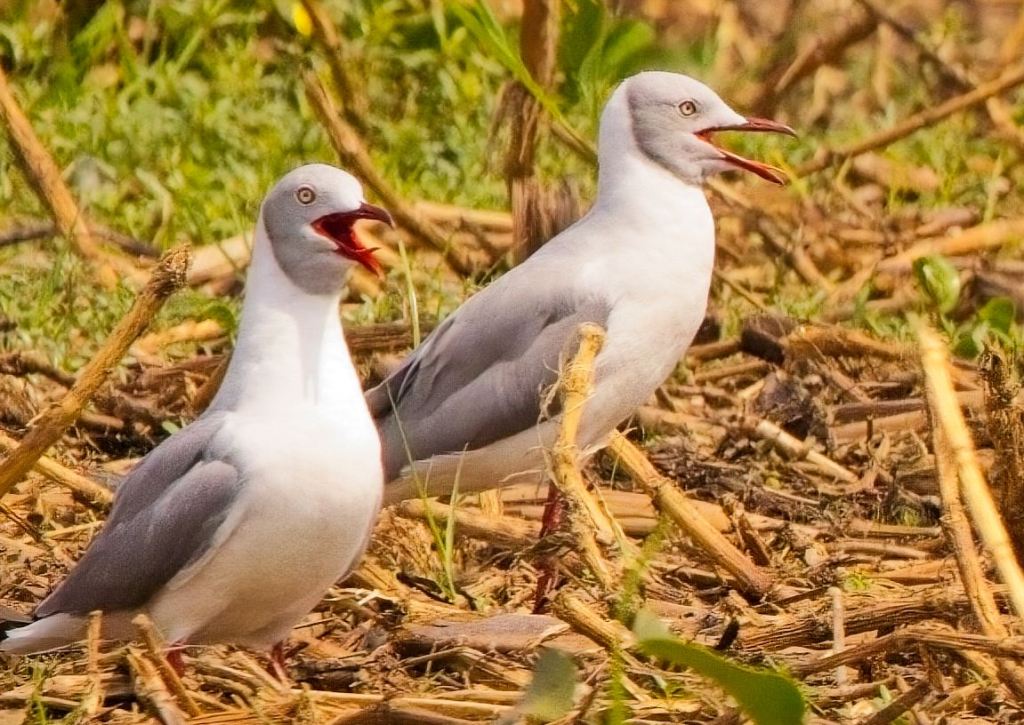
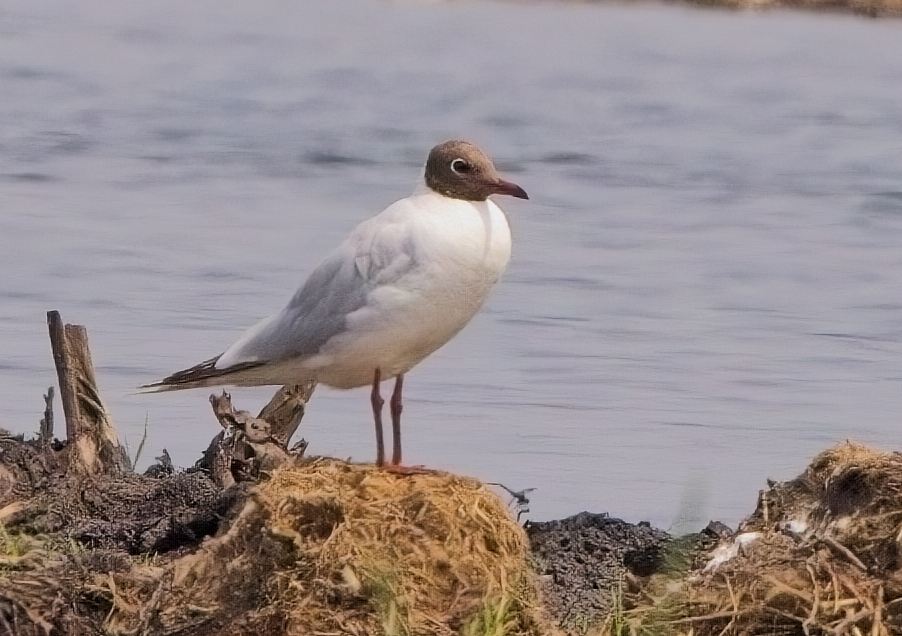
We had two gull species on the river. There were many nesting Gray-Hooded Gulls, seen earlier on the tour but these were in full breeding plumage with their gray hoods very apparent. The other gull seen was a Black-Headed Gull, very common in Europe and Asia and in parts of Africa but it was the first time Dion or Davis had seen one at this location. It is a rare vagrant in the U.S. and I have seen it both in my home state Washington and also in British Columbia.
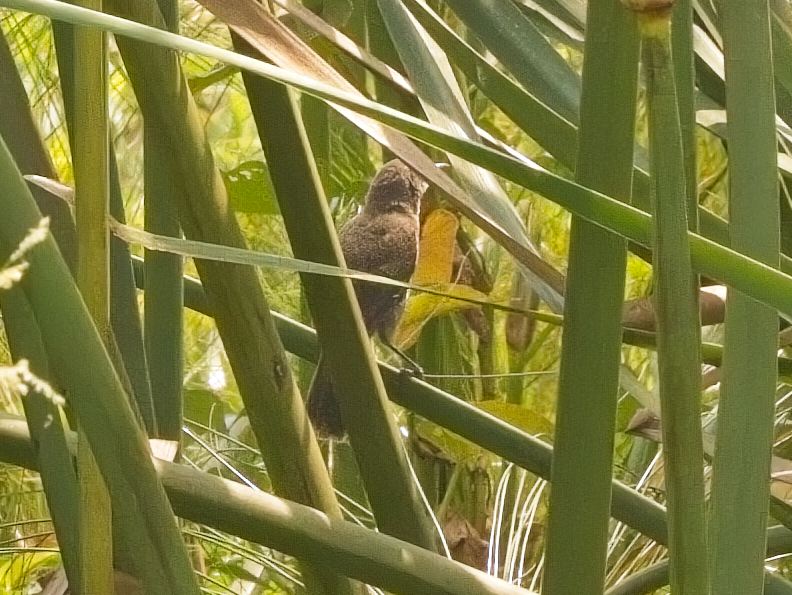
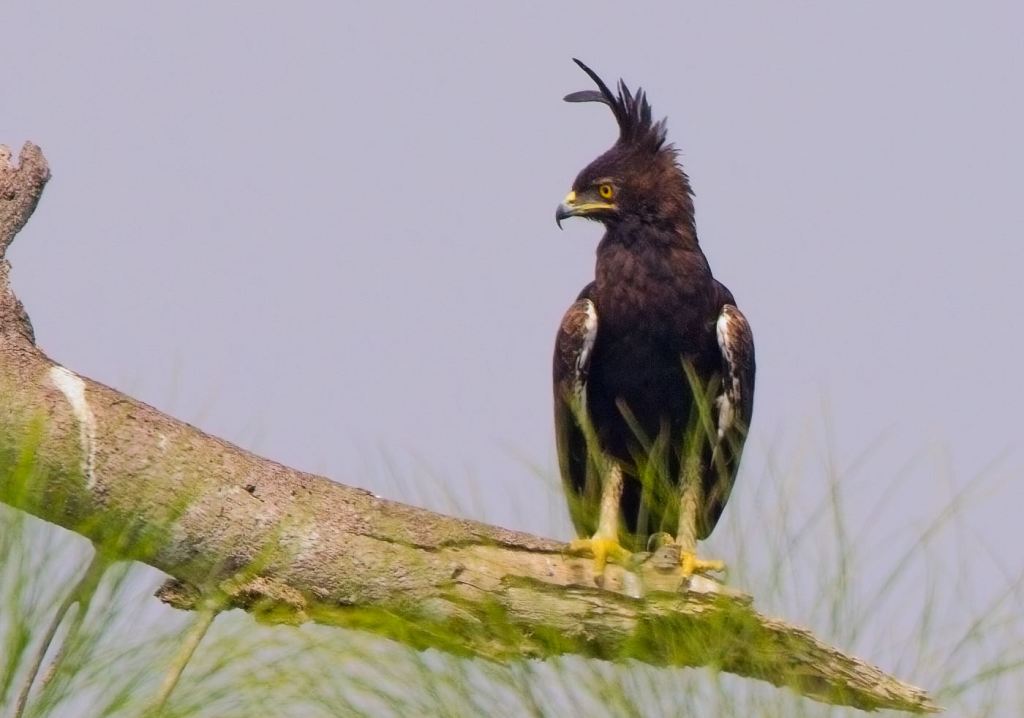
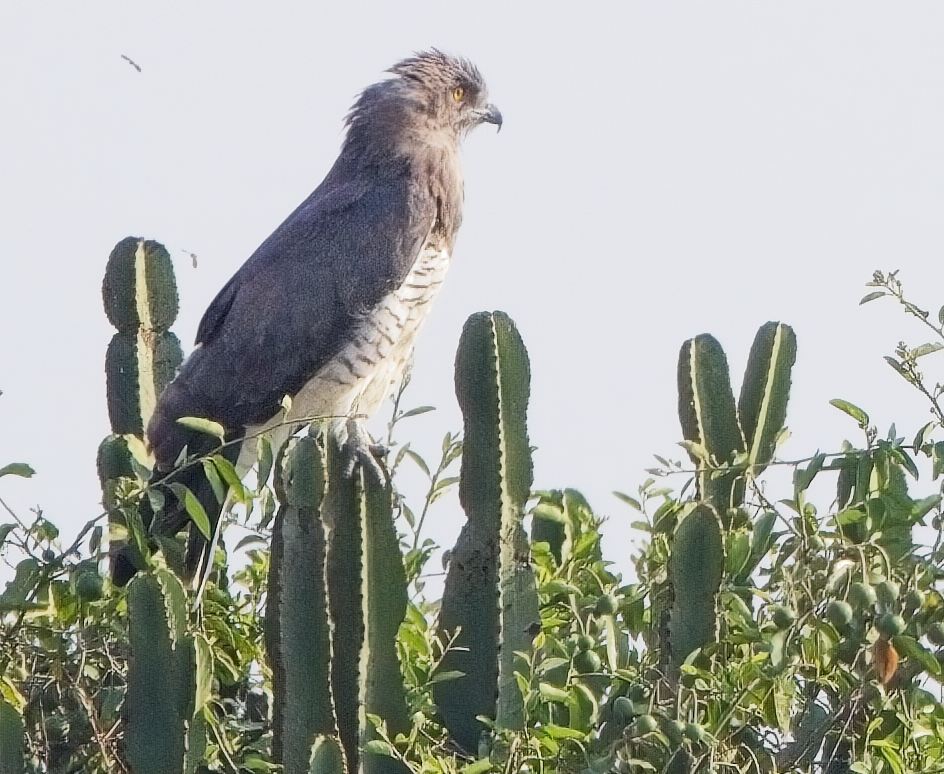
Not the greatest photo but my first for the species was of a Greater Swamp Warbler and the same as to quality and being a first photo applies to my photo of a White-crested Turaco. Much better photos were of three raptors seen and photographed earlier in the trip: Long-crested Eagle, African Harrier-hawk and a Black Kite. The Black Kite was different than ones seen earlier as it was “black-billed”.



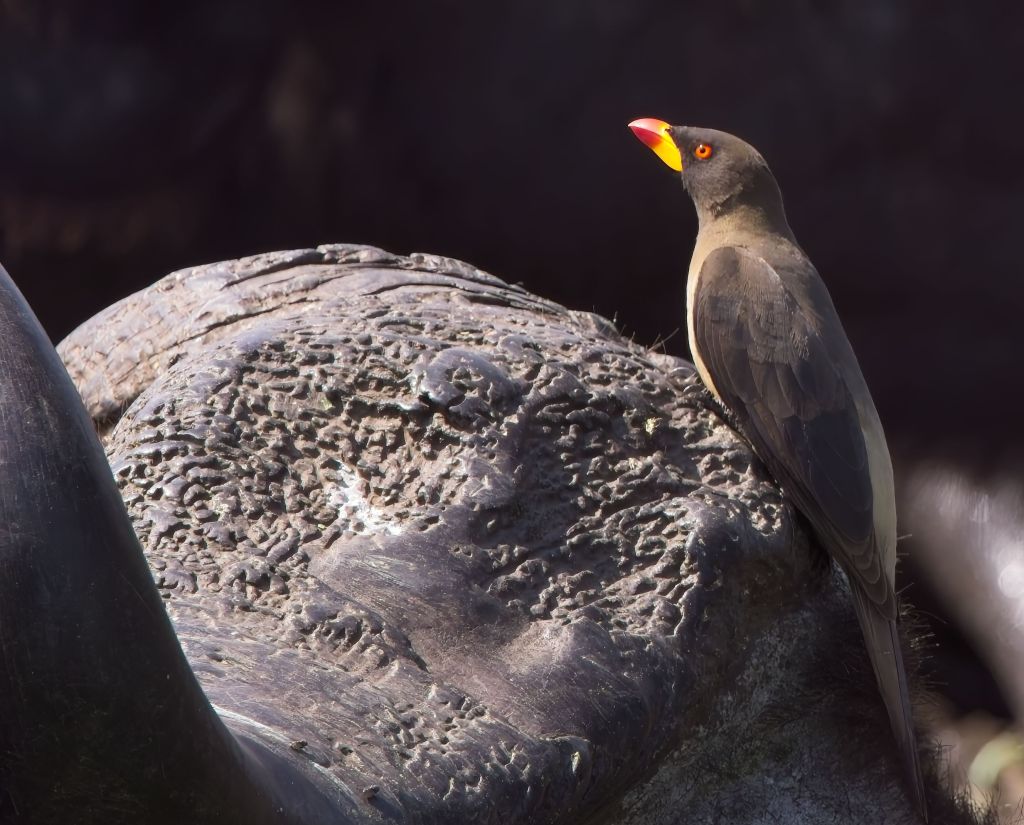
Another bird of note – new for the trip and apparently very rare for the location was a Red-billed Oxpecker, seen with several Yellow-billed Oxpeckers on the backs of some of the Hippos we saw.


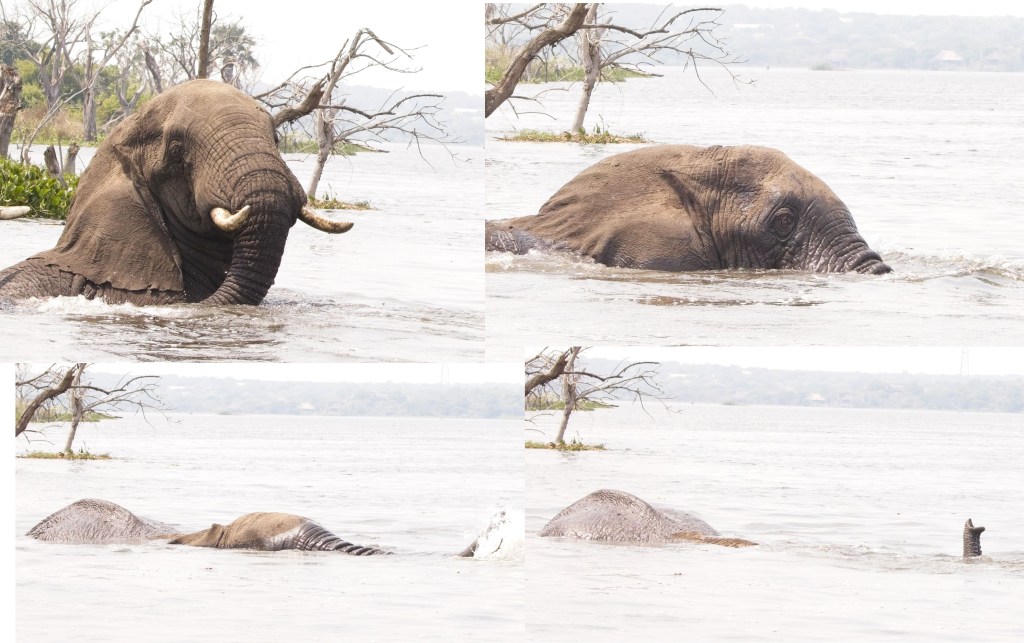
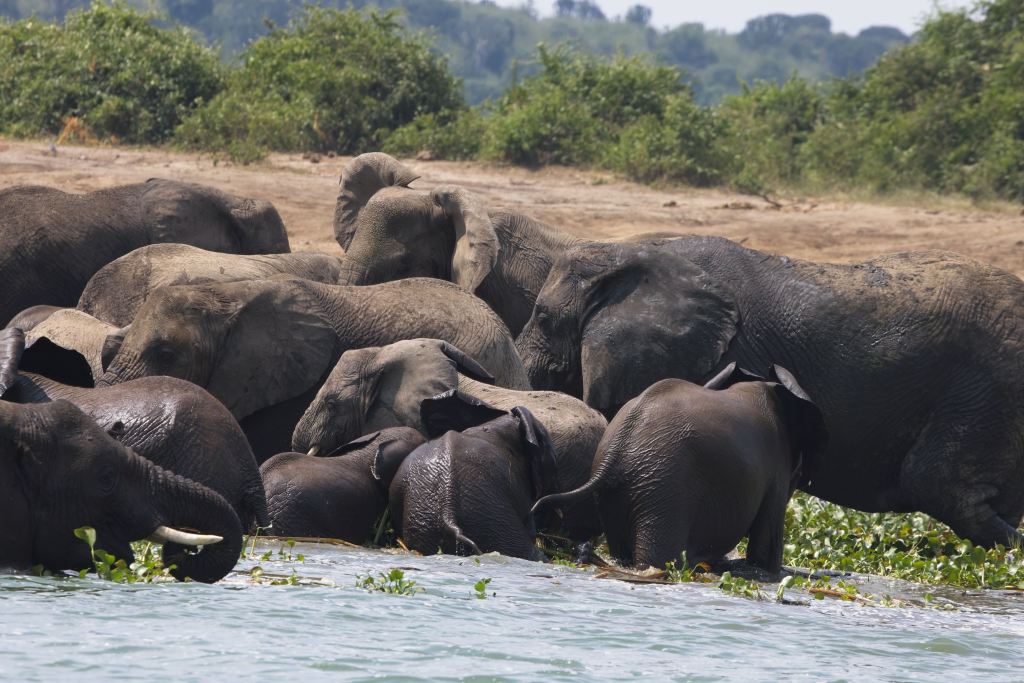
As had been the case with most of our other boat trips, we also had great looks at some mammals and this time particularly a group of elephants that were bathing and also tussling. In one case I was able to get a sequence of one elephant completely submerging with only the tip of its trunk above water – quite a snorkel. I also photographed two elephants pushing each other around as we wondered if a full fledge fight might follow.

There would be one last treat on the water. It seemed ages ago that we had seen the Shoebill at the Mabamba Swamp and Wetlands. In the promotional material for the tour, this boat trip on the Nile was noted as a good possibility for Shoebill in case we had missed it earlier. And so it was as we located another Shoebill, this time having it all to ourselves. A fitting bookend to the tour to have this marvelous bird on both the second and second to last days.

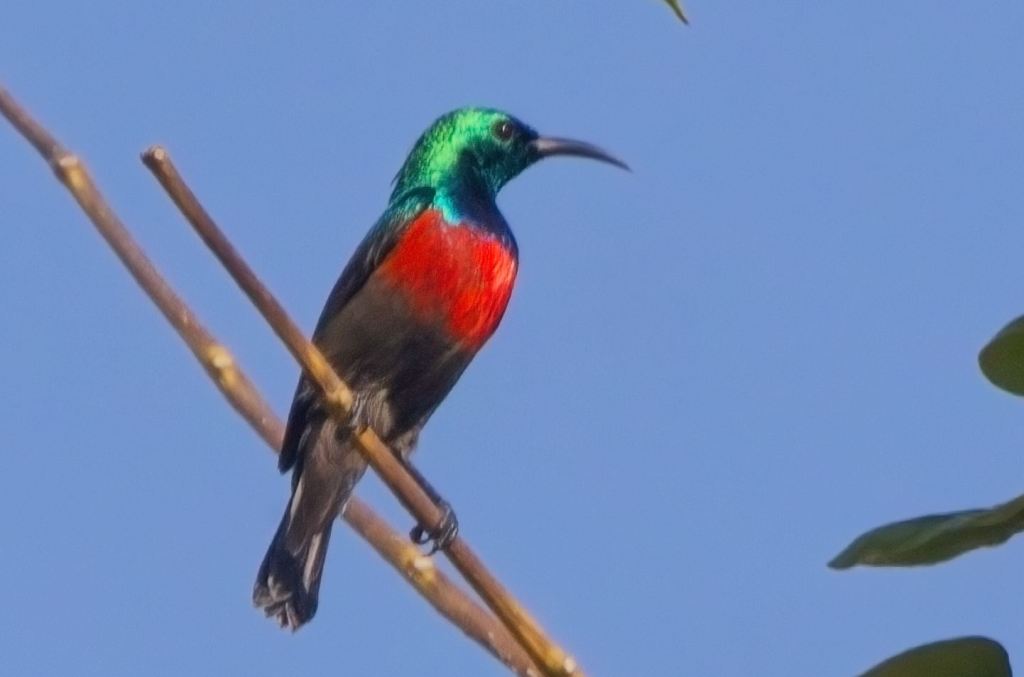
Had it not been for the exceptional preceding day with the night drive and all the other sightings earlier in the tour, this may have ranked at or near the top with elephants, hippos, barbets, waders, bee-eaters, kingfishers, raptors and of course the Shoebill. It is testimony to the many great days on the tour, that it was “just another day” – well, without forests, chimps, gorillas, lions, owls or sunbirds.
July 2nd
This was our last tour day, starting with a visit to the top of Murchison Falls and followed by a very long drive back to Entebbe and the Boma Hotel where it had all started for us 19 days ago. There would be no new lifers this day but I added a life photo, I think. It is of what I believe is a Northern Yellow White-eye. We had Green White-eyes often earlier on the trip but Ebird says it is not found in this location – only the Northern Yellow White-eye. I cannot tell them apart so will go with the Ebird ID. I did not make it to the actual top of Murchison Falls. The rocky trail was extremely slippery from the spray and I was getting soaked even just at the bottom third. I decided to remain dry and forego the view of the Falls themselves settling for the raging river as it narrowed through the gorge to go over the Falls.


The 200 mile trip back to Entebbe would take more than 6 hours traveling through very congested towns, dealing with very slow trucks and the heavy traffic through and around Kampala. As with our other traveling days, we had a good chance to observe the non-safari, non-birding, non-National Park life in Uganda. I hope to write another blog post focusing only on that part of our visit, but will again omit it here.
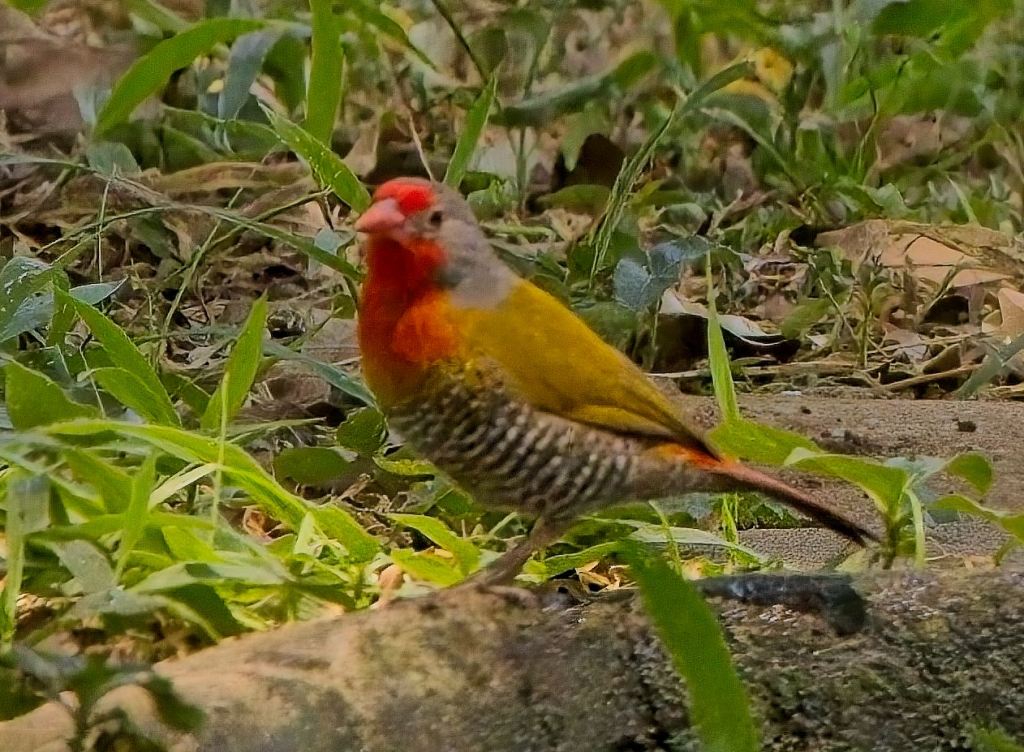
Our last Ebird list for the tour was from our lunch at the Kabalega Diner. It was pretty birdy with 16 species including a lifer photo of a Yellow-throated Greenbul as well as nice shot of a Green-winged Pytilia feeding on the ground next to us.

Back at the Boma Hotel, we had a last dinner – sadly strained by our interpersonal discomforts with our traveling companions. It was then off for a short rest before leaving very early in the morning for our return flight home. The short drive to the airport, our checking in and flights back home all went well even if very long. Due to the 10 hour time difference and our early departure from Entebbe, we left Uganda on July 3rd and were back in Seattle very late also on the 3rd – 18+ hours on the clock but actually closer to thirty hours of actual time. We were very tired and glad to be home.
Conclusion
Repeating what I think I recall from my first blog – which was written weeks ago – Cindy and I had been spoiled by our awesome trip to Tanzania last year where the birding was easier, there were many more mammals, our travel companions very enjoyable and the lodges were top notch. There were definitely parts of this trip that were “not great” – BUT there were also many highlights, great birds, the amazing gorillas and chimpanzees – even if maybe less incredible experiences than we may have expected/hoped for, the unforgettable night drive and especially some wonderful intersections with local Ugandans particularly our porters in Ruhija and the Ride 4 a Woman Collective in Buhoma. The forest birding was really tough and disappointing but that is what it is and is just a mismatch for what I/we most enjoy. Lots of new birds, but too many heard only or not seen well – lessons learned. All told we are very glad we went, have lots of stories to tell and have already been back in touch with Hilda, Cindy’s Ruhija porter and with Evelyn the founder of Ride for A Woman. Our first local guide, Veronica, has been wonderful in facilitating getting some funds to Hilda. Veronica was an awesome guide and driver – just an awesome person. Our second Ugandan driver and guide, Davis was also a great guide and driver (with a heavier foot – appreciated when passing those trucks) and always had a great smile and personality.
As was the case when he was the lead guide for my trip to India in 2011, Dion Hobcroft was an unbelievable resource for all things natural: birds of course, mammals, plants, reptiles bugs etc. He kept us all on schedule and on task and every detail of the trip went off as planned. Had I been a better listener I also would have learned a lot more about cricket, rugby and Australian rules football in addition to some very odd Aussie sayings.
Some numbers:
My Uganda list for the trip was 444 species.
I added 132 lifers to my World List and now sit at 3507 species – this is just about what I projected as reasonable to expect.
I got photos (some definitely pretty poor) of 306 Ugandan species. My goal is to get photos of 75% to 80% of the birds seen on a tour so being at just under 70% fell a little short. I am sure that if all of the forest species seen and all of the forest species photographed were removed from the equation, the percentage would be well over 80% – another lesson learned.
A disappointment – again connected to the forest birding was that I only added 140 photos to my life photo list. Given 132 lifers, this at first seems really good, but the reality is that only 78 of the new photos were out of those 132 lifers, a pretty poor 59%. I had expected at least 150 photos and had hoped for many more than that. My World Photo list is now 2500 species with photos – a nice round number but only 71% of the World species list. It was nice to get 62 photos of species previously seen in Africa on previous trips but not photographed. I hope someday to get to 3000 species photographed.
Someday I may get a chance to get photos of species seen in countries early on in my birding life when I was not taking photos – birding in Costa Rica, Trinidad, Jamaica, Japan, Hong Kong, Hungary, Christmas Island, Australia and on a fishing trip to Argentina. Altogether I saw 663 species on those early trips and have only 8 photos to show for it. There has been some overlap from later birding trips so a best guess might be that those trips represent maybe 500 species not seen elsewhere. Since my average of photos per species seen excluding those countries is over 80%, there are probably 400 missed photo ops that would be available with return visits. We have a trip to Japan scheduled for next year and are considering Costa Rica and Australia. Those three trips could add at least 250 photos. A trip to Ecuador in September/October that will include the never visited Galapagos and some lodges not visited before will hopefully add another 100 photos. That still leaves 150 or so photos to go. Guess I will have to keep on travelling.
And hopefully someday I can get to 4000 species on that World list. Especially since I am now probably not looking to do much forest birding, that will be a challenge. Those trips mentioned above at best would likely add no more than 150 to 200 life species. More South American trips seem in order.
I need a break from blog writing but do hope to get one out about our non-wildlife observations of Uganda. The country has many challenges ahead but has come an incredible distance in the last 30 years. We will share our impressions and photo in that yet to be written blog post.



































 blairbirding