
June 20 – Bwindi Impenetrable Forest – Our Mountain Gorilla Trek
Probably the single most important factor in our choosing Uganda as our next Africa destination was the possibility of seeing Mountain Gorillas. According to the latest released data, there are only 1063 of these large and powerful primates remaining in the world, with two separate population groups, one in the Bwindi Impenetrable Forest and one in Virunga Volcanoes – a region spanning three national parks in Uganda, Rwanda and the Democratic Republic of the Congo. They are found in high-elevation montane and bamboo forests adjoining agricultural areas. A little less than half of the Mountain Gorillas are in Bwindi. The other gorilla species, Lowland Gorillas, has a much larger population.
As humans we share more than 98 percent of our DNA with gorillas, only slightly less than the amount we share with Chimpanzees and Bonobos. Mature males are known as Silverbacks and can weigh over 400 pounds, measuring over 5 feet on all fours and over 6 feet tall when erect with a wingspan of 8.5 feet. They are incredibly strong being able to lift over 4000 lbs. and yet are able to effortlessly climb trees if branches will support their weight. Gorillas can live to 40 years of age. They do not eat meat, favoring plants, fruits and nuts. They can run at speeds up to 25 miles per hour. Gorillas live in family groups with a dominant male and change their sleeping areas nightly.
There is an elaborate system for gorilla trekking at Bwindi – strictly regulated and allowed only with park rangers and with a permit issued by the Bwindi National Park – limited each day and costing $700 each – funds that support the park and its administrative and ranger details and the community. There is no guarantee that gorillas will be seen but the Park makes great efforts to make it “highly likely”.

Here is the gorilla trekking process: Meet at the Park Headquarters where a head ranger gives background on gorillas and explains how it works. Local villagers from Ruhija – mostly women but some men then do several dances for the assembled “trekkers” (maybe 30). The dances are very energetic and sometimes the dancers pull people out of the audience to join them (usually embarrassing themselves in the process). Both Cindy and I were invited (coerced) to join in – separately. Viewers are encouraged to leave a gratuity in a can in front of the dancers. Cindy did great; fortunately there are no photos of me dancing.


After the dance, viewers are assigned to groups of no more than 10 who will then trek previously identified gorilla groups. Ours was the Bituicura Group. There are three such groups in the Bwindi Forest that are acculturated to and thus comfortable with humans in their midst. Trackers have staked out the general locations of the individual gorilla groups based on where they slept the night before. The trekkers are driven to trail entries into the jungle which will take them to the gorillas – hopefully. In our case the entry point was a mile or two from the headquarters. Any trekker that so chooses can hire a porter to carry their gear and help them with the ascent and/or descent and trek through the jungle. The porters are from the village – both men and women – and only get to do this maybe once a month. The charge for the porter is $20 – a significant amount to them. Cindy and I both elected to engage a porter – hers was named Hilda and mine was named Michael. (Just a note, most of the Ugandans we met who interacted with tourists had “English names” as well as their Ugandan names in their tribal language.”) The porters also provide walking sticks for the trekkers – generally bamboo rods – which proved essential. We would not have made it without the porters or the sticks.

Each group is accompanied by a tracker – with machete in hand and used continuously as there are narrow trails that quickly end and it is necessary to bushwhack through the brush to make any progress. Each group is accompanied also by a ranger with a rifle. The gun is not to shoot a dangerous gorilla if trouble arises but to make scary noises in case any forest elephants show up. The elephants are very dangerous and need to be scared off. Fortunately this did not happen for us. Our group of 5 was joined by a young couple from Spain.
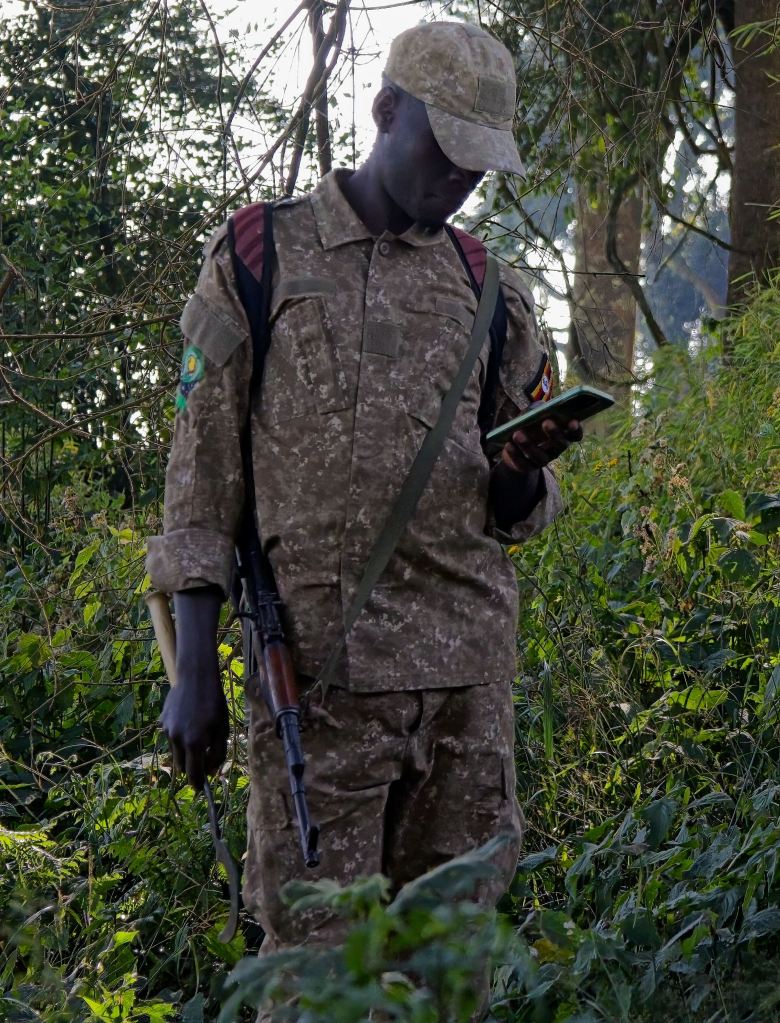
There is no way of knowing in advance how far one must go to reach the gorillas (hopefully). It can be as little as a quarter of a mile or several miles. When/if the gorillas are reached, you are allotted one hour with them. The porters stay away leaving the group and tracker and ranger to enjoy the gorillas, take photos etc. There are rules of conduct to be sure the behavior of the guests does not provoke the gorillas – passive, quiet, non-threatening, slow movements, avoiding eye-contact etc. In the event of a medical problem or if someone just cannot make it, you can call in a “helicopter” to rescue you. Not the flying mechanical kind, but a group of 4 to 6 villagers with a stretcher/litter who will carry it out with you on it. The cost is $300. One of the people in our party was very overweight and did consider calling for one. He persevered and made it without the helicopter.
So much for the general background – what about our trek? Bottom line – we did find a group of at least 8 gorillas – eventually. It was after an hour and a half of very difficult steep slow-go downhill “trekking” for significantly over a mile – all through very thick jungle with very little of it on any kind of trail – stepping over or through logs, roots, ferns, nettles, rocks, vines etc. For at much of this journey we were physically aided by and indeed relied upon our porters who were very strong and in great shape. And when we finally found the gorillas, they never kept still for more than a few moments. The hoped for situation is that you find them after they had eaten and are passively resting – and mostly still. Not our group – they were almost constantly on the move through heavy foliage looking for more food and barely interacting as we had seen on many reels on Facebook and You Tube. Most of our looks were of gorilla’s backs as they continued their foraging going downhill away from us. This continued for an hour and we kept going further and further downhill away from the vehicles up on the road where they had left us. Our porters continued on with us – again a necessity as the tracker continued to cut the way with his machete. Fortunately it did not rain and due to the elevation and being in thick jungle and thus out of the sun, it was neither hot nor humid – a blessing for sure. However the darkness in the jungle also made photography challenging even when there were possible shots of the animals.
At one point I was leaning up against a tree concentrating trying to get a better angle for a photo of a Silverback that was maybe 40 feet away. I felt something graze my shoulder from above and heard a shriek from behind me which was followed by a shriek from me. It was a fairly young gorilla coming down from the tree where apparently it had been eating some fruits high up and out of our sight. My shriek was not from pain or fear, just absolute shock. Even though the gorilla barely touched me, I could feel how solid it was, all muscle – not an encounter to be encouraged. Despite the difficulties and challenges, we certainly saw the gorillas and were able to get some decent photos, regretting mostly that the gorillas we had very few straight on looks to see the faces – each unique just as with us humans.
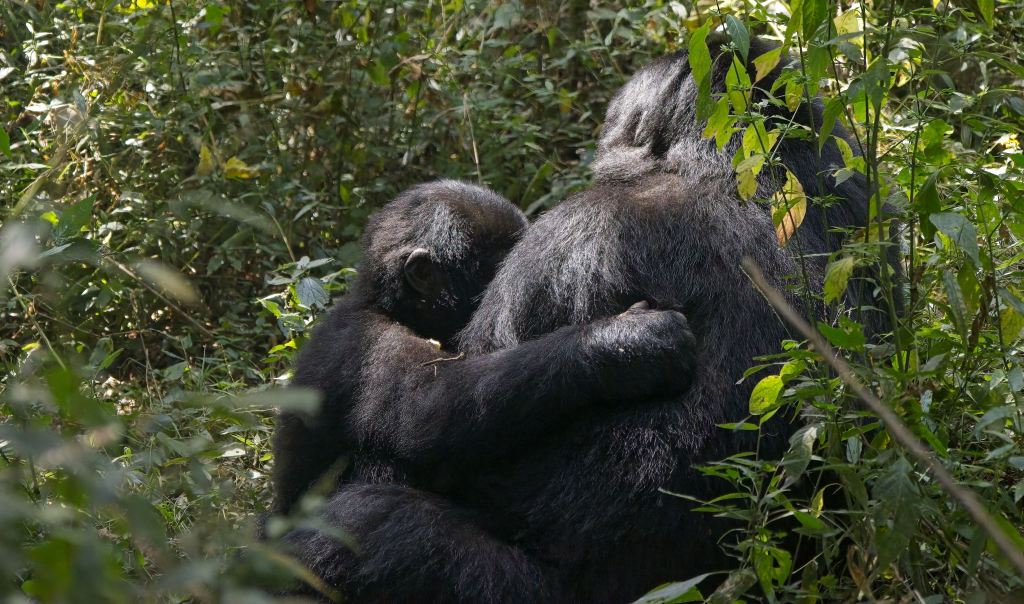


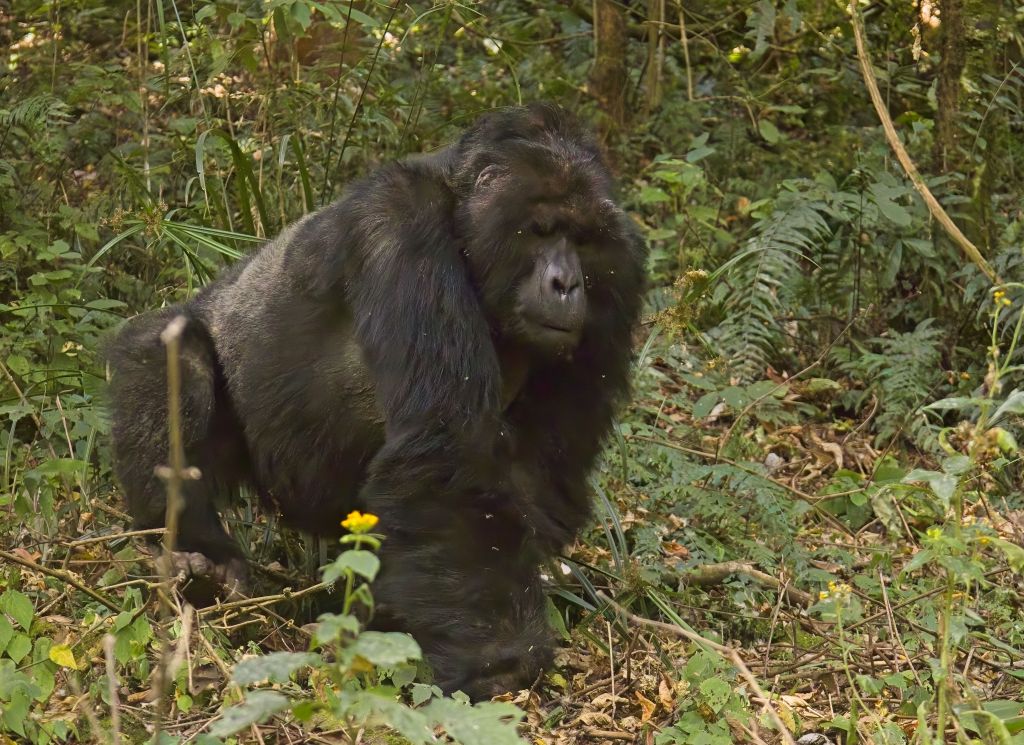


After maybe 70 or 80 minutes overall where we had been in contact with the gorillas, the ranger signaled that it was time to let them go and start our return. We had been given some extra time because it was realized that we had had to keep moving to have them in sight at all. By this time, we had come a long way down the steep slope and the thought of climbing back up was daunting and quickly dismissed. Instead we would continue further down until we hit an agricultural area and then a road. This sounded better than a climb back up especially with us thinking that our vehicles would be waiting for us. No not the case, the continued descent was longer than expected and when we got to the road, we learned we would have to hike up it for a mile or two to get to a place accessible by the vehicles. And now we would be in the open in the heat and the road was a very steep climb. After more than another hour, we finally got to the vehicles – ending what Cindy and I both agreed was the hardest thing we had ever done. Our porters had accompanied us the entire way, thankfully continuing to carry our packs and water. They rode back to Ruhija with us, and we gratefully acknowledged their efforts with a second $20 payment. This was a big deal for them as even a single $20 payment is highly sought after and recall they only get to do it once a month.
Given the great difficulty getting to the gorillas, the limited intersection and observation of them and the difficult hike down after the gorillas and then the challenge to get back up to get to the vehicles, despite the amazing experience of seeing them at all, Cindy and I both agreed that if we had known that our trek and interactoin would be what it was, we would not have gone – just not enough reward for the effort and cost. Of course we did not know this at the start and it could have been very different and better. There will not be another opportunity so this will be our only gorilla experience of our lives. Without the present agony of the trek, we can say we are glad we did it and we have certificates to prove that we completely the trek and some photos to memorialize the day.

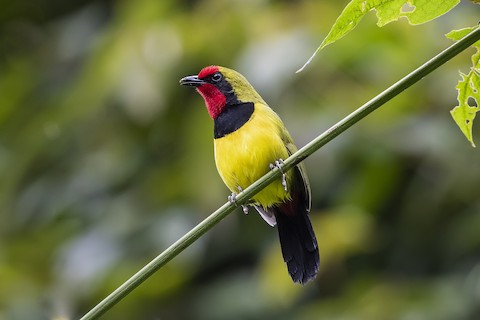
There were birds along the way as we were trekking but our concentration was elsewhere and we were mostly looking down making sure we did trip on the roots or rocks or avoiding thorns and nettles. Our only visuals were after we parted from the gorillas. Before that the species were essentially heard only including two lifers Rwenzori Apalis and Doherty’s Bushshrike. I am particularly sad that we never saw the latter – a very striking bird. The only bird photo I got was of a Mountain Wagtail, a species I had photographed last year in Tanzania.
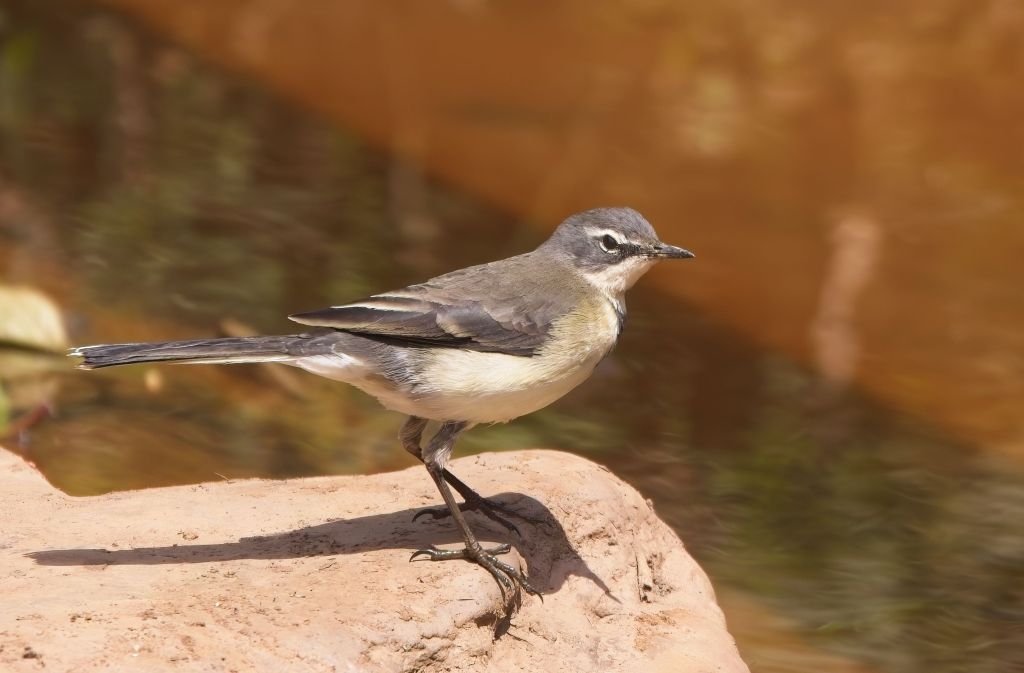
Finally we were done trekking. Two vehicles met us at the top of the road – one for our group and the other for the two Spaniards. All porters, trackers and guards loaded into the two vehicles for the return to Ruhija. We dropped Michael off at the Headquarters building and Hilda off at her handicraft shop in Ruhija and our very tired lot made it back to Gorilla Mist Camp. It had been a long day and it was now late afternoon. Time for a little rest and then dinner.
June 21 – Bwindi Impenetrable Forest Part 2 – Birding as We Left the Park
Today we would have a reasonably late breakfast (even later for Cindy who slept in), bird for a couple of hours in Bwindi near Ruhija, return to get our bags from Gorilla Mist Camp/Lodge and then bird for awhile further along in Bwindi Impenetrable Forest NP as we worked our way to our next accommodations at Mahogany Springs on the other side of the Bwindi Impenetrable Forest NP where we would spend the next two nights.
We had 38 species in our 2 hours of birding in the morning. Fourteen species were new for the tour and 4 were lifers and 8 were life photos – an excellent morning.

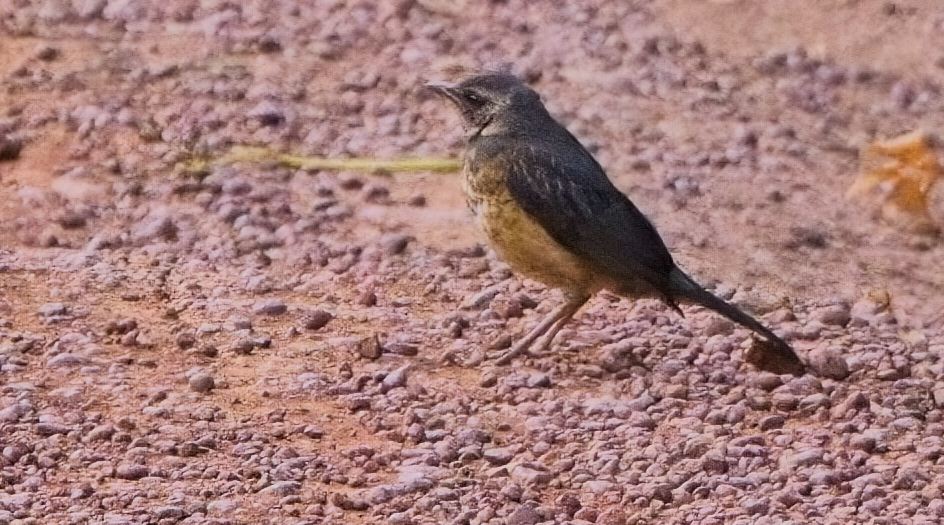


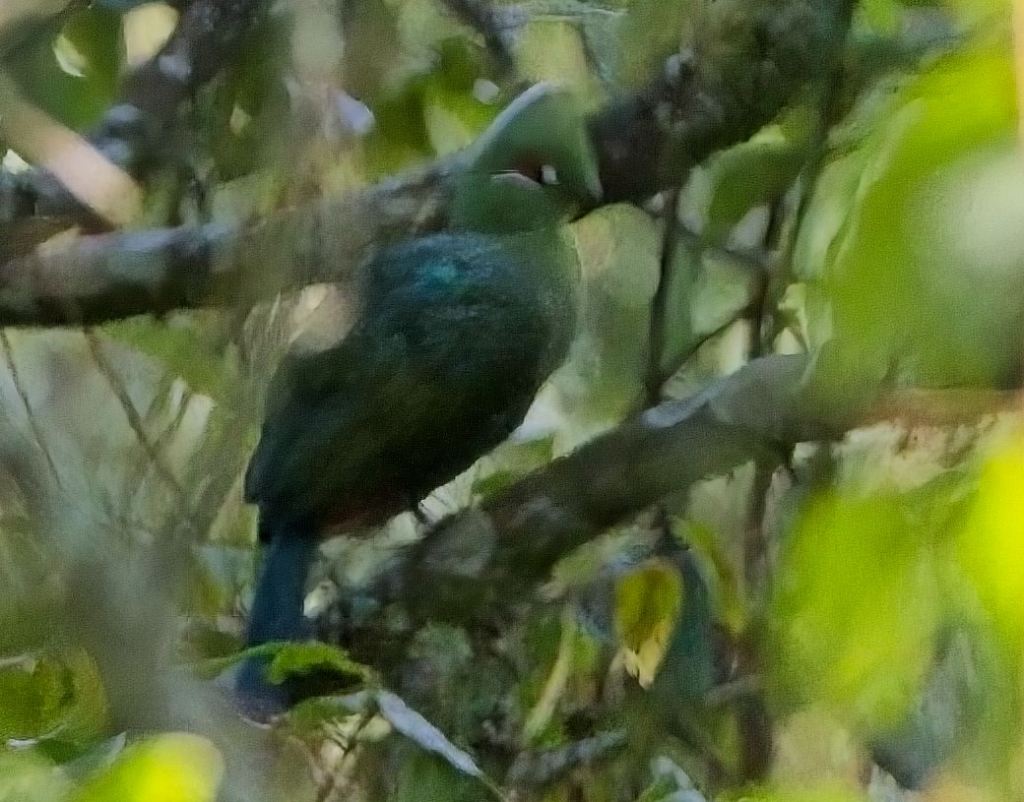

I was sadly unable to get photos of a couple of the lifers, little birds that I could not pull out of the foliage. Not a lifer but a would have been life photo was a Blue Malkoha. I have a photo that is probably it with a blurry yellow bill, but I just cannot stretch standards enough to include it. The photo below is from Ebird.

It was then back to Gorilla Mist Camp to load up and grab box lunches for the road. There was one important stop on our way out of Ruhija – the crafts shop of Cindy’s porter, Hilda. We had seen some masks earlier at hotel/lodge gift shops and were interested. When we saw that Hilda had masks in her shop it was easy – well except for choosing which one. They were all very reasonably priced. There was some extra room in our luggage for a smaller one as we had brought an extra bag so we made the purchased and bid goodbye to Hilda – more on that later.

Our main stop would be to a hotspot in Bwindi Impenetrable Forest NP called “The Neck” where we birded along the road for something over an hour after our box lunches. There were 17 species of which all but 2 were new for the trip and 3 were lifers (one heard only) and with 4 life photos.

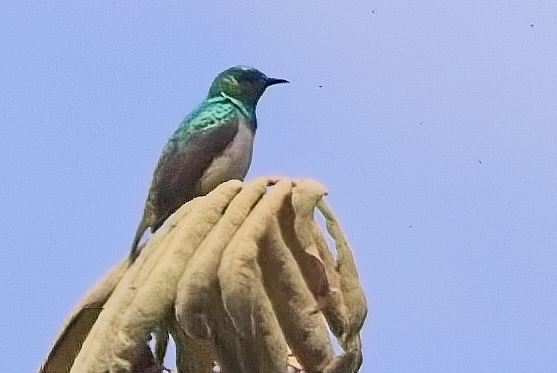

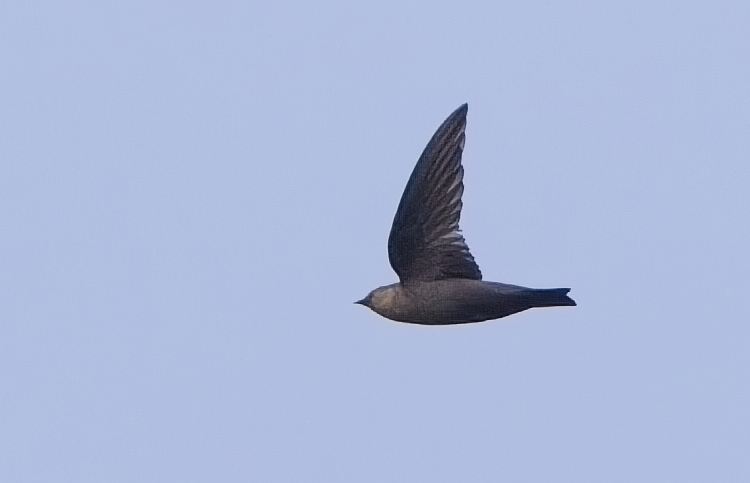
We reached Mahogany Springs mid-afternoon and checked in to our lovely rooms. Cindy stayed behind and had what she said was the best facial she has ever had and the rest of us birded for an hour on the Park Entrance Road adding another 10 species to the trip list (now at 261 species) including 4 more lifers for me but photos were hard to come by with mostly small and distant birds in thick foliage. I managed poor photos of two of the lifers – White Breasted Nigrita and Toro Olive Greenbul and a lifer photo of a Rock Martin.


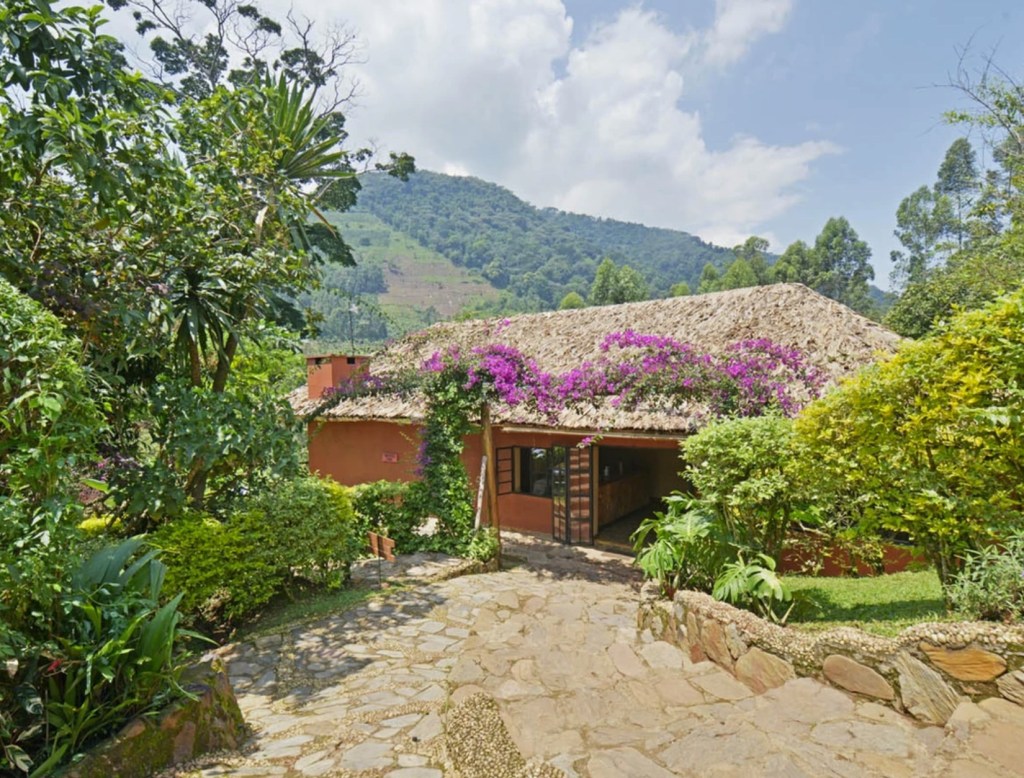
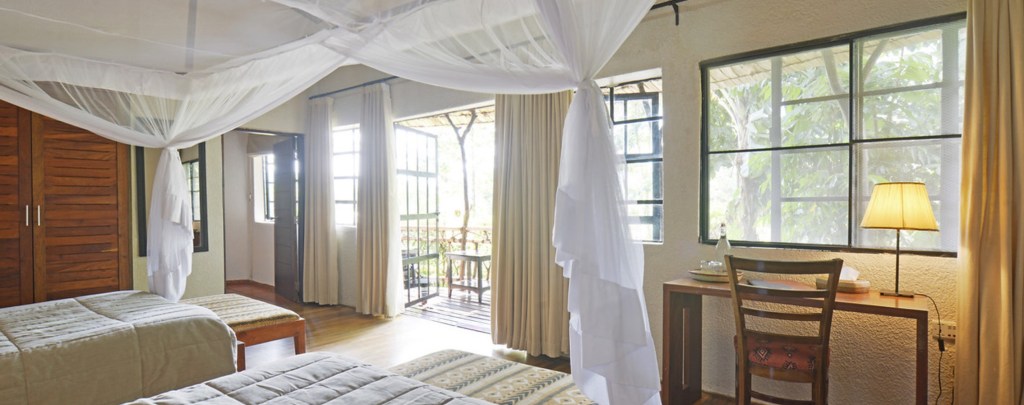
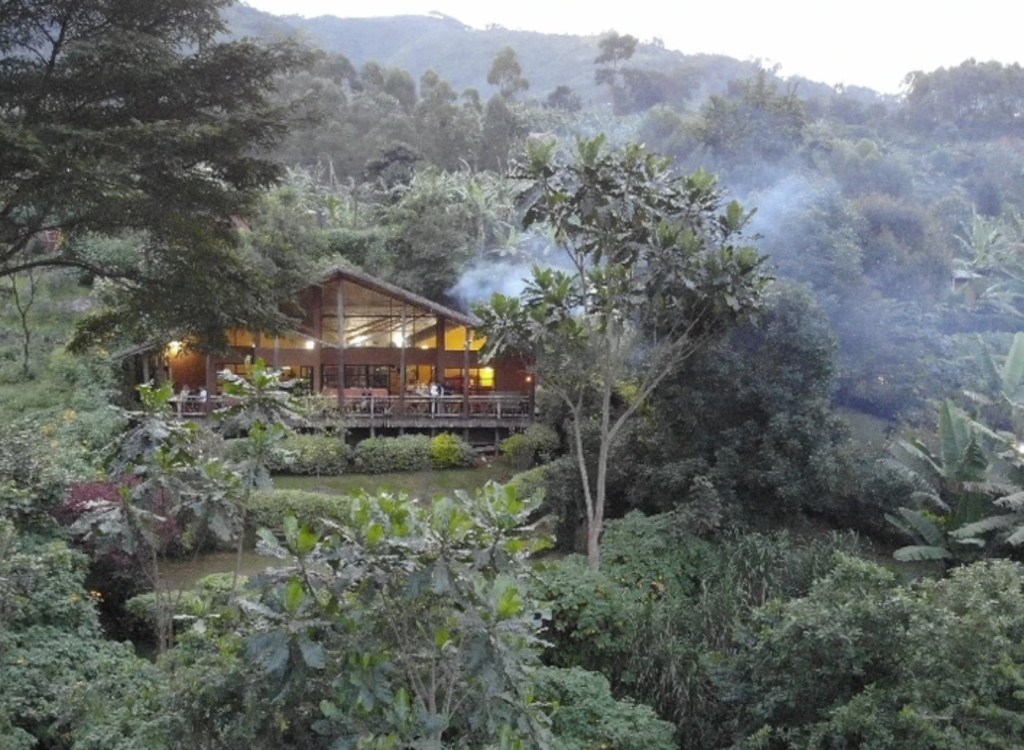
We were glad to check-in to the Mahogany Springs Lodge which was at least one and maybe two or three steps above the accommodations the previous 4 nights. Those places were fine but only fine with electrical switches and outlets either absent or in odd places, with generally poor lighting and challenges with water temperatures and Wi-Fi. Remember we had been spoiled in Tanzania where those had not been issues at all. Cindy was particularly pleased to have access to a hair dryer again. Definitely 1st world criticisms – and again, not in any way unsafe and sleep challenging, but still we really enjoyed Mahogany Springs. The photos tell at least part of the story.




 blairbirding