It happens every year beginning in August, picking up steam in September and continuing into October. The “it” is Fall Migration, birds that came north in the Spring to breed are now returning south for their wintering grounds where the young grow up, and the adults find enough food to build up their bodies to be ready to head north again in the spring to begin the cycle again. While nonresident birds of all types participate in this spectacle, for many of us the shorebirds are the ones that are easiest and perhaps most rewarding to track, largely because as suggested in their categorized names, they congregate along the “shore” and whether that is the shore of the ocean or the shore of a river or a lake or a pond, birders know the likely spots where they will be found – shorebirding hotspots where the shorebirds return each year. It is fun to see all of the shorebirds, even if their Fall plumages are far plainer than their more colorful feathers of the Spring. But the birds that get the adrenalin flowing and get us out earlier and further from home are the less common species, especially the rarities. Now with technology enhanced communication opportunities with Ebird posts, Facebook and WhatsApp groups, and the large number of birders using all of them, word of uncommon, unusual and rare finds are almost instantly shared in the community of birders and “the chase is on”.
In my earlier birding days, come August and September, I would most often be off to the game range at Ocean Shores in Grays Harbor County, Eide Road in Snohomish County, the “Montlake Fill” in King County, Wylie Slough in Skagit County or up to Sequim in Clallam County to look for the incoming shorebirds. Not that birds do not still come to those places, albeit with major changes to some of them that have lessened their productivity; but certainly this year, in addition to many spots on the Coast, two other locations have emerged as the “go to” hotspots: Channel Drive in Skagit County and the Mouth of the Cedar River in King County. Along with a report of a trip to the Washington Pacific Ocean Coast, the remainder of this blog will share my experiences at those locations.
My Fall Migration quest for 2025 started when I visited the Coast with friends Tom St. John and Dennis Westover on August 16th looking primarily for photo opportunities as they are both excellent photographers. Our hope that there would be many shorebirds went unrealized, as maybe we were a bit ahead of the migration at least on the coast. Particularly disappointing was that we found very few species driving the open beach. At our first stop at the Hoquiam Sewage Ponds (another former great spot for shorebirds that has been changed with some of the mud no longer visible), we had only a few Greater and Lesser Yellowlegs and some Least Sandpipers. At our next stop at the Brown Point Jetty in Ocean Shores, we had distant views of a Wandering Tattler, a Surfbird and some Black Turnstones. A new for the year species for me at least in Washington was Brown Pelican as many flew by.

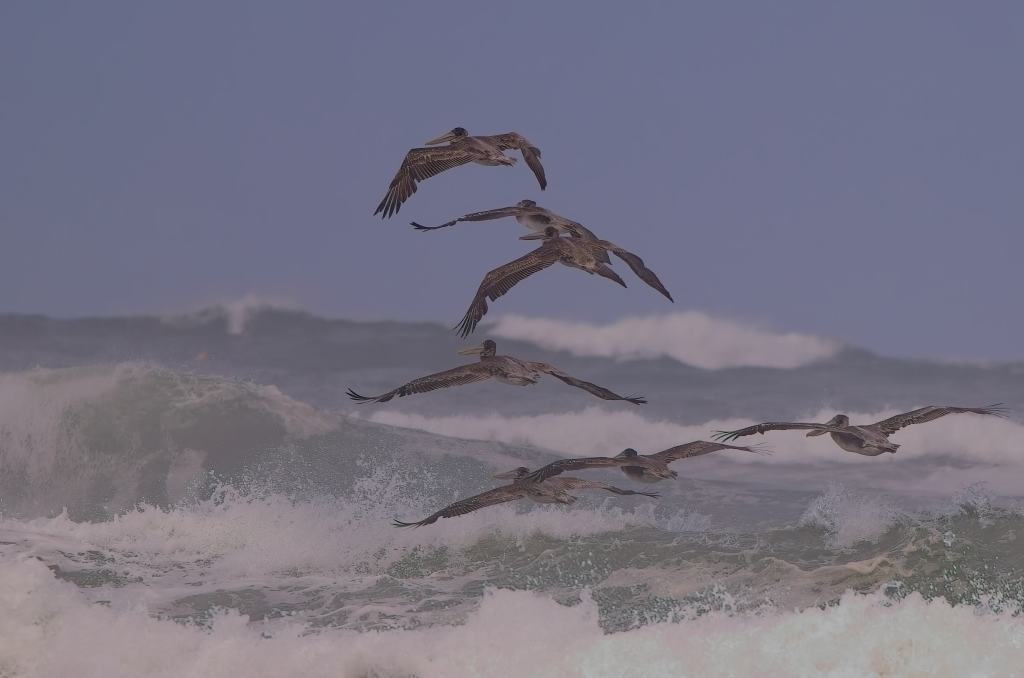
On the open beach we found only a few Semipalmated Plovers and some Sanderlings, a far cry qualitatively and quantitatively from our hopes and expectations. It was only noon so we had time to back track through Hoquiam and Aberdeen and head south on the Westport side of the Coast with our first stop at Tokeland.

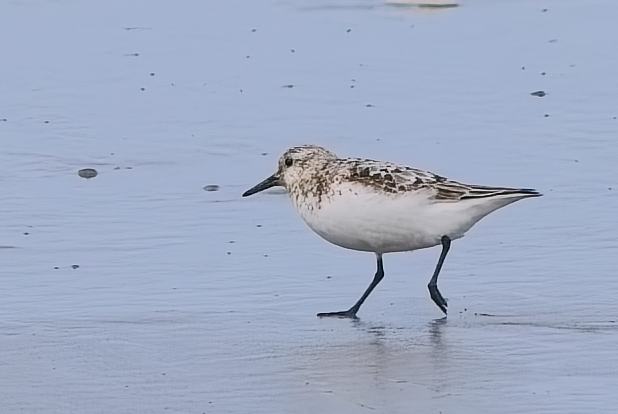
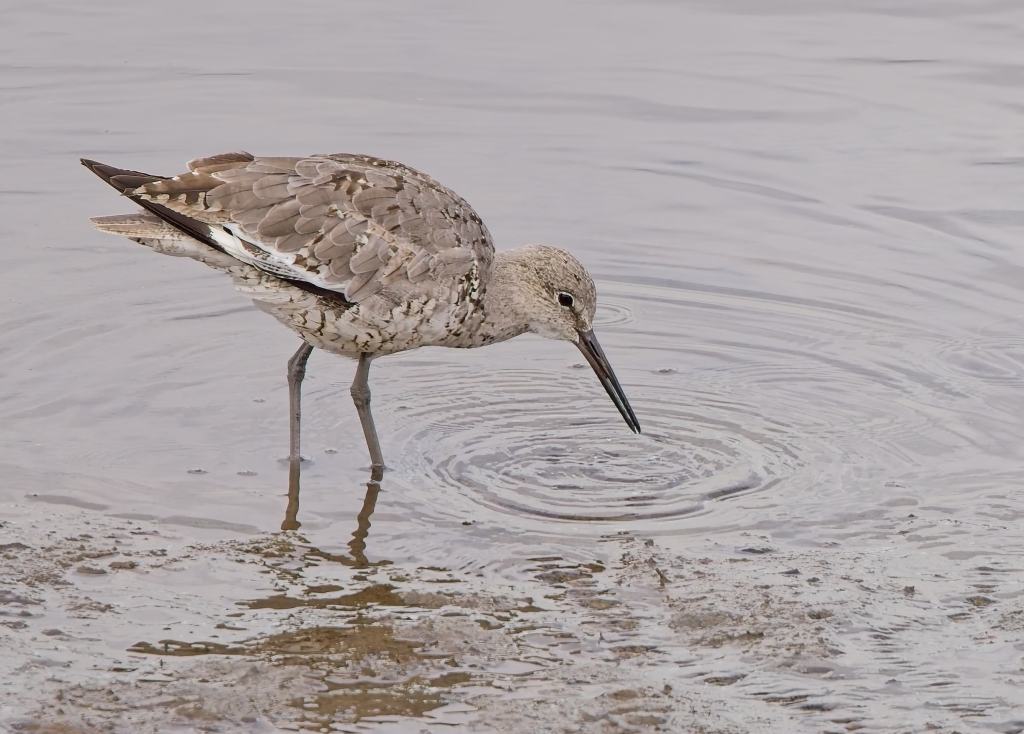
At Tokeland we quickly found the resident Willets and the huge flock of Marbled Godwits that have also become resident there – all photo friendly. We scanned the latter hoping for a Bar Tailed Godwit, often found in the group and a rare species that Tom and I had seen there last year. No luck but I saw that one had been seen (the first time for 2025) in the flock a few days later. Denny is far more interested in photography (he is a star) than the birds themselves so this was an especially great stop for him. As a side note, Tokeland is the “go to” place for Willets in Washington. My first Washington record was of 5 Willets there in 2012. The population has expanded each year and this time we had at least 25. The most I have ever had there was 30. They seem to be thriving.


Undaunted by our disappointing open beach drive on the Ocean Shores side we then drove the open beach beginning at Cranberry Beach. We had even fewer birds, but were successful in locating a single Snowy Plover, the main target.

Our final stop was at Bottle Beach where birding can be excellent but catching the tides right is a challenge. We were pretty good on the tides but again the birds were not super cooperative. We had a good group of Marbled Godwits, a relatively small number of Black Bellied Plovers, a single uncommon Ruddy Turnstone, a handful of Least Sandpipers, a small flock of Short Billed Dowitchers and maybe 75 Western Sandpipers. I have had a good number of rarities at Bottle Beach and 15 different shorebird species altogether, so it was a bit disappointing.

Regular and common although not numerous in Fall Migration, when Baird’s and Pectoral Sandpipers are reported, they draw attention from birders, particularly those of us looking to add new species to our year lists. Both had been reported the first week of August this year at Channel Drive joining the more common Greater and Lesser Yellowlegs, Long and Short Billed Dowitchers and Least Sandpipers but engaged in other activities, I did not go looking for them. But I could resist only so long and finally it was time to grab my camera and head north. Unfortunately on my first of such trips, I forgot to read the tide tables and arrived to a high tide and a water covered area with no mud and no shorebirds. Lesson learned (well at least partially), a few days later I timed my visit to arrive at low tide expecting to find shorebirds or to be there for the incoming tide which would bring them to me. Wrong again. A low tide, yes, a low enough tide, no. Again almost no mud in the main ponds. A few Greater Yellowlegs, some Killdeer on the mud at the channel itself and a small group of Least Sandpipers that flew by. Nothing new for the year, nothing exciting. A stop at the Hayton Reserve also misjudged the tide – way too low, but a consolation prize was a beautiful first of the year juvenile Peregrine Falcon.

Ok, enough of Channel Drive. A “rare for the area” Red Knot was being reported at the Mouth of the Cedar River in Renton, Washington not as quite far my Edmonds home to the South as Channel Drive was to the north. So I headed south. Prior to that visit I had seen 57 species at that location including 10 shorebirds, most notably both American and Pacific Golden Plovers, Semipalmated Plover, Killdeer, Least, Western, Pectoral, Semipalmated and Spotted Sandpipers, and Greater Yellowlegs. Not surprisingly there were many birders there when I arrived, several looking at the main target, the juvenile Red Knot, and there were many other shorebirds there as well. New to me for the location in addition to the Red Knot were Short and Long Billed Dowitchers and a Baird’s Sandpiper. The Knot, the Baird’s Sandpiper and a Semipalmated Sandpiper were new for my 2025 Year List. Other shorebirds seen there were Killdeer, Semipalmated Plover, and Western and Least Sandpipers. Seen by others previously but not by me this day was what would have been a first of the year Pectoral Sandpiper.
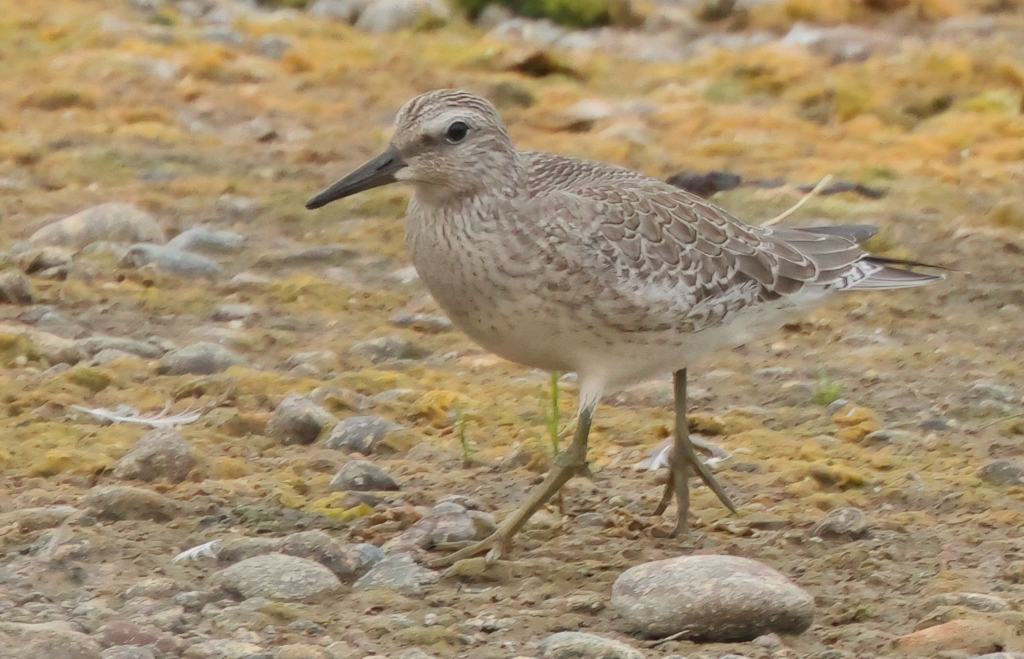


New for the Year
Good reports continued for Channel Drive including for Stilt Sandpiper, regular but uncommon, so I would give it one one more try – paying attention not just to whether it was a low tide, but how low. It was now September 3rd, and I finally got the tide right. Nine shorebird species were there including my first Pectoral Sandpiper for the year but the Stilt Sandpiper failed to make an appearance.
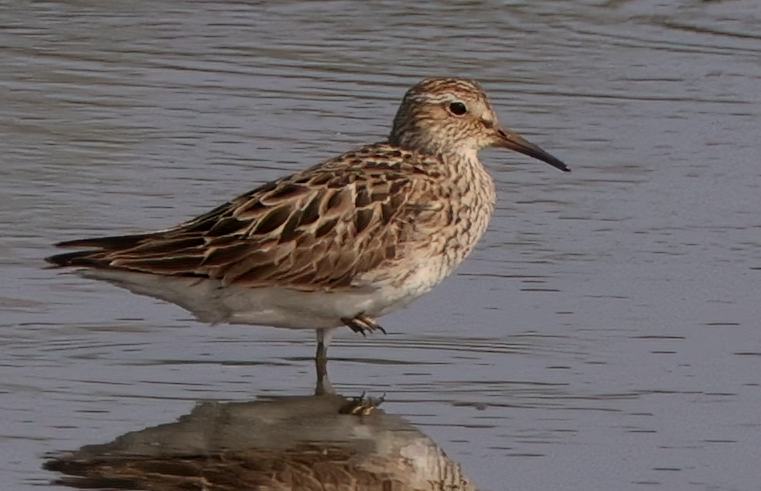
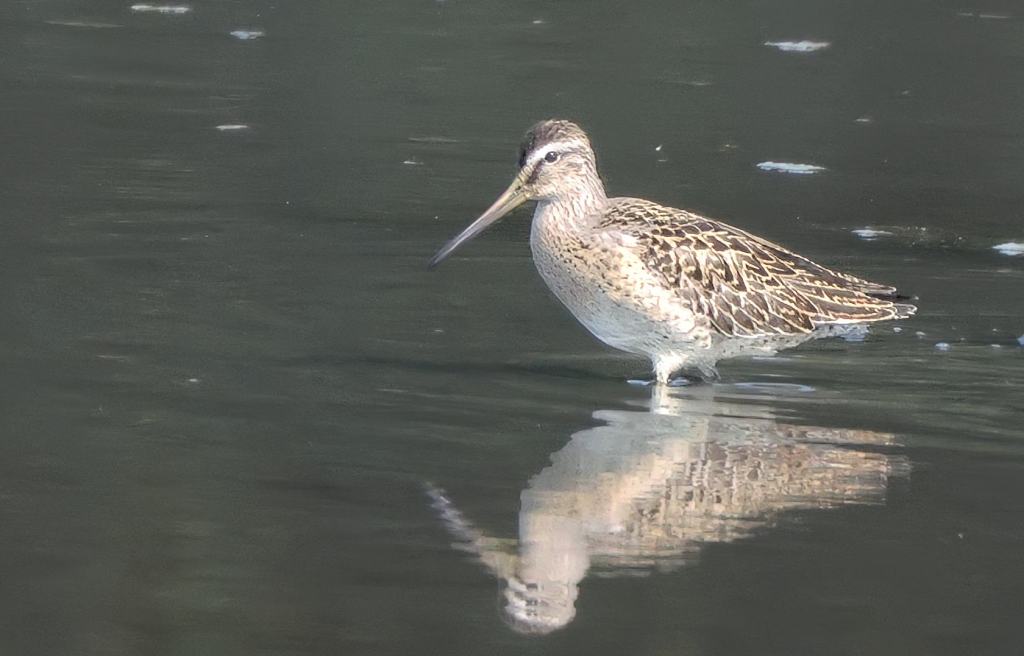
The Stilt Sandpipers were seen again a day or two later at Channel Drive but attention for birders in Western Washington shifted back to the Mouth of the Cedar River as a young excellent birder, Eric Hope, visited every morning and in addition to continuing to report on the continuing Red Knot among others, he added Stilt Sandpipers, Sabine’s Gull and then a mega rarity, a Red Necked Stint. Time to get back to the Cedar River mouth. In my blog posts, I often refer to two cardinal rules for a chase. Rule 1 is “Go now!” That means as soon as you hear about a bird of interest, pick up your gear and go for it. Don’t wait. Rule 2 is if you fail to follow Rule 1 and you don’t get the bird, you are not allowed to whine about it, because – hey you knew Rule 1. I had seen Red Necked Stints in Washington twice and had photos so I did not go right away, but then a Ruff was found by Eric the next morning, and even though again I had seen and photographed that species in Washington on many occasions, it was quite rare and it was not possible to stay away.
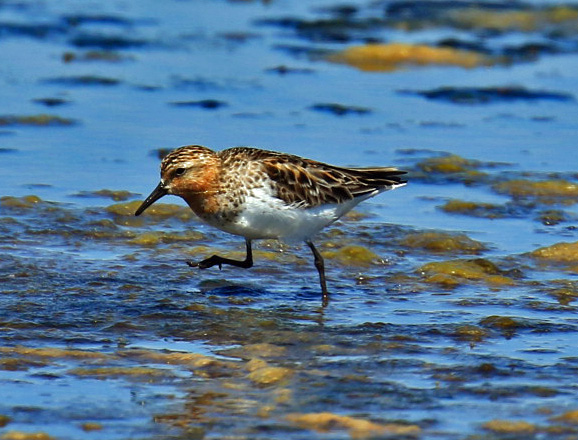
I knew that friend Jon Houghton “needed” a Red Necked Stint for his life list, so he was an easy recruit to go. Unfortunately the Mouth of the Cedar River site is adjacent to a municipal airport and even though it had not done so previously in the year, on the morning we were going to go, they shot off fireworks “to scare the birds away” theoretically to prevent collisions with aircraft, even though there had been no recent issues. The Stint was seen that morning before the fireworks but not thereafter. When Jon and I got there, we quickly found the Ruff and hung around with many other birders for a couple of hours, hoping the Stint would return – no such luck. BUT in addition to the first of year Ruff, I did see a couple of Stilt Sandpipers, first for 2024. Unfortunately I was never able to get a photo with them close and with heads out of the water. Jon and I decided to chase a Solitary Sandpiper at the Redmond retention ponds, a place I have seen them twice before. Nothing when we first walked in but a few minutes later, a single shorebird flew in – and we had our target.
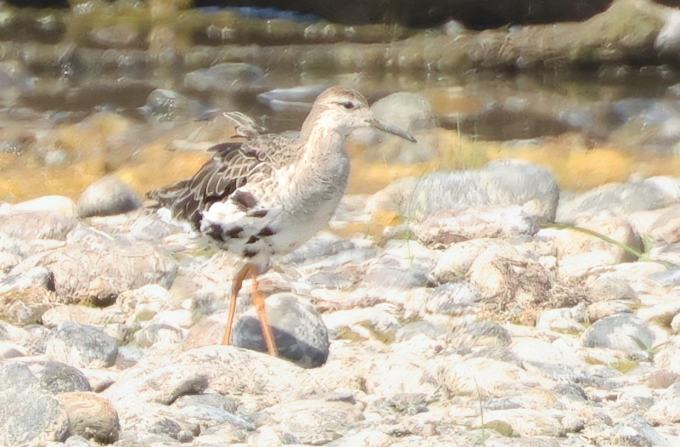

At the Mouth of the Cedar, the Red Knot had continued and there were a lot of other shorebirds and the hope was that the Ruff would continue as well. I called Denny and Tom and when asked if they were interested in some photo ops, we agreed to visit there the next morning. The way things were going, maybe something new would show up, and neither had seen a Ruff, so that was a great appeal. Once again, however, the airport shot off the fireworks and the Ruff was nowhere to be found. But other birds were there including the continuing Red Knot and Stilt Sandpipers, this time closer and with their heads up allowing for photos. And even though they missed the Ruff, there were many photo opportunities for Denny and Tom – and, thus for me, too. This included a very cooperative Osprey, a fly over by a Peregrine Falcon, a Pectoral Sandpiper, both Dowitchers and a close-in Wilson’s Snipe.
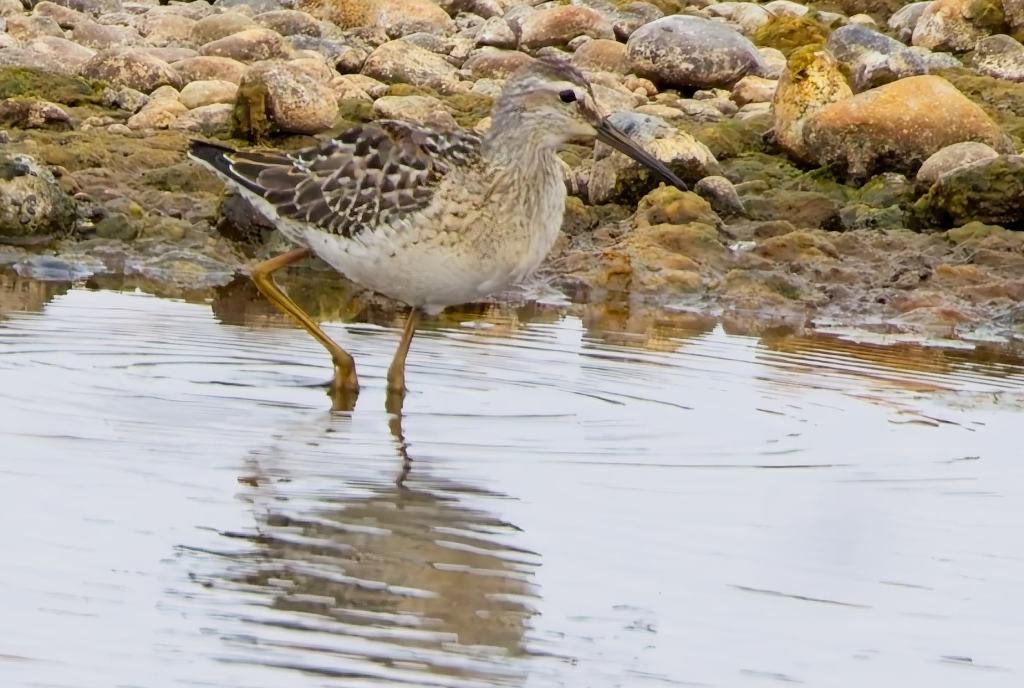


If that had been the end of the story, even missing the Red-Necked Stint, it would have been a great story for just one month with 14 shorebirds seen at the Mouth of the Cedar in addition to the ones seen at Channel Drive and the species seen earlier at the coast, that altogether made it 26 for the month: Marbled Godwit, Willet, Sanderling, Killdeer, Semipalmated, Black Bellied and Snowy Plovers, Ruddy and Black Turnstones, Surfbird, Wandering Tattler, Western, Least, Pectoral, Spotted, Semipalmated, Solitary, Stilt and Baird’s Sandpipers, Wilson’s Snipe, Ruff, Red Knot, Short and Long Billed Dowitchers, Lesser and Greater Yellowlegs.
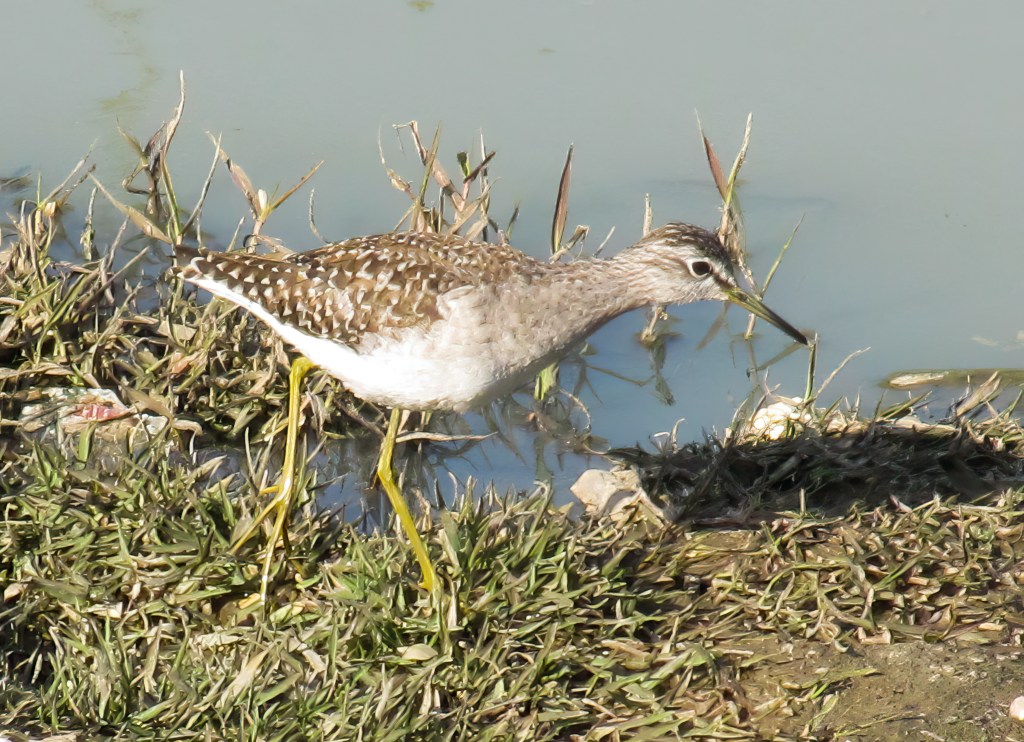
I have seen 50 species of shorebird in Washington that in addition to the 26 above include 9 that would be considered very rare: the aforementioned Red-Necked Stint and Hudsonian Godwit (each seen twice), Little Stint, Wilson’s Plover, Wood Sandpiper, Siberian Sand Plover, Upland and White Rumped Sandpipers, and Mountain Plover (each seen only once) and another three that are seen not as rarely but are considered very uncommon at best: Sharp Tailed Sandpiper, Bar Tailed Godwit and Buff Breasted Sandpiper. The other 12 species are regular and/or common but for the most part are found in different habitats: Black Oystercatcher (resident and seen mostly on rocky coasts), Rock Sandpiper (uncommon and also on rocky coasts in the winter), three species of Phalarope all migratory and either pelagic (Red) or mostly in Eastern Washington (Red Necked and Wilson’s), Pacific and American Golden Plover uncommon but regular in the Fall, American Avocet and Black Necked Stilt (migratory and then breeds in Eastern Washington), Long Billed Curlew (migratory and then breeds in Eastern Washington), Whimbrel (migratory found mostly in Western Washington) and Dunlin (a nonbreeder seen throughout the year and throughout the state and abundant wintering in Western Washington). So doing the math in about a month, I had seen 50% of all of the shorebirds for the state with another 24% being either rare or very rare and the others being generally found elsewhere or at another time.
If the story ended there it would be a really good story. But there is one more twist to the story. I have taken photos of all but two of those 50 species in Washington. The Wood Sandpiper is a mega-rarity that I saw in Skagit County in August 2011. That is the only record of it for Washington on Ebird. It was a go now chase and I did not even have my camera. I have seen and photographed many in Europe, Asia and Africa but the odds are slim that there will be another one in Washington. The only other photo of any of the 50 Washington shorebirds I am missing is the very rare for Washington Upland Sandpiper seen by me with Dennis Paulson as a fly over at the Game Range in Ocean Shores in 2013 and then missed by 30 minutes after a chase to Damon Point, again in Ocean Shores in 2020. So when a WhatsApp message appeared on the morning of September 10th that one was being seen – and of course it was at the Mouth of the Cedar River – I followed Rule 1, got into my car, and headed south. This time I missed it by an hour – AAARGH!!! Dozens of birders were there when I arrived or came later and it was just never seen again.
It had been a great 3 weeks, but I would have traded all of the observations and all of the other photos for a single photo of the Upland Sandpiper – even a lousy one. I have a photo of one in Maine and another of one in Texas. Maybe next year – maybe at the Mouth of the Cedar River a new favorite Hotspot.

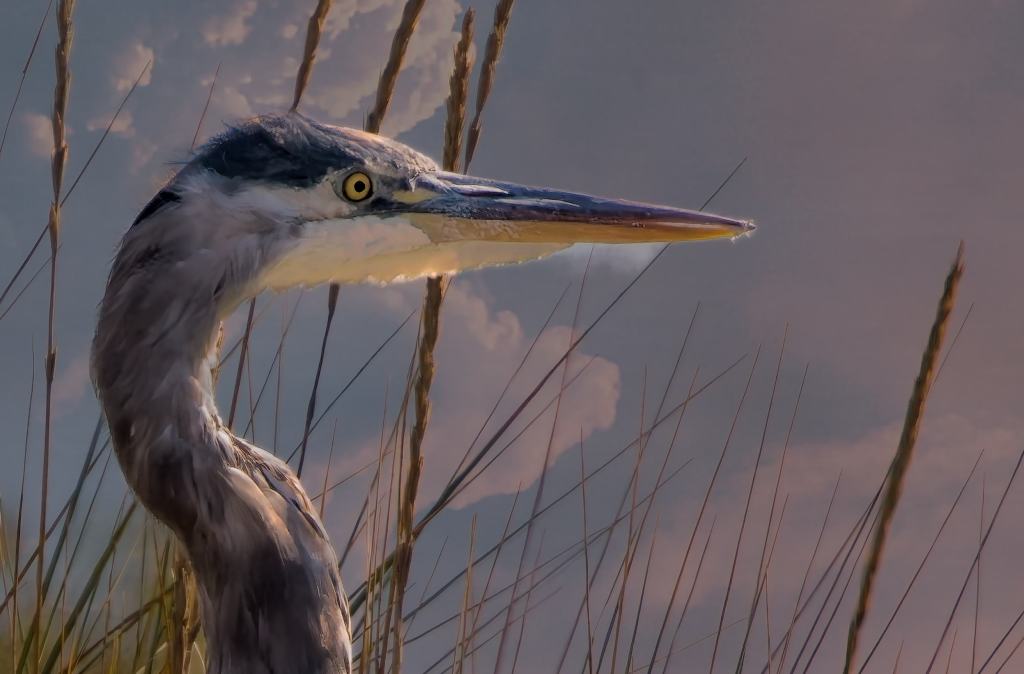
[August 17 Addendum – I just came back to this post after visiting the Tulalip Spit in Snohomish County with Jon Houghton chasing an American Golden Plover that was being reported there. After an unsuccessful 45 minutes alone, we were joined by 8 other birders and after another 30 minutes when the tide came in and pushed the birds somewhat closer, we were successful in locating the American Golden Plover among 170+ Black Bellied Plovers. Other shorebirds were two Red Knots, a Baird’s Sandpiper and many Dowitchers. One of the many Great Blue Herons provided a nice photo op. The American Golden Plover brought my Fall 2025 shorebird count to 27 species. I leave for Amsterdam next week and unless something really special shows up, there will be no more birding in Washington before I return in early October. There is a chance to add some Eurasian shorebird species in Amsterdam as I hope to get out birding one day. Back in Washington next month, there may be another species or two to be found. I like round numbers, so maybe 30 will complete the story.]


 blairbirding