
Before this trip I had never heard of the city of Barranquilla. It is the 4th largest city in Colombia, behind Bogota, Medellin and Cali with a metro population of 2,370,000. Like many South American cities there is a striking contrast between the wealthier and poorer sections. Barranquilla, situated on the Caribbean Coast is the the capital of Colombia’s Atlántico Department, a bustling seaport flanked by the Magdalena River. The city is known for its enormous Carnival and a major attraction along the Riverwalk is a very large statue of perhaps its most famous citizen, Shakira. My first night would be at the Hotel Barranquilla, a very nice hotel in a lovely area, about 25 minutes from the international hotel. Guide Breiner Tarazona was waiting for me as I came out of the easily managed entry process at the airport – and then I could relax. I have never had a problem with a guide or driver meeting me upon arrival, but it is always a tense moment – “What if there is nobody there?” With that hurdle passed, it was almost 1 p.m. and it was time for some birding.
Day 1 – June 20th
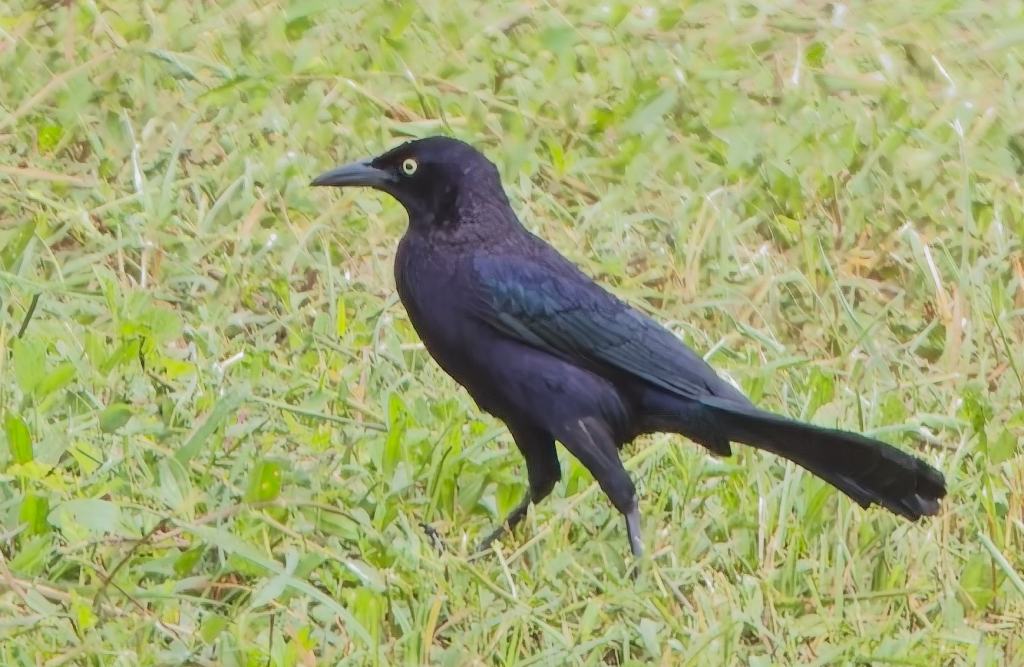
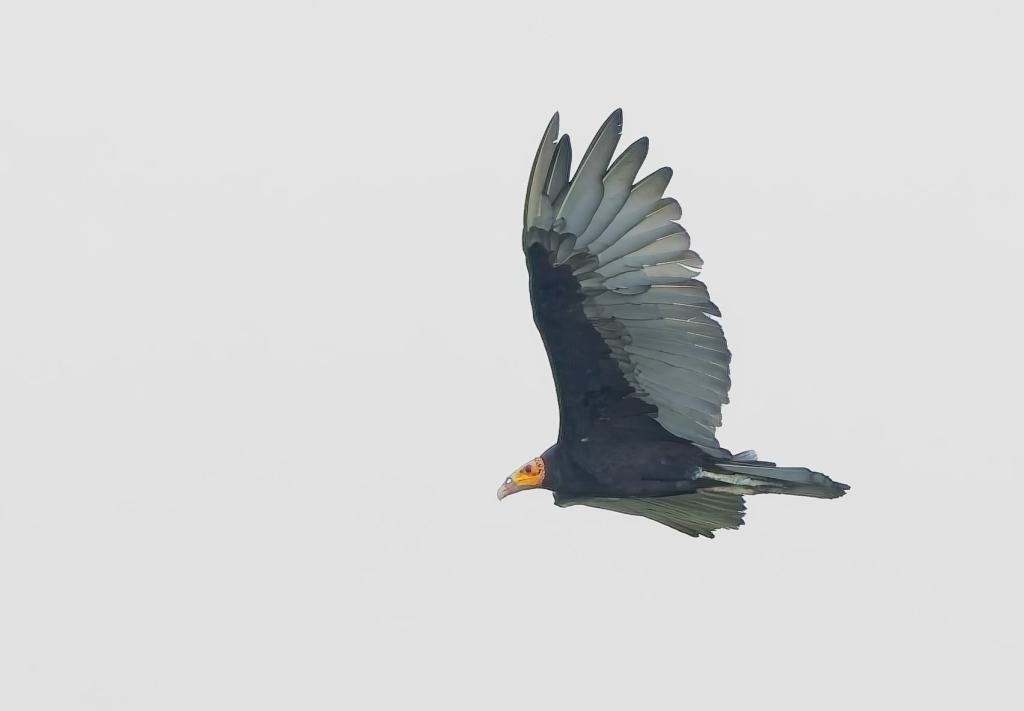
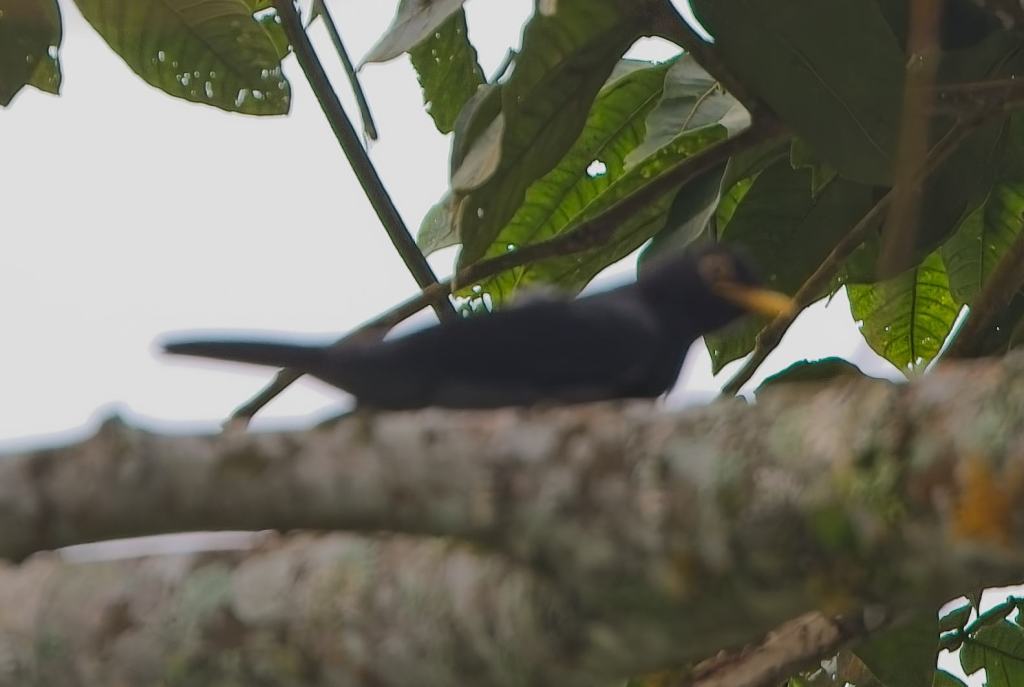
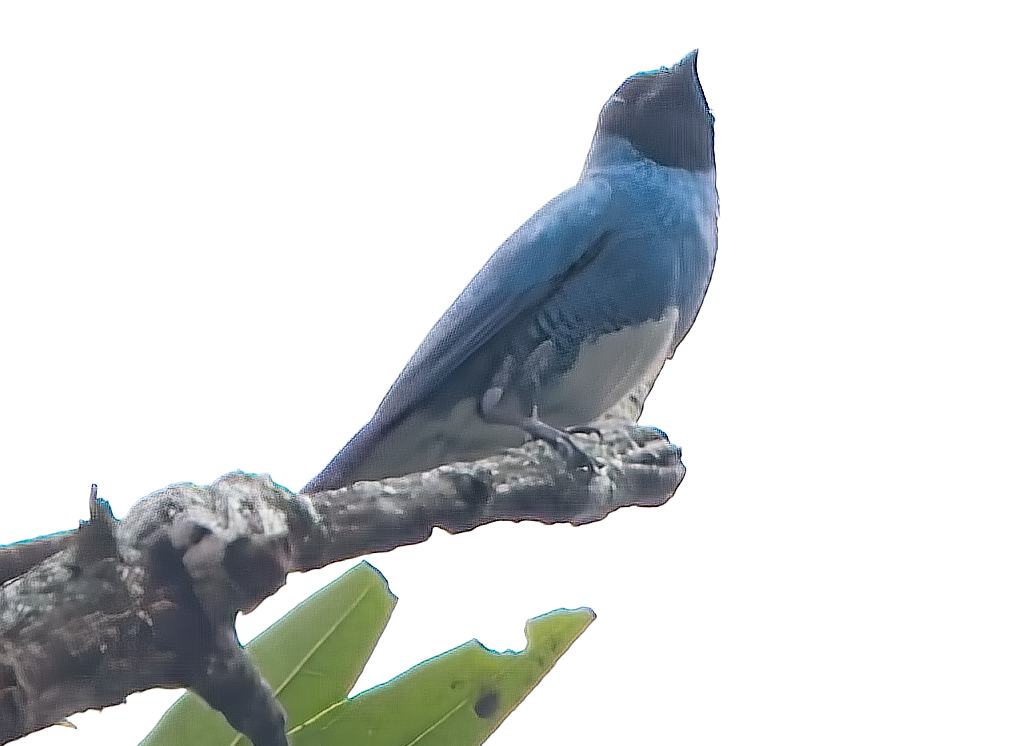
Our first targeted destination was to be the Ciénaga del Totumo–Volcán del Totumo, a large wetland located behind the Totumo volcano. There were birds along the way including some that would later be seen better at our first real stop and become life photos: Carib Grackle, Lesser Yellow-Headed Vulture, and Gray-Headed Martin. I also got my first lifer, a Glaucous Tanager, which brought my Colombia life list to 11 before reaching the Ciénaga. This was a fabulous first Colombia birding experience as we headed off to explore in a small motorized boat which brought us to many more birds and many photo opportunities.

The Ciénaga was a great location with 47 species split almost 50/50 between water-related species and others. The same even split applied to the 6 world lifers and despite the water orientation, there were actually more life photos of the non-water birds. This visit also included one of the rarest birds and photos of the entire trip as Breiner expertly found and then called out a very rare Yellow-breasted Crake an early demonstration of Breiner’s expertise and skill. Previously there had been fewer than 10 photos of this species in all of Colombia. It is hard not to include all of the 25 species photographed on this visit, but I will limit them here to just the lifers (life list or photo) — and well a few others.
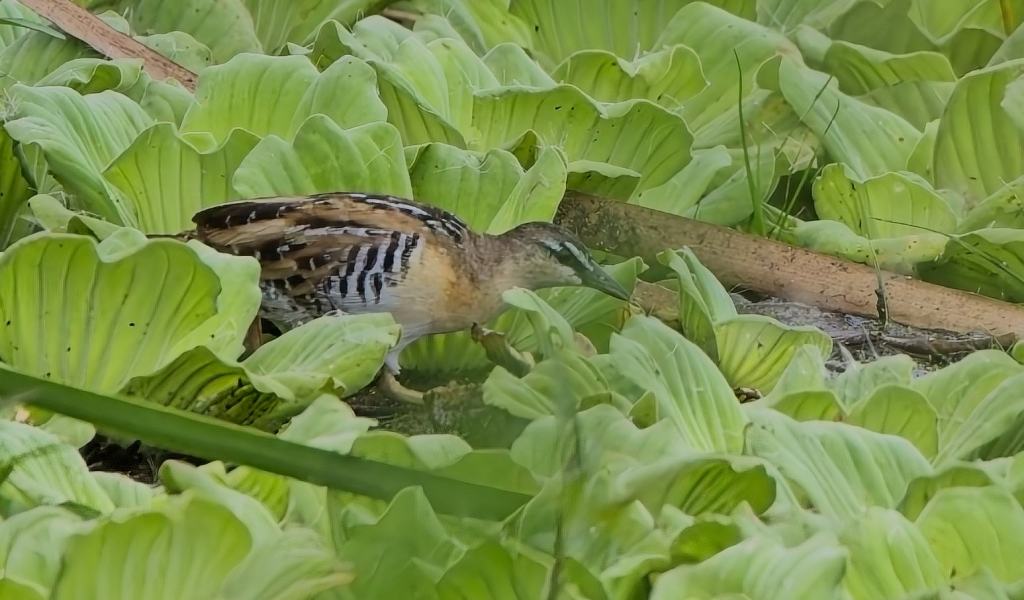
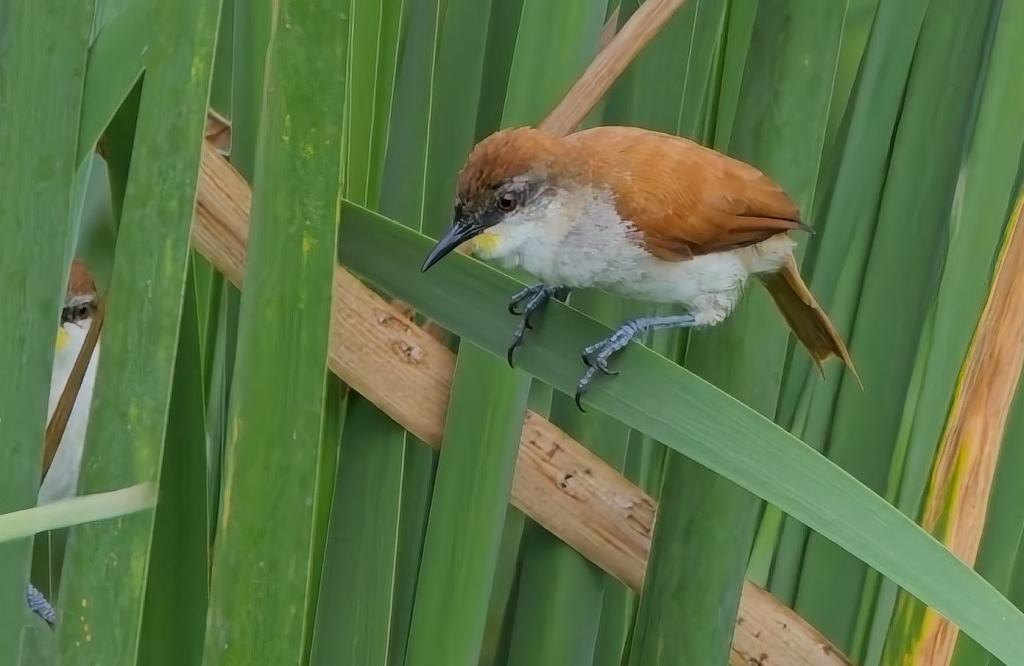

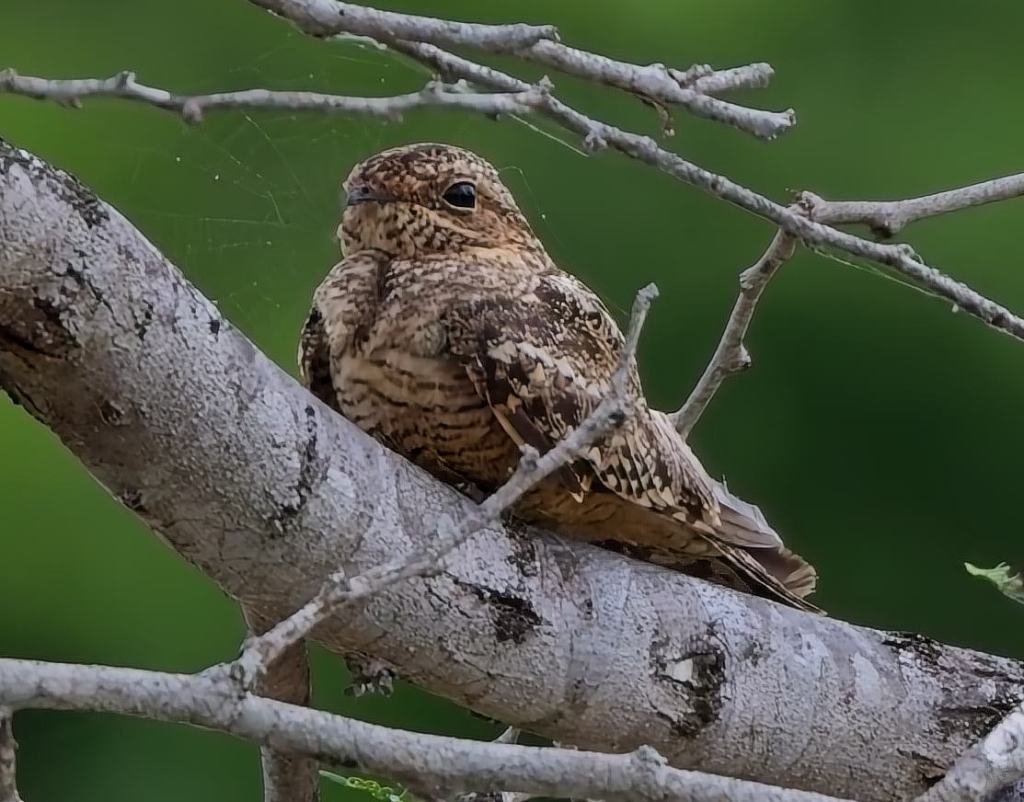
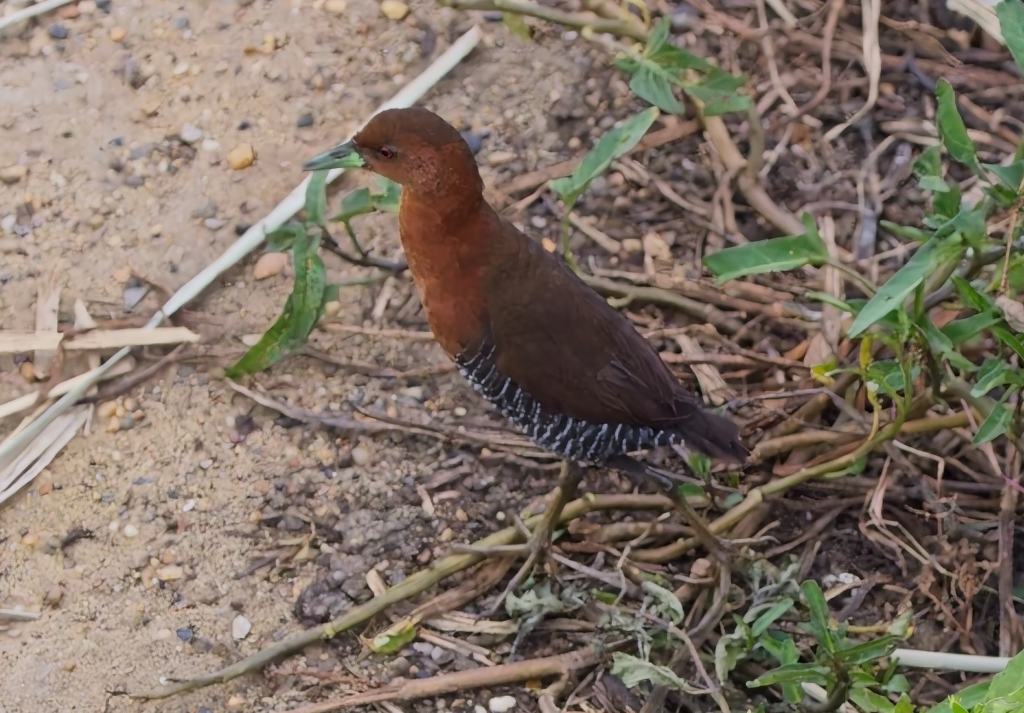




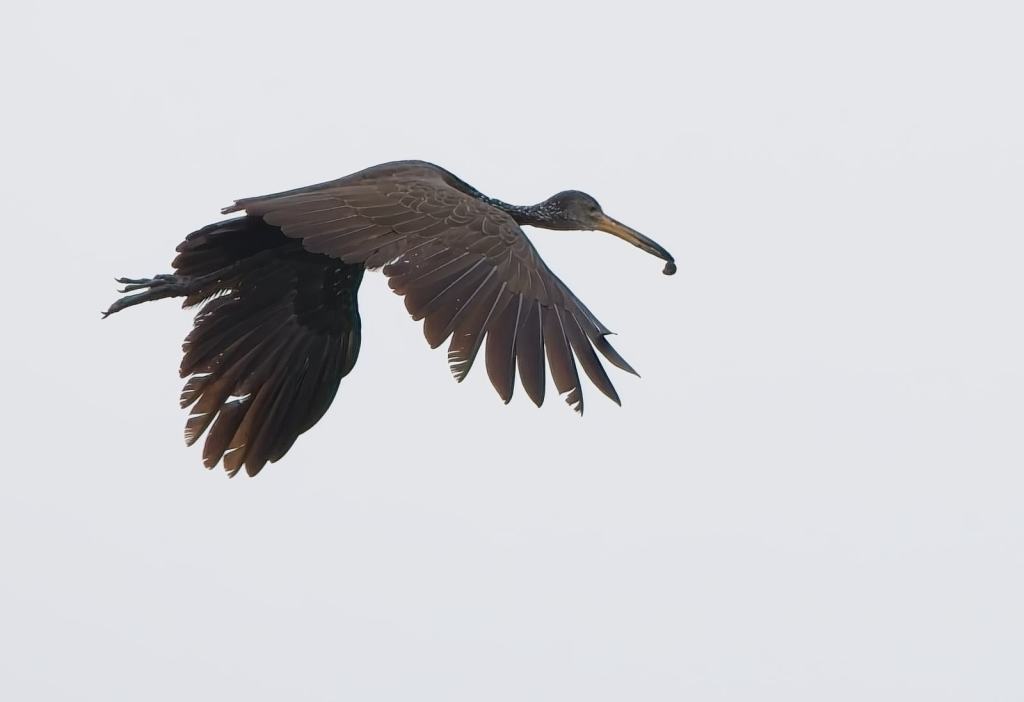
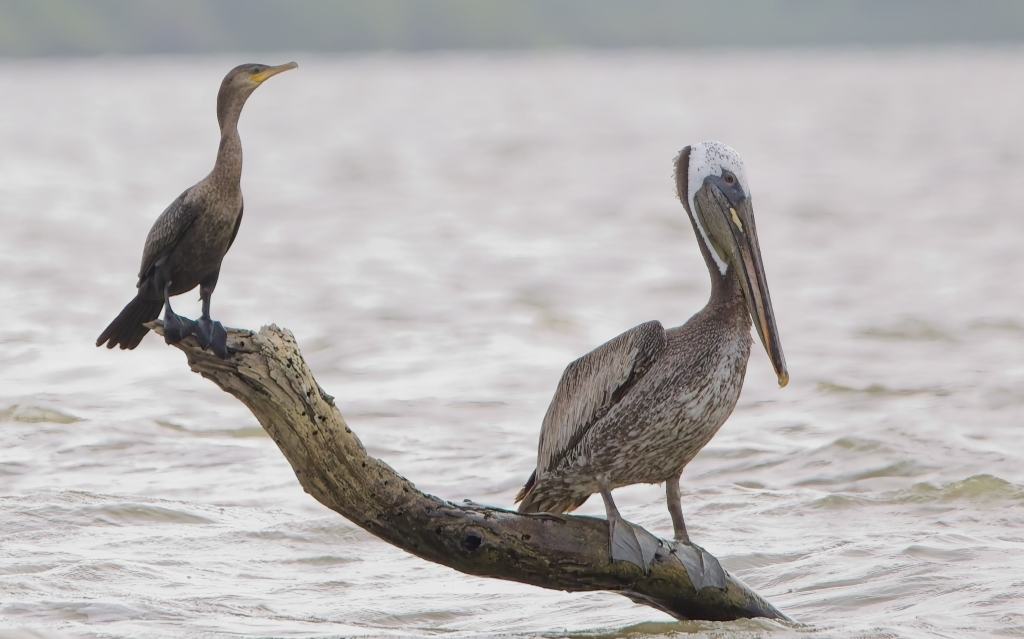
Other photos that were not lifers or life photos.




We added a few more species at a last stop for the day and headed to our hotel. Totals for the day: 57 species; 7 lifers and 11 life photos – excellent for barely a half day of birding.
Day 2 – June 21st
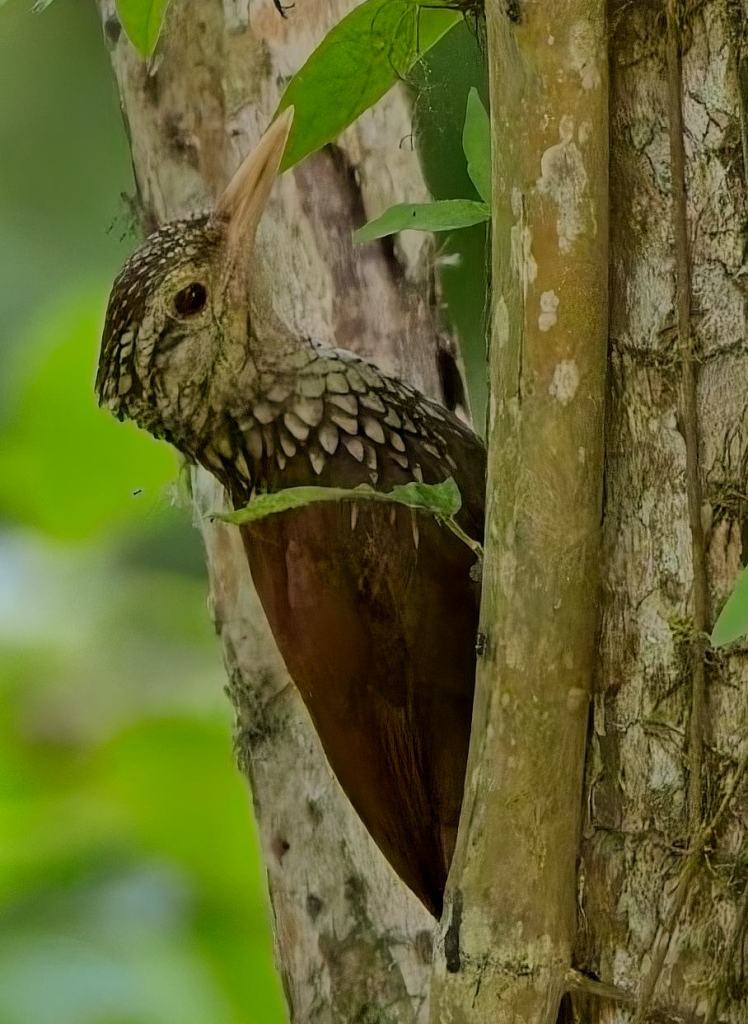
As is often the case with birding trips it was an early morning start to be able to get to our target area for the morning – the Matute Birding Nature Reserve, in a tropical dry forest south and west of Barranquilla, fairly close to Cartagena. We birded there from just past 6 a.m. until noon. Seventeen of the 46 species seen there were lifers for me. The 32 species photographed included 10 of those lifers (getting photos of two of the others later in the trip) and life photos of 8 other species. I have grouped the lifers with photos in the first gallery and life photos but not lifers in the second.
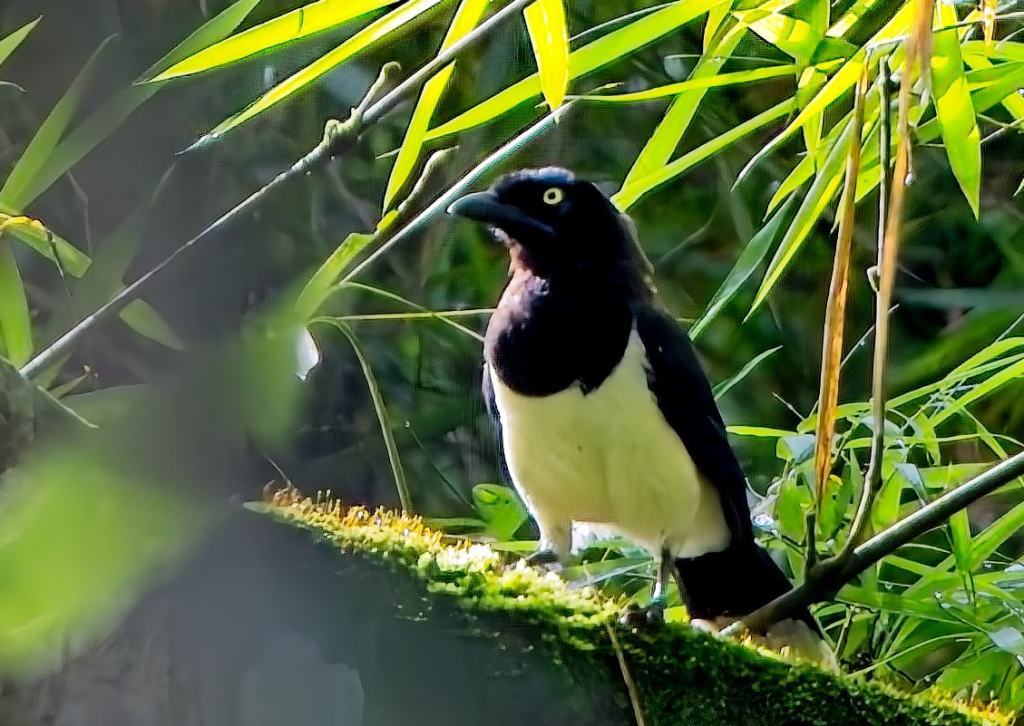

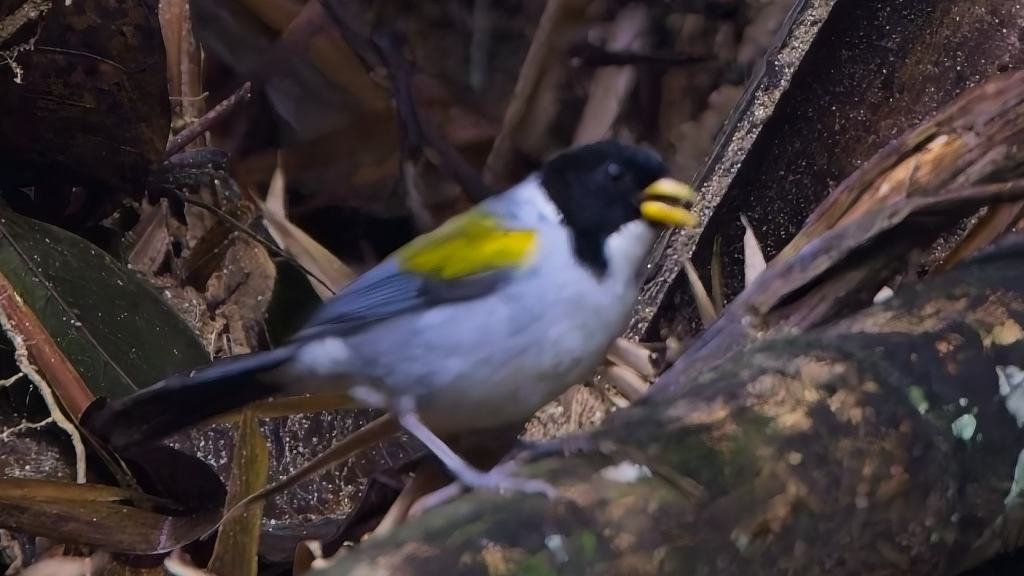


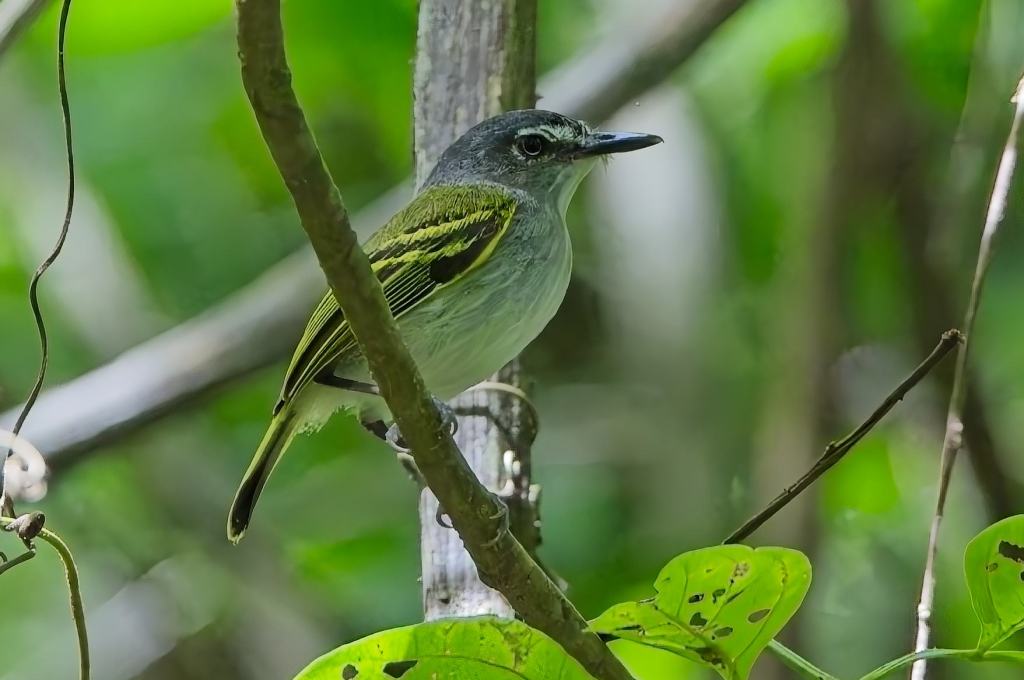
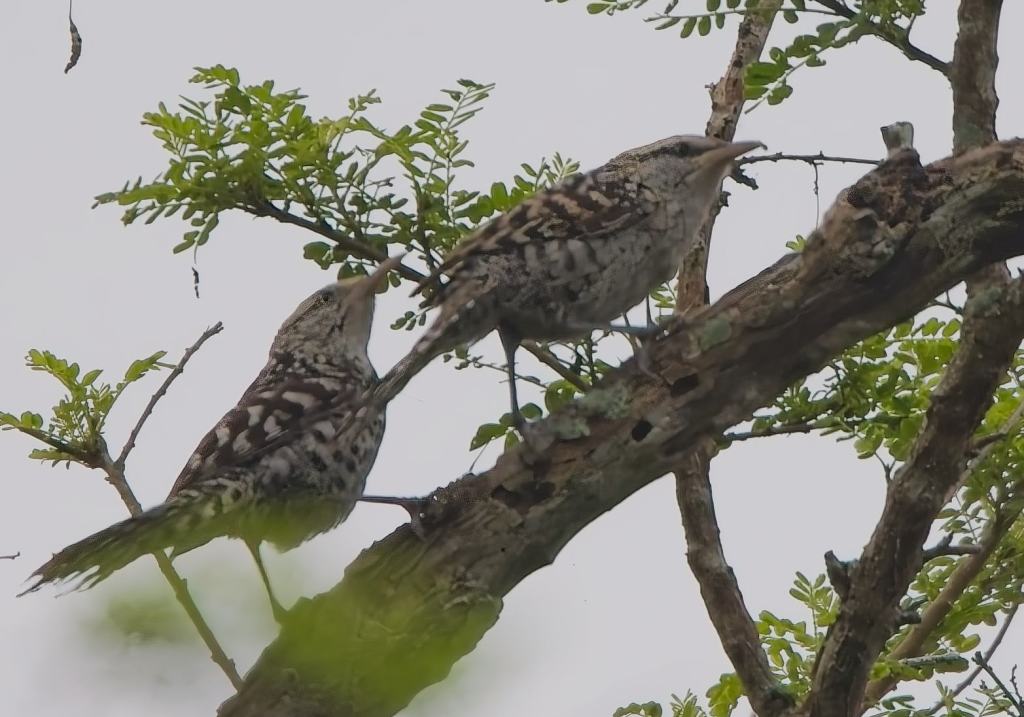

Life Photos of Non-lifers

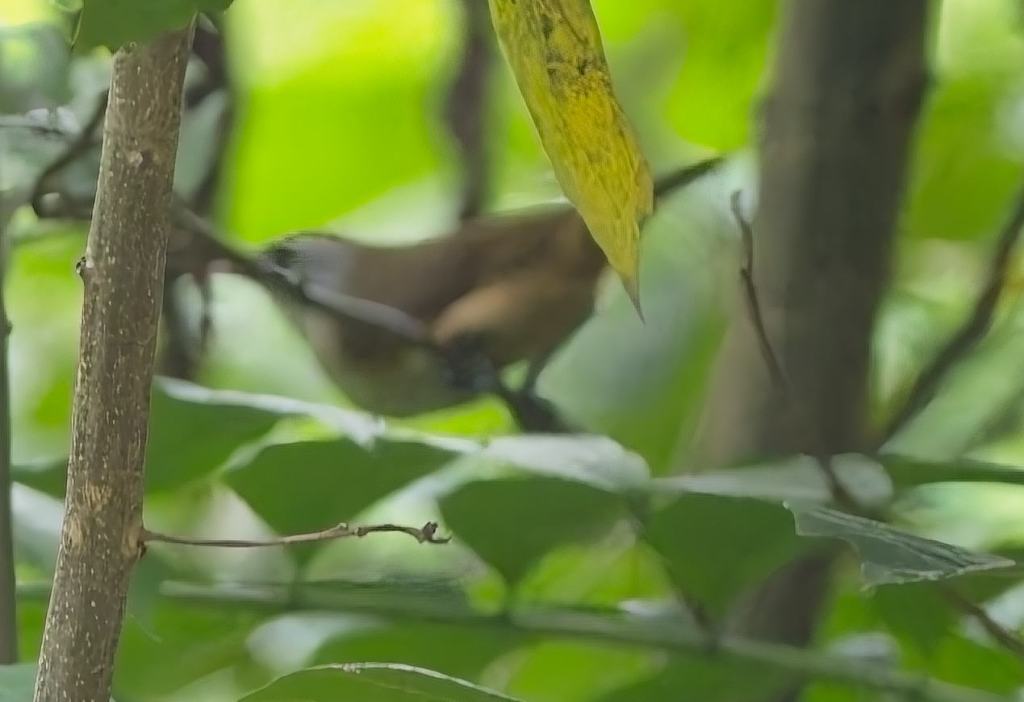
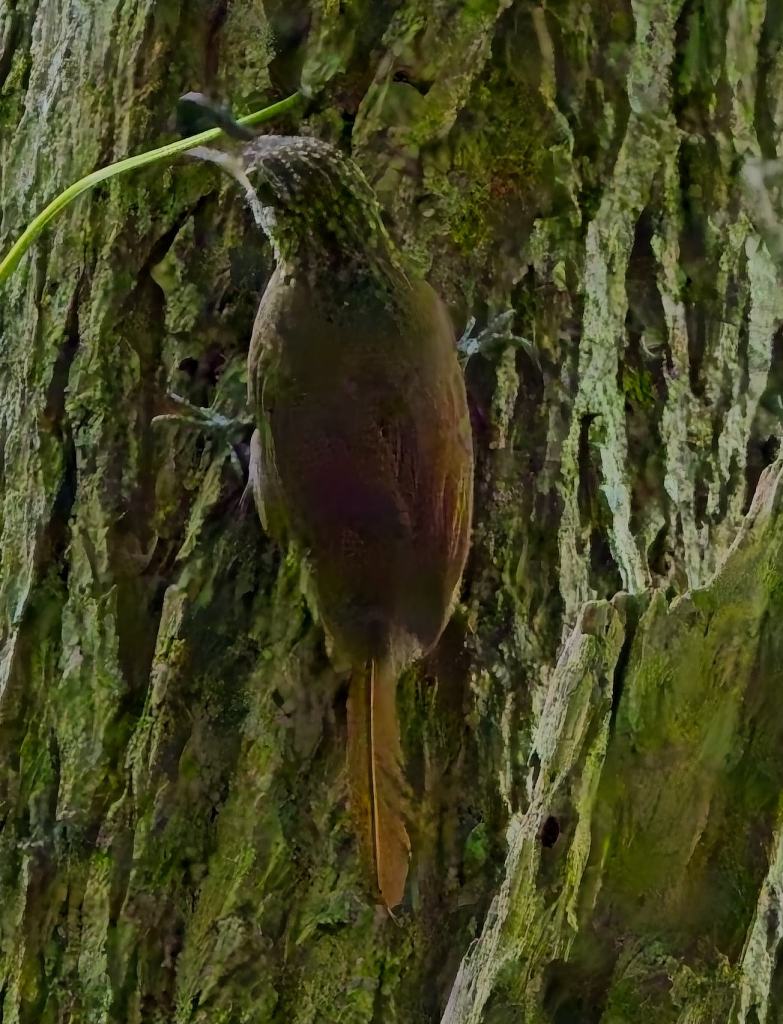


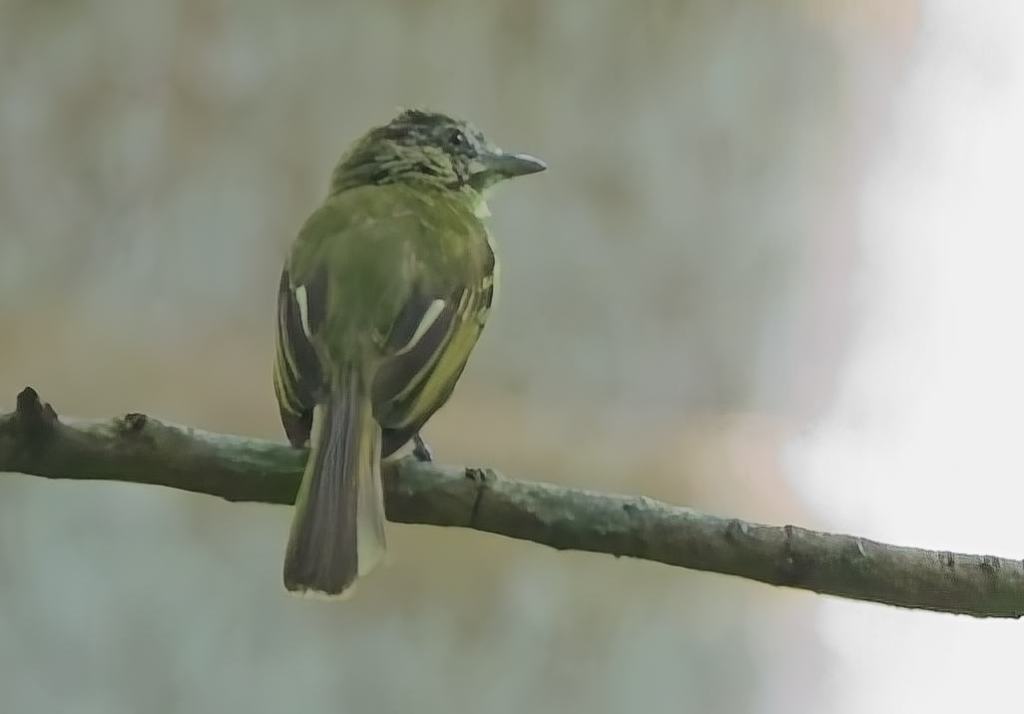
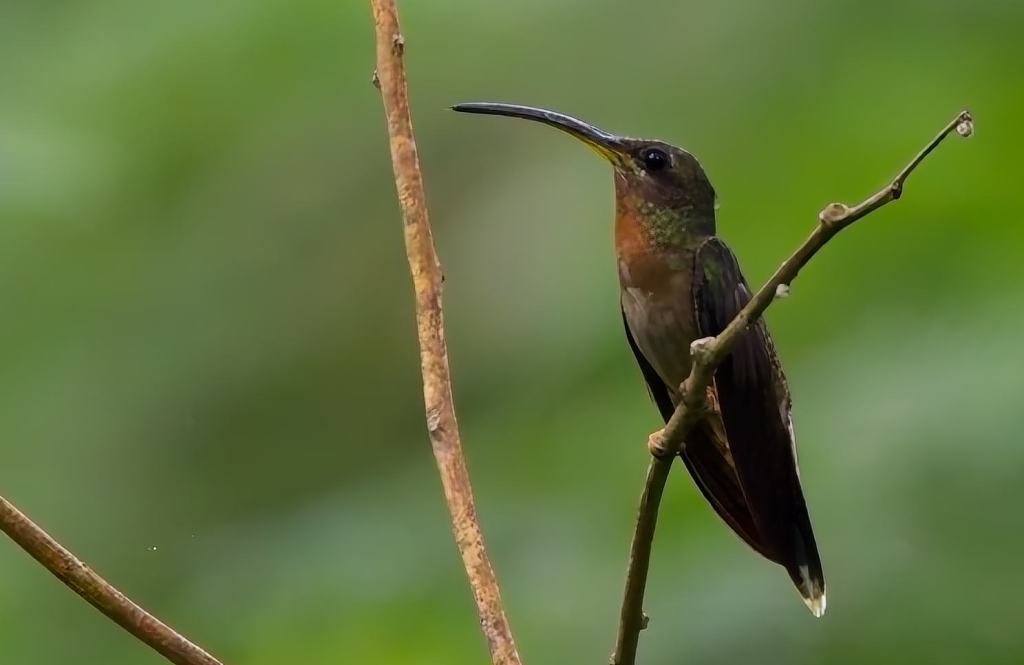
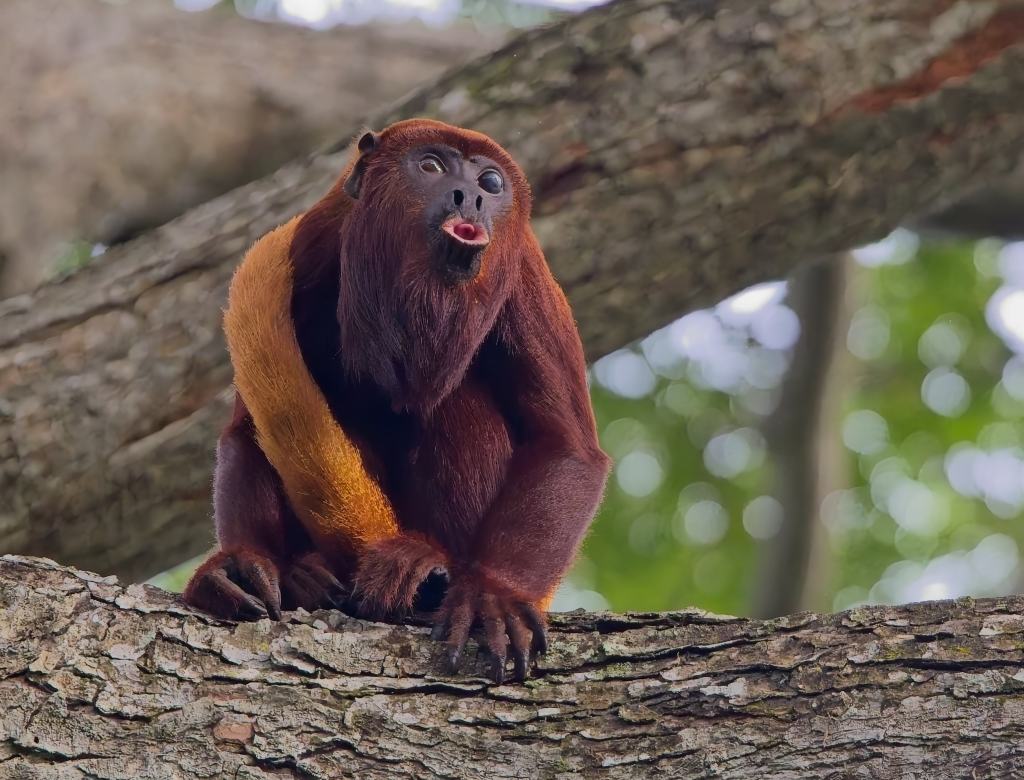
A highlight of our visit to the Matute Reserve was several interactions with resident Red Howler Monkeys with some excellent views and photo opportunities. We also had our only Capybara of the trip – a brief distant view before it scurried off the road in front of us providing a single quick chance for a photo.


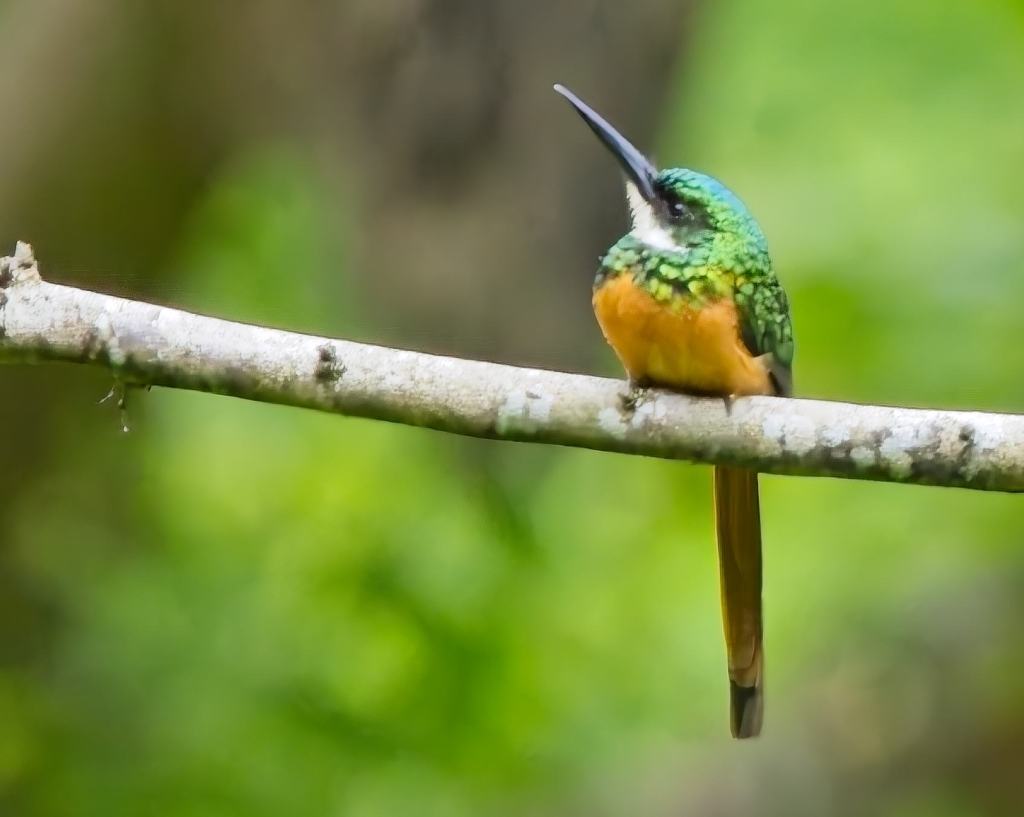
Although neither lifers nor life photos, I have to include photos of some iconic tropical species: Rufous-tailed Jacamar, Whooping Motmot (it actually does “whoop”) and Keel-billed Toucan.


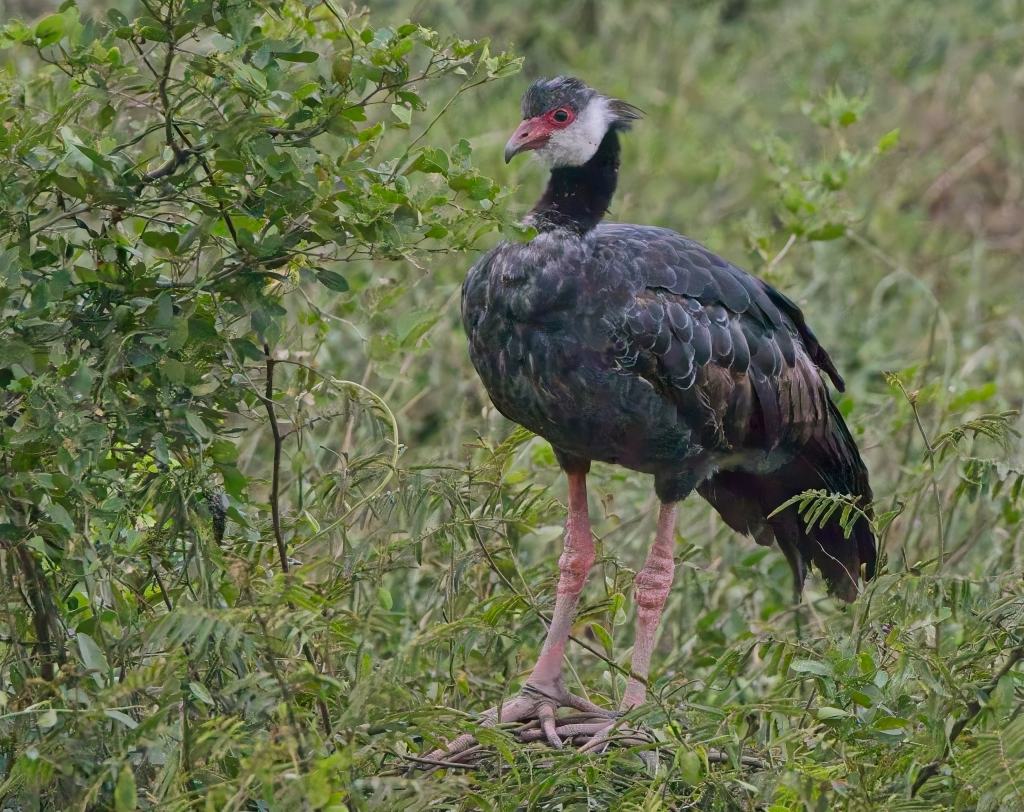
After a long and large lunch on the road, we headed back to Barranquilla with a productive stop at a marshy/wetland area along a branch of the Magdalena River. The only lifer was of an unphotographed Yellow Billed Tern but I did get life photos of a Yellow Oriole, Northern Screamer, and Olive-gray Saltator as well as nice photos of Snail Kite, Ruddy Ground-Dove, Smooth Billed Anis, and Southern Lapwing.
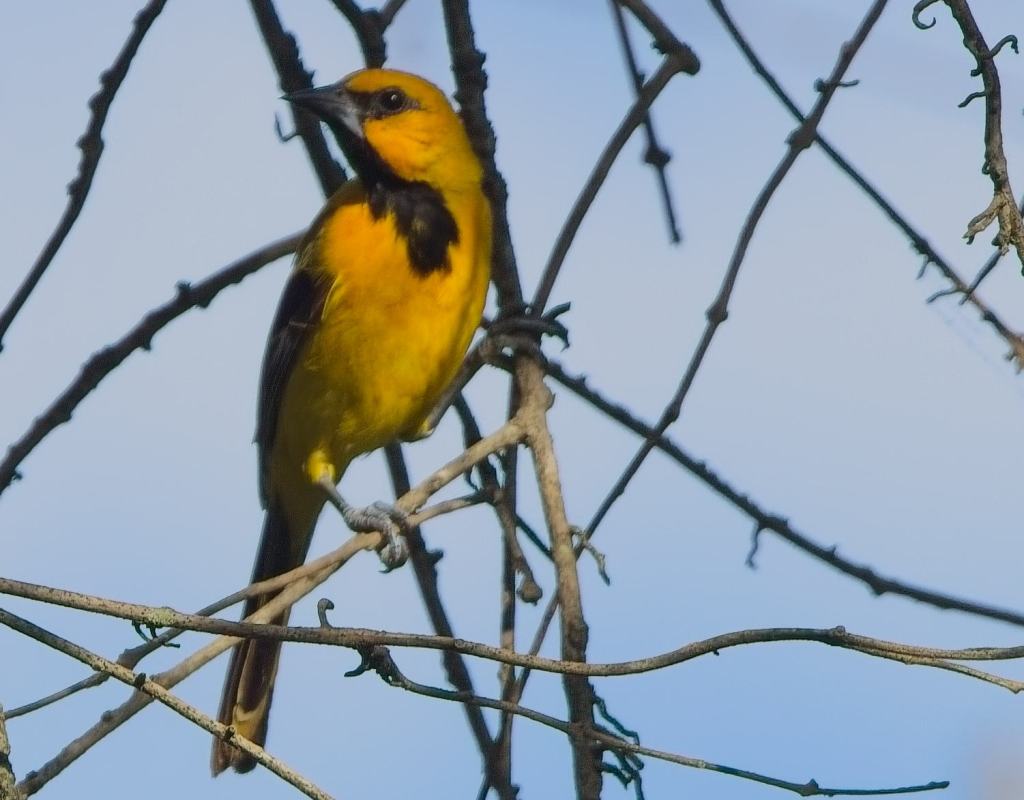


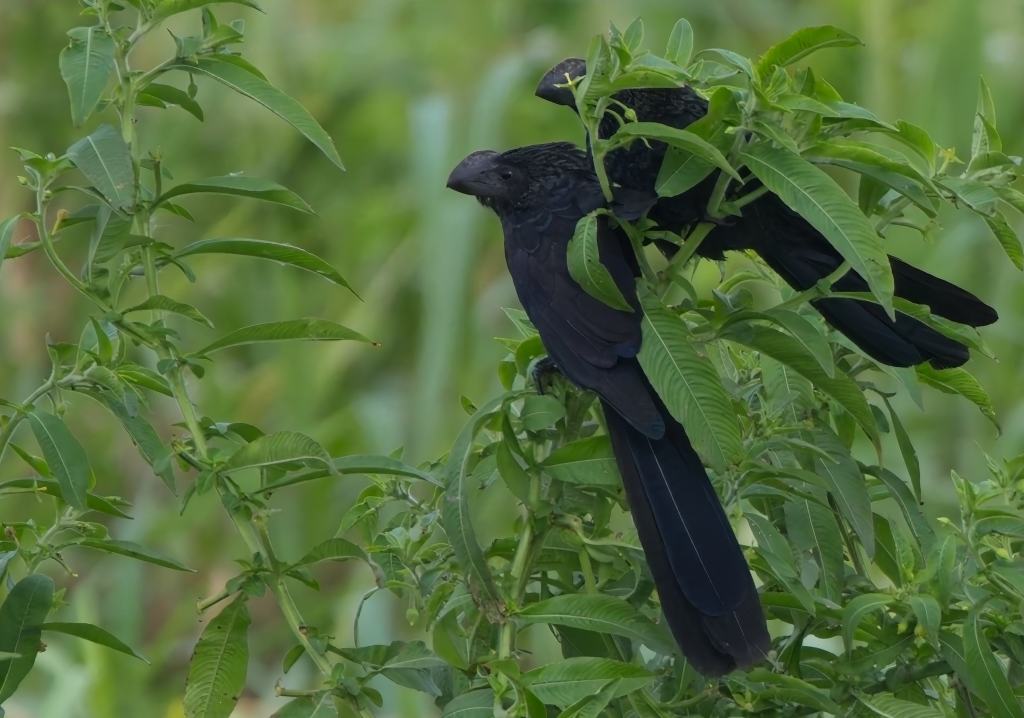
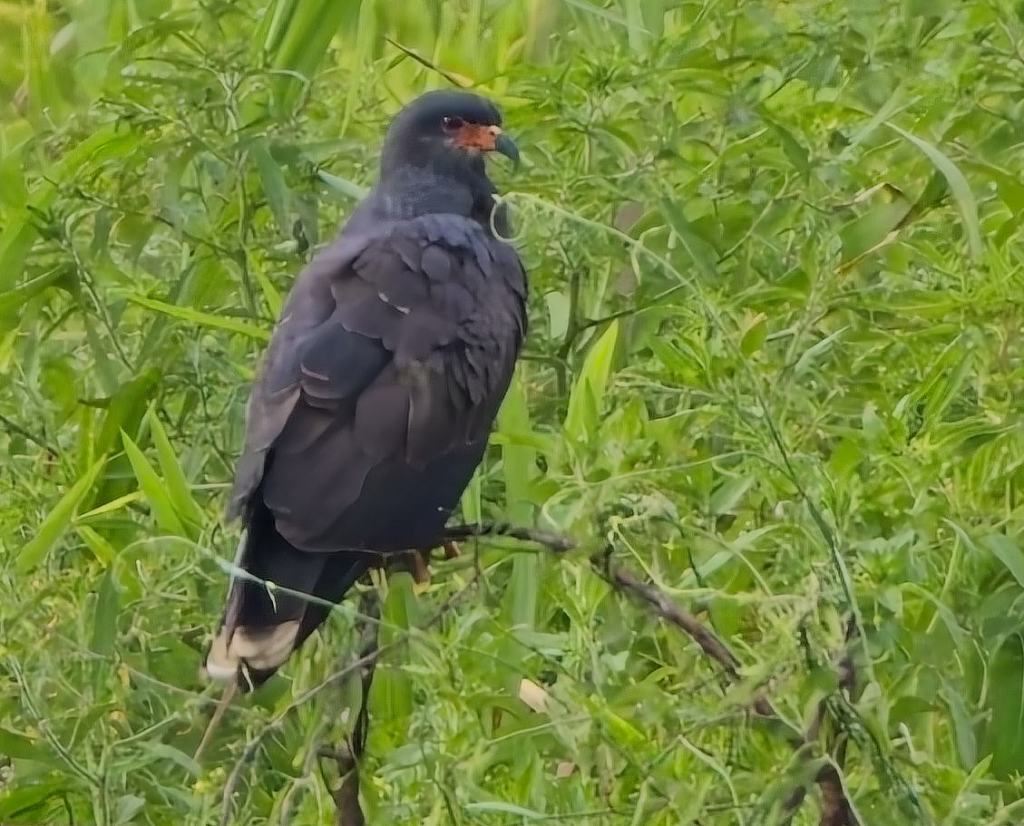
Totals for the day: 70 species; 18 lifers and 21 life photos. My Colombia list was at 102 species.
Day 3 – June 22
W were off on an early start evidenced by a first Ebird list beginning at 5:36 a.m. We would be working our way East towards Santa Marta but after picking up some miscellaneous species, we stopped at a somewhat odd mixed habitat place noted as the first of many stops along Troncal del Caribe in our Ebird reports which is much better sounding than the translation which is “Caribbean Trunk Road” – essentially a mix of places known to Breiner. Altogether there were 5 lists from the area and we had 69 species (not including the pet Muscovy Ducks or Peacocks). Twenty-five were new for Colombia, 7 were lifers and I added 9 life photos (a couple not worth sharing!). Unfortunately I was not quick enough to get what would have been a life photo of a flyby Amazon Kingfisher. It could have landed on any of a number of photo friendly perches, but just kept on going – little bastard!


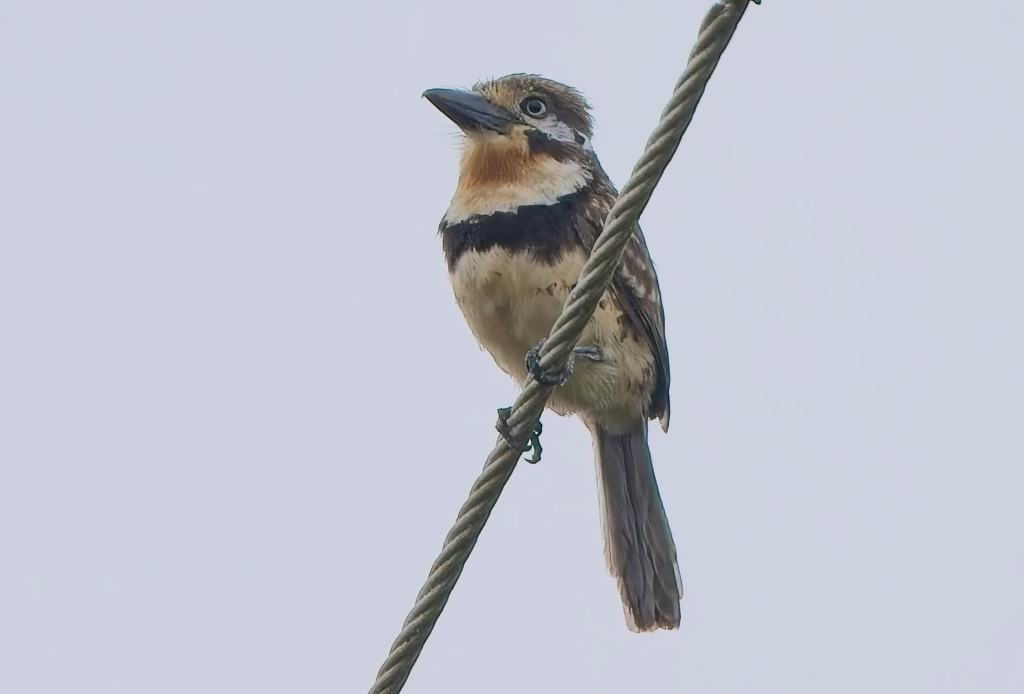
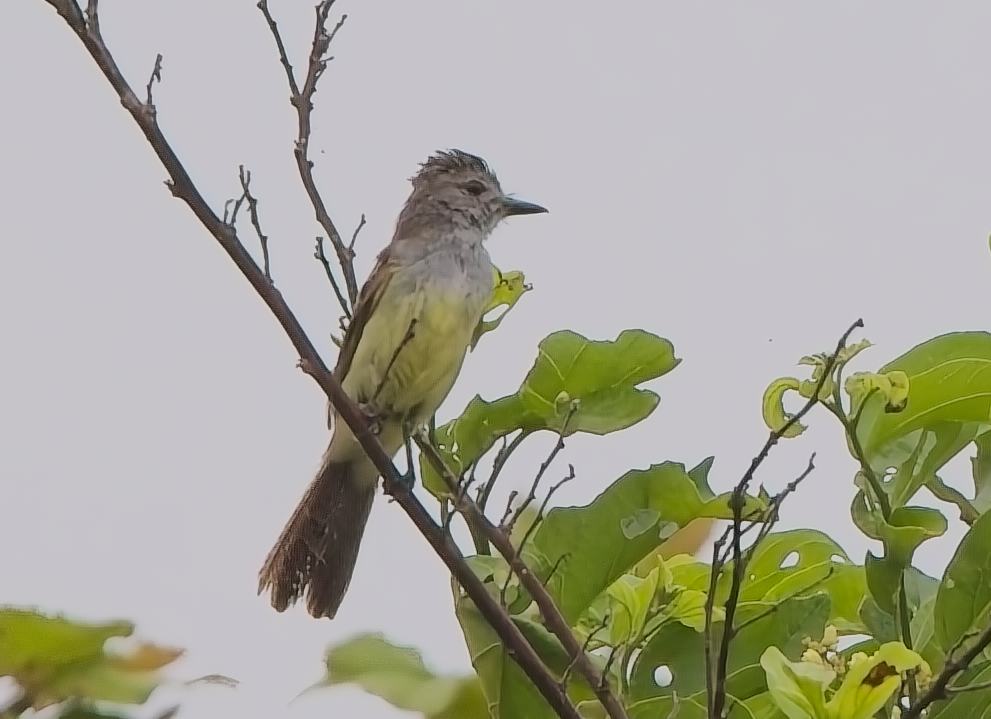
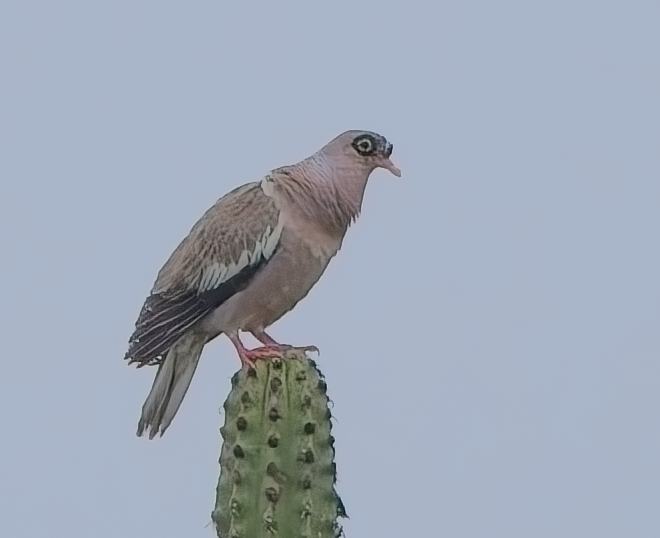


I also had my best photos for the trip for Fork-Tailed Flycatcher, Yellow-headed Caracara and Pale-vented Pigeon among other photos.


Continuing East towards Santa Marta and before lunch, we birded at Parque Isla de Salamanca, with 22 species, half of which were new for our trip including 3 more lifers: Sapphire-throated Hummingbird, Pied Puffbird and Northern Scrub-flycatcher (all with photos) and additional life photos of Red-rumped Woodpecker and Scaled Dove.


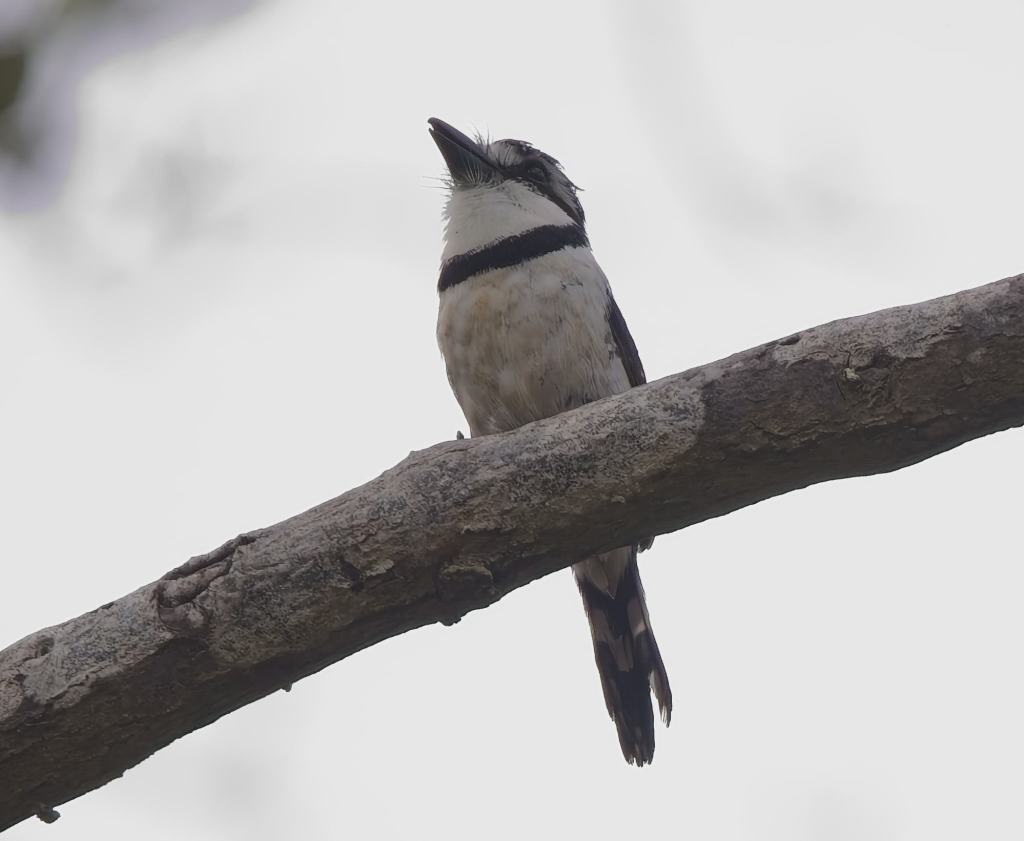

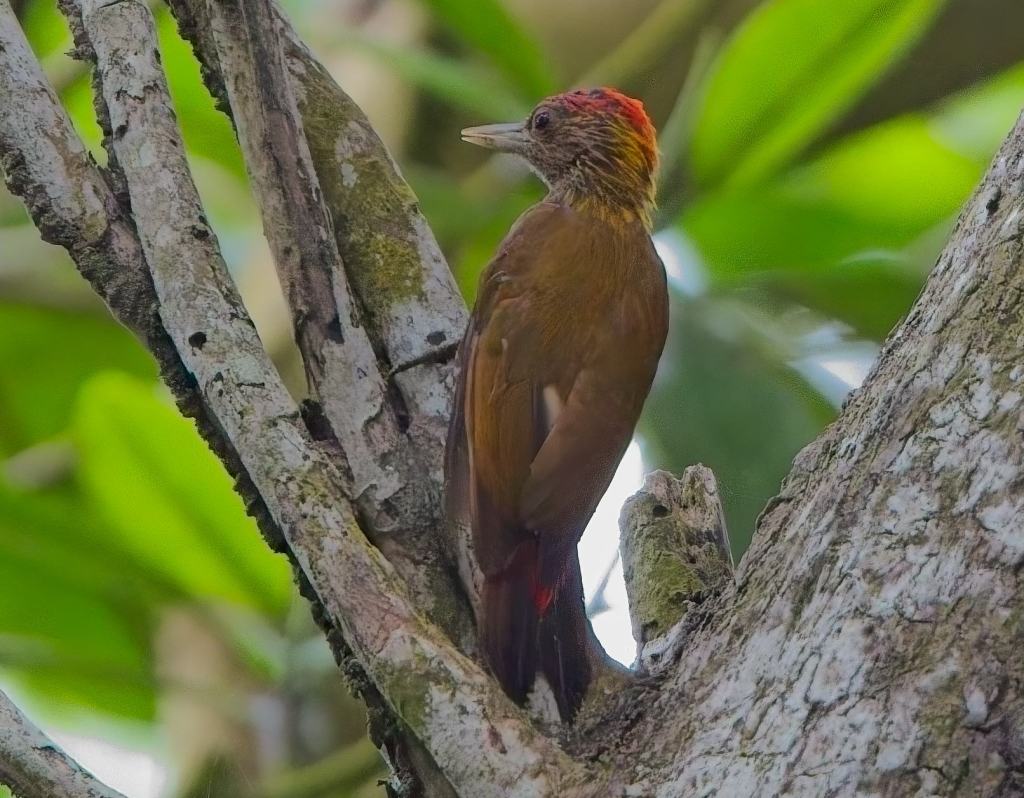

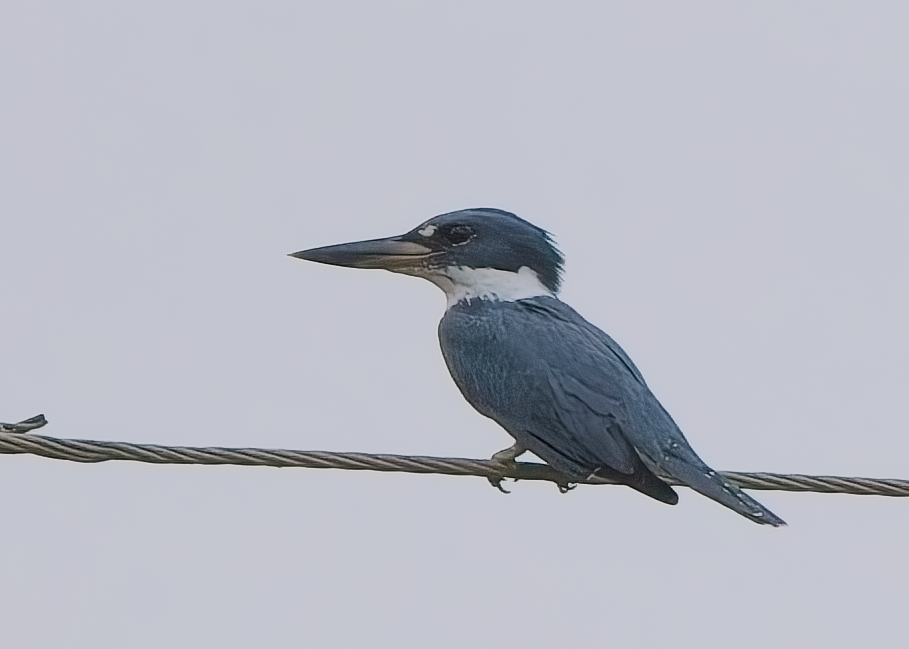
We also had both Green and American Pygmy Kingfishers, joining Ringed Kingfisher and Amazon Kingfisher to total 4 kingfishers that day, missing only the Belted Kingfisher and Green and Rufous Kingfishers to cover all the kingfishers seen in Colombia. (I have now seen all 6 of these kingfishers with photos of all but the Amazon Kingfisher that eluded me in the morning.) It is surprising to me that there are only these six kingfishers in all of South America with its great bird diversity and suitable habitat as there are as many as 118 kingfisher species worldwide with 16 in Africa, 50 in Australia and Oceania and 45 in Asia but only 1 in Europe and 3 in North America. I have seen 35 species altogether.


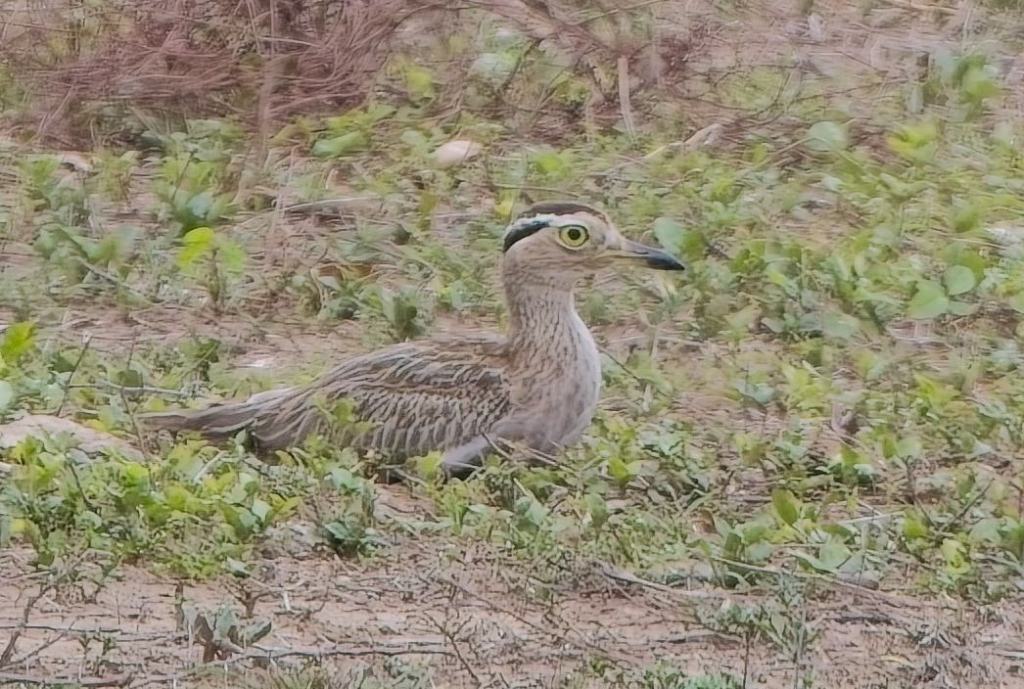
We continued on to the Hotel Colonial in Minca with Breiner’s sharp eyes picking out a Double Striped Thick-knee on the way. A lifer with a photograph it is the 6th thick-knee I have seen, the 2nd in South America, joining Peruvian Thick-knee. And at the feeders at the hotel, I added 3 more lifers: Lesser Elaenia, Crimson-backed Tanager and White-Vented Plumeleteer.

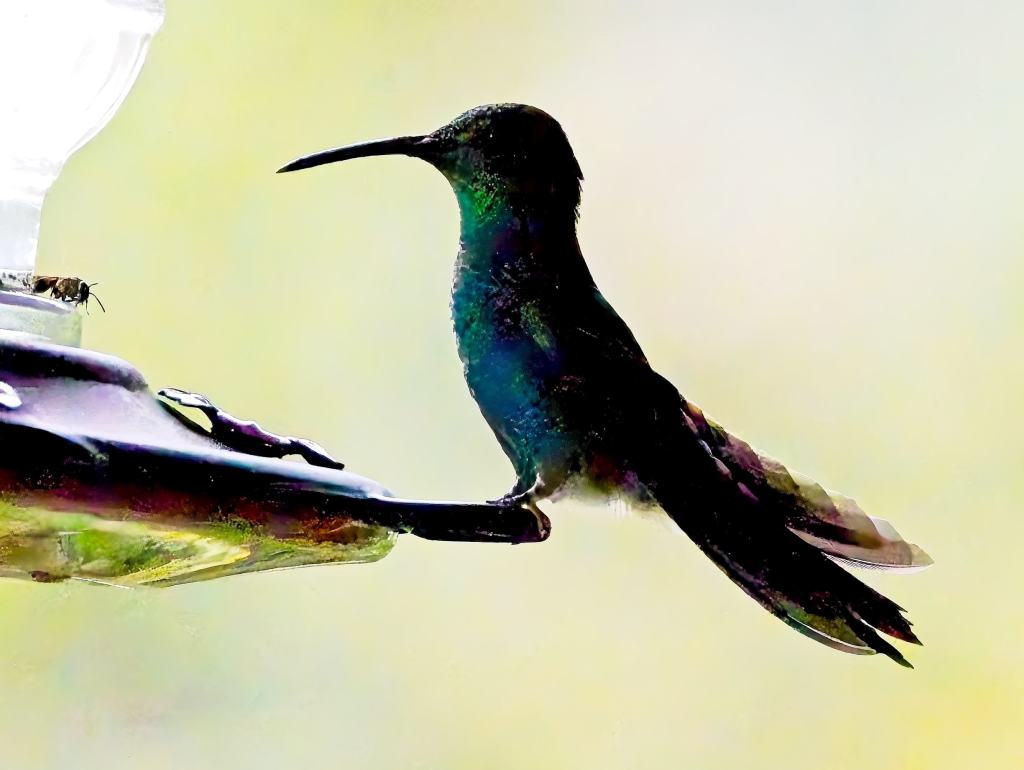

Totals for the day: 88 species; 14 lifers and 18 life photos. My Colombia list was at 145 species. Night at the Minca Veranda Hotel.
Day 4 – June 23rd
It was another early start picking up our first Plumbeous Kite for the trip at 5:40 a.m. at the hotel. Then we continued on towards Santa Marta with a first stop at the Gairama Reserve in the foothills of the Sierra Nevada mountains. An hour at the reserve produced 16 species, half of which were new for the trip, including only a single lifer, Band Rumped Swift (no photo). I did get life photos of a White-bearded Manakin and an Ochre-lored Flatbill but missed what would have been a life photo of a Long-billed Gnatwren.

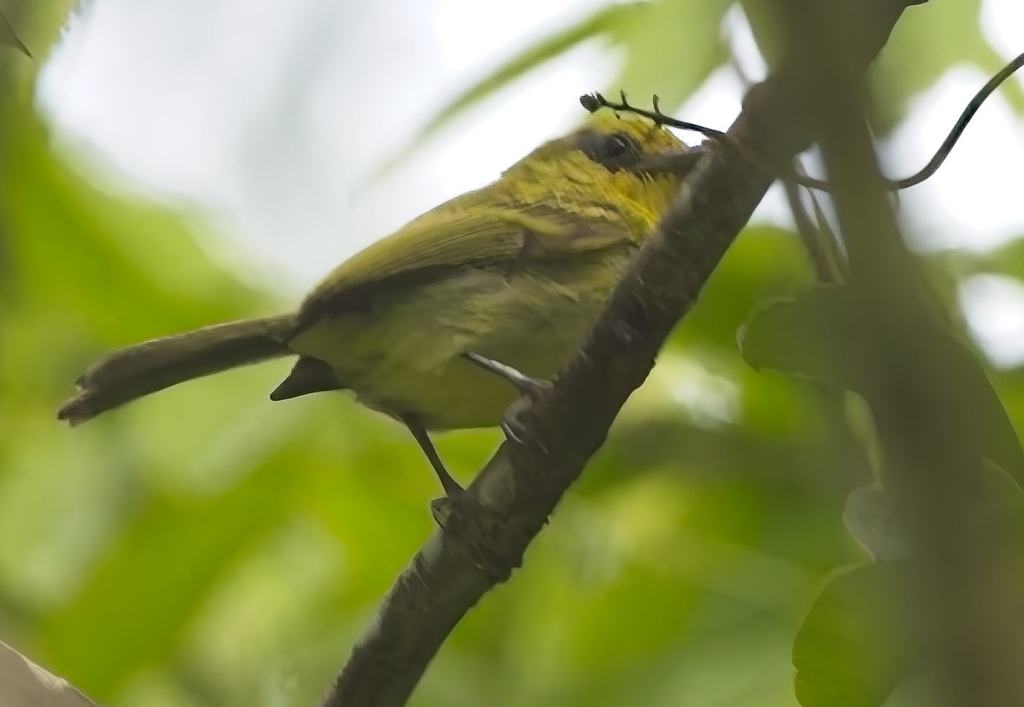
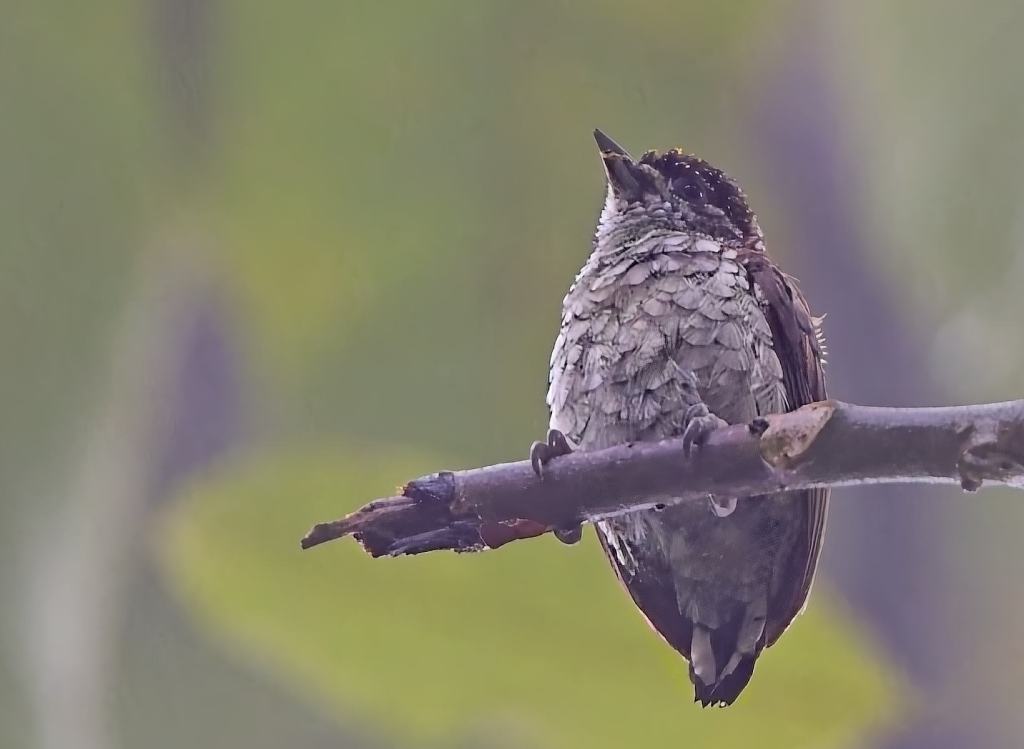
A stop on the road produced another lifer, a Scaled Piculet. Piculets are essentially miniature woodpeckers, generally less than 4 inches long. This piculet is found only in Colombia and Venezuela. Since I will likely never visit Venezuela, this was essentially an endemic for me. At the same stop I got a life photo of a Red-billed Parrot and missed a life photo opportunity for a Pale-eyed Pygmy-Tyrant. A comment about parrots and their kin. The literature says that the length of the tail is a specific feature that clearly distinguishes parrots and parakeets and that parrotlets are “smaller”. All are in the parrot family. My trouble is that my usual view of these birds is a brief one as they fly quickly by and I do not have sufficient experience to always distinguish a “longer” from a “shorter” tail. Identifying the specific species is even more challenging as field marks like “red or orange or blue chins or cheeks” are generally unseen by me as they fly overhead and quickly disappear. At least when they perch, there is a fighting chance – even if the tail is invisible so there goes that distinguishing field mark. In this case, the bird was perched and the tail appeared “short” but where is that red bill? Not clear to me, but the red vent is clear and that confirms the ID.

We were now on the road going up to the Santa Marta Mountain-House Bird Lodge where we would spend the next two nights. The Santa Marta area is bird rich with many endemics and is a favored birding location in Colombia and the focal point of the design of my trip. I used the phrase “road going up” and although accurate, it falls far short of an accurate description as this was the most difficult, rough and challenging road I had ever travelled – good four wheel drive an absolute must. The road was uneven, unpaved, full of rocks and gouges, narrow, steep, full of sharp turns, and demanding the driver’s full attention just in case another vehicle was coming from the other direction. That did not happen often and was generally signaled by a beeping horn, but on two occasions we met another vehicle and expert maneuvering was required – generally meaning one vehicle backing down or backing up the treacherous road to a somewhat wider spot. Once we cleared each other with literally one inch separating the two side mirrors (pulled in). As mentioned in my introductory blog post, driver Jeferson was terrific, negotiating each twist and turn and bump and gouge often at less than a walking pace, but without any hesitation or danger.
It was not always easy or even possible to pull over to bird along the road. Typically Breiner would find a good spot to bird and he and I would get out of the car and walk the road while Jeferson went ahead to find a somewhat wider place to pull over and wait for us. Honestly even walking some stretches of the road was challenging, but the birds were worth it. We spent over three hours birding and driving along the road covering the less than 4 miles to get to our lodge. At the three stops along the way we had 23 species of which 14 were new for the trip, 9 were lifers and I got 6 life photos, missing the Santa Marta Woodstar which I would photograph later and the Santa Marta Foliage Gleaner and Santa Marta Antbird. Some barely ID quality photos of several as birds were hard to locate let alone see in the open (or even nearly so) and often in poorly lit dense forest. But as he always did, Breiner excelled in locating the birds, drawing them closer and getting me into position to see them and have a chance at a photo.
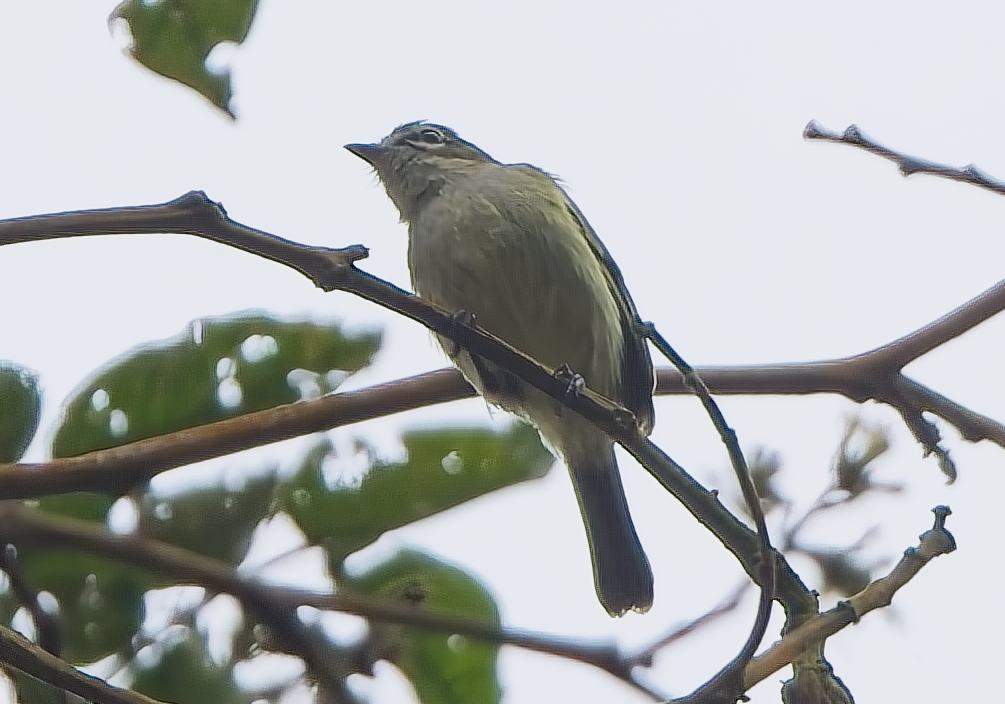

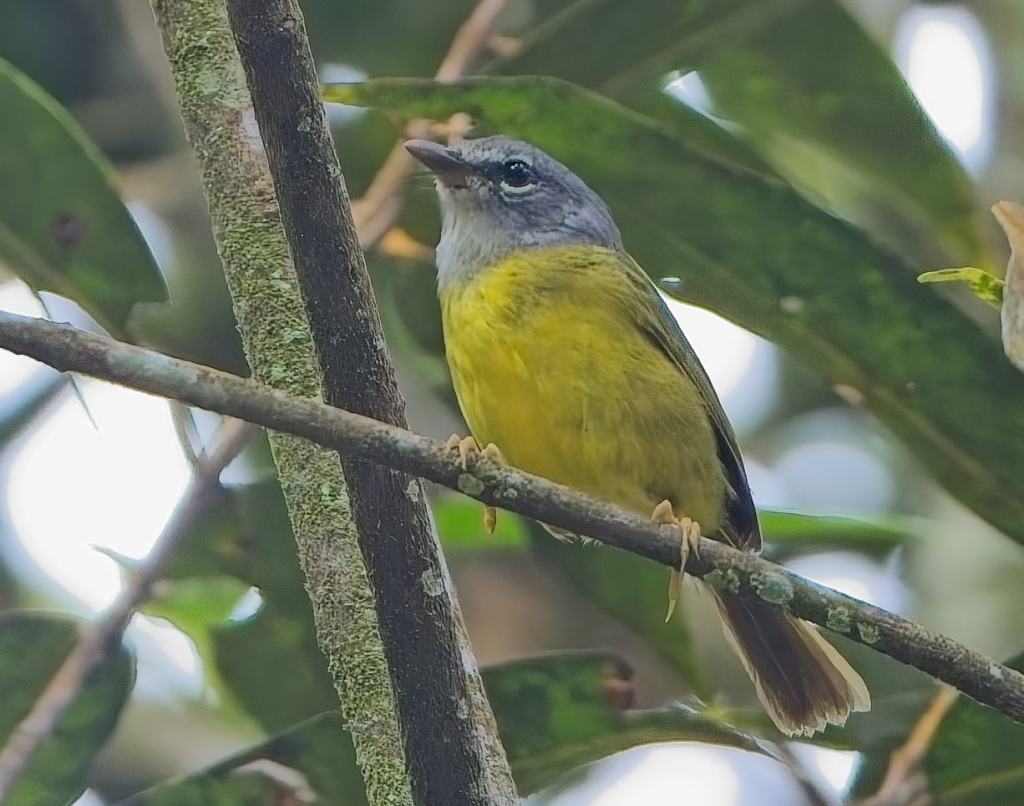

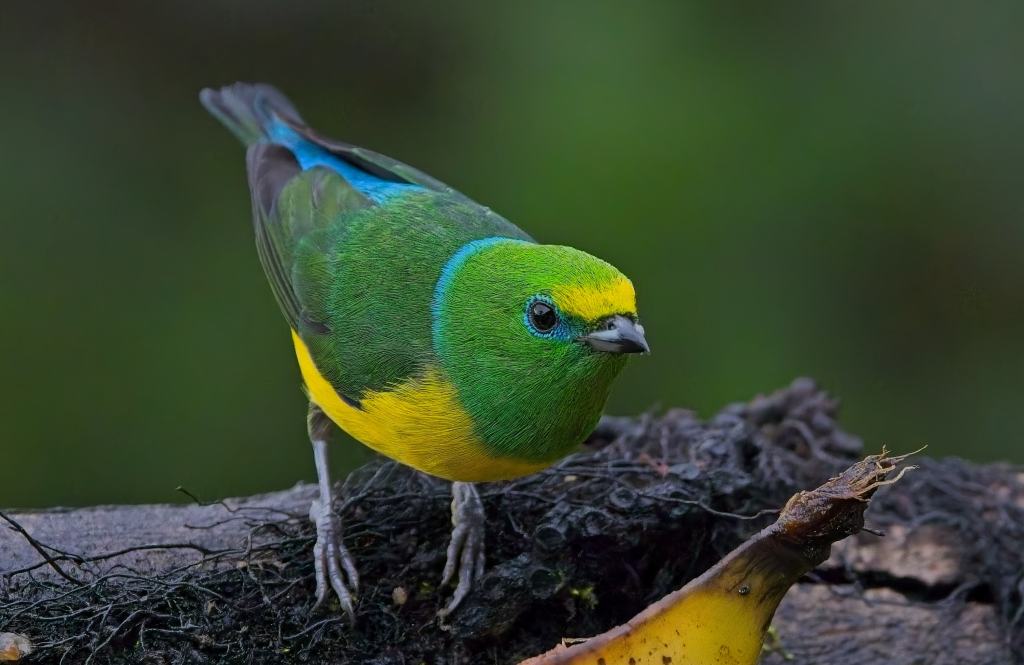
We arrived at Mountain House a little before noon and after unloading immediately began watching the hummingbird feeders which were very active and a couple of banana filled bamboo feeders attracting other species. In less than 10 minutes we had 12 species with photos of them all including 4 lifers: Santa Marta Blossomcrown, Santa Marta Brushfinch, Blue Naped Chlorophonia and Lazuline Sabrewing. I also got a much improved photo of the Black Headed Tanager and a life photo of a Rusty Flowerpiercer. Other hummers were Brown and Sparkling Violetears, and Crowned Woodnymph.



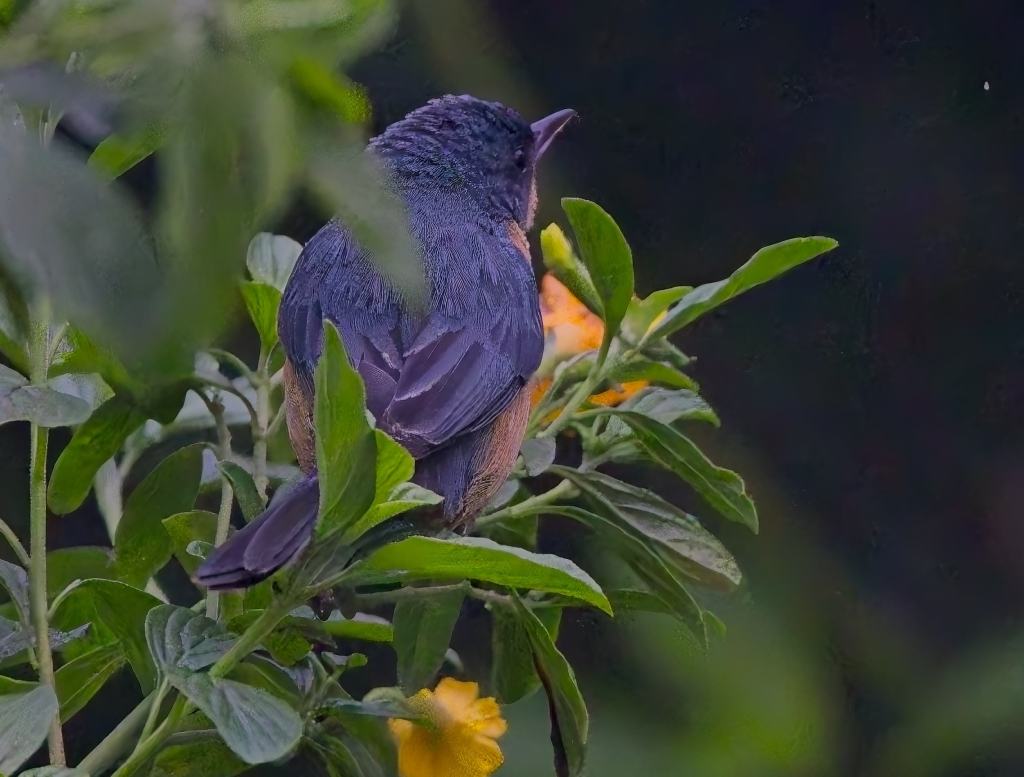

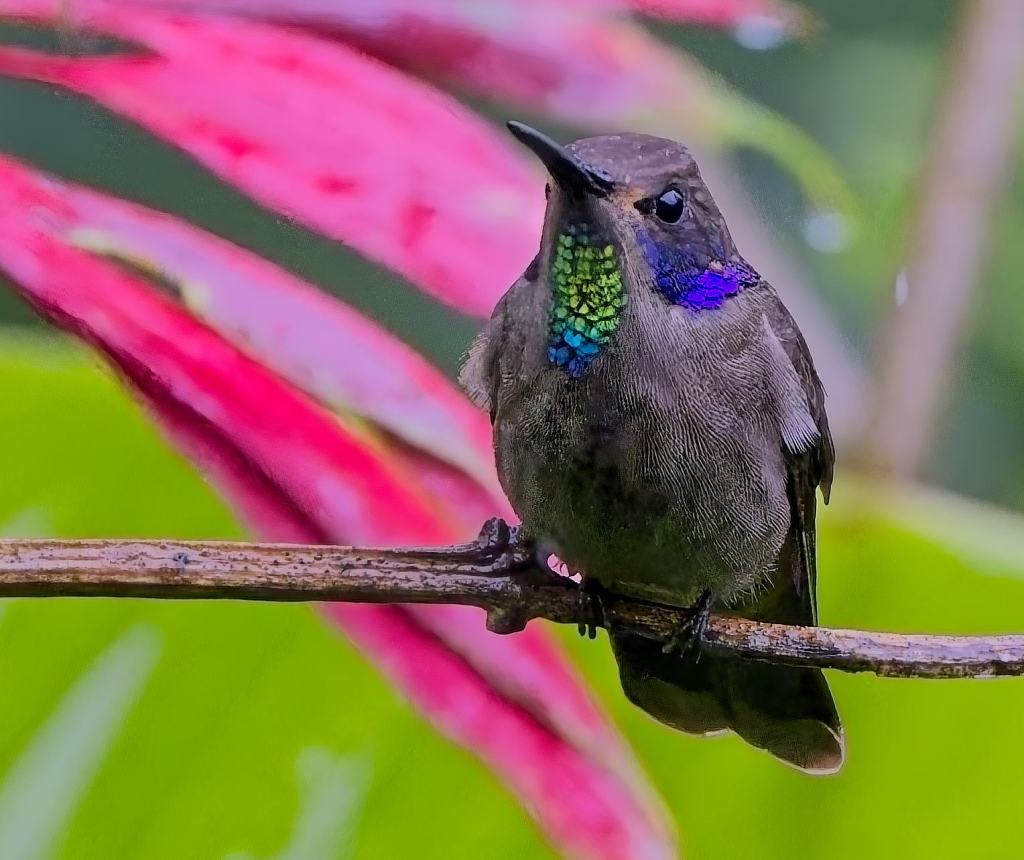


Our timing was excellent as it began to rain shortly after we arrived – it is a tropical cloud forest after all – so we had lunch and took a break for a siesta planning to begin birding again at 3:00 pm hopefully without rain. It worked perfectly as the clouds and rain moved on and we were back birding in the area around the lodge adding 10 trip species in the afternoon including lifers Coppery Emerald, Streak-capped and Pale-breasted Spinetails, Yellow-backed Oriole and Steely-vented Hummingbird. Other photos included a Streaked Saltator (Life photo), White-lined Tanager, Golden-olive Woodpecker and Scaled Pigeon.

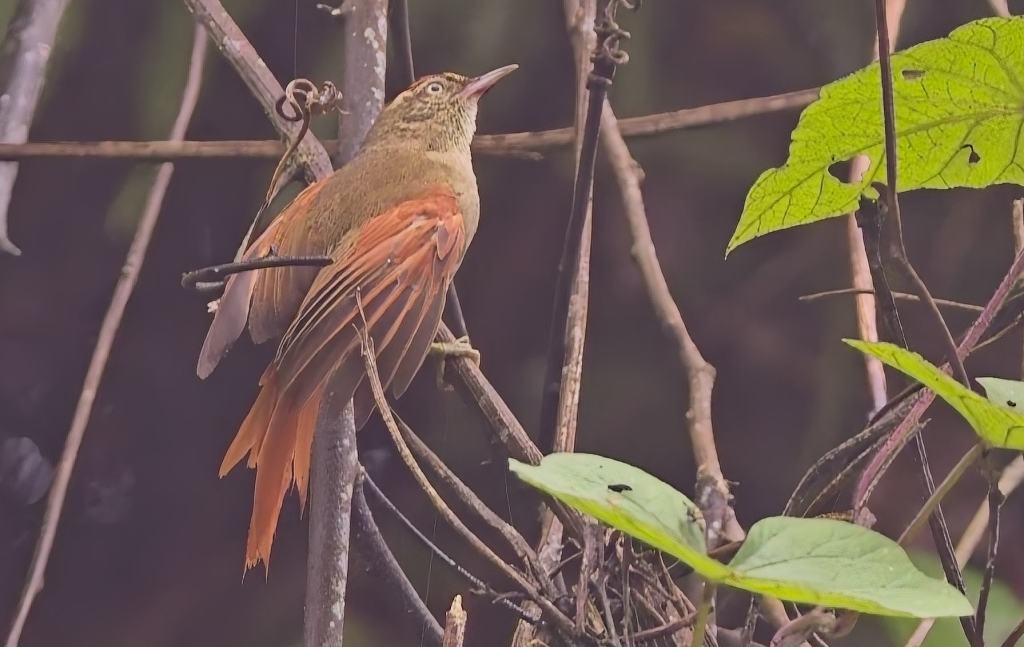


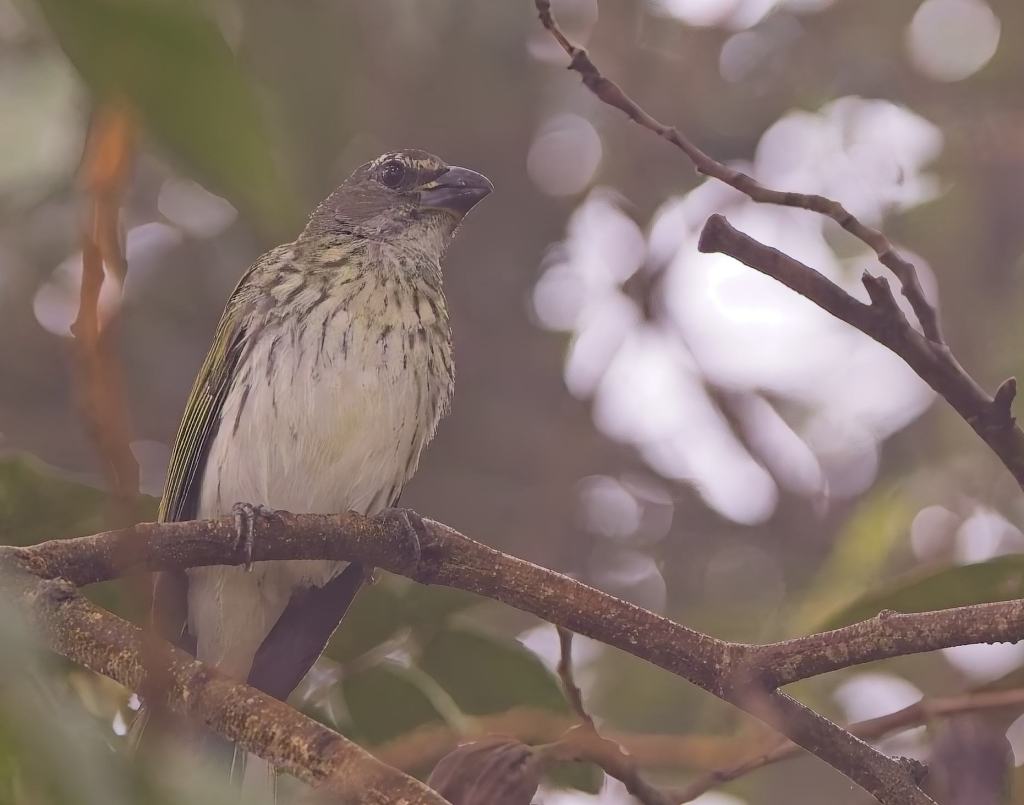
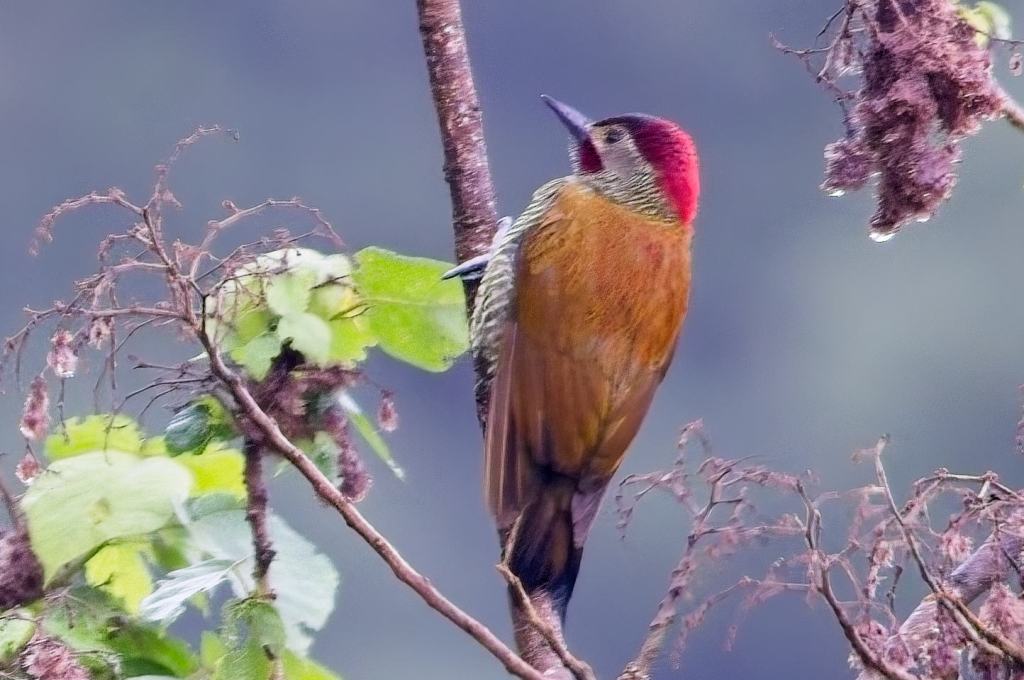
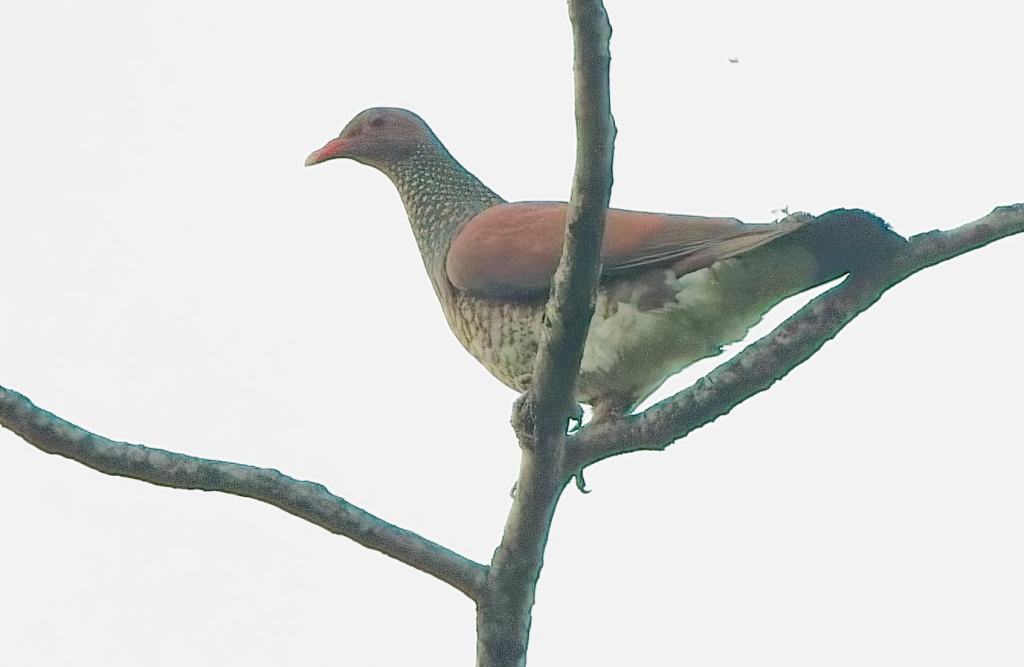
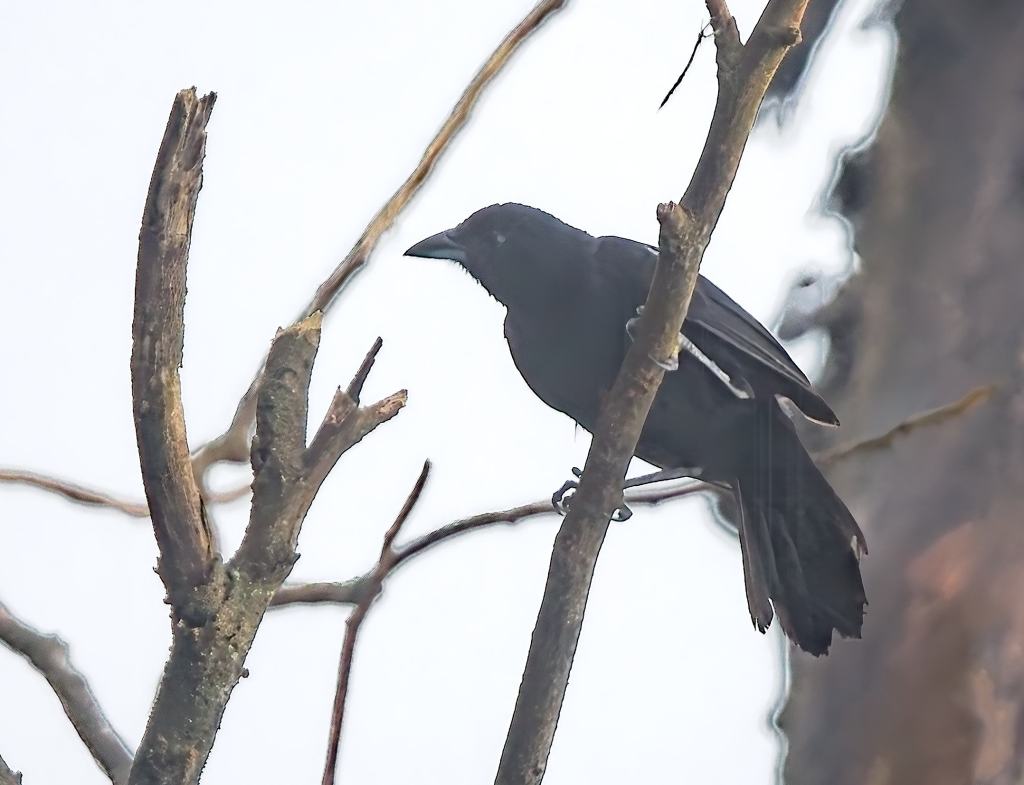
We wee back at the Lodge around 5:00 p.m. in time to add a life photo that I wanted very much, a Bay-headed Tanager. I had seen this striking species many times, 13 in all, including in Trinidad, Costa Rica, Peru and Ecuador but had always failed to get a photo. Now I had one. I also improved earlier photos of Red-billed Parrot and Rusty Flowerpiercer and got a life photo of the endemic tiny Santa Marta Woodstar seen earlier in the day without a photo.


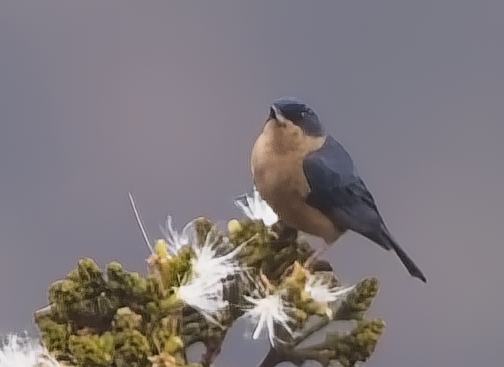
Totals for the day: 71 species; 20 lifers and 22 life photos. My Colombia list was at 194 species. Night at Mountain House Lodge
Day 5 – June 24th
We were up very early again, leaving Mountain House Lodge and birding our way down the rocky road in the Santa Marta range. It was a good day starting with 5 heard only species not far from the lodge: Lifer Band-winged Nightjar, Stygian Owl, and Slaty-backed Nightingale Thrush and two others – Collared Forest Falcon – seen previously in Mexico, and White-throated Tyrannulet seen previously in Ecuador. I would later get a photo of the nightjar, but the others remain only on my “wanted photos” list.
We may have missed the wonderfully named Stygian Owl, but not much later, making great use of his heat detecting spotting scope, Breiner was able to locate and get me on an endemic Santa Marta Screech Owl high up in dense foliage almost directly overhead. One of the best birds of the trip, it is not the greatest photo, but one I never thought I would get, even after he located it. At the same location we also heard but never saw a Lined Quail-Dove, our fifth lifer for the day and it was not yet 5:50 a.m. We later had several more Lined Quail-Doves including one seen very briefly that I was able to photograph – just barely, and distantly. We also heard a Southern Emerald Toucanet, a species I had seen (or maybe heard only) in Peru 12 years ago, this one is the Santa Marta version and may someday be recognized as a separate species.


We spent almost 3 hours continuing our birding coming down the Santa Martas picking up 29 species, 21 new for the trip, including 12 lifers and 8 life photos (including the Lined Quail-Dove above). Not surprisingly lifers not photographed were the always difficult to see Brown-Rumped Tapaculo, Santa Marta and Sierra Nevada Antpittas and Rusty-headed Spinetail. If only that pace could continue for the rest of the trip!! A species also seen the previous day and heard and seen many times later in the trip was a surprise. It is the Band-rumped Pigeon, a species that is often seen near my home in Edmonds, Washington where they can be found all year. Their range is shown from Canada all the way down the West Coast through Mexico and all the way to southern South America. I had seen one in hometown Edmonds in May this year. On our checklists, the species we saw was designated as “White-necked”. I don’t know if that is a different race or subspecies (or someday different species) compared to ours in the Northwest.


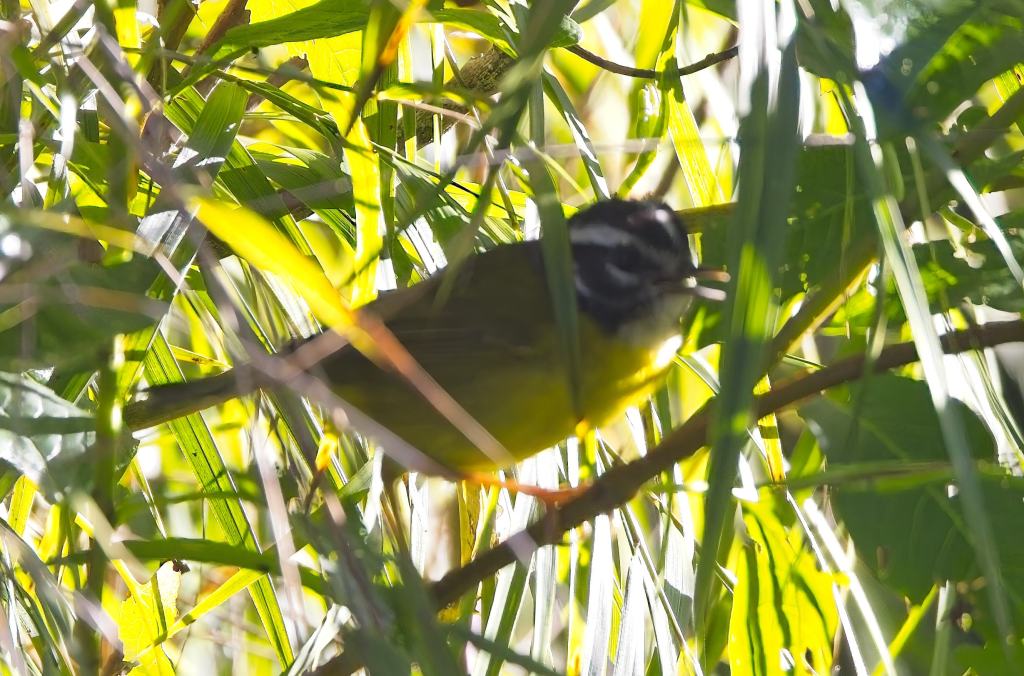
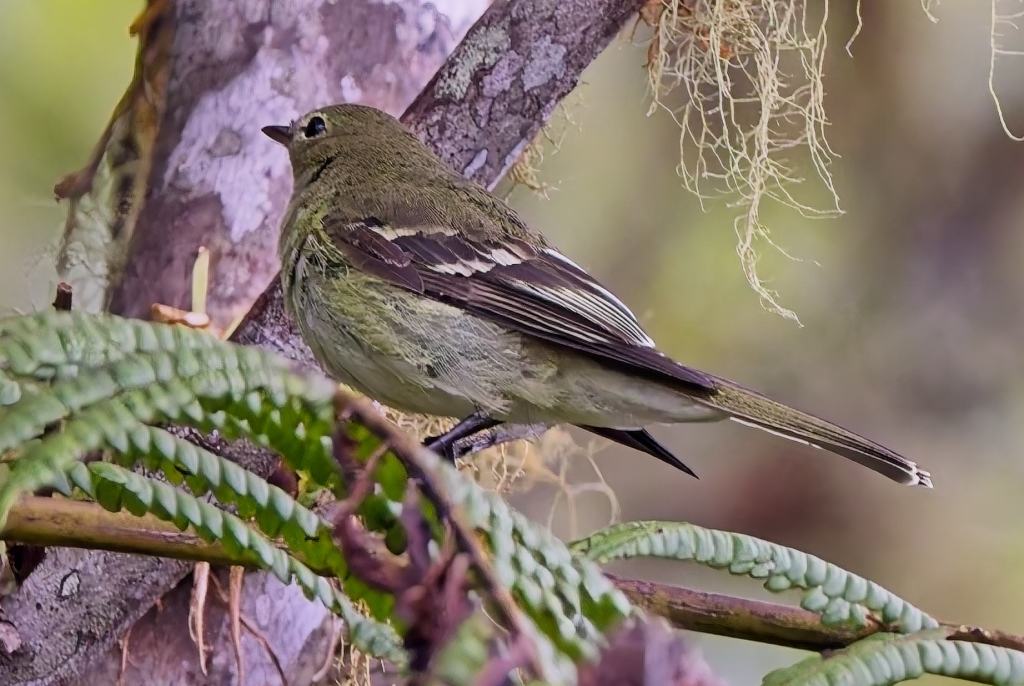
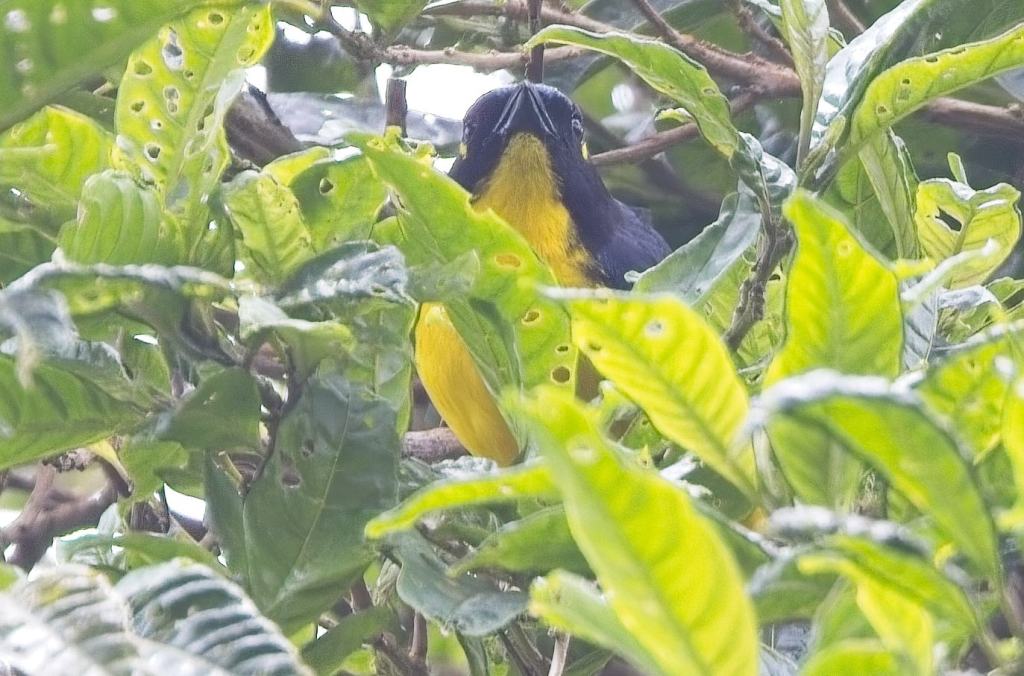
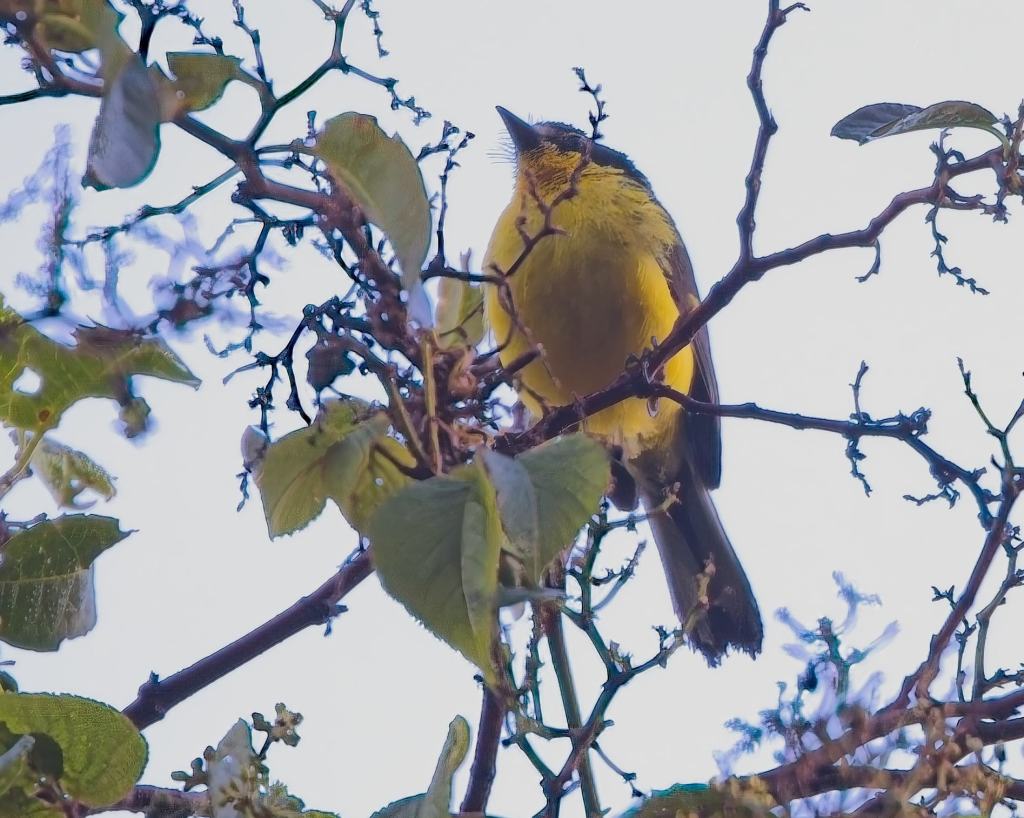


We had two more short stops before returning to the Lodge picking up a lifer at each – a White Tipped Quetzal and a Rusty-breasted Antpitta, the latter heard clearly but only – which would be repeated the next day. Quetzal’s and trogons are always prized additions to any trip as are antpittas. The former tend to be out in the open and the latter, like tapaculos, are skulkers that are often seen only briefly if at all. We had a number of interactions with the latter two types of birds that were frustratingly close to providing photos, but stayed out of sight. Of the 8 species of antpittas and tapaculos seen during the entire tour, I was able to get photos of only one and a poor one at that, but all but one were lifers. On the other hand, we only had 3 quetzals or trogons and I have photos of all of them with only the White-tipped Quetzal being a lifer and a good photo to end this blog post, essentially covering the first half of my trip.
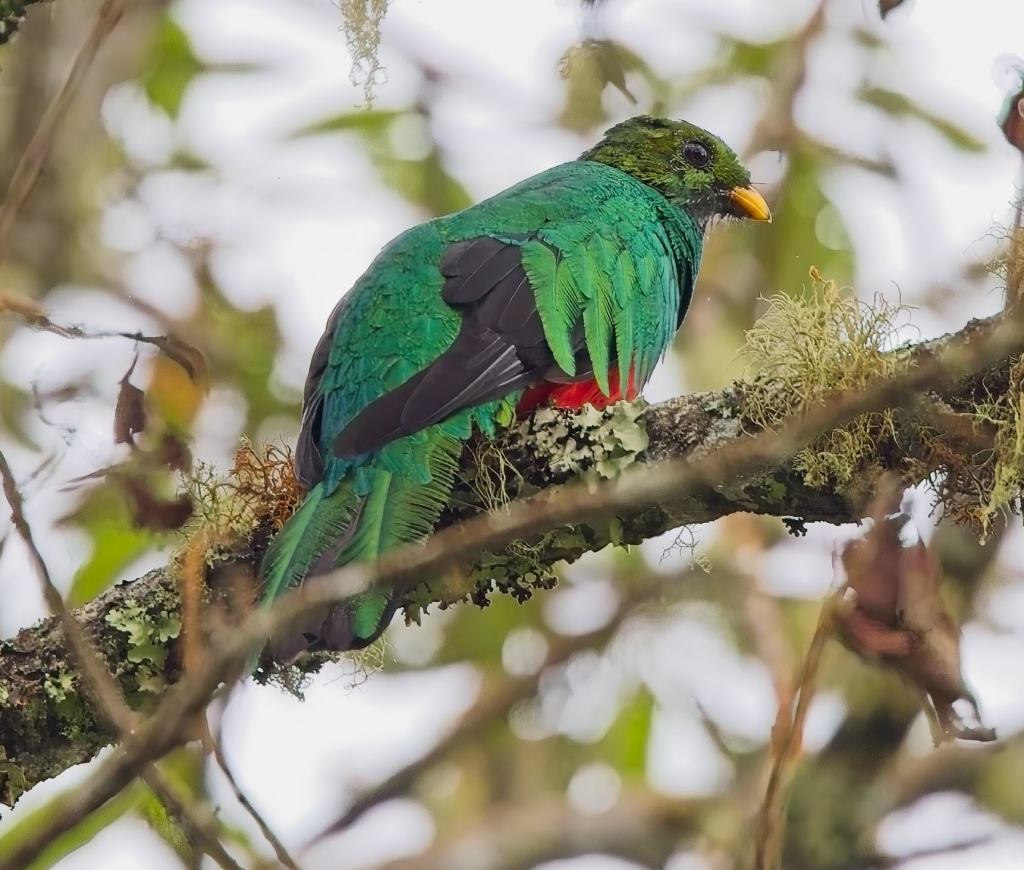
Totals for the day: 38 species; 19 lifers (78 cumulatively) and 10 life photos (82 cumulatively). My Colombia list was at 226 species. Night again at Mountain House Lodge.
 blairbirding
Oh my, your very first photo is challenging my understanding of the word, “glaucous.”
But I like how you’re running 2 lists, new birds and birds you’ve seen before. That gives a heft to the list.
Diane Yorgason-Quinn
LikeLike