February 7, Day 4:
If you read my previous blog about Chile (and please do if you did not – https://blairbirding.com/2024/02/29/birds-and-wines-in-chile-and-argentina-let-the-birding-begin-chile-part-i/ ), you know that our lovely first van had mechanical troubles and we had to be rescued from a roadside inn where we had wine and dessert while we waited and had a new van for day 3 in Chile. The original plan had been for the original van to be with us the entire trip transporting us and our gear around both countries. For whatever reasons pertaining to licensing, the first van was licensed to transport people in both countries but the replacement van was only licensed for Chile. This meant that we would need a new van in Argentina.
Simple right? Just drive to the border and leave Van 1, move people and goods to Van 2 and carry on. Hold on there – not that easy. Turns out that the physical geographical border between the two countries is some miles before the Passport Control and Customs location where you actually “enter” the other country. Thus it was necessary somehow to get the van licensed only in Chile to intersect with van licensed in Argentina but where. The “arrangement” had been for Chilean Van to go to the actual administrative border, where the transfer would be made to the Argentinian van. The problem was that Ugo, our Chilean van driver dug in his heels. He felt that every inch he drove on Argentinian dirt threatened his license. Heated discussion between him and Marcelo ensued. Never mind that we were already “in” Argentina, despite whatever had been arranged before, Ugo was a no go. If you can’t get the horse to water, bring water to the horse. Now discussions were between Marcelo and the Argentinian van. Although I am sure it raised some complications with them going through the checkpoint to get from the administrative Argentinian side to the Chilean administrative side – although always in geographical Argentina, they agreed to come to us and make the transfer on the Chilean administrative side – although again I point out (as Marcelo did repeatedly to Ugo) that we were already in Argentina!
This kerfuffle added some time to our already long journey but the Argentinian van got to us and we off-loaded and reloaded and headed to the customs/passport control entry point. The line seemed incredibly long – it is the ONLY way to get by road from Chile to Argentina and vice versa – and I figured we were in for hours of lost time. Maybe 20 minutes into the wait, I noticed that some vehicles were splitting off to the far right and seemed to be moving much faster than the line we were in. I had learned early on not to suggest deviations from whatever plan Marcelo was working with (and that his was a good plan), so I said nothing. A few minutes later – for whatever reason, we split off and joined that line and seemingly sped through and got to the control point booth with the Chilean immigration officer. Marcelo had gathered our passports and had a long and what looked like a pleasant conversation with the officer. It took only moments and now we were through, passports stamped and all.
This is a good point to remember and remind others that there is much more to leading a tour than “just” birding. When things go without a hitch, it may seem easy but even then, the reason things go without a hitch is because of the groundwork done by the guide and the tour company that set the stage and carried out a good plan. And when there are hitches like broken down vans, recalcitrant drivers, road closures, health problems and many other possible mishaps and changes in circumstances, the ability to think on one’s feet, re-imagine and create new plans and to negotiate with all sort of folks is an invaluable skill set. Marcelo had this quality in spades. He made it look easy when I know it probably was far from that. Sure, we pay a bit extra to travel with known companies, but for us it is because of times like these when we are glad we are not on our own that makes it all worth it.
So much for the complications. The way to get from Santiago to Mendoza (our target area in Argentina) means goin East on Route 60 across the Andes and negotiating the windy road up to Los Liberdatores Pass (Elevation 10,499′). It is about 100 miles from Santiago but because of the twists and turns and LOTS of truck traffic, it generally takes 3 hours or more. There is no other way to go by land – so just go with the flow – such as it is.

It may be a slow go, but the scenery is fantastic being in the Andes for many miles, and our vans were very comfortable. We were mentally prepared for cold weather but such was not the case as the outside temperature was maybe in the 50’s. Very comfortable. We made no real birding stops along the way, but as was our usual procedure there was an early stop at a convenience store for snacks and whatever drinks were desired. A lot of Coke Zero was consumed on our trip.

Our first real stop in Argentina was the Portillo Hotel and the Portillo Ski Resort. I am not a skier but remember hearing about skiing in Portillo when I was in college. Let’s just say that some kids at my college were “privileged” and that included skiing in Portillo during our Northern Hemisphere summer. Hard to imagine in the absolutely brown and dry conditions when we visited but the ski lifts were apparent and the hotel included pictures of famous Olympians and ski champions. It also included a gift shop, a nice restaurant and spectacular views. Although we ate it with wine, of course, our lunch was a very tasty and very large burger.


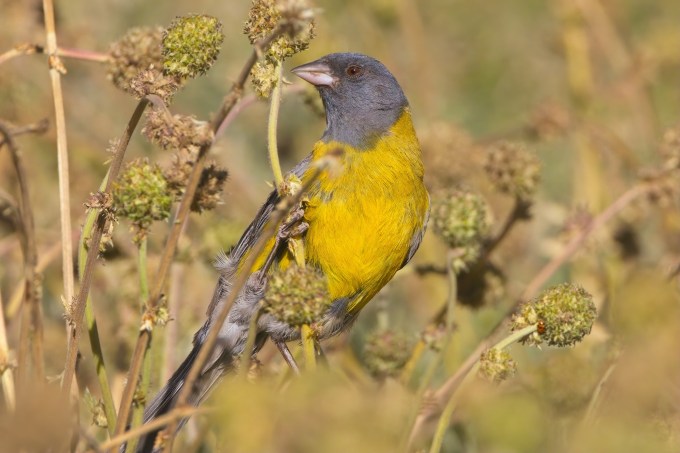
After lunch it was finally time for some high elevation birding and we went to Aconcagua Provincial Park including Laguna La Horcones certainly one of the most beautiful areas I have birded including views of Mt. Aconcagua, which at 22,838 feet is the tallest mountain in the Western Hemisphere and the tallest mountain outside of the Himalayas in the world. It was always partially covered by clouds (it produces its own weather) but still impressive. Like most such habitats, it was not full of birds, but our EBird checklist had 14 species and 40 individuals including 4 lifers for me: Andean Goose, Crested Duck, Scale-throated Earthcreeper and Black-fronted Ground-tyrant. I also had nice photos of Rufous-crowned Sparrow and Gray-hooded Sierra Finch and again saw Gray-breasted Seedsnipe. Unfortunately no photo of the Earthcreeper.


We hiked around in the beautiful spot for a couple of hours. As we were leaving a large pack train of mules, burros and horses came down from a climber/trekker base camp – not an everyday sight.
The scenery was relentlessly beautiful as we continued east moving through and down from the Andes.

We would be staying that night in Uspallata about 45 miles from the Provincial Park, and would be having another fine dinner at the El Rancho Restaurant in Uspallata. From our balcony window at the hotel, I added another lifer – Grayish Baywing, a species that would be seen often over the next few days.

The restaurant was what we think of as a classic Argentinian restaurant – lots of meat – a Parrillada – a restaurant with a variety of grilled and barbecued meats. Portions are endless. It was here that I had what at least at time was my favorite wine of the trip – a Cabernet – Malbec blend. We had so much good red wine later including more blends and pure Cabs and Malbecs, that maybe my impression would have been different later, but that night, it seemed the best.

I was back in Argentina – 45 years after my only other visit. No fishing ahead but there would be lots of food, wine and birds. With so much time taken up by travel, there had not been a lot of birds (19 species for the day), but it had been a momentous day because the Andean Goose was my 27th lifer for the trip and World Lifer #3300. Not so many compared to many people I know or know of. I hoped for more on this trip of course. With luck maybe I will get to 4,000 someday. With the others seen this day, I was now at 3303 – and counting.
February 8, Day 5:
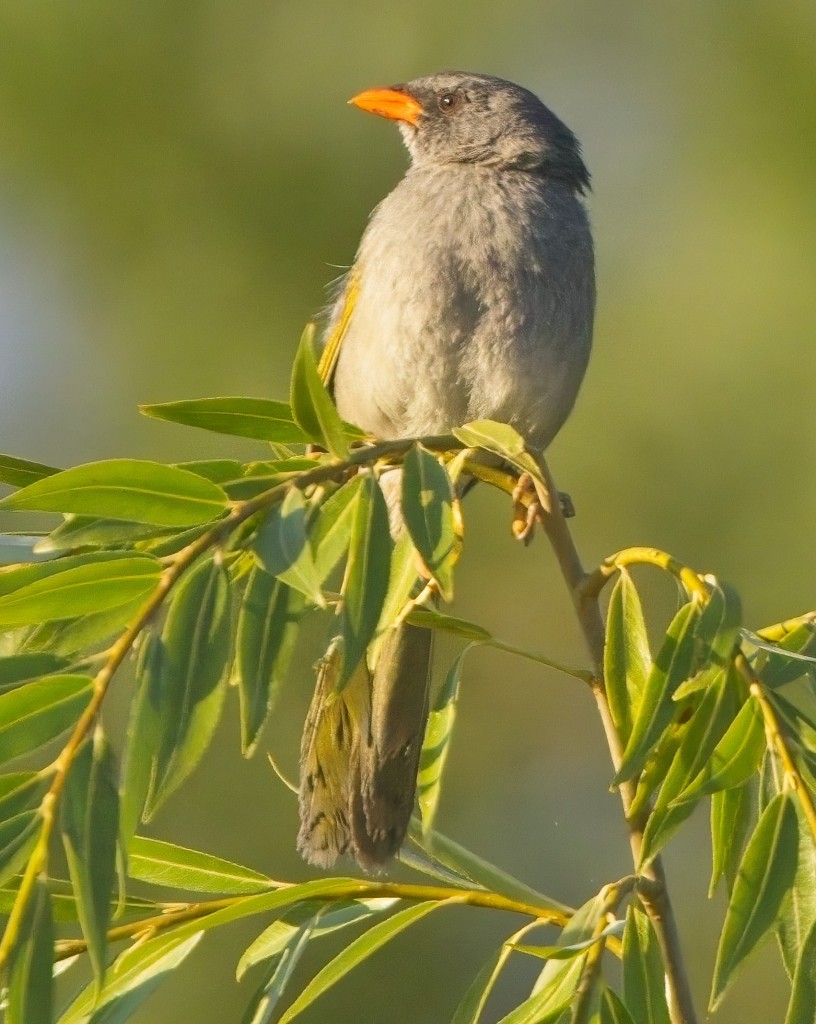
We were only at the Uspallata Hotel one night, just as well as it was our least favorite on the trip. No big problems, just ok. We birded around the grounds a bit and then had breakfast and packed up birding and for our transfer to our next abode, the Salentein Winery Lodge. There were fields and a river near the hotel that produced five new lifers and a blown chance at an additional lifer photo. The lifers were: Spot-winged Pigeon, Ticking Doradito, White Crested Tyrannulet, Southern Yellowthroat and Great Pampa-finch. The missed photo was of a Plumbeous Rail. It was out in the open for several seconds but I was in the wrong position for a shot. Thinking I already had a photo of this species, I didn’t rush to get a picture and it disappeared. I was wrong. I had seen one before but with no photo. Oh well. I only got a fleeting mostly obscured view of the Doradito so again no photo.



I picked up three more lifers at our next stop, a wet area along Route 7. They were Southern Martin, Patagonian Mockingbird and one of my favorites for the trip, Spectacled Tyrant. I also go life photos of a cooperative Yellow-billed Pintail.


We next birded around the Pueblo del Rio Lodge where we had yet another great lunch with wine pairings. Two new birds that were especially appreciated were a Brown-capped Tit-spinetail and a Steinbach’s Canastero, fortunately getting photos of each of these lifers. A third lifer would also be on that especially appreciated list if I had been able to get even a good view let alone a photo, was a very cool hummingbird called a Red-tailed Comet, which has, yes you guessed it, a striking red tail. I had only fleeting and distant views, good enough to count it, but I wanted much more (and would get it later).


We would be spending the next two nights at the Salentein Winery and Lodge, which turned out to be our favorite place on the tour. As we made our way there we birded along Ruta 40 and Calle el Alamo enroute. I picked up two new life birds, Monk Parakeet and Green-barred Woodpecker. The latter would be seen several times again and the former needs some explanation. I had seen Monk Parakeets before – at a now almost extirpated colony in Yacolt, Washington and also in the area around Miami, Florida where they are plentiful. They are introduced non-native species in both places and thus are not countable on official World lists. Being native in Chile and Argentina, they are countable as such there. I had actually seen and mostly heard several on our fist day in Chile, without photo and had not included them on any list. Now with photos, I added them to one of my Argentina lists. Dozens would be seen and heard on this trip.


New life photos from the afternoon included Fork-tailed Flycatcher and Burrowing Parakeet and I was also happy to get an ok shot of a White-collared Swift showing the collar.


My original thought was to include both days 4, 5 and 6 on this Blog post, but I can see that Day 6 is going to be a long post with lots of wine so I am going to end this here. At the end of the day 5, my lifer total stood at 40 for the trip and we had now seen 91 species with lots of photos including life photos.
We checked into the lovely Salentein lodge with a beautiful room and did our bird list outdoors watching Fork-tailed Flycatchers and White-collared Swifts hawking insects with Monk Parakeets flying through frequently. Dinner was at Salentein and although excellent, somehow I only have a photo of a dessert and of course a bottle of Malbec. More later.


 blairbirding