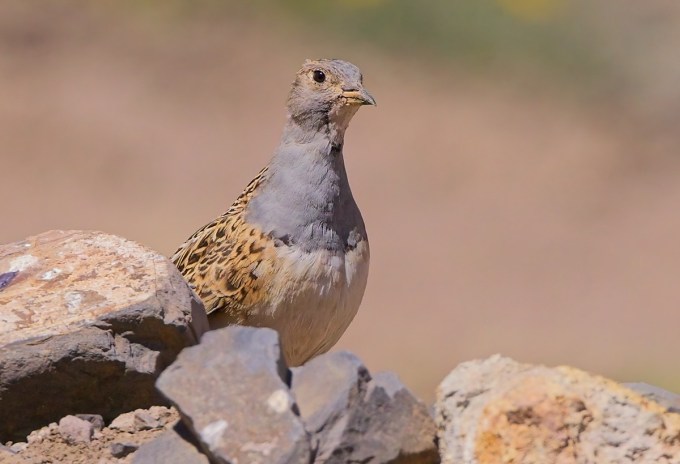
Birds and Wines in Chile and Argentina: Let the Birding Begin – Chile Part I

February 4, Day 1:

After our group first met in the 12th floor lobby of the Hyatt Place Hotel in Santiago, we boarded our van and went of to visit the Central Market (Mercado) in downtown Santiago where we wove our way through the produce, wine and seafood booths arriving at “Richard’s ‘King of Seafood’ Restaurant, a hole in the wall owned by Richard who like most everyone we would meet on the tour, was a long time friend of Marcelo’s. The market was alive with vendors, hawkers, buyers, restaurants and customers.

Santiago Central Market
Central Market interior
Lots of Seafood – Here Weighing Giant Squid Tentacle
Razor Clams and Cheese One of Many Dishes at First Lunch – with Much Wine As Well

After lunch we drove to the Farrelones Ski Resort area for our first birding at the Nevado Ski Resort. It is summer below the equator – so dry with no snow and at elevation pleasantly cool. Our first birds included Diuca Finch, Chilean Mockingbird, Rufous Collared Sparrow, White Crested Elaenia, Tufted Tit-tyrant and Plain-mantled Tit-spinetail. [NOTE: Throughout these blogs I will identify new lifers in bold italics.] I got pictures of all but the latter – a fate which would recur every time I “saw” that skulky bird during the trip.

Shortly thereafter a Black-chested Buzzard Eagle flew overhead shortly followed by our first Andean Condor. I had seen the impressive large Condors in Peru and in Ecuador and would see more later on this trip. Too far away for any meaningful photo. As we continued along our climb into the Andes, Marcelo noted some trees off to our left and said we should keep our eyes open as sometimes Lesser Horned Owls roosted in them. Literally two minutes later, Marcelo called out “Pare, pare”, the signal to our driver to stop. He did and we backed up maybe 50 feet and Marcelo pointed out a Lesser Horned Owl buried in the branches. Magic like this would recur often during the trip.

Lesser Horned Owl

Continuing our climb, we turned onto Camino a La Parva and got out of the van for some “serious” birding just as more Andean Condors flew overhead – a little closer for a first photo – still distant and not very satisfying – but any Condor is a treat.

Andean Condor

This was a good stop with many new birds – all new for Chile as this was my first visit to this country and new lifers including White-sided Hillstar (our first hummingbird), Gray-breasted Seedsnipe (heard only), Rufous-banded Miner, White-browed Ground Tyrant, Gray-hooded Sierra Finch, and Greater Yellow Finch. I also got lifer photos of Austral Thrush, Buff-winged and Gray-flanked Cinclodes, and Black-chinned Siskin.

White-chinned Hillstar
Rufous-banded Miner
White-browed Ground-tyrant
Gray-hooded Sierra Finch
Greater Yellow Finch

Neither lifers or life photos but new photos for the trip were two doves that would be seen often on our trip Eared Dove (abundant and everywhere) and Black-winged Ground Dove seen mostly at higher elevations and which I had seen and photographed initially in Ecuador in 2022.

I was disappointed that we never got even a glimpse at the calling Gray-breasted Seedsnipe as especially after great looks and photos of the Rufous-bellied Seedsnipe in Ecuador, it was high on my target list. Not to kill the suspense, those looks and photos would come later. We continued on to the Nevado Ski Resort where I picked up three more lifers: Mourning Sierra-finch, Moustached Turca and both Cordilleran and Sharp-billed Canasteros. No picture of the latter until Argentina. We would see another Turca later, but they are not seen on every tour – great bird.

There would be one more lifer and accompanying life picture on this wonderful first day. At a last stop as we retraced our steps back to Santiago, we found a Fire-eyed Diucon, the fire eye quite obvious.

Fire-eyed Diucon

Especially with only a half day of birding, Day 1 was a great success. We had seen 34 species and I had photos of 24 of them. Fully 15 species were world lifers (bringing me to 3289 species) and lots of new world life photos as well. Back to Santiago. We were back to Santiago for dinner ready for Day 2.

February 5, Tour Day 2:

Today was anther day up into the mountains out of Santiago with our prime target being the species I most wanted to see on the trip – the Diademed Sandpiper-plover. We traveled on the Camino Embalse El Yeso in the area of San Jose de Maipo. After a fairly long drive Marcelo had the driver pull over saying that it seemed like a good spot to him for a Crag Chilia. Magic again as we heard its distant song from a rock embankment quite a ways off. Marcelo located it on a rock on got the scope on it. I had a decent ID view and a very distant photo, Appearance and habitat-wise it reminded me of our Canyon Wren. Responding to playback it came in closer, not real close but good enough for a decent highly magnified photo – another lifer.

Crag Chilia

Continuing on we came to a wet area that might be good for the Sandpiper-plover. We covered it extensively without finding it but there were other birds there including lifers Yellow-billed Teal a fast flying Magellanic Snipe, Creamy-rumped Miner and Yellow-rumped Siskin.

More importantly to me, however, was that we had great photo opportunities for the Gray-breasted Seedsnipe – a lifer photo that had been missed the previous day and I was also able to get a good photo of a Black-billed Shrike-tyrant. I had seen one 11 years earlier in Peru but no photo.

Black-billed Shrike-tyrant

Cindy and I had seen Rufous-bellied Seedsnipe at high altitude in Ecuador, a much sought after species that is often missed, so this was a vey pleasing moment for us. And just as had been the case in Ecuador, we also saw Andean Gulls. Although I thought I had gotten a photo of another bird seen in Peru, I could not find a photo of the Rufous-naped Ground-tyrant seen with the Shrike-tyrant. It would have been a lifer photo. Bummer. I should mention that the area was spectacular , made better of course by the birds!!

Gorgeous Area
Andean Gull

So we had good birds but not the prize. When we went over the materials provided by Field Guides, they suggested warm hats and jackets and gloves for the high altitudes and also waterproof boots extending over the ankle for pursuit of the Diademed Sandpiper-plover which prefers watery areas. We had brought all on the trip but never used any of the cold weather clothing. When we got to our next area though, we did use some zip-up waterproof covers that went over our regular books. It was a good idea as there was a fair amount of ankle deep water in the area that Marcelo took us to for the Sandpiper-plover. This was an area that had hot springs and several non-birders were there as well, a concern for a hard to find and possibly skittish bird.

It took some time but finally Marcelo’s keen ears heard its calls and after quite a bit of searching he located one. The good news was that everyone could get good views through the scope. The not so good news was that the really striking bird was backlit and not real close. I took a lot of photos as best I could. This was probably the most frustrating experience on the trip for me. If when first spotted, we had positioned ourselves another 50 yards further along, there would have been good light on the bird enabling a much better picture. Although I understood the decision to stop at the spot where it was first viewed, the group had scattered and it took a while for everyone to get to the scope and get their view. Group protocol rightly requires no movement until everyone has had that first good view. It was very frustrating. When that first view for all was finally accomplished, we began moving to the better lit spot that would have enabled good photos. The bird had been essentially still or foraging in the same area for several minutes. Its patience ran out and it flew off way into the distance never to be seen gain. I include my best photo below but also for the only time I will do so in these blogs, I include a photo from the internet that shows just how cool this bird is.

Diademed Sandpiper-plover – My Photo
Diademed Sandpiper-plover – Photo by Fernando Diaz
Marcelo on the Lookout for the Diademed Sandpiper-Plover
Blair and Cindy at Termas Plomo (hot springs) after Seeing the Diademed Sandpiper-plover

On the return back to Santiago, there was a near disaster. Our van was making odd noises. First we slowed and then carried on a bit but the noises continued. We stopped and a not very happy Marcelo Padua went into to action. Probably best that we did not speak Spanish as there was a very heated conversation between Marcelo and someone – either the transportation company or the ground agent that Field Guides coordinated with in Chile. It could have been a full-on disaster, but this is where Marcelo’s talents in addition to birding paid off. We made our way to a small boutique hotel on the highway and waited as another van was sent to rescue us. Maybe it took an hour, maybe two. We had some desserts and drinks as we waited. It probably cut into some birding options, but the bottom line was that another van came and got us by late afternoon. Serviceable, but it was not nearly nearly as birding friendly as our original carriage – darker windows, with a more constraining seat configuration. It would have to do.

Waiting for the New Van

With our new driver we were off to our hotel back in Santiago and then to dinner at the Bodeguita Miguel Torres Restaurant with local wines of course – except being quite full from several nights of dining and for the first time feeling a bit jet lagged, I chose to sit this dinner out. Marcelo said to order whatever I wanted from room service and just put it on the bill. I passed and had a little snack protein bar and that was it. Cindy enjoyed the restaurant dinner. This thoughtful detail for room service speaks highly of Marcelo and the approach by Field Guides on this trip – always felt like we had first class service. OK we paid for it, but you don’t always get what you pay for.

End of Day 2 – 6 more lifers (now at 3295) and many new life photos. Running trip count now at 49 as we had added a Long Tailed Meadowlark on our way back to Santiago.

February 6, Day 3:

In our new van, in the morning we headed off to Rio Clarillo National Park. On the way I picked up a new lifer, a Picui Ground Dove. The hope was that whatever trouble our first van had could be fixed to enable it to take us to Argentina as there were licensing complications if not. Time would tell. In addition to the Picui Ground Dove, I got a life photo of a Black Faced Ibis, a bird I had first seen in Junín, Argentina in 1989 on my fishing trip.

Picui Ground Dove
Black Faced Ibis

On the way to Rio Clarillo NP, we picked up a couple of birds along the road in Pirque County including a surprising California Quail, introduced as a game bird for hunters in Chile. I also got pretty nice photos of a Tufted Tit-tyrant, a species I had first seen in the Amazon region in Ecuador.

We birded several hours at Rio Clarillo but did not add that many species although three of them Dusky Tapaculo, Dusky-tailed Canastero and Austral Blackbird were lifers. Another new species for the trip was a Giant Hummingbird (seen previously in Ecuador).

Dusky Tapaculo – a Very Hard Bird to Photograph
Dusky Tailed Canastero

From Rio Clarillo, we headed to the Santa Rita Winery for another multi-course lunch, a tour of the winery and a wine tasting. There was also a small museum with pottery and weavings. It was an enjoyable and long visit taking most of the afternoon before we headed back to Santiago. We drank a lot of wine with an excellent Carmenere and an equally good (to me) Chardonnay. In the U.S. the Pewen Carmenere sells for over $50/bottle and the Alta Floresta Chardonnay for $20.00. These photos give a taste of what our afternoon was like. Santa Rita is r than 140 years old and is the largest wine producer in Chile.

Our Group at Lunch

It was then the drive back to the hotel, a short rest and then dinner at the Peumayen Ancestral Food Restaurant featuring – yes ancestral foods – not the highlight of our gustatory trip, but good and interesting and different. This would conclude the first part of our visit in Chile as we would head off the next morning for the long ride over the Andes to Argentina. We would later return to Chile to visit the coast before concluding with a return for flights home from Santiago.

At the end of day 3, I had listed 56 species for Chile and the trip, added 25 lifers to get to 3298 and again many new life photos.
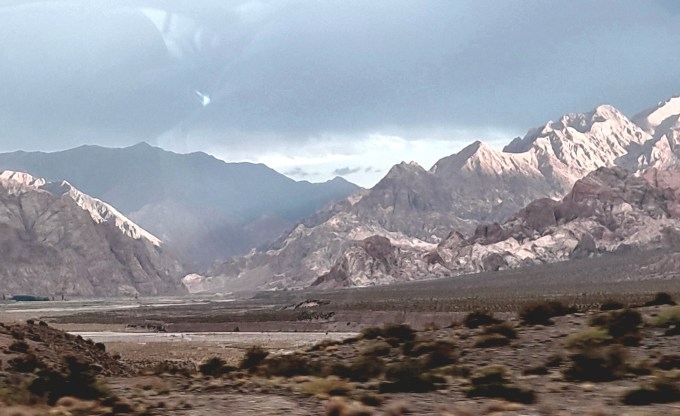
Birds and Wines in Chile and Argentina – Background and Introduction

Before the Covid Pandemic hit in 2020, Cindy Bailey and I had signed up for a tour offered by Field Guides Birding Tours that combined two of our interests – birds and wine. It seemed like a good way to introduce Cindy to birding tours, essentially bribing her with good wines to put up with chasing birds. We chose this tour over a similar one offered by Victor Emanuel Nature Tours, even though that tour included a pelagic trip that would assuredly add some new life species for me. The main reason for our choice was that friends Jon and Kathleen Houghton had rave reviews of their guide on a wine and birds trip to Brazil, Marcelo Padua.

Marcelo Padua

But then Covid happened and the tour was cancelled. No birding trips for either of us. Late in 2021, we we did have a chance for a test run birding tour and Cindy and I went on a group tour to Oaxaca with Wild Latitudes . Despite mixed reviews for that tour, Cindy remained game for another trip and we went on a very fun private tour to Ecuador with Neblina Forest – a trip which I wrote up in a number of blogs afterwards. What next? Birds and Wines of Chile and Argentina was being offered again, but even though Covid was a much reduced threat, Chile had an isolation policy that put us off. Their requirement was that if any member of a group came down with Covid, everyone in the group had to isolate for 10 days – a risk we were not willing to take. Instead we visited Tanzania with Victor Emanuel – a fabulous tripe that I covered in many blog posts last year. Then in 2023 Field Guides was again offering the trip and Chile’s policy had changed.

We got on the list for the tour – then a complication. The go/no go sign up requirement was for a minimum of six participants. We were the fourth and fifth to commit. Months went by and nobody joined the tour. Finally we were all given the option to pony up some additional dollars or it would be cancelled and deposits would be refunded. All agreed to do so and we were a go. We used a third party called Sky Lux to arrange discounted Business Class Airfare (a concession to Cindy that worked very well) and they arranged reasonable flights going through Miami and on to Santiago, Chile. Time to bone up on Chilean and Argentinian birds.

I had been to Argentina in 1989 on a very fun flyfishing trip in the Junín area and had very fond memories. The fishing was great, the food and wine memorable and incidentally I had somehow put together a small bird list of 41 species (of which ten turned out to be species we did not see on our just ended trip). The possible bird list for the Field Guides trip was 254 species. Given overlaps from that previous trip to Argentina and later trips elsewhere in South America plus the shorebird and wader species seen many places, I thought there was a possibility of maybe 128 new lifers. My normal analysis is that something around 80% of species on such lists are “likely” so I figured a good goal was maybe 100 new species. There was a bonus in that I had no photos from that earlier Argentina trip and there should be opportunities to add to my world life photos list as well. The tour would start in Chile, then cross the Andes into Argentina, concentrating in the area near Mendoza, then flying back to Chile to conclude on the Pacific Coast near Vina del Mar and Valparaiso.

I have consumed maybe 20 times as much wine in the 5 years knowing Cindy as I had in the 70 preceding years and while I enjoy some more than others, I really know very little about wine and this would be an opportunity to learn more and to enjoy some fine wines. Cindy knows a lot more and probably enjoys it much more than I do. Little did I really appreciate just how much wine we would consume and how much great food would accompany it. Skipping ahead – when I got on the scale after 18 days away, I had put on 9 pounds, especially distressing since my starting point was already higher than it should be. But as I said the wine was exceptional as was the food. A problem however was that in both countries it is customary to eat much later than my norm. Often dinners would start at 8:00 p.m. or later and we would not hit our beds until 10:00 or 11:00. Not the best approach for good digestion – and sleep.

Our first flight was about 6 hours in First Class from Seattle to Miami on Alaska Airlines. We had a 5 hour layover (spent largely in the Lounge for LATAM Airlines) and then an 8 hour overnight flight Business Class on LATAM to Santiago. Both flights were very comfortable and on schedule and although neither of us slept a lot on the fully reclining seats to Santiago, we were able to relax and begin our over-consumption of wine and food. For the first time in I don’t know how long, we checked a bag in addition to our two carry-ons. It arrived in tact and Passport Control and Customs were not too bad in Santiago. On all of these trips, there is a moment of anxiety when leaving the airport security you hope to see someone waiting for you with your name on a sign, provided by the tour outfitter to get you from the airport to your hotel. Whew!! There he was with the Bailey/Bernson sign. It was around 7:00 a.m. and we were off to our Hyatt Place Hotel. The hotel was new and a little bland (in a modern way) and the staff was great. They allowed us to check in VERY early which was greatly appreciated since we had arrived before the formal start of the tour. It was a very nice hotel with very nice rooms. We got some sleep/rest and later headed off for a mall to look for a warm coat for Cindy…and that is the segue to a BIG PROBLEM!

I have traveled on more than 50 international flights dealing wit security, baggage, customs etc. without a mishap – except in Miami. I generally split cash between my wallet and a pouch that I wear around my neck where I keep my passport and credit cards. The wallet stays in my pants pocket until security when I put it into my small back pack or my carry on suitcase. The Miami airport was large and chaotic in general and the security lines were as well with mixing between TSA pre-approved and other lines. Mistake 1: I had not taken credit cards and cash out of the wallet. Mistake 2: well not sure exactly what happened but somehow my wallet did not make it into my pack although I thought it had. In any event I thought all was well and since we were going straight to the LATAM Lounge, we did not buy anything in the airport. So it was not until we got to the hotel in Santiago when looking for my wallet, I could not find it. I searched the carry-on and the back – NADA. In the room, I completely emptied everything and it was nowhere to be found. My best guess is that somehow in the process of putting belts, phones, computers, wallet, pouch etc., in those little baskets, and being a bit sleep deprived from the redeye flight (certainly not my first) the wallet got lost in the shuffle and taken by somebody. Bottom line, I was in Chile without credit cards, ATM Cards, health card, cash, checks, driver’s license and who knows what else. Fortunately I did have my passport and Cindy had her credit and ATM cards. So the first hour plus was spent contacting my bank and VISA cancelling credit and ATM cards and putting a hold on all bank account activity. Just a bit distressing, stressful and scary. AND oh yeah, somewhere either in the Miami or Santiago Airports, Cindy’s heavy coat – theoretically needed for our high altitude time in the Andes – had also disappeared. Thus the aforementioned need to visit the mall, where in fact we could not find an appropriate coat – possibly due to the fact that it was summer in Chile and 90 degrees in Santiago.

We had dinner at the hotel that first night and a very full array of breakfast options in the morning there as well. Since the trip was so long and there was a six hour difference between Seattle and Santiago, we had arranged to be there two full nights before the official start of the tour and we wanted to find something more “charming” the next day. Our hotel was not in the center or historic part of town, rather in a pleasant area with a mix of nice residential and commercial buildings. Although there were no restaurants in the immediate area, we found an area about a half mile away in the direction opposite of where we had walked for the Mall the day before that had several trendy restaurants. There were several seemingly good options. We chose one that had the most people sitting there at our early dinner time of 7 pm. It was a pizza and pasta place with outdoor seating called Rita Trattoria. The pizza was ok and the Pisco sours (national drink of Chile) were great and the shared dessert was even greater. Cindy got a large Pisco and maybe due to the lack of sleep was kind of tipsy, in a very pleasant way. A television screen in the restaurant showed ads the whole time including a pretty funny take-off with the Mona Lisa enjoying a Red Bull.

Yummy Dessert
Red Bull Mona

Finally it was time to meet our group – a small one. Mike and Karen Warner from a suburb of Chicago, Joe Trapani from New York State and of course Marcelo Padua from Cuiaba, Brazil. Karen, formerly a nurse, was probably the most ardent birder, Mike, a former School Superintendent was more interested in photography and Joe, a former math teacher enjoyed both the birds and photography but was fairly laid back about both although he had been on many bird tours before. For that matter they all had traveled extensively and were all good company. Marcelo was an extremely good bird guide in addition to of course being both a wine expert and very keen on making sure that all details of the trip were carried out at a very high level – more on that in later blogs.

After meeting the group, we loaded onto our luxurious van and headed to Santiago’s Central market for our first of many fine meals with excellent wines. More on that in the next blog which will cover the first days of the tour itself, but first more on the van. There would be some changes over the trip due to some mechanical and licensing problems, but we started with a Mercedes Sprinter configured with five rows each with two seats on the drivers side and a single seat on the passenger side and an aisle in between. There was also room behind all the seats for luggage on the days that we would be moving from one hotel to another. Since there were only five of us (guide Marcelo was in the front next to the driver), there was plenty of room to spread out and move from side to side if something was spotted from the van. We followed the rotational sequence where one who was in the back the previous day would move to the front with everyone else moving a row back. There were NO seating issues during the entire trip.

Our Van

I will end this introduction with some brief words about the wines. While not as well known or generally as pricey in the U.S. as Italian, French and American wines, the wines of both Argentina and Chile are highly regarded, with whites being more well known from Chile and reds from Argentina although both are produced in both places. Probably the best known and most highly regarded special wines from the area are the red Malbecs and Carmeneres, the former more so in Argentina and the latter in Chile. We had many samples of both but also had many Chardonnays, Sauvignon Blancs, Cabernets, Merlots, Cabernet Francs, and Syrahs as well as blends. They ranged from good to excellent and were always available in a seemingly endless flow. I lost track of how many wines we tried – lunches, dinners and several tastings at beautiful wineries – but know it was more than 40. There was lots of wine!

So much for background – time to bird and visit wineries. The following blogs will be mostly about the birding but will definitely include visits to some of the wineries – generally beautiful places with restaurants, tasting rooms, production and storage areas, lovely grounds, great architecture and often fun birds to go with the delicious wines and food.